1. Introduction
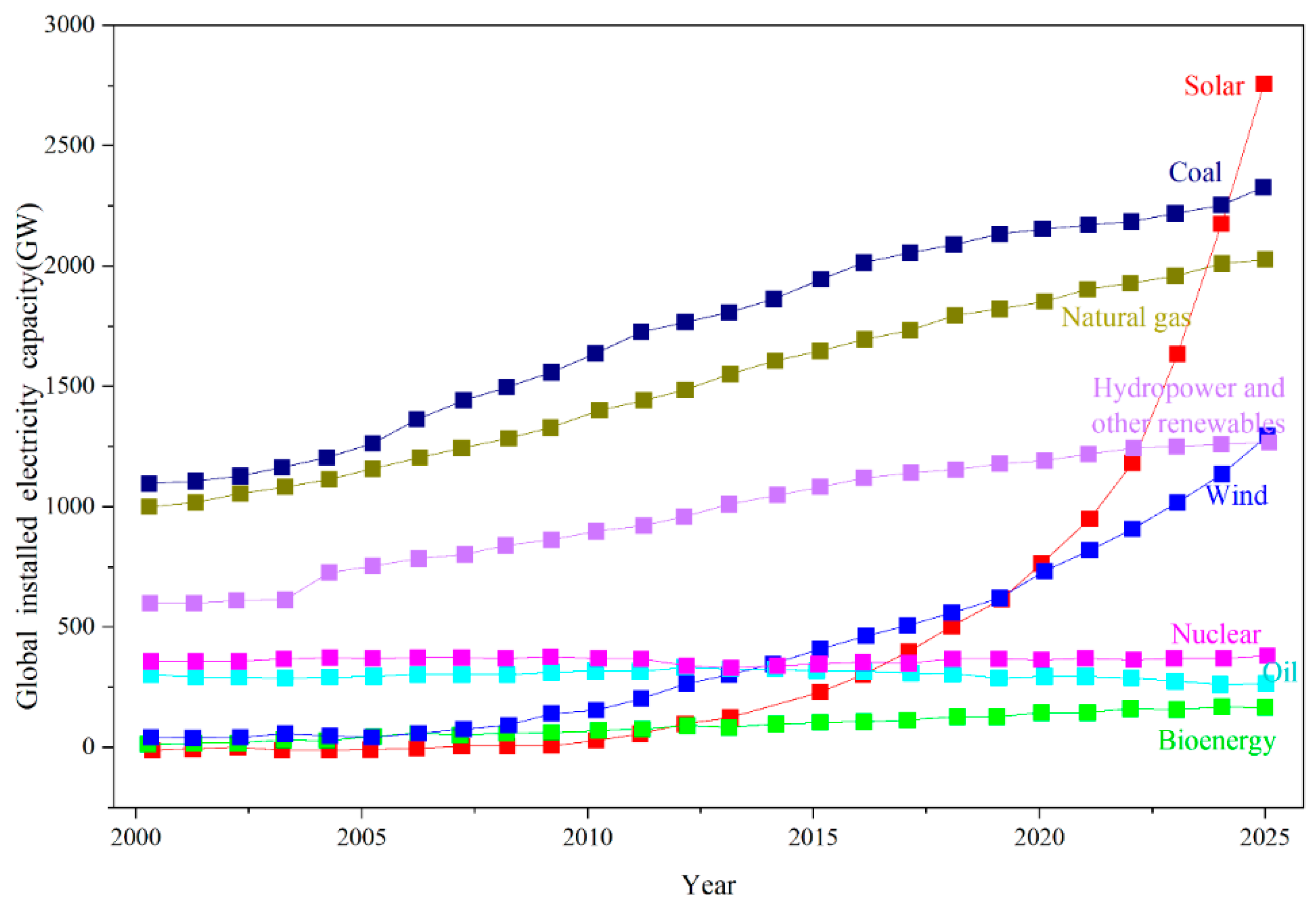
In 2025, global renewable energy generation officially surpassed coal-fired power for the first time, accounting for 52% of total electricity generation versus 22% for coal-fired power, as shown in
Figure 1, marking a critical turning point in the global energy transition [
1]. This transition, driven by the pursuit of sustainability through low-carbon energy restructuring, has elevated the penetration rate of wind and solar power, reaching 38% globally. However, the inherent intermittency and volatility of wind and solar power have intensified fluctuations in grid output. For example, the output of a single wind farm can drop from rated power to zero within a few hours, that is, with a fluctuation range close to 100%. Hydropower has the ability of flexible start-stop capability (response time within 30 s) and rapid load adjustment rate (20~40% rated installed capacity/min), serving as the core regulating power source for balancing the volatility of wind and solar energy [
2]. Its role is particularly pivotal in advancing grid sustainability by enabling the high-proportion integration of intermittent new energy. According to China’s national policy, by 2027, the proportion of new energy power generation will exceed 20%, and hydropower is required to provide peak-shaving capacity to ensure a new energy utilization rate of over 90%. To support the high-proportion integration of new energy, hydropower units are increasingly required to perform frequent load-following operations to compensate for real-time fluctuations of wind and solar power and maintain power grid frequency stability. This operational adjustment is a necessary trade-off to support the sustainability objective of decarbonizing the power sector.
Hydropower units adjust their power output in real time in response to grid frequency deviations caused by mismatches between new energy supply and load demand. When wind or solar output surges, hydropower units reduce their generation to avoid grid frequency overrun; conversely, hydropower units ramp up output rapidly to maintain frequency stability. Taking the BaiHeTan Hydropower Station as an example, on 10 July 2023, it carried out power grid frequency regulation 52 times and executed 31-unit start-up and shutdown operations. This means a large-scale power adjustment is required in less than 30 min on average. Under frequent load-following modes, PID parameters may approach critical thresholds and trigger bifurcation. Such bifurcation phenomena will damage the stable operation of the system, and in severe cases, may also cause malignant accidents such as sustained oscillation, voltage collapse, and frequency instability [
3,
4]. For example, Hopf bifurcation behavior induces increasingly intense undamped oscillations, ultimately leading to a large-scale power outage in the western United States in 1996, which affected 7.5 million users [
5]. The sustained voltage oscillation in the Midwest of the United States in 1992, with an oscillation frequency of 1 Hz, is also caused by bifurcation behavior [
6]. This nonlinear dynamic behavior has become a key factor threatening the safe and stable operation of the hydropower system, thereby hindering the reliable integration of new energy and the achievement of long-term sustainability goals. The above cases fully highlight the necessity and urgency of systematically investigating PID parameter-induced bifurcation in hydropower systems, especially for units undertaking load-following tasks.
Traditionally, research on the stability of HPGS mainly focuses on time-domain analysis, bifurcation analysis, and eigenvalue analysis. Specifically, as for the time-domain analysis, Huang et al. investigated the transient processes of a cascade hydropower station with regulating reservoirs underload disturbances and delineated its stability region [
7]. Huang et al. established a nonlinear hydropower model utilizing an improved transfer function approach and verified its precision through time-domain and frequency-domain simulations [
8]. Yu et al. explored the optimization of PID parameters using a direct solution method and time-domain simulation, reducing the parameter tuning time by 40% compared to traditional methods [
9]. For bifurcation analysis, Deng et al. established a Hamiltonian model for hydro-turbine generators and identified Hopf bifurcation critical points using bifurcation theory [
10]. Zhang et al. utilized Hopf bifurcation theory to examine the nonlinear stability and dynamic characteristics and confirmed its reliability by means of numerical simulation [
11]. For eigenvalue analysis, Xu et al. analyzed the key oscillation modes in hydropower systems based on a coupled model of the shaft system and the governing system [
12]. Jiang et al. investigated the state space equation of the hydropower system and gained insights into the ultra-low-frequency characteristics of the hydro generator [
13]. Lu et al. investigated the oscillation characteristics of the hydraulic turbine governing system using eigenvalue analysis and put forward an optimization control strategy to promote system regulation performance [
14]. From the above review, existing research has explored the stability of HPGS from various perspectives and has yielded valuable insights. However, current research still exhibits certain limitations. Most findings either explore the stability response of HPGS from a single perspective or concentrate on a specific bifurcation type or a narrow PID parameter range, failing to adequately cover the practical engineering operation range. This leads to the fact that the multi-bifurcation mechanism of HPGS under practical load-following scenarios is not sufficiently revealed. Particularly in scenarios with strong disturbances from wind and solar energy, as well as the complex and variable grid operating conditions, the coupling relationship between PID parameters and system dynamics still lacks a clear quantitative description. Therefore, it is necessary to further integrate multiple analytical methods on the existing basis, quantitatively identify the critical bifurcation thresholds corresponding to PID parameters, and thereby deeply uncover the mechanisms underlying the generation and evolution of system oscillations.
Motivated by the above discussions, there are three advantages that make our approach attractive compared with the prior work. Firstly, a novel nonlinear HPGS model is established for an infinite-bus power system, integrating the excitation system and power system stabilizer (PSS), which aligns with the actual configuration of a large hydropower plant. Secondly, within the engineering-relevant PID parameter range, multi-bifurcation phenomena are identified, and their critical parameter thresholds are quantified. Finally, by integrating bifurcation analysis to pinpoint critical PID parameter values, employing time-domain analysis to reveal the evolution of system dynamic behavior near these critical points, and utilizing eigenvalue analysis to verify the oscillation mechanisms, the integration of these three methods significantly enhances the comprehensiveness, depth, and accuracy in describing system dynamic behavior.
This paper is structured as follows for the remaining sections.
Section 2 reviews bifurcation analysis and eigen-analysis methods.
Section 3 provides a detailed introduction to the establishment of the HPGS model, considering the excitation system and PSS.
Section 4 presents multi-bifurcation analysis results, including quantitative analysis of critical thresholds and oscillation characteristics.
Section 5 draws conclusions and discussions.
3. Mathematical Model
To simplify calculations and analyses, the excitation system and PSS are usually simplified to constant-value models or subjected to order reduction in power system stability studies. However, the excitation system is responsible for providing excitation power and regulating the voltage, significantly influencing the dynamic behavior of the generator [
24,
25], and thus improving the stability margin of the system [
26]. The PSS, as the supplementary device installed on the excitation controller, generates damping torque components in the transient process to suppress the low oscillation [
27,
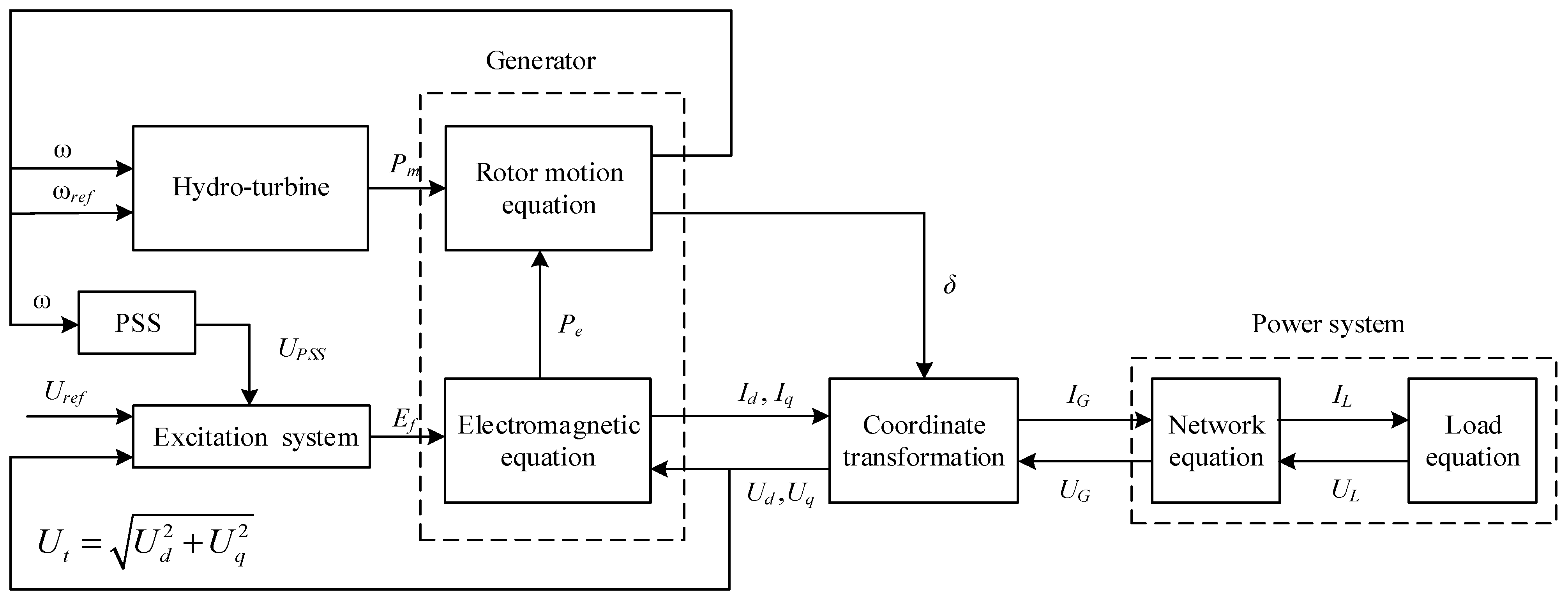
28]. Therefore, this paper incorporates both the excitation system and PSS into the HPGS model to further investigate their dynamic characteristics. The structure diagram of the HPGS linking the infinite-bus power system is illustrated in
Figure 2 [
29]. It should be noted that the model established in this paper is based on the assumption of a power system connected to an infinite-bus power system, implying that its voltage magnitude and frequency are constant and unaffected by the dynamics of the studied subsystem. This assumption simplifies the analysis of the network side and focuses mainly on the dynamics of the hydropower unit itself.
3.1. Model of the Hydro-Turbine and Diversion Pipeline
The transfer function of the hydro-turbine and diversion pipeline is expressed as [
3]
Gh(
s) denotes the transfer function corresponding to the hydro-turbine flow rate versus head, which can be formulated as
Converting the above equation into state space form, Equation (13) can be illustrated as
The hydro-turbine torque is described as
where
,
,
,
,
,
, and
.
3.2. Model of the Governor
For the hydraulic speed regulation system, it can be formulated as
The mathematical model of a common PID speed regulation system is obtained as [
30]
3.3. Model of the Generator
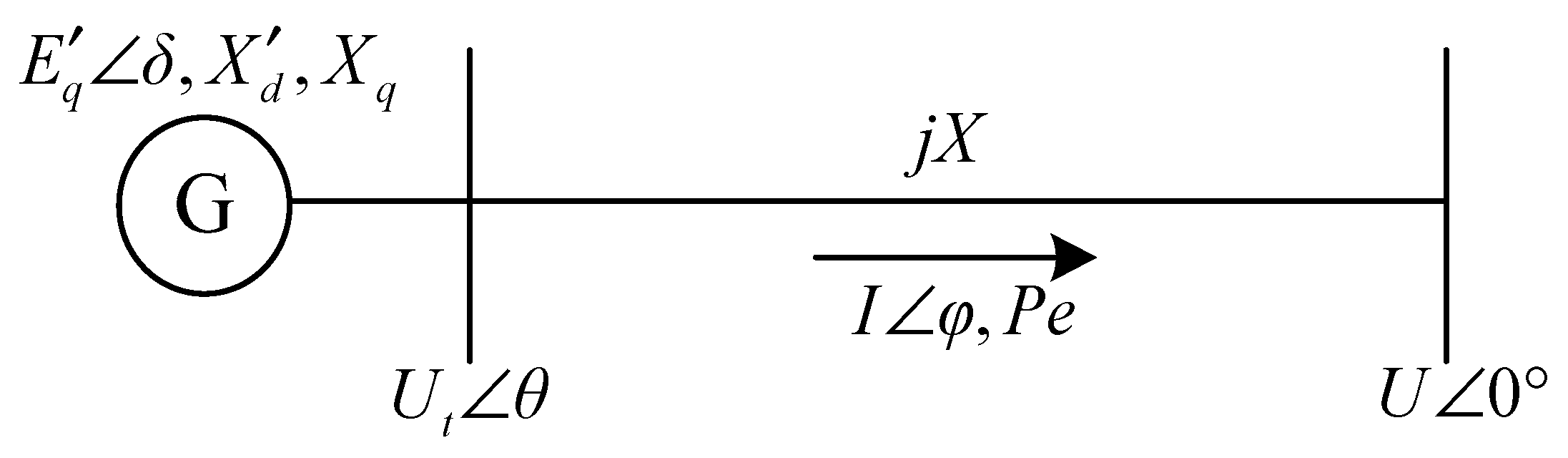
An infinite-bus power system with a third-order generator mathematical model is considered in this paper, as presented in
Figure 3.
The voltage of an infinite-bus is
,
U = const. Thus, the model of the generator can be expressed as
With the torque effect of rotational speed variation incorporated into the damping coefficient, the generator’s electromagnetic torque equals electromagnetic power. Here, the electromagnetic power of the generator
Pe is expressed as
3.4. Model of an Excitation System
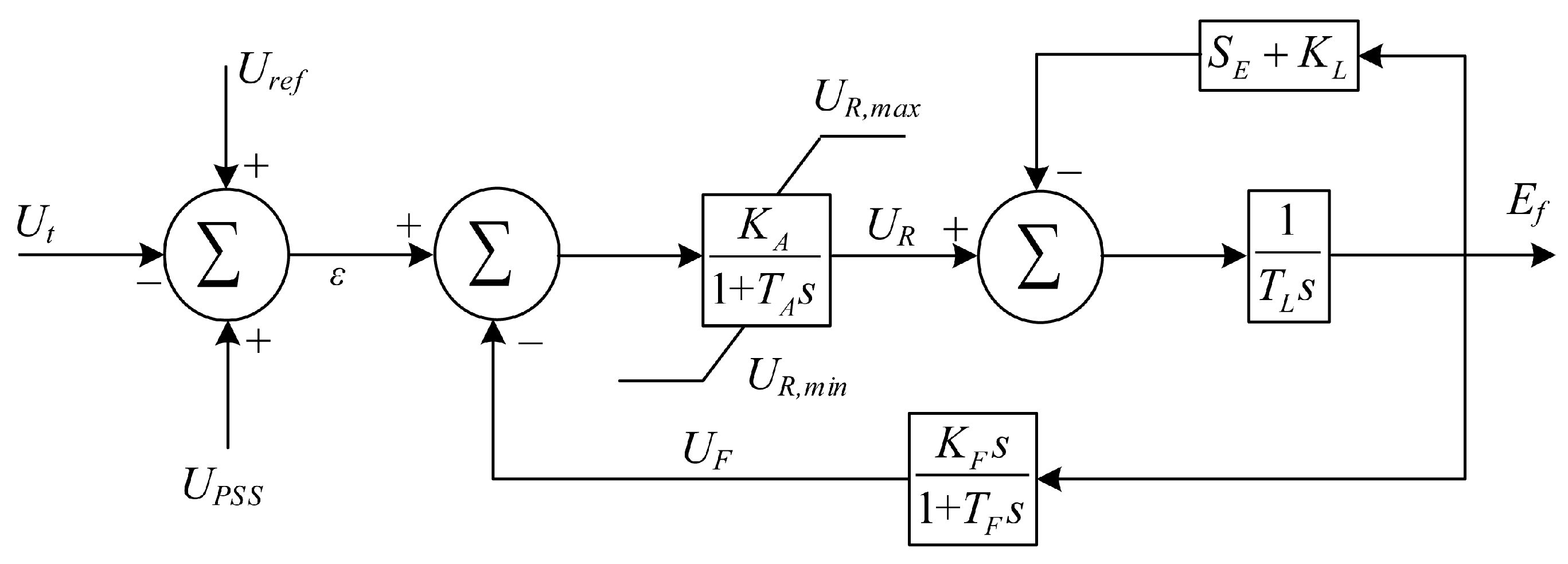
The transfer function diagram corresponding to the excitation system is shown in
Figure 4 [
29].
The dynamic equations of the excitation system shown in
Figure 4 are described as
3.5. Model of PSS
The transfer function diagram of PSS is shown in
Figure 5 [
31].
The PSS equation shown in
Figure 5 is expressed as [
32]
3.6. The Network Equation
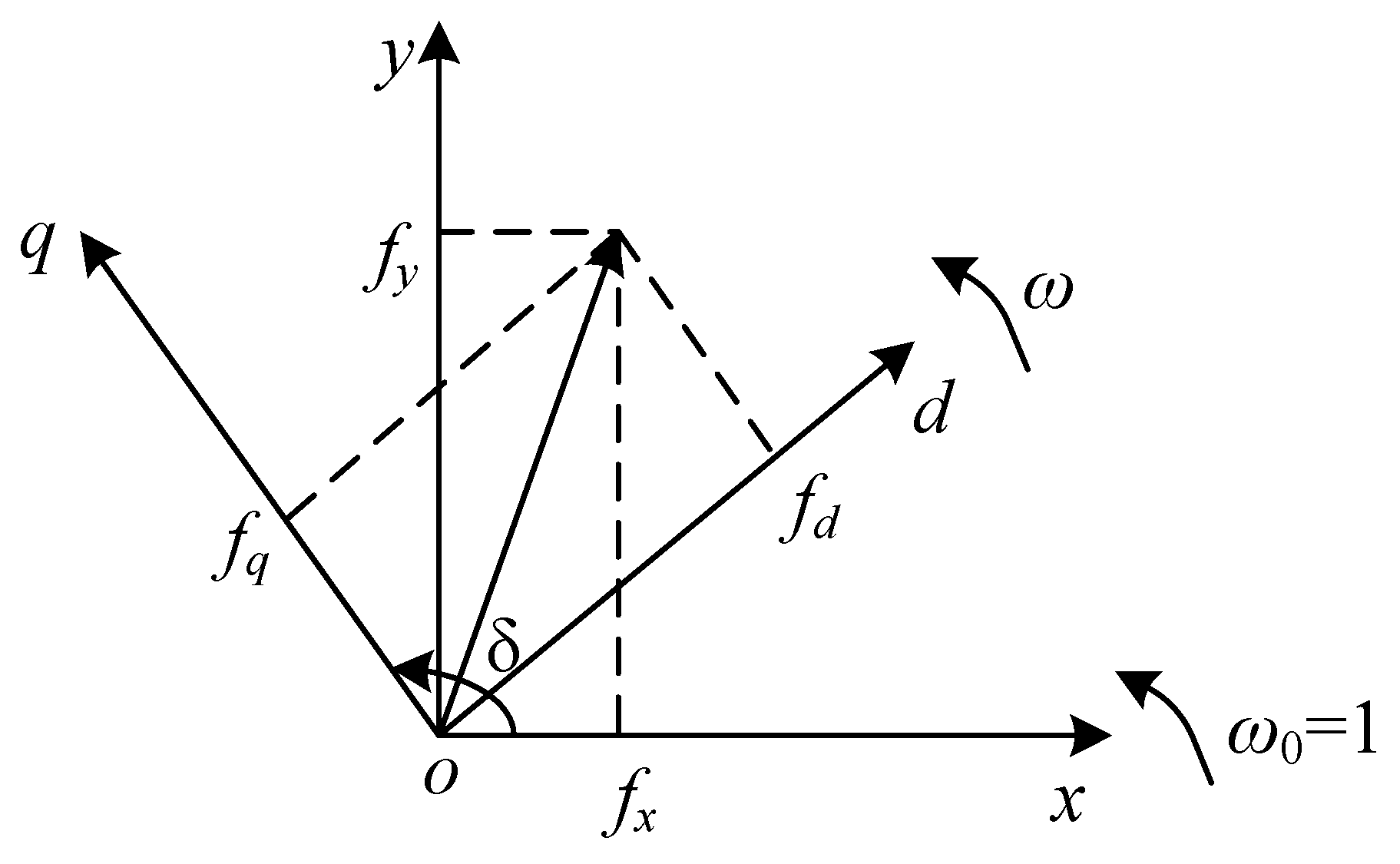
For the convenience of analysis, the voltage and current coordinate systems are unified into the grid synchronous rotating coordinate system. The transformation relationship between the
dq-axis and the
xy-axis coordinate system is shown in
Figure 6.
As shown in
Figure 6, the network equation under the
xy-axis is
. We assume that
and
. Then we can achieve [
33]
where
is the generator terminal voltage.
The conversion relationship between the
dq-axis and the
xy-axis coordinate system can be illustrated as [
33]
By bringing Equation (23) into Equations (19) and (22), we can achieve , , , and .
Coupling the equations of the above modules, the mathematical model of HPGS connected with an infinite-bus power system can be expressed in the form of
5. Conclusions and Discussions
To address the oscillatory instability risk of hydropower induced by PID governor parameter mismatch under a high proportion of new energy grid integration, this study investigates multi-bifurcation instability of HPGS in infinite-bus systems by integrating bifurcation analysis, time-domain analysis, and the eigenvalue analysis. The main conclusions are as follows.
- (1)
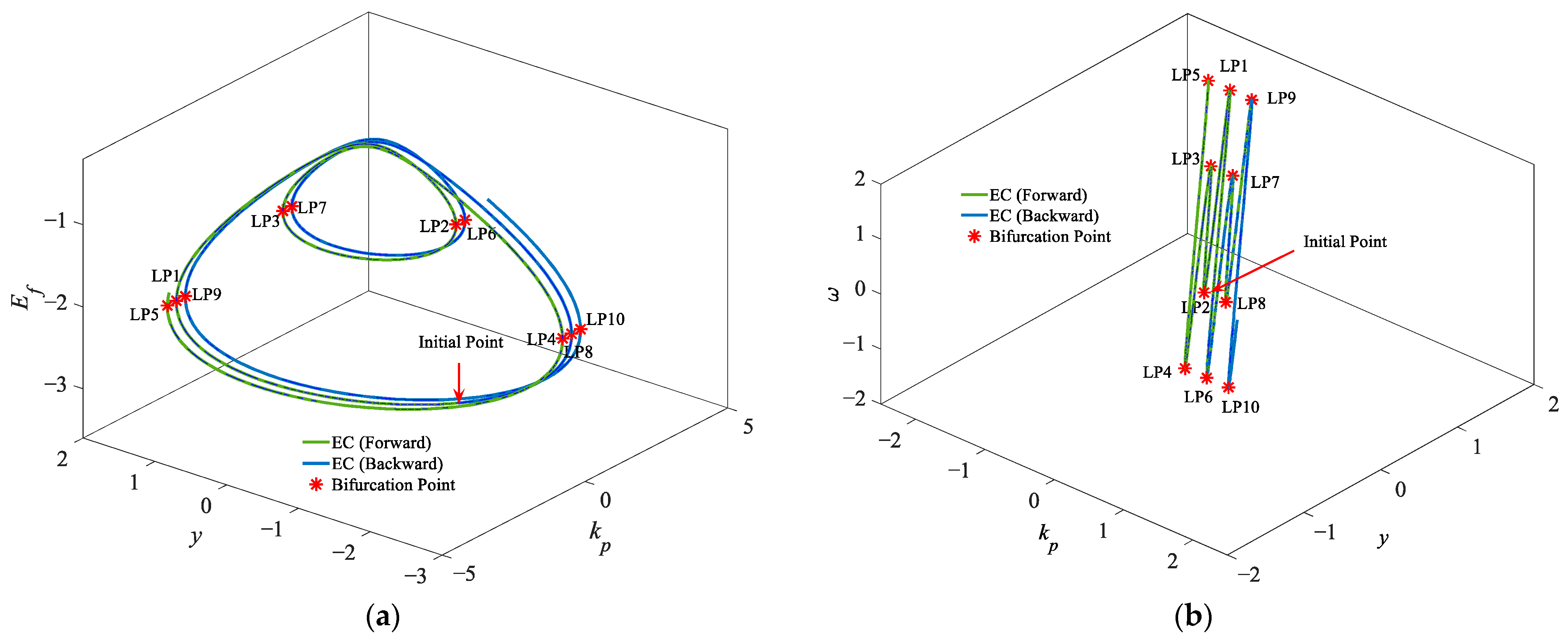
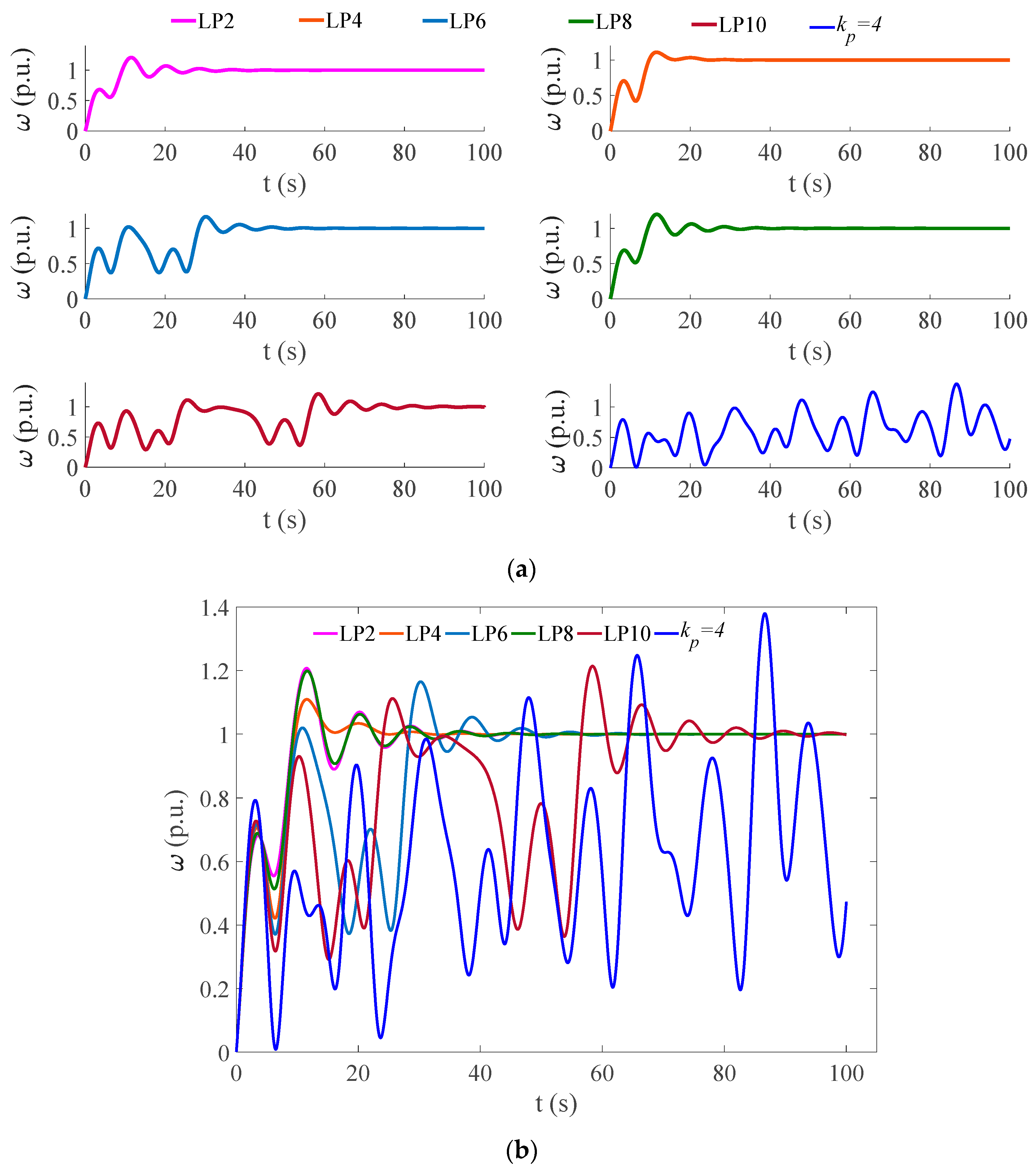
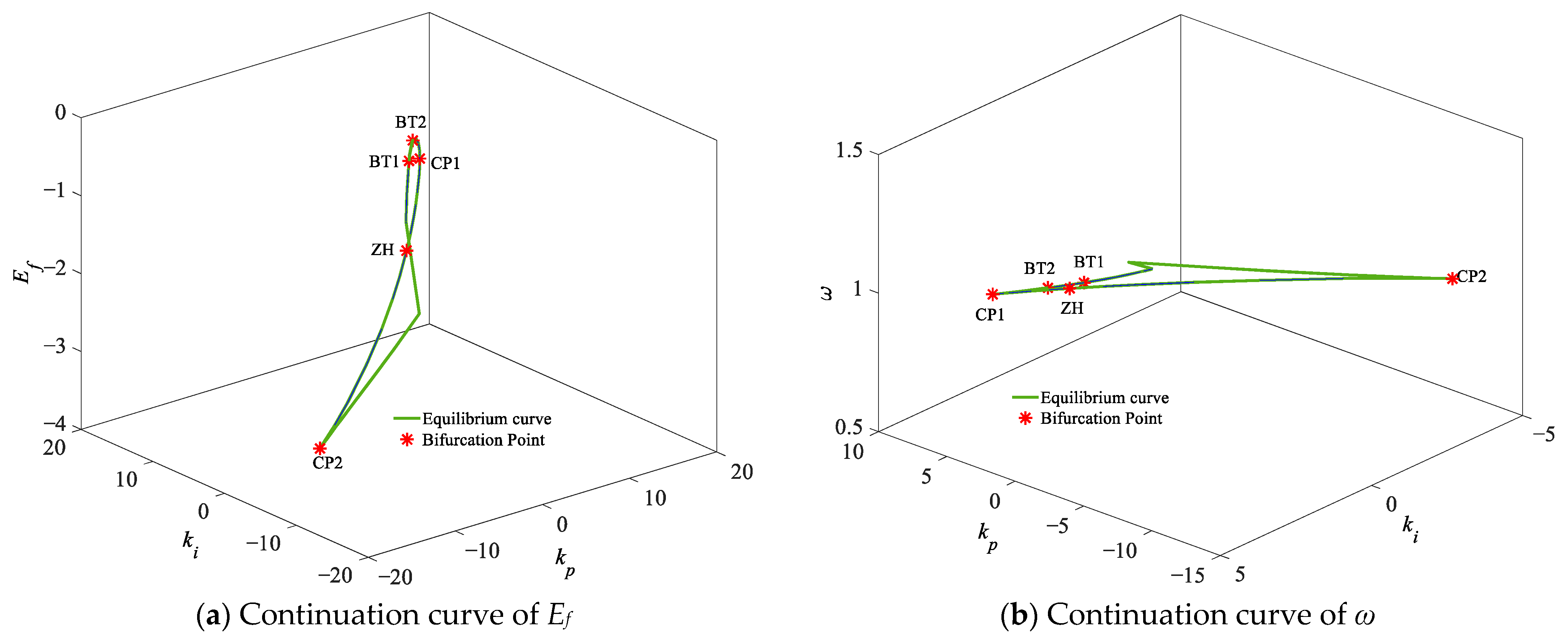
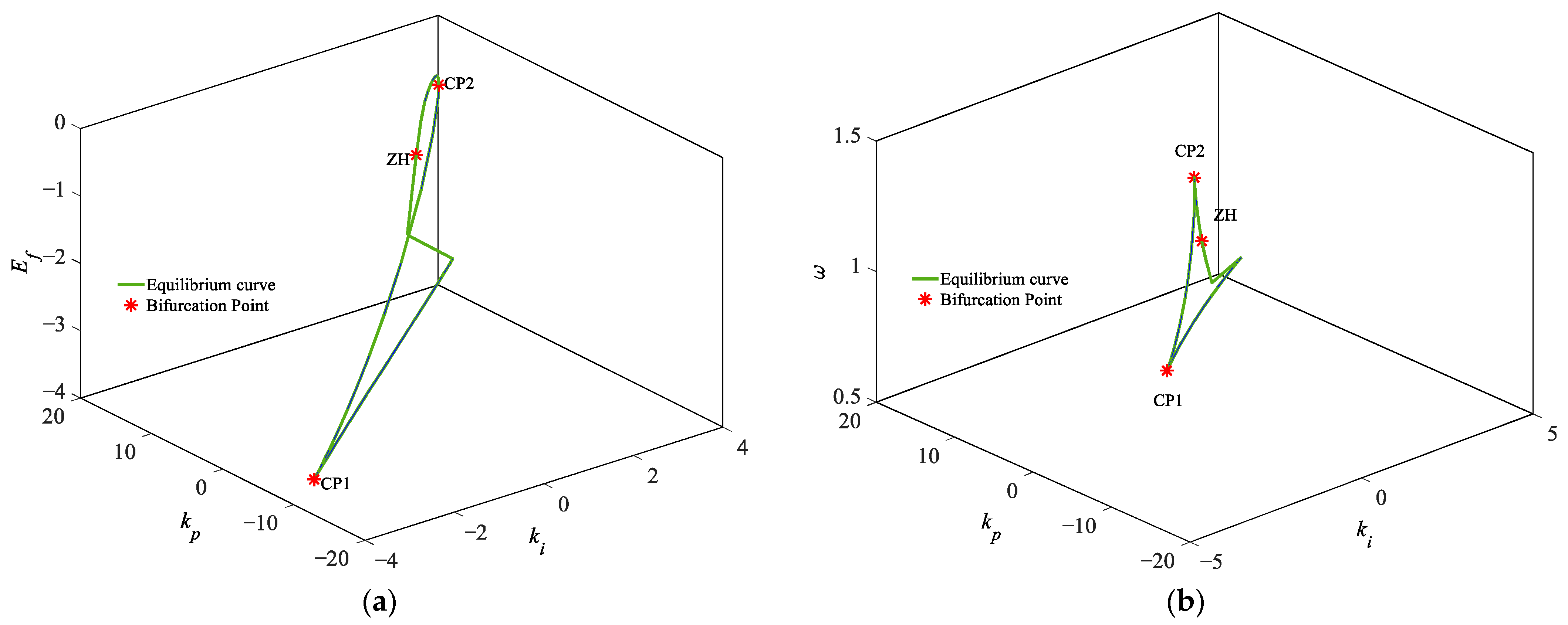
HPGS encounters five limit points with the variation in kp, which delineates the stability boundary of kp. The system achieves asymptotic stability when kp is less than 0.891. It exhibits damp oscillation characteristics for kp values between 0.891 and 2.154. The system becomes unstable once kp exceeds 2.467. Time-domain analysis at kp = 4 verifies this instability characteristic. Some modes correspond to ultra-low-frequency oscillations with frequencies close to 0.02 Hz, while the rest are typical low-frequency oscillations in the range of 0.1–2.5 Hz. Prolonged operation under such conditions is prone to causing unit fatigue and degradation of power quality. Codimension-2 bifurcation analysis initiated from LP2 reveals that ki and kp increase synchronously, and the effective ki values at all bifurcation points are higher than 0.891. In engineering practice, kp should be set below 0.891, while the adaptability between kp and ki should be considered. This ensures that the parameters stay away from bifurcation points such as BT, ZH, and CP.
- (2)
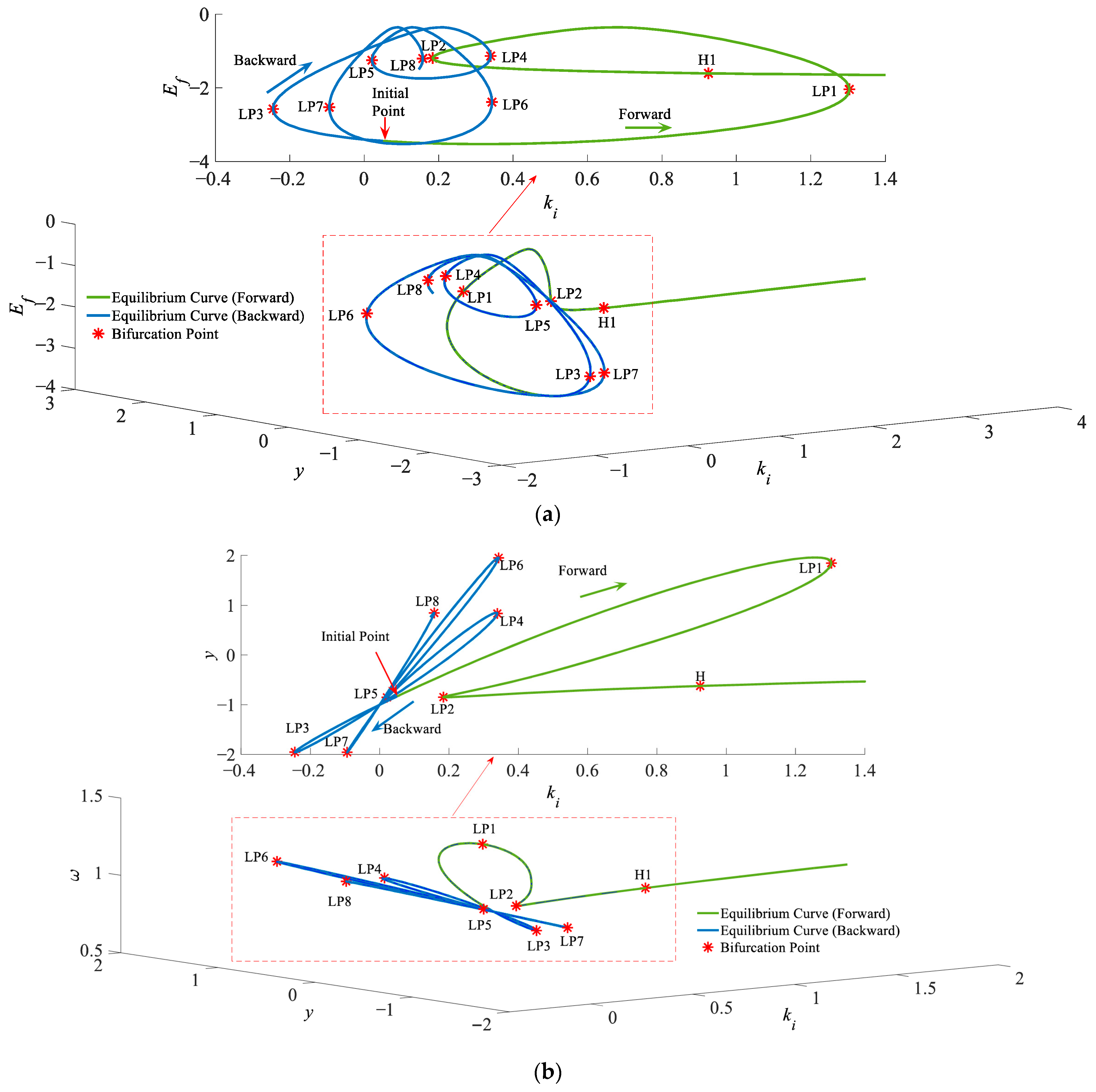
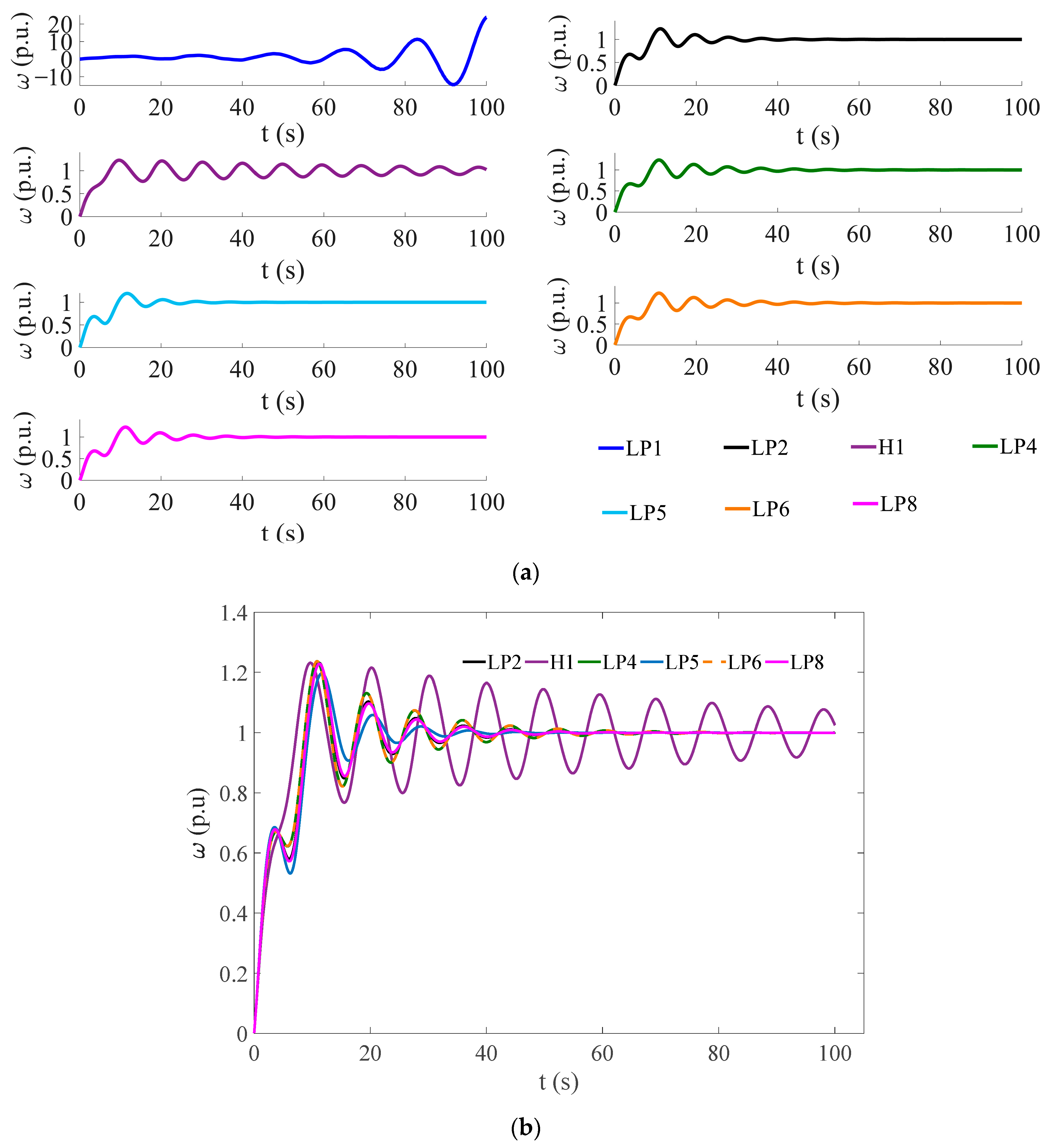
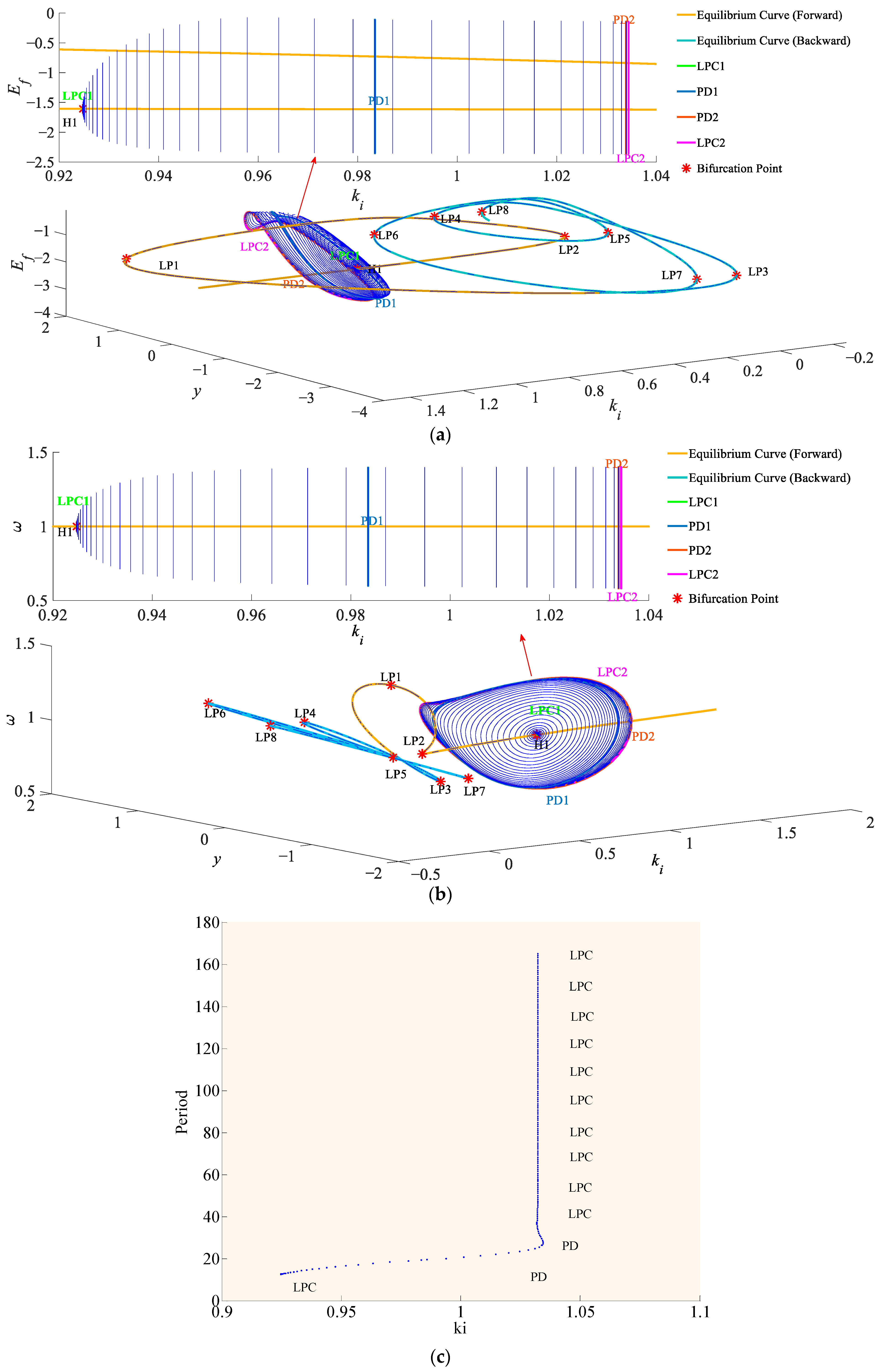
Six limit points and one supercritical Hopf bifurcation (ki = 0.925) are identified with the variation in ki. H1 induces a stable limit cycle, causing the system to lose stability and exhibit sustained oscillations in the vicinity of this point. LP1 (ki = 1.303) serves as the critical point of growing oscillations, and the system loses stability directly when parameters approach this value. Oscillation mode analysis demonstrates that low-frequency oscillations around 0.57 Hz with a damping ratio of approximately 0.2 and ultra-low-frequency oscillations in the range of 0.02–0.07 Hz exist at all bifurcation points. Further continuation analysis reveals the presence of LPC and PD in the neighborhood of H1. When ki > 0.925, the dynamic behavior of the system tends toward complex instability. Codimension-2 bifurcation analysis identifies one CP and one ZH, which delineates the high-risk parameter intervals under the synergistic variation in parameters. It is necessary to strictly restrict ki to values below 0.925 and keep it far from 1.303.
- (3)
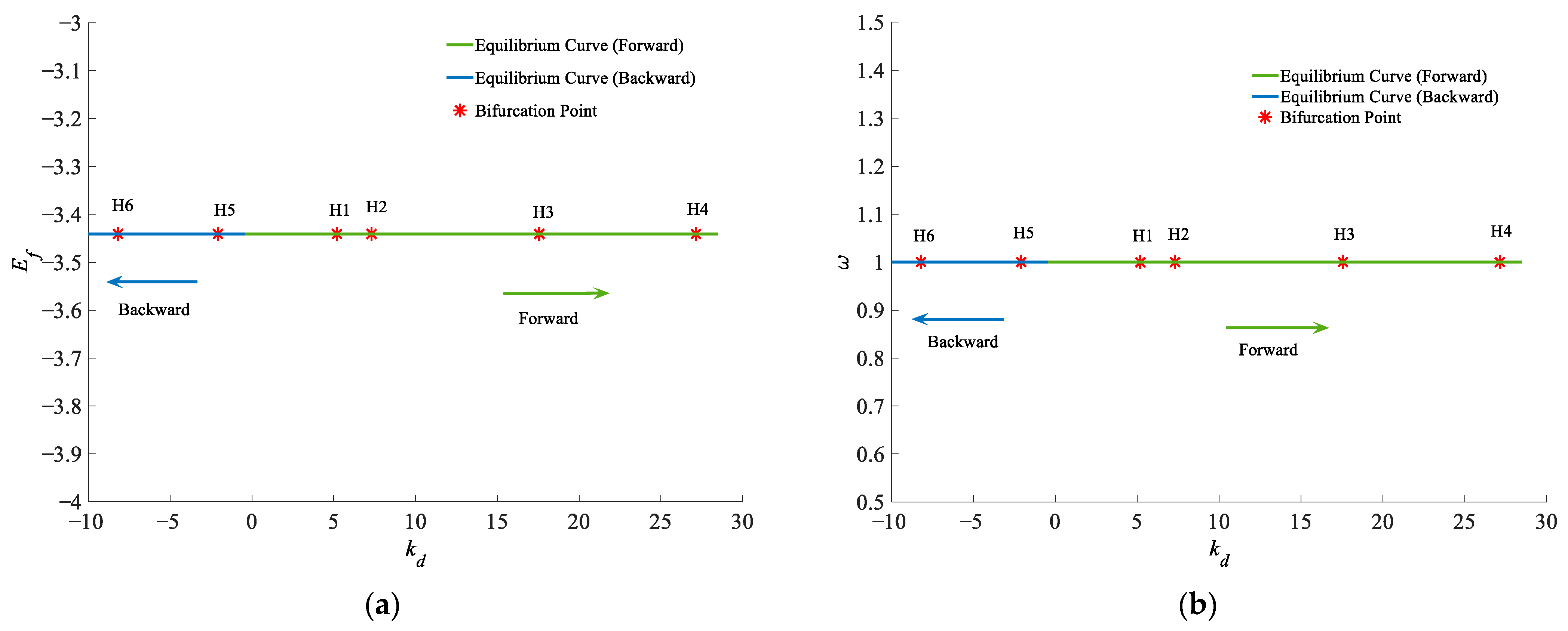
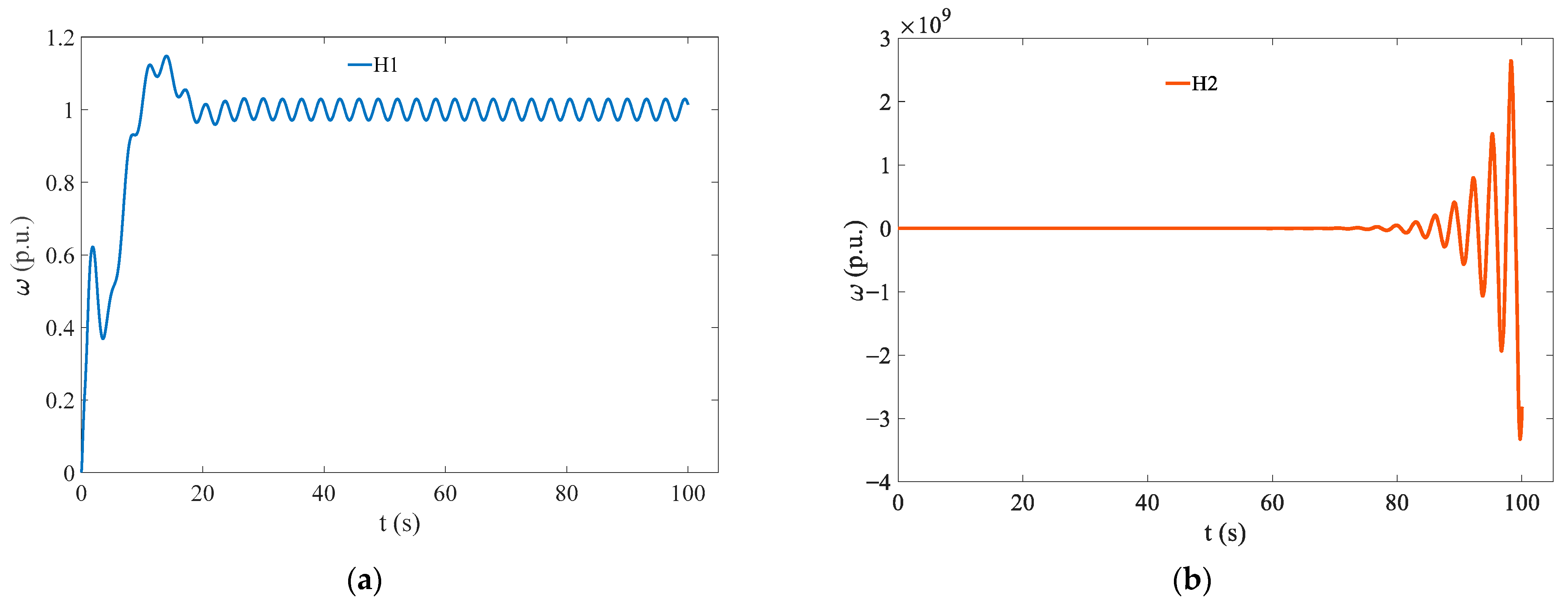
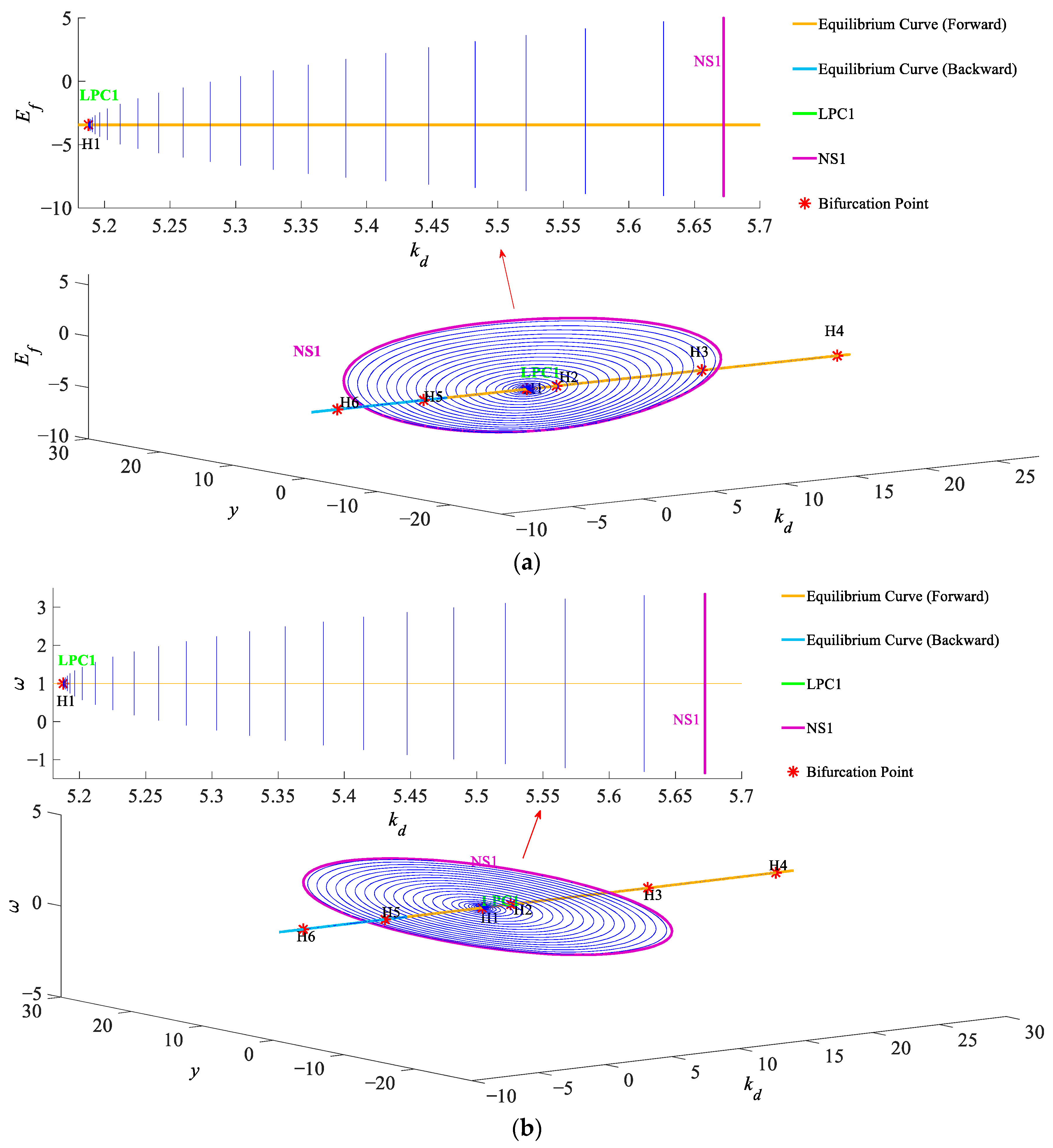
HPGS undergoes two supercritical Hopf bifurcations with kd varying, indicating a risk of oscillation instability near the critical values of kd. H1 has two positive damping modes, namely 0.2096 and 0.5651, with frequencies 1.0800 Hz and 0.0670 Hz, leading to constant-amplitude sustained oscillation. H2 exhibits a negative damping mode (−0.1690, 0.3298 Hz), causing divergent oscillations and complete instability. Continuation from H1 reveals LPC and NS bifurcations, where an increase in kd exacerbates the dynamic complexity of the system, without altering the oscillation period significantly. From an engineering perspective, kd should be strictly constrained below 5.188 and kept far from 5.672 and 7.305 with sufficient safety margins.
This study focuses on the influence of the mechanism of PID controller parameters on the stability of HPGS. A single machine infinite-bus system model is adopted for analysis to accurately capture the core dynamic characteristics of HPGS, providing a clear framework for clarifying the intrinsic correlation between PID parameters and stability. However, certain limitations also exist. Constrained by modeling simplification and the conditions for acquiring hydropower station data, the accuracy of the proposed model needs to be further improved to match the actual operation status of power grids, which involves multi-bus topologies, complex network structures, and nonlinear factors. Expanding to a multi-bus nonlinear model, introducing time-varying loads and detailed network components, breaking through the bottleneck of data acquisition, and exploring the coordinated optimization of PSS and PID parameters are important and valuable research directions in the future. This will comprehensively enhance the engineering applicability and theoretical support value of the research results.