1. Introduction
Transport remains a significant source of global greenhouse gas (GHG) emissions, with light-duty vehicles contributing significantly. In Australia, these vehicles account for approximately 13.2% of national emissions in 2023, based on the Department of Climate Change, Energy, the Environment and Water [
1], showing a modest increase compared with earlier estimates of nearly 10% in 2016 [
2]. As concerns about climate change and air quality intensify, the accuracy of emissions testing methods has come under renewed scrutiny. Laboratory-based certification tests, such as those under Australia’s Average Deviation Rate (ADR) 79/04 and ADR 81/02 regulations, often fail to reflect real-world driving conditions. This discrepancy, widely referred to as the “real-world gap”, leads to measurable differences between certified and actual vehicle performance, undermining both consumer trust and policy effectiveness [
3,
4,
5,
6,
7].
In response, the Australian Automobile Association (AAA) initiated the nation’s first real-world emissions testing programme, using Portable Emissions Measurement Systems (PEMS) to assess vehicles under normal driving conditions [
8]. This represents a significant shift in Australia’s approach to emissions monitoring and aligns with international trends, particularly the European Union’s Real Driving Emissions (RDE) regime and the implementation of the Worldwide Harmonised Light Vehicles Test Procedure (WLTP) [
9,
10]. Although real-world testing programmes are well established in Europe and North America [
11,
12,
13], independent peer-reviewed academic analyses of Australia’s national real-world testing outcomes remain limited. An independent academic analysis of Australia’s programme has so far been limited. Existing studies have documented persistent discrepancies between laboratory and on-road emissions [
14,
15] and have highlighted the limitations of standardised test cycles, particularly in their treatment of hybrid vehicles, cold starts, driver behaviour, and powertrain ageing [
16,
17,
18].
This paper presents new empirical evidence from Australia’s national on-road testing programme, contributing to the growing literature on the real-world performance of passenger and light commercial vehicles. Specifically, it provides the independent, data-driven academic assessment of the AAA’s national real-world emissions dataset across multiple powertrains. It compares Australian test results and international benchmarks from the European Commission and China and offers a brand-level analysis of leading manufacturers. By combining empirical real-world testing data with cross-jurisdictional comparisons, this study extends the existing literature, which has largely focused on overseas programmes or laboratory-based assessments. By highlighting the misalignment between laboratory certification and real-world operation, the study provides timely insights into Australia’s policy transition toward WLTP and Euro 6 standards [
19,
20,
21].
1.1. Background and Motivation
This research addresses the urgent need for improved transport and environmental policy by enhancing the accuracy and transparency of vehicle performance data. For decades, regulatory standards for fuel consumption and pollutant emissions have relied on laboratory test cycles that fail to reflect real-world driving conditions. This gap has persisted in Australia due to continued reliance on outdated certification protocols, despite mounting international evidence of underreporting and test-cycle optimisation. As the country begins to transition towards global harmonisation with WLTP and Euro 6 standards, there is a critical opportunity to evaluate the actual environmental and operational performance of its vehicle fleet.
Real-world emissions testing programmes have gained traction in Europe, China, and North America as governments seek to improve regulatory compliance and consumer trust. However, Australia has lacked equivalent independent academic studies linking empirical data with policy implications [
22,
23,
24,
25]. This paper fills that gap by using the first publicly available dataset from Australia’s real-world emissions testing programme to assess the performance of different vehicle types and manufacturers under everyday driving conditions.
Australia has been comparatively slow in adopting internationally harmonised emissions testing standards despite global momentum. While the European Union has mandated WLTP and Euro 6d standards since 2017, and China has implemented its equivalent CN6 standard and CLTC-P test cycle, Australia continues to certify vehicles using older ADR protocols derived from the New European Driving Cycle (NEDC). As of mid-2025, Euro 6d has not yet been mandated in Australia, and the national transition to WLTP remains incomplete. This regulatory lag has created a policy blind spot in the accuracy and comparability of Australian emissions data relative to global benchmarks.
A parallel credibility issue is emerging in the rapidly growing electric-vehicle (EV) market. Most manufacturers selling BEVs in Australia advertise driving-range figures derived from the WLTP, yet this test is not mandated under domestic regulation. WLTP cycles are more dynamic than the NEDC but are still conducted under controlled laboratory conditions that exclude many real-world variables such as temperature, topography, and accessory load. Empirical data from international and Australian testing programmes indicate that real-world energy consumption is typically 10–25% higher than laboratory ratings, resulting in effective range reductions of similar magnitude [
8,
26,
27]. This growing “range gap” mirrors the longstanding emissions gap and highlights that both conventional and electric vehicles exhibit systematic divergence between certified and on-road performance.
Compounding these issues is the absence of a fleet-wide CO2 emissions standard for light-duty vehicles in Australia, unlike the EU, US, Canada, or Japan. Without binding CO2 caps or strong fiscal incentives, manufacturers face limited pressure to supply lower-emission or more energy-efficient models. While recent federal initiatives, including the 2023 National Electric Vehicle Strategy and ongoing discussions around a New Vehicle Efficiency Standard, signal a policy shift toward decarbonisation, the success of these reforms will depend on reliable real-world performance data. Australia’s on-road testing programme, therefore, provides a vital empirical foundation to support evidence-based regulation, guide consumer labelling reform, and inform the rollout of EV and hybrid incentives.
By extending the established focus on emissions accuracy to include electric-vehicle range reliability, this study positions the “lab-to-road gap” as a broader measurement and governance challenge spanning internal-combustion, hybrid, and battery-electric technologies. Understanding both dimensions is essential for developing credible vehicle policies that reflect environmental realities and consumer experience.
1.2. Research Objectives and Questions
The main objective of this paper is to evaluate the extent to which laboratory-certified fuel consumption, emissions, and driving-range data reflect real-world performance in the Australian light-duty vehicle fleet. By analysing empirical test results and benchmarking them against international programmes, the study seeks to identify discrepancies, assess their implications, and inform future regulatory practices across both conventional and electric powertrains.
To guide this analysis, the paper addresses the following research questions:
RQ1. How do real-world emissions and fuel consumption results for Australian vehicles compare with laboratory-certified values across fuel types, vehicle categories, and brands?
RQ2. How do real-world energy consumption and driving-range results for battery-electric vehicles compare with WLTP-rated laboratory values, and how do these differences vary across models and segments?
RQ3. How does the Australian fleet’s real-world performance compare with outcomes from Europe and China, where WLTP and real-driving emissions (RDE) protocols are fully established?
RQ4. What are the implications of these lab-to-road discrepancies for emissions policy, consumer labelling, and regulatory reform, particularly as Australia transitions to WLTP and Euro 6 standards?
These questions frame a dual analytical task: assessing the credibility of laboratory-based certification for pollutant and energy performance and evaluating its relevance in an evolving regulatory landscape increasingly shaped by electrification. While prior studies have focused primarily on the emissions gap in internal combustion vehicles [
4,
5,
6], this research extends the evidence base by incorporating the emerging range gap for electric vehicles. In doing so, it establishes a unified framework for comparing the accuracy of laboratory-derived metrics—including CO
2, fuel consumption, and range—under Australian conditions. The results contribute to both environmental and consumer policy by identifying where test-cycle assumptions diverge from operational reality and by supporting the development of transparent, evidence-based standards for the next generation of vehicles.
1.3. Scope and Boundaries
This research focuses on light-duty vehicles, passenger cars (M1 category), and light commercial vehicles (N1 category) tested under real-world driving conditions using Portable Emissions Measurement Systems (PEMS). The study analyses performance across key pollutants, including carbon dioxide (CO2), nitrogen oxides (NOx), total hydrocarbons (THC), and fuel consumption, while also extending the analysis to battery-electric vehicles (BEVs) to examine energy consumption and driving-range performance under Australian operating conditions.
The scope of the research is defined along four key dimensions:
First, it is limited to publicly available data from the Australian Automobile Association’s (AAA) national real-world testing programme, which includes 114 vehicles across four powertrain categories: petrol internal combustion engines, diesel engines, petrol–electric hybrids, and battery-electric vehicles. The inclusion of BEVs in the most recent testing cycle enables a direct comparison between laboratory-certified and real-world energy use and driving range.
Second, it incorporates comparative benchmarking against international datasets from the European Commission (Euro 6d, WLTP, and On-Board Fuel Consumption Monitoring (OBFCM) programmes) and selected Chinese emissions testing studies applying the CLTC-P and CN6 standards. For electric vehicles, WLTP-rated range values reported by manufacturers were compared with measured real-world outcomes, providing a consistent framework for cross-jurisdictional analysis.
Third, it focuses on vehicles certified under Australia’s current ADR 81/02 and ADR 79/04 regulations, which remain based on the NEDC and are only partially harmonised with WLTP and Euro 6. Although WLTP-derived range ratings are widely used in manufacturer disclosures for BEVs and plug-in hybrids, they are not formally mandated in Australia. This creates a dual testing environment in which combustion and electric vehicles are subject to distinct certification and reporting regimes.
Fourth, the study’s geographical and methodological boundaries are defined by the available PEMS-based testing in metropolitan and peri-urban conditions, consistent with the AAA’s empirical programme. Range testing for BEVs was conducted under moderate climatic conditions representative of southern Australia, acknowledging that temperature, terrain, and accessory load can influence energy consumption and range outcomes.
By defining these boundaries, the research maintains methodological coherence while remaining sufficiently broad to capture structural and policy-relevant trends in vehicle performance. The integrated treatment of emissions, fuel economy, and electric range allows for a holistic understanding of Australia’s evolving vehicle fleet and provides an empirical foundation for the transition toward harmonised standards, transparent consumer labelling, and real-world performance verification.
1.4. Global Context: Real-World Vehicle Emissions Testing
Concerns about the disconnect between laboratory-certified and real-world vehicle emissions have driven the development of more representative testing protocols. In Europe, the shortcomings of the NEDC, particularly its static acceleration patterns and low average speeds, led to widespread underestimation of emissions and fuel consumption [
3,
28,
29,
30]. Following the Dieselgate scandal, the European Union mandated a two-part reform: the WLTP for laboratory testing and RDE testing using PEMS for on-road verification [
31,
32]. These changes took effect from 2017 for new vehicle types and 2019 for all registrations, with Euro 6d-TEMP and Euro 6d standards introducing progressively tighter NO
x conformity factors [
9,
11].
The WLTP’s improved design—longer cycle duration, higher average and maximum speeds, and greater dynamic variability—has enhanced its capacity to represent real-world driving. However, while it was developed primarily for emissions and fuel-consumption testing, it has also become the standard method for estimating electric-vehicle energy use and range. WLTP range ratings, now used globally in BEV marketing and certification, provide a common reference point for consumers but still fall short of capturing real-world variability arising from temperature, topography, traffic, and auxiliary loads. Empirical studies consistently show that real-world BEV range is 10–25% lower than WLTP values under typical driving conditions [
8,
26,
27]. This growing evidence underscores that the lab-to-road discrepancy is not confined to combustion engines but extends to electrified powertrains, revealing a broader structural issue in test-cycle representativeness.
The European Commission also launched the On-Board Fuel Consumption Monitoring (OBFCM) programme, requiring all light-duty vehicles from 2021 to report real-world fuel and energy use via in-vehicle sensors. This initiative compares declared type-approval values and operational performance across hundreds of thousands of vehicles. Early OBFCM data revealed systematic real-world underperformance of Plug-In Hybrid Electric Vehicles (PHEVs), with actual CO
2 emissions up to 3.5 times higher than certified values in some models [
6,
18,
33,
34,
35,
36,
37,
38,
39,
40,
41]. Together, the WLTP, RDE, and OBFCM frameworks represent a multi-layered regulatory approach that captures both controlled and real-world performance, laying the foundation for comprehensive emissions and energy-use governance.
In North America, the United States Environmental Protection Agency (US EPA) has long employed additional “five-cycle” tests, including cold start, aggressive driving, and air conditioning load, alongside city and highway cycles. These provide a more nuanced estimate of fuel economy and GHG emissions than single-cycle lab tests [
42]. Independent research by the International Council on Clean Transportation (ICCT) and Consumer Reports has repeatedly shown that fuel economy shortfalls of 15–25% are common in US conditions [
43].
China has taken significant steps toward improving test accuracy by replacing the NEDC-based China 5 cycle with the China Light-Duty Vehicle Test Cycle (CLTC) under CN6 regulations. CLTC incorporates more dynamic acceleration and a broader speed range, while CN6b introduces a real-world emissions component akin to Europe’s RDE. Early testing under CN6 shows lab-to-road deviations in the range of 25–30% for petrol ICEVs, consistent with international trends [
27,
44,
45]. China has also begun applying energy-consumption metrics and range validation for BEVs and hybrids under similar protocols, reflecting a convergence between emissions and energy-efficiency regulation.
Despite these global developments, Australia remains without a mandatory real-world testing regime or fleet-wide fuel economy or CO2 standard. WLTP has not yet been fully adopted for either combustion or electric vehicles, creating a fragmented regulatory environment that limits the comparability of domestic and international performance data. By situating Australia’s testing results alongside data from the EU, US, and China, this study contributes to the growing international effort to bridge the lab-to-road gap—across both emissions and range—and supports the case for harmonised testing and transparent consumer information.
1.5. Emissions Test Protocols: A Global Comparison
To understand the divergence between test and real-world results, comparing the properties of regulatory test cycles across jurisdictions is useful. As summarised in
Table 1, these cycles differ in duration, average and maximum speeds, thermal conditions, and load assumptions. Such design choices shape outcomes not only for tailpipe emissions and fuel consumption but, with the growing presence of battery electric vehicles (BEVs), also for laboratory estimates of EV energy use and range.
Australia’s current ADR protocols are still based on the NEDC, which features low acceleration, limited top speeds, and minimal cold-start impact. While cold-start emissions constitute a substantial proportion of total NEDC results, the conditions under which they are measured are highly controlled and repeatable, limiting their ability to accurately reflect the variability of real-world cold-start operation [
4,
6,
9,
11]. In contrast, the WLTP and CLTC cycles incorporate more aggressive acceleration, variable speeds, and dynamic gear shifting, making them better approximations of real-world driving. These distinctions help explain why certification results often diverge from on-road outcomes, particularly under NEDC-based protocols still used in Australia.
For BEVs, WLTP now functions as the de facto basis for laboratory range and energy consumption communicated to consumers in many markets, including Australia, even though WLTP is not yet mandated domestically. This matters because WLTP, like other laboratory procedures, is conducted under controlled, temperature-stabilised conditions with constrained accessory loads and no extreme thermal stress, producing ranges that tend to exceed real-world outcomes observed in mixed urban-suburban-highway use. By contrast, the CLTC’s urban weighting and the US EPA’s broader five-cycle framework capture different facets of in-use behaviour; however, cross-regional comparability remains imperfect.
Australia’s lack of full adoption of WLTP test procedures and Euro 6 emissions standards, combined with the widespread marketing of WLTP-based EV range figures, creates a dual testing environment that complicates direct comparisons across powertrains. The integrated analysis presented later (
Section 3 and
Section 4) interprets emissions and range gaps in the context of the characteristics and known limitations of these test frameworks.
2. Methodology
2.1. Overview
This study adopted a quantitative, comparative research design to evaluate the differences between laboratory-certified and real-world performance in the Australian light-duty vehicle fleet. The analysis draws on vehicle testing data made publicly available by the AAA, supplemented by international benchmarking data from the European Commission and published sources on vehicle performance in China. In addition to tailpipe pollutants and fuel consumption, the study extends the scope to battery-electric vehicle (BEV) energy consumption and driving range, enabling a dual assessment of the lab-to-road gap for emissions, fuel/energy use, and range under Australian conditions.
2.2. Data Sources
Real-world Australian vehicle emissions data were sourced from the AAA national real-world testing programme. This programme used PEMS to capture second-by-second emissions during on-road driving across typical Australian conditions [
8]. The dataset includes results for vehicles comprising popular makes and models across the passenger (M1) and light commercial (N1) segments, with a mix of petrol, diesel, hybrid, and BEV powertrains.
The AAA real-world test protocol follows a standardised on-road drive cycle designed to reflect typical Australian driving conditions. Each test comprises a fixed route with three sequential segments, urban, suburban, and highway, conducted under normal traffic flow without route optimisation for emissions performance. Boundary conditions were standardised across all vehicles: two occupants were present, no additional payload was carried, tyres were inflated to the manufacturer’s recommended pressures, and vehicles were tested using commercially available fuel. Air-conditioning systems were operated in automatic climate-control mode, set to maintain a cabin temperature of approximately 22–24 °C, with the fan speed automatically controlled by the vehicle system. This configuration reflects common real-world usage in Australian climates rather than minimum accessory load conditions [
8].
For BEVs, laboratory comparison values for energy use and range are taken from WLTP-rated disclosures reported by manufacturers. While WLTP has replaced the NEDC in major markets, it is not yet mandated in Australia; however, manufacturers commonly report WLTP figures for consumer communication. These WLTP ratings are used here as the laboratory benchmark for BEV range and energy consumption, consistent with prevailing international practice, and to maintain cross-jurisdictional comparability.
PEMS equipment was installed securely at the rear of each test vehicle, with sampling probes inserted into the exhaust stream. Calibration was performed according to manufacturer protocols before each test. Vehicles were tested with two occupants, no additional payload, and a full tank of commercially available fuel. Air conditioning systems were turned on, reflecting common usage in Australian climates. Vehicles were re-tested only when objective data quality checks indicated that test integrity had been compromised, including verified sensor malfunctions, material route deviations due to unplanned detours, or sustained abnormal operating conditions arising from extreme weather or major traffic disruptions. Tests affected by such anomalies were excluded or repeated to ensure consistency and comparability across vehicles [
10,
46].
International benchmarks were obtained from:
The European Commission’s OBFCM dataset and PEMS-based assessments under the Euro 6d framework [
9]; and
China-based empirical testing applying CLTC-P laboratory cycles and CN6 real-world measurements for ICEVs [
27].
The final dataset incorporated the most recent AAA testing results, encompassing a broad cross-section of Australia’s passenger and light commercial fleets, as well as a subset of BEVs tested under the same route design to capture real-world energy use and achievable range.
Vehicle selection within the AAA testing programme used a market-informed sampling approach to prioritise high-selling models and major manufacturers across key vehicle segments and powertrains. This approach was designed to maximise policy and consumer relevance by focusing on the vehicles most commonly purchased in the Australian market, rather than producing a statistically representative random sample of the entire fleet.
2.3. Vehicle Sample Description
The AAA dataset used in this study comprised vehicles covering a representative mix of small, medium, and large passenger cars, SUVs, and light commercial vehicles from recent model years. The sample includes petrol and diesel internal combustion vehicles, mild hybrid electric vehicles (MHEVs), full hybrid electric vehicles (HEVs), plug-in hybrid electric vehicles (PHEVs), and battery-electric vehicles (BEVs), reflecting the current diversity of the Australian new vehicle market. Hybrid vehicle classification is based on manufacturer specifications and regulatory definitions. MHEVs provide torque assist without electric-only propulsion, HEVs enable limited electric-only operation, and PHEVs allow for grid charging and extended electric-only driving.
As a result of this selection strategy, the dataset is weighted toward newer model years and higher-volume vehicles. This reflects the AAA programme’s objective of assessing vehicles currently available to consumers and subject to established certification standards, rather than legacy or end-of-life models. While this market-based selection enhances the practical relevance of the findings, it may introduce sampling biases, including the underrepresentation of older vehicles, low-volume models, and niche configurations. Therefore, the results should be interpreted as indicative of real-world performance for mainstream vehicles in the current Australian fleet, rather than as a statistically representative characterisation of all registered vehicles.
Vehicle selection was based on market popularity and diversity across body styles and powertrains, prioritising high-volume models. Each vehicle was sourced from the general market and tested with minimal modification. Testing followed a tripartite route structure (urban, suburban, highway) to simulate typical daily driving conditions, lasting approximately 90–100 min and covering 90–100 km per vehicle. For ICE and hybrid vehicles, PEMS equipment captured emissions on a second-by-second basis; for BEVs, energy use and effective range were measured along the same route configuration, allowing for a consistent real-world comparison to WLTP ratings.
The urban segment is characterised by low-speed operation (typically <60 km/h), frequent stop-start conditions, signalised intersections, and short trip lengths, which are representative of central and inner-suburban driving. The suburban segment represents arterial and distributor roads with moderate speeds (approximately 60–80 km/h), smoother traffic flow, and limited stopping. The highway segment consists primarily of controlled-access motorways with speeds generally above 80 km/h, minimal stopping, and stable cruise conditions. Three segments provide a balanced representation of typical daily driving patterns in Australian metropolitan areas. The total test duration is approximately 90–100 min, covering a distance of 90–100 km, with each segment contributing a consistent proportion of distance and time across vehicles.
A summary of vehicles included in the dataset is provided in
Table 2.
2.4. Data Cleaning and Classification
Australian vehicle data were cleaned and categorised by:
Vehicle type: M1 (passenger) and N1 (light commercial), in line with European standards [
9];
Powertrain: petrol ICEV, diesel ICEV, MHEV, HEV, PHEV, and BEV;
Brand/Model and vehicle category (e.g., small car, medium SUV, Ute).
Laboratory-certified values for CO2 emissions and fuel consumption were extracted from official certification documents, while real-world values were calculated from PEMS data collected during AAA road tests. Extreme outliers and incomplete records were excluded following instrument diagnostics and route adherence checks.
Hybrid classifications are based on manufacturer specifications and verified against objective technical criteria reflecting the level of electrification. The dataset includes mild hybrid electric vehicles (MHEVs) and full hybrid electric vehicles (HEVs), and plug-in hybrid electric vehicles (PHEVs) were not included in the AAA testing programme analysed in this study.
Specifically, MHEVs are defined as vehicles equipped with low-voltage (typically 12–48 V) electrical systems and small battery capacities (generally <1 kWh) that provide torque assist and regenerative braking but do not permit electric-only propulsion. HEVs (full hybrids) are defined as vehicles with higher-capacity batteries (typically ~1–2 kWh or greater) and electric drivetrains capable of limited electric-only operation at low speeds. PHEVs, characterised by substantially larger batteries (>5 kWh) and external charging capability, were excluded from the analysed dataset.
This classification approach avoids uncertainty arising from manufacturer marketing terminology and ensures that hybrid categories reflect functional differences in vehicle operation and electrification intensity.
For BEVs, WLTP-rated energy consumption (Wh/km) and range (km) were collated from manufacturer specifications, and real-world energy use was computed over the AAA route. Effective range was then derived from measured energy intensity and usable battery capacity or taken from calibrated in-vehicle range logs when appropriate. The range gap is expressed as the percentage difference between WLTP-rated and real-world achievable range (and analogously for Wh/km). BEV test runs were screened using GPS traces and onboard energy logs to identify objective data integrity issues, including incomplete route execution, prolonged unplanned stops, logging failures, or route interruptions caused by major traffic incidents. Each AAA record (ICE, hybrid, BEV) was cross-checked for consistency across route segments; records flagged for sensor misalignment or route deviation were excluded or retested to ensure comparability. This ensured the final dataset reflected consistent driving conditions, instrumentation, and data integrity across all powertrains.
2.5. Analytical Approach
Descriptive statistics (mean, variance, percentage differences) were calculated for emissions, fuel/energy use, and (for BEVs) range outcomes. Visualisations (bar charts/boxplots) were used to illustrate performance across powertrains, brands, and vehicle categories. The principal outcome measures are:
Emissions gap: Percentage difference between laboratory-certified and real-world CO2 (and pollutant compliance where applicable),
Fuel/energy gap: Percentage difference between laboratory-certified fuel use (ICE/hybrid) or WLTP energy use (BEV) and real-world values, and
Range gap (BEV): Percentage difference between WLTP-rated and real-world achievable range.
Cross-national comparisons were then made:
Australia vs. Europe: matched powertrain and vehicle-category samples assessed using WLTP test procedures, Euro 6d emissions standards, and OBFCM evidence;
Australia vs. China: comparative cases under CLTC-P/CN6 for ICEVs.
Where appropriate, inferential statistics (paired t-tests, correlation, regression, and variance analysis) were applied to quantify systematic differences and to examine whether powertrain and segment effects explain variation in lab-to-road gaps, now including the BEV range dimension.
The comparative analysis with China is based on a representative petrol ICEV tested under the CLTC-P laboratory cycle and the CN6 real-world emissions protocol. While this offers valuable directional insights, the limited sample size restricts statistical generalisability. The Chinese vehicle selected reflects a standard urban SUV configuration and includes laboratory and real-world measurements under varying load and operational conditions. Although the AAA dataset contains a broader fleet sample, including China’s results, it enables a preliminary contrast of test protocols and emissions gaps under differing regulatory regimes. Given China’s rapid transition to CN6 and growing focus on PEMS integration, this comparison also highlights the potential benefits of future test harmonisation and cross-national validation studies. Nonetheless, this comparison provides one of the first brand-level and cross-national analyses of real-world emissions in the Australian context, contributing new empirical evidence to an emerging policy domain.
2.6. Technical Notes on PEMS Measurement
The PEMS used in the AAA testing programme collect real-time data on key pollutants, including CO2, NOx, THC, and CO. The system includes a tailpipe-mounted exhaust flow meter, gas analysers, GPS, and OBD integration. During each test drive, PEMS instruments capture second-by-second concentrations of pollutants and combine these with instantaneous exhaust flow rates to calculate mass emissions (g/km). Data are corrected for ambient conditions, fuel density, and road gradient using standardised algorithms. Vehicles were tested following standardised driver instructions and pre-calibrated instrumentation, in line with best-practice RDE protocols.
Data are corrected for ambient conditions (temperature, pressure, and humidity) and fuel properties (including density and carbon content) using standardised procedures consistent with established RDE methodologies [
47]. Road gradient is not subject to post-processing correction. Instead, gradient effects are fundamentally captured through their influence on vehicle operating conditions, including engine load, fuel consumption rate, and exhaust mass flow, all of which are directly measured by the PEMS during on-road operation. As a result, emissions associated with uphill and downhill driving are included in the reported results rather than normalised to flat-road conditions. This approach is consistent with European RDE frameworks, which assess emissions as measured under real driving conditions rather than correcting for gradient effects [
9,
10,
48].
Total CO
2 emissions, for example, are calculated by integrating instantaneous concentration and exhaust flow over distance travelled. NO
x values are derived from simultaneous NO and NO
2 measurements corrected for sampling delay and equipment calibration. In the AAA programme, each test was completed using standardised driver instructions and pre-calibrated instrumentation, in line with best practice protocols established in European RDE testing [
10,
48]. Drivers were instructed to operate their vehicles in a normal and lawful manner, following posted speed limits and prevailing traffic conditions. No eco-driving or aggressive driving strategies were permitted. Drivers were required to follow a predefined route comprising urban, suburban, and highway segments, maintain smooth acceleration and deceleration where traffic conditions allowed, and avoid unnecessary idling or manual intervention unless required for safety [
46,
47]. Gear selection was handled according to transmission type. For vehicles equipped with automatic transmissions, the transmission was left in the default drive setting. For manual transmission vehicles, drivers followed manufacturer-recommended gear-shift indicator prompts where available; otherwise, gears were selected to reflect normal, lawful driving practice. Driving mode (e.g., Normal or Comfort) was set to default manufacturer settings, and cruise control was used only where appropriate on highway segments. These instructions are consistent with the principles applied in European RDE testing, which aim to strike a balance between repeatability and representative real-world operation [
9,
10,
48].
PEMS do not apply to BEV tailpipe emissions. For BEVs, energy consumption (Wh/km) was obtained from on-board instrumentation and trip-level logs over the AAA route. The AAA dataset includes internal validation checks to ensure data reliability, including consistency between reported energy consumption, GPS-verified distance travelled, and changes in battery state of charge over the completed route. Records showing inconsistencies beyond expected measurement tolerance or affected by route interruptions were excluded or retested by the AAA prior to release.
Effective range reflects the achievable distance under observed ambient conditions and accessory use. WLTP-rated values serve as the laboratory benchmark; the BEV range gap and energy-use gap are computed against WLTP. Ambient temperature, wind, road surface, and traffic conditions were recorded at test time to contextualise results and support cross-vehicle comparability along the common route structure. Ambient temperature, wind conditions, traffic density, and road grade were monitored during each test to ensure compliance with AAA protocol boundary conditions. Tests affected by abnormal congestion, incidents, or extreme weather were either repeated or excluded to ensure comparability across vehicles.
The AAA testing programme utilised certified PEMS that were compliant with international RDE standards. The PEMS configuration includes non-dispersive infrared (NDIR) analysers for CO
2 and CO, chemiluminescence detectors (CLD) for NO and NO
2 (reported as NO
x), and flame ionisation detectors (FID) for THC. Exhaust mass flow was measured using a tailpipe-mounted exhaust flow meter, while vehicle speed, position, and elevation were recorded via integrated GPS and on-board diagnostics (OBD) interfaces [
9,
10,
13,
46].
Prior to each test, PEMS units were calibrated in accordance with the manufacturer’s specifications and established RDE best practices. This included zero and span calibration using certified calibration gases, leak checks of sampling lines, and verification of analyser response times. Post-test validation checks were conducted to confirm measurement stability and to identify potential analyser drift. Any test runs affected by calibration anomalies, sensor misalignment, or data dropouts were excluded or repeated.
All PEMS data streams were time-aligned and synchronised with GPS and OBD signals before processing. Emissions mass calculations were derived from second-by-second pollutant concentrations and exhaust flow rates, corrected for ambient temperature, pressure, and humidity. These procedures are consistent with methodologies applied in European RDE testing and prior peer-reviewed studies using PEMS-based real-world emissions measurement [
10,
48].
2.7. Limitations
Sample sizes for specific categories, particularly hybrids and BEVs, remain limited, constraining the generalisability of some findings. The dataset does not capture seasonal extremes (very high/low temperatures), high-altitude routes, or heavy accessory loads beyond typical air conditioning usage; these factors can materially affect both emissions and, for BEVs, energy consumption and range. While the European dataset is extensive (>800,000 vehicles), the AAA sample is comparatively small, and China’s comparison relies on a representative case; these differences in scope and protocol coverage limit direct comparability. Finally, WLTP range ratings, used here as the laboratory benchmark for BEVs, are not yet mandated under Australian regulation, introducing a degree of institutional heterogeneity in laboratory-to-real-world comparisons. While the AAA test cycle reflects typical Australian driving, it does not constitute a regulatory laboratory cycle; therefore, some variability in traffic interaction and accessory load remains characteristic, despite the standardisation of route structure and boundary conditions. In addition, because vehicle selection was market-driven rather than random, the sample may overrepresent newer, higher-selling models, potentially biassing estimates of average lab-to-road gaps relative to the broader in-use fleet.
3. Results
This section presents the empirical findings of the study, focusing on lab-to-road differences in emissions and fuel consumption for internal combustion and hybrid vehicles, as well as differences in energy use and achievable driving range for battery electric vehicles (BEVs). Consistent terminology is applied across all outcomes: absolute values are reported in g/km, L/100 km, Wh/km, and km, while gaps are expressed as percentage deviations between laboratory-certified (type-approval or WLTP-rated) and real-world measurements obtained under the AAA on-road testing protocol.
This section is structured around policy-relevant and analytically rich comparisons, with six focused subsections:
CO2 emissions: Laboratory vs. Real-World Performance (by fuel type and vehicle category)
Fuel Consumption: Laboratory vs. Real-World Performance
NOx and combined pollutants: Compliance and exceedances
CO emissions: Distributional variability and calibration effects
International and brand-level comparisons (Australia vs. Europe)
Electric vehicle range: Laboratory vs. real-world performance
3.1. CO2 Emissions: Laboratory vs. Real-World Performance
Real-world CO
2 emissions were consistently higher than laboratory-certified values across all vehicle categories and fuel types. Among petrol vehicles (n = 68), the average laboratory result was 157.9 g/km, while the real-world average reached 168.8 g/km, representing a +6.9% increase [
8]. Diesel vehicles (n = 17) recorded a smaller increase, from 193.4 g/km in the lab to 199.5 g/km on road (+3.2% difference). Although the percentage deviation of diesel vehicles was lower, their absolute emissions remained substantially higher, nearly 30 g/km above those of petrol vehicles, reflecting factors such as greater engine displacement, all-wheel-drive configurations, and the regeneration cycles of diesel particulate filters (DPF) and selective catalytic reduction (SCR) systems [
10,
49].
Segment-level analysis showed that large SUVs and utility vehicles have the most significant absolute real-world emissions. 2WD and 4WD Utes recorded real-world CO
2 emissions of 237 g/km and 240 g/km, respectively. In contrast, compact and medium cars exhibited smaller lab-to-road gaps of +10–15 g/km, while people movers recorded slightly lower real-world emissions, possibly due to limited sample size or variable payload conditions [
8].
These findings underscore a consistent underestimation of real-world CO
2 output in certification processes, supporting international observations of test-reality gaps across multiple jurisdictions [
3,
5,
48,
50] and divergence under NEDC-derived certification.
It is noted here that BEVs have zero tailpipe emissions; their contribution to the lab-to-road evidence base is addressed through energy intensity and range in
Section 3.6.
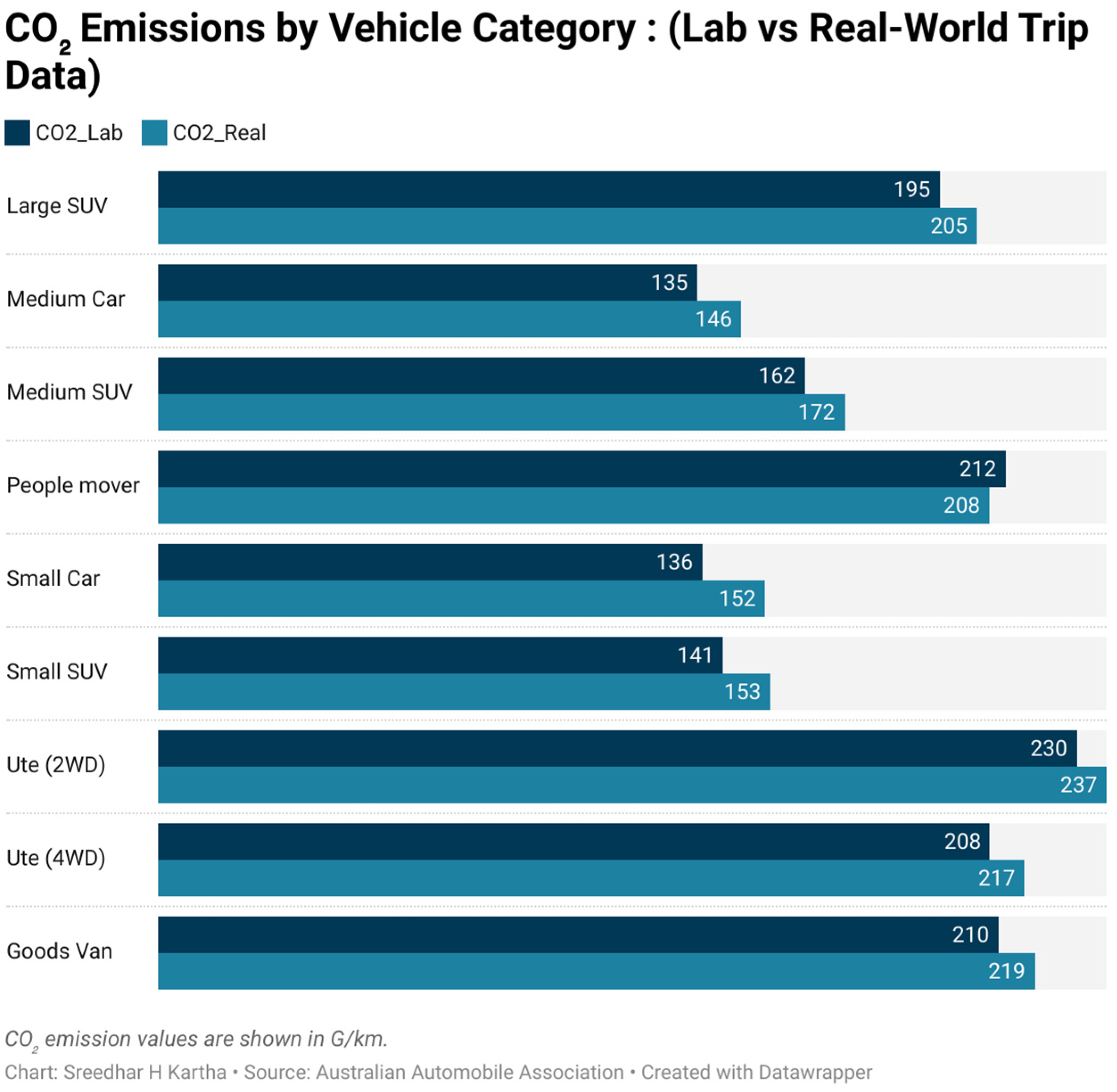
Figure 1 explains the differences between laboratory-certified and real-world CO
2 emissions across vehicle categories. Higher-emitting segments, such as large SUVs, Utes (both 2WD and 4WD), and goods vans, consistently show higher real-world emissions than laboratory values, often exceeding 200 g/km. Smaller vehicle classes, including small cars and small SUVs, show lower absolute emissions but proportionally larger relative gaps between certified and observed performance. These patterns suggest that lab-to-road discrepancies persist across the entire range of light-duty vehicle classes, underscoring the need for real-world testing alongside certification procedures.
Table 3 summarises laboratory CO
2 values, real-world measurements, absolute differences, and percentage gaps corresponding to
Figure 1.
3.2. Fuel Consumption: Laboratory vs. Real-World Performance
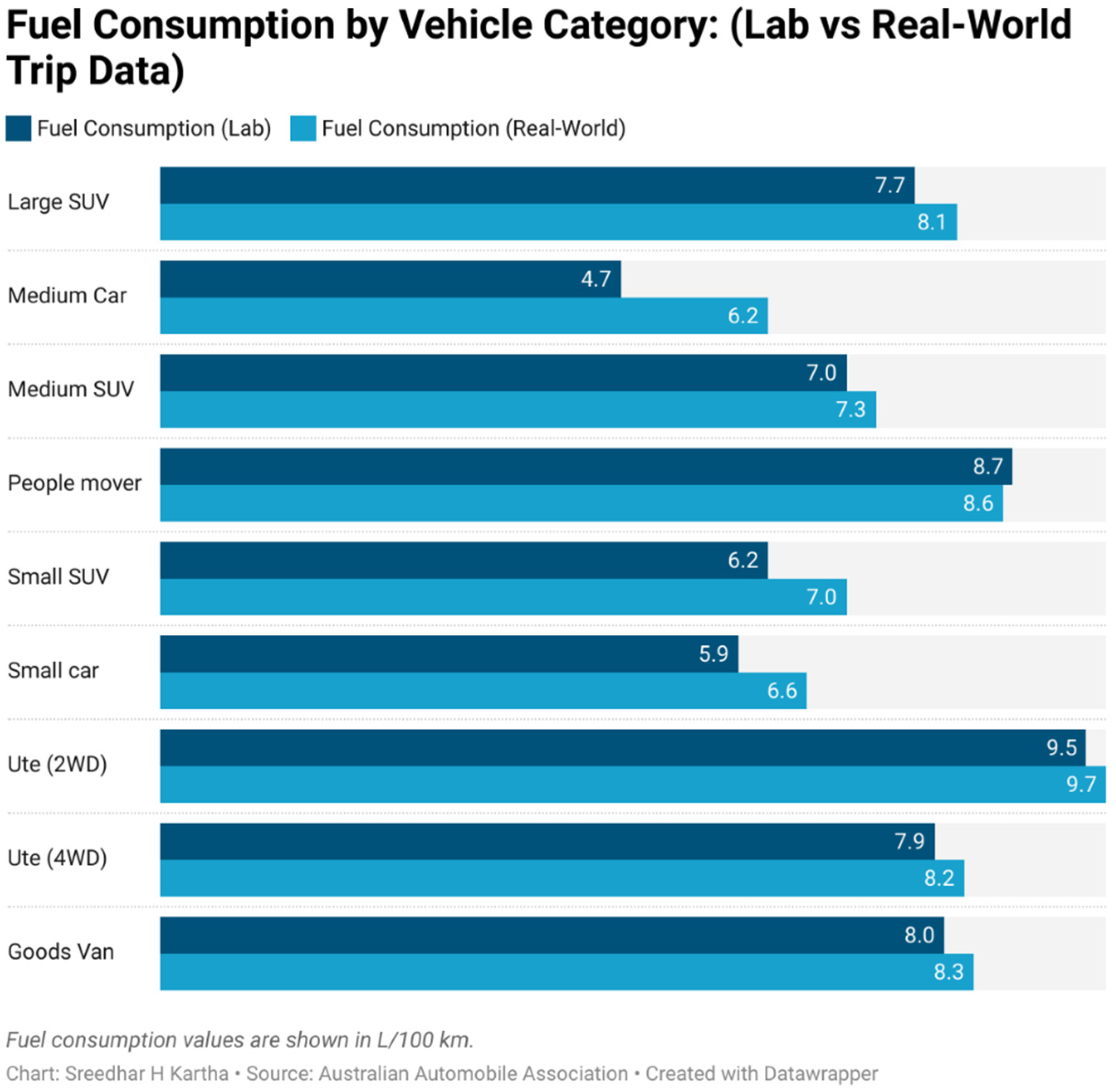
Fuel consumption data followed a similar pattern to CO
2 emissions, with most vehicle categories exhibiting higher real-world fuel use than laboratory-certified values (
Figure 2). Across the AAA-tested fleet, real-world fuel consumption generally exceeded laboratory ratings, particularly among smaller passenger vehicle categories. Medium cars showed the largest proportional increase, with real-world fuel use rising by 31.9% relative to laboratory values. This was followed by small SUVs (12.9%) and small cars (11.9%).
At the individual vehicle level, several petrol-powered models, such as the Mazda 2, Suzuki Swift, and GWM Jolion, showed deviations exceeding 30%, particularly under stop-start urban driving conditions [
8]. Diesel vehicles, by contrast, showed a more stable aggregate profile, with smaller average deviations between laboratory and real-world conditions. However, certain larger diesel vehicles, including large SUVs and utility vehicles, still recorded real-world fuel consumption increases in the range of 3–6%, reflecting sensitivity to vehicle mass, payload, and operating conditions [
14].
Overall, real-world fuel consumption is inclined to exceed laboratory test values across most vehicle categories, highlighting the limitations of standardised test cycles in capturing actual driving conditions, especially in urban settings and among underrepresented vehicle types (
Figure 2). The people mover category was the only segment to record a marginal reduction in real-world fuel consumption (−1.15%); however, this result is based on a very small sample and should therefore be interpreted carefully.
Figure 2 further shows that, while heavier vehicle classes such as large SUVs, goods vans, and Utes generally exhibit smaller proportional gaps, they remain among the highest in absolute fuel consumption, often exceeding 8.0–9.0 L/100 km in real-world operation. However, compact cars and small SUVs showed larger proportional deviations, despite having lower absolute fuel use. These findings highlight the variability between controlled laboratory conditions and real-world driving environments, supporting segment-specific adjustment factors or separate emissions and fuel-economy labelling schemes personalised to vehicle class.
Table 4 presents laboratory and real-world fuel consumption values, along with absolute and percentage differences, which support the comparisons illustrated in
Figure 2.
A detailed comparison of real-world and laboratory fuel consumption values highlights these patterns. Medium cars again exhibited the highest percentage increase (+31.91%), followed by small SUVs (12.90%), small cars (11.86%), and medium SUVs (4.29%). Utes showed smaller increases, with the 4WD variant rising by 3.80% and the 2WD variant by 2.12%. In contrast, large SUVs recorded a modest 5.58% increase. Similarly with earlier observations, the only category showing improved real-world performance was the people mover (−1.15%), based on very limited sample sizes.
Analysis by vehicle segment further reveals structural contributors to real-world fuel consumption gaps. Large SUVs and Utes recorded the highest absolute fuel use under real-world conditions, often exceeding 8.0–9.0 L/100 km. However, compact cars and small SUVs, despite having lower absolute fuel use, showed larger proportional deviations compared to laboratory values. These results reinforce the basis for segment-specific testing cycles or adjustment factors, and support the adoption of differentiated emissions and fuel-economy labelling schemes that account for vehicle class.
These findings align with results from European and Chinese studies that document consistent underperformance of certified fuel economy under real-world conditions, particularly among smaller petrol vehicles and hybrid models subject to short-trip and cold-start penalties [
13,
27].
3.3. NOx and Combined Pollutants: Compliance and Exceedances
The real-world NO
x performance of diesel vehicles revealed severe emissions exceedances when benchmarked against international Euro 6d reference limits. While Euro 6d standards are not directly legislated under the current ADR, they are widely adopted as a comparative reference for assessing real-world emission performance in the absence of in-service conformity testing under ADR. All tested diesel models exceeded the Euro 6d reference value of 80 mg/km under Australian road conditions. The Mitsubishi Pajero Sport recorded NO
x emissions of 692 mg/km, over 760% above this benchmark level. Other high-emitting models included the Toyota Hilux 4 × 4 (494 mg/km), Kia Carnival (552 mg/km), and Hyundai Staria (461 mg/km), pointing to a systemic underperformance of NO
x after-treatment systems under real-world driving conditions [
8,
51].
In contrast, petrol vehicles largely aligned with the Euro 6d NO
x benchmark under real-world operation. Only the Hyundai Venue marginally exceeded the reference value (83 mg/km), while most petrol models remained within the 10–30 mg/km range. Although these comparisons do not imply non-compliance with ADR certification requirements, they provide a useful indicator of relative emissions performance under real-world conditions. This pattern aligns with international findings that petrol vehicles, due to lower combustion temperatures and the use of three-way catalytic converters, emit substantially lower NO
x emissions during typical driving [
12].
When Total Hydrocarbon (THC) and NO
x emissions were combined, diesel models again showed substantial exceedances relative to the Euro 6d reference threshold of 170 mg/km. The Mitsubishi Pajero Sport recorded combined emissions of 709 mg/km, approximately 317% above this benchmark. Most other diesel models exceeded the reference level by 100–200%, reinforcing evidence of systematic divergence between laboratory certification outcomes and real-world emissions performance. These results should be interpreted as indicative of real-world emissions behaviour rather than formal regulatory non-compliance under ADR, and are consistent with findings from previous real-world driving emissions studies [
8,
10].
3.4. CO Emissions: Distributional Variability and Calibration Effects
While average emissions results provide a general picture of performance gaps, they mask significant variation across individual models. The distribution of real-world NO
x emissions among diesel vehicles in the AAA dataset is notably skewed, with several models, such as the Mitsubishi Pajero Sport and Kia Carnival, exceeding 500 mg/km, which is well above the Euro 6d limit of 80 mg/km. A boxplot of diesel NO
x results reveals a wide interquartile range, suggesting that some manufacturers consistently underperform despite overall fleet averages appearing moderate [
8].
This variability reinforces the importance of brand-level and vehicle-level reporting in emissions governance. Policymakers relying solely on fleet-wide averages may underestimate the compliance risks a few high-emitting models pose. As seen in the European OBFCM and RDE datasets, such outliers can disproportionately influence urban air quality, particularly in congested environments or when aggregated across high-sales volumes [
9,
10]. Future testing programmes should integrate variance analysis alongside means to identify systematic underperformance and inform targeted regulatory interventions.
Emissions gaps by fuel type were presented in
Figure 2, illustrating that petrol vehicles, especially non-premium unleaded, exhibit the most variable real-world performance relative to laboratory certification. The underlying vehicle category data reinforce this pattern. Small cars exhibited the most significant percentage increase in CO
2 emissions, with real-world values rising by 11.54% compared to laboratory measurements. This was closely followed by medium vehicles (8.16%), small SUVs (8.27%), and medium SUVs (6.13%). Utes also recorded notable increases, with the 4WD variant rising by 4.09% and the 2WD variant by 3.27%. In contrast, large SUVs showed a more modest increase of 4.75%. Goods vans similarly exceeded laboratory values by 4.29%.
Notably, the only category showing improved real-world performance was the people mover, which recorded a 1.89% decrease in emissions relative to laboratory certification; however, as with fuel consumption, this outcome is based on limited models and should be interpreted cautiously.
CO emissions presented a mixed picture. While diesel vehicles remained well within limits, several petrol models, including the Mitsubishi ASX, MG ZS, and Suzuki Swift, produced real-world CO levels far more than the 1000 mg/km Euro 6d standard, reaching over 2000 mg/km in some cases. These outliers may reflect urban congestion, aggressive acceleration, or calibration trade-offs optimised for other pollutants [
30].
The data demonstrate the inadequacy of lab-based certification to capture real-world exceedances, particularly for NOx and combined pollutant loads in diesel vehicles.
3.5. Emissions and Fuel Consumption Analysis with International Dataset
This section synthesises laboratory and real-world emissions performance using multiple international datasets. The Australian AAA real-world testing programme is benchmarked against European OBFCM data, Chinese PEMS assessments, and findings reported in the recent literature. Together, these datasets enable a cross-market comparison of CO2, fuel consumption, NOx and CO emissions across vehicle categories and powertrains.
Comparisons across regions are based on reported fleet-average values within each dataset and do not apply re-weighting to standardise vehicle mix, mass, or segment distribution across markets. Australian results reflect the composition of the AAA-tested fleet, while European values are sales-weighted averages reported through the OBFCM framework. As such, observed differences reflect a combination of regulatory ambition, vehicle mix, and real-world operating conditions rather than purely technological performance.
3.5.1. Datasets for International and Brand-Level Comparisons
This study draws on three primary datasets to compare Australian vehicle performance with international benchmarks:
Collected by the Australian Automobile Association [
8], this dataset contains PEMS results for petrol, diesel, and hybrid M1 vehicles. Tests span mixed urban, suburban, and highway routes, capturing real-world CO
2 emissions, fuel consumption, and NO
x output. Sample sizes vary by brand, with greater coverage of petrol ICEVs and limited representation of hybrids. The data provide ground-truth performance under Australian driving conditions.
- 2.
European Commission OBFCM Dataset
The European dataset is sourced from the OBFCM programme [
9]. It provides large-scale, representative data from thousands of Euro 6d-Temp (transitional) and Euro 6d (final-stage) vehicles. Euro 6d-Temp vehicles were certified under transitional RDE requirements with higher conformity factors, whereas Euro 6d vehicles comply with the final, more stringent RDE limits. Subsequent stages, such as Euro 6e, introduce further refinements to real-world emissions limits, though the OBFCM dataset primarily covers Euro 6d-Temp and Euro 6d vehicles. Measurements reflect both WLTP laboratory values and aggregated real-world fuel consumption reported via on-board systems. Compared to Australia, Europe’s extensive hybrid and plug-in hybrid penetration enables analysis of technology-specific divergences, although WLTP laboratory values are known to underestimate real-world CO
2 emissions [
36,
52].
The European datasets referenced in this study are derived from RDE-compliant PEMS testing, while the AAA tests were conducted under Australian conditions using PEMS without a formal RDE protocol. Accordingly, the driving routes, traffic conditions, and environmental contexts differ between regions. To ensure a valid comparison, the analysis focuses on the relative gap between laboratory-certified values and real-world performance within each region rather than directly comparing absolute emissions levels. This approach accounts for protocol differences by assessing the extent to which laboratory tests understate real-world emissions in each jurisdiction. While the European RDE framework is more prescriptive, the key finding remains that real-world outcomes exceed laboratory results in all regions, indicating systemic limitations of laboratory test cycles and supporting the need for strengthened in-use conformity mechanisms in Australia.
- 3.
Chinese Laboratory and Real-World Test Data
The Chinese dataset [
27] includes CLTC-P laboratory results and PEMS data for a representative petrol ICEV model. Although limited to a single vehicle, it offers insight into China’s evolving test methodologies and their divergence from lab to road.
These datasets enable cross-regional comparison of fuel consumption, emissions performance, and brand-level behaviour, highlighting systematic differences in technology deployment, test-cycle design, and real-world operation.
3.5.2. CO2 Emissions: Laboratory vs. Real-World Performance (by Fuel Type and Vehicle Category)
Real-world CO
2 emissions consistently exceeded laboratory values across all fuel types and regions. Australia’s real-world fleet-average CO
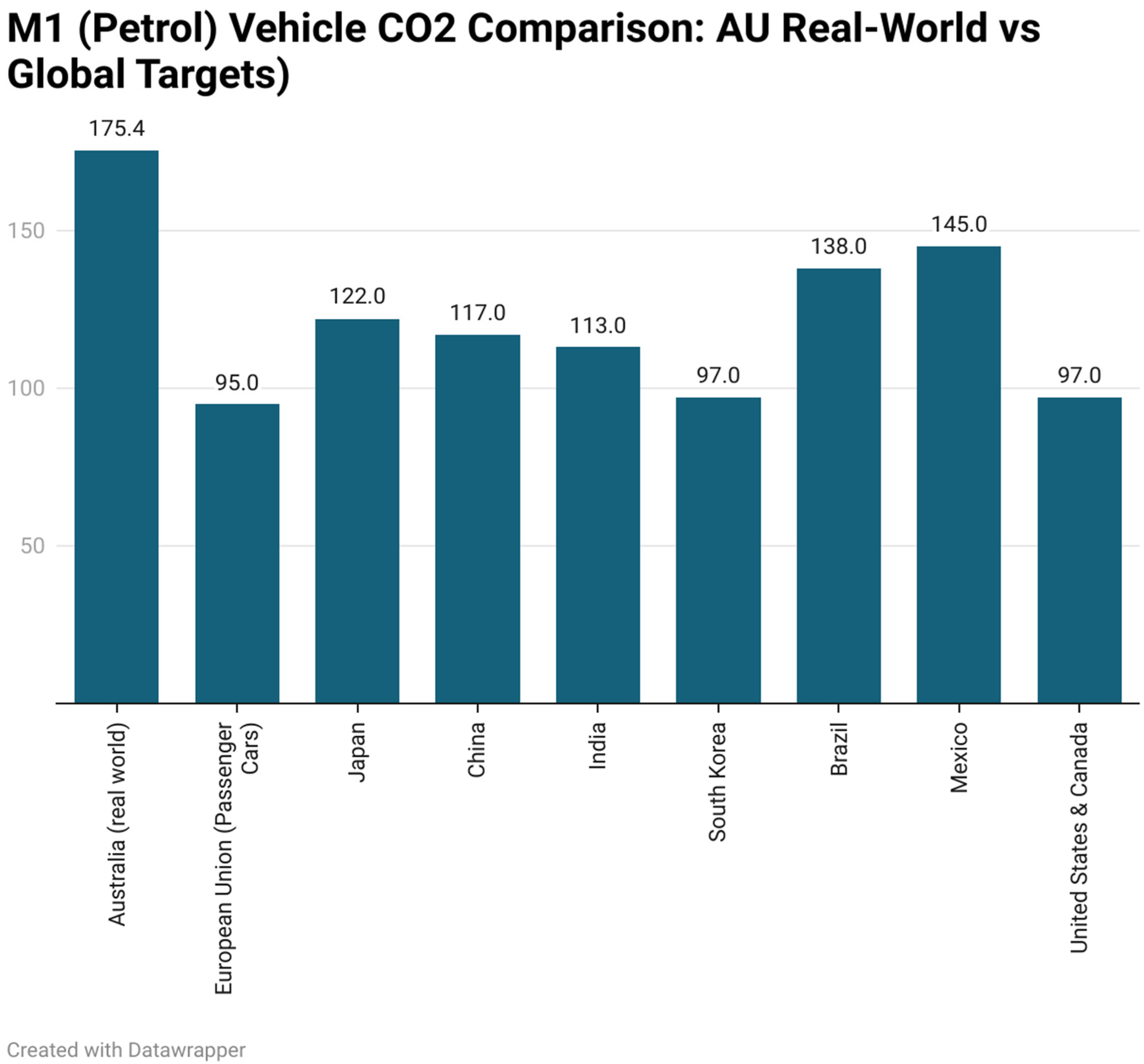
2 emissions for petrol M1 vehicles (175.4 g/km) were substantially higher than the regulatory fleet targets used in other markets, as per
Figure 3. Compared with the European Union’s 95 g/km target for passenger cars, Australia’s real-world emissions are 84.5% higher. Other major markets, including South Korea (97 g/km), China (117 g/km), India (113 g/km), Japan (122 g/km), Brazil (138 g/km), and Mexico (145 g/km), also maintain considerably lower regulatory thresholds than Australia’s demonstrated real-world performance.
The national and regional CO2 values referenced in this comparison represent regulatory fleet-average targets rather than observed real-world emissions. For example, the European Union’s 95 g/km target applies to sales-weighted average type-approval CO2 emissions for new passenger cars under WLTP, with manufacturer-specific compliance mechanisms, phase-in provisions, and adjustments based on each manufacturer’s product portfolio. Comparable fleet-average targets are applied in China (CAFC), Japan (Top Runner programme), South Korea, and India, although test cycles, enforcement stringency, and vehicle coverage contrast across jurisdictions. As a result, direct comparison between Australia’s observed real-world fleet emissions and international regulatory targets should be interpreted as illustrative of relative ambition and performance gaps, rather than as a like-for-like compliance assessment.
Diesel M1 vehicles follow a similar pattern. Australia’s real-world diesel average of 195.3 g/km is more than double the EU’s 95 g/km target and significantly higher than benchmarks in North America (97 g/km). For N1 diesel vehicles, Australia’s real-world emissions (217.8 g/km) substantially exceed the EU’s 147 g/km target for light commercial vehicles.
Petrol hybrids presented the largest international discrepancy. Australia’s real-world hybrid emissions averaged 107.4 g/km, compared with just 40.2 g/km observed in Europe, indicating reduced EV-mode use and greater reliance on the combustion engine in Australian driving, consistent with the literature on WLTP cycle optimisation [
9,
36,
52,
53].
Hybrid CO
2 reductions were variable across models, particularly under urban conditions, due to a combination of operational and design factors. In many tests, the battery state-of-charge (SoC) at the start of the route and the limited opportunity for sustained EV-mode driving reduced the potential emissions benefit. Urban driving with frequent stops, short trip distances, and higher accessory loads (e.g., air-conditioning) can also increase reliance on the combustion engine, particularly in hybrids with smaller batteries or conservative EV engagement strategies. Model-specific hybrid system design and calibration (e.g., battery size, electric motor power, and control logic) further influence real-world performance. While the AAA dataset does not provide complete SoC and powertrain logging for every vehicle, these factors are consistent with the observed variability and align with existing literature on hybrid utility factors and real-world performance [
36,
54].
Comparison with Chinese CLTC-P data indicated even greater variation. A representative petrol ICEV recorded 248–259 g/km under real-world conditions, compared to 199.0 g/km for the Australian petrol fleet. Despite higher absolute emissions, China’s larger lab-to-road deviation (24.6–30.2%) compared with Australia’s (6.7%) highlights the relative robustness of Australia’s test-to-reality alignment [
27].
3.5.3. Fuel Consumption: Laboratory vs. Real-World Performance
Real-world fuel consumption exceeded laboratory ratings for all vehicle categories, with the largest divergences observed in small petrol ICEVs and hybrid powertrains, as summarised in
Figure 2 and
Table 4. Urban routes were especially sensitive, where stop-start traffic, idling, and transient loads increased real-world consumption by 20–30% compared with laboratory figures [
8]. Cold-start penalties and limited opportunities for steady-state cruising further amplified the discrepancy in urban environments [
8,
36,
55,
56].
In contrast, highway segments showed relatively small deviations, typically 5–10%, with fuel consumption values closely matching laboratory predictions under ADR 81/02 assumptions. Diesel vehicles exhibited strong high-speed efficiency and comparatively stable real-world consumption profiles, reinforcing their sensitivity to engine load rather than stop-start driving patterns.
Comparisons with European OBFCM results indicate that Australia’s real-world fuel consumption is higher across all powertrain types, mirroring the trends in CO
2 emissions. Hybrid vehicles demonstrated the largest departure from WLTP ratings, with limited EV-mode operation and frequent accelerative demands reducing their real-world advantage.
Table 4 highlights these discrepancies by reporting both fuel consumption values and percentage deviations, while
Figure 2 visualises the relative magnitude of real-world departures across vehicle categories.
3.5.4. NOx and Combined Pollutants: Compliance and Exceedances
NOx emissions demonstrated substantial exceedances during real-world operation, particularly for diesel vehicles. Although diesel models generally complied with ADR 79/04 laboratory certification limits (aligned with Euro 6 laboratory procedures), real-world NOx emissions measured with PEMS frequently exceeded laboratory expectations during high-load, high-speed operation. Under Australian conditions, sustained NOx output above Euro 6d RDE reference levels was observed during acceleration, hill climbs, and overtaking manoeuvres.
Petrol vehicles exhibited lower NOx emissions overall but still showed spikes during cold starts and aggressive accelerations. Combined pollutant profiles further highlighted inconsistencies between laboratory certification and real-world emissions behaviour, especially for older diesel models and high-output turbocharged petrol engines.
Comparative European data reveal a similar compliance challenge: official NOx agreement is achieved under WLTP testing, while elevated NOx emissions continue under certain real-world conditions, particularly during high-load operation, cold starts, and temporary events. Although the introduction of Euro 6d and strengthened RDE agreement factors has substantially reduced exceedances in Europe since 2018, real-world measurements continue to show that NOx control performance remains sensitive to operating conditions and vehicle calibration. These findings emphasise the need for strengthened in-use conformity mechanisms and more representative Australian drive cycles.
Note: AAA dataset does not consistently record the specific Euro 6 sub-standard (e.g., Euro 6a, 6b, 6d-TEMP) for each vehicle. However, most vehicles in the Australian market are certified under the later Euro 6d-TEMP/Euro 6d requirements via ADR 79/04 and ADR 79/05, and where certification details were available, they aligned with these sub-standards. Additionally, the test routes used in this study were primarily urban and suburban in southern Australia. NOx emissions were typically higher in urban stop-and-go conditions than on highway segments, suggesting that compliance assessments based on predominantly urban routes may show higher exceedances than mixed-driving tests.
3.5.5. CO Emissions: Distributional Variability and Calibration Effects
CO emissions exhibited high variability across brands and fuel types, reflecting differences in engine calibration, mixture control strategies, and catalyst performance. Petrol ICEVs displayed the widest dispersion, with several models producing elevated CO levels during rapid acceleration and enrichment events. These spikes correspond to transient periods of fuel-rich combustion, often associated with drivability optimisation and knock-avoidance strategies.
Hybrid vehicles showed lower average CO emissions but experienced transient enrichments during engine-on phases, particularly when the petrol engine engaged abruptly after extended EV-mode operation. Diesel vehicles maintained low CO emissions, consistent with lean-burn combustion processes.
Inter-regional comparisons showed that Australian vehicles produced moderately higher CO emissions than their European counterparts, which may be influenced by differences in calibration strategies associated with fuel quality, ambient conditions, and performance requirements, as suggested in the literature [
3,
10,
11]. While CO emissions rarely exceed regulatory limits, their variability underscores the influence of manufacturer-specific calibration on real-world emissions behaviour.
3.6. International and Brand-Level Comparisons
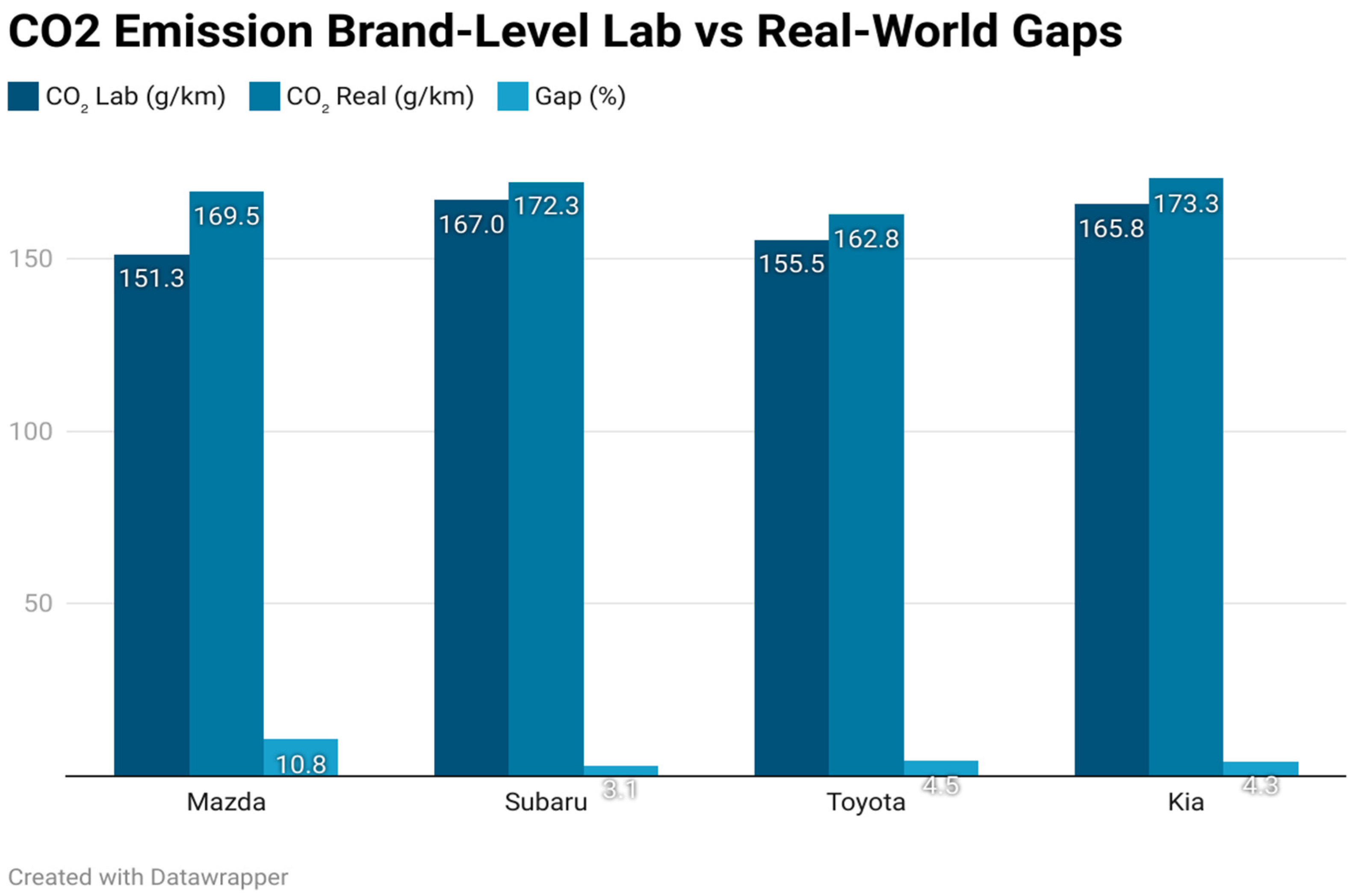
Mazda demonstrated exceptional consistency at the brand level, with nearly identical CO
2 values between Australia and Europe. Subaru also performed well, with minimal deviation between lab and road tests and lower real-world emissions in Australia. In contrast, Toyota’s hybrids exhibited significant CO
2 gaps in Australian conditions, possibly due to lower electric-mode utilisation or differing calibration. Kia and Hyundai petrol ICEVs in Australia consumed more fuel. They emitted more CO
2 than their European counterparts, while their diesel variants performed better in Australia, indicating brand-level and fuel-type dependencies in test-reality alignment [
8].
These results highlight the value of brand-level assessments in emissions policy, supporting differentiated standards, enhanced labelling accuracy, and targeted regulatory focus.
A summary of average CO
2 emissions across selected brands is provided in
Table 5 and
Figure 4, highlighting the variation in test-reality alignment and reinforcing the need for brand-level regulatory insights.
3.7. Electric Vehicles: Laboratory vs. Real-World Performance
The real-world performance of BEVs exhibited measurable deviations from laboratory-certified figures, though generally smaller than those observed for internal combustion engine vehicles.
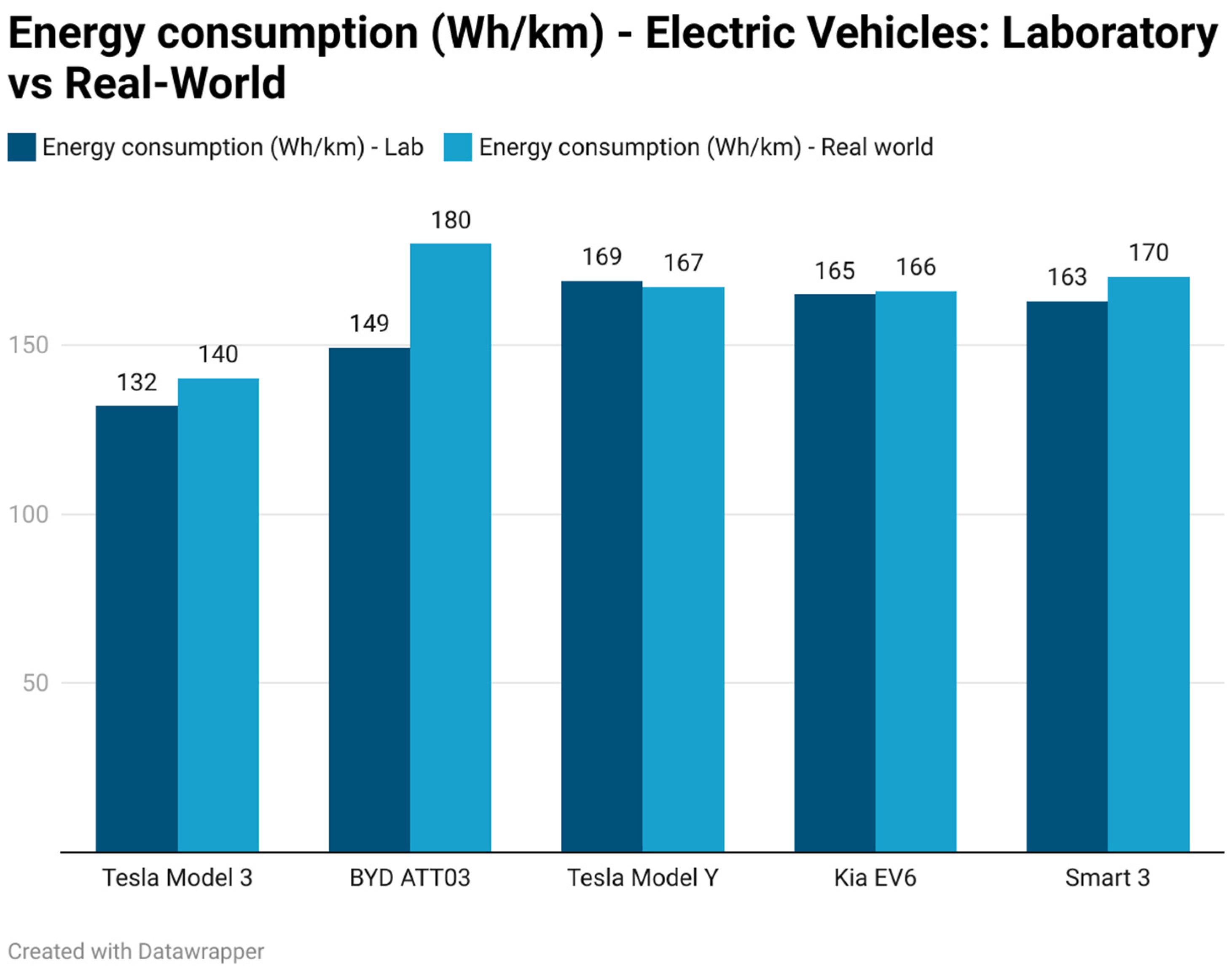
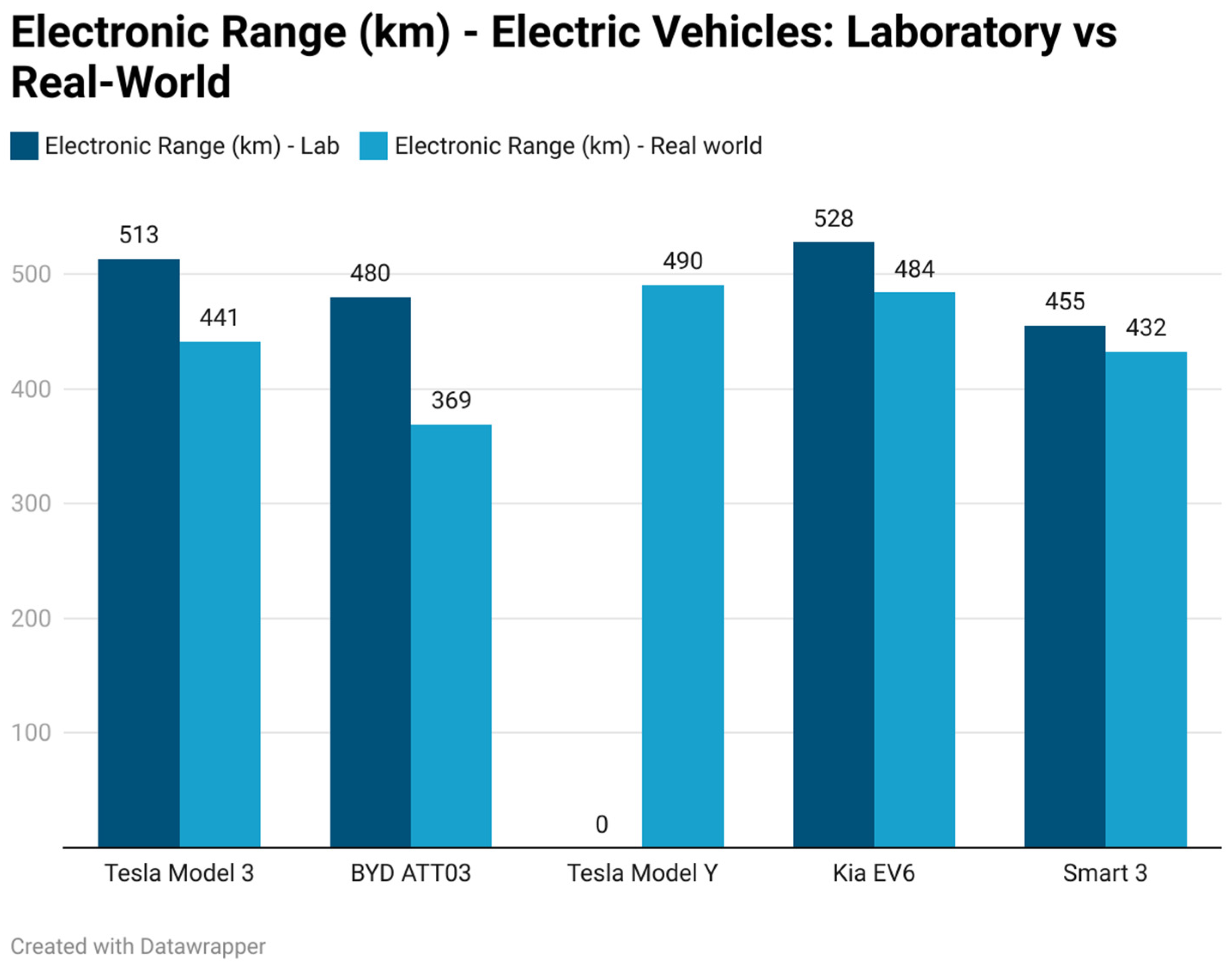
Table 6,
Figure 5 and
Figure 6 summarise the laboratory and on-road results for five medium-sized BEVs tested in the Geelong surrounds, Victoria, under varying damp and dry conditions, moderate winds, and temperatures ranging from 17 °C to 25 °C. Laboratory (lab) values for BEVs refer to manufacturer-certified lab results, as reported for Australian vehicle registration and consumer information purposes [
57].
Across the tested fleet, real-world energy consumption was generally higher than laboratory ratings, with notable exceptions as shown in
Table 6. The Tesla Model 3 exhibited a modest 6.1% increase in energy use, resulting in a 14% reduction in effective range compared to laboratory values (513 km vs. 441 km). BYD’s ATT03 showed the most significant real-world deviation, with energy consumption increasing from 149 Wh/km to 180 Wh/km, resulting in a 23% reduction in range (from 480 km to 369 km). Medium SUVs from Kia (EV6) and Smart showed more minor deviations, with energy consumption increasing by approximately 0.6–4.3%, corresponding to 8–5% reductions in range.
The observed 16% reduction in real-world BEV range relative to WLTP values is likely influenced by operational factors, including ambient temperature, average speed, terrain gradient, and accessory use (e.g., heating and air-conditioning). While the AAA testing programme records these contextual variables, they were not consistently available across all test runs in the dataset used for this study. Therefore, a robust multivariate analysis linking range deviation to specific operational conditions was not possible without introducing bias due to missing data. Future research should aim to integrate complete contextual datasets to quantify the influence of these factors on BEV range in Australian driving conditions.
Within the tested AAA fleet, BEVs generally exhibited smaller deviations between laboratory and real-world performance compared to ICE vehicles. However, variations still exist across brands and models, with some vehicles (e.g., BYD ATT03) showing substantial reductions in effective range. Driving conditions, ambient temperature, and powertrain efficiency remain important factors influencing real-world energy use and range, and even under moderate climate and urban stop-start conditions, certain BEVs can be sensitive to operational factors.
4. Statistical Analysis
4.1. Overview and Purpose
To complement the descriptive analysis of emissions and fuel consumption gaps, a paired samples t-test was conducted to statistically assess whether the differences between laboratory-certified values and real-world test results are significant. The paired t-test is a standard inferential statistical method used to compare the means of two related groups, such as laboratory and real-world results for identical vehicles. It tests the null hypothesis that the mean difference between the two paired sets is zero, providing a formal framework for determining whether laboratory-based ratings can accurately reflect real-world performance.
This method has been widely applied in previous real-world vehicle testing studies to determine whether laboratory-based certification systems systematically underestimate real-world emissions and energy use [
4,
6,
11]. The paired design is particularly suitable for this study, as each vehicle contributes a matched pair of laboratory and real-world observations, which controls inter-vehicle variability and increases the sensitivity of detecting systematic discrepancies.
In addition to the paired t-test, correlation, regression, and variance analyses were performed to further explore the data. Pearson correlation coefficients were calculated to assess the strength of association between laboratory and real-world measurements. Multivariate regression was applied to examine how real-world emissions can be predicted using laboratory results and vehicle characteristics, such as fuel type and vehicle category. Finally, Analysis of Variance (ANOVA) was used to test whether differences in emissions and fuel consumption gaps vary systematically across vehicle segments, offering insight into structural factors that may influence lab-to-road discrepancies.
All statistical tests were conducted using standard parametric techniques after confirming that the data met key assumptions. The normality of residuals was verified using graphical diagnostics and Shapiro–Wilk tests, while independence and homoscedasticity were assessed using residual plots and Levene’s test. These checks ensured that the parametric analyses were valid and that the conclusions were robust.
By incorporating inferential statistics alongside descriptive summaries, this analysis moves beyond reporting observed differences and provides rigorous, evidence-based quantification of systematic gaps between certified and real-world performance. The approach enables an understanding of how vehicle characteristics, driving patterns, and fuel types contribute to these discrepancies. Ultimately, the statistical framework reinforces the case for methodological and regulatory reforms, including the adoption of real-world testing protocols, the development of lab-to-road adjustment factors, enhanced consumer information disclosure, and the closer alignment of Australian vehicle standards with international best practices.
4.2. CO2 Emissions: Lab vs. Real-World
A paired t-test was conducted on 114 vehicles, using both complete CO2 laboratory and real-world data, to evaluate the significance of the observed differences. The paired design was selected because each vehicle provides a matched pair of laboratory and real-world measurements, controlling for inter-vehicle variability. The normality of the paired differences was verified using the Shapiro–Wilk test (p > 0.05), indicating that the t-test assumption was satisfied. In addition, the assumption of independence was supported by the fact that each vehicle measurement pair was independent of other vehicle pairs, and the assumption of homogeneity of variance was inherent to the paired design.
The paired
t-test produced the following result:
The very low p-value (<0.001) indicated that the observed difference is unlikely to have occurred by chance, providing strong evidence of a systematic and statistically significant deviation between laboratory-certified and real-world CO2 emissions. The magnitude of the test statistic (16.581) indicates a high, standardised effect size, suggesting that the observed gap is not only statistically significant but also material in magnitude, with implications for national emissions inventories, vehicle taxation accuracy (since several Australian vehicle taxes and incentives are linked to certified CO2 ratings), consumer fuel cost expectations, and the effectiveness of emissions-based regulatory benchmarks.
The analysis revealed that, on average, vehicles emitted approximately 25–30% more CO
2 in real-world driving than under laboratory-certified conditions. This finding is consistent with the descriptive results and corroborates a well-documented trend in international literature, where laboratory-to-road emission discrepancies frequently range from 20% to 45% [
3,
6,
11,
58]. Such significant gaps underscore the limitations of single-cycle laboratory certification procedures, particularly those based on the now-outdated NEDC, which do not adequately capture transient acceleration events, varying road loads, accessory use (e.g., air conditioning), traffic congestion, or higher-speed driving conditions typically encountered in everyday Australian driving. However, jurisdictions such as the United States have expanded laboratory testing to include multiple cycles that account for aggressive driving, air-conditioning load, and cold-start effects, which have demonstrably reduced, though not eliminated, laboratory-to-road discrepancies. This suggests that laboratory testing frameworks can be strengthened rather than replaced to better reflect real-world vehicle operation.
Beyond the statistical evidence, the results have significant practical implications. The systematic underestimation of CO2 emissions can impact vehicle taxation schemes, misinform consumers, and weaken the effectiveness of emissions regulations. It also highlights the critical need for complementary real-world testing programmes and lab-to-road adjustment factors that better represent typical driving behaviour. Additionally, the magnitude and consistency of the observed gaps suggest that the issue is significant, likely caused by limitations in test design rather than measurement errors or vehicle-specific issues.
Especially, hybrid vehicles showed greater variability in real-world CO2 performance than conventional ICEVs. This inconsistency is likely related to differences in electric-mode usage, which depend on factors such as the battery state of charge at test initiation, driving cycle dynamics (e.g., stop-start frequency), and model-specific hybrid control strategies. The AAA dataset provides limited information on electric-mode operation, so while these factors are plausible drivers, they cannot be quantified with confidence in this study. Future work should integrate electric-mode usage data to better explain hybrid CO2 variability.
The findings strongly support reforming Australia’s emissions testing framework by integrating on-road testing methods such as PEMS and OBFCM into vehicle approval processes and periodic in-service checks, as implemented in the EU through post-registration surveillance. Such mechanisms enable the detection of performance deterioration, calibration drift, or control strategy optimisation over a vehicle’s lifetime, complementing type-approval testing without replacing it. This integration would improve the accuracy of emissions ratings while increasing transparency and trust among consumers and policymakers.
4.3. Fuel Consumption: Lab vs. Real-World
Data from the same 114 vehicles were analysed for fuel consumption to assess the magnitude and significance of deviations from certified laboratory values.
A paired
t-test was conducted, yielding the following result:
The very low p-value (<0.001) indicated that the observed difference in fuel consumption between laboratory tests and real-world driving is highly unlikely to have occurred by chance. This confirms a systematic underestimation in laboratory-rated fuel consumption, reflecting a structural discrepancy rather than random variation or measurement error. The magnitude of the test statistic demonstrates a substantial standardised effect, indicating that the deviation is both statistically significant and practically relevant.
On average, vehicles consumed approximately 20–30% more fuel in real-world conditions than indicated by laboratory ratings, although variations were observed across different vehicle types, engine sizes, and fuel types. This aligns with global findings, which frequently report laboratory-to-road gaps in fuel consumption of 15–40% [
4,
6]. These discrepancies can largely be attributed to factors not adequately captured in laboratory cycles, such as stop-and-start traffic, varying road grades, higher-speed driving, accessory use, and environmental conditions like temperature, wind, and humidity.
The findings reveal that real-world fuel consumption consistently exceeds laboratory ratings, resulting in higher household costs, increased emissions, and higher energy demand. This gap reveals errors in current testing methods and underscores the need for reform to align certified ratings with actual on-road performance. The results also highlight the importance of transparent consumer information, as relying solely on lab data can mislead buyers and distort market prices. Implementing lab-to-road correction factors or on-road testing programmes could improve accuracy and trust. In summary, the evidence highlights the systemic nature of the lab-to-road gap and its substantial environmental, economic, and policy implications.
4.4. Interpretation and Implications
The results from both paired t-tests provide compelling evidence that the observed discrepancies between laboratory-certified and real-world vehicle performance are not attributed to random variation or measurement noise. Instead, they represent a systematic bias inherent in the laboratory certification process. This bias has significant implications across multiple dimensions, including regulatory effectiveness, environmental impact, consumer decision-making, and market competition.
From a regulatory perspective, consistent underperformance of vehicles in real-world conditions undermines the credibility and integrity of current emissions and fuel consumption standards. Laboratory ratings, which form the basis for type approval, taxation policies, and fuel economy labelling, fail to reflect actual on-road performance. This disconnect can incentivise manufacturers to optimise vehicle design for laboratory cycles, such as the former NEDC or ADR-based tests, rather than for typical driving conditions. As a result, vehicles may appear more fuel-efficient or less polluting on paper than they are in practice, creating a misalignment between regulatory objectives and real-world outcomes.
For consumers, the implications are equally critical. Misleading laboratory ratings can mislead buyers, causing them to underestimate operational costs and environmental impact. Households may incur higher fuel expenses than anticipated, and expectations regarding greenhouse gas reduction, air quality, and energy efficiency may not be met. This gap between expectation and reality can decrease consumer trust in official labelling schemes and diminish confidence in the regulatory framework.
The findings are consistent with extensive international literature documenting similar laboratory-to-road gaps [
3,
4,
6,
11,
12,
15]. Such studies suggest that laboratory procedures often fail to capture key real-world driving dynamics, including transient acceleration, high-speed operation, accessory usage (e.g., air conditioning), traffic congestion, and environmental factors such as temperature, wind, and road grade. These factors contribute to systematic underestimation of emissions and fuel consumption in conventional lab tests.
The statistical significance and magnitude of the observed gaps underscore the policy relevance of the AAA real-world testing programme. It provides robust empirical evidence to support reform initiatives such as the accelerated adoption of the WLTP and Euro 6d standards and the institutionalisation of real-world testing protocols, including PEMS and OBFCM. Implementing these measures would improve the reliability of emissions data, enhance compliance monitoring, and facilitate the transition to low- and zero-emission vehicles.
Furthermore, the findings highlight the potential value of complementary regulatory interventions, including lab-to-road adjustment factors, expanded real-world testing across diverse vehicle segments and powertrains, and transparent reporting of expected real-world performance ranges on consumer labels. These steps would align lab-based certification with actual vehicle behaviour, ensure more reliable consumer guidance, and strengthen the environmental effectiveness of national transport policy.
The analysis demonstrates that laboratory-based certification alone cannot capture real-world emissions and fuel consumption. Bridging this gap is crucial for achieving accurate emissions inventories, fostering consumer trust, and informing policy decisions. As provided by programmes like the AAA testing initiative, real-world evidence is critical for designing interventions that genuinely reduce greenhouse gas emissions and improve energy efficiency in the Australian vehicle fleet.
4.5. Correlation Analysis: Lab vs. Real-World Alignment
To further evaluate the relationship between laboratory-certified values and real-world performance, Pearson correlation coefficients were calculated for both CO2 emissions and fuel consumption. Correlation analysis provides insight into how vehicles’ relative performance is preserved across testing environments, even when absolute values differ. While laboratory tests may systematically underestimate emissions and fuel consumption, a strong correlation would suggest that they retain value for comparative assessments, such as ranking vehicles by efficiency. On the other hand, a weak correlation would indicate that lab-based ratings are inadequate predictors of real-world outcomes and may mislead policymakers and consumers.
4.5.1. CO2 Emissions
The correlation coefficient for CO
2 emissions between laboratory and real-world measurements was found to be:
This indicates a very strong positive relationship, implying that vehicles with higher laboratory-measured CO2 emissions generally emit more CO2 under real-world driving conditions. Despite this strong association, the consistent upward deviation in real-world values highlights that laboratory tests systematically underestimate absolute emissions. This discrepancy is likely due to factors not captured in controlled lab cycles, including vehicle load variations, stop-start traffic conditions, accessory usage, and driving behaviour.
The strong correlation demonstrates that laboratory testing can still be helpful for relative efficiency comparisons across vehicles, providing a consistent performance ranking. However, it also underscores the limitations of relying solely on lab tests for regulatory compliance, consumer guidance, or environmental impact assessments, where absolute values are critical. These findings support the need for complementary real-world testing and lab-to-road adjustment factors to provide accurate estimates of emissions and fuel consumption.
4.5.2. Fuel Consumption
For fuel consumption, the correlation coefficient between laboratory and real-world measurements was similarly strong:
This very strong positive correlation indicates that while lab-based fuel consumption estimates consistently underreport actual consumption, vehicles that are more fuel-efficient in laboratory conditions tend to remain comparatively efficient on the road. Nevertheless, the magnitude of the underestimation varies across vehicle types and fuel trains, highlighting the need for segment-specific adjustments.
The strong yet imperfect correlation reinforces the conclusion that laboratory tests retain value for comparative efficiency assessment but are insufficient as standalone predictors of actual fuel consumption. Consumers and regulators relying solely on lab-based figures may misestimate operating costs and the environmental impact of vehicle fleets.
4.5.3. Implications
These correlation results indicate that while laboratory tests retain value for comparative assessments across vehicles, an essential component for type approval, taxation, and labelling, they fall short as reliable predictors of real-world performance. This finding supports the case for a complementary testing framework that integrates real-world testing for regulatory enforcement and consumer guidance, while maintaining laboratory tests for baseline certification and benchmarking.
Furthermore, the strong but imperfect correlation provides a foundation for developing lab-to-road adjustment factors tailored by powertrain type, vehicle segment, or test cycle. Such adjustment factors could enable interim improvements to emissions and fuel economy labelling while more comprehensive regulatory reforms, such as mandatory RDE/OBFCM testing, are fully implemented.
This analysis highlights the dual role of laboratory testing, which is helpful for vehicle comparison and benchmarking. Still, it must be complemented by real-world verification to ensure accurate reporting, informed consumer choice, and credible environmental regulation.
4.6. Regression Modelling: Predicting Real-World CO2 Emissions
A multivariate linear regression model was estimated to investigate how real-world CO2 emissions can be predicted from laboratory-certified values and other vehicle characteristics. A multivariate linear regression model was estimated to examine the relationship between laboratory-certified CO2 ratings and real-world CO2 emissions, while controlling for key vehicle characteristics. The model uses Ordinary Least Squares (OLS) estimation. Regression analysis allows for the quantification of the relative influence of multiple predictors simultaneously, providing insights into the structural determinants of observed discrepancies between lab and real-world performance:
Laboratory CO2 rating (continuous): capturing the baseline emissions measurement from standardised lab tests
Fuel type (categorical): including petrol (91 and 95 RON), diesel, and hybrid configurations
Vehicle category (categorical): capturing body style differences such as small cars, medium SUVs, Utes, and light commercial vehicles
Categorical variables were encoded using standard dummy variables, with one category per group as the reference. This approach ensures comparability while allowing interpretation of the effects of different fuel types and vehicle categories relative to the baseline group.
4.6.1. Model Results
The regression model was statistically significant: F(10, 73) = 32.2, p < 0.001, explaining 81.5% of the variance in real-world CO2 emissions (Adjusted R2 = 0.79). This high explanatory power suggests that the selected predictors capture most of the systematic variation in real-world emissions across the sample.
Key findings include:
Laboratory CO2 (β = 0.43, p < 0.001): A strong, positive, and significant predictor, indicating that vehicles with higher lab CO2 ratings also exhibit higher emissions on the road. The coefficient being less than one confirms that lab tests systematically underreport real-world emissions, with underestimation increasing proportionally with lab values.
Fuel type: Petrol variants (91 and 95 RON) were associated with significantly higher real-world emissions than the diesel reference category (p < 0.05). Hybrid vehicles exhibited a smaller gap between laboratory and real-world emissions, indicating partial mitigation of the lab-to-road discrepancy through electrified powertrains.
Vehicle category: Certain body styles, particularly medium and small cars, exhibited significantly lower real-world CO2 compared to the reference group, whereas 2WD Utes and larger light commercial vehicles were associated with higher emissions. This finding illustrates how vehicle mass, aerodynamics, and drivetrain configuration influence real-world performance, extending beyond what is captured in laboratory tests.
4.6.2. Interpretation
This analysis confirms that laboratory CO2 ratings effectively rank vehicles according to relative efficiency, but they systematically underestimate absolute real-world emissions. The regression results demonstrate that real-world emissions are influenced by multiple structural factors, including fuel type and vehicle category, which are not fully captured by standard laboratory tests. Vehicles powered by petrol, for example, tend to exhibit higher real-world emissions than diesel or hybrid counterparts, even when laboratory ratings suggest similar efficiency. Likewise, specific vehicle categories, such as medium SUVs or 2WD Utes, consistently deviate more from lab predictions, reflecting the combined effects of vehicle mass, aerodynamics, engine characteristics, and typical usage patterns.
These findings support the notion that laboratory testing captures only a partial representation of real-world performance. Lab results should be adjusted or supplemented with additional vehicle-specific and operational variables for more accurate emissions forecasting. Incorporating hybrid mode share, engine displacement, payload, and Vehicle Specific Power (VSP) into predictive models can provide a more nuanced understanding of how vehicles perform under typical driving conditions. Furthermore, including interaction terms, such as those between fuel type and vehicle category, could reveal compound effects that amplify deviations from laboratory expectations, enabling more targeted policy interventions.
From a policy perspective, the results lend weight to developing segment-specific emissions factors, which could enhance the precision of labelling schemes, regulatory compliance assessments, and incentive programmes. By integrating real-world performance data, policymakers can set more realistic fleet-wide emissions targets, design effective incentives for low-emission vehicles, and ensure consumers receive transparent and reliable information when purchasing. The analysis underscores the importance of integrating complementary real-world testing and data-informed adjustments into laboratory ratings to support evidence-based policy and foster environmental accountability.
4.7. Segment-Level Comparison: ANOVA Test for Vehicle Category Differences
A one-way ANOVA was conducted to assess whether real-world CO2 emissions gaps vary systematically by vehicle category. This method evaluates whether the mean differences in CO2 emissions gaps are statistically significant across multiple independent groups, specifically vehicle segments such as small cars, medium cars, SUVs, and Utes. By comparing variance within and between segments, the ANOVA assesses whether particular categories systematically deviate more from laboratory predictions, which could indicate structural or design-related influences on real-world emissions.
4.7.1. Test Results
The one-way ANOVA yielded the following result:
These results indicate that the mean differences in CO2 gaps across vehicle segments are not statistically significant at the 5% level. In other words, while descriptive statistics suggest that certain segments, such as Utes or larger SUVs, may exhibit higher deviations, the within-segment variability is substantial, and no clear statistical separation between categories was detected. This finding suggests that the vehicle segment alone is not a strong predictor of real-world emissions deviations, emphasising the importance of examining additional variables and interactions.
4.7.2. Interpretation
Although the results lack statistical significance, the descriptive trends are informative. Larger vehicles or those with higher payload capacities often exhibit wider variability in emissions gaps, likely reflecting differences in driving behaviour, loading conditions, and accessory use. While generally more efficient, smaller vehicles may underperform in real-world settings due to urban stop-and-start cycles and transient acceleration events that are not captured in laboratory tests. These observations highlight that, although ANOVA did not detect statistically significant differences, segment-level characteristics still contribute to emissions variation and should be considered alongside fuel type, powertrain, and usage patterns in predictive modelling.
From a policy and regulatory perspective, these results reinforce the value of multivariate approaches over single-factor analyses. While a segment alone may not be a significant determinant, combined with other factors such as fuel type, engine displacement, hybrid operation, and VSP, segment-level adjustments can improve the accuracy of real-world emissions forecasts. Such a comprehensive approach can support the development of more refined lab-to-road correction factors, inform emissions-based taxation, guide incentive programmes for low-emission vehicles, and ensure that consumer information reflects realistic performance expectations.
4.8. Summary of Statistical Findings
The statistical analyses conducted in this study provide robust evidence that certified laboratory tests significantly underestimate real-world vehicle emissions and fuel consumption. Paired samples t-tests revealed highly significant differences between laboratory and on-road CO2 emissions (t(113) = 16.581, p < 0.001) and fuel consumption (t(113) = 15.18, p < 0.001). These results indicate that the observed discrepancies are systematic rather than random, demonstrating that vehicles consistently underperform relative to their certified ratings. On average, real-world CO2 emissions exceeded laboratory values by approximately 25–30%, while fuel consumption showed similarly substantial deviations. Such differences are practically meaningful, translating directly into higher household fuel costs, greater greenhouse gas emissions, and implications for national energy security.
Correlation analysis further revealed strong positive relationships between laboratory and real-world values for CO2 emissions (r = 0.92) and fuel consumption (r = 0.89). These findings suggest that, although laboratory tests retain predictive value for ranking vehicles relative to one another, they fail to accurately capture absolute performance. More efficient cars in the lab remain comparatively efficient on the road. Still, the systematic upward shift in real-world values highlights the structural limitations of laboratory testing protocols, including the outdated NEDC.
Regression modelling confirmed that laboratory CO2 ratings, fuel type, and vehicle category collectively explain over 80% of the variation in real-world emissions (Adjusted R2 = 0.79). The model demonstrates that lab ratings strongly predict rank-order efficiency but consistently underestimate absolute emissions. Fuel type and vehicle category emerged as significant determinants, suggesting that tailored, segment- and powertrain-specific adjustments are necessary for realistic forecasting. These findings provide a quantitative foundation for developing lab-to-road correction factors and reinforce the importance of integrating real-world data into regulatory frameworks, vehicle labelling, and incentive programmes.
Segment-level ANOVA revealed no statistically significant differences in mean emissions gaps across vehicle categories (F(9, 66) = 1.07, p = 0.389), indicating that single-factor analyses cannot fully explain real-world deviations. However, descriptive trends and multivariate results suggest that structural characteristics such as vehicle mass, body style, and payload capacity influence performance, particularly when combined with fuel type and engine technology. This underscores the necessity for comprehensive, multivariate approaches that account for technical specifications and operational behaviour in emissions assessment.
These statistical results collectively highlight that laboratory certification alone provides an incomplete picture of real-world emissions and fuel use. The combination of t-tests, correlation, regression, and ANOVA offers a detailed, multi-layered understanding of the drivers of real-world deviations, demonstrating the importance of segment-specific, fuel-specific, and powertrain-specific adjustments. These insights underscore the need to integrate real-world testing protocols, develop empirically informed correction factors, and implement evidence-based policy measures. Such measures are crucial for enhancing regulatory compliance, improving consumer transparency, and facilitating Australia’s transition to a low-emission, energy-efficient vehicle fleet.
5. Discussion
This study provides robust statistical and empirical evidence that Australia’s laboratory vehicle certification system underestimates real-world emissions and fuel consumption across the light-duty vehicle fleet. Paired sample
t-tests revealed highly significant differences between laboratory and real-world results for CO
2 emissions and fuel use, indicating that these discrepancies are systematic rather than random. While average real-world CO
2 deviations are moderate, 6.9% for petrol and 3.2% for diesel, the resulting absolute emissions remain substantial, particularly among large SUVs and utility vehicles. These findings are consistent with international evidence from Europe, China, and the United States, where test-to-reality gaps of 10–40% have been reported [
4,
5].
The strong correlation between laboratory and real-world results (r = 0.92 for CO2 and r = 0.89 for fuel consumption) indicates that laboratory ratings preserve relative performance rankings across vehicles, but do not accurately reflect the magnitude of emissions under real-world conditions. Regression analysis further confirmed that laboratory ratings, vehicle category, and fuel type are significant predictors of real-world CO2 emissions. These results support the continued role of laboratory testing for type approval, while highlighting the value of complementary real-world data for applications such as consumer information, compliance assessment, and policy evaluation.
Outlier analysis and distributional results presented in
Section 4.5 provide important context for the aggregate findings. Specifically, boxplots and histograms were used to examine the distribution of lab-to-road CO
2 and fuel consumption gaps and to identify extreme values. These visualisations revealed that several diesel vehicles emitted NO
x at five to eight times the Euro 6d threshold, even under nominal compliance conditions, and highlighted wide variability in gaps for petrol vehicles, with some models consistently underperforming in real-world driving. While ANOVA results did not identify statistically significant differences in CO
2 gaps across vehicle segments, regression outcomes suggested that 2WD Utes and heavier vehicle categories are associated with higher real-world emissions, likely reflecting differences in mass, drivetrain configuration, and aerodynamics.
Hybrid and electric vehicles introduce further complexity. Several petrol-hybrid models, including the Toyota RAV4, exhibited real-world CO
2 emissions exceeding laboratory values by more than 35%. These results align with the international literature, which questions the representativeness of the hybrid utility factor, which assumes high levels of electric-mode operation [
36,
54,
59]. In practice, driving patterns, charging behaviour, and ambient conditions can substantially reduce electric operation. Battery electric vehicles (BEVs) also showed deviations from laboratory performance, with real-world range reductions of 8–23% and corresponding increases in energy consumption. For example, the Tesla Model 3 recorded a 14% reduction in range, while the BYD ATTO 3 SUV exhibited a 23% reduction. These findings suggest that real-world performance variability is a consistent feature across all powertrain types.
Australia continues to lag international best practice in emissions governance. One key structural reason for this lag relates to fuel quality and the timing of its improvement. Advanced after-treatment systems such as diesel particulate filters (DPF) and selective catalytic reduction (SCR) require low-sulphur diesel to function effectively and reliably [
9,
60]. Historically, Australian diesel contained higher sulphur levels than European diesel, delaying the practical deployment of these technologies and the regulatory alignment with Euro 6 standards [
61,
62]. Significant reductions in sulphur content in Australian diesel were implemented only in the late 2000s and early 2010s [
63], limiting the earlier adoption of advanced emission control systems and slowing the transition to more stringent standards. This historical context helps explain why Australia’s certification framework and fleet composition have been slower to align with European and US practices.
In an international context, average real-world CO2 emissions for Australian petrol and diesel M1 vehicles remain substantially higher than the European Union fleet target of 95 g/km. Differences in regulatory frameworks, test procedures, and the extent of real-world testing contribute to this outcome. Within this context, the AAA real-world testing programme provides an empirical basis for assessing how certified vehicle performance translates to Australian driving conditions. The statistically significant deviations identified in this study contribute to the evidence base informing ongoing discussions around vehicle certification, labelling practices, and emissions governance.
6. Policy Implications and Recommendations
This study’s statistical and empirical results prove that Australia’s current vehicle certification framework fails to reflect real-world emissions and fuel consumption. The findings have implications for the interpretation of certified values, consumer information, and emissions inventories, and suggest avenues for further investigation. To bridge the lab-to-road gap and align with international best practice, several policy reforms are recommended:
6.1. Transition to WLTP and Euro 6 Standards
Australia’s continued reliance on ADR protocols based on the outdated NEDC undercuts emissions accuracy and comparability. Transitioning to the WLTP and Euro 6d standards will better reflect typical driving patterns, urban stop-start conditions, and cold-start emissions. This transition should be accelerated and fully integrated into Australian Design Rules [
9,
15]. These changes could reduce systematic bias in certified values, but would need to be carefully calibrated to avoid unintended consequences, such as manufacturers re-optimising engine calibration, thermal management, or hybrid control strategies primarily to perform well under revised test conditions rather than under typical real-world driving.
6.2. Institutionalise Real-World Testing with PEMS and OBFCM
The AAA programme demonstrates the feasibility and value of on-road emissions monitoring. Institutionalising PEMS and On-Board Fuel Consumption Monitoring (OBFCM) would enable Australia to track compliance beyond laboratory conditions. These tools should be mandated for type approval verification and in-service conformity checks [
10,
13]. However, adopting such systems would require careful consideration of data quality, representativeness, and enforcement frameworks.
OBFCM data would complement the PEMS results by providing large-scale, continuous monitoring of fuel consumption across the in-service fleet, thereby improving representativeness and supporting national emissions inventories. However, OBFCM implementation in Australia would require regulatory alignment, standardised data formats, and safeguards for privacy and data governance, and its initial coverage may be limited by the current number of OBFCM-equipped vehicles.
6.3. Reform Fuel Economy and Emissions Labelling
Statistical analysis showed that real-world CO
2 and fuel use are systematically underreported. Consumer labels should present certified lab values, real-world performance ranges, and clear fuel type, vehicle segment, and hybrid mode share indicators. Enhanced transparency can improve consumer choice and incentivise manufacturers to optimise for real conditions [
4,
64]. The feasibility, comparability, and consumer comprehension of such approaches would require careful evaluation before implementation.
6.4. Expand Testing to More Vehicle Types and Regions
The current test programme is limited in geographic and powertrain diversity. Expansion should include BEVs, PHEVs, and emerging powertrains under various climatic, altitude, and traffic conditions. A nationally coordinated programme, drawing on academic, industry, and regulatory collaboration, would provide more representative data [
26,
27]. This point is framed as an area for further research rather than a direct policy requirement.
6.5. Use VSP and Telematics
Integrating VSP models and telematics data would enhance the capacity to simulate real-world energy demand and emissions under various road and load conditions. These tools can support the development of more granular emissions inventories and inform dynamic policy mechanisms such as congestion pricing or clean air zones [
65,
66]. This is similarly presented as a research direction, as it requires validation and assessment of data privacy, representativeness, and cost.
6.6. Align Policy with Charging and Electrification Behaviour
Given the observed underperformance of some petrol-hybrid vehicles, policymakers should focus on actual usage patterns, including charging frequency, trip length, and electric mode duration, when designing EV and PHEV incentives. Real-world validation and OBFCM integration can ensure that electrification policies achieve their intended emissions reductions [
36,
54,
59]. This is consistent with recent discussions about the PHEV “utility factor,” which highlight that real-world electric-mode operation may differ substantially from laboratory assumptions [
67].
These recommendations aim to improve Australia’s emissions data fidelity, modernise regulatory standards, and align domestic vehicle policy with international climate and public health objectives. By scaling and institutionalising real-world testing, Australia can progress toward a cleaner, more transparent, and more efficient transport future.
6.7. Introduce Lab-to-Road Adjustment Factors on Consumer Labels (Interim)
Until WLTP, Euro 6d, and mandatory RDE/OBFCM standards are fully embedded, regulators should publish a transparent correction range by powertrain and segment on consumer labels (e.g., Lab: 6.0 L/100 km to be expected: 6.4–7.0 L/100 km in typical Australian conditions). This measure retains international comparability while providing consumers with realistic expectations, improving trust in environmental labelling and supporting behavioural change during the transition phase. This is framed as a possible interim approach that would require further evaluation.
Using the AAA dataset, preliminary adjustment ranges can be estimated for the most represented powertrain categories. These are indicative and should not be interpreted as definitive regulatory values due to limited sample sizes. For petrol vehicles, the median real-world CO2 gap is approximately 6% to 8% above certified values. For diesel vehicles, the median gap is approximately +2% to +4%. For battery-electric vehicles, real-world energy consumption is approximately 10% to 20% higher than WLTP-rated values, resulting in an average range reduction of approximately 16%. These preliminary estimates provide a starting point for labelling correction ranges and highlight the need for larger national datasets to derive statistically robust adjustment factors.
6.8. Target High-Impact Outliers via In-Service Conformity Checks
Distributional outliers, such as diesel vehicles emitting NO
x at levels exceeding five times the regulatory limits, should trigger targeted PEMS spot audits, technical remedies, and, where persistent, penalties and public disclosure. Focusing compliance resources on these high-impact cases can yield disproportionate benefits in terms of air quality and public health. However, this approach is not straightforward; ongoing legal cases in the UK and Europe highlight that the interpretation of exceedances and associated penalties under the regulation is contested. Therefore, any enforcement response would need to be consistent with existing legal frameworks and international standards [
6,
9,
68].
6.9. Broader Implications for National Policy and Climate Targets
Together, these reforms will enhance the integrity of Australia’s emissions reporting, strengthen consumer confidence, and support the government’s 2030 and 2050 net-zero commitments. Real-world testing integration can also improve transport, energy, and environmental coordination, enabling data-driven decisions on EV infrastructure planning, fuel standards, and fleet transition timelines. In the long term, an evidence-based certification and labelling system would align Australia’s transport policy with global decarbonisation goals while delivering measurable co-benefits for public health and energy security.
7. Conclusions
This study presents a statistically robust assessment of Australia’s national real-world vehicle emissions testing programme, utilising empirical data from 114 light-duty vehicles across petrol, diesel, and hybrid powertrains. The results demonstrate that laboratory certification tests systematically underestimate real-world emissions and fuel consumption. Paired t-tests confirmed that real-world CO2 emissions and fuel use are consistently higher than laboratory values, while regression analysis identified fuel type and vehicle category as significant predictors of on-road emissions. These findings are consistent with international evidence, indicating that laboratory-based certification alone does not fully capture real-world vehicle performance.
On average, real-world CO2 emissions exceeded laboratory values by 6.9% for petrol vehicles and 3.2% for diesel vehicles, with the highest absolute emissions observed among large SUVs and utility vehicles. Several diesel vehicles also recorded NOx emissions five to eight times above the Euro 6d limit under PEMS testing. While petrol vehicles generally complied with NOx standards, a number of hybrid and small petrol vehicles exhibited higher-than-expected real-world fuel consumption, suggesting reduced electric-mode operation under typical driving conditions.
Hybrid and battery electric vehicles exhibited additional performance variability. Several petrol-hybrid models, including the Toyota RAV4, recorded real-world CO2 gaps exceeding 35%, consistent with previous studies on hybrid utility factors and user behaviour. Battery-electric vehicles also demonstrated reductions in achievable real-world range of 8–23% relative to laboratory estimates, as observed for the Tesla Model 3 and the BYD ATTO 3. These results indicate that deviations between certified and real-world performance are not limited to conventional internal combustion vehicles.
International benchmarking showed that real-world CO2 emissions from Australian petrol and diesel vehicles exceed European fleet targets by 80–100%. Although laboratory and real-world results are strongly correlated, absolute emissions remain consistently underestimated. Distributional and outlier analyses further revealed substantial variability across brands and fuel types, with petrol vehicles showing the widest spread in emissions gaps and several diesel models breaching multiple regulatory thresholds. Regression results suggested that heavier vehicles and 2WD Utes are associated with larger CO2 deviations.
Taken together, the findings demonstrate the value of integrating real-world emissions data alongside laboratory testing to improve the accuracy of vehicle performance assessment. Expanded testing coverage, improved adjustment factors, and enhanced data integration, such as vehicle-specific labelling and advanced modelling approaches, could support a more accurate representation of on-road emissions under Australian conditions.
These results have direct sustainability implications because underestimated real-world emissions and fuel consumption can change national greenhouse gas inventories, reduce the effectiveness of climate mitigation policies, and misinform consumer choices. Improved testing and transparent labelling can strengthen the credibility of vehicle sustainability claims, support more informed decision-making, accelerate the transition to low-emission transport, and enhance energy efficiency in the Australian vehicle fleet.
Gaps and Future Research Directions
While this study provides new empirical insights, several limitations remain. The dataset includes a limited number of hybrid vehicles and BEVs, which constrains generalisability to the broader low-emissions vehicle fleet. Future studies should incorporate a wider range of powertrains, including PHEVs and BEVs, under varied climatic and terrain conditions.
Testing routes were concentrated in southern urban areas and may not fully represent national driving environments. Expanding coverage to regional, rural, tropical, and arid conditions would improve representativeness. Additionally, integrating behavioural and trip-level data, such as telematics, charging frequency, and electric-mode usage, would enable more detailed modelling using microsimulation and vehicle-specific power (VSP) approaches.
Longitudinal analysis examining changes in emissions performance over time, including fleet turnover and vehicle ageing, would further enhance understanding of real-world emissions dynamics. Linking real-world performance data with lifecycle emissions frameworks would provide a more comprehensive basis for evaluating long-term transport emissions outcomes.
The AAA dataset does not provide vehicle age, odometer readings, or longitudinal tracking. Accordingly, the impact of vehicle ageing or accumulated mileage on emissions and range degradation cannot be evaluated. Therefore, any observed gaps between laboratory and real-world performance cannot be attributed to ageing effects, and this should be considered a limitation of the current analysis. Future work should incorporate longitudinal datasets or repeated testing of the same vehicles over time to assess how emissions and range deteriorate with age and use.