Article

Ultrasonic-Assisted Soil Washing with Cysteine for Remediation of Heavy Metal-Contaminated Soil: Efficiency, Speciation Transformation and Selective Mechanisms

1
Department of Building Environment and Energy Engineering, Guilin University of Aerospace Technology, Guilin 541004, China
2
University Engineering Research Center of Green Upgrade Key Technology for Energy Industry, Guilin 541004, China
3
College of Environmental Science and Engineering, Guilin University of Technology, Guilin 541006, China
*
Author to whom correspondence should be addressed.
Sustainability 2026, 18(3), 1574; https://doi.org/10.3390/su18031574
Submission received: 8 December 2025 / Revised: 22 January 2026 / Accepted: 30 January 2026 / Published: 4 February 2026
(This article belongs to the Special Issue Advances in Soil Health for Sustainable Agriculture)

Abstract

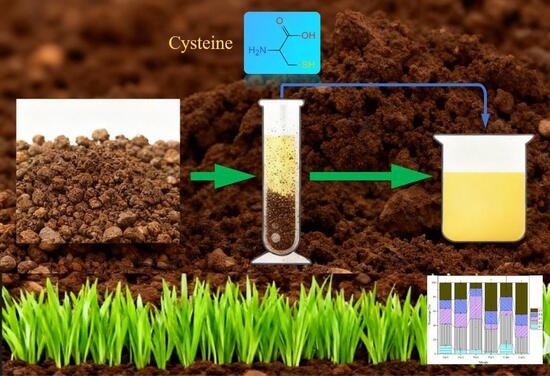
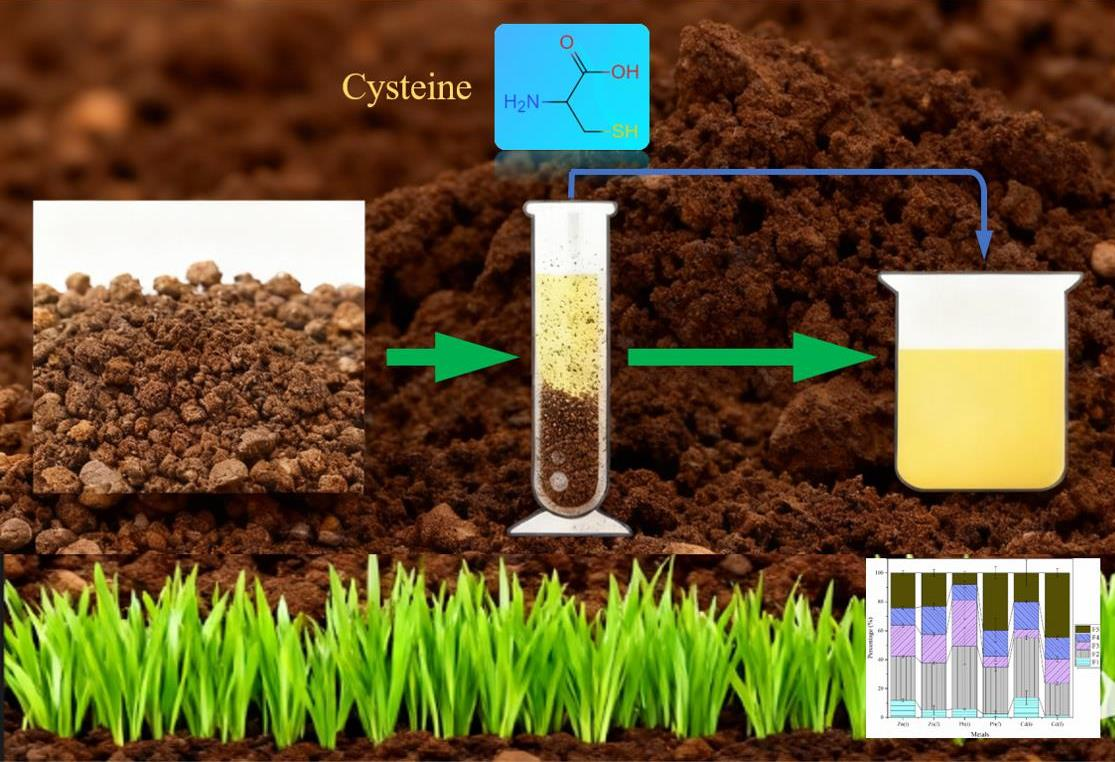
In order to identify an efficient and environmentally friendly washing agent for heavy metal-contaminated soil, this study selected seven natural amino acids—arginine (Arg), alanine (Ala), glycine (Gly), cysteine (Cys), lysine (Lys), threonine (Thr), and glutamic acid (Glu)—based on their water solubility, effectiveness, and functional group characteristics. According to the removal efficiencies for zinc (Zn), lead (Pb), and cadmium (Cd), Cys, which contains a specific sulfhydryl group (-SH), was chosen as the target leaching agent for the remediation of composite-contaminated soil. The optimal process conditions were determined as follows: 0.02 mol/L of cysteine concentration, liquid-to-soil ratio of 20:1 (mL/g), 10 min of ultrasonic time, and pH = 8.0. The order of removal efficiency was Pb (40.8%) > Zn (21.6%) > Cd (19.9%). The leaching process selective effects on the speciation fractions of Zn, Pb, and Cd in the soil, and these differences can be explained by the hard–soft acid–base theory and the strength of coordination between the metals and cysteine. Mechanism analysis revealed that soil washing essentially achieves selective extraction of the target metal through strong chemical interactions between functional groups of cysteine and active metal sites of secondary minerals in the soil. Cysteine is a green remediation agent with high selectivity and environmental compatibility for contaminated soil. Its application requires precise design and risk assessment based on the chemical properties of the target metals, while ensuring the sustainability of the soil to maintain the ecological functions and long-term health of the remediated soil.

Graphical Abstract

1. Introduction

Heavy metal pollution has become a severe challenge for soil worldwide. The concentration of toxic elements such as cadmium (Cd), lead (Pb), arsenic (As), and mercury (Hg) in specific areas is far higher than background levels [1,2]. Due to their non-biodegradability and strong mobility, heavy metals can readily transfer into water bodies and plants, leading to their accumulation in the environment and potential contamination of the human food chain, thereby posing risks to human health [3,4]. Remediation techniques for heavy metal-contaminated soil include physical, chemical, and biological methods [5]. Soil washing is a physicochemical remediation technology that has received more attention due to its operational simplicity and high efficiency [6,7]. The selection and performance of washing agents are key to this technology [8]. Traditional agents mainly include inorganic acids, organic acids, basic solutions, chelating agents, and surfactants. [9,10]. Soil washing with inorganic acids or basic solutions presents great disadvantages because extreme pH values also affect other properties of the soil, such as nutrient levels and micro- and macro-level biological communities [11]. Synthetic chelating agents with low biodegradability may cause a potential threat to water bodies and organisms [12]. Currently, organic acids have been widely used for soil washing because they have better biodegradability and cause minimal damage to soil properties [13]. Natural organic acids exhibit highly selective chelating effects on specific heavy metal ions while avoiding interference with other beneficial components in the soil [14]. For instance, oxalic acid can selectively combine with cadmium under certain conditions to form stable complexes, thereby reducing the bioavailability of cadmium [15]. Furthermore, natural organic acids can be extracted on a large scale through biomass resources, such as agricultural by-products [16], which not only reduces production costs but also facilitates the recycling of resources [17]. In contrast, synthetic chelating agents usually require complex chemical processes and expensive raw materials, leading to additional environmental pollution [18].
As a special organic acid, natural amino acids have great application potential due to their good water solubility, environmental compatibility, biodegradability, and rich functional groups, such as amino -NH2, carboxyl -COOH, thiol -SH, and hydroxyl -OH [19]. For instance, research has shown that threonine (Thr) and glutamic acid (Glu) exhibit the highest extraction and removal capabilities for cadmium [20]. Amino acids can coordinate with heavy metals through carboxyl groups (-COOH) and amino groups (-NH2) in their molecules to form stable complexes, thereby facilitating the desorption and migration of heavy metals from soil particles. Chelation is one of the key strategies by which microorganisms enhance the tolerance of plants to heavy metals, thereby reducing the bioavailability and toxicity of heavy metals by binding with metal ions [21]. Recently, ultrasonic-assisted technology has become a highly promising approach to soil remediation due to the unique cavitation effect [22,23]. Choi et al. [24] studied ultrasonic-assisted soil washing for remediation of heavy metal-contaminated soil and the mechanism of ultrasonic desorption. Chen et al. [25] studied the release behavior of heavy metals in soil through ultrasonic-assisted EDTA treatment, and results indicated that ultrasound treatment alone removed very little Pb and Zn. The maximum removal efficiency of EDTA with ultrasound was much higher than that of using EDTA alone, and the washing time could be shortened from 720 to 1~5 min with similar removal efficiency.
The effect and microscopic changes of ultrasonic-assisted soil washing with amino acids on the remediation of contaminated soil with Pb, Cd, and Zn were investigated in this study. The main research contents are as follows: (1) the optimal eluent was screened and determined from seven natural amino acids; (2) the effects of eluent concentration, liquid-to-soil ratio, ultrasonic time, and pH value on the removal efficiency of Pb, Cd, and Zn were systematically studied; (3) changes in the physical and chemical properties of the soil and the content of heavy metals before and after leaching were analyzed by FTIR, XRD, SEM, and XRF; (4) changes in the speciation fractions of heavy metals before and after washing were analyzed.

2. Materials and Methods

2.1. Materials

Natural amino acids were obtained from Shanghai Yien Chemical Technology Co., LTD, Shanghai, China. All chemicals were of reagent grade. Zinc nitrate (Zn(NO3)2·6H2O), lead nitrate (Pb(NO3)2), and cadmium nitrate (Cd(NO3)2·4H2O) were obtained from Xilong Scientific Co., Ltd., Guangzhou, China. Soil samples from the plow layer in Guangxi were collected, air-dried naturally, ground, and sieved through a 2 mm mesh. Then, 2.29 g of Zn(NO3)2·6H2O, 0.80 g of Pb(NO3)2 and 1.37 g of Cd(NO3)2·4H2O were dissolved in 250 mL of distilled water to prepare a solution, which was added and mixed with uncontaminated soil (1.0 kg) in a high-density polyethylene container. Then, the soil was left to stand for 300 days under natural laboratory conditions without direct exposure to sunlight. The eluent was selected from seven natural amino acids: arginine (Arg), alanine (Ala), glycine (Gly), cysteine (Cys), lysine (Lys), threonine (Thr), and glutamic (Glu) acid (purity ≥ 99%, Sigma-Aldrich (Shanghai) Trading Co., Ltd, Shanghai, China). The structures and names of the natural amino acids, along with their recognized three-letter abbreviations by the International Union of Pure and Applied Chemistry (IUPAC), are shown in Table 1 [26].

2.2. Soil Washing Experiment with Ultrasound

To elucidate the influence of operating parameters on the elution efficiency of cysteine (Cys) under the ultrasonic-assisted conditions, single-factor experiments were carried out in this study. The independent effects of four factors, including the agent concentration, liquid-to-soil ratio, washing time, and pH value on the removal efficiencies of Pb, Cd, and Cu were investigated. First, 1.0 g of soil sample and 20 mL of washing agent were treated in a 40 kHz ultrasonic instrument (300 W), with water temperature controlled at 25 °C. A single-factor experiment with a fixed time, soil–liquid ratio, and pH was conducted to explore the effects of amino acid types and concentrations on the removal efficiencies of Pb, Cd, and Zn. After washing, the suspension was centrifuged at 4000 rpm for 10 min, and the supernatant was taken to determine the concentration of heavy metal. All experiments were repeated three times.

2.3. Analytical Methods

A series of relevant soil parameters were analyzed, including pH, cation exchange capacity (CEC), soil organic matter (SOM), and contents of Pb, Cd, and Zn. The pH value was measured using a pH meter with a soil-to-distilled water ratio of 1:2. CEC was determined using the ammonium acetate saturation method. Total soil nitrogen (TN) was measured by Kjeldahl determination. The total contents of Pb, Cd, and Zn were determined by the HF-HClO4-HNO3 digestion method, and quality control was carried out using standard soil materials (GRG Metrology and Testing Group Co., LTD, Guangzhou, China). Particle size distribution was determined using a laser particle sizer (MasterSizer 3000, Malvern, UK). Soil properties are presented in Table 2. Both the initial and treated soil samples were characterized using scanning electron microscope (SEM), X-ray diffraction (XRD), Fourier-transform infrared spectroscopy (FTIR), and X-ray fluorescence (XRF). Surface morphology was observed using SEM (Zeiss Gemini, Jena, Germany), and the functional groups were analyzed using FTIR (Nicolet iS50, Waltham, MA, USA). The crystal structure and the major element oxides were analyzed by XRF (Bruker S8 TIGER, Karlsruhe, Germany) and XRD (Bruker AXS D8 ADVANCE, Karlsruhe, Germany), respectively. The Tessier sequential extraction method was employed to extract the chemical fractions of Pb, Cd, and Zn [27].

3. Results and Discussion

3.1. Selection of Washing Eluent

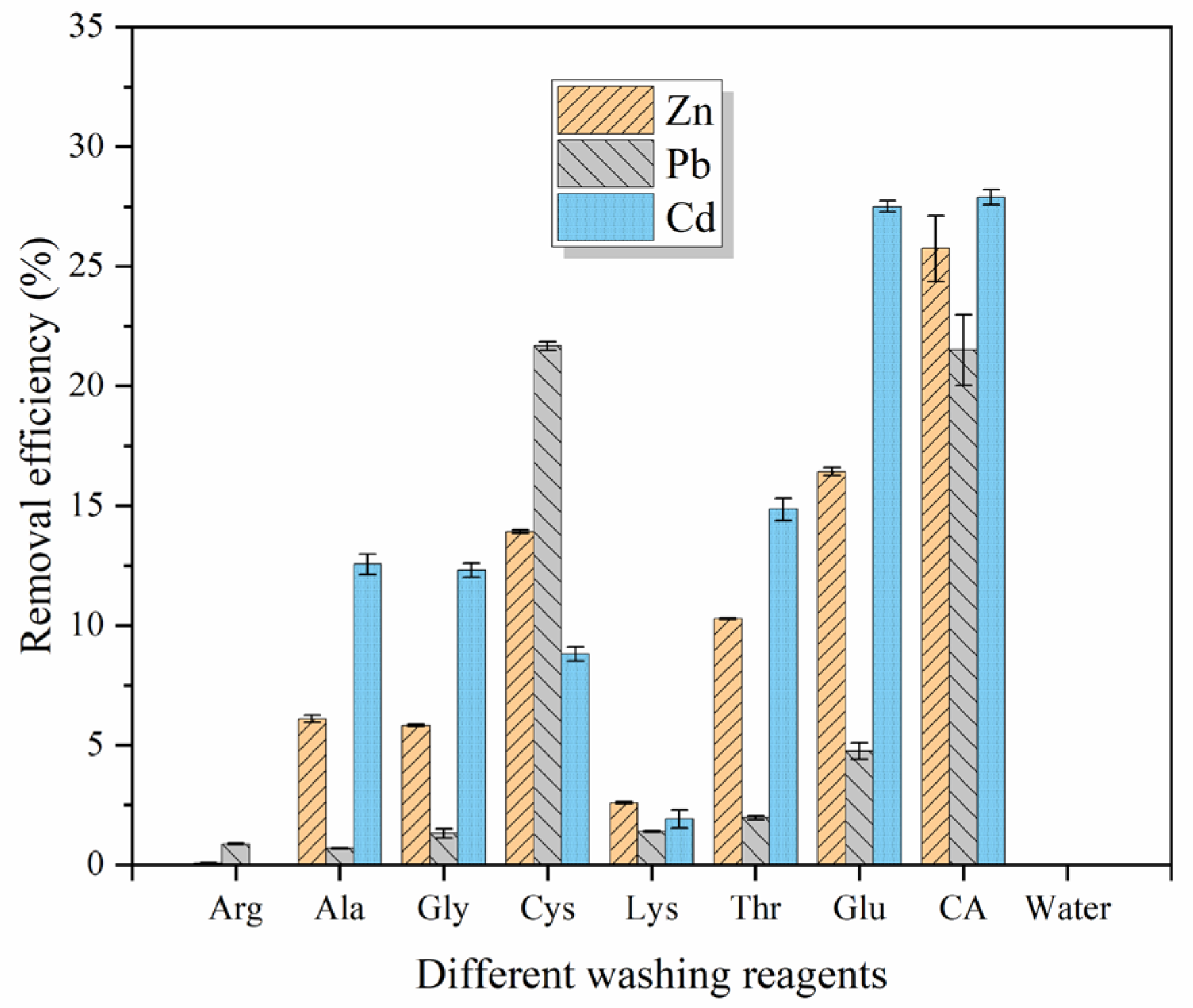
Figure 1 shows the removal efficiencies of seven natural amino acids, citric acid (CA), and water for Pb, Cd, and Zn in soil. Results indicate that different amino acids exhibited significant selective differences in the removal of the three heavy metals. Glutamic acid (Glu) demonstrated special removal capabilities for Zn and Cd, which showed that removal efficiencies were far higher than the average levels of the other six amino acids. Cysteine (Cys) showed the most prominent removal ability for Pb. As a control, citric acid achieved the highest overall removal efficiency for the three metals, confirming the characteristic as a potent broad-spectrum chelating agent. In contrast, the removal efficiency by water was nearly zero, demonstrating that metal removal relied primarily on chemical coordination reactions rather than physical washing.
Mechanistically, this selective difference is due to the distinct functional groups of the amino acids, with the two carboxyl groups in glutamic acid providing oxygen atoms with strong coordination ability for Zn and Cd [28]. Importantly, the thiol group (-SH) in cysteine (Cys), acting as a soft base, exhibits a strong affinity for soft acid metal ions, enabling the formation of stable PB-S bonds [29]. Cysteine among the natural amino acids demonstrated the relatively best overall performance for the three target metals, which possessed the highest selectivity for Pb and maintained above-average removal capabilities for Zn and Cd.

3.2. Batch Washing Experiments

3.2.1. Effects of Cys Concentrations

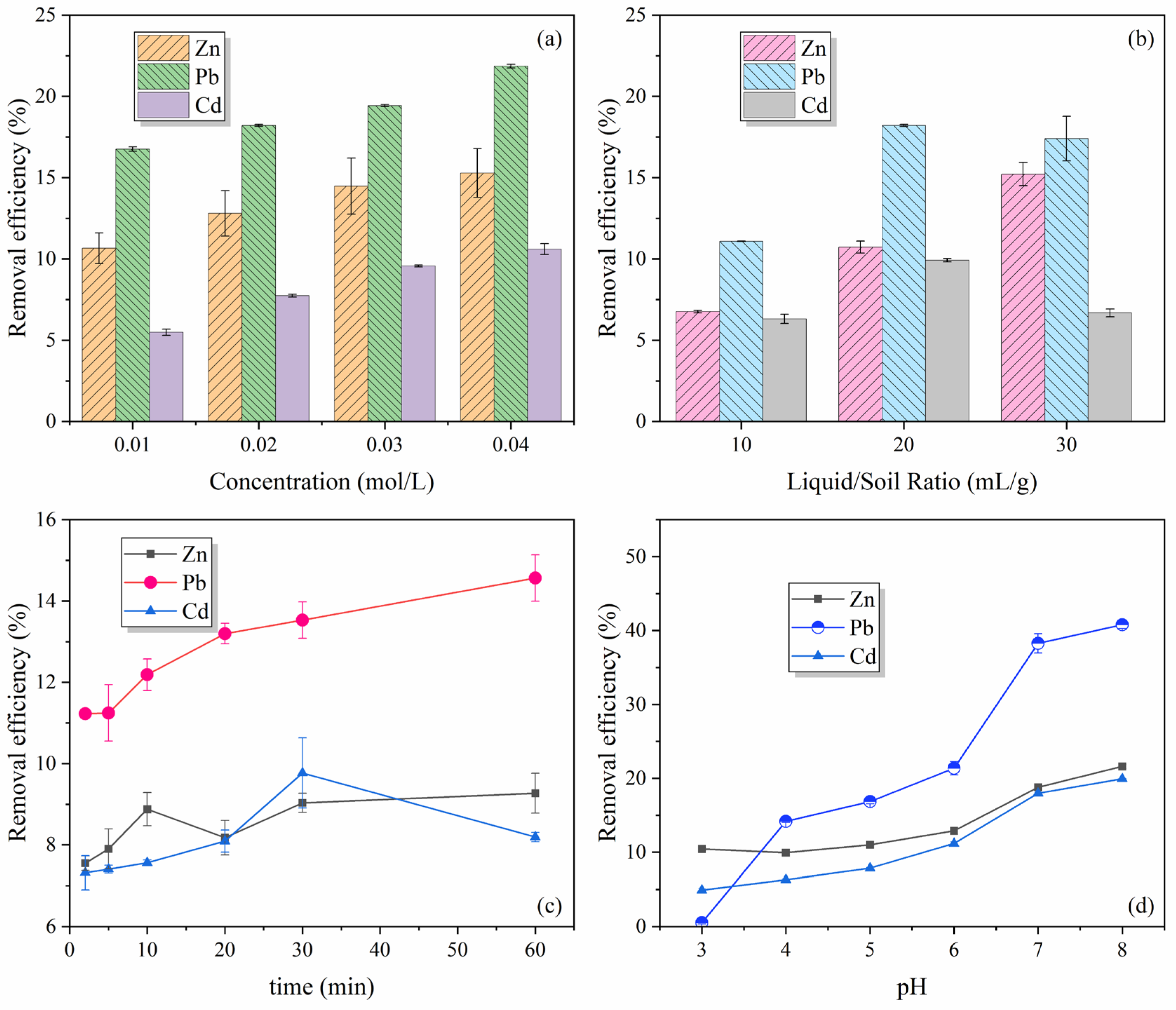
As shown in Figure 2a, the removal efficiencies of Pb, Cd, and Zn all increased significantly with the increase in Cys concentration. When the concentration of cysteine increased from approximately 0.01 to 0.04 mol/L, the removal efficiency of Pb rose from 16.75% to 21.85%. The removal efficiency of Zn increased from 10.65% L to 15.28%. The removal efficiency of Cd rose from 5.49% to 10.60%. At all concentration gradients, the order of removal efficiency was as follows: Pb > Zn > Cd. The carboxyl (-COOH), amino (-NH2), and thiol (-SH) groups in the molecular structure of cysteine enabled it to react with heavy metal ions through ion exchange, surface complexation, and dissolution [30]. With increasing concentration in the solution, cysteine provided more effective functional groups, thereby enhancing the ability to compete for binding with metal ions on the surface of soil particles. Similarly, organic acids could effectively promote the desorption of Pb and Cd in the soil, and the desorption efficiency increased with the increase in organic acid concentration [31]. Meanwhile, the powerful physical force generated by the cavitation effect of ultrasonic waves can effectively break down soil aggregates, increase the solid–liquid contact area, and accelerate the mass transfer process, thereby significantly enhancing the reaction rate and elution efficiency [24]. Furthermore, the -SH and the -NH2 groups, centered on sulfur (S) and nitrogen (N) atoms, respectively, both possess lone pair electrons and can act as Lewis bases, coordinating to Lewis acid sites in soil minerals [32]. In addition, when the concentration of the eluent was excessively high, the metal removal rate did not continue to increase accordingly, which is primarily attributed to the strong salinization effect induced by the high concentration [7]. This leads to a reduction in actual economic benefits and increases the difficulty and cost of treating waste liquid [33].

3.2.2. Effects of Liquid-to-Soil Ratio

As shown in Figure 2b, as the liquid-to-soil ratio increased from 10:1 to 30:1 (mL/g), the removal rate of Zn increased from 6.76% to 15.21%, primarily due to the larger liquid volume promoting the desorption of heavy metals from the solid surface and providing more active sites of cysteine for complexation [34,35]. In contrast, the removal rates of Pb and Cd exhibited an initial increase, followed by a decrease. The highest removal efficiencies for Pb and Cd were observed at a liquid-to-soil ratio of 20:1, reaching 18.21% and 9.83%, respectively, while at a ratio of 30:1, they decreased to 17.40% and 6.68%. This trend may be attributed to the re-adsorption of partially desorbed Pb and Cd onto other sites in the soil under excessively high liquid-to-soil ratios, disrupting the optimal desorption–complexation equilibrium.

3.2.3. Effects of Ultrasonic Time

Generally, appropriately extending the washing time helps the washing agent fully interact with the heavy metals, thereby facilitating the progress of complexation or dissolution reactions [36]. As shown in Figure 2c, the removal efficiencies of three metals reached a very high level in a relatively short time (~5 min), and no significant improvement (<5%) in removal rate was observed upon further extension of the reaction time. Furthermore, the ultrasonic washing time was significantly shorter than that of traditional shaking washing [8,37]. Conventional agitation washing is limited by a relatively weak hydrodynamic effect and struggles to fully overcome the adsorption resistance of pollutants on soil particles [38]. Simultaneously, the internal diffusion of pollutants acts as a mass transfer rate-limiting step, resulting in low leaching efficiency and prolonged time to approach reaction equilibrium, thus constraining the practical engineering application efficiency of this technology. However, ultrasonic washing can significantly enhance interfacial mass transfer through cavitation effects (high temperature, high pressure, micro-jets, and shock waves generated by bubble collapse), enabling cysteine to efficiently extract heavy metals in a very short time [22,39]. This effect disrupts soil aggregates, increases contact area, and promotes the penetration of the leaching agent and ion diffusion, thereby accelerating the desorption of heavy metals from both particle surfaces and internal pores [25]. The extreme conditions of cavitation can also enhance complexation reactions. However, the nucleation sites of cavitation are limited, the enhancement effect will show a marginal decline over time [40], and excessive processing may also increase energy consumption and damage soil structure [41,42].

3.2.4. Effects of Solution pH

Solution pH can affect the ability of washing agents to extract heavy metals by altering the ion concentration in the liquid phase and affecting adsorption/desorption processes, ion exchange behavior, and the re-adsorption mechanism related to newly formed metal chelates [7]. Generally, a lower pH value is beneficial for the washing effect, as the presence of H+ ions facilitates the dissociation of metal ions. As shown in Figure 2d, the removal efficiencies of the three heavy metals increased with the increase in pH value and reached their peaks under weakly alkaline conditions at pH = 8. This result is inconsistent with the phenomenon where EDTA was used as a leaching agent [43], which may be attributed to the unique pH-dependent activation behavior of the sulfhydryl group (-SH) in the cysteine molecule. According to the hard–soft acid–base (HSAB) theory [44], the -SH group can be classified as a soft base, while two other functional groups (-COO and -RNH2) are usually regarded as hard bases [45]. The key functional group in cysteine is the -SH group, and the resulting sulfide anion (S) is an extremely strong soft base when the -SH group protonates under an appropriate pH. Under lower pH conditions, -SH and -NH2 groups in the cysteine molecule are protonated, reducing their ability to act as electron donors and lowering their coordination activity. As pH increases, the -SH group gradually deprotonates, forming highly reactive thiol anions (-S) that can form soluble metal complexes [46], in which sulfur atoms serve as important coordination atoms [47]. However, an excessively high pH can cause serious and irreversible damage to the physicochemical properties and ecological functions of soil [48], such as soil compaction, decomposition of organic matter, loss of nutrients, destruction of microbial communities, and secondary pollution [49].

3.3. Spectral and Morphological Analysis

XRF analysis in Table 3 indicates the stable contents of major soil components (e.g., SiO2, Al2O3) after washing, demonstrating minimal disruption to the soil matrix during the leaching process. XRF is a semi-quantitative technique for measuring total elemental content; it is insensitive to changes in metal speciation and exhibits relatively larger errors at low concentration ranges [50].
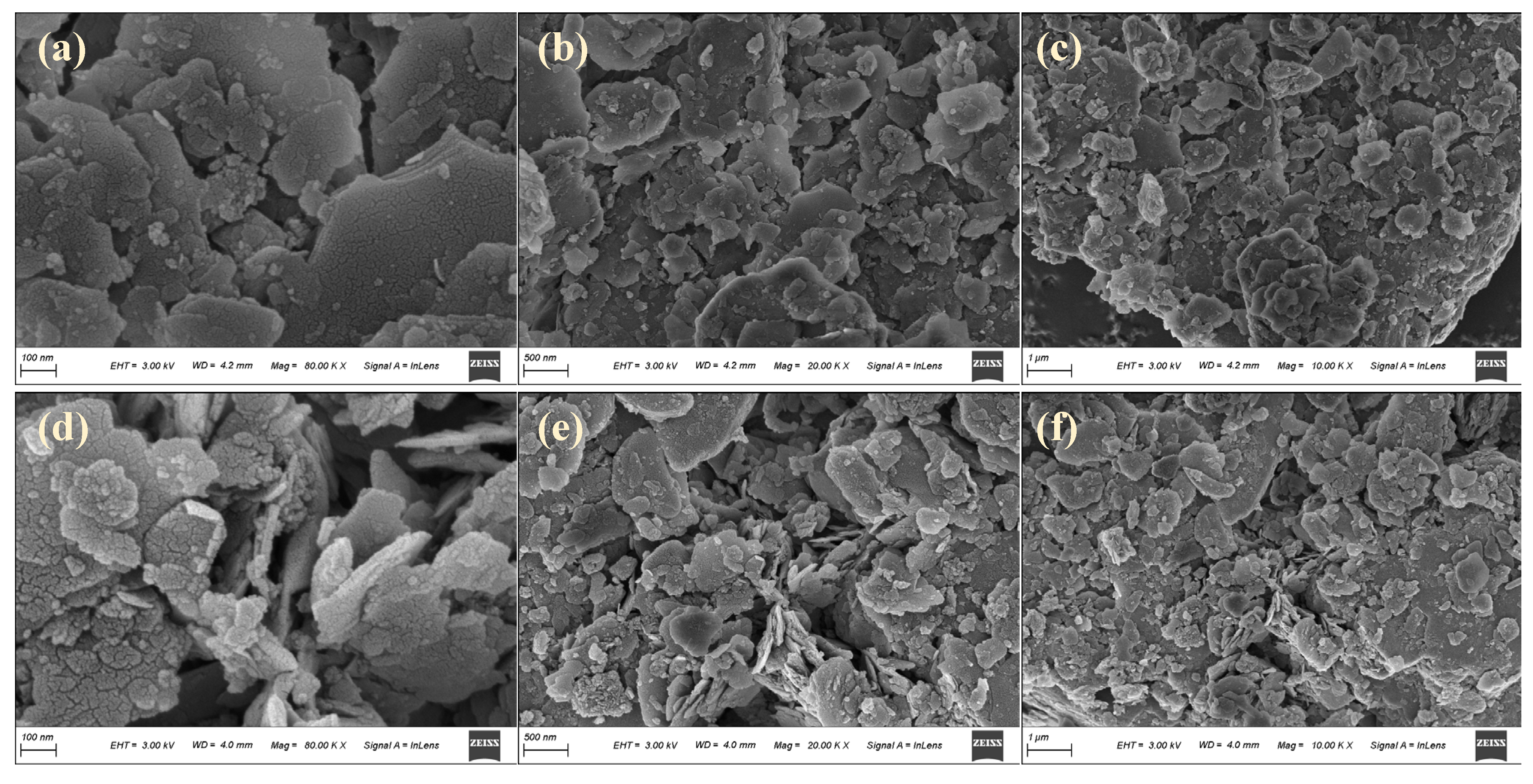
Figure 3 illustrates the micromorphology changes in soil samples before and after washing. Before washing (Figure 3a–c), soil particles presented a relatively dense and agglomerated structure with blurred boundaries between particles. The surface was covered by a substantial amount of amorphous cementing materials and flocculent deposits, forming a continuous and relatively smooth massive structure. This dense morphological structure may be attributed to the interactions between soil components (including clay minerals and organic matter) and heavy metals, leading to the formation of surface deposits or pore-filling oxides, carbonates, or organic–metal complexes, resulting in a generally underdeveloped pore structure [51]. After the washing treatment (Figure 3d–f), the soil microstructure became looser, and more noticeable cracks and exfoliation appeared on the particle surfaces.
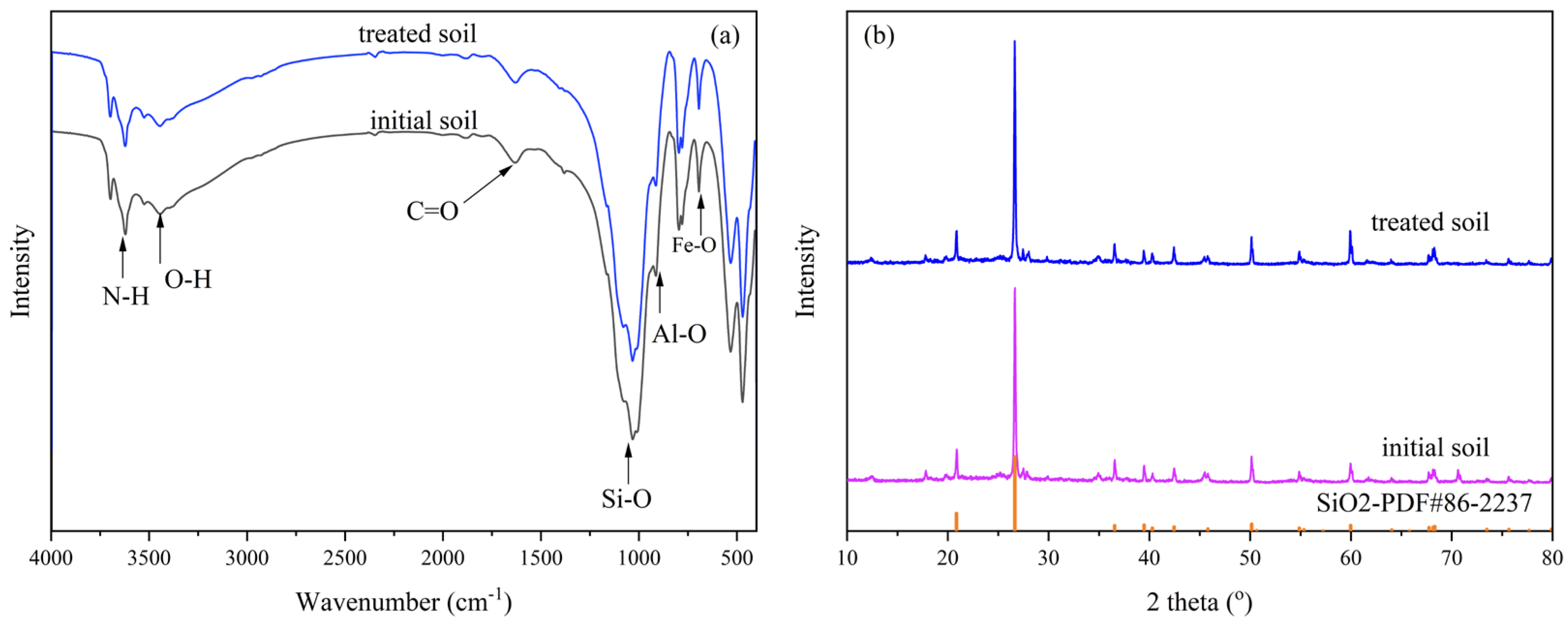
FTIR spectra (Figure 4a) provide qualitative information about the chemical properties of the soil surface before and after washing. In the infrared spectra of the soil before and after leaching, the characteristic absorption peaks of Si-O bonds are clearly visible at around 1000 cm−1 [52], with no significant shift. This indicates that the silicon–oxygen framework structure of the soil remained stable during the leaching process, and no significant chemical damage or reorganization occurred. In the 2000–1500 cm−1 range, the initial soil-bound carboxyl C=O stretching vibrations and amine N-H bending vibrations may be enhanced due to the contribution of the carboxyl group (-COOH) and amino groups of cysteine [53]. The infrared spectroscopy data show that distinct absorption peaks were present in the fingerprint region at 910, 875, 685, 530, and 480 cm−1 both before and after the washing treatment, which mainly correspond to lattice vibrations of soil minerals [54]. The absorptions at 910 and 875 cm−1 may be attributed to bending vibrations of Al-OH in clay minerals or vibrations related to Si-O-Al bonds; the absorption around 685 cm−1 could be assigned to Si-O bending vibrations or stretching vibrations of Fe-O bonds in iron oxides; the signals at 530 and 480 cm−1 indicate bending vibrations of Si-O-Si [55]. The positions of these characteristic peaks show no obvious shifts after washing, indicating that the main mineral structure of the soil remained stable, without significant chemical alteration during the treatment [56].
The XRD spectra (Figure 4b) before and after leaching exhibit similar characteristics, indicating that the basic mineral composition of the soil remained fundamentally unchanged after leaching. For example, quartz (2θ = 26.5°), as the predominant mineral in the soil, remained stable after washing [57] due to its highly inert chemical nature, preventing the dissolution or degradation by mild leaching agents like cysteine.

3.4. Redistribution of Metal Species in the Treated Soils

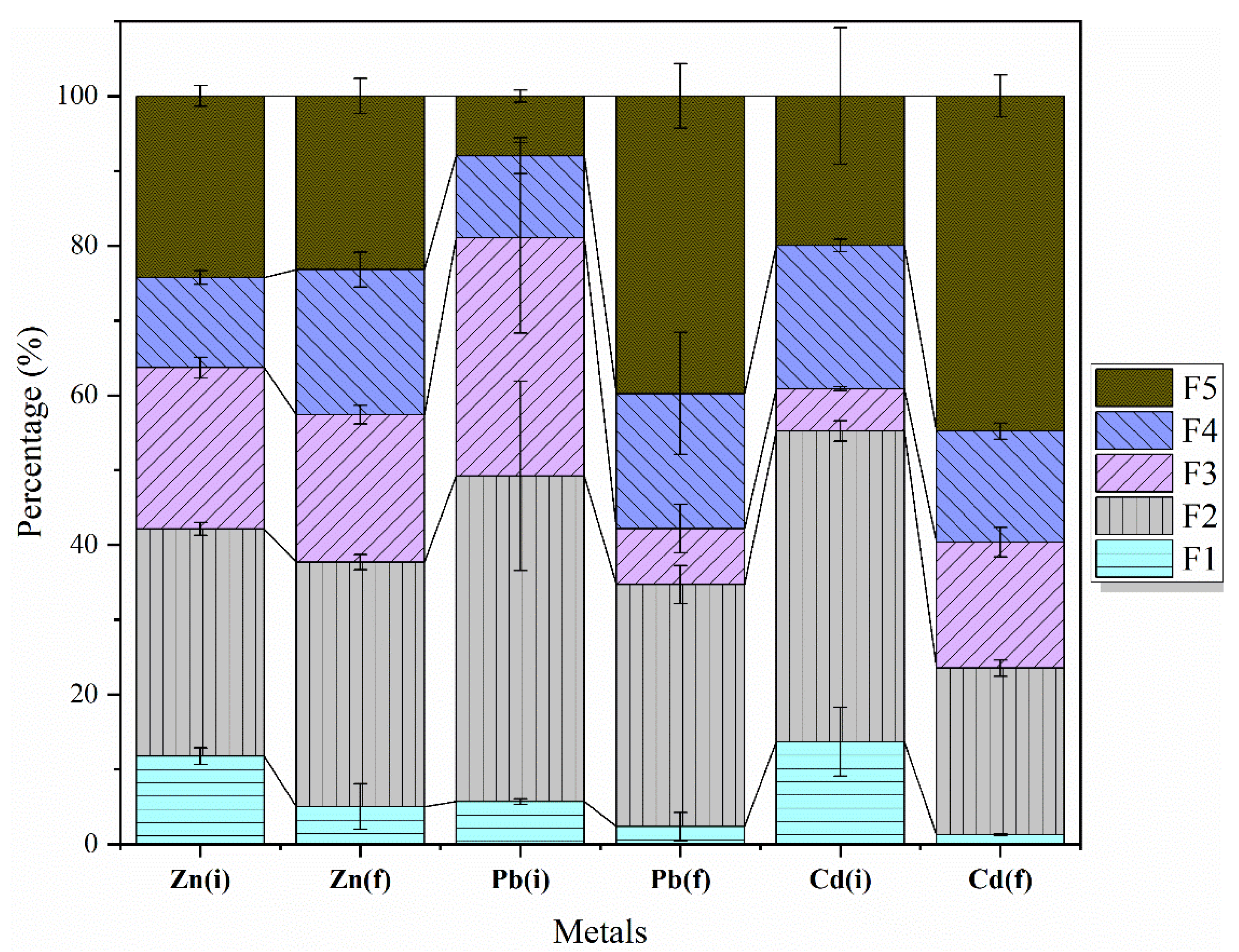
Speciation analysis is crucial for assessing the environmental risk and remediation effectiveness of heavy metals, as the bioavailability and mobility of different forms vary greatly. As shown in Figure 5, the three metals before leaching were distributed in varying proportions across the exchangeable fraction (F1), carbonate-bound fraction (F2), Fe-Mn oxide-bound fraction (F3), organic matter-bound fraction (F4), and residual fraction (F5) [58].
The speciation of the three heavy metals exhibited distinctly different transformation patterns following treatment. For Zn, the F1 fraction decreased from 12% to 5%, the F5 fraction decreased slightly from 24% to 23%, while the F2 fraction and the F4 fraction increased from 30% and 12% to 33% and 19%, respectively, indicating that the activity was not effectively controlled. For Pb, the proportions of all active fractions (F1, F2, F3) were significantly reduced, whereas the proportion of the most stable residual fraction (F5) increased sharply from 8% to 40%, demonstrating an excellent “deep stabilization” effect. For Cd, the F1 fraction decreased from 14% to 1%, and the F2 fraction decreased from 42% to 22%, indicating that the active component of Cd was effectively reduced. According to the HSAB theory [44], the key functional group of cysteine, the thiol group (-SH), is a strong soft base. As soft acids, Pb2+ and Cd2+ exhibit high specific affinity for the thiol group, forming highly stable complexes that enable effective and selective desorption, leaching, or transformation into more stable forms. In contrast, Zn2+ is a borderline acid and has much weaker complexation ability with the sulfhydryl group, which is prone to being released from the soil and then redistributed into other active forms during the leaching process [59].

3.5. Mechanism Analysis

Based on the results of a previous analysis of influencing factors, spectral analysis and speciation analysis, it was hypothesized that the ultrasonic-assisted cysteine leaching of heavy metals in soil mainly relies on cysteine preferentially reacting with secondary minerals that have a lower degree of crystallinity and higher chemical reactivity [60]. The mechanism of interaction between cysteine and secondary minerals in soil depends on the active functional groups (-SH, -COOH, and -NH2) and the multi-mode chemical interaction between these groups and the surfaces of secondary minerals [61]. The highly efficient elution mechanism of cysteine can be summarized as follows: the sulfhydryl group (-SH) under weakly alkaline conditions is deprotonated into a highly reactive thiolate anion (-S), which forms strong covalent bonds with soft acid heavy metals (Pb and Cd), promoting desorption from the soil phase [62]. Meanwhile, the amino group (-NH3+) and carboxyl group (-COO) in the molecule form hydrogen bonds and bridge connections with cations in the solution, assisting them in concentrating on negatively charged mineral surfaces [20,28,63].

3.6. Prevention and Control of Activation Risks

The previous part of this study confirmed that although leaching with cysteine can efficiently remove total Zn from soil, it will alter the speciation distribution of residual Zn, leading to a relatively higher proportion of migratable Zn. Consequently, there exists a potential risk of secondary activation and migration of Zn when the environmental conditions fluctuate. To ensure long-term environmental safety of the remediation project, targeted preventive and control measures should be implemented from the perspectives of technical optimization and risk management. Firstly, optimization and precise control should be carried out during the leaching process to reduce risks at the source. Exploring the use of a weak acid-chelating agent composite leaching agent or a graded leaching strategy can be considered to more selectively remove the target forms of Zn and minimize disturbance to the remaining stable Zn species. Secondly, it is essential to conduct post-stabilization treatment on the soil after leaching, as this represents a core step in preventing secondary activation. It is recommended to add passivating materials to the soil, such as lime [64], hydroxyapatite [65], or biochar [66], to facilitate the transformation of active zinc into more stable forms, namely carbonate-bound and oxide-bound states. Finally, a long-term monitoring and management mechanism must be established [67], including regular tracking of soil pH and the available content and concentration of Zn. Moreover, it is necessary to formulate a risk emergency response plan and clearly define the activation risk thresholds to take supplementary and mitigation measures in a timely manner when abnormal data are detected, thereby achieving long-term safe utilization of contaminated soil.

4. Conclusions

This study investigated the remediation effects and mechanisms of soil washing with various natural amino acids on Pb, Cd, and Zn in contaminated soil. Results indicate that the types of leaching agents had significant selectivity for the removal efficiency of heavy metals, and cysteine (Cys) showed the best removal effect on Pb, with a removal efficiency of 40.8%, while the removal efficiencies for Zn and Cd were 21.6% and 19.9%, respectively. Spectroscopic analysis indicated that the leaching process with cysteine did not damage the main mineral framework of the soil. Instead, the functional groups (-SH and -NH2) of cysteine could selectively coordinate and combine with the active metal sites on the surface of secondary minerals, resulting in a weakening of the diffraction peaks of secondary minerals and changes in the infrared signals of related functional groups. This confirms that cysteine can specifically remove heavy metals that are bound to secondary minerals while maintaining the stability of the main soil structure. Leaching exhibited high metal selectivity in the remediation of heavy metals, with efficient removal effects on soft acid-type metals (Pb and Cd) and activation risk for borderline acid-type Zn. Different metals with various chemical species exhibit significant differences in mobility, toxicity, and environmental stability under the same treatment conditions. Post-treatment stabilization measures based on chemical passivation can effectively reduce the activity and environmental risks of heavy metals, contributing to enhanced soil sustainability and ensuring long-term ecological functions and health.

Author Contributions

Methodology, Y.N. and W.H.; investigation, Z.D. and T.S.; writing—original draft, Y.N.; writing—review and editing, W.H.; supervision, W.H.; funding acquisition, Y.N. and W.H. All authors have read and agreed to the published version of the manuscript.

Funding

This work was financially supported by a Guilin Key Research and Development Project (20210212-1) and the Basic Ability Improvement Project for Young and Middle-Aged Teachers of the Education Department in Guangxi (2024KY0803), China.

Institutional Review Board Statement

Not applicable.

Informed Consent Statement

Not applicable.

Data Availability Statement

The data is available from the corresponding author on reasonable request.

Conflicts of Interest

The authors declare no conflicts of interest.

References

  1. Yu, J.; Chen, Z.; Gao, W.; He, S.; Xiao, D.; Fan, W.; Huo, M.; Nugroho, W.A. Global trends and prospects in research on heavy metal pollution at contaminated sites. J. Environ. Manag. 2025, 383, 125402. [Google Scholar] [CrossRef]
  2. Fayssal, S.; Kumar, P.; Popescu, S.M.; Sardar, H.; Ahmad, R.; Gupta, D.; Gaur, S.K.; Alharby, H.F.; Al-Ghamdi, A.G. Health risk assessment of heavy metals in saffron (Crocus sativus L.) cultivated in domestic wastewater and lake water irrigated soils. Heliyon 2024, 10, e27138. [Google Scholar] [CrossRef] [PubMed]
  3. Rashid, A.; Wan Yaacob, W.Z.; Umor, M.R. Assessments of heavy metals accumulation, bioavailability, mobility, and toxicity in serpentine soils. Sustainability 2023, 15, 1218. [Google Scholar] [CrossRef]
  4. Uddin, M.M.; Zakeel, M.C.M.; Zavahir, J.S.; Marikar, F.M.; Jahan, I. Heavy metal accumulation in rice and aquatic plants used as human food: A general review. Toxics 2021, 9, 360. [Google Scholar] [CrossRef] [PubMed]
  5. Xu, L.; Zhao, F.; Xing, X.; Peng, J.; Wang, J.; Ji, M.; Li, B.L. A review on remediation technology and the remediation evaluation of heavy metal-contaminated soils. Toxics 2024, 12, 897. [Google Scholar] [CrossRef]
  6. Gusiatin, Z.M.; Kulikowska, D.; Klik, B. New-generation washing agents in remediation of metal-polluted soils and methods for washing effluent treatment: A review. Int. J. Environ. Res. Public Health 2020, 17, 6220. [Google Scholar] [CrossRef]
  7. Liu, J.; Zhao, L.; Liu, Q.; Li, J.; Qiao, Z.; Sun, P.; Yang, Y. A critical review on soil washing during soil remediation for heavy metals and organic pollutants. Int. J. Environ. Sci. Technol. 2022, 19, 601–624. [Google Scholar] [CrossRef]
  8. Wang, C.; Wu, C.-F.; Fu, Z.-C.; Zhang, Y.; Liu, D.; Zhang, J.-L. Comparison of Multi-stage Washing Effects of Different Washing Agents on Arsenic-contaminated Soil. J. Ecol. Rural Environ. 2023, 39, 1308–1315. [Google Scholar]
  9. Yang, X.; Liu, L.; Wang, Y.; Lu, T.; Wang, Z.; Qiu, G. Sustainable and reagent-free cathodic precipitation for high-efficiency removal of heavy metals from soil leachate. Environ. Pollut. 2023, 320, 121002. [Google Scholar] [CrossRef]
  10. Zhang, H.; Xu, Y.; Kanyerere, T.; Wang, Y.-S.; Sun, M. Washing reagents for remediating heavy-metal-contaminated soil: A review. Front. Earth Sci. 2022, 10, 901570. [Google Scholar] [CrossRef]
  11. Li, Y.; Hu, P.; Zhao, J.; Dong, C. Remediation of cadmium-and lead-contaminated agricultural soil by composite washing with chlorides and citric acid. Environ. Sci. Pollut. Res. 2015, 22, 5563–5571. [Google Scholar] [CrossRef]
  12. Ramanlal, D.; Kumar, R.; Kumar, N.; Thakkar, R. An introduction to heavy metal pollution and different technologies available for remediation. Holist. Approach Environ. 2022, 12, 26–38. [Google Scholar] [CrossRef]
  13. Wan, J.; Chen, Z.; Liu, X.; Tang, Z.; Deng, H. Enhanced heavy metal leaching from volcanic muds: Synergistic effects of citric acid and EDTA composite system. Surf. Interfaces 2024, 48, 104287. [Google Scholar] [CrossRef]
  14. Ge, X.; Xie, J.; Song, X.; Cao, X.; Wang, Y.; Xu, Z.; Wang, Y.; Hou, X. Electrokinetic remediation of cadmium (Cd), copper (Cu) and nickel (Ni) co-contaminated soil with oxalic acid, acetic acid or citric acid as the catholyte. Int. J. Electrochem. Sci. 2022, 17, 220444. [Google Scholar] [CrossRef]
  15. Ren, X.; Chen, Y.; Zhang, M.; Xu, Y.; Jia, H.; Wei, T.; Guo, J. Effect of organic acids and soil particle size on heavy metal removal from bulk soil with washing. Environ. Geochem. Health 2023, 45, 3187–3198. [Google Scholar] [CrossRef]
  16. Chauhan, S.; Mitra, S.; Yadav, M.; Kumar, A. Microbial production of lactic acid using organic wastes as low-cost substrates. Phys. Sci. Rev. 2024, 9, 875–889. [Google Scholar] [CrossRef]
  17. Lu, J.; Lv, Y.; Qian, X.; Jiang, Y.; Wu, M.; Zhang, W.; Zhou, J.; Dong, W.; Xin, F.; Jiang, M. Current advances in organic acid production from organic wastes by using microbial co-cultivation systems. Biofuels Bioprod. Biorefin. 2020, 14, 481–492. [Google Scholar] [CrossRef]
  18. Cheng, S.; Lin, Q.; Wang, Y.; Luo, H.; Huang, Z.; Fu, H.; Chen, H.; Xiao, R. The removal of Cu, Ni, and Zn in industrial soil by washing with EDTA-organic acids. Arab. J. Chem. 2020, 13, 5160–5170. [Google Scholar] [CrossRef]
  19. Kastratović, V.; Knežević, B. Removal of copper from the vineyard land of Pješivci (Montenegro) using amino acids. Environ. Earth Sci. 2024, 83, 565. [Google Scholar] [CrossRef]
  20. Yao, W.; Yang, Z.; Huang, L.; Su, C. Complexation of amino acids with cadmium and their application for cadmium-contaminated soil remediation. Appl. Sci. 2022, 12, 1114. [Google Scholar] [CrossRef]
  21. Fu, S.; Iqbal, B.; Li, G.; Alabbosh, K.F.; Khan, K.A.; Zhao, X.; Raheem, A.; Du, D. The role of microbial partners in heavy metal metabolism in plants: A review. Plant Cell Rep. 2024, 43, 111. [Google Scholar] [CrossRef]
  22. Hu, D.; Wu, Z.; Tian, Y.; Liu, S.; Hou, P.; Liang, J.; Zhang, G. Ultrasonic methods for effective soil remediation. J. Environ. Chem. Eng. 2025, 13, 118160. [Google Scholar] [CrossRef]
  23. He, L.; Zhou, X.; Cao, J.; Shen, L. Ultrasound-Assisted Soil Washing for Metals-Contaminated Soil Using Various Washing Solutions. CLEAN–Soil Air Water 2022, 50, 2100419. [Google Scholar] [CrossRef]
  24. Choi, J.; Lee, D.; Son, Y. Ultrasound-assisted soil washing processes for the remediation of heavy metals contaminated soils: The mechanism of the ultrasonic desorption. Ultrason. Sonochem. 2021, 74, 105574. [Google Scholar] [CrossRef] [PubMed]
  25. Chen, S.; Fei, X.; Zhang, C.; Chen, Y.; Ge, Q. Release behavior of heavy metals from soil in ultrasound-assisted EDTA washing. J. Soils Sediments 2021, 21, 3825–3833. [Google Scholar] [CrossRef]
  26. Cohn, W.E. Nomenclature and symbolism of α-amino acids. Methods Enzymol. 1984, 106, 3–17. [Google Scholar]
  27. Niu, Y.; Hu, W.; Shen, T.; Dong, K. Mobility, Speciation and Bioavailability of Zn and Pb in Artificially Polluted Soils by Magnetic Biochars from Siraitia Grosvenorii Residues. Water Air Soil Pollut. 2024, 235, 792. [Google Scholar] [CrossRef]
  28. Liu, X.; Wu, M.; Li, C.; Yu, P.; Feng, S.; Li, Y.; Zhang, Q. Interaction structure and affinity of zwitterionic amino acids with important metal cations (Cd2+, Cu2+, Fe3+, Hg2+, Mn2+, Ni2+ and Zn2+) in aqueous solution: A theoretical study. Molecules 2022, 27, 2407. [Google Scholar] [CrossRef]
  29. Wu, Y.; Shi, B.; Yang, L.; Wang, F.; Hou, L.; Shan, Z.; Wang, H. Cysteine-Functionalized Magnetic Manganese-Based MOF Composite for Enhanced Removal of Pb2+ from Water. Langmuir 2025, 41, 10953–10964. [Google Scholar] [CrossRef]
  30. Rodriguez-Zamora, P.; Cordero-Silis, C.; Fabila, J.; Luque-Ceballos, J.; Buendía, F.; Heredia-Barbero, A.; Garzón, I. Interaction mechanisms and interface configuration of cysteine adsorbed on gold, silver, and copper nanoparticles. Langmuir 2022, 38, 5418–5427. [Google Scholar] [CrossRef]
  31. Tang, Q.; Zhou, T.; Gu, F.; Wang, Y.; Chu, J.-M. Removal of Cd (II) and Pb (II) from soil through desorption using citric acid: Kinetic and equilibrium studies. J. Cent. South Univ. 2017, 24, 1941–1952. [Google Scholar] [CrossRef]
  32. Zhang, X.; Wang, Y.; Liao, J.; Wang, J.; Chang, L.; Bao, W. Regulatory role of Lewis acid sites on Cu species in Cu/ZnO/Al2O3 sorbent and their effect on thiophene removal performance. Fuel 2025, 401, 135863. [Google Scholar] [CrossRef]
  33. Ye, B.; Lan, J.; Nong, Z.; Qin, C.; Ye, M.; Liang, J.; Li, J.; Bi, J.; Huang, W. Efficiently combined technology of precipitation, bipolar membrane electrodialysis, and adsorption for salt-containing soil washing wastewater treatment. Process Saf. Environ. Prot. 2022, 165, 205–216. [Google Scholar] [CrossRef]
  34. Kim, M.-S.; Koo, N.; Kim, J.-G.; Lee, S.-H. Effects of washing solution, washing time, and solid-solution rate on the maximum heavy metals removal efficiency. Appl. Sci. 2021, 11, 6398. [Google Scholar] [CrossRef]
  35. Zheng, Y.; Zhang, Z.; Chen, Y.; An, S.; Zhang, L.; Chen, F.; Ma, C.; CAi, W. Adsorption and desorption of Cd in reclaimed soil under the influence of humic acid: Characteristics and mechanisms. Int. J. Coal Sci. Technol. 2022, 9, 7. [Google Scholar] [CrossRef]
  36. Zheng, X.; Li, Q.; Peng, H.; Zhang, J.; Chen, W.; Zhou, B.; Chen, M. Remediation of heavy metal-contaminated soils with soil washing: A review. Sustainability 2022, 14, 13058. [Google Scholar] [CrossRef]
  37. Qiu, R.; Zou, Z.; Zhao, Z.; Zhang, W.; Zhang, T.; Dong, H.; Wei, X. Removal of trace and major metals by soil washing with Na2EDTA and oxalate. J. Soils Sediments 2010, 10, 45–53. [Google Scholar] [CrossRef]
  38. Deng, Y.; Wang, S.; Fu, L.; Xue, W.; Zhang, C.; Deng, J.; Luo, X.; Liu, Y.; Zhao, D.; Mailhot, G. A Soil Washing Approach to Remediation of Lead-Contaminated Soil with Amino Acid Ionic Liquid [Met][NO3]. Toxics 2025, 13, 725. [Google Scholar] [CrossRef]
  39. Bu, X.; Danstan, J.K.; Hassanzadeh, A.; Behrad Vakylabad, A.; Chelgani, S.C. Metal extraction from ores and waste materials by ultrasound-assisted leaching-an overview. Miner. Process. Extr. Metall. Rev. 2024, 45, 28–45. [Google Scholar] [CrossRef]
  40. Effendi, A.J.; Wulandari, M.; Setiadi, T. Ultrasonic application in contaminated soil remediation. Curr. Opin. Environ. Sci. Health 2019, 12, 66–71. [Google Scholar] [CrossRef]
  41. Sun, T.; Beiyuan, J.; Gielen, G.; Mao, X.; Song, Z.; Xu, S.; Ok, Y.S.; Rinklebe, J.; Liu, D.; Hou, D. Optimizing extraction procedures for better removal of potentially toxic elements during EDTA-assisted soil washing. J. Soils Sediments 2020, 20, 3417–3426. [Google Scholar] [CrossRef]
  42. Park, B.; Son, Y. Ultrasonic and mechanical soil washing processes for the removal of heavy metals from soils. Ultrason. Sonochem. 2017, 35, 640–645. [Google Scholar] [CrossRef] [PubMed]
  43. Zou, Z.; Qiu, R.; Zhang, W.; Dong, H.; Zhao, Z.; Zhang, T.; Wei, X.; Cai, X. The study of operating variables in soil washing with EDTA. Environ. Pollut. 2009, 157, 229–236. [Google Scholar] [CrossRef] [PubMed]
  44. Hu, S.; Sun, X.; Liu, W.; Gregori, L.; Zhao, P.; Pascual, J.; Dallmann, A.; Dasgupta, A.; Yang, F.; Li, G. Accessing Metal-Containing Species in Tin–Lead Perovskite Precursor Solutions via Molecular Strategies Guided by the Hard–Soft Acid–Base Principle. Angew. Chem. 2025, 137, e202514010. [Google Scholar] [CrossRef]
  45. Pesonen, H.; Aksela, R.; Laasonen, K. Density functional complexation study of metal ions with cysteine. J. Phys. Chem. A 2010, 114, 466–473. [Google Scholar] [CrossRef]
  46. Yoshinari, N.; Kuwamura, N.; Kojima, T.; Konno, T. Development of coordination chemistry with thiol-containing amino acids. Coord. Chem. Rev. 2023, 474, 214857. [Google Scholar] [CrossRef]
  47. Belcastro, M.; Marino, T.; Russo, N.; Toscano, M. Interaction of cysteine with Cu2+ and group IIb (Zn2+, Cd2+, Hg2+) metal cations: A theoretical study. J. Mass Spectrom. 2005, 40, 300–306. [Google Scholar] [CrossRef]
  48. Wang, C.; Kuzyakov, Y. Soil organic matter priming: The pH effects. Glob. Change Biol. 2024, 30, e17349. [Google Scholar] [CrossRef]
  49. Neina, D. The role of soil pH in plant nutrition and soil remediation. Appl. Environ. Soil Sci. 2019, 2019, 5794869. [Google Scholar] [CrossRef]
  50. Kabiri, S.; Holden, N.; Flood, R.; Turner, J.; O’Rourke, S. X-ray Fluorescence Core Scanning for High-Resolution Geochemical Characterisation of Soils. Soil Syst. 2024, 8, 56. [Google Scholar] [CrossRef]
  51. Shi, Y.; Sheng, A.; Zhang, F.; Zhao, Z.; Bao, H.; Li, Z.; Zan, F.; Lou, W.; Cao, L.; Crittenden, J.C. Roles of the SOM and clay minerals in alleviating the leaching of Pb, Zn, and Cd from the Pb/Zn smelter soil: Multi-surface model and DFT study. Sci. Total Environ. 2024, 940, 173536. [Google Scholar] [CrossRef] [PubMed]
  52. Ellerbrock, R.; Stein, M.; Schaller, J. Comparing silicon mineral species of different crystallinity using Fourier transform infrared spectroscopy. Front. Environ. Chem. 2024, 5, 1462678. [Google Scholar] [CrossRef]
  53. Pan, Z.; Wang, G.; Liang, J.; Cang, L. Enhancing electrokinetic remediation of soil contaminated with As, Cd, Cu, and Pb using the biodegradable chelator GLDA: A pilot study. J. Soils Sediments 2024, 24, 2361–2376. [Google Scholar] [CrossRef]
  54. Volkov, D.; Rogova, O.; Proskurnin, M. Organic matter and mineral composition of silicate soils: FTIR comparison study by photoacoustic, diffuse reflectance, and attenuated total reflection modalities. Agronomy 2021, 11, 1879. [Google Scholar] [CrossRef]
  55. Ricchiardi, G.; Damin, A.; Bordiga, S.; Lamberti, C.; Spanò, G.; Rivetti, F.; Zecchina, A. Vibrational structure of titanium silicate catalysts. A spectroscopic and theoretical study. J. Am. Chem. Soc. 2001, 123, 11409–11419. [Google Scholar] [CrossRef]
  56. Cao, Y.; Zhang, S.; Wang, G.; Huang, Q.; Li, T.; Xu, X. Removal of Pb, Zn, and Cd from contaminated soil by new washing agent from plant material. Environ. Sci. Pollut. Res. 2017, 24, 8525–8533. [Google Scholar] [CrossRef]
  57. Nazmin, S.; Das, A.; Khan, M.Z.; Amin, M.S.; Hanif, M. Soil clay mineralogical phase analysis of Ganges floodplain soils by XRD and XRF. Open J. Soil Sci. 2019, 9, 298–312. [Google Scholar] [CrossRef]
  58. Wang, Z.; Wang, H.; Wang, H.; Li, Q.; Li, Y. Effect of soil washing on heavy metal removal and soil quality: A two-sided coin. Ecotoxicol. Environ. Saf. 2020, 203, 110981. [Google Scholar] [CrossRef]
  59. Bottari, E.; Festa, M.R. On the behaviour of cysteine as ligand of cadmium (II). Talanta 1997, 44, 1705–1718. [Google Scholar] [CrossRef]
  60. Wang, F.; Li, W.; Wang, H.; Hu, Y.; Cheng, H. The leaching behavior of heavy metal from contaminated mining soil: The effect of rainfall conditions and the impact on surrounding agricultural lands. Sci. Total Environ. 2024, 914, 169877. [Google Scholar] [CrossRef]
  61. Tong, Y.; Xiang, H.; Jiang, J.; Chen, W. Interfacial interactions between minerals and organic matter: Mechanisms and characterizations. Chemosphere 2024, 359, 142383. [Google Scholar] [CrossRef] [PubMed]
  62. Gautam, A.; Gailer, J. More effective mobilization of Hg2+ from human serum albumin compared to Cd2+ by L-cysteine at near-physiological conditions. Toxics 2023, 11, 599. [Google Scholar] [CrossRef] [PubMed]
  63. Liu, D.; Tian, R.; Liu, X.; Li, H. Polarization induced covalent/hydrogen bonding adsorption of NH4+ and K+ in soils: Comparison study on permanently and variably charged soils. J. Soils Sediments 2024, 24, 722–731. [Google Scholar] [CrossRef]
  64. Zhao, S.; Cai, X.; Wang, J.; Li, D.; Zhao, S.; Yu, X.; Xu, D.; Zhang, S. Three types of passivators on the stabilization of exogenous lead-contaminated soil with different particle sizes. Sci. Rep. 2021, 11, 22542. [Google Scholar] [CrossRef]
  65. Proshad, R.; Li, J.; Sun, G.; Zheng, X.; Yue, H.; Chen, G.; Zhang, S.; Li, Z.; Zhao, Z. Field application of hydroxyapatite and humic acid for remediation of metal-contaminated alkaline soil. Environ. Sci. Pollut. Res. 2024, 31, 13155–13174. [Google Scholar] [CrossRef]
  66. Zhou, L.; Xue, J.; Xu, Y.; Tian, W.; Huang, G.; Liu, L.; Zhang, Y. Effect of biochar addition on copper and zinc passivation pathways mediated by humification and microbial community evolution during pig manure composting. Bioresour. Technol. 2023, 370, 128575. [Google Scholar] [CrossRef]
  67. Fan, Y.; Wang, X.; Funk, T.; Rashid, I.; Herman, B.; Bompoti, N.; Mahmud, M.S.; Chrysochoou, M.; Yang, M.; Vadas, T.M. A critical review for real-time continuous soil monitoring: Advantages, challenges, and perspectives. Environ. Sci. Technol. 2022, 56, 13546–13564. [Google Scholar] [CrossRef]
Figure 1. Zn, Pb, and Cd removal from soil using various reagents.
Sustainability 18 01574 g001
Figure 2. Effects of washing reagent concentrations (a), liquid-to-soil ratio (b), washing time (c), and pH (d) on heavy metal removal efficiency.
Sustainability 18 01574 g002
Figure 3. SEM images before (ac) and after (df) washing.
Sustainability 18 01574 g003
Figure 4. FTIR (a) and XRD (b) spectra of soil samples before and after washing.
Sustainability 18 01574 g004
Figure 5. Fractions of metal speciation in soils (i and f represent initial and final portions of a given metal).
Sustainability 18 01574 g005
Table 1. Properties of seven natural amino acids.
NameMolecular FormularStructureMolecular Weight (g/mol)pKaIsoelectric
Point
Solubility
(g/L, 25 °C)
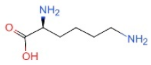
Arginine (Arg)C6H14N4O2Sustainability 18 01574 i001174.202.17&9.0410.76148
Alanine (Ala)C3H7NO2Sustainability 18 01574 i00289.092.34&9.696.11167
Glycine (Gly)C2H5NO2Sustainability 18 01574 i00375.072.34&9.605.97250
Cysteine (Cys)C3H7NO2SSustainability 18 01574 i004121.161.96&8.185.07280
Lysine (Lys)C6H14N2O2Sustainability 18 01574 i005146.192.18&8.959.74100
Threonine (Thr)C4H9NO3Sustainability 18 01574 i006119.122.09&9.105.6090
Glutamic Acid (Glu)C5H9NO4Sustainability 18 01574 i007147.132.19&9.673.2284
Note: Functional groups in the molecular formulas are color-coded: carboxyl (-COOH) in red, amino (-NH2) in blue, and thiol (-SH) in yellow.
Table 2. Soil properties and characteristics.
TexturepHSOM
(%)
TN
(g/kg)
CEC (cmol/kg)Zn
(mg/kg)
Pb
(mg/kg)
Cd
(mg/kg)
Sand/silt/clay
43.22/40.19/16.59
6.823.523.211.65650510577
Table 3. Elemental composition of soil samples by XRF.
Composition (%)SiO2Al2O3Fe2O3K2OMgOTiO2CaOP2O5SO3ZnOPbOCdO
Initial soil64.4421.856.6223.291.190.9420.6570.2720.1130.1060.07390.037
Treated soil64.9421.216.6173.191.110.9520.5440.2560.5690.08410.05440.015
Elemental composition (%) Initial soilTreated soil
O43.243.4
Si26.7427.02
Al10.239.949
Fe4.4114.413
K2.462.39
Mg0.6220.585
Ti0.5260.532
Ca0.4280.355
P0.1030.0974
Zn0.08040.0641
Pb0.06870.0507
Na0.0640.1
S0.04040.203
Cd0.0280.012
Disclaimer/Publisher’s Note: The statements, opinions and data contained in all publications are solely those of the individual author(s) and contributor(s) and not of MDPI and/or the editor(s). MDPI and/or the editor(s) disclaim responsibility for any injury to people or property resulting from any ideas, methods, instructions or products referred to in the content.