Article

Diagnosis of the Economic Condition of International Road Freight Transport Companies in 2009–2024

by
Małgorzata Zysińska
* and
Maciej Menes
*
Instytut Transportu Samochodowego, 03-301 Warsaw, Poland
*
Authors to whom correspondence should be addressed.
Sustainability 2026, 18(3), 1572; https://doi.org/10.3390/su18031572
Submission received: 12 December 2025 / Revised: 20 January 2026 / Accepted: 30 January 2026 / Published: 4 February 2026

Abstract

Sustainability is increasingly viewed as a crucial element shaping contemporary transport policies and operational strategies. This article presents a comprehensive economic evaluation of Polish international road freight carriers in 2024 compared with the results from previous years. It introduces an original and innovative method for assessing the economic condition of transport companies, based on real-time operational data and an integrated demand–supply diagnosis of the road freight market, which also supports macroeconomic forecasting. The study covers carriers operating in Eastern and European Union (EU) markets and spans an exceptionally long period (2009–2024), enabling the identification of long-term trends across four business cycles. Unlike existing research, which typically analyses isolated profitability or efficiency indicators, the proposed method offers a universal and contextual framework linking economic outcomes with detailed company characteristics. It provides a structured assessment of cost components across eight categories and reveals relationships between economic performance and factors such as transport directions, fleet utilisation, company size, diversification strategies, and region of origin. The analysis includes a comparison of two carrier groups, statistical profiling of companies, and average vehicle kilometre costs by company size and transport direction. This contextual analysis, including a comparison between the Polish and Lithuanian markets, strengthens the credibility of the results by situating them within a broader comparative framework and supporting a more accurate interpretation of the observed patterns. The pilot nature of this cross contextual approach constitutes an additional contribution of the study, providing a basis for future comparative research on the functioning of transport enterprises across the EU and the Eastern markets. In addition, the assessment incorporates a pilot comparative study of external factors influencing the transport market, conducted among Polish and Lithuanian companies. This multifaceted and internationally unprecedented approach strengthens the interpretability of the results and offers a robust foundation for strategic decision-making and organisational adaptation in an increasingly competitive and uncertain transport market.

1. Introduction

Despite Poland’s well-established and widely documented leading position in international road freight transport, the existing body of literature still lacks studies offering a long-term perspective on structural and operational changes within this segment. The available research predominantly adopts macroeconomic viewpoints, evaluates operational efficiency, or presents company rankings, yet it does not account for the structural heterogeneity of enterprises nor the specific features of their business models. The current research responds to this gap through an analysis grounded in detailed firm-level characteristics, thereby enabling a more nuanced understanding of the mechanisms shaping efficiency and competitive performance in international road transport operations. To further enhance the robustness of the findings, the article incorporates an examination of market environment factors relevant to the Lithuanian road transport sector. The Polish transport, forwarding and logistics (TFL) industry, and especially its international road freight (truck) transport sector, which accounts for almost 70% of the value of TFL, is subject to frequent fluctuations. It is influenced by the simultaneous intensification of factors such as the slowdown of national economies, war in Ukraine, price increases on the world markets, new regulations on transport resulting from the Mobility Package, shortage of employees, in particular professional drivers, increases in road tolls, and inflation [1,2,3,4,5,6]. The Mobility Package is a set of EU regulations regulating international road transport, especially truck transport and international carriage, which was adopted by the European Union in July 2020 and implemented in stages in the following years (some rules have been in force since 2020, and the last changes are to come into force by 2026). The main areas regulated by the Mobility Package are posting and work of drivers, working and rest times, market access and licensing, as well as cabotage and international transport.
The TFL industry is no less influenced by: intensive development of information and communication technologies, or trends in the area of movement and handling of goods using integrated tools. Solutions such as FaaS (Freight as a Service), based on shared transport using applications, or vehicle autonomy will be used more and more often [7,8]. Polish international hauliers continue to be defined by a predominance of full-truckload services, leading to a competitive edge for vehicles exceeding 12 Mg GVW equipped with universal bodies [5,6,9]. This sector, which is the main core of the Polish TFL industry, struggled with serious difficulties in the years 2020–2024, although the distribution of changes related to them was different in individual years, and their amplitude was high [1,2,3,4,7,10,11]. For the first time in 15 years, in the years 2023–2024, a decrease in the number of companies with a Community license for international transport was recorded in Poland, which is a manifestation of the sector’s crisis [6,10,11]. In 2023, recession in the industry and trade deepened, resulting in reduced demand for transport services and lower freight rates. The phenomenon was observed throughout the EU, although with varying intensity. It was not until the second half of 2024 that the downward trend slowed down. In March 2024, a decline in industrial production was recorded in 26 out of 34 industries identified by the Central Statistical Office [5,12]. Despite the decrease in the average number of registrations of new trucks, the number of large trucks (with a GVW of ≥20.5 t) performing larger transports increased, while Polish carriers remained leaders in the European road freight transport market, conducting approx. 20% of entire transport work. Survey participants predominantly expressed that, the most noticeable effect of implementing the so-called Mobility Package is the increase in the consumables of Polish companies and the deterioration of their competitiveness [10,11,13]. Although in the ITS’s study from 2023, carriers predicted an 80% increase in consumables, the analysis carried out in 2024 did not confirm this. The average weighted cost increase recorded by the companies in the international road transport sector was at the level of 4–7%, and compared to 2020 it was as much as 21% increase in costs. One in four surveyed by ITS carriers believes that the new regulations will drive market consolidation and push smaller companies out of business. These predictions are confirmed in subsequent ITS studies. In turn, in the 2022 study, 12% of the carriers surveyed by ITS predicted the intensification of the development of companies on the domestic market, within the so called general cargo transport, which, was not however confirmed by the results of studies conducted in the years 2023–2024 [4,6,11]. Revenues in the international road transport sector of Polish companies amounted to PLN (polish zloty; Polish local currency) 130 billion in 2024 (according to the PKD H4941 classification and registration), and additionally taking into account unregistered transport—a total of PLN 225 billion (according to the SpotData Report, 2025 [14]). Even in the face of strong external pressures, the volume of investments in the international road transport sector in Poland in 2022–2024 increased by 24%. This placed the TFL industry in fourth place among all sectors of the economy [4,5,6,11]. On the other hand, its debt increased at the same time. At the end of April 2025, the TFL industry was indebted by PLN 1.59 billion (according to the National Debt Register). This means an increase of 19% compared to 2024 and by 37% in 2023–2025 [6,11,15,16]. The number of indebted companies in the industry now amounts to nearly 32 thousand, and 80% of them are engaged in international road transport. The operating profitability of companies in the international road transport sector also deteriorated in 2024 (−2%, 0.3%), compared to the profitability of the entire TFL industry, which amounted to 3.2% at that time [4,6,11,17,18]. The decline in the sector’s profitability in the years 2022–2024 was mainly due to rising wage costs and the economic downturn [15,16,17,18,19]. Apart from the improvement in the economic situation after the pandemic, the international road freight transport sector in subsequent years saw stagnation or a decline in the number of truck registrations. For the first time in 2024, the international road transport sector was also characterised by lower profitability than the domestic transport sector [13,17,18]. This was caused, among the other things, by a decline in cabotage transport. However, this did not lead to inter-sectoral shifts, due to the existence of high entry barriers in the international sector, resulting mainly from the specificity of the fleets of Polish carriers [17,18,20]. Majority of them have vehicles with the highest payload (with GVW ≥ 20.5 t), although the distribution of the fleet engaged in international transport is different on the EU market, i.e., medium-capacity vehicles prevail (9.5–20.5 t GVM). However, the specificity of the fleet of Polish international road carriers results from the predominance of long-distance cross-trade and cabotage services [4,5,6,11,21]. The years 2020–2024 were characterised by large fluctuations in freight rates on international markets. In 2023, the rates of Polish international carriers dropped significantly. On the routes from Poland to Germany, which are the main transport direction, road freight prices also fell in the 1 quarter of the 2024 compared to 2023. This was mainly influenced by the recession of the German economy and the slowdown of most EU economies (especially in branches related to industry and trade), the resulting decline in demand for transport services, as well as high inflation (index 11.4% in 2023), which although has decreased (index 3.6% in 2024), but its negative effects are still felt in the industry and sector [6,9,10,11,13]. In the years 2023–2024, the stagnation of the German economy deepened. This was compounded by increases in road tolls in Germany, which brought about a 12% increase in transport costs of Polish carriers in transport to and from Germany. The downward trends continued until mid-2024 [18,19,20,22,23]. The developments outlined earlier had only a limited effect on the fleet composition within the transport sector, which continued to hold a strong position in the EU market (with the total share of 20%). Cost variations in international freight transport persisted, largely reflecting the specific markets served. Rates and costs on the routes with Eastern markets were different than in EU markets. In this article, the Eastern markets are defined as the markets of the post-Soviet countries that are not members of the European Union. For the period 2009–2021, this definition also included the Russian market, which remained an important destination for Polish international road carriers until the introduction of transport restrictions in 2022. Following these geopolitical changes, Russia was excluded from the scope of Eastern markets, while Turkey is incorporated as a key element of the newly established southern corridor used by Polish carriers to access non-EU Eastern markets. Turkey as a new “eastern corridor” for Polish carriers. After 2022, Polish road carriers increasingly relied on a southern transport corridor passing through Slovakia or Hungary, Romania, Bulgaria, and Turkey. From Turkey, transport operations are further directed to destinations such as Georgia, Azerbaijan, Kazakhstan, Uzbekistan, Turkmenistan, Iran, Iraq, and selected Members of the Gulf region, such as Saudi Arabia and the United Arab Emirates. At present, a substantial share of eastbound freight flows is routed via Turkey. This corridor has emerged as one of the most important new transport pathways, providing access to markets that, prior to the war in Ukraine, were predominantly served through routes crossing Russia and Belarus. Given the consequences of the war in Ukraine, it is reasonable to anticipate that prolonged stagnation in global markets and deepening staffing problems (especially in the availability of professional drivers) will increase the costs of international transport [20,21,22,23]. This also results from the implementation of regulations on emissions and drivers’ wages and working hours. The average unit costs of one 1 vehicle kilometre of mileage still vary depending on the size of the company, the direction of transport and the strength of the impact of external factors. This highlights the sustained interest in advancing research on international transport, as evidenced in the introduction and conclusions.

2. Materials and Methods

The authors’ method builds upon well-established and widely applied economic evaluation measures used in other countries and sectors, which makes it suitable for international comparative studies. Unit cost categories per truckload in road freight transport are presented in a comparable manner across countries, and cost data are collected consistently, either from annually published company financial reports or from individual surveys.
The data on which the article are based were obtained from the following:
  • Interviews using the ITS author’s questionnaire,
  • Distribution of electronic ITS surveys,
  • Expert evaluations conducted using the Delphi method,
  • Algorithms and statistical calculations entered into the ITS author’s computer program.
The data for the study were obtained directly (surveys, interviews and the Delphi method) and indirectly (review of literature, analysis of annual financial statements, CSO statistics, reports of road carrier associations). Cost data and characteristics of transport and assessment of external factors were obtained from transport companies using a survey, electronically and on paper (including interviews) [24,25,26,27].
The study employed non-returning drawing, i.e., simple random sampling without replacement (SRSWOR), in which each firm from the sampling frame could be selected only once. This approach was chosen due to the relatively small and closed population of international road transport companies and the demanding nature of survey research in this sector. The selection was between two methods: SRSWOR and simple random sampling with replacement (SRSWR). The sampling frame consisted of 4500 companies registered in the Association of International Road Carriers (ZMPD) as well as additional firms randomly selected by activity category using a financial-statement search engine. Using SRSWOR reduced the risk of over-sampling highly active or large companies, which is more likely under sampling with replacement. According to sampling theory, estimators based on SRSWOR exhibit lower variance than those obtained from sampling with replacement for the same sample size. This ensured methodological transparency and improved representativeness. The planned sample size was 185 companies. However, the final number of completed questionnaires amounted to 105. The lower-than-expected response rate raised concerns regarding representativeness and required analytical adjustments to the sample structure. Although no stratification was applied during sample selection, ex-post stratification was introduced at the analysis stage. The sample was divided into strata based on characteristics relevant to the structure of the transport sector: firm size (micro, small, medium, large), ownership type (domestic, foreign, mixed), main geographical markets (EU vs. Eastern markets), fleet size, number of employees (incl. drivers), type of operating license, company location, additional business activities beyond transport. To correct discrepancies between the sample and the population, post-stratification weights were constructed using a raking procedure. The following principle was applied: overrepresented segments received weights < 1, underrepresented segments received weights > 1. Weights were based on three key structural characteristics of the population: company size (micro, small, medium, large), fleet size (micro, small, medium, large), dominant market direction (EU vs. Eastern markets), with correction coefficients estimated at 0.78 and 1.15, respectively. The weighting scheme aimed to reproduce the known population structure and reduce the influence of disproportionate representation in the sample. The structure of the obtained sample was compared with available population data from GUS, ZMPD, Eurostat, and previous ITS reports. The comparison revealed underrepresentation of companies operating on Eastern markets, which justified the need for weighting adjustments. Population benchmarks were derived from aggregated data from ZMPD and LINAVA, sectoral statistics on fleet size and number of companies, data on market directions of transport operations, national and European statistical sources (GUS, Eurostat), historical ITS reports. These sources provided the proportions necessary for constructing reliable post stratification weights. To assess the effectiveness of the weighting procedure, weighted and unweighted distributions of key variables were compared. The weighting: reduced overrepresentation of micro and medium-sized companies, increased the share of companies with larger fleets, corrected the imbalance between companies operating mainly on EU routes and those serving Eastern markets. As a result, the weighted sample more accurately reflected the population structure, improving the validity of subsequent analyses and reducing the risk of systematic estimation bias. Despite the advantages of the applied approach, several limitations must be acknowledged: limited precision of aggregated population data, which may not fully capture the heterogeneity of the sector, incomplete coverage of relevant characteristics, such as specialisation or operational models, risk of over-correction in strata with very small population shares, assumption of proportionality between numerical representation and economic significance, which may not always hold in transport markets. These limitations were considered when interpreting the results, ensuring a cautious and transparent analytical approach.
Table 1 presents the consecutive steps of the research process together with their simplified descriptions. The study began with defining the population and establishing the sampling frame. Next, one of two possible procedures was selected, namely simple random sampling without replacement (SRSWOR, non-returning drawing). The subsequent stage involved drawing the sample and administering the survey, followed by verification of the collected data and entering 105 valid responses into the database. The next step was to identify issues related to representativeness and to decide on the application of ex-post stratification in the analytical phase. The obtained results were then compared with available population data, which enabled the development of a new weighting system (raking).
After analysing the results based on the new set of weights, an assessment was conducted to determine the impact of the weighting procedure on the distributions of key variables. Following this assessment, the results were interpreted with explicit consideration of the identified methodological limitations.
The respondents made a quantitative and qualitative characterisation of their companies and transports, and also determined which external factors have the greatest impact on their activities [26,27,28]. The advantages of this study include regularity of the observations, the possibility of obtaining information unavailable in quantitative statistics, published with a large delay (e.g., CSO), combining the elements of diagnosis and forecast in one study, and analysis of the market’s demand and supply dynamics in road freight transport [24,26,29,30]. The results of the study are a source for verifying the research hypotheses, and the research method fits into the scheme recommended by the European Commission in the scope of harmonisation of guidelines for surveys of the transport services sector. According to it, the minimum scope of the survey used to diagnose the condition of companies is 2–3 variants within the framework of closed questions, and 3–6 variants within the scope of open questions of qualitative evaluation. An important element of the research assumptions was the selection of weights, which determined the value of the balance and conclusions about the condition of the sector. Weights in this type of studies are determined in an arbitrary way and there are many possibilities of assigning them. According to the EC recommendations (Economic and Affairs 2020, EC Statistical Pocket Book 2024), two methods are recommended, in which the weight depends on the size of a transport production. Respondents, however, do not want to or cannot provide its size [24,25,26,27,28]. Therefore, the most commonly used characteristics are correlated with it, e.g., the number of trucks that the company has at its disposal or the number of people employed in carrying out transport. All of the above EC recommendations were adopted in the study. The weight assigned in the assessment of transport costs depended on the number of rolling stocks, equal to 1, 2, 3, 4 or 5, respectively, when the company had a base of up to 5, 6–10, 11–50, 51–100, or more than 100 trucks. Others (Goldrian 2007, Colosimo, en. 2024) propose weights proportional to Z(pt) or Z((log10(t))e), where t is a variable defining the size of the enterprise (e.g., through the number of rolling stock or the number of employees—two variants of assessments), Z(…) denotes rounding operations to an integer, e = 2.71828 (Euler’s constant). Z(pt) is therefore a function rounding to an integer and refers to the variable defining the size of the enterprise t [25,26,27]. The weights were additionally corrected in the study so as to ensure, to the extent possible, compliance of the obtained sample (i.e., the part of the enterprises selected for the study that responded to the survey) with the structure of the general population of enterprises. Compatibility was, therefore, understood broadly and included the size of employment and the size of the truck fleet. The aim should always be to ensure similarity of the structure in terms of the size of carriers. If the structure of the obtained sample is characterised by the number n1, …, n5 of the companies with a fleet of vehicles in the next range (up to 5, 6–10, 11–50, 51–100, or more than 100 vehicles), then this structure is usually different from the structure N1, …, N5 of the population. The consistency of these structures occurs only when n1/N1 = … = n5/N5. This condition is practically never met, which makes it necessary to correct the adopted weight values to the so called population weights [24,26,27,28,29,30,31]. Replacing the weights with their corrected equivalents led in the study to determining corrected balances of responses to the survey questions, and consequently to the corrected values. The basis for general and cross-sectional assessments in the study were descriptive statistics, and among them in particular:
Arithmetic mean (expected value):
M = i = 1 n x i n
where
x i —subsequent values for the i-th result;
n—number of measurements.
Median—the middle value, read for measurement:
M e = x n + 1 2 g d y   n = 2 k + 1       k N x n 2   +   x n + 1 2 2 g d y   n = 2 k                   k N
Weighted average, which is a measure commonly used in statistical inference, i.e., the average of elements to which different weights (significances) are assigned in such a way that elements with a greater weight have a greater impact on the average [6,24,32,33,34]. However, it gives the correct result only when the weights are independent (i.e., mutually uncorrelated).
W = i = 1 n w i X i i = 1 n w i
W = weighted average;
n = number of results to calculate the average;
w i = weights assigned to x values;
X i   = data values to calculate the average.
In the case of transport costs research, the weighted average was used to calculate the average value and its uncertainty where all Xi were independent.
Variance, which is the basic measure of variability of observed results indicated in the study how large the variability of the results of the variable in the tested sample is.
σ 2 = i = 1 n ( x i M ) 2   n 1
In the formula, the numerator is divided, as in the other cases, by n − 1, when the sample results are examined, and by n, when the population results are examined. In the conducted study, variance was used to verify the sample. It allowed for the identification of outliers in the sample which could have a significant impact on the study results or distort them. This measurement also indicated that the deviation of individual observations from the expected value was small and meant that only 10 surveys within the entire sample of 115 had to be excluded from the analysis [24,25,26,27].
The standard deviation, which is a measure commonly used in statistical inference about the probability of occurrence of the obtained results, is expressed by the formula
σ = i = 1 n ( x i M ) 2   n 1
Thanks to its measurement (in the discussed study it had low values), it was established that the average of the results was more representative of the entire group. High values of the deviation could have suggest that the average does not reflect reality well or indicate the need to segment the sample into smaller ones and re-estimate their numbers.
In the comparative study, the Student t-test was also used to assess companies operating on the EU and Eastern markets [25,26,27,35].
It was used because the results obtained concerned two independent groups of different sizes, which were to be compared with each other, in order, among the other things, to assess whether the results in one group are higher or lower than in the other group. The distribution of comparisons of both groups in the years 2019–2024 was characterised by 1.2 times higher variability than in the entire period of 2009–2024, which also indicates greater dynamics of changes taking place in both markets in the last 5 years [24,25,35,36]. The size of the research sample for the survey was set at 185 entities, based on statistical methods and the commonly adopted parameters of a 95% confidence level and a 5% margin of error in population studies above 10 thousand. The population accepted for the study was a finite set, and the drawing of sample elements was a non-returnable drawing. Each random sample was not a simple sample, because each of the variables X1, …, Xn had a different probability distribution. However, due to the large population of Polish companies in the international road transport sector (98 thousand), a random sample covering max. 200 units could be treated with a very good approximation as a simple sample. The study used this approximation and a simplified survey method, both in the evaluation of the parameters of the size of the activity or the assessment of the variability of costs, as well as a quasi-analysis of the economic situation reduced to an assessment of how external factors influence the sector’s operations [4,5,6,12,13,36,37]. The survey and interview were supplemented by an analysis of financial statements and reports of companies (both at the stage of modifying the survey questions and verifying cost data). The survey involved 57 respondents of ZMPD and 58 respondents obtained through electronic selection, among the firms declaring transport and logistics as the basic activity according to the Ministry of Justice search engine [1,3]. The anonymous survey covered 115 companies involved in road freight transport, classified in Polish Classification of Activities in section H, Transport and storage, in divisions 49.41.Z. The basis for the analysis of economic conditions factors were surveys conducted among carriers affiliated with the Association of International Road Carriers (ZMPD) and the Lithuanian National Association of Road Carriers (LINAVA), as well as obtained electronically. The analysis of the results of the Lithuanian carrier sector was used to verify the correctness of the research for the Polish market (due to the high similarity of the features of both markets, confirmed by correlation indicators). Although the assumed sample size (62%) was not statistically achieved, due to the increasing difficulty in obtaining data from transport companies, significant phenomena and directions of changes in the sector companies were noted. Of the total sample of surveys analysed (105), 75 concerned companies with transport activities largely concentrated in EU markets, while 30 operated mainly on the Eastern markets. Due to changes in the sample and the identified disproportion between companies operating in the two markets (75 in the EU and 30 in the Eastern market) a disparity that may nevertheless reflect broader structural shifts in the international transport sector after 2022. The weights assigned to the company assessment criteria and the unit transport costs were reviewed and subsequently adjusted. Before being incorporated into the data repository, the results were validated and verified in two stages. Then they were entered into the proprietary ITS computer program for statistical processing and comparison with the results from previous years. Similarly to previous years in the cost surveys, VAT was not included in those cost items for which the company applied for a tax refund [4,5,6,12,13,25,26,27,34,35,36,37,38]. In accordance with the adopted model, the research survey was divided into two parts. The first part concerned the current situation (2024), and the second predictions for the following year. The survey was conducted either during a face-to-face interview or electronically and consisted of 20 questions divided into two sections: Part I, addressing the characteristics of the company and the transport services provided, and Part II, focusing on the evaluation of hazards (newly identified). In Part I of the study, 14 aspects related to the characteristics and costs of companies were assessed (including the type of license, location, dominant market, origin of capital, number and type of vehicles used, number of employees, drivers, cost structure according to eight categories, as well as data on vehicle mileage, average rate and cost of 1 vehicle km). Part II of the study evaluated the impact of external factors (decrease in demand for transport, low rates of transport services, increase in fuel prices, Mobility Package regulations, increase in tax/social security liabilities, shortage of professional drivers, the implementation of the so called Green Deal regulations) on the performance results of international road freight carriers. A similar assessment of hazards to transport activities in Lithuania was also carried out [4,5,6,12,13,35], based on data from companies from the Lithuanian National Association of Road Carriers. The previous ITS study from 2023 showed that both markets are similar and their characteristics are strongly correlated. Carriers from Poland and Lithuania, operating within the same EU market, indicated the same main threats to their operations in the survey. The additional inclusion of Lithuanian carriers’ evaluations (57) was also an element of verification of this part of the survey among Polish respondents (105). The results obtained are consistent with fluctuations in the market situation of freight transport and data on average freight rates from transport exchange platforms (Trans.eu, Timocom), and represent data on the formation of profit margins and individual items of transport costs (see Table 2). A necessary condition for effective surveying in the environment of transport companies, characterised by above-average competitiveness and reluctance to provide information, was to ensure full anonymity to the respondents [5,6,11,12,13,25,26,27,34,35,36,37,38].

3. Results

The findings made it possible to identify both short- and long-term trends in unit transport costs, as well as the key risks affecting the sector’s development. Details of the analysed research sample are presented in Table 2 [4,6,34,35,36,37].
As can be seen from Table 2, the surveyed sample consisted mostly of the micro and medium-sized companies (35% each), while the least large companies (14%). The highest average mileage of a single car (59.4 thousand km) concerned medium-sized companies, and the lowest, i.e., micro-enterprises (45.7 thousand km). However, the variation in the average distance covered by an individual vehicle due to the size of the company was much smaller than in previous years of the survey. In the entire surveyed sample, the share of medium-sized companies increased compared to previous years, which corresponds to changes in the market. For entities of which the transport activity is largely concentrated in EU markets, the mean values per company amounted to 33.9 vehicles with a GVW exceeding 12.0 Mg, with a universal body in 2024, while on the Eastern markets only 12 vehicles with the same parameters (Table 2 and Table 3). There was also a further change in the fleet structure between these markets compared to the data from 2023 (an increase in the average number of vehicles on EU markets by 10% and its sharp decrease on the East—62%). The average annual mileage of a truck used in companies operating on both markets was also different. Among the carriers serving the Eastern markets, it was on average 40.4 thousand km, while on the EU markets—60.5 thousand km. In the entire group of carriers surveyed, the average weighted mileage of a vehicle was 58.5 thousand km (Table 2). In 2024, firms operating predominantly in Eastern markets employed, on average, only 11.7 (a 56% decrease) and on the EU markets—over 38.4 employees. In the entire group of carriers examined, the weighted average employment was 34.5 employees, of which 78% were drivers (Table 2). These shifts in employment, fleet size and intensification of its use between the two markets also point to the effects of external factors on changes in transport directions, i.e., further development of companies on the EU markets at the expense of the Eastern markets [4,6,9,10,11,13,31,32,33,34]. Larger fleet size and the typical annual mileage recorded by operators focused on EU routes, as opposed to Eastern routes, is also the result of serving the full truckload segment, characteristic of cabotage and cross-trade services. This is consistent with the trend of changes in the demand–supply structure observed since 2021. To sum up, the average cumulative values of fleet mileage owned by companies were significantly higher in EU markets rather than in Eastern markets, which was correlated with the dynamics of changes in employment of companies and the number of vehicles operated on both markets [4,6,9,10,11,13].
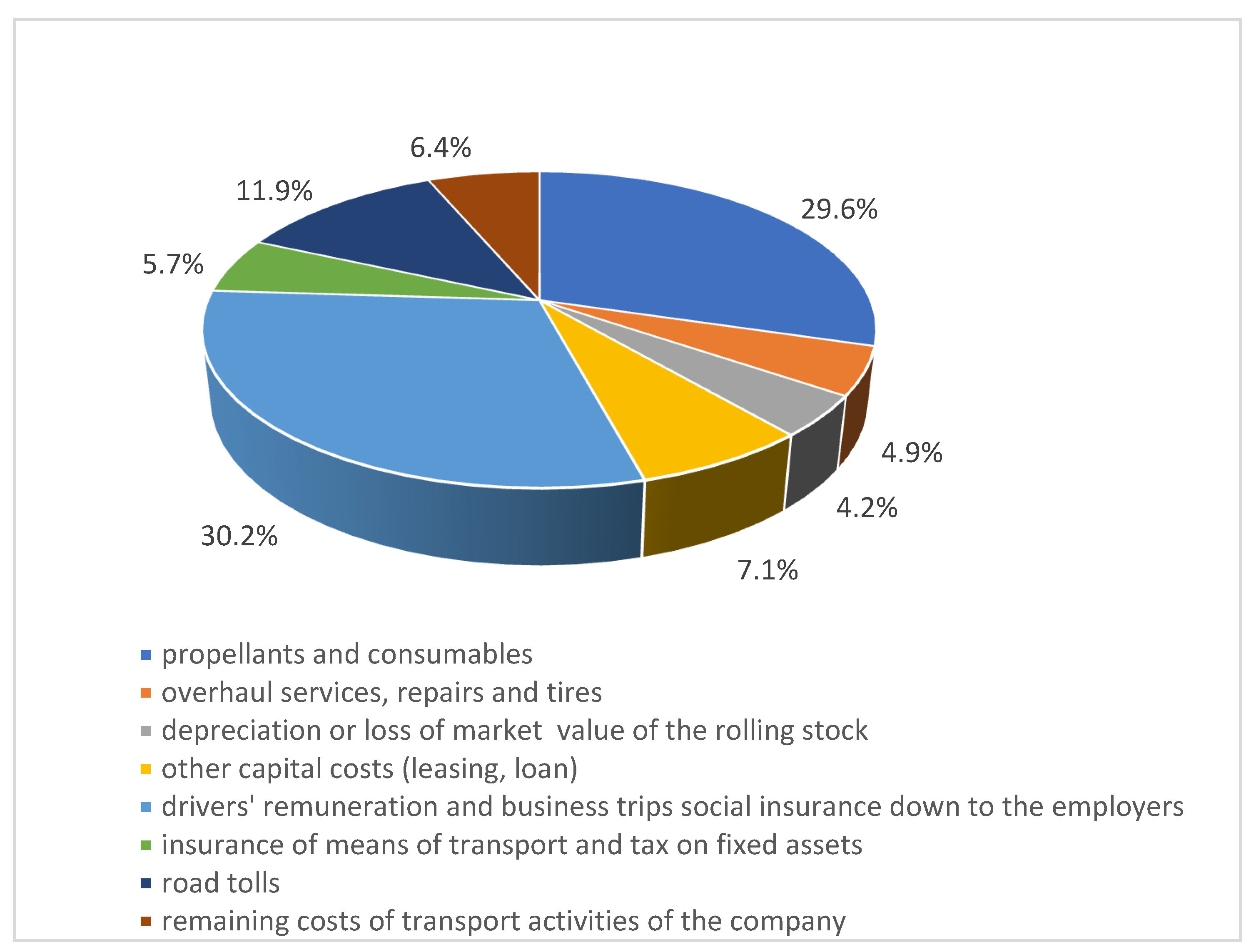
There were also changes in the generic structure of transport costs of the entire studied sample (see Figure 1). To the greatest extent, this concerned the main cost items, i.e., a decrease in the share of fuel and consumables (to 29.6%), in favour of an increase in wage costs (to 30.2%). Over 60% of the surveyed carriers recorded an increase in such cost categories as wages, capital costs, depreciation, road tolls, insurance, repair services, repairs, and tires. The largest increase concerned capital and leasing costs (100%), followed by repair services, repairs, and tires, but due to the smaller share of these items in the total cost structure (5.6–7.7%), the real impact of these changes was not as significant as in the case of the increase in wage costs, which currently constitute as much as 30.2% of the total cost structure. Areas of EU regulations related to the so-called Green Deal and the Mobility Package have been shaping the two principal cost categories for several years: fuels and consumables, as well as wages. However, the increase in the costs of these categories did not translate into an increase in freight rates (see Table 3) [4,6,9,10,11,13,37]. The weighted average unit costs were the highest among large companies, which also offered the highest freight rates (see Table 2).
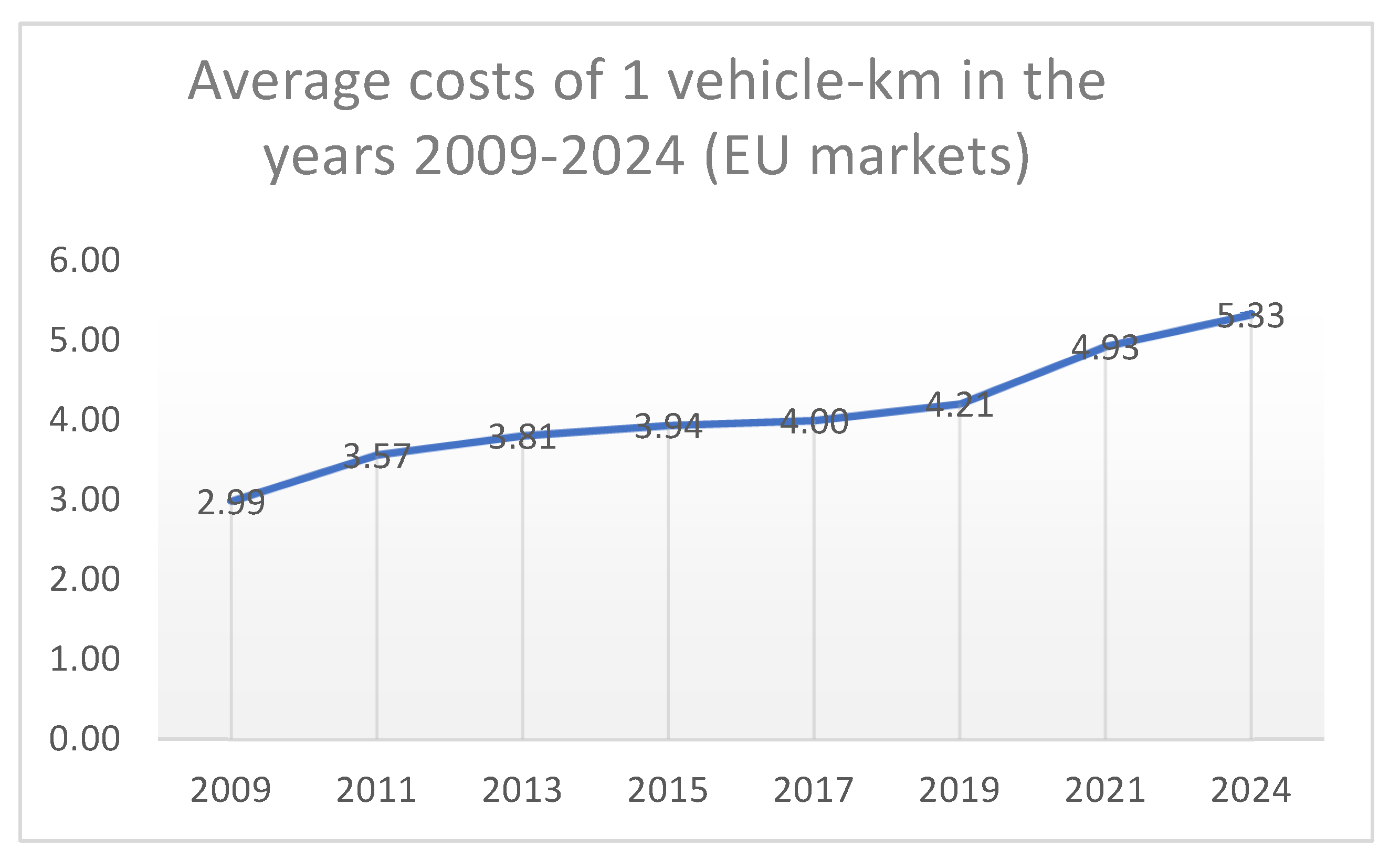
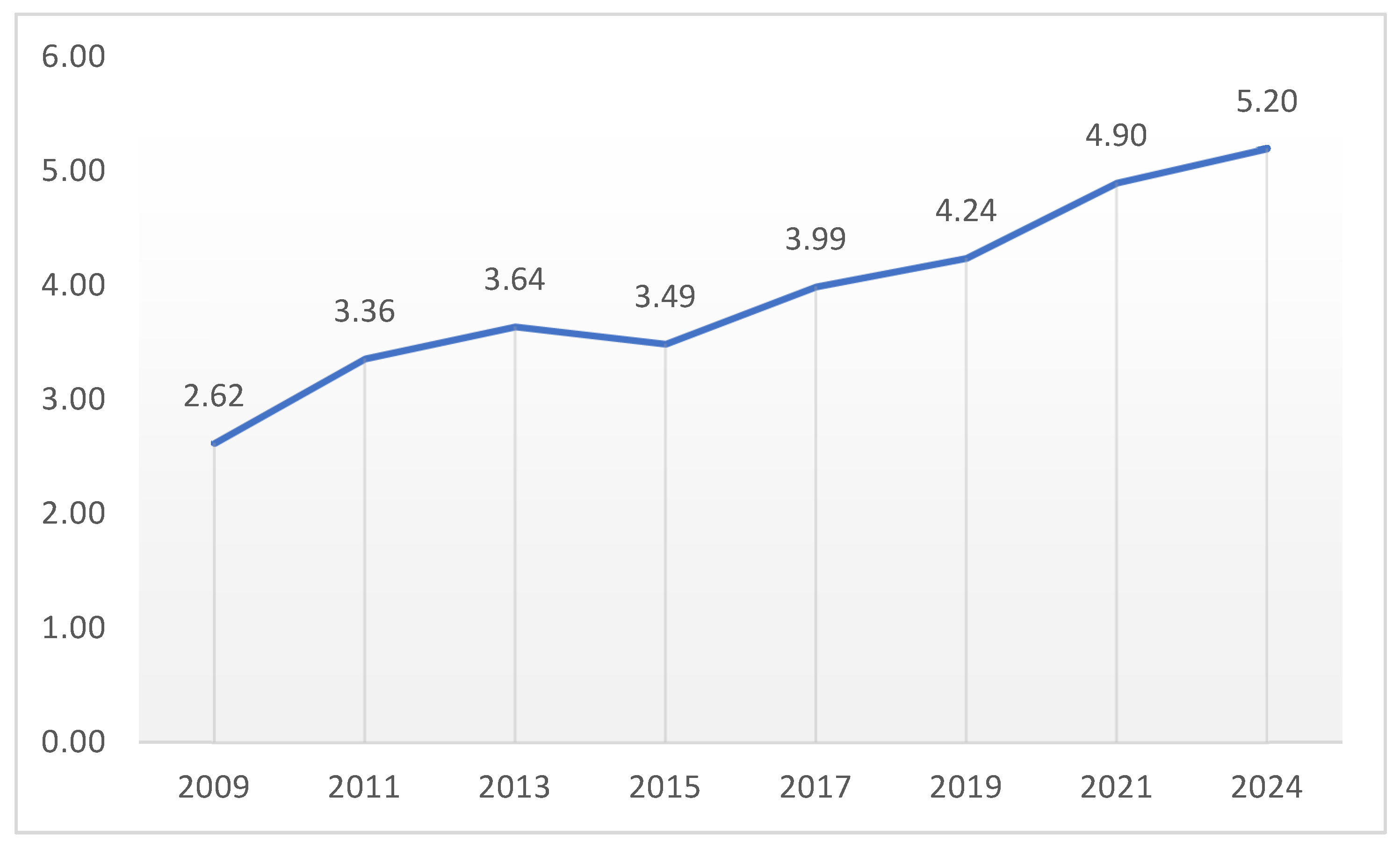
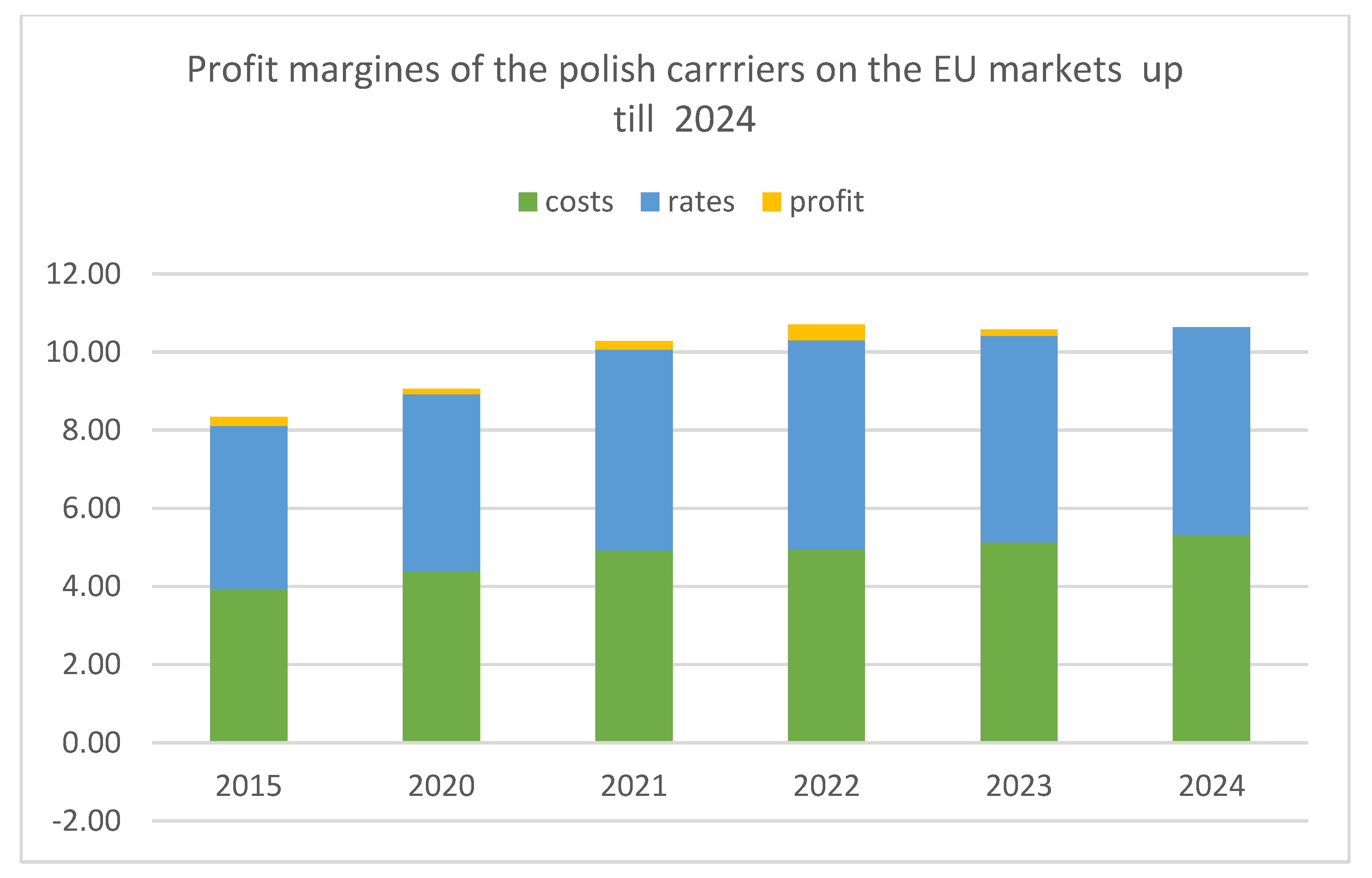
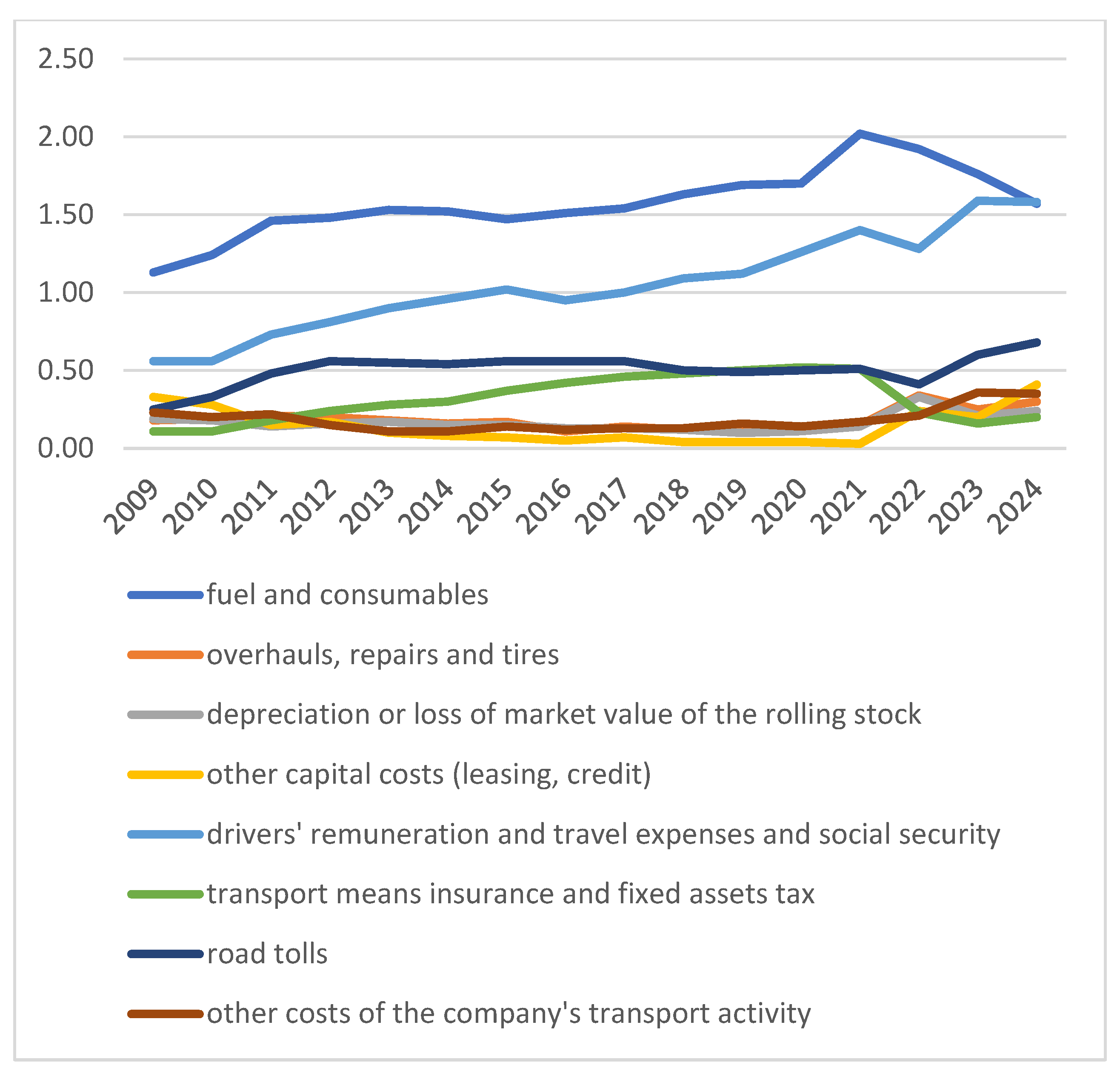
The weighted average unit cost values observed in both markets in recent years are shown in Figure 2 and Figure 3. Although during the analysed period the growth rate of the unit cost of transport was higher for the Eastern markets (198%) than the EU (178%), over the past 5 years the EU markets (128%) had higher dynamics than the Eastern ones (122%). Profit margins showed high variability in the years 2015–2024, with a predominance of a downward trend (Table 2, Figure 2, Figure 3 and Figure 4). However, their dynamics varied depending on the markets served. While the 2022 saw the largest a rise in the typical profit margin achieved in EU markets (up to 7.2%) and a slightly smaller increase on the Eastern markets (up to 5%), 2024 saw for the first time in the history of ITS research that there was no profit margin and an average unit loss (PLN –0.2) on the EU markets. The year 2024 saw the largest decline in unit profits and profit margins on the EU markets (see Table 3 and Figure 4).
The research identified disparities in cost developments associated with the route, the carrier’s size, and the specific cost category were observed (see Table 2, Table 3 and Table 4, Figure 1, Figure 2, Figure 4 and Figure 5). The profitability of companies, while considering variations between the markets served, was more diverse than in 2023, with an average annual unit loss of PLN –0.2/vehicle km for the EU markets and the average profit generated per year of PLN 0.26/vehicle km for the Eastern markets (see Table 3, Figure 2, Figure 3 and Figure 4). Apart from a sharp increase in rates on both markets in 2021, driven by making up for the losses after the pandemic, in 2022 the rates on the Eastern market increased slightly, while a significant increase in rates was recorded among firms operating on the European market. In the period 2023–2024, on the other hand, there was a decrease in profit margins and freight rates on the EU markets. In the last year, there was a decrease in the interest of carriers in the Eastern markets in favour of the EU markets, which was reflected in the profitability of transport on both markets. Compared to the period 2009–2015, when the average annual profit for transport on the Eastern markets was PLN 0.41/vehicle km, in the following years there was a two-fold decrease in profitability. This was also due to trade-related constraints affecting Eastern markets in the aftermath of the war’s onset in Ukraine [4,6,9,10,11,13,15,35,37]. The average individual mileage of vehicles in companies operating on both markets was different, but lower than in 2021 (see Table 2 and Table 3); however, the average values for the entire fleet were definitely higher for the EU markets than for the Eastern ones. Comparing the structure of the unit cost in 2024, it was noted that the share of fuel costs in transport conducted on the markets of the Eastern countries decreased to a greater extent than on the markets of the EU countries (see Figure 1, Figure 5 and Figure 6, Table 4).

3.1. Analysis of the Research Results for the EU Markets

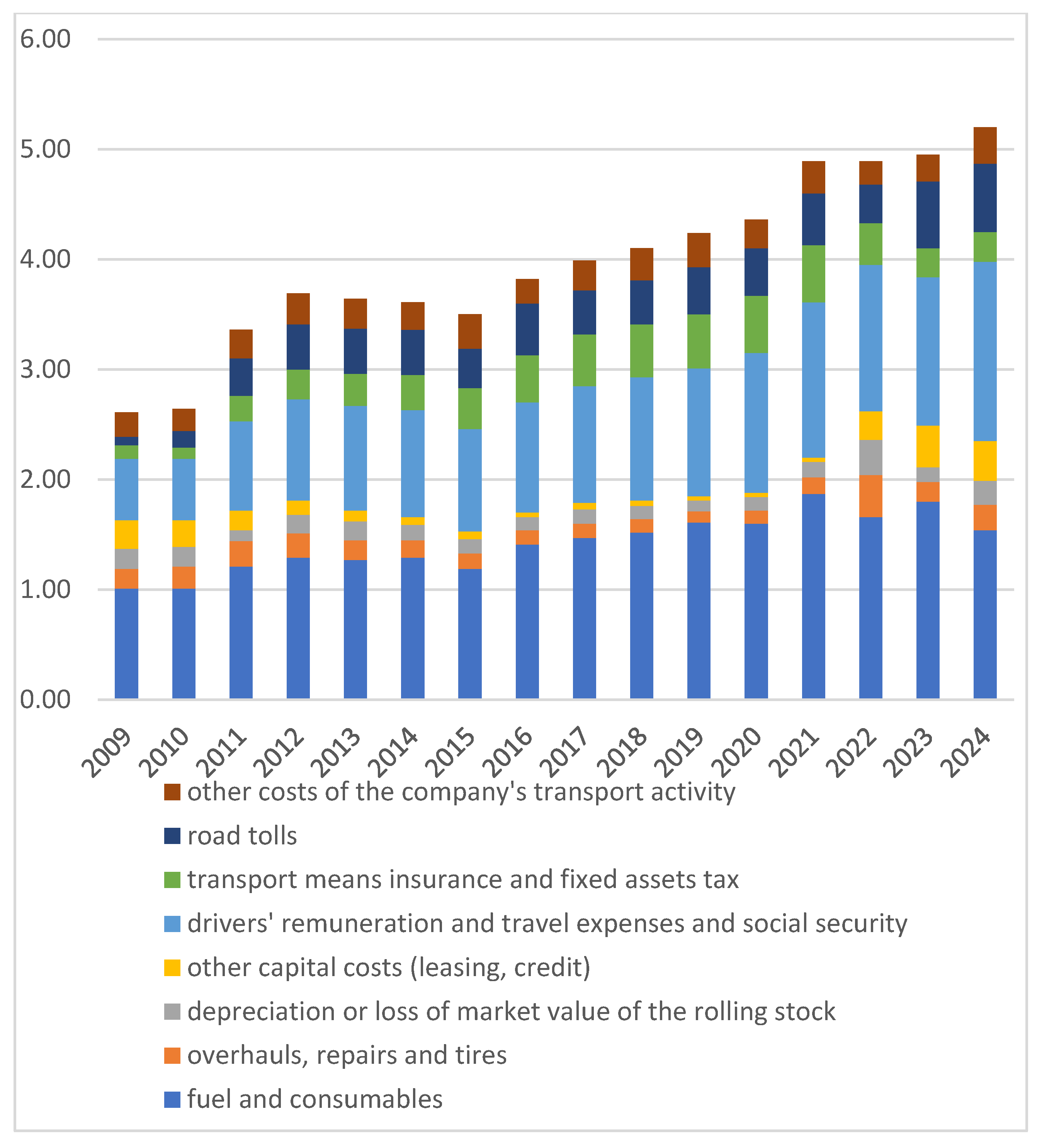
The research results on the cost structure in the international road transport companies working within EU markets are shown in Table 3 and Table 4, and Figure 2, Figure 4 and Figure 5. They take into account the size of transport companies, with respect to the size of the fleet and using the weighted average cost of 1 vehicle kilometre of mileage in 2024 [2]. Table 4 contains a detailed summary of the average unit costs of a vehicle kilometre, taking into account their type structure depending on the size of the company, while Figure 5 shows the dynamics of changes in the structure in the years 2009–2024. The weighted average costs of 1 vehicle kilometre in the group in question amounted to PLN 5.33/vehicle km in 2024, which means an increase of 7.5% compared to 2023, and by 27% compared to 2019 (see Figure 2). For the first time since starting the cyclical research on the EU market (compare Table 3), an average unit loss (PLN –0.2) was recorded. This was reflected in the structure of the unit cost of 1 vehicle km.
The research in this group also showed a tendency to reduce the number of vehicles with a load capacity below 20.5 tons. This results from the fact that the segment of vehicles with higher GVM is related to the specificity of international transport performed by Polish companies (cabotage, cross-trade), and these services are characterised by 2–3 times higher profitability (approx. 8%) than other companies in the sector. In this segment, the share of Polish carriers is much higher (46%) than the EU average (18%). Over the entire period under review, the average cost per vehicle kilometre dynamics indicator for transport on the EU markets amounted to 165%. The evolution of individual cost categories per vehicle kilometre is shown in Figure 5. It presents that the largest changes on the EU markets in the last 5 years concerned few main items in the cost structure: wages and fuels and operating materials, as well as road tolls, capital and vehicle insurance [4,6,34,35,36,37]. Overall, the highest weighted average costs per vehicle kilometer in 2024 were recorded by the largest companies (PLN 5.49 per vehicle kilometer) and the smallest companies (PLN 5.48 per vehicle kilometer). The lowest costs, approximately PLN 0.40 lower (PLN 5.09 per vehicle kilometer), were recorded by small companies, i.e., those with 6 to 9 vehicles, as presented in Table 4. The data in Table 4 show that regardless of the size of a transport company operating in the EU market, the two largest cost components are fuel and consumables, drivers’ remuneration, travel expenses, and social security. Depending on the size of the company, fuel and consumables costs can vary by as much as PLN 0.22 per vehicle kilometer. Drivers’ renumeration costs, on the other hand, can vary by less than PLN 0.15 per vehicle kilometer, depending on the size of the company. Statistically, the smallest cost components for transport companies are transport means insurance and fixed assets tax, as well as depreciation or loss of market value of the rolling stock. Transport means insurance and fixed assets tax as costs decrease with increasing company size. For the smallest and largest companies, costs also vary by PLN 0.09 per vehicle kilometer. Costs defined as depreciation or loss of market value of the rolling stock are less variable depending on company size, varying by a maximum of PLN 0.04 per vehicle kilometer.
Both profits and profit margins on the EU markets in 2024 dropped significantly compared to previous years (see Table 3, Figure 2 and Figure 4). This resulted from the increase in costs regulated by the regulatory framework referred to as the Mobility Package [7,10,11,13,39,40], in particular in the area of drivers’ working time and employee posting. The downward trend in profit margins has been observed since 2022.

3.2. Analysis of the Research Results for the Eastern Markets

The study’s results related to the composition of costs in the international road freight transport companies operating on the Eastern markets are presented in Table 5 and Figure 3 and Figure 6. Table 5 and Figure 6 contain a detailed summary of the average unit costs of a vehicle kilometre, taking into account their type structure. The average weighted costs of 1 vehicle kilometre of mileage in the group in question amounted to PLN 5.20/vehicle km in 2024, i.e., increased by 5% compared to 2023. The research indicated changes in the type structure of costs. They show that in the entire analysed period, the average cost of 1 vehicle kilometre dynamics index for transport on the markets of Eastern countries amounted to 198%. The costs of fuels and operating materials decreased the most. Their share in the overall cost structure decreased from 36.4% (in 2023) to 29.6% (in 2024). In relation to the entire sample, the lowest costs of fuels and operating materials were recorded among the medium-sized and largest companies, employing over 50 employees. This was related to the more frequent use of fleet management solutions than in smaller companies, optimising drivers’ driving and fuel consumption, characterised by a larger share of a younger fleet, meeting newer standards in terms of fuel consumption and emissions. On the Eastern markets, there was also a clear increase in the costs of salaries, repairs, other activities, insurance, capital (see Figure 6), which was reflected in the change in the cost structure and was also the result of inflationary pressure [4,6,7,10,11,13,29,39].
The highest average unit cost was recorded by medium-sized companies, while the largest share of fuel costs in the breakdown of weighted average costs of 1 vehicle km was recorded by small companies. This group also saw the largest increase and share of wage costs [4,6,32,35,38,41,42,43,44]. Among medium-sized companies and micro-enterprises, the share of wage costs was slightly lower. This also applied to the costs of fuel and operating materials (see Table 5).

4. Discussion

Thanks to the modification and further development of the research method in 2022, the international road freight transport market could be examined with greater precision than in the period 2009–2021. This enhanced approach made it possible to more accurately identify shifts in the composition of the market and the economic condition of Polish carriers operating within it, providing a closer reflection of actual market developments.
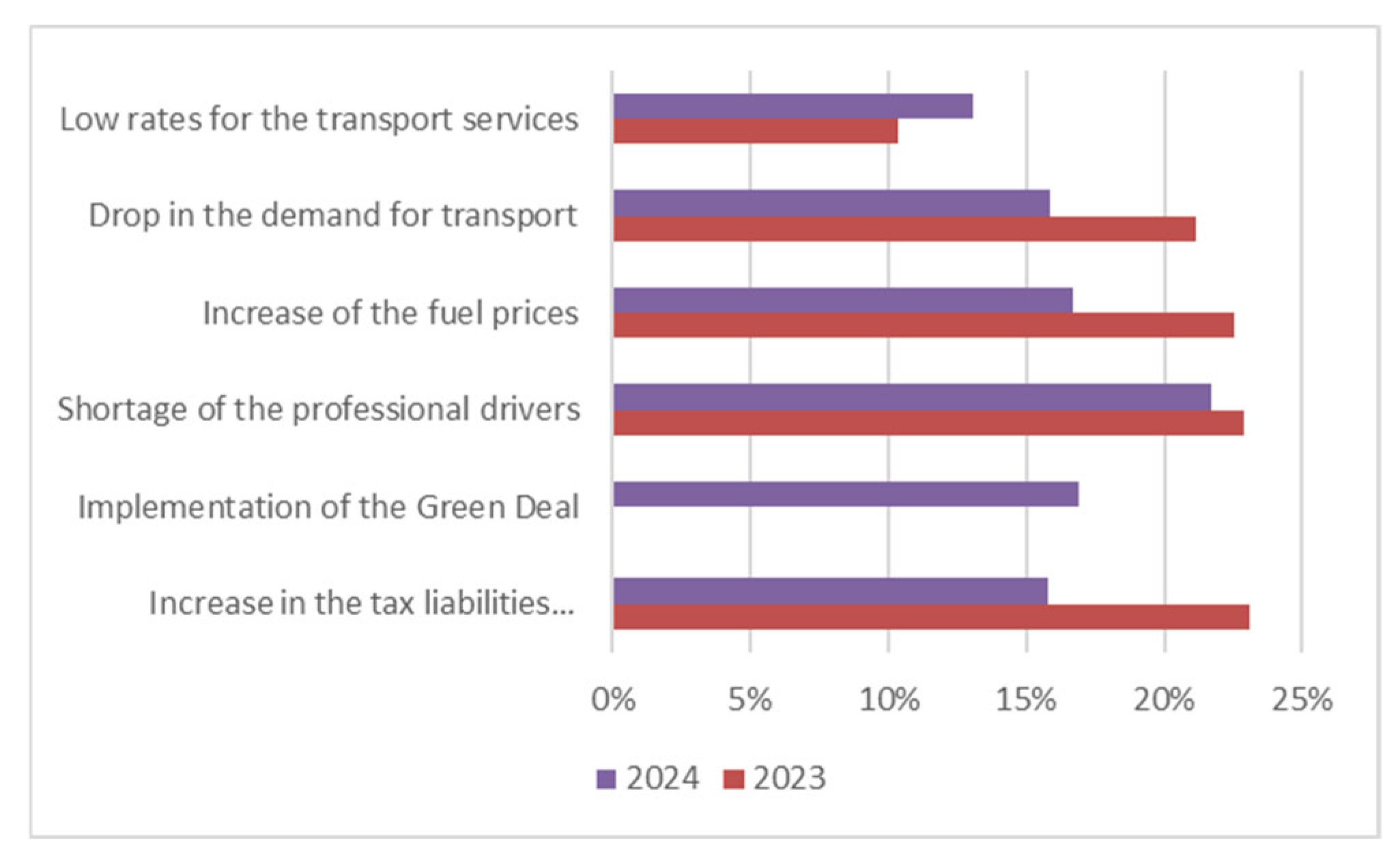
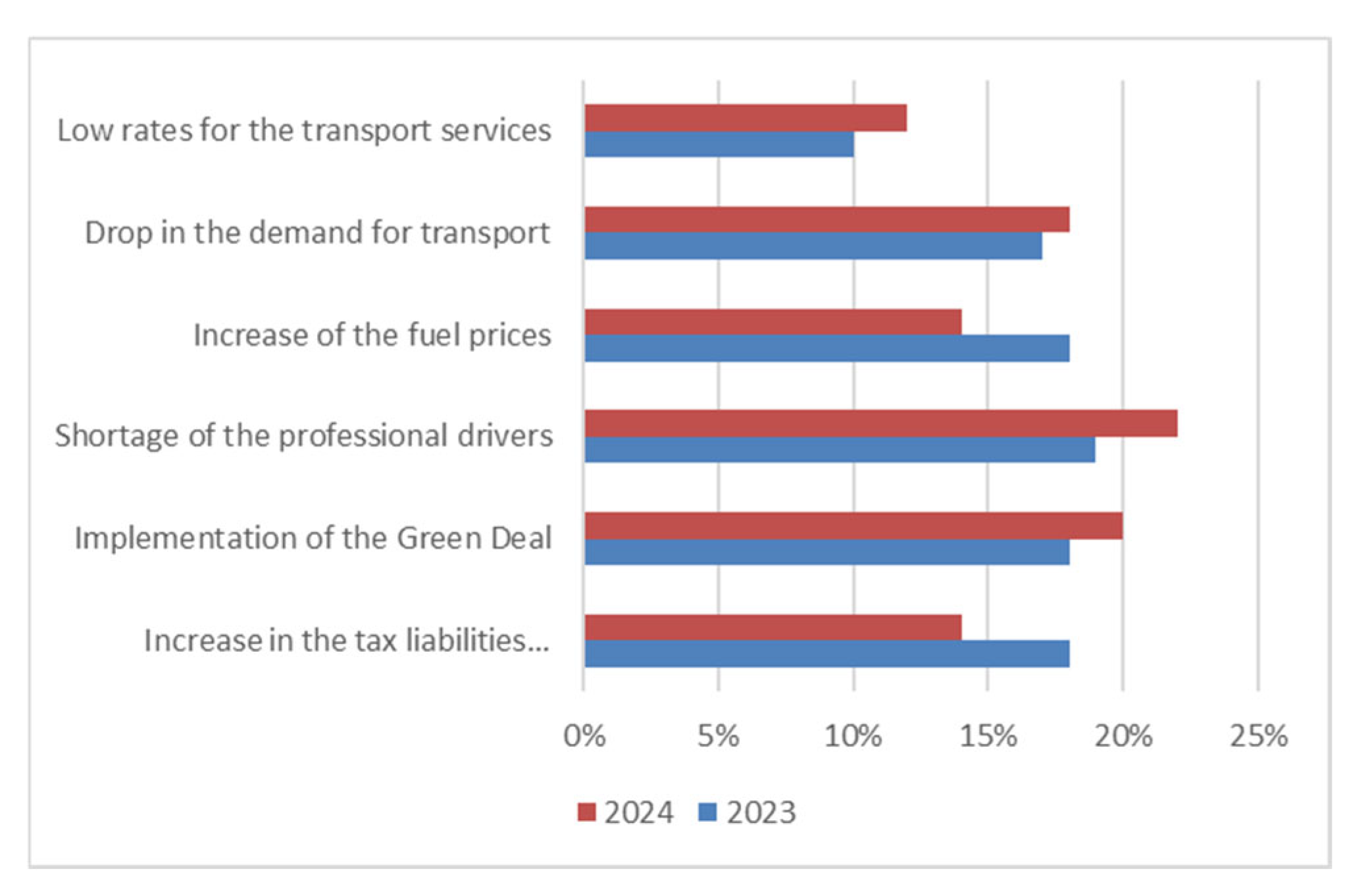
More than half of the companies surveyed by ITS recorded a decrease in revenues from international transport activities in 2024. The impact of external factors (decrease in demand and freight rates, increase in fuel prices, Mobility Package regulations, increase in tax and social security liabilities, shortage of professional drivers) on the performance of international road freight carriers was examined [4,6,13,34,35,39,43]. The research results were verified and statistically processed. The surveyed carriers indicated the following as the greatest hazards to their operations in 2024: shortage of professional drivers, and implementation of the Green Deal regulations. The threats were listed from the largest to the smallest, based on the scores given by respondents in the categories assessed using a Likert scale. The threat of competition from the companies from Eastern markets (including Belarusian, Ukrainian, Moldovan) was also examined separately. The significance of this factor also turned out to be high (265–298 PKT), but it was not included in the summary due to the small percentage of companies from Poland and Lithuania currently providing services on Eastern markets (see Figure 7 and Figure 8). A similar assessment of hazards to the transport activity in Lithuania and a preliminary diagnosis of the Lithuanian transport market were carried out. The study showed that the international road transport markets in Poland and Lithuania have similar characteristics [10,11,13,34,35,39,40,44,45]. Although they are characterised by different dynamics and the scope of impact of external factors. However, companies from Poland and Lithuania, operating within the same EU market, indicated the same main hazards to their activities, i.e., a shortage of professional drivers, as well as restrictive regulations related to the implementation of the so-called Green Deal policy [35,39,40,45,46,47,48,49,50,51,52,53]. They then mentioned such factors as an increase in tax liabilities and social insurance, as well as a decrease in demand for transport, although the distribution of evaluations of these factors for both markets in both years of the study was different (Figure 7 and Figure 8). Many researchers also point to the similarities between the Polish and Lithuanian markets of international transport companies, but they also show numerous differences, for example, in the average number of employed drivers [54,55]. ZMPD data also show that Polish and Lithuanian transport companies increased their presence in the European market the most in the years 2011–2019 [14]. As can be seen from the data presented in Figure 7 and Figure 8, the assessment of some threats changed very similarly in 2023–2024 on both the Polish and Lithuanian markets. In both markets, the importance of low rates of transport services decreased to a very similar extent, while the importance of tax liabilities increased. Similarly, the assessment of the increase in fuel prices changed in both markets. The decline in demand for transport was perceived as a threat significantly differently in the Polish and Lithuanian markets. In 2024, representatives of Polish companies assessed this threat as greater than in 2023, unlike representatives of Lithuanian transport companies. The above data are shown in Figure 7 and Figure 8.

5. Conclusions

The deployment of new-generation vehicles that comply with the latest EU emission standards is intended to significantly reduce transport-related emissions. However, fleet renewal entails substantial financial and organisational challenges. Although Polish international road transport companies generally operate relatively modern fleets, the replacement process remains uneven across the sector. Despite these temporary difficulties, the industry is steadily adjusting to EU environmental requirements, even when doing so requires considerable investment. These efforts contribute directly to the broader objective of sustainable development, which remains a foundational principle of the European Union. Strengthening sustainability in transport is not only a regulatory obligation but also a strategic necessity for ensuring long-term resilience, competitiveness and environmental responsibility across the sector. Diagnosis of the economic condition of international road freight transport companies allowed the authors to draw the following conclusions:
  • The international road freight transport sector remained in worse condition in 2024 than in 2023, due to the intensification of unfavourable external factors. This concerned in particular companies conducting transport on the EU markets and the withdrawal from serving Eastern markets.
  • A greater dynamics of changes in costs and their structure, revenues and profit margins was observed on the markets of the EU countries. The Community market, due to changes in regulations unfavourable to Polish carriers resulting from the so-called Mobility Package and the so called Green Deal, was unprofitable for them, for the first time there was no increase in the net profit margin, only a loss. The weighted average costs of 1 vehicle kilometre in 2024 in the international road freight transport companies, where routes on the EU markets dominated, amounted to PLN 5.33/vehicle km, while with respect to the routes on Eastern markets, PLN 5.20/vehicle km, which means a further increase in costs compared to the data from the years 2019–2023.
  • The period of the last 5 years in the international road transport sector was characterised by high dynamics of changes in unit costs. A comparison of costs, freight rates and profit margins on the EU and Eastern markets indicated differences between them in terms of the main cost items. They were not homogeneous. The structure of costs by type and operating profitability on both markets were characterised by a similar distribution in the individual periods, although the dynamics of cost growth in the years 2020–2024 was the highest on the EU markets. In 2024, a decrease in the profit margin and total net profit was noted, especially on the EU market. Although an increase in the average unit net profit and average net profit margin was noted in the Eastern markets, this market has significantly decreased since 2022, which does not allow for full conclusions about the entire group.
  • In 2024, the value of transport performed by Polish companies on the Eastern market decreased by 67% compared to the data from 2022. Hence, the weighted average for both markets had a negative value and this was an unprecedented phenomenon.
  • The structure of weighted average costs of 1 vehicle kilometre was dominated by the costs of salaries and delegations as well as fuel and consumables (30.2% and 29.6%, respectively), although the share in the structure of fuel and consumable costs by type decreased in favour of the growth of wage costs, which was the effect of implementing subsequent Community regulations as part of the so called Mobility Package.
  • Over 60% of the surveyed carriers noted an increase in such cost categories as: salaries, capital costs, depreciation, road tolls, insurance, renovation services, repairs, tires. The largest increase concerned capital and leasing costs (100%), followed by renovation services, repairs, tires, but due to the smaller share of these items in the total cost structure (5.6–7.7%), the real impact of these changes was not as significant as in the case of the growth of wage costs.
  • The cause of the collapse of the EU market in 2024 was, on the one hand, the slowdown in the economy, on the other hand, the intensification of restrictive EU regulations on transport and emissions contributed to this. The list of factors influencing the decline in the financial standing of transport sector companies was longer. Although the increase in bankruptcies has been slowed down (to 16 in 2023 and 12 in 2024), the number of initiated restructuring proceedings has increased (an increase of 350% in 2024 compared to 2021), which is, among the other things, a consequence of the growing insolvency of the Polish road freight transport companies (68%).
This innovative research method can be further expanded to assess the costs of international freight transport across individual EU and Eastern markets, as well as to evaluate the factors influencing these costs, thereby enabling meaningful cross-country comparisons. Future research will incorporate targeted follow-up sampling to strengthen representation of underrepresented strata (e.g., firms operating on Eastern markets, firms with very small or very large fleets). Additional “top-up” surveys are planned to improve balance across key segments and further enhance methodological robustness. The planned expansion of the study will place a stronger emphasis on comparing operational performance, structural characteristics, including sustainable solutions, and strategic behaviours of companies across specific national markets, thereby advancing a more comprehensive understanding of how country-level conditions shape long-term transport sector outcomes.

Author Contributions

Conceptualisation, writing all, review, methodology, and final version preparation—M.Z.; formal analysis, data curation, visualisation, formatting—M.M. The authors contributed equally to this work. All authors have read and agreed to the published version of the manuscript.

Funding

This research received no external funding.

Institutional Review Board Statement

Ethical review and approval were waived for this study by Institution Committee due to Legal Regulations (ZARZĄDZENIE Nr 22/2023 Dyrektora Instytutu Transportu Samochodowego z dnia 18 October 2023).

Informed Consent Statement

Informed consent was obtained from all subjects involved in the study.

Data Availability Statement

This study involved an anonymous online and paper survey of adult participants. All participants provided informed consent before completing the questionnaire, and their responses were collected anonymously and stored securely. The data are available from the corresponding author upon reasonable request.

Conflicts of Interest

Authors M.Z. and M.M. are employed by the Motor Transport Institute. The research was conducted in the absence of any commercial or financial relationships that could be construed as potential conflicts of interest. The authors declare no conflicts of interest.

Abbreviations

The following abbreviations are used in this manuscript:
TFLtransport, forwarding and logistics industry
FaaSfreight as a service
GVWgross vehicle weight, the total weight of a vehicle, including curb weight, passengers, cargo/load, fuel and fluids
ZMPDAssociation of International Road Carriers
LINAVALithuanian National Association of Road Carriers
PLNofficial abbreviation for the Polish złoty (the currency of Poland)

References

  1. Kuranovič, V.; Ustinovichius, L.; Nowak, M.; Bazaras, D.; Sokolovskij, E. Improving the Freight Transportation System in the Context of the Country’s Economic Development. Sustainability 2025, 17, 6327. [Google Scholar] [CrossRef]
  2. Czerny, A.I.; Fu, X.; Lei, Z.; Oum, T.H. Post pandemic aviation market recovery: Experience and lessons from China. J. Air Transp. Manag. 2021, 90, 101971. [Google Scholar] [CrossRef]
  3. Schramm, H.J.; Lehner, M. Innovators and transformers: A benchmarking study of online carbon emission calculators for freight transport. Int. J. Phys. Distrib. Logist. Manag. 2024, 54, 30–43. [Google Scholar] [CrossRef]
  4. Menes, M.; Zysińska, M. Analiza porównawcza wyników badania średnich kosztów jednostkowych przedsiębiorstw międzynarodowego transportu ciężarowego w relacjach z rynkami wschodnimi oraz krajów UE, w latach 2009–2021. Mot. Transp. 2023, 67, 68–69. [Google Scholar] [CrossRef]
  5. Główny Urząd Statystyczny (GUS). Transport—Wyniki Działalności w 2024 Roku. Available online: https://stat.gov.pl/obszary-tematyczne/transport-i-lacznosc/transport/transport-wyniki-dzialalnosci-w-2024-roku,9,22.html (accessed on 28 October 2025).
  6. Zysińska, M.; Żak, J. Zrównoważona metoda oceny aktywności dostawców usług logistycznych (LSP) w burzliwym środowisku—Analiza studium przypadku (2020–2021). Energies 2023, 16, 1984. [Google Scholar] [CrossRef]
  7. Wang, S.; Mack, E.A.; Kalani, N.; Chang, C.-H.; Cotten, S.R. Workforce Development in the Trucking Industry: A Comprehensive Analysis of Truck Driver Training Entities. Transp. Econ. Manag. 2024, 3, 23–34. [Google Scholar] [CrossRef]
  8. Carboni, M.; Dall-Orsoletta, A.; Hawkes, A.; Giarola, S. The future of road freight transport and alternative technologies: A case study for Italy. Energy Convers. Manag. 2024, 299, 117819. [Google Scholar] [CrossRef]
  9. Saeedi, H.; Wiegmans, B.; Behdani, B.; Zuidwijk, R. European intermodal freight transport network: Market structure analysis. J. Transp. Geogr. 2017, 60, 141–154. [Google Scholar] [CrossRef]
  10. Sternberg, H.S.; Hofmann, E.; Overstreet, R.E. Perils of road freight market deregulation: Cabotage in the European Union. Int. J. Logist. Manag. 2020, 31, 333–355. [Google Scholar] [CrossRef]
  11. Transport Drogowy w Polsce—Raport. 2023. Available online: https://tlp.org.pl/category/raporty/ (accessed on 11 November 2025).
  12. Zysinska, M.; Seidel, S.; Zak, J. Multi-aspect study of the transport, forwarding, and logistics sector. Transp. Probl. J. 2025, 20, 221. [Google Scholar] [CrossRef]
  13. Liachovičius, E.; Skrickij, V. The challenges and opportunities for road freight transport. In TRANSBALTICA: Transportation Science and Technology; Springer: Cham, Switzerland, 2019; pp. 455–465. [Google Scholar] [CrossRef]
  14. The Transport and Logistics Poland; TLP: Poland, 2024; Available online: https://tlp.org.pl/wp-content/uploads/2025/04/raport-transport-drogowy-w-polsce-2024_2025.pdf (accessed on 8 January 2026).
  15. Qaisar, F.S.; Muhamad, N. Internal marketing: A review and future research agenda. In Trends in Asia Pacific Business and Management Research; Routledge: London, UK, 2022; pp. 123–156. [Google Scholar] [CrossRef]
  16. Pelkmans, J.; Winters, A. Europe’s Domestic Market. Routledge Library Editions: Economics of the European Union; Taylor & Francis: Abingdon, UK, 1988; pp. 62–126. ISBN 9780415002134. [Google Scholar]
  17. Nkesah, S.K. Making road freight transport more sustainable: Insights from a systematic literature review. Transp. Res. Interdiscip. Perspect. 2023, 22, 100967. [Google Scholar] [CrossRef]
  18. Poliak, M.; Poliakova, A.; Svabova, L.; Zhuravleva, N.A.; Nica, E. Competitiveness of price in international road freight transport. J. Compet. 2021, 13, 83. [Google Scholar] [CrossRef]
  19. Domagała, J.; Kadłubek, M. Economic, Energy and Environmental Efficiency of Road Freight Transportation Sector in the EU. Energies 2023, 16, 461. [Google Scholar] [CrossRef]
  20. Modica, T.; Colicchia, C.; Tappia, E.; Melacini, M. Empowering freight transportation through Logistics 4.0: A maturity model for value creation. Prod. Plan. Control. 2021, 34, 1149–1164. [Google Scholar] [CrossRef]
  21. He, Y.; Liu, B.; Xu, C.; Wu, D. Literature Review on Public Transport and Land Use: Based on CiteSpace Statistical Analysis. Land 2025, 14, 1096. [Google Scholar] [CrossRef]
  22. Abi Purwatama, S. The Role of Digital Administration in Improving the Effectiveness of Freight Transportation Management. Diploma Int. Proceeding 2025, 1. Available online: https://inkognisi.com/index.php/journal/article/view/60 (accessed on 29 January 2026).
  23. Moschovou, T.P.; Giannopoulos, A.G. Road freight transportation in a period of economic instability: A panel data study in four EU Mediterranean countries. Res. Transp. Bus. Manag. 2021, 41, 100622. [Google Scholar] [CrossRef]
  24. Hallin, M. Measure transportation and statistical decision theory. Annu. Rev. Stat. Its Appl. 2022, 9, 401–424. [Google Scholar] [CrossRef]
  25. Washington, S.; Karlaftis, M.G.; Mannering, F.; Anastasopoulos, P. Statistical and Econometric Methods for Transportation Data Analysis; Chapman and Hall/CRC: Boca Raton, FL, USA, 2020; pp. 89–362. [Google Scholar] [CrossRef]
  26. Parady, G.; Axhausen, K.W. Size matters: The use and misuse of statistical significance in discrete choice models in the transportation academic literature. Transportation 2024, 51, 2393–2425. [Google Scholar] [CrossRef]
  27. Zeng, Z.; Kennedy, E.H.; Bodnar, L.M.; Naimi, A.I. Efficient generalization and transportation. Stat. Sci. 2025, 40, 495–514. [Google Scholar] [CrossRef]
  28. Peštović, K.; Nuševa, D.; Dakić, S.; Marić, T.Đ. Analysis of the profitability of road freight transport in the Republic of Serbia. Ekon.—Teor. I Praksa 2024, 17, 24–40. [Google Scholar] [CrossRef]
  29. Feo-Valero, M.; Botella-Andreu, A.; Martínez-Moya, J.; Pallardó-López, V.J.; Requena-Silvente, F.; Sala-Garrido, R. Exploring supply chain and regional resilience through the analysis of the transport dimension. Case Stud. Transp. Policy 2024, 16, 101216. [Google Scholar] [CrossRef]
  30. Zindros, S.; Anagnostopoulou, A. Assessing the macro-environmental factors affecting innovative last-mile delivery solutions. Transp. Telecommun. 2024, 25, 1–10. [Google Scholar] [CrossRef]
  31. Kim, S.; Park, J.; Chung, W.; Adams, D.; Lee, J.H. Techno-economic analysis for design and management of international green hydrogen supply chain under uncertainty: An integrated temporal planning approach. Energy Convers. Manag. 2024, 301, 118010. [Google Scholar] [CrossRef]
  32. Wang, C.-N.; Chung, Y.-C.; Wibowo, F.D.; Dang, T.-T.; Nguyen, N.-A.-T. Sustainable Last-Mile Delivery Solution Evaluation in the Context of a Developing Country: A Novel OPA–Fuzzy MARCOS Approach. Sustainability 2023, 15, 12866. [Google Scholar] [CrossRef]
  33. Ben Ali, M.; Rauch, E. Sustainable Mobility Transition: A SWOT-AHP Analysis of the Case Study of Italy. Sustainability 2024, 16, 4861. [Google Scholar] [CrossRef]
  34. Kutac, J.; Janovska, K.; Kutac, T.; Besta, P. The impact of the development of personnel costs on the profitability indicators of road freight transport companies in the Czech Republic. Acta Logist. 2022, 9, 99–107. [Google Scholar] [CrossRef]
  35. Masłowski, D.; Salwin, M.; Pałęga, M.; Chmielewski, T.; Rybczyński, W. The significance of changes in fuel prices in the context of the operations of transport enterprises in Poland and Europe. Transp. Probl. 2024, 19, 170–180. [Google Scholar] [CrossRef]
  36. Görçün, Ö.F.; Tirkolaee, E.B.; Aytekin, A.; Korucuk, S. Sustainability performance assessment of freight transportation modes using an integrated decision-making framework based on m-generalized q-neutrosophic sets. Artif. Intell. Rev. 2024, 57, 121. [Google Scholar] [CrossRef]
  37. Fulzele, V.; Shankar, R. Improving freight transportation performance through sustainability best practices. Transp. Res. Part A Policy Pract. 2022, 165, 285–299. [Google Scholar] [CrossRef]
  38. Costantino, T.; Miretti, F.; Spessa, E. Assessing the viability of dynamic wireless power transfer in long-haul freight transport: A techno-economic analysis from fleet operators’ standpoint. Appl. Energy 2025, 379, 124839. [Google Scholar] [CrossRef]
  39. Wu, D.; Zheng, A.; Yu, W.; Cao, H.; Ling, Q.; Liu, J.; Zhou, D. Digital Twin Technology in Transportation Infrastructure: A Comprehensive Survey of Current Applications, Challenges, and Future Directions. Appl. Sci. 2025, 15, 1911. [Google Scholar] [CrossRef]
  40. Shamsuddoha, M.; Kashem, M.A.; Nasir, T. A Review of Transportation 5.0: Advancing Sustainable Mobility Through Intelligent Technology and Renewable Energy. Future Transp. 2025, 5, 8. [Google Scholar] [CrossRef]
  41. Huynh, N.; Uddin, M.; Chu, M.C. Data analytics for intermodal freight transportation applications. In Data Analytics for Intelligent Transportation Systems; Elsevier: Amsterdam, The Netherlands, 2024; pp. 241–262. [Google Scholar] [CrossRef]
  42. Tveter, E.; Holmgren, J. Statistical power and productivity effects of transport investments: A critical review. Res. Transp. Econ. 2024, 105, 101430. [Google Scholar] [CrossRef]
  43. Alvarez-Gallo, S.M.; Echavarria-Cuervo, J.H.; Maheut, J. Analysis and strategies for urban freight logistics in a low emission zone. J. Ind. Eng. Manag. 2024, 17, 403–423. [Google Scholar] [CrossRef]
  44. Ferrer, A.L.C.; Thomé, A.M.T. Carbon Emissions in Transportation: A Synthesis Framework. Sustainability 2023, 15, 8475. [Google Scholar] [CrossRef]
  45. Rieger, P.; Heckelmann, P.; Peichl, T.; Schwindt-Drews, S.; Theobald, N.; Crespo, A.; Oetting, A.; Rinderknecht, S.; Abendroth, B. A Multidisciplinary Approach for the Sustainable Technical Design of a Connected, Automated, Shared and Electric Vehicle Fleet for Inner Cities. World Electr. Veh. J. 2024, 15, 360. [Google Scholar] [CrossRef]
  46. Persyn, D.; Díaz-Lanchas, J.; Barbero, J. Estimating road transport costs between and within European Union regions. Transp. Policy 2022, 124, 33–42. [Google Scholar] [CrossRef]
  47. Kot, S. Cost Structure in Relation to the Size of Road Transport Enterprises. Promet Traffic Transp. 2015, 27, 387–394. [Google Scholar] [CrossRef]
  48. van Wee, B.; Annema, J.A.; Banister, D.; Pudāne, B. (Eds.) The Transport System and Transport Policy: An Introduction; Edward Elgar Publishing: Northampton, MA, USA, 2023. [Google Scholar]
  49. Jiang, X.; Zhan, Z.; Ren, W.; Tao, X.; Zheng, S.; Luo, M. Balancing economic and environmental strategies in regional hinterland transport: A dynamic network cross efficiency analysis. Transp. Policy 2025, 162, 128–154. [Google Scholar] [CrossRef]
  50. Poliak, M.; Čulík, K.; Huláková, M.; Kováč, E. Economic Evaluation of Vehicle Operation in Road Freight Transport—Case Study of Slovakia. World Electr. Veh. J. 2025, 16, 409. [Google Scholar] [CrossRef]
  51. Cichosz, M.; Wallenburg, C.M.; Knemeyer, A.M. Digital Transformation at Logistics Service Providers: Barriers, Success Factors and Leading Practices. Int. J. Logist. Manag. 2020, 31, 209–238. [Google Scholar] [CrossRef]
  52. Olkiewicz, M.; Dyczkowska, J.A. Green Logistics at Selected Logistics Operators in Poland. Sustainability 2025, 17, 4587. [Google Scholar] [CrossRef]
  53. Kiani Mavi, R.; Kiani Mavi, N.; Olaru, D.; Biermann, S.; Chi, S. Innovations in Freight Transport: A Systematic Literature Evaluation and COVID Implications. Int. J. Logist. Manag. 2022, 33, 1157–1195. [Google Scholar] [CrossRef]
  54. Matczak, M.; Grzelakowski, A.S. Impact of EU Decarbonization Policy on Polish International Road Freight Competitiveness. Energies 2025, 18, 1854. [Google Scholar] [CrossRef]
  55. Matuszczak, Ł.; Michałek, J.J.; Woźniak, R. The Pattern of Road Freight Transport Services in Europe: The Role of Central and Eastern European Countries. Gospod. Narodowa. Pol. J. Econ. 2025, 324, 15–29. [Google Scholar] [CrossRef]
Figure 1. Average weighted generic costs of 1 vehicle km (universal rolling stock; over 12.0 Mg GVW (2009–2024); Eastern markets, EU [PLN/vehicle km].
Sustainability 18 01572 g001
Figure 2. Average costs of 1 vehicle km of mileage in the surveyed international transport companies in the years 2009–2024 (universal fleet over 12.0 Mg GVM; EU markets) [PLN/vehicle km].
Sustainability 18 01572 g002
Figure 3. Average expenditure per vehicle kilometre [PLN/vehicle km] among the surveyed international freight transport companies in the period 2009–2024 (universal fleet over 12.0 Mg GVW; Eastern markets).
Sustainability 18 01572 g003
Figure 4. Freight sector profit margins [PLN/vehicle km] and their evolution on the EU markets (universal fleet, over 12.0 Mg GVW) in the period 2015–2024.
Sustainability 18 01572 g004
Figure 5. Changes in weighted average per-vehicle kilometre costs [PLN/vehicle km] by cost category among the surveyed international transport firms in the period 2009–2024 (universal fleet; over 12.0 Mg GVW; EU markets).
Sustainability 18 01572 g005
Figure 6. Changes in weighted average per-vehicle kilometre costs [PLN/vehicle km] by cost category among the surveyed international transport firms in the period. (universal fleet; over 12.0 Mg GVW, Eastern markets).
Sustainability 18 01572 g006
Figure 7. Threats to transport activity in 2023–2024 (Poland).
Sustainability 18 01572 g007
Figure 8. Threats to transport activity in 2023–2024 (Lithuania).
Sustainability 18 01572 g008
Table 1. Stages and overview of the research procedure.
StageDescription of Research Activities
1. Preparation of the StudyDefinition of the target population (international road transport companies). Establishment of the sampling frame (4500 companies, ZMPD). Selection of simple random sampling without replacement (SRSWOR-non-returning drawing)
2. Sample SelectionOne-time selection of each unit (no replacement). Reduced risk of over sampling large or highly active companies. Planned sample size: 185
3. Survey ImplementationContacting companies and collecting responses. Final number of completed questionnaires: 105
4. Identification of Fieldwork IssuesLower-than-expected response rate. Potential reduction in representativeness. Need for analytical correction of sample structure
5. Ex Post StratificationStratification based on: firm size, ownership type, main markets served (EU/East), fleet size, number of employees, license type, location, additional business activities. Comparison with population data (GUS, ZMPD, LINAVA, Eurostat, ITS). Identification of underrepresented strata (e.g., companies operating on Eastern markets)
6. Construction of Analytical Weights (Post Stratification/Raking)Principle: overrepresented strata → weights < 1; underrepresented strata → weights > 1. Variables used: firm size, fleet size, dominant market direction (EU/East). Application of correction coefficients (e.g., 0.78 and 1.15)
7. Population Data SourcesAggregated data from ZMPD and LINAVA. Sectoral statistics on fleet size and number of companies. Data on market directions. GUS, Eurostat, ITS reports
8. Evaluation of Weight EffectsComparison of weighted vs. unweighted distributions. Reduction of overrepresentation of micro and medium companies. Increased share of companies with larger fleets. Correction of EU/East market proportions. Improved alignment of sample structure with population
9. Interpretation with Methodological LimitationsLimited precision of aggregated population data. Incomplete coverage of all relevant population characteristics. Risk of over correction in small strata. Assumption of proportionality between numerical share and economic significance
10. Future Methodological DevelopmentPlanned targeted follow up for underrepresented strata. Possible supplementary survey in future waves. Enhanced representativeness through targeted sampling of small and large fleet companies and companies operating on Eastern markets
Table 2. Characteristics of the surveyed sample of international freight transport firms operating rolling stock above 12 Mg GVW with universal bodies, by the company size and weighted averages for the sample (2024).
SpecificationMeasur. MicroSmallMediumLargeAverage
Unit(Up to 5 Cars)(6 to 9 Cars)(10 to 49 Cars)(50 and More)
Average number of truckspcs.3.17.718.397.822.4
Average number of employees in an enterprise persons3.312.227.5155.634.5
Average number of drivers in an enterprisedrivers2.9921.212126.8
Average mileage of cars in an enterprisethou. of km141.7443.41087.15772.51311.3
Average mileage of one car in an enterprisethou. of km45.757.659.45958.5
% share in the entire group of surveyed companies0.350877190.1578947370.3508771930.140350881
SpecificationMeasur.microsmallmediumlargeAverage
unit(up to 5 cars.)(6 to 9 cars)(10 to 49 cars)(50 and more)
estimated average cost of 1 kmPLN/km5.365.085.275.495.3
average transport ratePLN/km5.365.165.375.615.36
Table 3. Weighted average costs per vehicle kilometre and weighted average freight rates and profits per 1 vehicle kilometre of mileage within the period 2015–2024 in the surveyed companies (universal fleet, over 12.0 Mg GVW) [PLN/vehicle km].
EU Countres Markets201520202021202220232024 Eastern Markets201520202021202220232024
costs3.944.394.934.965.135.33 costs3.494.364.904.904.955.20
rates4.174.535.145.355.295.31 rates3.904.555.125.165.195.60
profit0.230.140.210.390.16−0.02 profit0.410.190.220.260.240.40
Table 4. Overall and category-specific costs per vehicle kilometre (2024), broken down by enterprise size and weighted averages for the surveyed companies (universal fleet; EU) [PLN/vehicle km].
SpecificationMicro (1–5) [PLN/Vehicle-km]Small (6–9) [PLN/Vehicle-km]Medium (10–49) [PLN/Vehicle-km]Large (50+) [PLN/Vehicle-km]Weighted Average Costs per 1 Vehicle-Kilometre [PLN/Vehicle-km]
Average costs per 1 vehicle-kilometre of mileage, including:5.485.095.265.495.33
fuel and consumables1.6291.4021.6181.5611.573
overhauls, repairs and tires0.3420.2470.2910.2820.295
depreciation or loss of market value of the rolling stock0.2240.2630.2380.2440.240
other capital costs (leasing, credit)0.4340.4440.3610.4450.409
drivers’ remuneration and travel expenses and social security1.6481.5011.5371.6301.576
transport means insurance and fixed assets tax0.2510.2090.1740.1640.199
road tolls0.6170.7000.6870.7530.682
other costs of the company’s transport activity0.3340.3260.3560.4080.354
Table 5. Aggregate and disaggregated vehicle kilometre costs [PLN/vehicle km], presented by cost category, firm size, and weighted averages for the analysed companies in 2024 (universal rolling stock; Eastern markets).
SpecificationMicro (1–5) [PLN/Vehicle-km]Small (6–9) [PLN/Vehicle-km]Medium (10–49) [PLN/Vehicle-km]Large (50+) [PLN/Vehicle-km]Weighted Average Costs per 1 Vehicle-Kilometre [PLN/Vehicle-km]
Average costs per 1 vehicle-kilometre of mileage, including5.184.985.38not applicable 5.2
fuel and consumables1.5291.7731.453not applicable 1.538
overhauls, repairs and tires0.2020.1490.383not applicable 0.23
depreciation or loss of market value of rolling stock0.2520.10.178not applicable 0.224
other capital costs (leasing, credit)0.3740.1690.4not applicable 0.36
drivers’ remuneration and travel expenses and social security1.6071.7431.674not applicable 1.631
transport insurance and fixed assets tax0.2990.10.216not applicable 0.266
road tolls0.60.7970.623not applicable 0.622
other costs of the company’s transport activity0.3180.1490.447not applicable 0.326
Disclaimer/Publisher’s Note: The statements, opinions and data contained in all publications are solely those of the individual author(s) and contributor(s) and not of MDPI and/or the editor(s). MDPI and/or the editor(s) disclaim responsibility for any injury to people or property resulting from any ideas, methods, instructions or products referred to in the content.