Article

Integrating Technology Acceptance, Sustainability Orientation, and Entrepreneurial Orientation: Evidence from Saudi Smallholder Farmers’ Social Media Marketing


Department of Business Administration, College of Business and Economics, Qassim University, Buraydah 52571, Saudi Arabia
Sustainability 2026, 18(3), 1556; https://doi.org/10.3390/su18031556
Submission received: 4 January 2026 / Revised: 27 January 2026 / Accepted: 28 January 2026 / Published: 3 February 2026

Abstract

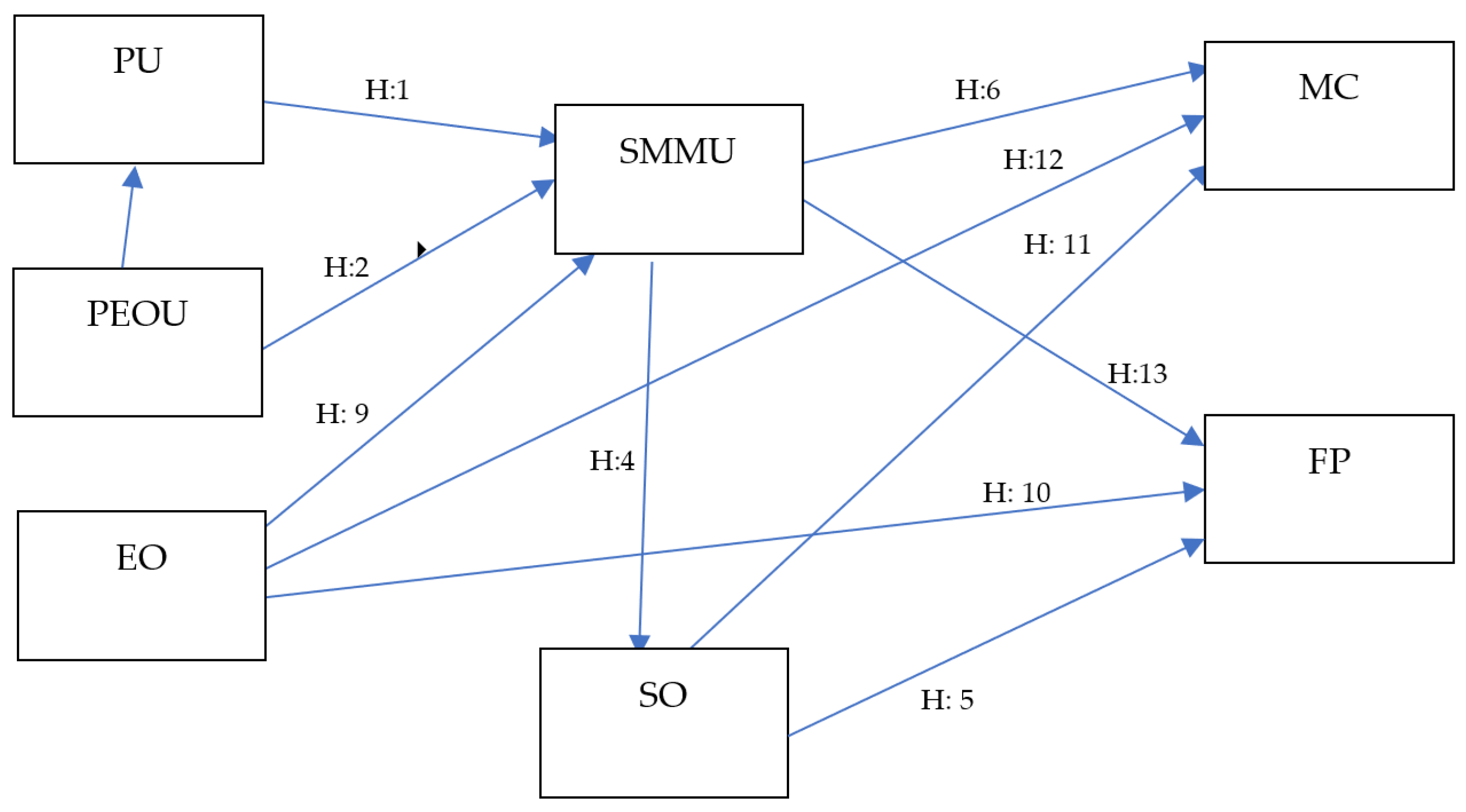
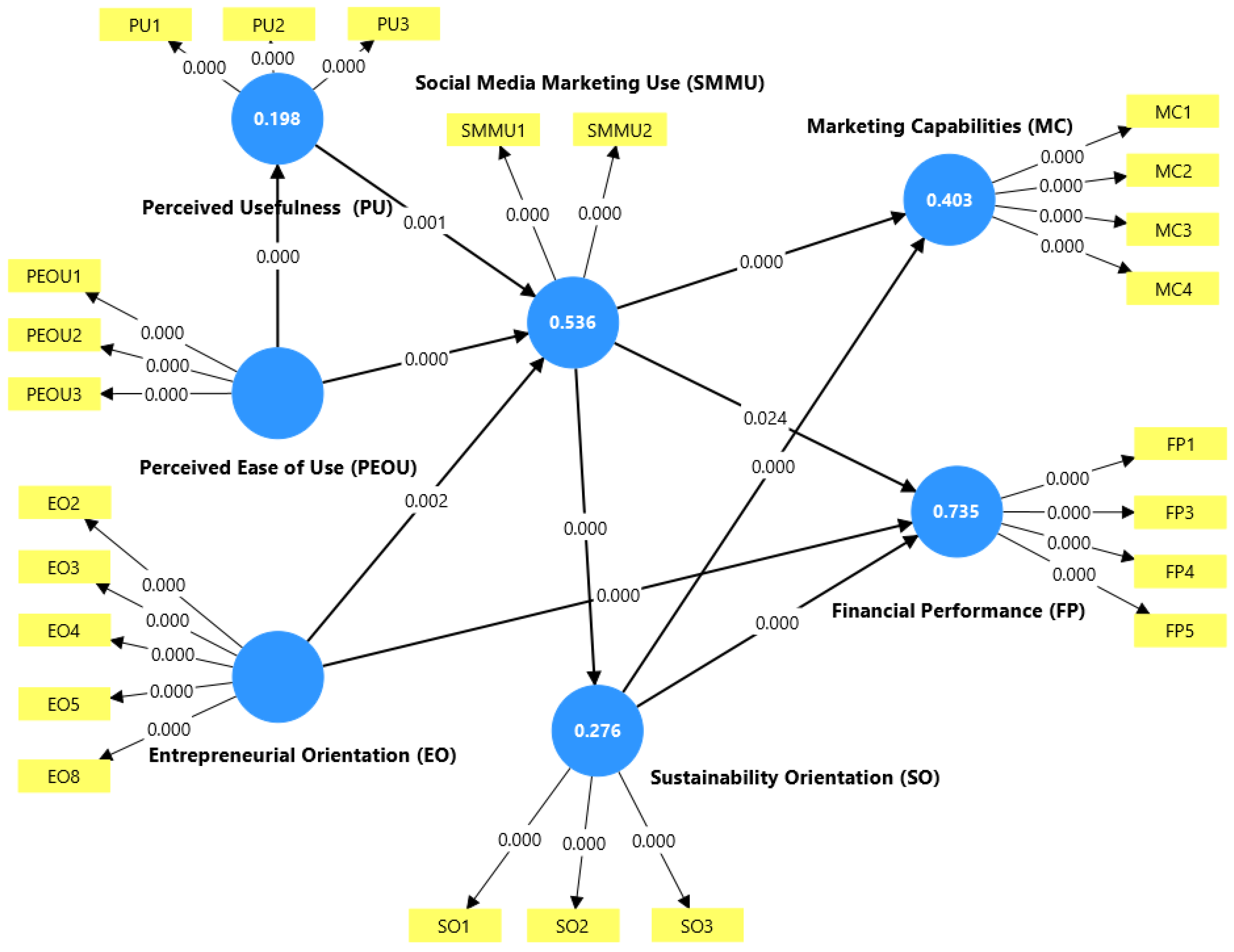
Social media has emerged as a powerful marketing channel for smallholder farmers, reshaping how they engage with consumers through direct online interactions and content sharing, while also facilitating the communication of sustainable agricultural practices. This study investigates social media marketing usage among smallholder farmers in Saudi Arabia and examines its impact on marketing capabilities through the Technology Acceptance Model (TAM), sustainability orientation (SO), and entrepreneurial orientation (EO). Survey data collected from 300 farmers were analyzed using partial least squares structural equation modeling (PLS-SEM). The results indicate that perceived usefulness (β = 0.195, p < 0.001) and perceived ease of use (β = 0.511, p < 0.001) significantly influence social media marketing usage, with perceived ease of use exerting the strongest influence, while perceived usefulness remains a significant enabler. Social media marketing usage also positively affects sustainability orientation (β = 0.525, p < 0.001) and enhances marketing capabilities both directly and indirectly through sustainability orientation, which acts as a significant mediator. Entrepreneurial orientation further exerts a positive influence on social media usage, marketing capabilities, and financial performance. The model explains 53.6% of the variance in social media marketing usage, 40.3% in marketing capabilities, and 73.5% in financial performance. The study extends TAM by conceptualizing sustainability orientation as a value-creation mechanism through which social media marketing use is transformed into enhanced marketing capabilities, rather than as a mere outcome of digital adoption. The findings offer practical and policy-relevant insights for strengthening digital literacy, sustainability-driven marketing strategies, and agricultural digital infrastructure.
Keywords: social media marketing; sustainable agriculture; technology use; smallholder farmers; entrepreneurial orientation; Saudi Arabia social media marketing; sustainable agriculture; technology use; smallholder farmers; entrepreneurial orientation; Saudi Arabia