4. Findings
The analysis of 900 online hiker narratives reveals a distinct “universal-but-different” pattern across the three linguistic cohorts. While hikers consistently expressed the core psychological needs identified by SDT, autonomy, competence, and relatedness, how these needs were articulated varied systematically according to cultural orientation.
Table 1 summarizes how each SDT need is expressed through culturally specific, emic themes and narrative inflections among Korean, Chinese, and English-speaking hikers, illustrating shared motivational structures alongside divergent experiential framings. To further contextualize these differences,
Table 2 maps these narrative patterns onto Hofstede’s cultural dimensions, demonstrating how broader orientations toward collectivism, individualism, and temporal focus shape the moral and emotional meanings attached to walking the Jeju Olle Trail. For a comparative overview of how these thematic expressions manifest across the three linguistic groups, a matrix of exemplar narratives is provided in
Appendix A. Together, these materials provide an integrated analytical framework that clarifies how universal psychological needs are enacted through culturally situated forms of meaning-making rather than uniform experiential outcomes.
4.1. Thematic Block 1: Freedom from Constraint
The first dimension of autonomy, freedom from constraint, emerged as a dominant experiential theme across all three linguistic cohorts. Hikers consistently described the Jeju Olle Trail not merely as a physical route, but as a sanctuary from the pressures of everyday life, positioning walking as a deliberate withdrawal from externally imposed demands. While this desire for liberation was shared across cultural groups, the sources of constraint being escaped, and the meanings attached to that escape, were culturally inflected.
Among Korean participants, freedom from constraint was most frequently articulated through the culturally resonant concept of healing (힐링). This healing extended beyond physical rest to encompass emotional recovery and relief from social and occupational pressure, 눈치 (nunchi). One reviewer reflected that “walking slowly along the coast healed my tired mind,” while another noted that “each trail gave me time to breathe and listen to myself” (See
Appendix A,
Table A1). For these hikers, autonomy was experienced as a temporary suspension of performance-oriented social roles, allowing space for emotional recalibration.
This interpretation was echoed and contextualized by the NPO, which emphasized that the Trail was intentionally designed to offer psychological and emotional release rather than achievement-based tourism. As the NPO Chairperson explained: “Olle was never meant to be about speed or competition. It’s about slowing down, resting, and letting people step away from the pressure they carry in daily life.” (NPO Interview).
This managerial perspective reinforces how Korean hikers’ narratives of healing are not incidental but are closely aligned with the Trail’s foundational philosophy of slow walking and emotional restoration.
Among English-speaking hikers, autonomy was framed more explicitly as freedom from occupational routines and digital saturation. Reviewers frequently described the Olle experience as a form of “digital detox,” emphasizing disconnection from work emails, schedules, and constant online engagement. One hiker wrote that “the trail felt like a retreat for both body and soul,” while another described it as “nature, sea breeze, and peace, it’s my perfect healing trip” (See
Appendix C). Here, autonomy was less about relief from social obligation and more about reclaiming personal time, self-direction, and mental space.
From an institutional standpoint, the RTO recognized this pattern among international visitors, particularly Western travelers. According to the RTO Tourism Senior Manager, “Many international visitors are looking for places where they can disconnect from work and digital life. Jeju Olle fits that need because it allows people to walk independently, without fixed schedules or group pressure.” (RTO Interview).
This observation situates English-speaking hikers’ autonomy narratives within broader destination branding strategies that position Jeju Olle as an antidote to high-intensity, productivity-driven lifestyles.
For Chinese hikers, freedom from constraint was most often framed through the expression shìfàng yālì (释放压力, “releasing pressure”), referring to the accumulated burdens of academic competition, professional responsibility, and familial duty. Walking was described as a cathartic process that restored internal balance. One reviewer noted that “nature cleansed my anxiety like a gentle rain,” while another reflected that “while walking, all thoughts disappeared, only calm remained” (See
Appendix E). In this cohort, autonomy functioned less as individual escape and more as a morally meaningful reset that enabled continued responsibility after the journey.
This interpretation aligns with emerging governance perspectives emphasizing emotional sustainability alongside environmental concerns. A representative from the KTO similarly highlighted the role of nature-based tourism in alleviating social pressure at a national level:
“We have constantly discussed: ‘Should we view tourism as Quantity or Quality?’ We keep saying we must go for Quality. But in the past, after the pandemic, many people couldn’t go anywhere, and they were just stuck in their homes or in their communities. So they thought their life was short. They want to experience more, and they want to go out and do more things... So they’re spending more money on what they can do or what they can eat.”
In summary, while hikers across all three linguistic groups experienced Jeju Olle as a space of liberation, the meaning of that freedom varied systematically. For Korean hikers, autonomy was expressed as emotional healing from social pressure; for English-speaking hikers, it represented relief from digital and occupational constraint; and for Chinese hikers, it functioned as cathartic release from moral and societal obligation.
4.2. Theme: Self-Guided Challenge & Pace
The second dimension of autonomy centered on self-guided challenge and pace. Across all three linguistic cohorts, hikers described the Jeju Olle experience as one in which challenge was self-imposed rather than externally regulated. Difficulty was not framed as competition with others, but as a personal test navigated at one’s own rhythm. However, the meaning attached to this autonomous challenge varied markedly across cultural contexts.
For Korean hikers, this theme was closely tied to the concept of wanju (완주, full completion) and the accompanying sense of seongchwigam (성취감, accomplishment). Satisfaction emerged not from speed or comparison, but from enduring the whole journey. One reviewer reflected, “After hours of walking, I realized exhaustion could also be happiness,” while another noted that “the more difficult the path, the deeper the joy at the end” (See
Appendix D). Here, challenge functioned as a form of moral discipline, where perseverance itself was meaningful regardless of external recognition.
This interpretation aligns closely with the Jeju Olle Foundation’s operational philosophy. As a NPO representative explained: “We never designed Olle as a race or a performance activity. Finishing a course is meaningful because people face themselves along the way, not because they are faster or stronger than others.” (NPO Interview).
From this perspective, completion is framed less as achievement in a conventional tourism sense and more as quiet endurance, an insight reflected strongly in Korean hikers’ narratives.
Among English-speaking hikers, the self-guided challenge was more explicitly framed as an expression of individualism and personal agency. The emphasis was not simply on finishing the trail, but on navigating it independently and “doing it my way.” One hiker wrote, “I pushed myself through the last stretch; it was exhausting but meaningful,” highlighting pride derived from self-direction rather than completion alone (See
Appendix C). Challenge was experienced as a test of independent capability, reinforcing autonomy through self-navigation, decision-making, and pacing.
This pattern was recognized by the RTO, which noted that international hikers often value the absence of rigid structure: “Foreign hikers like that Olle doesn’t tell them how fast to walk or what to do. They can choose their own pace, skip sections, or stop whenever they want. That freedom is part of the appeal.” (RTO Interview).
For Chinese hikers, autonomous challenge was frequently framed through the notion of zhèngmíng nénglì (证明能力, proving one’s ability). Physical endurance was interpreted as evidence of inner strength, perseverance, and moral character. One reviewer stated that “perseverance gave this walk meaning,” while another vividly described the emotional payoff of effort: “After 17 km, every muscle hurt, but my heart soared” (See
Appendix E). In this cohort, challenge was deeply tied to self-cultivation, where bodily endurance symbolized internal discipline.
From a broader policy perspective, the NTO has similarly emphasized walking tourism as a vehicle for meaningful, effort-based engagement rather than passive consumption: “And I guess because of Olle, we’ve been, we started paying more attention to sustainable tourism. You know, because Olle Trail is all about walking on trails, living with as few footprints as possible. So, it’s like slow tourism, right? Or walking tourism. So slow tourism is very close to the concept of sustainable tourism.”
4.3. Overarching Theme: Competence—Mastering the Trail Environment
A central expression of competence, as conceptualized by SDT, was hikers’ sense of mastery over the Jeju Olle Trail environment. Across all three linguistic cohorts, competence emerged through feelings of capability, orientation, and confidence in navigating the trail independently. This mastery was not derived from conquering nature, but from successfully working with the landscape through interpretive cues, trail infrastructure, and embodied attentiveness.
For English-speaking hikers, mastery was frequently framed as individual problem-solving and reassurance through system clarity. Successfully “figuring out” the trail’s logic, particularly the consistency of signage and ribbon markers, generated both confidence and emotional comfort. One reviewer noted that “signage is consistent and the ribbons are comforting when walking alone” (See
Appendix C), framing competence as self-sufficiency supported by reliable infrastructure. This narrative reflects an autonomous form of competence, where trust in the system enables independent exploration without anxiety.
This experiential pattern aligns closely with institutional design intentions. As the representative from the RTO explained, “Olle is designed so that people don’t need a guide. If you trust the ribbons and signs, you can walk alone without fear. That feeling of ‘I can do this myself’ is very important, especially for international visitors.” (RTO Interview).
For Korean hikers, competence was also associated with seongchwigam (sense of achievement), but mastery was more relational and affective. Successfully following the ribbons (리본) was not merely functional but symbolic, reinforcing trust in a shared system shaped by collective care. One hiker described the experience poetically: “Following the orange-blue ribbons felt like a journey through nature’s heart” (See
Appendix D). Here, competence was experienced as harmony with the trail rather than individual problem-solving, reinforcing cultural values of balance and attunement.
This interpretation is strongly echoed by the NPO, which emphasized the moral and emotional significance of trail markers as the NPO leader noted, “The ribbons are not just signs. They are promises. Volunteers maintain them so walkers feel safe, calm, and guided. When people trust the ribbons, they trust the trail, and that trust changes how they walk.” (NPO Interview).
For Chinese hikers, while illustrative quotes emphasized endurance more than navigation, quantitative thematic frequencies (See
Appendix E) indicate that trail infrastructure and logistics were salient to a substantial portion of reviewers. In this cohort, competence was framed less as ease and more as diligence and attentiveness. Successfully navigating the trail signaled self-control and moral effort, consistent with broader narratives of self-cultivation. One hiker linked competence directly to effort, stating that “perseverance gave this walk meaning” (See
Appendix E).
At the national level, the NTO official has similarly emphasized that competence-enhancing infrastructure is central to sustainable walking tourism: “I think the numbers 14 and 15 are a little related. My answer is related because the people who walk on Olle Trails, they already have a lot of interest or they start to have a lot of interest in sustainable tourism. So, they don’t leave any trash behind. They’re already conscious of their carbon footprint.”
Across all cohorts, mastering the trail environment functioned as a powerful psychological affirmation. The ability to “read” the landscape and trust the trail system transformed walking into an experience of self-efficacy. Importantly, this competence was not accidental; it emerged from deliberate Olle Trail design, volunteer maintenance, and multi-level governance coordination.
4.4. Overarching Theme: Relatedness—Connection to Humanity & Place
The most emotionally resonant theme across all three linguistic cohorts was relatedness, the fundamental human need for connection and belonging. Across languages and cultures, hikers described the Jeju Olle Trail not merely as a physical route but as a social and moral landscape shaped by encounters with people, shared effort, and everyday acts of kindness.
For Korean participants, the concept of jeong (정), a culturally specific form of emotional warmth, affection, and mutual care, was central to their narratives. Reviews frequently referenced the warmth (따뜻함) of interactions with guesthouse owners, restaurant hosts, volunteers, and villagers encountered along the trail. One hiker recalled, “The guesthouse owner gave me tangerines for the road; it reminded me of my mother’s care.” Such moments were framed not as casual kindness but as morally meaningful gestures that reinforced gratitude, humility, and collective belonging.
This interpretation closely aligns with the NPO’s own understanding of the trail’s social role. As a NPO CEO explained: “Olle is not just about walking. It is about relationships, with villages, with volunteers, with the people who live along the trail. If those connections disappear, Olle loses its meaning.” (NPO Interview).
Among English-speaking hikers, relatedness was expressed through a sense of voluntary community and spontaneous camaraderie. Reviews frequently mentioned “friendly strangers,” “shared smiles,” and brief conversations with fellow walkers. One hiker wrote, “Everyone I met along the way had the same easygoing spirit; it felt like we were all in this together.” These interactions were often fleeting but emotionally significant, reflecting a form of relatedness grounded in choice rather than obligation. For many Western participants, the Jeju Olle Trail offered a rare antidote to urban anonymity.
From a destination management perspective, this informal sociality is not incidental. As the RTO representative noted, “One of Olle’s strengths is that it naturally creates small interactions between walkers, locals, and volunteers. These moments may seem small, but they shape how visitors remember Jeju and how they behave toward communities.” (RTO Interview).
For Chinese hikers, relatedness was frequently articulated through the concept of gǎndòng (感动), being deeply emotionally moved. Many narratives described moments of kindness that triggered strong emotional responses, often linked to moral sensitivity and reciprocity. One reviewer shared, “When an old lady gave me water and said ‘jiāyóu’ (加油), I almost cried.” These encounters were interpreted as ethical exchanges rather than casual friendliness, reinforcing Confucian values of empathy, gratitude, and social harmony.
At the national policy level, the importance of community-based hospitality and social sustainability has also been emphasized. A NTO official reflected that: “And for the Social Responsibility side: When we hold these events, basically, all the staff are village residents. They might not be professional. But they cooperate... The local currency [program]... We refunded 100% of the participation fee so that they could spend it within the village... if benefits go to the local residents, there are few complaints.”
4.5. Overarching Theme: Hofstede—Performing the Moral Self (Individualism vs. Collectivism)
Across all cultural cohorts, the Jeju Olle Trail functioned as a stage for what can be described as moral performance, a process through which hikers articulated, tested, and reaffirmed culturally grounded values through walking.
For English-speaking participants (predominantly individualistic), the trail was framed as a personal moral journey centered on self-discovery, autonomy, and inner resilience. Reviews emphasized authenticity, introspection, and personal growth. One reviewer reflected, “Each trail feels like discovering a new part of myself” (See
Appendix C). Here, the self operates as both the performer and the audience, and the moral value of the journey lies in private transformation.
For Korean hikers, moral performance was distinctly relational and collective. The self was not positioned as an isolated agent but as embedded within social continuity and shared experience. Many narratives framed walking as a restorative act undertaken for others, family, community, or society, rather than solely for oneself. One hiker captured this sensibility succinctly: “I felt connected to everyone who walked this path before me” (
Appendix D). Moral growth, in this context, emerged through humility and participation in a shared cultural practice.
This collectivist framing is closely aligned with the NPO’s philosophy of trail stewardship: “Olle is not something you walk alone in spirit. Even if you are physically alone, you are walking through villages, through people’s lives, and through shared history. That responsibility matters.” (NPO Interview).
Among Chinese participants, the moral dimension of walking was similarly collectivist but more explicitly grounded in Confucian ethics of duty, perseverance, and social harmony. Reviews frequently framed the journey as a test of moral character undertaken in silent solidarity with others. One reviewer wrote, “Every walker shared the same silent gratitude” (See
Appendix E). Here, moral worth arises not from individual distinction but from endurance, restraint, and alignment with collective values.
From a regional governance perspective, these culturally distinct moral framings have practical implications for sustainability management. As the RTO representative observed: “Different visitors find meaning in different ways, but what they share is respect, for the trail, for communities, and for the experience itself. That respect is what makes Olle sustainable.” (RTO Interview).
Overarching Theme: The Trail as a Moral Turning Point (Long-Term vs. Short-Term)
This theme captures how hikers across cultures framed their Jeju Olle experience in relation to time, revealing deep-seated distinctions between individualistic and collectivist orientations.
For Korean and Chinese participants, the Jeju Olle experience was frequently articulated as a long-term, morally reflective process bridging past experiences with a renewed future direction. Korean hikers often employed the term 반성 (banseong), connoting reflection and self-examination. One reviewer wrote, “Walking alone helped me reflect on my past mistakes and find a new direction for the future,” illustrating how the trail functions as a moral checkpoint.
This long-term orientation closely aligns with the NPO’s understanding of walking as a values-based practice. As the NPO CEO emphasized: “Olle is not about finishing quickly or checking something off a list. People come here to think about their lives, about what they’ve been carrying, and about how they want to go back.” (NPO Interview).
Chinese participants expressed similar temporal depth through the concept of chūxīn (初心, “original heart” or “true self”), evoking a return to foundational values. One reviewer shared, “This trip helped me find my chūxīn, the person I used to be,” underscoring how the trail becomes a journey back to authenticity.
In contrast, English-speaking hikers more frequently framed their Jeju Olle experience through a shorter-term, present-centered orientation, emphasizing relief from pressure and digital saturation. Many narratives described the trail as a temporary sanctuary offering mental clarity. One reviewer wrote, “This was the first day in months I didn’t think about emails; I finally felt like myself again,” highlighting the restorative power of uninterrupted time.
At the national level, these differing temporal orientations appear to translate into distinct patterns of engagement over time. In the Korean context, the framing of Olle as a site of moral return and reflection is mirrored in high levels of repeat visitation, suggesting that the trail is not consumed as a one-off experience but revisited as part of an ongoing life narrative. A NTO representative noted: “Well, people who are visiting Jeju for domestic tourists, they visit for multiple times... the first-time visitors went down to 13.5%. And twice went up to 37.6%. And three times went up to 29.9%. So first-time visitors went down. And of course, people who visited multiple times in the past three years have gone up almost twice.” This pattern supports the interpretation of Jeju Olle as a longitudinal moral infrastructure rather than a finite tourism product.
4.6. Governance Perspectives on Sustainability: Insights from NTO, RTO, and the NPO
While the preceding sections examined hikers’ experiential and cultural narratives, a comprehensive understanding of the Jeju Olle Trail requires attention to the institutional frameworks that enable, shape, and constrain these experiences. Expert interviews with senior representatives from the RTO, the NPO, and the NTO provide a multi-scalar perspective on how sustainability is negotiated across national, regional, and nonprofit levels.
4.6.1. Regional Coordination and Post-Pandemic Visitor Dispersion (RTO)
From the regional governance perspective, the RTO emphasized the structural transformation of Jeju tourism following the COVID-19 pandemic, particularly the shift away from dense group travel toward individualized, experience-oriented mobility. As the RTO official explained: “Before the pandemic, people traveled in big groups, forty people at once. Now they travel individually or in much smaller groups. They want more space, more personal time.” (RTO Interview).
This shift has had important sustainability implications. Rather than concentrating visitors at iconic hotspots, post-pandemic travel patterns increasingly favor spatial dispersion. The RTO interview highlighted that this dispersion has reduced overtourism pressures in specific locations while redistributing economic benefits: “People are no longer all in the same places. They’re going to more remote areas. Cafés and small businesses are appearing in places where there used to be nothing. That’s why we don’t really hear the term ‘overtourism’ anymore.” (RTO Interview).
Within this context, Jeju Olle was repeatedly described as a precursor and accelerator of sustainable dispersion. As the RTO noted: “Olle already did what everyone is now trying to do. It spread people across the island and helped spread the wealth.” (RTO Interview).
4.6.2. Jeju Olle Foundation: Micro-Level Sustainability and Operational Realities
While national and regional institutions frame sustainability in strategic terms, the NPO occupies the micro-level governance position where sustainability is enacted as daily practice. The interview with the NPO CEO, who gave a ground-level perspective on how visitor behavior and environmental pressures materialize along the trail.
A central theme from the NPO interview concerns post-pandemic shifts in visitor behavior. Olle increasingly attracts repeat visitors and highly intentional walkers. As Ahn explained, “Many people are no longer coming just once. They come back again and again, each time with a different purpose.” This specialization has deepened visitor engagement but also intensified cumulative pressures on Olle Trail segments.
Sustainability at the nonprofit level is experienced as invisible labor. NPO relies heavily on volunteer networks to maintain trails, monitor signage, and remove litter. As Ahn emphasized, “The trail looks simple, but keeping it that way requires constant care.” This underscores a critical distinction between policy-level sustainability discourse and operational stewardship.
Community integration represents another core dimension. Unlike regional organizations focused on branding, NPO operates in close proximity to rural villages. Sustaining resident goodwill depends on balancing visitor enthusiasm with respect for local privacy. Ahn noted, “The trail passes through people’s lives, not empty space.”
Operational constraints related to land access and infrastructure further complicate sustainability efforts. NPO must continuously negotiate access agreements and reroute sections when conflicts arise. Infrastructure gaps such as limited restrooms are not accidental omissions but deliberate trade-offs aligned with the trail’s slow-tourism philosophy. Ahn summarized the vision: “Olle is not about bringing more people. It’s about helping people walk better.”
4.6.3. National Policy Alignment and Data-Driven Sustainability (NTO)
At the national level, the NTO perspective situates Jeju Olle within broader policy discussions surrounding sustainable tourism and data-driven visitor management. The NTO interview underscored the growing reliance on tourism big data to monitor visitor flows and spatial concentration.
The NTO official provided insights into the utilization of data platforms, emphasizing their role in strategy formation, despite acknowledging inherent limitations in accuracy. They highlighted the system’s ability to track mobility and, indirectly, concentration, linking this analysis to the need for sustainable visitor management:
“Although we do a huge amount of Big Data analysis... we can see things like congestion levels 혼잡도 (Hon-jap-do) within the Big Data. But the accuracy drops significantly… for example, in the비양도 (Biyang-do) project, we can work hard to discover and promote Biyang-do’s tourism resources. But, for instance, there are many broken roads there, but we cannot repair the roads... that is where collaboration with the local government is required.” (NTO Interview)
The NTO perspective reinforces the notion that Jeju Olle is not an isolated success, but a model referenced in national discussions about slow tourism. The foundation’s model of walking tourism is now a benchmark that directly informs national strategies for low-carbon mobility and environmental responsibility, moving beyond the simple collection of data to the implementation of policy goals:
“If you look at our ESG Management, there are 16 Strategic Tasks… one of them is ‘Creation and Support of Low-Carbon Eco-Friendly Travel Environments.’ I believe ‘Walking’ is included there as one of the indicators: ‘Revitalization of Walking Travel’.” (NTO Interview)
This framing confirms that the organizational goals of the NTO now explicitly align the philosophy of the Jeju Olle Trail with national imperatives for Carbon Neutrality (Net Zero) and low-carbon mobility.
4.6.4. Sustainability Framing and Policy Orientation
Although Jeju Island has long been promoted for its natural landscapes, the RTO interview indicates that sustainability has only recently emerged as a central strategic priority. As the RTO official explained, “We mainly focus on sustainability now. I think it started maybe two or three years ago.” This statement reflects a shift from growth-oriented promotion toward stewardship. Rather than relying on regulation, RTO’s approach emphasizes visitor awareness and voluntary participation: “For RTO and the Jeju government, it’s about growing visitors’ awareness in sustainable tourism, having them participate in activities related to tourism.” A flagship example is the use of experiential interventions like plogging (walking while collecting litter). The RTO interviewee articulated a tension between sustainability goals and market incentives: “When it comes to sustainable tourism, you don’t really make money out of it. Businesses are not very much interested, unless they’re making money.” Thus, RTO aims to reframe sustainability as a value-added experience.
From the NPO perspective, this complements on-the-ground management. The Foundation emphasized that walking tourism naturally cultivates environmental sensitivity: “People who walk the trail already care. They don’t leave trash. They become more conscious by walking.” (NPO Interview).
4.6.5. Operational Challenges: Waste, Infrastructure, and Spatial Distribution
Environmental pressure, particularly waste management, emerged as a critical operational challenge. As the RTO official stated: “We are living on an island, so we have very limited space where we can bury the waste”.
This reveals a paradox: dispersal strategies alleviate overcrowding at hotspots but redistribute waste generation into rural areas. As the RTO observed, “We are not really hearing the word ‘over-tourism’ anymore… but we are getting more and more tourists”. This simultaneous decrease in congestion and increase in waste highlights a fundamental conflict in island tourism: the need to manage carrying capacity (the land’s physical ability to absorb visitors and waste) versus the political need to drive visitors growth.
Infrastructure limitations further complicate operations. Long trail segments deliberately preserve natural immersion, but this minimalism creates challenges for safety and sanitation. The RTO official noted: “On some courses, there’s nothing, no shop, no restaurant, maybe three or five kilometers of nothing”.
From a national perspective, these challenges are situated within broader debates on island sustainability, often tied to financial constraints:
“If we talk about difficulties, especially when working in the region, we cannot conduct infrastructure projects. So, in reality, while doing PR and marketing, we see many difficulties that lie outside the realm of PR/marketing… [for example], replacing [worn-out trail mats] costs 500 million KRW. We do not have that kind of money. So those parts are difficult. That is where collaboration with the local government is required.” (NTO Interview)
This NTO observation confirms that operational challenges are often a function of the complex governance and funding landscape created by Jeju’s special autonomy, where local needs (infrastructure) are separated from national resources.
4.6.6. Inter-Agency Collaboration and Governance Fragmentation
The interviews reveal that both strong collaboration and structural fragmentation characterize governance of the Jeju Olle Trail. The RTO relies on the NTO for international market intelligence: “We cannot do our marketing without NTO… they have better insights because they have local marketing managers overseas”.
At the same time, promoting the Olle Trails is explicitly politically sensitive due to the island’s competitive tourism ecosystem. The RTO interviewee described this challenge: “If we promote one destination, 500 other destinations will come and complain”. Consequently, Jeju Olle is often promoted indirectly through broader narratives of wellness or sustainable travel.
The NTO manages the tension between promoting a regional star brand and national equity by positioning all regional trails as complementary rather than competitive:
“Actually, Jeju Olle started first, and then really many trails were created all over the country… We promote each region’s trails together. We do not view them as being in a competitive relationship… For those who like walking, [they] could visit various places like 도장찍기 ‘Dojang-kkae-gi’ (Stamp Tour Challenge). So that is not an issue of equity”. (NTO Interview)
4.6.7. Strategic Role of the Jeju Olle Trail in Regional Tourism
The expert interviews underscore the Jeju Olle Trail’s strategic significance as a catalyst for structural change. The RTO official stated emphatically: “Olle changed Jeju tourism 180 degrees”. Prior to the Olle Trails, tourism was concentrated in iconic sites. The network disrupted this by redirecting visitor flows into everyday landscapes. As the interviewee explained: “Before, people only went to famous places… but since Olle, people started to see what Jeju was really like”.
This spatial redistribution has tangible economic implications, supporting small-scale enterprises in rural settlements. “People stop in small supermarkets or cafés in the villages… that’s why we’re starting to see restaurants and cafés even in very remote places”.
Furthermore, the interviews suggest the trails attract a visitor segment characterized by ethical sensitivity. The RTO official noted: “People who walk on Olle Trails, they don’t leave any trash… they are already conscious of sustainable tourism”.
At the national level, the strategic value of Jeju Olle extends beyond the island:
“I often tell them [NTO representatives]: ‘Jeju Olle is like the BTS of K-Trails.’ So please utilize us more! … If the Korean government had supported us earlier, we could have grown this cultural model much more powerfully.” (NPO Interview)
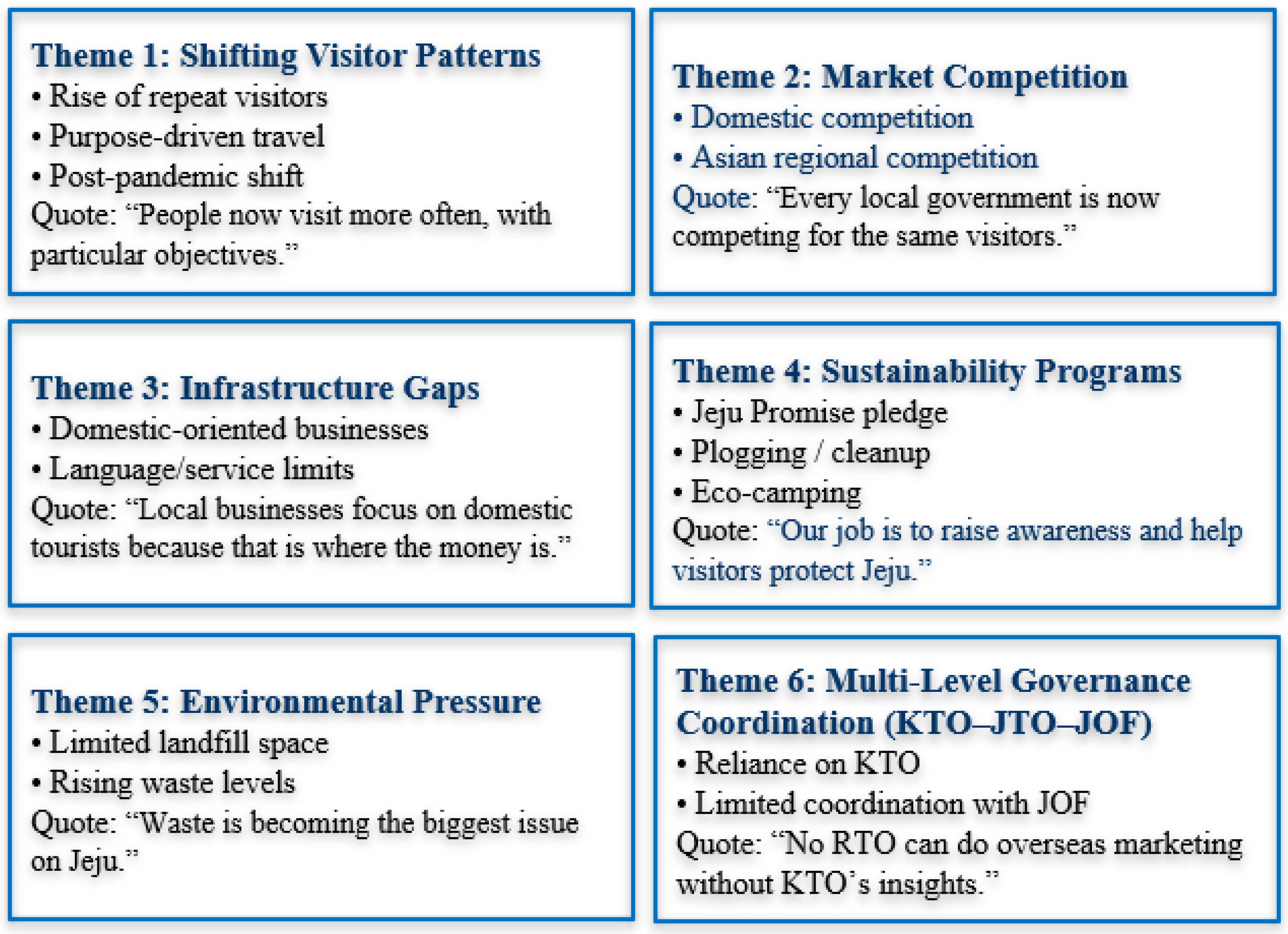
Taken together, these governance perspectives position the Jeju Olle Trail not merely as a tourism product but as an emergent sustainability mechanism shaped by institutional coordination, capacity constraints, and evolving market pressures. Rather than reflecting a fully centralized governance model, the trail operates through a patchwork of sustainability programs, spatial dispersion strategies, and inter-organizational dependencies, particularly between the RTO, NPO, and the NTO’s overseas marketing infrastructure. Its influence unfolds across experiential, economic, and policy domains, redistributing visitor flows, supporting rural livelihoods, and promoting low-impact mobility within a climate-vulnerable island context. The interplay of these governance themes, and their uneven contribution to sustainability outcomes, is illustrated in
Figure 3.
Governance-related themes derived from expert interviews with the RTO and NPO, with integration of national-level perspectives from the NTO. The figure illustrates how market dynamics, infrastructure gaps, environmental pressures, sustainability initiatives, and multi-level governance coordination interact to condition visitor patterns and the strategic role of the Jeju Olle Trail within Jeju’s tourism system.
4.7. Chapter 4 Summary
This chapter presented a cross-cultural thematic synthesis of Jeju Olle hikers’ narratives, revealing how universal psychological needs were experienced through culturally distinct expressions. These patterns did not emerge as discrete categories in the data but were constructed through iterative comparison across cohorts and institutional perspectives. The analysis demonstrated that while SDT effectively captures shared motivational structures, Hofstede’s cultural dimensions provide critical insight into how these needs are articulated within specific sociocultural contexts. The result is a “universal-but-different” pattern: the needs are fundamentally human, yet their realization is culturally refracted.
The interplay between these individual psychological drivers and the institutional environment is synthesized in the model below.
While
Figure 3 synthesizes the governance-related themes emerging from institutional interviews,
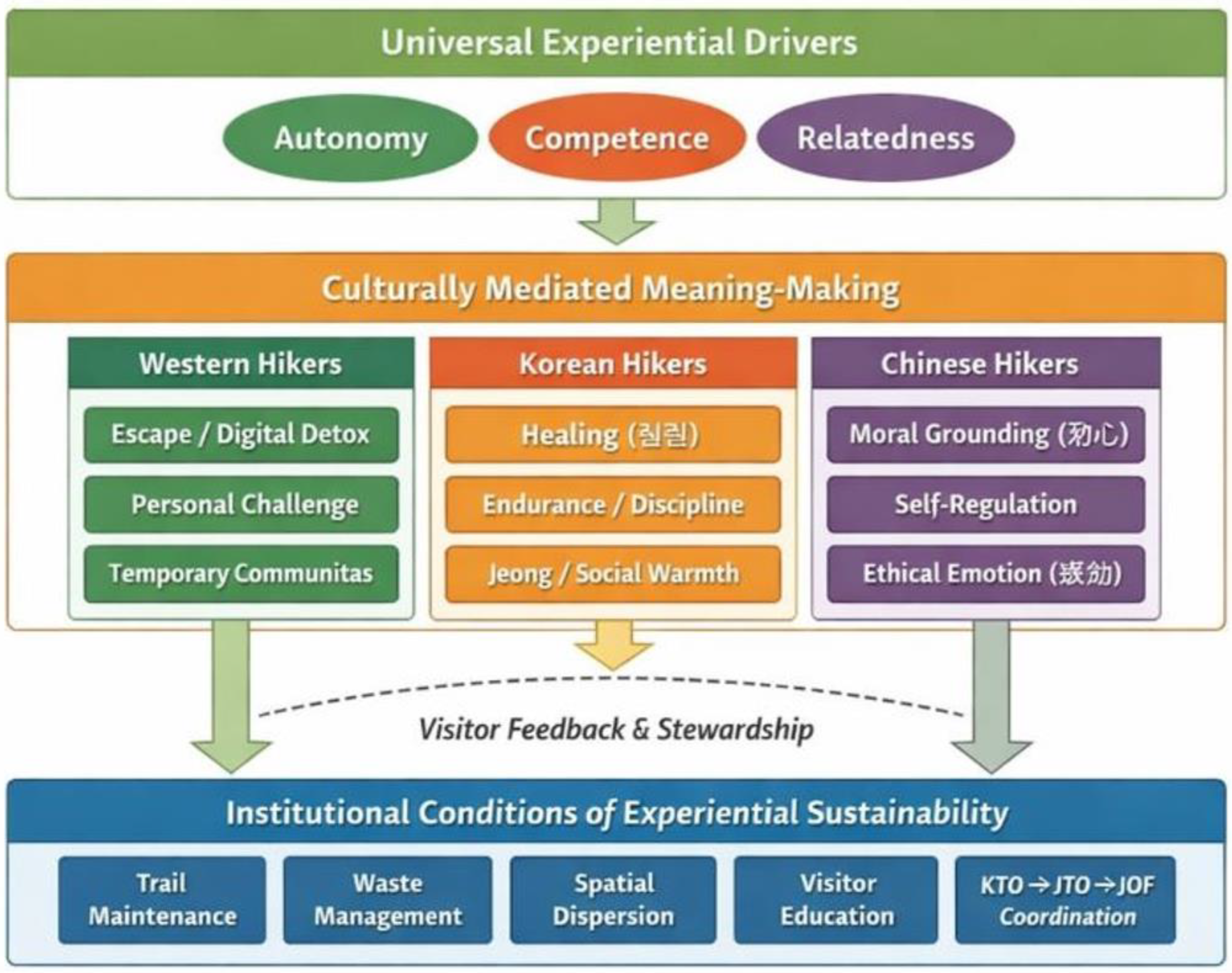
Figure 4 advances these findings by integrating visitor narratives and theory into a conceptual model of experiential sustainability.
As illustrated in
Figure 4 the sustainability of the Jeju Olle Trail is not solely an environmental or regulatory outcome, but an experiential one. The model demonstrates how Universal Experiential Drivers (top tier), autonomy, competence, and relatedness, are filtered through Culturally Mediated Meaning-Making (middle tier), producing distinct experiential orientations, including the Western pursuit of “Digital Detox,” the Korean emphasis on “Healing (힐링),” and the Chinese framing of “Moral Grounding.” These culturally differentiated narratives are subsequently enabled and constrained by specific Institutional Conditions of Experiential Sustainability (bottom tier), ranging from trail maintenance and waste management to multi-level coordination and national ESG policy alignment, highlighted by the NTO. Importantly, the “Visitor Feedback & Stewardship” arc captures a virtuous cycle in which meaningful visitor experiences foster pro-environmental behaviors, such as participation in “Clean Olle” practices, that reinforce local governance capacity and long-term trail sustainability.
The following chapter will discuss the theoretical and practical implications of these findings, addressing how cultural frameworks can inform sustainable tourism development. Taken together, the findings demonstrate that culturally differentiated visitor experiences are not incidental but are actively shaped by governance structures, sustainability strategies, and institutional constraints operating across multiple levels of Jeju’s tourism system.
5. Discussion
This study contributes to sustainability scholarship in three ways. First, it conceptualizes pilgrimage walking not merely as an experiential or spiritual activity but as a form of cultural infrastructure sustained through coordinated institutional governance. Second, by analyzing visitor narratives alongside expert interviews, the study shows how meaning, care, and moral labor are actively maintained through slow mobility practices rather than assumed as inherent to place. Third, the findings extend tourism sustainability debates by demonstrating how social and cultural sustainability are reproduced through symbolic interaction and multi-level stewardship, offering a framework applicable to other long-distance trail systems.
5.1. Interpretive Framework
Building on these contributions, this chapter interprets the study’s findings through the dual lenses of SDT and Hofstede’s Cultural Dimensions, situating the Jeju Olle Trail at the intersection of visitor motivation, cultural interpretation, and multi-level governance. The analysis reveals that the experiential narratives of hikers do not unfold in a vacuum; policy priorities and operational constraints actively shape them.
Institutional stakeholders corroborate this entanglement. The RTO highlights a strategic shift from volume-driven tourism toward stewardship, noting that “we mainly focus on sustainability now… it is about growing visitors’ awareness”. Similarly, the NPO observes that walkers are not passive consumers but participants in a moral landscape: “People who walk Olle are already conscious of sustainable tourism… they don’t leave any trash”.
At the national level, the NTO situates these dynamics within broader governance frameworks:
“If we look at our ESG Management, there are 16 Strategic Tasks… one of them is ‘Creation and Support of Low-Carbon Eco-Friendly Travel Environments.’ I believe ‘Walking’ is included there as one of the indicators: ‘Revitalization of Walking Travel’.” (NTO Interview)
Together, these perspectives demonstrate that Jeju Olle functions simultaneously as a transcultural pilgrimage landscape and a managed sustainability system.
5.2. Interpretation of Key Findings: “Tri-Cultural Analysis”
The findings reveal a distinct “universal-but-different” pattern. While the core psychological needs of autonomy, competence, and relatedness (SDT) are universally salient, their expression is profoundly shaped by cultural context [
3,
4].
5.2.1. The Universal and the Specific
Jeju Olle’s appeal lies in its capacity to function as a cultural blank canvas. The trail offers a universal experiential scaffold, unguided structure, consistent navigation, and physical challenge, while allowing hikers to inscribe culturally specific meanings onto the journey. This “blank canvas” quality did not emerge directly from participant language but became visible through comparative interpretation across cohorts, where similar experiential structures were repeatedly invested with different moral meanings.
Autonomy: English-speaking hikers framed autonomy as liberating self-expression and escape from digital constraints, aligning with individualist values. This mirrors RTO observations of a rise in visitors seeking “time away from screens.” Conversely, Korean and Chinese hikers framed autonomy as healing (힐링) or shìfàng yālì (释放压力), an emotional release from social pressure (nunchi) or academic burden. Here, autonomy is not detachment from society, but a restorative pause to regain balance within it.
Competence: While universally expressed through endurance, competence was culturally refracted. English-speaking hikers emphasized independent problem-solving (“figuring it out”). Korean hikers linked it to wanju (완주) and seongchwigam (성취감), a morally inflected sense of completion. Chinese hikers framed it as moral diligence and patience. NPO leadership explicitly links this to trail design: Olle “is not about being easy, it is about being finishable,” encouraging effort without competition.
Relatedness: Connection emerged across all groups but varied in form. English-speaking hikers valued voluntary camaraderie and spontaneous companionship; Korean hikers described jeong (정), a relational affect marked by accumulated care and obligation, expressed through acts of hospitality; and Chinese hikers emphasized gǎndòng (感动), a state of being morally moved by kindness, framing interpersonal encounters as ethical events rather than casual friendliness. The RTO further notes that such micro-encounters often leave “stronger impressions than major attractions.”
5.2.2. Beyond “Wellness”
While often marketed as “wellness tourism,” the findings suggest this label is insufficient. For East Asian hikers, the trail functions less as a leisure escape and more as an active emotional and moral recalibration.
For Korean hikers, the pursuit of healing is inseparable from social survival. Reviewers consistently framed walking as relief from the burden of nunchi. As one NPO leader noted, walkers often arrive “socially exhausted,” using the trail as “a rare place where no one is evaluating you.”
Chinese hikers articulated wellness through moral realignment. Concepts like chūxīn (初心, returning to one’s original heart) suggest walking is a ritualized pause for ethical grounding. This resonates with the RTO’s observation that post-pandemic visitors seek “time to think quietly” rather than entertainment.
In contrast, English-speaking hikers framed wellness through an individualist lens: reclaiming autonomy over time and attention. Phrases like “finally off the grid” reveal wellness as a counter-performance to the productivity economy.
5.2.3. The “Modern Pilgrimage” as Cultural Performance
The findings demonstrate that the Jeju Olle Trail operates as a secular stage on which hikers symbolically perform their moral selves. However, the intended audience and the underlying logic of this performance vary significantly across cultural groups. For English-speaking hikers, the walk functions primarily as an inward-facing performance, acting as a reflective mirror for self-clarification and personal authenticity. As the RTO noted, these visitors typically seek “space to slow down without being told how to slow down,” using the trail to reclaim agency from a structured, productive life.
In contrast, Korean hikers engage in a relational performance, where the act of walking is a restorative measure undertaken for the benefit of others. As NPO leadership explained, these hikers often use the trail to “reset emotionally so they can go back and take care of others again,” framing the walk not as an escape from social roles, but as a necessary maintenance of them. Meanwhile, Chinese hikers perform a temporal pilgrimage oriented toward the long term. Their narratives connect past values with future responsibilities, aligning with Confucian ethics of continuity, where physical endurance serves as proof of moral steadiness.
From a national policy standpoint, this sustained, slow-paced engagement is viewed as the ideal model for tourism growth. The NTO situates this performance within the broader national strategy of moving toward durable, low-impact visitation:
“We keep saying we must go for quality... [Olle is] like slow tourism, right? Or walking tourism. So slow tourism is very close to the concept of sustainable tourism.” (NTO Interview)
5.2.4. eWOM as a Reflection of Deeper Values
E-WOM in this context transcends simple service evaluation to function as a significant cultural artifact. For English-speaking reviewers, eWOM frequently resembled personal essays or diary entries, serving as an archive of individual growth where the writer noted, “I wrote this to remember how I felt.” Conversely, Korean reviews operated as acts of collective care and jeong (정), offering encouragement to future walkers rather than merely reviewing the facility. These narratives often carried messages such as “I wrote this so others might find courage,” positioning the review as a form of digital hospitality. Chinese reviews served a different function again, acting as moral ledgers that preserved insights gained through hardship. Collectively, these findings suggest that on the Jeju Olle Trail, online reviews are not merely consumer feedback but acts of storytelling and ethical remembrance.
5.3. Interpreting Governance Findings
While the preceding sections focused on hikers’ experiential narratives, these experiences are produced and constrained by institutional conditions operating across multiple levels of Jeju’s tourism system. The governance interviews with the RTO, NPO, and NTO reveal how sustainability on the Jeju Olle Trail is shaped not only by visitor behavior but by structural coordination, policy priorities, and operational capacity. This section interprets these governance findings through the lenses of sustainable tourism theory, rural destination management, and multi-level governance frameworks.
5.3.1. Environmental Pressures and Rural Sustainability
Despite the low-impact nature of walking tourism, cumulative pressures, specifically waste management, remain acute. The RTO official stated plainly, “We are living on an island… we have very limited space where we can bury the waste.” The spatial dispersion successfully achieved by the Olle Trail creates a sustainability paradox: while it reduces congestion at iconic hotspots, it diffuses the ecological footprint into under-serviced rural areas. Sustainability in this context is therefore not an abstract concept but a logistical challenge of capacity management across a finite island territory.
5.3.2. Community–Tourist Relations
The RTO highlighted that tourism benefits are unevenly distributed, which occasionally causes friction between residents and visitors. The NPO mitigates this tension through deliberate design, routing walkers through villages to foster interaction rather than extraction. NPO leadership argues that this routing transforms tourists from “outsiders” into temporary participants in village life. However, these relationships remain fragile and dependent on the perceived respect visitors show toward local privacy and property.
5.3.3. Governance Fragmentation and Structural Coordination Gaps
Coordination gaps exist between national, regional, and nonprofit actors in the tourism ecosystem. The RTO relies heavily on the NTO for international data, noting, “We cannot do our marketing without NTO,” yet local political sensitivities constrain its relationship with the NPO. The RTO official explained, “If we promote one destination, 500 other destinations will come and complain,” which means the Olle Trail is often marketed indirectly rather than as a flagship asset.
The NTO official confirmed this structural tension, noting that the organization must manage the competitive landscape by treating all regional trails as complementary rather than competitive:
“We promote each region’s trails together. We do not view them as being in a competitive relationship… For those who like walking, [they] could visit various places like ‘Dojang-jjikgi (도장찍기, Samp Tour Challenge). So that is not an issue of equity.” (NTO Interview)
The island’s unique financial situation further complicates this governance structure. The Jeju Special Act, while granting autonomy, leaves the NTO’s local branch unable to access central government funds for infrastructure projects, creating a critical resource gap in maintaining the trail. This structural fragmentation means that while all three organizations agree on the philosophical value of the Olle Trail, the implementation of sustainability (like infrastructure repair or maintenance) requires cumbersome multi-level negotiation to access necessary funds and expertise.
5.3.4. Opportunities for Collaborative Governance and Integrated Planning
Despite fragmentation, opportunities for integration exist, particularly in shared data ecosystems and visitor education. The RTO’s shift from regulatory control to “growing visitors’ awareness,” exemplified by the “Jeju Promise” campaign, aligns closely with the NPO’s on-the-ground stewardship efforts. Strengthening formal collaboration channels could transform these parallel efforts into a coherent, multi-level governance system.
A significant opportunity lies in leveraging the NTO’s vast resources and global reach to support local sustainability efforts, a partnership that the RTO views as essential for survival. The NTO views its role as providing the necessary framework and intelligence for regional organizations like the RTO and the NPO to succeed globally:
“We need insights from the NTO that may assist us in our decision-making process. Of course, we allocate our own budget and make our own decisions and carry out our own initiatives, but the NTO’s insights help us identify more effective approaches. In this way, we can work toward the best possible outcomes for Jeju tourism.” (RTO Interview)
This underscores a model of “Leveraged Governance,” where the NTO acts as the strategic and marketing guide, the RTO handles regional execution and market intelligence, and the NPO maintains the core product and visitor culture. Integrating the NPO’s real-time, granular field data with the NTO’s macro-level market data could create a more agile and responsive planning environment.
5.4. Answering Research Questions
Regarding the first two research questions (RQ1 and RQ2), hikers across all cohorts described the trail as emotionally restorative and transformative, yet the cultural construction of these experiences differed. English-speaking hikers focused on escape and freedom, Koreans on healing and social regulation, and Chinese hikers on moral grounding and balance. These cultural differences were most visible in the framing of effort. English speakers viewed physical difficulty as a test of independence, Koreans as a disciplined act of completion 완주 (wanju), and Chinese hikers as proof of character, patterns that align closely with Hofstede’s cultural dimensions.
Addressing the third research question (RQ3), the study found that the trail functions as a transcultural pilgrimage system. It operates as an inward pilgrimage of self-discovery for Westerners, a relational pilgrimage for Koreans, and a temporal or ethical pilgrimage for Chinese hikers. This confirms that secular walking landscapes can accommodate diverse moral performances within a shared spatial framework.
In response to the fourth research question (RQ4), the analysis demonstrates that SDT and Hofstede’s Cultural Dimensions are complementary frameworks. SDT identifies what motivates hikers, the universal needs for autonomy, competence, and relatedness, while Hofstede explains how those needs are interpreted and prioritized through specific cultural lenses.
Finally, regarding the fifth research question (RQ5), hiker narratives of stewardship were found to align closely with institutional sustainability objectives. The NPO’s emphasis on attracting “conscious” walkers who engage in low-impact practices is mirrored at the national level, where walking tourism is explicitly framed as an indicator within ESG-oriented strategies for low-carbon mobility (see
Section 4.6.3). This convergence confirms that visitor meaning-making and sustainability governance operate as mutually reinforcing systems rather than separate domains.
5.4.1. Theoretical Implications:
Taken together, these findings suggest that walking tourism cannot be adequately understood through leisure or wellness frameworks alone. Instead, the Jeju Olle case shows how secular landscapes can operate as adaptive pilgrimage systems, where psychological needs are stabilized through culturally specific moral scripts. This study extends SDT by demonstrating that core constructs like “autonomy” and “competence” are not static universals; instead, they are culturally mediated experiences that shift in meaning depending on the hiker’s social and ethical orientation. Furthermore, the analysis suggests that eWOM in nature-based tourism should be treated as a substantive cultural text. Online reviews function as documents of identity and moral orientation, offering researchers a window into the evolving values of the traveler rather than merely the perceived quality of the destination.
5.4.2. Practical and Managerial Implications:
From a managerial perspective, the findings validate the NPO’s “quiet, simple, slow” design philosophy. The flexibility of the trail allows diverse meanings to coexist, suggesting that managers should avoid over-scripting the visitor experience. Marketing segmentation should move beyond demographics to value-based categories, targeting “healing seekers,” “moral reflection walkers,” and “digital detox travelers.” In terms of sustainability, policy should focus on participatory engagement (e.g., plogging, pledges) rather than just restriction, as visitor narratives confirm that walkers view themselves as caretakers. Finally, long-term sustainability requires better data integration between the NTO (macro), RTO (meso), and NPO (micro) to manage flows and infrastructure effectively.
5.5. Limitations of the Study
Several limitations frame the interpretation of these findings. First, the reliance on UGC introduces self-selection effects, as the dataset reflects the perspectives of hikers motivated to publicly narrate their experiences, which may privilege more positive or reflective accounts. Second, despite rigorous back-translation protocols, culturally dense concepts such as jeong (정) or chūxīn (初心) involve interpretive nuance that cannot be fully preserved when rendered in English. Third, the linguistic scope of the study excludes Japanese or Southeast Asian hikers, whose perspectives would further enrich comparative analyses of transnational trail use. Finally, the expert interviews were employed primarily to provide contextual grounding and interpretive triangulation; future research may extend this approach by exploring a wider range of governance roles and stakeholder perspectives across comparable trail-based tourism contexts or stakeholder cooperation.
5.6. Chapter 5 Summary
This chapter demonstrated that the Jeju Olle Trail operates as a transcultural space where universal psychological needs intersect with culturally distinct moralities. By integrating SDT and Hofstede, the analysis showed that while motivations are shared, their realization is culturally refracted. Governance insights reveal that a delicate balance of trail design, policy prioritization, and operational stewardship enables these experiences. The following chapter presents the study’s conclusions.
6. Conclusions
6.1. Synthesis of the Study
This study addressed a critical gap in tourism scholarship: the lack of cross-cultural perspectives on secular pilgrimage and the separation of visitor experience from destination governance. By integrating large-scale multilingual UGC (900 reviews) with institutional perspectives from key stakeholders (RTO, NPO, NTO), the research positions the Jeju Olle Trail as both a transcultural experiential landscape and a complex sustainability system.
The core analysis revealed a consistent “universal-but-different” pattern. While hikers from Korean, Chinese, and English-speaking backgrounds all articulated experiences aligned with SDT needs for autonomy, competence, and relatedness, the moral and emotional significance of these needs was refracted through culturally specific value systems. Autonomy functioned as self-expression for Western hikers, emotional healing (healing) for Koreans, and moral rebalancing (shìfàng yālì) for Chinese visitors. Similarly, competence ranged from independent problem-solving to disciplined moral perseverance (wanju), while relatedness was expressed through distinct cultural scripts of camaraderie, warmth (jeong), and ethical emotion (gǎndòng).
Crucially, these experiential narratives do not exist in a vacuum. Institutional interviews revealed that these meanings are enabled and constrained by governance decisions regarding spatial dispersion, infrastructure design, and waste management. The Jeju Olle Trail thus functions as a transcultural modern pilgrimage, satisfying universal psychological needs while accommodating culturally specific interpretations of duty, selfhood, and sustainability.
6.1.1. Theoretical Contribution
Taken together, the findings suggest that tourism theory can be advanced by demonstrating how secular landscapes operate as adaptive pilgrimage systems, where universal psychological needs are stabilized through culturally specific moral scripts. It moves beyond treating eWOM as merely evaluative text, showing instead that online reviews function as culturally patterned expressions of moral identity and emotional meaning-making. This framework offers a robust model for explaining how universal human motivations are translated into distinct cultural experiences in nature-based tourism.
6.1.2. Empirical Contribution
Empirically, the study provides one of the most comprehensive multilingual comparative analyses of walking tourism narratives to date. By examining Korean, Chinese, and English data side-by-side, it offers rare insight into how East Asian and Western hikers construct the meaning of “slow travel” within a shared destination, challenging Western-centric definitions of secular pilgrimage.
6.1.3. Methodological Contribution
Methodologically, the research introduces a replicable hybrid analytical pipeline combining large-scale inductive thematic analysis, rigorous cross-linguistic translation protocols, and institutional triangulation. This multi-level approach offers a blueprint for future qualitative research seeking to bridge the gap between micro-level visitor narratives and macro-level governance realities.
6.1.4. Practical Contribution
Practically, the study identifies critical sustainability challenges facing the Jeju Olle Trail. By triangulating visitor insights with governance perspectives, the findings provide actionable guidance for trail management, specifically the need for value-based visitor segmentation, participatory sustainability initiatives (e.g., plogging), and enhanced inter-agency coordination between national (NTO), regional (RTO), and local (NPO) actors.
At the same time, visitor experiences are embedded within broader sustainability and governance contexts. The meanings hikers construct are shaped not only by personal motivations but by institutional decisions regarding trail maintenance, visitor education, community engagement, and environmental stewardship. Jeju Olle thus emerges as both an experiential landscape and a socio-ecological system requiring coordinated governance to sustain its cultural and environmental integrity.
6.2. Directions for Future Research
While this research suggests a high degree of theoretical transferability, the findings are bound to the specific institutional and cultural context of Jeju Island. Future scholarship could expand this work through ethnographic fieldwork to further explore the narratives analyzed here. Longitudinal studies are needed to track how post-pandemic sustainability perceptions evolve. Furthermore, comparative research across other routes, such as the Camino de Santiago or Kumano Kodo, would test the transferability of the “universal-but-different” framework. Finally, future research should examine resident perspectives to provide a more holistic view of social sustainability.
Beyond the Jeju Olle context, the findings offer practical guidance for the management of trail-based tourism destinations facing growth pressures. First, they highlight the value of experience-led dispersal, where visitors are encouraged to move across everyday landscapes rather than concentrated attractions, reducing localized congestion while supporting rural economies. Second, the study demonstrates that experiential sustainability, grounded in walkers’ emotional and moral engagement, can reinforce pro-environmental behaviors more effectively than regulation alone. Third, the analysis underscores the importance of multi-level governance coordination, particularly alignment between national tourism strategies, regional destination management, and local nonprofit stewardship. While this model may be transferable to other rural trails, island destinations, or pilgrimage-style routes seeking low-impact mobility, its applicability is likely limited in dense urban trail systems or contexts with weak institutional capacity, where dispersal strategies and collaborative governance mechanisms may be more difficult to sustain.
6.3. Concluding Remarks
The Jeju Olle Trail stands as a powerful example of how walking tourism can function simultaneously as a site of transcultural meaning-making and a model for sustainable travel. This study demonstrates that hikers’ experiences are shaped by universal psychological needs and culturally embedded moral frameworks, yet are fundamentally conditioned by governance structures and environmental limits. Preserving the integrity of such landscapes requires a governance approach that recognizes the trail not merely as a tourism product, but as a living cultural system. As global walking tourism grows, understanding this intersection of experience, culture, and governance is essential for ensuring that such journeys remain meaningful, inclusive, and sustainable. While the present study relies on strategically selected institutional interviews to capture multi-level governance perspectives, future research would benefit from incorporating a broader range of policy-makers, frontline managers, and community stakeholders.