Article

Application and Assessment of a CA-ANN Model for Land Use Change Simulation and Multi-Temporal Prediction in Guiyang City, China


1
School of Architecture and Urban Planning, Guizhou University, Guiyang 550025, China
2
School of Computer and Science Technology, Guizhou University, Guiyang 550025, China
3
School of Civil Engineering, Guizhou Institute of Technology, Guiyang 550025, China
*
Author to whom correspondence should be addressed.
Sustainability 2026, 18(3), 1518; https://doi.org/10.3390/su18031518
Submission received: 26 November 2025 / Revised: 25 December 2025 / Accepted: 9 January 2026 / Published: 3 February 2026
(This article belongs to the Section Environmental Sustainability and Applications)

Abstract

Land use and land cover change (LULC) is a critical catalyst for global climate patterns, environmental conditions, and ecological dynamics. Remote sensing and geographic information system (GIS) methods have accelerated research on the impacts and variability of climate change. In ecologically sensitive karst regions, LULC poses significant challenges to sustainable urbanization. As a representative karst mountain city in China, Guiyang has undergone rapid spatial transformation, yet quantitative studies on its long-term LULC trajectories within an integrated spatial modeling framework remain insufficient. This study analyzed LULC dynamics in Guiyang from 2007 to 2022 and projected changes for 2027, 2032, 2037, and 2042. Using the CA-ANN model within the QGIS MOLUSCE plugin, we calibrated the model with multi-temporal LULC data and nine spatial drivers, including topographic, proximity, and socioeconomic factors. The model structure was optimized through iterative testing, resulting in a final configuration of 8 hidden layers and 500 iterations. This setup achieved high validation accuracy during training, with a hindcast simulation overall accuracy of 84.42% and a Kappa coefficient of 0.73 for simulating the 2022 land cover. Future projections indicate that impervious surfaces will continue to expand in a spatially constrained manner, reaching 332.82 km2 by 2042, while shrubland area will sharply decrease to 10.75 km2. Cultivated land and forest areas show relative stability with fluctuations. The projected patterns may exacerbate risks associated with surface runoff and ecological fragmentation due to established linkages between land use/cover change and ecosystem services. Through spatially explicit, multi-temporal scenario simulations, the findings underscore the urgent need in Guiyang’s unique karst setting to deeply integrate land-use planning with ecological conservation strategies, so as to strengthen regional ecological resilience.

1. Introduction

Land use and land cover change (LULC) is a critical component of global environmental change research. These changes have triggered numerous environmental, economic, and social issues worldwide. In the context of urbanization and global climate change, extensive deforestation, wetland reclamation, and cropland conversion have exacerbated global warming, impaired ecosystem services, and jeopardized sustainable development [1,2]. Although land use and land cover are interrelated to some extent, they are fundamentally distinct concepts. “Land cover” refers to the physical characteristics of the Earth’s surface, while “land use” denotes the human purposes underpinning the modification of land cover [3]. LULC changes are driven by the interactions between human activities and natural ecosystems. These interactions are increasingly intensified by factors such as global climate change, population growth, and resource exploitation, leading to frequent alterations in land use types and rapid evolution in land cover [4,5]. Since LULC changes involve multiple natural and social factors, their impacts are not confined to the local environment but may also affect ecological security and human living conditions through environmental feedback at regional or even global scales [6]. As a key driver of global climate change, research on land use changes is crucial for mitigating climate change and reducing greenhouse gas emissions. Continuously deepening research in this field is indispensable for promoting sustainable development, social stability, and enhancing human well-being [7,8,9].
Prediction models offer effective methods for exploring potential future development pathways across different regions, scales, and environmental conditions. Traditionally, satellite data have been primarily used to assess land use and land cover (LULC) changes through pixel classification methods based on supervised and unsupervised learning [10]. Techniques such as maximum likelihood classification (MLC), support vector machines (SVMs), and decision trees (DTs) are typical examples. These methods generally employ supervised or unsupervised classification to analyze pixels in remote sensing images, thereby generating change maps of land use/cover types. However, they often suffer from insufficient accuracy and low computational efficiency when dealing with low spatial resolution, large-scale dynamic changes, or complex datasets [10,11]. In recent years, numerous innovative technologies and methods for identifying, monitoring, and visualizing LULC changes through remote sensing have been developed. Satellite remote sensing (SRS) and geographic information systems (GISs) have been widely recognized as efficient techniques for detecting LULC changes and predicting Earth’s surface characteristics. Among these, SRS can provide low-cost, multi-temporal spectral data, offering critical variables for analyzing and understanding land use change patterns and development processes. Such data have demonstrated strong performance in multiple studies [12,13]. Machine learning techniques such as Random Forest (RF) and Extreme Gradient Boosting (XGBoost) have demonstrated higher accuracy in land cover classification, owing to their capability to handle large-scale datasets and capture complex relationships [14,15,16,17]. Various models, including multi-agent models, Markov models, hybrid models, cellular automata (CA) models, and the Land Use Change Simulation Module (MOLUSCE), enable researchers to explore driving factors and impact mechanisms of LULC changes [18]. However, these methods typically focus on classification tasks rather than predicting future LULC patterns. To address this limitation, this study adopts an integrated Cellular Automata-Artificial Neural Network (CA-ANN) approach, which combines the spatial dynamic modeling capability of CA with the predictive power of ANN, making it particularly suitable for simulating complex spatiotemporal changes in LULC [19,20].
Although well-established methods, including CA-ANN, have demonstrated effectiveness in various contexts, the field of LULC simulation is evolving rapidly. Recent research has achieved breakthroughs mainly in three aspects: developing complex hybrid models that integrate CA with advanced machine learning algorithms to enhance the interpretability and accuracy of transition rules [21]; exploring the use of deep learning architectures to autonomously capture complex spatial patterns and long-term temporal dependencies from raw data, with performance potentially surpassing traditional feature-driven models [22,23]; and shifting toward scenario-driven simulation, explicitly incorporating diverse socioeconomic, climatic, and policy pathways to move beyond simple trend extrapolation and provide planners with a range of possible future scenarios [24]. Despite these notable advancements, critical research gaps remain when applying such modeling paradigms to rapidly urbanizing karst mountainous regions like Guiyang. First, existing studies rarely address land transformation dynamics in karst areas. Second, the complex nonlinear constraints on urban expansion are often oversimplified to common natural factors such as slope, with insufficient consideration of socioeconomic conditions beyond natural elements. This disconnection limits the practical relevance of simulation outcomes for local governance and spatial planning. Finally, for karst cities under high development pressure, there is still a lack of spatially explicit, long-term, multi-period predictions capable of delineating detailed transition trajectories and providing concrete support for mid- to long-term territorial spatial planning.
CA models determine the transition probability of each cell in a matrix based on the historical states of neighboring cells through transition rules [25]. Since Tobler first applied CA to urban expansion simulation in the 1970s, numerous scholars have conducted research on urban CA, and its potential in simulating urban land use and land cover changes has garnered sustained attention [26]. Past land use interactions shape future land use patterns in CA models, making them a simple yet versatile tool for expansion prediction, often used to simulate future LULC based on historical patterns. However, when simulating LULC changes, CA models primarily rely on spatial patterns from historical data and struggle to incorporate complex socioeconomic factors influencing LULC changes [27]. Secondly, the decision rules and transition probabilities in cellular automata models are typically defined based on prior assumptions, which may lead to significant prediction errors in complex environments. Artificial Neural Networks (ANNs) are machine learning models that mimic the information-processing mechanisms of biological neural networks. ANNs can self-learn from large volumes of historical data, extracting complex nonlinear relationships [28,29], and subsequently make predictions about future changes. Unlike traditional statistical regression models, Artificial Neural Networks (ANNs) possess strong adaptive capabilities and are particularly suitable for studies where underlying mechanisms are unknown [11]. ANN does not require extensive prior knowledge to reconstruct underlying patterns or predict real-world dynamics [30]. Due to their nonlinear structure, ANNs can comprehend complex features that pose significant challenges to conventional statistical techniques [31]. Therefore, Artificial Neural Networks (ANNs) provide a high-performance modeling approach for simulating and predicting land use/land cover (LULC). By integrating ANN with CA models, the advantages of ANN in pattern recognition, data fitting, and prediction can be fully leveraged, thereby enhancing the accuracy of LULC change predictions. This study develops a collaborative Cellular Automata-Artificial Neural Network (CA-ANN) model to predict land use and land cover change (LULC) in Guiyang City, Guizhou Province, China. This study applies a collaborative Cellular Automata-Artificial Neural Network (CA-ANN) model to simulate and project future Land Use and Land Cover (LULC) changes in Guiyang City, China—a rapidly urbanizing area characterized by complex karst terrain. The model quantifies the spatiotemporal dynamics of LULC and projects concrete, map-based scenarios for 2027, 2032, 2037, and 2042. These outputs provide a spatially explicit evidence base for anticipating landscape transformations, assessing environmental risks such as flood vulnerability and ecosystem degradation, and informing targeted land-use planning and resilience strategies within Guiyang’s unique geographical context. In terms of research methodology and utilizing remote sensing data from Guiyang City spanning 2007 to 2022, this study integrates multidimensional spatial attributes such as digital elevation models, slope, transportation networks, population density, GDP, and distance to urban core areas. The CA-ANN model is employed to simulate and predict LULC changes. This approach not only captures the spatial patterns of LULC changes but also analyzes multidimensional driving factors, thereby enhancing prediction accuracy. This study aims to address the identified gaps by conducting a systematic evaluation of the CA-ANN model’s applicability in a karst mountain city, thereby providing a performance benchmark for similar terrains; generating a set of long-term, multi-temporal spatial projections that can serve as a quantitative scenario basis for Guiyang’s territorial spatial planning and ecological risk assessment. It provides theoretical and technical support for regional sustainable development, ecological protection, and disaster risk prevention and control. By comprehensively analyzing and predicting LULC changes in Guiyang, the research contributes to optimizing urban spatial layout, rational resource allocation, and strengthening ecological environment protection, offering decision-making references for land resource management and ecological governance in similar regions.

2. Materials and Methods

2.1. Overview of the Study Area

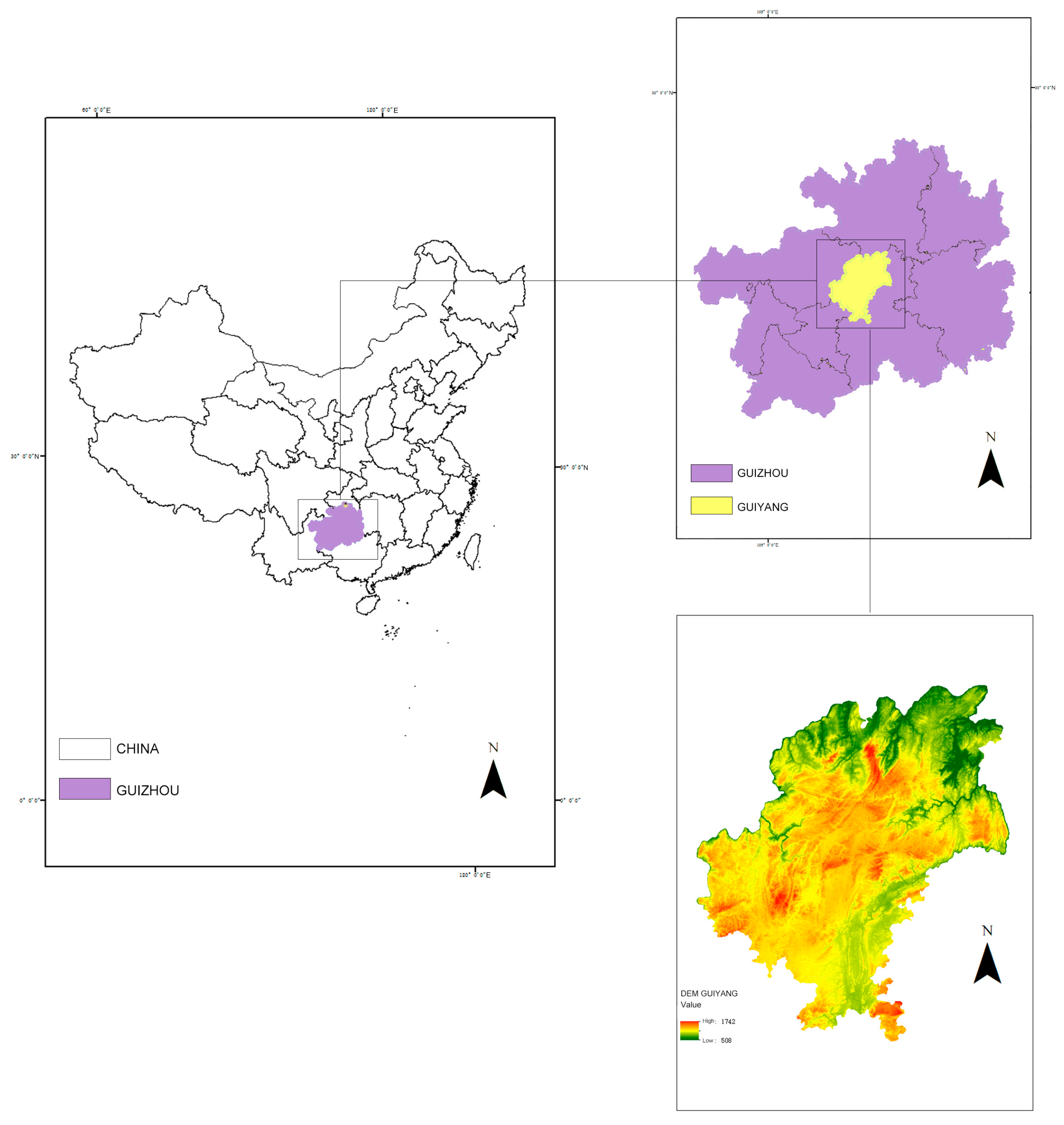
This study was conducted in Guiyang, the capital city of Guizhou Province in southwestern China. The study area covers 8034 km2 within Guiyang City. It is located in central Guizhou Province, between longitude 106°07′–107°17′ E and latitude 26°11′–27°22′ N (Figure 1). Guiyang has a subtropical monsoon climate with distinct seasons and notable mountainous characteristics, featuring relatively humid summers and drier winters. The annual average temperature ranges from 15 °C to 17 °C, earning it the reputation as “the Capital of Summer Resorts in China”. In terms of land use types, forest land constitutes the largest proportion at 34.01% of the total land area, with a forest coverage rate of 39.19%. The city also boasts a high urban greening rate and is recognized as a National Forest City. Cultivated land accounts for 33.8% of the total land area, ranking second. Since the founding of the People’s Republic of China, Guiyang has undergone significant land use and land cover (LULC) changes, particularly during its urbanization process. According to demographic statistics, the city’s population has grown from approximately 100,000 in 1949 to 6.4029 million in 2023, reflecting strong growth momentum. This number is expected to continue rising in the future. According to the “Guiyang Municipal 14th Five-Year Plan for Population Development,” it is projected that by the end of 2025, the city’s permanent resident population will reach approximately 7 million. Furthermore, Guiyang plans to expand its population to between 8 million and 10 million by 2035, aiming to establish itself as a megacity with a population of over ten million. The rapid population growth is undoubtedly a key driver of land use change and urban expansion. However, Guiyang is situated in the southeastern part of the Qianzhong Plateau, characterized by a combination of mountainous and hilly terrain, forming a typical karst mountain landform. This unique topography, featuring peak forests, karst caves, canyons, and other landforms, significantly influences the urban landscape and tourism development. Additionally, Guiyang serves as a transportation hub in southwestern China, boasting well-developed railway, highway, and aviation networks that connect southwestern and southern regions. The aforementioned population growth trends and urban economic dynamics are not only core drivers for rapid socioeconomic and demographic development in Guiyang but also pose significant challenges to the city’s geographical environment. These include balancing population expansion, urban spatial growth, and the carrying capacity of resources and the environment, which will be critical factors influencing its sustainable development.

2.2. Data Sources and Processing

2.2.1. Data

This study utilizes five distinct types of data to analyze LULC changes and simulate future scenarios: population, road networks, GDP, DEM, and land use data. Recent studies have provided a 30 m resolution land cover dataset for China along with its dynamic changes from 1985 to 2023 [32]. This dataset was produced by its authors using a Random Forest (RF) classifier. The RF classifier generated initial classification results, and a post-processing approach incorporating spatiotemporal filtering and logical reasoning was applied to further ensure the accuracy and reliability of the classification results. By combining stable samples extracted from the China Land Use/Cover Datasets (CLUDs) and samples obtained through visual interpretation of satellite time-series data, Google Earth, and Google Maps, this method acquires multi-temporal training samples (Table 1). For predicting future LULC, the study incorporated nine conditional parameters: digital elevation model, aspect, slope, distance to built-up areas, distance to water bodies, distance to forests, transportation network maps, population density, and GDP. Grid-based population and GDP data were obtained from the Resource and Environmental Science Data Platform of the Chinese Academy of Sciences. The method is based on the assumption that the spatial patterns of GDP and transportation network data remain relatively stable throughout the calibration period, thereby providing a reference for the dominant conditions influencing observed changes. This assumption of static driving factors is a common simplification in LULC modeling when high-frequency, spatiotemporally consistent data are unavailable. Parameters such as aspect, elevation, and slope were derived from the 2009 ASTER DEM. Transportation maps sourced from OpenStreetMap were used to calculate distances to transportation networks. Additionally, water bodies, forest cover, and built-up areas extracted from LULC maps were utilized to compute distances to these features (Table 2). In this study, these datasets were applied to each simulation period in chronological order.

2.2.2. Data Pre-Processing

After obtaining the LULC classification maps, data preprocessing is required. First, all data files were reprojected to a uniform coordinate system (WGS 1984 UTM Zone 48N) and cropped to the area of interest (AOI). Second, LULC files from different years were reclassified to obtain target land use types (built-up areas, forests, water bodies). The Euclidean Distance tool was then used to calculate the distance to these features. Road and built-up land features available in OpenStreetMap were downloaded in shapefile format and imported into ArcGIS 10.8 software. The Euclidean Distance tool in the Spatial Analyst module was employed to convert the attribute tables of these files into raster format, generating distance to roads and distance to built-up areas. Population and GDP files, being grid data, were used directly. Finally, to ensure uniform spatial resolution for simulation processing, all raster layers were resampled to a consistent 30 m pixel size. Categorical layers (LULC maps) were resampled using the Nearest Neighbor method to preserve discrete class values, while continuous layers (DEM, slope, aspect, distances, population, GDP) were resampled using the Bilinear interpolation method. During resampling, layers were aligned to a common grid origin and snapped to ensure perfect spatial registration. A subsequent visual and logical check confirmed that all resampled layers shared identical extents, resolution, and projection for each simulation period, forming a consistent raster stack for model input (Figure 2).

2.2.3. Parameter Preparation for LU/LC Simulation

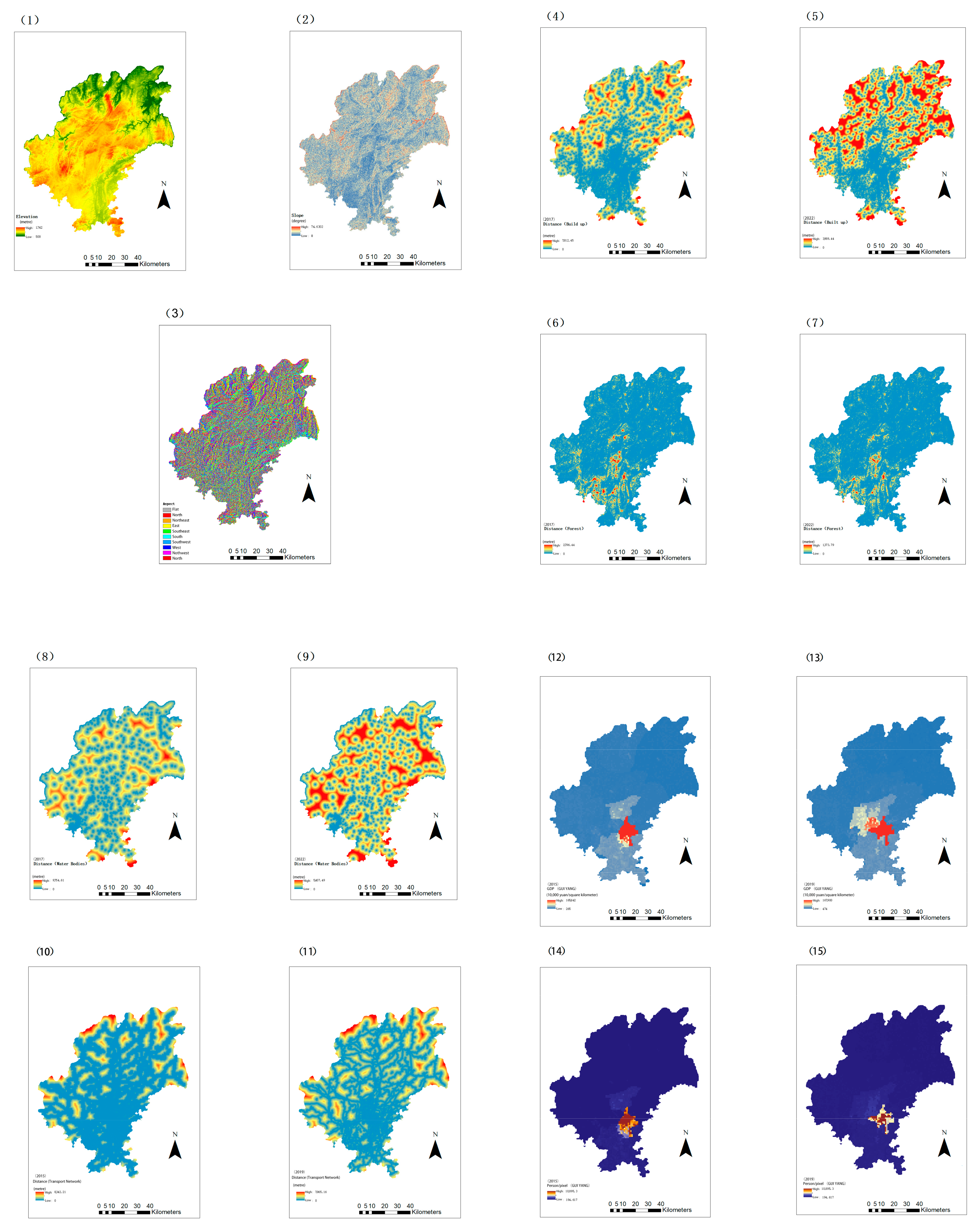
To elucidate the dynamic patterns of land use/land cover (LULC) in Guiyang City and construct a simulation and prediction model for future scenarios, it is essential to identify key variables that significantly drive LULC evolution [33]. Based on regional physical geographical characteristics and the mechanisms of human activity impacts, this study ultimately selected nine core influencing parameters. Topography serves as a fundamental factor constraining land use suitability in the region. Among topographic elements, elevation, slope, and aspect exert the most significant influence on the spatial differentiation of LULC types and the intensity of their transitions. This study utilized ASTER DEM data (with a spatial resolution of 30 m) and extracted these three topographic indicators through ArcGIS spatial analysis tools to quantify the constraining effects of topographic conditions on LULC changes. Population density and economic development levels serve as core indicators reflecting the intensity of human activities. They directly drive LULC conversion processes such as construction land expansion and agricultural land adjustments. The gridded population density data and spatially distributed GDP data required for this study were obtained from the Resource and Environment Science and Data Center (https://www.resdc.cn/ (accessed on 1 May 2025)). These datasets, having undergone spatial interpolation and accuracy validation, effectively characterize the variations in human activities across different regions of Guiyang City. Water bodies, transportation networks, and built-up areas are typical locational factors influencing LULC changes. Their spatial distribution affects the frequency of LULC transitions through a “distance decay effect.” For water bodies, transportation networks, and built-up areas, the frequency of LULC changes is negatively correlated with distance. Specifically, shorter distances to these features are associated with more intensive human activities (land development along transportation corridors, agricultural use near water bodies) or natural constraints (ecological protection measures near water bodies), leading to higher LULC transition frequencies. Conversely, as distance increases, the influence of these factors diminishes, resulting in lower LULC change frequencies. To empirically validate this effect within the study area, we performed a quantitative analysis of the relationship between LULC transition frequency and distance for key drivers during the 2017–2022 period. Transition pixels were sampled and stratified by distance intervals from existing built-up areas and major roads. The results confirm a strong distance-decay pattern: approximately 68% of all transitions to impervious surface occurred within 1 km of existing built-up areas, and over 70% of total land-use changes took place within 500 m of major roads. This provides direct quantitative evidence that proximity to built-up areas and transportation networks strongly accelerates LULC changes in Guiyang. In contrast, the distance to forested areas exhibits an opposite influence pattern: the trend of LULC changes is positively correlated with distance from forests. As the distance to forest patches increases, the constraints imposed by forest ecological protection policies weaken, and human activities (e.g., cropland expansion, construction land encroachment) lead to more significant LULC transitions. Conversely, areas closer to forests experience stricter ecological protection restrictions, resulting in more stable LULC types and lower change intensity.
All the aforementioned distance parameters were calculated using the ArcGIS Euclidean Distance tool. Specifically, the spatial extents of water bodies, forests, and built-up areas were extracted from the LULC classification map of the study area. Transportation network data were sourced from the OpenStreetMap platform (after topological error correction and accuracy validation). This methodology ensures the accuracy and reliability of the calculated distance results (Figure 3).

2.3. Description of the CA-ANN Model

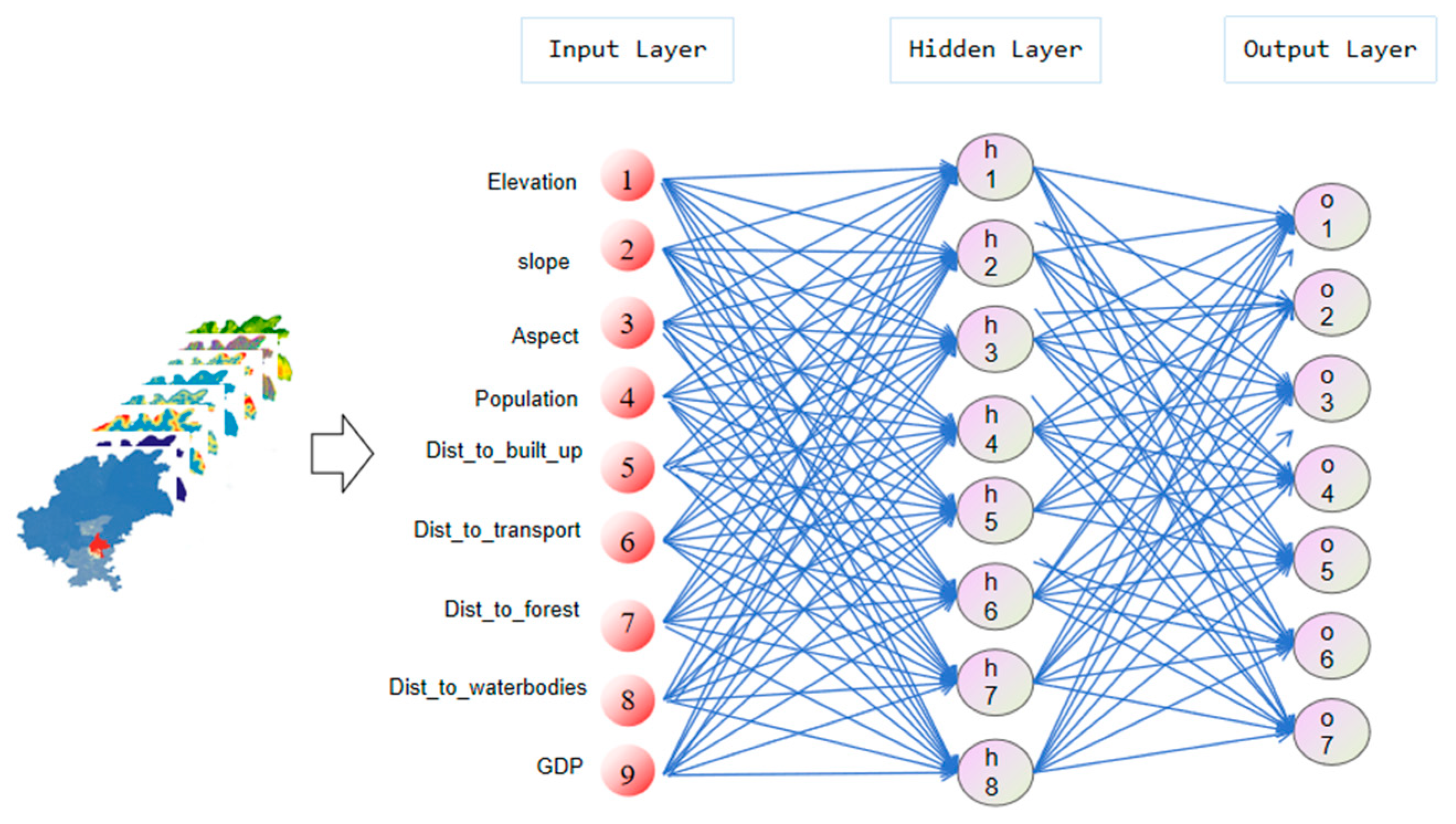
In this study, MOLUSCE version 4.2.1 was employed to simulate LULC classification maps for Guiyang in the years 2027, 2032, 2037, and 2042. The simulation of LULC classification maps was based on their states during the past period (t1) and the present period (t2) (where each LULC map consists of a single-band raster based on land use types), along with a set of explanatory variables controlling LULC transitions. Bidirectional raster analysis was then applied to assess the correlations between variables. Subsequently, the area changes between the two periods (t1, t2) were calculated. Subsequently, based on the preceding steps, a transition potential matrix was created to calculate the transition percentages for each type of pixel. Building on the transition potential matrix, the model also generated a deterministic raster, which further defines the confidence level of the transition potentials [34]. The MOLUSCE platform utilizes four prominent algorithmic models: Logistic Regression (LR), Weight of Evidence (WoE), Multi-Layer Perceptron-Artificial Neural Network (MLP-ANN), and Multi-Criteria Evaluation (MCE). In the final simulation phase, a Cellular Automata (CA) model is employed to predict future land changes. By evaluating the current state of pixels while considering their initial conditions, neighboring pixel probabilities, and transition rules, the model forecasts spatial LULC changes. This study adopts the Artificial Neural Network (ANN) method integrated with the Cellular Automata (CA) model due to its advantages over alternative approaches. One of the most widely used types of ANN is the Multi-Layer Perceptron (MLP) backpropagation neural network [35,36]. The integration of CA and ANN offers significant benefits, including improved accuracy and efficiency in simulating the spatiotemporal evolution of complex systems, while enhancing the model’s adaptability and flexibility. Figure 4 provides an illustrative example of the ANN model used in this study.
Prior to finalizing the model, a preliminary comparative analysis was conducted using the 2017–2022 transition period data. The transition potential was modeled separately using three algorithms available in MOLUSCE: Logistic Regression (LR), Weight of Evidence (WoE), and Artificial Neural Network (ANN). The ANN model yielded the highest validation accuracy and Kappa coefficient for this case study (see Table 3). Therefore, the ANN was selected for integration with the CA model for all subsequent simulations and projections.

2.4. ANN Framework Construction

In the initial phase, the input layer of the neural network must be configured for the upcoming land use/land cover (LULC) simulation. Each neuron receives inputs from neurons in the previous layer and processes them through a weighted summation. In the MOLUSCE model, the weighted summation formula for the input layer can be expressed as:
z = i = 1 n w i x i + b
x i is the value of the i-th input feature, w i denotes the weight corresponding to the input feature of the bias term, z represents the result of the weighted summation, b is the bias term, and n signifies the total number of input features.
This formula indicates that each neuron in the input layer receives all inputs from the preceding layer (or input data), multiplies them by their respective weights, sums the products, and finally adds the bias term. This weighted summation result is typically passed to an activation function to generate the neuron’s output. The role of the activation function is to introduce nonlinear factors, enabling the neural network to handle complex nonlinear relationships. During this process, the neural network receives n attributes of each pixel at the pixel level as input data.
In this study, nine regulatory parameters were applied as input layers to the classified maps of 2012, 2017, and 2022. As detailed in Section 2.2.2, all input raster layers (the nine conditioning parameters and the LULC maps) were pre-processed to ensure spatial consistency: they share the same coordinate system (WGS 1984 UTM Zone 48N), are aligned to a common grid origin and extent, and have a uniform spatial resolution of 30 m. Categorical layers were resampled using Nearest Neighbor, and continuous layers using Bilinear interpolation. This standardized raster stack was then used to extract pixel-level attribute values as model inputs.

2.5. Factor Correlation Analysis

In the second phase, bivariate raster analysis is employed to evaluate correlations between variables (as shown in Table 4). Bivariate raster analysis is a method used to assess relationships between two raster datasets. This study utilizes the Pearson Correlation Coefficient to perform bivariate raster analysis on the nine input explanatory variables. Subsequently, the area change for each LULC category between the first and last input periods is calculated. Following this, a transition potential matrix (Table 5) is computed, representing the percentage of pixels undergoing change. The transition potential matrix is a square matrix where each element p i j denotes the proportion of pixels transitioning from land use/cover type i to type j. This matrix provides insights into the frequency of changes between different land use/cover types.
The correlation matrix reveals a very high correlation (r = 0.997) between GDP and Population density for 2015, indicating potential multicollinearity. While Artificial Neural Networks can handle correlated inputs by adjusting connection weights, high multicollinearity may affect the interpretability of individual driver contributions. In this study, all pre-selected drivers were retained to fully assess their collective explanatory power for LULC change in the karst context. The implications of driver selection and the high correlation between socioeconomic variables are further discussed in Section 4.

2.6. Land Use Change Simulation Based on ANN

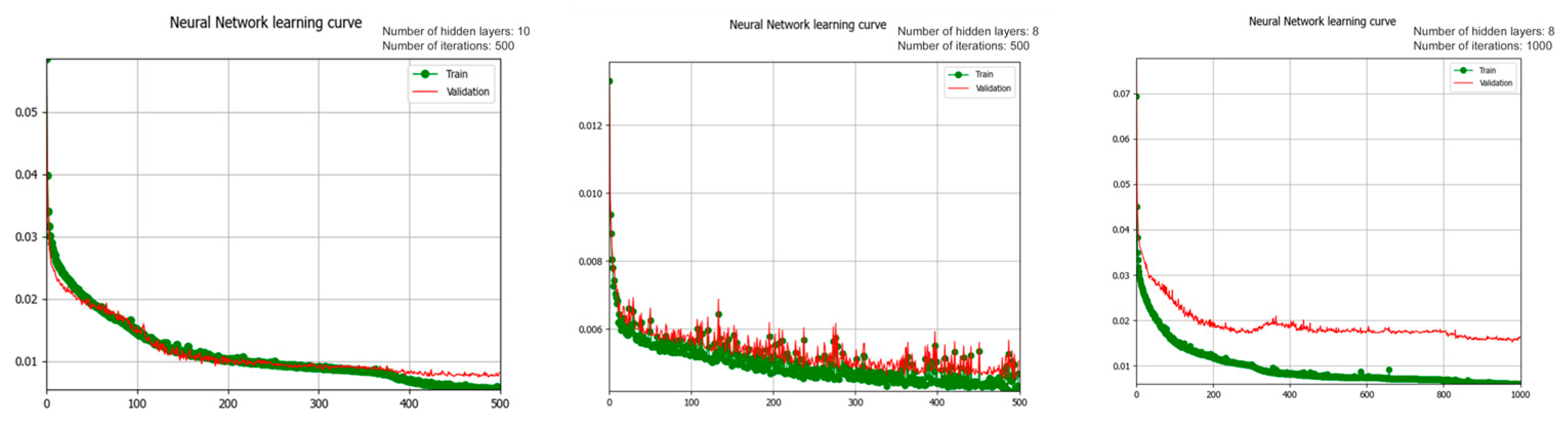
In the third phase, an Artificial Neural Network (ANN) is employed to model the probability of land use change. For this purpose, 200,000 sample points were randomly extracted from the input raster data to construct the learning curve of the ANN. Since the model’s performance is influenced by the number of hidden layers, different configurations were tested by adjusting relevant parameters, and the optimal training set configuration was ultimately determined. The ANN learning curve illustrates the dynamic changes in Mean Squared Error (MSE) during the training process. A high degree of consistency between the training set and validation set results indicates strong predictive capability of the model. A default ANN model configuration was adopted, with the training set comprising 60% of randomly selected samples and the validation set containing the remaining 40%. During the ANN training process, five key parameters were adjusted: the number of neighborhood pixels, momentum, learning rate, number of hidden layers, and iteration count. The first three parameters were set to their minimum values: the number of neighborhood pixels was set to 1 (corresponding to a 3 × 3 moving window), while both momentum and learning rate were set to 0.001. This configuration corresponds to a focal window of 3 × 3 pixels. This local scale was chosen because preliminary sensitivity tests showed that the model’s overall accuracy and Kappa coefficient remained stable (±<2%) when increasing the neighborhood size to 5 × 5 and 7 × 7, while the computational cost increased significantly. Given that LULC changes in Guiyang’s karst terrain are strongly constrained by topography and proximity to existing built-up features—factors already explicitly included as driving variables—the additional explanatory power gained from larger spatial contexts was marginal. Therefore, the 3 × 3 neighborhood provides a computationally efficient representation of immediate spatial context without substantially altering model performance. This configuration ensures that land use types from distant neighborhoods have minimal influence on the model. The learning rate and momentum are critical parameters that control the model’s convergence speed and stability. Lower settings help advance the training process gradually, reduce the impact of random fluctuations, and prevent excessive oscillations during the search for the optimal solution. The number of iterations is adjusted based on the inflection points observed in the curve changes during the tuning of the aforementioned parameters. Through this meticulous parameter adjustment process, we are able to optimize the ANN model. We employed a trial-and-error approach to comprehensively test the number of hidden layers in the Artificial Neural Network (ANN), ranging from 1 to 18, to identify the optimal network structure. Experimental results indicated that when the number of hidden layers was set to 8, the model demonstrated strong consistency during the training process. As the ANN model learned through multiple iterations, the error statistics progressively decreased. We conducted multiple iterative tests on the ANN model, increasing the iterations by 50 each time, and ultimately set the maximum number of iterations to 500. Figure 5 illustrates the variation in the performance curves of the ANN model under different numbers of iterations and hidden layers. Further increasing the iterations beyond 1000 did not yield any significant improvement in the ANN learning curve, suggesting that the model had reached a stable state. Based on the above parameter settings, we generated the ANN learning curve. The data from this curve show that the minimum validation overall error is 0.0043, while the validation kappa statistic reaches 0.95. In the ANN learning curve, it is expected that the overall error approaches 0 and the kappa statistic approaches 1, indicating that the model possesses extremely high predictive accuracy. By repeating the above procedure, we can further validate the stability and accuracy of the model.

3. Results

3.1. Analysis of LULC Patterns in Guiyang from 2007 to 2022

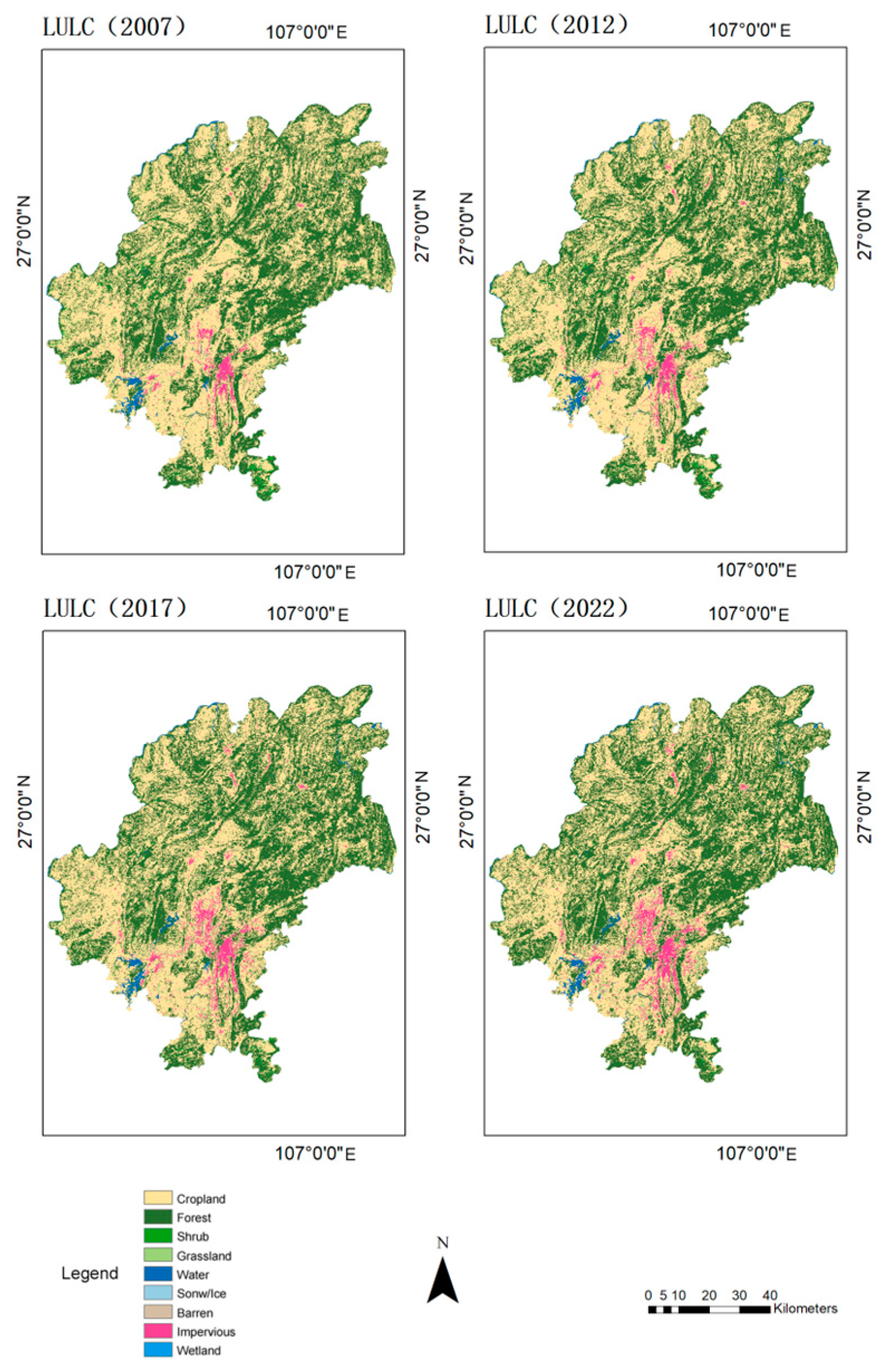
An analysis of land use and land cover (LULC) dynamics in Guiyang from 2007 to 2022 reveals that in 2007, agricultural land occupied the most extensive area, followed by forest and water bodies. Over this fifteen-year period, all land cover types underwent significant transformations (Figure 5). Notably, urban built-up areas exhibited an expansion trend, reflecting rapid urbanization and industrialization. Concurrently, increases in water bodies and vegetation cover were also observed, indicating a reshaping of the landscape pattern during the specified timeframe.
Specifically, the area of agricultural land decreased by approximately 399.46 km2. This significant decline indicates a gradual replacement of agricultural land by other land use types amid urban expansion and industrial development. Although forest cover increased, the magnitude of change was relatively small, suggesting overall stability in forested areas. The sharp reduction in shrubland is associated with land development, climate change, and ecological degradation, which may lead to biodiversity loss and land degradation. Water bodies reached their peak area in 2017 before declining, a trend linked to climate change, water resource management, and natural fluctuations. Meanwhile, bare land area remained relatively unchanged over the 15-year period, reflecting continuity in its utilization and management. The increase in impervious surfaces highlights the expansion of hard paving in the urbanization process. The growth in wetland area aligns with environmental protection policies and natural restoration efforts, contributing positively to water quality improvement, flood risk reduction, and biodiversity conservation.
As shown in Figure 5, during the fifteen-year period from 2007 to 2022, the expansion of urban built-up areas was particularly pronounced in Guiyang’s main urban districts (including Nanming District, Yunyan District, Wudang District, and Huaxi District) as well as the emerging Guanshanhu District. This clearly indicates a significant acceleration of urbanization during this period. The urbanization trend further extended to surrounding areas such as Qingzhen City and the Guiyang New Area, revealing a relatively concentrated distribution pattern of urbanization across the study area. Secondary urbanized areas, in contrast, exhibited a more dispersed layout. Overall, the urbanization trend within Guiyang’s administrative area is highly evident. It is particularly noteworthy that despite the rapid and large-scale urbanization of Guiyang during this period, the city’s location in the southeastern part of the Qianzhong Plateau, characterized by typical karst mountainous terrain, has significantly constrained the scale of urban expansion. Urban built-up areas are primarily distributed in flat basins adjacent to mountains, a topographic feature that greatly limits the potential for urban sprawl. Consequently, the development of urban built-up areas has been largely restricted by terrain conditions. This necessitates that urban planners consider geographical constraints and adopt more refined and sustainable urban development strategies when promoting urbanization (Figure 6).
In 2007, extensive distributions of farmland and forests were clearly observed in Guiyang’s main urban districts, such as Nanming, Yunyan, Wudang, and Huaxi. However, between 2007 and 2022, farmland area significantly decreased in Nanming and Yunyan districts, while forest coverage increased in Guanshanhu District and Qingzhen City. The reduction in farmland in Nanming and Yunyan may be attributed to intensified urbanization, urban expansion, and the conversion of agricultural land to urban construction uses during the study period. Conversely, the increase in forest coverage in Guanshanhu District and Qingzhen City suggests that these areas may have benefited from more effective forest conservation measures and potentially possess ecological conditions more conducive to forest growth. The reduction in shrubland across various districts in Guiyang may be linked to land development and utilization driven by urbanization. The slight decrease in water bodies could be associated with the reallocation and utilization of water resources amid urban development. The increase in bare land is likely related to construction activities during urbanization, such as building sites and undeveloped land. The rise in impervious surfaces is particularly evident in core urban areas like Nanming and Yunyan districts, potentially resulting from the expansion of urban infrastructure, road networks, and increased building construction. These changes highlight the significant impact of urbanization on land cover, especially in city centers. Scattered patches of farmland and shrubland in areas such as Wudang and Huaxi districts underscore the subtle and localized influences of environmental dynamics and land use policies on Guiyang’s overall land cover. These shifts necessitate that urban planners integrate ecological conservation and sustainable land resource management into the urbanization process.
Table 6 clearly illustrates the changes in various land use types, showing the shifts in the spatial extent of land use and land cover (LULC) categories in Guiyang. During the period from 2007 to 2022, forest area generally exhibited a growing trend. Initially recorded at 3550.81 km2, it increased to 3617.85 km2 by 2012, a rise of 67.04 km2. This upward trend continued in the following years, with an accelerated growth rate: reaching 3687.39 km2 in 2017 and further expanding to 3872.5 km2 by 2022, an increase of 185.11 km2. Agricultural land area showed a declining trend from 2007 to 2022. Initially recorded at 4042.61 km2, it decreased to 3954.7 km2 by 2012 and further declined to 3819.62 km2 in 2017. Finally, by 2022, it dropped to 3643.15 km2. Shrubland area decreased sharply during this period, from 187.67 km2 in 2007 to 42.12 km2 in 2022, reflecting the impact of urbanization and land development on shrubland. The grassland area was 55.96 km2 in 2007, increased to 84.8 km2 in 2012, and reached 126.34 km2 in 2017, but slightly decreased to 124.92 km2 by 2022, showing a fluctuating trend of initial increase followed by a slight decline. Water body area was 73.86 km2 in 2007, increased to 78.42 km2 in 2012, reached 79.81 km2 in 2017, and slightly decreased to 76.59 km2 by 2022, indicating minor fluctuations. Bare land area increased from 0.1 km2 in 2007 to 1.78 km2 in 2022, showing a significant growth trend, likely associated with construction activities during urbanization. Impervious surface area expanded from 122.41 km2 in 2007 to 272.36 km2 in 2022, which may be linked to the increase in roads, buildings, and other hard surfaces during the urbanization process.
Table 7 shows the changes in LULC types in Guiyang from 2007 to 2022. During this period, Guiyang witnessed significant land cover transformations. Cultivated land decreased by 399.46 km2, while shrubland declined by 145.55 km2. In contrast, forest cover increased significantly by 321.69 km2, built-up areas expanded by 149.95 km2, grassland increased by 68.96 km2, water bodies saw a slight rise of 2.73 km2, and bare land achieved a breakthrough growth of 1.68 km2

3.2. Simulation and Analysis of Future LULC Patterns

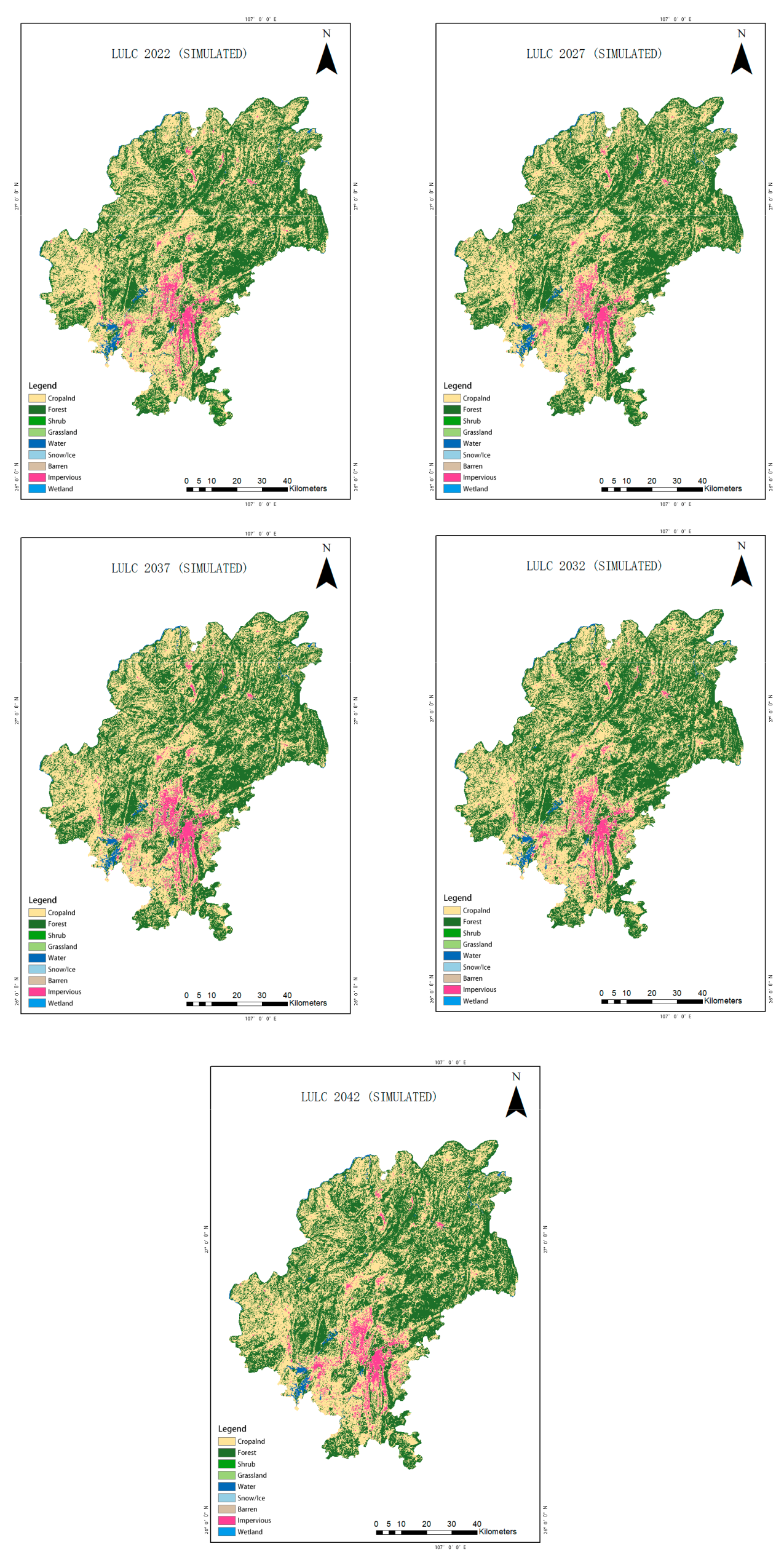
To complete the LULC prediction/simulation for Guiyang City, a two-phase approach was adopted: Initially, the LULC for 2022 was simulated using the conditioning parameters from 2019. Subsequently, the LULC for 2027, 2032, 2037, and 2042 were simulated using the conditioning parameters from 2022 (Figure 7). Analysis of the simulated map for 2022 reveals a significant transformation in the land use structure during the period from 2007 to 2022. Specifically, the area of agricultural land showed a continuous decline, while forest and grassland areas expanded, leading to an overall increase in ecological land use. The substantial reduction in shrubland reflects a notable shift in land use patterns. Although the water body area exhibited a slight overall increase, it declined in the most recent monitoring period, which may be closely related to climate change and adjustments in land use strategies. The notable increase in bare land area suggests accelerated land development activities and urbanization. Particularly striking is the significant expansion of impervious surfaces, which clearly indicates rapid urbanization and the development of supporting infrastructure during the study period. It is worth noting that Table 8 presents the projected LULC analysis for 2027, 2032, 2037, and 2042. According to the predictive analysis of land use and land cover (LULC) for different years in the table, the regional land use pattern shows a dynamic evolutionary trend compared to 2022. In terms of agricultural land, its area fluctuated from 3643.15 km2 in 2022 to 3689.77 km2 in 2042, with its proportion in the overall land use structure varying from 45.35% to 45.87%. Regarding ecological land, forest cover increased slightly from 3872.5 km2 to 3876.21 km2, with its share remaining largely stable at around 48.2%. In contrast, the shrubland area decreased significantly from 52.12 km2 to 10.75 km2, its proportion dropping sharply from 0.52% to 0.13%. Grassland area declined from 124.92 km2 to 58.48 km2, its share falling from 1.56% to 0.73%. Water body area shrank from 76.59 km2 to 74.22 km2, its proportion decreasing from 0.95% to 0.92%. These changes reflect substantial adjustments within the regional ecosystem structure. For construction land, the area of impervious surfaces expanded from 272.39 km2 to 332.82 km2, with its proportion rising from 3.39% to 4.14%, indicating a clear expansion trend. Subsequent planning should emphasize coordinated layout between construction land and ecological and agricultural land to ensure sustainable development of urban and rural spaces.
The urban expansion and land use changes in Guiyang have exerted significant long-term impacts on urban ecosystem services, directly affecting environmental resilience and residents’ quality of life. One of the primary observed impacts is the increased risk of flooding. As the area of impervious surfaces is projected to grow from 272.39 km2 in 2022 to 332.82 km2 in 2042, rainwater infiltration is reduced while surface runoff increases, thereby elevating the likelihood of urban waterlogging.
Furthermore, the conversion of natural areas and the fragmentation of ecosystems have reduced biodiversity and limited the provision of services such as carbon sequestration, microclimate regulation, and air purification. For instance, the forest area is projected to decrease from 3872.5 km2 in 2022 to 3690.74 km2 in 2027. Although some recovery is expected afterward, fluctuations during this period may impact the habitats of species dependent on forest ecosystems, as well as the capacity of forests to absorb carbon dioxide and regulate local climates.
These land use transformations also affect the ability of soil to provide multiple ecosystem services, such as water and nutrient retention. For example, the shrubland area is projected to decline sharply from 52.12 km2 in 2022 to 10.75 km2 in 2042. This reduction may weaken soil retention capacity, exacerbate soil erosion, and subsequently impact soil fertility and water conservation. Additionally, it could lead to increased greenhouse gas emissions, as reduced vegetation diminishes the absorption of such gases.

3.3. Accuracy Assessment

To further confirm the accuracy of the LULC simulation based on CA-ANN, an accuracy assessment was conducted. Using the 30 m resolution land cover dataset of China provided by the previously mentioned study as the reference data, the assessment of LULC classification accuracy in this study was carried out by means of the Kappa coefficient. In 2022, the overall accuracy was 0.8442, and the Kappa coefficient was 0.73. Mkrtchian & Syidzinska [37] and Rahman et al. [38] conducted two similar CA-ANN-based studies using MOLUSCE, with their overall accuracy and Kappa coefficient being approximately 0.7 and 0.6, respectively. In another study based on Markov-CA, Kamusoko et al. [39] found that the overall simulation success rate ranged from 0.69 to 0.83. After obtaining satisfactory validation results for the CA-ANN, LULC simulations for the years 2027, 2032, 2037, and 2042 were conducted. The CA-ANN model settings remained consistent with those used in the previous simulations. This model was employed to generate LULC maps for 2027, 2032, 2037, and 2042 through multiple iterations.
To assess the temporal consistency and internal stability of the simulation, the 2022 reference map was used to validate the hindcast accuracy of the model. For the future projections, a relative cross-comparison between sequential simulated maps (the 2027 simulated map and the 2032 simulated map) was performed to examine the plausibility and smoothness of the projected transition trends. The simulation results for 2027 showed an overall accuracy of 0.9463, with an overall Kappa of 0.89, a histogram Kappa of 0.92, and a location Kappa of 0.98. For 2032, the simulation yielded an overall accuracy of 0.9531, along with an overall Kappa of 0.90, a histogram Kappa of 0.93, and a location Kappa of 0.98. Evaluations of the classified LULC maps demonstrated consistently high accuracy. These results highlight the stability and reliability of the LULC classification method used throughout the study period.

4. Discussion

SVM separates data of different categories by finding an optimal classification hyperplane; in contrast, RF constructs multiple decision trees and integrates the classification results of these trees to produce the final classification. RF classification offers advantages such as strong capability in handling high-dimensional data, high tolerance to sample errors, and robust performance against missing data, providing a more refined and powerful framework for land cover analysis. The CLCD dataset employed in this study adopts the Random Forest classification method. The overall accuracy of CLCD is stable and satisfactory, with an average OA of 79.30 ± 1.99%. Among all categories, the water category has the highest average F1-score, reaching 87.06 ± 7.07%, and categories such as forest, snow/ice, and bare land also have relatively high F1-scores. In contrast, the accuracy of the simulated LULC exceeds 85%, while the minimum acceptable accuracy threshold for LULC classification derived from satellite data is 70% [32]. Furthermore, in this study, the Cellular Automata-Artificial Neural Network (CA-ANN) model was used as the core tool to predict and simulate future Land Use/Land Cover (LULC) patterns. Compared with other models, the application of the CA-ANN model exhibits significant advantages: it can not only accurately predict the trend of future LULC patterns but also clearly explain the key role and importance of each conditional parameter involved in the prediction process, which provides strong support for an in-depth understanding of the LULC change mechanism. The model has successfully integrated spatial and temporal information to simulate land cover changes. The hindcast validation for 2022 achieved a high overall accuracy of 84.42%, with a Kappa coefficient of 0.73. For future projections, the internal cross-comparison between sequential simulated maps indicated consistent and plausible transition patterns. By deeply integrating various conditional parameters, the model efficiently captures complex spatial patterns and provides highly valuable insights for future land use scenarios. Although this study adopts a reliable methodology and yields significant findings, several limitations must be acknowledged to properly frame the interpretation of its outputs for decision-makers. First, the CA-ANN model may have uncertainties arising from differences in the calibration process and the quality of multi-source input data. Second, and more fundamentally, factors that directly influence urban development dynamics—such as institutional frameworks, political priorities, and social preferences—are difficult to parameterize and are not captured by the model. Consequently, the simulation results should be interpreted as plausible projections under a given set of biophysical and socioeconomic drivers, rather than as deterministic forecasts. They are best used as a scenario-based tool to explore potential land-use trajectories and inform strategic planning, not as absolute predictions. This perspective is essential for ensuring that the findings support adaptive and evidence-informed governance. The model requires the support of high-quality multi-source data (e.g., high-resolution remote sensing images, socioeconomic statistics). The predictions are based on the assumption that the “driving relationships remain unchanged,” such as the assumption that driving factors like road networks do not change during the forecast period. At the same time, the model results inherit the accuracy errors inherent in the base land cover classification data (CLCD), as well as minor spatial uncertainties introduced during preprocessing steps such as resampling. However, in practice, the accuracy of land use classification and the spatiotemporal continuity of key parameter variables are often limited by data acquisition capabilities. A core assumption of the CA-ANN model is that “local rules dominate spatiotemporal evolution.” Nevertheless, in actual land use systems, differences in driving mechanisms between regions (e.g., policy-oriented vs. market-driven urban expansion) often require dynamic adjustment of neighborhood rules or the introduction of heterogeneous weights. The effectiveness of the model is highly dependent on sufficient historical data and a clear definition of neighborhood rules. Biases in sample selection may distort the model’s training and validation datasets, leading to limited generalization ability and thereby further complicating predictions [40].
To address these challenges, future research should focus on continuously optimizing the coordination among data, models, and scenarios. It is recommended to adopt multi-source data fusion technology to alleviate the accuracy constraints of single data sources. This approach integrates data such as demographic statistics, surface structures, topographic features, and socio-economic statistical data to build a dynamic parameter database, thereby enabling detailed simulations of urban growth, social impacts, and physical constraints. Furthermore, integrating stakeholders’ knowledge and experts’ opinions to develop a human–machine collaborative decision support system is also of great importance. This system allows planners to adjust parameters such as neighborhood weights and target areas based on professional experience, enhancing model validation and relevance to real-world conditions—balancing scientific rigor with management needs. Meanwhile, introducing high-precision remote sensing image interpretation and machine learning classification algorithms is essential. Examples of other integrable machine learning technologies include Maximum Likelihood Classification (MLC), Support Vector Machine (SVM), Decision Tree (DT), and Deep Learning (DL) models. These methods hold advantages in handling multi-class classification tasks, high-precision data, and data with non-linear relationships. More importantly, they can be combined with other technologies, which may improve the accuracy and robustness of prediction models.
The research on future simulation results of Land Use and Land Cover (LULC) changes in Guiyang by 2032 holds significant policy relevance, providing key decision-making basis for territorial spatial planning and ecological governance. The simulated scale of construction land expansion, spatial differentiation, and dynamic change trends of cultivated land offer quantitative support for urban carbon control and balancing the demands of urban development with ecological resilience constraints.
The research findings can directly guide the dynamic calibration of the Guiyang Territorial Spatial Master Plan (2021–2035). By delineating ecological protection red lines and optimizing the spatial intensive development model, the dual goals of enhancing carbon sequestration capacity and protecting biodiversity can be achieved. Additionally, the simulation results reveal the correlation between the reduction in cultivated land and the inefficient expansion of construction land, providing a scientific basis for formulating differentiated land consolidation policies, dynamic floor area ratio adjustment mechanisms, and ecological compensation systems.
Moreover, this study indicates that future land-use dynamics may pose challenges associated with climatic factors, such as flood risks. The projected increase in impervious surfaces and decrease in natural cover are likely to exacerbate surface runoff, reduce rainwater infiltration, and thereby elevate urban vulnerability during extreme precipitation events. This potential threat provides valuable decision-making insights for Guiyang in advancing sponge city development, enhancing flood disaster risk prevention and control, and improving integrated water resource management.
These findings not only strengthen the territorial spatial governance framework centered on “ecological priority, intensification, and efficiency” but also provide practical pathways for maintaining regional ecosystem services (such as water regulation and carbon sink supply) and promoting the sustainable use of agricultural land. Ultimately, they contribute to aligning Guiyang’s goal of building a “mountainous ecological city with distinctive features” with the localization of the United Nations Sustainable Development Agenda.

5. Conclusions

By leveraging the MOLUSCE plugin in QGIS, this study integrated conditioning parameters with a hybrid CA-ANN model, demonstrating excellent predictive performance in simulating Land Use and Land Cover (LULC) changes in Guiyang (with an overall accuracy of 84.42% and k > 0.73). Through predicting land use scenarios for the years 2027, 2032, 2037, and 2042, this study expanded the time scales that were rarely covered in previous research on Guiyang, providing a quantitative basis for the city’s land planning. Furthermore, the study highlighted the practicality of open-source software and datasets in LULC prediction, offering feasible recommendations for formulating policies aimed at enhancing urban resilience and environmental protection.
As can be seen from the uploaded data, the areas of different land use types vary across different predicted years. For instance, the area of farmland will fluctuate to a certain extent between 2022 and 2042: it is projected to increase in 2027 compared to 2022, followed by a downward trend thereafter; the area of forests will remain relatively stable, with little variation across the predicted years; while the area of shrubs will show a distinct downward trend.
The research findings reveal the complex interaction between urban development and environmental protection in Guiyang. Predictions indicate that the city’s urban construction land (such as impervious surfaces) is expected to expand significantly. Meanwhile, the area of some ecological land, including shrubs and grasslands, will decrease notably, whereas the area of water bodies will remain relatively stable. However, urban expansion and the increased degree of land hardening (e.g., the growth of impervious surfaces) will raise Guiyang’s risk of encountering disasters such as floods and landslides, underscoring the urgency of implementing mitigation measures. Initiatives such as ecological restoration, sustainable agricultural management, and the construction of green infrastructure are crucial for alleviating these negative impacts and ensuring more balanced and sustainable development in Guiyang. To address these challenges, Guiyang must revise the Land Use and Land Cover Law to ensure the protection of green spaces, the maintenance of environmental buffer zones, and the effective regulation of urban expansion, thereby preventing the development and utilization of high-risk areas. Additionally, nature-based solutions such as green infrastructure and sustainable urban drainage systems should be incorporated. Monitoring land hardening is also critical, as it exacerbates surface runoff and flood risks. Implementing stricter regulations and providing incentives for sustainable practices like rain gardens and permeable pavements are indispensable for minimizing these risks.
Against this backdrop, it is imperative to formulate public policies that balance economic development and environmental protection. In this regard, this study provides highly valuable references for Guiyang in formulating public policies, strengthening land management, promoting the resilient development of the city, enhancing adaptability, and achieving environmentally sustainable urban development.
The findings of this study provide preliminary, spatially explicit quantitative insights that could inform policy formulation. It should be noted that the model predictions, including the projected expansion of impervious surfaces to 332.82 km2 by 2042 (as shown in Table 7), are based on current trends and assumed driving factors, and are subject to uncertainties inherent in the modeling process. Nevertheless, this trend highlights a potential scenario that underscores the potential necessity of considering nature-based solutions—such as exploring the integration of mandatory green infrastructure and sustainable urban drainage systems—into new development projects to mitigate the possible increase in surface runoff. For example, in Beijing, the impervious surface area increased from 51.49% to 62.75% between 1984 and 2019, resulting in a rise in surface runoff depth by 12.66–7.7 mm and an increase in the runoff coefficient by 0.06–0.03 [41]. Similarly, the model projects a potential substantial reduction in shrubland area to 10.75 km2, which serves as an early warning, suggesting the urgency of evaluating and potentially revising conservation regulations to protect remaining ecological buffer zones and prevent further habitat fragmentation. The reduction in shrubland not only affects individual species but also disrupts the connectivity of entire ecosystems. As critical ecological transition zones, shrublands play a key role in maintaining ecological stability. The degradation of these areas impedes the exchange and flow of ecological elements, ultimately impacting the functionality of broader ecological protection zones [42]. These model-derived insights can enable policymakers to move beyond general planning principles and consider implementing targeted measures to address the specific land-use pressures suggested by the simulation. However, these recommendations should be viewed as exploratory, and their implementation requires further scenario analysis, robust uncertainty assessment, and validation through stakeholder engagement.
Overall, this study demonstrates the utility of open-source tools for exploratory LULC change modeling and extends the temporal perspective for Guiyang. The predictions offer a quantitative, scenario-based glimpse into possible future trajectories under current trends, thereby identifying critical areas of concern—such as unchecked urban expansion and ecological land loss—that warrant proactive attention in land-use planning dialogues. To translate these insights into concrete policy, future work should focus on developing multiple scenarios reflecting different policy interventions, quantifying prediction uncertainties, and integrating local stakeholder knowledge. Against this backdrop, the findings contribute to the informational foundation for formulating public policies that seek to balance economic development and environmental protection. In this regard, this study provides valuable scientific references and a discussion basis for Guiyang in reviewing its land management strategies, fostering discussions on urban resilience, and navigating towards more sustainable urban development pathways.

Author Contributions

Conceptualization, L.H.; methodology, L.H.; software, L.H.; validation, L.H.; formal analysis, L.H.; investigation, L.H.; resources, L.H.; data curation, L.H.; writing—original draft preparation, L.H.; writing—review and editing, L.H.; visualization, L.H.; supervision, J.L.; project administration, X.D. and J.L.; funding acquisition, X.D. and J.L. All authors have read and agreed to the published version of the manuscript.

Funding

Practical Research on the Integration Path of Yangming Culture Transformation and Application in Guizhou Rural Revitalization and Study Tour (Project No.: 2023GCC035). Civil Engineering Guizhou Province Science and Technology Innovation Leading Talent Workstation (Qiankehe Platform KXJZ[2024]020). National Natural Science Foundation of China (Grant No. 42461057). Guizhou Provincial Science and Technology Plan Project (Grant No. Qian Kehe support PA[2025]001). China Postdoctoral Science Foundation (No. 2025MD784075). Guizhou Provincial Science and Technology Plan Project (Grant No. Qian Kehe support XKBF[2025]016). Guizhou Provincial Basic Research Program (Natural Science) (Grant No. [2024] 130).

Institutional Review Board Statement

Not applicable.

Informed Consent Statement

Not applicable.

Data Availability Statement

The data will be made available on request.

Conflicts of Interest

The authors declare no conflict of interest.

References

  1. Shimrah, T.; Lungleng, P.; Devi, A.R.; Sarma, K.; Varah, F.; Khuman, Y.S. Spatio-temporal assessment on land use and land cover (LULC) and forest fragmentation in shifting agroecosystem landscape in Ukhrul district of Manipur, Northeast India. Environ. Monit. Assess. 2022, 194, 14. [Google Scholar] [CrossRef]
  2. Hussain, S.; Mubeen, M.; Karuppannan, S. Land use and land cover (LULC) change analysis using TM, ETM+ and OLI Landsat images in district of Okara, Punjab, Pakistan. Phys. Chem. Earth Parts A/B/C 2022, 126, 103117. [Google Scholar] [CrossRef]
  3. Yomo, M.; Yalo, E.N.; Gnazou, M.D.T.; Silliman, S.; Larbi, I.; Mourad, K.A. Forecasting land use and land cover dynamics using combined remote sensing, machine learning algorithm and local perception in the Agoènyivé Plateau, Togo. Remote Sens. Appl. Soc. Environ. 2023, 30, 100928. [Google Scholar] [CrossRef]
  4. Zhang, Y.; Sun, J.; Lu, Y.; Shu, Z. Grassland changes and the role of elevation: A global perspective. Glob. Ecol. Conserv. 2025, 57, e03391. [Google Scholar] [CrossRef]
  5. He, Y.; Liu, X.; Wu, D.; Li, S.; Zhou, P. Ecological Risks and Patterns Associated with Land Use/Cover Changes Along the Belt and Road Initiative Routes. Land Degrad. Dev. 2025, 36, 2075–2094. [Google Scholar] [CrossRef]
  6. Nedd, R.; Light, K.; Owens, M.; James, N.; Johnson, E.; Anandhi, A. A Synthesis of Land Use/Land Cover Studies: Definitions, Classification Systems, Meta-Studies, Challenges and Knowledge Gaps on a Global Landscape. Land 2021, 10, 994. [Google Scholar] [CrossRef]
  7. Roman-Cuesta, R.M.; Elzen, M.D.; Araujo-Gutierrez, Z.; Forsell, N.; Lamb, W.F.; McGlynn, E.; Melo, J.; Rossi, S.; Meinshausen, M.; Federici, S.; et al. Land remains a blind spot in tracking progress under the Paris Agreement due to lack of data comparability. Commun. Earth Environ. 2025, 6, 598. [Google Scholar] [CrossRef]
  8. Qiu, L.; Xue, Q.; Wu, Y.; Zhang, X.; Alexandrov, G.; Wang, Y.; Yang, K.; Zhao, F.; Yin, X. Responses of precipitation and water vapor budget on the Chinese Loess Plateau to global land cover change forcing. J. Environ. Manag. 2024, 365, 121588. [Google Scholar] [CrossRef]
  9. Barati, A.A.; Zhoolideh, M.; Azadi, H.; Lee, J.H.; Scheffran, J. Interactions of land-use cover and climate change at global level: How to mitigate the environmental risks and warming effects. Ecol. Indic. 2023, 146, 109829. [Google Scholar] [CrossRef]
  10. Khalid, W.; Shamim, S.K.; Ahmad, A. Synergistic approach for land use and land cover dynamics prediction in Uttarakhand using cellular automata and Artificial neural network. Geomatica 2024, 76, 100017. [Google Scholar] [CrossRef]
  11. Mishra, K.; Tiwari, H.L.; Poonia, V. An integrated approach of machine learning methods coupled with cellular automation for monitoring and forecasting of land use and land cover. J. Arid. Environ. 2025, 226, 105293. [Google Scholar] [CrossRef]
  12. Mahar, G.; Ahmed, R.; Iqbal, M. Temporal change assessment of agricultural land by Satellite Remote Sensing (SRS) technique. Nat. Sci. 2013, 5, 689–694. [Google Scholar] [CrossRef]
  13. Al-Taei, A.I.; Alesheikh, A.A.; Boloorani, A.D. Land Use/Land Cover Change Analysis Using Multi-Temporal Remote Sensing Data: A Case Study of Tigris and Euphrates Rivers Basin. Land 2023, 12, 1101. [Google Scholar] [CrossRef]
  14. Matyukira, C.; Mhangara, P. Land Cover and Landscape Structural Changes Using Extreme Gradient Boosting Random Forest and Fragmentation Analysis. Remote Sens. 2023, 15, 5520. [Google Scholar] [CrossRef]
  15. Georganos, S.; Grippa, T.; Vanhuysse, S.; Lennert, M.; Shimoni, M.; Wolff, E. Very High Resolution Object-Based Land Use–Land Cover Urban Classification Using Extreme Gradient Boosting. IEEE Geosci. Remote Sens. Lett. 2018, 15, 607–611. [Google Scholar] [CrossRef]
  16. Tikuye, B.G.; Rusnak, M.; Manjunatha, B.R.; Jose, J. Land Use and Land Cover Change Detection Using the Random Forest Approach: The Case of the Upper Blue Nile River Basin, Ethiopia. Glob. Chall. 2023, 7, 2300155. [Google Scholar] [CrossRef]
  17. Tempa, K.; Ilunga, M.; Agarwal, A.; Tashi. Utilizing Sentinel-2 Satellite Imagery for LULC and NDVI Change Dynamics for Gelephu, Bhutan. Appl. Sci. 2024, 14, 1578. [Google Scholar] [CrossRef]
  18. Singh, S.K.; Mustak, S.; Srivastava, P.K.; Szabó, S.; Islam, T. Predicting Spatial and Decadal LULC Changes Through Cellular Automata Markov Chain Models Using Earth Observation Datasets and Geo-information. Environ. Process. 2015, 2, 61–78. [Google Scholar] [CrossRef]
  19. Abdullah, A.Y.M.; Masrur, A.; Adnan, M.S.G.; Baky, M.A.A.; Hassan, Q.K.; Dewan, A. Spatio-Temporal Patterns of Land Use/Land Cover Change in the Heterogeneous Coastal Region of Bangladesh between 1990 and 2017. Remote Sens. 2019, 11, 790. [Google Scholar] [CrossRef]
  20. Adnan, M.S.G.; Abdullah, A.Y.M.; Dewan, A. The effects of changing land use and flood hazard on poverty in coastal Bangladesh. Land Use Policy 2020, 99, 104868. [Google Scholar] [CrossRef]
  21. Panda, L.K.C.; Singh, R.M.; Singh, S.K. Advanced CMD predictor screening approach coupled with cellular automata-artificial neural network algorithm for efficient land use-land cover change prediction. J. Clean. Prod. 2024, 449, 141822. [Google Scholar] [CrossRef]
  22. Lin, Z.; Peng, S.; Ma, D.; Shi, S.; Zhu, Z.; Zhu, J.; Gong, L.; Huang, B. Patterns of change, driving forces and future simulation of LULC in the Fuxian Lake Basin based on the IM-RF-Markov-PLUS framework. Sustain. Futures 2024, 8, 100289. [Google Scholar] [CrossRef]
  23. Mahendra, H.N.; Pushpalatha, V.; Mallikarjunaswamy, S.; Subramoniam, S.R.; Rao, A.S.; Sharmila, N. LULC change detection analysis of Chamarajanagar district, Karnataka state, India using CNN-based deep learning method. Adv. Space Res. 2024, 74, 6384–6408. [Google Scholar] [CrossRef]
  24. Xiong, J.; Yue, W.; Xia, H.; Wang, T.; Liu, Y.; Pijanowski, B.C. Will China’s territorial spatial planning policies enhance land use sustainability? An integrated assessment under global environmental change. Resour. Environ. Sustain. 2025, 21, 100228. [Google Scholar] [CrossRef]
  25. Agapie, A.; Andreica, A.; Giuclea, M. Probabilistic cellular automata. J. Comput. Biol. 2014, 21, 699–708. [Google Scholar] [CrossRef]
  26. Liao, J.F.; Tang, L.N.; Wang, C.P.; Xu, T. Measuring and calibrating extended neighborhood effect of urban cellular automata model based on particle swarm optimization. Prog. Geogr. 2014, 33, 1624–1633. [Google Scholar]
  27. Liu, Y.; Batty, M.; Wang, S.; Corcoran, J. Modelling urban change with cellular automata: Contemporary issues and future research directions. Prog. Hum. Geogr. 2021, 45, 3–24. [Google Scholar] [CrossRef]
  28. Rumelhart, D.; Hinton, G.; Williams, R. Learning representations by back-propagating errors. Nature 1986, 323, 533–536. [Google Scholar] [CrossRef]
  29. Sugishita, N.; Kinjo, K.; Ohkubo, J. Extraction of nonlinearity in neural networks with Koopman operator. J. Stat. Mech. 2024, 2024, 073401. [Google Scholar] [CrossRef]
  30. Dhamge, N.R.; Atmapoojya, S.L.; Kadu, M.S. Genetic Algorithm Driven ANN Model for Runoff Estimation. Procedia Technol. 2012, 6, 501–508. [Google Scholar] [CrossRef]
  31. Gharaibeh, A.; Shaamala, A.; Obeidat, R.; Al-Kofahi, S. Improving land-use change modeling by integrating ANN with Cellular Automata-Markov Chain model. Heliyon 2020, 6, e05092. [Google Scholar] [CrossRef]
  32. Yang, J.; Huang, X. The 30 m annual land cover dataset and its dynamics in China from 1990 to 2019. Earth Syst. Sci. Data 2021, 13, 3907–3925. [Google Scholar] [CrossRef]
  33. Gao, C.; Cheng, D.; Iqbal, J.; Yao, S. Spatiotemporal Change Analysis and Prediction of the Great Yellow River Region (GYRR) Land Cover and the Relationship Analysis with Mountain Hazards. Land 2023, 12, 340. [Google Scholar] [CrossRef]
  34. Mas, J.F.; Kolb, M.; Paegelow, M.; Olmedo, M.T.C.; Houet, T. Inductive pattern-based land use/cover change models: A comparison of four software packages. Environ. Model. Softw. 2014, 51, 94–111. [Google Scholar] [CrossRef]
  35. Pijanowski, B.C.; Brown, D.G.; Shellito, B.A.; Manik, G.A. Using neural networks and GIS to forecast land use changes: A Land Transformation Model. Comput. Environ. Urban Syst. 2002, 26, 553–575. [Google Scholar] [CrossRef]
  36. Baig, M.F.; Mustafa, M.R.U.; Baig, I.; Takaijudin, H.B.; Zeshan, M.T. Assessment of Land Use Land Cover Changes and Future Predictions Using CA-ANN Simulation for Selangor, Malaysia. Water 2022, 14, 402. [Google Scholar] [CrossRef]
  37. Mkrtchian, A.; Svidzinska, D. Quantifying landscape changes through land cover transition potential analysis and modeling (on the example of the Black Tisza river basin). In Proceedings of the 17th International Symposium on Landscape Ecology, Nitra, Slovakia, 27–29 May 2015. [Google Scholar]
  38. Rahman, M.T.U.; Tabassum, F.; Rasheduzzaman, M.; Saba, H.; Sarkar, L.; Ferdous, J.; Uddin, S.Z.; Islam, A.Z.M.Z. Temporal dynamics of land use/land cover change and its prediction using CA-ANN model for southwestern coastal Bangladesh. Environ. Monit. Assess. 2017, 189, 565. [Google Scholar] [CrossRef] [PubMed]
  39. Kamusoko, C.; Aniya, M.; Adi, B.; Manjoro, M. Rural sustainability under threat in Zimbabwe—Simulation of future land use/cover changes in the Bindura district based on the Markov-cellular automata model. Appl. Geogr. 2009, 29, 435–447. [Google Scholar] [CrossRef]
  40. Tsotsos, J.; Luo, J. Probing the Effect of Selection Bias on Generalization: A Thought Experiment. Res. Sq. 2021. preprints. [Google Scholar] [CrossRef]
  41. Hu, S.; Fan, Y.; Zhang, T. Assessing the Effect of Land Use Change on Surface Runoff in a Rapidly Urbanized City: A Case Study of the Central Area of Beijing. Land 2020, 9, 17. [Google Scholar] [CrossRef]
  42. Miao, P.; Li, C.; Xia, B.; Zhao, X.; Wu, Y.; Zhang, C.; Wu, J.; Cheng, F.; Pu, J.; Huang, P.; et al. Incorporating Ecosystem Service Trade-Offs and Synergies with Ecological Sensitivity to Delineate Ecological Functional Zones: A Case Study in the Sichuan-Yunnan Ecological Buffer Area, China. Land 2024, 13, 1503. [Google Scholar] [CrossRef]
Figure 1. Location of the study area.
Sustainability 18 01518 g001
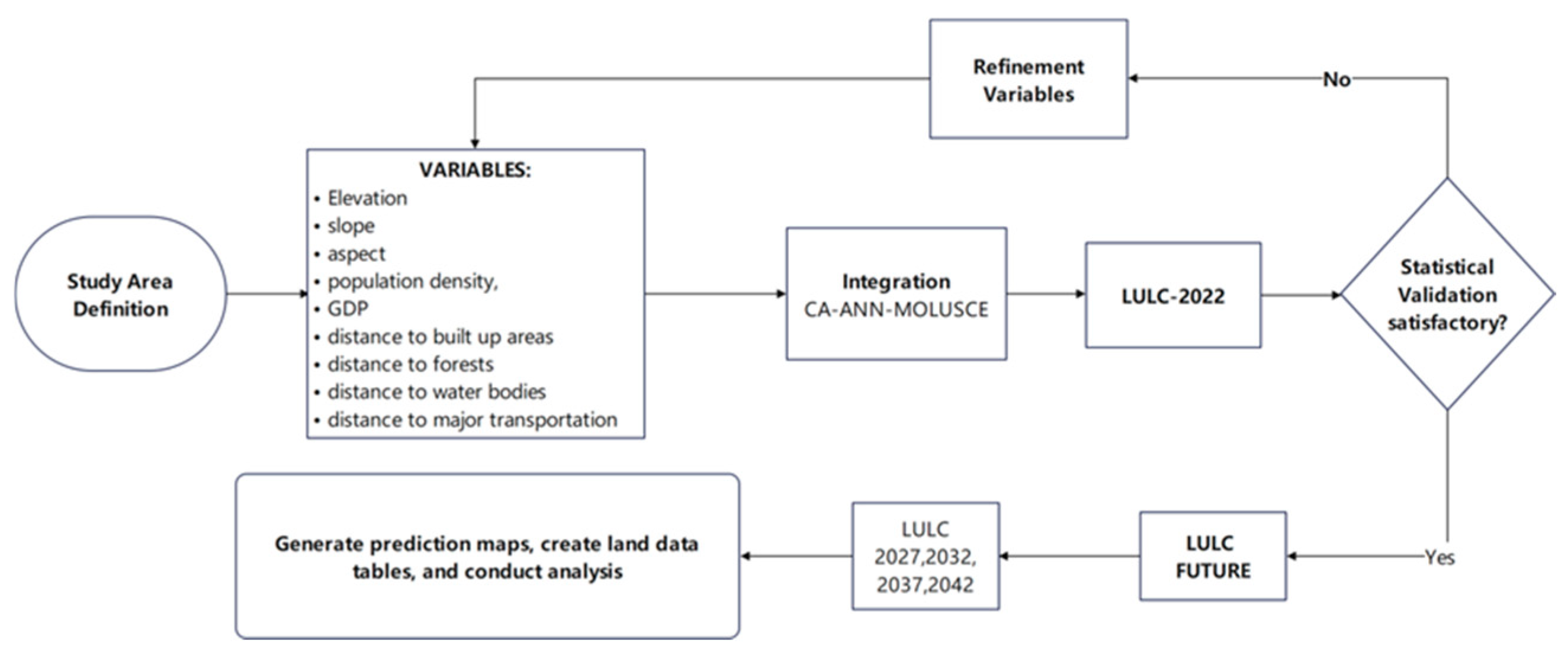
Figure 2. Flowchart of the methodology.
Sustainability 18 01518 g002
Figure 3. Conditional Parameters for LULC Simulation: Conditional Parameters for LULC Simulation (1) Elevation; (2) Slope; (3) Aspect; (4) Distance to Built-up Areas (2017); (5) Distance to Built-up Areas (2022); (6) Distance to Forests (2017); (7) Distance to Forests (2022); (8) Distance to Water Bodies (2017); (9) Distance to Water Bodies (2022); (10) Distance to Transportation Network (2015); (11) Distance to Transportation Network (2019); (12) GDP (2015); (13) GDP (2019); (14) Population (2015); (15) Population (2019).
Sustainability 18 01518 g003
Figure 4. Constructed Artificial Neural Network Model for LULC Simulation.
Sustainability 18 01518 g004
Figure 5. Comparison of results under different parameters.
Sustainability 18 01518 g005
Figure 6. LULC patterns in Guiyang City for the years 2007, 2012, 2017, and 2022.
Sustainability 18 01518 g006
Figure 7. Simulated LULC patterns in Guiyang for the years 2022, 2027, 2032, 2037, and 2042.
Sustainability 18 01518 g007
Table 1. Land Use Datasets Used.
S.No.CriteriaSourceYear
1LULChttps://zenodo.org/records/12779975 (accessed on 1 May 2025)2007
2LULChttps://zenodo.org/records/12779975 (accessed on 1 May 2025)2012
3LULChttps://zenodo.org/records/12779975 (accessed on 1 May 2025)2017
4LULChttps://zenodo.org/records/12779975 (accessed on 1 May 2025)2022
Table 2. Detailed Information of the Datasets Used.
DataCriteriaLULC
Simulation
DescriptionSourceYear
DEMElevationConditioning
Parameters
ASTERM DEMhttps://www.gscloud.cn (accessed on 1 May 2025)2013
SlopeConditioning
Parameters
ASTERM DEM
AspectConditioning
Parameters
ASTERM DEM
LULCDistance from built-up areaConditioning
Parameters
LULChttps://zenodo.org/records/12779975 (accessed on 1 May 2025)2007, 2012,
2017, 2022
Distance from forestConditioning
Parameters
LULC2007, 2012,
2017, 2022
Distance from water bodiesConditioning ParametersLULC2007, 2012,
2017, 2022
Transport NetworkDistance from Transport NetworkConditioning
Parameters
Major and Minor roadshttps://www.openstreetmap.cn (accessed on 1 May 2025)2009, 2014,
2019, 2024
PopulationPopulationConditioning
Parameters
Grid-wise Population datahttp://www.resdc.cn (accessed on 1 May 2025)2005, 2010,
2015, 2019
GDPGDPConditioning
Parameters
Grid-wise GDP datahttp://www.resdc.cn (accessed on 1 May 2025)2005, 2010,
2015, 2019
State shape fileState boundaryConditioning
Parameters
State boundary of GUIYANGhttps://www.ngcc.cn (accessed on 1 May 2025)2017
Table 3. Comparison of the three methods.
ModelOverall Accuracy (%)Kappa CoefficientNote
Logistic Regression (LR)78.50.68Preliminary test on 2017–2022 data
Weight of Evidence (WoE)80.10.71Preliminary test on 2017–2022 data
Multi-Criteria Evaluation (MCE)79.30.69Preliminary test on 2017–2022 data
Artificial Neural Network (ANN)84.40.73Preliminary test on 2017–2022 data
Table 4. Correlation among Conditioning Parameters.
Parameter (m)Dist_to_Water_2017 (m)Dist_to_Forest_2017 (m)Dist_to_Built_2017 (m)ElevationAspectSlopeGDP_2015 (10 k CNY/km2)Dist_to_Road_2019 (m)Population_2015 (Persons/km2)
Dist_to_Water_2017 (m)1.000−0.1680.2520.131−0.0030.064−0.090−0.013−0.040
Dist_to_Forest_2017 (m)−0.1681.000−0.3430.002−0.023−0.2970.185−0.0210.188
Dist_to_Built_2017 (m)0.252−0.3431.000−0.085−0.0080.235−0.1860.450−0.184
Elevation (m)0.1310.002−0.0851.0000.006−0.106−0.028−0.188−0.029
Aspect−0.003−0.023−0.0080.0061.0000.0290.004−0.0020.005
Slope 0.064−0.2970.235−0.1060.0291.000−0.0520.189−0.031
GDP_2015 (10 k CNY/km2)−0.0900.185−0.186−0.0280.004−0.0521.000−0.1640.997
Dist_to_Road_2019 (m)−0.013−0.0210.450−0.188−0.0020.189−0.1641.000−0.145
Population_2015 (persons/km2)−0.0400.188−0.184−0.0290.005−0.0310.997−0.1451.000
Table 5. Land Type Transition Matrix.
No.1234567
10.8625654980.0935168240.0047444980.0192113230.0011504990.0000917390.018719618
20.0887816340.9037934230.0044640210.0014399110.001054060.0000002490.000466702
30.3333957610.3095105910.3458968480.0105011810.00008695200.000046821
40.3185747660.0462404420.0119796090.4846644010.0064995750.0025488530.129492353
50.0399030960.0321461020.0003494140.0058585110.9152903630.0000582360.006394279
60.0908039220.00980392200.3431372550.0098039220.2941176470.245098039
70.0800536040.001247870.0000108510.0133522140.0012370190.0000705320.904027909
Table 6. The Areal Extent of LULC Types in Guiyang from 2007 to 2022.
2007201220172022
LULCArea (km2)Area (%)Area (km2)Area (%)Area (km2)Area (%)Area (km2)Area (%)
Cropland4042.6150.32%3954.749.23%3819.6247.55%3643.1545.35%
Forest3550.8144.20%3617.8545.03%3687.3945.90%3872.548.20%
Shrub187.672.34%134.681.68%82.491.03%42.120.52%
Grassland55.960.70%84.81.06%126.341.57%124.921.56%
Water73.860.92%78.420.98%79.810.99%76.590.95%
Barren0.10.00%0.090.00%0.620.01%1.780.02%
Impervious122.411.52%162.882.03%237.152.95%272.363.39%
Table 7. Changes in the Areal Extent of LULC Types in Guiyang from 2007 to 2022.
2007–20122012–20172017–20222007–2022
LULCArea Changes (km2)Area Changes (%)Area Changes (km2)Area Changes (%)Area Changes (km2)Area Changes (%)Area Changes (km2)Area Changes (%)
Cropland−87.91−2.17%−135.08−3.42%−176.47−4.62%−399.46−9.88%
Forest67.041.89%69.541.92%185.115.02%321.699.06%
Shrub−52.99−28.24%−52.19−38.75%−40.37−48.94%−145.55−77.56%
Grassland28.8451.54%41.5448.99%−1.42−1.12%68.96123.23%
Water4.566.17%1.391.77%−3.22−4.03%2.733.70%
Barren−0.01−10.00%0.53588.89%1.16187.10%1.681680.00%
Impervious40.4733.06%74.2745.60%35.2114.85%149.95122.50%
Table 8. Changes in Simulated LULC Types in Guiyang for 2022, 2027, 2032, 2037, and 2042.
20222022 (Prediction)2027 (Prediction)2032 (Prediction)2037 (Prediction)2042 (Prediction)
LULCArea Changes (km2)Area Changes (%)Area Changes (km2)Area Changes (%)Area Changes (km2)Area Changes (%)Area Changes (km2)Area Changes (%)Area Changes (km2)Area Changes (%)Area Changes (km2)Area Changes (%)
Cropland3643.1545.35%3847.1848.34%3703.0746.04%3675.8945.70%3668.7645.61%3689.7745.87%
Forest3872.548.20%3690.7445.90%3869.2848.10%3872.2848.14%3876.2848.19%3876.2148.19%
Shrub52.120.52%50.640.59%27.670.34%17.670.22%17.670.22%10.750.13%
Grassland124.921.56%97.391.10%75.930.94%81.391.01%91.771.14%58.480.73%
Water76.590.95%77.690.97%75.750.94%75.760.94%75.760.94%74.220.92%
Barren1.780.02%0.620.01%0.790.01%1.070.01%1.470.02%1.20 0.01%
Impervious272.393.39%279.193.09%290.963.62%319.393.97%311.743.88%332.824.14%
Total8043.45100.00%8043.45100.00%8043.45100.00%8043.45100.00%8043.45100.00%8043.45100.00%
Disclaimer/Publisher’s Note: The statements, opinions and data contained in all publications are solely those of the individual author(s) and contributor(s) and not of MDPI and/or the editor(s). MDPI and/or the editor(s) disclaim responsibility for any injury to people or property resulting from any ideas, methods, instructions or products referred to in the content.