Article

Risk-Based Identification of Priority Control Factors of Soil Potentially Toxic Elements (PTEs) in Typical Agricultural Areas of Pengzhou, China

1
Institute of Agricultural Resources and Environment, Sichuan Academy of Agricultural Sciences, Chengdu 310058, China
2
Sichuan Vegetable Engineering Technology Research Center, Pengzhou 611934, China
3
Zhejiang Provincial Key Laboratory of Solid Waste Treatment and Recycling, School of Environmental Science and Engineering, Zhejiang Provincigshang University, Hangzhou 310012, China
*
Author to whom correspondence should be addressed.
Sustainability 2026, 18(3), 1519; https://doi.org/10.3390/su18031519
Submission received: 30 September 2025 / Revised: 2 December 2025 / Accepted: 6 December 2025 / Published: 3 February 2026

Abstract

Rapid industrialization and urbanization have drawn increasing attention to the problem of agricultural potentially toxic element (PTE) pollution. Identifying priority control sources and elements through risk-based quantification of farmland PTE pollution sources is pivotal for effective soil pollution prevention and control. By investigating agriculture fields in Pengzhou, China, the pollution sources of soil PTEs (Cr, Cu, Ni, Zn, Pb, Cd, Hg, and As) were identified and quantified by a positive matrix factorization (PMF) receptor model, and their ecological and human health risks were quantitatively assessed by combining risk exposure with source profiles. The results revealed that point percentages of soil Zn, Cr, Ni, Cu, and Cd concentrations exceeding their corresponding environmental risk screening values were 0.98%, 2.94%, 16.67%, 5.88%, and 80.39%, respectively. The soil PTEs originated from atmospheric deposition, industrial emission, farming activities, and natural sources, which accounted for 22.73%, 39.94%, 24.43%, and 12.90%, respectively. Ecological and human health risk assessments showed that Cd contributed the most to ecological risk, whereas Cr posed the greatest human health exposure risk. Source-oriented risk assessment indicated that agricultural activities predominantly contributed to ecological risk, while industrial emissions primarily affected human health. These findings indicated that the source contributing most to soil PTE concentrations may not necessarily pose the greatest risk. Overall, agricultural and industrial sources, along with Cd and Cr, were identified as priority targets for control. Policies promoting scientific use of fertilizers and pesticides in the agricultural sector, along with technological upgrades and emission controls in the industrial sector, should be implemented to mitigate exposure risks and promote sustainable soil health.

1. Introduction

Farmland contamination by potentially toxic elements (PTEs), including heavy metals and metalloids, has become an urgent environmental challenge that has gained increasing global attention [1,2,3]. According to global soil pollution reports, approximately 14–17% of farmland worldwide is contaminated with toxic metals [4]. Cropland toxic elements not only impair soil functions but also threaten the ecological environment and human health through the soil–crop–human food chain [5,6]. Toxic elements are associated with numerous human diseases; for instance, direct and prolonged exposure to high levels of chromium (Cr) may increase skin sensitivity and cancer risk, while excessive lead (Pb) exposure can damage the immune and nervous systems [7,8]. Accordingly, it is crucial to comprehensively characterize pollution characteristics, identify pollution sources, and assess the associated risks posed by toxic metals for further prevention and control of farmland PTE pollution, thereby developing sustainable soil management strategies.
PTEs in agricultural soils originate from both natural and anthropogenic activities (e.g., industrial emissions, fertilizer and pesticide use, traffic emissions, and atmospheric deposition) [9,10]. The Chinese government has emphasized the importance of strengthening the control and prevention of soil PTE pollution at the source. Principal component analysis (PCA) and correlation analysis (CA) have been widely used to qualitatively identify the soil PTE pollution sources [11,12]; however, these methods may deviate in the interpretation of source categories from the actual situation and cannot quantify the contribution of each contamination source to soil PTEs. To overcome these limitations, receptor models, including positive matrix factorization (PMF), chemical mass balance (CMB), and absolute principal component score–multiple linear regression (APCS-MLR), have been applied to quantify the contribution of each pollution source to soil PTEs [13,14]. Among them, the PMF model is the most widely adopted for source apportionment of soil PTEs, not only owing to its non-negativity and ability to quantify source contributions but also because of its capacity to provide contribution estimates for each sampling point [15], resulting in more reliable source apportionment. However, PMF is weak in determining the number of pollution sources due to the lack of inherent rules for data dimensionality reduction and requires adjustment according to the actual local situation [16]. Therefore, integrating qualitative methods with the PMF model can enhance source traceability by improving the identification of the specific numbers of pollution sources and quantifying their contributions to agricultural soil PTEs.
Risk assessment is adopted to assess the adverse effects of soil pollutant exposure on both ecosystems and human beings. Previous studies have predominantly assessed risks from soil PTEs based on their total concentrations [17,18], which do not accurately reflect the impact of different contamination sources on human health and ecology. However, the main loads of soil PTEs in each pollution source present varying degrees of toxicity, which may result in different risk profiles. Most of the previous studies have focused on either source apportionment or risk assessment of soil PTEs but failed to effectively identify the most critical pollution source and pollutants with regard to residents’ risk [19,20,21,22]. As the adverse effects of different sources of soil PTEs vary, relying solely on the contribution of pollution sources to the total concentration of soil PTEs cannot effectively identify the priority control source. Quantification of exposure risks from various identified pollution sources of soil PTEs can help to identify the primary high-risk pollution sources, thereby providing a reference for mitigating the associated ecological and human health risks posed by soil PTEs from specific pollution sources [23,24].
Pengzhou is a major agricultural production region located in the suburban area of the Chengdu Plain in Sichuan Province, China. The quality of agricultural soil in this region is closely related to food safety and public health and thus consistently attracts significant attention. Numerous industries and petrochemical enterprises are distributed across Pengzhou, especially in its central-western area. The local industrial structure encompasses traditional petrochemical sectors—mainly including oil refining and production of high-performance chemical materials—as well as manufacturing industries, such as cement, new building materials, and furniture. In addition, emerging industries such as biomedicine and aerospace have also developed in this region. Consequently, the area is highly exposed to various possible sources of heavy metals. However, the contamination status, exposure risks, and priority control sources of PTEs in Pengzhou’s agricultural soils remain unclear. Therefore, in this study, soil samples were collected from agricultural fields in Pengzhou to (i) explore the pollution status and characteristics of multiple soil PTEs; (ii) identify and quantify contamination sources of soil PTEs by integrating PMF with PCA; and (iii) determine the ecological and human health risks associated with each source of soil PTEs. The results helped to identify the priority control sources and PTEs posing the highest risks, thereby providing scientific support for source-oriented prevention and control of soil PTE pollution. In addition, this source-oriented risk assessment framework can also be applied to other regions.

2. Materials and Methods

2.1. Study Region and Soil Sampling

Pengzhou is located on the northwestern edge of Chengdu, Sichuan Province, China, encompassing four streets and nine towns in total. The region extends from 103°40′ E to 104°10′ E and 30°54′ N to 31°26′ N, with higher elevations in the northwest and lower elevations in the southeast. It is characterized by a subtropical humid monsoon climate with mild temperatures and abundant rainfall.
In August 2022, a total of 102 topsoil (0–20 cm) samples were randomly gathered from the farmland fields in southern Pengzhou (Figure 1), as the Longmen Mountains lie in the northern part of the region. Each composite sample was obtained by thoroughly mixing soil from at least three subsampling points, with a total weight of at least 1.5 kg. The soil samples were collected using a stainless-steel shovel, stored in ziplock bags, and transported to the laboratory. All the samples were air-dried at room temperature, ground into powder, and sieved through 0.15 mm and 2 mm mesh for subsequent chemical analysis.

2.2. Chemical Analysis, Quality Assurance, and Quality Control

Total concentrations of soil Ni, Cu, Cd, Zn, As, Pb, Cr, and Hg, soil organic matter (SOM), and soil pH value were determined for all soil samples. In brief, the ground soil samples (0.2500 g) were digested by mixed acid (HNO3:HClO4:HF at volume ratio of 2:1:1). Then, the digested solution was dehydrated on a hot plate and then transferred and diluted with deionized distilled water for analysis. The total concentrations of As and Hg were determined via atomic fluorescence spectroscopy (AFS-9700 Haiguang Analytical Instrument Co., Beijing, China), while those of Cd, Cr, Zn, Cu, Pb, and Ni were measured via ICP-MS (7850 Agilent Technologies, Singapore). The soil pH and SOM were measured using methods reported by [25].
Quality control and assurance were ensured by including sample duplicates, reagent blanks, and certified reference materials in each analytical batch. All glassware used was soaked in HNO3 (10%) for at least 12 h, rinsed with ultra-pure water, and oven-dried. The relative deviation of duplicate measurements was under 10% for all treatments. The detection limits for Hg, As, Cr, Ni, Cu, Zn, Cd, and Pb were 0.002, 0.01, 2, 2, 0.5, 7, 0.07, and 2 mg kg−1, respectively.

2.3. Source Apportionment and Quantification Model

A PMF model was used to quantify the contributions of identified sources to soil PTE concentrations. PMF is a typical receptor model widely adopted in source apportionment and contribution quantification of soil PTEs [26]. It decomposes the original concentration data matrix (Xij) of 8 elements measured at 102 sampling points into a factor contribution matrix (Gij), factor profile matrix (Fkj), and residual matrix (eij), and can be expressed as follows:
X ij   =   k = 1 p F k j G i k + e i j
Factor contribution and profiles were derived by the minimum result of the objective function (Q); the equation for Q is expressed as follows:
Q   =   i = 1 n j = 1 m ( x i j k = 1 p G i k F k j u i j ) 2
where uij is the uncertainty matrix of metal i at point j and can be obtained by the following equations:
If C < MDL, uij = MDL
If C > MDL ,   uij = ( 0.5 × M D L ) 2 + ( × C ) 2
where C represents the metal concentration, MDL is the detection limit of metal, and represents the relative standard deviation.

2.4. Risk Assessment

2.4.1. Potential Ecological Risk Assessment

The risk index (RI) model was adopted to express the ecological risk posed by soil PTEs [27]. The RI can be defined as follows:
RI   =   i = 1 n ( Ci Co T i )
where RI means the total ecological risk of multiple soil PTEs, Co represents the background concentration of element i in the study area, Ti denotes the toxic response factor of the metal (Pb = Cu = Ni = 5, Cd = 30, Cr = 2, Hg = As = 40, Zn = 1), and Ci represents the concentration of element i (mg kg−1).

2.4.2. Human Health Risk Assessment

The methodology recommended by the USEPA [28,29] was adopted to assess the carcinogenic and non-carcinogenic exposure risks posed by soil PTEs. Adult farmers working in the fields, who have the highest frequency and duration of contact with contaminated soil, were regarded as the most sensitive exposure receptors. Three major exposure pathways were considered: (1) incidental soil intake; (2) soil vapor inhalation; (3) dermal contact.
The average daily intake doses of element i through ingestion (ADIi(ing)), dermal contact (ADIi(derm)), and inhalation (ADIi(inh)) were evaluated using Equations (6)–(8):
ADI i ( ing )   =   C i × I R S × E D × E F × C F B W × A T
ADI i ( derm ) = C i × A F × S A × E F × A B S × E D × C F B W × A F
ADI i ( inh ) = C i × I R i n × E D × E F B W × A T × P E F
where Ci represents the content of element i (mg kg−1), IRS means the soil ingestion rate (mg d−1), IRin represents the inhalation rate of soil (m3 d−1), ED denotes the exposure duration (year), EF represents the exposure frequency (d year−1), CF is the conversion factor (10−6), BW means the body weight (kg), SA means the exposure surface area (cm2), AT represents the exposure average time (d), ABS represents the dermal absorption factor (unitless), PEF represents the emission factor (m3 kg−1), and AF means the adherence factor (kg cm−2 d−1).
The specific element i concentration-oriented non-carcinogenic risk (HIi) can be characterized as follows:
HIi = ADIi(ing)/RfD(ing) + ADIi(derm)/RfD(derm) + ADIi(inh)/RfD(inh)
where RfD(derm), RfD(ing), and RfD(inh) represent the reference exposure doses of PTEs from dermal contact, incidental ingestion, and inhalation exposure pathways, respectively.
The specific element i concentration-oriented carcinogenic risk (CRi) can be determined as follows:
CRi = ADIi(ing) × CSF(ing) + ADIi(derm) × CSF(derm) + ADIi(inh) × CSF(inh)
where CSF(derm), CSF(inh), and CSF(ing) are the carcinogenic slope factors of PTEs from dermal contact, inhalation, and incidental ingestion exposure pathways, respectively. The representation and values of each adopted parameter are presented in Tables S1 and S2.

2.4.3. Specific Source-Oriented Ecological Risk Assessment

Through incorporation of the RI model into the PMF model, the specific source-oriented ecological risk ( ER ij k ) was calculated as follows:
E R ij k = C ij k B i × T r i
where E R ij k represents the ecological risk of metal i at sampling point j from source k, Bi means the background concentration of metal i in the study region (mg kg−1), C ij k represents the concentration of metal i in sampling point j from source k (mg kg−1), and T r i means the toxic response factor of metal i.

2.4.4. Specific Source-Oriented Human Health Risk Assessment

The specific source-oriented human health risks were assessed by incorporating the carcinogenic and non-carcinogenic risk assessment models into the profile results from the PMF model. The average daily intake doses of element i at sample point j from source k through different exposure pathways—ingestion (ADIkij(ing)), dermal contact (ADIkij(derm)), and inhalation (ADIkij(inh))—were evaluated using Equations (12)–(14):
ADI ij ( ing ) k   =   C i j k × E F × I R S × E D × C F A T × B W
ADI ij ( derm ) k = C i j k × S A × A B S × A F × E D × E F × C F A F × B W
ADI ij ( inh ) k = C i j k × I R i n × E D × E F P E F × B W × A T
where C ij k means the concentration of element i at sample point j from source k (mg kg−1).
The specific non-carcinogenic risk of element i at sample point j from source k (HIijk) can be characterized as follows:
HIijk = ADIkij(ing)/RfD(ing) + ADIkij(derm)/RfD(derm) + ADIkij(inh)/RfD(inh)
The specific carcinogenic risk of element i in sample j from source k (CRijk) can be given as follows:
CRijk = ADIkij(ing) × CSF(ing) + ADIkij(derm) × CSF(derm) + ADIkij(inh) × CSF(inh)
The parameters IRS, EF, ED, CF, AT, BW, AF, SA, and ABS used in Equations (12)–(14) are the same as those employed in Equations (6)–(8).

2.5. Data Analysis Tool

Descriptive statistical analysis, correlation analysis (CA), and PCA for soil PTE concentrations, pH, and SOM were performed in SPSS v18.0 (IBM, Chicago, IL, USA). The Kolmogorov–Smirnov (K-S) test was adopted to test the normality of the dataset prior to conducting CA and PCA. The spatial distributions of the sampling points and soil PTE concentrations were constructed in ArcGIS 10.2. The inverse distance weight (IDW) spatial interpolation method was employed to make the spatial distribution pattern map of soil PTEs. The PMF model was constructed by using PMF 5.0 software (USEPA) with 100 runs. Graphs were constructed using Origin 2018 software.

3. Results and Discussion

3.1. Concentration Characteristics and Contamination Status of Soil PTEs

The descriptive statistical analysis of soil Cd, Hg, As, Cr, Ni, Cu, Pb, and Zn and soil properties (soil pH, SOM) in the study area is presented in Table 1. The SOM ranged from 20.73 g kg−1 to 84.58 g kg−1, with a mean value of 38.18 g kg−1. Soil pH varied from 3.76 to 7.77, with a mean value of 5.88. The mean concentrations of soil Cd, As, Hg, Cr, Ni, Cu, Zn, and Pb were 0.451, 6.684, 0.198, 116.648, 56.066, 38.376, 135.402, and 29.861 mg kg−1, respectively. The mean concentrations of soil PTEs, except for As and Pb, were all higher than their corresponding background values. The point percentages of soil Cd, As, Hg, Cr, Ni, Cu, Zn, and Pb concentrations that exceeded their corresponding local soil background values were 100%, 0.98%, 99.02%, 94.12%, 95.10%, 89.22%, 99.02%, and 36.27%, respectively. When compared with the background values of these metals, high accumulation was observed, except for As and Pb, indicating that the accumulation of Cd, Hg, Cr, Ni, Cu, and Zn was mostly influenced by human activities. Furthermore, in comparison with the risk screening values (RSVs) of agricultural land in China (GB 15618-2018) [30], 80.39%, 16.67%, 5.88%, 2.94%, and 0.98% of soil Cd, Ni, Cu, Cr, and Zn contents exceeded their corresponding RSVs. The study region was mainly polluted with Cd, which is consistent with the previous finding demonstrating that Cd was the main pollutant in the Chengdu Plain [31]. When compared with the metal concentrations in adjacent areas in Sichuan Province, the average concentrations of the eight toxic metals in Pengzhou were a little higher than those in the paddy soil of Chengdu Plain [32] and the topsoil of Guang’an city [33].
The coefficient of variation (CV) is an indicator that reflects the degree of spatial dispersion of soil PTEs, with CV values less than 20, 20–50, and 50–100 indicating low, moderate, and high variation in metals, respectively [34]. The CVs of soil Cd, As, Hg, Cr, Ni, Cu, Zn, and Pb concentrations significantly varied, with values of 44.23, 22.38, 55.40, 16.45, 23.21, 20.15, 19.95, and 18.85, respectively. Except for Pb, Cr, and Zn, the CV values of the metals all exceeded 20, while that of Hg exceeded 50, reflecting high variation in soil Hg. The high percentages of excessive metals in the topsoil confirmed the influence of anthropogenic pollution source input. Furthermore, comparison of the findings of this study with the heavy metal concentration results determined in other vegetable fields found that the average concentrations of elements, except for Pb, observed in the present study are all higher than those noted in the fragmented vegetable fields of Chongqing’s central urban area [35] and an intensively developed area influenced by electronics, dyeing, and printing industries [36]. Furthermore, the soil PTE concentrations in the agricultural soil examined in the present study were also compared with those in the Yangtze River Delta and the Pearl River Delta regions. The mean concentrations of Cu, Zn, Cd, Ni, Cr, and Hg in the surface soils from Guangdong Province (Pearl River Delta) and Zhejiang and Jiangsu Provinces (Yangtze River Delta) were all observed to be lower than those found in the present study, with the exception of Pb and As [37,38]. These results suggested that the study region was contaminated with Cd, Ni, Cu, Cr, and Zn, requiring implementation of additional pollution prevention and control measures.

3.2. Spatial Distribution Pattern of Multiple Soil PTEs and Soil Properties

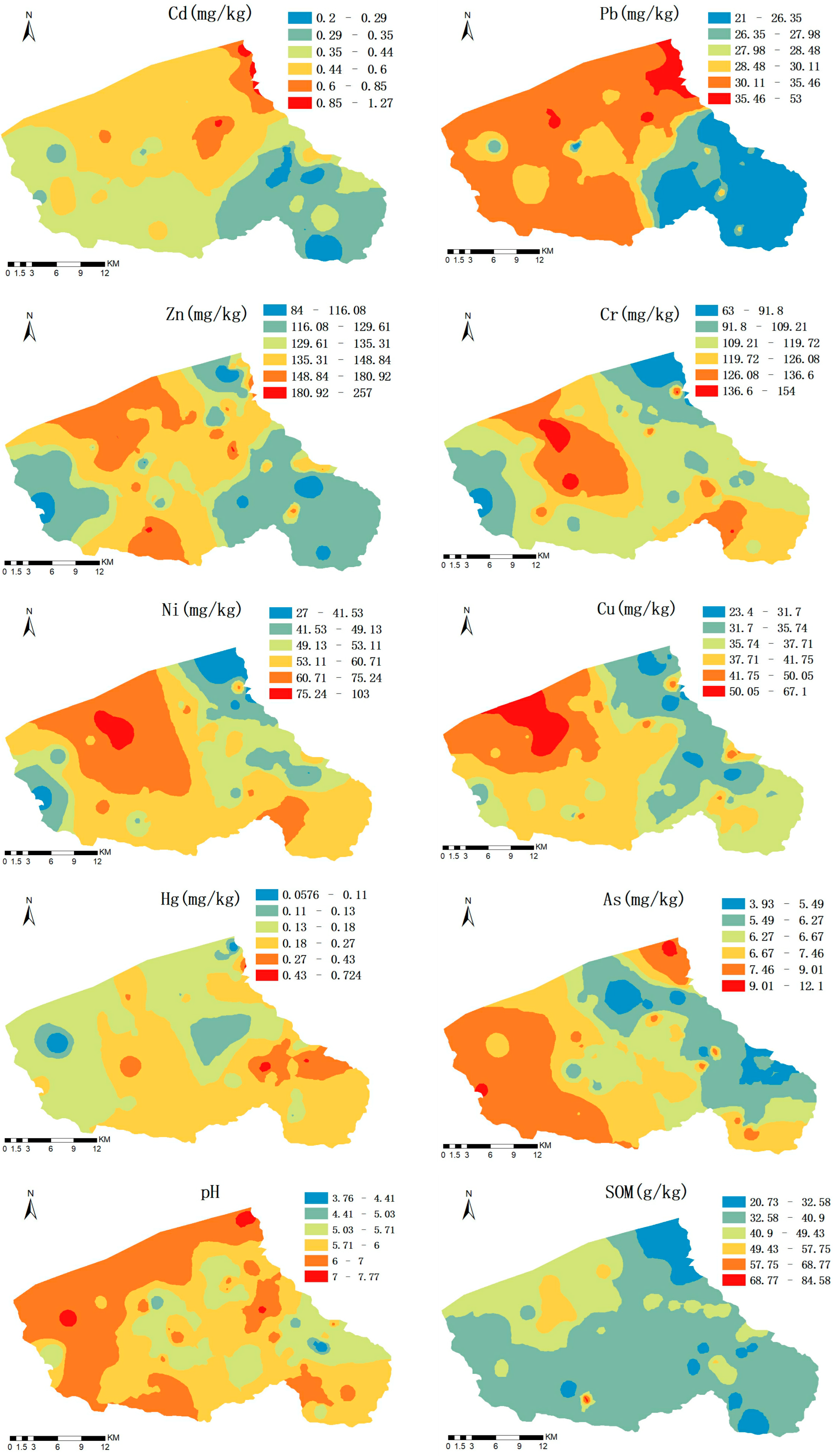
The IDW method is intuitive and prioritizes the influence of adjacent data. Consequently, this method performs best in areas with high data density but may not adequately account for the spatial relationships among distant points [39]. Therefore, the IDW spatial interpolation method was employed to generate a spatial distribution pattern map of soil PTEs and soil properties (pH and SOM) (Figure 2). The cross-validation of interpolation results is presented in Table S3. Overall, soil Cr, Zn, Ni, and Cu showed similar spatial distribution patterns, with lower concentrations along the northeastern edge and higher concentrations in the northwestern part of the study region. The SOM concentrations showed a distribution pattern similar to those of soil Zn, Ni, Cr, and Cu, decreasing from northwest to northeast. Both soil Cd and Pb concentrations showed the highest value in the northeastern part, and the lowest in the southeastern edge. Different from the other metals, the concentration of soil As was the highest in the southwestern area and northeastern edge of the study area. The soil Hg concentration was the highest in the southeastern and central parts of Pengzhou. The soil pH reached its maximum value in the northeastern and western regions, exhibiting a distribution pattern comparable to those of Pb and As. Thus, the spatial distribution patterns of soil PTEs presented significant variations, which could be predominantly attributed to different and complex origins of these soil PTEs [40].

3.3. Pollution Source Identification and Quantification of Soil PTEs

3.3.1. Correlation Analysis Between Soil PTEs and Soil Properties

CA is a statistical tool used to elucidate the inner-correlation degree among variables and assist in determining the potential sources of soil PTEs [41,42]. In general, a significantly positive correlation between variables indicates a strong association or a similar origin [43]. The Spearman correlation coefficient matrix for soil PTEs, soil pH, and SOM (Table S4) showed that soil Zn, Cu, Cd, and Pb were significant positively correlated with each other (p ≤ 0.01). In addition, soil Ni, Cr, Cu, and Zn presented significant positive correlations with each other (p ≤ 0.01), and soil Pb and Cu also exhibited a significant positive correlation (p ≤ 0.01). Furthermore, all the metals, except for As and Hg, presented a positive correlation with SOM.

3.3.2. Principal Component Analysis (PCA)

PCA was adopted to minimize the ambiguity of soil PTEs and help determine the possible pollution source numbers. Four principal components (PCs) were extracted by PCA with eigenvalues higher than 1 (Table S5), which contributed 88.02% to the total variance of soil PTEs. PC1 explained 33.97% of the total variance, with the highest loadings for Ni, Cu, and Cr. PC2 contributed 26.80% to the total variance, with the highest loadings for Zn, Cd, and Pb. PC3 constituted 14.13% of the total variance, which was loaded by As. PC4 explained 13.12% of the total variance, which was loaded by Hg.

3.3.3. Analysis of Pollution Sources of Soil PTEs by PMF

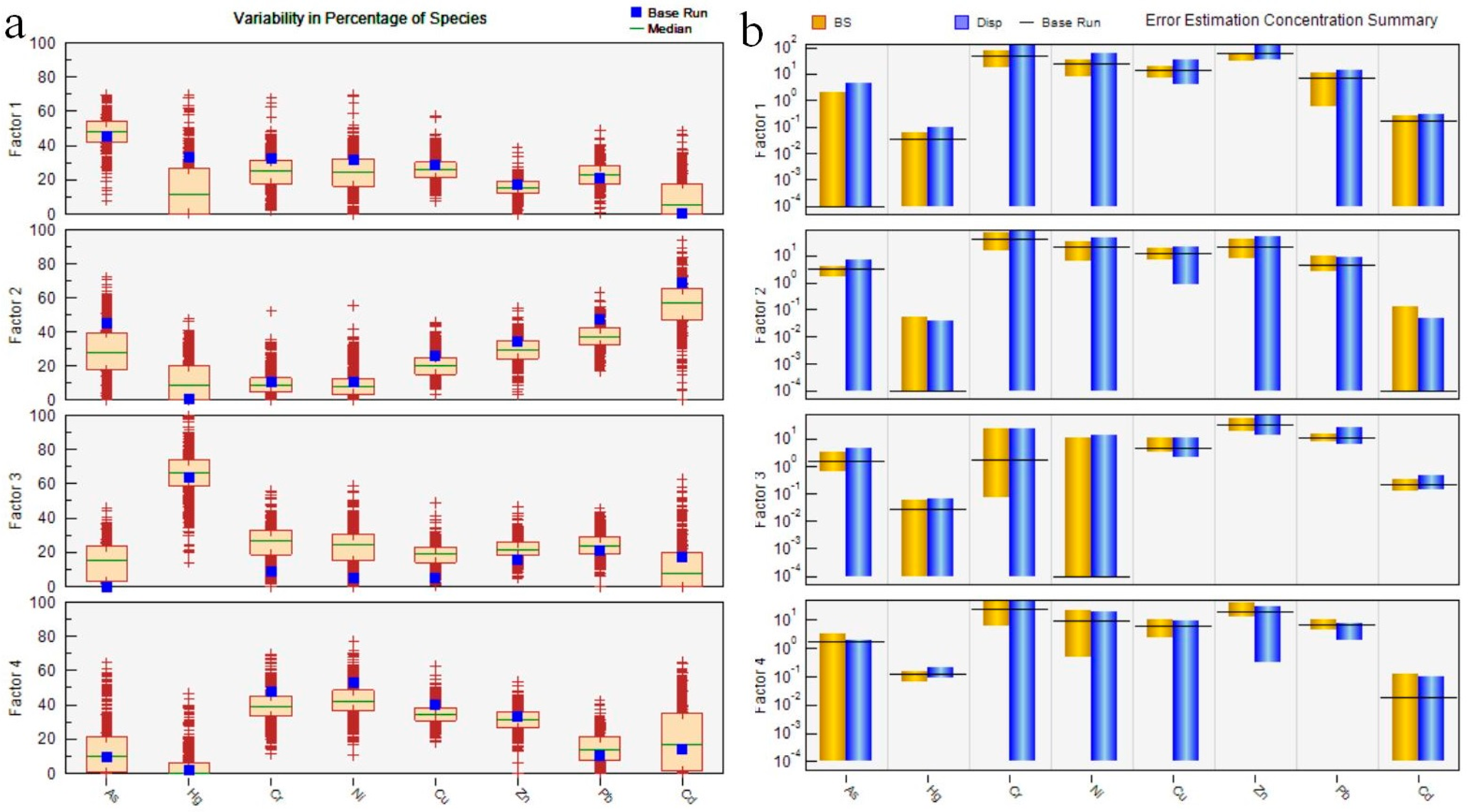
After testing solutions with two, three, four, and five factors, a four-factor solution was selected based on the minimum Q values, credible regression coefficients (r2 = 0.69–0.96) (Table S6) between the simulated and observed soil PTE concentrations, and clear interpretability of factor profiles. These criteria indicated that the output of the PMF model was robust and reasonable. To further verify the PMF model accuracy, 100 bootstrap runs were conducted. More than 90% of the soil samples exhibited residual values between −3 and 3, and all eight metals were classified as “strong,” with signal-to-noise (S/N) ratios higher than 1 (Table S5). The bootstrap results showed that more than 90% of the resampled factors matched the base factor. In addition, bootstrap and displacement of factor element analyses were used to evaluate the reliability of the PMF results (Figure 3a,b).
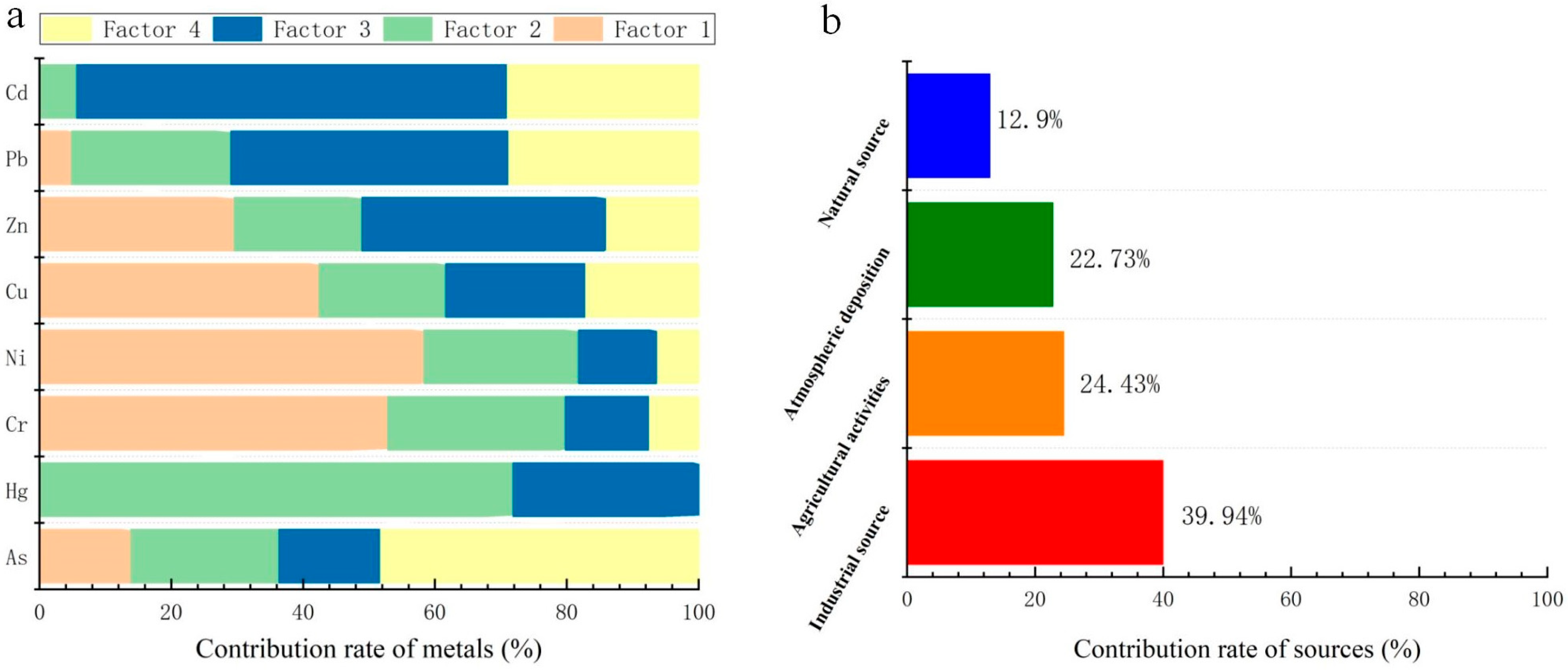
Factor 1 (F1) accounted for 39.94% of the total contribution and was characterized by high loadings of Cr, Cu, and Ni (Figure 4a), which were positively correlated with each other (Table S3), indicating a common origin. Although Cr and Ni are usually involved in lithogenic processes [44], their concentrations exceeded their corresponding local background values at most of the soil sampling points, which, along with relatively high CV values of Ni and Cu, indicates the influence of anthropogenic activities. It must be noted that the study area encompasses petrochemical industries, new chemical materials manufacturing, and building material and furniture production. In addition, Cu is widely associated with industrial production and waste disposal [45], particularly emissions from electronics manufacturing and electroplating activities [46]. An integrated survey on spatial patterns, pollution sources, and exposure risks of topsoil heavy metals [47] revealed that soil Ni accumulation is related to industrial processes, including metal smelting, manufacturing, and waste emissions. It has been reported that Cr enrichment in agricultural soils is strongly influenced by industrial activities [48], while improper disposal of dyeing, electroplating, and leather waste in pigment and paint industries can release Cr into the soil [49]. The spatial distribution patterns showed higher concentrations of soil Cu, Cr, and Ni in the northwestern part of the studied area, where petrochemical base and industrial plants are mainly distributed. Therefore, F1 was regarded as industrial emission sources.
Factor 2 (F2) contributed 22.73% to the total contribution, with the highest loading for Hg (Figure 4a). It has been reported that the origins of Hg are complex and associated with soil parent material, agricultural activities, traffic, and industrial emissions [50,51,52]. In the present study, the spatial distribution of soil Hg showed higher concentrations primarily in the southeastern and central regions of the study area. Moreover, Hg exhibited negative or weak correlations with other metals (Table S1), indicating that Hg originated from a different source. In addition, no correlation was observed between Hg and SOM in the study area (Table S1), further supporting its independent source. The geographical characteristics of Chengdu Plain, such as flat terrain and mountainous surroundings, can promote the accumulation of atmospheric particulate matter within the plain and inhibit outward dispersion [53]. Statistical results revealed that nearly 100% of the soil samples exceeded the local soil Hg background concentration (Table 1), confirming that the unique topography of Chengdu Plain may accelerate Hg enrichment in soils. Given the high volatility of Hg and its strong tendency to be released during fuel combustion [54], as well as reports identifying atmospheric deposition as a major contributor to Hg in topsoil [55], F2 was attributed to atmospheric deposition sources.
Factor 3 (F3) explained 24.43% of the total contribution and was characterized by high loadings of Zn, Pb, and Cd (Figure 4a). It has been reported that soil Zn, Cd, and Pb predominantly originate from waste disposal and agricultural inputs, especially phosphate fertilizers and pesticides [56,57]. Pengzhou is a major vegetable-producing area, where fertilizers and pesticides are extensively applied throughout the cultivation process. Consequently, soil Zn, Cd, and Pb showed higher concentrations in the northeastern part of the study area, where vegetable cultivation is predominant. Hence, F3 was identified as agricultural activity sources.
Factor 4 (F4) accounted for 12.90% of the total contribution and was dominated by As (Figure 4a). The concentrations of soil As in almost all the samples were below the corresponding background values and RSVs. The low CV value of As further confirmed the minimal influence of external disturbances. Thus, F4 was identified as natural sources.
Overall, industrial emissions (39.94%) contributed the most to soil PTE concentrations, followed by agricultural activities (24.43%), atmospheric deposition (22.73%), and natural sources (12.90%) (Figure 4b).

3.4. Risk Assessment of Soil PTEs

3.4.1. Concentration-Oriented Ecological and Human Health Risks of Soil PTEs

The total risk index (TRI) of soil Cr, As, Ni, Hg, Zn, Cu, Pb, and Cd ranged from 184.17 to 903.59 with a mean value of 331.84, suggesting that the study region was under moderate to extremely high ecological risk. The mean value of ecological risk of soil PTEs showed the following trend: Cd > Hg > Ni > As > Cu > Pb > Cr > Zn (Table S7). Cd contributed 50.98% to the total ecological risk, indicating that Cd posed the highest ecological risk in the study area. Similar findings have also been observed in Changchun black soils [58] and farmland soils near an e-waste recycling area [59], where Cd presented the highest ecological risk. The spatial distribution map of TRI showed a gradual increase in ecological risk from southwest and southeast to northeast, with most of the areas in the study region at high ecological risk (Figure S1).
Subsequently, concentration-oriented human health risks posed by soil PTEs were assessed (Table S8). The non-carcinogenic risk (HI) of the soil metals presented the following trend: Cr > As > Pb > Ni > Cu > Hg > Zn > Cd, with Cr contributing 66.42% of the total non-carcinogenic risk. Total non-carcinogenic risks (HI) of assessed elements were less than 1, suggesting negligible non-carcinogenic risks of the soil PTEs in the study region. Carcinogenic risk (CR) of the soil metals showed the following trend: Cr > As > Cd > Pb, with Cr accounting for 87.62% of the total carcinogenic risk. The mean value of total carcinogenic risk was 8.47 × 10⁻⁵, which was slightly higher than the minimum threshold value (1.00 × 10⁻⁶), suggesting a potential carcinogenic risk. Both carcinogenic and non-carcinogenic risks resulting from different exposure pathways decreased as follows: oral intake > inhalation > dermal contact, with oral intake being the dominant exposure pathway, which is consistent with previous findings [60,61]. The spatial distribution patterns of carcinogenic and non-carcinogenic risks of soil PTEs were similar, showing higher values in the west-central region and along the northeastern edge, and lower values in the northern part of the study area (Figure S2).

3.4.2. Source-Oriented Ecological and Human Health Risks of Soil PTEs

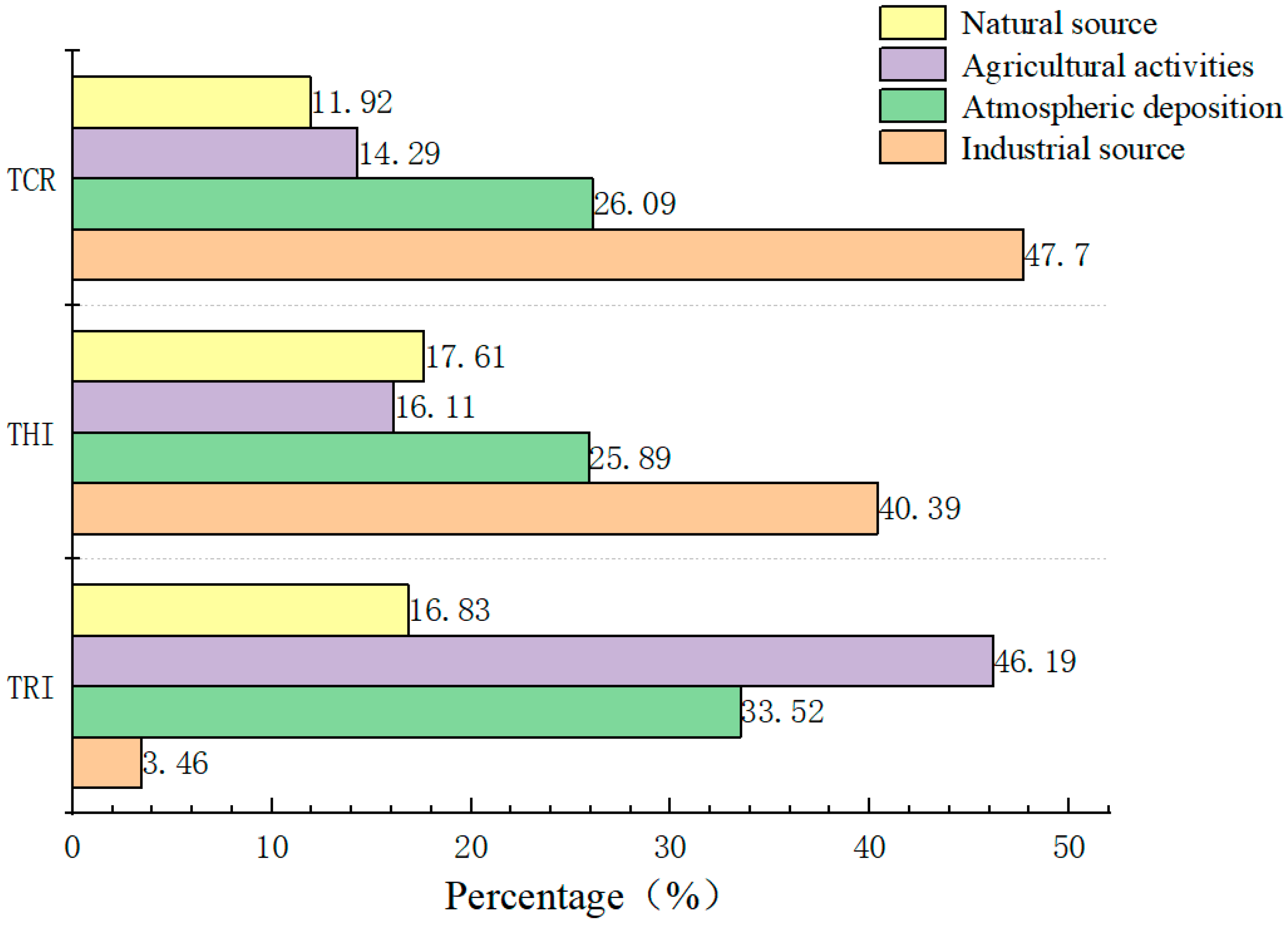
Source-oriented ecological and human health risk assessments were conducted to identify the pollution sources with the highest risk, which is key for targeted control measures aimed at reducing toxic metal inputs at their origin [62]. The potential ecological risk associated with each pollution source considerably varied (Table S9; Figure 5). Agricultural activities contributed the most to the total ecological risk (46.19%), followed by atmospheric deposition (33.52%), natural sources (16.83%), and industrial emissions (3.46%). The dominance of agricultural activities in ecological risk contributions could be primarily attributed to the high toxic response factors of Cd and Cu (Cd = 30, Cu = 5), both of which presented high loadings in the agricultural activity source profile [63]. In contrast, the relatively low toxic response factors of Cr, Ni, and Cu (Cr = 2, Ni = 5, Cu = 5) led to lower ecological risk from industrial emissions, despite their major contribution to total soil PTE concentrations. Similar results have also been reported in a previous study [64], which demonstrated that industrial activities were the main pollution sources of soil toxic metals but contributed minimally to ecological risk.
The human health risks posed by the four identified pollution sources of soil PTEs are listed in Table 2. The THI value for soil PTEs from the four pollution sources was 8.69 × 10⁻², which is lower than the recommended risk threshold value of 1. The mean THI for the toxic metals from the four sources presented the following trend: Cr > As > Pb > Ni > Cu > Hg > Cd > Zn. The mean HI value for the four sources showed the following trend: factor 1 (industrial emissions) > factor 2 (atmospheric deposition) > factor 4 (natural sources) > factor 3 (agricultural activities). Industrial emission sources contributed the most to non-carcinogenic risk (40.39%), followed by atmospheric deposition (25.89%), natural sources (17.61%), and agricultural activities (16.11%).
The TCR value for the four factors was 8.47 × 10⁻⁵, which is higher than the minimum acceptable risk threshold of 1 × 10⁻⁶, suggesting that the carcinogenic risk posed by these elements should not be ignored. The mean CR values for the elements from the four sources presented the following trend: Cr > As > Cd > Pb. The mean CR values for different sources showed the following trend: factor 1 > factor 2 > factor 3 > factor 4. The industrial emissions contributed the most to carcinogenic risk (47.7%), followed by atmospheric deposition (26.09%), agricultural activities (14.29%), and natural sources (11.92%).
The non-carcinogenic and carcinogenic risk results showed that As and Cr posed higher human health risks than the other metals. Similar findings have also been observed in a previous study [65], which demonstrated higher non-carcinogenic risks of As and Cr, mostly resulting from their higher toxicity and lower RfD values. Although Cr and As were not the main soil pollutants in the study area, prolonged exposure to even low concentrations of soil Cr and As might still cause adverse health effects, including certain carcinogenic effects [66]. Therefore, periodic monitoring of soil Cr and As concentrations is necessary. Industrial emissions were the major contributor to both carcinogenic and non-carcinogenic risks, mainly owing to the high loadings of Cr and As in the industrial emission source profile. These elements exhibit higher bioavailability and toxicity, causing greater health hazards [67,68]. These findings are consistent with the results reported in a previous study [58], indicating that Cr, Ni, and Cd have higher carcinogenic risks. In contrast, both agricultural activities and natural sources posed the least non-carcinogenic and carcinogenic risks, which could be attributed to the lower toxicity of Zn and low mobility of Pb in soils [69].
The source–exposure risk model is an effective approach to identifying the high-risk pollution sources of soil PTEs. However, this method presents some unavoidable limitations. First, the carcinogenic risk assessment included only soil As, Cr, Pb, and Cd owing to the unavailability of carcinogenic slope factors (CSFs) of other metals, which may lead to underestimation of the overall carcinogenic risk. Second, the human health risk assessment model and key toxicity parameters of soil PTEs were adopted from the USEPA, which may not entirely reflect the actual conditions of the study area, thus potentially introducing some inevitable uncertainties into the risk estimates. Therefore, there is a need to develop a human health risk model and toxicity parameter database based on the Chinese population. In addition, the present study assessed human health risks using the total concentrations of soil PTEs, rather than their bioavailable fractions, which may further limit the accuracy of risk assessment.
Based on the integrated source apportionment results, along with the concentration- and source-oriented human health and ecological risk assessments, the pollution sources and toxic metals requiring priority control were identified. Agricultural activities predominantly contributed to the ecological risk, with Cd from agricultural activities representing the most significant contributor. Industrial emissions were the primary anthropogenic contributor to both carcinogenic and non-carcinogenic risks, with Cr from industrial emissions being the predominant contributor to human health risk. Therefore, strengthening industrial emission regulations—particularly in dyeing, electroplating, leather processing, and pigment/paint manufacturing—through technological upgrades and stricter emission standards is essential to mitigating Cr pollution. Moreover, related policies, especially on industrial emission control and scientific use of pesticides and chemical fertilizers in agricultural activities, should be implemented to reduce the emission of PTEs into agricultural soils and minimize associated exposure risks. To mitigate Cd emissions from agricultural activities, reducing the cost of or providing subsidies for Cd-free fertilizers and pesticides may encourage farmers to adopt these products, thereby decreasing Cd inputs to agricultural soils and lowering ecological and health risks.

4. Conclusions

CA, PCA, and the PMF receptor model were integrated to optimize apportionment of the pollution sources of soil PTEs in agricultural fields in southern Pengzhou, Sichuan Province. In addition, source profiles were integrated into human health and ecological risk assessments to quantify the risks posed by each identified source. The results showed obvious accumulation of soil Cr, Cd, Ni, Cu, Hg, and Zn in the study region, with Cd being the major soil pollutant. Among the identified sources of soil PTE contaminants, industrial emissions were the major contributor, followed by agricultural activities, atmospheric deposition, and natural sources. The findings of integrated concentration- and source-oriented potential ecological and human health risks showed that the study area presented moderate to extremely high ecological risk and potential cancer risk. Overall, the risk-based priority sources to control included industrial emissions and agricultural activities, with Cd and Cr identified as the priority control metals. Thus, regulatory measures, such as strengthened supervision, technological upgrades, and promotion of policies and application methods for reducing the use of chemical fertilizers and pesticides, can be adopted to reduce Cd and Cr concentrations in industrial emissions and agricultural activities to mitigate related human health and ecological risks. The integrated source–exposure risk assessment model, which quantifies the risk from different sources, allows direct identification of high-risk pollution sources, thus providing a more precise strategy for mitigating associated hazards. Future research should prioritize isotope tracing for improved source apportionment, investigation of soil metal bioavailability, and refinement of population exposure parameter assessment at a regional scale to reduce uncertainties and variability in source-oriented risk assessments.

Supplementary Materials

The following supporting information can be downloaded at https://www.mdpi.com/article/10.3390/su18031519/s1: Table S1: Parameter values for risk assessment; Table S2: Values of reference doses (RfD, mg/kg/day) and slope factors (CSFs, per mg/kg/day) for soil PTEs; Table S3: The cross-validation of soil PTEs, pH, and SOM in IDW interpolation method; Table S4: The matrix of Spearman correlation coefficients of soil PTEs and soil properties; Table S5: The results of PCA; Table S6: The simulation values between analyzed and predicted concentrations of soil PTEs in PMF; Table S7: The ecological risk index of soil PTEs; Table S8: Non-carcinogenic risk and carcinogenic risk from different exposure pathways; Table S9: Ecologic risk (RI) of soil PTEs from different sources; Figure S1: Spatial distribution of RI of soil PTEs; Figure S2: Spatial distribution of hazard index and total cancer risk posed by soil PTEs. References [70,71,72,73,74,75,76,77,78,79] are cited in the Supplementary Materials.

Author Contributions

Conceptualization, M.H. and H.Y.; methodology, M.H.; software, Y.S. and D.H.; validation, S.G., X.L. and Y.O.; formal analysis, X.Z.; investigation, K.C.; resources, H.Y.; data curation, X.Z.; writing—original draft preparation, M.H.; writing—review and editing, M.H. and H.Y.; visualization, Z.Z.; supervision, Y.Q. All authors have read and agreed to the published version of the manuscript.

Funding

This work was financially supported by the National Key R&D Program of China (2024YFD1700200), the National Natural Science Foundation of China (42107021), the Scientific and Technological Achievement Transformation Project of the Sichuan Academy of Agricultural Sciences (2025ZSSFGH08), and the Sichuan Academy of Agricultural Sciences (2022ZZCX012).

Institutional Review Board Statement

Not Applicable.

Informed Consent Statement

Not Applicable.

Data Availability Statement

The data may be made available upon vreasonable request.

Conflicts of Interest

The authors declare no conflicts of interest.

References

  1. Deng, M.; Zhu, Y.; Shao, K.; Zhang, Q.; Ye, G.; Shen, J. Metals source apportionment in farmland soil and the prediction of metal transfer in the soil-rice-human chain. J. Environ. Manag. 2020, 260, 110092. [Google Scholar] [CrossRef]
  2. Dai, H.; Luo, M.; Jiang, X.; Li, X.; Zhang, P.; Niu, Y. Research on the characteristics of heavy metal pollution in lake and reservoir sediments in China based on meta-analysis. Sustainability 2025, 17, 5489. [Google Scholar] [CrossRef]
  3. Ghani, J.; Nawab, J.; Ullah, Z.; Rafiq, N.; Hasan, S.Z.; Khan, S.; Shah, M.; Almutairi, M.H. Multivariate Statistical Methods and GIS-Based Evaluation of Potable Water in Urban Children’s Parks Due to Potentially Toxic Elements Contamination: A Children’s Health Risk Assessment Study in a Developing Country. Sustainability 2023, 15, 13177. [Google Scholar] [CrossRef]
  4. Hou, D.; Jia, X.; Wang, L.; McGrath, S.; Zhu, Y.; Hu, Q.; Zhao, F.; Bank, M.S.; O’Connor, D.; Nriagu, J. Global soil pollution by heavy metals threatens agriculture and human health. Science 2025, 388, 316–321. [Google Scholar] [CrossRef] [PubMed]
  5. Han, Q.; Liu, Y.; Feng, X.; Mao, P.; Sun, A.; Wang, M.; Wang, M. Pollution effect assessment of industrial activities on potentially heavy metal distribution in windowsill dust and surface soil in central China. Sci. Total Environ. 2021, 759, 144023. [Google Scholar] [CrossRef]
  6. Cao, X.; Li, W.; Song, S.; Wang, C.C.; Khan, K. Source apportionment and risk assessment of soil heavy metals around a key drinking water source area in northern China: Multivariate statistical analysis approach. Environ. Geochem. Health 2023, 45, 343–357. [Google Scholar] [CrossRef]
  7. Qian, Y.; Li, X.; Yang, J.; Zhou, R.; Hong, Z.J.; Liu, C.; Li, S.Y.; Zhao, Y.G.; Fu, D.G.; Pan, Y.; et al. Heavy metal soil speciation, corn accumulation and health risk assessment in acidic red soil farmland in mineral industry area. Water Air Soil Pollut. 2024, 235, 435. [Google Scholar] [CrossRef]
  8. Shen, H.; Li, X.; Dong, J.; Zheng, X.; Jiang, Y.; Jin, P.; Kui, X.; Liu, H.; Zhang, X.; Yan, X.Y. Risk assessment based on Cr, Mn, Co, Ni, Cu, Zn, Ba, Pb, and Sc contents in soils and blood Pb levels in children: Seasonable variations and Monte Carlo simulations. Soil Environ. Health 2025, 3, 100131. [Google Scholar] [CrossRef]
  9. Xu, J.; Zheng, L.; Xu, L.; Liu, B.; Liu, J.; Wang, X. Identification of dissolved metal contamination of major rivers in the southeastern hilly area, China: Distribution, source apportionment, and health risk assessment. Environ. Sci. Pollut. Res. 2020, 27, 3908–3922. [Google Scholar] [CrossRef]
  10. Liu, T.; Wang, M.; Wang, M.; Xiong, Q.; Jia, L.; Ma, W.; Sui, S.B.; Wu, W.; Guo, X.M. Identification of the primary pollution sources and dominant influencing factors of soil heavy metals using a random forest model optimized by genetic algorithm coupled with geodetector. Ecotoxicol. Environ. Saf. 2025, 290, 117731. [Google Scholar] [CrossRef]
  11. He, M.J.; Shen, H.R.; Li, Z.T.; Wang, L.; Wang, F.; Zhao, K.L.; Liu, X.M.; Wendroth, O.; Xu, J.M. Ten-year regional monitoring of soil-rice grain contamination by heavy metals with implications for target remediation and food safety. Environ. Pollut. 2019, 244, 431–439. [Google Scholar] [CrossRef]
  12. Huang, J.; Wu, Y.; Li, Y.; Sun, J.; Xie, Y.; Fan, Z. Do trace metal(loid)s in road soils pose health risks to tourists? A case of a highly-visited national park in China. J. Environ. Sci. 2021, 111, 61–74. [Google Scholar] [CrossRef] [PubMed]
  13. Saha, A.; Gupta, B.S.; Patidar, S.; Hernández-Martínez, J.L.; Martín-Romero, F.; Meza-Figueroa, D. A comprehensive study of source apportionment, spatial distribution, and health risks assessment of heavy metal(loid)s in the surface soils of a semi-arid mining region in Matehuala, Mexico. Environ. Res. 2024, 260, 119619. [Google Scholar] [CrossRef] [PubMed]
  14. Liu, L.H.; Li, Y.; Gu, X.; Xavier-Supe-Tulcan, R.; Yan, L.; Lin, C.; Pan, J. Priority sources identification and risks assessment of heavy metal(loid)s in agricultural soils of a typical antimony mining watershed. J. Environ. Sci. 2024, 147, 153–164. [Google Scholar] [CrossRef]
  15. Proshad, R.; Asha, S.M.A.A.; Abedin, M.A.; Chen, G.; Li, Z.; Zhang, S.; Tan, R.; Lu, Y.N.; Zhang, Z.J.; Zhao, Z.J. Pollution area identification, receptor model-oriented sources and probabilistic health hazards to prioritize control measures for heavy metal management in soil. J. Environ. Manag. 2024, 369, 122322. [Google Scholar] [CrossRef]
  16. Huang, J.; Wu, Y.; Sun, J.; Li, X.; Geng, X.; Zhao, M.; Sun, T.; Fan, Z.Q. Health risk assessment of heavy metal(loid)s in park soils of the largest megacity in China by using Monte Carlo simulation coupled with Positive matrix factorization model. J. Hazard. Mater. 2021, 415, 125629. [Google Scholar] [CrossRef]
  17. Ning, Z.; Liu, E.; Yao, D.; Xiao, T.; Ma, L.; Liu, Y.; Li, H.; Liu, C.S. Contamination, oral bioaccessibility and human health risk assessment of thallium and other elements in farmland soils around a historic Tl-Hg mining area. Sci. Total Environ. 2021, 758, 143577. [Google Scholar] [CrossRef]
  18. Jiang, Y.; Hu, B.; Shi, H.; Yi, L.; Chen, S.; Zhou, Y.; Cheng, J.L.; Huang, M.X.; Yu, W.; Shi, Z. Pollution and risk assessment of potentially toxic elements in soils from industrial and mining sites across China. J. Environ. Manag. 2023, 336, 117672. [Google Scholar] [CrossRef]
  19. Zhou, Y.; Jiang, D.D.; Ding, D.; Wu, Y.J.; Wei, J.; Kong, L.Y.; Long, T.; Fan, T.T.; Deng, S.P. Ecological-health risks assessment and source apportionment of heavy metals in agricultural soils around a super-sized lead-zinc smelter with a long production history, in China. Environ. Pollut. 2022, 307, 119487. [Google Scholar] [CrossRef]
  20. Zhang, T.; Wang, P.; Wang, M.G.; Liu, J.W.; Gong, L.; Xia, S.B. Spatial distribution, source identification, and risk assessment of heavy metals in riparian soils of the Tibetan plateau. Environ. Res. 2023, 237, 116977. [Google Scholar] [CrossRef] [PubMed]
  21. Mu, T.; Cao, B.; Yang, M.; Gan, X.; Chen, L.; Wang, X.; Li, M.; Lu, Y.; Xu, J. Heavy Metals Distribution and Source Identification in Contaminated Agricultural Soils: Isotopic and Multi-Model Analysis. Agronomy 2025, 15, 812. [Google Scholar] [CrossRef]
  22. Nour, H.E.; Ramadan, F.; Abdelwahed, N.; Rakha, A. Spatial distribution and contamination of specific heavy metals in the sediment of Bahr Mouse, Egypt. Egypt. J. Chem. 2024, 67, 99–109. [Google Scholar] [CrossRef]
  23. Liu, Y.; Guo, W.; Wu, Y. Source-oriented health risk assessment of heavy metals in soil and dust at coal resource-based urban parks in northern China based on bioaccessibilities. Ecotoxicol. Environ. Saf. 2025, 297, 118252. [Google Scholar] [CrossRef] [PubMed]
  24. Sun, P.; Chen, Y.; Wang, X.; Zhou, Z.; Zhu, X.; Sun, S.; Xu, J.L. Quantification of an integrated approach to heavy metal source apportionment and probabilistic health risk assessment in the black soil region of central Jilin Province, China. Ecotoxicol. Environ. Saf. 2025, 299, 118358. [Google Scholar] [CrossRef]
  25. Lu, R.K. Analytical Methods for Soil and Agricultural Chemistry; China Agricultural Science and Technology Press: Beijing, China, 2000. (In Chinese) [Google Scholar]
  26. Anaman, R.; Peng, C.; Jiang, Z.; Liu, X.; Zhou, Z.; Guo, Z.; Xiao, X. Identifying sources and transport routes of heavy metals in soil with different land uses around a smelting site by GIS based PCA and PMF. Sci. Total Environ. 2022, 823, 153759. [Google Scholar] [CrossRef]
  27. Hakanson, L. An ecological risk index for aquatic pollution control: A sedimentological approach. Water Res. 1980, 14, 975–1001. [Google Scholar] [CrossRef]
  28. USEPA (United States Environmental Protection Agency). EPA Positive Matrix Factorization (PMF) 5.0 Fundamentals and User Guide; EPA/600/R-14/108 (NTIS PB2015-105147); Norris, G., Duvall, R., Brown, S., Bai, S., Eds.; U.S. Environmental Protection Agency, Office of Research and Development: Washington, DC, USA, 2014. [Google Scholar]
  29. USEPA (United States Environmental Protection Agency). EPA ExpoBox: A Toolbox for Exposure Assessors. Exposure Assessment Tools by Routes; United States Environmental Protection Agency: Washington, DC, USA, 2016. Available online: https://www.epa.gov/expobox/exposure-assessment-tools-routes (accessed on 29 September 2025).
  30. GB 15618-2018; Soil Environmental Quality Risk Control Standard for Soil Contamination of Agricultural Land. Ministry of Ecology and Environment of the People’s Republic of China: Beijing, China, 2018.
  31. Peng, Y.; Yu, G.I. Assessment of toxic metal pollution on agricultural land in Chengdu city under different anthropogenic pressures based on APCS-MLR modelling. Ecol. Indic. 2024, 165, 112183. [Google Scholar] [CrossRef]
  32. Gong, C.; Wang, L.; Wang, S.; Zhang, Z.; Dong, H.; Liu, J. Analysis of spatial differentiation and influencing factors of heavy metal content in soil at the town scale based on geographic detectors. Environ. Sci. 2022, 43, 4566–4577. [Google Scholar]
  33. Shao, Y.; Chen, W.; Li, J.; Yan, B.; He, H.; Zhang, Y.S. Influencing factors, risk assessment, and source identification of heavy metals in Purple soil in the eastern region of Guang’an city, Sichuan Province, China. Minerals 2024, 14, 495. [Google Scholar] [CrossRef]
  34. Lu, X.; Wang, Z.; Chen, Y.; Yang, Y.; Fan, X.; Wang, L.; Yu, B.; Lei, K.; Zuo, L.; Fan, P.; et al. Source–specific probabilistic risk evaluation of potentially toxic metal(loid)s in fine dust of college campuses based on positive matrix factorization and Monte Carlo simulation. J. Environ. Manag. 2023, 347, 119056. [Google Scholar] [CrossRef]
  35. Shi, J.C.; Yang, Y.; Shen, Z.J.; Lin, Z.; Mei, N.; Luo, C.Z.; Wang, Y.M.; Zhang, C.; Wang, D.Y. Identifying heavy metal sources and health risks in soil-vegetable systems of fragmented vegetable fields based on machine learning, positive matrix factorization model and Monte Carlo simulation. J. Hazard. Mater. 2024, 478, 135481. [Google Scholar] [CrossRef]
  36. Su, C.H.; Wang, J.W.; Chen, Z.W.; Meng, J.; Yin, G.C.; Zhou, Y.Q.; Wang, T. Sources and health risks of heavy metals in soils and vegetables from intensive human intervention areas in South China. Sci. Total Environ. 2023, 857, 159389. [Google Scholar] [CrossRef] [PubMed]
  37. Yin, G.; Zhu, H.; Chen, Z.; Su, C.; He, Z.; Chen, X.; Qiu, J.; Wang, T. Spatial distribution and source apportionment of soil heavy metals in Pearl River Delta, China. Sustainability 2021, 13, 9651. [Google Scholar] [CrossRef]
  38. Yang, S.; Qu, Y.; Ma, J.; Liu, L.; Wu, Y. Comparison of the concentrations, sources, and distributions of heavy metal(loid)s in agricultural soils of two provinces in the Yangtze River Delta, China. Environ. Pollut. 2020, 264, 114688. [Google Scholar] [CrossRef]
  39. Xia, F.; Zhao, Z.; Niu, X.; Wang, Z. Integrated pollution analysis, pollution area identification and source apportionment of heavy metal contamination in agricultural soil. J. Hazard. Mater. 2024, 465, 133215. [Google Scholar] [CrossRef]
  40. Huang, Y.; Chen, Q.; Deng, M.; Japenga, J.; Li, T.; Yang, X.; He, Z.L. Heavy metal pollution and health risk assessment of agricultural soils in a typical peri-urban area in southeast China. J. Environ. Manag. 2018, 207, 159–168. [Google Scholar] [CrossRef]
  41. Hou, D.; O’Connor, D.; Nathanail, P.; Tian, L.; Ma, Y. Integrated GIS and multivariate statistical analysis for regional scale assessment of heavy metal soil contamination: A critical review. Environ. Pollut. 2017, 231, 1188–1200. [Google Scholar] [CrossRef]
  42. Yuan, B.; Cao, H.; Du, P.; Ren, J.; Chen, J.; Zhang, H.; Zhang, Y.; Luo, H. Source-oriented probabilistic health risk assessment of soil potentially toxic elements in a typical mining city. J. Hazard. Mater. 2023, 443, 130222. [Google Scholar] [CrossRef]
  43. Li, G.; Lu, N.; Wei, Y.; Zhu, D. Relationship between heavy metal content in polluted soil and soil organic matter and pH in mining areas. IOP Conf. Ser. Mater. Sci. Eng. 2018, 394, 52081. [Google Scholar] [CrossRef]
  44. Zhou, L.F.; Zhao, X.L.; Meng, Y.B.; Fei, Y.; Teng, M.; Song, F.H.; Wu, F.C. Identification priority source of soil heavy metals pollution based on source-specific ecological and human health risk analysis in a typical smelting and mining region of South China. Ecotoxicol. Environ. Saf. 2022, 242, 113864. [Google Scholar] [CrossRef] [PubMed]
  45. Men, C.; Liu, R.; Xu, L.; Wang, Q.; Guo, L.; Miao, Y.; Shen, Z.Y. Source-specific ecological risk analysis and critical source identification of heavy metals in road dust in Beijing, China. J. Hazard. Mater. 2020, 388, 121763. [Google Scholar] [CrossRef]
  46. Borah, G.; Deka, H. Crude oil associated heavy metals (HMs) contamination in agricultural land: Understanding risk factors and changes in soil biological properties. Chemosphere 2023, 310, 136890. [Google Scholar] [CrossRef]
  47. Xu, L.; Dai, H.; Skuza, L.; Xu, J.M.; Shi, J.C.; Wang, Y.J.; Shentu, J.L.; Wei, S. Integrated survey on the heavy metal distribution, sources and risk assessment of soil in a commonly developed industrial area. Ecotoxicol. Environ. Saf. 2022, 236, 113462. [Google Scholar] [CrossRef]
  48. Guan, Q.; Wang, F.; Xu, C.; Pan, N.H.; Lin, J.K.; Zhao, R.; Yang, Y.Y.; Luo, H.P. Source apportionment of heavy metals in agricultural soil based on PMF: A case study in Hexi Corridor, northwest China. Chemosphere 2018, 193, 189–197. [Google Scholar] [CrossRef]
  49. He, J.; Peng, Z.; Zeng, J.; Li, C.; Tang, L.; Jiang, J.; Luo, X.; Gao, W.; Guo, J.; Shao, B.; et al. Source apportionment and quantitative risk assessment of heavy metals at an abandoned zinc smelting site based on GIS and PMF models. J. Environ. Manag. 2023, 336, 117565. [Google Scholar] [CrossRef]
  50. Wang, X.Q.; Liu, X.M.; Wu, H.; Tian, M.; Li, R.H.; Sheng, Z.C. Interpretations of Hg anomalous sources in drainage sediments and soils in China. J. Geochem. Explor. 2021, 224, 106711. [Google Scholar] [CrossRef]
  51. Liu, X.; Zhang, L.; Zhang, L. Concentration, risk assessment, and source identification of heavy metals in surface sediments in Yinghai: A shellfish cultivation zone in Jiaozhou Bay, China. Mar. Pollut. Bull. 2017, 121, 216–221. [Google Scholar] [CrossRef] [PubMed]
  52. Zhao, B.; O’Connor, D.; Huang, Y.; Hou, R.; Cai, L.; Jin, Y.; Wang, P.; Zhang, H. An integrated framework for source apportionment and spatial distribution of mercury in agricultural soil near a primary ore mining site. Chemosphere 2024, 353, 141556. [Google Scholar] [CrossRef]
  53. Wen, Y.; Xiao, J.; Yang, J.; Cai, S.; Liang, M.; Zhou, P. Quantitatively disentangling the geographical impacts of topography on PM2.5 pollution in China. Remote Sens. 2022, 14, 6309. [Google Scholar] [CrossRef]
  54. Wang, S.; Zhang, L.; Zhao, B.; Meng, Y.; Hao, J. Mitigation potential of mercury emissions from coal-fired power plants in China. Energy Fuels 2012, 26, 4635–4642. [Google Scholar] [CrossRef]
  55. Shi, T.R.; Zhang, J.R.; Shen, W.J.; Wang, J.; Li, X.Y. Machine learning can identify the sources of heavy metals in agricultural soil: A case study in northern Guangdong Province, China. Ecotoxicol. Environ. Saf. 2022, 245, 114107. [Google Scholar] [CrossRef]
  56. Peng, H.; Chen, Y.; Weng, L.; Ma, J.; Ma, Y.; Li, Y.; Islam, M.S. Comparisons of heavy metal input inventory in agricultural soils in North and South China: A review. Sci. Total Environ. 2019, 660, 776–786. [Google Scholar] [CrossRef]
  57. Liang, J.; Feng, C.; Zeng, G.; Gao, X.; Zhong, M.; Li, X.; He, X.Y.; Fang, Y.L. Spatial distribution and source identification of heavy metals in surface soils in a typical coal mine city, Lianyuan, China. Environ. Pollut. 2017, 225, 681–690. [Google Scholar] [CrossRef]
  58. Li, W.W.; Zhang, S.K.; Gao, F.; Chen, Z.; Jiang, J.; Sun, G.X. Spatial distribution, sources apportionment and risk assessment of heavy metals in the Changchun black soil area, China. J. Hazard. Mater. Adv. 2024, 13, 100402. [Google Scholar] [CrossRef]
  59. Liang, Q.; Tian, K.; Li, L.; He, Y.; Zhao, T.; Liu, B.; Wu, Q.M.; Huang, B.; Zhao, L.; Teng, Y. Ecological and human health risk assessment of heavy metals based on their source apportionment in cropland soils around an e-waste dismantling site, Southeast China. Ecotoxicol. Environ. Saf. 2022, 242, 113929. [Google Scholar] [CrossRef]
  60. Yang, S.Y.; He, M.J.; Zhi, Y.Y.; Chang, S.X.; Gu, B.J.; Liu, X.M.; Xu, J.M. An integrated analysis on source-exposure risk of heavy metals in agricultural soils near intense electronic waste recycling activities. Environ. Int. 2019, 133, 105239. [Google Scholar] [CrossRef] [PubMed]
  61. Jiang, H.H.; Cai, L.M.; Wen, H.H.; Hu, G.C.; Chen, L.G.; Luo, J. An integrated approach to quantifying ecological and human health risks from different sources of soil heavy metals. Sci. Total Environ. 2020, 701, 134466. [Google Scholar] [CrossRef]
  62. Zhou, W.; Yu, R.; Guo, F.; Shen, C.; Liu, Y.; Huang, Y. Source apportionment and risk assessment of soil heavy metals in the Huangshui River Basin using a hybrid model. Ecol. Indic. 2024, 160, 111906. [Google Scholar] [CrossRef]
  63. Bolan, N.; Kumar, M.; Singh, E.; Kumar, A.; Singh, L.; Kumar, S.; Keerthanan, S.; Hoang, S.A.; El-Naggar, A.; Vithanage, M.; et al. Antimony contamination and its risk management in complex environmental settings: A review. Environ. Int. 2022, 158, 106908. [Google Scholar] [CrossRef]
  64. Liu, J.; Liu, Y.J.; Liu, Y.; Liu, Z.; Zhang, A.N. Quantitative contributions of the major sources of heavy metals in soils to ecosystem and human health risks: A case study of Yulin, China. Ecotoxicol. Environ. Saf. 2018, 164, 261–269. [Google Scholar] [CrossRef] [PubMed]
  65. Li, Z.; Ma, Z.; Kuijp, T.J.V.D.; Yuan, Z.; Huang, L. A review of soil heavy metal pollution from mines in China: Pollution and health risk assessment. Sci. Total Environ. 2014, 468–469, 843–853. [Google Scholar] [CrossRef]
  66. Tian, J.; Guan, Q.Y.; Shao, W.Y.; Liu, Z.; Ma, Y.R.; Li, H.C. A joint method to quantify source contributions of toxic metals to ecological and human health risks in oasis farmland soil. Soil Sci. Soc. Am. J. 2021, 85, 1600–1619. [Google Scholar] [CrossRef]
  67. Zhou, H.; Chen, Y.; Yue, X.; Ren, D.; Liu, Y.; Yang, K. Identification and hazard analysis of heavy metal sources in agricultural soils in ancient mining areas: A quantitative method based on the receptor model and risk assessment. J. Hazard. Mater. 2023, 445, 130528. [Google Scholar] [CrossRef]
  68. Sun, J.; Zhao, M.; Huang, J.; Liu, Y.; Wu, Y.; Cai, B.; Han, Z.W.; Huang, H.H.; Fan, Z.Q. Determination of priority control factors for the management of soil trace metal(loid)s based on source-oriented health risk assessment. J. Hazard. Mater. 2022, 423, 127116. [Google Scholar] [CrossRef] [PubMed]
  69. Liang, J.; Liu, Z.; Tian, Y.; Shi, H.; Fei, Y.; Qi, J.; Mo, L. Research on health risk assessment of heavy metals in soil based on multi-factor source apportionment: A case study in Guangdong Province, China. Sci. Total Environ. 2023, 858, 159991. [Google Scholar] [CrossRef]
  70. US EPA. Exposure Factors Handbook, 2011th ed.; EPA/600/R-09/052F; U.S. Environmental Protection Agency: Washington, DC, USA, 2011. [Google Scholar]
  71. US EPA. Supplemental Guidance for Developing Soil Screening Levels for Superfund Sites; OSWER9355.4-24; Office of SOILD Waste and Emergency Response: Washington, DC, USA, 2002. [Google Scholar]
  72. Zhong, J.; Yu, M.; Liu, L.; Chen, Y.; Hu, R.; Gong, W. Study on the dietary nutrition intake level in Zhejiang Province. Dis. Surveill. 2006, 21, 670–672. (In Chinese) [Google Scholar]
  73. Wang, Z.; Liu, S.Q.; Chen, X.M.; Liu, C.Y. Estimates of the exposed dermal surface area of Chinese in view of human health risk assessment. J. Safe. Environ. 2008, 8, 152–156. (In Chinese) [Google Scholar]
  74. Duan, X.L.; Nie, J.; Wang, Z.S. Human Exposure Factors in Health Risk Assessment. J. Environ. Health 2009, 26, 370–373. [Google Scholar]
  75. Ministry of Environmental Protection of the People’s Republic of China (MEPC). Exposure Factors Handbook of Chinese Population; China Environmental Science Press: Beijing, China, 2013. [Google Scholar]
  76. Chen, H.; Teng, Y.; Lu, S.; Wang, Y.; Wu, J.; Wang, J. Source apportionment and health risk assessment of trace metals in surface soils of Beijing metropolitan, China. Chemosphere 2016, 144, 1002–1011. [Google Scholar] [CrossRef] [PubMed]
  77. Cao, H.; Chen, J.; Zhang, J.; Zhang, H.; Qiao, L.; Men, Y. Heavy metals in rice and garden vegetables and their potential health risks to inhabitants in the vicinity of an industrial zone in Jiangsu, China. J. Environ. Sci. 2010, 22, 1792–1799. [Google Scholar] [CrossRef]
  78. Fu, J.; Zhou, Q.; Liu, J.; Liu, W.; Wang, T.; Zhang, Q. High levels of heavy metalsin rice (oryza sativa l) from a typical e-waste recycling area in southeast china and its potential risk to human health. Chemosphere 2008, 71, 69–75. [Google Scholar] [CrossRef] [PubMed]
  79. Sawut, R.; Kasim, N.; Maihemuti, B.; Li, H.; Abliz, A.; Abdujappar, A. Pollution characteristics and health risk assessment of heavy metals in the vegetable bases of northwest China. Sci. Total Environ. 2018, 642, 864–878. [Google Scholar] [CrossRef] [PubMed]
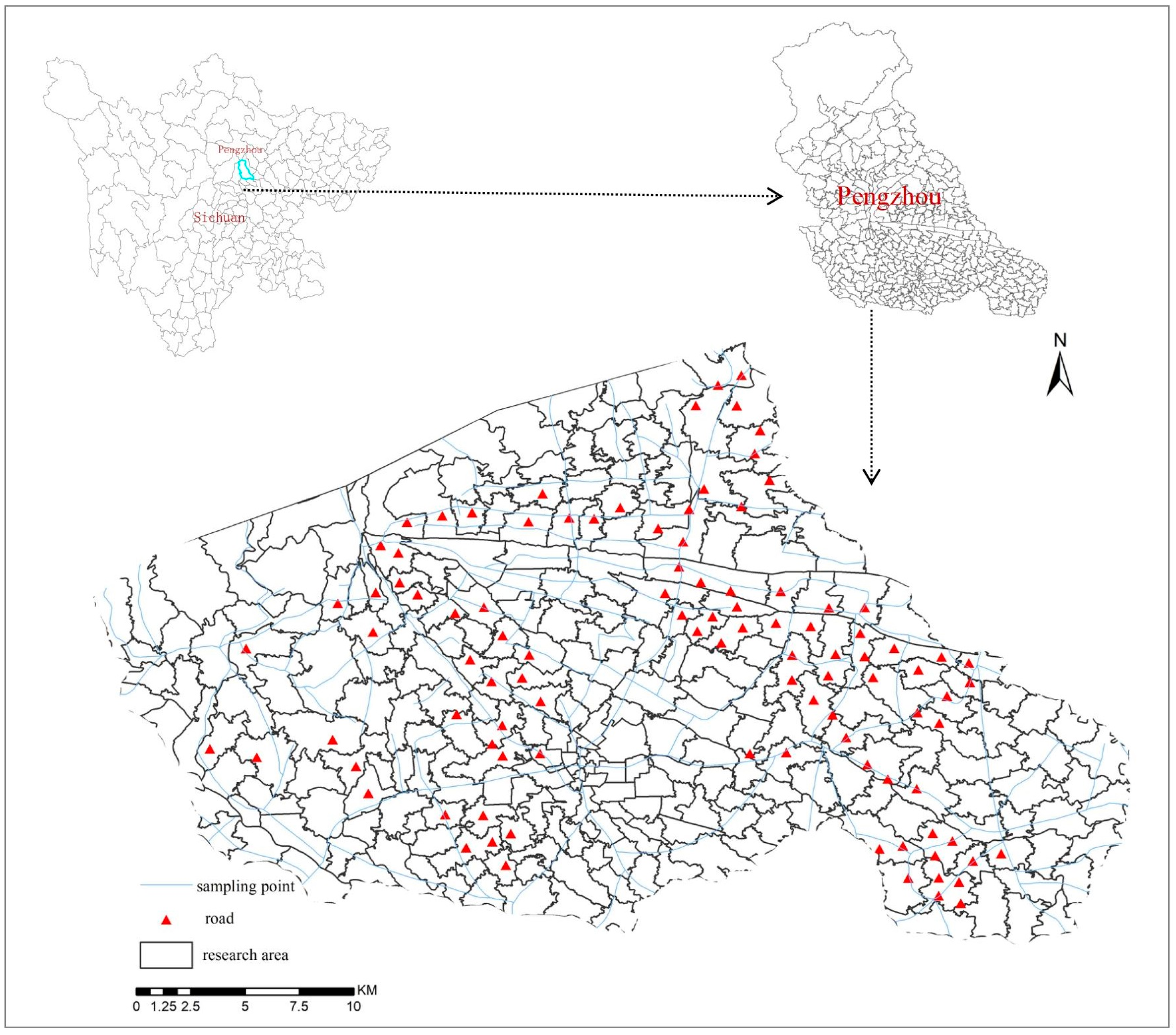
Figure 1. Location of the study area and soil sampling points.
Sustainability 18 01519 g001
Figure 2. Spatial distribution map of soil PTEs, pH, and SOM.
Sustainability 18 01519 g002
Figure 3. Box plots showing the contributions (a); Error estimation concentrations (b) of four factors derived from the PMF model to eight metals based on both BS and the baseline run.
Sustainability 18 01519 g003
Figure 4. Source profile of each element (a) and source contributions determined by PMF model (b).
Sustainability 18 01519 g004
Figure 5. Contributions (%) of different sources to TRI, THI, and TCR.
Sustainability 18 01519 g005
Table 1. Statistics of the concentrations of multiple soil PTEs and properties.
Cd
(mg kg−1)
As
(mg kg−1)
Hg
(mg kg−1)
Cr
(mg kg−1)
Ni
(mg kg−1)
Cu
(mg kg−1)
Zn
(mg kg−1)
Pb
(mg kg−1)
pHSOM
(g kg−1)
Min0.202 3.925 0.058 63.302 26.849 23.358 83.566 20.595 3.76 20.73
Max1.266 12.141 0.724 154.486 103.280 67.065 256.762 53.014 7.77 84.58
Mean0.451 6.684 0.198 116.648 56.066 38.376 135.402 29.861 5.88 38.18
Median0.431 6.525 0.168 117.821 56.053 37.359 132.003 28.940 5.97 35.66
SD0.200 1.496 0.110 19.188 13.013 7.734 27.012 5.633 0.70 9.64
CV44.2322.38 55.40 16.45 23.21 20.15 19.95 18.86 11.9125.24
Number
(RSV) a
820 0 3 17 6 1 0 \\
Percentage
(RSV) b
80.39 002.94 16.67 5.88 0.98 0\\
Number
(BGV) c
1021101 96979110137\\
Percentage
(BGV) d
100.000.98 99.02 94.12 95.10 89.22 99.02 36.27 \\
SD, standard deviation; CV, coefficient of variation. a: The number of soil samples exceeding the corresponding risk screening values. b: The percentage of soil samples exceeding the corresponding risk screening values. c: The number of soil samples exceeding the corresponding background values. d: The percentage of soil samples exceeding the corresponding background values.
Table 2. Human health risks of soil PTEs from different sources.
Factor 1Factor 2Factor 3Factor 4Total Factors
Non-carcinogenic risk (THI)As2.48 × 10−34.02 × 10−32.75 × 10−38.61 × 10−31.79 × 10−2
Hg6.06 × 10−73.68 × 10−41.44 × 10−40.00E+005.12 × 10⁻⁴
Cr3.05 × 10−21.56 × 10−27.36 × 10−34.30 × 10−35.78 × 10−2
Ni1.31 × 10−35.27 × 10−42.68 × 10−41.39 × 10−42.24 × 10−3
Cu3.24 × 10−41.47 × 10−41.62 × 10−41.31 × 10−47.64 × 10−4
Zn1.06 × 10−47.00 × 10−51.34 × 10−45.03 × 10−53.60 × 10−4
Pb3.35 × 10−41.67 × 10−32.90 × 10−31.98 × 10−36.89 × 10−3
Cd0.00 × 1002.38 × 10−52.73 × 10−41.22 × 10−44.19 × 10⁻⁴
HI3.51 × 10−22.25 × 10−21.40 × 10−21.53 × 10−28.69 × 10−2
Carcinogenic risk (CR)As1.12 × 10−61.82 × 10−61.24 × 10−63.89 × 10−68.08 × 10−6
Cr3.93 × 10−52.01 × 10−59.46 × 10−65.53 × 10−67.43 × 10−5
Pb9.81 × 10−94.89 × 10−88.50 × 10−85.80 × 10−82.02 × 10−7
Cd0.00 × 1001.18 × 10−71.35 × 10−66.01 × 10−72.07 × 10⁻⁶
TCR4.04 × 10−52.21 × 10−51.21 × 10−51.01 × 10−58.47 × 10−5
Disclaimer/Publisher’s Note: The statements, opinions and data contained in all publications are solely those of the individual author(s) and contributor(s) and not of MDPI and/or the editor(s). MDPI and/or the editor(s) disclaim responsibility for any injury to people or property resulting from any ideas, methods, instructions or products referred to in the content.