Article

Soil Microbial Responses to Starch-g-poly(acrylic acid) Copolymers Addition

1
Faculty of Geo-Data Science, Geodesy, and Environmental Engineering, Department of Environmental Management and Protection, AGH University of Krakow, al. Adama Mickiewicza 30, 30-059 Krakow, Poland
2
Faculty of Food Technology, Department of Fermentation Technology and Microbiology, University of Agriculture in Krakow, ul. Balicka 122, 31-120 Krakow, Poland
*
Author to whom correspondence should be addressed.
Sustainability 2026, 18(3), 1498; https://doi.org/10.3390/su18031498
Submission received: 31 December 2025 / Revised: 25 January 2026 / Accepted: 27 January 2026 / Published: 2 February 2026

Abstract

Superabsorbent polymers (SAPs) are materials that can absorb and retain water solutions with a mass of several hundred times greater than their own. This work aimed to synthesise and evaluate the effects of highly absorbent starch phosphate-g-poly(acrylic acid) copolymers on the microbiological activity of soils previously used for agriculture. The biopolymers studied were obtained by thermal and chemical oxidation of starch phosphates and copolymerized with potassium salts of acrylic acid. Basic physicochemical parameters were determined in the applied soil. Following SAP application, the basal respiration rate was measured at 22 °C with a constant soil moisture content of 60% WHC. The incubation time in constant temperature and moisture conditions was 78 days. After this period, their microbiological activity (microbial and organic phosphorus fractions) was assessed, thereby enabling the determination of the direction of change in the soil environment. The addition of SAP increases the soil’s water-holding capacity and respiration. The SP-g-PAA polymers serve as slow-release sources of potassium and phosphorus ions. These elements were bound to the polymer network by ionic and covalent bonds. Analysis of the results shows that within two weeks, 47–80% of the starch hydrogel undergoes microbial degradation. No differences were found in the content of labile forms of phosphorus in soils with SAP additions compared to soils without polymer additions. The use of modified starch reduces the consumption of vinyl monomers, while the resulting product is characterised by high absorbency and low water content, which reduces the amount of energy needed to obtain the finished product, thus contributing to sustainable development.

1. Introduction

Climate change and rising average temperatures contribute to reduced soil moisture, increased erosion [1,2], and changes in soil structure, which may lead to soil degradation. The above-mentioned factors limit the ability to retain water and nutrients [3]. Moreover, in some cases, changes in soil salinity and pH may occur, directly affecting the qualitative and quantitative composition of soil microorganisms responsible for the decomposition of organic matter and the nutrient cycle. Changes in temperature and humidity can disturb the balance of microorganisms, which reduces the efficiency of organic matter decomposition and nutrient cycling in the soil. As a result, climate change can reduce soil fertility, with serious consequences for agriculture and food security [4]. In the long term, this may also affect the possibility of growing plants in many regions of the world, requiring the implementation of measures to protect soils and adapt to a changing climate, as well as the use of modern materials to reduce the adverse impacts of temperature increases.
Superabsorbent polymers (SAPs) are used in agricultural and horticultural production, as well as in food production. In food technology, they act as an immobilising agent for microorganisms and enzyme preparations, improve beverage stability, and absorb unwanted liquids in packaging [5,6,7]. The main use of SAPs in agriculture is to increase water retention, but they also act as soil conditioners, enable slower release of fertilisers, and inhibit erosion. SAPs improves the soil structure by binding the particles together, increasing the soil’s porosity and aeration [8,9]. SAPs have been used for years: water-insoluble polymers, most often acrylic, composed of cross-linked macromolecules of polyacrylamide and/or poly(acrylic acid). Synthetic SAPs absorb up to several hundred times more water than they weigh, but these materials are made from petroleum products. Vinyl superabsorbents degrade in soil. Low cross-linking density means that even a small number of carbon-carbon bonds breaking leads to a significant reduction in the average molecular weight of the polymer and the conversion of the hydrogel into a sol. This phenomenon can be caused by ultraviolet radiation, wind erosion, the presence of free radicals, and the activity of microflora and its enzymes [10,11,12,13,14]. An alternative is the use of SAPs derived from natural or chemically modified biopolymers. The absorbency of natural hydrogels is significantly lower, and their production costs are significantly higher. Chemically modified biopolymers offer a practical solution to this problem. Numerous studies have been conducted on SAPs obtained from processed cellulose [15,16,17,18] and starch [19,20,21,22,23,24,25,26,27,28,29].
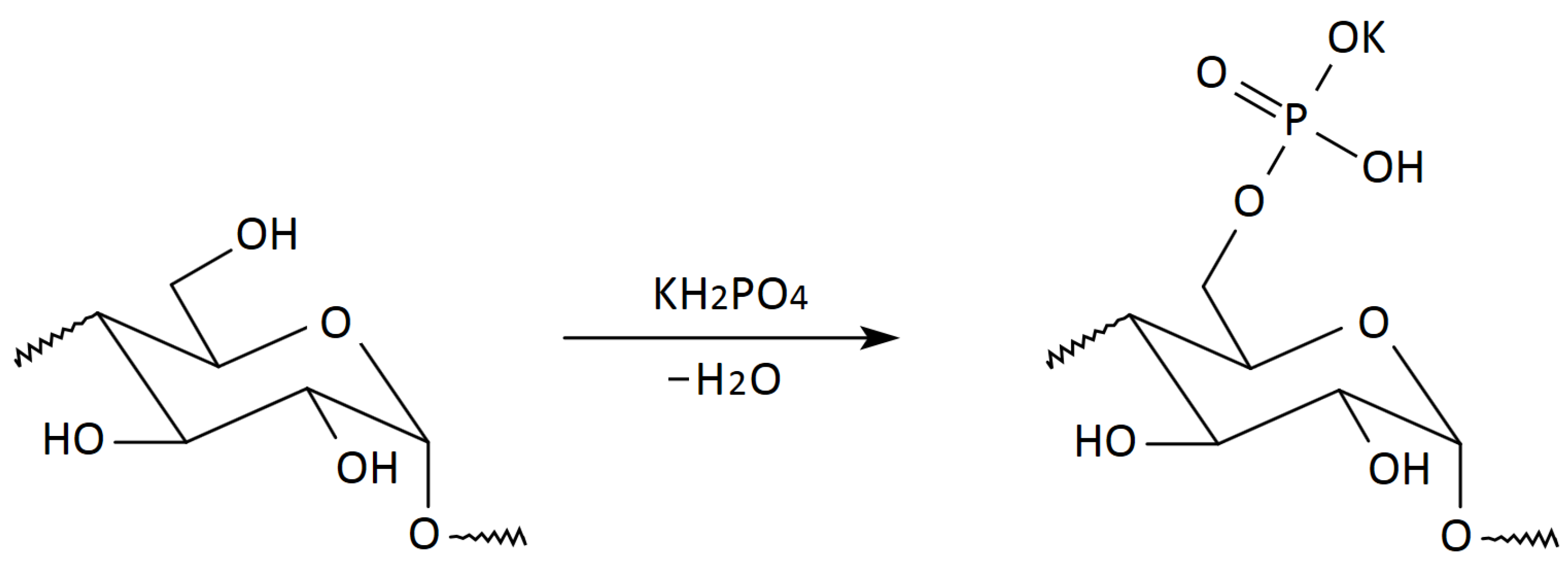
Starch is a versatile and sustainable biopolymer with extensive applications in food and packaging. The advantages of this material include its widespread availability, low cost, biodegradability, and suitability for processing waste starch polymers [30,31]. In order to obtain starch-based SAP, graft polymerisation of native or chemically modified starch is used. Native starch is unsuitable for many applications due to its poor solubility, high viscosity, and high tendency to retrogradation. Chemical modifications of starch are aimed at lowering the gelatinisation temperature, changing the molecular weight of the biopolymer, and introducing groups capable of dissociation [32]. In industry, starch is most commonly modified by oxidation [33], esterification [34,35,36], etherification [37], cross-linking [38], acid and enzymatic hydrolysis [39]. Esterification of starch with phosphoric acid salts allows for obtaining a modified biopolymer containing groups capable of dissociation. Phosphorus is incorporated into starch in two different ways, as mono- or distarch phosphates, depending on the modification conditions. Distarch phosphates form cross-linked structures [40,41]. Monostarch phosphates (Figure 1) have the ability to absorb water; they are hydrogels that can be a substitute for synthetic SAPs [42,43]. Starch-based hydrogels with high swelling capacity, reaching 185 g/g, were prepared by cross-linking monophosphates of various starches with di- and tricarboxylic acids in a semi-dry process [43].
Starch oxidation can be carried out by thermal or chemical methods, using oxidants such as NaOCl or H2O2. In the presence of a catalyst, e.g., iron ions, hydrogen peroxide forms hydroxyl radicals (•OH) as a result of the Fenton reaction, which undergoes a chain reaction, converting hydroxyl groups (-OH) into carbonyl groups. Oxidation most often affects the hydroxyl groups of starch at the C-2, C-3, and/or C-6 positions. In addition to carbonyl groups (-CO), carboxyl groups (-COOH) are also formed. The oxidation process also causes partial depolymerisation of starch [44,45]. The presence of carboxyl groups increases the absorbency of the obtained hydrogels.
Grafted polymerisation involves the radical polymerisation of monomers containing groups capable of forming hydrogen bonds with water, such as acrylamide, acrylic acid, 2-acrylamido-2-methylpropanesulfonic acid, N-isopropylacrylamide in the presence of a biopolymer and difunctional vinyl monomers [19,46]. The obtained products are insoluble in water, biodegradable, and capable of absorbing large amounts of aqueous solutions [21].
Starch-based hydrogels have garnered significant attention in agriculture due to their inherent properties, such as biodegradability and eco-friendliness. However, native starch-based hydrogels are limited by inadequate water absorption capacity, poor mechanical stability, and limited salt tolerance [47].
The work aimed to develop new biodegradable polymers with high absorbency using partially renewable raw materials and to examine soil respiration in the presence of lightly crosslinked acrylic polymer (PAA) and phosphorylated starch-graft-poly(acrylic acid) copolymers (SP-g-PAA). The effects of these additives on the contents of various phosphorus fractions in the soil were also compared.
The addition of hydrogels containing a modified starch copolymer should increase soil microbial activity over a longer period by providing an additional carbon source and increasing the content of available phosphorus fractions. During the literature review, no studies were found on the production of grafted acrylic copolymers using starch phosphate that had been thermally and chemically oxidised. Therefore, the impact of these polymers on soil microbial activity and phosphorus fraction content remains unknown.

2. Materials and Methods

2.1. Study Sites

Samples were collected from six wastelands across two parent material types, namely Loam and Silt. Soil samples were collected in the Małopolskie Province: 50°0′14″ N, 20°15′6″ E (Dąbrowa), 50°0′9″ N, 20°11′21″ E (Pustki), 50°13′53″ N, 20°8′9″ E (Wagonowice), 49°52′1″ N, 19°41′51″ E (Brody), 50°3′42″ N, 19°56′15″ E (Kraków) and Podkarpacie Province 49°36′35″ N, 22°4′39″ E (Strachocina 1, Strachocina 2).

2.2. Soil Sampling and Preparation

Soil samples were collected from the mineral layer at a depth of 0 to 5 cm using an envelope system, which included five subsamples for each laboratory sample. The samples were prepared for testing by removing plant roots and soil fauna. They were then sieved through a 2 mm mesh and divided into two parts. One part was air-dried and used for physical, physicochemical, and chemical analyses, while the other part was stored in a field-moist condition at 4 °C for biochemical analysis. Prior to microbiological analysis, 40 g of dry soil mass with field moisture content was weighed into 125 mL plastic containers (top diameter: 60 mm, bottom diameter: 45 mm, height: 75 mm). Water was then added to 60% of their water-holding capacity (WHC) and pre-incubated at 22 °C for 7 days at a constant soil moisture content (60% WHC).

2.3. Experimental Design

All analysed soil samples were slightly acidic or neutral; none contained carbonates. Each soil sample was divided into four subsamples: one control and three with the addition of the polymers obtained. The polymers were sieved. The particle size used in the study was 0.5 to 1 mm. The PAA, SP1-g-PAA, and SP2-g-PAA dosages were determined to be 0.2% of the weight of each respective soil sample. The application rate of 0.2 wt% was selected based on commonly reported SAP dosages used in soil incubation studies, pot experiments, and agricultural practices, where concentrations typically range from 0.1 to 0.5 wt%. Many SAP producers recommend a dose of 0.2 wt% [46]. During the experiment, soil moisture was maintained at 60% of the original soil’s WHC.

2.4. Synthesis of Cross-Linked Acrylic Polyelectrolytes (PAA)

The synthesis of poly(acrylic acid) (PAA) polymer was carried out by adding an appropriate amount of acrylic acid (AA) monomer to a solution containing KOH to achieve 70%mol acid neutralisation (30%(-COOH)/70%(-COOK+)). A crosslinking agent, N,N-methylenebisacrylamide (NMBA), was added to the mixture. Ammonium persulfate was used as the radical polymerisation initiator (APS) [30,31]. The polymer was dried at 120 °C to a constant weight. The water absorption capacity of the PAA after production was 340 g of demineralised water per gram of hydrogel. The pH of the hydrogel suspension in demineralised water was 7.0 ± 0.5.

2.5. Modification of Starch Phosphates (SP)

The research material consisted of potato starch from PPZ Trzemeszno (Trzemeszno, Poland) that was phosphorylated with a 10% potassium dihydrogen phosphate (KH2PO4) solution at room temperature. The resulting product was air-dried and then oxidised in two stages. Thermal oxidation was carried out in a muffle furnace at 180 °C for 30 min. The resulting product was then subjected to chemical oxidation. Modifications were performed at 40 ± 2 °C by mixing a 40% starch suspension with 30% hydrogen peroxide in the presence of iron sulphate catalyst for 45 min. After this time, the reaction mixture was centrifuged, dried, and ground in a mortar.

2.6. Method for Preparation of Starch Phosphate Graft (Acrylic Acid) Copolymers

Starch copolymers were prepared in two variants. In the first, the modified starch obtained according to Section 2.5. was added to the vinyl monomer mixture as a hydrated suspension before graft copolymerization. In the second variant, dried modified starch (Section 2.5) was added to the monomer solution. The calculated chemical compositions of the polymers obtained are presented in Table 1. The degree of neutralisation of acrylic acid in the polymer is 63%. The percentage of starch relative to acrylic acid is 29.7%.

2.6.1. Starch Phosphate-g-Poly(acrylic acid) Copolymer (SP1-g-PAA)

The synthesis of starch phosphate-g-poly(acrylic acid) (SP1-g-PAA) polymer was carried out by adding an appropriate amount of starch phosphate (prepared in accordance with point 2.4) in aqueous solution (1:1 m:v) and acrylic acid (AA) monomer to a solution containing KOH to achieve 70%mol acid neutralisation (30%(-COOH)/70%(-COOK+)). A crosslinking agent, N,N-methylenebisacrylamide (NMBA), was added to the mixture. Ammonium persulfate was used as the radical polymerisation initiator (APS) [30,31]. The ratio of starch phosphate to acrylic acid was 1:2 (m:m). The polymer was dried at 120 °C to a constant weight. The water absorption capacity of the SP1-g-PAA after production was 210 g of demineralised water per gram of hydrogel. The pH of the hydrogel suspension in demineralised water was 6.1 ± 0.5.

2.6.2. Starch Phosphate-g-Poly(acrylic acid) Copolymer (SP2-g-PAA)

The synthesis of starch phosphate-g-poly(acrylic acid) (SP2-g-PAA) polymer was carried out by adding an appropriate amount of starch phosphate (solid) and acrylic acid (AA) monomer to a solution containing KOH to achieve 70%mol acid neutralisation (30%(-COOH)/70%(-COOK+)). A crosslinking agent, N,N-methylenebisacrylamide (NMBA), was added to the mixture. Ammonium persulfate was used as the radical polymerisation initiator (APS) [30,31]. The ratio of starch phosphate to acrylic acid was 1:2 (m:m). The polymer was dried at 120 °C to a constant weight. The water absorption capacity of the SP1-g-PAA after production was 220 g of demineralised water per gram of hydrogel. The pH of the hydrogel suspension in demineralised water was 6.1 ± 0.5.

2.7. Measurement of the Water Absorption Capacity of the SAP Polymer

To determine the water absorbency (Q) of the SAP polymer, 0.50 g of the test sample was weighed and mixed with 500 g of demineralized water at room temperature (25 °C). It was allowed to swell for 2 h, and then the resulting gel was filtered through a sieve. The mass of the filtrate (mf) was weighed and converted to polymer absorption capacity (g/g H2O) using the following formula:
Q = 500 m f 0.5
Similarly, the absorbency of SAP polymers was measured in aqueous solutions of sodium chloride (0.9% NaCl) and calcium chloride (0.09, 0.45, 0.9, and 1.8 mM CaCl2).

2.8. Surface Analysis by Scanning Electron Microscopy

Starch, phosphate starch, SP1-g-PAA, and SP2-g-PAA polymers were sputtered with gold (2 min, sputter coater 108, Cressington Scientific Instruments Ltd., Watford, UK). Microscopic images of samples were obtained using a scanning electron microscope (SEM, Hitachi 3400-N, Tokyo, Japan), equipped with a detector of secondary electrons (SE), using an accelerating voltage of 5 kV.

2.9. Microbial and Biochemical Analyses

For each soil, four treatments (control, PAA, SP1-g-PAA, SP2-g-PAA) were incubated, and respiration and biochemical parameters were measured at define times point. WHC was determined separately for each soil prior to polymer addition. All samples were adjusted to 60% of their original WHC; moisture content was maintained at a constant level of 60% WHC throughout the experiment. Although SAP addition may differentially affect effective water retention depending on soil texture, moisture levels were standardised relative to the original soil’s WHC.
To measure basal respiration (RESP), samples (40 g d.m.) were unamended for RESP measurements and were incubated at 22 °C in tight jars. The incubation time was 24 h for RESP determination. The jars contained small beakers containing 5 mL of 0.2 M NaOH to trap the evolved CO2. After the jars were opened, 2 mL of 20% BaCl2 was added to the NaOH; the excess hydroxide was titrated with 0.1 M HCl in the presence of phenolphthalein as an indicator. The released CO2 reacts with NaOH. An excess of 20% barium chloride (BaCl2) was also added to precipitate barium carbonate BaCO3 from sodium carbonate Na2CO3.
The content of microbial biomass P (Pmic) was measured according to Zhang and Kovar [48] by the fumigation–extraction method. Briefly, moist fumigated (2 mL CHCl3 for 24 h) and non-fumigated soils (1 g dry weight) were shaken for 16 h in 0.5 M NaHCO3. The extracted P was measured colourimetrically. The Pmic was calculated as the difference between the amounts of P in the fumigated and non-fumigated samples using a correction factor Kp = 0.4.

2.10. Measurement of Chemical and Physical Properties

The samples were analysed for total carbon concentration using the Eltra 500 CS analyser. The inorganic C content was calculated from the carbonate content measured by the gas-volumetric Scheibler method. The organic C (Corg) content was calculated as the difference between total C and inorganic C. Total nitrogen (Nt) was measured by the Kjeldahl method.
Total phosphorus (Pt) in soil samples before polymer addition was determined colourimetrically by the molybdate blue method from aqua regia extracts by Jasco 730 UV–Vis Spectrophotometer.
Labile Organic P fractionation was carried out according to Bowman and Cole [49] method, as described in Zhang and Kovar [48]. Briefly, 1 g of soil was sequentially extracted with 0.5 M NaHCO3 at pH = 8.5. The 0.5 M NaHCO3 extract contained a labile P fraction. The extracts were centrifuged at 4000 rpm for 10 min, filtered, and measured for Labile Inorganic P (Pi) and Labile Total P (PT) by the molybdate colourimetric method. Labile Total P (PT) in the extracts was determined after digestion with 2.5 M H2SO4 and potassium persulfate. Labile Organic P (Porg) in the extracts was calculated as the difference between PT and Pi.
The WHC was determined gravimetrically according to Schlichting and Blume [50]. The soil texture of the samples was determined hydrometrically. The content of total C was measured by dry combustion using (CS Eltra 500). The pH of the samples was measured in water (soil/liquid ratio of 1:5, w:v) using a digital pH metre (Elmetron CPC-401).

2.11. Statistical Analysis

All analyses were performed with Statgraphic Centurion 19 (Statgraphics Technologies, Inc. P.O. Box 134, The Plains, VA, USA 20198). Data were analysed using one-way analysis of variance (ANOVA), with polymer treatment as the fixed factor. When significant effects were detected (p < 0.05), Tukey’s HSD post hoc test was applied. Normality and homogeneity of variance were verified prior to analysis. Soil samples were treated as independent biological replicates.

3. Results and Discussion

3.1. Physical and Chemical Properties of SP1-g-PAA and SP2-g-PAA Polymers

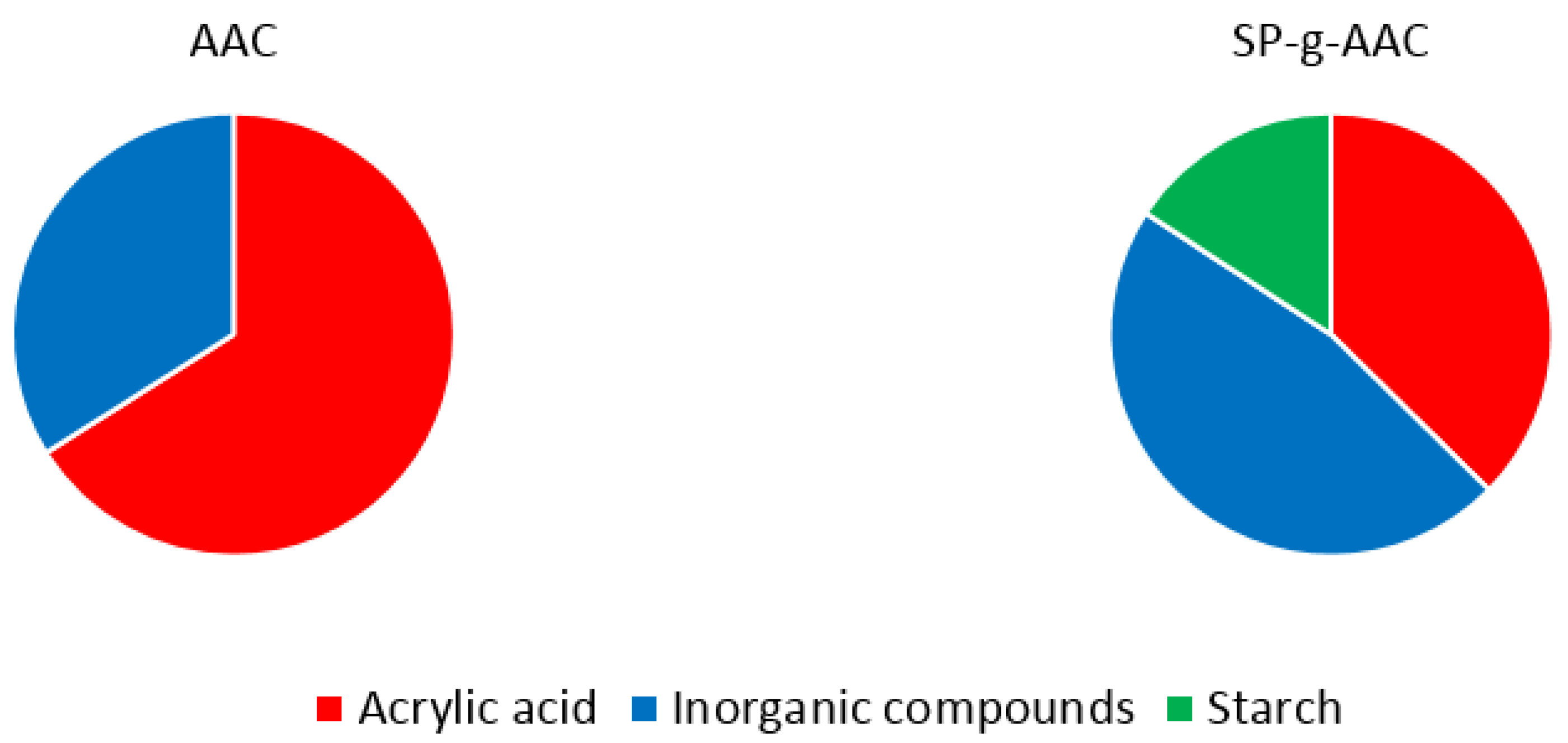
Superabsorbents available on the market are largely derived from acrylic acid and its salts, as well as acrylamide. These substances are products of crude oil and natural gas processing, which are non-renewable resources. In the case of PAA obtained according to the procedure described in Section 2.4, acrylic acid constitutes approximately 66% of the dry mass, with the remainder consisting of potassium ions and auxiliary substances used to initiate the free-radical reaction. Copolymerization of starch with acrylic acid is a complex process because starch does not swell in an acrylic acid solution. To obtain the copolymer, a starch paste is first prepared, to which vinyl monomers are added [19]. The addition of water, necessary for gelatinization, increases the energy required to evaporate water from the finished product. The gelatinization temperature and viscosity of aqueous solutions can be lowered by chemically modifying starch [33]. Esterification of starch with potassium hydrogen phosphate, followed by oxidation and graft copolymerization with partially neutralised acrylic acid, yielded highly absorbent SAP. The amount of acrylic acid required for synthesis was reduced to 37% of the dry weight of the product (Figure 2).

3.1.1. Scanning Electron Microscopy

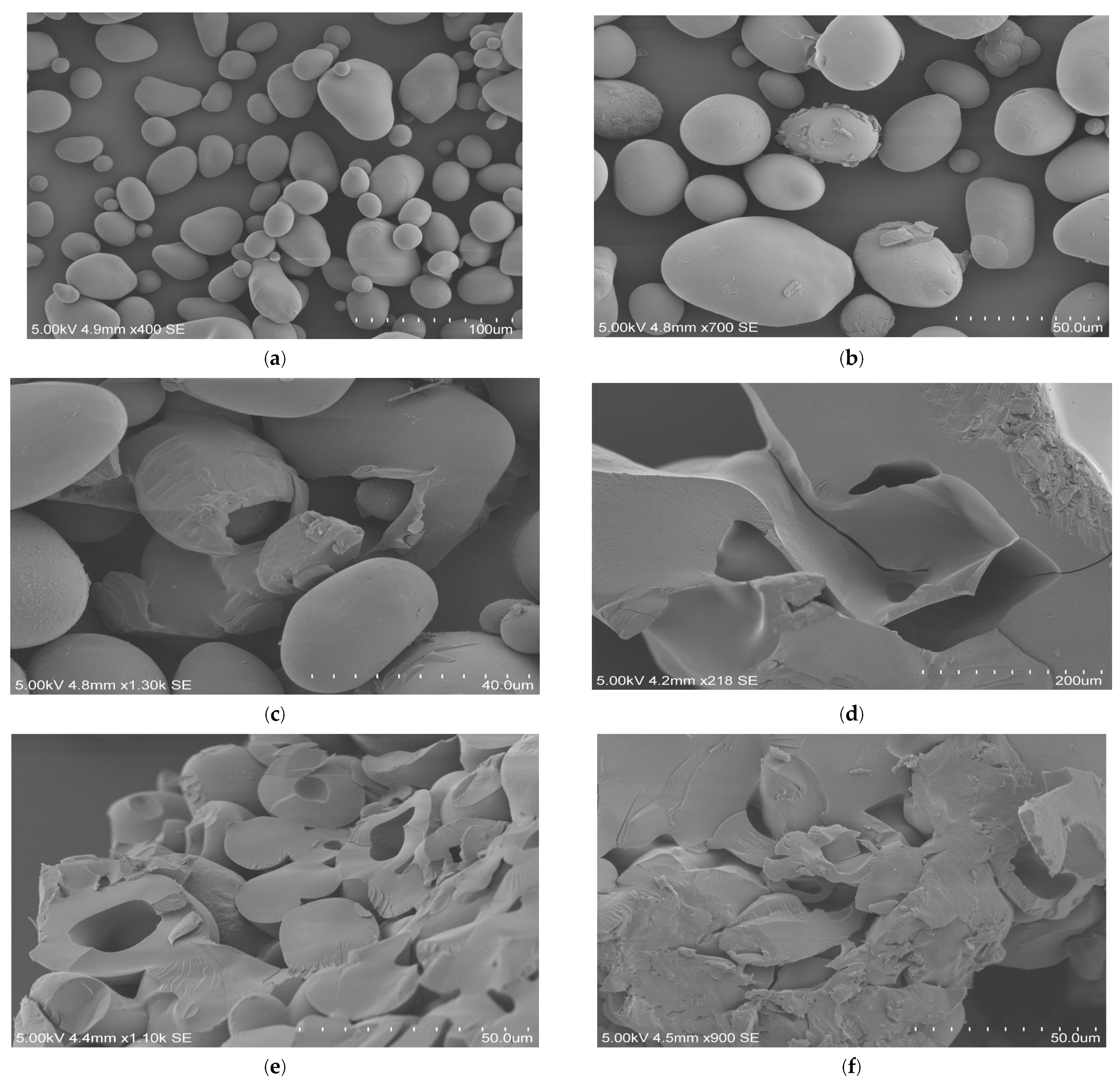
The structure of native starch (Figure 3a), modified starch (Figure 3b,c), and SP1-g-PAA (Figure 3d) and SP2-g-PAA (Figure 3e,f) copolymers was examined using an electron microscope. After reaction with potassium dihydrogen phosphate and oxidation (point 2.4), the starch globules remained practically unchanged in terms of their external appearance. After drying, small crystals of potassium dihydrogen phosphate are visible in SEM images (Figure 3b). Some starch globules were disrupted under the SEM vacuum, revealing changes in the internal structure of starch after reaction with phosphate and after oxidation (Figure 3c). The dried modified starch (point 2.4) was divided into two portions. Water was added to the first portion, and the mixture was subjected to graft polymerisation (point 2.5.1) to obtain the SP1-g-PAA polymer. In contrast, the second portion, in the dried form, was added to the acrylic monomer mixture (point 2.5.2) to obtain the SP2-g-PAA polymer. In the first case, starch gelatinisation occurred during polymerisation, yielding a homogeneous SP1-g-PAA copolymer (Figure 3d). In the second case, chemically modified starch grains partially absorbed the solution containing acrylic monomers and largely retained the shape of starch granules after copolymerization with vinyl monomers (Figure 3e). The heat of acrylic acid polymerisation caused the temperature to rise, water vapour to form, and carbon dioxide to be released, also inside the starch granules. The product obtained was more porous than SP1-g-PAA but less homogeneous, as it contained both solid polymer fractions (Figure 3f) and starch granules. Increasing porosity increases the gel’s absorbency and accelerates swelling, as the absorbed liquid can easily penetrate through the resulting micropores [51]. In the case of a solid polymer, swelling is limited by water diffusion in the developing hydrogel [52].

3.1.2. SAPs Absorption in Distilled Water and Solutions of CaCl2 and 0.9% NaCl

The absorbency of the obtained polymers in distilled water ranged from 340 to 210 g/g (water/polymer), with PAA showing the highest absorbency and SP1-g-PAA the lowest. Comparing the SEM structure of SP1-g-PAA and SP2-PAA polymers (Figure 3d,e), the SP2-PAA polymer had significantly more cracks and voids, which, with the same proportion of starch and potassium acrylate, increases its absorbency. Pores provide channels for water permeation into the network, and the interaction of the hydrophilic groups with water endows the hydrolysed copolymer with high water absorption properties [19,53].
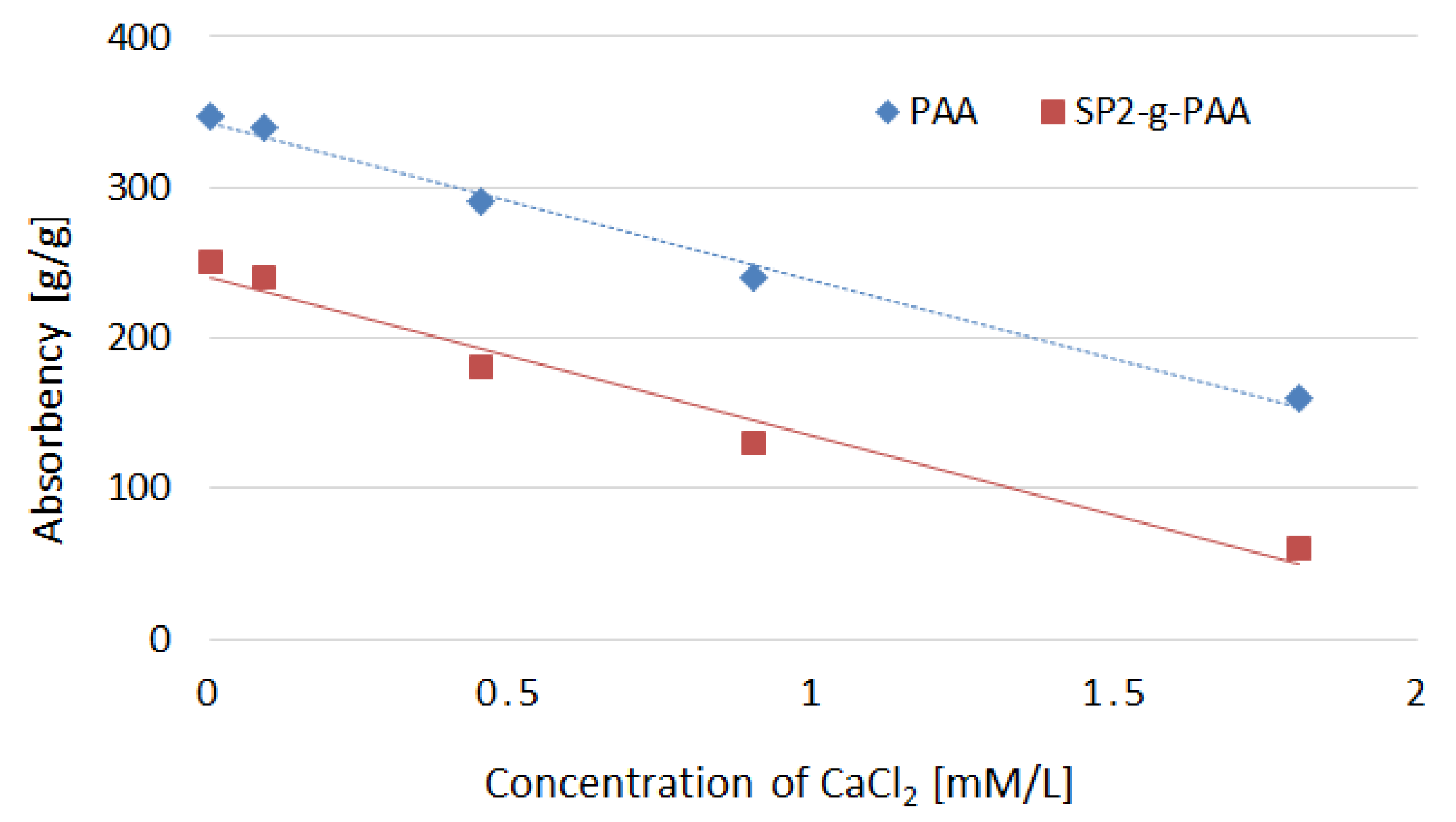
The absorbency of the obtained copolymers in 0.09, 0.45, 0.9, and 1.8 mM CaCl2 solutions was also checked. A decrease in absorbency was observed for both PAA and SP2-g-PAA. The higher the calcium salt concentration, the lower the absorbency of both polymers. The results are presented in Figure 4. In the case of the PAA polymer, a linear relationship was observed between absorbency reduction and increasing calcium ion concentration. In the case of the SP2-g-PAA polymer, at low Ca2+ ion concentrations, absorbency decreased approximately twice as fast as in the PAA samples. This may be due to the greater porosity of SP2-g-PAA. The presence of soluble phosphates in the SP2-g-PAA polymer could potentially stabilise the polymer’s absorption capacity in the presence of Ca2+ ions. Acrylic polymers bind calcium ions from the solution [54]. Calcium salts present in the soil solution significantly reduce the absorbency of ionic polymers by inducing secondary cross-linking of the hydrogel and shrinkage of the polymer network [55]. Phosphates react with calcium ions (Equation (2)) contained in the soil solution to precipitate sparingly soluble calcium phosphates and should limit the secondary cross-linking of SAP.
C a 2 + + H 2 P O 4 = C a H P O 4 + H +
In the tested samples containing modified starch, oxidation contributes to the formation of carboxyl groups, while in the reaction with potassium dihydrogen phosphate, phosphate groups are attached to the biopolymer (Figure 4). These functional groups dissociate in aqueous solution, and multivalent ions, such as Ca2+, also cross-link the hydrogel, reducing its absorbency, as observed for poly(acrylic acid) derivatives.
The absorbency of both polymers in 0.9% NaCl was low, amounting to 50 g/g for PAA and 40 g/g for SP2-g-PAA, respectively. The results indicate poor salinity resistance of the obtained polymers. The addition of sodium chloride contributes to an increase in the ionic strength of the solution, which leads to a decrease in absorbency [55]. This phenomenological occurrence can be attributed to the effect of the additional cations, which reduce anion–anion electrostatic repulsion, thereby decreasing the osmotic pressure difference between the polymer networks and the external solution. The difference in mobile-ion concentration between the polymer networks and the liquid phases decreases, thereby reducing absorbency capacity [56].

3.1.3. The Content of Various Phosphorus Fractions in the Obtained Polymers

The labile total phosphorus (PT) and labile inorganic phosphorus (Pi) content of the prepared oxidised starch phosphate and the obtained polymers, SP1-g-PAA and SP2-g-PAA, were determined. The labile total phosphorus content in SP was 17,408 μg/g, in SP1-g-PAA polymer—4547 μg/g, and in SP2-g-PAA polymer—5363 μg/g. The Pi content was 430 μg/g (SP), 135 μg/g (SP1-g-PAA), and 146 μg/g (SP2-g-PAA), respectively.

3.2. The Effect of PAA and SP-g-PAA Polymers on Microbial Activity and the Content of Various Phosphorus Fractions in Soil

3.2.1. Physical and Chemical Properties of Soils

To study the effect of various polymers, soils of similar particle size fractions from two regions of Poland were selected. All samples came from agricultural wasteland. According to the USDA classification, five soils were classified as silt loam or loam, and one as silt. The percentage of organic carbon (Corg) in the soil samples averaged 2.29 ± 1.02 (1.24–4.19%). The ratio of organic carbon to total nitrogen (Corg/Nt) averaged 11.1 ± 2.0. Total phosphorus (Pt) ranged from 295 to 749 μg/g. All data are presented in Table 2.

3.2.2. Soil Respiration with Polymer Additives

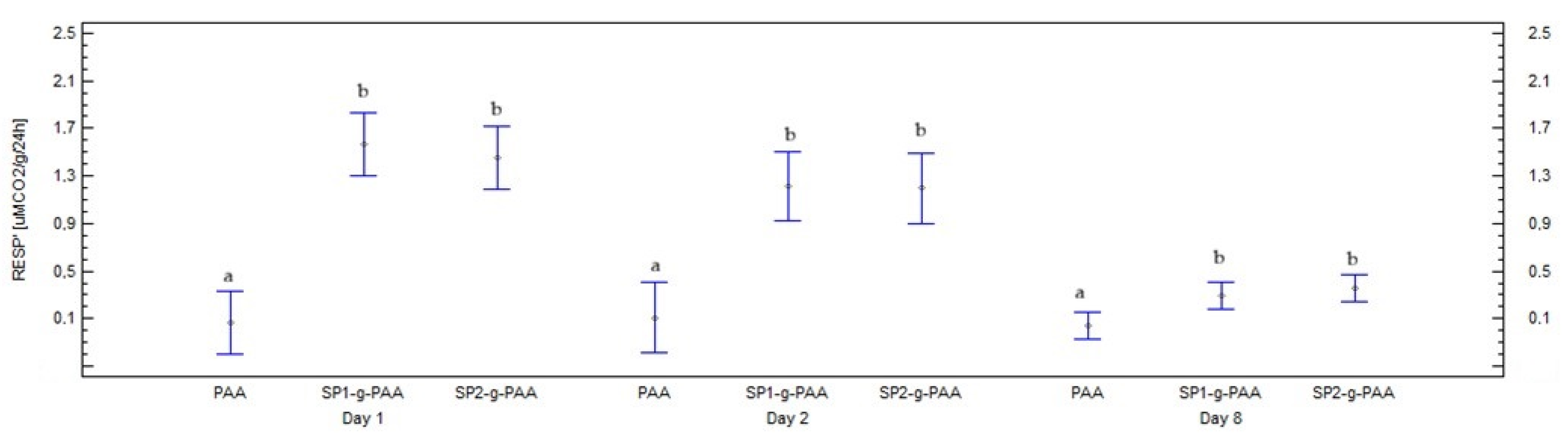
During the experiment, respiration was measured in all samples over 78 days. The average respiration results are presented in Table 3. The addition of starch copolymers (SP-g-PAA) increased respiration compared to the control on the first day. The large standard deviations arise from differences in the chemical and microbiological compositions of the soils tested at various locations.
To eliminate differences in the chemical and microbiological composition of soils, the respiration of soils with polymer additions was compared with the control for each soil. The difference between the respiration of soils with SAP polymer additions (PAA, SP1-g-PAA, and SP2-g-PAA) and the soil respiration (control) was calculated according to Equation (3).
RESP’ = RESP (soil + SAP) − RESP (control)
Soils with the addition of SP1-g-PAA and SP2-g-PAA polymers showed higher respiration than soils with the addition of PAA. Higher values were observed during the initial incubation period, on days 1, 2, and 8, as shown in Figure 5.
During soil incubation, carbon dioxide can be released through chemical and biochemical reactions. If carbonates are present in the soil, carbon dioxide influences their decomposition [57]. Biochemical reactions, which are the primary source of CO2 emissions from soils, are driven by the presence of living organisms, including microorganisms. Biodegradable polymers in soil serve as substrates for microbial colonisation and activity, thereby increasing soil respiration as microorganisms decompose the material’s organic components, including modified starch. An increase in soil respiration may result from the combined effects of increased substrate availability, microbial biomass growth, and changes in soil structure following polymer application [58,59].
Few studies focus on the biodegradation of superabsorbents directly in soil. Research on polymer transformations and their long-term impacts on the soil environment remains insufficient [60,61]. Hydrogels based on starch [62,63,64] and cellulose copolymers [65,66,67] are biodegradable. In studies on the biodegradability of starch films prepared from pure starch, the highest microbiological respiration was observed on the 10th day after the films were applied to the soil [68]. The composition and structure of the hydrogel affect the rate of starch degradation. A high degree of cross-linking and chemical modification inhibits the rate of decomposition. Starch hydrogels undergo significant (65%) biodegradation within 45 days [69]. Starch hydrogels modified with tragacanth gum decomposed completely in the soil after approximately 21–28 days [70]. Biopolymers can be degraded by microbial enzymatic activity, or their polymer chains can be broken down by processes such as chemical hydrolysis [20].
For the respiration results obtained, the percentage degradation of starch during incubation was calculated from the difference in respiration between soils with the addition of SP-g-PAA starch copolymer and synthetic PAA. The calculations assumed that the respiration of natural soil components does not depend on the gel’s chemical composition and that the microbial decomposition of starch accounts for the higher respiration observed in samples with starch copolymer addition. From one mole of glucopyranose meres, after enzymatic hydrolysis by microorganism enzymes, six moles of carbon dioxide are produced (Equation (4)).
( C 6 H 10 O 5 ) n + 6 n O 2 = 6 n C O 2 + 5 n H 2 O
It was also assumed that the metabolised carbohydrate was used entirely for energy production, without producing biomass (Equation (5)).
P L S = ( R E S P S P g P A A R E S P P A A ) × 163.14 6 × 16 × 0.2
  • PLS—Degradation of starch hydrogel [%/24 h]
  • RESPSP-g-PAA—Soil respiration with SP-g-PAA added [μmol CO2/g/24 h]
  • RESPPAA—Soil respiration with PAA added [μmol CO2/g/24 h]
  • 162.14—Molar mass of glucopyranose unit (C6H10O5) [g/mol]
  • 6—Stoichiometric coefficient
  • 0.2—Percentage of SAP content in the soil [%]
  • 16—Percentage of starch in SAP [%]
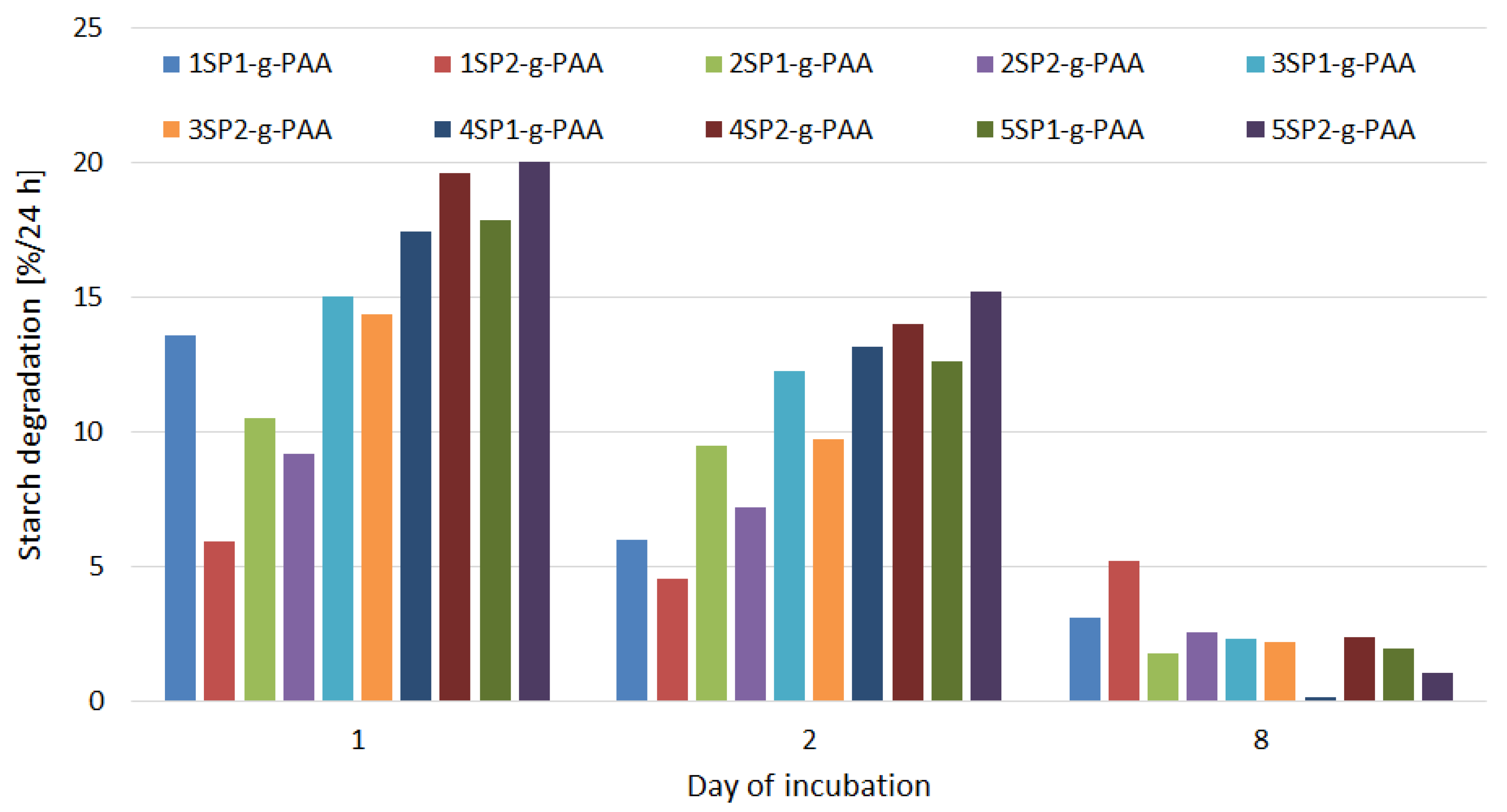
The amount of decomposed starch was estimated from the amount of CO2 released, using Formula (5). On the first day of incubation, starch degradation was highest, ranging from 5.9 to 20.0% per 24 h (Figure 6). On the second day, starch degradation in all samples decreased to values ranging from 4.3 to 15.2% per 24 h. On the eighth day, it did not exceed 6.6% per 24 h. In the samples tested on day 36 and later, the difference in mass degradation between the starch and acrylic hydrogel samples (RESPSP-g-PAA–RESPPAA) was slight, and the estimated starch degradation ranged from 0.1 to a maximum of 1.5% per 24 h of the initial amount of biopolymer in all tested soil samples.
Assuming that starch degradation occurs most rapidly during the first day of incubation (Figure 6) and then decreases linearly, it was estimated that after 8 days, approximately 40–80% of the starch hydrogel had degraded. According to this assumption, after 2 weeks of incubation, the reduction in starch hydrogel content does not differ significantly from the results obtained by the eighth day of incubation and ranges from 47 to 80 results indicate that most of the starch in the hydrogel is decomposed by microbes two weeks after the gel is introduced into moist soil. Differences in decomposition rates likely depend on the composition of local microbial populations in the tested soils. Current research indicates that starch hydrogels are biodegradable [19,20,28,29], but no experiments have examined how quickly starch hydrolysis and decomposition occur in the soil environment. Of course, the above estimates of the amount of starch decomposed by soil microflora are subject to error resulting from the initial assumptions. The type of hydrogel used may affect the respiration of natural soil components. Synthetic hydrogel (PAA) does not necessarily affect soil respiration in the same way as SP-g-PAA copolymer. If such a difference existed, the estimated starch decomposition results would be overestimated. Secondly, during starch decomposition, in addition to carbon dioxide, organic compounds are formed as by-products of the biosynthesis of soil microorganisms, and part of the carbon that makes up the starch (SP-g-PAA) is converted into carbon that makes up the biomass of microorganisms. This mechanism increases the estimated percentage degradation of starch hydrogel in soil, but it can also positively affect its structure and water-storage capacity.

3.2.3. Phosphorus Fraction Content in Soil After the Incubation Period

Assuming a considerable degradation of modified starch, the content of labile phosphorus in the soil was also examined after the experiment. Samples were collected solely for soil without polymer additives. The results for Pi, PT, Porg, and Pmic showed no differences between soils with and without polymer additives (control). The test results are presented in Table 4.
Spohn and Stendahl [71] concluded that Porg concentration was strongly dependent on soil texture. In the soil samples we examined, no correlation was found between the percentage of sand or dust content and the analysed phosphorus fractions. No statistically significant relationships were found between the individual phosphorus fractions studied and the total nitrogen or carbon content in the soil.

4. Conclusions

Starch subjected to esterification and oxidation with heat and hydrogen peroxide yields new biodegradable polymers with high absorbency. The use of natural biopolymers reduces the consumption of acrylic acid produced from petroleum products for SAP production. It enables the reduction in non-renewable resource consumption within the framework of sustainable development. Two starch-phosphates-g-poly (acrylic acid) (SP-g-PAA) copolymers with different microstructures but similar physicochemical properties were obtained. The modified starch absorbs a solution containing vinyl monomers, thereby reducing water consumption in production and limiting the energy required to dry the copolymer. The absorbency of SP-g-PAA is 210 g/g, which is 38% lower than that of SAP obtained from acrylic acid under similar synthesis conditions. The polymer materials were introduced into the soil at a concentration of 0.2% and incubated, with respiration (i.e., the amount of carbon dioxide released) measured throughout the 78-day experiment. The addition of SAP increases the soil’s water-holding capacity and respiration. The SP-g-PAA polymers serve as slow-release sources of potassium and phosphorus ions. These elements were bound to the polymer network by ionic and covalent bonds. Analysis of the results shows that within two weeks, 47–80% of the starch hydrogel undergoes microbial degradation. As the SAP decomposes, the mineral components will be gradually released into the environment. It should be noted that the findings of this study are limited to slightly acidic to neutral, carbonate-free soils. The behaviour of starch-phosphates-g-poly (acrylic acid) copolymers and associated phosphorus dynamics may differ substantially in calcareous or strongly acidic soils, warranting separate investigation.

Author Contributions

Conceptualization, K.S. and P.S.; methodology, K.S. and P.S.; formal analysis, K.S.; resources, K.S. and P.S.; writing—original draft preparation, K.S. and P.S.; writing—review and editing, K.S. and P.S.; visualisation, K.S. and P.S.; supervision, K.S.; project administration, K.S.; funding acquisition, K.S. Authors’ contributions: K.S. (60%); P.S. (40%). All authors have read and agreed to the published version of the manuscript.

Funding

Research project supported as part of research related to a grant from the Ministry of Science and Higher Education (Poland) for AGH University of Krakow to maintain scientific potential (Contract no. 16.16.150.545).

Institutional Review Board Statement

Not applicable.

Informed Consent Statement

Not applicable.

Data Availability Statement

The original contributions presented in this study are included in the article. Further inquiries can be directed to the corresponding author.

Conflicts of Interest

The authors declare no conflicts of interest.

Abbreviations

The following abbreviations are used in this manuscript:
Corgorganic carbon content
Nttotal phosphorus content
PAApoly(acrylic acid), lightly crosslinked
Pilabile inorganic phosphorus content
Pmicmicrobial phosphorus
Porglabile organic phosphorus content
Pttotal phosphorus content
PTlabile total phosphorus content
RESPsoil respiration
SAPsuperabsorbent polymer
SEMscanning electron microscope
SP-g-PAAstarch-phosphates-g-poly(acrylic acid), lightly crosslinked

References

  1. Mahgoub, M.; ElBelasy, A.; Abdelmonem, Y.; Soussa, H.; Elalfy, E. Impact of Urbanization and Climate Change on Soil Erosion in Semi-Arid Basins. Theor. Appl. Climatol. 2025, 156, 410. [Google Scholar] [CrossRef]
  2. Li, Y.; Jin, Y.; Wang, W.; Zhu, W. Effects of Climate and Land Use/Cover Change on Soil Erosion in the Qinba Mountains. J. Geogr. Sci. 2025, 35, 1459–1478. [Google Scholar] [CrossRef]
  3. Bibi, F.; Rahman, A. An Overview of Climate Change Impacts on Agriculture and Their Mitigation Strategies. Agriculture 2023, 13, 1508. [Google Scholar] [CrossRef]
  4. Alkorta, I.; Epelde, L.; Garbisu, C. Environmental Parameters Altered by Climate Change Affect the Activity of Soil Microorganisms Involved in Bioremediation. FEMS Microbiol. Lett. 2017, 364, fnx200. [Google Scholar] [CrossRef]
  5. Poreda, A.; Tuszyński, T.; Zdaniewicz, M.; Sroka, P.; Jakubowski, M. Support Materials for Yeast Immobilization Affect the Concentration of Metal Ions in the Fermentation Medium. J. Inst. Brew. 2013, 119, 164–171. [Google Scholar] [CrossRef]
  6. Sroka, P.; Satora, P.; Tarko, T.; Duda-Chodak, A. The Influence of Yeast Immobilization on Selected Parameters of Young Meads. J. Inst. Brew. 2017, 123, 289–295. [Google Scholar] [CrossRef]
  7. Ali, A.; Ahmed, S. Recent Advances in Edible Polymer Based Hydrogels as a Sustainable Alternative to Conventional Polymers. J. Agric. Food Chem. 2018, 66, 6940–6967. [Google Scholar] [CrossRef]
  8. Krasnopeeva, E.L.; Panova, G.G.; Yakimansky, A.V.; Krasnopeeva, E.L.; Panova, G.G.; Yakimansky, A.V. Agricultural Applications of Superabsorbent Polymer Hydrogels. Int. J. Mol. Sci. 2022, 23, 15134. [Google Scholar] [CrossRef]
  9. Denagbe, W.; Mazet, E.; Desbrières, J.; Michaud, P. Superabsorbent Polymers: Eco-Friendliness and the Gap between Basic Research and Industrial Applications. React. Funct. Polym. 2025, 214, 106278. [Google Scholar] [CrossRef]
  10. Nyyssölä, A.; Ahlgren, J. Microbial Degradation of Polyacrylamide and the Deamination Product Polyacrylate. Int. Biodeterior. Biodegrad. 2019, 139, 24–33. [Google Scholar] [CrossRef]
  11. Oksińska, M.P.; Magnucka, E.G.; Lejcuś, K.; Pietr, S.J. Biodegradation of the Cross-Linked Copolymer of Acrylamide and Potassium Acrylate by Soil Bacteria. Environ. Sci. Pollut. Res. Int. 2016, 23, 5969–5977. [Google Scholar] [CrossRef] [PubMed]
  12. Oksińska, M.P.; Magnucka, E.G.; Lejcuś, K.; Jakubiak-Marcinkowska, A.; Ronka, S.; Trochimczuk, A.W.; Pietr, S.J. Colonization and Biodegradation of the Cross-Linked Potassium Polyacrylate Component of Water Absorbing Geocomposite by Soil Microorganisms. Appl. Soil Ecol. 2019, 133, 114–123. [Google Scholar] [CrossRef]
  13. Gaytán, I.; Burelo, M.; Loza-Tavera, H. Current Status on the Biodegradability of Acrylic Polymers: Microorganisms, Enzymes and Metabolic Pathways Involved. Appl. Microbiol. Biotechnol. 2021, 105, 991–1006. [Google Scholar] [CrossRef] [PubMed]
  14. Smagin, A.V.; Sadovnikova, N.B.; Belyaeva, E.A.; Korchagina, C.V. Biodegradability of Gel-Forming Superabsorbents for Soil Conditioning: Kinetic Assessment Based on CO2 Emissions. Polymers 2023, 15, 3582. [Google Scholar] [CrossRef]
  15. Guo, J.; Shi, J.; Xu, L.; Zhang, X.; Han, F.; Xu, M. Study on Preparation and Properties of Super Absorbent Gels of Homogenous Cotton Straw-Acrylic Acid-Acrylamide by Graft Copolymerization. Gels 2025, 11, 583. [Google Scholar] [CrossRef]
  16. Arredondo, R.; Yuan, Z.; Sosa, D.; Johnson, A.; Beims, R.F.; Li, H.; Wei, Q.; Xu, C.C. Performance of a Novel, Eco-Friendly, Cellulose-Based Superabsorbent Polymer (Cellulo-SAP): Absorbency, Stability, Reusability, and Biodegradability. Can. J. Chem. Eng. 2023, 101, 1762–1771. [Google Scholar] [CrossRef]
  17. Hao, Y.; Qu, J.; Tan, L.; Liu, Z.; Wang, Y.; Lin, T.; Yang, H.; Peng, J.; Zhai, M. Synthesis and Property of Superabsorbent Polymer Based on Cellulose Grafted 2-Acrylamido-2-Methyl-1-Propanesulfonic Acid. Int. J. Biol. Macromol. 2023, 233, 123643. [Google Scholar] [CrossRef]
  18. Dodangeh, F.; Nabipour, H.; Rohani, S.; Xu, C. Applications, Challenges and Prospects of Superabsorbent Polymers Based on Cellulose Derived from Lignocellulosic Biomass. Bioresour. Technol. 2024, 408, 131204. [Google Scholar] [CrossRef]
  19. Czarnecka, E.; Nowaczyk, J. Synthesis and Characterization Superabsorbent Polymers Made of Starch, Acrylic Acid, Acrylamide, Poly(Vinyl Alcohol), 2-Hydroxyethyl Methacrylate, 2-Acrylamido-2-Methylpropane Sulfonic Acid. Int. J. Mol. Sci. 2021, 22, 4325. [Google Scholar] [CrossRef]
  20. Czarnecka, E.; Nowaczyk, J. Semi-Natural Superabsorbents Based on Starch-g-Poly(Acrylic Acid): Modification, Synthesis and Application. Polymers 2020, 12, 1794. [Google Scholar] [CrossRef]
  21. Zhang, S.; Wang, W.; Wang, H.; Qi, W.; Yue, L.; Ye, Q. Synthesis and Characterisation of Starch Grafted Superabsorbent via 10 MeV Electron-Beam Irradiation. Carbohydr. Polym. 2014, 101, 798–803. [Google Scholar] [CrossRef]
  22. Abidin, A.; Puspasari, T.; Pratama, H. Utilization of Cassava Starch in Copolymerisation of Superabsorbent Polymer Composite (SAPC). J. Eng. Technol. Sci. 2014, 46, 286–298. [Google Scholar] [CrossRef]
  23. Zdanowicz, M.; Schmidt, B.; Spychaj, T. Starch Graft Copolymers as Superabsorbents Obtained via Reactive Extrusion Processing. Pol. J. Chem. Technol. 2010, 12, 14–17. [Google Scholar] [CrossRef]
  24. Witono, J.R.; Noordergraaf, I.W.; Heeres, H.J.; Janssen, L.P.B.M. Water Absorption, Retention and the Swelling Characteristics of Cassava Starch Grafted with Polyacrylic Acid. Carbohydr. Polym. 2014, 103, 325–332. [Google Scholar] [CrossRef] [PubMed]
  25. Zhao, C.; Zhang, M.; Liu, Z.; Guo, Y.; Zhang, Q. Salt-Tolerant Superabsorbent Polymer with High Capacity of Water-Nutrient Retention Derived from Sulfamic Acid-Modified Starch. ACS Omega 2019, 4, 5923–5930. [Google Scholar] [CrossRef]
  26. Datta Chaudhuri, S.; Mandal, A.; Dey, A.; Chakrabarty, D. Tuning the Swelling and Rheological Attributes of Bentonite Clay Modified Starch Grafted Polyacrylic Acid Based Hydrogel. Appl. Clay Sci. 2020, 185, 105405. [Google Scholar] [CrossRef]
  27. Ismail, H.; Irani, M.; Ahmad, Z. Starch-Based Hydrogels: Present Status and Applications. Int. J. Polym. Mater. Polym. Biomater. 2013, 62, 411–420. [Google Scholar] [CrossRef]
  28. Zou, W.; Liu, X.; Yu, L.; Qiao, D.; Chen, L.; Liu, H.; Zhang, N. Synthesis and Characterization of Biodegradable Starch-Polyacrylamide Graft Copolymers Using Starches with Different Microstructures. J. Polym. Environ. 2013, 21, 359–365. [Google Scholar] [CrossRef]
  29. Lanthong, P.; Nuisin, R.; Kiatkamjornwong, S. Graft Copolymerization, Characterization, and Degradation of Cassava Starch-g-Acrylamide/Itaconic Acid Superabsorbents. Carbohydr. Polym. 2006, 66, 229–245. [Google Scholar] [CrossRef]
  30. Paul, A.; Roychowdhury, V.; Ghosh, S. Starch in Food Applications. In Biopolymers in Pharmaceutical and Food Applications; John Wiley & Sons, Ltd.: Hoboken, NJ, USA, 2024; pp. 1–24. [Google Scholar]
  31. Zhu, F. Starch Based Films and Coatings for Food Packaging: Interactions with Phenolic Compounds. Food Res. Int. 2025, 204, 115758. [Google Scholar] [CrossRef]
  32. Compart, J.; Singh, A.; Fettke, J.; Apriyanto, A. Customizing Starch Properties: A Review of Starch Modifications and Their Applications. Polymers 2023, 15, 3491. [Google Scholar] [CrossRef] [PubMed]
  33. Pietrzyk, S.; Fortuna, T. Oxidation-Induced Changes in the Surface Structure of Starch Granules. Pol. J. Food Nutr. Sci. 2005, 55, 159–164. [Google Scholar]
  34. Otache, M.A.; Duru, R.U.; Achugasim, O.; Abayeh, O.J. Advances in the Modification of Starch via Esterification for Enhanced Properties. J. Polym. Environ. 2021, 29, 1365–1379. [Google Scholar] [CrossRef]
  35. Miladinov, V.D.; Hanna, M.A. Starch Esterification by Reactive Extrusion. Ind. Crops Prod. 2000, 11, 51–57. [Google Scholar] [CrossRef]
  36. Zhang, C.; Du, M.; Cao, T.; Xu, W. The Effect of Acetylation on the Physicochemical Properties of Chickpea Starch. Foods 2023, 12, 2462. [Google Scholar] [CrossRef]
  37. Pooresmaeil, M.; Namazi, H. Developments on Carboxymethyl Starch-Based Smart Systems as Promising Drug Carriers: A Review. Carbohydr. Polym. 2021, 258, 117654. [Google Scholar] [CrossRef]
  38. Punia Bangar, S.; Sunooj, K.V.; Navaf, M.; Phimolsiripol, Y.; Whiteside, W.S. Recent Advancements in Cross-Linked Starches for Food Applications—A Review. Int. J. Food Prop. 2024, 27, 411–430. [Google Scholar] [CrossRef]
  39. Miłek, J.; Lamkiewicz, J. The Starch Hydrolysis by α-Amylase Bacillus spp.: An Estimation of the Optimum Temperatures, the Activation and Deactivation Energies. J. Therm. Anal. Calorim. 2022, 147, 14459–14466. [Google Scholar] [CrossRef]
  40. Błaszczak, W.; Bidzińska, E.; Dyrek, K.; Fornal, J.; Michalec, M.; Wenda, E. Effect of Phosphorylation and Pretreatment with High Hydrostatic Pressure on Radical Processes in Maize Starches with Different Amylose Contents. Carbohydr. Polym. 2011, 85, 86–96. [Google Scholar] [CrossRef]
  41. Passauer, L.; Bender, H.; Fischer, S. Synthesis and Characterisation of Starch Phosphates. Carbohydr. Polym. 2010, 82, 809–814. [Google Scholar] [CrossRef]
  42. Passauer, L.; Liebner, F.; Fischer, K. Starch Phosphate Hydrogels. Part I: Synthesis by Mono-Phosphorylation and Cross-Linking of Starch. Starch-Stärke 2009, 61, 621–627. [Google Scholar] [CrossRef]
  43. Passauer, L.; Liebner, F.; Fischer, K. Starch Phosphate Hydrogels. Part II: Rheological Characterization and Water Retention. Starch-Stärke 2009, 61, 628–633. [Google Scholar] [CrossRef]
  44. Chapagai, M.K.; Fletcher, B.; Witt, T.; Dhital, S.; Flanagan, B.M.; Gidley, M.J. Multiple Length Scale Structure-Property Relationships of Wheat Starch Oxidized by Sodium Hypochlorite or Hydrogen Peroxide. Carbohydr. Polym. Technol. Appl. 2021, 2, 100147. [Google Scholar] [CrossRef]
  45. Sangseethong, K.; Termvejsayanon, N.; Sriroth, K. Characterization of Physicochemical Properties of Hypochlorite- and Peroxide-Oxidized Cassava Starches. Carbohydr. Polym. 2010, 82, 446–453. [Google Scholar] [CrossRef]
  46. Sroka, K.; Sroka, P. Superabsorbent Hydrogels in the Agriculture and Reclamation of Degraded Areas. Sustainability 2024, 16, 2945. [Google Scholar] [CrossRef]
  47. Qamruzzaman, M.; Ahmed, F.; Mondal, M.I.H. An Overview on Starch-Based Sustainable Hydrogels: Potential Applications and Aspects. J. Polym. Environ. 2022, 30, 19–50. [Google Scholar] [CrossRef]
  48. Zhang, H.; Kovar, J.L. Fractionation of Soil Phosphorus. In Methods of Phosphorus Analysis for Soils, Sediments, Residuals, and Waters, 2nd ed.; Kovar, J.L., Pierzynski, G.M., Eds.; Southern Cooperative Series Bulletin No. 408; Virginia Tech University: Blacksburg, VA, USA, 2009; pp. 50–60. [Google Scholar]
  49. Bowman, R.A.; Cole, C.V. Transformations of Organic Phosphorus Substrates in Soils as Evaluated by NaHCO3 Extraction. Soil Sci. 1978, 125, 49. [Google Scholar] [CrossRef]
  50. Schlichting, E.; Blume, H.P. Bodenkundliches Praktikum; Verlag Paul Parey: Hamburg, Germany, 1966. [Google Scholar]
  51. Chen, J.; Park, K. Synthesis and Characterization of Superporous Hydrogel Composites. J. Control. Release 2000, 65, 73–82. [Google Scholar] [CrossRef]
  52. Wack, H. Method and Model for the Analysis of Gel-Blocking Effects during the Swelling of Polymeric Hydrogels. Ind. Eng. Chem. Res. 2006, 46, 359–364. [Google Scholar] [CrossRef]
  53. Zhang, M.; Cheng, Z.; Zhao, T.; Liu, M.; Hu, M.; Li, J. Synthesis, Characterization, and Swelling Behaviors of Salt-Sensitive Maize Bran–Poly(Acrylic Acid) Superabsorbent Hydrogel. J. Agric. Food Chem. 2014, 62, 8867–8874. [Google Scholar] [CrossRef]
  54. Situ, Y.; Yang, Y.; Huang, C.; Liang, S.; Mao, X.; Chen, X. Effects of Several Superabsorbent Polymers on Soil Exchangeable Cations and Crop Growth. Environ. Technol. Innov. 2023, 30, 103126. [Google Scholar] [CrossRef]
  55. Takahashi, M.; Kosaka, I.; Ohta, S. Water Retention Characteristics of Superabsorbent Polymers (SAPs) Used as Soil Amendments. Soil Syst. 2023, 7, 58. [Google Scholar] [CrossRef]
  56. Mahon, R.; Balogun, Y.; Oluyemi, G.; Njuguna, J. Swelling Performance of Sodium Polyacrylate and Poly(Acrylamide-Co-Acrylic Acid) Potassium Salt. SN Appl. Sci. 2019, 2, 117. [Google Scholar] [CrossRef]
  57. Sroka, K.; Sroka, P.; Santos, L.; Baptista, C. CO2 Emission from Soils Under the Influence of Calcium Carbonate Addition and Polymer Superabsorbent Application. Appl. Sci. 2025, 15, 12708. [Google Scholar] [CrossRef]
  58. Malekzadeh, E.; Tatari, A.; Firouzabadi, M.D. Preparation, Characteristics, and Soil-Biodegradable Analysis of Corn Starch/Nanofibrillated Cellulose (CS/NFC) and Corn Starch/Nanofibrillated Lignocellulose (CS/NFLC) Films. Carbohydr. Polym. 2023, 309, 120699. [Google Scholar] [CrossRef]
  59. Nassaj-Bokharaei, S.; Zadeh, B.; Etesami, H.; Motamedi, E. Effect of Hydrogel Composite Reinforced with Natural Char Nanoparticles on Improvement of Soil Biological Properties and the Growth of Water Deficit-Stressed Tomato Plant. Ecotoxicol. Environ. Saf. 2021, 223, 117. [Google Scholar] [CrossRef]
  60. Adjuik, T.A.; Nokes, S.E.; Montross, M.D. Biodegradability of Bio-Based and Synthetic Hydrogels as Sustainable Soil Amendments: A Review. J. Appl. Polym. Sci. 2023, 140, e53655. [Google Scholar] [CrossRef]
  61. Buchmann, C.; Neff, J.; Meyer, M.; Bundschuh, M.; Steinmetz, Z. Superabsorbent Polymers in Soil: The New Microplastics? Camb. Prism. Plast. 2024, 2, e3. [Google Scholar] [CrossRef]
  62. Salimi, M.; Motesharezadeh, B. Starch-g-Poly(Acrylic Acid-Co-Acrylamide) Composites Reinforced with Natural Char Nanoparticles toward Environmentally Benign Slow-Release Urea Fertilizers. J. Environ. Chem. Eng. 2020, 8, 103765. [Google Scholar] [CrossRef]
  63. Tanan, W.; Panichpakdee, J.; Suwanakood, P.; Saengsuwan, S. Biodegradable Hydrogels of Cassava Starch-g-Polyacrylic Acid/Natural Rubber/Polyvinyl Alcohol as Environmentally Friendly and Highly Efficient Coating Material for Slow-Release Urea Fertilizers. J. Ind. Eng. Chem. 2021, 101, 237–252. [Google Scholar] [CrossRef]
  64. Pacholczak, A.; Nowakowska, K.; Monder, M.J. Starch-Based Superabsorbent Enhances the Growth and Physiological Traits of Ornamental Shrubs. Agriculture 2023, 13, 1893. [Google Scholar] [CrossRef]
  65. Miroshnichenko, D.; Lebedeva, K.; Cherkashina, A.; Lebedev, V.; Tsereniuk, O.; Krygina, N. Study of Hybrid Modification with Humic Acids of Environmentally Safe Biodegradable Hydrogel Films Based on Hydroxypropyl Methylcellulose. C 2022, 8, 71. [Google Scholar] [CrossRef]
  66. Omidian, H.; Akhzarmehr, A.; Chowdhury, S.D. Advancements in Cellulose-Based Superabsorbent Hydrogels: Sustainable Solutions across Industries. Gels 2024, 10, 174. [Google Scholar] [CrossRef] [PubMed]
  67. Rebelo, R.C.; Fonseca, A.C.; Coelho, J.F.J.; Serra, A.C. A Sustainable Synthesis of Cellulose Hydrogels for Agriculture with Repurpose of Solvent as Fertilizer. Carbohydr. Polym. 2025, 368, 124156. [Google Scholar] [CrossRef]
  68. Malekzadeh, E.; Tatari, A.; Dehghani Firouzabadi, M. Effects of Biodegradation of Starch-Nanocellulose Films Incorporated with Black Tea Extract on Soil Quality. Sci. Rep. 2024, 14, 18817. [Google Scholar] [CrossRef]
  69. Rakhmetullayeva, R.; Khavilkhairat, B.; Toktabayeva, A.; Mukhamadiyev, N.; Nurgaziyeva, E.; Abutalip, M. Biopolymer-Based Hydrogel Formulations for Improved Seed Coating Performance. Sci. Rep. 2025, 16, 1106. [Google Scholar] [CrossRef]
  70. Ahmad, S.; Imran, S. Synthesis of Gum Tragacanth-Starch Hydrogels for Water Purification. Mater. Adv. 2024, 5, 8812–8825. [Google Scholar] [CrossRef]
  71. Spohn, M.; Stendahl, J. Carbon, Nitrogen, and Phosphorus Stoichiometry of Organic Matter in Swedish Forest Soils and Its Relationship with Climate, Tree Species, and Soil Texture. Biogeosciences 2022, 19, 2171–2186. [Google Scholar] [CrossRef]
Figure 1. Formation of starch monophosphate [41].
Sustainability 18 01498 g001
Figure 2. Comparison of the percentage of acrylic acid, starch, and other inorganic substances in the composition of dry poly(acrylic acid) (AAC) and starch phosphate-g-poly(acrylic acid) copolymer (SP-g-PAA).
Sustainability 18 01498 g002
Figure 3. Scanning electron micrographs of: (a) native starch; (b,c) phosphate starch after thermal and chemical oxidation; (d) SP1-g-PAA polymer; (e,f) SP2-g-PAA polymer.
Sustainability 18 01498 g003
Figure 4. Correlation between the molar concentration of CaCl2 (mM) and the absorbency: PAA linear function: y = −104.93x + 343.39; R2 = 0.9919; SP2-g-PAA polynomial function: y = −106.17x + 24,876; R2= 0.9733.
Sustainability 18 01498 g004
Figure 5. Results of one-way ANOVA for soil respiration (RESP’) under different additions of polymers. Whiskers indicate standard errors. Bars sharing the same letter do not differ significantly within the same day of sample testing (p < 0.05, Tukey test).
Sustainability 18 01498 g005
Figure 6. The amount of starch degradation [%/24 h] was estimated from the amount of CO2 released on the first, second, and eighth day of incubation.
Sustainability 18 01498 g006
Table 1. Contents of individual elements and substances per 100 g of dry polymer SP-g-PAA.
Modified StarchAcrylic AcidTotal CorgCorg in Modified StarchKPNNaS
%%%%%%%%%
15.7737.3625.737.5220.766.300.080.020.22
Table 2. Investigated the physical and chemical properties of soils.
LocalizationClassification USDA% Sand%Silt%ClaypHH2OCorg [%]Corg/Ntotal Pt [μg/g]RESP
[μMCO2/g/24 h]
Dąbrowasilt loam3056146.81.24 (0.01)9.94462.35
Pustkisilt loam482146.31.63 (0.32)13.22951.09
Wagonowicesilt loam976156.62.09 (0.07)9.86120.55
Brodysilt loam2852206.52.52 (0.12)10.07181.38
Strachocina1loam3545206.32.10 (0.26)9.57490.93
Strachocina 2silt98386.54.19 (0.01)14.17162.56
Standard deviations in parentheses.
Table 3. Average respiration values of soils with and without polymer additives.
SamplesDay 1Day 2Day 8Day 36Day 46Day 51Day 78
RESP [μMCO2/g/24 h]
Soils (control)1.48 (0.81) a1.30 (0.81)1.18 (0.71)0.96 (0.53)0.81 (0.46)0.77 (0.45)0.69 (0.38)
Soils + PAA1.51(0.93) a1.36 (0.86)1.16 (0.61)0.96 (0.48)0.85 (0.45)0.78 (0.43)0.67 (0.38)
Soils+ SP1-g-PAA2.99 (0.75) b2.42 (0.52)1.45 (0.78)0.92 (0.47)0.88 (0.42)0.80 (0.37)0.70 (0.39)
Soils+ SP2-g-PAA2.91 (0.72) b2,37 (0.62)1.47 (0.71)0.95 (0.50)0.91 (0.44)0.82 (0.41)0.70 (0.38)
Standard deviations in parentheses. One-way ANOVA; Multiple Range Tests for RESP by respiration values of soils with and without polymer additives (p < 0.05, Tukey test); means marked with the same letter in a column are not significantly different within the same day of sample testing.
Table 4. Average content of labile phosphorus fractions in soils after the incubation period.
SamplesPi [μg/g]PT [μg/g]Porg [μg/g]Pmic Kp = 0.4
[μg/g]
Soils (control)60.84 (27.81)80.63 (23.68)21.18 (14.7)52.94 (36.5)
Soils + PAA60.87 (25.89)79.53 (22.67)20.71 (14.6)51.77 (36.5)
Soils+ ST1-g-PAA63.15 (28.01)82.30 (24.79)18.87 (9.01)47.17 (22.54)
Soils+ ST2-g-PAA64.62 (28.83)81.37 (23.6)22.23 (10.39)55.58 (25.97)
Standard deviations in parentheses.
Disclaimer/Publisher’s Note: The statements, opinions and data contained in all publications are solely those of the individual author(s) and contributor(s) and not of MDPI and/or the editor(s). MDPI and/or the editor(s) disclaim responsibility for any injury to people or property resulting from any ideas, methods, instructions or products referred to in the content.