1. Introduction
In the future, food production will have to increase due to demographic forecasts [
1,
2,
3], which poses a serious challenge to global food security and ecosystem protection. Some analyses of demand for future agricultural products point to an increase in demand of as much as 100–110% compared to 2005 [
4], while others indicate 70% [
5]. Still others indicate that demand for agricultural production will increase by 69% compared to 2010 [
6]. All of them emphasize the need to increase global agricultural production. Agricultural supply analyses, including FAO analyses, indicate that there is still technical potential to increase agricultural production in the global agricultural sector [
7,
8,
9]. However, practices to date have focused mainly on increasing agricultural productivity and intensively transforming land, labor, and capital into agricultural production. As a result, global agricultural productivity has increased, but environmental conditions have deteriorated and permanent climate change has occurred [
10]. The size of farms and their product specialization have also increased [
11,
12], as has the use of mineral fertilizers, plant protection products, hormones, and antibiotics in livestock farming [
13,
14]. The current challenge for global agriculture has become the close combination of high productivity with sustainable agricultural practices [
15].
Global agricultural production takes place mainly in large, often corporate farms [
16], which is why sustainable intensification should be the main direction for future growth in agricultural production. Sustainable intensification requires the use of new, sustainable technologies, especially in large farms. Empirical analyses of sustainable intensification [
17,
18,
19,
20] point to the economic and environmental benefits of using technologically advanced agricultural practices such as precision agriculture technologies (PAT; PA) and precision livestock farming (PLF). Precision agriculture and precision animal farming are a natural consequence of the technological progress observed in large farms, enabling increased productivity while protecting the environment and climate [
21,
22,
23]. Using new technical and digital solutions, devices, machines, and sensors, PA and PLF collect data, analyze it, and model solutions [
24,
25]. Modern technologies aim to support traditional agricultural practices in crop cultivation through the use of remote sensing, geographic information systems, and GPS systems [
20,
24,
26], and smart PLF technologies tailor, for example, the feeding plan to a specific animal, rather than managing the herd as a whole [
27,
28,
29].
Therefore, future mass production of sustainable food requires digital involvement in both large-scale crop cultivation and large-scale animal farming, and is not possible without the use of modern digital technologies. The use of digital devices, machines, and applications on farms should not be treated solely as a technical solution. This is because digital technologies require farmers to have specialized skills [
24,
30,
31]. The key to their implementation is the ability to read and interpret data sets collected from digital devices. In addition, farmers and persons working in agriculture need to expand their knowledge of digital skills, secure data appropriately, and communicate effectively in a digital environment with institutions, customers, and other farms. Therefore, the use of digital technologies in agricultural production is not possible without an adequate level of digital skills and digital education among farmers, persons working in agriculture, and individuals living in rural areas.
The level of digital skills among farmers and persons working in agriculture varies and depends on factors such as country, regional conditions, production specialization, farm size, and specific characteristics of farmers. Low levels of digital skills among farmers are found in regions with low levels of education, poor access to digital infrastructure, and limited training opportunities, for example, in Sub-Saharan Africa [
32,
33,
34] and some regions of Asia [
35,
36,
37]. However, even in developed countries, farmers have limited or narrow digital skills, especially in digitally excluded regions where digital infrastructure is underdeveloped, limiting the access of farmers and persons working in agriculture to education and training [
38,
39,
40]. In the EU, 79% of crop farms report using at least one technology in specialized crops, but only 29% of farms report using three or more such technologies. The situation is similar for livestock farms; 83% of farms use at least one technology designed for livestock farming, but only 17% of farms use three or more such technologies.
Improving the digital skills of farmers and persons working in agriculture requires systematic technical support, primarily in the form of mobile network coverage and Internet access [
32,
33,
36,
39,
41]. Some farmers around the world, for example, in Sub-Saharan Africa and South Asia, face the problem of basic Internet access, while for farmers in the European Union and South America, the most important issue is to level the playing field between urban areas and peripheral rural areas. In addition to Internet access, acquiring and improving digital skills requires farmers around the world to make significant financial investments in digital infrastructure on farms and agricultural education. Farms expect agricultural advisory centers to be involved in their digital education, in particular in initiating and coordinating training dedicated to farms that declare their willingness to use digital solutions, and then in continuously updating them [
32,
36,
42,
43,
44].
Scientific literature analyzes the overall level of digital skills and their impact on the socio-economic development of countries and regions [
45,
46] and attempts to identify the factors and conditions that influence them [
47,
48,
49]. However, rapid technological development means that analyses of digital skills remain relevant and necessary, especially in a sectoral context. Research on digital skills in the agricultural sector still appears to be insufficient. Furthermore, the agricultural sector currently has a specific goal, namely to increase agricultural production and reduce its negative impact on the environment and climate [
50,
51]. Although sustainable agricultural practices have long been part of this sector [
52], achieving this goal does not seem possible without a rapid increase in the digital skills of farmers and persons working in agriculture.
The main objective of the research is to assess the level of digital skills among persons working in agriculture and to analyze the correlation between these skills and Internet access in European Union countries in 2023. The research questions that were attempted to be answered were defined as follows:
- -
What is the level of digital skills among persons working in agriculture in the EU-27 countries in 2023, and is this level lower compared to individuals living in rural areas and cities?
- -
To what extent does the degree of urbanization affect Internet access, and is the difference in Internet access between rural and cities in EU-27 countries significant?
- -
What are the direction and strength of the correlation between the level of digital skills of persons working in agriculture and the household Internet access in rural areas in the EU-27 countries?
The research questions determined the procedure that was used. The first stage involved assessing the overall level of digital skills among persons aged 16–74 working in agriculture, forestry, or fisheries, both for the European Union as a whole and for individual Member States in 2023. Next, the dynamics of Internet access in households between 2007 and 2023 were analyzed. Progress in this field was assessed and the digital divide between rural areas and cities was identified. The final stage of the research focused on correlation analysis to determine the strength and direction of the relationship between the level of digital skills of persons aged 16–74 working in agriculture, forestry, or fisheries and Internet access in rural areas. The background to the research is a comparison of the level of digital skills of persons aged 16–74 working in agriculture, forestry, or fisheries and individuals living in rural areas and cities in 2023, as well as an analysis of changes in the digital environment of the EU-27 agricultural sector, i.e., changes in EU household access to the Internet in rural areas and cities between 2007 and 2023.
The article is divided into five sections. The second section describes digital skills as a framework for the digital transformation of agriculture. The third part describes the methodology for assessing the digital skills of persons working in agriculture. The fourth part presents the results of empirical research. The article concludes with a discussion and conclusions, which are included in the fifth part.
2. Digital Skills as a Framework for the Digital Transformation of Agriculture
Technological progress leads to changes in the socio-economic system and creates challenges in the field of digital skills. It raises expectations regarding skills, both in the context of basic communication skills and more specialized use. Digital skills are not limited to the use of equipment, but also include the ability to collect and use data. They include the use of technology and the understanding and critical evaluation of digital information and data. The European Commission has identified digital skills as one of the key skills in lifelong learning [
53]. They can be defined as a set of skills enabling access to the Internet; collecting, managing, and editing digital information; communication; and other means of conveying content in the digital space. They include the critical and responsible use of digital technologies, using them for learning, work, and participation in social life. These include collecting information and data, communicating and collaborating in digital spaces, using the Internet, including creating digital content, ensuring online safety, problem solving, and critical thinking [
54]. Digital skills are based on three pillars: technology, curiosity, and responsibility. A lack of or insufficient digital skills can be a barrier to the development of the economy, society, and individuals.
Digital skills are essential for participation in an increasingly digitized economy and society. Measurement methodologies help us to understand what digital skills are. The Digital Competence Framework (DigComp) [
55] proposed by the Joint Research Center (JRC) divides digital competences into 21 types, which are then grouped into five main areas. This allows for the assignment of proficiency levels in the areas of information and data use, communication and collaboration, digital content creation, safety, and problem solving. DigComp is supplemented by examples of knowledge, skills, and attitudes that facilitate understanding of what critical and safe use of digital technologies is, as well as examples of their use in learning and work.
Agriculture has long ceased to be a sector based on traditional production methods and is now facing strong technological pressure. Technical progress is a natural way to achieve food security and climate neutrality. The agricultural sector is expected to increase its productivity through the appropriate use of information and data, the introduction of satellite remote sensing, automatic weed control devices, and milking equipment. The use of these solutions should, in the long term, reduce the use of fertilizers, plant protection products, and antibiotics, ensure animal welfare, and reduce the negative impact of agricultural production on the environment. Digital, smart, and precision agriculture, i.e., agriculture in line with modern technological progress, is the main direction of agricultural transformation.
Digital agriculture includes various forms, devices, and applications, combining data collection, analysis, and automation [
56]. It is most often associated with advanced technology, although digital transformation also affects less mechanized agricultural regions, as digital data can be used to support decision-making and actions at every level [
36,
40,
57,
58]. The digital skills of farmers and persons working in agriculture are linked to digital agriculture. The digital transformation of the agricultural sector means that some of the skills of farmers are becoming less important, while other new skills related to the use of new technologies are required [
32,
39]. Despite many concerns among farming communities, the greatest of which relate to the loss of specialized skills based on experience, digital agriculture may prove indispensable when existing knowledge and experience become less relevant due to rapid changes such as the climate crisis [
59].
The digital skills of farmers and persons working in agriculture are now becoming a source of competitive advantage for farms and are changing perceptions of work in the agricultural sector. Farmers’ digital skills primarily concern technical skills, such as operating terminals in tractors, configuring navigation systems, and operating smart irrigation systems. Secondly, there are data management skills, i.e., interpreting data from soil sensors and yield maps, and thirdly, there are administrative skills, i.e., operating electronic platforms and protecting production data. None of these skills are new, but today’s systems and applications are capable of utilizing internal and external data, and collecting it in real time via networks, and have the analytical capabilities to model decisions using machine learning or artificial intelligence methods [
33,
40]. Increasing digital skills reduces the need for specialized knowledge among employees and automates simple processes. The use of technology directly contributes to increasing the digital skills of farm managers. Technologies accelerate and automate the work of farmers and persons working in agriculture at the operational and tactical levels, increase their digital skills, and allow them to focus their efforts on increasing or maintaining agricultural production. On the other hand, technology reduces the demand for workers performing simple technical tasks. Automated tractor guidance and control systems and automated pesticide sprayers are changing the demand for technical skills, and full automation of tasks performed in the field or barn can eliminate the physical presence of farmers and reduce the labor intensity of agricultural production [
39].
The level of digital skills among farmers around the world varies. Although global living standards are rising, education systems are becoming more effective, and access to digital infrastructure is increasing, digital skills in the agricultural sector remain a challenge, especially in developing countries.
A study conducted in ten Sub-Saharan African countries [
60] found that farmers’ digital skills are low due to limited Internet access and high data transmission costs. There are still wide areas in the region with poor and unstable mobile network coverage, where Internet-enabled agricultural devices are rare or non-existent, and smartphone penetration is low. Combined with limited access to electricity, these factors pose barriers to the development of digital skills among farmers living in these regions. Support for digital skills often relies on investments in simple solutions. The example of Ethiopia shows that direct advice to farmers can yield positive results despite infrastructure constraints and low initial digital skills among farmers, as in the case of the 8028 Farmer Hotline [
32] or mobile advisory services in countries such as in Ghana, Uganda, and Nigeria [
60]. Other factors limiting farmers’ digital skills in this region include the demographic structure of farmers, the high percentage of women employed in the sector, language barriers, and low levels of education [
33].
In Asian countries, access to digital infrastructure is greater, but there is still a significant difference between rural areas and other regions. In 2021, only 30% of farms had access to the Internet in Sri Lanka, compared to 72.7% of households in cities [
61], and this example is not unique. The wide variation in Internet access is a decisive factor in the significant disparities in digital skills between farmers and urban residents. It should also be noted that in digitally excluded regions of Asia, larger farms have better Internet access than small farms, further exacerbating internal differences in farmers’ digital skills [
36]. The biggest challenges facing the agricultural sector in peripheral regions of Asia are insufficient human capital and the poor financial situation of farmers [
57]. These barriers prevent the development of farmers’ digital skills.
The level of skills in European Union countries varies from region to region. Countries such as Denmark have achieved a high level of digitization in agriculture, and farmers and persons working in agriculture have high digital skills [
40]. Meanwhile, in Southern and Eastern European countries, the digital skills of around 20% of farmers are only at a basic level. The main barriers to the development of digital skills in Europe are the small scale of production, which prevents investment in digital technologies, and the exodus of young people from rural areas. In EU countries, the overall level of digitization is high, but there are still local areas with limited access to broadband Internet. Infrastructure gaps are mainly found in Southern and Eastern Europe [
40], and limited Internet access in these regions primarily results in the educational exclusion of some European farmers, which exacerbates regional divisions [
39,
41].
The dynamics of change in the agricultural sector and the need for immediate intervention make building such networks and social learning networks an important part of achieving maximum economic and environmental benefits, and technology can accelerate their achievement. New challenges require new solutions—promoting the development of digital skills among farmers [
36,
43]. Digital tools enable farmers to network and exchange experiences with each other and with advisors [
56].
3. Materials and Methods
The main objective of the research is to assess the level of digital skills among persons working in agriculture and to analyze the correlation between these skills and Internet access in European Union countries in 2023.
The research questions that were attempted to be answered were defined as follows:
- -
What is the level of digital skills among persons working in agriculture in the EU-27 countries in 2023, and is this level lower compared to individuals living in rural areas and cities?
- -
To what extent does the degree of urbanization affect Internet access, and is the difference in Internet access between rural and cities in EU-27 countries significant?
- -
What is the direction and strength of the correlation between the level of digital skills of persons working in agriculture and the household Internet access in rural areas in the EU-27 countries?
Answering the research questions requires verification of the following hypotheses:
H1: The level of digital skills among persons working in agriculture in the EU-27 in 2023 shows spatial variation and is lower than the level of digital skills among individuals living in rural and cities.
H2: Internet access in rural areas of the EU-27 in 2023 is lower than in cities.
H3: There is a positive correlation between the digital skills of persons working in agriculture and household Internet access in rural areas.
The objective of the research is to assess the level of digital skills according to the Eurostat classification and to analyze the correlation between these skills and household access to the Internet. The research covered persons working in agriculture, i.e., persons aged 16–74 working in agriculture, forestry, or fisheries, thus defining the scope of the research subjects. The spatial scope covered the 27 Member States of the European Union (EU-27), excluding the United Kingdom. The time scope of the analysis covered the year 2023. The timing of the survey was limited by practical considerations. Eurostat’s digital skills measurement methodology—DSI 2.0—was introduced in 2021, replacing the DSI methodology. Among other things, the catalog of activities surveyed was changed to align it with the DigCom 2.0 competence framework [
62]. The introduction of the methodological adjustment and the frequency of publication of the results (every two years) meant that, at the time of the research, 2023 was the last full reporting year for which it was possible to collect comparable data on the digital skills of EU citizens. Furthermore, the adjustment of the methodology makes it impossible to conduct analyses of digital skills over longer time series.
The analysis used data on the level of digital skills of persons aged 16–74 working in agriculture, forestry, or fisheries, individuals living in rural areas and individuals living in cities, as well as data on the level of household Internet access in rural areas and household Internet access in cities. The data source was the Eurostat database.
The empirical research began by determining the overall level of digital skills among persons aged 16–74 working in agriculture, forestry, or fisheries in the EU and individual countries in 2023. It then assessed progress in Internet access in rural areas and cities and identified differences between the level of Internet access in rural areas and cities between 2007 and 2023. In the final stage of the research, the strength and direction of the relationship between the level of digital skills of persons aged 16–74 working in agriculture, forestry, or fisheries and the level of Internet access in rural areas was determined.
Simple descriptive statistics, i.e., arithmetic mean, standard deviation, and coefficient of variation, were used to assess the overall variability of digital skills.
To verify the hypothesis concerning significant differences in the level of Internet access between individuals living in rural areas, a Student’s
t-test for two independent samples [
63] was used. The Student’s
t-test allows us to verify the null hypothesis assuming no significant differences between the means of two independent populations, and therefore when:
The
t-statistic takes a value according to the following formula:
The Levene’s test and Brown–Forsyth test were used to verify the assumption of homogeneity of variance. Levene’s test checks whether the variances in comparable groups are homogeneous. Levene’s F statistic takes a value according to the formula:
The Brown–Forsyth test controls for equality of variances. The Brown–Forsyth
F statistic takes a value according to the formula:
In order to assess the connection between the level of digital skills of persons working in agriculture and the level of Internet access of individuals living in rural areas, Pearson’s linear correlation coefficient was used, according to the following formula:
The calculations were performed using Statistica 13 software.
4. Results
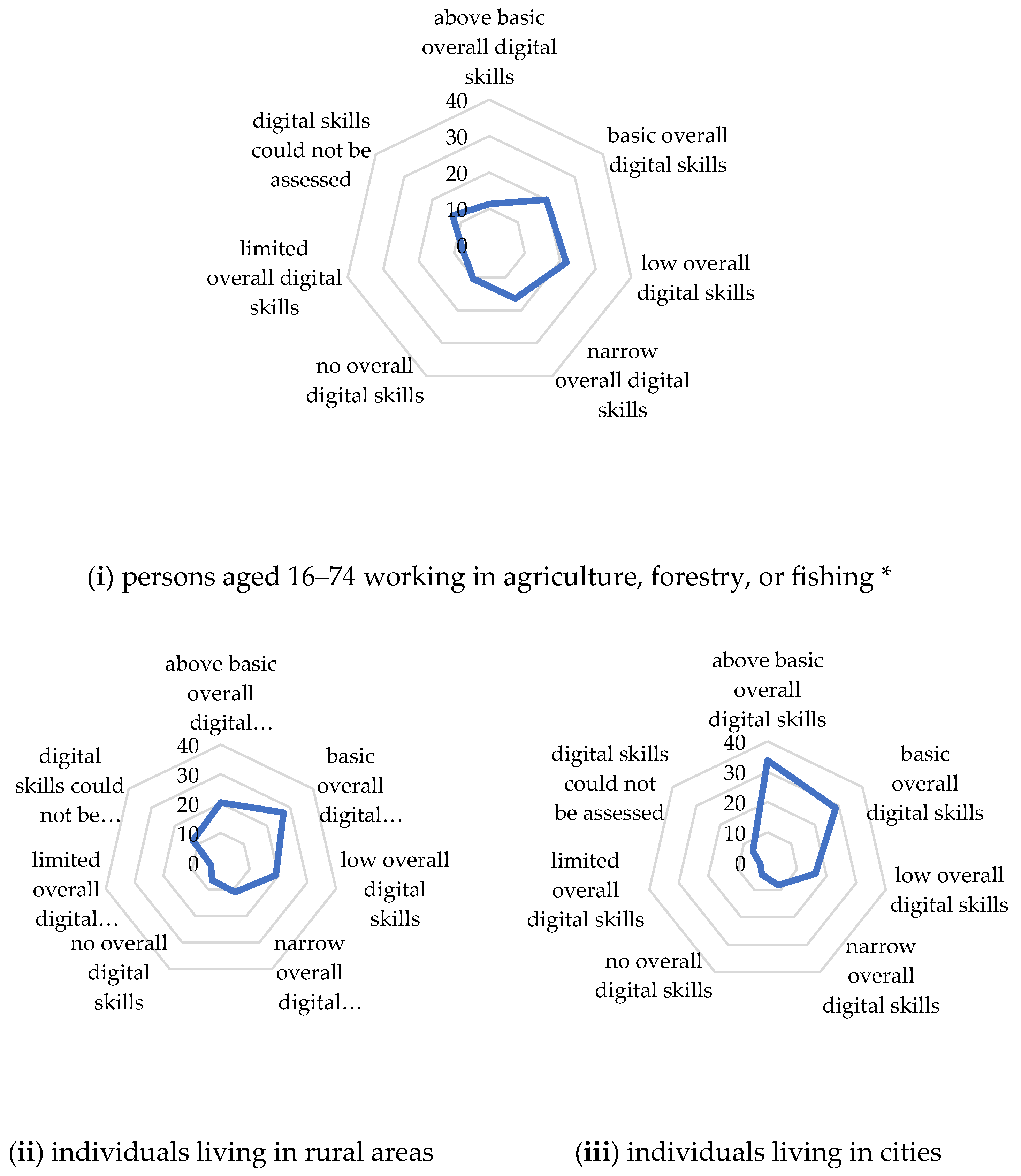
The first stage of the analysis involved assessing the average level of overall digital skills among persons working in agriculture, and compared it with the level of digital skills among individuals living in rural areas and individuals living in cities. Based on the DSI 2.0 index in the European Union for 2023, the overall differences in the level of digital skills among persons aged 16–74 working in agriculture, forestry, or fisheries and other population groups in the EU are presented (
Figure 1).
In 2023, persons aged 16–74 working in agriculture, forestry, or fishing in the EU had the lowest level of digital skills compared to the digital skills of individuals living in rural and cities: 31.29% of persons aged 16–74 working in agriculture, forestry, or fisheries had basic or above basic digital skills, including 11.26% of persons who had above basic skills, and 20.03% had basic skills. This percentage was higher in rural areas, at 47.50%, with 20.34% of individuals having above basic skills and 27.16% having basic skills. The highest level of digital skills was observed among individuals living in cities: 62.55% of individuals in cities had basic or above basic skills, with 33.76% having above basic skills and 28.79% having basic skills. Furthermore, in 2023, persons aged 16–74 working in agriculture, forestry, and fishing accounted for the highest percentage of the individuals who had not used the Internet in the last 3 months (12.93%), and this level was similar to the percentage of individuals living in rural areas who had not used the Internet in the last 3 months (12.90%). In contrast, in the individuals in cities, the percentage of individuals who had not used the Internet in the last 3 months was more than twice as low (6.20%).
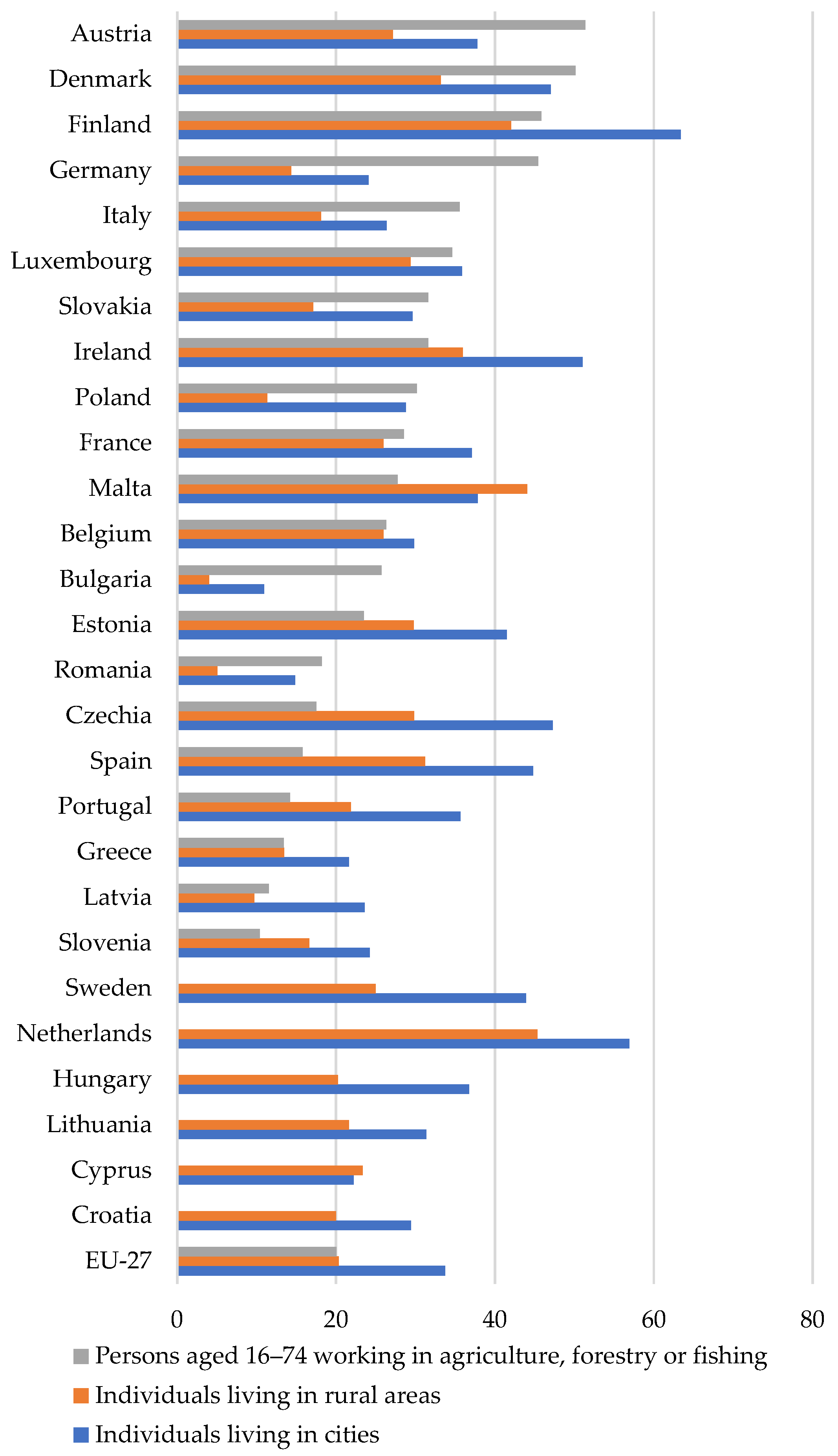
The level of digital skills above basic level among persons aged 16–74 working in agriculture, forestry, or fishing, and individuals residing in rural areas and in cities in 2023 across EU countries varied by region, as shown in
Figure 2.
Analysis of digital skills above basic level among persons working in agriculture in EU countries in 2023 showed that only in selected countries was a high level of digital skills above basic level in this group of individuals associated with a high overall level of digital skills above basic level among individuals living in rural areas and cities.
Based on the analysis of the average level of overall digital skills among persons aged 16–74 working in agriculture, forestry, and fishing, hypothesis H1 was positively verified. Data for 2023 confirm that persons working in agriculture, forestry, and fishing in the EU-27 have lower digital skills than both individuals living in cities and individuals living in rural areas. Persons working in agriculture, forestry, or fisheries are the group most at risk of digital exclusion. Furthermore, the analysis revealed regional differences in the digital skills of persons working in agriculture, forestry, or fisheries in the EU-27 countries. Spatial differences between individual countries are also observed.
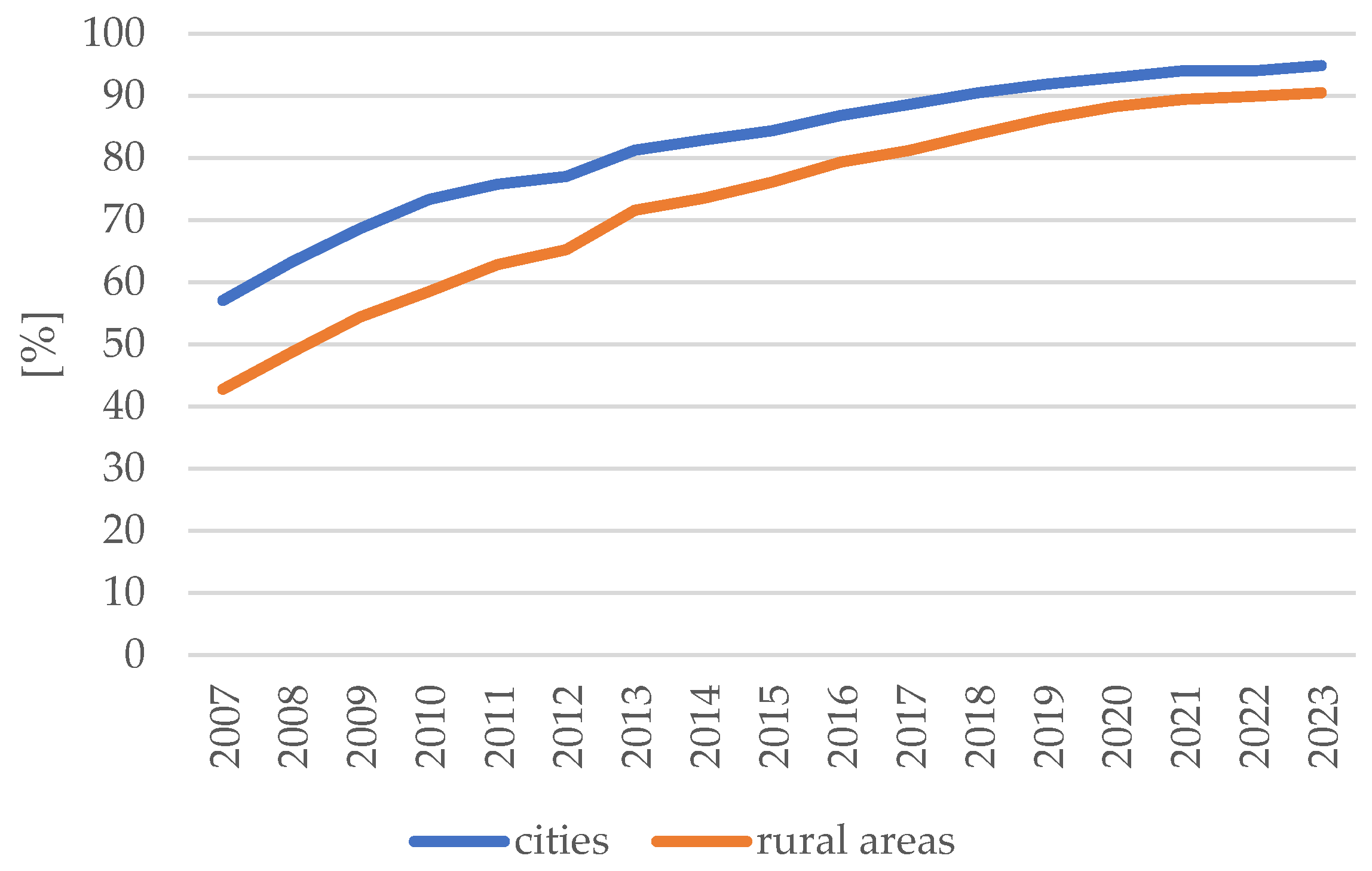
The second stage of the analysis determined the dynamics of changes in level of household Internet access in rural areas and compared it with household Internet access in cities. Analysis of data on overall household Internet access in the European Union between 2007 and 2023 shows significant progress in equipping households with digital infrastructure. In 2007, an average of 52.99% of households in the EU had Internet access, with access being lower in rural areas (42.77%) than in cities (57.07%). By 2023, Internet access had steadily increased in both rural areas and cities. As a result, the gap between Internet access in the rural areas and cities is gradually closing. In 2023, 90.52% of households living in rural areas in the EU had Internet access, compared to 94.88% of households living in cities in the EU. Between 2007 and 2023, Internet access was lower in households living in rural areas, although the gap between Internet access in rural areas and cities was gradually narrowing. Household Internet access in rural areas and cities is shown in
Figure 3.
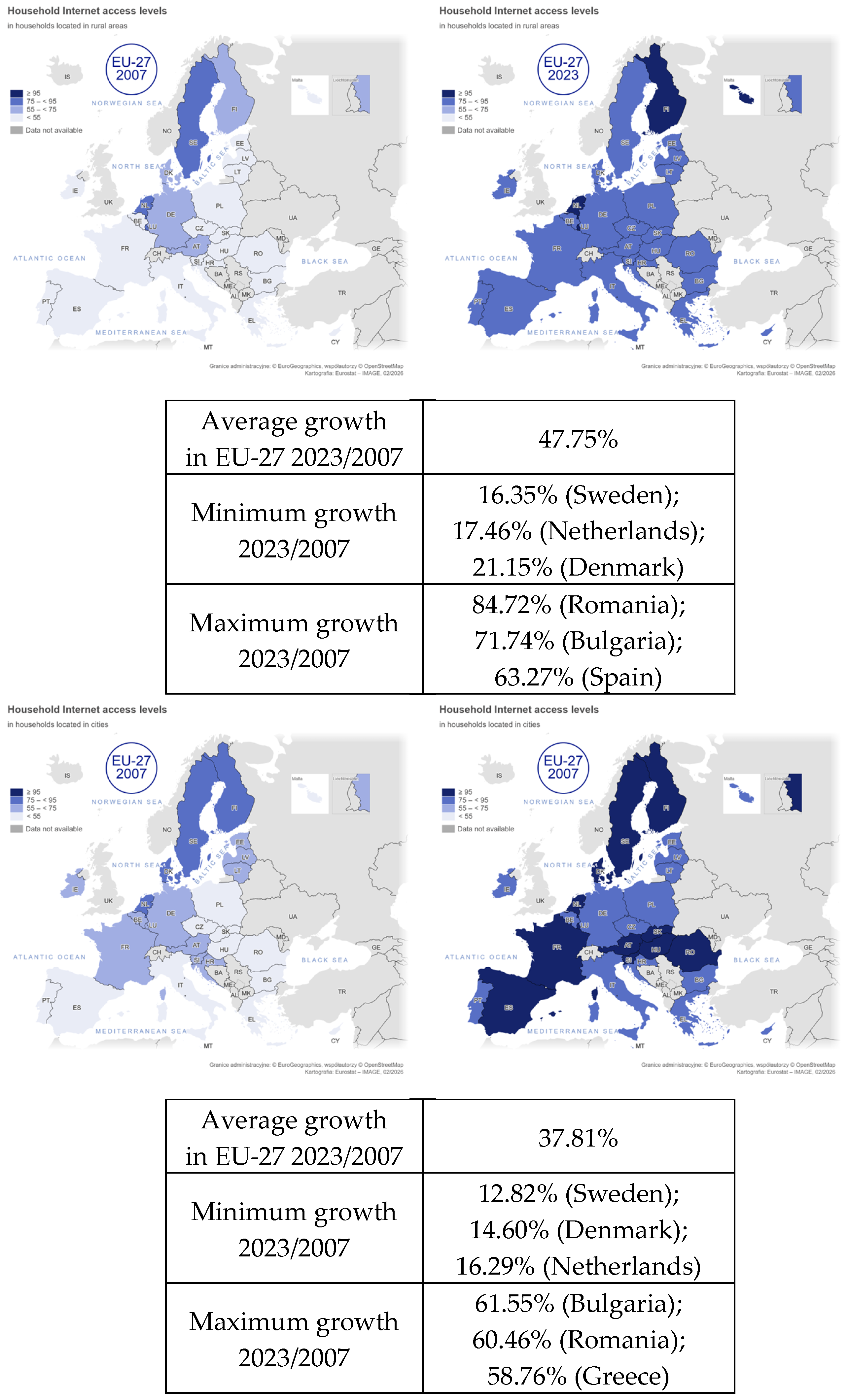
An analysis of changes in the average level of household Internet access in rural areas and cities in individual EU countries shows significant spatial differentiation, which was particularly visible in 2007. The spatial differentiation in 2007 was greater than the spatial differentiation observed in 2023.
In 2023, the variability coefficient for household Internet access in rural areas was higher than in cities, at 5%, compared to 47% variability in 2007. A similar trend was observed in cities. In 2023, the variability coefficient for Internet access in cities was 2%, compared to 25% variability observed in 2007. Changes in the spatial differentiation of household Internet access levels in EU countries for those living in rural areas and cities between 2007 and 2023 are shown in
Figure 4.
The level of access to digital infrastructure in rural areas can form the basis for the development of digital skills among individuals living in rural areas, farmers, and persons working in agriculture, while also offering potential for the development of technology-based agricultural practices, i.e., digital agriculture [
40,
64]. The digital transformation of areas is positively correlated with the digital skills of the population [
65,
66]. Therefore, despite a noticeable improvement in household access to digital infrastructure in rural areas (average increase 2023/2007—47.75%) and in cities (average increase 2023/2007—37.81%), it was decided to statistically verify the significance of differences in Internet access between rural areas and cities.
Table 1 presents the results of the significance test.
The Student’s t-test probability value is 0.000172, which means that the differences in household Internet access between rural areas and cities are statistically significant. Therefore, despite the noticeable improvement in household Internet access, particularly in rural areas, the analysis indicates that there is still a persistent digital divide between rural areas and cities in the European Union, which may constitute a barrier to the development of rural areas and technology-based agriculture.
The hypothesis that Internet access in rural areas of the EU-27 countries in 2023 is lower than in cities has been confirmed. Although the data indicate a gradual narrowing of the digital divide between rural areas and cities between 2007 and 2023, the results of the Student’s t-test confirm that differences in Internet access between rural areas and cities are still statistically significant and pose a challenge to the digital transformation of agriculture.
The digital transformation of rural areas is an important prerequisite for digital agriculture and should promote the development of digital skills among the rural population and persons working in agriculture. Therefore, the next stage in the analysis was to determine the correlation between the level of digital skills of persons aged 16–74 working in agriculture, forestry, or fisheries and the level of Internet access in rural areas in 2023 in EU countries. The results of the correlation analysis are presented in
Table 2.
The results of the correlation analysis, presented in
Table 2, indicate a positive and small correlation between digital skills above basic level among persons aged 16–74 working in agriculture, forestry, or fishing and Internet access in rural areas. Internet access in rural areas has a small impact on the high digital skills of persons aged 16–74 working in agriculture, forestry, or fisheries. This may indicate that the barrier to the development of digital skills is not only Internet access in rural areas, but also other factors, for example, a lack of training or motivation. On the other hand, the correlation analysis showed that Internet access in rural areas is negatively and strongly correlated with a lack of digital skills among persons working in agriculture, forestry, or fisheries. This means that the development of Internet access in rural areas effectively reduces the problem of total digital isolation among persons aged 16–74 working in agriculture, forestry, or fisheries. Therefore, Internet access in rural areas “pulls” these persons out of digital isolation, even though their level of digital skills remains low.
Based on the correlation analysis, the hypothesis of a positive correlation between the digital skills of persons working and household Internet access in rural areas was positively verified.
5. Conclusions
The digital transformation of agriculture offers an opportunity to ensure future food security, increase agricultural productivity, and achieve environmental and climate goals. Digital agriculture offers real opportunities to increase agricultural production while reducing the negative impact of agricultural activities on the environment and climate. However, the successful implementation of digital technologies in the agricultural sector depends on the level of digital skills of farmers and agricultural workers, and their knowledge, skills, and motivation. Their development is possible when adequate access to digital infrastructure is ensured.
An empirical analysis conducted for the EU-27 countries confirms that persons aged 16–74 working in agriculture, forestry, or fisheries remain digitally disadvantaged compared to individuals living in rural areas and cities. In 2023, only 31.29% of persons working in agriculture had basic or above-basic digital skills, which is significantly lower than the level of digital skills observed among individuals living in rural areas and cities. In total, 12.93% of persons working in agriculture had not used the Internet in the last three months. This indicator points to a significant level of digital exclusion among persons aged 16–74 working in agriculture, forestry, or fisheries, which may pose a serious obstacle to the future digital transformation of the agricultural sector.
At the same time, an analysis of household Internet access shows that the digital infrastructure gap between rural areas and cities has narrowed significantly over the past fifteen years. Between 2007 and 2023, Internet access among individuals living in rural areas more than doubled (from 42.77% to 90.52%). Despite significant progress, there are still statistically significant differences between Internet access in rural areas and cities. This persistent digital divide, combined with other factors, increases the inequality of opportunity for farmers, persons working in agriculture, and rural residents to participate in the digital economy and limits the potential for implementing technology-based agricultural practices. Insufficient broadband coverage and low digital skills among farmers may limit the implementation of digital technologies in agriculture worldwide.
Correlation analysis provides additional information on the relationship between digital infrastructure and digital skills. Although a positive relationship was observed between the digital skills of persons aged 16–74 working in agriculture, forestry, or fishing and Internet access in rural areas, this relationship was weak and insignificant. This suggests that greater Internet access in rural areas does not translate into higher digital skills among persons working in agriculture. On the other hand, infrastructure development in rural areas reduces the digital exclusion of persons working in agriculture by reducing the percentage of persons who have no digital skills or very limited skills.
The results of the analysis highlight the complex nature of digital skills among persons working in agriculture. In addition to infrastructure limitations, these persons encounter barriers such as limited access to training, insufficient digital education tailored to the current needs of agriculture, the complexity of digital tools, and a lack of technical support. It can be assumed that farmers and persons aged 16–74 working in agriculture, forestry, or fisheries have increasing access to the Internet, but they still lack the analytical, problem-solving, and data handling skills necessary to effectively use digital technologies, digital platforms, and data-driven decision support systems, as reflected in their low level of digital skills.
From a policy perspective, the results indicate that the digital transformation of agriculture requires a more integrated approach. Investments in broadband infrastructure should be complemented by targeted measures to strengthen the digital skills of farmers, persons aged 16–74 working in agriculture, forestry, or fisheries, and persons living in rural areas, e.g., through agricultural consulting and vocational training systems. Agricultural consulting can provide real support for the digital transformation of agriculture if it focuses on providing specialized, long-term training in digital skills.
The interpretation of the results obtained requires taking into account the limitations arising from the nature of the data used and the research approach adopted. The assessment of the digital skills level of persons aged 16–74 working in agriculture, forestry, or fisheries was based on the DSI 2.0 index. This is a comprehensive measurement tool, but due to a change in methodology in 2021, it is not possible to obtain fully comparable data on digital skills over a longer period of time. Another important limitation in interpreting the results is the incomplete sample of countries: six EU Member States surveyed the digital skills of persons aged 16–74 working in agriculture, forestry, or fisheries, which may be relevant for generalizing conclusions for the EU-27. Furthermore, the use of correlation analysis prevents direct inferences about causes and effects—the results should be interpreted solely as a description of statistical relationships. It should also be noted that the study focuses on the relationship between Internet access and digital skills, without taking into account other factors (such as age, education, or institutional support) that may further differentiate the level of digital competence in the agricultural sector.
The identified limitations pointed to directions for future analysis in the area of digitization of the agricultural sector. The most interesting direction of research is the use of larger panel data sets and more advanced research methods to determine the impact of variables such as the age structure of persons working in agriculture, their level of formal education, and the size of farms on their overall level of digital competence.