Article

Enhancing Public Perception of Climate-Adaptation Spatial Strategies in Coastal Communities: A Case Study from Kadıköy, Istanbul


by
Gamze Kazancı
1,*,
Aliye Ahu Gülümser
1 and
João Pedro Costa
2
1
Urban and Regional Planning Department, Istanbul Technical University, Istanbul 34367, Türkiye
2
CIAUD, Research Centre for Architecture, Urbanism and Design, Lisbon School of Architecture, Universidade de Lisboa, 1349-063 Lisbon, Portugal
*
Author to whom correspondence should be addressed.
Sustainability 2026, 18(3), 1418; https://doi.org/10.3390/su18031418
Submission received: 8 January 2026 / Revised: 27 January 2026 / Accepted: 27 January 2026 / Published: 31 January 2026

Abstract

While global climate adaptation goals are well-established, their translation into neighborhood-scale spatial reality remains underexplored, creating a critical knowledge gap regarding the social acceptability of specific interventions. This study addresses this “governance–perception mismatch” through a case study of Caferağa, a high-density coastal district in Istanbul. By surveying 104 “ground-floor interface” stakeholders, the research investigates the extent to which spatial strategies are integrated and how they are perceived by local users. The findings reveal three significant patterns: (1) an “implementation gap”, where a majority of respondents (51.0%) report no effective adaptation measures despite strongly prioritizing green infrastructure (38.5%) over water management solutions (13%); (2) a “participation paradox”, evidenced by a stark divergence between high willingness to engage (73.1%) and negligible perceived involvement; and (3) the conceptual validation of “informed cynicism”, where higher education levels correlate with deeper institutional distrust due to the recognized inadequacy of current actions. The study concludes that in centralized planning systems, the structural exclusion of high-human-capital stakeholders transforms potential co-production into active alienation.

1. Introduction

Climate change poses an escalating threat to coastal urban areas, intensifying risks such as sea-level rise, storm surges, flooding, and urban heat islands. In high-density cities, these risks directly challenge not only environmental integrity but also the long-term social and institutional sustainability of urban systems. As a result, climate change adaptation has become a central pillar of sustainable urban development, requiring the integration of resilience principles into spatial planning, governance structures, and everyday urban practices [1,2].
International frameworks, including the Paris Agreement, the Sendai framework for Disaster Risk Reduction, and UN–Habitat initiatives, emphasize the integration of climate resilience into spatial planning as a prerequisite for sustainable urban futures. However, despite this normative consensus, the recent literature consistently identifies a persistent “implementation gap” between global adaptation commitments and their realization at the local scale, particularly in densely built coastal cities. This gap often manifests as fragmented spatial interventions, limited regulatory integration, and weak alignment between strategic objectives and neighborhood-level realities [2,3,4,5].
In Türkiye, this implementation gap is amplified by a highly centralized and procedurally hierarchical planning system, where the spatial planning authority remains concentrated at national and metropolitan levels. Although national policy instruments, such as updated Nationally Determined Contributions (NDCs), acknowledge the necessity of climate adaptation, existing studies suggest that these frameworks lack operational mechanisms capable of translating strategic goals into spatially sensitive and socially embedded local actions [3,6]. Consequently, climate adaptation is often addressed as a sectoral or technical issue rather than as a component of sustainable spatial governance.
The existing scholarship on climate adaptation has predominantly focused on risk perception, technical feasibility, and macro-level governance arrangements. While these approaches have advanced the understanding of climate vulnerability, limiting inquiry to risk perception overlooks a critical dimension: the social acceptability of specific physical interventions. Theoretically, focusing on the “perception of spatial strategies” (rather than risk alone) is vital, because public resistance often arises not from a denial of climate risks but from the rejection of specific technocratic solutions—such as hard engineering structures that disrupt coastal access. Empirically, this shift allows for the identification of preferred adaptation typologies (e.g., green infrastructure vs. grey walls), providing actionable data for planners to align technical necessity with community values [7,8]. Moreover, perception studies remain disproportionately concentrated on rural areas or low-density settlements, leaving a notable gap regarding high-density urban neighborhoods in developing-country contexts [9,10].
Recent studies further suggest that public engagement in climate adaptation frequently remains tokenistic, limited to information sharing or consultation rather than meaningful involvement in defining spatial solutions [8,11]. At the same time, emerging research indicates that nature-based and green infrastructure approaches are often preferred by residents over traditional hard-engineering solutions, yet these preferences are rarely reflected in implemented planning practices [7,12]. This disconnection points to a critical need to move beyond risk awareness toward examining public perception of adaptation strategies themselves, especially at the neighborhood scale.
Therefore, the primary purpose of this article is to bridge this gap by evaluating the local adaptability of global climate resilience strategies within a high-density centralized planning context. The study focuses on the Caferağa neighborhood in Kadıköy, Istanbul, as a strategic case study. Unlike many coastal adaptation studies that examine socially vulnerable or low-awareness communities, Caferağa represents a unique context characterized by high education levels and strong climate awareness, yet limited influence over top-down planning decisions. This specific demographic profile enables the study to analytically isolate “governance constraints” from “awareness deficits”. Since the “lack of knowledge” barrier is minimal in this context, any observed implementation gap can be attributed more directly to structural and institutional rigidities rather than public ignorance. Kadıköy is one of the few district municipalities in Türkiye that has developed a dedicated climate adaptation framework [13,14]; nevertheless, Caferağa remains among the neighborhoods most vulnerable to flooding and coastal climate risks [14,15].
To systematically address the “dual disconnection” between policy goals and local implementation, this study is driven by the following three research questions (RQs):
  • RQ1: To what extent are global and national climate adaptation goals physically integrated into neighborhood-scale spatial planning?
  • RQ2: How do local stakeholders perceive these spatial interventions, and does high climate awareness translate into active participation in decision-making processes?
  • RQ3: How does the socio-demographic profile of residents—specifically education level—influence the satisfaction with municipal adaptation efforts?
Based on these questions and the identified gaps in the literature, the study tests the following hypotheses:
H1 (Implementation Gap). 
despite the presence of national climate adaptation commitments, climate-adaptive spatial measures remain weakly integrated at the neighborhood scale, resulting in perceptions of inaction among local stakeholders.
H2 (Participation Paradox). 
high levels of climate awareness and willingness to participate do not translate into active engagement due to the exclusionary top-down planning mechanisms.
H3 (Awareness–Satisfaction Inverse). 
higher education levels are associated with lower satisfaction with municipal adaptation efforts, reflecting informed cynicism rather than disengagement.
Finally, this study offers three main contributions to the field. Firstly, it introduces the concept of “informed cynicism” to the adaptation governance literature, explaining why high human capital does not always lead to positive adaptation outcomes in centralized systems. Secondly, this study provides rare granular data on the perception of specific spatial strategies (green vs. grey) in a high-density Mediterranean metropolis, filling a gap in Global South urban studies. Finally, it offers a framework for moving from “tokenistic consultation” to “spatial co-production”, demonstrating that aligning adaptation strategies with local preferences is essential for overcoming implementation barriers.

2. State of the Art: Perception of Climate-Adaptation Spatial Strategies in Coastal Communities

Coastal urban areas stand at the forefront of the global climate crisis, necessitating an urgent paradigm shift from traditional “hard-engineering” defenses to adaptive nature-based spatial strategies. As argued, this transition represents more than a technical renovation; it requires a fundamental transformation in the conservation paradigm to align with rapid environmental change [16]. However, while the ecological imperative of this transition is well-established, its successful realization hinges upon the complex interplay between governance structures and public acceptance. As highlighted in the mapping of adaptation science, the field is evolving from purely biophysical assessments to a critical focus on governance barriers and social limits [17]. Accordingly, this section reviews the existing literature through four critical lenses—Awareness, Governance, Participation, and Perceived Implementation—to construct the theoretical framework for the “participation paradox”.
A recurring theme in recent scholarship is the dissonance between high levels of general climate awareness and a lack of specific knowledge regarding adaptation strategies. The research consistently shows that, while the public recognizes the existential threat, they remain disconnected from local solutions. For instance, it is demonstrated that in coastal cities such as Alexandria, although citizens are acutely aware of sea-level rise, they are largely unfamiliar with the concept of “adaptation” itself [8].
Crucially, traditional awareness-raising campaigns appear to be reaching a saturation point without triggering behavioral change. It is found that engagement efforts predominantly reach highly educated politically liberal demographics—essentially “preaching to the choir” [18]. This creates a unique challenge in high-education contexts: the public is not “unaware” but possesses a sophisticated understanding that renders them critical of superficial interventions. This theoretical distinction is pivotal; it suggests that in educated communities, inaction is not driven by ignorance but, potentially, by what this study frames as “informed cynicism”.
The translation of awareness into action is heavily constrained by the governance models within which it operates. “Joint SECAP” initiatives in Italy have been examined, revealing that adaptation planning often remains a technocratic exercise, viewed primarily through the lens of administrators rather than end-users [6]. This top-down perspective frequently creates a “disconnect” between strategic plans and the “lived experience” of coastal communities.
This friction is further theorized by [19], which emphasizes the inherent tension between “livability” (daily comfort and amenities) and “adaptation” (long-term safety). They argue that centralized rigid planning instruments often fail because they impose single-purpose engineering solutions that ignore the multi-functional needs of local residents. While some advocate for flexible “Coastal Green Infrastructure” (CGI) models to bridge this gap, even these proposals often suffer from a “top-down bias”, as they are frequently designed by experts without empirically testing whether local communities support or understand them [11].
Although “participation” is a ubiquitous term in the adaptation literature, critical reviews suggest it often fails to empower local stakeholders. It is argued that engagement frequently remains “tokenistic”, where the public is treated merely as a data source or a passive audience for decisions already made [20,21]. This critique is substantiated by [22], who conducted a meta-method review of research with European coastal communities. They concluded that while co-production is idealized, in practice, participation is often “instrumental”—designed to legitimize policy implementation rather than to foster genuine community-led adaptation.
Furthermore, studies highlight that adaptation actions are often reactive and unevenly distributed, raising concerns about environmental justice [10]. This macro-level exclusion trickles down to the neighborhood scale, where residents feel alienated from decision-making. Consequently, the literature points to a “participation paradox”: there is a growing demand for engagement among the public [23], but existing centralized channels are too rigid to accommodate it, leading to frustration rather than collaboration.
Finally, empirical studies reveal a significant shift in how adaptation typologies are perceived. Challenging the assumption that residents prefer “hard” engineering for safety, it is found that US residents living behind concrete seawalls reported higher climate anxiety compared to those with natural shorelines [7]. This indicates that grey infrastructure may fail to provide the psychological reassurance often attributed to it. Supporting this, some studies identify a strong public willingness to support Urban Green Infrastructure (UGI) in the UK [23]. However, they noted that the primary barriers are not public reluctance but institutional hurdles that prevent citizens from engaging in UGI delivery. Similarly, socio-cultural barriers, such as aesthetic perceptions of “messy nature”, can hinder implementation if not properly communicated [12,24]. While studies using big data [9] confirm that the public values blue–green spaces for their aesthetic qualities, these often capture transient perceptions rather than the functional concerns of long-term residents.
Collectively, this body of literature highlights a critical theoretical gap (Table 1). While studies separately address risk perception, top-down governance, or the technical benefits of green infrastructure, there is limited empirical research connecting these dots in high-density developing-country contexts [25]. Specifically, the mechanism by which centralized governance (Barrier) interacts with high awareness (Driver) to produce informed cynicism (Outcome) remains under-explored. By integrating these dimensions, this study aims to elucidate the “dual disconnection” in spatial planning, offering a new perspective on why participation fails even when awareness is high.
Synthesizing the reviewed literature reveals a critical gap: high public awareness does not inevitably translate into meaningful participation or favorable perceptions of spatial implementation. To address this, this study proposes a conceptual framework (Figure 1) that illustrates how centralized top-down governance structures mediate the relationship between awareness and engagement. We posit that when participation remains tokenistic or instrumental, it fosters a sense of exclusion and renders implemented strategies opaque to the public. This structural disconnection precipitates what this study defines as ‘informed cynicism,’ establishing a recursive cycle, where rising climate literacy paradoxically coexists with stagnation in local action.

3. Materials and Methods

3.1. Definition of the Case Area: Caferağa Neighborhood/Istanbul/Türkiye

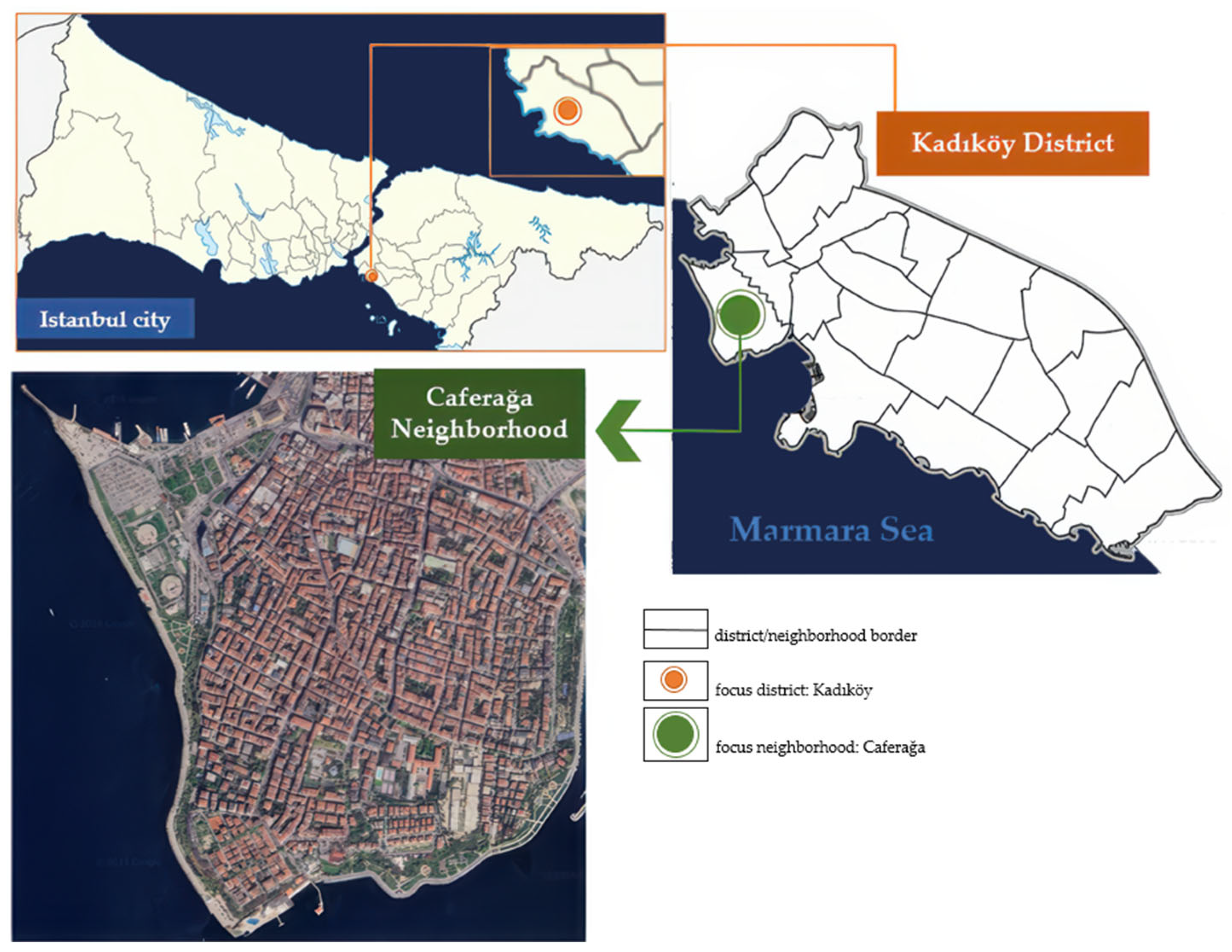
Similar to many coastal cities, climate change increases the vulnerability of Istanbul to flooding, heat stress, and coastal hazards. As one of the world’s largest metropolitan areas, Istanbul is home to over 15 million residents and includes 14 coastal districts. Among these, Kadıköy is notable as the first and only district municipality in Türkiye to have developed a dedicated climate adaptation plan and for its active participation in international municipal networks such as the Covenant of Mayors for Climate & Energy and the International Council for Local Environmental Initiatives (ICLEI), and Eurocities [13,26].
Within Kadıköy, the Caferağa neighborhood was selected as the case study due to its demographic density, historical significance, and exposure to climate risks. Demographically, Caferağa hosts approximately 22,763 residents and represents a unique socio-cultural profile in Istanbul. It is known for its high education levels and status as a vibrant cultural hub filled with theaters, cafes, and art studios. However, this vibrancy operates within strict legal constraints. The neighborhood is designated as an “Urban Protected Area”, containing 290 registered historical buildings dating back to the late Ottoman and early Republican periods. This legal status imposes rigid restrictions on spatial interventions; any adaptation strategy (e.g., facade retrofitting or street redesign) must comply with strict conservation regulations, creating a complex challenge for climate resilience planning [15].
It also exhibits the highest ratio of coastline length to neighborhood surface area within the district and has been identified as the most vulnerable neighborhood in Kadıköy to potential flooding events. Moreover, the inner urban fabric is highly dense with limited permeable surfaces. This morphological structure exacerbates the “Urban Heat Island” (UHI) effect, particularly during summer heatwaves. Furthermore, the area is frequently exposed to strong south-westerly winds, which historically cause storm surges and coastal inundation, threatening the shoreline infrastructure. Recent years have highlighted the area’s vulnerability. The neighborhood has experienced intensifying “flash floods” due to sudden heavy precipitation events that overwhelm the aging combined sewage system. Additionally, the 2021 “sea snot” (mucilage) crisis in the Sea of Marmara visibly impacted the Moda coastline, heightening local public awareness regarding environmental degradation [14,15] (Figure 2).
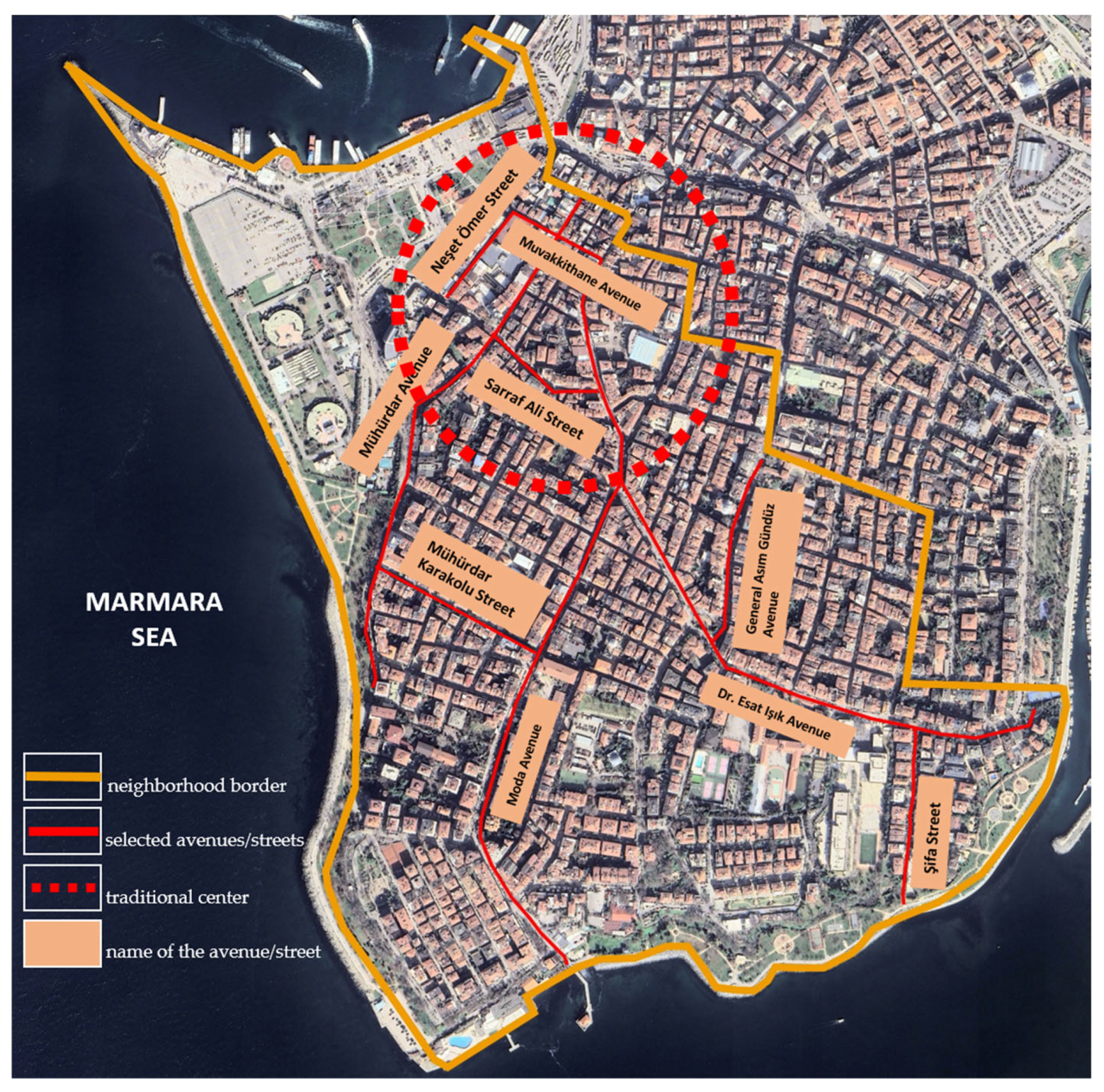
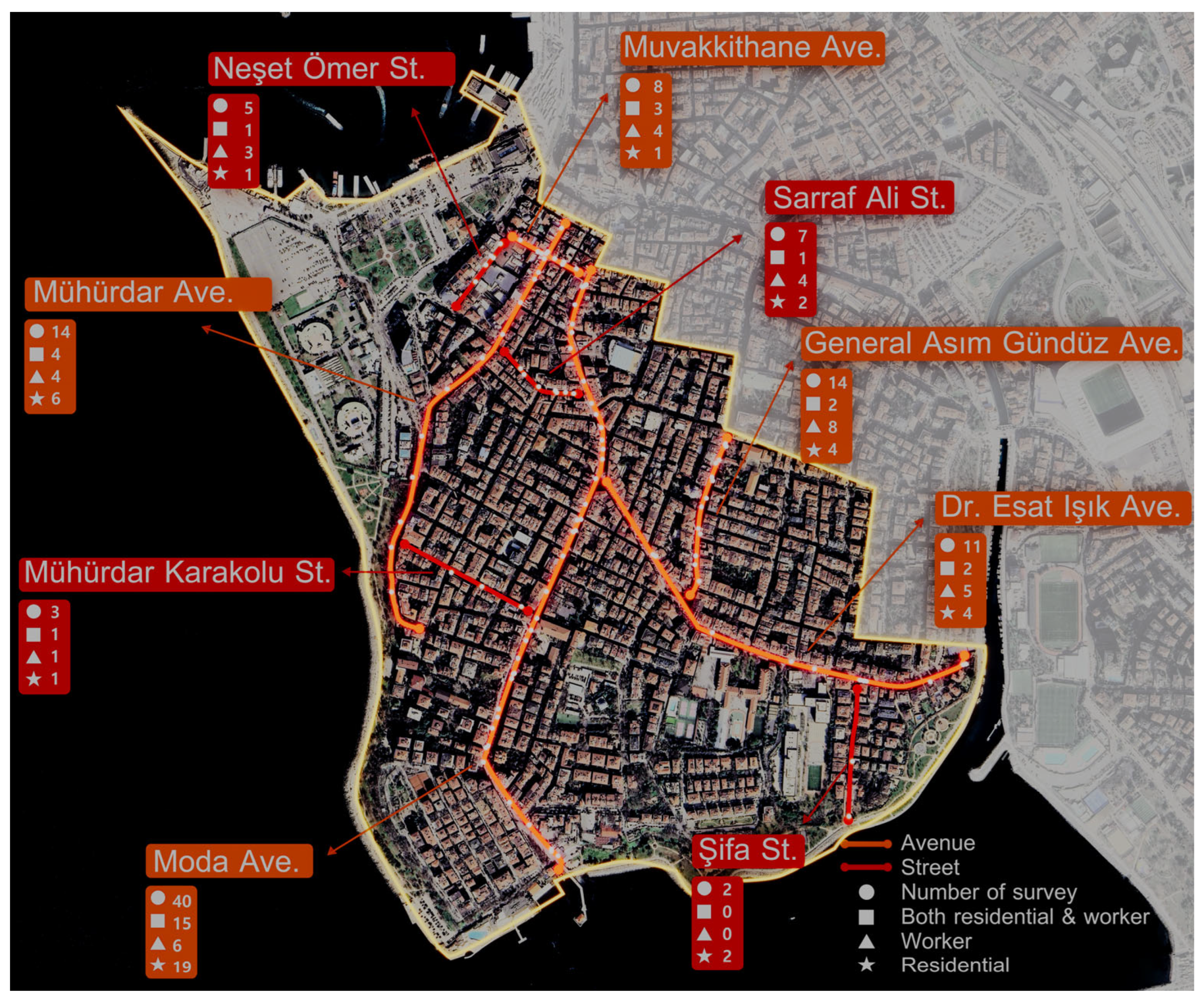
The study area was spatially delimited to nine key streets and avenues intersecting the neighborhood vertically and horizontally. These corridors were selected to represent diverse urban conditions, ranging from coastal interfaces to dense commercial cores, enabling a comprehensive assessment of climate-adaptation perceptions across varying spatial contexts (Figure 3).
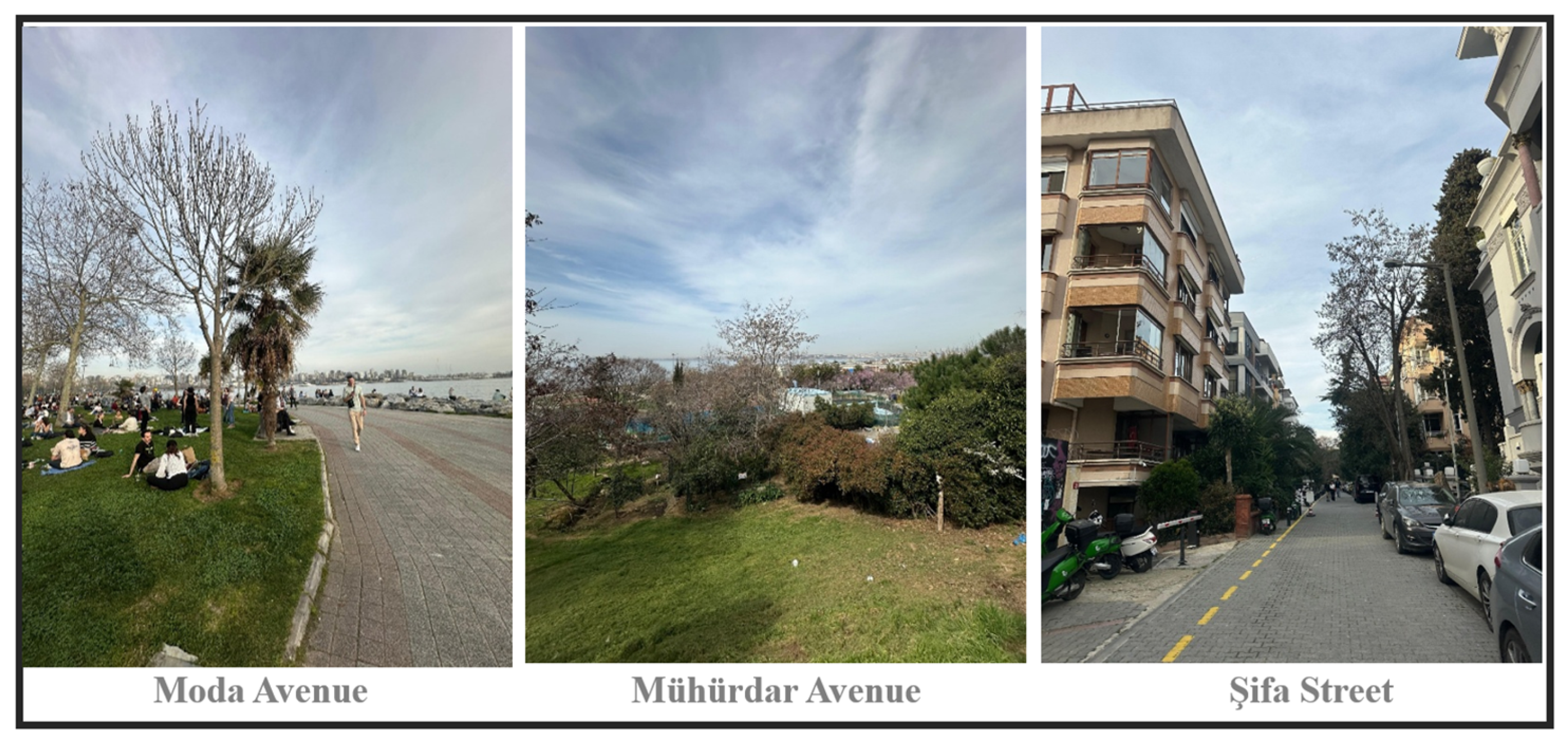
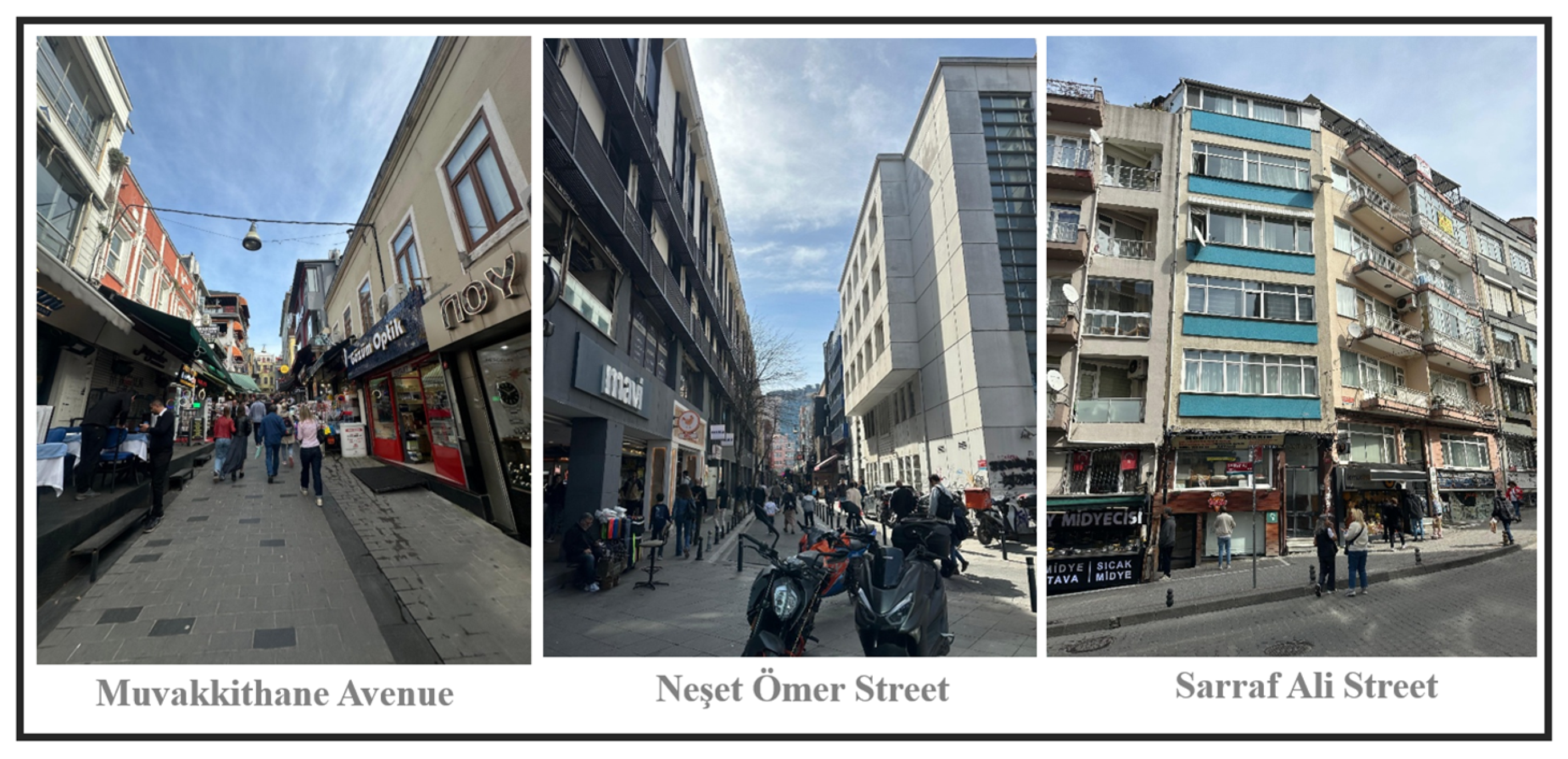
These were not chosen randomly but selected to represent three distinct urban typologies (Figure 4, Figure 5 and Figure 6):
-
Coastal Interface (e.g., Moda Ave, Mühürdar Ave, Şifa St): areas directly exposed to sea-level rise and wind effects, serving as the primary recreational buffer.
Figure 4. Coastal interface avenues and street [27].
Sustainability 18 01418 g004
-
Commercial Core (e.g., Muvakkithane Ave, Neşet Ömer St., Sarraf Ali St.): high-density pedestrian zones with extensive impervious surfaces, representing the peak of heat island risks.
Figure 5. Commercial core avenue and streets [27].
Sustainability 18 01418 g005
-
Residential/Mixed Zones (e.g., General Asım Gündüz Ave., Dr. Esat Işık Ave., Mühürdar Karakolu St.): transitional zones, where the residential quality of life clashes with increasing commercial pressure.
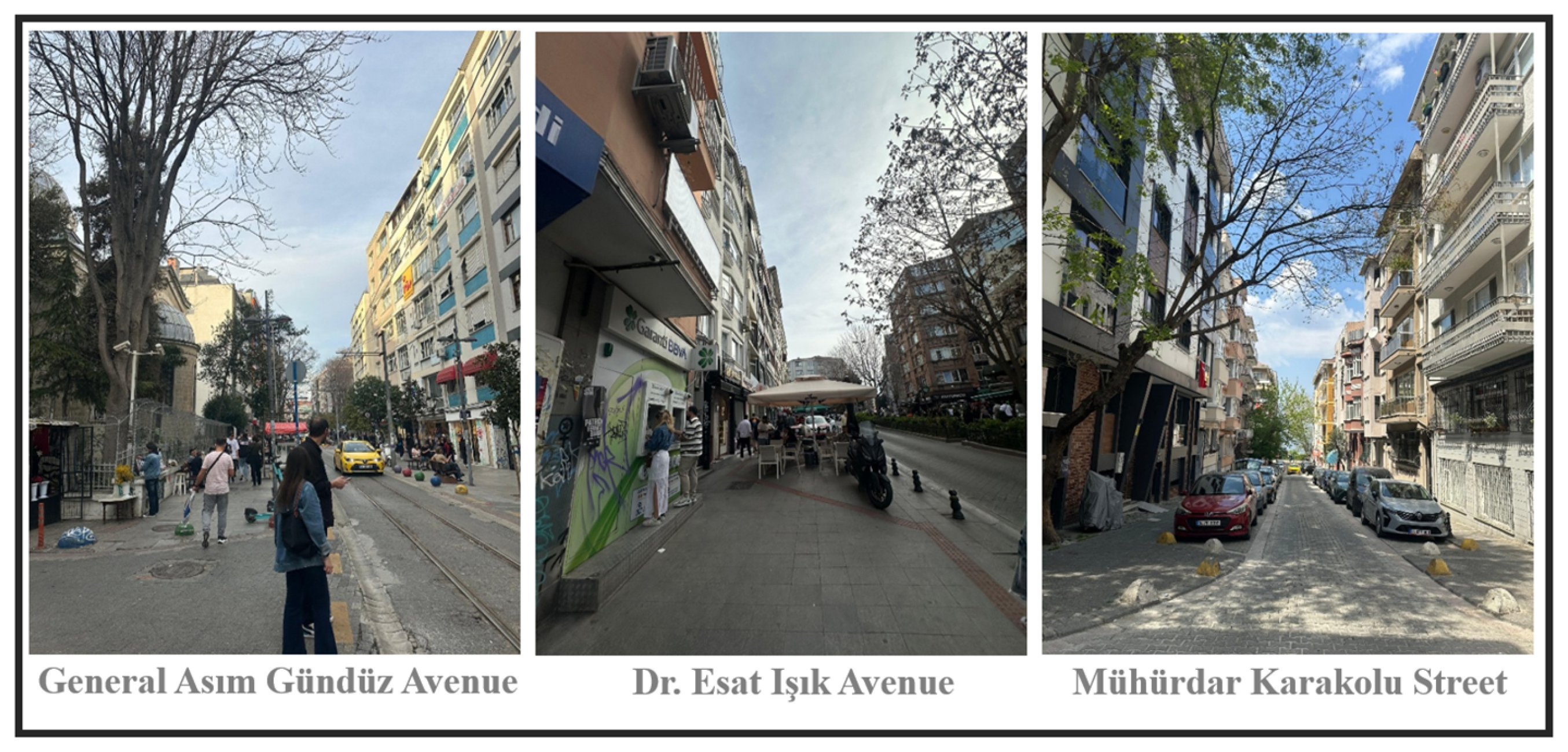
Figure 6. Mixed zone avenues and street [27].
Sustainability 18 01418 g006
This stratification allows for a comparative assessment of how climate perception varies across different urban functions and exposure levels.

3.2. Data Collection and Survey Definition

Data collection followed a spatially stratified approach to ensure representation across different urban typologies. The study targeted stakeholders interacting directly with the ground-floor interface, as this group is most exposed to immediate environmental risks such as flash floods and heat accumulation. The “Ground-Floor Interface” sampling strategy was driven by the logic of “exposure-based perception”. Rather than employing a random household survey, this study specifically targeted stakeholders occupying the ground-floor interface along the nine identified avenue/street corridors. This methodological choice is grounded in the promise that ground-floor users are the “frontline stakeholders” who directly experience immediate climate impacts, such as flash floods entering properties and the urban heat island effect radiating from pavement surfaces.
According to 2023 data from the Istanbul Metropolitan Municipality, approximately 500 active ground-floor units operate within the study area. The required sample size was calculated using a finite population sampling formula with a 95% confidence level and a 5% margin of error:
n = Z 2 p   1     p E 2 × N N + Z 2 p   1     p E 2
  • n = required sample size (number of stores to be surveyed);
  • N = population size (total number of stores on each street);
  • Z = Z -score corresponding to the confidence level (1.96 for 95% confidence);
  • p = sample proportion (typically assumed as 0.5 when unknown, as it represents maximum variability);
  • E = margin of error (taken as 5%, i.e., 0.05).
Based on this calculation, a total of 104 surveys were conducted, with proportional distribution across the selected streets according to the commercial density. Crucially, the distribution of these 104 surveys was not random. To ensure spatial representativeness, the sample was weighted proportionally based on the commercial and residential density of each selected street. Table 2 illustrates this spatial sampling strategy, detailing how the target number of surveys was assigned to each street corridor to reflect its relative weight in the urban fabric.
The study captures a diverse mix of user profiles to analyze how the relationship with the place (living vs. working) influences perception. The 104 respondents were categorized into three distinct user typologies (Figure 7).
  • Residents Only: individuals living in the ground-floor or adjacent units.
  • Workers Only: business owners or employees commuting to the area.
  • Resident and Worker (Dual Users): individuals who both live and work in Caferağa, representing a group with 24/7 exposure to local conditions.
Figure 7 presents the detailed breakdown of these profiles for each street. This stratification confirms that the survey covers a balanced spectrum of stakeholders, from the commercial-heavy zones to mixed-use residential transition areas, allowing for a comparative analysis of how “place attachment” influences climate perception.
The survey instrument comprised eight questions grouped under two analytical dimensions: Integration of Climate Adaptation and Community Engagement. The questions included both nominal and ordinal variables (Likert-scale) to capture categorical preferences and the intensity of perceptions. To ensure methodological rigor, the survey design included two validation steps:
  • Literature Validation: Instead of a pilot study, the construct validity of the questions was established by adapting verified scales from the existing climate perception literature [7,18]. By aligning the questions with these established frameworks, the study ensured that the measurement tools were theoretically grounded and methodologically sound.
  • Terminological Simplification: To address potential education-based comprehension gaps without relying on visual aids, the study employed a strategy of “verbal standardization and descriptive scenarios”. Technical jargon that might confuse non-experts (e.g., “green infrastructure”, “permeable surfaces”) was replaced with universally understood descriptive terms (e.g., “parks, gardens, and green areas”). This approach ensured that respondents evaluated the spatial concepts themselves rather than their familiarity with academic terminology.
Nominal variables (Q1, Q2, Q7, Q8) were used to identify the preferred adaptation measures, perceived effective interventions, sources of climate information, and potential forms of contribution. Ordinal variables (Q3, Q4, Q5, Q6) employed Likert-type scales to assess the perceived importance of climate adaptation, perceived integration into planning policies, and levels of participation (Table 3).
Quantitative data were analyzed using IBM SPSS Statistics (version 29.0.2.0). Descriptive frequency analyses were conducted for all variables to identify the overall trends. Inferential analyses were applied based on data type: Chi-square tests of independence were used for nominal variables, while non-parametric tests (Kruskal–Wallis H and Mann–Whitney U) were applied to ordinal variables to assess the differences across socio-demographic groups (e.g., comparing “Residents” vs. “Workers”). A significance threshold of p < 0.05 was adopted for all tests. Critically, the study operationalized the “governance gap” (Hypothesis 2) not anecdotally but statistically: it was calculated as the divergence between the high scores in “Willingness to Participate” (Q6) and the low scores in “Perceived Involvement” (Q5). While Q6 captures perceived institutional openness rather than individual motivation, it is analytically interpreted as a proxy for participation willingness under conditions of centralized governance, where opportunity provision determines the feasibility of engagement.
This quantitative delta provides the empirical basis for identifying the “participation paradox”. Moreover, for Q2, a multiple-response format was used, allowing participants to identify multiple observed strategies. However, the ‘None’ option was treated as mutually exclusive to ensure logical consistency.
The study was conducted in accordance with the Declaration of Helsinki and approved by the Istanbul Technical University Social and Human Sciences Ethics Committee (Protocol No. 620, 13 January 2025). Participation was voluntary, and informed consent was obtained from all respondents. While the results are specific to Caferağa, the findings regarding the disconnect between high awareness and centralized governance possess analytical transferability to other high-density mixed-use coastal districts in the Mediterranean and Global South.

4. Results and Discussion

The results are presented under three interrelated dimensions: (i) perceived integration of climate adaptation strategies, (ii) the dynamics of community engagement, and (iii) the influence of socio-demographic characteristics on these perceptions. Together, these dimensions address the study’s hypotheses concerning the implementation gap (H1), the participation paradox (H2), and the awareness–satisfaction inverse relationship (H3).

4.1. Perceived Priorities and the “Visibility” of Adaptation (Testing H1)

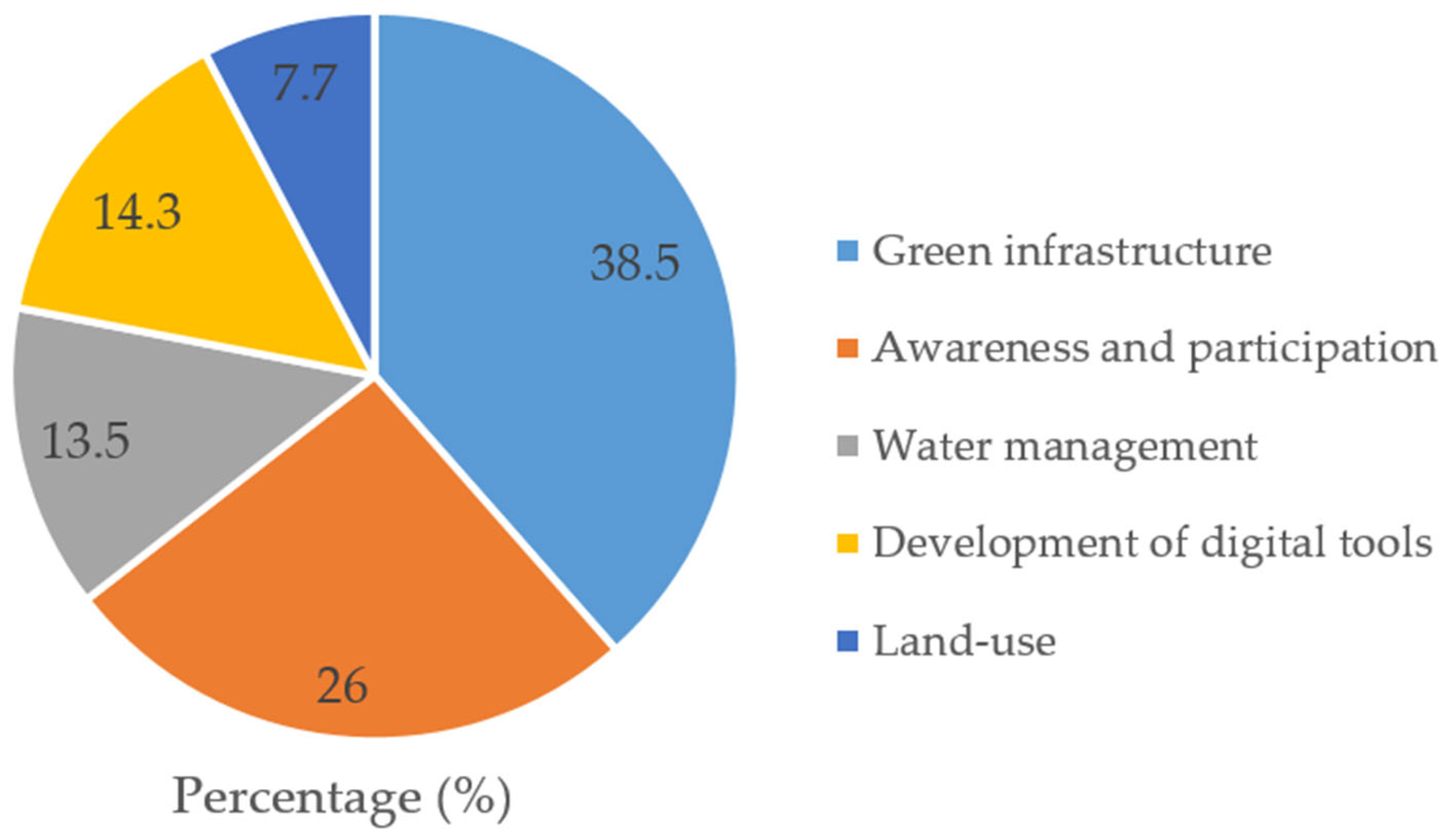
When asked to identify the most important aspect of climate-adaptive urban planning (Q1), respondents did not prioritize traditional “hard” engineering measures despite the coastal risks. Instead, green infrastructure emerged as the primary priority (38.5%), significantly outpacing coastal protection (10.6%) and heat mitigation (6.6%) (Figure 8).
This prioritization reveals a critical insight regarding the “relative importance” of adaptation strategies. Unlike invisible technical infrastructure (e.g., sewage capacity), green infrastructure is valued for its “co-benefits”—providing tangible improvements to daily livability (e.g., aesthetics, shading) alongside flood resilience. This aligns with findings that public support is strongest for interventions that offer multi-functional benefits [23]. The low prioritization of “coastal protection” (10.6%) contradicts the high physical risk of the area, suggesting that stakeholders prefer “soft” integration over “hard” separation from the sea, supporting [7]’s finding that grey infrastructure can paradoxically fail to alleviate anxiety compared to nature-based solutions.
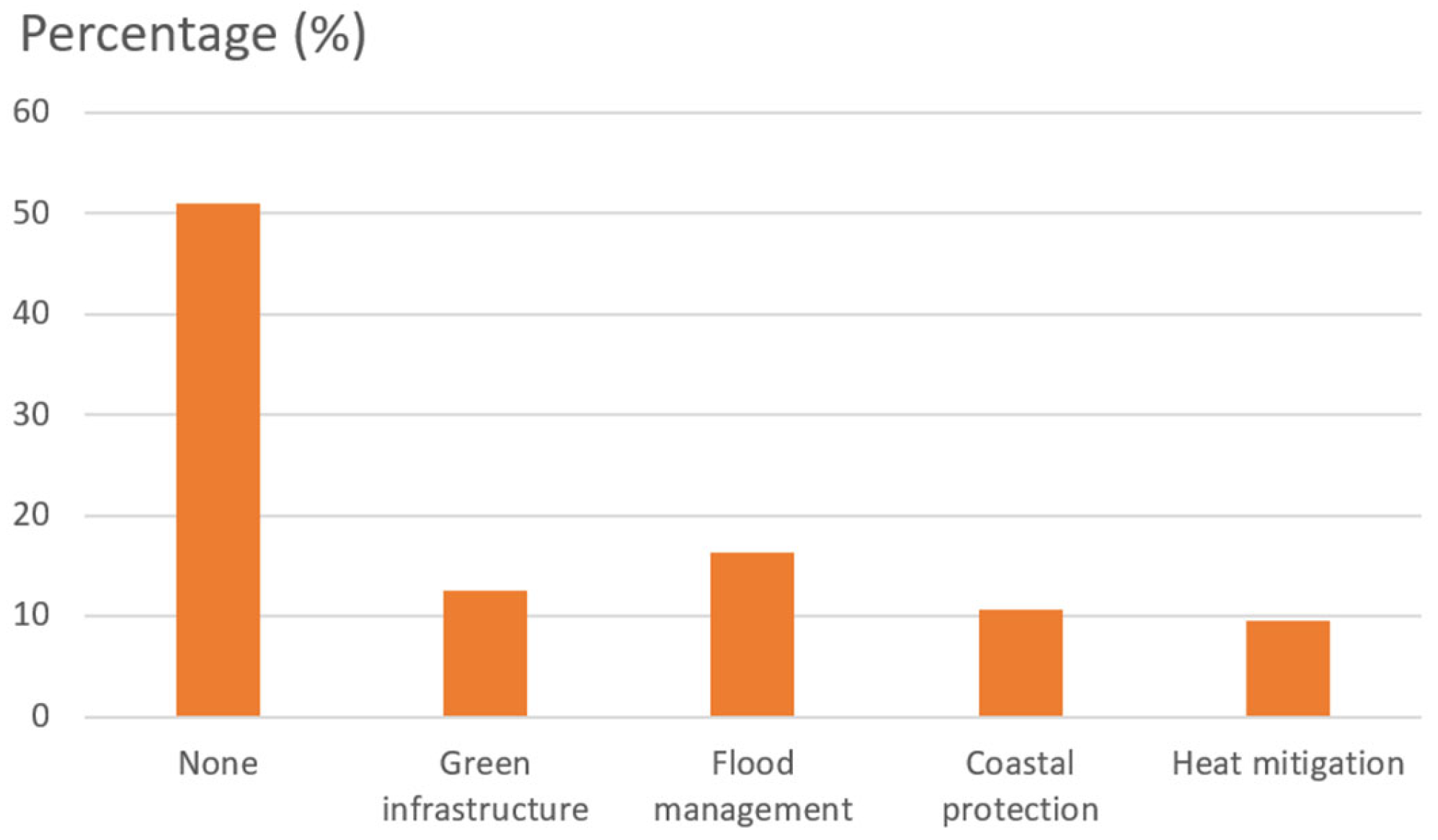
However, despite this clear preference, perceptions of actual implementation remain critically low. In Q2, 51.0% of respondents stated that “none” of the listed measures are effectively integrated into local spatial planning (Figure 9).
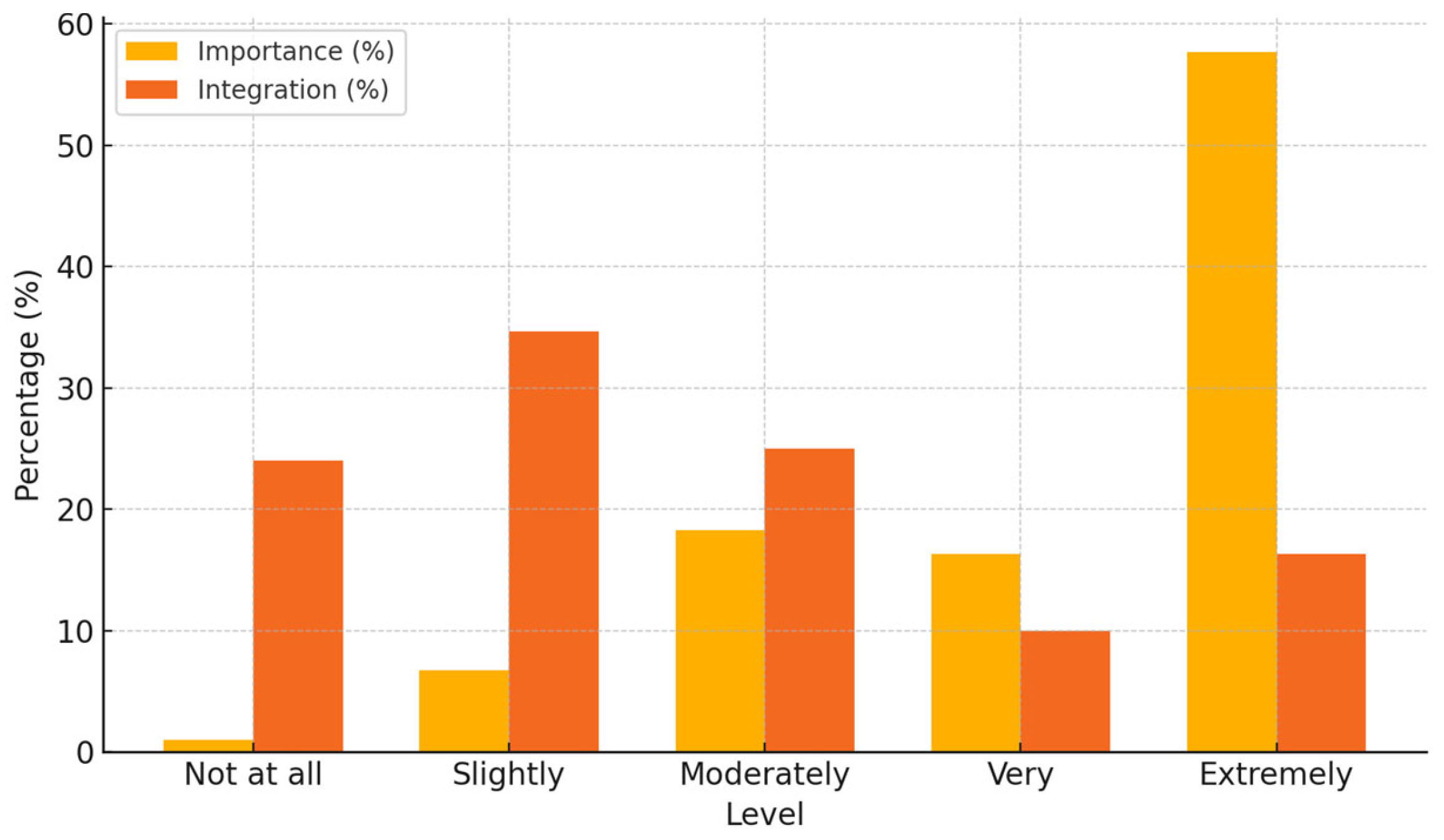
This disconnect is further quantified in Figure 10, which juxtaposes the perceived importance of adaptation (Q3) against its perceived integration (Q4). While the vast majority of respondents rated climate adaptation as “very important” or “important”, the perceived integration levels heavily skewed towards “not integrated at all” or “slightly integrated (Figure 10).
To statistically verify this observed gap in Figure 10 and to test Hypothesis 1 (implementation gap), a Wilcoxon Signed-Rank Test was conducted. The analysis revealed a statistically significant difference between the distributions of the “importance” and “perceived integration” scores (Z = −8.74, p < 0.001). This confirms that while stakeholders view climate adaptation as a critical necessity (Median = 5), they perceive its actual implementation in spatial planning as significantly deficient (Median = 2), corroborating the critique of the “paper reality” in centralized planning [6].

4.2. Community Engagement and Participation Paradox (Testing H2)

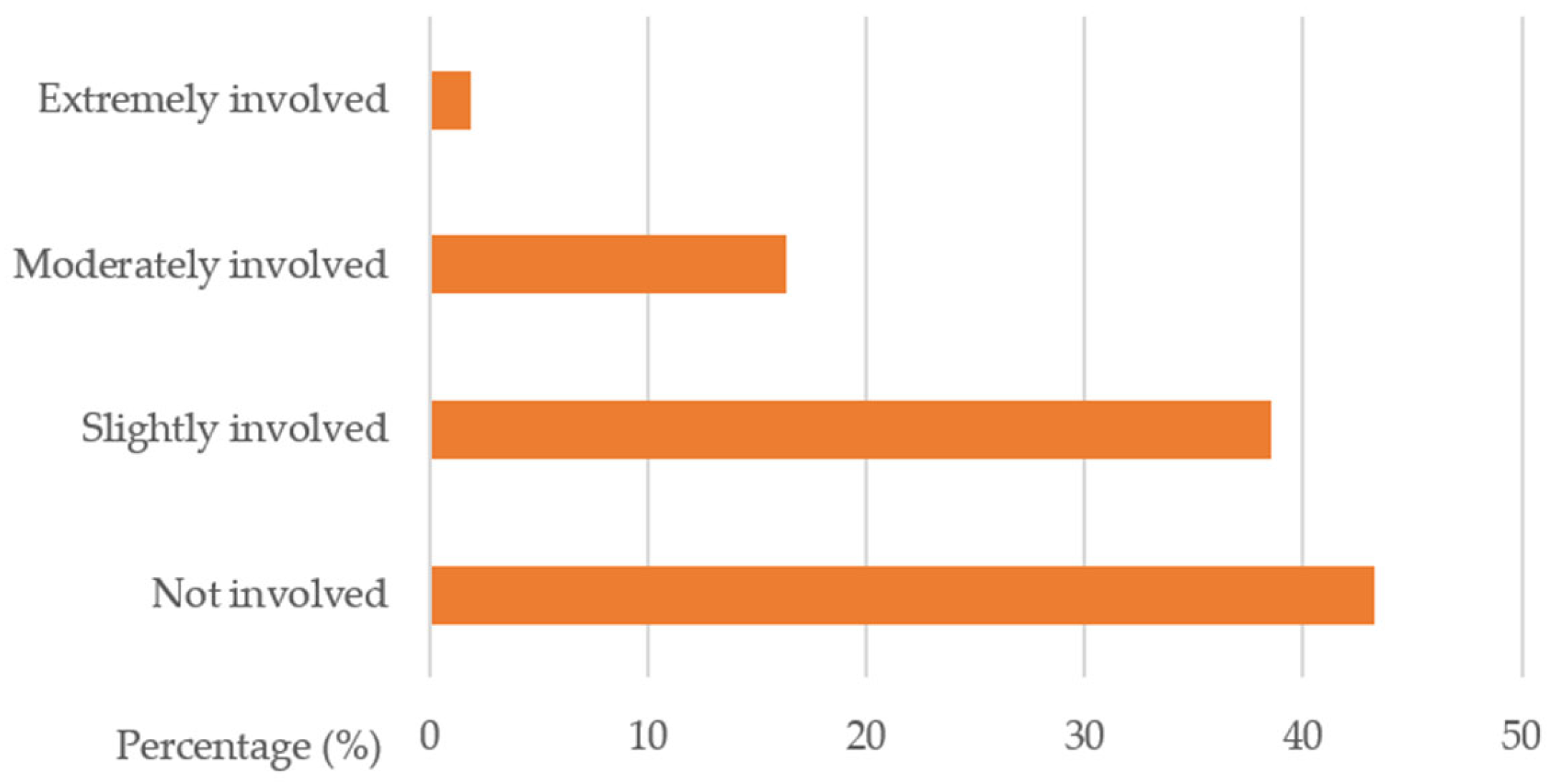
The survey results expose a striking divergence between the willingness to participate and actual involvement, confirming the “participation paradox” (H2). This dimension is analyzed through perceived involvement levels, the availability of engagement opportunities, preferred methods of contribution, and information sources. A combined 81.8% of stakeholders reported feeling “not involved at all” (46.2%) or only “slightly involved” (35.6%) in climate-related decision-making (Figure 11).
This structural gap quantifies the “tokenism” described by [22]. The high willingness score refutes the assumption of “public apathy”; rather, it highlights an institutional blockage, where high social capital is met with low governance permeability. The governance structure in Caferağa effectively operates as a closed loop, filtering out the high demand for engagement.
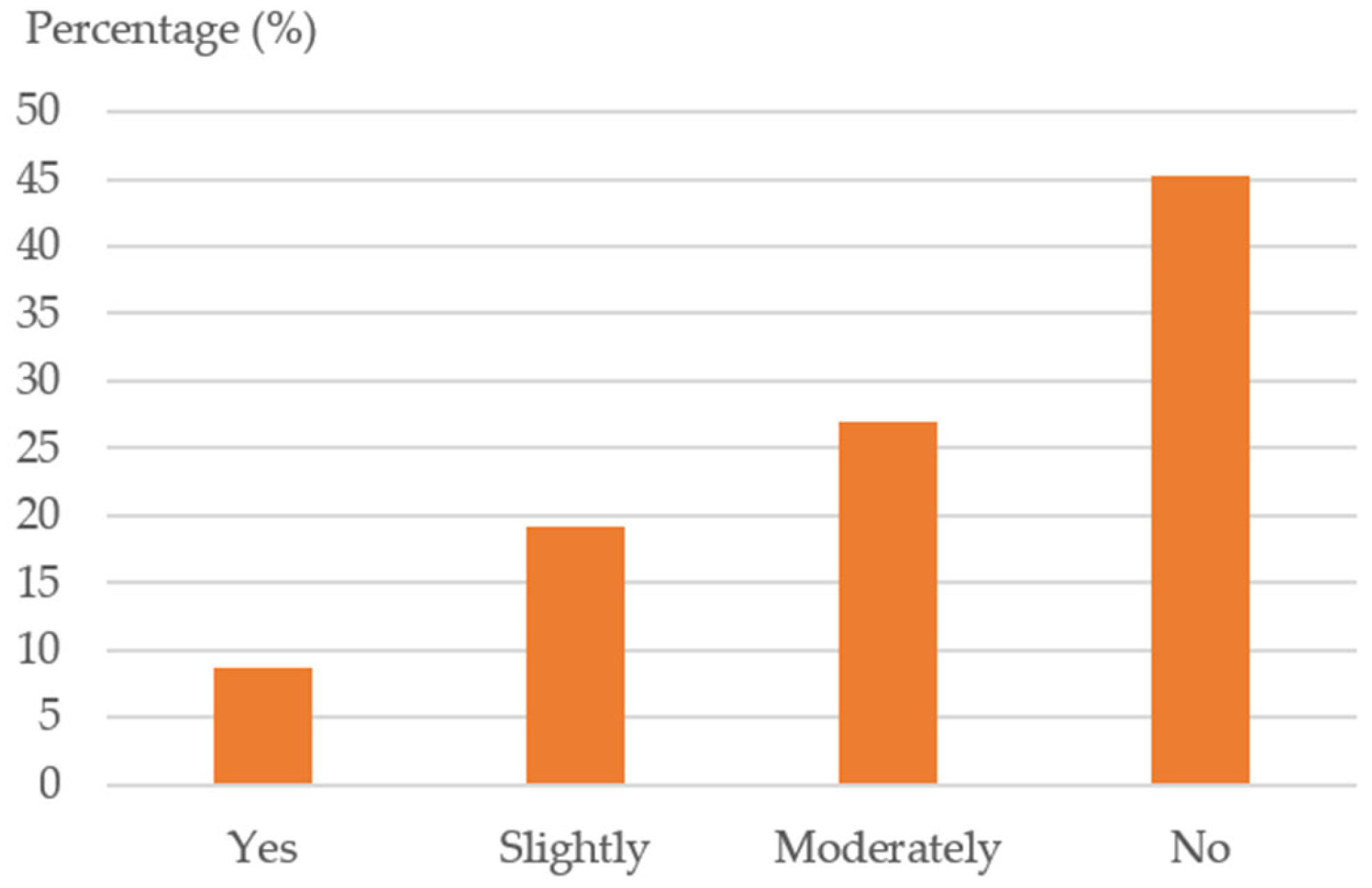
This sense of exclusion is further corroborated by the perceived lack of institutional opportunities. It clearly demonstrates that the vast majority of respondents (64.4%) consider the public engagement opportunities provided by local authorities to be “no participation” or “moderately” (Figure 12).
The dominance of the “no” (very insufficient) category in Figure 12 serves as visual evidence of the “participation paradox”. It indicates that while the municipality may have adaptation goals on paper, these are not translated into accessible democratic channels for residents to voice their input, reducing participation to mere “tokenism”.
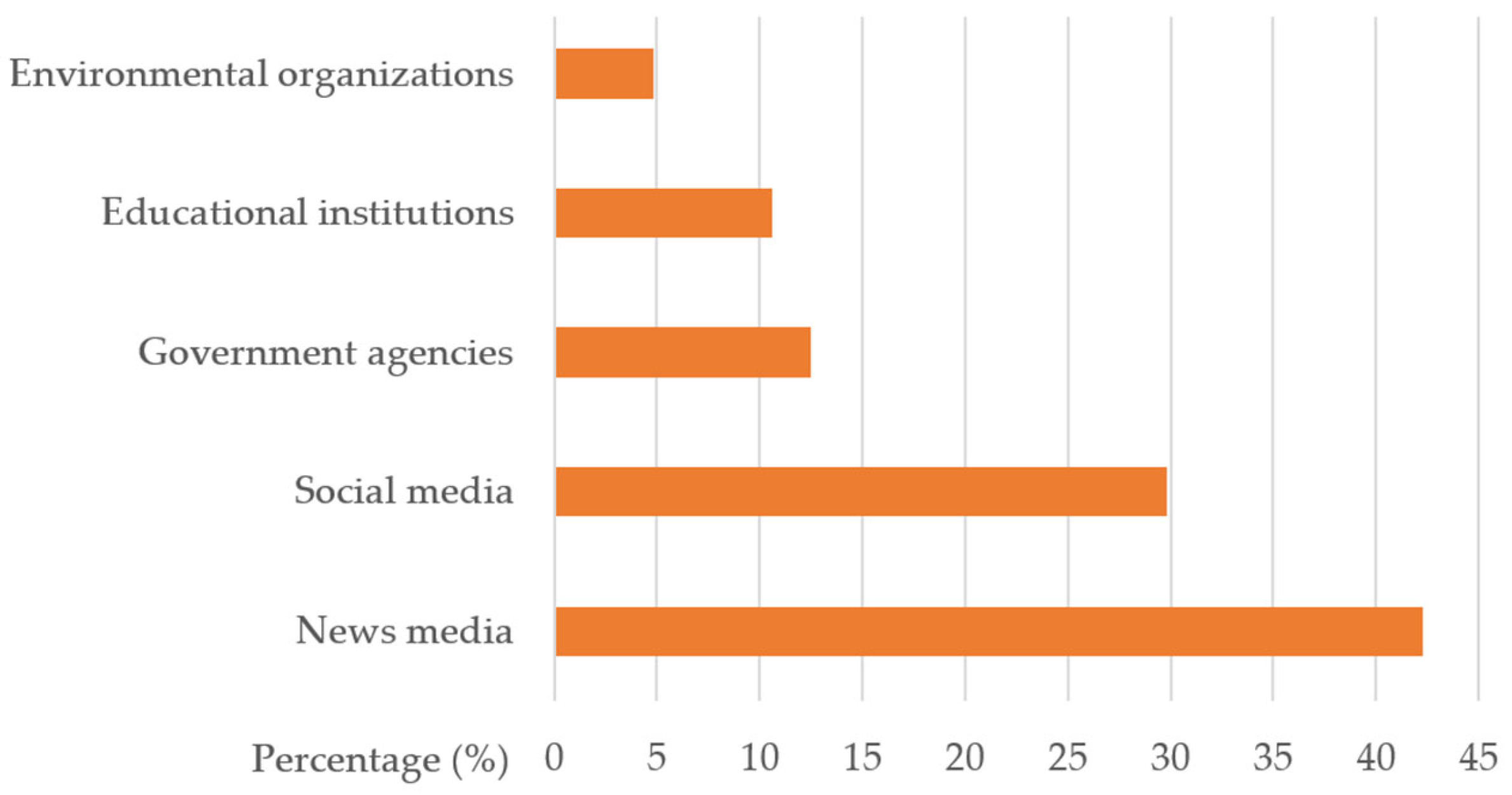
The analysis of the information sources explains the root of the “informed cynicism” observed in the study. As shown in Figure 13 stakeholders primarily obtain climate-related information from news media (42.3%) and social media (29.8%). In contrast, official government agencies (13.5%), educational institutions (10.6%), and environmental organizations (4.8%) play a secondary role (Figure 13).
This reliance on non-institutional sources explains the emergence of “informed cynicism”. Residents are educating themselves through global digital networks but find no local channel to apply this knowledge. As noted, when awareness outpaces institutional communication, trust erodes [18].
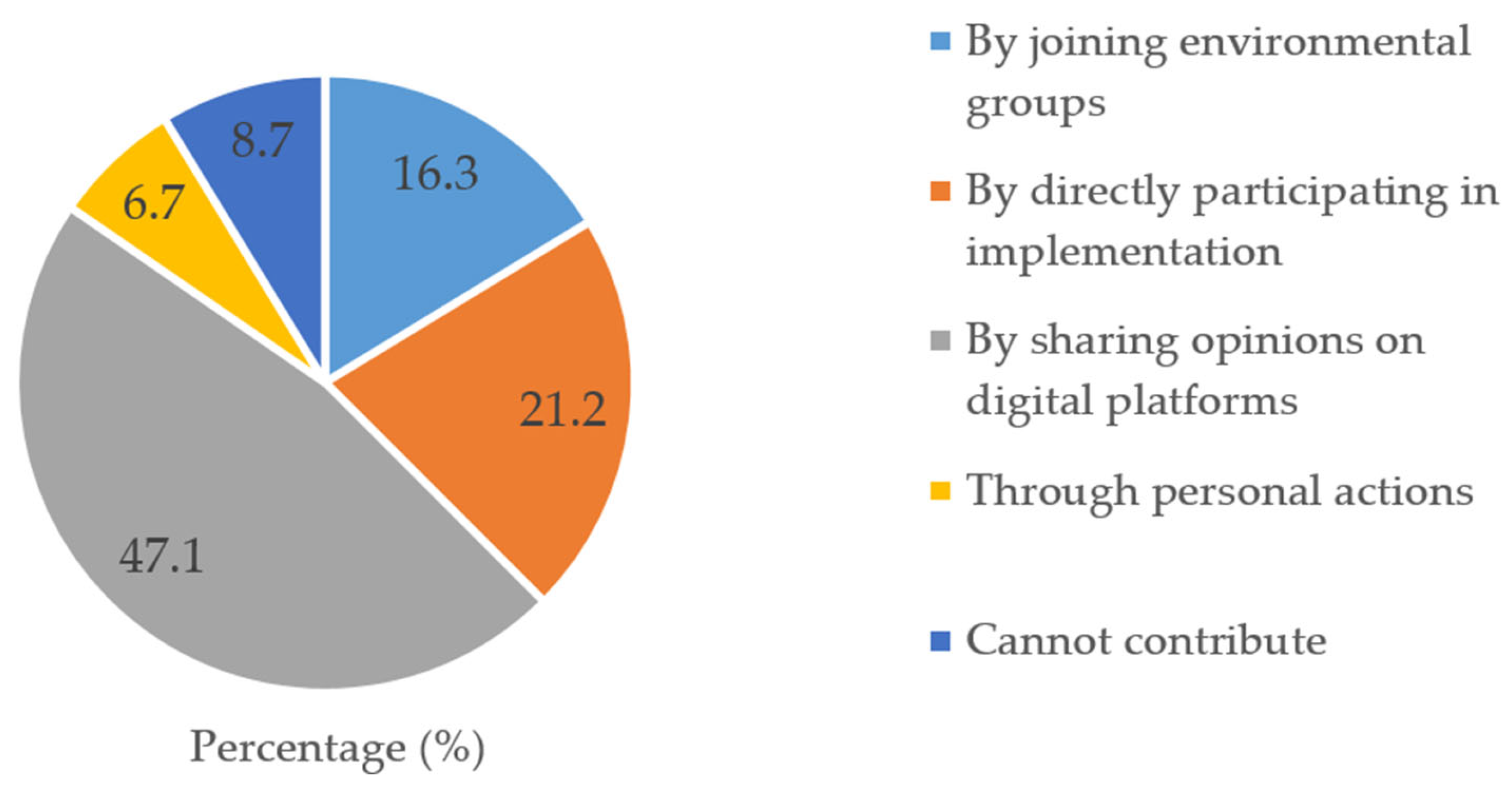
Finally, when asked how they would like to contribute (Q8), respondents favored active but flexible roles. It shows that “sharing opinions on digital platforms” (47.1%) and “direct participation in implementation” (21.2%) are the preferred modes of engagement (Figure 14).
These results indicate a demand for “co-production” rather than just consultation. The strong preference for digital feedback suggests that the municipality’s current analog methods (e.g., town hall meetings) may be outdated for this demographic. This supports the fact that, without structural changes in governance design, local variations in urban fabric cannot be leveraged for resilience [21].

4.3. Socio-Demographics and “Informed Cynicism” (Testing H3)

The influence of age on the climate perception was examined using the Kruskal–Wallis H test. As detailed in Table 4, a statistically significant difference was identified only regarding the perceived importance of climate adaptation (Q3; p = 0.037). Younger and middle-aged groups (18–41) tended to assign higher importance scores compared to the 50+ age group. However, crucially, no significant differences were found for perceived integration (Q4), involvement (Q5), or engagement opportunities (Q6).
The lack of significant variation in Q5 and Q6 suggests that the “participation paradox” is not a generational issue. Whether young or old, stakeholders feel equally excluded from the decision-making process. This reinforces the finding that the primary friction point is structural (the governance system itself) rather than demographic.
The education level emerged as the most influential socio-demographic variable, providing the empirical basis for Hypothesis 3 (awareness–satisfaction inverse). As shown in Table 5, respondents with higher education levels were significantly more critical of existing adaptation measures.
The data in Table 5 reveal a striking pattern: while only 23.1% of middle school graduates stated that “none” of the measures were effectively implemented, this rate surged to 64.9% for university graduates and 66.7% for PhD holders.
This finding allows us to empirically distinguish “informed cynicism” from general political distrust. General distrust often stems from a lack of engagement or understanding. In contrast, the cynicism observed here is characterized by the combination of high awareness + high willingness + low satisfaction.
  • High Standards: Highly educated respondents possess the technical competence to distinguish between genuine “green infrastructure” and mere decorative landscaping. Their rejection of the status quo (“none”) is not an act of ignorance but an informed evaluation of inadequacy.
  • Inverse Relationship: The fact that satisfaction decreases as education increases indicates that the municipality is failing to satisfy its most knowledgeable citizens. This cynicism is an active rejection of “tokenistic” efforts, confirming that without substantive implementation, rising climate literacy will paradoxically lead to deeper institutional distrust.
The educated demographic in Caferağa does not lack knowledge [18]; on the contrary, their high competence allows them to critically evaluate the gap between what is needed (green infrastructure) and what is delivered (inaction). Thus, their dissatisfaction is not a passive “grumble” but an active informed rejection of inadequate governance. This supports that treating knowledgeable citizens as passive recipients inevitably erodes institutional trust [21].
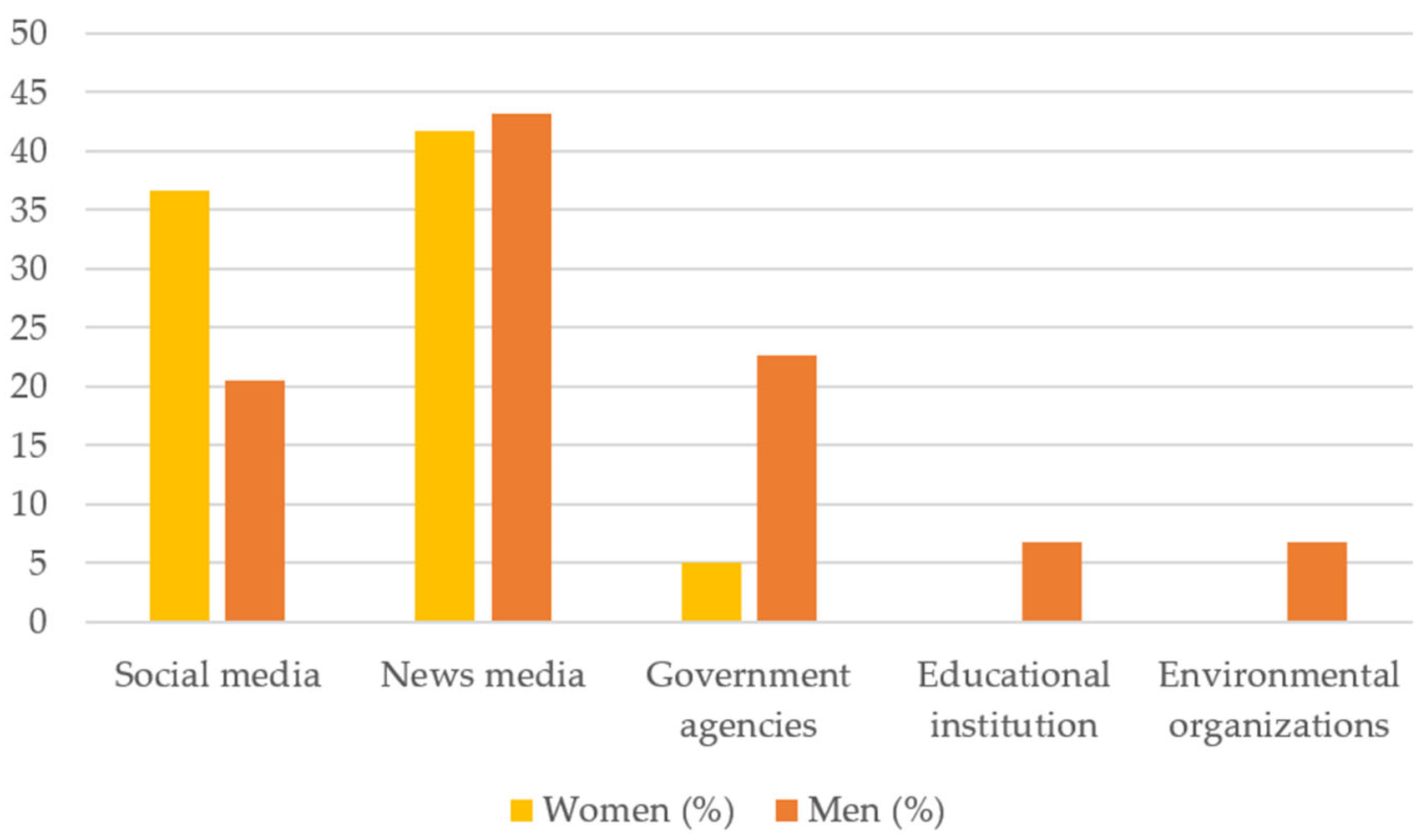
Finally, the gender-based analysis revealed no significant differences in perceived importance or integration scores (Figure 15). However, a significant association was found regarding information sources (χ2, p = 0.036).
Women rely significantly more on social media (36.7%) compared to men (20.5%), who rely slightly more on government agencies. While this does not alter their perception of the “implementation gap”, it suggests that communication strategies for resilience need to be gender-sensitive, utilizing digital platforms more effectively to reach female stakeholders who are key drivers of community-level adaptation.

4.4. Synthesis of Key Findings

The empirical findings of this study collectively answer the defined research questions and confirm the formulated hypotheses, revealing a systemic disconnection in both spatial implementation and governance. In response to the first research question regarding the extent of physical integration, the analysis demonstrates that global and national adaptation goals have not translated into neighborhood-scale spatial reality. While stakeholders express a sophisticated preference for green infrastructure (38.5%), a majority (51.0%) report that “none” of the necessary measures are effectively implemented. The statistically significant divergence (p < 0.001) between the high importance assigned to adaptation and its low perceived integration explicitly confirms Hypothesis 1 (the implementation gap), proving that the physical manifestation of resilience remains largely invisible.
Addressing the second research question on whether high awareness translates into active participation, the findings identify a critical structural blockade. Despite a high willingness to engage (73.1%), a vast majority of stakeholders (86.5%) feel excluded from decision-making processes, citing a lack of institutional opportunities. This evidence answers the research question negatively—awareness does not lead to participation due to exclusionary mechanisms—and validates Hypothesis 2 (the participation paradox). The governance structure operates as a closed loop, reducing public engagement to tokenism rather than co-production.
Finally, concerning the third research question on the influence of socio-demographic profiles, the study reveals that education acts as a catalyst for dissatisfaction rather than approval. A significant inverse relationship was found where respondents with the highest levels of education (Master’s degree and PhD) reported the lowest satisfaction with municipal efforts. This finding substantiates Hypothesis 3 (informed cynicism), confirming that in centralized governance systems, high human capital without meaningful inclusion breeds deep institutional distrust, as competent stakeholders critically evaluate the inadequacy of current interventions.

5. Conclusions

This study examined how climate-adaptation strategies are perceived, spatially integrated, and governed at the neighborhood scale in a high-density coastal urban context, utilizing Caferağa, Istanbul, as a critical case study. By synthesizing the empirical findings regarding the implementation gap (H1), participation paradox (H2), and informed cynicism (H3), this research offers distinct theoretical contributions and operational policy implications for urban resilience.
Theoretically, this study advances the understanding of “governance–perception mismatches” in climate adaptation by shifting the analytical lens from abstract risk perception to the evaluation of concrete spatial strategies. The findings confirm that high climate awareness does not guarantee institutional trust; on the contrary, without visible spatial interventions, it breeds “informed cynicism”. This conceptual contribution challenges the traditional assumption that “greater educational attainment leads to higher satisfaction”. Instead, it demonstrates that in centralized planning regimes, high human capital acts as a magnifying glass for governance failures, revealing a “participation paradox” where the willingness to co-produce is systematically blocked by exclusionary structures. Thus, the study posits that social sustainability in climate adaptation depends less on “educating the public” and more on “opening the governance loop”.
To address the disconnect between strategic objectives and local experience, policy interventions must move beyond rhetoric to operational implementation. Based on the demand for digital engagement identified in the findings, municipalities should implement specific low-barrier participatory tools at the neighborhood scale:
  • Public Participation GIS (PPGIS): deploying map-based mobile platforms where residents can pinpoint specific problem areas (e.g., heat accumulation zones, clogged drainage) to visualize local knowledge.
  • Citizen Science Monitoring: utilizing mobile applications that allow “dual users” (residents who also work in the area) to upload real-time data on the performance of adaptation measures (e.g., flood photos, green infrastructure condition), thereby transforming passive beneficiaries into active monitors.
  • Micro-Scale Green Interventions: prioritizing visible multifunctional green infrastructure (e.g., rain gardens, permeable pavements) over invisible grey infrastructure to rebuild public trust through tangible spatial improvements.
While this study provides analytically transferable insights for high-density coastal cities in the Mediterranean and Global South, it is subject to certain limitations. First, the sample was specifically stratified to represent “Ground-Floor Interface” stakeholders (residents and workers with direct street access), which may exclude the perspectives of upper-floor residents who experience climate risks differently. Second, as a single case study, the statistical generalizability is bounded by the specific socio-spatial context of Kadıköy.
Future research should extend this analytical framework by conducting comparative studies across multiple neighborhoods with varying socio-economic profiles to test the universality of “informed cynicism”. Furthermore, longitudinal research designs could track the implementation of specific digital participation tools (e.g., a pilot PPGIS project) to empirically measure their impact on reducing the “governance gap” and restoring institutional trust over time. Bridging the gap between policy ambition and everyday urban experience remains the central challenge for advancing urban sustainability.

Author Contributions

Conceptualization, G.K., J.P.C. and A.A.G.; methodology, G.K., A.A.G. and J.P.C.; validation, G.K., J.P.C. and A.A.G.; formal analysis, G.K.; investigation, G.K.; resources, J.P.C. and A.A.G.; data curation, G.K.; writing—original draft preparation, G.K.; writing—review and editing, J.P.C. and A.A.G.; visualization, G.K.; supervision, A.A.G. and J.P.C.; funding acquisition, J.P.C. All authors have read and agreed to the published version of the manuscript.

Funding

This research was funded in whole or in part by the Fundação para a Ciência e a Tecnologia, I.P. (FCT, https://ror.org/05qdjap63, accessed on 16 December 2025) under the Grant of the Strategic Project with the reference UID/04008/2025, https://doi.org/10.54499/UID/04008/2025. For the purpose of Open Access, the author has applied a CC BY-ND public copyright license to any Author’s Accepted Manuscript (AAM) version arising from this submission.

Institutional Review Board Statement

The study was conducted in accordance with the Declaration of Helsinki and approved by the Ethics Committee of Istanbul Technical University Social And Human Sciences Scientific Research And Publication Ethics Committee (protocol code 620 and 13 January 2025) for studies involving humans.

Informed Consent Statement

Informed consent was obtained from all subjects involved in the study.

Data Availability Statement

The data presented in this study are available on request from the corresponding author due to ethical reasons.

Acknowledgments

During the preparation of this manuscript, the author(s) used an AI-based language model for the purposes of text editing. The authors have reviewed and edited the output and take full responsibility for the content of this publication.

Conflicts of Interest

The authors declare no conflicts of interest. João Pedro Costa as one of the authors has received research grants from Fundação para a Ciência e a Tecnologia, I.P.

Abbreviations

NDCNationally Determined Contributions
SECAPSustainable Energy and Climate Action Plan
CGICoastal Green Infrastructure
GIGreen Infrastructure
IPCCInternational Panel on Climate Change
IMMIstanbul Metropolitan Municipality

References

  1. Donner, J.; Sprondel, N.F.; Köppel, J. Climate Change Adaptation to Heat Risk at the Local Level: A Bayesian Network Analysis of Local Land-Use Plan Implementation. J. Environ. Assess. Policy Manag. 2017, 19, 1750010. [Google Scholar] [CrossRef]
  2. Hurlimann, A.; Moosavi, S.; Browne, G.R. Urban planning policy must do more to integrate climate change adaptation and mitigation actions. Land Use Policy 2021, 101, 105188. [Google Scholar] [CrossRef]
  3. Pietrapertosa, F.; Salvia, M.; Hurtado, S.D.G.; d’Alonzo, V.; Church, J.M.; Geneletti, D.; Reckien, D. Urban climate change mitigation and adaptation planning: Are Italian cities ready? Cities 2019, 91, 93–105. [Google Scholar] [CrossRef]
  4. Dulal, H.B. Cities in Asia: How are they adapting to climate change? J. Environ. Stud. Sci. 2019, 9, 13–24. [Google Scholar] [CrossRef]
  5. Nowak, M.J.; Monteiro, R.; Olcina-Cantos, J.; Vagiona, D.G. Spatial Planning Response to the Challenges of Climate Change Adaptation: An Analysis of Selected Instruments and Good Practices in Europe. Sustainability 2023, 15, 10431. [Google Scholar] [CrossRef]
  6. D’Onofrio, R.; Camaioni, C.; Mugnoz, S. Local Climate Adaptation and Governance: The Utility of Joint SECAP Plans for Networks of Small–Medium Italian Municipalities. Sustainability 2023, 15, 8738. [Google Scholar] [CrossRef]
  7. Scyphers, S.B.; Beck, M.W.; Furman, K.L.; Haner, J.; Josephs, L.I.; Lynskey, R.; Keeler, A.G.; Landry, C.E.; Powers, S.P.; Webb, B.M.; et al. A waterfront view of coastal hazards: Contextualizing relationships among geographic exposure, shoreline type, and hazard concerns among coastal residents. Sustainability 2019, 11, 6687. [Google Scholar] [CrossRef]
  8. Munenzon, D.; Noguera, M. Strategies for Compound Urban and Climate Hazards: Linking Climate Adaptation and Sustainability to Address Risk in Environmental Justice Communities. In Climate Crisis: Adaptive Approaches and Sustainability; Springer Nature: Cham, Switzerland, 2024; pp. 171–192. [Google Scholar]
  9. Cao, Y.; Chen, W.Y.; Wantzen, K.M. How do you like your rivers? Portraying public perception and preference for urban rivers in China via a combined visual and textual analysis. Geogr. J. 2025, 191, e70029. [Google Scholar] [CrossRef]
  10. Liu, T.; Fan, C. Impacts of disaster exposure on climate adaptation injustice across US cities. Sustain. Cities Soc. 2023, 89, 104371. [Google Scholar] [CrossRef]
  11. Romero-Muñoz, S.; Sánchez-Chaparro, T.; Muñoz Sanz, V.; Tillie, N. Urban Greening Management Arrangements between Municipalities and Citizens for Effective Climate Adaptation Pathways: Four Case Studies from The Netherlands. Land 2024, 13, 1414. [Google Scholar] [CrossRef]
  12. Lenzholzer, S.; Carsjens, G.J.; Brown, R.D.; Tavares, S.; Vanos, J.; Kim, Y.; Lee, K. Awareness of urban climate adaptation strategies–an international overview. Urban Clim. 2020, 34, 100705. [Google Scholar] [CrossRef]
  13. Ministry of Environment and Urbanism (MEU). Türkiye’de İklim Değişikliğine Uyum Eyleminin Güçlendirilmesi Projesi; Ministry of Environment and Urbanism: Ankara, Turkey, 2021. Available online: https://iklim.gov.tr/turkiye-de-iklim-degisikligine-uyum-eyleminin-guclendirilmesi-projesi-hibe-programi-kapsaminda-projelerin-acilislari-devam-ediyor-haber-4234 (accessed on 16 December 2025).
  14. Kadıköy Municipality. Kadıköy Merkez Strateji Belgesi; Kadıköy Municipality: Istanbul, Turkey, 2024. Available online: https://sehirplanlama.ibb.istanbul/wp-content/uploads/2025/08/KADIKOY-MERKEZ-STRATEJI.pdf (accessed on 17 November 2025).
  15. Kadıköy Municipality. Kadıköy 2030 Mevcut Durum Raporu; Kadıköy Municipality: Istanbul, Turkey, 2023. Available online: https://webgis.kadikoy.bel.tr/keos/img/PDF/MSPMDR.PDF (accessed on 16 November 2025).
  16. Prober, S.M.; Doerr, V.A.; Broadhurst, L.M.; Williams, K.J.; Dickson, F. Shifting the conservation paradigm: A synthesis of options for renovating nature under climate change. Ecol. Monogr. 2019, 89, e01333. [Google Scholar] [CrossRef]
  17. Nalau, J.; Verrall, B. Mapping the evolution and current trends in climate change adaptation science. Clim. Risk Manag. 2021, 32, 100290. [Google Scholar] [CrossRef]
  18. Masri, S.; Simolaris, A.; Hopfer, S.; Wu, J. Assessment of Climate Change Sentiment, Engagement and Adaptation through a Community-Based Outreach Campaign and Questionnaire across the United States. Earth 2020, 1, 75–96. [Google Scholar] [CrossRef]
  19. Ruth, M.; Franklin, R.S. Livability for all? Conceptual limits and practical implications. Appl. Geogr. 2014, 49, 18–23. [Google Scholar] [CrossRef] [PubMed]
  20. Dilling, L.; Daly, M.E.; Travis, W.R.; Wilhelmi, O.V.; Klein, R.A. The dynamics of vulnerability: Why adapting to climate variability will not always prepare us for climate change. WIREs Clim. Change 2015, 6, 413–425. [Google Scholar] [CrossRef]
  21. Hügel, S.; Davies, A.R. Public participation, engagement, and climate change adaptation: A review of the research literature. WIREs Clim. Change 2020, 11, e645. [Google Scholar] [CrossRef]
  22. Sartorius, J.V.; Geddes, A.; Gagnon, A.S.; Burnett, K.A. Participation and co-production in climate adaptation: Scope and limits identified from a meta-method review of research with European coastal communities. WIREs Clim. Change 2024, 15, e880. [Google Scholar] [CrossRef]
  23. Jones, J.; Russo, A. Exploring the role of public participation in delivering inclusive, quality, and resilient green infrastructure for climate adaptation in the UK. Cities 2024, 148, 104879. [Google Scholar] [CrossRef]
  24. Li, L.; Collins, A.M.; Cheshmehzangi, A.; Chan, F.K.S. Identifying enablers and barriers to the implementation of the Green Infrastructure for urban flood management: A comparative analysis of the UK and China. Urban For. Urban Green. 2020, 54, 126770. [Google Scholar] [CrossRef]
  25. Zorn, A.; Schäfer, S.; Tzschabran, S. Production of knowledge on climate change perception–actors, approaches, and dimensions. Geogr. Helv. 2023, 78, 241–253. [Google Scholar] [CrossRef]
  26. Eyidogan, H. Marmara bolgesinin ve Istanbul kentinin deprem tehlikesi uzerine bir derleme. In TMMOB Disaster Semposium Book; Mattek: Ankara, Turkey, 2007; pp. 15–29. [Google Scholar]
  27. Kazancı, G.; Gülümser, A.A.; Costa, J.P. Climate-Responsive Coastal Spatial Planning: Frameworks for Mainstreaming Adaptation Strategies in Kadıköy/Türkiye. Doctoral Thesis, Istanbul Technical University, Istanbul, Turkey, 2026. Unpublished. [Google Scholar]
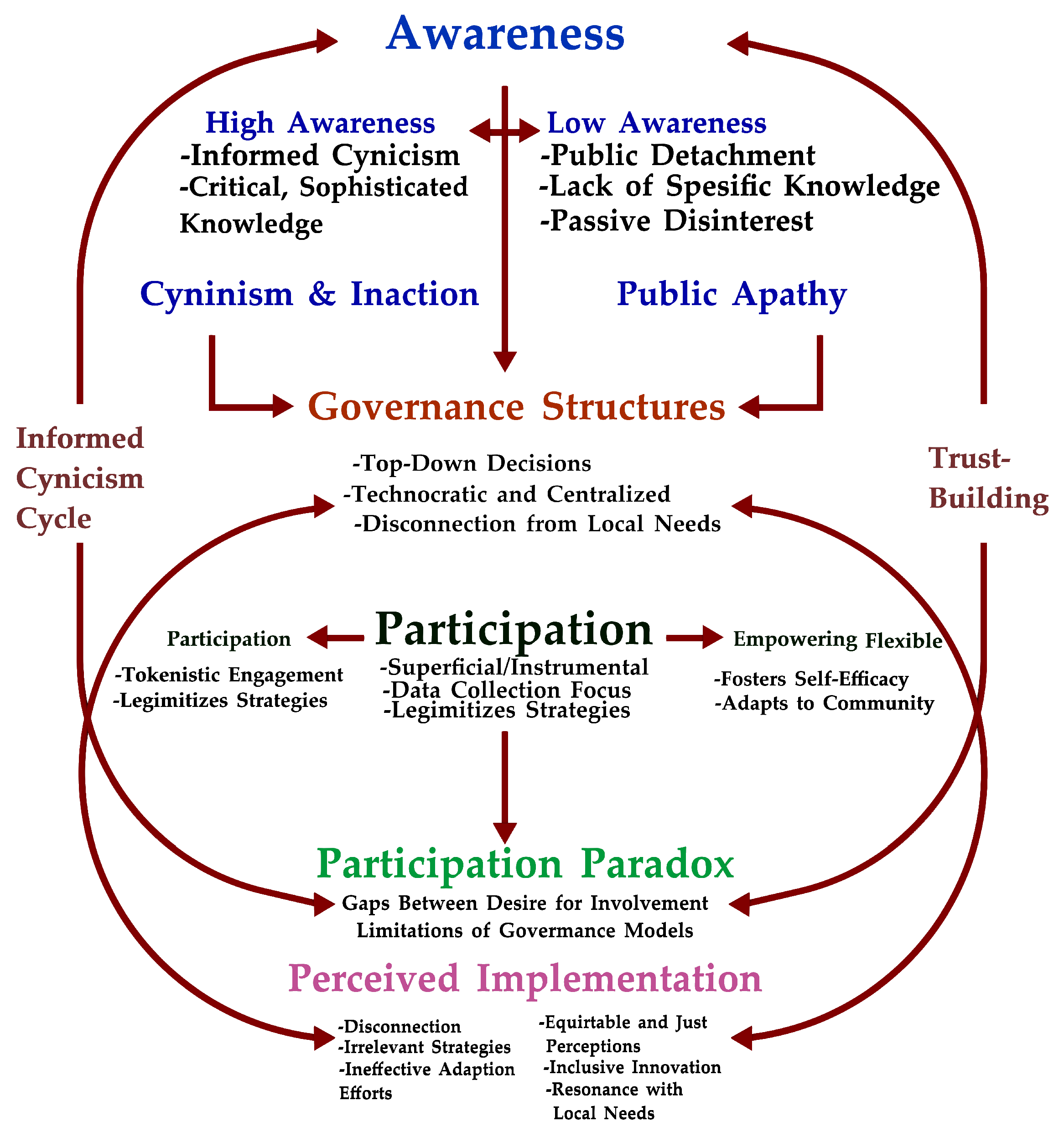
Figure 1. Conceptual framework of the literature output.
Sustainability 18 01418 g001
Figure 2. The location of the case area.
Sustainability 18 01418 g002
Figure 3. Survey streets and avenues.
Sustainability 18 01418 g003
Figure 7. Distribution of survey participants by street and user typology [27].
Sustainability 18 01418 g007
Figure 8. Perceived priorities of climate-adaptive urban planning (Q1).
Sustainability 18 01418 g008
Figure 9. Perceived effectiveness of climate-adaptation measures in local spatial planning (Q2).
Sustainability 18 01418 g009
Figure 10. Perceived importance and integration of climate adaptation (Q3–Q4).
Sustainability 18 01418 g010
Figure 11. Perceived level of stakeholder involvement in decision-making (Q5).
Sustainability 18 01418 g011
Figure 12. Perceived availability of public engagement opportunities (Q6).
Sustainability 18 01418 g012
Figure 13. Primary sources of climate-change information (Q7).
Sustainability 18 01418 g013
Figure 14. Willingness to contribute to climate-adaptation processes (Q8).
Sustainability 18 01418 g014
Figure 15. Gender and information sources (Chi-square results).
Sustainability 18 01418 g015
Table 1. Evaluation of the literature.
Ref.
No.
ResourcesCase CountryMethodologyFocus/Main ArgumentCritical Findings in Coastal Community ContextLiterature Gap
[19]Ruth and Franklin (2014)-Conceptual FrameworkLivability vs. AdaptationThe tension between daily “livability” (comfort) and long-term “adaptation” (safety)Empirical gap: Lacks empirical data on how this tension is resolved by stakeholders in high-density neighborhoods.
[20]Dilling et al. (2015)-Critical Literature SynthesisDynamics of Vulnerability and “No Regrets”“Levee Effect” riskEmpirical gap: Explains theoretical “no regrets” policies and “levee effect” without practical examples.
[16]Prober et al. (2019)-Synthesis/ReviewConservation ParadigmAdaptation requires a fundamental shift in governance paradigmsMacro-ecological focus: Does not address the specific “participation paradox” in urban commercial districts.
[7]Scyphers et al. (2019)USA/MexicoQuantitative Survey (Likert Scale)Coastal Hazard Perception and Shoreline TypeHard infrastructure fails to alleviate anxietyContext bias: Research limited to low-density areas; addresses data gap for high-density urban contexts such as Istanbul/Türkiye.
[12]Lenzholzer et al. (2020)Ten countriesExpert InterviewsAwareness and Communication GapLow awareness among citizens and politiciansMethodological gap: Relies on indirect expert estimates
[21]Hügel and Davies (2020)-Literature Review–Text AnalysisQuality of ParticipationLack of public involvement in defining adaptation strategies/solutionsScope limitation: Dominance of risk perception; positions the public as active strategy selectors rather than passive victims.
[18]Masri et al. (2020)USASurveyClimate CommunicationOutreach campaigns mostly reach the already educated peopleLimited frame: Does not link high awareness to dissatisfaction with spatial planning.
[24]Li et al. (2020)USA/ChinaComparative Case StudyImplementation BarriersSocio-cultural barriers (aesthetics, habits)Validation: Challenges the assumption of public resistance; tests whether visualization overcomes socio-cultural barriers.
[17]Nalau and Verrall (2021)-Systematic MappingAdaptation Science TrendsThe field is shifting from biophysical assessments to governance and social barriersContext gap: Does not provide granular data on local stakeholder perceptions of specific designs.
[10]Liu and Fan (2023)USAQuantitative Macro AnalysisEnvironmental Justice and Social VulnerabilityInequitable distribution of
adaptation actions
Scale limitations: Macro-policy focus prevails; does not examine neighborhood-scale perception of spatial interventions.
[6]D’Onofrio et al. (2023)ItalyDocument Analysis (SECAP) and SurveyGovernance and Planning ToolsLimited public engagement in planningManagerial focus: Existing studies prioritize governance; lacks measurement of public perception regarding spatial strategies.
[25]Zorn et al. (2023)-Systematic Literature ReviewMapping of Perception StudiesScarcity of studies on urban residents’ perceptionPerceptional gap: Focusing on risk perception rather than strategy perception.
[8]Munenzon and Noguera (2024)EgyptOnline Survey Awareness FrameworkKnowledge gap about the “climate change adaptation” Abstractness: Testing public with unfamiliar climate-adaptive terms.
[11]Romero-Muñoz et al. (2024)Portugal: LisbonQualitative Spatial Planning AnalysisCoastal Green Infrastructure (CGI)Inadequacy of hard engineeringTop-down bias: Green infrastructure proposed directly by experts.
[22]Sartorius et al. (2024)EuropeMeta-method ReviewCo-productionParticipation often remains “instrumental” to legitimize policy rather than genuine co-productionLinking gap: Meta-review of existing methods; lacks a direct case study on the link between education and cynicism.
[23]Jones and Russo (2024)UKMixed MethodsUrban Green Infrastructure DeliveryPublic is willing to participate in Green Infrastructure, but institutional barriers prevent itLimited location: Context is Global North; does not address the “government to governance” transition issues of the Global South.
[9]Cao et al. (2025)UK: LondonBig Data (Social Media/Flickr)Aesthetic Perception of Blue SpacesPreference for aesthetics and recreation in blue spacesFunctional gap: Studies focus on aesthetics and temporary findings.
Table 2. Spatial distribution of the sample size ( n = 104) across the selected avenues/streets based on density calculations [27].
Name of the Streets/Avenues (m)Length of the Streets/Avenues (m)The Number of Total Stores (Retails)Required Questionnaire Number
Neşet Ömer Street181 m245
General Asım Gündüz Avenue343 m6914
Mühürdar Karakolu Street296 m153
Dr. Esat Işık Avenue811 m5811
Sarraf Ali Street200 m347
Şifa Street280 m42
Mühürdar Avenue865 m6914
Muvakkithane Avenue170 m378
Moda Avenue1300 m19040
Total 500104
Table 3. Survey questions, codes, and data types.
SectionsCodeSurvey QuestionPreferencesData Type
General InformationGGenderWoman
Man
Prefer not to specify
Description
AAge15–17
18–25
26–33
34–41
42–49
50+
EEducation levelMiddle School
High School
University
Master’s Degree
PhD/Doctorate
Integration of Climate AdaptationQ1Which of the following do you consider the most important aspect of climate-adaptive urban planning in your neighborhood?- Green infrastructure (parks, green spaces)
- Water management
- Awareness and participation
- Development of digital tools
- Land use
Nominal
Q2Which of the following climate adaptation measures do you think are most effectively included in local spatial planning? (Select all that apply)- Green infrastructure (parks)
- Flood management
- Coastal protection measures
- Heat mitigation
- None of the above
- All of the above
Nominal
Q3How important do you think it is to integrate climate change adaptation into spatial planning regulations and policies?- Not important at all
- Slightly important
- Moderately important
- Extremely important
Ordinal
Q4To what extent do you believe climate change adaptation strategies are currently integrated into urban planning policies in Caferağa Neighborhood?- Not integrated at all
- Slightly integrated
- Moderately integrated
- Extremely integrated
Ordinal
Community EngagementQ5How involved do you feel in the decision-making processes related to environmental policies and climate change adaptation in your neighborhood?- Not involved at all
- Slightly involved
- Moderately involved
- Extremely involved
Ordinal
Q6Do you think local governments and planning authorities provide enough public engagement opportunities regarding climate-adaptive urban planning?- Yes, actively involved
- Slightly
- Moderately
- No public involvement
Ordinal
Q7What are your primary sources of information about climate change? (Select all that apply)- News media (TV, newspaper)
- Social media (Facebook, X, Instagram, etc.)
- Government agencies
- Educational institutions (school, university)
- Environmental organizations, NGOs
Nominal
Q8How can you contribute to monitoring the effectiveness of climate adaptation measures in Caferağa?- I cannot contribute
- By sharing opinion on digital platforms
- By directly participating in implementation
- By joining environmental groups
- Through personal actions (planting trees, etc.)
Nominal
Table 4. Age-based differences in perceptions of climate adaptation and participation (Kruskal–Wallis H test) [27].
QuestionAgeNMean RankHdfSig. (p)
Q315–17925.1111.81050.037
18–252154.93
26–331357.19
34–413058.03
42–491056.95
50+2148.88
Total104
Q415–17956.6110.60750.060
18–252152.52
26–331355.92
34–413060.50
42–491057.15
50+2134.95
Total104
Q515–17965.563.33950.648
18–252154.74
26–331348.08
34–413053.57
42–491049.95
50+2147.10
Total104
Q615–17964.448.09750.151
18–252152.45
26–331343.42
34–413060.62
42–491050.35
50+2142.48
Total104
Table 5. Education level and perceived effectiveness of adaptation measures (Q2).
Education LevelNone (%)Green
Infrastructure (%)
Flood
Management (%)
Coastal Protection (%)Heat
Mitigation (%)
Middle school23.123.123.10.030.8
High school46.317.114.617.14.9
University64.95.416.210.82.7
Master’s degree50.010.010.00.030.0
PhD66.70.033.30.00.0
Disclaimer/Publisher’s Note: The statements, opinions and data contained in all publications are solely those of the individual author(s) and contributor(s) and not of MDPI and/or the editor(s). MDPI and/or the editor(s) disclaim responsibility for any injury to people or property resulting from any ideas, methods, instructions or products referred to in the content.