Blockchain and Coffee Supply Chain: Implications for Traceability, Efficiency, and Sustainability: A Systematic Literature Review

 , , , and
Abstract
1. Introduction
- RQ1: How does the existing literature conceptualize the contribution of blockchain to sustainability, traceability, and efficiency in coffee supply chains?
- RQ2: What technical, organizational, and institutional factors, as well as what structural limitations of the coffee supply chain, could hinder the effective use of blockchain for more sustainable and equitable management of this resource?
2. Materials and Methods
2.1. Search Strategy
- The search was deliberately limited to the two terms “Coffee” and “Blockchain” to ensure a clear alignment between the retrieved documents and the scope of the review, and thus to specifically identify contributions that explicitly deal with blockchain-based applications in the coffee sector. Broader terms such as “Distributed Ledger Technology”, “DLT”, “Digital Traceability Systems” or “Distributed Ledgers” were not included, as they are frequently used in a wide range of technological and industrial contexts and could have generated a very large number of non-specific results, potentially compromising the focus and manageability of the review process. However, it is recognized that this choice may have excluded relevant studies referring to blockchain using adjacent terminology or broader conceptual frameworks, but given the explicit objective of mapping specific blockchain applications in coffee supply chains, the query adopted was deemed appropriate to ensure thematic accuracy and conceptual consistency.
- Scopus was selected as the sole database because it is one of the largest peer-reviewed multidisciplinary academic archives and is widely recognized for its extensive coverage of scientific journals and conference proceedings in the fields of management, engineering, information systems, and sustainability, areas that are highly relevant to the topic of this review. Its broad geographical, thematic, and methodological coverage makes it particularly suitable for analyzing an emerging and cross-cutting field of research such as blockchain applications in coffee supply chains. In addition, Scopus adopts rigorous indexing standards and provides consolidated citation data, helping to ensure the scientific reliability of the contributions included. However, it is recognized that the exclusive use of Scopus could represent a potential limitation, as it may exclude studies indexed in complementary databases. Nevertheless, the breadth and multidisciplinary nature of Scopus were considered sufficient to ensure an adequate representation of the existing academic debate. Future research could benefit from extending the search to additional databases, such as Web of Science, to further strengthen the robustness of the analysis.
2.2. Inclusion and Exclusion Criteria
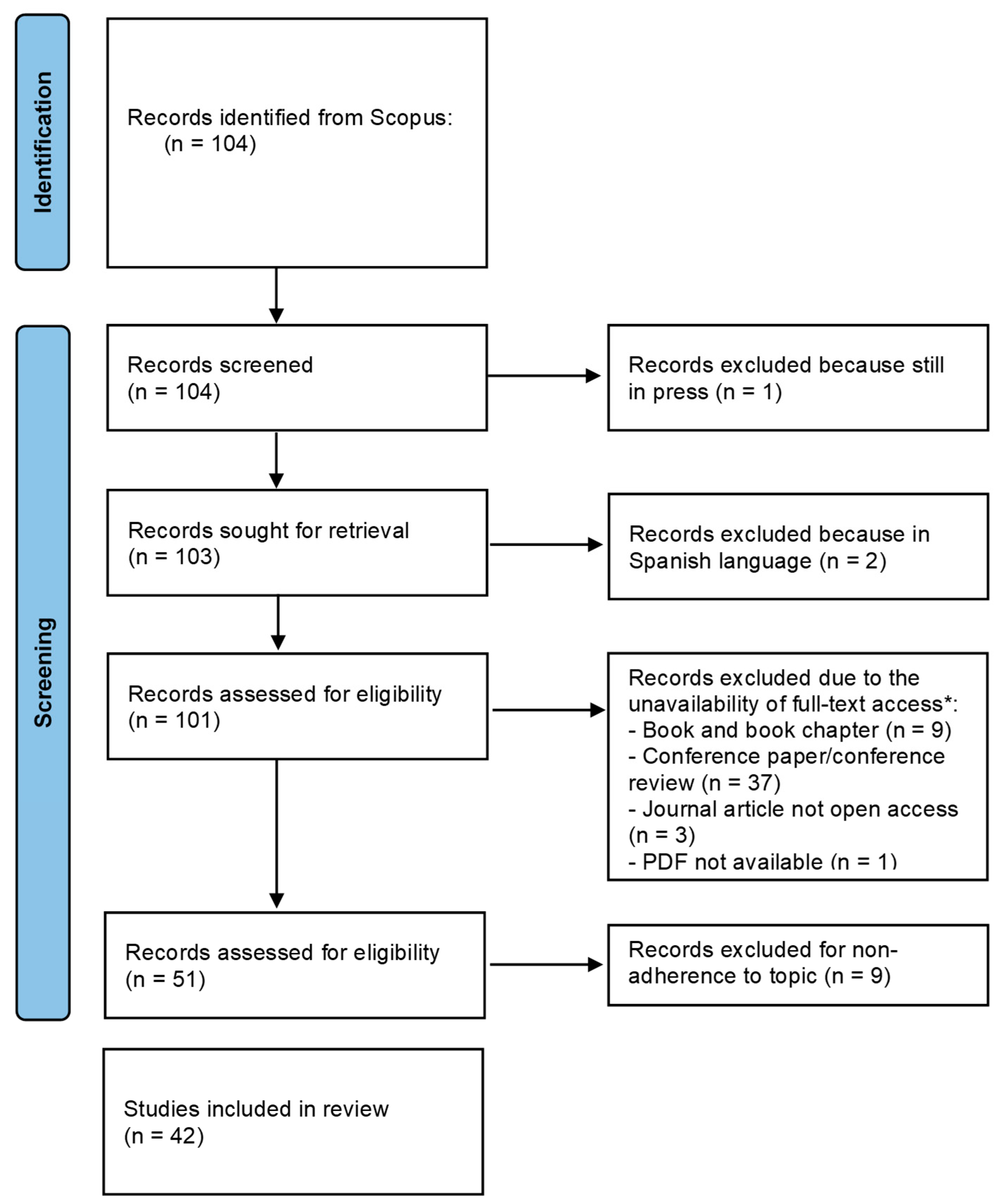
2.3. Screening Process
- Scope: The study had to explicitly address the application of blockchain technologies within the coffee sector.
- Focus: The contribution was required to provide insights into potential improvements in terms of transparency, sustainability, or governance within the coffee supply chain.
- Methodology: The study had to present empirical evidence, conceptual frameworks, or documented case studies relevant to coffee management and traceability.
3. Results and Discussion
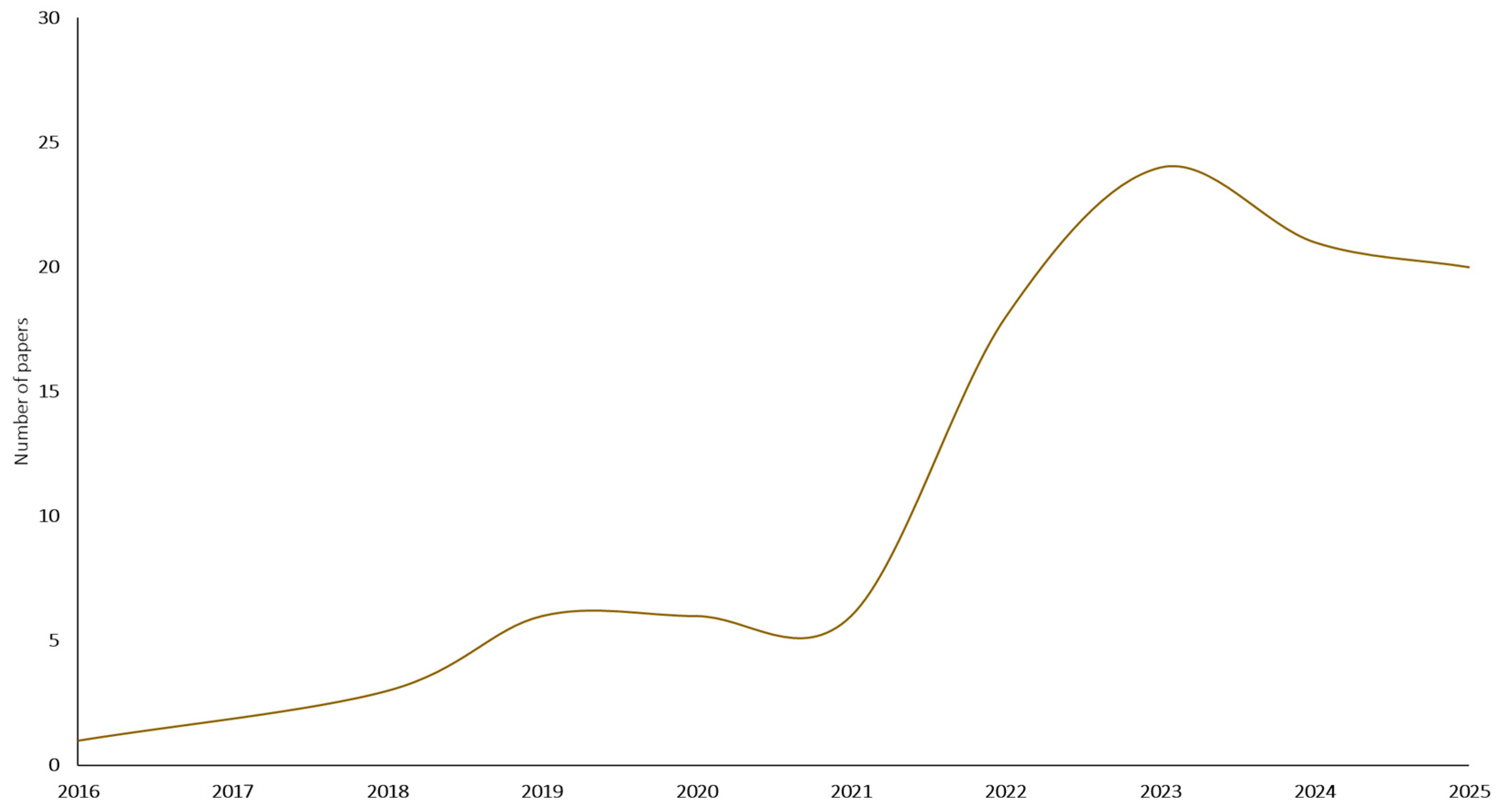
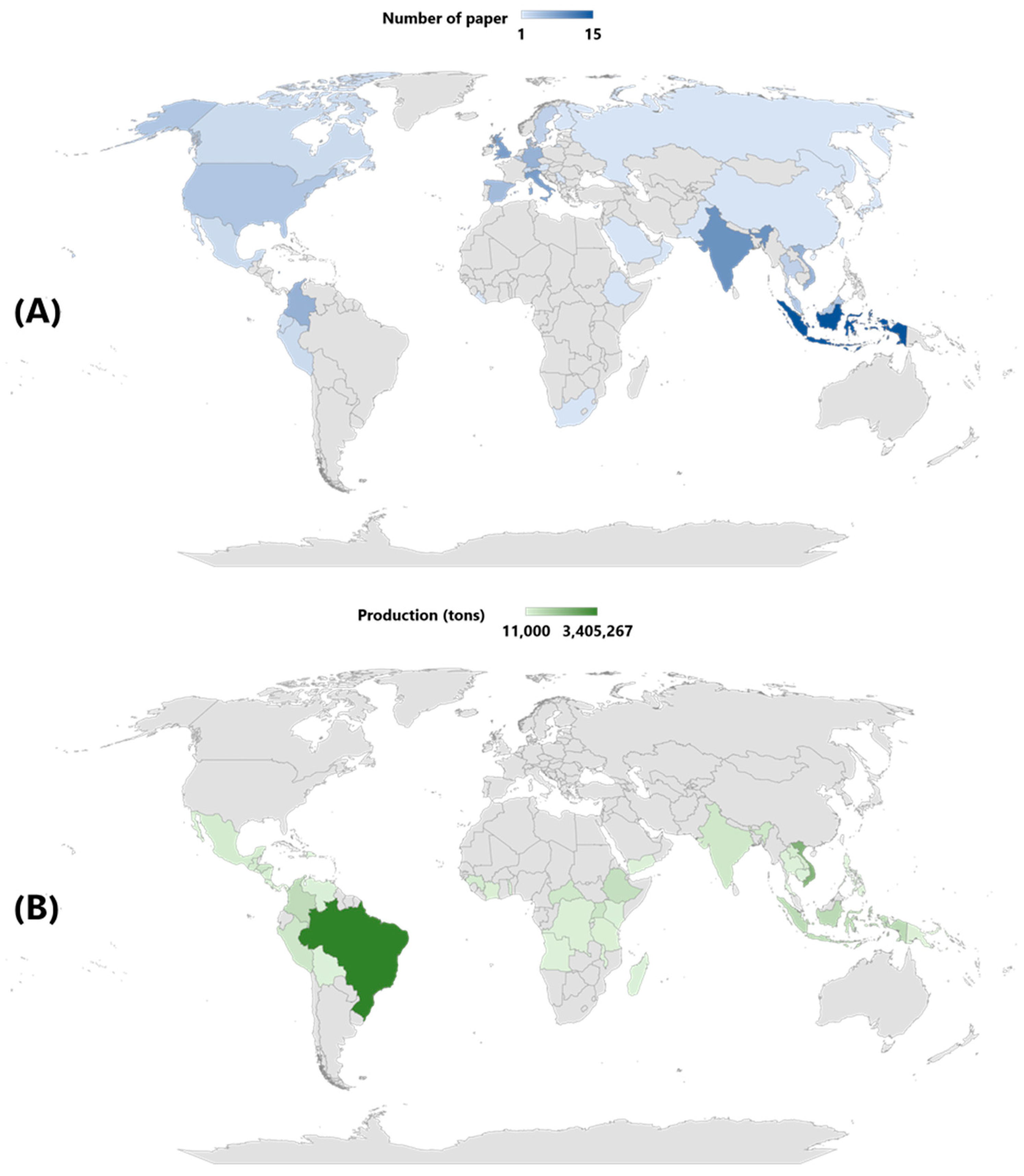
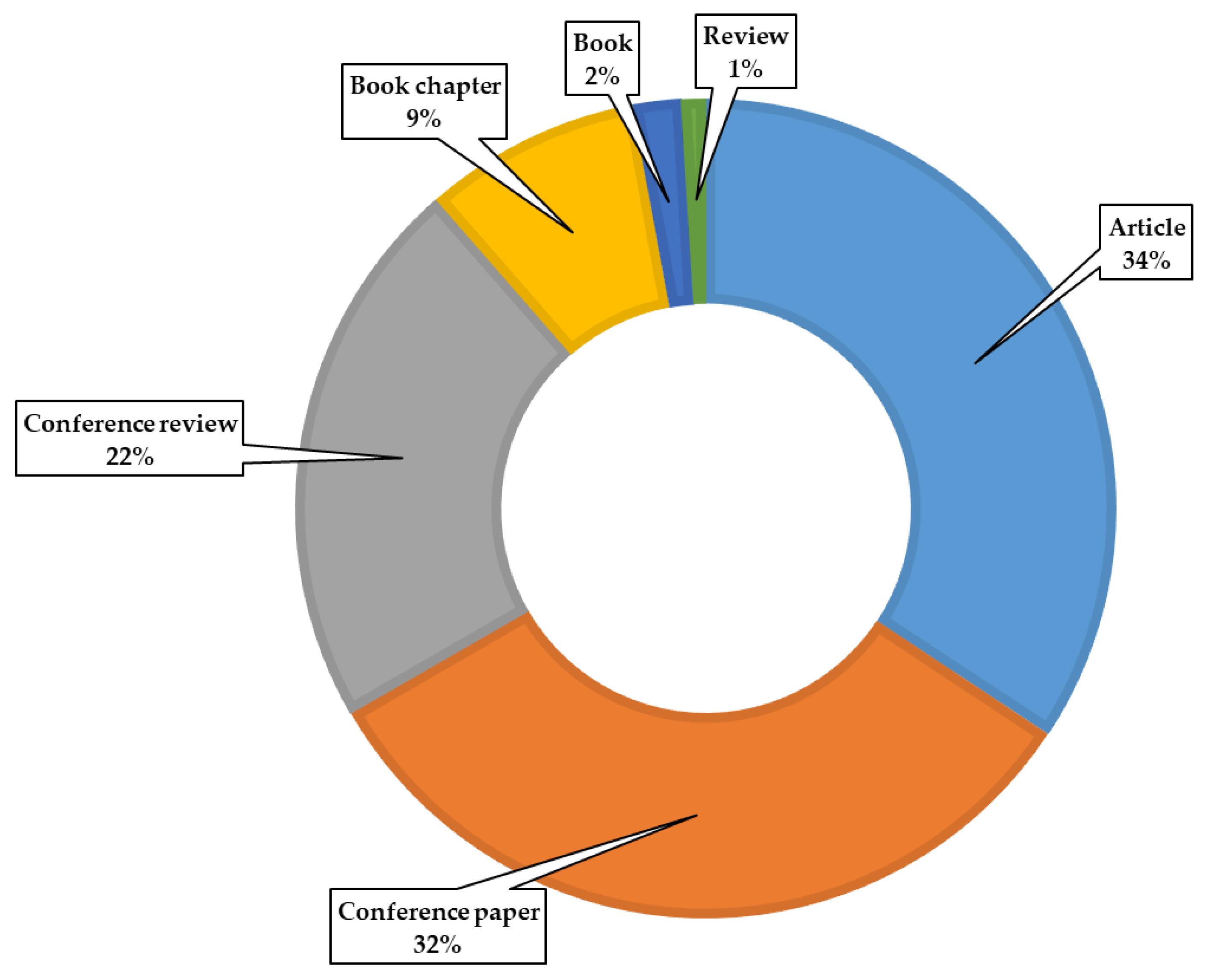
3.1. Bibliographic Analysis: Temporal, Geographical, and Typological Distribution of Articles
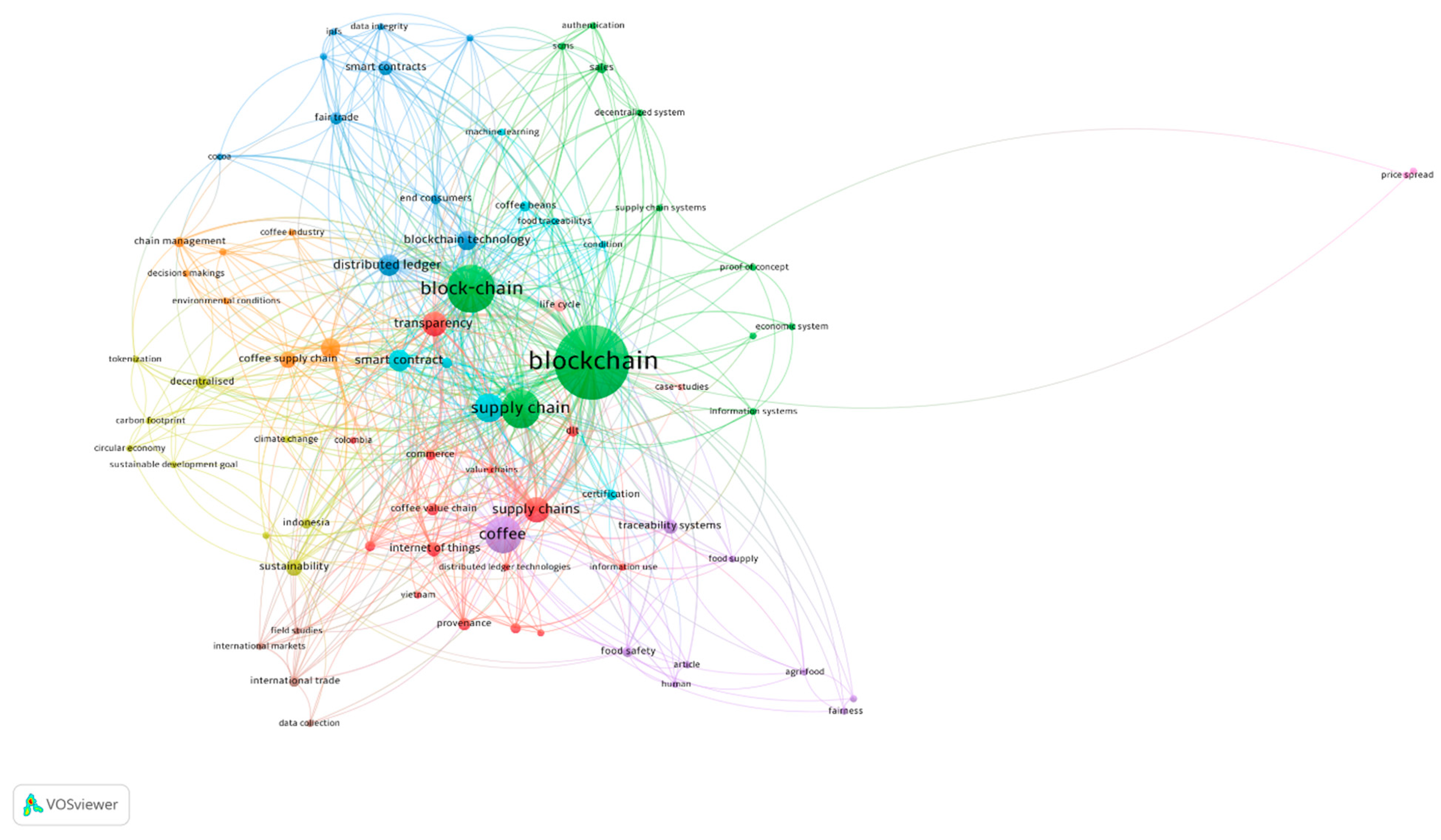
3.2. VOSviewer Co-Occurrence Analysis
- A green cluster, centered on blockchain, supply chain, traceability systems, case studies, and information systems, which reflects the application of blockchain-based information systems for supply chain traceability. In this context, the co-occurrence of case studies indicates the predominance of applied and exploratory research approaches, rather than a classification of document types.
- A blue cluster, which includes keywords such as smart contracts, data integrity, authentication, and machine learning, indicating the technological dimensions and automated systems associated with blockchain implementation.
- A red cluster, focused on coffee, provenance, value chain, and distributed ledger technologies, which suggests the application of blockchain in specific agri-food areas, particularly in the coffee supply chain. The recurrence of “provenance” and “value chain” suggests a focus on origin certification and the fair distribution of value among the various players.
- A yellow cluster, composed of keywords such as sustainability, climate change, carbon footprint, and circular economy, highlighting the growing attention to environmental aspects and sustainability associated with the adoption of digital technologies.
- Finally, a purple cluster that includes terms such as food safety, agri-food, traceability, and certification is representative of the implications in the food sector in terms of safety, quality, and regulatory compliance.
3.3. Main Critical Issues in the Coffee Supply Chain
3.4. Efficiency Implications of Blockchain Adoption in the Coffee Supply Chain
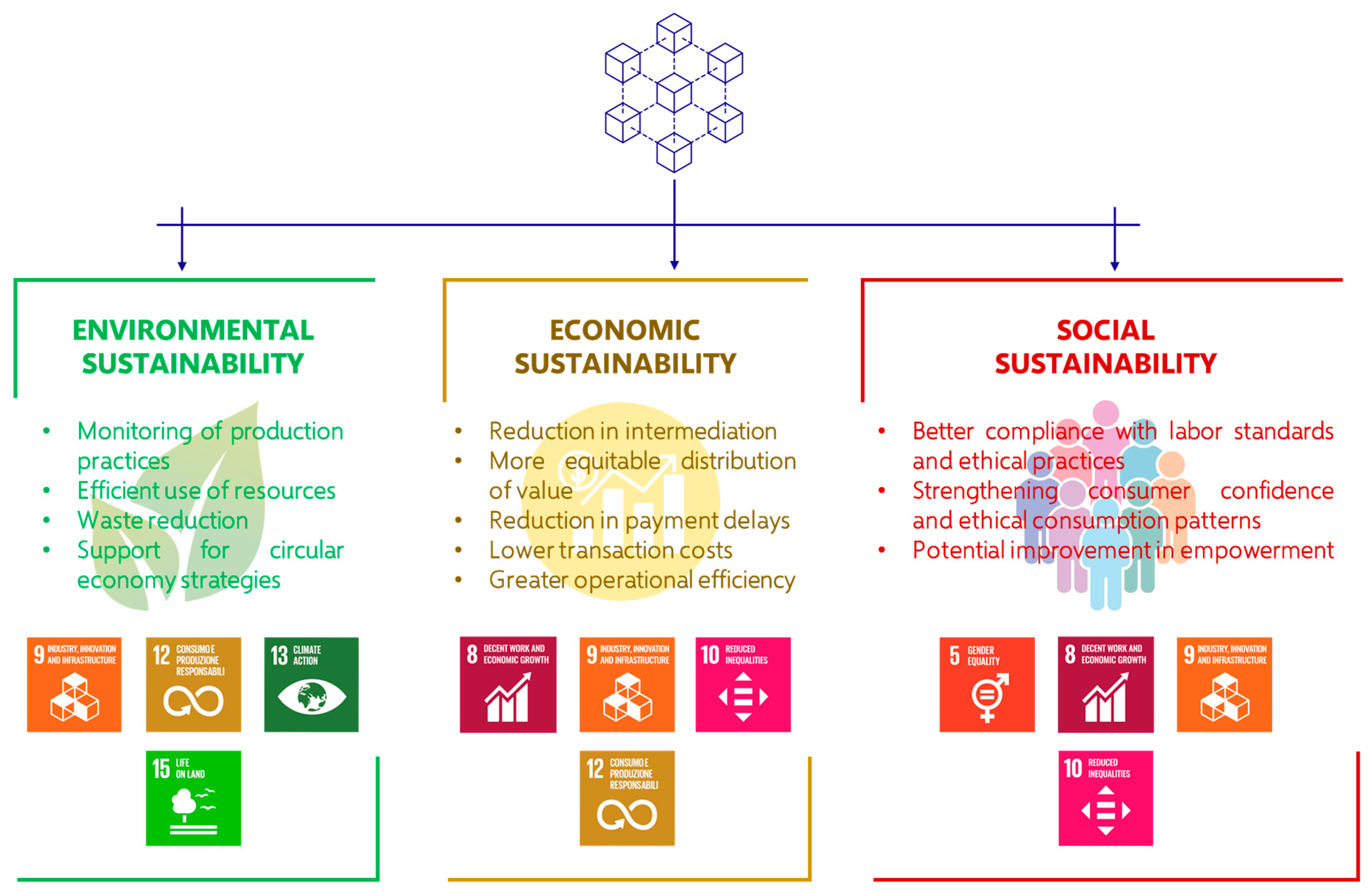
3.5. The Role of Blockchain in Supporting Sustainability in the Coffee Supply Chain
3.6. Potential Advantages and Opportunities of Blockchain in the Coffee Supply Chain
3.7. Critical Issues, Limitations, and Obstacles of Blockchain in the Coffee Supply Chain
4. Main Findings and Theoretical Implications
- Research on the application of blockchain in the coffee sector is still in an exploratory phase. Approximately 81% of the contributions indexed in Scopus have been published in the last three and a half years, with a strong prevalence of papers presented in conference proceedings. This temporal and typological distribution reflects the experimental nature of the applications currently being developed, which are largely limited to prototypes, with large-scale validation still limited. This result allows for a more accurate assessment of the maturity level of the existing literature, highlighting a field of research characterized by high expectations but still only partial empirical consolidation.
- There is a significant geographical and institutional imbalance in the indexed studies. The available literature focuses mainly on emerging producing countries, while Brazil, despite its central role in global coffee production and trade, is relatively underrepresented. This evidence could indicate a knowledge gap and suggests the need for further empirical analysis in production contexts characterized by more structured governance arrangements and greater market power. From a theoretical point of view, this result reinforces the need to interpret the adoption of blockchain in relation to specific political and institutional contexts, avoiding generalized approaches to coffee supply chains.
- From a conceptual standpoint, the adoption of blockchain in the GCSC can be traced back to a question of governance rather than a mere technological choice. The literature analyzed frames blockchain as a potential tool for reducing information asymmetries, particularly when integrated with IoT devices and mobile technologies, and shows how its transformative potential can be expanded when incorporated into broader digital ecosystems (e.g., SSI, VC) and decentralized infrastructures. However, comparative analysis shows that these effects are not automatic, but depend on specific rules for access, validation, and use of data. Consequently, the impact of blockchain does not lie exclusively in its technical characteristics, but in the configuration of the governance structures that regulate its operation along the coffee supply chain.
- A second theoretical contribution of this review concerns the relationship between blockchain, power relations, and value appropriation in the GCSC. Several studies highlight the risk that data generated by small producers and local actors will be captured and exploited downstream by more powerful entities, without a corresponding increase in the share of value appropriated upstream. This data colonialism suggests that blockchain-based traceability systems may reproduce, or even reinforce, pre-existing asymmetries if they are implemented through top-down governance models and extractive data management agreements. It follows that the effects of blockchain on sustainability also depend heavily on validation mechanisms and the distribution of information control rights.
- At the relational level, the review further conceptualizes blockchain-enabled transparency as a potential mechanism of supply chain reconfiguration. The greater transparency enabled by blockchain could potentially affect the restructuring of relationships between actors in the supply chain, making visible not only product characteristics but also the behavior and performance of operators. In theory, this could strengthen the bargaining position of small producers, encourage forms of horizontal coordination, and facilitate more direct relationships with downstream actors. However, the literature analyzed consistently shows that these effects are not automatic and are strongly influenced by the rules of participation and data governance models adopted.
- To scholars and researchers, as the review could provide a critical systematization of fragmented and emerging literature as well as a useful theoretical basis for future research on sustainability, socio-technical transitions, and informational power in agri-food supply chains.
- To professionals in the supply chain and technical operators, because the study clearly highlights that the potential benefits of blockchain in terms of efficiency, traceability, and sustainability are not automatic but depend on enabling conditions and inclusive governance models, without which the adoption of the technology risks generating additional costs or new forms of information dependency.
- To policymakers and public institutions, because this review provides relevant insights into the design of innovation and sustainability policies in agricultural supply chains. In particular, there is a clear need to accompany the adoption of blockchain with investments in rural digital infrastructure, technological literacy programs, clear regulatory frameworks, and mechanisms for protecting data rights. The benefits of public policy only materialize when the technology is integrated into broader strategies for territorial development and social justice.
5. Conclusions
- Further explore the integration of blockchain with complementary technologies such as IoT and artificial intelligence, improvements in user experience, and systematic evaluations of large-scale performance. From this perspective, large-scale empirical studies are needed to systematically evaluate operational performance, implementation costs, energy sustainability, and system robustness in heterogeneous production contexts.
- Explicitly address issues of power, equity, and institutional design, analyzing how different governance models could influence the social and environmental outcomes of digital traceability systems in different coffee production contexts.
- Analyze the extent to which blockchain-based traceability systems influence consumer confidence, perceptions of sustainability, and willingness to pay for digitally certified coffee.
- Assess how training, technological literacy, access to infrastructure, and institutional support can affect farmers’ ability to actively participate in blockchain systems, preventing these technologies from translating into new forms of dependence or exclusion.
Supplementary Materials
Author Contributions
Funding
Institutional Review Board Statement
Informed Consent Statement
Data Availability Statement
Conflicts of Interest
References
- Moat, J.; Gole, T.W.; Davis, A.P. Least Concern to Endangered: Applying Climate Change Projections Profoundly Influences the Extinction Risk Assessment for Wild Arabica Coffee. Glob. Change Biol. 2019, 25, 390–403. [Google Scholar] [CrossRef]
- Gaspar, S.; Ramos, F. Caffeine: Consumption and Health Effects. In Encyclopedia of Food and Health; Academic Press: Cambridge, MA, USA, 2016; pp. 573–578. [Google Scholar] [CrossRef]
- Alves, A.D.O.; Weis, G.C.C.; Unfer, T.C.; Assmann, C.E.; Barbisan, F.; Azzolin, V.F.; Chitolina, B.; Duarte, T.; Ribeiro-Filho, E.E.; Duarte, M.M.M.F.; et al. Caffeinated Beverages Contribute to a More Efficient Inflammatory Response: Evidence from Human and Earthworm Immune Cells. Food Chem. Toxicol. 2019, 134, 110809. [Google Scholar] [CrossRef]
- Cid, M.C.; de Peña, M.P. Coffee: Analysis and Composition. In Encyclopedia of Food and Health; Academic Press: Cambridge, MA, USA, 2016; pp. 225–231. [Google Scholar] [CrossRef]
- Palmer, D. The Ethiopian Buna (Coffee) Ceremony: Exploring the Impact of Exile and the Construction of Identity through Narratives with Ethiopian Forced Migrants in the United Kingdom. Folklore 2010, 121, 321–333. [Google Scholar] [CrossRef]
- Mestdagh, F.; Glabasnia, A.; Giuliano, P. The Brew—Extracting for Excellence. In The Craft and Science of Coffee; Academic Press: Cambridge, MA, USA, 2017; pp. 355–380. [Google Scholar] [CrossRef]
- Barmeyer, C.; Mayrhofer, U.; Würfl, K. Informal Information Flows in Organizations: The Role of the Italian Coffee Break. Int. Bus. Rev. 2019, 28, 796–801. [Google Scholar] [CrossRef]
- Food and Agriculture Organization of the United Nations Green Coffee Beans Production, 1961 to 2023. Available online: https://ourworldindata.org/grapher/coffee-production-by-region (accessed on 17 December 2025).
- U.S. Department of Agriculture (USDA) Production—Coffee. Available online: https://www.fas.usda.gov/data/production/commodity/0711100 (accessed on 23 June 2025).
- World Population Review Coffee Consumption by Country. Available online: https://worldpopulationreview.com/country-rankings/coffee-consumption-by-country (accessed on 23 June 2025).
- Fairtrade Foundation Coffee Farmers—Fairtrade Foundation. Available online: https://www.fairtrade.net/en/products/Fairtrade_products/coffee.html (accessed on 24 June 2025).
- Alamsyah, A.; Widiyanesti, S.; Wulansari, P.; Nurhazizah, E.; Dewi, A.S.; Rahadian, D.; Ramadhani, D.P.; Hakim, M.N.; Tyasamesi, P. Blockchain Traceability Model in the Coffee Industry. J. Open Innov. Technol. Mark. Complex. 2023, 9, 100008. [Google Scholar] [CrossRef]
- Voora, V.; Bermúdez, S.; Larrea, C. Global Market Report: Coffee; The International Institute for Sustainable Development: Hangzhou, China, 2022. [Google Scholar]
- Gallemore, C.; Berecha, G.; Eneyew, A.; Grabs, J.; Jespersen, K.; Kasongi, N.; Mamuye, M.; Maskell, G.; Mathe, A.; Mwalutolo, D.; et al. Avoiding Access Inequity Due to Classification Errors in Zero-Deforestation Value Chains: Coffee and the European Union Deforestation Regulation. Land Use Policy 2025, 157, 107609. [Google Scholar] [CrossRef]
- Ataroff, M.; Monasterio, M. Soil Erosion under Different Management of Coffee Plantations in the Venezuelan Andes. Soil Technol. 1997, 11, 95–108. [Google Scholar] [CrossRef]
- De Felice, F.; Rehman, M.; Petrillo, A.; Baffo, I. Decoding the Coffee Supply Chain: A Systematic Review of Stakeholders, Sustainability Opportunities, and Challenges. Sustain. Futures 2025, 10, 101105. [Google Scholar] [CrossRef]
- Samper, L.F.; Quiñones-Ruiz, X.F. Towards a Balanced Sustainability Vision for the Coffee Industry. Resources 2017, 6, 17. [Google Scholar] [CrossRef]
- Gosalvitr, P.; Cuéllar-Franca, R.M.; Smith, R.; Azapagic, A. An Environmental and Economic Sustainability Assessment of Coffee Production in the UK. Chem. Eng. J. 2023, 465, 142793. [Google Scholar] [CrossRef]
- Xun, W.; Du, X.; Li, M.; Lu, J.; Bao, X. Technology-Enabled Traceability and Sustainable Governance: An Evolutionary Game Perspective on Multi-Stakeholder Collaboration. Sustainability 2025, 17, 10855. [Google Scholar] [CrossRef]
- Bosco, G.; Mercuri, F.; Coniglio, I.M.; Calabrese, M. Leveraging the Supply Chain Costs and Lead Time Impact of an Innovative Blockchain Technology Supply Chain Management Application. Eur. J. Innov. Manag. 2025. ahead of print. [Google Scholar] [CrossRef]
- Nakamoto, S. Bitcoin: A Peer-to-Peer Electronic Cash System, October 2008. Available online: https://bitcoin.org/bitcoin.pdf (accessed on 23 June 2025).
- Islam, M.D. A Survey on the Use of Blockchains to Achieve Supply Chain Security. Inf. Syst. 2023, 117, 102232. [Google Scholar] [CrossRef]
- Chiaraluce, G.; Bentivoglio, D.; Finco, A.; Fiore, M.; Contò, F.; Galati, A. Exploring the Role of Blockchain Technology in Modern High-Value Food Supply Chains: Global Trends and Future Research Directions. Agric. Food Econ. 2024, 12, 6. [Google Scholar] [CrossRef]
- Mambile, C.; Mwangakala, H.A.; Chali, F.; Julius, B.; Shao, D.; Mongi, H.; Ishengoma, F. Evaluating Blockchain Technology for Contract Farming in Tanzania: A Task-Technology Fit Analysis. Sustain. Futures 2025, 10, 100905. [Google Scholar] [CrossRef]
- Zarbà, C.; Chinnici, G.; Matarazzo, A.; Privitera, D.; Scuderi, A. The Innovative Role of Blockchain in Agri-Food Systems: A Literature Analysis. Food Control 2024, 164, 110603. [Google Scholar] [CrossRef]
- Bodkhe, U.; Tanwar, S.; Parekh, K.; Khanpara, P.; Tyagi, S.; Kumar, N.; Alazab, M. Blockchain for Industry 4.0: A Comprehensive Review. IEEE Access 2020, 8, 79764–79800. [Google Scholar] [CrossRef]
- Petrillo, A.; Rehman, M.; De Felice, F. Optimizing Coffee Supply Chain Transparency and Traceability through Mobile Application. Eur. J. Innov. Manag. 2025, 28, 267–300. [Google Scholar] [CrossRef]
- Tripathi, G.; Ahad, M.A.; Casalino, G. A Comprehensive Review of Blockchain Technology: Underlying Principles and Historical Background with Future Challenges. Decis. Anal. J. 2023, 9, 100344. [Google Scholar] [CrossRef]
- Bigliardi, B.; Filippelli, S. A Review of the Literature on Innovation in the Agrofood Industry: Sustainability, Smartness and Health. Eur. J. Innov. Manag. 2022, 25, 589–611. [Google Scholar] [CrossRef]
- Pakseresht, A.; Ahmadi Kaliji, S.; Hakelius, K. Blockchain Technology Characteristics Essential for the Agri-Food Sector: A Systematic Review. Food Control 2024, 165, 110661. [Google Scholar] [CrossRef]
- Moher, D.; Shamseer, L.; Clarke, M.; Ghersi, D.; Liberati, A.; Petticrew, M.; Shekelle, P.; Stewart, L.A.; Estarli, M.; Barrera, E.S.A.; et al. Preferred Reporting Items for Systematic Review and Meta-Analysis Protocols (PRISMA-P) 2015 Statement. Rev. Esp. Nutr. Humana Diet. 2016, 20, 148. [Google Scholar] [CrossRef]
- Maasberg, M.; Butler, L.G.; Taylor, I. Key Parameters Linking Cyber-Physical Trust Anchors with Embedded Internet of Things Systems. Front. Commun. Netw. 2023, 4, 1096841. [Google Scholar] [CrossRef]
- Bettín-Díaz, R.; Rojas, A.E.; Mejía-Moncayo, C. Colombian Origin Coffee Supply Chain Traceability by a Blockchain Implementation. Oper. Res. Forum 2022, 3, 64. [Google Scholar] [CrossRef]
- Rehman, M.; Petrillo, A.; Baffo, I.; Iovine, G.; De Felice, F. Optimizing Coffee Supply Chain Transparency and Traceability through Mobile Application. Procedia Comput. Sci. 2025, 253, 2116–2126. [Google Scholar] [CrossRef]
- van Eck, N.J.; Waltman, L. Software Survey: VOSviewer, a Computer Program for Bibliometric Mapping. Scientometrics 2010, 84, 523–538. [Google Scholar] [CrossRef] [PubMed]
- Boonkrong, S.; Srakhatong, K.; Lanjaidee, P.; Waisunee, S.; Poondee, C.; Nitchoho, K. Blockchain-Based Supply Chain System-A Proof of Concept for the Coffee Industry. In Proceedings of the ACM International Conference Proceeding Series; Association for Computing Machinery: New York, NY, USA, 2024; pp. 60–64. [Google Scholar]
- Ramachandra, A.C.; Aishwarya, P.N.; Sharma, A.K.; Verma, A.; Saksham, A.K. A Smart Contract for Coffee Supply Chain. In Proceedings of the International Conference on Applied Intelligence and Sustainable Computing, ICAISC 2023, Dharwad, India, 16–17 June 2023. [Google Scholar]
- Ligar, B.; Madenda, S.; Mardjan, S.; Kusuma, T. Design of a Traceability System for a Coffee Supply Chain Based on Blockchain and Machine Learning. J. Ind. Eng. Manag. 2024, 17, 151–167. [Google Scholar] [CrossRef]
- Huynh, T.T.D.; Popova, L.V. Addressing challenges in vietnamese coffee production: A technological cooperative approach. Agric. Res. J. 2024, 61, 685–698. [Google Scholar] [CrossRef]
- Nguyen, V.D.; Pham, T.C.; Pham, T.T.; Phan, A.N. Digital and Circular Technologies for Climate-Smart and Sustainable Agriculture: The Case of Vietnamese Coffee. In Proceedings of the IOP Conference Series: Earth and Environmental Science; IOP Publihsing: Bristol, UK, 2023; Volume 1278. [Google Scholar]
- Singh, C.; Wojewska, A.N.; Persson, U.M.; Bager, S.L. Coffee Producers’ Perspectives of Blockchain Technology in the Context of Sustainable Global Value Chains. Front. Blockchain 2022, 5, 955463. [Google Scholar] [CrossRef]
- Pradana, I.G.M.T.; Djatna, T.; Hermadi, I.; Yuliasih, I. Blockchain-Based Traceability System for Indonesian Coffee Digital Business Ecosystem. Int. J. Eng. Trans. B Appl. 2023, 36, 879–893. [Google Scholar] [CrossRef]
- Gusti Made Teddy Pradana, I.; Djatna, T.; Hermadi, I.; Yuliasih, I. Readiness Assessment Framework and Integrated Participatory Development Approach for Blockchain-Based Traceability Systems: Case Study in Kintamani Coffee Agroindustry Supply Chain. J. Soc. Comput. 2024, 5, 344–362. [Google Scholar] [CrossRef]
- Inayatulloh. Coffee Distribution Model with Blockchain Technology to Increase The Transparency of Local Coffee Distribution. In Proceedings of the 2023 International Conference on Information Management and Technology, ICIMTech 2023, Malang, Indonesia, 24–25 August 2023; Institute of Electrical and Electronics Engineers Inc.: New York, NY, USA, 2023; pp. 639–643. [Google Scholar]
- Kramer, M.P.; Bitsch, L.; Hanf, J. Blockchain and Its Impacts on Agri-Food Supply Chain Network Management. Sustainability 2021, 13, 2168. [Google Scholar] [CrossRef]
- Gligor, D.M.; Davis-Sramek, B.; Tan, A.; Vitale, A.; Russo, I.; Golgeci, I.; Wan, X. Utilizing Blockchain Technology for Supply Chain Transparency: A Resource Orchestration Perspective. J. Bus. Logist. 2022, 43, 140–159. [Google Scholar] [CrossRef]
- Bager, S.L.; Singh, C.; Persson, U.M. Blockchain Is Not a Silver Bullet for Agro-Food Supply Chain Sustainability: Insights from a Coffee Case Study. Curr. Res. Environ. Sustain. 2022, 4, 100163. [Google Scholar] [CrossRef]
- Samoggia, A.; Fantini, A.; Ghelfi, R. The Promised Potential of Blockchain Technology for Transparency and Fairness in Agri-Food Chains: Insights from the Coffee Sector. Front. Sustain. Food Syst. 2025, 9, 1401735. [Google Scholar] [CrossRef]
- Seidenfad, K.; Greiner, M.; Biermann, J.; Lechner, U. Blockchain-Based Monitoring, Reporting and Verification of GHG Emissions on the Network Edge—A System Integration Study in the Artisan Coffee Industry. In Proceedings of the 2024 IEEE/SICE International Symposium on System Integration, SII 2024, Ha Long, Vietnam, 8–11 January 2024. [Google Scholar]
- Ordoñez, C.C.; Ramirez-Gonzalez, G.; Corrales, J.C. Enhancing Data Integrity in Blockchain Oracles Through Multi-Label Analysis. Appl. Sci. 2025, 15, 2379. [Google Scholar] [CrossRef]
- Ferdousi, T.; Gruenbacher, D.; Scoglio, C.M. A Permissioned Distributed Ledger for the US Beef Cattle Supply Chain. IEEE Access 2020, 8, 154833–154847. [Google Scholar] [CrossRef]
- Compagnucci, L.; Lepore, D.; Spigarelli, F.; Frontoni, E.; Baldi, M.; Di Berardino, L. Uncovering the Potential of Blockchain in the Agri-Food Supply Chain: An Interdisciplinary Case Study. J. Eng. Technol. Manag. JET-M 2022, 65, 101700. [Google Scholar] [CrossRef]
- Valencia-Payan, C.; Grass-Ramirez, J.F.; Ramirez-Gonzalez, G.; Corrales, J.C. A Smart Contract for Coffee Transport and Storage With Data Validation. IEEE Access 2022, 10, 37857–37869. [Google Scholar] [CrossRef]
- Tharatipyakul, A.; Pongnumkul, S.; Riansumrit, N.; Kingchan, S.; Pongnumkul, S. Blockchain-Based Traceability System from the Users’ Perspective: A Case Study of Thai Coffee Supply Chain. IEEE Access 2022, 10, 98783–98802. [Google Scholar] [CrossRef]
- Nuraisyah, A.; Wulandari, E.; Indrawan, D.; Othman, Z. The Roles of Stakeholders in Supply Chain Sustainability Challenges: The Case of Coffee Chain in West Java Province, Indonesia. Discov. Sustain. 2025, 6, 247. [Google Scholar] [CrossRef]
- Trollman, H.; Garcia-Garcia, G.; Jagtap, S.; Trollman, F. Blockchain for Ecologically Embedded Coffee Supply Chains. Logistics 2022, 6, 43. [Google Scholar] [CrossRef]
- Nudin, S.; Suvajdžić, M.; Lukovac, P.; Barać, D.; Radenković, B. Testing readiness of adoption of blockchain technology in tracking the authenticity of organic coffee. Facta Univ. Ser. Electron. Energetics 2024, 37, 53–73. [Google Scholar] [CrossRef]
- Rossi, S.; Gemma, S.; Borghini, F.; Perini, M.; Butini, S.; Carullo, G.; Campiani, G. Agri-Food Traceability Today: Advancing Innovation towards Efficiency, Sustainability, Ethical Sourcing, and Safety in Food Supply Chains. Trends Food Sci. Technol. 2025, 163, 105154. [Google Scholar] [CrossRef]
- Hidayat, A.F.; Djatna, T.; Yuliasih, I.; Suparno, O. An Extensive Overview of Block Chain-Based Financing in Coffee Supply Chain: Exploration and Exploitation. In Proceedings of the 2024 IEEE International Conference on Agrosystem Engineering, Technology and Applications: Integrating Smart Farming and Food Security for a Sustainable Future, AGRETA 2024, Kuala Lumpur, Malaysia, 7 September 2024; pp. 187–191. [Google Scholar]
- Agnola, T.; Ambrosini, L.; Beretta, E.; Gremlich, G. Empowering Global Supply Chains Through Blockchain-Based Platforms: New Evidence from the Coffee Industry. FinTech 2025, 4, 3. [Google Scholar] [CrossRef]
- Nurhazizah, E.; Tyasamesi, P.; Alamsyah, A.; Kannan, R. Ensuring Coffee Quality through Blockchain Traceability: A Methodical Approach Using Software Development Life Cycle. In Proceedings of the 2023 International Conference on Digital Business and Technology Management, ICONDBTM 2023, Nusa Tenggara Barat, Indonesia, 2–3 August 2023. [Google Scholar]
- Gazzola, P.; Pavione, E.; Barge, A.; Fassio, F. Using the Transparency of Supply Chain Powered by Blockchain to Improve Sustainability Relationships with Stakeholders in the Food Sector: The Case Study of Lavazza. Sustainability 2023, 15, 7884. [Google Scholar] [CrossRef]
- Saputra, I.; Arkeman, Y.; Jaya, I.; Hermadi, I.; Sutedja, I. Blockchain-Based Key-Value Store to Support Dynamic Smart Contract Interaction in the Agricultural Sector. Indones. J. Electr. Eng. Comput. Sci. 2024, 33, 622–633. [Google Scholar] [CrossRef]
- Saputra, I.; Arkeman, Y.; Jaya, I.; Hermadi, I.; Akbar, N.A.; Sutedja, I. AniraBlock: A Leap towards Dynamic Smart Contracts in Agriculture Using Blockchain Based Key-Value Format Framework. Commun. Sci. Technol. 2023, 8, 154–163. [Google Scholar] [CrossRef]
- Inayatulloh; Udiono, T.; Ongowarsito, H.; Saputra, L.S.; Yanti; Budi, H.S. The Blockchain Sharding Model to Improve the Efficiency of a Global-Coffee Supply Chain System Based on Blockchain Technology. In Proceedings of the 4th International Mobile, Intelligent, and Ubiquitous Computing Conference, MIUCC 2024, Cairo, Egypt, 13–14 November 2024; Institute of Electrical and Electronics Engineers Inc.: New York, NY, USA, 2024; pp. 283–288. [Google Scholar]
- Surarityothin, P.; Kamhangwong, D.; Fuggate, P.; Wicha, S. The Finding of Factors to Motivate Stakeholders in the Coffee Supply Chain Towards the Use of Blockchain Technology: Case of Chiang Rai Coffee Supply Chain. In Proceedings of the 6th International Conference on Information Technology, InCIT 2022, Nonthaburi, Thailand, 10–11 November 2022. [Google Scholar]
- Couldry, N.; Mejias, U. Making Data Colonialism Liveable: How Might Data’s Social Order Be Regulated? Internet Policy Rev. 2019, 8, 1–16. [Google Scholar] [CrossRef]
- Page, M.J.; McKenzie, J.E.; Bossuyt, P.M.; Boutron, I.; Hoffmann, T.C.; Mulrow, C.D.; Shamseer, L.; Tetzlaff, J.M.; Akl, E.A.; Brennan, S.E.; et al. The PRISMA 2020 statement: An updated guideline for reporting systematic reviews. BMJ 2021, 372, n71. [Google Scholar] [CrossRef]



| Focus | Specific Effect | Refs. | Links to RQ1 | |
|---|---|---|---|---|
| Effects on Efficiency | Effects on Sustainability | |||
| Improved traceability | May enable end-to-end product traceability along the supply chain with immutable and verifiable data | [36,39,40,58] | Could reduce errors, information waste, and data access times | Potential to promote ethical practices, waste reduction, and improved control over environmental impacts |
| Fraud prevention | Could reduce fraudulent practices through immutable transaction recording | [34] | May lower costs related to audits and losses from fraud | Could enhance transparency and fairness, strengthen social sustainability, and increase the value of certified products |
| Strengthening consumer confidence | May provide access to reliable information on origin, quality, and sustainability | [38,42,61] | Faster and more reliable access to product information | Could promote responsible agricultural practices through recognition of ethical, environmental, and inclusion standards |
| Financial inclusion | Could provide direct access to decentralized financial services for coffee producers in contexts with limited banking infrastructure | [59,60] | Immediate and traceable payments, reduced bureaucratic delays, and lower operating costs | Digital financial inclusion may support access to credit and sustainability incentives, enabling fairer value distribution and reducing inequalities |
| Integrations with other 4.0 technologies | May increase functionality and interoperability through IoT, SSI, Verifiable Credentials, and smart contracts | [37,38,39,58,59,60,62,63] | Could enable process automation, reduce intermediaries, and improve information flows across the chain | VC and digital identity could allow automatic certification of social and environmental practices, fostering fairer value distribution and more conscious consumption |
| Smart Contact integration | May allow real-time adaptation of contractual conditions to market fluctuations | [12,53,64] | Could reduce transaction latency, execution times, and operational errors | Dynamic contracts may enhance resilience, transparency, and sustainability in supply chain governance |
| Sharding mechanisms | Could divide blockchain into autonomous sub-networks, reducing computational load | [65] | Potential to reduce latency and increase processing speed, making systems scalable and adaptable | Optimization of resources may support long-term sustainability, inclusivity of local producers, and distributed digitalization in producing countries |
| Category | Subcategory | Link to RQ2: Critical Factors and Limitations | Refs. |
|---|---|---|---|
| Systemic limits | Applications limited to prototypes | Most blockchain applications in the coffee supply chain are still at the pilot or theoretical stage, and this may restrict large-scale deployment | [38,43,57,64,65] |
| Distortion in adoption | Instrumental use | Blockchain could be implemented primarily as a marketing tool, focusing on corporate branding rather than genuinely promoting transparency, fairness, or sustainable services | [34,48] |
| Operating limits | High initial costs | The initial investment for infrastructure may be prohibitive, especially for smallholders | [34,37,40,58] |
| High transaction costs | Transaction fees, particularly in public blockchains, may hinder adoption in low-margin agri-food contexts | [36] | |
| Limited access to technology | Poor connectivity in rural areas may limit operational adoption and reduce inclusivity in sustainable digital services | [34,40] | |
| Energy consumption | Energy demand may be very high, potentially undermining environmental sustainability | [58,59] | |
| Exposure to cyber attacks | Risks related to 51% attacks, bugs in smart contracts, unauthorized access, which can compromise the integrity and security of transactions | [59] | |
| Privacy Concerns | Risk of overexposure of sensitive or strategic data, which could compromise corporate confidentiality and generate reluctance to share information within the blockchain | [36,58] | |
| Technical limitations | Scalability Issues | Growth in nodes and storage requirements may slow down network performance, increase validation times, and raise infrastructure costs, limiting service efficiency | [36,58] |
| Lack of infrastructure | In many rural areas, access to stable connectivity and electricity is limited, constraining blockchain adoption | [64] | |
| Centralized governance | The persistence of centralized management structures may compromise distributed decision-making, undermining trust, and inclusivity | [37] | |
| Lack of standards and regulations | The absence of shared technical standards and regulatory clarity may reduce interoperability across platforms and delay uniform adoption | [58] | |
| Cultural boundaries | Resistance and literacy | Limited digital literacy and cultural resistance to technological change may reduce farmers’ willingness to engage with blockchain | [61] |
| Contract rigidity | Traditional smart contracts may lack the flexibility to adapt to regulatory or market changes, limiting their usefulness in dynamic service contexts | [63] | |
| Practical limitations | Data manipulation | Since data are entered manually, accuracy cannot always be guaranteed at the point of entry | [62] |
Disclaimer/Publisher’s Note: The statements, opinions and data contained in all publications are solely those of the individual author(s) and contributor(s) and not of MDPI and/or the editor(s). MDPI and/or the editor(s) disclaim responsibility for any injury to people or property resulting from any ideas, methods, instructions or products referred to in the content. |
© 2026 by the authors. Licensee MDPI, Basel, Switzerland. This article is an open access article distributed under the terms and conditions of the Creative Commons Attribution (CC BY) license.
Share and Cite
Ruggieri, R.; Dioguardi, C.; Silvestri, L.; Ruggeri, M.; D’Ascenzo, F. Blockchain and Coffee Supply Chain: Implications for Traceability, Efficiency, and Sustainability: A Systematic Literature Review. Sustainability 2026, 18, 1290. https://doi.org/10.3390/su18031290
Ruggieri R, Dioguardi C, Silvestri L, Ruggeri M, D’Ascenzo F. Blockchain and Coffee Supply Chain: Implications for Traceability, Efficiency, and Sustainability: A Systematic Literature Review. Sustainability. 2026; 18(3):1290. https://doi.org/10.3390/su18031290
Chicago/Turabian StyleRuggieri, Roberto, Camilla Dioguardi, Luca Silvestri, Marco Ruggeri, and Fabrizio D’Ascenzo. 2026. "Blockchain and Coffee Supply Chain: Implications for Traceability, Efficiency, and Sustainability: A Systematic Literature Review" Sustainability 18, no. 3: 1290. https://doi.org/10.3390/su18031290
APA StyleRuggieri, R., Dioguardi, C., Silvestri, L., Ruggeri, M., & D’Ascenzo, F. (2026). Blockchain and Coffee Supply Chain: Implications for Traceability, Efficiency, and Sustainability: A Systematic Literature Review. Sustainability, 18(3), 1290. https://doi.org/10.3390/su18031290