


Abstract
This study investigates the spatial effects of employment density on the economic, technological, and carbon efficiency of China’s manufacturing sector, using panel data from 30 provinces from 2008 to 2022. A multidimensional performance framework and spatial econometric models are employed to identify both direct impacts and spatial spillovers. The results show that employment density significantly enhances local economic performance while imposing negative spillover effects on neighboring regions. Technological performance exhibits uneven spatial returns, indicating a “technology siphoning” effect in more agglomerated provinces. Carbon efficiency presents a divergent pattern of “local improvement but neighboring deterioration,” highlighting cross-regional ecological externalities. In addition, human capital, capital investment, and regional policy intensity are found to regulate the strength and direction of spatial spillovers across the three performance dimensions. Based on these findings, this study recommends optimizing the spatial layout of manufacturing and population, strengthening interregional innovation collaboration, promoting green transformation, and improving the quality of human capital. These policy implications provide empirical support for advancing sustainable manufacturing development and enhancing regional governance capacity.
1. Introduction
China’s manufacturing sector is transitioning from factor-driven growth to a new phase that places equal emphasis on innovation-driven development and high-quality growth. This shift is compounded by the imperative of the dual carbon goals, which not only call for a green transition but also impose constraints on resource consumption, compelling firms to optimize industrial structures and enhance technological sophistication [1,2]. Recent studies indicate that sustained progress in infrastructure upgrades, clean energy investments, smart manufacturing, and innovation spending has catalyzed new momentum for manufacturing across multiple dimensions—economic efficiency, technological innovation, and green development—while placing higher demands on spatial layout and factor density [3,4,5] Against this backdrop, employment density emerges as a critical indicator capturing the “intensity” of industrial agglomeration. Compared to location quotients or concentration ratios, density provides a more intuitive reflection of the spatial “concentration,” “matching degree,” and “knowledge spillover potential” among labor, enterprises, and innovation resources in the actual production space [6,7].
However, the accelerated digitalization and automation of manufacturing (e.g., industrial robots, smart production lines) are simultaneously reshaping labor structures and regional industrial division of labor, making the relationship between employment density and performance profoundly multifaceted. In the economic and technological dimensions, while high density is essential for knowledge spillovers and efficiency gains, excessive concentration can trigger congestion costs, fierce competition, and a “technology siphoning” effect on neighboring regions, leading to spatially uneven innovation returns [8,9]. Similarly, in the environmental dimension (in the context of the dual carbon goals), high-density areas may facilitate the localized diffusion of clean technologies and achieve local environmental improvement. Yet, this can also induce the transfer of highly polluting industries to adjacent, less regulated regions, generating a significant cross-regional pollution spillover pressure [1,10]. Accordingly, a simple evaluation of local effects is insufficient. It is crucial to employ the Spatial Durbin Model (SDM) to rigorously analyze employment density’s impact on the manufacturing sector’s multidimensional performance (economic, technological, and environmental) and to systematically identify the local effects alongside the spatial competition or spillover effects on neighboring areas. This research serves as a vital foundation for guiding China’s optimal industrial and population distribution and promoting regional coordinated sustainable development.
Existing research on industrial agglomeration and performance exhibits three primary limitations that hinder a systematic understanding of this relationship. First, at the core variable level, most literature relies on traditional macro-level indicators like location quotients, often overlooking employment density—a metric that more directly reflects the intensity of labor and enterprise spatial distribution. Second, in terms of performance dimensions, studies predominantly focus on singular economic or innovation outcomes, lacking a comprehensive and integrated examination of the tripartite framework (encompassing economic, technological, and environmental) necessary to characterize sustainable competitiveness under the dual carbon goals. Third, regarding spatial mechanisms, systematic analyses utilizing the Spatial Durbin Model (SDM) to isolate the direct and indirect effects of employment density on multidimensional performance remain scarce, limiting the understanding of inter-regional competition and spillover dynamics.
Our core findings demonstrate a complex spatial divergence: while employment density positively impacts local economic and technological performance, it simultaneously generates competitive forces, including a notable “technology siphoning” effect and significant “pollution spillover pressure” on adjacent provinces. These results underscore the necessity of policies that balance core region growth with regional coordination.
To empirically examine these dynamics, this study utilizes provincial-level data from China’s manufacturing sector spanning 2008–2022 to construct a comprehensive framework evaluating economic, technological, and carbon efficiency. By applying the Spatial Durbin Model to identify both direct and spatial spillover effects, this research aims to address the aforementioned gaps.
Although a growing body of literature has examined industrial agglomeration, several important gaps remain unresolved: First, most existing studies rely on traditional structural indicators like location quotients, which capture industrial composition rather than the intensity of labor-based spatial interaction and congestion. Second, prior research predominantly focuses on single performance dimensions, overlooking the inherently multidimensional nature of sustainable manufacturing performance (economic, technological, and environmental) under the dual carbon goals. Third, systematic SDM-based analyses that jointly examine direct and indirect effects within a unified framework remain scarce, limiting our understanding of spatial trade-offs such as “local gains versus neighbor losses.”
The main objective of this study is to identify the direct and spatial spillover effects of manufacturing employment density on multidimensional performance across Chinese provinces during 2008–2022, using a fixed-effects Spatial Durbin Model and an IV-based strategy to address potential reverse causality. Our core findings demonstrate a complex spatial divergence: while employment density positively impacts local economic performance, it generates a notable “technology siphoning” effect and significant “pollution spillover pressure” on adjacent provinces.
Accordingly, this study makes three key contributions. Taken together, these contributions advance the current state-of-the-art by linking a labor-based agglomeration proxy to a multidimensional sustainability framework:
First, this study introduces employment density as a labor-based measure, highlighting its advantages over conventional structural indicators in capturing congestion intensity and competitive spatial externalities. Second, it develops a multidimensional performance framework that simultaneously evaluates economic, technological, and environmental effects, allowing for the explicit identification of trade-offs across these dimensions. Third, by applying a unified IV-based SDM framework, this study systematically decomposes local and spillover effects. Unlike prior single-outcome studies, this framework reveals how agglomeration generates heterogeneous spatial impacts, providing clearer policy-relevant interpretations for regional coordination.
Moreover, the robustness of these findings is further validated using alternative spatial weight matrices (geographic and economic distance), strengthening the credibility of the empirical evidence.
2. Literature Review
2.1. Employment Density and Economic Performance
Employment density is a key indicator for measuring the intensity of industrial agglomeration, reflecting the degree of concentration of both labor and enterprises within a given spatial unit. In theory, high employment density contributes to improved economic performance by optimizing the efficiency of labor-firm matching, reducing transaction costs, and increasing economies of scale [11,12]. Subsequent research further indicates that industrial spatial agglomeration can enhance regional productivity by sharing intermediate inputs, promoting specialized division of labor, and facilitating innovation diffusion [13]. Recent empirical evidence from European manufacturing suggests that the productivity gains from density are increasingly driven by the quality of local labor matching rather than mere physical scale [14]. Recent international evidence also confirms that employment-density-based measures capture meaningful agglomeration economies and productivity gains, especially when density reflects intensive spatial interactions rather than simple industrial composition [15].
Extensive empirical research has established that manufacturing employment density significantly enhances labor productivity and corporate profitability. Empirical studies in China have also found that agglomeration at the manufacturing or industry level, coupled with high labor density, is typically associated with elevated productivity and profitability [16]. However, an increasing number of studies indicate that this positive relationship is not monotonic: once a certain threshold is reached, the costs of congestion, land, and environmental constraints begin to offset the benefits of agglomeration, resulting in a nonlinear or even inverted U-shaped relationship in performance [17]. Comparable evidence from international regions similarly highlights that congestion costs can materially erode agglomeration benefits at higher densities, implying that “net gains” depend on the balance between matching/sharing benefits and congestion/competition costs [18].
Furthermore, spatial econometric studies indicate that increased employment density in a given location may generate both positive and negative spillover effects on neighboring areas through industrial relocation, factor mobility, and knowledge spillovers. While such effects can help surrounding regions capitalize on economies of scale and technological dividends, they may also suppress neighboring districts’ performance due to competition and resource crowding out [4,19]. This spatial complexity is further elucidated by the concept of “evolutionary branching”, where the magnitude of economic spillovers hinges on the relatedness of industrial structures between interacting regions [20].
However, existing studies on employment density and economic performance primarily focus on local productivity outcomes and often neglect the spatial spillover and competitive effects across regions, particularly within a multidimensional sustainability framework.
2.2. Employment Density and Technological Performance
The promotion of technological performance by employment density primarily stems from its facilitating knowledge spillovers and technology diffusion. Firms in agglomerated regions share R&D facilities, supply chain networks, and innovation resources within a concentrated geographic space, thereby enhancing information flow efficiency and technological absorption capacities [21]. Recent studies have further demonstrated that employment density significantly enhances innovation output and technological performance in manufacturing by boosting informal knowledge exchange among firms and facilitating the local transmission of tacit knowledge [22]. In high-density regions, labor mobility and corporate collaboration networks reinforce the “learning-imitation-reinvention” pathway, enabling enterprises to accelerate technological iteration [23]. From a global perspective, this mechanism is particularly vital for knowledge-intensive industries, where geographic density facilitates the exchange of tacit information required for high-tech upgrades [24].
Empirical research indicates that employment density typically exhibits a significant positive relationship with technological performance in manufacturing, though this relationship displays pronounced regional variations and nonlinear characteristics. In regions with high industrial or employment concentration, inter-firm R&D interactions, skill sharing, and technology absorption become more efficient, thereby fostering innovation output and technological advancement. Ref. [25] found that higher levels of manufacturing agglomeration in China’s 30 provinces correlate with greater efficiency in green technological innovation, with the agglomeration effect being particularly pronounced in the eastern regions. Ref. [26] argue that when employment density becomes excessively high, heightened labor competition, facility congestion, and homogenized production may weaken innovation incentives, thereby diminishing the marginal returns on technological performance. Such findings align with modern perspectives which suggest that the “innovation premium” of density is highly sensitive to a region’s internal absorptive capacity and institutional environment [27]. Ref. [28] demonstrate through provincial panel data that increased employment density not only enhances local technological performance but may also generate spillover effects on neighboring regions through knowledge networks and supply chain linkages. However, these spillovers can manifest as either positive externalities or “resource siphoning”—where innovation resources in high-density areas deplete surrounding regions, thereby inhibiting neighboring development. Furthermore, the study also found that the nonlinear relationship between employment density and technological performance is particularly pronounced in the central and western regions: due to weak innovation foundations and restricted factor mobility, these areas experience lower agglomeration benefits compared to eastern regions [17].
Nevertheless, much of the existing literature examines the innovation effects of employment density in isolation, with limited attention to how technological performance interacts with economic and environmental dimensions or how spatial spillover mechanisms operate within a unified analytical framework.
2.3. Employment Density and Carbon Efficiency
Carbon efficiency typically encompasses indicators such as energy efficiency, carbon intensity, and green innovation. Empirically, moderate agglomeration can enhance energy efficiency and promote green innovation through economies of scale, infrastructure sharing, and technology diffusion, thereby improving overall carbon efficiency. This finding is supported by empirical evidence from multiple city and provincial samples [26]. Internationally, studies have confirmed that spatial concentration can facilitate a “decoupling” of economic growth and environmental degradation by fostering the adoption of cleaner production technologies [29]. International studies at the firm/regional level similarly show that spatial proximity and agglomeration can improve energy-use efficiency (and hence carbon outcomes), but the net effect is conditional on local energy structure and regulatory regimes [30]. When agglomeration levels become excessively high or local carrying capacity is constrained, crowding effects, over exploitation of resources, and concentrated emissions can lead to heightened local environmental pressures, manifested as rising carbon intensity or elevated pollution emissions [31].
Furthermore, spatial dimension studies reveal that the environmental impacts of agglomeration exhibit significant cross-regional spillover effects. Increased employment density in a given area may disseminate green dividends to neighboring regions through technology diffusion and industrial chain synergies, while simultaneously imposing heavier emission pressures on surrounding areas via industrial relocation or “resource siphoning.” Empirical evidence supporting this dynamic spatial model linking industrial co-location and carbon emissions has been documented [32]. Environmental regulations, green finance, and regional collaborative governance can significantly alter the direction and intensity of the agglomeration-environment relationship. Specifically, under robust regulatory frameworks and incentive mechanisms, agglomeration tends to yield net environmental benefits. Conversely, in regions with weak oversight or high-carbon energy structures, agglomeration is more likely to translate into environmental disadvantages [33].
Overall, although prior studies document the environmental implications of agglomeration, they rarely integrate carbon efficiency with economic and technological outcomes in a spatial econometric framework, limiting the understanding of multidimensional trade-offs and cross-regional spillover effects.
2.4. Research Hypotheses
H1a.
Manufacturing employment density has a significant positive impact on local economic performance.
This is primarily driven by the micro-foundations of agglomeration economies—sharing, matching, and learning. Dense labor markets reduce job-search costs for firms and workers (matching), allow for the shared use of specialized intermediate inputs (sharing), and facilitate the face-to-face exchange of tacit knowledge (learning), thereby enhancing overall labor productivity.
H1b.
Manufacturing employment density creates a significant negative spillover effect on neighboring regions’ economic performance.
This reflects a “siphoning effect” or “market crowding” mechanism. As a specific region increases its employment density, it may attract high-quality labor and capital from adjacent areas, leading to a drain of productive factors in neighboring regions, often referred to as the “backwash effect” in regional science.
H2a.
Manufacturing employment density significantly promotes local technological performance.
Geographic proximity between high-skilled workers accelerates the diffusion of innovative ideas and technical know-how. The concentration of manufacturing firms also creates a competitive environment that incentivizes firms to invest in R&D and process innovations to maintain market share. However, this effect may depend on complementary conditions such as R&D inputs and institutional support.
H2b.
Manufacturing employment density creates a significant negative spillover effect on neighboring regions’ technological performance, reflecting a technology siphoning effect.
Core regions with high employment density often act as innovation poles that absorb scientific resources and R&D talent from the periphery. This polarization restricts the innovation capacity of surrounding areas, as knowledge tends to “stick” to dense hubs rather than diffusing freely across administrative boundaries.
H3a.
Manufacturing employment density achieves a significant positive improvement in local carbon efficiency.
Agglomeration allows for the centralized treatment of industrial pollutants and the sharing of green infrastructure, lowering the per-unit cost of environmental compliance. Furthermore, the concentration of firms facilitates the development of circular economy links, where waste from one process becomes an input for another, thus reducing total carbon intensity.
H3b.
Manufacturing employment density creates a significant negative spillover effect on neighboring regions’ carbon efficiency.
This pattern may stem from the “pollution haven” effect within regional industrial chains. As high-density regions upgrade their industrial structures toward high-value, low-carbon manufacturing, pollution-intensive production stages may be outsourced or relocated to neighboring regions with lower environmental thresholds or less integrated governance, leading to a spatial displacement of carbon emissions.
To strengthen the economic interpretation, the empirical analysis and Discussion explicitly link these hypothesized channels (matching/sharing/learning, siphoning, and pollution transfer) to the estimated direct and spillover effects, while accounting for key conditioning factors (e.g., human capital and R&D inputs) included in the model.
3. Research Design
This study employs a Spatial Durbin Model (SDM) within a unified analytical framework to systematically estimate the direct, indirect, and overall effects of employment density on economic, technological, and carbon efficiency. This approach enables the simultaneous identification of spatial influences across different performance dimensions [34,35]. From a spatial interaction perspective, this study examines the local effects and interprovincial spillover effects of employment density on manufacturing performance, revealing the underlying logic governing their potential directional divergence. Existing research indicates that differences in industrial structure, technological level, and factor endowments across regions may cause increased employment density to boost local performance while generating competitive or “crowding-out” effects on surrounding areas [36]. By identifying this spatial heterogeneity, this paper contributes to understanding the dynamic relationship between “local optimization” and “regional coordination” in manufacturing within regional linkages.
This study utilizes extensive provincial panel data spanning 2008–2022, covering multiple rounds of macroeconomic policy adjustments and external shocks (such notably industrial transformation and upgrading, and the advancement of carbon neutrality and carbon peaking policies). It also aligns with the latest micro-level evidence on the spatial evolution of manufacturing. This design not only enhances the robustness and generalizability of the findings but also elevates the study’s practical and policy relevance.
To further clarify the choice of the study period, the starting year 2008 represents a structural turning point for China’s manufacturing sector following the global financial crisis, after which industrial upgrading, regional rebalancing, and environmental regulation intensified. In addition, consistent and comparable provincial-level data on manufacturing employment, land use, and environmental indicators become more reliable from this year onward. The end year, 2022, corresponds to the most recent year with complete and publicly available provincial data at the time of this study, thereby avoiding potential distortions caused by data revisions or reporting delays. The resulting fifteen-year period provides a sufficiently longtime horizon to capture long-term spatial dynamics and spillover effects rather than short-term fluctuations.
The data used in this study were obtained from publicly available official sources. Manufacturing employment and economic indicators were primarily collected from the China Statistical Yearbook and the China Industrial Statistical Yearbook, published by the National Bureau of Statistics of China. Environmental indicators were sourced from the China Environmental Statistical Yearbook, released by the Ministry of Ecology and Environment of China. Supplementary regional data were obtained from provincial statistical yearbooks published by local statistical bureaus. All datasets are publicly accessible and compiled by official government agencies.
The data integrity of the 15-year panel is high. To clarify the extent of data processing, linear interpolation was applied to only 2.7% of the observations (representing 12 out of 450 province-year cells). These sparse missing values were scattered across different periods and were not concentrated in western provinces. This extremely low interpolation rate ensures that the spatial variance and the resulting spillover coefficients are driven by authentic observations rather than artificial smoothing, thereby maintaining the rigor of the spatial econometric analysis.
Figure 1 presents the overall empirical workflow and the methodological framework of this study, including data preparation, spatial weight specification, FE-SDM estimation, effect decomposition, and robustness checks.
Figure 1.
Empirical workflow and identification strategy.
3.1. Model Specification
Before detailing the model specifications, it is necessary to clarify the systematic spatial econometric procedure and terminology used in this study. The term “Spatial” in our methodology refers to a structured, step-by-step diagnostic and estimation process. First, we use the Global Moran’s I index to test for Spatial Correlation, which determines whether the manufacturing performance of a province is statistically dependent on its geographic or economic neighbors. Second, we perform Spatial LM tests (Lagrange Multiplier tests) to diagnose the specific form of this spatial dependence—whether it resides in the dependent variable or the error term. Finally, we adopt the Spatial Durbin Model (SDM) as our primary tool. The SDM is a generalized spatial framework that incorporates both the Spatial Lag of the performance outcomes () and the Spatial Lag of the explanatory variables (), allowing us to capture the complex inter-regional spillovers that simpler models might overlook.
To identify the direct effects and spatial spillover effects of employment density on the multidimensional performance of manufacturing, this study employs a Spatial Durbin Model (SDM). This model captures the spatial interdependence between both the dependent and independent variables, making it suitable for analyzing the geographical and economic interactions among provincial manufacturing sectors.
Let denote the province and denote the year. The model is set up as follows:
Among these, : Multidimensional Performance Indicators for Manufacturing (including economic performance, technological performance, and carbon efficiency); : Core explanatory variable—Manufacturing Employment Density; : Spatial weight matrix, constructed based on a combination of geographic adjacency and economic distance; : The spatial lag coefficient, reflecting the intensity of influence exerted by neighboring regions’ performance () on the performance of the local region (); : The coefficient vector measuring the direct impact of the core explanatory variables () on the local dependent variable (); : The coefficient vector measuring the direct spatial impact of the neighboring regions’ explanatory variables () on the local dependent variable (); Representing province-specific fixed effects and year-specific fixed effects, respectively; : Random error term.
Given that employment density simultaneously triggers positive externalities (e.g., matching and scale economies) and negative externalities (e.g., congestion and environmental pressure), the estimated spatial coefficients in this study are interpreted as the net equilibrium effect of these countervailing forces within a reduced-form framework.
3.2. Endogeneity Concerns and Identification Rationale
A potential challenge in identifying the causal impact of employment density on manufacturing performance is reverse causality. While labor agglomeration facilitates performance through knowledge spillovers and matching efficiency, high-performing regions may also attract more labor, leading to higher density. Furthermore, omitted variable bias may arise if unobserved regional factors simultaneously influence both density and performance. We address these endogeneity concerns through a rigorous multi-layered identification strategy:
Theoretical Justification (Structural Inertia): We argue that manufacturing employment density at the provincial level is a structural variable characterized by high path dependence. Unlike the service sector, manufacturing spatial patterns are determined by long-term land-use planning, industrial policy legacies, and heavy infrastructure investment (e.g., ports and industrial parks). These factors are largely predetermined and do not respond instantaneously to annual fluctuations in economic or carbon efficiency, thereby weakening the contemporaneous feedback loop.
Two-Way Fixed Effects (FE): Our model incorporates both province fixed effects and year fixed effects. The province fixed effects absorb time-invariant regional heterogeneities—such as geographical location, historical industrial bases, and institutional quality—which are common drivers of both density and performance. By controlling for these unobserved “common factors,” we significantly mitigate the risk of endogeneity arising from omitted variables.
Instrumental Variable Approach (IV-SDM): To formally address potential bidirectional causality and spatial simultaneity, we employ the Instrumental Variable Spatial Durbin Model (IV-SDM). Instead of using time-lagged variables—which may not fully capture the endogenous spatial interactions in a dynamic system—we utilize the manufacturing agglomeration level in 1980 as a historical instrumental variable.
This approach is superior in a spatial context because: (1) Relevance: It captures the persistent path dependence of industrial clusters initiated during the early Reform and Opening-up period. (2) Exogeneity: The 40-year temporal gap ensures that the historical industrial layout is strictly exogenous to current manufacturing performance and modern environmental regulations, thereby satisfying the exclusion restriction more rigorously than short-term lagged variables.
Although more complex estimators can be considered, this study prioritizes a transparent identification strategy that remains comparable across the three performance dimensions. We therefore rely on a two-way fixed-effects SDM complemented by an external historical instrument in an IV-SDM framework, which directly targets reverse causality and spatial simultaneity while maintaining clear policy interpretation. In addition, the robustness of the results is assessed using alternative spatial weight matrices (geographic and economic distance). The comprehensive empirical workflow, integrating these identification strategies and diagnostic tests, is visualized in the methodological flowchart (Figure 1).
3.3. Spatial Dependence Tests and Model Selection
To ensure the methodological rigor and robustness of the model specification, this study first examines the spatial correlation of manufacturing performance variables. Global Moran’s I indices are employed to test the spatial dependence of economic, technological, and carbon efficiency across provinces. After confirming spatial relevance, this paper utilizes the Lagrange Multiplier (LM) test to identify the presence of spatial lag effects and spatial error effects.
Before conducting model estimation, this paper first examines the spatial dependence of key variables. Global Moran’s I indices were calculated for economic performance (EP), technological performance (TP), and carbon efficiency (CE) across China’s 30 provinces from 2008 to 2022 to confirm the validity of employing a spatial econometric model. The results are presented in Table 1.
Table 1.
Moran’s I Index Test Results.
Global Moran’s I indices were calculated for all three performance metrics (EP, TP, and CE) across the 30 provinces from 2008 to 2022 to verify the necessity of spatial econometric modeling. The results indicate that all three dimensions exhibit significant and intensifying positive spatial autocorrelation over time, thereby supporting the study’s premise of spatial linkage. Specifically, Economic Performance (EP) has demonstrated a stable and growing positive Moran’s I since 2012, consistently significant at the 5% level, which confirms strong regional economic clustering. Technological Performance (TP) has stabilized in positive territory and passed significance tests multiple times post-2012, indicating an established, albeit fluctuating, positive spatial dependence in manufacturing innovation capabilities. Most notably, Carbon Efficiency (CE) transitioned from non-significant (or slightly negative) in the early years to significantly positive values after 2015, suggesting a gradually strengthening regional correlation and movement toward synergistic environmental governance. This overall trend of spatial dependency across economic, technological, and environmental dimensions validates the use of the Spatial Durbin Model for subsequent in-depth analysis.
Following the confirmation of spatial autocorrelation via Moran’s I test, we employ the Lagrange Multiplier (LM) tests to formally determine the appropriate spatial model specification. Table 2 presents the results.
Table 2.
LM Test Results Table.
The results indicate that both the LM-Error and LM-Lag statistics are highly significant at the 1% level across all three performance categories. This finding confirms the simultaneous presence of both spatial error effects and spatial lag effects in the data. Further analysis of the Robust LM statistics reveals an inconsistent pattern: the Robust LM-Lag is more significant for economic and carbon efficiency, while the Robust LM-Error is stronger for technological performance. This divergent evidence suggests that neither the Spatial Autoregressive (SAR) model nor the Spatial Error Model (SEM) is fully adequate. Consequently, the Spatial Durbin Model (SDM), which nests both the spatial lag of the dependent variable and the spatial lag of the explanatory variables, is adopted as the optimal and most comprehensive estimation model to obtain robust inferential results.
To determine the appropriate form of panel effects for the Spatial Durbin Model (SDM)—specifically, whether to adopt the Fixed Effects (FE) or the Random Effects (RE) approach—this study performs the Hausman Specification Test [37]. The test evaluates the null hypothesis () that the random effects estimator is consistent and efficient. If the null hypothesis is rejected (i.e., the test statistic is significant), it implies a correlation between the unobserved individual effects and the explanatory variables. In such cases, the Fixed Effects model, which controls for all time-invariant, unobserved heterogeneity, must be selected to ensure the consistency and robustness of the coefficient estimates.
We conducted the Hausman test to determine the appropriate specification between Fixed Effects (FE) and Random Effects (RE) for the Spatial Durbin Model (SDM); the results are reported in Table 3. The test results for both Economic Performance and Technological Performance were highly significant, strongly rejecting the null hypothesis that the Random Effects model is consistent. This result mandates the use of the Fixed Effects model for these two dimensions. Although the test for Carbon Efficiency resulted in a non-significant p-value (statistically favoring the RE model), we adopt a unified Two-Way Fixed Effects SDM across all three performance dimensions. This strategy is essential to ensure estimation consistency across the multi-dimensional framework and, more critically, to robustly control for potential endogeneity arising from unobserved, time-invariant provincial heterogeneity (e.g., geographical features or institutional history).
Table 3.
Panel Model Specification Test (Hausman Test) Results.
3.4. Variable Description
Table 4 presents the list of variables and their definitions. In alignment with China’s dual carbon goals, this study primarily uses carbon intensity as the core proxy for Carbon Efficiency (CE). Carbon dioxide is the dominant greenhouse gas driving climate change, and its emission data offers better consistency at the provincial level. Accordingly, throughout this manuscript, the environmental dimension should be interpreted as carbon-related performance (carbon efficiency), rather than a comprehensive multi-pollutant sustainability index. We explicitly acknowledge that relying solely on carbon intensity does not fully capture other forms of pollution; this limitation is addressed in the Conclusion.
Table 4.
List of Variables and Descriptions.
To avoid over-interpreting employment density as a structural innovation determinant, we explicitly control for key innovation inputs and policy support variables in the technological performance specification, and interpret the estimated density effect as a reduced-form spatial exposure capturing interaction intensity and congestion rather than a direct innovation mechanism.
In alignment with China’s dual carbon goals (carbon peaking and carbon neutrality), this study primarily utilizes carbon intensity (ratio of emissions to GDP) as the core proxy for carbon efficiency. This choice is substantiated by two factors. First, carbon dioxide is the dominant greenhouse gas driving climate change, making carbon reduction the most strategically and politically relevant environmental objective for the Chinese manufacturing sector during the 2008–2022 study period. Second, compared to multi-pollutant indices (e.g., wastewater), emission data offers better consistency and wider availability at the provincial level, which is critical for robust spatial panel data analysis across 30 provinces. We explicitly acknowledge that relying solely on carbon intensity does not fully capture other forms of pollution (such as water or solid waste); this limitation is addressed in the Conclusions and Recommendations (Section 6).
To provide an initial assessment of the dataset’s characteristics and the inherent level of provincial heterogeneity, we present the descriptive statistics for all variables used in the SDM estimation in Table 5. The balanced panel dataset covers 30 Chinese provinces over a 15-year period (2008–2022), yielding a total of 450 total observations.
Table 5.
Summary Statistics of Variables.
The descriptive statistics, presented in Table 5, decisively confirm significant inter-provincial heterogeneity, thereby validating the application of a fixed-effects spatial panel model. The core variable, Employment Density (ED), exhibits marked polarization, as demonstrated by its standard deviation (23.415) exceeds its mean (20.801) and a vast range (0.628 to 126.858), confirming the highly uneven distribution of manufacturing agglomeration across provinces. Among dependent variables, Economic Performance (EP) shows the greatest volatility (Std. Dev. = 5.855), reflecting substantial productivity disparities. Technological Performance (TP) is relatively high and stable, while Carbon Efficiency (CE) registers a very low mean (0.004), consistent with its carbon intensity measure. The substantial range and standard deviations across all variables (e.g., fdi, R&D funding) further underscore the necessity of employing province-specific fixed effects to rigorously account for inherent regional differences in the econometric analysis.
Before proceeding to the SDM estimation, we perform a Variance Inflation Factor (VIF) test on all explanatory variables (including the core variable and all control variables) to detect potential issues of multicollinearity. Severe multicollinearity can lead to unstable coefficient estimates and inflated standard errors. Generally, a VIF value greater than 10 suggests a serious multicollinearity problem, while values below 5 are considered highly favorable.
The VIF test results across all three performance models confirm that multicollinearity is not a significant concern in our final model specifications. For the Economic Performance model and the Carbon Efficiency model, all VIF values are well below 5 (Mean VIFs are 2.730 and 1.169, respectively), indicating high independence among the explanatory variables. Although the Technical Performance model has a slightly higher Mean VIF of 5.544, its maximum VIF value is 8.806, which is still comfortably below the critical threshold of 10. Crucially, the VIF for our core explanatory variable, Employment Density (ED), is exceptionally low across in all models (Max VIF of 2.775), thus ensuring the stability and unbiasedness of the core coefficient estimates.
3.5. Spatial Weight Matrix Construction
This study utilizes the Inverse Geographic Distance Matrix () as the primary spatial weight matrix for the benchmark regression, as it better captures the continuous decay of spatial interaction with distance compared to a binary matrix. The matrix is constructed based on the linear geographic distance () between the capital cities of the 30 provinces in mainland China (excluding Hong Kong, Macau, Taiwan, and Tibet). The weight is defined as the inverse of this distance:
Subsequently, the matrix is subjected to row normalization (). This matrix effectively models the potential spatial linkages and spillover effects where influence diminishes as the physical distance between provinces increases.
4. Empirical Findings and Analysis
4.1. Identification Strategy and Endogeneity
We acknowledge that the relationship between employment density and manufacturing performance may be subject to endogeneity, primarily due to reverse causality and omitted variable bias. High-performing regions may naturally attract more labor, leading to higher density, while unobserved regional factors could simultaneously influence both variables.
To address these concerns, we implement a multi-layered identification strategy:
Fixed Effects (FE): We incorporate both province and year fixed effects to control for time-invariant regional characteristics (e.g., historical industrial base) and common macroeconomic shocks.
Spatial Durbin Model (SDM): The SDM specification accounts for spatial dependence and regional interdependence, mitigating bias from spatially correlated omitted variables.
Instrumental Variable Approach (IV-SDM): Recognizing that FE and SDM alone may not fully eliminate bidirectional causality, we further employ an IV-SDM framework. Specifically, we utilize the manufacturing agglomeration level in 1980 as a historical instrumental variable.
The choice of this historical IV is grounded in two conditions:
Relevance: Due to the structural inertia and path dependence of industrial layouts, historical agglomeration patterns significantly shape modern employment density (F-statistics > 10 in the first stage).
Exogeneity: The 40-year temporal gap ensures that the industrial layout in 1980 is predetermined and exogenous to current manufacturing performance and modern environmental regulations, satisfying the exclusion restriction.
4.2. Spatial Durbin Model Estimation Results
Following the model selection criteria established in Section 3, the two-way fixed effects Spatial Durbin Model (SDM), using the inverse geographic distance matrix as the benchmark spatial weight, was estimated for the three performance dimensions. The coefficients of the SDM are decomposed into Direct, Indirect (Spillover), and Total Effects to provide an accurate interpretation of marginal impacts, which are presented in Table 6.
Table 6.
Estimation Results of Spatial Durbin Model for Economic, Technological, and Carbon Efficiency.
Table 6 presents the estimated results of the Spatial Durbin Model (SDM) for economic performance, technological performance, and carbon efficiency, comprising three components: direct effects, indirect effects (spatial spillover effects), and total effects. The aggregate findings confirm a significant spatial interaction relationship between employment density (ED) and regional performance, with distinct differences in the influence mechanisms across different performance dimensions.
The direct effect of employment density (ED) is significantly positive (0.271), indicating that increased employment density significantly promotes economic performance in the region. This aligns with the urban economics conclusion that “agglomeration enhances productivity” [13]. However, its indirect effect is negative (−0.291), suggesting that rising employment density in neighboring areas may generate “competitive” spatial spillover effects. These effects potentially crowd out resources and labor from surrounding regions, thereby weakening their economic performance. Overall, the net effect is insignificant, indicating that positive and negative spillovers largely offset each other.
Human capital levels (h) exert a significant positive effect on both local and neighboring regional economic performance (direct effect 3.375, indirect effect 10.391), indicating that talent agglomeration not only drives local economic growth but also generates substantial regional spillover effects through knowledge and skill diffusion. Foreign direct investment (fdi) exhibits a negative effect on the local economy (−0.969), yet its spatial spillover effect is significantly positive (4.098). This suggests that while foreign investment may exert a “crowding-out effect” on the local economy, it generates positive knowledge and capital spillovers across regions. The directional effects of institutional quality (insti) and per capita GDP (pgdp) are insignificant, suggesting that spatial heterogeneity in economic performance is primarily driven by agglomeration and human capital factors.
In the technological performance model, employment density (ED) exhibits no significant impact on either local or neighboring regions, indicating that mere employment agglomeration is insufficient to directly drive technological performance improvement. In contrast, R&D funding (fund) and government support (gov) significantly bolster technological performance (fund direct effect 0.493; gov direct effect 0.100), demonstrating that the key to innovation output lies in financial and policy-driven factors. Notably, the indirect effect of the proportion of research staff is significantly negative (−2.260), indicating that excessive concentration of research resources in a particular region may weaken the R&D capabilities of surrounding areas, creating a “technology siphoning” effect. Overall, the spatial correlation of technological performance manifests more as uneven diffusion and regional competition rather than widespread collaborative spillovers.
Employment density (ED) exhibits a significant positive direct effect (+0.0001) on CE, indicating that local manufacturing agglomeration increases local carbon intensity (worsens environment). Simultaneously, it shows a significant negative indirect effect (−0.0002), meaning that this local concentration improves the carbon efficiency of neighboring areas (reduces their carbon intensity). This distinct pattern of “local environmental degradation—neighboring area improvement” suggests the possibility of cross-regional pollution transfer or asymmetric regulatory responses. Examining control variables: The urbanization level (citylevel) exerts a significant negative total impact (−0.0669) on CE, revealing that higher urbanization levels contribute to regional environmental improvement (carbon reduction). Conversely, both human capital (h) and capital investment (k) exhibit significant positive effects on CE (e.g., total: +0.0046), reflecting that the current structure of talent and capital input is associated with increased regional environmental burdens.
4.3. IV-SDM Estimation Results and Spatial Decomposition
To address the potential endogeneity discussed in Section 3.2, we employ the Instrumental Variable Spatial Durbin Model (IV-SDM). By using the 1980 historical manufacturing agglomeration as an instrument, we isolate the exogenous variation in employment density. Table 7 reports the estimation results and the decomposition of spatial effects for the three performance dimensions.
Table 7.
IV-SDM Estimates of Employment Density on Manufacturing Performance.
First, in terms of economic performance, the results reveal a coexistence of local growth dividends and spatial siphoning effects. The IV-SDM estimates indicate that manufacturing employment density exerts a significantly positive direct effect on local economic performance (0.271, p < 0.01). This confirms the positive role of agglomeration economies, where the geographic concentration of labor enhances local productivity through improved labor matching, sharing of intermediate inputs, and fostering informal knowledge exchange. However, the indirect effect is negative (−0.292), unveiling a distinct “Siphoning Effect”: as a province’s agglomeration level rises, it leverages stronger economies of scale to attract capital, technology, and high-skilled labor from surrounding areas, thereby exerting a restrictive impact on the economic performance of neighboring provinces. Since the positive and negative effects offset each other, the total effect is insignificant, suggesting that manufacturing agglomeration manifests as strong spatial competition across regions from a geographical distance perspective.
Second, regarding technological performance, there is a clear decoupling between scale expansion and innovation spillovers. Unlike the economic dimension, the impact of employment density on technological performance is insignificant across direct, indirect, and total effects. This finding carries important policy implications, suggesting that the current stage of manufacturing agglomeration in China is primarily in a “scale expansion” phase based on labor density, rather than a “knowledge deepening” phase. The mere increase in employment density does not automatically translate into technological progress or cross-regional innovation spillovers. This indicates that the technological performance of manufacturing may depend more on non-density factors such as R&D investment, the quality of foreign direct investment, or the institutional environment. This “density-innovation decoupling” implies that relying solely on expanding employment scale is insufficient for upgrading the manufacturing sector; the “quality” of agglomeration is more critical than “quantity” in driving technological progress.
Third, for carbon efficiency, the results exhibit a robust spatial mechanism of local governance optimization and spatial pollution transfer. The direct effect is significantly positive (0.000, p < 0.01), showing that agglomeration facilitates a “scale effect of governance.” This means that through the shared use of environmental infrastructure, improved energy efficiency, and more stringent centralized environmental regulation, local carbon efficiency is enhanced. However, both the indirect and total effects are significantly negative (−0.000, p < 0.1), revealing a potential “Pollution Haven Effect.” While the core agglomeration areas achieve green transformation, it may be accompanied by the relocation of pollution-intensive production stages to surrounding regions. Although local environments improve, from a regional perspective, this adjustment in spatial distribution does not yield substantial environmental gains and even causes environmental pressure in neighboring areas due to the diffusion of pollution, characterized by a “local gain, neighbor loss” structural pattern.
To further explore whether these spatial externalities are driven by geographic proximity or economic linkages, we perform a robustness check using an Economic Distance Matrix in the following section.
4.4. Robustness Checks
To ensure the stability of the core findings derived from the benchmark Inverse Geographic Distance Matrix (), we conduct a robustness check by re-estimating the SDM using an Economic Distance Matrix (). This alternative matrix, constructed based on the absolute difference in per capita GDP, tests whether the spatial effects are driven by economic similarity and interdependence rather than purely by physical distance (Table 8).
Table 8.
Comparison of Spatial Effects Decomposition for Manufacturing Agglomeration on Three Types of Performance ( vs. ).
This section compares to compare the results of the benchmark Spatial Durbin Model (SDM) (using the Inverse Geographic Distance Matrix ) with the robustness check results (using the Economic Distance Matrix ). This comparison assesses the stability of the core findings and provides insight into whether the spatial effects are primarily driven by geographical proximity or economic similarity. To facilitate this comparison, the spatial effects decomposition for the core variable, Manufacturing Employment Density, is summarized below:
The local agglomeration gain (Direct Effect) stemming from manufacturing agglomeration is highly robust and significantly positive under both the geographic distance matrix () and the economic distance matrix (), reconfirming the stability of local benefits. The spatial competition effect (Indirect Effect) is also significantly negative under both matrices. Crucially, the Total Effect exhibits a dramatic shift: it is negative (−0.02) under the geographic matrix (), but positive (0.108) under the economic matrix (). This strongly indicates that the net economic impact of agglomeration on the region is heavily dependent on how “neighbor” is defined and the resulting strength of spatial competition.
Interpretation of Matrix Sensitivity: This divergence is not a statistical inconsistency, but rather reflects the dual-channel nature of spatial interactions. The geographic matrix primarily captures “proximity-driven spillovers” such as face-to-face knowledge diffusion and labor matching. In contrast, the economic matrix identifies “connectivity-driven interactions,” such as industrial chain competition and strategic policy mimicking among economically similar regions. The divergence in results—where yields a more positive total effect—suggests that while physical proximity among immediate neighbors may trigger a dominant “siphoning effect” or zero-sum factor competition, economic similarity fosters a “Value Chain Synergy” that transcends physical distance. This sensitivity highlights the complexity of regional manufacturing networks where spatial distance and economic hierarchy play distinct roles.
All effects for Technological Performance (Direct, Indirect, and Total Effects) are insignificant and negligible under both the geographic matrix () and the economic matrix (). This result demonstrates high robustness, firmly confirming the core finding of this study: manufacturing agglomeration measured by density is not a significant factor driving technological performance at the margin. Technological performance is likely driven more by non-density indicators, such as human capital accumulation and targeted innovation policies.
Carbon Efficiency exhibits the most persistent spatial effect pattern: the “Local Deterioration (Positive Direct Effect)/Neighbor Improvement (Negative Indirect Effect)” trade-off mechanism is highly robust and significant under both matrices, confirming a structural spatial mechanism that transcends the limitations of geographical or economic similarity. Simultaneously, the Total Effect remains close to zero and insignificant under both matrices. This suggests that the local increase in pollution is structurally offset at the regional level by spillovers (e.g., policy diffusion or industrial transfer).
This study successfully executed a robustness check on manufacturing agglomeration’s spatial effects by benchmarking results under the Geographic Distance Matrix () and the Economic Distance Matrix (). The findings confirm the high stability of local economic gain but reveal a critical sensitivity: the regional net economic effect reverses direction between the two matrices, indicating that net benefits are highly dependent on the definition of spatial proximity. Furthermore, the effects on Technological Performance were robustly insignificant, establishing that scale agglomeration is not the primary driver of technological progress. Most conclusively, the Carbon Efficiency exhibits the most robust finding: the “local pollution/neighbor improvement” structural mechanism is significantly established regardless of the matrix used, confirming a stable mechanism where the regional total effect consistently approaches zero.
Interpretation of Matrix Sensitivity: In our robustness tests, we observed variations in the economic efficiency coefficients when switching between geographic and economic weight matrices. This is not a statistical inconsistency, but rather reflects the dual-channel nature of spatial interactions. The geographic matrix primarily captures “proximity-driven spillovers” such as face-to-face knowledge diffusion and labor matching. In contrast, the economic matrix identifies “connectivity-driven interactions,” such as industrial chain competition and strategic policy mimicking among economically similar regions. The divergence in results suggests that while physical proximity facilitates positive economic externalities, economic similarity may amplify the “siphoning effect” and market competition, potentially offsetting local gains. This sensitivity highlights the complexity of regional manufacturing networks where spatial distance and economic hierarchy play distinct roles.
5. Discussion
This study provides a spatial and multidimensional assessment of how employment density affects manufacturing performance. The findings reinforce recent empirical evidence on industrial agglomeration, green total factor productivity, and spatial spillovers. A comprehensive interpretation requires distinguishing local effects from spillover effects. Therefore, a comprehensive understanding requires decomposing direct and indirect effects from a spatial perspective [38].
Mechanism-based interpretation. From an economic standpoint, employment density is unlikely to affect performance outcomes directly; instead, it operates through intermediate mechanisms. To strengthen the economic interpretation, we link each estimated spatial pattern to a specific, testable channel. In this sense, employment density is treated as an exposure variable capturing spatial interaction intensity and potential congestion, rather than a structural innovation-system determinant. Accordingly, our estimates can be read as net effects operating through (i) matching/sharing vs. congestion and factor competition, (ii) absorptive-capacity constraints in regional innovation systems, and (iii) scale governance vs. industrial relocation along regional production networks. The implications below are stated as mechanism-consistent hypotheses that future work can test more directly with channel variables.
In terms of economic performance, higher employment density significantly improves local outcomes. This reflects factor matching and economies of scale. At the same time, negative spillover effects in neighboring provinces indicate stronger factor competition and market crowding. This combination of “positive local effects + negative spillovers” aligns with recent empirical findings: existing research indicates that manufacturing/industrial agglomeration can enhance regional productivity and efficiency, while other studies emphasize that when congestion, costs, and competition rise, surrounding areas may be squeezed out of growth opportunities, leading to negative spillovers [39].
Mechanism (matching vs. congestion): the positive direct effect is consistent with labor-market matching, input sharing, and localized learning, whereas the negative indirect effect is consistent with congestion costs and factor reallocation toward the core (a “siphoning/competition” channel). A testable implication is that the negative spillover should be stronger where interprovincial labor mobility and market integration are higher, and weaker where capacity constraints (land/transport/energy) are less binding.
Regarding technological performance, the results indicate that employment density alone does not automatically generate technological upgrading. Its influence depends on complementary conditions, such as R&D investment, human capital, and institutional support. The spatial concentration of scientific resources also generates a “technology siphoning effect.” Innovation benefits tend to accumulate in core regions, while diffusion to surrounding regions remains limited. Recent studies using Chinese city/provincial samples also indicate that industrial co-location or agglomeration can promote green innovation and GTFP, but its innovation spillovers exhibit significant unevenness and depend on local innovation foundations and policy environments [40] This implies that density-based development strategies need to be paired with policies that support innovation inputs and diffusion channels. Importantly, employment density is not intended to represent a structural determinant of regional innovation systems. Rather, it is used as a labor-based proxy for spatial interaction intensity and congestion that may condition innovation outcomes. This interpretation is consistent with our evidence that technological performance is more closely linked to innovation inputs and institutional support than to density per se. By including key structural determinants (e.g., R&D inputs and human capital) as controls in the spatial models, we account for major components of regional innovation capacity and focus on the incremental spatial externalities associated with labor concentration.
Mechanism (absorptive-capacity constraint): the weak/insignificant density effect is consistent with the view that density is not sufficient for innovation unless a region has adequate absorptive capacity (e.g., R&D inputs, skilled labor, and supportive institutions). A testable implication is that the density effect on technological performance should be more positive in regions with higher R&D intensity, stronger universities/industry linkages, or better innovation governance, and closer to zero where these conditions are weak.
With respect to carbon efficiency, this study reveals a spatial pattern of “local improvement–neighborhood deterioration.” High-density regions may achieve local environmental gains through efficiency improvements and green technology adoption. Meanwhile, surrounding regions may face greater environmental pressure due to the relocation of pollution-intensive activities and spillover effects. This pattern is consistent with recent studies emphasizing dual and threshold effects of agglomeration on green performance. Furthermore, spatial spillover effects show significant variations across different regions [41].
Mechanism (scale governance vs. relocation): the local improvement is consistent with scale economies in environmental governance (shared abatement infrastructure, stricter monitoring, and cleaner technology adoption), while the neighborhood deterioration is consistent with industrial-chain relocation or “pollution transfer” toward less regulated areas. A testable implication is that negative spillovers should be stronger where regulatory gaps across neighboring provinces are larger and where industrial chain fragmentation makes relocation easier.
Overall, the results demonstrate that employment density acts as a double-edged sword in regional development. It can enhance local economic efficiency, innovation, and carbon efficiency, but it may also generate spatial competition, innovation polarization, and environmental spillovers across regions.
Regarding the spatial aggregation level, the provincial scale adopted in this study has distinct implications for the identification and magnitude of these spillovers. At this macro level, the identified technological spillovers reflect long-range knowledge diffusion and strategic industrial chain linkages rather than within-city matching. Similarly, for carbon efficiency, provincial aggregation captures the spatial redistribution of pollution-intensive industries and the net effect of provincial policy mandates in China. While finer-grained data (e.g., city-level) might yield different local point estimates, the provincial scale smooths short-run local volatility and provides a stable basis for evaluating macro-regional trade-offs and informing national manufacturing policy. In mechanism terms, this aggregation level is particularly suited to capturing cross-provincial factor flows, policy competition, and industrial-chain reallocation, which are central to the spillover channels discussed above.
6. Conclusions and Recommendations
Overall, based on provincial panel data from 2008 to 2022 and spatial econometric analysis, this study confirms that employment density exhibits significant spatial effects and heterogeneity across economic, technological, and carbon efficiency dimensions.
At the level of economic performance, employment density exerts a significant positive local effect, reflecting factor matching and economies of scale arising from agglomeration. Simultaneously, its negative indirect effect on neighboring provinces suggests factor competition or market crowding (“agglomeration promotion—competition suppression”).
Regarding technological performance, employment density does not always directly improve technological performance. Innovation outcomes depend on intermediary factors such as R&D funding, talent, and institutional support. In addition, the spatial concentration of scientific resources generates a “technology siphoning effect,” which limits the diffusion of innovation benefits to surrounding regions.
In terms of carbon efficiency, the results reveal a spatial differentiation pattern of “local improvement—neighborhood deterioration.” High-density areas may achieve local gains through efficiency improvement and green technology adoption, but surrounding areas may face increased environmental pressure due to pollution-intensive activity relocation and spillover effects.
Taken together, employment density delivers local benefits but also creates cross-regional spillovers and trade-offs. A sole pursuit of agglomeration is therefore insufficient for balanced and sustainable development. Policies should incorporate spatial coordination across regions.
Recommendations follow directly from these findings. First, governments should guide the rational spatial allocation of industries and population to prevent excessive concentration in core areas and reduce crowding-out effects on neighboring regions. Second, interregional innovation collaboration should be strengthened through cross-regional R&D platforms, talent circulation mechanisms, and digital infrastructure that lowers barriers to knowledge diffusion. Third, coordinated ecological governance should be enhanced to curb pollution transfer, including joint prevention and control mechanisms and cross-regional market-based instruments (e.g., emissions and pollutant permit trading). Fourth, human capital development and mobility efficiency should be improved through targeted education and training, skill certification, and institutional arrangements that facilitate mobility and equal access to public services. Finally, a unified spatial monitoring and evaluation system should be established to support dynamic assessment and timely policy adjustment by integrating GIS, remote sensing, big data analytics, and spatial econometric tools.
Finally, it is important to recognize the scope of this research. This study acknowledges a measurement limitation regarding carbon efficiency. While carbon intensity was selected as the core proxy due to its strategic alignment with China’s “Dual Carbon” goals and its high data consistency for spatial panel analysis, it may not fully account for other industrial pollutants such as wastewater or solid waste. Future research could extend this framework by constructing a multidimensional environmental index to explore potential trade-offs or synergies between carbon reduction and broader waste management within manufacturing agglomerations.
Author Contributions
Conceptualization, R.H. and Y.S.; methodology, Y.S.; software, Y.S.; validation, R.H. and Y.S.; formal analysis, Y.S.; investigation, Y.S.; resources, R.H.; data curation, Y.S.; writing—original draft preparation, Y.S.; writing—review and editing, R.H. and Y.S.; visualization, Y.S.; supervision, R.H.; project administration, R.H.; funding acquisition, Y.S. All authors have read and agreed to the published version of the manuscript.
Funding
This research received no external funding.
Institutional Review Board Statement
Not applicable.
Informed Consent Statement
Not applicable.
Data Availability Statement
The data that support the findings of this study were derived from the following publicly available sources: China Statistical Yearbook, China Industrial Statistical Yearbook, China Environmental Statistical Yearbook, databases from the Development Research Center of the State Council and the National Intellectual Property Administration, and publicly available data from provincial statistics bureaus. The dataset covering 30 provinces in mainland China (2008–2022) generated during the study is available from the corresponding author upon reasonable request. Missing values were handled using linear interpolation and multiple imputation methods.
Acknowledgments
The authors acknowledge the publicly available statistical data provided by the National Bureau of Statistics of China and provincial statistical bureaus. The authors also thank the editors and anonymous reviewers for their constructive comments and suggestions.
Conflicts of Interest
The authors declare no conflict of interest.
References
- Li, X.; Zheng, Z.; Shi, D.; Han, X.; Zhao, M. New urbanization and carbon emissions intensity reduction: Mechanisms and spatial spillover effects. Sci. Total Environ. 2023, 905, 167172. [Google Scholar] [CrossRef] [Scilit] [PubMed]
- Sun, G.; Liu, Y.; Li, B.; Guo, L. Road to sustainable development of China: The pursuit of coordinated development between carbon emissions and the green economy. J. Clean. Prod. 2024, 434, 139833. [Google Scholar] [CrossRef] [Scilit]
- Dong, G.; Xiong, S.; Wang, L.; An, X.; Li, X. Research on Spatial Spillover Effects of Comprehensive Carrying Capacity of Water and Soil Resources: Evidence from the Yellow River Basin, China. Sustainability 2025, 17, 9299. [Google Scholar] [CrossRef] [Scilit]
- Wang, J.; Long, F. Grain industrial agglomeration and grain green total factor productivity in China: A dynamic spatial durbin econometric analysis. Heliyon 2024, 10, e26761. [Google Scholar] [CrossRef] [Scilit]
- Xu, H.; Xu, N. Industrial Co-Agglomeration and Urban Green Total Factor Productivity: Multidimensional Mechanism and Spatial Effect. Sustainability 2024, 16, 9415. [Google Scholar] [CrossRef] [Scilit]
- Hao, A.; Tan, J.; Ren, Z.; Zhang, Z. A spatial empirical examination of the relationship between agglomeration and green total-factor productivity in the context of the carbon emission peak. Front. Environ. Sci. 2022, 10, 829160. [Google Scholar] [CrossRef] [Scilit]
- Heidari, I.; Eshlaghy, A.T.; Seyyed Hoseini, S.M. Sustainable transportation: Definitions, dimensions, and indicators—Case study of importance-performance analysis for the city of Tehran. Heliyon 2023, 9, e20457. [Google Scholar] [CrossRef] [Scilit] [PubMed]
- Li, W.; Xu, J.; Ostic, D.; Yang, J.; Guan, R.; Zhu, L. Why Low-Carbon Technological Innovation Hardly Promote Energy Efficiency of China?-Based on spatial econometric method and machine learning. Comput. Ind. Eng. 2021, 160, 107566. [Google Scholar] [CrossRef] [Scilit]
- Wang, Q.; Chen, Y.; Guan, H.; Lyulyov, O.; Pimonenko, T. Technological Innovation Efficiency in China: Dynamic Evaluation and Driving Factors. Sustainability 2022, 14, 8321. [Google Scholar] [CrossRef] [Scilit]
- Liu, W.; Naseem, N.A.M.; Mazlan, N.S. Research on the impact of digital economy on green total factor productivity: Theoretical mechanism and multidimensional empirical analysis. Front. Environ. Sci. 2024, 12, 2024. [Google Scholar] [CrossRef] [Scilit]
- Krugman, P. Increasing returns and economic geography. J. Political Econ. 1991, 99, 483–499. [Google Scholar] [CrossRef] [Scilit]
- Marshall, A. Principles of Economics; Springer: Berlin/Heidelberg, Germany, 2013. [Google Scholar]
- Duranton, G.; Puga, D. The Economics of Urban Density. J. Econ. Perspect. 2020, 34, 3–26. [Google Scholar] [CrossRef] [Scilit]
- Grover, A.; Lall, S.; Maloney, W. Place, Productivity, and Prosperity: Revisiting Spatially Targeted Policies for Regional Development; World Bank Publications: Washington, DC, USA.
- Liu, C.H.; Rosenthal, S.S.; Strange, W.C. Employment density and agglomeration economies in tall buildings. Reg. Sci. Urban Econ. 2020, 84, 103555. [Google Scholar] [CrossRef] [Scilit]
- Hu, C.; Xu, Z.; Yashiro, N. Agglomeration and productivity in China: Firm level evidence. China Econ. Rev. 2015, 33, 50–66. [Google Scholar] [CrossRef] [Scilit]
- Wang, C.; Han, A.; Gong, W.; Zhao, M.; Li, W. Threshold Effect of Manufacturing Agglomeration on Eco-Efficiency in the Yellow River Basin of China. Sustainability 2023, 15, 14151. [Google Scholar] [CrossRef] [Scilit]
- Gómez-Lobo, A.; Sánchez González, S.; González Mejia, V. Means-Tested Transit Subsidies in Latin America; IDB Working Paper No. IDB-WP-01365; Inter-American Development Bank: Washington, DC, USA, 2022; pp. 1–33. [Google Scholar] [CrossRef] [Scilit]
- Zhou, Y.; Lin, Z.; Zhang, Y.; Sun, W.; Lei, F.; Gao, W. Impact of changes in energy structure and industrial structure on green total factor productivity in the context of environmental protection—Evidence from China. Environ. Sci. Pollut. Res. 2024, 31, 17097–17114. [Google Scholar] [CrossRef] [Scilit] [PubMed]
- Boschma, R. Relatedness as driver of regional diversification: A research agenda. Reg. Stud. 2017, 51, 351–364. [Google Scholar] [CrossRef] [Scilit]
- Audretsch, D.B.; Feldman, M.P. Knowledge spillovers and the geography of innovation. In Handbook of Regional and Urban Economics; Elsevier: Amsterdam, The Netherlands, 2004; Volume 4, pp. 2713–2739. [Google Scholar]
- Xu, Y.; Li, X.; Tao, C.; Zhou, X. Connected knowledge spillovers, technological cluster innovation and efficient industrial structure. J. Innov. Knowl. 2022, 7, 100195. [Google Scholar] [CrossRef] [Scilit]
- Chong, Z.; Liu, J. The evolutionary patterns of intercity co-invention networks in the Greater Pearl River Delta, China: A comparative analysis based on the technological intensity of industry. Growth Chang. 2023, 54, 260–283. [Google Scholar] [CrossRef] [Scilit]
- Feldman, M.P.; Kogler, D.F. Stylized facts in the geography of innovation. Handb. Econ. Innov. 2010, 1, 381–410. [Google Scholar]
- Xu, S.; Zhang, Y. Impact of Manufacturing Agglomeration on the Green Innovation Efficiency—Spatial Effect Based on China’s Provincial Panel Data. Int. J. Environ. Res. Public Health 2023, 20, 4238. [Google Scholar] [CrossRef] [Scilit] [PubMed]
- Cheng, C.; Yu, X.; Hu, H.; Su, Z.; Zhang, S. Measurement of China’s green total factor productivity introducing human capital composition. Int. J. Environ. Res. Public Health 2022, 19, 13563. [Google Scholar] [CrossRef] [Scilit] [PubMed]
- Cohen, W.M.; Levinthal, D.A. Absorptive capacity: A new perspective on learning and innovation. Adm. Sci. Q. 1990, 35, 128–152. [Google Scholar] [CrossRef] [Scilit]
- Zhou, C.; Zheng, H.; Wan, S. Industrial Structure, Employment Structure and Economic Growth—Evidence from China. Sustainability 2023, 15, 2890. [Google Scholar] [CrossRef] [Scilit]
- Ahuja, D.; Tatsutani, M. Sustainable energy for developing countries. S.A.P.I.EN.S Surv. Perspect. Integr. Environ. Soc. 2009, 2, 1–16. [Google Scholar]
- Wang, J.; Sun, F.; Lv, K.; Wang, L. Industrial agglomeration and firm energy intensity: How important is spatial proximity? Energy Econ. 2022, 112, 106155. [Google Scholar] [CrossRef] [Scilit]
- Fu, Y.; Wang, Z. The Impact of Industrial Agglomeration on Urban Carbon Emissions: An Empirical Study Based on the Panel Data of China’s Prefecture-Level Cities. Sustainability 2024, 16, 10270. [Google Scholar] [CrossRef] [Scilit]
- Shen, Q.; Pan, Y.; Feng, Y. Identifying impacts of industrial co-agglomeration on carbon emissions: Evidence from China. Front. Public Health 2023, 11, 1154729. [Google Scholar] [CrossRef] [Scilit]
- Liu, X.; Zuo, L.; Hu, L.; Wang, C.; Sheng, S. Industrial agglomeration, environmental regulation, and carbon emissions reduction under the carbon neutrality goal: Threshold effects based on stages of industrialization in China. J. Clean. Prod. 2024, 434, 140064. [Google Scholar] [CrossRef] [Scilit]
- Elhorst, J.P. Spatial Econometrics: From Cross-Sectional Data to Spatial Panels; Springer: Berlin/Heidelberg, Germany, 2014; Volume 479, p. 480. [Google Scholar]
- LeSage, J.P.; Pace, R.K. Spatial econometric models. In Handbook of Applied Spatial Analysis: Software Tools, Methods and Applications; Springer: Berlin/Heidelberg, Germany, 2009; pp. 355–376. [Google Scholar]
- Zhang, J.; Sun, Z. Spatial spillover effects of manufacturing agglomeration on China’s total factor carbon productivity: Evidence from the regulatory role of fiscal decentralization. Environ. Sci. Pollut. Res. Int. 2024, 31, 11912–11932. [Google Scholar] [CrossRef] [Scilit]
- Hausman, J.A. Specification Tests in Econometrics. Econometrica 1978, 46, 1251–1271. [Google Scholar] [CrossRef] [Scilit]
- Du, C.; Cao, Y.; Ling, Y.; Jin, Z.; Wang, S.; Wang, D. Does manufacturing agglomeration promote green productivity growth in China? Fresh evidence from partially linear functional-coefficient models. Energy Econ. 2024, 131, 107352. [Google Scholar] [CrossRef] [Scilit]
- Wang, H.; Lockett, M.; He, D.; Lv, Y. Enhancing green total factor productivity through manufacturing output servitization: A case study in China. Heliyon 2024, 10, e23769. [Google Scholar] [CrossRef] [Scilit] [PubMed]
- Guo, B.; Yu, H.; Jin, G. Urban green total factor productivity in China: A generalized Luenberger productivity indicator and its parametric decomposition. Sustain. Cities Soc. 2024, 106, 105365. [Google Scholar] [CrossRef] [Scilit]
- Huang, P.; Chen, X. The impact of data factor-driven industry on the green total factor productivity: Evidence from the China. Sci. Rep. 2024, 14, 25377. [Google Scholar] [CrossRef] [Scilit] [PubMed]
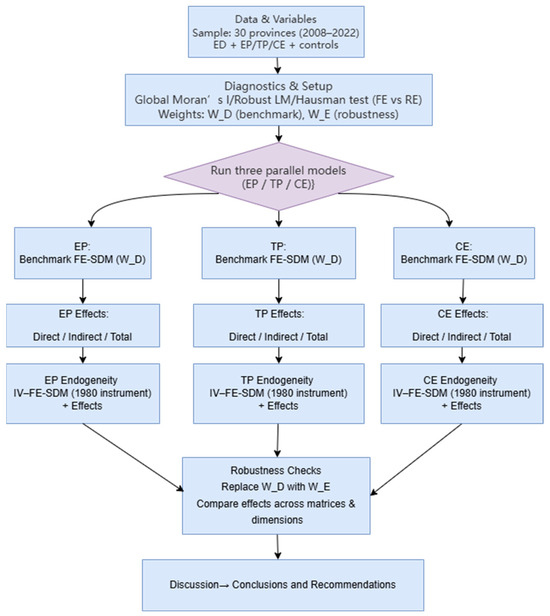
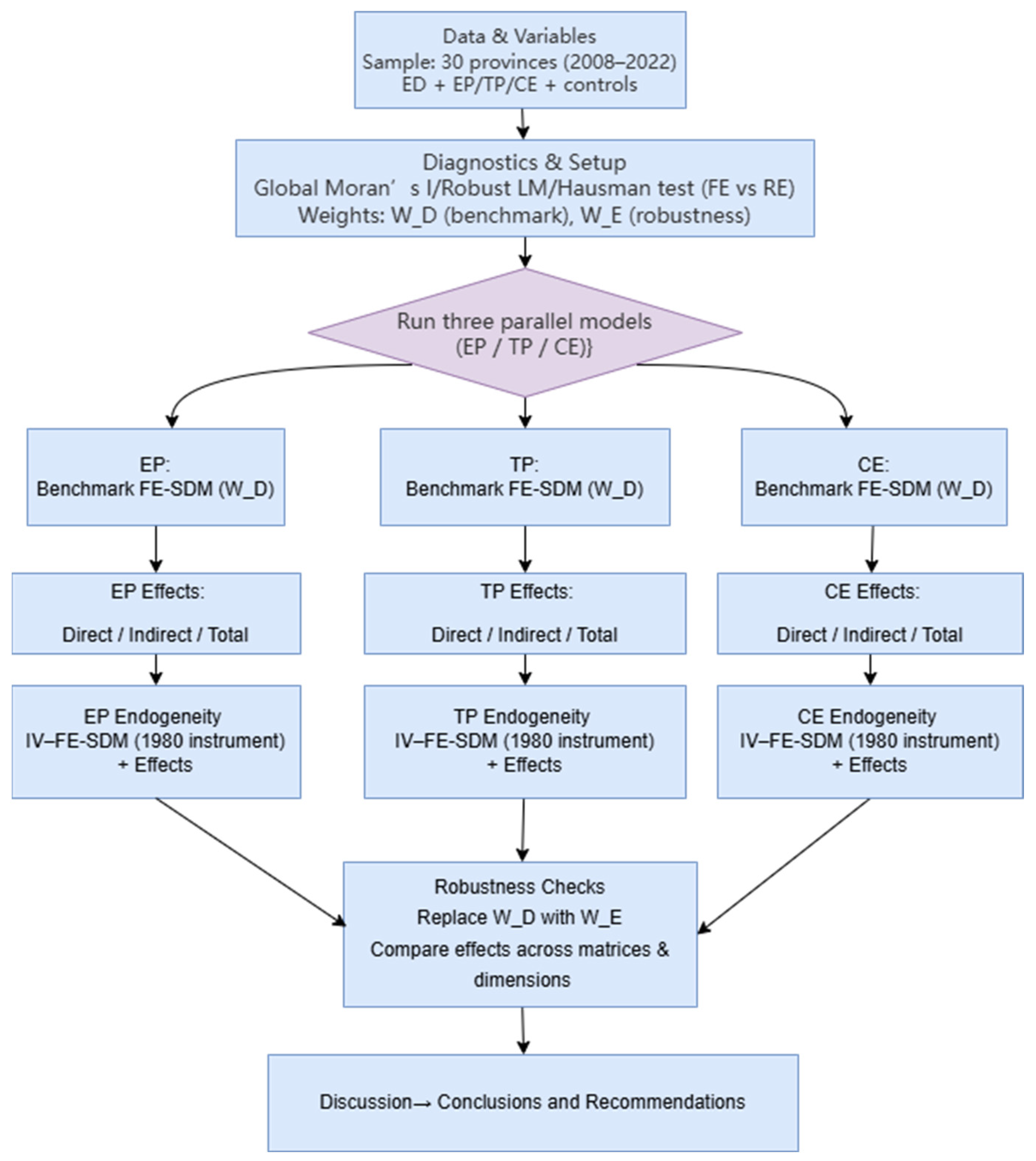

Disclaimer/Publisher’s Note: The statements, opinions and data contained in all publications are solely those of the individual author(s) and contributor(s) and not of MDPI and/or the editor(s). MDPI and/or the editor(s) disclaim responsibility for any injury to people or property resulting from any ideas, methods, instructions or products referred to in the content. |
© 2026 by the authors. Licensee MDPI, Basel, Switzerland. This article is an open access article distributed under the terms and conditions of the Creative Commons Attribution (CC BY) license.