A Systematic and Thematic Review of Greenwashing in the Tourism and Hospitality Industry


Abstract
1. Introduction
2. Literature Review
3. Materials and Methods
3.1. Selection Process and Identification of Keywords
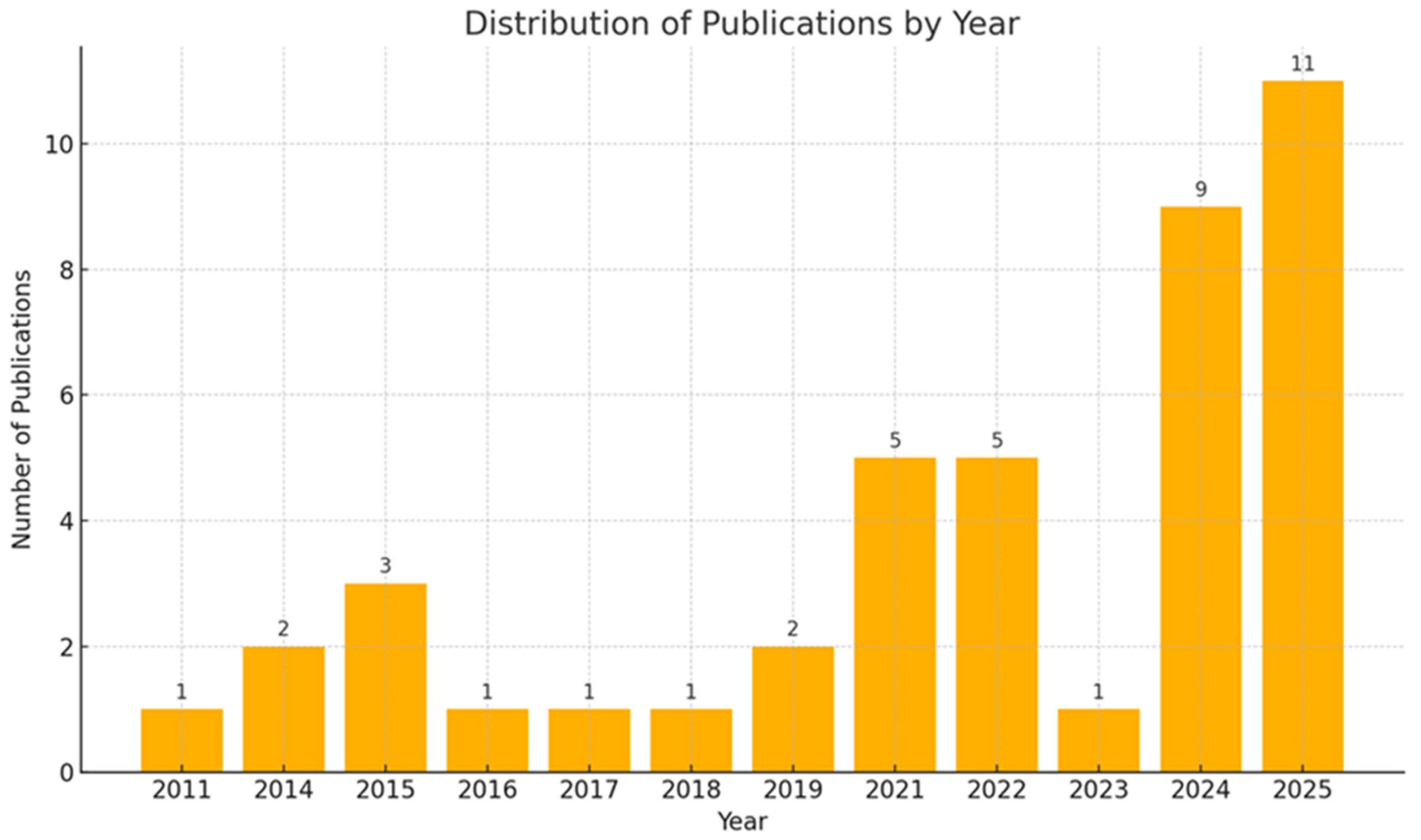
3.2. Research Profiling
4. Results
5. Discussion
5.1. Consumer Perceptions and Behavioral Responses
5.2. Employee Behavior and Internal Effects
5.3. Corporate Communication and Marketing Strategies
5.4. Critical Approach
5.5. Greenhushing
5.6. Literature Reviews and Conceptual Framework Development
5.7. Research Gaps and Potential Research Areas
6. Conclusions
6.1. Theoretical Contributions
6.2. Practical Contributions
Supplementary Materials
Author Contributions
Funding
Institutional Review Board Statement
Informed Consent Statement
Data Availability Statement
Acknowledgments
Conflicts of Interest
Abbreviations
| UNSDGs | United Nations Sustainable Development Goals |
| SLR | Systematic Literature Review |
| RQ | Research Question |
| WOS | Web of Science |
| SEM | Structural Equation Modeling |
| CSR | Corporate Social Responsibility |
| WOM | Word-of-Mouth Communication |
| HR | Human Relations |
| DID | Differences-in-Differences |
| GSE | Green Service Encounter |
| VSO | Voluntary Carbon Offset |
| GHRM | Green Human Resource Management |
| GRI | Global Reporting Initiative |
| GDP | Gross Domestic Product |
| GRT | Green Trust |
| GBE | Green Brand Equity |
| RPI | Repurchase Intention |
| CFA | Confirmatory Factor Analysis |
| OSF | Open Science Framework |
References
- Gössling, S.; Higham, J. The low-carbon imperative: Destination management under urgent climate change. J. Travel Res. 2021, 60, 1167–1179. [Google Scholar] [CrossRef]
- United Nations Development Programme. Sustainable Development Goals; UNDP: New York, NY, USA, 2015. [Google Scholar]
- Tark, J.; Oh, W.Y. Hilton faces greenwashing challenges, Bhattacharyya. In Social and Sustainability Marketing; Dash, J.M.K., Hewege, C.R., Balaji, M.S., Marc, L.W., Eds.; Productivity Press: New York, NY, USA, 2021; pp. 865–867. [Google Scholar]
- Bernard, S.; Nicolau, J.L. Environmental certification and hotel market value. Int. J. Hosp. Manag. 2022, 101, 103129. [Google Scholar] [CrossRef]
- Koupaei, S.N.; Ballantine, P.W.; Ozanne, L. Why Don’t Restaurants Want to Promote Their Sustainability? Insights From New Zealand. Int. J. Tour. Res. 2025, 27, e70015. [Google Scholar] [CrossRef]
- Font, X.; Elgammal, I.; Lamond, I. Greenhushing: The deliberate undercommunication of sustainability practices by tourism businesses. J. Sustain. Tour. 2017, 25, 1007–1023. [Google Scholar] [CrossRef]
- Lyon, T.P.; Maxwell, J.W. Greenwash: Corporate environmental disclosure under threat of audit. J. Econ. Manag. Strategy 2011, 20, 3–41. [Google Scholar] [CrossRef]
- Khatter, A. Challenges and solutions for environmental sustainability in the hospitality sector. Sustainability 2023, 15, 11491. [Google Scholar] [CrossRef]
- Han, H.; Hsu, L.T.; Lee, J.S. Empirical Investigation of the Roles of Attitudes toward Green Behaviors, Overall Image, Gender, and Age in Hotel Customers’ Eco-Friendly Decision-Making Process. Int. J. Hosp. Manag. 2009, 28, 519–528. [Google Scholar] [CrossRef]
- Chen, H.; Bernard, S.; Rahman, I. Greenwashing in chain hotels: A structural model of trust and behavioral intentions. J. Clean. Prod. 2019, 206, 326–335. [Google Scholar] [CrossRef]
- Majeed, S.; Kim, W.G. A Reflection of greenwashing practices in the hospitality industry: A scoping review. Int. J. Contemp. Hosp. Manag. 2023, 35, 1125–1146. [Google Scholar] [CrossRef]
- Tufts, S.; Milne, S. Greening, green-washing, and union activism in hospitality. Women Environ. 2014, 2014, 41–43. [Google Scholar]
- Alyahia, M.; Azazz, A.M.; Fayyad, S.; Elshaer, I.A.; Mohammad, A.A. Greenwashing behavior in the hotel industry: The role of green transparency and green authenticity. Sustainability 2024, 16, 1050. [Google Scholar] [CrossRef]
- Pham, N.T.; Huy, L.V.; Phan, Q.P.T.; Phan, H.L.; Tuan, T.H. The consequences of dishonesty—A mediation-moderation praxis of greenwashing, tourists’ green trust, and word-of-mouth: The role of connectedness to nature. Bus. Ethics Environ. Responsib. 2024, 34, 639–656. [Google Scholar] [CrossRef]
- Zhang, H.; Ul Ainn, Q.; Bashir, I.; Ul Haq, J.; Bonn, M.A. Does greenwashing influence the green product experience in emerging hospitality markets post-COVID-19? Sustainability 2022, 14, 12313. [Google Scholar] [CrossRef]
- Chen, Y.S.; Chang, C.H. Towards green trust: The influences of green perceived quality, green perceived risk, and green satisfaction. Manag. Decis. 2013, 51, 63–82. [Google Scholar] [CrossRef]
- Rahman, I.; Park, J.; Chi, C.G. Consequences of “greenwashing”: Consumers’ reactions to hotels’ green initiatives. Int. J. Contemp. Hosp. Manag. 2015, 27, 1054–1081. [Google Scholar] [CrossRef]
- Ahmad, I.; Jamali, D.R.; Khattak, M.N. Can organizations get away with greenwashing? CSR attributions and counterproductive sustainability behaviors. Bus. Ethics Environ. Responsib. 2025, 34, 103–120. [Google Scholar] [CrossRef]
- Elshaer, I.A.; Azazz, A.M.; Mansour, M.A.; Fayyad, S. Perceived greenwashing and employee non-green behavior: The roles of prevention-focused green crafting and work alienation. Cogent Bus. Manag. 2025, 12, 2449592. [Google Scholar] [CrossRef]
- Mensah, I.; Blankson, E.J. Commitment to environmental Management in hotels in Accra. Int. J. Hosp. Tour. Adm. 2014, 15, 150–171. [Google Scholar] [CrossRef]
- Koseoglu, M.A.; Uyar, A.; Kilic, M.; Kuzey, C.; Karaman, A.S. Exploring the connections among CSR performance, reporting, and external assurance: Evidence from the hospitality and tourism industry. Int. J. Hosp. Manag. 2021, 94, 102819. [Google Scholar] [CrossRef]
- Delmas, M.A.; Burbano, V.C. The drivers of greenwashing. Calif. Manag. Rev. 2011, 54, 64–87. [Google Scholar] [CrossRef]
- Montero-Navarro, A.; González-Torres, T.; Rodríguez-Sánchez, J.L.; Gallego-Losada, R. A bibliometric analysis of greenwashing research: A closer look at agriculture, food industry and food retail. Br. Food J. 2021, 123, 547–560. [Google Scholar] [CrossRef]
- Huang, Z.; Shi, Y.; Jia, M. Greenwashing: A systematic literature review. Account. Finance 2025, 65, 857–882. [Google Scholar] [CrossRef]
- Vieira Salazar, J.A.; Echeverri Rubio, A. Estructura intelectual de la investigación sobre greenwashing: Análisis bibliométrico y narrativo. Rev. Univ. Y Empresa 2024, 26, a13615. [Google Scholar] [CrossRef]
- Page, M.J.; McKenzie, J.E.; Bossuyt, P.M.; Boutron, I.; Hoffmann, T.C.; Mulrow, C.D.; Shamseer, L.; Tetzlaff, J.M.; Akl, E.A.; Brennan, S.E.; et al. The PRISMA 2020 statement: An updated guideline for reporting systematic reviews. BMJ 2021, 372, n71. [Google Scholar] [CrossRef] [PubMed]
- Powell, R.B.; Ham, S.H. Can ecotourism interpretation really lead to pro-conservation knowledge, attitudes and behavior? Evidence from the Galapagos Islands. J. Sustain. Tour. 2008, 16, 467–489. [Google Scholar] [CrossRef]
- Self, R.M.; Self, D.R.; Bell-Haynes, J. Marketing tourism in the Galapagos Islands: Ecotourism or greenwashing? Int. Bus. Econ. Res. J. (IBER) 2010, 9, 111–126. [Google Scholar] [CrossRef]
- Yang, Z.; Huong, N.T.T.; Nam, N.H.; Nga, N.T.T.; Thanh, C.T. Greenwashing behaviours: Causes, taxonomy and consequences based on a systematic literature review. J. Bus. Econ. Manag. (JBEM) 2020, 21, 1486–1507. [Google Scholar] [CrossRef]
- Adamkiewicz, J.; Kochańska, E.; Adamkiewicz, I.; Łukasik, R.M. Greenwashing and sustainable fashion industry. Curr. Opin. Green Sustain. Chem. 2022, 38, 100710. [Google Scholar] [CrossRef]
- Du, X. How the market values greenwashing? Evidence from China. J. Bus. Ethics 2015, 128, 547–574. [Google Scholar] [CrossRef]
- Wu, Y.; Zhang, K.; Xie, J. Bad greenwashing, good greenwashing: Corporate social responsibility and information transparency. Manag. Sci. 2020, 66, 3095–3112. [Google Scholar] [CrossRef]
- Suleman, A.R.; Nejati, M.; Shafaei, A.; Redmond, J. Green human resource management practices in the hospitality and tourism industry: An integrative multi-level systematic review. J. Hosp. Tour. Manag. 2025, 62, 46–56. [Google Scholar] [CrossRef]
- Garcia, F.C.S.; Vargas, W.F.C. Greenwashing in the tourism and hospitality sector: A systematic analysis of the literature. RIAT Rev. Interam. De Medioambiente Y Tur. 2024, 20, 174–191. [Google Scholar] [CrossRef]
- Tranfield, D.; Denyer, D.; Smart, P. Towards a methodology for developing evidence-informed management knowledge by means of systematic review. Br. J. Manag. 2003, 14, 207–222. [Google Scholar] [CrossRef]
- Denyer, D.; Tranfield, D. Producing a systematic review. In The Sage Handbook of Organizational Research Methods; Buchanan, D.A., Bryman, A., Eds.; Sage Publications Ltd.: Thousand Oaks, CA, USA, 2009; pp. 671–689. [Google Scholar]
- Gusenbauer, M.; Haddaway, N.R. Which academic search systems are suitable for systematic reviews or meta-analyses? Evaluating retrieval qualities of Google Scholar, PubMed, and 26 other resources. Res. Synth. Methods 2020, 11, 181–217. [Google Scholar] [CrossRef]
- Zupic, I.; Čater, T. Bibliometric methods in Management and organization. Organ. Res. Methods 2015, 18, 429–472. [Google Scholar] [CrossRef]
- Durieux, V.; Gevenois, P.A. Bibliometric indicators: Quality measurements of scientific publication. Radiology 2010, 255, 342–351. [Google Scholar] [CrossRef]
- Snyder, H. Literature review as a research methodology: An overview and guidelines. J. Bus. Res. 2019, 104, 333–339. [Google Scholar] [CrossRef]
- Mongeon, P.; Paul-Hus, A. The journal coverage of Web of Science and Scopus: A comparative analysis. Scientometrics 2016, 106, 213–228. [Google Scholar] [CrossRef]
- Lyon, T.P.; Montgomery, A.W. The means and end of greenwash. Organ. Environ. 2015, 28, 223–249. [Google Scholar] [CrossRef]
- Nyilasy, G.; Gangadharbatla, H.; Paladino, A. Perceived greenwashing: The interactive effects of green advertising and corporate environmental performance on consumer reactions. J. Bus. Ethics 2014, 125, 693–707. [Google Scholar] [CrossRef]
- Hsieh, H.F.; Shannon, S.E. Three approaches to qualitative content analysis. Qual. Health Res. 2005, 15, 1277–1288. [Google Scholar] [CrossRef] [PubMed]
- Worlometer. Countries in the World by Population. 2025. Available online: https://www.worldometers.info/world-population/population-by-country/ (accessed on 14 August 2025).
- Svanström, M.; Lozano-Garcia, F.J.; Rowe, D. Learning outcomes for sustainable development in higher education. Int. J. Sustain. High. Educ. 2008, 9, 248–262. [Google Scholar] [CrossRef]
- Kiron, D.; Unruh, G.; Kruschwitz, N.; Reeves, M.; Rubel, H.; Meyer Zum Felde, A. Corporate Sustainability at A Crossroads. MIT Sloan Manag. Rev. 2017, 58, 1–27. [Google Scholar]
- Leal Filho, W.; Salvia, A.L.; Frankenberger, F.; Akib, N.A.M.; Sen, S.K.; Sivapalan, S.; Novo-Corti, I.; Venkatesan, M.; Emblen-Perry, K. Governance and sustainable development at higher education institutions. Environ. Dev Sustain 2021, 23, 6002–6020. [Google Scholar] [CrossRef]
- Papagiannakis, G.E.; Vlachos, P.A.; Koritos, C.D.; Kassinis, G.I. Are publicly traded tourism and hospitality providers’ greenwashing? Tour. Manag. 2024, 103, 104893. [Google Scholar] [CrossRef]
- Poveda-Pareja, E.; Marco-Lajara, B.; Úbeda-García, M.; Manresa-Marhuenda, E. The paradox between means and end: Workforce nationality diversity and a strategic CSR approach to avoid greenwashing in tourism accommodations. J. Sustain. Tour. 2024, 33, 1709–1729. [Google Scholar] [CrossRef]
- Blasi, S.; Fano, S.; Sedita, S.R.; Toschi, G. A network perspective of cognitive and geographical proximity of sustainable tourism organizations: Evidence from Italy. Int. J. Contemp. Hosp. Manag. 2024, 36, 478–500. [Google Scholar] [CrossRef]
- Aktan, M.; Zaman, U.; Raza, S.H.; Koc, E. Demystifying tourists’ intentional readiness for net zero transformation through environmental knowledge, conspicuous altruism, and greenwashing perceptions. Asia Pac. J. Tour. Res. 2024, 29, 495–514. [Google Scholar] [CrossRef]
- Torres, S.V.; Muñoz, A. La gestión sostenible aplicada al sector hotelero en Galápagos. Tur. Y Soc. 2022, 31, 177–197. [Google Scholar] [CrossRef]
- Font, X.; Andreu, L.; Mattila, A.S.; Aldas-Manzano, J. Sustainability information overload: Its effect on customers’ greenwashing perceptions, perceived value, and behavioral intentions. J. Hosp. Tour. Manag. 2025, 62, 196–204. [Google Scholar] [CrossRef]
- Malik, G.; Gangwani, K.K.; Kaur, A. Do green attributes of destination matter? The effect on green trust and destination brand equity. Event Manag. 2022, 26, 775–792. [Google Scholar] [CrossRef]
- Olk, S. The effect of self-congruence on perceived green claims’ authenticity and perceived greenwashing: The case of EasyJet’s CO2 promise. J. Nonprofit Public Sect. Mark. 2021, 33, 114–131. [Google Scholar] [CrossRef]
- Smith, V.L.; Font, X. Volunteer tourism, greenwashing and understanding responsible marketing using market signalling theory. J. Sustain. Tour. 2014, 22, 942–963. [Google Scholar] [CrossRef]
- Andersson, I.; James, L. Altruism or entrepreneurialism? The co-evolution of green place branding and policy tourism in Växjö, Sweden. Urban Stud. 2018, 55, 3437–3453. [Google Scholar] [CrossRef]
- Bernard, S.; Rahman, I.; Douglas, A. Sustainability communication in hotels: The role of cognitive linguistics. J. Hosp. Tour. Res. 2024, 48, 741–756. [Google Scholar] [CrossRef]
- Orea-Giner, A. Ecofeminism and food activism in transformative travel as a tool for change. J. Sustain. Tour. 2025, 1–27. [Google Scholar] [CrossRef]
- Gričar, S.; Bojnec, Š.; Šugar, V. Domestic Cycling Tourism: Double Pollution, Greenhushing, and Slovenian Sustainable Travel. Sustainability 2025, 17, 295. [Google Scholar] [CrossRef]
- Seyfi, S.; Elhoushy, S.; Kuhzady, S.; Vo-Thanh, T.; Zaman, M. Bridging the green marketing communication gap: Assessing image coherence in green hotels. Int. J. Tour. Res. 2025, 27, e7027. [Google Scholar] [CrossRef]
- Miller, T. Greenwashed sports and environmental activism: Formula 1 and FIFA. Environ. Commun. 2016, 10, 719–733. [Google Scholar] [CrossRef]
- Butcher, J. Ethical tourism and development: The personal and the political. Tour. Recreat. Res. 2015, 40, 71–80. [Google Scholar] [CrossRef]
- Hunt, C.A.; Stronza, A.L. Missing the forest for the trees? Incongruous local perspectives on ecotourism in Nicaragua converge on ethical issues. Hum. Organ. 2011, 70, 376–386. [Google Scholar] [CrossRef]
- Gupta, A.; Dash, S.; Mishra, A. All that glitters is not green: Creating trustworthy, eco-friendly services at green hotels. Tour. Manag. 2019, 70, 155–169. [Google Scholar] [CrossRef]
- Gupta, A.; Dash, S.; Mishra, A. Self/other-oriented green experiential values: Measurement and impact on hotel-consumer relationship. Int. J. Hosp. Manag. 2019, 83, 159–168. [Google Scholar] [CrossRef]
- Šobot, A.; Gričar, S.; Šugar, V.; Bojnec, Š. Sustainable cycling: Boosting commuting and tourism opportunities in Istria. Sustainability 2024, 16, 10604. [Google Scholar] [CrossRef]
- Jia, F.; Li, Z. Development of green finance, tourism, and corporate access to bank loans in China. Environ. Sci. Pollut. Res. 2023, 30, 75532–75548. [Google Scholar] [CrossRef] [PubMed]
- Smith, V.L.; Font, X. Marketing and communication of responsibility in volunteer tourism. Worldw. Hosp. Tour. Themes 2015, 7, 159–170. [Google Scholar] [CrossRef]
- Font, X.; Walmsley, A.; Cogotti, S.; McCombes, L.; Häusler, N. Corporate social responsibility: The disclosure-performance gap. Tour. Manag. 2012, 33, 1544–1553. [Google Scholar] [CrossRef]
- Dornier, R. The sustainability of French event companies: An exploratory study. Worldw. Hosp. Tour. Themes 2021, 13, 22–35. [Google Scholar] [CrossRef]
- Guix, M.; Ollé, C.; Font, X. Trustworthy or misleading communication of voluntary carbon offsets in the aviation industry. Tour. Manag. 2022, 90, 104450. [Google Scholar] [CrossRef]
- Antari, N.P.B.W.; Connell, D. Tukad Bindu in Bali, Indonesia: Ecotourism or greenwashing? Int. J. Tour. Cities 2021, 7, 1049–1075. [Google Scholar] [CrossRef]
- Dhanda, K.K. The role of carbon offsets in achieving carbon neutrality: An exploratory study of hotels and resorts. Int. J. Contemp. Hosp. Manag. 2014, 26, 1179–1199. [Google Scholar] [CrossRef]
- Setälä, K.; Aarikka-Stenroos, L.; Wright, S.J.; Grundström, M. How stakeholders respond to airline sustainability signaling—A social media analysis. Corp. Commun. Int. J. 2025, 30, 276–291. [Google Scholar] [CrossRef]
- Caldwell, S.E.; Mays, N. Studying policy implementation using a macro, meso and micro frame analysis: The case of the Collaboration for Leadership in Applied Health Research & Care (CLAHRC) programme nationally and in North West London. Health Res. Policy Syst. 2012, 10, 32. [Google Scholar] [PubMed]
- Mu, H.; Lee, Y. Greenwashing in corporate social responsibility: A dual-faceted analysis of its impact on employee trust and identification. Sustainability 2023, 15, 15693. [Google Scholar] [CrossRef]
- Koupaei, A.; Ballantine, P.W.; Ozanne, L.K. Do restaurants promote their sustainable practices online? Examining the virtual front of house. In Sustainable Disposal Methods of Food Wastes in Hospitality Operations; Singh, A., Tyagi, P.K., Garg, A., Eds.; IGI Global: Hershey, PA, USA, 2024; pp. 1–29. [Google Scholar]
- Ling, T.L.; Aziz, N.A. The impact of perceived greenwash fear on attitude, reasons, and green hotel patronage intention. Asia-Pac. J. Innov. Hosp. Tour. 2021, 10, 41–61. [Google Scholar]
- Leonidou, C.N.; Skarmeas, D. Gray Shades of green: Causes and consequences of green skepticism. J. Bus. Ethics 2017, 144, 401–415. [Google Scholar] [CrossRef]
- Wang, W.; Ma, D.; Wu, F.; Sun, M.; Xu, S.; Hua, Q.; Sun, Z. Exploring the knowledge structure and hotspot evolution of greenwashing: A visual analysis based on bibliometrics. Sustainability 2023, 15, 2290. [Google Scholar] [CrossRef]
- Gössling, S.; Buckley, R. Carbon labels in tourism: Persuasive communication? J. Clean. Prod. 2016, 111, 358–369. [Google Scholar] [CrossRef]
- TS EN ISO 14001; Çevre Yönetim Sistemi. Türk Standardları Enstitüsü: Ankara, Turkey, 2025. Available online: https://www.tse.org.tr/ (accessed on 18 August 2025).





| No. | Purpose | Journal | Sample | Country /Region | Method | Variables | Findings | References |
|---|---|---|---|---|---|---|---|---|
| 1 | Examining whether publicly traded companies in the tourism and hospitality sector engage in greenwashing and the impact of this behavior on sales | Tourism Management | 253 tourism and accommodation companies | Global/multiple countries | Panel data analysis, instrumental variable approach | Environmental actions, environmental discourse, and sales performance | In general, it was found that greenwashing was not practiced, but sales declined in companies that greenwashed. | Papagiannakis et al., 2024 [49] |
| 2 | Examining the impact of greenwashing on tourists’ green trust and green word-of-mouth communication | Business Ethics, Environment & Responsibility | 289 hotel guests | Vietnam | Structural equation modeling (SEM) | Greenwashing, green trust, green WOM, commitment to nature | Greenwashing erodes consumers’ green trust and undermines word-of-mouth communication (WOM). However, individuals’ level of attachment to nature significantly influences these relationships. | Pham et al., 2024 [14] |
| 3 | Investigating the relationship between CSR performance, reporting, and external auditing in the tourism and hospitality sector | International Journal of Hospitality Management | Tourism and accommodation companies in various countries | Global/multiple countries | Panel data analysis | CSR performance, reporting, GRI adoption, and external audit | High corporate social responsibility (CSR) performance increases the adoption rate of Global Reporting Initiative (GRI) standards and external audit practices. No greenwashing tendencies were observed in the scope of the research. | Koseoglu et al., 2021 [21] |
| 4 | Investigating how the relationship between workforce diversity and strategic CSR can prevent greenwashing | Journal of Sustainable Tourism | 202 coastal accommodation facilities | Spain | PLS-SEM | Workforce diversity, strategic CSR, performance | Workforce diversity increases CSR, while strategic CSR contributes to performance and reduces greenwashing. | Poveda-Pareja et al., 2024 [50] |
| 5 | Investigating the impact of greenwashing on guest trust and hotel choice, and to determine the role of green transparency and authenticity | Sustainability | 309 hotel guests | Egypt | SEM (Smart PLS 4) | Greenwashing, green trust, hotel preference, transparency, authenticity | Greenwashing reduces green trust and intentions to purchase green products. Transparency and authenticity mitigate these adverse effects. | Alyahia et al., 2024 [13] |
| 6 | Defining sustainable tourism business networks and examine the role of cognitive/geographical proximity in the formation of these networks | International Journal of Contemporary Hospitality Management | Tourism companies in the Veneto region of Italy | Italy | Social network analysis, web data mining, and machine learning | Cognitive proximity, geographical proximity, and sustainability statement | According to sustainability principles, there are cognitive and geographical connections among tourism companies, and the greenwashing effect is low. | Blasi et al., 2024 [51] |
| 7 | Systematically reviewing the literature on greenwashing and propose a comprehensive framework | Accounting & Finance | 180 academic articles | Global/multiple countries | Systematic literature review | Definition of greenwashing, measurement methods, motivations, and results | In this study, definitions, driving factors, and consequences related to greenwashing are brought together to form a comprehensive theoretical framework. | Huang et al., 2025 [24] |
| 8 | Examining the factors that influence tourists’ readiness for net-zero transformation | Asia Pacific Journal of Tourism Research | 430 tourists, Türkiye | Türkiye | Survey, structural equation modeling | Environmental information, ostentatious philanthropy, and perception of greenwashing | Environmental information and ostentatious philanthropy increase individuals’ readiness levels, whereas perceptions of greenwashing weaken this effect. | Aktan et al., 2024 [52] |
| 9 | Investigating how employees perceive greenwashing and its impact on non-environmental behavior in the workplace | Cogent Business & Management | 419 employees (tourism sector) | Global/multiple countries | Structural equation modeling (PLS-SEM) | Greenwashing perception, green craftsmanship, and alienation from work | Greenwashing leads to employee alienation and non-green behavior. | Elshaer et al., 2025 [19] |
| 10 | Analyzing sustainability practices and the impact of greenwashing in hotel businesses in the Galápagos Islands | Revista Turismo y Sociedad | Hotels in Puerto Ayora | Ecuador | Qualitative analysis, semi-structured interviews | Perception of sustainability, management practices, and green marketing | Although some hotels practice sustainability, many use it only as a marketing tool (greenwashing). | Torres & Muñoz, 2022 [53] |
| 11 | Examining the impact of greenwashing on green product experience and customer behavior | Sustainability | 440 hotel guests | Pakistan | Survey, CFA, SEM | Greenwashing, green product experience, WOM, repurchase intention | Greenwashing negatively affects the green product experience, harming repeat purchases and word-of-mouth marketing. | Zhang et al., 2022 [15] |
| 12 | Bibliometric analysis of the literature on greenwashing | British Food Journal | 351 articles | Global/multiple countries | Bibliometric analysis | Number of publications, subject distribution, and influential publications | The literature on greenwashing has grown rapidly since 2016 and is particularly relevant to the food sector. | Montero-Navarro et al., 2021 [23] |
| 13 | Examining the impact of sustainability information overload on the perception of greenwashing | Journal of Hospitality and Tourism Management | 808 British and German hotel guests | Global/multiple countries | Online survey, S-O-R model | Information overload, greenwashing perception, perceived value, eWOM, reservation intention | Information overload increases the perception of greenwashing, thereby reducing perceived value and behavioral intent. | Font et al., 2025 [54] |
| 14 | Examining the impact of green destination characteristics on trust and brand value | Event Management | 739 Indian tourists | India | Structural equation modeling (PLS-SEM) | Green service attributes, green Trust, brand equity, greenwashing | Greenwashing undermines green trust and reduces brand value. | Malik et al., 2022 [55] |
| 15 | Testing the effect of self-harmony perception on greenwashing perception | Journal of Nonprofit & Public Sector Marketing | Modeling with the EasyJet example | Global/multiple countries | Moderated mediation model | Self-congruence, authenticity, perceived greenwashing | High ideal self-congruence reduces the perception of greenwashing by increasing perceived sincerity. | Olk, 2021 [56] |
| 16 | Examining responsibility signaling in volunteer tourism marketing | Journal of Sustainable Tourism | 8 volunteer tour operators | Global/multiple countries | Content analysis, comparative evaluation | Responsibility indicators, price, and legal status | It has been stated that companies do not use their responsibility as a marketing tool, and greenwashing is widespread. | Smith & Font, 2014 [57] |
| 17 | Analyzing the intellectual structure of greenwashing research | Universidad & Empresa | 282 scientific publications | Global/multiple countries | Bibliometric analysis and narrative review | Authors, sources, thematic clusters | As a result of the review, three thematic focuses that stand out in the literature have been identified: sustainability, social responsibility, and green marketing. | Vieira & Echeverri Rubio, 2024 [25] |
| 18 | Investigating the co-development of green place branding and policy tourism | Urban Studies | Case study on Växjö, Sweden | Sweden | Case study | Brand statements, political developments | The green image is used both as a strategic element in entrepreneurial activities and as a representation of corporate values. | Andersson & James (2018). [58] |
| 19 | Examining the impact of greenwashing on employee behavior | Business Ethics, Environment & Responsibility | 311 employees (tourism and hospitality sector) | Global/multiple countries | Survey, structural equation model | Relative CSR perception, anti-sustainability behaviors, and trust | Greenwashing reduces trust and increases negative behavior. | Ahmad, Jamali & Khattak, 2025 [18] |
| 20 | Defining the concept of greenhushing and analyzing its causes | Journal of Sustainable Tourism | 31 small tourism businesses (United Kingdom) | England | Audit documents, web analytics, and interviews | Communication style, sustainability actions | Businesses deliberately limit communication about their green practices due to ethical dilemmas. | Font, Elgammal & Lamond, 2017 [6] |
| 21 | Examining the role of cognitive linguistics in sustainability communication and the impact of language structure on consumer behavior | Journal of Hospitality & Tourism Research | Hotel guests (on-site and online participants) | USA | Experimental study, two-stage analysis | Perceived environmental performance, greenwashing, environmental concern, reservation intention | Research findings indicate that restrictive language structures elicit more positive consumer responses and increase reservation intent. | Bernard, Rahman& Douglas, (2024) [59] |
| 22 | Examining the contribution of ecofeminism and food activism to ethical and sustainable practices in transformative tourism | Journal of Sustainable Tourism | Online interviews with women activists, data from the eco-feminist travel initiative | Global/multiple countries | Qualitative method, grounded theory | Ecofeminism, food activism, ethical consumption, and social justice | Ecofeminism and food activism play an effective role in social transformation; however, prejudices and financial constraints make it challenging to adopt these approaches. | Orea-Giner (2025). [60] |
| 23 | Analyzing the dual environmental impact (double pollution) and green silence of bicycle tourism | Sustainability | 2011–2021 Slovenya verileri | Slovenia | Factor analysis, VAR modeling | Dual pollution, green silence, CO2 emissions, and demand for bicycle tourism | It has been determined that bicycle tourism reduces environmental benefits; this situation has been evaluated within the framework of the “green silence” phenomenon. | Gričar, Bojnec & Šugar, 2025 [61] |
| 24 | Examining the alignment between green hotels’ marketing messages and customer perceptions | International Journal of Tourism Research | Hotel websites and user reviews | Global/multiple countries | Content and sentiment analysis | Projection perception, perceived green image, communication strategy | Research findings reveal inconsistencies between the messages presented in green marketing communications and actual practices; this contradiction points to both green silence and greenwashing tendencies. | Seyfi et al., 2025 [62] |
| 25 | Analyzing the environmental impacts and greenwashing rhetoric of sporting events such as Formula 1 and FIFA | Environmental Communication | Secondary data analysis | Global/multiple countries | Critical discourse analysis | Greenwashing, social license, sports, and the environment | Organizations such as F1 and FIFA, despite contributing to environmental destruction, seek to gain social legitimacy through sponsorship. | Miller (2016). [63] |
| 26 | Examining the effects of ethical tourism on development and the replacement of individual/social responsibility discourses with political analysis | Tourism Recreation Research | Kuramsal inceleme, örneklem yok | Global/multiple countries | Theoretical study, no sample | Ethical behavior, responsibility, awareness, and discourse on development | The discourse of ethical tourism emphasizes individual consumer virtue while ignoring structural inequalities and political responsibilities, thereby overshadowing critical debates on development. | Butcher (2015) [64] |
| 27 | Understanding local people’s perceptions of ethical performance in ecotourism | Human Organization | Local people around an eco-lodge in Nicaragua | Nicaragua | Ethnographic observation and interviews | Ethical performance perception, sustainability, environmental, and social context | The local community has raised various ethical concerns about the project; these perceptions increase the risk of it being perceived as greenwashing. | Hunt & Stronza (2011) [65] |
| 28 | Measuring the impact of green experiential values (altruistic and egoistic orientations) on the customer–hotel relationship | International Journal of Hospitality Management | A two-stage survey was conducted in 14 green hotels in India (208 and 315 people) | India | Mixed methods, structured questionnaire, and structural equation modeling | GEV, green trust (GRT), green brand equity (GBE), repurchase intention (RPI) | It has been observed that self-serving values such as utility and pleasure increase green trust among consumers; this increase contributes to brand value and strengthens the intention to repurchase. | Gupta et al., 2019 [66] |
| 29 | Developing a framework to enhance the reliability of green hotel services | Tourism Management | 500+ surveys from green hotel customers in India | India | Sequential mixed-method, quantitative analysis (SEM) | Green service encounter (GSE), trust, and intention to revisit | Aesthetic design, environmental ambiance, and social interaction elements support trust formation; the trust that is formed strengthens the consumer’s tendency to make repeat purchases. | Gupta et al., 2019 [67] |
| 30 | Analyzing the effects of greenwashing on consumer reactions | International Journal of Contemporary Hospitality Management | Employees of a university in the US (638 people, experimental design) | USA | Short experimental study (control vs. disclosure of intent) | Greenwashing, skepticism, intention to participate, intention to revisit, and environmental awareness | When hotels are perceived to have ulterior motives in their environmental initiatives, consumer skepticism increases, negatively affecting participation and the intention to revisit. | Rahman et al., 2015 [17] |
| 31 | Examining why restaurants in New Zealand do not promote their sustainability practices online | International Journal of Tourism Research | 164 award-winning or nominated restaurants | New Zealand | Content analysis and interviews | Sustainability practices, promotional incentives | Restaurants often shy away from promoting their sustainability practices on online platforms. At the same time, seasonal and local products are frequently highlighted, while ethical animal welfare practices and fair trade are rarely mentioned. | Koupaei et al., 2025 [5] |
| 32 | Examining the potential of bicycle use in the Istria region for sustainable transportation and tourism | Sustainability | Secondary data from 2010 to 2023, interviews | Global/multiple countries | Econometric analysis, VAR model, interviews | Bicycle imports, tourist numbers, GDP, greenhouse gas emissions | In Slovenia, bicycle imports have had positive economic effects, increasing tourist numbers and gross domestic product (GDP), but they have also led to higher greenhouse gas emissions. In Croatia, on the other hand, although the direct economic contribution of bicycle tourism is limited, positive environmental effects have been observed. | Šobot et al., 2024 [68] |
| 33 | Examining the impact of China’s green credit policies on businesses’ access to bank loans | Environmental Science and Pollution Research | 1086 Chinese manufacturing companies between 2012 and 2017 | China | Differences-in-differences (DID) model | Environmental transparency, green innovation, and access to credit | While companies’ environmental transparency has a limited impact on credit access, genuine green innovation activities are viewed positively by financial institutions and facilitate credit access. On the other hand, greenwashing practices undermine financial credibility and lead to adverse outcomes. | Jia & Li, 2023 [69] |
| 34 | Analyzing the impact of environmental certifications on the market value of publicly traded hotels in the US | International Journal of Hospitality Management | Large hotel chains between 1996 and 2020 | ABD | Event study | Environmental awards, market value | Hotels receiving environmental awards for the first time have seen their market value increase. However, when awards are received consecutively, the effect follows a U-shaped pattern. While the first awards create a positive perception, the effect diminishes over time and then increases again after a certain point. In general, environmental awards positively affect hotel brand perception. | Bernard & Nicolau (2022). [4] |
| 35 | Testing whether the quality of responsibility communication in volunteer tourism can be improved | Worldwide Hospitality and Tourism Themes | Web pages of 8 volunteer tourism organizations | Global/multiple countries | Content analysis, longitudinal comparison | Responsibility criteria, communication strategies | Although general improvements in communication were observed after feedback, consistency across all criteria was not achieved. While some organizations were open to improvement in communication, others resisted change. | Smith & Font (2015) [70] |
| 36 | Investigating the gap between CSR statements and actual practices | Tourism Management | 10 international hotel chains | Global/multiple countries | Content analysis, field visit | CSR policies, performance, and transparency | Policies are comprehensive in large chains, but implementation is lacking; small chains are more consistent. | Font et al., 2012 [71] |
| 37 | Analyzing the sustainability practices of French event companies | Worldwide Hospitality and Tourism Themes | 6 senior managers + 1 consultant | France | Semi-structured interviews, content analysis | Motivation, obstacles, strategies | Although participants have a high level of personal motivation, weak consumer demand and poor material quality limit the adoption of sustainable practices; in addition, greenwashing is emerging as a significant problem. | Dornier (2021) [72] |
| 38 | Examining the accuracy of airlines’ carbon offset communications | Tourism Management | 37 airlines | Global/multiple countries | Content analysis, lexical analysis, coding matrix | Message type and nature, reliability, and misleading nature | According to research findings, 56% of sustainability-focused communications provide reliable information, while 44% contain deceptive or incomplete statements. This situation highlights the prevalence of conflicting messages in communications and the risk of greenwashing. | Guix, Olle & Font (2022) [73] |
| 39 | Examining whether Tukad Bindu is an example of ecotourism or greenwashing | International Journal of Tourism Cities | Meetings with local stakeholders | Indonesia (Bali) | Qualitative analysis, evaluation based on Honey’s seven criteria | Nature-oriented, local benefit, environmental awareness | Tukad Bindu has strong potential for ecotourism, but it also has some shortcomings that need to be addressed in line with sustainability principles. | Antari & Connell (2021) [74] |
| 40 | Analyzing the claims of hotels and resorts regarding carbon offsetting and carbon neutrality to evaluate the functioning of this market | International Journal of Contemporary Hospitality Management | Hotels and resorts claiming carbon neutrality | Global/multiple countries | Internet search + evaluation using a Likert scale | Project quality, carbon calculations, supplier information, and carbon offset price | Many hotels’ claims to be carbon neutral are primarily for marketing purposes; their legitimacy varies and carries the risk of greenwashing. | Dhanda (2014) [75] |
| 41 | Systematically analyzing green HR practices in the accommodation and tourism sector and identify theoretical and empirical gaps | Journal of Hospitality and Tourism Management | 77 empirical studies (between 2013 and 2023) | Global/multiple countries | Systematic literature review (SLR) using the PRISMA protocol | Premises, decisions, conclusions (ADO) + theory, context, method (TCM) | While green HR practices contribute to sustainability goals, they also have adverse effects that can create pressure on employees and lead to burnout. In addition, the current literature highlights deficiencies in the theoretical framework and methodological limitations. | Suleman et al., 2025 [33] |
| 42 | Analyzing stakeholder reactions on social media in response to an airline’s sustainability signal (e.g., announcement of electric aircraft) | Corporate Communications: An International Journal | 7002 social media posts | Based in Finland (case study: Finnair) | Social media analytics (SMA), content, and sentiment analysis | Stakeholder group, response themes, sentiment trends | The majority of participants’ responses were positive or balanced; their content was generally shaped by environmental awareness, level of knowledge, and connection to the sector. Notably, there were no direct references to accusations of greenwashing. | Setälä et al., 2025 [76] |
| Axial Coding Theme | Open Code/Scope | Related Article Numbers |
|---|---|---|
| Consumer Perception and Behavioral Responses | The effects of greenwashing on individual attitudes and behaviors, such as consumer confidence, brand perception, purchase intent, and word-of-mouth communication (WOM), are discussed. | 2, 5, 8, 11, 13, 14, 15, 28, 29, 30, 22 |
| Employee Behavior and Internal Effects | The impact of greenwashing perception on employee motivation, job satisfaction, job alienation, and environmental behavior is investigated. Green human resource management (Green HRM) and organizational commitment are evaluated within this theme. | 9, 19, 41, 37 |
| Corporate Communication and Marketing Strategies | This heading discusses how organizations construct their sustainability narratives, the credibility of environmental claims, marketing messages, and social media responses. | 10, 16, 21, 35, 36, 38, 42, 18 |
| Strategic CSR and Corporate Structures | CSR practices, GRI standards, external audit mechanisms, and the effects of green innovation on performance are analyzed. This theme is more concerned with corporate-level structures. | 1, 3, 4, 33, 34, 32 |
| Critical Approaches | The ideological, political, and ethical aspects of greenwashing are discussed. This heading covers the role of sustainability discourse in the production of social legitimacy, ethical tourism, social license, and social acceptance. | 25, 26, 27, 39, 40 |
| Greenhushing | The companies’ reluctance to publicly promote their sustainability practices is examined. Fear of being accused of greenwashing, ethical concerns, and image risk are among the main reasons. | 20, 23, 24, 31 |
| Literature Reviews and Conceptual Framework Development | Systematic literature reviews, bibliometric analyses, and conceptual models of greenwashing are included under this heading. The stages of development and the research gaps are highlighted. | 6, 7, 12, 17 |
Disclaimer/Publisher’s Note: The statements, opinions and data contained in all publications are solely those of the individual author(s) and contributor(s) and not of MDPI and/or the editor(s). MDPI and/or the editor(s) disclaim responsibility for any injury to people or property resulting from any ideas, methods, instructions or products referred to in the content. |
© 2026 by the authors. Licensee MDPI, Basel, Switzerland. This article is an open access article distributed under the terms and conditions of the Creative Commons Attribution (CC BY) license.
Share and Cite
Onur, M.; Soylu, A.G.; Yorgancı, B.; Kılıçhan, R. A Systematic and Thematic Review of Greenwashing in the Tourism and Hospitality Industry. Sustainability 2026, 18, 1255. https://doi.org/10.3390/su18031255
Onur M, Soylu AG, Yorgancı B, Kılıçhan R. A Systematic and Thematic Review of Greenwashing in the Tourism and Hospitality Industry. Sustainability. 2026; 18(3):1255. https://doi.org/10.3390/su18031255
Chicago/Turabian StyleOnur, Merve, Aykut Göktuğ Soylu, Bülent Yorgancı, and Reha Kılıçhan. 2026. "A Systematic and Thematic Review of Greenwashing in the Tourism and Hospitality Industry" Sustainability 18, no. 3: 1255. https://doi.org/10.3390/su18031255
APA StyleOnur, M., Soylu, A. G., Yorgancı, B., & Kılıçhan, R. (2026). A Systematic and Thematic Review of Greenwashing in the Tourism and Hospitality Industry. Sustainability, 18(3), 1255. https://doi.org/10.3390/su18031255