Article

Tailored Carbon Catalysts Derived from Biomass for Efficient Glucose-to-5-HMF Transformation

1
Department of Textile, Leather and Fuels, University of Chemical Technology and Metallurgy, 8 Kliment Ohridski Blvd., 1797 Sofia, Bulgaria
2
Centre of Polymer and Carbon Materials, Polish Academy of Sciences, M. Curie-Skłodowskiej 34 Str., 41-800 Zabrze, Poland
*
Author to whom correspondence should be addressed.
Sustainability 2026, 18(3), 1254; https://doi.org/10.3390/su18031254
Submission received: 26 October 2025 / Revised: 15 January 2026 / Accepted: 22 January 2026 / Published: 26 January 2026

Abstract

Aligned with circular bioeconomy principles, which aim to establish closed-loop systems that maximize resource utilization and renewal while minimizing waste, this study developed and characterized innovative catalysts derived from waste almond shells. These shells were carbonized and functionalized to create active surfaces containing Lewis and Brønsted acid sites. Modification was achieved through treatment with ZnCl2 to introduce Lewis acid (LA) sites and with sulfuric acid to generate Brønsted acid (BA) sites. Detailed instrumental analyses enabled assessment of catalyst morphology, textural parameters, and surface functional groups. A physical mixture of the two catalysts was used to convert glucose into 5-hydroxymethylfurfural (HMF), yielding a maximum HMF yield of 76.8%. The results indicate that the collaborative action of Lewis and Brønsted acid sites, along with oxygen-containing surface groups, contributes to catalyst efficiency. These insights facilitate targeted catalyst optimization by adjusting surface texture and functional groups.

1. Introduction

Modern society continues to rely predominantly on fossil fuels for energy, highlighting the urgent need to develop more sustainable alternatives. Transitioning from oil refineries to biorefineries is essential for ensuring environmental sustainability. The use of renewable raw materials provides a consistent supply, broad accessibility, and moderate costs for refineries, which is critical for reducing dependence on fossil fuels [1].
Biomass, particularly carbohydrates derived from lignocellulosic waste sources such as agricultural and wood waste or recycled textile materials, represents a low-cost, highly suitable raw material to produce chemicals and value-added products [2]. Notable examples include 5-hydroxymethylfurfural (HMF) [3], 2,5-furandicarboxylic acid (FDCA) [4], levulinic acid [5], and 2,5-dimethylfuran [6]. These compounds are significant target products and perform as possible substitutes for petroleum monomers in polymer production. Additionally, they can be utilized as feedstocks for a new generation of synthetic fuels, particularly in the transportation sector, including aviation [7].
First-generation biofuels like bioethanol and biodiesel have been extensively researched, followed by second-generation technologies for converting lignocellulosic biomass via thermochemical methods such as gasification and pyrolysis. Currently, catalytic processes that convert pretreated biomass carbohydrates into biofuels are attracting attention; carbohydrates (glucose and fructose) can be converted to produce furfural and other products [8]. Glucose was chosen for this study due to its direct availability from lignocellulosic biomass and its suitability for catalytic dehydration to yield 5-hydroxymethylfurfural (HMF).
Expensive catalysts in catalytic reactions can be replaced with biomass-derived carbon materials. Carbonized waste of different origins can be activated and modified to selectively catalyze reactions to produce hydrocarbons in the range of different types of fuels [9]. For effective glucose-to-HMF conversion, catalysts must acquire both LA and BA sites on their surfaces [10,11].
Numerous biochar-derived catalysts have been developed for converting biomass-derived glucose into the high-value platform molecule HMF. Cui et al. [12] reported a novel carbon catalyst derived from bio-tar, which was modified by sulfonation and loaded with metals (Al and Ti) to achieve structural control. Rusanen et al. investigated lignin-based iron catalysts supported on activated carbon, as well as birch sawdust-based activated carbon (AC) catalysts modified with Lewis or Brønsted acid sites [10,13]. Bounoukta et al. examined bifunctional carbon-based catalysts containing both LA and BA sites for the dehydration of glucose to HMF [11]. M. Li et al. synthesized lignin-based AC through simultaneous carbonization and activation at various conditions [14]. This catalyst was further sulfonated with sulfuric acid and applied to the conversion of fructose to HMF, achieving a yield of 75.7% under optimal conditions using dimethyl sulfoxide as the solvent. Utilizing waste biomass as catalysts represents an environmentally sustainable approach for carbohydrate conversion to HMF and eliminates the need for mineral acid catalysts.
Research into new catalytic methods for turning glucose from lignocellulosic biomass into useful products is still limited [15]. Additionally, elucidating the relationship between catalyst type, catalyst properties, and their effectiveness in producing the target product, 5-hydroxymethylfurfural (HMF), is of significant interest.
Almond shells, a carbon-rich industrial byproduct, can be repurposed to reduce waste and promote sustainability. Their natural porous structure provides a high surface area, making them appropriate for applications as catalysts and adsorbents.
In this study, catalysts derived from almond shells were synthesized by modifying the carbonized precursor with ZnCl2 and H2SO4 to introduce LA and BA sites on the activated carbon surface, respectively. The catalytic performance for the conversion of glucose to HMF was evaluated in a water/tetrahydrofuran/NaCl biphasic system. While the effects of the two-phase medium and salts such as sodium chloride are well known, the effects of catalyst surface chemistry remain unclear. Optimal reaction time conditions were also explored.

2. Materials and Methods

2.1. Materials

All reactants were procured from Valerus Ltd. and sourced from various manufacturers: zinc chloride (ZnCl2, AR, Alfa Aesar, Ward Hill, MA, USA), sulfuric acid (H2SO4 ≥ 98%, AR), 5-hydroxymethylfurfural (HMF, AR, Alfa Aesar), sodium chloride (NaCl, AR), tetrahydrofuran (THF, AR, Merck, Darmstadt, Germany), and glucose (C6H12O6, AR, Sigma Aldrich, Waltham, MA, USA); ultrapure water (Simplicity®; Merck).
Crushed almond shells, a byproduct of the domestic nut industry, served as the precursor for AC for activated carbon production. The precursor underwent hydropyrolysis, a simultaneous carbonization and steam activation process, at 700 °C for 1 h, with a heating rate of 5 °C/min and a water vapor flow rate of 10 cm3/min, as described in [16]. The resulting activated carbon was washed with distilled water and dried in air for 10 h at 110 °C. The carbonized material was then manually ground, sieved to a particle size below 0.4 mm, and further milled in a ceramic ball mill for 4 h.
The carbon surface was modified by treatment with ZnCl2. To introduce active Lewis acid sites, carbonized almond shells were impregnated with a 50:50 water–ethanol solution of zinc chloride containing 10 wt% Zn. The resulting slurry was dried using a rotary vacuum evaporator and subsequently calcined in a tube furnace at 600 °C for 2 h under an argon flow (15 mL/min) at a heating rate of 5 °C/min. The final catalyst was designated as ACZn.
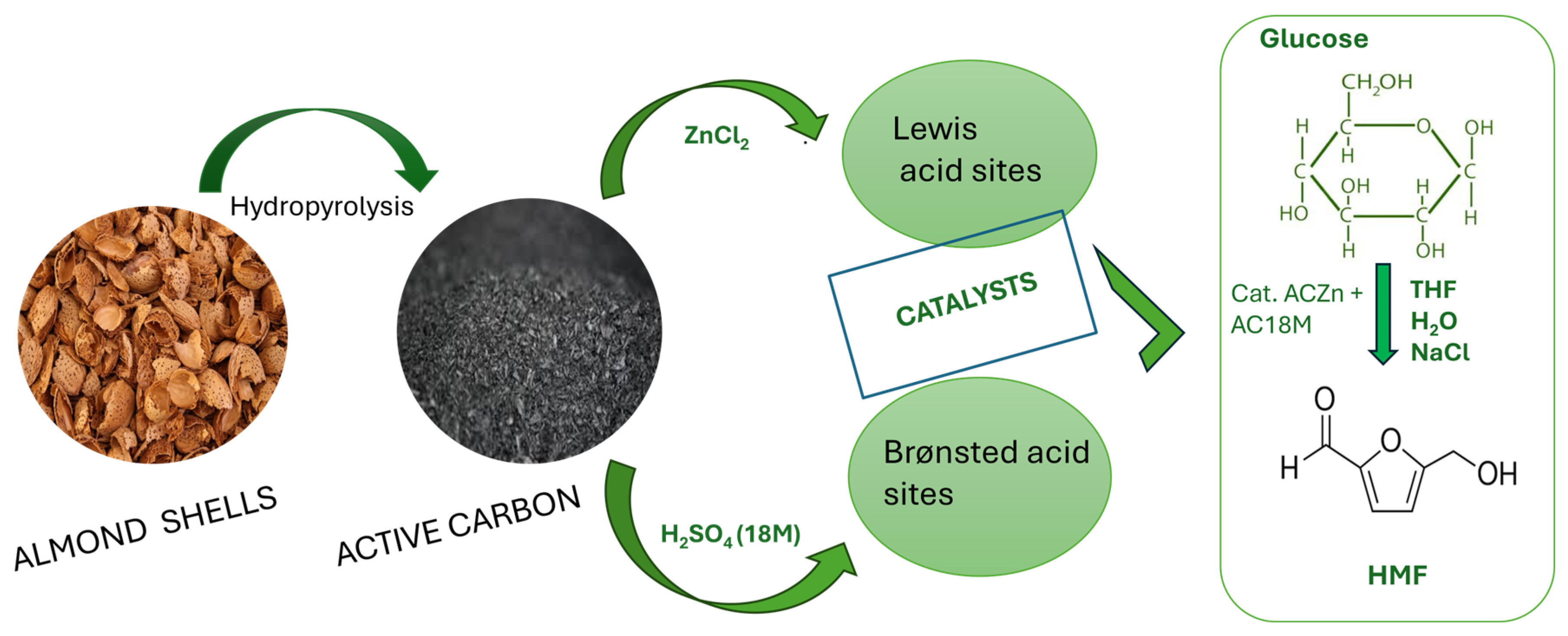
Active Brønsted sites were generated by treating carbonized almond shells with concentrated sulfuric acid (18 M). This procedure was conducted in a glass reactor with constant stirring at 500 rpm, using a C/H2SO4 ratio of 1/18.4 wt% under reflux at 80 °C for 2 h. The sample was afterward washed with distilled water until a neutral pH was achieved, filtered, air-dried, and oven-dried at 105 °C. The resulting catalyst was designated as AC18M. The overall reaction scheme for glucose conversions is presented in Figure S1, and a graphical summary of the experimental procedure is shown in Figure 1.

2.2. Methods

2.2.1. Characterization of the Catalysts

Elemental analysis for carbon, hydrogen, nitrogen, and sulfur was conducted using a Vario Macro Cube (Elementar Analysensysteme GmbH, Langenselbold, Germany). Volatile matter and ash content were determined in accordance with the Bulgarian standards BDS ISO 562:2024 [17] and BDS ISO 1171:2024 [18], respectively.
Nitrogen physisorption isotherms were measured using an AUTOSORB iQ-C-MP-AG-AG (Quantachrome Instruments, Anton Paar brand, Boynton Beach, FL, USA). The specific surface area was calculated using the Brunauer–Emmett–Teller (BET) equation, and the total pore volume (Vtot) was determined at a relative pressure of 0.989 p/po. Samples were degassed at 200 °C for 15 h prior to analysis. Pore size distribution and pore diameter were evaluated using the Quenched Solid Density Functional Theory (QSDFT) model, which is appropriate for micro- and mesoporous carbon materials [19].
Morphological characterization of the synthesized activated carbon and prepared catalysts was provided using a FEI Quanta 250 FEG scanning electron microscope (FEI Company, Hillsboro, OR, USA), employing both high-vacuum and low-vacuum secondary electron imaging at an accelerating voltage of 5 to 10 kV.
Energy-dispersive X-ray analysis (EDAX) was used as an additional technique to determine the elemental composition of the material, with particular emphasis on the Zn content. In this method, nanoparticles were analyzed following activation using an EDS X-ray spectrophotometer.
Fourier-transform infrared (FTIR) spectra of the activated carbons and catalysts were recorded employing a Nicolet Avatar 360 FTIR spectrometer (Nicolet, Mountain, WI, USA) at a spectral resolution of 2 cm−1 with 64 scans.
X-ray photoelectron spectroscopy (XPS) is widely used in materials science, chemistry, and chemical engineering to assess surface chemistry, bonding structure, and surface and interface composition [20]. In this study, ex situ XPS was performed using an ESCALAB MkII (VG Scientific, St Leonards-on-Sea, UK) electron spectrometer at a base pressure of 5 × 10⁻¹⁰ mbar in the analysis chamber, with an Al Kα X-ray source (hν = 1486.6 eV). Instrumental resolution, measured as the full width at half maximum (FWHM) of the Ag 3d5/2 photoelectron peak, was 1 eV. The C1s line at 285 eV served as an internal reference for calibrating binding energy values. Data analysis was conducted using SpecsLab2 CasaXPS software (Version 2.3.25PR1, Casa Software Ltd. Tokyo, Japan). Processing of the measured spectra included subtraction of X-ray satellites and a Shirley-type background. Peak positions and areas were evaluated by symmetrical Gaussian-Lorentzian curve fitting. Relative concentrations of the different chemical species were determined by normalizing peak areas to their photoionization cross-sections, calculated by Scofield.
Powder X-ray diffraction (XRD) analysis was conducted using a Bruker D8 Advance powder diffractometer equipped with Cu Kα radiation (λ = 1.5406 Å) and a LynxEye detector (Bruker, Billerica, MA, USA) to determine the phase composition and crystallite size of the synthesized materials.
Raman spectra were acquired using a Witec Alpha M300+ (WITec GmbH, Ulm, Germany) equipped with a Nd:YAG laser at an excitation wavelength of 532 nm. Measurement parameters included a laser power of 1 mW, an exposure time of 5 s, 50 scans, and an acquisition range of 0 to 3800 cm−1. The intensity and area ratios of the D and G peaks (ID/IG), which estimate the degree of ordering in the carbon material, were calculated using Witec Project 4.1 software.

2.2.2. Conversion of Glucose into HMF

The catalytic performance of the synthesized catalysts was evaluated through glucose conversion reactions conducted in 10 mL laboratory stainless-steel reactors. In each experiment, 3 mg of catalyst (ACZn or AC18M) and 100 mg of glucose were introduced into an 8 mL biphasic solvent system consisting of H2O/THF (1:3) and 0.7 g NaCl. Experimental conditions were selected based on data from the literature [10], which demonstrated that equal proportions of Lewis and Brønsted acid centers yield optimal results in biomass conversion reactions. The reaction blend was stirred magnetically and maintained at 160 °C. After completion, liquid products were filtered and transferred to a separation funnel. The organic layer was analyzed to determine glucose conversion to HMF by quantifying HMF using high-performance liquid chromatography (HPLC) with a Dionex HPLC system and a Shodex RI detector. Separation was achieved with a Hi-Plex H column (300 mm × 7.7 mm, Agilent Technologies, Santa Clara, CA, USA) at 65 °C, using ultrapure water as eluent (flow rate of 0.5 mL/min). Data analysis was performed using Chromeleon 6.80 software (Dionex Inc., Sunnyvale, CA, USA).

3. Results and Discussion

3.1. Characterization of Modified Carbon Catalysts

The prepared activated carbon and catalysts were characterized to determine their composition, morphology, textural properties, and crystallographic structure.
Ultimate analysis of the initial almond shell sample indicates approximately 50% carbon, 5.3% hydrogen, 0.8% nitrogen, and minimal sulfur content. Proximate analysis reveals a high proportion of volatile matter (73%) and a residual amount of unreactive ash (Table 1). After carbonization, the carbon content increases to 84.6%. The catalysts exhibit hydrogen contents similar to those of activated carbon, although the carbon content decreases slightly during functionalization.
Energy-dispersive X-ray analysis (EDX) was used to determine the elemental composition of the modified active carbon with ZnCl2, particularly the Zn content. The results show that the metal particle content is about 5% (see Figure S3), indicating that during the impregnation/activation stage, only about 50% of the units remained on the catalyst. According to the analysis, the zinc-modified activated carbon does not contain other metals.
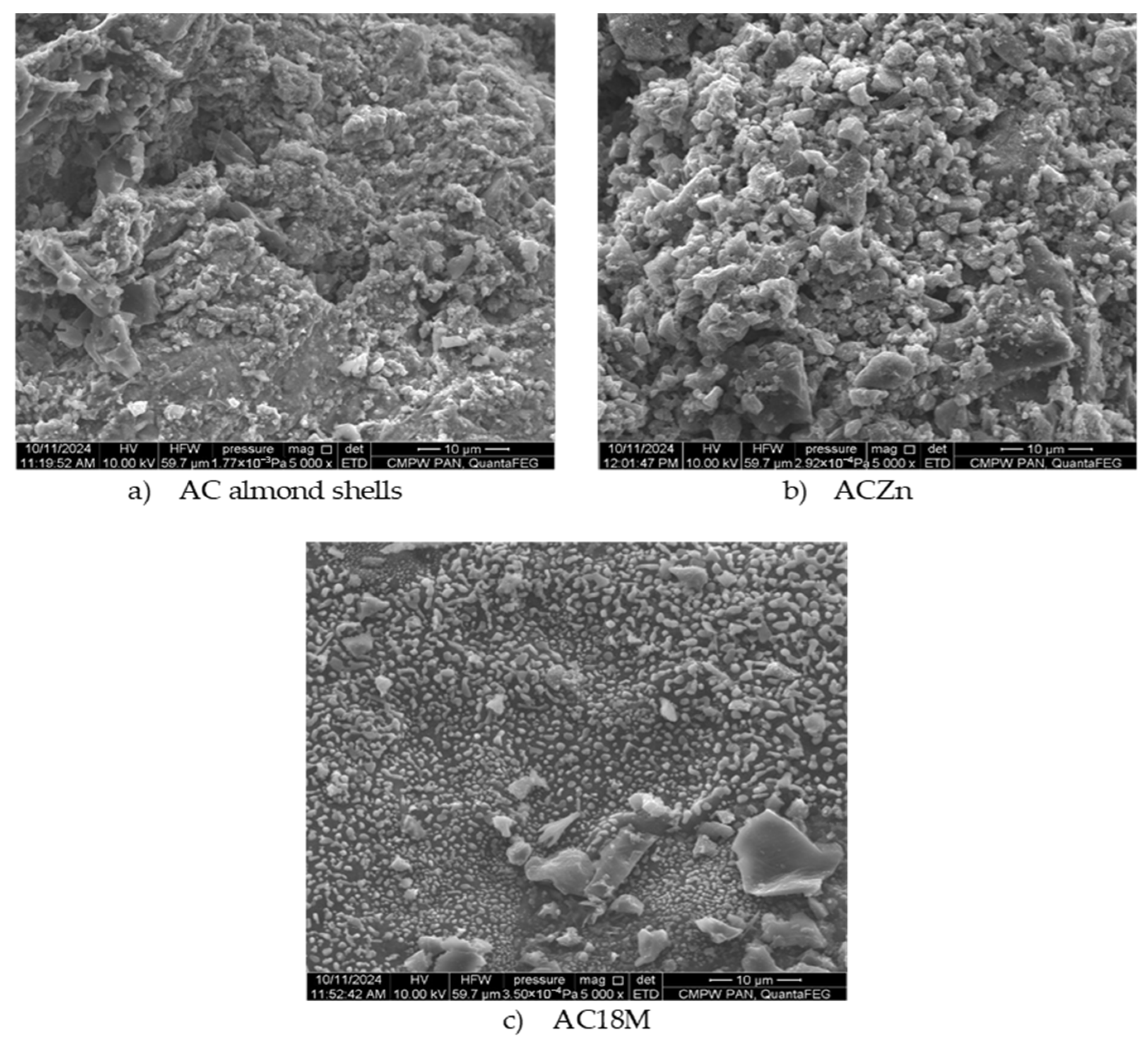
The morphology of active carbon (AC) and catalysts (ACZn and AC18M) was observed using a scanning electron microscope (SEM). The photos are shown in Figure 2.
Figure 2a shows the surface morphology of the obtained activated carbon from almond shells and the functionalized samples after treatment with Zn (Figure 2b) and with sulfuric acid (Figure 2c). As a result of hydropyrolysis treatment of almond shells, the resulting activated carbon exhibits a surface with pores of varying shapes and sizes. After chemical activation and modification of the sample with ZnCl2, Zn particles were deposited on the carbon surface, resulting in increased surface roughness (Figure 2b). During the functionalization of activated carbon with sulfuric acid, the interaction between the acid and the surface carbon atoms results in the smoothing of the edges of the surface. A smoother surface may reduce the number of accessible mesopores but introduce Brønsted acid sites, which are crucial for dehydration reactions. These results align with the textural properties observed in the samples, as presented in Table 2 and Figure 3.
The specific surface area (SBET) according to Brunauer–Emmett–Teller (BET) theory and total pore volume, pore diameter, and pore size distributions according to QSDFT were determined for the active carbon and catalysts using N2-physisorption analysis (Table 2 and Figure 3).
As shown in the results, the surface area and total pore volume of the chemically activated ACZn were higher (604 m2 g−1 and 0.30 cm3 g−1) than those of the initial AC (452 m2 g−1 and 0.22 cm3 g−1). In catalytic reactions, the high surface area of microporous materials provides numerous active sites for reactant interaction and participation in the reaction [21]. ACZn has a distinguished micropore volume (0.197 cm3/g), and its tiny channels and cavities, as well as the increased roughness resulting from zinc particles, provide many accessible sites for reactants to interact with the catalyst surface. However, micropores provide a large surface area, which is beneficial for catalysis.
ZnCl2 activation helps in the formation of LA sites, which are important for the isomerization steps in glucose conversion to HMF (5-hydroxymethylfurfural). The combination of a high surface area, a suitable pore structure, and active sites (introduced by ZnCl2) makes ACZn particularly effective for this reaction. The textural parameters of ACZn are consistent with results reported by other authors: almond shells (AlS) activated with ZnCl2 using the microwave method have SBET values ranging from 675 to 1307 m2 g−1 [22]. Steam-activated ACs from hydrolysis lignin have a SBET of 760 m2 g−1, but after activation with ZnCl2, the SBET increased to 1470 [13]. Zinc chloride-activated carbon derived from carbonized date pits (CP) had a SBET of 166, which increased to 334 after ZnCl2 chemical activation [23].
The SBET of the obtained material after sulfonating the initial material AC decreases insignificantly (from 452 to 441 m2 g−1), probably due to the destruction of part of the mesopores from the surface of the AC, but the purpose of sulfonation is to form Brönsted active sites on the surface of the material.
The volume of micropores in the three samples, relative to the total pore volume, falls within a narrow range (65–67%). Microporous materials have high surface areas and tiny channels, enabling distinct molecular interactions [24].
The ZnCl2-activated catalyst shows a 44% reduction in average pore diameter compared to the original activated carbon AC and modified AC18M, likely due to zinc particles entering the pores during impregnation.
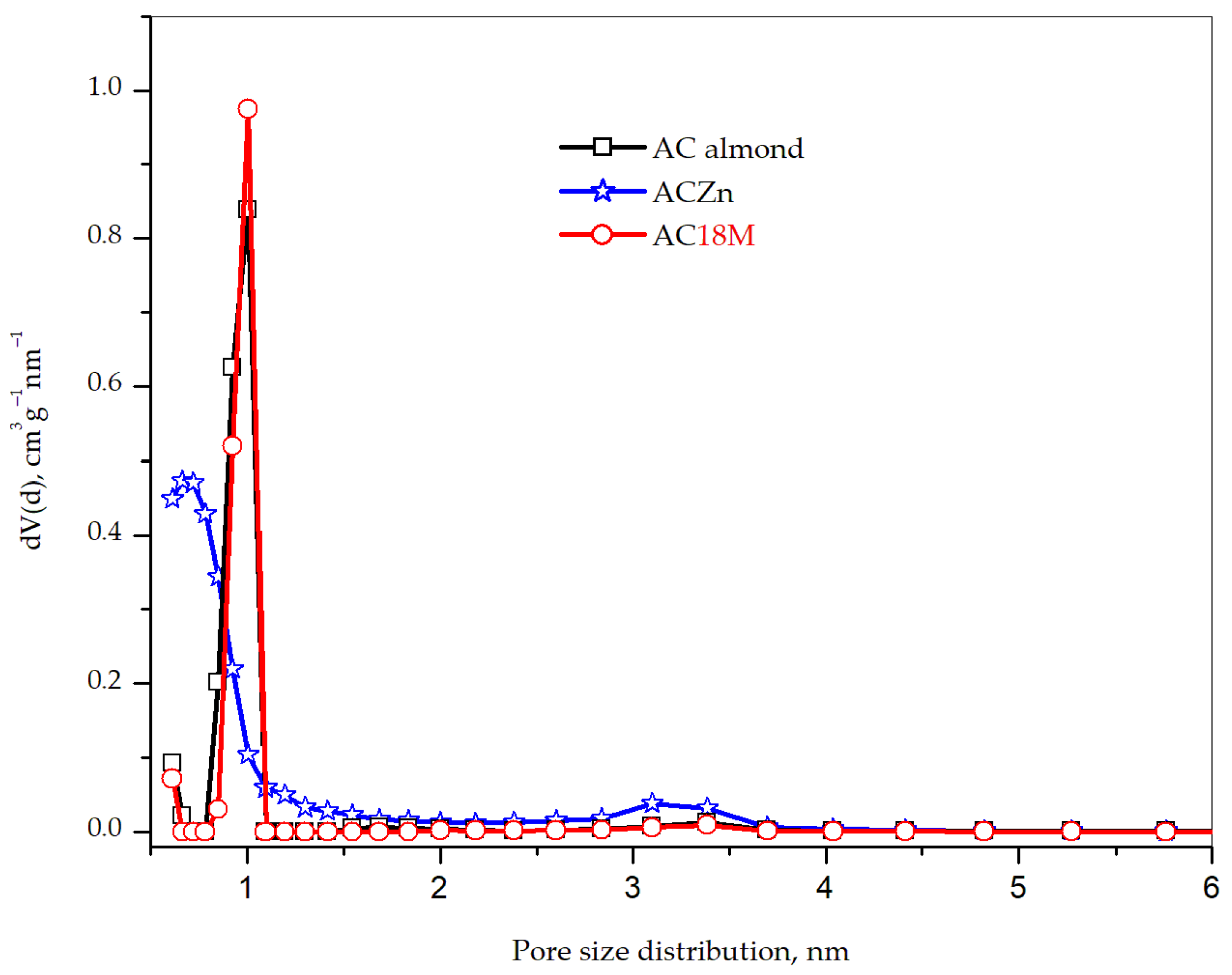
The pore size distributions obtained from QSDFT are presented in Figure 3.
The pore size distributions of the initial AC and the sulfonated sample showed no noticeable differences. The zinc-modified catalyst predominantly features micropores smaller than 0.8 nm and mesopores approximately 3 nm in size.
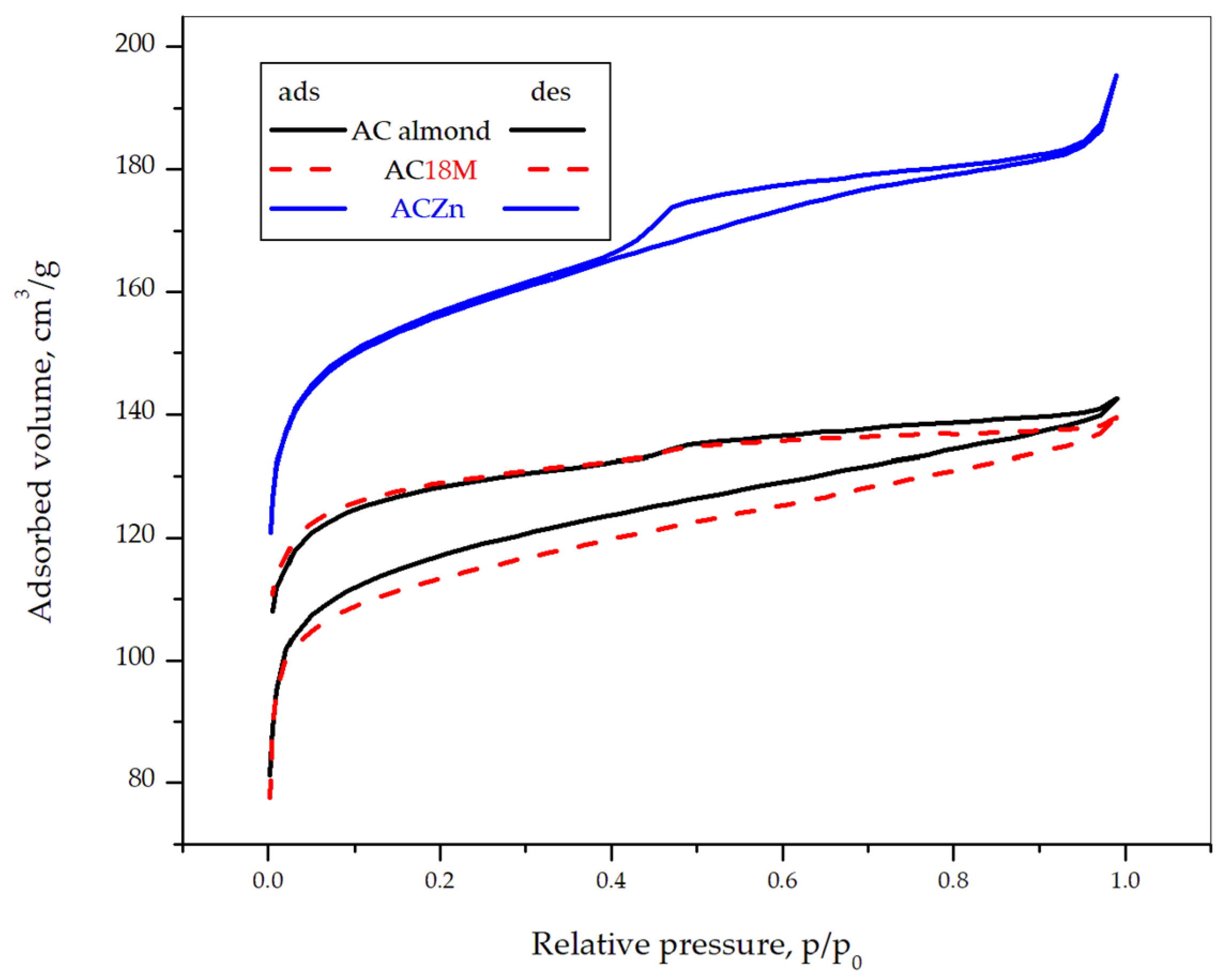
The textural properties of active carbon AC and as-prepared ACZn and AC18M were characterized by nitrogen gas sorption isotherms. The nitrogen gas adsorption–desorption isotherms are presented in Figure 4.
According to the IUPAC classification, the isotherms of the obtained samples are type I, characteristic of microporous solid materials with a relatively low external surface area. The steep absorption at very low relative pressure results from adsorbent–adsorbate interactions in narrow micropores, causing them to fill quickly at low p/po [25]. In the nitrogen adsorption–desorption isotherms, hysteresis of type H4 is observed, characteristic of wedge-shaped micropores [26].
The surface chemistry of the obtained catalysts has been characterized by XPS spectroscopy. The binding energies (BEs) of active carbons in this method depend on their chemical structure and surface functional groups.
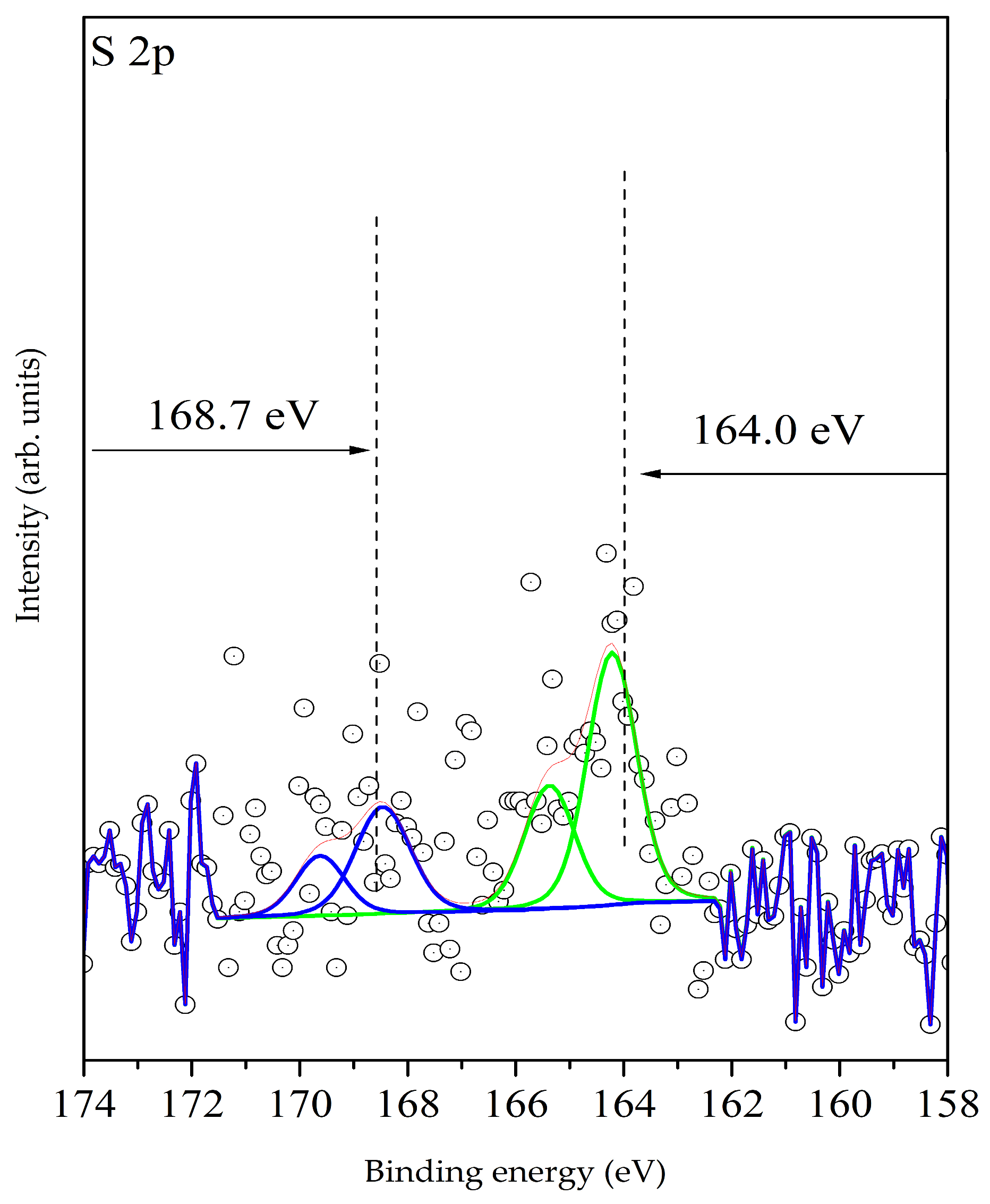
X-ray photoelectron spectroscopy (XPS) confirmed that -SO3H groups were present on the activated carbon’s surface after it was functionalized with sulfuric acid. The XPS analysis shows well-established binding energies of 164.0 eV for the sulfoxides and 168.7 eV (Figure 5) for the sulfonic acid groups. The presence of sulfur in this specific, highly oxidized binding energy range is strong evidence for the -SO3H group [27]. From the FTIR data, we have reached the same conclusion. The results from EDS analysis (Figure S4) show that the sulfonated material contains 0.34% sulfur by mass and 0.14% by atomic percentage.
The results from the C1s XPS spectra of the two catalysts (Table 3) exhibited a couple of main peaks with binding energies that correspond to the sp2− and sp3 carbon, also to the oxygen-containing functional groups: C–O, C=O, or O–C=O. For the ACZn catalyst, the surface atomic concentration of carbon functionalities is observed to be 68.7% (total C, %at). The surface atomic concentrations of C–O, C=O, O–C=O are 6.9, 3.5, and 4.2%, respectively. For the AC18M catalyst, a higher total carbon content of 74.4% is observed. The proportions of C–O, C=O, and O–C=O are as follows: 5.42, 2.87, and 1.56%. The proportion of oxygen-containing functional groups is comparable. The O1s XPS spectra of the two samples revealed three main peaks with binding energies in the Zn-modified sample at approximately 530.7, 532, and 533 eV. These peaks correspond to functional groups such as quinone-type carbonyls and carbonyl oxygen atoms present in anhydrides or lactones. The oxygen functionalities on ACZn’s surface have a concentration of 18.26%, indicating oxidation. For sulfonated active carbon, the O1s XPS spectra exhibited BEs at 532.3, 533.4, and 534.9 eV, which can correspond to C=O double bonds in carbonyl groups, S=O double bonds in sulfonic acid groups, carboxylic groups, and adsorbed H2O vapor. The total amount of oxygen groups detected on the surface by the XPS O1s scan was about 14%. The results show that chemical activation, with ZnCl2 or sulfonation, increases the oxygen content of the carbon material.
In addition to C and O, Zn was exposed from the ZnCl2-activated catalyst (6.8%). The spectrum of ACZn exhibits the typical doublet of Zn2p, appearing at 1045 and 1021.9 eV (see Figure S2f). These signals correspond to zinc in the ZnO network with a wurtzite structure. The signal corresponding to oxygen in the ZnO molecule at 530.5 eV [28]. XPS analysis of Zn-modified activated carbon revealed Zn2+ species on the carbon surface, as evidenced by the Zn2p doublet. These Zn2+ species are widely recognized in the literature as Lewis active sites can facilitate the isomerization of glucose to fructose, a crucial step in the conversion to HMF [10,11]. Previous studies [29,30] have shown that ZnO and Zn2+ species introduced onto catalyst supports by activation with ZnCl2 provide Lewis acidity sites that enable isomerization steps in glucose conversion.
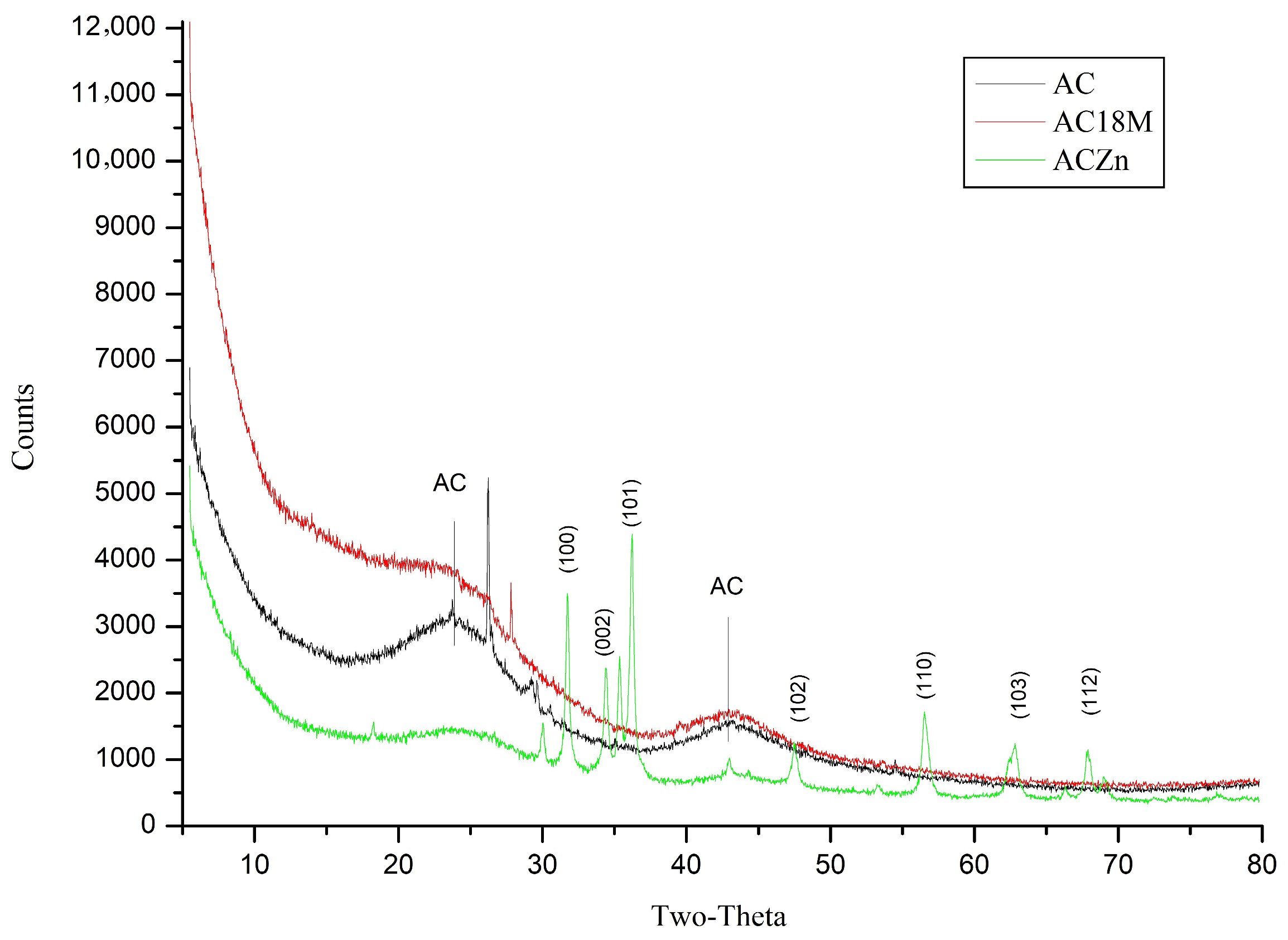
The X-ray powder diffraction (PXRD) pattern (Figure 6) of the AC sample indicated the formation of active carbon from almond shells, as indicated by two wide diffraction peaks at 2θ = 24° and 43°. These peaks are characteristic of the amorphous structure of activated carbon.
XRD was used to identify crystalline phases, confirming the presence of ZnO after ZnCl2 activation. Several typical diffraction peaks for ZnO in the range of 30–70◦ of 2-Theta were stated in the graph, which correspond to the data for the hexagonal wurtzite structure of ZnO (JCPDS No. 79-2205) [31]. The peaks are at 2θ = 31.6°, 34.5°, 35.4°, 36.2°, 47.0°, 56.2°, 62.8°, and 68.1°. Peaks from ZnCl2 are missing. The last observation suggests good interaction with the activated carbon surface. The PXRD results are consistent with XPS findings, providing evidence for the successful incorporation of ZnO into the catalyst structure. The well-dispersed ZnO phase, confirmed by both XRD and XPS, is widely recognized in the literature as a source of Lewis acid sites [32]. The strong interaction between ZnO and the carbon support likely enhances the accessibility and stability of these active sites, thereby enabling the expected high catalytic efficiency.
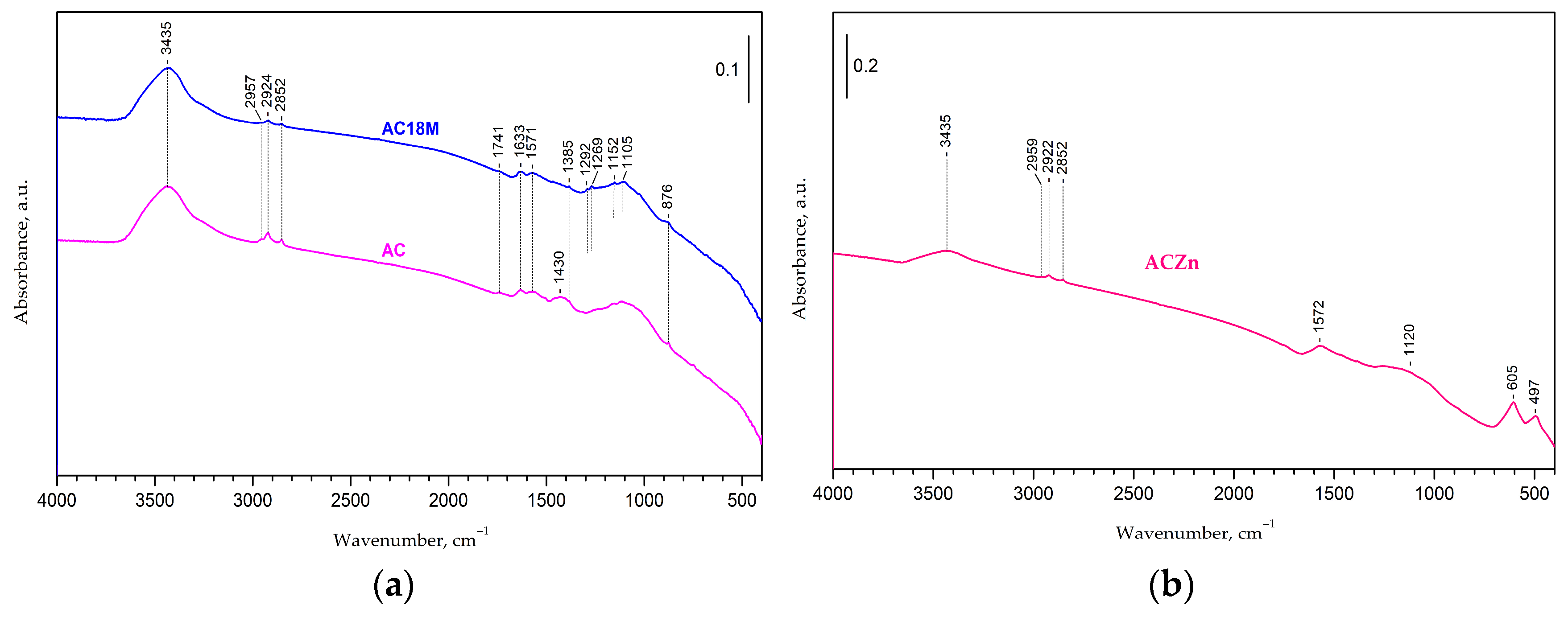
The FTIR spectra of the AC sample and catalysts are shown in Figure 7a,b. The peak at 3435 cm−1 in the FTIR spectra of all samples is characteristic of the hydroxyl group. The absorption bands at 2950 cm−1 and 2850 cm−1 are representative of the stretching vibrations of the C−H bond, which are caused by aliphatic (C–H) molecules.
In the spectra of samples AC and AC18M, the peaks at around 1741 cm−1 (associated with carboxylic anhydrides and lactones) designate the presence of the C=O bond. The band at 1630 cm−1 could be due to the aromatic ring stretching of carbonyl groups C=O, C=C bonds, or OH groups. The peak around 1570 cm−1 is probably related to the stretching of the carbon–carbon double bonds of the aromatic rings [22], and this peak is observed in all samples, AC, AC18M, and ACZn. In the AC spectrum, an absorption peak was detected at 1430 cm−1 (CH2 bending vibration mode, corresponding to the crystallinity band). The bands that appear in the region of 1292–1269 cm−1 may be assigned to the stretching vibration of C-O bonds in acids, phenolic structures, and ethers (symmetrical stretching vibrations) [23]. The bands observed at 1152 cm−1 (corresponding to SO3H stretching) and 1105 cm−1 (O=S=O symmetric stretching) in the spectrum (Figure 7a) provide evidence for the sequential incorporation of sulfonic acid groups onto the catalyst surface [33]. Absorptions due to γ(C–H) bending peaks occur at around 876 cm−1 (AC and AC18M).
FTIR spectra of the ACZn sample do not show a substantial amount of absorption peaks, and this is related to “the black body” nature of the carbonization AC [34]. Nevertheless, the absorption peak at 605 cm−1 corresponds to the metal–oxygen bond (ZnO stretching vibration mode). The γ(O–H) band is located at about 497 cm−1 (Figure 7b).
FTIR results indicate the presence of oxygen-containing surface groups, enhancing the catalytic properties of functionalized activated carbons. The main oxygen groups after functionalization are carbonyl, ether, ester, and alcohol or phenol (-OH) groups. FTIR and XPS show that acidic surface groups introduced by modification with sulfuric acid and ZnCl2 provide Lewis and Bronsted active sites. These functionalized porous structures are well-suited for catalyzing isomerization and dehydration reactions.
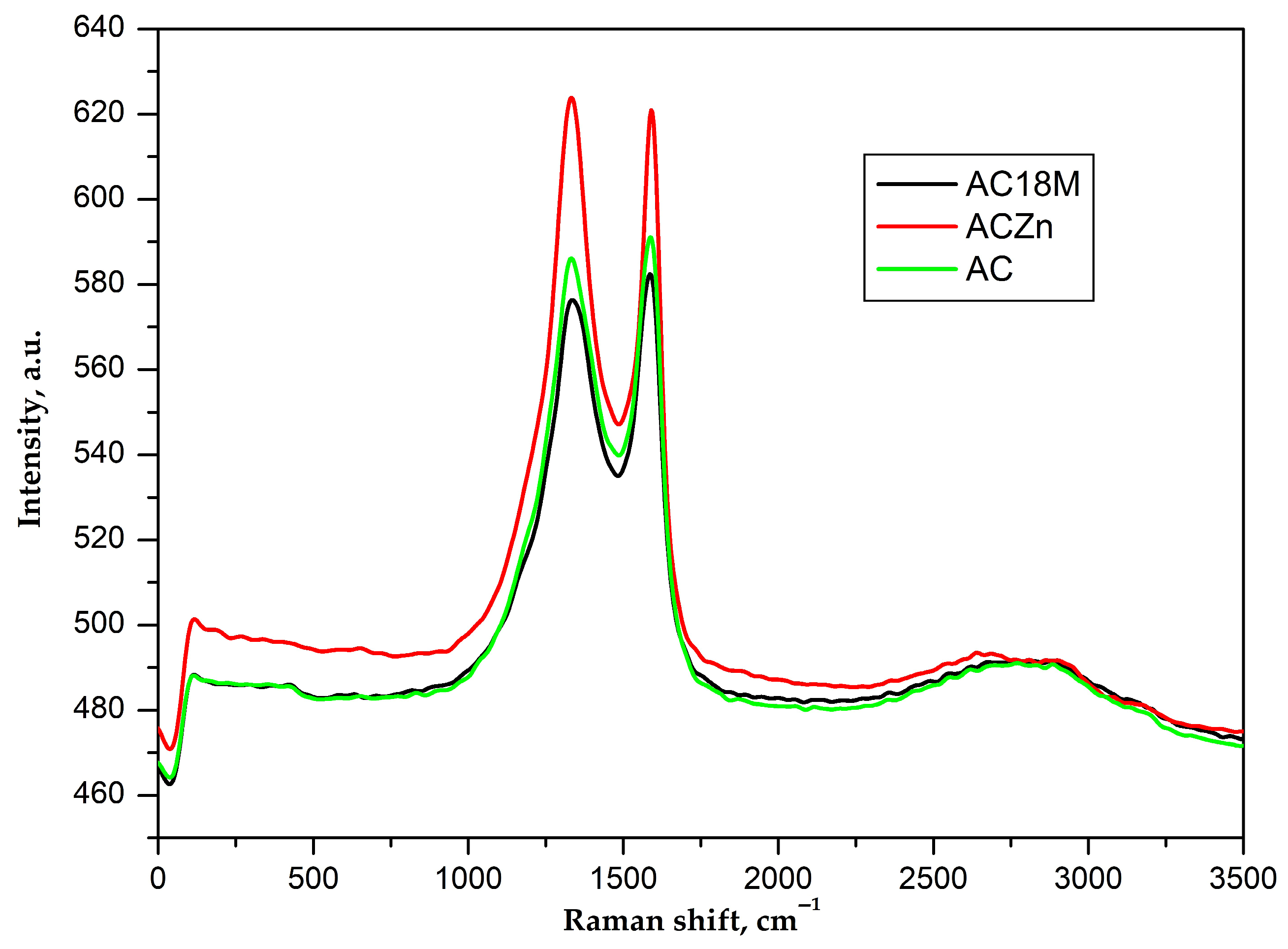
Raman spectroscopy is commonly used to detect defects in carbon materials. All analyzed samples show similar features in their Raman spectra in the 800–2000 cm−1 region: the G and D peaks, which lie at about 1560 and 1360 cm−1, respectively, under visible excitation, and the T peak at 1060 cm−1, observed under ultraviolet excitation. The ‘molecular’ approach is the simplest way to understand the Raman spectra of amorphous carbons, where no extended graphitic structure exists. The Raman spectra are dominated by the sp2 sites, because the excitation resonates with π states. The G peak is due to the bond stretching of sp2 atoms in rings and chains of the sample molecules. The D peak is thus due to the breathing modes of sp2 atoms in rings, characterizes the level of amorphousness of carbon structures, and signifies a high degree of disorder in carbon structures [10,35].
The sulfonated AC showed reduced Raman signal intensity due to the introduction of –SO3H groups. The higher SO3H content on AC18M increased oxidation of methylene and phenyl groups, reducing their number and thus lowering Raman signal intensity.
The Raman spectra of the studied samples (Figure 8) show two peaks at 1600 cm−1 and 1330 cm−1, corresponding to the G and D peaks, respectively. The band intensity ratio (ID/IG) provides an estimate of the disorder induced by the functionalization process (Table 4). The ID/IG ratios for all three samples are about 1, but for the Zn-modified sample, it is closest to 1. This is expected, since AC and the modified catalysts were obtained by pyrolysis and calcination at 700 °C, and in this temperature range, the ID/IG ratio usually does not exceed 1 [36]. Treatment with sulfuric acid slightly reduces the ID/IG ratio of the initial AC (Table 3), indicating that the modification increases the AC’s structural order.

3.2. Catalytic Performance and Yield Comparison

The catalysts, functionalized with Lewis and Brønsted acid sites (ACZn and AC18M), were evaluated for glucose conversion to HMF in a biphasic water/THF/NaCl medium at 160 °C, as reported in [10].
The THF/water mixture cannot catalyze the reaction and acts only as a solvent (Table 5). Adding NaCl saturates the aqueous phase and separates THF from water into two layers. It is known that the use of a biphasic system (THF/water/NaCl) significantly improves HMF recovery compared to monophasic systems. In this system, the resulting HMF is extracted into THF in situ, reducing contact between HMF and water and preventing HMF from degrading into unwanted byproducts like levulinic acid and formic acid [10]. This prevents further adverse reactions of HMF to byproducts. In addition, NaCl catalyzes the production of HMF, as chlorine ions support the isomerization step of glucose to fructose, as well as the dehydration of fructose to HMF [37].
Some amount of HMF may remain in the aqueous phase or be lost due to side reactions, degradation, or incomplete partitioning, as reported in numerous studies on HMF production. The HMF yields reported in this study are based on the amount measured in the organic phase after extraction. Despite small losses due to incomplete extraction of HMF from the aqueous phase, the results showed that the experiment conducted without NaCl addition yielded only 2.7% HMF. The conversion of glucose without a catalyst, but with NaCl, leads to a 37% yield of HMF, and in a similar order are the yields of HMF from reactions catalyzed only by sulfuric acid, ZnCl2, and a combination of the two (experiments are performed with an amount of H2SO4 and ZnCl2 corresponding to that of the catalysts ACZn and AC18M) (Table 5).
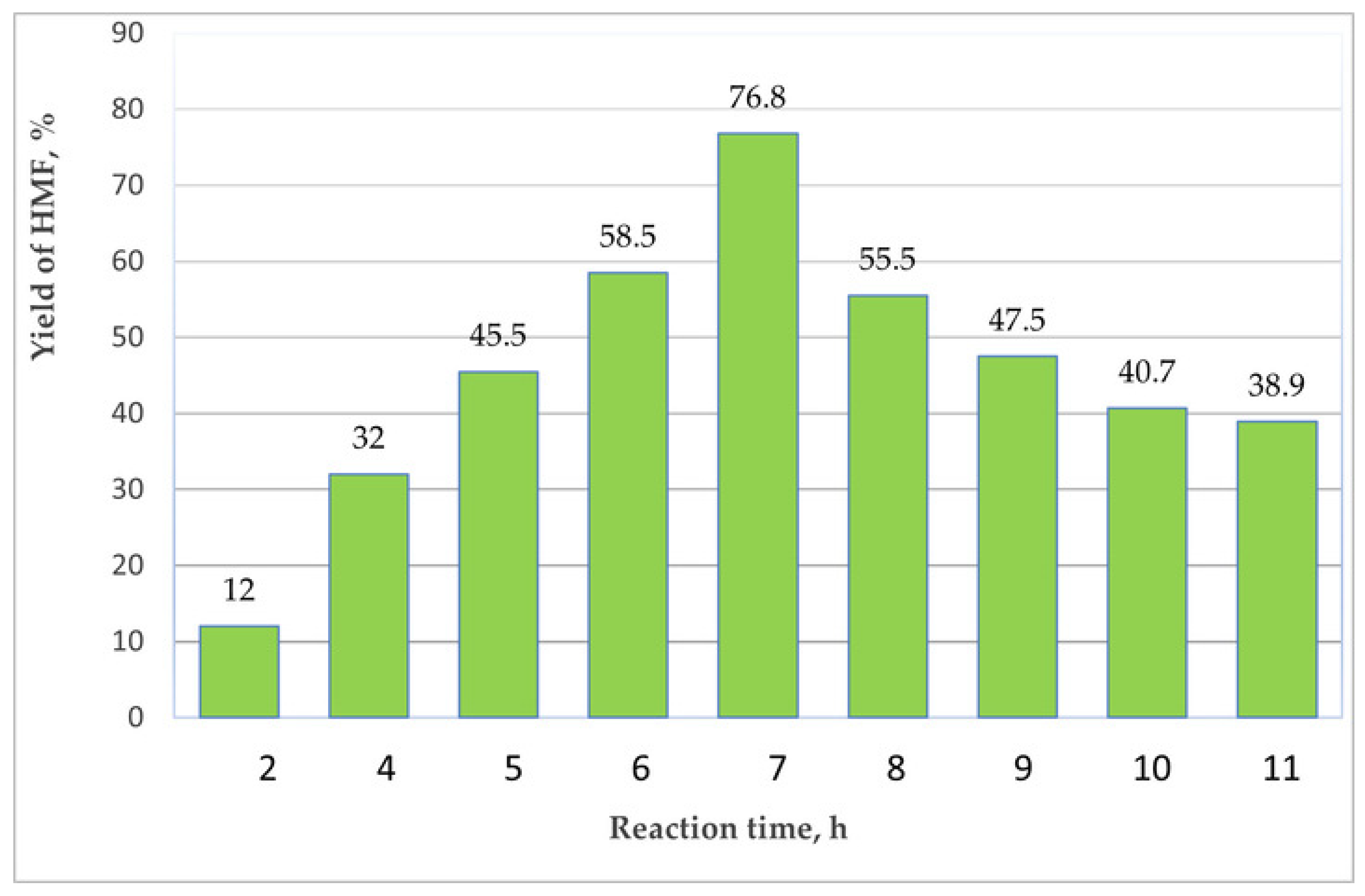
When glucose was converted to HMF over a 7 h reaction at 160 °C, the yield of HMF reached 55.2% using the ACZn catalyst and 47.9% with the AC18M catalyst. These results suggest that both catalysts play an important role, supporting observations reported by other researchers [12]. Figure 9 shows the results of producing HMF from glucose with the combined catalysts AC18M and ACZn.
The catalytic efficiency of the functionalized activated carbon (AC) catalyst was clearly demonstrated by the yield achieved for 5-hydroxymethylfurfural (HMF) production. When the modified AC catalyst was employed, a notable yield of 76.8% HMF was observed, highlighting the enhanced performance compared to the unmodified variant. In contrast, the use of unmodified AC as the catalyst resulted in a considerably lower HMF yield of just 39%, as detailed in Table 5. This nearly twofold increase in yield underscores the significant impact of catalyst functionalization on glucose conversion efficiency.
Additionally, it was observed that after 7 h of reaction, the HMF yield began to decrease. This decline is likely attributed to rehydration processes, as referenced in the literature [38]. These findings emphasize not only the improved catalytic activity of the functionalized AC but also the importance of optimizing reaction time to maximize product yield.
This improvement is substantial when compared to the existing literature. Rusanen et al. [10] reported a 51% HMF yield under comparable conditions using catalysts derived from birch sawdust. Furthermore, David et al. [39] achieved a 50% HMF yield from glucose utilizing CX4SO3H/NbCl5 (5 wt%/7.5 wt%) in a water/NaCl and methyl isobutyl ketone (MIBK) reaction system. These results highlight the superior performance of the functionalized AC catalyst in facilitating glucose conversion to HMF.

4. Conclusions

Catalysts synthesized from sustainable raw materials, specifically almond shells, were developed for this study. The carbonized precursors were functionalized using zinc dichloride or subjected to sulfonation, thereby introducing Lewis (LA) or Brønsted acid (BA) sites onto its surface. The Zn2+ ions act as Lewis acids, and their presence is confirmed by PXRD and XPS analyses. BA are introduced by sulfonic acid groups (–SO3H) onto the carbon surface (confirmed by XPS and FTIR analysis).
The resulting catalyst consortium demonstrates properties critical for enhancing glucose conversion to HMF. Combining LA and BA active sites in a mixture of AC18M and ACZn catalysts enhances catalytic efficiency and boosts HMF yields.
Analysis revealed that these catalysts possess a relatively high specific surface area and predominantly microporous structure, while achieving a glucose yield of 76.8%. Therefore, in addition to favorable textural characteristics, the existence of acidic active sites and oxygen-containing surface groups is a significant factor influencing performance. This highlights the importance of detailed investigation and optimization of chemical activity to further increase yields. The findings present new opportunities to examine various combinations of active sites and textural parameters, potentially leading to the development of advanced catalysts with improved efficiency for HMF production and other valuable chemical platforms.
Utilizing almond shells as a catalytic base underscores the significance of adopting renewable resources, providing both environmental benefits and cost-effective production solutions. The properties of our functionalized materials make them promising for various applications, such as removing pollutants from water or air. In addition to glucose conversion, these materials can also serve as support for catalysts in other chemical processes, including converting biomass into platform molecules like levulinic acid and furfural, which is the focus of our forthcoming research.

Supplementary Materials

The following supporting information can be downloaded at: https://www.mdpi.com/article/10.3390/su18031254/s1. Figure S1: Overall reaction scheme of glucose conversions; Figure S2: XPS diagram of AC18M (a–c) and ACZn (d–f); Figure S3: EDAX analysis of ACZn sample; Figure S4: EDAX analysis of AC18M sample.

Author Contributions

Conceptualization, V.T.; methodology, V.T.; Raman spectroscopy analysis M.G.; investigation, V.T., G.G. and D.A.; writing—original draft preparation and writing—review and editing, V.T.; funding acquisition, V.T. and D.A. All authors have read and agreed to the published version of the manuscript.

Funding

This research was funded by the European Union’s NextGenerationEU, through the National Recovery and Resilience Plan of the Republic of Bulgaria, project No. BG-RRP-2.004-0002, “BiOrgaMCT”.

Institutional Review Board Statement

Not applicable.

Informed Consent Statement

Not applicable.

Data Availability Statement

The original contributions presented in this study are included in the article/Supplementary Material. Further inquiries can be directed to the corresponding author.

Acknowledgments

The authors acknowledge the financial support through Project No KΠ-06-H97-9 provided by the Bulgarian National Science Fund.

Conflicts of Interest

The authors declare no conflicts of interest. The funders had no role in the design of the study; in the collection, analyses, or interpretation of data; in the writing of the manuscript; or in the decision to publish the results.

References

  1. Kammoun, M.; Margellou, A.; Toteva, V.B.; Aladjadjiyan, A.; Sousa, A.F.; Luis, S.V.; Garcia-Verdugo, E.; Triantafyllidis, K.S.; Richel, A. The key role of pretreatment for the one-step and multi-step conversions of European lignocellulosic materials into furan compounds. RSC Adv. 2023, 13, 21395–21420. [Google Scholar] [CrossRef]
  2. Yu, I.K.M.; Tsang, D.C.W. Conversion of biomass to hydroxymethylfurfural: A review of catalytic systems and underlying mechanisms. Bioresour. Technol. 2017, 238, 716–732. [Google Scholar] [CrossRef]
  3. Olea, B.T.; Nuñez, I.F.; Sancho, C.G.; Cecilia, J.A.; Tost, R.M.; Torres, P.M. Production of Biofuels by 5-Hydroxymethylfurfural Etherification Using Ion-Exchange Resins as Solid Acid Catalysts. Chem. Proc. 2020, 2, 34. [Google Scholar] [CrossRef]
  4. Papadopoulos, L.; Xanthopoulou, E.; Nikolaidis, G.N.; Zamboulis, A.; Achilias, D.S.; Papageorgiou, G.Z.; Bikiaris, D.N. Towards high molecular weight furan-based polyesters: Solid state polymerization study of bio-based poly(propylene furanoate) and poly(butylene furanoate). Materials 2020, 13, 4880. [Google Scholar] [CrossRef] [PubMed]
  5. Popova, M.; Dimitrov, M.; Boycheva, S.; Dimitrov, I.; Ublekov, F.; Koseva, N.; Atanasova, G.; Karashanova, D.; Szegedi, Á. Ni-Cu and Ni-Co-Modified Fly Ash Zeolite Catalysts for Hydrodeoxygenation of Levulinic Acid to γ-Valerolactone. Molecules 2024, 29, 99. [Google Scholar] [CrossRef]
  6. Hoang, A.T.; Pandey, A.; Huang, Z.; Luque, R.; Ng, K.H.; Papadopoulos, A.M.; Chen, W.-H.; Rajamohan, S.; Hadiyanto, H.; Nguyen, X.P.; et al. Catalyst-Based Synthesis of 2,5-Dimethylfuran from Carbohydrates as a Sustainable Biofuel Production Route. ACS Sustain. Chem. Eng. 2022, 10, 3079–3115. [Google Scholar] [CrossRef]
  7. Ng, K.S.; Farooq, D.; Yang, A. Global biorenewable development strategies for sustainable aviation fuel production. Renew. Sustain. Energy Rev. 2021, 150, 111502. [Google Scholar] [CrossRef]
  8. Alonso, D.M.; Bond, J.Q.; Dumesic, J.A. Catalytic conversion of biomass to biofuels. Green Chem. 2010, 12, 1493–1513. [Google Scholar] [CrossRef]
  9. Martin, G.D.; Lara, B.; Bounoukta, C.E.; Domínguez, M.I.; Ammari, F.; Ivanova, S.; Centeno, M.Á. Glucose dehydration reaction over metal halides supported on activated charcoal catalysts. Catal. Today 2023, 423, 114012. [Google Scholar] [CrossRef]
  10. Rusanen, A.; Lahti, R.; Lappalainen, K. Catalytic conversion of glucose to 5-hydroxymethylfurfural over biomass- based activated carbon catalyst. Catal. Today 2020, 357, 94–101. [Google Scholar] [CrossRef]
  11. Bounoukta, C.E.; Megías-Sayago, C.; Ammari, F.; Ivanova, S.; Monzon, A.; Centeno, M.A.; Odriozola, J.A. Dehydration of glucose to 5-Hydroxymethlyfurfural on bifunctional carbon catalysts. Appl. Catal. B 2021, 286, 119938. [Google Scholar] [CrossRef]
  12. Cui, X.; Zheng, L.; Li, Q.; Guo, Y. A remarkable bifunctional carbon-based solid acid catalyst derived from waste bio-tar for efficient synthesis of 5-hydroxymethylfurfural from glucose. Chem. Eng. J. 2023, 474, 146006. [Google Scholar] [CrossRef]
  13. Rusanen, A.; Kupila, R.; Lappalainen, K.; Kärkkäinen, J.; Hu, T.; Lassi, U. Conversion of xylose to furfural over lignin-based activated carbon-supported iron catalysts. Catalysts 2020, 10, 821. [Google Scholar] [CrossRef]
  14. Li, M.; Zhang, Q.; Luo, B.; Chen, C.; Wang, S.; Min, D. Lignin-based carbon solid acid catalyst prepared for selectively converting fructose to 5-hydroxymethylfurfural. Ind. Crops Prod. 2020, 145, 111920. [Google Scholar] [CrossRef]
  15. Chen, B.; Xu, G.; Chang, C.; Zheng, Z.; Wang, D.; Zhang, S.; Li, K.; Zou, C. Efficient One-Pot Production of Biofuel 5-Ethoxymethylfurfural from Corn Stover: Optimization and Kinetics. Energy Fuels 2019, 33, 4310–4321. [Google Scholar] [CrossRef]
  16. Georgiev, G.; Stoycheva, I.; Tsyntsarski, B.; Miteva, K.; Yardim, M.F. Novel Synthesis Method of Carbon Materials from Refuse-Derived Fuel. In Proceedings of the International Multidisciplinary Scientific GeoConference Surveying Geology and Mining Ecology Management, SGEM, Albena, Bulgaria, 26 June–5 July 2021. [Google Scholar] [CrossRef]
  17. BDS ISO 562:2024; Hard Coal and Coke—Determination of Volatile Matter. ISO: Geneva, Switzerland, 2024.
  18. BDS ISO 1171:2024; Coal and Coke—Determination of Ash. ISO: Geneva, Switzerland, 2024.
  19. Landers, J.; Gor, G.Y.; Neimark, A.V. Density functional theory methods for characterization of porous materials. Colloids Surf. A Physicochem. Eng. Asp. 2013, 437, 3–32. [Google Scholar] [CrossRef]
  20. Greczynski, G.; Hultman, L. X-ray photoelectron spectroscopy: Towards reliable binding energy referencing. Prog. Mater. Sci. 2020, 107, 100591. [Google Scholar] [CrossRef]
  21. Zhang, Z.; Chen, Y.; Zhou, L.; Chen, C.; Han, Z.; Zhang, B.; Wu, Q.; Yang, L.; Du, L.; Bu, Y.; et al. The simplest construction of single-site catalysts by the synergism of micropore trapping and nitrogen anchoring. Nat. Commun. 2019, 10, 1657. [Google Scholar] [CrossRef]
  22. Bicil, Z.; Doğan, M. Characterization of Activated Carbons Prepared from Almond Shells and Their Hydrogen Storage Properties. Energy Fuels 2021, 35, 10227–10240. [Google Scholar] [CrossRef]
  23. Akl, M.; Mostafa, A.; Al-Awadhi, M.; Al-Harwi, W.S.; Abdelrahman, S.; El-Zeny, A. Zinc chloride activated carbon derived from date pits for efficient biosorption of brilliant green: Adsorption characteristics and mechanism study. Appl. Water Sci. 2023, 13, 226. [Google Scholar] [CrossRef]
  24. Wang, Q.; Luo, B.; Wang, Z.; Hu, Y.; Du, M. Pore Engineering in Biomass-Derived Carbon Materials for Enhanced Energy, Catalysis, and Environmental Applications. Molecules 2024, 29, 5172. [Google Scholar] [CrossRef]
  25. Thommes, M.; Kaneko, K.; Neimark, A.V.; Olivier, J.P.; Rodriguez-Reinoso, F.; Rouquerol, J.; Sing, K.S.W. Physisorption of gases, with special reference to the evaluation of surface area and pore size distribution (IUPAC Technical Report). Pure Appl. Chem. 2015, 87, 1051–1069. [Google Scholar] [CrossRef]
  26. Al-Oweini, R.; Aghyarian, S.; El-Rassy, H. Immobilized polyoxometalates onto mesoporous organically-modified silica aerogels as selective heterogeneous catalysts of anthracene oxidation. J. Sol-Gel Sci. Technol. 2012, 61, 541–550. [Google Scholar] [CrossRef]
  27. Upare, P.P.; Yoon, J.W.; Kim, M.Y.; Kang, H.-Y.; Hwang, D.W.; Hwang, Y.K.; Kung, H.H.; Chang, J.-S. Chemical conversion of biomass-derived hexose sugars to levulinic acid over sulfonic acid-functionalized graphene oxide catalysts. Green Chem. 2013, 15, 2935–2943. [Google Scholar] [CrossRef]
  28. Daza-Gómez, L.C.; Vargas Escobar, B.E.; Díaz, D.; García-Peña, N.G.; Redón, R. Amorphous and crystalline SiO2 supports, interaction with ZnO obtained by various methods: Implications for rhodamine 6G elimination. J. Coord. Chem. 2025, 78, 2251–2270. [Google Scholar] [CrossRef]
  29. Kupila, R.; Lappalainen, K.; Hu, T.; Romar, H.; Lassi, U. Lignin-Based Activated Carbon-Supported Metal Oxide Catalysts in Lactic Acid Production from Glucose. Appl. Catal. A Gen. 2021, 612, 117997. [Google Scholar] [CrossRef]
  30. Schmidt, S.A.; Kumar, N.; Shchukarev, A.; Eränen, K.; Mikkola, J.-P.; Murzin, D.Y.; Salmi, T. Preparation and Characterization of Neat and ZnCl2-Modified Zeolites and Alumina for Methyl Chloride Synthesis. Appl. Catal. A Gen. 2013, 468, 120–130. [Google Scholar] [CrossRef]
  31. Zhao, H.; Zhong, H.; Jiang, Y.; Li, H.; Tang, P.; Li, D.; Feng, Y. Porous ZnCl2-Activated Carbon from Shaddock Peel: Methylene Blue Adsorption Behavior. Materials 2022, 15, 895. [Google Scholar] [CrossRef]
  32. Sun, Y.; Chen, L.; Bao, Y.; Zhang, Y.; Wang, J.; Fu, M.; Wu, J.; Ye, D. The Applications of Morphology Controlled ZnO in Catalysis. Catalysts 2016, 6, 188. [Google Scholar] [CrossRef]
  33. Dechakhumwat, S.; Hongmanorom, P.; Thunyaratchatanon, C.; Smith, S.M.; Boonyuen, S.; Luengnaruemitchai, A. Catalytic activity of heterogeneous acid catalysts derived from corncob in the esterification of oleic acid with methanol. Renew. Energy 2020, 148, 897–906. [Google Scholar] [CrossRef]
  34. Patawat, C.; Silakate, K.; Chuan-Udom, S.; Supanchaiyamat, N.; Hunt, A.J.; Ngernyen, Y. Preparation of activated carbon from Dipterocarpus alatus fruit and its application for methylene blue adsorption. RSC Adv. 2020, 10, 21082–21091. [Google Scholar] [CrossRef]
  35. Ferrari, A.C.; Robertson, J. Raman spectroscopy of amorphous, nanostructured, diamond-like carbon, and nanodiamond. Philos. Trans. R. Soc. A Math. Phys. Eng. Sci. 2004, 362, 2477–2512. [Google Scholar] [CrossRef]
  36. Schuepfer, D.B.; Badaczewski, F.; Guerra-Castro, J.M.; Hofmann, D.M.; Heiliger, C.; Smarsly, B.; Klar, P.J. Assessing the structural properties of graphitic and non-graphitic carbons by Raman spectroscopy. Carbon 2020, 161, 359–372. [Google Scholar] [CrossRef]
  37. Li, X.; Zhang, Y.; Xia, Q.; Liu, X.; Peng, K.; Yang, S.; Wang, Y. Acid-Free Conversion of Cellulose to 5-(Hydroxymethyl)furfural Catalyzed by Hot Seawater. Ind. Eng. Chem. Res. 2018, 57, 3545–3553. [Google Scholar] [CrossRef]
  38. Saha, B.; Abu-Omar, M.M. Advances in 5-hydroxymethylfurfural production from biomass in biphasic solvents. Green Chem. 2014, 16, 24–38. [Google Scholar] [CrossRef]
  39. David, G.F.; Delgadillo, D.M.E.; Castro, G.A.D.; Cubides-Roman, D.C.; Fernandes, S.A.; Lacerda Júnior, V. Conversion of Glucose to 5-Hydroxymethylfurfural Using Consortium Catalyst in a Biphasic System and Mechanistic Insights. Catalysts 2023, 13, 574. [Google Scholar] [CrossRef]
Figure 1. Graphical description of the experimental part.
Sustainability 18 01254 g001
Figure 2. SEM of (a) AC from almond shells; (b) ACZn; (c) AC18M.
Sustainability 18 01254 g002
Figure 3. Pore size distributions of initial AC and catalysts AC18M and ACZn.
Sustainability 18 01254 g003
Figure 4. N2-physisorption analysis of active carbon AC and catalysts ACZn and AC18M.
Sustainability 18 01254 g004
Figure 5. S2p XPS spectra of AC18M.
Sustainability 18 01254 g005
Figure 6. PXRD diffraction patterns of active carbon AC and catalysts AC18M and ACZn.
Sustainability 18 01254 g006
Figure 7. FTIR spectra of active carbon AC and catalysts AC18M (a) and ACZn (b).
Sustainability 18 01254 g007
Figure 8. Raman spectra of samples: AC from almond shells and catalysts AC18M and ACZn.
Sustainability 18 01254 g008
Figure 9. Conversion of glucose to HMF with mixture of catalysts (1:1): ACZn and AC18M.
Sustainability 18 01254 g009
Table 1. Proximate and ultimate analysis of initial sample, active carbon, and catalysts AC18M and ACZn.
Sample Ultimate Analysis (Dry Basis)Proximate Analysis
(Dry Basis)
C, %wtH, %wtN, %wtS, %wtVM, %wtAsh, %wt
Almond shells 49.595.320.80.172.911.36
AC84.61.820.650.0510.403.93
AC18M82.061.420.602.5210.233.32
ACZn78.191.701.301.4411.545.44
Table 2. Textural properties of samples.
Textural PropertiesACACZnAC18M
Specific surface area (SBET, m2 g−1)452604441
Total pore volume (Vtot, cm3 g−1)0.220.300.22
Micropore volume (VMic, cm3 g−1)0.1490.1970.144
Mesopore volume (VMes, cm3 g−1)0.0720.1060.068
QSDFT Pore Diameter (nm)1.010.671.01
Table 3. X-ray photoelectron spectroscopic analysis (XPS) results.
Sample ACZnAC18M
S2pBE, eV% At Conc.% At Conc.
S(=O)2164.2n.d.0.3
-SO3H168.5n.d.0.1
C1s
C-C (sp3)284.63546.3
C-O285.518.918.3
C=O2876.95.4
O-C=O2893.52.9
π-π2914.21.6
Total C %At ConcC 1s68.774.4
O1s
Zn=O530.98.6n.d.
O-C=O5327.17.8
Anhydrides or lactones532.92.6n.d.
S=O533.4n.d.5.5
H2O (ads.)534.9n.d.1.1
Total O %At Conc 18.314.3
Zn 2p3/21021.96.80.6
n.d. not detected.
Table 4. The band D and G intensity and ratio of the samples.
SampleD (cm−1)G (cm−1)ID/IG
AC131316000.9922
AC18M131315970.9837
ACZn132715970.9967
Table 5. Yield of HMF after conversion of glucose under different conditions.
CatalystSolventHMF Yield (%)
THF/water2.7
THF/water/NaCl37.1
ACTHF/water/NaCl39.4
ACZnTHF/water/NaCl55.2
AC18MTHF/water/NaCl47.9
H2SO4THF/water/NaCl36
ZnCl2THF/water/NaCl37.6
H2SO4/ZnCl2THF/water/NaCl32.2
Disclaimer/Publisher’s Note: The statements, opinions and data contained in all publications are solely those of the individual author(s) and contributor(s) and not of MDPI and/or the editor(s). MDPI and/or the editor(s) disclaim responsibility for any injury to people or property resulting from any ideas, methods, instructions or products referred to in the content.