


Abstract
Potassium (K) fertilization plays a key role in regulating stem morphology, particularly stem diameter, yet the influence of different K fertilizer formulations on stem structure and tensile strength remains insufficiently understood. Cereal straw is a key lignocellulosic by-product with growing importance in the circular bioeconomy. Thus, the aim of this study was to determine the links between potassium nutrition, stem structure, and mechanical behavior for four cereal species: wheat, barley, rye, and oats. There were three potassium fertilization levels (0, 60, and 120 kg K ha−1) conducted in a field experiment in eastern Croatia (2021/2022). At maturity, stem morphology, macroelements (Ca, K, P, C, N), acid detergent fiber (ADF), neutral detergent fiber (NDF), and uniaxial tensile properties (maximum force, tensile strength, Young’s modulus) were determined. Cereal species was the dominant source of variation (p < 0.0001) for all traits, whereas the main effect of K was generally weak and significant only for stem diameter at the midpoint and N concentration, although K × species interactions were frequent. Oats and rye showed the most vigorous biomass production, whereas wheat exhibited by far the highest tensile strength (about 120 MPa) and stiffness (6.23 GPa), together with the highest ADF, while barley had the greatest NDF. Oat stems had the lowest ADF and NDF, indicating less lignified, more digestible tissues but mechanically weaker straw. Mechanical traits were tightly and positively correlated with ADF, NDF, and CN ratio, whereas P showed weak or negative associations with plant size and strength. Therefore, for targeted straw valorization, cereal species selection is paramount, with potassium fertilization playing a secondary, species-dependent role.
1. Introduction
Straw, as a by-product of cereal production, represents a valuable potential raw material for energy generation [1,2,3,4]. Straw of various crops is most commonly left on the field as fertilizer or used as bedding, after which it returns to the soil in line with circular economy principles [5,6,7,8]. Leaving straw on the field provides numerous benefits, including supplying nutrients and contributing to humus formation and the increment of organic matter [9,10,11]. Additionally, the nutrient balance of the soil could be improved by incorporating crop residue along with ash derived from straw combustion or by using wood ash as fertilizer [12].
From a biorefinery perspective, the set of traits measured in the study of Plazonić et al. [13] (mineral composition, fiber fractions, and mechanical properties) captures the main dimensions of cereal straw quality relevant for high-value biobased products. Previous work has shown that cereal straw is naturally rich in K, which largely remains in the stems and straw after harvest, and that K, Ca, and other ash-forming elements can significantly affect both the combustion behavior and processing performance of straw-based materials. Cereal stem morphology (e.g., diameter, wall thickness, and internode structure) provides a practical link between crop management and the performance of straw in biobased value chains. Morphological traits influence mechanical integrity and fiber architecture, which are critical for material-oriented applications such as biocomposites and fiber-based panels, while also affecting comminution behavior, bulk density, and pretreatment requirements relevant to biochemical conversion and energy pathways [14,15,16]. Therefore, quantifying stem morphology together with fiber fractions and mechanical properties offers measurable indicators for sustainable straw valorization and targeted matching of agricultural residues to high-value biobased products within circular bioeconomy systems. In a comparison of 17 different straws, López et al. [17] found that legume straws had much higher crude protein (74 vs. 29 g kg−1 DM), lower fiber (584 vs. 793 g NDF kg−1 DM), and therefore higher digestibility (0.670 vs. 0.609) and metabolizable energy (7.4 vs. 5.7 MJ kg−1 DM) than cereal straws. Although there was variation within each botanical group, legume straw consistently showed better nutritional quality, indicating that it is a valuable and promising source of roughage for ruminant diets.
Potassium (K) is an essential plant nutrient that functions primarily as a free ion in physiological processes such as enzyme activation, osmoregulation, and stomatal control, rather than as a structural component of organic compounds. Another key function of potassium is related to its role in osmoregulation. As the most important electrolyte in living tissues, K directly affects turgor maintenance and stomatal regulation [18,19,20,21]. About 90% of the water taken up by plants is transient and lost through evapotranspiration, mainly via stomata that must remain open most of the time for CO2 assimilation [22]. According to Johnson et al. [23], about 60 enzymes are reliant on K for activation within the plant system. Stomatal closure limits water loss, but the underlying mechanism is complex and involves abscisic acid (ABA), which signals stomatal closure in response to water deficit. In contrast, the influx of K+ ions and malate into guard cells promotes stomatal opening [24]. Damalas and Koutroubas [20] emphasize that in cereals, K plays a key macronutrient under drought, helping maintain plant water balance, boosting antioxidant activity and osmolyte synthesis, improving Na/K homeostasis, and supporting grain filling, grain growth rate, and final grain weight in crops such as wheat, maize, barley, rice, millet, and sorghum. Adequate K supply improves net assimilation and accelerates the synthesis of starch, sucrose, lipids, and proteins, thereby increasing yield and improving quality [25]. K nutrition is often linked with higher lignin and cellulose in stem tissues (especially around vascular bundles), which makes stems more rigid and harder to bend or crush [26].
Nguyen et al. [27] and Hu et al. [28] highlighted the role of lignin, a key structural polymer within plant fibers, in stem resistance to lodging, waterlogging, cytokinin levels, and alleviation of plant stress. Acid detergent fiber (ADF) represents the “hard” portion of the cell wall, mainly composed of cellulose and lignin; higher ADF values indicate less digestible tissue and a more woody, structural character [29,30,31]. Neutral detergent fiber (NDF) includes the total fibrous cell-wall fraction (hemicellulose, cellulose, and lignin), so higher NDF values reflect a greater amount of overall fiber and more structural plant tissue [32,33,34]. At the same time, structural fiber components reflected by ADF and NDF are key determinants of digestibility, cell-wall architecture, and the mechanical performance of extracted fibers. Mujtaba et al. [35] stated that cereal straw is a major lignocellulosic by-product, and its suitability for different value chains in the circular bioeconomy (ruminant feeding, bedding, biogas, or biofuels) is largely governed by fiber fractions such as NDF and ADF, which are closely linked to cell-wall digestibility, intake, and biodegradability.
From a sustainability standpoint, cereal straw represents an abundant renewable resource whose management determines whether it remains a low-value residue or becomes a feedstock for circular bioeconomy value chains. Sustainable valorization requires measurable quality indicators that link crop management practices with downstream processing performance, such as biodegradability and digestibility for bioconversion pathways or strength and stiffness for biobased materials. Therefore, quantifying how mineral nutrition affects fiber fractions and mechanical behavior is essential for resource-efficient decision-making. By integrating morphological traits, macroelement composition, ADF/NDF, and tensile properties across species and potassium regimes, this study contributes to the sustainable utilization of agricultural residues and supports targeted upgrading into higher-value biobased products. Nevertheless, a key knowledge gap remains regarding how potassium fertilization translates into changes in stem structure and tensile performance of cereal straw—information that is needed to steer straw streams toward specific biobased end-uses.
The aim of the present study was to evaluate the effects of potassium fertilization on the morphological, chemical, and mechanical properties of four cereal species (wheat, barley, rye, and oats), with a focus on stem structure, nutrient composition, fiber content, and tensile behavior, in order to better understand species-specific responses and their implications for crop management and biomass utilization.
2. Materials and Methods
2.1. Experimental Site
The experiment was conducted on an agricultural field of the “Tenja” experimental station, 45.501104° N, 18.749706° E of the Faculty of Agrobiotechnical Sciences Osijek (Eastern Croatia) during the 2021/2022 growing season. The soil and climatic conditions at the site correspond to typical requirements for the cultivation of winter cereals. Soil analysis indicated a loamy texture with a pH (KCl) of 7.40, 1.86% humus content, and available nutrient levels of 18.22 mg K2O per 100 g soil and 47.12 mg P2O5 per 100 g soil. All agronomic practices were carried out in accordance with standard agricultural guidelines. After maize harvesting, as a pre-crop, basic fertilization was carried out with mineral fertilizers based on chemical soil analysis. A total of three treatments of K fertilization were carried out: T0 (without K), T1, moderate (60 kg ha−1 K), and T2, high (120 kg ha−1 K) dose in the form of potassium salt (60% K2O).
Cereals were sown using an IMT 23 grain seeder (Belgrade, Serbia), with a John Deere 510 R tractor (Mannheim, Germany) used as the towing unit. The row spacing was 12.5 cm, and the seeding depth was 3–4 cm, which is standard for these crops and ensures optimal plant density and early growth. Sowing of wheat, Triticum aestivum L. (variety Kraljica, Agricultural Institute Osijek, Osijek, Croatia), barley Hordeum vulgare L. (variety Barun, Agricultural Institute Osijek), rye Secale cereale L. (variety Elego, RWA, Korneuburg, Austria), and oats Avena sativa L. (variety Marta, Bc Institute Zagreb, Zagreb, Croatia) was carried out.
The field experiment was arranged as a randomized complete block design (RCBD) with four replicates (blocks). Treatments consisted of three K fertilization levels (T0, T1, T2) applied to four cereal species (wheat, barley, rye, oats), resulting in 12 treatment combinations, each represented once in every block. Within each block, plots were randomly assigned to treatment combinations.
Regular field inspections were conducted during December 2021 and early January 2022. Visual assessment showed that the crop was in the 2–3 leaf stage, which is typical for this period of the growing season. Plants were in satisfactory condition, with no visible symptoms of nutrient deficiency, abiotic damage, or signs of disease infection. Generally, crop health was evaluated as stable and within expected parameters.
For the control of weeds, diseases, and pests, appropriate plant protection products were applied during the growing season. The herbicide Lancelot Super (active substances: florasulam and aminopyralid; Corteva Agriscience, Indianapolis, IN, USA) was used for weed management. Disease control was carried out using the fungicides Magnello (active substances: difenoconazole and tebuconazole; Syngenta, Basel, Switzerland) and Elatus Era (active substances: benzovindiflupyr and prothioconazole; Syngenta, Basel, Switzerland). For insect control, the insecticide Karate Zeon (active substances: lambda-cyhalothrin; Syngenta, Basel, Switzerland) was applied. Throughout the entire vegetation period, the general condition of the crops was continuously monitored with respect to external factors, including adverse weather conditions, disease occurrence, and pest pressure. The crops remained in good condition and showed no visible signs of damage.
2.2. Weather Data
Total precipitation during the growing period (October–June) amounted to 422 mm, which is 15% below the long-term mean (LTM; 498 mm), indicating an overall drier-than-average season (Table 1). However, the most important feature was the strong intra-seasonal imbalance in rainfall. Autumn precipitation was markedly above normal (October +12%, November +54%, December +73%), which likely supported crop establishment and early vegetative growth, but may also have increased the risk of waterlogging on heavier soils, delayed field operations, and favored early-season disease development under prolonged wet conditions.
Table 1.
Monthly precipitation amounts and average air temperatures during the 2021 growing season and long-term mean values (LTM) for the period 1961–1990 for the Osijek meteorological station (Croatian Meteorological and Hydrological Service).
In contrast, the winter and early spring period was characterized by pronounced rainfall deficits (January −88%, February −47%, March −83% relative to the LTM). This dry interval coincides with key stages for winter cereals (continued tillering and the onset of stem elongation), and thus may have constrained tiller survival, reduced canopy development, and limited rooting depth, ultimately lowering yield potential. Rainfall in April was close to average (+4%), but deficits reappeared during late spring and early summer (May −37%, June −22%), i.e., during stem elongation to heading and early grain filling, when water availability is critical for kernel set and grain filling. Such conditions typically increase the likelihood of reduced thousand-kernel weight and earlier, forced maturation, especially where soil water reserves are limited.
Mean air temperature over the period was 9.5 °C, slightly above the LTM (9.3 °C; +2.2%). Notably, January (+150%) and February (+120%) were substantially warmer than the LTM, which could have accelerated phenological development and increased evapotranspiration, thereby amplifying the impact of concurrent precipitation deficits. March and April were cooler than average (March −22.2%, April −16.2%), potentially slowing early spring growth and partially moderating water demand. Temperatures were above average in late spring (May +8.5%, June +8.3%), which, combined with below-normal precipitation, would be expected to intensify water stress during reproductive development and grain filling.
2.3. Morphological Measurements
At full maturity, samples of all investigated cereal species were collected from each treatment and replication for morphological measurements, chemical composition analyses, and fiber analyses. Sample collection was performed manually using vineyard shears, paper bags, and PVC bags. For morphological measurements, 30 plants per species and replication (which means a total of 1080 samples) were randomly selected. For chemical composition and fiber analysis, a larger quantity of stems was collected, which was then dried, ground, and used to prepare the required sample mass for laboratory testing.
The following morphological traits were measured: stem height, stem diameter at the base and midpoint, number of nodes, stem mass, and ear mass. Stem height was measured using a wooden measuring tape, with each stem measured from the base to the beginning of the ear. Stem diameter at the base and midpoint was measured using a digital caliper. The mass of the stems and the mass of the ears were determined using a digital scale with a precision of two decimal places.
2.4. Stem Chemical Analysis
Stem samples for macroelements (N, P, K, and Ca) determination were oven-dried at 105 °C for 24 h until constant weight and then ground in a knife mill (Retsch SM 100, Retsch, Haan, Germany). For the determination of P, K, and Ca, subsamples of the ground material were digested on a block digester using a mixture of sulfuric and perchloric acids with hydrogen peroxide, and the element concentrations in the digests were measured by inductively coupled plasma–optical emission spectrometry (ICP–OES; PerkinElmer Optima 2100 DV; PerkinElmer, Shelton, CT, USA). Total nitrogen (N) and carbon (C) contents in cereal stems were determined using a CHNS/O elemental analyzer (PerkinElmer 2400, PerkinElmer, Norwalk, CT, USA). The instrument operates on the classical Pregl–Dumas principle, whereby small amounts of dried and finely ground plant material (≈2–3 mg) are weighed into tin capsules and combusted at high temperature in a pure oxygen atmosphere. The combustion gases are passed through an automated system for gas control, separation, and detection, and the amounts of CO2 and N2 produced are measured. Carbon and nitrogen concentrations were calculated from calibration with appropriate standards and expressed on a dry matter basis (%). All analyses were performed in the Central Laboratory of the Department of Agroecology and Environmental Protection, Faculty of Agrobiotechnical Sciences, Osijek (Osijek, Croatia).
The NDF and ADF contents of dried and ground stem samples were determined according to the detergent system of Van Soest et al. [36] and Goering and Van Soest [37]. In brief, NDF was obtained by boiling the samples in a neutral detergent solution with heat-stable α-amylase and sodium sulfite, while ADF was determined using an acid detergent solution; residues were filtered, washed, dried, and weighed, and fiber contents were expressed on a dry matter basis. Acid detergent fiber (ADF) and neutral detergent fiber (NDF) were analyzed at the Faculty of Food Technology in Osijek (Osijek, Croatia).
2.5. Mechanical Testing of Fiber Samples
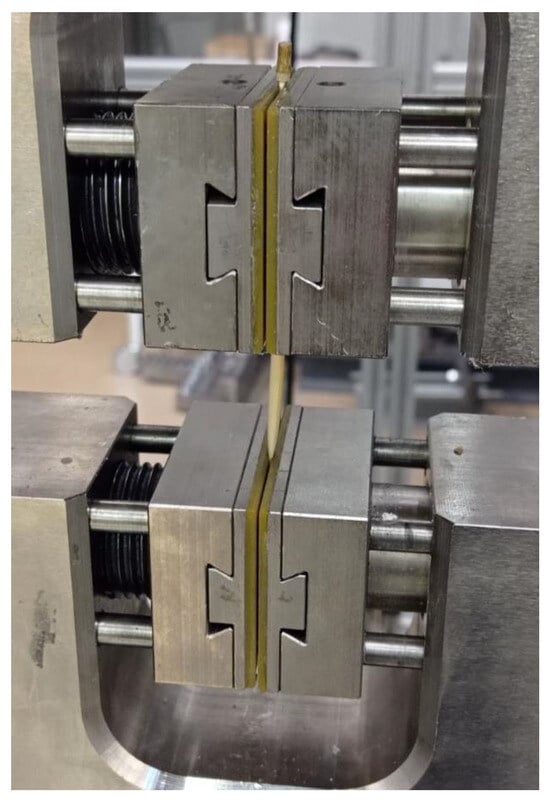
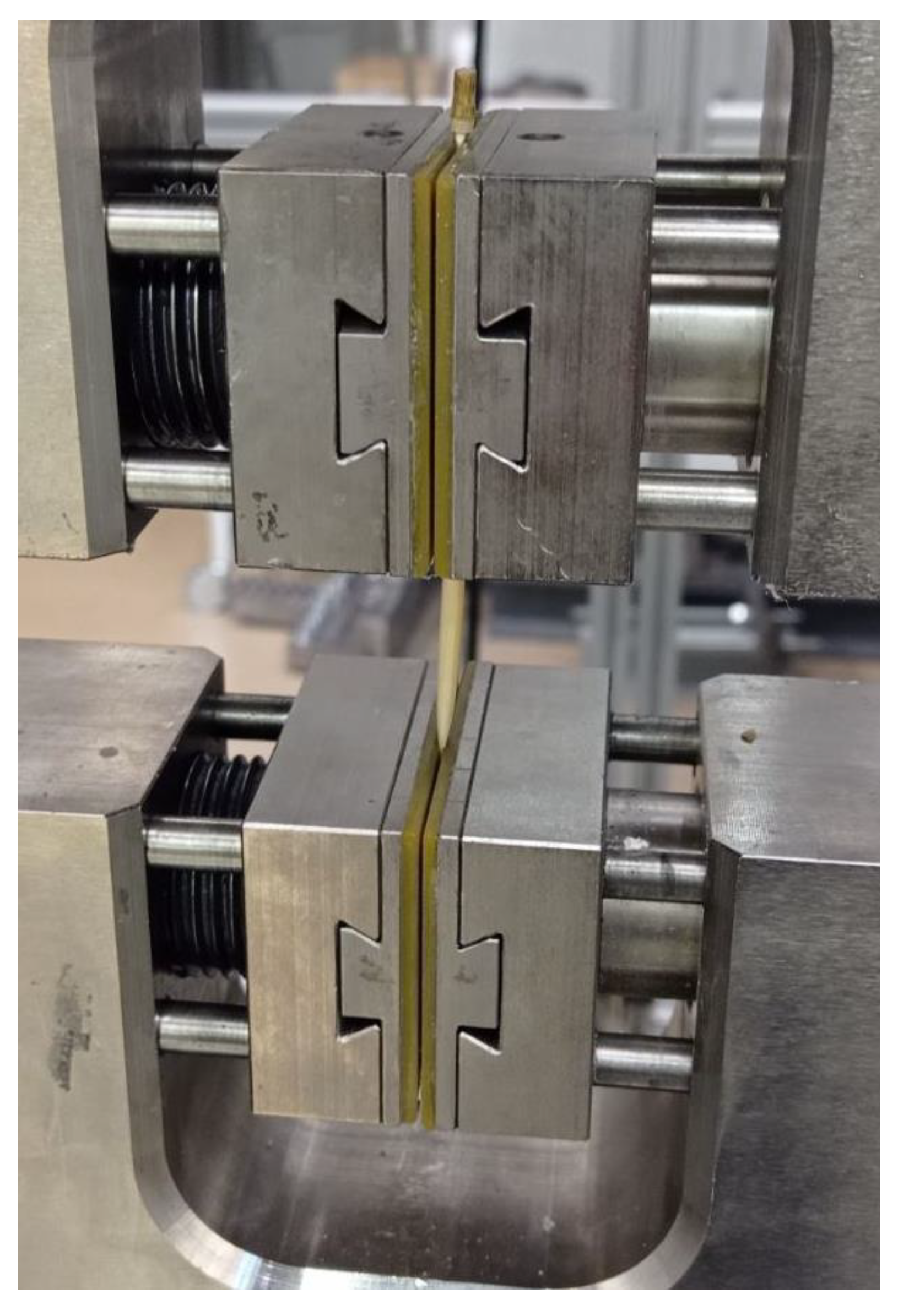
Uniaxial tensile tests of the different cereal stem samples were carried out at the Faculty of Civil Engineering, University of Rijeka (Rijeka, Croatia). There was a total of six straws from each fertilization treatment analyzed, thus a total of 72 straws were analyzed. All tests were performed using a Zwick/Roell Z600 universal testing machine 8Ulm (Ulm-Einsingen, Germany), equipped with mechanical grips with a capacity of 10 kN and a 50 kN load cell (Figure 1).
Figure 1.
The sample was positioned in the mechanical grips of the testing machine Zwick/Roell Z600.
The load on the samples was applied through displacement-controlled movement of the crosshead, at a constant loading speed of 0.5 mm/min. Each test was continued until the sample failed, which was defined either as complete rupture or as an 80% reduction in tensile force. As a result of the uniaxial tensile tests, the following parameters were obtained: the maximum measured force expressed in newtons, the elastic modulus and tensile strength expressed in megapascals, and the average tensile strength calculated for each crop species. In addition, stress–displacement diagrams (stress in MPa and displacement in mm) were generated for all samples, and the characteristic failure modes of the tested fibers were documented.
2.6. Biometric Analysis of Data
Data for plant height, stem diameter at the base and in the middle, node number, stem and ear mass per plant, macroelement concentrations (Ca, K, P, C, and N), mechanical properties (maximum tensile force, average cross-sectional area, tensile strength, Young’s modulus) and fiber fractions (ADF and NDF) were analyzed using SAS software, version 9.4 (SAS Institute Inc., Cary, NC, USA) [38]. A two-factor analysis of variance (ANOVA) was performed according to the experimental design. The homogeneity of variances was checked using Levene’s test. When significant F-values were detected (p ≤ 0.05), individual mean comparisons were carried out using Fisher’s least significant difference (LSD) test.
Correlation analysis was performed in the online platform ChiPlot [39] using pairwise Pearson correlation coefficients. The significance of the relationships was tested at three probability levels (p ≤ 0.05, p ≤ 0.01, and p ≤ 0.001), and significant correlations were denoted by *, **, and ***, respectively.
3. Results
3.1. ANOVA Analysis
The analysis of variance (ANOVA) showed that cereal species (C) was the main source of variation, with highly significant (p ≤ 0.01, mostly p < 0.0001) effects on all morphological traits, mineral concentrations, mechanical properties, and fiber fractions (Table 2). In contrast, the main effect of potassium fertilization (K) was generally weak and became significant only for stem diameter in the middle part of the stem and nitrogen concentration (N%) (p ≤ 0.05). Nevertheless, the K × C interaction was significant for all measured traits, indicating that the response to potassium fertilization was strongly species-dependent across plant morphology, tissue chemistry, and stem mechanical behavior. Mean values across treatments confirm that differences among cereals are expressed not only in plant size, but also in mineral composition and structural quality of the stem.
Table 2.
One-way Analysis of variance (F-values) for morphological, chemical, and mechanical traits of cereals as affected by potassium fertilization (K), cereal species (C), and their interaction (K × C).
3.2. Morphological Analysis of Cereals
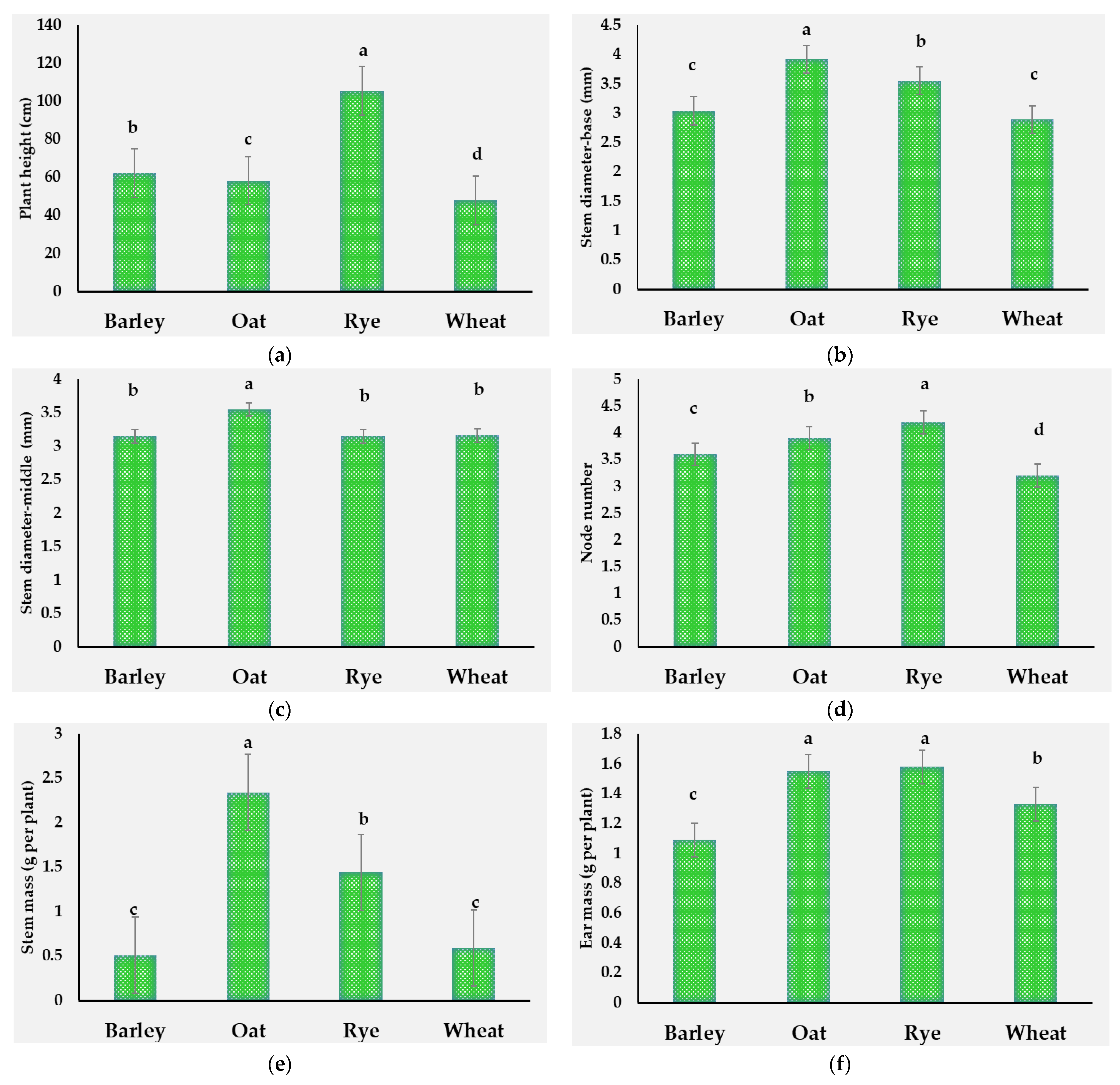
In the present study, there were clear differences among cereal species found for all morphological and biomass traits (Figure 2a–f). Plant height and node number were greatest in rye (105.6 cm) and lowest in wheat (47.9 cm). Oat stems were the thickest at both the base and the middle of the culm (3.92 and 3.55 mm, respectively), while barley and wheat had thinner stems. Oats also showed the greatest stem mass per plant (2.34 g per plant), and together with rye, the highest ear mass (1.55 and 1.58 g per plant, respectively), whereas barley had the lowest stem and ear mass (0.51 and 1.09 g per plant, respectively). These results indicate that oats and rye expressed more vigorous above-ground growth than barley and wheat under the specific conditions of this study.
Figure 2.
Morphological and biomass traits of four cereal species averaged across potassium fertilization treatments. (a) Plant height (cm); (b) Stem diameter at the base (mm); (c) Stem diameter in the middle of the stem (mm); (d) Node number per plant; (e) Stem mass per plant (g); (f) Ear mass per plant (g). Bars represent means ± SE at 5%. Different letters above bars indicate significant differences among species at p ≤ 0.05.
3.3. Macronutrients and Fiber Content of Cereals
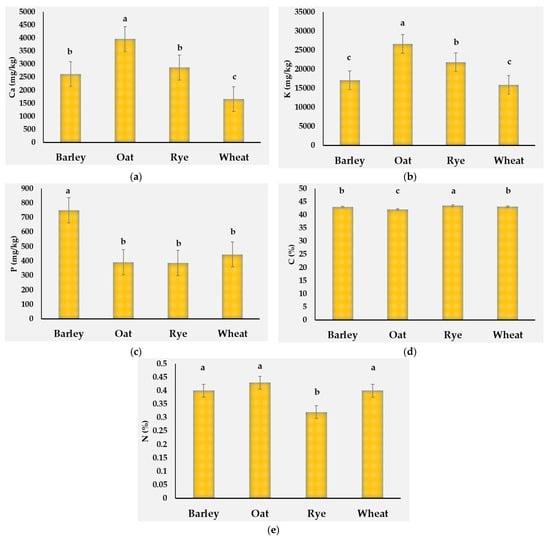
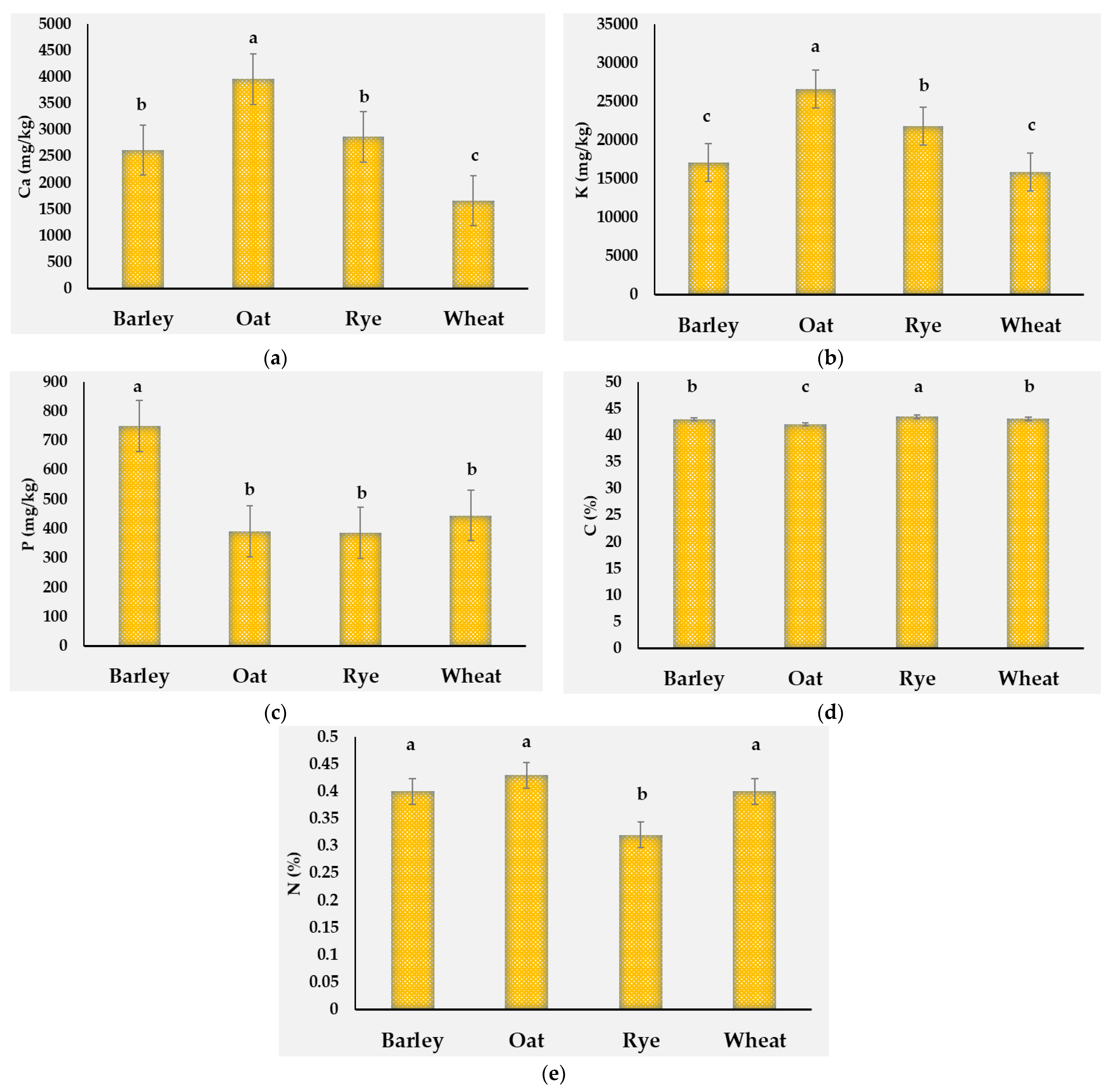
Stem macroelement composition differed markedly among the four cereal species (Figure 3). Calcium concentration in the cereal stems was highest in oats (3958 mg/kg) and lowest in wheat (1662 mg/kg) (Figure 3a). A similar trend was found for K (Figure 3b), with oat showing the greatest K content (26,640 mg/kg), rye intermediate values, and barley and wheat the lowest concentrations (17,074 and 15,931 mg/kg, respectively). In contrast, barley accumulated significantly more P (749.6 mg/kg) than the other species (Figure 3c), which did not differ from each other. Carbon concentration (Figure 3d) varied only slightly, but was highest in rye (43.5%) and lowest in oats (42.07%). Nitrogen content was greatest and statistically similar in barley, oats, and wheat, whereas rye had significantly lower N.
Figure 3.
Macroelements status of four cereal species stems averaged across potassium fertilization treatments. (a) Ca (mg/kg); (b) K (mg/kg); (c) P (mg/kg); (d) C (%); (e) N (%). Bars represent means ± SE at 5%. Different letters above bars indicate significant differences among species at p ≤ 0.05.
3.4. Tensile Strength and Stress–Strain Curves of Cereal Stems
The mechanical and structural properties of the stems differed significantly among the four cereal species. Rye and wheat required the highest maximum tensile force (≈152 and 150 N, respectively), whereas barley and oats failed at significantly lower forces. Oats and rye had the largest stem cross-sectional areas, while barley and especially wheat had smaller cross-sections. As a result, wheat showed by far the greatest tensile strength (≈120 MPa) and Young’s modulus (6.23 GPa), indicating much stiffer and stronger stems compared with the other cereals, which had similar and lower tensile strengths and moduli.
The analysis of ADF and NDF resulted in different contents of cereal stem (Table 3). Wheat stem had the highest ADF content, followed by barley and rye, with oats showing the lowest ADF. Barley had the greatest NDF, whereas oat again had the lowest NDF values. Oats stems showed the lowest ADF and NDF contents, indicating the least lignified and most potentially digestible tissues, whereas wheat and barley had the highest ADF and NDF values, respectively, reflecting a greater proportion of structural cell-wall material and more rigid, fibrous stems.
Table 3.
Tensile strength, stiffness, and fiber fractions (ADF, NDF) of stems of four cereal species.
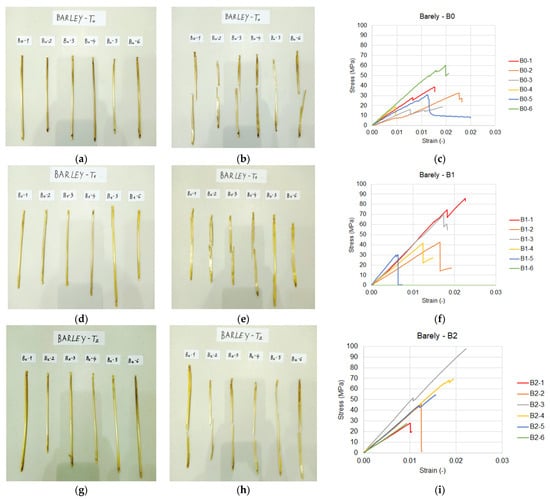
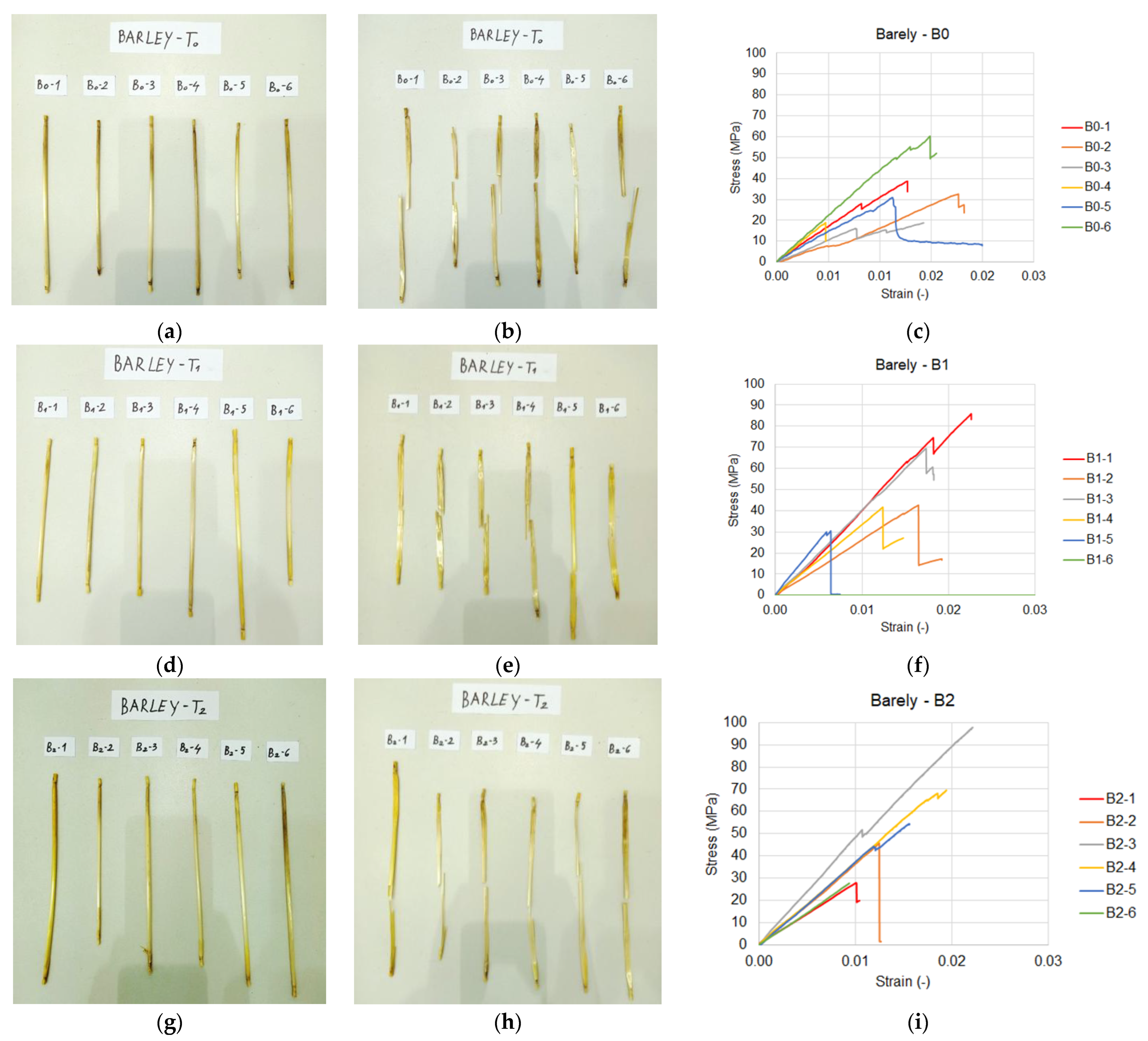
The intact internodes of barley stems before testing (Figure 4a,d,g) are straight and of comparable length and diameter, with no obvious macroscopic defects. After loading (Figure 4b,e,h), all samples fail within the gauge length. Fracture is mainly brittle, combining a transverse crack with limited longitudinal splitting; the splitting is more pronounced for T1 (60 kg ha−1 K) and T2 (120 kg ha−1 K), indicating a slightly more progressive damage pattern in these treatments.
Figure 4.
Barley stem (a) Stem samples of barley at treatment T0; (b) Failure modes of barley samples for treatment T0; (c) Stress–strain diagrams of barley stem at T0; (d) Stem samples of barley at treatment T1; (e) Failure modes of barley samples at treatment T1; (f) Stress–strain diagrams of barley stem at T1; (g) Stem samples of barley at treatment T2; (h) Failure modes of barley samples at treatment T2; (i) Stress–strain diagrams of barley stem at T2.
The corresponding stress–strain curves (Figure 4c,f,i) are almost linear up to failure, confirming predominantly elastic–brittle behavior. Stems of treatment with 60 kg/ha K (T1) reach the highest tensile stresses, approaching about 80–90 MPa, while T0 specimens show somewhat lower peak stresses and larger scatter. Treatment of the highest K dose (T2) yields strengths similar to or slightly below T1, with relatively consistent curves between replicates. The tensile strength of barley stems improves from T0 to T1 and remains high at T2, with only moderate variability between samples.
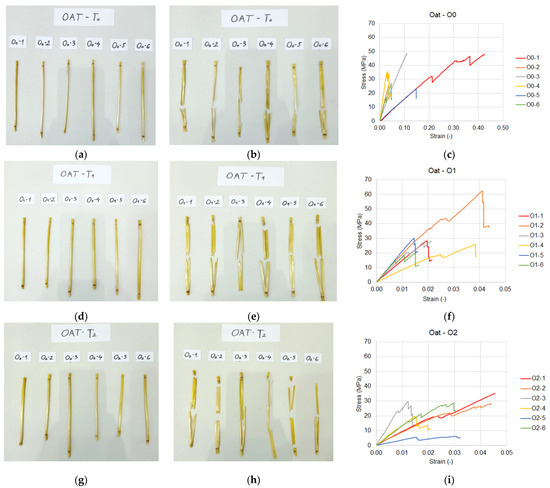
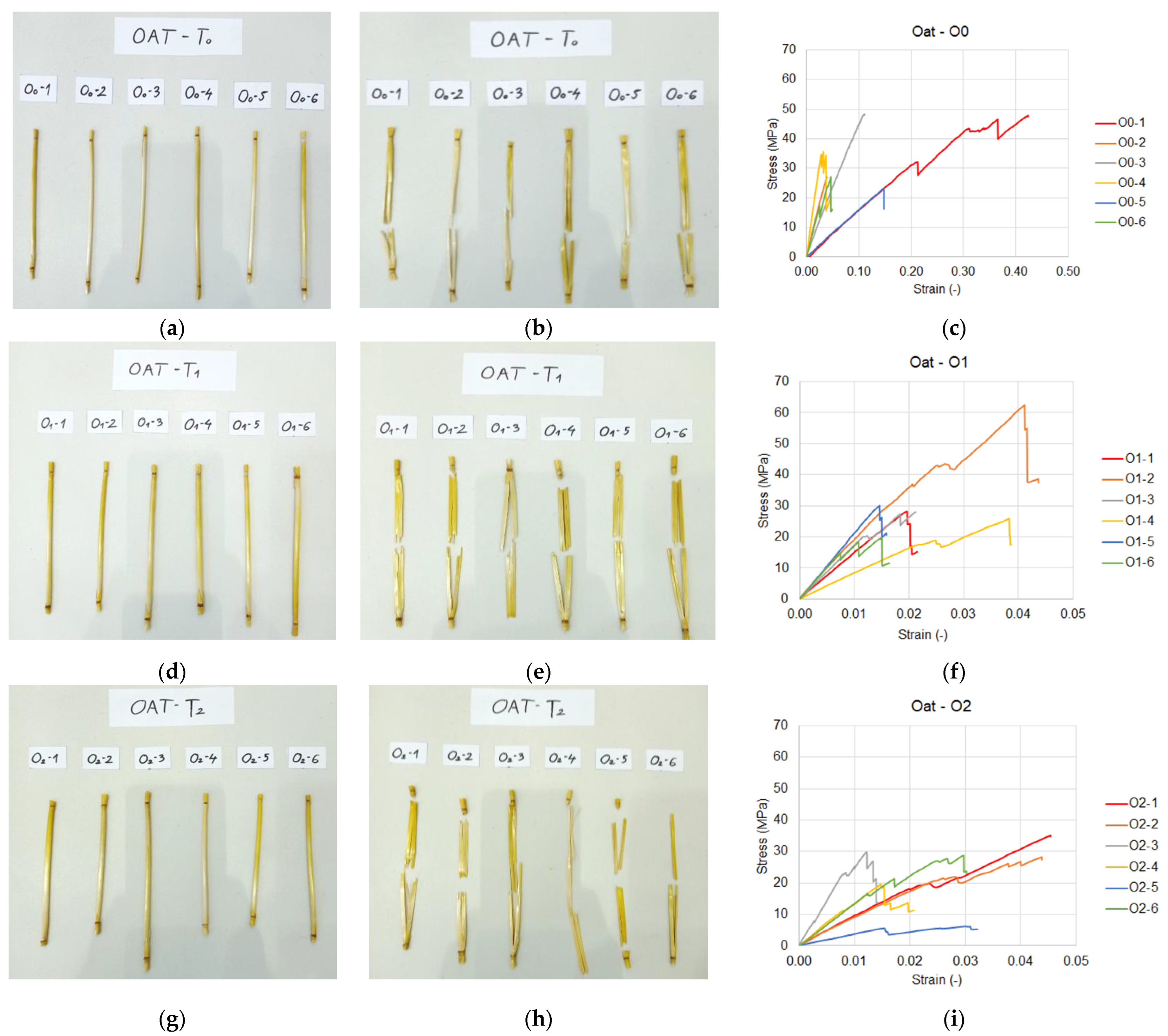
Figure 5 shows the appearance, failure modes, and tensile strength of oats stems for treatments T0, T1, and T2. The intact internodes before testing (Figure 5a,d,g) are slender and geometrically similar for all treatments, with no major visible defects. After loading (Figure 5b,e,h), the stems mainly fail by longitudinal splitting and opening of the hollow stem, often with a broom-like fiber pull-out, indicating a relatively progressive rather than sudden fracture.
Figure 5.
Oats stem (a) Stem samples of oats at treatment T0; (b) Failure modes of oats samples for treatment T0; (c) Stress–strain diagrams of oats stem at T0; (d) Stem samples of oats at treatment T1; (e) Failure modes of oats samples at treatment T1; (f) Stress–strain diagrams of oats stem at T1; (g) Stem samples of oats at treatment T2; (h) Failure modes of oats samples at treatment T2; (i) Stress–strain diagrams of oats stem at T2.
The corresponding stress–strain curves (Figure 5c,f,i) exhibit an almost linear initial region followed by gradual softening, with relatively large strains at failure (up to about 0.05), confirming the more ductile response of oats stems compared with wheat and rye. Treatment T1 gives the highest peak stresses, approaching 60 MPa for the strongest specimen, while T0 and T2 show slightly lower tensile strengths and a somewhat larger scatter of individual curves. For oats stems, the mechanical performance is clearly affected by treatment, with T1 treatment of 60 kg/ha K providing the most favorable combination of strength and deformability.
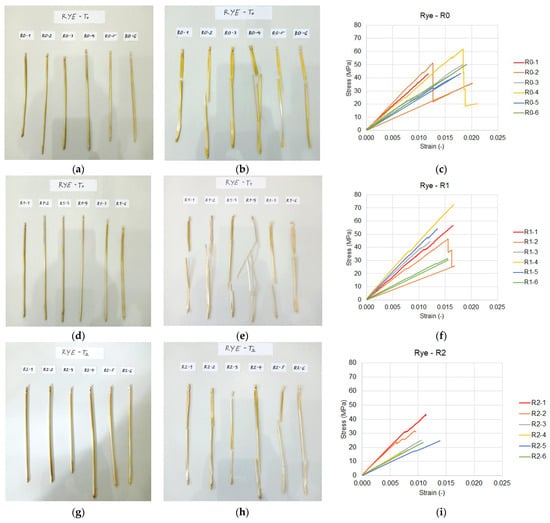
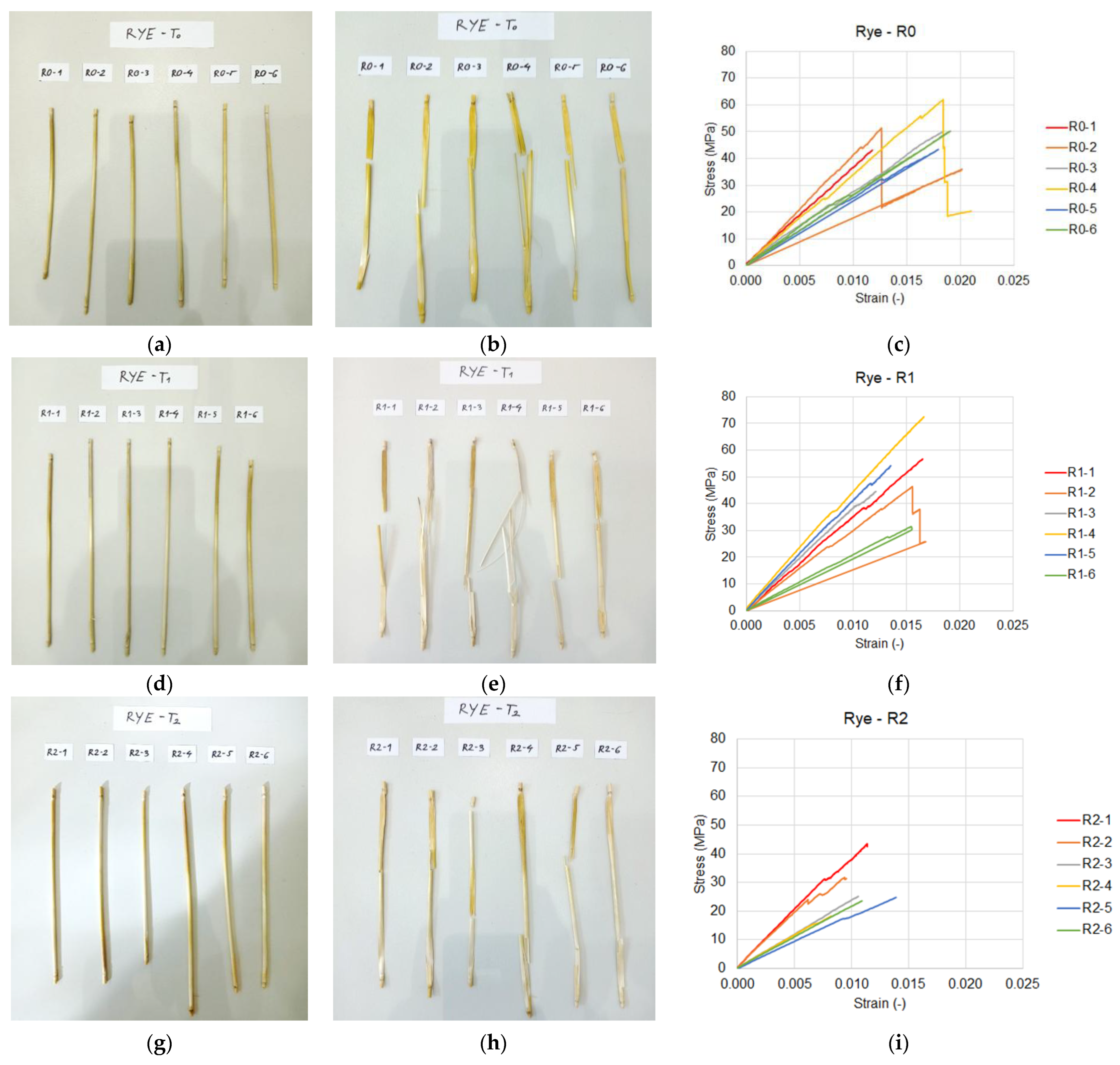
Figure 6 summarizes the appearance, failure modes and tensile response of rye stems for treatments T0, T1, and T2. The intact samples before testing (Figure 6a,d,g) are straight internodes of comparable size, with no obvious macroscopic defects, indicating that geometric effects between treatments are small. After testing (Figure 6b,e,h), all specimens failed in the gauge section. For the control treatment, without K fertilization (T0), the stems mostly show transverse cracking with limited longitudinal splitting, whereas T1 specimens exhibit pronounced longitudinal splitting and peeling of the outer rind, suggesting a more progressive damage process. The highest dose of potassium (T2), rye stem samples show somewhat cleaner breaks and less extensive splitting, with relatively similar fracture patterns between replicates.
Figure 6.
Rye stem (a) Stem samples of rye at treatment T0; (b) Failure modes of rye samples for treatment T0; (c) Stress–strain diagrams of rye stem at T0; (d) Stem samples of rye at treatment T1; (e) Failure modes of rye samples at treatment T1; (f) Stress–strain diagrams of rye stem at T1; (g) Stem samples of rye at treatment T2; (h) Failure modes of rye samples at treatment T2; (i) Stress–strain diagrams of rye stem at T2.
The corresponding stress–strain curves (Figure 6c,f,i) are nearly linear up to failure for all treatments, confirming predominantly brittle behavior. Stems at T1 reach the highest tensile stresses, with several samples approaching 70 MPa, while at the control (T0), they show slightly lower peak stresses and noticeable scatter. Treatment T2 results in the lowest tensile strength and shorter curves, indicating earlier failure and possibly reduced stiffness. The mechanical response of rye stems is strongly influenced by the treatment, with 60 kg/ha K (T1) giving the highest and 120 kg/ha K (T2), the lowest tensile strength.
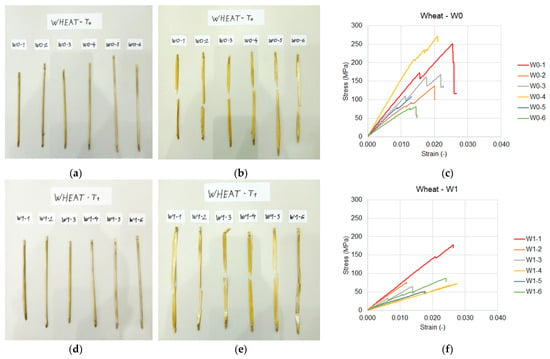
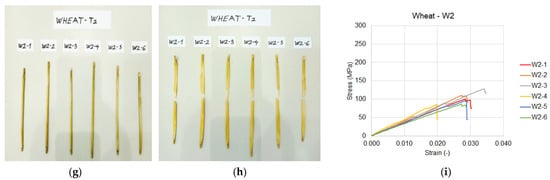
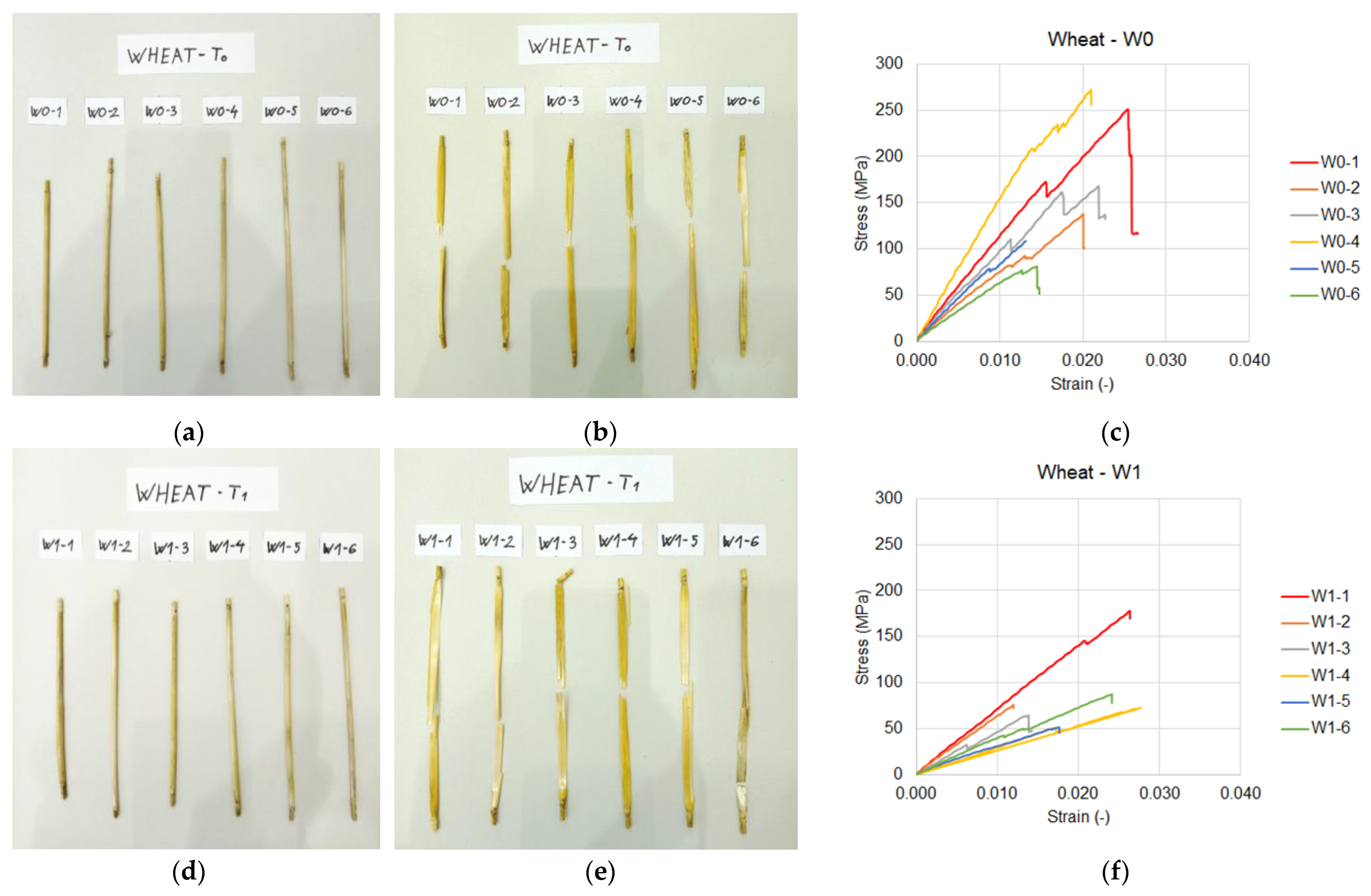
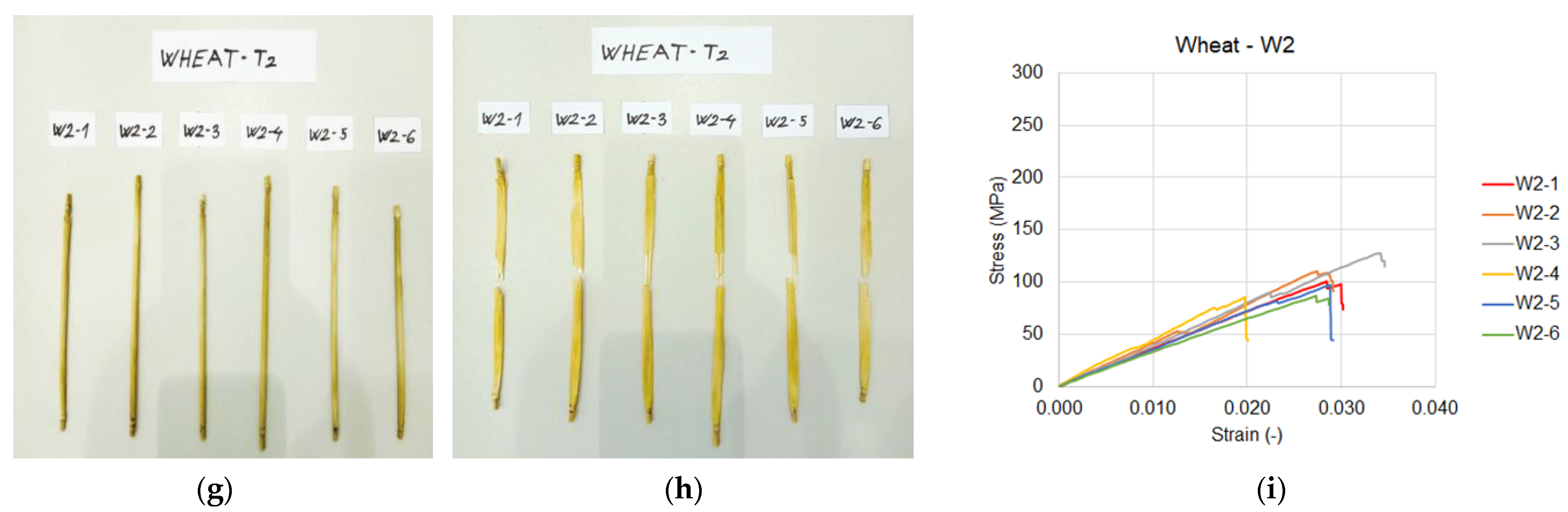
Figure 7 illustrates failure modes and tensile stress–strain response of wheat stems subjected to the three treatments of potassium fertilization (T0, T1, and T2). The sets of intact specimens before testing (Figure 7a,d,g) show straight internodes of comparable length and diameter, without visible macroscopic defects, indicating that geometric differences between treatments are minor.
Figure 7.
Wheat stem (a) Stem samples of wheat at treatment T0; (b) Failure modes of wheat samples for treatment T0; (c) Stress–strain diagrams of wheat stem at T0; (d) Stem samples of wheat at treatment T1; (e) Failure modes of wheat samples at treatment T1; (f) Stress–strain diagrams of wheat stem at T1; (g) Stem samples of wheat at treatment T2; (h) Failure modes of wheat samples at treatment T2; (i) Stress–strain diagrams of wheat stem at T2.
After tensile loading, all stems failed within the internode region, away from the grips, but with treatment-dependent fracture patterns (Figure 7b,e,h). At the control treatment (T0) the specimens mainly exhibit abrupt transverse cracking with limited longitudinal splitting. In contrast, T1 samples show more extensive longitudinal splitting and partial peeling of the outer rind, suggesting a more progressive damage evolution. For T2, the fracture surfaces are more consistent between replicates, with clean breaks and only moderate splitting, which indicates a more uniform mechanical response of the tissue.
The corresponding stress–strain curves (Figure 7c,f,i) confirm these observations. All treatments exhibit an approximately linear elastic response up to failure, with no pronounced yielding; i.e., the stems behave in a predominantly brittle manner. Specimens at the control (T0) reach the highest peak stresses, although with considerable scatter between individual samples. Treatment T1 leads to a marked reduction in tensile strength, with only one specimen approaching the stress levels observed at the control treatment (T0). The T2 stems exhibit intermediate tensile strength, but the greatest strain at failure and the smallest scatter between replicates, pointing to a more reproducible mechanical behavior under this treatment.
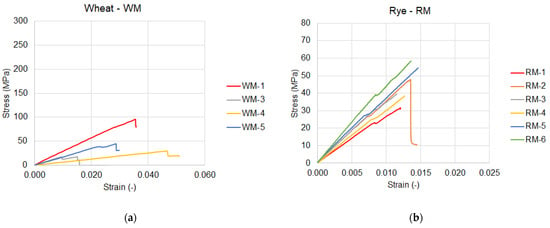
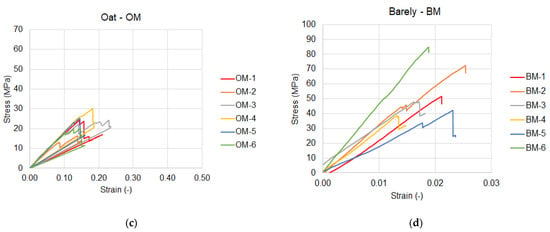
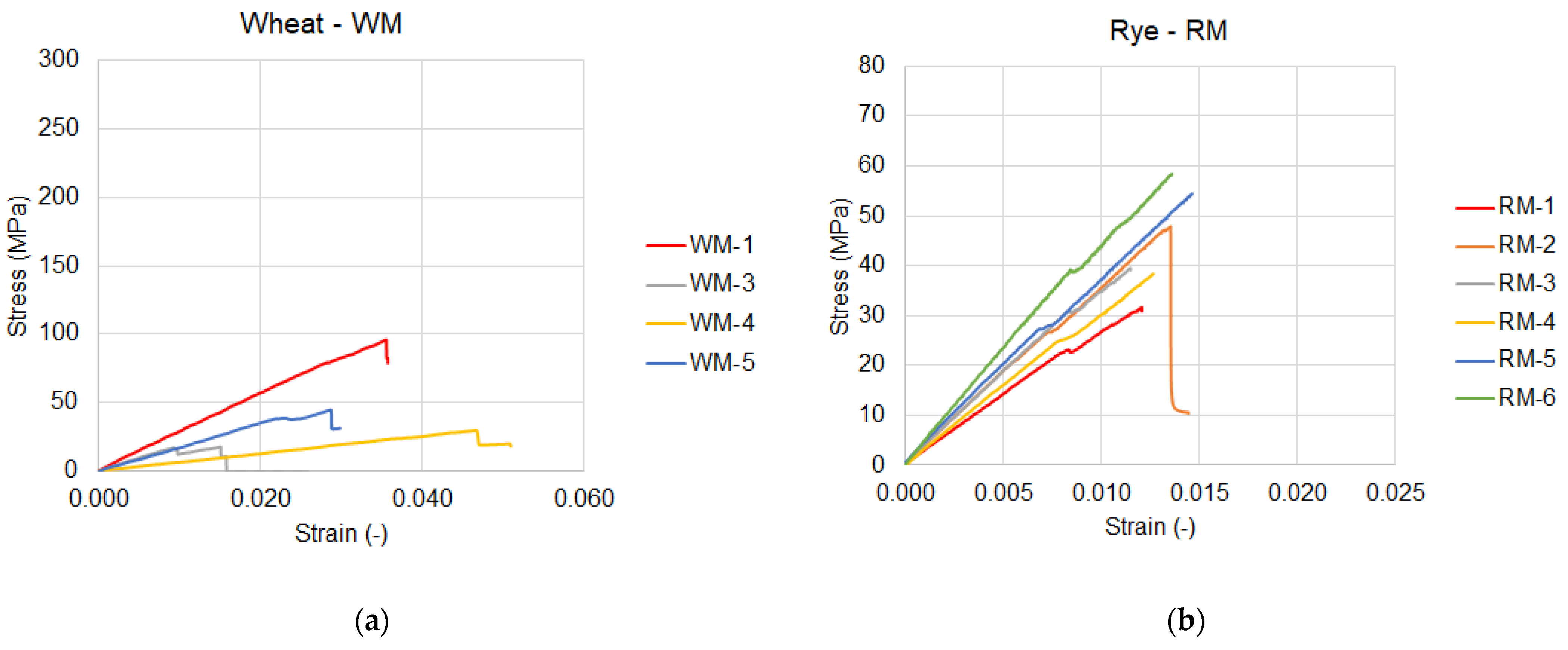
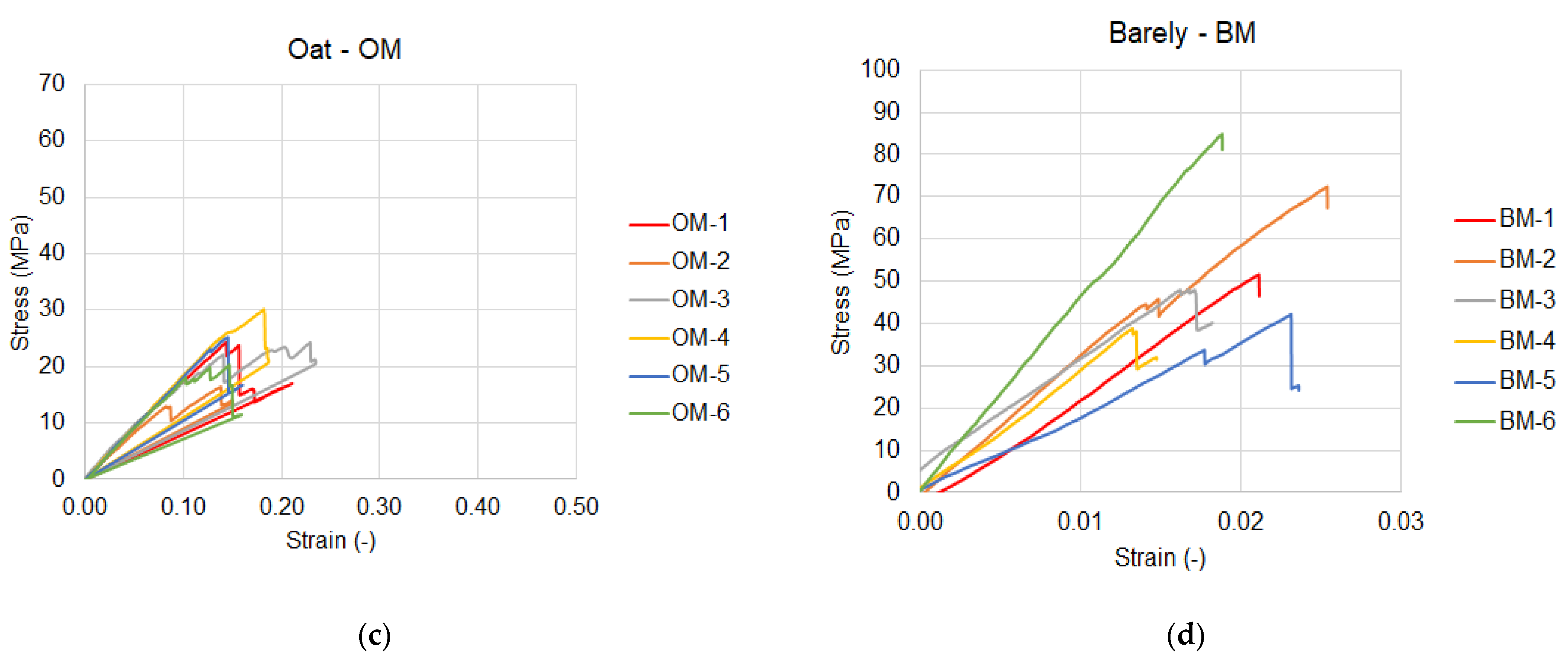
Figure 8 compares the stress–strain response of wheat, rye, oats, and barley stems tested to determine their tensile modulus. All samples exhibit an approximately linear increase in stress with strain up to failure, but with clear differences in slope and maximum strain between species. Wheat (Figure 8a) shows a moderate stiffness with stresses approaching about 80–90 MPa, but only a few specimens reach relatively large strains before failure, indicating a mostly brittle behavior. Rye (Figure 8b) has a steeper initial slope and lower failure strain; most curves terminate between 0.010 and 0.015 strain, which points to a higher modulus but more limited deformability.
Figure 8.
Stress [MPa] and strains [-] Modulus for cereals: (a) Wheat (W) samples; (b) Rye (R) samples; (c) Oats (O) samples; (d) Barley (R) samples.
Oats samples (Figure 8c) display the lowest stiffness, as evidenced by the gentle slope of the curves and peak stresses generally below 35 MPa, while strains at failure are comparatively high, suggesting a more ductile response. Barley (Figure 8d) combines a steep linear region with relatively high peak stresses (up to about 80–90 MPa), placing it among the stiffest materials in this set. Across all species, the spread of the individual curves illustrates noticeable specimen-to-specimen variability, but the overall trend indicates that barley and rye have the highest tensile modulus, wheat is intermediate, and oats are the most compliant.
3.5. Correlation Analysis
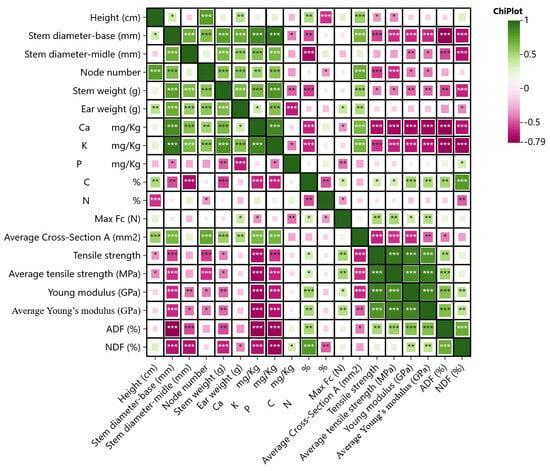
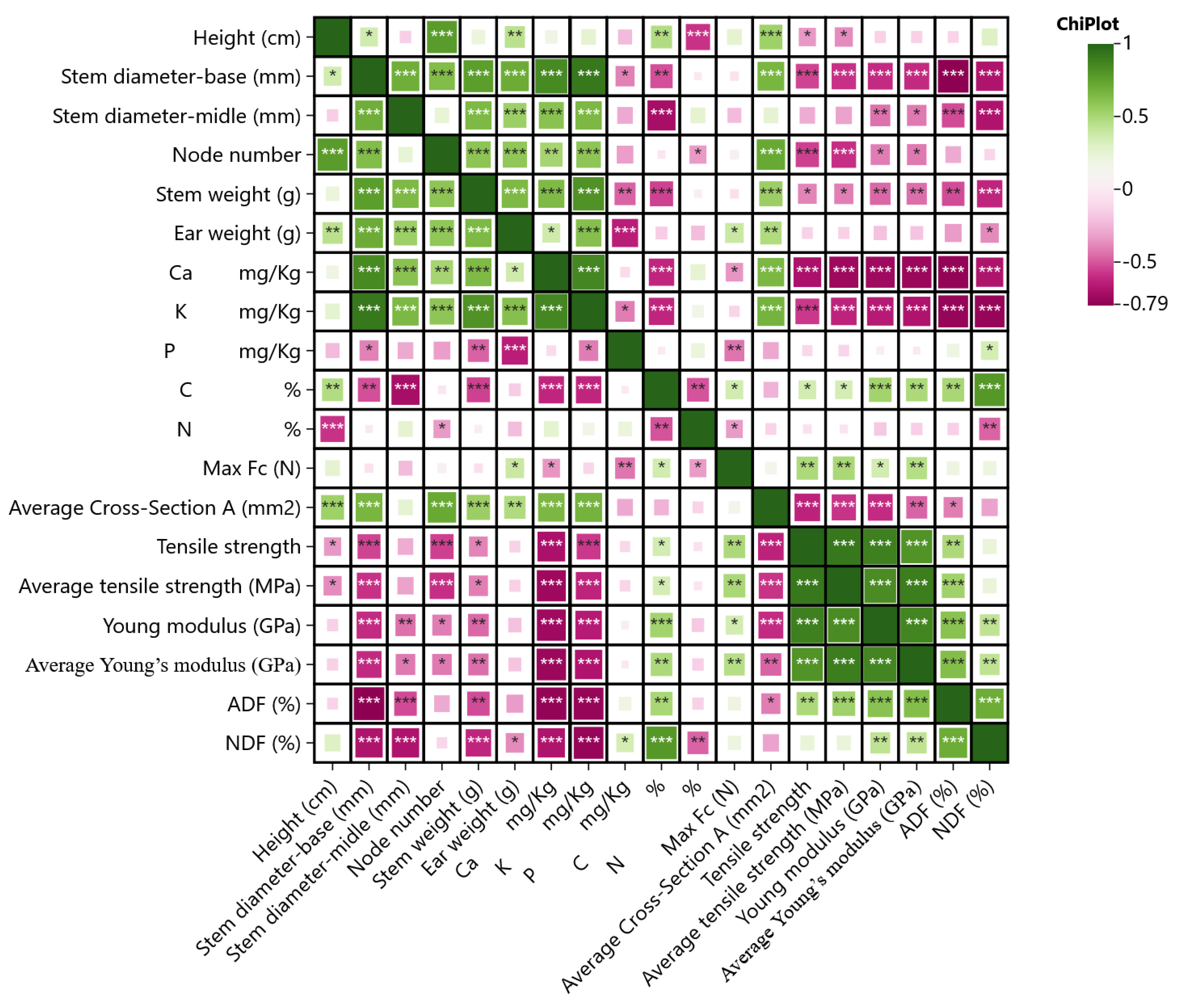
The correlation analysis revealed clear trait groupings (Figure 9). Plant height, stem diameters, node number, and stem and ear weight were all strongly and positively correlated, indicating that morphological parameters are expressed consistently across size and biomass traits. The cereal plant height showed a strong positive and highly significant correlation with node number (r = 0.783, ***), whereas stem diameter at the base was strongly associated with plant size and cereal biomass (Figure 9, Table S1).
Figure 9.
Pearson correlation heatmap of morphological, chemical, mechanical, and fiber traits of cereal stems. Each cell shows the Pearson correlation coefficient (r) between two variables, ranging from −1 (perfect negative correlation) to +1 (perfect positive correlation). Green shades indicate positive correlations and magenta/purple shades indicate negative correlations; darker colors represent stronger relationships. Statistical significance is indicated as * p < 0.05, ** p < 0.01, and *** p < 0.001. (N = 36).
Minerals of the cereal stem were positively correlated with Ca and K concentrations, whereas P showed generally weak or even negative correlations with plant size and mechanical properties.
Stem mechanical traits (maximum compressive force, cross-sectional area, tensile strength, and Young’s modulus) were tightly intercorrelated and showed strong positive relationships with ADF and NDF, as well as with C and N contents.
4. Discussion
4.1. Morphological Characteristics of Cereals
In the present study, a field experiment was set up with different levels of potassium on different cereals. Based on the results of the present study, the K did not affect the morphological properties of the cereal straw. The cereals examined in this study belong to the grass family (Poaceae) and have a very similar structure in terms of morphological characteristics. Although each plant part has its own function, the importance of stems lies in their interconnection. In small-grain cereals such as wheat, barley, rye, and oats, the stem is erect, hollow, and made up of three to six nodes, bearing leaves and ears. In general, the stem is very rarely the subject of research, although it plays an irreplaceable role during the growing season, as well as after the grain harvest, when it mostly remains in the field or is used in other ways. Straw can be used as bedding material for domestic animals [40,41], as mulch in agriculture [42], for bioenergy production [43], as plant fibers for rammed earth [44], and much more. Based on our results, the K did not affect the morphological properties of the cereal straw. As we mentioned earlier, the general role of K in plants is connected with many physiological processes important for the normal functioning of metabolism, and additional potassium fertilization did not have a positive effect on plant height, stem diameter, node number, stem, and ear mass (Table 1). The only positive effect was on the stem diameter in the middle of the straw. On the other hand, differences were observed between different species. Due to the genetic background of each tested small grain cereal, statistically significant differences were found. Rye and oats proved to be much more robust plants because they had statistically significant straw height and thickness, while wheat and barley developed significantly lower height and thinner stems. On average, plants achieved 68.5 cm of height, and some had a slightly thicker stem at the bottom, which is usually compared to the middle part (3.4 mm and 3.3 mm, respectively). Also, greater ear/panicle mass was achieved in comparison with straw (1.4 and 1.2 g per plant). Generally, the mass of an individual small grain stalk and ear varies significantly by grain type, variety, and growing conditions.
4.2. Chemical Composition of Cereals
Potassium has key roles in plants, from photosynthesis and xylem ion transport to regulating stomatal opening, growth, and ultimately yield. It facilitates nitrate (NO3−) uptake, supports assimilate transport to roots, tubers, seeds, and grains, and helps plants cope with water stress, so K is considered a major factor determining nitrogen use efficiency (NUE), regardless of the nitrogen source [45,46,47,48]. Cakmak and Rengel [49] stated that potassium deficiency is common in crop plants and becomes particularly critical under drought and heat stress, when cellular K demand increases, and insufficient K aggravates drought effects by disrupting osmoregulation and photosynthetic carbon metabolism. Mostly, the differences were accelerated between different species. Mühlbachová et al. [50], with a long-term experiment, highlight the importance of proper fertilization with mineral and organic fertilizers, combined with crops such as winter wheat, winter barley, sugar beet, and potatoes, which is essential for maintaining soil fertility, ensuring balanced nutrient elements, and supporting sustainable plant growth. Iljkić et al. [51] emphasize that differences among genotypes are also important in terms of nutrient accumulation within plant tissues. According to Gaj et al. [52], in winter wheat, the contents of N, P, K, Mg, and Ca vary strongly with the plant organ and growth stage, so that even at the beginning of stem elongation (BBCH31), plants often show signs of undernourishment in K, P, and Ca, and sometimes N, despite sufficient N supply from soil and fertilizers. The authors further noted that in the soils rich in available P, leaf P contents frequently remain below the lower critical threshold of 3–5 g·kg−1 because P uptake is more limited by factors like soil moisture, temperature, and diffusion processes than by total soil P, meaning that drought or uneven rainfall can markedly reduce P availability to wheat. In a long-term field trial in south-western Slovakia (1999–2005), Macák et al. [53] found no clear effect of the two fertilization levels on yield in a six-crop rotation system with cereal and legumes; however, authors found negative relationship between productivity and total macroelement content comparing ecological production system with grains of higher K and Mg compared with the conventional system with higher N input. Raising the K dose from 0 to 47.4 and 94.8 kg K ha−1, Mosaad and Fouda [54] found increased grain K uptake from about 0.59 to 0.74 and 1.23 kg K ha−1 in 2011/2012, and from 0.65 to 0.81 and 1.26 kg K ha−1 in 2012/2013. The effect was even more pronounced in the straw, where mean K uptake rose from about 46 to 66 kg K ha−1 in 2011/2012 and from 49 to 68 kg K ha−1 in 2012/2013 with increasing K rate.
Cereal straw is a major lignocellulosic by-product, and its suitability for different value chains in the circular bioeconomy (ruminant feeding, bedding, biogas, or biofuels) is largely governed by fiber fractions such as NDF and ADF, which are closely linked to cell-wall digestibility, intake, and biodegradability. According to Gangwar et al. [55], plant materials are hierarchically organized over multiple length scales, from basic constituents such as lignin, cellulose, hemicellulose, and pectin, through the cell wall, functional tissues and organs, up to the whole plant level. Anjun et al. [56] evaluated the influence of different irrigated and rain-fed wheat varieties on the nutritional value of grains and straw for Lohi sheep, showing significant varietal differences, and found that most fiber (NDF, ADF, ADL) and macro-mineral contents in straw remained similar among varieties. In situ ruminal digestibility of DM, NDF, and ADF in straw differed significantly, with the highest values observed in variety Wafaq-2001 and the lowest in Marvi-2000, indicating that Wafaq-2001 straw has superior feeding value for ruminants compared with the other tested varieties. Based on the research of Witaszek et al. [57], decreasing particle size (<1 mm vs. >2.4 mm) of ADF, NDF, and crude fiber contents in both rapeseed and wheat straw consistently reduced, indicating improved degradability and higher suitability of finer particles for anaerobic digestion. Authors moreover found that across all size fractions, rapeseed straw exhibited higher ADF, NDF, and crude fiber concentrations than wheat straw, suggesting that, particularly in coarser fractions, it represents a more recalcitrant lignocellulosic substrate for biogas production.
Based on the correlation analysis of the present study (Figure 9, Table S1), the correlation matrix shows that vigorous, Ca- and K-rich plants have thick, heavy stems with relatively low fiber content, whereas stems enriched in structural fiber are thinner, poorer in Ca and K, but exhibit higher carbon content and greater tensile strength and stiffness.
4.3. Mechanical Properties of Cereal Stems: Tensile Strength and Stress–Strain Behavior
Cereal straw is the dry stalk residue left after harvesting, once the grain and husk have been removed. As a natural fiber, it is very low-cost and low-density, offers favorable specific properties, and, unlike many synthetic reinforcing fibers, is biodegradable and non-abrasive. The mechanical properties of cereal stems, particularly their tensile strength and stress–strain behavior, are critical for understanding how straw behaves during harvest, tillage, and subsequent field operations. Annoussamy et al. [58] highlighted that mechanical properties are not constant, and various factors are included in the determination of the mechanical properties, e.g., stem position, maturity, moisture content, and the degree of decomposition after harvest, which together determine the resistance of straw to bending, shearing, and breaking.
Tavakoli et al. [59] studied the influence of different moisture levels (10.2, 14.3, 18.4, and 22.6%) on the mechanical properties of wheat straw. The authors stated that the shear strength of wheat straw and specific shearing energy were highest at greater moisture and at lower internodes (up to 11.78 MPa and 36.26 mJ mm−2 at the third internode, 22.6% w.b.), whereas bending strength and Young’s modulus decreased with increasing moisture content and towards the third internode. For wheat variety Mercia, O’Dogherty et al. [54] found tensile strength ranged from 21.2 to 31.2 MPa, while shear strength varied between 4.91 and 7.26 MPa. Young’s modulus was between 4.76 and 6.58 GPa, and the rigidity modulus ranged from 267 to 547 MPa. According to Annoussamy et al. [58], decomposition and moisture strongly reduced the mechanical resistance of wheat internodes: for example, Young’s modulus decreased from about 2.6–3.7 GPa in undecomposed, dry internodes to 0.4–1.0 GPa in decomposed ones, while maximum bending stress dropped from roughly 27–31 MPa to 2–11 MPa.
There are very limited data on the effects of fertilization on the mechanical properties of cereal straw. There are several studies that are related to stem lodging [60,61,62,63,64,65,66,67]. Chandio et al. [68] investigated wheat and rice straw produced under three nitrogen rates (70, 130, and 190 kg N ha−1) and tested them at three logding rates (15, 20, and 25 mm min−1); they found that, irrespective of N rate, shear strength, specific shearing energy, and cutting force increased with loading rate and toward the third internode, with rice straw exhibiting significantly higher values (p < 0.05) than wheat straw under all conditions. In the recent study of Varga et al. [48], different potassium fertilizer sources (KCl and K2SO4) on industrial hemp did not change stem height and diameter, but significantly affected N, P, and K accumulation and strongly influenced the mechanical properties of the stem. The KCl treatment (K1) produced stems with the highest tensile strength (388.52 MPa) and Young’s modulus (32.09 GPa), while K2SO4 (K2) gave the lowest tensile strength (95.16 MPa), suggesting that the choice of K source can be crucial when hemp fibers are intended for use as sustainable reinforcement in rammed earth construction.
The finding that cereal species are the dominant drivers of straw quality highlights an efficient sustainability lever, as end-use tailoring can be achieved primarily through species choice without necessarily increasing external inputs. Moreover, the generally weak main effect of potassium suggests that higher K applications may not always translate into proportional improvements in straw performance, which is relevant for resource-use efficiency and environmentally responsible fertilization. The frequent K × species interactions indicate that targeted nutrient management—rather than blanket fertilization—can better support circular bioeconomy pathways by producing biomass with properties aligned to specific biobased applications.
5. Conclusions
In the present study, cereals’ stem K and Ca concentrations were very strongly and positively correlated with stem diameter and biomass, indicating that situations with higher K supply and/or a greater capacity for K uptake produce thicker and heavier stems. However, K and Ca were also strongly and negatively related to ADF and NDF, whereas ADF showed positive associations with Young’s modulus and tensile strength. This pattern suggests a trade-off: K-rich straw tends to be more massive but less fiber-rich and mechanically less stiff per unit area, whereas K-poor straw is richer in structural fiber and exhibits higher stiffness and tensile resistance. Such a trade-off is consistent with studies linking higher lignocellulosic fiber content to improved mechanical performance but reduced digestibility and more demanding pretreatment in bioconversion processes.
These findings imply that potassium fertilization can be used as a steering tool to shift cereal straw quality along a continuum of end-uses. Higher K supply, especially in species with a strong K uptake capacity, appears to favor the production of thick, heavy straw with lower fiber content, which may be advantageous for applications where high biomass yield and easier chemical or enzymatic deconstruction are desired (e.g., bioenergy or biochemicals). In contrast, lower K status, or the selection of species and fertilization regimes that result in K-poorer but fiber-richer straw, seems more suitable for high-value fiber applications such as technical textiles, composites, and construction materials, where high ADF/NDF content and elevated stiffness are beneficial. In this way, manipulating potassium nutrition, in combination with cereal species choice, offers a promising route to tailor straw quality towards specific high-value biobased products.
The proposed species × K steering concept supports sustainable utilization of renewable resources by improving residue valorization, enhancing resource-use efficiency, and facilitating circular bioeconomy implementation in cereal-based production systems.
Supplementary Materials
The following supporting information can be downloaded at https://www.mdpi.com/article/10.3390/su18020984/s1; Table S1: Pearson Correlation Coefficientstitle
Author Contributions
Conceptualization, D.I. and I.V.; methodology, D.I., I.V. and P.K.; software, I.K.; validation, I.K. and D.I.; formal analysis, I.V. and P.K.; investigation, D.I., I.V. and P.K.; writing—original draft preparation, I.V. and P.K.; writing—review and editing, I.K. and I.V.; supervision, I.K.; project administration, I.K. All authors have read and agreed to the published version of the manuscript.
Funding
This research was a part of the project Rammed Earth for modeling and standardization in seismically active areas (RE–forMS project, UIP-2020-02-7363), funded by the Croatian Science Foundation (HRZZ).
Institutional Review Board Statement
Not applicable.
Informed Consent Statement
Not applicable.
Data Availability Statement
The original contributions presented in this study are included in the article/Supplementary Materials. Further inquiries can be directed to the corresponding author.
Conflicts of Interest
The authors declare no conflicts of interest.
References
- Weiser, C.; Zeller, V.; Reinicke, F.; Wagner, B.; Majer, S.; Vetter, A.; Thraen, D. Integrated Assessment of Sustainable Cereal Straw Potential and Different Straw-Based Energy Applications in Germany. Appl. Energy 2014, 114, 749–762. [Google Scholar] [CrossRef] [Scilit]
- Kovačić, Đ.; Lončarić, Z.; Jović, J.; Samac, D.; Popović, B.; Tišma, M. Digestate Management and Processing Practices: A Review. Appl. Sci. 2022, 12, 9216. [Google Scholar] [CrossRef] [Scilit]
- Stolarski, M.J.; Welenc, M.; Krzyżaniak, M.; Olba-Zięty, E.; Stolarski, J.; Wierzbicki, S. Characteristics and Changes in the Properties of Cereal and Rapeseed Straw Used as Energy Feedstock. Energies 2024, 17, 1243. [Google Scholar] [CrossRef] [Scilit]
- Desheva, G.; Valchinova, E. Evaluation of Yield Stability and Adaptability of Oat Genotypes (Avena sativa L.). Poljoprivreda 2024, 30, 3–12. [Google Scholar] [CrossRef] [Scilit]
- Kovačić, Đ.; Kralik, D.; Rupčić, S.; Jovičić, D.; Spajić, R.; Tišma, M. Soybean Straw, Corn Stover and Sunflower Stalk as Possible Substrates for Biogas Production in Croatia: A Review. Chem. Biochem. Eng. Q. 2017, 31, 187–198. [Google Scholar] [CrossRef] [Scilit]
- Bozsaky, D. Innovative Thermal Insulations from Cornstalk and Cereal Straw for Sustainable Architecture. Chem. Eng. Trans. 2024, 114, 841–846. [Google Scholar] [CrossRef]
- Benković, R.; Mirosavljević, K.; Brmež, M.; Etongo, D.; Zimmer, D.; Jug, D.; Jug, I.; Šumanovac, L.; Benković-Lačić, T. Različiti sustavi obrade tla i njihov utjecaj na formiranje prinosa usjeva i posliježetvene ostatke. Poljoprivreda 2025, 31, 13–24. [Google Scholar] [CrossRef] [Scilit]
- Monteleone, M.; Garofalo, P.; Cammerino, A.R.B.; Libutti, A. Cereal Straw Management: A Trade-Off Between Energy and Agronomic Fate. Ital. J. Agron. 2015, 10, 655. [Google Scholar] [CrossRef] [Scilit]
- Wang, Q.; Liu, X.; Li, J.; Yang, X.; Guo, Z. Straw Application and Soil Organic Carbon Change: A Meta-Analysis. Soil Water Res. 2021, 16, 112–120. [Google Scholar] [CrossRef] [Scilit]
- Lončarić, Z.; Novaković, I.; Perić, K.; Nemet, F.; Ravnjak, B.; Tkalec Kojić, M.; Pravdić, G.; Gansberger, M.; Uzelac, I.; Božić, V.; et al. Biološki test s četiri biljne vrste za procjenu pogodnosti vermikomposta i komposta kao uzgojnog medija. Poljoprivreda 2024, 30, 25–38. [Google Scholar] [CrossRef] [Scilit]
- Ninkuu, V.; Liu, Z.; Qin, A.; Xie, Y.; Song, X.; Sun, X. Impact of Straw Returning on Soil Ecology and Crop Yield: A Review. Heliyon 2025, 11, e41651. [Google Scholar] [CrossRef] [Scilit] [PubMed]
- Yuan, Y.; Zhang, C.; Liang, Y.; Yuan, J.; Liu, J.; Cai, H.; Zhang, J. Influence of Straw, Compost, and Biochar on Soil Carbon and Aggregates in Chernozem. Plant Soil Environ. 2025, 71, 148–160. [Google Scholar] [CrossRef] [Scilit]
- Plazonić, I.; Barbarić-Mikočević, Ž.; Antonović, A. Chemical composition of straw as an alternative material to wood raw material in fibre isolation. Drv. Ind. 2016, 67, 119–125. [Google Scholar] [CrossRef] [Scilit]
- Markulj Kulundžić, A.; Mijić, A.; Sudarić, A.; Varga, I.; Viljevac Vuletić, M. Fiziološki i biokemijski odgovori hibrida suncokreta u poljskim uvjetima. Poljoprivreda 2025, 31, 12–20. [Google Scholar] [CrossRef] [Scilit]
- Shi, Y.; Jiang, Y.; Wang, X.; Thuy, N.T.D.; Yu, H. A Mechanical Model of Single Wheat Straw with Failure Characteristics Based on Discrete Element Method. Biosyst. Eng. 2023, 230, 1–15. [Google Scholar] [CrossRef] [Scilit]
- Pickering, K.L.; Aruan Efendy, M.G.; Le, T.M. A Review of Recent Developments in Natural Fibre Composites and Their Mechanical Performance. Compos. Part A Appl. Sci. Manuf. 2016, 83, 98–112. [Google Scholar] [CrossRef] [Scilit]
- López, S.; Davies, D.R.; Giráldez, F.J.; Dhanoa, M.S. Assessment of nutritive value of cereal and legume straws based on chemical composition and in vitro digestibility. J. Sci. Food Agric. 2005, 85, 1550–1557. [Google Scholar] [CrossRef] [Scilit]
- Wang, M.; Zheng, Q.; Shen, Q.; Guo, S. The Critical Role of Potassium in Plant Stress Response. Int. J. Mol. Sci. 2013, 14, 7370–7390. [Google Scholar] [CrossRef] [Scilit]
- Sardans, J.; Peñuelas, J. Potassium Control of Plant Functions: Ecological and Agricultural Implications. Plants 2021, 10, 419. [Google Scholar] [CrossRef] [Scilit] [PubMed]
- Damalas, C.A.; Koutroubas, S.D. Potassium supply for improvement of cereals growth under drought: A review. Agron. J. 2024, 116, 3368–3382. [Google Scholar] [CrossRef] [Scilit]
- Bayındır, Ü.; Küçükyumuk, Z. The Effects of Potassium on Plant Nutrient Concentration, Plant Development, and Rhizoctonia Rot (Rhizoctonia solani) in Pepper. Horticulturae 2025, 11, 516. [Google Scholar] [CrossRef] [Scilit]
- Varga, I.; Šmituc, I.; Panišić, T. Primjena kalija u gnojidbi krumpira. Glas. Zašt. Bilja 2024, 47, 70–78. [Google Scholar] [CrossRef] [Scilit]
- Johnson, R.; Vishwakarma, K.; Hossen, M.S.; Kumar, V.; Shackira, A.M.; Puthur, J.T.; Abdi, G.; Sarraf, M.; Hasanuzzaman, M. Potassium in plants: Growth regulation, signaling, and environmental stress tolerance. Plant Physiol. Biochem. 2022, 172, 56–69. [Google Scholar] [CrossRef] [Scilit] [PubMed]
- Kong, L.; Sun, M.; Wang, F.; Liu, J.; Feng, B.; Si, J.; Zhang, B.; Li, S.; Li, H. Effects of High NH4+ on K+ Uptake, Culm Mechanical Strength and Grain Filling in Wheat. Front. Plant Sci. 2014, 5, 703. [Google Scholar] [CrossRef] [Scilit]
- Valkova, V.; Vulchinkov, Z. The Anthesis–Silking Interval and Its Relation to Certain Yield Components in Maize Hybrids from the Mid-Early FAO Group. Poljoprivreda 2025, 31, 3–11. [Google Scholar] [CrossRef] [Scilit]
- Wu, B.; Cui, Z.; Ma, L.; Li, X.; Wang, H.; Wang, Y.; Yan, B.; Dong, H.; Gao, Y. Effects of Planting Density—Potassium Interaction on the Coordination among the Lignin Synthesis, Stem Lodging Resistance, and Grain Yield in Oil Flax. Agronomy 2023, 13, 2556. [Google Scholar] [CrossRef] [Scilit]
- Nguyen, T.N.; Son, S.; Jordan, M.C.; Levin, D.B.; Ayele, B.T. Lignin biosynthesis in wheat (Triticum aestivum L.): Its response to waterlogging and association with hormonal levels. BMC Plant Biol. 2016, 16, 28. [Google Scholar] [CrossRef] [Scilit] [PubMed]
- Hu, D.; Liu, X.B.; She, H.Z.; Gao, Z.; Ruan, R.W.; Wu, D.Q.; Yi, Z.L. The lignin synthesis related genes and lodging resistance of Fagopyrum esculentum. Biol. Plant. 2017, 61, 138–146. [Google Scholar] [CrossRef] [Scilit]
- Cassida, K.A.; Turner, K.E.; Foster, J.G.; Hesterman, O.B. Comparison of Detergent Fiber Analysis Methods for Forages High in Pectin. Anim. Feed. Sci. Technol. 2007, 135, 283–295. [Google Scholar] [CrossRef] [Scilit]
- Dale, L.M.; Rotar, I.; Thewis, A.; Vidican, R.; Florian, V.; Ciure, A. Determination of Alfalfa Crude Fiber, NDF, ADF and Lignin Content by NIR Spectrometry. Lucr. Ştiinţifice Ser. Agron. 2012, 55, 245–250. [Google Scholar]
- O’Keefe, C.; Penner, G.B.; McKinnon, J.J.; Larson, K.; Damiran, D.; Lardner, H.A. Effects of Stage of Maturity at Harvest of Cereal Crops on Biomass and Quality, Estimated Forage Dry Matter Intake, Beef Cow Performance, and System Economics. Appl. Anim. Sci. 2022, 38, 607–619. [Google Scholar] [CrossRef] [Scilit]
- Hoffman, P.C.; Shaver, R.D.; Combs, D.K.; Undersander, D.J.; Bauman, L.M.; Seeger, T.K. Understanding NDF Digestibility of Forages. Focus Forage 2001, 3, 1–3. [Google Scholar]
- Liu, B.; Han, D.; Zhang, F.; Zhang, J.; Fang, L. Optimization and Characterization of Mechanical Properties in Straw-Reinforced Ce-mentitious Composites. Buildings 2025, 15, 767. [Google Scholar] [CrossRef] [Scilit]
- Rodino, S. Potential of Agricultural Biomass Valorization for Circular Bioeconomy. In Scientific Papers Series Management, Economic Engineering in Agriculture and Rural Development; University of Agricultural Sciences and Veterinary Medicine: Bucharest, Romania, 2024; Volume 24. [Google Scholar]
- Mujtaba, M.; Fraceto, L.F.; Fazeli, M.; Mukherjee, S.; Savassa, S.M.; Medeiros, G.A.; Pereira, A.E.S.; Mancini, S.D.; Lipponen, J.; Vilaplana, F. Lignocellulosic Biomass from Agricultural Waste to the Circular Economy: A Review with Focus on Biofuels, Biocomposites and Bioplastics. J. Clean. Prod. 2023, 402, 136815. [Google Scholar] [CrossRef] [Scilit]
- Van Soest, P.J.; Robertson, J.B.; Lewis, B.A. Methods for dietary fiber, neutral detergent fiber, and nonstarch polysaccharides in relation to animal nutrition. J. Dairy Sci. 1991, 74, 3583–3597. [Google Scholar] [CrossRef] [Scilit] [PubMed]
- Goering, H.K.; Van Soest, P.J. Forage Fibre Analysis (Apparatus Reagents, Procedures and Some Applications). In Agriculture Handbook; United States Department of Agriculture: Washington, DC, USA, 1970. [Google Scholar]
- SAS Institute Inc. SAS/STAT® 9.4 User’s Guide; SAS Institute Inc.: Cary, NC, USA, 2013. [Google Scholar]
- ChiPlot. Available online: https://www.chiplot.online/ (accessed on 6 December 2025).
- Diarra, S.; Lameta, S.; Amosa, F.; Anand, S. Alternative bedding materials for poultry: Availability, efficacy, and major constraints. Front. Vet. Sci. 2021, 8, 669504. [Google Scholar] [CrossRef] [Scilit]
- Kupczyński, R.; Bednarski, M.; Budny-Walczak, A.; Kociuba, W. Evaluation of suitability of new bedding material obtained after straw biogasification for dairy cows. Animals 2023, 13, 1905. [Google Scholar] [CrossRef] [Scilit] [PubMed]
- Du, C.; Li, L.; Effah, Z. Effects of straw mulching and reduced tillage on crop production and environment: A review. Water 2022, 14, 2471. [Google Scholar] [CrossRef] [Scilit]
- Rocha-Meneses, L.; Bergamo, T.F.; Kikas, T. Potential of cereal-based agricultural residues available for bioenergy production. Data Brief 2019, 23, 103829. [Google Scholar] [CrossRef] [Scilit]
- Kaluđer, J.; Kraus, I.; Perić, A.; Kraus, L. Shear strength of reproduced soil mixtures based on samples from rammed earth walls from eastern Croatia. Appl. Sci. 2022, 12, 11708. [Google Scholar] [CrossRef] [Scilit]
- Fornari, A.J.; Caires, E.F.; Bini, A.R.; Haliski, A.; Tzaskos, L.; Joris, H.A.W. Nitrogen fertilization and potassium requirement for cereal crops under a continuous no-till system. Pedosphere 2020, 30, 747–758. [Google Scholar] [CrossRef] [Scilit]
- Andrzejewska, A.; Przygocka-Cyna, K.; Grzebisz, W. Balanced Fertilization of Winter Wheat with Potassium and Magnesium—An Effective Way to Manage Fertilizer Nitrogen Sustainably. Sustainability 2025, 17, 6705. [Google Scholar] [CrossRef] [Scilit]
- Varga, I.; Markulj Kulundžić, A.; Krolo, P.; Iljkić, D.; Tišma, M.; Kraus, I. Industrial Hemp Finola Variety Photosynthetic, Morphometric, Biomechanical, and Yield Responses to K Fertilization Across Different Growth Stages. Agronomy 2025, 15, 496. [Google Scholar] [CrossRef] [Scilit]
- Varga, I.; Iljkić, D.; Krolo, P.; Perić Fekete, A.; Kraus, I. The Source of K Fertilizer for Industrial Hemp (Cannabis sativa L.): Mechanical and Chemical Properties of Stem for Rammed Earth Walls. Agriculture 2024, 14, 2196. [Google Scholar] [CrossRef] [Scilit]
- Cakmak, I.; Rengel, Z. Humboldt Review: Potassium may mitigate drought stress by increasing stem carbohydrates and their mobilization into grains. J. Plant Physiol. 2024, 303, 154325. [Google Scholar] [CrossRef] [Scilit]
- Mühlbachová, G.; Kusá, H.; Růžek, P.; Káš, M.; Vavera, R. Soil Nutrient Contents in a Long-Term Field Experiment Following the Suspension of Phosphorus and Potassium Fertilisation. Plant Soil Environ. 2025, 71, 770–781. [Google Scholar] [CrossRef] [Scilit]
- Iljkić, D.; Vuković, M.; Dvojković, K.; Horvat, D.; Szpunar-Krok, E.; Jańczak-Pieniążek, M.; Rastija, M. Variety, Chemical Protection and Biostimulator Effect on Winter Wheat Status. Poljoprivreda 2024, 30, 28–35. [Google Scholar] [CrossRef] [Scilit]
- Gaj, R.; Górski, D. Effects of different phosphorus and potassium fertilization on contents and uptake of macronutrients (N, P, K, Ca, Mg) in winter wheat I. Content of macronutrients. J. Cent. Eur. Agric. 2014, 15, 169–187. [Google Scholar] [CrossRef] [Scilit]
- Macák, M.; Žák, Š.; Andrejčíková, M. Productivity and macroelements content of cereal and legume crops. Acta Fytotech. Zootech. 2015, 18, 160–162. [Google Scholar] [CrossRef] [Scilit]
- Mosaad, I.S.; Fouda, K.F. Effect of potassium and nitrogen fertilization on some macronutrients utilization efficiency by wheat. Egypt. J. Soil Sci. 2016, 56, 373–384. [Google Scholar] [CrossRef] [Scilit][Green Version]
- Gangwar, T.; Heuschele, D.J.; Annor, G.; Fok, A.; Smith, K.P.; Schillinger, D. Multiscale Characterization and Micromechanical Modeling of Crop Stem Materials. Biomech. Model. Mechanobiol. 2021, 20, 69–91. [Google Scholar] [CrossRef] [Scilit] [PubMed]
- Anjum, M.I.; Ghazanfar, S.; Begum, I. Nutritional Composition of Wheat Grains and Straw Influenced by Differences in Varieties Grown under Uniform Agronomic Practices. Int. J. Vet. Sci. 2014, 3, 100–104. [Google Scholar]
- Witaszek, K.; Kupryaniuk, K.; Kupryaniuk, J.; Panasiewicz, J.; Czekała, W. Optimization of Straw Particle Size for Enhanced Biogas Production: A Comparative Study of Wheat and Rapeseed Straw. Energies 2025, 18, 1794. [Google Scholar] [CrossRef] [Scilit]
- Annoussamy, M.; Richard, G.; Recous, S.; Guérif, J. Change in Mechanical Properties of Wheat Straw Due to Decomposition and Moisture. Appl. Eng. Agric. 2000, 16, 657–664. [Google Scholar] [CrossRef] [Scilit]
- Tavakoli, H.; Mohtasebi, S.S.; Jafari, A. Physical and Mechanical Properties of Wheat Straw as Influenced by Moisture Content. Int. Agrophysics 2009, 23, 175–181. [Google Scholar]
- O’Dogherty, M.J.; Huber, J.A.; Dyson, J.; Marshall, C.J. A Study of the Physical and Mechanical Properties of Wheat Straw. J. Agric. Eng. Res. 1995, 62, 133–142. [Google Scholar] [CrossRef] [Scilit]
- Bolcu, D.; Stănescu, M.M.; Miriţoiu, C.M. Some Mechanical Properties of Composite Materials with Chopped Wheat Straw Reinforcer and Hybrid Matrix. Polymers 2022, 14, 3175. [Google Scholar] [CrossRef] [Scilit]
- Li, M.; Chai, S.; Wei, L. Mechanical Properties of Wheat Straw and Strength of Its Reinforced Inshore Saline Soil. J. Eng. Geol. 2009, 17, 545–549. [Google Scholar]
- Wu, W.; Ma, B.-L. Erect–Leaf Posture Promotes Lodging Resistance in Oat Plants under High Plant Population. Eur. J. Agron. 2019, 103, 175–187. [Google Scholar] [CrossRef] [Scilit]
- Wu, W.; Ma, B.-L. The Mechanical Roles of the Clasping Leaf Sheath in Cereals: Two Case Studies from Oat and Wheat Plants. J. Agron. Crop Sci. 2019, 206, 118–129. [Google Scholar] [CrossRef] [Scilit]
- Heuschele, D.J.; Garcia, T.A.; Ortiz, J.B.; Smith, K.P.; Marchetto, P. Cereal Stem Stress: In Situ Biomechanical Characterization of Stem Elasticity. Appl. Sci. 2020, 10, 7965. [Google Scholar] [CrossRef] [Scilit]
- Liu, L.; Liang, G.; Liu, W. Differences in Physicochemical Properties of Stems in Oat (Avena sativa L.) Varieties with Distinct Lodging Resistance and Their Regulation of Lodging at Different Planting Densities. Plants 2024, 13, 2739. [Google Scholar] [CrossRef] [Scilit]
- Yu, J.; Zhang, R.; Ma, X.; Jia, Z.; Li, X.; Li, Y.; Liu, H. Physiological Mechanism of Lodging Resistance of Oat Stalk and Analysis of Transcriptome Differences. Front. Plant Sci. 2025, 16, 1532216. [Google Scholar] [CrossRef] [Scilit] [PubMed]
- Chandio, F.A.; Changying, J.; Tagar, A.A.; Mari, I.A.; Guangzhao, T.; Cuong, D.M. Comparison of Mechanical Properties of Wheat and Rice Straw Influenced by Loading Rates. Afr. J. Biotechnol. 2013, 12, 1068–1077. [Google Scholar]

Disclaimer/Publisher’s Note: The statements, opinions and data contained in all publications are solely those of the individual author(s) and contributor(s) and not of MDPI and/or the editor(s). MDPI and/or the editor(s) disclaim responsibility for any injury to people or property resulting from any ideas, methods, instructions or products referred to in the content. |
© 2026 by the authors. Licensee MDPI, Basel, Switzerland. This article is an open access article distributed under the terms and conditions of the Creative Commons Attribution (CC BY) license.