Article

Interpretable Data Analysis of Fluidity in Calcined Clay-Based Cement

1
Institute of Research on Ceramics (IRCER), UMR CNRS 7315, University of Limoges, 12 Rue Atlantis, 87068 Limoges, France
2
MathIS, XLIM Laboratory, UMR CNRS 7252, University of Limoges, 123 Av. Albert Thomas, 87000 Limoges, France
*
Authors to whom correspondence should be addressed.
Sustainability 2026, 18(3), 1251; https://doi.org/10.3390/su18031251
Submission received: 5 December 2025 / Revised: 19 January 2026 / Accepted: 22 January 2026 / Published: 26 January 2026
(This article belongs to the Section Sustainable Materials)

Abstract

This study investigates the workability of an emerging cement based on calcined clay, considered one of the sustainable binders for reducing the carbon footprint of construction materials. Despite existing experimental data, no comprehensive analysis has been conducted. In the present paper, a literature-derived dataset was analyzed using CPM-based packing density computation and interpretable statistical analyses (distribution statistics and Pearson correlation-based projections). The novelty of this study lies in integrating the domain-knowledge-informed hierarchical analysis to identify packing density as a primary, sustainable lever to enhance LC3 fluidity while limiting reliance on superplasticizers. PCE superplasticizers (0–2.5 wt.% in the dataset) improve fluidity across packing densities; noticeable gains are observed even for low dosages (≈0.5–1 wt.%) at packing 0.36–0.38. A paradigm shift is proposed through optimizing packing density by adjusting clay and limestone content in the mix. Prioritizing packing density, alongside conventional parameters, opens new avenues for sustainability by reducing reliance on organic fluidizers in low-carbon cements.

1. Introduction

The dominant building material for infrastructure and construction, concrete, faces scrutiny due to its environmental impact. Cement, a crucial component of concrete, contributes significantly to global CO2 emissions through clinker production. In response, European Standard [1], published in May 2021, facilitates the formulation of cement with a lower clinker content (CEM II/C-M, 50–64%) compared to the previous standard (CEM II/B, minimum 65% clinker) [2]. This paves the way for increased utilization of low-carbon binders (Limestone Calcined Clay Cement, LC3) with promising properties in terms of cement reactivity and sustainability, as research on the chemistry and hydration of LC3 has progressed in recent years [3].
LC3 exhibits mechanical strength comparable to other composite cements and displays satisfactory durability characteristics [4]. However, achieving optimal fluidity in LC3 mixtures necessitates the incorporation of higher dosages of superplasticizers compared to Portland cement [5]. This enhanced demand for superplasticizers is attributed to the presence of calcined clay, a constituent with a high specific surface area. Optimizing the superplasticizer dosage offers cost reduction and environmental sustainability of the formulated concrete. To achieve this optimization, a thorough understanding of the formulation parameters influencing fluidity and their relative impact is essential. This knowledge allows for targeted adjustments in the mix design to achieve the desired fluidity with the minimal superplasticizer dosage.
The high surface area of clay decreases fluidity [6]. Clay type also plays a role, with calcined 2:1 clay requiring less water for similar flow compared to 1:1 clay [7]. Impurities like quartz can further impact fluidity by reducing water demand [8]. LC3 mixes often require more superplasticizer due to the interaction between the superplasticizer and the clay structure, as shown by Borralleras et al. [9]. Additionally, particle size distribution (PSD) affects fluidity through its influence on packing density. Higher packing density, achieved with a well-graded PSD, improves fluidity by increasing the paste surrounding the cement grains [10]. However, a very high specific surface area can counteract this effect by reducing the paste film thickness [11]. To summarize, LC3 fluidity is influenced by a complex interplay of first- and second-rank formulation parameters. First-rank parameters directly impact the rheology, including particle packing density, superplasticizer content (SP), water-to-binder ratio (w/b), calcined clay content, and its specific surface area (SSA). Higher calcined clay content and SSA decrease fluidity, while increased packing, SP and w/b enhance it. Second-rank parameters indirectly affect fluidity by influencing the first-rank factors. These include the nature of the clay, its calcination temperature, fineness, and presence of impurities like quartz. Table 1 summarizes the conceptual distinction between first-rank (direct) parameters that act on free water, dispersion, and friction, and second-rank (indirect) parameters that primarily affect fluidity through their influence on first-rank descriptors.
While numerous studies have investigated the influence of formulation parameters on LC3 paste fluidity, analyzing these studies is challenging due to the large number of formulations created by changing multiple parameters simultaneously, making it difficult to identify clear correlations. Data analysis has recently emerged as a powerful and efficient tool for investigating large datasets. One of the strengths of data analysis is its ability to investigate data without requiring prior knowledge of the underlying scientific principles. However, this can also be a limitation, as data analysis models may identify spurious correlations or fail to capture important relationships due to a lack of domain knowledge. Previous LC3 studies often vary several mix-design parameters simultaneously, making it difficult to isolate the true drivers of fluidity from confounded effects. As a result, correlations based solely on raw variables (e.g., binder proportions or individual PSD descriptors) may appear significant while remaining ambiguous. To address this limitation, we adopt a hierarchical, physics-informed parameterization that transforms raw inputs into first-rank descriptors through domain relations (e.g., packing density computed from PSD using the CPM), thereby improving interpretability and strengthening the plausibility of causal interpretations.
This research introduces a novel method for analyzing factors affecting LC3 fluidity. Unlike traditional approaches, which correlate raw data such as cement composition and fineness with fluidity using purely statistical methods, this method is an interpretable, correlation-driven statistical analysis combining distribution statistics, Pearson correlation matrices, and 2D projection/scatter interpretations. This approach aims to achieve a hierarchical understanding of the parameters influencing cement paste fluidity, offering a more nuanced comprehension of the interplay between formulation parameters and the resulting fluidity of LC3 cement.

2. Materials and Methods

2.1. Description of the Model and Its Limitations

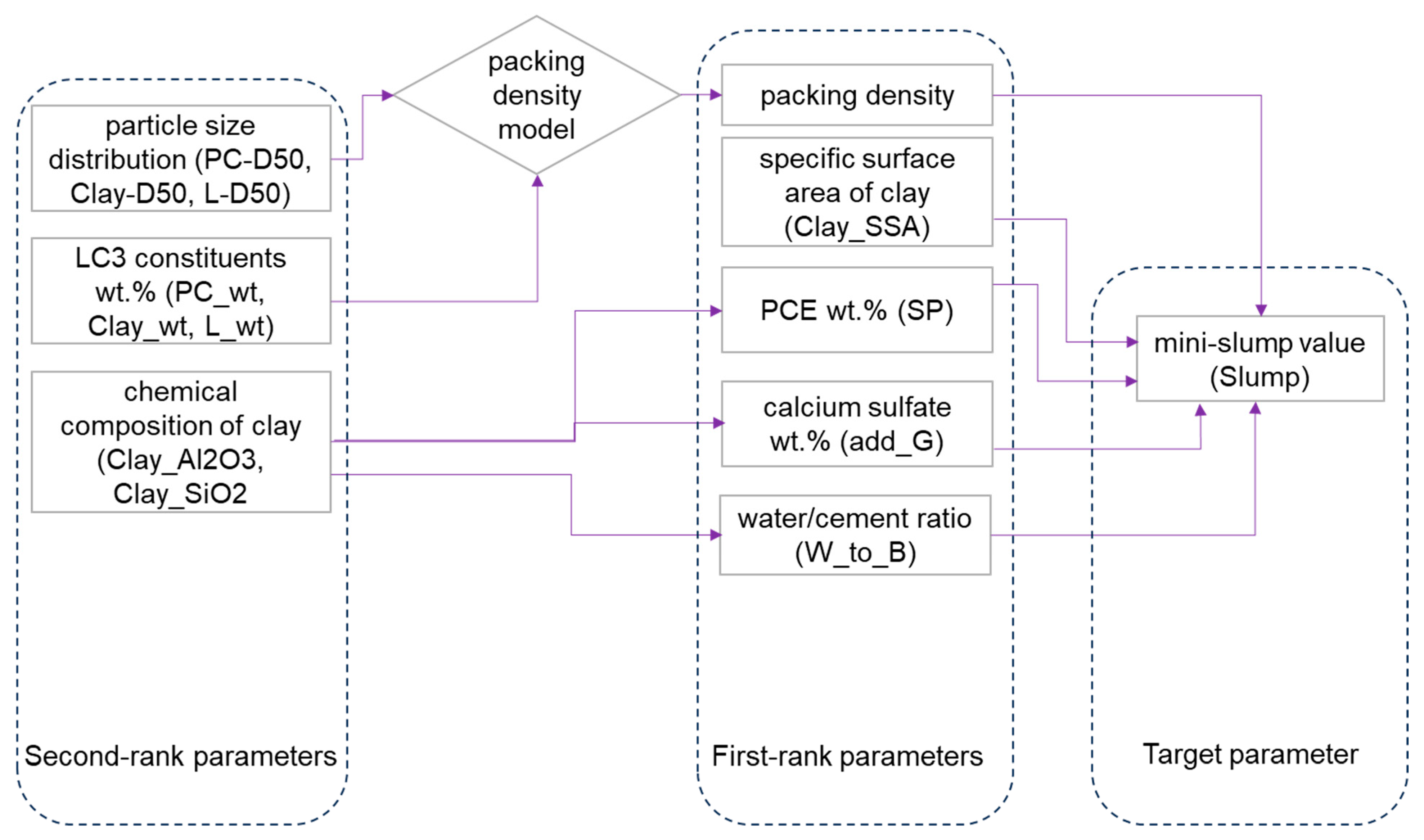
The model examines the correlations between the mini-slump, an output parameter that characterizes fluidity, and a set of derived input parameters. By incorporating domain knowledge, these derived parameters are hierarchically categorized into two groups. The first-rank parameters directly affect fluidity, while the second-rank, or raw, parameters have an indirect impact on fluidity. The interaction between the second-rank and first-rank parameters is defined through domain-specific equations, which include the compressible packing density model (CPM). Hierarchical parameterization improves robustness by transforming correlated raw descriptors into meaningful microstructural first-rank variables (e.g., packing density), thereby limiting spurious correlations and enabling clearer attribution of fluidity drivers. For a detailed illustration of the approach involved in this work, refer to Figure 1.
While promising, this approach has limitations. The model’s accuracy may depend on the size of the dataset (4032 data points and 111 formulations, given in Table S1) and the assumption of spherical particles for packing density calculations. Particle morphology may influence CPM outputs because the model is commonly implemented assuming spherical particles. Calcined clays often exhibit plate-like or anisotropic shapes, which can increase wall/loosening effects and interparticle friction, thereby reducing the effective packing achievable at a given PSD compared with spherical grains. As a result, CPM calculations may overestimate the packing density for highly anisotropic calcined clay systems; this potential bias is considered when interpreting the role of packing density, and conclusions are drawn from robust differences rather than small variations within the estimated uncertainty. We estimated the uncertainty of CPM-derived packing density by a sensitivity analysis, varying key inputs (PSD descriptors and βi) within plausible bounds. This yields a typical absolute error margin of ±0.01–0.02 for packing density, so differences smaller than this are not over-interpreted.
Additionally, using an average specific surface area may overlook the influence of particle morphology. Curing conditions were also neglected, and focusing solely on PCE superplasticizers may limit the model’s applicability to other types of superplasticizers.

2.2. Data Collection

A statistically robust dataset was generated by extracting mini-slump measurements data of LC3 pastes from the published literature. To achieve this, a total of 4032 data points were collected, including 111 calcined clay-based formulations. Mini-slump measurements were conducted using a standardized mini-cone with specific dimensions (38 mm bottom diameter, 19 mm top diameter, and 57 mm height).
To ensure data reliability, the dataset was meticulously chosen based on criteria established by Zhang et al. [12] for similar cement materials. These criteria included a clearly presented, detailed chemical composition of the binders, provided mix proportions for each LC3 cement component, reported specific surface area (SSA), detailed description of the mixing protocol for paste preparation, and inclusion of mixes utilizing PCE superplasticizer due to its significant impact on paste fluidity.
The data was collected from [13,14,15,16]. Table 2 provides an overview of the dataset structure, with a focus on the targeted parameter of fluidity values. The dataset encompasses a comprehensive set of parameters, including the complete composition of LC3 mixes. This includes detailed information on the chemical composition and physical characteristics, such as SSA and mean diameter (D50), of each constituent. The chemistry of calcined clay is predominantly expressed in terms of the major elements Al2O3 and SiO2. Additionally, the w/b ratio and PCE superplasticizer content (when used) are also included for comprehensive data representation.

2.3. Model of Packing Density Calculation

The compressible packing model (CPM) is a method for predicting the packing density (C) of granular mixtures like cements [17]. It takes into account the particle size distribution of the components ( d i ) and the type of compaction applied (K). While the model itself does not directly consider factors like grain shape, admixture content, and water content, these aspects can be indirectly captured through the experimental determination of the packing density for each size class of the particles in the mixture ( β i ).
Packing density (C) is recognized as a crucial factor influencing the properties of cementitious materials, both in their plastic and hardened states. It presents itself as a valuable design tool for optimizing the inclusion of fine aggregates and supplementary cementitious materials. Within this work, a Python (v. 3.11) program was developed to calculate the packing density of LC3 cement using the CPM, as shown below in Equations (1)–(4) [10,17].
a i j = 1 1 d j d i 1.02
b j i = 1 1 d i d j 1.5
C i * = β i 1 j = 1 i 1 1 b j i 1 1 β j y j j = i + 1 N a i j β j y j
K = i = 1 N y i β i 1 C 1 C i *
where
N = number of granular classes considered in the mixture.
d i = grain size of rank i, and d j   = grain size of rank j.
a i j = coefficient for the loosening effect, exerted by grains of rank j on those of rank i (j > i).
b j i = coefficient for the wall effect of the grains of class i on grains of rank j (j < i), with d 1 > d i > d n .
C i * = virtual packing of class i, where class i is dominant in the granular mixture.
y i = volume fraction of granular class i.
β i = experimental packing density of individual granular class i. The values for LC3 constituents were obtained from [10].
K = packing index, a unitless number that relates to the compaction method. For normal consistency of LC3 paste, K = 4.8 (according to [10]).
C = packing density of the granular mixture.
Calculations and statistical analyses were performed in Python (v. 3.11) using NumPy (v. 1.24), Pandas (v. 1.5), and SciPy (v. 1.12); plots were generated with Matplotlib (v. 3.7)/Seaborn (v. 0.12).

3. Results and Discussion

3.1. Statistics of the Slump Values

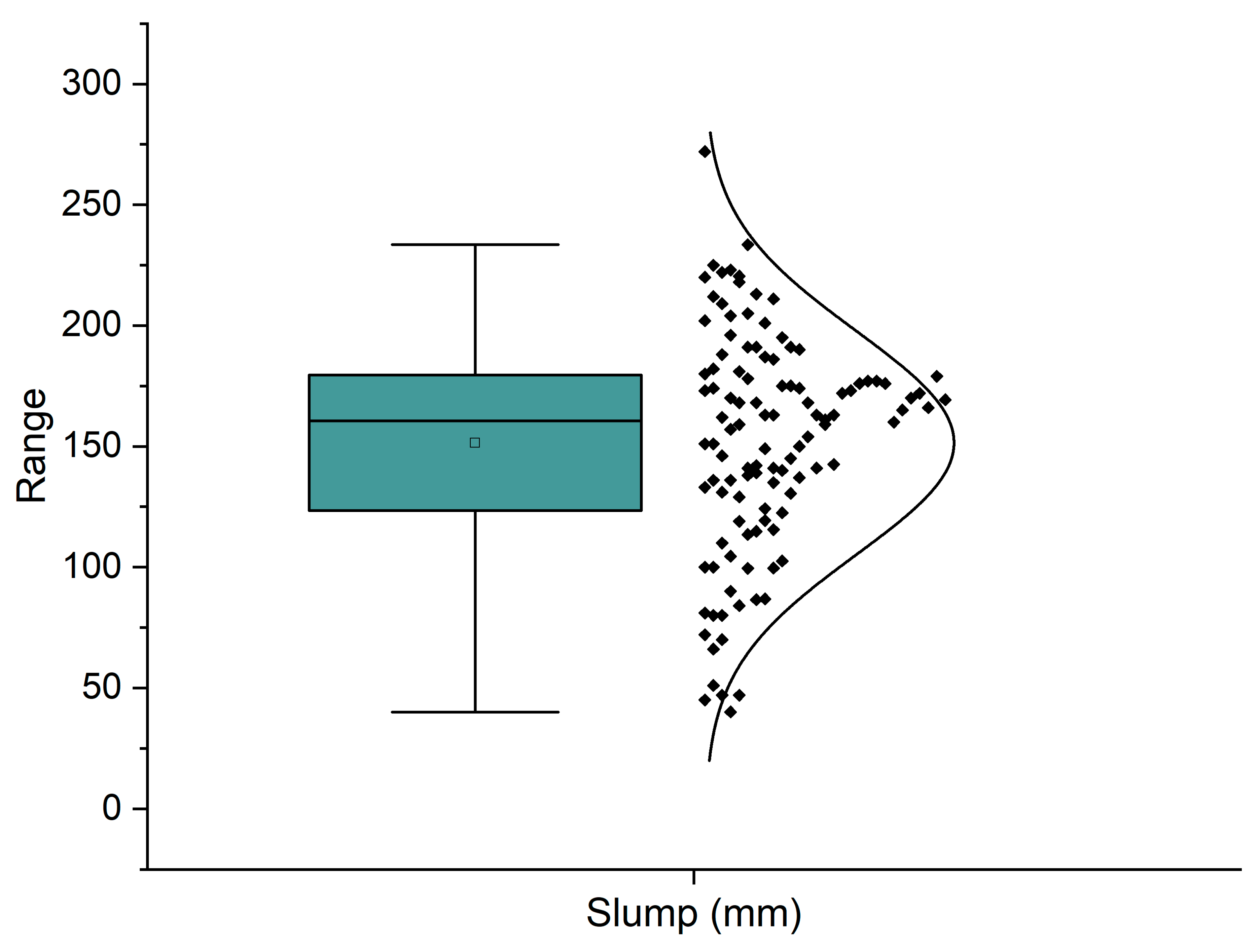
Figure 2 shows the range of variation and distribution of the slump values in the dataset. The boxplot analysis revealed a median slump measurement of 160 mm, with an average measurement of 151 mm and a standard deviation of 40 mm. The data exhibited a spread ranging from roughly 46 mm to 233 mm. The majority of data points resided within the interquartile range, suggesting a homogenous distribution. However, one outlier value on the higher end indicated potential variations beyond the expected range. This outlier value was excluded from further analysis in the study.

3.2. Linear Correlations

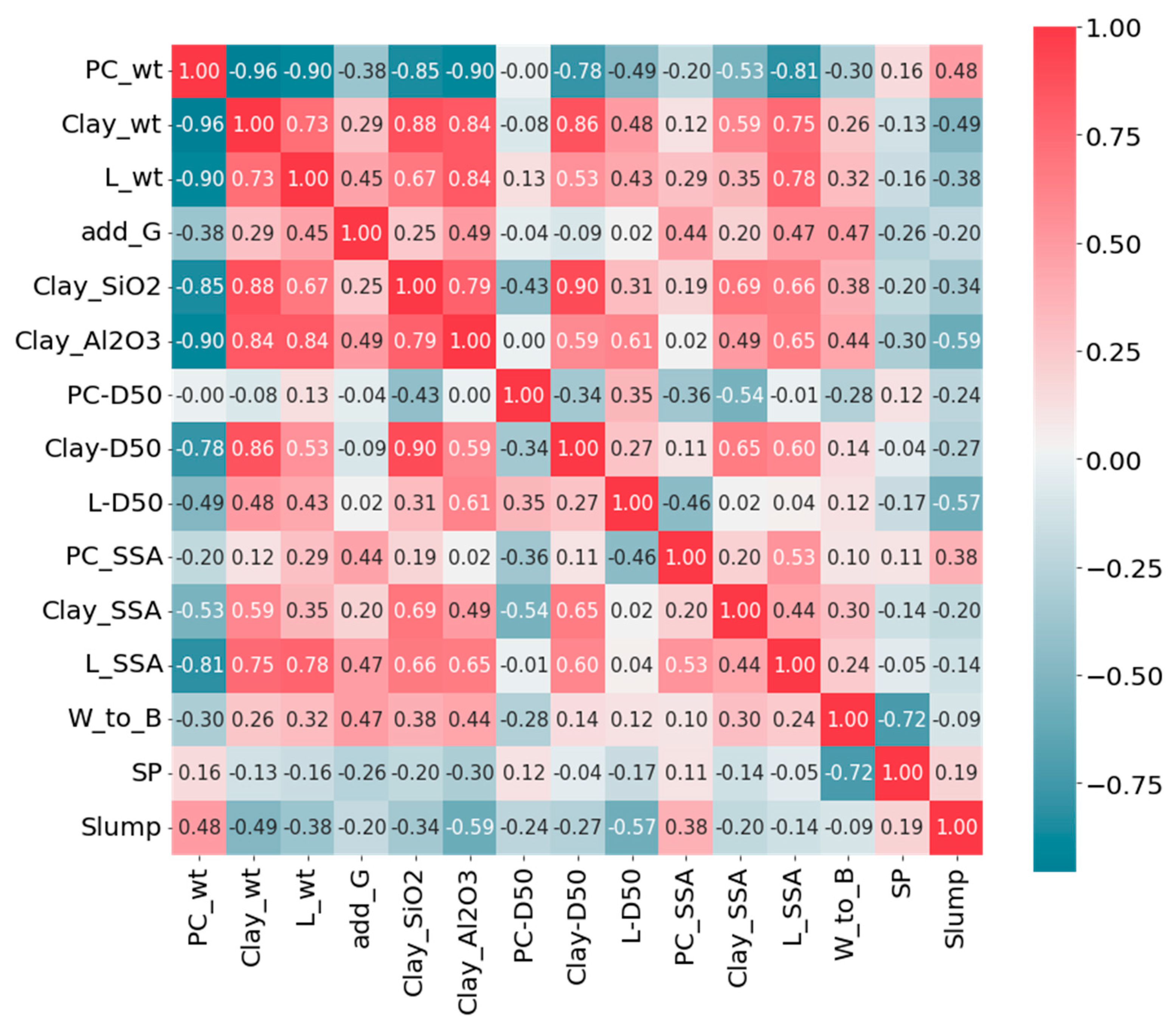
Figure 3 represents a correlation matrix displaying the relationships between 14 variables related to material properties and their effects on slump. The matrix is color-coded, with shades of red indicating positive correlations and shades of blue indicating negative correlations. Correlation coefficients range from −1 to 1, where values closer to 1 imply a strong positive correlation, and values closer to −1 imply a strong negative correlation. Focusing on the variable slump, it exhibits moderate positive correlations with PC_wt (r = 0.48) and PC_SSA (r = 0.38), suggesting that an increase in the percentage weight and specific surface area of PC is associated with an increase in slump. Conversely, slump shows moderate negative correlations with Clay_wt (r = −0.49), Clay_Al2O3 (r = −0.59), and L_D50 (r = −0.57), indicating that higher percentages of calcined clay, aluminum oxide content in clay, and larger particle size distribution of limestone are associated with a decrease in slump.
The matrix also highlights strong correlations among other variables, such as the strong positive correlation between Clay_SiO2 and Clay_wt (r = 0.88), and the strong negative correlation between PC_wt and Clay_wt (r = −0.96). This relationship is explained by the fact that a higher proportion of PC leads to a lower proportion of clay in the LC3 mix. Such multicollinearity can obscure the apparent influence of individual raw variables and may lead to misleading interpretations if correlations are considered in isolation. Therefore, in this study, results are primarily interpreted at the level of first-rank, microstructural-informed descriptors (e.g., packing density, effective clay surface area, superplasticizer dosage, and water-to-binder ratio), while correlations involving individual raw proportions are treated with caution.
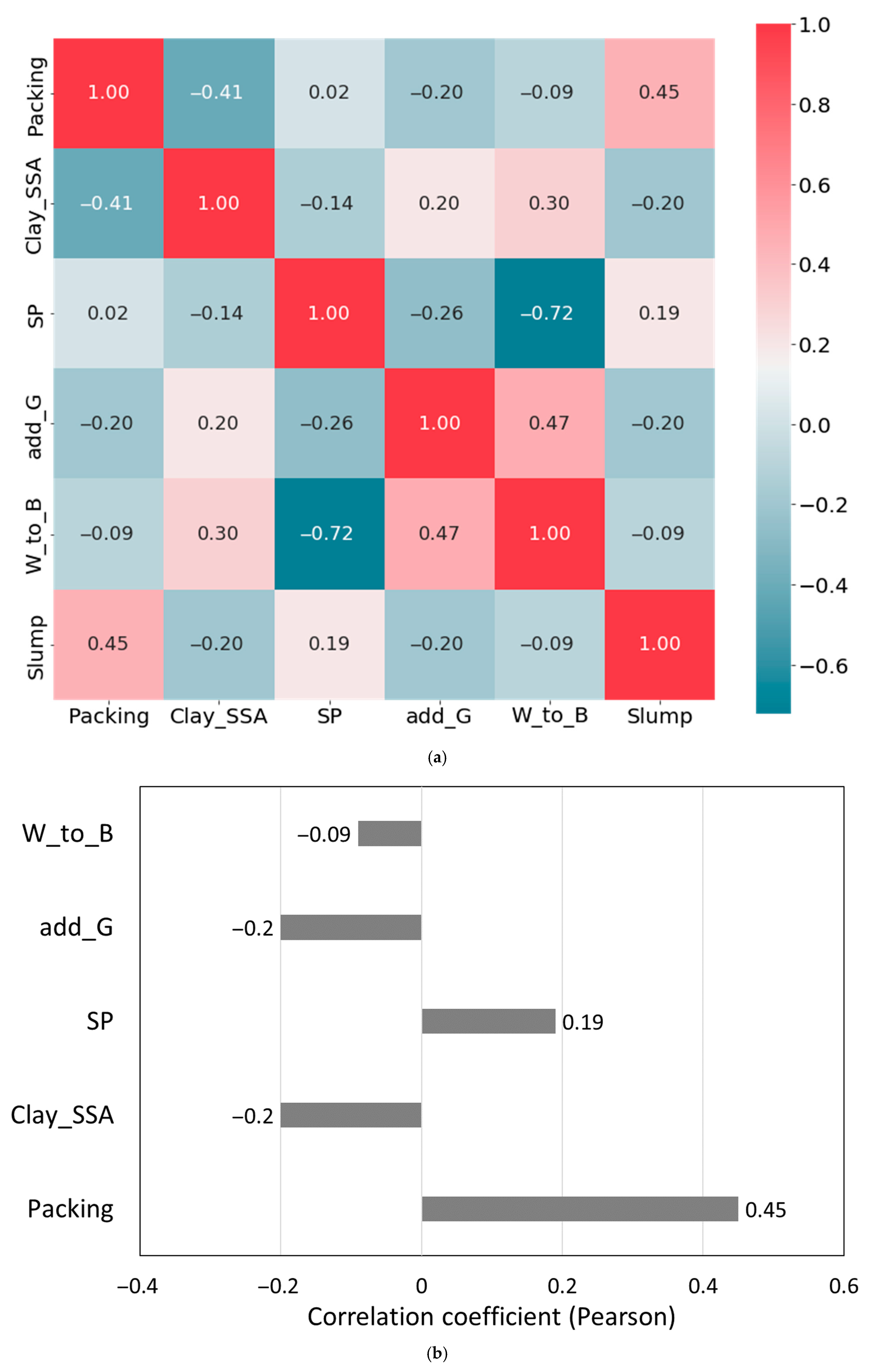
Figure 4a represents a correlation matrix displaying the relationships between six variables: packing, Clay_SSA, SP, add_G, W_to_B, and slump. The matrix is color-coded, with shades of red indicating positive correlations and shades of blue indicating negative correlations. Correlation coefficients range from −1 to 1, where values closer to 1 imply a strong positive correlation, and values closer to −1 imply a strong negative correlation. Notable correlations include a strong negative correlation between SP and W_to_B (r = −0.72), indicating that as SP increases, W_to_B tends to decrease significantly. Conversely, packing shows a moderate positive correlation with slump (r = 0.45), suggesting that an increase in slump is associated with an increase in packing.
Focusing on the target variable slump, Figure 4b presents the Pearson correlation coefficients between various formulation parameters of LC3 and its slump values, indicating the strength and direction of their relationships. Notably, the “Packing” parameter exhibits a moderately strong positive correlation (0.45), suggesting that higher packing density significantly increases slump values, potentially improving fluidity. This positive correlation aligns with the observations made by Dhandapani et al. [18]. They suggest denser packing corresponds to a lower calcined clay content in the mix, leading to potentially lower water demand and higher slump. Conversely, both “add_G” (additional gypsum) and “Clay_SSA” (specific surface area of clay) have negative correlations (−0.2), implying that higher values of these parameters reduce slump, potentially due to increased water demand or finer particle sizes. The negative correlation here reinforces the point made with packing density. Higher specific surface area, often associated with finer particles, can lead to lower fluidity as observed by Ferreiro [19]. Their study suggests calcination temperature also plays a role, with lower calcination temperatures resulting in higher specific surface area and lower fluidity. The “W_to_B” (water-to-binder ratio) shows a weak negative correlation (−0.09), indicating a minimal effect on slump. This weak correlation might be due to the small variation interval of the water-to-binder ratio in the dataset, limiting its observable impact on the slump, as observed in Hay et al. [20]. Their study suggests that a low w/b ratio (0.25) significantly reduces hydration. This aligns with a minimal effect on slump at low water content, as there is likely less water available for initial hydration and lubrication of particles. Similarly, SP (superplasticizer content) has a weak positive correlation (0.19), suggesting a slight enhancement in fluidity with increased superplasticizer content. The weak correlations may stem from the restricted ranges and clustering in the compiled literature dataset (SP = 0–2.5 wt.%). Hay et al. [20] also reported a higher admixture dosage requirement for LC3 compared to Portland cement, potentially due to the high surface area and water uptake of calcined clay in LC3, requiring more superplasticizer to achieve the same level of dispersion.
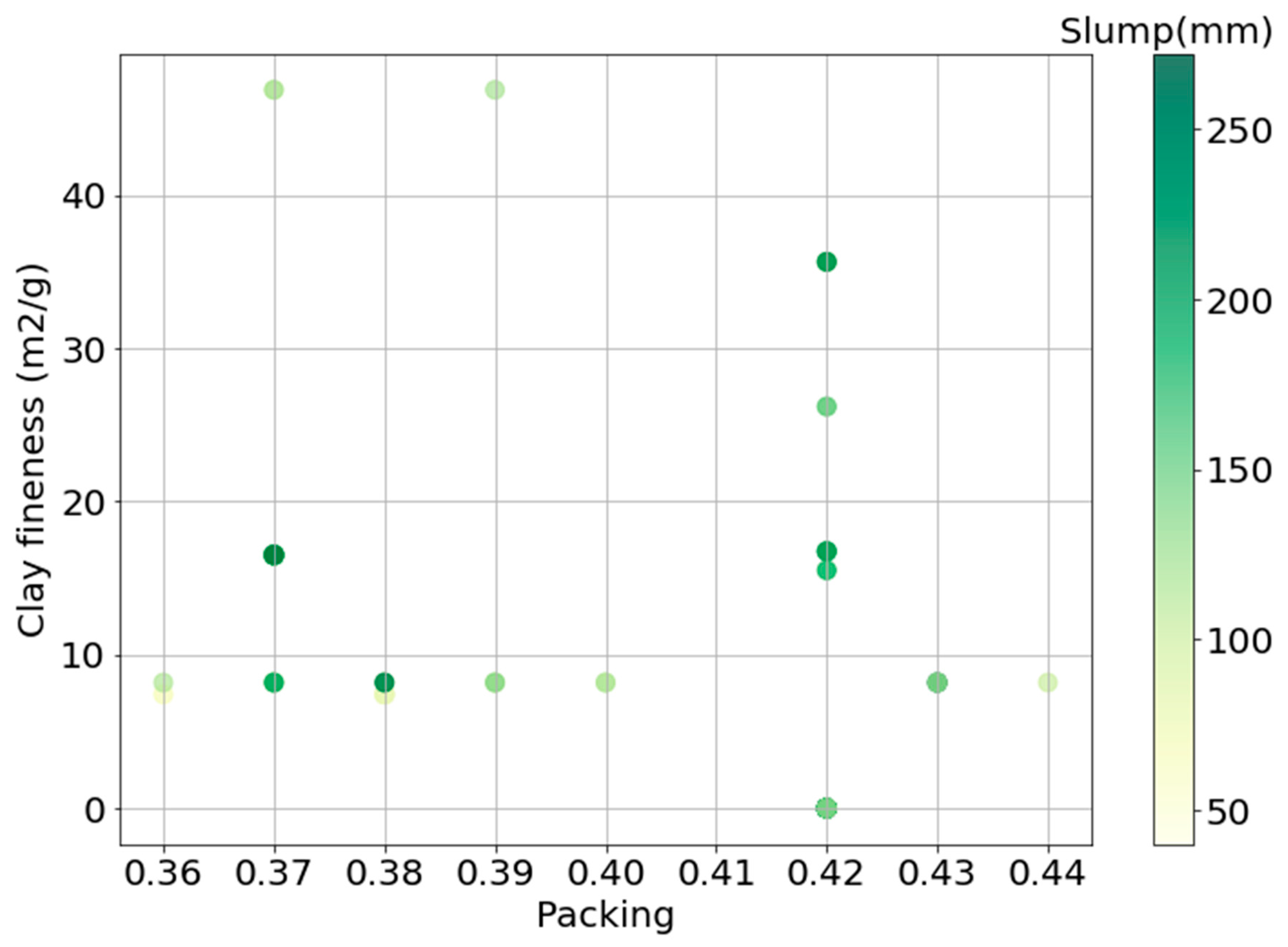
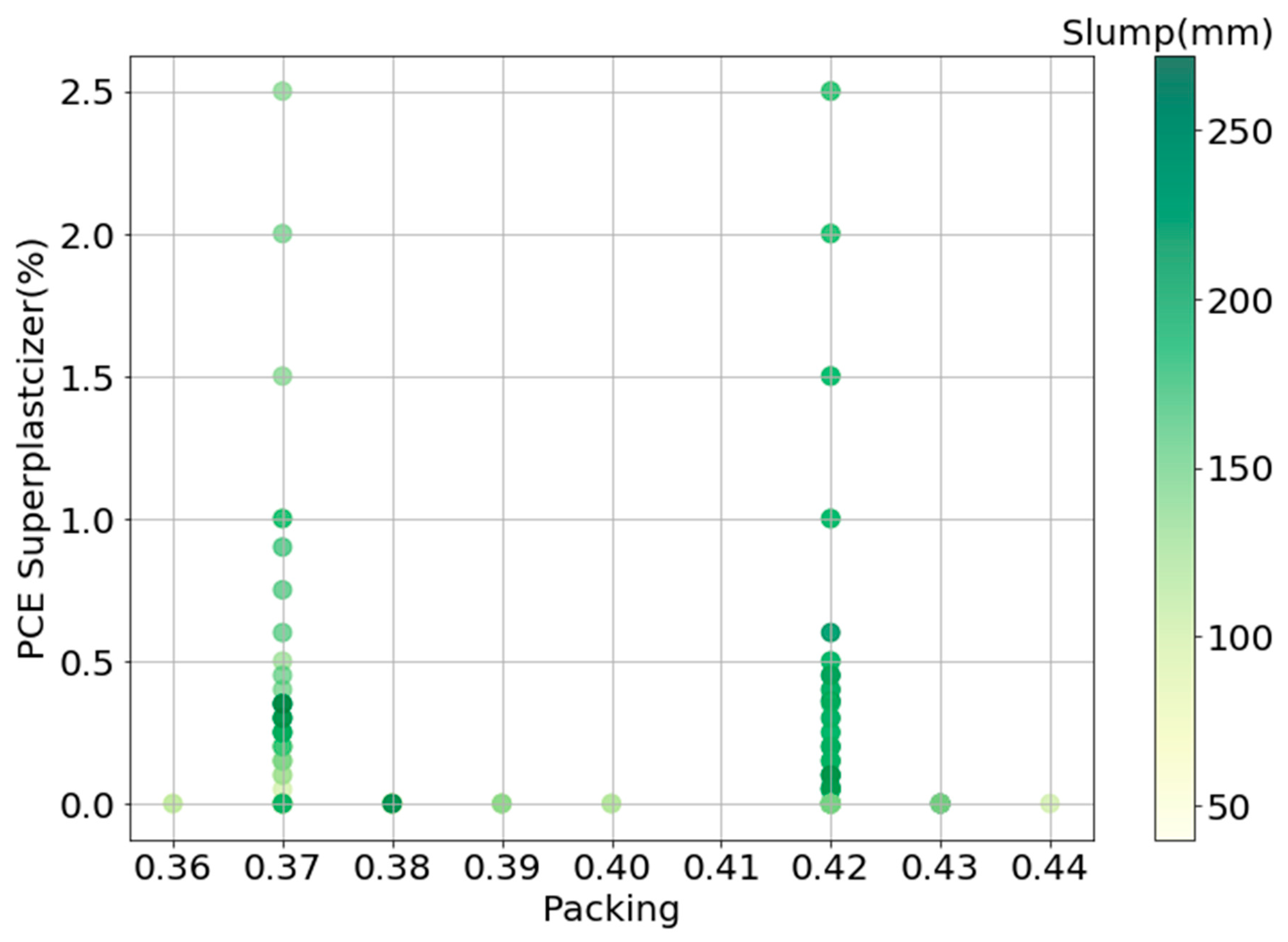
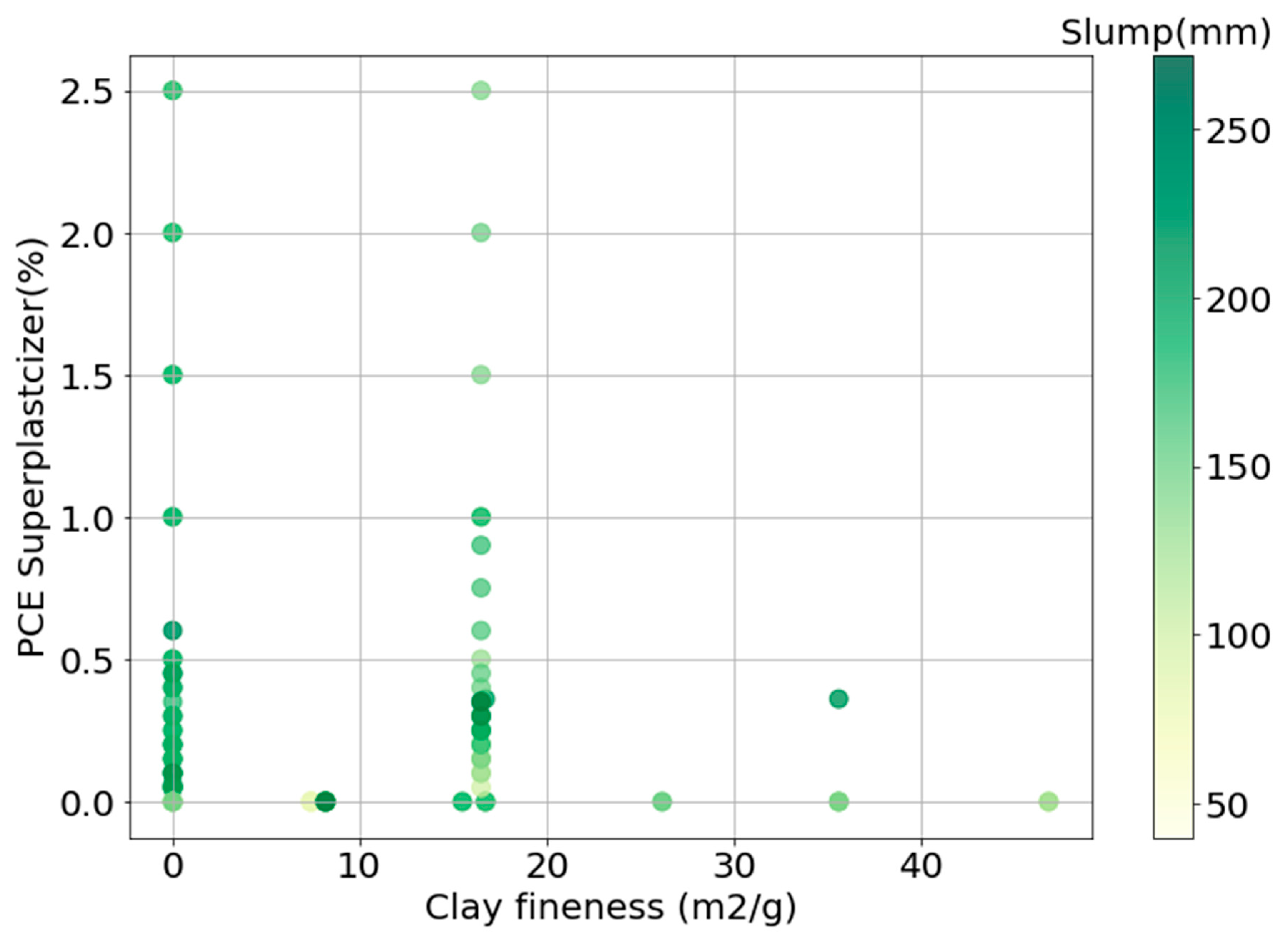
The analysis of the influence of packing density, clay fineness, and PCE superplasticizer content on the slump values of LC3 cements is illustrated through three scatter plots (Figure 5, Figure 6 and Figure 7). Figure 5 demonstrates that higher packing densities (around 0.42) generally result in higher slump values, indicating better fluidity. It also shows that at lower packing densities (0.36 to 0.38), the slump values are lower, particularly when clay fineness is high. This suggests that increased packing density improves particle distribution and reduces water demand, thereby enhancing fluidity. Ferreiro et al. [19] indicate that calcined clay content and raw clay fineness significantly influence fluidity, particularly when the clays are calcined at lower temperatures, resulting in a more spherical shape and reduced specific surface area. Figure 6 illustrates the significant impact of PCE superplasticizer on slump values across different packing densities. Higher PCE content leads to increased slump values, especially at higher packing densities. Even at lower packing densities (0.36 to 0.38), small amounts of PCE (0.5–1%) significantly increase the slump. This indicates that PCE superplasticizers effectively disperse cement particles, reducing water demand and enhancing fluidity, particularly when combined with optimal packing density. This observation supports Hay et al.’s [20] findings that LC3 requires higher admixture dosages than Portland cement due to its high surface area and water uptake. Figure 7 explores the relationship between clay fineness, PCE superplasticizer content, and slump values. The plot reveals that higher PCE content consistently increases slump values across various levels of clay fineness. For very low clay fineness, even small amounts of PCE result in significant increases in slump, while for higher fineness, the improvement is still notable but less pronounced. This suggests an optimal range of clay fineness (10–30 m2/g), where the combination with PCE maximizes fluidity. It was found in the literature that the addition of superplasticizers, particularly polycarboxylate-based ones, is essential to control and increase the setting time and fluidity of concrete with calcined clay [18]. This is consistent with the observed effects of PCE superplasticizers in enhancing the fluidity of LC3 cements.
The results from the three figures collectively indicate a complex but clear interaction between packing density, clay fineness, and PCE superplasticizer content in determining the slump values of LC3 cements. Higher packing densities and PCE superplasticizer contents are consistently associated with increased slump values, underscoring their importance in enhancing fluidity. Clay fineness, while having a variable impact, can significantly contribute to achieving desirable slump values when combined with appropriate levels of packing density and PCE. This interplay suggests that optimizing these parameters is crucial for formulating LC3 cement mixtures with superior fluidity. These findings demonstrate the necessity of a balanced approach in the mix design to ensure that each component contributes positively to the overall performance of the cement.

3.3. Influence of Packing Density on the Ternary Blend Fluidity

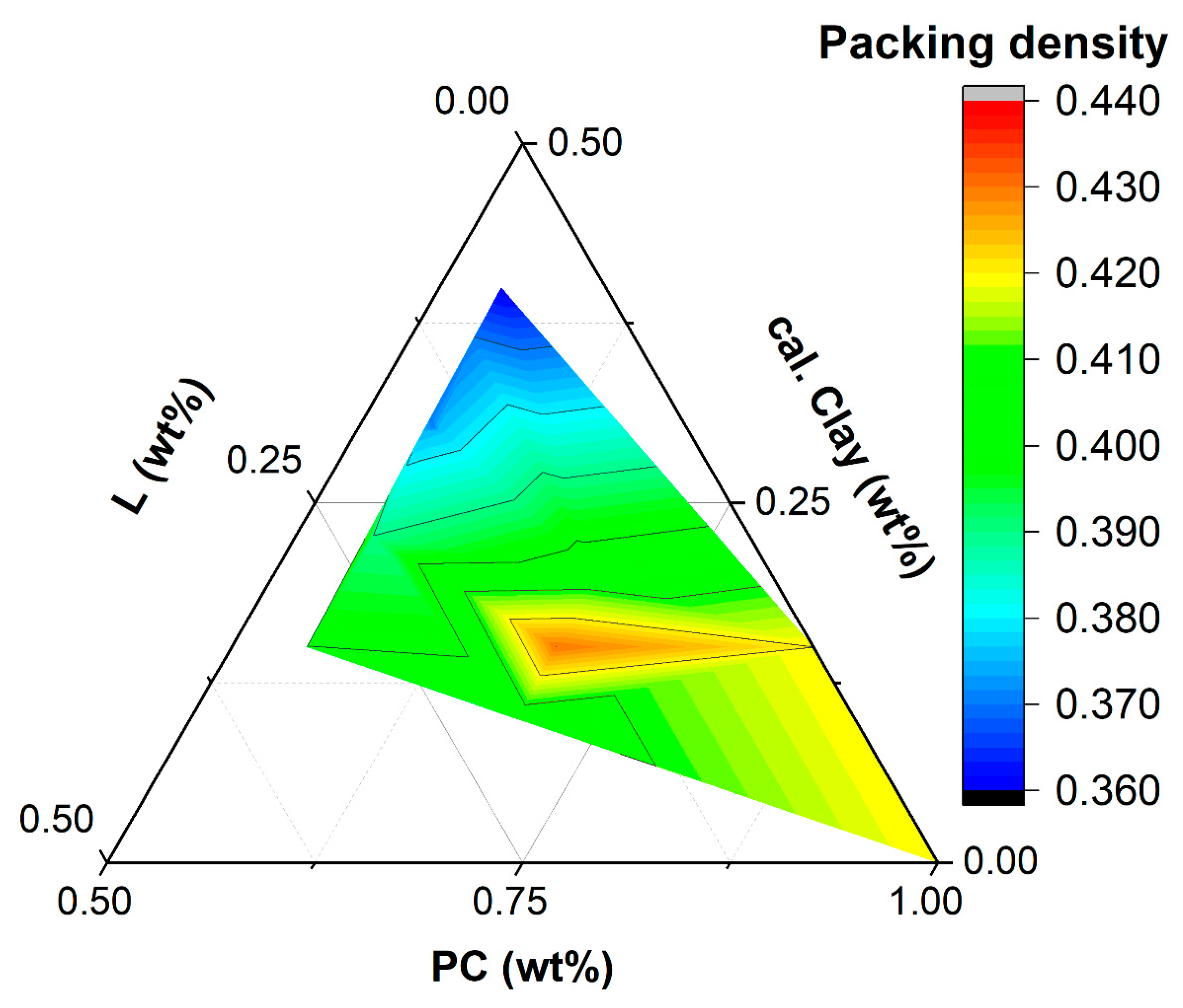
Figure 8 shows the evolution in packing density calculated by the compressible packing model of calcined clay limestone binders. This ternary plot depicts the packing density of LC3 formulations of the dataset, consisting of Portland cement (PC), calcined clay (cal. Clay), and limestone (L), with the packing indicated by a color gradient from 0.360 to 0.440. The highest packing density is achieved with a higher proportion of PC and a balanced mix of cal. Clay and L, while lower densities occur with higher proportions of cal. Clay and L. In the LC3 formulation, the interplay between these components significantly affects packing density. PC and L particles, which are generally larger and more spherical, contribute to the overall volume but create voids that limit packing efficiency. Calcined clay, with its smaller, angular shape, fills these voids, leading to a denser packing structure and increased packing density. This finding aligns with the observations by Marchetti et al. [21], who emphasized that packing density determines the amount of voids between particles to be filled with water, affecting the rheological and strength performance of cementitious materials. According to Marchetti, a high packing density results in less water being required to fill these voids, improving flowability and strength at the same water/binder ratio.
Furthermore, Cardinaud’s [22] research supports these observations by highlighting the role of limestone particles in filling voids and creating nucleation sites for hydration products, which enhance packing density and promote the formation of new hydrates. This dual effect of limestone particles, both physically filling voids and chemically interacting to form carboaluminates, is crucial in achieving high packing density and improved cement properties.
The plot in Figure 8 indicates that the optimal composition for maximum packing density is skewed towards a PC-rich region with a balanced mix of cal. Clay and L, suggesting that PC plays a crucial role in achieving dense packing within the composite. This is consistent with Luzu et al.’s [10] findings that ternary blends incorporating metakaolin generally achieve higher packing densities, regardless of the limestone filler type.
In terms of practical application, Marchetti et al. [21] suggest that the combined effects of packing density, water content, and surface area can be evaluated in terms of the water film thickness of the mixture, an important factor governing the rheology of pastes and mortars.

4. Conclusions

This paper investigates the fluidity of Limestone Calcined Clay Cement (LC3), a low-carbon alternative known for its higher water demand and increased superplasticizer requirements compared to traditional cements. The study employs a data analysis approach based on the existing literature to identify key factors influencing LC3 fluidity.
While previous analyses often focused on secondary formulation parameters like composition and water-to-cement ratio, this work highlights the importance of primary parameters like packing density and particle fineness. The inclusion of calculated packing density, obtained through a compressible packing density model, demonstrates its significant influence on fluidity. Key results indicate a strong correlation between packing density and fluidity. Higher packing densities (around 0.42) are associated with better fluidity and higher slump values, whereas lower packing densities (0.36 to 0.38) lead to reduced slump values, particularly when combined with high clay fineness. Furthermore, the study underscores the effectiveness of PCE superplasticizer in improving slump values across different packing densities, even at lower densities, highlighting its role in dispersing cement particles and lowering water demand. For instance, at packing densities around 0.37–0.42, PCE-containing mixes generally exhibit mini-slump values on the order of 180–230 mm, compared with approximately 80–120 mm for PCE-free systems, corresponding to an approximate gain of ~70–100 mm.
The study reveals that packing density may be the most crucial parameter for optimizing LC3 fluidity. Traditional methods, such as adjusting water-to-cement ratio or increasing superplasticizer content, are limited by their potential negative impacts on mechanical properties. Conversely, optimizing packing density offers a more sustainable solution. By manipulating the amount and size distribution of clay and limestone in the mix design, packing density can be effectively controlled, leading to improved fluidity. Since the quantity and fineness of Portland cement are less controllable in LC3 systems due to a narrow variation range, focusing on clay and limestone characteristics offers a more practical approach. The results suggest that targeting higher packing density through optimized PSD balance and constituent proportions can improve workability while potentially reducing water demand and PCE reliance, supporting lower embodied impacts.
In conclusion, this research proposes a paradigm shift in LC3 mix design strategies by prioritizing packing density alongside traditional parameters. The conclusions drawn in this study should be interpreted within the specific scope of cement paste-scale LC3 systems and the statistical bounds of the available data in the literature, while providing a robust and interpretable framework for guiding future experimental investigations at larger material scales like mortars and concretes.

Supplementary Materials

The following supporting information can be downloaded at https://www.mdpi.com/article/10.3390/su18031251/s1: Table S1: DATASET.

Author Contributions

Y.E.K.: writing—original draft preparation; methodology; software. Y.E.H.: funding acquisition; methodology; conceptualization; project administration; writing—review and editing. A.S.: methodology; supervision. C.P.: supervision. K.T.: software; project administration; supervision; funding acquisition. S.A.: methodology; supervision. M.B.: methodology; supervision. All authors have read and agreed to the published version of the manuscript.

Funding

This work is supported by institutional grants from the National Research Agency under the Investments for the future program with the reference ANR 10 LABX 0074 01 Sigma LIM.

Institutional Review Board Statement

Not applicable.

Informed Consent Statement

Not applicable.

Data Availability Statement

The raw data supporting the conclusions of this article will be made available by the authors on request.

Acknowledgments

The authors would like to thank the staff of Limoges University for their support during the completion of this work.

Conflicts of Interest

The authors declare no conflicts of interest.

References

  1. European Standard EN 197-5; Ciment—Partie 5: Ciment Portland composé CEM II/C-M et Ciment composé CEM VI. European Committee for Standardization (CEN): Brussels, Belgium, 2021.
  2. Antoni, M.; Rossen, J.; Martirena, F.; Scrivener, K. Cement Substitution by a Combination of Metakaolin and Limestone. Cem. Concr. Res. 2012, 42, 1579–1589. [Google Scholar] [CrossRef]
  3. Avet, F.; Scrivener, K. Investigation of the Calcined Kaolinite Content on the Hydration of Limestone Calcined Clay Cement (LC3). Cem. Concr. Res. 2018, 107, 124–135. [Google Scholar] [CrossRef]
  4. Dhandapani, Y.; Sakthivel, T.; Santhanam, M.; Gettu, R.; Pillai, R.G. Mechanical Properties and Durability Performance of Concretes with Limestone Calcined Clay Cement (LC3). Cem. Concr. Res. 2018, 107, 136–151. [Google Scholar] [CrossRef]
  5. De Matos, P.R.; Andrade Neto, J.S.; Sakata, R.D.; Campos, C.E.M.; Kirchheim, A.P.; Rodríguez, E.D. Effect of Superplasticizer Addition Time and Metakaolin Source on the Early-Age Hydration of Limestone Calcined Clay Cement (LC3). Mater. Struct. 2022, 55, 218. [Google Scholar] [CrossRef]
  6. Muzenda, T.R.; Hou, P.; Kawashima, S.; Sui, T.; Cheng, X. The Role of Limestone and Calcined Clay on the Rheological Properties of LC3. Cem. Concr. Compos. 2020, 107, 103516. [Google Scholar] [CrossRef]
  7. Ferreiro, S.; Herfort, D.; Damtoft, J.S. Effect of Raw Clay Type, Fineness, Water-to-Cement Ratio and Fly Ash Addition on Workability and Strength Performance of Calcined Clay–Limestone Portland Cements. Cem. Concr. Res. 2017, 101, 1–12. [Google Scholar] [CrossRef]
  8. Cassagnabère, F.; Diederich, P.; Mouret, M.; Escadeillas, G.; Lachemi, M. Impact of Metakaolin Characteristics on the Rheological Properties of Mortar in the Fresh State. Cem. Concr. Compos. 2013, 37, 95–107. [Google Scholar] [CrossRef]
  9. Borralleras, P.; Segura, I.; Aranda, M.A.; Aguado, A. Influence of Experimental Procedure on D-Spacing Measurement by XRD of Montmorillonite Clay Pastes Containing PCE-Based Superplasticizer. Cem. Concr. Res. 2019, 116, 266–272. [Google Scholar] [CrossRef]
  10. Luzu, B.; Trauchessec, R.; Lecomte, A. Packing Density of Limestone Calcined Clay Binder. Powder Technol. 2022, 408, 117702. [Google Scholar] [CrossRef]
  11. Mehdipour, I.; Khayat, K.H. Effect of Particle-Size Distribution and Specific Surface Area of Different Binder Systems on Packing Density and Flow Characteristics of Cement Paste. Cem. Concr. Compos. 2017, 78, 120–131. [Google Scholar] [CrossRef]
  12. Zhang, L.V.; Marani, A.; Nehdi, M.L. Chemistry-Informed Machine Learning Prediction of Compressive Strength for Alkali-Activated Materials. Constr. Build. Mater. 2022, 316, 126103. [Google Scholar] [CrossRef]
  13. Bishnoi, S. Calcined Clays for Sustainable Concrete: Proceedings of the 3rd International Conference on Calcined Clays for Sustainable Concrete; Springer Nature: Berlin/Heidelberg, Germany, 2020; Volume 25. [Google Scholar]
  14. Emmanuel, A.C.; Haldar, P.; Maity, S.; Bishnoi, S. Second Pilot Production of Limestone Calcined Clay Cement in India: The Experience. Indian Concr. J 2016, 90, 57–63. [Google Scholar]
  15. Favier, A.R.; Scrivener, K.L. The Effect of Limestone on the Hydration and Workability of Ternary Blended Cement LC3: Limestone, Calcined Clays and Cement. Constr. Mater. Syst. 2017, 109, 134–141. [Google Scholar]
  16. Zunino Sommariva, F.A. Limestone Calcined Clay Cements (LC3): Raw Material Processing, Sulfate Balance and Hydration Kinetics; EPFL: Lausanne, Switzerland, 2020. [Google Scholar]
  17. De Larrard, F. Concrete Mixture Proportioning: A Scientific Approach; CRC Press: Boca Raton, FL, USA, 1999. [Google Scholar]
  18. Dhandapani, Y.; Joseph, S.; Geddes, D.A.; Zhao, Z.; Boustingorry, P.; Bishnoi, S.; Vieira, M.; Martirena, F.; Castel, A.; Kanavaris, F. Fresh Properties of Concrete Containing Calcined Clays: A Review by RILEM TC-282 CCL. Mater. Struct. 2022, 55, 151. [Google Scholar] [CrossRef]
  19. Ferreiro, S.; Canut, M.M.C.; Lund, J.; Herfort, D. Influence of Fineness of Raw Clay and Calcination Temperature on the Performance of Calcined Clay-Limestone Blended Cements. Appl. Clay Sci. 2019, 169, 81–90. [Google Scholar] [CrossRef]
  20. Hay, R.; Celik, K. Effects of Water-to-Binder Ratios (w/b) and Superplasticizer on Physicochemical, Microstructural, and Mechanical Evolution of Limestone Calcined Clay Cement (LC3). Constr. Build. Mater. 2023, 391, 131529. [Google Scholar] [CrossRef]
  21. Marchetti, G.; Rahhal, V.; Pavlík, Z.; Pavlíková, M.; Irassar, E.F. Assessment of Packing, Flowability, Hydration Kinetics, and Strength of Blended Cements with Illitic Calcined Shale. Constr. Build. Mater. 2020, 254, 119042. [Google Scholar] [CrossRef]
  22. Cardinaud, G.; Rozière, E.; Martinage, O.; Loukili, A.; Barnes-Davin, L.; Paris, M.; Deneele, D. Calcined Clay–Limestone Cements: Hydration Processes with High and Low-Grade Kaolinite Clays. Constr. Build. Mater. 2021, 277, 122271. [Google Scholar] [CrossRef]
Figure 1. Illustration of the proposed approach to correlate fluidity of LC3 cement with influential formulation parameters.
Sustainability 18 01251 g001
Figure 2. Range of variation and distribution of the slump values in the dataset. The small square (□) stands for the mean, the baseline in the box represents the 3rd quartile, the line in the middle represents the median, and the upper line of the box represents the 1st quartile.
Sustainability 18 01251 g002
Figure 3. Correlation matrix heatmap of second-rank parameters.
Sustainability 18 01251 g003
Figure 4. (a) Correlation matrix heatmap of first-rank parameters, (b) Pearson correlation coefficients between first-rank parameters and slump values.
Sustainability 18 01251 g004
Figure 5. Projection of the dataset according to clay fineness and packing. Colors correspond to the corresponding slump values.
Sustainability 18 01251 g005
Figure 6. Projection of the dataset according to PCE superplasticizer weight percentage and packing. Colors correspond to the corresponding slump values.
Sustainability 18 01251 g006
Figure 7. Projection of the dataset according to PCE superplasticizer weight percentage and clay fineness. Colors correspond to the corresponding slump values.
Sustainability 18 01251 g007
Figure 8. Evolution in packing density calculated by the CPM of calcined clay limestone binders.
Sustainability 18 01251 g008
Table 1. Summary of first-rank (direct) and second-rank (indirect) parameters and their expected effects on cement paste fluidity.
RankParameterDefinition/ComputationExpected Effect on
Fluidity
Main Mechanism
First-rank (direct)Packing density (Φ)Computed from particle size distributions (e.g., CPM)Higher Φ → higher fluidity (at constant w/b)Lower void volume to be filled → lower water demand; thicker water film; reduced friction
First-rank (direct)Water-to-binder ratio (w/b)Total mixing water/binder massHigher w/b → higher fluidity (up to segregation)More free water; lower yield stress
First-rank (direct)PCE dosage (SP, wt.% of binder)Mass fraction of PCE superplasticizer relative to binderHigher SP → higher fluidity (possible plateau/overdosage)Electrosteric dispersion; deflocculation; reduced apparent viscosity
First-rank (direct)Effective specific surface area (SSA_eff)Fineness/SSA indicator (e.g., clay SSA)Higher SSA_eff → lower fluidityMore adsorbed water and higher interparticle friction
First-rank (direct)Volume fraction of reactive fines/clay (at constant Φ)Share of very fine and anisotropic particlesHigher clay fines → lower fluidityPlatelet anisotropy increases water demand and particle interlocking
Second-rank (indirect)Raw proportions (PC_wt, Clay_wt, LS_wt, etc.)Mix design inputs (mass fractions)Indirect (via Φ, SSA_eff, SP efficiency)High collinearity; effects mainly mediated by first-rank variables
Second-rank (indirect)PSD descriptors (D10, D50, D90, span)Particle size statistics per constituentIndirect (via Φ)Controls wall/loosening effects and void volume
Second-rank (indirect)Particle morphology (sphericity, aspect ratio)Shape anisotropy (e.g., plate-like clay)Often decreases fluidity (at equal PSD)Higher friction/contacts; effective packing lower than spherical assumption
Second-rank (indirect)Surface chemistry/PCE compatibilityAdsorption/interactions (clay, sulfates, alkalis)Can reduce SP efficiency and fluidityCompetitive adsorption and PCE scavenging reduce dispersion
Table 2. Summary of dataset variables.
SignificationDatapointsMinMax
Target parameter
SlumpMini-cone slump (mm)11240272
Other parameters
PC_wtWeight percentage of Portland cement (wt.%)11253.7100
Clay_wtWeight percentage of calcined clay (wt.%)112040
L_wtWeight percentage of limestone (wt.%)112030.5
add_GWeight percentage of added gypsum (wt.%)11201.3
Clay_SiO2Weight percentage of SiO2 in clay (wt.%)11248.176.7
Clay_Al2O3Weight percentage of Al2O3 in clay (wt.%)11210.444.13
PC-D50D50 of Portland cement (µm)1124.820
Clay-D50D50 of clay (µm)1126.620.4
L-D50D50 of limestone (µm)1124.1100
PC_SSASurface specific area of Portland cement (m2/g)1120.631.4
Clay_SSASurface specific area of clay (m2/g)1127.446.8
L_SSASurface specific area of limestone (m2/g)1120.073.6
W_to_BWater-to-binder ratio1120.250.55
SPWeight percentage of PCE superplasticizer (wt.%)11202.5
Disclaimer/Publisher’s Note: The statements, opinions and data contained in all publications are solely those of the individual author(s) and contributor(s) and not of MDPI and/or the editor(s). MDPI and/or the editor(s) disclaim responsibility for any injury to people or property resulting from any ideas, methods, instructions or products referred to in the content.