Systematic Review

Consumer Attitudes and Perceptions Toward Sustainable Packaging: A Systematic Literature Review

by
Natalia Kozik-Kołodziej
Department of Packaging and Logistics Processes, Kraków University of Economics, 31-510 Kraków, Poland
Sustainability 2026, 18(3), 1235; https://doi.org/10.3390/su18031235
Submission received: 30 September 2025 / Revised: 22 November 2025 / Accepted: 25 November 2025 / Published: 26 January 2026

Abstract

Sustainable packaging has become a major area of academic and practical interest, reflecting growing environmental awareness, regulatory pressure, and changing consumer expectations. This study aims to synthesize existing knowledge on consumers’ behavior toward sustainable packaging and their willingness to pay (WTP) for environmentally friendly solutions. Following PRISMA guidelines, a systematic literature review was conducted, encompassing 78 peer-reviewed publications from 2019 to 2025. Bibliometric mapping using VOSviewer (version 1.6.20) identified three main research streams: consumer attitudes and determinants of behavior, willingness to pay for sustainable packaging, and perception of packaging materials and systems. The reviewed studies, conducted across Europe, Asia, Australia, and North America, employed diverse methods, including surveys, discrete choice experiments, structural equation modeling, and mixed designs. Results indicate that consumer behavior is shaped by environmental awareness, self-identity, perceived usefulness, and trust in labeling, while packaging material and functionality remain decisive for acceptance. Most studies show that consumers are willing to pay a premium of about 10–20% for sustainable packaging, though price sensitivity and hygiene concerns limit actual adoption. The findings highlight the conditional nature of consumer acceptance and emphasize the need for transparent communication, credible certification, and functional design. This study provides guidance for policymakers and businesses seeking to promote sustainable packaging solutions.

1. Introduction

Modern economies face the imperative of reconciling economic development with environmental constraints and societal expectations. Sustainable development and the circular economy have emerged as key conceptual responses to the challenges of environmental degradation, resource depletion, and the growing demands of stakeholders. These frameworks are increasingly embraced by both policymakers and businesses, which perceive them not only as obligations but also as sources of competitive advantage and tools for building a positive public image [1].
Consumers play a pivotal role in this transformation, as their purchasing decisions increasingly drive the shift toward more responsible models of consumption and production. Rising social and environmental awareness leads individuals to view purchases not merely as economic transactions but as acts that influence both the natural environment and the social fabric. This shift exerts pressure on industries with significant environmental impact—notably, the packaging sector [2,3].
Packaging is an indispensable component of nearly every product and supply chain. In 2025, the global packaging market is projected to reach a value of USD 175.71 trillion and continue its upward trajectory [4]. On one hand, packaging fulfills essential functional roles by protecting and presenting goods; on the other, it generates substantial waste. In the European Union alone, packaging accounts for 36% of municipal solid waste, with per capita packaging waste production reaching approximately 190 kg in 2023 [5]. Consequently, the packaging industry has become a focal point for regulatory and innovative efforts aimed at promoting sustainability [1].
The growth in packaging production and consumption has triggered regulatory pressure. The European Union is introducing new measures (e.g., PPWR) to reduce waste, increase recycling rates, limit single-use packaging, and mandate the inclusion of recycled materials [6]. According to data from the European Patent Office [7], approximately 6% of all bioplastics-related innovations between 2010 and 2019 were associated with the packaging sector. Companies operating in this field allocate, on average, 3% of their revenues to research and development—a level of investment that exceeds that of many other manufacturing industries [8]. Market forecasts indicate dynamic growth in innovative and eco-friendly packaging segments: Grand View Research [9] projects a compound annual growth rate (CAGR) of 6.2% for smart packaging between 2024 and 2030, while Mordor Intelligence [10] anticipates a 7.37% annual increase in the sustainable packaging market from 2025 to 2030.
The ecological transformation of the packaging industry has become one of the key processes shaping corporate competitiveness and long-term resilience. Evolving legal frameworks, global challenges related to the climate crisis and resource scarcity, as well as mounting social pressure and consumer expectations, place the packaging sector at the heart of the green transition. Sustainable packaging constitutes a fundamental element of this shift, serving both as a means of achieving environmental objectives and as a source of competitive advantage and organizational robustness. Accordingly, the aim of this study is to analyze consumer attitudes and perceptions toward sustainable packaging.
Despite growing attention to sustainable packaging, research on consumer behavior in this area remains scattered and inconsistent. This study addresses this gap by systematically reviewing and mapping recent empirical findings to identify key determinants of consumer acceptance and willingness to pay for sustainable packaging. The results provide an integrated understanding of psychological, social, and contextual factors shaping consumer choices and offer practical guidance for policymakers and industry stakeholders.

2. Theoretical Background

Sustainable packaging is a concept that remains challenging to define unequivocally. This complexity stems from the wide diversity of materials, technologies, and applications, as well as the dynamic evolution of the packaging industry. Scholarly literature emphasizes that, compared to conventional packaging, sustainable solutions must meet higher environmental, economic, and social standards while maintaining functionality and user quality. These requirements apply across the entire life cycle of packaging and align with the principles of the circular economy [11,12].
One of the most frequently cited reference points is the definition proposed by the Sustainable Packaging Coalition (SPC), which states that sustainable packaging should be beneficial and safe for individuals and communities, meet market criteria, be produced and processed using renewable energy, and be designed to optimize material and energy use while enabling recovery through biological and industrial cycles [13]. In contrast, the European Organization for Packaging and the Environment (EUROPEN) does not use the term “sustainable packaging” directly, but instead promotes packaging design that supports sustainable development, highlighting its role in reducing product waste and conserving resources [14].
Recent academic research expands the definition of sustainable packaging by integrating not only environmental and economic efficiency but also social value. It underscores that packaging is not a neutral element—it can foster consumer education, shape pro-environmental attitudes, and promote inclusivity, for example, by ensuring information accessibility for diverse social groups [11,12,15]. This implies that the role of sustainable packaging extends beyond protective and logistical functions, becoming a medium of communication and a catalyst for social change.
An analysis of the aforementioned definitions and approaches reveals several shared dimensions that form the foundation of sustainable packaging [11]:
  • Environment—minimizing the negative environmental impact of packaging throughout its life cycle.
  • Society—addressing user needs, health safety, and educational and social aspects.
  • Economy—ensuring cost efficiency, reducing losses and waste.
  • Time—adopting a long-term perspective that considers the impact on future generations.
  • Development—supporting technological progress and the development of new materials and business models.
Contemporary approaches to sustainable packaging emphasize the integration of economic, environmental, and social functions, asserting that design should not be limited to ecological considerations alone. Sustainable packaging should not only protect the product and the environment but also enhance social well-being, shape consumer attitudes, and foster corporate responsibility within global supply chains.
The literature increasingly explores consumer behavior in the context of sustainable consumption and production, indicating that the success of implemented changes depends largely on user acceptance and attitudes. These studies often rely on established theoretical frameworks. One of the most widely applied models is the Theory of Planned Behavior (TPB) [16], which posits that individual intentions are shaped by attitudes toward behavior, subjective norms, and perceived behavioral control. Another commonly used tool is the willingness to pay (WTP) indicator, which assesses consumers’ readiness to incur additional costs for environmentally friendly products. This metric enables a practical evaluation of the market viability of innovative solutions and frequently reveals a gap between consumer declarations and actual purchasing behavior [17]. Increasingly, studies on sustainable packaging also employ other approaches, such as the Value-Belief-Norm Theory (VBN), which highlights the role of pro-environmental values in shaping behavioral norms and intentions [18], as well as hybrid models that combine psychological and economic dimensions.
Despite growing attention to sustainable consumption, research on consumer behavior toward packaging remains fragmented, highly context-dependent, and often limited to specific product categories. Existing studies differ in theoretical grounding, operationalization of sustainability, and measurement of consumer responses, which makes it difficult to draw coherent conclusions. This gap is particularly important because the effectiveness of sustainable packaging initiatives ultimately depends on consumer acceptance and behavioral change.
In this context, two fundamental research questions emerge that address critical gaps in the literature and directly respond to the needs of the field:
  • RQ1: What factors determine consumer behavior toward sustainable packaging?
This question is essential because prior research identifies numerous, yet inconsistently defined, psychological, functional, social, and contextual determinants of behavior. A systematic synthesis is needed to clarify the relative importance of these determinants, integrate findings across diverse product categories and regions, and support the development of coherent theoretical perspectives on how consumers evaluate sustainable packaging.
  • RQ2: Are consumers willing to pay more for products packaged in accordance with sustainable development principles?
This question is central to the economic feasibility of sustainable packaging solutions. WTP is frequently used in the literature, yet findings remain heterogeneous across countries, materials, and experimental setups. Synthesizing this evidence allows researchers and practitioners to assess market readiness, identify boundary conditions affecting price acceptance, and understand the gap between stated and actual willingness to pay.
Addressing these research questions is relevant from both academic and practical perspectives. Academically, it consolidates dispersed knowledge, helps reconcile inconsistencies in prior findings, and clarifies the behavioral mechanisms underlying acceptance of sustainable packaging. Practically, it provides actionable insights for packaging producers, retailers, and policymakers—enabling them to design strategies, regulations, and communication practices that effectively increase consumer engagement and accelerate the transition toward sustainable packaging systems.

3. Research Methodology

To assess consumer behavior in the context of sustainable packaging, a systematic literature review was conducted in accordance with the PRISMA guidelines (Preferred Reporting Items for Systematic Reviews and Meta-Analyses) [19]. The PRISMA checklist supporting this systematic review is available in the Supplementary Materials. The search was carried out in the ScienceDirect database and covered publications from 2015 to 2025, with the final update completed on 29 September 2025.
The following search string was used: (“sustainable packaging” OR “green packaging”) AND (“consumer”) AND (“awareness” OR “perception” OR “attitude” OR “behavior” OR “behaviour”). Boolean operators “OR” (synonyms) and “AND” (core constructs) were applied to refine the query.
Inclusion criteria were as follows:
  • Peer-reviewed journal articles;
  • Written in English;
  • Empirical studies;
  • Directly examining consumer behavior, attitudes, perceptions, or willingness to pay toward sustainable or green packaging.
Exclusion criteria were as follows:
  • Conference papers, book chapters, review articles, industry reports;
  • Publications focusing exclusively on technical aspects of packaging (e.g., material engineering, biopolymer performance, and LCA without a consumer component);
  • Studies on logistics, csr/esg strategies, or purchase intention where packaging was not the central object of analysis;
  • Works without full-text access;
  • Articles written in languages other than English.
The screening was performed independently by two researchers, with disagreements resolved through consensus. Data extraction was also conducted independently by two reviewers using a standardized extraction approach. Extracted information included study design, sample characteristics, country, methods, and main findings. After independent extraction, the results were compared and discrepancies were resolved through discussion until consensus was reached.
Risk of bias was assessed qualitatively by two independent reviewers. The assessment considered sampling strategies, measurement validity, use of self-reported data, clarity of reporting, and potential selective outcome reporting. Disagreements were resolved through consensus. No formal risk-of-bias tool was applied.
The outcomes sought included:
(1)
consumer attitudes and perceptions toward sustainable packaging,
(2)
behavioral determinants of acceptance,
(3)
willingness to pay (WTP) for sustainable packaging, and
(4)
perceptions of packaging materials and functionality.
All results compatible with these outcome domains were extracted, regardless of the specific constructs, measures, or time points used in the original studies. Extracted effect measures included proportions, means, regression coefficients, structural equation model outputs, and WTP estimates expressed in monetary or percentage terms. No restrictions were imposed on the type of effect measure. Missing or unclear details were noted and interpreted cautiously without data imputation.
Given the substantial methodological heterogeneity of the included studies (survey-based methods, discrete choice experiments, SEM/PLS-SEM, qualitative and mixed-method designs), the synthesis was conducted narratively. Studies were assigned to each synthesis according to the outcomes they reported. The narrative synthesis focused on identifying and organizing the factors that influence consumer behavior and willingness to pay for sustainable packaging, as reported in the individual studies.
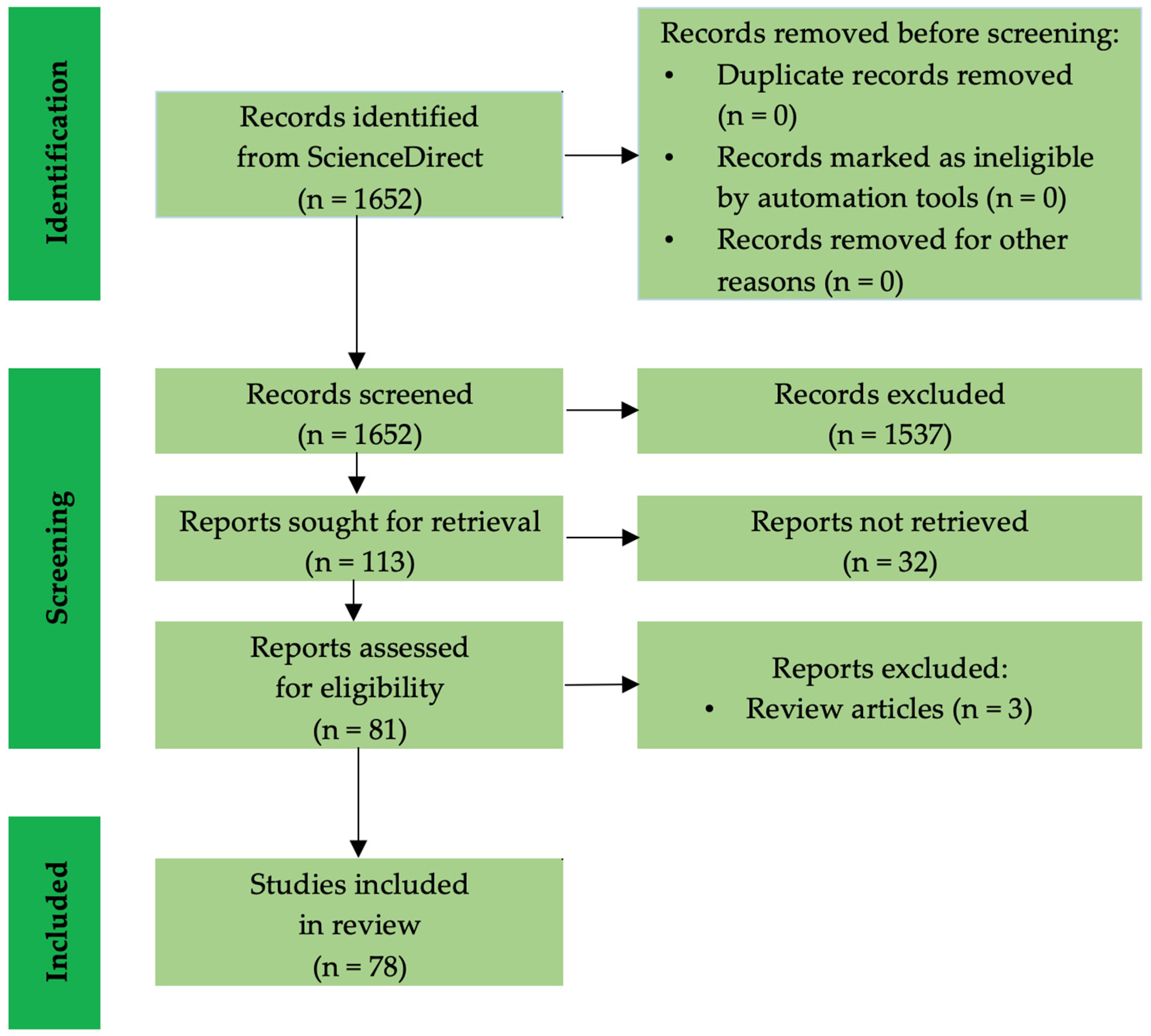
In total, 1652 records were identified. After title and abstract screening, 113 publications met the initial inclusion criteria. Due to lack of access to full text, 32 items were removed, and an additional 3 review papers were excluded. Ultimately, 78 studies were eligible for full analysis. The selection process is summarized in the PRISMA flow chart (Figure 1).
Reporting bias was assessed qualitatively by considering the limitations of the search strategy (use of a single database, English-only publications) and the likelihood that studies with null or non-significant findings may be underrepresented in the published literature.
To deepen the thematic analysis, a bibliometric mapping was conducted using the VOSviewer software (version 1.6.20). The analysis encompassed a set of publications included in the systematic review, covering the years 2019–2025. Bibliometric evaluation was performed across five dimensions: (1) year of publication, (2) authors’ countries of origin, (3) most cited publications, (4) most cited journals, and (5) keyword co-occurrence.
In the keyword co-occurrence analysis, a combined approach was applied, integrating both author-assigned keywords and index keywords provided by the database. This dual strategy enabled a more comprehensive representation of the research field, merging the subjective perspective of authors, reflecting current research concepts and emerging trends, with the standardized terminology characteristic of scientific indexing systems. The inclusion of both keyword types facilitated the identification of dominant thematic areas as well as cross-disciplinary concepts, such as marketing, management, and environmental sciences, which collectively shape the domain of sustainable packaging research.
Keyword mapping allowed for the visualization of the thematic structure of the field, highlighting the most frequently co-occurring terms and their interrelations. To balance granularity and interpretability, a minimum occurrence threshold of three (≥3) was adopted, meaning that only terms appearing in at least three publications were included in the analysis. This threshold aligns with established bibliometric practices for small and medium-sized publication sets (fewer than 100 items) and follows the recommendations of the VOSviewer (version 1.6.20) developers [20], who emphasize the need to exclude infrequent terms to enhance the interpretability of bibliometric maps. The chosen threshold effectively eliminated marginal or incidental terms while retaining a sufficient number of relevant concepts for cluster analysis.
Full counting was applied in the keyword co-occurrence analysis, meaning that each co-occurrence of two terms within the same publication was treated as equivalent. This method is recommended for co-word analysis, as it reflects the actual semantic strength of conceptual associations [21]. Unlike fractional counting, which is primarily used in co-authorship analyses, full counting provides a more accurate representation of the thematic structure of the research field, as each co-occurrence denotes an equal conceptual link, independent of the total number of keywords in a given article.
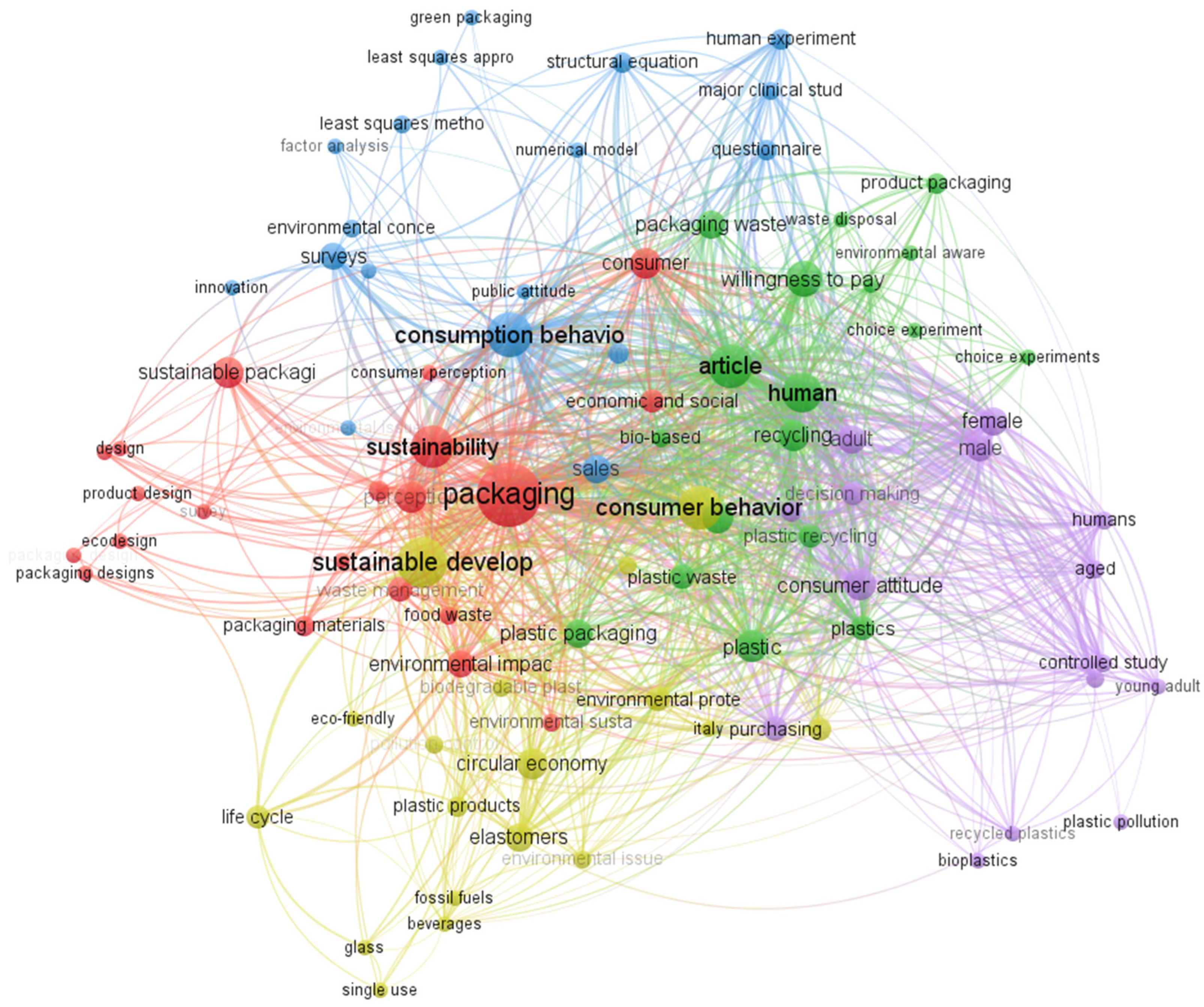
In the generated concept network, each node represents a single keyword, with its diameter indicating the frequency of occurrence within the analyzed publication set. The length and thickness of the lines connecting nodes reflect the strength of association between terms—the shorter and thicker the line, the more frequently the keywords co-occurred in the same document. Node colors correspond to thematic clusters, representing groups of related concepts and serving as the basis for interpreting dominant research directions.
An analogous procedure was applied to the analysis of authors’ countries of origin. In addition to the number of publications, the Total Link Strength (TLS) indicator was calculated to reflect the intensity of scientific collaboration between countries. TLS is the sum of individual Link Strengths (LS) between country pairs, representing the number of jointly published works. A high TLS value indicates that a given country plays a central role in the scientific collaboration network, engaging in numerous and robust partnerships with other nations. To ensure consistency of results, fractional counting was used in this case, allowing for proportional attribution of publications to countries, institutions, or authors according to their actual contribution to co-authorship. This method provides a more accurate reflection of each entity’s scientific output and avoids overestimation in the case of multinational publications. Fractional counting is widely recommended in co-authorship analyses [22].

4. Results

The systematic literature review enabled the identification of scholarly research focused on consumer behavior toward sustainable packaging. From the evaluated sources, 78 publications published between 2019 and 2025 were selected as meeting the criteria and objectives of this study. A complete list of the reviewed publications is provided in Appendix A.

4.1. Publication Trends by Year

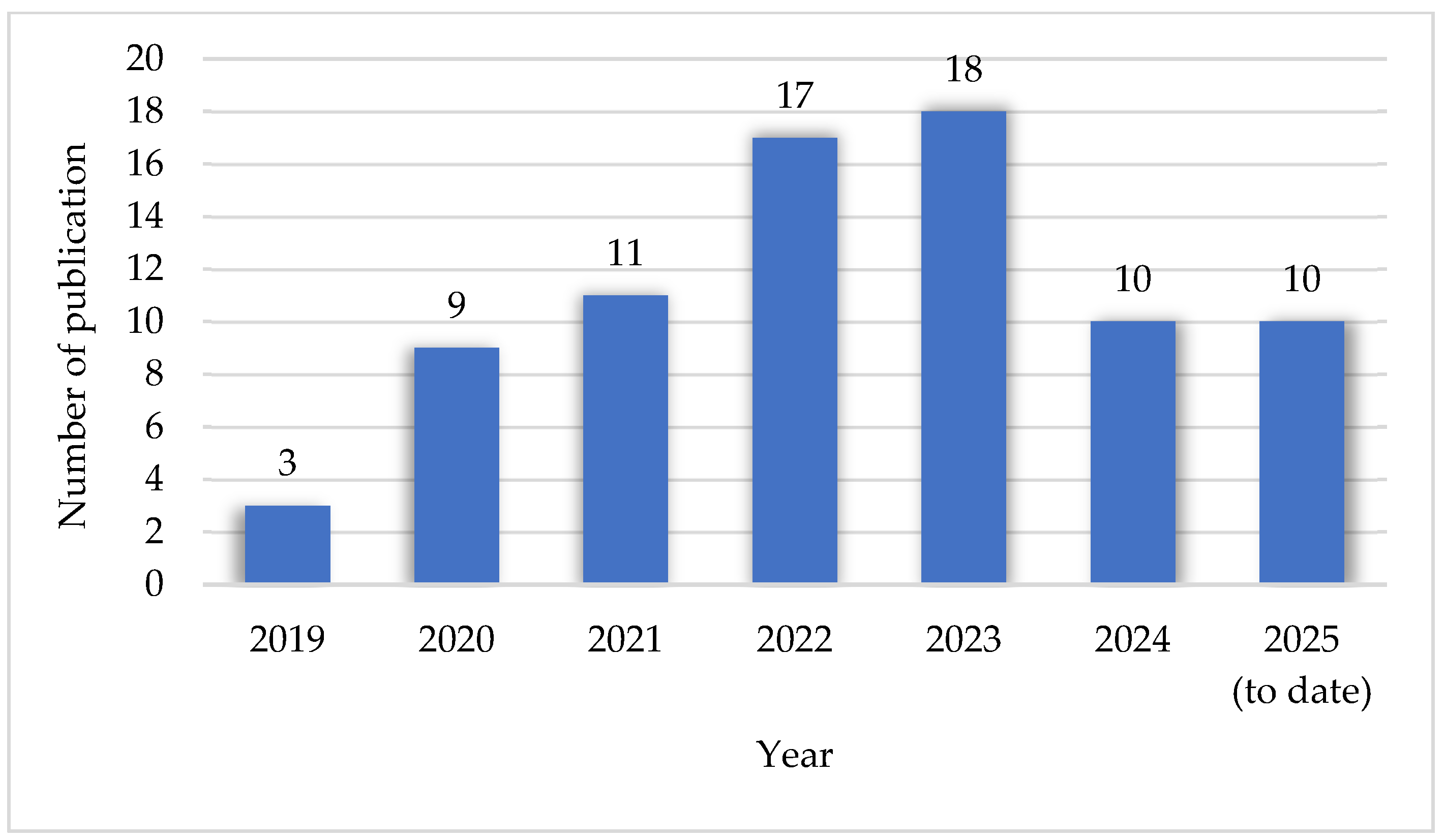
An analysis of the publication years reveals a clear upward trend in scholarly interest in this topic. In 2019, only three articles were published, followed by nine in 2020, eleven in 2021, seventeen in 2022, and eighteen in 2023 (Figure 2). In each of the last two years, ten publications were identified. It should be noted, however, that the year 2025 has not been fully analyzed, as it is still ongoing and additional publications may yet appear. These figures indicate that research on sustainable packaging and consumer behavior has gained increasing scholarly attention, with the peak period coinciding with growing regulatory pressure and debates surrounding the European Union’s Packaging and Packaging Waste Regulation (PPWR). It is also noteworthy that the emergence of the first publications in 2019 aligns with the adoption of the EU Single-Use Plastics Directive (2019/904/EU), which introduced restrictions on the use of single-use plastic products, including packaging. This regulation has served as a key driver for the development of research and practices related to the design of packaging in accordance with sustainability principles.

4.2. Publication Trends and Co-Authorship Network by Country

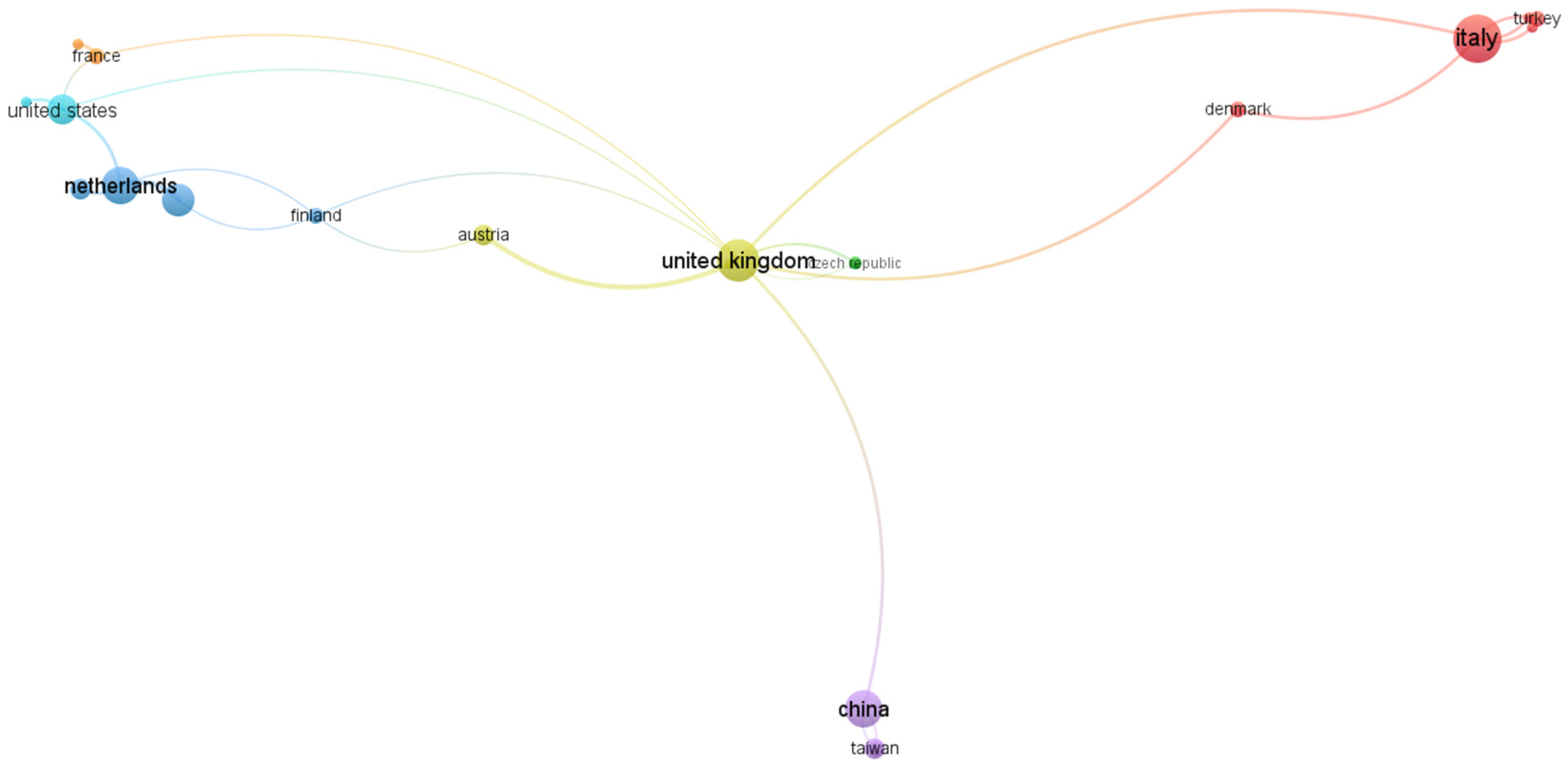
The country co-authorship analysis conducted using the VOSviewer software (version 1.6.20) made it possible to identify the structure of international collaboration in research on sustainable packaging between 2019 and 2025. The analysis applied the fractional counting method, which enables proportional attribution of each country’s contribution to co-authored publications. In the analyzed dataset, 38 countries were identified as contributors to the development of this research field, of which 23 formed an interconnected scientific collaboration network, including Cyprus, Denmark, Italy, Slovenia, Turkey, the Czech Republic, Pakistan, Poland, the United Arab Emirates, Finland, Germany, The Netherlands, Spain, Austria, Hungary, the United Kingdom, China, Malaysia, Taiwan, Belgium, the United States, France, and Switzerland.
The country collaboration map (Figure 3) shows that the network has a polycentric structure. The United Kingdom, Italy, and The Netherlands emerge as central nodes in the network, indicating their key role in cross-country research cooperation. The thickness of the connecting lines on the map reflects the strength of collaboration (Link Strength), while the color scheme represents the identified clusters grouping countries with similar research profiles. Seven thematic clusters were distinguished, the largest of which consist of Western European countries, while smaller clusters are represented by East Asian and Central European states.
The highest publication activity was recorded for Italy (14 publications, 488 citations, TLS = 5), which also plays a significant role in building the European collaboration network. The United Kingdom (11 publications, TL = 8) ranks highly as well, characterized by the largest number of connections with other countries, confirming its key role in international research projects on consumer behavior toward sustainable packaging. China (9 publications, TLS = 2) and the Netherlands (9 publications, TLS = 4) are among the most frequently cited countries (445 and 330 citations, respectively), indicating their growing influence in this field. Outside Europe, the United States (6 publications, TLS = 3) and Australia (5 publications, TLS = 3) show strong activity, serving as important partners in international co-authorship projects. Table 1 presents detailed results for the ten countries with the highest publication output.
The findings confirm that research on sustainable packaging has a global character, with Europe playing a dominant role both in terms of the number of publications and the intensity of scientific collaboration. Asia—particularly China, South Korea, and Malaysia—represents one of the most dynamically developing research regions, which may be associated with the rapid growth of the packaging industry and the implementation of pro-environmental regulations in this part of the world.

4.3. Journal-Level Citation Impact

An analysis of the journals in which articles on sustainable packaging and consumer behavior were published enabled the identification of ten titles with the highest scientific impact (Table 2). All of these journals are ranked in the first quartile (Q1) according to the Journal Citation Reports (JCR), confirming their high prestige and relevance within the global scientific literature. Collectively, these journals have accumulated over 2400 citations, indicating substantial research activity and strong academic interest in this topic.
The journal with the highest citation count is Resources, Conservation and Recycling (816 citations, 10 publications, JIF = 10.9; JCI = 1.56), which serves as a leading platform for research on circular economy, sustainable consumption, and environmental policy. The second most cited journal is Journal of Cleaner Production (570 citations, 20 publications, JIF = 10.0; JCI = 1.54), widely recognized as one of the most influential outlets in the field of sustainability and environmental innovation. Other highly ranked journals include Journal of Retailing and Consumer Services (JIF = 13.1; JCI = 2.50) and Sustainable Production and Consumption (JIF = 9.6; JCI = 2.06), both of which focus on consumer attitudes and sustainable market practices.
The high values of the Impact Factor and Journal Citation Indicator confirm that these journals are among the most influential in disciplines such as marketing, environmental management, and sustainable production and consumption. This suggests that the topic of sustainable packaging is not only a rapidly evolving research area but also one with significant interdisciplinary relevance, encompassing both social sciences and technical domains.

4.4. Most Cited Publications

The ten most influential publications on sustainable packaging and consumer behavior, ranked by citation count in the Scopus database, are presented in Table 3. These articles represent foundational contributions to the ongoing development of research on consumer perception, acceptance, and willingness to adopt sustainable packaging solutions. The most frequently cited works span a broad range of disciplines, including marketing, consumer behavior, environmental psychology, and circular economy, underscoring the interdisciplinary nature of this research domain. These publications have appeared in leading international journals, confirming that packaging-related issues are not confined to a single field but constitute a multidimensional subject of inquiry encompassing economic, social, and environmental dimensions.

4.5. Keyword Co-Occurence Analysis

In the keyword co-occurrence analysis, a total of 90 terms met the minimum occurrence threshold (≥3), forming a network of 1972 connections and a total link strength (TLS) of 3871. The visualization results (Figure 4) revealed five major thematic clusters that reflect the dominant research directions in the field of sustainable packaging and consumer behavior.
Cluster 1 (red) centers on issues related to sustainable packaging design and ecodesign (keywords: sustainable packaging, design, product design, ecodesign), encompassing studies on material innovation and design strategies aimed at reducing the environmental impact of packaging.
Cluster 2 (green) focuses on consumer behavior and attitudes (keywords: consumer behavior, attitude, willingness to pay, purchase intention), analyzing the determinants of purchasing decisions and consumers’ willingness to choose environmentally friendly solutions.
Cluster 3 (purple) covers topics related to waste management and packaging recycling (keywords: plastic packaging, recycling, bioplastics, plastic pollution), highlighting the strong connection between packaging research and the concept of circular economy.
Cluster 4 (yellow) addresses the life cycle and environmental impact of packaging (keywords: life cycle, environmental impact, eco-friendly materials), emphasizing the importance of Life Cycle Assessment (LCA) in evaluating sustainable packaging solutions.
Cluster 5 (blue) encompasses methodological aspects of consumer research (keywords: survey, questionnaire, structural equation modeling, choice experiment), confirming that studies in this area are largely based on quantitative research methods.
The central node in the network is the term “packaging”, which exhibits the highest total link strength (TLS) and is closely connected to concepts such as sustainability, consumer behavior, sustainable development, and circular economy.

5. Discussion

An analysis of the publications included in this review enabled a thorough examination of how consumer behavior toward sustainable packaging has been studied, as well as the identification of diverse research methods and populations that have formed the basis of previous investigations. The reviewed studies employed a range of methodological approaches, with a predominance of quantitative survey research, discrete choice experiments (DCE), and structural equation modeling (SEM, PLS-SEM). The DCE method was used, for instance, in studies exploring consumer preferences for different packaging materials and their influence on purchase decisions [25,27]. Structural equation modeling was applied in research identifying the determinants of pro-environmental attitudes and intentions toward sustainable packaging, analyzing factors such as attitudes, subjective norms, and perceived behavioral control in shaping purchase intentions [28,29,33,34,35,36,37,38,39,40,41,42,43]. Some authors also employed qualitative methods, including in-depth interviews, focus groups, and content analysis [44,45,46]. Several studies adopted mixed-method approaches, combining quantitative and qualitative techniques—for example, survey research supplemented with life cycle assessment (LCA) or expert evaluation of material properties [26,47,48,49,50]. This broad methodological spectrum confirms the interdisciplinary nature of research on sustainable packaging, situated at the intersection of consumer behavior studies, environmental psychology, marketing, and materials engineering.
The characteristics of the studied populations reveal significant demographic and cultural diversity. In many studies, large, nationally representative samples were used, encompassing consumers from various age and social groups. For example, research conducted in Australia (n = 2518) analyzed a nationwide sample of adult consumers, examining their attitudes toward biodegradable and recyclable packaging [23]. Similarly, in Germany (n = 1419) and Italy (n = 5352), quantitative studies were conducted on large samples balanced by gender and age, representing the general adult population [47,51]. Some analyses also included Asian countries such as China, Vietnam, Japan, and South Korea, with sample sizes ranging from approximately 100 to 1200 respondents, covering food consumers and e-commerce users [30,34,48,52].
At the same time, a significant number of studies relied on purposive sampling, focusing on narrower respondent groups. Many publications examined young adults or students, considered to be environmentally sensitive but with limited purchasing power [28,30,33,39,53]. Other studies analyzed e-commerce users, primarily from generations Y and Z, focusing on their propensity to choose sustainably packaged products and their evaluation of environmental communication [35,54,55]. Several publications also examined consumer behavior across different countries [41,42].
The review further revealed three principal thematic streams in the literature. The first encompasses studies focused on consumer behavior and attitudes toward sustainable packaging, emphasizing the psychological and social determinants of purchasing decisions [25,26,27,28,29,30,32,33,34,36,37,38,39,40,41,42,51,53,56,57,58,59,60,61,62,63,64,65,66,67,68,69,70,71,72,73,74,75,76,77,78,79,80,81,82]. The second stream addresses research on willingness to pay (WTP) for packaging that meets sustainability criteria, including both declarative analyses and experimental estimations of price premiums [25,27,31,35,41,44,49,51,52,55,70,72,78,82,83,84,85,86,87,88,89,90,91]. The third stream focuses on the perception of specific packaging solutions, including biodegradable materials, bioplastics, and reusable packaging systems, often combined with life cycle assessment or environmental communication analysis [23,26,31,45,46,47,48,49,50,54,92,93,94,95,96,97,98,99].
Although the reviewed publications differ in scope, methodology, and context, they share a common objective: to understand how consumers perceive, evaluate, and accept packaging solutions aligned with the principles of sustainable development.

5.1. RQ1: What Factors Determine Consumer Behavior Toward Sustainable Packaging?

The first set of determinants concerns packaging characteristics and their perception by consumers. The material from which packaging is made appears to be one of the strongest factors influencing purchase decisions. Experimental studies demonstrate that paper packaging, compared to plastic, enhances perceived product quality—particularly for food items associated with health and naturalness [75]. Other analyses confirm that natural textures, minimalist designs, and biodegradable materials such as grassboard or mycelium are perceived as the most sustainable and aesthetically appealing, whereas plastic, even when recycled, tends to evoke negative associations. At the same time, functionality and hygiene remain essential prerequisites for consumer acceptance, especially for high-moisture products and premium segments where packaging transparency affects quality evaluations. In Austria, consumers expressed greater trust in familiar materials such as recycled paper, while novel natural materials raised concerns regarding hygiene and disposal [100]. Comparative studies of biodegradable, recyclable, and reusable materials indicate that material type indirectly affects purchase intentions by shaping a brand’s green image, which in turn increases both purchase likelihood and willingness to pay [41]. Moreover, perceptions of bio-based materials depend on terminology: the label “Biobased Plastic” elicits more positive associations than “Wood Plastic Composite,” although with adequate information the latter can more effectively enhance perceived eco-friendliness, functionality, and willingness to pay [82]. The literature also highlights usability and convenience as critical factors influencing packaging acceptance [77].
The second group of factors relates to individual consumer characteristics and attitudes. Numerous studies indicate that environmental knowledge, awareness, and green self-identity are strong predictors of pro-environmental purchasing decisions [34,53,76]. For example, in Vietnam, consumer attitude proved to be the most important determinant of behavior, while the retailer’s environmental reputation and a pro-environmental lifestyle exerted direct effects on purchase choices [34]. An Indonesian study found that green self-identity, environmental attitude, and socialization agents (e.g., family, media) positively affect the intention to purchase circular packaging, with green self-identity emerging as the strongest predictor and the attitude effect being more pronounced among higher-income groups [53]. Pan-European studies emphasize the role of personal responsibility, self-assessed knowledge, and pro-nature values as key determinants of environmentally friendly behavior; women, older individuals, and those with higher education more often report sustainable practices [76]. In the U.S. context, individual innovativeness, perceived behavioral control, and subjective norms shape positive attitudes toward edible packaging, while attitudinal ambivalence weakens the direct attitude-intention relationship but amplifies the role of innovativeness [37]. German research shows that emotions—both positive and negative—directly influence behavioral intentions, whereas knowledge and awareness, though cognitively important, do not necessarily translate into actual behavior, confirming the existence of a value–action gap [40]. In Korea, the intention to use reusable delivery bags depended mainly on perceived usefulness and social identity, with social influence being the strongest predictor of perceived usefulness [77]. Similarly, an Indonesian study on refill delivery services demonstrated that attitudes toward the service, trust, and perceived environmental value determine willingness to use it, and that segmenting consumers by their stage of behavior change improves communication effectiveness [38]. These findings indicate that perceived functionality and convenience are as crucial as environmental beliefs. Moreover, emotions such as disgust and guilt toward circular packaging significantly affect perceived value and adoption intention; negative emotional reactions can markedly lower value assessments, suggesting that effective communication should balance emotional and informational appeals [80].
The third group comprises external conditions, including retailer and brand actions, policy frameworks, and the availability of recycling infrastructure. In developing countries such as Pakistan, the availability of green products, presence of sustainable retailers, and lower prices substantially increase the likelihood of pro-environmental behavior, with price sensitivity remaining a major constraint [36]. Retailer influence can be further amplified by influencer activity and the use of eco-friendly shopping bags, which strengthen positive consumer attitudes. Research also indicates that in collaborative systems involving retailers and logistics providers, consumers are more likely to participate in packaging recycling when appropriate incentives and return infrastructure are in place [79]. Theoretical analyses based on evolutionary game modeling suggest that consumers’ adoption of recyclable packaging depends primarily on the rewards offered and their level of environmental awareness—higher incentives promote adoption, particularly among less aware consumers [81]. Systemic factors also include the regulatory and media environment: global studies have found that awareness of plastic pollution, exposure to social media campaigns, and perceived alignment of policies significantly enhance acceptance of eco-friendly packaging. Similar effects are driven by concern for future generations and the accessibility of recycling infrastructure [74].
Table 4 summarizes the main factors influencing consumer behavior toward sustainable packaging, grouped into three analytical categories: packaging characteristics, consumer-related attributes, and external conditions.
Collectively, these findings show that acceptance of sustainable packaging is not merely a reflection of environmental concern but a multidimensional construct shaped by cognitive, emotional, functional, and contextual drivers. Understanding these interrelated determinants provides the foundation for examining whether consumers are willing to pay more for products packaged in accordance with sustainable development principles, as discussed in the following section.

5.2. RQ2: Are Consumers Willing to Pay More for Products Packaged in Accordance with Sustainable Development Principles?

The literature consistently indicates that consumers are generally willing to pay a premium for sustainably packaged products, although the magnitude of this premium varies substantially across countries, product categories, and material types.
Studies conducted in China reveal particularly high levels of acceptance: 91.8% of respondents declared a willingness to pay a surcharge, with average premiums of approximately 15% of the product price [24]. Comparable results were observed in e-commerce contexts, where mean declared surcharges amounted to several yuan per packaging unit [55,85]. In Europe, absolute monetary premiums were typically lower, yet relative percentage increases remained similar. German discrete choice experiments, for example, estimated willingness to pay at €0.56–0.59 for paper or recycled packaging, whereas bioplastics were evaluated less favorably [25]. In Italy, studies on beverage bottles found premiums ranging from a few euro cents up to €0.30, with acceptance decreasing sharply beyond that threshold [27,70]. In the United Kingdom, consumers expressed readiness to pay an additional £0.47–0.49 for biodegradable water bottles and an extra premium for domestically produced goods, underscoring differences by category and attribute [67]. Evidence from South Korea and Thailand points to moderate premiums for reusable systems and REBIO/REUSE solutions, with recyclable and natural-fiber packaging often representing the most economically advantageous options [49,84]. Taken together, empirical findings suggest that realistic market premiums typically fall within the range of 10–20% of the product price.
Determinants of willingness to pay (WTP) extend beyond material attributes to include a wide array of psychological, informational, and socio-demographic factors:
  • Psychological and social determinants.
Pro-environmental attitudes, social norms, and moral emotions strongly predict consumers’ willingness to pay. Eliciting feelings of guilt, emphasizing moral responsibility, or reinforcing green self-identity significantly increases both declared and revealed WTP levels [35,44,51,72,91]. Conversely, perceived trade-offs between environmental and personal benefits (e.g., hygiene or convenience) may reduce the declared premium.
  • Information and labeling.
Reliable, transparent, and clearly framed information substantially raises WTP. The presence of eco-labels, concise sustainability messages, and accessible data improves perceived eco-friendliness and enhances purchase motivation. Studies show that the accuracy and wording of terms—such as “biobased” versus “composite”—strongly shape both perceived environmental value and price tolerance [82,87,88].
  • Socio-demographic and economic factors.
Higher income and education levels, along with greater environmental awareness, are consistently associated with higher WTP. Women and older consumers more frequently declare readiness to pay a premium for sustainable packaging [51,55,72,78,85]. These effects suggest that segmentation by demographic and lifestyle variables can enhance the effectiveness of sustainability marketing.
  • Perceived risk and functionality.
Hygiene concerns, uncertainty about product durability, or doubts about material safety reduce WTP, whereas demonstrable functionality, safety, and convenience increase it [31,35,55,90]. Consumers expect sustainable packaging to provide equal or superior performance compared with conventional alternatives—environmental benefits alone are insufficient.
  • Experimental and contextual factors.
The estimated WTP is sensitive to study design and framing effects. Laboratory experiments typically elicit higher WTP values than online surveys, possibly due to situational engagement or social desirability bias. Similarly, negatively framed messages (e.g., health or contamination warnings) may reduce consumer acceptance of plastic alternatives [87,89].
Marked differences are also observed across product categories. The highest willingness to pay is recorded for bottled water, cosmetics, and food items with high environmental visibility, while lower premiums are reported for delivery services and courier packaging [27,49,55,70,78,84]. Moreover, the effect of material type is often indirect: it operates through enhancement of the brand’s green image, which increases both purchase intention and price tolerance [41,91]. This finding underscores the mediating role of perceived brand sustainability in linking packaging attributes with consumer economic behavior.
In summary, the literature indicates that willingness to pay for sustainable packaging is a function of intertwined cognitive, affective, and contextual factors. While most consumers express readiness to pay a moderate premium, this willingness remains conditional upon perceived functionality, trust in environmental claims, and clear communication of benefits. Understanding these mechanisms is crucial for both marketers and policymakers aiming to foster sustainable consumption and reduce the environmental impact of packaging.

6. Conclusions

The systematic literature review and bibliometric analysis conducted in this study provided a comprehensive overview of the current state of research on consumer behavior toward sustainable packaging. The findings reveal that this topic constitutes a rapidly developing and interdisciplinary field, positioned at the intersection of marketing, consumer psychology, environmental sciences, and materials engineering. The reviewed publications demonstrate growing empirical attention to how consumers perceive, evaluate, and adopt packaging solutions aligned with the principles of the circular economy.
In response to RQ1, the analysis shows that consumer behavior toward sustainable packaging is determined by a complex combination of factors, including consumer-related characteristics, packaging attributes, and contextual and social conditions. Pro-environmental attitudes, green self-identity, and subjective social norms emerge as the strongest predictors of purchase intention and behavior, either directly or through mediating constructs. Moral emotions, particularly guilt and pride associated with sustainable choices, play an important role, as do perceived convenience and functionality. Among product attributes, packaging material (e.g., paper, bioplastics, or recycled content) is the most salient sustainability cue, while aesthetic simplicity and tactile naturalness enhance perceived eco-friendliness. Credible environmental communication, clear labeling, and third-party certifications further strengthen consumer trust, although their effectiveness depends on individual knowledge levels. External determinants such as recycling infrastructure, regulatory frameworks, and retailer initiatives act as enabling factors, translating positive attitudes into actual pro-environmental behaviors.
Addressing RQ2, most studies report that consumers express willingness to pay a price premium for products packaged in accordance with sustainable development principles. However, the magnitude of this willingness varies substantially across countries, materials, and product categories—typically ranging between 10% and 20% of the product price. Higher premiums are observed for FMCG products, such as bottled water, cosmetics, or fresh food, while lower values are found for transport and courier packaging. Willingness to pay (WTP) increases with income, education, and environmental awareness but decreases when consumers perceive functional, hygienic, or safety risks. Consequently, while pro-environmental intentions are widespread, a persistent value–action gap limits the translation of stated attitudes into actual purchasing behavior.
Practical implications of these findings are twofold. For industry, the results highlight the importance of combining functional and aesthetic aspects of packaging with transparent, evidence-based communication grounded in life-cycle assessments (LCAs) and verified certifications. Packaging design should reflect consumers’ perceptual heuristics—natural textures and minimalist design enhance perceived sustainability. For policymakers and regulators, the findings provide clear directions for strengthening sustainable packaging adoption at the systemic level. First, standardized, credible, and harmonized environmental labeling frameworks can reduce information asymmetry, prevent greenwashing, and increase trust in sustainability claims. Second, expanding recycling infrastructure, deposit–refund systems, and return logistics can translate positive attitudes into actual behavior by lowering the effort required from consumers. Third, regulators can support market transformation by introducing mandatory communication standards for sustainability claims, including life-cycle indicators or simplified sustainability scores. Finally, educational campaigns addressing misconceptions about hygiene, functional safety, and material properties can help reduce perceived risk and narrow the value–action gap. Together, these regulatory measures can accelerate behavioral change at scale and reinforce the transition toward circular and resource-efficient packaging systems.
From a theoretical perspective, the review confirms the relevance of models such as the Theory of Planned Behavior (TPB) and the Norm Activation Model (NAM) in explaining pro-environmental purchase behavior while emphasizing the need to integrate emotional and contextual dimensions—such as perceived convenience, risk, and social influence—into future conceptual frameworks.
This study has some inherent limitations that are typical for systematic literature reviews. The analysis was based on English-language publications indexed in the ScienceDirect database, which provides a comprehensive yet not exhaustive representation of global research. Consequently, studies published in other databases or languages may not have been captured. Although the PRISMA protocol ensured methodological rigor, the review did not apply meta-analytical quantification of effect sizes due to heterogeneity in study designs, which could be addressed in future quantitative syntheses. In addition, most of the reviewed empirical studies relied on self-reported survey data, which, while valuable for understanding attitudes and intentions, may not fully reflect actual consumer behavior in real market conditions.
Future research should therefore focus on longitudinal and field-experimental designs that allow for behavioral validation under real market conditions. Cross-cultural comparisons are needed to identify differences in perception and adoption between regions with distinct waste management systems. Integrating consumer behavior research with life-cycle assessments (LCAs) and design methodologies may also provide a more holistic understanding of the environmental and behavioral impact of packaging innovations.
In conclusion, consumers play a pivotal role in accelerating the transition toward sustainable packaging. While awareness and intentions are generally positive, achieving genuine behavioral change requires a coherent combination of product innovation, credible communication, and supportive institutional frameworks.

Supplementary Materials

The following supporting information can be downloaded at: https://www.mdpi.com/article/10.3390/su18031235/s1.

Funding

This research received no external funding.

Institutional Review Board Statement

Not applicable.

Informed Consent Statement

Not applicable.

Data Availability Statement

The original contributions presented in this study are included in the article. Further inquiries can be directed to the corresponding author.

Acknowledgments

During the preparation of this manuscript, the author used Microsoft Copilot version Smart (GPT-5) for the purposes of linguistic translation and verification of academic language. The author has reviewed and edited the output and takes full responsibility for the content of this publication.

Conflicts of Interest

The author declares no conflicts of interest.

Appendix A

Table A1. List of publications included in the systematic review.
NoTitleAuthor(s)JournalYearRef.
1A meaningful reminder on sustainability: When explicit and implicit packaging cues meetG. Granato, A. R. H. Fischer, H. C. M. van TrijpJ. Environ. Psychol.2022[67]
2A new perspective on extra consumer costs for green parcel packaging—An exploration of signal theory and green valuesC. Cao, Q. XuJ. Clean. Prod.2023[35]
3A strategic and social analytics model for sustainable packaging in the cosmetic industryI. D’Adamo, M. Gastaldi, R. Giacalone, Y. KazancogluSupply Chain Analytics2024[78]
4A sustainable retailer’s journey to sustainable practices: Prioritizing the customer and the planetA. Ghaffar, T. Islam, H. Khan, T. Kincl, A. SharmaJ. Retail. Consum.2023[36]
5Adoption intentions of home-refill delivery service for fast-moving consumer goodsV. F. Yu, G. Aloina, T. EccariusTransp. Res. E: Logist. Transp. Rev.2023[38]
6Applying an attitude network approach to consumer behaviour towards plasticM. V. Zwicker, H. U. Nohlen, J. Dalege, G.-J. M. Gruter, F. van HarreveldJ. Environ. Psychol.2020[44]
7Are Chinese residents willing to pay for green express packaging and to participate in express packaging recycling?B. Lin, X. WangInt. Rev. Econ. Finance2023[85]
8Attitudes of a sample of consumers towards more sustainable wine packaging alternativesC. Ferrara, V.a Zigarelli, G. De FeoJ. Clean. Prod.2020[93]
9Behavior towards shopping at retailers practicing sustainable grocery packaging: The influences of intra-personal and retailer-based contextual factorsD. N. Su, T. H. Duong, M. T. T. Dinh, D. Q. Nguyen-Phuoc, L. W. JohnsonJ. Clean. Prod.2021[34]
10Behavioural choice of governments, enterprises and consumers on recyclable green logistics packagingH. Sun, J. LiSustain. Prod. Consum.2021[81]
11Beyond plastic—Consumers prefer food packaging derived from genetically modified plantsU. Weisenfeld, A.a Hauerwaas, O. Elshiewy, P.a Halder, J. Wesseler, K. Cingiz, I. BroerResearch Policy2023[98]
12Bottling it? Consumer responses to less environmentally friendly products: A choice experiment for water in plastic packaging in the UKP. Czine, M. Gorton, A. B. Gáthy, A. Vuk, P. Balogh, Y. Chou, Á. TörökJ. Environ. Manage.2025[86]
13Branding of wood-plastic composites under generic name “Biobased-Plastic” or specifically as “Wood-Plastic Composite”? A consumer study under compolytics approachD. FriedrichJ. Clean. Prod.2024[82]
14Cakes in plastic: A study of implicit associations of compostable bio-based versus plastic food packagingN. Koenig-Lewis, L. Grazzini, A. PalmerResour. Conserv. Recycl.2022[62]
15Can active and intelligent packaging support sustainability in food sector? Insights from a consumer’s viewpointM. J. López-Miguens, P. Álvarez-González, A. Dopico-ParadaWaste Manag.2025[42]
16Can eco-design packaging reduce consumer food waste? an experimental studyT. Zeng, F. Durif, E. RobinotTechnol. Forecast. Soc. Change.2021[92]
17Can we prime sustainable food choices? A randomized controlled trial nested within a discrete choice experimentQ. Liao, E.r K. Papies, Y. Chen, M. Chen, M. Dong, W. W. T. LamSustain. Prod. Consum.2025[66]
18Circular economy of food packaging: cost and functional preferences of Thai consumers and restaurants in off-premises food servicesM. Cruecha-Em, Md. J. Hossain, A. Nuansri, F. ZulfiqarSustain. Futures2025[49]
19Closing the Perception-Reality Gap for Sustainable Fresh Food Plastic PackagingE. Horsthuis, F. Groenen, M. Toxopeus, E. LuttersProcedia CIRP2024[50]
20Comparison between the perceived and actual environmental sustainability of beverage packagings in glass, plastic, and aluminiumG. De Feo, C. Ferrara, F. MinichiniJ. Clean. Prod.2022[47]
21Consumer participation in reusable resource allocation schemes: A theoretical conceptualization and empirical examination of Korean consumersM. Su, Q Pang, W. Kim, J. Yao, M. FangResour. Conserv. Recycl.2023[77]
22Consumer preferences for eco-friendly attributes in disposable dinnerwareM. B. Gill, K. L. Jensen, D. M. Lambert, S. Upendram, B. C. English, N. Labbé, S. W. Jackson, R. J. MenardResour. Conserv. Recycl.2020[68]
23Consumer reactions to circular packaging: The impact of disgust, guilt, and value on adoption intentionsF. Raggiotto, I. Confente, D. Scarpi, I. RussoJ. Clean. Prod.2024[80]
24Consumer willingness to pay more for pro-environmental packages: The moderating role of familiarityF. De CanioJ. Environ. Manage.2023[88]
25Consumer-centered design of the secondary packaging for industrial pharmaceuticalsN. Lotoshynska, I. Izonin, M. Nazarkevych, S. FedushkoCIRP J. Manuf. Sci. Technol.2021[99]
26Consumers’ sustainability-related perception of and willingness-to-pay for food packaging alternativesC. Herrmann, S. Rhein, K. F. SträterResour. Conserv. Recycl.2022[25]
27Design assessment framework for food packaging integrating consumer preferences and environmental impactN. Yokokawa, E. Amasawa, M. HiraoSustain. Prod. Consum.2021[48]
28Do plastic warning labels reduce consumers’ willingness to pay for plastic egg packaging?—Evidence from a choice experimentJ. Van Asselt, Y. Nian, M. Soh, S. Morgan, Z. GaoEcol. Econ.2022[89]
29Double-edged sword effect of packaging: Antecedents and consumer consequences of a company’s green packaging designT.-W. ChangJ. Clean. Prod.2023[65]
30Drivers of divergent industry and consumer food waste behaviors: The case of reclosable and resealable packagingR. B. Y. ChanJ. Clean. Prod.2023[96]
31Eco-designed retail packaging: The empirical conceptualization and measurementM. T. T. Dinh, D. N. Su, K. T. Tran, T. T. Luu, T. H. Duong, L. W. JohnsonJ. Clean. Prod.2022[57]
32Effect of executional greenwashing on market share of food products: An empirical study on green-coloured packagingF. Boncinelli, F.a Gerini, G.a Piracci, R. Bellia, L. CasiniJ. Clean. Prod.2023[60]
33Enhancing consumer purchase intentions for sustainable packaging products: An in-depth analysis of key determinants and strategic insightsP. Duarte, S. C. Silva, A. S. Roza, J. C. DiasSustain. Futures2024[72]
34Environmental sustainability perception toward obvious recovered waste content in paper-based packaging: An online and in-person survey best-worst scaling experimentS. Van Schoubroeck, L. Chacon, A. M. Reynolds, N. Lavoine, M. Hakovirta, R. Gonzalez, S. Van Passel, R. A. VendittiResour. Conserv. Recycl.2023[94]
35Estimating consumers’ willingness to pay for reusable food containers when ordering delivery food: A contingent valuation approachH. Schuermann, J. WooJ. Clean. Prod.2022[84]
36European consumer acceptance of circular practices in chicken meat production: Exploring the impact of environmental attitudes and educational levelR. Nieto-Villegas, R. Bernabéu, A. RabadánFuture Foods2025[43]
37Examining green packaging, branding, and eco-labeling strategies: The case of young consumers’ perceptions and responses in F&B industryT. N. Quoc, N. N. Phuc, N.-H. DuongClean. Responsible Consum.2025[39]
38Exploring consumers’ usage intention of reusable express packaging: An extended norm activation modelJ. Song, L. Cai, K. F. Yuen, X. WangJ. Retail. Consum.2023[32]
39Exploring influencing factors of demand and purchase of plastic and non-plastic materials: a case study of NigeriaM. Bolaji, M. Kusadokoro, A. ChitoseWorld Dev. Sustain.2025[58]
40Exploring perceptions of environmental professionals, plastic processors, students and consumers of bio-based plastics: Informing the development of the sector,N. Mehta, E. Cunningham, D. Roy, A. Cathcart, M. Dempster, E. Berry, B. M. SmythSustain. Prod. Consum.2021[31]
41Exploring young consumers’ intention to pay for shared express packaging: A multi-study analysisF. Shen, J. Li, J. Chen, W. WangJ. Bus. Res.2023[52]
42Five shades of plastic in food: Which potentially circular packaging solutions are Italian consumers more sensitive toF. Testa, V. Di Iorio, J. Cerri, G. PretnerResour. Conserv. Recycl.2021[59]
43Green purchase behavior in circular packaging: The case of young consumers in IndonesiaF. Ramadhanti, R. Suryandaru, N. AmeliaClean. Responsible Consum.2024[53]
44Identifying what shapes the words and actions of residents’ environmentally friendly express packaging: Evidence from a two-stage payment modelJ. Yang, R. Long, H. Chen, Q. SunJ. Environ. Manage.2022[55]
45In the nexus of sustainability, circular economy and food industry: Circular food package designY. Kazancoglu, E. Ada, M. Ozbiltekin-Pala, R. A. UzelJ. Clean. Prod.2023[56]
46Intention in use recyclable express packaging in consumers’ behavior: An empirical studyQ. Wang, W. Zhang, M.-L. Tseng, Y. Sun, Y. ZhangResour. Conserv. Recycl.2021[28]
47Is it recycled or recyclable? Improving consumers’ perceptions of recycled plastic packages for food productsA. D’Aniello, C. DonatoFood Quality and Preference2025[46]
48Knowledge and perception of different plastic bags and packages: A case study in BrazilC. I. A. La Fuente, A. A. L. Tribst, P. E. D. AugustoJ. Environ. Manage.2022[83]
49Legacy matters: Encouraging willingness to pay a premium for environmentally friendly off-premises food packagingM. Kesgin, A. S. Can, L. Ding, M. Legg, D. SchulerInt. J. Hosp. Manag.2025[91]
50Managing the transition to eco-friendly packaging—An investigation of consumers’ motives in online retailJ. Koch, B. Frommeyer, G. ScheweJ. Clean. Prod.2022[51]
51Ocean connectedness and consumer responses to single-use packagingS. Nuojua, S. Pahl, R. ThompsonJ. Environ. Psychol.2022[63]
52Packaging for a greener tomorrow: A structural equation model of consumer intentions to purchase environmentally friendly packaged foods in GermanyP. Drechsel, A. H. Kracklauer, K. Menrad, T. DeckerClean. Responsible Consum.2025[40]
53Plastic alternatives and substitutes in the packaging sector—A UK consumer perspectiveS. Nuojua, S. Pahl, R. C. ThompsonSustain. Prod. Consum.2024[97]
54Plastic or not plastic? That’s the problem: analysing the Italian students purchasing behavior of mineral water bottles made with eco-friendly packagingA. Galati, L. S. Alaimo, T. Ciaccio, D. Vrontis, M. FioreResour. Conserv. Recycl.2022[70]
55Plastic packaging goes sustainable: An analysis of consumer preferences for plastic water bottlesE. De Marchi, S. Pigliafreddo, A. Banterle, M. Parolini, A. CavaliereEnviron. Sci. Policy2020[27]
56Public attitudes towards bioplastics—knowledge, perception and end-of-life managementL. Dilkes-Hoffman, P. Ashworth, B. Laycock, S. Pratt, P. LantResour. Conserv. Recycl.2019[23]
57Reducing plastic pollutants through catalyzing consumer roles: A novel application of fuzzy total interpretive structural modelingS. Mithun Ali, S. Ahmed, H. N. Ahmed, A. Sharmin, R. RahmanJ. Clean. Prod.2022[74]
58Research on the behavioral choices of merchants, logistics enterprises and consumers participating in the recycling of excessive packaging for e-tailing goodsJ. LiClean. Logist. Supply Chain2023[79]
59Selecting sustainable packaging materials and strategies: A holistic approach considering whole life cycle and customer preferencesD. Mudgal, E. Pagone, K.s SalonitisJ. Clean. Prod.2024[45]
60Should the milkman return? The effect of a reusable packaging on product perceptions and behavioural intentionsL. Magnier, I. Gil-PérezFood Qual. Pref.2023[95]
61Sustainable bottled water: How nudging and Internet Search affect consumers’ choicesC. Grebitus, R. D. Roscoe, E. J. Van Loo, I. KulaJ. Clean. Prod.2020[87]
62Sustainable consumption and plastic packaging: Relationships among product involvement, perceived marketplace influence and choice behaviorP. Kautish, A. Paço, P. ThaichonJ. Retail. Consum.2022[29]
63Sustainable insulation materials for E-grocery shipments: A multi-criteria evaluationC. Nicoletti, S. Pfoser, M. Brandner, B. Blank-Landeshammer, M. Dornmayr, J. WeghuberFuture Foods2025[100]
64Sustainable packaging in the FMCG industryP. Jain, M. HudnurkarClean. Responsible Consum.2022[64]
65Sustainable packaging: Does eating organic really make a difference on product-packaging interaction?V. Santos, S. Gomes, M. NogueiraJ. Clean. Prod.2021[71]
66The effect of environmental cues on the purchase intention of sustainable productsE. J. Lee, J. Bae, K. H. KimJ. Bus. Res.2020[30]
67The paradox between the environmental appeal of bio-based plastic packaging for consumers and their disposal behaviourD. Taufik, M. J. Reinders, K. Molenveld, M. C. OnwezenSci. Total Environ.2020[26]
68The price of sustainability: How consumers trade-off conventional packaging benefits against sustainabilityG. Granato, A. R.
H. Fischer, H. C. M. van Trijp
J. Clean. Prod.2022[61]
69The role of green brand image in explaining European consumers’ reactions to different types of sustainable packagingD. Plotkina, L. Rabeson, S. Bambauer-SachseJ. Retail. Consum.2025[41]
70The satiating power of sustainability: the effect of package sustainability on perceived satiation of healthy foodC. Donato, A. M. Barone, S. RomaniBr. Food J.2021[75]
71This cookie will save the planet! The effect of a private sustainability claim on consumers’ expectationsG. Caso, E. Blasi, L. Cembalo, R. VecchioHeliyon2023[90]
72Triggering sustainable plastics consumption behavior: Identifying consumer profiles across Europe and designing strategies to engage themL. van Oosterhout, H. Dijkstra, D. Borst, S. Duijndam, K. Rehdanz, P. van BeukeringSustain. Prod. Consum.2023[76]
73Understanding consumers’ sustainability knowledge and behaviour towards food packaging to develop tailored consumer-centric engagement campaigns: A Greece and the United Kingdom perspectiveV. Norton, O. O. Oloyede, S. Lignou, Q. J. Wang, G. Vásquez, N. AlexiJ. Clean. Prod.2023[69]
74Understanding consumers’ acceptance of edible food packaging: The role of consumer innovativenessX. Zhang, H. Wen, X. ShaoJ. Retail. Consum.2024[37]
75User preference for electronic commerce overpackaging solutions: Implications for cleaner productionS. Lu, L. Yang, W. Liu, L. JiaJ. Clean. Prod.2020[54]
76What affect consumers’ willingness to pay for green packaging? Evidence from ChinaY. Hao, H. Liu, H. Chen, Y. Sha, H. Ji, J. FanResour. Conserv. Recycl.2019[24]
77Why consumers shift from single-use to reusable drink cups: An empirical application of the stage model of self-regulated behavioural changeE. Keller, J. K. Köhler, C. Eisen, S. Kleihauer, D. HanssSustain. Prod. Consum.2021[73]
78Why do consumers purchase biodegradable plastic? The impact of hedonics and environmental motivations on switching intention from synthetic to biodegradable plastic among the young consumersT. D. Moshood, G. Nawanir, F. Mahmud, F. Mohamad, M. H. Ahmad, A. A. GhaniJ. Retail. Consum.2022[33]

References

  1. Geissdoerfer, M.; Savaget, P.; Bocken, N.M.P.; Hultink, E.J. The Circular Economy—A new sustainability paradigm? J. Clean. Prod. 2017, 143, 757–768. [Google Scholar] [CrossRef]
  2. Dąbrowska, A.; Shulhina, L. Zrównoważona konsumpcja i produkcja a zachowania konsumentów. Stud. Pr. Kol. Zarządzania Finans. 2024, 196, 93–105. [Google Scholar] [CrossRef]
  3. Meena Rani, N.; Poondla, M.; Nikhade, N.; Krishna, H. Impact of sustainable packaging on consumer purchase intention. Acad. Mark. Stud. J. 2025, 29, 1–15. [Google Scholar]
  4. Mordor Intelligence. Europe Consumer Packaging Market Size & Share Analysis—Growth Trends & Forecasts (2025–2030). Available online: https://www.mordorintelligence.com/industry-reports/europe-consumer-packaging-market (accessed on 25 August 2025).
  5. Eurostat. EU Packaging Waste Generation with Record Increase. Available online: https://ec.europa.eu/eurostat/web/products-eurostat-news/w/ddn-20231019-1?etrans=pl (accessed on 20 August 2025).
  6. Regulation (EU) 2025/40 of the European Parliament and of the Council of 19 December 2024 on Packaging and Packaging Waste, Amending Regulation (EU) 2019/1020 and Directive (EU) 2019/904, and Repealing Directive 94/62/EC. Available online: https://eur-lex.europa.eu/eli/reg/2025/40/oj/eng (accessed on 18 September 2025).
  7. European Patent Office. Patents for Tomorrow’s Plastics: Global Innovation Trends in Recycling, Circular Design and Alternative Sources. Available online: https://link.epo.org/web/patents_for_tomorrows_plastics_study_en.pdf (accessed on 12 August 2025).
  8. Damodaran, A. R&D by Sector Dataset [Dataset]. Available online: https://pages.stern.nyu.edu/~adamodar/New_Home_Page/datafile/R%26D.html (accessed on 12 September 2025).
  9. Grand View Research. Smart Packaging Market Size, Share & Trends Analysis Report. Available online: https://www.grandviewresearch.com/industry-analysis/smart-packaging-market (accessed on 30 September 2025).
  10. Mordor Intelligence. Sustainable Packaging Market Size & Share Analysis—Growth Trends & Forecasts (2025–2030). Available online: https://www.mordorintelligence.com/industry-reports/sustainable-packaging-market (accessed on 30 September 2025).
  11. Kozik, N. Zrównoważone opakowania i ich postrzeganie przez młodych konsumentów. In Transformacja Przemysłu Opakowań w Kierunku Gospodarki o Obiegu Zamkniętym. Wybrane Problemy, 1st ed.; Wasiak, W., Ed.; Polska Izba Opakowań: Warszawa, Polska, 2018; pp. 154–196. [Google Scholar]
  12. Santi, M.; Garrone, P.; Iannantuoni, V.; Del Curto, F. Sustainable food packaging: An integrative framework. Sustainability 2022, 14, 8045. [Google Scholar] [CrossRef]
  13. Sustainable Packaging Coalition. Definition of Sustainable Packaging. Available online: https://sustainablepackaging.org/wp-content/uploads/2019/06/Definition-of-Sustainable-Packaging.pdf (accessed on 4 September 2018).
  14. EUROPEN. Green Paper. Packaging and Sustainability. An Open Dialogue Between Stakeholders. Available online: https://www.europen-packaging.eu/wp-content/uploads/2021/03/Green-Paper-on-Packaging-Sustainabiity-October-2011.pdf (accessed on 14 April 2019).
  15. Herbes, C. Consumer perception of sustainable packaging. Sustain. Prod. Consum. 2024, 52, 136–150. [Google Scholar] [CrossRef]
  16. Ajzen, I. The theory of planned behavior. Organ. Behav. Hum. Decis. Process. 1991, 50, 179–211. [Google Scholar] [CrossRef]
  17. Van Doorn, J.; Verhoef, P.C. Drivers of and barriers to organic purchase behavior. J. Retail. 2015, 91, 436–450. [Google Scholar] [CrossRef]
  18. Stern, P.C. Toward a coherent theory of environmentally significant behavior. J. Soc. Issues 2000, 56, 407–424. [Google Scholar] [CrossRef]
  19. Page, M.J.; McKenzie, J.E.; Bossuyt, P.M.; Boutron, I.; Hoffmann, T.C.; Mulrow, C.D.; Shamseer, L.; Tetzlaff, J.M.; Akl, E.A.; Brennan, S.E.; et al. The PRISMA 2020 statement: An updated guideline for reporting systematic reviews. BMJ 2021, 372, n71. [Google Scholar] [CrossRef] [PubMed]
  20. van Eck, N.J.; Waltman, L. Software survey: VOSviewer, a computer program for bibliometric mapping. Scientometrics 2010, 84, 523–538. [Google Scholar] [CrossRef]
  21. van Eck, N.J.; Waltman, L. Visualizing bibliometric networks. In Measuring Scholarly Impact: Methods and Practice; Ding, Y., Rousseau, R., Wolfram, D., Eds.; Springer: Cham, Switzerland, 2014; pp. 285–320. [Google Scholar]
  22. Perianes-Rodriguez, A.; Waltman, L.; van Eck, N.J. Constructing bibliometric networks: A comparison between full and fractional counting in co-authorship analysis. J. Informetr. 2016, 10, 1178–1195. [Google Scholar] [CrossRef]
  23. Dilkes-Hoffman, L.; Ashworth, P.; Laycock, B.; Pratt, S.; Lant, P. Public attitudes towards bioplastics—Knowledge, perception and end-of-life management. Resour. Conserv. Recycl. 2019, 151, 104479. [Google Scholar] [CrossRef]
  24. Hao, Y.; Liu, H.; Chen, H.; Sha, Y.; Ji, H.; Fan, J. What affect consumers’ willingness to pay for green packaging? Evidence from China. Resour. Conserv. Recycl. 2019, 141, 21–29. [Google Scholar] [CrossRef]
  25. Herrmann, C.; Rhein, S.; Sträter, K.F. Consumers’ sustainability-related perception of and willingness-to-pay for food packaging alternatives. Resour. Conserv. Recycl. 2022, 183, 106219. [Google Scholar] [CrossRef]
  26. Taufik, D.; Reinders, M.J.; Molenveld, K.; Onwezen, M.C. The paradox between the environmental appeal of bio-based plastic packaging for consumers and their disposal behaviour. Sci. Total Environ. 2020, 705, 135820. [Google Scholar] [CrossRef] [PubMed]
  27. De Marchi, E.; Pigliafreddo, S.; Banterle, A.; Parolini, M.; Cavaliere, A. Plastic packaging goes sustainable: An analysis of consumer preferences for plastic water bottles. Environ. Sci. Policy 2020, 114, 305–311. [Google Scholar] [CrossRef]
  28. Wang, Q.; Zhang, W.; Tseng, C.P.M.-L.; Sun, Y.; Zhang, Y. Intention in use recyclable express packaging in consumers’ behavior: An empirical study. Resour. Conserv. Recycl. 2021, 164, 105115. [Google Scholar] [CrossRef]
  29. Kautish, P.; Paço, A.; Thaichon, P. Sustainable consumption and plastic packaging: Relationships among product involvement, perceived marketplace influence and choice behavior. J. Retail. Consum. Serv. 2022, 67, 103032. [Google Scholar] [CrossRef]
  30. Lee, E.J.; Bae, J.; Kim, K.H. The effect of environmental cues on the purchase intention of sustainable products. J. Bus. Res. 2020, 120, 425–433. [Google Scholar] [CrossRef]
  31. Mehta, N.; Cunningham, E.; Roy, D.; Cathcart, A.; Dempster, M.; Berry, E.; Smyth, B.M. Exploring perceptions of environmental professionals, plastic processors, students and consumers of bio-based plastics: Informing the development of the sector. Sustain. Prod. Consum. 2021, 26, 574–587. [Google Scholar] [CrossRef]
  32. Song, J.; Cai, L.; Yuen, K.F.; Wang, X. Exploring consumers’ usage intention of reusable express packaging: An extended norm activation model. J. Retail. Consum. Serv. 2023, 72, 103265. [Google Scholar] [CrossRef]
  33. Moshood, T.D.; Nawanir, G.; Mahmud, F.; Mohamad, F.; Ahmad, M.H.; AbdulGhani, A. Why do consumers purchase biodegradable plastic? The impact of hedonics and environmental motivations on switching intention from synthetic to biodegradable plastic among the young consumers. J. Retail. Consum. Serv. 2022, 64, 102807. [Google Scholar] [CrossRef]
  34. Su, D.N.; Duong, T.H.; Thanh Tran Dinh, M.; Nguyen-Phuoc, D.Q.; Johnson, L.W. Behavior towards shopping at retailers practicing sustainable grocery packaging: The influences of intra-personal and retailer-based contextual factors. J. Clean. Prod. 2021, 279, 123683. [Google Scholar] [CrossRef]
  35. Cao, C.; Xu, Q. A new perspective on extra consumer costs for green parcel packaging—An exploration of signal theory and green values. J. Clean. Prod. 2023, 382, 135361. [Google Scholar] [CrossRef]
  36. Ghaffar, A.; Islam, T.; Khan, H.; Kincl, T.; Sharma, A. A sustainable retailer’s journey to sustainable practices: Prioritizing the customer and the planet. J. Retail. Consum. Serv. 2023, 74, 103388. [Google Scholar] [CrossRef]
  37. Zhang, X.; Wen, H.; Shao, X. Understanding consumers’ acceptance of edible food packaging: The role of consumer innovativeness. J. Retail. Consum. Serv. 2024, 80, 103903. [Google Scholar] [CrossRef]
  38. Yu, V.F.; Aloina, G.; Eccarius, T. Adoption intentions of home-refill delivery service for fast-moving consumer goods. Transp. Res. Part E Logist. Transp. Rev. 2023, 171, 103041. [Google Scholar] [CrossRef]
  39. Nguyen Quoc, T.; Nghiem Phuc, N.; Duong, N.-H. Examining green packaging, branding, and eco-labeling strategies: The case of young consumers’ perceptions and responses in F&B industry. Clean. Responsib. Consum. 2025, 16, 100258. [Google Scholar]
  40. Drechsel, P.; Kracklauer, A.H.; Menrad, K.; Decker, T. Packaging for a greener tomorrow: A structural equation model of consumer intentions to purchase environmentally friendly packaged foods in Germany. Clean. Responsib. Consum. 2025, 17, 100275. [Google Scholar] [CrossRef]
  41. Plotkina, D.; Rabeson, L.; Bambauer-Sachse, S. The role of green brand image in explaining European consumers’ reactions to different types of sustainable packaging. J. Retail. Consum. Serv. 2025, 84, 104228. [Google Scholar] [CrossRef]
  42. López-Miguens, M.J.; Álvarez-González, P.; Dopico-Parada, A. Can active and intelligent packaging support sustainability in food sector? Insights from a consumer’s viewpoint. Waste Manag. 2025, 205, 115018. [Google Scholar] [CrossRef]
  43. Nieto-Villegas, R.; Bernabéu, R.; Rabadán, A. European consumer acceptance of circular practices in chicken meat production: Exploring the impact of environmental attitudes and educational level. Futures Foods 2025, 12, 100756. [Google Scholar] [CrossRef]
  44. Zwicker, M.V.; Nohlen, H.U.; Dalege, J.; Gruter, G.-J.M.; van Harreveld, F. Applying an attitude network approach to consumer behaviour towards plastic. J. Environ. Psychol. 2020, 69, 101433. [Google Scholar] [CrossRef]
  45. Mudgal, D.; Pagone, E.; Salonitis, K. Selecting sustainable packaging materials and strategies: A holistic approach considering whole life cycle and customer preferences. J. Clean. Prod. 2024, 481, 144133. [Google Scholar] [CrossRef]
  46. D’Aniello, A.; Donato, C. Is it recycled or recyclable? Improving consumers’ perceptions of recycled plastic packages for food products. Food Qual. Prefer. 2025, 127, 105438. [Google Scholar] [CrossRef]
  47. De Feo, G.; Ferrara, C.; Minichini, F. Comparison between the perceived and actual environmental sustainability of beverage packagings in glass, plastic, and aluminium. J. Clean. Prod. 2022, 333, 130158. [Google Scholar] [CrossRef]
  48. Yokokawa, N.; Amasawa, E.; Hirao, M. Design assessment framework for food packaging integrating consumer preferences and environmental impact. Sustain. Prod. Consum. 2021, 27, 1514–1525. [Google Scholar] [CrossRef]
  49. Cruecha-Em, M.; Hossain, M.J.; Nuansri, A.; Zulfiqar, F. Circular economy of food packaging: Cost and functional preferences of Thai consumers and restaurants in off-premises food services. Sustain. Futures 2025, 9, 100754. [Google Scholar] [CrossRef]
  50. Horsthuis, E.; Groenen, F.; Toxopeus, M.; Lutters, E. Closing the perception–reality gap for sustainable fresh food plastic packaging. Procedia CIRP 2024, 122, 647–652. [Google Scholar] [CrossRef]
  51. Koch, J.; Frommeyer, B.; Schewe, G. Managing the transition to eco-friendly packaging—An investigation of consumers’ motives in online retail. J. Clean. Prod. 2022, 351, 131504. [Google Scholar] [CrossRef]
  52. Shen, F.; Li, J.; Chen, J.; Wang, W. Exploring young consumers’ intention to pay for shared express packaging: A multi-study analysis. J. Bus. Res. 2023, 167, 114153. [Google Scholar] [CrossRef]
  53. Ramadhanti, F.; Suryandaru, R.; Amelia, N. Green purchase behavior in circular packaging: The case of young consumers in Indonesia. Clean. Responsib. Consum. 2024, 14, 100208. [Google Scholar] [CrossRef]
  54. Lu, S.; Yang, L.; Liu, W.; Jia, L. User preference for electronic commerce overpackaging solutions: Implications for cleaner production. J. Clean. Prod. 2020, 258, 120936. [Google Scholar] [CrossRef]
  55. Yang, J.; Long, R.; Chen, H.; Sun, Q. Identifying what shapes the words and actions of residents’ environmentally friendly express packaging: Evidence from a two-stage payment model. J. Environ. Manag. 2022, 307, 114496. [Google Scholar] [CrossRef] [PubMed]
  56. Kazancoglu, Y.; Ada, E.; Ozbiltekin-Pala, M.; Aşkın Uzel, R. In the nexus of sustainability, circular economy and food industry: Circular food package design. J. Clean. Prod. 2023, 415, 137778. [Google Scholar] [CrossRef]
  57. Tran Dinh, M.T.; Su, D.N.; Tran, K.T.; Luu, T.T.; Duong, T.H.; Johnson, L.W. Eco-designed retail packaging: The empirical conceptualization and measurement. J. Clean. Prod. 2022, 379, 134717. [Google Scholar] [CrossRef]
  58. Bolaji, M.; Kusadokoro, M.; Chitose, A. Exploring influencing factors of demand and purchase of plastic and non-plastic materials: A case study of Nigeria. World Dev. Sustain. 2025, 7, 100240. [Google Scholar] [CrossRef]
  59. Testa, F.; Di Iorio, V.; Cerri, J.; Pretner, G. Five shades of plastic in food: Which potentially circular packaging solutions are Italian consumers more sensitive to. Resour. Conserv. Recycl. 2021, 173, 105726. [Google Scholar] [CrossRef]
  60. Boncinelli, F.; Gerini, F.; Piracci, G.; Bellia, R.; Casini, L. Effect of executional greenwashing on market share of food products: An empirical study on green-coloured packaging. J. Clean. Prod. 2023, 391, 136258. [Google Scholar] [CrossRef]
  61. Granato, G.; Fischer, A.R.H.; van Trijp, H.C.M. The price of sustainability: How consumers trade-off conventional packaging benefits against sustainability. J. Clean. Prod. 2022, 365, 132739. [Google Scholar] [CrossRef]
  62. Koenig-Lewis, N.; Grazzini, L.; Palmer, A. Cakes in plastic: A study of implicit associations of compostable bio-based versus plastic food packaging. Resour. Conserv. Recycl. 2022, 178, 105977. [Google Scholar] [CrossRef]
  63. Nuojua, S.; Pahl, S.; Thompson, R. Ocean connectedness and consumer responses to single-use packaging. J. Environ. Psychol. 2022, 81, 101814. [Google Scholar] [CrossRef]
  64. Jain, P.; Hudnurkar, D.M. Sustainable packaging in the FMCG industry. Clean. Responsib. Consum. 2022, 7, 100075. [Google Scholar] [CrossRef]
  65. Chang, T.-W. Double-edged sword effect of packaging: Antecedents and consumer consequences of a company’s green packaging design. J. Clean. Prod. 2023, 406, 137037. [Google Scholar] [CrossRef]
  66. Liao, Q.; Papies, E.K.; Chen, Y.; Chen, M.; Dong, M.; Lam, W.W.T. Can we prime sustainable food choices? A randomized controlled trial nested within a discrete choice experiment. Sustain. Prod. Consum. 2025, 56, 519–530. [Google Scholar] [CrossRef]
  67. Granato, G.; Fischer, A.R.H.; van Trijp, H.C.M. A meaningful reminder on sustainability: When explicit and implicit packaging cues meet. J. Environ. Psychol. 2022, 79, 101724. [Google Scholar] [CrossRef]
  68. Gill, M.B.; Jensen, K.L.; Lambert, D.M.; Upendram, S.; English, B.C.; Labbé, N.; Jackson, S.W.; Menard, R.J. Consumer preferences for eco-friendly attributes in disposable dinnerware. Resour. Conserv. Recycl. 2020, 161, 104965. [Google Scholar] [CrossRef]
  69. Norton, V.; Oloyede, O.O.; Lignou, S.; Wang, Q.J.; Vásquez, G.; Alexi, N. Understanding consumers’ sustainability knowledge and behaviour towards food packaging to develop tailored consumer-centric engagement campaigns: A Greece and the United Kingdom perspective. J. Clean. Prod. 2023, 408, 137169. [Google Scholar] [CrossRef]
  70. Galati, A.; Alaimo, L.S.; Ciaccio, T.; Vrontis, D.; Fiore, M. Plastic or not plastic? That’s the problem: Analysing the Italian students purchasing behavior of mineral water bottles made with eco-friendly packaging. Resour. Conserv. Recycl. 2022, 179, 106060. [Google Scholar] [CrossRef]
  71. Santos, V.; Gomes, S.; Nogueira, M. Sustainable packaging: Does eating organic really make a difference on product-packaging interaction? J. Clean. Prod. 2021, 304, 127066. [Google Scholar] [CrossRef]
  72. Duarte, P.; Silva, S.C.; Roza, A.S.; Dias, J.C. Enhancing consumer purchase intentions for sustainable packaging products: An in-depth analysis of key determinants and strategic insights. Sustain. Futures. 2024, 7, 100193. [Google Scholar] [CrossRef]
  73. Keller, A.; Köhler, J.K.; Eisen, C.; Kleihauer, S.; Hanss, D. Why consumers shift from single-use to reusable drink cups: An empirical application of the stage model of self-regulated behavioural change. Sustain. Prod. Consum. 2021, 27, 1672–1687. [Google Scholar]
  74. Ali, S.M.; Ahmed, S.; Ahmed, H.N.; Sharmin, A.; Rahman, R. Reducing plastic pollutants through catalyzing consumer roles: A novel application of fuzzy total interpretive structural modeling. J. Clean. Prod. 2022, 335, 130327. [Google Scholar] [CrossRef]
  75. Donato, C.; Barone, A.M.; Romani, S. The satiating power of sustainability: The effect of package sustainability on perceived satiation of healthy food. Br. Food J. 2021, 123, 162–177. [Google Scholar] [CrossRef]
  76. van Oosterhout, D.; Dijkstra, A.; Borst, R.; Duijndam, S.; Rehdanz, K.; van Beukering, P. Triggering sustainable plastics consumption behavior: Identifying consumer profiles across Europe and designing strategies to engage them. Sustain. Prod. Consum. 2023, 36, 148–160. [Google Scholar] [CrossRef]
  77. Su, M.; Pang, Q.; Kim, W.; Yao, J.; Fang, M. Consumer participation in reusable resource allocation schemes: A theoretical conceptualization and empirical examination of Korean consumers. Resour. Conserv. Recycl. 2023, 189, 106747. [Google Scholar] [CrossRef]
  78. D’Adamo, I.; Gastaldi, M.; Giacalone, R.; Kazancoglu, Y. A Strategic and Social Analytics Model for Sustainable Packaging in the Cosmetic Industry. Supply Chain Anal. 2024, 8, 100090. [Google Scholar] [CrossRef]
  79. Li, J. Research on the Behavioral Choices of Merchants, Logistics Enterprises and Consumers Participating in the Recycling of Excessive Packaging for E-tailing Goods. Clean. Logist. Supply Chain. 2023, 9, 100124. [Google Scholar] [CrossRef]
  80. Raggiotto, F.; Confente, I.; Scarpi, D.; Russo, I. Consumer reactions to circular packaging: The impact of disgust, guilt, and value on adoption intentions. J. Clean. Prod. 2024, 479, 143937. [Google Scholar] [CrossRef]
  81. Sun, H.; Li, J. Behavioural choice of governments, enterprises and consumers on recyclable green logistics packaging. Sustain. Prod. Consum. 2021, 28, 459–471. [Google Scholar] [CrossRef]
  82. Friedrich, D. Branding of wood-plastic composites under generic name “Biobased-Plastic” or specifically as “Wood-Plastic Composite”? A consumer study under compolytics approach. J. Clean. Prod. 2024, 470, 143276. [Google Scholar] [CrossRef]
  83. La Fuente, C.I.A.; Tribst, A.A.L.; Augusto, P.E.D. Knowledge and perception of different plastic bags and packages: A case study in Brazil. J. Environ. Manag. 2022, 301, 113881. [Google Scholar] [CrossRef]
  84. Schuermann, H.; Woo, J. Estimating consumers’ willingness to pay for reusable food containers when ordering delivery food: A contingent valuation approach. J. Clean. Prod. 2022, 366, 133012. [Google Scholar] [CrossRef]
  85. Lin, B.; Wang, X. Are Chinese residents willing to pay for green express packaging and to participate in express packaging recycling? Int. Rev. Econ. Finance. 2023, 88, 429–441. [Google Scholar] [CrossRef]
  86. Czine, P.; Gorton, M.; Bauerné Gáthy, A.; Vuk, A.; Balogh, P.; Chou, Y.-C.; Török, Á. Bottling it? Consumer responses to less environmentally friendly products: A choice experiment for water in plastic packaging in the UK. J. Environ. Manag. 2025, 373, 123649. [Google Scholar] [CrossRef]
  87. Grebitus, C.; Roscoe, R.D.; Van Loo, E.J.; Kula, I. Sustainable bottled water: How nudging and Internet Search affect consumers’ choices. J. Clean. Prod. 2020, 267, 121930. [Google Scholar] [CrossRef]
  88. De Canio, F. Consumer willingness to pay more for pro-environmental packages: The moderating role of familiarity. J. Environ. Manag. 2023, 339, 117828. [Google Scholar] [CrossRef] [PubMed]
  89. Van Asselt, J.; Nian, Y.; Soh, M.; Morgan, S.; Gao, Z. Do plastic warning labels reduce consumers’ willingness to pay for plastic egg packaging?—Evidence from a choice experiment. Ecol. Econ. 2022, 198, 107460. [Google Scholar] [CrossRef]
  90. Caso, G.; Blasi, E.; Cembalo, L.; Vecchio, R. This cookie will save the planet! The effect of a private sustainability claim on consumers’ expectations. Heliyon 2023, 9, e14206. [Google Scholar] [CrossRef]
  91. Kesgin, M.; Can, A.S.; Ding, L.; Legg, M.; Schuler, D. Legacy matters: Encouraging willingness to pay a premium for environmentally friendly off-premises food packaging. Int. J. Hosp. Manag. 2025, 126, 104037. [Google Scholar] [CrossRef]
  92. Zeng, T.; Durif, F.; Robinot, E. Can eco-design packaging reduce consumer food waste? An experimental study. Technol. Forecast. Soc. Change 2021, 162, 120342. [Google Scholar] [CrossRef]
  93. Ferrara, C.; Zigarelli, V.; De Feo, G. Attitudes of a sample of consumers towards more sustainable wine packaging alternatives. J. Clean. Prod. 2020, 271, 122581. [Google Scholar] [CrossRef]
  94. Van Schoubroeck, S.; Chacon, L.; Reynolds, A.M.; Lavoine, N.; Hakovirta, M.; Gonzalez, R.; Van Passel, S.; Venditti, R.A. Environmental sustainability perception toward obvious recovered waste content in paper-based packaging: An online and in-person survey best-worst scaling experiment. Resour. Conserv. Recycl. 2023, 188, 106682. [Google Scholar] [CrossRef]
  95. Magnier, L.; Gil-Pérez, I. Should the milkman return? The effect of a reusable packaging on product perceptions and behavioural intentions. Food Qual. Prefer. 2023, 112, 105037. [Google Scholar] [CrossRef]
  96. Chan, R.B.Y. Drivers of divergent industry and consumer food waste behaviors: The case of reclosable and resealable packaging. J. Clean. Prod. 2023, 412, 137417. [Google Scholar] [CrossRef]
  97. Nuojua, S.; Pahl, S.; Thompson, R.C. Plastic alternatives and substitutes in the packaging sector—A UK consumer perspective. Sustain. Prod. Consum. 2024, 46, 68–81. [Google Scholar] [CrossRef]
  98. Weisenfeld, U.; Hauerwaas, A.; Elshiewy, O.; Halder, P.; Wesseler, J.; Cingiz, K.; Broer, I. Beyond plastic—Consumers prefer food packaging derived from genetically modified plants. Res. Policy 2023, 52, 104883. [Google Scholar] [CrossRef]
  99. Lotoshynska, N.; Izonin, I.; Nazarkevych, M.; Fedushko, S. Consumer-centered design of the secondary packaging for industrial pharmaceuticals. CIRP J. Manuf. Sci. Technol. 2021, 32, 257–265. [Google Scholar] [CrossRef]
  100. Nicoletti, C.; Pfoser, S.; Brandner, M.; Blank-Landeshammer, B.; Dornmayr, M.; Weghuber, J. Sustainable Insulation Materials for E-Grocery Shipments: A Multi-Criteria Evaluation. Future Foods 2025, 12, 100690. [Google Scholar] [CrossRef]
Figure 1. The PRISMA diagram for the database search of publications for systematic reviews.
Sustainability 18 01235 g001
Figure 2. Annual number of publications on sustainable packaging, 2019–2025 (to date).
Sustainability 18 01235 g002
Figure 3. Country co-authorship map generated using VOSviewer (version 1.6.20).
Sustainability 18 01235 g003
Figure 4. Keyword co-occurrence map generated using VOSviewer (version 1.6.20).
Sustainability 18 01235 g004
Table 1. Top 10 countries by number of publications, citations, and total link strength (TLS).
RankCountryPublicationsCitationsTLS
1Italy144885
2United Kingdom112098
3China94452
4The Netherlands93304
5Germany72482
6United States of America61403
7Australia53513
8South Korea41991
9Portugal31691
10Taiwan3901
Table 2. Top 10 journals by citation count.
RankJournalCitationsPublicationsJIF QuartileJIFJCI
1Resources, Conservation and Recycling81610Q110.91.56
2Journal of Cleaner Production57020Q110.01.54
3Journal of Retailing and Consumer Services2466Q113.12.50
4Sustainable Production and Consumption2197Q19.62.06
5Journal of Environmental Psychology1193Q17.01.85
6Science of The Total Environment1071Q18.01.49
7Environmental Science & Policy941Q15.20.99
8Journal of Environmental Management864Q18.41.56
9Journal of Business Research832Q19.82.08
10Technological Forecasting and Social Change551Q113.32.53
Table 3. Top 10 most cited publications in the reviewed literature.
NoCitationsTitleAuthorsJournalYear
1200Public attitudes towards bioplastics—knowledge, perception and end-of-life managementL. Dilkes-Hoffman, P. Ashworth,
B. Laycock, S. Pratt, P. Lant [23]
Resources,
Conservation and Recycling
2019
2183What affect consumers’ willingness to pay for green packaging? Evidence from ChinaY. Hao, H. Liu,
H. Chen, Y. Sha,
H. Ji, J. Fan [24]
Resources,
Conservation and Recycling
2019
3139Consumers’ sustainability-related perception of and willingness-to-pay for food packaging alternativesCh. Herrmann,
S. Rhein,
K. F. Sträter [25]
Resources,
Conservation and Recycling
2022
4107The paradox between the environmental appeal of bio-based plastic packaging for consumers and their disposalD. Taufik,
M. J. Reinders,
K. Molenveld,
M. C. Onwezen [26]
Science
of The Total
Environment
2020
594Plastic packaging goes sustainable: An analysis of consumer preferences for plastic water bottlesE. De Marchi,
S. Pigliafreddo,
A. Banterle,
M. Parolini,
A. Cavaliere [27]
Environmental Science & Policy2020
681Intention in use recyclable express packaging in consumers’ behavior: An empirical studyQ. Wang,
W. Zhang,
M.-L. Tseng,
Y. Sun, Y. Zhang [28]
Resources,
Conservation and Recycling
2021
777Sustainable consumption and plastic packaging: Relationships among product involvement, perceived marketplace influence and choice behaviorP. Kautish, A. Paço, P. Thaichon [29]Journal
of Retailing
and Consumer Services
2022
875The effect of environmental cues on the purchase intention of sustainable productsE. J. Lee, J. Bae,
K. H. Kim [30]
Journal
of Business
Research
2020
969Exploring perceptions of environmental professionals, plastic processors, students and consumers of bio-based plastics: Informing the development of the sectorN. Mehta,
E. Cunningham,
D. Roy,
A. Cathcart,
M. Dempster,
E. Berry,
B. M. Smyth [31]
Sustainable
Production
and Consumption
2021
1068Exploring consumers’ usage intention of reusable express packaging: An extended norm activation modelJ. Song, L. Cai,
K. F. Yuen,
X. Wang [32]
Journal
of Retailing
and Consumer Services
2023
Table 4. Factors influencing consumer behavior toward sustainable packaging.
Main CategorySpecific Factors/ExamplesRef.
Packaging characteristicsMaterial: perceived sustainability, recognizability, material provenance, eco-material characteristics, material type, recyclability.
Labelling: information provision, eco-labelling, reliability, traceability information, eco-information attributes, explicit cues (e.g., on-pack text, verbal explanation about packaging technology).
Functions & features: functional attributes, format, opening type, transparency level.
Design: aesthetic attributes, packaging attractiveness, green-colored packaging, green packaging design.
Other aspects: convenience, perceived effort of handling, environmental impact, innovation attributes, eco-production process, perceived quality, eco-friendliness, price, recyclability.
[25,27,28,29,33,36,39,41,42,51,57,59,60,61,63,64,65,66,67,68,69,70,75,77,78]
Consumers’ individual characteristicsAttitudes & behaviors: usage intention, moral and subjective norms, perceived behavioral control, value system, green self-identity, perceived value, environmental knowledge, attitudinal ambivalence, personal innovativeness, willingness to pay, online purchasing experience, trust levels, emotions, preferences, environmental attitudes, food waste reduction behaviors, openness to sustainable food technologies, environmental concern, consumer knowledge, perceived risk, socialization agents, material preferences, health consciousness, ocean connectedness, environmental awareness, green skepticism, perceived safety, social influence, social impression, guilt, disgust, trust in technology, personal norms, awareness of consequences, ascription of responsibility, goal feasibility, perceived informedness.
Socio-demographics: occupation, gender, age, marital status, household size, city, income, education level, country of residence.
[28,29,30,32,33,34,37,38,39,40,43,51,53,58,59,61,62,63,64,68,69,70,71,72,73,74,76,77,80,82,83]
External conditionsSustainable retailers, product availability, green brand image, product efficacy, product category, incentive systems, media influence, perceived policy effectiveness, stage of environmental pollution.[30,32,36,41,52,61,69,70,79,81]
Disclaimer/Publisher’s Note: The statements, opinions and data contained in all publications are solely those of the individual author(s) and contributor(s) and not of MDPI and/or the editor(s). MDPI and/or the editor(s) disclaim responsibility for any injury to people or property resulting from any ideas, methods, instructions or products referred to in the content.