Article

Sustainable Graphene Electromagnetic Shielding Paper: Preparation and Applications in Packaging and Functional Design

1
School of Art and Media, Century College, Beijing University of Posts and Telecommunications, Beijing 102100, China
2
School of Architecture and Design, Beijing Jiaotong University, Beijing 100044, China
3
School of Information Science and Technology, Beijing Forestry University, Beijing 100083, China
*
Author to whom correspondence should be addressed.
Sustainability 2026, 18(3), 1219; https://doi.org/10.3390/su18031219
Submission received: 29 December 2025 / Revised: 15 January 2026 / Accepted: 17 January 2026 / Published: 26 January 2026

Abstract

Electromagnetic interference (EMI) shielding materials are essential for ensuring the reliable operation of electronic devices and safeguarding human health, yet conventional metal-polymer materials are non-biodegradable, energy-intensive, and difficult to recycle. This study prepared a biodegradable paper-based shielding material; renewable cellulose filter paper was employed as the sole substrate, and graphene was integrated to construct an electromagnetic shielding network. A low-cost paper-based electromagnetic shielding preparation method was developed, and the performance of the material was analyzed in electromagnetic shielding applications. Samples were fabricated through a simple impregnation-evaporation-lamination process. It has a thickness of 1 mm for single layers and a maximum conductivity of 21.3 S/m. The influence of sample thickness on electromagnetic shielding in the X-band (8.2–12.4 GHz) was investigated, when the graphene filter cake loading reached 20 wt%, the SET values for triple-layer electromagnetic shielding papers reach 36 dB at 8.2 GHz and 33 dB at 12.4 GHz. A phone box for indoor environments and a card holder with anti-radio-frequency identification (RFID) functionality were designed. Furthermore, achievable design solutions for an EMI shielding wallpaper in medical and artistic installations were proposed.

1. Introduction

With the rapid development of mobile networks, smartphone terminals, new-energy vehicles, IoT, and wearable devices, electromagnetic interference has become a critical challenge for electronic reliability and human health. The stealthy and cumulative property of electromagnetic pollution is posing chronic threats to human health and may interfere with the precision operation of instruments, causing information leakage [1,2]. Meanwhile, the demand for environmentally friendly, low-carbon materials is increasing globally, along with the expectation that materials should naturally degrade at the end of their lifecycle to avoid environmental impacts. Under these circumstances, the need to develop biodegradable, low-energy consumption, and high-performance EMI shielding paper has become increasingly evident as such materials integrate the vision of carbon neutrality with green manufacturing principles. Although numerous studies have utilized traditional EMI shielding materials, including conductive rubber, conductive fabric [3], and metals [4,5,6] that form a continuous conductive path to ensure reliable EMI shielding, these materials still exhibit inherent limitations, including high density, susceptibility to corrosion, and high pollution. Consequently, there is an urgent need to explore new effective EMI shielding materials that are ultra-thin, lightweight, flexible, and environmentally friendly [7,8,9,10].
Researchers have attempted to use more environmentally friendly, natural materials for electromagnetic shielding [11]. Rupčić et al. [12] evaluated the electromagnetic radiation absorption performance of bio-based shielding materials in residential buildings, utilizing sustainable feedstocks derived from agricultural residues. The results showed that as the thickness of the sample increased, the penetration of electromagnetic waves decreased. However, such materials typically require excessive thickness (≥200 mm) to achieve effective shielding, resulting in low space efficiency, while their inferior mechanical strength and moisture resistance make them unsuitable for precision electronic packaging or long-term applications. Compared with metallic and entirely bio-based shielding materials, polymer composites offer enhanced corrosion resistance, higher space efficiency, and better mechanical strength, making them particularly attractive for EMI shielding applications. Acharjee [13] integrated “biodegradability” with “electromagnetically controlled” design principles to develop a biodegradable meta surface-loaded mobile phone back cover based on polylactic acid (PLA). This biodegradable cover was integrated with the antenna system, leading to a reduction in absorption rate in the human head, thereby decreasing electromagnetic radiation and enhancing antenna performance. While demonstrating significant advantages, the cover still faces some limitations, including the requirement of specific conditions for complete degradation, which may restrict its potential applications.
To optimize the electromagnetic shielding capability and expand the application range of polymer composites, researchers have incorporated graphene [14,15,16], carbon nanotubes [17], and transition metal carbides, particularly two-dimensional MXenes (e.g., Ti3C2Tx, etc.), into polymer matrices as conductive fillers [6]. Graphene and carbon nanotubes are particularly attractive due to their exceptional electrical conductivity, high aspect ratio, and large specific surface area, which enable the formation of efficient conductive networks within the polymer matrix and significantly improve the electromagnetic shielding effectiveness of the composites. Among these conductive materials, as a two-dimensional carbon nanomaterial, graphene has attracted significant attention for advanced EMI shielding applications [18,19,20] due to its large specific surface area, high electrical conductivity, excellent mechanical properties, and superior thermal conductivity [21]. Christos Pavlou et al. [20] produced centimeter-scale CVD graphene/polymer nanolaminates by using an iterative “lift-off/float-on” process, with a small thickness of 33 μm, these thin laminate materials achieve 60 dB of high EMI shielding effectiveness, and the absolute EMI shielding effectiveness is close to 3 × 10⁵ dB cm2 g−1. Xie et al. [10] developed a highly structured ferromagnetic graphene quartz fiber via a doping-modulated chemical vapor deposition growth process. This material achieves ultra-high shielding efficiency of approximately 107 dB at 1–18 GHz (1 mm thickness), offering a new paradigm for ultra-thin, lightweight, and corrosion-resistant wearable broadband EMI shielding. However, the high production threshold of this material makes it difficult to obtain through conventional methods. To overcome the limitations of traditional manufacturing techniques, researchers have combined graphene with 3D printing technology to enhance the functionality of materials, enabling multifunctional applications in energy storage, physical sensing, flexible conductors, and EMI shielding [22]. Wu et al. constructed a two-layer graphene nonwoven fabric (2-gNWF), which is composed of a dense, film-like conductive bottom layer and a top layer with a porous fibrous structure, effectively enhancing EMI shielding via reflection, multiple internal reflections, and absorption. At a low density of 0.039 g/cm3, the 2-gNWF exhibits an EMI SE of 80 dB, significantly outperforming many existing graphene-based materials. This design effectively solves the limitations of conventional “thick” graphene shielding materials and promotes its development in lightweight electromagnetic protection applications [21].
In summary, current research on electromagnetic shielding materials has made significant progress in terms of lightweight, flexibility, and environmental friendliness, yet it still faces multiple challenges. Although the existing lightweight graphene-based structures exhibit excellent performance, they lack environmental sustainability. Meanwhile, emerging biodegradable materials, such as straw- or PLA-based alternatives, suffer from issues such as poor mechanical strength, excessive thickness, or limited shielding bandwidth. Even knitted metal fabrics designed for wearable devices cannot satisfy the dual requirements of biodegradability and ultrathin design. Therefore, there is an urgent need for a material that can simultaneously offer lightweight, ultra-thin structure, high flexibility, broadband shielding, and biodegradable properties. This study proposes a scalable and low-cost “impregnation-evaporation-lamination” process to develop an innovative electromagnetic interference shielding paper, which requires no reducing agents and generates no toxic effluent, providing a practical solution for high-performance, environmentally friendly EMI shielding materials with simplified preparation. Its reflection loss (SER) contributes less than 40%, while over 67% of the total shielding effectiveness (SET) originates from absorption loss, demonstrating a predominantly absorption-based shielding mechanism. In this study, renewable cellulose filter paper serves as the substrate, and graphene is integrated to construct an electromagnetic shielding network, the graphene nanoplatelets uniformly cover the surface of cellulose fibers and form a dense, overlapping conductive network after the impregnation and evaporation. The material design is oriented toward low energy consumption, low cost, and natural degradability, offering a promising reference for sustainable EMI-shielding packaging and wearable protection. The research further explores the integration of electromagnetic shielding functionality with package design and artistic applications, including electromagnetic shielding phone boxes, anti-theft card holders, mobile radiation-shielding screens, and electromagnetic shielding art installations.
Figure 1 shows some of the electromagnetic radiation sources and the application of graphene/filter paper.

2. Materials and Methods

2.1. Materials and Reagents

The experiment utilized qualitative filter paper with a 7 cm diameter produced by BaoWeiDe (Suzhou, China), and KH550 (C9H23NO3Si, purity ≥ 98%) purchased from Beijing Mreda Technology Co., Ltd. (Beijing, China). Polyvinyl Alcohol (PVA) was supplied by Energy Chemical, Shanghai, China (model 224, average molecular weight 115,000, alcoholysis degree 87.0–89.0 mol%, viscosity 44.0–54.0 mPa·s). Graphene filter cakes were procured from Suqian Nakai New Material Technology Co., Ltd., Suqian, China (model NCT-YS2), containing 20 wt% graphene content, 3–10 layers, with a D50 of 5 μm. The specific surface area (BET method) was 194.5 m2/g, and the dispersant content was <0.65%. The solvent system consisted of water, DBE, and isopropanol. Tannic acid (purity ≥ 98%) was obtained from MacLin Chemical Reagent Co., Ltd. (Shanghai, China), while ethanol was purchased from Sinopharm Chemical Reagent Co., Ltd. (Shanghai, China), as analytical grade pure. The data were analyzed using Origin software (version 2024).

2.2. Filter Paper Pre-Treatment

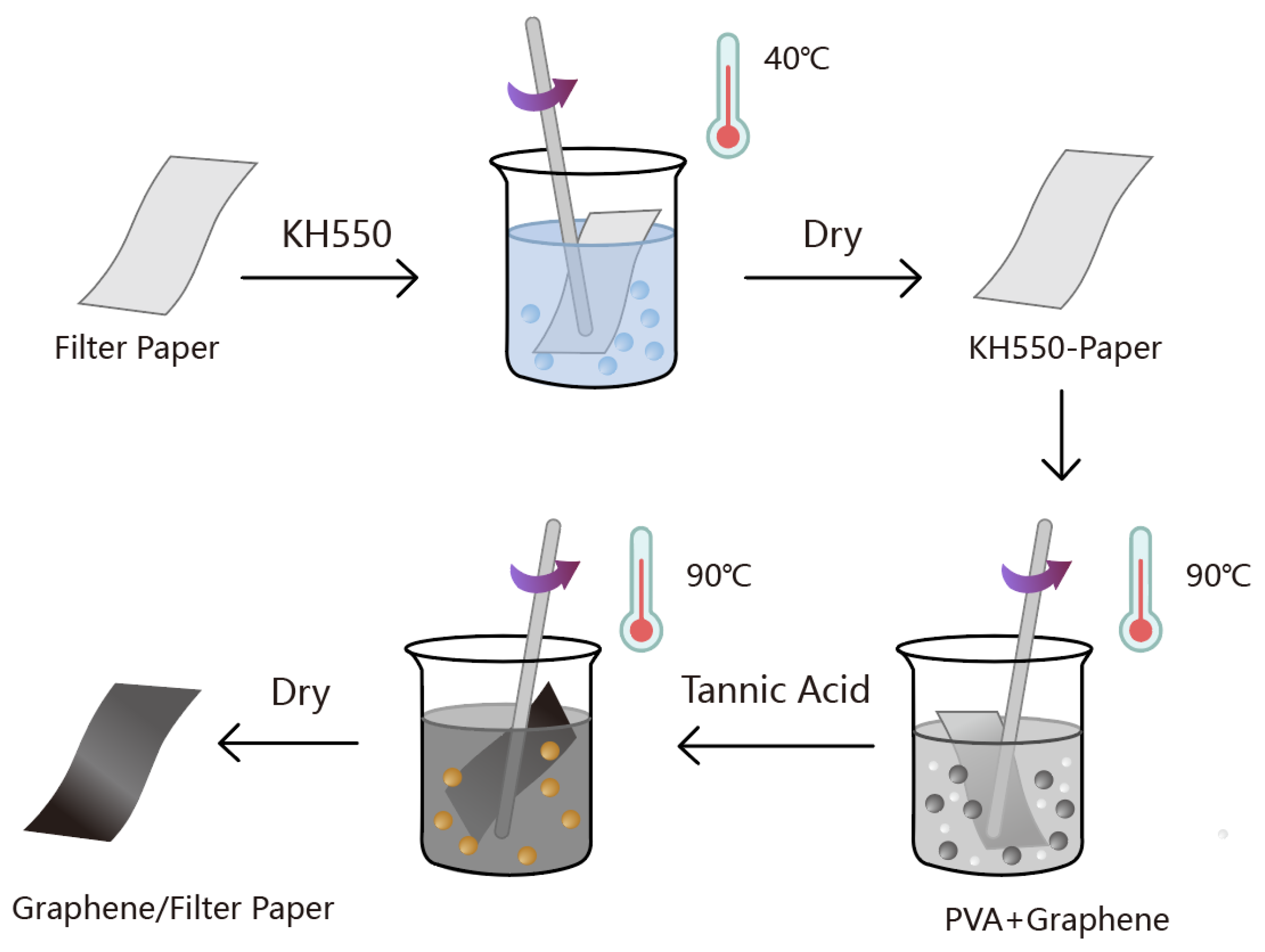
The filter paper was cut into square pieces of uniform size (6 × 2 cm). And then, the filter paper is placed in an oven and dried at 60 °C for 4 h until a constant weight is achieved. Weigh out 50 mL of distilled water and 450 mL of ethanol in a flask to prepare a 95% ethanol aqueous solution. KH550 was added to maintain the concentration of the solution at 2.5 wt%, then adjust the pH to 3–4 using oxalic acid aqueous solution and hydrolyzed for 1 h at 40 °C [23]. Subsequently, filter paper is dispersed into the KH550 coupling agent solution and heat the mixture at 40 °C for 1 h. After soaking, collect the soaked filter paper and rinse it with deionized water several times to remove residual KH550 solution from the surface, and dry it in an oven at 60 °C overnight.

2.3. Preparation of Electromagnetic Shielding Paper

2.3.1. Preparation of PVA Solution

A total of 2 g of PVA was weighed and placed into a beaker, followed by the addition of 60 mL of deionized water. The mixture was heated in a 90 °C water bath and stirred continuously for 1.5 h until the PVA was completely dissolved, resulting in a uniform solution. This solution was then divided into four equal parts.

2.3.2. Preparation of Conductive Composite Mixture

Four beakers containing equal volumes of PVA solution were prepared, into which 0.9 g, 1.8 g, 2.8 g, and 4.0 g of graphene filter cake were added, corresponding to low, medium, medium-high, and high loading levels, respectively. Each mixture was subjected to ultrasonication for 10 min to achieve uniform dispersion of the graphene filter cake, followed by the addition of 0.1 g of tannic acid [24] to each beaker and continuous stirring for 30 min, resulting in four homogeneous conductive composite solutions with different graphene contents.
The mass fraction (wt%) of the graphene filter cake was defined as the ratio of the filter cake mass to the total mass of the PVA solution and filter cake, and was set to 5 wt%, 10 wt%, 15 wt%, and 20 wt%, respectively. These values were calculated using a single-batch feeding method, ensuring a uniformly incremental increase in conductive phase loading, which facilitates subsequent performance comparison and percolation behavior analysis [25].

2.3.3. Fabrication of Electromagnetic Shielding Filter Paper

The filter paper, which had been pre-treated with KH550, was immersed in the mixture from the second step. It was heated in a 60 °C water bath for 0.5 h and then removed. The filter paper was dried in a 60 °C oven for 5 h to allow for complete solvent evaporation. Finally, four sets of graphene/filter paper with varying graphene filter cake contents were obtained, designated as GR05, GR10, GR15, and GR20. Herein, GR05, GR10, GR15, and GR20 correspond to graphene filter cake mass fractions of 5 wt%, 10 wt%, 15 wt%, and 20 wt%, respectively. Scheme 1 illustrates the complete preparation process of graphene/filter paper.

2.4. Characterization

The microscopic morphology of the samples was observed using a scanning electron microscope (Hitachi, S-4800, Tokyo, Japan). The thermal stability was analyzed using a thermogravimetric analyzer (TGA, Netzsch STA 449F5, Shanghai, China) under a nitrogen atmosphere from room temperature to 800 °C at a heating rate of 10 °C/min. The samples’ transmittance was measured using a UV-visible spectrophotometer (Shimadzu, UV-1900i, Kyoto, Japan), which was operated over a scanning range of 200–800 nm. The electrical conductivity of a rectangular sample (2.0 × 6.0 cm2) was measured using the four-point probe method (Helpass, HPS2523, Changzhou, China). During the test, the sheet resistance of the sample was recorded, and the electrical conductivity was calculated using Equation (1):
σ   =   1 S · 1 R / L   =   L R · w · t
In this equation, σ , R, L, S, w, and t denote the electrical conductivity (S/m), sheet resistance (Ω/sq), length (m), cross-sectional area (m2), width (m), and thickness (m), respectively. The influence of graphene content in the sample on its electromagnetic shielding performance was tested using a vector network analyser (VNA) (Keysight E5071C ENA, Santa Rosa, CA, USA). EMI SE can be theoretically expressed by the Simon formula [26] (Simon1981):
SE   =   50   +   10 log σ f + 1.7 t σ f
Here σ , f, and t represent the electrical conductivity (S/m), frequency (MHz), and thickness (m), respectively. A vector network analyzer (N5244A PNAX, Agilent, Santa Clara, CA, USA) was used to measure the EMI SE of the sample (2.0 × 6.0 cm2) in 8.2–12.4 GHz (X-band) at RT by the coaxial method. During the test, when electromagnetic radiation interacts with the samples, the shielding phenomena are dominated by reflection (R), absorption (A), and transmission (T) [27]. Total EMI shielding values ( SE T ) were calculated by Equations (3)–(8):
SE Total   =   SE A   +   SE R   +   SE M
R + A + T = 1
R = | S 11 | 2  
T = | S 21 | 2  
S E R = 10 log 1 1 R = 10 log 1 1 | S 11 | 2
S E A = 10 log 1 R T = 10 log 1 | S 11 | 2 | S 21 | 2
Here, SER, SEA, and SEM represent the reflection value, absorption value, and multiple internal reflection value, respectively [28,29]. When SET is greater than 15 dB, SEM can be neglected [29,30]. The relevant equations, considering the density and thickness of the material, are described as follows:
SSE   =   EMI   SE density   =   dB cm 3 / g

3. Results and Discussion

3.1. Characterizations of Graphene/Filter Paper

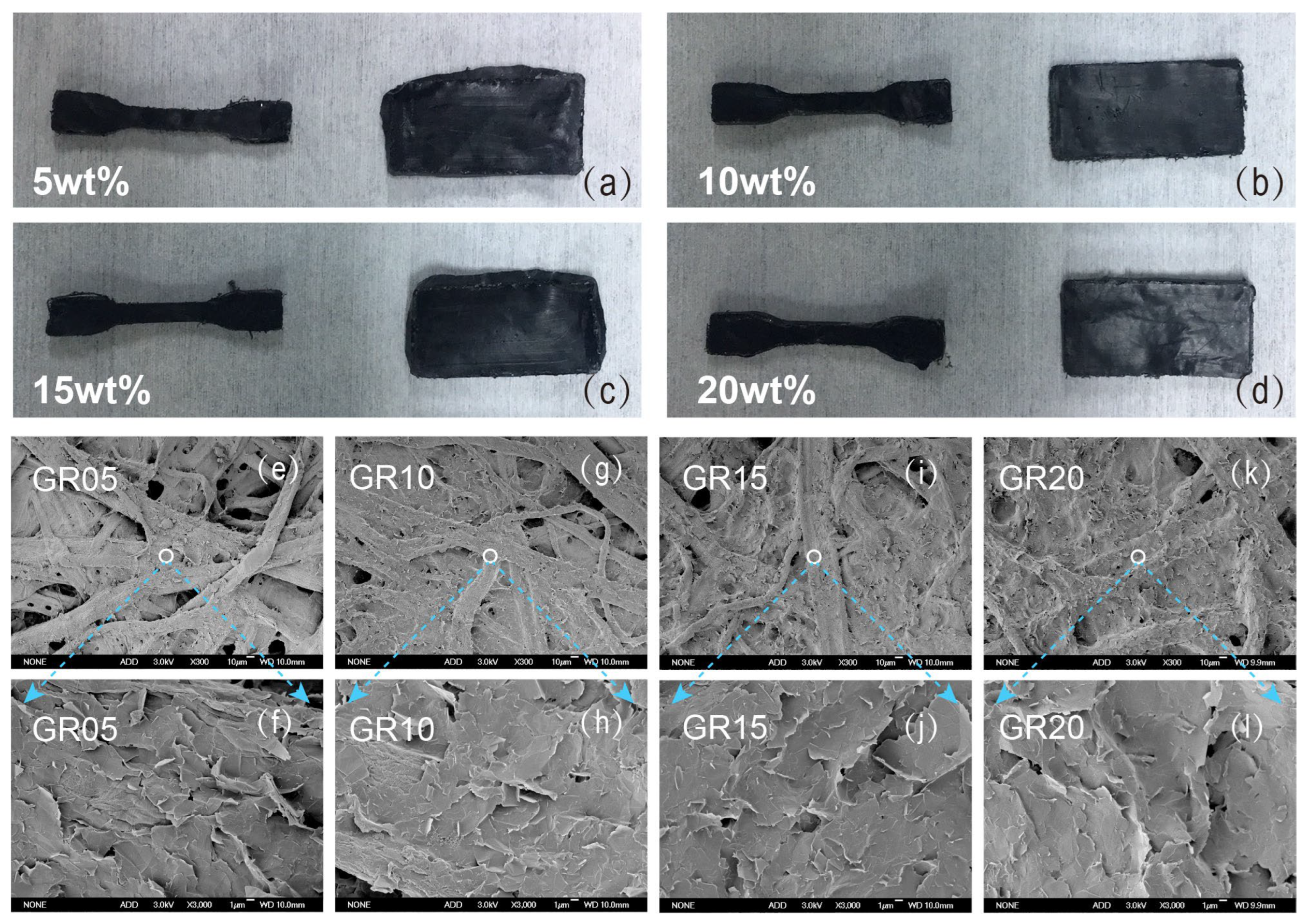
First, the morphological structure of filter paper was characterized by loading with varying graphene contents. Figure 2 displays the morphology and microstructures of graphene/filter paper with different graphene filter cake masses. Figure 2a–d shows the morphology of filter papers with different graphene filter cake contents: Figure 2a 5 wt% (GR05), Figure 2b 10 wt% (GR10), Figure 2c 15 wt% (GR15), and Figure 2d 20 wt% (GR20, respectively, recorded by SEM at an accelerating voltage of 3 kV. The modified KH550 filter paper exhibits irregular cross-hatched fiber bundles. As shown in Figure 2e,f, in composite GR05, the fiber bundle surfaces appear relatively smooth with minimal graphene nanosheet coverage. Figure 2g,h shows the morphologies of filter paper with 10 wt% graphene filter cake at different magnifications. It can be seen that as the graphene content increases, the fiber bundle surfaces gradually become rougher while some cellulose remains exposed. When the graphene filter cake content is further increased to 15 wt%, the fiber bundles on the surface of the filter paper become completely and uniformly covered with graphene nanosheets (Figure 2i,g). This phenomenon primarily results from hydrogen bonding between cellulose molecules, which effectively anchors graphene molecules onto the fiber bundle surfaces. At 20 wt% graphene filter cake content, the graphene nanosheets are observed to uniformly cover the fiber surface, and pronounced aggregation is evident. The originally staggered layered structure gradually evolves into a sheet-like morphology (Figure 2k,l), indicating that a continuous and highly conductive graphene network structure has been formed, further enhancing the conductivity of graphene filter paper [31]. This morphological evolution directly dictates the electromagnetic shielding performance. At low loadings (5 wt%–10 wt%), the discontinuous graphene coverage creates isolated conductive domains, resulting in high resistance and low shielding efficiency. Conversely, the dense, overlapping network formed at 20 wt% bridges the cellulose fibers, establishing a continuous pathway for electron transport. Furthermore, this interconnected structure generates abundant interfaces that act as scattering centers, significantly enhancing multiple reflections and absorption losses. Thus, the formation of this robust conductive network is the structural origin of the superior shielding performance at higher graphene concentrations.
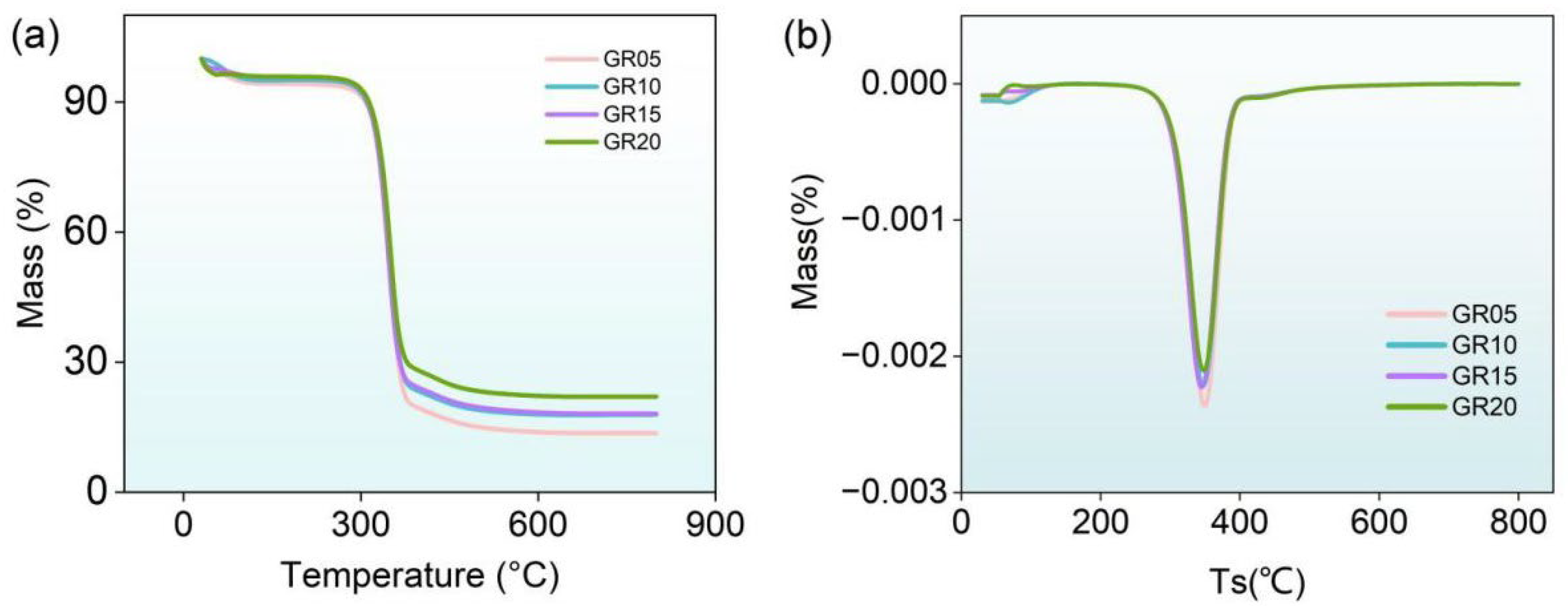
The thermal stability of composites with different graphene contents was analyzed using thermogravimetric analysis (TGA) under a nitrogen atmosphere at a flow rate of 80 mL/min. Samples containing 5 wt%, 10 wt%, 15 wt%, and 20 wt% graphene filter cake were tested with initial weights of 5.61 mg, 5.55 mg, 5.92 mg, and 5.57 mg, respectively. As shown in Figure 3, all composites exhibited stable performance before 300 °C. The TG curves revealed three distinct stages: In the initial stage (30–120 °C), all composites showed minor mass loss, which was mainly related to the evaporation of water molecules. During the second stage (300–380 °C), the mass of the composites with different graphene contents decreased sharply, indicating that the filter paper substrate begins to undergo thermal decomposition in this stage, the key decomposition temperatures (e.g., 10% weight loss temperature, 50% weight loss temperature, and maximum weight loss temperature) of different samples are shown in Table 1. In the third stage (temperature exceeding 380 °C), continued mass loss indicated ongoing decomposition of residual materials. The residual mass of the composites with 5 wt%, 10 wt%, 15 wt%, and 20 wt% graphene filter cake additions was 13.6%, 17.9%, 18.1%, and 22.2%, respectively. These results suggest that the residual mass after thermal decomposition is attributed to graphene [32].
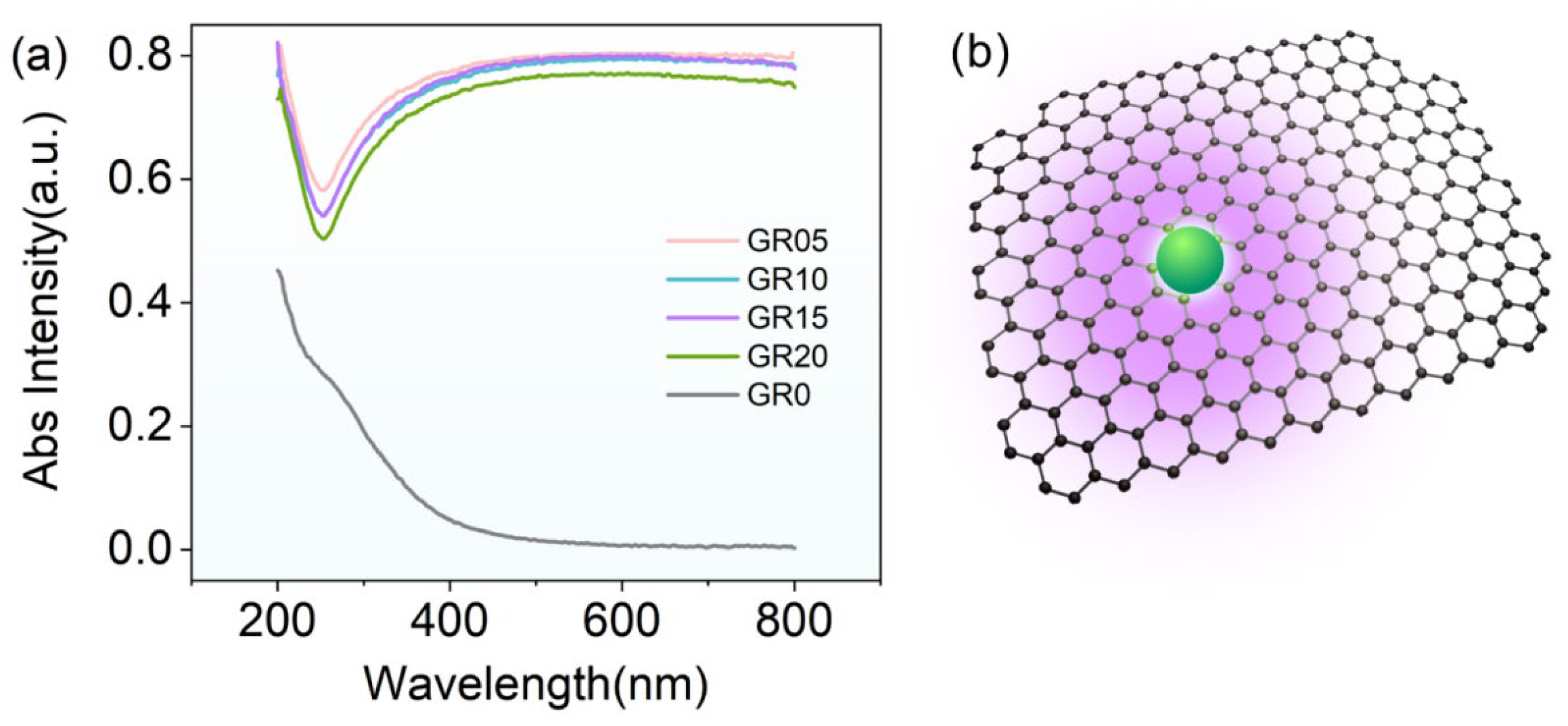
To investigate the light absorption characteristics of composites with varying graphene content, the ultraviolet-visible absorbance of the substrate and composites containing 5 wt%, 10 wt%, 15 wt%, and 20 wt% graphene filter cake was measured across the 200–800 nm spectral range. As depicted in Figure 4a, the base filter paper exhibits high absorption performance in the ultraviolet region below 400 nm. When graphene was incorporated, the graphene/filter paper composite demonstrated absorption properties for both ultraviolet and visible light. In the ultraviolet region below 250 nm, the photon energy is sufficiently high to excite electronic transitions within the material, resulting in strong absorption (Figure 4). This significant light absorption implies a strong interaction between incident photons and charge carriers in the graphene/filter paper system. In the context of EMI shielding, this indicates that the composite possesses abundant polarization centers and defect sites. These features facilitate the conversion of electromagnetic energy into thermal energy through dielectric loss, thereby enhancing the absorption-dominant shielding mechanism [33].
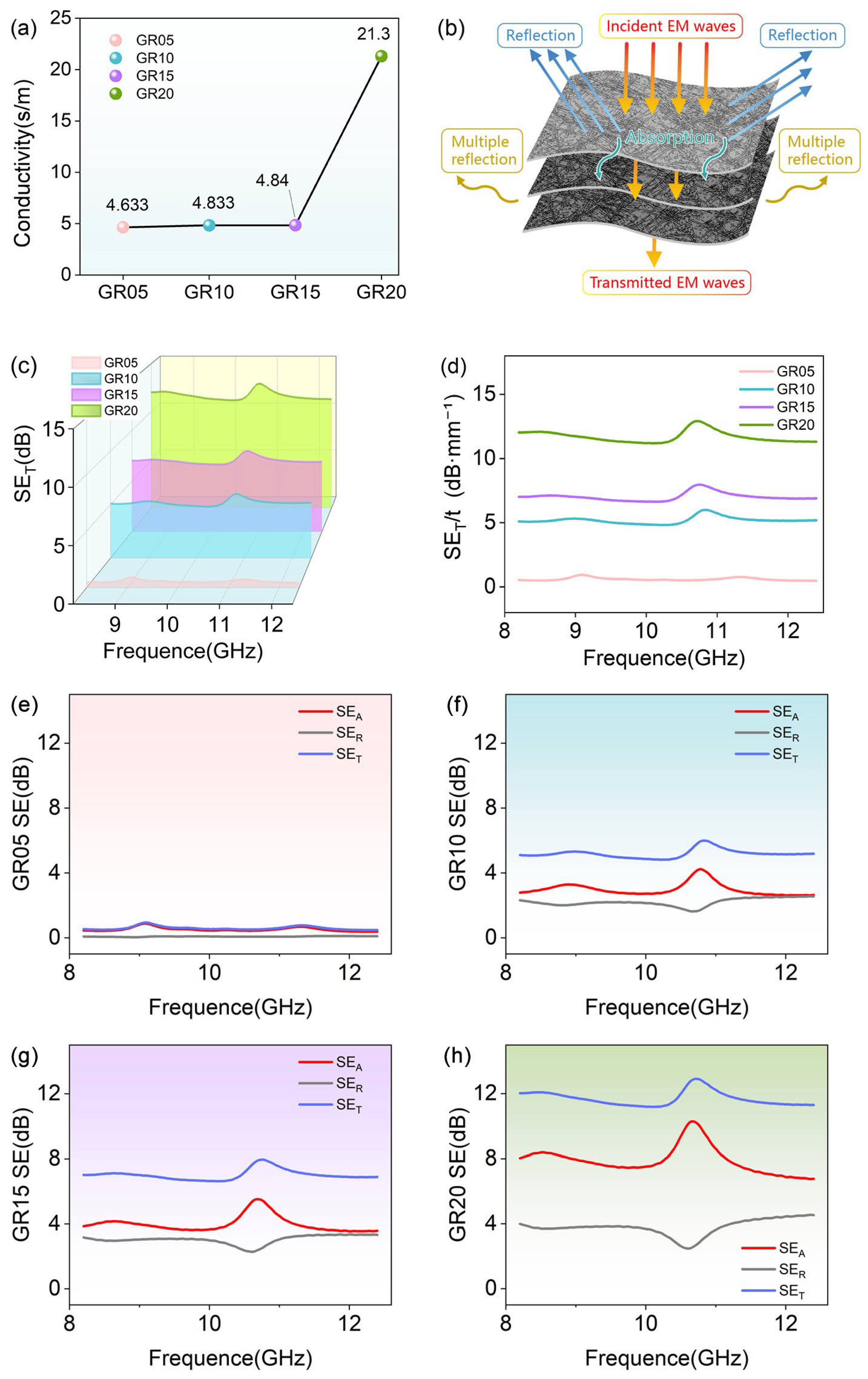
The electrical conductivity of the composites was characterized using a four-point probe technique. The constant current applied and the corresponding measured voltage ranges for each sample are summarized in Table 2. As shown in Figure 5a, the electrical conductivity of the composite material increases with graphene content. When the graphene filter cake loading reaches 5 wt% (GR05), the conductivity is 4.64 S/m, indicating difficulty in forming a stable conductive network at a low load. When the graphene filter cake loading exceeds 5 wt%, the conductivity increases significantly. GR10 and GR15 graphene composites show similar conductivities, measured at 4.83 S/m and 4.84 S/m, respectively. Notably, when the graphene filter cake loading reaches 20 wt% (GR20), the composite exhibits the highest conductivity [34,35], reaching a peak of 21.3 S/m. This significant step-change in conductivity from 4.8 S/m (at 10–15 wt% loading) to 21.3 S/m (at 20 wt% loading) clearly indicates that 20 wt% represents a point where the network becomes substantially denser and more robust. This strategically increased filler content optimally bridges graphene sheets, creating highly efficient pathways for electron migration and leading to a substantial reduction in the composite’s resistivity [10,34,36].
Figure 5b shows the shielding mechanism of electromagnetic shielding paper. The mechanism of electromagnetic shielding is to reduce or eliminate the interference of electromagnetic waves on electronic devices through the reflection, transmission, and absorption of electromagnetic waves by shielding materials. Figure 5c demonstrates the electromagnetic shielding performance of graphene/filter paper. The EMI shielding effectiveness (SE) shows a strong dependence on graphene loading. Some studies report a gradual improvement with filler content [37], our data reveals the SE remains relatively stable at low to moderate loadings (GR05–GR15) before a substantial increase is observed at 20 wt% (GR20). The GR05 sample shows negligible electromagnetic shielding due to its poor electrical conductivity. When the graphene filter cake content reaches 10 wt% (GR10) and 15 wt% (GR15), it exhibits relatively low shielding performance (with average SET values below 10 dB). However, when the graphene content reaches 20 wt% (GR20), the shielding performance significantly enhances, with average SET values exceeding 10 dB.
The electromagnetic shielding paper has a thickness of 1 mm, Figure 5d demonstrates its intrinsic shielding capability per unit thickness. The electromagnetic shielding mechanism of the graphene/filter paper composites can be clearly elucidated from the loss component analysis. As shown in Figure 5e–h, across all samples, the absorption loss (SEA) consistently dominates over the reflection loss (SER), and this trend becomes more pronounced with increasing graphene loading. Specifically, in the GR20 sample, the SEA reaches 8–10 dB, which is approximately 2–3 times the value of SER (2–4 dB). This indicates that the primary shielding mechanism of the composite is absorption-dominant. This improvement is mainly attributed to the formation of a more continuous and compact conductive network within the material at higher graphene concentrations, which greatly increases the electron mobility and the number of conductive pathways, thereby strengthening the conductive loss effect. In addition, the increased interfaces between graphene and the matrix promote interfacial polarization and multiple reflections, leading to repeated scattering and absorption of incident electromagnetic waves within the material. As a result, both the reflection and absorption abilities of the material toward electromagnetic waves are improved.
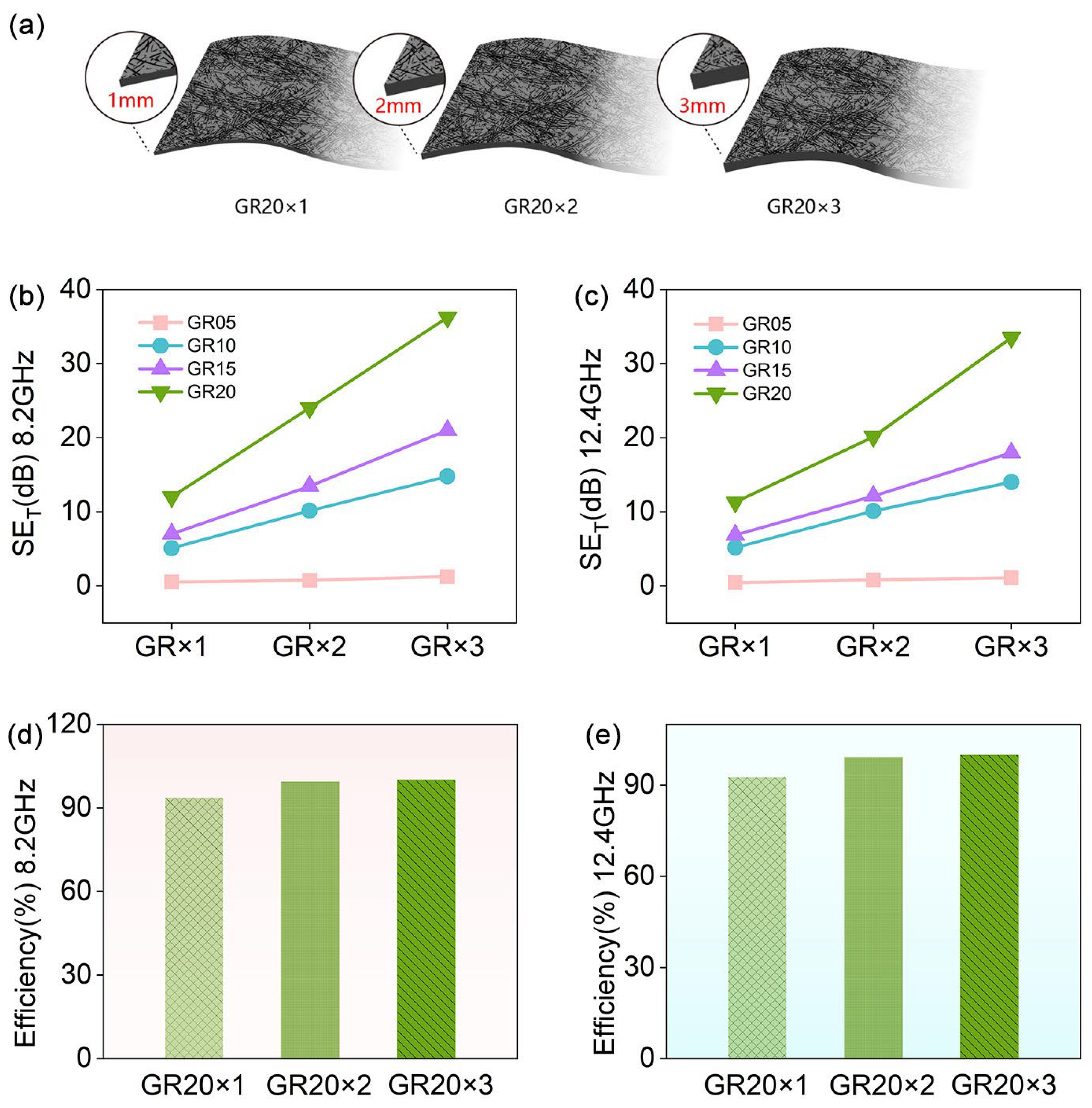
Notably, the minimum shielding requirement for commercial applications is 20 dB, and the performance of the single-layer composite has not yet met this standard, adjusting thickness is a key feasible approach to make the material reach commercial application standards, which is supplementary to the current single-layer performance. Within the tested range, the increase in thickness contributes to the enhancement of EMI shielding performance, primarily by extending the absorption path length for electromagnetic waves [38,39]. As the thickness increases, more electromagnetic energy penetrates the interior of the composite, leading to stronger multiple reflections, interfacial polarization, and conductive losses within the structure. Consequently, absorption loss becomes the primary shielding mechanism, resulting in higher total energy dissipation and greater shielding effectiveness. To further improve the electromagnetic interference shielding efficiency of the material, we physically stacked multiple sheets without adhesive and applied pressure to ensure intimate contact. When three layers of the material are layered, the overall electromagnetic shielding performance is significantly improved, as shown in Figure 6a. As expected, the layered electromagnetic shielding paper demonstrated significantly better performance than a single sheet. When double-layered or triple-layered, the shielding performance was markedly enhanced. Figure 6b illustrates that the SET values for double-layer and triple-layer electromagnetic shielding papers containing 20wt% graphene filter cake (GR20) are 12 dB, 24 dB, and 36 dB at 8.2 GHz, respectively. Figure 6c reveals that the SET values for these materials were 11 dB, 20 dB, and 33 dB at 12.4 GHz, respectively. As shown in Figure 6d,e, the shielding efficiency of GR20 significantly improves with the number of layers at both 8.2 GHz and 12.4 GHz. Specifically, the triple-layer structure achieves an exceptional electromagnetic wave blocking efficiency of over 99.9% at 12.4 GHz, demonstrating the effectiveness of the stacking strategy, making it suitable for general civilian equipment [8,40].

3.2. Application of Electromagnetic Shielding Paper

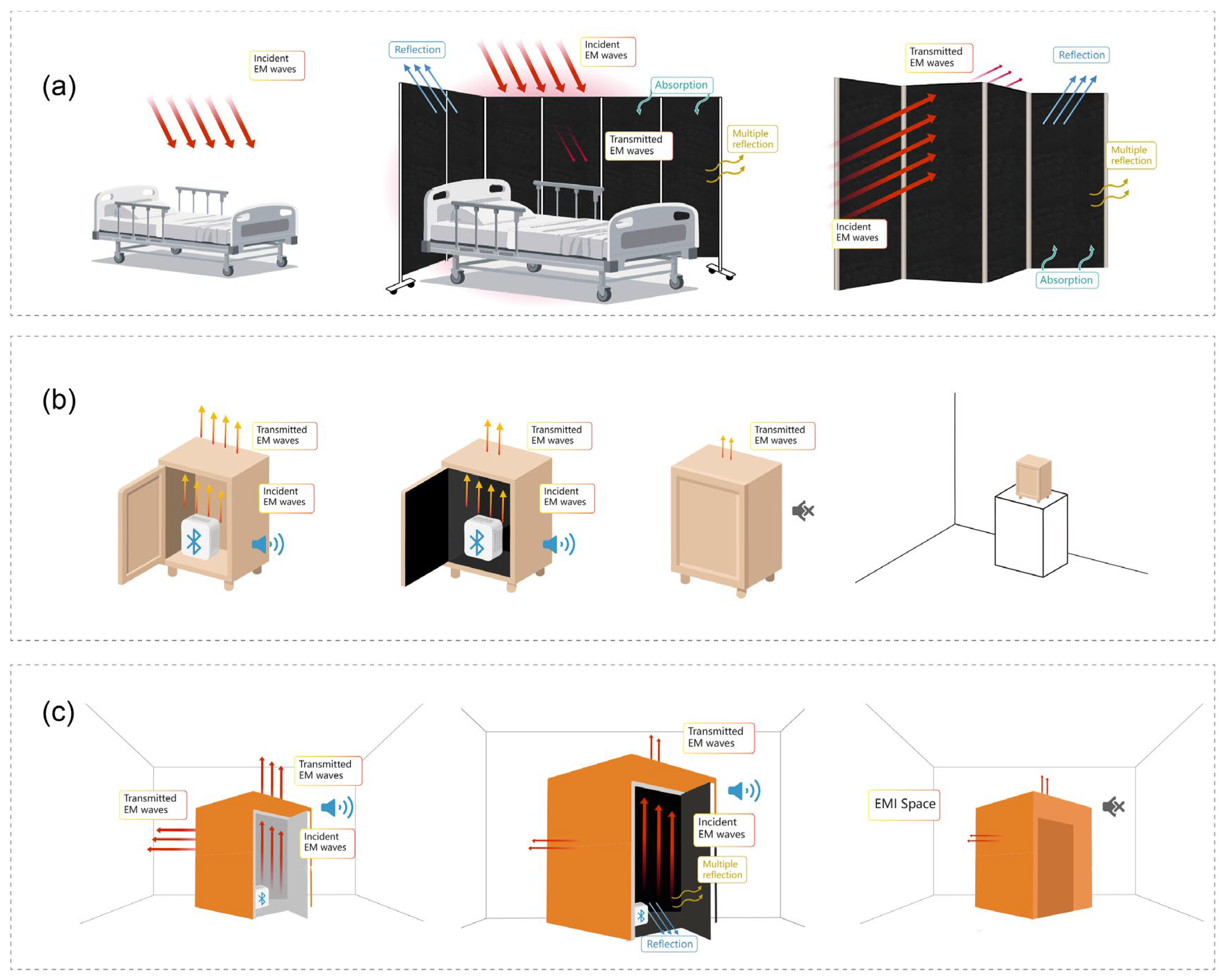
Two categories of product designs were developed to consider user requirements and the material properties of the electromagnetic shielding paper: an electromagnetic shielding screen for medical applications and an electromagnetic shielding art installation. Furthermore, a household electromagnetic shielding phone box and an anti-theft bank card holder were designed and fabricated to demonstrate the versatility of the material in the medical field. Electromagnetic interference (EMI) may interfere with the precision operation of instruments, cause information leakage, and even threaten human health. The graphene electromagnetic shielding paper can be shaped into a medical partition screen due to its lightweight and flexible nature, well-suited to medical devices such as electrocardiographs, ultrasound machines, and MRI systems. With the installation of shielding screens around the medical devices, electromagnetic interference can be effectively reduced, and temporary electromagnetic clean zones were created by improving measurement and diagnostic accuracy (Figure 7a) [41].
In the field of art, electromagnetic shielding paper serves as both a functional and creative medium. It can be used in daily life to block electromagnetic radiation and protect human health. In public spaces and art exhibitions, it can create interactive installations by selectively shielding or allowing electromagnetic signals. As shown in Figure 7b, an art installation box lined with graphene-based shielding paper encloses a Bluetooth speaker. When the box is closed, the shielding blocks Bluetooth signals and stops playback; when opened, the signal is restored. This design vividly demonstrates the principles of electromagnetic shielding while introducing interactivity and esthetic expression.
Figure 7c illustrates the design of graphene electromagnetic shielding paper for large-scale art installations. These human-scale installations are suitable for museums, exhibition halls, and public spaces. Its interior is covered with graphene paper and can be controlled by a door to shield and restore electromagnetic signals in real time, providing an interactive visitor experience. The lightweight, eco-friendly feature ensures easy installation, structural stability, and long-term durability.
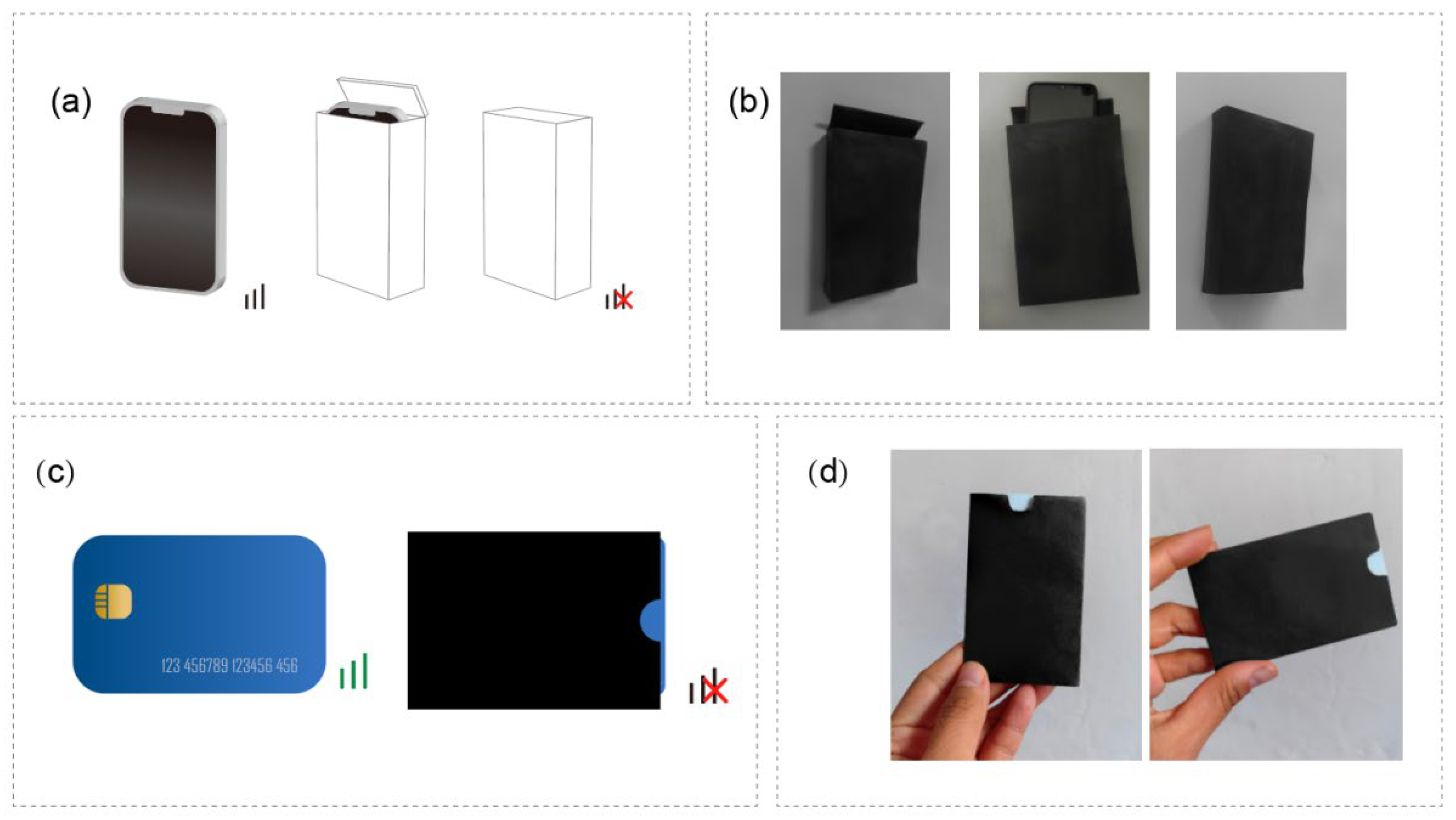
In daily life, mobile phone signal interference can affect health. A bedside mobile phone signal shielding box was designed (Figure 8a,b), effectively blocking mobile signals and reducing electromagnetic exposure during sleep. In addition to medical and artistic applications, graphene-based electromagnetic shielding paper has been explored for the protection of personal electronics. An anti-theft card holder was designed (Figure 8c) to shield contactless cards from unauthorized scanning, and the practical application of the product is illustrated in Figure 8d. This demonstrates the versatility of the material to enable compact everyday devices to effectively block electromagnetic signals and protect user privacy.

4. Conclusions

This study proposes a scalable and cost-effective “impregnation-evaporation-lamination” process to couple KH550 surface-functionalized filter paper with a graphene/PVA/tannic acid conductive network, resulting in a flexible electromagnetic shielding paper with a thickness of 1 mm and maximum conductivity of 21.3 S/m. The effects of graphene filter content (5–20 wt%) on EMI SE, thermal stability, and UV-Vis absorption were systematically evaluated. The SET values for single-layer, double-layer, and triple-layer electromagnetic shielding papers with 20 wt% graphene filter cake content (GR20) were 12 dB, 24 dB, and 36 dB, respectively, at 8.2 GHz; the SET values for these materials were 11 dB, 20 dB, and 33 dB, respectively, at 12.4 GHz. In practical applications, we have validated the feasibility of electromagnetic shielding paper across three scenarios: medical applications, art installations, and domestic radiation-proof enclosures. Its ultra-thin, cuttable, and printable properties grant designers greater creative freedom. The shielding paper not only fulfills the requirement for ‘high performance and lightweight construction’ but can also incorporate esthetic and functional elements through secondary processing, such as screen printing. This expands the design possibilities for graphene-based electromagnetic shielding materials. Future research should address practical limitations not covered herein, specifically mechanical strength, moisture resistance, and aging behavior. Enhancing these properties through structural optimization will be crucial for translating the demonstrated shielding performance into viable commercial applications. Furthermore, broader research efforts will focus on three advanced areas: (1) enhancing EMI shielding performance via material optimization, such as creating lighter, ultra-thin papers; (2) integrating origami and paper-cutting techniques to develop deployable 3D shielding metamaterials, overcoming the spatial limits of 2D structures; and (3) providing an integrated “material-structure-function” solution for next-generation intelligent electromagnetic environments.

Author Contributions

Conceptualization, C.C.; Methodology, C.C. and Q.S.; Software, C.C.; Resources, C.C. and Q.S.; Data curation, C.C. and W.C.; Writing—original draft, C.C.; Writing—review and editing, C.C. and W.C.; Supervision, Y.H.; Visualization, C.C. and Q.S. All authors have read and agreed to the published version of the manuscript.

Funding

The authors declare that this research did not receive any funds, grants, or other support. All expenses were self-funded by the researchers or their affiliated institutions.

Institutional Review Board Statement

Not applicable.

Informed Consent Statement

Not applicable.

Data Availability Statement

The original contributions presented in this study are included in the article. Further inquiries can be directed to the corresponding author.

Conflicts of Interest

The authors declare no conflicts of interest.

References

  1. Sajid, H.M.; Afzal, H.; Irfan, M.; Saleem, M.; Jan, R.; Javed, S.; Akram, M.A. Design of Multilayered 2D Nanomaterial Composite Structures for EMI Shielding Analysis. ACS Omega 2022, 7, 35586–35594. [Google Scholar] [CrossRef]
  2. Hu, H.; Wang, S.; Zhang, Y.; Wang, X.; Lin, B.; Zhang, S.; Zhang, W.; Lian, P. MXene-Based Electromagnetic Interference Shielding Materials: A Leap from Fundamental Research to Intelligent Customization. Small 2025, 2505417. [Google Scholar] [CrossRef]
  3. Mikołajczyk, Z.; Nowak, I.; Januszkiewicz, Ł.; Szewczyk, M.; Junak, J. Modern Electromagnetic-Radiation-Shielding Materials Made Using Different Knitting Techniques. Materials 2024, 17, 3052. [Google Scholar] [CrossRef] [PubMed]
  4. Ji, Y.; Han, G.H.; Lee, S.Y. Electromagnetic Interference Shielding Effect on the Strongly Correlated electron System NiWO4 Embedded in PDMS. Electron. Mater. Lett. 2025, 21, 552–558. [Google Scholar] [CrossRef]
  5. Meena, J.S.; Choi, S.B.; Kim, J. Review on Ti3C2-Based MXene Nanosheets for Flexible Electrodes. Electron. Mater. Lett. 2022, 18, 256–274. [Google Scholar] [CrossRef]
  6. Verma, S.; Dhangar, M.; Paul, S.; Chaturvedi, K.; Khan, M.A.; Srivastava, A.K. Recent Advances for Fabricating Smart Electromagnetic Interference Shielding Textile: A Comprehensive Review. Electron. Mater. Lett. 2022, 18, 331–344. [Google Scholar] [CrossRef]
  7. Etefa, H.F.; Kumar, V.; Dejene, F.B.; Efa, M.T.; Jule, L.T. Modification of Flexible Electrodes for P-Type (Nickel Oxide) Dye-Sensitized Solar Cell Performance Based on the Cellulose Nanofiber Film. ACS Omega 2023, 8, 15249–15258. [Google Scholar] [CrossRef]
  8. Jia, X.; Li, Y.; Shen, B.; Zheng, W. Evaluation, fabrication and dynamic performance regulation of green EMI-shielding materials with low reflectivity: A review. Compos. Part B Eng. 2022, 233, 109652. [Google Scholar] [CrossRef]
  9. Xia, Y.; Gao, W.; Gao, C. A Review on Graphene-Based Electromagnetic Functional Materials: Electromagnetic Wave Shielding and Absorption. Adv. Funct. Mater. 2022, 32, 2204591. [Google Scholar] [CrossRef]
  10. Xie, Y.; Liu, S.; Huang, K.; Chen, B.; Shi, P.; Chen, Z.; Liu, B.; Liu, K.; Wu, Z.; Chen, K.; et al. Ultra-Broadband Strong Electromagnetic Interference Shielding with Ferromagnetic Graphene Quartz Fabric. Adv. Mater. 2022, 34, 2202982. [Google Scholar] [CrossRef]
  11. Ribeiro, B.; Gomes, N.A.S.; Baldan, M.; Rezende, M.C. Designing Sandwich Architecture Towards Glass Fiber/Epoxy Reinforced Multi-Walled Carbon Nanotube Buckypaper Composites for Electromagnetic Interference Shielding. Electron. Mater. Lett. 2023, 19, 184–191. [Google Scholar] [CrossRef]
  12. Rupčić, S.; Mandrić, V.; Kovačić, Đ.; Varga, M. Measurements of Electromagnetic Radiation Propagation Through Biomaterial Samples Based on Harvest Residues. Sustainability 2024, 16, 499. [Google Scholar] [CrossRef]
  13. Acharjee, J.; Ali, J.; Uzair, M.; Phakaew, T.; Akkaraekthalin, P.; Maiket, Y.; Yeetsorn, R.; Chalermwisutkul, S. Metasurface-Loaded Biodegradable Mobile Phone Back Cover for Enhanced Radiation Performance. Materials 2025, 18, 730. [Google Scholar] [CrossRef]
  14. Kashte, V.K.; Kapse, N.N.; Pandit, V.A.; Toksha, B.G. A Review on Graphene Oxide-Based Ferrite Nanocomposites for Catalytic Applications. Catal. Surv. Asia 2024, 28, 375–391. [Google Scholar] [CrossRef]
  15. Lee, D.; Yoo, J.; Kang, B.; Park, S. Effects of the Number of Graphene Layers and Graphene Diaphragm Size on High Frequency Electrostatic Speakers. Electron. Mater. Lett. 2024, 20, 621–626. [Google Scholar] [CrossRef]
  16. Shim, J.; Lee, J.; Lee, J.S.; Son, D.I. Thermally Enhanced Boron Nitride Nanotube/Reduced Graphene Oxide Paper and Their Application. Electron. Mater. Lett. 2021, 17, 500–506. [Google Scholar] [CrossRef]
  17. Naseer, A.; Mumtaz, M.; Raffi, M.; Ahmad, I.; Khan, S.D.; Shakoor, R.I.; Shahzada, S. Reinforcement of Electromagnetic Wave Absorption Characteristics in PVDF-PMMA Nanocomposite by Intercalation of Carbon Nanofibers. Electron. Mater. Lett. 2019, 15, 201–207. [Google Scholar] [CrossRef]
  18. Afroze, J.D.; Tong, L.; Abden, M.J.; Chen, Y. Multifunctional hierarchical graphene-carbon fiber hybrid aerogels for strain sensing and energy storage. Adv. Compos. Hybrid Mater. 2023, 6, 18. [Google Scholar] [CrossRef]
  19. Yusaf, T.; Mahamude, A.S.F.; Farhana, K.; Harun, W.S.W.; Kadirgama, K.; Ramasamy, D.; Kamarulzaman, M.K.; Subramonian, S.; Hall, S.; Dhahad, H.A. A Comprehensive Review on Graphene Nanoparticles: Preparation, Properties, and Applications. Sustainability 2022, 14, 12336. [Google Scholar] [CrossRef]
  20. Pavlou, C.; Pastore Carbone, M.G.; Manikas, A.C.; Trakakis, G.; Koral, C.; Papari, G.; Andreone, A.; Galiotis, C. Effective EMI shielding behaviour of thin graphene/PMMA nanolaminates in the THz range. Nat. Commun. 2021, 12, 4655. [Google Scholar] [CrossRef] [PubMed]
  21. Wu, Y.; Tang, H.; Kang, L.; Li, H.; Jiang, N. A Two-Layer Graphene Nonwoven Fabric for Effective Electromagnetic Interference Shielding. Materials 2024, 17, 3747. [Google Scholar] [CrossRef]
  22. Wu, Y.; An, C.; Guo, Y. 3D Printed Graphene and Graphene/Polymer Composites for Multifunctional Applications. Materials 2023, 16, 5681. [Google Scholar] [CrossRef] [PubMed]
  23. Wang, L.; Ma, Z.; Zhang, Y.; Chen, L.; Cao, D.; Gu, J. Polymer-based EMI shielding composites with 3D conductive networks: A mini-review. SusMat 2021, 1, 413–431. [Google Scholar] [CrossRef]
  24. Zhu, Z.; Tian, Z.; Liu, Y.; Yue, S.; Li, Y.; Wang, Z.L.; Yu, Z.Z.; Yang, D. Human Nervous System Inspired Modified Graphene Nanoplatelets/Cellulose Nanofibers-Based Wearable Sensors with Superior Thermal Management and Electromagnetic Interference Shielding. Adv. Funct. Mater. 2024, 34, 2315851. [Google Scholar] [CrossRef]
  25. Sandler, J.; Shaffer, M.S.P.; Prasse, T.; Bauhofer, W.; Schulte, K.; Windle, A.H. Development of a dispersion process for carbon nanotubes in an epoxy matrix and the resulting electrical properties. Polymer 1999, 40, 5967–5971. [Google Scholar] [CrossRef]
  26. Zhou, X.; Min, P.; Liu, Y.; Jin, M.; Yu, Z.; Zhang, H. Insulating electromagnetic-shielding silicone compound enables direct potting electronics. Science 2024, 385, 1205–1210. [Google Scholar] [CrossRef]
  27. Shen, J.; Huang, W.; Wu, L.; Hu, Y.; Ye, M. Study on amino-functionalized multiwalled carbon nanotubes. Mater. Sci. Eng. 2007, 464, 151–156. [Google Scholar] [CrossRef]
  28. Jia, Z.; Zhang, M.; Liu, B.; Wang, F.; Wei, G.; Su, Z. Graphene Foams for Electromagnetic Interference Shielding: A Review. ACS Appl. Nano Mater. 2020, 3, 6140–6155. [Google Scholar] [CrossRef]
  29. Romanowska, A.; Marynowicz, S.; Strachowski, T.; Godziszewski, K.; Yashchyshyn, Y.; Racki, A.; Baran, M.; Ciuk, T.; Chlanda, A. Graphene Oxide Paper as a Lightweight, Thin, and Controllable Microwave Absorber for Millimeter-Wave Applications. IEEE Trans. Nanotechnol. 2024, 23, 329–337. [Google Scholar] [CrossRef]
  30. Iqbal, A.; Sambyal, P.; Koo, C.M. 2D MXenes for Electromagnetic Shielding: A Review. Adv. Funct. Mater. 2020, 30, 2000883. [Google Scholar] [CrossRef]
  31. Gebrekrstos, A.; Orasugh, J.T.; Muzata, T.S.; Ray, S.S. Cellulose-Based Sustainable Composites: A Review of Systems for Applications in EMI Shielding and Sensors. Macromol. Mater. Eng. 2022, 307, 2200185. [Google Scholar] [CrossRef]
  32. Albert, A.A.; Parthasarathy, V.; Kumar, P.S. Review on recent progress in epoxy-based composite materials for Electromagnetic Interference (EMI) shielding applications. Polym. Compos. 2023, 45, 1956–1984. [Google Scholar] [CrossRef]
  33. Wang, B.; Zhang, W.; Sun, J.; Lai, C.; Ge, S.; Guo, H.; Liu, Y.; Zhang, D. A Micro/Nano-Multiscale Hierarchical Structure Strategy to Fabricate Highly Conducting Films for Electromagnetic Interference Shielding and Energy Storage. R. Soc. Chem. 2023, 11, 8656–8669. [Google Scholar]
  34. Sun, T.; Li, Y.; Ho, W.L.; Zhu, Q.; Chen, X.; Jin, L.; Zhu, H.; Huang, B.; Lin, J.; Little, B.E.; et al. Integrating temporal and spatial control of electronic transitions for bright multiphoton upconversion. Nat. Commun. 2019, 10, 1811. [Google Scholar] [CrossRef]
  35. Shen, X.; Kim, J. Graphene and MXene-based porous structures for multifunctional electromagnetic interference shielding. Nano Res. 2023, 16, 1387–1413. [Google Scholar] [CrossRef]
  36. Wang, B.; Li, Y.; Zhang, W.; Sun, J.; Zhao, J.; Xu, Y.; Liu, Y.; Guo, H.; Zhang, D. Ultrathin cellulose nanofiber/carbon nanotube/Ti3C2T film for electromagnetic interference shielding and energy storage. Carbohyd Polym. 2022, 286, 119302. [Google Scholar] [CrossRef]
  37. Chen, Y.; Li, J.; Li, T.; Zhang, L.; Meng, F. Recent advances in graphene-based films for electromagnetic. Carbon 2021, 180, 163–184. [Google Scholar] [CrossRef]
  38. Manobalan, S.; Bose, S.; Sumangala, T.P. Effect of thickness on the EMI shielding effectiveness of epoxy composites with cobalt ferrite and graphene. Mater. Today Proc. 2023, 90, 128–132. [Google Scholar] [CrossRef]
  39. Tian, K.; Hu, D.; Wei, Q.; Fu, Q.; Deng, H. Recent progress on multifunctional electromagnetic interference shielding polymer composites. J. Mater. Sci. Technol. 2023, 134, 106–131. [Google Scholar] [CrossRef]
  40. Das, P.; Deoghare, A.B.; Ranjan Maity, S. Exploring the Potential of Graphene as an EMI Shielding Material—An Overview. Mater. Today Proc. 2020, 22, 1737–1744. [Google Scholar] [CrossRef]
  41. Kumar, R.; Sahoo, S.; Joanni, E.; Singh, R.K.; Tan, W.K.; Moshkalev, S.A.; Matsuda, A.; Kar, K.K. Heteroatom doping of 2D graphene materials for electromagnetic interference shielding: A review of recent progress. Crit. Rev. Solid. State 2022, 47, 570–619. [Google Scholar] [CrossRef]
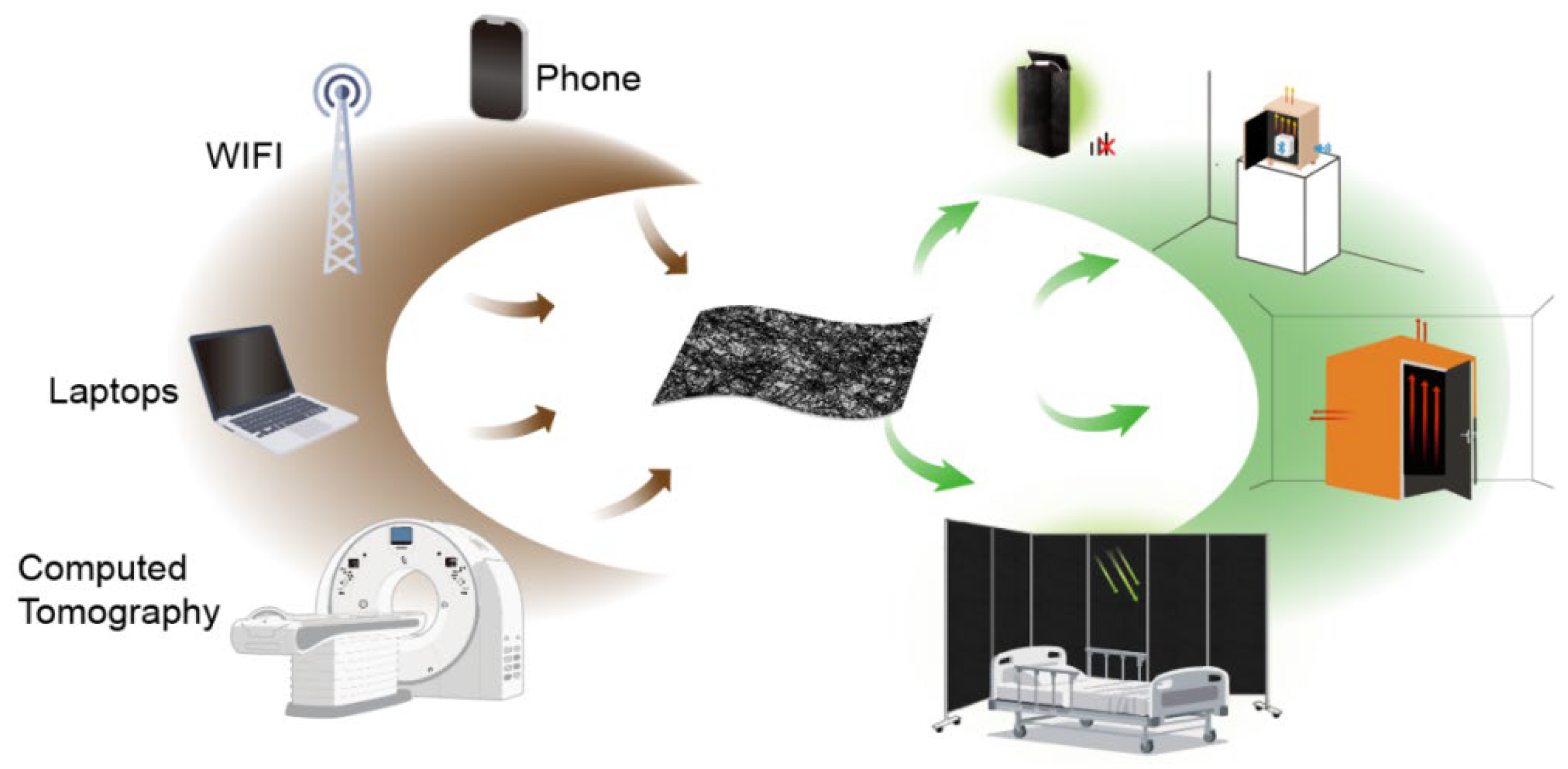
Figure 1. Schematic diagram of electromagnetic radiation sources (Left) and the application of electromagnetic shielding paper (Right).
Sustainability 18 01219 g001
Scheme 1. Schematic diagram of graphene/filter paper preparation.
Sustainability 18 01219 sch001
Figure 2. (ad) Morphologies of graphene/filter papers with varying graphene contents. (e) 5 wt% graphene filter cake addition. (f) 5 wt% graphene filter cake addition, magnified. (g) 10 wt% graphene filter cake addition. (h) 10 wt% graphene filter cake addition, magnified. (i) 15 wt% graphene filter cake addition. (j) 15 wt% graphene filter cake addition, magnified. (k) 20 wt% graphene filter cake addition. (l) 20 wt% graphene filter cake addition, magnified.
Sustainability 18 01219 g002
Figure 3. (a) Thermal stability of graphene/filter paper at varying graphene contents. (b) Thermogravimetric curves of composites with varying graphene contents.
Sustainability 18 01219 g003
Figure 4. (a) Influence of graphene content on light absorption performance of graphene/filter paper. (b) schematic diagram of electron transition.
Sustainability 18 01219 g004
Figure 5. (a) Effect of graphene content on the electrical conductivity of composite materials. (b) Shielding mechanism of graphene/filter paper. (c) Electromagnetic shielding performance of different graphene/filter paper ratios in the X-band (8–12.4 GHz). (d) Shielding capacity per unit thickness of graphene/filter paper. (e) SEA, SER, and SET of GR05 composite in X-band (8–12.4 GHz). (f) SEA, SER, and SET of GR10 composite in X-band (8–12.4 GHz). (g) SEA, SER, and SET of GR15 composite in X-band (8–12.4 GHz). (h) SEA, SER, and SET of GR20 composite in X-band (8–12.4 GHz).
Sustainability 18 01219 g005
Figure 6. (a) schematic diagram of the layered thickness of graphene/filter paper. (b) Electromagnetic shielding performance of graphene/filter paper after layering (8.2 GHz). (c) Electromagnetic shielding performance of graphene/filter paper after layering (12.4 GHz). (d) Shielding efficiency of GR20 composite (single/double/triple layers) at 8.2 GHz. (e) Shielding efficiency of GR20 composite (single/double/triple layers) at 12.4 GHz.
Sustainability 18 01219 g006
Figure 7. (a) Design proposal for electromagnetic shielding screen in medical environments. (b) Design proposal for an art installation box with interior surfaces covered by electromagnetic shielding wallpaper. (c) Concept design of a large-scale art installation with interior surfaces fully covered by electromagnetic shielding paper.
Sustainability 18 01219 g007
Figure 8. (a) Electromagnetic shielding mobile phone box design scheme. (b) Display the effect of electromagnetic shielding on a mobile phone box in space. (c) Design proposal for an anti-theft card holder. (d) application diagram of the anti-theft card holder product.
Sustainability 18 01219 g008
Table 1. TGA characteristic temperatures of composites with different graphene contents.
Sample10% Loss Temp50% Loss TempMaximum Loss Temp
GR05307.83351.33349.167
GR10310.17351.00347.167
GR15311.17349.33344.833
GR20314.00353.83347.833
Table 2. Electrical measurement parameters of four-point probe tests.
SampleConstant CurrentMeasured Voltage Range
GR050.9999 μA4.69–5.41 mV
GR100.447 μA3.49–6.06 mV
GR159.995 μA0.44–4.81 mV
GR204.47 μA6.32–14.82 mV
Disclaimer/Publisher’s Note: The statements, opinions and data contained in all publications are solely those of the individual author(s) and contributor(s) and not of MDPI and/or the editor(s). MDPI and/or the editor(s) disclaim responsibility for any injury to people or property resulting from any ideas, methods, instructions or products referred to in the content.