Article

Bio-Based Self-Assembly and Hydrophobic Modification for Simultaneously Enhancing Flame Retardancy and Water Resistance of Wood

1
School of Art and Design, Beijing Forestry University, Beijing 100083, China
2
School of Landscape Architecture, Beijing Forestry University, Beijing 100083, China
*
Author to whom correspondence should be addressed.
These authors contributed equally to this work.
Sustainability 2026, 18(1), 520; https://doi.org/10.3390/su18010520
Submission received: 23 October 2025 / Revised: 8 December 2025 / Accepted: 15 December 2025 / Published: 4 January 2026

Abstract

As an important renewable building material, wood’s flammability significantly limits its application range. This study addresses the environmental pollution issues associated with traditional flame retardants by developing an eco-friendly flame retardant system based on natural biomaterials. Utilizing layer-by-layer self-assembly techniques, sodium phytate, chitosan, sodium alginate, and sodium methyl silicate were sequentially deposited onto the wood surface to construct a multifunctional composite coating. A multifunctional composite coating was constructed on wood surfaces through layer-by-layer self-assembly technology, involving successive deposition of phytic acid sodium, chitosan, sodium alginate, and methyl silicate sodium. Characterization results indicated that the optimized sample WPCSMH achieved a limiting oxygen index of 34.0%, representing a 12% increase compared to untreated wood. Cone calorimetry tests revealed that its peak heat release rate and total heat release were reduced by 57.1% and 25.3%, respectively. Additionally, contact angle measurements confirmed its excellent hydrophobic properties, with an initial contact angle of 111°. Mechanistic analysis reveals that this system significantly enhances flame retardant performance through a synergistic interaction of three mechanisms: gas phase flame retardancy, condensed phase flame retardancy, and free radical scavenging. This research provides a sustainable and innovative pathway for developing environmentally friendly, multifunctional wood-based composites.

1. Introduction

Wood is a widely utilized renewable material, extensively employed in construction, furniture, pulp and paper, and various other sectors due to its ease of processing, high mechanical strength, and cost-effectiveness. However, its inherent flammability significantly restricts its broader application and poses considerable safety risks during fire incidents, thereby necessitating the enhancement of its flame retardancy.
One predominant approach to effectively augment wood’s flame retardancy is through impregnation with flame retardant agents. The evolution of wood flame retardants has transitioned from the initial usage of simple inorganic salts to the later adoption of halogenated compounds. Nonetheless, traditional halogenated and phosphorus-based flame retardants release toxic gases and corrosive fumes upon combustion [1,2,3] and are subject to stringent regulations due to concerns regarding high bioaccumulation potential and environmental persistence [4,5,6]. Consequently, halogenated flame retardants are gradually being phased out in favor of more environmentally benign alternatives, such as phosphorus-based [7,8], nitrogen-based [9], silicon-based, and metal hydroxide-based [10] flame retardants. In recent years, there has been a growing interest in bio-based flame retardants, attributed to their environmental sustainability and eco-friendliness [5,11].
Natural polymers such as chitosan (CS), phytic acid (PA), sodium alginate (SA), and gelatin (GEL) are considered ideal alternatives owing to their abundance, high biocompatibility, and non-toxic degradation products [12]. Among them, sodium phytate, a bio-based material, exhibits excellent biocompatibility, sustainability, and non-toxicity, making it suitable for diverse fields [11], including enhancing the flame retardancy of polymers [12,13,14]. Chitosan, a naturally abundant and low-cost polysaccharide polymer [15], is characterized by its biodegradability, biocompatibility, and environmental friendliness, devoid of toxicity [16]. It is obtained through the alkaline deacetylation of 2-deoxy-D-glucose [17,18] and features an abundance of polyhydroxy and polyamino groups. During thermal decomposition, chitosan carbonizes within polymers, impeding combustion propagation while releasing non-flammable, non-corrosive, and non-toxic gases such as CO2, NH3, and N2, thereby contributing to its flame-retardant effects [19]. Additionally, chitosan derivatives can function as direct flame retardants in flame-retardant composites [20]. Gelatin, another natural protein, exhibits excellent mechanical properties and UV resistance [21]. When blended with chitosan, GEL can enhance the stability and mechanical properties of CS while improving the formation of coating films [22]. Upon application to substrates such as wood, the CS-GEL composite generates a dense char layer during combustion, functioning as both a thermal insulator and an oxygen barrier, effectively inhibiting combustion and augmenting fire safety.
Sodium alginate, a naturally occurring polysaccharide primarily derived from brown algae, boasts an annual production reaching tens of thousands of tons [23]. It is characterized by high biocompatibility, sustainability, low toxicity, and relative affordability. Due to its abundance of carboxyl groups and responsiveness to metal ions, sodium alginate is inherently non-combustible and is frequently employed as a synergistic flame retardant [24]. Notably, sodium alginate, chitosan, and sodium phytate are polyelectrolytes capable of self-assembly through electrostatic interactions, wherein positive and negative charges attract one another. Despite the significant advantages of these natural polymers in flame retardant applications, their water-soluble nature leads to an increased likelihood of loss. Therefore, it is imperative to employ effective strategies to impart hydrophobicity, thereby preventing the loss of flame retardants and extending the service life of flame retardant coatings.
Based on the aforementioned research progress, this study constructs a composite coating on the wood surface via layer-by-layer self-assembly technology using bio-based materials such as sodium phytate, chitosan, sodium alginate, and gelatin as the flame-retardant system, aiming to enhance the flame retardancy of wood. To overcome the key drawbacks of natural polymer flame retardants, such as high water solubility and susceptibility to leaching, this study employs environmentally friendly and cost-effective sodium methyl silicate as a hydrophobic modifier. This approach is intended to impart stable hydrophobic properties to the coating while extending its flame-retardant durability. Compared to previous studies, this work introduces the following key optimizations: first, sodium phytate is selected to replace phytic acid in the flame-retardant system, which maintains efficient phosphorus-based flame-retardant performance while avoiding potential damage to the wood structure from strongly acidic environments; second, fluorine-containing reagents are abandoned in the hydrophobic modification, and green non-toxic sodium methyl silicate is adopted instead to construct a more economical and safe hydrophobic protective layer. This study aims to develop a simple and environmentally friendly strategy for the functional modification of wood by integrating bio-based self-assembly and green hydrophobic treatment. By effectively addressing the water resistance and durability issues of the coating while improving the flame-retardant performance of wood, this work seeks to promote the practical application of bio-based flame-retardant systems and provide new experimental evidence and research insights for the high-value and sustainable utilization of wood.

2. Experiment

2.1. Materials

Poplar wood (moisture content: 5%) was purchased from Sanhe Wood Co., Ltd. (Shijiazhuang, China). Chitosan (purchased from Macklin Biochemical Co., Ltd. (Shanghai, China)). Sodium phytate was obtained from China National Pharmaceutical Group (Beijing, China). Sodium alginate was supported by Macklin Biochemical Co., Ltd. (Shanghai, China); Sodium methyl silicate was acquired from Beijing Montai Weiye Building Materials Co., Ltd. (Beijing, China). Gelatin and acetic acid were purchased from Macklin Biochemical Co., Ltd. All chemical agents were utilized without further purification.

2.2. Sample Synthesis Process

All wood specimens were treated via the layer-by-layer self-assembly method. The detailed preparation parameters, coating structures, and corresponding average mass gains for each experimental group are summarized in Table 1.

2.2.1. Preparation of WPC Samples

The wood was entirely submerged in a sodium phytate solution (5% w/w) for 2 min, followed by drying in an oven at 60 °C until no visible moisture remained. Subsequently, the wood was immersed in a chitosan solution (pH = 4.0, 1% w/w, glacial acetic acid was added at a mass fraction of 1%to the chitosan solution) for another 2 min and dried again until no visible moisture was detected, yielding the WPC sample.

2.2.2. Preparation of WPCS Samples

The wood was fully immersed in a sodium phytate solution (5% w/w) for 2 min and then dried at 60 °C until all surface moisture evaporated. Afterwards, the wood was placed in a chitosan solution (pH = 4.0, 1% w/w, without gelatin) for 2 min, followed by drying at 60 °C until no visible moisture remained. The wood was then immersed in sodium alginate for 2 min and dried until all moisture was eliminated, resulting in the WPCS sample.

2.2.3. Preparation of WPCSM Samples

A chitosan solution (pH = 4.0, 1% w/w) was prepared by dissolving 6 g of gelatin in 50 g of water, which was then added to 200 g of the chitosan solution and heated to 60 °C until fully dissolved. The wood was subsequently immersed in a sodium phytate solution (5% w/w) for 2 min and dried until no visible moisture remained. The wood was then placed in the chitosan-gelatin solution for 2 min, dried again until moisture was eliminated, and finally immersed in sodium alginate for 2 min before drying, yielding the WPCSM sample.

2.2.4. Preparation of WPCSMH Samples

The wood was immersed in a sodium phytate solution (5% w/w) for 2 min and dried until no visible moisture was present. Next, the wood was placed in a chitosan solution (PH = 4.0, each 100 g of chitosan solution contained 3 g of gelatin) for 2 min, followed by drying until moisture was removed. The wood was then immersed in sodium alginate for 2 min and dried until all moisture was eliminated. Finally, the wood was submerged in a sodium methyl silicate solution (with a ratio of sodium methyl silicate to water of 1:4) for 2 min and dried until no visible moisture remained, successfully yielding the WPCSMH sample.

2.3. Characterization

The surface elemental composition of the samples was analyzed using an X-ray photoelectron spectrometer (XPS, Thermo ESCALAB 250XI, Thermo Fisher Scientific, Waltham, MA, USA). Fourier transform infrared spectrum (FTIR) was performed on a Thermo Nicolet IS5 (Thermo Fisher, Waltham, MA, USA) spectrometer over a wavenumber range of 4000–500 cm−1. The morphology a of both the specimens were observed using scanning electron microscopy (SEM, JSM 6700F, JEOL Co., Ltd. Tokyo, Japan). LOI value were tested according to ISO 4589-1996 [25] using a FTT0077 oxygen index tester (FTT Co., Ltd., Derby, UK). Specimen dimensions were 100 mm (length) × 10 mm (width) × 10 mm (thickness). The combustion behaviors of the specimens were evaluated using a cone calorimeter (FTT00007, FTT Co., Ltd., UK) in accordance with ISO 5660-1:2002 [26]. The specimens with dimensions of 100 mm in length, 100 mm in width, and 10 mm in thickness were horizontally exposed to a heat flux of 35 kW/m2. Thermogravimetric analysis of specimens was conducted using a TGA apparatus (NETZSCH TG 209 F3, Selb, Germany) under air atmospheres. The analysis was performed from room temperature to 800 °C at a heating rate of 10 °C/min. The water contact angle (WCA) of deionized water on the samples was measured using an optical video contact angle tester (JY-82B Kruss DSA, Hamburg, Germany).

3. Results and Discussion

3.1. Design of WPCSMH Fire-Retardant Hydrophobic Coating

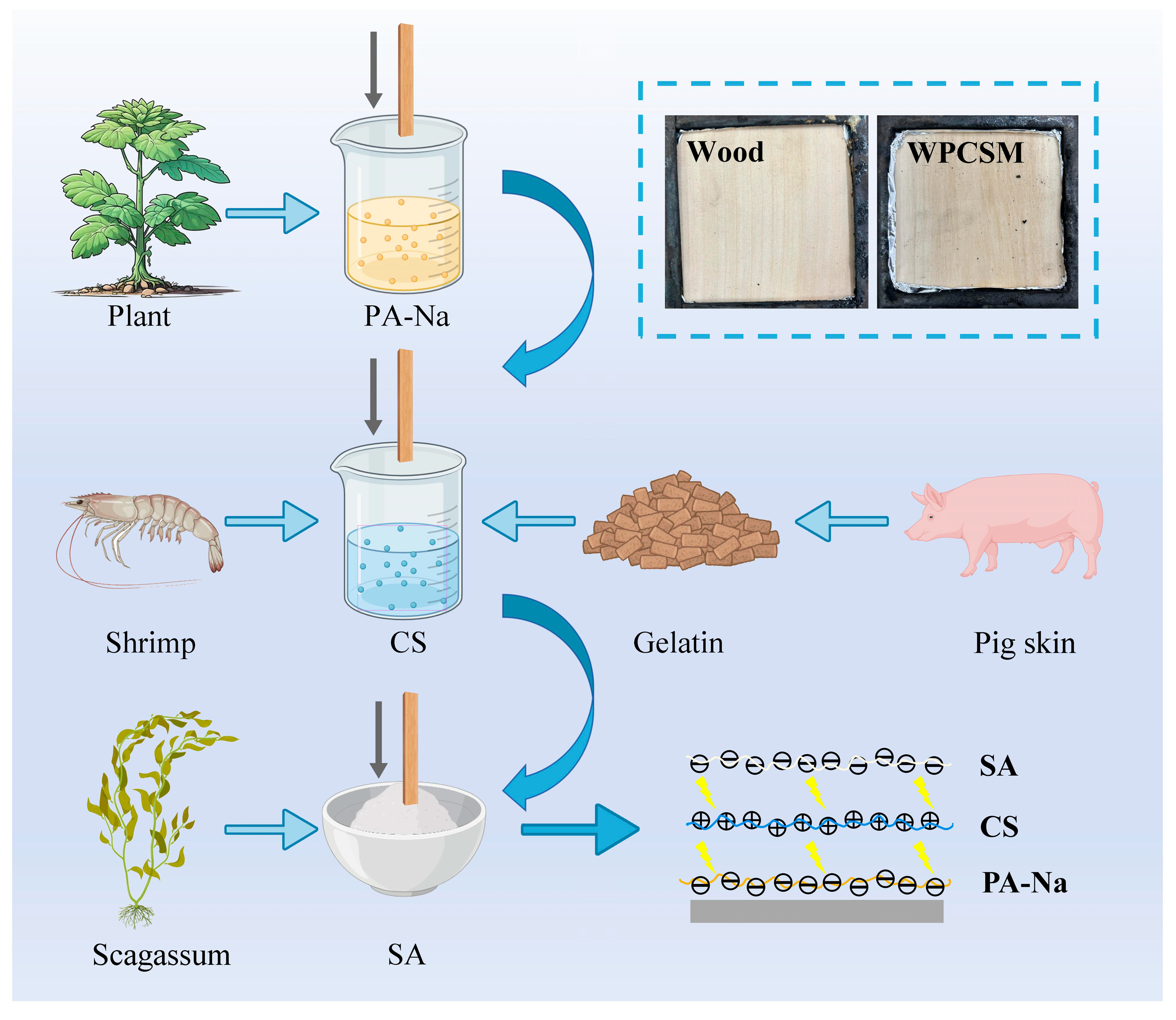
Figure 1 illustrates the preparation process of the flame-retardant coating, which is composed of bio-based components including sodium phytate, chitosan, sodium alginate, and gelatin. This study employs a layer-by-layer self-assembly technique, utilizing electrostatic interactions between negatively charged sodium phytate (PA-Na), positively charged chitosan (CS), and negatively charged sodium alginate (SA) to achieve controllable deposition of a flame-retardant and hydrophobic multilayer film on the wood surface. This surface-confined deposition mode enables the efficient enrichment of flame-retardant components at the material-environment interface, providing effective surface protection for the wood.
As the sodium salt of phytic acid, PA-Na contains abundant phosphate groups in its molecular structure, which decompose at elevated temperatures to generate phosphoric acid and polyphosphoric acids. These compounds effectively catalyze wood dehydration and promote the formation of a dense char layer, thereby exerting a dual flame-retardant mechanism in both the gas and condensed phases. Compared to phytic acid, PA-Na exhibits higher water solubility and milder acidity, facilitating uniform dispersion within the coating. This not only enhances flame-retardant performance but also avoids acid-induced corrosion of the wood substrate, achieving an optimal balance between flame retardancy and material compatibility.
The coating system achieves highly efficient flame retardation through a nitrogen-phosphorus (N-P) synergistic effect: CS serves as a nitrogen source, while PA-Na acts as a phosphorus source. During pyrolysis, these components interact to form an intumescent char layer, resulting in a significant N-P synergistic flame-retardant effect. To further enhance the flame-retardant performance, gelatin was introduced to increase the nitrogen content of the coating, while SA extracted from brown algae was incorporated as a natural non-combustible component, collectively improving the fire barrier properties of the coating.
All coating components are derived from renewable and environmentally friendly natural materials: PA-Na is extracted from plant seeds, CS is obtained from crustacean waste such as shrimp and crab shells, gelatin is derived from natural sources such as pigskin or sea cucumber, and SA is sourced from algae. The overall composition aligns with the design concept of green and sustainable materials. Furthermore, the introduction of sodium methyl silicate confers excellent hydrophobic properties to the coating, which not only improves the water resistance and weather durability of the wood but also expands its potential for application in humid or harsh environments.

3.2. Morphology, Physical and Chemical Structure Characteristics

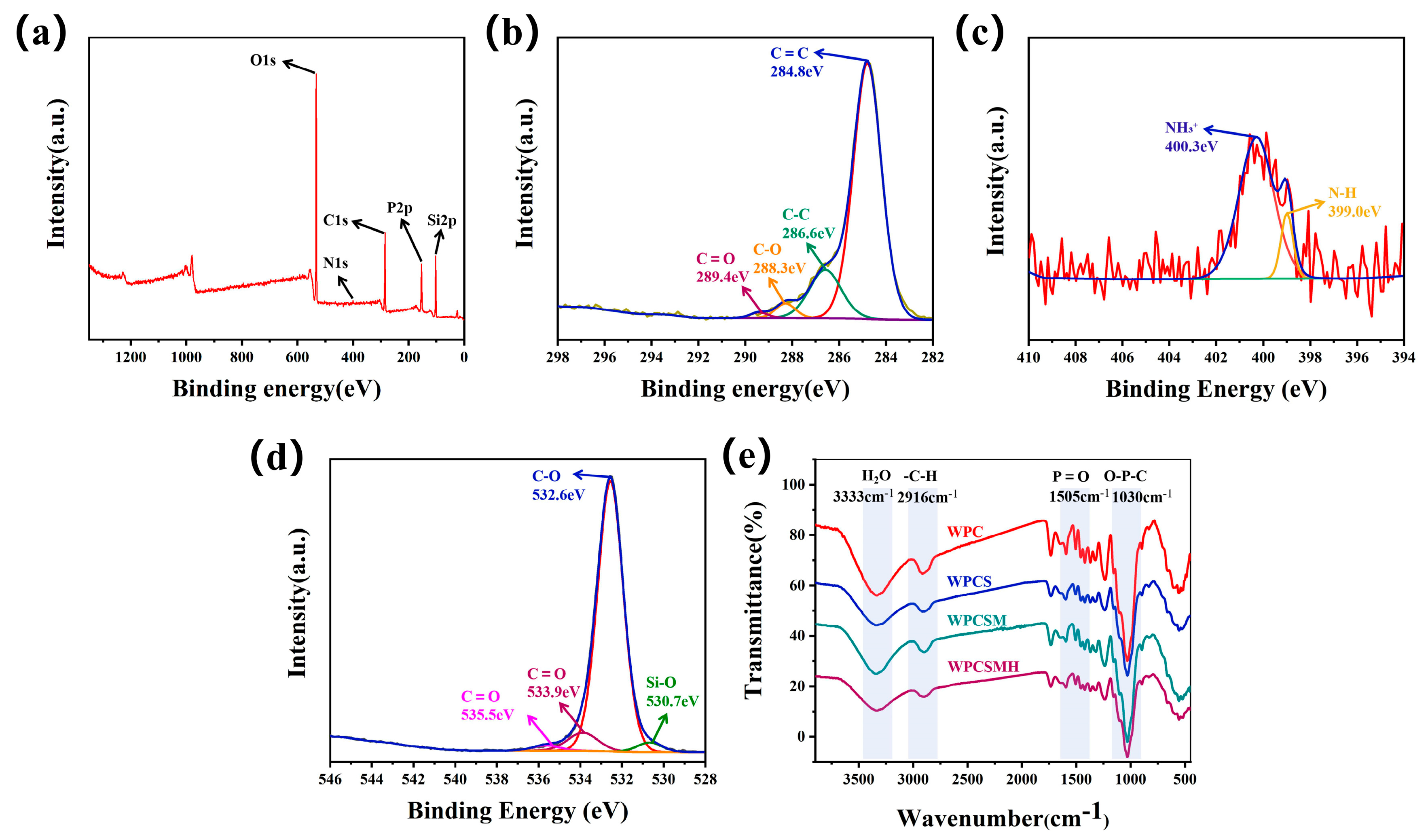
This study employs X-ray photoelectron spectroscopy (XPS) analysis to elucidate the elemental chemical states and composition of the samples. Figure 2a presents the full spectrum analysis results of the WPC-SMH composite material. Distinct characteristic peaks are observed at binding energies of approximately 532 eV, 400 eV, 26 eV, 102 eV, and 134 eV, corresponding to the O 1s, N 1s, C 1s, Si 2p, and P 2p orbitals, respectively. The peaks at 284.8 eV, 286.6 eV, 288.3 eV, and 289.4 eV are attributed to C=C, C-C, C-O, and C=O bonds, respectively [27]. Additionally, the peaks at 400.3 eV and 399.0 eV correspond to NH3+ and N-H configurations, respectively [28]. The O1s peaks correspond to different oxygen functionalities: O=P (535.5 eV), O-P (533.9 eV), O-C (532.6 eV), and O-H (530.7 eV) [29].
Spectral analysis reveals that oxygen (O) constitutes the predominant element in the sample, attributable to multiple sources: hydroxyl (-OH) groups within wood cellulose, ether bonds (C-O-C) present in chitosan (CS) molecular chains, carboxylate groups (-COO-) in sodium alginate (SA), and phosphate groups (-PO4) in phytic acid (PA). The XPS results confirm the successful incorporation of key components: a Si 2p peak (102 eV) indicates sodium methyl silicate for hydrophobicity; an N 1s peak (400 eV) comes from gelatin and chitosan; and a P 2p peak (134 eV) verifies sodium phytate. The phosphorus-nitrogen synergy endows flame retardancy, while the low carbon signal reflects its singular sources. This distribution pattern aligns with the material design, wherein intermolecular interactions foster a stable multiphase system.
Fourier-transform infrared (FTIR) analysis of the chemical structures of WPC, WPCS, WPCSM, and WPCSMH samples is depicted in Figure 2e. All samples exhibit an O-H stretching vibration peak for H2O near 3333 cm−1, while the characteristic -C-H stretching vibration peak of chitosan is observed at 2916 cm−1. The WPC sample displays characteristic vibration peaks at 1505 cm−1 and 1030 cm−1, associated with P=O and O-P-C bonds, respectively, confirming the successful formation of a composite coating between phytate and chitosan. Furthermore, no significant shifts in characteristic peak positions were observed across all samples, indicating that the interactions between components were predominantly physical in nature and did not disrupt the original chemical structures.
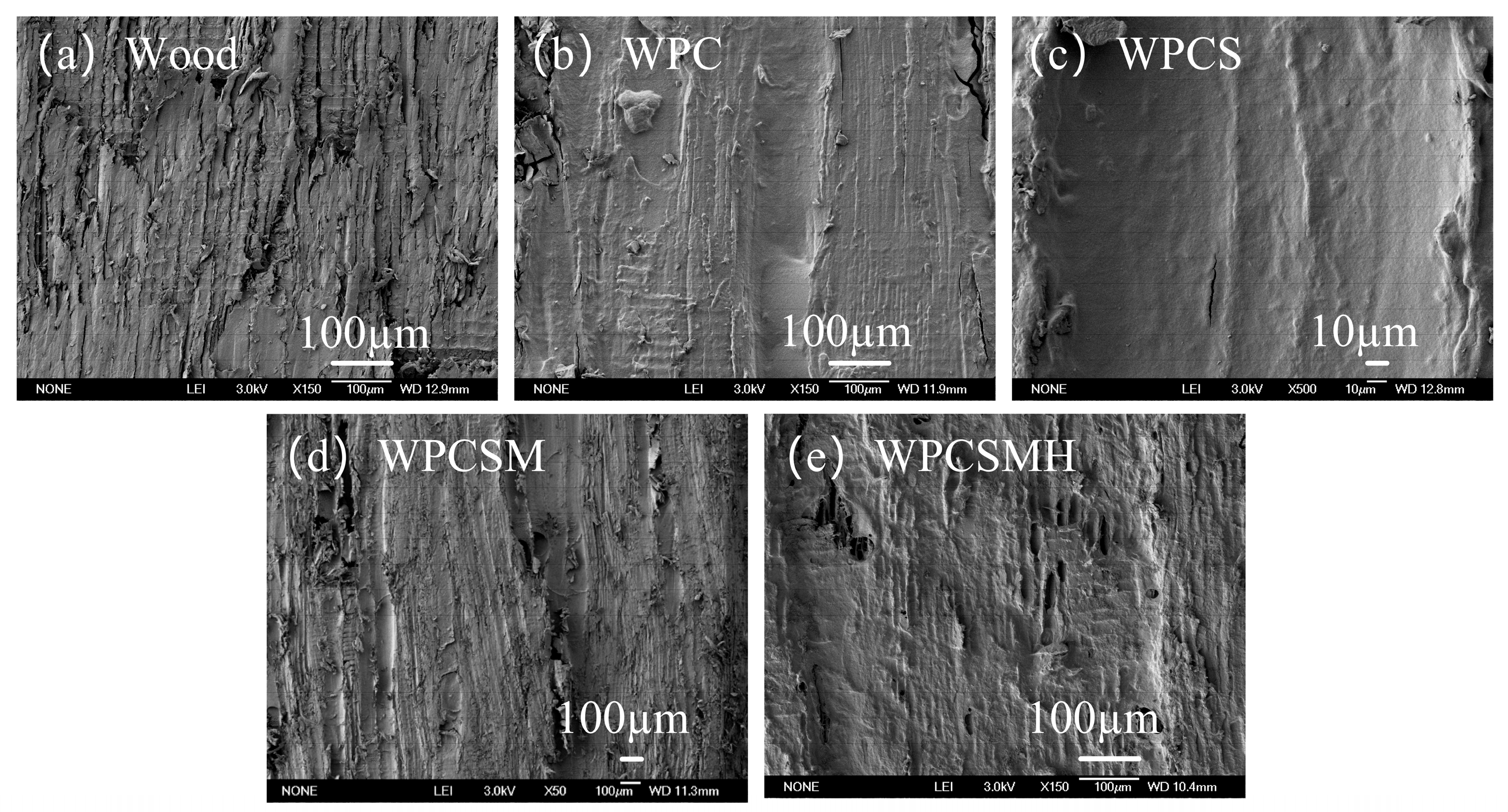
Scanning electron microscopy (SEM) was employed to characterize the surface morphology and coating coverage on the wood substrates. As shown in Figure 3a, the cross-section of untreated poplar wood exhibits its inherent porous anatomical structure, featuring parallel-aligned tracheids and well-defined cell walls, with a smooth surface free of foreign deposits. This highly porous and ordered microstructure provides an ideal substrate for the penetration and anchoring of subsequent functional molecules.
After treatment with the bio-based composite coating (Figure 3b–e), the surface morphology of the wood underwent significant changes. A continuous and dense coating layer, composed of chitosan (CS), sodium phytate (PA-Na), and sodium methyl silicate, was observed to uniformly cover the wood surface. The coating effectively penetrated and filled the micro-scale grooves between tracheids and lumens, markedly reducing the surface roughness and porosity of the substrate. Higher-magnification images revealed a tightly bonded interface between the coating and the wood matrix with no visible defects, indicating that the self-assembly process promoted strong adhesion to the wood cell walls.
Notably, the composite coating exhibited good transparency at the macroscopic level, preserving the natural wood grain, as visually confirmed in samples subjected to cone calorimetry tests. At the micro-scale, the coating displayed a uniform micro-nano roughness, which is considered a key structural feature for constructing a highly hydrophobic surface. Moreover, the continuity and integrity of the coating are critical to its flame-retardant performance, as it acts as an effective physical barrier during the initial stages of combustion, inhibiting the transfer of heat and flammable gases, thereby significantly enhancing the fire resistance of the wood.
The integration of FTIR, SEM, and XPS analytical results confirms the formation of a stable interfacial bond between the coating materials and the wood substrate. This bonding mechanism not only guarantees the robust adhesion of the coating but also elucidates why the ultra-thin coating can still achieve remarkable surface modification effects, thereby indicating the successful preparation of the WPCSMH sample.

3.3. Flame Retardancy Performance

The flame-retardant properties of the samples can be systematically evaluated through various testing methods, among which the Limiting Oxygen Index (LOI) test, open flame tests, and cone calorimetry experiments are the most representative characterization techniques.
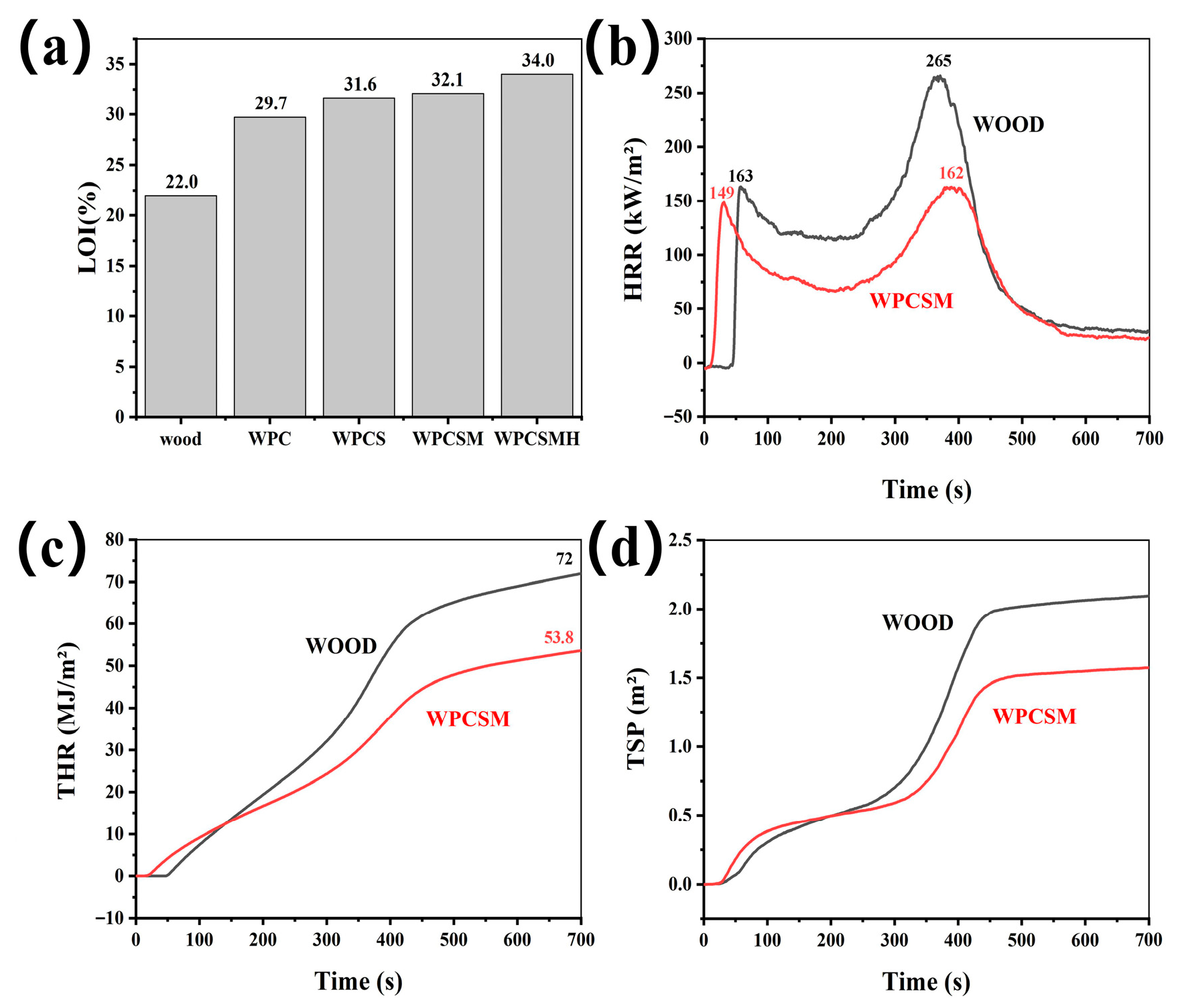
The Limiting Oxygen Index (LOI) test is a critical metric for assessing the flame-retardant performance of materials. It is defined as the minimum volume fraction of oxygen required to sustain the continuous combustion of a material in a nitrogen-oxygen mixed gas environment. A higher LOI value indicates superior flame-retardant properties of the material. In this study, the LOI values of different composite materials were systematically evaluated, revealing that the LOI of untreated poplar wood was 22.0%, demonstrating typical flammability characteristics (Figure 4a). The LOI of wood composites modified with sodium phytate and chitosan (WPC) significantly increased to 29.7%, reflecting an improvement of 7.7 percentage points over pure wood. This notable flame-retardant effect can be primarily attributed to the phosphoric substances generated from the thermal decomposition of sodium phytate, which facilitate the formation of a char layer, while the nitrogen-containing groups within chitosan contribute to a phosphorus-nitrogen synergistic flame-retardant effect.
The further incorporation of sodium alginate in the WPCS samples resulted in an LOI value of 31.6%, marking a 9.6 percentage point increase compared to pure wood. This improvement may be due to the sodium carboxylate groups in sodium alginate promoting the formation of a denser char layer. When gelatin-modified chitosan was used to prepare the WPCSM samples, the LOI value was further enhanced to 32.1%, an increase of 10.1 percentage points relative to pure wood. The LOI value was further improved to 32.1% for the WPCSM sample (with gelatin-modified chitosan), which is 10.1 percentage points higher than that of pure wood. This enhancement stems from the amino groups (-NH2) in gelatin, which promote the formation of a more stable expanded char layer at high temperatures and strengthen the phosphorus-nitrogen synergistic effect. The best performance was achieved by the WPCSMH sample (with sodium methyl silicate), reaching an LOI of 34.0%, a 12 percentage point increase over pure wood. This finding confirms that the inclusion of sodium methyl silicate not only does not diminish the material’s flame-retardant properties but further enhances flame retardancy by forming a silicon-oxygen network barrier and a stable silicon-carbon composite char layer. These results systematically demonstrate the synergistic enhancement of wood flame-retardant properties through bio-based self-assembly and hydrophobic treatment (Figure 5).
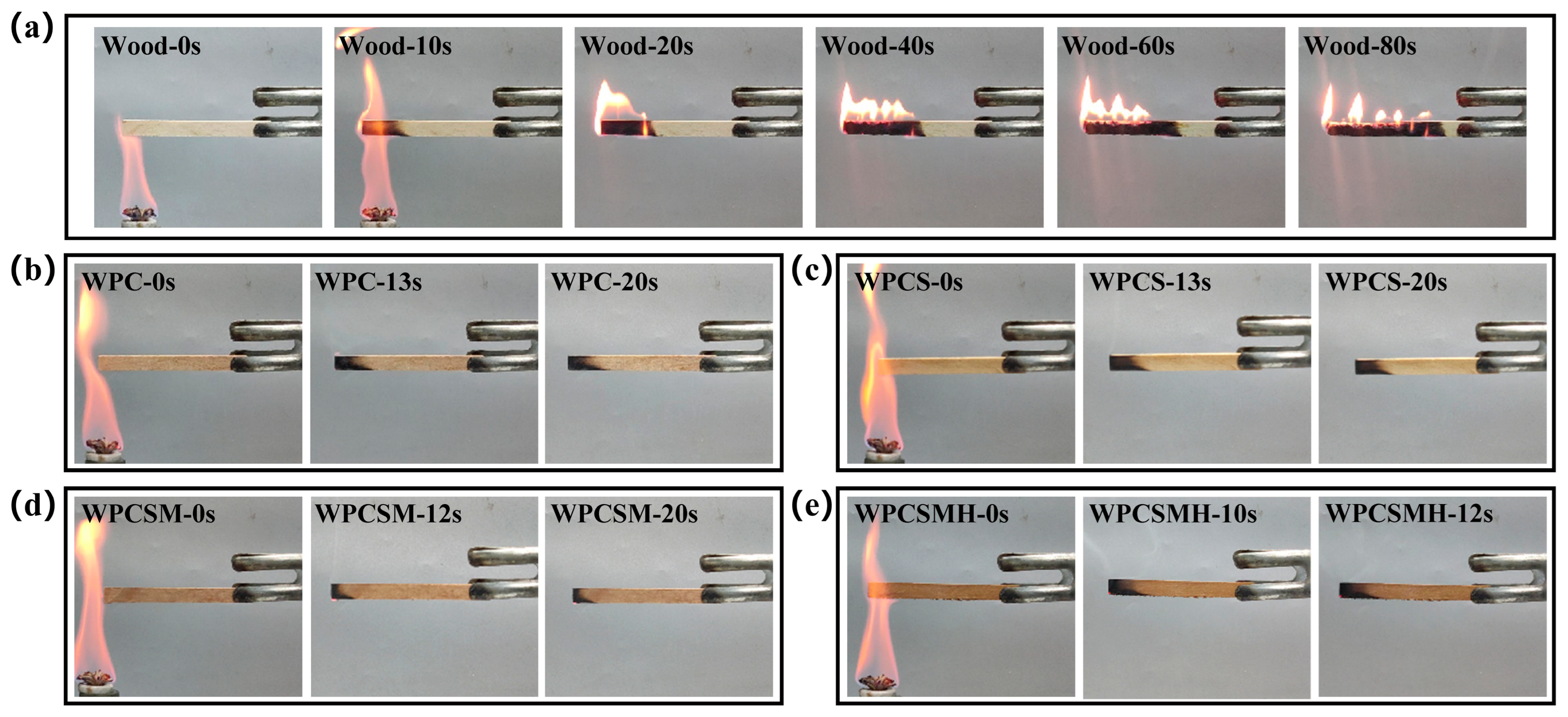
This study conducted detailed observations and analyses of the combustion behavior of materials using open flame tests. The experimental results indicate that untreated pure wood samples ignited by a spirit lamp flame (approximately 500–600 °C) exhibited immediate combustion upon removal of the ignition source after 10 s, accompanied by significant flame propagation. During an extended observation period of 80 s, the combustion did not exhibit any tendency to self-extinguish; instead, the fire rapidly intensified alongside the accumulation of thermal release, ultimately resulting in complete carbonization of the sample. This typical combustion behavior underscores the inherent flammability of wood as a natural polymer material, with its rapid thermal decomposition and sustained gas-phase combustion posing significant fire hazards in practical applications.
In this study, a series of bio-based flame-retardant wood composites were designed and prepared, with experimental data demonstrating markedly different combustion characteristics for these flame-retardant treated materials. Under identical ignition conditions, the WPC samples exhibited a minimal flame within 1 s of removing the ignition source, with only small flickers visible, and the flame extinguished completely within 3 s, with no re-ignition occurring during the subsequent 20 s of observation. When 2 wt% sodium alginate was further introduced to produce the WPCS samples, the extinguishing time remained approximately 3 s. The WPCSM and WPCSMH samples exhibited even superior flame-retardant performance, with extinguishing times reduced to 2 s, indicating that the incorporation of sodium methyl silicate did not diminish flame retardancy or promote combustion.
The Cone Calorimeter Test serves as an effective means to realistically simulate the combustion behavior of materials in actual fire scenarios. This test evaluates the combustion characteristics of materials by measuring key parameters such as the Heat Release Rate (HRR). As illustrated in Figure 4b, upon ignition of the samples, the HRR values rose sharply, reaching the first peak value (PHRR1) in a short period, primarily due to rapid surface combustion. Subsequently, a char layer began to form on the material’s surface, which acted as an effective thermal barrier, significantly inhibiting the transfer of external oxygen and heat, leading to a gradual decline in HRR values. As combustion continued, the char layer fractured under high temperatures, allowing unburned material to contact oxygen and ignite further, resulting in a second heat release peak (PHRR2) until the sample was completely consumed.
Experimental results demonstrated that both pure wood and WPCSM exhibited a bimodal HRR curve. However, the two heat release peaks for WPCSM (PHRR1 and PHRR2 measured at 149 kW/m2 and 162 kW/m2, respectively) were significantly lower than those of pure wood. This phenomenon can be attributed to the presence of the flame-retardant coating on the WPCSM surface, which not only slowed the combustion process but also facilitated the formation of a dense char layer, effectively reducing the material’s heat release rate. Additionally, the occurrence of PHRR1 for WPCSM was earlier than that of pure wood, potentially due to the catalytic effect of the flame-retardant coating accelerating the initial char formation process. Conversely, the timing of PHRR2 was delayed relative to pure wood, likely due to the protective nature of the flame-retardant layer, which allowed the treated samples to undergo dehydration and char formation more rapidly under the influence of sodium phytate, resulting in an earlier peak. The robust protective action of the char layer effectively resisted the penetration of heat from the flame.
The aforementioned results provide compelling evidence that the WPCSM exhibits superior flame-retardant performance compared to pure wood, as indicated by its lower heat release rate, which significantly reduces the risk of flame propagation during a fire. Experimental data demonstrate that this bio-based flame-retardant system manifests remarkable effectiveness through multi-component synergistic interactions: sodium phytate facilitates the formation of a dense char layer that acts in both gas and condensed phases to confer flame retardancy, while simultaneously forming a phosphorus-nitrogen synergistic system with chitosan. Sodium alginate enhances the stability of the char layer, and sodium methyl silicate imparts hydrophobic properties, effectively suppressing combustion while avoiding environmental toxicity issues.
Total Heat Release (THR) is a critical parameter for quantifying the total thermal energy released during the combustion process of materials, with its value accumulating as combustion time progresses. As depicted in Figure 4c, the trend in the THR curve reflects the combustion behavior of the materials: a gentler slope on the curve indicates less heat released per unit time, thereby suggesting better flame-retardant performance. The experimental results indicate that the combustion process of WPCSM commenced earlier than that of pure wood, resulting in a slightly higher THR value during the initial phase (0–150 s). However, after 150 s, the rate of THR increase for WPCSM markedly declined, and the gap between it and pure wood gradually widened. Ultimately, the THR for pure wood reached 72.0 MJ/m2, while the THR for WPCSM was only 53.8 MJ/m2, representing a reduction of 25.3% (18.2 MJ/m2). This difference can be primarily attributed to the presence of the flame-retardant coating on WPCSM, which not only promotes the formation of a dense char layer to effectively inhibit further combustion of the fuel but also reduces the release of pyrolysis products, thereby significantly lowering the total heat release. This clearly demonstrates that WPCSM possesses superior flame-retardant properties compared to pure wood, as evidenced by its lower THR value, indicating its capacity to effectively mitigate heat release and reduce fire hazards.
Total Smoke Production (TSP) is a crucial parameter for assessing the total volume of smoke released during combustion, which has significant implications for fire safety and evacuation. Smoke can obstruct visibility during a fire, thereby hindering escape, and inhalation can lead to incapacitation, resulting in missed opportunities for safe evacuation. Therefore, reducing smoke production during combustion is of paramount importance. As shown in Figure 4d, during cone calorimetry testing, the combustion initiation time of WPCSM was earlier than that of pure wood, leading to a slightly higher TSP accumulation in the first 200 s. However, after 200 s, the rate of TSP increase for WPCSM significantly diminished and consistently remained below that of pure wood. This phenomenon can be attributed to the multifaceted action mechanisms of the flame-retardant coating on WPCSM: firstly, the coating facilitates the rapid formation of a dense char layer when subjected to heat, effectively blocking the contact between the fuel and oxygen; secondly, the flame-retardant components within the coating mitigate incomplete combustion reactions, reducing the generation of smoke particulates; finally, the resultant char layer structure can adsorb some smoke particles, further diminishing smoke release. Experimental data indicate that the total smoke production from WPCSM throughout the entire combustion process was reduced by 25% compared to pure wood, providing solid evidence of its excellent smoke suppression performance.
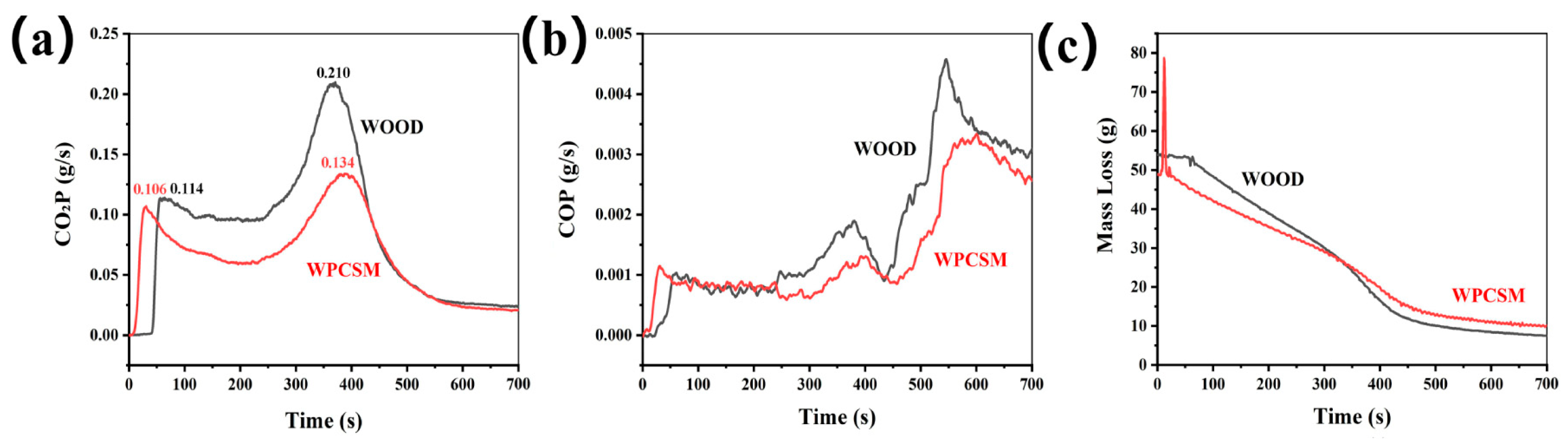
As illustrated in Figure 6a, the release of CO2 showed a significant positive correlation with the heat release rate of the materials, consistent with fundamental theoretical expectations of combustion chemistry. During the initial phase of the combustion test, the CO2 release from the pure wood samples exhibited a sharp increase, peaking at 0.114 g/s at 59 s, primarily due to the rapid oxidation combustion reactions occurring on the material’s surface. Subsequently, as a continuous dense char layer began to form during combustion, this char layer acted as an effective physical barrier, significantly obstructing the diffusion of external oxygen and heat, leading to a notable decline in CO2 release. After combustion, the unburned core material of the pure wood samples re-contacted oxygen and underwent secondary combustion, resulting in a second CO2 release peak of 0.21 g/s until the samples were completely consumed. Notably, the two CO2 release peaks for WPCSM (0.106 g/s and 0.134 g/s, respectively) were significantly lower than those of the pure wood control group. This reduction may be due to the acidic catalysts within the flame-retardant system accelerating the dehydration and carbonization of cellulose during the initial stages, resulting in a complete and dense char layer that effectively diminishes CO2 release. These findings provide important experimental insights for understanding the combustion behavior of flame-retardant wood composites.
In fire scenarios, the release of carbon monoxide (CO) during material combustion is a primary factor contributing to poisoning, loss of consciousness, and even death among individuals. Therefore, assessing the amount of CO released during the combustion process is of paramount importance for fire safety research. As illustrated in Figure 6b, a comparative analysis of the carbon monoxide production rate (COP) between wood-polymer composites (WPCSM) and pure wood was conducted using cone calorimetry. The experimental results indicate that throughout the combustion process, the COP of WPCSM remained significantly lower than that of pure wood for the majority of the time, with the disparity increasing as combustion time extended. Pure wood reached its peak CO release (0.0045 g/s) at 548 s, while WPCSM achieved its peak CO release (0.0033 g/s) at 575 s, representing a 27% reduction in intensity. This phenomenon can be primarily attributed to the multiple protective mechanisms of the flame-retardant coating on the surface of WPCSM: first, the coating facilitates the formation of a dense char layer, effectively suppressing the pyrolysis process of the material; second, the coating significantly enhances the structural integrity of the char layer at elevated temperatures, thereby reducing the release of flammable volatile compounds. Consequently, less wood is involved in the combustion process, leading to a reduced CO yield. This result corroborates the finding that wood is effectively protected by the flame-retardant coating. The research indicates that WPCSM possesses superior combustion safety compared to pure wood; its lower COP signifies a substantial reduction in the hazards posed by toxic smoke in real fire scenarios, thus allowing for valuable additional time for safe evacuation.
As shown by the mass loss curves in Figure 6c, the combustion test results demonstrate that the mass of the pure wood samples decreased significantly from an initial weight of 53.9 g to 7.5 g over the course of 670 s of combustion, resulting in a total mass loss of 46.4 g (an 86.1% loss rate). In contrast, the mass of the WPCSM samples diminished from 48.8 g to 9.9 g, with a total mass loss of 38.9 g (a loss rate of 79.7%). Comparative analysis revealed that the mass loss rate for WPCSM (0.058 g/s) was significantly lower than that of pure wood (0.069 g/s). This difference can be primarily attributed to the synergistic protective effects of the composite flame-retardant coating on the surface of WPCSM, which promotes the formation of a dense, expanded char layer under high temperatures.
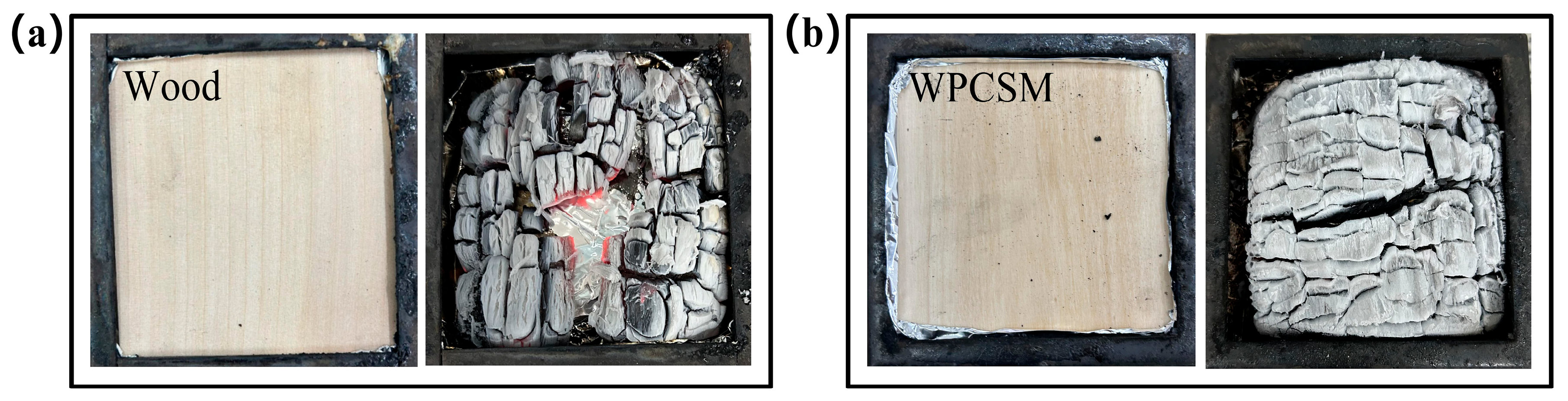
A comparison of digital photographs taken before and after combustion (Figure 7a,b) reveals that although the surface of the WPCSM samples was covered by a flame-retardant coating comprising sodium phytate, chitosan-gelatin composite, sodium alginate, and sodium methyl silicate, the wood grain remained distinctly visible prior to combustion, showing no significant visual difference from the pure wood samples. However, the residual char morphology after combustion exhibited marked differences between the two. Pure wood surfaces exhibited numerous macroscopic cracks, a loose structure, and severe central cavitation. This morphology is consistent with its high mass loss rate of 86.1%. In contrast, the WPCSM samples showed only minor cracks and maintained considerable structural integrity, aligning with their lower mass loss (79.7%) and superior flame retardancy. This difference is attributed to the dense char layer formed by the composite coating, which effectively inhibited crack propagation and protected the internal substrate. The addition of sodium methyl silicate further enhanced the char’s thermal stability, enabling it to withstand prolonged combustion for 670 s. The synergistic effects of these factors result in WPCSM exhibiting a lower mass loss rate and a higher char yield, thereby providing robust evidence for the effectiveness of this composite flame-retardant system.

3.4. Thermal Stability

Thermogravimetric analysis results indicate that wood samples modified through bio-based self-assembly exhibit significantly enhanced thermal stability. As shown in Figure 6c, all samples exhibited minor mass losses below 100 °C, which were primarily attributed to moisture evaporation from the wood and coating, as confirmed by infrared spectroscopy. The major mass loss occurred between 250 °C and 450 °C, mainly resulting from the decomposition and carbonization of cellulose, hemicellulose, and lignin. Above 500 °C, no significant mass change was observed, indicating complete degradation of the organic components and the retention of only high-melting inorganic salts.

3.5. Waterproof Performance

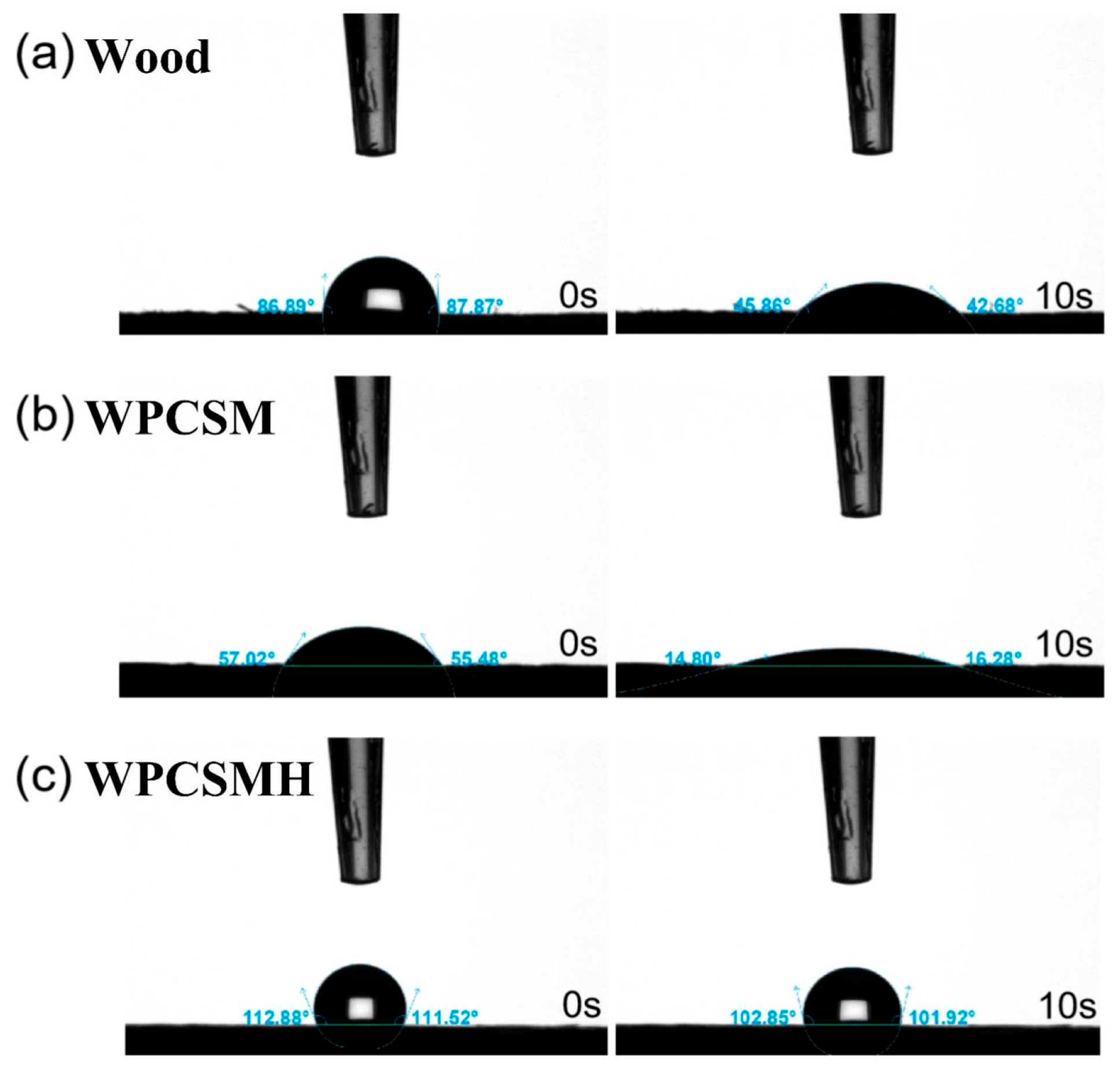
This study evaluated the hydrophobic properties of modified samples through contact angle measurements. As illustrated in Figure 8, all samples exhibited a gradual decrease in contact angle over time from 0 to 10 s, indicating the increasing penetration of water into the wood. The untreated wood displayed an initial contact angle of 87.87°, which quickly decreased to 42.68° within 10 s, demonstrating typical hydrophilic characteristics. The WPCSM samples exhibited an anomalous enhancement in hydrophilicity, with an initial contact angle dropping to 55.48° and plummeting to 16.28° within the same time frame. This rapid decline can be attributed to the abundance of hydrophilic groups present in chitosan, sodium phytate, and sodium alginate, which facilitates the absorption and dissolution of water droplets upon contact with these substances.
In contrast, the WPCSMH samples demonstrated exceptional hydrophobic performance, with an initial contact angle reaching 111° (exceeding 90°) and maintaining a value of 101° after 10 s, resulting in a mere 10° decrease—significantly better than the 45° decrease observed in the original wood. This enhancement in hydrophobicity can be primarily attributed to the formation of a low-surface-energy hydrophobic layer on the material’s surface. The hydrophobicity is chiefly derived from the silanol (Si-OH) molecules in sodium methyl silicate, which crosslink through hydroxyl groups to create a water-insoluble hydrophobic layer, aligning the methyl groups outward and imparting hydrophobic characteristics to the wood.
Notably, despite the only difference between the WPCSM and WPCSMH samples being the incorporation of sodium methyl silicate, their hydrophobic performances displayed marked discrepancies. This finding robustly underscores the decisive role of surface chemical modifications in enhancing the hydrophobic properties of wood.

3.6. Flame Retardant Mechanism

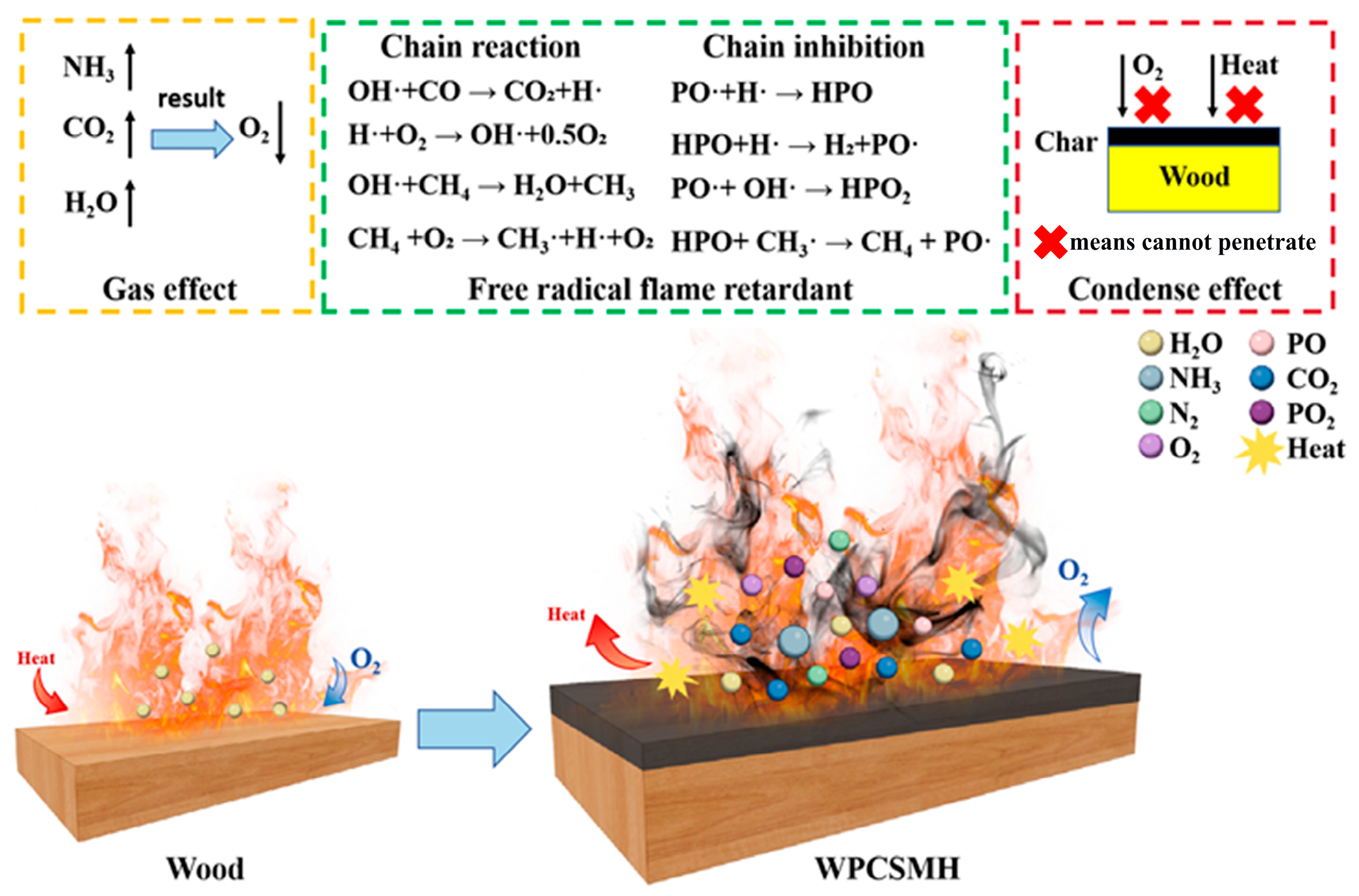
Based on the results of cone calorimetry, thermogravimetric analysis, and char characterization, the bio-based flame-retardant system developed in this study significantly enhances the fire resistance of wood through a multi-phase synergistic mechanism (Figure 9). In terms of gas-phase flame retardancy, TG-FTIR analysis revealed notable release peaks for NH3 (966 cm−1) and H2O (3500–3800 cm−1) in the WPCSMH samples within the 300–400 °C range, corresponding to the decomposition processes of chitosan and gelatin. Additionally, the emergence of the characteristic peak of the PO· radical (1260 cm−1) confirmed the quenching effect of phosphorus-containing radicals generated from the decomposition of sodium phytate on the combustion chain reaction. Collectively, these gas-phase products led to a reduction in the concentration of combustible gases, resulting in an increase in the Limiting Oxygen Index (LOI) from 22.0% to 34.0%.
Regarding condensed-phase flame retardancy, the char images indicate that the char produced after flame retardant treatment is denser, which is favorable for flame suppression. The X-ray photoelectron spectroscopy (XPS) spectrum reveals a characteristic peak for the P 2p orbital at 134.2 eV, confirming the formation of a C-O-P crosslinked structure. This phosphorus-carbon composite layer resulted in an increase in the char yield from 0.37% for pure wood to 3.54% for WPCSMH.
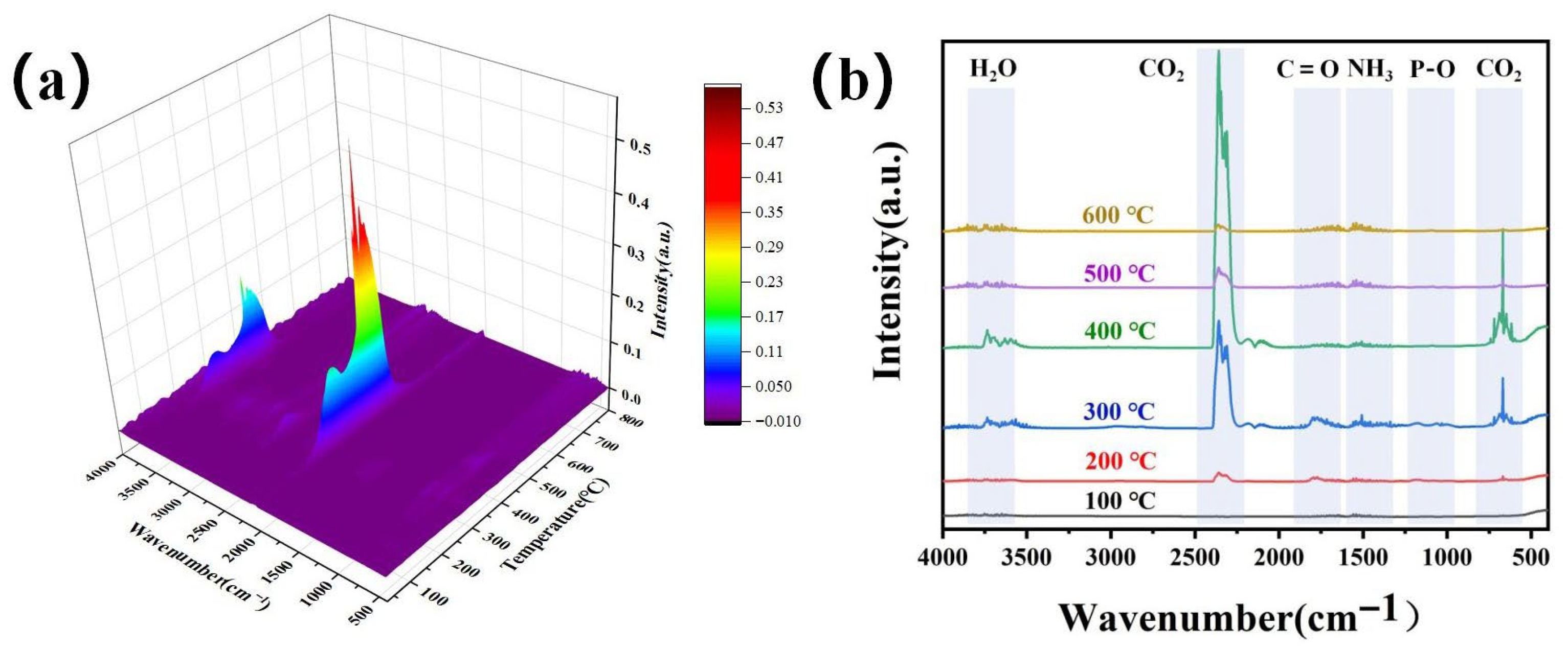
This study employs thermogravimetric analysis under air atmosphere to simulate the aerobic thermal oxidative degradation behavior of materials in actual fire conditions, which provides more valuable reference for assessing their real-world fire hazards. As illustrated in Figure 10a,b, WPCSM begins to pyrolyze around 200 °C, primarily releasing CO2 during this stage. The gas release significantly increases at 300 °C, with the maximum release observed at 400 °C. By approximately 600 °C, CO2 release is complete. The peaks around 2358 cm−1 and 669 cm−1 correspond mainly to CO2, while the peak at 3502 cm−1 is attributed to H2O, originating from both the flame-retardant coating and inherent moisture in the wood. The peak at 1170 cm−1 corresponds to P-O bonds, resulting from the cleavage of phosphate groups during the pyrolysis of sodium phytate, while the peak at around 1496 cm−1 is associated with NH3. This non-combustible gas effectively dilutes the oxygen concentration in the combustion zone, achieving flame suppression. In terms of gas-phase flame retardancy, the TG-IR data indicate that the P-O peak, primarily from the cleavage of phosphate groups in phytate, appears predominantly between 200–300 °C. The coating decomposes to release P-O, which intercepts reactive radicals (·H, ·OH), thereby inhibiting the chain reaction of combustion [30].
Despite the increased initial contact angle (111°) of WPCSMH after sodium methyl silicate treatment, its flame retardancy (LOI: 34.0%) was comparable to that of WPCSM (LOI: 32.1%). This result demonstrated that hydrophobicity is a surface property, whereas flame retardancy is governed by the intrinsic sodium phytate-chitosan-gelatin system. This strategy of functional separation provides a novel perspective for the development of multifunctional wood composites.


4. Conclusions

This study successfully developed an integrated treatment technology for wood that combines flame retardancy and hydrophobicity based on bio-based materials. Experimental results demonstrate that through the layer-by-layer self-assembly of sodium phytate, chitosan, sodium alginate, gelatin, and sodium methyl silicate, a composite coating with excellent performance can be formed on the wood surface. This coating system not only significantly enhances the flame retardant properties of the wood (with a Limiting Oxygen Index (LOI) of 34.0% and a 25.3% reduction in Total Heat Release (THR)), but also imparts good hydrophobic characteristics to the material, achieving a contact angle of 111°. The flame retardancy is primarily attributed to the intrinsic characteristics of the sodium phytate-chitosan-gelatin system, while the hydrophobicity is determined by the modification with sodium methyl silicate. This design strategy of functional separation provides valuable insights for the development of multifunctional wood composites.

Author Contributions

Y.L. and H.Z., Conceptualization, Data curation, Investigation, Formal analysis, Methodology, Writing—original draft, and Writing—review & editing; the authors contributed equally. K.Z., Project administration, Supervision, and Writing—review & editing. All authors have read and agreed to the published version of the manuscript.

Funding

This research received no external funding.

Institutional Review Board Statement

Not applicable.

Informed Consent Statement

Not applicable.

Data Availability Statement

The original contributions presented in this study are included in the article. Further inquiries can be directed to the corresponding author.

Conflicts of Interest

The authors declare that they have no known competing financial interests or personal relationships that could have appeared to influence the work reported in this paper.

References

  1. Li, S.; Lin, X.; Liu, Y.; Li, R.; Ren, X.; Huang, T.S. Phosphorus-nitrogen-silicon-based assembly multilayer coating for the preparation of flame retardant and antimicrobial cotton fabric. Cellulose 2019, 26, 4213–4223. [Google Scholar] [CrossRef]
  2. Lu, S.Y.; Hamerton, I. Recent developments in the chemistry of halogen-free flame retardant polymers. Prog. Polym. Sci. 2002, 27, 1661–1712. [Google Scholar] [CrossRef]
  3. Cross, M.; Cusack, P.; Hornsby, P. Effects of tin additives on the flammability and smoke emission characteristics of halogen-free ethylene-vinyl acetate copolymer. Polym. Degrad. Stab. 2003, 79, 309–318. [Google Scholar] [CrossRef]
  4. Yuan, D.; Yin, H.; Cai, X. Effect of a novel flame retardant containing silicon and nitrogen on the thermal stability and flame retardancy of polycarbonate. J. Therm. Anal. Calorim. 2013, 111, 1531–1537. [Google Scholar] [CrossRef]
  5. Ravichandran, S.; Bouldin, R.M.; Kumar, J.; Nagarajan, R. A renewable waste material for the synthesis of a novel non-halogenated flame retardant polymer. J. Clean. Prod. 2011, 19, 454–458. [Google Scholar] [CrossRef]
  6. Alongi, J.; Carletto, R.A.; Di Blasio, A.; Carosio, F.; Bosco, F.; Malucelli, G. DNA: A novel, green, natural flame retardant and suppressant for cotton. J. Mater. Chem. A 2013, 1, 4779–4785. [Google Scholar] [CrossRef]
  7. Wu, M.; Emmerich, L.; Kurkowiak, K.; Militz, H. Combined treatment of wood with thermosetting resins and phosphorous flame retardants. Eur. J. Wood Wood Prod. 2024, 82, 167–174. [Google Scholar] [CrossRef]
  8. Zhang, Q.; Xiao, Z.; Gong, C.; Wang, Q.; Xie, Y.; Zhang, Z. Wood amino-resin coatings using synergistic fire-retardant modification of pentaerythritol phosphate and guanylurea phosphate. J. For. Eng. 2018, 3, 48–55. [Google Scholar]
  9. Gao, M.; Sun, C.; Wang, C. Thermal degradation of wood treated with flame retardants. J. Therm. Anal. Calorim. 2006, 85, 765–769. [Google Scholar] [CrossRef]
  10. Wang, F.; Liu, J.; Lu, W. Research Progress in Wood Functional Fire-retardants. World For. Res. 2017, 30, 62–66. [Google Scholar]
  11. Cheng, X.W.; Guan, J.P.; Tang, R.C.; Liu, K.Q. Phytic acid as a bio-based phosphorus flame retardant for poly (lactic acid) nonwoven fabric. J. Clean. Prod. 2016, 124, 114–119. [Google Scholar] [CrossRef]
  12. Laufer, G.; Kirkland, C.; Morgan, A.B.; Grunlan, J.C. Intumescent multilayer nanocoating, made with renewable polyelectrolytes, for flame-retardant cotton. Biomacromolecules 2012, 13, 2843–2848. [Google Scholar] [CrossRef]
  13. Wang, X.; Romero, M.Q.; Zhang, X.Q.; Wang, R.; Wang, D.Y. Intumescent multilayer hybrid coating for flame retardant cotton fabrics based on layer-by-layer assembly and sol–gel process. RSC Adv. 2015, 5, 10647–40655. [Google Scholar] [CrossRef]
  14. Zhou, Y.; Ding, C.; Qian, X.; An, X. Further improvement of flame retardancy of polyaniline-deposited paper composite through using phytic acid as dopant or co-dopant. Carbohydr. Polym. 2015, 115, 670–676. [Google Scholar] [CrossRef] [PubMed]
  15. Hassan, M.; Nour, M.; Abdelmonem, Y.; Makhlouf, G.; Abdelkhalik, A. Synergistic effect of chitosan-based flame retardant and modified clay on the flammability properties of LLDPE. Polym. Degrad. Stab. 2016, 133, 8–15. [Google Scholar] [CrossRef]
  16. Yang, S.; Wang, J.; Huo, S.; Wang, J.; Tang, Y. Synthesis of a phosphorus/nitrogen-containing compound based on maleimide and cyclotriphosphazene and its flame-retardant mechanism on epoxy resin. Polym. Degrad. Stab. 2016, 126, 9–16. [Google Scholar] [CrossRef]
  17. Dash, M.; Chiellini, F.; Ottenbrite, R.M.; Chiellini, E. Chitosan—A versatile semi-synthetic polymer in biomedical applications. Prog. Polym. Sci. 2011, 36, 981–1014. [Google Scholar] [CrossRef]
  18. Wei, S.; Ching, Y.C.; Chuah, C.H. Synthesis of chitosan aerogels as promising carriers for drug delivery: A review. Carbohydr. Polym. 2020, 231, 115744. [Google Scholar] [CrossRef]
  19. Hao, F.; Geng, W.; Zhang, J.; Liu, Q.; Ding, B. Research progress of chitosan-based flame retardants. Wool Text. J. 2019, 47, 80–85. [Google Scholar]
  20. Zhu, J.; Xiong, R.; Zhao, F.; Peng, T.; Hu, J.; Xie, L.; Xie, H.; Wang, K.; Jiang, C. Lightweight, high-strength, and anisotropic structure composite aerogel based on hydroxyapatite nanocrystal and chitosan with thermal insulation and flame retardant properties. ACS Sustain. Chem. Eng. 2019, 8, 71–83. [Google Scholar] [CrossRef]
  21. Zeng, L.; Li, C.; Luo, C.; Xu, W.; Mu, J. Preparation and properties of chitosan/gelatin/phytic acid composite flame retardant coatings. J. Beijing For. Univ. 2024, 46, 112–122. [Google Scholar]
  22. Cao, W.; Yan, J.; Liu, C.; Zhang, J.; Wang, H.; Gao, X.; Yan, H.; Niu, B.; Li, W. Preparation and characterization of catechol-grafted chitosan/gelatin/modified chitosan-AgNP blend films. Carbohydr. Polym. 2020, 247, 116643. [Google Scholar] [CrossRef]
  23. Pawar, S.N.; Edgar, K.J. Alginate derivatization: A review of chemistry, properties and applications. Biomaterials 2012, 33, 3279–3305. [Google Scholar] [CrossRef]
  24. Kong, Q.S.; Wang, B.B.; Ji, Q.; Xia, Y.; Guo, Z.; Yu, J. Thermal degradation and flame retardancy of calcium alginate fibers. Chin. J. Polym. Sci. 2009, 27, 807–812. [Google Scholar] [CrossRef]
  25. ISO 4589-1996; Plastics—Determination of Burning Behaviour by Oxygen Index. International Organization for Standardization (ISO): Geneva, Switzerland, 1996.
  26. ISO 5660-1:2002; Reaction-to-Fire Tests—Heat Release, Smoke Production and Mass Loss Rate. Part 1: Heat Release Rate (cone Calorimeter Method). International Organization for Standardization (ISO): Geneva, Switzerland, 2002.
  27. Jia, H.; Chen, Z.; Huang, Y.; Döring, M.; Pan, F.; Ren, S.; Jiang, P. Enhancing flame retardant wood’s versatility and adjustable properties through multi-scale micro-coating strategy. Chem. Eng. J. 2024, 495, 153293. [Google Scholar] [CrossRef]
  28. Cao, X.; Huang, Y.Y.; Tian, X.Y.; Ni, Y.P.; Wang, Y.Z. Facile and atom-economical synthesisof highly efficient chitosan-based flame retardants towards fire-retarding and antibacterialmultifinctional coatings on cotton fabrics I. Int. J. Biol. Macromol. 2025, 300, 140205. [Google Scholar] [CrossRef] [PubMed]
  29. Tang, W.F.; Zhang, A.Z.; Cheng, Y.W.; Dessie, W.; Liao, Y.H.; Chen, H.F.; Qin, Z.D.; Wang, X.; Jin, X.D. Fabrication and application of chitosan-based biomass composites with fire safety, water treatment and antibacterial properties. Int. J. Biol. Macromol. 2023, 225, 266–276. [Google Scholar] [CrossRef] [PubMed]
  30. Zhang, Y.L.; Ou, S.Y.; Peng, Z.H.; Qi, Y.Z.; Chen, C.T.; Zhuo, G.W.; Liao, J.Q.; Li, L.P.; Liu, M.L.; Guo, C.G. Sustainable biobased flame-retardant epoxy thermoset derived from renewable phytic acid and itaconic-acid for high-performance rubber wood coatings. Int. J. Biol. Macromol. 2025, 315, 144667. [Google Scholar] [CrossRef]
Figure 1. Preparation process of WPCSM.
Sustainability 18 00520 g001
Figure 2. (a) XPS spectra of WPCSMH; (bd) XPS spectra of C1s, N 1s, O 1; (e) FTIR spectra of samples.
Sustainability 18 00520 g002
Figure 3. SEM digital photo of (a) Wood; (b) WPC; (c) WPCS; (d) WPCSM; (e) WPCSMH.
Sustainability 18 00520 g003
Figure 4. (a) LOI value; (b) HRR; (c) THR; (d) TSP.
Sustainability 18 00520 g004
Figure 5. Open fire test of (a) Wood; (b) WPC; (c) WPCS; (d) WPCSM; (e) WPCSMH.
Sustainability 18 00520 g005
Figure 6. (a) CO2P; (b) COP; (c) Mass loss.
Sustainability 18 00520 g006
Figure 7. (a) digital photos of wood; (b) digital photos of WPCSM.
Sustainability 18 00520 g007
Figure 8. WCA optical images of (a) Wood; (b) WPCSM; (c) WPCSMH.
Sustainability 18 00520 g008
Figure 9. Schematic diagram of flame retardant mechanism of WPCSMH. Note: The dashed boxes represent three different flame-retardant mechanisms.
Sustainability 18 00520 g009
Figure 10. (a) TG-IR 3D spectra of WPCSM; (b) IR spectra of WPCSM about 100–600 °C.
Sustainability 18 00520 g010
Table 1. Functionalization parameters and mass gain of wood via layer-by-layer assembly.
Sample CodeSample DescriptionKey Treatment Steps and Impregnation Solution Concentration (wt%)Number of Deposited BilayersAverage Mass Gain (%)
WPCWood-Phytate-Chitosan1. Sodium phytate (5%); 2. Chitosan (1%, pH = 4)1 8.59 ± 1.15
WPCSWPC-Sodium Alginate1. Sodium phytate (5%); 2. Chitosan (1%, pH = 4); 3. Sodium alginate (1%)110.34 ± 1.35
WPCSMWPCS-Gelatin1. Sodium phytate (5%); 2. Chitosan-gelatin composite solution (Chitosan 1%, Gelatin 3%, pH = 4); 3. Sodium alginate (1%)1 8.11 ± 3.16
WPCSMHWPCSM-Methyl Siliconate1. Sodium phytate (5%); 2. Chitosan-gelatin composite solution (Chitosan 1%, Gelatin 3%, pH = 4); 3. Sodium alginate (1%); 4. Methyl siliconate (20%)112.22 ± 3.69
Disclaimer/Publisher’s Note: The statements, opinions and data contained in all publications are solely those of the individual author(s) and contributor(s) and not of MDPI and/or the editor(s). MDPI and/or the editor(s) disclaim responsibility for any injury to people or property resulting from any ideas, methods, instructions or products referred to in the content.