Article

Numerical Simulation Study on Interaction and Burnout Characteristics of Coal Blending Combustion in a 200 MW Tangential Firing Boiler Under O2/CO2 Atmosphere

1
Guangzhou Institute of Energy Conversion, Chinese Academy of Sciences, Guangzhou 510640, China
2
Guangdong Provincial Key Laboratory of Renewable Energy, Guangzhou 510640, China
3
School of Safety Science and Emergency Management, Wuhan University of Technology, Wuhan 430070, China
*
Author to whom correspondence should be addressed.
Sustainability 2026, 18(3), 1183; https://doi.org/10.3390/su18031183
Submission received: 23 November 2025 / Revised: 21 December 2025 / Accepted: 28 December 2025 / Published: 23 January 2026

Abstract

A numerical simulation is conducted to investigate the interaction and burnout characteristics of mixed coal under O2/CO2 atmosphere in a 200 MW tangential firing boiler. Multiple models are utilized to simulate the flow and combustion processes inside the furnace, and a three-dimensional full-furnace model is constructed using an improved Weighted-Sum-of-Gray-Gases (WSGG) model. Using two types of coal and their mixed coal, the combustion of mixed coal under four O2/CO2 atmospheres is examined. Results show that there exists a significant interactive effect of promoting ignition and inhibiting burnout between difficult-to-ignite coal and easy-to-ignite coal. Increasing the proportion of easy-to-ignite coal helps improve the ignition performance of mixed coal. With a high proportion of easy-to-ignite coal, the oxygen-grabbing ability is enhanced. Increasing the inlet oxygen concentration can facilitate coal ignition and effectively enhance the burnout rate of difficult-to-ignite coal, mitigating the adverse effects of burnout inhibition. Among five typical oxidant-stream distribution methods, the positive pagoda oxidant-stream distribution can satisfy the combustion requirements of each layer, achieve relatively high burnout rates for difficult-to-ignite coal and mixed coal, and demonstrate the optimal comprehensive combustion performance. The findings can provide valuable references for optimizing oxygen-enriched combustion in boilers, thereby promoting the sustainability of coal-fired power generation.

1. Introduction

Carbon dioxide (CO2) emissions generated during the coal combustion process is one of the main sources of greenhouse gases. The development of clean and efficient coal combustion technologies, enhancement of energy utilization efficiency, and reduction in energy consumption are crucial approaches for coal-fired power enterprises to implement energy conservation and emission reduction strategies. These enterprises should address the contradiction between energy supply and environmental protection. The primary methods for reducing and controlling CO2 emissions during the utilization of fossil fuels (predominantly coal) are as follows [1]: (1) Altering the energy structure by substituting conventional fossil fuels with renewable energy sources, such as wind energy, solar energy, and nuclear energy; (2) Enhancing energy utilization and conversion efficiency to curtail energy consumption, such as elevating steam parameters and boiler combustion efficiency; (3) Mitigating and controlling CO2 emissions during the use of fossil fuels, such as adopting O2/CO2 combustion technology.
Propelled by the “dual carbon” objectives, the co-firing technology employing mixed coal has emerged as a crucial method for realizing efficient and clean energy utilization in the thermal power generation domain, due to its remarkable fuel adaptability and considerable environmental advantages. During the co-firing process of mixed coal, the interactions among various components directly affect combustion stability, burnout efficiency, and pollutant emissions. As a key indicator for evaluating combustion performance, the optimization of burnout characteristics is of great significance for enhancing energy utilization efficiency and curbing carbon emissions.
During the co-blending combustion of coal, the combustion of more-volatile coal exerts a promoting effect on the devolatilization of less-volatile coal while simultaneously inhibiting char combustion in the latter. The interactions arising from blended coal combustion refer to non-additive effects, including heat transfer, free radical reactions, and atmospheric regulation occurring during the simultaneous combustion process of different fuels. The intensity and direction of these interactions are influenced by both fuel characteristics and combustion conditions. Specifically, this interaction manifests itself as two types of effects: the ignition promotion effect and the burnout inhibition effect, with significant variations observed across different fuel combinations and combustion scenarios.

1.1. Core Mechanism and Influencing Factors of Coal Blending Combustion Interaction

For the differences in interaction effects driven by fuel characteristics, key factors such as volatiles, ash content, moisture content of the fuel and its reactivity play a crucial role in determining the nature of these interactions [2]. (1) When high-volatile fuels are co-fired with low-volatile fuels, a phenomenon known as the “promoting ignition effect” is commonly observed. Wang et al. [3] reported that when bituminous coal was co-fired with ultra-low volatile semi-coke, the local high-temperature zones generated by the release of bituminous coal volatiles resulted in a reduction in semi-coke’s ignition temperature by 9.3%. Furthermore, the hydrogen-based and hydroxyl radicals produced from volatiles facilitated NO reduction, thereby optimizing environmental performance. Zhang et al. [4] further validated this finding through thermogravimetric and settling furnace experiments, demonstrating that the ignition synergistic effect from bituminous coal volatiles could enhance the burnout rate of semi-coke by 8–12%. A significant negative correlation was established between fuel ratio (FR) and combustion comprehensive index S, satisfying the relationship S = 3.87 − 0.26FR which provides a quantitative basis for optimizing coal blending ratios. (2) Conversely, incorporating high-ash and high-moisture fuels tends to induce burnout inhibition effect. Ma et al. [5] confirmed through experiments on a 600 MW down-fired boiler that when coal slurry was co-fired with anthracite, ash released during coal slurry combustion coated the surface of anthracite particles, obstructing oxygen diffusion and heat transfer processes. Additionally, its elevated moisture characteristics contributed to lowering local furnace temperatures. Specifically, when the blending ratio of coal slurry surpassed 5%, this inhibitory effect outweighed any promoting impact from volatiles leading to a 2.1% decrease in anthracite’s burnout rate while fly ash carbon content increased from 2.3% to 4.5%.
Regarding the regulatory framework governing combustion conditions and their interaction effects, the combustion atmosphere, boiler load, and air staging methods indirectly influence the intensity and direction of coal blend interaction by modifying the reaction environment. These factors are crucial for maximizing synergistic effects while minimizing inhibitory ones. (1) Oxygen-enriched combustion can enhance the ignition effect of high-volatile fuels; however, it is essential to strike a balance with respect to NOx emissions. Research conducted by Lyu et al. [6] demonstrated that increasing the O2 concentration in secondary air from 21% to 30% could mitigate the reduction in furnace temperature caused by a 50% ammonia blend (from 1320 K to 1380 K), thereby augmenting the ignition effect of ammonia on coal. Nevertheless, this adjustment resulted in a notable increase in NOx concentration—rising from 320 mg/m3 to 464 mg/m3 (a 45% increase). Additionally, Ma et al. [7] explored oxygen-enriched co-combustion involving low-volatile fuels (such as semi-coke and residual carbon) alongside bituminous coal; they found that implementing wet flue gas recirculation (WFGR) optimized atmospheric characteristics resulting in a reduction of NOx emissions by 216.57 mg/m3 compared to dry recirculation techniques, all while enhancing burnout rates by approximately 2.1%. This improvement was attributed to the catalytic effect of H2O on coal char gasification reactions. (2) Air-staging combustion technology optimizes interactive effects through the creation of a “High-temperature Strong Reductive Zone (HTSRA)”. Liang et al. [8] confirmed through experimental investigations on a 300 MW unit that deep air staging—with an optimal burnout air ratio of 27.5%—led to a significant decrease in NO emissions from systems utilizing coal and semi-coke co-firing by approximately 49.6%, while simultaneously promoting enhanced semi-coke combustion capable of addressing insufficient combustion challenges associated with low-volatile fuels. Wang et al. [9] further elucidated that each incremental increase of five percent in Separated Over-fire Air (SOFA) correlated with an approximate decline in NOx concentration ranging between 8% and 10%; however, they cautioned against exceeding SOFA proportions above 30% due to potential increases in fly ash carbon content amounts ranging between 1.2% and 1.5%. (3) Variations in boiler load significantly influence interactive effects, particularly under scenarios of ultra-low load where the differences are notably pronounced. In experiments conducted by Yang et al. [10] on a 660 MW supercritical boiler, it was observed that when the coal blending ratio exceeded 40% at low-load conditions, the flame center shifted upward, resulting in a decrease of 25 K in furnace outlet temperature and a reduction of 0.8% in boiler efficiency.

1.2. Key Influencing Factors and Optimization Pathways for the Burnout Characteristics of Blended Coal

The effectiveness of the burnout characteristics of blended coal is determined by the synergistic optimization of fuel ratio, particle properties, operational parameters, and pretreatment technologies. Existing studies have clarified the optimization rules and quantitative indicators across various scenarios for different fuel combinations and boiler types. Concerning the optimization criteria for mixing ratios, it is evident that the optimal blending ratio exhibits considerable variation among different fuel combinations due to differences in fuel properties. Thus, a comprehensive determination must be made considering combustion efficiency, pollutant emissions, and slagging risk. In their co-combustion experiments involving coal slurry and anthracite, Ma et al. [5] demonstrated through industrial tests on a 600 MW down-fired boiler that a 5% coal slurry blending ratio could effectively balance combustion efficiency and anti-slagging performance. At this specific ratio, the carbon content in fly ash increased marginally by just 0.8%, while maintaining boiler efficiency above 92%. Additionally, they observed an increase in ash fusion temperature from 1320 °C to 1380 °C without any significant occurrences of slagging; however, exceeding this 5% threshold resulted in substantial ash inhibitory effects—wherein fly ash carbon content exceeded 4%, coupled with a decline in boiler efficiency ranging from 1.2% to 1.5%. Similarly, Lou et al. [11] reached comparable conclusions during experiments conducted on a 300 MW boiler. They found that a sludge blending ratio of 10% enabled harmless disposal of sludge; nevertheless, compared to the aforementioned ratio of 5%, there was an increase in fly ash carbon content by as much as 2.3%. This outcome necessitates further optimization concerning secondary oxidant-stream distribution strategies to alleviate these adverse effects.
Regulatory effects of particle characteristics and operating parameters: (1) Optimizing particle size serves as an economical and effective method to enhance the combustion efficiency of low-volatile fuels, particularly for challenging-to-burn materials such as lean coal and semi-coke. Liu et al. [12] conducted experiments in a 330 MW tangential furnace that demonstrated when co-firing low-volatility lean coal with bituminous coal, reducing the particle size of lean coal from 70 μm to 40 μm led to a decrease in fly ash carbon content from 5.4% to 2.0%, resulting in an improvement rate of 83% in combustion efficiency. Additionally, optimizing solely the fuel particle size for the top burners could lower the fly ash carbon content to 2.5%, with only a modest increase of 40% in coal grinding costs, thereby yielding significant marginal benefits. (2) Regulation of operating parameters should prioritize the optimization of the combustion atmosphere in the main combustion zone, fuel feed location, and secondary oxidant-stream distribution to achieve a synergistic balance between combustion efficiency and emission reduction. Lyu et al. [13] simulated a 330 MW wall-fired boiler and pointed out that co-firing sludge with coal, while increasing the excess air coefficient (α1) of the main combustion zone from 0.74 to 0.96, resulted in a 58% increase in NOx concentration alongside a reduction of fly ash carbon content by 1.8%. They recommended maintaining α1 around 0.75 to effectively balance both combustion completion and emission control. (3) The position of fuel feeding has a significant impact on achieving synergies between combustion completion and emissions through alterations in particle residence time and reaction environment. Zhang et al. [14] conducted experiments on a 600 MW down-fired boiler and found that controlling the central secondary air ratio below 3.52% helped avoid flow field asymmetry, maintained an ignition distance for coal/air flow at approximately 0.10 m, prevented burnout occurrences at the burner nozzle, resulting in an impressive burnout rate of up to 96.3%. Conversely, exceeding this threshold above 6% led to turbulence within the flow field, consequently increasing fly ash carbon content by an additional 2.1%.
However, numerical simulation studies on the interaction and burnout characteristics of mixed coal combustion in a tangential firing boiler under O2/CO2 atmospheres have been infrequently explored. In this study, multiple models were utilized to simulate the flow and combustion processes within the furnace. A three-dimensional full-furnace model of a 200 MW tangential firing boiler was developed using an improved Weighted-Sum-of-Gray-Gases (WSGG) model. Focusing on JinCheng (JC) coal, ShenHua (SH) coal, and their blended mixture, we investigated mixed coal combustion across four O2/CO2 atmospheric conditions at full load with an excess air coefficient of 1.2. Subsequently, we separately examined the effects of ignition promotion and combustion completion inhibition under oxygen-enriched conditions on the combustion and burnout characteristics of mixed coal in boilers. Additionally, we assessed how variations in oxygen concentration and oxidant-stream distribution methods influence the optimization of mixed coal burnout. This research offers valuable insights for enhancing the combustion efficiency and burnout characteristics of blended coals in an O2/CO2 atmosphere, which are conducive to promoting the sustainable application of coal-fired power generation technology.

2. Methodology

2.1. Boiler Description

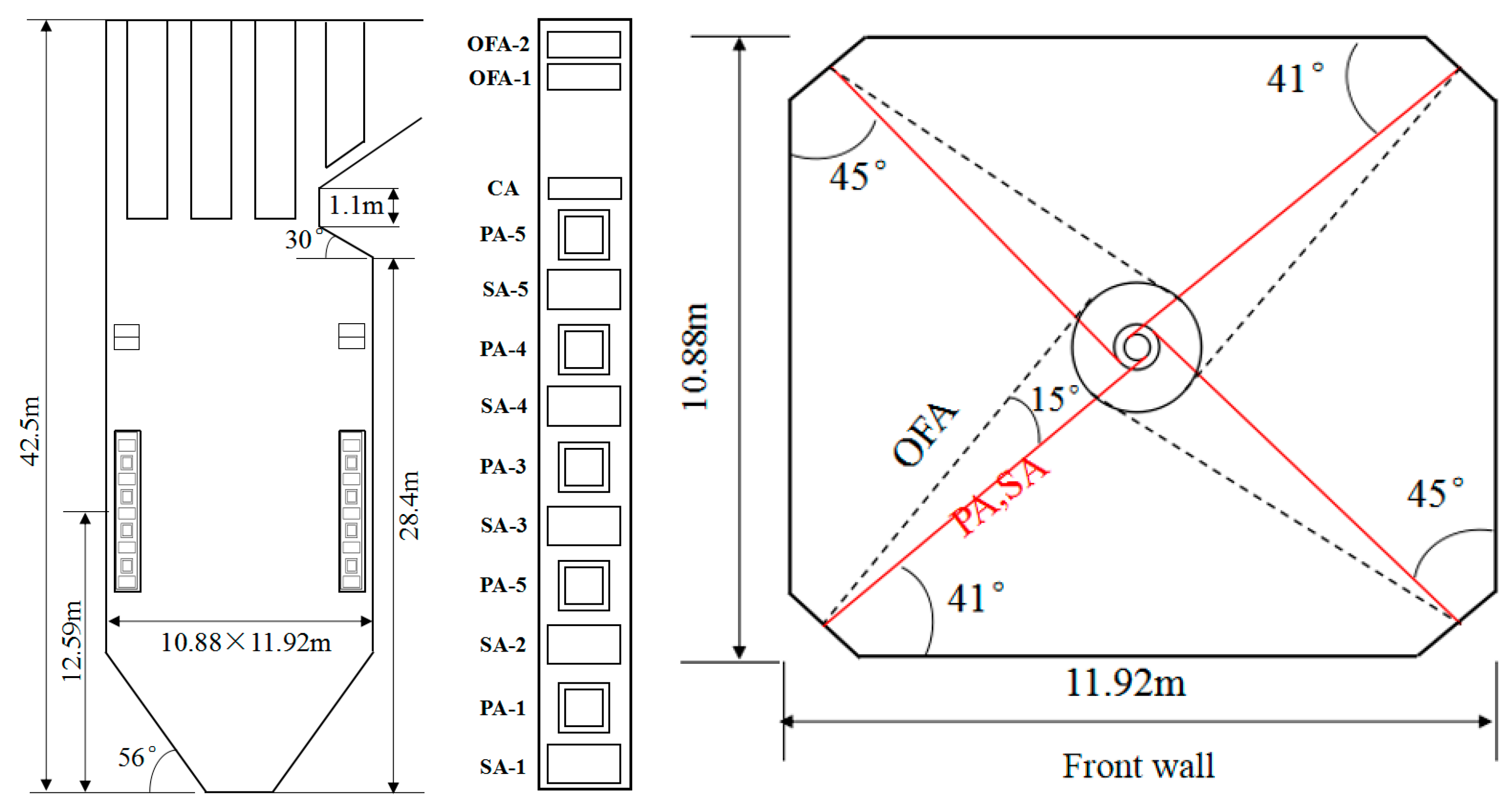
The 200 MW tangential firing boiler has a depth of 10.88 m, width of 11.92 m, and height of 42.5 m. The system is outfitted with five coal mills corresponding to five layers of coal burners (PA1~PA5, primary air (PA) port stands for a coal burner). Notably, the uppest coal burner, PA-5, along with its associated coal mill, remains on standby and is typically not utilized. The arrangement of secondary air follows an alternating pattern. In the lower furnace, there are primarily five layers of secondary air (SA) ports (SA1~SA5), a layer cool air (CA), while two additional layers of over-fire air (OFA) are incorporated within the burnout zone. The incidence angles for primary air and secondary air are set at 41° in relation to the front wall and 45° in relation to the rear wall; furthermore, the over-fire air is positioned counter to the secondary air at an angle of 15°. When operating under O2/CO2 conditions, burners PA1 through PA4 deactivate their over-fire air supply. Additional structural dimensions can be referenced in Figure 1. More details about this boiler can be found in Ref. [15].
Table 1 summarized the properties of the coals which had a large difference in their ranks, i.e., low-volatile JC coal and high-volatile SH coal. In this paper, SH coal, JC coal, and their mixed coal sample (SH + JC) were selected as research objects, primarily because these two coals exhibited significant differences in coal quality characteristics, making them good representatives for optimizing mixed coal combustion in boilers. For these coals, each parameter is an input for the Chemical Percolation Devolatilization (CPD) sub-model, as shown in Table 2. And the kinetic parameters for the multiple-surface-reaction model of the char reaction can be found in Ref. [16].

2.2. Mathematical Modeling and Computational Methods

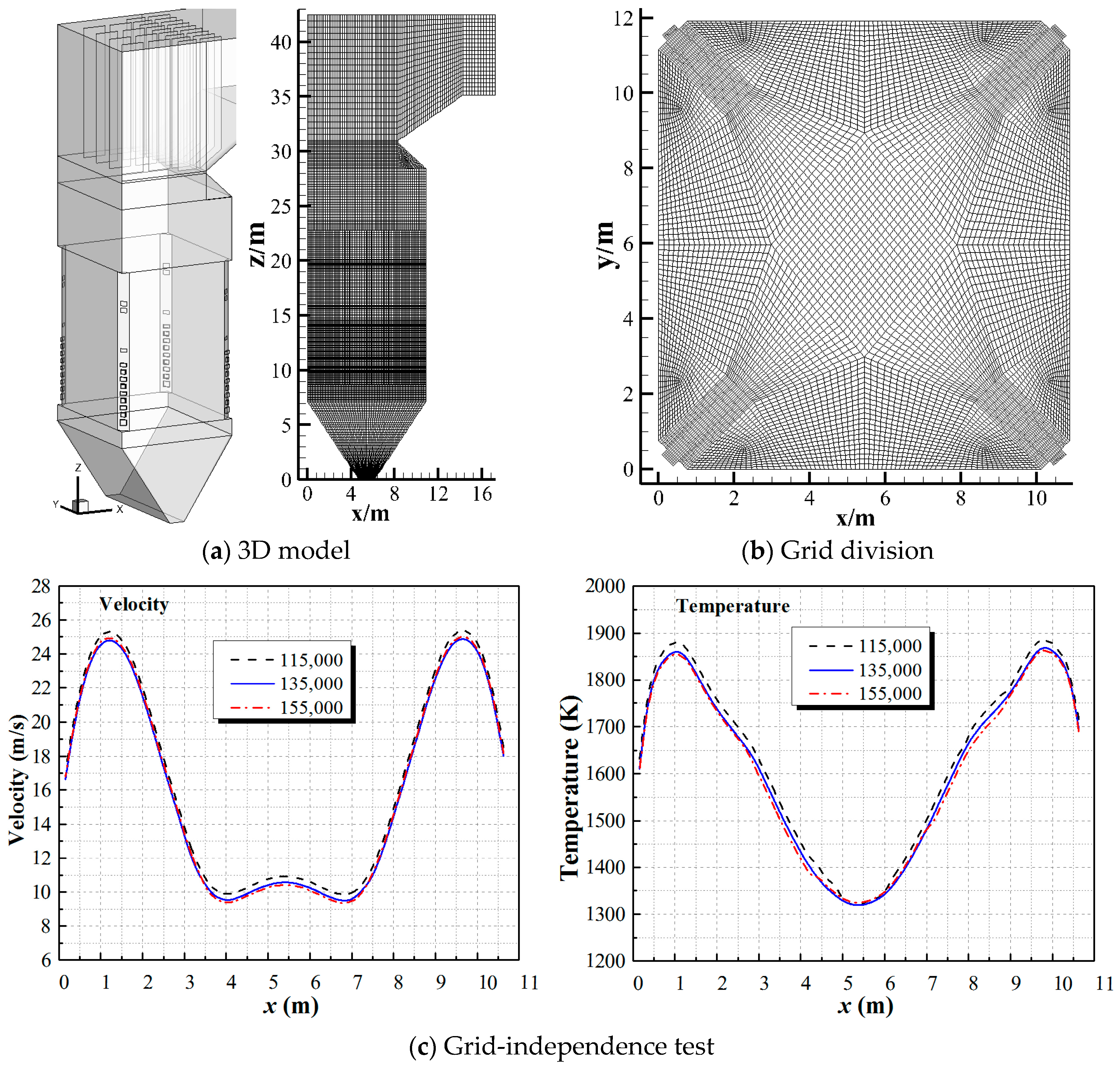
Coal combustion consists of a series of complex processes including flow, heat transfer, mass transfer, and chemical reactions. The main models used in the simulation calculation process of this research are as follows: The realizable k-ε turbulence model is adopted for gas-phase flow simulation. Radiative heat transfer plays a dominant role in combustion equipment, so the accuracy of radiative heat transfer calculation has a significant impact on the simulation of furnace processes. The Discrete Ordinates (DO) model can solve radiative problems in all optical depth ranges and is more suitable for the radiative characteristics of O2/CO2 combustion. In the radiative model, for coal particle combustion under air atmosphere, the WSGG model is usually sufficient for calculating the gas absorption coefficient; however, for combustion under O2/CO2 atmosphere, due to the influence of high CO2 (or H2O) concentration altering the radiative characteristics, the traditional WSGG model is no longer applicable. Therefore, an improved WSGG model with a full spectrum k-distribution is adopted in this work for simulating O2/CO2 atmosphere combustion [17]. The stochastic particle trajectory model is used to simulate the flow of the pulverized coal particles. The CPD model is applied for volatiles release simulation; the finite rate/eddy dissipation model is utilized for gas-phase combustion simulation; and the multiple-surface-reaction model is used for coal char combustion simulation. More models and settings can be referred to Refs. [18,19,20,21]. Based on the actual structure and dimensions of the boiler, a three-dimensional full furnace model is developed, with efforts made to accurately reproduce the burner prototype in order to minimize simulation errors and enhance computational accuracy. The mesh configuration of the boiler is illustrated in Figure 2a,b. An independence test of the mesh was conducted using mesh counts of 1.15 million, 1.35 million, and 1.55 million; the results of this independence test are presented in Figure 2c. Ultimately, a mesh count of 1.35 million is selected as it yields relatively accurate simulation results while optimizing both simulation time and cost.
All numerical simulations were conducted under full-load conditions, with coal feeding rates determined based on the input calorific values of each coal type, and a uniform excess oxygen coefficient of 1.2. The boiler employed a four-corner tangential firing method, with the design coal being easily ignitable bituminous coal, and burners arranged in layers along the furnace height. In actual operation, to reduce fuel procurement costs, a portion of low-quality coal was often co-fired. Therefore, this study focused on combustion optimization research for the mixed coal composed of 25% JC coal and 75% SH coal. The coal particle size distribution ranged from 5 to 250 μm, with an average particle size of 65 μm and a distribution index of 1.5. Considering that this boiler was mainly used for coal combustion under O2/CO2 atmosphere, four different inlet atmosphere conditions, 26% O2/74% CO2, 28% O2/72% CO2, 30% O2/70% CO2, and 32% O2/68% CO2 (based on volume), were selected in this study. To ensure the safety of coal in the conveying pipelines, the oxygen concentration in the primary air was controlled at 18%. And the burnout rate of coal can be obtained from the Fluent simulated results.

3. Simulation Results and Analysis

3.1. Verification of the Simulation Result

The coal quality, as well as the associated models and parameters utilized in this study, aligns with those referenced in Ref. [16], where prior research has thoroughly validated the rationality of these models. Consequently, this corroborates that the geometric model, mesh division, and mathematical formulations established herein can effectively simulate the flow dynamics, heat transfer processes, and combustion phenomena within the furnace. Furthermore, they are capable of investigating the interaction and burnout characteristics of mixed coal combustion under an O2/CO2 atmosphere.

3.2. Ignition Promotion and Burnout Inhibition Under O2/CO2 Atmosphere

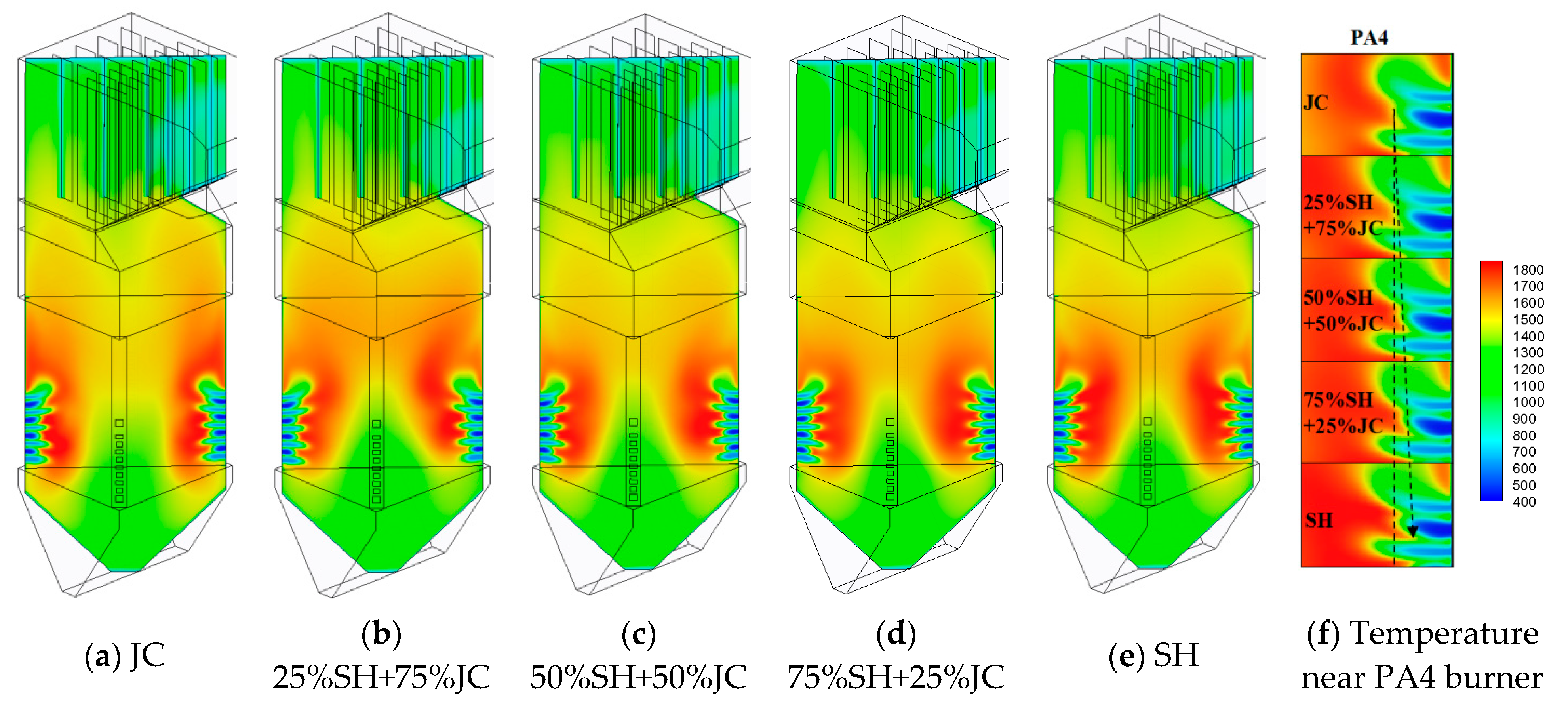
Under typical O2/CO2 atmosphere conditions (30% O2/70% CO2), the effects of different proportions of easily combustible coal blending on the combustion and burnout characteristics of mixed coal in the boiler were studied. Figure 3 showed the contour of furnace temperature distribution at different blending ratios. The results indicated that the high-temperature regions were mainly concentrated in the main combustion zone, which was mainly due to the intense coal combustion reaction in this area. The reaction released a large amount of heat concentratedly. Consequently, a higher temperature level was formed in the main combustion zone. However, the blending ratio of SH coal had a notable impact on temperature distribution. The focus was on the temperature distribution in the main combustion zone. As the proportion of SH coal increased, the combustion process became more concentrated. Correspondingly, the range of the high-temperature zone near the burner expanded significantly. To further analyze the stability of the coal flame, the fourth layer burner (PA4) was selected as a representative area for comparison. From Figure 3f, a clear trend can be observed near the PA4 burner. As the blending ratio of SH coal increased, the high-temperature zone gradually shifted towards the burner inlet direction. This shift indicated that the addition of SH coal helped to improve the ignition performance of the mixed coal. Moreover, as the proportion of SH coal continued to rise, the ignition stability of the mixed coal was further enhanced.
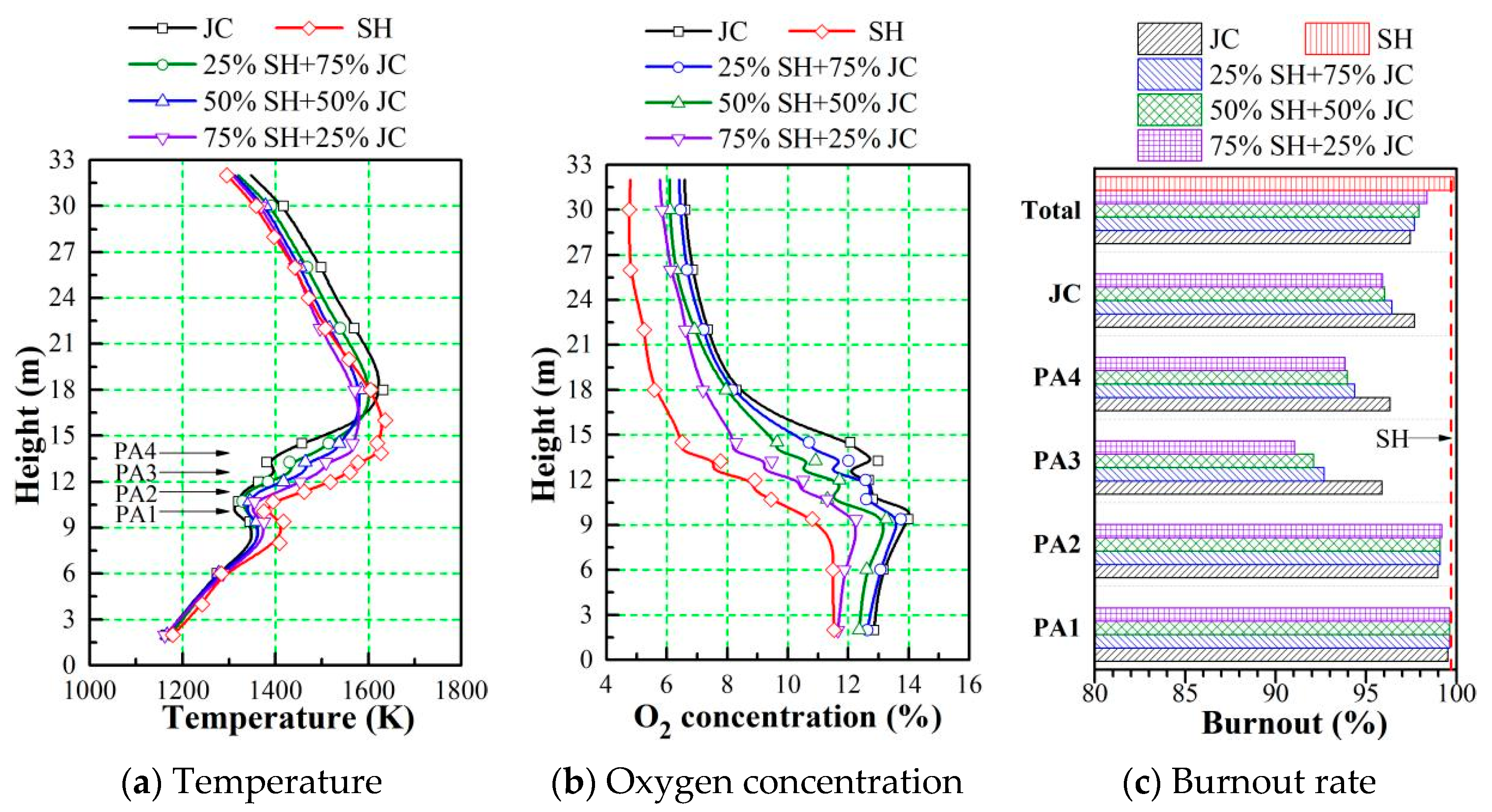
Figure 4 further compared the variation trends of average temperature along the furnace height and coal burnout rate at each section under different SH coal blending ratios. As illustrated in Figure 4a, despite certain fluctuations in the average temperature within the main combustion zone caused by airflow from different layer nozzles, there was an overall trend of increasing average temperature, which reached a peak in the upper region of the main combustion zone before gradually decreasing. By examining the temperature distributions under varying SH coal blending ratios, it could be observed that within the main combustion zone, the average temperature increased with a higher proportion of SH coal. Conversely, in the burnout zone, an opposite trend was noted; specifically, a higher ratio of SH coal resulted in a lower average temperature. This phenomenon was mainly attributed to the more intense and complete combustion of coal in the main combustion zone when the SH coal ratio was increased, resulting in a reduction in the amount of unburned coal entering the burnout zone, and consequently a decrease in the heat released in the burnout zone. Figure 4b showed the distribution of average oxygen concentration along the furnace height under different SH coal blending ratios. Compared with the combustion of JC coal alone, the combustion of SH coal alone consumed more oxygen in the main combustion zone. This led to the lowest average oxygen concentration, which reflected the excellent combustion and burnout characteristics of SH coal. With the increase in SH coal blending ratio, the oxygen concentration showed an overall gradually decreasing trend. In addition, the change of oxygen concentration along the furnace height did not satisfy the linear superposition relationship. In the burnout zone, although the oxygen concentration decreased, the amplitude of change was relatively small.
A statistical analysis of the combustion characteristics of coal under different mixing ratios of SH coal was presented, as shown in Figure 4c. In Figure 4c, PA1–PA4 represented the burnout rates of JC coal injected from each layer of burners, JC denoted the total burnout rate of all JC coal in the furnace and “Total” indicated the overall burnout rate of the blended coal (SH + JC). The red dashed line corresponding to SH coal reached a burnout rate of 99.6%, indicating that the burnout rate of coal from each SH layer was higher than this value, demonstrating good burnout performance. The burnout rates of JC coal injected into PA1 and PA2 layers were both relatively high, generally exceeding 99%. Under different SH coal mixing ratios, the burnout rates of coal in these two layers showed small differences, primarily because coal particles injected from lower layers had a longer residence time in the furnace, allowing for more complete reactions. During this process, the promoting effect of the longer residence time on burnout was significantly greater than other inhibiting factors. In contrast, the burnout rates of JC coal injected into the upper-layer burners PA3 and PA4 were obviously lower. This was mainly attributed to two factors. Firstly, the highly combustible SH coal burned vigorously, consuming a large amount of oxygen and creating a locally oxygen-deficient environment. Secondly, the coal in these two layers had a shorter residence time in the furnace. Further comparison between the burnout rates of PA3 and PA4 revealed that, under the same mixing ratio, the burnout rate of JC coal in the PA4 layer was higher than that in the PA3 layer. This was because JC coal injected into the PA3 layer. It moved upward through the PA4 combustion zone, where it was strongly inhibited by the oxygen-deficient conditions caused by coal combustion in that region. In contrast, coal was injected into the PA4 layer. Upon rising, the coal directly mixed with the uppermost secondary air (SA5), facilitating a timely replenishment of oxygen. This process alleviated the state of oxygen deficiency and mitigated its inhibitory effects. Therefore, the JC coal in the PA3 layer had the lowest burnout rate and the poorest burnout performance among all combustion layers. Further analysis using this layer as an example showed that as the mixing ratio of SH coal increases, the burnout rate of JC coal in the PA3 layer gradually decreased. This was mainly attributed to the high blending ratio of SH coal, which enhanced the oxygen-grabbing ability of the mixed coal. This stronger ability intensified the inhibitory effect of the oxygen-deficient environment on the combustion of JC coal, thereby being unfavorable for its burnout.
During the co-firing process of mixed coal, the easily combustible SH coal exhibited excellent combustion and burnout characteristics. Its burnout rate of SH coal in each burner layer consistently maintained a high level. The dashed line with arrows in the figure indicated that all these rates exceeded 99.6%. In contrast, the burnout rate of JC coal in the furnace showed a significant downward trend with the increase in the mixing ratio of SH coal. It can be seen that the burnout degree of the difficult-to-burn JC had a critical impact on the overall burnout performance of the mixed coal. Only by optimizing the burnout process of the difficult-to-burn coal could the comprehensive burnout characteristics of the mixed coal be effectively improved, thereby enhancing the economic efficiency of boiler combustion. Moreover, as shown in Figure 4c, the burnout of JC coal is the lowest under 75% SH+25% JC, indicating that the intense inhibitive effect on the SH char combustion of the JC coal char combustion. Based on the above analysis, the JC coal component was selected and it had the worst burnout characteristics. A mixed coal blend (75% SH+25% JC) was chosen as a typical condition. This blend was widely used in actual power plants and used bituminous coal as the primary coal type. It was used for further study on combustion optimization under oxygen-enriched conditions of mixed coal.

3.3. Influence of Oxygen Concentration on the Optimization of Coal Mixture Burnout in Boilers

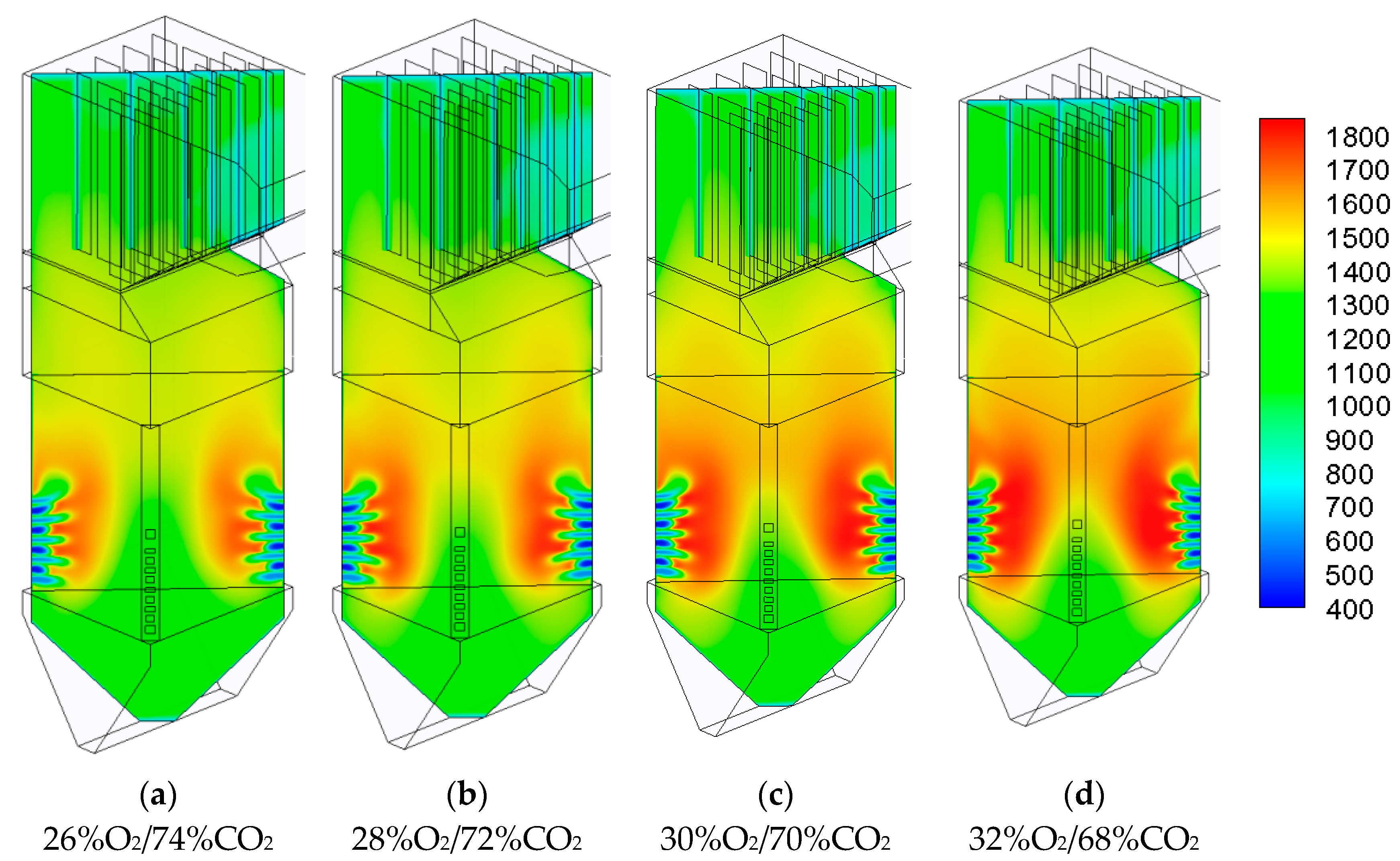
Figure 5 illustrates the temperature distribution contours under varying oxygen concentrations. As depicted in Figure 5, it was evident that the overall temperature levels within the furnace exhibited an upward trend with increasing oxygen concentration entering the furnace. Additionally, the extent of high-temperature regions surrounding the burner also expanded. This phenomenon can primarily be attributed to the enhanced combustion intensity of coal powder in the burner region due to elevated oxygen concentration, which subsequently strengthened the local heat release effects.
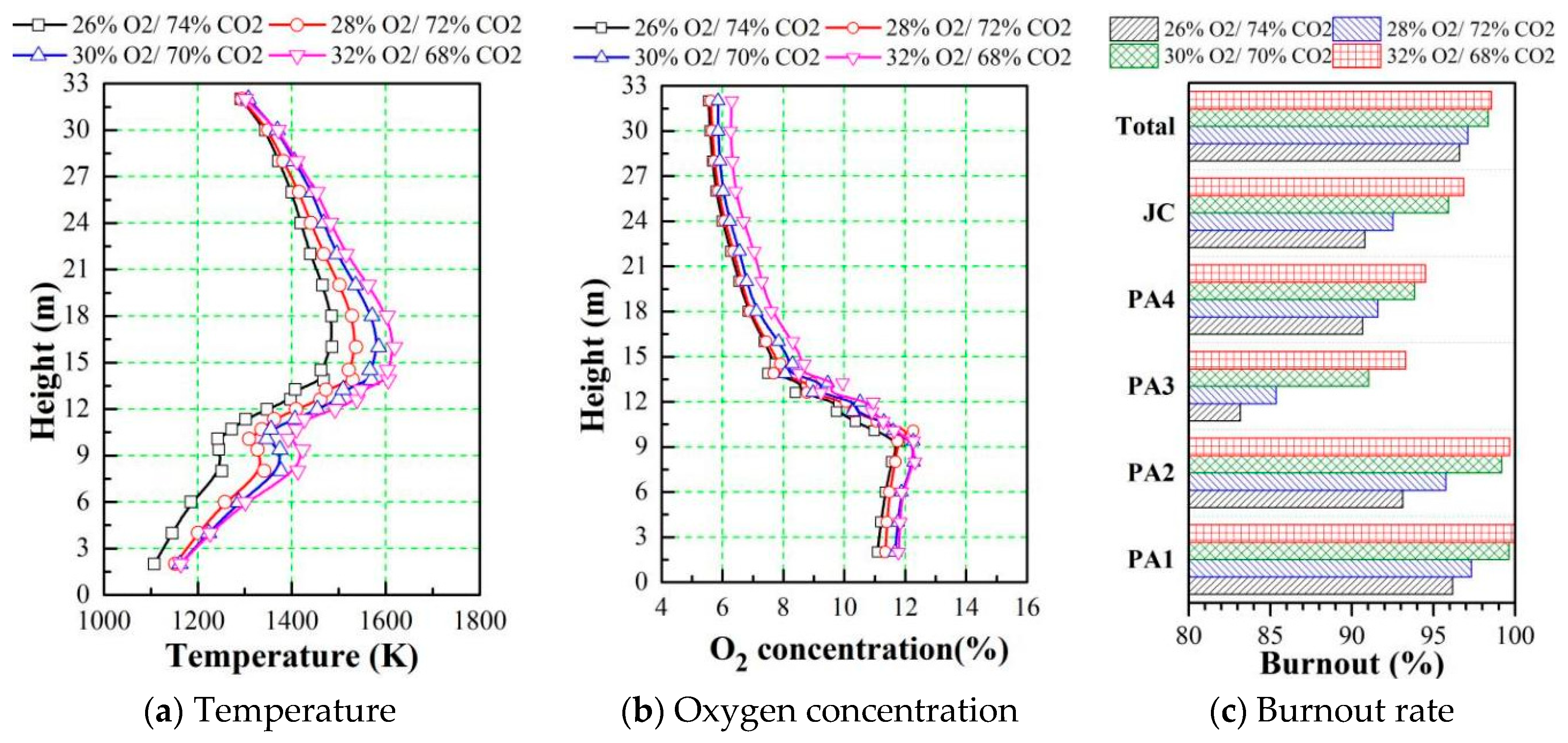
Figure 6 showed the curves of average temperature and oxygen concentration distribution along the furnace height, as well as the burnout rate under different oxygen concentrations. By further comparing the average temperature curve along the furnace height with the average oxygen concentration curve, it can be observed that at the same furnace height position, a higher inlet oxygen concentration corresponded to a higher average temperature. It was noteworthy that under the O2/CO2 atmosphere conditions with high concentration of oxygen, coal burned intensely and was thoroughly combusted in the main combustion zone, leading to rapid consumption of a large amount of oxygen. As a result, the average oxygen concentration in this region did not differ significantly compared to low-oxygen conditions.
As illustrated in Figure 6c, the analysis of the statistical outcomes regarding the coal burnout rate under varying oxygen concentrations within the furnace indicated a clear trend: with an increase in oxygen concentration, both the burnout rate of JC coal across each combustion layer and the overall burnout rates for both JC coal and blended coal exhibited a progressive upward trajectory. Notably, the burnout rates of JC coal in both PA1 and PA2 layers remained relatively high, attributed to their extended residence time within the furnace; consequently, these rates displayed a more modest variation with changing oxygen concentrations. In contrast, it is worth mentioning that the burnout rate of JC coal in the PA3 layer was significantly lower compared to that observed in other layers.
To quantitatively evaluate the improvement effect of furnace oxygen concentration on the burnout rate of PA3 layer JC coal, this research took the average of the burnout rates of PA1 and PA2 layer JC coal as the benchmark, and compared the difference between this benchmark and the burnout rate of the PA3 layer under different oxygen concentrations. The calculation results showed that under four oxygen concentration conditions of 26%, 28%, 30% and 32%, the differences were 1.53%, 0.78%, 0.23% and 0.15%, respectively. It can be seen that increasing the furnace oxygen concentration could effectively reduce the gap between the burnout rate of the PA3 layer and the lower burner layer, which helped to improve the burnout performance of PA3 layer JC coal and thus enhanced the overall combustion efficiency of blended coal. For oxygen combustion of blended coals, more mechanistic can be found in previous studied [16].

3.4. Influence of Oxidant-Stream Distribution Methods on the Optimization of Burnout

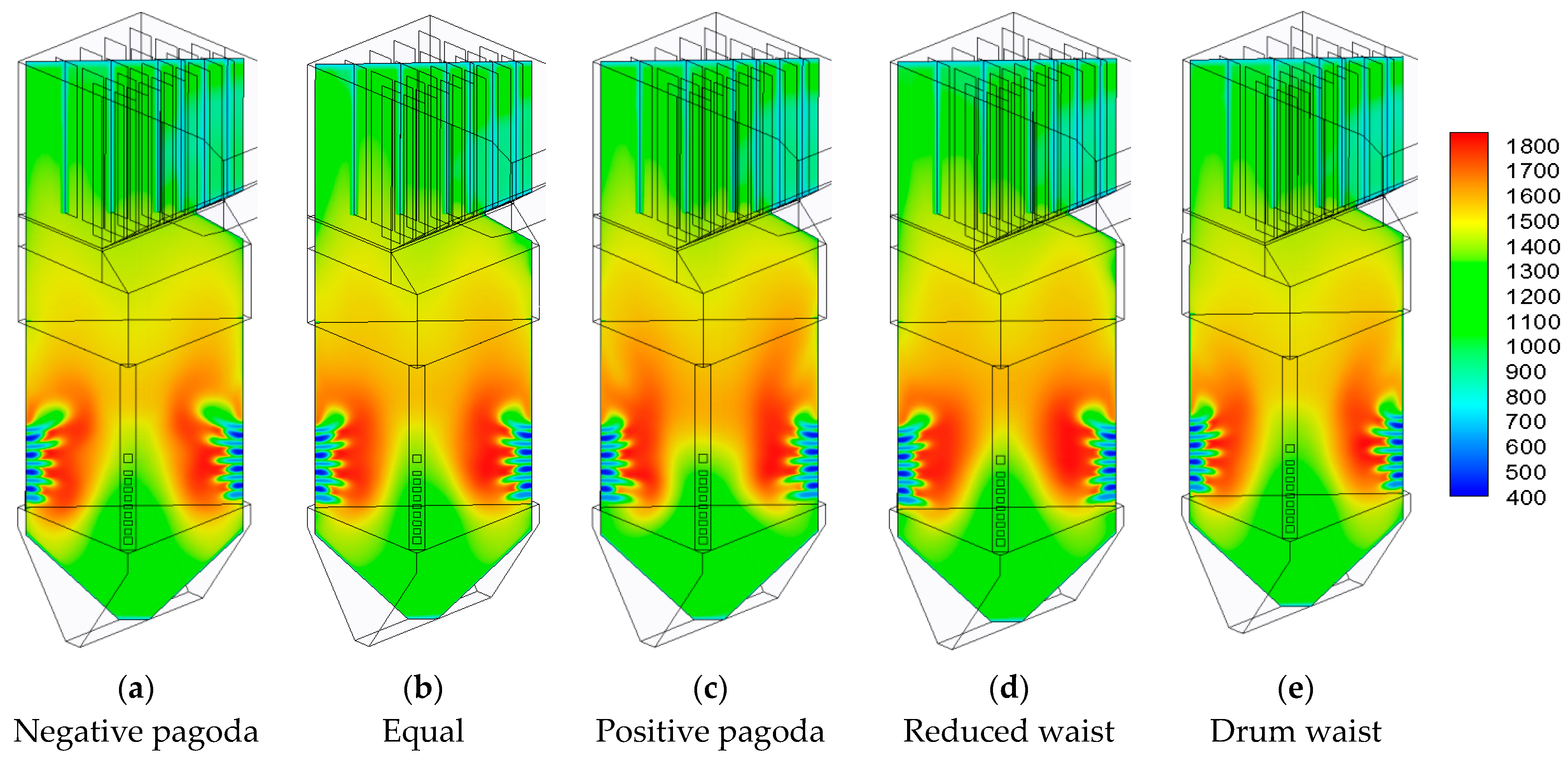
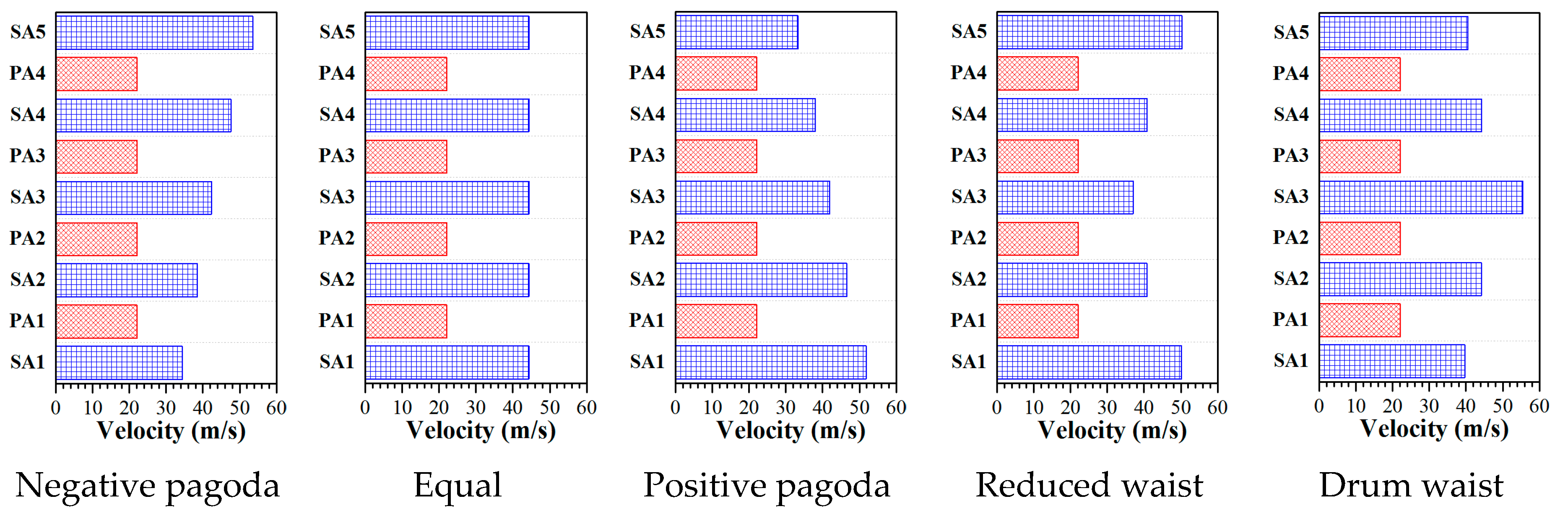
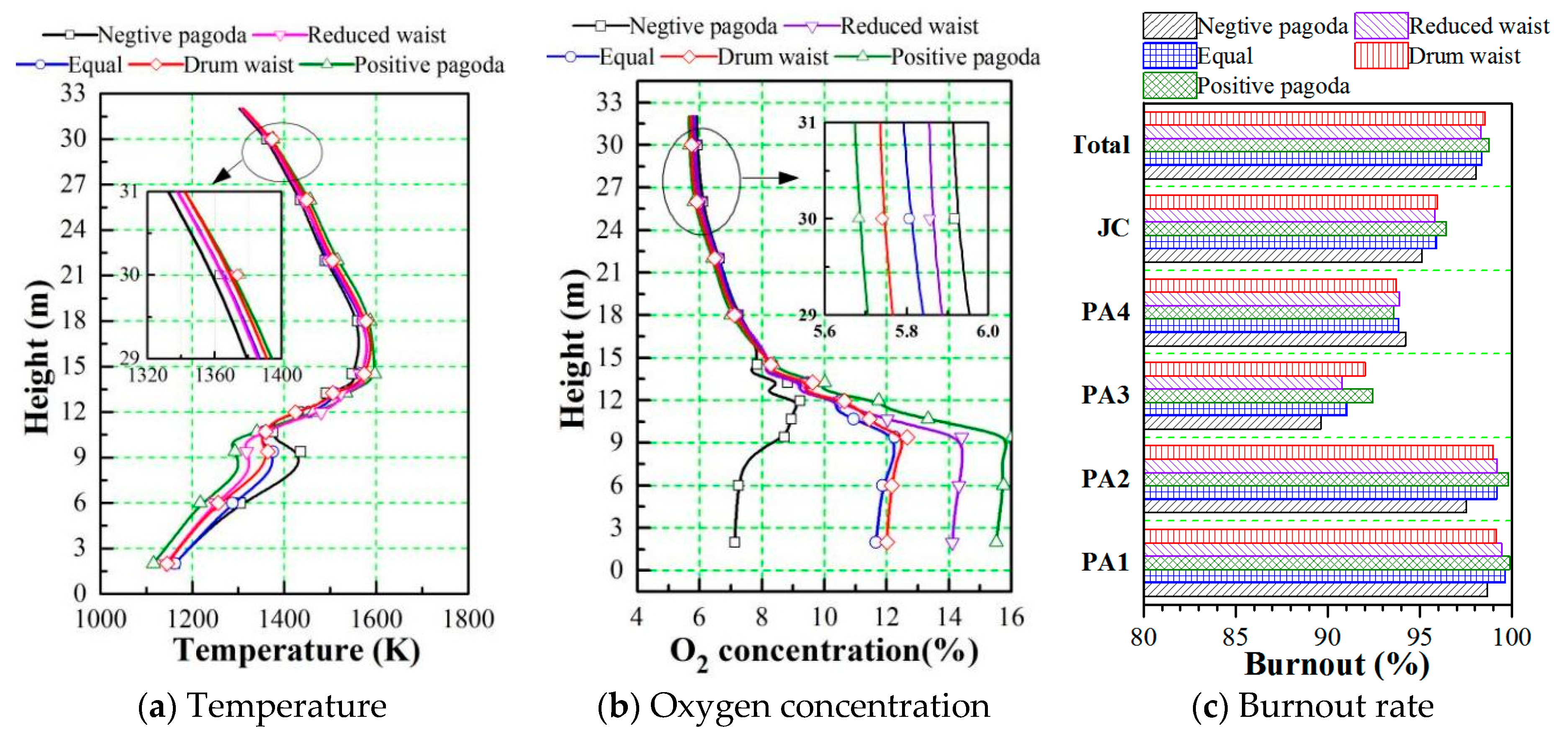
Further research was conducted on the impact of different oxidant-stream distribution methods (negative pagoda, equal, positive pagoda, reduced waist and drum waist) on the optimization of coal mixture burnout in boilers. Under different oxidant-stream distribution methods, the total mass flow rate of air is kept at the same level. Figure 7 showed a schematic diagram of the secondary oxidant-stream distribution method. Figure 8 displayed the temperature distribution contour under different oxidant-stream distribution methods. Figure 9 showed the distribution curves of average temperature and oxygen concentration along the height of the furnace body under different oxidant-stream distribution methods. According to the results shown in Figure 9a, compared to that of equal, reduced waist and drum waist oxidant-stream distribution patterns, under the negative pagoda oxidant-stream distribution method, the temperature in the region between the lowest secondary air and the cold ash hopper was the highest. This phenomenon may be attributed to the limited lifting capacity of the secondary air in the lowest layer, which allowed some coal particles to either penetrate through the airflow in this region or combust within it (with certain particles even falling into the cold ash hopper and undergoing incomplete combustion). This situation proved unfavorable for the overall combustion completion of the coal mixture. In contrast, utilizing the positive pagoda oxidant-stream distribution method resulted in a lower temperature within this area. This can primarily be ascribed to the enhanced lifting capacity of the lowest secondary air, which effectively mitigated coal particle descent into the cold ash hopper, reduced losses associated with incomplete combustion of bottom slag, and subsequently improved overall combustion efficiency. Figure 9b shows the distribution curve of the average oxygen concentration. Compared to that of equal, reduced waist and drum waist oxidant-stream distribution patterns, under the negative pagoda oxidant-stream distribution method, the air volume of the lower secondary air was smaller. Meanwhile, coal combustion in this region consumed a large amount of oxygen. These two factors led to the lowest oxygen concentration in the lower secondary air area. A low-oxygen reducing atmosphere was thus easily formed here, which may cause issues such as high-temperature corrosion and pose a threat to the safe operation of the boiler. In comparison, under the positive pagoda oxidant-stream distribution method, the secondary air supply in this region was sufficient. The lifting effect was strong and the oxygen concentration was higher, which was conducive to inhibiting the formation of a reducing atmosphere. In the burnout zone, the negative pagoda oxidant-stream distribution method had the highest oxygen concentration, while the positive pagoda method had the lowest, indicating that the positive pagoda oxidant-stream distribution was more conducive to achieving complete combustion of coal.
The coal burnout rate under various secondary oxidant-stream distribution modes, as depicted in Figure 9c, indicates that the positive pagoda oxidant-stream distribution mode resulted in the highest burnout rates for JC coal in both PA1 and PA2 layers, with PA1 slightly exceeding PA2. Furthermore, the burnout rate of JC coal in the PA3 layer also surpassed those observed in other oxidant-stream distribution configurations. This phenomenon can be attributed to a substantial introduction of secondary air from the lower section of the main combustion zone, which extends both the contact path and reaction time between coal particles and oxygen. Consequently, this enhancement facilitates more efficient combustion and burnout of JC coal. In contrast, the negative pagoda oxidant-stream distribution mode was analyzed. A large amount of secondary air was concentrated in the upper part of the main combustion zone. This led to the significant shortening of the oxygen reaction path and time for coal particles in the lower PA1-PA3 layers, which was unfavorable for their complete combustion.
In conclusion, the positive pagoda oxidant-stream distribution system could achieve a high level of overall burnout rate for JC coal and the overall burnout rate of blended coal (SH + JC) while ensuring complete combustion of coal at each layer, demonstrating the optimal comprehensive combustion performance.

4. Conclusions

This study performed a numerical simulation to investigate the interaction and combustion completion characteristics of mixed coal combustion in an O2/CO2 atmosphere within a 200 MW tangential firing boiler. The aim was to provide valuable insights for oxy-fuel combustion of mixed coal in similar boilers. The key conclusions drawn from this research are as follows:
Under an O2/CO2 atmosphere, a significant interactive effect was observed when difficult-to-burn coal was blended with easy-to-burn coal, which promoted ignition while inhibiting burnout. The enhancement of ignition characteristics in the mixed coal was attributed to this promoting ignition effect; however, the inhibiting effect on combustion completion resulted in a reduced combustion completion rate for the difficult-to-burn coal within the blend. Increasing the proportion of easy-to-burn coal improved both the ignition performance and stability of the blended fuel. Furthermore, with a higher ratio of easy-to-burn coal, there was an increased oxygen-grabbing capacity that exacerbated the inhibitory effects of an oxygen-deficient environment on the combustion process of difficult-to-ignite coal.
Under the four oxygen concentration conditions of 26%, 28%, 30% and 32%, the differences between the burnout rate of the PA3 layer and the average burnout rates of the PA1 and PA2 layers were found to be 1.53%, 0.78%, 0.23% and 0.15%, respectively. This indicated that increasing the oxygen concentration entering the furnace was conducive to raising the overall temperature level within the furnace, thereby promoting coal ignition. Furthermore, under high CO2 concentration conditions, enhancing the oxygen concentration entering the furnace can effectively improve the burnout rate of difficult-to-burn coal, mitigating adverse effects associated with burnout inhibition on blended coal’s burnout characteristics.
Among five typical oxidant-stream distribution modes—negative pagoda, equal, positive pagoda, reduced waist, and drum waist—the positive pagoda oxidant-stream distribution mode demonstrated the ability to achieve relatively high levels of total burnout rates for difficult-to-burn coal as well as overall burnout rates for blended coal. This method effectively ensured the combustion of difficult-to-burn coal across each layer, thereby exhibiting optimal comprehensive combustion performance.
In the future, for O2/CO2 blended coal combustion, research should focus on multi-objective optimization, such as NOx controlling, ash deposition prediction, steam temperature characteristics, etc. These efforts contribute to promoting the sustainable application of coal-fired power generation technologies.

Author Contributions

Conceptualization, L.M.; methodology, K.B.; software, K.B. and L.M.; validation, L.M.; formal analysis, K.B., L.M. and Z.M.; investigation, K.B. and L.M.; resources, L.M.; data curation, K.B. and L.M.; writing—original draft preparation, K.B. and L.M.; writing—review and editing, K.B., L.M., Z.M. and J.S.; visualization, K.B. and L.M.; supervision, L.M. and J.S.; project administration, Z.M.; funding acquisition, K.B., Z.M. and J.S. All authors have read and agreed to the published version of the manuscript.

Funding

This work was supported by 2024 Guangzhou Special Topic on Basic and Applied Basic Research (SL2023A04J01937), the Southern Power Grid Co., Ltd. Technology Project (GDKJXM20240497), the Key Research and Development Project of Guangdong Province (2021B0101230004), and New Power System Technology Innovation Project of Guangdong Province (1689738169108).

Data Availability Statement

Data sharing is not applicable. Further inquiries can be directed to the corresponding authors.

Acknowledgments

The authors thank colleagues from Guangzhou Institute of Energy Conversion for their support during data collection and analysis.

Conflicts of Interest

The authors declare no conflicts of interest.

Abbreviations

The following abbreviations are used in this manuscript:
WSGGWeighted-sum-of-gray-gases
FRFuel ratio
WFGRWet flue gas recirculation
HTSRAHigh-temperature Strong Reductive Zone
SOFASeparated Over-fire Air
JCJinCheng
SHShenHua
PAPrimary air
SASecondary air
CACool air
OFAOver-fire air
CPDChemical Percolation Devolatilization
DODiscrete Ordinates

References

  1. Lyngfelt, A. An Introduction to CO2 capture and storage. In Proceedings of the Second Nordic Minisymposium on Carbon Dioxide Capture and Storage, Gothenburg, Sweden, 26 October 2001; pp. iv–xii. [Google Scholar]
  2. Balaeva, Y.S.; Kaftan, Y.S.; Miroshnichenko, D.V.; Kotliarov, E.I. Influence of Coal Properties on the Gross Calorific Value and Moisture-Holding Capacity. Coke Chem. 2018, 61, 4–11. [Google Scholar] [CrossRef]
  3. Wang, C.; Wang, C.; Jia, X.; Gao, X.; Wang, P.; Feng, Q.; Che, D. Experimental investigation on combustion characteristics and kinetics during Co-Firing bituminous coal with ultra-low volatile carbon-based solid fuels. J. Energy Inst. 2021, 95, 87–100. [Google Scholar] [CrossRef]
  4. Zhang, J.; Jia, X.; Wang, C.; Zhao, N.; Wang, P.; Che, D. Experimental investigation on combustion and NO formation characteristics of semi-coke and bituminous coal blends. Fuel 2019, 247, 87–96. [Google Scholar] [CrossRef]
  5. Ma, L.; Zhou, A.; Fang, Q.; Zhang, C.; Li, Y.; Zhao, X.; Mao, R.; Ren, L. Cofiring Coal Slime with Anthracite in a Down-Fired Utility Boiler: Experimental and Numerical Investigations. J. Energy Eng. 2023, 149, 04022063. [Google Scholar] [CrossRef]
  6. Lyu, Q.; Wang, R.; Du, Y.; Liu, Y. Numerical study on coal/ammonia co-firing in a 600 MW utility boiler. Int. J. Hydrogen Energy 2023, 48, 17293–17310. [Google Scholar] [CrossRef]
  7. Ma, G.; Liu, J.; Wang, C.; Liu, K.; Wang, C.; Che, D. Numerical simulation on the co-combustion characteristics of low-volatile carbon-based fuel blends and their blends with bituminous coal under oxy-fuel conditions. Powder Technol. 2026, 467, 121560. [Google Scholar] [CrossRef]
  8. Liang, Z.; Chen, H.; Zhao, B.; Jia, J.; Cheng, K. Synergetic effects of firing gases/coal blends and adopting deep air staging on combustion characteristics. Appl. Energy 2018, 228, 499–511. [Google Scholar] [CrossRef]
  9. Wang, C.; Feng, Q.; Jin, L.; Wang, Z.; Yao, W.; Wang, P.; Du, Y.; Zhang, X.; Yang, Z.; Che, D. Experimental and Numerical Study on Co-combustion Behaviors and NOx Emission Characteristics of Semi-coke and Coal in a Tangentially Fired Utility Boiler. J. Therm. Sci. 2021, 30, 1116–1131. [Google Scholar] [CrossRef]
  10. Yang, X.; Chen, G.; Huang, L.; Gu, S.; Li, C.; Zhang, Y.; Jin, B. Experimental study on bituminous coal blending in a down-fired boiler with anthracite combustion system under low load. Asia-Pac. J. Chem. Eng. 2021, 16, e2676. [Google Scholar] [CrossRef]
  11. Lou, B.; Long, X.F.; Wang, F.; Zhong, S.Q. Co-combustion of Coal and Sewage Sludge in Coal-powder Boiler: Feasibility Assessment and Application. In Proceedings of the 4th International Symposium on Heat Transfer and Energy Conservation (ISHTEC2012), Guangzhou, China, 6–9 January 2012; pp. 276–281. [Google Scholar]
  12. Liu, X.; Zhang, J.; Tan, H.; Mo, Q.; Wang, X.; Wang, Y. Numerical and experimental study on co-firing of low volatile coal in a 330 MW tangentially fired boiler. J. Energy Inst. 2021, 96, 242–250. [Google Scholar] [CrossRef]
  13. Lyu, Q.; Wang, C.; Zhao, P.; Zhou, L.; Hou, Y.; Chen, M.; Du, Y.; Che, D. Numerical Study on Coal-Sludge Cocombustion Characteristics and NOx Emission Behaviors in a 330-MW Wall-Fired Boiler. J. Energy Eng. 2023, 149, 04023025. [Google Scholar] [CrossRef]
  14. Zhang, X.; Chen, Z.; Jiang, G.; Zeng, L.; Li, Z. Effect of central secondary air on flow and combustion characteristics of 600-MWe down-fired boiler: From laboratory to industrial site. Fuel 2022, 330, 125677. [Google Scholar] [CrossRef]
  15. Su, X.; Ma, L.; Yao, B.; Liao, W.; Zheng, Y.; Miao, M.; Fang, Q.; Chen, G.; Yang, W. High-efficiency combustion and low-nitrogen emission of coal-fired boiler based on synergistic optimization of swirl burner structure and air-staged technology. Fuel 2025, 388, 134352. [Google Scholar] [CrossRef]
  16. Ma, L.; Guo, A.; Fang, Q.; Wang, T.; Zhang, C.; Chen, G. Combustion interactions of blended coals in an O2/CO2 mixture in a drop tube furnace: Experimental investigation and numerical simulation. Appl. Therm. Eng. 2018, 145, 184–200. [Google Scholar] [CrossRef]
  17. Chu, H.Q.; Consalvi, J.L.; Gu, M.Y.; Liu, F.S. Calculations of radiative heat transfer in an axisymmetric jet diffusion flame at elevated pressures using different gas radiation models. J. Quant. Spectrosc. Radiat. Transf. 2017, 197, 12–25. [Google Scholar] [CrossRef]
  18. Guo, J.; Liu, Z.; Hu, F.; Li, P.; Luo, W.; Huang, X. A compatible configuration strategy for burner streams in a 200 MWe tangentially fired oxy-fuel combustion boiler. Appl. Energy 2018, 220, 59–69. [Google Scholar] [CrossRef]
  19. Guo, J.; Li, X.; Huang, X.; Liu, Z.; Zheng, C. A full spectrum k-distribution based weighted-sum-of-gray-gases model for oxy-fuel combustion. Int. J. Heat Mass Transfer 2015, 90, 218–226. [Google Scholar] [CrossRef]
  20. Huang, J.; Liao, Y.; Lin, J.; Dou, C.; Huang, Z.; Yu, X.; Yu, Z.; Chen, C.; Ma, X. Numerical simulation of the co-firing of pulverized coal and eucalyptus wood in a 1000MWth opposed wall-fired boiler. Energy 2024, 298, 131306. [Google Scholar] [CrossRef]
  21. Guo, J.; Liu, Z.; Wang, P.; Huang, X.; Li, J.; Xu, P.; Zheng, C. Numerical investigation on oxy-combustion characteristics of a 200 MWe tangentially fired boiler. Fuel 2015, 140, 660–668. [Google Scholar] [CrossRef]
Figure 1. Schematic diagram of boiler structure and burner arrangement.
Sustainability 18 01183 g001
Figure 2. Grid division of boiler and grid-independence test.
Sustainability 18 01183 g002
Figure 3. Temperature distribution contour (K) at different co-firing ratios.
Sustainability 18 01183 g003
Figure 4. Curves of average temperature and oxygen concentration distribution along the furnace height under different co-firing ratios and burnout rate (“PA1–PA4” denotes the burnout rate of individual burners, “JC” the overall burnout rate of JC coal in the furnace, and “Total” the comprehensive burnout rate of all blended coal).
Sustainability 18 01183 g004
Figure 5. Temperature distribution contour (K) under different oxygen concentrations.
Sustainability 18 01183 g005
Figure 6. Curves of average temperature and oxygen concentration distribution along the furnace height under different oxygen concentrations and burnout rate (“PA1–PA4” denotes the burnout rate of individual burners, “JC” the overall burnout rate of JC coal in the furnace, and “Total” the comprehensive burnout rate of all blended coal).
Sustainability 18 01183 g006
Figure 7. Schematic diagram of secondary oxidant-stream distribution method (“PA1–PA4” denote the different layer coal burners and “SA1~SA5” denote the different layer secondary oxidant-stream ports).
Sustainability 18 01183 g007
Figure 8. Temperature distribution contour under different oxidant-stream distribution modes (K).
Sustainability 18 01183 g008
Figure 9. Curves of average temperature and oxygen concentration distribution along the furnace height under different oxidant-stream distribution methods and burnout rate (“PA1–PA4” denotes the burnout rate of individual burners, “JC” the overall burnout rate of JC coal in the furnace, and “Total” the comprehensive burnout rate of all blended coal).
Sustainability 18 01183 g009
Table 1. Properties of these two coals.
CoalProximate Analysis (Dry, wt%)Ultimate Analysis (Dry, wt%)Qnet,dry (MJ/kg)
VolatilesFixed CarbonAshCHONS
JC10.8974.6514.4670.294.089.980.900.2927.30
SH32.3257.4110.2773.152.9912.251.060.2824.50
Table 2. CPD input parameters for devolatilization.
CoalInput Parameter for Devolatilization Rate
p0σ + 1Mw,1Mw,δ
JC0.8424.27244.214.7
SH0.6375.2303.637.0
Disclaimer/Publisher’s Note: The statements, opinions and data contained in all publications are solely those of the individual author(s) and contributor(s) and not of MDPI and/or the editor(s). MDPI and/or the editor(s) disclaim responsibility for any injury to people or property resulting from any ideas, methods, instructions or products referred to in the content.