How Can Rural Governance Precisely Respond to Sustainable Rural Revitalization from a Multi-Scale Perspective?—Empirical Evidence from Nanning, China


Abstract
1. Introduction
2. Theoretical Framework
2.1. Theoretical Assumptions
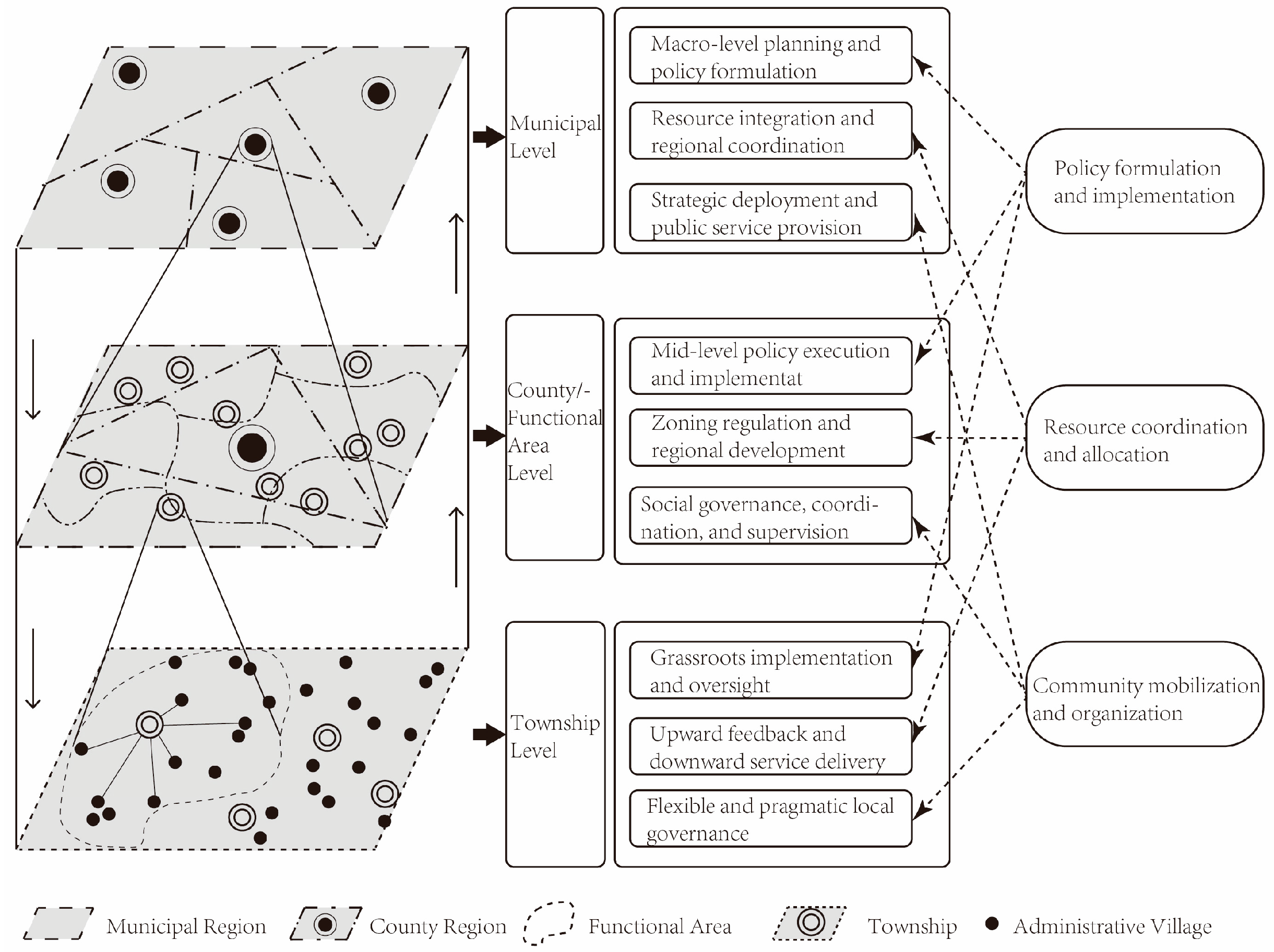
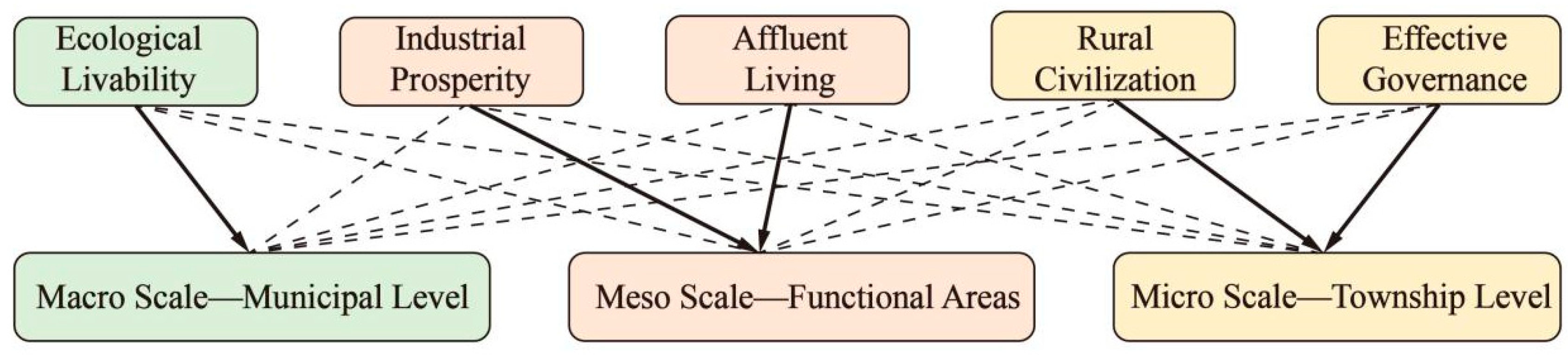
2.2. A Multi-Scale Analytical Framework for Rural Spatial Governance
- Provincial level: Guided by the national rural revitalization strategy and provincial realities, specific implementation plans and policy measures are developed.
- Municipal level: The municipal government is responsible for formulating and implementing rural revitalization policies, providing financial support, supervising county-level efforts, and ensuring policy execution.
- County level: Specific implementation plans are designed based on municipal policies and adapted to local county conditions [28].
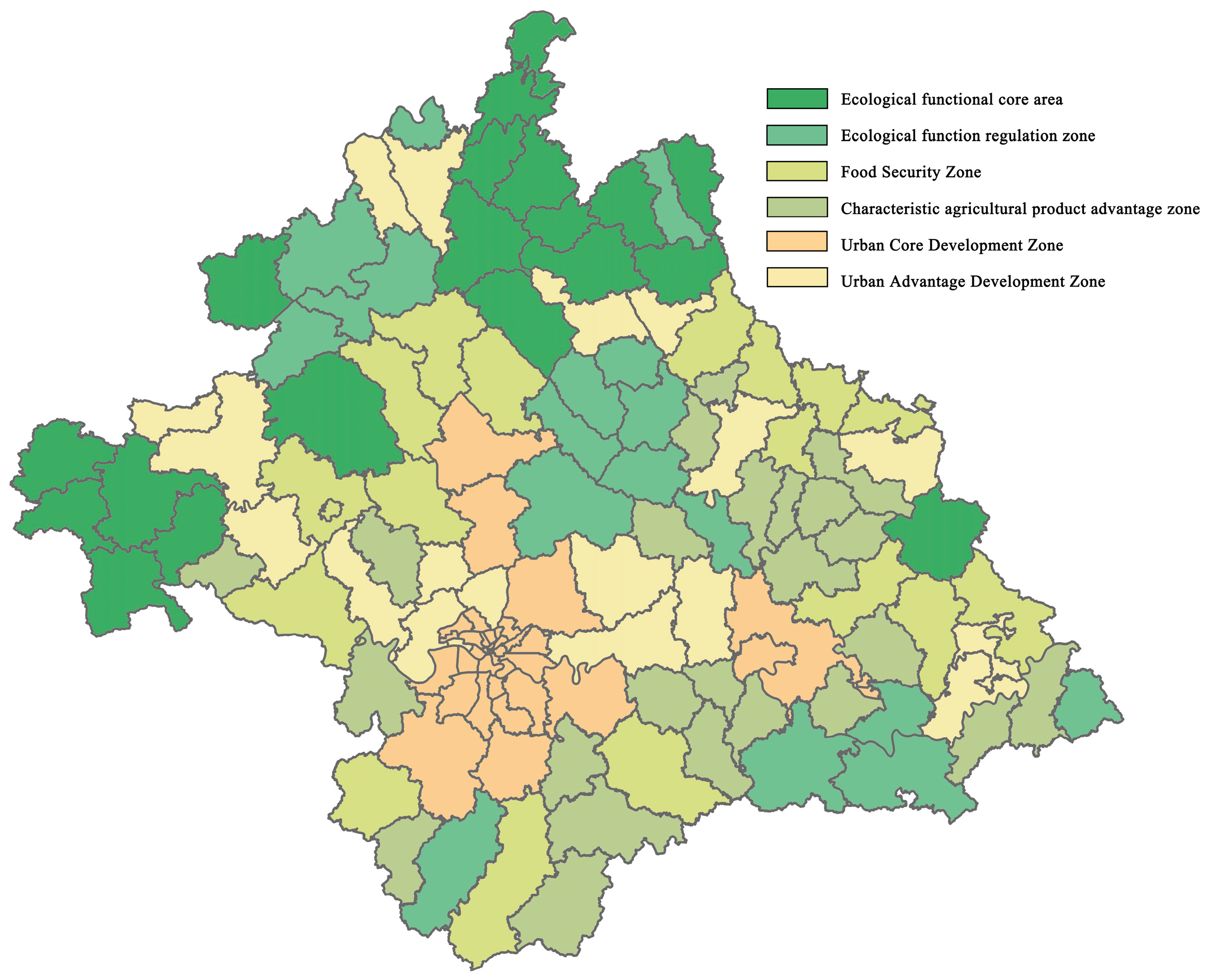
- Functional area level: Based on resource endowment characteristics, this scale facilitates cross-regional allocation of resources and promotes coordinated regional development.
- Township level: Responsible for upward feedback and downward service, townships mobilize and organize local residents to participate in rural revitalization efforts, aiming to improve their sense of inclusion and well-being.
3. Overview of the Study Area and Methodology
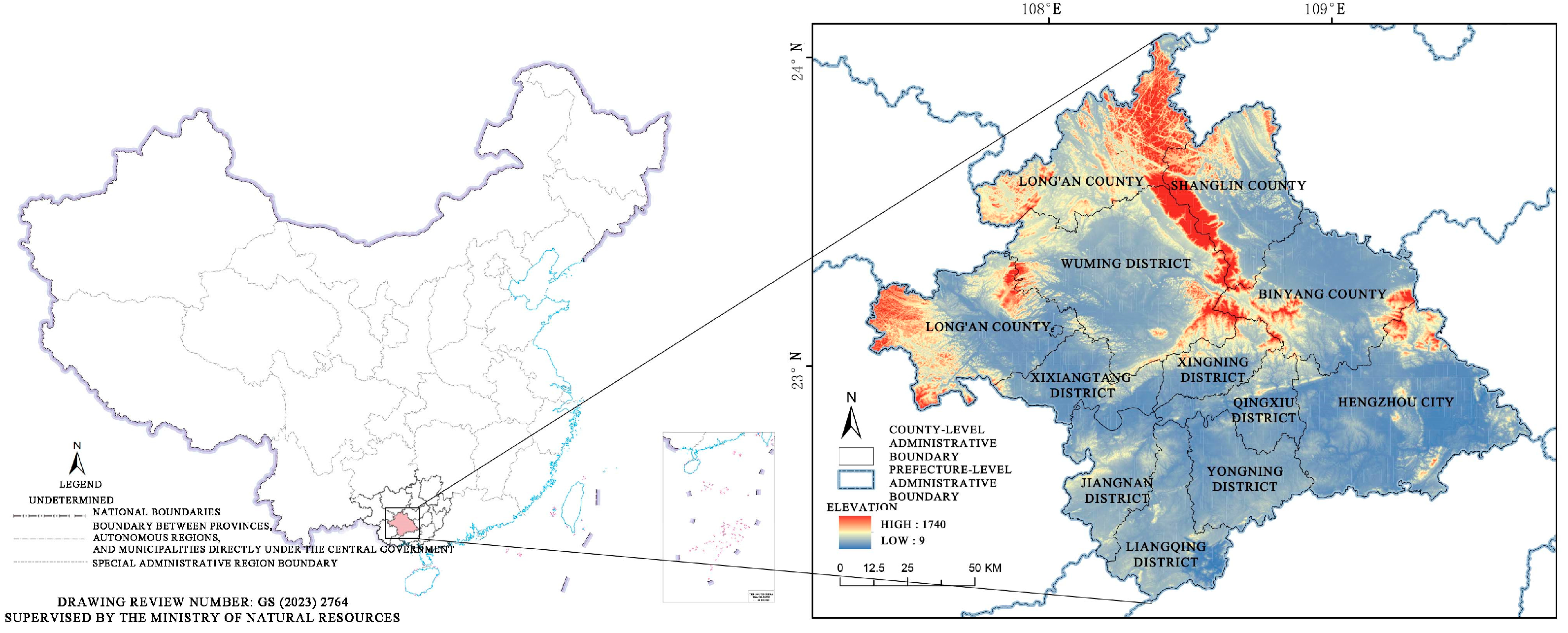
3.1. Overview of the Study Area
3.2. Data Collection and Processing
3.3. Research Methodology
- (1)
- Global spatial autocorrelation
- (2)
- Local spatial autocorrelation
- (3)
- AHP-entropy weighting method combined weighting method
3.4. Evaluation System Construction and Weight Determination
3.5. Indicator Description
4. Results
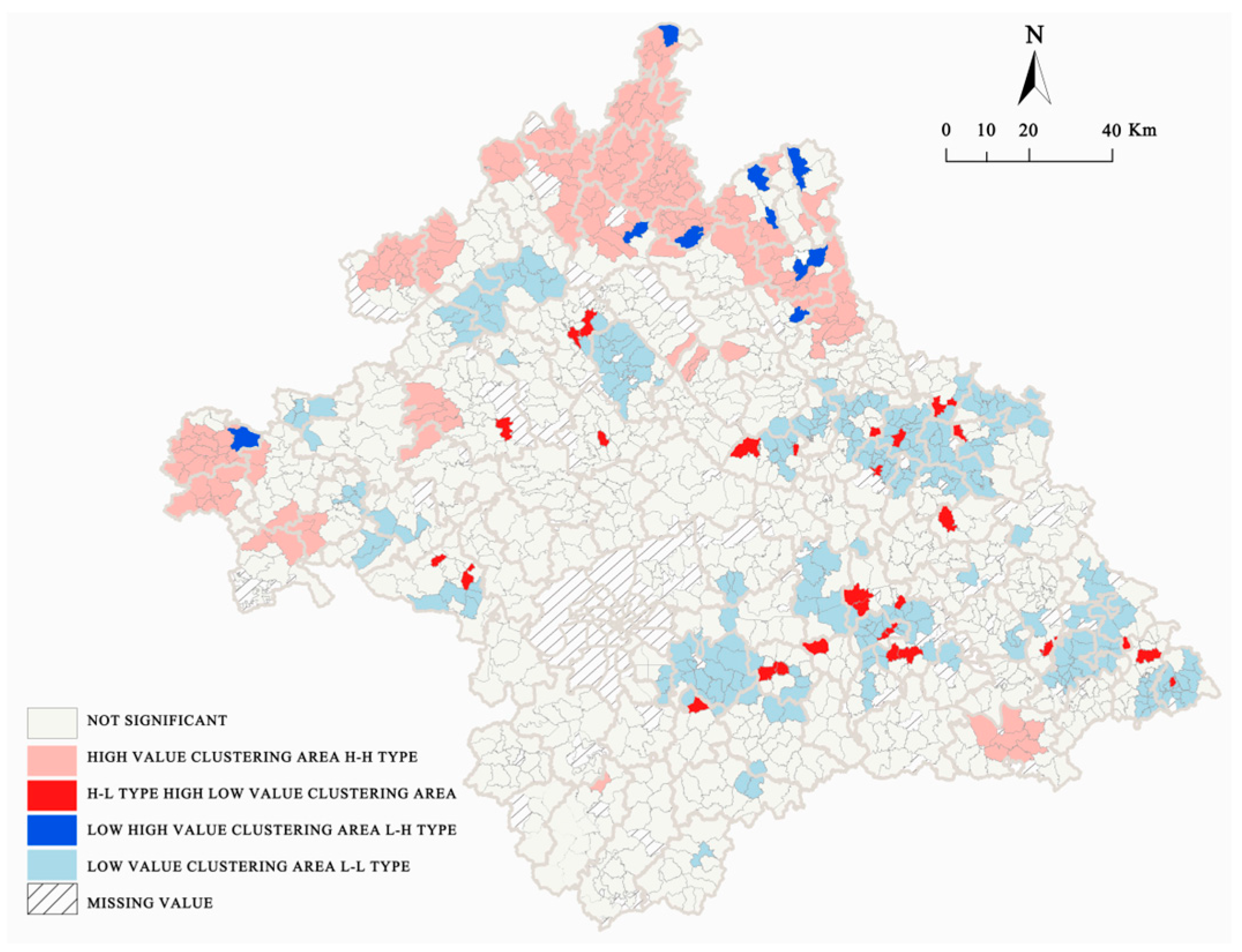
4.1. Spatial Autocorrelation Analysis at the Municipal Level
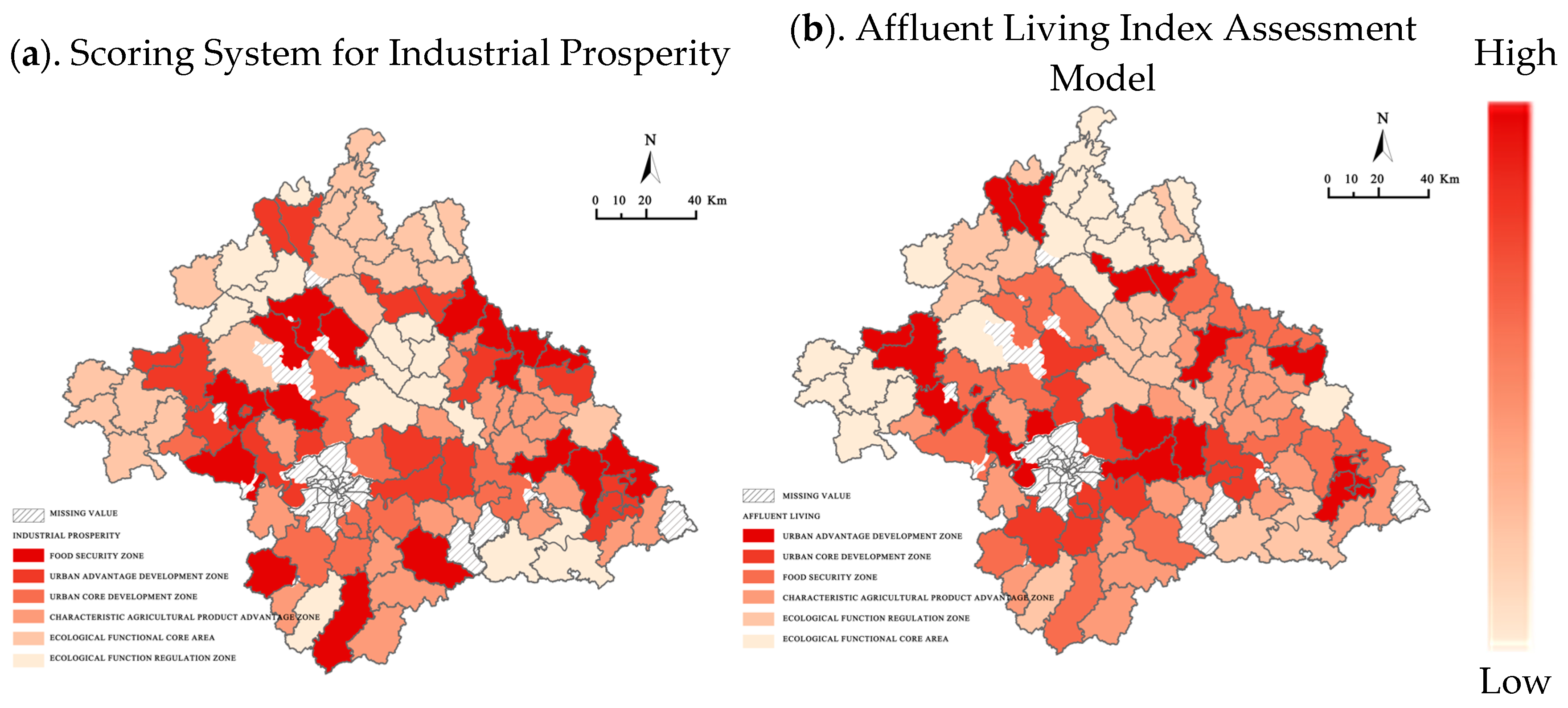
4.2. Spatial Autocorrelation Analysis at the Functional Area Level
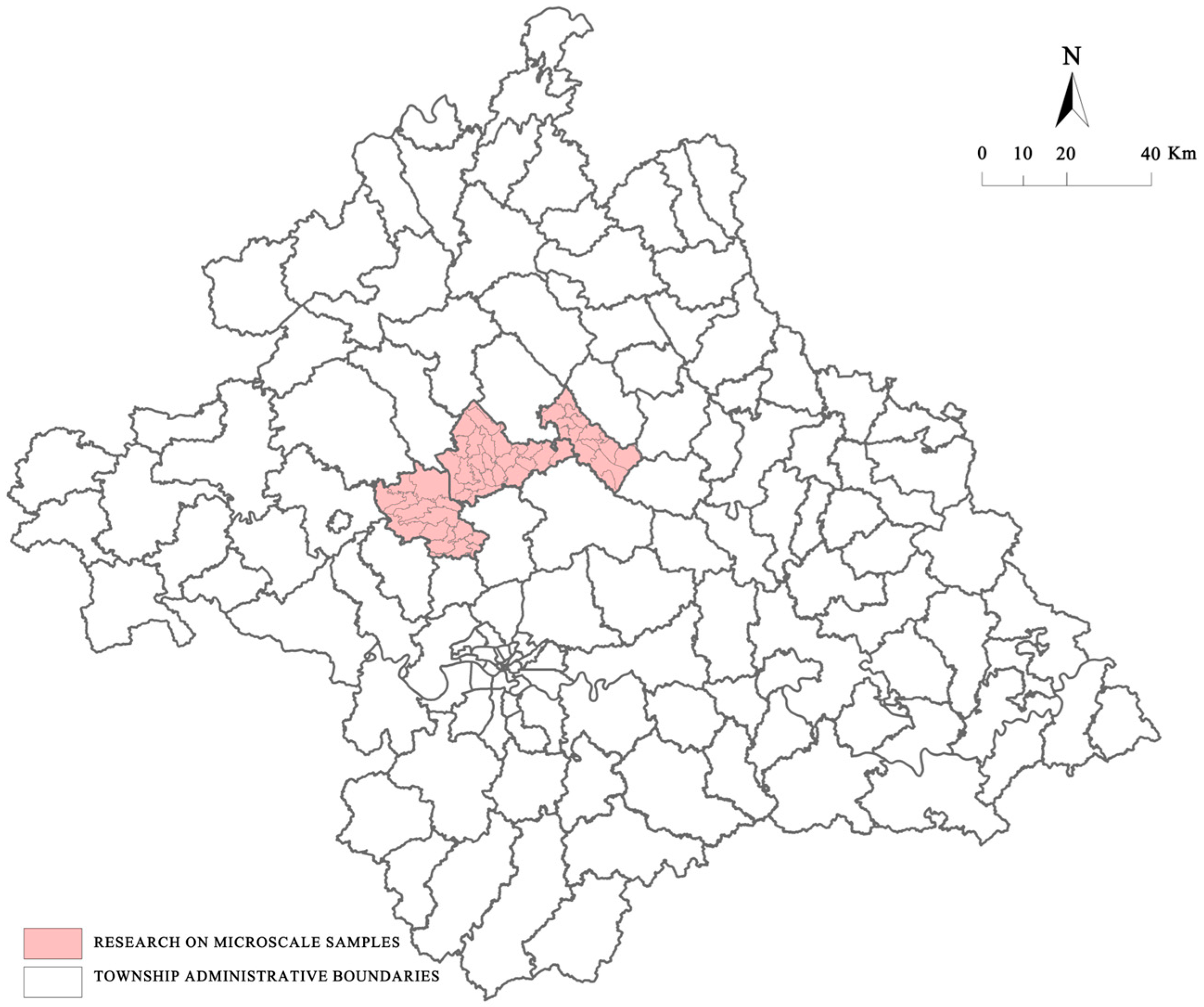
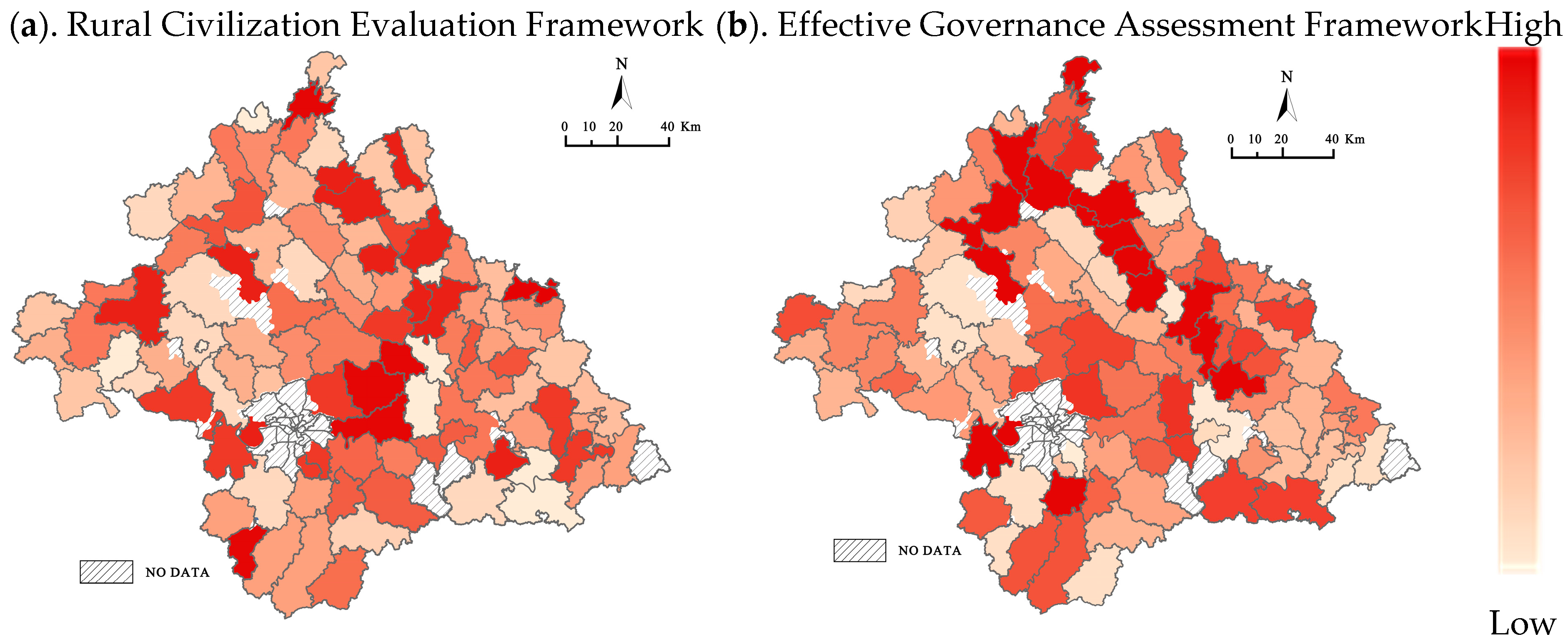
4.3. Spatial Autocorrelation Analysis at the Township Level
4.4. Comparative Study on the Spatial Correlation of Rural Revitalization at Multiple Scales
4.5. Validation of Research Hypotheses
5. Discussion and Recommendations
5.1. Discussion
5.2. Interpretation of the Formation Mechanisms of Multiscale Spatial Differentiation Patterns
5.3. Policy Recommendations
5.3.1. The Municipal Government Is Responsible for Coordinating Ecological Governance
5.3.2. A New Administrative Body Has Been Established for the Functional Area, Focusing Primarily on Fostering Rural Industrial Clusters and Improving Residents’ Well-Being
5.3.3. Township Governments Primarily Focus on Fostering Rural Civilization and Ensuring Effective Governance
5.4. Contributions and Limitations
- (1)
- Innovation in selected research scale: Existing studies primarily use cities [60], counties [61], administrative villages [62], and other administrative units as the basic research units, with most assessing the level of rural development from a single scale [63]. This paper takes a multi-scale approach as the main entry point and introduces functional areas as a flexible scale to address the limitations of research based solely on administrative units. This better reflects the internal differences and diversity within rural areas, allowing for a more accurate measurement of the development status of rural revitalization.
- (2)
- Promoting Interdisciplinary Research: This study constructed an evaluation system for rural spatial governance under the framework of rural revitalization, and attempted to integrate the goal of rural revitalization into both the theoretical framework and practical pathways of rural spatial governance. It also provides guidance for the government on implementing precise spatial governance around the goal of rural revitalization.
- (1)
- Integrate theories and methods from multiple disciplines such as sociology, geography, and economics to deeply examine the intrinsic connection between rural spatial governance and rural revitalization.
- (2)
- In addition to the governmental perspective, explore rural spatial governance mechanisms involving multiple stakeholders, including villagers, social organizations, and enterprises. Combine this with research on rural revitalization and sustainable development to propose more innovative and practical solutions.
- (3)
- Based on the identification of key areas and critical aspects of rural spatial governance, allocate resources rationally to ensure governance effectiveness and sustainability. While focusing on core areas, also address the development needs of other aspects to achieve comprehensive rural revitalization.
- (4)
- Deepen the theoretical study of rural revitalization, improve data collection through multiple channels, and enhance the completeness and accuracy of the data.
6. Conclusions
Author Contributions
Funding
Institutional Review Board Statement
Informed Consent Statement
Data Availability Statement
Conflicts of Interest
References
- Ye, C.; Liu, Z. Rural-urban co-governance: Multi-scale practice. Sci. Bull. 2020, 65, 778–780. [Google Scholar] [CrossRef]
- Bai, Z.; Fan, X.; Na, H. A study on theoretical logic and capacity improvement of local governments’ governance and rural revitalization. J. Northwest. Univ. Natl. Philos. Soc. Sci. 2023, 4, 109–117. [Google Scholar] [CrossRef]
- Woods, M. Rural geography: Blurring boundaries and making connections. Prog. Hum. Geogr. 2009, 33, 849–858. [Google Scholar] [CrossRef]
- Hoggart, K. Let’s do away with rural. J. Rural Stud. 1990, 6, 245–257. [Google Scholar] [CrossRef]
- Phillips, M. The restructuring of social imaginations in rural geography. J. Rural Stud. 1998, 14, 121–153. [Google Scholar] [CrossRef]
- Halfacree, K. Trial by space for a ‘radical rural’: Introducing alternative localities, representations and lives. J. Rural Stud. 2007, 23, 125–141. [Google Scholar] [CrossRef]
- Goodwin, M. The governance of rural areas: Some emerging research issues and agendas. J. Rural Stud. 1998, 14, 5–12. [Google Scholar] [CrossRef]
- Edwards, B.; Goodwin, M.; Pemberton, S.; Woods, M. Partnerships, Power, and Scale in Rural Governance. Environ. Plan. C Gov. Policy 2001, 19, 289–310. [Google Scholar] [CrossRef]
- Jessop, B. The regulation approach, governance and post-Fordism: Alternative perspectives on economic and political change? Econ. Soc. 1995, 24, 307–333. [Google Scholar] [CrossRef]
- Salas Quintanal, H. Territorialización e identidades en el espacio rural. In Proceedings of the Encuentro de Latinoamericanistas Españoles: Viejas y Nuevas Alianzas Entre América Latina y España, Santander, Spain, 21–23 September 2006; pp. 1490–1499. Available online: https://shs.hal.science/halshs-00104339 (accessed on 20 January 2025).
- MacLeod, G.; Goodwin, M. Reconstructing an urban and regional political economy: On the state, politics, scale, and explanation. Political Geogr. 1999, 18, 697–730. [Google Scholar] [CrossRef]
- Swyngedouw, E.; Cox, K. Neither Global Nor Local: ‘Glocalization’ and the Politics of Scale. In Spaces of Globalization: Reasserting the Power of the Local; Guilford Press: New York, NY, USA, 1997; pp. 137–166. [Google Scholar]
- Delaney, D.; Leitner, H. The political construction of scale. Political Geogr. 1997, 16, 93–97. [Google Scholar] [CrossRef]
- Cheshire, L.; Higgins, V.; Lawrence, G. (Eds.) Rural Governance: International Perspectives, 1st ed.; Routledge: London, UK, 2006. [Google Scholar] [CrossRef]
- Ye, C.; Pan, J.; Liu, Z. The historical logics and geographical patterns of rural-urban governance in China. J. Geogr. Sci. 2022, 32, 1225–1240. [Google Scholar] [CrossRef]
- Dabiri, Z.; Blaschke, T. Scale matters: A survey of the concepts of scale used in spatial disciplines. Eur. J. Remote Sens. 2019, 52, 419–434. [Google Scholar] [CrossRef]
- Wang, Y.; Cheng, L.; Zheng, Y. Rural effectiveness evaluation: A new way of assessing village development status. Sustainability 2022, 14, 9059. [Google Scholar] [CrossRef]
- Zhou, L. The strategy of rejuvenating the countryside and China’s Centennial Rural Revival Practices. People’s Forume Trib. ·Acad. Front. 2018, 3, 4–13. [Google Scholar] [CrossRef]
- Shi, J.; Yang, X. Sustainable development levels and influence factors in rural China based on rural revitalization strategy. Sustainability 2022, 14, 8908. [Google Scholar] [CrossRef]
- Ge, D.; Lu, Y. A strategy of the rural governance for territorial spatial planning in China. J. Geogr. Sci. 2021, 31, 1349–1364. [Google Scholar] [CrossRef]
- Sbragia, A.M. (Ed.) Euro-Politics: Institutions and Policymaking in the “New” European Community; Brookings Institution: Washington, DC, USA, 1992; Available online: http://pi.lib.uchicago.edu/1001/cat/bib/1313856 (accessed on 23 January 2025).
- Li, Z.; Gao, W. Multi-level composite co-governance: How platforms empower city-level social governance—A perspective from the “hierarchy-unit” analytical framework. J. Political Sci. Res. 2025, 3, 121–134, 239–240. [Google Scholar]
- Lu, M.; Liu, Q. Driving force analysis and inspiration of rural spatial change in Europe. Planner 2019, 35, 32–38. [Google Scholar] [CrossRef]
- Smith, N. Uneven Development: Nature, Capital, and the Production of Space; University of Georgia Press: Athens, GA, USA, 2008. [Google Scholar] [CrossRef]
- Brenner, N. New State Spaces: Urban Governance and the Rescaling of Statehood; Oxford University Press: Oxford, UK, 2004. [Google Scholar]
- Tobler, W.R. A computer movie simulating urban growth in the Detroit region. Econ. Geogr. 1970, 46, 234. [Google Scholar] [CrossRef]
- Jiang, W.; Li, L.; Zhou, X. Study on the scientific connotation, main tasks and strategic priorities of rural revitalization in China. Soc. Policy Res. 2018, 2, 146–155. [Google Scholar] [CrossRef]
- Yang, W.; Li, W.; Wang, L. How should rural development be chosen? The mechanism narration of rural regional function: A case study of Gansu province. China. Heliyon 2023, 9, e20485. [Google Scholar] [CrossRef]
- An, Y.; Zhou, G.H.; He, Y.H.; Mao, K.B.; Tan, X.L. Research on the functional zoning and regulation of rural areas based on the production-life-ecological function perspective: A case study of Changsha-Zhuzhou-Xiangtan Area. Geogr. Res. 2018, 37, 695–703. [Google Scholar]
- Yao, K.; Yang, Y. Research on the transmission methodology of prefecture-level territorial spatial planning. South Archit. 2021, 2, 34–38. [Google Scholar] [CrossRef]
- Peng, H. Local market, central government support, and local governments’ homegrown development strategy in high-tech industries. Sci. Public Policy 2023, 50, 1073–1090. [Google Scholar] [CrossRef]
- Fu, H.; Wang, Y.; Mao, L.; Hong, N.; Wang, Z.; Zhao, S.; Liao, C. The spatial pattern and governance of Zhongyuan urban-rural system in its development trajectory. J. Geogr. Sci. 2022, 32, 1261–1280. [Google Scholar] [CrossRef]
- Li, H.; Xu, L.Y. Theoretical and practical dilemmas in the construction of major functional zones. Econ. Rev. J. 2013, 9, 20–23. [Google Scholar] [CrossRef]
- Yang, L.; Lin, J.; Li, D. Understanding the major function zoning: An analysis based on regional and elemental perspectives. J. West. Hum. Settl. 2020, 35, 1–6. [Google Scholar] [CrossRef]
- Yu, C.; Han, Z.; Gao, J.; Zheng, Q.; Zhang, X.; Gao, H. Mechanisms of rural sustainable development driven by land use restructuring: A perspective of "scale-space” interactions. Sustainability 2023, 15, 12600. [Google Scholar] [CrossRef]
- Fan, H. Urban-rural-enterprise collaboration for rural revitalization. Macroecon. Manag. 2019, 7, 10–12. [Google Scholar] [CrossRef]
- Huo, J. Exploring the optimization path of rural governance in the perspective of three governance integrations. Lect. Notes Educ. Psychol. Public Media 2023, 21, 227–235. [Google Scholar] [CrossRef]
- Chen, X. Rural collective economy, township planning and the rural revitalization strategy-case study for the suburbs of Beijing city. J. Invest. Manag. 2020, 8, 94–108. [Google Scholar] [CrossRef]
- Tu, S.; Jiang, Z.; Long, H.; Jian, D.; Gu, X. Spatial pattern and classification of rural settlements in Guangxi. Econ. Geogr. 2023, 43, 159–168. [Google Scholar] [CrossRef]
- Guangxi Zhuang Autonomous Region Bureau of Statistics. Guangxi Rural Revitalization Strategy Statistical Monitoring Report; Guangxi Zhuang Autonomous Region People’s Government: Nanning, China, 2023. Available online: http://tjj.gxzf.gov.cn/tjsj/yjbg/qq_267/t16444331.shtml (accessed on 18 November 2024).
- Mao, J.; Li, Y.; Lu, X.; Liu, X. Strategic Transmission Path of Main Functional Areas in Nanning Territory Spatial Master Plan. Planners 2021, 37, 30–37. [Google Scholar]
- Gao, D. Research on risk evaluation of SHEILSS management system based on Ahp-entropy weight method. Constr. Econ. 2023, 44, 624–629. [Google Scholar] [CrossRef]
- Song, H.; Wang, Z. The trade-off between objective weights and subjective weights. Technoecon. Manag. Res. 2003, 3, 62. [Google Scholar] [CrossRef]
- Gan, N.; Wang, H.; Chen, H. Research on the construction path of ‘‘five-in-one’’ rural community under the background of rural revitalization. Rural Econ. 2019, 11, 69–77. [Google Scholar]
- Pan, B.; Lu, J.; Shen, L.; Zhu, C. The orientation and compilation of township territorial space master plan. Planners 2022, 38, 109–117. [Google Scholar] [CrossRef]
- Nkengfack, H.; Njomgang, C.; Sarpe, D. An approach for the evaluation of rural governance in Cameroon: Are community forests really forests for the communities? Econ. Appl. Inform. 2009, XV, 85–100. [Google Scholar]
- Hasselmann, H. Indicator system for the evaluation of public policies in rural areas. J. Austrian Soc. Agric. Econ. 2011, 19, 31–40. Available online: https://www.researchgate.net/publication/294591876_Indicator_system_for_the_evaluation_of_public_policies_in_rural_areas (accessed on 13 March 2025).
- Romeo, G.; Marcianò, C. Performance Evaluation of Rural Governance Using an Integrated AHP-VIKOR Method-ology. In Agricultural Cooperative Management and Policy: New Robust, Reliable and Coherent Modelling Tools; Zopounidis, C., Kalogeras, N., Mattas, K., van Dijk, G., Baourakis, G., Eds.; Springer International Publishing: Cham, Switzerland, 2014; pp. 109–134. [Google Scholar] [CrossRef]
- Hwang, J.; Park, J.; Lee, S. The impact of the comprehensive rural village development program on rural sustainability in Korea. Sustainability 2018, 10, 2436. [Google Scholar] [CrossRef]
- Woods, M. Performing Rurality and Practising Rural Geography. Prog. Hum. Geogr. 2010, 34, 835–846. [Google Scholar] [CrossRef]
- Zhang, X.; Yu, L.; Wen, X.; Li, L.; Xiao, H.; Yin, X. Multi-scale spatial differentiation and formation mechanisms of rural settlements (RS): A Geodetector-based analysis in the middle-lower yellow river basin (ML-YRB), China. Front. Environ. Sci. 2025, 13, 1606333. [Google Scholar] [CrossRef]
- Woiwode, C.; Ramachandran, A.; Philip, T.; Rishika, D.; Rajan, S.C. Identifying entry points for adaptive governance in Peri-urban Chennai (India): A multi-dimensional, multi-level, and multi-scalar approach. Front. Sustain. Cities 2024, 6, 1368240. [Google Scholar] [CrossRef]
- Yang, H.; Jiang, H.; Wu, R.; Hu, T.; Wang, H. Dynamic evolution of multi-scale ecosystem services and their driving factors: Rural planning analysis and optimisation. Land 2024, 13, 995. [Google Scholar] [CrossRef]
- Flachs, A. Charisma and agrarian crisis: Authority and legitimacy at multiple scales for rural development. J. Rural Stud. 2021, 88, 97–107. [Google Scholar] [CrossRef]
- Yang, Y.; Bao, W.; Liu, Y. Coupling coordination analysis of rural production-living-ecological space in the Beijing-Tianjin-Hebei region. Ecol. Indic. 2020, 117, 106512. [Google Scholar] [CrossRef]
- Zhang, X.; Xu, Z. Functional coupling degree and human activity intensity of production–living–ecological space in under-developed regions in China: Case study of Guizhou Province. Land 2021, 10, 56. [Google Scholar] [CrossRef]
- Yin, Z.; Liu, Y.; Pan, Y. Evaluation and classification of rural multifunction at a grid scale: A case study of Miyun District, Beijing. Sustainability 2021, 13, 6362. [Google Scholar] [CrossRef]
- Xiao, D. Spatial ecology and landscape heterogeneity. Acta Ecol. Sin. 1997, 17, 453–461. [Google Scholar]
- Zhang, H.; Ouyang, Z.; Zheng, H. Spatial scale characteristics of ecosystem services. Chin. J. Ecol. 2007, 26, 1432–1437. [Google Scholar]
- Meng, B.; Zhang, S.; Deng, W.; Peng, L. Research on multilevel evaluations and zones of territorial spatial functions in Yibin, China. Front. Environ. Sci. 2023, 11, 1285020. [Google Scholar] [CrossRef]
- Wang, J.; Qu, L.; Li, Y.; Feng, W. Identifying the structure of rural regional system and implications for rural revitalization: A case study of Yanchi County in Northern China. Land Use Policy 2023, 124, 106436. [Google Scholar] [CrossRef]
- Wu, S.; Ma, L.; Tao, T.; Dou, H. Structure and governance model of rural social space quality: A case study of Longxi County in the Loess Hilly Area of China. J. Geogr. Sci. 2022, 32, 1297–1320. [Google Scholar] [CrossRef]
- Raudsepp-Hearne, C.; Peterson, G. Scale and ecosystem services: How do observation, management, and analysis shift with scale-lessons from Québec. Ecol. Soc. 2016, 21, 16. [Google Scholar] [CrossRef]



| Primary Indicator | Secondary Indicator | Tertiary Indicator | Indicator Type | Unit | Comprehensive Weight |
|---|---|---|---|---|---|
| Ecological Livability (A1) | Ecological Environment (B1) | Proportion of ecological protection redline area (C1) | Objective statistics | % | 0.4211 |
| Village tree planting status (C2) | Subjective evaluation | – | 0.1568 | ||
| Livable Environment (B2) | Status of black and odorous water bodies (C3) | Objective + Subjective | – | 0.1006 | |
| Guangxi Beautiful Village Construction (C4) | Objective statistics | – | 0.3216 | ||
| Industrial Prosperity (A2) | Agricultural Efficiency (B3) | Proportion of households engaged in agriculture, forestry, animal husbandry, and fishing services (C5) | Objective statistics | % | 0.2085 |
| Proportion of stable cultivated land area (C6) | Objective statistics | % | 0.1401 | ||
| Industrial Progress (B4) | Average household collective operating income (C7) | Objective statistics | CNY | 0.2426 | |
| Proportion of industrial land area (C8) | Objective statistics | % | 0.1824 | ||
| Location Economy (B5) | Distance to roads (C9) | Objective + Subjective | – | 0.2263 | |
| Affluent Living (A3) | Quality of Life (B6) | Tap water coverage rate (C10) | Objective statistics | % | 0.2323 |
| Road hardening coverage rate (C11) | Objective statistics | % | 0.1489 | ||
| Resident Affluence (B7) | Per capita disposable income (C12) | Objective statistics | 10,000 CNY | 0.4548 | |
| Net population mobility rate (C13) | Objective statistics | % | 0.1640 | ||
| Rural Civilization (A4) | Rural Culture (B8) | Number of nationally designated characteristic villages (C14) | Objective statistics | Count | 0.2866 |
| Proportion of land for science, education, culture, and health (C15) | Objective statistics | % | 0.2490 | ||
| Number of recreational facilities (C16) | Objective + Subjective | Count | 0.1467 | ||
| Individual Civility (B9) | Number of trained rural construction craftsmen per 1000 people (C17) | Objective statistics | Persons/1000 | 0.3177 | |
| Effective Governance (A5) | Governance Foundation (B10) | Number of villager self-governance organizations (e.g., villager councils) (C18) | Objective statistics | Count | 0.3351 |
| Number of sanitation workers per 1000 people (C19) | Objective statistics | Persons/1000 | 0.1282 | ||
| Governance Performance (B11) | Number of rural construction planning permits issued in 2022 (C20) | Objective statistics | Count | 0.3672 | |
| Villager participation in village planning and construction (C21) | Subjective evaluation | – | 0.1695 |
| Secondary Indicator Name | Tertiary Indicator Name | Indicator Calculation and Explanation |
|---|---|---|
| Ecological Environment (B1) | Proportion of ecological protection redline area (C1) | C1 = Ecological protection redline area/Total administrative area |
| Within the administrative village area, the proportion of the ecological protection redline area to the total area reflects the stability of the rural ecosystem service functions. A higher proportion indicates richer ecological functions. | ||
| Village tree planting status (C2) | C2 = Tree planting status is divided into 4 levels, scored from high to low | |
| Level 1: Trees are rarely seen Level 2: Trees are sporadically scattered Level 3: Trees provide ample shade Level 4: Trees are ubiquitous | ||
| Livable Environment (B2) | Status of black and odorous water bodies (C3) | C3 = The status of black and odorous water bodies is divided into 4 levels, scored from high to low |
| Level 1: All water bodies are black and odorous Level 2: More than half of the water bodies are black and odorous Level 3: Less than half of the water bodies are black and odorous Level 4: All water bodies within and around the village are clean and free of black and odor | ||
| Guangxi Beautiful Village Construction (C4) | C4 = Whether it belongs to the Guangxi Beautiful Village Construction Project | |
| Since 2013, Guangxi has carried out the “Beautiful Guangxi” rural construction campaign to promote the building of livable and workable villages. | ||
| Agricultural Efficiency (B3) | Proportion of households engaged in agriculture, forestry, animal husbandry, and fishing services (C5) | C5 = Number of households engaged in agriculture, forestry, animal husbandry, and fishing/Total number of households |
| Statistics on the total number of households in the administrative village and the number of households engaged in agriculture, forestry, animal husbandry, and fishing. A higher number indicates a richer agricultural sector, which is more conducive to the economic operation of agriculture. | ||
| Proportion of stable cultivated land area (C6) | C6 = Stable cultivated land area/Total administrative area | |
| Industrial Progress (B4) | Average household collective operating income (C7) | C7 = Total collective operating income of the administrative village/Total number of households |
| Using the village’s collective operating income, which refers to the total income from various production and service activities carried out by the collective. A higher per-household collective operating income indicates stronger support for the village’s economic development. | ||
| Proportion of industrial land area (C8) | C8 = Industrial land area/Total administrative area | |
| Within the administrative village area, the proportion of industrial land area relates to the rationality of industrial layout and the land resources available for industrial development. | ||
| Location Economy (B5) | Distance to roads (C9) | C9 = Cumulative score of distance to roads |
| Villages within a 0 km buffer zone of county roads score 1 point; within a 1 km buffer zone of provincial roads score 2 points; within 2 km of expressway entrances/exits score 2 points; within a 3 km buffer zone of national roads score 3 points. Overlapping areas are counted cumulatively. | ||
| Quality of Life (B6) | Tap water coverage rate (C10) | C10 = Number of households with tap water access/Total number of households |
| Based on field surveys, villages with tap water coverage also tend to have correspondingly improved infrastructure such as electricity and telecommunications. Using the tap water coverage rate to represent the level of infrastructure, a higher value indicates better livelihood construction in the village. Statistics are based on the number of households with centralized water supply piped indoors. The ratio of this number to the total number of households represents the tap water coverage rate. | ||
| Road hardening coverage rate (C11) | C11 = Number of villager groups with hardened road pavement/Total number of villager groups | |
| The administrative village is divided internally by villager groups. The number of villager groups that have achieved hardened road pavement is counted. The ratio of this number to the total number of groups represents the road hardening coverage rate. | ||
| Resident Affluence (B7) | Per capita disposable income (C12) | C12 = Disposable income of rural residents (in 10,000 yuan) |
| Obtained directly from statistical data of each administrative village. It is used to measure villagers’ standard of living and purchasing power. Income is the source of a prosperous life. | ||
| Net population mobility rate (C13) | C13 = (Resident population—Registered population)/Resident population | |
| Net population mobility refers to the difference between the resident population and the registered population, indicating the direction of rural population migration. The ratio of net mobile population to the resident population is called the net mobility rate, reflecting the activity level of the population. | ||
| Rural Culture (B8) | Number of nationally designated characteristic villages (C14) | C14 = Count the number of villages designated as national characteristic villages |
| Nationally designated characteristic villages include national traditional villages, national “One Village, One Product” demonstration villages, ethnic minority characteristic villages, historical and cultural villages, etc. This reflects the village’s traditional cultural heritage and cultural development level, as well as the development level of “soft” aspects of civilization construction such as village facility management, maintenance, funding, and staffing. | ||
| Proportion of land for science, education, culture, and health (C15) | C15 = Area of land for science, education, culture, and health/Total administrative area | |
| Within the administrative village area, the proportion of land dedicated to science, education, culture, and health reflects the local government’s emphasis on education and cultural affairs, and is also an important factor affecting villagers’ quality of life and the development potential of the administrative village. | ||
| Number of recreational facilities (C16) | C16 = Count the number of recreational facilities within the village | |
| Facilities that serve functions such as entertainment, fitness, artistic appreciation, and cultural heritage for rural residents. | ||
| Individual Civility (B9) | Number of trained rural construction craftsmen per 1000 people (C17) | C17 = Number of trained rural construction craftsmen/Total rural resident population × 1000 |
| Counting the number of trained rural construction craftsmen not only reflects individuals’ contributions to rural construction but also demonstrates the positive role of individual civility in promoting rural development. | ||
| Governance Foundation (B10) | Number of villager self-governance organizations (e.g., villager councils) (C18) | C18 = Count the number of rural mass self-governance organizations (excluding the village committee) |
| The number of rural self-governance organizations can reflect the actual effectiveness of governance in promoting rural development, maintaining social stability, and fostering ethnic unity. | ||
| Number of sanitation workers per 1000 people (C19) | C19 = Number of supporting sanitation workers/Total rural resident population × 1000 | |
| An adequate number of sanitation workers in rural areas reflects sufficient attention paid by the local government or management bodies to the maintenance and improvement of the rural environment. | ||
| Governance Performance (B11) | Number of rural construction planning permits issued in 2022 (C20) | C20 = Number of rural construction planning permits issued in 2022 |
| Rural construction planning permits are legal authorizations for various construction activities in rural areas. The quantity is directly related to the level of activity in rural construction and the government’s support for rural development. | ||
| Villager participation in village planning and construction (C21) | C21 = Participation is divided into 6 levels, scored from high to low | |
| Level 1: No participation Level 2: Contribute labor (supervision, maintenance) Level 3: Contribute funds and labor Level 4: Participate in planning formulation and contribute labor Level 5: Participate in planning formulation, contribute labor and funds Level 6: Participate in planning formulation, undertake small-scale projects, contribute labor and funds |
| Moran’ s I Index | z-Value | p-Value | |
|---|---|---|---|
| Ecological Livability | 0.57825 | 35.88565 | 0 |
| Industrial Prosperity | 0.280288 | 19.368617 | 0 |
| Affluent Living | 0.407938 | 27.202377 | 0 |
| Rural Civilization | 0.313094 | 19.613508 | 0 |
| Effective Governance | 0.253222 | 15.856366 | 0 |
| Rural Revitalization Composite Index | 0.383518 | 23.826708 | 0 |
| Ecological Livability | Industrial Prosperity | Affluent Living | Rural Civilization | Effective Governance | Rural Revitalization Composite Index | |
|---|---|---|---|---|---|---|
| Ecological Function Core Zone | 0.584581 ** | 0.231374 ** | 0.335323 ** | 0.288146 ** | 0.608723 ** | 0.48279 ** |
| Ecological Function Buffer Zone | 0.246125 ** | 0.369611 ** | 0.457251 ** | 0.446667 ** | 0.246125 ** | 0.406876 ** |
| Grain Security Guarantee Zone | 0.334479 ** | 0.382629 ** | 0.375645 ** | 0.311806 ** | 0.008376 ** | 0.255382 ** |
| Specialized Agricultural Product Advantage Zone | 0.280649 ** | 0.242455 ** | 0.460753 ** | 0.51461 ** | 0.484525 ** | 0.532792 ** |
| Urban Core Development Zone | 0.188123 ** | 0.198899 ** | 0.425972 ** | 0.103586 ** | 0.378303 ** | 0.407695 ** |
| Township Advantage Development Zone | 0.549491 ** | 0.262939 ** | 0.429741 ** | 0.411415 ** | 0.137855 ** | 0.306085 ** |
| Mean Value | 0.363908 ** | 0.281318 ** | 0.414114 ** | 0.346038 ** | 0.310651 ** | 0.398603 ** |
| Moran’ s I Index | z-Value | p-Value | |
|---|---|---|---|
| Ecological Livability | 0.18317 | 2.761403 | 0.004755 |
| Industrial Prosperity | 0.339431 | 3.626522 | 0.000287 |
| Affluent Living | 0.363184 | 4.275826 | 0.000019 |
| Rural Civilization | 0.349877 | 2.155833 | 0.031097 |
| Effective Governance | 0.045024 | 0.655431 | 0.51219 |
| Rural Revitalization Composite Index | 0.426643 | 4.642822 | 0.000003 |
| Dimension | Moran’ s I Pattern |
|---|---|
| Ecological Livability | Functional Area ≈ Municipal > Township |
| Industrial Prosperity | Functional Area > Municipal > Township |
| Affluent Living | Township > Functional Area > Municipal |
| Rural Civilization | Township ≈ Functional Area > Municipal |
| Effective Governance | Municipal > Functional Area > Township |
| Rural Revitalization Composite Index | Township > Functional Area > Municipal |
 | |
Disclaimer/Publisher’s Note: The statements, opinions and data contained in all publications are solely those of the individual author(s) and contributor(s) and not of MDPI and/or the editor(s). MDPI and/or the editor(s) disclaim responsibility for any injury to people or property resulting from any ideas, methods, instructions or products referred to in the content. |
© 2026 by the authors. Licensee MDPI, Basel, Switzerland. This article is an open access article distributed under the terms and conditions of the Creative Commons Attribution (CC BY) license.
Share and Cite
Zhou, Y.; Zhang, L.; Qin, Y.; Bao, Z. How Can Rural Governance Precisely Respond to Sustainable Rural Revitalization from a Multi-Scale Perspective?—Empirical Evidence from Nanning, China. Sustainability 2026, 18, 1182. https://doi.org/10.3390/su18031182
Zhou Y, Zhang L, Qin Y, Bao Z. How Can Rural Governance Precisely Respond to Sustainable Rural Revitalization from a Multi-Scale Perspective?—Empirical Evidence from Nanning, China. Sustainability. 2026; 18(3):1182. https://doi.org/10.3390/su18031182
Chicago/Turabian StyleZhou, You, Luyao Zhang, Yuwei Qin, and Ziting Bao. 2026. "How Can Rural Governance Precisely Respond to Sustainable Rural Revitalization from a Multi-Scale Perspective?—Empirical Evidence from Nanning, China" Sustainability 18, no. 3: 1182. https://doi.org/10.3390/su18031182
APA StyleZhou, Y., Zhang, L., Qin, Y., & Bao, Z. (2026). How Can Rural Governance Precisely Respond to Sustainable Rural Revitalization from a Multi-Scale Perspective?—Empirical Evidence from Nanning, China. Sustainability, 18(3), 1182. https://doi.org/10.3390/su18031182