1. Introduction
Earthquakes profoundly affect the landscapes of inland areas, yet the most significant and lasting transformations often arise not from the immediate physical damage but from the processes activated during emergency response and reconstruction. Research in landscape studies has long shown that post-disaster interventions may generate persistent spatial, social, and perceptual changes when they are not supported by coherent governance frameworks and landscape-oriented planning tools [
1,
2,
3]. In seismic regions of Central Italy, temporary settlements, emergency infrastructures, and new urban extensions introduced during the immediate aftermath of earthquakes have frequently altered the historical relationships between settlements and their surrounding territories, triggering debates on how reconstruction practices may inadvertently erode landscape identity.
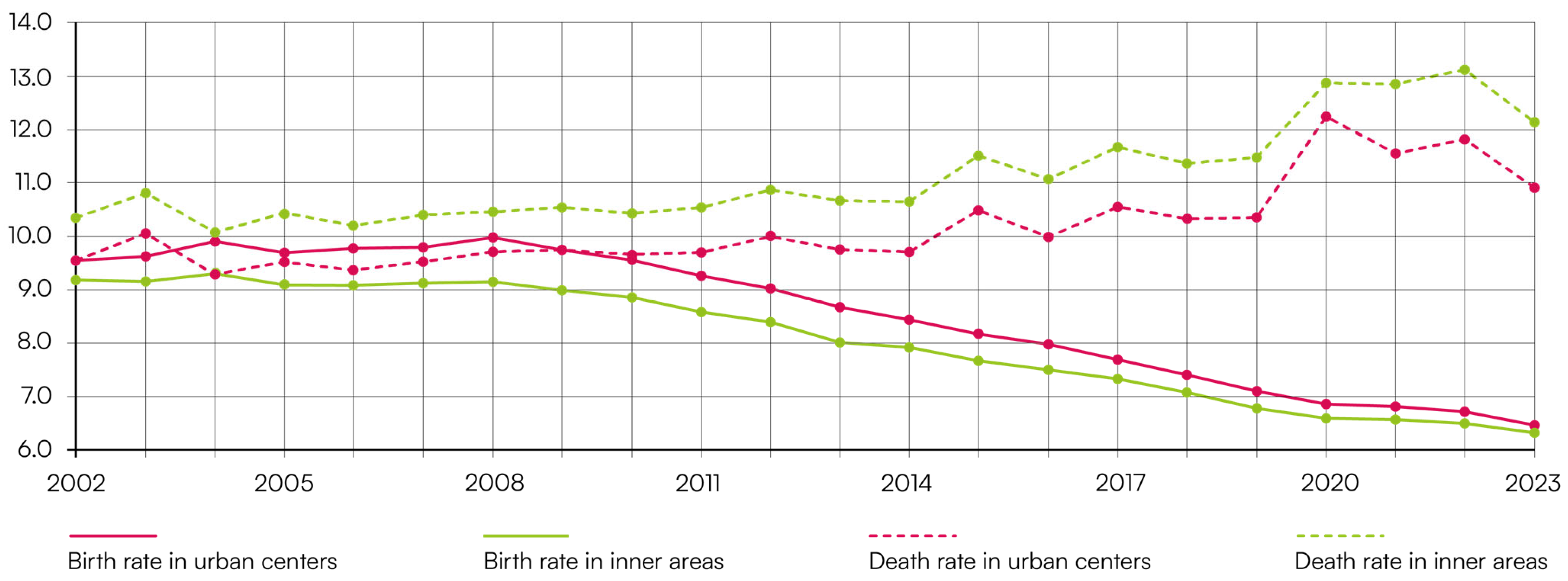
At the same time, broader structural dynamics—demographic contraction (cf.
Figure 1), economic fragility, land abandonment, and the reconfiguration of social networks—shape long-term territorial trajectories that are difficult to predict and govern. These dynamics call for an expanded understanding of reconstruction, one that recognizes landscape as a cultural and strategic resource, a determinant of habitability, and a key factor for the future of the inland areas of the Apennines. In this sense, seismic events represent more of an accelerator than a direct cause of transformation, exposing pre-existing criticalities while triggering processes that extend well beyond the timeframe of building repair [
3]. Earthquakes act as powerful landscape modifiers, “marking the agricultural organization of territories in an irreversible way, the result of centuries of adaptation and compromise between humans and their environment” [
2].
This paper contributes to this debate by proposing a landscape-oriented interpretative and operational framework for post-earthquake recovery, integrating theoretical concepts, normative references, and practical guidelines. Within this perspective, post-earthquake reconstruction is interpreted not only as a sectoral response to damage, but also as a strategic opportunity to address long-term territorial cohesion and to reconfigure coast–inland relationships in line with contemporary sustainability-oriented policies for inland areas, including the Green Community framework. The contribution builds on two complementary research experiences: (1) applied experiments conducted in seven municipalities of the L’Aquila 2009 seismic crater: Bussi sul Tirino, Brittoli, Civitella Casanova, Cugnoli, Montebello di Bertona, Ofena, and Popoli (hereafter referred to collectively as Area Omogenea 5), where reconstruction plans and landscape-oriented tools were jointly developed with local administrations; (2) the PRIN TRIALS project, which investigated post-disaster transformations and the conditions for transformative resilience in the inland areas of Central Italy from a multidisciplinary perspective.
Grounded in these applied experiments and the multidisciplinary research of the PRIN TRIALS project, the paper elaborates a conceptual and operational framework. This contribution does not offer quantitative data, comparative statistics, or empirical evaluation of reconstruction outcomes, but instead systematizes the theoretical elaborations, interpretative insights, criticalities, and practical solutions. The aim is to translate this body of knowledge into principles, guidelines, and tools that can inform reconstruction processes in comparable territorial contexts, while acknowledging that the reflections remain situated within the specific regulatory, administrative, and landscape conditions of the Central Apennine inland areas.
The objective of the study is to demonstrate how landscape quality objectives, contextual integration criteria, and proximity-landscape management strategies can support post-earthquake reconstruction processes capable of strengthening territorial identity and guiding transformations toward sustainable and resilient outcomes. In this perspective, reconstruction is also understood as an opportunity to reposition inland areas within wider territorial systems and to address long-term territorial cohesion, particularly through the reconfiguration of coast–inland relationships.
Accordingly, the research questions guiding the paper are:
How can landscape-based approaches, normative frameworks, and operational tools be integrated into post-earthquake reconstruction to address long-term territorial transformations in inland areas? And how can Reconstruction Plans incorporate strategic scenarios that relocate inland areas within a broader territorial scale, with particular reference to their complementary relationship with more densely inhabited coastal areas?
To address these questions, the paper develops a conceptual and procedural framework that includes:
Theoretical concepts (landscape quality, transformative resilience, permanent temporariness);
References to regulatory contexts (emergency procedures, regional landscape plans, heritage frameworks);
Operational indications and tools, including contextual integration criteria, Project Reference Context analysis, photomontage techniques, and guidelines for peri-urban and proximity landscapes;
Strategic, large-scale scenarios aimed at reinforcing coast–inland complementarities, framing inland areas as providers of environmental, ecological, and landscape services within wider territorial systems, and embedding post-earthquake reconstruction within sustainability-oriented policies for inland areas.
This work should be understood as a theoretical–methodological and operational contribution, whose principles, as previously discussed, are derived from applied experience and national research. While the paper’s reflections are inherently situated within the specific characteristics of the Central Apennine inland areas and their governance frameworks, the conceptual and operational tools presented here are intended to offer a structured approach that may also support reconstruction processes in other fragile territorial contexts affected by disaster-driven transformation.
In this sense, from an epistemological standpoint and in continuity with the applied research experiences described above, the paper is situated within the tradition of European landscape studies and territorial planning research, which recognizes qualitative, interpretative, and project-oriented knowledge as an essential component of spatial analysis. As already stated, empirical evidence in this study is not statistical but experiential, emerging from repeated field observation, project elaboration, and institutional planning processes. Such evidence is constructed through a combination of field surveys, long-term observation, planning documents, and direct involvement in reconstruction-related planning activities. The analytical approach relies on multiscalar territorial readings, visual and perceptual analysis, and the interpretation of landscape structures and relationships, rather than on the calculation of quantitative spatial indicators or model-based simulations.
In this study, therefore, references to empirical evidence, observed transformations, and applied experiments should be understood in relation to the specific nature of landscape and territorial research. Empirical grounding is provided through systematically documented territorial observations and repeated field surveys, complemented by planning documents and project elaborations developed within institutional reconstruction processes. These sources allow the identification of recurring spatial patterns, critical issues, and long-term transformation dynamics across different contexts. The validity of the proposed arguments therefore lies in the convergence of evidence emerging from multiple cases, scales, and temporal phases, rather than in the quantification of individual variables.
Alongside established GIS-based and data-driven approaches to disaster assessment, damage mapping, and reconstruction monitoring, this study addresses a complementary analytical dimension, focusing on qualitative aspects of landscape change that are often underrepresented in frameworks relying solely on quantitative indicators. These include perceptual impacts, identity values, incremental and cumulative transformations, and the long-term spatial implications of emergency settlements that tend to acquire a condition of permanence. By making its scope and epistemological positioning explicit, the paper aims to contribute transparently to interdisciplinary debates on post-disaster reconstruction and sustainability, offering a landscape-based framework that can inform and support, rather than substitute for, future data-informed and spatially explicit research.
2. Research Background and Methodological Framework
As already outlined in the Introduction, the present study emerges from the convergence of two complementary research strands conducted in the context of post-earthquake reconstruction in Central Italy. These strands, while distinct in focus and methodology, share a common objective: to investigate the complex interactions between territorial transformations, governance processes, and landscape quality in contexts affected by seismic events.
The first strand (
Section 2.1), as noted in the Introduction, is rooted in an applied research experience within the L’Aquila 2009 seismic crater, focusing on Area Omogenea 5. It adopts a process-oriented, multi-actor approach aimed at integrating fieldwork, territorial analysis, and participatory design to support reconstruction planning. This strand emphasizes close collaboration with local stakeholders and institutions, exploring how inclusive governance frameworks can guide technically sound and socially responsive reconstruction interventions across diverse landscape types.
The second strand (
Section 2.2) stems from the PRIN TRIALS project (Transformative Resilience for Inland Areas and Local Communities), which investigates post-seismic transformations following the 2016–2017 earthquakes in Central Italian inland areas. It employs a comparative and multidisciplinary perspective to identify recurring challenges in landscape management, emergency interventions, and reconstruction governance. This strand highlights structural patterns and governance issues that transcend specific cases, offering insights into the long-term dynamics of temporary settlements, landscape fragmentation, and the integration of reconstruction projects within sensitive historical and rural contexts.
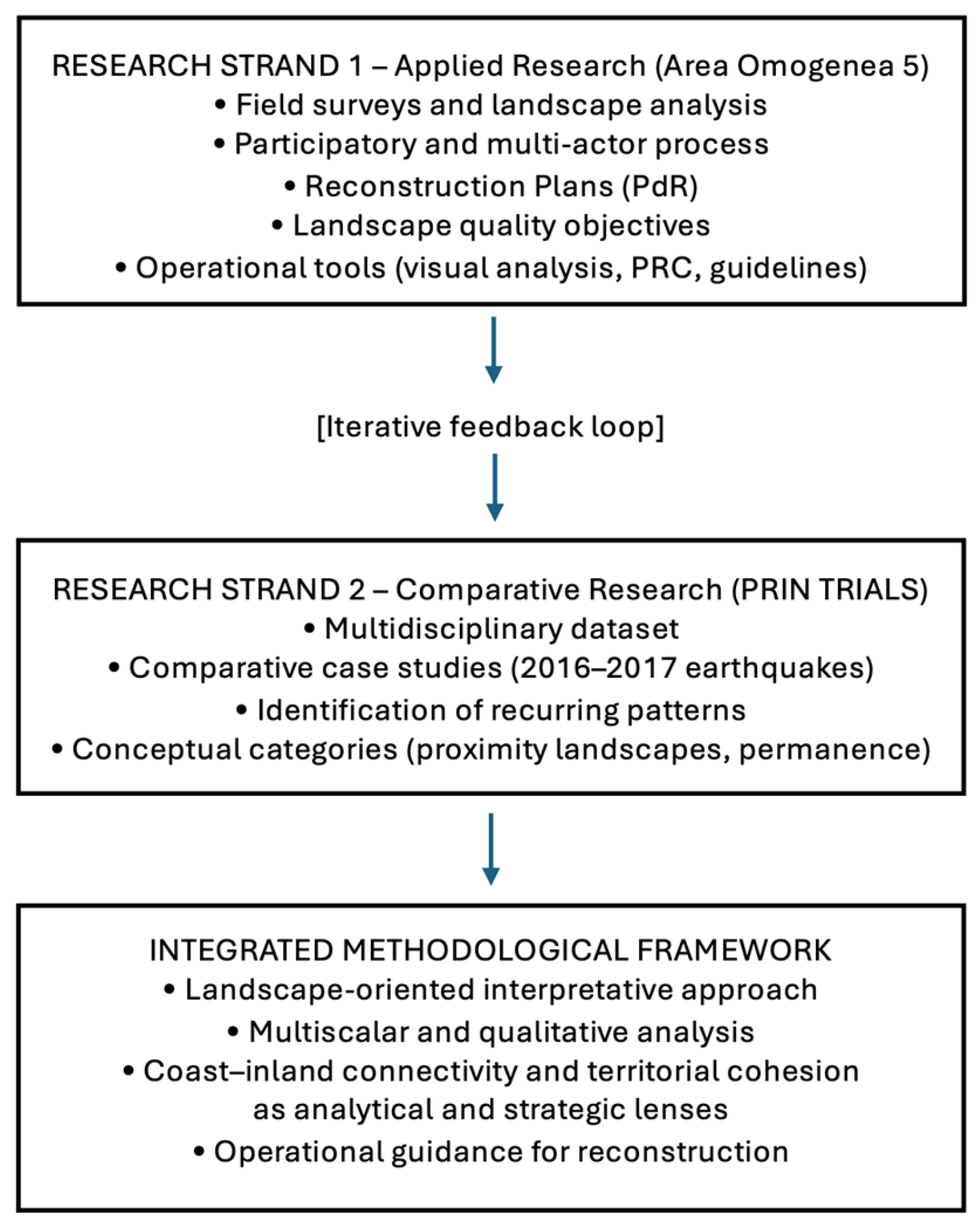
Together, these two strands complement and reinforce each other) (cf.
Figure 2). The applied, territorially specific research provides concrete operational insights, while the comparative, theoretically oriented analysis offers conceptual frameworks capable of explaining broader systemic dynamics. This iterative relationship between practice and theory underpins the methodological approach of the present study, allowing the development of tools and strategies that are both grounded in empirical evidence and transferable to comparable post-disaster contexts.
2.1. First Research Strand: Applied Research in the L’Aquila 2009 Seismic Crater with a Focus on Area Omogenea 5
The first strand followed an approach to spatial governance—consistent with the principles of transparency and administrative cooperation established by Italian Law 241/1990—specifically aimed at guiding reconstruction interventions in a manner that was both technically sound and socially responsive. Simultaneously, the Reconstruction Plans introduced by Article 14 of Law 77/2009 constituted an unprecedented and extraordinary instrument, combining strategic and urban-planning significance and providing a coherent framework for both reconstruction programmes and the economic and social revitalization of the historic centres affected by the earthquake.
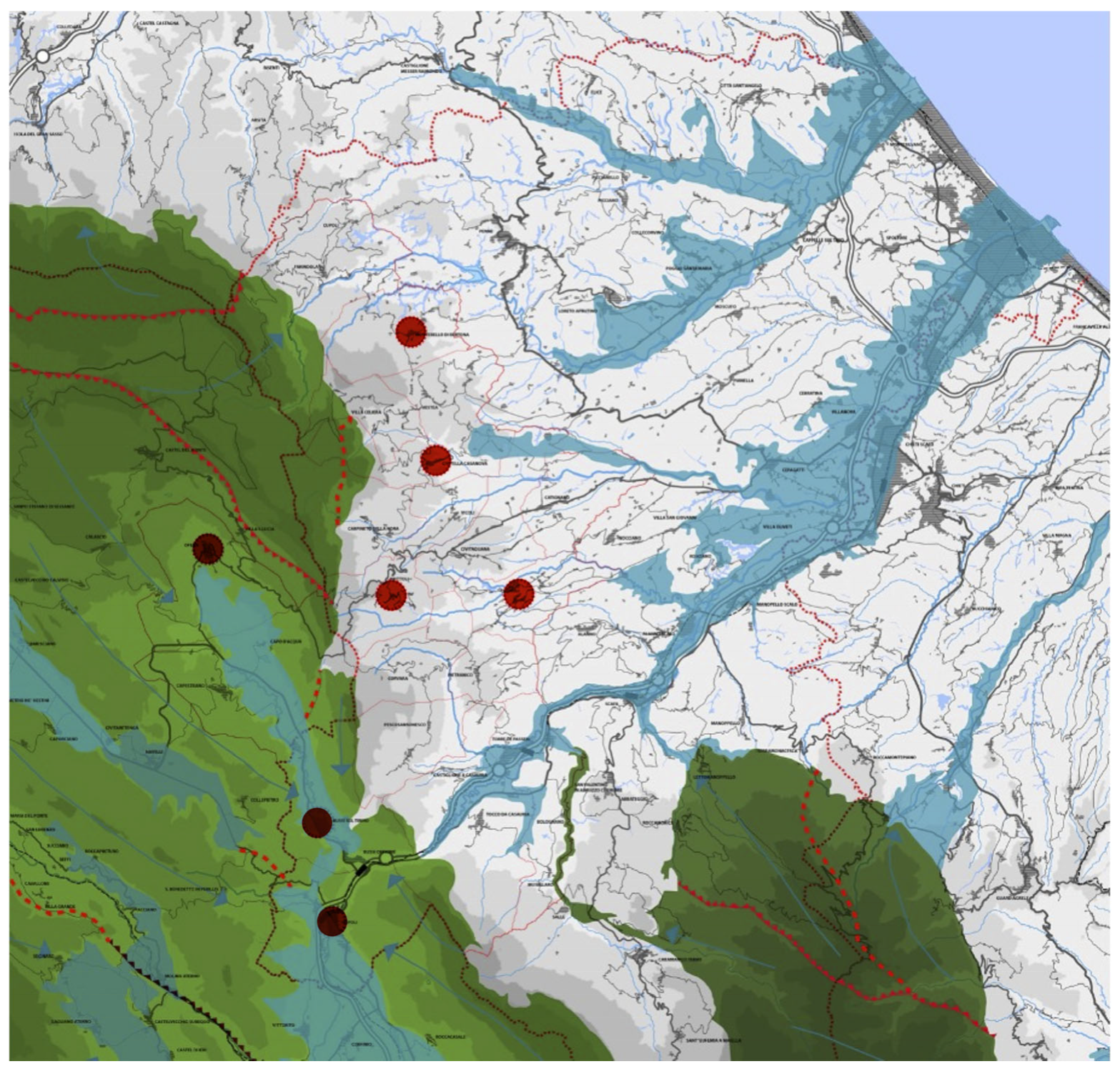
The fieldwork was conducted during the preliminary phase of the study and lasted approximately one month, corresponding to the first phase of activities (“Preliminary phase: integrated survey activities and technical assistance”), which was completed one month after the signing of the agreement between the University and the seven municipalities of Area Omogenea 5 (cf.
Figure 3).
The study was based on a process-oriented participatory methodology, in which stakeholder engagement was not organized as a single, fixed sample, but rather as a progressive and iterative consultation framework accompanying the different phases of analysis, strategy-building, and project definition. This approach is consistent with planning practices in complex post-disaster reconstruction and territorial governance contexts.
Overall, the consultation process involved a broad and articulated ecosystem of actors, which can be grouped as follows:
- -
Territorial governance authorities at Regional, Provincial and Municipal levels;
- -
Post-earthquake governance structures;
- -
Protected area governance;
- -
Development and economic actors;
- -
Service agencies and infrastructure operators;
- -
Social and civic actors;
- -
Professional and technical bodies.
Given the breadth, heterogeneity, and evolving nature of the participatory process, the applied research experience did not rely on a single numeric indicator of stakeholders consulted. Instead, methodological robustness was ensured through institutional completeness, sectoral diversity, and territorial representativeness, supporting processes of shared knowledge production, reflective learning, and co-definition of strategic priorities. This inclusive governance framework constitutes a core component of the overall methodological design of the study. Data from municipal collaborations were systematically collected through a structured and iterative process embedded in the formal preparation of the Reconstruction Plans for the municipalities of Area Omogenea 5. As documented in the General Framework and Guidance Report (Report 1), data acquisition relied on continuous interaction with municipal administrations and their technical offices, and was organized around shared procedural steps, standardized inputs, and coordinated timelines.
The heterogeneity of the landscapes involved—historic fortified centres, dispersed rural architectures, ridge settlements, and agro-pastoral systems—provided a rich testing ground for experimenting with tools and strategies for managing landscape quality during reconstruction processes [
4]. To identify and distinguish these diverse landscape types, we employed a multi-layered analytical methodology that systematically overlaid different territorial dimensions. This approach integrated historical cartography and documentary sources to trace settlement evolution; morphological analyses examining topographic characteristics, elevation patterns, and geological features; land use classifications documenting agricultural systems, forest cover, and built environment distribution; settlement pattern studies analyzing building density, spatial organization, and infrastructural networks; and cultural landscape assessments identifying traditional agrarian structures, defensive systems, and vernacular architectural typologies. By cross-referencing these overlapping layers through an integrated spatial and interpretative analysis, we were able to delineate distinct landscape units characterized by coherent combinations of historical development trajectories, physical configurations, and functional relationships. This stratigraphic reading of the territory revealed how historical processes, environmental constraints, and human activities have interacted to generate the four principal landscape types. To account for this diversity, we selected a targeted variety of cases, guided by detailed landscape analyses that generated a comprehensive set of maps, diagrams, and interpretative elaborations, forming the full basis for our sampling choices. This approach ensured that each landscape type was represented, enabling comparative analysis while capturing the specific morphological, cultural, and functional characteristics of the heterogeneous territories.
Our interpretative approach conceives landscape analysis as inherently qualitative and relational. Unlike purely quantitative spatial assessments, our methodology combines spatial evidence with contextual reading, visual assessment, and project-oriented reasoning—an approach particularly suited to complex and fragile territories where measurable indicators alone cannot fully capture transformation dynamics. The analytical procedures employed prioritize the coherence of interpretative frameworks, the transparency of analytical steps, and the triangulation of multiple evidence sources, ensuring methodological rigour through systematic documentation rather than statistical replicability.
Evidence was collected through multiple, complementary sources that together provide a comprehensive view of the reconstruction process, organized according to a clear triangulation logic. The data collection framework comprised three interconnected layers: Primary empirical sources: Field surveys enabled direct observation of landscape transformations and the capture of local perceptions through systematic site visits conducted during multiple phases of the reconstruction process. These surveys were systematically documented through photographic records, field notes, and sketch analyses, providing a temporal perspective on landscape evolution. Institutional and documentary sources: Planning documents—including reconstruction plans, municipal reports, and governance documents—were analyzed to understand institutional decision-making processes and regulatory frameworks. This layer also included the systematic review of regional landscape plans, emergency ordinances, and technical guidelines issued by reconstruction authorities. Project-based analytical sources: Experimental planning projects and territorial analysis boards developed during the research operationalized theoretical insights and tested the applicability of proposed tools. These included analytical mapping—employed to delineate landscape units, track land-use changes, and structure heterogeneous spatial information—and interpretative mapping that captured qualitative dimensions such as visual relationships, identity values, and perceptual characteristics. Long-term observation—conducted through monitoring of reconstruction phases between 2009 and 2024—provided the temporal dimension critical to understanding evolutionary dynamics and the progressive stabilization of temporary settlements. This multi-source approach ensures robustness and reliability of findings despite the absence of standardized quantitative indicators, as validity is achieved through the convergence of evidence across multiple contexts, scales, and temporal phases rather than through the quantification of isolated variables.
2.2. Second Research Strand: Comparative and Multidisciplinary Research (PRIN TRIALS)
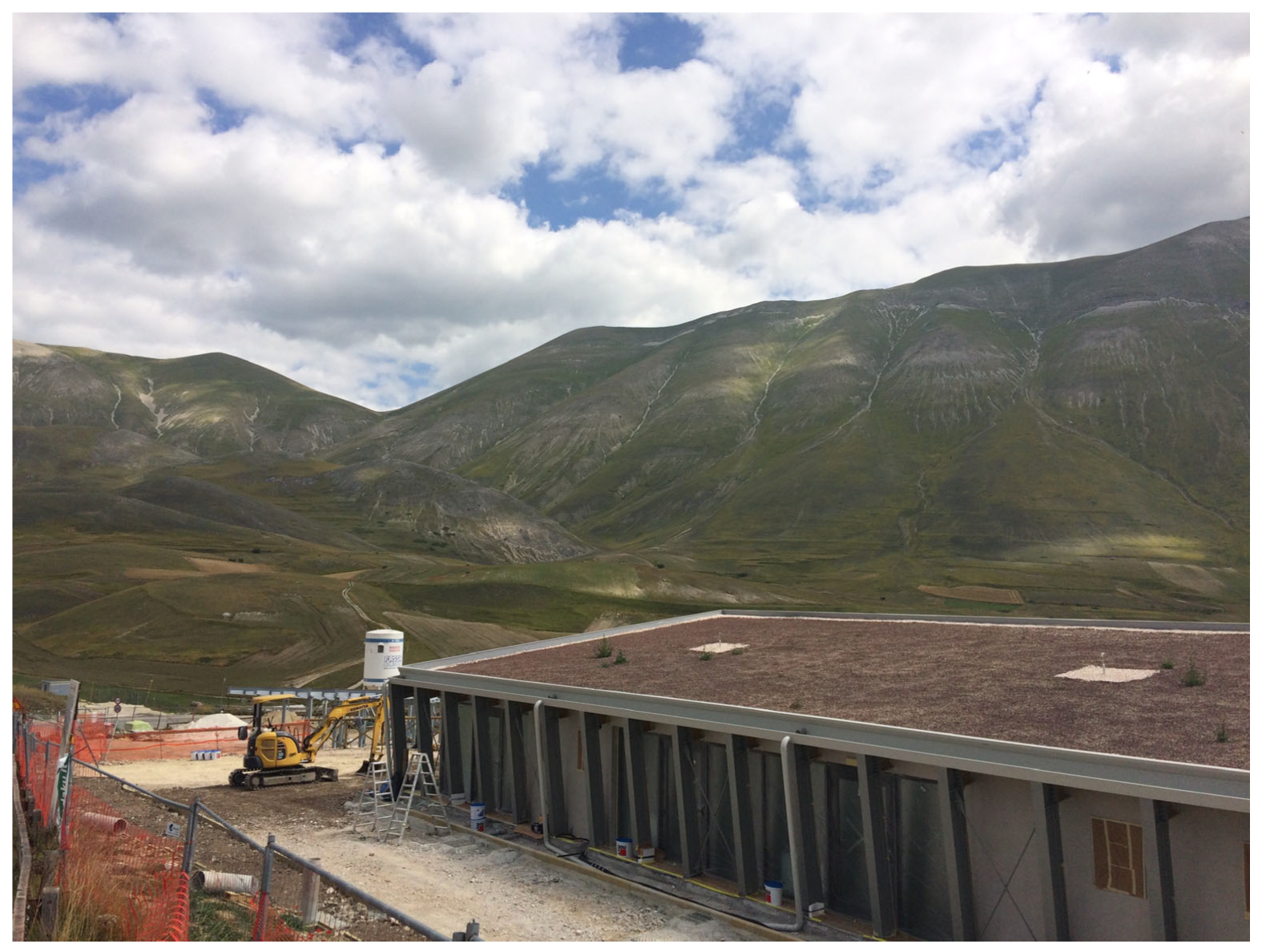
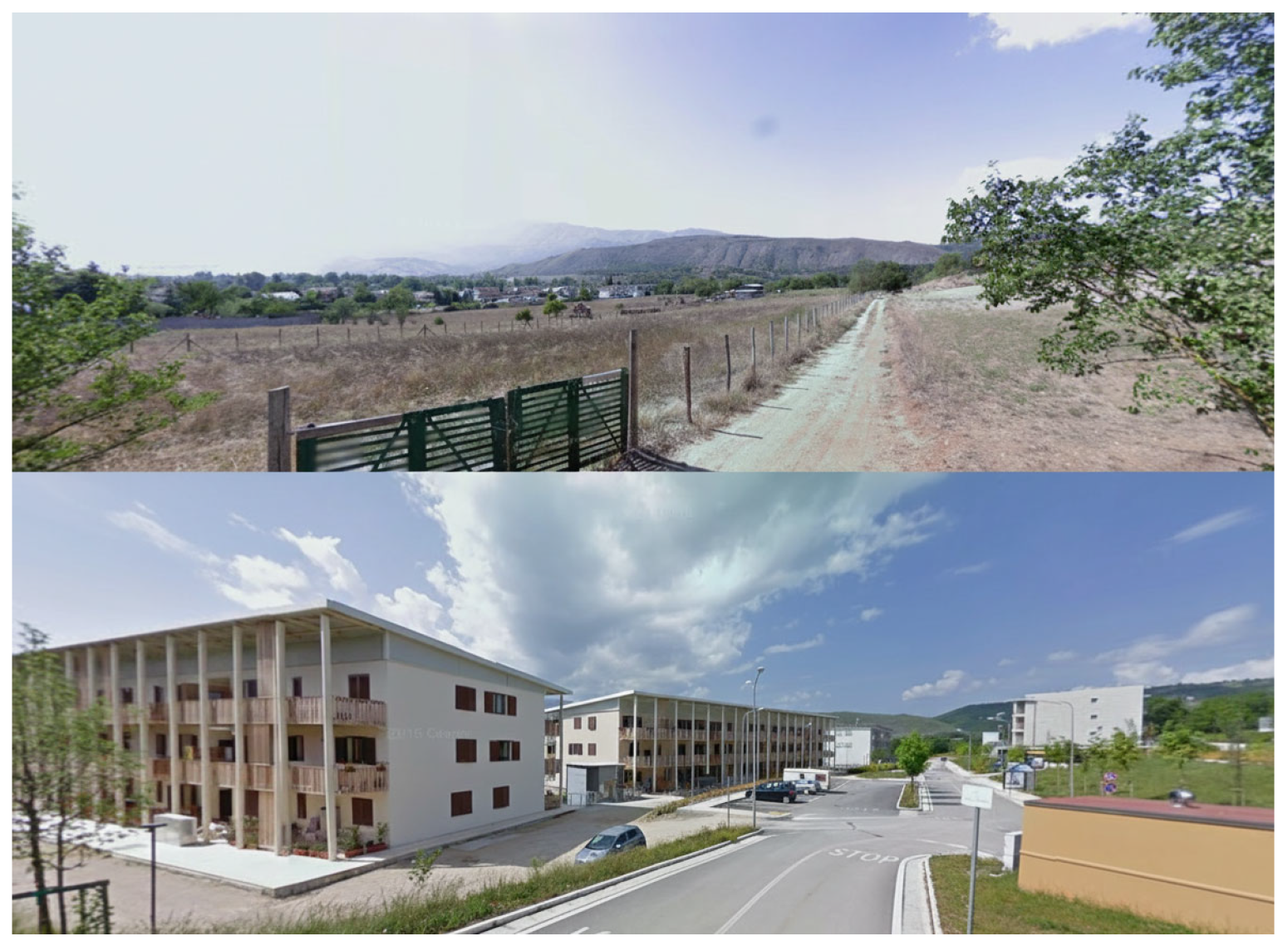
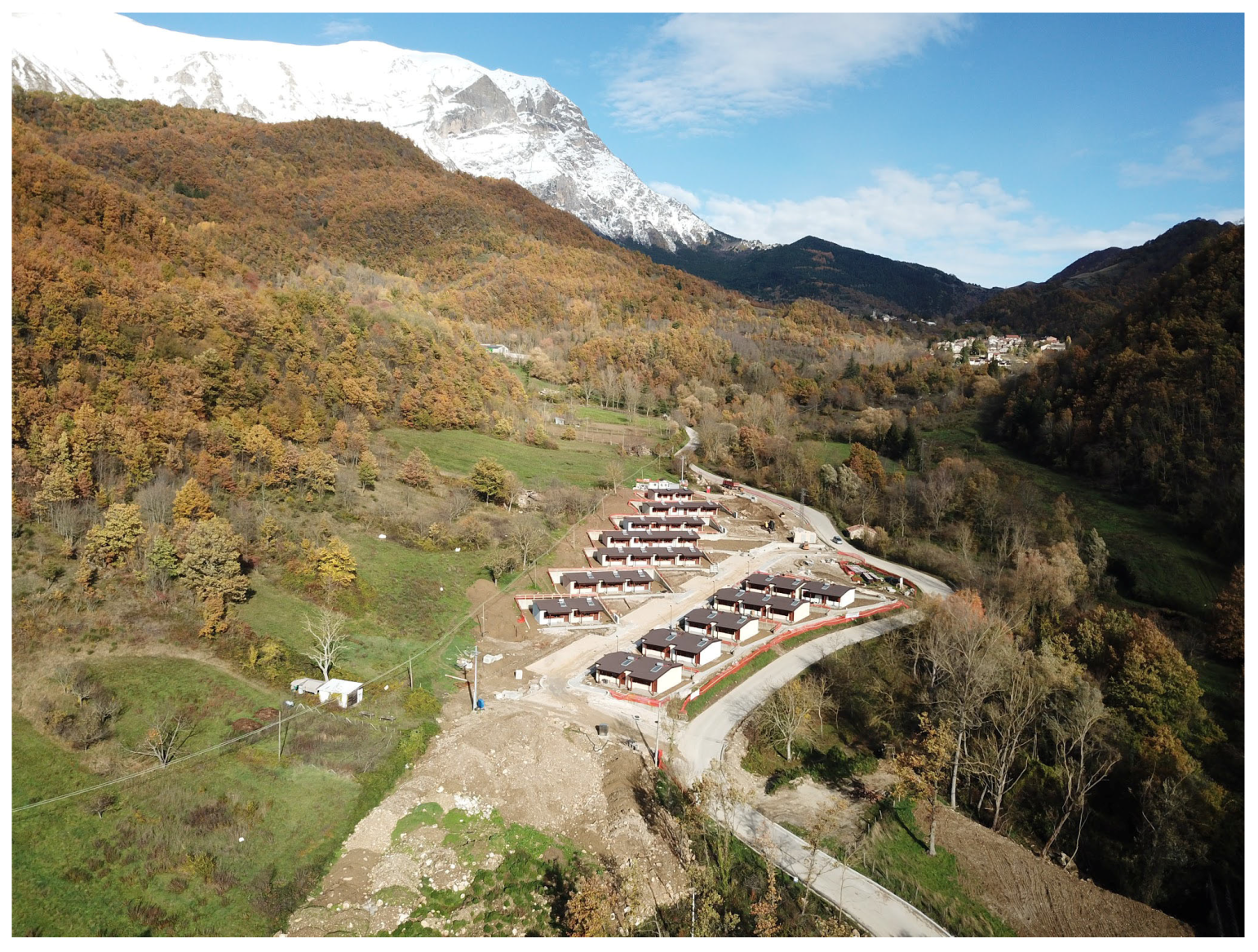
The second research strand derives from the PRIN TRIALS project (Transformative Resilience for Inland Areas and Local communities. Strategies and actions for disaster risk reduction and post-disaster recovery), which investigated the post-seismic transformations triggered by the 2016–2017 earthquakes through a multidisciplinary and comparative perspective. This work highlighted recurring challenges across Central Italian inland areas (Umbria, Marche, Abruzzo, Lazio), including the need to control transformations in proximity landscapes, define context-specific landscape quality objectives, and ensure the appropriate integration of reconstruction projects within sensitive historic and rural environments. This occurs primarily during the emergency phase, when it is necessary to quickly provide shelter for the affected communities—a phase dominated by military-style procedures and hasty operational methods, which almost always end up excluding landscape design concerns. Consider the numerous new, disconnected, and incoherent urban extensions that appeared in many small towns in Marche and Umbria after the 2016 earthquake, likely to remain even after reconstruction, as has been observed in other contexts in the past (cf.
Figure 4,
Figure 5 and
Figure 6) [
5,
6].
The comparative analysis across these contexts revealed recurring spatial patterns and governance challenges that transcend individual cases. Specifically, we identified: (1) the systematic evolution of temporary settlements into permanent territorial components; (2) the fragmentation of proximity landscapes through uncoordinated emergency interventions; (3) the weakening of visual and functional relationships between historic centres and their surrounding territories; and (4) the difficulty of controlling transformations under exceptional governance regimes. These patterns emerged consistently across different institutional settings and landscape typologies (ridge settlements, fortified hilltop towns, dispersed rural architectures), suggesting structural rather than contingent dynamics. The methodological integration of these two research strands—one action-oriented and territorially specific (Area Omogenea 5), the other comparative and theoretically focused (PRIN TRIALS)—enabled a bidirectional validation process. Applied experiences informed and refined conceptual categories, while theoretical frameworks provided interpretative coherence across diverse empirical contexts. This iterative relationship between practice and theory constitutes a core methodological strength of the study, allowing the development of operational tools grounded in concrete planning processes yet conceptually transferable to comparable territorial contexts.
2.3. Methodological Framework
As already discussed above, the methodological framework adopted is rooted in the long-standing tradition of European landscape planning and territorial studies, which conceives landscape not merely as a spatial configuration to be measured, but as the outcome of layered historical processes, cultural practices, institutional arrangements, and everyday territorial uses. Within this tradition, landscape analysis is understood as an intrinsically relational practice, widely applied in planning contexts dealing with complex and fragile territories—particularly in inland areas—where quantitative indicators alone are insufficient to capture the dynamics of territorial transformation.
In post-earthquake contexts, and especially during emergency and early reconstruction phases, spatial change is often driven by exceptional governance regimes, accelerated decision-making, and temporary solutions that progressively acquire permanent characteristics. While data-driven and GIS-based spatial assessments play a crucial role in damage evaluation, land-use classification, and infrastructure mapping, they tend to privilege measurable and immediately observable variables. As a result, they may overlook slow, incremental, and qualitative transformations, such as the redefinition of proximity landscapes, the alteration of visual and perceptual relationships, or the long-term territorial implications of temporary settlements embedded in sensitive landscape contexts.
Within the present study, GIS-based analysis is therefore employed as a supporting tool for territorial reading rather than as a standalone evaluative framework. Spatial datasets, cartographic overlays, and mapping outputs are used to structure and organize heterogeneous information, identify landscape units, and support comparative analysis across different territorial contexts. However, the interpretation of these spatial layers is systematically integrated with field observation, stakeholder engagement, and planning-oriented elaborations, in order to account for dimensions of landscape quality that cannot be fully captured through quantitative indicators alone.
This positioning reflects a broader epistemological stance within landscape planning, in which analytical rigour is achieved not through model reproducibility, but through the coherence of interpretative and analytical procedures and the triangulation of multiple sources of evidence. In this sense, the study does not oppose data-driven spatial assessment but rather highlights its limits when applied in isolation to post-disaster landscapes characterized by institutional complexity, temporal discontinuities, and strong identity values. By integrating GIS-based tools within a landscape-oriented interpretative approach, the methodological framework adopted here seeks to balance spatial explicitness with contextual understanding, providing a more comprehensive basis for guiding reconstruction strategies in fragile inland-area landscapes.
3. The Permanence of Temporary Solutions: A Critical Challenge
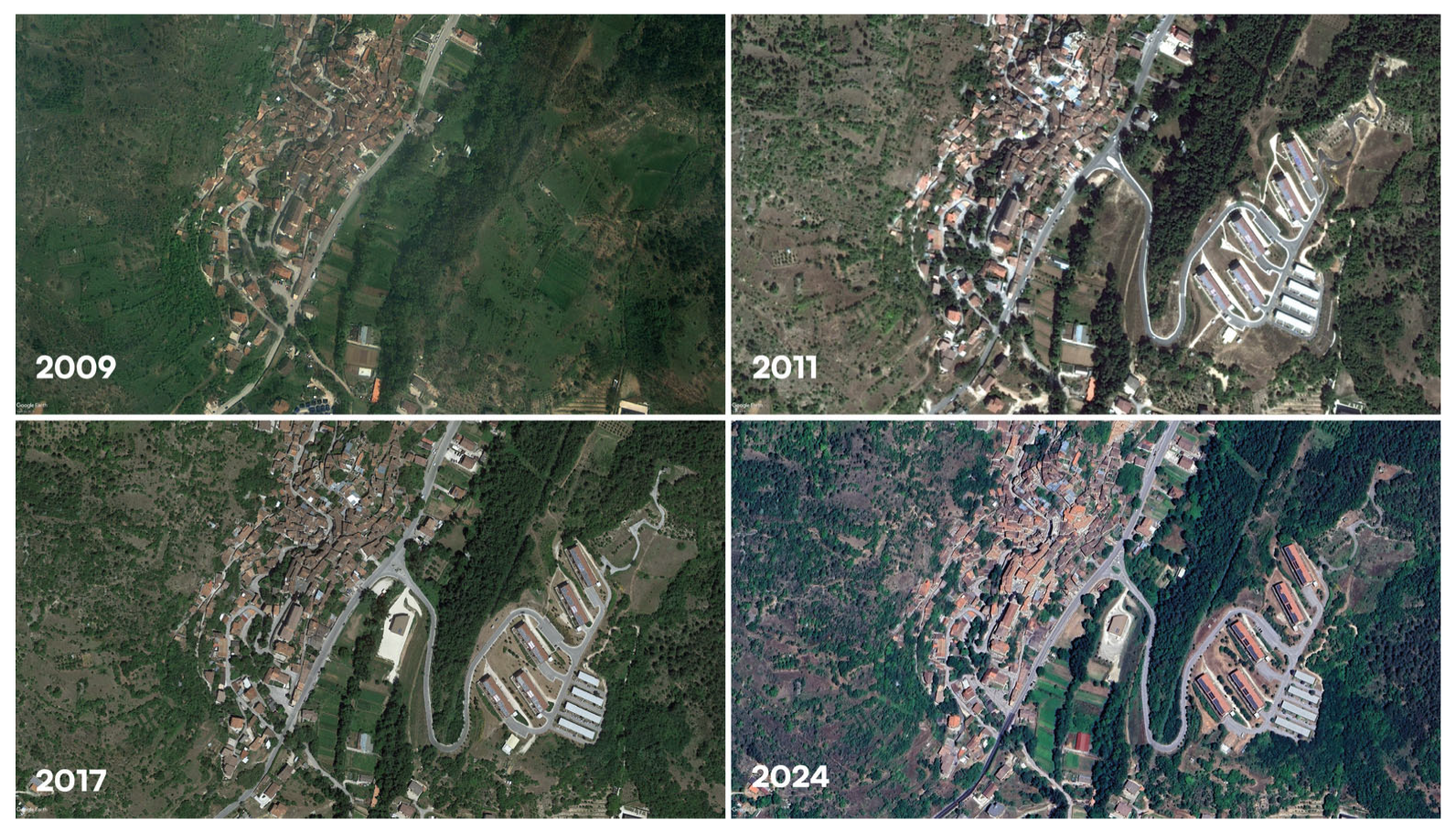
As previously observed, post-seismic emergency temporary settlements tend to systematically evolve into stable components of the territorial structure, thereby contradicting their original definitional premise and producing what has been described as a condition of “permanent temporariness”—a concept widely recognized in the analysis of protracted crises, including long-term refugee camps. This phenomenon manifests with particular intensity across the seismic territories of Central Italy, where the temporal compression between successive events (1997, 2009, and 2016–2017) has produced an unprecedented layering of provisional settlements operating across different phases of their lifecycle. This interpretation is grounded in repeated observations conducted over different temporal phases of the reconstruction process, including the emergency phase, the stabilization of temporary settlements, and their progressive integration into ordinary territorial dynamics. Evidence derives from comparative analysis of multiple post-earthquake contexts in Central Italy, supported by cartographic documentation, aerial imagery, planning records, and field surveys carried out between 2009 and 2024. The recurrence of similar spatial outcomes across different institutional and landscape settings supports the reading of temporary settlements as long-term territorial transformations rather than short-term emergency responses. Empirical evidence from the Apennine inland areas confirms the persistence of settlements initially conceived as temporary, which routinely endure for 10, 15, or even 20 years, while the overall reconstruction processes often require 20–30 years to approach completion. This temporal discrepancy effectively transforms the provisional into the permanent, regardless of administrative classifications or planning intentions (cf.
Figure 7). The phenomenon transcends simple duration: emergency housing solutions realized through extraordinary procedures, typically in derogation of existing urban planning instruments, generate irreversible territorial modifications including extensive land reshaping, permanent infrastructure networks, and substantial soil consumption even within protected areas such as national parks [
7,
8].
The normalization of emergency conditions represents a fundamental shift in territorial governance. As acknowledged in Italian Civil Protection guidelines as early as 2005, the recurrence of seismic events has transformed emergency response “from exception to norm,” yet planning frameworks have struggled to incorporate this reality into preventive territorial strategies [
9]. The persistence of provisional arrangements constitutes a critical dimension of post-earthquake reconstruction, a phase in which accelerated procedures and exceptional regulatory frameworks often open space for actors who strategically exploit the emergency to advance previously unapproved developments. Under these conditions, reconstruction becomes not only a technical process but also a field of negotiation where private and real estate interests may influence planning decisions, reshaping norms and administrative thresholds. Each disaster thus operates not merely as a moment of rupture but as an accelerator of transformation, exposing pre-existing fragilities and the pressures exerted by entrepreneurial stakeholders, while generating new spatial configurations whose governance remains partial and frequently contested.
The temporal and spatial permanence manifests across three distinct conditions: first, structures remain in continuous habitation decades after their installation, as documented in the Irpinia territories affected by the 1980 earthquake (and previously in 1930), where provisional settlements have sustained communities for over forty years. Second, emergency sites undergo abandonment and environmental degradation, with container areas transforming into parking facilities or derelict zones where spontaneous vegetation colonizes contaminated concrete foundations. Third, provisional structures experience functional conversion, being repurposed as seasonal residences, tourist facilities, or non-emergency uses, thereby becoming “partially definitive” rather than “temporarily substitutional” [
10].
The Apennine territories affected by the 1997, 2009, and 2016–2017 earthquakes present a unique configuration for examining these dynamics. Here, the compressed temporal sequence of major seismic events has produced a stratigraphic accumulation not only of provisional residential settlements, but also of temporary public facilities—often reconstructed ex novo outside historic centres, as in the case of the university facilities in Camerino. Structures from 1997 persist after 25 years, solutions from 2009 demonstrate progressive consolidation despite ongoing reconstruction, and 2016–2017 interventions already exhibit characteristics of permanent establishment. Experience shows that much of the temporary architectural production tends to remain spatially embedded across the Central Apennine landscape, potentially constituting a significant yet inadequately recognized form of public infrastructure legacy. This permanence generates distinctive urban geographies characterized by dualism: the damaged historic centre and the supposedly temporary new settlement operate as “two half-cities,” producing spatial fragmentation, social discontinuity, and irreversible landscape modification [
9]. These settlements establish new centralities that were never subjected to ordinary planning processes, creating proximity landscapes whose relationships to historic cores remain unresolved. The phenomenon extends beyond residential functions to encompass provisional administrative facilities, commercial structures, cultural centres, and productive activities, a comprehensive parallel urban system whose landscape implications have received limited systematic attention in official reconstruction frameworks.
The material consequences accumulate over time: structures not engineered for extended duration experience deterioration; municipalities inherit management and maintenance burdens for which resources were never allocated; environmental impacts from temporary foundations and materials persist; and overall territorial quality declines.
Yet these provisional landscapes also represent substantial public investment and potential territorial resources.
Similar dynamics are identified by Rotondo, Marinelli and Domenella (2024) [
11], who connect the persistence of temporary conditions to four factors: the prolonged residence of populations in emergency housing (SAE, CAS, hospitality structures), delays in the transition from emergency to reconstruction planning, the community-oriented functions attributed to provisional settlements, and the progressive redefinition of emergency areas as “dual-use” devices serving both ordinary and crisis-related needs. These elements further reinforce the notion of a stabilizing temporariness consistent with the broader literature on “permanent temporariness” [
11].
Understanding reconstruction landscapes therefore requires acknowledging the provisional as a permanent component of territorial structure, one that demands integration within coherent planning frameworks rather than treatment as an exceptional condition awaiting eventual removal. This recognition becomes foundational for developing landscape quality objectives capable of guiding both historic centre reconstruction and the inevitable transformations occurring within proximity landscapes, where emergency responses leave their most durable marks.
4. Landscape Quality as a Driver of Transformative Resilience
Within the broader framework of transformative resilience in the inland areas of Central Italy—explored in the PRIN TRIALS research project—landscape quality emerges as a fundamental component of natural risk management and post-disaster recovery strategies. The 2016 earthquake demonstrated how the Apennine landscape, shaped by centuries of interaction between communities and their environment, is highly vulnerable not only to physical hazards but also to long-standing processes of depopulation, abandonment, and functional decline that characterize mountain territories [
12]. These vulnerabilities are further intensified by the asymmetric relationship between inland Apennine areas and coastal urban agglomerations, where demographic concentration, economic opportunities, and services have progressively shifted over recent decades. The seismic event abruptly disrupted the continuous relationship between inhabitants and places that underpins the identity of Apennine cultural landscapes, revealing that reconstruction cannot be confined to buildings alone: it must also restore the social, economic, and settlement conditions that make life viable in small towns and rural areas, while rebalancing their functional and relational role within wider coast–inland territorial systems.
The Council of Europe Landscape Convention [
13] (Council of Europe, opened for signature in Florence on 20 October 2000 and entered into force on 1 March 2004) acknowledges, specifically in its Preamble and Article 5 point (a), the fundamental public interest role of landscape in cultural, ecological, environmental, and social domains, as well as its contribution to quality of life, identity, and well-being. Although the Convention does not explicitly define landscape as a “common good”, a substantial body of scholarly interpretation [
14,
15,
16] situates this concept within the Convention’s collective and participatory approach to landscape protection, planning, and management. In this perspective, landscape is sustained by the daily practices of those who inhabit and care for it, and post-earthquake reconstruction can be understood as an opportunity to reactivate the socio-territorial processes that generate quality, value, and recognizability. Treating landscape as a cultural infrastructure and a device of territorial cohesion therefore implies not only safeguarding material forms and environmental features, but also creating new conditions of habitability, supporting compatible economic initiatives, and renewing the relationship between communities and their living environments. This view resonates strongly with Settis’ [
14] conception of landscape as a common good and as a reflection of society itself, rooted in collective values and social relations, where prioritizing the public interest over individual interests ensures its care and preservation as a shared responsibility of citizens and institutions. As he emphasizes, the landscape embodies the face of a society—it can either strengthen a community or, if neglected and commodified, contribute to its degradation. Landscape quality thus becomes strategic for the future of inland areas, influencing settlement choices, supporting both stable and mobile populations, and contributing to development trajectories where protection, risk management, and innovation intersect.
This paper argues that reconstruction planning should include a strategy for conserving and enhancing the landscape’s identity values, in coherence with regional territorial planning frameworks (in the Italian context) and with the aspirations of local communities, which are the custodians of both tangible and intangible cultural heritage. Recognizing the specificity of earthquake-affected landscapes and treating them as key resources for the recovery of historic centres should therefore be considered a strategic objective. This requires identifying their distinctive features and defining landscape quality objectives aligned with the regional landscape plan. Such objectives help assess the appropriate integration of interventions across multiple scales, from the wider territorial context to the proximity landscapes of historic centres [
17].
These objectives stand in contrast to a limited consideration of landscape, as the word itself does not appear at all in the official documents of the bodies responsible for reconstruction [
1], except in the form of legislative constraints to which interventions must adhere.
Developing reconstruction plans (PdRs) through a territorial approach—situating individual municipalities within the broader regional framework—offers an opportunity to refine and specify the landscape quality objectives formulated in regional planning documents. Similarly, the knowledge framework compiled within the PdR should enhance and update existing landscape assessments, particularly regarding the historic and architectural heritage of reconstruction contexts, thus clarifying their identity profiles.
5. A Strategy for the Post-Earthquake Landscape
The landscape strategy should be structured in two parts: one concerning the formulation of objectives for landscape quality and sustainable development, and the other concerning the definition of criteria for the proper integration of interventions planned or likely to occur during the emergency and reconstruction processes. These two thematic areas should be closely related, with one of the criteria for evaluating the proper integration of projects being their consistency with the landscape quality objectives.
In this perspective, landscape objectives should also be framed within a broader territorial strategy based on the “inland area–coastal area” relationship, recognizing the complementary roles of inland and coastal systems and their interdependence in terms of environmental services, mobility, and socio-economic functions.
The comparison between private design initiatives and the quality objectives contained in the Reconstruction Plans (PdRs) should therefore be considered one of the criteria to ensure proper integration into the context. Alongside compliance with current regulations, it will contribute to defining the framework for the assessment of project admissibility.
Another objective of the guiding document should be the identification of the identity qualities to be considered in the strategic dimension of the PdR. As mentioned, the landscape represents a key lever for the economy, local development, and for the attractiveness of tourism and residential settlement in these territorial areas, particularly within a strategy that attributes to inland areas a central role in providing environmental and landscape quality to more densely urbanized coastal contexts. The recognition of these values stems from the acknowledgment of the importance of historic settlements for the identity of the landscapes of the inland areas of Central Italy. Historic centres remarkably document the centuries-long adaptation of local societies to the natural context, a long process of sedimentation of signs, settlement morphologies, practices of rural space organization, and exploitation of forest resources. The promotion and enhancement, as well as the protection, of these centres should therefore consider the landscape qualities of which they are part, as strategic assets within coast–inland territorial systems.
This is particularly true for transitional contexts between the dense core of the historic centre and the surrounding open space—that is, the “proximity” landscapes, defined as semi-natural areas adjacent to historic settlements whose landscape features are complementary and indispensable to those of the historic core, yet compatible with new economic-productive arrangements reflecting contemporary life [
18].
Controlling transformations occurring in proximity landscapes will be of fundamental importance in the sustainable development vision intended for the post-earthquake territorial replanning. The aim will be to restore—or implement—the legibility of interdependent relationships between settlements and their surrounding territories, including those connections that historically linked inland settlements to coastal areas through ecological corridors, productive landscapes, and mobility networks.
Where such relationships have been lost, it will be necessary to reinterpret unresolved spaces, redefining their forms and functions within the context of contemporary relationships between settlements and surrounding landscapes, recognizing areas contiguous to historic centres as zones of high landscape relevance. These areas allow for the appreciation of the overall image of the settlement, the significance of its historical meanings, and the iconographic values that unmistakably define the identity of the landscapes of Central Italy’s inland areas.
From these considerations, the following planning policies and guidelines can be derived:
Promote the redevelopment of peri-urban areas adjacent to the historic centre, characterized by improper uses and abandoned or underutilized buildings, aiming, where possible, to restore the original planimetric arrangements and perceptive, altimetric, and urban design conditions or to reconfigure a comprehensively organic landscape compatible with the preservation of the sense of the historic centre;
Encourage the rehabilitation of compromised or degraded areas to recover pre-existing values, with particular reference to building façades that serve as landscape “backdrops” in views from foothill or valley floor areas;
Support the maintenance of existing peri-urban agricultural activities and their further landscape enhancement to integrate the image of the historic centre with the variety of crops and landscape patterns of the surrounding context, reinforcing their role within wider coast–inland landscape systems;
Promote the redevelopment of access routes to historic centres with solutions favouring sustainable mobility and the use of vegetation and urban furnishings that positively guide the dynamic perception of the centre, avoiding car-dependent models that risk transforming inland areas into commuter dormitories;
Encourage the removal of elements that strongly disrupt the environment and landscape, or that conflict with protected areas, while simultaneously enhancing views of the historic centre.
6. Landscape Quality Objectives and Sustainable Development Goals
The formulation of landscape quality objectives within each Reconstruction Plan (PdR) should build upon the outcomes of the Context Interpretation phase (Identification and Evaluation), conducted by the respective planning teams. This phase forms a critical interface between forecasting and assessment processes [
19].
Context interpretation must be informed by a regional-scale reading of territorial planning instruments, beginning with the structural features that define the original landscape character of the inland areas of Central Italy—namely, the major regional geomorphological systems. Within the dominant geomorphological regions—the calcareous Central Apennines and their hilly foothills—the orographic structure gives rise to distinct landscape configurations: major mountain ridges, intermontane basins and plateaus, and hilly and piedmont systems.
Landscape Quality Objectives (LQOs) must therefore be articulated in relation to the diversity of forms and meanings expressed by these landscapes, in line with the principles of the Council of Europe Landscape Convention, which emphasizes the need to integrate landscape quality into planning and policy frameworks [
13]. Regional territorial planning instruments typically delineate the territory into regional identity landscapes—territorial units with intentionally blurred boundaries, shaped by relationships among identity values, historical–cultural permanences, physical–natural resources, functional structures, socio-economic systems, and symbolic assets [
20,
21].
The knowledge frameworks provided by territorial planning instruments must therefore be adopted and synthesized, with particular attention to perceptual, environmental, historical–archeological, and agricultural values [
22,
23].
These knowledge bases should be used both for fine-grained local analyses—informing the construction of municipal LQOs—and for identifying identity values necessary to support large-scale strategic planning [
24].
This process will highlight the landscape values associated with the major morphological structures of valleys, hilly and piedmont systems, and mountain ridges. These are transitional landscapes between the more urbanized valley areas and the more intact zones of the Apennines, where landscape quality emerges from the spatial interpenetration of historic settlements and natural environments. Landscape identity is also shaped by the persistence of historic ridge and slope settlements, defensive and religious sites such as hermitages and abbeys, and by the rich physico-natural heritage of the Apennine massif—including cliffs, glacial valleys, moraines, and spring systems [
25]. Agricultural activities contribute further to landscape identity, acting as forms of environmental stewardship essential for maintaining the character of consolidated rural landscapes [
26].
LQOs for the historic centres addressed by the PdR should derive from the quality objectives established by territorial planning instruments for the regional identity landscapes in which the municipalities are situated. These objectives must be presented through a landscape-based reading of the territory and articulated through strategies of protection, management, and planned redevelopment [
19], depending on the identity profiles and heritage values of each context. Regional-level objectives serve as the reference framework for more detailed performance objectives defined at the PdR scale, which must integrate landscape identity values with local development goals and resource-protection needs.
Municipal Landscape Quality and Sustainable Development Objectives will therefore be articulated according to the local morphological contexts in which identity values of the historical, cultural, and landscape heritage affected by post-earthquake reconstruction are expressed. This multiscalar structure enables an assessment of coherence between wide-area landscape performance and local planning actions, particularly within the Reconstruction Plan [
18].
Local objectives must be informed both by territorial planning visions and by the outcomes of the Context Interpretation phase, representing a transition toward protection and enhancement strategies to be formalized in planning regulations. Their formulation should consider the finer-scale dynamics of the urban and peri-urban landscape, emphasizing relational systems that compose urban landscape structure—street frontages, main axes, squares, blocks, and continuous façades [
27].
Objectives should also address visual impacts—panoramic fronts, visual openings, viewpoints, intentional sightlines—and the effects of new interventions on the meaning and identity of historically valuable complexes [
28]. Local LQOs must thus be differentiated according to the various contexts within each PdR and categorized by intervention strategy: Conservation, Sustainable Transformation, or Redevelopment.
These objectives should enable effective preliminary assessment of project proposals regarding landscape sustainability. Sensitive contexts require strong identity-based constraints ensuring project appropriateness, while degraded contexts may allow the introduction of new identity values or revised spatial hierarchies [
29]. Intermediate contexts require carefully defined margins of legitimate transformation, with projects contributing wherever possible to improving existing qualities.
Particular attention should be paid to interventions impacting areas of recognized identity value—such as squares, main urban axes, and key view corridors. These interventions must undergo formal procedures of contextual integration and visual impact assessment, using graphic simulations or other representational techniques [
30].
7. Criteria for the Proper Integration into the Context
In defining the eligibility assessment criteria for reconstruction projects, an initial articulation and specification of the criteria useful for the proper contextual integration of post-earthquake building rehabilitation interventions are to be proposed.
These criteria are intended as qualitative, project-oriented evaluation tools, derived from applied planning practice and landscape interpretation, rather than as prescriptive or quantitatively verifiable standards; their purpose is to support informed decision-making and guide reconstruction processes within specific historical and landscape contexts. Within the Reconstruction Plans (PdRs), context is predominantly understood as the historic built environment; consequently, the purpose of the present criteria is to guide private action toward achieving a harmonious and choral process of comprehensive restoration of the built fabric.
It is nevertheless useful, in formulating criteria for proper contextual integration, to refer to the broader notion of Proper Landscape Integration (Corretto Inserimento Paesaggistico) as defined in the Regional Landscape Plan of Umbria (Piano Paesaggistico della Regione Umbria). According to this notion, Proper Landscape Integration refers to the manner in which transformations are envisaged, designed, and implemented so as to establish appropriate functional, formal, and perceptual relationships with the landscapes in which they occur, avoiding the erasure or reduction in their qualifying signs and features, and contributing instead to their enhancement, in pursuit of the quality objectives defined for landscapes at different scales [
31].
To adapt this notion to historic urban contexts, it is necessary to clarify what is meant by transformation and which relationships determine the qualifying features of a historic urban complex. In a historic town damaged by an earthquake, the most frequent transformations result from the reconstruction of building units affected by structural damage of varying severity. These interventions can therefore be framed—based on regional legislation—within the following categories: extraordinary maintenance; conservation restoration; sanitary and building rehabilitation; building renovation; building replacement; demolition and new construction [
32].
The qualifying features of a historic centre may be grouped into the following dimensions: urban quality of the historic fabric; architectural quality of buildings; architectural quality of open spaces; visual–perceptual quality of the historic centre; social and symbolic meanings; and historical–cultural significance [
33,
34,
35].
It follows that if proper integration is understood as the manner in which transformations are envisaged, designed, and implemented so as to establish adequate functional, formal, and perceptual relationships with the context in which they occur—avoiding the erasure or reduction in its qualifying signs and features—then, in the case of the reconstruction of a historic centre, the procedure for proper integration must pay particular attention to the following aspects: traces and signs of soil organization; external and internal open spaces at the plot scale; architectural language; masses and volumes; horizontal and vertical alignments; prevailing geometries; elements defining perimeters and boundaries; continuity of walls and roofs; colours; materials; lighting; and signage [
36].
7.1. Procedure for Proper Project Integration in Post-Earthquake Reconstruction
The initial step required to implement a procedure for proper project integration consists of the knowledge and interpretation of the context. This activity necessitates an analysis that extends beyond the plot directly affected by the transformation, situating the project area within a broader field of relationships. The scope of this field depends on the scale of the intervention, its location within the urban fabric, the visibility of the plot, and the historical and cultural events associated with the site. In post-earthquake reconstruction scenarios, time constraints are a critical factor.
The urgency to restore functional urban areas and housing requires the adoption of expedited analytical procedures. Consequently, available studies, historical documentation, and pre-existing surveys should be utilized wherever possible to accelerate the assessment of the context. Rapid, yet methodologically sound, evaluations allow for informed decision-making without compromising the integrity of the historical and urban environment.
It is therefore essential to acquire sufficient knowledge at least of the building–urban ensemble to which the unit or aggregate belongs. For instance, if part of the aggregate faces a square, it is necessary to extend the analysis and interpretation to the “square system”, defined by the surrounding building façades as well as the paved open space.
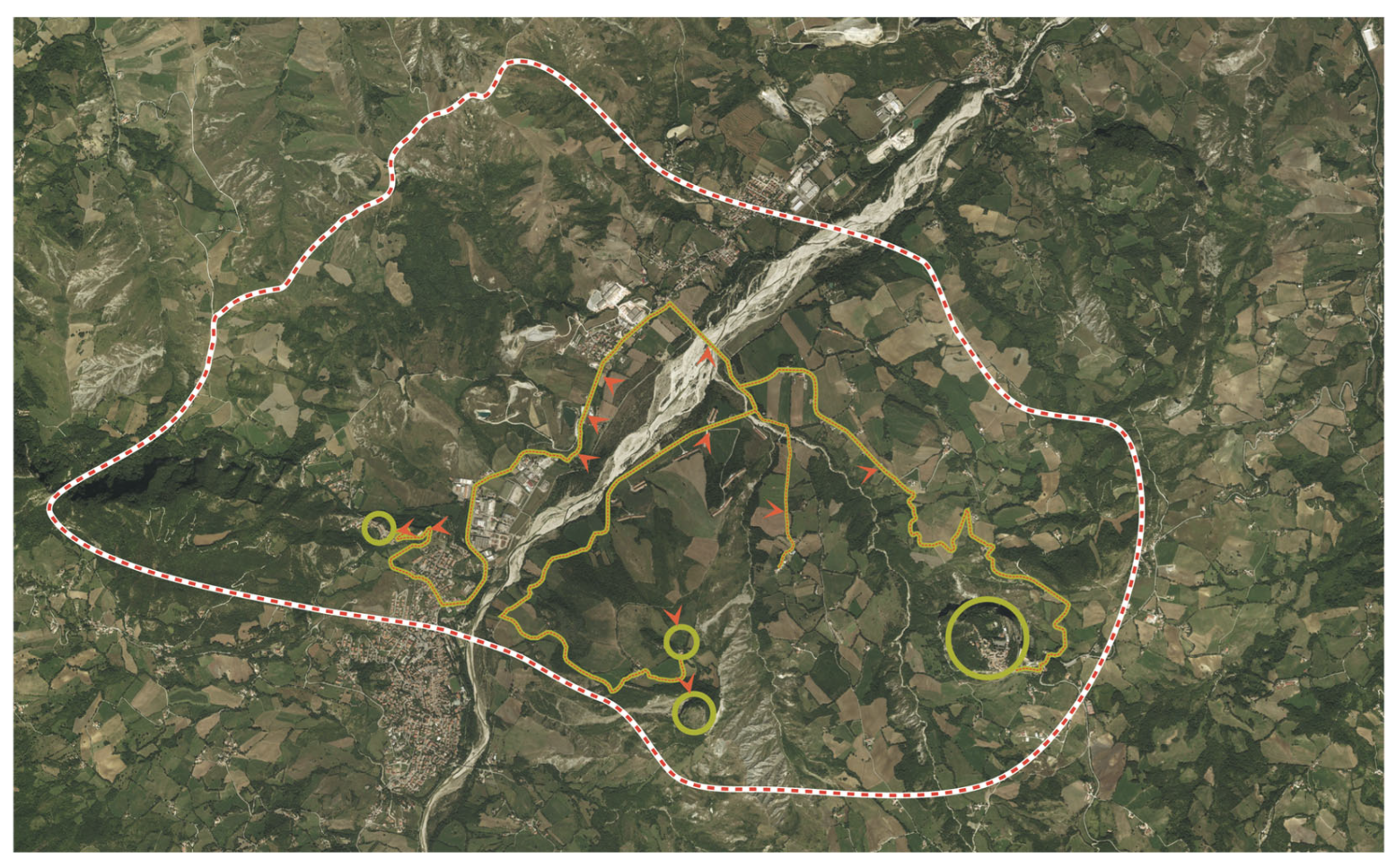
A methodological approach corresponding to the recognition of the design importance of the context is the Project Reference Context (PRC) (cf.
Figure 8), a concept developed during the revision of the Umbria Regional Landscape Plan [
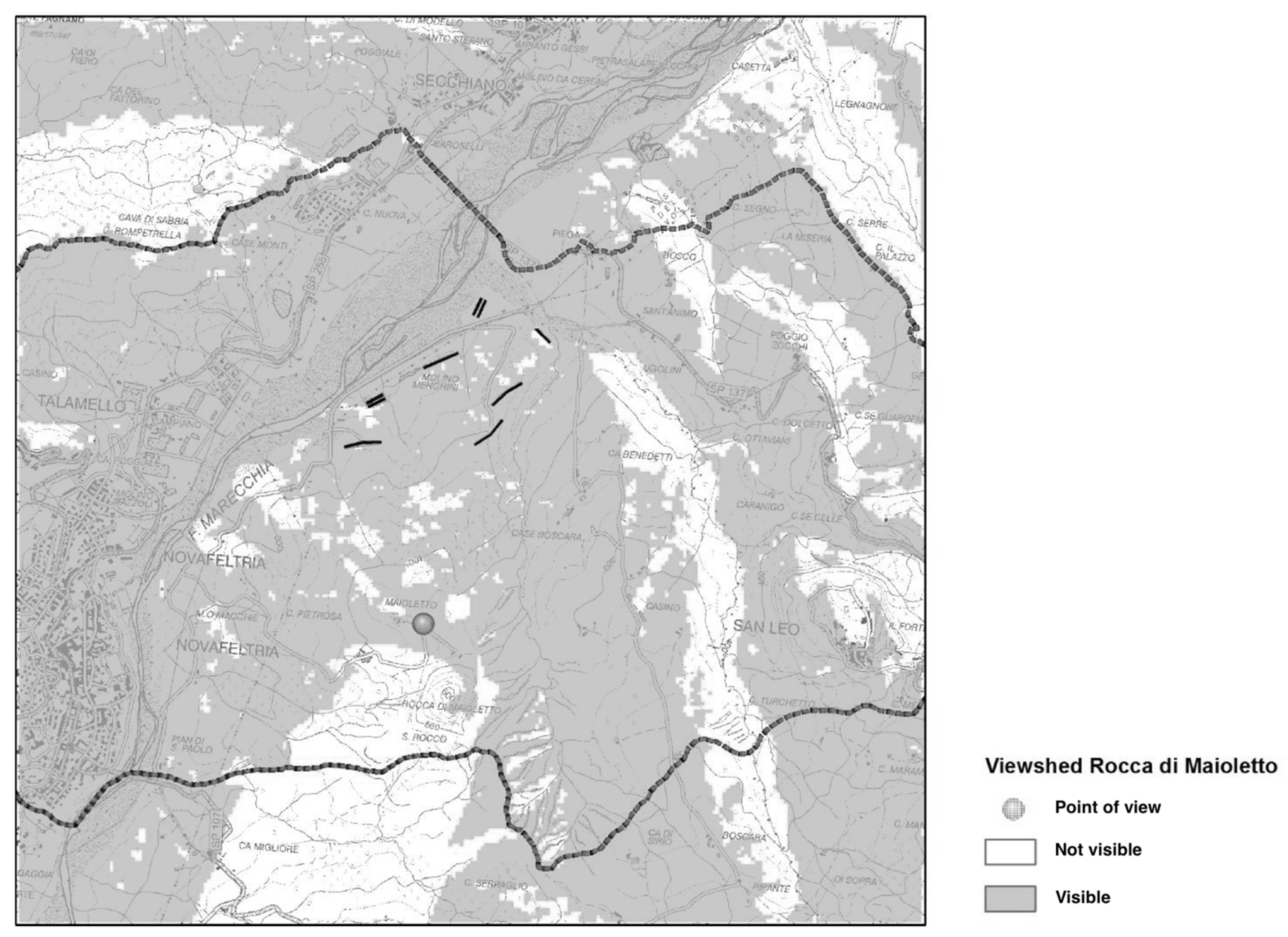
31]. According to Article 10 of the related Technical Standards, the PRC is defined as the portion of territory in which landscape, naturalistic, and anthropogenic characteristics—both formal and functional, in terms of usage and perceptibility—interact visually, environmentally, and functionally, and are influenced by the planned transformations. The PRC cannot be smaller than the intervisibility field, i.e., the territory from which the planned urban intervention or project is visible and must be identified for each specific urban or design intervention that entails a significant transformation (cf.
Figure 9).
The notion of PRC can be adapted to the more limited context of a historic centre, with the following objectives:
- (a)
Highlight the relationships between the intervention and the historical–architectural characteristics of the PRC (street, square, block, building front, etc.);
- (b)
Assess the perceptual impact on the entire historic centre (skyline, perspective views, intentional sightlines, etc.);
- (c)
Evaluate the impact on the social and symbolic identity of the local context.
The level of attention and the extent of these assessments naturally depend on the significance of the intervention, which is characterized by multiple aspects, further discussed in subsequent sections. In post-earthquake contexts, it is particularly important to prioritize critical analyses that can be performed quickly while maintaining methodological rigour.
The reference methodology for designing restoration projects should include:
- (a)
Identification of the PRC for the transformation;
- (b)
Analysis of the relationships between the intervention and the PRC from a physical–morphological, functional, usage, and perceptual perspective, and verification of compatibility or interference with the distinctive signs, characteristics, and quality objectives;
- (c)
Illustration and justification of the design solutions adopted regarding proper integration and the pursuit of quality objectives.
Proper integration verification should be carried out for all interventions involving significant transformations. Its purpose is to assess the proper integration of interventions on building units and aggregates or to promote it through prescriptions and quantitative forms of enhancement that improve the quality of the intervention.
For verification purposes, project documents of significant transformations should include:
- (a)
Plans at a scale appropriate for accurate representation of the intervention for verification purposes. These plans should contain the perimeter of the PRC adopted for proper integration, including:
Monuments or protected cultural assets within or, if relevant due to intervisibility, outside the PRC;
Representation of the elements and signs characterizing the context, starting from adjacent aggregates and reference settlement structures (square, main street, walls);
Identification of privileged viewpoints, based on accessibility, frequency of use, or social relevance, identifiable at both local and immediate landscape scales;
- (b)
Photomontages of the intervention from eye-level viewpoints selected for their significance to perception, both from within and, if applicable, outside the historic centre, documenting the integration of the works.
- (c)
Sections/profiles along the main slope lines to relate the intervention to the morphology of the terrain and to significant elements of the urban context.
In post-earthquake reconstruction, these steps must often be conducted under strict time constraints, emphasizing the use of pre-existing studies, rapid contextual analyses, and methodological prioritization to ensure both speed and quality in decision-making.
7.2. Visualization Techniques for Project Integration
The procedure for proper project integration within the context requires the application of specific operational techniques aimed at visualizing and clarifying design choices to ensure that interventions are appropriately integrated into the urban fabric of the historic centre.
As in landscape perceptual analysis, which is widely recognized as a central evaluative tool, visualization techniques assume a critical communicative role within the Reconstruction Plan (PdR). They support the broader objectives of the Communication Plan, targeting all stakeholders involved in the post-earthquake reconstruction process.
The most significant interventions within the PdR must therefore be visualized through photomontages, placing the proposed works in their urban and landscape context to allow accurate impact assessment.
7.2.1. Photomontage Technique
The photomontage procedure involves three main stages:
Photographic survey of the existing conditions;
Creation of a 3D project model;
Photomontage and rendering of the project within the context.
7.2.2. Photographic Survey of Existing Conditions
Preliminary identification of potential viewpoints should consider:
Normal distribution of users within the context, including circulation patterns outside the historic centre;
Significant historical, landscape, or environmental features (monuments, gardens, visual corridors, streetscapes);
Existing communication infrastructure;
The topography of the historic centre (ridges, hills).
This phase should replicate the population’s visual perception under normal conditions of presence and circulation, avoiding aerial viewpoints. Photographs should be taken with cameras positioned to capture vertical-framed perspectives, using lenses approximating the human field of view. The selection of viewpoints must prioritize visibility of the areas subject to reconstruction.
7.2.3. Creation of the 3D Project Model
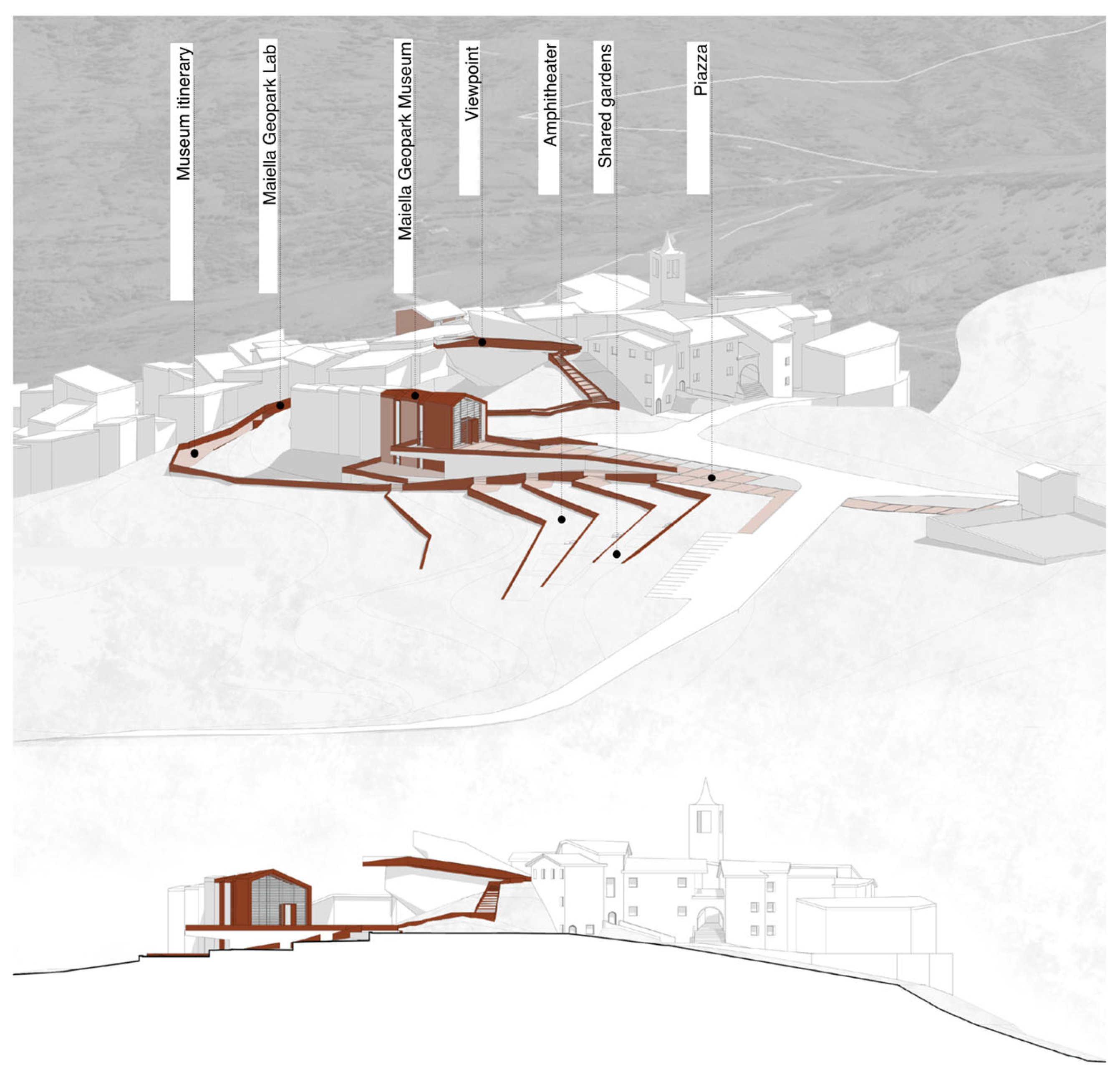
Three-dimensional models should reflect the actual spatial placement, geographic orientation, and viewpoint height. Model accuracy and level of detail should be determined according to the planned renderings (cf.
Figure 10). Project renderings must replicate the lighting conditions at the time of the photographic survey, accounting for sun position and shadow type (self-cast, projected, sharp, or soft).
For photomontage, the 3D models are imported into rendering software, using the photographs as scene backgrounds. Perspective alignment between the virtual model and the photographs is then performed, which may require minor adjustments of the camera target point. Accurate overlay is verified by making pre-existing structures semi-transparent and matching them to their photographic representation.
During rendering, material properties, lighting conditions, colour, and shading must correspond to the photographic background. Final renderings should be produced at a resolution suitable for printing.
7.2.4. Three-Dimensional Photomontages Using Satellite Images
For large-scale infrastructure or visually prominent interventions, 3D photomontages can be generated using satellite imagery (e.g., Google Earth). The 3D model is imported into the web environment and positioned on the terrain model (KMZ file), allowing unlimited viewpoints without field surveys. Views are selected considering the Project Reference Context (PRC) to evaluate perceptual impacts. Sequences should progress from close range (approximately 2 km) to more distant viewpoints up to 10–15 km, depending on the intervention size and visibility conditions.
7.2.5. Evaluation Criteria for Intervention Relevance
Proper project integration must account for the intervention’s significance, establishing dimensional thresholds and criteria to distinguish major from ordinary interventions. For major interventions, admissibility depends on proper integration assessment; ordinary interventions may not require further scrutiny.
The relevance distinction should consider additional factors, such as:
The site’s strategic role in risk reduction;
Position along evacuation routes or safe areas;
Location in zones of maximum seismic amplification (requiring damage mechanism evaluation and preemptive mitigation verification);
Effects on urban vulnerability.
7.2.6. Dimensional Criteria
Intervention relevance is often linked to scale, which is relative to context. In Central Italy’s historic centres, typical thresholds may include:
7.2.7. Localization Criteria
Significant relevance may also arise from spatial or altimetric positioning, particularly if the intervention:
Is near monuments or protected buildings;
Is within homogenous architectural or landscape contexts;
Is located at focal points or in prominent urban sequences (squares, openings, parks).
7.2.8. Consistency with the Guiding Vision
Each PdR should outline a guiding vision for the historic centre’s future, defining urban and territorial roles, sustaining vitality, restoring pre-earthquake uses, and promoting new locally supported functions. Integration assessment must consider the intervention’s alignment with this vision.
Finally, project evaluation should be framed against quality objectives, consistent with the Council of Europe Landscape Convention [
13]. Objectives must be adapted to the different contexts within the Reconstruction Plan and differentiated according to the predominant intervention strategy: conservation, sustainable transformation, or redevelopment.
8. Discussion and Conclusions
The results of this study underline how post-earthquake reconstruction in the inland areas of Central Italy unfolds within complex socio-territorial frameworks, where seismic damage intersects with long-standing processes of demographic decline, functional re-organization, and landscape fragmentation. When interpreted through the perspective of previous research in landscape and disaster studies [
1,
2,
3], the findings confirm the working hypothesis that reconstruction represents a critical phase in which territorial transformations are accelerated and rendered more visible. These dynamics particularly affect proximity landscapes, where the historical interdependence between settlements and their environmental context is most exposed to modification.
A further interpretative dimension emerging from this study concerns the role of post-earthquake reconstruction in reinforcing territorial cohesion, particularly through the enhancement of coast–inland landscape connections. Inland Apennine areas cannot be understood as isolated systems, but as structurally interdependent with coastal urban centres, infrastructural corridors, and economic networks along the valley axes leading to the Adriatic coast. Reconstruction processes therefore operate not only at the scale of damaged settlements, but within wider territorial systems, where strategic planning—as explicitly envisaged in Italian law—supports the integration of inland areas with coastal dynamics, thereby strengthening long-term development trajectories.
From this perspective, enhancing coast–inland landscape connections contributes to territorial cohesion in at least three interrelated ways. First, it supports functional integration by strengthening physical and spatial linkages between inland areas and coastal hubs, improving access to services, labour markets, and economic opportunities. In post-earthquake contexts, where inland territories suffer demographic decline and reduced service provision, reconstruction strategies that strategically frame these relationships can help counteract marginalization and spatial isolation, transforming reconstruction from a purely local recovery process into a lever for broader territorial rebalancing.
Second, coast–inland landscape connections reinforce cultural and identity-based cohesion. The inland areas of Central Italy are historically embedded in landscape systems shaped by transhumance routes, agricultural practices, river valleys, and long-standing mountain–coastal exchanges. Landscape-based reconstruction allows these historical relationships to be reinterpreted, restoring continuity between fragmented landscape units and strengthening shared territorial narratives. Here, landscape acts not only as a physical substrate, but as a mediating framework reconnecting inland communities with wider regional identities and development visions.
Third, enhancing coast–inland connections promotes ecological and environmental cohesion. Reconstruction that integrates landscape quality objectives can support ecological networks linking mountain systems, river corridors, and coastal environments, thereby increasing the resilience of territorial systems to both seismic risk and climate-related pressures. This is particularly relevant in inland Apennine contexts, where uncoordinated interventions risk exacerbating fragmentation if not managed within a multiscalar framework.
In addition, post-earthquake reconstruction can be understood through the lens of the Green Community framework. This approach frames inland areas as strategic providers of ecosystem services and as active agents of sustainable territorial development. By recognizing the natural, cultural, and landscape resources of inland areas—including forests, water, biodiversity, and scenic landscapes—as common goods, Green Community strategies create a reciprocal pact with coastal areas, which provide demand, institutional support, and innovation. This model promotes energy autonomy, low-impact productive practices, and the valorization of local knowledge, generating collective benefits while strengthening social networks.
The Green Community perspective also introduces the notion of an “expanded community,” encompassing permanent and temporary residents, newcomers, remote workers, and other actors, all of whom are considered part of the social fabric and governance of common resources. Co-design between local communities and new actors ensures ongoing care of the territory, fosters resilience, and supports sustainable social and economic development, moving beyond short-term or tourism-centric approaches. Integrating this approach into post-earthquake reconstruction reinforces both internal territorial cohesion and the functional, cultural, and ecological relationships between inland and coastal areas.
From this interpretative perspective, post-earthquake reconstruction emerges as a strategic opportunity to reconfigure coast–inland relationships and implement Green Community principles, rather than merely restoring pre-existing conditions. Reconstruction plans that explicitly engage with landscape connectivity, multiscalar governance, coordinated spatial strategies, and context-sensitive design can contribute to long-term territorial cohesion, resilience, and sustainable development. This interpretation aligns with European frameworks on territorial cohesion, which emphasize reducing disparities between core and peripheral territories by enhancing connectivity, accessibility, and integrated regional development.
These strategic considerations on coast–inland relationships and Green Community principles naturally lead to a closer examination of how such approaches are reflected in practice.
In this sense the comparative insights emerging from the applied studies in the L’Aquila 2009 crater and from the PRIN TRIALS research align with earlier literature on historic landscapes and heritage conservation [
17,
35]. They indicate that one of the most sensitive issues concerns the transformations produced in the peri-urban and transitional areas surrounding historic centres. These areas often experience pressures for new uses or infrastructural adjustments during emergency and reconstruction phases, with potential consequences for identity values, visual coherence, and landscape legibility. Rather than offering definitive empirical evidence, our work highlights recurring patterns and governance challenges that appear across different cases and that deserve systematic attention.
Within this broader interpretative framework, the methodological approach proposed—based on landscape quality objectives, criteria for contextual integration, and multiscalar governance—can be understood as a conceptual contribution to ongoing debates on transformative resilience. The framework does not claim to demonstrate causal effects, but it builds on observed criticalities and interpretative gaps revealed in post-disaster contexts. In particular, the approach shows potential for structuring reconstruction processes so that landscape considerations are incorporated from the outset, rather than introduced ex post as regulatory constraints. This aligns with the Council of Europe Landscape Convention and with contemporary scholarship emphasizing the role of landscape as a cultural, ecological, and social infrastructure.
The discussion also points to broader implications for planning practice. First, the integration of landscape-based readings into Reconstruction Plans (PdRs) may help improve coherence between local interventions and regional territorial strategies. Second, the use of visualization and contextual-integration techniques—photomontages, 3D modelling, and Project Reference Context analysis—emerges as essential for assessing the perceptual and relational impacts of reconstruction projects, confirming existing findings in heritage-planning literature [
36].
At the same time, the study reveals a set of persistent limitations that extend beyond operational and institutional constraints. In addition to the absence of landscape considerations from official reconstruction guidelines (except as regulatory constraints), the difficulty of managing territorial transformations during emergency phases, and the limited availability of rapid yet robust tools for assessing impacts on proximity landscapes, the research also presents academic limitations, some of them structurally accepted as intrinsic to qualitative and exploratory inquiry. These include the context-dependency of the analytical framework, the partial transferability of findings, and the inevitable selectivity in case-study interpretation.
A first criticality concerns the proposed methodological framework, which—as already stated in the title Landscape-Based Approaches to Post-Earthquake Reconstruction in the Inland Areas of Central Italy—is explicitly grounded in the specific geographical, institutional, governance, and socio-territorial conditions of the Apennine inland areas of Central Italy. As such, its generalizability to other seismic contexts—characterized by different planning systems, governance arrangements, or landscape typologies—cannot be assumed and requires further empirical testing through cross-regional and international comparative studies.
A second criticality concerns the multidisciplinary dataset developed within the PRIN “TRIALS” project, which may suffer from partial representation of stakeholder perspectives, particularly in relation to informal practices, marginalized communities, or non-institutional actors involved in post-disaster recovery processes. In order to limit this risk the project selected the indicators according to two main criteria: data accessibility and the capacity to provide an integrated reading of the territorial system, combining vulnerabilities and potentials. In this respect, the distinction between spatial and non-spatial indicators played a key role in mitigating representational bias. Spatial indicators (GIS-based) addressed structural and material dimensions of the territory—such as morphology, infrastructures, and environmental and cultural assets—while non-spatial indicators explicitly incorporate immaterial dimensions, including social practices, participation processes, cohesion, and inclusion.
This bidimensional structure allowed the framework to capture a wider range of stakeholder perspectives, including those that are often underrepresented in institutionally driven datasets, and to interpret landscape resilience as a complex phenomenon resulting from the interaction of physical, social, and economic factors. Rather than claiming exhaustive representation, the indicator system was intentionally conceived as a cognitive infrastructure for territorial planning, capable of being incrementally enriched through additional stakeholder inputs and iterative participatory processes. This adaptive logic reduced the risk of systematic bias and supported the construction of shared and reflexive planning scenarios.
A third criticality concerns the fact that the framework remains primarily qualitative and interpretative in nature, limiting its capacity to quantify trade-offs between landscape quality objectives and the efficiency, timing, and cost-effectiveness of reconstruction interventions.
Future research should focus on developing operational, data-informed tools for rapid landscape assessment in early post-disaster phases; on designing spatial and temporal indicators capable of monitoring landscape quality trends over time; and on integrating GIS-based analyses to support the evaluation of trade-offs between landscape-oriented strategies and reconstruction efficiency. Further attention should also be given to comparative and cross-contextual research to clarify which components of the proposed framework are context-dependent and which may be transferable to other earthquake-prone regions.
Taken together, these considerations help situate the results within a broader interpretative and critical framework. Rather than demonstrating the effectiveness of specific policy instruments, the study contributes to the theoretical and methodological debate by framing landscape-oriented approaches as a conceptual and analytical foundation for post-earthquake reconstruction processes aimed at reconciling historic identity, environmental values, and the long-term trajectories of inland-area territories, as observed in their relationship with coastal areas.