Article

Leveraging Blockchain and Digital Twins for Low-Carbon, Circular Supply Chains: Evidence from the Moroccan Manufacturing Sector


by
Soukaina Abdallah-Ou-Moussa
1,
Martin Wynn
2,* and
Zakaria Rouaine
3
1
Faculty of Economics and Management, Ibn Tofail University, Kenitra BP242, Morocco
2
School of Business, Computing and Social Sciences, University of Gloucestershire, Cheltenham GL502RH, UK
3
Ecole Nationale de Commerce et de Gestion, Université Sultan Moulay Slimane, Beni Mellal BP591, Morocco
*
Author to whom correspondence should be addressed.
Sustainability 2026, 18(2), 991; https://doi.org/10.3390/su18020991
Submission received: 28 November 2025 / Revised: 8 January 2026 / Accepted: 15 January 2026 / Published: 18 January 2026
(This article belongs to the Topic Sustainable Supply Chain Practices in A Digital Age)

Abstract

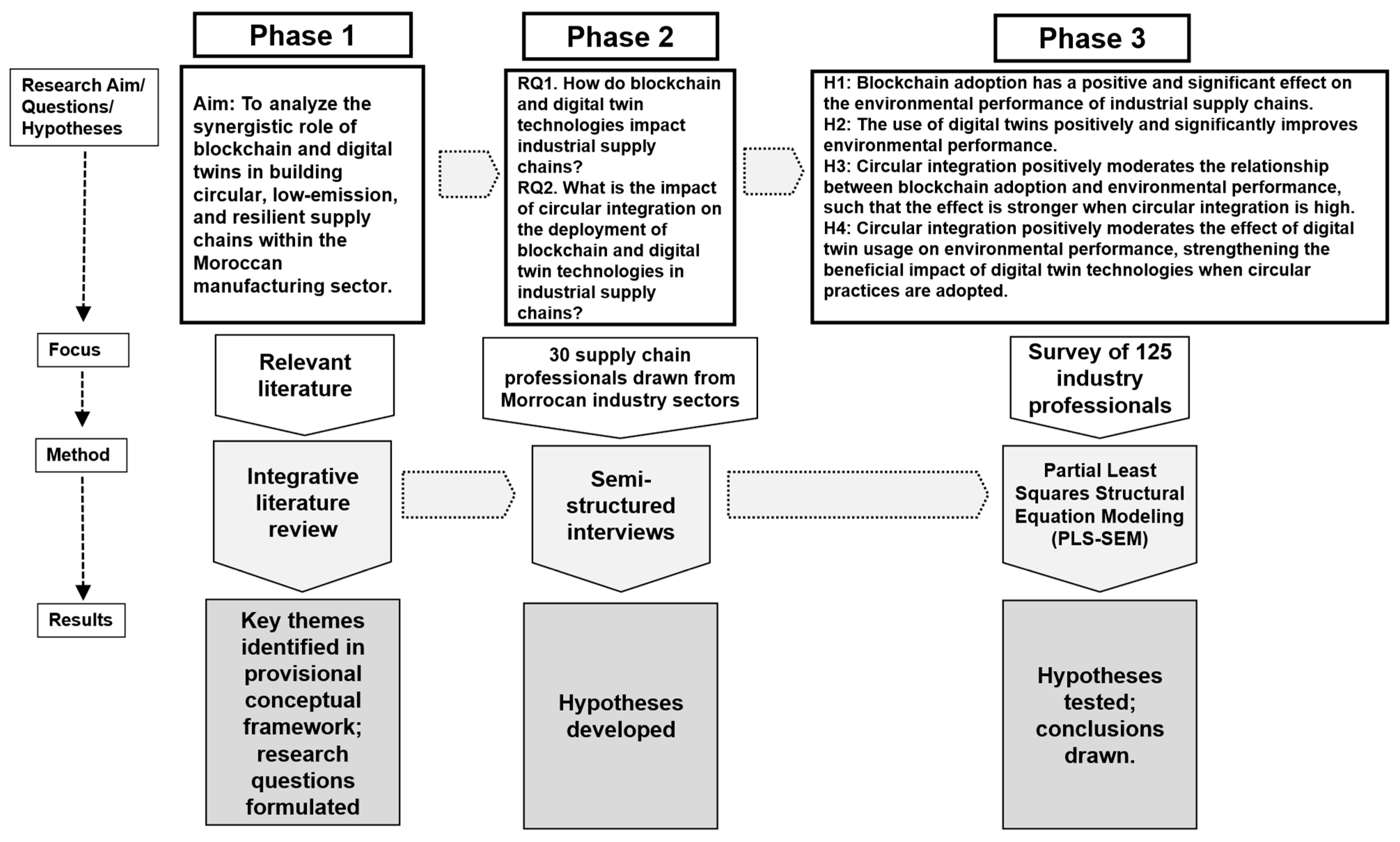
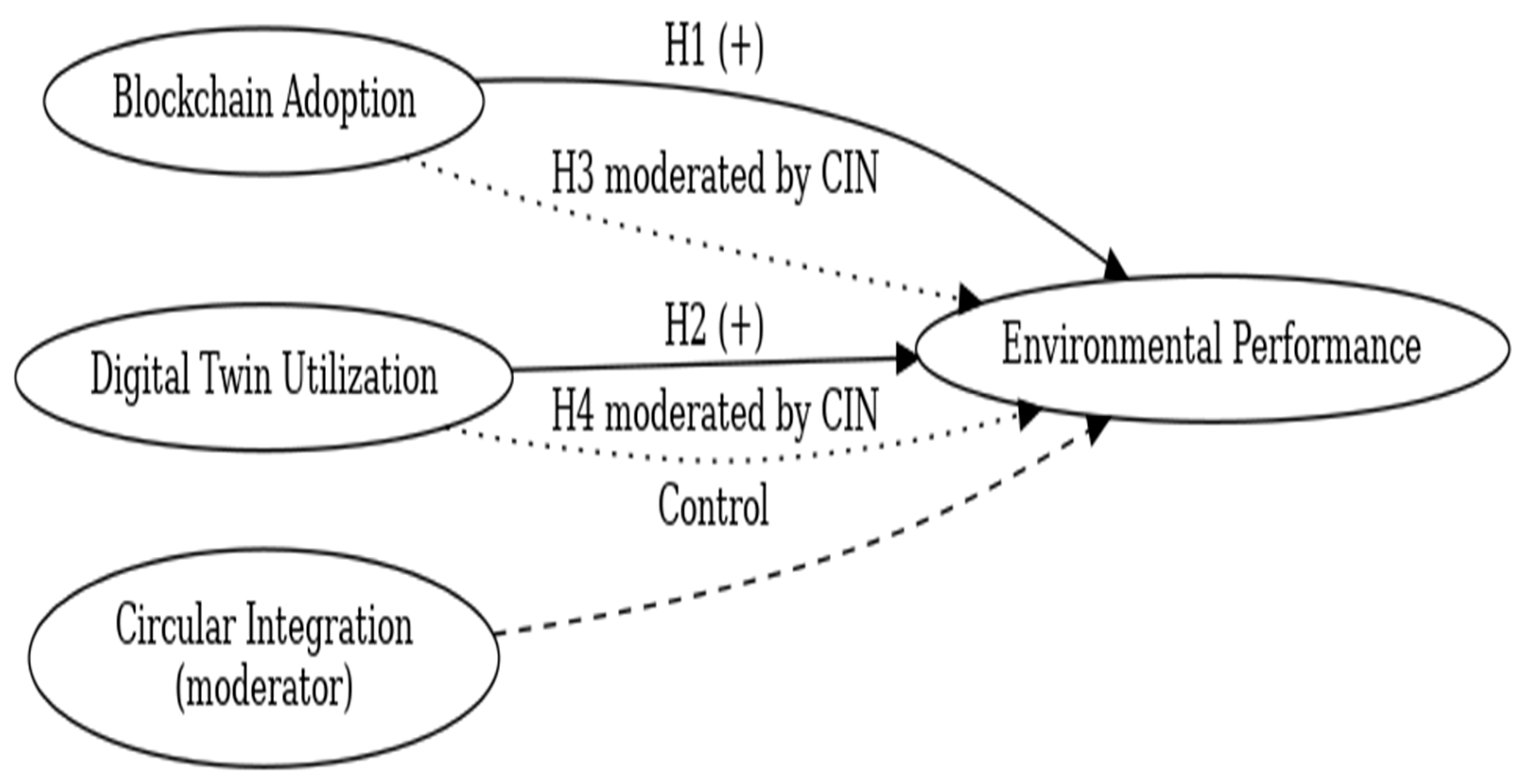
As global supply chains face increasing pressure to reconcile economic efficiency, environmental responsibility, and ethical transparency, emerging digital technologies offer unprecedented opportunities for sustainable transformation. This article examines this dynamic in the context of the Moroccan industrial sector, with particular reference to blockchain and digital twin technologies. The study employs a rigorous mixed-methods design, combining an in-depth qualitative exploration with 30 industry professionals and a Partial Least Squares Structural Equation Modeling (PLS-SEM) model based on survey data from 125 Moroccan manufacturing firms. The findings highlight the synergistic contribution of blockchain and digital twins in enabling circular, low-carbon, and resilient supply chains. Blockchain adoption strengthens environmental impact traceability, data reliability, and responsible governance, while digital twin systems enhance eco-efficiency through real-time modeling and predictive flow simulation. Circular integration emerges as a critical enabler, significantly amplifying the positive effects of both technologies by aligning physical and informational flows within closed-loop processes. With its strong empirical grounding and contextual relevance to an emerging economy, this research provides actionable insights for policymakers, industrial managers, and supply chain practitioners committed to accelerating the sustainable transformation of production systems. It also offers a renewed understanding of how digitalization and circularity jointly support environmental performance within industrial ecosystems.
Keywords: blockchain; digital twins; circular supply chain; environmental performance; Industry 4.0; Supply Chain X.O; sustainable transformation blockchain; digital twins; circular supply chain; environmental performance; Industry 4.0; Supply Chain X.O; sustainable transformation