Article

A Smartphone-Based Application for Crop Irrigation Estimation in Selected South and Southeast Asia Countries

1
Department of Management, Strategy and Entrepreneurship, American University of Sharjah, Sharjah P.O. Box 26666, United Arab Emirates
2
Irrigation and Drainage Engineering Division, ICAR—Central Institute of Agricultural Engineering, Bhopal 462038, MP, India
3
Department of Computer Science and Engineering, American University of Sharjah, Sharjah P.O. Box 26666, United Arab Emirates
*
Authors to whom correspondence should be addressed.
Sustainability 2026, 18(2), 990; https://doi.org/10.3390/su18020990
Submission received: 19 November 2025 / Revised: 1 January 2026 / Accepted: 3 January 2026 / Published: 18 January 2026
(This article belongs to the Section Sustainable Water Management)

Abstract

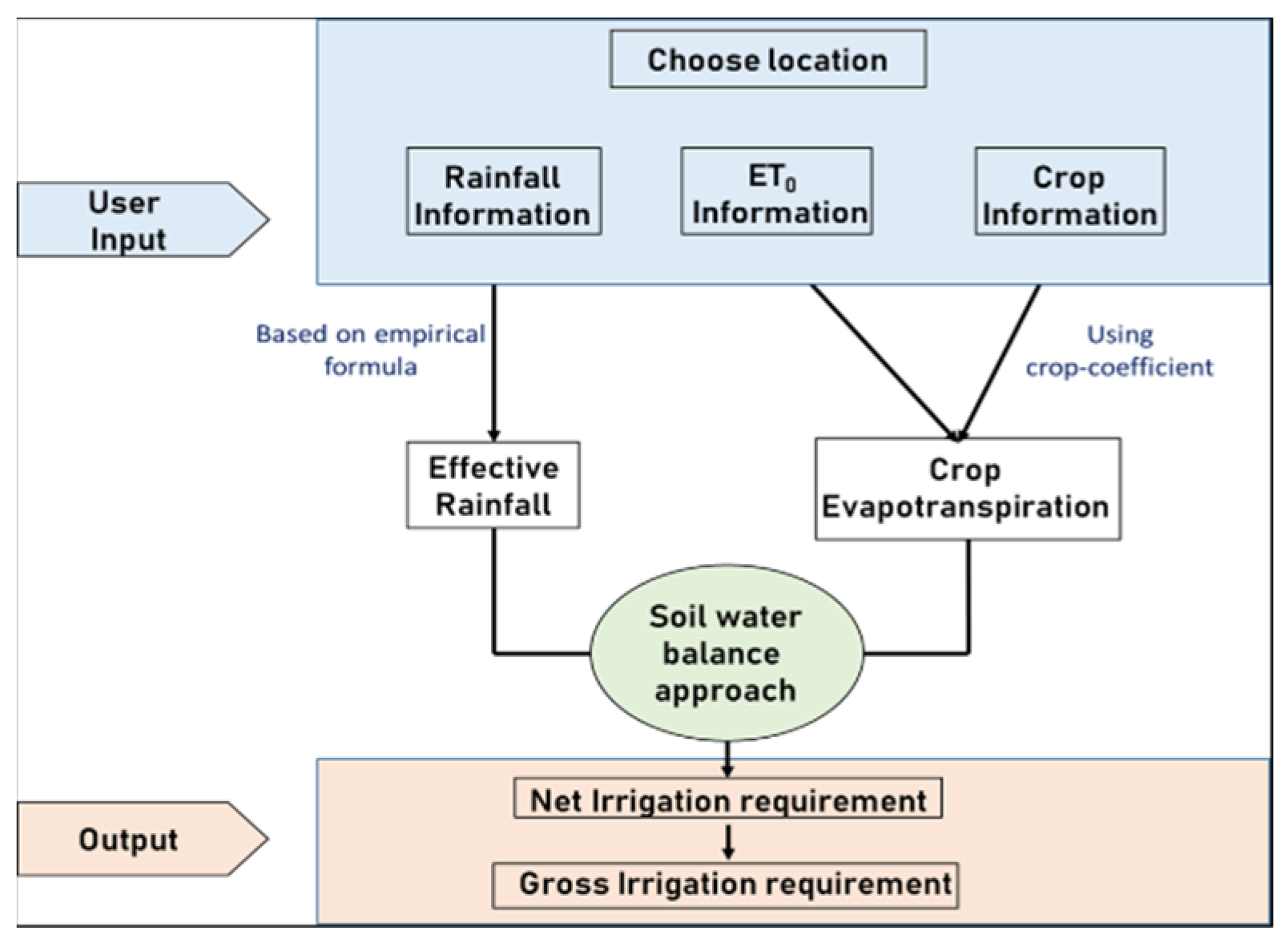
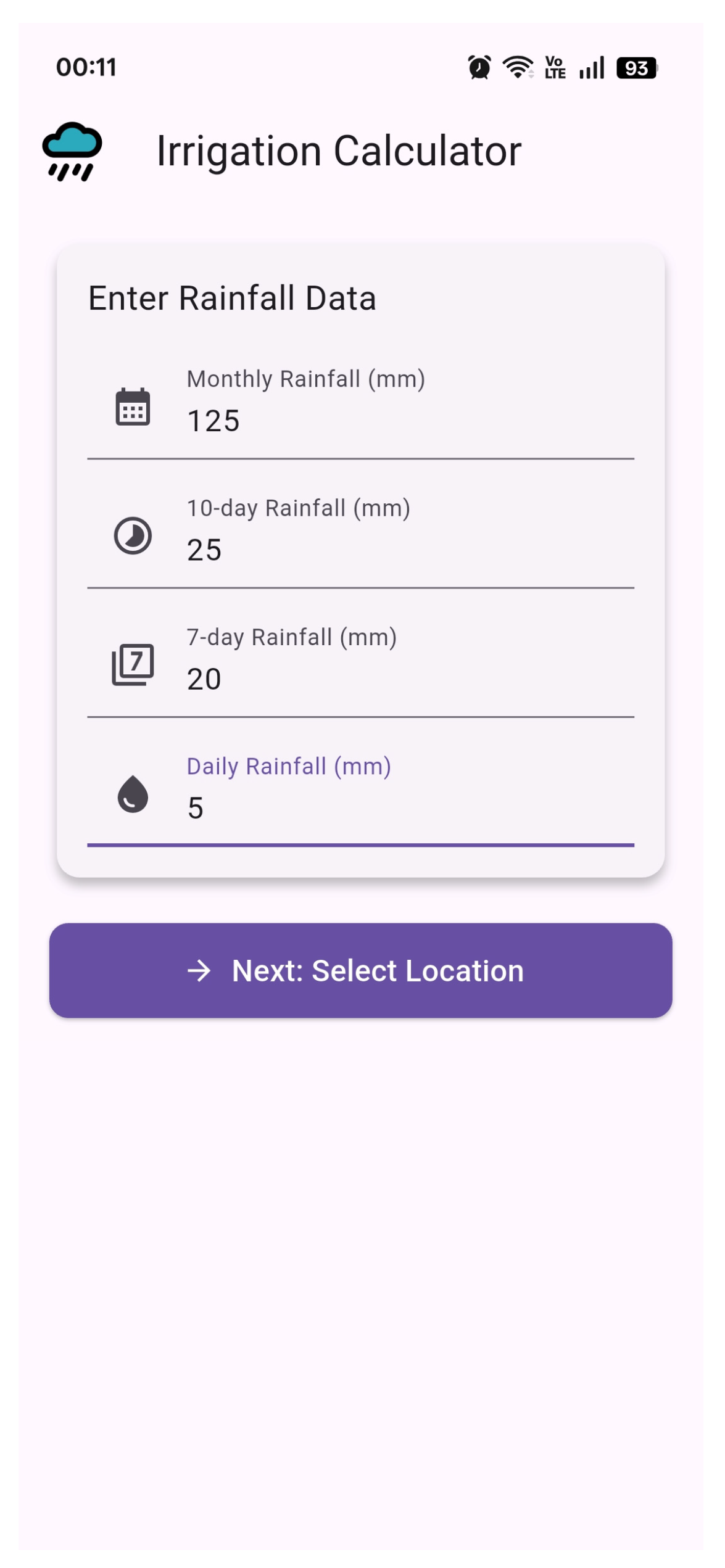
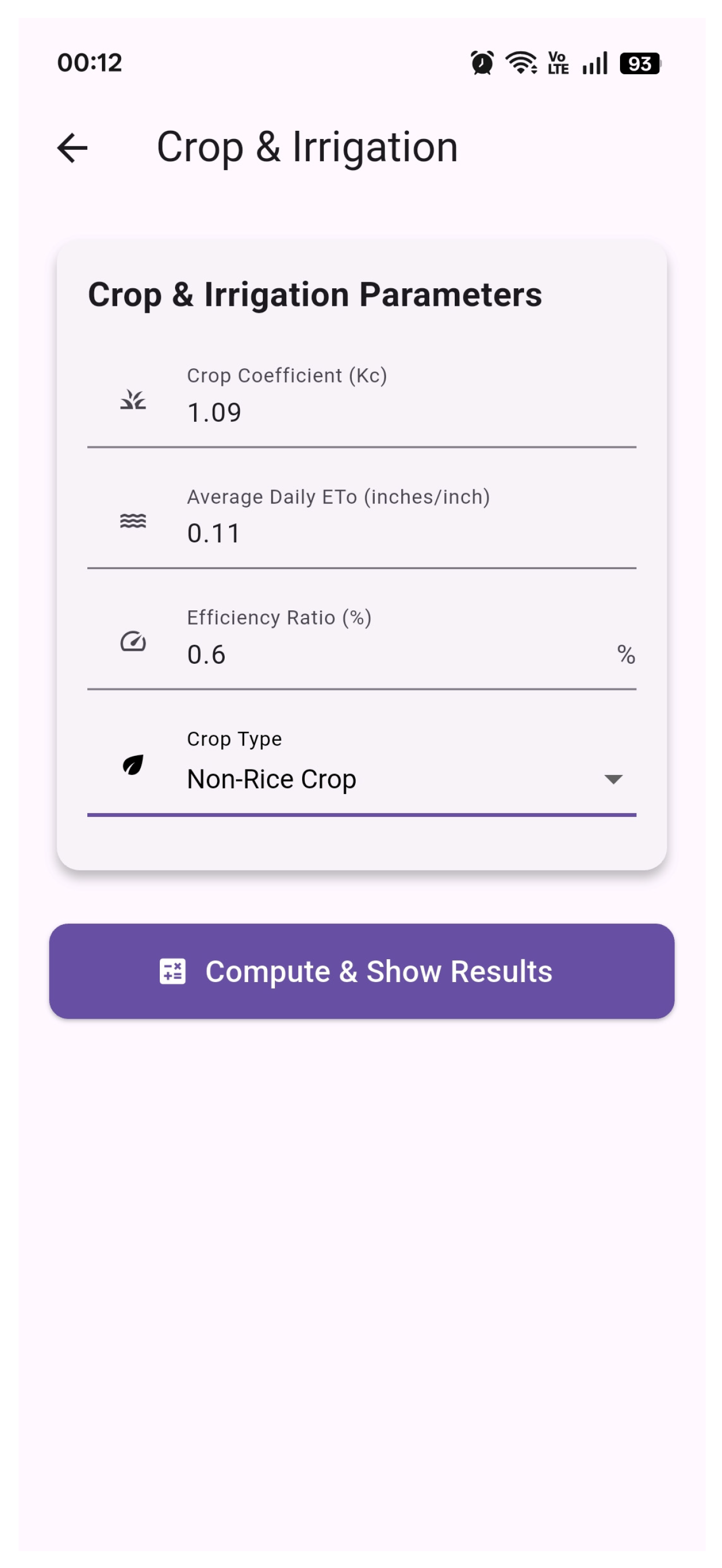
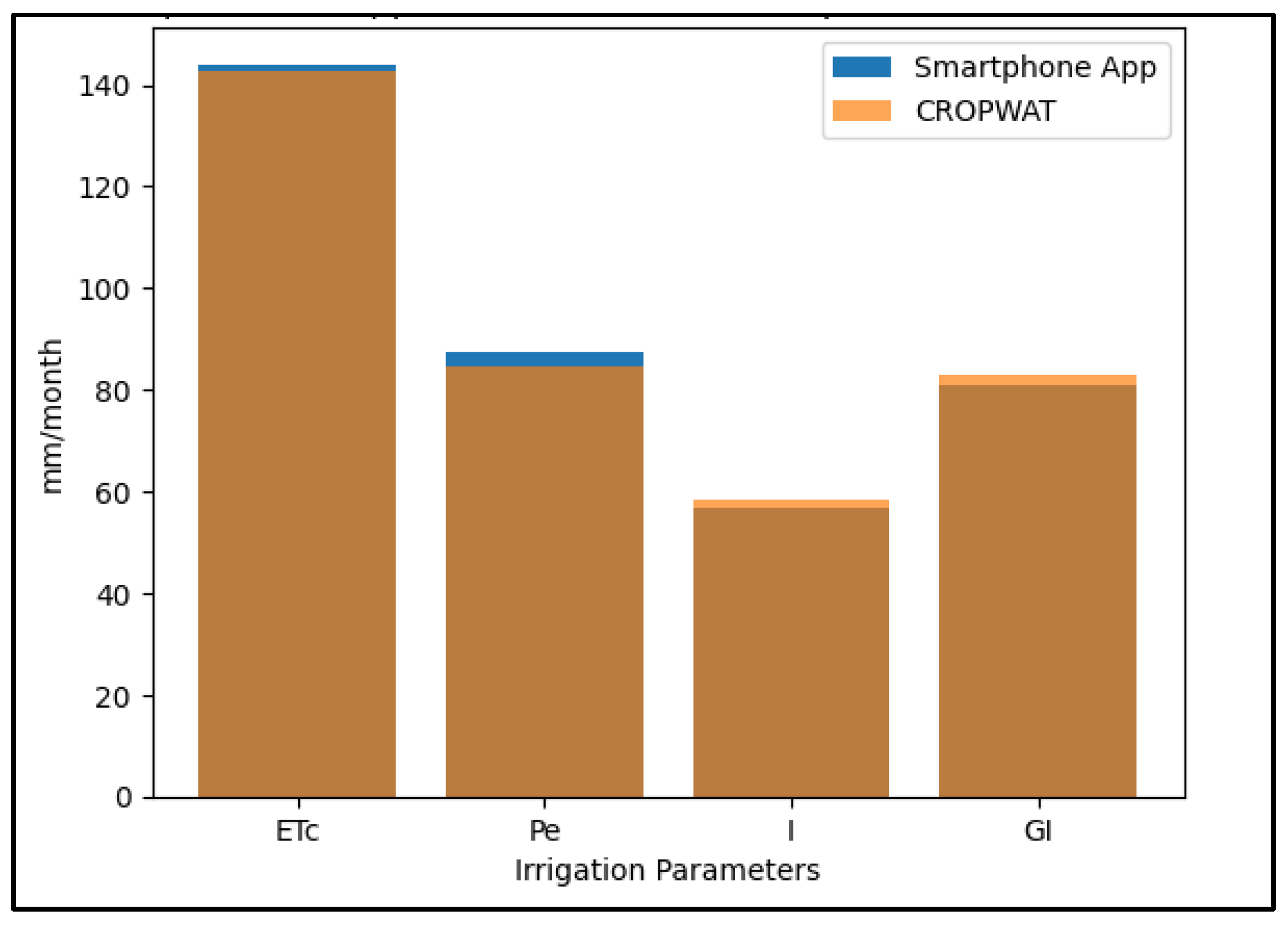
Efficient irrigation planning in data-scarce regions remains challenging due to limited access to localized meteorological data, reliance on complex computer-based models, and the technical knowledge required to deploy them at the field scale. Hence, the need for accessible, smartphone-based tools that simplify soil water balance calculations using public data to support practical decision-making in resource-limited contexts. This smartphone-based application estimates Net and Gross Irrigation Requirements using a Soil Water Balance (SWB) framework. The app combines region-specific empirical formulations for Effective Rainfall (Pe) calculation. The application utilizes user-supplied crop and irrigation parameters and meteorological data available in the public domain and operates at multiple temporal scales (daily, 10-day, weekly, and monthly), thereby supporting flexible irrigation schedules. The performance of app was evaluated through simulation-based benchmarking against FAO-CROPWAT 8.0 using harmonized inputs across five representatives agro-climatic region: Central India, Southern Vietnam, Northern Thailand, Western Bangladesh, and Central Sri Lanka. Quantitative comparison showed deviations within ±5% for Effective Rainfall, crop evapotranspiration, Net Irrigation, and Gross Irrigation, and low mean bias values (−2.8% to +3.3%) show the absence of systematic over- or under-estimation compared to CROPWAT model. The application also demonstrated responsiveness to climatic variability. Although the validation is limited to few representative locations and assumed minimal runoff conditions, the results suggest that the proposed method is technically consistent and feasible in practice. This study demonstrates smartphone-based application as a decision support for field-level irrigation planning and water resource management, particularly in data-limited agricultural contexts.
Keywords: effective rainfall; irrigation requirements; South and Southeast Asia; smartphone app effective rainfall; irrigation requirements; South and Southeast Asia; smartphone app