


Abstract
As global supply chains face increasing pressure to reconcile economic efficiency, environmental responsibility, and ethical transparency, emerging digital technologies offer unprecedented opportunities for sustainable transformation. This article examines this dynamic in the context of the Moroccan industrial sector, with particular reference to blockchain and digital twin technologies. The study employs a rigorous mixed-methods design, combining an in-depth qualitative exploration with 30 industry professionals and a Partial Least Squares Structural Equation Modeling (PLS-SEM) model based on survey data from 125 Moroccan manufacturing firms. The findings highlight the synergistic contribution of blockchain and digital twins in enabling circular, low-carbon, and resilient supply chains. Blockchain adoption strengthens environmental impact traceability, data reliability, and responsible governance, while digital twin systems enhance eco-efficiency through real-time modeling and predictive flow simulation. Circular integration emerges as a critical enabler, significantly amplifying the positive effects of both technologies by aligning physical and informational flows within closed-loop processes. With its strong empirical grounding and contextual relevance to an emerging economy, this research provides actionable insights for policymakers, industrial managers, and supply chain practitioners committed to accelerating the sustainable transformation of production systems. It also offers a renewed understanding of how digitalization and circularity jointly support environmental performance within industrial ecosystems.
1. Introduction
Over the past decade, global supply chains have undergone profound restructuring driven by the combined effects of competitiveness requirements, climate objectives, and growing societal demands for transparency. Supply chain performance is no longer assessed solely through the lens of cost, lead time, and quality, but also according to environmental criteria—reduction in greenhouse gas emissions, energy sobriety, circularity of flows—and governance dimensions—traceability, responsibility, compliance, and data integrity [1,2]. This shift is embedded in the rise in the circular economy, which replaces the linear “extract–produce–discard” logic with loops of reuse, remanufacturing, and recycling, requiring fine-grained informational orchestration and strengthened coordination among actors [3,4,5,6].
The circular economy (CE) is now emerging as a central conceptual framework for understanding industrial sustainability. It aims to decouple value creation from the consumption of natural resources by promoting material regeneration, product life-extension, and the reduction in negative externalities [7,8,9]. However, the operational implementation of these principles remains complex: it requires advanced capabilities for tracking flows, measuring environmental impacts, and optimizing value loops, which traditional management tools and supply chain systems often struggle to provide at an inter-organizational scale [4,6,10,11].
At the same time, the rise of Industry 4.0 has opened new perspectives for profoundly transforming production and logistics systems [12]. Technologies such as blockchain, the Internet of Things (IoT), artificial intelligence, advanced analytics, and digital twins are increasingly presented as structuring levers for “smart, resilient, and sustainable” supply chains [13,14,15,16,17]. By offering real-time visibility, predictive simulation capabilities, and fine-grained data integration, these technologies enable the emergence of “circular digital supply chains” [18], in which data flows become as strategic as physical flows for managing environmental performance [3,19,20].
The joint focus on blockchain and digital twin technologies is not incidental but reflects their strong functional complementarity in addressing the specific challenges of circular supply chains. Blockchain provides a trusted and immutable data governance layer, ensuring traceability, transparency, and integrity of environmental and material flow data across organizational boundaries. Digital twins, in turn, operate as an analytical and predictive layer, transforming reliable real-time data into actionable insights through simulation, optimization, and scenario testing.
Individually, each technology addresses only part of the circularity challenge: blockchain secures data without enabling operational optimization, while digital twins rely on high-quality, trustworthy data to deliver meaningful simulations. Their combined deployment therefore constitutes an integrated digital architecture capable of supporting closed-loop coordination, environmental monitoring, and low-carbon decision-making. This complementarity becomes particularly critical in emerging economy contexts, such as the Moroccan manufacturing sector, where data fragmentation, governance constraints, and coordination failures limit the effectiveness of isolated digital initiatives.
Within this technological landscape, blockchain occupies a distinctive position. As a distributed, immutable, and shared ledger, it strengthens the traceability of materials, transactions, and emissions throughout product life cycles. Numerous studies show that blockchain can reduce information asymmetries, limit fraud risks, document environmental footprints, and reinforce compliance with sustainability standards [21,22,23,24,25]. Concrete applications in agri-food, textiles, and the automotive sector illustrate its potential to support circular economy practices such as take-back systems, certified recycling, waste tracking, or responsible sourcing [26,27,28]. From this perspective, blockchain appears as an “informational backbone” serving transparency and distributed environmental governance.
In parallel, digital twins—virtual and dynamic replicas of physical systems—offer capabilities for continuous simulation, optimization, and assessment of operational and environmental performance. They make it possible to anticipate congestion, test circularity scenarios, evaluate ex ante energy consumption and emissions associated with various production or logistics configurations, and reduce waste prior to intervention in the real world [29,30,31,32]. Coupled with IoT sensors and advanced analytics algorithms, digital twins contribute to energy eco-efficiency, low-carbon scenario planning, and proactive risk management in supply chains [33,34,35,36]. More recently, several studies have explored their role in circular production, resource valorization, and sustainable logistics, suggesting that digital twins constitute a pivot of what some authors describe as “digital circular supply chain systems” [37,38,39,40].
An emerging strand of the literature emphasizes that the convergence between blockchain and digital twins is not limited to a simple technological coupling but gives rise to truly socio-technical architectures grounded in distributed data governance, multi-level simulation, and integrated energy traceability [41,42,43,44,45]. In these configurations, blockchain ensures the integrity and secure sharing of data generated by the digital twin, while the digital twin exploits these data to continuously optimize flows of materials, energy, and information. This coupling is at the heart of the “twin transition”—digital and environmental—which is redefining the contours of industrial competitiveness and foreshadowing the emergence of Supply Chain X.O models in which resilience, connectivity, and sustainability are co-designed [46,47,48]. However, the literature remains fragmented in its integrated understanding of the joint effects of blockchain and digital twins within circularity frameworks. Many contributions address in isolation the benefits of traceability (blockchain) or simulation (digital twins), often in specific sectors such as construction, cybercrime, building, or energy [46,49,50,51], while few systematically articulate their complementarities in support of data-driven circular governance oriented toward measurable environmental performance. Moreover, emerging economies remain underrepresented in this body of work, even though they face major needs for industrial modernization, energy transition, and climate alignment [52].
The case of the Moroccan manufacturing sector illustrates these tensions particularly well. Morocco has committed—through its National Sustainable Development Strategy, the Green Generation 2030 plan, and its industrial acceleration strategies, driven by the Ministry of Energy Transition and Sustainable Development and the Ministry of Digital Transition—to a trajectory of decarbonization, industrial upgrading, and digital transformation. However, firms still face structural challenges: uneven digital infrastructure, fragmented information systems, high implementation costs of emerging technologies, shortages in digital skills, and dispersed governance of environmental data [50,53]. In this context, understanding how—and under which conditions—blockchain and digital twins can contribute to supply chain circularity and improved environmental performance is of scientific, managerial, and policy relevance. Despite the growing body of research on blockchain-enabled traceability and digital twin-based simulation, existing studies predominantly examine these technologies in isolation. While prior work highlights their individual contributions to transparency, optimization, and sustainability, the literature remains fragmented in its understanding of how blockchain and digital twins jointly interact within circular supply chains. This gap is particularly pronounced in emerging economy contexts, where institutional constraints, data fragmentation, and coordination failures shape the effectiveness of digital initiatives. As a result, limited empirical evidence explains how the combined deployment of blockchain and digital twins translates into measurable environmental performance within circular supply chain systems.
The overall aim of this research is to address that gap in the literature by analyzing the synergistic role of blockchain and digital twins in building circular, low-emission, and resilient supply chains within the Moroccan manufacturing sector. The article is structured as follows. Section 2 sets out the three phase research process and the methods used. Section 3 reviews the relevant literature and develops a provisional conceptual framework for subsequent research phases. Section 4 then reports the empirical results and Section 5 discusses theoretical, managerial, and policy implications. Finally, Section 6 concludes by highlighting the study’s contribution, noting limitations, and pointing out possible avenues for future research.
2. Materials and Methods
The methodological design of this study is based on an explanatory sequential mixed-methods approach, consistent with the pragmatist paradigm that supports the complementarity of qualitative and quantitative approaches [54,55,56]. This choice is particularly relevant given the complexity of the phenomenon under study—the joint integration of blockchain, digital twins, and circular capabilities in the environmental performance of supply chains—which requires both a fine-grained mechanistic understanding and robust statistical testing.
There were three main phases to the research process (Figure 1), which are discussed in detail below. In phase 1, an integrative literature review was undertaken, from which research questions were derived and a provisional conceptual framework for the primary research was set out. In phase 2, an analysis of interviews with professionals provided responses to the research questions and insights into concrete implementation modalities, encountered obstacles, and perceived complementarities between blockchain, digital twins, and circular practices. This provided the basis for the positing of four hypotheses for subsequent testing. This was undertaken in phase 3 based on a survey of 125 Moroccan industry professionals in manufacturing firms and the application of a Partial Least Squares Structural Equation Modeling (PLS-SEM) model. This mixed-method approach enabled the articulation of fine-grained contextual understanding and statistical validation of the hypothesized relationships—direct effects of blockchain on traceability and responsible governance, effects of digital twins on eco-efficiency and predictive simulation, the integrative role of circularity, and the overall contribution of these capabilities to environmental performance—in line with recent methodological recommendations in operations and information systems management [57,58].
Figure 1.
The 3-phase research process.
2.1. Phase 1. Integrative Literature Review: Development of Provisional Conceptual Framework and Research Questions
Phase 1 centered on an integrative literature review, which attempted to synthesize key concepts related to the issues, challenges and influential factors concerning blockchain and digital twin deployment across the supply chain. An integrative review aims “to assess, critique, and synthesize the literature on a research topic in a way that enables new theoretical frameworks and perspectives to emerge” [59] (p. 335). Integrative reviews are particularly suitable when addressing mature or newly, emerging topics. For mature topics, the objective is to review and reconceptualize the knowledge base, with a view to expanding on the theoretical foundation of the specific topic. For newly emerging topics, as is the case here, the purpose is more to put forward “preliminary conceptualizations” [59] (p. 336) which may involve a more creative collection of data, as the purpose is to combine perspectives and insights from different fields or research traditions. An integrative review method should result in the advancement of knowledge and not be purely descriptive but rather should generate a new conceptual framework or theory.
The process for identifying sources followed two steps: first, a search of the scientific peer-reviewed literature; and second, snowball sampling based on references in the analyzed literature. Comparative studies on various academic databases consistently indicate that Scopus and Web of Science are the largest bibliographic databases, each containing more than 80 million entries, with significant content overlap [60,61]. Here, to operationalize the integrative review, a structured search strategy was implemented in Scopus, which served as the primary database for this study.
The literature search strategy was implemented in two stages. In an initial exploratory stage, a broad set of keywords related to sustainable supply chains and digital technologies was used in order to capture the diversity of emerging research streams at the intersection of digitalization and sustainability. It was considered important not to prematurely exclude relevant contributions and to identify dominant themes, technologies, and theoretical approaches. The following search string was applied in the title, abstract and keywords fields: (“sustainable” AND “supply chain”) AND (“blockchain” OR “digital twin” OR “emerging technologies” OR “digital transformation”) AND (“implement” OR “adoption” OR “deployment” OR “transform”). To find and assess relevant theoretical models and frameworks, the following search strings were also executed: (“model” or “framework” or “theory”) AND (“blockchain” OR “digital twin” OR “emerging technologies” OR “digital transformation”) AND (“supply chain” or “circular economy” or “industry”). The searches were restricted to peer-reviewed journal articles and conference papers written in English and indexed in the fields of business, management, engineering, and environmental sciences.
In a second, more focused stage, the search strategy was refined to align strictly with the central objective of the study, namely, to determine the role of blockchain and digital twin technologies in circular supply chains. Accordingly, the term “circular” was explicitly incorporated, and overly broad descriptors such as “emerging technologies” and “digital transformation” were removed to reduce noise and enhance specificity. The refined search string included combinations such as (“circular supply chain” OR “circular economy”) AND (“blockchain” OR “digital twin”) AND (“sustainability” OR “environmental performance”).
Only studies directly addressing circularity-related mechanisms, closed-loop processes, or environmental performance implications were retained in the final corpus. This refinement ensured coherence between the literature review, the provisional conceptual framework, and the empirical objectives of the study, while preserving methodological rigor and reproducibility. Duplicates and clearly irrelevant records (for example, studies dealing exclusively with financial blockchains or non-logistics digital twins) were removed on the basis of titles and abstracts. The remaining papers were then examined in full text to assess their relevance to the research focus on blockchain and digital twin applications in sustainable supply chains. New publications were monitored on an ongoing basis by activating a Scopus search alert based on the same queries, ensuring that recent contributions were incorporated into the evolving knowledge base used to construct the provisional conceptual framework.
From an assessment of the literature, a provisional conceptual framework was developed. Jabareen [62] defines the conceptual framework as “a network […] of interlinked concepts that together provide comprehensive understanding of a phenomenon or phenomena” (p. 51). It represents the researcher’s map of the respective area of interest being investigated [63], providing an initial understanding and the possible formulation or reformulation of research questions. A PCF is thus meta-analytical in nature—it breaks up data from the literature review into manageable domains, to represent the area of interest, highlighting research gaps for further investigation [64].
Consistent with an explanatory sequential mixed-methods design, the literature review first served to establish a provisional conceptual framework and the development of research questions (phase 1). The qualitative interviews (phase 2) were then conducted to explore underlying mechanisms, contextual constraints, and complementarities between digital technologies and circular practices. Insights from this qualitative analysis were used to refine and operationalize the hypotheses, which were formally tested in the quantitative phase (phase 3).
2.2. Qualitative Interviews and Hypotheses Formulation
The qualitative phase provided an in-depth exploration of digital and circular practices in the Moroccan manufacturing industry. Thirty semi-structured interviews were conducted with supply chain managers, production engineers, and CSR directors, following the methodological standards applicable to this type of data collection [65,66]. Informed consent was attained from the participants prior to conducting the interviews. The interviews, averaging 75 min in length, were transcribed and then analyzed using a rigorous thematic analysis approach [67], employing hybrid coding (inductive and deductive) in accordance with the principles developed by Miles [68] and ensuring satisfactory inter-coder reliability (κ = 0.82), in line with best practices in qualitative validation [69]. The qualitative data analysis followed a rigorous and transparent coding process. Two researchers were independently involved in the coding of the interview transcripts. An initial coding framework was developed based on the PCF and prior literature (deductive coding) and was subsequently refined through inductive coding to capture emergent themes grounded in the interview data.
The researchers first coded a subset of transcripts independently to refine the codebook and ensure conceptual clarity. Inter-coder reliability was then assessed using Cohen’s kappa on this subset, yielding a value of κ = 0.82, which indicates a high level of agreement. Any discrepancies in coding were discussed and resolved through consensus, leading to the final version of the coding scheme. The remaining transcripts were then coded using this stabilized codebook, ensuring consistency and analytical robustness.
This allowed for the positing of the research hypotheses (or constructs), the identification of organizational configurations of digital maturation, and the verification of the alignment between the emerging categories and the initial theoretical framework, thus contributing to strengthening content validity [70] and qualitative–quantitative integration as developed by Fetters et al. [71].
The interview guide was directly derived from the overarching research questions and from the PCF developed in Phase 1. It consisted of 18 open-ended questions, structured into four thematic dimensions:
- Digitalization practices and technological deployment, including the use of blockchain, digital twins, data integration and real-time visibility;
- Perceived operational and environmental impacts of emerging technologies, such as improvements in transparency, traceability, resource efficiency and sustainability;
- Circular economy integration, covering reverse logistics, recycling loops, eco-design initiatives and collaborative practices with suppliers and customers;
- Organizational capabilities and governance, including digital maturity, skills, resources, leadership orientations and investment priorities.
The interview guide was pre-tested with two senior supply chain practitioners, which allowed refinements in wording clarity, thematic sequencing and avoidance of overlapping questions. This process ensured strong alignment with the conceptual dimensions emerging from both the literature review and the PCF.
During the interviews, the 30 professionals (supply chain managers, production engineers and CSR directors) were systematically encouraged to provide concrete examples grounded in their operational and strategic activities. This enabled the research team to capture the specificities of Morocco’s industrial manufacturing landscape—particularly in sectors such as automotive, textiles, agro-food, chemicals, electronics and building materials—thus ensuring contextual richness and improving the interpretative robustness of the qualitative phase. The full list of interview questions used during this stage is provided in Appendix A.
2.3. Quantitative Survey and Hypotheses Testing
Phase 3 of the mixed-methods design aimed to empirically examine the identified structural relationships through a quantitative survey employing a partial least squares structural equation model (PLS-SEM), a method well-suited to complex models and moderately sized samples [72]. A second questionnaire, based on qualitative insights and international literature, was administered to 125 professionals in the manufacturing sector. The adequacy of the qualitative and quantitative samples was ensured through a purposive and context-sensitive sampling strategy. The qualitative phase involved 30 interviews with professionals directly responsible for supply chain operations, digital transformation, and sustainability initiatives. This sample size was deemed sufficient as thematic saturation was reached. The quantitative survey (N = 125) covered the main manufacturing sectors that constitute the backbone of Moroccan industrial activity, including automotive, agro-food, textiles, chemicals, electronics, and building materials. Together, these sectors represent a substantial share of national manufacturing output and reflect heterogeneous levels of digital maturity, regulatory exposure, and circular practices. This sectoral coverage supports analytical generalization within the Moroccan manufacturing context rather than statistical generalization beyond it.
In line with ethical principles of social science research, all data were collected anonymously, without any personal identifiers, and with the informed consent of the participants. Respondents were informed of the complete confidentiality of the information provided and the exclusively scientific use of the data. The four selected constructs—Blockchain Adoption, Digital Twin Utilization, Circular Integration, and Environmental Performance (see Section 4.1)—were operationalized using reflective scales measured on a 7-point Likert scale and validated in previous work on the digitalization and sustainability of the supply chain. The quantitative approach follows the methodological standards of structural modeling [73,74,75], including tests of convergent validity, discriminant validity, collinearity, quality of measures, and significance of structural paths using bootstrapping.
In accordance with the recommendations of Bentler [76], the data quality control procedures include common method bias control (Harman, VIF), filtering of inconsistent observations, and rigorous handling of missing values. To limit common method bias, several mechanisms recommended by Podsakoff et al. [77] were applied: random ordering of items, conceptual separation of blocks measuring independent and dependent variables, complete anonymization, and limitation of inverted formulations. Methodological bias was statistically verified using Harman analysis (general factor < 50%) and the Full Collinearity Factor (VIF) (<3.3), confirming the absence of common variance that could artificially influence structural relationships. A Principal Component Analysis (PCA) was then performed to purify the measurement scales and assess the preliminary exploratory factor structure, in accordance with the recommendations of Bollen [74] and Hair et al. [72]. The applicability conditions were systematically confirmed (KMO > 0.70; significant Bartlett’s test; Varimax rotation), allowing for the elimination of items with low contribution and ensuring the internal consistency of the constructs before the confirmatory PLS phase.
The integration of findings from phases 2 and 3 adheres to the principles of methodological triangulation [78] and ensures a coherent sequence between qualitative exploration and quantitative confirmation, in accordance with international mixed-methods design standards [79,80,81]. The combination of thematic analyses and PLS-SEM strengthens the robustness of the framework, the internal validity of the model, and the relevance of the interpretations derived from an emerging context such as that of Moroccan supply chains undergoing digital and circular transitions. The use of PLS-SEM proves particularly relevant given the characteristics of the model and the sample. This approach is suitable for: (i) emerging theoretical frameworks, (ii) complex models incorporating multiple simultaneous relationships, (iii) moderately sized samples (N = 125), and (iv) data not strictly conforming to multivariate normality. PLS-SEM optimizes the explained variance (R2) of endogenous variables, consistent with the study’s central predictive objective [57,82,83].
The SEM allows for the simultaneous analysis of causal relationships between latent constructs and the links between observed and latent variables. It combines a measurement model, describing how theoretical constructs are operationalized through their indicators, and a structural model formalizing the causal relationships between endogenous and exogenous latent variables.
All latent constructs in this study were operationalized using reflective measurement scales, consistent with prior research on digital technologies, circular supply chains, and environmental performance. Measurement items were adapted from established scales in the literature and refined to fit the context of Moroccan manufacturing firms. All items were measured using a seven-point Likert scale ranging from 1 (“strongly disagree”) to 7 (“strongly agree”). Prior to the main survey, the questionnaire was pre-tested with a small group of industry professionals to ensure clarity, relevance, and contextual appropriateness of the items, leading to minor wording adjustments.
In line with PLS-SEM methodological standards, the evaluation of the measurement model was conducted prior to assessing the structural relationships. Indicator reliability was evaluated through standardized factor loadings, all of which exceeded the recommended threshold of 0.70. Internal consistency reliability was assessed using Cronbach’s alpha and composite reliability, both surpassing the 0.70 benchmark. Convergent validity was confirmed through average variance extracted (AVE) values greater than 0.50. Discriminant validity was examined using the Fornell–Larcker criterion and the heterotrait–monotrait (HTMT) ratio. Together, these results confirm that the measurement model satisfies the required psychometric properties, allowing a reliable interpretation of the subsequent structural model estimations. Further details on the measurement and structural models are included for reference in Appendix B.
3. Literature Review and Provisional Conceptual Framework
3.1. Sustainable and Circular Supply Chains
The transition toward sustainable and circular supply chains has emerged as one of the structuring pillars of global competitiveness, driven by stricter environmental requirements, increasing pressure for transparency, and the need to reduce dependence on virgin resources [84,85]. Traditional linear models have now shown their limits in the face of environmental degradation and geopolitical volatility, pushing firms to profoundly reconfigure their logistics systems [86,87]. This shift is reinforced by the rise in international standards requiring reductions in carbon impacts, circularity of flows, and disclosure of environmental data [88,89]. In this context, the circular economy constitutes a structuring framework for rethinking the design, use, and renewal of resources. It relies on value loops enabling reduction, reuse, repair, remanufacturing, and recycling, while minimizing losses and negative externalities [90,91]. Recent literature highlights that building circular supply chains (CSC) requires not only operational innovations but also a reconfiguration of governance models and interactions among actors [92,93]; circularity requires enhanced informational coordination to synchronize physical flows and environmental data flows.
The benefits of circular economy practices on supply chain performance are now well documented. Recent studies show that circularity simultaneously improves resilience, flexibility, and environmental performance by diversifying sourcing options, extending product life cycles, and reducing dependence on critical raw materials [94,95,96]. Other studies confirm that CSCs enable significant reductions in emissions, energy costs, and disruption risks through closed-loop mechanisms and circular design [97,98,99]. This consolidation of academic evidence demonstrates that the circular economy is not merely an ecological strategy but indeed a major economic lever [100,101].
However, the transition toward CSCs involves significant challenges. Kazancoglu et al. [95] show that circular chains face coordination risks, regulatory uncertainties, and tensions among actors, particularly in transitioning markets. Similarly, the studies of Castro-Lopez et al. [102] emphasize that organizational complexity plays a central role in the success or failure of circular practices. Mirzaei and Shokouhyar [93] add that the effective adoption of circular practices strongly depends on the availability of reliable data, inter-organizational transparency, and shared information mechanisms. In complex sectors such as energy, circular integration requires logistical and informational architectures capable of absorbing multidirectional flows [103].
A transversal challenge lies in the integration of information systems that enable tracking product life cycles, identifying recovery points, and assessing environmental impacts. The concept of the Digital Product Passport (DPP) thus emerges as a central lever for circularity. Zhang and Seuring [104] show that DPPs constitute a crucial tool for tracing materials, documenting impacts, and supporting circularity strategies based on data-driven decision-making. The integration of DPPs is also considered a central component of future European sustainability regulations [105].
Industry 4.0 technologies also play an essential role in making CSCs operational. IoT improves real-time visibility of life cycles, digital platforms facilitate coordination of reverse flows, and advanced analytics tools help optimize circular flows [106,107]. The integration of digital technologies increases the circular maturity of supply chains, enhances information quality, and strengthens inter-organizational collaboration [108]. Thus, circular supply chains cannot be understood solely as closed logistical structures; they must be analyzed as complex socio-technical systems integrating informational dimensions, organizational capabilities, institutional mechanisms, and cross-sector collaborations [109]. This systemic vision opens the way for the integration of emerging technologies, particularly blockchain and digital twins.
In summary, the literature clearly demonstrates that circular supply chains enhance environmental performance, resilience, and resource efficiency. However, it also reveals that circular integration critically depends on advanced informational coordination and governance mechanisms, which remain insufficiently operationalized in existing supply chain models.
3.2. Emerging Technologies and the Digital Transformation of the Supply Chain
The emergence of next-generation digital technologies marks a fundamental break in the way supply chains are designed, managed, and governed. Rather than functioning as simple optimization tools, these technologies redefine the informational and decision-making architectures of supply chains by introducing processing, connectivity, and automation capabilities that were previously impossible [110]. The integration of solutions such as blockchain, the Internet of Things, artificial intelligence, advanced analytics, and digital twins is transforming supply chains into interconnected cyber-physical systems capable of ensuring continuous and intelligent orchestration of flows [111,112]. According to Lerman et al. [113], digital transformation in emerging markets is no longer solely a lever for operational efficiency; it plays a decisive role in improving the economic, social, and environmental performance of supply chains. The authors demonstrate that digital technologies help mitigate information asymmetries, strengthen inter-organizational coordination, and enhance the inclusiveness of logistics networks, particularly in fragile institutional contexts.
In the same perspective, Akbari et al. [111] show that investment levels in Industry 4.0 technologies—AI, blockchain, and cyber-physical systems—now condition the structural evolution of supply chains in Vietnam. According to their analyses, the impact of these technologies depends heavily on digital governance, technological maturity, and the capacity of organizations to integrate data into decision-making processes. Preindl et al. [114] corroborate these results by emphasizing that digital transformation requires deep integration of information systems to overcome persistent barriers related to information sharing, strategic alignment, and process harmonization. They show that the absence of digital coordination mechanisms constitutes a major obstacle to end-to-end supply chain integration. Overall, prior studies confirm that digital transformation reshapes supply chain governance and coordination, particularly in emerging economies. Nevertheless, the literature remains fragmented regarding how specific digital technologies contribute to circular supply chain objectives beyond general efficiency gains.
3.2.1. Blockchain: Transparency and Sustainable Governance Potential
Blockchain is identified as one of the most promising technologies for securing, authenticating, and tracing information and material flows in supply chains. Recent systematic reviews confirm its central role in sustainable governance, transparency, and the improvement of ESG mechanisms [115,116]. It enables the implementation of distributed ledgers that guarantee data integrity, reduce fraud risks, and facilitate compliance with environmental standards.
Bernards et al. [117] show that blockchain reshapes transparency mechanisms in global supply chains by creating an ecosystem in which ESG information becomes verifiable, traceable, and auditable in real time. According to Schulz et al. [118], this technology is also becoming a strategic tool for driving sustainable development initiatives, owing to its ability to certify environmental commitments and enhance corporate accountability. In emerging contexts, blockchain strengthens trust within logistics networks, particularly when institutions are weak or fragmented [119]. More recent studies even demonstrate that it substantially improves traceability and the optimization of environmental processes in industrial sectors such as agri-food, fashion, and energy [120,121]. Taken together, the literature establishes blockchain as a powerful enabler of transparency, traceability, and sustainable governance. Yet, most studies examine blockchain in isolation, offering limited insight into how it interacts with complementary digital technologies to support circular supply chain coordination and environmental performance.
3.2.2. Digital Twins: Intelligent Simulation, Optimization, and Eco-Efficiency
Digital twins represent a decisive advancement for the digital transformation of the supply chain. They make it possible to model, simulate, and continuously optimize industrial processes through virtual representations powered by IoT data and advanced algorithms [30]. Their added value lies in their capacity to anticipate disruptions, optimize resource planning, reduce energy inefficiencies, and improve predictive maintenance [122].
The work of Zhang and Seuring [104] shows that digital twins significantly strengthen eco-efficiency by enabling the testing of circularity, remanufacturing, or disassembly strategies before their real-world implementation. Petrov [123] emphasizes that digital twins constitute an essential tool for measuring and optimizing eco-efficiency indicators through continuous feedback loops between the physical object and its digital counterpart. In the field of smart manufacturing, Annepanavar and Gopalakrishnan [124] demonstrate that digital twins allow the integration of real-time life-cycle assessment (LCA) models, improving the environmental evaluation of systems. Tu et al. [125] also demonstrate that digital twins facilitate energy optimization in intelligent transport infrastructures by reducing emissions and improving overall performance. The convergence between digital twins and algorithmic optimization is becoming a major strategic trend for accelerating the ecological transition of industrial systems [126,127].
The literature increasingly supports the idea that the real impact of these technologies materializes when they are integrated into a common ecosystem. Blockchain guarantees the integrity, transparency, and traceability of data [128], while digital twins exploit these data to simulate, optimize, and manage operations [129].
This convergence supports the creation of autonomous circular supply chains capable of continuous learning, simulating sustainability scenarios, and improving their environmental performance [46,95]. This synergy constitutes one of the most powerful levers for achieving sustainable growth, particularly in emerging economies where digital transformation can accelerate the transition toward more resilient, intelligent, and environmentally responsible supply chains. In summary, digital twins are widely recognized for their capacity to enhance simulation, optimization, and eco-efficiency. However, the literature provides limited empirical evidence on how their effectiveness depends on trusted, interoperable data infrastructures, particularly within circular and inter-organizational supply chain settings.
3.3. Provisional Conceptual Framework and Research Questions
In developing the PCF, the assumption was made that emerging technologies create value only when they are understood as strategic resources, mobilized through dynamic organizational capabilities, and integrated into operational digital processes. From the Resource-Based View (RBV) perspective, advanced technologies constitute resources with VRIN potential (Valuable, Rare, Inimitable, Non-substitutable) when they enable the firm to develop enhanced transparency, reliable traceability, and strengthened inter-organizational coordination; a firm’s sustainable performance depends on its ability to mobilize rare, hard-to-imitate, and value-generating resources [130,131,132]. Within this framework, blockchain infrastructures, data architectures, and digital simulation platforms (digital twins) can be conceptualized as strategic digital resources that fuel competitive advantages related to traceability, data integrity, forecasting accuracy, and inter-organizational transparency. Similarly, studies on data-driven supply chains demonstrate that data-based capabilities improve performance through information quality, operational visibility, and responsiveness [133]. Thus, the RBV makes it possible to view blockchain, digital twins, and circularity not as technical artifacts but as differentiating organizational assets essential for developing responsible supply chains (Figure 2).
Figure 2.
Provisional conceptual framework.
While the RBV explains the strategic value of resources, it remains insufficient for understanding how these resources are mobilized in unstable or highly digitalized environments [134]. Dynamic capabilities complement this approach by describing the processes through which firms sense external signals, seize opportunities, and reconfigure their resources to sustain performance [135,136]. In this sense, the adoption of blockchain can be seen as a sensing and seizing mechanism, enabling rapid risk identification, transparent governance, and strengthened collaborative management [118,137]. Manzoor et al. [138] show that the combination of agility, learning capability, and adaptive routines is decisive for converting emerging technologies into operational performance. Digital twins, for their part, create powerful dynamic capabilities by enabling simulation, early anomaly detection, flow optimization, and continuous learning from real-time data [123,139]. They facilitate continuous process renewal, which is essential for low-carbon and circular transitions. These dynamic mechanisms are also highlighted by Pal et al. [140] and Mohsin et al. [141], who show that firms capable of transforming digital signals into corrective actions develop superior resilience and improved performance.
In accordance with the RBV, which considers blockchain and digital twins as strategic resources, and with dynamic capability theory, which analyzes the mechanisms through which these resources are transformed, Digital Supply Chain Capabilities (DSCC) constitute the conceptual link explaining how organizations effectively convert these technologies into operational advantage. DSCC refer to a set of digital abilities that facilitate the mastery of complex logistics networks through connectivity, integration, and intelligent exploitation of distributed data [142]. They manifest notably through enhanced digital visibility, inter-functional data integration, predictive capacity fueled by advanced analytics, decision-making agility, and strengthened collaboration through shared digital platforms. These dimensions have been empirically associated with supply chain innovation [143], environmental sustainability [144], and resilience to disruptions [145], confirming that DSCC play a structuring role in overall performance.
Other studies show that these capabilities also improve financial performance by optimizing informational coordination in collaborative chains [146], while absorptive capacity, agility, and resilience—identified as essential components of DSCC—amplify the effectiveness of digital technologies [147]. In this regard, blockchain acts as a catalyst for transparency, integrity, and security of information flows, while digital twins provide advanced simulation, control, and prediction capabilities, strengthening the organization’s ability to adapt and optimize its processes. Recent literature confirms that these technologies generate strategic impact only when they are integrated within digital routines that ensure connectivity, visibility, and organizational agility [148]. This observation is particularly crucial in circular supply chains, where DSCC make it possible to synchronize physical and informational flows, orchestrate recovery and recycling loops, and optimize energy-related and logistical decisions—mechanisms that are all necessary for operational circularity [92,95]. Thus, DSCC constitute the mechanism through which the digital resources identified by the RBV and transformed through dynamic capabilities translate into sustainable performance, offering a coherent analytical framework for understanding how blockchain and digital twins contribute to building low-carbon, transparent, and resilient supply chains.
Research on sustainable supply chains is based on the idea that the creation of competitive advantage does not stem only from tangible resources but rather from the organization’s ability to mobilize, combine, and renew its resources in a dynamic environment [149]. From this perspective, Resource Orchestration Theory (ROT) argues that the mere possession of strategic assets is insufficient: their structuring, bundling, and operational deployment determine their real impact on performance [150]. In the context of SMEs, digital transformation, when orchestrated with innovation capabilities, improves ESG performance in a broad sense. In addition, the Technology–Organization–Environment (TOE) theory provides a relevant framework for analyzing technological adoption in logistics chains: it considers that the success of a technological project results from the conjunction of technological factors (compatibility, complexity), organizational factors (human resources, leadership), and environmental factors (regulatory pressure, competition) [151]. In circular supply chains, this approach has been supplemented by sustainability-specific variables (TOE-S) to better capture the determinants of green digital technology adoption [152]. Moreover, socio-technical transition theories, particularly the Multi-Level Perspective (MLP), offer a macroscopic understanding of the evolution of supply chains toward circular and low-carbon models. The MLP conceptualizes transformations as resulting from interactions among innovation niches (e.g., blockchain, digital twins), existing regimes (linear logistics structures), and the broader societal landscape (climate objectives, international regulations) [153]. This framework makes it possible to understand that technological integration does not occur in isolation but in a systemic environment where the sustainability agenda, institutional engagement, and sectoral diffusion are essential. Lastly, organizational paradox theory reminds us that firms pursuing economic performance, environmental sustainability, and ethical transparency simultaneously face persistent tensions [154,155]. In the context of digital and circular supply chains, tensions between transparency (via blockchain) and competitive confidentiality, or between energy optimization (via digital twins) and the cost of digital infrastructure, must be actively managed. These tensions call for a “both–and” rather than an “either–or” approach.
The frameworks and theoretical perspectives noted above were used as analytical lenses guiding both the formulation of the research questions and the design of the qualitative inquiry. From an RBV perspective, blockchain and digital twin technologies were conceptualized as strategic digital resources whose value depends on their rarity, inimitability, and integration into organizational routines. Dynamic capability theory informed the analysis of how firms sense sustainability-related challenges, seize digital opportunities, and reconfigure supply chain processes through simulation, traceability, and coordination mechanisms.
The TOE framework highlights the significance of technological readiness, organizational capabilities, and environmental pressures shaping adoption trajectories, particularly in an emerging economy context. Finally, circular economy principles provided the lens to examine closed-loop coordination, reverse logistics, and inter-organizational collaboration as mechanisms through which digital resources translate into environmental performance. These theoretical foundations directly informed the structure of the interview guide, which was organized around digital resources, dynamic operational mechanisms, organizational and environmental constraints, and circular integration practices. Grounded in this theoretical articulation, the research questions were formulated to empirically investigate how digital resources (blockchain and digital twins), operationalized through organizational and circular capabilities, contribute to environmental performance in manufacturing supply chains operating under emerging economy constraints.
Building on these theoretical foundations (the RBV, dynamic capability theory, the TOE framework, the Multi-Level Perspective, paradox theory, and DSCC), the PCF was developed, integrating technological, organizational, and environmental dimensions. The literature demonstrates that blockchain, digital twins, and circular integration play complementary roles in the sustainable transformation of supply chains, notably by influencing transparency, eco-efficiency, and closed-loop coordination. Digital technologies are understood as hard-to-imitate strategic resources [130,131], whose value materializes only when they are orchestrated as process-oriented capabilities aligned with circularity and sustainability objectives [5,136,156]. Within this framework, circular integration is conceptualized as an integrative capability—both organizational and inter-organizational—amplifying the impact of technological resources on environmental performance. To further advance development of the PCF, interviews were designed to address the following main research questions (RQs):
RQ1. How do blockchain and digital twin technologies impact industrial supply chains?
RQ2. What is the impact of circular integration on the deployment of blockchain and digital twin technologies in industrial supply chains?
4. Results
4.1. Interview Analysis and Hypotheses Development
Building on the provisional conceptual framework derived from the literature, the qualitative interview findings provided empirical insights into how blockchain, digital twins, and circular integration interact in practice. These insights informed the refinement and formulation of the research hypotheses, which were then subjected to quantitative testing using PLS-SEM.
The exploratory qualitative phase allowed for the empirical grounding of the PCF by comparing dimensions derived from the literature with practices observed in Moroccan manufacturing supply chains, and the development of related hypotheses. The thirty semi-structured interviews conducted with supply chain managers, production engineers, CSR managers, and quality managers were analyzed using a thematic approach based on Braun and Clarke [67], combining an inductive reading of the verbatim transcripts with a coding framework derived from the concepts of blockchain, digital twins, circularity, and environmental performance.
Four main themes emerged from this analysis that provided the basis for hypotheses development related to the two research questions (Table 1). The first focuses on the traceability and transparency of flows, where several participants emphasized that blockchain is primarily perceived as a tool for securing information, improving the reliability of indicators, and strengthening environmental compliance. This qualitative data supported the definition of a Blockchain Adoption (BCA) construct.
Table 1.
Research questions and the four related hypotheses (constructs).
A second thematic axis concerns numerical simulation and prediction, central to the use of digital twins. Engineers and operational managers stressed the value of testing different scenarios, anticipating disruptions, and reducing resource waste facilitated by digital twins. These elements corroborate the structure of a Digital Twin Utilization (DTU) construct and explain the factorial consistency observed subsequently (high loads and robust unidimensionality).
In addition to these first two thematic dimensions, the analysis also revealed the importance of circularity as an organizational and relational capability within manufacturing supply chains. Interviewees highlighted concrete practices such as reverse logistics, recycling loops, supplier take-back programs, and the gradual introduction of eco-design principles. Several participants emphasized that circular initiatives are increasingly encouraged—if not required—by international clients, especially in the automotive and agro-food sectors. These insights supported the consolidation of the Circular Integration (CIN) construct, particularly its inter-organizational component. Respondents also described the role of digital technologies in enabling circularity, especially through enhanced visibility of material flows and the tracking of recycling or reuse processes.
A fourth recurring theme concerned the measurement and monitoring of environmental performance. Managers pointed to significant internal and external pressures to document CO2 emissions, energy consumption, waste volumes, and compliance with ISO 14001 environmental standards. Many firms have begun to formalize environmental dashboards and performance indicators, often driven by multinational parent companies or export requirements. These qualitative insights confirmed that environmental performance is not treated as an abstract concept but as a measurable outcome embedded in operational routines. This directly informed the Environmental Performance (ENP) construct and justified the subsequent retention of items related to emissions reduction, energy efficiency, waste management, and environmental reporting.
Taken together, these qualitative findings reinforced the conceptual coherence of the four latent constructs—BCA, DTU, CIN and ENP (Table 1 and Figure 3)—and provided empirical justification for their operationalization in the quantitative phase. Moreover, the interviews revealed that blockchain and digital twins are viewed not as isolated technologies but as components of broader digital transformation trajectories, whose effects materialize only when combined with organizational capabilities such as circular integration and structured environmental monitoring. This triangulation between lived industrial practices, the provisional conceptual framework, and the emerging theoretical dimensions strengthened the foundation for the formulation of the research hypotheses explored in the subsequent SEM analysis.
Figure 3.
Research Hypotheses.
4.2. Quantitative Survey Analysis and Hypotheses Testing
This phase of the study looked to assess the four constructs noted in Table 1 in the context of the Moroccan manufacturing sector. The sample (N = 125) covers the main Moroccan manufacturing sectors engaged in digital and circular transition Table 2). The high proportion of ISO 14001 and ISO 9001 [157,158] certified firms strengthens the relevance of the study, as these organizations have infrastructures and indicators that facilitate the adoption of blockchain, digital twins, and circular practices. The diversity of profiles (SCM, CSR, production, quality) contributes to informational richness and limits biases associated with a one-dimensional view of the supply chain.
Table 2.
Sample Description.
Figure 4 displays the distribution and variability of the main variables included in the quantitative analysis: Blockchain Adoption (BCA), Digital Twin Utilization (DTU), Circular Integration (CIN), Environmental Performance (ENP), firm size, and digital maturity. The boxplots illustrate median values, interquartile ranges, and outliers, offering an overview of data dispersion and supporting the assessment of distributional assumptions before conducting PLS-SEM analyses.
Figure 4.
Boxplot distribution of key study variables.
The descriptive statistics (Table 3) show relatively high levels of technological adoption and circular engagement in the studied sample. The means above 5 for BCA, DTU, and CIN indicate that the surveyed firms already display moderate to high digital maturity, consistent with the targeted industrial sectors (automotive, electronics, agri-food). The low dispersion (SD < 1.1) suggests structural homogeneity among firms, which is favorable for PLS modeling. ENP also shows a high mean (5.57), which suggests a potentially significant relationship between emerging technologies and environmental performance.
Table 3.
Sample profile and descriptive statistics.
The Principal Component Analysis (PCA) applied to the Environmental Performance (ENP) scale reveals a particularly robust factorial structure (Table 4 and Table 5). After orthogonal Varimax rotation, all items clearly cluster around a single latent factor, as indicated by the high loadings observed for all variables (loadings between 0.722 and 0.916). These results reflect strong conceptual coherence among the items, confirming that they indeed measure a single dimension of environmental performance. The eigenvalue of the retained factor is 2.705, far exceeding Kaiser’s threshold (>1), which justifies its retention in the model. This factor explains 85.101% of the total variance, a level well above the standards generally admitted in the social sciences (50%), thereby reinforcing the statistical and theoretical relevance of the construct. Internal reliability is also satisfactory, as shown by Cronbach’s Alpha (α = 0.814), which is higher than the conventional 0.70 threshold recommended for confirmatory research. This result indicates strong internal consistency for the ENP factor and stability in respondents’ answers. The sampling adequacy tests further confirm the validity of the PCA. The KMO index of 0.802 indicates good sampling quality according to Kaiser’s classification (≥0.80), ensuring the relevance of partial correlations and relationships between variables. Bartlett’s test of sphericity is highly significant (p = 0.001), which allows rejection of the null hypothesis H0 of no correlation among variables. This result confirms that the correlation matrix is factorable and that a latent structure can be reliably extracted. Overall, these indicators converge toward a strong conclusion: the “ENP” scale shows excellent psychometric properties, both in terms of validity and reliability. The construct can therefore be confidently integrated into subsequent structural modeling (SEM) as a well-defined latent variable.
Table 4.
Items of the measurement scale “Environmental Performance” (ENP).
Table 5.
Final PCA Result with Varimax Rotation for the Measurement Scale “Environmental Performance” (ENP).
The exploratory analysis conducted using PCA with Varimax rotation confirms the factorial validity of the Blockchain Adoption (BCA) scale (Table 6 and Table 7). The factor loadings obtained are overall satisfactory, with loadings between 0.744 and 0.830 for four of the five items, indicating substantial contributions of these variables to the main factor. Item BCA_5 shows a slightly lower loading (0.455), but remains acceptable for an exploratory phase, especially when the goal is to maintain a conceptually coherent measure. The eigenvalue associated with the first factor (3.310) is well above Kaiser’s threshold (>1), justifying its retention. This factor explains 74.618% of the total variance, a level considered very satisfactory in the social sciences, indicating that the underlying latent construct is well captured by the retained items. The internal reliability of the scale is confirmed by Cronbach’s Alpha (α = 0.701), which passes the minimal 0.70 threshold recommended for exploratory studies and provides an acceptable level of internal consistency. Sampling adequacy is judged moderate but usable, as indicated by the KMO index of 0.644. Although below the 0.70 threshold, it remains within the “mediocre” tolerance zone according to Kaiser, allowing continuation of PCA. Bartlett’s test of sphericity is highly significant (p = 0.000), which rejects the hypothesis of no correlation among variables and confirms that the correlation matrix is factorable. Overall, the BCA scale presents an acceptable factorial structure and sufficient internal consistency to be integrated into structural modeling (SEM). The psychometric indicators support the validity of the measure and justify its use in subsequent confirmatory analysis. However, since the factor loading of item BCA_5 is below the 0.5 threshold (BCA_5 = 0.455), this indicates the absence of an interpretable factorial structure. Consequently, we are compelled to remove this item, BCA_5, from the analysis, as its factorial contribution is weak.
Table 6.
Items of the measurement scale “Blockchain Adoption” (BCA).
Table 7.
PCA result with varimax rotation for the measurement scale “Blockchain Adoption” (BCA).
After eliminating item BCA_5, all indicators improved (Table 8). The reliability and unidimensionality of the “Blockchain Adoption” measurement scale are therefore confirmed. The Principal Component Analysis (PCA) conducted with Varimax rotation confirms the robust unidimensional structure of the Blockchain Adoption (BCA) scale. The factor loadings obtained are particularly high, ranging from 0.715 to 0.919, indicating a substantial contribution of each item to the underlying latent factor. This level of factor loadings reflects remarkable internal coherence and a strong discriminant capacity between the observed variables and the measured construct. The eigenvalue associated with the retained factor (3.705) far exceeds Kaiser’s threshold (>1), fully justifying its extraction. This factor explains 88.629% of the total variance, confirming that the items very effectively represent the conceptual dimension of blockchain adoption. The internal reliability of the construct is excellent, as indicated by Cronbach’s Alpha (α = 0.876), which attests to very strong internal consistency among items. Furthermore, the sampling adequacy indicators reinforce the robustness of the exploratory model, as highlighted by the KMO index of 0.819, which reaches the “high” level according to Kaiser (>0.80), indicating low partial correlations and an adequate factorial structure. Similarly, Bartlett’s test of sphericity is highly significant (p = 0.000), validating the factorability of the correlation matrix. Overall, these results demonstrate that the BCA scale has excellent psychometric qualities, both in terms of validity and reliability. The unidimensional structure obtained, associated with very high factor loadings and impeccable fit indicators, allows its integration into subsequent confirmatory analyses (SEM) with confidence.
Table 8.
Final PCA result with varimax rotation for the measurement scale “Blockchain Adoption” (BCA).
Regarding data adequacy for factor analysis, the preliminary tests confirm the relevance of applying Principal Component Analysis (PCA) to validate the structure of the “Digital Twin Utilization (DTU)” scale (Table 9 and Table 10). The Kaiser-Meyer-Olkin (KMO) index is 0.710. This value, higher than the minimally acceptable threshold of 0.5, indicates adequate sampling and sufficient correlations among items to justify factor analysis. Bartlett’s test of sphericity is highly significant (p = 0.007 < 0.05), rejecting the null hypothesis of an identity correlation matrix. This result confirms the existence of significant correlations among variables, making factor extraction relevant.
Table 9.
Items of the measurement scale “Digital Twin Utilization” (DTU).
Table 10.
Final PCA result with varimax rotation for the measurement scale “Digital Twin Utilization” (DTU).
However, in terms of factorial structure and convergent validity, the analysis of the factorial solution demonstrates a strong unidimensional structure, in line with theoretical expectations. The eigenvalue is 2.100, far exceeding Kaiser’s criterion (>1). This factor explains 81.411% of the total variance, which represents an exceptional percentage (well above the 50% threshold) and shows that the latent factor captures most of the information contained in the five items (DTU_1 to DTU_5). All factor loadings of the items on this single component are very high (minimum 0.706 for DTU_5 and maximum 0.827 for DTU_1). These loadings, all above the 0.70 threshold, provide strong evidence of convergent validity, confirming that they effectively measure the same underlying construct.
In terms of internal reliability, the Cronbach’s Alpha coefficient for this variable is 0.818. This value is highly satisfactory and exceeds the minimal threshold of 0.70. It indicates excellent internal consistency of the scale, ensuring the coherence and reliability of respondents’ measurements of Digital Twin Utilization.
Principal Component Analysis (PCA) with Varimax rotation was conducted to assess construct validity and unidimensionality of the Circular Integration (CIN) measurement scale (Table 11 and Table 12). Preliminary tests confirm the relevance of this statistical approach. The Kaiser–Meyer–Olkin (KMO) coefficient is 0.730, a value considered significant and above the critical threshold of 0.60, indicating sufficient sampling adequacy and appropriate inter-variable correlations. At the same time, Bartlett’s test of sphericity is significant (p = 0.003 < 0.05), rejecting the null hypothesis that the correlation matrix is an identity matrix. Taken together, these results validate the methodological feasibility and justification of factor extraction.
Table 11.
Items of the measurement scale “circular integration” (CIN).
Table 12.
Final PCA result with varimax rotation for the measurement scale “circular integration (CIN)”.
In line with the extraction criteria (eigenvalue greater than 1), PCA revealed a single-factor solution. This unique component has an initial eigenvalue of 3.234. Notably, it captures an extremely high proportion of the total explained variance, namely 87.807%. This percentage far exceeds the levels generally accepted in the literature (often between 50% and 60%), providing very strong empirical evidence of the unidimensionality of the “Circular Integration” construct. The absence of any significant secondary component suggests that the five items of the scale measure a single latent concept without overlap with unintended conceptual dimensions.
Furthermore, internal reliability of the scale is confirmed by a Cronbach’s Alpha coefficient of 0.844. This value, higher than the standard 0.70 criterion, attests to the excellent coherence and homogeneity of the CIN items (Circular Integration). In addition, the factor loadings of all items on this single component are remarkably high, ranging from 0.752 (CIN_3) to 0.892 (CIN_2). These high loadings, all well above 0.50, indicate that each item contributes strongly to measuring the latent construct. The homogeneity of these loadings reinforces the idea that the items form a coherent and integrated set, effectively measuring the concept of Circular Integration (CIN).
The PLS outputs report the factor loadings and their internal consistency tests for each group of items associated with the explanatory variables (Table 13).
Table 13.
PLS loadings.
The assessment of the reliability of the measurement scales was carried out by examining Cronbach’s Alpha and Composite Reliability ( and ) for each of the four latent constructs. The results presented in Table 14 demonstrate excellent internal consistency for all scales. Cronbach’s Alpha values range from 0.814 (ENP) to 0.876 (BCA), while Composite Reliability ranges from 0.821 (DTU) to 0.882 (BCA). Since all these coefficients are well above the acceptability threshold of 0.70 and mostly above the desired 0.80 threshold, the reliability of the measurement instruments is solidly established. This strong reliability confirms that the observed variance is mainly due to the latent constructs themselves and not to random measurement error, thereby validating the metrological quality of the data used for evaluating the structural model.
Table 14.
Significance and composite reliability (ρ) by construct.
The diagonal values (in bold in Table 15) represent the square root of AVE; the off-diagonal values are the correlations between constructs. Table 15 confirms the discriminant validity of the constructs according to the Fornell–Larcker criterion. For each latent variable, the square root of AVE (diagonal values) is higher than the correlations with the other constructs, indicating that each scale shares more variance with its own indicators than with the other variables in the model. In particular, despite high correlations between Circular Integration, Environmental Performance, and the two digital technologies (blockchain, digital twins), the diagonal values remain systematically higher than the inter-construct associations, which attests to satisfactory conceptual differentiation between BCA, DTU, CIN, and ENP.
Table 15.
Discriminant validity (Fornell–Larcker criterion).
Figure 5 visualizes the discriminant validity among the four latent constructs—Blockchain Adoption (BCA), Digital Twin Utilization (DTU), Circular Integration (CIN), and Environmental Performance (ENP). The diagonal cells represent the square root of the AVE for each construct (BCA = 0.981, DTU = 0.834, CIN = 0.810, ENP = 0.893), while the off-diagonal cells display the inter-construct correlations. Because each diagonal value is consistently higher than the correlations in its corresponding row and column, the figure confirms satisfactory discriminant validity according to the Fornell–Larcker criterion.
Figure 5.
Heatmap of Discriminant Validity Based on the Fornell–Larcker Criterion.
The results of the structural model (Table 16) show that blockchain adoption (BCA) exerts a positive and significant effect on environmental performance (β = 0.21; p = 0.020), confirming H1. This effect remains of moderate magnitude (f2 = 0.06), suggesting that blockchain mainly contributes to transparency, traceability, and compliance, without constituting the sole lever for environmental improvement. The use of digital twins (DTU) has a stronger effect on ENP (β = 0.29; p = 0.001; f2 = 0.11), validating H2 and indicating that the simulation, anticipation, and optimization capabilities offered by digital twins translate directly into gains in eco-efficiency and waste reduction.
Table 16.
Structural model and hypothesis testing (PLS-SEM).
Circular Integration (CIN) also exerts a substantial direct effect on environmental performance (β = 0.32; p < 0.001; f2 = 0.14), highlighting the central role of reuse, recycling, and co-design loops in the sustainable transformation of supply chains. Beyond these direct effects, the interaction terms confirm the role of CIN as an amplification mechanism: circular integration strengthens the impact of blockchain (BCA × CIN→ENP: β = 0.17; p = 0.041) as well as that of digital twins (DTU × CIN→ENP: β = 0.19; p = 0.028). These results validate hypotheses H3 and H4 and suggest that digital technologies produce their most significant environmental effects when organizations are capable of synchronizing physical and informational flows within a closed-loop logic.
Taken together, the variables BCA, DTU, CIN and their interactions explain 68% of the variance in environmental performance (R2 = 0.68), which corresponds to a high explanatory power in the field of operations management. The Q2 coefficient (0.46) further indicates strong predictive relevance of the model, confirming the ability of the proposed conceptual structure to anticipate environmental performance levels beyond simple in-sample fit.
Figure 6 illustrates the structural relationships between Blockchain Adoption (BCA), Digital Twin Utilization (DTU), Circular Integration (CIN), and Environmental Performance (ENP). Standardized β coefficients are shown on the paths, alongside indicator loadings for each reflective measure. The model integrates both direct effects (BCA→ENP; DTU→ENP; CIN→ENP) and moderation effects (BCA × CIN; DTU × CIN), providing a visual representation of the validated conceptual framework and demonstrating the robustness of the measurement and structural components of the PLS-SEM estimation.
Figure 6.
PLS-SEM structural model with standardized path coefficients and indicator loadings.
The global fit indices are presented in Table 17, confirming the robustness of the estimated PLS-SEM model. The SRMR value (0.048) is well below the 0.08 threshold, indicating a low average residual discrepancy between the observed and reproduced correlation matrices. The NFI index (0.92) evidences good comparative fit, while RMS theta (0.11) remains below the 0.12 threshold, suggesting satisfactory specification of the reflective constructs. From a predictive standpoint, the R2 (0.68) and Q2 (0.46) coefficients for ENP show that the model explains a substantial share of the variance in environmental performance while maintaining notable out-of-sample predictive capacity. The PLSpredict results (RMSE_PLS = 0.61, lower than the linear benchmark model) further reinforce this conclusion, underscoring the operational relevance of the model for anticipating environmental performance levels based on technological adoption profiles and circular integration
Table 17.
Global fit and predictive power indices (PLS-SEM).
5. Discussion
The results obtained in this study provide substantial insight into how emerging technologies—blockchain and digital twins—reshape environmental performance in manufacturing supply chains undergoing digital transition. The set of statistical analyses confirms the relevance of the conceptual framework while revealing explanatory mechanisms that align with contemporary debates on digital–circular convergence. The findings show that blockchain adoption exerts a positive and significant effect on environmental performance. This observation is consistent with prior research arguing that blockchain strengthens the informational quality of supply chains, reduces data asymmetries, and enhances environmental traceability [21,24]. From the perspective of the Resource-Based View, this technology can be interpreted as a rare, inimitable informational resource capable of generating competitive advantages when its decentralized architecture is embedded within governance routines [130]. The findings therefore suggest that blockchain enables more robust environmental governance by facilitating emissions auditability, material tracking, and inter-organizational transparency—elements that the literature identifies as critical in the development of low-carbon supply chains [159].
The results also confirm that digital twins significantly contribute to environmental performance. This relationship aligns fully with the logic of dynamic capabilities, which posits that performance results from an organization’s ability to sense, anticipate, and reconfigure its processes in response to environmental changes [134]. Digital twins support the optimization of energy flows, the simulation of alternative operational scenarios, and the identification of failure or waste points before they occur [20]. These findings are consistent with Tao et al. [32], who argue that digital simulation represents an essential lever of eco-efficiency, particularly in circular production systems characterized by high material complexity.
The most noteworthy result of this research arguably concerns the ability of circular integration to amplify the effects of digital technologies on environmental performance. Firms with a high level of circular integration—inter-organizational coordination, structured reuse loops, recovery systems, and recycling processes—derive greater benefit from adopting blockchain and digital twins. This observation reinforces the work of Geissdoerfer et al. [5], who emphasize that circularity can generate meaningful outcomes only when supported by advanced information systems capable of synchronizing physical and environmental flows. It also converges with Kazancoglu et al. [95], who maintain that the combination of digital tools and circular practices generates higher environmental performance than either approach in isolation. In this sense, the results support the idea that circular integration acts as an “effect multiplier”: it enables digital technologies to be fully leveraged within coherent and operational low-carbon strategies.
The amplifying role of circular integration thus constitutes the central empirical contribution. While blockchain adoption and digital twin utilization each exert a positive effect on environmental performance, the results clearly show that their full potential materializes only when embedded within coordinated circular practices and supported by robust governance and data integration mechanisms. This highlights the fact that technological sophistication alone is insufficient to generate sustained environmental value.
This observation is consistent with recent insights provided by Sajadieh and Noh [40], who demonstrate that, despite the growing maturity of digital twin technologies in circular manufacturing systems, their effective contribution to sustainability outcomes remains constrained by shortfalls in infrastructural readiness, data governance, and inter-organizational coordination. Similar results are reported by Espina [160] in their examination of public sector digitalization in South America where they concluded that digital transformation is limited by structural gaps in infrastructure and capabilities. These studies reinforce the view that digital technologies generate meaningful environmental impact only when integrated within coherent circular architectures capable of synchronizing physical and informational flows. In the Moroccan manufacturing context, this result is particularly salient. Similarly to other emerging economies, structural heterogeneity in digital infrastructure, fragmented information systems, and uneven organizational capabilities condition the extent to which blockchain and digital twins can support circular and low-carbon transitions. The findings reported here therefore extend existing literature by providing empirical evidence that circular integration functions as a critical enabling mechanism through which digital technologies can support measurable improvements in environmental performance.
The empirical findings validate the theoretical articulation proposed: the RBV can be seen to explain why blockchain and digital twins constitute distinctive resources when they are difficult to imitate, secure, and embedded in coherent digital architectures; dynamic capabilities illuminate the role of recombination, anticipation, and reconfiguration mechanisms in materializing environmental value; and Digital Supply Chain Capabilities (DSCC) clarify how organizations translate these technological resources into operational routines of visibility, integration, and decision-making agility [146].
The study demonstrates empirically that enhanced environmental performance is not an automatic outcome of digitalization; rather, it depends on a strategic alignment between technological resources, organizational capabilities, and circular practices. This conclusion echoes the observations of Rocca et al. [161], who argue that the environmental value of Industry 4.0 technologies becomes fully apparent only when they are integrated into a circular and collaborative organizational environment.
The findings enrich the international debate on sustainable supply chains by showing that the convergence between digitalization and circularity constitutes a key lever for environmental performance. This extends recent conclusions on “circular digital ecosystems” and the relationship between digitalization and the circular economy [162]: emerging technologies generate meaningful environmental outcomes only when embedded in mature circular governance structures, thereby addressing criticisms of technocentric approaches to sustainability. In this regard, DSCC play a pivotal role in sustainable digital transformation, confirming the importance of organizational capabilities in delivering technological value. Building on these empirical findings, the study offers several concrete implications for policymakers and managers seeking to leverage digital technologies to support circular and low-carbon supply chains. From a policy perspective, the findings suggest that public authorities should move beyond generic digitalization strategies and prioritize targeted support for data governance and interoperability infrastructures. In particular, policymakers could incentivize pilot projects that integrate blockchain-based traceability with digital twin simulation in circular manufacturing ecosystems, especially in high-impact sectors such as automotive, agro-food, and textiles. In addition, regulatory frameworks should facilitate secure data sharing across supply chain actors while ensuring environmental reporting standards aligned with circular economy objectives.
From a managerial perspective, the results indicate that investing in blockchain or digital twins in isolation is unlikely to yield significant environmental benefits. Instead, firms should adopt an integrated deployment strategy, aligning blockchain-based data integrity with digital twin-enabled analytics and simulation capabilities. Managers are encouraged to develop internal digital supply chain capabilities, including data integration skills, cross-functional coordination routines, and circular performance monitoring systems. Strategic attention should also be given to inter-organizational collaboration, as circular value creation depends on coordinated actions across suppliers, manufacturers, and recovery partners.
While the empirical findings provide robust evidence from the Moroccan manufacturing context, their applicability should be assessed in light of specific boundary conditions. Morocco represents an emerging economy characterized by heterogeneous digital infrastructure, evolving regulatory frameworks, and varying levels of organizational digital maturity. These contextual factors may influence the pace and effectiveness with which blockchain and digital twin technologies bring about improvements in circular and environmental performance. In more digitally mature economies, the relative importance of governance, coordination, and capability-building mechanisms may differ, potentially amplifying or moderating the observed effects. Accordingly, the proposed model should be viewed as context-sensitive rather than universally deterministic. As such, transferability rather than direct generalizability constitutes the appropriate lens through which these findings should be viewed.
6. Conclusions
The results highlight how the joint integration of blockchain, digital twins, and circular integration redefines the foundations of environmental performance in manufacturing supply chains. The study empirically confirms that blockchain serves as a critical lever for strengthening transparency, traceability, and environmental governance, in line with the arguments of Saberi et al. [24] and Kouhizadeh and Sarkis [21], who emphasize its role in reducing information asymmetries and consolidating inter-organizational trust mechanisms. Likewise, the results show that digital twins exert a significant effect on eco-efficiency, corroborating the work of Ivanov and Dolgui [20] on the unique capacity of numerical simulations to anticipate disruptions, optimize flows, and reduce energy inefficiencies. In this regard, the model demonstrates that these two technologies generate their full environmental value only when embedded in an organizational system capable of absorbing, recombining, and transforming them—an observation that aligns with the core principles of dynamic capabilities theory [136].
The analysis also reveals that circular integration acts as an amplifying factor, consistent with the findings of Geissdoerfer et al. [5] and González-Sánchez et al. [92], by reinforcing the coherence of physical and informational flows and enabling the emergence of reuse, repair, remanufacturing, and recycling loops. The moderating effects revealed in the study indicate that emerging technologies produce maximal environmental impact when organizations are engaged in robust circular initiatives, confirming the growing importance of combining digital transformation and circular transition in emerging economies. These results also extend the literature on DSCC by empirically validating that digital capabilities—visibility, integration, prediction, and agility—constitute the concrete mechanism through which technological resources are converted into sustainable performance.
From a theoretical standpoint, this research proposes an integrated articulation of the RBV, dynamic capabilities, and DSCC, moving beyond the fragmented approaches observed in earlier studies. It demonstrates that emerging technologies cannot be considered isolated resources but rather components of a complex socio-technical system requiring organizational transformation mechanisms to generate measurable environmental benefits. This systemic approach enriches contemporary debates on sustainable digitalization and offers a renewed understanding of the relationships between technological innovation, circularity, and environmental performance.
From a theoretical perspective, this study contributes to the literature by demonstrating that the environmental value of blockchain and digital twin technologies does not stem from their isolated adoption, but rather from their integration within circular supply chain structures. By articulating the RBV, dynamic capabilities, and DSCC, the study advances an integrated framework showing how digital technologies become effective environmental resources only when embedded in coordinated circular practices. This finding extends prior research by moving beyond technocentric explanations and highlighting the role of organizational and inter-organizational mechanisms in sustainable digital transformation.
From a practical perspective, the findings indicate that firms and policymakers should avoid viewing blockchain and digital twins as standalone technological solutions. Instead, effective environmental performance requires integrated deployment strategies combining data governance, simulation capabilities, and circular coordination mechanisms. For managers, this implies investing in digital supply chain capabilities and inter-organizational collaboration. For policymakers, it highlights the need to support interoperable data infrastructures and regulatory frameworks that facilitate circular information sharing across supply chain actors.
However, despite the methodological robustness of the mixed design adopted, the study presents certain limitations that also present avenues for further inquiry. The sample, although diverse, is concentrated in relatively highly regulated manufacturing sectors, which may influence digital adoption patterns. Future research could therefore extend the analysis to sectors with lower levels of digital maturity in order to compare adoption dynamics and assess the robustness of the proposed model across different regulatory and technological environments. The sample size was also moderate and centered on Moroccan manufacturing firms, calling for caution in generalizing the results, in line with the recommendations of Hair et al. [72] concerning PLS-SEM models in emerging contexts. Moreover, the study incorporates only a limited number of digital technologies, whereas others—such as generative AI, big data analytics, or cyber-physical systems—may also play a significant role in sustainability trajectories. Finally, the cross-sectional nature of the survey does not fully capture the temporal dynamics of technological and circular integration, suggesting that future longitudinal or quasi-experimental studies could explore delayed or cumulative effects of innovations.
These limitations constitute opportunities for future research, which may extend the model to other industrial sectors, compare distinct national contexts, or integrate multi-actor perspectives through multi-level research designs. The model could be tested across different geographical regions and industrial settings, including developed economies, other emerging markets, and service-based sectors. Comparative studies could examine how institutional maturity, regulatory environments, and digital infrastructure condition the relationships between blockchain adoption, digital twin utilization, circular integration, and environmental performance. Longitudinal research designs may further capture dynamic learning effects and the temporal evolution of digital capabilities in circular supply chains. At the same time, combining structural modeling with advanced AI techniques—such as hybrid SEM–Machine Learning approaches—could refine environmental performance prediction and enhance understanding of non-linear interactions within digitalized supply chains. Ultimately, this study opens up promising avenues regarding the ways in which emerging technologies, when embedded within circular organizational capabilities, can contribute to building sustainable, resilient, and competitive supply chains in transitioning economies.
Author Contributions
Conceptualization, S.A.-O.-M.; methodology, S.A.-O.-M., M.W. and Z.R.; software, S.A.-O.-M.; validation, S.A.-O.-M., M.W. and Z.R.; formal analysis, S.A.-O.-M. and Z.R.; investigation S.A.-O.-M.; resources, S.A.-O.-M.; data curation, S.A.-O.-M.; writing—original draft preparation, S.A.-O.-M. and Z.R.; writing—review and editing, M.W.; visualization, S.A.-O.-M. and M.W.; supervision, S.A.-O.-M.; project administration, S.A.-O.-M., M.W. and Z.R. All authors have read and agreed to the published version of the manuscript.
Funding
This research received no external funding.
Institutional Review Board Statement
Ethical review and approval were waived for this study. The research reported in this article was conducted in full compliance with the ethical principles in force as well as the institutional rules and general procedures of research governance and academic integrity of Ibn Tofail University. The research protocol underwent an internal ethical review within the Faculty of Economics and Management of Ibn Tofail University, under the Economics, Management, and Innovation Laboratory. It was determined that this research did not require formal submission to an institutional ethics committee, as it involved no medical or experimental interventions. No other ethical concerns were identified. No identifiable personal data are included in the study and no clinical trials are reported. No cell lines or non-model plant species were used. Within this context, a “gatekeeper” system was implemented for ethics vigilance. A senior academic and member of the academic governance and research coordination bodies of the Faculty of Economics and Management, acted as the information access officer (the “gatekeeper”), ensuring compliance with ethical standards and good institutional research practices. The data used in this research were collected exclusively through questionnaires and interviews, with the free, voluntary, and informed consent of all participants. Respondents were informed of the study objectives, the strictly academic use of the data collected, and their right to withdraw from the survey at any time, without any consequences. Confidentiality, anonymity, and the protection of personal information were rigorously ensured throughout the research process. The data collected contain no sensitive information and do not involve any vulnerable populations. (ref: https://www.glos.ac.uk/information/knowledge-base/research-ethics-a-handbook-of-principles-and-procedures/ (accessed on 2 December 2025).
Informed Consent Statement
Informed consent was obtained from all subjects involved in the study.
Data Availability Statement
The data used in this study are held in a university environment and are not currently publicly available. Enquiries regarding further information on the data and testing methods used in this project can be directed to the corresponding author.
Conflicts of Interest
The authors declare no conflicts of interest.
Appendix A. Semi-Structured Interview Guide (18 Questions)
- (Qualitative Phase—Phase 2)
The semi-structured interviews followed a flexible but structured protocol, allowing interviewees to elaborate freely while ensuring consistency across the 30 interviews. Questions were formulated based on the overarching research questions and the Provisional Conceptual Framework (PCF) developed in Phase 1. The guide was organized into four thematic blocks and served as the core instrument for exploring digitalization, circularity, and environmental performance in Morocco’s manufacturing sector.
- Theme 1—Digitalization Practices and Technology Deployment
- (Blockchain, digital twins, digital processes, traceability.)
- Q1. Could you describe the main digital tools or systems currently used in your supply chain (e.g., traceability systems, ERP/MES, IoT, data platforms)?
- Q2. Has your company experimented with or implemented blockchain? If yes, what specific uses were explored (traceability, compliance, contracts, certification)?
- Q3. To what extent are digital twins used in your operations (production, logistics, maintenance, quality control)?
- Q4. What types of data are collected through these technologies (real-time data, sensor data, traceability information), and how is this data used in decision-making?
- Q5. What technical or organizational challenges have you encountered during the deployment of blockchain or digital twins?
- Theme 2—Perceived Operational and Environmental Impacts
- (Transparency, efficiency, sustainability, resource optimization.)
- Q6. In your experience, how has blockchain improved transparency, traceability, or coordination with partners?
- Q7. What environmental improvements have resulted from the use of digital tools (reduced waste, energy efficiency, emissions monitoring, optimization)?
- Q8. How do digital twins contribute to anticipating risks, improving resource planning, or reducing inefficiencies?
- Q9. Have you noticed concrete improvements in environmental performance linked to technological deployment?
- Q10. What risks or limitations prevent these technologies from achieving greater environmental impact?
- Theme 3—Circular Economy Integration
- (Reverse logistics, recycling, eco-design, industrial symbiosis.)
- Q11. How would you assess your company’s involvement in circular economy practices (reuse, recycling, repair, remanufacturing)?
- Q12. How do your suppliers and customers contribute to circular processes (collaboration, return flows, data sharing)?
- Q13. In your view, how do digital tools (blockchain, digital twins) support or accelerate circular integration?
- Q14. What indicators or monitoring systems does your company use to track circular performance (waste rates, recovery rates, recycling indicators)?
- Q15. What organizational, cultural, or technological factors hinder or facilitate circular integration in your supply chain?
- Theme 4—Organizational Capabilities, Governance, and Digital Maturity
- (Skills, leadership, resource allocation, capability development.)
- Q16. How would you describe your company’s level of digital maturity, particularly concerning emerging technologies?
- Q17. What organizational capabilities (skills, expertise, cross-functional coordination, governance mechanisms) are essential for successfully deploying blockchain or digital twins?
- Q18. What future investments or strategic priorities do you consider necessary to enhance both technological adoption and environmental performance?
Appendix B. Measurement and Structural Models Used in the Study
In the measurement model used in the study, the endogenous latent constructs, denoted , are linked to their observed indicators according to the matrix equation:
where represents the matrix of factor loadings of endogenous variables, while ε groups the measurement errors assumed to be centered and distributed as , with:
- : factor loading matrix;
- : measurement errors;
- = diag ().
Each indicator is expressed as:
Similarly, the exogenous constructs are associated with their observed indicators through the matrix equation:
where represents the matrix of factor loadings of exogenous variables, and δ denotes measurement errors distributed as . Each observed indicator is expressed as a linear combination of the underlying latent dimensions, weighted by the factor loadings associated with each construct:
- : factor loading matrix;
- : measurement errors;
- = diag ().
Each indicator is written as:
The structural model, in turn, describes the causal relationships linking the latent constructs. It is expressed as:
B represents the matrix of relationships between endogenous variables, Γ the matrix of effects of exogenous latent variables on endogenous latent variables, and the vector of structural error terms. This formulation makes it possible to express, for each endogenous construct , the combination of direct influences exerted by other endogenous and exogenous constructs. The matrix I-B (I being the identity matrix of dimension , where m is the number of endogenous latent variables) is assumed to be invertible in order to ensure structural coherence and stability of the system. Hence:
- : matrix of effects among endogenous variables;
- : matrix of effects of exogenous variables on endogenous variables;
- : structural error terms;
- : covariance matrix of structural errors.
For each endogenous variable , we write:
with expressing the absence of immediate autoregression.
By combining the structural model and measurement models, the theoretical variance–covariance matrix of the observed variables is written as:
With:
- = : covariance matrix of exogenous latent variables;
- : vector of parameters to be estimated.
Model identification is ensured in accordance with the theoretical requirements of SEM literature. Latent constructs must be defined by a sufficient number of indicators (at least two or three), and a normalization constraint is imposed by fixing one factor loading to 1 for each construct to define its scale (). Moreover, the identification conditions of the structural model rely on the invertibility of the matrix (I − B) and on the satisfaction of order and rank conditions guaranteeing a unique solution for model parameters (rank (Jacobian) = number of parameters). Parameter estimation is performed using the Maximum Likelihood Estimation (MLE) method. The likelihood function for the structural equation model is written as:
where:
- N: sample size
- S: empirical covariance matrix derived from the sample;
- Σ(θ): theoretical matrix implied by the model.
Estimating the unknown parameters consists of minimizing the function:
where p is the number of observed variables in the model (the dimension of the covariance matrix S), or equivalently, p the total number of indicators ().
The goodness of fit of the model relies on a set of indices derived from the maximum likelihood function. The primary test employed is the chi-square test, defined as:
where N is the sample size and the normalized likelihood function. Under the assumption that the model faithfully reproduces the population covariance matrix, the chi-square statistic asymptotically follows a chi-square distribution with degrees of freedom, where:
Here, p represents the number of observed variables in the model (as mentioned above), and q the number of free parameters. A non-significant chi-square value indicates satisfactory fit. To complement the chi-square test, absolute and incremental fit indices are also highlighted. The most commonly used indices are the Root Mean Square Error of Approximation (RMSEA), defined as:
Values below 0.05 (RMSEA < 5%) imply a very good model fit. Similarly, the CFI (Comparative Fit Index) and TLI (Tucker–Lewis Index) measure improvement in model fit relative to a null model (in which covariances are assumed to be zero). Acceptable fit is achieved when both indices exceed the conventional threshold of 0.95 (CFI, TLI > 0.95). They are computed as:
In addition, the SRMR (Standardized Root Mean Square Residual), measuring the standardized mean discrepancy between observed covariances and those reproduced by the model , is used. Values below 0.05 (SRMR < 5%) are indicative of a better fit of the model to the observed data.
References
- Ahi, P.; Searcy, C. An analysis of metrics used to measure performance in green and sustainable supply chains. J. Clean. Prod. 2015, 86, 360–377. [Google Scholar] [CrossRef] [Scilit]
- Jabbour, C.J.C.; de Sousa Jabbour, A.B.L.; Sarkis, J.; Godinho Filho, M. Unlocking the circular economy through new business models based on large-scale data: An integrative framework and research agenda. Technol. Forecast. Soc. Change 2019, 144, 546–552. [Google Scholar] [CrossRef] [Scilit]
- Centobelli, P.; Cerchione, R.; Oropallo, E.; Papa, A.; Palermo, S. Digital knowledge management in agile self-tuning organisations: A multiple case study. J. Knowl. Manag. 2025, 29, 222–246. [Google Scholar] [CrossRef] [Scilit]
- Farooque, M.; Zhang, A.; Thürer, M.; Qu, T.; Huisingh, D. Circular supply chain management: A definition and structured literature review. J. Clean. Prod. 2019, 228, 882–900. [Google Scholar] [CrossRef] [Scilit]
- Geissdoerfer, M.; Savaget, P.; Bocken, N.M.; Hultink, E.J. The Circular Economy–A new sustainability paradigm? J. Clean. Prod. 2017, 143, 757–768. [Google Scholar] [CrossRef] [Scilit]
- Kirchherr, J.; Reike, D.; Hekkert, M. Conceptualizing the circular economy: An analysis of 114 definitions. Resour. Conserv. Recycl. 2017, 127, 221–232. [Google Scholar] [CrossRef] [Scilit]
- Bocken, N.; Coffay, M. The Circular Experimentation Workbench—A Lean and Effectual Process. Circ. Econ. Sustain. 2023, 3, 1361–1383. [Google Scholar] [CrossRef] [Scilit]
- Bocken, N.M. Circular business model innovation: New avenues and game changers. In Business Model Innovation: Game Changers and Contemporary Issues; Springer International Publishing: Cham, Switzerland, 2024; pp. 193–225. Available online: https://cris.maastrichtuniversity.nl/en/publications/circular-business-model-innovation-new-avenues-and-game-changers/ (accessed on 4 October 2025).
- Korhonen, J.; Nuur, C.; Feldmann, A.; Birkie, S.E. Circular economy as an essentially contested concept. J. Clean. Prod. 2018, 175, 544–552. [Google Scholar] [CrossRef] [Scilit]
- Macarthur, E.; Heading, H. How the circular economy tackles climate change. Ellen MacArthur Found. 2019, 1, 1–71. [Google Scholar]
- Wynn, M.; Olubanjo, O. Demand-supply chain management: Systems implications in an SME packaging business in the UK. Int. J. Manuf. Res. 2012, 7, 198–212. [Google Scholar] [CrossRef] [Scilit]
- Bag, S.; Telukdarie, A.; Pretorius, J.H.C.; Gupta, S. Industry 4.0 and supply chain sustainability: Framework and future research directions. Benchmarking Int. J. 2018, 28, 1410–1450. [Google Scholar] [CrossRef] [Scilit]
- Frank, A.G.; Dalenogare, L.S.; Ayala, N.F. Industry 4.0 technologies: Implementation patterns in manufacturing companies. Int. J. Prod. Econ. 2019, 210, 15–26. [Google Scholar] [CrossRef] [Scilit]
- Kopeinig, J.; Woschank, M. Application of Industry 4.0 Technologies for Transparency of Sustainability Data in Multi-tiered Manufacturing Supply Chains. In Latest Advancements in Mechanical Engineering; Concli, F., Maccioni, L., Vidoni, R., Matt, D., Eds.; Springer Nature: Cham, Switzerland, 2014; pp. 156–172. [Google Scholar] [CrossRef] [Scilit]
- Queiroz, M.M.; Wamba, S.F. Blockchain adoption challenges in supply chain: An empirical investigation of the main drivers in India and the USA. Int. J. Inf. Manag. 2019, 46, 70–82. [Google Scholar] [CrossRef] [Scilit]
- Zhang, S.; Yu, Q.; Wan, S.; Cao, H.; Huang, Y. Digital supply chain: Literature review of seven related technologies. Manuf. Rev. 2024, 11, 8. [Google Scholar] [CrossRef] [Scilit]
- Tsolakis, N.; Harrington, T.S.; Srai, J.S. Digital supply network design: A Circular Economy 4.0 decision-making system for real-world challenges. Prod. Plan. Control 2023, 34, 941–966. [Google Scholar] [CrossRef] [Scilit]
- Chaouni Benabdellah, A.; Zekhnini, K.; Cherrafi, A. Sustainable and Resilience Improvement Through the Design for Circular Digital Supply Chain. In Advances in Production Management Systems. Artificial Intelligence for Sustainable and Resilient Production Systems; Dolgui, A., Bernard, A., Lemoine, D., Von Cieminski, G., Romero, D., Eds.; Springer International Publishing: Cham, Switzerland, 2021; pp. 550–559. [Google Scholar] [CrossRef] [Scilit]
- Cerchione, R.; Passaro, R.; Quinto, I.; Sicardi, V. Unveiling the role of circular startups in innovation ecosystems: Literature review. Eur. J. Innov. Manag. 2025. ahead-of-print. [Google Scholar] [CrossRef] [Scilit]
- Ivanov, D.; Dolgui, A. A digital supply chain twin for managing the disruption risks and resilience in the era of Industry 4.0. Prod. Plan. Control 2021, 32, 775–788. [Google Scholar] [CrossRef] [Scilit]
- Kouhizadeh, M.; Sarkis, J. Blockchain practices, potentials, and perspectives in greening supply chains. Sustainability 2018, 10, 3652. [Google Scholar] [CrossRef] [Scilit]
- Kouhizadeh, M.; Zhu, Q.; Sarkis, J. Blockchain and the circular economy: Potential tensions and critical reflections from practice. Prod. Plan. Control 2020, 31, 950–966. [Google Scholar] [CrossRef] [Scilit]
- Kshetri, N. Blockchain and sustainable supply chain management in developing countries. Int. J. Inf. Manag. 2021, 60, 102376. [Google Scholar] [CrossRef] [Scilit]
- Saberi, S.; Kouhizadeh, M.; Sarkis, J.; Shen, L. Blockchain technology and its relationships to sustainable supply chain management. Int. J. Prod. Res. 2019, 57, 2117–2135. [Google Scholar] [CrossRef] [Scilit]
- Treiblmaier, H. The impact of the blockchain on the supply chain: A theory-based research framework and a call for action. Supply Chain Manag. Int. J. 2018, 23, 545–559. [Google Scholar] [CrossRef] [Scilit]
- Maranesi, C.; De Giovanni, P. Modern circular economy: Corporate strategy, supply chain, and industrial symbiosis. Sustainability 2020, 12, 9383. [Google Scholar] [CrossRef] [Scilit]
- Rejeb, A.; Keogh, J.G.; Simske, S.J.; Stafford, T.; Treiblmaier, H. Potentials of blockchain technologies for supply chain collaboration: A conceptual framework. Int. J. Logist. Manag. 2021, 32, 973–994. [Google Scholar] [CrossRef] [Scilit]
- Vlajic, J.V.; Cunningham, E.; Hsiao, H.-I.; Smyth, B.; Walker, T. Mapping Facets of Circularity: Going Beyond Reduce, Reuse, Recycle in Agri-Food Supply Chains. In Challenges and Opportunities of Circular Economy in Agri-Food Sector; Mor, R., Panghal, A., Kumar, V., Eds.; Springer: Singapore, 2021; pp. 15–40. [Google Scholar] [CrossRef] [Scilit]
- Cimino, C.; Negri, E.; Fumagalli, L. Review of digital twin applications in manufacturing. Comput. Ind. 2019, 113, 103130. [Google Scholar] [CrossRef] [Scilit]
- Jones, D.; Snider, C.; Nassehi, A.; Yon, J.; Hicks, B. Characterising the Digital Twin: A systematic literature review. CIRP J. Manuf. Sci. Technol. 2020, 29, 36–52. [Google Scholar] [CrossRef] [Scilit]
- Negri, E.; Fumagalli, L.; Macchi, M. A review of the roles of digital twin in CPS-based production systems. Procedia Manuf. 2017, 11, 939–948. [Google Scholar] [CrossRef] [Scilit]
- Tao, F.; Zhang, H.; Liu, A.; Nee, A.Y. Digital twin in industry: State-of-the-art. IEEE Trans. Ind. Inform. 2018, 15, 2405–2415. [Google Scholar] [CrossRef] [Scilit]
- Ben-Daya, M.; Hassini, E.; Bahroun, Z.; Banimfreg, B.H. The role of internet of things in food supply chain quality management: A review. Qual. Manag. J. 2021, 28, 17–40. [Google Scholar] [CrossRef] [Scilit]
- Challouf, K.; Alhloul, A.; Nemeth, N. Mapping the role of industry 4.0 technologies in green supply chain management: A bibliometric and structured text analysis. Discov. Sustain. 2025, 6, 949. [Google Scholar] [CrossRef] [Scilit]
- Hassini, E.; Ben-Daya, M.; Bahroun, Z. Modeling the impact of IoT technology on food supply chain operations. Ann. Oper. Res. 2025, 348, 1619–1648. [Google Scholar] [CrossRef] [Scilit]
- Teixeira, A.R.; Ferreira, J.V.; Ramos, A.L. Intelligent Supply Chain Management: A Systematic Literature Review on Artificial Intelligence Contributions. Information 2025, 16, 399. [Google Scholar] [CrossRef] [Scilit]
- Figueiredo, K.; Hammad, A.W.; Pierott, R.; Tam, V.W.; Haddad, A. Integrating digital twin and blockchain for dynamic building life cycle sustainability assessment. J. Build. Eng. 2024, 97, 111018. [Google Scholar] [CrossRef] [Scilit]
- Pehlken, A.; Dawel, L.; Meyer, O. Digital twins: Enhancing circular economy through digital tools. Procedia CIRP 2024, 122, 563–568. [Google Scholar] [CrossRef] [Scilit]
- Preut, A.; Kopka, J.-P.; Clausen, U. Digital twins for the circular economy. Sustainability 2021, 13, 10467. [Google Scholar] [CrossRef] [Scilit]
- Sajadieh, S.M.M.; Noh, S.D. A Review of Digital Twin Integration in Circular Manufacturing for Sustainable Industry Transition. Sustainability 2025, 17, 7316. [Google Scholar] [CrossRef] [Scilit]
- Aghaee, H. Enhancing Circular Economy in Industrial Machinery Through Data-Driven RE-X Processes and Digital Twin Technologies. Master’s Thesis, Lappeenranta–Lahti University of Technology LUT, Lappeenranta, Finland, 2024. Available online: https://lutpub.lut.fi/handle/10024/168647 (accessed on 23 September 2025).
- Götz, C.S.; Karlsson, P.; Yitmen, I. Exploring applicability, interoperability and integrability of Blockchain-based digital twins for asset life cycle management. Smart Sustain. Built Environ. 2022, 11, 532–558. [Google Scholar] [CrossRef] [Scilit]
- Jesus, V.; Kalaitzi, D.; Batista, L.; Lopez, N.L. Digital Twins of Supply Chains: A Systems Approach. IEEE Trans. Eng. Manag. 2024, 71, 14915–14932. [Google Scholar] [CrossRef] [Scilit]
- Rocco, A. Digital Twin supporting Blockchain in construction supply chain: From bio-based materials to energy efficiency and LCA. In Proceedings of the 2023 IEEE International Conference on Big Data (BigData), Sorrento, Italy, 15–18 December 2023; pp. 4011–4016. [Google Scholar] [CrossRef] [Scilit]
- Sadri, H.; Yitmen, I.; Tagliabue, L.C.; Westphal, F.; Tezel, A.; Taheri, A.; Sibenik, G. Integration of blockchain and digital twins in the smart built environment adopting disruptive technologies—A systematic review. Sustainability 2023, 15, 3713. [Google Scholar] [CrossRef] [Scilit]
- Askar, R.; Karaca, F.; Salles, A.; Lukyanenko, A.; Cervantes Puma, G.C.; Tavares, V.; Khaidarova, A.; Nadaždi, A.; Pineda-Martos, R.; Díaz-Cabrera, J.M.; et al. Driving the Built Environment Twin Transition: Synergising Circular Economy and Digital Tools. In Circular Economy Design and Management in the Built Environment; Bragança, L., Griffiths, P., Askar, R., Salles, A., Ungureanu, V., Tsikaloudaki, K., Bajare, D., Zsembinszki, G., Cvetkovska, M., Eds.; Springer Nature: Cham, Switzerland, 2025; pp. 459–505. [Google Scholar] [CrossRef] [Scilit]
- Borowski, P.F. Digitization, digital twins, blockchain, and industry 4.0 as elements of management process in enterprises in the energy sector. Energies 2021, 14, 1885. [Google Scholar] [CrossRef] [Scilit]
- Roumeliotis, C.; Dasygenis, M.; Lazaridis, V.; Dossis, M. Blockchain and digital twins in smart industry 4.0: The use case of supply chain-a review of integration techniques and applications. Designs 2024, 8, 105. [Google Scholar] [CrossRef] [Scilit]
- Ratul, M.H.A.; Mollajafari, S.; Wynn, M. Managing Digital Evidence in Cybercrime: Efforts Towards a Sustainable Blockchain-Based Solution. Sustainability 2024, 16, 10885. [Google Scholar] [CrossRef] [Scilit]
- Movaffaghi, H.; Yitmen, I. Framework for dynamic circular economy in the building industry: Integration of blockchain technology and multi-criteria decision-making approach. Sustainability 2023, 15, 15914. [Google Scholar] [CrossRef] [Scilit]
- Teisserenc, B.; Sepasgozar, S. Adoption of blockchain technology through digital twins in the construction industry 4.0: A PES℡S approach. Buildings 2021, 11, 670. [Google Scholar] [CrossRef] [Scilit]
- Awodele, I.A.; Eze, E.C.; Municio, A.M.G.; Ramabodu, M.S.; Olatunde, N.A. Advancing circular economy transition in the Nigeria construction industry through digital twin technology adoption. Green Technol. Sustain. 2025, 3, 100201. [Google Scholar] [CrossRef] [Scilit]
- Abdallah-Ou-Moussa, S.; Wynn, M.; Kharbouch, O. Blockchain, Cryptocurrencies, and Decentralized Finance: A Case Study of Financial Inclusion in Morocco. Int. J. Financ. Stud. 2025, 13, 124. [Google Scholar] [CrossRef] [Scilit]
- Creswell, J.W.; Creswell, J.D. Mixed methods research: Developments, debates, and dilemmas. Res. Organ. Found. Methods Inq. 2005, 2, 315–326. [Google Scholar]
- Creswell, J.W.; Creswell, J.D. Research Design: Qualitative, Quantitative, and Mixed Methods Approaches; Sage: Thousand Oaks, CA, USA, 2017. [Google Scholar]
- Johnson, R.B.; Onwuegbuzie, A.J. Mixed Methods Research: A Research Paradigm Whose Time Has Come. Educ. Res. 2004, 33, 14–26. [Google Scholar] [CrossRef] [Scilit]
- Hair, J.F. A Primer on Partial Least Squares Structural Equation Modeling (PLS-SEM); Sage: Thousand Oaks, CA, USA, 2014. [Google Scholar]
- Ivanov, D. Intelligent digital twin (iDT) for supply chain stress-testing, resilience, and viability. J. Prod. Econ. 2023, 263, 108938. [Google Scholar] [CrossRef] [Scilit]
- Snyder, H. Literature review as a research methodology: An overview and guidelines. J. Bus. Res. 2019, 104, 333–339. [Google Scholar] [CrossRef] [Scilit]
- Gusenbauer, M. Search where you will find most: Comparing the disciplinary coverage of 56 bibliographic databases. Scientometrics 2022, 127, 2683–2745. [Google Scholar] [CrossRef] [Scilit]
- Pranckutė, R. Web of Science (WoS) and Scopus: The Titans of Biblio-graphic Information in Today’s Academic World. Publications 2021, 9, 12. [Google Scholar] [CrossRef] [Scilit]
- Jabareen, Y. Building a Conceptual Framework: Philosophy, Definitions, and Procedure. Int. J. Qual. Methods 2009, 8, 49–62. [Google Scholar] [CrossRef] [Scilit]
- Miles, M.B.; Huberman, A.M.; Saldaña, J. Qualitative Data Analysis: A Methods Sourcebook, 4th ed.; Sage: Thousand Oaks, CA, USA, 2020. [Google Scholar]
- Timulaka, L.; McElvaney, R. Qualitative meta-analysis of insight events in psychotherapy. Couns. Psychol. Q. 2013, 26, 131–150. [Google Scholar] [CrossRef] [Scilit]
- Adeoye-Olatunde, O.A.; Olenik, N.L. Research and scholarly methods: Semi-structured interviews. J. Am. Coll. Clin. Pharm. 2021, 4, 1358–1367. [Google Scholar] [CrossRef] [Scilit]
- Kallio, H.; Pietilä, A.; Johnson, M.; Kangasniemi, M. Systematic methodological review: Developing a framework for a qualitative semi-structured interview guide. J. Adv. Nurs. 2016, 72, 2954–2965. [Google Scholar] [CrossRef] [Scilit] [PubMed]
- Braun, V.; Clarke, V. Using thematic analysis in psychology. Qual. Res. Psychol. 2006, 3, 77–101. [Google Scholar] [CrossRef] [Scilit]
- Miles, M.B. Qualitative Data Analysis: An Expanded Sourcebook; Sage: Thousand Oaks, CA, USA, 1994. [Google Scholar]
- Guest, G.; Bunce, A.; Johnson, L. How Many Interviews Are Enough? An Experiment with Data Saturation and Variability. Field Methods 2006, 18, 59–82. [Google Scholar] [CrossRef] [Scilit]
- Maxwell, J.A. Qualitative Research Design: An Interactive Approach: An Interactive Approach; Sage: Thousand Oaks, CA, USA, 2013. [Google Scholar]
- Fetters, M.D.; Curry, L.A.; Creswell, J.W. Achieving Integration in Mixed Methods Designs—Principles and Practices. Health Serv. Res. 2013, 48, 2134–2156. [Google Scholar] [CrossRef] [Scilit] [PubMed]
- Hair, J.F.; Hult, G.T.M.; Ringle, C.M.; Sarstedt, M.; Danks, N.P.; Ray, S. An Introduction to Structural Equation Modeling. In Partial Least Squares Structural Equation Modeling (PLS-SEM) Using R; Springer International Publishing: London, UK, 2021. [Google Scholar] [CrossRef] [Scilit]
- Bielby, W.T.; Hauser, R.M. Structural equation models. Annu. Rev. Sociol. 1977, 3, 137–161. [Google Scholar] [CrossRef] [Scilit]
- Bollen, K.A. Structural Equations with Latent Variables; John Wiley & Sons: Hoboken, NJ, USA, 1989. [Google Scholar]
- Ullman, J.B.; Bentler, P.M. Structural Equation Modeling. In Handbook of Psychology, 2nd ed.; Weiner, I., Ed.; John Wiley & Sons: Hoboken, NJ, USA, 2012. [Google Scholar] [CrossRef] [Scilit]
- Bentler, P.M. EQS Structural Equations Program Manual, 6th ed.; Multivariate Software: Encino, CA, USA, 1995; Available online: https://www.mvsoft.com/wp-content/uploads/2021/04/EQS_6_Prog_Manual_422pp.pdf (accessed on 25 September 2025).
- Podsakoff, P.M.; MacKenzie, S.B.; Lee, J.-Y.; Podsakoff, N.P. Common method biases in behavioral research: A critical review of the literature and recommended remedies. J. Appl. Psychol. 2003, 88, 879. [Google Scholar] [CrossRef] [Scilit]
- Denzin, N.K. The Research Act: A Theoretical Introduction to Sociological Methods; Routledge: Abingdon, UK, 2007. [Google Scholar] [CrossRef] [Scilit]
- Ivankova, N.V.; Creswell, J. Mixed methods. In Qualitative Research in Applied Linguistics: A Practical Introduction; Palgrave Macmillan: London, UK, 2009; pp. 135–161. Available online: https://pure.johnshopkins.edu/en/publications/mixed-methods (accessed on 12 September 2025).
- Kelle, U. Mixed Methods. In Handbuch Methoden der Empirischen Sozialforschung; Baur, N., Blasius, J., Eds.; Springer Fachmedien: Wiesbaden, Germany, 2022; pp. 163–177. [Google Scholar] [CrossRef] [Scilit]
- Plano Clark, V.L. Mixed methods research. J. Posit. Psychol. 2017, 12, 305–306. [Google Scholar] [CrossRef] [Scilit]
- Chin, W.W. How to Write Up and Report PLS Analyses. In Handbook of Partial Least Squares; Esposito Vinzi, V., Chin, W.W., Henseler, J., Wang, H., Eds.; Springer: Heidelberg, Germany, 2010; pp. 655–690. [Google Scholar] [CrossRef] [Scilit]
- Hair, J.F.; Risher, J.J.; Sarstedt, M.; Ringle, C.M. When to use and how to report the results of PLS-SEM. Eur. Bus. Rev. 2019, 31, 2–24. [Google Scholar] [CrossRef] [Scilit]
- Genovese, A.; Acquaye, A.A.; Figueroa, A.; Koh, S.L. Sustainable supply chain management and the transition towards a circular economy: Evidence and some applications. Omega 2017, 66, 344–357. [Google Scholar] [CrossRef] [Scilit]
- Kandpal, V.; Jaswal, A.; Santibanez Gonzalez, E.D.R.; Agarwal, N. Circular Economy Principles: Shifting Towards Sustainable Prosperity. In Sustainable Energy Transition; Kandpal, V., Jaswal, A., Santibanez Gonzalez, E., Agarwal, N., Eds.; Springer Nature: Cham, Switzerland, 2024; pp. 125–165. [Google Scholar] [CrossRef] [Scilit]
- Ghobakhloo, M.; Fathi, M. Corporate survival in Industry 4.0 era: The enabling role of lean-digitized manufacturing. J. Manuf. Technol. Manag. 2019, 31, 1–30. [Google Scholar] [CrossRef] [Scilit]
- Setyadi, A.; Pawirosumarto, S.; Damaris, A. Toward a resilient and sustainable supply chain: Operational responses to global disruptions in the post-COVID-19 era. Sustainability 2025, 17, 6167. [Google Scholar] [CrossRef] [Scilit]
- Atta, N. Assessing Circular Practices: New Reporting Requirements for the Building Stakeholders. In Green Approaches in Building Design and Management Practices; Atta, N., Ed.; Springer Nature: Cham, Switzerland, 2023; pp. 153–183. [Google Scholar] [CrossRef] [Scilit]
- Velte, P. A literature review concerning the non-carbon-related environmental goals of the EU Taxonomy Regulation and the European Sustainability Reporting Standards (ESRS). J. Glob. Responsib. 2025, 16, 542–568. [Google Scholar] [CrossRef] [Scilit]
- Bressanelli, G.; Adrodegari, F.; Pigosso, D.C.A.; Parida, V. Towards the Smart Circular Economy Paradigm: A Definition, Conceptualization, and Research Agenda. Sustainability 2022, 14, 4960. [Google Scholar] [CrossRef] [Scilit]
- Lewandowski, M. Designing the business models for circular economy—Towards the conceptual framework. Sustainability 2016, 8, 43. [Google Scholar] [CrossRef] [Scilit]
- González-Sánchez, R.; Settembre-Blundo, D.; Ferrari, A.M.; García-Muiña, F.E. Main dimensions in the building of the circular supply chain: A literature review. Sustainability 2020, 12, 2459. [Google Scholar] [CrossRef] [Scilit]
- Mirzaei, S.; Shokouhyar, S. Applying a thematic analysis in identifying the role of circular economy in sustainable supply chain practices. Environ. Dev. Sustain. 2023, 25, 4691–4722. [Google Scholar] [CrossRef] [Scilit]
- de Oliveira, M.C.C.; Machado, M.C.; Jabbour, C.J.C.; de Sousa Jabbour, A.B.L. Paving the way for the circular economy and more sustainable supply chains. Manag. Environ. Qual. Int. J. 2019, 30, 1095–1113. [Google Scholar] [CrossRef] [Scilit]
- Kazancoglu, Y.; Ozkan-Ozen, Y.D.; Sagnak, M.; Kazancoglu, I.; Dora, M. Framework for a sustainable supply chain to overcome risks in transition to a circular economy through Industry 4.0. Prod. Plan. Control 2023, 34, 902–917. [Google Scholar] [CrossRef] [Scilit]
- Malhotra, G. Impact of circular economy practices on supply chain capability, flexibility and sustainable supply chain performance. Int. J. Logist. Manag. 2024, 35, 1500–1521. [Google Scholar] [CrossRef] [Scilit]
- Abu-Bakar, H.; Charnley, F. Evaluating National Circular Economy Practices in the UK: Setting a Strategic Agenda for a Nation-Wide Roadmap. Circ. Econ. Sustain. 2025, 5, 5279–5313. [Google Scholar] [CrossRef] [Scilit] [PubMed]
- Charnley, F.; Cherrington, R.; Mueller, F.; Jain, A.; Nelson, C.; Wendland, S.; Ventosa, S. Retaining product value in post-consumer textiles: How to scale a closed-loop system. Resour. Conserv. Recycl. 2024, 205, 107542. [Google Scholar] [CrossRef] [Scilit]
- Iacovidou, E.; Hahladakis, J.N.; Purnell, P. A systems thinking approach to understanding the challenges of achieving the circular economy. Environ. Sci. Pollut. Res. 2021, 28, 24785–24806. [Google Scholar] [CrossRef] [Scilit] [PubMed]
- Bressanelli, G.; Pigosso, D.C.; Saccani, N.; Perona, M. Enablers, levers and benefits of Circular Economy in the Electrical and Electronic Equipment supply chain: A literature review. J. Clean. Prod. 2021, 298, 126819. [Google Scholar] [CrossRef] [Scilit]
- Kumar, V.; Sezersan, I.; Garza-Reyes, J.A.; Gonzalez, E.D.; Al-Shboul, M.A. Circular economy in the manufacturing sector: Benefits, opportunities and barriers. Manag. Decis. 2019, 57, 1067–1086. [Google Scholar] [CrossRef] [Scilit]
- Castro-Lopez, A.; Iglesias, V.; Santos-Vijande, M.L. Organizational capabilities and institutional pressures in the adoption of circular economy. J. Bus. Res. 2023, 161, 113823. [Google Scholar] [CrossRef] [Scilit]
- Onukwulu, E.C.; Agho, M.O.; Eyo-Udo, N.L. Circular economy models for sustainable resource management in energy supply chains. World J. Adv. Sci. Technol. 2022, 2, 034–057. [Google Scholar] [CrossRef] [Scilit]
- Zhang, A.; Seuring, S. Digital product passport for sustainable and circular supply chain management: A structured review of use cases. Int. J. Logist. Res. Appl. 2024, 27, 2513–2540. [Google Scholar] [CrossRef] [Scilit]
- Wiegand, T.; Wynn, M. Conclusion. In Sustainability, the Circular Economy and Digitalisation in the European Textile and Clothing Industry; Wynn, M., Wiegand, T., Eds.; Chapter 10; Springer Nature: Singapore, 2025; pp. 303–327. ISBN 9789819791156. [Google Scholar]
- Cancela, B.L.; Santos, C.; Coelho, A. Green Strategies for Circular Economy and Sustainable Supply Chains. Corp. Soc. Responsib. Environ. Manag. 2026, 33, 675–693. [Google Scholar] [CrossRef] [Scilit]
- Hennemann Hilario da Silva, T.; Sehnem, S. Circular supply chains and Industry 4.0: An analysis of interfaces in Brazilian foodtechs. RAUSP Manag. J. 2024, 59, 78–95. [Google Scholar] [CrossRef] [Scilit]
- Chidozie, B.; Ramos, A.; Ferreira, J.; Ferreira, L.P. The Importance of Digital Transformation (5.0) in Supply Chain Optimization: An Empirical Study. Prod. Eng. Arch. 2024, 30, 127–135. [Google Scholar] [CrossRef] [Scilit]
- Shahsavani, I.; Goli, A. A systematic literature review of circular supply chain network design: Application of optimization models. Environ. Dev. Sustain. 2025, 27, 23483–23514. [Google Scholar] [CrossRef] [Scilit]
- Agrawal, P.; Narain, R. Digital supply chain management: An Overview. IOP Conf. Ser. Mater. Sci. Eng. 2018, 455, 012074. [Google Scholar] [CrossRef] [Scilit]
- Akbari, M.; Kok, S.K.; Hopkins, J.; Frederico, G.F.; Nguyen, H.; Alonso, A.D. The changing landscape of digital transformation in supply chains: Impacts of industry 4.0 in Vietnam. Int. J. Logist. Manag. 2024, 35, 1040–1072. [Google Scholar] [CrossRef] [Scilit]
- Shi, Y.; Venkatesh, V.G.; Venkatesh, M.; Fosso Wamba, S.; Wang, B. Guest editorial: Digital transformation in supply chains: Challenges, strategies and implementations. Int. J. Phys. Distrib. Logist. Manag. 2023, 53, 381–386. [Google Scholar] [CrossRef] [Scilit]
- Lerman, L.V.; Benitez, G.B.; Müller, J.M.; de Sousa, P.R.; Frank, A.G. When digital transformation meets supply chain needs in emerging markets: Contributions for social and economic performance. Supply Chain Manag. Int. J. 2024, 29, 929–942. [Google Scholar] [CrossRef] [Scilit]
- Preindl, R.; Nikolopoulos, K.; Litsiou, K. Transformation strategies for the supply chain: The impact of industry 4.0 and digital transformation. Supply Chain Forum Int. J. 2020, 21, 26–34. [Google Scholar] [CrossRef] [Scilit]
- Bhandari, M.; Tiwari, G.; Dhakal, M. Enhancing transparency and accountability in sustainable finance through blockchain technology: A systematic review of the literature. J. Intell. Manag. Decis. 2025, 4, 23–43. [Google Scholar] [CrossRef] [Scilit]
- Thanasi-Boçe, M.; Hoxha, J. Blockchain for Sustainable Development: A Systematic Review. Sustainability 2025, 17, 4848. [Google Scholar] [CrossRef] [Scilit]
- Bernards, N.; Campbell-Verduyn, M.; Rodima-Taylor, D. The veil of transparency: Blockchain and sustainability governance in global supply chains. Environ. Plan. C Politics Space 2024, 42, 742–760. [Google Scholar] [CrossRef] [Scilit]
- Schulz, K.A.; Gstrein, O.J.; Zwitter, A.J. Exploring the governance and implementation of sustainable development initiatives through blockchain technology. Futures 2020, 122, 102611. [Google Scholar] [CrossRef] [Scilit]
- AlShamsi, M.; Salloum, S.A.; Alshurideh, M.; Abdallah, S. Artificial Intelligence and Blockchain for Transparency in Governance. In Artificial Intelligence for Sustainable Development: Theory, Practice and Future Applications; Hassanien, A., Bhatnagar, R., Darwish, A., Eds.; Springer: Cham, Switzerland, 2021; Volume 912, pp. 219–230. [Google Scholar] [CrossRef] [Scilit]
- Mssassi, S.; El Kalam, A.A. Leveraging Blockchain for Enhanced Traceability and Transparency in Sustainable Development. In Proceedings of the International Conference on Advanced Intelligent Systems for Sustainable Development (AI2SD’2023); Marrakech, Morocco, 15–17 November 2023, Ezziyyani, M., Kacprzyk, J., Balas, V.E., Eds.; Springer Nature: Cham, Switzerland, 2024; Volume 930, pp. 162–177. [Google Scholar] [CrossRef] [Scilit]
- Psarommatis, F.; May, G. Digital product passport: A pathway to circularity and sustainability in modern manufacturing. Sustainability 2024, 16, 396. [Google Scholar] [CrossRef] [Scilit]
- Wynn, M.; Irizar, J. Digital Twin Applications in Manufacturing Industry: A Case Study from a German Multi-National. Future Internet 2023, 15, 282. [Google Scholar] [CrossRef] [Scilit]
- Petrov, S. Digital Twins and Sustainability: A Comprehensive Review of Limitations and Opportunities; Gothenburg University Library (GUPEA): Gothenburg, Sweden, 2023; Available online: https://gupea.ub.gu.se/handle/2077/79343 (accessed on 28 September 2025).
- Annepanavar, A.; Gopalakrishnan, D.K. Digital Twins for Sustainable Production: Modelling and Simulation of a Production System Towards a Digital Twin. Master’s Thesis, Chalmers University of Technology, Gothenburg, Sweden, 2021. Available online: https://odr.chalmers.se/handle/20.500.12380/302629 (accessed on 27 September 2025).
- Tu, Z.; Qiao, L.; Nowak, R.; Lv, H.; Lv, Z. Digital twins-based automated pilot for energy-efficiency assessment of intelligent transportation infrastructure. IEEE Trans. Intell. Transp. Syst. 2022, 23, 22320–22330. [Google Scholar] [CrossRef] [Scilit]
- Alemede, V. Innovative Process Technologies: Advancing Efficiency and Sustainability through Optimization and Control. Int. J. Res. Publ. Rev. 2025, 6, 1941–1955. [Google Scholar] [CrossRef] [Scilit]
- Li, Z. Navigating Digital Transformation: A Risk-Based Approach for Industry 4.0 Innovation. J. Knowl. Econ. 2025, 16, 9715–9751. [Google Scholar] [CrossRef] [Scilit]
- Mollajafari, S.; Bechkoum, K. Blockchain Technology and Related Security Risks: Towards a Seven-Layer Perspective and Taxonomy. Sustainability 2023, 15, 13401. [Google Scholar] [CrossRef] [Scilit]
- Leng, J.; Zhu, X.; Huang, Z.; Xu, K.; Liu, Z.; Liu, Q.; Chen, X. ManuChain II: Blockchained Smart Contract System as the Digital Twin of Decentralized Autonomous Manufacturing Toward Resilience in Industry 5.0. IEEE Trans. Syst. Man Cybern. Syst. 2023, 53, 4715–4728. [Google Scholar] [CrossRef] [Scilit]
- Barney, J. Firm Resources and Sustained Competitive Advantage. J. Manag. 1991, 17, 99–120. [Google Scholar] [CrossRef] [Scilit]
- Melville, N.; Kraemer, K.; Gurbaxani, V. Information technology and organizational performance: An integrative model of IT business value. MIS Q. 2004, 28, 283–322. [Google Scholar] [CrossRef] [Scilit]
- Wernerfelt, B. A resource-based view of the firm. Strateg. Manag. J. 1984, 5, 171–180. [Google Scholar] [CrossRef] [Scilit]
- Kamboj, S.; Rana, S. Big data-driven supply chain and performance: A resource-based view. TQM J. 2023, 35, 5–23. [Google Scholar] [CrossRef] [Scilit]
- Teece, D.J. Explicating dynamic capabilities: The nature and microfoundations of (sustainable) enterprise performance. Strateg. Manag. J. 2007, 28, 1319–1350. [Google Scholar] [CrossRef] [Scilit]
- Kuuluvainen, A. How to concretize dynamic capabilities? Theory and examples. J. Strategy Manag. 2012, 5, 381–392. [Google Scholar]
- Teece, D.J. Dynamic capabilities as (workable) management systems theory. J. Manag. Organ. 2018, 24, 359–368. [Google Scholar] [CrossRef] [Scilit]
- Gupta, S.; Modgil, S.; Gunasekaran, A.; Bag, S. Dynamic capabilities and institutional theories for Industry 4.0 and digital supply chain. Supply Chain Forum Int. J. 2020, 21, 139–157. [Google Scholar] [CrossRef] [Scilit]
- Manzoor, U.; Baig, S.A.; Hashim, M.; Sami, A.; Rehman, H.-U.; Sajjad, I. The effect of supply chain agility and lean practices on operational performance: A resource-based view and dynamic capabilities perspective. TQM J. 2022, 34, 1273–1297. [Google Scholar] [CrossRef] [Scilit]
- Sarantinoudis, N.; Tsinarakis, G.; Dedousis, P.; Arampatzis, G. Model-based simulation framework for digital twins in the process industry. IEEE Access 2023, 11, 111701–111714. [Google Scholar] [CrossRef] [Scilit]
- Pal, T.; Ganguly, K.; Chaudhuri, A. Digitalisation in food supply chains to build resilience from disruptive events: A combined dynamic capabilities and knowledge-based view. Supply Chain Manag. Int. J. 2024, 29, 1042–1062. [Google Scholar] [CrossRef] [Scilit]
- Mohsin, A.K.M.; Rashed, M.; Gerschberger, M.; Plasch, M.; Ahmed, S.F.; Dritan, O.; Islam, M.F. Smart supply chains: How do resilience and dynamic capabilities drive corporate performance? Int. J. Logist. Manag. 2025, 36, 330–363. [Google Scholar] [CrossRef] [Scilit]
- Queiroz, M.M.; Pereira, S.C.F.; Telles, R.; Machado, M.C. Industry 4.0 and digital supply chain capabilities: A framework for understanding digitalisation challenges and opportunities. Benchmarking Int. J. 2021, 28, 1761–1782. [Google Scholar] [CrossRef] [Scilit]
- Li, Y.; Sukhotu, V. How Does Digital Capability Shape Resilient Supply Chains?—Evidence from China’s Electric Vehicle Manufacturing Industry. Future Internet 2025, 17, 123. [Google Scholar] [CrossRef] [Scilit]
- Ning, L.; Yao, D. The impact of digital transformation on supply chain capabilities and supply chain competitive performance. Sustainability 2023, 15, 10107. [Google Scholar] [CrossRef] [Scilit]
- Rana, J.; Daultani, Y.; Goswami, M.; Kumar, S. Exploring the Impact of Supply Chain Digital Transformation on Supply Chain Performance: An Empirical Investigation. Bus. Strategy Environ. 2025, 34, 3497–3521. [Google Scholar] [CrossRef] [Scilit]
- Li, N.; Liu, D.; Boadu, F. The impact of digital supply chain capabilities on enterprise sustainable competitive performance: An ambidextrous view. Ind. Manag. Data Syst. 2023, 123, 1670–1689. [Google Scholar] [CrossRef] [Scilit]
- Abourokbah, S.H.; Mashat, R.M.; Salam, M.A. Role of absorptive capacity, digital capability, agility, and resilience in supply chain innovation performance. Sustainability 2023, 15, 3636. [Google Scholar] [CrossRef] [Scilit]
- Ricárdez-Estrada, J.; Garay-Rondero, C.L.; Romero, D.; Wuest, T.; Pinto, R. Identifying digital supply chain capabilities. Procedia Comput. Sci. 2024, 232, 1182–1191. [Google Scholar] [CrossRef] [Scilit]
- Sirmon, D.G.; Hitt, M.A.; Ireland, R.D. Managing Firm Resources in Dynamic Environments to Create Value: Looking Inside the Black Box. Acad. Manag. Rev. 2007, 32, 273–292. [Google Scholar] [CrossRef] [Scilit]
- Asiaei, K.; Rezaee, Z.; Bontis, N.; Barani, O.; Sapiei, N.S. Knowledge assets, capabilities and performance measurement systems: A resource orchestration theory approach. J. Knowl. Manag. 2021, 25, 1947–1976. [Google Scholar] [CrossRef] [Scilit]
- Lin, H.-F. Understanding the determinants of electronic supply chain management system adoption: Using the technology–organization–environment framework. Technol. Forecast. Soc. Change 2014, 86, 80–92. [Google Scholar] [CrossRef] [Scilit]
- Chittipaka, V.; Kumar, S.; Sivarajah, U.; Bowden, J.L.-H.; Baral, M.M. Blockchain Technology for Supply Chains operating in emerging markets: An empirical examination of technology-organization-environment (TOE) framework. Ann. Oper. Res. 2023, 327, 465–492. [Google Scholar] [CrossRef] [Scilit]
- Geels, F.W. Socio-technical transitions to sustainability: A review of criticisms and elaborations of the Multi-Level Perspective. Curr. Opin. Environ. Sustain. 2019, 39, 187–201. [Google Scholar] [CrossRef] [Scilit]
- Carmine, S.; De Marchi, V. Reviewing Paradox Theory in Corporate Sustainability Toward a Systems Perspective. J. Bus. Ethics 2023, 184, 139–158. [Google Scholar] [CrossRef] [Scilit]
- Poole, M.S.; Van De Ven, A.H. Using Paradox to Build Management and Organization Theories. Acad. Manag. Rev. 1989, 14, 562. [Google Scholar] [CrossRef] [Scilit]
- Brusset, X.; Teller, C. Supply chain capabilities, risks, and resilience. J. Prod. Econ. 2017, 184, 59–68. [Google Scholar] [CrossRef] [Scilit]
- ISO 14001:2015; Environmental Management Systems—Requirements with Guidance for Use. International Organization for Standardization (ISO): Geneva, Switzerland, 2015.
- ISO 9001:2015; Quality Management Systems. International Organization for Standardization: Geneva, Switzerland, 2015.
- Upadhyay, A.; Laing, T.; Kumar, V.; Dora, M. Exploring barriers and drivers to the implementation of circular economy practices in the mining industry. Resour. Policy 2021, 72, 102037. [Google Scholar] [CrossRef] [Scilit]
- Espina, E.M. Gaps in the Digital Transformation of Public Health in Latin America. Ceniiac 2025, 1, e0004. [Google Scholar] [CrossRef] [Scilit]
- Rocca, R.; Acerbi, F.; Fumagalli, L.; Taisch, M. Development of an LCA-based tool to assess the environmental sustainability level of cosmetics products. Int. J. Life Cycle Assess. 2023, 28, 1261–1285. [Google Scholar] [CrossRef] [Scilit]
- Wynn, M.; Jones, P. Digital Technology Deployment and the Circular Economy. Sustainability 2022, 14, 9077. [Google Scholar] [CrossRef] [Scilit]
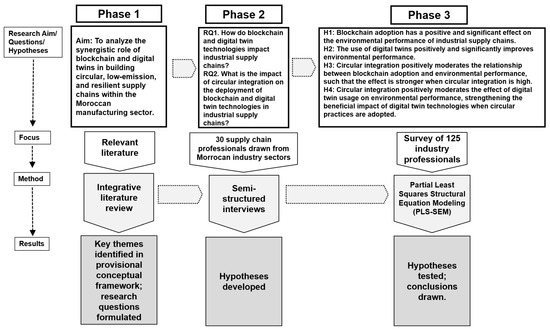
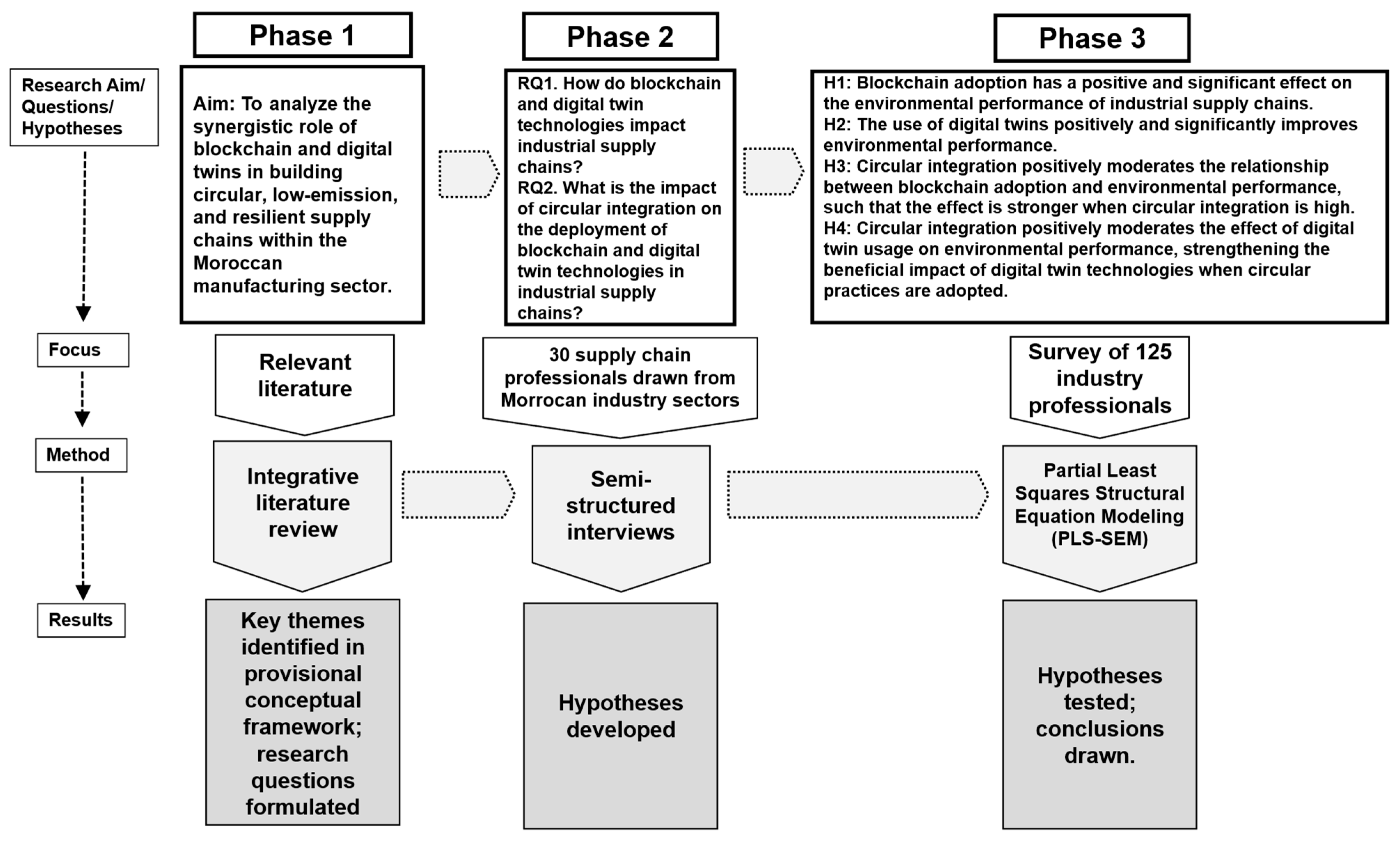
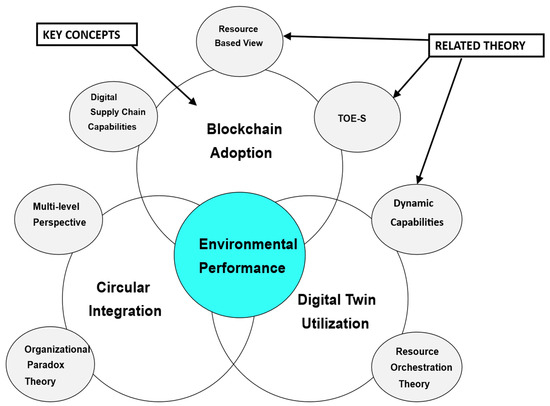
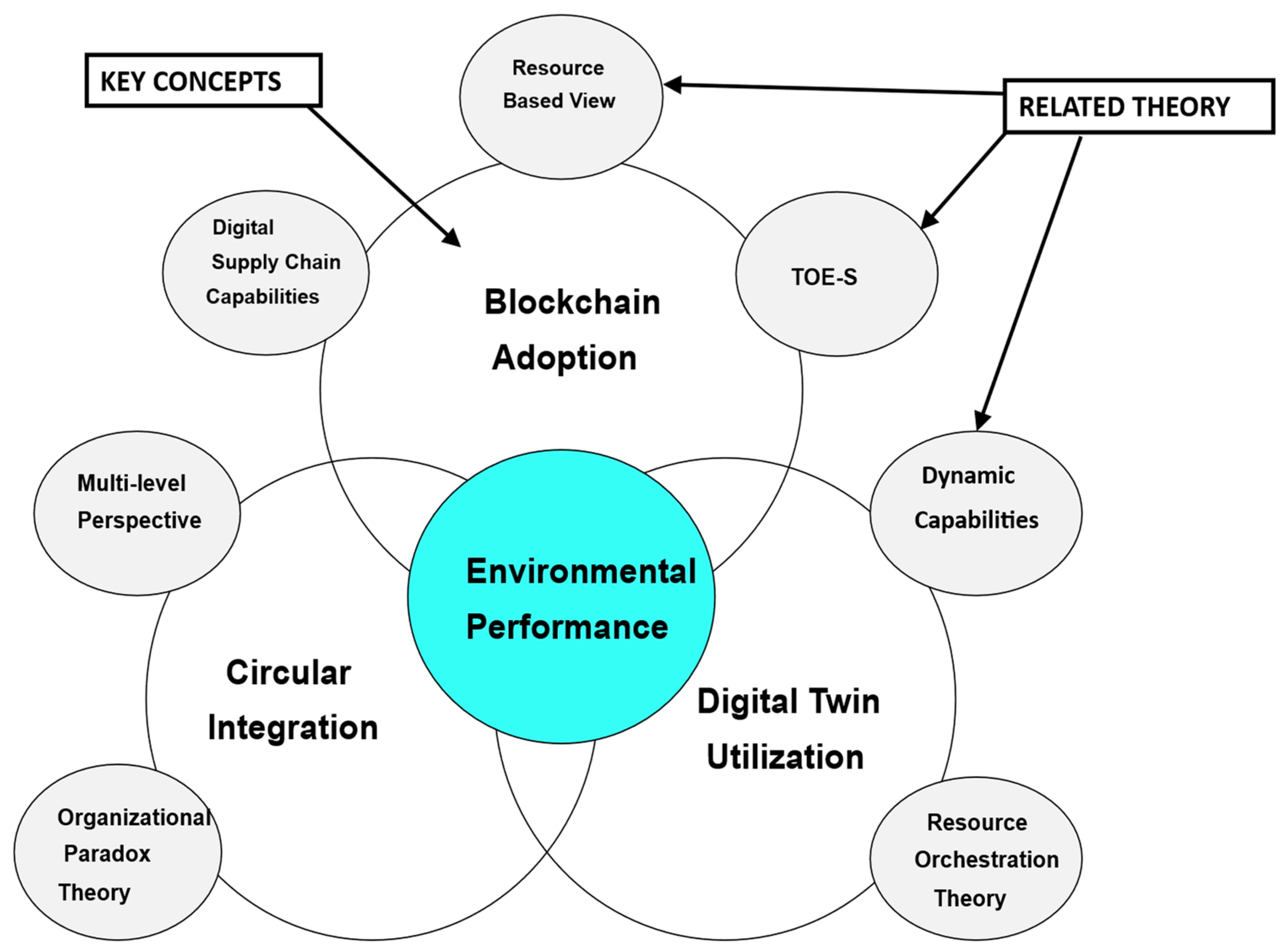
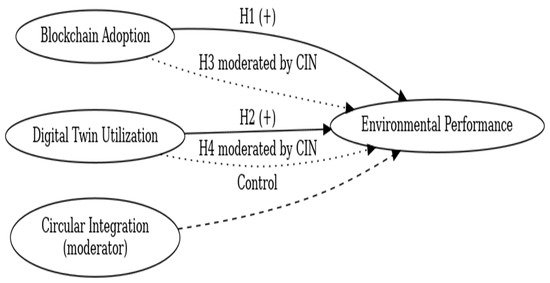
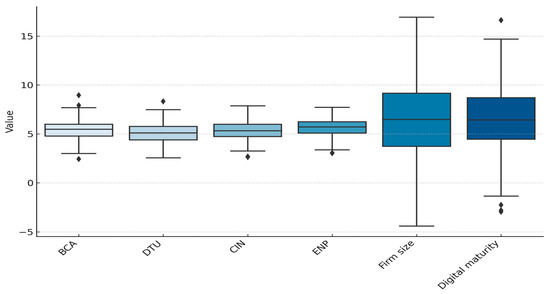
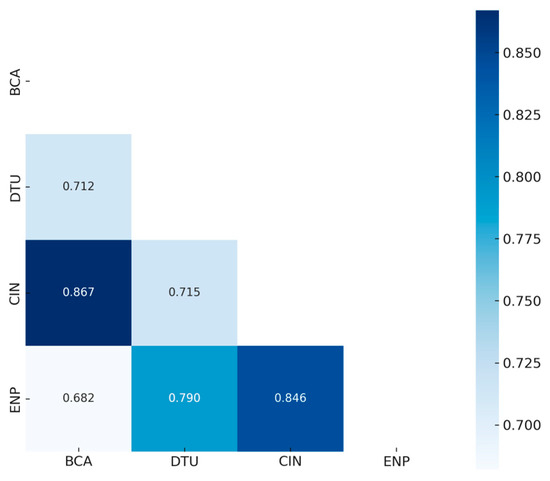
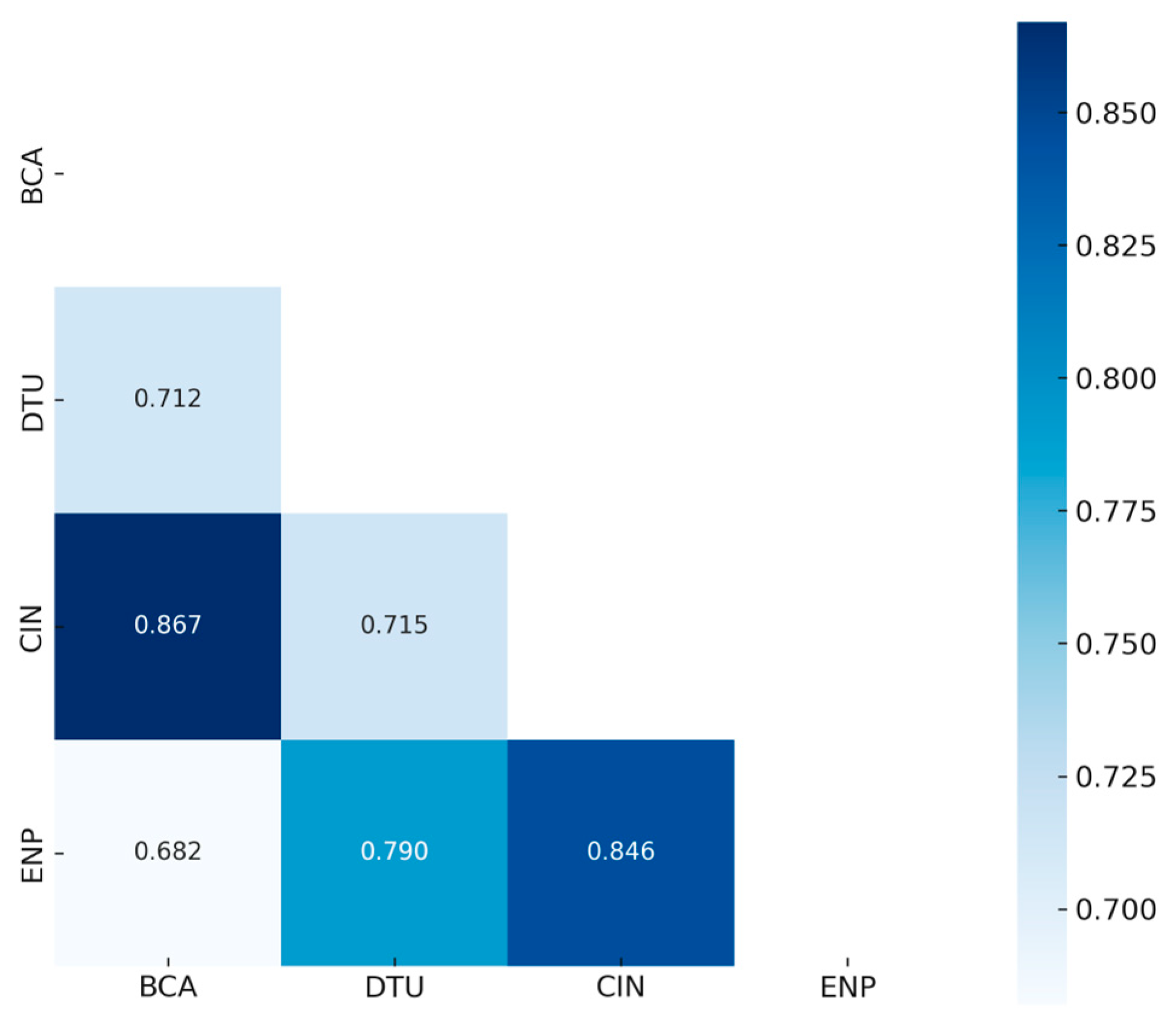
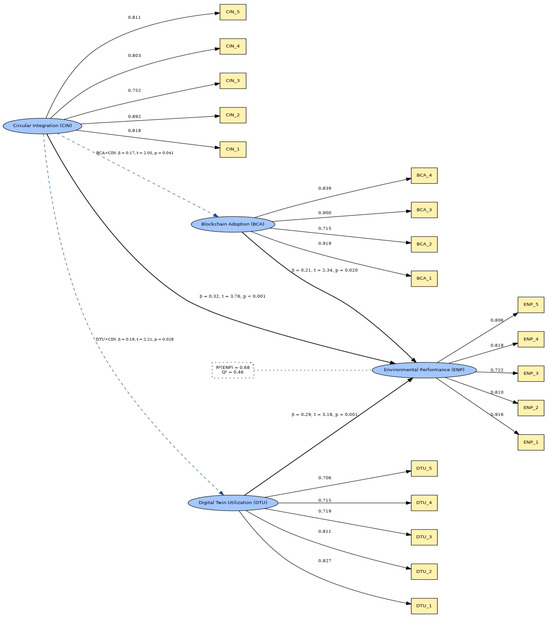
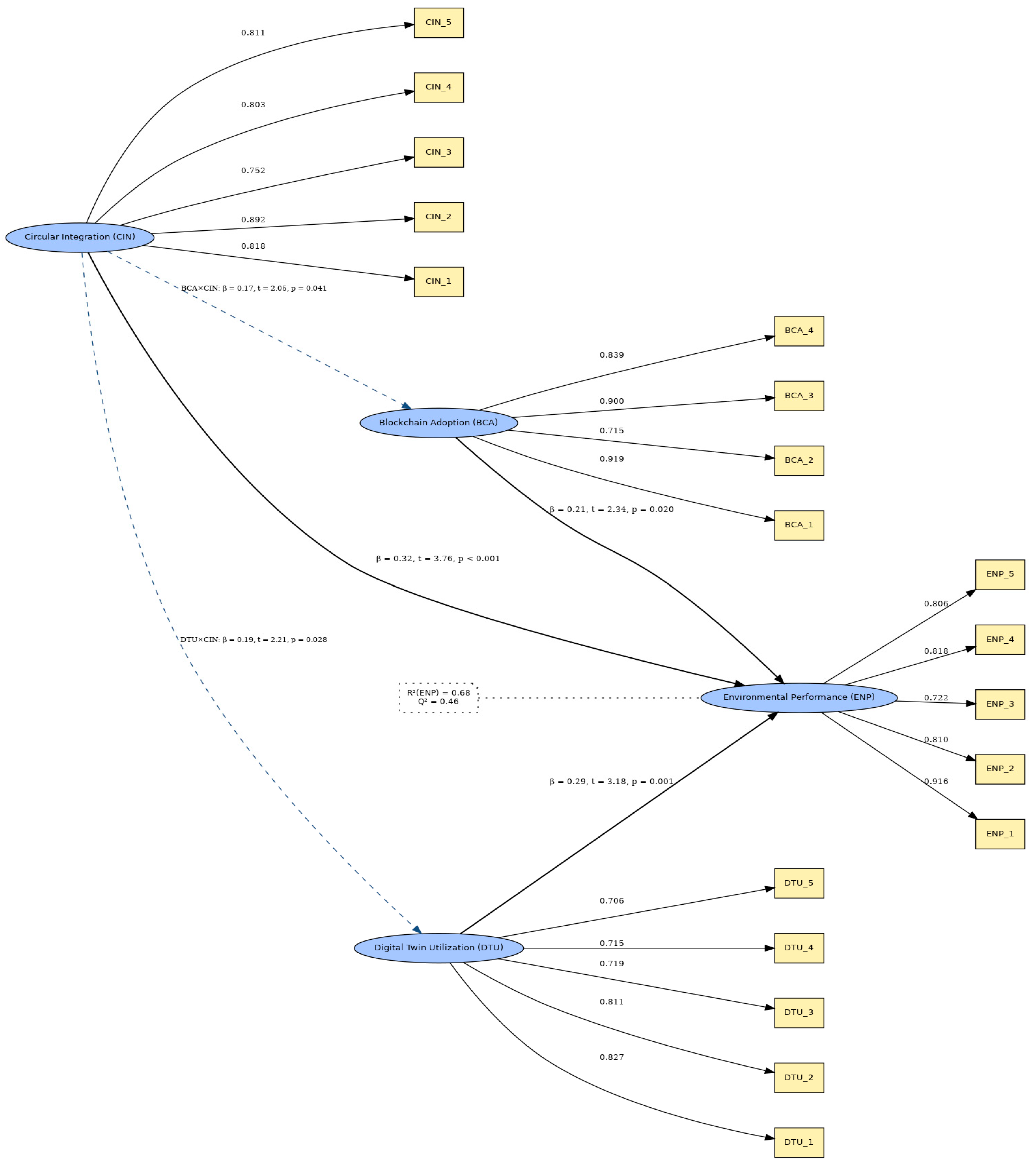

Disclaimer/Publisher’s Note: The statements, opinions and data contained in all publications are solely those of the individual author(s) and contributor(s) and not of MDPI and/or the editor(s). MDPI and/or the editor(s) disclaim responsibility for any injury to people or property resulting from any ideas, methods, instructions or products referred to in the content. |
© 2026 by the authors. Licensee MDPI, Basel, Switzerland. This article is an open access article distributed under the terms and conditions of the Creative Commons Attribution (CC BY) license.