Article

Challenging the Circular Economy: Hidden Hazards of Disposable E-Cigarette Waste

by
Iwona Pasiecznik
*,
Kamil Banaszkiewicz
,
Mateusz Koczkodaj
and
Aleksandra Ciesielska
Faculty of Environmental Engineering, Wroclaw University of Science and Technology, 27 Wybrzeże Wyspiańskiego st., 50-370 Wrocław, Poland
*
Author to whom correspondence should be addressed.
Sustainability 2026, 18(2), 961; https://doi.org/10.3390/su18020961
Submission received: 13 November 2025 / Revised: 10 January 2026 / Accepted: 15 January 2026 / Published: 17 January 2026
(This article belongs to the Special Issue Resource Management and Circular Economy Sustainability)

Abstract

Waste electrical and electronic equipment (WEEE) is one of the fastest-growing waste streams globally. Disposable e-cigarettes are among the products that have gained popularity in recent years. Their complex construction and embedded lithium-ion batteries (LIBs) present environmental, safety, and resource recovery challenges. Despite growing research interest, integrated analyses linking material composition with user disposal behavior remain limited. This study is the first to incorporate device-level mass balance, material contamination assessment, battery residual charge measurements, and user behavior to evaluate the waste management challenges of disposable e-cigarettes. A mass balance of twelve types of devices on the Polish market was performed. Plastics dominated in five devices, while non-ferrous metals prevailed in the others, depending on casing design. Materials contaminated with e-liquid residues accounted for 4.4–10.7% of device mass. Battery voltage measurements revealed that 25.6% of recovered LIBs retained a residual charge (greater than 2.5 V), posing a direct fire hazard during waste handling and treatment. Moreover, it was estimated that 7 to 12 tons of lithium are introduced annually into the Polish market via disposable e-cigarettes, highlighting substantial resource potential. Survey results showed that 46% of users disposed of devices in mixed municipal waste, revealing a knowledge–practice gap largely independent of gender or education. Integrating technical and social findings demonstrates that improper handling is a systemic issue. The findings support the relevance of eco-design requirements, such as modular casings for battery removal, alongside the enforcement of Extended Producer Responsibility (EPR) schemes. Current product fees (0.01–0.03 EUR/unit) remain insufficient to establish an effective collection infrastructure, highlighting a key systemic barrier.

1. Introduction

Traditional cigarettes have posed a significant threat to public health and the natural environment for decades. The main active component of tobacco products is nicotine, a chemical compound with strong addictive properties that adversely affects brain development in children and adolescents and impairs fetal growth. Numerous studies indicate that tobacco smoking is a leading cause of respiratory and cardiovascular diseases, as well as cancers, resulting in millions of premature deaths annually [1]. Furthermore, cigarette butts contain toxic substances (e.g., nicotine, heavy metals, and microplastics), and they constitute one of the most prevalent forms of waste, contaminating terrestrial and aquatic ecosystems [2].
In recent years, new products referred to as Electronic Nicotine Delivery Systems (ENDS) have entered the market. They are commonly known as e-cigarettes (ECs) or vapes [3,4,5,6,7,8]. Nicotine-free versions also exist (referred to as Electronic Non-Nicotine Delivery Systems (ENNDS)). The global market for ENDS was valued at USD 22.5 billion in 2022 and is projected to reach USD 47.5 billion by 2028 [9]. This market growth is accompanied by a rapidly increasing number of users, currently estimated at approximately 82 million worldwide [6], with concerning trends among minors [10].
E-cigarettes are battery-powered devices in which an e-liquid is heated to approximately 200–300 °C, producing an aerosol that the user inhales. E-cigarettes are offered in two versions: reusable and disposable [1,8]. According to the World Health Organization (WHO) classification, e-cigarettes do not contain tobacco.
Disposable e-cigarettes, characterized by convenience, low cost, and a wide variety of flavors, have become particularly attractive to younger consumers. Unlike reusable e-cigarettes, these products are not designed to be refilled or recharged and, despite containing lithium-ion batteries, are discarded after a single use cycle. Although Directives 2012/19/EU and 2014/40/EU [11,12] regulate some aspects of ENDS, they do not address the specific waste management problems posed by disposable e-cigarettes. One of the major systemic barriers is the cost of organizing a specialized collection and recycling system for disposable e-cigarettes, which exceeds the statutory “product fee” imposed for failing to reach collection targets. For example, in Poland, the product fee is only 0.42 EUR/kg of WEEE.
Another environmental challenge is related to the presence of LIBs and improper waste management. A significant proportion of the batteries present in used e-cigarettes still retain a residual electrical charge, which substantially increases the risk of fire during transport or storage in waste treatment plants. Furthermore, improper handling of batteries can lead to the release of hazardous substances, such as heavy metals and toxic organic compounds, into the soil and water [13,14,15]. Although European Union law defines the waste management hierarchy—prevention, preparation for reuse, recycling, other recovery, and disposal—this structure is difficult to apply to disposable e-cigarettes due to their design [16]. Moreover, the Batteries and Waste Batteries Regulation adopted by the European Parliament in 2023 highlights the importance of replaceable and recyclable power sources in all electronic devices [17]. Unfortunately, disposable e-cigarettes are not intended to be opened, repaired, or disassembled, making them incompatible with the goals of the circular economy strategy. The circular economy framework requires that products be designed for disassembly and resource recovery to minimize the loss of critical raw materials, e.g., lithium and cobalt. Currently, disposable e-cigarettes represent a “linear economy” characterized by a short lifespan and a high probability of loss of valuable resources. While the literature covers public health impacts, rapid market growth of ENDS [8,18], and general consumer disposal habits [19,20], there is a lack of integrated data linking the detailed material composition of disposable devices with consumers’ disposal behavior. This research aims to assess the detailed material composition of several leading types of disposable e-cigarettes and examine consumer attitudes regarding their use, including the handling of used devices in relation to gender and education, with particular emphasis on potential resource losses resulting from circularity failure. By comparing the material composition of the waste with the users’ behavior, this study provides evidence for revising regulations on design requirements, such as mandatory modularity, and for more effective collection strategies to align the e-cigarette industry with circular economy goals. The contribution of this work lies in identifying a systemic failure, demonstrating that even high environmental awareness among users cannot compensate for the lack of modular design and inadequate collection infrastructure.

2. Materials and Methods

2.1. Material Composition of Disposable E-Cigarettes

Twelve models of disposable e-cigarettes available on the Polish market (out of 86 units disassembled) were selected for detailed analysis of the material composition. The selection was based on three main criteria: (i) market availability and popularity among consumers (e.g., based on online forums opinion), (ii) diversity in technical specifications (from standard 600–800 puffs (type 1–9) to high-capacity models 9000–15,000 puffs (type 10–12), and (iii) representation of different price segments (below 10 EUR (type 1–9) and over 16.5 EUR (type 10–12)). Moreover, the high-capacity models (10–12) were chosen due to the differences in construction (e.g., presence of USB-C ports for charging). The additional electronic components and larger battery capacities, significantly impacted the material profile compared to standard single-use devices. Due to the presence of a lithium-ion battery, each device was inspected for any mechanical damage before disassembly. The selected devices were weighed and disassembled using basic tools, including a utility knife, pliers, and other necessary equipment (e.g., precision screwdrivers). All separated components were weighed and classified into defined material groups. The content of the following material fractions was analyzed: ferrous metals, non-ferrous metals, plastics, rubber, and multi-material components (Printed Circuit Boards (PCBs)), batteries, and pressure sensors). Multi-material components were not subjected to further disassembly due to their complex structure. Recovered batteries were identified by their nominal voltage and capacity. During the analysis, the proportion of components contaminated with liquid was also analyzed. The presence of liquid can significantly limit the recyclability of certain materials, thus high precision of component identification is critical.
Although manual disassembly provides high precision in identifying components, this study acknowledges certain limitations. The sample size (n = 12 device types) was selected to represent market diversity and does not aim at statistical generalization. In the case of material composition, the measurement uncertainty was minimized by using a laboratory scale with a precision of 0.01 g. Nevertheless, minor mass losses (e.g., related to liquid losses during disassembly) are inherent to the process.

2.2. Social Research on Using Disposable E-Cigarettes

The study aimed to assess consumer attitudes towards the use of disposable e-cigarettes and waste management practices. The survey was conducted using a web-based questionnaire distributed via email and social media platforms. The survey was anonymous and consisted of closed-ended single-choice and multiple-choice questions structured into sections: socio-demographic characteristics, usage patterns, environmental risk perception, and disposal methods. The questionnaire was pre-tested on a pilot group of 10 individuals to ensure clarity and proper comprehension of the questions.
Data were collected from March to December 2024. To ensure high data quality, only fully completed questionnaires were analyzed (N = 344). Furthermore, manual verification of the raw data was performed to identify potential duplicate entries or inconsistent responses by cross-referencing timestamps and socio-demographic profiles.
Due to the small sample sizes in older age categories, the detailed analysis and waste management assessment were conducted on the subsample of respondents aged 18–30 (n = 289). This sample size was adequate for conducting exploratory descriptive statistics and identifying behavioral patterns within the sampled cohort. The distribution method resulted in a higher response rate from younger respondents, who represent the primary target market for disposable e-cigarettes. Consequently, this research provides indicative and exploratory insights into the behaviors of the studied group. The findings should not be interpreted as statistically representative of the broader 18–30 population. To identify potential associations between categorical variables (e.g., gender, education level, and respondents’ behavior) within the 18–30 subsample, the chi-square test was applied with a significance level of p < 0.05. In cases where requirements for the chi-square test were not met, Fisher’s Exact Test (two-tailed) was performed, or the analysis remained descriptive to avoid over-interpretation.

3. Results and Discussion

3.1. Material Composition Analysis

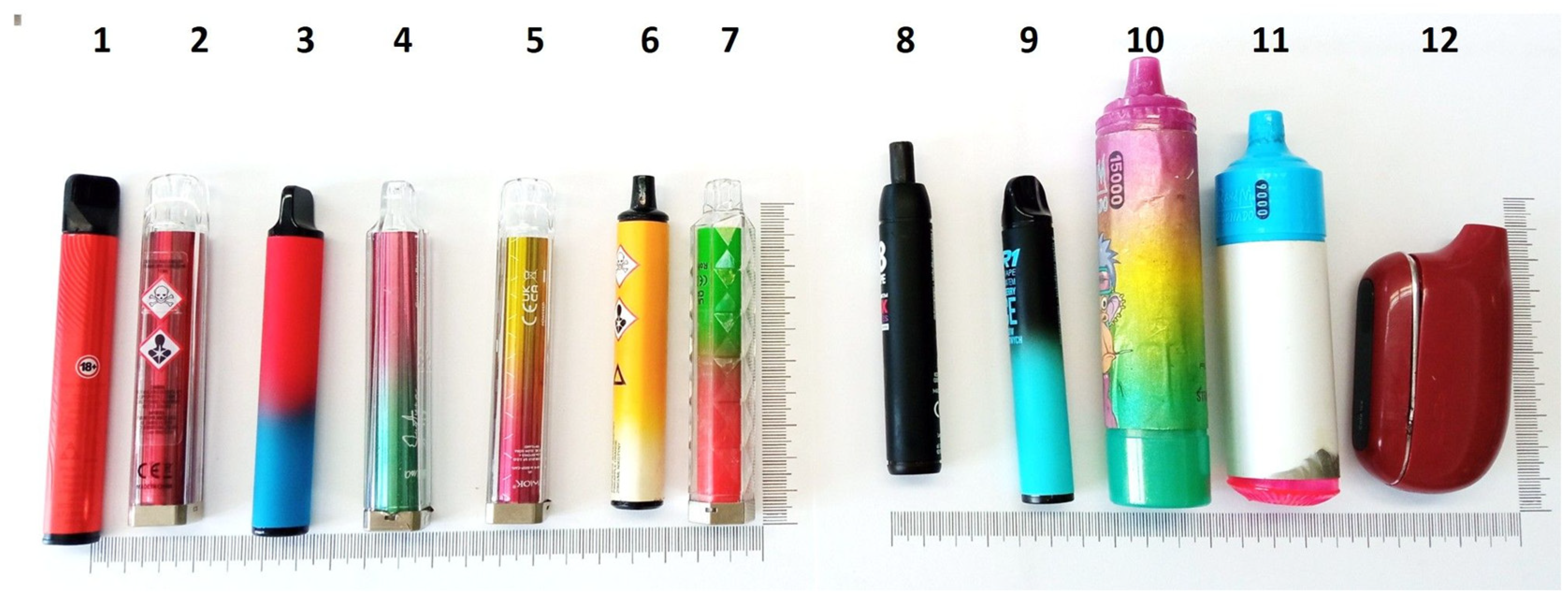
The design of disposable e-cigarettes is optimized for ease of use and low production cost. However, this approach poses significant challenges for the recycling of used products. In this study, 86 disposable e-cigarettes were disassembled. From the analyzed group, 12 different types were selected for detailed material composition analysis (Figure 1).
For the remaining devices, disassembly was performed to remove and verify battery parameters. This group was dominated by types 2 and 3 e-cigarettes, which represented the most affordable models available on the market. Additionally, three of the disassembled types (Figure 1, numbers 10–12) were equipped with a USB-C port for battery recharging.
Despite their simple construction, e-cigarettes consist of several key components integrated into a single, often difficult-to-disassemble casing. These casings are typically composed of plastics or metals, with an integrated or separate mouthpiece. During the analysis, between 15 and 21 elements were separated per device. The construction of e-cigarettes was consistent and included elements such as a lithium-ion battery, wires, an air pressure sensor, rubber seals, foam protectors, a liquid cartridge, a coil, an atomizer tube, a vape liquid chamber tube, and a wick.
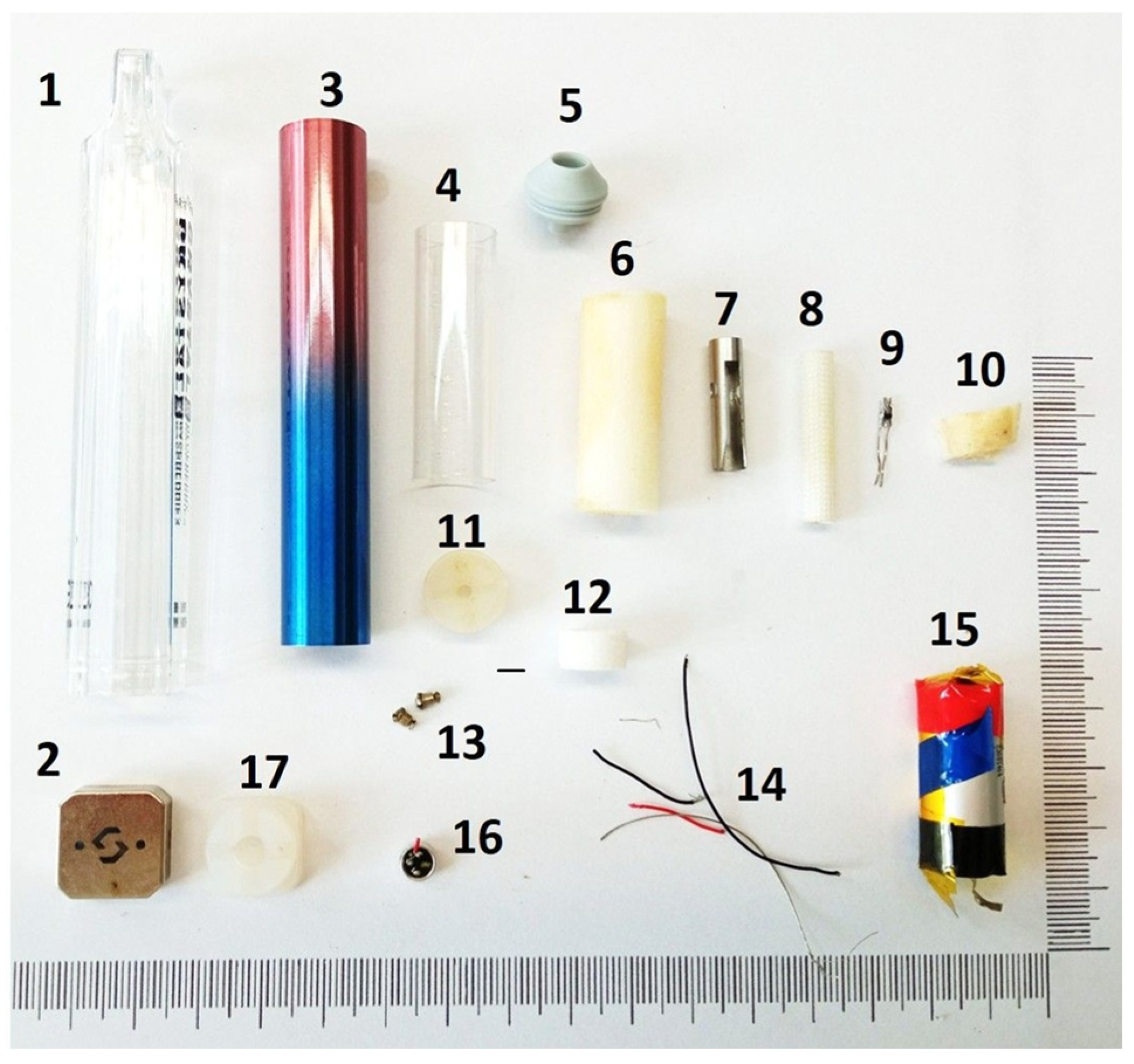
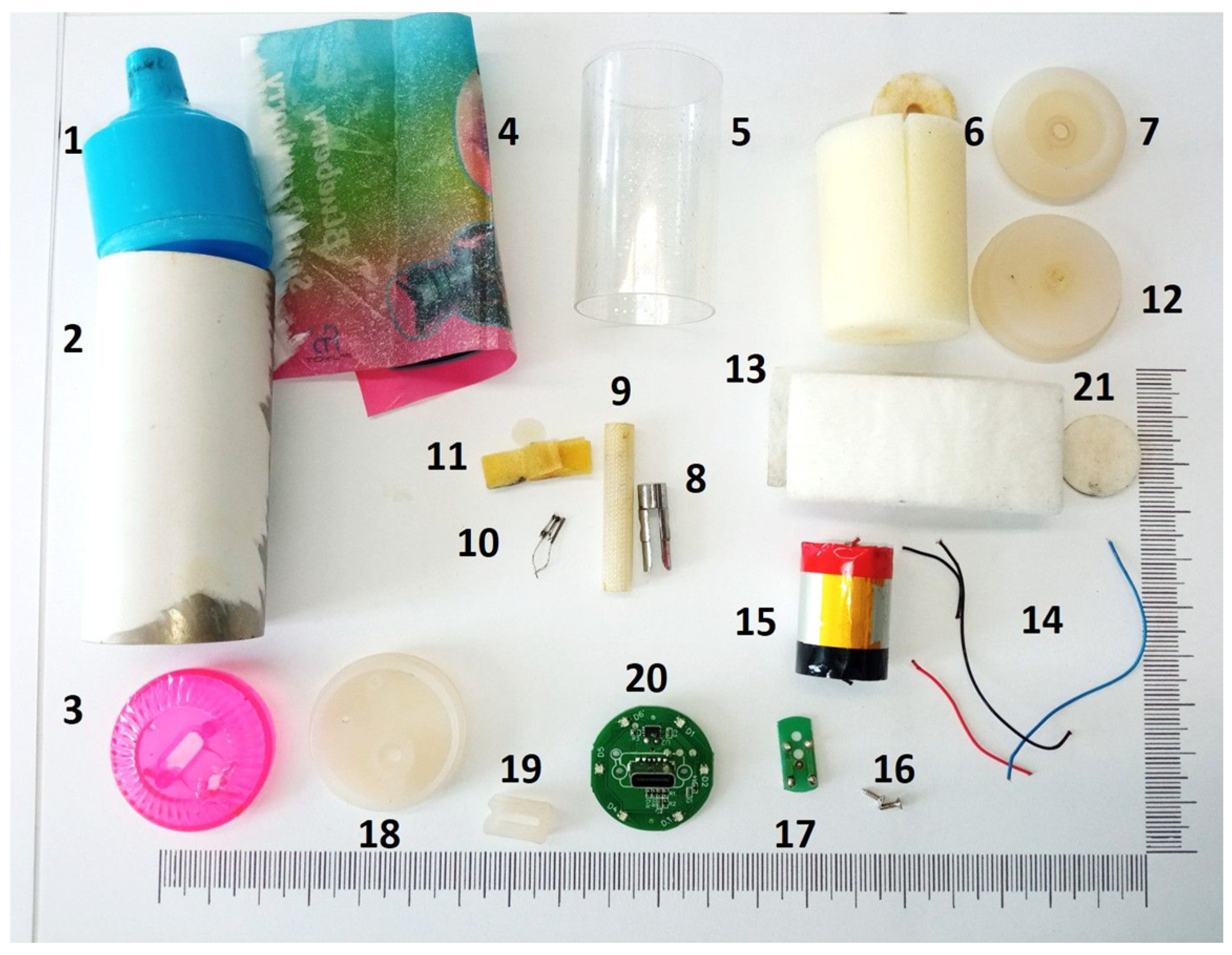
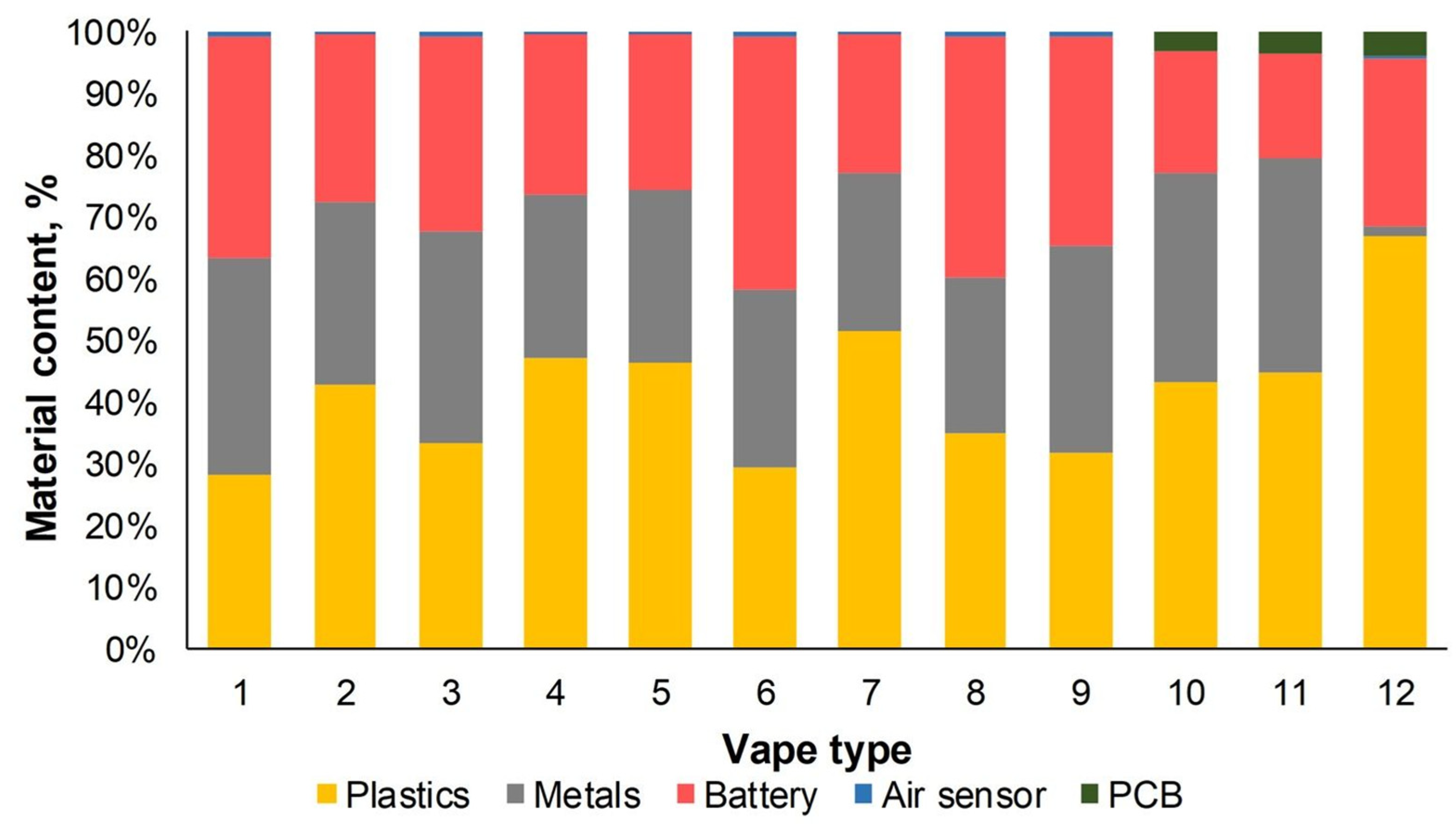
The components of the type 2 e-cigarette, the most prevalent model in the sample, are shown in Figure 2. In turn, the elements of the type 10 e-cigarette, with a charging function, are presented in Figure 3. During disassembly, all separated elements were classified into the following material categories: plastics, rubber, ferrous metals, non-ferrous metals, and multi-material components (including printed circuit boards), batteries, and pressure sensors). Based on these data, a detailed qualitative balance of used disposable e-cigarettes was developed. The percentage shares of material by device type are summarized in Table 1. The share of plastics ranged from 28 wt.% (type 1) to 67 wt.% (type 12) (Figure 4), while metals constituted between 1.5 wt.% (type 12) and 35 wt.% (type 1). These shares were directly dependent on the casing material (plastic or non-ferrous metal). During disassembly, there is a risk of contamination of device components with e-liquid residues. For the analyzed types, elements contaminated with liquid residues accounted for 4.4 wt.% (type 1) to 10.7 wt.% (type 6) (Table 1).
The primary components of e-liquid include propylene glycol (PG), vegetable glycerin (VG), flavorings, and optionally nicotine [5]. Pennington, C., and Aldave, S.H. [21], reported that the chemical composition of the e-liquids is continuously evolving. They observed variations across different models and batches. Furthermore, the affinity of PG for flavorings and nicotine may reduce the effectiveness of standard washing processes, thereby decreasing the market value and applicability of the recovered material. Consequently, e-liquid residues should be classified as critical contaminants that hinder the quality of mechanical recycling.
The primary differences among non-rechargeable e-cigarettes (types 1–9) concerned the design of the casing. Some models (types 2, 4, 5, 7) were characterized by a three–part casing consisting of a plastic body with a mouthpiece, a metal bottom cap, and a metal internal sleeve. For the remaining models (types 1, 3, 6, 8, and 9), the casing included a separate plastic mouthpiece, a metal casing, and a bottom cap. In contrast, devices with a battery charging function (types 10–12) required additional components, such as printed circuit boards and a USB port, due to their larger cartridge volume (Figure 3). The PCBs accounted for 3.2% to 4.2% of the device weight. These models were also non-refillable. In two instances (types 10 and 11), the pressure sensor was integrated directly into the PCB. These results were consistent with data published by Turner et al. [14].
The most critical component of the e-cigarettes was the non-replaceable lithium-ion battery with mass shares ranging from 17% to 41 wt.% (Table 1). The inability to easily separate the LIB from other components increases the overall cost of recycling used e-cigarettes. From a health and environmental perspective, batteries are the most problematic element due to the risk of uncontrolled metal release, fire, or explosion. Additionally, changes in LIBs chemical composition (e.g., the introduction of mixed cathode materials) require advanced and costly recycling processes for effective material recovery [22]. Among the dismantled e-cigarettes, the most common LIBs had a nominal voltage of 3.7 V and capacities of 400 mAh (approx. 73% of recovered LIBs) and 500 mAh (15% of recovered LIBs). Other LIBs capacities were 550 mAh (7% of recovered LIBs), 600 mAh (2.3% of recovered LIBs), 650 mAh, and 850 mAh (1.2% of recovered LIBs each). Notably, 10.5% of the disassembled batteries exhibited a voltage between 3.6 and 3.7 V, while 15.1%, were between 3.3 and 3.4 V. Approximately 74% of LIBs had a voltage lower than 2.5 V. The presence of residual charge poses a serious fire risk during mechanical damage or processing. Consequently, disposing of these devices in mixed municipal waste presents a significant risk to waste treatment facilities. Furthermore, e-cigarettes with a metal casing and exposed wiring, carry a risk of battery short-circuiting during disassembly [13]. The use of LIBs in single-use devices, with short service lifespans contradicts the principles of sustainable development and the circular economy, whose goals include limiting raw materials consumption and reducing waste generation. The growing demand for raw materials for LIBs production also imposes a significantly burden on the natural environment due to intensive extraction and processing for production purposes [23,24].
According to the Market Monitoring Center (CMR), sales of disposable e-cigarettes in Poland reached approximately 54.7 million units in 2023. However, data from the Institute of Economic Forecasts and Analysis (IPAG), indicate that 99.7 million units were sold in the same year. Approximately 95% of flavored disposable e-cigarettes are manufactured in China and are often exported to Europe and the USA under misleading labels such as “chargers”, “flashlights”, or “batteries” [25]. As data on the sales of specific models is unavailable, the raw material potential of used e-cigarettes was estimated based on a material composition analysis. A detailed mass balance is presented in Table 2. The average weight of a standard disposable e-cigarette was estimated at 27 g (based on types 1–9). The total amount of used e-cigarettes generated in Poland was estimated to range from 1477 to 2691 tons per year (Table 2). The quantities of individual material fractions were calculated based on the average material composition of a standard e-cigarette (type 1–9).
The annual potential for plastics and metals contained in disposable e-cigarettes was estimated at 438–797 tons and 412–754 tons, respectively. Furthermore,, the amount of lithium contained in 400 mAh batteries (lithium accounts for approximately 1.5% of the battery weight) was estimated at 7–12 tons annually. Currently, the lack of dedicated collection systems results in a significant proportion of used e-cigarettes being disposed of in mixed municipal waste, leading to the loss of valuable secondary raw materials.
The material composition analysis demonstrated that disposable e-cigarettes constitute a highly heterogeneous and problematic waste stream. The wide variability in casing design directly determines the relative shares of plastics and metals. The results showed two critical technical barriers to circularity: significant e-liquid contamination (4.4–10.7 wt.%), which reduces the recyclability and market value of recovered materials, and the high proportion of non-removable lithium-ion batteries (17–41 wt.%). In addition, the frequent occurrence of partially charged batteries (25.6% of recovered LIBs retained a residual charge greater than 2.5 V) introduces a significant fire and safety risk during collection and treatment. Scaled to the national market, these findings demonstrate that current disposable e-cigarette designs are poorly compatible with existing recycling systems, leading to both material losses and operational hazards. Consequently, this emphasizes the need for enhanced eco-design and dedicated waste management solutions.

3.2. Social Research Analysis

3.2.1. Respondents’ Profile

The study involved 344 respondents, comprising 67.4% female and 32.6% male participants. The dominant age group, consisting of 289 individuals (84%), was aged 18–30. The distribution of the remaining age groups was as follows: 31–40 years (5.8%), 41–50 years (5.8%), and 51–67 years (4.4%). These groups were represented by a similar number, from 15 to 20 participants.
The survey distribution method significantly influenced the demographic structure of the respondents. The dominance of young adults (18–30 years old, constituting 84.0% of the sample) is a common trend in studies conducted via the internet and social media.
Due to the unrepresentative data for other age groups, the detailed analysis was restricted to respondents aged 18–30. However, it should be emphasized that this demographic represents the primary target market and the most frequent users of disposable e-cigarettes. Focusing on this demographic provides an exploratory insight into the attitudes and waste management practices of the key consumer segment. Therefore, despite the exclusion of older demographics from the detailed analysis, the results remain relevant for understanding the behavior of the most active e-cigarette consumers. Within the analyzed group of 289 respondents aged 18–30 years, 67% were female, and 33% were males. Females are more inclined to participate in social surveys compared to males. Regarding educational background, nearly half of the respondents (49.5%) held a higher education degree. The second largest group consisted of individuals with a secondary education (48.8%). In terms of professional status, the majority of the surveyed individuals were students (55.7%) followed by those employed full-time or full-time or self-employed (in total 40.5%). Approximately 3.5% of the respondents were employed part-time. The detailed demographic characteristics of the respondents are presented in Table 3.

3.2.2. Reasons and Frequency of Disposable E-Cigarette Use

The study showed that 57.4% of respondents aged 18–30 used disposable e-cigarettes, while the use of traditional nicotine products was reported by 23.2% of respondents. The analysis did not show significant correlations between gender and the use of conventional or electronic tobacco products. Within the analyzed age group, 58.2% of females and 55.8% of males used e-cigarettes, respectively (p = 0.691). However, 22.7% of females and 24.2% of males reported smoking traditional cigarettes (p = 0.772).
Regarding education, only minor differences were observed. A higher level of education and awareness of health risks did not significantly influence disposable e-cigarette use in the analyzed age group. Disposable e-cigarette use was reported by 54.6% of respondents with secondary education and 59.4% of those with higher education. These differences were not statistically significant (p = 0.411). In turn, traditional cigarette smoking was reported by 22.0% and 23.8% of respondents with secondary and higher education, respectively (p = 0.719).
The phenomenon of dual use of both product types was also identified. Among the 289 respondents, 18% used both e-cigarettes and conventional tobacco products. This behavior was more common among males aged 18–30 (20%) than among females (17%). These differences were not statistically significant (p = 0.534). In terms of education, 17.0% of respondents with secondary education and 18.2% of respondents with higher education reported dual use (p = 0.797).
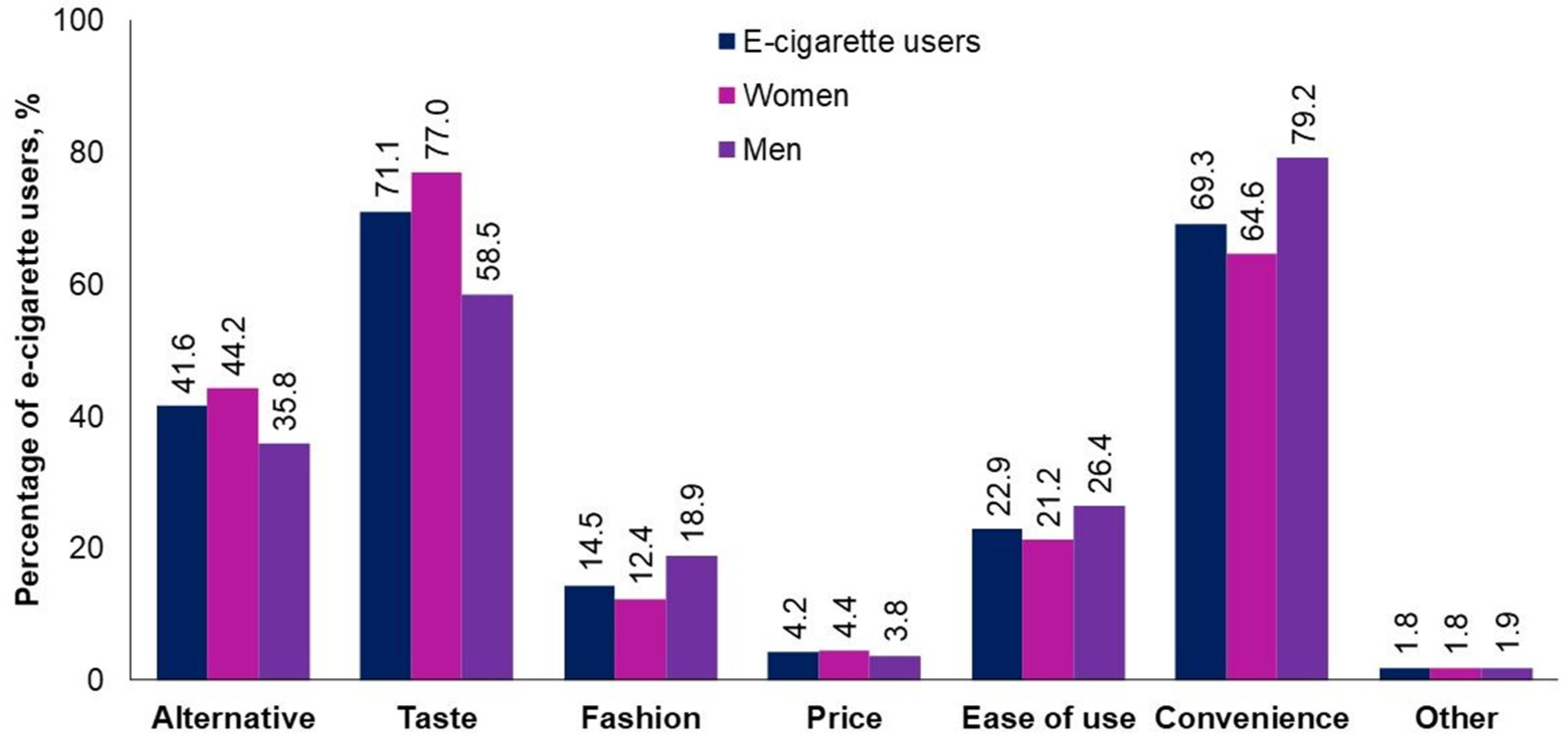
The survey indicated that among young adults (18–30 years old), e-cigarettes were significantly more popular than traditional tobacco products. The main reasons for using disposable e-cigarettes were convenience and taste. Flavor was reported as an important factor by 77.0% of female users. In this case, a statistically significant association with gender was observed (p = 0.01). For 79.2% of male users, convenience was the most important factor (Figure 5).
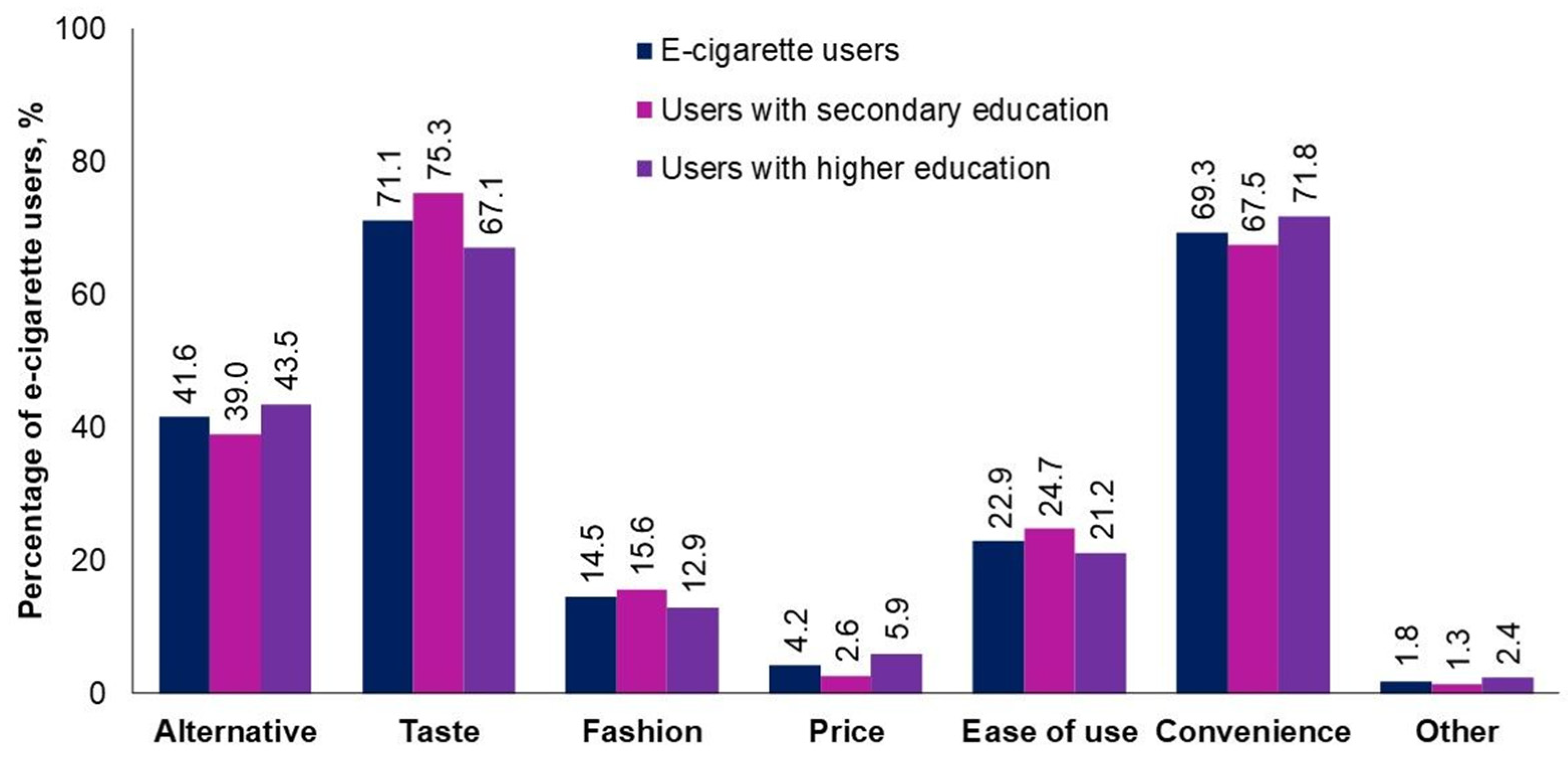
Regarding education level, flavor was important for 75.3% of users with a secondary education (Figure 6), while convenience was more important for those with higher education (71.8%). However, the analysis showed no statistically significant association between education level and specific reasons for use. These findings are consistent with the characteristics of these products, which, according to the manufacturers’ assumptions, are intended to be easy to use and offer a wide variety of flavors. In 2023, the total number of flavor variants available on the Polish market exceeded 770 [25].
Among 166 disposable e-cigarette users, the most frequently reported frequency of use was “less than once a week”—61.5% of users. Daily use was reported by 22.9% of users. More than twice as many females aged 18–30 used disposable e-cigarettes daily compared to males (27.5% vs. 13.2%). Regardless of gender, the majority of users reported using e-cigarettes less than once a week (Table 4).
In terms of education, a slightly higher percentage of users with higher education used disposable e-cigarettes daily (24.7%) compared to those with secondary education (20.8%). No statistically significant association was found between frequency of disposable e-cigarette use and sociodemographic characteristics such as gender or education level. (Table 4).
The results indicate that for a significant portion of users, disposable e-cigarettes are viewed as an occasional product, used at parties, social gatherings, or in situations where traditional cigarettes are unavailable. This may also suggest that disposable e-cigarettes are attracting consumers (especially young) who have not previously used tobacco products. For these individuals, disposable e-cigarettes may function as a novelty gadget or fashion item, not a substitute for traditional cigarettes. Over 95% of disposable e-cigarette users confirmed an increase in the number of people using these devices in their community.

3.2.3. Consumers’ Awareness of Disposable E-Cigarettes

The majority of users (56.6%) reported familiarity with the components of disposable e-cigarettes. Although descriptive trends suggested that male respondents (62.3% of e-cigarette users) might possess greater knowledge of device construction than female respondents (54.0%), these differences were not statistically significant (p = 0.315). Similarly, no significant variations were found in relation to education level (p = 0.813), with knowledge declared by 57.1% of users with secondary education and 55.3% of those with higher education. Nearly all e-cigarette users (98.8%) were aware of the presence of a LIB in disposable e-cigarettes. However, this knowledge did not translate into an awareness of the potential for resource recovery. Only 48.2% of users believed that e-cigarettes contain valuable and recoverable raw materials. In this case, a statistically significant association with gender was observed (p = 0.01). Male users (62.3%) demonstrated higher awareness of raw material presence than female users (41.6%). Awareness was slightly higher among users with secondary education (51.9%) compared to those with higher education (45.9%). However, this difference was not statistically significant (p = 0.441).
Due to the presence of LIB, the used disposable e-cigarettes must not be disposed of in the mixed-waste stream. The majority of users (81.9%) stated that discarded devices pose a threat to the environment. This opinion was expressed by 84.1% of female users and 77.4% of male users (p = 0.295), as well as by 84.4% of those with secondary education and 81.2% of those with higher education (p = 0.586). The study further showed that most users (77.1%) declared that they knew how to properly dispose of used disposable e-cigarettes (73.5% of females and 84.9% of males). Minor differences in consumer declarations were observed by education level, with 75.3% of users with secondary education and 80.0% of users with higher education claiming knowledge of proper disposal methods. However, none of these differences were statistically significant (p = 0.101 and p = 0.474, respectively).
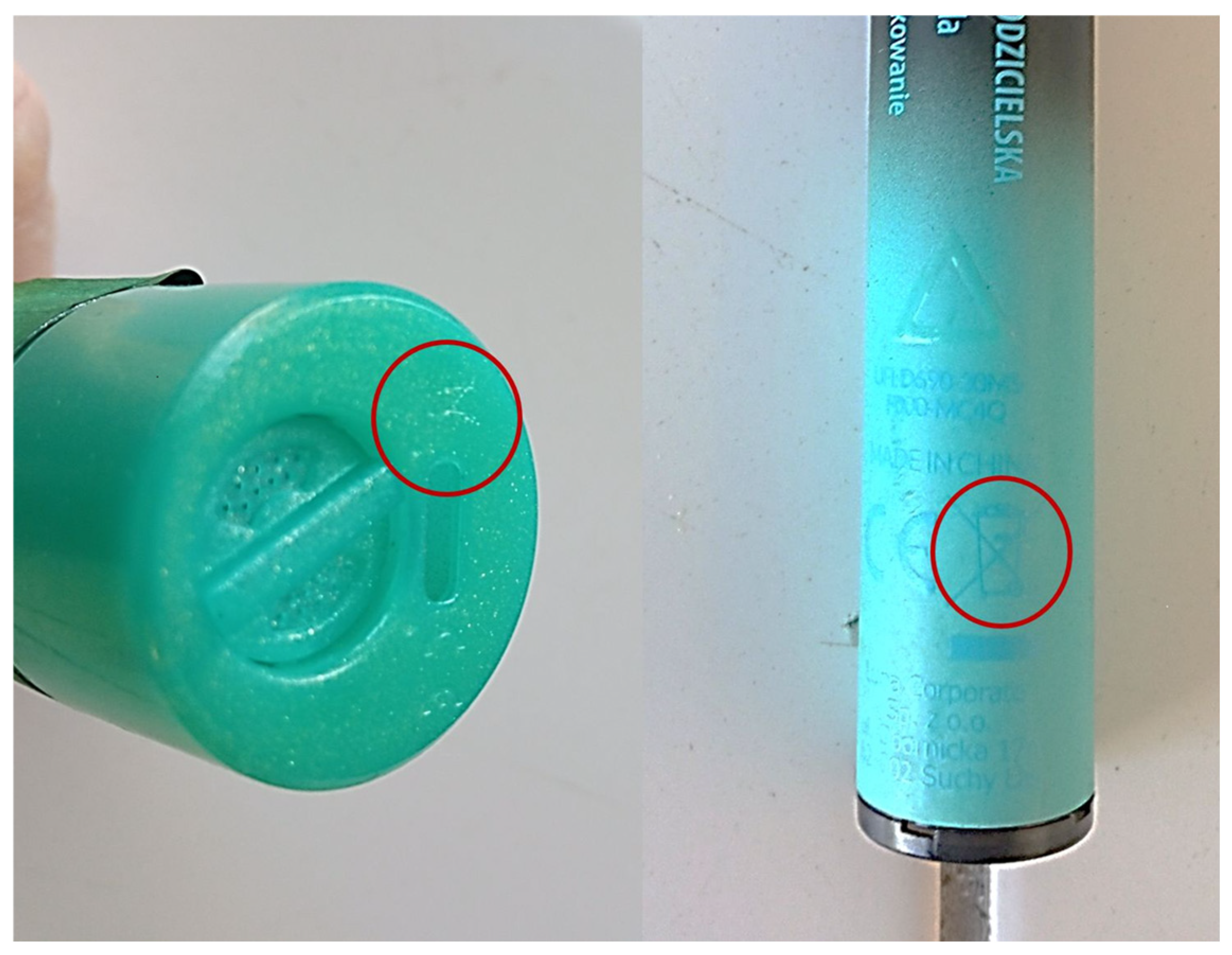
Notably, 88.6% of users reported they were not informed about selective collection rules at the time of purchase (87.6% of female and 90.6% of male users). This lack of information is contrary to the Polish WEEE Act [26] and constitutes a significant barrier to effective waste management, regardless of the user’s demographic profile. Furthermore, the material composition analysis revealed that the symbol indicating separate collection for electrical and electronic equipment (EEE) was poorly visible on some devices (Figure 7).

3.2.4. Analysis of Used E-Cigarette Disposal Practices

Despite users’ awareness of environmental hazards, the disposal practices of used disposable e-cigarettes remain inadequate. The research confirmed a clear gap between self-reported knowledge and actual behavior. Although the majority of respondents declared knowledge of proper disposal methods, 46.4% of e-cigarette users admitted disposing of used devices in mixed municipal waste bins or street bins (31.3%) (Table 5). Similar user behavior has been reported in other countries. Studies conducted in the USA identified that approximately 50% of disposable e-cigarette users aged 15–24 years dispose of these products into regular trash [19]. In the UK, 33% of users aged 16–18 years admitted to disposing of used devices in bins at school or work [20].
Because respondents could select multiple disposal options, each method was analyzed separately to assess differences related to gender and education level, assuming independence of observations. The analysis showed no statistically significant association between gender and the most common improper practices, including disposal in mixed municipal waste bins (p = 0.254) and street bins (p = 0.053). The findings confirm that such behaviors are prevalent regardless of gender. Nevertheless, the disposal of used e-cigarettes in mixed municipal waste—reported by 52.8% of male and 43.4% of female users—is concerning in light of the material composition analysis. The research confirmed that removed lithium-ion batteries often retain a residual electrical charge. The uncontrolled disposal of used devices into the mixed municipal waste stream poses a substantial fire risk during transport and mechanical processing in waste treatment plants. According to the Australian Council of Recycling report, approximately 3115 battery-related fires (average 5.5 per facility) were detected over a twelve-months [27]. Similarly, in the UK, battery fires in waste collection vehicles and treatment facilities exceeded 1200 in 2023, representing a 71% increase compared to 2022 [28]. Jalali et al. reported that the combustion and suppression of fires caused by lithium-ion batteries in waste collection vehicles generate hazardous gases, including hydrogen fluoride (HF), carbon monoxide (CO), sulfur dioxide (SO2), and volatile organic compounds (VOCs). Additionally, the migration of pollutants such as fluoride and heavy metals (Ni, Cu, Al, Mn) may occur via firewater runoff [29].
Furthermore, the lack of selective collection prevents the recovery of raw materials such as lithium and cobalt, which is inconsistent with the principles and goals of the circular economy. Effective lithium-ion battery recycling conserves resources and mitigates the environmental impact of primary lithium extraction [30,31,32].
Regarding gender, a statistically significant variation was observed for the disposal of used devices in WEEE collection bins. Female users (21.2%) reported this practice more frequently than male users (3.8%) (p = 0.004). No significant gender differences were identified for other handling practices, such as disposal in battery collection bins or home storage (Table 5).
The research showed an inverse relationship between education and disposal practices. A statistically significant association was found between education level and the disposal of used e-cigarettes in municipal waste bins (p = 0.004; Table 5). Respondents with higher education were more likely to use this method (57.6%) compared to those with secondary education (35.1%). Regarding the disposal of used e-cigarettes in street bins, the percentages of users with higher education and secondary education were comparable, at 31.8% and 32.5%, respectively (p = 0.923). This paradox suggests that higher education is correlated with a better theoretical understanding of disposal methods (see Section 3.2.3), but this knowledge does not translate into pro-environmental action. Such behavior may reflect a stronger preference for convenience or a failure of the existing collection infrastructure.
Home storage was observed among 28.9% of users. Respondents with secondary education were significantly more likely to store used devices at home (39.0%) than those with higher education (18.8%) (p = 0.004). This behavior is typical for high-value electronics like mobile phones or computers and is driven by the belief that the device may be useful in the future [33]. However, this finding highlights limitations of the existing collection system, including limited access to dedicated collection points. In addition, 88.6% of e-cigarette users reported that they were not informed about selective collection rules at the time of purchase. That problem has been observed for many years [33].
Given the rising consumption of disposable e-cigarettes, robust collection and processing infrastructures are essential. Effective lithium-ion battery management supports several Sustainable Development Goals (SDGs), including SDG 7 (Affordable and Clean Energy), SDG12 (Responsible Consumption and Production), and SDG 13 (Climate Action) [34]. Several European countries have implemented strategies to improve the collection and recycling of disposable e-cigarettes. For example, in Ireland, a nationwide take-back program enables consumers to return used devices to specially marked bins located in supermarkets and convenience stores [35]. In Italy, the Recycle-Cig project permits consumers to return used disposable e-cigarettes at participating retail locations without the requirement to purchase a new device [36]. In the United Kingdom, the Green Wings Project together with waste management company Veolia has implemented pilot programs to recover critical raw materials from disposable e-cigarettes and to prevent environmental contamination [37,38].
Despite these initiatives, one of the main systemic barriers remains the high cost of establishing specialized collection systems for disposable e-cigarettes. For example, in Poland, the product fee imposed for failing to meet WEEE collection targets is 0.42 EUR/kg. Based on the estimated average weights of standard devices (600–800 puffs; types 1–9) and high-capacity devices (9000–15,000 puffs; types 10–12—27 g and 63.5 g, respectively—the product fees amount to approximately 0.01 and 0.03 EUR per device.
An alternative regulatory approach adopted by some countries involves a complete ban on the sale of disposable e-cigarettes (e.g., Thailand, Brazil, India, and Singapore [8]) or the introduction of sales taxation. For example, in Poland, as of 1 July 2025, a higher excise tax applies, including a fixed charge of PLN 40 per device.

4. Conclusions

The rapid growth of the disposable e-cigarette market poses a significant challenge to existing waste collection and treatment systems. This study provides critical data on the material composition, contamination levels, battery characteristics, and user disposal behavior associated with disposable e-cigarettes, contributing to a more comprehensive understanding of their environmental and waste management implications.
From a technical perspective, a key challenge identified in this study is the presence of LIBs. These batteries are often encased in housings that are difficult to disassemble, and may retain a residual electrical charge. These characteristics increase fire risks during collection, transport, and mechanical treatment at waste management facilities.
The social research component confirmed a substantial “knowledge–practice gap” among disposable e-cigarette users. Approximately 46% of users reported disposing of these devices in mixed municipal waste. This practice prevents material recovery (e.g., lithium) and increases environmental risks. Importantly, this behavior was found to be largely independent of gender or education level, indicating that improper disposal practices are systemic and likely influenced by external factors such as insufficient disposal guidance from manufacturers and limited access to dedicated collection points.
Based on these findings, and in line with existing literature and regulatory discussions, several policy-relevant implications can be identified. These include the potential importance of strengthened Extended Producer Responsibility schemes and improved information obligations for manufacturers and distributors. Some countries have responded to the environmental impacts of disposable e-cigarettes by introducing taxation or sales bans. These regulatory actions are cited solely to provide policy context and are not direct results of this study.
In addition, the results highlight the relevance of incorporating disposable e-cigarettes into eco-design frameworks. For example, design requirements enabling safe battery removal could significantly improve the collection efficiency, recycling performance, and fire safety at waste treatment facilities. While such measures extend beyond the direct scope of the present analysis, they are consistent with the technical challenges identified.
The aspects of disposable e-cigarettes analyzed in this paper indicate the need to conduct a life-cycle assessment and evaluate the economic viability of regional collection schemes and resource recovery.
In summary, disposable e-cigarettes are a product designed contrary to the concept of sustainable development. Their treatment encounters technological, economic, and social barriers that require immediate systemic regulatory actions and enhanced educational efforts to mitigate their growing environmental impact.

Author Contributions

Conceptualization, I.P. and K.B.; methodology, I.P., K.B.; formal analysis, M.K. and A.C.; investigation, I.P., K.B., M.K. and A.C.; data curation, I.P., K.B., M.K. and A.C.; writing—original draft preparation, I.P., K.B.; writing—review and editing, I.P., K.B., M.K. and A.C.; supervision, I.P. All authors have read and agreed to the published version of the manuscript.

Funding

This research received no external funding.

Institutional Review Board Statement

Ethical review and approval were waived for this study by Institution Committee due to the survey research was conducted in an anonymous and non-invasive manner. Participation in the study was entirely voluntary, and only individuals who chose to take part completed the surveys, with no pressure or coercion involved. The research procedures did not involve any intervention in the body or actions that could infringe on the rights of participants. Accordingly, the nature and scope of this study did not fall under the formal oversight of the Ethics Committee for Scientific Research at Wrocław University of Science and Technology.

Informed Consent Statement

Informed consent was obtained from all subjects involved in the study.

Data Availability Statement

The raw data supporting the conclusions of this article will be made available by the authors on request.

Conflicts of Interest

The authors declare no conflicts of interest.

Abbreviations

The following abbreviations are used in this manuscript:
WEEEWaste Electrical and Electronic Equipment
ENDSElectronic Nicotine Delivery Systems
ECE-cigarette
ENNDSElectronic Non-Nicotine Delivery Systems
LIBLithium-ion battery
PCBPrinted Circuit Board
PGPropylene Glycol
VGVegetable Glycerin
WHOWorld Health Organization
EEEElectrical and Electronic Equipment
EPRExtended Producer Responsibility
SDGSustainable Development Goal
IPAGInstytut Prognoz i Analiz Gospodarczych (In Polish)
CMRCentrum Monitorowania Rynku (In Polish)

References

  1. World Health Organization. WHO Report on the Global Tobacco Epidemic, Addressing New and Emerging Products; World Health Organization: Geneva, Switzerland, 2021. [Google Scholar]
  2. Novotny, T.E.; Lum, K.; Smith, E.; Wang, V.; Barnes, R. Cigarettes Butts and the Case for an Environmental Policy on Hazardous Cigarette Waste. Int. J. Environ. Res. Public Health 2009, 6, 1691–1705. [Google Scholar] [CrossRef] [PubMed]
  3. Chaffee, B.W.; Couch, E.T.; Vora, M.V.; Holliday, R.S. Oral and Periodontal Implications of Tobacco and Nicotine Products. Periodontol. 2000 2021, 87, 241–253. [Google Scholar] [CrossRef] [PubMed]
  4. Foundation for a Smoke-Free World. Global Trends in Nicotine; Foundation for a Smoke-Free World: New York, NY, USA, 2021. [Google Scholar]
  5. Chmielewski, J. Chemical Compounds in E-Cigarettes and Their Impact on Human Health. Przem. Chem. 2020, 1, 114–118. [Google Scholar] [CrossRef]
  6. Jerzyński, T.; Stimson, G.V. Estimation of the Global Number of Vapers: 82 Million Worldwide in 2021. Drugs Habits Soc. Policy 2023, 24, 91–103. [Google Scholar] [CrossRef]
  7. World Health Organization. Technical Note on the Call to Action on Electronic Cigarettes; World Health Organization: Geneva, Switzerland, 2023. [Google Scholar]
  8. World Health Organization. WHO Report on the Global Tobacco Epidemic; World Health Organization: Geneva, Switzerland, 2023. [Google Scholar]
  9. BCC Publishing. Global E-Cigarette Market; BCC Publishing: Boston, MA, USA, 2024. [Google Scholar]
  10. Ogólnopolski Panel Badawczy Ariadna Dla Biura Do Spraw Substancji Chemicznych E-Papierosy (e-Cigarettes). 2024. Available online: https://www.gov.pl/attachment/d2d21622-5a10-4cdf-9fba-7acf4338a1b2 (accessed on 15 October 2025). (In Polish)
  11. European Parliament. Directive 2012/19/EU of the European Parliament and of the Council of 4 July 2012 on Waste Electrical and Electronic Equipment; European Parliament: Strasbourg, France, 2012.
  12. European Parliament. Directive 2014/40/EU of the European Parliament and of the Council of 3 April 2014 on the Approximation of the Laws, Regulations and Administrative Provisions of the Member States Concerning the Manufacture, Presentation and Sale of Tobacco and Related Pr; European Parliament: Strasbourg, France, 2014.
  13. Reid, H.T.; Fordham, A.; Rasha, L.; Buckwell, M.; Brett, D.J.L.; Jervis, R.; Shearing, P.R. Up in Smoke: Considerations for Lithium-Ion Batteries in Disposable e-Cigarettes. Joule 2023, 7, 2749–2759. [Google Scholar] [CrossRef]
  14. Turner, A.; Scott, J.W.; Backshall-Kennedy, T.; Dabrowski, M.C. Deconstructing Contemporary Disposable Vapes: A Material and Elemental Analysis. Sci. Total Environ. 2024, 954, 176292. [Google Scholar] [CrossRef] [PubMed]
  15. Beutel, M.W.; Harmon, T.C.; Novotny, T.E.; Mock, J.; Gilmore, M.E.; Hart, S.C.; Traina, S.; Duttagupta, S.; Brooks, A.; Jerde, C.L.; et al. A Review of Environmental Pollution from the Use and Disposal of Cigarettes and Electronic Cigarettes: Contaminants, Sources, and Impacts. Sustainability 2021, 13, 12994. [Google Scholar] [CrossRef]
  16. European Parliament. Directive 2008/98/EC of the European Parliament and of the Council of 19 November 2008 on Waste and Repealing Certain Directives; European Parliament: Strasbourg, France, 2008. Available online: https://eur-lex.europa.eu/legal-content/EN/TXT/?uri=CELEX%3A02008L0098-20240218 (accessed on 21 September 2025).
  17. European Parliament. Regulation (EU) 2023/1542 of the European Parliament and of the Council of 12 July 2023 Concerning Batteries and Waste Batteries, Amending Directive 2008/98/EC and Regulation (EU) 2019/1020 and Repealing Directive 2006/66/EC; European Parliament: Strasbourg, France, 2023. Available online: https://eur-lex.europa.eu/legal-content/EN/TXT/?uri=CELEX%3A02023R1542-20240718 (accessed on 21 September 2025).
  18. Shehata, S.A.; Toraih, E.A.; Ismail, E.A.; Hagras, A.M.; Elmorsy, E.; Fawzy, M.S. Vaping, Environmental Toxicants Exposure, and Lung Cancer Risk. Cancers 2023, 15, 4525. [Google Scholar] [CrossRef] [PubMed]
  19. Donovan, E.M.; Azadi, M.; McKay, T.; Aarvig, K.; Kreslake, J. Not-so-disposable E-cigarettes: Methods Young People Use to Discard Single-use E-cigarettes. Addiction 2025, 120, 452–457. [Google Scholar] [CrossRef] [PubMed]
  20. Material Focus. Disposable Vapes Thrown Away Quadruples to 5 M per Week. Available online: https://www.materialfocus.org.uk/?press-releases=disposable-single-use-vapes-thrown-away-have-quadrupled-to-5-million-per-week (accessed on 21 September 2025).
  21. Pennington, C.; Aldave, S.H. Disposable Electronic Cigarettes: Chemical Composition in New and Used Devices. J. Chromatogr. A 2025, 1758, 466178. [Google Scholar] [CrossRef] [PubMed]
  22. Velázquez-Martínez, O.; Valio, J.; Santasalo-Aarnio, A.; Reuter, M.; Serna-Guerrero, R. A Critical Review of Lithium-Ion Battery Recycling Processes from a Circular Economy Perspective. Batteries 2019, 5, 68. [Google Scholar] [CrossRef]
  23. Gutsch, M.; Leker, J. Costs, Carbon Footprint, and Environmental Impacts of Lithium-Ion Batteries—From Cathode Active Material Synthesis to Cell Manufacturing and Recycling. Appl. Energy 2024, 353, 122132. [Google Scholar] [CrossRef]
  24. Sovacool, B.K.; Ali, S.H.; Bazilian, M.; Radley, B.; Nemery, B.; Okatz, J.; Mulvaney, D. Sustainable Minerals and Metals for a Low-Carbon Future. Science 2020, 367, 30–33. [Google Scholar] [CrossRef] [PubMed]
  25. Instytut Prognoz i Analiz Gospodarczych (IPAG). Rynek Jednorazowych e-Papierosów w Polsce. 2024. Available online: https://www.ipag.org.pl/Content/Uploaded/files/2024_02_01_Raport_IPAG_e-papierosy.pdf (accessed on 27 December 2025). (In Polish)
  26. Journal of Laws of the Republic of Poland Act as of 11 September 2015 on WEEE. J. Laws 2015, position 1688, 2015. Available online: https://isap.sejm.gov.pl/isap.nsf/DocDetails.xsp?id=WDU20150001688 (accessed on 20 October 2025). (In Polish)
  27. Australian Council of Recycling (ACOR); Waste Contractors & Recyclers Association (WCRA). Industry survey: Battery Fires in Waste & Recycling. June 2024. Available online: https://acor.org.au/publications/ (accessed on 24 December 2025).
  28. National Fire Chiefs Council (NFCC). Over 1200 Battery Fires in Bin Lorries and Waste Sites Across the UK in Last Year. 2024. Available online: https://nfcc.org.uk/over-1200-battery-fires-in-bin-lorries-and-waste-sites-across-the-uk-in-last-year/#_ftn1 (accessed on 24 December 2025).
  29. Jalali, H.; Collie, L.; Baroutian, S. Air emissions & firewater runoff contamination from lithium-ion battery fires in rubbish trucks. Environ. Pollut. 2026, 389, 127437. [Google Scholar] [CrossRef] [PubMed]
  30. Larcher, D.; Tarascon, J.-M. Towards greener and more sustainable batteries for electrical energy storage. Nat. Chem. 2015, 7, 19–29. [Google Scholar] [CrossRef] [PubMed]
  31. Rezaei, M.; Nekahi, A.; Kumar, A.M.R.; Nizami, A.; Li, X.; Deng, S.; Nanda, J.; Zaghib, K. A review of lithium-ion battery recycling for enabling a circular economy. J. Power Sources 2025, 630, 236157. [Google Scholar] [CrossRef]
  32. Srinivasan, S.; Shanthakumar, S.; Ashok, B. Sustainable lithium-ion battery recycling: A review on technologies, regulatory approaches and future trends. Energy Rep. 2025, 13, 789–812. [Google Scholar] [CrossRef]
  33. Banaszkiewicz, K.; Pasiecznik, I.; Cieżak, W.; den Boer, E. Household E-Waste Management: A Case Study of Wroclaw, Poland. Sustainability 2022, 14, 11753. [Google Scholar] [CrossRef]
  34. Schroeder, P.; Anggraeni, K.; Weber, U. The relevance of circular economy practices to the sustainable development goals. J. Ind. Ecol. 2019, 23, 77–95. [Google Scholar] [CrossRef]
  35. WEEE Ireland. Free Vape & E-Cigarette Device Recycling. Available online: https://www.weeeireland.ie/vape-e-cigarette-device-recycling/ (accessed on 21 September 2025).
  36. ECigIntelligence. Italy Launches Disposable E-Cig Recycling Pilot Programme to Tackle Green Dilemma. Available online: https://ecigintelligence.com/italy-launches-disposable-e-cig-recycling-pilot-programme-to-tackle-green-dilemma/ (accessed on 21 September 2025).
  37. Greenfield, A. Green Wings Disposable Vape Recycling Program. Available online: https://tablites.com/blogs/news/green-wings-disposable-vape-recycling-program (accessed on 21 September 2025).
  38. Veolia. Vape Recycling Initiative. Available online: https://www.veolia.co.uk/services/vape-recycling (accessed on 21 September 2025).
Figure 1. Types of disassembled e-cigarettes.
Sustainability 18 00961 g001
Figure 2. Disposable e-cigarette components (type 2). 1—Casing with mouthpiece, 2—Bottom cap, 3—Internal casing, 4—Vape liquid chamber tube, 5—Rubber seal, 6—Fluid cartridge (foam), 7—Atomizer tube, 8—Vapor tube, 9—Coil, 10—Wick, 11—Rubber seal, 12—Foam protector, 13—Wire terminals, 14—Insulated wires, 15—Lithium-ion battery, 16—Air pressure sensor, 17—Rubber seal.
Sustainability 18 00961 g002
Figure 3. Disposable e-cigarette components (type 10). 1—Mouthpiece, 2—Casing, 3—Bottom cap, 4—Plastic label, 5—Vape liquid chamber tube, 6—Fluid cartridge (foam), 7—Rubber seal, 8—Atomizer tube, 9—Vapor tube, 10—Coil, 11—Wick, 12—Rubber seal, 13—Foam protector, 14—Insulated wires, 15—Lithium-ion battery, 16—Screws, 17—Printed circuit board, 18—Bottom rubber seal, 19—USB rubber seal, 20—Main printed circuit board with air pressure sensor, 21—Foam protector.
Sustainability 18 00961 g003
Figure 4. Content of main materials fractions.
Sustainability 18 00961 g004
Figure 5. Reasons for using disposable e-cigarettes in gender function.
Sustainability 18 00961 g005
Figure 6. Reasons for using disposable e-cigarettes in education level function.
Sustainability 18 00961 g006
Figure 7. Visibility of the symbol indicating a separate collection of EEE on selected devices (types 9 and 10).
Sustainability 18 00961 g007
Table 1. Characteristics of the analyzed disposable e-cigarettes.
E-Cigarette Type123456789101112
CategoryContent, %
Plastics22.433.823.638.735.820.743.115.818.225.526.260.9
Rubber5.79.19.68.310.58.68.318.813.217.618.55.8
Ferrous metals0.043.10.53.33.40.054.80.20.041.71.70.1
Non-ferrous metals35.026.333.723.224.728.920.825.133.632.532.91.4
Multi-material components:
-Air pressure sensor0.80.60.70.50.60.90.50.80.70.00.00.3
-Lithium-ion battery36.127.231.925.925.140.922.539.334.219.716.827.2
-PBC0.00.00.00.00.00.00.00.00.03.23.84.2
Other parameters
Liquid-contaminated elements, %4.47.17.97.16.610.77.49.67.78.48.76.2
USB port---------USB-CUSB-CUSB-C
Number of elements161720151515191616212117
E-cigarette mass, g22.930.130.932.228.221.134.420.223.064.578.146.0
Battery specification
Nominal voltage, V3.73.73.73.73.73.73.73.73.73.73.73.7
Nominal capacity, mAh400400500400400550400400400600850650
Table 2. Secondary raw material potential of used disposable e-cigarettes in the Polish market.
CategoryMass for 1 Unit, gMass for 54.7 M Units, tMass for 99.7 M Units, t
Plastics7.56414754
Rubber2.76151275
Ferrous metals0.462546
Non-ferrous metals7.54412751
Air pressure sensor0.181018
Lithium-ion battery8.49465847
Total27.014772691
Table 3. Respondents characteristics.
VariableCategoryNumber of the RespondentsPercentage, %
Age18–30289100
GenderFemale19467.1
Male9532.9
Education levelPrimary school10.3
Vocational school41.4
High school14148.8
College/University14349.5
Employment status Full-time work10737.0
Own business103.5
Student/pupil16155.7
Part-time work103.5
Retired/pensioner10.3
Unemployed00.0
Type of building Multifamily 21674.7
Single-family 7325.3
Table 4. Frequency of use of disposable e-cigarettes.
VariableEvery DaySeveral Times a WeekOnce a WeekLess than Once a Weekp-Value
E-cigarettes usersShare of respondents aged 18–30 who smoke disposable e-cigarettes, %
Total22.910.25.461.5-
GenderShare of women/men aged 18–30 who smoke disposable e-cigarettes, %
Women27.510.64.457.50.189
Men13.29.47.669.8
Education levelShare of users with secondary/higher education aged 18–30 who smoke disposable e-cigarettes, %
Secondary education20.89.15.264.90.886
Higher education24.710.65.958.8
Table 5. Disposal practices of used disposable e-cigarettes depending on gender and education.
Method of DisposalDisposable E-Cigarettes Users, %Female
Users, %
Male
Users, %
p-ValueSecondary Education Users, %Higher Education Users, %p-Value
Discard into municipal waste bins 46.443.452.80.25435.157.60.004
Discard into plastic waste bins 9.67.115.10.10313.05.90.119
Discard into street bins31.326.541.50.05332.531.80.923
Discard into small WEEE bins 15.721.23.80.00416.915.30.783
Discard battery bins 16.919.511.30.19119.515.30.481
Storage at home 28.929.228.30.90539.018.80.004
Others7.27.17.51.000 *7.84.70.520 *
* p-value calculated using Fisher’s exact test.
Disclaimer/Publisher’s Note: The statements, opinions and data contained in all publications are solely those of the individual author(s) and contributor(s) and not of MDPI and/or the editor(s). MDPI and/or the editor(s) disclaim responsibility for any injury to people or property resulting from any ideas, methods, instructions or products referred to in the content.