Article

Enhancing Resilience in Semi-Arid Smallholder Systems: Synergies Between Irrigation Practices and Organic Soil Amendments in Kenya


by
Deborah M. Onyancha
1,*,
Stephen M. Mureithi
1,
Nancy Karanja
1,
Richard N. Onwong’a
1 and
Frederick Baijukya
2
1
Department of Land Resource Management and Agricultural Technology (LARMAT), University of Nairobi, Kangemi, Nairobi P.O. Box 29053-00625, Kenya
2
International Institute of Tropical Agriculture (IITA), Dar es Salaam P.O. Box 34441, Tanzania
*
Author to whom correspondence should be addressed.
Sustainability 2026, 18(2), 955; https://doi.org/10.3390/su18020955
Submission received: 24 November 2025 / Revised: 18 December 2025 / Accepted: 22 December 2025 / Published: 17 January 2026
(This article belongs to the Section Development Goals towards Sustainability)

Abstract

Smallholder farmers in semi-arid regions worldwide face persistent water scarcity, declining soil fertility, and increasing climate variability, which constrain food production. This study investigated soil and water management practices and their effects on soil health, crop productivity, and adoption among smallholder vegetable farmers in a semi-arid area in Kenya. A mixed-methods approach was employed, combining survey data from 397 farmers with a randomized field experiment. Results showed that hand watering (88.7%) and manure application (95.5%) were prevalent, while only 5.7% of farmers used drip irrigation. Compost and mulch treatments significantly improved soil organic carbon (p = 0.03), available water capacity (p = 0.01), and gravimetric moisture content (p = 0.02), with soil moisture conservation practices strongly correlated with higher yields in leafy green vegetables (R = 0.62). Despite these benefits, adoption was hindered by high water costs (42.6%) and unreliable sources (25.7%). Encouragingly, 96.2% of respondents expressed willingness to pay for improved water systems if affordable and dependable. The findings stress the need for integrated water–soil strategies supported by inclusive policy, infrastructure investment, and gender-responsive training to enhance resilience and productivity in smallholder farming under water-scarce conditions across sub-Saharan Africa and other regions globally, contributing to global sustainability targets such as SDG 6, 12 and 15.

1. Introduction

In semi-arid regions of sub-Saharan Africa, smallholder farmers face mounting challenges from erratic rainfall, rising temperatures, and declining soil fertility, all of which threaten local food security and deepen rural poverty [1,2]. These climatic and edaphic stressors compromise crop productivity and strain already limited household resources, leaving farmers vulnerable to cyclical losses and food deficits [3]. Water is particularly critical in this context, directly shaping crop productivity, livelihoods, and the resilience of food systems. Globally, water use has increased more than twice as fast as the population over the past century [4], heightening pressures on already scarce resources. Today, about 1.8 billion people live in areas facing absolute water scarcity, less than 500 cubic meters per person annually, and two-thirds of the world’s population could soon experience water stress with availability between 500 and 1000 cubic meters per person [5]. These challenges directly impact smallholder farmers, especially those in affected regions who rely on consistent water supplies for irrigation [6]. In Kenya, where over 70% of agricultural output comes from small plots, improving water and nutrient management is critical for livelihoods and regional stability [7].
Efficient water management and robust soil fertility practices are central to building resilient farming systems. Irrigation choices, from simple hand watering to drip systems, determine crop survival under moisture stress, while inputs such as animal manure, compost, and inorganic fertilizers shape nutrient availability and soil structure [8,9]. Compost, animal manure and mulch also represent sustainable waste management practices, as they recycle organic residues into productive soil amendments, reducing waste streams while enhancing soil moisture conservation and fertility [10]. Water and soil fertility interventions are often examined separately, which limits understanding of their interactions under real farm conditions.
To address this gap, this study employs a mixed-methods design that integrates farmer-reported practices with a randomized field experiment to provide both perceptual and mechanistic insights into soil–water management. The survey data characterize adoption patterns, decision-making criteria, and perceived effectiveness of practices, while the field experiment quantifies the biophysical mechanisms through which organic amendments alter soil organic carbon, aggregation, and water retention. Linking these components provides a structured framework: farmer perceptions identify which practices are prioritized under resource constraints, and experimental results establish the mechanistic basis for their effectiveness. This integration is supported by soil–water interaction studies which show that compost inputs increase microporosity and plant-available water capacity through enhanced aggregation [11], mulching reduces evaporative losses and buffers soil temperature, leading to improved gravimetric moisture retention [12]. By explicitly connecting farmer knowledge with measured soil processes, this study demonstrates how experiential decision-making aligns with biophysical outcomes and where gaps remain. Such evidence is essential for promoting integrated strategies that include water-saving irrigation technologies, climate-smart agricultural practices, and improved soil management, all of which are critical for sustaining productivity and enhancing smallholder resilience to climate variability [13].
Climate change is expected to exacerbate water scarcity, reducing both the quantity and quality of water available for agriculture [14]. This is particularly pressing in dry subhumid and semi-arid regions, where irregular rainfall, extended dry spells, and limited water storage infrastructure heighten vulnerability [15]. Dry subhumid areas typically receive between 500 and 1000 mm of rainfall annually, bridging the climatic transition between semi-arid and humid zones [16]. Semi-arid regions, with annual rainfall between 250 and 500 mm, often contend with even more pronounced water stress [17]. Ndeiya, in Kiambu County, Kenya, exemplifies these challenges. The area spans both dry subhumid and semi-arid zones, with significant variability in rainfall and soil conditions across localities. This diversity highlights the need for tailored strategies that jointly address water and soil fertility constraints to build climate-resilient vegetable production systems. Findings from Ndeiya may also inform interventions across similar agroecological zones in East Africa and beyond.
Previous studies have examined the importance of efficient water use and improved soil fertility management to sustain agricultural productivity under such challenging conditions [18,19]. Integrated approaches that combine water and nutrient management have been shown to enhance crop yields and resilience to climate variability [13]. However, most existing studies have focused on cereal systems, particularly maize, sorghum, and millet, where integrated strategies such as zai technology, biomass transfer, and nutrient bundling have demonstrated significant improvements in yield and soil health across semi-arid and sub-humid regions of Kenya and sub-Saharan Africa. For instance, Kebenei et al. [20] reported enhanced sorghum productivity in Kitui County through integrated water and nutrient interventions, while Kugedera and Kokerai [21] observed over 10% yield gains in sorghum under integrated management practices. Although these findings are valuable, they have largely examined these practices within controlled cereal systems, with limited attention to how smallholder farmers perceive, prioritize, and apply water and nutrient management strategies, particularly in leafy vegetable production within Kenya’s semi-arid and dry subhumid zones.
At the same time, there is growing recognition that integrated soil fertility and water management extends well beyond field-level yields, shaping broader sustainability outcomes [22,23]. Such practices directly support several United Nations Sustainable Development Goals (SDGs): composting and mulching contribute to SDG 12 (Responsible Consumption and Production) by converting organic waste into productive inputs; improved water-use efficiency aligns with SDG 6 (Clean Water and Sanitation); and actions that build soil health and agroecosystem resilience advance SDG 15 (Life on Land) and SDG 11 (Sustainable Cities and Communities). Previous studies have highlighted these broader sustainability linkages. For instance, Rockstrom et al. [24] emphasized how sustainable water and land management supports global resilience, while Pretty [25] demonstrated the contribution of agroecological practices to multiple SDG targets, particularly those related to sustainable food production (SDG 2), responsible resource use (SDG 12), and biodiversity and land restoration (SDG 15). Despite this, few studies have explored how farmers’ management decisions influence both productivity and soil health outcomes, even though growing evidence shows that maintaining soil health is essential for long-term agricultural sustainability [26,27]. Addressing this gap is crucial for identifying context-appropriate pathways to strengthen soil health and enhance climate-resilient horticultural production among smallholder farmers, thereby advancing global priorities of food security, poverty reduction, and sustainable development in the context of climate change.

2. Materials and Methods

2.1. Study Area

This study was conducted in Ndeiya Sub-County, Kiambu County, Kenya, located between latitudes 1°04′ S and 1°14′ S, and longitudes 36°32′ E and 36°37′ E, with an average elevation of 2150 m above sea level. Ndeiya experiences a mix of dry subhumid and semi-arid climates, with annual rainfall ranging from 500 to 1000 mm, falling mainly during the long rains (March–May) and short rains (October–December). Rainfall is highly variable, leading to frequent dry spells that exacerbate water scarcity [17]. Temperatures range between 10 °C and 33 °C, with significant diurnal fluctuations due to the high altitude. Farming is dominated by smallholder farmers cultivating leafy vegetables such as kale, spinach, cabbage, and indigenous greens, often under rain-fed or limited supplemental irrigation. Traditional practices and organic soil inputs are common, while access to advanced water management technologies remains limited.

2.2. Survey Design and Sampling

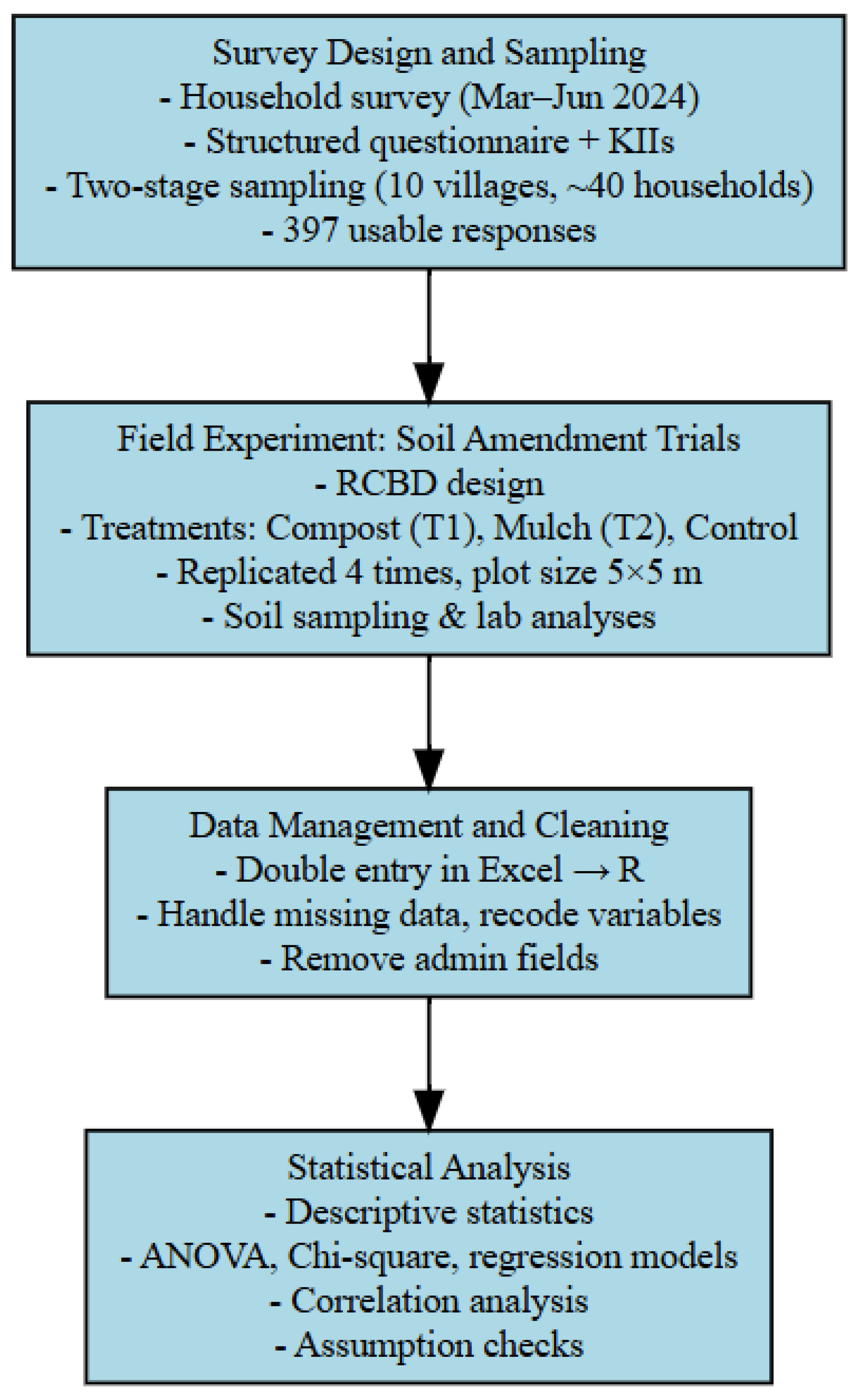
A household survey was conducted between March and June 2024 to characterize soil fertility and water management practices, assess farmers’ perceptions of their effectiveness and resulting yields, and examine factors influencing decisions on scheduling, sourcing, and investment in water and nutrient management (Figure 1). Data were collected using a structured questionnaire administered through face-to-face interviews by trained enumerators, complemented by Key Informant Interviews to provide additional context. The questionnaire comprised thematic sections, including demographic and farm characteristics, water management practices, soil fertility management practices, and adoption barriers and willingness to pay for improved systems. Questions were primarily closed-ended (categorical and Likert scale), supplemented by open-ended items to capture farmer perspectives. The instrument was pre-tested with 20 farmers to ensure clarity and contextual relevance. A two-stage sampling design was employed: first, ten villages were randomly selected from Ndeiya and Thigio divisions of Kiambu County; second, within each village, approximately 40 farming households primarily engaged in crop production were systematically sampled from local administrative lists. Of the 400 questionnaires distributed, 397 were fully completed and retained for analysis, yielding a 99.25% usable response rate. Verbal informed consent was obtained from all participants prior to the interviews. Ethical approval for this study was obtained from the National Commission for Science, Technology and Innovation (NACOSTI), Kenya. No personal identifiers were collected, and all data were anonymized prior to analysis.
While farmer-reported perceptions of effectiveness are inherently subjective, the use of structured questionnaires, pre-testing, and triangulation with observed practices helped minimize potential response bias. In addition, the large sample size (397 households) and two-stage random sampling design reduced the likelihood of systematic bias and ensured that farmer-reported perceptions were broadly representative of the study area.

2.3. Field Experiment: Soil Amendment Trials

To complement the survey data and directly assess the impacts of organic amendments on soil properties, a field experiment was established on four adjacent smallholder farms in Ndeiya Division in March 2024 using a Randomized Complete Block Design (RCBD) (Figure 1). The trial included two treatments: compost application (T1), mulch application (T2), and a control with no amendment. Treatments were randomly allocated within blocks and replicated four times, giving a total of twelve plots, each measuring 5 × 5 m.
Prior to treatment application, baseline soil sampling was conducted in March 2023 to characterize initial soil chemical and physical properties and assess spatial variability across farms. Composite samples were collected from each plot at 0–30 cm depth by combining five subsamples per plot to obtain one representative sample. These baseline data (pH, total N, organic carbon, exchangeable K and texture) were used to confirm comparability among plots and to account for pre-treatment heterogeneity in subsequent analyses.
To minimize spatial bias, plots were established on adjacent farms with similar management histories, and the RCBD structure ensured that variability between farms was controlled statistically. All plots were cleared of surface residues and homogenized by light hand tillage before amendment application to reduce microsite differences.
Soil samples collected at baseline and after one year of treatment were air-dried, sieved (2 mm), and analyzed at the University of Nairobi Soil Science Laboratory. Soil pH was determined in a 1:2.5 soil-to-water suspension using a glass electrode; total nitrogen by Kjeldahl digestion; soil organic carbon by wet oxidation method; available phosphorus by Olsen method; and exchangeable potassium by flame photometry. Bulk density was measured using the core ring method, saturated hydraulic conductivity by constant head method, available water capacity by pressure plate apparatus, and gravimetric soil moisture content by oven-drying at 105 °C, following procedures in [28].

2.4. Data Management and Cleaning

Survey data were double-entered into Microsoft Excel to minimize transcription errors and subsequently imported into R (version 4.3.1) for cleaning and analysis (Figure 1). Data preprocessing involved screening for inconsistencies and resolving discrepancies by cross-referencing with original questionnaires, dropping variables with more than 10% missing data, and imputing isolated missing values using modal category imputation for categorical variables. Administrative fields such as enumerator IDs, timestamps, and GPS coordinates were removed, and categorical variables were recoded into binary or ordinal indicators to prepare the dataset for statistical analysis (Table 1). Data and code will be made available upon request.

2.5. Statistical Analysis

Descriptive statistics (means, standard deviations, and proportions) summarized household characteristics and agricultural practices. Inferential analyses included analysis of variance (ANOVA) to test differences in soil moisture conservation ratings across soil fertility and irrigation groups and to assess treatment effects on soil properties and gravimetric moisture in the field experiment. Chi-square tests evaluated associations between categorical variables, while multiple linear and logistic regression models examined the influence of irrigation frequency, fertilizer type, organic amendments, and other factors on leafy vegetable yields and relevant binary outcomes. Pearson correlation analysis explored relationships among soil organic carbon, bulk density, available water capacity, and yields. Model assumptions, including normality and homoscedasticity, were checked using residual plots and Shapiro–Wilk tests. All analyses were conducted in R, with significance levels and confidence intervals reported as appropriate for each test (Figure 1).

3. Results and Discussion

3.1. Characterization of Water and Soil Fertility Management Practices

3.1.1. Water Sources and Irrigation Practices

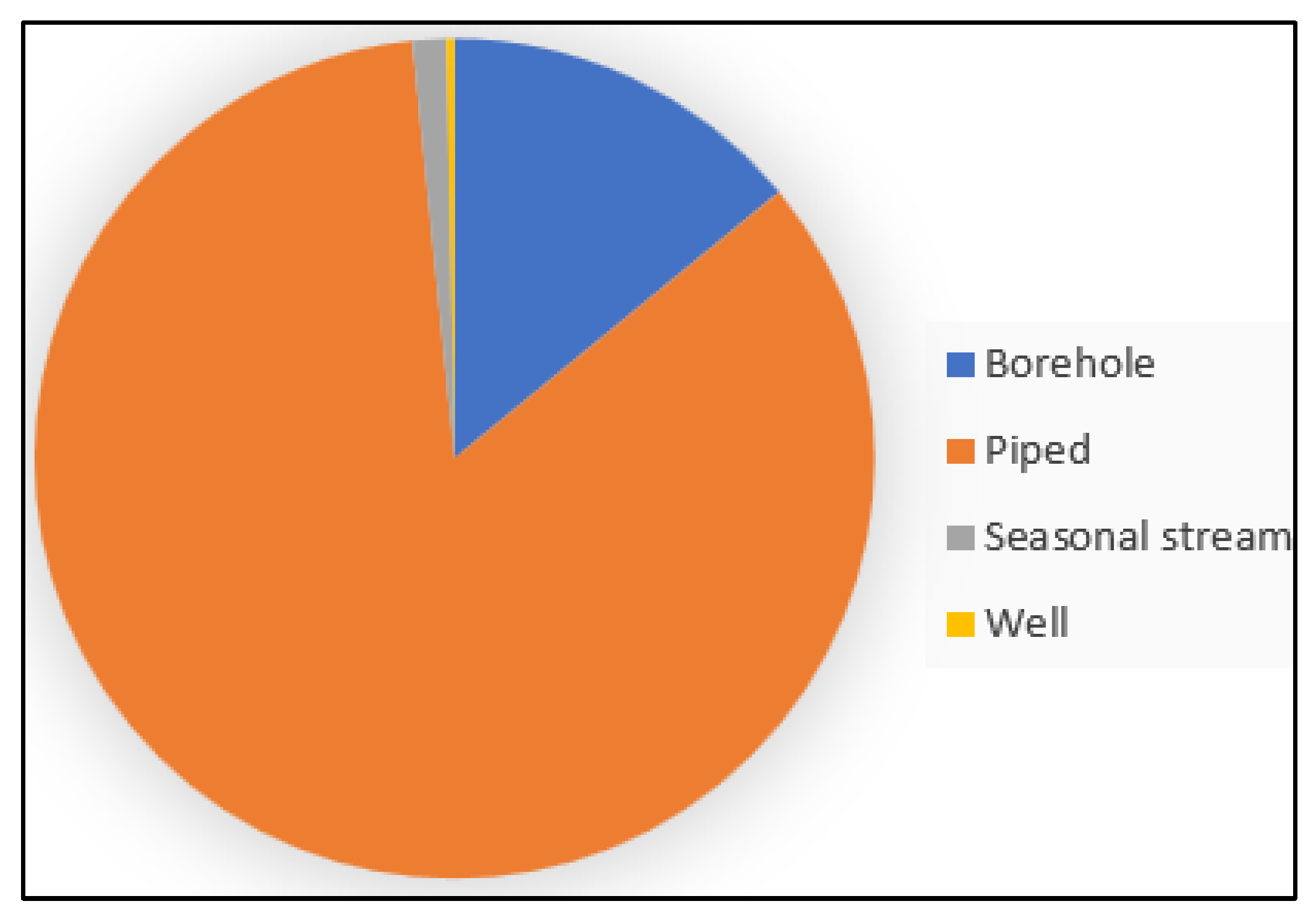
According to the summary results (Figure 2), the majority of household respondents (84%) rely on piped water, while 14% use borehole water, and very few depend on seasonal streams (1.3%) and wells (0.3%). This indicates that piped water is the predominant household water source in the study area. Such high dependence on centralized piped systems is consistent with observations in periurban Kiambu, where modern irrigation, comprising motorized pumps and piped conveyance from streams and wells is used by at least 63% of irrigating farmers [29]. However, it also suggests vulnerability to supply disruptions, which could directly affect both household water security and irrigation scheduling [1,30]. These findings underline the importance of building resilient local storage and distribution systems, highlighting gaps in achieving SDG 6 (Clean Water and Sanitation), where resilient and equitable access to water is central to sustainable communities.
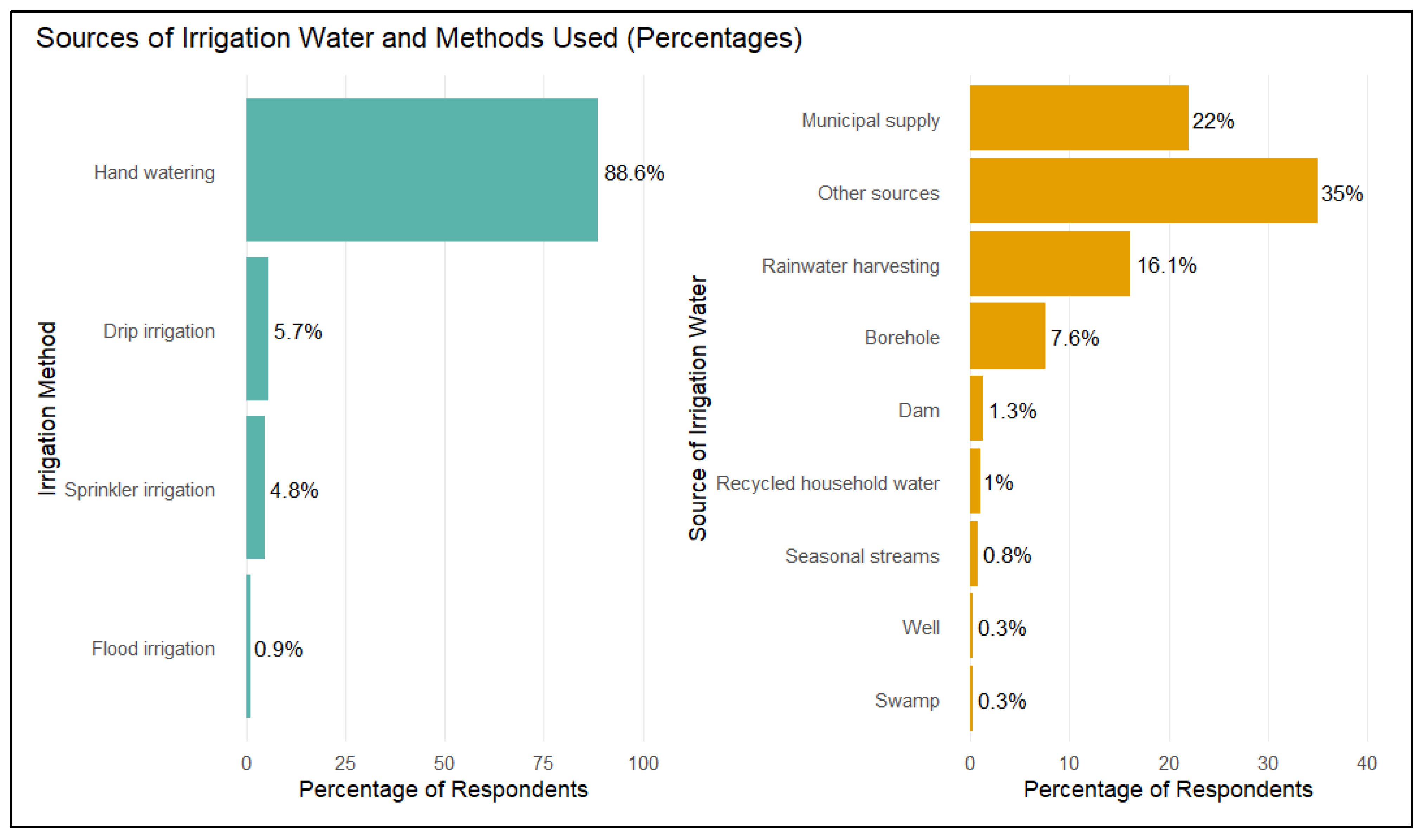
Smallholder farmers in Ndeiya rely on diverse and often unreliable water sources for farming beyond rainfall. As illustrated in Figure 3, 22% (ns = 87) of respondents use piped municipal water, while 35% (n = 139) depend on “other” sources such as seasonal pans and open pits, and rainwater harvesting contributes 16.1% (n = 64). This fragmented water landscape closely mirrors patterns observed in semi-arid parts of Machakos and Kitui, where farmers similarly combine rainwater harvesting, shallow pits, and piped water [31]. Among irrigation methods, hand watering dominates (88.6%, n = 203; 95% CI: 83.6–92.3%), with minimal uptake of drip (5.7%, n = 13) or sprinkler (4.8%, n = 11) systems. Chi-square tests indicated no significant association between irrigation method and water source (χ2 = 6.60, df = 9, p = 0.679), suggesting that farmers’ reliance on hand watering is consistent across different water sources rather than being driven by source type. Hand watering, using buckets, watering cans, or hoses, persists primarily because of its low upfront cost, operational flexibility, and compatibility with fragmented and unreliable water sources. These patterns have been observed across Sub-Saharan Africa, where smallholders prioritize irrigation practices that minimize financial risk and adapt easily to seasonal or spatially dispersed water availability [32].
In contrast, drip irrigation offers clear performance advantages in terms of water productivity, labor efficiency, and yield outcomes. Evidence from semi-arid environments in Iran shows that drip systems substantially reduce water use while increasing vegetable yields and lowering daily labor requirements compared to conventional surface and sprinkler irrigation methods requirements [33]. These gains are widely attributed to precise root-zone water delivery, which reduces evaporation and non-beneficial water losses [34]. Sprinkler irrigation, although less labor-intensive than hand watering, generally requires higher operating pressures and greater water volumes, limiting its suitability under conditions of unreliable energy supply and constrained maintenance capacity [35].
Despite these advantages, high capital costs, recurrent maintenance demands, and dependence on reliable water supply constrain adoption among smallholders. These barriers mirror structural constraints documented among smallholders in Sub-Saharan Africa, where limited access to credit and extension services restrict uptake of micro-irrigation [36], while evidence from India shows that similar technologies achieve higher adoption when supported by targeted subsidies, accessible financing, and sustained institutional support [37]. These findings reflect a structural trade-off in which farmers rely on labor-intensive but affordable methods. Bridging the gap between efficiency and adoption is not only a local priority but also a global imperative, ensuring that smallholder irrigation contributes meaningfully to water security (SDG 6) and sustainable production (SDG 12).

3.1.2. Irrigation Scheduling and Water Use Decisions

Most farmers (38.8%) relied on visual observation of crop condition to determine when to irrigate, while 32.5% used soil moisture cues (Table 1). Only a minority used fixed schedules (11.3%), crop water requirements (6.8%), or weather forecasts (10.3%). This dominance of experiential decision-making reflects a broader trend across smallholder systems in Eastern and Southern Africa, where limited access to weather information and technical tools constrains adoption of empirical irrigation planning [38,39].
Such reliance on observation-based practices, while adaptive, often results in inefficiencies in water use, as also reported by farmers in Mwala, Machakos county [39]. A study Munyanyi et al. [40] in Zimbabwe shows that integrating simple soil moisture sensors into farmer training programs significantly improved water-use efficiency, emphasizing the potential of combining traditional knowledge with empirical tools. Moreover, evidence from farmer cooperatives in Southern Africa [41] suggests that shared access to weather advisories and monitoring technologies can reduce costs and improve uptake, highlighting the role of community-based approaches in building resilience. Embedding these tools within extension services could therefore transform irrigation scheduling from reactive to proactive, enhancing both water-use efficiency and long-term sustainability.
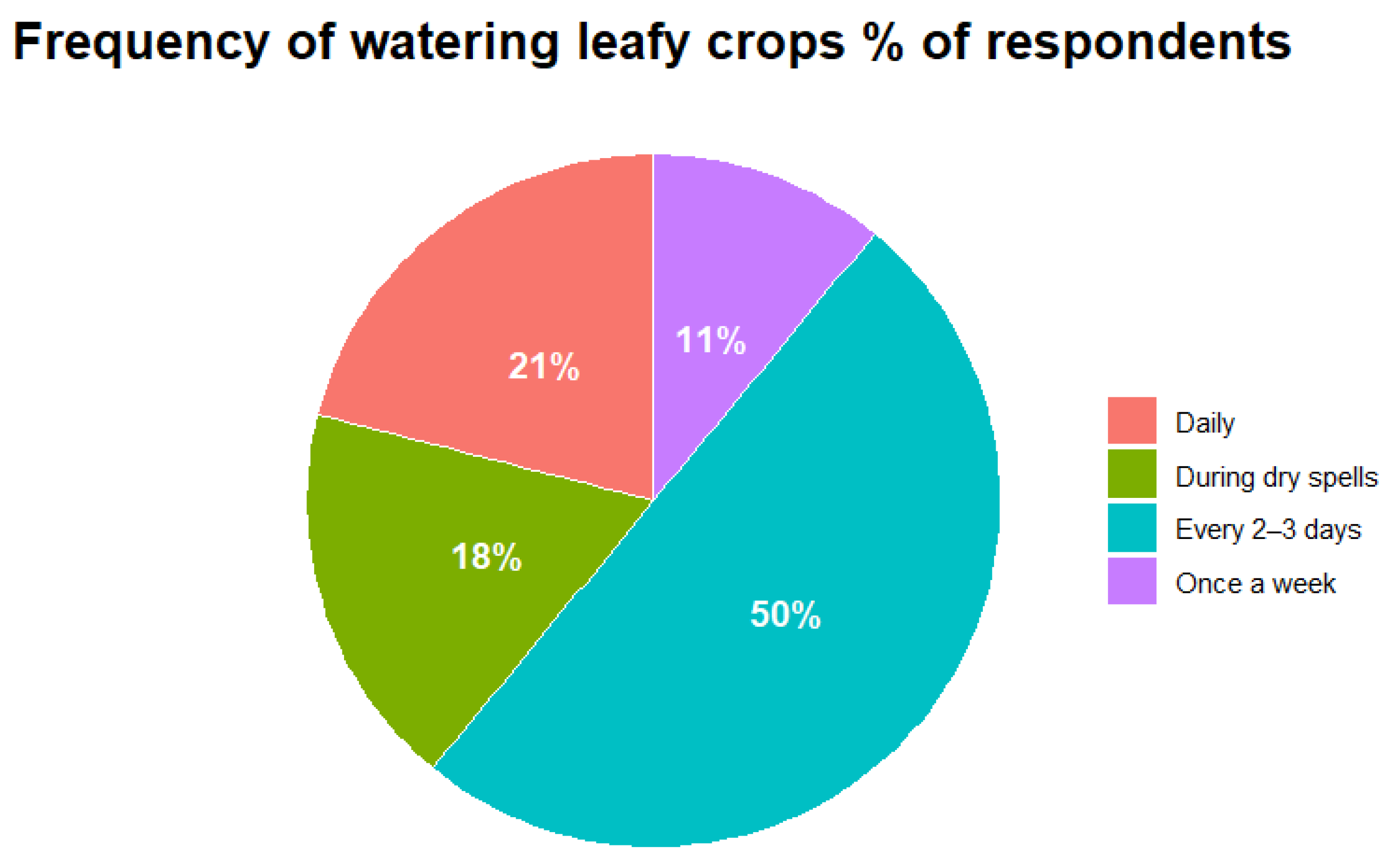
The frequency of irrigation varied considerably among farmers in Ndeiya (Figure 4). About 21% irrigated daily, 50% every two to three days, 11% once a week, and 18% only during dry spells. Additionally, 42.8% of farmers relied entirely on rainfall for vegetable production. These results indicate the coexistence of both irrigated and rain-fed systems, reflecting the semi-arid conditions and irregular water availability in the area. Similar watering patterns have been reported in a study by Lu et al. [42] which showed that frequent light irrigation compensates for low soil moisture and erratic rainfall.
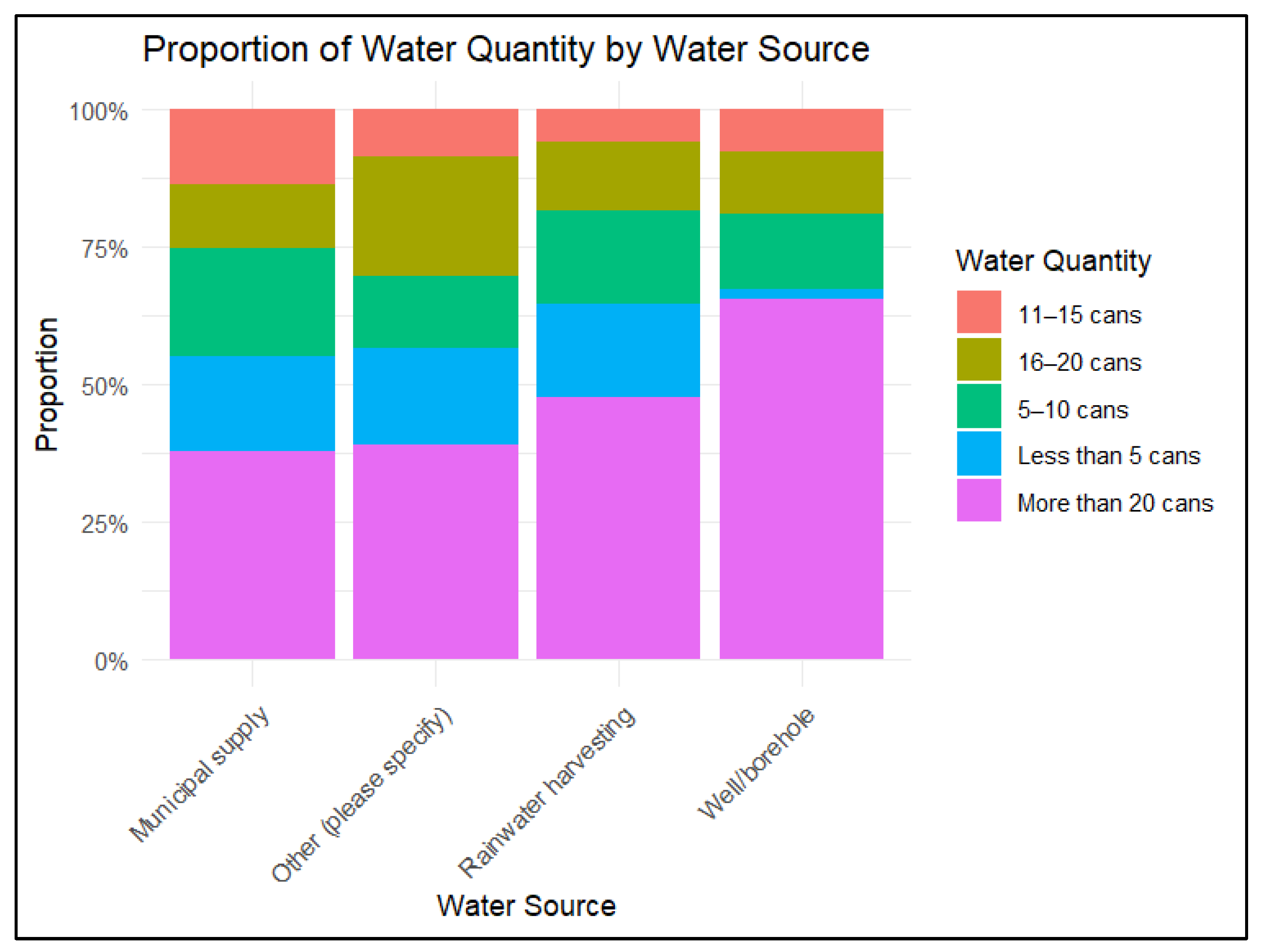
Water use patterns also varied substantially across farmers (Figure 5). The most common category was farmers applying more than 20 cans per day (27%), while smaller proportions used 5–10 cans (9.6%), less than 5 cans (7.8%), or 16–20 cans (7.3%). These differences were significantly associated with the sources of water (χ2 (25) = 349.8, p < 0.001). Farmers drawing water from wells/boreholes and municipal supplies were more likely to use higher daily volumes, compared to those relying on harvested rainwater or other sources. Such variation is typical in smallholder systems where access to water sources, scale of production, and the availability of labor shape irrigation practices. Comparable findings from Ethiopia show that high-frequency, small-volume irrigation is a common adaptation to limited and unreliable water supply [43].
These findings suggest that while farmers employ flexible, experience-based irrigation strategies, the lack of standardized scheduling and low adoption of efficient irrigation technologies may constrain water-use efficiency. Strengthening farmer capacity in irrigation planning, coupled with improved water storage and conveyance infrastructure, could enhance the resilience and productivity of smallholder vegetable systems in semi-arid environments, as also noted by [44]. Coordinated community-level planning could further transform these fragmented practices into more sustainable systems [45], reinforcing resilience under semi-arid conditions and advancing SDG 2 (Zero Hunger) through more stable vegetable production.

3.1.3. Soil Fertility and Moisture Conservation Practices

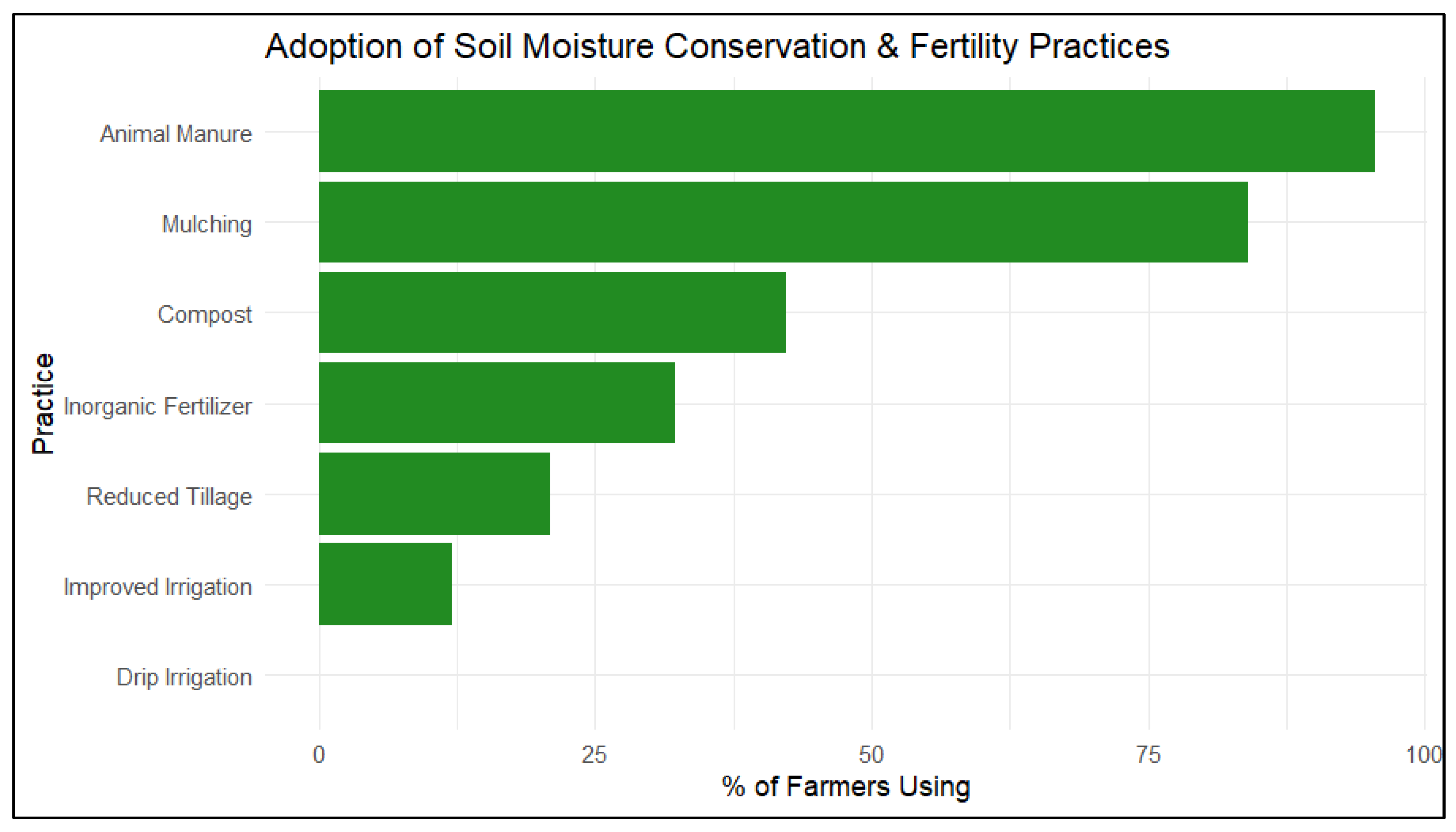
Farmers employed a range of practices aimed at conserving soil moisture and improving fertility (Figure 6). Mulching was the most common (84%), followed by reduced tillage (21%), and drip irrigation (0.05%) was least common. The widespread application of organic amendments, primarily farmyard manure (95.5%), often timed with planting (84.1%), and compost (42.3%), also emphasizes local approaches to managing soil moisture. In contrast, inorganic fertilizer use was lower (32.2%), reflecting both cost and local preference for organic amendments. These findings highlight how farmers recognize the multifunctionality of organic amendments, appreciating benefits that extend beyond nutrient supply to include improved soil water retention. In Kenya, a survey of smallholder farmers in Meru and Tharaka-Nithi counties reported that over 90% combined manure and inorganic fertilizers, yet farmers consistently perceived manure as more effective for conserving soil moisture [46]. More recent field trials in Tharaka-Nithi confirmed these perceptions, showing that integrating mulching and minimum tillage significantly enhanced soil water retention and vegetable yields under semi-arid conditions [47]. These findings closely mirror the dominance of mulching and manure use observed in Ndeiya, suggesting that farmer preferences for organic amendments are both widespread and empirically validated.
Farmers’ perceptions of effectiveness were consistent with measured outcomes: 57.9% rated their fertility practices as ‘very effective’ in conserving soil moisture, and ANOVA tests (Table 2) confirmed significant associations between manure use and improved moisture retention (F = 16.21, p < 0.001), highlighting manure as the most consistently effective practice. Interestingly, while manure usage stood out (95.5%), the reported use of inorganic fertilizers did not show a significant perceived effect on soil moisture conservation (F = 2.01, p = 0.135), suggesting that farmers primarily associate moisture-holding benefits with organic rather than synthetic inputs. Consistent with this, chi square tests confirmed highly significant associations between adoption (Figure 6, Table 2) and perceived effectiveness (Table 2) across all practices (χ2 ≈ 310, df = 1, p < 0.001). This indicates that farmers’ application of soil fertility and moisture conservation practices is strongly aligned with their belief in the effectiveness of those practices for soil conservation.
Farmers’ perceptions of manure and mulching as effective moisture-conserving practices were consistent with the experimental evidence, which demonstrated that organic amendments improved soil organic carbon, water-holding capacity, and gravimetric moisture. Farmer-reported perceptions of effectiveness are inherently subjective and may be subject to response bias; however, in this case their alignment with experimental evidence suggests that experiential knowledge is grounded in observable biophysical mechanisms. Although drip irrigation is widely recognized as one of the most efficient water-saving technologies [48], its limited adoption among farmers in Ndeiya illustrates a gap between proven agronomic efficiency and actual practice, shaped largely by socio-economic constraints. Comparable evidence from Tanzania reinforces this pattern, a study in Ludewa District showed that farmers regarded mulching and manure incorporation as critical for reducing drought vulnerability, though adoption was constrained by labor demands [49]. In Ethiopia, conservation agriculture trials by CIMMYT [50] showed that minimum tillage and composting visibly enhanced soil water retention and crop performance, reinforcing the multifunctionality of organic amendments.
The widespread use of manure and compost also reflects local waste management strategies, where organic residues are recycled into soils rather than discarded, thereby reducing environmental burdens and enhancing resilience. Strengthening farmer capacity in composting and manure management, alongside community-based initiatives [51], could therefore scale these practices into more sustainable and climate-resilient agroecosystems, while contributing to broader goals of resource efficiency under SDG 12.

3.2. Quantifying How Compost and Mulch Affect Soil Health Parameters

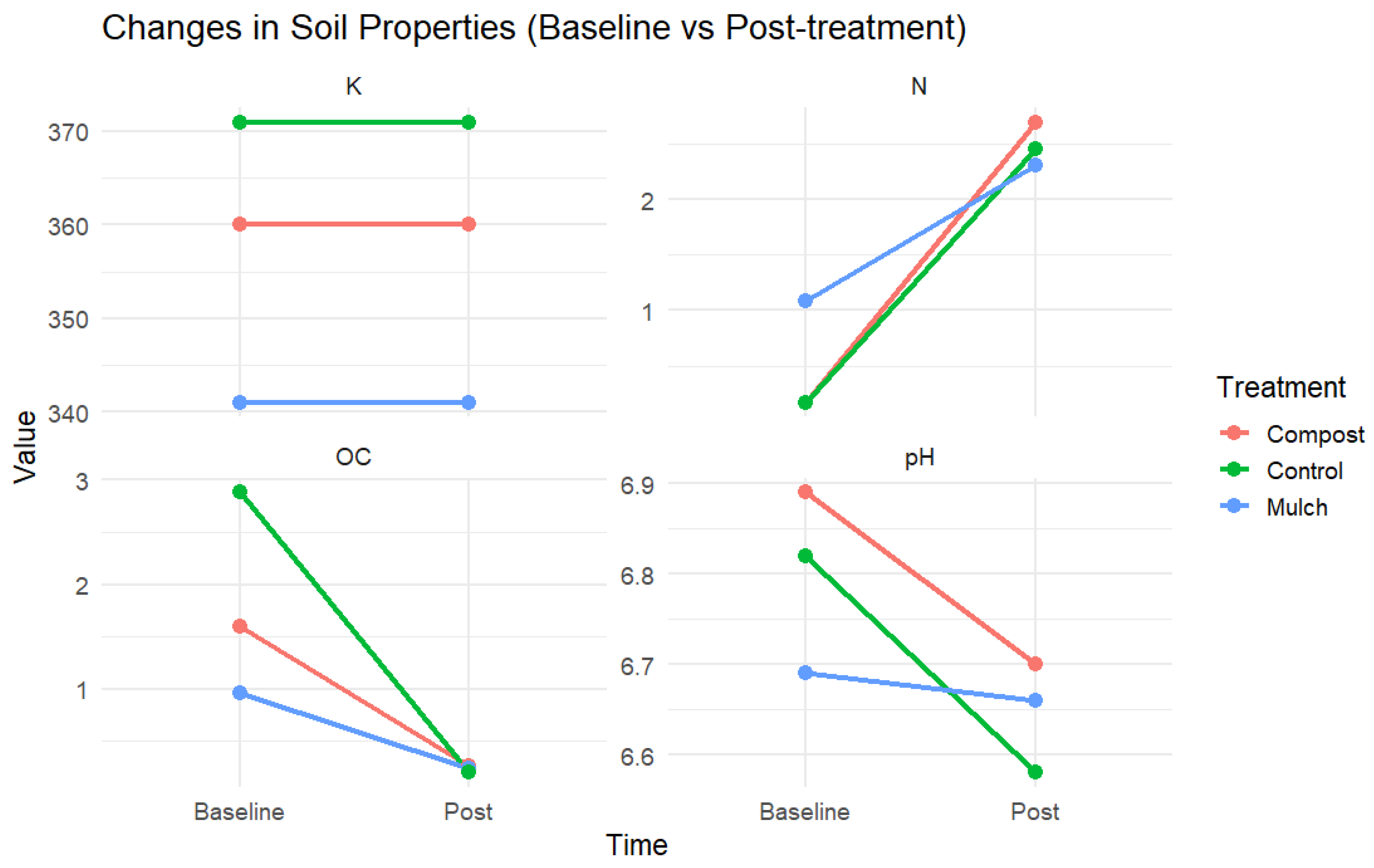
The field experiment provided quantitative evidence supporting farmer-reported perceptions of the benefits of compost and mulch on soil health. Baseline soil chemical analysis (March 2023) revealed moderate variability across treatments, particularly for organic carbon in control plots (2.88 ± 2.60%). Compost and mulch plots were more uniform, with pH values ranging between 6.7 and 6.9 and organic carbon between 1.0 and 1.6% (Figure 7). This baseline consistency provided confidence in subsequent treatment comparisons. The baseline soils were predominantly clayey (52–60% clay, 22–25% silt, 17–23% sand), with ANOVA tests showing no significant differences among pre-treated plots for clay (F = 4.03, p = 0.141) and silt (F = 2.71, p = 0.213), and only a marginal trend for sand (F = 6.75, p = 0.078), confirming that plots were broadly comparable in texture at baseline.
After one year of treatment (March 2024), compost maintained near-neutral pH (6.70 ± 0.22) and showed the highest nitrogen levels (2.70 ± 0.33%), while organic carbon declined to 0.27 ± 0.02%. Mulch plots stabilized pH (6.66 ± 0.07) and increased nitrogen to 2.31 ± 0.13%, with organic carbon at 0.24 ± 0.02%. Control plots showed a greater decline in pH (6.58 ± 0.25) and organic carbon (0.20 ± 0.02%), with nitrogen rising to 2.46 ± 0.29%. Exchangeable potassium remained stable across treatments (360–371 mg/kg). These results demonstrate that compost and mulch stabilized soil pH and organic carbon relative to controls, while nitrogen increased across all treatments. The large baseline variability, particularly in control plots, highlights the importance of replication and cautious interpretation of short-term changes.
As shown in Table 3 and Table 4, compost application significantly increased soil organic carbon (OC), available water capacity (AWC), and gravimetric moisture content compared to control plots (p < 0.05). Specifically, compost raised OC by 0.057 g C g−1 soil (approximately 29% higher than the control), increased AWC by 19.8 mm/m, and enhanced soil moisture by 1.33 percentage points (from 32.6% to 33.9%). Mulch application also improved these parameters, though to a lesser extent. Compared to the control, mulch increased OC by 0.026 g C g−1 soil, AWC by 6.8 mm/m, and soil moisture by 1.96 percentage points (from 31.0% to 32.9%).
These results indicate that organic amendments, particularly compost, exert a strong influence on soil physical properties associated with water retention and carbon accumulation. The larger increases in OC and AWC under compost treatments reflect its role as a direct organic matter input, which enhances soil aggregation, increases microporosity, and improves the soil’s capacity to retain plant-available water [52]. Evidence from other dryland regions also confirms these mechanisms: a global meta-analysis by Halder et al. [53] showed that organic amendments significantly increase soil aggregation and organic carbon fractions across diverse cropping systems, including low-rainfall contexts.
The observed increase in available water capacity under compost and mulch arises from both physical aggregation and microbial binding agents such as extracellular polymeric substances (EPS), which stabilize aggregates and improve pore connectivity. Similar pore-scale restructuring has been documented in desert ecosystems with Caragana korshinskii litter inputs [54], and in engineered wetlands where zeolite substrates mitigate microbial clogging and sustain hydraulic conductivity [55]. Comparable analogies can also be drawn from soil remediation research, where catalytic systems restructure chemical pathways to simultaneously degrade pollutants and restore soil function [56]. These parallels emphasize that organic inputs in Ndeiya improve soil moisture regulation through biologically driven pore stabilization, contributing to longer-term resilience.
In contrast, mulch primarily functions as a surface cover that reduces evaporative losses and buffers soil temperature, explaining its relatively stronger effect on gravimetric moisture despite smaller gains in OC and AWC. A review of mulching practices in agroecosystems highlighted that organic mulches stimulate microbial binding agents that improve soil aggregation and reduce evaporation, with much of the evidence drawn from semi-arid South Asian context [57]. These complementary mechanisms, observed in Ndeiya, illustrate how compost modifies intrinsic soil structure and carbon pools, while mulch governs surface water dynamics. Together, they stabilize nutrient processes, enhance hydrological functions such as infiltration and recharge, and contribute to ecological restoration pathways that rebuild soil function and ecosystem resilience in degraded semi-arid landscapes [58].
The absence of significant differences among treatments for soil pH, total nitrogen, available phosphorus, potassium, bulk density, and saturated hydraulic conductivity (p > 0.05) suggests that short-term organic amendments preferentially influence soil physical attributes rather than chemical fertility or macropore-driven infiltration processes. This pattern is consistent with findings from other semi-arid systems, for instance in central India [59] where compost application improved soil aggregation and water retention within one season, while nutrient release effects became evident only after multiple cropping cycles. In addition, a global synthesis by Matisic et al. [60] concluded that organic amendments initially enhance soil structure and moisture dynamics, with chemical fertility benefits accruing more gradually through mineralization and microbial turnover. These results confirm that compost and mulch deliver immediate and measurable improvements in soil physical properties critical for water conservation under semi-arid conditions, whereas chemical fertility benefits are more likely to accrue over longer time horizons. As soil structure and moisture regimes improve, sustained organic inputs progressively regulate nutrient cycling, buffer pH, stabilize infiltration pathways, and support the recovery of soil biota and ecosystem resilience [61].
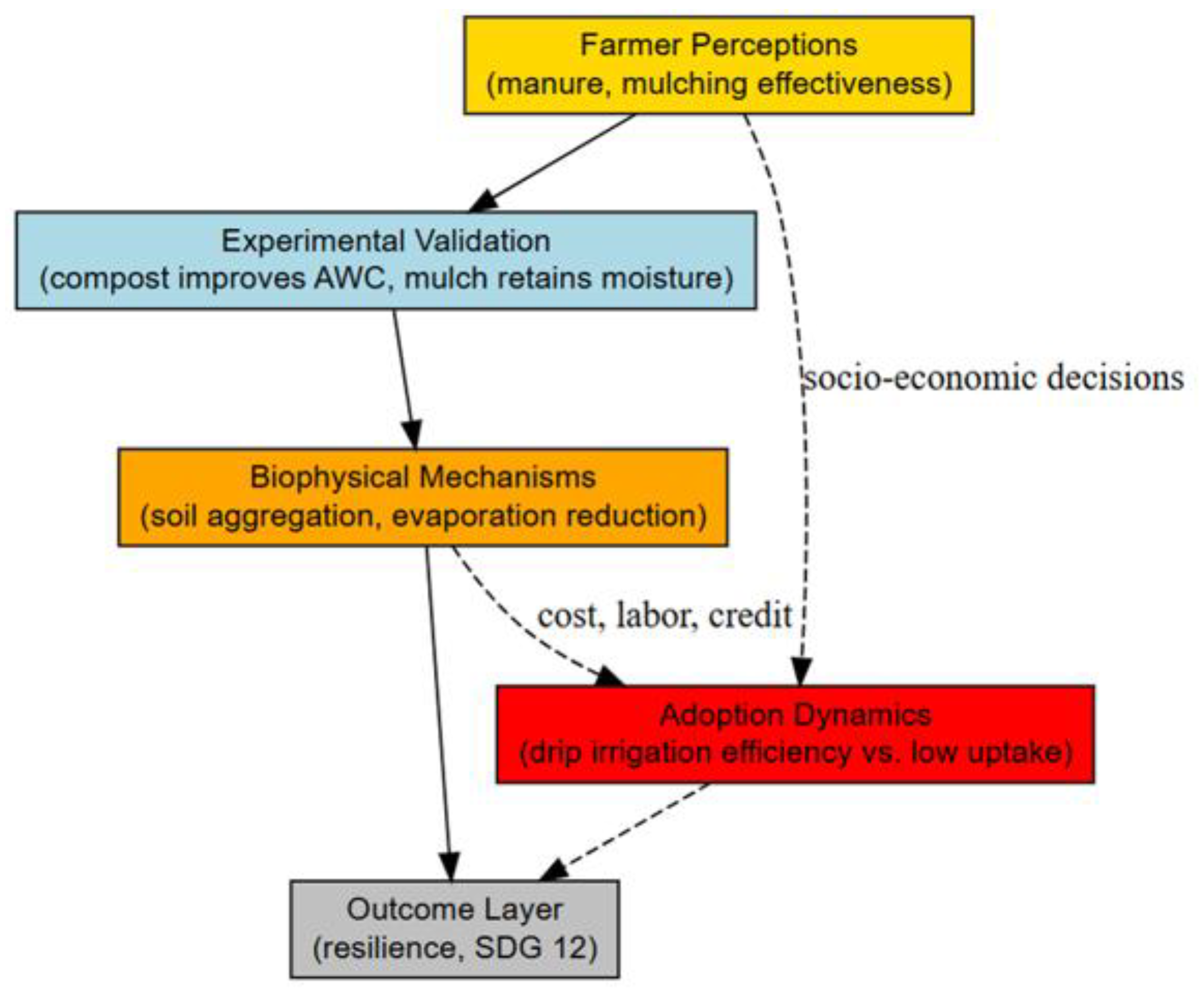
The alignment between experimental results and farmer perceptions strengthens the validity of locally observed knowledge and emphasizes the role of organic amendments as foundational components of integrated soil and water management strategies aimed at enhancing resilience and productivity in smallholder systems. Figure 8 illustrates a conceptual integration framework linking farmer perceptions and experimental validation with biophysical mechanisms, adoption dynamics, and resilience outcomes. Solid arrows indicate alignment between evidence streams; dashed arrows highlight divergences shaped by socio-economic constraints.

3.3. Synthesis and Implications for Soil and Water Management in Smallholder Systems

Yield Impacts and Synergies of Integrated Management

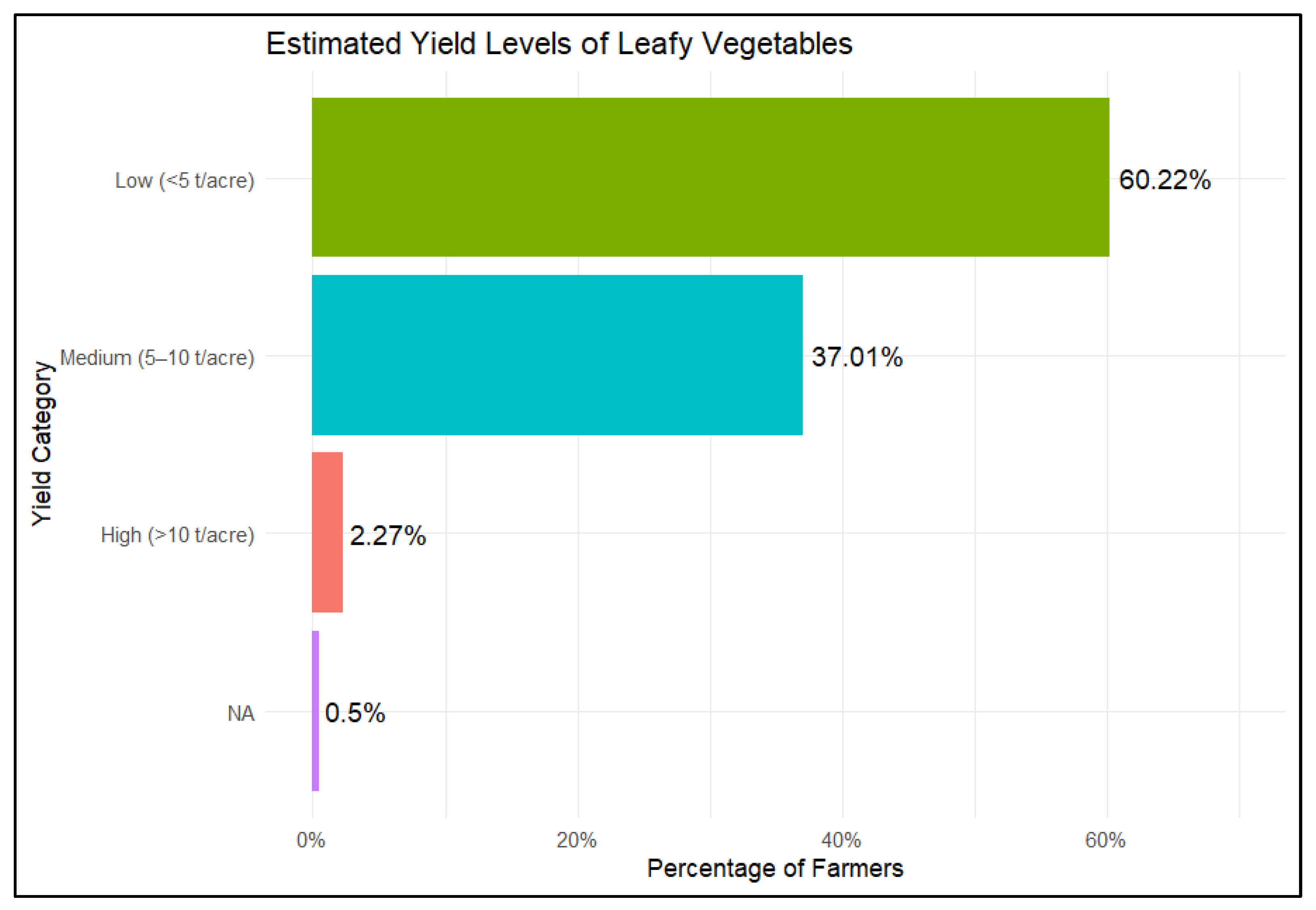
This study revealed generally low productivity levels of leafy vegetables among smallholder farmers in the study area. As summarized in Figure 9, 60.2% of farmers reported yields below 5 tons per acre, while 37.0% achieved yields between 5 and 10 tons per acre. Only a small fraction (2.27%) realized yields above 10 tons per acre, highlighting the considerable yield gaps that persist under semi-arid conditions characterized by both soil fertility constraints and water scarcity. These yield levels are consistent with those observed in semi-arid regions of Machakos and Makueni counties, Kenya, where smallholder vegetable production under farmer-managed irrigation systems is often constrained by limited water availability and degraded soils [8,62]. However, they contrast with higher yields (10–15 tons per acre) observed in majority of humid Central Kenya under controlled irrigation and improved nutrient management [63], emphasizing the influence of access to farm inputs including irrigation infrastructure and deeper, more nutrient rich soils [64].
Regression analyses exploring the influence of individual management practices indicated limited impacts on yields when these interventions were applied in isolation. Logistic regression results (Table 5) showed that irrigation frequency was positively associated with yields (β = 0.015), though this relationship was not statistically significant (p = 0.20). Similarly, fertilizer use (β = −0.027, p = 0.43) and application of organic amendments (β = −0.011, p = 0.81) were not significant predictors of yield and, in fact, displayed slightly negative coefficients. This finding agrees with Mutiso [65], who demonstrated that fertilizer application alone did not significantly enhance crop yields under low-moisture conditions in Makueni County, Kenya, and that integrating fertilizer microdosing with in situ moisture conservation practices was more effective. Likewise, studies across Sub-Saharan Africa indicate that nutrient applications without concurrent moisture management offer limited yield benefits due to low nutrient uptake efficiency in dry soils [66]. This highlights the need for integrated soil fertility and water management (ISFWM) practices, such as intercropping, tied ridges, mulching, and combining organic and inorganic fertilizers, which have shown promise in improving water use efficiency and stabilizing yields in rainfed smallholder systems, as also observed in Morocco [67].
Additional chi-square tests reinforced these observations. The association between irrigation methods and vegetable yields was statistically insignificant (χ2 = 10,374, df = 10,348, p = 0.4265), indicating that simply shifting among hand watering, bucket irrigation, or drip systems did not by itself explain yield variations [68]. In contrast, there was a highly significant association between soil moisture conservation practices and yield levels (χ2 = 371.3, df = 104, p < 0.001), pointing to the critical role of practices such as mulching and rainwater harvesting in sustaining vegetable productivity. Similar conclusions have been reported in [69], which highlight that soil moisture conservation practices can markedly improve yields in semi-arid systems. ANOVA results (Table 5) provided further evidence of the benefits of combining practices. Integrated management approaches, where farmers applied organic amendments together with soil moisture conservation techniques, were associated with significantly higher soil moisture conservation ratings (F = 5.16, p < 0.001) and substantially improved yields (F = 16.37, p < 0.001). This supports the premise of positive synergies arising from addressing both soil fertility and water limitations concurrently [70].
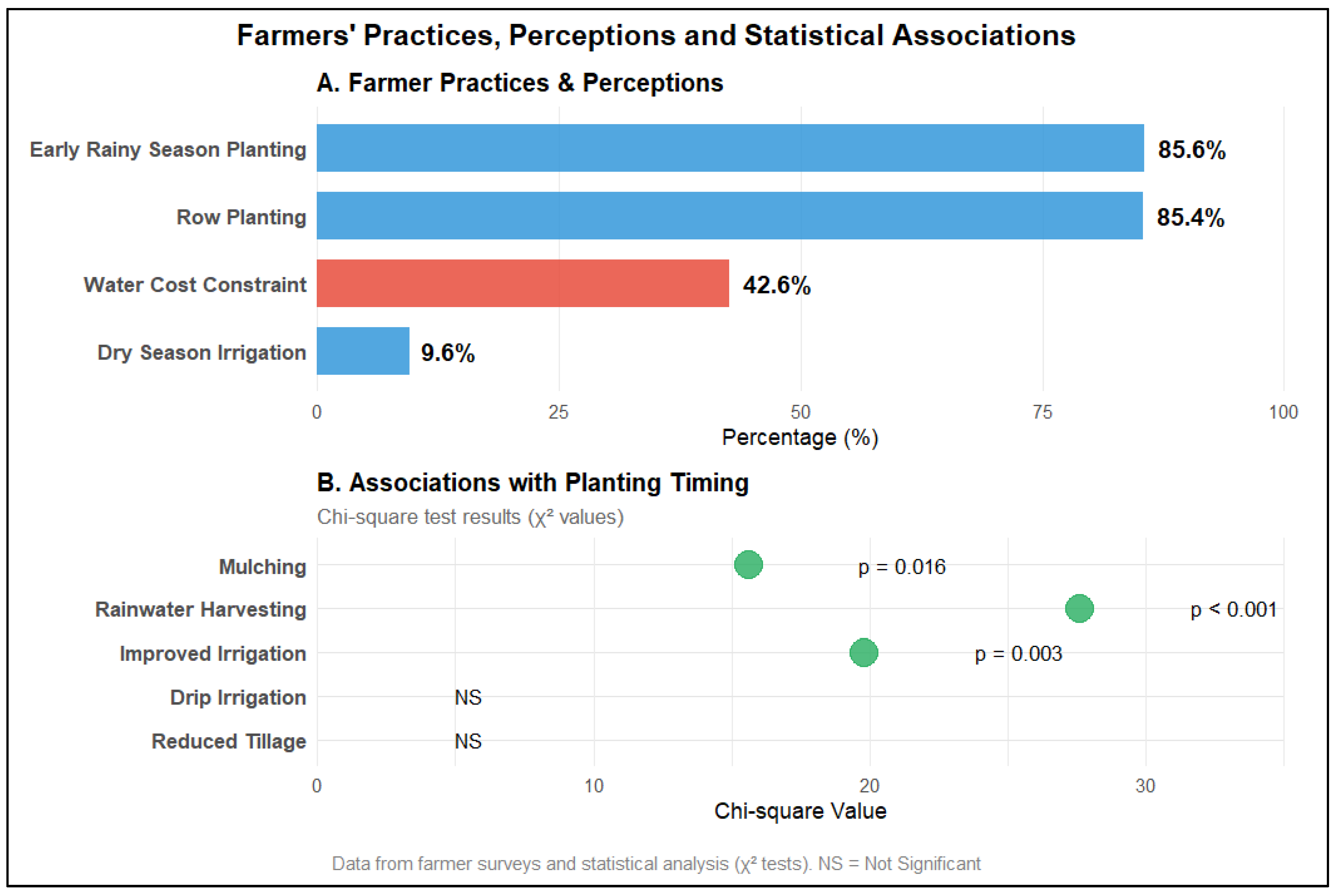
Farmers’ practices and perceptions further highlighted these interactions (Figure 10). A substantial majority (85.4%) practiced row planting, which facilitates more efficient use of both water and nutrients, while 85.6% planted early in the rainy season to take advantage of initial moisture flushes. Only 9.6% relied on irrigation during the dry season, largely due to prohibitive water costs, which were cited by 42.6% of farmers as a major production constraint (Figure 10A). The planting timing were compared to moisture conservation practices (Figure 10B). Significant associations emerged between planting timing and several practices: mulching (χ2 = 15.6, df = 6, p = 0.016), rainwater harvesting (χ2 = 27.6, df = 6, p < 0.001), and improved irrigation scheduling (χ2 = 19.8, df = 6, p = 0.003). Farmers planting early in the rainy season were more likely to practice mulching, reflecting efforts to capture initial rainfall and reduce evaporation. Rainwater harvesting was particularly common among those planting in mid-rainy or dry seasons, highlighting its role in buffering rainfall variability. Improved irrigation scheduling was adopted by farmers planting during dry periods, highlighting strategies to optimize scarce water resources. In contrast, drip irrigation and reduced tillage were not significantly related to planting timing, reflecting either the low adoption or independent decision-making. Overall, these results confirm that planting timing is a stronger determinant of moisture conservation strategies than planting pattern, demonstrating how farmers integrate seasonal decisions with water-saving measures.
Comparable trends have been documented in Kenya, where smallholder irrigation adoption remains constrained by high water costs, limited access, and rainfall variability, discouraging dry-season irrigation despite its potential benefits [71]. Outside Africa, evidence from India shows that farmers adapt to erratic rainfall by prioritizing low-cost moisture conservation practices such as mulching and rainwater harvesting, while weak seed systems continue to limit the effectiveness of improved agronomic practices [72]. These parallels reinforce the conclusion that planting timing and seed access are decisive factors shaping moisture conservation strategies, with economic and climatic constraints jointly determining the limits of farmer adaptation.
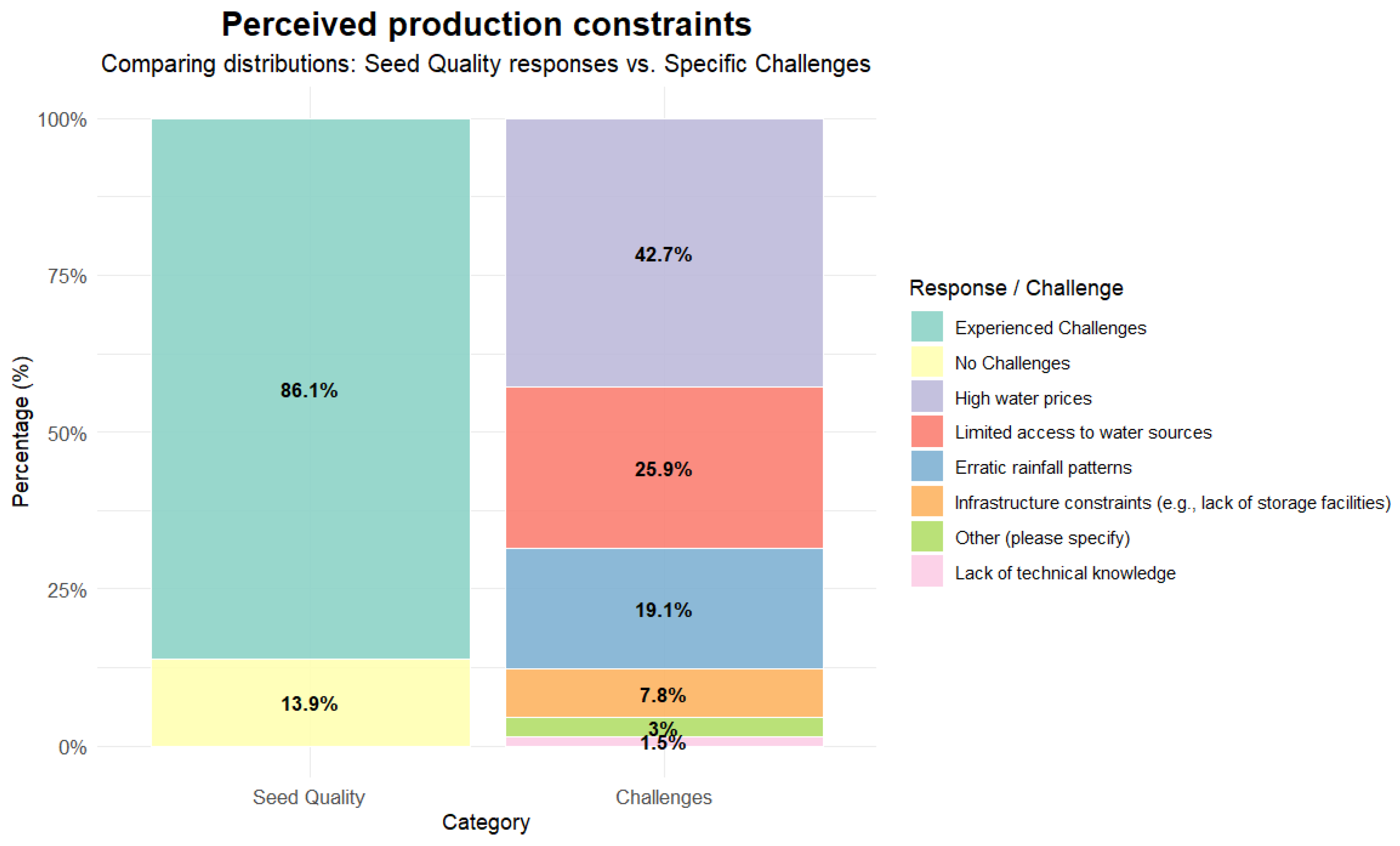
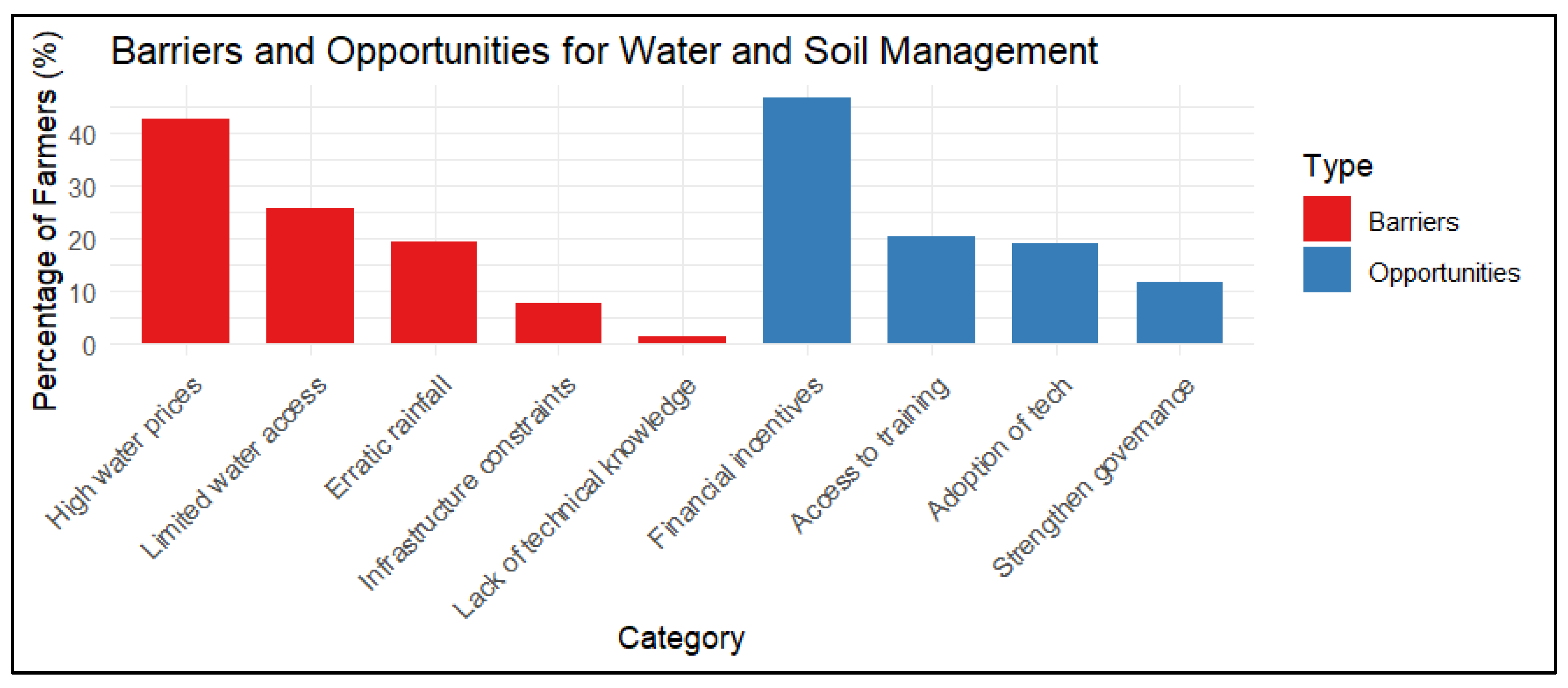
Seed quality (Figure 11) also emerged as a dominant constraint, with 86.2% of farmers reporting difficulties (95% CI: 82.8–89.5). Variability indices (IQV = 0.48, normalized entropy = 0.58, Simpson’s diversity = 0.24) confirmed that responses were heavily leaning toward seed quality challenges and a chi-square test against a uniform distribution (χ2 = 207.5, df = 1, p < 0.001) further demonstrated that seed quality constraints were significantly more prevalent than expected by chance. Perceived production constraints (Figure 11) were unevenly distributed (χ2 = 415.2, df = 6, p < 0.001). High water prices were the most frequently cited constraint (42.5%, 95% CI: 37.7–47.4), followed by limited access to water sources (25.8%, 95% CI: 21.7–30.3) and erratic rainfall patterns (19.2%, 95% CI: 15.7–23.4). Standardized residuals confirmed that water-related constraints were reported significantly more often than expected (residuals +16.1 and +6.6), while infrastructure, technical knowledge, and other issues were reported significantly less often (residuals −3.7 to −8.0). Together, these findings highlight the combined effects of climatic variability and input limitations, particularly water availability, cost, and seed access, as critical barriers to moisture conservation and vegetable productivity.
Evidence from Tanzania indicates that smallholder vegetable farmers frequently report poor seed quality and limited access to certified seed as major constraints to productivity. Reliance on informal seed systems has perpetuated low yields and restricted the adoption of improved agronomic practices, despite strong demand for high-quality seed [73]. Comparable dynamics have been observed in Latin America, where rainwater harvesting and mulching buffered climatic variability, yet dependence on informal seed markets constrained yields and reduced the benefits of improved agronomic practices [74]. Thus, this demonstrates that although farmers employ adaptive strategies to buffer climatic variability, seed quality and availability continue to be decisive factors influencing the success of moisture conservation and productivity outcomes.
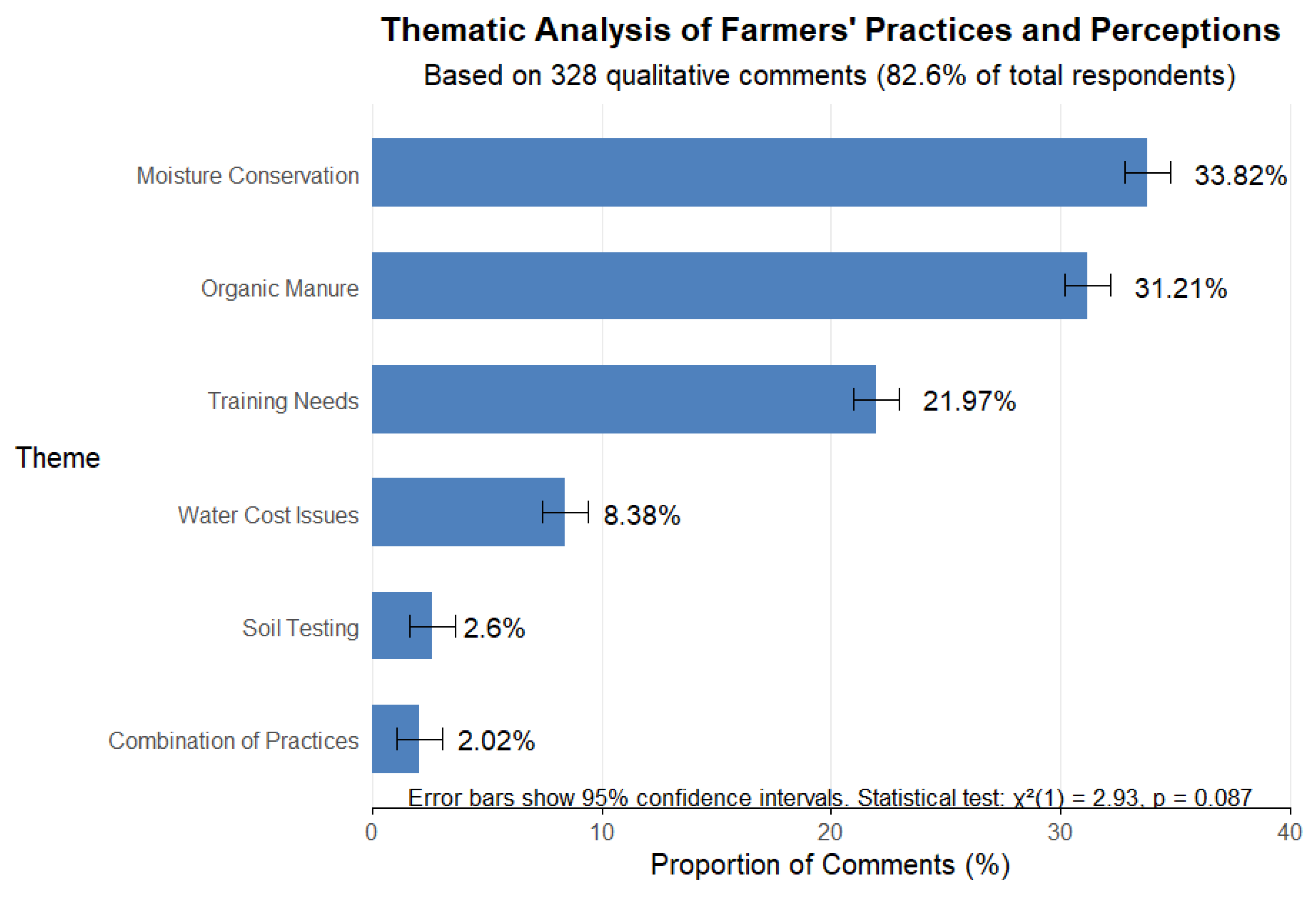
Thematic analysis (Figure 12) of 328 qualitative comments (82.6% of respondents) revealed that 32.9% (95% CI: 27.8–38.0%) mentioned organic manure practices, while 35.7% (95% CI: 30.5–40.9%) discussed moisture conservation strategies such as mulching or rainwater harvesting. A chi-square test indicated no significant association between the two themes (χ2 = 2.93, p = 0.087), suggesting that farmers often consider them independently rather than as a dominant combined strategy. Nonetheless, 35% of comments explicitly linked integration of soil fertility and water conservation to sustaining yields under irregular rainfall and high irrigation costs, reflecting adaptive responses to climatic variability. Water affordability emerged as a critical constraint, with 42.6% of farmers citing high costs quantitatively and 8.8% of comments reinforcing this challenge qualitatively. These findings highlight that while adaptive practices are widespread, systemic barriers, particularly seed quality and water access, shape their effectiveness. Similar patterns have been documented in Ethiopia and Kenya, where integrated soil–water management improved resilience to erratic rainfall [75], and in the Philippines, where rainwater harvesting buffered climatic variability and strengthened upland farming resilience, though broader systemic constraints such as input access continue to limit productivity [76].
Overall, these findings show that, while single interventions such as irrigation or fertilizer use offered limited benefits under prevailing biophysical and socio-economic conditions, integrated approaches that combine soil health enhancement and water conservation practices yield measurable improvements in productivity. This reinforces the concept of “soil-water co-management” proposed by Ndegwa et al. [66], emphasizing that synergies between water and soil fertility management are essential for resilient smallholder systems in semi-arid environments. Evidence from FAO pilot projects in Ethiopia, Kenya, and Tanzania [51] demonstrates that community-based land and water management interventions can reduce drought vulnerability and strengthen collective resilience, while Shilomboleni et al. [45] highlight that agricultural development efforts are most effective when embedded in community structures, reflecting the social dimension of resilience. These insights show that future programs need to prioritize embedding soil–water co-management within sustainable community frameworks, thereby enhancing resource efficiency, collective resilience, and alignment with global goals such as SDG 2 and SDG 12.

3.4. Barriers to Adoption and Policy Opportunities for Improved Water and Soil Management

Integrated soil and water management is critical for sustaining smallholder production in water-scarce environments, where declining soil fertility and increasing climate variability continue to threaten yields, food security, and rural livelihoods [77]. Yet, evidence from Kenya and other African drylands shows that adoption of water-efficient irrigation and soil-improving technologies remains limited, largely due to high upfront costs, unreliable water access, and weak institutional support [78]. Similar barriers have been observed in India, where capital constraints and limited credit access hindered uptake of micro-irrigation despite proven gains in water-use efficiency and productivity [79]. These constraints not only undermine household incomes but also pose risks to national food security and climate-resilient development, making adoption barriers a pressing societal concern [80].
Consistent with these broader patterns, adoption of water-efficient technologies among smallholder farmers in Ndeiya remains notably low. Despite the benefits of integrated water and soil management for enhancing soil moisture and sustaining vegetable production in semi-arid areas, only 5.7% of respondents in the study site reported using drip irrigation, a technology widely recognized for improving water productivity [48]. Farmers highlighted high initial investment costs and persistent maintenance challenges, such as clogged emitters and limited access to spare parts, compounded by inadequate technical support. Additionally, 42.6% pointed to high water prices and 25.7% cited limited availability of reliable water sources as significant barriers. In contrast, only 1.5% mentioned lack of technical knowledge, highlighting that financial and infrastructural constraints are the primary obstacles (Figure 13). Similar findings were reported in Niger, where affordability and unreliable water supply were key deterrents to uptake of small-scale irrigation [81]. Lefore et al. [32] highlighted that across sub-Saharan Africa, adoption of small-scale irrigation technologies was strongly shaped by community-level governance and access to shared infrastructure. A recent study by: Durga et al. [78] reinforces these findings, highlighting that barriers to solar-powered irrigation adoption in sub-Saharan Africa remain rooted in financing gaps and inadequate institutional support.
This study also revealed a striking disconnect between current practices and future aspirations: an overwhelming 96.2% of farmers expressed willingness to pay for improved water systems if these were affordable and dependable. Nearly half (46.6%) identified financial incentives, such as subsidies or accessible credit, as critical enablers, while others emphasized the importance of training on sustainable water management (20.4%), adoption of efficient irrigation technologies (19.1%), and stronger local water governance (11.8%). These priorities align with broader evidence from sub-Saharan Africa, which consistently highlights that affordability, perceived effectiveness, and risk-reducing support are central to driving technology uptake. For instance, studies in South Africa and Ethiopia have demonstrated that targeted input subsidies and collective maintenance schemes can enhance smallholder participation in irrigation programs [82,83].
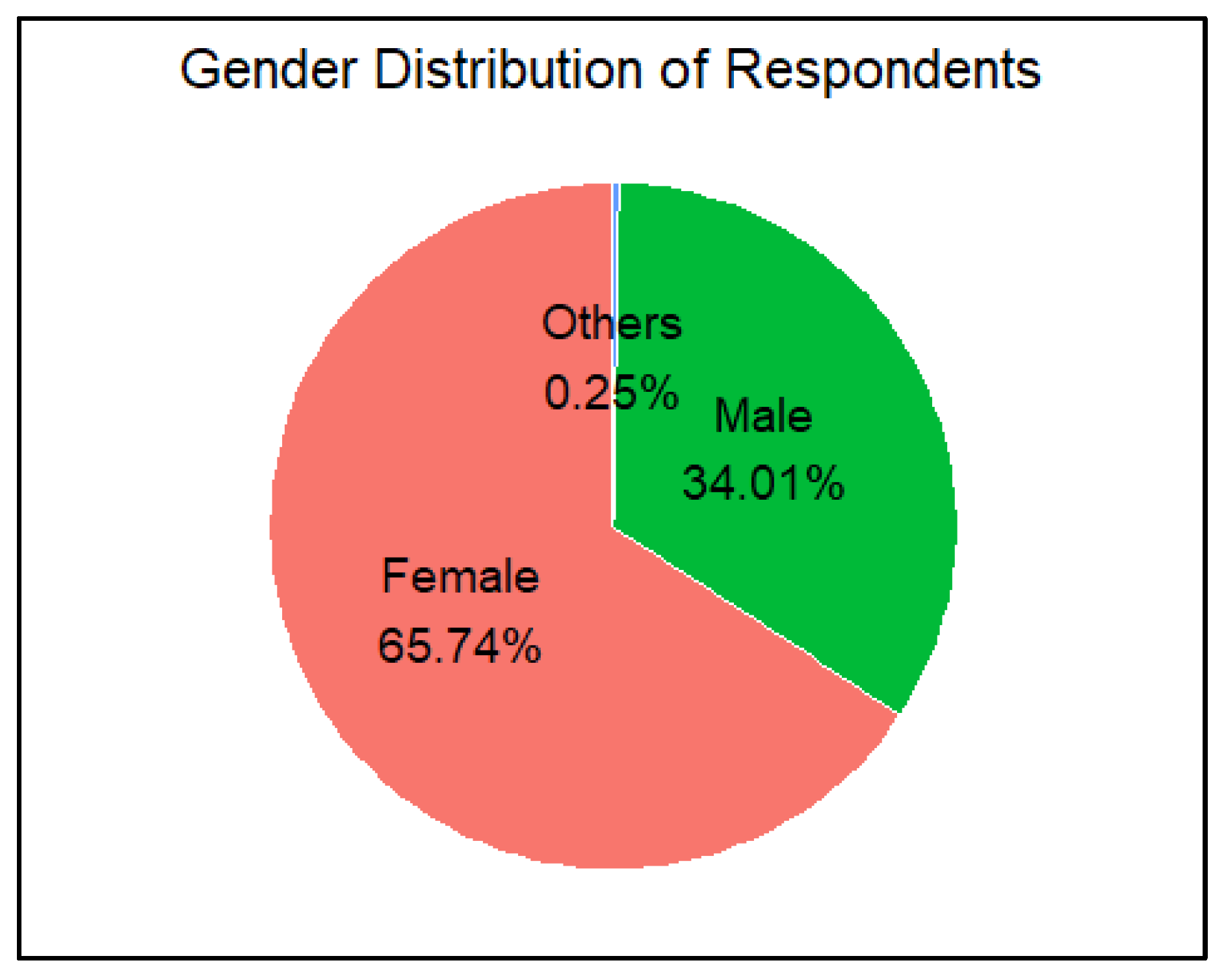
Given that 65.7% of leafy vegetable producers in Ndeiya are women as shown in Figure 14, these findings point to the value of gender-responsive approaches. Facilitating cooperative financing arrangements, such as micro-loans, revolving credit groups, and cost-sharing models, along with practical demonstrations and farmer field schools tailored to women’s participation, could accelerate both learning and adoption [1]. This approach is supported by Onyango et al. [84], who observed that women’s access to group-based credit and training significantly improved uptake of climate-smart practices in central Kenya. Comparable findings in Ghana highlight that women-led savings groups and collective water-user associations not only improve access to irrigation but also strengthen household food security and community resilience [85]. Strengthening local water infrastructure, revising pricing structures to enhance affordability, and expanding extension services focused on climate-smart practices are equally crucial. Aligning these actions with Kenya’s Agricultural Sector Transformation and Growth Strategy (ASTGS, 2019–2029) and the National Climate Change Response Strategy would support national goals for improved water-use efficiency and food security. At the regional level, these measures are consistent with the African Union’s Malabo Declaration and CAADP commitments, which emphasize inclusive, climate-resilient agricultural development. Addressing these barriers holistically offers significant potential to boost water-use efficiency and bolster the resilience of smallholder vegetable systems to climate variability, an increasingly urgent goal reflected in regional food security and environmental policies [86]. These interventions also reinforce global objectives under SDG 2 (Zero Hunger) and SDG 12 (Responsible Consumption and Production) by linking household-level agronomic gains to broader resilience and resource-use efficiency.

4. Conclusions

This study demonstrates that, while smallholder farmers in Ndeiya exhibit strong adaptive behaviors and an openness to innovation, the adoption of water- and soil-efficient practices remains constrained by structural and financial barriers. Although most farmers rely on traditional hand-watering and organic amendments such as manure, integrated approaches that combine moisture conservation with organic soil fertility management are significantly more effective in improving crop yields and sustaining soil health under semi-arid conditions. The findings from both the field experiment and farmer surveys reinforce the value of bundling practices like mulching, compost application, and tailored irrigation scheduling. By demonstrating the benefits of compost and mulch, this study highlights how waste recycling practices contribute to soil moisture conservation and support SDG 12 (Responsible Consumption and Production). The survey findings on high water costs, unreliable sources, and farmers’ willingness to invest in better systems emphasize the relevance of SDG 6 (Clean Water and Sanitation), while improvements in soil organic carbon and overall soil health align with SDG 15 (Life on Land). However, limited access to affordable water, high investment costs for irrigation infrastructure, and inadequate extension support continue to hamper widespread adoption. The overwhelmingly high willingness among farmers to invest in better water systems signals a critical policy opportunity: supporting the scale-up of integrated soil and water management through financial incentives, gender-responsive training, improved infrastructure, and climate-smart extension services can significantly enhance resilience and productivity in dryland horticultural systems. Future studies can therefore track the long-term impacts of integrated soil and water management on yields, soil health, and household resilience, while also combining farmer perceptions with quantitative yield and water-use data to strengthen validity. By linking farmer-level innovations with systemic policy reforms, such research will provide the evidence base needed to guide agricultural transformation agendas and climate-resilience strategies across sub-Saharan Africa, Asia, and Latin America, where smallholder systems face similar constraints.

Author Contributions

Conceptualization, D.M.O. and S.M.M.; methodology, D.M.O., S.M.M., N.K. and R.N.O.; formal analysis, D.M.O.; investigation, D.M.O., S.M.M., N.K. and R.N.O.; resources, F.B.; data curation, D.M.O.; writing—original draft preparation, D.M.O.; writing—review and editing, S.M.M., N.K., R.N.O. and F.B.; visualization, D.M.O.; supervision, S.M.M., N.K. and R.N.O.; project administration, S.M.M.; funding acquisition, F.B. All authors have read and agreed to the published version of the manuscript.

Funding

This research was conducted with the support of the International Institute of Tropical Agriculture (IITA) under the CGIAR Agroecology Initiative. The scholarship covered tuition and partial research costs; no formal grant number was assigned.

Institutional Review Board Statement

Ethical approval for this study was obtained from the National Commission for Science, Technology and Innovation (NACOSTI), Kenya (NACOSTI/P/24/36319, 31 May 2024).

Informed Consent Statement

Informed consent was obtained from all subjects involved in this study.

Data Availability Statement

The data presented in this study involve sensitive household and farm-level information collected from Kenyan farmers. Due to privacy and ethical restrictions, these data are not publicly available. However, anonymized subsets may be made available by the corresponding author upon reasonable request and with appropriate institutional approvals.

Acknowledgments

I gratefully acknowledge the logistical and technical assistance provided by IITA colleagues throughout the study period. I also thank the farmers and community members in Ndeiya for their participation and insights. Appreciation is extended to the data collection team and local facilitators who supported fieldwork activities. The findings and opinions presented in this paper are solely those of the authors and do not necessarily reflect the official views of IITA or CGIAR.

Conflicts of Interest

The authors declare no conflicts of interest. The funders had no role in the design of this study; in the collection, analyses, or interpretation of data; in the writing of the manuscript; or in the decision to publish the results.

Abbreviations

The following abbreviations are used in this manuscript:
IITAInternational Institute of Tropical Agriculture
CGIARConsultative Group on International Agricultural Research
AWCAvailable Water Content
OCOrganic Carbon
ANOVAAnalysis of Variance
RCBDRandomized Complete Block Design
T1, T2Treatment 1, Treatment 2
CIMMYTInternational Maize and Wheat Improvement Center
ASTGSAgricultural Sector Transformation and Growth Strategy
CAADPComprehensive Africa Agriculture Development Programme

References

  1. FAO. The State of Food and Agriculture 2019; FAO: Rome, Italy, 2019; ISBN 978-92-5-131789-1. [Google Scholar]
  2. IPCC. Regional_Fact_Sheet_Africa. 2022. Available online: https://www.ipcc.ch/report/ar6/wg2/about/factsheets/ (accessed on 8 July 2025).
  3. Dharmasena, P.B. Strategic Planning for Climate Smart Agriculture. 2024. Available online: https://www.researchgate.net/profile/Punchi-Bandage-Dharmasena/publication/381854753_Strategic_Planning_for_Climate_Smart_Agriculture/links/668289570a25e27fbc1a1814/Strategic-Planning-for-Climate-Smart-Agriculture.pdf (accessed on 16 July 2025).
  4. Mishra, R.K. Fresh Water Availability and Its Global Challenge. Br. J. Multidiscip. Adv. Stud. 2023, 4, 1–78. [Google Scholar] [CrossRef]
  5. Panhwar, A. Impact of Climate Change on Global Water Resources, Quality and Challenges for Sustainable Development Goals. Turk. J. Agric. Food Sci. Technol. 2022, 10, 150–157. [Google Scholar]
  6. Lottering, S.; Mafongoya, P.; Lottering, R. Drought and Its Impacts on Small-Scale Farmers in Sub-Saharan Africa: A Review. S. Afr. Geogr. J. 2021, 103, 319–341. [Google Scholar] [CrossRef]
  7. Gupta, H. Smallholder Farmers in Kenya and Their Challenges. Borgen Proj. 2024. Available online: https://borgenproject.org/smallholder-farmers-in-kenya/ (accessed on 16 July 2025).
  8. Onyancha, D.M. Factors Influencing Choice of Irrigation Systems and Crop Water Requirement of High Value Crops in Mwala, Machakos County, Kenya. Master’s Thesis, University of Nairobi, Nairobi, Kenya, 2018. [Google Scholar]
  9. Gautam, A.; Guzman, J.; Kovacs, P.; Kumar, S. Manure and Inorganic Fertilization Impacts on Soil Nutrients, Aggregate Stability, and Organic Carbon and Nitrogen in Different Aggregate Fractions. Arch. Agron. Soil Sci. 2022, 68, 1261–1273. [Google Scholar] [CrossRef]
  10. Bhat, M.A.; Adil, A.W.; Sikander, B.M.; Lone, Y.; Malik, J.A. Waste Management Technology for Sustainable Agriculture: Waste Management. In Research Anthology on Strategies for Achieving Agricultural Sustainability; IGI Global Scientific Publishing: Palmdale, PA, USA, 2022; pp. 379–398. ISBN 978-1-6684-5352-0. [Google Scholar]
  11. Sarker, T.C.; Zotti, M.; Fang, Y.; Giannino, F.; Mazzoleni, S.; Bonanomi, G.; Cai, Y.; Chang, S.X. Soil Aggregation in Relation to Organic Amendment: A Synthesis. J. Soil Sci. Plant Nutr. 2022, 22, 2481–2502. [Google Scholar] [CrossRef]
  12. Liu, C.; Li, L.; Xie, J.; Coulter, J.A.; Zhang, R.; Luo, Z.; Cai, L.; Wang, L.; Gopalakrishnan, S. Soil Bacterial Diversity and Potential Functions Are Regulated by Long-Term Conservation Tillage and Straw Mulching. Microorganisms 2020, 8, 836. [Google Scholar] [CrossRef]
  13. Anantha, K.H.; Garg, K.K.; Barron, J.; Dixit, S.; Venkataradha, A.; Singh, R.; Whitbread, A.M. Impact of Best Management Practices on Sustainable Crop Production and Climate Resilience in Smallholder Farming Systems of South Asia. Agric. Syst. 2021, 194, 103276. [Google Scholar] [CrossRef]
  14. Ofori, S.A.; Cobbina, S.J.; Obiri, S. Climate Change, Land, Water, and Food Security: Perspectives from Sub-Saharan Africa. Front. Sustain. Food Syst. 2021, 5, 680924. [Google Scholar] [CrossRef]
  15. Jain, S.; Srivastava, A.; Khadke, L.; Chatterjee, U.; Elbeltagi, A. Global-Scale Water Security and Desertification Management amidst Climate Change. Environ. Sci. Pollut. Res. 2024, 31, 58720–58744. [Google Scholar] [CrossRef]
  16. Chaudhari, S.K.; Santra, P.; Machiwal, D.; Kumar, M.; Singh, V.K.; Reddy, K.S.; Kundu, S. Soil, Water, and Nutrient Management in Drylands. In Managing Soil Drought; CRC Press: Boca Raton, FL, USA, 2024; pp. 85–131. [Google Scholar]
  17. Fuchs, L.; Adoyo, B.; Orero, L.; Korir, H.; Sakha, M.; Anyango, E.; Ongus, E.; Dien, C.; Kipkorir, L.; Apondi, V.; et al. Transition Pathways and Vision-to-Action in the Agroecological Living Landscapes (ALLs) in Kenya; CGIAR: Montpellier, France, 2023. [Google Scholar]
  18. Chen, W.; Wang, L.; Guo, C. Synergistic Regulation of Water-Saving Cultivation and Dryland Farming and Its Sustainable Development Pathways. Geogr. Res. Bull. 2024, 3, 416–437. [Google Scholar]
  19. Yuan, K.; Yang, Z.; Wang, S. Water Scarcity and Adoption of Water-Saving Irrigation Technologies in Groundwater over-Exploited Areas in the North China Plain. Irrig. Sci. 2021, 39, 397–408. [Google Scholar] [CrossRef]
  20. Kebenei, M.C.; Mucheru-Muna, M.; Muriu-Ng’ang’a, F.; Ndung’u, C.K. Zai Technology and Integrated Nutrient Management for Improved Soil Fertility and Increased Sorghum Yields in Kitui County, Kenya. Front. Sustain. Food Syst. 2021, 5, 714212. [Google Scholar] [CrossRef]
  21. Kugedera, A.T.; Kokerai, L.K. A Review on the Effects of Mineral Fertilizer, Manure and Water Management in Improving Sorghum Grain Yields in Semi-Arid Areas. J. Plant Nutr. 2024, 47, 1175–1188. [Google Scholar] [CrossRef]
  22. FAO. The State of Food and Agriculture 2020: Overcoming Water Challenges in Agriculture. Available online: https://openknowledge.fao.org/server/api/core/bitstreams/4680d28b-6b4c-4b82-a2de-0d356d3306be/content/cb1447en.html (accessed on 12 December 2025).
  23. IPCC. Climate Change 2022: Impacts, Adaptation and Vulnerability (AR6, WGII), Chapter 4: Water. Available online: https://www.ipcc.ch/report/ar6/wg2/chapter/chapter-4/ (accessed on 12 December 2025).
  24. Rockstrom, J.; Williams, J.; Daily, G.; Noble, A.; Matthews, N.; Gordon, L.; Wetterstrand, H.; DeClerck, F.; Shah, M.; Steduto, P.; et al. Sustainable Intensification of Agriculture for Human Prosperity and Global Sustainability. Ambio 2017, 46, 4–17. [Google Scholar] [CrossRef]
  25. Pretty, J. Intensification for Redesigned and Sustainable Agricultural Systems. Science 2018, 362, eaav0294. [Google Scholar] [CrossRef]
  26. Ingrao, C.; Strippoli, R.; Lagioia, G.; Huisingh, D. Water Scarcity in Agriculture: An Overview of Causes, Impacts and Approaches for Reducing the Risks. Heliyon 2023, 9, e18507. [Google Scholar] [CrossRef]
  27. Preite, L.; Solari, F.; Vignali, G. Technologies to Optimize the Water Consumption in Agriculture: A Systematic Review. Sustainability 2023, 15, 5975. [Google Scholar] [CrossRef]
  28. Okalebo, J.R.; Gathua, K.W.; Woomer, P.L. Laboratory Methods of Plant and Soil Analysis; SACRED Africa: Nairobi, Kenya, 2002. [Google Scholar]
  29. Joseph Kanyua, M. Effect of Imposed Self-Governance on Irrigation Rules Design among Horticultural Producers in Peri-Urban Kenya. Sustainability 2020, 12, 6883. [Google Scholar] [CrossRef]
  30. Shah, S.H.; Harris, L.M.; Menghwani, V.; Stoler, J.; Brewis, A.; Miller, J.D.; Workman, C.L.; Adams, E.A.; Pearson, A.L.; Hagaman, A.; et al. Variations in Household Water Affordability and Water Insecurity: An Intersectional Perspective from 18 Low- and Middle-Income Countries. Environ. Plan. F 2023, 2, 369–398. [Google Scholar] [CrossRef]
  31. Kalele, D.N. Climate-Smart Agriculture Options for Enhanced Resilience and Food Security: A Case Study of Yatta, Machakos County, Kenya. Ph.D. Thesis, University of Nairobi, Nairobi, Kenya, 2021. [Google Scholar]
  32. Lefore, N.; Giordano, M.; Ringler, C.; Barron, J. Sustainable and Equitable Growth in Farmer-Led Irrigation in Sub-Saharan Africa: What Will It Take? Water Altern. 2019, 12, 156–168. [Google Scholar]
  33. Mohammadi, S.; Mirlatifi, S.M.; Homaee, M.; Dehghanisanij, H.; Hajirad, I. Evaluation of Silage Maize Production under Pulsed Drip Irrigation in a Semi-Arid Region. Irrig. Sci. 2024, 42, 269–283. [Google Scholar] [CrossRef]
  34. Asif, M.; Rafique, M.A.; Munir, M.; Anjum, M.; Arfan, A. Comparative Study of Crop and Water Productivity under Drip and Furrow Irrigation Systems for Plastic Tunnel Grown Off-Season Vegetables. Sci. Lett. 2024, 12, 20–26. [Google Scholar] [CrossRef]
  35. Bhavsar, D.; Limbasia, B.; Mori, Y.; Aglodiya, M.I.; Shah, M. A Comprehensive and Systematic Study in Smart Drip and Sprinkler Irrigation Systems. Smart Agric. Technol. 2023, 5, 100303. [Google Scholar] [CrossRef]
  36. Hornum, S.T. Understanding Supply Chain Actors in Agricultural Innovation and Extension: The Case of Small-Scale Irrigation in Sub-Saharan Africa. Ph.D. Thesis, Technical University of Denmark, Lyngby, Denmark, 2022. [Google Scholar]
  37. Bhattarai, D.; Fishman, R.; Lamichhane, N.; Mukherji, A. Targeted Finance and the Adoption of Solar Irrigation by Smallholder and Women Farmers. Energy Policy 2025, 202, 114569. [Google Scholar] [CrossRef]
  38. Irungu, F. Utilization of Rainwater Harvesting Technologies among Smallholder Farmers in Murang’a County. Ph.D. Thesis, University of Embu, Embu, Kenya, 2024. Available online: https://repository.embuni.ac.ke/items/36428cd4-02e9-4d3f-a1f8-0534db212b56 (accessed on 16 July 2025).
  39. Onyancha, D.M.; Gachene, C.K.K.; Kironchi, G. Factors Influencing Farmers’ Decisions on Timing and Application Rates of Irrigation Water in Mwala, Machakos County. In Proceedings of the 3rd African Conference on Precision Agriculture, Benguérir, Morocco, 3–5 December 2024. [Google Scholar]
  40. Munyanyi, G.; Canisius, M.; Chitsungo, B.; Chisadza, B. Assessing the Effectiveness of the Virtual Irrigation Academy Chameleon Soil Moisture Sensors in Enhancing Growth, Yield Response and Water Use Efficiency in Smallholder Irrigation Schemes in Zimbabwe. In Proceedings of the 4th World Irrigation Forum, Kuala Lumpur, Malaysia, 7–13 September 2025. [Google Scholar]
  41. Olabanji, M.F.; Chitakira, M. The Adoption and Scaling of Climate-Smart Agriculture Innovation by Smallholder Farmers in South Africa: A Review of Institutional Mechanisms, Policy Frameworks and Market Dynamics. World 2025, 6, 51. [Google Scholar] [CrossRef]
  42. Lu, J.; Ma, L.; Hu, T.; Geng, C.; Yan, S. Deficit Drip Irrigation Based on Crop Evapotranspiration and Precipitation Forecast Improves Water- Use Efficiency and Grain Yield of Summer Maize. J. Sci. Food Agric. 2022, 102, 653–663. [Google Scholar] [CrossRef]
  43. Maru, H.; Haileslassie, A.; Zeleke, T. Impacts of Small-Scale Irrigation on Farmers’ Livelihood: Evidence from the Drought Prone Areas of Upper Awash Sub-Basin, Ethiopia. Heliyon 2023, 9, e16354. [Google Scholar] [CrossRef]
  44. Mdoda, L.; Loki, O.; Sikwela, M.M. Evaluating the Economic Effect of Sustainable Agricultural Practices on Small-Scale Farmers in the Eastern Cape Province: A Propensity Score Matching Analysis. Int. J. Agric. Sustain. 2025, 23, 2478733. [Google Scholar] [CrossRef]
  45. Shilomboleni, H.; Epstein, G.; Mansingh, A. Building Resilience in Africa’s Smallholder Farming Systems: Contributions from Agricultural Development Interventions—A Scoping Review. Ecol. Soc. 2024, 29, 290322. [Google Scholar] [CrossRef]
  46. Wawire, A.W.; Csorba, Á.; Tóth, J.A.; Michéli, E. Integration of Manure and Mineral Fertilizers among Smallholder Farmers in Kenya: A Pathway to Sustainable Soil Fertility Management and Agricultural Intensification. Int. J. Agric. Ext. Rural Dev. Stud. 2020, 7, 1–20. [Google Scholar]
  47. Oduor, N.O.; Mucheru-Muna, M.; Mugwe, N.J.; Sijali, I.; Nyabuga, G.; Mugendi, N.D. Soil Water Use Efficiency under Integrated Soil Management Practices in the Drylands of Kenya. Heliyon 2023, 9, e16145. [Google Scholar] [CrossRef]
  48. Yang, P.; Wu, L.; Cheng, M.; Fan, J.; Li, S.; Wang, H.; Qian, L. Review on Drip Irrigation: Impact on Crop Yield, Quality, and Water Productivity in China. Water 2023, 15, 1733. [Google Scholar] [CrossRef]
  49. Mlengule, D. Experience of Smallholder Farmers on Climate Smart Agriculture on Soil Fertility and Moisture Conservation in Ludewa District, Tanzania. FARA Res. Rep. 2023, 7, 474–487. [Google Scholar]
  50. Tadesse, D. Scaling Conservation Agriculture-Based Sustainable Intensification in Ethiopia (SCASI): Empowering Farmers and Engaging Development Partners. CIMMYT 2025. Available online: https://www.cimmyt.org/news/scaling-conservation-agriculture-based-sustainable-intensification-in-ethiopia-scasi-empowering-farmers-and-engaging-development-partners/ (accessed on 5 November 2025).
  51. Adapting to Climate Change Through Land and Water Management in Eastern Africa. Available online: https://www.fao.org/platforms/water-scarcity/Knowledge/knowledge-products/detail/adapting-to-climate-change-through-land-and-water-management-in-eastern-africa/en (accessed on 8 December 2025).
  52. Głąb, T.; Gondek, K.; Mierzwa-Hersztek, M. Enhancing Soil Physical Quality with Compost Amendments: Effects of Particle Size and Additives. Agronomy 2025, 15, 458. [Google Scholar] [CrossRef]
  53. Halder, M.; Islam, M.U.; Liu, S.; Guo, Z.; Zhang, Z.; Peng, X. Organic Materials Quality to Control Soil Aggregation: A Meta-Analysis. J. Soil Sci. Plant Nutr. 2024, 24, 1857–1870. [Google Scholar] [CrossRef]
  54. Zhang, E.; Meng, C.; Qu, J.; Zhu, Z.; Niu, J.; Wang, L.; Song, N.; Yin, Z. Dual Effects of Caragana Korshinskii Introduction on Herbaceous Vegetation in Chinese Desert Areas: Short-Term Degradation and Long-Term Recovery. Plant Soil 2025. [Google Scholar] [CrossRef]
  55. Wang, L.; Zhang, J.-G.; Sha, H.-Y.; Wang, Y.-R.; Wang, H.-Y.; Zhu, G.-C.; Lu, Y.-Z. Lanthanum-Quaternized Chitosan-Modified Zeolite for Long-Lasting Operation of Constructed Wetland: A Bifunctional Strategy for Simultaneous Phosphorus Removal and Microbial Clogging Mitigation. Water Res. 2026, 288, 124688. [Google Scholar] [CrossRef]
  56. Yu, N.; Zeng, X.; Ma, X.; Sun, Y.; Wang, Y.; Chen, B.; Luo, Z.; Dong, C.; Shen, K.; Wu, J. Preparation of Ce-Fe2O3/Al2O3 Catalyst for Simultaneous Degradation of Benzodiacetone and Reduction of Cr(VI) by Electro-Fenton Process: Performance, Mechanism, Degradation Pathways. J. Alloys Compd. 2025, 1045, 184745. [Google Scholar] [CrossRef]
  57. Mubaraka, R.; Hussain, M.B.; Tariq, H.; Qayyum, M.; Tariq, I. Mulches Effects on Soil Physical Properties i.e. Porosity, Aggregate Stability, Infiltration Rates, Bulk Density, Compaction. In Mulching in Agroecosystems: Plants, Soil & Environment; Akhtar, K., Arif, M., Riaz, M., Wang, H., Eds.; Springer Nature: Singapore, 2022; pp. 41–58. ISBN 978-981-19-6410-7. [Google Scholar]
  58. Wang, L.; Guo, S.; Hijri, M.; Farooq, M.; Rehman, A.; Ge, T.; Feng, S.; Wei, Z.; Zhang, J.; Zhao, C. Enhancing Carbon Restoration and Ecosystem Resilience in Global Drylands via Water-to-Carbon Biotransformation Strategies. Commun. Earth Environ. 2025, 6, 916. [Google Scholar] [CrossRef]
  59. Aher, S.B.; Lakaria, B.L.; Singh, A.B.; Kaleshananda, S. Soil Aggregation and Aggregate Associated Carbon in a Vertisol under Conventional, Organic and Biodynamic Agriculture in Semi-Arid Tropics of Central India. J. Indian Soc. Soil Sci. 2019, 67, 183. [Google Scholar] [CrossRef]
  60. Matisic, M.; Dugan, I.; Bogunovic, I. Challenges in Sustainable Agriculture—The Role of Organic Amendments. Agriculture 2024, 14, 643. [Google Scholar] [CrossRef]
  61. Liang, X.; Yu, S.; Ju, Y.; Wang, Y.; Yin, D. Integrated Management Practices Foster Soil Health, Productivity, and Agroecosystem Resilience. Agronomy 2025, 15, 1816. [Google Scholar] [CrossRef]
  62. Kanda, E. Diagnostic Study of the Maize-Based System in South and East Africa: Pathways to Sustainable Intensification and Diversification—A Case Study of Nakuru and Makueni Counties in Kenya; CGIAR: Montpellier, France, 2024. [Google Scholar]
  63. Mwaura, G.G.; Kiboi, M.N.; Bett, E.K.; Mugwe, J.N.; Muriuki, A.; Nicolay, G.; Ngetich, F.K. Adoption Intensity of Selected Organic-Based Soil Fertility Management Technologies in the Central Highlands of Kenya. Front. Sustain. Food Syst. 2021, 4, 570190. [Google Scholar] [CrossRef]
  64. Onyango, K.; Ndiwa, A.M.; Bolo, P.; Wanyama, R.; Chege, C. Cost-Benefit Analysis of Agroecological Interventions in Green Leafy Vegetable Business Models in Kiambu County, Kenyal; CGIAR: Montpellier, France, 2024. [Google Scholar]
  65. Mutiso, P.M. Effect of Fertilizer Microdosing and In Situ Moisture Conservation on Yield and Resource Use Efficiency of Pearl Millet in Makueni County-Kenya. Master’s Thesis, University of Nairobi, Nairobi, Kenya, 2018. [Google Scholar]
  66. Ndegwa, J.K.; Gichimu, B.M.; Mugwe, J.N.; Mucheru-Muna, M.; Njiru, D.M. Integrated Soil Fertility and Water Management Practices for Enhanced Agricultural Productivity. Int. J. Agron. 2023, 2023, 8890794. [Google Scholar] [CrossRef]
  67. Eddamiri, S.; Bouras, E.H.; Amazirh, A.; Hakam, O.; Ayugi, B.O.; Ongoma, V. Modeling the Impact of Climate Change on Wheat Yield in Morocco Based on Stacked Ensemble Learning. Model. Earth Syst. Environ. 2024, 10, 6413–6433. [Google Scholar] [CrossRef]
  68. Çebi, U.; Özer, S.; Öztürk, O.; Aydın, B.; Çakır, R. Yield and Water Productivity of Rice Grown under Different Irrigation Methods. J. Agric. Sci. 2023, 161, 387–397. [Google Scholar] [CrossRef]
  69. Mbanyele, V.; Mtambanengwe, F.; Nezomba, H.; Groot, J.C.J.; Mapfumo, P. Combinations of In-Field Moisture Conservation and Soil Fertility Management Reduce Effect of Intra-Seasonal Dry Spells on Maize under Semi-Arid Conditions. Field Crops Res. 2021, 270, 108218. [Google Scholar] [CrossRef]
  70. Oduor, N.; Kiboi, M.N.; Muriuki, A.; Adamtey, N.; Musafiri, C.M.; Ngetich, F.K. Soil Management Strategies Enhanced Crop Yield, Soil Moisture, and Water Productivity in Nitisols of the Upper Eastern Kenya. Environ. Chall. 2021, 5, 100375. [Google Scholar] [CrossRef]
  71. Kithome, M.M. Factors Affecting Adoption and Effect of Irrigation Technologies on Productivity and Profitability Among Small-Scale Farmers in Machakos County, Kenya, Mary Muluki Kithome. Master’s Thesis, University of Embu, Embu, Kenya, 2022. [Google Scholar]
  72. Laskar, N. Reviving Traditional Rain-Water Harvesting System and Artificial Groundwater Recharge. Sādhanā 2022, 47, 258. [Google Scholar] [CrossRef]
  73. Kansiime, M.K.; Bundi, M.; Nicodemus, J.; Ochieng, J.; Marandu, D.; Njau, S.S.; Kessy, R.F.; Williams, F.; Karanja, D.; Tambo, J.A.; et al. Assessing Sustainability Factors of Farmer Seed Production: A Case of the Good Seed Initiative Project in Tanzania. Agric. Food Secur. 2021, 10, 15. [Google Scholar] [CrossRef]
  74. Vignola, R.; Esquivel, J.; Harvey, C.; Rapidel, B.; Bautista-Solis, P.; Alpizar, F.; Donatti, C.; Avelino, J. Ecosystem-Based Practices for Smallholders’ Adaptation to Climate Extremes: Evidence of Benefits and Knowledge Gaps in Latin America. Available online: https://www.mdpi.com/2073-4395/12/10/2535 (accessed on 17 December 2025).
  75. Teweldebrihan, M.D.; Dinka, M.O. Sustainable Water Management Practices in Agriculture: The Case of East Africa. Encyclopedia 2025, 5, 7. [Google Scholar] [CrossRef]
  76. Landicho, L.D.; Cabahug, R.E.D.; Baliton, R.S.; Gonzales, A.B. Rainwater Harvesting for Enhancing Upland Agriculture: Lessons and Experiences in Selected Upland Farming Communities in Albay Province, Philippines. APN Sci. Bull. 2022, 12, 18–28. [Google Scholar] [CrossRef]
  77. Roobroeck, D.; van Asten, P.J.; Harawa, R.; Vanlauwe, B. Integrated Soil Fertility Management: Contributions of Framework and Practices to Climate-Smart Agriculture. 2015. Available online: https://cgspace.cgiar.org/items/8ad2b92c-c62d-4b09-8d95-71751538240d (accessed on 12 December 2025).
  78. Durga, N.; Schmitter, P.S.; Ringler, C.; Mishra, S.; Magombeyi, M.S.; Ofosu, A.; Pavelic, P.; Hagos, F.; Melaku, D.; Verma, S.; et al. Barriers to the Uptake of Solar-Powered Irrigation by Smallholder Farmers in Sub-Saharan Africa: A Review. Energy Strategy Rev. 2024, 51, 101294. [Google Scholar] [CrossRef]
  79. Alam, M.F.; McClain, M.; Sikka, A.; Pande, S. Subsidies Alone Are Not Enough to Increase Adoption of Agricultural Water Management Interventions. Front. Water 2024, 6, 1444423. [Google Scholar] [CrossRef]
  80. Olarewaju, O.O.; Fawole, O.A.; Baiyegunhi, L.J.; Mabhaudhi, T. Integrating Sustainable Agricultural Practices to Enhance Climate Resilience and Food Security in Sub-Saharan Africa: A Multidisciplinary Perspective. Sustainability 2025, 17, 6259. [Google Scholar] [CrossRef]
  81. Tadesse, G.; Tankari, M.; Fofana, I.; Ly, R.; Sangare, S.; Ousseini, B. Feasibility, Scalability and Ex-Ante Impacts of Small-Scale Irrigation Technologies in Niger. In Akademiya2063 Working Paper Series; AKADEMIYA2063: Kigali, Rwanda, 2024. [Google Scholar]
  82. Jiba, P.; Obi, A.; Mdoda, L.; Mzuyanda, C. The Impact of Smallholder Irrigation Scheme on Household Welfare in Farm-Managed Irrigation Scheme Communities in the Eastern Cape Province, South Africa. S. Afr. J. Agric. Ext. 2024, 52, 48–72. [Google Scholar] [CrossRef]
  83. Bjornlund, H.; Parry, K.; van Rooyen, A.; Pittock, J. Institutional and Technological Innovations for Sustained Change in Smallholder Irrigation Schemes in Southern and Eastern Africa. Agric. Water Manag. 2025, 309, 109330. [Google Scholar] [CrossRef]
  84. Onyango, R.; Nzengya, D.; Lihasi, L. Engendering Climate-Smart Agriculture in Mt. Kenya East: How Farmer Demographics Shape Smallholder Adoption. Int. J. Sustain. Dev. 2025, 11, 115–132. [Google Scholar] [CrossRef]
  85. Acheampong, B.; Jenane, C.; Lufafa, A.; Sebastian, A. Delivering Irrigation for Enhanced Productivity and Climate Resilience in Ghana. Available online: https://blogs.worldbank.org/en/africacan/delivering-irrigation-for-enhanced-productivity-and-climate-resilience-in-ghana (accessed on 8 December 2025).
  86. Issa, F.O.; Onagwa, G.I.; Adesina, M.A.; Paul, R.O. Integrating Climate-Smart Practices into Agricultural Extension and Advisory Services Policy in Africa: A Qualitative Analysis. Niger. J. Agric. Ext. 2024, 24, 17–27. [Google Scholar]
Figure 1. Flow Chart of research methods used.
Sustainability 18 00955 g001
Figure 2. Source of water for households (%).
Sustainability 18 00955 g002
Figure 3. Sources of water for irrigation and irrigation methods used.
Sustainability 18 00955 g003
Figure 4. Frequency of watering leavy vegetables.
Sustainability 18 00955 g004
Figure 5. Proportion of Water Quantity by Water source.
Sustainability 18 00955 g005
Figure 6. Adoption of Soil Moisture Conservation and Fertility Practices.
Sustainability 18 00955 g006
Figure 7. Changes in soil properties, OC, N are in percentage while K is in mg/kg.
Sustainability 18 00955 g007
Figure 8. Conceptual integration framework linking farmer perceptions and experimental validation with biophysical mechanisms, adoption dynamics, and resilience outcomes.
Sustainability 18 00955 g008
Figure 9. Estimated Yield Levels of Leavy Vegetables.
Sustainability 18 00955 g009
Figure 10. Farmer Practices for Moisture Conservation.
Sustainability 18 00955 g010
Figure 11. Perceived production constraints.
Sustainability 18 00955 g011
Figure 12. Famers’ Soil Fertility and Moisture Conservation Practices and Perceptions.
Sustainability 18 00955 g012
Figure 13. Barriers and Opportunities for Water and Soil Management.
Sustainability 18 00955 g013
Figure 14. Gender distribution of respondents.
Sustainability 18 00955 g014
Table 1. Summary of water management practices among smallholder farmers.
ParameterCategory/OptionFrequency (n)Percentage (%)
Irrigation scheduling approachVisual observation of crop/soil moisture16338.8
Fixed schedule4511.3
Based on crop water requirements276.8
Based on weather forecasts4110.3
Other (availability of recycled water)10.25
Quantity of water used daily>20 cans10727.0
16–20 cans297.3
11–15 cans225.5
5–10 cans389.6
<5 cans317.8
Willingness to pay for piped waterYes38296.2
No153.8
Table 2. ANOVA results for factors influencing perceived soil moisture conservation effectiveness.
SourceDfSum SqMean SqF ValuePr(>F)
Moisture improvement opportunity47.761.9405.1580.00047 ***
Manure usage16.106.09716.209<0.0001 ***
Fertilizer usage21.510.7562.0090.135
Residuals387145.560.376
Significance codes: *** p < 0.001.
Table 3. Effects of compost vs. control on OC, AWC and soil moisture.
TreatmentOC (Mean ± SE)AWC (Mean ± SE)Moisture (Mean ± SE)
Compost0.257 ± 0.012 ᵃ96.34 ± 4.30 ᵃ33.94 ± 0.39 ᵃ
Control0.200 ± 0.012 ᵇ76.58 ± 4.63 ᵇ32.61 ± 0.42 ᵇ
ᵃ represents higher values; ᵇ represents lower values (p < 0.05).
Table 4. Effects of mulch vs. control on OC, AWC and soil moisture.
TreatmentOC (Mean ± SE)AWC (Mean ± SE)Moisture (Mean ± SE)
Mulch0.243 ± 0.011 ᵃ88.92 ± 3.57 ᵃ32.94 ± 0.40 ᵃ
Control0.217 ± 0.009 ᵇ82.12 ± 2.64 ᵇ30.98 ± 0.35 ᵇ
ᵃ represents higher values; ᵇ represents lower values (p < 0.05).
Table 5. Linear Regression Results for Factors Influencing Leafy Vegetable Yield per Acre.
VariableEstimateStd. Errort ValuePr(>|t|)
(Intercept)1.367020.180637.5682.73 × 10−13 ***
irrigation0.015110.011771.2830.2002
fertilizer use−0.027190.03444−0.7890.4303
soil organic amendments−0.010900.04581−0.2380.8121
Significance codes: *** p < 0.001.
Disclaimer/Publisher’s Note: The statements, opinions and data contained in all publications are solely those of the individual author(s) and contributor(s) and not of MDPI and/or the editor(s). MDPI and/or the editor(s) disclaim responsibility for any injury to people or property resulting from any ideas, methods, instructions or products referred to in the content.