1. Introduction
Global environmental crises such as climate change, ecosystem degradation, excessive consumption of natural resources, and inadequate waste management constitute some of the most critical sustainability challenges faced by contemporary societies. These increasingly severe threats shape individuals’ environmental perceptions, emotional responses, and behavioral tendencies, bringing the psychological determinants of sustainable behavior to the forefront of modern research. Environmental sensitivity (defined as individuals’ emotional predispositions, levels of concern, and sense of responsibility toward ecological threats) is widely recognized as one of the fundamental predictors of environmentally responsible behavior [
1,
2]. Individuals with high environmental sensitivity are shown to perceive environmental risks more acutely and exhibit stronger emotional reactions, which in turn increases their likelihood of adopting sustainable behaviors [
3]. Recent research highlights that environmental concern and emotional engagement are playing an increasingly central role in sustainable decision-making processes [
4,
5].
Eco-anxiety, conceptualized as an emotional manifestation of environmental sensitivity, has become a prominent construct within the environmental psychology literature. Eco-anxiety encompasses emotional responses such as worry, fear, and psychological distress related to climate change and ecological degradation [
1,
6]. Although traditionally regarded as a negative emotional state, eco-anxiety has recently been reframed as a motivational response that can motivate pro-environmental behavior [
7,
8]. Eco-anxiety may enhance individuals’ awareness and behavioral motivation, whereas excessive eco-anxiety may lead to “eco-paralysis,” characterized by avoidance and behavioral withdrawal [
9,
10]. Cross-cultural findings similarly suggest that climate-related anxiety can be associated with sustainable behavior depending on contextual and emotional factors [
11].
Sustainable consumption behavior refers to environmentally responsible consumption decisions that consider ecological impacts, including recycling, reusing materials, reducing waste, and opting for eco-friendly products [
12]. Contemporary research demonstrates that sustainable consumption is shaped not only by cognitive knowledge but also by emotions, personal values, motivations, and social norms [
13]. Emotional determinants such as worry, guilt, and eco-anxiety have been shown to significantly influence both purchasing choices and everyday consumption practices [
11,
14]. Furthermore, existing studies suggest that cognitive and emotional processes (including climate/environmental concern and environmental awareness) drive consumers toward environmentally friendly products, with psychological mechanisms such as moral obligation and climate concern functioning as mediators in these relationships [
15,
16].
Although environmental sensitivity, eco-anxiety, and sustainable consumption behavior have been examined individually in the literature, studies that integrate these three constructs into a holistic model remain limited. While the influence of environmental sensitivity on sustainable consumption is acknowledged, the psychological mechanisms through which this relationship emerges have not been sufficiently clarified. The dual motivational and inhibitory functions of eco-anxiety further underscore the importance of determining its role in this relationship. Understanding the emotional processes through which environmental sensitivity is translated into behavior represents a critical gap for environmental psychology and sustainability behavior research.
Accordingly, the purpose of this study is to examine the mediating role of eco-anxiety in the relationship between environmental sensitivity and sustainable consumption behavior, thereby providing a theoretical contribution to the environmental psychology literature. Additionally, the study aims to offer practical insights for sustainability policies and initiatives that promote environmentally responsible consumer behavior.
2. Literature Review and Theoretical Framework
Environmental sensitivity is a multidimensional construct encompassing individuals’ emotional reactions, perceptions, and sense of responsibility toward environmental threats. Awareness, empathy, emotional connectedness to nature, and ecological risk perception are among its fundamental components [
1]. Recent studies demonstrate that higher levels of environmental sensitivity are associated with increased attention to environmental stimuli, stronger threat appraisal, and more intense emotional reactions such as anxiety or sadness [
2]. Accordingly, environmental sensitivity is widely regarded as an important antecedent of eco-anxiety.
Environmental sensitivity has been conceptually associated with ecological identity and pro-environmental engagement; in particular, ecological identity and connectedness with nature have been shown to predict pro-environmental behavior [
17]. Empirical findings highlighting the mediating role of emotional processes in environmentally responsible behavior indicate that the influence of environmental sensitivity is shaped not only by cognitive mechanisms but also by emotional pathways [
18]. These findings collectively support the notion that environmental sensitivity is a key determinant in the emergence of eco-anxiety.
Eco-anxiety is a psychological phenomenon characterized by negative emotions such as worry, fear, and distress arising from climate change and environmental degradation [
1,
6]. This construct comprises emotional (fear, sadness), cognitive (negative expectations), and behavioral (avoidance or heightened vigilance) components. Nevertheless, eco-anxiety often represents a motivational response to environmental threats, motivating individuals to engage in pro-environmental actions [
19].
Contemporary studies emphasize the dual function of eco-anxiety. While eco-anxiety has been associated with sustainable behaviors [
8,
11], excessive eco-anxiety can induce feelings of helplessness and behavioral inactivity, commonly referred to as “eco-paralysis” [
9,
10]. Cross-cultural evidence further indicates that climate-related anxiety predicts behavioral intentions and environmental engagement; however, its effects vary depending on emotional intensity and personal norms [
11].
Within this framework, eco-anxiety is conceptualized as a potential mediating mechanism linking environmental sensitivity to sustainable consumption behavior.
Sustainable consumption behavior encompasses environmentally responsible actions such as making eco-friendly consumption choices, reducing resource use, adopting recycling and reuse practices, and selecting products with lower ecological impact [
12]. Research has shown that the determinants of sustainable consumption extend beyond knowledge-based factors and are shaped by emotional, motivational, and cultural processes [
13,
20]. Two central psychological processes are emphasized:
The emotional–cognitive process: Emotional and cognitive factors, such as climate/environmental concern and environmental awareness, influence consumers’ orientation toward environmentally friendly products. Psychological mechanisms such as risk perception, eco-anxiety, and environmental concern have been shown to mediate these relationships [
11,
21,
22,
23].
The motivational process: Identity, lifestyle choices, social norms, and moral motivations constitute key determinants of sustainable consumption behavior [
24].
Together, this framework supports the proposition that environmental sensitivity influences sustainable consumption both directly and indirectly through emotional mechanisms such as eco-anxiety.
2.1. Theoretical Framework and Hypothesis Development
Understanding how environmental sensitivity influences sustainable consumption behavior requires a holistic theoretical approach that integrates emotional, cognitive, and behavioral components. Prior research indicates that individuals with high environmental sensitivity perceive environmental threats more intensely, exhibit stronger emotional reactions, and are more inclined to adopt sustainable lifestyles [
1,
4]. However, theoretical models that explain how these psychological constructs relate to one another remain limited. This study proposes a model that centers on the mediating role of eco-anxiety in the relationship between environmental sensitivity and sustainable consumption behavior.
2.1.1. Environmental Sensitivity and Eco-Anxiety
Environmental sensitivity reflects individuals’ perceptual and emotional responsiveness to ecological threats. Higher sensitivity levels are associated with stronger environmental concern, heightened threat appraisal, and more intense emotional reactions such as worry and sadness [
2,
25]. These emotional processes play a fundamental role in the formation of eco-anxiety.
Research demonstrates that environmental awareness and emotional predispositions strongly predict climate-related worry and rumination [
1,
19]. When environmental threats are perceived as severe, persistent, or uncontrollable, the likelihood of experiencing eco-anxiety increases correspondingly [
7,
11].
H1. Environmental sensitivity positively affects eco-anxiety.
2.1.2. Eco-Anxiety and Sustainable Consumption Behavior
Eco-anxiety functions as an emotional stimulus capable of directing individuals toward environmentally responsible behaviors. Moderate levels of eco-anxiety enhance environmental awareness and promote behaviors such as sustainable consumption, waste reduction, and preferences for eco-friendly products [
8,
11]. Studies further demonstrate that eco-anxiety and climate/environmental concern can serve as motivational forces guiding individuals toward pro-environmental and sustainable actions [
2,
21,
22,
26].
However, the effects of eco-anxiety are not unidirectional. Excessive eco-anxiety may lead to helplessness and behavioral inaction, a condition known as “eco-paralysis” [
9,
10]. Nonetheless, empirical evidence suggests that eco-anxiety observed in the general population is often associated with increased engagement in sustainable behavior [
19].
H2. Eco-anxiety positively affects sustainable consumption behavior.
2.1.3. Environmental Sensitivity and Sustainable Consumption Behavior
Environmental sensitivity is widely recognized as a strong predictor of environmental attitudes and sustainable behaviors. Individuals with high sensitivity levels demonstrate greater commitment to environmental values and are more likely to adopt environmentally friendly consumption patterns [
27,
28]. By strengthening ecological identity and fostering a sense of responsibility for environmental protection, environmental sensitivity can lead to more sustainable consumption decisions [
4,
13].
The literature, however, suggests that the relationship between environmental sensitivity and sustainable consumption largely operates through emotional mechanisms [
11]. Thus, the influence of environmental sensitivity on sustainable consumption may manifest both directly and indirectly.
H3. Environmental sensitivity positively affects sustainable consumption behavior.
2.1.4. The Mediating Role of Eco-Anxiety
Although environmental sensitivity can enhance sustainable consumption behavior, the emotional mechanisms underlying this association remain insufficiently understood. Eco-anxiety emerges as a response to heightened emotional sensitivity toward environmental threats and can motivate individuals to engage in eco-friendly actions [
7,
21,
29,
30].
Theoretical models of climate-related emotions propose that eco-anxiety increases attention and motivation in response to environmental threats and, consequently, may shape behavioral responses [
19]. Empirical evidence further suggests that emotional processes translate environmental concern into behavioral intention, highlighting eco-anxiety’s capacity to bridge the gap between environmental sensitivity and sustainable action [
11,
18].
Accordingly, eco-anxiety is conceptualized as a critical mediating variable in the relationship between environmental sensitivity and sustainable consumption behavior.
H4. Eco-anxiety mediates the relationship between environmental sensitivity and sustainable consumption behavior.
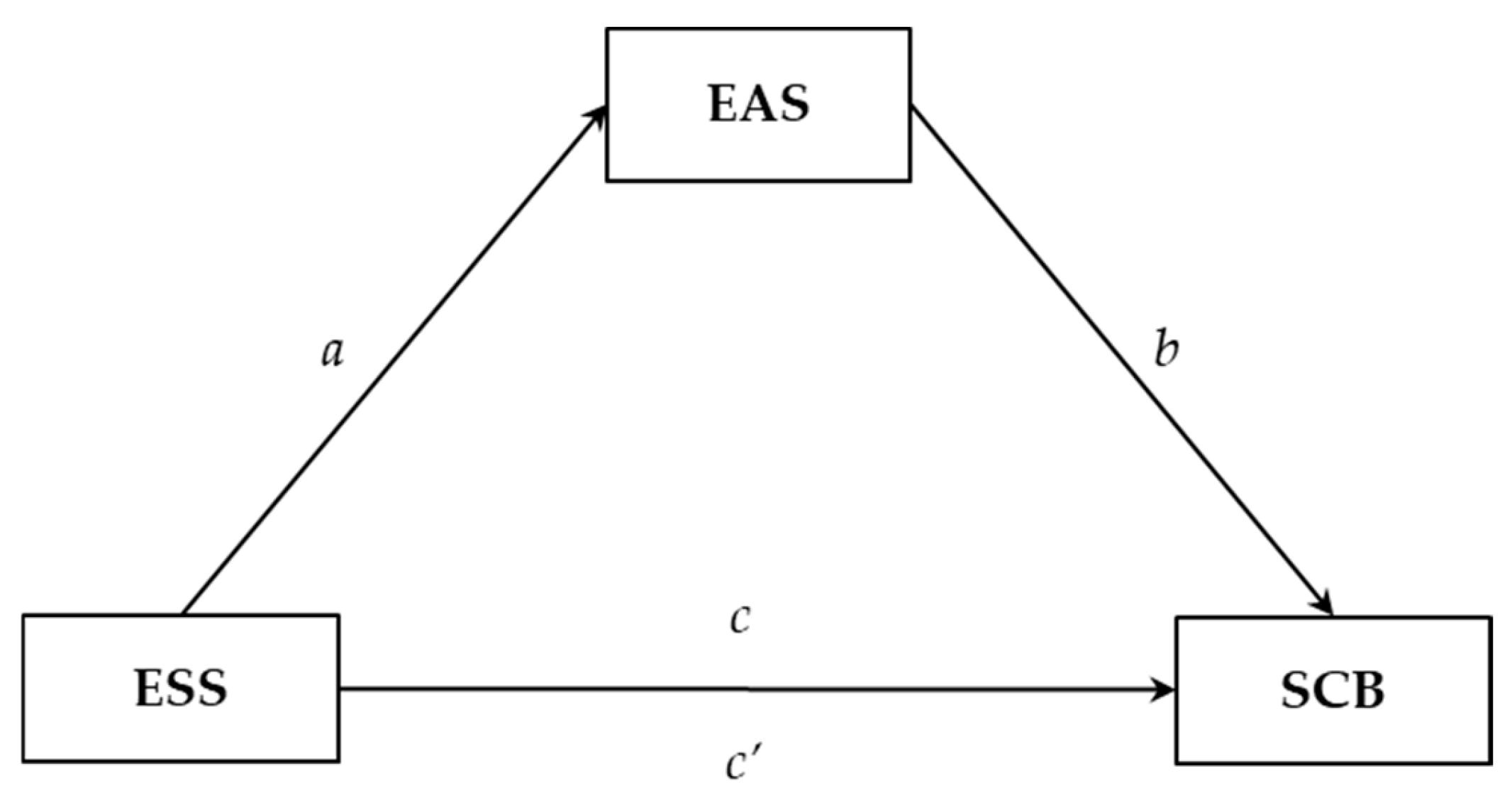
2.1.5. Conceptual Model
The conceptual model summarizing these theoretical relationships is presented in
Figure 1. The model integrates environmental sensitivity, eco-anxiety, and sustainable consumption behavior within a mediation framework that aligns with contemporary environmental psychology literature.
3. Materials and Methods
3.1. Research Design
This study was conducted using a quantitative and cross-sectional research design to examine the relationships among environmental sensitivity, eco-anxiety, and sustainable consumption behavior. The research model is methodologically aligned with recent studies that investigate the psychological mediating role of eco-anxiety [
11,
31].
Data were collected through an online survey, and Structural Equation Modeling (SEM) was employed for the analyses.
3.2. Participants
The target population of this research consists of students enrolled in public and foundation universities operating within the boundaries of Istanbul as of 2025. A total of 1,001,834 students are studying in higher education institutions in the city, including 553,203 in public universities, 440,586 in foundation universities, and 8045 in foundation vocational schools [
32].
In determining the sample size, the sample size tables proposed by Cohen, Manion, and Morrison [
33] for educational research were taken into consideration. According to these tables, for a 95 percent confidence level and a 5 percent margin of error, approximately 384–400 participants are statistically sufficient for large populations. Based on the same confidence level and error margin, the sample size for this study was set at 400 students.
Following data collection, analyses were conducted on 406 fully completed questionnaires. The gender distribution of the participants is presented in
Table 1.
Evidence from the eco-anxiety literature indicating that women report higher levels of anxiety than men [
11,
34] was taken into account; therefore, gender was included as a moderator in the analyses. Accordingly, the heterogeneity of the sample with respect to gender enhances the methodological rigor of the study.
3.3. Data Analysis: Data Collection Instruments
Environmental Sensitivity Scale (ESS)
To measure participants’ levels of environmental sensitivity, the 43-item scale developed by Akbaş and Kırımlı was employed [
35]. The scale consists of four subdimensions: statements related to environmental behaviors, environmental thinking, the perceived importance of environmental problems specific to Türkiye, and statements aimed at increasing environmental awareness. All items are rated on a 5-point Likert scale.
The literature extensively demonstrates that environmental sensitivity is a strong determinant of environmental concern and pro-environmental behavior [
1,
2,
33].
Eco-Anxiety Scale (EAS)
Eco-anxiety levels were assessed using the Hogg Eco-Anxiety Scale, adapted into Turkish by Uzun et al. [
36]. The scale includes four subdimensions: emotional symptoms, behavioral symptoms, rumination, and personal impact anxiety.
The HEAS scale has been validated across multiple countries (Portugal, Germany, France, Italy), and its Spanish version was recently confirmed by Rodriguez Quiroga et al. to exhibit cross-cultural measurement invariance [
34]. Therefore, the use of HEAS in the present study is considered methodologically appropriate.
Sustainable Consumption Behavior (SCB) Scale
Sustainable consumption behavior was measured using the scale developed by Doğan et al. [
37]. Bayazıt and Saygılı Akkaya revised the original scale for psychometric reasons, removing the “Reusability” dimension and reducing the structure to 12 items across three dimensions: environmental sensitivity, unnecessary purchasing, and energy saving [
38]. All items are rated on a 5-point Likert scale.
Similarly, although one subdimension of the SCB scale is labeled “environmental sensitivity,” this dimension refers to behavior-oriented sensitivity within consumption contexts, such as being careful about environmental impacts during purchasing and usage decisions. Thus, the term “sensitivity” is used at different analytical levels: as a psychological antecedent in ESS and as a behavioral manifestation within SCB.
To mitigate potential redundancy, the constructs were modeled as separate latent variables, and discriminant validity was rigorously assessed using both the Fornell–Larcker criterion and the HTMT ratio. The results confirmed that the constructs are empirically distinct, supporting the validity of the proposed conceptual model.
Although both the Environmental Sensitivity Scale (ESS) and the Sustainable Consumption Behavior (SCB) Scale include items that refer to environmentally relevant actions, the two constructs are conceptually distinct in this study. Environmental sensitivity is conceptualized as a psychological predisposition, reflecting individuals’ emotional responsiveness, concern, and sense of responsibility toward environmental problems. In contrast, sustainable consumption behavior represents actual or self-reported behavioral practices related to consumption choices, such as reducing waste, avoiding unnecessary purchases, and saving energy.
Importantly, the ESS does not aim to measure specific consumption behaviors; rather, it captures attitudinal and affective orientations toward environmental issues, including perceived importance, emotional concern, and general pro-environmental tendencies. The behavioral expressions included in ESS items are therefore treated as indicative of sensitivity and concern, not as direct measures of consumption behavior.
3.4. Data Collection Procedure
The study was conducted with the approval of the Ethics Committee of Hamidiye Scientific Research at Istanbul University of Health Sciences (Date: 11 September 2025, Issue No.: 2025/17, Decision No.: 17/18). The survey form was prepared via Google Forms and distributed to participants online. The study was carried out in accordance with the Declaration of Helsinki, and informed consent was obtained from all participants. The data collection process was anonymous, and no personal data were recorded.
The sampling strategy utilized convenience sampling, one of the non-probability sampling methods. The survey link was shared online, and participants voluntarily took part in the study. Accordingly, the sample also reflects characteristics of voluntary, online-based participation. This approach is widely preferred in online data collection studies due to its practicality and ability to reach large participant groups rapidly.
3.5. Data Analysis
Data were analyzed using SPSS v.29 and AMOS 26.00 software. The analysis process consisted of four stages. First, preliminary analyses were conducted, including checks for missing data, outliers, and normality. Subsequently, reliability analyses were performed using Cronbach’s Alpha and Composite Reliability (CR). For validity assessment, Confirmatory Factor Analysis (CFA), AVE and CR values, and discriminant validity tests (Fornell–Larcker criterion and HTMT ratios) were applied. Finally, Structural Equation Modeling (SEM) and path analysis were conducted to test the model, and the mediation effect was examined using bootstrapping with 5000 resamples.
This analytical approach aligns with methodological standards commonly adopted in recent eco-anxiety research [
11,
31].
4. Results
4.1. Confirmatory Factor Analysis (CFA)
The confirmatory factor analysis (CFA) conducted for the measurement model demonstrates that all three scales exhibit a satisfactory level of construct validity in the present sample. The confirmatory factor analysis was conducted at the item level, with all observed indicators specified to load directly onto their corresponding latent construct. The reported standardized factor loadings therefore represent item-level relationships rather than parcel-based or second-order estimates. The standardized factor loadings for the Environmental Sensitivity Scale (ESS) ranged from 0.89 to 0.93, indicating strong item–construct relationships. For the Eco-Anxiety Scale (EAS), factor loadings fell between 0.78 and 0.91, while the Sustainable Consumption Behavior (SCB) scale exhibited loadings ranging from 0.70 to 0.88. All loadings were statistically significant and exceeded commonly recommended thresholds, suggesting that each item adequately represents its underlying latent construct. These results collectively confirm that the measurement model demonstrates robust factorial validity prior to the structural analysis.
4.2. Reliability Analysis
Prior to conducting the structural equation modeling, the reliability and validity of the measurement model were verified. As shown in
Table 2, the Cronbach’s α coefficients for all scales ranged from 0.945 to 0.995, which are substantially above the threshold value of 0.70, indicating high internal consistency [
39]. Given the multidimensional nature of the scales and the relatively large number of items, such high α values are expected; indeed, the sensitivity of the α coefficient to the number of items has been noted in the literature [
40,
41]. It should be noted that Cronbach’s alpha is sensitive to the number of items included in a scale. In long and conceptually narrow instruments, extremely high alpha values may occur and are commonly interpreted as an indication of strong internal consistency rather than item redundancy.
Similarly, VIF values were found to range between 1.29 and 1.50, suggesting the absence of multicollinearity issues [
42].
4.3. Convergent Validity
Convergent validity was assessed using composite reliability (CR) and average variance extracted (AVE), which are standard indicators of construct validity [
43]. According to the criteria for evaluating measurement model adequacy, Bagozzi and Yi propose that standardized factor loadings should fall between 0.60 and 0.95, CR values should exceed 0.60, and AVE values should be at least 0.50 [
44].
As shown in
Table 3, the findings indicate that the convergent validity of the constructs is satisfactory for the sample.
Although ESS and EAS yielded identical CR and AVE values, this reflects the high internal consistency and conceptual coherence of both scales rather than a modeling or reporting error.
Because CR values exceeded 0.70 and AVE values were above 0.50, convergent validity is strongly supported. The results presented in
Table 3 demonstrate that the measurement model exhibits a robust structure in terms of convergent validity. The Composite Reliability (CR) values for the Environmental Sensitivity (ESS), Sustainable Consumption Behavior (SCB), and Eco-Anxiety (EAS) scales ranged from 0.953 to 0.985, which is well above the recommended threshold of 0.70 proposed by Hair et al. [
43]. This indicates that the items reliably and consistently measure their respective constructs.
Similarly, the Average Variance Extracted (AVE) values, ranging from 0.623 to 0.832, indicate that a substantial proportion of each construct’s variance is explained by its items. AVE values above 0.50 confirm that the requirement for convergent validity has been met. The particularly high AVE values for the ESS and EAS constructs also suggest strong conceptual coherence.
In sum, the CR and AVE results reveal that the measurement model is statistically strong and theoretically consistent in terms of convergent validity.
4.4. Discriminant Validity
4.4.1. Fornell–Larcker Criterion
To assess discriminant validity, the Fornell–Larcker criterion was applied, which compares the square root of each construct’s AVE with the correlations of that construct with others [
45]. According to this criterion, the square root of a construct’s AVE must be greater than the inter-construct correlation coefficients. The results presented in
Table 4 confirm that the scales exhibit adequate discriminant validity.
According to the Fornell–Larcker analysis presented in
Table 4, the square root of the AVE
) for each construct is greater than its correlations with other constructs. This finding clearly indicates that the discriminant validity criterion proposed by Fornell and Larcker is satisfied [
45].
For example:
The value of Environmental Sensitivity (0.916) is substantially higher than its correlations with the other constructs (0.411 and 0.534).
Similarly, the value of Eco-Anxiety (0.912) exceeds its correlations with the remaining constructs (0.418 and 0.534).
The SCB construct also meets the criterion = 0.789 > correlations.
These results demonstrate that the three constructs included in the study are conceptually distinct and that the measurements do not overlap across constructs.
In conclusion, the Fornell-Larcker criterion confirms that the measurement model possesses strong discriminant validity.
4.4.2. Heterotrait–Monotrait Ratio (HTMT)
The Heterotrait–Monotrait ratio (HTMT) is a quantitative measure used in structural equation modeling to assess the degree to which different constructs are empirically distinct from one another. Discriminant validity aims to determine whether a construct is truly different from other constructs within the model. The HTMT results presented in
Table 5 show that all values fall below the recommended threshold of 0.85 proposed by Henseler et al. [
46]. Therefore, discriminant validity is confirmed.
The HTMT values presented in
Table 5 indicate that the relationships between constructs are not strong enough to threaten conceptual distinctiveness. All HTMT ratios are below 0.60, which is well under both the 0.85 threshold recommended by Henseler et al. and the more lenient 0.90 criterion [
46].
This result demonstrates that although the constructs are conceptually related (e.g., the connection between environmental sensitivity and eco-anxiety), participants were able to distinguish between these concepts in terms of their behavioral and emotional dimensions. In particular, the relatively low values observed for EAS–SCB (0.424) and SCB–EAS (0.434) provide empirical evidence of strong theoretical separation across the measures.
Overall, the low HTMT ratios indicate not only that discriminant validity is achieved but also that the risk of conceptual overlap among constructs is minimal.
4.5. Structural Model Evaluation
To assess the fit of the structural equation model, several goodness-of-fit indices were examined. These indices are critical for determining whether the model satisfies widely accepted statistical standards. The results presented in
Table 6 demonstrate that the model exhibits strong fit across both absolute and incremental fit criteria.
The goodness-of-fit indices presented in
Table 6 demonstrate that the tested model exhibits a high level of fit with the data. First, the χ
2/df ratio of 1.34 strongly satisfies the recommended criterion of <3, indicating excellent fit [
43,
47]. Additionally, the RMSEA value of 0.03 suggests a very low approximation error, confirming the model’s strong alignment with the population covariance structure [
43,
47,
48,
49]. Consistent with these results, the SRMR value of 0.023 also indicates an excellent residual-based fit, reflecting minimal standardized residuals.
The goodness-of-fit indices presented in
Table 6 indicate that the proposed structural model demonstrates an acceptable to excellent fit. Although the chi-square statistic was statistically significant, this result is expected given the large sample size and the sensitivity of the chi-square test to sample size. Therefore, model fit was primarily evaluated using relative and absolute fit indices such as χ
2/df, CFI, TLI, RMSEA, and SRMR.
Among the incremental fit indices, both the CFI (0.98) and the TLI (0.981) show excellent fit, demonstrating that the model provides a substantial improvement over the null model and accurately represents the underlying theoretical structure [
43,
47,
48]. The GFI value of 0.85 reflects an acceptable level of fit [
48,
50], particularly considering that GFI is highly sensitive to sample size; values around this level are commonly considered acceptable in studies with samples exceeding 400 [
51,
52,
53].
Overall, the absolute, incremental, and residual-based fit indices meet or exceed their recommended thresholds, confirming that the structural model is statistically valid, theoretically sound, and robust.
4.6. Structural Model and Hypothesis Testing
In the structural model analysis, the relationships among environmental sensitivity, eco-anxiety, and sustainable consumption behavior were tested; direct effects, indirect effects, and explained variance values were evaluated. The model’s path coefficients provide critical insights into the direction and magnitude of the relationships among variables, and the presence of a mediation mechanism was examined through these analyses.
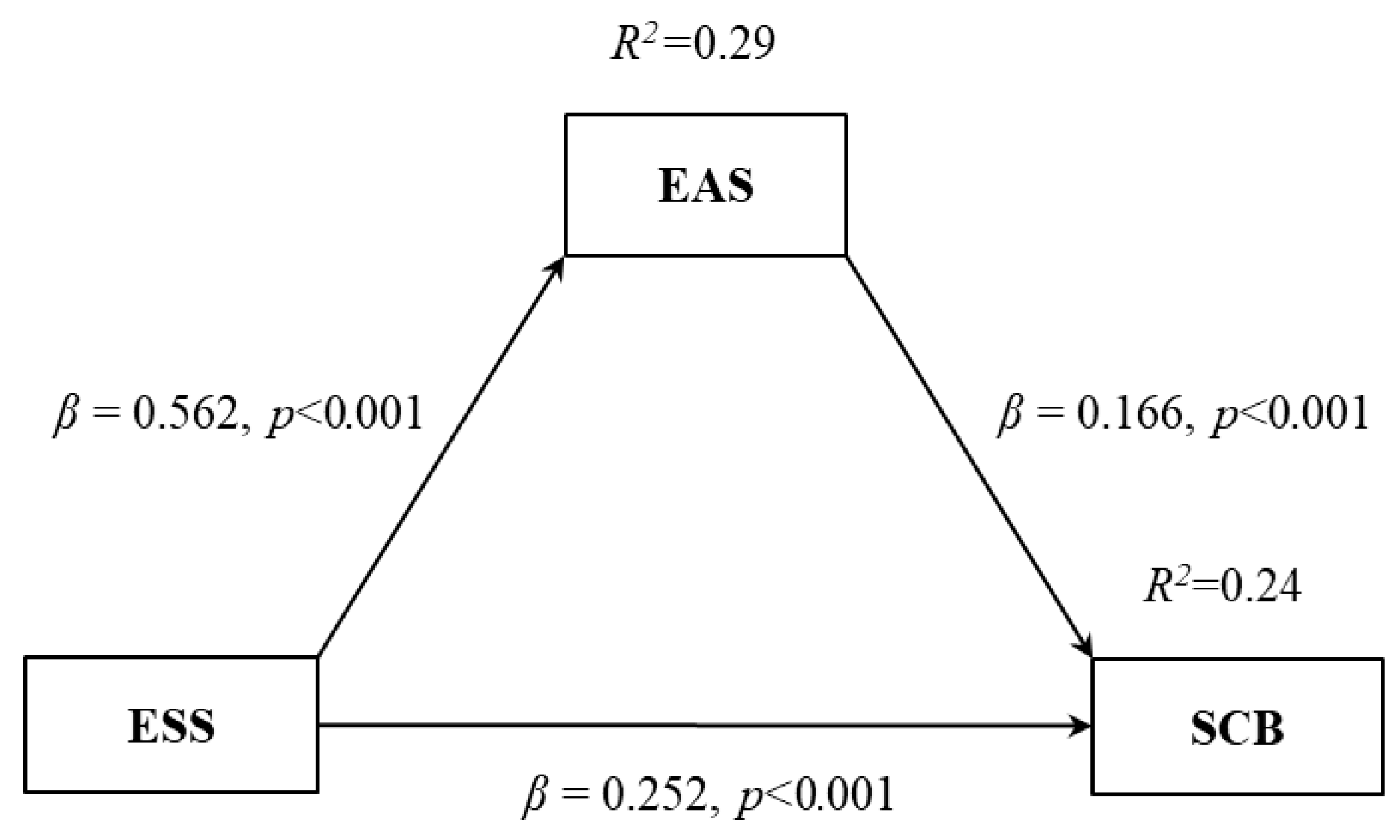
Table 7 presents the structural paths, including the effect of environmental sensitivity on eco-anxiety (path a), the direct effect of environmental sensitivity on sustainable consumption behavior (path c), and the mediating function of eco-anxiety in shaping this relationship (path b and path c′).
H1. Environmental Sensitivity—Eco-Anxiety.
Environmental sensitivity exerted a strong positive effect on eco-anxiety (β = 0.562, p < 0.001).
This result demonstrates that individuals who are more sensitive to environmental threats experience greater ecological concern, confirming environmental sensitivity as a key determinant in the development of eco-anxiety.
H2. Eco-Anxiety—Sustainable Consumption Behavior.
Eco-anxiety significantly increased sustainable consumption behavior (β = 0.166, p < 0.001).
This finding indicates that eco-anxiety may function as a motivational emotional response that encourages individuals to engage in more sustainable consumption practices.
H3. Environmental Sensitivity—Sustainable Consumption Behavior.
The model testing the direct effect showed that environmental sensitivity has a significant and positive influence on sustainable consumption behavior (β = 0.252, p < 0.001).
This finding indicates that individuals with higher environmental sensitivity tend to make more sustainable choices in their daily consumption decisions.
H4. Mediating Effect of Eco-Anxiety.
The mediating role of eco-anxiety was tested using the bootstrapping method (5000 resamples). The results indicate that the effect of environmental sensitivity on sustainable consumption behavior occurs through partial mediation. The indirect effect was estimated within the structural equation modeling framework using standardized path coefficients, and bias-corrected bootstrap confidence intervals were generated based on 5000 resamples.
Indirect effect: β = 0.157, 95% CI [0.094, 0.227]
The confidence interval does not include zero, indicating statistical significance.
Because the direct effect remained significant (β = 0.158, p < 0.001), the mediation is classified as partial.
This outcome demonstrates that environmental sensitivity influences sustainable consumption behavior both directly and indirectly through eco-anxiety.
Figure 2 provides a visual representation of the direct and indirect relationships among the environmental sensitivity (ESS), eco-anxiety (EAS), and sustainable consumption behavior (SCB) scales. The explained variance values (R
2) in the structural model indicate the proportion of variance in the dependent variables accounted for by the predictors, serving as an important indicator of the model’s explanatory power. Accordingly, the figure illustrates the magnitude of the direct effect, the presence of the mediating mechanism, and the statistical significance of the indirect pathway in a comprehensive manner.
In order to further validate the mediating role of eco-anxiety in the relationship between environmental sensitivity and sustainable consumption behavior, a stepwise mediation analysis was conducted. The results of the mediation effect test, including the regression coefficients for each model and the explained variance values, are presented in
Table 8.
4.7. Moderation Effect (Gender)
In this section, the role of gender in the relationship between Environmental Sensitivity and Sustainable Consumption Behavior was examined through group-based path comparisons. Since gender is a categorical variable, separate path models were estimated for women and men, and the resulting coefficients were compared to assess whether the strength of the relationship differed across gender groups. Path analysis was conducted using the Maximum Likelihood estimation method with observed variables. The results of the analysis are presented in
Table 9.
The comparison focused on the structural path between Environmental Sensitivity and Sustainable Consumption Behavior rather than on differences in the measurement model. Therefore, the analysis should be interpreted as an exploratory group-based comparison of structural relationships, not as a full latent variable invariance test.
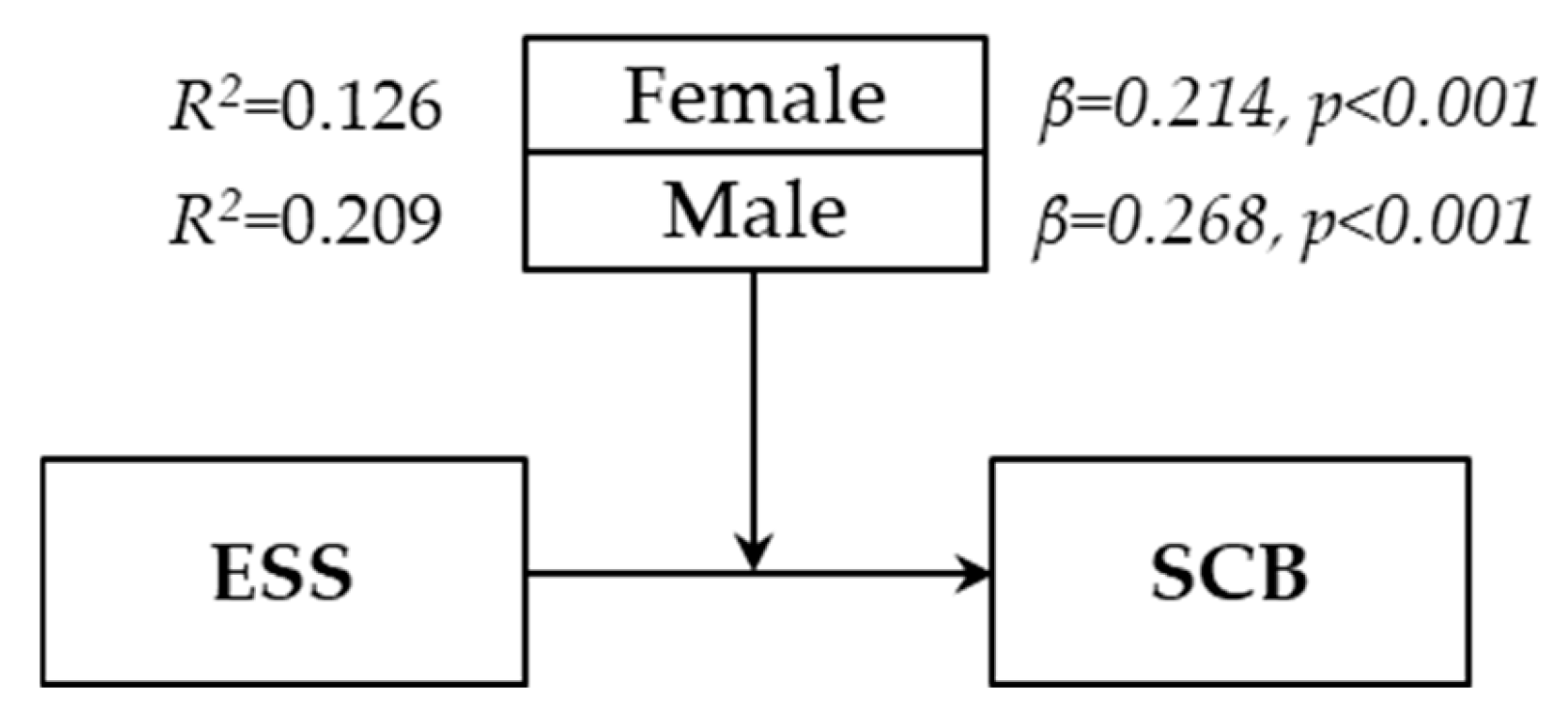
According to the analysis results, the effect of Environmental Sensitivity on Sustainable Consumption Behavior was positive and statistically significant for both gender groups. For the female group, the effect was
β = 0.214 (
p < 0.001), while for the male group, it was
β = 0.268 (
p < 0.001). These findings indicate that Environmental Sensitivity contributes to increasing Sustainable Consumption Behavior in both groups. The path analysis results illustrating the moderating effect of gender are presented in
Figure 3.
In the analysis comparing path coefficients across groups (
Table 10), the difference between women and men was found to be statistically non-significant (
z = 0.990).
These results indicate that the effect of environmental sensitivity on sustainable consumption behavior is positive and statistically significant (p < 0.001) for both gender groups. The effect is slightly stronger among men (β = 0.268) compared to women (β = 0.214). However, the z statistic testing the significance of the difference between the two coefficients was 0.990, which is below the critical threshold of ±1.96; therefore, the difference is not statistically significant.
Table 11 presents the hypotheses, their conceptual statements, statistical results, and final decisions in a concise academic summary.
5. Discussion
This study examined the relationships among environmental sensitivity, eco-anxiety, and sustainable consumption behavior, testing the role of emotional processes, an increasingly salient topic in contemporary environmental psychology, within an integrated theoretical model. The findings derived from the structural equation modeling strongly support the proposed conceptual framework. This section discusses the results in depth, drawing on current literature, theoretical perspectives, and cultural context.
The results indicate that environmental sensitivity is a strong predictor of both eco-anxiety and sustainable consumption behavior. This aligns with prior research conceptualizing environmental sensitivity as a complex psychological construct encompassing the perception, appraisal, and emotional response to environmental threats [
1,
2].
Particularly in the Turkish context, where environmental risks have become more visible through media representation, public discourse, and the future-related concerns of young adults, the finding that high environmental sensitivity triggers eco-anxiety is culturally plausible. As young people are among the groups expected to be most affected by climate change, the strengthened relationship between sensitivity and anxiety is understandable.
The findings indicate that the strength of the relationship between environmental sensitivity and sustainable consumption behavior is similar for women and men within the present sample. This suggests that the observed association operates in a comparable manner across gender groups, although the results should be interpreted within the limits of the applied analytical approach.
The positive effect of eco-anxiety on sustainable consumption behavior constitutes a noteworthy finding within ongoing academic discussions. The literature suggests that eco-anxiety may have a dual function: it can act as a motivational force for pro-environmental behavior, while in other cases it may induce helplessness and eco-paralysis [
9,
10]. The positive effect observed in this study’s sample suggests that eco-anxiety operates as a motivational emotional response among young adults in this specific context. This finding may be related to the relatively high levels of environmental awareness and engagement within the sample, as well as the developmental characteristics of young adulthood. However, these interpretations remain speculative and were not directly tested in this study.
Thus, the findings support current theoretical arguments suggesting that eco-anxiety may serve as a motivational factor for sustainable behavior [
11,
19].
The partial mediating role of eco-anxiety in the relationship between environmental sensitivity and sustainable consumption behavior represents one of the most significant and original contributions of this study. This result has three important implications:
Theoretical contribution: The findings confirm the presence of an emotional channel through which environmental sensitivity is translated into behavior. This highlights the importance of emotional mechanisms often neglected in classical cognitive models that explain sustainable behavior.
Influence of emotional processes on behavioral outcomes: Anxiety can increase risk perception and strengthen behavioral motivation. The sensitivity-anxiety-behavior sequence aligns with contemporary models in environmental psychology.
Significance of partial mediation: Partial mediation indicates that environmental sensitivity influences sustainable consumption through both direct and indirect pathways. In other words, eco-anxiety alone cannot fully explain this behavioral effect; cognitive appraisals, values, and personal norms may also be involved.
This finding calls for future research that develops multidimensional mediation models.
The finding that gender does not significantly moderate the relationships in the model may appear inconsistent with studies showing higher eco-anxiety levels among women [
11,
34]. However, it is conceptually coherent. Sustainable consumption behavior is shaped not only by emotional states but also by broader psychological processes such as social norms, values, and perceived personal responsibility. Thus, even if anxiety levels differ by gender, the strength of the sensitivity-behavior relationship may remain similar across groups. This result underscores that sustainable consumption is more strongly driven by psychological tendencies than by demographic variables.
This study provides three practical implications for sustainability policies, environmental education, and communication strategies:
Eco-anxiety can be strategically incorporated into behavior change campaigns. However, anxiety-inducing messages must be paired with solution-oriented content to avoid the risk of eco-paralysis.
Educational programs that enhance environmental sensitivity may indirectly promote sustainable consumption. Accordingly, educational initiatives that address both cognitive and emotional aspects of environmental issues may be relevant for promoting sustainable consumption among young adult and university student populations.
Sustainability campaigns targeting young adults have strong potential. The sample indicates that this group exhibits a relatively high tendency to channel eco-anxiety into sustainable behavior.
Limitations and Future Research Directions: The cross-sectional design does not allow for strong causal inferences. Self-report measures are subject to social desirability bias. The single-culture sample limits the generalizability of the findings to international contexts. Emotional processes could be further validated using experimental or physiological measures.
Future research could employ longitudinal designs to examine changes in environmental sensitivity and eco-anxiety over time; test the mediation mechanism across different cultural contexts; and use experimental methods to determine the levels at which eco-anxiety becomes motivational versus inhibiting.
6. Conclusions
This study contributes significantly to the environmental psychology and sustainability literature by examining the relationships among environmental sensitivity, eco-anxiety, and sustainable consumption behavior. Findings from the structural equation modeling indicate that environmental sensitivity is not only a direct predictor of sustainable consumption behavior but also exerts an indirect effect through eco-anxiety. This result aligns with contemporary perspectives in the literature, highlighting that sustainable consumption behaviors are shaped not solely by cognitive tendencies but also by emotional processes.
One of the key findings is that individuals with high environmental sensitivity tend to experience elevated eco-anxiety due to heightened perceptions of environmental threats, and this emotional response subsequently supports sustainable consumption behavior. The results suggest that eco-anxiety may function as a motivational emotional response within the present sample, supporting engagement in sustainable consumption practices. However, eco-anxiety should not be interpreted as inherently beneficial or detrimental; rather, its role appears to be context-dependent. Accordingly, the findings should be interpreted with caution and within the limits of the cross-sectional design.
The findings also underscore the importance of considering emotional components when promoting sustainable consumption. In the development of environmental communication strategies, educational programs, and sustainability policies, cultivating awareness-based concern may help promote behavioral transformation. However, given that anxiety without solution-oriented guidance may lead to inaction, effectively managing the balance between anxiety and hope becomes a critical requirement for policymakers and communication professionals.
The finding that gender does not play a moderating role in the model suggests that sustainable consumption behavior is shaped more by psychological processes than by demographic differences. This result suggests that, within the present sample, psychological factors may be more salient than demographic differences in shaping sustainable consumption behavior among young adults and university students.
Nevertheless, this study has certain limitations. The cross-sectional nature of the data limits the ability to draw strong causal inferences, and the use of self-report measures introduces the possibility of response bias. Future research is encouraged to employ longitudinal designs to examine changes in eco-anxiety and environmental sensitivity over time, conduct cross-cultural comparative analyses, and utilize experimental methods to more precisely capture the behavioral consequences of eco-anxiety.
In conclusion, this study demonstrates that environmental sensitivity is a key determinant of sustainable consumption behavior and that eco-anxiety serves as an emotional bridge that strengthens this relationship. The findings emphasize the critical importance of emotional processes in sustainability research and suggest that strategies to foster pro-environmental behaviors should be grounded not only in cognitive frameworks but also in emotional dynamics.