Energy Saving Potential and Machine Learning-Based Prediction of Compressed Air Leakages in Sustainable Manufacturing


Abstract
1. Introduction
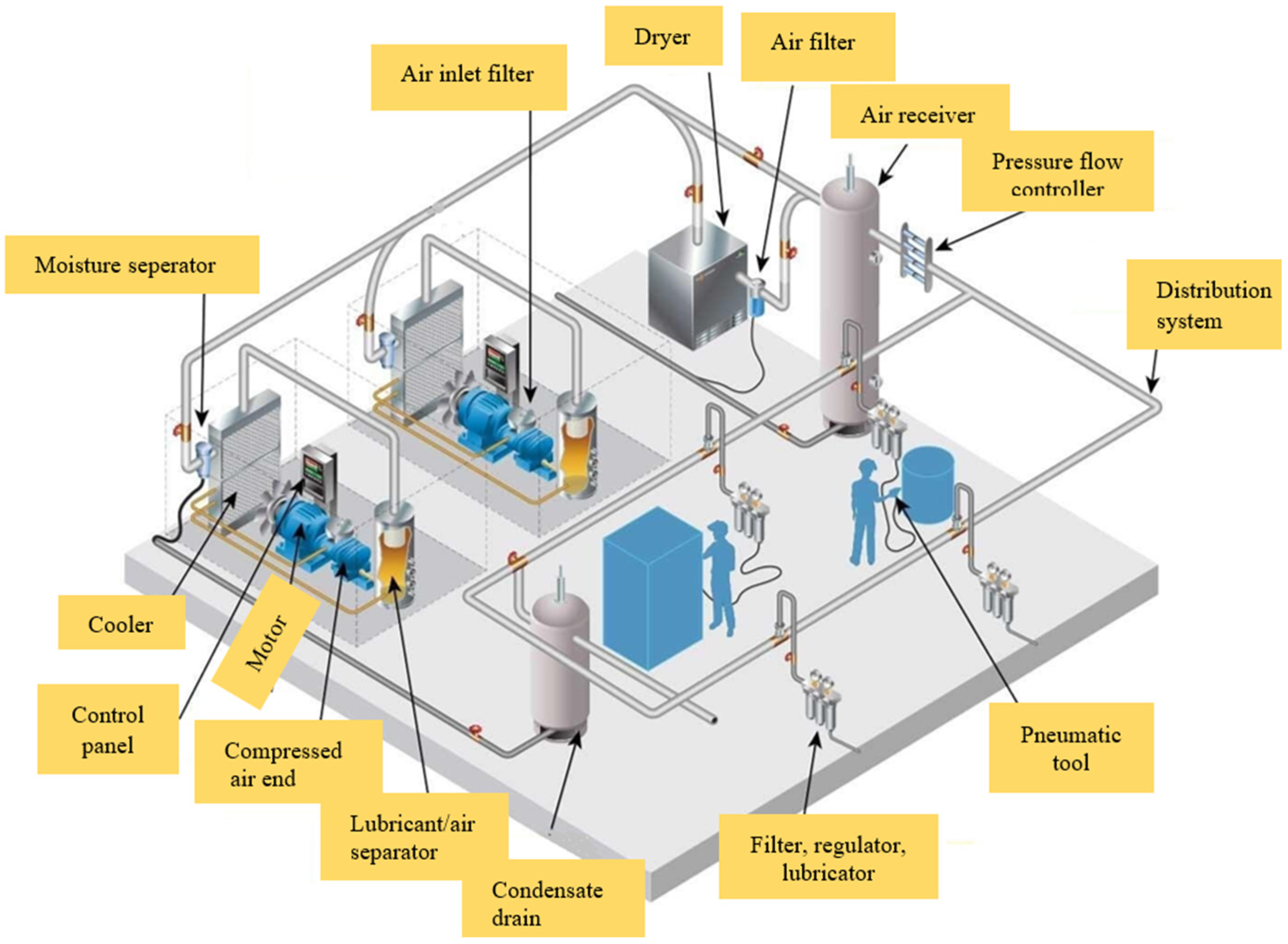
1.1. Compressed Air Systems (CASs)
1.2. Positioning the Study Within the Sustainability Literature
1.3. Air Leakages in CAS
1.4. Regression Analysis of CAS
1.5. Compressed Air Systems, Sustainable Manufacturing, and the SDGs
1.6. Problem Statement and Research Contribution
1.7. Novelty Relative to Existing AI-Based Utility and Leak-Detection Studies
2. Materials and Methods
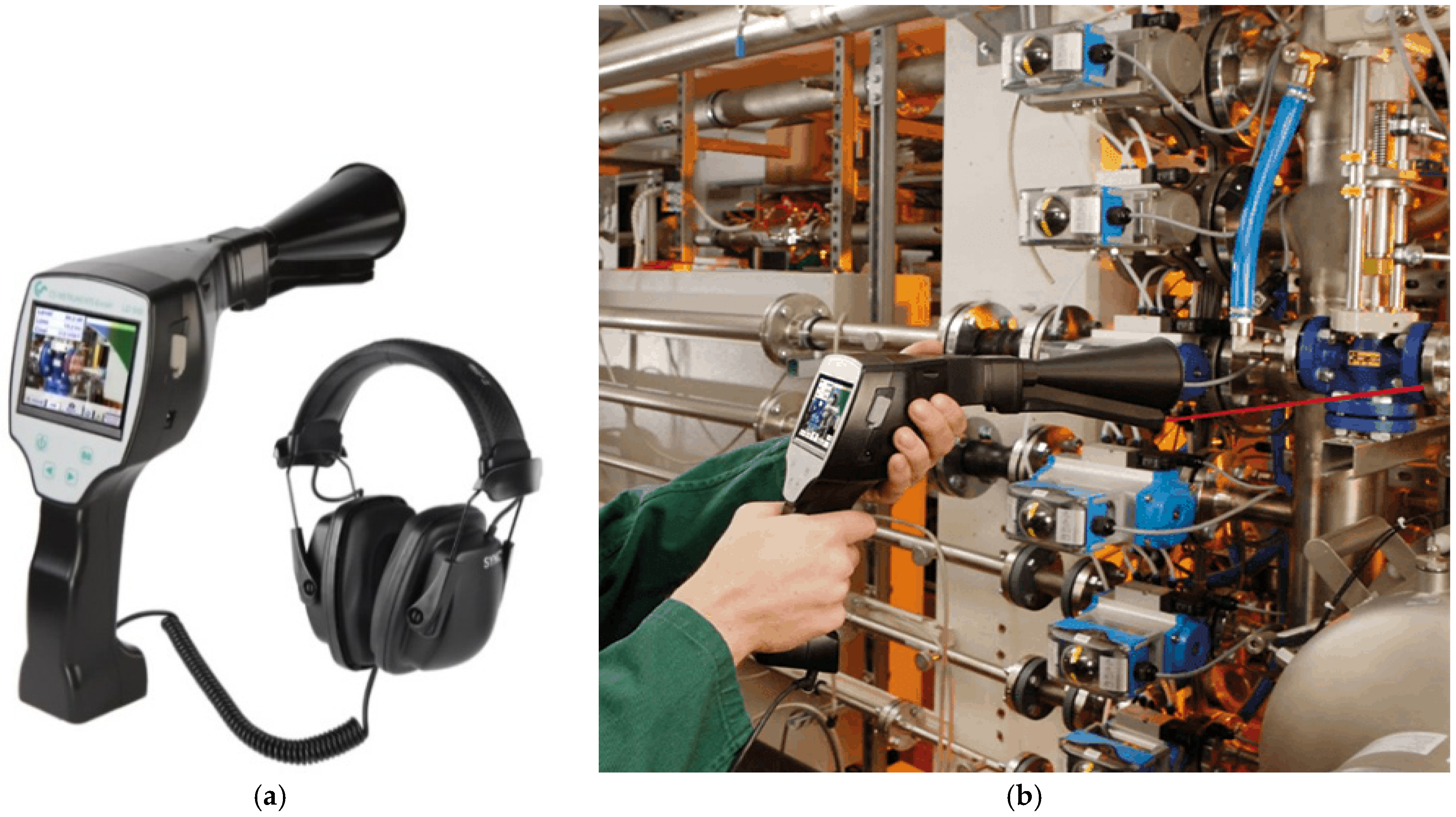
2.1. Measurements
2.2. Data Reduction
3. Regression Analysis
3.1. ML Dataset Description
3.2. Data Preprocessing
3.3. ML Regression Models
3.3.1. Linear Regression Model
3.3.2. Bagging Regression Trees Model
- ✓
- B = 600 bootstrap samples were randomly selected from the training set.
- ✓
- An independent regression tree () was trained on each bootstrap sample with a minimum leaf size of 5.
- ✓
- Estimates from all trees were combined by taking the arithmetic mean using the following formula:
3.3.3. Multivariate Adaptive Regression Splines (MARS) Model
3.4. Model Evaluation Metrics
3.5. Model Interpretability and Visualization
4. Results
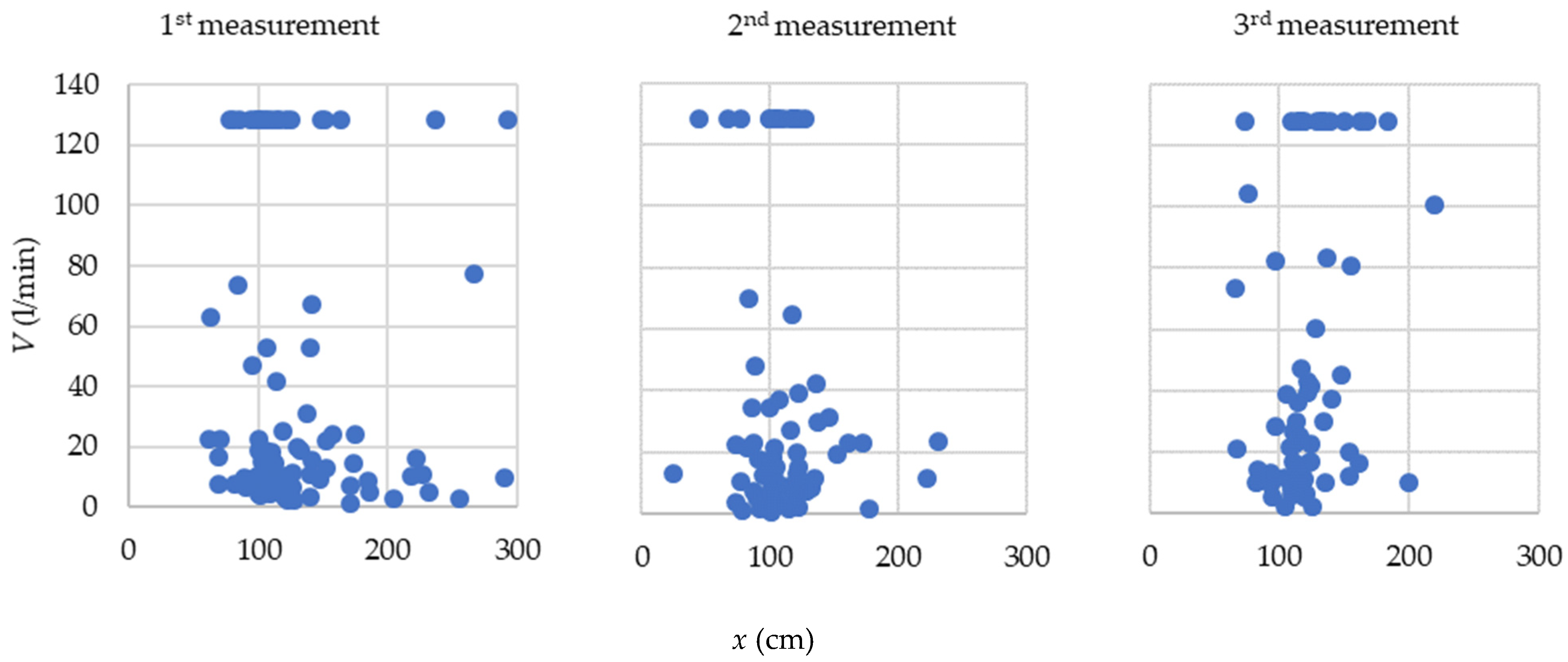
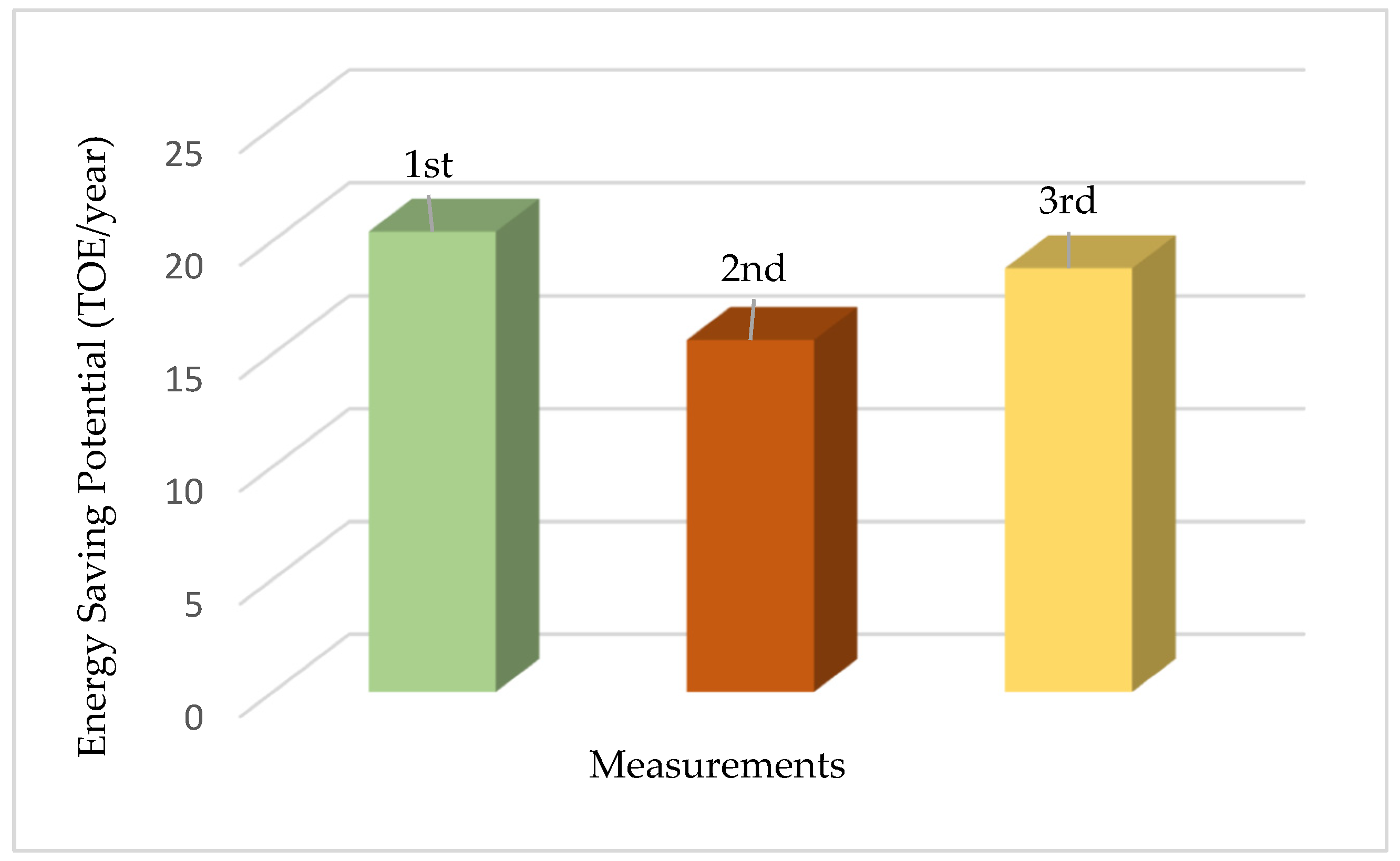
4.1. Results of Measurements
Policy Context: Climate Neutrality, CBAM, and Industrial Decarbonization
4.2. Results of ML Regression Analysis
4.3. Uncertainty and Sensitivity Considerations
4.4. Organizational and Behavioral Dimensions of Industrial Energy Efficiency
4.5. Research Gap and Contribution of This Study
4.6. Conceptual Linkage to Sustainability Theory and the Triple Bottom Line
5. Discussion
Use of Embedded Instrument Correlations and Study Limitations
6. Conclusions
- ✓
- Air leaks ranging from 10 to 140 L/min were detected through the holes in the CAS.
- ✓
- The energy savings potential, initially determined as 20.39 TOE/year, was reduced to 18.77 TOE/year through repairs, resulting in an 8% improvement across the facility. These improvements were valued at €3571.
- ✓
- The CFP, which was 125 t-CO2/year in the initial measurement, was reduced to 115 t-CO2/year with the improvements, contributing 9 t-CO2/year to the overall CFP reduction.
- ✓
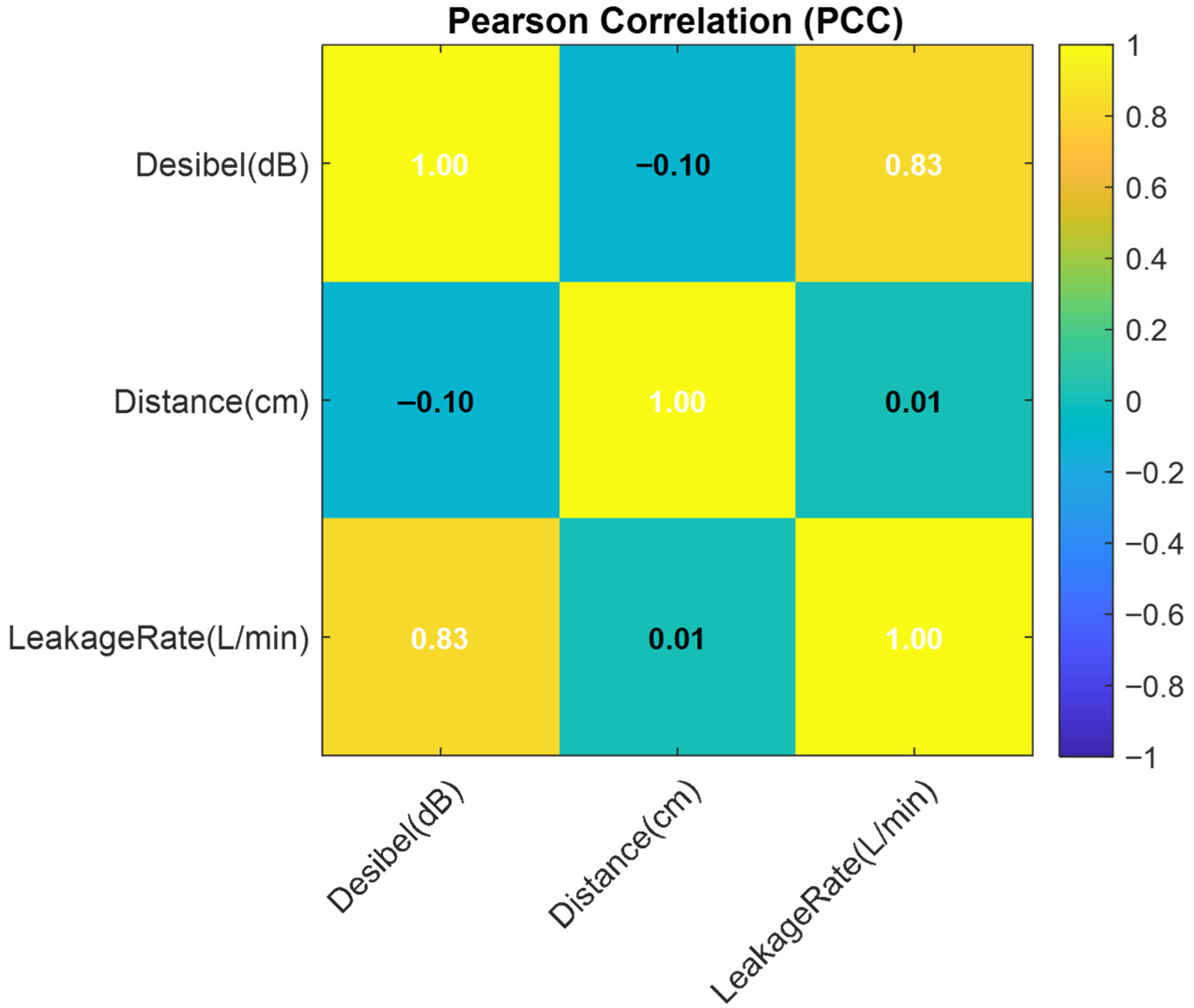
- The highest Pearson correlation coefficient (0.83) was observed between the acoustic emission level (dB) and leakage flow rate. This indicates that the acoustic measuring device is more sensitive at close range and that the noise level is directly related to the leakage flow rate.
- ✓
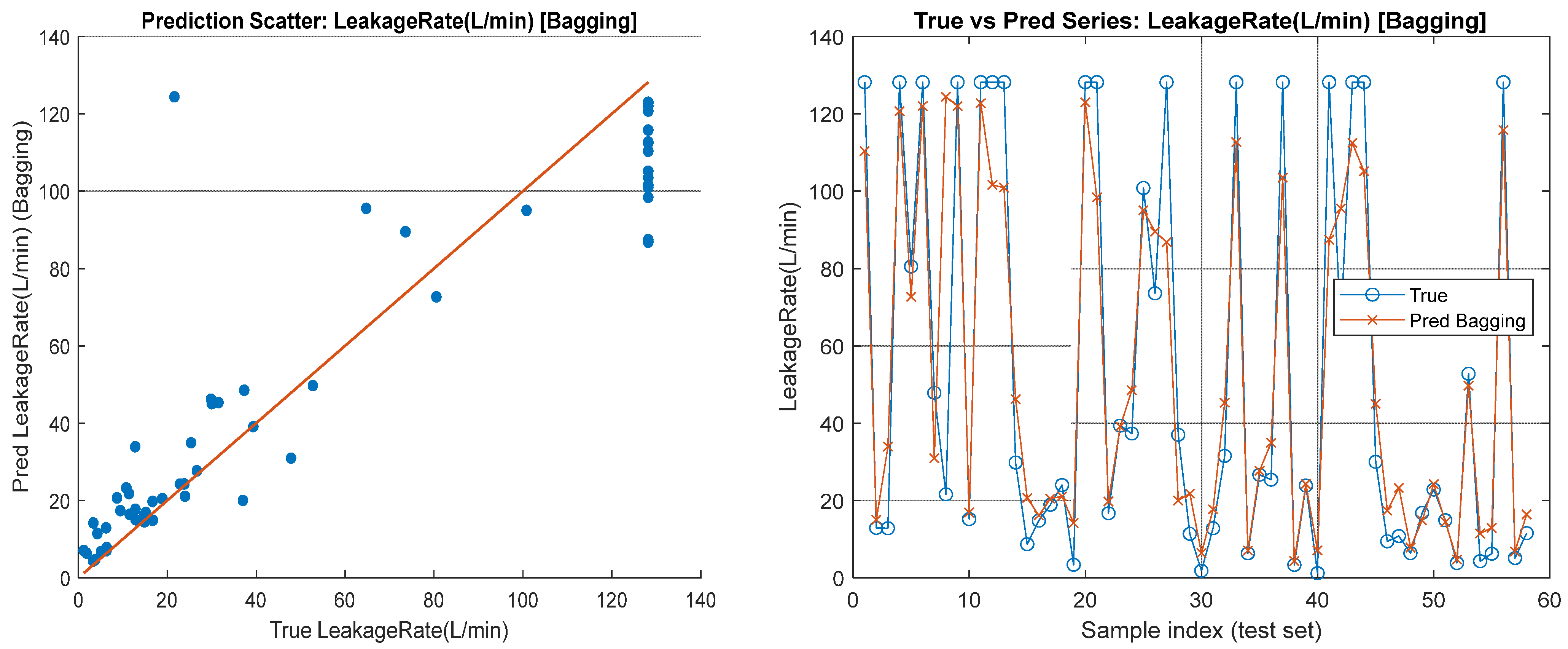
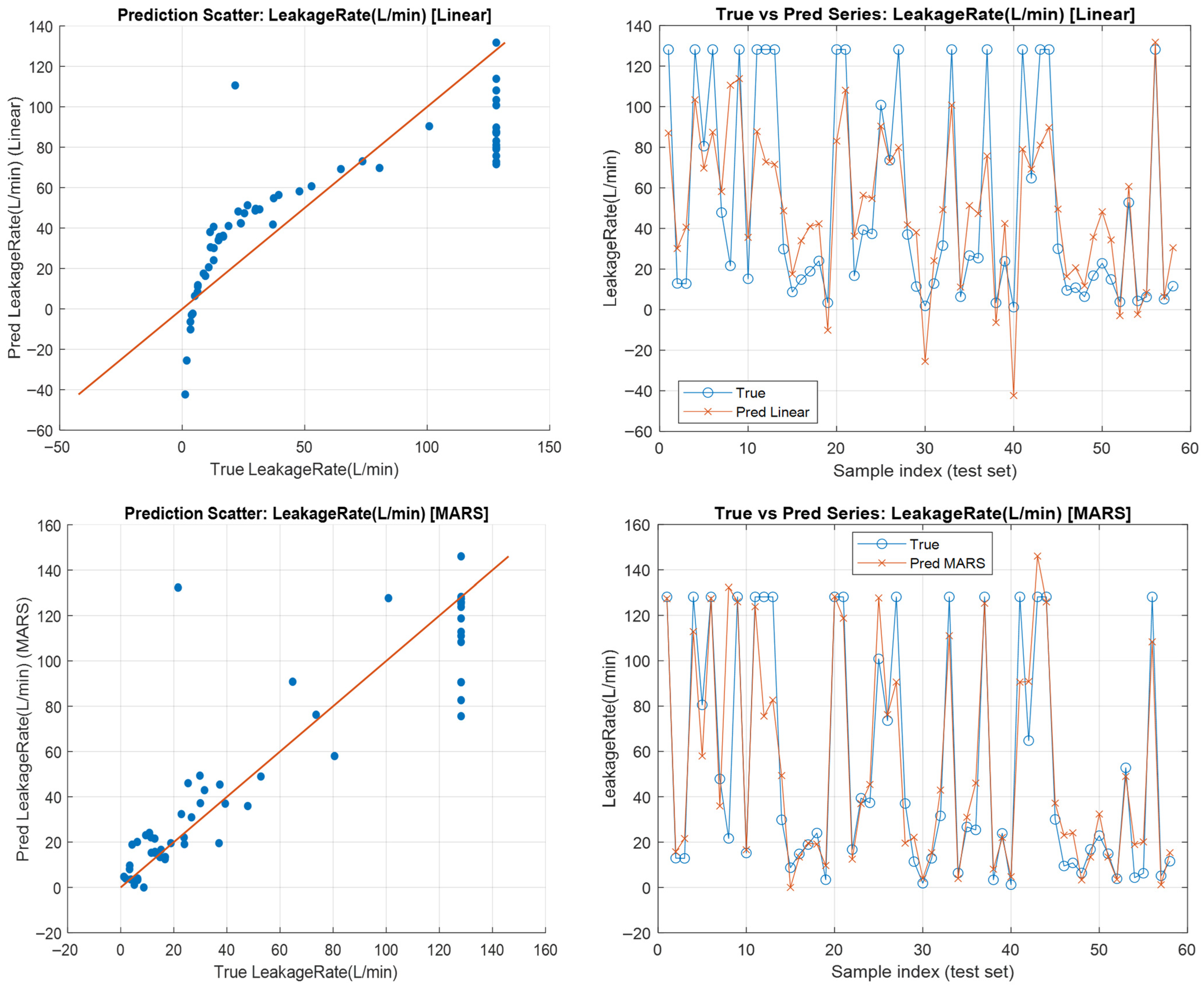
- The bagging method achieved the highest accuracy, with an R2 of 0.846, demonstrating its explanatory power on the test set.
- ✓
- Furthermore, the low MSE (389.85) and MAE (12.134) values indicate that the model is stable not only in overall accuracy but also in error distribution.
Funding
Institutional Review Board Statement
Informed Consent Statement
Data Availability Statement
Conflicts of Interest
Nomenclature
| Symbol | Description | Unit |
| dB | Sound | decibel |
| CFP | Carbon footprint | t-CO2 |
| ESL,CAS | Energy saving potential | TOE/year |
| V | Leakage flow rate | L/min |
| P | Pressure | Pa |
| WC,S | Specific power of motor | kWh/m3 |
| QV | Free air delivery | m3/min |
| Cm,air | Cost of leakage air | €/year |
| Celectric | Unit price of electricity | €/kWh |
Abbreviations
| CAS | Compressed Air Systems |
| SDGs | Sustainable Development Goals |
| ML | Machine Learning |
| LR | Linear Regression |
| MARS | Multivariate Adaptive Regression Splines |
| TOE | Tons of Oil Equivalent |
| CBAM | Carbon Border Adjustment Mechanism |
| CEF | Carbon dioxide emission factor |
| ML | Machine Learning |
| MARS | Multivariate Adaptive Regression Splines |
| € | Euro |
References
- IEA. World Energy Outlook 2024; IEA: Paris, France, 2024; Available online: https://www.iea.org/reports/world-energy-outlook-2024 (accessed on 15 September 2025).
- Yu, F.; Yuan, Q.; Sheng, X.; Liu, M.; Chen, L.; Yuan, X.; Zhang, D.; Dai, S.; Hou, Z.; Wang, Q. Understanding carbon footprint: An evaluation criterion for achieving sustainable development. Chin. J. Popul. Resour. Environ. 2024, 22, 367–375. [Google Scholar] [CrossRef]
- Metcalf, G.E.; Weisbach, D. The design of a carbon tax. Harv. Environ. Law Rev. 2009, 33, 499–556. [Google Scholar] [CrossRef]
- UNFCCC. Paris Agreement; United Nations Framework Convention on Climate Change: Bonn, Germany, 2015; Available online: https://unfccc.int/sites/default/files/english_paris_agreement.pdf (accessed on 15 September 2025).
- Kohlscheen, E.; Nguyen, C.; Volkov, V. Carbon taxation and CO2 emissions: New evidence from panel data. Energy Econ. 2024, 129, 107405. [Google Scholar]
- Sitarz, J.; Pahle, M.; Osorio, S.; Luderer, G.; Pietzcker, R. EU carbon prices signal high policy credibility and farsighted actors. Nat. Energy 2024, 9, 691–702. [Google Scholar] [CrossRef]
- Unver, U.; Kara, O. Energy efficiency by determining the production process with the lowest energy consumption in a steel forging facility. J. Clean. Prod. 2019, 215, 1362–1370. [Google Scholar] [CrossRef]
- Kapan, S.; Celik, N.; Camdali, U.; Taskiran, A. Energy and exergy analyses of a submerged arc furnace used for ferrochrome production. Int. J. Exergy 2024, 44, 89–106. [Google Scholar] [CrossRef]
- Nourin, F.N.; Espindola, J.; Selim, O.M.; Amano, R.S. Energy, exergy, and emission analysis on industrial air compressors. J. Energy Resour. Technol. 2022, 144, 042104. [Google Scholar] [CrossRef]
- Park, D.; Roller, J.; Kim, T.; Barad, D.; Rasmussen, B.P. Experimental Characterization of Compressed Air Nozzles. In Proceedings of the ASME International Mechanical Engineering Congress and Exposition, Portland, OR, USA, 17–21 November 2024; Volume 8, pp. 17–21. [Google Scholar] [CrossRef]
- Saidur, R.; Rahim, N.A.; Hasanuzzaman, M. A review on compressed-air energy use and energy savings. Renew. Sustain. Energy Rev. 2010, 14, 1135–1153. [Google Scholar] [CrossRef]
- Herrera, H.H.; Villalba, D.P.; Angarita, E.N.; Ortega, J.L.S.; Echavarría, C.A.C. Energy savings in CASs: A case study. IOP Conf. Ser. Mater. Sci. Eng. 2021, 1154, 012009. [Google Scholar] [CrossRef]
- Medojevic, M.; Petrović, J.; Medojevic, M. Energy Efficiency and Optimization Measures of Compressed Air Systems in Exhibition Hall. 2016. Available online: https://www.researchgate.net/publication/341163957 (accessed on 10 October 2025).
- Benedetti, M.; Bonfà, F.; Bertini, L.; Introna, V.; Ubertini, S. Explorative study on CASs’ energy efficiency in production and use: Steps towards benchmarking for energy-intensive firms. Appl. Energy 2018, 227, 436–448. [Google Scholar] [CrossRef]
- Sundaramoorthy, S.; Kamath, D.; Nimbalkar, S.; Price, C.; Wenning, T.; Cresko, J. Energy efficiency as a foundational technology pillar for industrial decarbonization. Sustainability 2023, 15, 9487. [Google Scholar] [CrossRef]
- Salimi, M.; Amidpour, M.; Moradi, M.A.; Hajivand, M.; Siahkamari, E.; Shams, M. Technical–economic analysis of energy efficiency solutions for the industrial steam system of a natural gas processing plant. Sustainability 2023, 15, 14995. [Google Scholar] [CrossRef]
- Cagman, S.; Soylu, E.; Unver, U. Easy-to-use energy efficiency performance indicators for industrial CAS audits and monitoring. J. Clean. Prod. 2022, 365, 132698. [Google Scholar] [CrossRef]
- Trianni, A.; Accordini, D.; Cagno, E. Factors affecting adoption of energy efficiency measures within CASs. Energies 2020, 13, 5116. [Google Scholar] [CrossRef]
- Lyu, Y.; Jamil, M.; Ma, P.; He, N.; Gupta, M.K.; Khan, A.M.; Pimenov, D.Y. Ultrasonic-based detection of air leakage in aircraft components. Aerospace 2021, 8, 55. [Google Scholar] [CrossRef]
- Atlas Copco. Company Website. Available online: https://www.atlascopco.com/en-eg (accessed on 10 October 2025).
- Dindorf, R. Estimating potential energy savings in CASs. Procedia Eng. 2012, 39, 204–211. [Google Scholar] [CrossRef]
- Doyle, F.; Cosgrove, J. Optimising CASs in production operations. Int. J. Ambient Energy 2018, 39, 194–201. [Google Scholar] [CrossRef]
- Dudic, S.; Ignjatovic, I.; Šešlija, D.; Blagojevic, V.; Stojiljkovic, M. Leakage quantification of compressed air using ultrasound and infrared thermography. Measurement 2012, 45, 1689–1694. [Google Scholar] [CrossRef]
- Lee, J.C.; Choi, Y.R.; Cho, J.W. Pipe leakage detection using ultrasonic acoustic signals. Sens. Actuators A Phys. 2023, 349, 114061. [Google Scholar] [CrossRef]
- ASTM E1002–05; Standard Practice for Leaks Using Ultrasonic Leak Detectors. ASTM International: West Conshohocken, PA, USA, 2005.
- Celik, N.; Kapan, S.; Tasar, B. Effects of various parameters on entropy generation and exergy destruction using DL neural networks. Int. Commun. Heat Mass Transf. 2025, 161, 108481. [Google Scholar] [CrossRef]
- Ahammad, N.A.; Alshehri, M.A.; Alshaban, E.; Alatawi, A. ML-driven analysis of heat transfer and entropy generation in blood nanofluid flow. Case Stud. Therm. Eng. 2025, 75, 107136. [Google Scholar] [CrossRef]
- Pambudi, S.; Jongyingcharoen, J.S.; Saechua, W. Explainable ML for activation energy prediction in biomass & biochar. Case Stud. Therm. Eng. 2025, 75, 107064. [Google Scholar]
- Entezari, A.; Aslani, A.; Zahedi, R.; Noorollahi, Y. AI and machine learning in energy systems: Bibliographic perspective. Energy Strateg. Rev. 2023, 45, 101017. [Google Scholar] [CrossRef]
- Zhu, J.; Dong, H.; Zheng, W.; Li, S.; Huang, Y.; Xi, L. Data-driven techniques for load forecasting in integrated energy systems. Appl. Energy 2022, 321, 119269. [Google Scholar] [CrossRef]
- Yang, K.; Gao, L.; Lin, Z.; Lian, D.; Lin, Y. ML-based prediction of pollution status in coal-fired boilers. Case Stud. Therm. Eng. 2025, 74, 106953. [Google Scholar] [CrossRef]
- Caruso, G.; Colantonio, E.; Gattone, S.A. Renewable energy consumption, social factors, and health: Panel VAR analysis. Sustainability 2020, 12, 2915. [Google Scholar] [CrossRef]
- Yun, P.; Wu, H.; Alsenani, T.R.; Bouzgarrou, S.M.; Alkhalaf, S.; Alturise, F.; Almujibah, H. AI-based optimization in compressed air energy storage integrated systems. J. Energy Storage 2024, 84, 110839. [Google Scholar] [CrossRef]
- Neves, F.D.O.; Ewbank, H.; Roveda, J.A.F.; Trianni, A.; Marafão, F.P.; Roveda, S.R.M.M. Economic and production implications for industrial energy efficiency. Energies 2022, 15, 1382. [Google Scholar] [CrossRef]
- Doner, N.; Ciddi, K. Regression analysis of operational parameters and energy saving potential of industrial CASs. Energy 2022, 252, 124030. [Google Scholar] [CrossRef]
- Schenck, A.; Daems, W.; Steckel, J. Automated air leakage localization using ML-enhanced ultrasonic and LiDAR-SLAM. IEEE Access 2025, 13, 66492–66504. [Google Scholar] [CrossRef]
- Zhang, C.; Wang, Z.; Yu, L.; Zhao, Z.; Wang, F.; Xiong, W. Leakage detection in pneumatic systems using ML and upstream signals. Int. J. Fluid Power 2025, 26, 1–24. [Google Scholar]
- Vyas, V.; Jeon, H.-w.; Wang, C. An Integrated Energy Simulation Model of a Compressed Air System for Sustainable Manufacturing: A Time-Discretized Approach. Sustainability 2021, 13, 10340. [Google Scholar] [CrossRef]
- Dindorf, R. Study of the Energy Efficiency of Compressed Air Storage Tanks. Sustainability 2024, 16, 1664. [Google Scholar] [CrossRef]
- Lopes Junior, M.M.; de Mattos, C.A.; Lima, F. Toward Cleaner Production by Evaluating Opportunities of Saving Energy in a Short-Cycle Time Flowshop. Sustainability 2024, 16, 2455. [Google Scholar] [CrossRef]
- Kolhe, M.L. Advancing Sustainable Electrical Energy Technologies: A Multifaceted Approach Towards SDG Achievement. Processes 2025, 13, 210. [Google Scholar] [CrossRef]
- Wang, J.; Lu, K.; Ma, L.; Wang, J.; Dooner, M.; Miao, S.; Li, J.; Wang, D. Overview of Compressed Air Energy Storage and Technology Development. Energies 2017, 10, 991. [Google Scholar] [CrossRef]
- Lee, C.-W.; Yoo, D.G. Development of leakage detection model and its application for water distribution networks using RNN-LSTM. Sustainability 2021, 13, 9262. [Google Scholar] [CrossRef]
- Zeng, Y.; Shen, K.; Weng, W. Safeguarding gas pipeline sustainability: Deep learning for precision identification of gas leakage characteristics. Sustainability 2025, 17, 10323. [Google Scholar] [CrossRef]
- Grybós, D.; Leszczy’nski, J.S. Review of energy overconsumption reduction in CASs. Energies 2024, 17, 1495. [Google Scholar] [CrossRef]
- Wolstencroft, H.R. Ultrasonic Air Leakage Detection: Improving Accuracy of Leakage Rate Estimation. Master’s Thesis, University of Waikato, Hamilton, New Zealand, 2008. [Google Scholar]
- Wurma, S.; Tschepe, T.; Petrovic, O.; Herfs, W. Methodology for accurate product carbon footprint calculation in machining. Procedia CIRP 2025, 135, 1308–1313. [Google Scholar] [CrossRef]
- Ren, L.; Wang, J.; Zhang, L.; Hu, X.; Ning, Y.; Cong, J.; Li, Y.; Zhang, W.; Xu, T.; Shi, X. Quantitative Assessment of the Carbon Border Adjustment Mechanism: Impacts on China–EU Trade and Provincial-Level Vulnerabilities. Sustainability 2025, 17, 1699. [Google Scholar] [CrossRef]
- Haraldsson, J.; Johansson, M.T. Barriers to and Drivers for Improved Energy Efficiency in the Swedish Aluminum Industry and Aluminium Casting Foundries. Sustainability 2019, 11, 2043. [Google Scholar] [CrossRef]
- Stancu, S.; Hristea, A.M.; Kailani, C.; Cruceru, A.; Bălă, D.; Pernici, A. Exploring Influencing Factors of Energy Efficiency and Curtailment: Approaches to Promoting Sustainable Behavior in Residential Context. Sustainability 2025, 17, 4641. [Google Scholar] [CrossRef]
- Nogueira, E.; Gomes, S.; Lopes, J.M. Triple bottom line, sustainability, and economic development: What binds them together? A bibliometric approach. Sustainability 2023, 15, 6706. [Google Scholar] [CrossRef]
- Rosen, M.A.; Kishawy, H.A. Sustainable manufacturing and design: Concepts, practices and needs. Sustainability 2012, 4, 154–174. [Google Scholar] [CrossRef]
- Wang, Z.; Shen, S.-L.; Zhou, A.N. Performance of composite EPDM gaskets for underground structures: Experimental and numerical investigation. Constr. Build. Mater. 2025, 500, 143951. [Google Scholar] [CrossRef]



| Operating frequency | 40 kHz ± 2 kHz |
| Connections | 3.5 mm stereo jack for headset, power supply socket for connecting an external charger |
| Laser | Wavelength: 630…660 nm Output power: <1 mW (laser class 2) |
| Interface | USB interface |
| Power supply | Internal rechargeable Li-Ion batteries, Output voltage: 24 VDC ± 10% Output current: 120 mA |
| Operation Temperature | −5…+50 °C |
| Auto level | Automatically adapts the sensitivity to the environment and reliably eliminates ambient noise |
| Sensitivity | min: 0.1 L/min at 6 bar, 5 m distance, approx. €1/year of compressed air costs |
| Accuracy of external sensor input | ±1% |
| Type | Atlas Copco-GA110 |
| Max. working pressure | 7.5 bar |
| Free Air Delivery | 20.7 m3/min |
| Nominal shaft power (pmotor) | 110 kW |
| Rotational shaft speed (nmotor) | 4200 r/min |
| Voltage | 400 V |
| Frequency | 50 Hz |
| Working period | 8760 h |
| Metric | Fun Decibel (dB) | Fun Distance (cm) | Fun Leakage Rate (L/min) |
|---|---|---|---|
| Mean | 88.416 | 124.27 | 53.901 |
| Standard Deviation | 13.819 | 45.072 | 48.434 |
| Minimum | 55.9 | 25 | 0.613 |
| Median | 87.2 | 115 | 18.95 |
| Maximum | 128.2 | 318 | 128.19 |
| Model | R2 | R2_adj | MAE | MSE |
|---|---|---|---|---|
| Bagging | 0.84643 | 0.8409 | 12.134 | 389.85 |
| MARS | 0.82291 | 0.8165 | 12.227 | 449.56 |
| Linear | 0.68182 | 0.6703 | 22.604 | 807.72 |
Disclaimer/Publisher’s Note: The statements, opinions and data contained in all publications are solely those of the individual author(s) and contributor(s) and not of MDPI and/or the editor(s). MDPI and/or the editor(s) disclaim responsibility for any injury to people or property resulting from any ideas, methods, instructions or products referred to in the content. |
© 2026 by the author. Licensee MDPI, Basel, Switzerland. This article is an open access article distributed under the terms and conditions of the Creative Commons Attribution (CC BY) license.
Share and Cite
Kapan, S. Energy Saving Potential and Machine Learning-Based Prediction of Compressed Air Leakages in Sustainable Manufacturing. Sustainability 2026, 18, 904. https://doi.org/10.3390/su18020904
Kapan S. Energy Saving Potential and Machine Learning-Based Prediction of Compressed Air Leakages in Sustainable Manufacturing. Sustainability. 2026; 18(2):904. https://doi.org/10.3390/su18020904
Chicago/Turabian StyleKapan, Sinan. 2026. "Energy Saving Potential and Machine Learning-Based Prediction of Compressed Air Leakages in Sustainable Manufacturing" Sustainability 18, no. 2: 904. https://doi.org/10.3390/su18020904
APA StyleKapan, S. (2026). Energy Saving Potential and Machine Learning-Based Prediction of Compressed Air Leakages in Sustainable Manufacturing. Sustainability, 18(2), 904. https://doi.org/10.3390/su18020904