1. Introduction
Innovation is widely recognised as a fundamental driver of long-term economic development, competitiveness, and resilience across nations, sectors, and enterprises [
1]. In resource-intensive industries such as forestry and wood processing, innovation plays a particularly critical role, as these sectors face increasing pressure to respond to global challenges, including climate change, biodiversity loss, and resource scarcity, while maintaining economic viability and meeting evolving market demands. In this context, the present study aims to identify the dominant forms of innovation in forestry enterprises, examine the key drivers and barriers influencing their adoption, and map long-term innovation trends linked to sustainable forest management.
Concepts such as sustainability, the bioeconomy, and the circular economy have gained prominence in academic discourse and policy agendas [
2,
3]. Forest-based industries occupy a central position in the transition towards a sustainable and competitive circular bioeconomy, as they provide renewable raw materials, support climate mitigation, and contribute to regional development [
4,
5]. However, the operating environment of these enterprises is undergoing rapid transformation, characterised by increasing complexity, regulatory pressures, and heightened societal expectations regarding sustainable forest management [
6,
7,
8]. These changes necessitate new business models that reconcile productivity with ecological stewardship, placing innovation at the core of sectoral adaptation.
In forestry, innovation encompasses the development and implementation of new technologies, management practices, organisational arrangements, and services that improve resource efficiency, reduce environmental impacts, and increase value added. Digitalisation, precision forestry, bio-based innovation, and energy-efficient technologies are reshaping how forest resources are managed and utilised. Despite its strategic importance, innovation in forestry remains relatively underexplored. The sector is frequently characterised as technologically conservative, with comparatively low levels of advanced technology adoption and a tendency towards institutional inertia [
9].
Forestry differs from many other industries in that production processes are embedded within forest ecosystems or involve the long-term establishment of forest resources [
10,
11]. In this context, innovation can be understood as the development and application of new processes, products, or services by forest owners and managers aimed at strengthening sustainable forest management [
12]. While previous studies have examined certain drivers, barriers, and outcomes of forestry-related innovation, systematic knowledge remains limited regarding the specific forms innovation takes, the conditions under which it emerges, and how these dynamics evolve over time at the enterprise level.
The Lithuanian forestry and wood processing sector represents a particularly relevant case. It plays a significant role in the national bioeconomy, contributes to export revenues, supports rural employment, and supplies renewable energy resources. Given Lithuania’s relatively high forest cover, the sector is central to achieving economic, environmental, and social objectives. Balancing productivity with sustainability requires continuous modernisation, technological upgrading, and the integration of innovative solutions across the forestry value chain, combining traditional outputs with emerging high-value-added products and environmentally responsible practices.
At the policy level, this transformation is supported by national and EU strategies, including the European Green Deal, the Circular Economy Action Plan, and the Smart Specialisation Strategy. These frameworks promote green growth, digitalisation, and research-driven innovation, identifying forestry as a priority sector where innovation can enhance competitiveness, strengthen regional economies, and support sustainable forest management.
To address the identified knowledge gaps, this study analyses innovation processes in Lithuanian forestry enterprises using survey data collected in 2005 and 2024. This longitudinal approach enables the assessment of continuity and change in innovation practices over time, taking into account evolving policy frameworks, market conditions, and technological developments. The analysis focuses on three interrelated dimensions: forms of innovation, drivers and barriers influencing innovation adoption, and long-term trends linking innovation to sustainable forest management. As forestry enterprises in Lithuania are predominantly small and medium-sized, the study is therefore focused on this group of enterprises. Accordingly, the study is guided by the following research questions:
RQ1: What forms of innovation have been adopted by forestry enterprises in Lithuania, and how have these forms evolved between 2005 and 2024?
RQ2: What are the key drivers and barriers influencing innovation implementation in forestry enterprises?
RQ3: What long-term trends can be identified in the relationship between innovation and sustainable forest management in the Lithuanian forestry sector?
Based on these research questions, the following hypothesis is formulated:
H1: Technological and digital innovations adopted by enterprises in Lithuania’s forestry sector have increased significantly over time and contribute positively to sustainable forest management.
This hypothesis is empirically examined by comparing the adoption of technological and digital innovation measures across the two survey periods and by analysing their potential effects on resource efficiency, environmental performance, and management practices associated with sustainable forest management.
2. Materials and Methods
To achieve the research objective, a qualitative survey method was employed using a structured questionnaire. According to scholars [
13,
14], the expert method is appropriate for verifying or substantiating data.
Research hypothesis. Technological and digital innovations adopted by enterprises in Lithuania’s forestry sector have increased significantly over time and contribute positively to sustainable forest management.
Object of the study. According to data from the Statistics Department of the Republic of Lithuania, in 2020 [
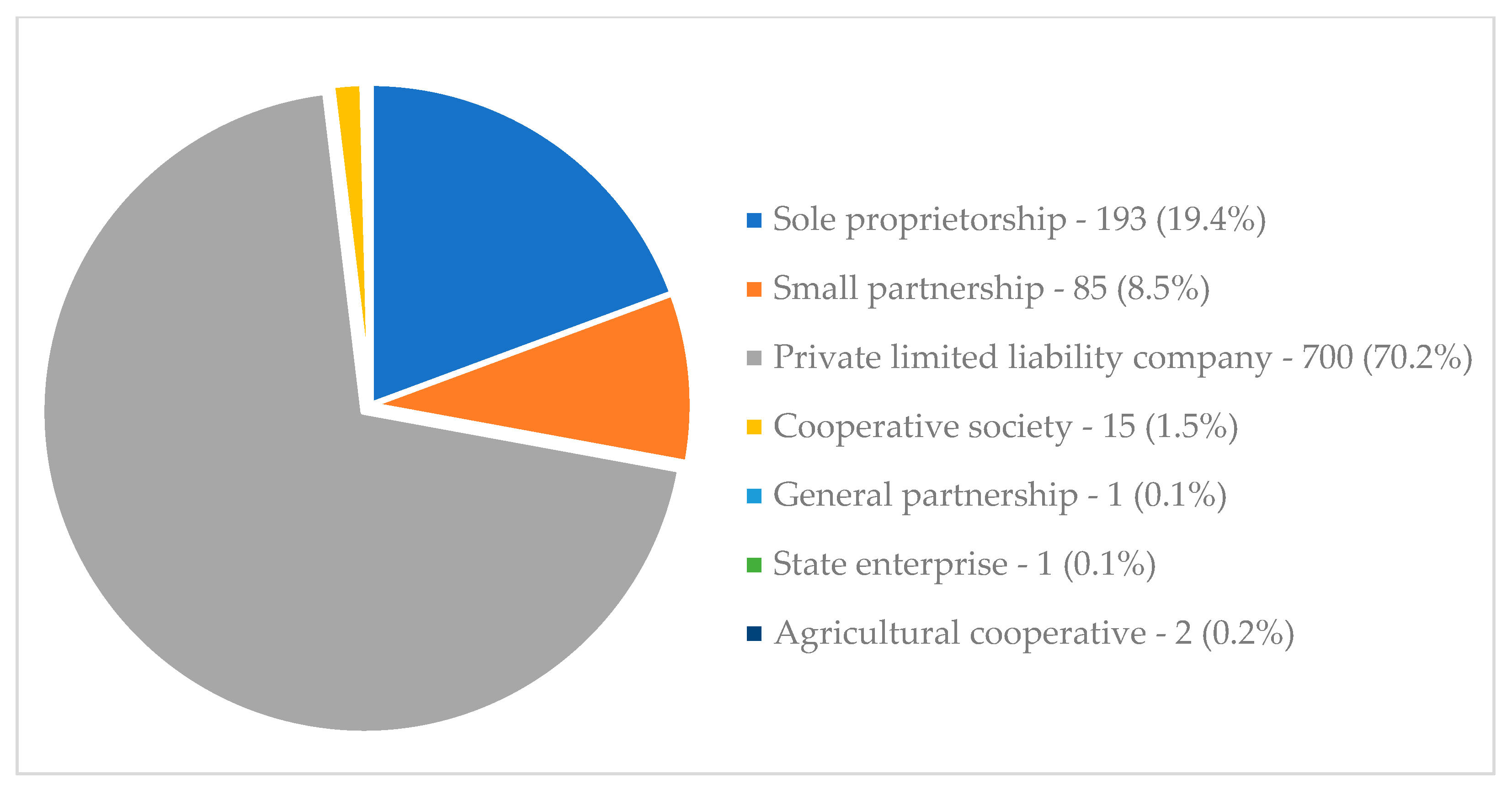
15] there were 997 enterprises in Lithuania providing forestry-related services (
Figure 1). When comparing statistical data from 2005 and 2020, the number of enterprises providing forestry services in Lithuania increased by 25.6%. New legal forms of enterprises, such as the small partnership, emerged on the market. In total, 997 enterprises of various legal forms were engaged in forestry services in 2020: 193 sole proprietorship (19.4%), 85 small partnerships (8.5%), 700 private limited liability companies (70.2%), 15 cooperative societies (1.5%), one general partnership (0.1%), one state-owned enterprise (0.1%), and two agricultural companies (0.2%).
According to the Statistics Department of the Republic of Lithuania, in 2020 [
15] forestry services in Lithuania were provided by a single state-owned enterprise. In 2017, a structural reform of the 42 state forest enterprises was carried out, resulting in the establishment of one state enterprise—State Forest Enterprise (VĮ Valstybinių miškų urėdija)—with 26 regional branches.
The distribution of Lithuanian forestry enterprises by ownership form is presented in
Table 1.
According to data from the Statistics Department of the Republic of Lithuania, in 2019 [
15], 34.9% of enterprises providing forestry services in Lithuania generated revenues between EUR 100,000 and EUR 500,000. The only state-owned enterprise is also the largest actor in this market, with revenues amounting to almost EUR 160 million in 2019.
Enterprises database formation and expert selection for the surveys. The database of enterprises was compiled using data provided by the Statistics Department of the Republic of Lithuania (2005 and 2024) [
15]. The enterprise database established in 2005 was verified and served as the basis for the 2024 survey. Several enterprises that participated in the 2005 survey had been liquidated by 2024 or no longer provided forestry services; therefore, they were replaced by enterprises comparable in size and type of activity.
Expert selection followed a purposive, criterion-based approach appropriate for qualitative research. As forestry enterprises in Lithuania are predominantly small and medium-sized, the study is therefore focused on this group of enterprises. Forestry enterprises were first identified according to three structural criteria—number of employees, annual turnover, and balance sheet total—while ensuring regional representation. Within these enterprises, experts were selected from among owners, managers, and individuals responsible for innovation implementation. Eligibility required a senior decision-making role, relevant professional experience in the forestry sector, and direct involvement in innovation-related activities. Experts were identified through the selected enterprises and recruited via direct contact. The principal selection criterion was their capacity to provide informed and reliable insights into the research problem. Following Dalkey’s recommendation [
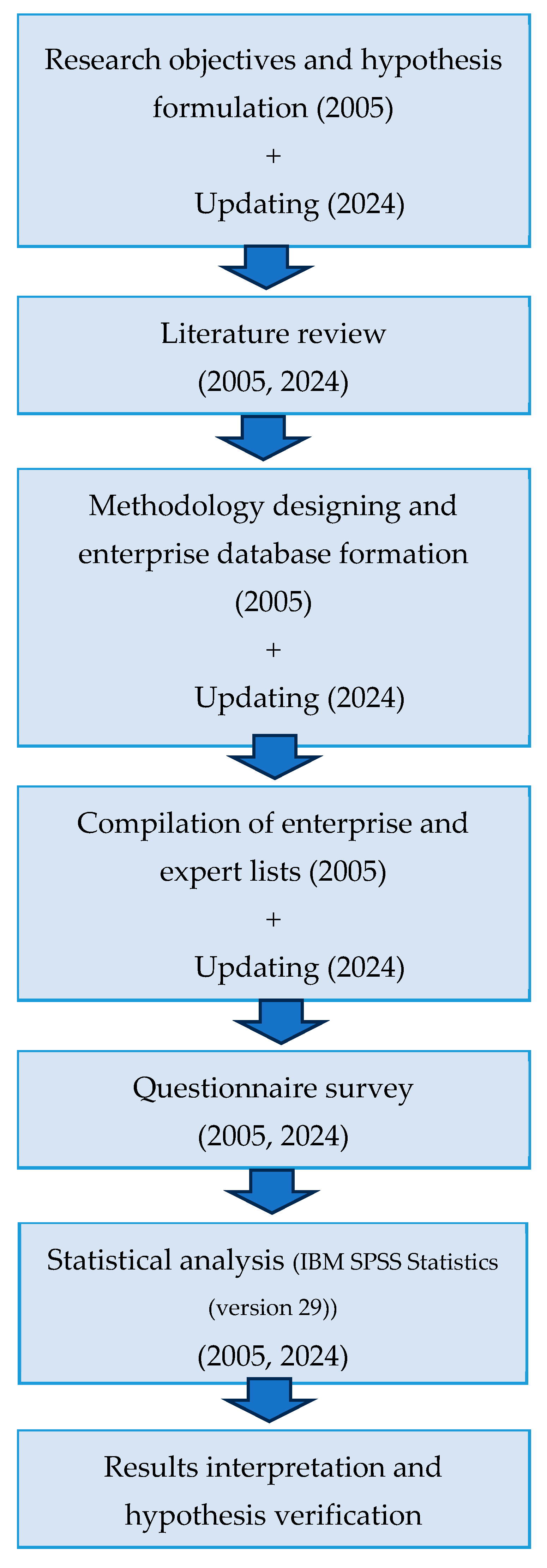
16], an expert group size of 25–30 individuals is considered optimal; in this study, more than 30 experts participated. The logical framework of the study is presented in
Appendix A.
Questionnaire design. For the survey conducted in 2024, a questionnaire originally developed in 2005, with minor modifications, was used; it consisted of 31 closed-ended questions. These questions covered various aspects related to the types of innovations applied within enterprises, factors influencing the implementation of innovations (both barriers and drivers), and potential trends concerning the development of new products or services.
Organisation of the expert survey. The expert survey was conducted by distributing questionnaires to experts via e-mail or by visiting them directly and discussing the questions through interviews. The survey was carried out between May and December 2024.
Main research methods. This study employed a qualitative expert survey design. The research was based on a systematic and comparative analysis of scientific literature and a structured questionnaire administered to experts with professional experience in forestry enterprises.
Data collection and statistical processing. Empirical data were gathered through a structured expert questionnaire designed to evaluate key dimensions of innovation adoption. The survey items were formulated based on previous research and adapted to the context of forestry services. Experts evaluated statements using a Likert-type scale, enabling quantitative assessment of perceptions and attitudes. The collected data were processed using descriptive statistics, including frequencies, means, and percentages, to provide an overview of enterprise characteristics and the distribution of responses. These statistical procedures facilitated the identification of general trends and patterns within the dataset.
Validity and reliability assessment. To ensure the accuracy and consistency of the measurement instrument, two key psychometric properties were examined: validity and reliability. Validity determines whether an instrument truly measures the intended construct, while reliability refers to the consistency and stability of measurement results [
17].
Instrument reliability was assessed through Cronbach’s alpha coefficient, one of the most widely used measures of internal consistency. This coefficient estimates the degree of intercorrelation among items within a scale and indicates how well they collectively represent the underlying concept [
18,
19]. Cronbach’s alpha values range from 0 to 1, with coefficients above 0.70 generally considered acceptable indicators of reliability in social science research [
20,
21,
22]. Values approaching 0.90 suggest a high level of consistency, although excessively high coefficients may indicate item redundancy.
In addition, Exploratory Factor Analysis (EFA) was conducted to evaluate the construct validity of the instrument and to identify latent factors underlying the observed variables. EFA helps to determine whether questionnaire items group logically into coherent factors representing distinct conceptual dimensions [
23]. Before factor extraction, the suitability of the dataset was verified using two preliminary tests: the Kaiser–Meyer–Olkin (KMO) measure of sampling adequacy and Bartlett’s Test of Sphericity [
24,
25].
The KMO index assesses whether the sample is appropriate for factor analysis, with values above 0.50 considered acceptable, and those above 0.80 regarded as good or excellent. Bartlett’s test evaluates the hypothesis that the correlation matrix is an identity matrix; a statistically significant result (p < 0.05) indicates sufficient inter-item correlations for factor analysis. The application of these procedures ensured that the data structure met the assumptions necessary for factor extraction and interpretation.
Rationale for method selection. The use of Cronbach’s alpha and EFA provides a robust methodological foundation for verifying the internal coherence and dimensionality of the survey. This dual approach is widely endorsed in contemporary research [
25,
26,
27], as it enhances both the reliability and construct validity of the collected data. Consequently, the employed statistical analyses ensured that the research instrument was empirically grounded, internally consistent, and conceptually aligned with the study objectives.
3. Results
3.1. Characteristics of Forest Enterprises Participating in the Survey
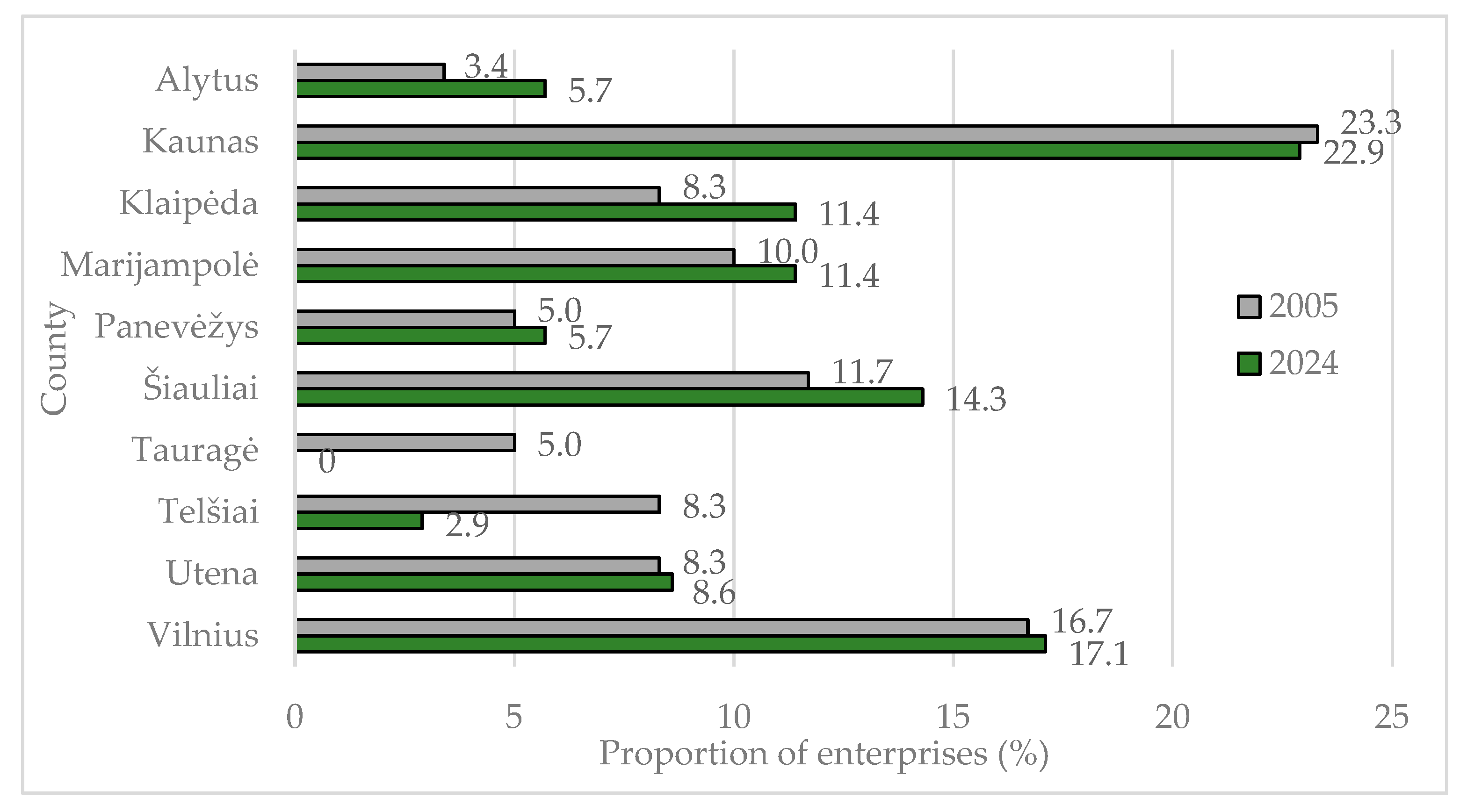
In the 2005 survey, experts from 60 enterprises participated, including 18 state forest enterprises. In 2024, questionnaires were completed by representatives (experts) of 34 enterprises. More than half (54.3%) of all questionnaires were collected in the counties of Vilnius (17.1%), Kaunas (22.9%) and Šiauliai (14.3%) (
Figure 2), as these counties have the largest number of registered forest management service providers. When analysing the results of the 2005 survey, the responses of the 18 state forest enterprises were aggregated and presented as a single entity.
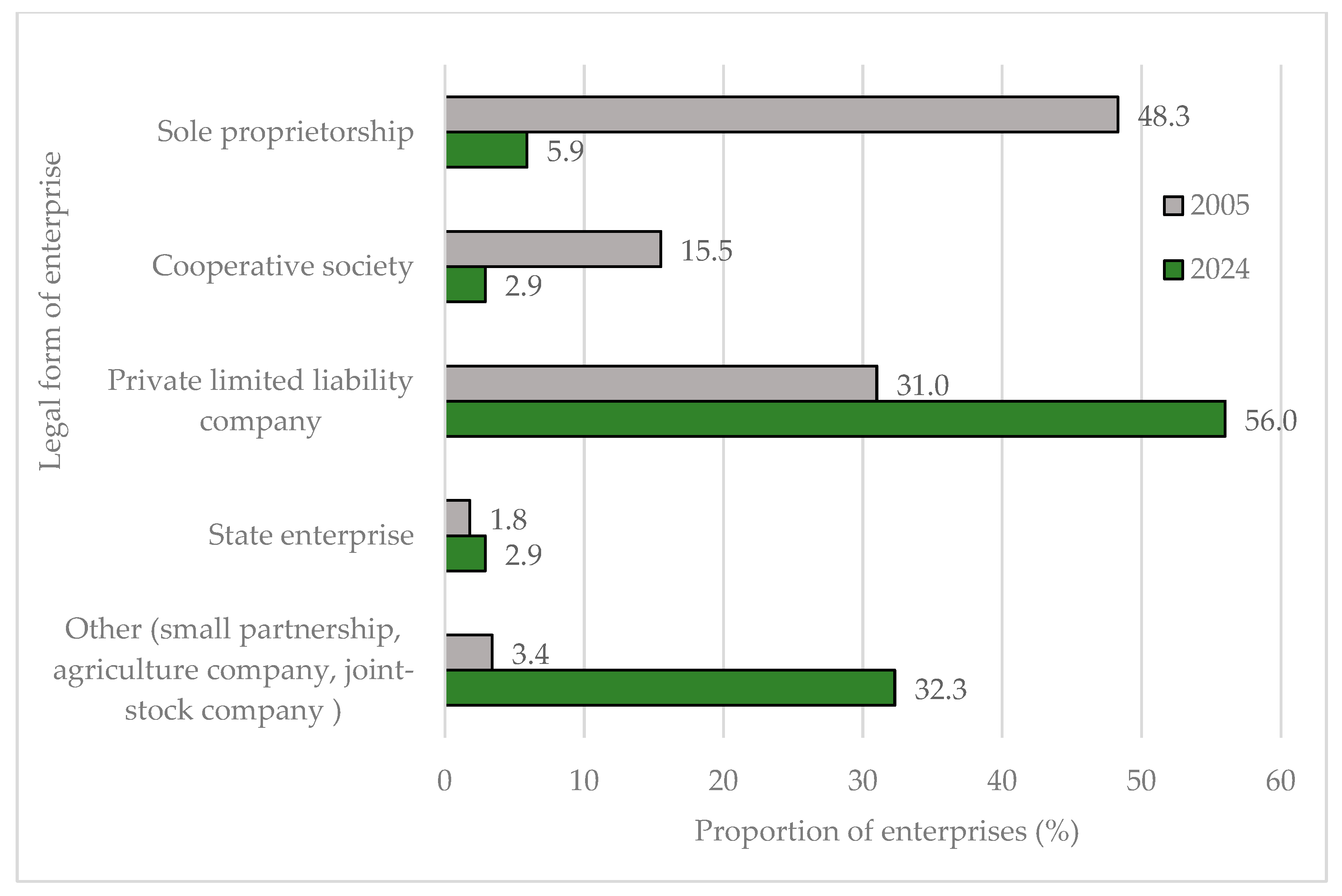
In 2005, almost half (48.3%) of the enterprises participating in the survey were sole proprietorships, whereas in 2024 more than half (55.9%) were private limited liability companies. Following the abolition of tax reliefs for sole proprietorships, a large proportion of them were re-registered as private limited liability companies, which are associated with lower business risk. This change is reflected in the 2024 survey results (
Figure 3). A new legal form of enterprise, the small partnership, has also emerged, offering certain tax advantages compared with other legal forms. Some sole proprietorships and cooperative societies were converted into this form in response to the applied tax incentives. In the 2024 survey, this form was classified under the category “other,” as small partnerships did not exist in the 2005 study.
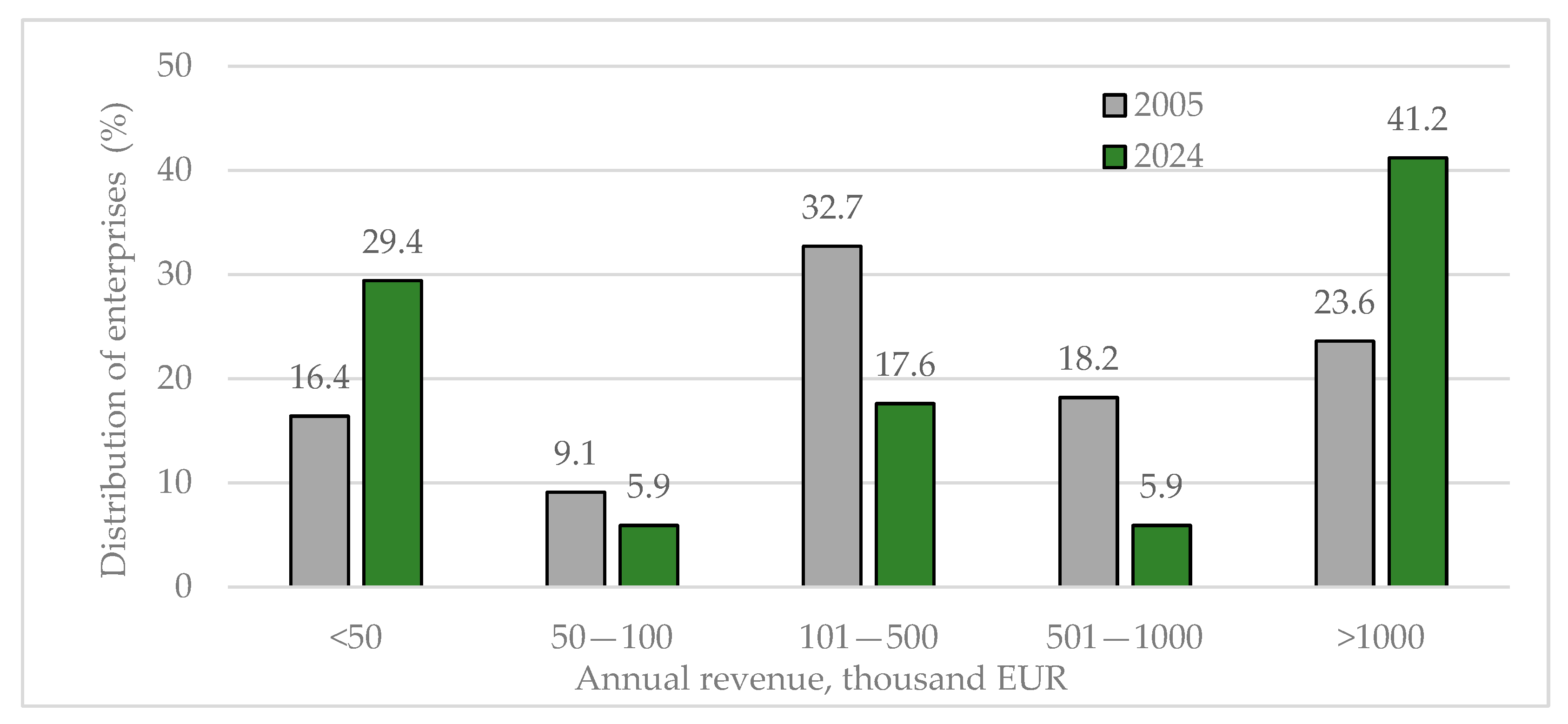
A comparison of the 2005 and 2024 survey results reveals a substantial increase (17.6%) in the number of enterprises with annual revenues exceeding EUR 1 million (
Figure 4).
This indicates a trend towards consolidation within the forest sector, with a growing presence of financially stronger enterprises that create a more competitive environment for the largest and most financially powerful company in the sector, the State Forest Enterprise.
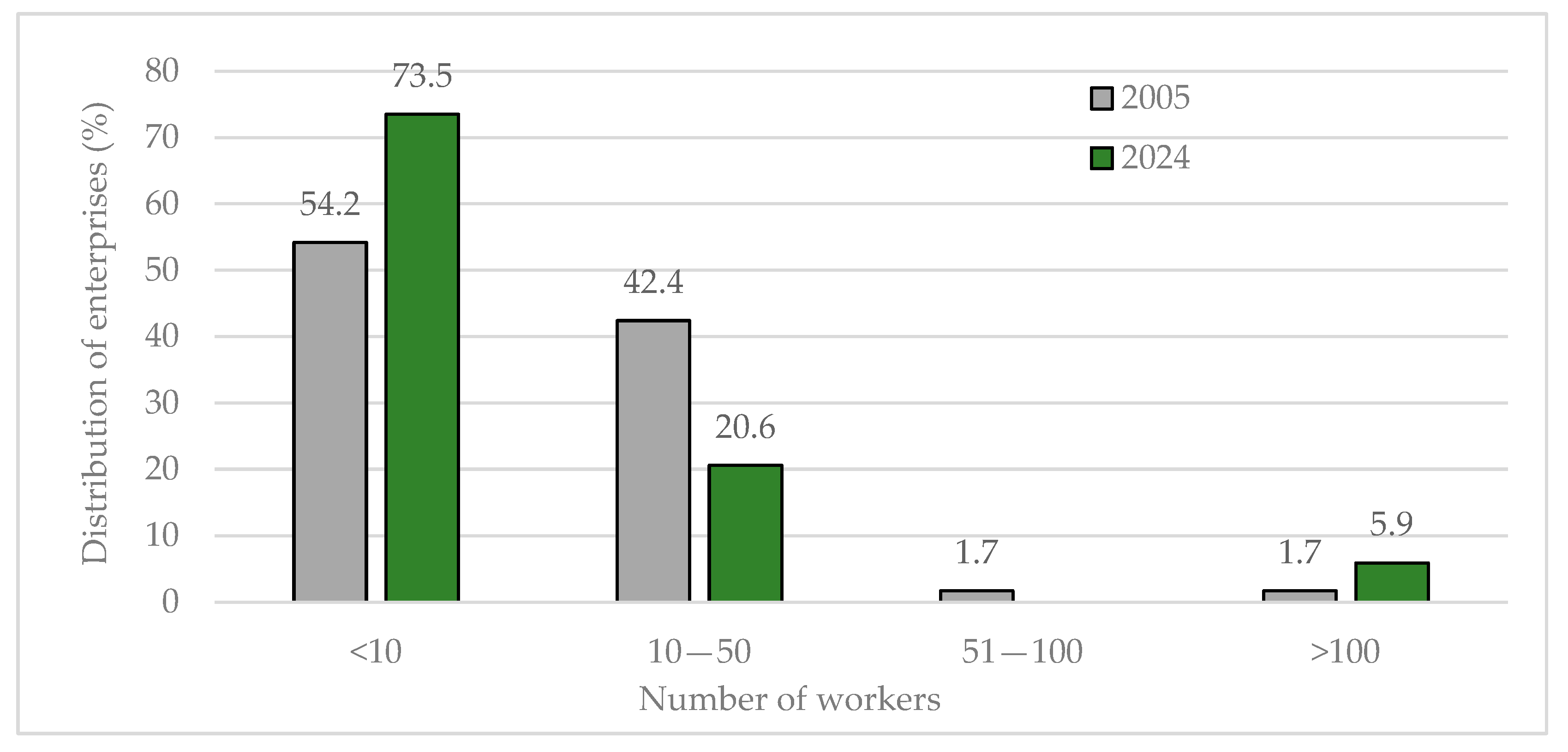
Analysis of the survey results also revealed a trend towards an increasing share of enterprises employing fewer workers. In 2005, enterprises with 10 to 50 employees accounted for 42.4%, whereas in 2024 their share declined to 20.6%. By contrast, enterprises with up to 10 employees represented 54.2% in 2005, rising to 73.5% in 2024 (
Figure 5). This trend may have been influenced by two main factors: (1) the nature of the services provided by enterprises (such as mediation in the submission of applications for financial support, preparation and coordination of various documents related to forest management activities, and other services not directly connected with silvicultural operations) and changes in work organisation, whereby subcontractors are hired for specific forestry tasks (forest regeneration, maintenance of forest stands, various types of logging, etc.); (2) the application of new technologies in work processes, which increase efficiency and reduce labour time requirements.
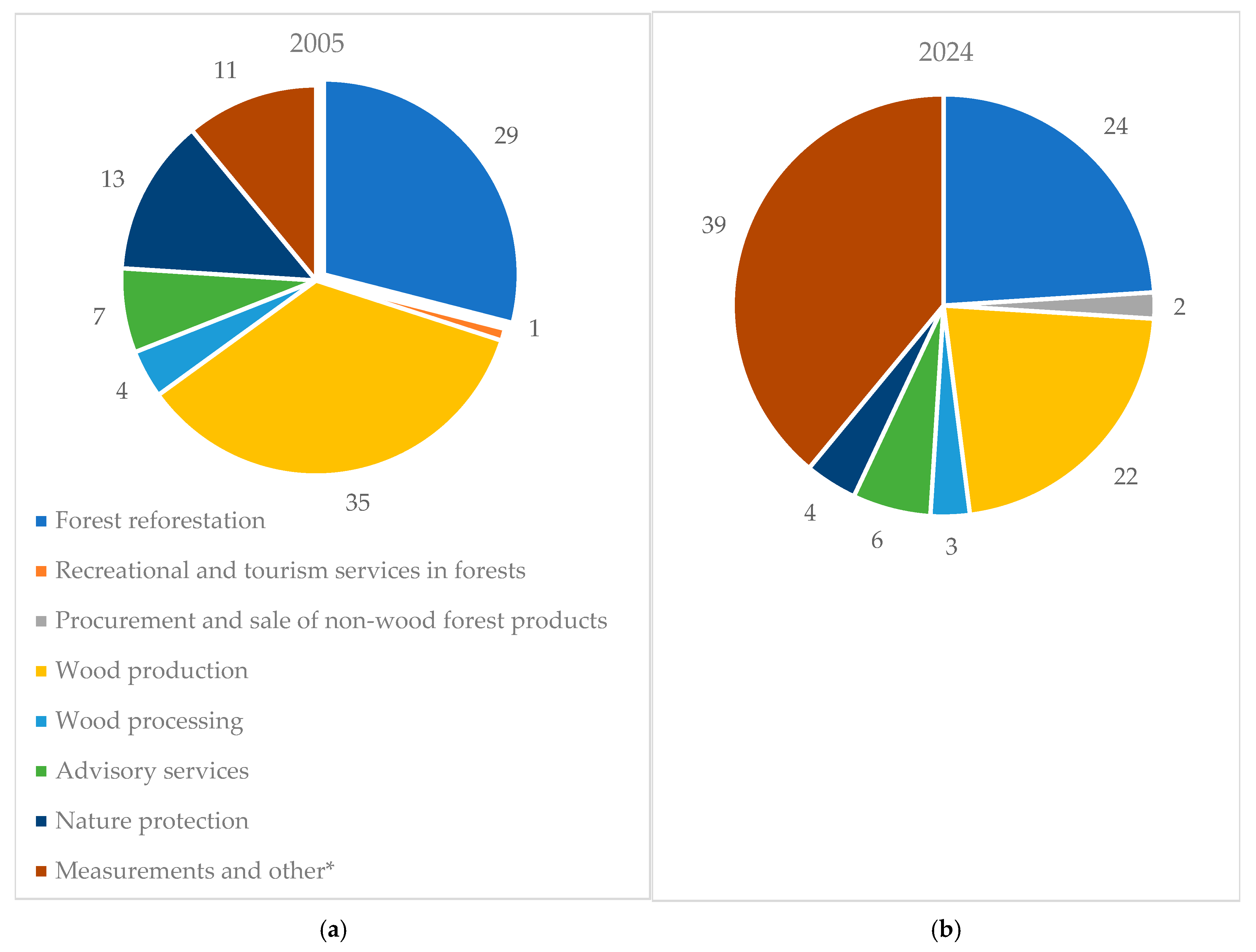
An analysis of the activities carried out by enterprises in 2024 reveals a clear trend towards a shift in the nature of operations, with conventional forestry work increasingly being replaced by other types of activities, such as mediation in the submission of support applications, preparation and coordination of documents related to forest management operations, preparation of forest management projects, and other services not directly related to silvicultural work (reforestation, logging, etc.). In 2005, only 11% of enterprises engaged in such activities (
Figure 6).
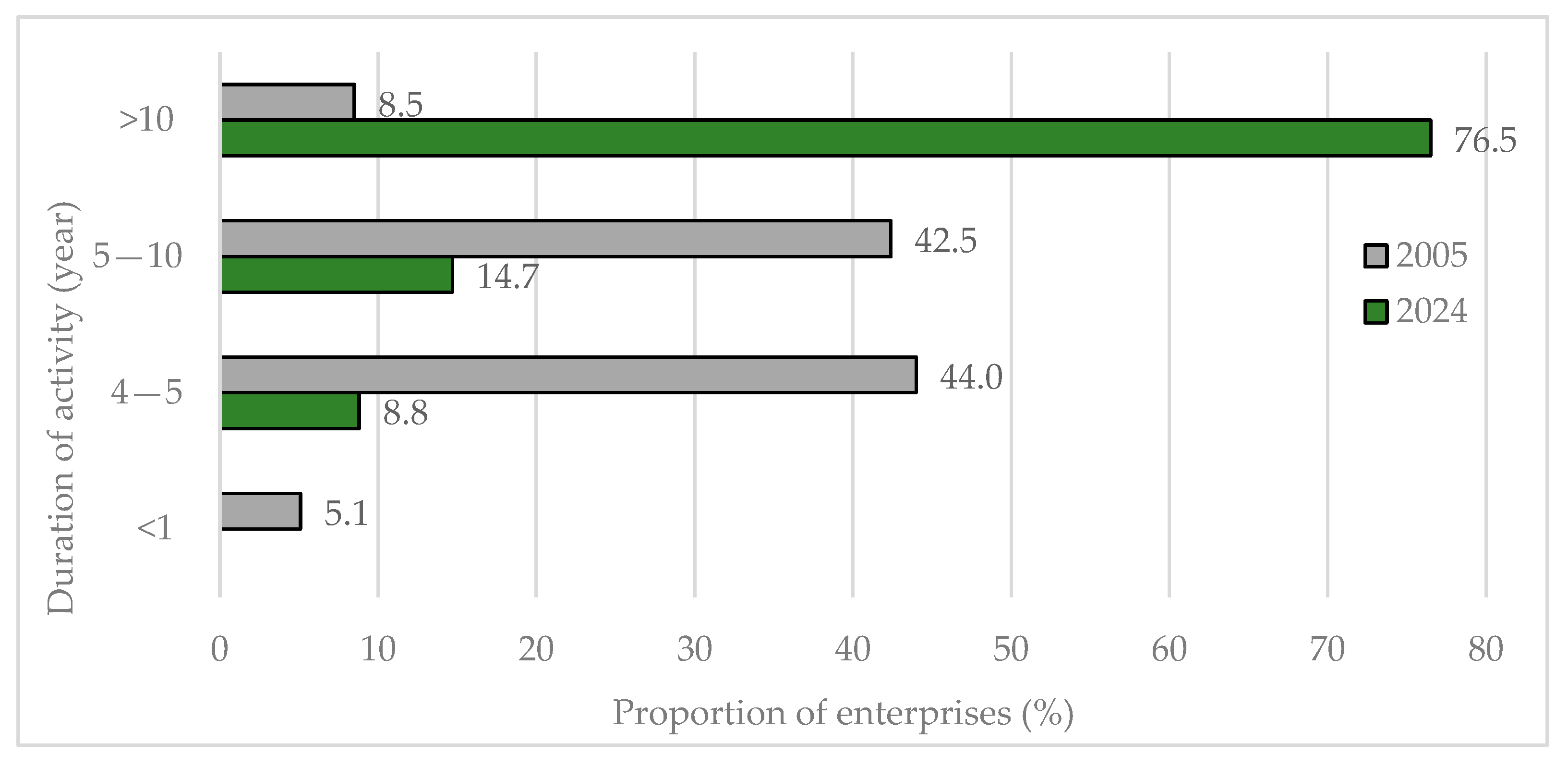
Survey data indicate an increase in the number of enterprises that have been providing services for more than 10 years. This trend suggests that within the forestry sector a stable network of enterprises offering high-quality services has been established, financially capable of withstanding economic crises. According to survey data from 2005, the majority of enterprises had 1–4 years (44.1%) or 5–10 years (42.4%) of operational experience, while only a small proportion had been active for more than 10 years (8.5%).
This demonstrates that in 2005 most enterprises had either been recently established or were still in the early stages of development. In contrast, survey data from 2024 revealed that the majority of enterprises had been operating for more than 10 years (76.5%) (
Figure 7).
3.2. Innovation Structure Changes in Lithuanian Forestry Sector
3.2.1. Forest Machinery and Equipment Used in Enterprises
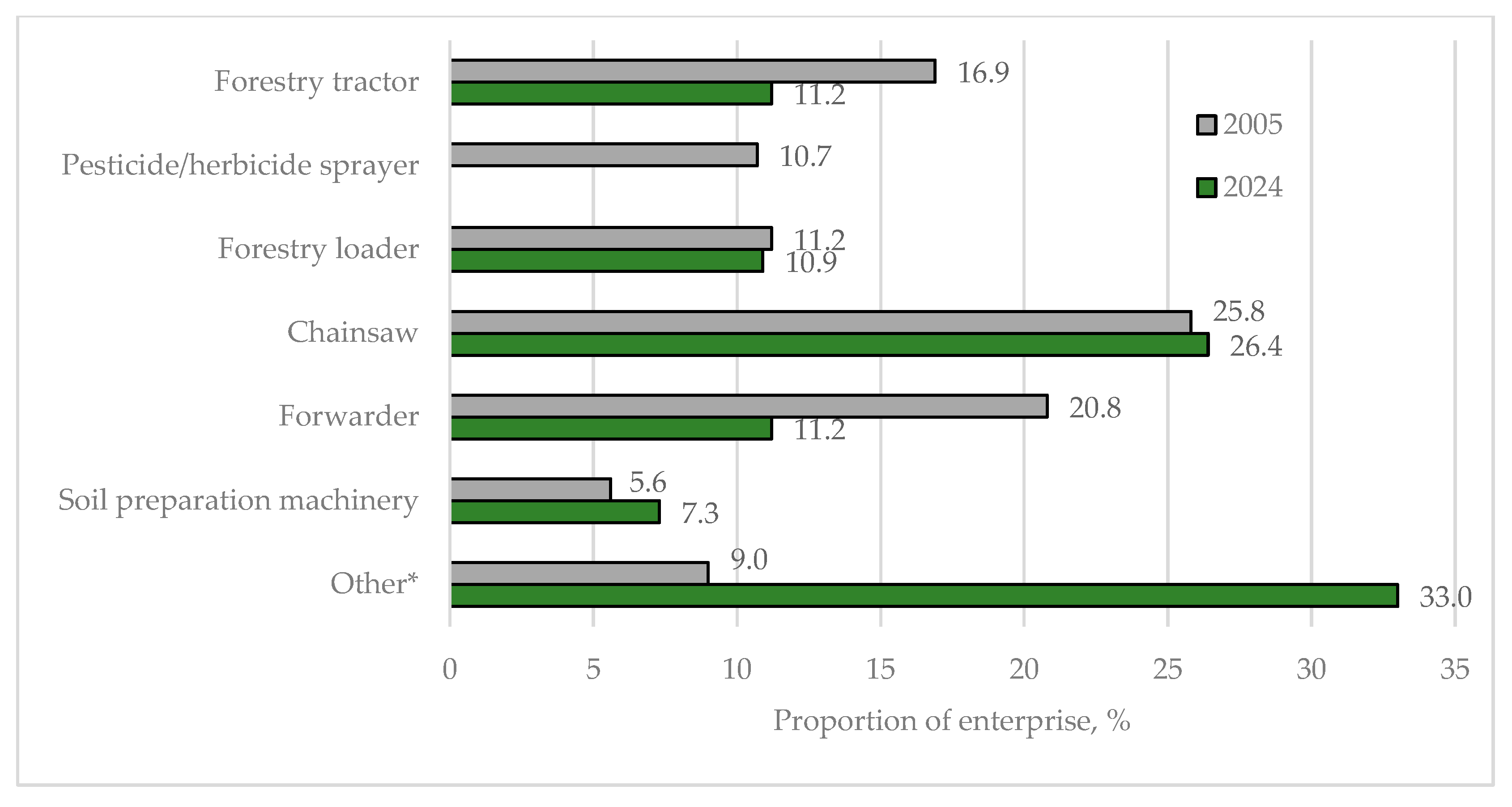
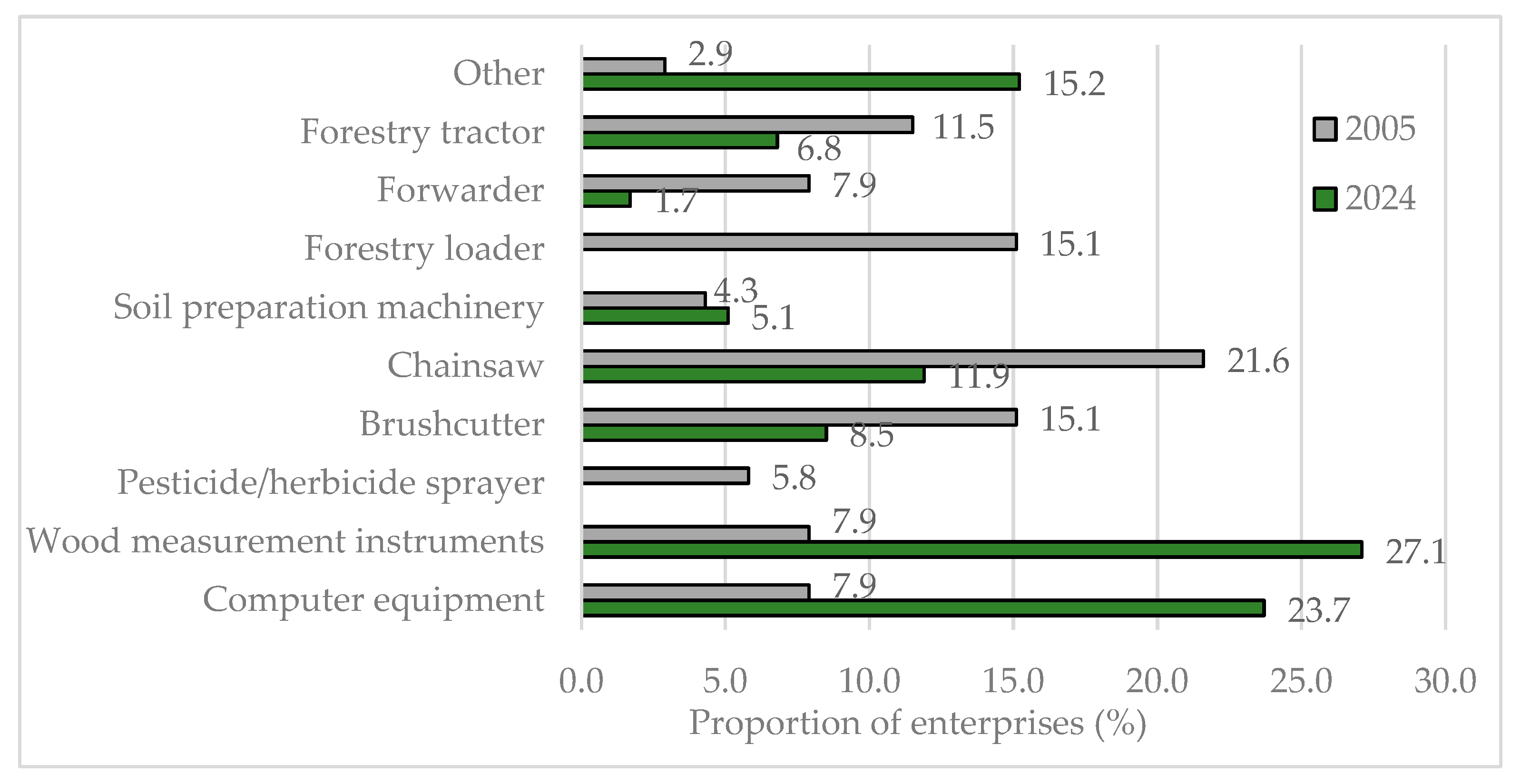
According to the 2024 survey data, a clear trend can be observed: enterprises are acquiring and using different types of equipment compared with 2005. This can be explained by changes in the services provided by enterprises and in their areas of activity. In addition, models of innovation support have also changed, whereby forest machinery is no longer an object of support. A number of enterprises have already benefited from the available support for forest machinery, and the demand for its acquisition has therefore decreased. As innovations evolved, the nature of the equipment used in enterprises also changed. The demand for timber extraction devices, sprayers, and certain other types of forest machinery decreased. The demand for loaders and soil preparation machinery remained stable. Compared with the 2005 data, in 2024 the use of equipment classified as “Other” increased by more than 20% (
Figure 8). This category includes digital measuring instruments, new GPS systems, and various electronic devices. Enterprises are increasingly acquiring innovative devices that enhance work productivity and improve the quality of services provided.
3.2.2. New Products Manufactured and Services Delivered by Enterprises
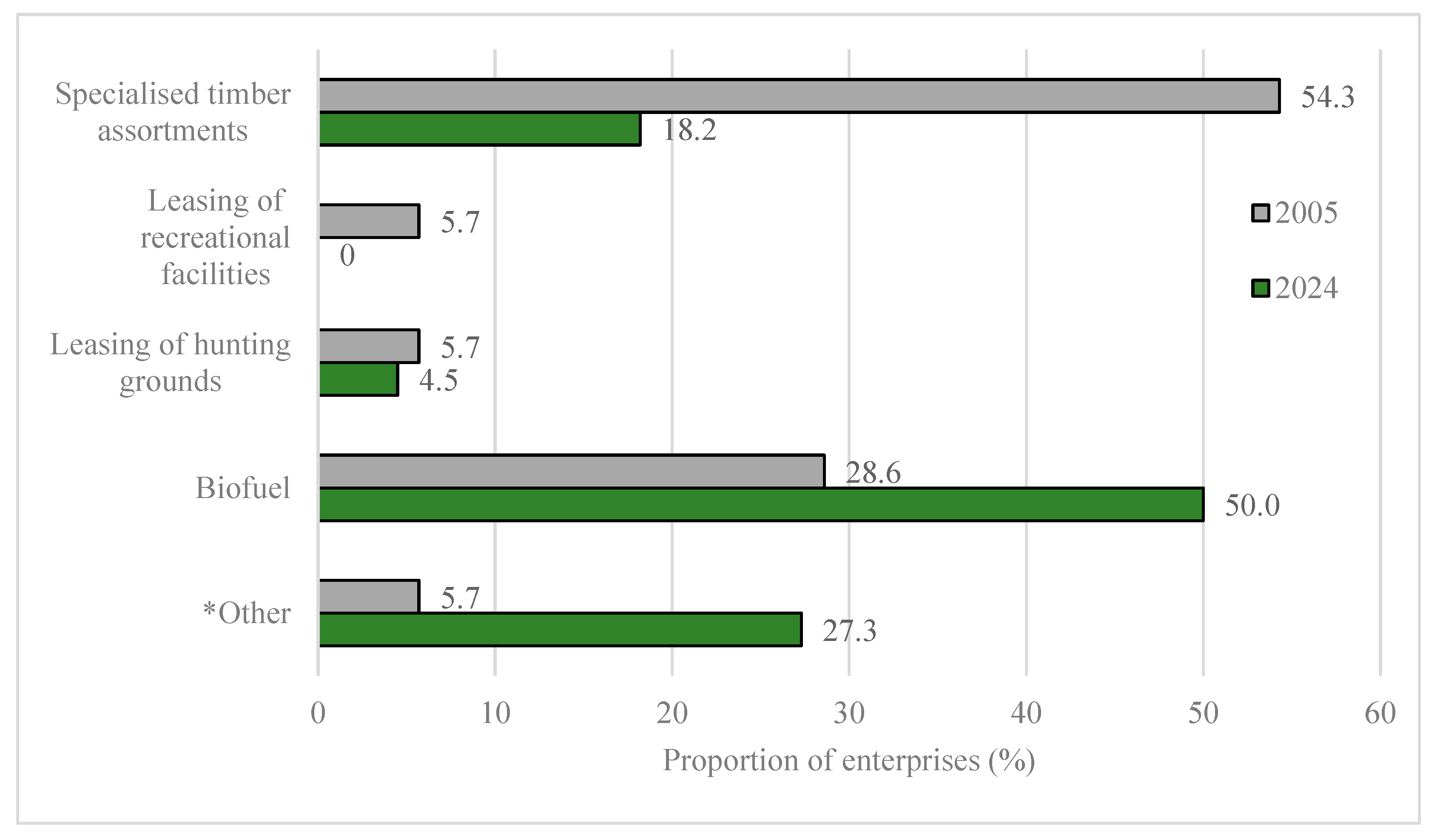
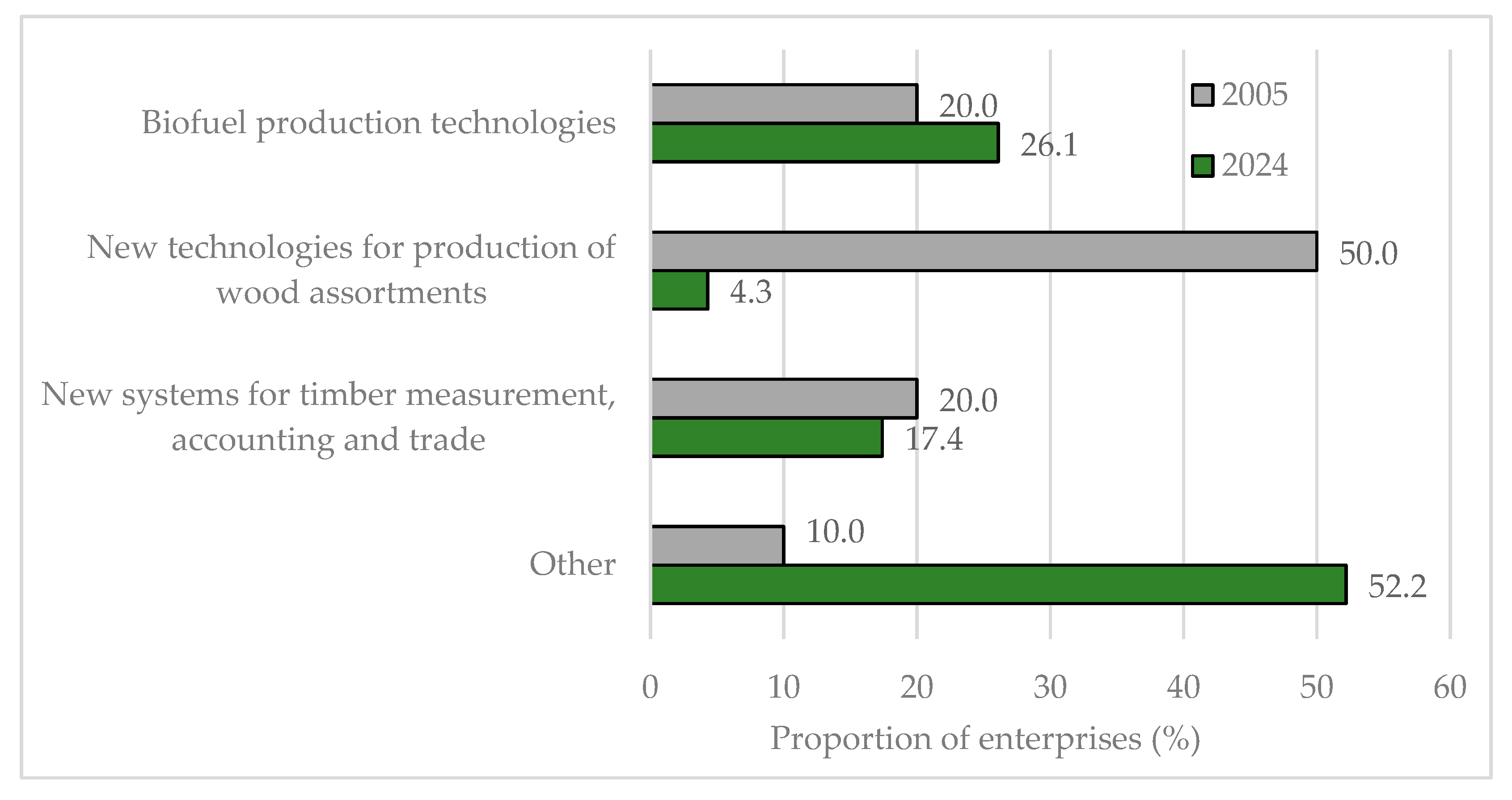
Survey data from 2024 indicate that, over the past three years, forest enterprises have initiated biofuel production (50.0%) (
Figure 9). The expansion of biofuel production has been driven by increased demand in the energy sector, which arose due to disrupted logistics chains. As imports from CIS countries were no longer available, the resulting rise in biofuel prices stimulated the recovery of domestic production. In addition, enterprises have begun offering other new services and products (27.3%), such as biochar production, organisation of birdwatching and wildlife observation activities, nature guiding services, CO
2 trading, forest-based educational programmes, the cultivation and processing of medicinal plants and related products, as well as the development of new software (e.g., accounting and geographic information systems). The most notable structural change in recent years has occurred in the production of specialised assortments. In 2005, survey data revealed that as many as 54.3% of enterprises were engaged in the production of such assortments, whereas by 2024 the proportion had declined to only 18.2%. Several factors may explain this decline: (1) a shift in the nature of services provided by enterprises, and (2) reduced demand for specialised assortments in the market. Between 2005 and 2024, the Lithuanian forestry sector underwent a significant transformation, reflecting broader global trends in sustainability and environmental protection. Activities such as the leasing of hunting grounds and the trade in hunting-related products have gradually declined due to stricter wildlife protection legislation, decreasing public support, and the development of alternative forest-based business models.
3.2.3. Use of New Machinery and Instruments in Enterprises
According to the 2024 survey data, enterprises have adopted modern timber measurement devices (27.1%) and computer equipment (23.7%) more intensively than in 2005 (
Figure 10).
In 2005, only 7.9% of enterprises reported such use. At the same time, acquisitions of chainsaws, timber extraction machinery (forest tractors, forwarders, forestry loaders), sprayers, and brush cutters have declined. Several factors may explain this trend: (1) changes in the nature of services provided by enterprises; (2) modifications in the support schemes for acquiring new forestry machinery; and (3) existing sufficiency of such equipment within enterprises. The increased application of modern devices and computer technologies in work processes requires a higher level of employee qualifications. The technological breakthrough has stimulated and facilitated the use of new advanced instruments that accelerate and simplify forestry operations. Employees in forestry enterprises have begun to use GPS systems, digitised databases, precise electronic measuring devices, and similar technologies.
3.2.4. Adoption of New Technologies in Enterprises
Based on survey data from 2005–2024, the adoption of biofuel production technologies increased in 2024. A substantial increase (42.2%) was observed in the adoption of various modern technologies, including the use of GPS for project preparation and compartment delineation, systems for the planning and monitoring of harvesting operations, digital data processing technologies, CO
2 trading mechanisms, unmanned aerial vehicles (drones), and databases associated with their application in forestry (
Figure 11).
3.2.5. New Organisational Models and Forms of Innovation Financing in Enterprises
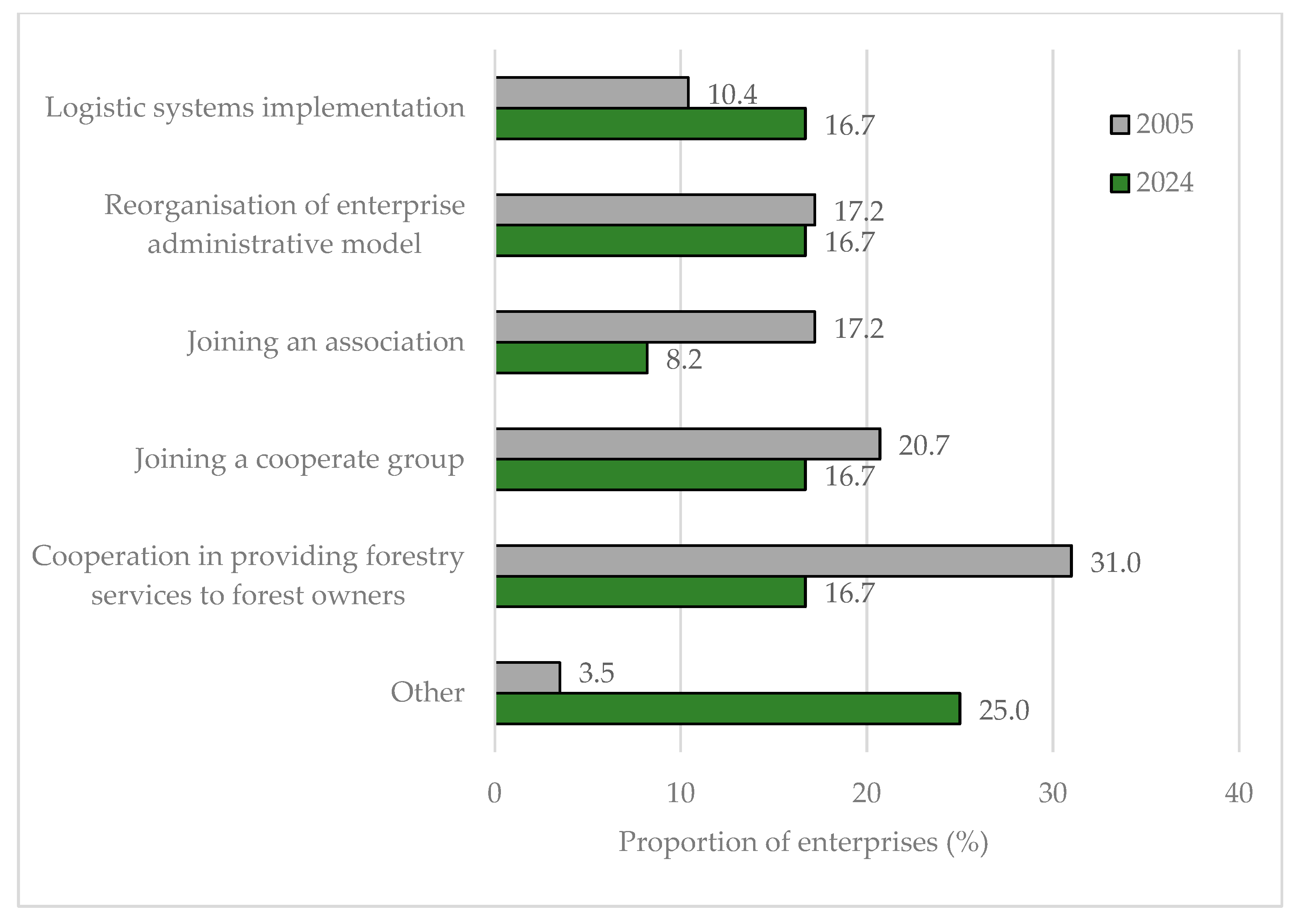
During the period 2005–2024, the forestry sector underwent significant organisational changes. The development of logistics systems became one of the most important organisational innovations (
Figure 12), as GPS navigation and digital supply chain management systems enable the optimisation of timber transportation, the reduction of costs, and the efficient monitoring of raw material flows from harvesting to the end user.
Automated storage and transport systems contribute to lowering the risk of human error and increasing labour productivity. Survey data from 2024 showed that more than 16% of participating enterprises were implementing new logistics systems, whereas in 2005 only 10.4% reported doing so. At the same time, the need for enterprise cooperation decreased: in 2024, only 16.7% of enterprises indicated using this organisational form when providing forestry services, compared with 31.0% in 2005.
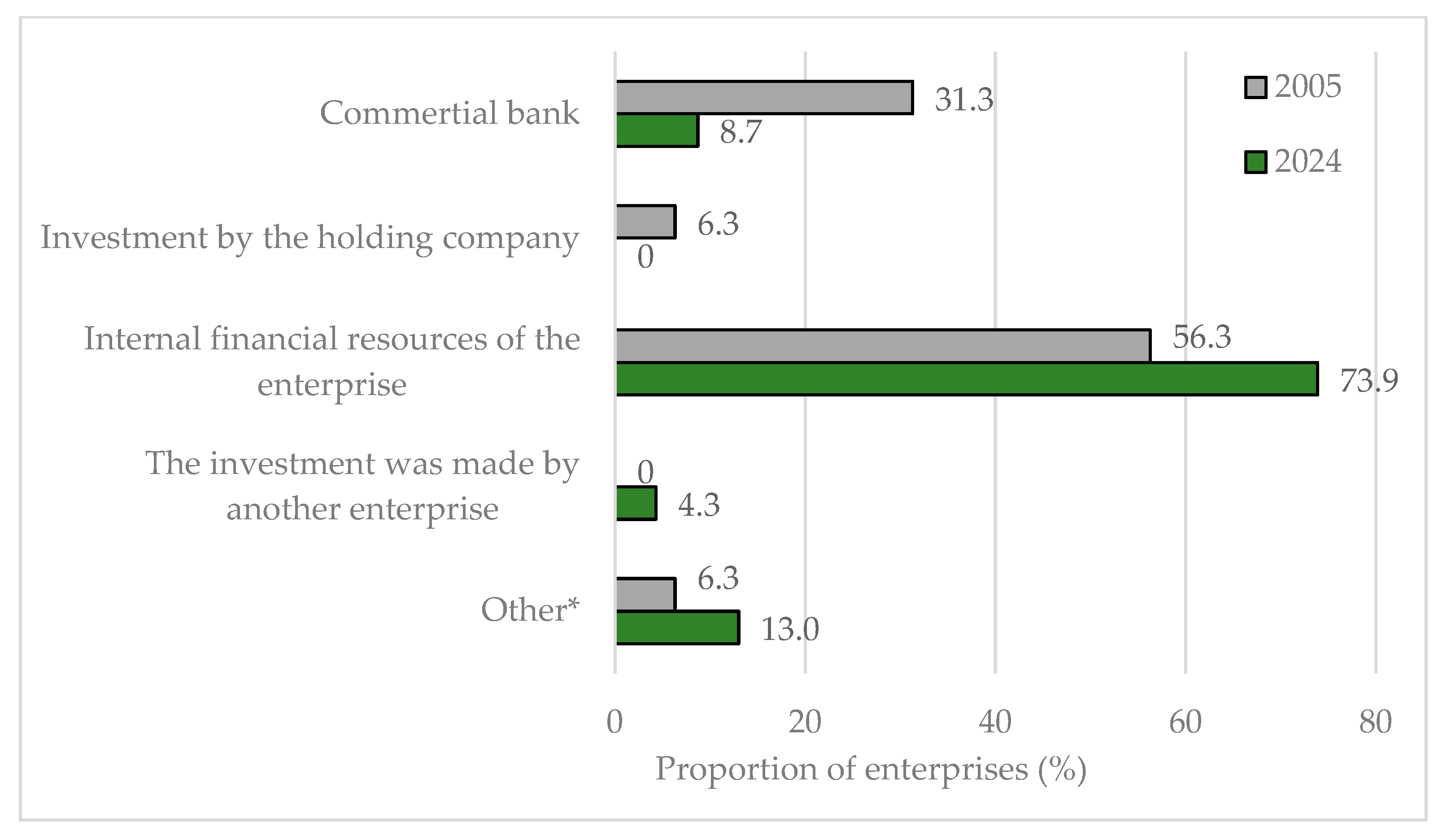
Enterprises utilised a variety of financial sources to support innovation activities. In many cases, multiple funding sources were combined to finance a single innovation project, thereby reducing dependence on internal funds. The results of the 2024 survey indicate that participating enterprises have become financially more independent in implementing innovations. Compared with 2005, a substantially larger proportion of enterprises financed innovations from their own resources (2005—56.3%; 2024—73.9%), while reliance on bank loans decreased markedly (2005—31.3%; 2024—8.7%) (
Figure 13). This shift reflects the strengthening of enterprises’ financial positions and their growing confidence in investments in technological solutions that promise long-term returns. One of the notable developments is the increasing utilisation of EU and national funding for innovation development (2005—6.3%; 2024—13.0%). In 2024, 4.3% of enterprises received financial support from other enterprises, whereas such practice was absent in 2005. At the same time, the role of banks in financing innovation has declined significantly—in 2024, only 8.7% of enterprises relied on bank loans compared with 31.3% in 2005. This trend may be linked to the broader availability of alternative funding mechanisms—including EU funds, state support programmes, and investor capital—as well as to the tightening of bank lending conditions. Overall, innovation financing strategies have become more diversified: enterprises not only invest a greater share of their own resources but also engage more actively in collaboration with other enterprises, while traditional financing models—such as bank loans or corporate group support—have become less prominent.
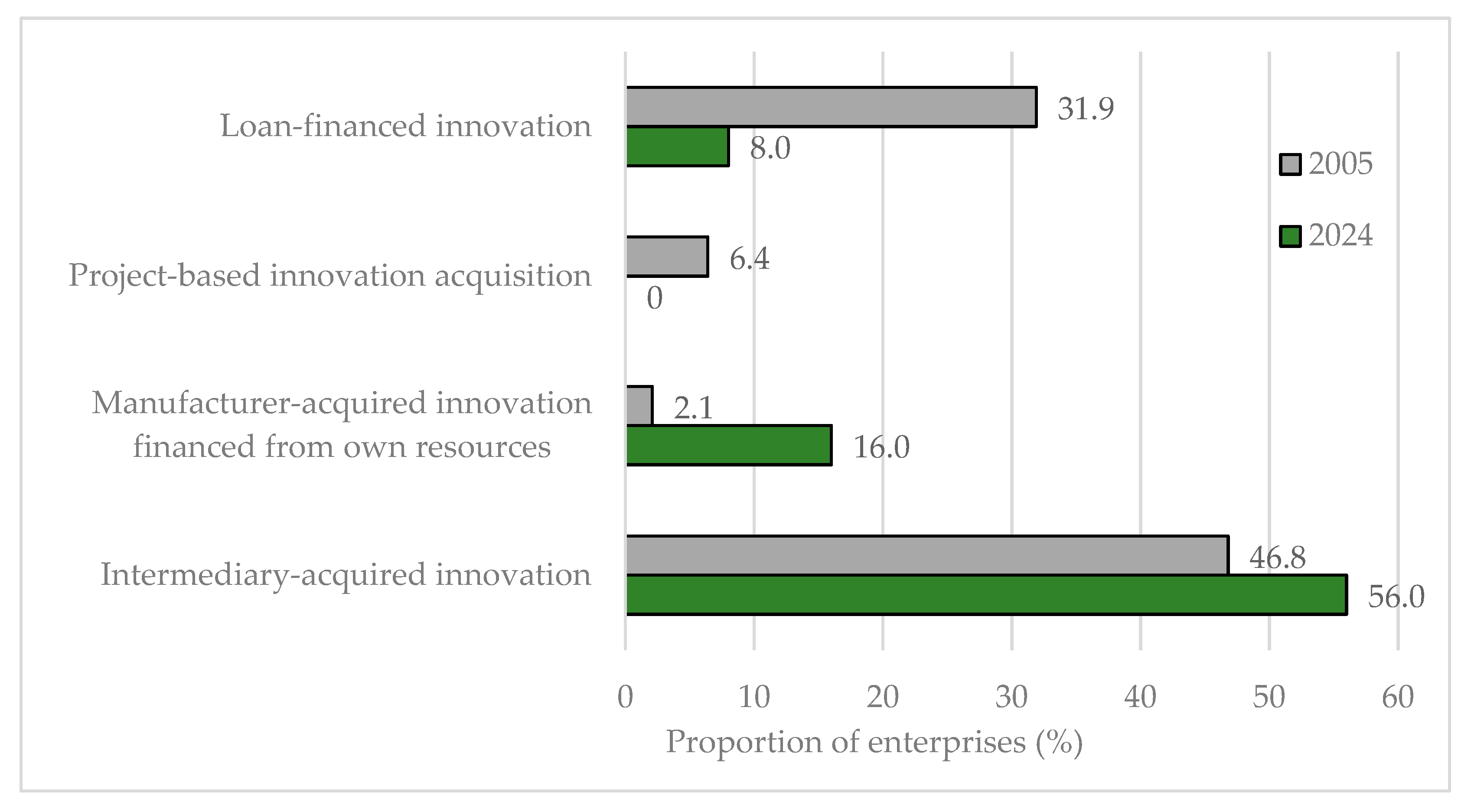
Survey data from 2024 indicate that innovations in enterprises are most frequently acquired through intermediaries from other companies (56.0%). This trend was also observed in the 2005 survey; however, the number of enterprises purchasing innovations directly from the manufacturer has increased (16.0%). In 2005, only 2.1% of enterprises acquired innovations directly from the manufacturer (
Figure 14).
The substantial decline in bank borrowing for innovation purposes—from 31.9% of enterprises in 2005 to 8.0% in 2024—illustrates a clear shift towards alternative financing mechanisms.
3.2.6. Drivers to Innovation
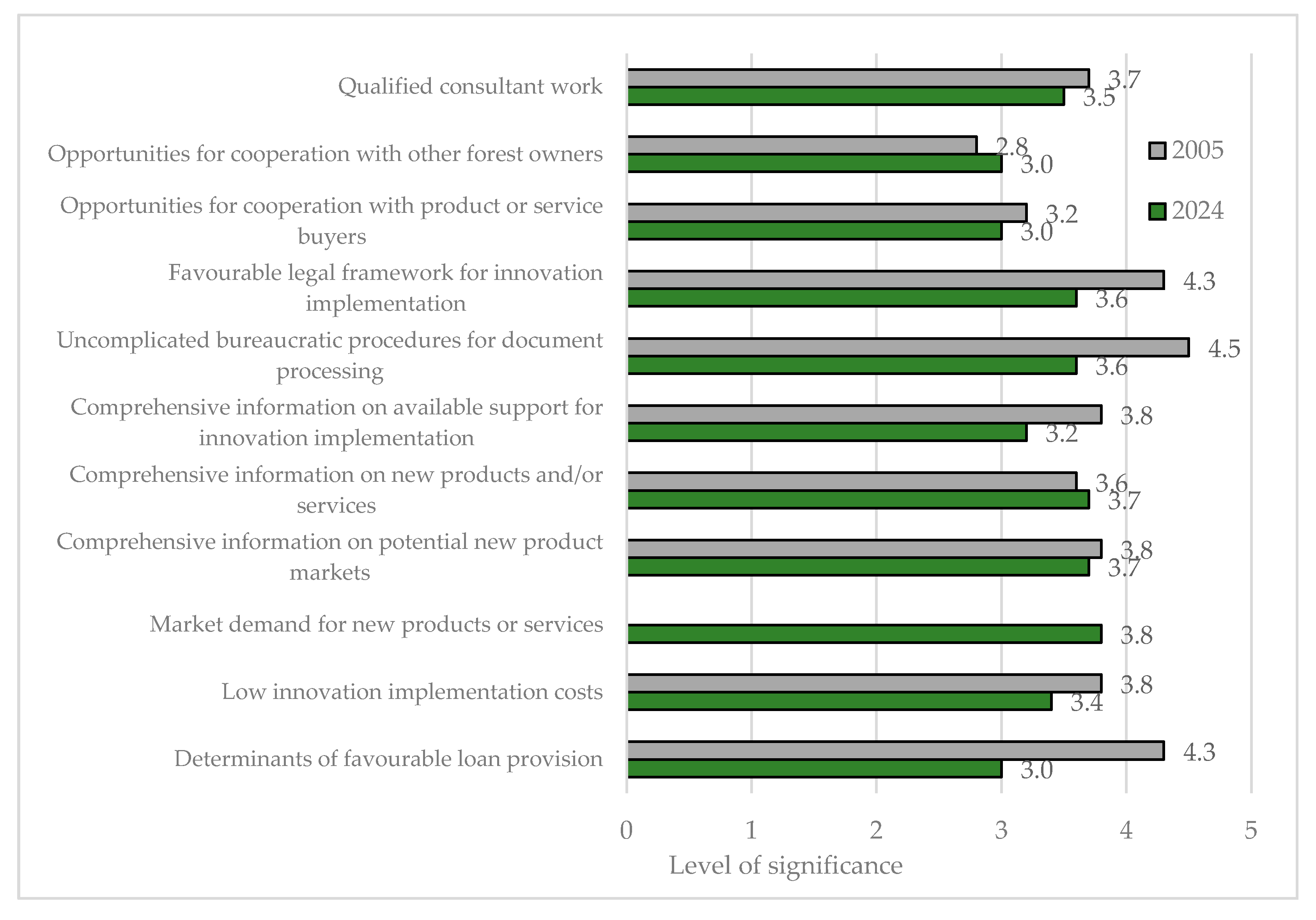
In assessing the importance of the drivers, experts applied a five-point Likert scale, where 1 indicated ‘not at all important’ and 5 indicated ‘very important’. Overall, the data indicate a noticeable shift in priorities over time, reflecting both structural and policy changes influencing innovation in the forestry sector. In the 2024 survey, experts were able to assess one additional factor among the response options for this question “Market demand for new products and services”; therefore, the significance of this factor was not evaluated in 2005. According to expert assessment, the factors stimulating innovation are undergoing change. In 2005, the main factors were “Uncomplicated bureaucratic procedures for document processing” (mean score 4.5), “Determinants of favourable loan provision” (mean score 4.3), and “Favourable legal framework for innovation implementation” (mean score 4.3). By 2024, the most significant drivers became “Market demand for new products and services” (mean score 3.8), “Comprehensive information on new product markets” (mean score 3.7) and “Comprehensive information on new products and/or services” (mean score 3.7) (
Figure 15).
A comparison of the two surveys demonstrates that the key factors have shifted. In 2024, the adoption of innovation in Lithuania’s forestry sector was primarily determined by market demand—companies tended to introduce new technologies and services when they perceived a clear market perspective. In contrast, the role of financing in innovation declined: although favourable loans or low implementation costs continued to matter, firms increasingly opted for alternative financing mechanisms such as EU funds and state subsidies. Furthermore, companies had become financially more stable, enabling them to invest in innovation without relying on external financing. While innovation costs remain a significant factor, they are less restrictive to business activity than before, as technologies are becoming more accessible, their implementation less costly, and innovation support mechanisms more transparent and effective. Nevertheless, survey data from 2024 indicate that information availability remains a challenge—companies often lack sufficient knowledge and clarity regarding potential innovation support measures and emerging technologies, while the rapidly changing market necessitates continuous updating of expertise. The legal environment and bureaucratic burden also exert less influence on innovation implementation compared to 2005, as digitalised processes and simplified administrative procedures have reduced the complexity of documentation. Enterprises now possess a better understanding of innovation policies and legal requirements. However, it cannot be concluded that bureaucratic procedures cease to pose challenges in the process of innovation adoption.
Factor analysis of drivers and measures encouraging innovation. In analysing the survey data on the reasons and measures that encourage the implementation of innovations in the Lithuanian forestry sector, a factor analysis was conducted. Prior to factor analysis, data suitability was assessed. The Kaiser–Meyer–Olkin measure of sampling adequacy was 0.600, exceeding the recommended threshold of 0.5, indicating that the sample and inter-variable correlations were appropriate for analysis. Bartlett’s test of sphericity was statistically significant (χ2(45) = 144.206, p < 0.001), allowing rejection of the null hypothesis of an identity correlation matrix and confirming the appropriateness of factor analysis. Using Kaiser’s criterion (eigenvalue >1), three principal factors were retained, together explaining 86% of the total variance, with eigenvalues of 4.648, 2.845, and 1.921.
These three factors are considered significant, as they account for the majority of the structural variation in the data, thereby demonstrating a strong model fit. The high proportion of explained variance confirms that the extracted factors adequately represent the underlying patterns within the survey results (
Table 2).
Based on the rotated factor loadings matrix (
Table 3), several important insights can be derived. Each factor is characterised by specific loadings, indicating the extent to which each variable contributes to the factor. These loadings allow for the identification of the most influential variables, thereby clarifying the substantive meaning of each factor. Variables were assigned to a factor if their factor loadings were equal to or greater than 0.40. Variables with higher loadings were given priority, as they make a stronger contribution to the definition and interpretation of the factor.
The analysis revealed the following factor structure:
Factor 1 consists of variables related to practical and financial support for innovation: detailed information on available support measures, favourable loan conditions, low implementation costs, and opportunities for cooperation with other forest owners engaged in product or service provision.
Factor 2 is composed of variables concerning information availability: detailed knowledge about new products and services, as well as information about potential new product markets.
Factor 3 comprises institutional and regulatory conditions: a favourable legal framework for innovation and simple bureaucratic procedures for processing documents during the implementation of innovations.
The results of the Independent Samples Test (
Table 4) demonstrated that only one of the three identified factors showed a statistically significant difference between the earlier (2005) and the later (2024) survey datasets.
Specifically, Factor 3 was found to differ significantly between the two groups, with
p-values of 0.03 (two-tailed) and 0.02 (one-tailed). As these values are below the 0.05 significance threshold, the difference is considered statistically significant. The group statistics (
Table 5) further indicate that this factor was particularly relevant for experts responding to the 2005 survey.
The third factor captures two essential measures that significantly influenced the capacity of forestry enterprises to adopt innovations: simplified bureaucratic procedures and a favourable legal framework. According to experts of the earlier survey, these measures had a strong positive effect on the adoption of innovations, substantially encouraging enterprises to engage in innovation implementation processes.
3.2.7. Barriers to Innovation
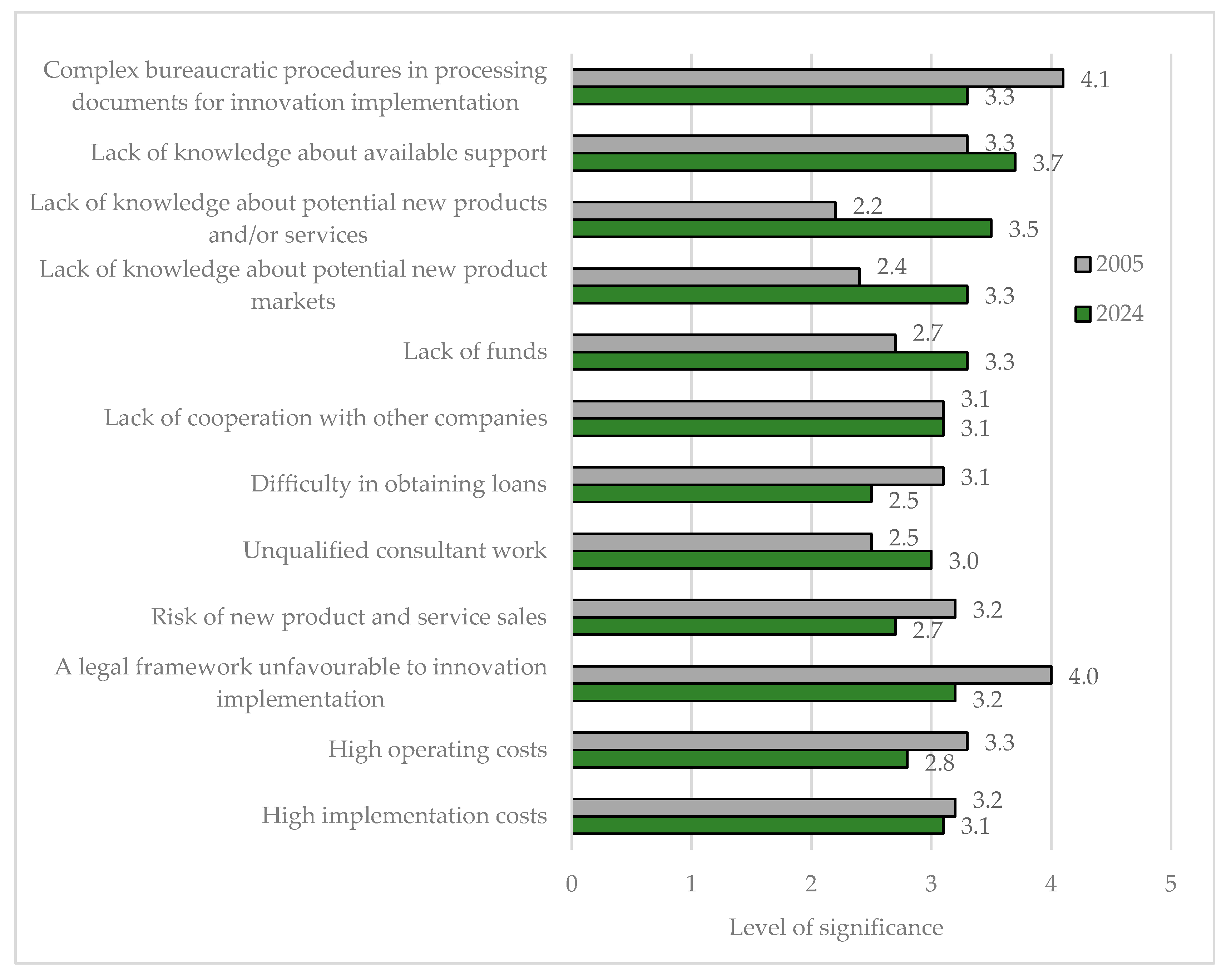
In the survey, experts used a five-point Likert scale to evaluate the barriers hindering the implementation of new technologies and products. In 2005, the most significant barriers were “A legal framework unfavourable to innovation implementation” (mean score 4.0) and “Complex bureaucratic procedures in processing documents for innovation implementation” (mean score 4.1). Although these barriers remain important, according to the 2024 expert assessment, the main barriers are “Lack of knowledge about available support” (mean score 3.7) and “Lack of knowledge about potential new products and/or services” (mean score 3.5) (
Figure 16).
Over the past few decades, a noticeable shift has occurred in the perception of barriers to innovation. Barriers identified as highly significant in the 2005 survey were considered less critical in 2024. For example, the barrier “A legal framework unfavourable to innovation implementation” was rated as the most important in 2005 (mean score 4.0), whereas in the 2024 survey its average score declined to 3.2. According to the experts, companies in 2024 encountered fewer obstacles to innovation compared with 2005, although financial and administrative challenges remain relatively significant. For example, the barrier “Lack of cooperation with other companies” remains as significant as it was in 2005.
Despite the improvement in financing opportunities—reflected in the increased utilisation of EU funds, state support programmes, and alternative financial sources, the lack of capital and the complexity of obtaining loans continue to be critical barriers to innovation implementation. Moreover, the costs associated with innovation remain substantial, as long-term investments in new technologies still demand considerable financial resources. Conversely, enterprises’ concerns regarding the risks of marketing new products have diminished, with the mean score decreasing from 3.2 in 2005 to 2.7 in 2024.
Factor analysis of barriers to innovation implementation. Prior to conducting factor analysis, the suitability of the data was assessed using the Kaiser–Meyer–Olkin (KMO) measure and Bartlett’s test of sphericity. The KMO value (0.677) indicates adequate sampling adequacy, while the statistically significant result of Bartlett’s test (p < 0.001) permits rejection of the null hypothesis, confirming that factor analysis is appropriate.
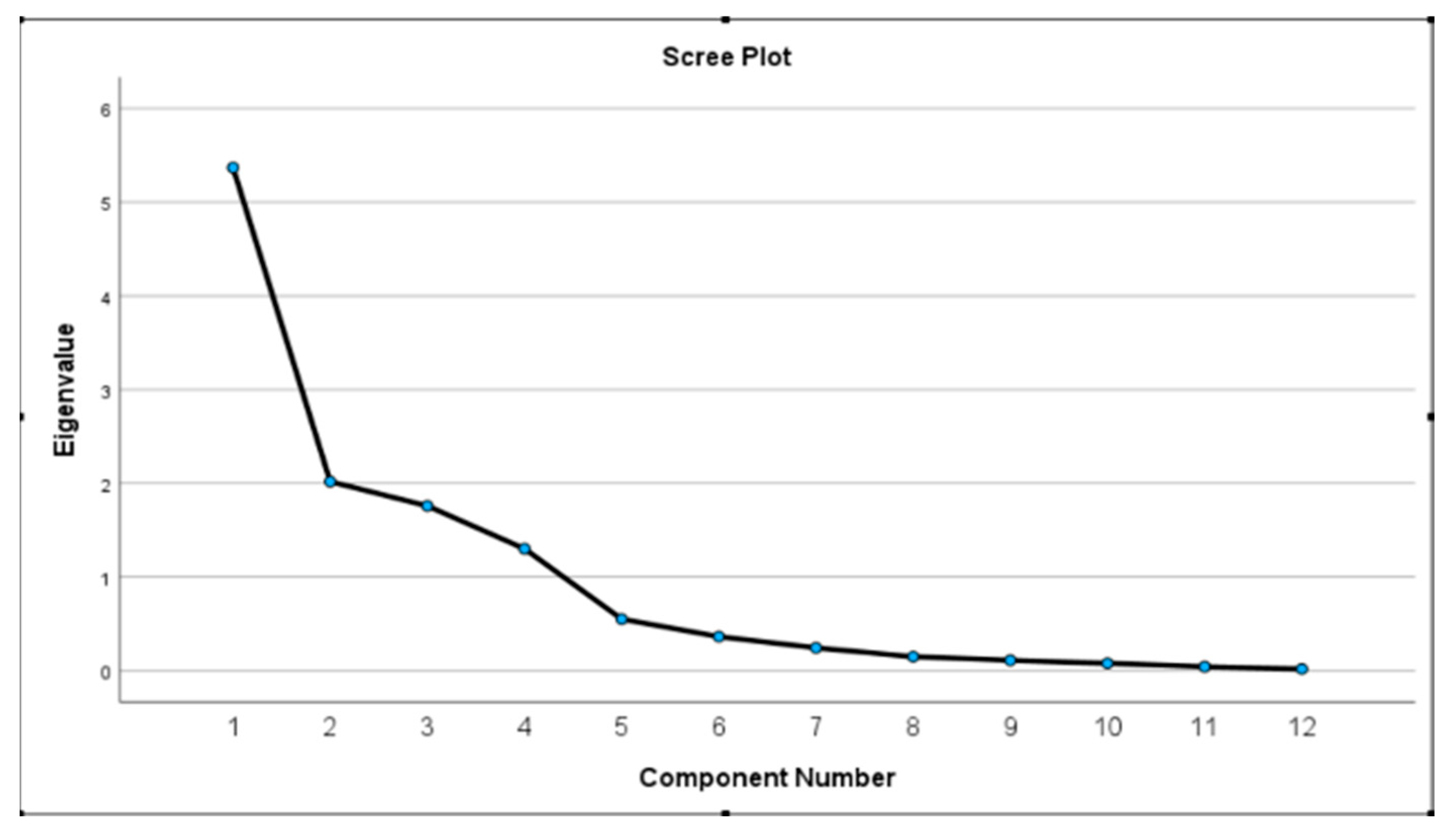
To address the survey question, “What are the most significant barriers encountered when implementing innovations in companies?”, a factor analysis was performed. Specifically, a Principal Component Analysis (PCA) with Varimax rotation and Kaiser normalisation was applied to uncover the latent structure of the barriers. The analysis converged after nine iterations, resulting in a four-factor solution that explains the interrelationships among the observed variables. The number of factors to retain was determined using Kaiser’s criterion and the Scree test (
Figure 17). According to Kaiser’s criterion (eigenvalues > 1), the extraction of four factors was justified. After rotation, the four retained factors jointly explained 87.04% of the total variance, indicating that they effectively represent the overall structure of the observed variables. The relatively balanced contribution of each factor suggests that the factor solution is stable and suitable for interpretation. In accordance with methodological recommendations, the total variance explained by the retained factors exceeds the commonly accepted minimum threshold of 50%, further supporting the adequacy of the factor solution.
The rotated factor matrix is presented in
Table 6. The variables Lack of knowledge about available support and Lack of cooperation with other companies exhibited factor loadings exceeding 0.40 on two factors, indicating the presence of cross-loadings. Due to the insufficient difference between the primary and secondary factor loadings (<0.20), these variables could not be clearly attributed to any single factor.
Factor 1: Knowledge and Competence Barriers. This factor includes high loadings on lack of knowledge about markets (0.936), innovations (0.889), and available support (0.680), as well as lack of cooperation (0.709) and unqualified consultants (0.762). It can be interpreted as barriers related to knowledge and competence, underscoring the importance of access to information, expertise, and advisory services in overcoming innovation challenges.
Factor 2: Cost and Risk Barriers. This factor is characterised by strong loadings on high operating costs (0.914), high implementation costs (0.876), and risks associated with new products and services (0.677). It reflects the financial and risk-related challenges companies face, suggesting that enterprises may perceive the costs and uncertainties of innovation as prohibitive.
Factor 3: Financial Resource Constraints. High loadings on lack of funds (0.878) and difficulties in obtaining loans (0.786) define this factor. It represents financial constraints and limited access to external financing, both of which play a decisive role in determining a company’s capacity for innovation.
Factor 4: Institutional and Bureaucratic Barriers. This factor shows strong associations with bureaucratic complexity (0.940) and an unfavourable legal framework (0.752), with a secondary loading for lack of cooperation (0.573). It can be interpreted as institutional and bureaucratic barriers, reflecting systemic inefficiencies that hinder innovation processes.
Based on the obtained group statistical data (
Table 7), it can be stated that this factor is significant for the experts of the 2024 survey. The first identified factor highlights the main barriers encountered by the experts of the 2024 survey when attempting to implement innovations in companies. This factor comprises several closely interrelated issues that constitute specific obstacles to the implementation of innovations. The most significant barrier identified by the experts is the lack of knowledge regarding potential markets for new products. Based on the results of the survey, it can be inferred that the majority of companies providing forestry services in Lithuania are focused on technically oriented activities, with physical tasks predominating, such as logging, maintenance, reforestation, and timber transportation. Particular emphasis should be placed on the lack of knowledge regarding new product markets, which constitutes one of the main barriers to adapting to a changing market environment and developing innovative services and products.
According to the 2024 survey data, as many as 63% of experts reported a lack of information on innovations and their potential applications in the forestry sector. The study results indicated that enrprises face a shortage of knowledge concerning new services and products, as well as available support measures for implementing innovations. Additionally, companies encounter a shortage of qualified personnel. For these reasons, not only are innovation implementation processes hindered, but mutual collaboration among companies providing forestry services is also limited—in the absence of sufficient information, trust, and coordination, these enterprises mostly operate in isolation.
Among these, only Factor 1 displayed a statistically significant difference between the 2005 and 2024 survey results. This was confirmed by the Independent Samples Test (
Table 8).
The test results show that for Factor 1 (Knowledge and Competence Barriers), the difference between the two survey years is statistically significant (t = −2.220; p = 0.038, two-tailed). In contrast, Factors 2, 3, and 4 did not exhibit significant differences over time (p > 0.05).
4. Discussion
4.1. Methodological Considerations
The methodological framework applied in this study provides a sound basis for addressing the research questions while acknowledging the interpretive limits inherent in expert survey data. The use of a structured questionnaire, longitudinal data collection (2005 and 2024), and statistical validation techniques supports the internal consistency and comparability of the findings over time. Cronbach’s alpha confirmed the reliability of the survey instrument, while Exploratory Factor Analysis (EFA) supported the construct validity of the identified innovation drivers and barriers. This design enables a systematic comparison of perceived innovation forms, drivers, and barriers across two time points, directly informing the analysis of changes in innovation patterns (RQ1), shifts in drivers and barriers (RQ2), and longer-term sustainability-related trends (RQ3). At the same time, the results reflect expert assessments and perceptions and therefore provide insight into perceived associations between policy instruments, technological adoption, and observed outcomes. Consequently, the findings are interpreted as indicative and suggestive of broader sectoral dynamics, without implying causal relationships.
4.2. Forms of Innovation, Their Evolution (RQ1), and the Policy-Market Context
In response to RQ1, the results indicate a clear evolution in the forms of innovation reported by Lithuanian forestry SMEs between 2005 and 2024. Enterprises increasingly report the use of GPS systems, electronic measurement devices, specialised software, and digital databases, suggesting a gradual shift from predominantly labour-intensive practices towards more technology- and data-oriented modes of operation. Innovation activities have also expanded beyond core forestry operations to include services such as biofuel and biochar production, carbon-related services, nature-based tourism, environmental education, and software development. This diversification is consistent with a transition towards more multifunctional and knowledge-intensive business models. The findings further suggest that innovation patterns are shaped by the joint presence of policy frameworks and market conditions, as perceived by sector experts. Survey items related to regulatory conditions, sustainability requirements, and access to public support cluster together with market-oriented factors such as demand for new services and products. While this configuration is consistent with other researchers previous studies on forest sector modernisation [
28,
29,
30,
31,
32,
33], the evidence does not allow for direct attribution of innovation outcomes to specific policy instruments. Instead, the results indicate that perceived alignment between policy objectives and market demand may provide a favourable context for innovation, alongside other influences such as technological diffusion and sectoral restructuring. Policy instruments promoting sustainability, climate mitigation, and digital monitoring have accelerated both technology adoption and service diversification. At the same time, market forces, particularly the growing demand for bioenergy, renewable materials, and nature-based solutions, have further stimulated innovation, reflecting wider European forestry trends [
34,
35,
36,
37]. Overall, these results support the hypothesis that alignment between policy and market factors is crucial for shaping the direction, pace, and effectiveness of innovation in SMEs.
4.3. Structural Dynamics in Enterprise Development
Survey results indicate a trend towards consolidation, with a 17.6% increase in enterprises reporting annual revenues exceeding EUR 1 million, while small-scale enterprises (up to 10 employees) now comprise 73.5% of enterprises. This dual trend—consolidation among financially strong operators alongside the persistence of micro-enterprises—is consistent with patterns observed in other European forestry sectors [
7,
31,
38]. The findings suggest that subcontracting, service diversification, and labour-saving technologies are reshaping sectoral structures.
The shift from traditional silvicultural activities to administrative, advisory, and project-based services aligns with prior studies indicating increasing knowledge-intensity in forest enterprises [
31,
39,
40,
41,
42]. This structural transformation implies that SMEs are transitioning towards higher-value services, enhancing their adaptability and competitiveness.
4.4. Enterprise Maturity and Market Stability
The increase in enterprise longevity—from predominantly under ten years in 2005 to 76.5% operating for more than ten years in 2024—suggests a higher degree of sectoral maturity. This pattern is consistent with a more stable business environment and the presence of experienced service providers. Prior research indicates that enterprise maturity is often associated with greater capacity for strategic planning and innovation uptake [
43,
44,
45]. In the present study, maturity should be interpreted as a contextual factor rather than a direct driver of innovation. The findings suggest that longer-established enterprises may be better positioned to absorb new technologies and diversify services, although alternative explanations, such as market consolidation or exit of less competitive enterprises, may also contribute to this trend.
4.5. Technological Adoption and Diversification
A marked increase in the reported use of digital and innovative equipment—exceeding 30% across several categories—indicates substantial technological diversification. The survey items capturing the use of GPS, electronic measurement devices, and specialised software show particularly strong growth over time. These results are consistent with existing studies highlighting the role of digitalisation in improving operational accuracy and supporting environmental monitoring [
35,
46,
47].
Similarly, the emergence of activities such as biofuel and biochar production, wildlife observation, carbon-related services, and environmental education reflects a broader trend towards multifunctionality. While these developments align with sustainability-oriented policy goals and market demand [
48,
49,
50,
51,
52,
53,
54,
55,
56], the expert survey data cannot disentangle the relative influence of policy incentives, technological availability, and evolving customer preferences. The findings therefore suggest, rather than demonstrate, that innovation adoption is shaped by the combined presence of sustainability-oriented frameworks and emerging market opportunities.
4.6. Organisational Innovation and Financing
Organisational innovations, particularly within logistics and supply-chain management, have increased operational efficiency and transparency. The adoption of digital tracking, GPS-based navigation and automated storage systems has reduced costs while strengthening operational control. The decline in cooperative organisational structures may indicate the development of stronger internal capabilities and greater financial autonomy. The research findings also demonstrate an evolution in financing strategies. Reliance on internal funds rose to 73.9% in 2024, while dependence on bank loans declined. This shift has been influenced by the greater utilisation of European Union and national support schemes, which has diversified funding sources, improved access to innovation capital and enhanced enterprise confidence. These results are consistent with previous studies showing that diversified financing portfolios strengthen SMEs’ capacity for technological investment and reduce their vulnerability to financial shocks [
57,
58,
59,
60].
4.7. Drivers and Barriers of Innovation (RQ2)
Addressing RQ2, the analysis reveals a shift in the relative importance of perceived innovation drivers and barriers. In 2005, regulatory requirements and financial incentives were reported as dominant drivers, whereas by 2024, market-related factors—such as demand for new products and services, access to technology, and availability of market information—are rated more highly. Factor analysis identifies three main categories of drivers: regulatory conditions, practical and financial support, and information availability. Items related to regulatory and administrative constraints show lower barrier scores in 2024 than in 2005, which is consistent with experts’ perceptions of administrative simplification and increased use of digital procedures. However, this change cannot be attributed exclusively to policy measures, as alternative explanations—including institutional learning, sectoral adaptation, and broader digital diffusion—may also play a role. At the same time, barriers related to knowledge, skills, and access to relevant information emerge as more salient. Survey items capturing insufficient information about markets, technologies, and support instruments receive the highest barrier ratings. This finding aligns with prior studies emphasising knowledge diffusion as a critical condition for innovation adoption [
41,
61,
62,
63,
64,
65,
66,
67].
4.8. Long-Term Trends and Sustainability Outcomes (RQ3)
With regard to RQ3, the findings indicate long-term trends that are consistent with closer integration of innovation and sustainability objectives. Increased use of digital technologies and precision forestry tools is associated, in experts’ assessments, with improved data accuracy, monitoring capacity, and decision-making. While environmental impacts were not directly measured, these perceptions are consistent with the literature linking digital tools to improved environmental management. Innovations related to bioenergy, carbon accounting, and multifunctional forest services are similarly perceived as supporting both economic and environmental objectives. Structural characteristics of the sector—such as increased enterprise maturity, financial stability, and service diversification—appear to provide a supportive context for sustainability-oriented innovation. The results therefore suggest that innovation has become a more embedded component of forest management strategies, although causal links to specific sustainability outcomes remain inferential.
Overall, these findings indicate that innovation has become an integral element of sustainable forest management strategies rather than a peripheral activity. The results support the hypothesis that innovation adoption positively contributes to sustainable forest management by reinforcing key sustainability objectives, including climate mitigation, biodiversity conservation, and ecosystem resilience [
68,
69,
70,
71,
72].
4.9. Verification of the Research Hypothesis (H1)
The empirical findings provide support for the research hypothesis in a descriptive and associative sense. The longitudinal comparison shows a substantial increase in the reported adoption of technological and digital innovations, including GPS systems, specialised software, electronic measurement devices, and digital databases. This confirms a clear intensification of innovation activity over time.
The diversification of services—such as bioenergy production, carbon-related services, and nature-based tourism—indicates a shift towards multifunctional forest management models. Organisational and financial innovations are similarly reported more frequently, suggesting enhanced internal capacities and diversified funding strategies.
Factor analysis points to a perceived reduction in regulatory barriers and an increased importance of market- and information-related drivers. Taken together, these results are consistent with both components of H1: increased adoption of technological and digital innovations, and their perceived contribution to sustainability-oriented forest management.
4.10. Policy and Practical Implications
The findings suggest that perceived alignment between policy frameworks and market demand may create favourable conditions for innovation in forestry SMEs. At the same time, persistent knowledge and competence gaps emerge as a key constraint. Policy interventions aimed at strengthening advisory services, targeted training, and information-sharing platforms may therefore complement existing financial and regulatory measures. Such interventions could help translate favourable structural conditions into more effective innovation outcomes.
5. Conclusions
The methodological approach adopted in this study ensured that the empirical results were both credible and theoretically grounded. The combination of Cronbach’s alpha and Exploratory Factor Analysis (EFA) confirmed the internal consistency and construct validity of the research instrument, demonstrating its suitability for assessing innovation processes in forestry enterprises. While the methods provided a robust analytical foundation, future research could expand the sample size and employ confirmatory factor analysis to further validate the proposed measurement model. These methodological insights underpin the interpretation of the findings and the conclusions drawn.
By 2024, innovation in forestry enterprises is primarily driven by regulatory support, financial incentives, administrative simplicity, and market demand, whereas collaboration-based drivers have become relatively less influential. The comparative analysis indicates a positive long-term trend: regulatory and legal barriers have diminished, reflecting the effectiveness of policy measures in promoting innovation. Nonetheless, financial and administrative challenges persist, as the high costs of technology adoption and complex loan procedures continue to constrain investment. Conversely, the reduced perception of market risk suggests a more mature and confident business environment. These results imply that targeted interventions—particularly in financial facilitation, administrative simplification, and technological collaboration—are essential to sustain and accelerate innovation in the sector.
The Lithuanian forestry sector has undergone substantial structural changes. Small enterprises now constitute a larger proportion of the sector, while financially strong and long-established companies have simultaneously expanded, indicating both consolidation and fragmentation. Enterprise maturity and financial stability have increased, supporting greater resilience and strategic decision-making.
Technological transformation has been a defining feature of sectoral development. While traditional machinery remains in use, digital tools—including GPS systems, electronic measuring devices, specialised software, and biofuel technologies—have been widely adopted. The emergence of innovative services, such as biochar production, carbon accounting, nature-based education, wildlife monitoring, and software development, demonstrates adaptation to new market and sustainability requirements, highlighting a shift towards precision forestry and multifunctional forestry business models.
Organisationally, enterprises have implemented advanced logistics and supply-chain systems supported by digital tracking and navigation technologies. Although collaborative structures have declined, enterprises now demonstrate stronger internal capabilities and greater reliance on internal financing, complemented by improved access to EU and national funding.
Market-related factors—including demand for new products and services, access to market information, and technological availability—have become dominant drivers of innovation, surpassing bureaucratic and regulatory considerations. Simultaneously, knowledge and competence gaps have emerged as the primary barriers, limiting enterprises’ capacity to fully exploit innovation opportunities.
Forest policy and market dynamics jointly shape the innovation environment. Policy frameworks emphasising sustainability, climate targets, bioeconomy development, and digital monitoring provide incentives for technological modernisation and service diversification. Concurrently, market demand for renewable materials, bioenergy, ecosystem services, and digitally enhanced operations creates opportunities and competitive pressures. The interaction between policy incentives and market signals is therefore a central driver of sectoral transformation.
Overall, the results demonstrate that the Lithuanian forestry sector is on a trajectory of steady modernisation, technological adoption, and professionalisation. Innovation adoption in SMEs supports sustainable forest management by enhancing operational efficiency, optimising resource use, reducing environmental impacts, and integrating ecological and economic objectives.
Future research should address the persistent knowledge and competence gaps by examining the effectiveness of advisory systems, training programmes, information dissemination, and collaborative mechanisms between enterprises, research institutions, and policymakers. Additionally, longitudinal studies could assess the specific impacts of innovation on forest productivity, ecosystem services, and market competitiveness, providing further insights into the sector’s contribution to bioeconomy development and sustainability objectives.