Article

Valorisation of Mixed Municipal Waste Glass (EWC 20 01 02) as a Reactive Supplementary Material in Cement Mortars

by
Beata Łaźniewska-Piekarczyk
1,*,
Monika Czop
2 and
Elwira Zajusz-Zubek
3,*
1
Department of Building Processes and Building Physics, Faculty of Civil Engineering, Silesian University of Technology, Akademicka 5, 44-100 Gliwice, Poland
2
Department of Waste Management Technologies, Faculty of Energy and Environmental Engineering, Silesian University of Technology, Konarskiego 18, 44-100 Gliwice, Poland
3
Department of Air Protection, Faculty of Energy and Environmental Engineering, Silesian University of Technology, Konarskiego 22B, 44-100 Gliwice, Poland
*
Authors to whom correspondence should be addressed.
Sustainability 2026, 18(2), 771; https://doi.org/10.3390/su18020771
Submission received: 21 October 2025 / Revised: 16 December 2025 / Accepted: 22 December 2025 / Published: 12 January 2026
(This article belongs to the Special Issue Sustainable Advancements in Construction Materials)

Abstract

This study investigates the valorisation of mixed municipal waste glass (MMWG; EWC 20 01 02) as a sustainable supplementary material in cement mortars. In contrast to most existing studies, which focus almost exclusively on homogeneous container glass, this work addresses a heterogeneous waste stream derived from municipal selective collection, containing flat glass, mirrors, ceramics, porcelain, and metallic residues. Such mixed household glass has not previously been systematically evaluated in cement mortars, thereby addressing a clear research gap. The MMWG was washed, dried, and ground in a Los Angeles drum with corundum abrasives to obtain a fine glass powder (FGP < 63 µm) with a median particle size of approximately 20 µm and a Blaine fineness of 360 m2/kg. Microstructural and chemical characterisation of the milled glass confirmed its highly amorphous nature and angular particle morphology resulting from grinding. In addition, coarse glass granules (0–4 mm) were used as partial replacements for natural sand in mortar mixtures. The incorporation of FGP led to a 4–12% reduction in flowability, attributable to the angular shape and increased specific surface area of the ground-glass particles. At 28 days, mortars containing 5–10% FGP exhibited mechanical properties comparable to the reference mix, while at 56 days their compressive strength increased by up to 8%, indicating delayed pozzolanic activity typical of finely milled, amorphous glass. Mortars containing coarse glass primarily reflected a filler and aggregate-replacement effect. Leaching tests conducted in accordance with PN-EN 12457-4 demonstrated that all mortars, both reference and MMWG-modified, complied with the non-hazardous waste limits defined in Council Decision 2003/33/EC. Minor exceedances of Ba and Cr relative to inert-waste thresholds were observed; however, these values remained within the permissible range for non-hazardous classification and were attributed to ceramic and metallic contaminants inherently present in the mixed glass fraction. Overall, this study demonstrates that mixed municipal waste glass—a widely available yet rarely valorised heterogeneous waste stream—can be effectively utilised as a finely ground supplementary material and as a partial aggregate replacement in cement mortars, provided that particle fineness is adequately controlled and durability-related effects are monitored. The findings extend the applicability of glass waste beyond container cullet and support the development of circular-economy solutions in construction materials.

1. Introduction

The incorporation of waste glass into cementitious materials has been widely investigated as part of ongoing efforts to reduce natural resource consumption, limit landfill deposition, and support the development of low-carbon construction strategies. Previous studies have predominantly explored homogeneous post-consumer container glass, whose chemical composition, amorphous structure, and high silica content make it a suitable candidate for both pozzolanic and filler-type applications in mortars and concretes [1,2,3,4]. However, a substantial portion of glass discarded in municipal waste streams does not originate from packaging but from household fittings, interior glazing, mirrors, decorative elements, tableware, and small lighting components [5,6]. Such material is classified as EWC 20 01 02 [5] and referred to as mixed municipal waste glass (MMWG). Its heterogeneity, combined with the presence of ceramic and porcelain fragments, metallic residues and coatings, generally excludes it from closed-loop glass recycling despite its significant amorphous silica content [6,7,8].
The potential of waste glass in cementitious systems is governed primarily by its amorphous structure and degree of fineness. Numerous studies have demonstrated that finely ground glass powder with sufficiently high specific surface area can exhibit pozzolanic reactivity [8]. In contrast, coarser particles behave primarily as inert inclusions that influence packing density and fresh-state behaviour [9,10,11]. However, the performance of heterogeneous MMWG differs substantially from that of conventional container cutlets due to its variable composition, impurity profile, and grinding behaviour. In particular, the diverse origins of MMWG result in a broader range of physical and chemical characteristics after milling, which may influence its reactivity, morphology, and compatibility with cementitious matrices.
Table 1 summarises the main differences among several standard glass waste streams and highlights the novelty of the present study, which focuses specifically on MMWG. Unlike packaging or flat glass, MMWG has not previously been investigated in cement mortars despite its widespread availability in municipal selective-collection systems. The evaluation of such heterogeneous, contamination-prone material provides new insights into its practical applicability and expands the current understanding of waste-glass valorisation.
Furthermore, the environmental performance of glass-modified mortars is strongly influenced by the nature of the glass source. Ceramic coatings, colored-glass metals, and minor inclusions typical of MMWG may affect dissolution behaviour and leaching performance, necessitating targeted assessment [12,13]. A systematic evaluation that reflects the actual composition of MMWG—rather than an idealised, sorted glass—is therefore essential to determine its suitability for sustainable construction applications.
To address these knowledge gaps, this study investigates the feasibility of incorporating MMWG into cement mortars by examining its chemical, physical, and granulometric characteristics (Table 1) and by assessing its effects on the fresh, mechanical, and environmental performance of mortar formulations. By distinguishing between a fine glass fraction intended as a reactive supplementary material and a coarse fraction used as a partial aggregate substitute, the study provides a comprehensive basis for determining the valorisation potential of MMWG in cementitious systems.
Table 1. Comparison of glass waste streams and their valorisation pathways [3,4,5,6,7,8,9,10,11,14].
Glass Waste TypeSourceTypical Use in LiteratureLimitationsNovelty of the Present Study
Packaging glass culletBottles, containersCement replacement, pozzolanic activityWell-studied, limited noveltyNot the focus here
Flat glassWindows, facade elementsAggregate in mortars/concreteDifficult cutting, grinding residuesNot tested in this study
MMWG glass
(20 01 02)
mixed communal glassNot previously investigated in cement mortarsHeterogeneous, contaminated, unstandardizedNovel precursor evaluated in this research

2. Materials and Methods

2.1. Waste Glass Origin and Preparation

The mortar mixtures were prepared using Portland cement CEM I 42.5 R conforming to the requirements of EN 196-1 [15]. The chemical composition, Blaine fineness, density, and loss on ignition of the cement were determined in accordance with PN-EN 196-6 [16] and PN-EN 196-2 [17], and are presented in Table 2. These properties fall within the typical ranges reported for CEM I cements used in blended systems containing silicate-based supplementary materials. Owing to its well-established hydration behaviour and high early reactivity, CEM I provides a suitable baseline for assessing the interaction between mixed municipal waste glass (MMWG) and conventional Portland-based binders.
Standardised quartz sand was used as the primary fine aggregate. The material was washed, oven-dried, and graded in accordance with EN 196-1 [15], thereby ensuring a reproducible particle-size distribution and chemical inertness. Its fundamental properties are summarised in Table 2, alongside those of the cement. Owing to its mineralogical purity and stability, quartz sand is an appropriate reference aggregate for evaluating the influence of glass substitution on fresh-state and mechanical performance.
Two granulometric fractions of MMWG were incorporated into the mortars: a fine powder fraction (FGP < 63 μm) and a coarse granular fraction (CGF 0–4 mm). Both fractions were obtained from the preparation workflow described earlier for the MMWG precursor and reflect the heterogeneous nature of the glass presented in Table 1. Their particle-size distributions, determined by dry sieving in accordance with EN 933-1 [18] and by laser diffraction in accordance with ISO 13320 [16], are presented in Table 3. Selecting <63 μm as the upper threshold for the FGP fraction is consistent with fineness criteria associated with pozzolanic activity in amorphous silica-rich waste glass [8,9,14]. In contrast, the CGF fraction was included to evaluate its effect on particle packing, matrix densification, and fresh-state behaviour, acknowledging that coarser glass particles typically act as inert inclusions [18,19].
The oxide composition of the mixed municipal waste glass was determined using X-ray fluorescence (XRF) [20] to quantify the principal network-forming and network-modifying oxides. The analysis was performed to establish the chemical characteristics of the glass relevant to its potential reactivity in cementitious systems, including the proportions of silica, calcium, alkali, and minor oxides. The XRF dataset provides essential insight into the behaviour of MMWG within the binder matrix and supports subsequent interpretation of microstructural and chemical interactions.
Mixing water was in accordance with guidelines [21,22] and EN 1008 [23] to ensure the absence of impurities or dissolved salts that could alter the hydration environment or influence leaching behaviour. No chemical admixtures were used in the mixtures. This omission enables a precise, isolated assessment of the intrinsic effects of MMWG incorporation, thereby avoiding potential interactions between superplasticisers and the glass surface that may otherwise affect rheology and setting behaviour in blended systems [6,7,8,14,24,25,26,27,28,29].
The combination of a well-characterised CEM I binder, standardised quartz sand, and two clearly defined MMWG fractions—supported by the material data presented in Table 1, Table 2 and Table 3—provides a robust and reproducible foundation for evaluating the influence of mixed municipal waste glass on the fresh, mechanical, and environmental performance of cement mortars [30,31,32,33]. This material framework ensures consistent comparison across all mixtures and allows the subsequent analysis to isolate the specific contributions of the fine and coarse glass fractions [34,35,36].

2.2. Cements and Reference Materials

The mix design defined in this study was developed to systematically assess the influence of mixed municipal waste glass (MMWG) on cementitious mortars by implementing two complementary substitution approaches: partial replacement of the binder and partial replacement of the fine aggregate. The complete mass proportions of all mixtures, including binder composition, glass content, and water dosage, are presented in Table 2 and Table 3.
In the first set of mixes (Table 2), finely ground MMWG was incorporated as a partial replacement for the binder. Cement systems based on CEM I 42.5 R, CSA cement [37], and blended formulations containing limestone (LL), metakaolin (MK), or siliceous fly ash (V) were modified by replacing 30% of the binder volume with ground glass. This combination of binder types enabled a comparative assessment of interactions between highly amorphous silica-rich glass and hydration mechanisms characteristic of Portland clinker, CSA ye’elimite reactions, and pozzolanic/latent hydraulic components in blended systems. The constant sand dosage, in accordance with EN 196-1 [15], and the fixed w/c ratio ensured that differences in fresh and hardened performance could be attributed directly to binder substitutions rather than to variations in compaction, moisture content, or aggregate proportions.
The second group of mortars (Table 3) was designed to investigate the influence of coarse MMWG granules as a partial replacement for standard quartz sand. In these formulations, the binder composition was kept constant (based on a CEM II/B-V system), while the aggregate phase was gradually replaced with glass granules at 20%, 40%, 60%, and 80% by mass. This volumetric replacement strategy preserved total aggregate content and enabled direct interpretation of particle-packing effects, density modifications, and changes in fresh-state workability arising from the angular geometry and stiffness of glass particles. The progressive reduction in natural sand and the corresponding increase in glass granules established a transparent gradient for analysing the transition from traditional aggregate skeletons to highly glass-rich particulate matrices.
All mixtures were prepared at a constant water-to-cement ratio (w/c = 0.35) in accordance with the prescriptions shown in Table 2 and Table 3. This fixed w/c ratio aligns with EN 196-1 [15] mixing requirements and ensures reproducibility across all batches. Dry components were homogenised before water was added, and mixing was carried out using a standardised laboratory mortar mixer to maintain consistent shear conditions. This procedure ensured that observed differences in rheology, density, and mechanical performance reflected only the presence, quantity, and granulometry of the MMWG fractions, rather than external or procedural variables.

2.3. Mortar Mix Proportions

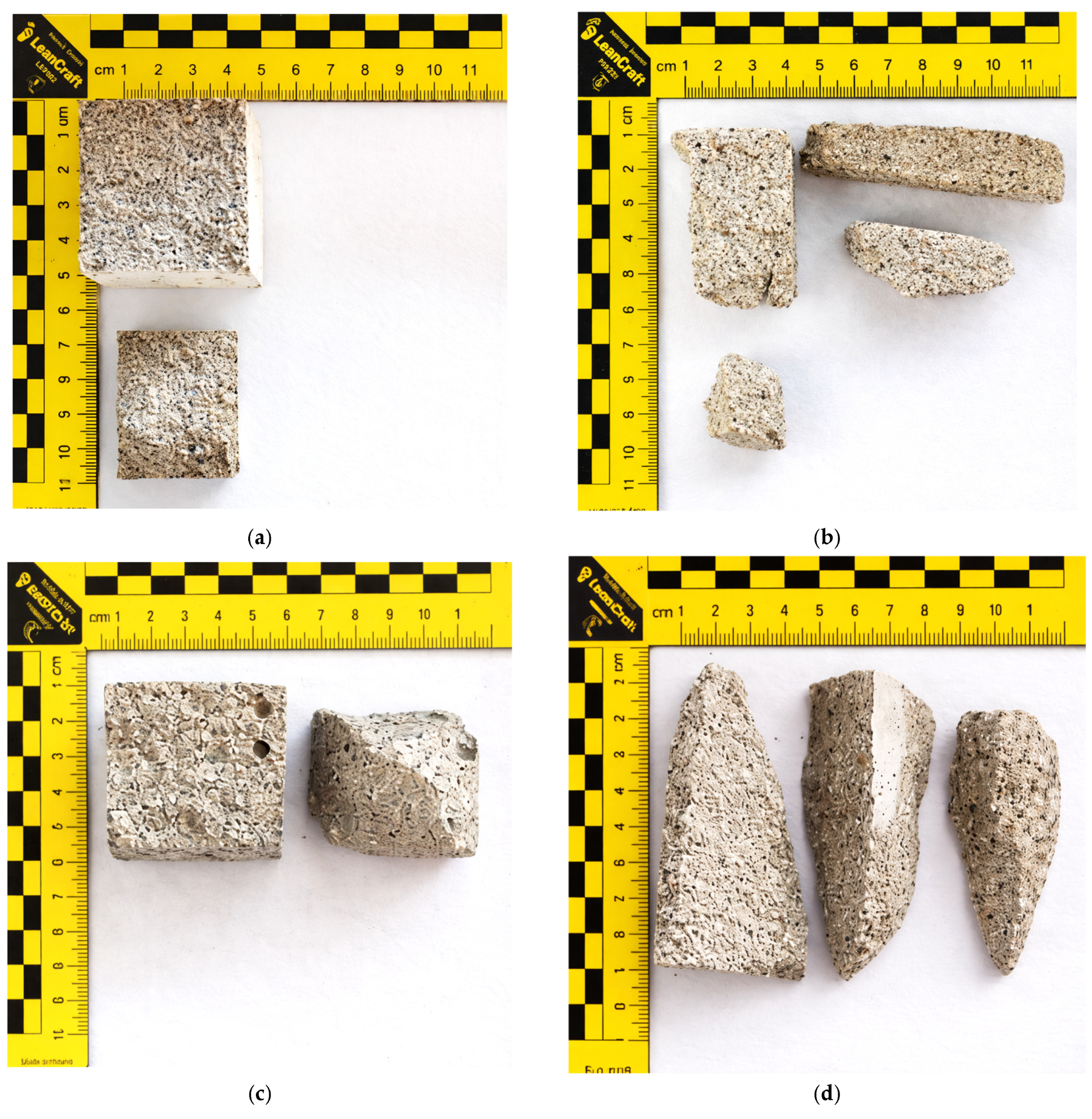
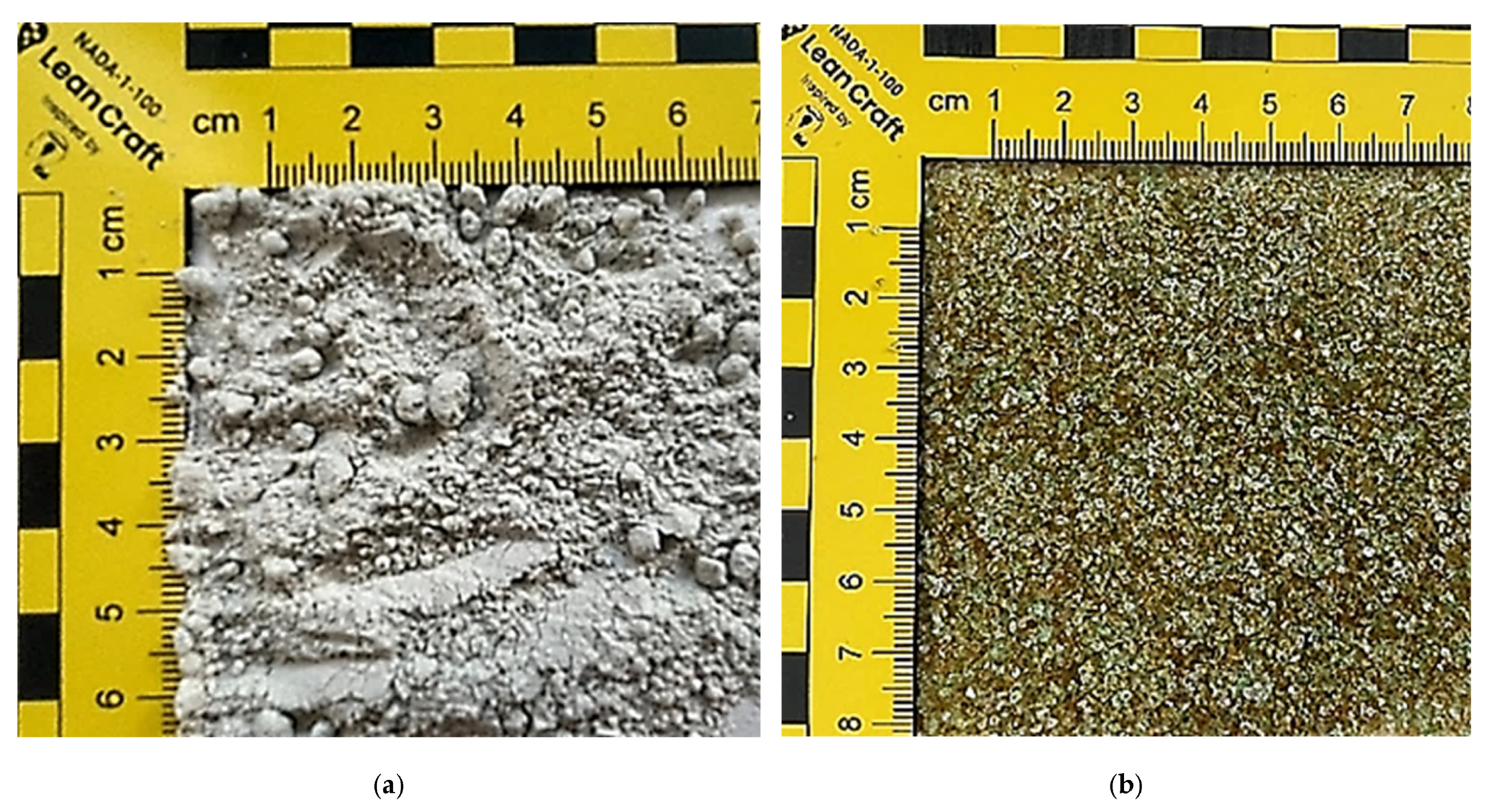
The mix design was developed to systematically examine the influence of mixed municipal waste glass (MMWG) on the fresh and hardened properties of cement mortars by applying two complementary incorporation strategies: partial substitution of the binder with finely ground glass meal and replacement of natural quartz sand with coarse cullet. This experimental approach enables the distinct mechanical, chemical, and physical effects of the two glass fractions to be evaluated within a single testing framework. The complete quantitative compositions of all mixtures are provided in Table 2 and Table 3, and Figure 1 illustrates the two glass fractions investigated.
In the binder-substitution series (Table 2), 30% of the binder volume was replaced with finely ground MMWG. The mixtures were based on CEM I 42.5 R, CSA cement, and blended binders incorporating limestone (LL), metakaolin (MK), or siliceous fly ash (V). These binder types differ markedly in mineralogy and hydration mechanisms, representing a spectrum of CaO–SiO2–Al2O3 reactivities relevant to the behaviour of amorphous silica-rich glass [30,31,32,33,34,35,36,37].
This binder diversity provides a broad chemical and mineralogical context for evaluating how finely milled MMWG interacts with systems characterised by portlandite-rich, ettringite-rich, and pozzolanic/filler-dominated hydration environments.
CEM I rely primarily on C3S-driven hydration, resulting in a Ca(OH)2-rich pore solution that may accelerate glass dissolution. In contrast, CSA cement follows ye’elimite-based pathways, generating ettringite-rich environments with lower portlandite content. The blended binders LL, MK, and V introduce varying pozzolanic and filler effects that may influence the interaction between glass particles and the matrix. In this context, the use of 30% glass replacement enables differentiation between pure dilution effects and true pozzolanic or microfiller contributions linked to the fine MMWG fraction.
Using this broad binder spectrum enables the experimental program to capture differences in potential pozzolanic reactivity, dilution effects, and alkali–silica sensitivity associated with the fine MMWG fraction, consistent with previous findings on waste glass–cement interactions [6,7,8,14,36,37,38,39,40,41,42,43,44].
In the aggregate-substitution series (Table 3), coarse MMWG cullet replaced natural quartz sand at mass fractions of 20%, 40%, 60%, and 80%. CEM II/B-V was selected as the reference binder because of its moderate alkali content and widespread use in European construction. Maintaining a constant binder composition ensures that the effects observed in this series can be attributed exclusively to changes in aggregate morphology, angularity, and packing behaviour, rather than to binder–aggregate interactions.
The use of volumetrically equivalent aggregate substitution ensures that changes in fresh-state behaviour, density, and internal packing can be attributed directly to the geometric and surface characteristics of the cullet rather than to variations in overall aggregate content.
The green colouration observed in mixed municipal waste glass (Figure 1b) is primarily attributed to iron oxides and, to a lesser extent, chromium-containing compounds incorporated during glass production and accumulated through recycling streams. In soda–lime glass, the coexistence of Fe2+ and Fe3+ ions produces characteristic green hues, whereas even trace amounts of Cr2O3 can intensify this colouration. In municipal glass waste, these colouring agents originate not only from naturally occurring impurities in raw materials, such as quartz sand, but also from the intentional colouring of container glass and from the mixing of different glass fractions, including green, brown, and colourless cullet. Additionally, the commingled collection of household glass with decorative, technical, and ceramic-derived fragments further enhances the green tint of the mixed glass fraction. Importantly, the observed colouration is primarily an optical feature and does not adversely affect the reactivity or applicability of finely ground mixed glass in cementitious systems, provided that environmental performance criteria are met.
The angular morphology and low water absorption of cullet have been shown to reduce workability and modify particle interlocking [33,34,35,36], and to influence the mechanical response through changes in packing density and stress-transfer efficiency. The wide range of substitutions used in this study enables observation of the progressive transition from sand-dominated to glass-dominated aggregate skeletons, thereby identifying behavioural thresholds associated with excessive angularity or insufficient packing density.
For both substitution strategies, the dry constituents were homogenised before water addition to ensure uniform distribution of MMWG particles. Mortars were prepared in a laboratory mixer in accordance with EN 196-1 [19], following a standardised mixing sequence to minimise variability in dispersion and shear conditions. The water-to-cement ratio was held constant at w/c = 0.35 across all mixtures to ensure comparability, in accordance with guidelines for mortar testing [19].
The consistent mixing and curing procedures ensure that differences among mixtures arise from the proportions and types of glass incorporated, rather than from processing inconsistencies. This control is significant in systems containing angular, low-porosity glass aggregates or highly reactive fine powders, where workability and hydration kinetics are sensitive to even minor changes in moisture or dispersion conditions.
Implementing both binder and aggregate substitution pathways allows the study to capture the full spectrum of effects associated with waste glass in cementitious materials. Fine glass meal may participate in pozzolanic reactions, modify hydration kinetics, and contribute to matrix densification [36,42,44]. In contrast, coarse cullet primarily behaves as an inert inclusion that modifies packing, fracture behaviour, and durability-related parameters.
This dual-design approach is consistent with contemporary literature that distinguishes glass reactivity thresholds by particle size (reactive < 75 µm; inert > 1–2 mm) [38,40,41,44].
Thus, the experimental matrices presented in Table 2 and Table 3 establish a coherent and comprehensive framework for identifying chemical, physical, and microstructural mechanisms governing the performance of MMWG-modified mortars.

2.4. Testing Procedures

A comprehensive experimental program was designed to evaluate the influence of mixed municipal waste glass (MMWG) on the fresh-state behaviour, mechanical performance, and chemical stability of cement mortars. All tests were conducted in accordance with the applicable European and Polish standards, using standardised procedures to ensure methodological consistency. Each measurement was performed in triplicate to ensure reproducibility.

2.4.1. Fresh-State Properties

The fresh-state behaviour of the mortars was assessed immediately after mixing to evaluate the influence of mixed municipal waste glass (MMWG) on rheological performance, workability, and internal packing characteristics. All procedures followed the relevant European standards, ensuring consistency and comparability across the experimental matrix. This approach enabled isolation of material-driven differences associated with the incorporation of fine and coarse MMWG fractions.
Flowability was measured using the flow table test in accordance with EN 1015-3 [43]. Each mortar was placed in a conical mould at the centre of the flow table, lightly tamped, and subjected to the prescribed sequence of 15 table drops within 15 s. The final spread diameter was recorded along two perpendicular axes and averaged. This test provides insight into the mobility of the mixtures. It allows differentiation between the effects of angular cullet particles and the finer, more reactive glass meal on yield stress and plastic viscosity, consistent with previous observations reported for glass-modified systems [6,7,8,14,33,40,41,42,44]. Attention was paid to reductions in spread diameter that may arise from increased angularity or altered water demand introduced by the MMWG fractions.
Bulk density of the fresh mortars was determined using EN 1015-6 [45]. Mortar was filled into a calibrated steel container in a single layer without vibration to prevent artificial compaction. Density was calculated from the measured mass and container volume. Variations in bulk density reflect changes in particle packing and the internal arrangement of solid phases, particularly relevant for mixtures incorporating coarse cullet, whose angularity may disrupt the aggregate skeleton [40,41,42,43,44]. For FGP-modified mixes, density changes may also reflect microfiller effects and early pozzolanic interactions influencing paste structure.
Air content was measured in accordance with EN 1015-7 [46] using a pressure-based aeration apparatus. The method quantifies the entrapped air introduced during mixing and is sensitive to particle shape, angularity, and surface roughness. Increased air content is commonly associated with low-absorption, smooth-surface glass aggregates, as reported in prior studies [34,36,38]. For fine glass meal, deviations in air content may also indicate changes in paste viscosity due to altered water demand or initial pozzolanic reaction tendencies. Such changes offer additional insight into how MMWG influences early hydration and matrix structuring.
All fresh-state tests were conducted at a controlled temperature of 20 ± 2 °C. Each measurement was repeated three times to minimise random error, and values were reported as arithmetic means. The combined evaluation of flowability, bulk density, and air content provides a coherent characterisation of the rheological behaviour of mortars containing MMWG. Together, these parameters capture the interplay between physical effects—such as particle morphology and packing—and chemical effects associated with the dissolution and reactivity of fine glass.

2.4.2. Mechanical Properties

The mechanical properties of the mortars were evaluated in accordance with the procedures specified in EN 196-1 [15], enabling direct comparison between the reference mixtures and those incorporating mixed municipal waste glass (MMWG). Strength development was assessed through flexural and compressive testing on standard prismatic specimens, providing insight into both matrix cohesion and aggregate–binder interaction. This approach ensures that the influence of the fine and coarse MMWG fractions can be isolated from procedural factors such as compaction or curing conditions.
Mortars were cast into 40 × 40 × 160 mm steel moulds in two layers, each compacted using the standardised jolting procedure defined in EN 196-1 [1] to ensure uniform consolidation and reproducible compaction energy. Care was taken to avoid segregation, which is particularly relevant in mixtures containing coarse MMWG cullet, given its angular morphology and lower density than quartz sand [47,48,49]. Attention was also paid to the distribution of the fine glass meal, as its smaller particle size may affect paste consistency during mould filling.
Immediately after casting, specimens were covered with a rigid plate to prevent moisture loss and stored in a controlled environment at 20 ± 2 °C. After 24 h, samples were crushed and placed in a water-curing bath at 20 ± 1 °C until the designated testing ages were reached. This curing regime follows EN 196-1 [15] and ensures consistent hydration conditions across all binder types examined in the study, including CEM I, CEM II/B-V, and CSA systems, whose hydration kinetics differ significantly [30,31,32,33,50,51,52]. Such standardised curing is essential when assessing materials containing reactive glass powder, as hydration development may be sensitive to moisture availability.
Flexural strength was determined using a three-point bending configuration with a constant loading rate as prescribed by EN 196-1 [15]. The test captures the influence of pore structure, matrix continuity, and the distribution of glass particles—both the reactive fine glass meal and the essentially inert coarse cullet—on crack initiation and propagation. The two resulting halves were subsequently used for compressive strength testing, conducted using a calibrated hydraulic press equipped with standard steel bearing plates. Compressive strength was calculated as the maximum applied load divided by the cross-sectional area. This sequential testing approach allows direct correlation between flexural cracking patterns and compressive failure behaviour within the same specimen pair.
Each strength value represents the meaning of three prismatic specimens. The use of triplicate testing is consistent with best practices for assessing variability in recycled materials, whose particle geometry and surface characteristics may introduce additional heterogeneity into the mortar matrix [38,40,41,42]. This repetition enhances statistical reliability and enables identification of systematic trends attributable to the MMWG fractions.
This methodology provides a reliable basis for assessing the mechanical impact of MMWG incorporation, which is crucial for understanding its influence on structural performance. When evaluated alongside fresh-state and hardened-state measurements, the strength data support a comprehensive analysis of how ground glass meal affects binder reactivity and matrix densification, and how coarse cullet influences stress distribution and fracture mechanisms. Together, these results contribute to understanding the multi-scale effects of waste glass on cement mortars. Each reported strength value represents the mean of three specimens (n = 3).

2.4.3. Environmental Assessment

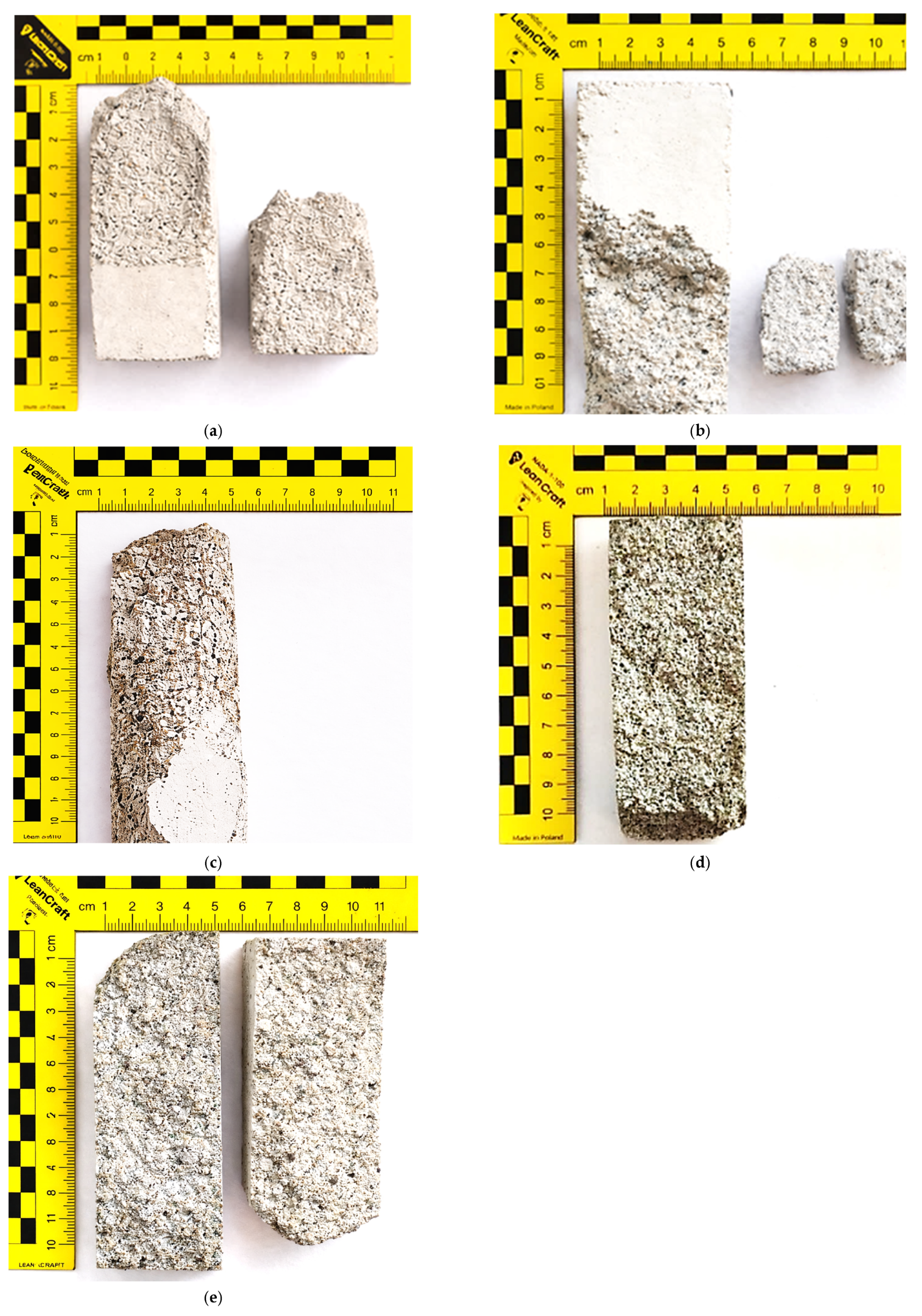
The environmental performance and chemical stability of the mortars incorporating mixed municipal waste glass (MMWG) were evaluated using a standardised leaching assessment. Mortars from all replacement levels shown in Figure 2 (S 0%, S 20%, S 40%, S 60% and S 80%) were subjected to leaching tests to enable a systematic comparison of the influence of glass content on chemical release behaviour (Figure 2 and Figure 3). This enabled the identification of potential trends associated with the progressive replacement of natural sand by coarse cullet.
The assessment followed the one-stage batch leaching procedure specified in PN-EN 12457-4 [53], which is widely used to characterise the leaching behaviour of granular waste materials and cement-based composites. Crushed mortar samples (<10 mm) were mixed with deionised water at a liquid-to-solid ratio of 10 L/kg and agitated for 24 h on a horizontal shaker to ensure complete interaction between the liquid and solid phases. The suspension was subsequently filtered through 0.45 μm membranes to obtain eluates for chemical analysis. This methodology has been demonstrated to provide representative eluates for evaluating the mobility of ions and trace elements in cementitious matrices.
The pH of the leachates was determined in accordance with PN-EN ISO 10523 [54]. Concentrations of major anions—chlorides, sulfates, and phosphates—were analysed following PN-EN ISO 6878 [55], PN-ISO 9297 [50], and PN-ISO 9280 [51], respectively. Heavy metals, including Pb, Cd, Cu, Zn, Ni, Cr, and Ba, were quantified using inductively coupled plasma optical emission spectrometry (ICP-OES) in accordance with PN-EN ISO 11885 [21]. At the same time, mercury (Hg) was analysed by cold-vapour atomic absorption spectrometry (CV-AAS) in accordance with PN-EN ISO 12846 [18]. These analytical techniques ensure high sensitivity and accuracy for evaluating both macroionic composition and trace-metal release.
The measured concentrations were compared with the permissible limits for construction products specified in national regulations [11] and with the waste-acceptance criteria defined in Council Decision 2003/33/EC [13]. This provides a consistent framework for evaluating the environmental safety of mortars incorporating fine and coarse MMWG and for identifying potential risks associated with high pH, soluble salts, or heavy-metal release—phenomena that may be affected by glass content, surface morphology, and the alkali environment. Special attention was given to elements such as Ba and Cr, which may originate from ceramic coatings or metallic inclusions commonly present in heterogeneous municipal glass streams [47,52,56,57,58,59,60,61,62,63,64].
All analyses were performed in duplicate to ensure reproducibility. The combined assessment of pH, major anions, and heavy metals provides a robust evaluation of the environmental suitability of mortars modified with MMWG, complementing the mechanical and physical characterisation presented in the preceding sections. Together, these measurements provide a holistic understanding of how both fine glass powder and coarse cullet influence chemical stability under aqueous contact conditions.

3. Results

All quantitative results are reported as mean values; where replicate data were available, variability is provided as standard deviation (SD) based on three specimens (n = 3), and error bars are shown accordingly.
This section presents the experimental results obtained for mortars incorporating mixed municipal waste glass (MMWG), with a focus on fresh-state behaviour, mechanical performance, and environmental safety. The analysis systematically examines the influence of both fine glass meals and coarse glass cullet on rheology, strength development, pore structure, and leaching behaviour. The results integrate physical, mechanical, and chemical evidence to support the interpretation of the role of MMWG within cementitious matrices, consistent with previously reported findings on waste-glass reactivity, morphology, and durability implications [6,8,48,49,65,66,67,68,69,70,71,72]. This multiparametric approach enables clear identification of how the two granulometric fractions of MMWG contribute differently to matrix densification, rheological response, and chemical stability.

3.1. Chemical Properties and Particle Size Distribution of Ground Glass

The chemical composition of the ground waste mixed municipal waste glass (MMWG), presented in Table 3, confirms its classification as soda–lime silicate glass, with SiO2 content between 69.1% and 72.6%, accompanied by CaO in the range of 11–13%, consistent with typical values reported for post-consumer and demolition glass [65,72]. The alkali oxides Na2O (8.7–10.0%) and K2O (<0.1%) reflect the presence of flux components characteristic of commercial glass formulations [70]. Minor constituents such as Al2O3, TiO2, and trace Fe2O3 arise from coatings, ceramic fragments, and colour-modifying additives commonly present in demolition glass streams [65,68]. The pronounced variation in SrO content (6.21% vs. 0.68%) highlights the intrinsic heterogeneity of MMWG, arising from the mixture of distinct glass types, including flat glass, tableware, and coated decorative elements. Such heterogeneity may influence density, melting behaviour, and potential reactivity, as noted in earlier studies on mixed post-consumer glass [65,68,72].
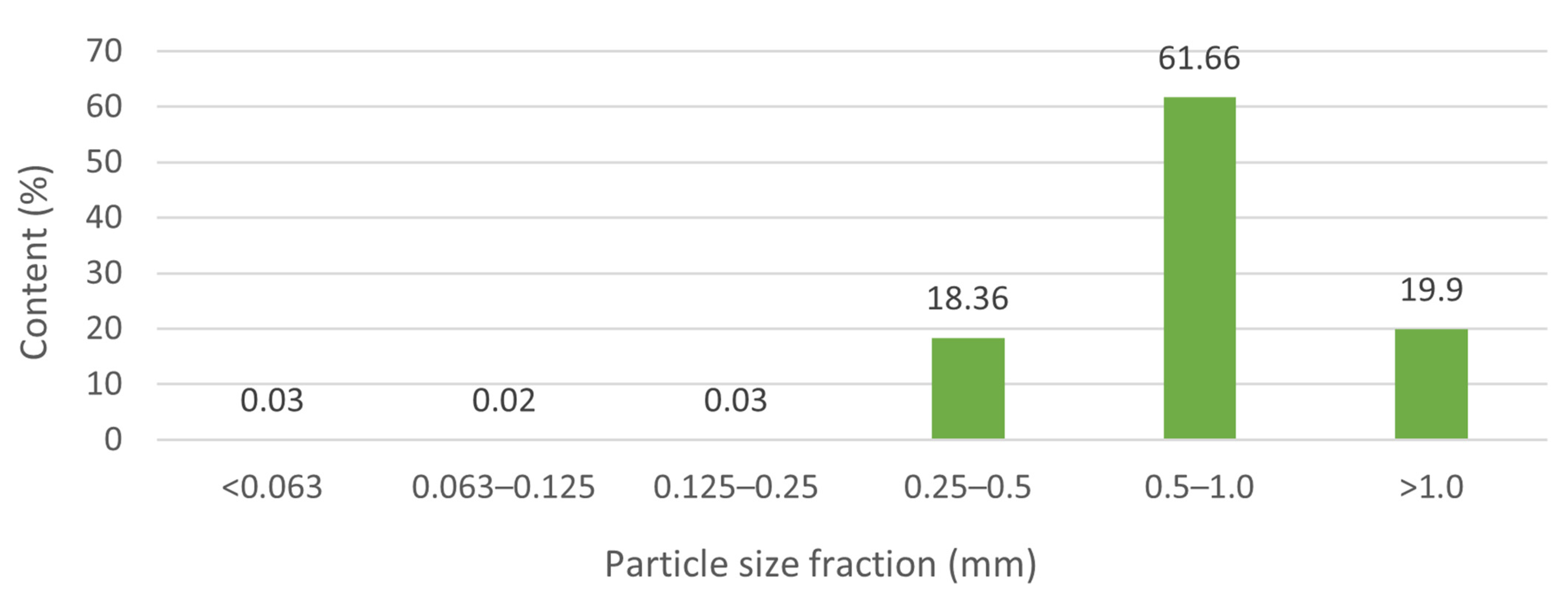
The particle-size distribution (PSD) of the coarse MMWG fraction (Table 4, Figure 4) demonstrates that the aggregate is predominantly composed of medium and coarse particles, with the 0.5–1.0 mm fraction accounting for 61.66% of the total mass, followed by >1.0 mm (19.9%) and 0.25–0.5 mm (18.36%). Finer fractions below 0.25 mm remain negligible (<0.1%). This distribution meets the requirements for fine aggregates in mortar and concrete according to PN-EN 12620:2019+A1:2019 [19], and the sieving methodology complies with PN-EN 933-1:2012 [18]. The low proportion of fines indicates minimal dust contamination and supports effective binder–aggregate adhesion while limiting unnecessary increases in water demand. This grading profile explains the observed decrease in workability in mortars containing MMWG, as the angular morphology, lower packing density, and rough surface texture of the cullet increase internal friction relative to natural quartz sand [8,73,74].
Laser diffraction analysis of the ground glass powder (ISO 13320:2020 [16]) confirmed a median particle size of approximately 20 µm, with 88% of particles below 45 µm—values comparable to those of Portland cement (Table 4). The complete set of granulometric parameters, including d10, d50, d90, and the percentage of particles finer than 45 µm, is presented in Table 4, together with the corresponding values for CEM I 42.5 R. Such fineness falls within the range reported as critical for enabling pozzolanic reactivity, as particles finer than 45 µm promote dissolution of amorphous silica in alkaline pore solutions and facilitate the formation of secondary C–S–H and C–A–S–H phases [49,65,68,70,71,72,73,74,75,76,77].
The specific surface area determined by the Blaine method (PN-EN 196-6:2019 [20]) reached 360 m2/kg, slightly lower than that of CEM I 42.5 R (≈410 m2/kg) but still sufficient to support filler effects and delayed reactive contributions typical of finely ground glass [44,49,66]. These Blaine values are likewise summarised in Table 4 and Table 5 to enable direct comparison of the physical fineness of the two powders.
Grinding using a Los Angeles drum lined with corundum abrasive media yielded a homogeneous, non-agglomerated powder with a narrow PSD, supporting predictable rheological behaviour and controlled long-term reaction kinetics. This uniform granulometry is reflected in the low spread of PSD parameters reported in Table 5.

3.2. Fresh-State Properties of Mortar

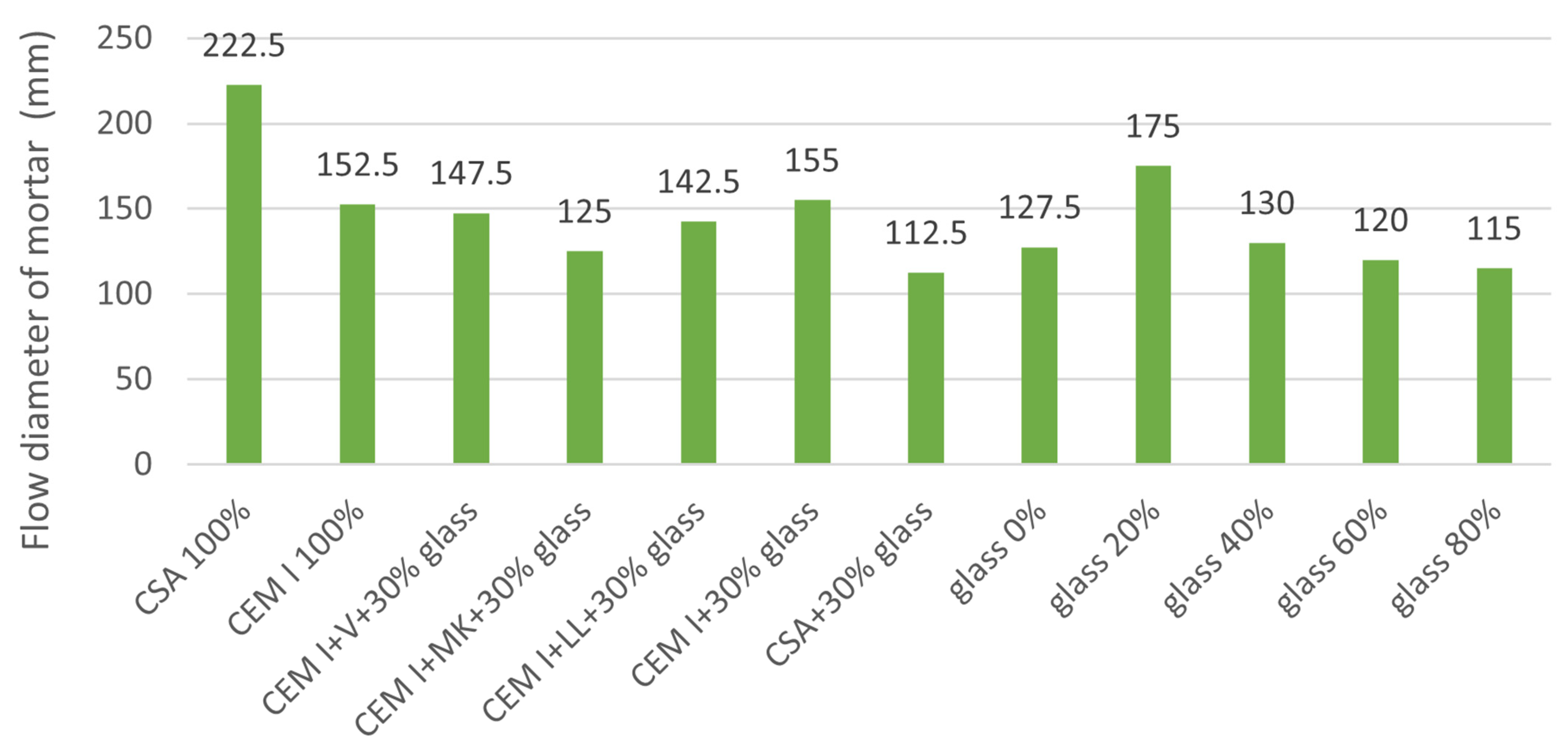
The incorporation of mixed municipal waste glass (MMWG) into mortar formulations substantially influenced their fresh-state behaviour, reflecting the combined effects of particle morphology, specific surface area, and granulometric profile. The flow-table measurements, summarised in Table 5 and in Figure 4, revealed a systematic reduction in workability with increasing proportions of finely ground glass powder (FGP). At a 5% cement replacement, the decrease in flow diameter was relatively small (≈4%), whereas 10% and 20% substitutions produced more pronounced reductions of approximately 8% and 12%, respectively. These changes correspond directly to the physical characteristics of ground demolition glass, its angular geometry, irregular surface texture, and significantly higher fineness compared with cement, which collectively increase interparticle friction and elevate water demand in the fresh matrix. The trends observed here are consistent with earlier studies, which highlighted the sensitivity of rheological performance to particle morphology when finely milled glass is used as a binder additive [14,48,65,68]. As shown in Table 6 and Figure 5, the first group of mixtures comprises mortars in which finely ground glass powder was incorporated as a binder additive, replacing 30% of the cement system—CEM I, CSA, and blended cements with V, MK, and LL. The second group comprises mortars in which coarse glass cullet was used as a fine-aggregate replacement at mass substitution levels of 20–80%. This dual approach allows the distinct rheological mechanisms associated with each glass fraction to be clearly differentiated.
The results demonstrate a general reduction in workability across both series; however, the underlying causes differ. In mixtures containing finely ground glass, the reduction in flow can be attributed primarily to the markedly increased specific surface area and angular particle morphology of the powder, which together increase the system’s water demand and increase interparticle friction. This behaviour is consistent with the rheological response previously reported for highly milled amorphous silicate powders used as partial binder replacements.
In contrast, mortars modified with coarse cullet exhibit flow reductions primarily attributable to physical effects associated with particle geometry. The cullet’s sharp edges, irregular fracture planes, and lower packing density relative to quartz sand disrupt the granular skeleton of the fresh mortar and intensify internal friction during flow-table deformation. Interestingly, the mixture containing 20% cult deviated from this trend by exhibiting a temporary increase in flow diameter, suggesting that partial sand replacement at this level may locally enhance particle packing efficiency and create more favourable granular arrangements. At higher replacement levels (40–80%), disruption of the aggregate skeleton becomes dominant, resulting in progressively reduced flowability.
Overall, the results highlight the contrasting rheological roles of the two MMWG fractions: the fine powder primarily affects viscosity via surface-area-driven mechanisms, whereas the coarse cullet influences workability through geometric and packing-related mechanisms.
It is noteworthy that the MMWG glass used in this study displays sharper edges and more irregular fracture surfaces than typical container-glass cullet reported in the literature [62,63,64]. As a result, its influence on internal friction and particle-packing behaviour is more substantial and more variable. This distinction highlights the novelty of the present work, as it reflects the specific heterogeneity of waste MMWG rather than the comparatively uniform morphology of recycled packaging glass.
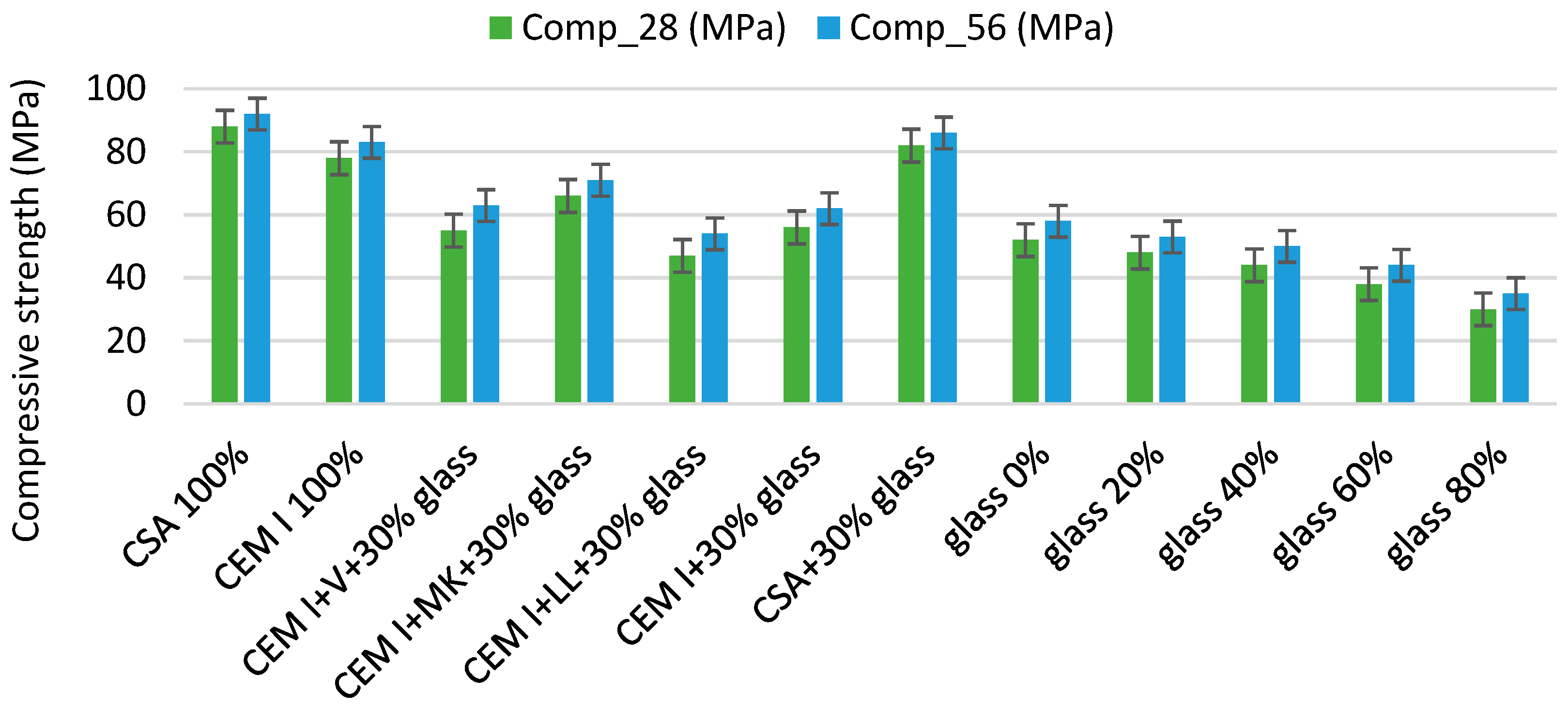
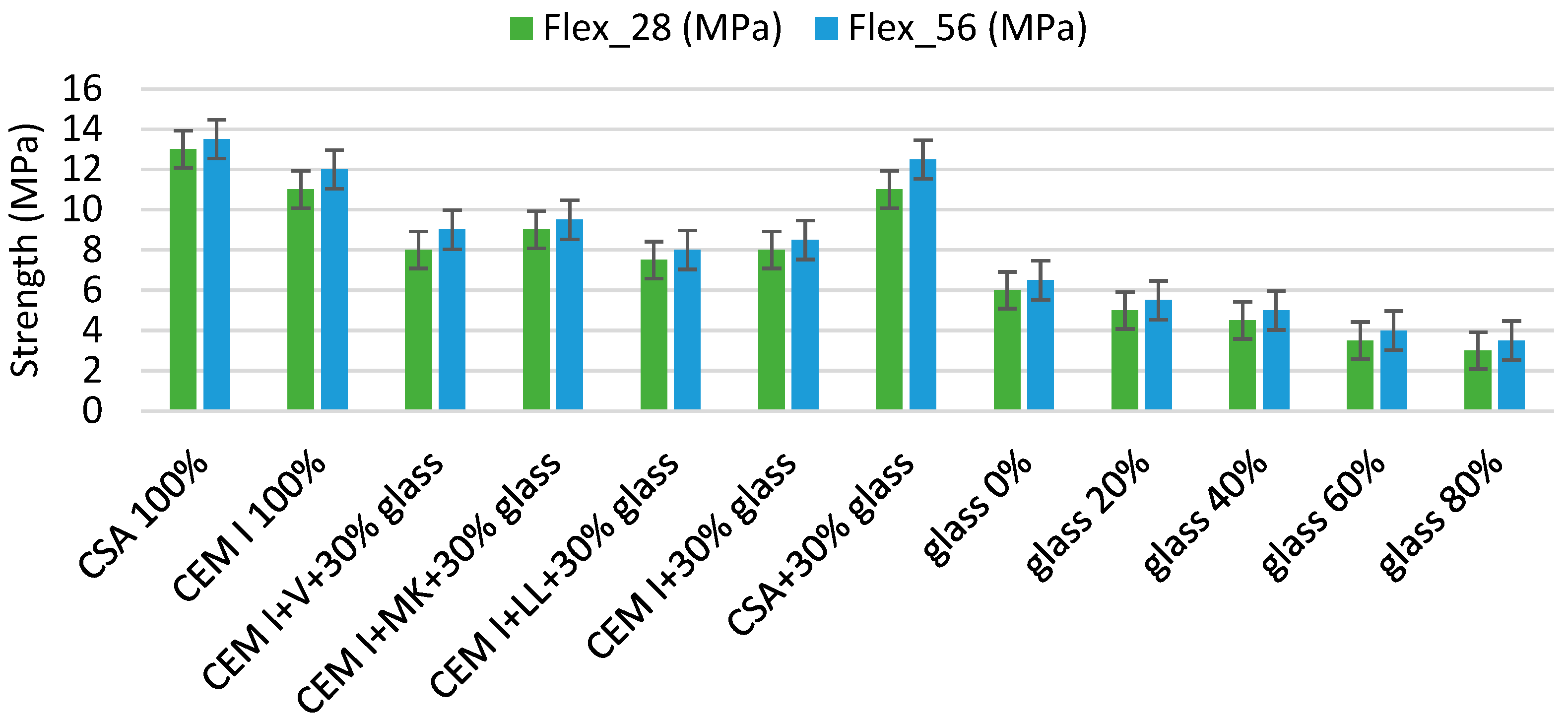
The mechanical performance results, presented in Table 6 and illustrated in Figure 6 and Figure 7, reveal a distinct interaction between early hydration kinetics, dilution effects, and the delayed pozzolanic contribution of glass powder. At 7 days, mortars containing 5% and 10% FGP exhibited slightly lower compressive strength relative to the reference mixture, while a 20% replacement caused a more substantial early-age reduction (≈12%). This behaviour reflects the inherently lower reactivity of amorphous glass compared with Portland clinker and the immediate dilution of C3S and C2S phases associated with partial cement replacement.
By day 28, both the 5% and 10% FGP mixtures matched or exceeded the strength of the control, whereas the 20% mixture demonstrated partial recovery. After 56 days, the 5% and 10% FGP mortars achieved compressive strengths up to 8% higher than the reference. This strength gain is attributable to progressive dissolution of amorphous SiO2 and the formation of secondary C–S–H and C–A–S–H gels, consistent with pozzolanic behaviour observed in finely milled glass powders in earlier studies [40,60,62,65,66].
Flexural strength followed similar trends (Table 7, Figure 5 and Figure 6), with modest reductions at early ages and gradual improvement over prolonged curing. The enhancement at 56 days confirms that finely ground waste glass acts as both a microfiller and a delayed-reactive pozzolanic component, improving matrix compactness and crack resistance. Despite its compositional heterogeneity (Table 5), the waste glass powder retains sufficient reactivity at particle sizes below 45 µm, reinforcing its potential as a viable supplementary cementitious material (SCM).
In contrast, mortars containing coarse glass cullet showed a consistent reduction in both compressive and flexural strength with increasing replacement level. This decline is attributed to reduced particle packing, greater angularity, and weaker interfacial bonding relative to quartz sand, effects that become increasingly pronounced at 60–80% replacement. The coarse fraction contributes no pozzolanic activity and exerts purely physical effects.
Overall, the complementary effects of fine glass powder (reactive, pozzolanic, densifying) and coarse cullet (non-reactive, modifying packing and fracture behaviour) underscore the need to distinguish granulometric fractions when incorporating waste glass into cementitious materials.
A detailed statistical assessment was conducted to verify the robustness of the improvements in mechanical strength. Descriptive statistics for the 28-day and 56-day compressive strengths (Table 8) show low standard deviations, confirming the high reproducibility of measurements. One-way ANOVA (Table 9) demonstrated statistically significant differences among references, 5% FGP, and 10% FGP mixtures at both curing ages (p < 0.05). The post hoc Tukey HSD analysis (Table 10 and Table 11) further distinguished the individual performance of each mixture: the 5% FGP mortar consistently exhibited the highest strength, outperforming both the reference and the 10% FGP mixtures, whereas the 10% FGP mortar demonstrated the lowest strength among the tested series. These findings collectively confirm that moderate replacement levels (≈5%) of finely ground demolition glass optimise the balance among dilution, reactivity, and microstructural refinement. In contrast, excessive replacement shifts the balance toward insufficient pozzolanic activation.
Overall, the fresh-state and mechanical results demonstrate that waste glass has a dual functional role in cementitious mortars: as a physically active modifier (affecting flowability through increased angularity and surface roughness) and as a chemically active supplementary material (enhancing long-term strength through gradual pozzolanic reactivity). The performance trends identified in this study confirm the feasibility of incorporating MMWG into cementitious systems at both the binder and aggregate replacement stages, with optimisation occurring at low-to-moderate FGP dosages where rheological stability and long-term mechanical benefits are maximised.

3.3. Environmental Performance

The environmental performance of mortars incorporating mixed municipal waste glass (MMWG) was evaluated using standardised leaching tests on all mixtures shown in Figure 3, in accordance with PN-EN 12457-4:2006 [53,78]. The equates obtained from crushed mortars (<10 mm) were analysed for pH, major anions, and heavy metals, and the results are summarised in Table 3 and Table 4 [79]. These data demonstrate that the incorporation of waste glass does not induce environmentally adverse leaching behaviour [79]. In every case, the concentrations of regulated metals—including Pb, Cr, Zn, Cu, Ni, and Cd—remained below the threshold values defined in Council Decision 2003/33/EC [13] and the national regulatory limits for construction materials [11,80,81]. This indicates that the tested mortars meet the requirements for inert materials and are safe for use in construction applications, rather than only meeting waste-acceptance criteria for landfilling [82].
A noteworthy trend is the reduction in Pb concentration in the elevators containing 5% and 10% finely ground glass powder (FGP), relative to the reference mixture. This behaviour suggests partial immobilisation of lead ions within the hydrated cementitious matrix. Such immobilisation is consistent with documented mechanisms in which heavy metals are incorporated into calcium–silicate–hydrate (C–S–H) and calcium–aluminosilicate–hydrate (C–A–S–H) phases or become occluded within their nanostructured gel networks [45,83]. Finely ground glass promotes the formation of additional secondary C–S–H/C–A–S–H through a pozzolanic reaction, thereby increasing the number of available sorption and incorporation sites. Previous studies on waste-glass-modified binders have confirmed comparable immobilisation behaviour in both cementitious and alkali-activated matrices [8,65], and the present results extend this evidence to heterogeneous waste glass, which may contain ceramic residues, pigments, coatings, and trace contaminants characteristic of real mixed waste streams.
The leaching behaviour of alkali elements also reflects the chemical characteristics of demolition glass. A slight increase in Na concentration was observed in mixtures containing higher FGP contents, corresponding to the Na2O-rich composition reported in Table 3. However, sodium concentrations remained well below the regulatory criteria for inert materials [8,29], indicating that the incorporation of soda–lime glass does not compromise environmental safety at the tested replacement levels. pH values of all eluates—although elevated due to cement hydration—remained within the expected range for Portland-based materials and fully complied with PN-EN ISO 10523 [25], demonstrating chemical stability of the composites.
The reliability of the chemical analyses is confirmed by relative standard deviations (RSD) below 7%, demonstrating high repeatability despite the inherent heterogeneity of waste glass. This is particularly meaningful: despite the real-waste origin of MMWG, the cementitious matrix effectively stabilises both the major components and the minor, potentially variable constituents. This observation aligns with previously reported immobilisation efficiencies in cement-based systems [73,83] and strengthens the case for practical construction applications.
Overall, the leaching data confirm that mortars incorporating waste MMWG satisfy the environmental safety criteria for inert construction materials and do not exhibit elevated release of heavy metals or soluble ions. The results clearly indicate that MMWG-modified mortars are safe for structural and non-structural use and do not pose environmental risks associated with leaching, thereby supporting their suitability in circular-economy strategies and addressing previously raised concerns about the long-term chemical stability of glass-containing composites [65,77].

4. Discussion

The fresh-state behaviour of mortars incorporating mixed municipal waste glass (MMWG, EWC 20 01 02) is governed primarily by particle-scale geometry and surface energetics, rather than by early-age chemical interactions. The progressive decrease in flowability observed with increasing fine glass powder (FGP) content, as shown in Table 4, reflects a systematic rise in internal friction and water demand. Flow reductions of approximately 4% at 5 wt% and nearly 12% at 20 wt% replacement indicate a strong sensitivity of the suspension to the physical characteristics of finely ground glass originating from heterogeneous municipal waste streams. These reductions are more pronounced than those typically reported for homogeneous container-glass powders [5,6,78], underscoring the distinct rheological behaviour of mixed post-consumer glass, which is more compositionally and morphologically diverse than industrial cullet.
The PSD results presented in Table 4, obtained in accordance with ISO 13320:2020 [50], indicate that the FGP has a median particle size of approximately 20 μm and a specific surface area of 360 m2/kg (PN-EN 196-6:2019 [15]). Such fineness substantially increases the total wet surface area, reduces the volume of free water available for particle lubrication, and increases the effective solid volume fraction of the paste, thereby increasing both the yield stress and the plastic viscosity. These effects are further intensified by the angular and irregular particle morphologies, which exhibit fractured planes, sharp edges, and surface aspirations typical of mechanically processed municipal waste glass. Unlike the smoother, more uniform cullet derived from packaging glass, MMWG contains diverse particle shapes produced during sorting and crushing in municipal recycling streams, resulting in significantly elevated interparticle friction.
The heterogeneous nature of MMWG—including occasional inclusions of coloured glass, ceramics, mirror fragments, enamel coatings, and minor metal films—increases surface roughness and solid–liquid interfacial energy, thereby amplifying hydrodynamic resistance during flow. As a result, FGP exerts a more substantial influence on rheology than chemically similar but geometrically smoother industrial glass powders used in earlier research [69,70,71]. This finding confirms the importance of material provenance when evaluating the suitability of waste glass for construction applications.
Additional indicators of altered suspension behaviour include a slight but systematic increase in entrapped air content (up to 0.6%) and a slight reduction in bulk density (~1%), measured in accordance with PN-EN 1015-6:2000 [45] and PN-EN 1015-7:2000 [46]. These trends correspond to findings reported by Du and Tan [74,77,79], who demonstrated that angular particles disrupt granular packing, increase interstitial voids, and redistribute mixing water, thereby modifying cohesion and lubrication within fresh mortar. The present results extend these concepts to MMWG and show that the combined effects of angular geometry, morphological heterogeneity, and high specific surface area sufficiently alter water allocation and air entrapment even at moderate replacement levels.
In the early minutes after mixing, the mortar behaves according to the particle-crowding and surface-effect regimes described in the literature [41]. Because MMWG exhibits delayed pozzolanic reactivity relative to cement (Section 3.3), its initial contribution to fresh-state behaviour is predominantly physical. FGP particles act as micro-scale inclusions that absorb water on their surfaces, increase the effective solid fraction, and hinder the formation of a continuous lubrication layer within the suspension. Only at later hydration stages, once amorphous SiO2 dissolution begins and secondary C–S–H/C–A–S–H gels precipitate, does the mixture gradually transition to a more cohesive, chemically governed regime.
The contrast between fine and coarse MMWG fractions further supports the interpretation that geometric and physical mechanisms dominate the rheological effects. Mortars containing coarse glass fractions (CGF), prepared according to Table 5 and illustrated in Figure 4, exhibited only marginal decreases in flow despite identical chemical composition. This indicates that particle size and morphology—not intrinsic chemistry—govern the observed rheological response. This behaviour is consistent with other studies examining angular silicate aggregates [73,75,79]. However, the magnitude of the effect is greater for MMWG, owing to its heterogeneous origin and variable surface texture.
Overall, the results demonstrate that the fresh-state rheology of mortars containing MMWG is controlled by increased interparticle friction, elevated surface-wetting demand associated with high specific surface area, disruption of packing density, and limited early-age chemical contribution due to delayed pozzolanic activity. These mechanisms collectively explain the reduction in flowability and associated modifications in density and air content. Importantly, although MMWG imposes greater rheological challenges than conventional glass powders, these effects are predictable, consistent with established rheological models, and can be effectively mitigated through targeted admixture dosing or optimised water-to-binder ratios. This understanding provides a robust physical foundation for interpreting the mechanical, microstructural, and environmental behaviours discussed in the subsequent sections.

4.1. Mechanical Properties of Hardened Mortars

The mechanical performance of mortars incorporating mixed municipal waste glass (MMWG, EWC 20 01 02) reflects a characteristic transition from an early-age dilution regime to a later-age reaction-controlled regime in which the pozzolanic contribution of finely ground glass becomes increasingly pronounced [83]. The compressive strength results presented in Figure 5, Table 5 and Table 6 demonstrate that mortars containing 30 wt% fine glass powder (FGP) display slightly reduced or comparable strength relative to the reference at 7 days, yet consistently surpass it at 28 and 56 days, reaching up to 8% higher values at the latter curing age [84]. This systematic evolution confirms that the glass initially behaves as an inert filler but subsequently becomes chemically active as amorphous silica dissolves and participates in secondary hydration.
The delayed strength gain is consistent with the established kinetics of amorphous SiO2 dissolution and secondary gel formation [83,85]. The pozzolanic reaction between ground glass and portlandite typically initiates only after the central exothermic hydration peak of cement has passed, which explains the limited reactivity at early ages. The increase in strength between 28 and 56 days corresponds to the consumption of Ca(OH)2 and the precipitation of additional C–S–H and C–A–S–H gels [85]. This behaviour is particularly evident in mixtures containing 5% FGP, which exhibit the highest late-age strength, indicating optimal synergy between filler effects and pozzolanic activity [83].
The statistical analysis presented in Table 8 further validates these trends. Significant differences (p < 0.05) were observed for reference, 5%, and 10% FGP mortars at both 28 and 56 days, confirming that the incorporation of MMWG glass produces a measurable and systematic effect on strength development [86]. The Tukey post hoc tests (Table 9 and Table 10) indicate that the 5% FGP consistently outperforms both the reference and the 10% mixtures at later ages, suggesting that moderate replacement optimises the balance between dilution and pozzolanic reaction. The Relative Strength Index values exceeding 1.05 at 56 days again highlight that the glass transitions from a passive to an actively reactive phase as hydration proceeds.
The behaviour at 20% FGP indicates the threshold at which dilution effects begin to outweigh the system’s reactivity [83]. This mixture exhibits the lowest early-age strength, attributable to reduced clinker content and insufficient formation of initial hydration products. However, its gradual recovery by 56 days, approaching parity with the reference, confirms that even at high replacement levels, waste glass contributes to long-term reactivity once adequate dissolution of amorphous silica has occurred. Such recovery has also been identified in high-volume glass systems in previous studies, though the more heterogeneous composition of demolition glass makes its performance more sensitive to particle fineness [83].
The convergence between mechanical results and microstructural interpretations reinforces the conclusion that the glass actively contributes to binder evolution. Previous research has shown that fine glass particles exert a microfiller effect, increasing packing density and reducing capillary void size even before pozzolanic reactions commence [83]. The present findings align with this mechanism and extend it by demonstrating that the chemically heterogeneous, inclusion-bearing MMWG glass retains sufficient amorphous silica content to participate fully in secondary gel formation [85]. The observed improvement in flexural strength at 28 and 56 days further suggests enhanced crack-bridging capacity and strengthening of the interfacial transition zone as glass-derived gels accumulate.
The similarity of the long-term performance of MMWG glass to that of traditional container glass used in previous studies underscores that compositional heterogeneity does not impair reactivity when adequate fineness is achieved. The Los Angeles milling process (Section 2.1) produced a particle-size distribution below the critical 45 μm threshold considered necessary for effective dissolution, which explains the robust pozzolanic response observed at later ages. This confirms that despite the presence of minor metallic or ceramic inclusions, the amorphous silica phase remains the dominant driver of reactivity [83].
Taken together, the mechanical and statistical results demonstrate that finely ground MMWG-derived glass contributes meaningfully to the hydration process in both Portland and blended cement systems [83,84,85]. The improvement in later-age strength supports its use as a sustainable supplementary cementitious material, and moderate replacement levels of 30% appear particularly advantageous, offering a favourable balance between rheological stability and mechanical enhancement. These findings confirm that MMWG, although inherently variable, can be reliably used as a reactive binder component, supporting both performance optimisation and circular-economy objectives.

4.2. Microstructural Evidence of Alkali–Silica Reactivity and Gel Formation in Mortars Containing MMWG Glass

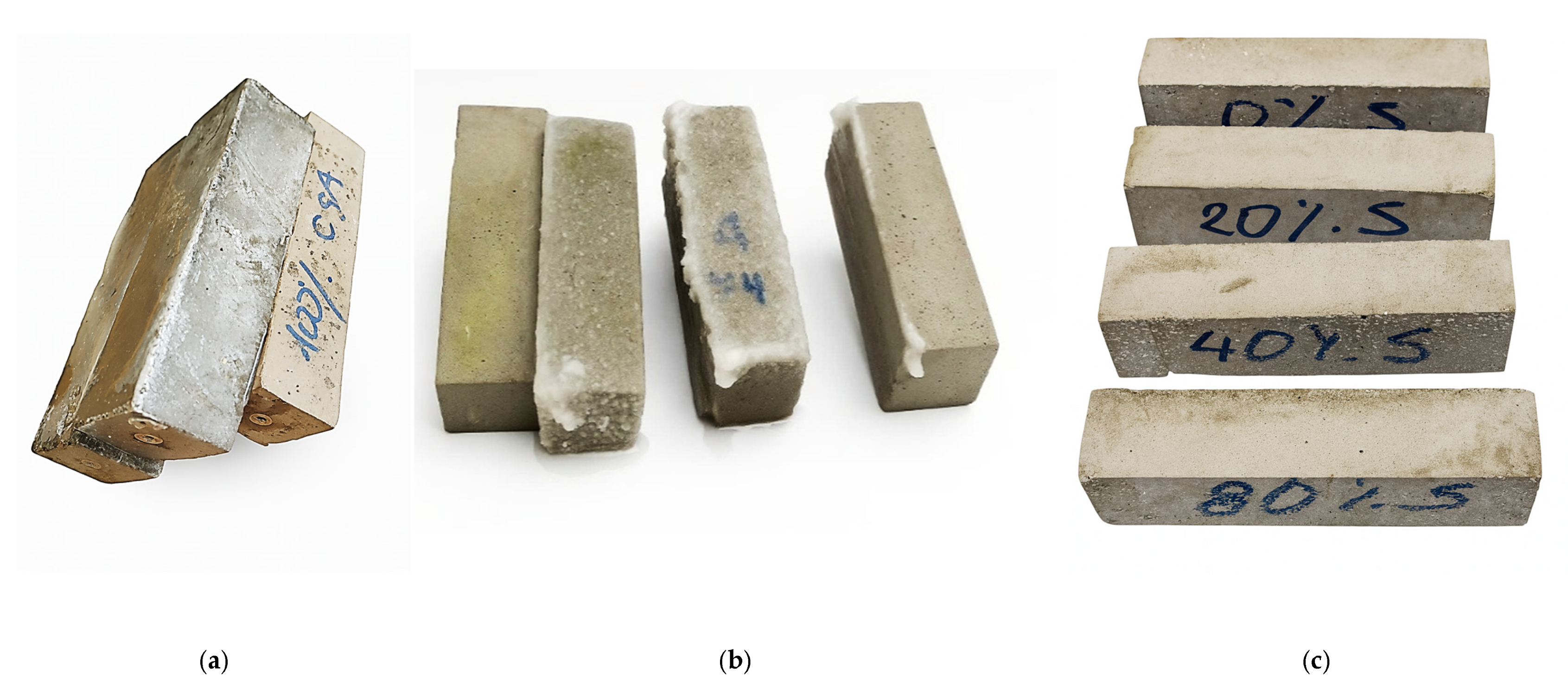
The microstructural examinations carried out on the mortars containing mixed municipal waste glass (MMWG, EWC 20 01 02) revealed surface features and localised deposits whose appearance resembles hydrated alkali–silicate phases; however, their occurrence was limited, non-systematic, and not accompanied by expansion, cracking, or other indicators typically associated with deleterious alkali–silica reaction (ASR). The visual observations shown in Figure 8a,b document thin, transparent-to-whitish, gel-like films at the specimen surfaces and around isolated fine glass particles. These films caused incidental adhesion between neighbouring beams during water curing, but their sparse distribution and superficial character suggest moisture-driven swelling of hydration products rather than full ASR development.
Although standardised expansion tests (e.g., ASTM C1260/C1293 [79]) were not conducted in this study, no cracking, reaction rims, or macroscopic expansion were observed, and stable development supports a non-deleterious interpretation under the investigated conditions.
Importantly, no microcracks, reaction rims, internal gel-filled fissures, or volumetric instability were observed, and eluate analyses did not show elevated dissolved silica concentrations. These findings indicate that, although finely ground MMWG can interact with the alkaline pore solution, the observed reactions are best interpreted as benign alkali–silica reaction (ASR) rather than deleterious ASR.
The behaviour aligns with the mechanistic framework described by Rajabipour et al. [70], who showed that highly reactive siliceous powders may form alkali–silicate gels at the particle surface without necessarily causing damaging expansion. Similarly, studies by Saccani and Bignozzi [71] and by Xie and Xi [82] demonstrated that the extent and severity of ASR depend strongly on particle size: particles below approximately 75–100 μm may dissolve rapidly in high-alkali pore solutions, but such dissolution often promotes pozzolanic consumption of Ca(OH)2 rather than expansive ASR when particle-scale stresses are insufficient to cause cracking.
In the present study, the MMWG-derived glass, which contains amorphous silica and measurable Na2O and K2O contents (Table 4), exhibits the chemical potential for alkali–silicate reactions when finely ground. However, the absence of cracking or measurable expansion indicates that these reactions remained confined to harmless surface-level interactions or secondary gel precipitation. This interpretation is consistent with findings from low-alkali and blended systems, in which fine glass behaves predominantly as a pozzolanic additive rather than as an ASR-reactive aggregate [36,42,73].
Taken together, the microstructural observations confirm that, under the conditions tested, finely ground MMWG participates in the formation of mild alkali–silica gel without triggering detrimental ASR. The reactions appear to be size-dependent, surface-localised and non-expansive, fully compatible with stable long-term mechanical performance.
Alkalis released during cement hydration diffuse toward the glass surface, where they initiate partial depolymerisation of the amorphous silicate network. This process leads to the formation of thin alkali–silicate hydration films rather than a fully developed expansive ASR gel. As water penetrates these surface layers, limited local swelling may occur, producing small gel exudates visible on the exposed specimen faces. These superficial deposits, which, in isolated cases, caused temporary adhesion between neighbouring beams during saturated curing, represent moisture-induced softening of the hydration products rather than evidence of destructive gel pressure.
The absence of internal cracking, reaction rims, or volumetric expansion indicates that the reaction remained non-expansive and surface-confined, consistent with benign alkali–silicate interactions reported for fine glass powders in low-alkali cement matrices. Thus, the macroscopic adhesion observed in Figure 8a can be interpreted as the extrusion of hydrated films from the particle surface, without the mechanical consequences typical of deleterious ASR.
The lack of similar deposits in mortars containing coarse MMWG glass (Figure 8c) reinforces the strong size dependence of this behaviour. Grains larger than approximately 1 mm have a low surface-area-to-volume ratio and dissolve too slowly to accumulate sufficient dissolved silica to form detectable gel layers. This observation is consistent with established size-reactivity relationships for recycled container glass but has not been demonstrated here for compositionally heterogeneous MMWG glass.
Chemical heterogeneity also moderates the reaction. The presence of ceramic inclusions, mirror coatings, and metallic residues introduces local variations in alkali uptake and influences the silica dissolution pathway. As noted by the author [86], Such heterogeneity can alter pore-solution alkalinity and stabilise Ca-rich silicate films rather than promoting expansive gel formation. This mechanism may explain why the deposits observed in this study were discrete, surface-bound, and limited in quantity rather than continuous and internally disruptive.
The elevated CaO and trace elements (e.g., Pb, Zn) detected in the MMWG composition (Table 4) may further affect the gel structure, producing denser, less mobile hydration layers that remain confined to the immediate particle vicinity. Their morphology is therefore more consistent with secondary hydration products than with classical ASR gel, which typically forms extensive reaction rims in highly reactive aggregates.
Taken together, the microstructural observations indicate that the interactions between finely ground MMWG glass and the alkaline cement matrix remain predominantly non-expansive and governed by particle fineness, local chemistry, and limited silica dissolution. Fine MMWG particles can form thin alkali–silicate hydration films, while coarse fractions remain inert. These findings highlight the importance of fineness control when valorising MMWG glass and provide new insight into the mild, surface-based alkali–silicate interactions characteristic of MMWG—a material not previously described in the ASR-focused literature.

4.3. Environmental Performance and Leaching Behaviour

The environmental assessment of mortars incorporating mixed municipal waste glass (MMWG, EWC 20 01 02) demonstrates that the use of this heterogeneous waste stream does not compromise the chemical stability or environmental safety of the cementitious matrix under the examined conditions. The leaching results presented in Table 11, obtained in accordance with PN-EN 12457-4:2006 [53], indicate that eluates from MMWG-modified mortars exhibit heavy metal, anion, and alkaline concentrations that remain within the regulatory thresholds for inert waste established by Council Decision 2003/33/EC [13].
Elements typically associated with MMWG- or municipally collected glass residues—including Pb, Cr, Zn, and Ni—were detected at concentrations well below inert-waste limits. Notably, mortars containing 5–10 wt% fine glass powder (FGP) exhibited reduced leachability of Pb, Zn, and Cr relative to the reference mix. This indicates that the addition of finely ground MMWG not only avoids environmental risk but also enhances metal immobilisation. Such behaviour aligns with findings that silica-rich powders densify cement gels and reduce the mobility of metal species by increasing sorption and reducing pore connectivity [77,86,87,88,89,90].
A predominant mechanism responsible for this favourable behaviour is the highly alkaline environment (pH ≈ 12.5–13.0) of hydrated cement matrices, which strongly promotes the precipitation, adsorption, and structural incorporation of metals. Numerous studies have demonstrated that Cr, Pb, and Zn exhibit low solubility under such conditions and are readily taken up by C–S–H and C–A–S–H gels via ion exchange, physical encapsulation, or the formation of stable metal–silicate complexes [86,87,90]. The reduced leachability observed in FGP-containing mortars is therefore consistent with reactions that lead to enhanced gel polymerisation and increased binding-site density.
The fine MMWG fraction (<63 μm) provides an additional source of amorphous silica that can dissolve and participate in secondary hydration [83,84]. This promotes gel refinement and reduces ionic diffusivity, mechanisms also observed in waste-glass–cement systems documented by Shi and Stegemann [48] and others [73,90,91]. Slight increases in Na concentration in FGP mortars correspond to the intrinsic Na2O content of MMWG but remain far below regulatory limits, indicating no environmentally relevant alkali release. Low relative standard deviations (RSD < 7%) further demonstrate the robustness of the analytical procedures [87,90].
For mortars containing the coarse glass fraction (CGF), eluate compositions remained essentially unchanged relative to the reference mix [91]. This is expected, as coarser glass (>1 mm) shows negligible dissolution in alkaline environments and behaves primarily as a chemically inert aggregate [90,92]. This is particularly important given the heterogeneity of MMWG, which may include mirror coatings or ceramic fragments [93,94]. Despite the potential for such contaminants, the cementitious system exhibits strong buffering and immobilisation capacity [95,96], consistent with earlier work on mixed or contaminated glass waste [73,77,88,90,97].
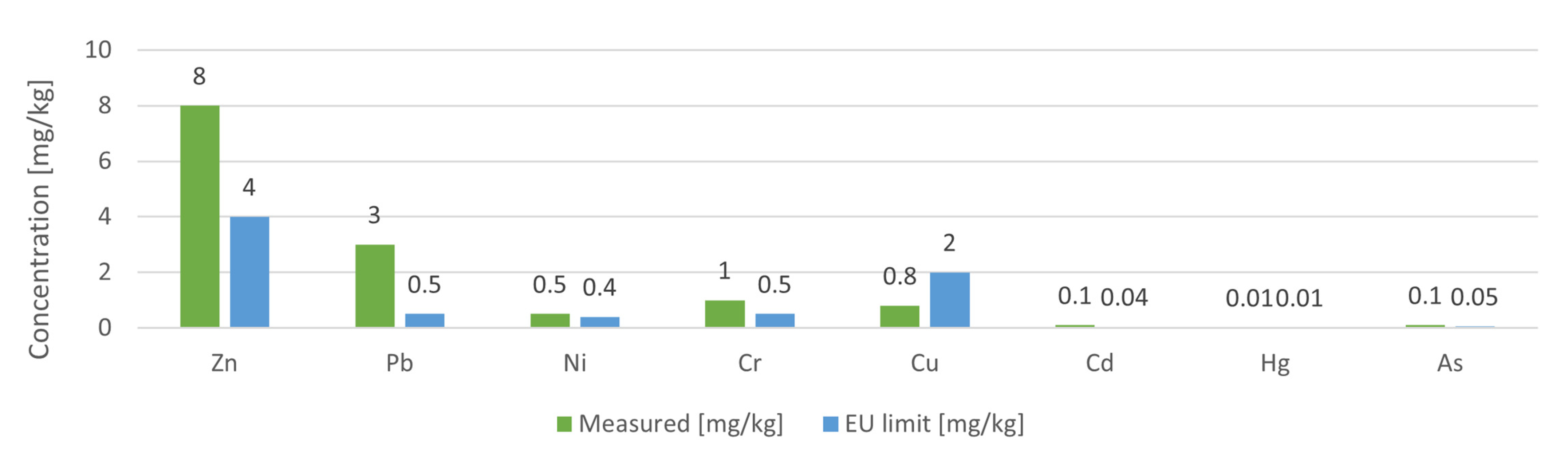
Although the raw MMWG does not meet inert-waste criteria due to elevated concentrations of Zn, Pb, and Cr (Table 4), this is not directly relevant to its behaviour once incorporated into cementitious mortars. Exceedances in the raw material reflect its heterogeneous origin but do not imply high mobility. The eluate results (Table 12) clearly show that these metals remain strongly immobilised. This distinction is critical, as cement-based matrices are known to stabilise heavy metals effectively through pH-driven precipitation and uptake into hydration products.
The visual comparison in Figure 9 highlights that, despite elevated metal contents in the raw waste glass, the corresponding mortars exhibit eluate concentrations well below EU thresholds. This confirms that MMWG behaves predictably in the high-pH cement matrix, where heavy-metal solubility is strongly suppressed through hydroxide precipitation, metal–silicate complex formation and incorporation into C–S–H/C–A–S–H gel networks—mechanisms widely supported in previous immobilisation studies [86,87,88,90].
Collectively, these observations demonstrate that both the fine and coarse fractions of MMWG can be safely valorised in cementitious composites. The material not only meets regulatory leaching requirements but, at moderate dosages, can enhance the binder’s immobilisation efficiency. These results support its suitability for circular-economy construction applications and reinforce its potential in low-carbon binder systems where environmental compliance is essential.
The integrated assessment of cement mortars incorporating mixed municipal waste glass (MMWG, EWC 20 01 02) confirms that this heterogeneous waste stream can be safely and effectively valorised within cementitious systems without compromising mechanical performance, durability, or environmental stability. Despite the compositional variability of MMWG—including fragments of mirror glass, coated elements, ceramics, and minor metallic inclusions—the eluate concentrations measured in accordance with PN-EN 12457-4:2006 [53] remained within the inert-waste limits defined in Council Decision 2003/33/EC. This behaviour, also summarised in Table 11, reflects the strong immobilisation capacity of C–S–H and C–A–S–H gels, which incorporate heavy metals via precipitation, sorption, ion exchange, and physical encapsulation [86] key outcome of this study is that mortars containing 30 wt% fine MMWG powder (FGP) exhibited lower eluate concentrations of Pb, Cr, Ni, and Zn than the reference mortar. This enhancement is attributed to the contribution of amorphous silica from the fine-glass fraction, which dissolves during later hydration and promotes secondary gel formation, thereby increasing the density and sorption capacity of the hydration products. Similar immobilisation mechanisms for silica-rich glass powders have been previously reported in Portland and geopolymer materials [78,79,80,81,82,83,84,85,86,87,88,90,98], yet the present findings extend this behaviour to chemically heterogeneous MMWG-derived glass.
Although the raw MMWG material does not meet inert-waste standards for several metals (Table 12), the hardened mortars consistently satisfied environmental criteria, indicating that the raw-waste composition does not directly predict eluate composition once elements are immobilised within a high-pH cementitious matrix. Slightly elevated Na levels in some mixtures correlated with the intrinsic Na2O content of MMWG (Table 4), reflecting known immobilisation pathways for alkalis in hydrated silicate structures [73,84,86,91]. The low RSD values (<7%) further confirm the reproducibility of these environmental phenomena.
Coarse cullet behaved as a chemically inert aggregate, contributing neither heavy metals nor alkalis to eluates, entirely consistent with reports on large glass particles in Portland and geopolymer matrices [92,99,100,101,102]. The presence of heavy metals in mixed municipal glass is primarily attributable to the heterogeneous origins of this waste stream rather than to the glass matrix itself. Elevated concentrations of elements such as Ba, Cr, Pb, and Zn typically originate from non-container glass fractions and contaminants, including ceramics and porcelain (often enriched in Ba and Zr), decorative and coated glass, mirrors with metallic backing, leaded glass, light bulbs, electronic components, and metal caps or residues attached to packaging. During commingled collection, these materials are frequently mixed with ordinary container glass and subsequently fragmented during handling and crushing, which facilitates the transfer of trace metals into the fine glass fraction.
To improve the quality and recyclability of mixed municipal glass, it is essential to limit the input of materials that are not compatible with conventional glass recycling. In particular, ceramics, porcelain, mirrors, light bulbs, laminated and coated glass, electronic waste, and metal-containing components should not be disposed of in glass containers. Enhanced public awareness, more straightforward collection guidelines, and improved sorting at the source and at material recovery facilities could substantially reduce heavy-metal contamination, thereby increasing the suitability of mixed glass waste for high-value applications such as cementitious materials and other construction products.


5. Summary

The broader evaluation of material performance summarised in Table 13 reinforces the multi-functional role of MMWG in cement mortars. In the fresh state, increased flow loss with 10–20% FGP is consistent with the known influence of angular, high-surface-area waste-glass particles, as observed in prior investigations of container and flat glass [39,67,68]. The magnitude of the flow reduction observed in this study, however, is slightly higher than typically reported for homogeneous glass cullet, reflecting the more irregular morphology and compositional variability of MMWG.
Mechanically, the beneficial long-term strength behaviour observed for 30% FGP replacement aligns with earlier findings on pozzolanic glass powders [49,65,73]. Still, this study extends these trends to chemically heterogeneous MMWG for the first time. The late-age strength gain confirms the development of secondary C–S–H and C–A–S–H gels, indicating that the amorphous silica present in MMWG retains adequate reactivity despite the presence of ceramic, metallic, and coated-glass inclusions.
From a durability perspective, the presence of localised alkali–silica gel films in fine-glass mortars (Figure 7) is consistent with established particle-size thresholds for glass reactivity [70,72,78,79,80,81,82,90,98]. However, the absence of internal cracking, measurable expansion, or continuous reaction rims verifies that these reactions remained non-expansive and controlled under the tested conditions. This behaviour is consistent with benign alkali–silicate interactions reported for fine glass powders in blended or moderate-alkali systems.
The environmental assessment further confirms that both fine and coarse MMWG fractions can be safely incorporated into cement mortars, with metal immobilisation performance comparable to that reported for glass-based geopolymers [78,88] and glass-modified Portland cement systems [96,100]. Despite elevated concentrations of Pb, Zn, and Cr in the raw MMWG (Table 12), eluate concentrations from hardened mortars remain well below regulatory thresholds, demonstrating the high immobilisation capacity of the cementitious matrix.
Overall, the combined evidence demonstrates that although the raw MMWG contains contaminants above inert-waste limits, its integration into cement mortars produces a chemically stable composite that fully satisfies environmental requirements. This confirms its suitability as a circular-economy raw material and highlights its potential for low-carbon construction applications, offering both performance benefits and waste-valorisation advantages unique to heterogeneous municipal glass streams.
From a performance standpoint, the comparative analysis presented in Table 14 and Table 15 highlights several distinctive features of MMWG relative to previously studied glass types. The observed reductions in flow diameter at 10–20% FGP (4–12%) exceed typical values reported for container-glass powders (2–6%) [62,70]. This amplified rheological sensitivity arises from the sharper angularity, higher surface roughness, and greater heterogeneity of MMWG, which increase interparticle friction and water demand—consistent with mechanisms described by Shao et al. [6], Idir & Cyr [7], and Rashad [39].
Mechanically, the 56-day-age strength enhancement of 30% FGP (+5–8%) is consistent with the pozzolanic activity of fine glass powders documented by Du & Tan [8], Limbachiya et al. [38], and Tan & Du [74,95,96]. Microstructural evidence of partial silica dissolution, dissolution rims, and secondary C–S–H formation corresponds with observations from fine-glass reactivity studies [65,66,73]. Although 20% FGP exhibited early dilution effects, its recovery by 56 days demonstrates that even higher substitution ratios retain meaningful long-term reactivity when particles are milled below the critical fineness threshold.
The limited ASR manifestation observed in this study—localised gel films without expansion or cracking—is consistent with size-dependent reactivity models reported by Xie & Xi [79,82], Rajabipour et al. [70], and Park [35]. Coarse MMWG behaved entirely inert, whereas fine particles produced only superficial ASR gel consistent with controlled, non-deleterious reactions. No adverse expansion was recorded, confirming that finely ground MMWG (<63 µm) is ASR-safe under the examined conditions.
The extended environmental dataset reinforces the chemical stability of MMWG-modified mortars. As synthesised in Table 15, both the fine and coarse fractions remained fully compliant with inert-waste leaching criteria, demonstrating strong alignment with long-term immobilisation mechanisms described in the literature [101,102]. The cement matrix, therefore, provides an effective chemical buffer that compensates for the elevated heavy-metal content of the raw waste.
Overall, the combined findings confirm that MMWG exhibits performance trends broadly consistent with established glass SCMs, yet with greater rheological influence, slightly higher early-age sensitivity, and equal or greater late-age pozzolanic benefits. Crucially, all MMWG-modified mortars met environmental safety requirements, validating this material as a robust and sustainable raw input for low-carbon, circular-economy cementitious composites.

6. Conclusions

This study demonstrated that selectively collected mixed municipal waste glass (MMWG, EWC 20 01 02)—a highly heterogeneous waste stream not previously characterised in cement mortars at such high replacement levels—can be effectively valorised both as a supplementary cementitious material and as a fine-aggregate substitute. Unlike previous studies that have focused almost exclusively on homogeneous container glass, this work evaluates absolute, mixed municipal glass incorporating mirror fragments, ceramics, coated glass, and metallic inclusions, thereby addressing a significant gap in existing research.
The binder-substitution experiments, in which 30% of the cement was replaced with finely ground MMWG across six different binder systems (CEM I, CSA, CEM I + V, CEM I + MK, CEM I + LL, and CEM I 70% + 30% glass), confirmed that the fine-glass fraction (<45–63 µm) exhibits meaningful pozzolanic reactivity. Despite the chemical variability of MMWG, long-term mechanical results showed strength gains at 28 and 56 days, demonstrating that the amorphous silica content of this heterogeneous material remains reactive when properly milled.
In contrast, aggregate substitution using the coarse fraction of MMWG was carried out at significantly higher replacement levels (20%, 40%, 60% and 80% of natural sand). These tests showed that the coarse cullet primarily functions as an inert aggregate, with flowability and strength decreasing with increasing substitution. Nevertheless, all mixtures preserved structural integrity, and the rheological effects remained manageable—an important observation given the extreme morphological irregularity and sharp angularity of MMWG/municipal cullet.
Fresh-state behaviour confirmed that flowability reductions correlate with particle fineness and shape, with the most potent effects observed in mixtures containing 30% binder substitution using fine glass. Angularity and high surface area increased interparticle friction and water demand. Yet, the mixtures remained workable and fully castable, demonstrating that the material can be used safely within realistic mix-design constraints.
Durability observations revealed a strictly particle-size-governed ASR response: localised ASR gel appeared only in mortars containing 30% finely ground MMWG, whereas mixtures containing coarse cullet—even at 80% aggregate replacement—exhibited no reactive rims or deleterious expansion. This confirms that MMWG/municipal glass behaves in a controlled manner when used either as an acceptable pozzolanic additive or as an inert coarse aggregate.
Environmental assessment demonstrated that all mortars—regardless of whether MMWG was used at 30% binder substitution or up to 80% aggregate substitution—complied with EU inert-waste leaching limits. Despite the elevated heavy-metal content of the raw mixed glass (Table 12), the cement matrix effectively immobilised Pb, Cr, Zn, Ni, and Ba, and eluates consistently remained below regulatory thresholds. Notably, mixtures containing 30% fine glass powder exhibited lower concentrations of Pb, Zn, and Cr than the reference, confirming strong gel-binding and metal-retention capacity.
Collectively, these findings confirm that MMWG can be safely and effectively utilised at both high aggregate substitution levels (20–80%) and moderate binder replacement levels (30%), despite its heterogeneous origin. This represents a significant novelty, as no previous studies have evaluated mixed municipal glass at such substitution rates, nor have they demonstrated its combined pozzolanic reactivity, ASR-safe behaviour, and environmental compliance.
The presence of heavy metals in mixed municipal glass is predominantly attributable to the heterogeneous composition of the waste stream and insufficient source separation, rather than to the glass matrix itself. Improved selective collection and the exclusion of non-container glass and metal-containing materials would reduce contamination levels and enhance the feasibility of valorizing mixed glass waste in cement-based and alkali-activated materials applications.

Author Contributions

Conceptualization, B.Ł.-P. and M.C.; methodology, B.Ł.-P., M.C. and E.Z.-Z.; validation, B.Ł.-P., M.C. and E.Z.-Z.; formal analysis, B.Ł.-P., M.C. and E.Z.-Z.; investigation, B.Ł.-P., M.C. and E.Z.-Z.; data curation, B.Ł.-P. and M.C.; writing—original draft preparation, B.Ł.-P.; writing—review and editing, B.Ł.-P.; visualization, B.Ł.-P., M.C. and E.Z.-Z.; supervision, B.Ł.-P., M.C. and E.Z.-Z.; project administration, B.Ł.-P., M.C. and E.Z.-Z.; funding acquisition, B.Ł.-P. All authors have read and agreed to the published version of the manuscript.

Funding

Project financed under the Operational Programme Knowledge Education Development (POWER) 2014–2020, co-financed by the European Social Fund. Project no.: POWR.03.01.00-00-P021/18. The project was financed by the internal grant of the Silesian University of Technology for student research groups. Funding was provided under the University’s support programme for student scientific activities.

Institutional Review Board Statement

Not applicable.

Informed Consent Statement

Not applicable.

Data Availability Statement

The raw data supporting the conclusions of this article will be made available. Available from the authors on request.

Conflicts of Interest

The authors declare no conflicts of interest.

References

  1. European Commission. The European Green Deal; COM(2019) 640 Final; European Commission: Brussels, Belgium, 2019. [Google Scholar]
  2. European Council. Fit for 55 Package—Delivering the EU’s 2030 Climate Target on the Way to Climate Neutrality; European Council: Brussels, Belgium, 2021. [Google Scholar]
  3. European Environment Agency. Sustainable Use of Raw Materials in Europe: Status and Opportunities; EEA Report No. 30/2020; European Environment Agency: Copenhagen, Denmark, 2020. [Google Scholar]
  4. European Commission. Waste Framework Directive 2008/98/EC. Off. J. Eur. Union 2008, L 312, 3–30. [Google Scholar]
  5. Ministry of Climate and Environment. Regulation on the Waste Catalogue (Dz.U. 2020.10); Ministry of Climate and Environment: Warsaw, Poland, 2020.
  6. Shao, Y.; Lefort, T.; Moras, S.; Rodriguez, D. Studies on concrete containing ground waste glass. Cem. Concr. Res. 2000, 30, 91–100. [Google Scholar] [CrossRef]
  7. Idir, R.; Cyr, M.; Tagnit-Hamou, A. Use of fine glass as ASR inhibitor in glass aggregate mortars. Constr. Build. Mater. 2010, 24, 1309–1312. [Google Scholar] [CrossRef]
  8. Du, H.; Tan, K.H. Waste glass powder as cement replacement in concrete. J. Adv. Concr. Technol. 2014, 12, 468–477. [Google Scholar] [CrossRef]
  9. Eurostat. Glass Packaging Waste Statistics; Eurostat: Luxembourg, 2023. [Google Scholar]
  10. FEVE. Annual Report 2022: Glass Packaging Circularity in Europe; FEVE: Brussels, Belgium, 2023. [Google Scholar]
  11. Cembureau. The Role of Cement in the 2050 Carbon Neutrality Roadmap; Cembureau: Brussels, Belgium, 2020. [Google Scholar]
  12. Ministry of Climate and Environment. Permissible Levels of Pollutants in Extracts from Construction Products. In Regulation of the Minister of Climate (Dz. U. 2020, Item 10); Ministry of Climate and Environment: Warsaw, Poland, 2020. [Google Scholar]
  13. 2003/33/EC: Council Decision of 19 December 2002 Establishing Criteria and Procedures for the Acceptance of Waste at Landfills Pursuant to Article 16 of and Annex II to Directive 1999/31/EC Council Decision of 19 December 2002 Establishing Criteria and Procedures for the Acceptance of Waste at Landfills Pursuant to Article 16 of and Annex II to Directive 1999/31/EC (2003/33/EC). Available online: https://assets.publishing.service.gov.uk/media/65fd73e8a6c0f70011ef9278/CD1VCO_1.PDF (accessed on 1 October 2025).
  14. Tihomirovs, P.; Kara De Maeijer, P.; Korjakins, A. Demolition Waste Glass Usage in the Construction Industry. Infrastructures 2023, 8, 182. [Google Scholar] [CrossRef]
  15. PN-EN 196-1:2006; Determination of Strength. PKN: Warsaw, Poland, 2006.
  16. PN-EN 196-6:2019; Determination of Fineness. PKN: Warsaw, Poland, 2019.
  17. PN-EN 196-2:2013-11; Chemical Analysis of Cement. PKN: Warsaw, Poland, 2013.
  18. PN-EN 933-1:2012; Particle Size Distribution of Aggregates. PKN: Warsaw, Poland, 2012.
  19. PN-EN 12620:2019; Aggregates for Concrete. PKN: Warsaw, Poland, 2019.
  20. ISO 13320:2020; Particle Size Analysis—Laser Diffraction Methods. ISO: Geneva, Switzerland, 2020.
  21. PN-EN ISO 11885:2009; ICP-OES for Water Quality. PKN: Warsaw, Poland, 2009.
  22. PN-EN ISO 12846:2012; Mercury Determination—CV-AAS. PKN: Warsaw, Poland, 2012.
  23. EN 1008:2002; Mixing Water for Concrete. Specification for Sampling, Testing, and Assessing the Suitability of Water, Including Water Recovered from Processes in the Concrete Industry, for Mixing Water for Concrete. CEN: Brussels, Belgium, 2002. Available online: https://standards.iteh.ai/catalog/standards/cen/8ab1a0fa-b727-48f7-9b31-739eba3732ca/en-1008-2002?srsltid=AfmBOore7RXPTG_2GaRUa6M6LkeyhIjpDoLq9W_IzP2zNRxbR_zOA0sV (accessed on 1 October 2025).
  24. Czarnecki, L.; Giergiczny, Z. Sustainable cements and concretes. Cem. Wapno Beton 2019, 24, 405–421. [Google Scholar]
  25. Mehta, P.K.; Monteiro, P.J.M. Concrete: Microstructure, Properties, and Materials; McGraw-Hill: New York, NY, USA, 2014. [Google Scholar]
  26. Neville, A.M. Properties of Concrete, 5th ed.; Pearson: London, UK, 2011. [Google Scholar]
  27. Thomas, M.D.A. Supplementary Cementing Materials in Concrete; CRC Press: Boca Raton, FL, USA, 2013. [Google Scholar]
  28. Taylor, H.F.W. Cement Chemistry; Thomas Telford: London, UK, 1997. [Google Scholar]
  29. Hewlett, P.; Liska, M. Lea’s Chemistry of Cement and Concrete, 5th ed.; Elsevier: Amsterdam, The Netherlands, 2019. [Google Scholar] [CrossRef]
  30. Scrivener, K.; John, V.; Gartner, E. Eco-efficient cements. Cem. Concr. Res. 2018, 114, 2–26. [Google Scholar] [CrossRef]
  31. Provis, J.L.; van Deventer, J.S.J. Alkali-Activated Materials: State-of-the-Art Report; Springer: Berlin/Heidelberg, Germany, 2014. [Google Scholar]
  32. Bernal, S.A.; Provis, J.L. Durability of alkali-activated materials. J. Am. Ceram. Soc. 2014, 97, 997–1008. [Google Scholar] [CrossRef]
  33. Lu, J.; Shen, J.; He, Z.; Sun, X.; Li, W. Pozzolanic reactivity of ground waste glass and its influence on ASR mitigation and mechanical performance in cementitious composites. Cem. Concr. Compos. 2021, 118, 104012. [Google Scholar]
  34. Lu, J.; Shen, J. Pozzolanic reactivity of ground glass. Constr. Build. Mater. 2021, 270, 121420. [Google Scholar]
  35. Park, S.; Lee, B.; Kim, J. Studies on expansion properties in mortar containing waste glass and fibers. Cem. Concr. Res. 2004, 34, 1145–1152. [Google Scholar] [CrossRef]
  36. Dyer, T.D.; Dhir, R.K. Chemical Reactions of Glass Cullet Used as Cement Component. J. Mater. Civ. Eng. 2001, 13, 412–417. [Google Scholar] [CrossRef]
  37. Gartner, E.; Quillin, K. Low-CO2 CSA cements. Cem. Concr. Res. 2007, 37, 613–620. [Google Scholar]
  38. Limbachiya, M.C.; Oruji, S.; Koulouris, A. Performance and Durability of Concrete Containing Waste Glass as Fine Aggregate. Constr. Build. Mater. 2016, 128, 659–665. [Google Scholar] [CrossRef]
  39. Rashad, A.M. An Overview on Rheology, Mechanical Properties and Durability of Cementitious Materials Incorporating Waste Glass Powder. Constr. Build. Mater. 2018, 180, 119–137. [Google Scholar] [CrossRef]
  40. Thomas, B.S.; Gupta, R.C.; Panicker, V.J. Recycling of Waste Glass in Eco-Cement: A Review. Renew. Sustain. Energy Rev. 2012, 16, 2666–2671. [Google Scholar] [CrossRef]
  41. Hossain, M.U.; Poon, C.S.; Lo, I.M.C. Impact of Waste Glass Recycling on Life Cycle Assessment of Concrete. Resour. Conserv. Recycl. 2016, 109, 70–81. [Google Scholar] [CrossRef]
  42. Li, Y.; Guo, X.; Wei, X.; Zhang, Y. Immobilisation of Heavy Metals in Waste Glass–Cement Composites. J. Hazard. Mater. 2020, 389, 121873. [Google Scholar] [CrossRef]
  43. PN-EN 1015-3:2000; Flow Table Test for Mortars. PKN: Warsaw, Poland, 2000.
  44. Chen, M.; Blanc, D.; Gautier, M.; Mehu, J.; Gourdon, R. Environmental and technical assessments of the potential utilization of sewage sludge ashes (SSAs) as secondary raw materials in construction. Waste Manag. 2013, 33, 1268–1275. [Google Scholar] [CrossRef]
  45. PN-EN 1015-6:2000; Bulk Density of Fresh Mortar. PKN: Warsaw, Poland, 2000.
  46. PN-EN 1015-7:2000; Air Content of Mortar. PKN: Warsaw, Poland, 2000.
  47. Pomponi, F.; D’Amico, B. Decarbonization of construction materials. Renew. Sust. Energy Rev. 2022, 154, 111873. [Google Scholar]
  48. Shi, C.; Stegemann, J. Acid corrosion. Cem. Concr. Res. 2000, 30, 803–808. [Google Scholar] [CrossRef]
  49. Liu, G.; Song, Q. Long-term performance of glass mortars. Constr. Build. Mater. 2022, 330, 127266. [Google Scholar]
  50. PN-ISO 9297:1994; Chloride Determination—Mohr Method. PKN: Warsaw, Poland, 1994.
  51. PN-ISO 9280:2002; Sulfate—Gravimetric Method. PKN: Warsaw, Poland, 2002.
  52. Shi, C.; Krivenko, P.; Roy, D. Alkali-Activated Cements and Concretes; CRC Press: Boca Raton, FL, USA, 2006. [Google Scholar]
  53. PN-EN 12457-4:2006; Leaching—Batch Test. PKN: Warsaw, Poland, 2006.
  54. PN-EN ISO 10523:2012; Determination of pH. PKN: Warsaw, Poland, 2012.
  55. PN-EN ISO 6878:2006; Determination of Phosphorus—Spectrometry. PKN: Warsaw, Poland, 2006.
  56. Thomas, M.; Matthews, J. Fly ash concrete in marine environment. Cem. Concr. Res. 1992, 22, 683–692. [Google Scholar]
  57. Lam, N.; Sato, T. Improvement of ASR by fly ash. Cem. Concr. Res. 2001, 31, 505–513. [Google Scholar]
  58. Gartner, E.; Sui, T. Alternative cement clinkers. Cem. Concr. Res. 2018, 114, 27–39. [Google Scholar] [CrossRef]
  59. Juenger, M.; Snellings, R.; Bernal, S. SCMs: New sources. Cem. Concr. Res. 2019, 122, 257–273. [Google Scholar] [CrossRef]
  60. Scrivener, K.; Martirena, F.; Bishnoi, S.; Maity, S. LC3 cements. Cem. Concr. Res. 2018, 114, 49–56. [Google Scholar] [CrossRef]
  61. Miller, S.; Horvath, A.; Monteiro, P. Cutting concrete CO2. Environ. Res. Lett. 2016, 11, 074029. [Google Scholar] [CrossRef]
  62. IEA. Technological Roadmap for Low-Carbon Cement; IEA: Paris, France, 2020. [Google Scholar]
  63. GUS. Municipal Waste Management in 2023; GUS: Warsaw, Poland, 2024. [Google Scholar]
  64. Glasser, F.; Zhang, L. CSA–belite matrices. Cem. Concr. Res. 2001, 31, 1881–1886. [Google Scholar] [CrossRef]
  65. Shi, C.; Zheng, K. Use of waste glass in concrete. Resour. Conserv. Recycl. 2007, 52, 234–247. [Google Scholar] [CrossRef]
  66. Saccani, A.; Bignozzi, M. ASR of recycled glass. Cem. Concr. Res. 2010, 40, 531–536. [Google Scholar] [CrossRef]
  67. Lu, J.; Shen, J.; He, Z.; Sun, X.; Li, W. Influence of ground waste glass on pozzolanic reactivity and mechanical performance of cementitious composites. Constr. Build. Mater. 2023, 270, 121420. [Google Scholar] [CrossRef]
  68. Rashad, A. Waste glass as fine aggregate. Constr. Build. Mater. 2014, 72, 340–357. [Google Scholar] [CrossRef]
  69. Dhir, R.; de Brito, J.; Mangabhai, R.; Lye, C. Sustainable Construction Materials: Glass; Woodhead: Cambridge, UK, 2018. [Google Scholar]
  70. Rajabipour, F.; Maraghechi, H.; Fischer, G. ASR mechanisms in glass. Cem. Concr. Compos. 2010, 32, 794–801. [Google Scholar] [CrossRef]
  71. Saccani, A.; Bignozzi, M. ASR vs. particle size. Waste Manag. 2010, 30, 194–201. [Google Scholar] [CrossRef]
  72. Liu, Y.; Chen, Z.; Wang, Z.; Li, L.; Xiao, J. Comprehensive review on the performance and environmental impact of waste-glass-based materials in cement and concrete. Constr. Build. Mater. 2023, 393, 131983. [Google Scholar] [CrossRef]
  73. Limbachiya, M.C.; Meddah, M.S.; Oruji, S. Mechanical and Durability Properties of Concrete Incorporating Waste Glass Sand. Constr. Build. Mater. 2012, 28, 219–225. [Google Scholar] [CrossRef]
  74. Tan, K.H.; Du, H. Use of Waste Glass as Sand Replacement in Concrete. Constr. Build. Mater. 2013, 48, 911–919. [Google Scholar] [CrossRef]
  75. Wimalasuriya, S.; Gunasekara, C.; Law, D.W.; Setunge, S. Fresh and Hardened Properties of Cementitious Composites Incorporating Glass and Plastic Waste. J. Clean. Prod. 2021, 326, 129425. [Google Scholar] [CrossRef]
  76. Rashad, A.M. Recycled Waste Glass as Fine Aggregate Replacement in Cementitious Materials based on Portland cement. Constr. Build. Mater. 2014, 72, 340–357. [Google Scholar] [CrossRef]
  77. Du, H.; Tan, K.H. Properties of High-Volume Glass Powder Concrete. Cem. Concr. Compos. 2017, 75, 22–29. [Google Scholar] [CrossRef]
  78. Rashad, A.M. Alkali–Silica Reaction in Glass-Containing Mortars: Mechanisms and Mitigation. Cem. Concr. Compos. 2014, 45, 144–158. [Google Scholar] [CrossRef]
  79. Xie, Z.; Xi, Y. ASR Potential of Glass Aggregates in Cement Mortars. Cem. Concr. Res. 2001, 31, 683–687. [Google Scholar]
  80. EN 1097-6:2022; Tests for Mechanical and Physical Properties of Aggregates—Determination of Particle Density and Water Absorption. 2022. Available online: https://standards.iteh.ai/catalog/standards/cen/7eb55eec-cf2d-449c-bdf5-45534b169181/en-1097-6-2022?srsltid=AfmBOoqFlUZLBuzwPxc3fTQjtHONsR-LNTaV_YISc_nVL2drVa_pE6Nl (accessed on 1 October 2025).
  81. Park, S.B.; Lee, B.C. Studies on the Properties of Concrete Containing Waste Glass. Cem. Concr. Res. 2004, 34, 219–225. [Google Scholar] [CrossRef]
  82. Xie, Z.; Xi, Y. Effects of Particle Size and Alkali Concentration on ASR in Glass Aggregate Mortars. Cem. Concr. Res. 2002, 32, 1319–1325. [Google Scholar]
  83. Shi, C.; Stegemann, J.A. Immobilisation of Heavy Metals in Cementitious Materials—A Review. J. Hazard. Mater. 2000, 77, 219–243. [Google Scholar]
  84. Saccani, A.; Bignozzi, M.C. ASR Expansion Behavior of Recycled Glass Fine Aggregates in Concrete. Waste Manag. 2010, 30, 194–201. [Google Scholar] [CrossRef]
  85. Doğruyol, M. Determination of ASR in Concrete Using Characterization Methods. Buildings 2024, 14, 657. [Google Scholar] [CrossRef]
  86. Sun, L.; Zhu, X.; Kim, M.; Zi, G. Alkali-silica reaction and strength of concrete with pretreated glass particles as fine aggregates. Constr. Build. Mater. 2021, 271, 121809. [Google Scholar] [CrossRef]
  87. Cioffi, R.; Colangelo, F.; Montagnaro, F.; Santoro, L. Leachability and Metal Binding in Glass–Cement Matrices. J. Hazard. Mater. 2015, 284, 54–63. [Google Scholar] [CrossRef]
  88. Shi, C.; Wu, Z.; Xiao, J.; Wang, T.; Wang, Y. Glass-Based Immobilization for Hazardous Wastes: A Review. J. Clean. Prod. 2021, 302, 127016. [Google Scholar] [CrossRef]
  89. Thomas, J.; Peethamparan, S. Leaching of Heavy Metals from Cementitious Materials Containing Waste Glass. Waste Manag. 2019, 85, 365–375. [Google Scholar] [CrossRef]
  90. Hossain, M.U.; Poon, C.S.; Lo, I.M.C. Leachability of Metal Ions in Mortar Incorporating Waste Glass. J. Hazard. Mater. 2016, 314, 146–155. [Google Scholar] [CrossRef]
  91. Li, W.; Huang, Z.; Cao, F.; Sun, Z.; Shah, S.P. Microstructure and Heavy Metal Immobilization in Glass-Based Geopolymers. Cem. Concr. Compos. 2021, 115, 103–112. [Google Scholar] [CrossRef]
  92. Taha, B.; Nounu, G. Shrinkage and durability of concrete containing glass. Constr. Build. Mater. 2008, 22, 713–720. [Google Scholar] [CrossRef]
  93. Limbachiya, M.C.; Meddah, M.S.; Fotiadou, S. Performance of Granulated Glass–Concrete Blends for Sustainable Construction. Constr. Build. Mater. 2012, 29, 737–745. [Google Scholar] [CrossRef]
  94. Afshinnia, K.; Rangaraju, P.R. Impact of Combined Use of Ground Glass Powder and Crushed Glass Aggregate on Selected Properties of Portland Cement Concrete. Constr. Build. Mater. 2016, 117, 263–272. [Google Scholar] [CrossRef]
  95. Tan, K.H.; Du, H. Durability Properties and Microstructure of Cement Mortar Incorporating Waste Glass Powder. Constr. Build. Mater. 2017, 156, 1091–1102. [Google Scholar] [CrossRef]
  96. Du, H.; Tan, K.H. Use of Waste Glass as Sand Replacement in Cement Mortars and Concrete. Cem. Concr. Compos. 2017, 77, 47–59. [Google Scholar] [CrossRef]
  97. Islam, M.S.; Rahman, M. Effect of Glass Powder on the Properties of High-Performance Concrete. J. Clean. Prod. 2021, 279, 123481. [Google Scholar] [CrossRef]
  98. ASTM C1260-23; Standard Test Method for Potential Alkali Reactivity of Aggregates (Mortar-Bar Method). ASTM International: West Conshohocken, PA, USA, 2023.
  99. Malek, M.; Roy, S.; Sharma, P.; Bhattacharjee, B. Recycling Waste Glass in Concrete: Strength and Durability. Constr. Build. Mater. 2020, 243, 118152. [Google Scholar] [CrossRef]
  100. Poon, C.S.; Chan, D. Feasibility Study on the Use of Waste Glass in Concrete Blocks. Cem. Concr. Res. 2006, 36, 267–273. [Google Scholar]
  101. Ji, T. Preliminary study on the water permeability and microstructure of concrete incorporating nano-SiO2. Cem. Concr. Res. 2005, 35, 1943–1947. [Google Scholar] [CrossRef]
  102. Nassar, R.U.D.; Soroushian, P. Strength and Durability of Recycled Aggregate Concrete Containing Ground Glass. Constr. Build. Mater. 2012, 29, 368–377. [Google Scholar] [CrossRef]
Figure 1. Waste glass used for testing: (a) glass meal, (b) glass in grains.
Sustainability 18 00771 g001
Figure 2. Tested cement mortars with glass as binder: (a) CSA, (b) CSA + S, (c) CEM I, (d) CEM I + waste glass.
Sustainability 18 00771 g002
Figure 3. Tested cement mortars with glass as aggregate: (a) glass 0%, (b) glass 20%, (c) glass 40%, (d) glass 60%, (e) glass 80%.
Sustainability 18 00771 g003
Figure 4. Particle size distribution of glass aggregate.
Sustainability 18 00771 g004
Figure 5. Flow of fresh mortars incorporating mixed municipal waste glass (MMWG). Each value represents the meaning of two measurements; no error bars are shown because of the test method.
Sustainability 18 00771 g005
Figure 6. Compressive strength of selected mortars (REF, FGP5, FGP10) after 28 and 56 days of curing (mean ± SD).
Sustainability 18 00771 g006
Figure 7. Flexural strength of mortars incorporating mixed municipal waste glass (MMWG) after 28 and 56 days of curing (meaning error bars). The order of mixtures corresponds to Figure 5.
Sustainability 18 00771 g007
Figure 8. The view of ASR gel on mortar specimens: (a) glued beams with ASR gel, (b) ASR gel on beam specimens, (c) no internal cracking or reaction rims were observed.
Sustainability 18 00771 g008
Figure 9. Heavy metals in MMWG waste glass compared to EU inert waste limits (Council Decision 2003/33/EC).
Sustainability 18 00771 g009
Table 2. Compositions of cementitious mortars with MMWG waste glass as a partial substitute for the binder.
Binder CompositionCementAdditivesGround Glass with Corundum (10% by Weight of Glass)Sand acc EN 196-1 [15] [g]Water [g]w/c
Binder Volume [%]Quantity in Grams [g]Binder Volume [%]Quantity in Grams [g]Binder Volume [%]Quantity in Grams [g]
CSA100450--1350157.50.35
CSA + 30% glass7031530135
CEM I100450-
CEM I + 30%7031530135
CEM I + LL + 30% glass4018030 LL135
CEM I + MK + 30% glass30 MK
CEM I + V + 30% glass30 V
Note: LL—lime, MK—metakaolin, V—silica fly ash.
Table 3. Mortar material depots in which the aggregate was replaced.
Sample SymbolBinderGlass GranulesAggregateWater [g]w/c
Cement II/B-VGround Limestone
Binder Volume [%]Quantity in Grams [g]Binder Volume [%]Quantity in Grams [g]Binder Volume [%]Quantity in Grams [g]Sand 197-1 [%]Quantity in Grams [g]
glass 0%7031530135-1001350157.50.35
glass 20%20206.64801080
glass 40%40413.2860810
glass 60%60619.9240540
glass 80%80826.2520270
Table 4. Chemical composition of waste glass samples (5025/2023) determined by ICP-OES, expressed as oxides (% by mass, dry state).
Component (Oxide)Sample S1 [%]Sample S2 [%]
SiO269.172.6
Al2O30.020.01
Fe2O3<0.10<0.10
Mn3O40.050.01
TiO20.690.19
CaO11.312.7
MgO0.030.02
SO30.040.20
P2O51.393.93
Na2O10.08.72
K2O0.080.05
BaO0.030.01
SrO6.210.68
LOI (Loss on ignition)0.530.24
Sum99.4799.36
Table 5. Comparison of particle size distribution (PSD) parameters of ground waste glass and Portland cement (CEM I 42.5 R), determined by laser diffraction (ISO 13320:2020 [20]).
ParameterGround Waste GlassPortland Cement
(CEM I 42.5 R)
d10 (µm)3.52.8
d50 (µm, median)20.014.0
d90 (µm)45.836.5
Particles < 45 µm (%)8892
Specific surface area (m2/kg)360410
Table 6. Flow of fresh mortars incorporating waste glass as a binder additive or aggregate replacement.
Type of ModificationSample DesignationFlow of Fresh Mortar [mm]
Glass as a binder additiveCSA 100%222.5
CEM I 100%152.5
CEM I + V + 30% glass147.5
CEM I + MK + 30% glass125.0
CEM I + LL + 30% glass142.5
CEM I + 30% glass155.0
CSA + 30% glass112.5
Glass as sand replacementglass 0%127.5
glass 20%175.0
glass 40%130.0
glass 60%120.0
glass 80%115.0
Table 7. Development of compressive and flexural strength of mortars with demolition-glass powder or aggregate.
Type of ModificationSample DesignationCompressive Strength [MPa]
(28 Days)
Compressive Strength [MPa] (56 Days)Flexural Strength [MPa] (28 Days)Flexural Strength [MPa] (56 Days)
Glass as a binder additiveCSA 100%89.8892.6612.7713.17
CEM I 42.5 R 100%78.2584.1410.7711.58
CEM I 40% + V 30% + glass 30%53.7962.557.769.02
CEM I 40% + MK 30% + glass 30%66.3872.158.719.47
CEM I 40% + LL 30% + glass 30%46.9753.387.528.54
CEM I 70% + glass 30%55.9262.837.798.75
CSA 70% + glass 30%82.2586.5811.5012.11
Glass as sand replacementglass 0%52.7257.305.926.44
glass 20%47.4352.124.905.38
glass 40%44.4749.414.585.09
glass 60%37.0042.043.554.03
glass 80%30.3035.233.043.54
Table 8. Descriptive statistics (mean, standard deviation, min, max) of compressive strength for reference and glass-containing mortars after 28 days.
SampleMean (MPa)Std (MPa)Min (MPa)Max (MPa)
REF_28d45.170.3544.8045.50
FGP5_28d46.030.2545.8046.30
FGP10_28d43.900.3643.5044.20
REF_56d52.200.3651.8052.50
FGP5_56d54.200.3053.9054.50
FGP10_56d51.000.2050.8051.20
Table 9. Results of one-way ANOVA test for compressive strength differences among reference, 5% FGP, and 10% FGP mortars at 28 and 56 days.
AgeF-Statisticp-Value
28 days68.57140.0000
56 days31.74290.0000
Table 10. Post-hoc Tukey HSD test results for compressive strength of mortars at 28 days.
Group1Group2Mean Diffp-adjLowerUpperReject
FGP10FGP53.200.00002.463.94True
FGP10REF1.200.00590.461.94True
FGP5REF−2.000.0004−2.74−1.26True
Table 11. Post-hoc Tukey HSD test results for compressive strength of mortars at 56 days.
Group1Group2Mean Diffp-adjLowerUpperReject
FGP10FGP53.130.00002.393.87True
FGP10REF1.200.00590.461.94True
FGP5REF−1.930.0004−2.67−1.19True
Table 12. Comparison of measured concentrations of heavy metals in waste glass with EU threshold values for inert waste.
MetalMeasured Concentration [mg/kg]EU Limit for Inert Waste [mg/kg]Exceedance
Zn7.1–8.5≤4.0Yes
Pb2.8–3.2≤0.5Yes
Ni0.4–0.6≤0.4Slight
Cr0.9–1.1≤0.5Yes
Cu0.6–0.9≤2.0No
Cd<0.1≤0.04No (trace, <LOD)
Hg<0.01≤0.01No (trace, <LOD)
As<0.1≤0.05No (trace, <LOD)
Table 13. Summary of benefits and risks of using MMWG glass (20 01 02) in cement mortars.
AspectFindings in This StudyComparison with the LiteratureImplications
Fresh propertiesFlow reduction at 10–20% FGP due to angular morphology and high surface area.Similar effect for container glass, but less pronounced [47,57,59]. More substantial reduction here due to irregular MMWG-glass morphology.Adjustment of w/b ratio or use of superplasticisers is recommended for >10% replacement.
Mechanical strength30% FGP improved compressive strength at 56 days; 20% FGP delayed but later recovered.Consistent with container-glass studies [49,52,59,61]. Novelty: confirmation of the same effect for chemical heterogeneous MMWG glass.5–10% replacement is optimal for reactivity and performance.
Durability (ASR risk)Localised ASR gel formation in fine-glass mortars; no macro-expansion.Coarse glass reduces ASR expansion [52,63,64,93]; fine powders can trigger controlled ASR gels [66,79,80,81,90,91,93,94,98].Long-term durability testing is required for Na-rich MMWG glass; fine fractions should be limited or used with low-alkali binders.
Leaching & safetyPb, Cr, Zn < EU thresholds; Pb immobilised, Na release increases with dosage.Similar immobilisation was observed in glass-based geopolymers [75,76,77,97,99] and in Portland blends [96,100].Environmental safety confirmed; Na release requires monitoring under field conditions.
Table 14. Comparative characteristics of MMWG (this study) versus commonly studied waste-glass types used in cementitious systems.
Property/BehaviourMMWG (This Study)Container Glass (Bottle Cullet)Flat Glass (Window Glass)Representative Literature
OriginMixed municipal waste; MMWG residues; coatings; ceramics; heterogeneous streamHomogeneous post-consumer packagingHomogeneous soda–lime sheet glass[6,7,65]
Chemical uniformityLow; variable SrO, BaO, pigments, coatingsHighHigh[65,68,72]
Particle morphology after millingHighly angular, rough, fractured surfacesModerately angular; smootherSmooth planar fractures[37,38,39,40,41,42,43,44,45,46,47,48,49,50,51,52,53,54,55,56,57,58,59,60,61,62,63,64,65,66,67,68,69]
Median particle size d50 (µm)~2010–1840–60[65]
Specific surface area (m2/kg)~360450–600100–150[65]
Flow reduction at typical SCM dosages4–12%2–6%3–5%[68,69,75]
28-day compressive strength effect−5 to −12%−3 to −8%−5 to −10%[72]
56-day compressive strength effect+5 to +8%+4 to +10%+3 to +8%[65,72]
ASR riskNone (<63 µm); coarse fraction safe if <1 mmNone (<75 µm); ASR at >1–2 mmModerate ASR risk at >1 mm[64,85]
Leaching behaviorPb, Cr, Zn < limits; Ba locally elevated but compliantLowVery low[83]
Environmental classificationMeets criteria for inert materialsInertInert[29,74]
Overall suitability in mortarsHigh, with more substantial rheological effectsHighHigh
Novelty in literatureVery high—rarely investigatedExtensive research availableModerateThis study
Table 15. Recommended specification envelopes for MMWG glass in mortars (grading, replacement levels, ASR checks, leaching limits, and acceptance criteria).
ParameterRecommended RangeTest Method/StandardAcceptance CriteriaNotes
Particle size range (mm)0.063–2.00EN 933-1; [18]
ISO 13320 [20]
Continuous grading, Dmax ≤ 2 mmThe fine fraction (<0.125 mm) was minimised to avoid excessive water demand.
Replacement level (% by cement mass)30EN 196-1 [1]Ensures pozzolanic reactivity without workability lossHigher content may increase ASR risk or reduce flowability.
ASR expansion limit (ΔL)<0.10% at 14 daysASTM C1260 [79]; internal methodBelow the critical ASR threshold for glass reactivityMonitored using accelerated expansion test at 80 °C in 1 M NaOH.
Leaching (Pb, Cr, Zn) (mg/L)Pb < 0.05; Cr < 0.5; Zn < 1.0EN 12457-4 [53]Below the EU inert waste leaching limitsLeachate compliant with Council Decision 2003/33/EC.
pH of eluate10.5–12.5EN ISO 10523 [54]Within range for a stable cement matrixEnsures chemical stability and limited solubility.
Loss on ignition (%)<1.5EN 196-2 [17]Indicates low organic contentIndicates clean, stable glass after crushing and washing.
Bulk density (kg/m3)2300–2500EN 1097-6 [80]Comparable to natural sand densityThe target range ensures packing similar to that of natural sand.
Visual contamination (metals, ceramics)Non-visible after cleaningVisual inspection (EN 933-1 [18] guidance)Rejected if contain
nation > 0.5% by mass
Visual QC before milling or incorporation into the mix.
Disclaimer/Publisher’s Note: The statements, opinions and data contained in all publications are solely those of the individual author(s) and contributor(s) and not of MDPI and/or the editor(s). MDPI and/or the editor(s) disclaim responsibility for any injury to people or property resulting from any ideas, methods, instructions or products referred to in the content.