1. Introduction
Interest in financial inclusion among academics and practitioners has grown substantially over the past decade. Ref. [
1] notes its increasing relevance in economic and financial discourse, while [
2] highlights its endorsement in the global development agenda that references, particularly as access to financial services, at least seven of the United Nations Sustainable Development Goals (SDGs), namely, Goal 9: Industry, Innovation, Technology, and Infrastructure, Goal 8: Decent Work and Economic growth, Goal 10: Reduced Inequality, Goal 1: No Poverty, Goal 4: Quality Education [
3], Goal 5 Gender Equality [
4], and Goal 11: Sustainable Cities and Communities. Poverty reduction and inclusive economic growth are key factors of financial inclusion. Fintech (financial technology) aligns with these objectives by offering scalable, low-cost, and user-friendly financial solutions, particularly to underserved populations in developing economies [
5]. Fintech can make the overall financial business more resilient and sustainable, as it promotes both sustainable development and green finance [
6]. However, as [
7] warns, without coherent theoretical foundations, the growing body of literature risks becoming fragmented and disconnected from practice. Fintech can improve financial inclusion through several channels.
First, the access channel reduces distance and cost barriers through digital and mobile services. This helps low-income and underserved groups access basic financial services, which aligns with SDG 1 (No Poverty) and SDG 10 (Reduced Inequalities). Second, the usage channel, represented by digital payments, increases efficiency, transparency, and security in financial transactions. These improvements contribute to SDG 8 (Decent Work and Economic Growth) by supporting more inclusive economic activity. Third, the quality channel reflects how fintech innovations improve the reliability and convenience of financial services. SDG 9 (Industry, Innovation, and Infrastructure) emphasizes technological progress and better financial infrastructure. Financial inclusion works as a mediating pathway in this process. When people and firms have better access to credit, savings, and digital financial tools, they can participate more fully in the economy and improve their resilience. The impact of fintech also depends on moderating factors. In our MMQR results, higher Internet usage strengthens the effect of fintech, while GDP per capita shows only a limited moderating influence.
While a growing body of literature has explored the relationship between fintech and financial inclusion, several gaps in this area remain. First, much of the empirical research to date has focused primarily on Sub-Saharan Africa, particularly in the context of mobile money services. As a result, there is limited evidence on how fintech affects financial inclusion in the Asian region, which is characterized by diverse levels of development, regulatory frameworks, and technological adoption.
Second, the majority of existing studies tend to employ average-effects models, such as linear regression, or fixed-effects models, which may obscure heterogeneous effects across different segments of the population. Financial inclusion is not uniform across individuals, and the impact of fintech may vary significantly, depending on a country’s income level, digital infrastructure, or baseline inclusion rate.
Third, prior research often uses single proxies—such as account ownership or mobile money usage—as standalone indicators of financial inclusion. However, financial inclusion is inherently multi-dimensional. There is a lack of studies that simultaneously assess the impact of fintech on multiple dimensions of inclusion, such as account ownership (fin23), mobile money usage (mm10), and digital payment adoption (dm17).
Lastly, only a limited number of studies have applied quantile-based techniques to capture the distributional effects of fintech. This methodological gap restricts understanding of whether fintech disproportionately benefits those already included in the financial system or contributes to a more equitable distribution of access and usage.
The article demonstrates how fintech influences financial inclusion and aims to examine three key indicators of financial inclusion, account ownership, mobile money usage, and digital payment engagement, focusing on 15 selected Asian economies. Qualitative insights reinforce the findings and highlight challenges, including regulatory gaps, cybersecurity risks, and digital inequality. Addressing these issues is crucial for inclusive and sustainable fintech growth. In recent years, the rapid advancement of digital technology has brought transformative changes across various sectors, with the financial industry being among the most impacted. The emergence of fintech has significantly reshaped the global financial landscape by enhancing market responsiveness, lowering operational costs, and increasing transparency in financial services. These innovations have improved client experience and introduced inclusive models to serve unbanked populations. Recognizing this potential, many Asian governments have supported the growth of fintech through policies, regulations, and investments.
Overall, the research provides actionable insights for policymakers and financial institutions seeking to design tailored, evidence-based fintech strategies that foster financial inclusion across diverse population segments.
The Method of Moments Quantile Regression (MMQR)
, developed by [
8], is a robust econometric technique that enables researchers to examine how explanatory variables affect different points (quantiles) of the conditional distribution of a dependent variable. Unlike ordinary least squares (OLS), which estimates the average (mean) effect, MMQR captures heterogeneous effects across the distribution, providing a deeper and more nuanced understanding of the relationships between variables.
MMQR is particularly suitable for financial inclusion research because financial inclusion outcomes are not symmetrically distributed across countries. Some countries show very low inclusion levels, while others exhibit near-universal access. Averages can mask these disparities. MMQR helps reveal how fintech affects the distribution of financial inclusion among the bottom, middle, and top—information crucial for targeted policymaking.
Furthermore, MMQR extends traditional quantile regression by introducing location-scale shifts, allowing the quantiles to depend not only on the conditional location but also on the scale (variability). This method is especially valuable when the variance of financial inclusion varies across observations, which is often the case in developing regions.
Using a moment-based estimation approach, MMQR avoids some limitations of maximum likelihood estimation and offers greater flexibility in modeling panel data with unobserved heterogeneity. MMQR makes it a robust choice for analyzing cross-country fintech and inclusion dynamics in the presence of outliers, skewness, or heteroscedasticity.
Quantitatively, it applies the Moments Quantile Regression (MMQR) technique to country-level panel data for 2011, 2014, 2017, and 2021. This study also employs a comparative analysis of digitalization indices offered by the World Bank (WB), specifically the Global Findex Database.
The findings reveal that digital payments have the most substantial effect at higher quantiles (τ = 0.5 and 0.75), reflecting their role in deepening financial engagement. Mobile money exhibits a significant influence at lower quantiles (τ = 0.25), indicating its role in facilitating initial access for underserved populations. Internet usage contributes positively and moderately, while GDP per capita shows no strong direct effect.
2. Literature Review
Despite the growing body of literature on fintech and financial inclusion [
9], several gaps remain. Most existing studies have focused either on developed countries or on single-country case studies within Asia, such as India or China. While these studies provide valuable insights, they often overlook the regional heterogeneity across Asia and the comparative effects of fintech adoption in different socio-economic contexts.
Additionally, much of the current literature concentrates on descriptive analyses or traditional econometric models, which may not capture the distributional impacts of fintech across different quantiles of financial inclusion indicators. In particular, there is a lack of empirical research utilizing advanced quantile-based approaches, such as Moment Quantile Regression (MMQR), to investigate how fintech development affects financial inclusion at various levels of inclusion, especially in developing Asian economies.
Moreover, few studies comprehensively incorporate multiple dimensions of financial inclusion, such as account ownership, mobile money usage, and digital payment adoption, within a unified empirical framework. Most existing work tends to isolate these indicators, potentially underestimating the overall effect of fintech on inclusive finance.
Fintech is today widely understood as a dynamic convergence of financial services and digital technology, aimed at improving the delivery, accessibility, and efficiency of financial operations. Ref. [
10] defines fintech broadly as an umbrella term encompassing innovative technology-enabled financial services and business models. Similarly, Ref. [
11] emphasizes fintech as a concept rooted in both historical and semantic contexts, noting its increasing relevance in academic and professional discourse.
The global momentum of fintech has accelerated, particularly since the 2008 financial crisis, which catalyzed a wave of innovations integrating the Internet, smartphone technology, and artificial intelligence into financial services [
12]. These innovations not only offer cost efficiencies but also challenge traditional financial institutions to adapt, often exposing their shortcomings in customer service and flexibility.
The scope of fintech encompasses key sectors, including digital payments, peer-to-peer lending, robo-advisory services, insurance technology (InsurTech), and blockchain applications. According to [
13], fintech has transformed core areas including lending, payments, and insurance by reducing intermediation costs and improving access, particularly for underbanked populations. This potential to bridge information gaps and overcome traditional barriers positions fintech as a significant enabler of financial inclusion.
In the context of this study, the term digital money refers to both electronic money (e-money) and mobile money. While modern financial systems predominantly operate with digital forms of currency, such as electronically stored bank deposits, digital money as defined here encompasses a new wave of technologies that facilitate the storage, transfer, and management of funds outside the scope of conventional banking institutions [
14].
Mobile payments—enabled through smartphones, wearables, and connected devices—have witnessed exponential growth on a global scale. This growth is evident in the rapid expansion of the digital wallet market, which is projected to reach USD 12.7 trillion by 2028, growing at a compound annual rate of 28.2% from 2021. Key drivers include the widespread adoption of smartphones, the rise of e-commerce, and the change toward contactless transactions that occurred during the COVID-19 pandemic. Leading technology companies, such as Apple, Google, and PayPal, have increasingly embedded mobile payment capabilities within their digital ecosystems, prompting traditional financial institutions to adapt their offerings to remain competitive [
15].
The evolution of fintech has led to the development of a diverse range of digital payment platforms. These include traditional banking cards, digital wallets, and country-specific innovations such as the Unified Payment Interface (UPI), Unstructured Supplementary Service Data (USSD), Immediate Payment Service (IMPS), Real-Time Gross Settlement (RTGS), National Electronic Fund Transfer (NEFT), Aadhaar Enabled Payment System (AEPS), and mobile banking solutions. These systems enhance financial accessibility and operational efficiency by simplifying transactions and reducing dependence on physical banking infrastructure [
16].
Digital financial services (DFS), supported by fintech innovations, present a significant opportunity for enhancing access to financial services, particularly among underserved populations. As [
17] argues, DFS can reduce transaction costs, improve speed and transparency, and allow for the delivery of tailored financial solutions at scale—contributing to broader financial inclusion objectives.
Social and technological shifts have also influenced consumer behavior. As [
18] observes, the increasing reliance on mobile payment systems reflects a broader transformation in lifestyles within the digital economy. These transformations create new opportunities for entrepreneurship and can democratize access to financial products. However, they also pose emerging risks, such as challenges related to privacy, regulation, and digital discrimination.
In the e-commerce context, electronic payments play a vital role by enabling real-time financial transactions over the Internet. Ref. [
19] notes that this digital payment capability is one of the key factors driving the popularity of online business models, enabling instant and safe transactions between buyers and sellers.
Technological innovations in mobile telecommunications, data processing, and global connectivity have significantly reduced the cost and complexity of delivering financial services, thereby enhancing outreach to underbanked and unbanked segments [
20]. These shifts have also attracted a new generation of non-financial actors into the financial sector, including tech giants and startups, further diversifying access points for consumers.
The study makes a significant contribution to the existing literature on fintech and economic inclusion, particularly in the Asian context.
Fintech’s potential to support inclusive finance is particularly salient in emerging economies, such as India, where rural populations remain largely excluded from formal financial systems. According to [
21], the proliferation of digital platforms, mobile banking, and fintech solutions has been instrumental in narrowing this gap.
Fintech operates in a data-intensive environment, which introduces regulatory and cybersecurity challenges. The digitization of financial services makes them susceptible to data breaches, raising concerns about consumer protection and the enforcement of compliance frameworks, such as the Bank Secrecy Act [
22]. Ensuring that these innovations are inclusive, secure, and ethically governed remains a core policy concern.
From a theoretical perspective, the flow of funds framework emphasizes the importance of well-functioning financial systems in allocating capital efficiently. Fintech, by lowering information asymmetries and transaction costs, reinforces this mechanism, contributing to overall economic growth [
23]. In this context, fintech is not only a technological advancement but also a structural innovation that can redefine the pathways to financial inclusion.
The increasing adoption of fintech tools, such as mobile money and digital wallets, has been especially evident in Asia. Both account ownership (fin23) and mobile money usage (mm10) in Asia have consistently increased from 2011 to 2021, according to data from the Global Findex Database. This trend highlights the increasing significance of fintech innovations in enhancing access to financial services, particularly in emerging economies with limited banking infrastructure.
2.1. Conceptual Link: How Fintech Enhances Financial Inclusion
The main segments of fintech include: finance (including peer-to-peer lending, crowdfunding, Wealthtech/Investtech (investment advice and trading activities, including robo-advisory), and Insuretech (insurance technology); payments and settlement; data (including analytics, monetization, and cybersecurity); and customer interface (such as smartphone, social media, and Internet applications) [
24]. These transformations create new opportunities for entrepreneurship and can democratize access to financial products. However, they also pose emerging risks, such as challenges related to privacy, regulation, and digital discrimination.
The rise of fintech coincides with a growing global emphasis on sustainable development, particularly as articulated in the United Nations Sustainable Development Goals (SDGs). Among these, financial inclusion recognizes poverty reduction and inclusive economic growth as key enablers. Fintech aligns with these objectives by offering scalable, low-cost, and user-friendly financial solutions, particularly to underserved populations in developing economies [
5].
FinTech’s potential to support inclusive finance is particularly significant in emerging economies, such as India, where rural populations remain largely excluded from formal financial systems. According to [
21], the proliferation of digital platforms, mobile banking, and fintech solutions has been instrumental in narrowing this gap. By providing accessible, affordable, and user-friendly financial services, fintech has become a vital tool for promoting financial inclusion in these contexts.
The integration of horizontal technologies—such as artificial intelligence, machine learning, biometrics, and blockchain—has expanded the scope and impact of fintech innovations. These tools facilitate more personalized financial services and enhance the efficiency of operations across various sub-sectors, including wealth management, regulatory compliance, crowdfunding, and digital lending [
25]. This technological convergence enhances the responsiveness of financial systems to individual needs, enabling broader financial participation.
Nevertheless, fintech operates in a data-intensive environment, which introduces regulatory and cybersecurity challenges. The digitization of financial services makes them susceptible to data breaches, raising concerns about consumer protection and the enforcement of compliance frameworks, such as the Bank Secrecy Act [
22]. Ensuring that these innovations are inclusive, secure, and ethically governed remains a core policy concern.
From a theoretical standpoint, the flow of funds framework underscores the importance of well-functioning financial systems in allocating capital efficiently. Fintech, by lowering information asymmetries and transaction costs, reinforces this mechanism, contributing to overall economic growth [
23]. In this context, fintech is not only a technological advancement but also a structural innovation that can redefine the pathways to financial inclusion.
2.2. The Role of Fintech in Enhancing Financial Inclusion and Sustainable Development
2.2.1. Improved Access to Financial Services
One of the most transformative tools in fintech’s effort to promote financial inclusion is the digital wallet, which enables users to store and transact digital funds through various platforms. These wallets have significantly influenced consumer behavior by facilitating seamless and convenient payment experiences. Different models of digital wallets exist, including proprietary systems—such as Chase Pay—where financial institutions retain control over the user interface and transaction environment. Notably, Chase also partners with third-party wallet platforms, demonstrating a hybrid strategy to expand user reach while maintaining brand presence [
26].
In countries with limited banking infrastructure, mobile money serves as a gateway to formal financial services, enabling low-income populations to participate in the economic system without the need for a traditional bank account. Conversely, in more advanced economies, digital inclusion is driven less by mobile money and more by integrated payment ecosystems and digital wallets.
Together, these two trends underscore the adaptive nature of fintech, which evolves to meet the unique needs of each socio-economic context. As such, fintech innovations not only expand access to financial services but also diversify the ways individuals engage with money—whether through traditional accounts, mobile platforms, or hybrid digital solutions.
Beyond payments, the integration of authentication technologies—including multi-factor and biometric verification—into mobile platforms has enhanced both the security and scope of financial services. Such innovations allow users not only to make real-time transactions through smartphones but also to interact with broader digital ecosystems, including secure access to personal devices or homes. According to [
27], these advancements demonstrate the potential of mobile technologies to integrate financial capabilities into everyday life seamlessly.
This increasing accessibility is particularly impactful in developing countries. For instance, Kenya’s financial sector, driven by mobile money innovations, such as M-Pesa, continues to evolve towards a “cash-lite” economy that reduces operational costs and fosters competition through price transparency and service innovation [
28]. Similarly, improving access to finance has been recognized as a key strategy in achieving poverty reduction and economic empowerment. As [
29] argues, greater access to financial services can enable low-income individuals to invest in income-generating activities and build resilience against income fluctuations.
However, financial exclusion persists, especially among low-income populations, including underbanked rural population. Ref. [
30] claims that from a macroeconomic perspective, the exclusion of rural households from formal financial systems limits their capacity to save, invest, insure against risk, and participate meaningfully in local and national economies. It emphasizes the role of government regulations, public-private partnerships, and financial literacy in scaling and sustaining these interventions, and it explores innovative strategies, such as, e.g., agent banking. The increasing adoption of fintech tools, such as mobile money and digital wallets, has been especially evident in Asia. As shown in
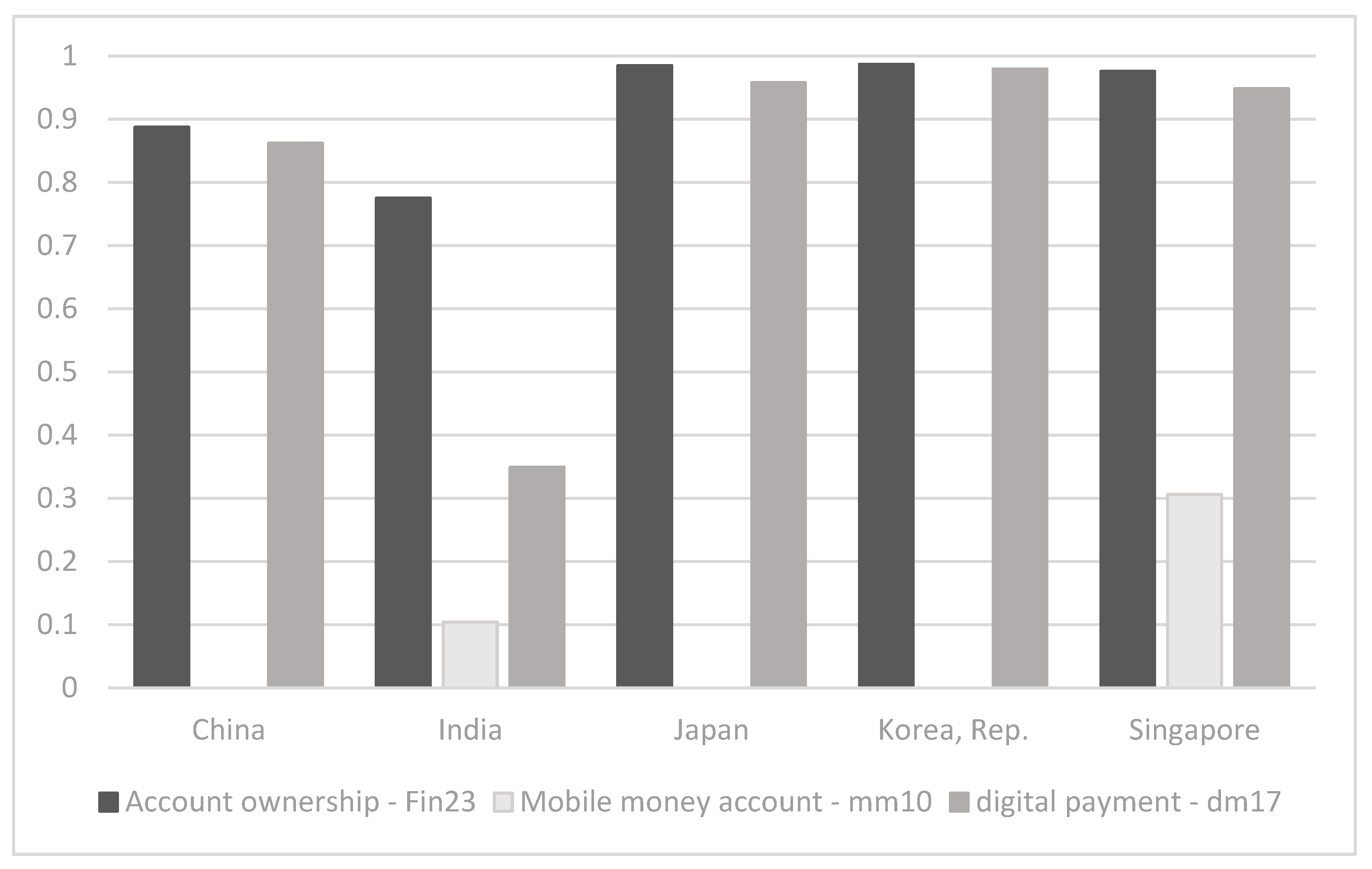
Figure 1, both account ownership (fin23) and mobile money usage (mm10) in Asia have consistently increased from 2011 to 2021, according to data from the Global Findex Database. This trend highlights the increasing significance of fintech innovations in enhancing access to financial services, particularly in emerging economies with limited banking infrastructure.
While account ownership (Fin23) has increased steadily across most countries—especially in developed economies like Japan, Korea, and Singapore—mobile money adoption (mm10) remains concentrated in emerging markets such as Vietnam, India, and Singapore. This contrast highlights the complementary role of fintech in bridging gaps in financial access.
2.2.2. Lower Cost and Faster Service Delivery
One of the key advantages of fintech lies in its ability to reduce transaction costs while enhancing the speed of service delivery. A notable example is the Swish payment platform, a joint venture initiated by a consortium of Nordic banks, including Danske Bank, Nordea, and Swedbank, through Bankgirot, a shared clearing system [
26]. Swish has since expanded to support business-to-business (B2B) payments, offering a highly efficient and low-cost digital payment solution across the region. The collaboration between private financial institutions, the government, and the central bank exemplifies how integrated digital infrastructure can streamline financial processes and promote rapid, secure transactions.
Beyond the private sector, the principles of cost-efficiency and service speed are also essential in public service delivery, especially in healthcare and social welfare. Ref. [
32] argues that it is a fundamental responsibility of governments to ensure the timely and efficient delivery of services critical to societal well-being. This research is especially urgent in low- and middle-income countries (LMICs), where limited resources and high disease burdens demand the most cost-effective deployment of services [
33]. Digital technologies, including fintech-inspired platforms, offer promising avenues to optimize service delivery under such constraints.
In the context of education and social services, financial strain remains a major barrier to expanding access and quality. According to ref. [
34], rapid population growth in many Asian countries, combined with declining infant and child mortality, has led to a growing demand for social services, particularly in education. However, limited funding continues to hamper these efforts. Efficient and scalable digital systems inspired by fintech architecture can serve as viable tools for managing limited budgets while expanding outreach.
2.2.3. Inclusion Through Alternative Credit Scoring
Access to credit remains a fundamental yet unevenly distributed aspect of financial inclusion across both developed and developing economies. Despite its critical role in enabling individuals and businesses to pursue financial goals, traditional credit assessment methods continue to exclude large segments of the population. For instance, in the United States, nearly half of millennials report feeling hindered by their credit scores, mainly due to shorter credit histories and limited borrowing experience, which often results in denial of credit or prohibitively high interest rates [
35].
Globally, this challenge is even more acute. According to [
36], approximately 1.7 billion adults remain unbanked and lack access to basic financial services, including credit. Although financial inclusion—commonly measured by the ownership of bank or mobile money accounts—is relatively high in developed countries, the disparity in access to credit remains a pressing concern, especially in regions with limited credit bureau coverage or inadequate data infrastructures.
To address these gaps, many fintech companies and financial service providers have turned to alternative credit scoring models, which rely on non-traditional data sources such as utility payments, mobile phone usage, and online behavior. These models are beneficial in markets where conventional credit history is unavailable or incomplete. As [
37] suggests, even with limited external data, it is possible to construct effective credit scoring systems using statistical methods. However, practitioners must navigate specific challenges and risks when implementing such models in real-world contexts.
Furthermore, Ref. [
38] emphasizes that a large proportion of the global population still lacks access to essential financial tools—such as credit, savings, and insurance—that are both useful and affordable. By leveraging alternative data and technologies, fintech solutions have the potential to bridge this gap, offering credit access to previously excluded individuals while fostering a more inclusive financial ecosystem.
2.2.4. Financial Literacy and Digital Empowerment
In the modern digital economy, digital literacy is increasingly recognized not merely as a technical skill but as a foundational component of financial inclusion and broader economic development. The ability to navigate digital platforms is now essential for individuals to access, understand, and use financial services effectively. As society progresses into the twenty-first century, traditional literacy—reading and writing—is no longer sufficient; instead, the opportunities and challenges posed by information technology across all domains of life. This must also equip individuals [
39]. However, the expansion of digital finance is not without consequences. Recent research suggests that the development of digital finance can negatively affect bank liquidity creation, particularly in large financial institutions and economically less-developed areas, such as western China [
39]. This highlights the importance of managing digital transformation in a way that supports financial system stability.
In emerging economies, like Indonesia, digital empowerment plays a crucial role in supporting the growth and resilience of key sectors. The Micro, Small, and Medium Enterprises (MSMEs) sector, for instance, is a significant driver of Indonesia’s economic development. During periods of global financial crisis, the MSME sector has demonstrated remarkable resilience, not only sustaining operations but also expanding and increasing employment. According to data from the Indonesian Central Bureau of Statistics, MSMEs employed between 85 and 107 million people as of 2012, reflecting their essential role in the national economy [
40]. The integration of fintech and digital tools into MSME operations can further enhance their productivity and access to finance, provided entrepreneurs possess adequate digital and financial literacy.
One specific group of interest is university students, who are often early adopters of digital innovations and represent a key demographic for the future of financial services. As [
41] suggests, identifying the factors that drive or hinder fintech adoption among students can help shape more inclusive and effective strategies for digital financial education and empowerment. Fostering financial literacy at the university level thus becomes a strategic investment in long-term financial inclusion and digital readiness.
2.2.5. Fintech Ecosystems and Innovation Trends in Asia
Despite the growing body of empirical work on fintech and financial inclusion, several critical gaps remain that limit our understanding of the causal mechanisms and long-term implications of fintech innovations, especially in the context of developing Asian economies.
First, much of the current literature is either theoretical or based on descriptive statistics. While such approaches offer valuable insights, they often fail to establish robust causal relationships. For instance, studies frequently demonstrate a correlation between fintech adoption and increased financial inclusion; however, they often fail to control for possible confounding variables, such as institutional quality, digital infrastructure, or cultural differences in financial behavior. This limits the generalizability of findings across different countries and time periods.
Second, existing empirical studies tend to focus on country-level or regional aggregates, thereby overlooking heterogeneity at the micro level. There is a lack of panel data and microeconometric analyses that capture household or individual-level variations in fintech adoption and use. Without these granular insights, policymakers and stakeholders may overestimate the impact of fintech on marginalized populations, such as women, rural residents, and informal workers.
Third, temporal dynamics are often ignored. Most studies provide a cross-sectional snapshot, failing to track how fintech’s influence on financial inclusion evolves. Longitudinal data and time-series models are essential to understand whether fintech’s benefits are sustained or if they taper off after initial adoption. This temporal perspective is especially crucial for assessing the impact of government interventions and regulatory reforms.
Fourth, while mobile money and digital payments receive significant attention, other fintech verticals such as crowdfunding, robo-advisory services, blockchain-based solutions, and digital lending platforms remain underexplored. These innovations also have transformative potential for financial inclusion, particularly among underserved SMEs and unbanked individuals.
Finally, there is a focus on the unintended consequences of fintech growth. There are issues such as digital fraud, data privacy concerns, cybersecurity risks, and a lack of adequate literature addressing financial exclusion due to digital illiteracy. These downsides can potentially counteract the benefits of fintech, especially among vulnerable populations.
Addressing these gaps requires a more rigorous empirical approach that leverages high-frequency data, advanced econometric techniques (e.g., quantile regression, MMQR), and interdisciplinary collaboration. It also necessitates greater emphasis on local context, regulatory frameworks, and user behavior to produce more actionable insights for stakeholders.
In recent years, a growing body of empirical literature has investigated the relationship between financial technology (fintech) and financial inclusion. These studies aim to quantify the extent to which fintech adoption contributes to improved access to and usage of financial services, particularly in developing and emerging economies.
For instance, Ref. [
42] analyzed the impact of mobile money services on financial inclusion in Sub-Saharan Africa using panel data regression and found that mobile services significantly enhanced access to formal credit among unbanked populations [
43]. Employing an index-based approach across 80 countries, the study demonstrated that digital financial services, including both account ownership and the frequency of digital transactions, are positively correlated with each other. Similarly, Ref. [
44] used Global Findex data to highlight the enabling role of fintech tools—such as mobile money and e-wallets—in promoting inclusion in countries with previously low levels of banking penetration.
Empirical methods commonly used in the literature include panel regressions, instrumental variable techniques, fixed-effects models, and, more recently, quantile regression approaches to capture heterogeneous effects. These methods enable the examination of not only average impacts but also variations across different income groups or levels of financial inclusion.
Despite the expanding literature, most studies have focused on country-level or mean-based estimates. Few have explored the distributional effects of fintech on financial inclusion using quantile-based techniques. Therefore, this study contributes to the literature by employing a Moments Quantile Regression (MMQR) framework to assess how fintech development influences financial inclusion across different quantiles in Asia.
2.2.6. Impact of Fintech on Financial Inclusion Dimensions
Financial inclusion is commonly assessed through multiple dimensions, including account ownership, mobile money service usage, and digital payment adoption. Fintech plays a pivotal role in influencing each of these aspects by lowering entry barriers, reducing transaction costs, and offering alternative financial solutions to underserved populations.
Firstly, digital financial services, such as mobile wallets and e-banking platforms, have been shown to increase the likelihood of owning a financial account, especially in areas with limited physical banking infrastructure [
45]. The convenience and accessibility of mobile-based onboarding processes have enabled individuals in remote or rural areas to engage with formal financial systems without the need for traditional bank branches.
Secondly, mobile money services have become essential in enabling unbanked populations to send, receive, and store money securely. These services are particularly impactful in developing countries where financial institutions have low penetration. As noted by [
42], mobile money usage significantly enhances access to formal credit and encourages participation in broader economic activities.
Thirdly, digital payment platforms, including QR-based systems, peer-to-peer transfers, and app-based transactions, have transformed the frequency and nature of financial interactions. The use of digital payments is not only a proxy for deeper engagement with financial services but also serves as an indicator of trust and digital empowerment [
43].
Given these multi-dimensional impacts, this study examines the relationship between fintech development and each of these financial inclusion indicators—account ownership (fin23), mobile money account usage (mm10), and digital payment adoption (dm17)—within the context of Asian economies. The use of Moments Quantile Regression (MMQR) allows for a nuanced analysis of how fintech influences financial inclusion across different levels, highlighting both average and distributional effects. This approach provides valuable insights into whether fintech development disproportionately benefits specific population segments or contributes to broader financial equality.
2.3. Regional Focus: Fintech in Asia
Asia stands at the forefront of global fintech innovation, characterized by a diverse financial landscape, varying levels of economic development, and strong government support for digitalization. The region’s fintech evolution is marked by high mobile penetration, expanding Internet access, and a growing demand for financial inclusion, particularly among the unbanked and underbanked populations.
2.3.1. Southeast Asia: A Diverse and Dynamic Fintech Region
Southeast Asia has emerged as the world’s fastest-growing region for mobile wallet adoption [
46]. High smartphone penetration, improving Internet connectivity, and increasing consumer preference for cashless payments have driven this transformation. Countries such as Indonesia, Vietnam, the Philippines, Malaysia, and Thailand have driven by both local fintech startups and regional giants, which have experienced rapid growth in these areas.
In Indonesia, Go-Pay and OVO were initially introduced as in-app payment systems for ride-hailing services—Go-Pay for Go-Jek and OVO for Grab—offering users a convenient, cashless solution for transportation. However, both platforms quickly expanded their services beyond ride payments. Today, Go-Pay and OVO are widely accepted by merchants across Indonesia, ranging from retail stores to restaurants and online platforms, serving as full-fledged digital wallets that provide users with seamless and efficient alternatives to traditional payment methods [
47].
Overall, ASEAN’s digital financial services (DFS) market has shown strong performance, with digital payments accounting for over 82% of DFS revenue in 2021. The total transaction value of digital payments in the region reached USD 73 billion in 2018 and is projected to reach over USD 416.6 billion by 2028 [
48].
In Singapore, platforms like GrabPay and PayNow have gained popularity due to their ease of use and government-backed interoperability initiatives. Vietnam and Thailand are also rapidly adopting mobile payments, although some challenges remain in rural areas due to infrastructure limitations and cultural preferences for cash-based transactions.
Southeast Asia is going to experience the most substantial growth in mobile wallet penetration in the Asia-Pacific region by 2025. For example, Singapore is expected to see a 222% increase in mobile wallet adoption compared to 2020, driven by a tech-savvy population and strong digital infrastructure [
49].
2.3.2. India: A Transformational Shift Toward Digital Finance
India represents one of the most compelling examples of digital financial transformation. With a large, young, and tech-savvy population, India’s mobile payments ecosystem has grown rapidly, especially following government-led initiatives, such as the Digital India campaign. Several major events and reforms have shaped the country’s fintech journey.
The demonetization in 2016 created a sudden shift away from cash, providing a unique opportunity for the widespread adoption of digital payments [
50]. During this period, individuals who were previously hesitant began using mobile wallets and digital payment platforms due to their convenience and accessibility [
51]. The COVID-19 pandemic in 2020 further accelerated this trend.
Platforms like Paytm, Google Pay, and PhonePe now dominate the Indian mobile payments market, offering a range of services that include peer-to-peer transfers, bill payments, and investment products. The launch of the Unified Payments Interface (UPI) by the National Payments Corporation of India (NPCI) in 2016 was a game-changer. UPI’s real-time, inter-bank transaction system has made mobile payments simple, secure, and interoperable across banks and apps [
52].
India experienced exponential growth in mobile payment transactions, rising from approximately 3 billion in 2016 to 460 billion in 2022, with transaction values increasing from 8 trillion rupees in 2016 to over 2200 trillion rupees by 2022. In financial year 2024 alone, India recorded 164 billion digital payment transactions, further underscoring the momentum toward a cashless economy [
53].
Research has identified factors such as convenience, safety, ease of use, privacy, and trialability as significant influencers of mobile wallet adoption in India [
54]. Government incentives, low-cost mobile Internet, and smartphone affordability have also played a central role in this digital shift. The BHIM app—built on UPI—accounted for more than 67% of all digital transactions in 2024, making UPI one of the most successful low-cost payment infrastructures globally. According to practices [
55], the transformation of India’s financial sector began in the early 1990s, marked by a series of reforms focused on deregulation, liberalization, and the adoption of international best practices.
Nevertheless, India still faces challenges related to cybersecurity, digital literacy, and infrastructure disparities, particularly in rural regions. However, with substantial government support and continued innovation, mobile wallets are poised to play a long-term role in India’s vision of an inclusive and digitally empowered financial ecosystem.
2.3.3. China and Beyond: Leading the Mobile Payments Revolution
Although not the primary focus of this article, China remains a global leader in mobile payments. As early as 2019, platforms such as Alipay and WeChat Pay had achieved near-ubiquitous adoption, with Alipay alone reaching almost one billion users. These platforms have revolutionized the way consumers and businesses conduct transactions, replacing cash with QR code-based mobile payments across virtually all sectors of daily life. This integration of mobile payments into everyday transactions highlights how digital tools can streamline financial activities and promote financial inclusion [
26].
Alipay (Alibaba) and WeChat Wallet (Tencent) are the first cases of mobile payment technologies being successfully introduced to a major urban city [
56]. China’s highly integrated mobile payments ecosystem—dominated by Alipay and WeChat Pay, which together account for over 90% of mobile transactions [
57,
58]—has become deeply embedded in the everyday lives of users. It supports a wide range of functions, including e-commerce, bill payments, peer-to-peer transfers, and microtransactions [
59,
60]. The limited availability of traditional payment services, favorable regulatory conditions, and rapid technological advancement [
57] trigger the widespread adoption of fintech. The use of QR codes has further enabled mobile payments to reach even rural areas [
61,
62]. Moreover, advancements in ICT have played a crucial role in strengthening the digital infrastructure that supports such payment systems, making transactions more accessible and secure [
58].
By 2024, over 1.03 billion Chinese citizens were using mobile payments, with the COVID-19 pandemic acting as a catalyst for accelerated adoption [
59]. The seamless integration of these systems into daily life is so profound that users often overlook the technological infrastructure supporting them—an indication of their infrastructuralization [
60]. The sample of retailers in three metropolitan areas of China shows that the combined market shares of Alipay and WeChat fall in the region of 55–65 per cent in various payment scenarios, both at the point-of-sale and online, thus confirming the dominance of non-bank payment service providers in these areas. In Germany, by contrast, comparable mobile payment methods have not been adopted on a broad scale [
63].
In 2023, China recorded over 185 billion mobile payment transactions, totaling 555 trillion yuan in transaction value [
61]. Convenience remains a key driver of adoption, with 93% of users citing ease of use and integrated financial functions—ranging from payments to savings and insurance—as the main benefits [
64]. As a result, mobile payments in China have evolved beyond simple digital tools to become foundational infrastructure underpinning a near-cashless economy.
China’s success has also influenced the development of mobile payments across Asia. Markets such as South Korea and Japan, while operating under stricter regulatory frameworks, have followed suit with high adoption rates. The broader fintech landscape in Asia continues to undergo rapid transformation, with mobile payments and digital wallets leading the way. While China and India have already achieved widespread adoption, Southeast Asia is emerging as the next growth frontier. Fintech in the region is enhancing transaction efficiency and user experience, promoting financial inclusion, and reducing reliance on cash. These developments highlight the importance of local context, government support, and robust digital infrastructure in shaping the trajectory of financial innovation across Asia. Heterogeneity analysis indicates that there are significant regional differences in its impact on sustainable development, which are particularly notable in China’s eastern and central regions and insignificant in the western region [
62].
This section of the study presents a systematic literature review of 58 papers from the Scopus database, covering the period from 1996 to 2024. The number of analyzed papers depends on the criteria of limitation, e.g., the time period limited to 2019–2024. The research area focuses on financial inclusion in Asia and its connection to the Sustainable Development Goals. One of the most cited publications discusses the role of financial inclusion in economic growth and human capital development in South Asia, specifically in relation to Goal 8: Decent Work and Economic Growth, and Goal 4: Quality Education [
65].
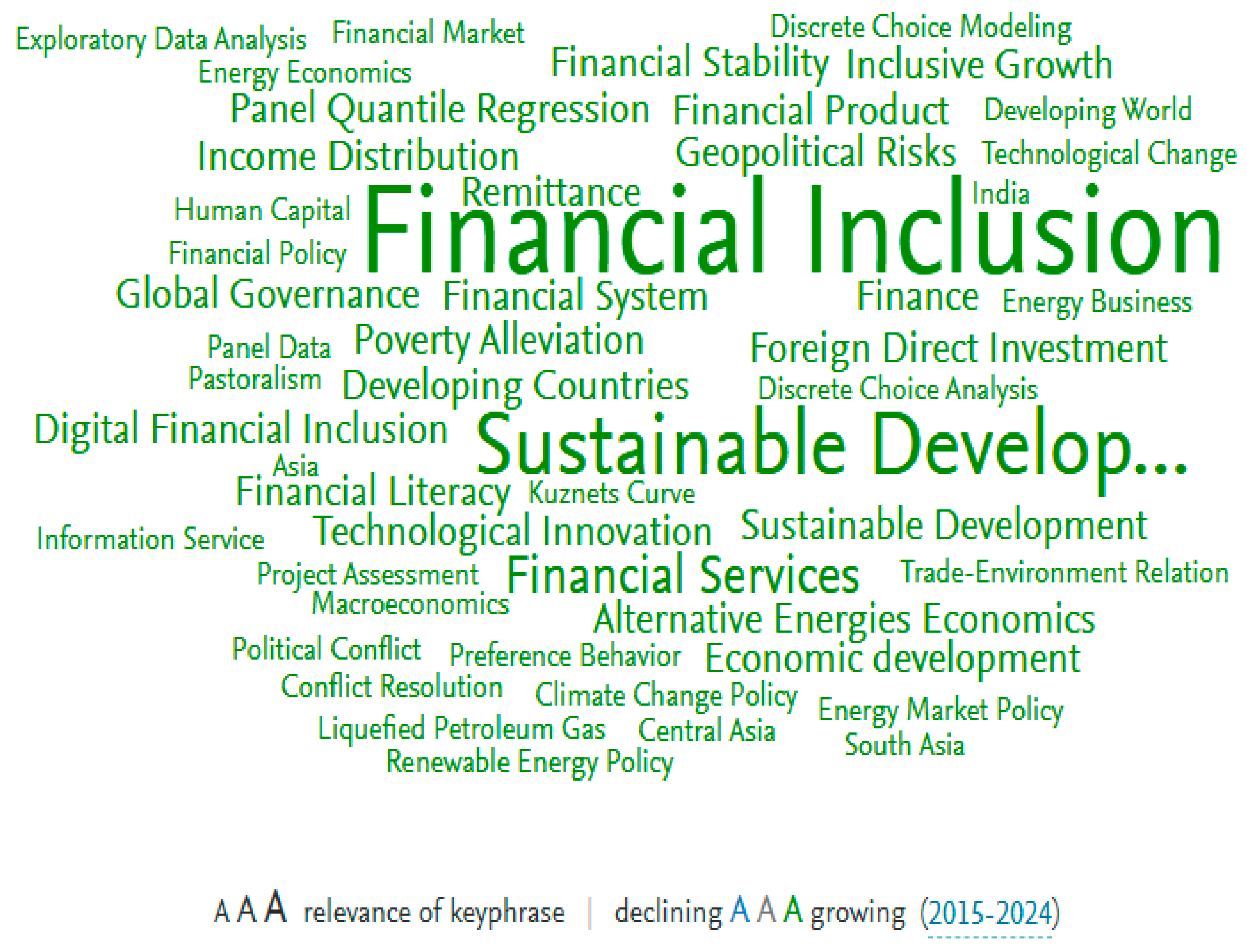
Figure 2 illustrates that “financial inclusion” and the Sustainable Development Goals are the most relevant terms in relation to financial inclusion. The following terms are associated with increasing relevance: geopolitical risk, technological change, technological innovation, poverty alleviation, financial literacy, digital financial inclusion, inclusive growth, financial stability, income distribution, economic development, Asia, India, and panel quantile regression. These research areas are strongly associated with the following SDGs: Goal 9: Industry, Innovation, Technology, and Infrastructure, Goal 8: Decent Work and Economic Growth, Goal 10: Reduced Inequality, Goal 1: No Poverty, Goal 4: Quality Education, and Goal 11: Sustainable Cities and Communities.
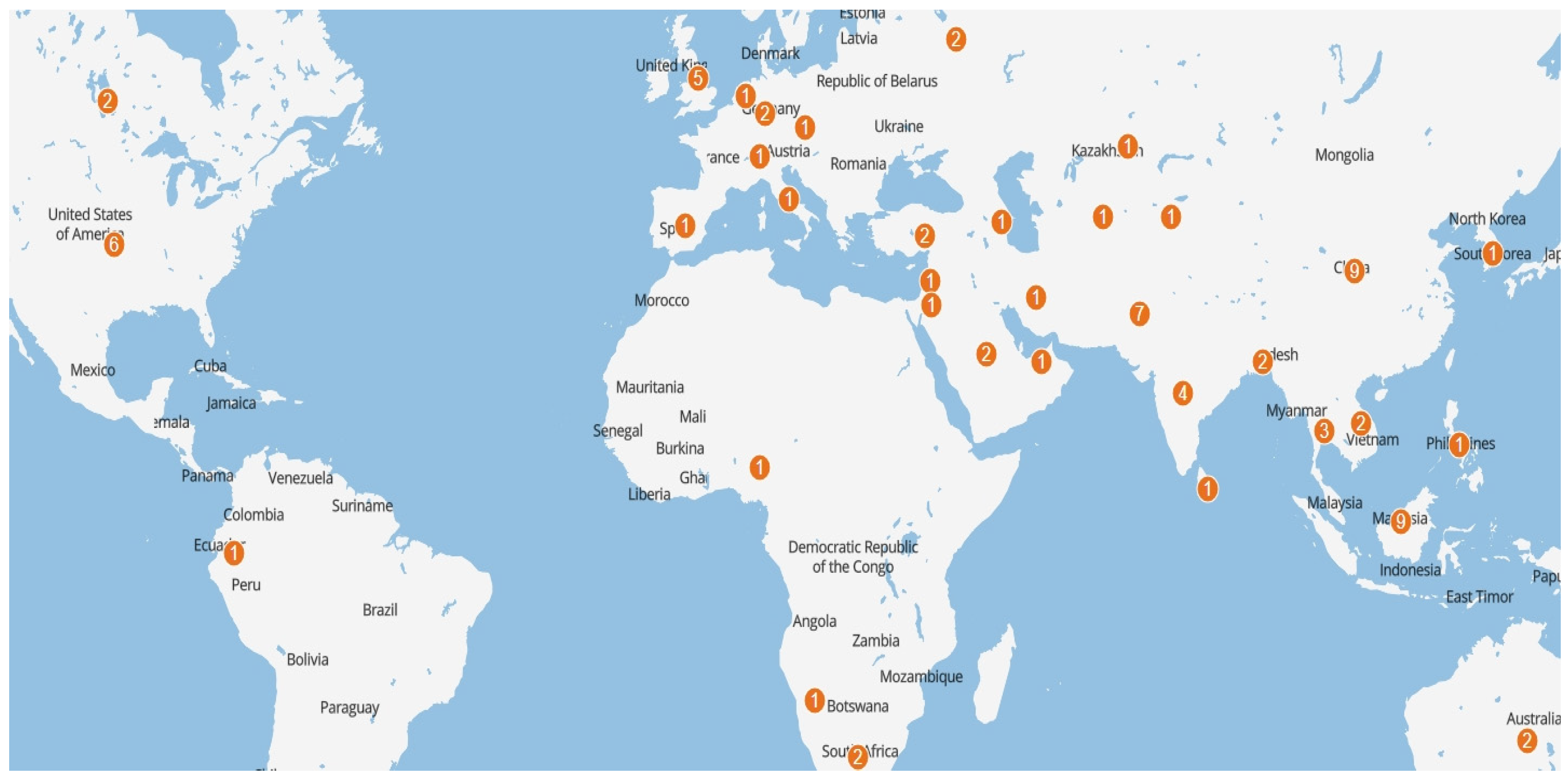
According to
Figure 3, the leading countries in this research area are Indonesia, the United States, and the United Kingdom.
The top 10 sources in this research area by scholarly output include the following journals: Financial Inclusion Across Asia: Bringing Opportunities for Business, Resources Policy, International Organisations Research Journal, Sustainability (Switzerland), and Central Asia and the Caucasus.
Leading subject areas are Economics, Econometrics, and Finance (58.6%); Social Sciences (43.1%); and Business, Management, and Accounting (36.2%); on the other hand, Computer Science has marginal relevance (5.2%).
3. Materials and Methods
This study adopts a quantitative research strategy to investigate the relationship between fintech development and financial inclusion in selected Asian countries. Given the heterogeneity across countries and the distributional effects of fintech variables, the research employs an econometric approach that captures variations not only in means but across different quantiles of financial inclusion.
The empirical approach relies on panel data analysis, utilizing observations from 2011, 2014, 2017, and 2021 at the country level. This multi-year, multi-country design enables the study to examine both cross-sectional and temporal dynamics of fintech’s impact.
To go beyond average effects, this study employs the Method of Moments Quantile Regression (MMQR) technique, which enables a more nuanced examination of how fintech adoption impacts various levels of financial inclusion. Compared to ordinary least squares (OLS), which focuses on the mean of the dependent variable, MMQR captures variations across the distribution (e.g., lower vs. upper quantiles), offering richer insights that are especially relevant for policy targeting.
First and foremost, this research applies the method of Moments Quantile Regression (MMQR) to examine the differential effects of fintech development across the distribution of financial inclusion. Unlike conventional regression models, MMQR provides a nuanced understanding of how fintech impacts vary not only across countries but also across different levels of financial inclusion. This is particularly relevant in Asia, where disparities in access to digital infrastructure and banking services are pronounced.
Second, the study incorporates both macroeconomic indicators (e.g., GDP per capita, Internet penetration) and fintech usage metrics (e.g., digital payments, mobile money account ownership) into the analytical framework. This integration enables a more comprehensive and balanced examination of the supply- and demand-side determinants of financial inclusion.
Third, the research leverages panel data spanning from 2011 to 2021 across 15 Asian countries. This longitudinal scope enables an assessment of fintech’s sustained impact over time, a feature often missing in prior studies. It also provides a rare opportunity to evaluate the impact of major policy shifts, such as India’s demonetization, the expansion of China’s digital ecosystems, and regulatory sandbox initiatives across Southeast Asia.
Fourth, by disaggregating the data by country and year, this study highlights regional diversity and reveals country-specific patterns and anomalies. For instance, it contrasts the high fintech adoption rates in China and South Korea with relatively slower uptake in countries like Laos or Myanmar. Such insights can inform targeted policy interventions.
In the context of post-COVID digital acceleration, gaining insight into the role of fintech is essential for shaping inclusive, secure, and resilient financial systems in Asia. The study’s findings aim to inform better decision-making for policymakers and stakeholders in the region.
The study fills a methodological gap for academia by applying MMQR to a topic traditionally explored through OLS or basic panel regression. This approach enriches the methodological toolkit available for financial inclusion research and encourages further application of advanced econometric techniques in development finance.
In conclusion, this study advances the theoretical and empirical understanding of fintech’s role in financial inclusion. It strengthens the academic discourse while offering actionable insights relevant to Asia’s rapidly evolving economic landscape.
Digital transformation has notably reshaped the financial services industry, with financial technology (fintech) emerging as a major force behind this evolution. By combining technological advancement with financial functions, fintech has introduced alternative service models that are often more efficient, accessible, and inclusive than conventional systems [
66]. In particular, Asia has become a fertile ground for fintech expansion, thanks to widespread mobile device usage, improved Internet infrastructure, and large unbanked populations [
67].
The heterogeneity of Asian economies—from high-tech financial centers to developing markets—offers a unique landscape for analyzing how fintech influences financial inclusion. While countries like China, India, Indonesia, and Vietnam are leading in adoption, differences in digital readiness and regulatory environments suggest that outcomes vary across the region.
This research aims to measure financial inclusion in the 15 selected Asian economies using key indicators, such as account ownership, mobile money usage, and digital payment adoption, and to explore the impact of fintech development through a Moments Quantile Regression (MMQR) framework, allowing for a more nuanced understanding of how this relationship varies across countries and quantiles.
The study includes the following hypothesis: Digital transformation has notably reshaped the financial services industry, with financial technology emerging as a major force behind this evolution by introducing alternative fintech services that are often more efficient, accessible, inclusive, and sustainable than conventional systems.
This research investigates the role of fintech in financial inclusion in Asia using a mixed-methods research design. The literature review employs data analysis using the SciVal bibliometric tool. Quantitatively, it applies the Moments Quantile Regression (MMQR) technique to country-level panel data from 2011 to 2021, measuring the impact of fintech adoption on indicators such as account ownership (fin23), mobile money usage (mm10), and digital payment usage (dm17). Applying a Moments Quantile Regression (MMQR) model to data from 2011, 2014, 2017, and 2021, the research explores how fintech development affects these dimensions at different distribution levels of inclusion, allowing for a more refined view than average-based analysis [
68]. This study also uses a comparative analysis of digitalization indices that the World Bank (WB) provides, namely, the Global Findex Database (World Bank). The full dataset of the Global Findex Database (World Bank) concentrates on 153 selected economies. Data contain inter alia information on income level and education. This study uses panel data of the Global Findex Database (World Bank)—encompassing 2011, 2014, 2017, and 2021—and covers 15 Asian countries. The balanced panel dataset comprises 15 countries and territories, including Bangladesh, Cambodia, China, Hong Kong SAR, India, Japan, Korea (Rep.), Lao PDR, Malaysia, Myanmar, the Philippines, Singapore, Taiwan (China), Thailand, and Vietnam. The dataset includes both demand-side indicators (e.g., account ownership, mobile money, digital payment usage) and supply-side variables (e.g., GDP per capita, Internet penetration) drawn from the World Development Indicators (WDIs) and the International Telecommunication Union (ITU).
The primary data sources for this research are as follows:
- −
The Global Findex Database (World Bank) provides nationally representative data on how adults save, borrow, make payments, and manage risks. Indicators such as account ownership, mobile money account ownership, and digital payment usage covering 2011, 2014, 2017, and 2021 are provided.
- −
World Development Indicators (WDIs) provide macroeconomic variables, such as GDP per capita (current USD) and Internet usage (% of population). These were included to capture the structural and digital infrastructure that may influence financial inclusion.
- −
The International Telecommunication Union (ITU) complements WDI data on digital access, particularly where WDI reports are incomplete.
- −
IMF and National Statistics Agencies (where applicable) are used for cross-verifying GDP and financial access indicators in specific cases.
- −
The dataset integrates demand-side variables (e.g., individual-level fintech adoption indicators from Global Findex) and supply-side variables (e.g., infrastructure and income-level proxies from World Development Indicators/ITU). This dual perspective enables a more nuanced examination of the mechanisms by which fintech influences financial inclusion.
To ensure consistency, all variables were harmonized across countries and years. Countries with severely missing or inconsistent data (e.g., North Korea, Afghanistan) were excluded from the sample. The panel structure also supports the application of advanced econometric techniques, including Moments Quantile Regression (MMQR), by enabling variation across time and between countries.
3.1. Model Specification
To examine the heterogeneous effects of fintech development on financial inclusion across different distributional levels, this study employs the Method of Moments Quantile Regression (MMQR) proposed by [
8]. This approach extends the standard quantile regression by modeling the location and scale parameters, allowing greater flexibility in capturing distributional dynamics.
The general MMQR model is as follows:
where
Yit denotes the dependent variable—the financial inclusion indicator (e.g., account ownership)—for country i in year t.
Xit represents the set of explanatory variables, including mobile money usage, digital payment adoption, GDP per capita, and Internet usage.
τ∈(0,1) is the quantile of interest.
μ(Xit,τ) is the conditional quantile function of the location.
σ(Xit,τ) captures the scale (dispersion) effects.
Uit is a standard normal variable satisfying Qτ(Uit) = 0.
In the empirical analysis, the conditional quantile of financial inclusion YitY_{it}Yit is as follows:
where
α(τ) is the intercept that varies by quantile.
β(τ) is the vector of quantile-specific slope coefficients.
This formulation enables us to investigate whether the effects of fintech variables differ between countries with low, median, or high levels of financial inclusion, thus providing a more comprehensive understanding of distributional asymmetries.
Assumptions and Estimation Procedure
The Method of Moments Quantile Regression (MMQR) application relies on a set of key assumptions that ensure the consistency and interpretability of the estimated parameters across different quantiles of the conditional distribution.
Assumptions of the MMQR Model
The linear conditional quantile function is as follows:
The conditional quantile function is assumed to be linear in the parameters for each quantile τ∈(0,1).
Exogeneity
The regressors Xit are assumed to be exogenous, meaning that they are not correlated with the unobserved error term Uit. This is necessary to ensure an unbiased estimation.
Independence and Stationarity
The error terms Uit are independent across observations and follow a distribution with a conditional quantile equal to zero. Stationarity across time is assumed to be the basis for valid panel inference.
Sufficient Variation in Data
Adequate variation across countries and periods is assumed to reliably identify quantile-specific effects.
Estimation Procedure
The MMQR estimator, as proposed by [
8], involves the following steps.
Moment Conditions Construction
MMQR concentrates on the generalized method of moments (GMM) estimation, where the quantile process moment conditions are derived. These conditions reflect the deviation of observed outcomes from the predicted quantiles.
Quantile-by-Quantile Estimation
The model is estimated separately for different quantiles τ(0.25, 0.5, and 0.75), capturing how the relationship between fintech development and financial inclusion varies across the distribution.
Use of Panel Data
The model utilizes balanced panel data from 15 countries across four time points (2011, 2014, 2017, and 2021), incorporating both cross-sectional and temporal variation.
Robust Standard Errors
Heteroskedasticity-robust standard errors are computed for inference, ensuring the validity of statistical tests across different quantiles.
Software Implementation
The estimation uses R software (version 4.4.3) [
69], where MMQR package module allows quantile regression with moment-based techniques and panel data structure.
This procedure provides a flexible and robust framework to uncover distributional heterogeneity in the impact of fintech variables, which would be overlooked in traditional mean-based regressions.
The core empirical approach in this study, due to its capacity to capture heterogeneous effects of fintech development on financial inclusion across different levels of the financial inclusion distribution, is the Method of Moments Quantile Regression (MMQR).
Traditional estimation methods, such as ordinary least squares (OLS) or fixed-effects panel regression, focus on the conditional mean of the dependent variable. However, financial inclusion outcomes are not symmetrically distributed, particularly in developing economies. MMQR allows for an analysis at multiple points (quantiles)—such as the 25th, 50th, and 75th percentiles—thereby revealing how fintech may benefit low-inclusion versus high-inclusion countries differently.
Financial data often exhibits outliers and non-normal distributions, especially when using multi-country datasets. MMQR is more robust to outliers than mean-based estimators and does not rely on normality assumptions, making it a more appropriate method for cross-country financial inclusion studies.
The impact of variables such as mobile money usage, digital payments, or GDP per capita may not be uniform across all countries. For example, mobile money might have a more substantial marginal effect in low-access countries but a diminishing effect in already financially included societies. MMQR enables the model to identify such non-uniform impacts.
MMQR, particularly in the form introduced by [
8], accommodates panel data settings with unobserved heterogeneity. This aligns well with the structure of the study’s dataset, which includes 15 Asian economies observed over four periods (2011, 2014, 2017, 2021).
By uncovering quantile-specific effects, MMQR allows policymakers to better understand where fintech interventions are most effective—e.g., among the most excluded populations or in mid-level inclusion environments.
Table 1 presents that it enables targeted policy design rather than one-size-fits-all recommendations.
In summary, MMQR offers both analytical depth and practical relevance, making it the most suitable econometric approach for understanding the nuanced and uneven effects of fintech innovation on financial inclusion in Asia.
Robustness checks included the validity and reliability of the MMQR estimations.
Since some values in the dataset are extremely large or small, it applied careful data cleaning procedures. These included capping outliers and replacing extreme missing values with conservative estimates to minimize distortion in the regression results.
To test the sensitivity of the results, the model was re-estimated using alternative variable combinations and lagged independent variables. This helps to verify whether the core relationships between fintech indicators and financial inclusion remain consistent across model specifications.
The subsamples also include analyses such as low-income vs. high-income countries or early-adopter vs. late-adopter countries. This allows for assessing heterogeneity in the fintech–inclusion relationship across different economic contexts.
The empirical research examines different quantile levels (τ = 0.25, 0.5, 0.75) to verify whether fintech’s impact on financial inclusion varies across the distribution. Robust patterns across these quantiles strengthen confidence in the model’s insights.
For validation, it compares the results from MMQR with those obtained from ordinary least squares (OLS) and fixed-effects panel regressions. While OLS provided a general average effect, MMQR captured nuanced relationships masked under standard approaches.
The authors calculated a Pearson correlation matrix to ensure that no serious multicollinearity exists among the explanatory variables. The study checked variance inflation factors (VIFs) to confirm that predictors were sufficiently independent for regression analysis.
Overall, these robustness checks confirm that the findings are not artifacts of a particular estimation strategy or dataset issue, thereby reinforcing the credibility of the empirical results.
4. Results
This part presents the empirical results from the Method of Moments Quantile Regression (MMQR) model applied to the panel dataset of 15 Asian countries from 2011 to 2021. The estimation includes key fintech variables, such as account ownership (fin23), digital payment usage (dm17), and mobile money account (mm10), along with macroeconomic controls, including GDP per capita and Internet usage.
The analysis examines three quantiles—0.25, 0.50, and 0.75—to assess how the relationship between fintech development and financial inclusion varies across different levels of inclusion.
4.1. Quantile Regression Results
4.1.1. Impact of Fintech on Financial Inclusion at Different Quantiles
This section presents and interprets the results of the Method of Moments Quantile Regression (MMQR) analysis, focusing on how fintech variables—namely, mobile money usage, digital payments, and Internet penetration—influence financial inclusion across different quantiles (25th, 50th, and 75th percentiles) of the financial inclusion distribution.
At the lower quantile (25th percentile), which represents countries with low levels of financial inclusion, digital payments show a substantial and statistically significant positive effect. This suggests that digital transaction platforms are particularly effective in reaching underbanked populations, potentially due to their low entry barriers and mobile accessibility. Mobile money, although present, has a less consistent effect and displays negative or insignificant coefficients in some years, indicating variation across countries and time periods.
At the median quantile (50th percentile), the impact of both digital payments and mobile money becomes more stable. Digital payment usage continues to show a robust and significant effect, and Internet usage becomes more influential. This implies that digital infrastructure becomes a key enabler as countries progress toward moderate levels of inclusion.
At the upper quantile (75th percentile), the marginal impact of fintech diminishes slightly. In highly included economies, fintech tools may be more complementary than transformative. However, Internet access remains significant, underscoring the crucial role of a well-developed digital ecosystem in supporting inclusive finance. In some cases, coefficients for mobile money turn statistically insignificant or negative, possibly due to market saturation or overlapping services.
These findings highlight the non-linear nature of fintech’s influence on financial inclusion. Its transformative power is most pronounced in lower- and mid-inclusion contexts, while in highly inclusive economies, the role of fintech shifts toward enhancing efficiency and service diversity rather than expanding access.
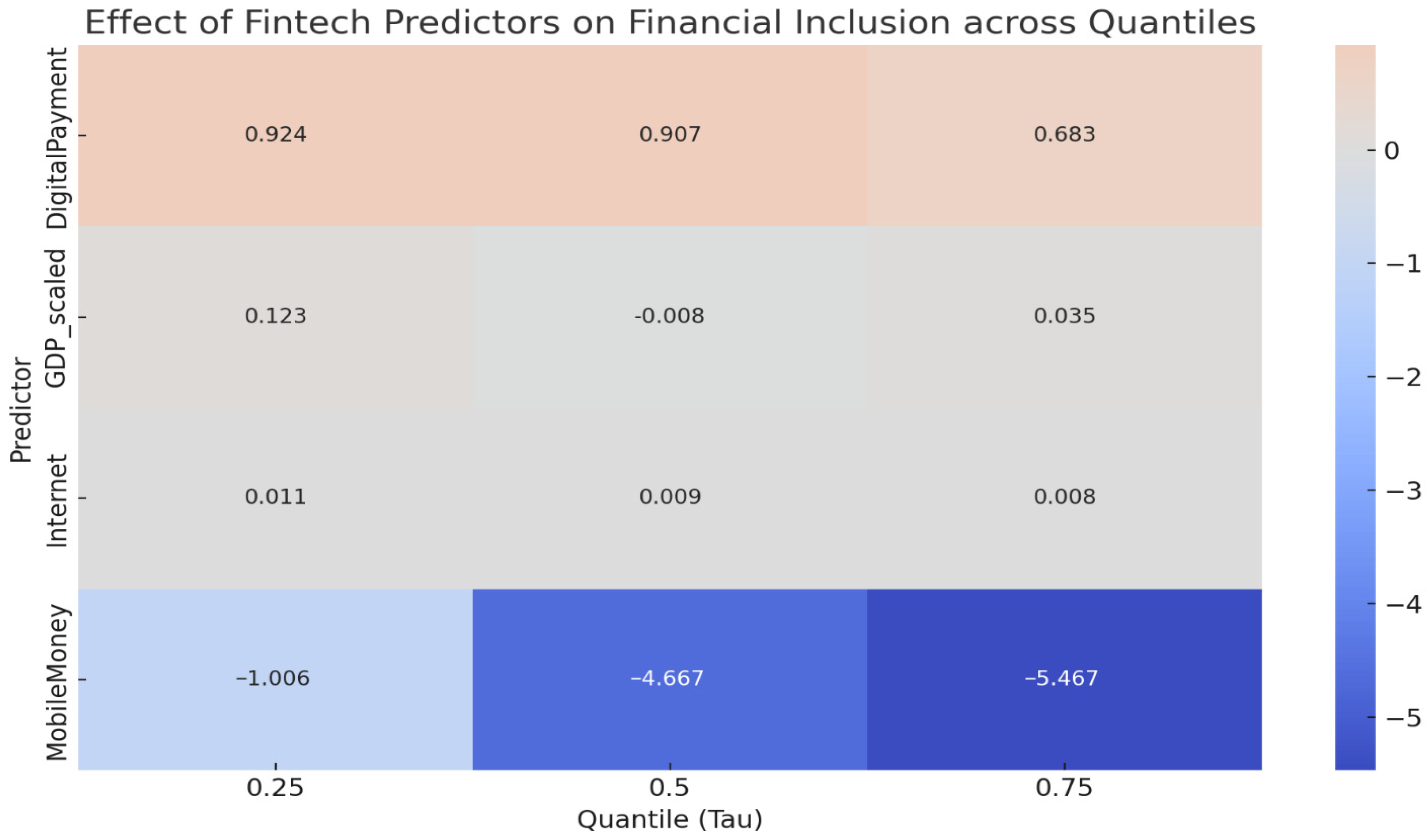
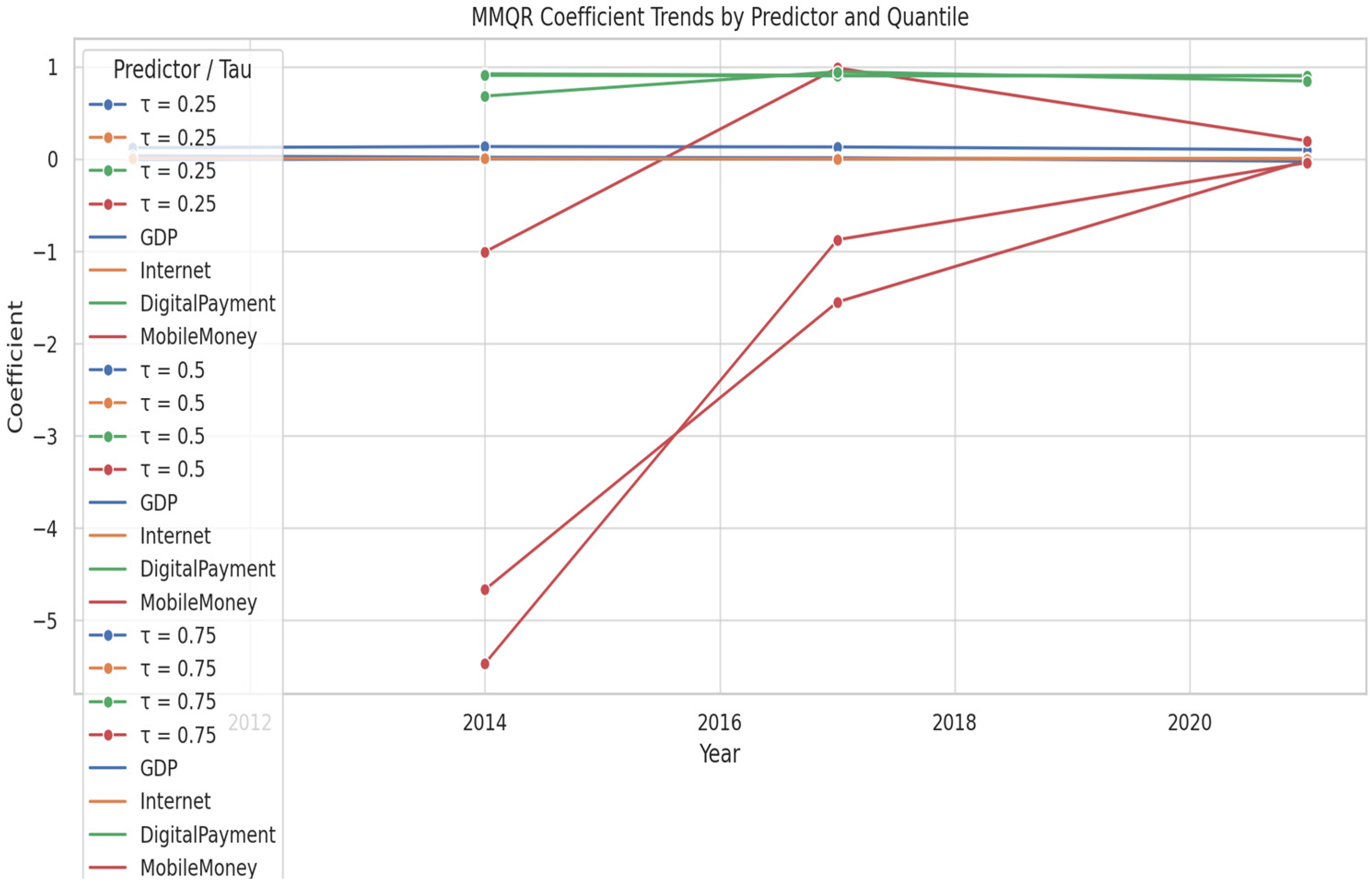
The According to
Figure 4 the Moment Quantile Regression (MMQR) results show coefficient estimates for selected predictors (GDP, Internet usage, digital payment, and mobile money) across quantiles of τ = 0.25, 0.5, and 0.75.
The detailed calculation results and specifications of the Moment Quantile Regression (MMQR) results are presented in
Table A1 of
Appendix A.
Figure 5 shows how the effects of digital payment and mobile money differ across levels of financial inclusion. Digital payment consistently has a positive impact, while mobile money shows a more negative substantial effect at lower quantiles.
The digital payment variable consistently demonstrates a substantial and statistically significant positive effect across most years and quantiles. Its impact is most pronounced at the lower quantile (τ = 0.75), particularly in 2021, where the coefficient approaches 0.85. This suggests that digital payment adoption is a key driver of financial inclusion, particularly among individuals who are already more integrated into the economic system. Nonetheless, the variable also substantially influences lower quantiles, suggesting its relevance for underserved populations.
The effect of mobile money appears more volatile. While some years (e.g., 2014) show relatively strong coefficients, others yield negative or insignificant results. This variation suggests that the effectiveness of mobile money in promoting financial inclusion may be context-dependent, heavily relying on infrastructure, regulatory environment, and adoption rates in each country.
The standardized GDP variable (GDP_scaled) exhibits weak and inconsistent effects across all quantiles. The coefficients are often small and statistically insignificant. These results suggest that macroeconomic growth alone is insufficient to promote financial inclusion, and its impact may be more indirect or long-term.
Internet access shows a consistently positive but modest impact on account ownership, particularly at the median and upper quantiles. While the effect size is smaller than that of digital payment, the significance levels indicate that Internet connectivity enhances access to financial services.
4.1.2. Role of Control Variables
To isolate the specific impact of fintech variables on financial inclusion, it is essential to control for other macroeconomic and infrastructural factors that may influence the level of financial access independently of digital innovation. This study includes two key control variables: GDP per capita (in current billion US dollars) and Internet usage (as a percentage of the population).
GDP per capita is a proxy for overall economic development and income level, which are closely linked to an individual’s ability and incentive to engage with formal financial systems. In wealthier countries or regions, citizens are more likely to have the means to access financial services, making it a crucial distinction to differentiate between development-driven and fintech-driven growth.
Internet usage reflects the digital infrastructure and connectivity that enables or restricts access to fintech services. High Internet penetration is necessary (though insufficient) for adopting mobile money, digital payments, and other fintech solutions. Including this variable helps to account for the enabling environment that might otherwise confound the relationship between fintech adoption and financial inclusion outcomes.
By including these controls, the analysis ensures that the observed effects of fintech indicators are not merely capturing broader trends in income or technological access but rather reflect more precise and targeted influences of digital financial innovation.
4.1.3. Heterogeneity Across Years and Countries
One of the key motivations for using panel data and quantile regression methods is to explore heterogeneity—i.e., how the impact of fintech on financial inclusion varies across different time periods and countries. Significant economic development, digital infrastructure, regulatory frameworks, and disparities in financial behavior characterize Asia. Therefore, a one-size-fits-all approach would risk oversimplifying the actual dynamics at play.
This study captures temporal shifts in fintech adoption and the regulatory environment by examining different years (2011, 2014, 2017, and 2021). For example, major policy reforms, such as India’s demonetization in 2016 or the rise of mobile wallets in Southeast Asia, likely influenced the strength and direction of fintech’s impact in different time frames.
Moreover, country-level heterogeneity is significant. Advanced economies, such as South Korea or Singapore, may exhibit high baseline levels of financial inclusion and fintech adoption. At the same time, lower-income countries, such as Myanmar or Cambodia, may demonstrate different patterns due to institutional, cultural, or infrastructural factors. Disaggregating by country helps reveal these context-specific effects, which are critical for designing effective policy interventions.
In sum, acknowledging and analyzing heterogeneity enables research to go beyond average effects and identify who benefits most from fintech, when, and under what conditions, which are highly valuable insights for both academic and policy-oriented audiences.
The detailed robustness procedures show that the main findings remain consistent with alternative model specifications and sample restrictions.
The empirical results suggest that the impact of fintech on financial inclusion is heterogeneous across different quantiles and years. Digital payment adoption has a strong and consistent positive effect, especially around the median level of financial inclusion. Mobile money exhibits a greater influence in lower quantiles, indicating its role in expanding access to underserved regions.
Control variables, such as GDP and Internet usage, also support the idea that fintech innovations require enabling infrastructure to be effective.
Overall, the findings highlight that context matters in relation to economic development and existing financial inclusion levels. These results provide valuable input for tailored policy strategies.
5. Discussion
The Method of Moments Quantile Regression (MMQR) offers valuable insights into how the impact of fintech-related variables on financial inclusion varies across different population levels. Unlike traditional OLS regression, which focuses only on the average effect, quantile regression captures the impact heterogeneity across the conditional distribution of the dependent variable—in this case, account ownership.
By estimating the model at three quantiles (τ = 0.25, 0.5, and 0.75), we can differentiate between individuals who are as follows:
- −
Less financially included (lower 25%);
- −
Moderately included (middle 50%);
- −
Highly included (top 25%).
This distinction is critical for understanding the uneven pathways to financial access in emerging markets and designing targeted policies.
The effect of digital payment variable is consistently positive and statistically significant across all quantiles, and most notably, it tends to increase at higher quantiles. This study suggests that digital payment tools facilitate initial access to finance and play a more significant role in enhancing and deepening inclusion for individuals already integrated into the financial system.
For instance, at τ = 0.25, digital payment helps bring unbanked or underserved individuals into the system by offering convenient and low-cost transaction options. However, at τ = 0.75, it becomes even more impactful, possibly because financially included individuals are more capable of adopting and fully utilizing digital financial services (e.g., online banking, investment platforms, digital wallets). This highlights a scaling effect. Digital payment usage becomes increasingly crucial as users become more financially active.
The variable mobile money shows a more volatile and inconsistent pattern across quantiles. While its effect may be positive and significant at the lower quantile (τ = 0.25) in some years, the impact weakens or becomes statistically insignificant at higher quantiles.
It may reflect the nature of mobile money services, which are often designed to reach unbanked or rural populations with limited infrastructure. Therefore, its most substantial influence is among those with low financial access. Still, once individuals are more included (τ = 0.75), mobile money may become less relevant or be replaced by more formal digital banking services. This result supports the idea that mobile money plays a foundational role, but it may not scale as effectively without integration into the broader digital financial ecosystem.
The role of the Internet variable is modest but consistently positive, particularly at τ = 0.5 and τ = 0.75. Internet access facilitates digital financial services, from online banking to mobile apps and e-wallets. However, at the lower quantile (τ = 0.25), its effect is weaker, possibly due to challenges such as a lack of devices, connectivity, or digital skills among financially excluded populations.
These results imply that Internet penetration supports financial deepening rather than initial access. Therefore, investments in digital infrastructure should be complemented by outreach efforts to ensure that underserved groups can also benefit.
The quantile-based analysis provides nuanced evidence that the same fintech tools may play different roles at different stages of financial inclusion.
- −
Digital payment helps deepen inclusion at higher quantiles.
- −
Mobile money is more effective at initiating access at lower quantiles.
- −
The Internet and GDP provide supportive but secondary roles.
This heterogeneity highlights the importance of moving beyond one-size-fits-all policies toward segment-specific fintech strategies.
This part provides additional relevant information regarding the outcomes of financial innovation on the improvement of SDG 9 in Asian economies. In particular, it includes contributions of different financial innovation strategies to SDG 9. Since its adoption and commencement, countries like India and China have become quite active in the development of robust industries, innovations, and infrastructures, which promote sustainability. The following are the goal targets of SDG 9:
Target 1. Develop quality, reliable, sustainable, and resilient infrastructure;
Target 2. Promote inclusive and sustainable industrialization;
Target 3. Increase access to financial services and markets;
Target 4. Upgrade all industries and infrastructure;
Target 5. Enhance research and upgrade technological capabilities;
Target 6. Facilitate sustainable and resilient infrastructure development for developing countries;
Target 7. Support domestic technology development;
Target 8. Increase access to information and communications technology.
In Asia, financial innovation for SDG 9 (Industry, Innovation, Infrastructure) focuses on leveraging digital tech for inclusive finance (fintech, mobile money), blending public–private capital for green infrastructure (PPPs, green bonds, impact investing), supporting SMEs with alternative financing, and developing circular economy models using strategies like data-driven solutions, digital literacy programs, and risk-sharing mechanisms (guarantees) to bridge financing gaps for resilient, sustainable industrial growth.
Globally, growing and underdeveloped countries require imperishable infrastructure investments, modern approaches for their economic growth, and a reduction in their environmental impact. Industry, innovation, and infrastructure depend on three essential topics. Sustainable economic growth and enabling transportation and communication infrastructures are important. With new technological developments and new innovations, ultimately, the prosperity level of the society as a whole will be increased. There is a lack of studies that are linked with financial inclusion with the SDGs [
70]. The scientific gap in the existing literature refers to the link between different financial innovation strategies and their impact on SDG 9. The majority of the research includes case studies. Ref. [
70] explained the target goals of SDG 9 based on the corporate strategic examples of twelve corporate houses and studied instances that engaged with growing upcoming innovations and making money.
According to [
70], financial inclusion is emerging as a vital factor for promoting sustainable development goals (SDGs), especially in developing economies, like India.
The existing literature demonstrates a long-term co-integration among financial innovation, development, and economic growth, highlighting challenges to sustainable development. India and China show a negative long-term relationship between financial innovation, development, and economic growth. On the contrary, short-term performance is positive and significant for both countries. It is worth emphasizing that financial initiatives in both countries, amid globalization and monetary challenges, do not support sustainable long-term GDP growth but have short-term positive results [
71].
The Reserve Bank of India has defined financial inclusion as one single pathway to tackle multiple dimensions of exclusion, including universal access to basic financial services for all citizens, enhanced access to livelihood and skill development, incentives such as financial literacy, customer protection, and grievance redressal, and the provision of infrastructure to improve overall coordination In the above diagram, it is clear that there will be a great need for economic inclusion for sustainable development in India [
70].
6. Conclusions
These findings underscore the importance of designing segmented and responsive fintech strategies that support sustainable development. Digital payments are most effective in deepening financial relationships, mobile money is critical in initiating access, and Internet connectivity and economic development serve as enabling factors rather than direct drivers. A dynamic and adaptive policy framework is essential—one that integrates infrastructure development, trust-building, affordability, and user-centric design—to ensure digital finance reaches all segments of society and advances inclusive growth, contributing to achieving the indicated sustainable development goals. Financial technology is also an excellent tool for building sustainable communities and reducing poverty, as it promotes responsible consumption and production. Fintech can make the overall financial business more resilient and sustainable, as it promotes both sustainable development and green finance. The study makes significant contributions to Goal 9: Industry, Innovation, Technology, and Infrastructure, Goal 8: Decent Work and Economic Growth, Goal 10: Reduced Inequality, and Goal 1: No Poverty. The research confirms the hypothesis.
The Method of Moments Quantile Regression (MMQR) results clearly indicate that the impact of fintech-related variables on financial inclusion is not uniform across the population. These effects are heterogeneous—varying depending on whether individuals are financially excluded, moderately included, or already financially integrated. This has important policy implications, underscoring the need for tailored strategies that address the unique needs and capabilities of specific population segments, rather than relying on universal solutions.
Among the key findings, digital payment platforms show the most consistent and significant influence across quantiles, especially at higher levels (τ = 0.5 and 0.75). This suggests that digital payments play a crucial role in deepening engagement for individuals already integrated into the financial system—supporting savings, investments, borrowing, and daily transactions. Policymakers should, therefore, focus on promoting the interoperability of digital wallets and banking systems, reducing transaction costs, and expanding merchant infrastructure, particularly in semi-urban areas. Additionally, integrating digital payments into government-to-person (G2P) transfers, wages, and utility payments could create stable demand for digital finance among mid- and upper-level users.
In contrast, mobile money has the most substantial effect at the lower quantile (τ = 0.25), especially in earlier years, such as 2014 and 2017. This aligns with the view that mobile money serves as a gateway to formal finance for unbanked and underserved populations. To maximize its potential, governments and central banks should prioritize expanding agent networks into rural areas, fostering partnerships between mobile operators and financial institutions, and adopting pro-poor regulatory frameworks, such as tiered Know Your Customer (KYC) requirements, to reduce onboarding barriers.
While Internet usage has a relatively minor coefficient compared to other variables, it consistently contributes to financial inclusion at higher quantiles. It reflects a persistent digital divide: individuals with existing financial access benefit more from digital connectivity, while excluded groups may remain disconnected. Addressing this gap requires investments in affordable Internet infrastructure, particularly in rural and low-income regions, as well as digital literacy programs tailored to vulnerable populations, such as women, the elderly, and marginalized groups. Additionally, device affordability programs—through subsidies or public–private partnerships—could help extend smartphone access and digital participation.
Interestingly, the study finds that GDP per capita, as a proxy for economic development, has little to no significant effect on financial inclusion across quantiles. The empirical results indicate that economic growth alone does not guarantee improved financial access. Consequently, governments should align macroeconomic policies with inclusive financial innovation by investing in foundational infrastructure (e.g., digital IDs, open banking systems), supporting fintech initiatives that cater to informal and low-income workers, and ensuring financial products are affordable, accessible, and usable for all.
Digital payment is the most influential factor promoting financial inclusion across all levels. Mobile money has potential, but its effectiveness is uneven and context-sensitive. GDP and Internet usage provide supportive, but not decisive, contributions to inclusion.
Despite the potential benefits, the adoption of fintech remains challenging due to the complexity of systems, diverse user needs, and the interdisciplinary nature of digital finance [
72]. To address these barriers, it is vital to understand the motivations and limitations that influence user adoption, especially within the mobile payment ecosystem. These include actors ranging from smartphone manufacturers to financial service providers and merchants [
73].