Article

GreenKSA: A Theory-Based Gamified Application to Foster Pro-Environmental Behavior in Saudi Arabia


Department of Information Systems, Faculty of Computing and Information Technology, King Abdulaziz University, Jeddah 21589, Saudi Arabia
*
Author to whom correspondence should be addressed.
Sustainability 2026, 18(2), 692; https://doi.org/10.3390/su18020692
Submission received: 17 November 2025 / Revised: 7 December 2025 / Accepted: 10 December 2025 / Published: 9 January 2026

Abstract

Individual actions play a pivotal role in climate change, one of the most urgent global challenges, as daily behaviors generate substantial greenhouse gas emissions. Saudi Arabia, in particular, demonstrates its strong commitment to environmental sustainability through the Saudi Green Initiative and Middle East Green Initiative, aiming for net-zero emissions by 2060 and advancing reforestation, land conservation, and renewable energy under Vision 2030. However, many Saudi individuals remain unaware of the environmental consequences of their choices, including transportation, energy consumption, and lifestyle habits. To address this gap, this study developed GreenKSA, the first Arabic-supported gamified mobile application designed to promote pro-environmental behavior within the Saudi culture. The app integrates gamification elements grounded in Self-Determination Theory (SDT) and Trans-Theoretical Model (TTM) in an attempt to bridge the gap between theory and practice. GreenKSA delivers multimedia content—short videos and infographics—demonstrating sustainable routines in households, workplaces, and mobility. The design and user experience of GreenKSA were evaluated in a pilot study of 10 participants. The results indicated high usability (SUS = 91.25) and a positive overall user experience. By combining theory-driven design with culturally relevant gamification elements, this study contributes to digital sustainability interventions and aligns with the global Sustainable Development Goals SDG 12: Responsible Consumption and Production, and SDG 13: Climate Action.

1. Introduction

Climate change represents one of the most urgent and complex challenges of our time, threatening ecosystems and human well-being through intensifying droughts, floods, wildfires, sea-level rise, and biodiversity loss [1,2]. While natural processes play a role, the broad scientific consensus attributes recent climate acceleration to human activities, particularly greenhouse gas emissions resulting from daily consumption and lifestyle behaviors [1].
Saudi Arabia has shown a strong commitment to environmental sustainability through initiatives such as the Saudi Green Initiative and the Middle East Green Initiative [3] aiming for net-zero emissions by 2060 and promoting reforestation, land conservation, and renewable energy adoption [3]. Despite national initiatives, studies reveal persistent gaps in public awareness. Although 86% of Saudis believe that climate change is already happening, only 58% attribute it mainly to human activities, indicating limited understanding of its causes and personal implications. This persistent gap between environmental awareness and individual action highlights the need for evidence-based interventions that not only draw upon behavioral theories but also effectively motivate, inspire, and empower citizens to integrate sustainable practices in daily lives.
In recent years, researchers have increasingly explored digital and technology-based interventions to address the awareness–action gap in sustainability [4,5]. Among these technological advancements, gamification has attracted significant attention for its potential to influence behavior by applying selected game design features—such as competition, goal-setting, and rewards—within non-game contexts [6,7]. Rather than developing full games, gamification reconfigures everyday tasks and services into engaging, game-like experiences that motivate individuals to adopt and maintain new behaviors [6,7]. Motivation is central to behavior change, and Self-Determination Theory (SDT) provides a robust framework for understanding how intrinsic motivation can be cultivated through the satisfaction of three basic psychological needs: autonomy, competence, and relatedness [8,9]. Gamification can support these needs by embedding game elements that promote meaningful choices, progress tracking, skill mastery, and social interaction, thereby encouraging users to engage consistently with sustainable behaviors. By aligning game mechanics with these psychological needs, interventions can foster long-term engagement and internalized motivation rather than relying solely on external rewards [9,10].
Additionally, the Transtheoretical Model (TTM) provides a useful perspective for understanding behavior change as a progression through stages—from pre-contemplation to maintenance—highlighting how interventions can tailor activities and feedback to users’ readiness and facilitate incremental adoption of pro-environmental habits [11]. Considering these stages allows gamified designs to enhance engagement and support users throughout the behavior change process.
Despite the growing body of research demonstrating the effectiveness of gamification in promoting sustainable behaviors, key gaps remain. Existing interventions often lack cultural adaptation, focus on single behavioral domains, rely heavily on numerical metrics, or underemphasize educational components necessary for a deep understanding of sustainability issues [12,13]. Many applications also target specific populations, limiting their generalizability. Addressing these gaps requires interventions that integrate multiple everyday pro-environmental behaviors, provide culturally relevant content, and include educational and motivational elements to promote intrinsic engagement.
To fill these gaps, this study introduces GreenKSA, a gamified mobile application that integrates gamification with behavior change theory to promote pro-environmental practices in the Saudi context. The app embeds SDT principles by incorporating game elements that foster autonomy, competence, and relatedness, and applies TTM to tailor engagement across different readiness stages. GreenKSA also features multimedia educational content such as motion graphics and infographics alongside interactive gamified tasks designed with culturally grounded Saudi aesthetics. By offering a theoretically robust and culturally relevant digital solution, this study not only advances understanding of motivation in behavior change but also provides practical insights for the design of sustainable behavior interventions with relevance beyond Saudi Arabia.

2. Literature Review

Gamification refers to the integration of game-like elements—such as points, badges, leaderboards, and challenges—into non-game contexts to enhance motivation, engagement, and enjoyment [7]. Empirical studies indicate that gamification can elicit strong emotional responses, including enjoyment, curiosity, and a sense of accomplishment, by addressing core psychological needs Its effectiveness has been demonstrated across diverse domains, including health, education, and sustainability, promoting positive behavioral outcomes [14].

2.1. Related Works

Gamification has been increasingly employed as a strategy to foster pro-environmental behaviors across diverse contexts, including households, workplaces, campuses, and urban mobility. Research has shown that incorporating game elements into digital applications can enhance awareness, motivation, and behavioral change towards sustainability.
For households, ref. [15] demonstrated that personalized energy-use feedback effectively promoted sustainable routines, although peer-to-peer interaction showed limited engagement. Similarly, ref. [16] tested a gamified app developed by energy companies and found significant improvements in enjoyment, energy-saving behaviors, and monetary savings compared to a control group. Ref. [17] further highlighted the value of integrating behavioral theories with persuasive system design, showing that smart meter data combined with gamified incentives reduced household energy consumption and improved user knowledge.
In workplace settings, ref. [18] developed a gamified mobile app that engaged employees through a garden metaphor, successfully reducing electricity use and enhancing motivation for sustained green practices. Likewise, ref. [12] introduced GReSBAS, a platform for office buildings that integrated dashboards for awareness, competitions, and personalized messages, achieving around 20% energy savings without compromising comfort.
On university campuses, FoodWise combined a data-driven dashboard with a mobile web app to reduce food waste, engaging over 200 participants and logging 800 food-saving actions [19]. While effective in raising awareness, the study emphasized the importance of cultural adaptation, reminder systems, and tailored gamification elements. Similarly, ref. [20] found that gamification encouraged IT students to adopt sustainable practices and reshaped their views on environmental responsibility.
In the mobility domain, the ref. [21] urban game engaged over 600 participants across six months, promoting sustainable transport behaviors such as walking, cycling, and public transit, with results showing measurable behavior change and sustained engagement. Broader awareness efforts, such as the Smiling Earth app, integrated transport, and energy data to visualize carbon footprints and motivate citizens to reduce CO2 emissions through healthier lifestyles.
Together, these studies demonstrate the potential of gamified interventions to encourage sustainable practices across multiple domains. However, realizing this potential requires a theoretically grounded approach that effectively links gamified elements to their underlying psychological mechanisms and stages of behavior change. Accordingly, the following section positions Self-Determination Theory (SDT) and the Transtheoretical Model (TTM) as the primary frameworks guiding the behavioral and gamification design of GreenKSA.
Finally, to highlight the distinct contributions of GreenKSA relative to existing gamified sustainability tools, a direct comparative feature analysis is presented in Table 1.

2.2. Theoretical Background

Understanding how gamification can foster pro-environmental behaviors requires grounding the design in established behavioral theories. By integrating Self-Determination Theory (SDT) and the Transtheoretical Model (TTM), GreenKSA links gamified elements to psychological needs and behavior change stages, supporting evidence that well-designed gamification can effectively promote and sustain environmentally responsible behaviors [21].
The fundamental idea of gamification lies in harnessing the motivational power of games for purposes beyond pure entertainment [7,15]. Understanding its psychological underpinnings requires examining how specific game design elements influence user motivation [7]. Research indicates that well-designed game elements can enhance intrinsic motivation by addressing the core psychological needs of autonomy, competence, and relatedness. Accordingly, Self-Determination Theory (SDT) has become a foundational framework in gamification studies. For instance, ref. [10] linked competence to points and levels, autonomy to meaningful choices, and relatedness to social features such as sharing achievements with peers. SDT thus provides a robust theoretical basis for designing persuasive applications like GreenKSA, which aims to motivate and sustain pro-environmental behavior.
Motivation can be conceptualized in various ways, including as inner drives, enduring traits, sets of effects and beliefs, or behavioral responses [8,24]. It is generally recognized as the driving force behind human action, prompting individuals to achieve goals [24]. Psychological research distinguishes between intrinsic and extrinsic motivation, both rooted in a need that drives behavior and produces rewards upon satisfaction. Intrinsic motivation arises from internal rewards, such as personal satisfaction or enjoyment, whereas extrinsic motivation depends on external incentives provided by others such as tangible incentives [24]. SDT provides a comprehensive framework by emphasizing how the satisfaction of autonomy, competence, and relatedness underpins intrinsic motivation and sustainable behavior.
According to SDT, when these basic psychological needs are satisfied, individuals are more likely to become self-determined and maintain adaptive behaviors. Autonomy reflects volition and control over one’s actions; competence refers to the perception of effectiveness and mastery; and relatedness captures social connection, belonging, and shared experiences [8]. Crucially, individuals who are more autonomously motivated tend to exhibit behaviors that are both adaptive and sustainable over time [24]. Supporting these needs is essential when designing interventions aimed at enhancing engagement and fostering intrinsic motivation.
Complementing SDT, the Transtheoretical Model (TTM) provides a stage-based framework for understanding behavior change [11]. TTM conceptualizes change as a progression through sequential stages: pre-contemplation, contemplation, preparation, action, maintenance, and termination [11]. While the termination stage is rarely applied in interventions due to its difficulty, the first five stages have been used effectively in promoting pro-environmental behaviors, including energy saving [17], water saving [25], and mobility [23]. Pre-contemplation: Individuals are unaware of the negative consequences of their behavior and do not recognize the need for change. Contemplation: Individuals acknowledge that their behavior may be problematic and begin to consider the pros and cons of change. Preparation: Individuals intend to take action and believe the benefits of change outweigh the costs. Action: Individuals actively implement behavioral changes and require reinforcement to maintain progress. Maintenance: Individuals sustain behavior changes and remain vigilant against relapse [11].
Considering these stages allows gamified designs to tailor interventions to users’ readiness, providing appropriate activities and feedback at each stage. By integrating insights from both SDT and TTM, gamified interventions can enhance engagement while guiding individuals through a gradual and sustainable adoption of pro-environmental habits.

3. System Design and Features

The central artifact to this research is a gamified app, GreenKSA. GreenKSA was developed as a gamified mobile application aligned with its core objectives, behavior change theories (SDT and TTM), and selected gamification elements. The color palette of GreenKSA was carefully chosen to combine both cultural meaning and psychological impact. Figure 1 presents the GreenKSA logo along with the app color palette used.
Green is the dominant tone, as it reflects the theme of environmental sustainability while also carrying deep symbolic value in Saudi identity. Research in user experience design links green to calmness, growth, and balance, making it an effective choice for eco-focused applications [26]. Orange adds a sense of energy and vitality, encouraging users to engage with activities in an enthusiastic way. Yellow represents optimism and achievement, and is mainly used in rewards to highlight progress and success. Light blue introduces a calming and trustworthy feel, consistent with studies that associate cool colors with clarity and reliability, especially in wellness-related designs. Importantly, research in the Arabian Gulf context has shown positive emotional responses to green and orange, as these colors are often tied to nature, social connection, and activity in local culture [27].
The following section describes the gamification elements and the two main components through which GreenKSA operationalizes these design principles.

3.1. GreenKSA Features (Aligned with SDT and Mapped to TTM)

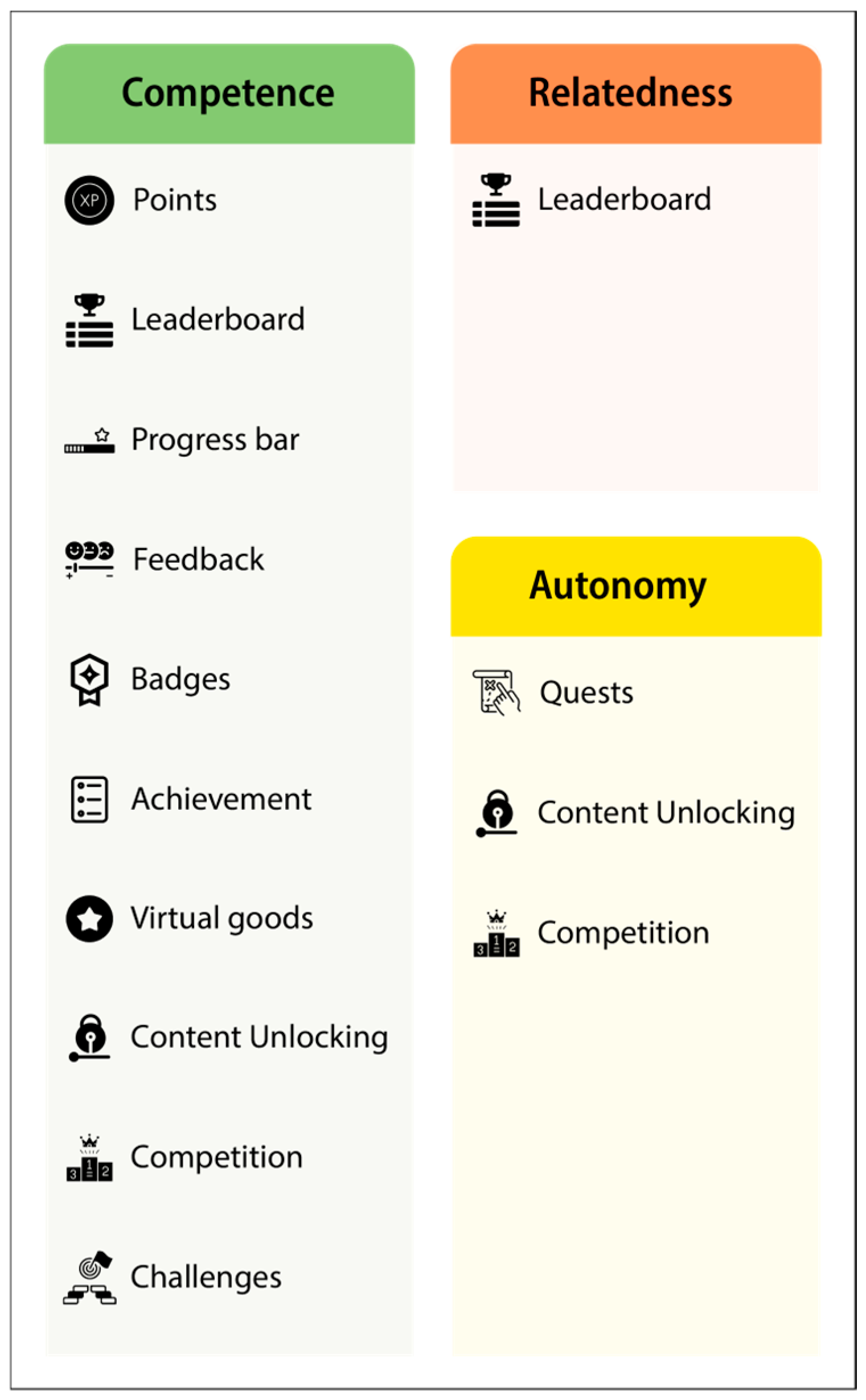
The gamification elements in the GreenKSA application were chosen carefully based on the principles of SDT [14], and systematically aligned with the stages of the TTM to maximize motivational relevance and behavioral impact. Each element targets one or more of the three core psychological needs and is identified by SDT (Figure 2). For competence, the app incorporates points, leaderboards, progress bars, and immediate feedback mechanisms (e.g., an emotional avatar), while badges and achievements serve as symbolic validation of progress and mastery. Challenges and content unlocking promote skill development and consistency, and competition and resource acquisition provide opportunities for users to demonstrate abilities and gain recognition. Relatedness is fostered through leaderboards that create a sense of community, while autonomy is supported by quests offering freedom of choice, optional competition, and content unlocking based on personal effort and decision-making.
As users progress through TTM stages, the motivational strategy shifts from building ecological understanding to reinforcing behavioral mastery and habit resilience; accordingly, competence support evolves from simplifying information in Pre-contemplation, to providing real-time performance feedback in Action, and finally to reinforcing habit mastery cues in Maintenance. Similarly, autonomy support transitions from fostering belief in environmental agency at early stages to protecting self-regulated habit continuity at later stages, while relatedness strategies are primarily activated during the Action and Maintenance stages by framing progress as a shared community contribution.
Each gamification element in GreenKSA was intentionally selected to support core psychological needs derived from the SDT framework, while also being strategically deployed across key TTM-aligned behavior-change stages, ensuring a gradual modulation of motivational strategies from environmental awareness to sustained eco-habit engagement, as summarized in Table 2.
This staged motivational modulation aligns with established SDT formulations by [8] and environmental behavior-change progression principles extended from the original TTM model by [7].

3.2. GreenKSA Artifacts

GreenKSA is structured around two main artifacts: Knowledge Content and Gamified Content, forming an integrated framework that combines environmental education, behavioral theory, gamification principles, and cultural relevance.
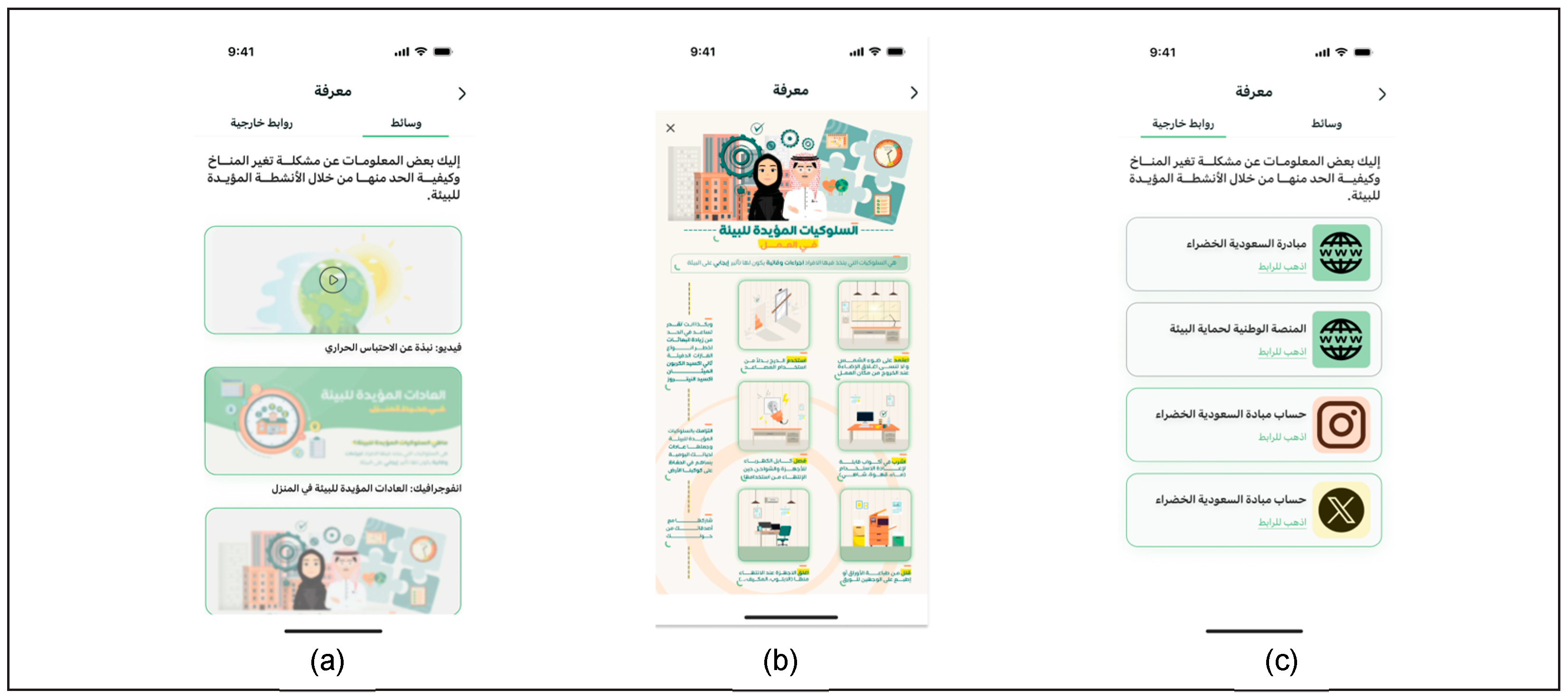
Knowledge Content comprises multimedia materials and infographics designed to enhance users’ understanding of the issue of climate change and daily pro-environmental activities across home, workplace, and mobility contexts (Figure 3a,b). It incorporates references to national initiatives such as the Saudi Green Initiative and the Middle East Green Initiative, situating individual actions within broader environmental strategies (Figure 3c). This content enhances user understanding, encourages reflection, and reinforces the relevance of individual efforts within national sustainability goals.
Gamified Content embeds individual and social motivational elements to support sustained engagement. These gamification mechanics are explicitly positioned as Saudi-identity-anchored innovative adaptations, addressing the evident scarcity of culturally tailored sustainability apps in the region. By embedding national heritage symbols into behavioral feedback loops, GreenKSA introduces a novel, theory-driven cultural intervention paradigm.
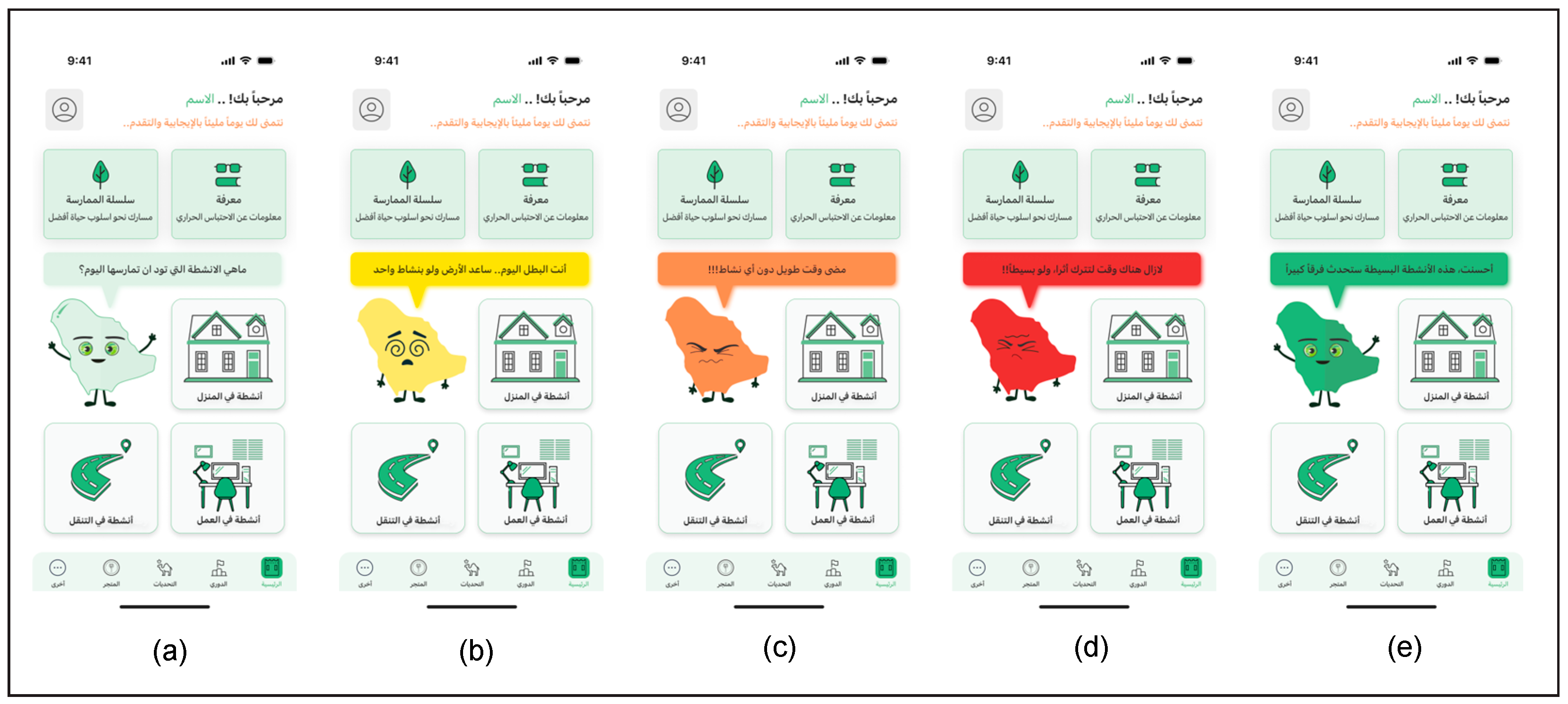
To enhance emotional impact, the Saudi map metaphor provides dynamic feedback: its visual form and encouragement messages change simultaneously to reflect the user’s daily actions (Figure 4). The avatar is designed as a metaphorical Saudi map with eyes represented by the Earth, symbolizing the Kingdom’s global environmental vision. This design fosters a sense of national identity and aligns with initiatives such as the Saudi Green Initiative and the Middle East Green Initiative [7].
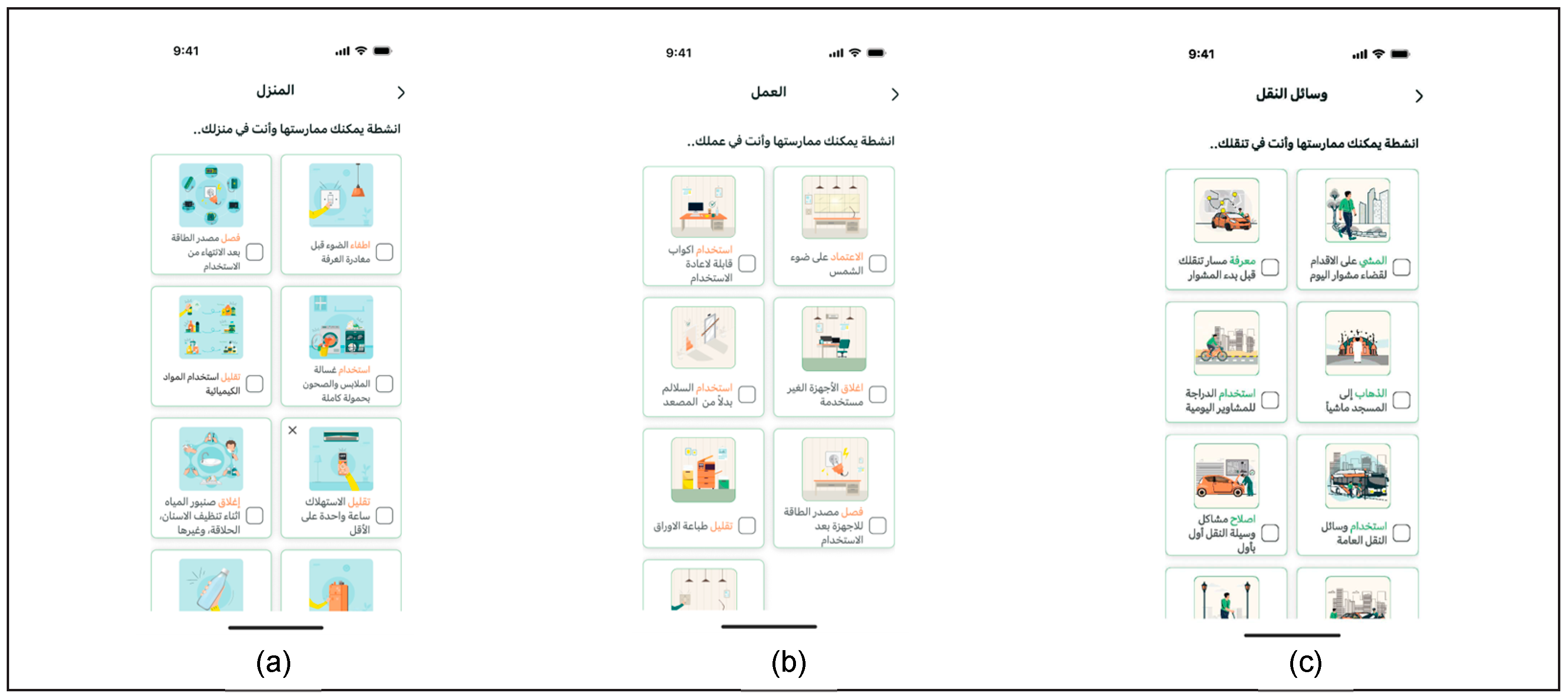
Daily activities in GreenKSA are small, achievable tasks distributed across core environmental domains—energy conservation, water management, and sustainable mobility—within three real-life contexts: home, workplace, and mobility (Figure 5). This structure encourages consistent daily participation and gradual habit formation, recognized as a key driver of sustained behavior change when interventions rely on micro-actions rather than cognitively heavy demands [28].
The app also facilitates cross-domain positive behavioral influence: completing activities in one context (e.g., home energy saving) may encourage engagement in others (e.g., workplace waste reduction or mobility choices). Recent longitudinal evidence confirms that adopting pro-environmental behaviors in one life domain increases the probability of engaging in additional domains when users perceive personal value and conceptual similarity [29,30]. Providing task-level environmental benefit indicators enhances users’ sense of meaning and capability, sustaining intrinsic motivation and reinforcing continued engagement.
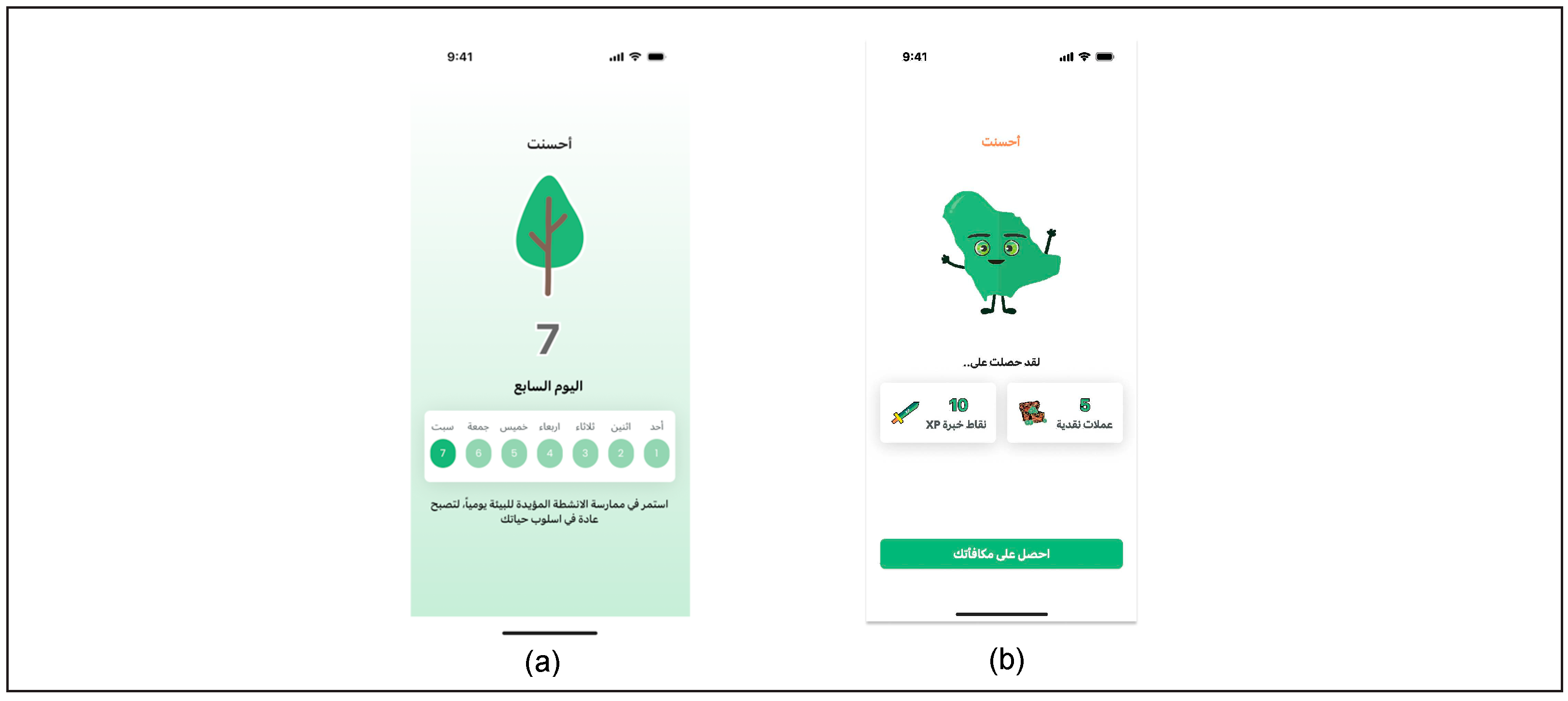
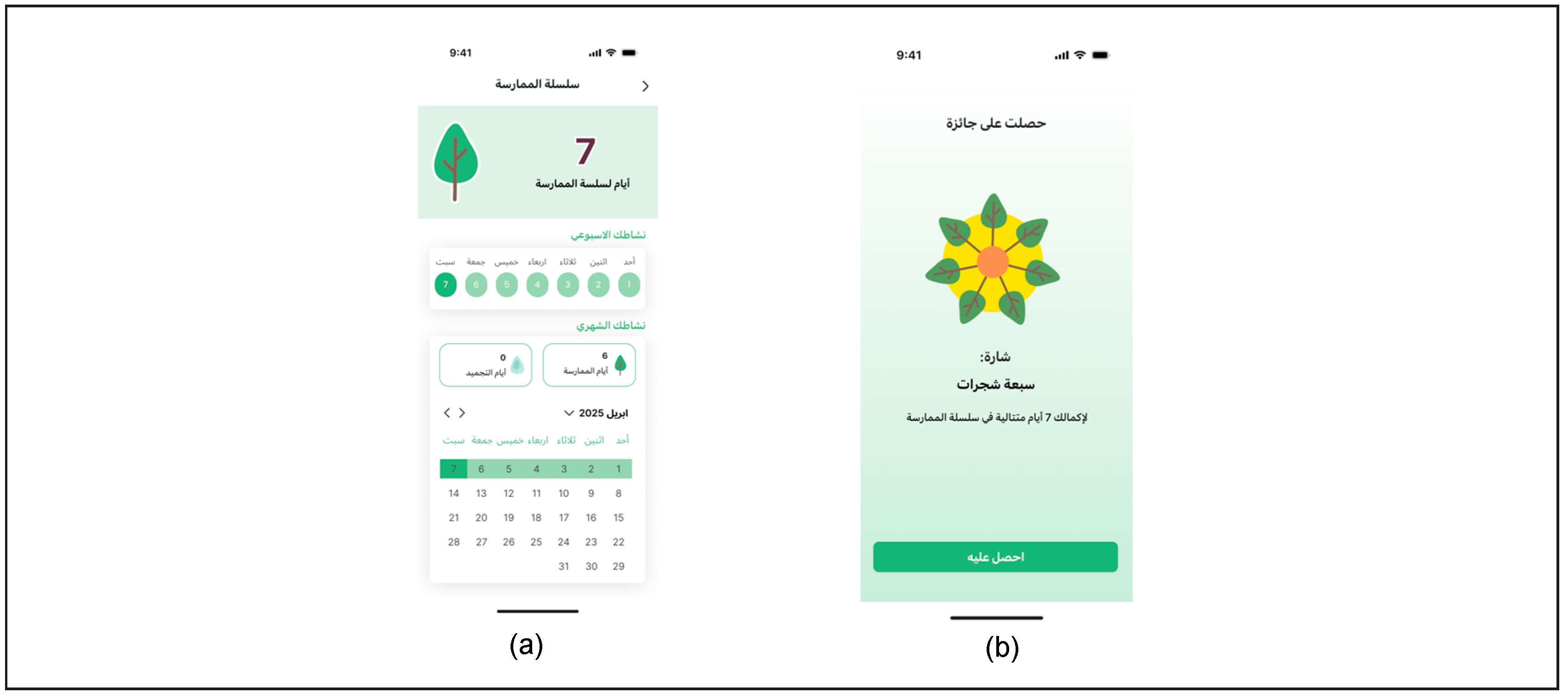
Each day, users log their completed pro-environmental activity using a self-reporting mechanism, the most widely applied behavioral tracking method in digital sustainability interventions, particularly when automated sensing is impractical or effort-heavy, while reinforcing accountability [31]. Completing at least one activity lights up a tree, creating a recurring ecological progress cue that reflects Saudi Arabia’s national greening vision under the Saudi Green Initiative (Figure 6a).
Additionally, each activity in GreenKSA informs users about the positive environmental contribution of completing it. This guidance is intended to raise awareness and strengthen intrinsic motivation, showing how individual actions can collectively support national sustainability goals, without relying on quantitative metrics or aggregate impact calculations.
Immediate rewards reinforce this motivational cycle: coins carry the palm tree emblem, symbolizing growth and prosperity, while XP progression adopts a sword form, functioning as a national achievement marker [14]. This combination supports habit formation, competence, and culturally meaningful ecological progress signals (Figure 6b). The reward system increases progressively as users advance: early streaks (0–9) provide standard rewards, while higher streak ranges (10–19, 20+) yield proportionally greater coins and XP, preventing habituation and reinforcing growth and competence [14,32].
Streaks track consecutive days of task completion, encouraging consistency and accountability [33]. Badges are awarded upon reaching milestones (7, 14, 21, 30 days), (Figure 7), celebrating commitment and reinforcing intrinsic motivation.
GreenKSA’s “Freeze” feature allows users to skip a daily task, addressing potential disengagement from strict streak requirements [32]. Frozen days appear in blue, while missed days without freeze appear in orange, giving immediate visual feedback and helping users interpret progress [28]. This balances accountability with autonomy, supporting long-term adherence to pro-environmental behaviors [14].
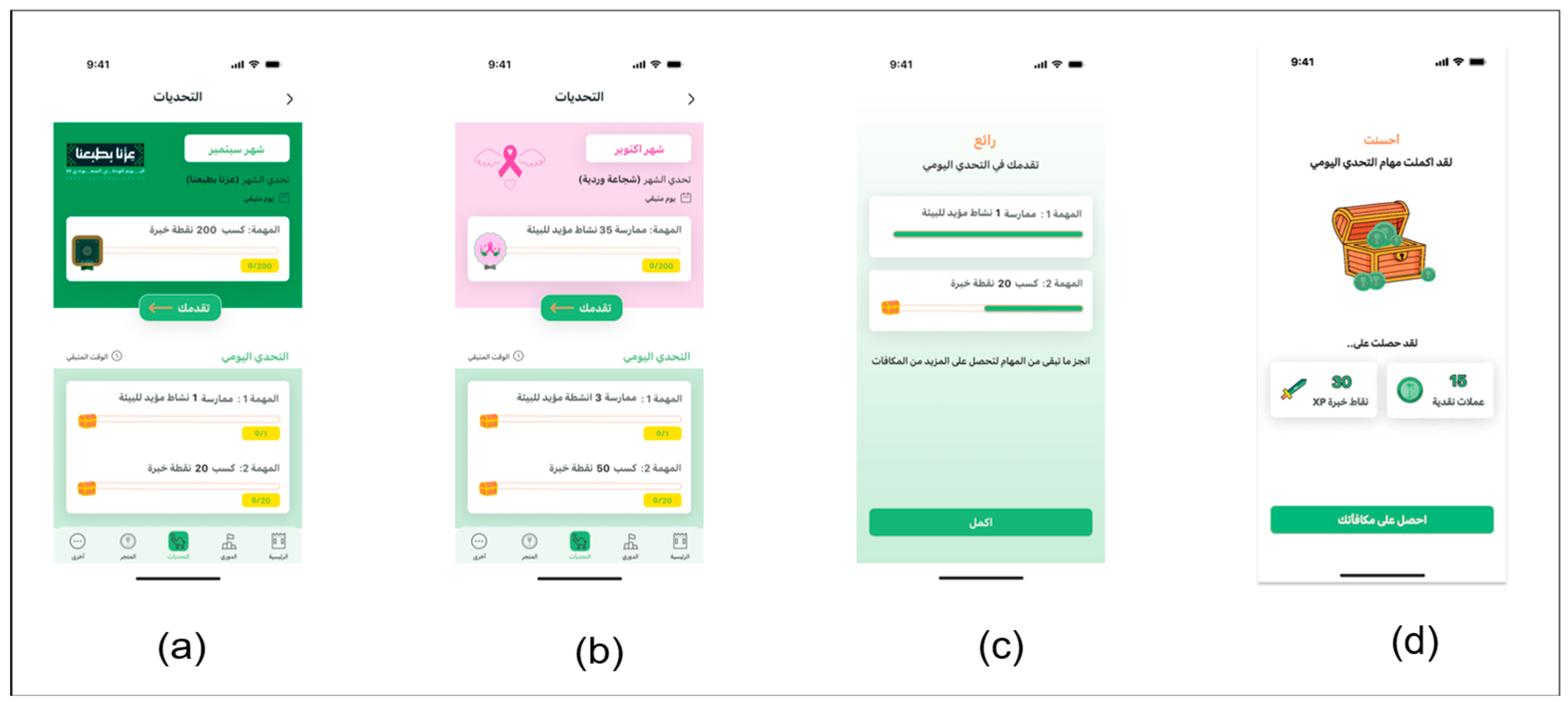
Challenges in GreenKSA are designed to maintain user engagement on both daily and monthly levels, reflecting an innovative approach to gamified behavior design. Monthly challenges are contextualized around significant national and social events (Figure 8), such as Saudi National Day in September and awareness months like Breast Cancer Awareness in October. Upon successful completion of these monthly challenges, users are awarded special badges tied to the specific occasion, providing immediate recognition and reinforcing motivation. Daily challenges provide a variety of manageable tasks, supported by a simplified progress bar that offers clear, intuitive feedback on task completion. Immediate rewards, such as coins and XP, reinforce regular participation and habit formation, while deliberately avoiding reliance solely on extrinsic incentives, which can reduce targeted behaviors [32].
Together, these design choices exemplify a thoughtful gamification strategy that balances user motivation, consistency, and cultural alignment, positioning GreenKSA as a novel and context-sensitive tool for promoting pro-environmental behavior.
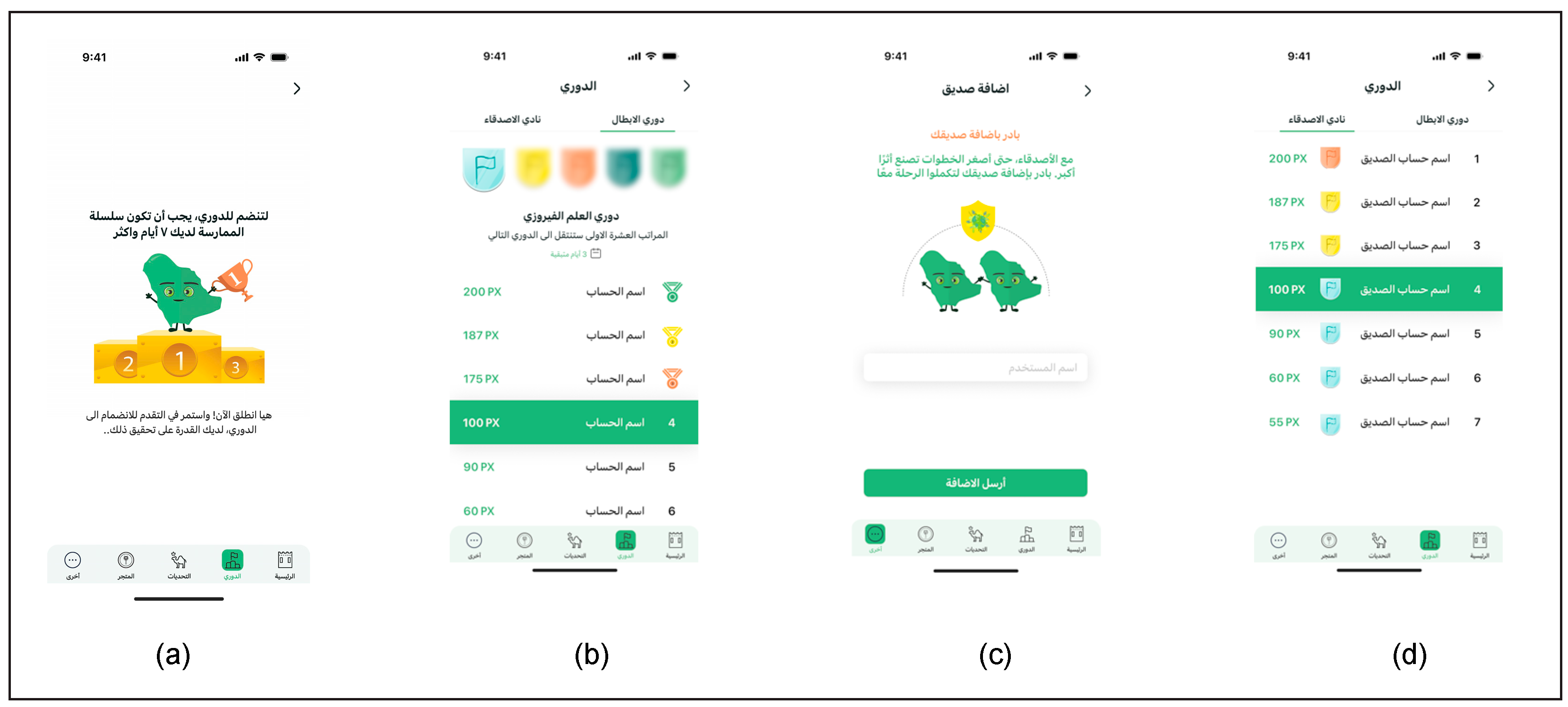
Social motivational elements in GreenKSA are designed to sustain community engagement and encourage healthy competition (Figure 9). Access to the tiered League system—progressing from Turquoise League to Yellow League and higher tiers—is unlocked only after achieving a minimum streak of seven consecutive days, ensuring that participation reflects consistent behavior (Figure 9a,b). Each league tier incorporates the Saudi flag, reinforcing unity and collective progress alongside personal advancement. Within this framework, users are ranked based on XP earned from task completion, with top performers promoted monthly. Complementing this, a personal “Friends Club” leaderboard displays rankings among added friends (Figure 9c,d), fostering both large-scale community engagement and intimate peer competition. Together, these features exemplify an innovative gamification strategy that leverages social motivation to sustain engagement, while embedding culturally relevant cues to strengthen identity and collective action.
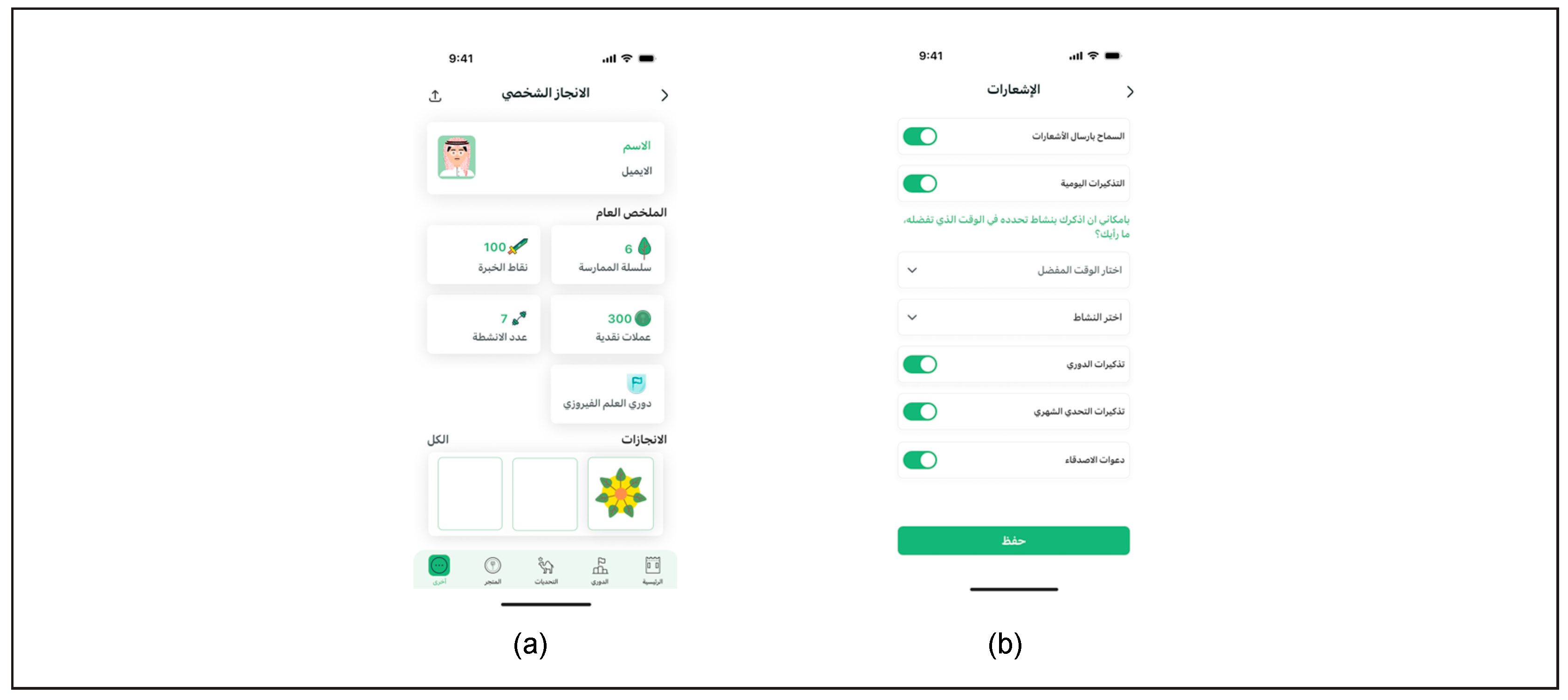
Users can view their personal achievements through a dedicated dashboard that consolidates key metrics, including the total number of activities completed, accumulated coins, experience points (XP), badges earned, and current league tier (Figure 10a). This overview reinforces a sense of progress, mastery, and personal accomplishment, supporting intrinsic motivation and the SDT principles of competence and autonomy. By making achievements visible and trackable, the dashboard encourages continued engagement and sustained participation in pro-environmental behaviors.
Notifications in GreenKSA are designed as timely, context-sensitive prompts that sustain user engagement and encourage consistent participation in pro-environmental behaviors. The system delivers reminders at varying times throughout the day, ensuring users remain attentive and receptive. Additionally, GreenKSA offers a personalization feature, allowing users to select preferred activities and schedule a suitable completion time. In these cases, notifications are sent precisely at the chosen moment, reinforcing user autonomy and commitment. By combining adaptive system-generated reminders with user-defined scheduling, the app ensures that cues are both relevant and actionable, aligning with individual routines and enhancing a sense of ownership over the behavior change process. Research on behavior change technologies supports this approach, showing that personalized and context-sensitive reminders are more effective than generic prompts [28,34], (Figure 10b).
Through this culturally tailored, theory-driven gamified approach, GreenKSA effectively motivates users to adopt and maintain pro-environmental behaviors across daily life contexts. By integrating progressive rewards, streaks, badges, daily and monthly challenges, social engagement mechanisms, personalized notifications, and flexible Freeze options, the app supports sustained intrinsic motivation, habit formation, and consistent participation.
The combination of these features not only fosters personal growth and competence but also strengthens collective environmental awareness and community engagement, positioning GreenKSA as a novel, context-sensitive tool for promoting pro-environmental behavior in Saudi Arabia [14,28,33].

4. Evaluation

The following subsections present the study design, participants, instruments, and procedure used to evaluate GreenKSA proof-of-concept.

4.1. Study Design

To assess the usability and user experience of the GreenKSA prototype, a pilot study was conducted with 10 participants to comprehensively evaluate their perceptions and performance. The participant group included individuals of varied ages, educational backgrounds, and levels of familiarity with mobile applications, reflecting the diversity of the target end users. Participants’ digital interaction reflected regular, everyday mobile app use, and as the prototype prioritized clarity and ease of navigation, no elevated technical proficiency was required, indicating that the design was approachable within general use expectations.
The app primarily targets individuals aged 15 to 40 from the general population in Saudi Arabia, as this cohort represents a digitally active and socially influential segment [35] and encompasses a critical developmental stage for technology-based interventions. A substantial portion of the Saudi population falls within this age range [36], aligning the app’s focus with national sustainability priorities, including the Saudi Green Initiative [3].
Preliminary observations from the pilot indicated no notable differences in usability or task performance across age groups, levels of digital proficiency, or TTM stages (e.g., pre-contemplation vs. action), suggesting that the prototype was generally intuitive and accessible. This evidence supports the app’s potential for broader adoption across diverse user segments.

4.2. Procedure

An online questionnaire along with a link to a downloadable working prototype was sent to participants. Participants accessed the prototype online via a Figma link and interacted with it through the Proto application, which allowed them to explore its features in a realistic, interactive environment. Participants engaged with the GreenKSA prototype by performing core tasks, including completing daily activities, tracking progress, and exploring social features. After this interaction, they completed two standardized evaluation questionnaires: the System Usability Scale (SUS) [37] and the User Experience Questionnaire (UEQ) [38]. Both questionnaires were Arabic-translated versions, as the application is designed for Arabic-speaking users.

4.3. Instruments and Analysis

To evaluate GreenKSA’s usability, the study used the System Usability Scale (SUS), a widely recognized 10-item questionnaire rated on a 5-point Likert scale (1 = Strongly Disagree, 5 = Strongly Agree), producing scores from 0 to 100 [37]. SUS assesses overall user satisfaction and perceived ease of use. User experience (UX) was assessed using the User Experience Questionnaire (UEQ), which measures perceptions of interactive products across six dimensions: attractiveness, perspicuity, efficiency, dependability, stimulation, and novelty [38,39]. Items are rated on a 7-point Likert scale from −3 (very negative) to +3 (very positive).
Insights from both SUS and UEQ evaluations informed the design and implementation of GreenKSA, ensuring usability and engagement were optimized for the target population.

5. Results and Discussion

This section presents the findings of the evaluation study, followed by a discussion of their implications.

5.1. Usability Findings

The data were collected from the SUS and UEQ questionnaires and analyzed to assess the usability and user experience of the GreenKSA application. The combination of these two standardized instruments provided both a usability benchmark (SUS) and a multidimensional perspective on user experience (UEQ).
The distribution of participant responses for all ten SUS items, providing detailed insight into how users perceived the usability of the GreenKSA application illustrated in Table 3.
To calculate the final score, responses to odd-numbered items were adjusted by subtracting one from the raw score, while responses to even-numbered items were adjusted by subtracting the raw score from five. The adjusted scores for all ten items were then summed, yielding a value between 0 and 40. This total was multiplied by 2.5 to convert it to a scale from 0 to 100 [37], representing the overall usability score of the GreenKSA application. SUS scores were interpreted using established benchmarks, where a score of 68 represents the average usability level. Scores higher than this threshold indicate above-average usability, with values approaching 80 or above typically considered “very good” to “excellent” [40,41].
The overall SUS score for the GreenKSA prototype was 91.25, which is well above the average benchmark of 68, indicating excellent usability. This suggests that participants perceived the application as easy to use, consistent, and well-integrated.

5.2. User Experience Findings

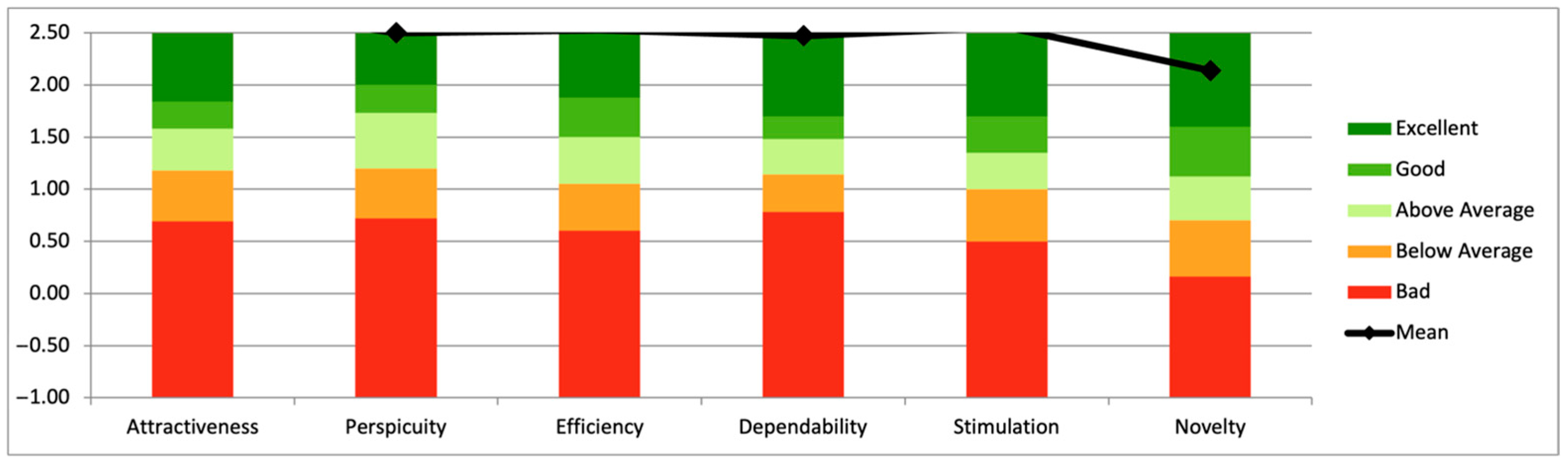
In addition, the User Experience Questionnaire (UEQ) was employed to assess participants’ perceptions of the GreenKSA application across six key dimensions. The questionnaire data were analyzed using the official UEQ Data Analysis Tool (version 12). This tool allows efficient processing of the responses by automatically performing the required transformations and statistical calculation [39]. User Experience was measured with respect to six main dimensions—attractiveness, perspicuity, efficiency, dependability, stimulation, and novelty—each standardized against established benchmark values. Values between −0.8 and 0.8 indicate a neutral evaluation, values above 0.8 indicate a positive evaluation, and values below −0.8 indicate a negative evaluation. In this study, the UEQ dimension scores for illustrated in Table 4, exceeded, reflecting a fully positive user experience across the application, and demonstrating that users found the interface engaging, usable, and motivating [39].
After obtaining the mean value for each dimension, the results were compared with the official UEQ benchmark dataset to evaluate the relative quality of the GreenKSA application against other products as shown in (Figure 11).
Based on Figure 11, overall, participants rated the user experience positively across all UEQ dimensions, reflecting an engaging, pleasant, and motivating interaction with the GreenKSA application. The results demonstrate that users found the app attractive, clear, efficient, and reliable, while also perceiving it as stimulating and innovative. These findings indicate that GreenKSA successfully delivers an enjoyable and inspiring experience that effectively supports its environmental awareness goals.

5.3. Discussion

The findings indicate that the GreenKSA application provided a highly usable and engaging platform for promoting pro-environmental behaviors. Both the SUS (91.25) and UEQ results demonstrated positive evaluations across usability and user experience, reflecting the effectiveness of integrating behavioral theories with gamification. GreenKSA effectively addresses core user needs such as autonomy, competence, and relatedness, while motivational elements like points, challenges, and progress tracking successfully maintain user interest. These results highlight that successful gamified applications rely on thoughtful design integration rather than gamification alone. However, the evaluation focused on usability and user experience, and did not assess long-term behavioral change.
The next direction, currently undergoing, is to evaluate GreenKSA’s impact on behavior change in a longitudinal study. This long-term study aims to promote sustained pro-environmental behaviors among Saudi citizens and investigate its main effect on their behavior change. The results forthcoming will provide valuable insights into the impact of a theoretically grounded and culturally tailored gamified intervention. GreenKSA offers several practical implications for promoting pro-environmental behaviors in Saudi Arabia. By gamifying daily eco-friendly actions such as recycling, energy conservation, and sustainable consumption, the app encourages users to integrate sustainable practices into their everyday routines. Through features like challenges, points, and social sharing, GreenKSA not only enhances individual engagement and motivation but also fosters community-wide awareness and collective action toward environmental sustainability.
In the context of Saudi Arabia’s Vision 2030, which emphasizes environmental sustainability and the development of smart, green cities, GreenKSA can play a pivotal role in supporting national sustainability goals. The app’s ability to track, reward, and visualize users’ contributions aligns with initiatives like the Saudi Green Initiative, promoting energy efficiency, waste reduction, and broader public participation in environmental efforts. By leveraging digital technologies and gamification strategies, GreenKSA has the potential to amplify citizen involvement, shape long-term sustainable behaviors, and contribute directly to the Kingdom’s 2030 environmental targets.

5.4. Limitations and Future

While this pilot evaluation focused on prototype-based usability and included a modest, self-selected participant group, these constraints are considered natural in early usability and HCI-driven design validation. These limitations inform the design of the planned longitudinal study, ensuring a more rigorous evaluation and broader applicability. The longitudinal study will track motivational and behavioral shifts within the same participants over a 1-month period. Key metrics will include intrinsic motivation measured using the Intrinsic Motivation Inventory (IMI), pro-environmental behavior assessed via the Pro-Environmental Behavior Scale (PEBS), and in-app behavioral engagement signals such as daily task completion, streak continuity, league advancement, and reward interaction. Participants will be evaluated at baseline (pre-use) and again at the 1-month follow-up, enabling a within-group assessment of motivation and habit adoption. Future iterations will evaluate the fully developed version of GreenKSA, moving beyond prototype-based usability testing to assess the app’s effectiveness in promoting sustained pro-environmental behavior. A control group will be considered in future larger-scale studies to further enhance internal validity. Recruitment strategies will also be expanded to include a broader spectrum of users beyond early adopters of environmental technologies, strengthening ecological validity and reducing potential self-selection bias. Together, these next steps aim to enhance the depth, reliability, and interpretability of GreenKSA’s potential role. This approach supports the promotion of sustained pro-environmental behavior in real-world contexts.

6. Conclusions

This study aimed to design and evaluate GreenKSA, the first Arabic-supported gamified application tailored to promote pro-environmental behaviors within the Saudi context. The project integrated principles from Self-Determination Theory (SDT) and the Transtheoretical Model (TTM), alongside culturally relevant design elements, to create an engaging and context-appropriate behavioral intervention.
The evaluation results demonstrated excellent usability and a highly positive user experience, indicating that the combination of behavioral theory, gamification design, and cultural alignment can effectively enhance the perceived quality and user interaction with the application. These findings highlight the importance of grounding environmental applications in established motivational frameworks while adapting them to local cultural settings.
Overall, the study provides an initial feasibility assessment that supports the potential of GreenKSA as a tool for fostering pro-environmental habits. Future work will involve larger-scale deployments, longitudinal assessment of behavior change, and the integration of additional environmental impact tracking features to further strengthen the application’s effectiveness.

Author Contributions

All authors contributed to the study’s conception and design. Material preparation, data collection, and analysis were performed by the authors. All authors have read and agreed to the published version of the manuscript.

Funding

The project was funded by KAU Endowment (WAQF) at king Abdulaziz University, Jeddah, Saudi Arabia. The authors, therefore, acknowledge with thanks WAQF and the Deanship of Scientific Research (DSR) for technical and financial support.

Institutional Review Board Statement

Ethical review and approval were waived for this study by King Abdulaziz University due to legal regulations regarding anonymous survey responses that did not collect sensitive personal information.

Informed Consent Statement

Informed consent was obtained from all subjects involved in the study.

Data Availability Statement

All data supporting the findings of this study are included within the article. Additional information can be obtained from the corresponding author upon reasonable request.

Conflicts of Interest

The authors declare that they have no known competing financial or non-financial interests that could have appeared to influence the work reported in this paper.

References

  1. United Nations. The Sustainable Development Goals Report 2021. Available online: https://unstats.un.org/sdgs/report/2021/ (accessed on 3 December 2025).
  2. Intergovernmental Panel on Climate Change (IPCC). Climate Change 2021—The Physical Science Basis: Working Group I Contribution to the Sixth Assessment Report of the Intergovernmental Panel on Climate Change; Cambridge University Press: Cambridge, UK, 2023. [Google Scholar]
  3. Saudi Green Initiative. Available online: https://www.vision2030.gov.sa/explore/projects/saudi-green-initiative?utm_source=chatgpt.com (accessed on 19 October 2025).
  4. Fogg, B. Persuasive Technology: Using Computers to Change What We Think and Do. Ubiquity 2002, 2002, 5. [Google Scholar] [CrossRef]
  5. Ixmeier, A.; Kranz, J. The Effectiveness of Digital Interventions to Promote Pro-Environmental Behaviour: A Meta-Analysis. In Proceedings of the 2024 European Conference on Information Systems, Paphos, Cyprus, 13–19 June 2024. [Google Scholar]
  6. Li, L.; Hew, K.F.; Du, J. Gamification enhances student intrinsic motivation, perceptions of autonomy and relatedness, but minimal impact on competency: A meta-analysis and systematic review. Educ. Technol. Res. Dev. 2024, 72, 765–796. [Google Scholar] [CrossRef]
  7. Deterding, S.; Dixon, D.; Khaled, R.; Nacke, L. From game design elements to gamefulness: Defining “gamification”. In Proceedings of the 15th International Academic MindTrek Conference: Envisioning Future Media Environments, Tampere, Finland, 28–30 September 2011; Association for Computing Machinery: New York, NY, USA, 2011; pp. 9–15. [Google Scholar]
  8. Deci, E.L.; Ryan, R.M. The “What” and “Why” of Goal Pursuits: Human Needs and the Self-Determination of Behavior. Psychol. Inq. 2000, 11, 227–268. [Google Scholar] [CrossRef]
  9. Boncu, Ș.; Candel, O.-S.; Popa, N.L. Gameful Green: A Systematic Review on the Use of Serious Computer Games and Gamified Mobile Apps to Foster Pro-Environmental Information, Attitudes and Behaviors. Sustainability 2022, 14, 10400. [Google Scholar] [CrossRef]
  10. Werbach, K.; Hunter, D. For the Win: How Game Thinking can Revolutionize Your Business; Wharton School Press: Philadelphia, PA, USA, 2012. [Google Scholar]
  11. Prochaska, J.O.; Velicer, W.F. The Transtheoretical Model of Health Behavior Change. Am. J. Health Promot. 1997, 12, 38–48. [Google Scholar] [CrossRef]
  12. Iria, J.; Fonseca, N.; Cassola, F.; Barbosa, A.; Soares, F.; Coelho, A.; Ozdemir, A. A gamification platform to foster energy efficiency in office buildings. Energy Build. 2020, 222, 110101. [Google Scholar] [CrossRef]
  13. Novo, C.; Zanchetta, C.; Goldmann, E.; de Carvalho, C.V. The Use of Gamification and Web-Based Apps for Sustainability Education. Sustainability 2024, 16, 3197. [Google Scholar] [CrossRef]
  14. Gao, F. Advancing Gamification Research and Practice with Three Underexplored Ideas in Self-Determination Theory. TechTrends 2024, 68, 661–671. [Google Scholar] [CrossRef]
  15. Cellina, F.; Lobsiger-Kägi, E.; Wemyss, D.; Profeta, G.; Granato, P. Households in energy transition: Promoting household energy-sufficient routines via app-based peer-to-peer interaction. Environ. Innov. Soc. Transit. 2024, 52, 100868. [Google Scholar] [CrossRef]
  16. Mulcahy, R.; Russell-Bennett, R.; Iacobucci, D. Designing gamified apps for sustainable consumption: A field study. J. Bus. Res. 2020, 106, 377–387. [Google Scholar] [CrossRef]
  17. Koroleva, K.; Melenhorst, M.; Novak, J.; Herrera Gonzalez, S.L.; Fraternali, P.; Rizzoli, A.E. Designing an integrated socio-technical behaviour change system for energy saving. Energy Inform. 2019, 2, 30. [Google Scholar] [CrossRef]
  18. Oppong-Tawiah, D.; Webster, J.; Staples, S.; Cameron, A.-F.; Ortiz de Guinea, A.; Hung, T.Y. Developing a gamified mobile application to encourage sustainable energy use in the office. J. Bus. Res. 2020, 106, 388–405. [Google Scholar] [CrossRef]
  19. Yu, Y.; Yi, S.; Nan, X.; Lo, L.Y.-H.; Shigyo, K.; Xie, L.; Wicaksana, J.; Cheng, K.-T.; Qu, H. FoodWise: Food Waste Reduction and Behavior Change on Campus with Data Visualization and Gamification. In Proceedings of the 6th ACM SIGCAS/SIGCHI Conference on Computing and Sustainable Societies, Cape Town, South Africa, 16–19 August 2023; Association for Computing Machinery: New York, NY, USA, 2023; pp. 76–83. [Google Scholar]
  20. Charkova, D.A. Utilizing gamification to promote pro-sustainable behavior among information technology students. Discov. Educ. 2024, 3, 21. [Google Scholar] [CrossRef]
  21. Marconi, A.; Ferron, M.; Loria, E.; Massa, P. Play&Go, an Urban Game Promoting Behaviour Change for Sustainable Mobility. Interact. Des. Archit. 2019, 40, 24–25. [Google Scholar] [CrossRef]
  22. Petersen, S.A.; Petersen, I.; Ahcin, P. Smiling Earth—Raising Awareness among Citizens for Behaviour Change to Reduce Carbon Footprint. Energies 2022, 13, 5932. [Google Scholar] [CrossRef]
  23. Cellina, F.; Bucher, D.; Mangili, F.; Veiga Simão, J.; Rudel, R.; Raubal, M. A Large Scale, App-Based Behaviour Change Experiment Persuading Sustainable Mobility Patterns: Methods, Results and Lessons Learnt. Sustainability 2019, 11, 2674. [Google Scholar] [CrossRef]
  24. Sailer, M.; Hense, J.; Mandl, H.; Klevers, M. Psychological Perspectives on Motivation through Gamification. Interact. Des. Archit. 2013, 19, 28–37. [Google Scholar] [CrossRef]
  25. Novak, J.; Melenhorst, M.; Micheel, I.; Pasini, C.; Fraternali, P.; Rizzoli, A.E. Integrating behavioural change and gamified incentive modelling for stimulating water saving. Environ. Model. Softw. 2018, 102, 120–137. [Google Scholar] [CrossRef]
  26. Bower, I.S.; Clark, G.M.; Tucker, R.; Hill, A.T.; Lum, J.A.G.; Mortimer, M.A.; Enticott, P.G. Built environment color modulates autonomic and EEG indices of emotional response. Psychophysiology 2022, 59, e14121. [Google Scholar] [CrossRef]
  27. Hanafy, I.; Sanad, R. A Cross-cultural study of emotional Responses on Colours. Glob. J. Humanit. Soc. Sci. 2016, 2, 53–60. [Google Scholar] [CrossRef][Green Version]
  28. Fogg, B. A behavior model for persuasive design. In Proceedings of the 4th International Conference on Persuasive Technology, Claremont, CA, USA, 26–29 April 2009; Association for Computing Machinery: New York, NY, USA, 2009; pp. 1–7. [Google Scholar]
  29. Thøgersen, J.; Zhang, T. Spillover from general and specific pro-environmental behavior to climate-friendly choices and policy Acceptance: The mediating role of psychological engagement. J. Environ. Psychol. 2025, 106, 102718. [Google Scholar] [CrossRef]
  30. Nash, N.; Whitmarsh, L.; Capstick, S.; Thøgersen, J.; Gouveia, V.; de Carvalho Rodrigues Araújo, R.; Harder, M.K.; Wang, X.; Liu, Y. Reflecting on Behavioral Spillover in Context: How Do Behavioral Motivations and Awareness Catalyze Other Environmentally Responsible Actions in Brazil, China, and Denmark? Front. Psychol. 2019, 10, 788. [Google Scholar] [CrossRef]
  31. Lange, F.; Dewitte, S. Measuring pro-environmental behavior: Review and recommendations. J. Environ. Psychol. 2019, 63, 92–100. [Google Scholar] [CrossRef]
  32. Richter, G.; Raban, D.R.; Rafaeli, S. Studying Gamification: The Effect of Rewards and Incentives on Motivation. In Gamification in Education and Business; Reiners, T., Wood, L.C., Eds.; Springer International Publishing: Cham, Switzerland, 2015; pp. 21–46. ISBN 978-3-319-10208-5. [Google Scholar]
  33. Mehr, K.S.; Silverman, J.; Sharif, M.A.; Barasch, A.; Milkman, K.L. The motivating power of streaks: Increasing persistence is as easy as 1, 2, 3. Organ. Behav. Hum. Decis. Process. 2025, 187, 104391. [Google Scholar] [CrossRef]
  34. Zhu, Y.; Long, Y.; Wang, H.; Lee, K.P.; Zhang, L.; Wang, S.J. Digital Behavior Change Intervention Designs for Habit Formation: Systematic Review. J. Med. Internet Res. 2024, 26, e54375. [Google Scholar] [CrossRef] [PubMed]
  35. Saudi Communications, Space, and Technology Commission Saudi Internet Usage Report 2023. Available online: https://www.cst.gov.sa/ (accessed on 20 November 2024).
  36. Population Estimates by Gender, Nationality, and Region 2010–2022. Available online: https://www.stats.gov.sa/w/%D8%A7%D9%84%D8%AA%D9%82%D8%AF%D9%8A%D8%B1%D8%A7%D8%AA-%D8%A7%D9%84%D8%B3%D9%83%D8%A7%D9%86%D9%8A%D8%A9-%D9%85%D8%B9-%D8%AA%D8%B5%D9%86%D9%8A%D9%81%D9%87%D8%A7-%D8%AD%D8%B3%D8%A8-%D8%A7%D9%84%D9%86%D9%88%D8%B9-%D9%88%D8%A7%D9%84%D8%AC%D9%86%D8%B3%D9%8A-2 (accessed on 20 November 2024).
  37. Brooke, J. SUS—A quick and dirty usability scale. Usability Eval. Ind. 1996, 189, 4–7. [Google Scholar]
  38. Laugwitz, B.; Held, T.; Schrepp, M. Construction and Evaluation of a User Experience Questionnaire. In Proceedings of the HCI and Usability for Education and Work; Holzinger, A., Ed.; Springer: Berlin/Heidelberg, Germany, 2008; pp. 63–76. [Google Scholar]
  39. Schrepp, M. User Experience Questionnaire Handbook; SAP Research: Waldorf, Germany, 2015. [Google Scholar]
  40. Bangor, A.; Kortum, P.; Miller, J. Determining What Individual SUS Scores Mean: Adding an Adjective Rating Scale. J. User Exp. 2009, 4, 114–123. [Google Scholar]
  41. Lewis, J.; Sauro, J. Benchmarks for the System Usability Scale. J. User Exp. 2018, 13, 158–167. [Google Scholar]
Figure 1. GreenKSA logo and app color palette.
Sustainability 18 00692 g001
Figure 2. GreenKSA Gamification Elements-SDT.
Sustainability 18 00692 g002
Figure 3. GreenKSA knowledge content (معرفة): (a) environmental multimedia knowledge (وسائط), (b) infographic of pro-environmental behaviors in works, and (c) references to national sustainability initiatives.
Sustainability 18 00692 g003
Figure 4. Graphical User Interface (GUI), and KSA Metaphor. (a) Pending–initial state while waiting; (b) Anxious–no activity until 3:00 pm; (c) Worried–no activity occurs until 9:00; (d) Angry no activity until 11:00 pm; (e) happy–at least one activity completed.
Sustainability 18 00692 g004
Figure 5. GreenKSA activities dashboard (a) home activities (home quests), (b) workplace activities (workplace quests), and (c) transportation activities (transportation quests).
Sustainability 18 00692 g005
Figure 6. GreenKSA Activity complete. (a) day lightning Visual progress; (b) coins and XP rewards.
Sustainability 18 00692 g006
Figure 7. Some GreenKSA app screens. (a) streak screen; (b) milestone 7 days badge.
Sustainability 18 00692 g007
Figure 8. GreenKSA Challenges. (a) Monthly challenge (September) and daily challenge; (b) Monthly challenge (October); (c) progress bar of daily challenge tasks; (d) daily challenge tasks rewards (coins, XP).
Sustainability 18 00692 g008
Figure 9. GreenKSA social features. (a) league locked before achieving 7 streak days; (b) GreenKSA community league and leaderboard; (c) add a friend screen; (d) Friends Club” leaderboard.
Sustainability 18 00692 g009
Figure 10. Some GreenKSA apps’ other screens: (a) GreenKSA personal achievements; (b) GreenKSA Notifications setting.
Sustainability 18 00692 g010
Figure 11. UEQ Benchmark Diagram of GreenKSA.
Sustainability 18 00692 g011
Table 1. Comparative Analysis of Gamified Sustainability Tools and GreenKSA.
Related WorkTool TypeFeatures & Engagement MechanicsTheory IntegrationCultural AdaptationMulti-Domain Coverage
[13]Web AppDaily eco-missions,
Progress tracking,
Feedback,
Not explicitly grounded in a unified behavioral frameworkNot tailored to specific cultureIncludes classifications of environmental habits.
[15]Mobile appFeedback,
Peer comparison,
Usage tracking
No explicit behavior-change theory integratedNot tailored to specific cultureEnergy consumption in households
[18]Mobile appEnergy awareness + dashboard,
Competitions,
Personalized messages
Not operationalized as a unified frameworkNot tailored to specific cultureEnergy consumption,
Workplace context
[19]Web appFood-saving tasks,
Data dashboard, Feedback,
Reminders
Not operationalized as a unified frameworkNot tailored to specific cultureFocused on food waste, Campus context (students)
[20]Online platformQuizzes,
Team tasks,
Rewards, Leaderboard, Feedback
Not explicitly grounded in a unified behavioral frameworkNot tailored to specific cultureAcademic context (university)
[21]Mobile appGamified mobility tasks,
Challenges,
Scoring,
Leaderboard, Behavior tracking
Not explicitly a unified behavioral frameworkNot tailored to specific cultureFocused on mobility
[22]Mobile appCO2 visualization, transport & energy Data tracking,
Progress feedback
TTM operationalized as behavior-change frameworkNot tailored to specific cultureHousehold heating, and transportation
[23]Mobile appMobility challenges,
Eco-feedback,
Goal-setting,
Rewards,
Social comparison
TTM fully operationalized as behavior-change framework”Not tailored to specific cultureFocused on mobility
(our app)Mobile appKnowledge content,
Quests,
Points,
Badges,
Streaks,
Freezes,
Leaderboards (friends & community),
Dashboard,
Notifications,
Challenges,
Progress tracking
SDT + TTM fully integrated across app stagesSaudi-specific cultural elementsHome, workplace, mobility (context-segmented)
Table 2. GreenKSA Features, Gamification elements, and SDT needs through TTM.
Gamification Element-App FeaturesSupported SDT Needs Conceptual TTM Stage Alignment & Role
Multimedia Content
(Figure 3)
CompetenceSupports early awareness building in Pre-contemplation and strengthens confidence in ability to adopt PEB during Contemplation by making ecological knowledge clear and actionable.
Feedback
(Figure 4)
CompetenceProvides real-time behavioral reflection, guiding correct action interpretation in Action and offering recurring motivation cues to sustain habits during Maintenance.
Quests
(Figure 5)
AutonomyEnables users in initial TTM stages to believe that environmental action is possible, increases self-confidence during Action, and reinforces habit ownership during Maintenance through optional task flexibility.
Points
(Figure 6)
CompetenceProvides immediate reinforcement for daily PEB during Action and strengthens perceived skill growth to support consistent habit performance during Maintenance.
Badges
(Figure 7)
CompetenceEarned at meaningful milestones to celebrate consistency, reinforcing motivation momentum across later TTM stages without becoming the sole driver of action.
Streak
(Figure 7)
Autonomy,
Competence
Reinforces voluntary daily engagement during Action and supports continued habit building during Maintenance.
Progress Bar
(Figure 8)
CompetenceSupports self-monitoring during Action and reinforces ongoing achievement perception and long-term consistency cues during Maintenance.
Challenges
(Figure 8)
CompetenceStructures goal-oriented participation in Action and strengthens habit stability and routine reinforcement during Maintenance.
Leaderboards
(Figure 9)
Relatedness,
Competence
Encourages social motivation and shared progress, supporting engagement continuation in Action and commitment reinforcement in Maintenance by linking performance to community contribution
Content Unlocking
(Figure 9)
Autonomy,
Competence
Rewards consistency by unlocking new features, encouraging progression during Action and reinforcing sustained engagement in Maintenance.
Competition
(Figure 9)
Autonomy,
Competence
Encourages self-chosen participation in the Action stage and strengthens perceived ability to perform pro-environmental tasks, as ranking progress functions as a motivational achievement cue rather than external pressure.
Achievement Dashboard
(Figure 10)
CompetenceConsolidates personal progress visibility, increasing self-efficacy and reinforcing internal satisfaction during Action and Maintenance.
Notifications
(Figure 10)
CompetencePrompts daily PEB at adaptive or self-selected times, supporting decision ownership in Action and continued participation encouragement in Maintenance.
FreezesAutonomy,
Competence
Allows occasional pausing without penalty during Action, protecting habit continuity and lowering disengagement risk during Maintenance.
Table 3. Evaluation of SUS responses.
Question No.QuestionScore
Q1I think that I would like to use this system frequently.3.6
Q2I found the system unnecessarily complex.3.7
Q3I thought the system was easy to use.3.5
Q4I think that I would need the support of a technical person to be able to use this system.3.7
Q5I found the various functions in this system were well integrated.3.6
Q6I thought there was too much inconsistency in this system.3.8
Q7I would imagine that most people would learn to use this system very quickly.3.4
Q8I found the system very cumbersome to use.3.8
Q9I felt very confident using the system.3.6
Q10I needed to learn a lot of things before I could get going with this system.3.8
Table 4. Evaluation of UEQ dimensions.
DimensionsMeanAssessment Evaluation
attractiveness2.7Positive Evaluation
perspicuity2.5Positive Evaluation
efficiency2.5Positive Evaluation
dependability2.4Positive Evaluation
stimulation2.5Positive Evaluation
novelty2.1Positive Evaluation
Disclaimer/Publisher’s Note: The statements, opinions and data contained in all publications are solely those of the individual author(s) and contributor(s) and not of MDPI and/or the editor(s). MDPI and/or the editor(s) disclaim responsibility for any injury to people or property resulting from any ideas, methods, instructions or products referred to in the content.