Article

Mapping Stakeholder Perspectives for Sustainability Transitions: The Case of Lithium-Ion Battery Recycling


1
K1-MET GmbH, Vordernbergerstraße 12, 8700 Leoben, Austria
2
Chair of Waste Processing Technology and Waste Management, Technical University of Leoben, Franz-Josef-Straße 18, 8700 Leoben, Austria
3
Saubermacher Dienstleistungs AG, Hans-Roth-Straße 1, 8073 Feldkirchen bei Graz, Austria
*
Author to whom correspondence should be addressed.
Sustainability 2026, 18(2), 654; https://doi.org/10.3390/su18020654
Submission received: 7 October 2025 / Revised: 27 November 2025 / Accepted: 3 December 2025 / Published: 8 January 2026

Abstract

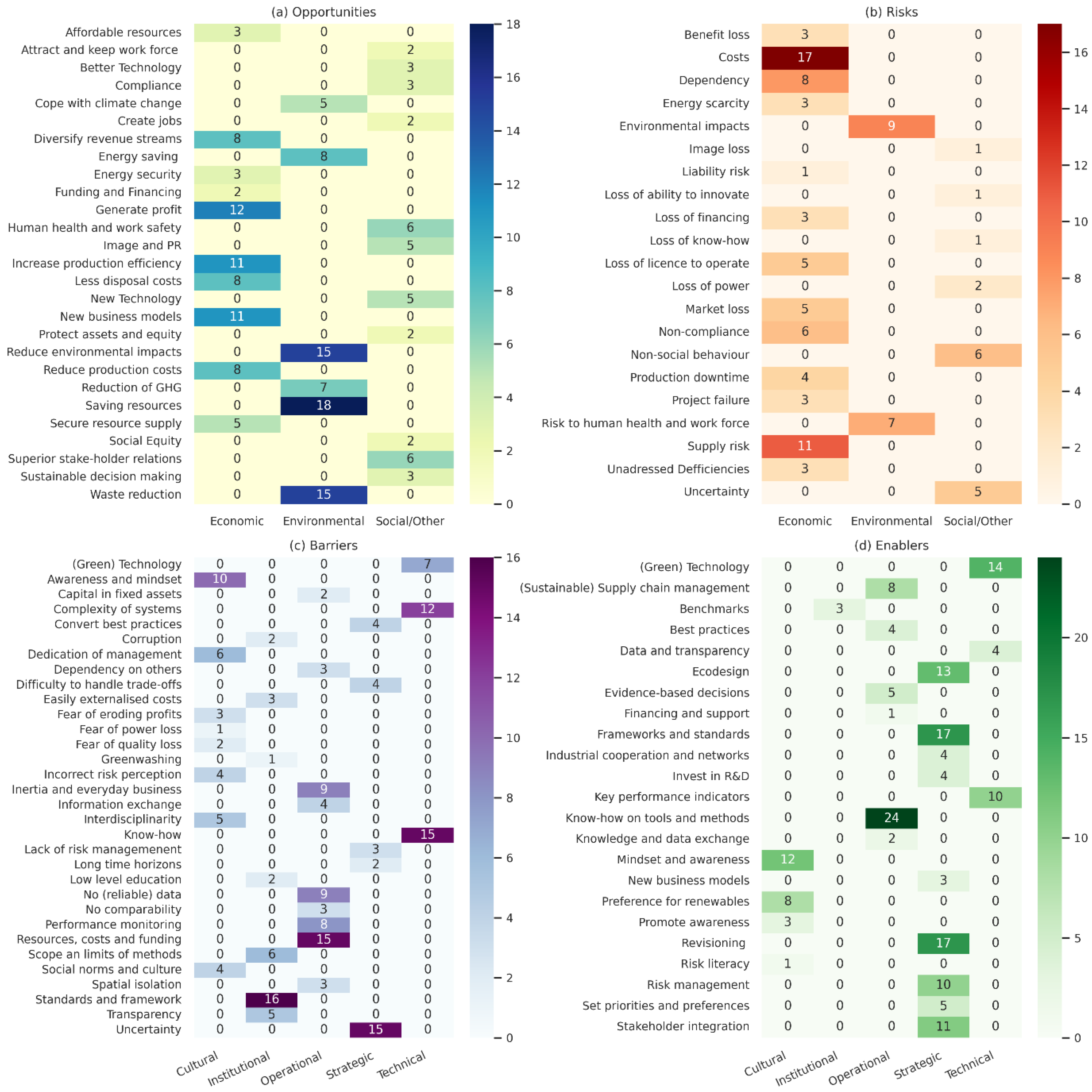
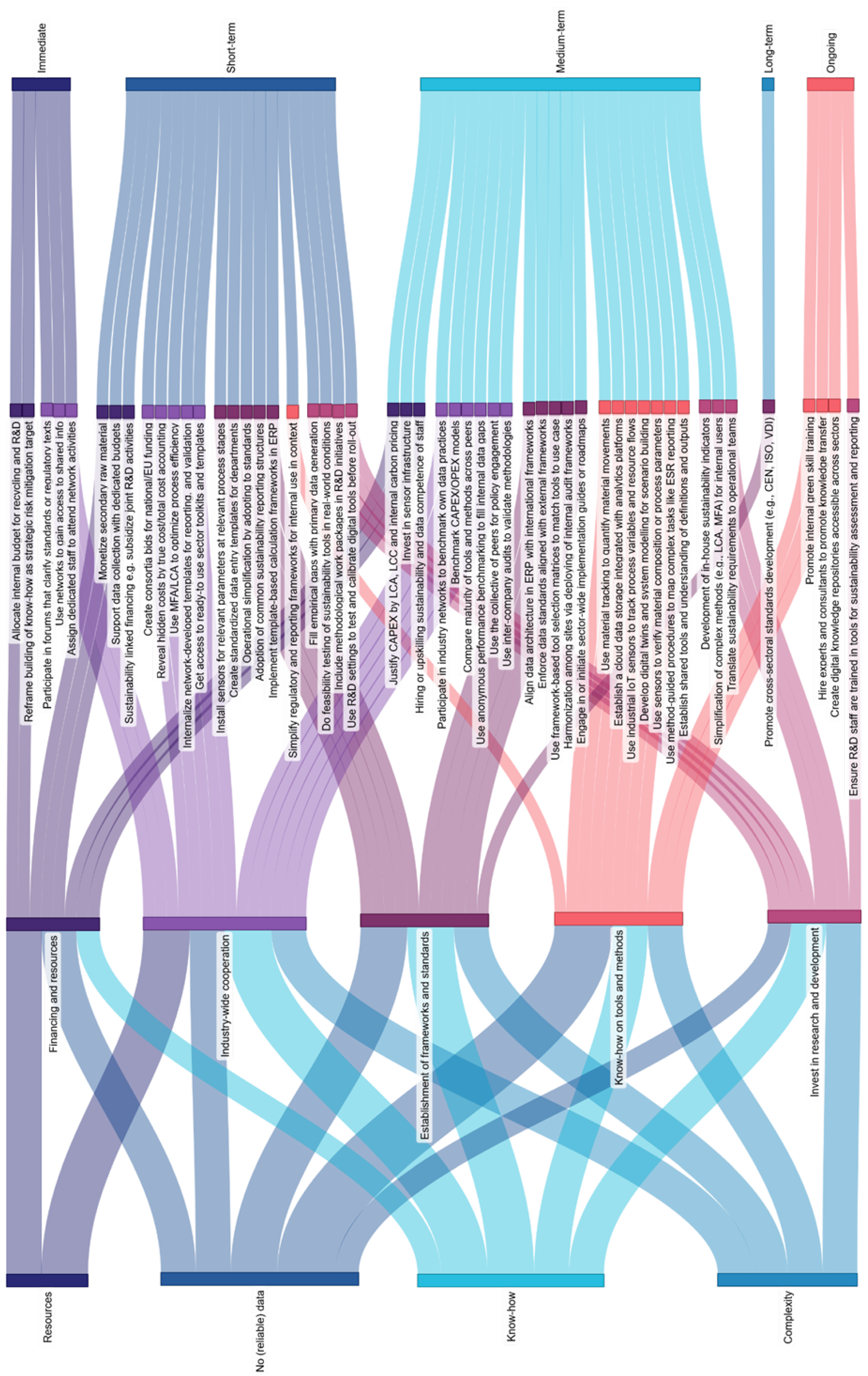
Lithium-ion battery (LIB) recycling has become a key area where sustainability goals and circular economy ambitions meet practical challenges. While research often focuses on regulatory or technological solutions, real progress depends on stakeholder action and alignment. This paper combines a literature review and a stakeholder survey (n = 26) to map risks, opportunities, barriers, and interventions, formulating a roadmap for sustainable LIB recycling from the stakeholder perspective. The literature identified 27 opportunities, 21 risks, 32 barriers, and 23 enablers across strategic, operational, institutional, cultural, and technical domains. The study confirms that an implementation gap persists between ambition and practice. Stakeholders know the opportunities, but structural barriers, limited resources, and insufficient attention to cultural enablers dampen progress. The barrier–intervention mapping and the derived roadmap show that interventions must be sequenced strategically: securing resources first, then building data infrastructures and strengthening know-how to finally reduce complexity. The findings show that sustainability progress depends less on technical capability than on sound resource management, reliable data, and institutional support offering a transferable framework to close implementation gaps, as presented in this study, and supports future research on how stakeholder alignment can accelerate sustainable transitions across industries.
Keywords: stakeholder perspectives; sustainability governance; socio-technical transition; barrier–intervention mapping; risk-opportunity mapping; implementation gap; circular economy; lithium-ion battery recycling stakeholder perspectives; sustainability governance; socio-technical transition; barrier–intervention mapping; risk-opportunity mapping; implementation gap; circular economy; lithium-ion battery recycling