Next Article in Journal
Mapping Stakeholder Perspectives for Sustainability Transitions: The Case of Lithium-Ion Battery Recycling
Previous Article in Journal
Regional Energy Transition: Decoupling CO2 Emissions and Policy Perspectives
error_outline You can access the new MDPI.com website here. Explore and share your feedback with us.
 
 
Article

Rapid Minimum Wage Increases and Societal Sustainability: Evidence from Labor Productivity in China

School of Business, East China University of Science and Technology, Shanghai 200237, China
*
Author to whom correspondence should be addressed.
Sustainability 2026, 18(2), 651; https://doi.org/10.3390/su18020651
Submission received: 22 October 2025 / Revised: 28 December 2025 / Accepted: 29 December 2025 / Published: 8 January 2026

Abstract

Minimum wage is an important tool for reducing income inequality and supporting social welfare. Consequently, governments around the world have established minimum wage systems. As such, minimum wage policies connect distributive justice with the economy’s capacity to sustain broad-based welfare over time, placing the equity–efficiency trade-off at the center of societal sustainability. However, the micro-level impact of the minimum wage system on firms has always been an important topic for scholars. This study uses panel data from listed Chinese manufacturing firms over a period from 2005 to 2021 to construct an indicator of the minimum wage standards implemented in the firm locations. Employing the multiple linear regression model, this paper empirically examines the effects of minimum wage on labor productivity. The empirical findings demonstrate that minimum wage significantly reduced the sample firms’ labor productivity. Moreover, the negative impact of the minimum wage was primarily concentrated among non-state-owned firms, labor-intensive firms, firms operating in industries characterized by intense product market competition, firms situated in regions with strong legal protections, firms with comparatively low average employee wages, and export-oriented firms. Subsequently, this study delves into the mechanism through which minimum wage negatively affects labor productivity. We find that implementation of minimum wage leads to a reduction in corporate investment, indicating that there is no significant substitution relationship between capital and labor. These adjustment margins provide microfoundations through which statutory wage floors can influence the resilience and inclusiveness of development, indicating that the pace and design of wage increases should balance income protection with the preservation of productive capacity to support sustainable human development—grounded in steady productivity growth, equitable income distribution, and stable firm investment. Our findings contribute to a better understanding of the mechanism through which minimum wage affects labor productivity in theory, while concurrently furnishing policy insights for the optimization of the minimum wage system and maintaining sustainable societal development in practice.

1. Introduction

Income inequality breeds social and economic instability, posing a threat to the foundations of sustainable societal development. As a core policy instrument, minimum wage is designed to guarantee households’ access to basic necessities, which serves as a prerequisite for inclusive and sustainable development [1]. Herein, we empirically explore how wage regulation affects firms’ labor productivity, an important trade-off that governments and scholars grapple with when reconciling social sustainability and economic efficiency. Since 1894, when the minimum wage law was first implemented in New Zealand, the United Kingdom, the United States, France, and Germany have successively implemented minimum wages as part of broader social-protection architectures that support long-run sustainability through synergies between labor protection, productivity growth, and equitable resource allocation [2,3,4]. Nevertheless, as a government-mandated policy, the implementation of the minimum wage reduces flexibility in wage adjustments [5] and heightens labor market friction, thereby engendering contentious debates surrounding its economic ramifications and its ultimate contribution to sustainable development [2,3]. These debates essentially reflect the fundamental tension in sustainable development between social equity objectives and economic efficiency considerations. Against this background, this study aims to identify whether and how mandated increases in minimum wages affect firm-level labor productivity—the proximate engine of sustained employment, fiscal capacity, and, ultimately, society-wide sustainability. By treating labor productivity as a conduit between wage regulation and aggregate well-being, we explicitly connect a measurable micro margin to the intertemporal objectives of sustainable societal development, as productivity growth, income equality, and firm investment collectively underpin long-term societal welfare.
China, as a country in transition with the largest labor force in the manufacturing industry, has drawn considerable scrutiny regarding the protection of its workers, with particular emphasis on the establishment of a minimum wage system. In 1993, the Ministry of Labor and Social Security of China issued the Regulations on Minimum Wages for Enterprises. The Labor Law of the People’s Republic of China formally established the legal status of the minimum wage in 1994, though only a few cities implemented it. The minimum wage did not become a national mandatory requirement until 2004 when the Ministry of Labor and Security enacted the new Minimum Wage Regulations. According to the Minimum Wage Regulations, provincial governments have the legal authority to determine the local minimum wage, while subordinate governments have the authority to adjust wage levels [1]. Each county-level government is authorized to establish a minimum wage based on the economic development of the region [2,3,4]. Local authorities revise minimum wage levels at least once every two years. This institutional structure has yielded a policy framework that is nationally mandated yet locally tailored, marked by frequent, spatially heterogeneous adjustments. Concurrently, China’s ongoing economic transition has driven substantial and quantifiable gains in aggregate labor productivity. Thus, China serves as an ideal natural experiment, providing a unique context to examine the micro-level interplay between wage regulation and labor productivity. This policy architecture thus provides a salient setting to examine sustainability-relevant trade-offs between protecting low-income households and preserving the aggregate productive capacity that underpins long-run social welfare.
In recent years, academic research has found evidence of the microeconomic effects of the minimum wage [6,7,8,9,10,11,12]. Adjustments to the minimum wage directly influence firms’ labor costs; consequently, research on the impact of the minimum wage on labor productivity determinants enhances our understanding of the mechanism through which firms react to these adjustments. Several studies have examined the effects of the minimum wage on labor productivity [13,14,15]; however, these studies are primarily based on state-specific and firm-specific data from the United States and yield mixed results.
Utilizing a large sample of listed manufacturing firms from China over the period from 2005 to 2021, we construct an indicator of the minimum wage standards implemented in the companies’ locations. This paper employs the multiple linear regression model to empirically investigate the impact of the minimum wage on firm labor productivity and discusses the implications for sustainable societal development—focusing on how wage policy interacts with productivity, income equity, and investment to shape long-term development. To address potential endogeneity concerns, we employ a range of robustness tests, including instrumental variable estimation, propensity score matching, and placebo tests. Subsequently, we conduct heterogeneity tests to explore the effects of the minimum wage on labor productivity across ownership structures, labor intensity, product market competition, regional legal environments, average wages and export orientation. Finally, our study examines the underlying mechanisms through which the minimum wage exerts its influence on labor productivity.
In summary, our study makes two significant contributions to the existing literature. Firstly, it expands the body of research on the microeconomic effects of the minimum wage. In recent years, there has been a surge of scholarly investigations into the microeconomic effects of the minimum wage, yielding mixed results [6,7,8,16,17,18]. In this context, our research provides valuable Chinese evidence to contribute to this ongoing debate. We employ empirical analyses of data from the Chinese manufacturing sector, thereby shedding light on this issue in a unique context. Moreover, our study builds upon an extensive body of existing research on firm productivity, further strengthening the academic foundation of our work [17,19]. We contend that firm productivity can be attributed to the combined influence of labor, capital, and technological factors. Labor productivity, in particular, reflects the direct impact of the minimum wage on the labor factor and serves as a logical starting point for comprehending the microeconomic effects of the minimum wage. Although Ku [13], Hill [14], and Coviello et al. [15] have examined the effects of minimum wage on labor productivity, they investigated data from the United States and reported heterogeneous results. We use data from Chinese listed firms to test this relationship, finding that minimum wage substantially decreases firm labor productivity. Second, we investigate the mechanism through which the minimum wage affects labor productivity, focusing on the internal resource allocation within firms. Our analysis leads us to the conclusion that increases in the minimum wage are unlikely to have a significant impact on the labor hiring practices of listed firms. However, they are likely to result in a substantial reduction in corporate investment as firms seek to maintain labor inputs. Consequently, we address the question of whether capital–labor substitution can serve as a criterion for evaluating the effect of the minimum wage on labor productivity. The neoclassical framework posits that wage increases raise the marginal productivity of labor, as profit-maximizing firms will equate wages to the marginal product of labor. Therefore, an increase in the minimum wage will elevate the market equilibrium wage, consequently leading to a decline in firm employment. However, the findings of Dube et al. [20], Neumark et al. [21], and Mayneris et al. [16] reveal that firms do not consistently engage in employment reduction as a means to counterbalance the cost implications resulting from an increase in the minimum wage while they did not explicitly investigate the substitution relationship between capital and labor. Consequently, our research outcomes significantly enhance the scholarly understanding of the complex mechanisms that underlie the microeconomic effects of minimum wage adjustments.

2. Literature Review and Hypothesis Development

2.1. Literature Review

Since the introduction of the minimum wage in New Zealand, a substantial body of research has examined its economic effects. In recent years, a significant number of these studies have investigated the microeconomic impact of the minimum wage, examining dimensions such as corporate value, performance, investment, tax avoidance, and exports. For instance, Bell and Machin [6] examined the UK minimum wage, estimating its stock market response. They found a significant decline in the stock market value of low-wage firms and documented the long-run adjustment pattern of firms to the cost shocks induced by minimum wage increases. Other studies, such as those by Draca et al. [18], Mayneris et al. [16], Hau et al. [8], Li et al. [11] and Li et al. [12], have investigated the impact of the minimum wage on various firm outcomes, including tax avoidance behavior and exports. Some of these studies find evidence of a positive microeconomic impact of the minimum wage [8,16,17], while others highlight negative effects [6,7,18]. Consequently, the microeconomic effects of the minimum wage remain inconclusive, warranting further rigorous research.
A substantial body of literature examines the impact of minimum wages on firm productivity. Wang et al. [17] investigated the effect of the minimum wage on firm productivity, using data from Chinese listed non-financial sector firms spanning 2001–2019. Their findings indicate a positive association between the minimum wage and firm productivity. Similarly, Hau et al. [8] analyzed data from unlisted Chinese firms over the period 2002–2008 and found that an increase in the minimum wage positively affects firm overall productivity. Furthermore, Bai et al. [19] explored the effects of compulsory minimum wages on firm- and industry-level total factor productivity. They suggest that the impact of minimum wage policies on productivity varies, depending on the relative capital intensity of entry costs versus production costs. Specifically, when the intensity of entry costs exceeds that of production costs, binding minimum wages lead to positive effects on firm- and industry-level total factor productivity. Conversely, when the intensity of entry costs is lower than that of production costs, negative effects ensue.
This study examines the impact of minimum wage regulations in China on labor productivity. Previous studies have extensively explored the ramifications of minimum wage policies on labor productivity, employing a range of research methodologies and data sources. Notably, these studies have predominantly concentrated on specific geographic regions within the United States, individual agricultural establishments, or integrated business enterprises, yielding disparate outcomes.
The allocation effect of the minimum wage on the two fundamental production factors, namely labor and capital, has garnered significant attention in the literature. Belman and Wolfson [22], Wang and Gunderson [23], and Brochu and Green [24] investigate the impact of the minimum wage on firm employment. Neumark and Wascher [25] summarize research spanning nearly thirty years and find a consensus among approximately eighty-five percent of the studies, supporting the conclusion that minimum wage increases reduce employment. Geng et al. [9] and Gustafson and Kutter [10] examine the effect of minimum wage on corporate investment and argue that minimum wages increase corporate investment and subsequently lead to capital–labor substitution.

2.2. Literature Gap

Scholars have conducted extensive research in recent years on the microeconomic effects of minimum wages, such as their impact on firm value [6], accounting performance [7,8], firm investment [9,10], tax avoidance behavior [11], and firm exports [12]. However, findings remain inconclusive. For instance, Ku [13] and Coviello et al. [15] find that the minimum wage increases labor productivity, while Hill [14] reveals that a rise in the minimum wage has a detrimental effect on labor productivity. Furthermore, while several existing foreign studies have examined the effects of minimum wages on firm labor productivity [13,14,15], these studies relied on data specific to particular US states, farms, or enterprises, yielding inconsistent findings. This paper conducts empirical testing using data from non-financial listed companies in China, contributing Chinese evidence to this debate. Since minimum wage adjustments primarily impact corporate labor costs directly, research on the effects of minimum wages on labor factors aids in understanding firms’ response mechanisms to such adjustments.
Furthermore, we posit that fluctuations in firm productivity result from the combined effects of labor, capital, and technological factors. Labor productivity captures the direct impact of the minimum wage on the labor inputs, serving as the logical starting point for understanding the microeconomic implications of minimum wage policies. This paper examines the mechanism through which the minimum wage affects labor productivity from the perspective of resource allocation within firms, directly employing capital–labor substitutability as the criterion for assessing the impact of the minimum wage on labor productivity. Consequently, we contribute to a deeper understanding of the microeconomic mechanisms underlying minimum wage effects.

2.3. Hypothesis Development

Increasing the minimum wage will raise employment costs and escalate business expenditures. To address this exogenous shock, firms are compelled to strategically reallocate their labor and capital resources, aiming to achieve optimal factor substitution between the two inputs. This necessitates the pursuit of industrial upgrading and the attainment of an optimal production state. As part of this endeavor, firms can curtail their reliance on relatively expensive labor, increase their capital expenditure, and substitute capital for labor. Consequently, a higher proportion of capital is allocated per unit of labor, thereby augmenting labor productivity. According to Mayneris et al. [16], Pischke [26], and Hau et al. [8], a higher minimum wage encourages firms, particularly inefficient ones, to invest in fixed assets and accelerate factor substitution.
However, it has been argued that the minimum wage may not result in the substitution of capital for labor. For example, Dube et al. [20], Neumark et al. [21], and Mayneris et al. [16] indicate that when the minimum wage increases, firms do not necessarily counteract its cost effect by reducing hiring. This perspective finds strong support in Card and Krueger [3], who documented that minimum wage increases do not lead to significant employment reductions, emphasizing the monopsonistic nature of the labor market. In the Chinese context, labor market adjustments exhibit stickiness, making it difficult to freely adjust labor inputs in response to labor cost shocks. In particular, institutional constraints such as China’s Labor Contract Law and the household registration (Hukou) system further exacerbate the stickiness of labor market adjustments. The Labor Contract Law in China, along with the inherent rigidity of the labor market, and other pertinent factors such as the Hukou system (a household registration system in mainland China which discourages population migration), collectively generate frictions in the labor market, thereby posing challenges for firms seeking to dismiss their employees. Consequently, in situations where labor cannot be effectively substituted by capital, the escalation of production costs arising from minimum wage hikes may curtail firm cash flows, leading to a subsequent decline in its investment in human capital or fixed assets. For instance, Neumark and Wascher [25] find that minimum wage increases reduce the training expenditures for incumbent workers.
The overall impact of the minimum wage on firm labor productivity is contingent upon the extent to which the minimum wage induces capital–labor substitution and facilitates industrial upgrading. Therefore, we propose the following two hypotheses:
H1a. 
The implementation of a higher minimum wage has a positive impact on labor productivity.
H1b. 
The implementation of a higher minimum wage has a negative impact on labor productivity.

3. Materials and Methods

3.1. Data

We gathered the minimum wage data from official documents released (https://m12333.cn/zuidigongzi/beijing.aspx, accessed on 28 January 2022) by provincial governments in China. Labor productivity and other financial data were sourced from the CSMAR database. While the Chinese National Ministry of Labor and Social Security introduced the Regulations on Minimum Wage for Enterprises and the 1994 Labor Law of the People’s Republic of China established the legal foundation for the minimum wage, the nationwide implementation of the minimum wage system commenced in 2004, following the Ministry of Labor and Social Security’s enactment of the new Minimum Wage Regulations. Consequently, to account for the lagged effect of the introduction of the minimum wage, we construct a sample of listed manufacturing firms over the period from 2005 to 2021, excluding observations with missing data (since 2010, China’s manufacturing sector has become the world’s largest in terms of scale. Moreover, the further advancement and growth of this sector have emerged as a pivotal focal point within the industrial policy framework of the Chinese government). Furthermore, to mitigate the influence of outliers, all variables are winsorized at the 1% level. All minimum wage measures used in this study are adjusted for inflation using the Consumer Price Index (CPI). Our final sample comprises 3170 listed companies, yielding a total of 27,278 firm-year observations.

3.2. Models and Variables

Referencing Jacob [27], we estimate the following fixed effects model via the multiple linear regression model:
L a b o r   P r o d u c t i v i t y i , t = α + β M W i , t 1 + γ X i , t 1 + I n d u s t r y   E f f e c t + Y e a r   E f f e c t + P r o v i n c e   E f f e c t + ε i , t
where L a b o r   P r o d u c t i v i t y i , t is the residual term obtained from the model l n ( V a l u e   A d d e d i , t ) = α + α l n ( T o t a l   W a g e s i , t ) + ε i , t , controlled for industry and year fixed effects. V a l u e   A d d e d is EBIT plus depreciation plus employee compensation, and T o t a l   W a g e s is defined as employee remuneration. Following Jacob [27], we consider the impact of labor wage increases on corporate value added after controlling for industry and annual fixed effects. The residual term is attributed to value enhancement derived from labor productivity (This approach is specifically intended to isolate the firm-specific, idiosyncratic component of efficiency that is not mechanically determined by the size of its wage bill or by common industry-wide technological and macroeconomic factors (absorbed by the industry × year fixed effects in the first-stage regression) [27]. We employ this measure to precisely capture variations in how effectively firms convert labor costs into value added, relative to their industry peers in a given year). The independent variable MW represents the logarithm of the monthly minimum wage in the city of registration for the listed firm. When a change in the minimum wage is introduced in the middle of the year, adjustments are made to calculate the effective monthly minimum wage for the year. For instance, Shijiazhuang City in Hebei Province increased the minimum wage in November 2019 from the original 1650 Yuan/month to 1900 Yuan/month, then the minimum wage in 2019 is equal to 1650 × 10 12 + 1900 × 2 12 = 1691.67   Y u a n / m o n t h . The vector X i , t 1 include our control variables, such as retained earnings, sales growth, leverage, firm size, and firm ownership concentration. Additionally, industry-, year-, and regional-fixed effects are controlled for. Our heterogeneity tests aim to analyze the diverse impacts conditioned by factors such as state ownership, average employee wages of listed firms, labor intensity, product market competition, and the rule of law in the listed firm’s city of registration. The standard errors are clustered at the firm level (We have conducted comprehensive diagnostic tests to ensure the robustness of our panel regression estimates. The Breusch-Pagan test (χ2 = 28.76, p = 0.0000) confirms the presence of heteroskedasticity, while the Wooldridge test (F = 15.32, p = 0.0001) indicates first-order serial correlation. Pesaran’s CD test (CD = 1.82, p = 0.0689) shows no significant cross-sectional dependence. To address these issues, all reported specifications employ firm-level cluster-robust standard errors, which appropriately correct for both heteroskedasticity and within-firm autocorrelation. These diagnostic results further validate our empirical strategy and ensure the reliability of our inference).
To examine the underlying mechanism through which the minimum wage affects labor productivity, we employ two specific specifications, presented as Equations (2) and (3) below:
E m p l o y e e s / I n v e s t m e n t i , t = α + β M W i , t 1 + γ C i , t 1 + δ X i , t 1 + I n d u s t r y   E f f e c t + Y e a r   E f f e c t + P r o v i n c e   E f f e c t + ε i , t
E m p l o y e e s i , t = α + β 1 M W i , t 1 + β 2 I n v e s t m e n t i , t + β 3 M W i , t 1 I n v e s t m e n t i , t + γ C i , t 1 + δ X i , t 1 + I n d u s t r y   E f f e c t + Y e a r   E f f e c t + P r o v i n c e   E f f e c t + ε i , t
We use Equation (2) to estimate the effect of the minimum wage on employment and investment, and Equation (3) to examine the substitution relationship between capital and labor under the influence of the minimum wage. Referring to Geng et al. [9], the change in employment, ∆Employees, is defined as the natural logarithm of difference between the number of employees in the current year and the number of employees in the previous year. Following the methodology of Chen et al. [28], investment is defined as the cash paid for the acquisition of fixed assets, intangible assets, and other long-term assets minus the cash paid for the disposal of fixed assets, intangible assets, and other long-term assets, divided by total assets. In addition to firm-level variables such as return on total assets, book-to-market ratio, operating cash flow, firm size and ratio of tangible assets, city-level variables such as GDP per capita, CPI, and GDP growth rate are controlled for. Industry fixed effects, year fixed effects, and regional fixed effects are also included in the analysis. The specific definitions of each variable are shown in Table 1.

3.3. Summary Statistics

Table 2 presents the descriptive statistics for each variable. Labor Productivity has a mean value of 0.1551 and a median value of 0.0876. Notably, the listed firms in our sample exhibit comparatively high labor productivity (according to Jacob [23], the mean value of Labor Productivity in Swedish SMEs is 0.074 and the median value is 0.039). The Monthly Minimum Wage (MW) displays a mean value of 1310.501 Yuan and a median value of 1319.17 Yuan. In terms of Retained Earnings, the mean and median values are 0.0958 and 0.1314, respectively. These figures indicate that Chinese listed firms do not exhibit substantial profitability. For SalesGrowth, the mean value is 0.2086 and the median value is 0.1173, indicating significant growth potential among Chinese listed firms. As for Leverage, the mean and median values are 49.46% and 49.82%, respectively. Firm Size demonstrates mean and median values of 22.1047 and 21.9293, respectively. Analyzing the Herfindahl-Hirschman Index of ownership (OwnershipHHI), we find mean and median values of 0.4717 and 0.4308, respectively. These statistics indicate a high concentration of ownership among Chinese listed firms. The mean and median values of the change in labor hiring are 5.56% and 1.60%, respectively. Furthermore, the investment-to-total-assets ratio displays mean and median values of 4.74% and 3.32%, respectively, indicating a substantial proportion of investment. The return on total assets (ROA) exhibits the mean and median values of 0.0298 and 0.031, respectively. The book-to-market ratio (MB) displays mean and median values of 0.6717 and 0.6883, respectively. Additionally, Cash as a percentage of total assets exhibits a mean and median value of 0.0454, while Tangible as a percentage of total assets demonstrates mean and median values of 0.2520 and 0.2200, respectively.

4. Results

4.1. The Baseline Results

We employ the Fisher-ADF panel unit root test to examine the stationarity of each variable. The results of the panel unit root test indicate that all variables used in the baseline regression variables in this paper are stationary. Furthermore, we employ the Westerlund cointegration test to analyze all variables. The results show that the null hypothesis is rejected, suggesting that a long-term stable equilibrium relationship exists among the variables.
We estimate empirical regressions on our full-sample panel data based on Equation (1) using the multiple linear regression model, incorporating industry, year, and province fixed effects. Table 3 presents our main empirical regression findings, which highlight the relationship between the minimum wage and the labor productivity of listed firms. The coefficient of L.MW is −0.3746, accompanied by a corresponding t-value of −9.94. These values indicate a significant decline in labor productivity when the minimum wage standard increases. Consequently, the research hypothesis H1b is supported. Although the minimum wage exerts a statistically significant negative impact on labor productivity, the economic significance of this negative effect is also quite pronounced—specifically, a 1% increase in the minimum wage leads to a 16.09% decrease in labor productivity (The sample mean of the minimum wage is 1310.501 yuan. The coefficient of −0.3746 indicates that a 1% increase in the minimum wage reduces labor productivity by 0.003746 units. This change represents a 16.09% decline relative to the sample mean productivity, illustrating the economic significance consistent with contemporary empirical research [9]). It is important to note that our analysis considers the minimum wage in the city where a listed company is registered. However, a spatial mismatch may exist between the production sites and registration addresses of listed firms, particularly in the first-tier cities, including Beijing, Shanghai, Guangzhou, and Shenzhen. These cities possess superior financial and informational resources, which attract listed firms to register there despite the higher local wages. To mitigate concerns regarding this potential mismatch, we exclude the listed firms with registered offices in first-tier cities like Beijing, Guangzhou, and Shenzhen from our sample. Consequently, we obtain a final sample size of 20,380 firm-year observations. (We exclude firms registered in first-tier cities to reduce the risk of spatial mismatch caused by headquarters-production separation, as some firms in first-tier cities have complex cross-regional operation structures. Our sample focuses on manufacturing firms, whose production relies on fixed facilities and requires compliant disclosure of core production locations, further lowering the likelihood of mismatch between registration and actual production sites.) The results, presented in column (2) of Table 3, reveal that even after removing the listed firms registered in first-tier cities, the coefficient of L.MW remains negative (−0.2575) and statistically significant at the 1% level. These findings demonstrate that the minimum wage continues to exert a significant negative impact on the labor productivity of enterprises.
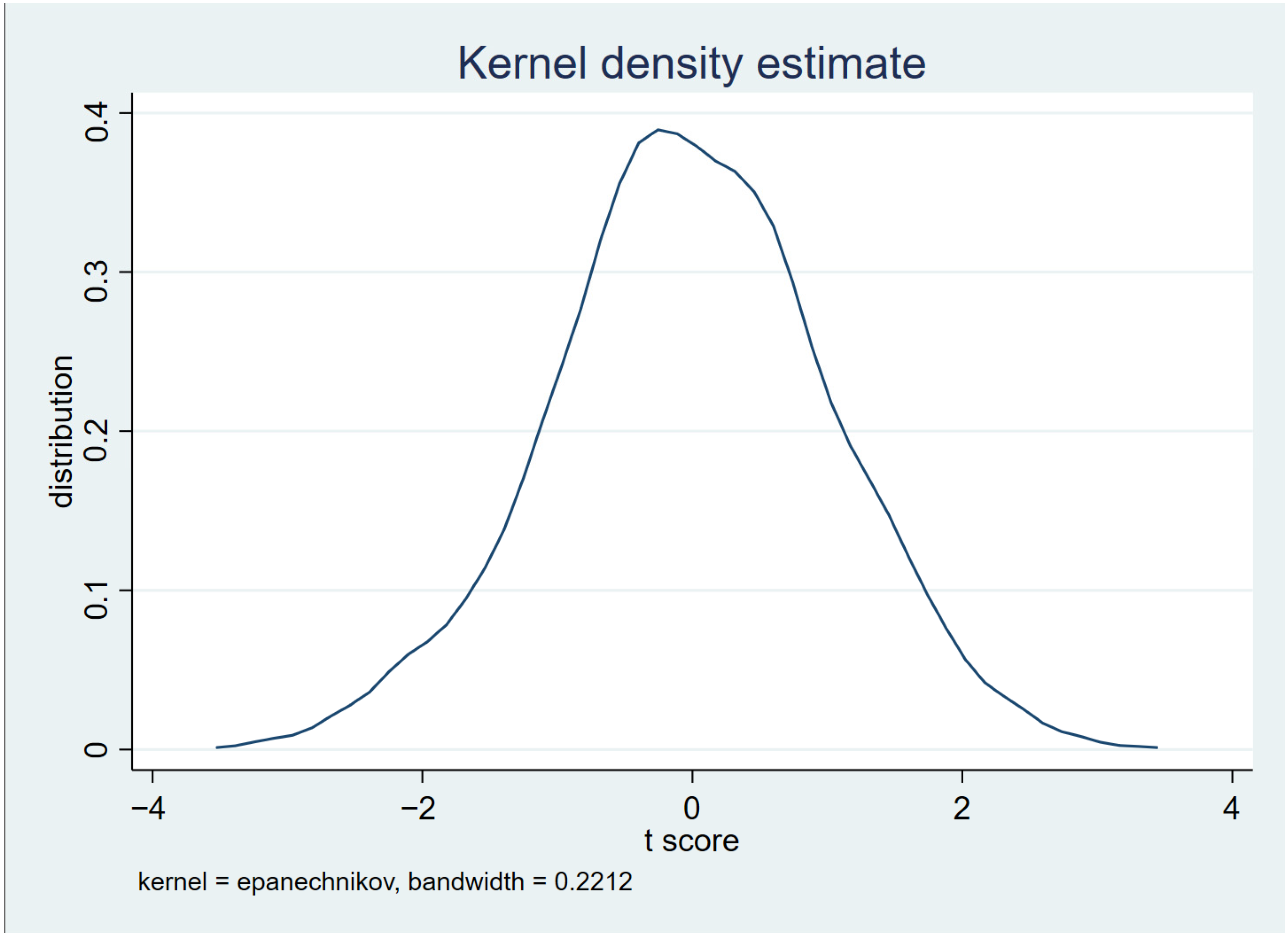
As firms lack the authority to determine the minimum wage, an increase in the minimum wage leads to a rise in labor costs for these firms. Therefore, firms are compelled to optimize their production structure and labor inputs in order to mitigate the increased costs. This change in the minimum wage can be perceived as an exogenous shock, as noted by Kong et al. [29]. Moreover, to address the issue of causality between the minimum wage and labor productivity, we employ a one-period lagged minimum wage variable (L.MW). We also adopt three distinct strategies to address potential endogeneity concerns. Firstly, following the approach suggested by Dube et al. [20], we match geographically adjacent cities across provincial borders based on control variables using a one-to-one propensity score matching technique, followed by regression analysis. The results of this analysis are presented in column (3) of Table 3. Secondly, we employ instrumental variables considering that the minimum wage of a city reflects its level of economic development. We adopt provincial annual average minimum wage and government work report on the following year’s GDP growth target (GDP_predict) of each city as the instrumental variables in a two-stage regression analysis, and the outcomes are reported in columns (4) and (5) of Table 3. (Our identification strategy is grounded in China’s institutional context, where local governments explicitly adjust wage floors based on these regional macroeconomic indicators. The prefectural-level city minimum wage is influenced by the provincial government’s overall adjustment of the minimum wage. It is also affected by the prefectural-level municipal government’s economic growth target for the coming year. Thus, these two instrumental variables are correlated with the independent variable (the minimum wage). This satisfies the relevance requirement. However, a firm’s labor productivity is unlikely to affect the provincial government’s decision on adjusting the overall provincial average minimum wage. It is also unlikely to influence the setting of the economic growth target for the city where the firm is located. This satisfies the exogeneity requirement. The Sargan test statistic and the Cragg–Donald Wald test statistic further support that the instrumental variables meet the exogeneity and validity criteria. Thirdly, we account for the potential impact of time-varying industry and provincial characteristic variables on the empirical results. To address this concern, we incorporate both industry-year fixed effects and province-year fixed effects into the regression model, and the empirical results are reported in Column (6) of Table 3. (Our specification includes high-dimensional Industry × Year and Province × Year fixed effects [9,10]. Industry × Year fixed effects capture sector-specific dynamics, while Province × Year fixed effects account for regional variations. Fourthly, although we have controlled for high-dimensional fixed effects of industry, city, and year, as well as their interaction terms, there are still more high-dimensional fixed effects to consider. To address this, we simultaneously control for firm fixed effects and year fixed effects by incorporating them into the regression model, with the empirical results reported in Column (7) of Table 3. (Our specification employs a high-dimensional fixed-effects estimator incorporating both firm and year fixed effects. Firm effects control for time-invariant firm-level characteristics, while year effects capture aggregate temporal shocks. Finally, we redefine labor productivity as firm economic value added (EVA) per employee. That is, it equals firm EVA divided by the number of employees. Firm EVA is calculated as NOPAT minus WACC multiplied by capital. NOPAT refers to net operating profit after tax. WACC refers to the weighted average cost of capital. Capital refers to total capital. The empirical results are presented in column (8) of Table 3. (Following the traditional measure ln(EVA/Employees), we consider that EVA/Employees can have negative values. Thus, taking the natural logarithm is meaningless. Therefore, we standardize the ratio (where the ratio equals E V A ¯ = EVA/Employees) at the industry-year level. The standardized formula is E V A ¯ − min( E V A ¯ )/(max( E V A ¯ ) − min( E V A ¯ )). Here, min( E V A ¯ ) and max( E V A ¯ ) are obtained based on the industry-year level. Note that EVA per employee primarily captures residual profitability rather than pure output per worker. It is evident from Columns (5)–(8) of Table 3 that the regression coefficient of the independent variable L.MW is significantly negative, indicating that our main empirical findings remain robust. Finally, we conduct a placebo test by randomly assigning t minimum wage levels across cities. This allows us to perform the regression analysis 1000 times to assess the distribution of estimates. The results of this analysis are presented in Figure 1 and Table 4.

4.2. Heterogeneity Tests

This study further conducts heterogeneity tests to examine the impact of minimum wage increases on firms’ labor hiring costs. These tests consider various factors, including state ownership, labor intensity, product market competition, regional legal environment, and average wage of employees in listed firms. In line with established practices in the empirical economics literature [9,20], we examine each heterogeneity dimension separately to ensure clear interpretation of the marginal effects and to avoid potential multicollinearity concerns that may arise from simultaneously including multiple interaction terms. By investigating these dimensions individually, this study aims to explore potential variations in the effects of a higher minimum wage on different firms while maintaining methodological transparency and interpretability.

4.2.1. Heterogeneity of Property Rights

State-owned enterprises (SOEs) typically offer higher remuneration compared to non-SOEs, a fact primarily attributed to the former’s dominant position in monopolized sectors. Therefore, the impact of minimum wage policies on SOEs is expected to be comparatively less pronounced. In contrast, non-SOEs face more competitive pressure from their market counterparts and tend to pay lower wages. As a result, non-SOEs are more susceptible to the impact of minimum wage regulations. In addition, in light of their inherent political affiliation, SOEs have more powerful political connections and access to credit than non-SOEs and are therefore in a better position to endure the adverse impacts of increased production costs due to minimum wage increases. Consequently, minimum wage-related external shocks are likely to have more severe impact on non-SOEs’ labor productivity. Wang and Gunderson [23] reveal that the minimum wage has varying effects based on the ownership structure of the business.
To analyze the influence of the ultimate controller’s nature on listed firms, we divided the sample into two distinct subsamples: state-owned listed firms and non-state-owned listed firms. The regression results allow us to obtain valuable insights, which are summarized in columns (1) and (2) of Table 5. In order to incorporate minimum wage (MW) and state ownership (where “Soe” takes the value of one for state-owned listed firms) into our regression model, we estimate the model using the entire sample. The results of this analysis, presented in column (3) of Table 5, provide a comprehensive test of the relationship between the aforementioned variables.
Based on the findings from Table 5, it is evident that the adverse effect of the minimum wage on the productivity levels of non-state-owned listed firms surpasses that observed in state-owned listed firms. This discrepancy implies that state ownership plays a crucial role in influencing the negative impact of the minimum wage on labor productivity.

4.2.2. Heterogeneity of Labor Intensity

Labor-intensive industries are generally associated with lower profitability and offer comparatively lower average wages to their employees. Consequently, the adverse impact of the minimum wage on firms’ labor productivity is more pronounced in labor-intensive industries. Furthermore, the minimum wage serves as a crucial mechanism for influencing the allocation of labor inputs. Labor-intensive firms are particularly sensitive to the effects of the minimum wage, resulting in a stronger negative impact on their labor productivity.
In this study, the labor intensity of companies is measured by calculating the percentage of employees relative to the company’s total assets. Based on the sample median of labor intensity, sample companies are categorized into two distinct subgroups: those with high labor intensity and those with low labor intensity. Columns (1) and (2) of Table 6 present the regression results on these two subsamples. To further investigate the relationship between the minimum wage (MW) and labor intensity, we perform a full-sample regression analysis is performed, adding an interaction term, denoted as MW × DummyIntensity. The interaction term captures the joint effect of the minimum wage and the labor intensity dummy variable (DummyIntensity), which takes a value of one when labor intensity is high. The regression results are reported in column (3) of Table 6.
It is evident that the negative influence of the minimum wage on firms’ labor productivity is more pronounced for firms with a higher degree of labor intensity, as opposed to those with a lower level of labor intensity. Therefore, the labor intensity plays a significant role in shaping the detrimental impact of the minimum wage on labor productivity.

4.2.3. Heterogeneity of Product Market Competition

When firms face an increase in labor costs resulting from a rise in the minimum wage, they might encounter challenges in externalizing these costs through product pricing due to intense competition within the market and limited pricing power. Consequently, firms are forced to rely on internal adaptations, such as absorbing costs through lower corporate profits, compromising product quality, or imposing higher demands on employees, particularly when the adverse impact of the minimum wage on labor productivity becomes more pronounced. Geng et al. [9] posit that firms wielding stronger market power for their products possess enhanced bargaining power with their downstream consumers. As a result, they are better positioned to pass on the rising labor costs, thereby mitigating the economic impact of the minimum wage.
Following the industrial classification guidelines established by the CSRC in 2012, industries sharing the same three-digit industry code are classified within the same industry. Then, the Herfindahl–Hirschman Index (HHI) is used to measure the level of product market competition within the industry where listed firms operate. A lower HHI indicates a greater degree of product market competition, which in turn implies weaker product bargaining power and increased susceptibility to the effects of the minimum wage. Conversely, industries characterized by a lower degree of product market competition enjoy stronger product bargaining power and are less influenced by changes in the minimum wage. To investigate the relationship between product market competition and the minimum wage, we divide the sample into two subsamples according to whether a listed firm’ HHI value is below or above the sample median. The regression results are presented in columns (1) and (2) in Table 7. Subsequently, a dummy variable “DummyHHI” (taking a value of one when the firm’s HHI value is below the median and market competition is high) is incorporated into the regression model to examine the interaction between the minimum wage and product market competition. The findings are presented in column (3) of Table 7.
In accordance with the findings presented in Table 7, it is evident that the adverse effects of minimum wage on labor productivity exhibit greater prominence within firms operating in highly competitive product markets, as opposed to those operating in markets with lower degrees of competition. Consequently, it can be inferred that the influence of minimum wage on labor productivity is contingent upon the level of product market competition within the industry of the respective firm.

4.2.4. Heterogeneity of Rule of Law

Although the minimum wage is mandated by the state, firms employ various strategies to circumvent compliance, such as requiring unpaid overtime. Notably, the enforcement of the minimum wage regulations tends to be more stringent in regions with a strong legal environment, where laws are rigorously enforced, and workers are better informed about their rights. Therefore, the adverse impact of the minimum wage on labor productivity is likely to be more pronounced in listed firms operating in cities with stronger legal enforcement.
Following Fan et al. [30], Ang et al. [31], and Guo et al. [32], we adopt the Fangang index as the primary metric for measuring the regional rule of law in China. (The Fangang index takes into consideration economic freedom, financial liberalization, administrative intervention, and social security of cities around China. We use the legal environment sub-indicator of the index to measure the degree of rule of law.) We first rank the cities’ levels of rule of law, as indicated by the cities’ Fangang index values of the previous year. Cities with index values above the median are classified as having a high rule of law, while those below are classified as low rule-of-law cities. The regression results for these two subsamples are shown in columns (1) and (2) of Table 8. Dummy variable DummyLaw (takes the value of one if the level of rule of law is high) is added into the regression equation estimated with the entire sample. The results are shown in column (3) of Table 8.
The findings presented in Table 8 suggest that the negative impact of the minimum wage on labor productivity is more pronounced for firms registered in cities with high levels of rule of law than for those registered in cities with low levels of rule of law. Therefore, the negative impact of minimum wage on labor productivity is affected by the level of rule of law in firms’ city of registration.

4.2.5. Heterogeneity of Average Wages

When the average wages of employees in listed firms are low, they tend to converge towards the minimum wage required by the local government. Consequently, the minimum wage may have more pronounced negative impact on these firms’ labor productivity.
Following the methodology proposed by Kong et al. [33], the average employee salary (AEP) is computed as the difference between ‘total payroll payable’ and ‘cash paid to and for employees’, excluding the ‘annual salary of directors, supervisors, and executives’. This value is then divided by the total number of employees to obtain the average employee salary. AEPratio, on the other hand, is defined as the ratio of the average employee compensation to the minimum wage, multiplied by 12 months. Then the whole sample is further divided into two subsamples according to the median value. The results are presented in columns (1) and (2) of Table 9. Furthermore, a dummy variable DummyAEPratio which equals one for companies with low average employee wage, is introduced into the full sample regression analysis. The findings are reported in column (3) of Table 9.
As shown in Table 9, the negative impact of the minimum wage on the labor productivity of firms with low average employee wages is greater than that of firms with high average employee wages. It is evident that the average wages of listed firms affect the negative effect of minimum wage on labor productivity.

4.2.6. Heterogeneity of Export

Export-oriented firms operate under intense global competition and often possess limited power to raise their output prices without losing market share. In foreign markets, demand is highly elastic, and prices are often determined by international competition or long-term buyer contracts, leading to pricing rigidity for exporters. As a result, when domestic labor costs rise due to a higher minimum wage, exporters cannot easily pass these costs on to customers. Export-oriented firms will be more acutely affected by minimum wage increases, as external competitive pressures and rigid prices amplify the impact of rising labor costs. Hau et al. [8] find that Chinese exporting firms did not increase their export prices following minimum wage hikes, instead maintaining prices and increasing export quantity, consistent with an inability to pass on higher labor costs. In comparison, evidence from restaurant establishments indicates that minimum wage shocks do not necessarily lead to significant employment losses, as Card and Krueger [3] find for the fast-food sector, where the estimated employment effects are statistically insignificant. However, goods-producing firms and producer-service providers that sell into international markets face tight competitive pressure and limited scope for price pass-through, so they tend to absorb higher wage costs through accepting lower profit rates. By comparison, firms supplying local services—such as eating and drinking places, retail outlets, and personal service establishments—are relatively insulated from international price pressures and therefore are likely to exhibit a more muted response to minimum-wage-induced cost increases.
To examine the heterogeneity of minimum wage effects across enterprises with different establishment types, we divide the sample into exporting and domestic subsamples. The regression results are shown in columns (1) and (2) of Table 10. Further, a dummy variable DummyExport, which takes the value of one for exporting enterprises, is introduced into the full sample to capture the differential exposure of export-oriented firms to the minimum-wage shock. The findings are presented in column (3) of Table 10.
In accordance with the findings presented in Table 10, it is evident that the adverse effect of the minimum wage on labor productivity is more pronounced for exporting firms than for domestic firms. Consequently, the external competitive pressure and pricing rigidity faced by export-oriented firms intensify the adverse productivity effect.

4.3. Impact Mechanism Analysis

We investigate the mechanism through which the minimum wage exerts a negative impact on labor productivity from the perspective of resource allocation, specifically focusing on labor hiring and investment. By recognizing that an increase in the minimum wage have directly impact on costs of labor and elevates production costs for firms, our investigation seeks to elucidate how firms strategically shift from labor to other production factors such as capital to effectively manage this exogenous shock and attain an optimal state of production.
We examine whether firms react to an increase in the minimum wage by subsequently reducing labor hiring and increasing investment. We include GDP per capita, CPI, and GDP growth rate at the city level as control variables. At the firm level, we select ROA, MB, Cash, Size, and Tangible. In Table 11, the first column presents the findings regarding the influence of minimum wage on labor hiring, while the second column reveals the impact of minimum wage on investment. The regression coefficient associated with the minimum wage L.MW is 0.0254, and is not statistically significant. Hence, it can be inferred that the minimum wage does not exert any discernible impact on labor hiring.
As shown in column (2) of Table 11, the coefficient of minimum wage (L.MW) is −0.0119 and the corresponding t-value is −3.47, demonstrating that minimum wage significantly reduces firm investment. Column (4) of Table 11 incorporates the cross-product term of minimum wage and investment and examines whether the negative impact of minimum wage on labor productivity is driven by a reduction in investment. The regression coefficient of the cross-product term L.MW × Investment is 1.4208 and the corresponding t-value is 7.78, suggesting that the minimum wage is associated with a decrease in firm investment and ultimately lead to potential reduction in labor production efficiency. Combined with the results in columns (2) and (4) of Table 11, our results empirically support the conclusion that the minimum wage reduces firm investment and, consequently, labor productivity, i.e., the investment mechanism. In other words, a higher minimum wage in China increases the cost of labor hiring, and listed firms respond not by adjusting the number of employees but by reducing corporate investment, which ultimately reduces the firm’s labor productivity.
Our hypothesis development posits that the effect of minimum wage on labor productivity depends on whether capital and labor hiring are substitutable. Although the test results in columns (1), (2), and (4) of Table 11 imply that capital and labor hiring are not mutually substitutable, we proceed to directly examine the substitution relationship between capital and labor. The results are shown in column (3) of Table 11, where the regression coefficient of the minimum wage and investment interaction term, L.MW*Investment, is equal to −0.0280, with corresponding t-value of −0.24, which rejects the significance test. This indicates that there is no significant relationship between changes in investment and labor hiring as a result of minimum wage increases. Thus, there is no substitution effect between capital and labor hiring under the impact of minimum wage.

5. Discussion

5.1. Contributions

Our study contributes to the literature on minimum wage effects and human society sustainability in three key ways. To begin with, we extend the body of research on the microeconomic impacts of the minimum wage by providing new firm-level evidence from China, thereby enriching a debate in which recent studies report mixed findings [6,7,8,16,17,18]. Leveraging a large panel of Chinese manufacturing firms, our analysis sheds light on this issue in a distinctive emerging-market context and highlights how mandated wage increases can influence labor productivity, a core margin with direct implications for society sustainability. Consistent with firm productivity theory [17,19], we focus on labor productivity as the direct channel through which wage floors affect the labor input. Prior studies in the United States have yielded divergent results regarding the productivity effects of minimum wage changes, with some finding improvements [13,15] and others observing declines [14]. In contrast, our evidence indicates that rapid minimum wage hikes significantly reduce the labor productivity of Chinese listed firms. These findings challenge the efficiency wage theory, which posits that higher wages can motivate workers and enhance productivity. This divergence suggests that in the Chinese context, mandated wage increases may have been implemented at a pace or level that exceeded the corresponding gains in workers’ skills or operational efficiencies, or that institutional frictions prevented firms from effectively translating higher labor costs into productivity enhancements. This finding provides much-needed empirical insight from a developing economy, demonstrating how aggressive wage policies can erode firm productivity and weaken economic capacity. From a theoretical standpoint, this result also speaks to the efficiency wage hypothesis: although higher pay can sometimes incentivize greater worker effort, the lack of a productivity boost in our context suggests that mandated wage increases in China did not elicit efficiency gains, possibly because the imposed wage floor rises exceeded the productivity capacity of low-wage workers or introduced new inefficiencies within firms. By tracing how statutory wage floors shape labor productivity and investment, the analysis identifies micro channels through which equity-oriented regulation propagates to firm outcomes.
In addition, our study reveals the mechanism by which minimum wage increases alter firms’ internal resource allocation. We find that Chinese listed firms, rather than shedding workers, respond to higher labor costs by sharply curtailing corporate investment in order to accommodate the wage increase. This outcome directly addresses the long-standing question of capital–labor substitution under wage regulation. Classical competitive theory predicts that raising a wage floor will reduce employment if the mandated wage exceeds workers’ marginal productivity; yet empirical studies have found that firms do not consistently offset higher wage costs by reducing employment [16,20,21]. Notably, prior studies did not examine whether firms substitute capital for labor when wages rise. Our evidence indicates that such substitution fails to materialize in the Chinese context: firms maintain employment levels but scale back investment, implying that capital does not fully substitute for labor even as labor becomes more expensive. This adjustment pattern highlights investment as the primary margin of response. By reducing capital accumulation, firms experience lower capital deepening and operational efficiency, which contributes to the observed decline in labor productivity. In illuminating this mechanism, our study deepens the understanding of how wage policy shocks are absorbed within firms and why steep minimum wage hikes may inadvertently compromise sustainable societal development. This refined insight enriches economic theory on factor adjustment, offering a more nuanced view beyond the simple labor-for-capital substitution narrative. It suggests that in an emerging market setting with financial or institutional frictions, firms confronted with higher wage floors might adjust via the investment margin rather than the employment margin.
The economic magnitude of our finding should be interpreted within the broader narrative of China’s evolving labor market. As China transitions from a labor surplus to a more balanced economy, with rising overall wage levels and changing demographic structures, the impact of policy-driven wage floors on firm behavior is particularly salient. The negative effect we document may reflect the growing pains associated with this transition, where firms, especially those in traditionally labor-intensive sectors or with limited access to capital, struggle to adapt to rapidly escalating labor costs without commensurate immediate gains in value-added per worker.
Beyond these substantive insights, our study contributes methodologically by conducting an extensive heterogeneity analysis and a battery of robustness checks. We probe whether the impact of minimum wage hikes on productivity and investment differs across various firm and regional characteristics. Indeed, our heterogeneity analysis uncovers that the productivity-dampening effect of higher wage floors is more pronounced for firms that are labor-intensive and privately owned, as well as for those operating in regions with less developed capital markets. These results align with economic intuition regarding differential adjustment capacity across firms. Importantly, we also verify that our core results are robust under various alternative specifications and controls. The negative impact on labor productivity and the investment reduction response remains consistent when using different productivity measures, considering potential endogeneity of policy changes, and accounting for time-varying regional trends. This consistency strengthens confidence in our conclusions.
In summary, our findings advance the understanding of minimum wage consequences by bridging empirical evidence with economic theory. By documenting a negative productivity effect, identifying an investment-based adjustment mechanism, and confirming robustness across multiple tests, our study provides a coherent account of how wage regulation affects firm behavior. These insights highlight the importance of calibrating wage policies to firm adjustment capacity.

5.2. Limitations and Future Research

While this study provides robust evidence on the impact of minimum wage increases on labor productivity in Chinese listed firms, several inherent limitations should be acknowledged. This study focuses on Chinese listed firms due to data availability constraints. This focus enhances measurement quality by relying on consistently disclosed financial and employment information, but it necessarily limits external validity to the broader universe of small and medium-sized enterprises and unlisted firms. The adverse effect of minimum wage documented here might be more pronounced for smaller, non-listed firms that operate under tighter financial constraints and less operational flexibility. Due to data limitations, this paper empirically examines the impact of minimum wages on labor productivity in Chinese listed companies. This provides Chinese evidence regarding the effects of minimum wages on labor productivity. Future research would productively extend this inquiry by leveraging datasets that encompass unlisted and non-manufacturing firms, thereby offering a more comprehensive assessment of how minimum-wage policy affects heterogeneous firm types across the economy.

6. Conclusions

This study examines the impact of minimum wage standards set by local governments on corporate labor productivity in China. Using data from Chinese listed firms spanning the period 2005–2021, we construct an indicator of the minimum wage standards implemented in the companies’ locations. Employing the multiple linear regression model, our empirical analysis reveals that the minimum wage reduces labor productivity. To ensure robustness, we employ endogeneity tests such as neighboring city sample matching, instrumental variables, and placebo tests. The heterogeneity tests reveal that the negative effect of the minimum wage on firm labor productivity is stronger for non-state-owned listed firms, export-oriented listed firms, listed firms with high labor intensity, firms in industries with high levels of product market competition, firms in cities with a high degree of rule of law, and firms with low average employee wages. Finally, we examine the labor hiring and corporate investment mechanisms through which the minimum wage affects labor productivity. The findings provide evidence that the minimum wage reduces firm labor productivity not via employment adjustments but by reducing the scale of corporate investment. We find no evidence of mutual substitution between labor and capital. In other words, the minimum wage fails to contribute to the industrial upgrading of listed firms.
Thus, our research makes a significant contribution to the existing literature on the economic effects of the minimum wage by providing empirical evidence from China. The findings of this study shed light on the impact of the minimum wage on the labor productivity of firms. Furthermore, these findings have important policy implications.
In implementing minimum wage policies, governments must take into account the potential ramifications of excessive and frequent adjustments. Such moves can strain firms’ production activities, particularly hurting listed companies and curbing corporate investment as well as labor productivity. This underscores the delicate trade-off that policymakers must navigate between advancing immediate social protection goals and sustaining long-term economic vitality. For one thing, our findings show that granting firms sufficient adaptation time and limiting adjustment frequency are key when adjusting minimum wages. For another, capping wage adjustment magnitudes at a manageable level for enterprises can bolster their sustainable growth. In the end, a well-balanced policy approach helps build resilient socioeconomic systems that support sustainable human development.

Author Contributions

Conceptualization, Z.Y.; methodology, Y.G.; software, Y.G. and Z.Y.; validation, Y.G. and Y.R.; formal analysis, Z.Y.; investigation, Y.G.; resources, Y.R.; data curation, Y.G.; writing—original draft preparation, Z.Y.; writing—review and editing, Y.G.; visualization, Y.G.; supervision, Y.R.; project administration, Z.Y. and Y.R.; funding acquisition, Z.Y. All authors have read and agreed to the published version of the manuscript.

Funding

This work has been supported by the National Social Science Foundation of China (Grant No. 25BJY236).

Institutional Review Board Statement

Not applicable.

Informed Consent Statement

Not applicable.

Data Availability Statement

The data presented in this study are available on request from the corresponding author. The data are not publicly available due to privacy restrictions.

Conflicts of Interest

The authors declare no conflicts of interest.

References

  1. Huang, Y.; Loungani, M.P.; Wang, G. Minimum Wages and Firm Employment: Evidence from China; International Monetary Fund: Washington, DC, USA, 2014. [Google Scholar]
  2. Cengiz, D.; Dube, A.; Lindner, A.; Zipperer, B. The Effect of Minimum Wages on Low-Wage Jobs. Q. J. Econ. 2019, 134, 1405–1454. [Google Scholar] [CrossRef]
  3. Card, D.; Krueger, A.B. Minimum wages and employment: A case study of the fast-food industry in New Jersey and Pennsylvania: Reply. Am. Econ. Rev. 2000, 90, 1397–1420. [Google Scholar] [CrossRef]
  4. Autor, D.H.; Manning, A.; Smith, C.L. The Contribution of the Minimum Wage to US Wage Inequality over Three Decades: A Reassessment. Am. Econ. J. Appl. Econ. 2016, 8, 58–99. [Google Scholar] [CrossRef]
  5. Flinn, C.J. Minimum Wage Effects on Labor Market Outcomes under Search, Matching, and Endogenous Contact Rates. Econometrica 2006, 74, 1013–1062. [Google Scholar] [CrossRef]
  6. Bell, B.; Machin, S. Minimum wages and firm value. J. Labor Econ. 2018, 36, 159–195. [Google Scholar] [CrossRef]
  7. Agarwal, S.; Ayyagari, M.; Kosová, R. Minimum wage increases and employer performance: Role of employer heterogeneity. Manag. Sci. 2024, 70, 225–254. [Google Scholar] [CrossRef]
  8. Hau, H.; Huang, Y.; Wang, G. Firm response to competitive shocks: Evidence from China’s minimum wage policy. Rev. Econ. Stud. 2020, 87, 2639–2671. [Google Scholar] [CrossRef]
  9. Geng, H.G.; Huang, Y.; Lin, C.; Liu, S.B. Minimum wage and corporate investment: Evidence from manufacturing firms in China. J. Financ. Quant. Anal. 2022, 57, 94–126. [Google Scholar] [CrossRef]
  10. Gustafson, M.T.; Kotter, J.D. Higher minimum wages reduce capital expenditures. Manag. Sci. 2023, 69, 2933–2953. [Google Scholar] [CrossRef]
  11. Li, X.; Lim, C.Y.; Xu, Y. The minimum wage and corporate tax avoidance. Account. Bus. Res. 2023, 53, 379–415. [Google Scholar] [CrossRef]
  12. Li, X.; Peng, S.; Huang, W.C.; Zhou, Q. What Drives Chinese Firms’ Export Sophistication? A Perspective from the Rise of Minimum Wages. China World Econ. 2022, 30, 28–59. [Google Scholar] [CrossRef]
  13. Ku, H. Does minimum wage increase labor productivity? Evidence from piece rate workers. J. Labor Econ. 2022, 40, 325–359. [Google Scholar] [CrossRef]
  14. Hill, A.E. The minimum wage and productivity: A case study of California strawberry pickers. In Proceedings of the Agricultural and Applied Economics Association Annual Meeting, Washington, DC, USA, 5–7 August 2018; Agricultural and Applied Economics Association: Washington, DC, USA, 2018. [Google Scholar]
  15. Coviello, D.; Deserranno, E.; Persico, P. Minimum Wage and Individual Worker Productivity: Evidence from a Large US Retailer. J. Polit. Econ. 2022, 130, 2315–2360. [Google Scholar] [CrossRef]
  16. Mayneris, F.; Poncet, S.; Zhang, T. Improving or disappearing: Firm-level adjustments to minimum wages in China. J. Dev. Econ. 2018, 135, 20–42. [Google Scholar] [CrossRef]
  17. Wang, M.; Lin, H.; Huang, Y.; Lu, H. Poverty alleviation and firm productivity: Evidence from China’s minimum wage system. Int. Rev. Financ. Anal. 2023, 87, 102595. [Google Scholar] [CrossRef]
  18. Draca, M.; Machin, S.; Van Reenen, J. Minimum Wages and Firm Profitability. Am. Econ. J.-Appl. Econ. 2011, 3, 129–151. [Google Scholar] [CrossRef]
  19. Bai, X.; Chatterjee, A.; Krishna, K.; Ma, H. Trade and minimum wages in general equilibrium: Theory and evidence. J. Int. Econ. 2021, 133, 103535. [Google Scholar] [CrossRef]
  20. Dube, A.; Lester, T.W.; Reich, M. Minimum wage effects across state borders: Estimates using contiguous counties. Rev. Econ. Stat. 2010, 92, 945–964. [Google Scholar] [CrossRef]
  21. Neumark, D.; Salas, J.M.; Wascher, W. More on recent evidence on the effects of minimum wages in the United States. IZA J. Labor Policy. 2014, 3, 24. [Google Scholar] [CrossRef]
  22. Belman, D.; Wolfson, P. A time-series analysis of employment, wages and the minimum wage. Univ. Minn. 1997; in press. [Google Scholar]
  23. Wang, J.; Gunderson, M. Minimum wage impacts in China: Estimates from a prespecified research design, 2000–2007. Contemp. Econ. Policy. 2011, 29, 392–406. [Google Scholar] [CrossRef]
  24. Brochu, P.; Green, D.A. The impact of minimum wages on labour market transitions. Econ. J. 2013, 123, 1203–1235. [Google Scholar] [CrossRef]
  25. Neumark, D.; Wascher, W.L. Minimum wages and employment. Found. Trends Microecon. 2007, 3, 1–182. [Google Scholar] [CrossRef]
  26. Pischke, J.S. Labor market institutions, wages, and investment: Review and implications. CESifo Econ. Stud. 2005, 51, 47–75. [Google Scholar] [CrossRef]
  27. Jacob, M. Dividend taxes, employment, and firm productivity. J. Corp. Financ. 2021, 69, 102040. [Google Scholar] [CrossRef]
  28. Chen, S.; Sun, Z.; Tang, S.; Wu, D.H. Government intervention and investment efficiency: Evidence from China. J. Corp. Financ. 2011, 17, 259–271. [Google Scholar] [CrossRef]
  29. Kong, D.; Qin, N.; Xiang, J. Minimum wage and entrepreneurship: Evidence from China. J. Econ. Behav. Organ. 2021, 189, 320–336. [Google Scholar] [CrossRef]
  30. Fan, G.; Wang, X.; Zhu, H. NERI Index of Marketization of China’s Provinces; National Economic Research Institute: Beijing, China, 2003. [Google Scholar]
  31. Ang, J.S.; Cheng, Y.; Wu, C. Trust, investment, and business contracting. J. Financ. Quant. Anal. 2015, 50, 569–595. [Google Scholar] [CrossRef]
  32. Guo, M.; Liu, J.; Yu, J. Social trust and food scandal exposure: Evidence from China. China Econ. Rev. 2021, 69, 101690. [Google Scholar] [CrossRef]
  33. Kong, G.; Kong, D.; Lu, R. Political promotion incentives and within-firm pay gap: Evidence from China. J. Account. Public Policy 2020, 39, 106715. [Google Scholar] [CrossRef]
Figure 1. Kernel density estimation results. Source of information: presented by the authors.
Sustainability 18 00651 g001
Table 1. Variable definitions.
Variable TypesVariableDescriptionVariable Definition
Dependent VariableLabor ProductivityLabor productivityAccording to ln(Value Added) = α + α × ln(Total Wages) + ε, the residual term is defined as labor productivity controlled for industry and year fixed effects. Where Value Added is EBIT plus depreciation plus employee compensation and Total Wages is employee compensation. For details, refer to line 254 to 260 of Section 3.2 in the main text.
Independent VariableMWMinimum wageThe natural logarithm of the average monthly minimum wage in the year of the county-level city where the listed firm is located. The minimum wage measures used are adjusted for inflation using the CPI. For details, refer to line 260 to 266 of Section 3.2 in the main text.
Control VariablesRetainedEarningsRetained earningsRetained earnings of current year divided by operating income for the previous year.
SalesGrowthGrowth of salesOperating income divided by the previous year’s operating income, then minus 1.
LeverageLeverageTotal liabilities divided by total assets.
SizeFirm sizeThe natural logarithm of total assets.
OwnershipHHIOwnership concentrationHerfindahl–Hirschman Index of company ownership structure.
DummyPLDEquity PledgeA dummy variable equals to 1 if the firm has equity pledges, and 0 otherwise.
Heterogeneity TestsDummyAEPratioThe gap between the average and minimum wage of employees within a firmA dummy variable equals 1 if the ratio of the average wage of the firm’s employees to the minimum wage is higher than the median of the sample, and zero otherwise.
DummyLaborintensityLabor intensityA dummy variable equals to 1 if the ratio of the average wage of the ratio of the number of employees to the total assets of the firm is higher than the median of the sample, and zero otherwise.
DummyProuductHHIProduct market competitionA dummy variable equals to 1 if HHI for firm sales revenue is above the sample median, and zero otherwise.
DummyLawRule of lawA dummy variable equals to 1 if the firm’s city has a higher degree of rule of law (measured by Fan Gang Index) than the median of the sample, and 0 otherwise.
Influencing Mechanism∆EmployeesChange in labor hiringThe natural logarithm of current year employment minus prior year employment.
InvestmentInvestmentCash paid for the acquisition of fixed assets, intangible assets and other long-term assets; less net cash recovered from the disposal of fixed assets, intangible assets and other long-term assets, divided by total assets.
PerGdpGDP per capitaThe natural logarithm of GDP per capita in the city where the listed firm is located.
CPIPrice indexCPI of the city where the listed firm is located.
ROAReturn on total assetsNet income after tax divided by total assets.
MBBook-to-market ratioMarket value of book value ratio.
CashOperating cash flowOperating cash flow divided by total assets.
TangibleTangible assetsThe ratio of tangible assets over the firm’s total assets.
Source of information: Presented by the authors.
Table 2. Descriptive Statistics.
VariablesMeanp25p50p75S.D.N
Labor Productivity0.1551−0.29870.08760.55990.716727,278
MW7.00596.63997.12297.39630.489827,278
RetainedEarnings0.09580.06170.13140.20970.276027,278
SalesGrowth0.2086−0.02280.11730.28990.566527,278
Leverage0.49460.34230.49840.64050.211727,278
Size22.127121.127821.948822.93581.3866272,78
OwnershipHHI0.47170.29430.43080.63630.217327,278
∆Employee0.0556−0.04740.01600.11440.391627,695
Investment0.04740.01170.03320.06830.050427,754
PerGdp11.052010.625311.162411.57950.735327,695
CPI102.6060101.8000102.4000103.15011.488927,695
ROA0.02980.01100.03100.05850.065927,695
MB0.67170.48630.68830.87100.245527,695
Cash0.04540.00590.04540.08720.073327,695
Tangible0.25200.10910.22000.36550.179827,695
Source of information: Presented by the authors.
Table 3. Main empirical results.
(1)(2)(3)(4)(5)(6)(7)(8)
Labor ProductivityLabor ProductivityLabor ProductivityL.MWLabor ProductivityLabor ProductivityLabor ProductivityEVA Per Employee
_cons−0.0242
(−0.10)
−0.5807 **
(−2.10)
0.6366 **
(2.11)
0.0524
(0.67)
−3.0382 ***
(−6.58)
1.7316 ***
(5.19)
1.0089 ***
(2.74)
0.7566 ***
(7.69)
L.MW−0.3746 ***
(−9.94)
−0.2575 ***
(−6.19)
−0.4509 ***
(−10.32)
−0.1216 **
(−1.98)
−0.5903 ***
(−12.63)
−0.0981 **
(−2.18)
−0.0295 **
(−1.99)
L.Mean_MW 0.9858 ***
(95.42)
L.GDP_predict −0.0033 ***
(−8.66)
L.RetainedEarnings−0.4219 ***
(−13.91)
−0.3517 ***
(−10.99)
−0.321 ***
(−7.16)
−0.0039
(−1.24)
−0.4328 ***
(−23.17)
−0.4073 ***
(−13.47)
−0.2691 ***
(−7.42)
0.0491 ***
(5.85)
L.SalesGrowth−0.0064
(−0.76)
−0.0188 **
(−2.12)
−0.0111
(−0.73)
−0.0022 *
(−1.86)
−0.0085
(−1.20)
−0.0062 ***
(−0.70)
0.0050
(−0.65)
0.0190 ***
(6.33)
L.Leverage−0.3456 ***
(−11.91)
−0.2690 ***
(−8.15)
−0.4407 ***
(−12.04)
0.0034
(0.75)
−0.2612 ***
(−9.88)
−0.3323 ***
(−11.12)
−0.0022
(−0.60)
0.0113
(1.02)
L.Size0.1208 ***
(31.03)
0.1124 ***
(24.02)
0.1181 ***
(23.79)
0.0043 ***
(5.72)
0.1118 ***
(25.25)
0.1219 ***
(30.60)
−0.0074
(−0.90)
0.0098 ***
(5.77)
L.OwnershipHHI0.1347 ***
(7.90)
0.16816 ***
(8.47)
0.1589 ***
(7.54)
0.0162 ***
(4.87)
0.1542 ***
(7.88)
0.1407 ***
(8.02)
0.0557 **
(2.17)
0.0045
(0.57)
Industry Fixed EffectYesYesYesYesYesYesNOYes
Year Fixed EffectYesYesYesYesYesYesYesYes
Province Fixed EffectYesYesYesYesYesYesNOYes
Industry × Year Fixed EffectNoNoNoNoNoYesNONo
Province × Year Fixed EffectNoNoNoNoNoYesNONo
Firm Fixed EffectNoNoNoNoNoNoYesNo
Sargan statistic 1.021, Chi-sq(2)
p-value = 0.3123
Cragg–Donald Wald F = 4617.11,
p = 0.0000.
R20.36720.3610.41540.41180.38120.40800.69340.2275
Obs27,27820,38015,74720,53220,53227,27827,27827,183
Source of information: Presented by the authors. Notes: This table presents ordinary least squares estimates from the baseline model. Standard errors are clustered at firm level. *, **, *** indicates statistical significance at the 10%, 5% and 1% level, respectively.
Table 4. Placebo test results.
VariableObsWVzProb > z
t-value10000.99870.833−0.4510.6740
Source of information: presented by the authors.
Table 5. Heterogeneity of state ownership.
(1)(2)(3)
Labor ProductivitySOEsNon-SOEsFull Sample
_cons−0.7149 **
(−2.25)
0.9335 ***
(2.59)
0.7222 ***
(2.78)
L.MW−0.3422 ***
(−7.04)
−0.4439 ***
(−8.38)
−0.4769 ***
(−12.32)
L.Soe −1.3757 ***
(−12.18)
L. (MW × Soe) 0.1887 ***
(11.75)
L.RetainedEarnings−0.4493 ***
(−10.13)
−0.3580 ***
(−9.02)
−0.4096 ***
(−13.58)
L.SalesGrowth−0.0156
(−1.30)
−0.0019
(−0.16)
−0.0059
(−0.70)
L.Leverage−0.5159 ***
(−12.63)
−0.1613 ***
(−3.95)
−0.3389 ***
(−11.65)
L.Size0.1495 ***
(29.19)
0.0940 ***
(15.74)
0.1225 ***
(31.15)
L.OwnershipHHI0.1371 ***
(6.10)
0.2157 ***
(7.74)
0.1625 ***
(9.24)
Industry Fixed EffectYesYesYes
Year Fixed EffectYesYesYes
Province Fixed EffectYesYesYes
R20.45010.3140.372
Obs12,83914,43927,278
Source of information: presented by the authors. Notes: **, *** indicates statistical significance at the 5%, and 1% level, respectively.
Table 6. Heterogeneity of labor intensity.
(1)(2)(3)
Labor ProductivityHigh IntensityLow IntensityFull Sample
_cons1.2032 ***
(3.74)
−0.6459 *
(−1.67)
−0.2526
(−0.98)
L.MW−0.4390 ***
(−9.15)
−0.3381 ***
(−5.76)
−0.3354 ***
(−8.62)
L.DummyIntensity 0.5462 ***
(4.65)
L. (MW × DummyIntensity) −0.0833 ***
(−4.89)
L.RetainedEarnings−0.4517 ***
(−10.47)
−0.3794 ***
(−9.10)
−0.4190 ***
(−13.8)
L.SalesGrowth−0.0172
(−1.32)
0.0048
(0.43)
−0.0056
(−0.66)
L.Leverage−0.3331 ***
(−8.80)
−0.3405 ***
(−7.87)
−0.3445 ***
(−11.88)
L.Size0.0811 ***
(14.57)
0.1436 ***
(26.63)
0.1194 ***
(30.70)
L.OwnershipHHI0.0950 ***
(3.99)
0.1583 ***
(6.50)
0.1340 ***
(7.86)
Industry Fixed EffectYesYesYes
Year Fixed EffectYesYesYes
Province Fixed EffectYesYesYes
R20.27680.3610.368
Obs13,39113,88727,278
Source of information: presented by the authors. Notes: *, *** indicates statistical significance at the 10%, and 1% level, respectively.
Table 7. Heterogeneity of product market competition.
(1)(2)(3)
Labor ProductivityHigh CompetitionLow CompetitionFull Sample
_cons0.1718
(0.62)
−0.7070
(−1.28)
0.0226
(0.09)
L.MW−0.4037 ***
(−9.74)
−0.2375 ***
(−2.79)
−0.3811 ***
(−10.08)
L.DummyHHI 0.3864 **
(2.15)
L. (MW × DummyHHI) −0.0540 **
(−2.12)
L.RetainedEarnings−0.4260 ***
(−13.03)
−0.3304 ***
(−4.18)
−0.4168 ***
(−13.75)
L.SalesGrowth−0.0038
(−0.40)
−0.0126
(−0.79)
−0.0059
(−0.70)
L.Leverage−0.3239 ***
(−10.11)
−0.4938 ***
(−7.44)
−0.3459 ***
(−11.93)
L.Size0.1195 ***
(27.88)
0.1165 ***
(12.53)
0.1206 ***
(31.00)
L.OwnershipHHI0.1293 ***
(7.03)
0.1271 ***
(2.79)
0.1332 ***
(7.82)
Industry Fixed EffectYesYesYes
Year Fixed EffectYesYesYes
Province Fixed EffectYesYesYes
R20.37160.40020.3673
Obs23,181409427,275
Source of information: Presented by the authors. Notes: **, *** indicates statistical significance at the 5% and 1% level, respectively.
Table 8. Heterogeneity of rule of law.
(1)(2)(3)
Labor ProductivityHigh Rule of LawLow Rule of LawFull Sample
_cons0.4973 *
(1.72)
0.0630
(0.11)
−0.3579
(−1.36)
L.MW−0.4525 ***
(−10.53)
−0.3297 ***
(−3.45)
−0.3199 ***
(−8.09)
L.DummyLaw 0.8386 ***
(6.10)
L. (MW × DummyLaw) −0.1266 ***
(−6.28)
L.RetainedEarnings−0.4701 ***
(−12.51)
−0.3455 ***
(−5.94)
−0.4402 ***
(−13.85)
L.SalesGrowth−0.0024
(−0.24)
−0.0320 *
(−1.93)
−0.0093
(−1.06)
L.Leverage−0.4110 ***
(−12.59)
−0.0897
(−1.28)
−0.3348 ***
(−11.15)
L.Size0.1237 ***
(27.52)
0.1018 ***
(10.41)
0.1195 ***
(29.36)
L.OwnershipHHI0.1482 ***
(7.55)
0.0368
(0.94)
0.1299 ***
(7.45)
Industry Fixed EffectYesYesYes
Year Fixed EffectYesYesYes
Province Fixed EffectYesYesYes
R20.36040.38080.3666
Obs19,750548825,238
Source of information: presented by the authors. Notes: *, *** indicates statistical significance at the 10%, and 1% level, respectively.
Table 9. Heterogeneity of average wages.
(1)(2)(3)
Labor ProductivityLow Average WagesHigh Average WagesFull Sample
_cons1.1509 ***
(3.22)
0.2320
(0.56)
0.1053
(0.39)
L.MW−0.5244 ***
(−10.03)
−0.3347 ***
(−5.49)
−0.3772 ***
(−9.38)
L.DummyAEPratio 0.6389 ***
(4.26)
L. (MW × DummyAEPratio) −0.0965 ***
(−4.54)
L.RetainedEarnings−0.3121 ***
(−7.88)
−0.3828 ***
(−7.50)
−0.3665 ***
(−11.70)
L.SalesGrowth−0.0116
(−0.90)
0.0050
(0.41)
−0.0074
(−0.84)
L.Leverage−0.3003 ***
(−7.30)
−0.4325 ***
(−8.90)
−0.3983 ***
(−12.49)
L.Size0.1088 ***
(17.18)
0.1228 ***
(21.55)
0.1231 ***
(29.32)
L.OwnershipHHI0.0789 ***
(3.26)
0.1893 ***
(7.13)
0.1299 ***
(7.16)
Industry Fixed EffectYesYesYes
Year Fixed EffectYesYesYes
Province Fixed EffectYesYesYes
R20.29680.48120.3844
Obs11,33511,71223,047
Source of information: presented by the authors. Notes: *** indicates statistical significance at the 1% level.
Table 10. Heterogeneity of export.
(1)(2)(3)
Labor ProductivityExporting CompaniesDomestic CompaniesFull Sample
_cons0.6092 **
(2.15)
−0.4162
(−1.20)
0.1355
(0.55)
L.MW−0.4224 ***
(−10.24)
−0.3676 ***
(−6.98)
−0.3801 ***
(−10.27)
L.DummyExport 0.1501
(1.23)
L. (MW × DummyExport) −0.0379 **
(−2.18)
L.RetainedEarnings−0.2608 ***
(−7.76)
−0.4138 ***
(−13.24)
−0.3585 ***
(−13.22)
L.SalesGrowth−0.0116
(−1.26)
0.0041
(0.40)
−0.0028
(−0.35)
L.Leverage−0.3153 ***
(−10.19)
−0.3241 ***
(−8.23)
−0.3814 ***
(−13.48)
L.Size0.1128 ***
(26.07)
0.1360 ***
(23.49)
0.1220 ***
(31.68)
L.OwnershipHHI0.1028 ***
(5.00)
0.1481 ***
(6.22)
0.1105 ***
(6.50)
Industry Fixed EffectYesYesYes
Year Fixed EffectYesYesYes
Province Fixed EffectYesYesYes
R20.4059 0.3850 0.4106
Obs13,72110,27723,998
Source of information: Presented by the authors. Notes: **, *** indicates statistical significance at the 5% and 1% level, respectively.
Table 11. Influencing mechanism analysis results.
(1)(2)(3) (4)
∆EmployeesInvestment∆Employees Labor Productivity
_cons−0.5311
(−1.16)
−0.0627
(−1.16)
−0.6330
(−1.39)
_cons0.7436 ***
(2.64)
L.MW0.0254
(0.87)
−0.0119 ***
(−3.47)
0.7139
(0.97)
L.MW−0.4676 ***
(−11.13)
Investment 0.0395
(1.34)
L.Investment−9.7308 ***
(−7.69)
L.MW × Investment −0.0280
(−0.24)
L.(MW × Investment)1.4208 ***
(7.78)
L.PerGDP0.0105
(1.53)
0.0005
(0.49)
0.0097
(1.45)
L.RetainedEarnings−0.4122 ***
(−12.01)
L.CPI0.0024
(0.58)
0.0012 **
(2.44)
0.0019
(0.45)
L.SalesGrowth−0.0086
(−0.95)
L.GDP_growth0.0006
(0.41)
0.0001
(0.98)
0.0007
(0.49)
L.Leverage−0.3976 ***
(−12.45)
L.ROA0.9250 ***
(13.00)
0.1412 ***
(30.22)
0.0621 ***
(5.56)
L.Size0.1214 ***
(28.94)
L.MB−0.0781 ***
(−4.13)
−0.0091 ***
(−5.19)
−0.1151 ***
(−6.93)
L.OwnershipHHI0.1314 ***
(7.26)
L.Cash−0.0816 *
(−1.73)
0.0608 ***
(14.29)
0.1295 **
(2.37)
L.Size0.0028
(1.04)
0.0021 ***
(7.02)
0.0076 ***
(2.75)
L.Tangible−0.0581 ***
(−2.57)
0.039 ***
(16.42)
−0.1284 ***
(−5.89)
Industry Fixed EffectYesYesYesIndustry Fixed EffectYes
Year Fixed EffectYesYesYesYear Fixed EffectYes
Province Fixed EffectYesYesYesProvince Fixed EffectYes
R20.040.1960.0474R20.3794
Obs27,69527,75427,677Obs23,166
Source of information: presented by the authors. Notes: *, **, *** indicates statistical significance at the 10%, 5% and 1% level, respectively.
Disclaimer/Publisher’s Note: The statements, opinions and data contained in all publications are solely those of the individual author(s) and contributor(s) and not of MDPI and/or the editor(s). MDPI and/or the editor(s) disclaim responsibility for any injury to people or property resulting from any ideas, methods, instructions or products referred to in the content.