Optimizing Forest Ecosystem Service Compensation Using Spillover Analysis: Evidence from Linyi’s Indicator Trading Policy, China

 , , , ,
Abstract
1. Introduction
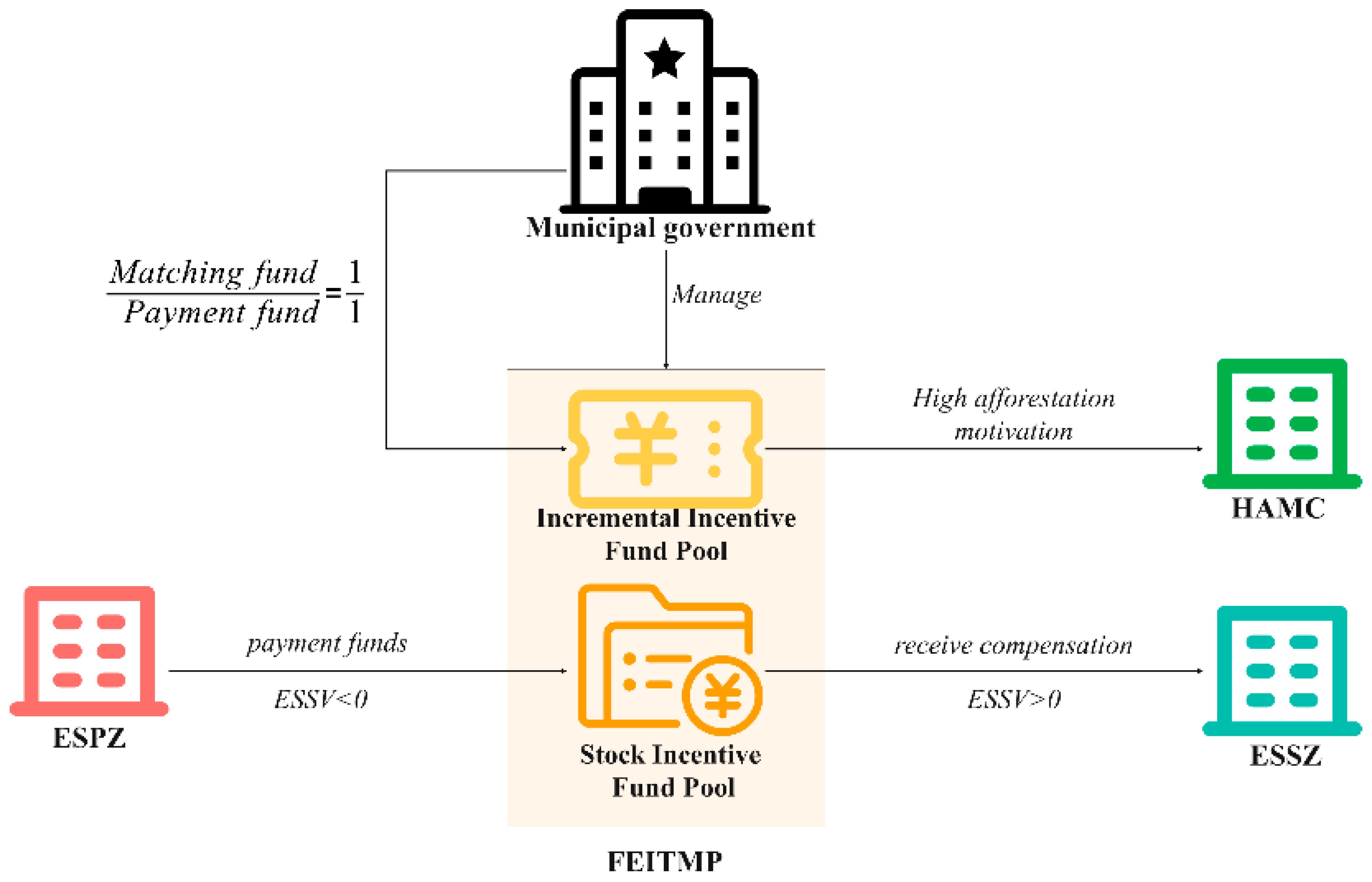
2. Mechanism of Linyi’s IFEITP
3. Methods
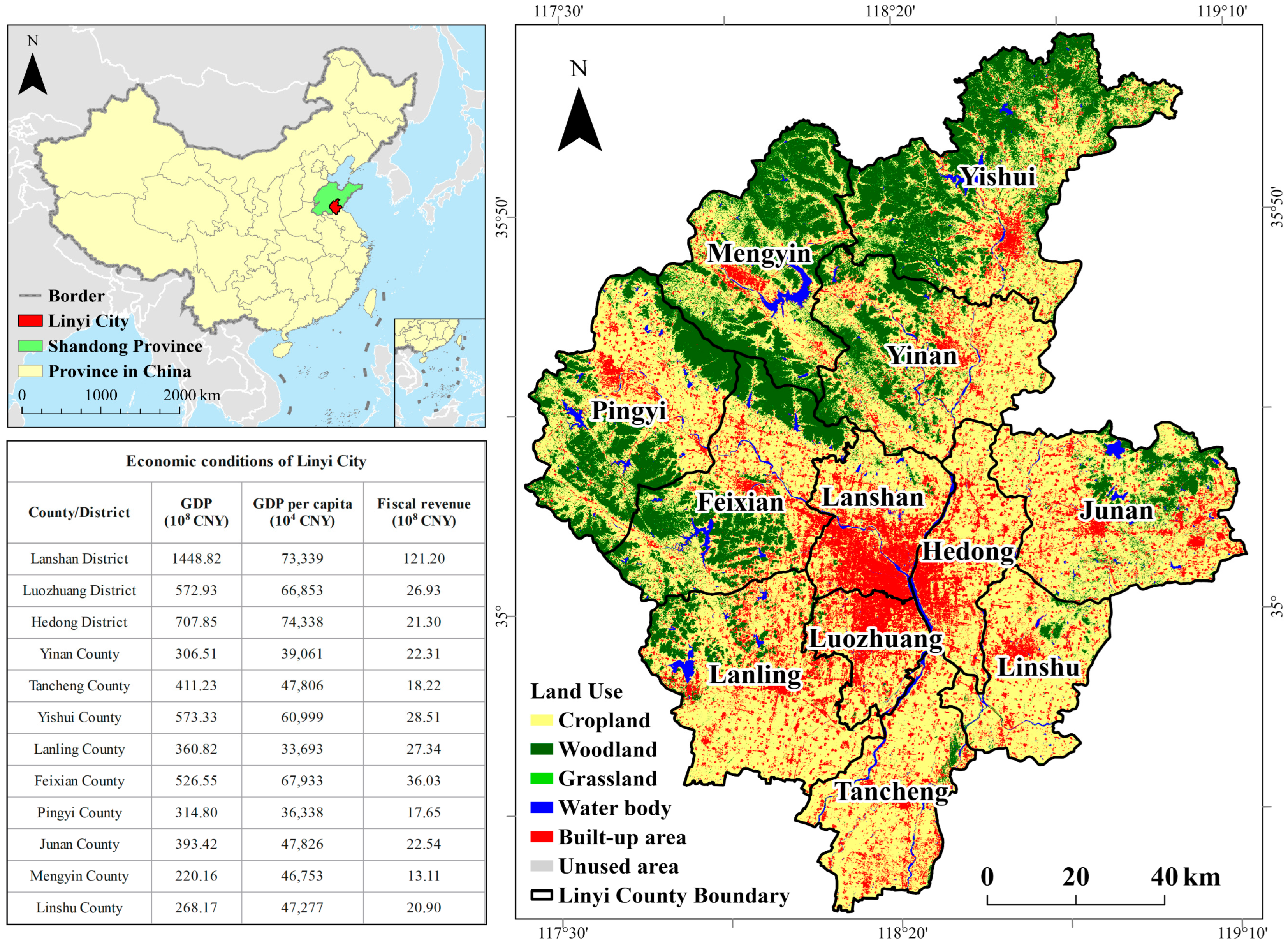
3.1. Study Area
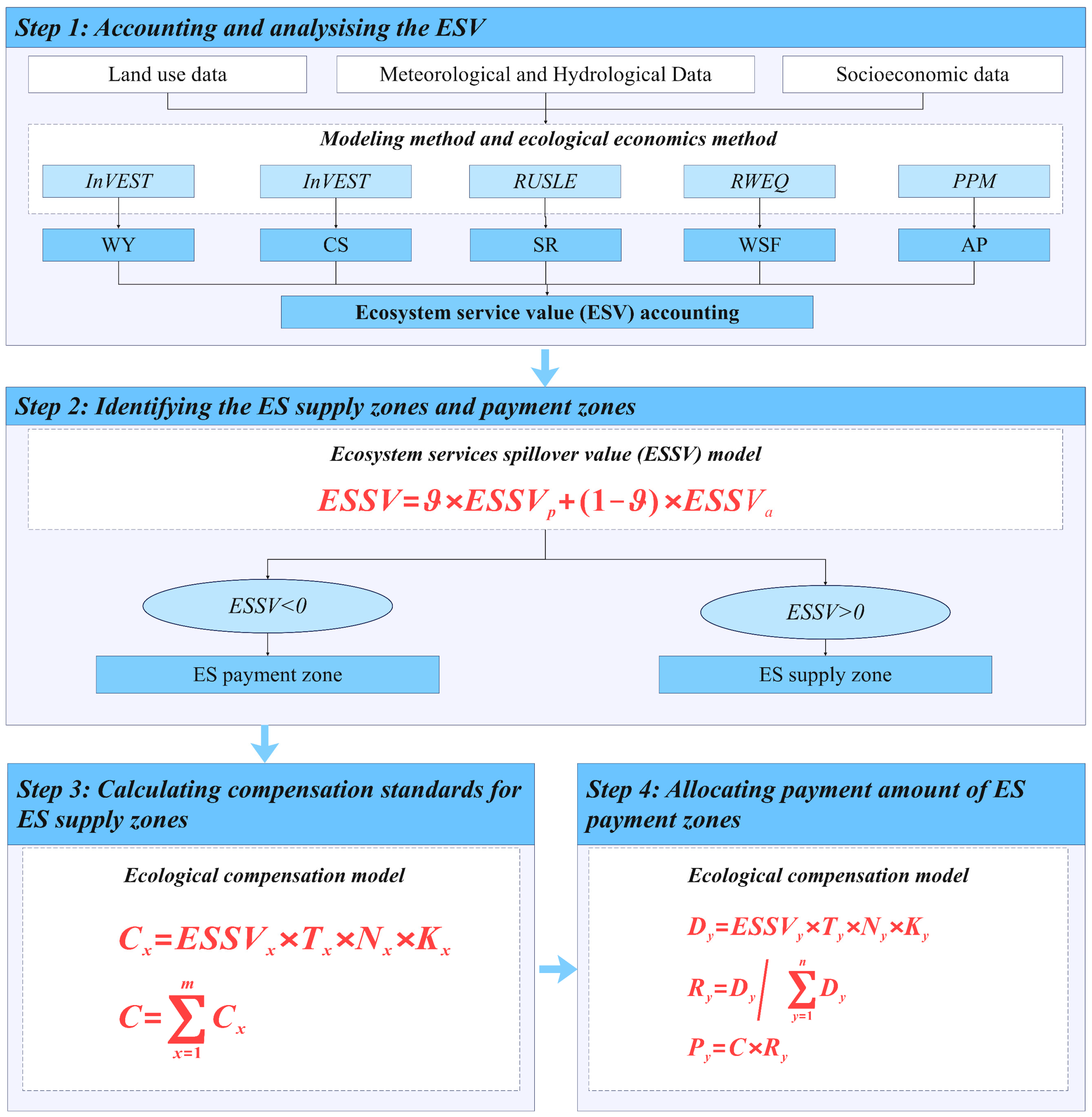
3.2. Research Methods
3.2.1. Estimation of ESV
3.2.2. Identification of the ES Supply and Payment Zones
3.2.3. Determination of Compensation Standards for the ES Supply Zones
3.2.4. Fund Allocation for ES Payment Zones
3.3. Data Sources
4. Results
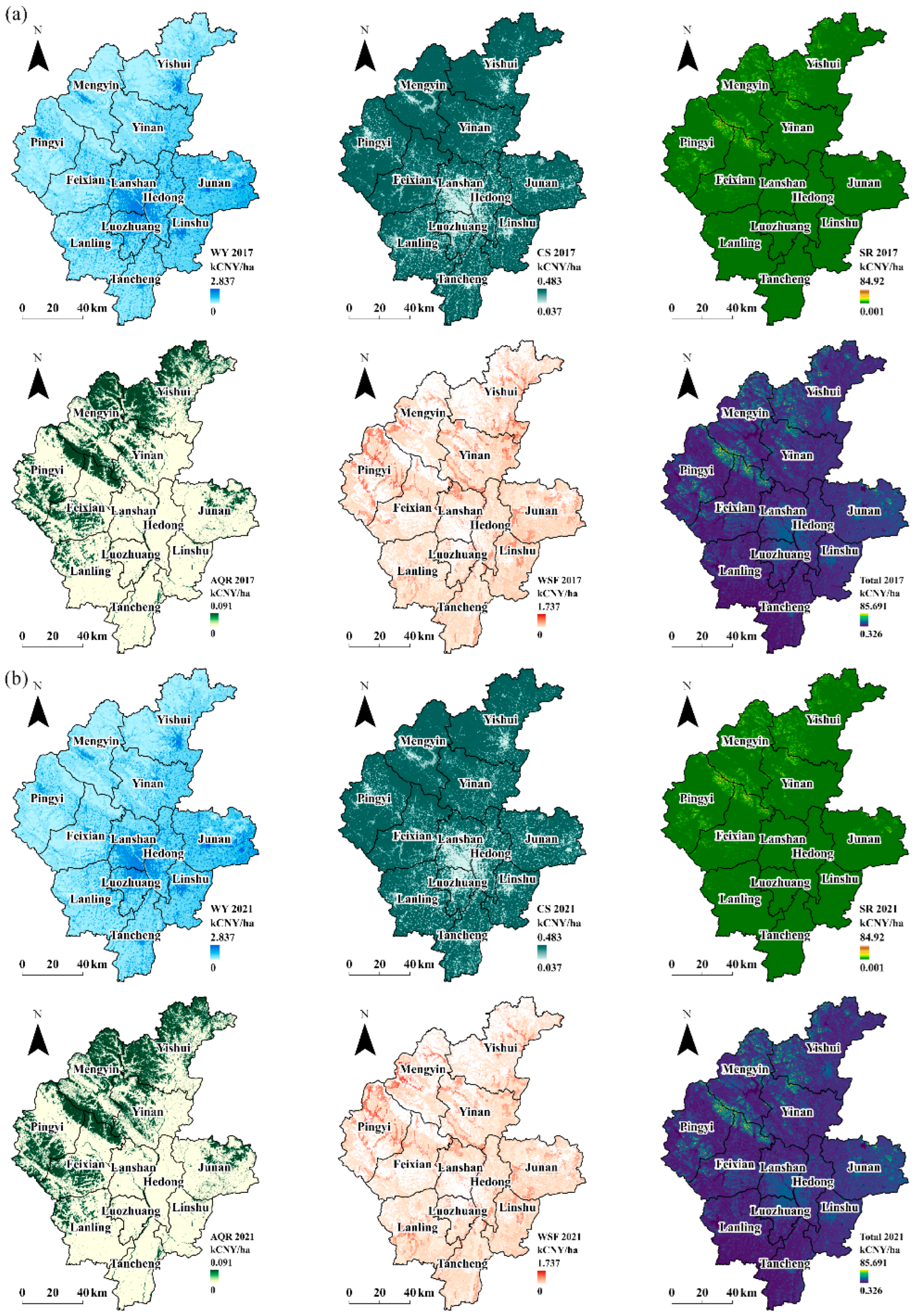
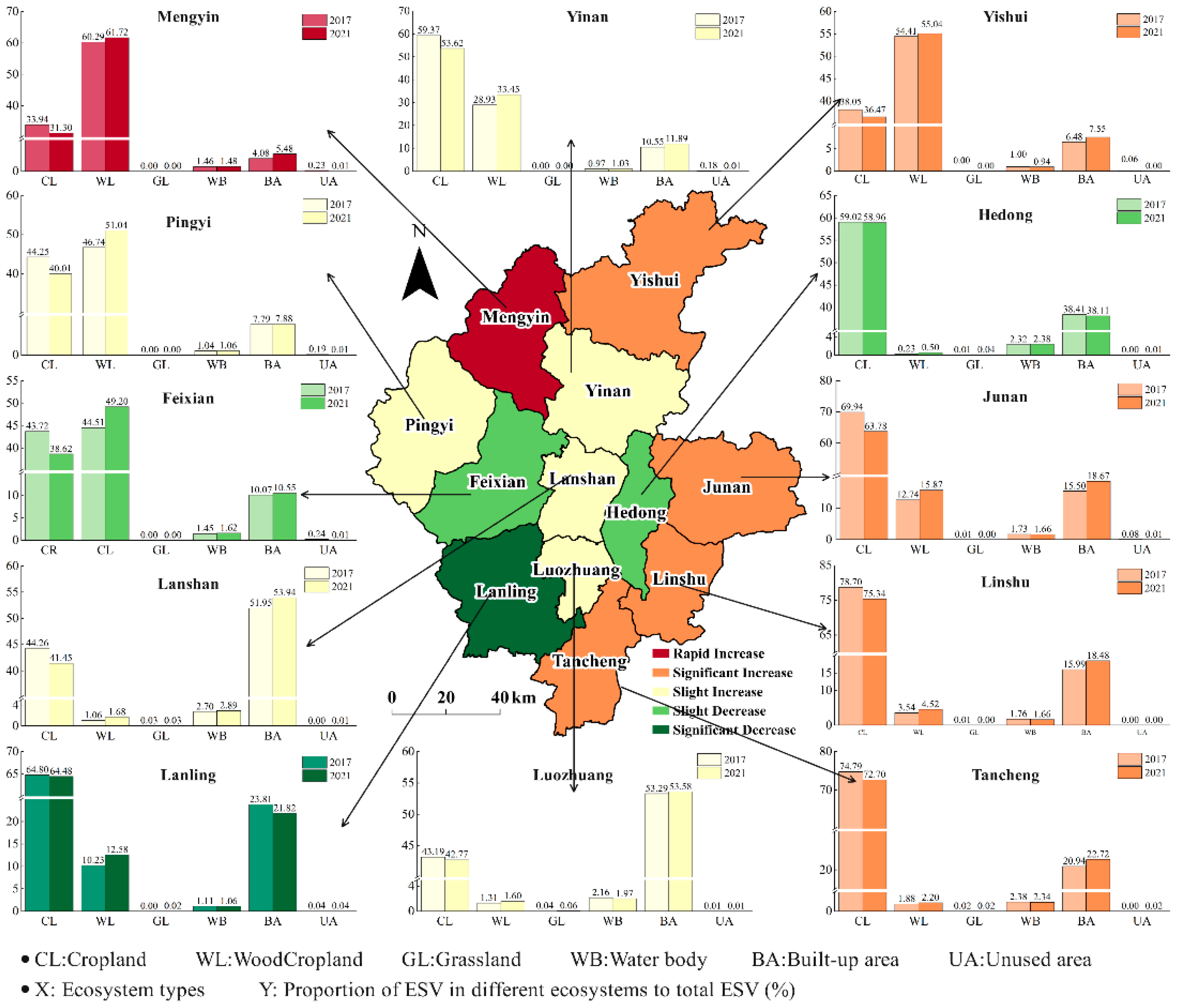
4.1. Temporal and Spatial Variations in ESV
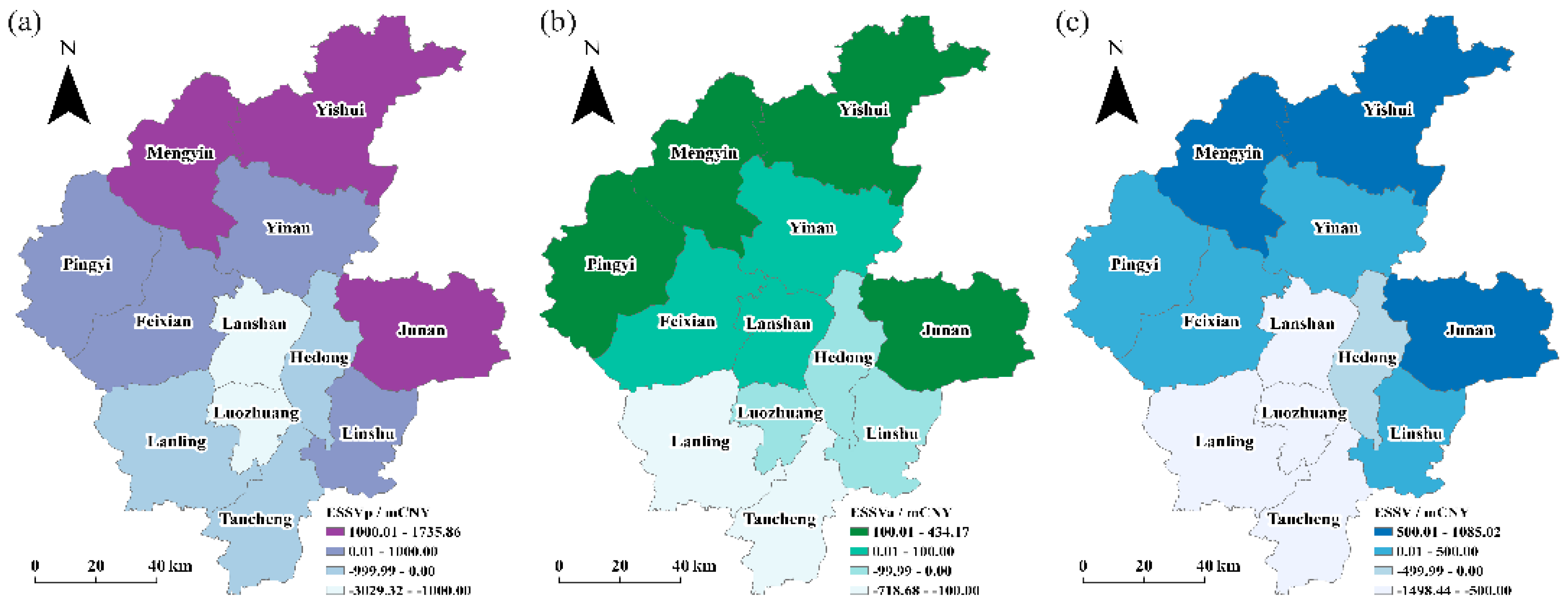
4.2. Analysis of ESSV
4.3. Analysis of the Amount of Ecological Compensation
5. Discussion
5.1. Aligning Compensation Standards with ESSV
5.2. Optimization of the Operational Mechanism of Linyi’s IFEITP

6. Implications of the Study
6.1. Implications for Compliant PES Mechanism Design
6.2. Implications for Ecological Compensation Standard Setting
6.3. Broader Implications for Sustainable Development and Environmental Justice
7. Conclusions
8. Limitations and Outlooks
Supplementary Materials
Author Contributions
Funding
Institutional Review Board Statement
Informed Consent Statement
Data Availability Statement
Acknowledgments
Conflicts of Interest
Abbreviations
| IFEITP | The Intergovernmental Forest Ecological Indicator Trading Policy |
| ESs | Ecosystem services |
| PES | Payment for ecosystem services |
| ESV | Ecosystem service value |
| ESSV | Ecosystem service spillover value |
| GDP | Gross domestic product |
| CNY | Chinese yuan |
| WY | Water Yield |
| CS | Carbon Storage |
| SR | Soil Retention |
| WSF | Windbreak and sand fixation |
| AQR | Air quality regulation |
| PPM | Pollutant purification model |
| kCNY | One thousand Chinese yuan |
| mCNY | One million Chinese yuan |
| ESPZ | Ecosystem service payment zones |
| ESSZ | Ecosystem service supply zones |
| HAMC | The county with high afforestation motivation |
| FEITMP | Forest Ecological Indicator Trading Management Platform |
References
- Salzman, J.; Bennett, G.; Carroll, N.; Goldstein, A.; Jenkins, M. The global status and trends of Payments for Ecosystem Services. Nat. Sustain. 2018, 1, 136–144. [Google Scholar] [CrossRef]
- Kaiser, J.; Haase, D.; Krueger, T. Payments for ecosystem services: A review of definitions, the role of spatial scales, and critique. Ecol. Soc. 2021, 26, 12. [Google Scholar] [CrossRef]
- Li, F.F.; Liu, H.Y.; Wu, S.H.; Wang, Y.H.; Xu, Z.C.; Yu, P.T.; Yan, D.H. A PES framework coupling socioeconomic and ecosystem dynamics from a sustainable development perspective. J. Environ. Manag. 2023, 329, 117043. [Google Scholar] [CrossRef]
- Obeng, E.A.; Aguilar, F.X. Value orientation and payment for ecosystem services: Perceived detrimental consequences lead to willingness-to-pay for ecosystem services. J. Environ. Manag. 2018, 206, 458–471. [Google Scholar] [CrossRef]
- van der Gaast, W.; Sikkema, R.; Vohrer, M. The contribution of forest carbon credit projects to addressing the climate change challenge. Clim. Policy 2018, 18, 42–48. [Google Scholar] [CrossRef]
- Barton, D.N.; Faith, D.P.; Rusch, G.M.; Acevedo, H.; Paniagua, L.; Castro, M. Environmental service payments: Evaluating biodiversity conservation trade-offs and cost-efficiency in the Osa Conservation Area, Costa Rica. J. Environ. Manag. 2009, 90, 901–911. [Google Scholar] [CrossRef]
- Schomers, S.; Matzdorf, B. Payments for ecosystem services: A review and comparison of developing and industrialized countries. Ecosyst. Serv. 2013, 6, 16–30. [Google Scholar] [CrossRef]
- Maraseni, T.N.; Poudyal, B.H.; Rana, E.; Khanal, S.C.; Ghimire, P.L.; Subedi, B.P. Mapping national REDD plus initiatives in the Asia-Pacific region. J. Environ. Manag. 2020, 269, 110763. [Google Scholar] [CrossRef]
- Baskent, E.Z.; Balci, H. A priory allocation of ecosystem services to forest stands in a forest management context considering scientific suitability, stakeholder engagement and sustainability concept with multi-criteria decision analysis (MCDA) technique: A case study in Turkey. J. Environ. Manag. 2024, 369, 122230. [Google Scholar] [CrossRef]
- Nie, X.; Li, X.J.; Lyu, C.; Su, Y.L.; Wang, H. Can ecological compensation based on the transfer of development rights (TDR) improve ecosystem service value? A multi-scenario simulation. Land Use Policy 2024, 138, 107024. [Google Scholar] [CrossRef]
- Niu, L.; Wang, J.-Y.; Xi, F.-M.; Yin, Y.; Bing, L.-F.; Ma, M.-J.; Zhang, W.-F. Regional ecological compensation accounting in Fuzhou City based on a payment for ecosystem services (PES) model. Chin. J. Appl. Ecol. 2021, 32, 3805–3814. [Google Scholar] [CrossRef]
- Ren, Y.F.; Zhang, L.B.; Wei, X.X.; Song, Y.; Wu, S.Y.; Wang, H.; Chen, X.; Qiao, Y.B.; Liang, T. Evaluating and simulating the impact of afforestation policy on land use and ecosystem services trade-offs in Linyi, China. Ecol. Indic. 2024, 160, 111898. [Google Scholar] [CrossRef]
- Wei, X.X.; Zhang, L.B.; Chen, X.; Wang, H.; Liang, T.; Ren, Y.F.; Song, Z.X.; Li, Y. Does cap-and-trade policy promote Forest cover? Evidence from China. J. Clean. Prod. 2024, 484, 144344. [Google Scholar] [CrossRef]
- Liu, M.C.; Yang, L.; Min, Q.W.; Sang, W.G. Theoretical framework for eco-compensation to national parks in China. Glob. Ecol. Conserv. 2020, 24, e01296. [Google Scholar] [CrossRef]
- Chen, M.K.; Xu, X.B.; Tan, Y.; Lin, Y.Y. Integrating ecosystem service spillovers and environmental justice in ecological compensation: A pathway to effective ecological protection in China. Ecol. Indic. 2025, 174, 113455. [Google Scholar] [CrossRef]
- Yang, H.J.; Gou, X.H.; Li, Z.L.; Wei, Y.X.; Shi, W.W.; Xue, B.; Maraseni, T. Assessing ecosystem services and their spillover effects to inform cost-benefit sharing and horizontal eco-compensation mechanisms in the Qilian Mountains, China. Ecosyst. Serv. 2025, 75, 101764. [Google Scholar] [CrossRef]
- Yang, Y.; Zhang, Y.Y.; Yang, H.; Yang, F.Y. Horizontal ecological compensation as a tool for sustainable development of urban agglomerations: Exploration of the realization mechanism of Guanzhong Plain urban agglomeration in China. Environ. Sci. Policy 2022, 137, 301–313. [Google Scholar] [CrossRef]
- Dimal, M.O.R.; Jetten, V. An integrated spatial econometric approach in valuing soil conservation using contingent valuation. Soil. Use Manag. 2021, 37, 377–389. [Google Scholar] [CrossRef]
- Ren, Y.S.; Lu, L.; Zhang, H.M.; Chen, H.F.; Zhu, D.C. Residents’ willingness to pay for ecosystem services and its influencing factors: A study of the Xin’an River basin. J. Clean. Prod. 2020, 268, 122301. [Google Scholar] [CrossRef]
- Cao, Y.J.; Li, X.C.; Liu, T.M. Analysis of Problems and Causes in Grassland Eco-compensation—Taking Xilinguole as a Case. Chin. J. Grassl. 2010, 32, 10–16. [Google Scholar]
- Hu, M.M.; Li, Z.T.; Wang, Y.F.; Jiao, M.Y.; Li, M.; Xia, B.C. Spatio-temporal changes in ecosystem service value in response to land-use/cover changes in the Pearl River Delta. Resour. Conserv. Recycl. 2019, 149, 106–114. [Google Scholar] [CrossRef]
- Dai, J.H.; Wang, H.J.; Wang, H.l.; Chen, C.Y. An Introduction to Framework of Assessment of the Value of Ecosystem Services. Prog. Geogr. 2012, 31, 963–969. [Google Scholar]
- Sun, J.; Liu, Y.; Zhou, T.C.; Liu, G.H.; Wang, J.S. Soil conservation service on the Tibetan Plateau, 1984–2013. Earth Env. Sci. Trans. R. Soc. Edinb. 2019, 109, 445–451. [Google Scholar] [CrossRef]
- Zhai, T.L.; Zhang, D.; Zhao, C.C. How to optimize ecological compensation to alleviate environmental injustice in different cities in the Yellow River Basin? A case of integrating ecosystem service supply, demand and flow. Sustain. Cities Soc. 2021, 75, 103341. [Google Scholar] [CrossRef]
- Gómez-Baggethun, E.; Muradian, R. In markets we trust? Setting the boundaries of Market-Based Instruments in ecosystem services governance. Ecol. Econ. 2015, 117, 217–224. [Google Scholar] [CrossRef]
- Wang, G.C.; Tian, K.K.; Sun, F.S.; Wang, K.F.; Zhang, T.P.; Cao, S.K.; Wang, S.W.; Zhang, G.; Wang, Q.; Zhang, R.H. Exploring the Practice of Horizontal Compensation for Ecological Benefits of Forest Resources—The Case of Linyi City, Shandong Province. Nat. Resour. Econ. China 2023, 36, 17–25. [Google Scholar] [CrossRef]
- Yang, X.; Chen, R.S.; Meadows, M.E.; Ji, G.X.; Xu, J.H. Modelling water yield with the InVEST model in a data scarce region of northwest China. Water Supply 2020, 20, 1035–1045. [Google Scholar] [CrossRef]
- Li, M.Y.; Liang, D.; Xia, J.; Song, J.X.; Cheng, D.D.; Wu, J.T.; Cao, Y.L.; Sun, H.T.; Li, Q. Evaluation of water conservation function of Danjiang River Basin in Qinling Mountains, China based on InVEST model. J. Environ. Manag. 2021, 286, 112212. [Google Scholar] [CrossRef]
- Qin, H.Y. Land Use Scenario Simulation and Ecosystem Service Prediction in Shandong Province. Ph.D Dissertation, Shandong University, Jinan, China, 2022. [Google Scholar]
- Zhu, G.F.; Qiu, D.D.; Zhang, Z.A.X.; Sang, L.Y.; Liu, Y.W.; Wang, L.; Zhao, K.L.; Ma, H.Y.; Xu, Y.X.; Wan, Q.Z. Land-use changes lead to a decrease in carbon storage in arid region, China. Ecol. Indic. 2021, 127, 107770. [Google Scholar] [CrossRef]
- Jiang, Y.; Alifujiang, Y.; Feng, P.P.; Yang, P.; Feng, J.P. A Simulated Assessment of Land Use and Carbon Storage Changes in the Yanqi Basin under Different Development Scenarios. Land 2024, 13, 744. [Google Scholar] [CrossRef]
- DB37_T 398-2004; Technical Regulation for Monitoring Desertification Land in Shandong Province. Shandong Provincial Bureau of Quality and Technical Supervision: Jinan, China, 2004.
- Huang, J.J.; Li, L.L.; Xu, L.Y. Regional ecosystem compensation based on spilled ecosystem service value assessment. Acta Ecol. Sin. 2021, 41, 6994–7001. Available online: https://www.ecologica.cn/stxb/article/abstract/stxb201906031173?st=search (accessed on 3 June 2025). [CrossRef]
- Gao, X.; Shen, J.Q.; He, W.J.; Zhao, X.; Li, Z.C.; Hu, W.F.; Wang, J.Z.; Ren, Y.J.; Zhang, X. Spatial-temporal analysis of ecosystem services value and research on ecological compensation in Taihu Lake Basin of Jiangsu Province in China from 2005 to 2018. J. Clean. Prod. 2021, 317, 128241. [Google Scholar] [CrossRef]
- Jin, Y.; Huang, J.F.; Peng, D.L. A new quantitative model of ecological compensation based on ecosystem capital in Zhejiang Province, China. J. Zhejiang Univ. Sci. B 2009, 10, 301–305. [Google Scholar] [CrossRef] [PubMed][Green Version]
- Xing, L.; Xue, M.G.; Wang, X.Y. Spatial correction of ecosystem service value and the evaluation of eco-efficiency: A case for China’s provincial level. Ecol. Indic. 2018, 95, 841–850. [Google Scholar] [CrossRef]
- Yuan, K.Y.; Li, F.; Yang, H.J.; Wang, Y.M. The Influence of Land Use Change on Ecosystem Service Value in Shangzhou District. Int. J. Environ. Res. Public Health 2019, 16, 1321. [Google Scholar] [CrossRef]
- Wunder, S. Payments for Environmental Services: Some Nuts and Bolts; Center for International Forestry Research, 2005; p. 24. [Google Scholar]
- Farley, J.; Costanza, R. Payments for ecosystem services: From local to global. Ecol. Econ. 2010, 69, 2060–2068. [Google Scholar] [CrossRef]
- Bagstad, K.J.; Semmens, D.J.; Waage, S.; Winthrop, R. A comparative assessment of decision-support tools for ecosystem services quantification and valuation. Ecosyst. Serv. 2013, 5, E27–E39. [Google Scholar] [CrossRef]
- Bukvareva, E.; Zamolodchikov, D.; Kraev, G.; Grunewald, K.; Narykov, A. Supplied, demanded and consumed ecosystem services: Prospects for national assessment in Russia. Ecol. Indic. 2017, 78, 351–360. [Google Scholar] [CrossRef]
- Chan, K.M.A.; Shaw, M.R.; Cameron, D.R.; Underwood, E.C.; Daily, G.C. Conservation planning for ecosystem services. PLoS Biol. 2006, 4, 2138–2152. [Google Scholar] [CrossRef]
- Wünscher, T.; Engel, S.; Wunder, S. Spatial targeting of payments for environmental services: A tool for boosting conservation benefits. Ecol. Econ. 2008, 65, 822–833. [Google Scholar] [CrossRef]
- Sheng, W.P.; Zhen, L.; Xie, G.D.; Xiao, Y. Determining eco-compensation standards based on the ecosystem services value of the mountain ecological forests in Beijing, China. Ecosyst. Serv. 2017, 26, 422–430. [Google Scholar] [CrossRef]
- Jack, B.K.; Kousky, C.; Sims, K.R.E. Designing payments for ecosystem services: Lessons from previous experience with incentive-based mechanisms. Proc. Natl. Acad. Sci. USA 2008, 105, 9465–9470. [Google Scholar] [CrossRef] [PubMed]
- Engel, S.; Pagiola, S.; Wunder, S. Designing payments for environmental services in theory and practice: An overview of the issues. Ecol. Econ. 2008, 65, 663–674. [Google Scholar] [CrossRef]
- Porras, I.; Barton, D.N.; Miranda, M.; Chacón-Cascante, A. Learning from 20 Years of Payments for Ecosystem Services in Costa Rica; International Institute for Environment and Development: London, UK, 2013. [Google Scholar]
- Pan, Q.; Wen, Z.; Wu, T.; Zheng, T.C.; Yang, Y.Z.; Li, R.A.; Zheng, H. Trade-offs and synergies of forest ecosystem services from the perspective of plant functional traits: A systematic review. Ecosyst. Serv. 2022, 58, 101484. [Google Scholar] [CrossRef]
- Pei, S.; Zhang, C.X.; Liu, C.L.; Liu, X.N.; Xie, G.D. Forest ecological compensation standard based on spatial flowing of water services in the upper reaches of Miyun Reservoir, China. Ecosyst. Serv. 2019, 39, 100983. [Google Scholar] [CrossRef]
- Pagiola, S. Payments for environmental services in Costa Rica. Ecol. Econ. 2008, 65, 712–724. [Google Scholar] [CrossRef]
- Tillman, S.C.; Matthews, J.W. Compliance with Regulatory Performance Standards in Wetland Mitigation Banks. Wetlands 2024, 44, 80. [Google Scholar] [CrossRef]
- Yan, N.Y.; Liu, G.Y.; Xu, L.Y.; Deng, X.Y.; Casazza, M. Emergy-based eco-credit accounting method for wetland mitigation banking. Water Res. 2022, 210, 118028. [Google Scholar] [CrossRef]
- Zhang, X.L.; Niu, C.H.; Ma, S.; Wang, L.J.; Hu, H.B.; Jiang, J. Exploring ecological compensation standards in the urbanization process: An ecosystem service value-based perspective. Ecol. Indic. 2024, 166, 112510. [Google Scholar] [CrossRef]
- Chi, C.; Shen, J.Q.; Gao, X.; Hu, P.; Yi, P. Horizontal ecological compensation standards based on ecosystem services flow. Ecol. Indic. 2024, 163, 112081. [Google Scholar] [CrossRef]
- Hamel, P.; Bryant, B.P. Uncertainty assessment in ecosystem services analyses: Seven challenges and practical responses. Ecosyst. Serv. 2017, 24, 1–15. [Google Scholar] [CrossRef]
- Rounsevell, M.D.A.; Arneth, A.; Brown, C.; Cheung, W.W.L.; Gimenez, O.; Holman, I.; Leadley, P.; Lujan, C.; Mahevas, S.; Marechaux, I.; et al. Identifying uncertainties in scenarios and models of socio-ecological systems in support of decision-making. One Earth 2021, 4, 967–985. [Google Scholar] [CrossRef]
- Stritih, A.; Bebi, P.; Grêt-Regamey, A. Quantifying uncertainties in earth observation-based ecosystem service assessments. Environ. Modell. Softw. 2019, 111, 300–310. [Google Scholar] [CrossRef]
- An, Z.Y.; Sun, C.Z.; Hao, S. Exploration of ecological compensation standard: Based on ecosystem service flow path. Appl. Geogr. 2025, 178, 103588. [Google Scholar] [CrossRef]




| Ecosystem Services | Physical Quantity Accounting Models | Monetary Value Accounting Methods |
|---|---|---|
| Water Yield | The InVEST water yield model , where Y(x) is the annual water production of image x in the study area in mm, AET(x) is the annual actual evapotranspiration of image x in mm, P(x) is the annual precipitation of image x in mm [27,28]. | The replacement cost method where Vwy is the value of water yield, unit: CNY/a; Qwy is the water yield, unit: m3/a; Cwe is the annual operating cost per unit storage capacity of the reservoir, unit: CNY/(m3·a); Pwe is the construction cost per unit storage capacity of the reservoir, unit: CNY/m3; Dr is the annual depreciation rate of the reservoir, unit: %. According to the Technical Guide for the Gross Ecosystem Product Accounting in Shandong Province, the construction cost and the annual operating cost per unit storage capacity of the reservoir are 100 CNY/m3 and 0.6 CNY/(m3·a), respectively; the annual depreciation rate of the reservoir is 4%. |
| Carbon Storage | The carbon storage module in the InVEST model , where Ctotal is total carbon storage; Cabove is aboveground biomass carbon pool; Cbelow is belowground biomass carbon pool; Csoil is soil carbon pool; and Cdead is dead organic matter carbon pool. The above parameter values are from Qin [29] and are shown in Table S1. | The afforestation cost method , where Vcs is the value of ecosystem carbon storage, unit: CNY/a; QtCO2 is the amount of carbon storage in the ecosystem, unit: t·CO2/a; CCO2 is the cost per unit of afforestation-based carbon sequestration, unit: CNY/t·CO2, which is 960 CNY/t·CO2 according to the Technical Guide for the Gross Ecosystem Product Accounting in Shandong Province. |
| Air Quality Regulation | Pollutant purification model , where Qaqr is the amount of air pollutant purification, unit: t/a; Qij is purification amount of the jth type of ecosystem per unit area for the ith air pollutant, unit: t/km2·a; i is air pollutant category, including sulfur dioxide, nitrogen oxides, and dust, i = 1, 2, …, n; n is the number of air pollutant categories; j is ecosystem type, j = 1, 2, …, m; m is the number of ecosystem types; Aj is the area of the jth type of ecosystem, unit: km2. | The replacement cost method , where Vaqr is the value of air quality regulation, unit: CNY/a; Qi is the purification amount of the ith type of air pollutant, unit: t/a; ci is the unit treatment cost of the ith type of air pollutant, unit: CNY/t; i is the category of air pollutants, i = 1, 2, …, n; n is the number of air pollutant categories. According to Environmental Protection Tax Law of the People’s Republic of China, the treatment costs of sulfur dioxide, nitrogen oxides and dust are 6315.79 CNY/t, 6315.79 CNY/t and 300 CNY/t, respectively. |
| Soil Retention | The Sediment Delivery Ratio (SDR) module of the InVEST model , where Qsr is the physical quantity of soil retention; RKLS is the potential erosion of the soil; USLE is the actual erosion of the soil. R is the rainfall erosivity, K is the soil erodibility, LS is the slope length-gradient factor, C is the crop-management factor, and P is the support practice factor [30,31]. | The replacement cost method , where Vsr is the value of soil retention, unit: CNY/a; Vsd is the value of sediment reduction, unit: CNY/a; Vdn is the value of soil nutrient retention, unit: CNY/a; λ is the sediment accumulation coefficient (dimensionless), which is 24%; Qsr is the amount of soil retention, unit: t/a; ρ is the bulk density of soil, unit: t/m3; c is the cost per unit of dredging, unit: CNY/m3; ci is the pure content of the ith type of nutrient (e.g., nitrogen, phosphorus) in the soil, unit: %; pi is the market price of the ith type of fertilizer, unit: CNY/t; i is the category of soil nutrients, i = 1, 2, …, n; n is the number of soil nutrient categories. |
| Windbreak and Sand Fixation | RWEQ model , where Qsf is the amount of windbreak and sand fixation, unit: t/a; WF is the climatic erosion factor, which refers to the comprehensive impact of various meteorological factors such as wind speed, temperature and rainfall on wind erosion, unit: kg/m; SCF is the soil crust factor, which refers to the ability of soil crust to resist wind erosion under certain soil physical and chemical conditions; K′ is the surface roughness factor, which refers to the influence of surface roughness caused by topography on wind erosion; C is the vegetation coverage factor, dimensionless; Ai is the area of the ith type of ecosystem, unit: km2; n is the number of ecosystem types. | The recovery cost method , Vsf is the value of windbreak and sand fixation, unit: CNY/a; ρ is the soil bulk density, which is 1.32 t/m3; h is the sand cover thickness of soil desertification, unit: m. According to the Technical Regulation for Monitoring Desertification Land in Shandong Province (DB37/T 398-2004) [32], h with vegetation coverage > 70% is defined as 1 m, 50–70% as 0.5 m, 30–50% as 0.2 m, 10–30% as 0.05 m, 0–10% as 0–0.05 m, unit: m; c is the unit desertification control cost from the national forestry department, which is 500 CNY/m3. |
| Data Type | Data Name | Source | Resolution |
|---|---|---|---|
| Remote Sensing Data | Land use/cover | Supervisory classification using Google Earth Engine [12] | 30 m |
| DEM | Google Earth Engine Data Catalog | 1 km | |
| Soil properties | Harmonized World Soil Database | 1 km | |
| Meteorological and Hydrological Data | Precipitation | National Earth System Science Data Center (https://www.geodata.cn/ (accessed on 3 June 2025)) | - |
| Potential evapotranspiration | - | ||
| Wind speed | - | ||
| Socioeconomic data | Resident Population | “Linyi Statistical Yearbook” (2018, 2022, 2024) | - |
| GDP | - | ||
| Fiscal Revenue | - | ||
| Per Capita GDP | - | ||
| Engel’s Coefficient | - |
| County Type | County | ESSV (Million CNY) | T | N | K | C (104 CNY) |
|---|---|---|---|---|---|---|
| ESs supply zone | Mengyin County | 1085.02 | 0.09 | 3.10 | 0.03 | 1102 |
| Yishui County | 1033.01 | 0.05 | 1.27 | 0.09 | 602 | |
| Junan County | 722.91 | 0.06 | 1.91 | 0.06 | 484 | |
| Pingyi County | 432.41 | 0.07 | 1.40 | 0.05 | 199 | |
| Fei County | 350.64 | 0.04 | 1.91 | 0.08 | 197 | |
| Yinan County | 375.10 | 0.06 | 1.09 | 0.05 | 124 | |
| Linshu County | 5.90 | 0.04 | 0.61 | 0.04 | 1 | |
| ESs payment zone | Lanshan District | −657.35 | 0.02 | 1.04 | 0.06 | 858 |
| Lanling County | −657.42 | 0.01 | 2.00 | 0.10 | 789 | |
| Hedong District | −473.85 | 0.01 | 2.26 | 0.11 | 423 | |
| Luozhuang District | −717.99 | 0.04 | 1.81 | 0.06 | 356 | |
| Tancheng County | −1498.44 | 0.01 | 1.30 | 0.24 | 284 |
Disclaimer/Publisher’s Note: The statements, opinions and data contained in all publications are solely those of the individual author(s) and contributor(s) and not of MDPI and/or the editor(s). MDPI and/or the editor(s) disclaim responsibility for any injury to people or property resulting from any ideas, methods, instructions or products referred to in the content. |
© 2026 by the authors. Licensee MDPI, Basel, Switzerland. This article is an open access article distributed under the terms and conditions of the Creative Commons Attribution (CC BY) license.
Share and Cite
Wang, H.; Ren, Y.; Chang, X.; Wu, S.; Liang, T.; Cheng, W.; Shi, D.; Zhang, L. Optimizing Forest Ecosystem Service Compensation Using Spillover Analysis: Evidence from Linyi’s Indicator Trading Policy, China. Sustainability 2026, 18, 643. https://doi.org/10.3390/su18020643
Wang H, Ren Y, Chang X, Wu S, Liang T, Cheng W, Shi D, Zhang L. Optimizing Forest Ecosystem Service Compensation Using Spillover Analysis: Evidence from Linyi’s Indicator Trading Policy, China. Sustainability. 2026; 18(2):643. https://doi.org/10.3390/su18020643
Chicago/Turabian StyleWang, Hao, Yaofa Ren, Xiaoqing Chang, Shuyao Wu, Tian Liang, Wenjie Cheng, Dongsheng Shi, and Linbo Zhang. 2026. "Optimizing Forest Ecosystem Service Compensation Using Spillover Analysis: Evidence from Linyi’s Indicator Trading Policy, China" Sustainability 18, no. 2: 643. https://doi.org/10.3390/su18020643
APA StyleWang, H., Ren, Y., Chang, X., Wu, S., Liang, T., Cheng, W., Shi, D., & Zhang, L. (2026). Optimizing Forest Ecosystem Service Compensation Using Spillover Analysis: Evidence from Linyi’s Indicator Trading Policy, China. Sustainability, 18(2), 643. https://doi.org/10.3390/su18020643