
Role of Biostimulants in Sustainable Soybean (Glycine max L.) Production: A Systematic Review
 , , , and
Abstract
1. Introduction
2. Materials and Methods
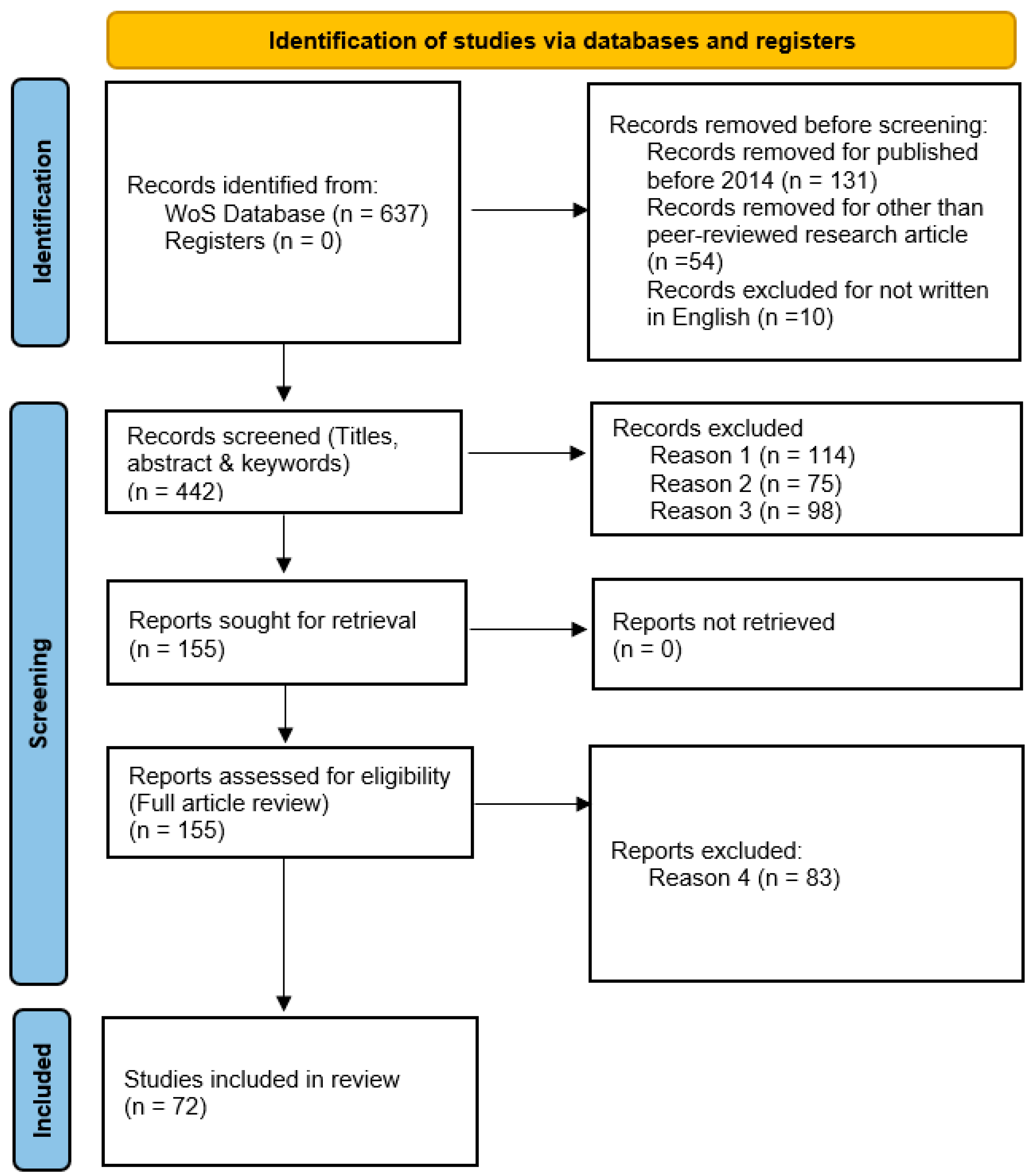
2.1. Strategy for Document Search and Identification and Criteria for Exclusion and Inclusion
2.2. Data Extraction, Analysis, Preparation, and Synthesis Procedure
3. Results and Discussion
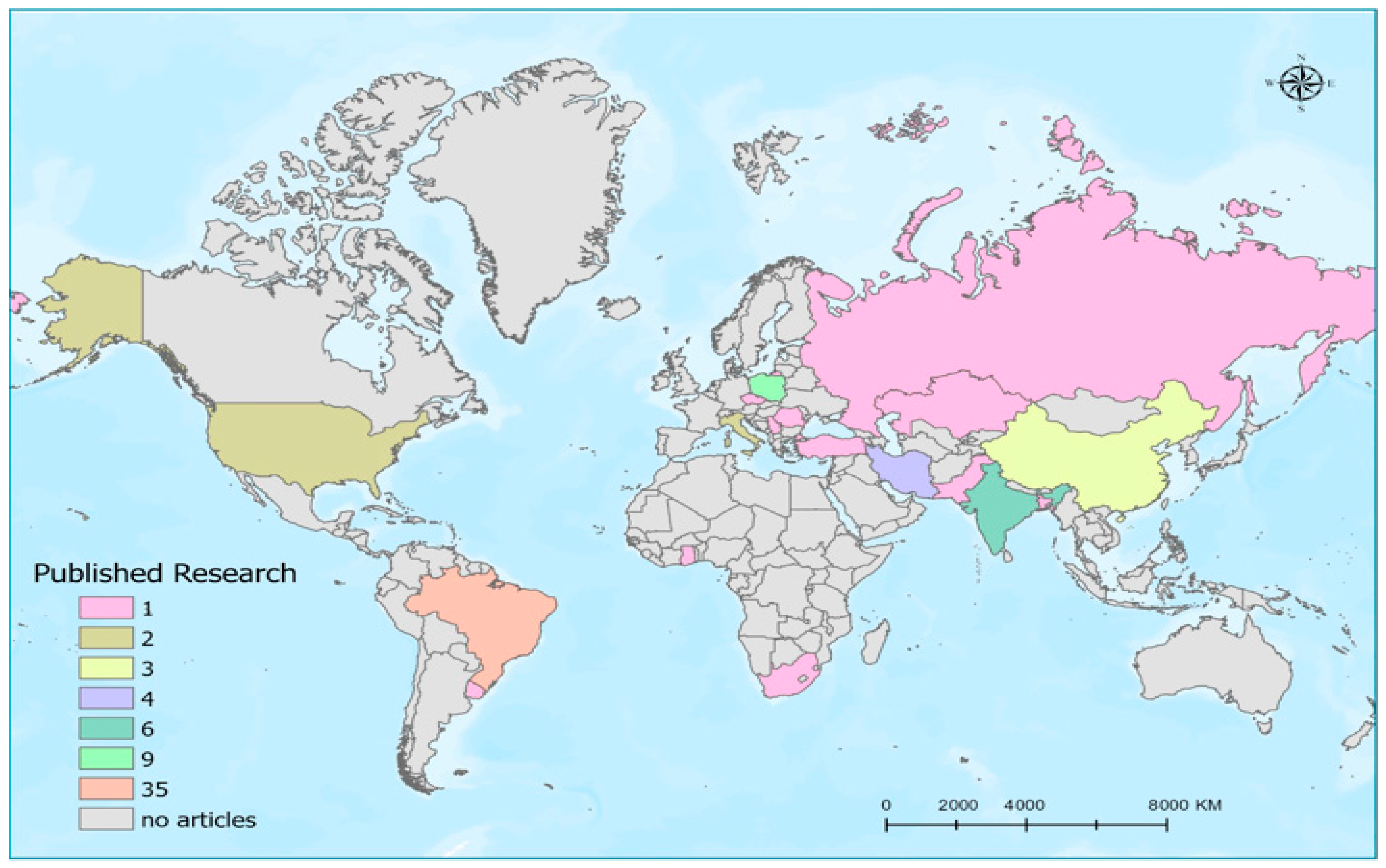
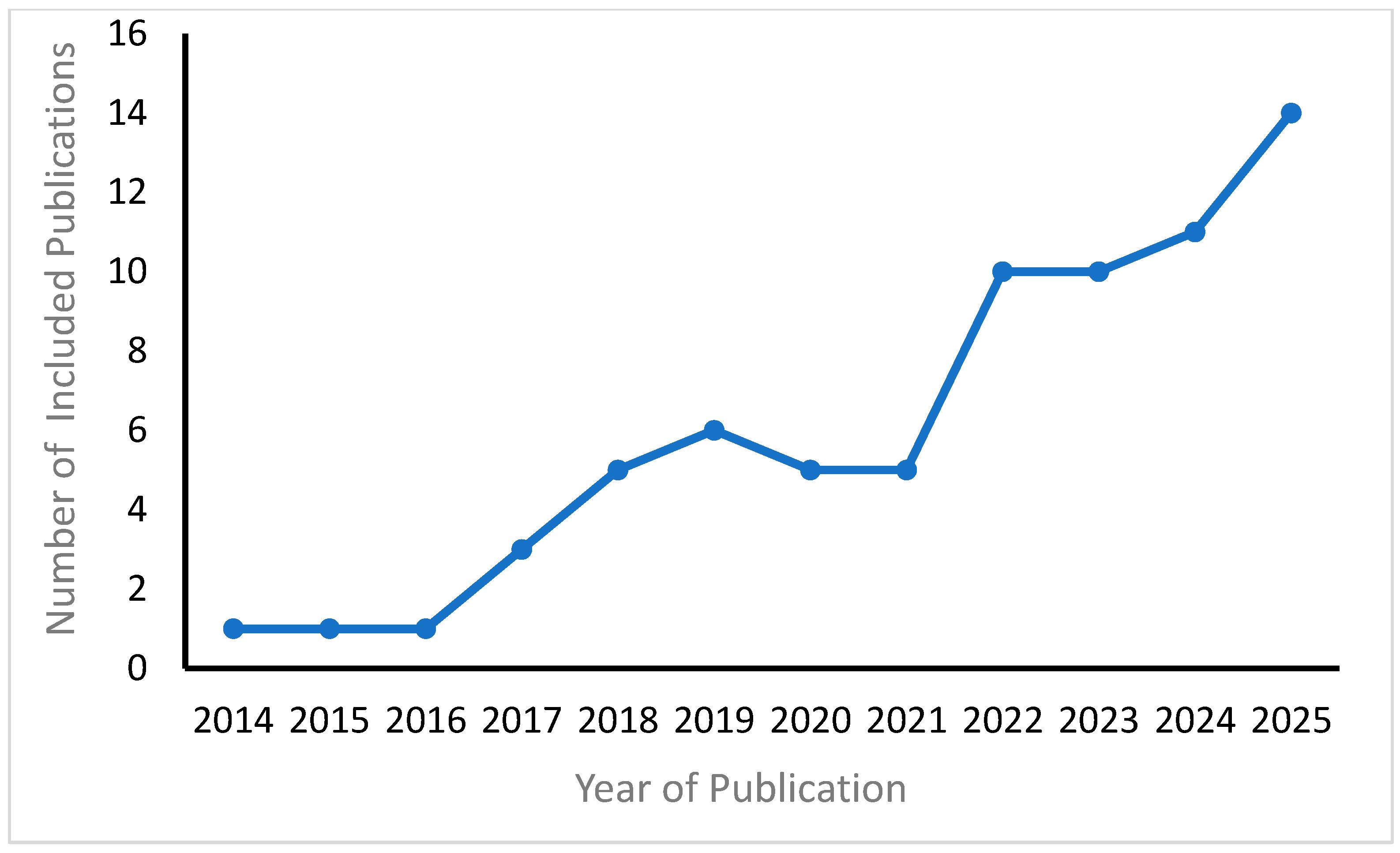
3.1. Geographical Scope of Included Literature
3.2. Effect of Humic Acid and Amino Acids on Soybean Seed Yield
3.3. Effect of Seaweed Extracts on Soybean Seed Yield
3.4. Effect of Beneficial Microbes on Soybean Seed Yield
3.5. Interaction Effects of Non-Microbial and Microbial Biostimulants with Other Agro-Inputs on Soybean Yield
3.6. Effect of Non-Microbial and Microbial Biostimulants on Soybean Seed Quality
3.7. Practical Considerations, Environment, Cost-Effectiveness, and Scalability
4. Conclusions
Supplementary Materials
Author Contributions
Funding
Institutional Review Board Statement
Informed Consent Statement
Data Availability Statement
Acknowledgments
Conflicts of Interest
References
- United States Department of Agriculture (USDA). Production of Soybeans. 2024. Available online: https://fas.usda.gov/data/production/commodity/2222000 (accessed on 15 July 2025).
- Sinclair, T.R. Water-Conservation Traits to Increase Crop Yields in Water-Deficit Environments; Springer International Publishing: Cham, Switzerland, 2017. [Google Scholar] [CrossRef]
- Islam, I.; Adam, Z.; Islam, S. Soybean (Glycine max): Alternative sources of human nutrition and bioenergy for the 21st century. Am. J. Food Sci. Technol. 2019, 7, 1–6. [Google Scholar] [CrossRef]
- Da Silva, E.F.M.; La Menza, N.C.; Munareto, G.G.; Zanon, A.J.; Carvalho, K.S.; Marin, F.R. Soybean seed protein concentration is limited by nitrogen supply in tropical and subtropical environments in Brazil. J. Agric. Sci. 2023, 161, 279–290. [Google Scholar] [CrossRef]
- Hellal, F.A.; Abdelhamid, M.T. Nutrient management practices for enhancing soybean (Glycine max L.) production. Acta Biol. Colomb. 2013, 18, 239–250. [Google Scholar]
- Mannan, M.A.; Yasmin, A.; Sarker, U.; Bari, N.; Dola, D.B.; Higuchi, H.; Alarifi, S. Biostimulant red seaweed (Gracilaria tenuistipitata var. liui) extracts spray improves yield and drought tolerance in soybean. PeerJ 2023, 11, e15588. [Google Scholar] [CrossRef]
- Cramer, G.R.; Urano, K.; Delrot, S.; Pezzotti, M.; Shinozaki, K. Effects of abiotic stress on plants: A systems biology perspective. BMC Plant Biol. 2011, 11, 163. [Google Scholar] [CrossRef]
- Gupta, P.; Sharma, R.; Sharma, M.K.; Sharma, M.P.; Satpute, G.K.; Garg, S.; Pareek, A. Signaling cross talk between biotic and abiotic stress responses in soybean. In Abiotic and Biotic Stresses in Soybean Production; Academic Press: London, UK, 2016; pp. 27–52. [Google Scholar] [CrossRef]
- Prashar, P.; Shah, S. Impact of fertilizers and pesticides on soil microflora in agriculture. Sustain. Agric. Rev. 2016, 19, 331–361. [Google Scholar]
- Tripathi, S.; Srivastava, P.; Devi, R.S.; Bhadouria, R. Influence of synthetic fertilizers and pesticides on soil health and soil microbiology. In Agrochemicals Detection, Treatment and Remediation; Narasimha, M., Vara Prasad, V., Eds.; Butterworth-Heinemann: Oxford, UK, 2020; pp. 25–54. [Google Scholar] [CrossRef]
- Pahalvi, H.N.; Rafiya, L.; Rashid, S.; Nisar, B.; Kamili, A.N. Chemical Fertilizers and Their Impact on Soil Health. In Microbiota and Biofertilizers Ecofriendly Tools for Reclamation of Degraded Soil Environs; Dar, G.H., Bhat, R.A., Mehmood, M.A., Hakeem, K.R., Eds.; Springer: Cham, Switzerland, 2021; pp. 1–20. [Google Scholar] [CrossRef]
- Chandini, R.K.; Kumar, R.; Kumar, R.; Prakash, O. Chapter-5 The Impact of Chemical Fertilizers on Our Environment and Ecosystem. In Research Trends in Environmental Sciences, 2nd ed.; Sharma, P., Ed.; AkiNik Publications: New Delhi, India, 2019; Volume 3, pp. 69–86. [Google Scholar]
- Hossain, M.E.; Shahrukh, S.; Hossain, S.A. Chemical fertilizers and pesticides: Impacts on soil degradation, groundwater, and human health in Bangladesh. In Environmental Degradation: Challenges and Strategies for Mitigation, 1st ed.; Singh, V.P., Yadav, S., Yadav, K.K., Yadava, R.N., Eds.; Springer: Cham, Switzerland, 2022; Volume 104, pp. 63–92. [Google Scholar] [CrossRef]
- Du Jardin, P. Plant biostimulants: Definition, concept, main categories and regulation. Sci. Hortic. 2015, 196, 3–14. [Google Scholar] [CrossRef]
- Calvo, P.; Nelson, L.; Kloepper, J.W. Agricultural uses of plant biostimulants. Plant Soil 2014, 383, 3–41. [Google Scholar] [CrossRef]
- Drobek, M.; Frąc, M.; Cybulska, J. Plant Biostimulants: Importance of the Quality and Yield of Horticultural Crops and the Improvement of Plant Tolerance to Abiotic Stress—A Review. Agronomy 2019, 9, 335. [Google Scholar] [CrossRef]
- Samuels, L.J.; Setati, M.E.; Blancquaert, E.H. Towards a Better Understanding of the Potential Benefits of Seaweed Based Biostimulants in Vitis vinifera L. Cultivars. Plants 2022, 11, 348. [Google Scholar] [CrossRef]
- Galieni, A.; Falcinelli, B.; Stagnari, F.; Datti, A.; Benincasa, P. Sprouts and Microgreens: Trends, Opportunities, and Horizons for Novel Research. Agronomy 2020, 10, 1424. [Google Scholar] [CrossRef]
- Malik, A.; Mor, V.S.; Tokas, J.; Punia, H.; Malik, S.; Malik, K.; Sangwan, S.; Tomar, S.; Singh, P.; Singh, N.; et al. Biostimulant-Treated Seedlings under Sustainable Agriculture: A Global Perspective Facing Climate Change. Agronomy 2021, 11, 14. [Google Scholar] [CrossRef]
- Rai, N.; Rai, S.P.; Sarma, B.K. Prospects for abiotic stress tolerance in crops utilizing phyto-and bio-stimulants. Front. Sustain. Food Syst. 2021, 5, 754853. [Google Scholar] [CrossRef]
- Hamid, B.; Zaman, M.; Farooq, S.; Fatima, S.; Sayyed, R.Z.; Baba, Z.A.; Sheikh, T.A.; Reddy, M.S.; El Enshasy, H.; Gafur, A.; et al. Bacterial Plant Biostimulants: A Sustainable Way towards Improving Growth, Productivity, and Health of Crops. Sustainability 2021, 13, 2856. [Google Scholar] [CrossRef]
- Appiah, E.A.; Virág, C.I.; Kutasy, E. Biostimulant induce growth, chlorophyll content and fresh herbage yield of alfalfa (Medicago sativa L.) and variegated alfalfa (Medicago × varia Martyn) plant. Acta Agrar. Debreceniensis 2024, 1, 19–25. [Google Scholar] [CrossRef]
- Vendruscolo, E.P.; Ribeiro, B.L.Q.; Bortolheiro, F.P.D.A.P.; Meira, L.B.V.; Martins, M.B.; da Silva Binotti, F.F.; de Lima, S.F. Pyridoxine acts as a booster of gas exchange and soybean production components. Crop Sci. 2025, 65, e70122. [Google Scholar] [CrossRef]
- Canellas, L.P.; Canellas, N.O.; da Irineu, L.E.S.; Olivares, F.L.; Piccolo, A. Plant chemical priming by humic acids. Chem. Biol. Technol. Agric. 2020, 7, 17. [Google Scholar] [CrossRef]
- Zanin, L.; Tomasi, N.; Cesco, S.; Varanini, Z.; Pinton, R. Humic substances contribute to plant iron nutrition acting as chelators and biostimulants. Front. Plant Sci. 2019, 10, 675. [Google Scholar] [CrossRef]
- Matuszak-Slamani, R.; Bejger, R.; Włodarczyk, M.; Kulpa, D.; Sienkiewicz, M.; Gołębiowska, D.; Skórska, E.; Ukalska-Jaruga, A. Effect of Humic Acids on Soybean Seedling Growth under Polyethylene-Glycol-6000-Induced Drought Stress. Agronomy 2022, 12, 1109. [Google Scholar] [CrossRef]
- Khan, W.; Rayirath, U.P.; Subramanian, S.; Jithesh, M.N.; Rayorath, P.; Hodges, D.M.; Critchley, A.T.; Craigie, J.S.; Norrie, J.; Prithiviraj, B. Seaweed extracts as biostimulants of plant growth and development. J. Plant Growth Regul. 2009, 28, 386–399. [Google Scholar] [CrossRef]
- Stirk, W.A.; Van Staden, J. Plant growth regulators in seaweeds: Occurrence, regulation and functions. In Advances in Botanical Research, 1st ed.; Bourgougnon, N., Ed.; Academic Press: Cambridge, MA, USA, 2014; Volume 71, pp. 125–159. [Google Scholar] [CrossRef]
- Trombetta, J.A.; Marchioro, V.S.; Toebe, M.; Busatto, C.A.; Garafini, D.C.; Bairros, S.T.; Saul, O. Ascophyllum nodosum (L.) Le Jolis and its effects on the growth and development of soybean. Cienc. Rural 2025, 55, e20240295. [Google Scholar] [CrossRef]
- da Silva, A.G.; Melo, G.B.; Costa, A.C.; Rosa, M.; Bessa, L.A.; Teixeira, M.B.; Vitorino, L.C. Ascophyllum nodosum-Based Biostimulant Mitigates Lactofen Herbicide Phytotoxicity in Soybean Crops. Int. J. Plant Prod. 2025, 19, 239–254. [Google Scholar] [CrossRef]
- Naik, V.S.; Manjunath, V.K.; Kurdekar, A.K.; Moodalabeedu Rukmangada, S.; Koppalkar, B.R.G.; Birur Nanjundappa, S.; Ramanjinappa, D. Effect of Novel Biostimulants on Performance of Black Gram and Soybean in Peninsular India. Commun. Soil Sci. Plant Anal. 2024, 55, 3457–3469. [Google Scholar] [CrossRef]
- Khan, Z.; Ahmad, B.; Nauman Khan, M.; Ayoub Khan, M.; Ahmad, S.; Baloch, A.; Ur Rahim, H. Stand establishment, growth, and yield enhancement response of soybean to inoculation and NPK compound and organic fertilizers. Gesunde Pflanz. 2022, 74, 1123–1135. [Google Scholar] [CrossRef]
- Kocira, S. Effect of amino acid biostimulant on the yield and nutraceutical potential of soybean. Chil. J. Agric. Res. 2019, 79, 17–25. [Google Scholar] [CrossRef]
- Harman, G.; Khadka, R.; Doni, F.; Uphoff, N. Benefits to plant health and productivity from enhancing plant microbial symbionts. Front. Plant Sci. 2021, 11, 610065. [Google Scholar] [CrossRef]
- Das, P.P.; Singh, K.R.; Nagpure, G.; Mansoori, A.; Singh, R.P.; Ghazi, I.A.; Singh, J. Plant-soil-microbes: A tripartite interaction for nutrient acquisition and better plant growth for sustainable agricultural practices. Environ. Res. 2022, 214, 113821. [Google Scholar] [CrossRef]
- Shome, S.; Barman, A.; Solaiman, Z.M. Rhizobium and Phosphate Solubilizing Bacteria Influence the Soil Nutrient Availability, Growth, Yield, and Quality of Soybean. Agriculture 2022, 12, 1136. [Google Scholar] [CrossRef]
- Khan, N.; Siddiqui, M.H.; Ahmad, S.; Ahmad, M.M.; Siddiqui, S. New insights in enhancing the phosphorus use efficiency using phosphate-solubilizing microorganisms and their role in cropping system. Geomicrobiol. J. 2024, 41, 485–495. [Google Scholar] [CrossRef]
- Araújo, F.C.D.; Nascente, A.S.; Filippi, M.C.C.D.; Silva, M.A. Mixes of cover crops and Trichoderma asperellum for enhancing soybean crop yield and sustainability. Pesq. Agropec. Trop. 2024, 54, e78479. [Google Scholar] [CrossRef]
- Leite, R.C.; Hungria, M.; Leite, R.C.; Souza de Ávila, W.; da Silva, G.B. Co-inoculation of soybean with Bradyrhizobium spp. and Amazonian strains of Trichoderma asperellum and Bacillus amyloliquefaciens increases the productivity and profitability of the crop. Crop Sci. 2024, 64, 422–441. [Google Scholar] [CrossRef]
- Harman, G.E.; Howell, C.R.; Viterbo, A.; Chet, I.; Lorito, M. Trichoderma species—Opportunistic, avirulent plant symbionts. Nat. Rev. Microbiol. 2004, 2, 43–56. [Google Scholar] [CrossRef]
- Patel, D.; Goswami, D. Phosphorus solubilization and mobilization: Mechanisms, current developments, and future challenge. In Advances in Plant Microbiome and Sustainable Agriculture; Yadav, A., Rastegari, A., Yadav, N., Kour, D., Eds.; Microorganisms for Sustainability; Springer: Singapore, 2020; Volume 20, pp. 1–20. [Google Scholar] [CrossRef]
- Jha, C.K.; Saraf, M. Plant growth promoting rhizobacteria (PGPR): A review. J. Agric. Res. Dev. 2015, 5, 108–119. [Google Scholar] [CrossRef]
- Vocciante, M.; Grifoni, M.; Fusini, D.; Petruzzelli, G.; Franchi, E. The role of plant growth-promoting rhizobacteria (PGPR) in mitigating plant’s environmental stresses. Appl. Sci. 2022, 12, 1231. [Google Scholar] [CrossRef]
- Gatabazi, A.; Vorster, B.J.; Mvondo-She, M.A.; Mangwende, E.; Mangani, R.; Hassen, A.I. Efficacy of Peat and Liquid Inoculant Formulations of Bradyrhizobium japonicum Strain WB74 on Growth, Yield and Nitrogen Concentration of Soybean (Glycine max L.). Nitrogen 2021, 2, 332–346. [Google Scholar] [CrossRef]
- Tairo, E.V.; Ndakidemi, P.A. Yields and economic benefits of soybean (Glycine max L.) as affected by Bradyrhizobium japonicum inoculation and phosphorus supplementation. Am. J. Res. Commun. 2013, 1, 159–172. [Google Scholar]
- Rodrigues Sangiovo, M.J.; José Basso, C.; Carneiro Amado, T.J.; Prieto Rodrigues, G. Can re-inoculation with Bradyrhizobium and Azospirillum in soybean crops be a strategy to increase productivity? Rev. Bras. Cienc. Agrár. 2024, 19, e3867. [Google Scholar] [CrossRef]
- Leite, R.D.C.; Pereira, Y.C.; Oliveira-Paiva, C.A.D.; Moraes, A.J.G.D.; Silva, G.B.D. Increase in yield, leaf nutrient, and profitability of soybean co-inoculated with Bacillus strains and Arbuscular mycorrhizal fungi. Rev. Bras. Cienc. Solo 2022, 46, e0220007. [Google Scholar] [CrossRef]
- Bulgari, R.; Cocetta, G.; Trivellini, A.; Vernieri, P.A.O.L.O.; Ferrante, A. Biostimulants and crop responses: A review. Biol. Agric. Hortic. 2015, 31, 1–17. [Google Scholar] [CrossRef]
- Reddy, K.S.; Wakchaure, G.; Khapte, P.; Changan, S. Plant bio-stimulants for mitigating abiotic stresses in agriculture. Indian J. Fertil. 2023, 19, 788–800. [Google Scholar]
- Mandal, S.; Anand, U.; López-Bucio, J.; Kumar, M.; Lal, M.K.; Tiwari, R.K.; Dey, A. Biostimulants and environmental stress mitigation in crops: A novel and emerging approach for agricultural sustainability under climate change. Environ. Res. 2023, 233, 116357. [Google Scholar] [CrossRef]
- Li, J.; Van Gerrewey, T.; Geelen, D. A meta-analysis of biostimulant yield effectiveness in field trials. Front. Plant Sci. 2022, 13, 836702. [Google Scholar] [CrossRef]
- Page, M.J.; McKenzie, J.E.; Bossuyt, P.M.; Boutron, I.; Hoffmann, T.C.; Mulrow, C.D.; Shamseer, L.; Tetzlaff, J.M.; Akl, E.A.; Brennan, S.E.; et al. The PRISMA 2020 statement: An updated guideline for reporting systematic reviews. BMJ 2021, 372, n71. [Google Scholar] [CrossRef] [PubMed]
- Birkle, C.; Pendlebury, D.A.; Schnell, J.; Adams, J. Web of Science as a data source for research on scientific and scholarly activity. Quant. Sci. Stud. 2020, 1, 363–376. [Google Scholar] [CrossRef]
- Rohatgi, A. WebPlotDigitizer, Version 4.1; Automeris LLC: Pacifica, CA, USA, 2017. Available online: https://automeris.io/WebPlotDigitizer/ (accessed on 15 July 2025).
- Singhal, S.K.; Sharma, V.K.; Singh, R.D. Effect of inorganic and biofertilizers (VAM and PSB) on yield of maize and wheat cropping sequence and soil fertility. Indian J. Agric. Res. 2012, 46, 167–172. [Google Scholar]
- Gavilanes, F.Z.; Andrade, D.S.; Zucareli, C.; Horácio, E.H.; Yunes, J.S.; Barbosa, A.P.; Alves, L.A.R.; Cruzatty, L.G.; Maddela, N.R.; de Fátima Guimarães, M. Co-inoculation of Anabaena cylindrica with Azospirillum brasilense increases grain yield of maize hybrids. Rhizosphere 2020, 15, 100224. [Google Scholar] [CrossRef]
- Ocwa, A.; Mohammed, S.; Mousavi, S.M.N. Maize grain yield and quality improvement through biostimulant application: A systematic review. J. Soil Sci. Plant Nutr. 2024, 24, 1609–1649. [Google Scholar] [CrossRef]
- Miraezami, M.; Norouzi, H.A.; Faraji, A.; Dadashi, M.R.; Rodino, S.; Pop, R.; Butu, M. Agro-physiologic traits of soybean in response to biological fertilizers. Rom. Agric. Res. 2024, 41, 109–116. [Google Scholar] [CrossRef]
- Lenssen, A.W.; Olk, D.C.; Dinnes, D.L. Application of a formulated humic product can increase soybean yield. Crop Forage Turfgrass Manag. 2019, 5, 1–6. [Google Scholar] [CrossRef]
- Franzoni, G.; Bulgari, R.; Florio, F.E.; Gozio, E.; Villa, D.; Cocetta, G.; Ferrante, A. Effect of biostimulant raw materials on soybean (Glycine max L.) crop, when applied alone or in combination with herbicides. Front. Agron. 2023, 5, 1238273. [Google Scholar] [CrossRef]
- Pidurkar, P.K.; Hanwate, G.R.; Asati, N.P.; Jaybhaye, B.B. Effect of humic acid on growth and available soil nutrient of soybean (Glycine max L.). Pharma Innov. J. 2022, 11, 1592–1598. [Google Scholar]
- Peng, X.X.; Cheng, K.; Yuan, Y.; Chen, S.; Chen, Y.; Qiao, H.; Yang, F. Foliar application of iron strengthened-artificial humic acid promotes nitrogen fixation and improves soybean yield. Ind. Crops Prod. 2025, 224, 120368. [Google Scholar] [CrossRef]
- Bagateli, J.R.; Bagateli, R.M.; Bandeira, W.J.A.; Carvalho, I.R.; Loro, M.V.; da Silva, J.A.G.; Sangiovo, J.P. Vigor of seeds and use of biostimulant: Effect on resulting seedling and soybean performance in the field. Genet. Mol. Res. 2025, 24, gmr2420. [Google Scholar] [CrossRef]
- Costa, J.P.; Nasser, V.G.; Macedo, W.R.; Santos, M.F.C.; Silva, G.H. The Biostimulant Potential of Clove Essential Oil for Treating Soybean Seeds. Agriculture 2024, 14, 1202. [Google Scholar] [CrossRef]
- Shellhammer, J.P.; Morin-Kensicki, E.; Matson, J.P.; Yin, G.; Isom, D.G.; Campbell, S.L. Amino acid metabolites that regulate G protein signaling during osmotic stress. PLoS Genet. 2017, 13, e1006829. [Google Scholar] [CrossRef]
- Teixeira, W.F.; Fagan, E.B.; Soares, L.H.; Cabral, E.; Dourado-Neto, D. Changes in root architecture after amino acid application in a soybean crop. J. Agric. Sci. 2018, 11, 325. [Google Scholar] [CrossRef]
- Teixeira, W.F.; Fagan, E.B.; Soares, L.H.; Reichardt, K.; Silva, L.G.; Dourado-Neto, D. Dry mass increment, foliar nutrients and soybean yield as affected by amino acid application. J. Agric. Sci. 2019, 11, 230–242. [Google Scholar] [CrossRef]
- El-Said, M.A.A.; Mahdy, A.Y. Impact of organic fertilizer and spraying with amino acids to increase soybean productivity. Arch. Agric. Sci. J. 2023, 6, 142–153. [Google Scholar] [CrossRef]
- Arab, S.; Gholami, A.; Haydari, M. Physiological responses of soybean plants to pretreatment and foliar spraying with ellagic acid and seaweed extract under accelerated aging. S. Afr. J. Bot. 2022, 148, 510–518. [Google Scholar] [CrossRef]
- Szparaga, A.; Kocira, S.; Kapusta, I.; Zaguła, G. Exploring the agro-potential of extract from Levisticum officinale WDJ Koch in soybean cultivation. Ind. Crops Prod. 2023, 203, 117235. [Google Scholar] [CrossRef]
- Krawczuk, A.; Huyghebaert, B.; Rabier, F.; Parafiniuk, S.; Przywara, A.; Koszel, M.; Kocira, S. The technical parameters of seaweed biostimulant spray application as a factor in the economic viability of soybean production. Appl. Sci. 2023, 13, 1051. [Google Scholar] [CrossRef]
- Pavlova, O.V.; Mitropolova, L.V.; Naumova, T.V.; Avramenko, A.A. Influence potassium humate and vostok EM-1 drugs on yield and quality of soybean variety Ivan Karamanov in the conditions of the Primorskii Krai. Amazon. Investig. 2020, 9, 116–126. [Google Scholar] [CrossRef]
- De Saeger, J.; Van Praet, S.; Vereecke, D.; Park, J.; Jacques, S.; Han, T.; Depuydt, S. Toward the molecular understanding of the action mechanism of Ascophyllum nodosum extracts on plants. J. Appl. Phycol. 2020, 32, 573–597. [Google Scholar] [CrossRef]
- Ali, N.; Farrell, A.; Ramsubhag, A.; Jayaraman, J. The effect of Ascophyllum nodosum extract on the growth, yield and fruit quality of tomato grown under tropical conditions. J. Appl. Phycol. 2016, 28, 1353–1362. [Google Scholar] [CrossRef]
- Sîrbu, C.; Cioroianu, T.M.; Ionescu, N.; Marin, N.; Grigore, A. Effectiveness of Biostimulants Applied to Wheat, Sunflower and Soybean Crops. Sci. Pap. Ser. A Agron. 2022, 1, 520–525. [Google Scholar]
- Łangowski, Ł.; Goñi, O.; Marques, F.S.; Hamawaki, O.T.; Da Silva, C.O.; Nogueira, A.P.O.; O’Connell, S. Ascophyllum nodosum extract (SealicitTM) boosts soybean yield through reduction of pod shattering-related seed loss and enhanced seed production. Front. Plant Sci. 2021, 12, 631768. [Google Scholar] [CrossRef] [PubMed]
- Meyer, F.R.; Orioli, V.; Bernardes, J.V.S.; Coelho, V.P.D.M. Foliar spraying of a seaweed-based biostimulant in soybean. Rev. Caatinga 2021, 34, 99–107. [Google Scholar] [CrossRef]
- Gawęda, D.; Haliniarz, M.; Andruszczak, S.; Wacławowicz, R. The Effect of Herbicides and Biostimulant Application on the Seed Yield and Seed Quality of Soybean (Glycine max (L.) Merr.). Agronomy 2024, 14, 2174. [Google Scholar] [CrossRef]
- De Jesus, J.F.; Santos, A.S.; de Sousa, R.O.; da Fonseca, B.S.F.; Ferreira, W.S.; da Silva, R.F.; de Oliveira, P.-M.S.; Barroso, P.A.; Luz, M.R.; de Alcântara, N.F.; et al. Ascophyllum nodosum-derived biostimulant promotes physiological conditioning to increase soybean yield in a semiarid climate. J. Appl. Phycol. 2024, 36, 3755–3768. [Google Scholar] [CrossRef]
- Hatipoğlu, H.; Haliloğlu, H. Nitrogen Application and Seed Inoculation with Bradyrhizobium japonicum Bacteria Improved Yield and Quality Traits of Soybean [Glycine max (L.) Merrill] Grown as Second Crop. Pol. J. Environ. Stud. 2025, 34, 6177–6187. [Google Scholar] [CrossRef]
- Souza, K.D.S.; Faria, G.A.; Ito, W.C.; Fernandes, G.C.; Oliveira, C.E.D.S.; Jalal, A.; Teixeira Filho, M.C. Microorganism co-inoculation associated with potassium silicate doses on nutrition, production components, and yield of soybean. Rev. Bras. Eng. Agríc. Ambient. 2025, 29, e285774. [Google Scholar] [CrossRef]
- Travençoli Rossetim, M.F.; Vargas Motta, A.C.; Rocha Kondo, Y.; Santos Ruthes, B.E.; Hungria, M.; Falcão Salles, J.; Kaschuk, G. Enhancing Soybean Yield Through Inoculation of Multifunctional Microbial Consortia. Int. J. Agron. 2025, 2025, 9491715. [Google Scholar] [CrossRef]
- Colet, F.; Mourtzinis, S.; Vann, R.A.; Naeve, S.; Conley, S.P.; Matcham, E.G.; Lindsey, L.E. Commercial biostimulant seed treatments showed minimal impact on soybean seed yield across the United States. Field Crops Res. 2025, 334, 110170. [Google Scholar] [CrossRef]
- Avornyo, V.K.; Manu, A.; Adu-Gyamfi, R. Response of soybean (Glycine max (L.) Merr) to PS-Foundation 1-0-1 biostimulant, triple super phosphate, and rhizobium inoculant. Commun. Soil Sci. Plant Anal. 2020, 51, 985–996. [Google Scholar] [CrossRef]
- Vishwanatha, S.; Shwetha, B.N.; Koppalkar, B.G.; Ashoka, N.; Ananda, N.; Umesh, M.R.; Naik, V.S. Response of blackgram (Vigna mungo L.) and soybean (Glycine max L.) to novel bio stimulants in north eastern dry zone of Karnataka. Legume Res. 2022, 45, 1130–1136. [Google Scholar] [CrossRef]
- De Mello Frasca, L.L.; Nascente, A.S.; Rezende, C.C.; Silva, M.A.; Lanna, A.C.; de Brito Ferreira, E.P.; de Mello Duarte, J.R. Consortium of multifunctional microorganisms in soybean culture. Colloq. Agrar. 2022, 18, 61–67. [Google Scholar] [CrossRef]
- Hungria, M.; Mendes, I.C. Nitrogen fixation with soybean: The perfect symbiosis? In Biological Nitrogen Fixation; de Bruijn, F.J., Ed.; John Wiley & Sons, Inc.: Hoboken, NJ, USA, 2015; Volume 2, pp. 1009–1024. [Google Scholar] [CrossRef]
- Marinkovic, J.; Bjelic, D.; Tintor, B.; Miladinovic, J.; Dukic, V.; Dorđevic, V. Effects of soybean co-inoculation with plant growth promoting rhizobacteria in field trial. Rom. Biotechnol. Lett. 2018, 23, 13401–13408. [Google Scholar]
- Garcia, M.V.C.; Nogueira, M.A.; Hungria, M. Combining microorganisms in inoculants is agronomically important but industrially challenging: Case study of a composite inoculant containing Bradyrhizobium and Azospirillum for the soybean crop. AMB Express 2021, 11, 71. [Google Scholar] [CrossRef]
- Queiroz Rego, C.H.; Cardoso, F.B.; da Silva Cândido, A.C.; Teodoro, P.E.; Alves, C.Z. Co-inoculation with Bradyrhizobium and Azospirillum increases yield and quality of soybean seeds. Agron. J. 2018, 110, 2302–2309. [Google Scholar] [CrossRef]
- Marchão, R.L.; Silva, G.C.d.; Andrade, S.R.M.d.; Junior, F.B.d.R.; Júnior, M.P.d.B.; Haphonsso, R.H.; Carvalho, A.M.d. Improving Soybean Development and Grain Yield by Complementary Inoculation with Growth-Promoting Bacteria Azospirillum, Pseudomonas, Priestia, and Bacillus. Plants 2025, 14, 402. [Google Scholar] [CrossRef]
- Bomfim, C.A.; Coelho, L.G.F.; Mendes, I.C.; Vale, H.M.M.; Ollero, F.J.; Megías, M.; Reis Junior, F.B. Secondary metabolites of Rhizobium tropici CIAT 899 added to Bradyrhizobium spp. inoculant promote soybean growth and increase yield. J. Soil Sci. Plant Nutr. 2021, 21, 3354–3366. [Google Scholar] [CrossRef]
- de Lima, S.F.; Vendruscolo, E.P.; Alves, V.C.D.; Arguelho, J.C.; Pião, J.D.A.; Seron, C.D.C.; Contardi, L.M. Nicotinamide as a biostimulant improves soybean growth and yield. Open Agric. 2024, 9, 20220259. [Google Scholar] [CrossRef]
- Xie, H.; Wei, Y.; Yi, C.; Wang, Y.; Zhao, Z.; Liu, X. Effects of Organic Fertilizers with Different Maturities on Soil Improvement and Soybean Yield. Agronomy 2023, 13, 3004. [Google Scholar] [CrossRef]
- Pereira, L.C.; Matera, T.C.; Braccini, A.L.; Pereira, R.C.; Marteli, D.C.V.; Suzukawa, A.K.; Correia, L.V. Addition of biostimulant to the industrial treatment of soybean seeds: Physiological quality and yield after storage. J. Seed Sci. 2018, 40, 442–449. [Google Scholar] [CrossRef]
- Mishra, G.; Kumar, N.; Giri, K.; Pandey, S.; Kumar, R. Effect of fungicides and bioagents on number of microorganisms in soil and yield of soybean (Glycine max). Nusant. Biosci. 2014, 6, 45–48. [Google Scholar] [CrossRef]
- Kristek, S.; Lenar, L.; Jović, J.; Marček, T.; Zmaić, K.; Rešić, I.; Rašić, S. The influence of benefit microorganisms on yield and quality of soybean grains under conditions of reduced nitrogen fertilization. Poljoprivreda 2017, 23, 25–30. [Google Scholar] [CrossRef]
- Mondani, F.; Khani, K.; Honarmand, S.J.; Saeidi, M. Evaluating effects of plant growth-promoting rhizobacteria on the radiation use efficiency and yield of soybean (Glycine max) under water deficit stress condition. Agric. Water Manag. 2019, 213, 707–713. [Google Scholar] [CrossRef]
- Cely, M.V.; De Oliveira, A.G.; De Freitas, V.F.; De Luca, M.B.; Barazetti, A.R.; Dos Santos, I.M.; Andrade, G. Inoculant of arbuscular mycorrhizal fungi (Rhizophagus clarus) increase yield of soybean and cotton under field conditions. Front. Microbiol. 2016, 7, 720. [Google Scholar] [CrossRef]
- Rodrigues, C.; Mendes, N.A.C.; Gorni, P.H.; Peres, G.Q.D.; Dos Reis, A.R. Trichoderma atroviride enhances ROS scavenging systems, primary and secondary metabolism increasing the yield of soybean plants. Plant Physiol. Biochem. 2025, 227, 110143. [Google Scholar] [CrossRef]
- Gonçalves, G.C.; Ferreira Ferbonink, G.; Hemkemeier, C.; Caione, G.; Yamashita, O.M.; Rocha Luiz, S.A.; Camillo de Carvalho, M.A. Vegetative and productive characteristics of soybean under doses of boron and inoculation of Trichoderma atroviride. Chil. J. Agric. Res. 2023, 83, 159–167. [Google Scholar] [CrossRef]
- Zilles, F.K.D.S.; Nascimento, M.M.F.D.; Santos, I.I.D.; Lima, M.M.D.; Laurindo, V.D.O. Trichoderma endophyticum to promote the growth and productivity of soybean. Ciênc. Rural 2025, 55, e20240171. [Google Scholar] [CrossRef]
- Cruz, D.R.C.; Monteiro, N.D.C.; Ferreira, I.V.L.; Souza, V.G.M.; Barroso Neto, J.; Silva, M.A.; Mariana Aguiar Silva, U.C.U. Multifunctional microorganisms and phosphorus dosages in soybean-maize and soybean-rice successions under no-till systems in the Cerrado. Biosci. J. 2024, 40, e40002. [Google Scholar] [CrossRef]
- Lv, D.X.; Zhang, L.; Ma, W.T.; Guo, X.J.; Ren, X.M.; Wang, Y.; Zhang, W.; Wang, X.P. Effect of Bacillus velezensis on the structure of the rhizosphere microbial community and yield of soybean. BMC Plant Biol. 2025, 25, 1052. [Google Scholar] [CrossRef] [PubMed]
- Dzomeku, I.K.; Appiah, E.A.; Amanor, W. Two Year Residual Effect of Indigenous Organic Materials on Maize (Zea mays L.) Productivity in the Guinea Savannah Zone of Ghana. Adv. Agric. Sci. 2019, 7, 38–50. [Google Scholar]
- Latifinia, E.; Eisvand, H.R. Soybean physiological properties and grain quality responses to nutrients, and predicting nutrient deficiency using chlorophyll fluorescence. J. Soil Sci. Plant Nutr. 2022, 22, 1942–1954. [Google Scholar] [CrossRef]
- Ramazanova, R.; Zhumagulova, M.; Tanirbergenov, S.; Sharypova, T. Effectiveness of foliar fertilization with amino acids and humic fertilizers in winter wheat and soybean under low-fertility soils. SABRAO J. Breed. Genet. 2025, 57, 1625–1633. [Google Scholar] [CrossRef]
- de Ávila, M.O.T.; Moreira, S.G.; Lima, F.R.D.; Pimentel, G.V.; Macedo, J.R.; Nunes, M.R.; Morais, E.G. Effect of coating phosphorus with humic acids and micronutrients on yield of soybean and maize in succession. J. Agric. Food Res. 2024, 18, 101318. [Google Scholar] [CrossRef]
- Tandon, S.; Dubey, A. Effects of Biozyme (Ascophyllum nodosum) biostimulant on growth and development of soybean [Glycine max (L.) Merill]. Commun. Soil Sci. Plant Anal. 2015, 46, 845–858. [Google Scholar] [CrossRef]
- Kocira, S.; Szparaga, A.; Kocira, A.; Czerwińska, E.; Wójtowicz, A.; Bronowicka-Mielniczuk, U.; Findura, P. Modeling biometric traits, yield and nutritional and antioxidant properties of seeds of three soybean cultivars through the application of biostimulant containing seaweed and amino acids. Front. Plant Sci. 2018, 9, 388. [Google Scholar] [CrossRef]
- Repke, R.A.; Silva, D.M.R.; dos Santos, J.C.C.; de Almeida Silva, M. Alleviation of Drought Stress in Soybean by Applying a Biostimulant Based on Amino Acids and Macro- and Micronutrients. Agronomy 2022, 12, 2244. [Google Scholar] [CrossRef]
- Sheteiwy, M.S.; Abd Elgawad, H.; Xiong, Y.C.; Macovei, A.; Brestic, M.; Skalicky, M.; El-Sawah, A.M. Inoculation with Bacillus amyloliquefaciens and mycorrhiza confers tolerance to drought stress and improve seed yield and quality of soybean plant. Physiol. Plant. 2021, 172, 2153–2169. [Google Scholar] [CrossRef] [PubMed]
- Ampong, K.; Thilakaranthna, M.S.; Gorim, L.Y. Understanding the role of humic acids on crop performance and soil health. Front. Agron. 2022, 4, 848621. [Google Scholar] [CrossRef]
- Kumar, K.A. Effect of humic substances on soil properties and crop production: A critical review. J. Pharmacogn. Phytochem. 2018, 7, 1933–1939. [Google Scholar]
- Libório, P.D.S.; Bárbaro-Torneli, I.M.; Nogueira, M.A.; Unêda-Trevisoli, S.H. Co-inoculation of Bradyrhizobium japonicum and Azospirillum brazilense on the physiological quality of soybean seeds. Semin. Ciênc. Agrár. 2020, 41, 2937–2950. [Google Scholar] [CrossRef]
- Procházka, P.; Pazderu, K.; Štranc, J.; Vostrel, J. Effects of biologically active substances used in soybean seed treatment on oil, protein and fiber content of harvested seeds. Plant Soil Environ. 2017, 63, 564–568. [Google Scholar] [CrossRef]
- Deak, E.A.; Martin, T.N.; Stecca, J.D.; de Fatima Spanevello, J.; Tabaldi, L.A.; Difante, A.C.; Sasso, V.M. Inoculation and coinoculation combined with sulfur treatment boost the physiological quality of seeds and reduce oxidative stress in soybean seedlings. Symbiosis 2022, 87, 223–235. [Google Scholar] [CrossRef]
- López-Montañez, R.; Calero-Rios, E.; Quispe, K.; Huasasquiche, L.; Lastra, S.; La Torre, B.; Solórzano, R. Synergy Between Microbial Inoculants and Mineral Fertilization to Enhance the Yield and Nutritional Quality of Maize on the Peruvian Coast. Appl. Microbiol. 2024, 4, 1757–1775. [Google Scholar] [CrossRef]
- Szparaga, A.; Kocira, S.; Kocira, A.; Czerwińska, E.; Świeca, M.; Lorencowicz, E.; Oniszczuk, T. Modification of growth, yield, and the nutraceutical and antioxidative potential of soybean through the use of synthetic biostimulants. Front. Plant Sci. 2018, 9, 1401. [Google Scholar] [CrossRef]
- Szparaga, A.; Kocira, S.; Findura, P.; Kapusta, I.; Zaguła, G.; Świeca, M. Uncovering the multi-level response of Glycine max L. to the application of allelopathic biostimulant from Levisticum officinale Koch. Sci. Rep. 2021, 11, 15360. [Google Scholar] [CrossRef]
- Kocira, S.; Szparaga, A.; Kuboń, M.; Czerwińska, E.; Piskier, T. Morphological and Biochemical Responses of Glycine max (L.) Merr. to the Use of Seaweed Extract. Agronomy 2019, 9, 93. [Google Scholar] [CrossRef]
- Hashem, A.; Tabassum, B.; Abd_Allah, E.F. Bacillus subtilis: A plant-growth promoting rhizobacterium that also impacts biotic stress. Saudi J. Biol. Sci. 2019, 26, 1291–1297. [Google Scholar] [CrossRef] [PubMed]



| Decision | Steps | Description |
|---|---|---|
| Excluded | I | Articles that provide limited or insufficient information on biostimulants, even if soybean is used as the test crop |
| Excluded | II | Articles that do not report data on soybean seed yield or quality but instead evaluate biostimulant effects on other crops. |
| Excluded | III | Articles that mention both biostimulants and soybean but lack quantitative or measurable evidence of effects. |
| Excluded | IV | Articles in which biostimulants were applied in combination with other agro-inputs or biofertilizers, without isolating or reporting the sole or interaction effects of biostimulants on soybean seed yield and quality. |
| Included | V | Only articles that met all inclusion criteria and did not fall under exclusions I–IV were selected for systematic evaluation |
Disclaimer/Publisher’s Note: The statements, opinions and data contained in all publications are solely those of the individual author(s) and contributor(s) and not of MDPI and/or the editor(s). MDPI and/or the editor(s) disclaim responsibility for any injury to people or property resulting from any ideas, methods, instructions or products referred to in the content. |
© 2026 by the authors. Licensee MDPI, Basel, Switzerland. This article is an open access article distributed under the terms and conditions of the Creative Commons Attribution (CC BY) license.
Share and Cite
Appiah, E.A.; Nyandi, M.S.; Ocwa, A.; Duodu, E.J.; Kutasy, E.T. Role of Biostimulants in Sustainable Soybean (Glycine max L.) Production: A Systematic Review. Sustainability 2026, 18, 636. https://doi.org/10.3390/su18020636
Appiah EA, Nyandi MS, Ocwa A, Duodu EJ, Kutasy ET. Role of Biostimulants in Sustainable Soybean (Glycine max L.) Production: A Systematic Review. Sustainability. 2026; 18(2):636. https://doi.org/10.3390/su18020636
Chicago/Turabian StyleAppiah, Ebenezer Ayew, Muhoja Sylivester Nyandi, Akasairi Ocwa, Enoch Jeffery Duodu, and Erika Tünde Kutasy. 2026. "Role of Biostimulants in Sustainable Soybean (Glycine max L.) Production: A Systematic Review" Sustainability 18, no. 2: 636. https://doi.org/10.3390/su18020636
APA StyleAppiah, E. A., Nyandi, M. S., Ocwa, A., Duodu, E. J., & Kutasy, E. T. (2026). Role of Biostimulants in Sustainable Soybean (Glycine max L.) Production: A Systematic Review. Sustainability, 18(2), 636. https://doi.org/10.3390/su18020636