1. Introduction
In today’s increasingly complex and competitive business environment, audit services play a pivotal role in ensuring the reliability and transparency of financial reporting. By providing independent verification of companies’ financial statements, audits contribute directly to the trustworthiness of corporate information used by external stakeholders, including investors, lenders, regulators, and the general public. This assurance serves as a critical foundation for decision-making processes in capital markets and broader economic systems, thereby fostering financial stability and sustainable development.
An audit is designed to provide reasonable assurance that a company’s financial statements are free from material misstatements, whether due to error or fraud. These statements form the basis for managerial, regulatory, and investor decisions, and inaccuracies in reporting can lead to significant distortions in market behaviour and economic policy. In addition to their function as mechanisms of oversight and risk mitigation, audits also enhance internal efficiency by reinforcing transparency, accountability, and procedural discipline in financial transactions and reporting systems. As such, they serve both an external monitoring function and an internal governance function, supporting the overall health and sustainability of organizations and the markets in which they operate [
1].
Modern audit firms offer a wide range of professional services that go beyond traditional financial statement audits. These services typically include operational and compliance audits, internal control assessments, forensic audits, and advisory services such as tax planning, risk management, and management consulting. Such diversity in service offerings reflects the evolving expectations placed on auditors by both clients and regulators, particularly in light of growing concerns about corporate governance, financial misconduct, and global market uncertainty.
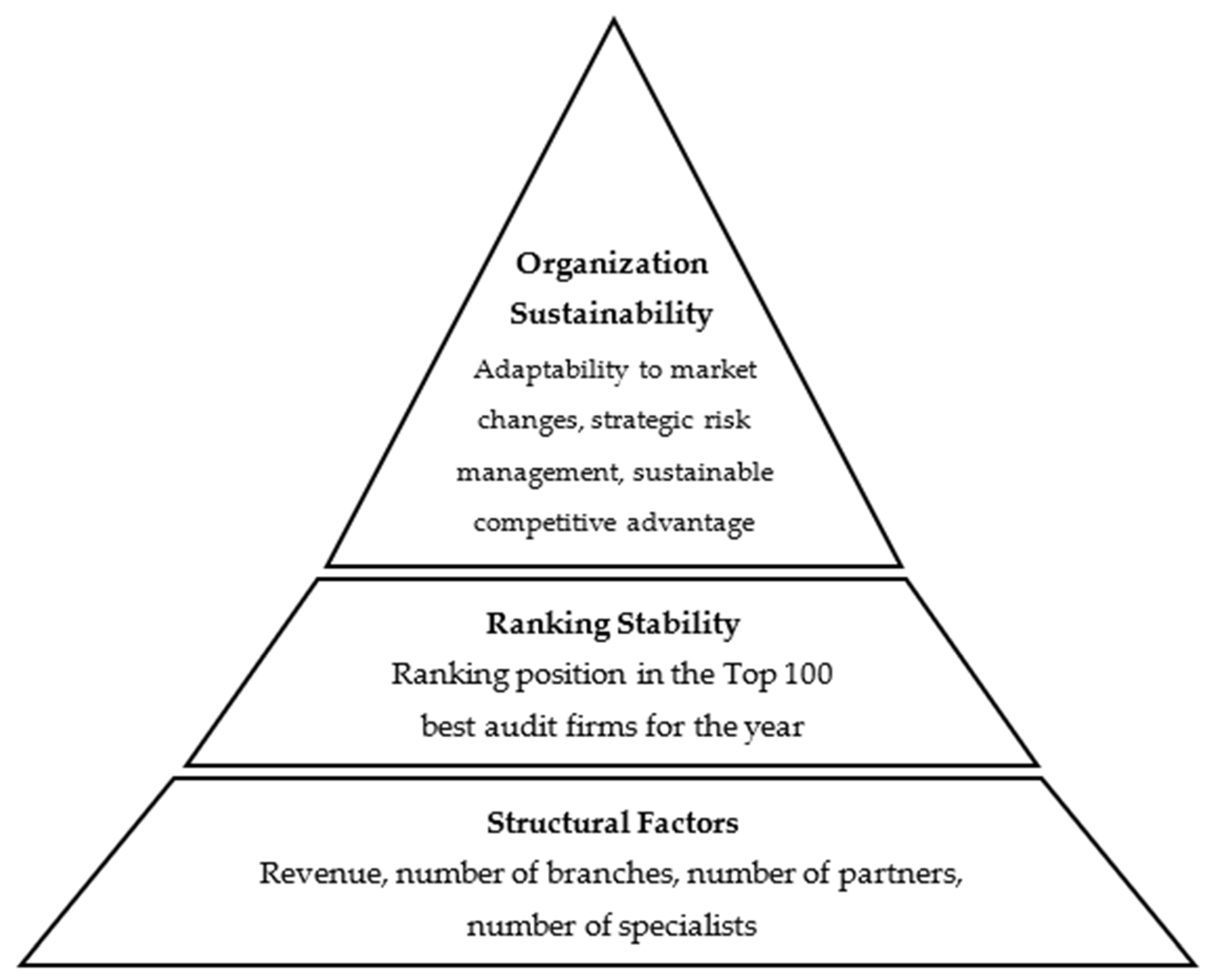
Within this context, the concept of organizational sustainability has become increasingly significant in the auditing profession. Organizational sustainability encompasses a firm’s ability to remain competitive, adapt to market changes, retain talent, and manage strategic risks over time (
Figure 1). For audit firms, sustainability is not only about internal processes or environmental considerations, but also about maintaining long-term credibility, client trust, and operational continuity in a highly competitive and regulated industry.
A robust and sustainable audit services market is essential for maintaining trust in financial systems, ensuring compliance with legal standards, and supporting investor confidence. However, existing research has paid insufficient attention to the dynamics of firm survival and market exit, especially among mid-sized audit firms. While the stability and dominance of the Big Four firms—Deloitte (Deloitte LLP, New York, NY, USA), PricewaterhouseCoopers (PwC LLP, New York, NY, USA), Ernst & Young (EY LLP, New York, NY, USA), and KPMG (KPMG LLP, New York, NY, USA)—have been extensively documented, the volatility faced by smaller firms and the structural challenges they encounter remain underexplored in the academic literature.
This study aims to address this gap by analyzing the volatility of the U.S. audit services market over a five-year period (2019–2023), with a particular focus on the sustained dominance of the Big Four and the survival dynamics of other ranked firms. Using annual rankings from Accounting Today, the research applies Kaplan–Meier survival analysis to assess the probability of firms remaining in the Top 100 over time.
Thus, the purpose of this study is to examine how market volatility and the stability of the Big Four firms’ positions during the period 2019–2023, based on data from the “Top 100” ranking, shape the key structural features of the audit services market and affect the likelihood of firms dropping out of the ranking.
To address this research question, K-means clustering was employed. Based on factors such as revenue size, number of specialists and branches, as well as the composition of partners, this method made it possible to determine the market positions of the firms and to assess their organizational stability, strategic positioning, and resilience to risks. This approach is particularly relevant in the context of increasing market concentration and regulatory scrutiny.
By examining these dynamics, the research contributes both theoretically and practically. Theoretically, it identifies five structural features that influence firm stability in the audit market. Practically, it offers implications for market participants, policymakers, and regulators seeking to understand and manage the risks associated with firm withdrawal, competition, and market consolidation.
The originality of this study lies in performing a systematic integration of the volatility and survival of audit firms in the U.S. audit market during 2019–2023. The research is reinforced by an estimation of the probability of a firm maintaining its ranking position over a five-year horizon, which is based on the integration of two analytical methods—the Kaplan–Meier survival analysis and K-means clustering.
The structure of the paper reflects a logical progression from theoretical grounding to practical insights. It begins with a literature review that includes a bibliometric mapping of research trends in audit services, helping to contextualize the study within existing academic discourse. This is followed by a methodology section outlining the data sources and analytical approaches, notably survival analysis and K-means clustering. The empirical results are then presented, highlighting patterns of firm persistence, market exit, and structural segmentation within the U.S. audit landscape. These findings are subsequently interpreted through the lens of organizational sustainability and market dynamics. The paper concludes with key takeaways and suggestions for future research aimed at enhancing the resilience and competitiveness of audit firms in an evolving professional environment.
2. Literature Review
2.1. Bibliometric Analysis of Audit Services Research
The growing academic interest in audit services reflects their critical role in supporting corporate transparency, financial stability, and regulatory compliance. To map and systematize the main research directions within this field, a bibliometric analysis was conducted using two major scientific databases—Scopus and Web of Science—which are widely recognized for their comprehensive coverage and indexing of peer-reviewed literature.
The analysis began by querying the term “audit services” in the Scopus database, which returned 11,719 documents across 28 subject areas. To ensure thematic relevance to the economic and managerial context of this study, the selection was narrowed to four subject areas: Business, Management and Accounting; Social Sciences; Economics, Econometrics and Finance; and Decision Sciences. This refinement yielded a total of 961 articles for further examination.
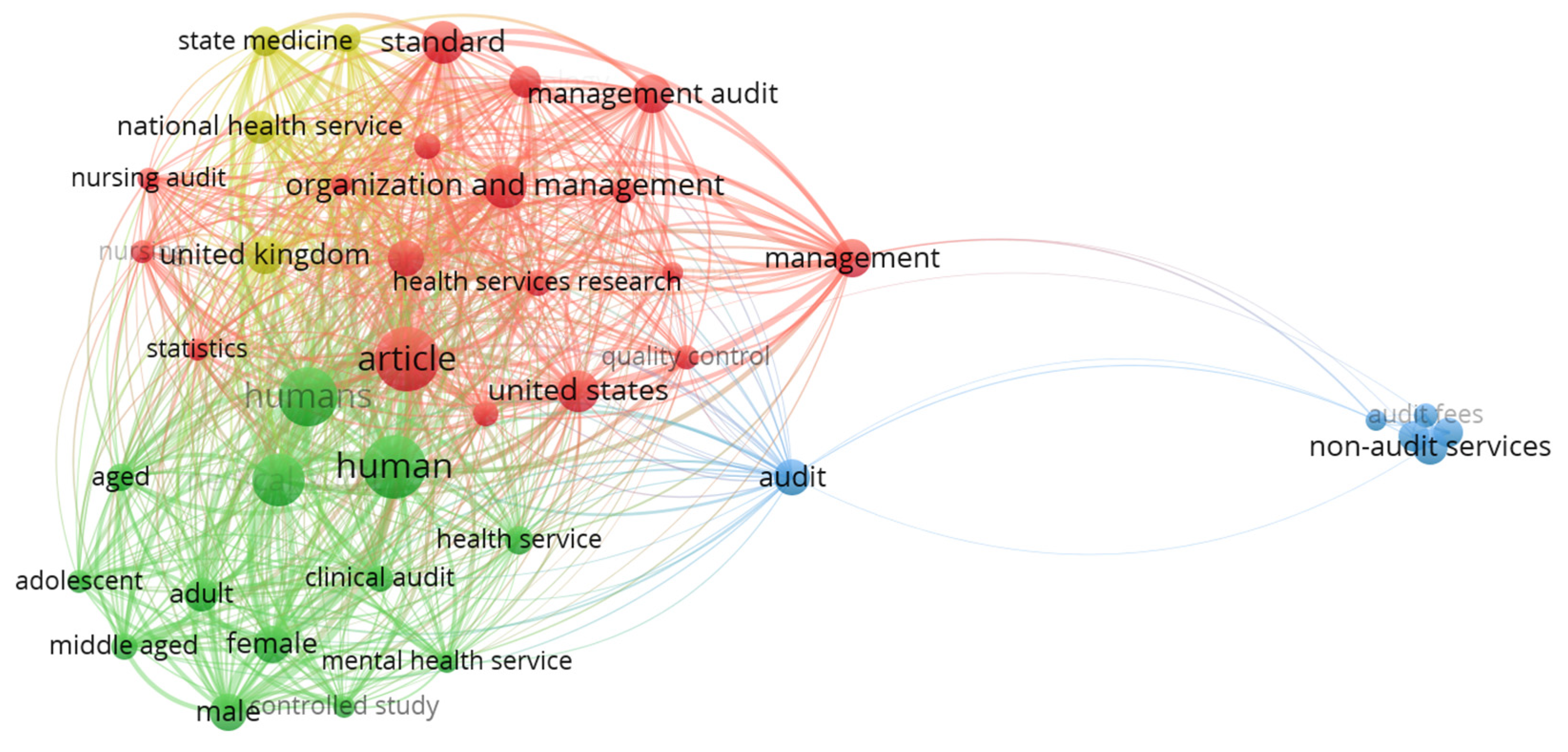
To identify dominant thematic clusters and frequently co-occurring concepts, the VOSviewer software (version 1.6.20) was employed. This tool enables the construction and visualization of bibliometric networks based on keyword co-occurrence. For the Scopus dataset, the minimum threshold for keyword inclusion was set at 35 occurrences, resulting in the identification of 41 core keywords out of 5505 unique terms extracted from the dataset. The resulting bibliometric map, shown in
Figure 2, illustrates the structure and intensity of research connections within the audit services domain. The most active researchers in this field were authors from the United States, United Kingdom, Australia, Canada, and New Zealand. In total, the sample included 137 countries worldwide.
The top five most frequently used keywords in the study of audit services are “article”, “human”, “medical audit”, “organization and management”, and “standard”. The keyword “audit services” ranks 41st in this list, with a frequency of 35 mentions in articles. Furthermore, the Total Link Strength is 20, indicating the keyword’s extensive connections with other significant concepts, underscoring its influence in the research sector. The average number of citations for articles featuring the keyword “audit services” is 14, which is notably high. The normalized citation count is 1.4203, suggesting that articles on “audit services” are cited 42.03% more frequently than the average article in this discipline for the respective years. This value, significantly above 1, implies that these articles have a higher impact than the average. The keyword “audit services” is predominantly found in articles published after 2014, highlighting its contemporary relevance and influence in scientific research. The closest connections are with concepts such as “audit”, “non-audit services”, “auditor independence”, “audit quality”, and “auditor fees”.
Cluster analysis identified four groups, with the first group being the largest one and indicating an interdisciplinary approach to research in audit services. The first red cluster includes concepts related to management, quality control, and medical research, with a notable emphasis on healthcare. The second green cluster is even more focused on healthcare, encompassing processes for assessing the quality of healthcare services through clinical and medical audits, considering the diversity of age groups and genders within the sample. The third blue cluster pertains to audit activities, audit costs, and other services provided by audit firms. A detailed analysis of publications within this cluster (given the combination of keywords: “audit services” and “audit”) shows that significant attention is given to the importance of various “audit roles” and types of audit services [
2]. Research on audit services within established alliances is also significant as it highlights their role in building trust between companies and reducing business risks [
3]. Discussions also revolve around the use of artificial intelligence to support internal audit functions, minimizing manual procedures and creating additional audit services [
4,
5].
The connection between “audit services” and “audit fees” is evident in studies examining the correlation between firm status and audit costs. On the basis of a comprehensive analysis the authors have found that high-status clients in the U.S. audit market pay more than lower-status counterparts, and fees for riskier clients are also higher [
6]. The demand for audit services significantly influences audit fees. Researchers argue that this demand is driven by the auditor’s role as a reliable guarantor in cases where third parties suffer losses due to financial misstatements. The Big Four auditors play a crucial role in this context, as their presence fosters greater trust and confidence among clients, thereby increasing their market share and allowing them to charge higher fees [
7]. A study by Korean scholars compares the pricing mechanisms between small audit firms and the Big Four companies. They note that small audit firms can employ flexible work arrangements, such as short-term or part-time employment of certified public accountants (CPAs), which helps lower personnel costs and, consequently, audit fees [
8].
The relationship between “audit services” and “audit quality” is also noteworthy. One of the key factors affecting audit quality is the diversity of auditors’ service experience. Auditors with varied experience across different companies tend to provide more thorough disclosures of key audit matters (KAMs), reflected in a greater number of KAMs, longer texts, and clearer attributions [
9]. Another factor influencing audit quality is the complexity of financial statements. While a more complex accounting environment is generally associated with higher audit quality, this effect diminishes as complexity increases further [
10].
The development of technology dictates changes in the way services are provided [
11]. Researchers argue that the implementation of AI-based audit services will not negatively impact audit quality. A favourable attitude and perceived quality of AI-based audit services could enhance satisfaction, subsequently augmenting perceived value and client trust. By focusing on the delivery of superior-quality services that meet clients’ value expectations, firms may amplify client satisfaction and trust [
12]. Research reveals that there is an ongoing debate among regulators and researchers about whether the provision of non-audit services to audit clients compromises audit quality by reducing independence. German researchers contend that auditors providing additional services to the same clients may become less objective, potentially impairing audit quality [
13].
The aforementioned publications illustrate the close relationship not only between the keyword pairs “audit services” and “audit quality,” but also with the additional pair “non-audit services.” The issue of non-audit services intertwines closely with audit fees and quality. Scholars suggest that banning non-audit services could have varying consequences, depending on which services are prohibited and the market concentration prior to the ban. Prohibiting non-audit services to audit clients could increase market concentration and decrease the quality of audited reports if the fees auditors previously earned from these services were significantly higher than the reduced audit costs [
14]. This scenario would lead to fewer audit firms being able to compete and survive in the market. Furthermore, increased market concentration could lead to reduced competition, which in turn may reduce auditors’ incentives to maintain high quality standards [
14,
15,
16].
The final pair of keywords in the third blue cluster indicates a connection between “audit services” and “auditor independence” in academic publications. This pair is particularly noteworthy as auditors play a crucial role in society by bolstering confidence in financial statements. Auditors are mandated to ensure both the appropriate audit quality and their own independence. Current measures to improve auditor independence suggested by regulators and researchers include prohibiting non-audit services (NAS), implementing audit firm and partner rotation, and conducting joint audits [
17]. Countries like Jordan and Libya also acknowledge the importance of auditor rotation. Researchers assert that auditor effectiveness is a key indicator of an unbiased attitude, particularly facilitated through auditor rotation. Hence, auditor rotation is seen as essential to prevent the development of overly close relationships between management and auditors resulting from long-term engagements [
18].
The final yellow cluster, the smallest in terms of the number of keywords (with only four selected), focuses on the public healthcare systems of individual countries.
Nevertheless, VOSviewer analysis demonstrates that publications on audit services in the Scopus database are highly relevant and extensive, revealing interdisciplinary connections within this keyword. From a financial services perspective, research considers audit services by balancing the costs of obtaining services and their quality. The market competition between the Big Four companies and smaller audit firms highlights the significance of auditors’ qualifications and independence. Artificial intelligence is increasingly influential, changing traditional audit practices and diversifying auditors’ tasks in the future.
The analysis of publications in the Web of Science database reveals a different thematic distribution, offering a more comprehensive view of scientific activity and avoiding potential biases. In order to create a visualization of bibliometric maps in the Web of Science database by keyword, we chose “audit services” once again.
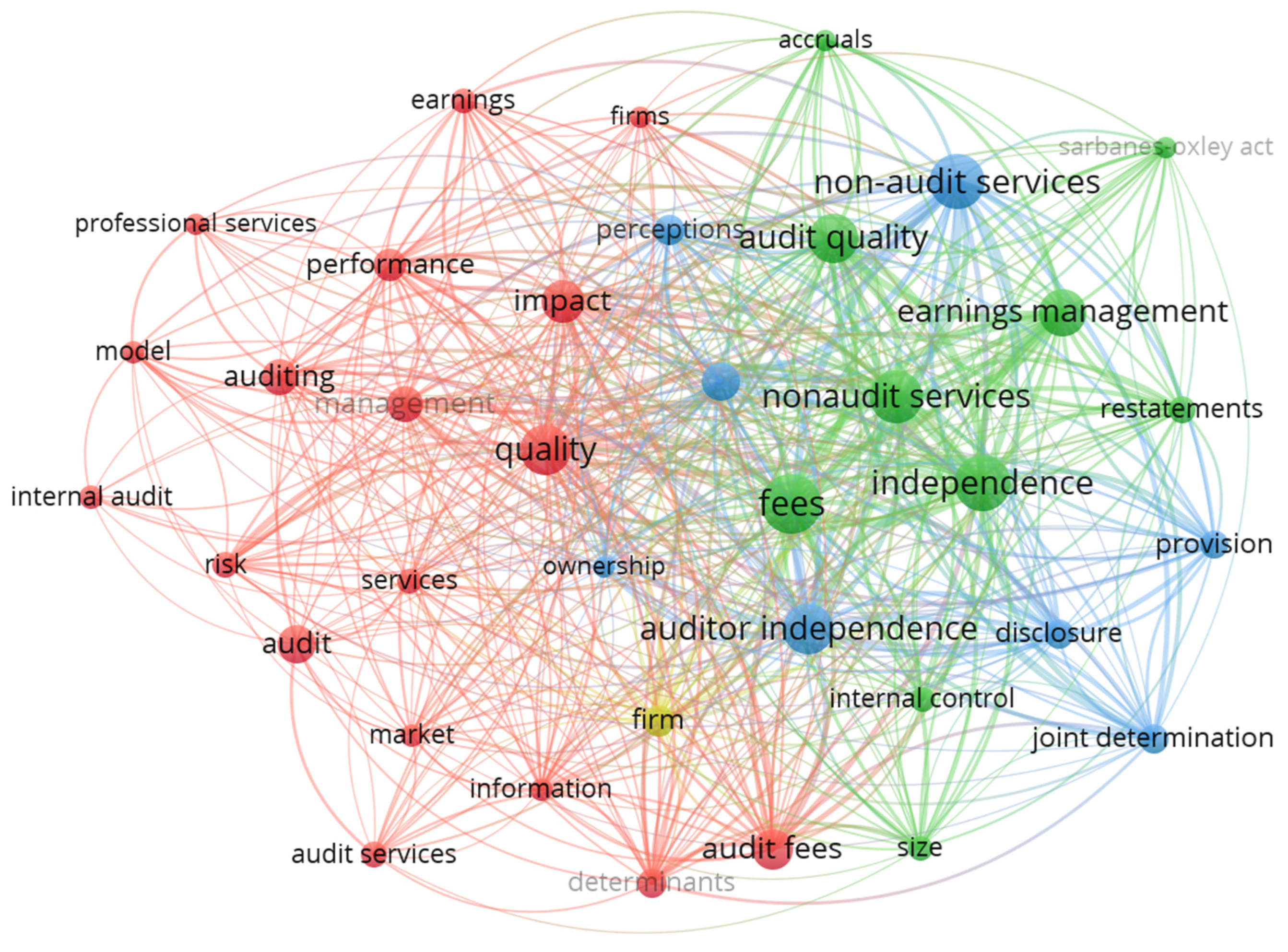
Using this keyword, the Web of Science database contained 839 documents across seven subject areas: Business Finance, Management, Business, Economics, Operations Research Management Science, Public Administration, and Social Sciences Interdisciplinary. This selection was narrowed to 460 documents. Limiting the minimum keyword occurrence to 11 yielded 37 base keywords out of 1626. This distribution closely aligns with the parameters obtained from the Scopus database. The dataset includes publications from 104 countries, with the most active contributors being authors from the USA, Australia, China, the United Kingdom, and Canada. The resulting bibliometric map differs visually from the Scopus map (
Figure 3).
The selection of keywords most frequently found in scientific research on audit services has shown that the top five keywords include the concepts of “fees”, “independence”, “non-audit services”, “quality”, and “auditor independence”. These concepts, also prevalent in the Scopus database, are mentioned with much higher frequency in the Web of Science database. “Non-audit services” appears 141 times, while “fees,” “independence,” “quality,” and “auditor independence” are mentioned 86, 77, 62, and 64 times, respectively. The overall link strength between each of these keywords and other significant concepts—697 for “non-audit services”, 462 for “fees”, 436 for “independence”, 318 for “quality”, and 316 for “auditor independence”—is much higher. Such high values indicate that these keywords are central topics in the field of audit services.
In the Web of Science database, “audit services” ranks 34th, mentioned 17 times with a total link strength of 37. It has 18 direct links to other research keywords. However, the average and normalized citation counts are lower than in the Scopus database, at 8 and 0.7363, respectively. This normalized citation count indicates that articles with the keyword “audit services” have about 73.63% of the average citation count for articles in the relevant disciplines and years. Differences between databases may reflect different citation practices or article inclusion approaches. A higher normalized citation count might indicate that articles with this keyword are more cited in another database and, therefore, are considered more influential within their scientific community.
Figure 3 clearly illustrates three main clusters. The largest red cluster comprises 18 concepts related to various audit aspects, including service costs, their impact on financial performance, risk management and assessment. The second green cluster centres on audit quality, earnings management, auditor independence, control, and regulation, highlighting significant research focus on ensuring high-quality audit services, the impact of legislation on audit practice, and issues related to fees and auditor independence. The smallest blue cluster, with eight (8) concepts, focuses on ensuring transparency and objectivity in audits, the role of corporate governance in supporting auditor independence, and discussions on the impact of non-audit services on audit quality.
Although clustering in Scopus and Web of Science databases is similar, the clustering of keywords from publications selected from the Web of Science database is more relevant to our study. This database provides a more accurate picture of audit impacts on business and the economy, with a carefully selected sample of articles, a clearer regulatory focus, and a broader research context. Both databases confirm that audit services research is relevant, reflected in the growing number of publications on audit quality, auditor professionalism, competition between the Big Four and smaller firms, and future audit service diversification. Given these trends, it is evident that the audit services market is continuously evolving due to internal company factors and external competitive changes [
19]. Thus, further study of the volatility of the audit services market and analysis of the stability of leading companies’ positions is highly relevant. Consequently, our research paper particularly aims to examine the volatility of the audit services market and the stability of the Big Four companies over the past five years.
2.2. Peculiarities of the Audit Services Market
The development of audit services is a subject of considerable interest among scholars in many countries. Often, the market for audit services acquires distinct national characteristics [
20]. This is evidenced by numerous publications from various countries, dedicated to identifying trends in the development of audit and related services in local markets. Nevertheless, from a global perspective, each market revolves around the same fundamental product—audit services.
A diverse range of client firms require the professional services of auditors and advisers. Auditors provide assurance on financial statements, enabling users of their clients’ reports to have confidence in the accuracy and reliability of financial information. Increasing attention is being paid to non-audit services, which are also provided by audit firms but are aimed at helping companies enhance their profitability. Clients are interested in selecting highly qualified audit firms that invest in improving audit quality and offer both audit and non-audit services to their clients [
21]. These dependencies are evident in the audit services market.
The audit services market is highly dynamic. Audit firms actively invest in human capital, new technologies, and leadership to manage and develop internal processes that ensure efficient and high-quality auditing [
22]. In this context, much attention is given to the question of how homogeneous the market is and which firms provide higher-quality services [
23]. Most authors address this issue by categorizing firms according to their size. Researchers argue that the market is concentrated among a few large firms that set the pricing rules for small- and medium-sized companies [
24,
25,
26]. The need to distinguish between large and small firms was first proposed as early as 1981 [
27]. Some researchers justify this distinction in terms of examining the competence and independence of auditing practices across different firms, others—in relation to differences between audit fees and audit quality, and still others—from the perspective of financial stability [
24,
25,
26,
28]. However, all authors agree that when assessing the audit services market, special attention should be paid to the dominant large audit firms. Historically, 80–90% of this market has been controlled by the international audit networks known as the Big Four, which operate under a unified brand and common principles of quality management in audit services [
29]. There is an opinion that Big Four auditors deliver higher-quality audits than non-Big Four auditors in the public company sector (in the U.S.), as confirmed by various indirect indicators of audit quality [
30,
31]. Consequently, the vast majority of small- and medium-sized audit firms, in order to remain competitive, tend to adapt to the standards and methodologies established by the Big Four [
25]. Despite the fact that several authors criticize the Big Four for setting high entry barriers for smaller firms, their policies and behaviour require detailed study and analysis.
The modern audit services market is dynamic and influenced by various macroeconomic factors, primarily driven by the interaction between two key aggregates: supply and demand. Demand for audit services stems from the need for independent verification of financial statements and advisory services, primarily guided by regulatory requirements, but also by the economic activity of the client. On the supply side, audit firms must meet client expectations within their human and technical capabilities. A specific feature of this market is its high level of competition.
In this competitive environment, the quality of services provided becomes a key determinant of success [
32]. Overall, in the audit services market, a high-quality auditor tends to serve clients with high financial or operational risks, while a low-quality auditor serves clients with lower levels of these risks [
33,
34]. Business clients with a high level of risk may experience significant fluctuations in revenue, volatile market conditions, high levels of debt, or complex operating structures. These factors make their financial statements challenging to analyze and prone to significant changes, requiring a high level of competence and quality from auditors, which in turn influences the service price. It is logical that servicing such clients would primarily be entrusted to a large audit firm, such as one of the Big Four. High-risk clients are willing to pay more for the high level of audit quality they require. Low-quality auditors, on the other hand, serve lower-risk clients, where the requirements for audit quality are less stringent and the ability to pay for high-level services is limited.
If the cost of audit quality per client is high, a quality auditor focuses exclusively on high-risk clients, providing a high level of quality, for which the client is therefore willing to pay more. When the cost of audit quality is lower, a quality auditor can cater to both high-risk and medium-risk clients, offering lower quality at a lower price [
33], thereby capturing a larger market share. Thus, the price factor impacts not only the volume of services performed but also the quality, indicating a trade-off between the quality of a high-quality auditor’s services and the number of client firms receiving high-quality audits.
Danish researchers have explored the issue of auditor selection. They conducted a survey among CFOs of Danish listed companies on the perception of audit quality in various combinations of joint audit versus individual audit by a Big Four audit firm. It was assumed that large audit firms possess high technological efficiency, while small audit firms have low technological efficiency, affecting audit quality. However, the study revealed that separate audits are less expensive and provide the same audit quality as joint audits. The majority of respondents believed that the quality of an audit conducted by a single Big Four audit firm was equivalent to that of a joint audit conducted by one large and one small audit firm or two large Big Four audit firms [
35].
The issue of technological efficiency of firms is addressed in the study by Deng et al., noting that small firms have fewer advantages compared to large ones in terms of audit technology. Therefore, to survive, small firms may rely on the efforts and technologies of large firms without significantly contributing to the audit process [
36].
There are also publications arguing that the size of the audit firm does not affect audit quality and, therefore, should not be a factor in auditor selection. According to the authors, high audit quality is ensured by adherence to professional standards, which homogenizes audit quality across firms of different sizes. Hence, the audit quality will not depend on the size of the audit firm [
27].
The debate about audit quality by different firms largely depends on the perspective from which the audit is evaluated. Each group of users may perceive audit quality differently. For instance, a user of financial statements may equate high-quality audits with the absence of material misstatements in the financial statements. The auditor who directly conducts the audit and the audit firm apply different criteria for a high-quality audit. Auditors who directly conduct the audit may view high-quality audits as strict adherence to all internal standards and procedures, while audit firms may assess quality by their ability to defend findings in an external audit or court. Regulators may define quality audits as those that meet professional standards, while society may view them as audits that prevent economic problems for the company or market [
37].
Despite the high interest in audit results from various stakeholders, the client remains the primary customer of audit services. The client pays for the services and, therefore, chooses the audit firm. Audit firms must be accessible and open to all types of services the client requires, ensuring trust and confidence in their ability to fulfil the client’s needs. While employing the best practices developed and proven in the market, audit firms must also consider the growing expectations of regulators and society for transparency and accountability. Maintaining a balance between commercial interests and professional ethics is crucial to guarantee the reliability and objectivity of the audit. This is the only way to ensure the high reputation of audit services and the trust of all stakeholders.
2.3. Leadership of the Big Four in the U.S. Audit Market
External auditors play a crucial role in fostering confidence in financial statements by providing independent assurance to various stakeholders regarding the integrity and reliability of these reports. Audits significantly influence management decision-making by providing accurate data that enable management and owners to assess the effectiveness of business processes, identify risks, and determine the company’s strategic direction. Audit outcomes are equally important for external users, who risk their capital when engaging with new business partners. Research indicates that high-quality audits reduce the likelihood of profit manipulation and enhance the transparency of financial data [
38,
39,
40].
The current market for audit services is not homogeneous. It comprises a large number of firms actively competing for clients. Tracking this market is challenging due to fragmented and often publicly inaccessible data on its composition and structure. This complicates the analysis of market dynamics and changes. Nevertheless, Accounting Today, a leading information resource for accountants, publishes reports measuring the success of the Top 100 firms and regional leaders in the U.S. This ranking was created with the aim of providing useful information about the landscape of the accounting profession. Its key objectives include continuous improvement, identifying revenue opportunities for independent certified audit firms, strengthening relationships among these firms, and enhancing their prestige both locally and internationally. The ranking is published by the media company Arizent, which has specialized for over 30 years in publishing professional business magazines focused on the needs of the accounting industry and audit services market researchers. The publication Accounting Today serves as a key source for business research on audit market concentration, revenue dynamics, and the impact of technology [
41].
Inclusion in the above-mentioned ratings has reputational value, as all the firms are privately held, and the information they provide is confidential. At the same time, a valuable and motivating aspect is the opportunity to learn from the best proven practices and effective strategies shared by the leaders of these audit firms in annual rankings. Key strategies include a client-oriented approach, focus on alternative growth strategies, and the search for effective growth tools. In recent years, the most common way to implement a client-oriented approach has been to increase the share of advisory services in response to the needs of a firm’s established client base. Typical examples include consulting services in the areas of technology, personnel development, human capital, as well as data analysis and operational performance analysis. An effective formula is recognized as the use of outsourced services in human resource management, HR consulting, and ESG reporting. Interaction with clients and assessing their satisfaction with the services received is also important. Key growth strategies include mergers of audit firms, seeking clients in new geographic regions, and investing in employees through professional development and attracting new talent capable of driving sustained revenue growth. A significant number of audit firm representatives acknowledged that effective growth tools also include investment in innovative technologies, digital transformation, and the firm’s own marketing capabilities [
41,
42,
43,
44,
45].
The ranking reports are highly informative and are based on the annual surveys of U.S. audit firms. To establish the rankings, data on revenue, number of employees, number of clients and offices, as well as information on the types of services offered and firm mergers or acquisitions, were used. The main criterion is the total annual revenue of the audit firm; however, additional factors such as revenue growth rates, regional coverage, workforce dynamics, the share of consulting services in the business, and others are also taken into account. Data for the rankings are obtained from public financial statements and supplemented through self-reporting by the firms and verification of submitted information by the Accounting Today editorial team [
41,
42,
43,
44,
45].
According to the reports published by Accounting Today, the overall annual revenue growth rate of audit firms ranges from 3.88% to 4.42% [
41]. This rapid growth is largely influenced by the Big Four firms, whose revenues constrain the potential for intensive growth of other Top 100 firms.
Table 1 presents the dynamics and structure of the U.S. audit services market from 2019 to 2023 among the Top 100 firms.
The reports show that between 2019 and 2023, the total revenue of the leading firms increased by $32,332.42 million, representing a 140.62% growth. The combined revenue growth of the Big Four firms was 134.82%, with Deloitte’s revenues in 2023 at 140.40% of its 2019 level, PricewaterhouseCoopers at 134.62%, Ernst & Young at 136.50%, and KPMG at 120.93%. Analyzing the revenue structure of the Big Four firms in the US alone reveals the extent of the influence of these four powerful leaders on the market.
The dominance of the Big Four in the auditing market has several distinctive features. Their leading market share allows these firms to charge higher fees for their services, further boosting their revenues. Additionally, the Big Four auditing firms are viewed by many clients as reliable guarantors, assuring the accuracy of financial statements and fostering trust among investors and other market participants [
46]. As a result, clients are willing to pay higher fees for services provided by Big Four auditors. Their financial strength ensures a stable client base, attracting a continuous influx of new clients [
47]. Many scholars contend that Big Four audit firms can offer higher quality audits because their size enables more robust and comprehensive training programmes, standardized audit methodologies, and stringent quality checks on audit engagements [
27,
48,
49].
The dominance of the Big Four firms is also noted by other scholars. Literature indicates that Big Four audit firms audited 78 per cent of the observations in one sample considered by authors and 66 per cent of the observations listed by Audit Analytics from 2000 to 2009. According to the U.S. Government Accountability Office, the Big Four audit firms audited 87 per cent of firms with revenues of at least
$100 million in 2006. This dominance in the audit market significantly hinders competition, prompting regulators to take measures to increase competition among audit firms in local markets [
50].
Views on the division of the audit services market between Big Four and non-Big Four firms are reflected in Croatian scholarly publications. An empirical study on the structure of the audit market in Croatia showed that while the individual market shares of the Big Four audit firms are significant, additional audit firms can also compete with them in terms of size [
51]. Therefore, the authors propose further analysis on the impact of audit firm size on audit quality.
It is undeniable that the Big Four significantly influence mechanisms related to audit fees. Given the fact that Big Four firms are associated with reliability and prestige, other large companies and corporations strive to emulate them, allowing Big Four audit firms to charge higher fees than smaller firms [
52]. Consequently, when the Big Four firms enter the market, local firms often lower their prices to retain their market share [
53]. Thus, both large and small firms influence market redistribution, employing similar tools but for their own purposes, i.e., to compete for clients.
4. Results
To evaluate the survival dynamics of audit firms in the U.S. market, the year 2019 was selected as the baseline, with the analysis limited to firms that were already included in the Top 100 rankings at that time; firms entering the rankings in subsequent years were excluded to ensure consistency. The application of Kaplan–Meier survival analysis for the 2019–2023 period revealed notable patterns of persistence and attrition, providing insights into the relative stability of firms and the timing of market exits. A comprehensive summary of the survival probabilities and firm attrition rates is presented in
Table 2.
The presented data indicate that between 2019 and 2023, 19 firms dropped out of the ranking of the top audit firms. In 2020, the firms Montgomery Coscia Greilich, LLP (Plano, TX, USA), NKSFB, LLC (Los Angeles, CA, USA), Skoda Minotti (Cleveland, OH, USA), and Vavrinek, Trine, Day & Co., LLP (Rancho Cucamonga, CA, USA) exited the ranking, occupying positions 71, 43, 74, and 85, respectively. In 2021, BlumShapiro (West Hartford, CT, USA) (rank 56), Morrison, Brown, Argiz & Farra, LLP (MBAF CPAs, Miami, FL, USA) (rank 36), and Squar Milner (Irvine, CA, USA) (rank 40) left the ranking. The following year, three more firms departed, namely Brown Smith Wallace, LLP (St. Louis, MO, USA) (rank 77), Honkamp Krueger & Co., P.C. (Dubuque, IA, USA) (rank 90), and Marks Paneth, LLP (New York, NY, USA) (rank 40). In 2023, the highest number of firms exited the ranking, including Aronson, LLC (Rockville, MD, USA) (rank 74), Berdon, LLP (New York, NY, USA) (rank 47), BKD, LLP (Springfield, MO, USA) (rank 16), Dixon Hughes Goodman, LLP (Charlotte, NC, USA) (rank 17), EisnerAmper, LLP (New York, NY, USA) (rank 18), Friedman, LLP (New York, NY, USA) (rank 33), K–Coe Isom, LLP (West Des Moines, IA, USA) (rank 69), Raich Ende Malter & Co., LLP (New York, NY, USA) (rank 80), and SVA CPAs (Madison, WI, USA) (rank 90).
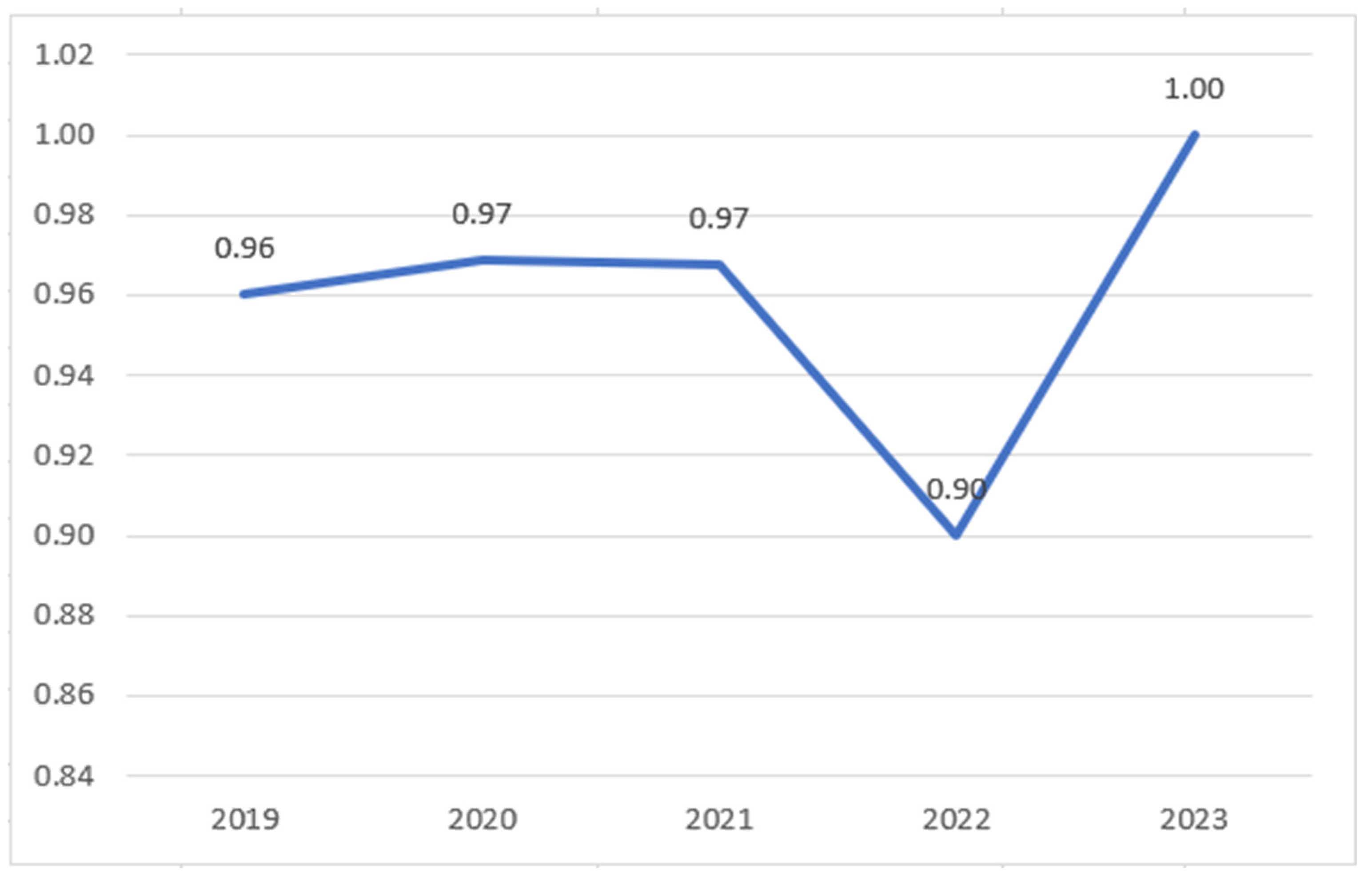
The survival function graph (
Figure 4) demonstrates that starting with 100 firms in the 2019 ranking, four firms exited by the end of the year, resulting in a survival probability of 0.96 at the end of the first year.
In 2020, out of the remaining 96 firms, an additional three firms exited the ranking, resulting in a survival probability of 0.969. In 2021, the survival probability remained nearly unchanged at 0.968, as three more firms were removed from the ranking. A significant decline occurred in 2022, with the survival probability dropping to 0.900, marking it as the most unstable year in the observed period; a total of nine firms exited the ranking that year. In contrast, the results for 2023 indicated no further attrition, with a survival probability of 1.000, as all 81 remaining firms retained their positions.
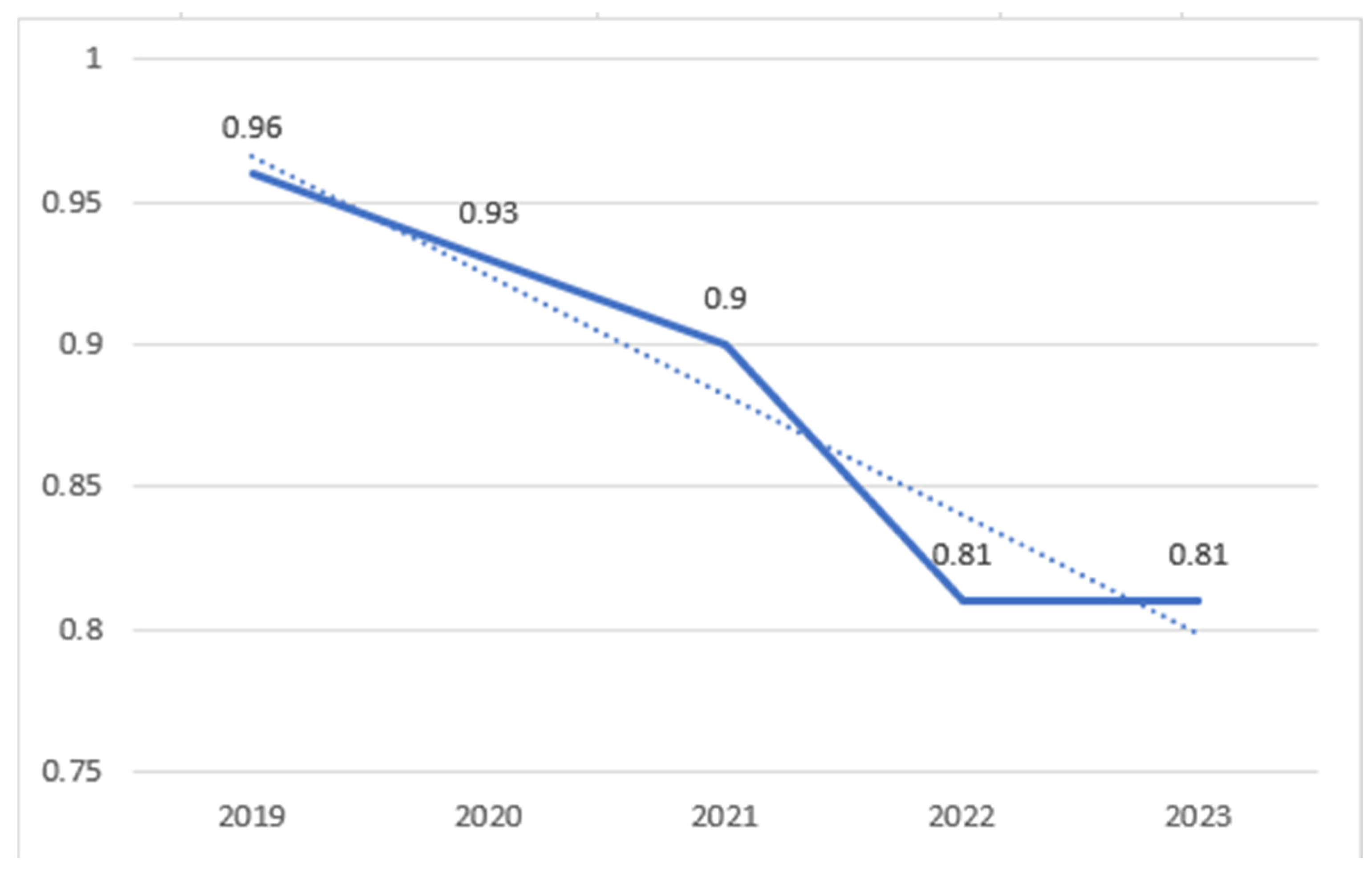
The cumulative survival function of audit firms over the 2019–2023 period is visualized in
Figure 5.
The cumulative survival probability curve demonstrates a gradual decline in firm retention rates up to 2022, followed by stabilization in 2023. In 2019, the survival rate was 0.960, decreasing by 0.030 points over the subsequent two years and reaching a cumulative probability of 0.810 by 2022. These figures indicate that attrition among audit firms was relatively limited during the initial period (2019–2021), while 2022 marked a sharp increase in the number of firms exiting the ranking.
To explore potential structural factors contributing to these exits, five firm-level parameters were considered: ranking position, revenue, number of branches, number of partners, and number of specialists (
Table 3).
The firms that ceased operations were categorized into three groups using the K-means clustering algorithm. The first and third groups each comprise eight (8) firms, while the second group contains three (3) firms. To understand the criteria for assigning companies to these clusters, we additionally calculated the following indicators: average ranking position, revenue per firm, number of branches per firm, number of partners per firm, and number of specialists per firm. The results are presented in
Table 4.
The first group includes firms with the lowest average ranking, coupled with the lowest level of revenue per firm, the fewest number of branches per firm, the fewest number of partners per firm, and the fewest number of specialists per firm. The second group consists of firms with a significantly high average ranking and the highest levels of revenue, number of branches, number of partners, and number of specialists per firm. The third group comprises firms that exhibit medium levels of each of the assessed indicators compared to the previous two groups. This distribution reveals that the average revenues in the second group are more than ten (10) times higher than those in the first group. Additionally, the average number of specialists in the third group is 8.7 times higher than in the first group. Slightly lower differences between the groups are observed in terms of the number of partners and the number of branches per firm, with these indicators being 6.4 times and 5.7 times higher, respectively. Thus, the data indicate that no firm is immune to leaving the ranking, regardless of the size of the indicators upon which the ranking is based. At the same time, a more detailed analysis of the ranking positions of each firm, considering each indicator, showed that the distribution of groups was more significantly influenced by the level of revenue and the number of specialists than by the number of branches and partners of the firms. Our findings are supported by the literature, which indicates that small firms have limited access to skilled professionals and technology. This negatively affects audit procedures, increasing the risk of errors and violations and potentially leading to the loss of clients [
54]. Similar patterns are observed in another study, where the authors note that weaker audit firms survive in niche segments with a low share of large clients, which limits the number of firm partners and, consequently, the number of offices [
55].
In this context, it becomes clear that the audit services market operates according to the principle of resource and capability concentration among dominant players. In addition to addressing internal challenges, weaker firms must contend with structural characteristics of the industry, where access to resources is unevenly distributed due to the dominance of large players, including the Big Four. Therefore, any assessment of the structure, dynamics, and competitive environment of the audit services market cannot be complete without analyzing the market position and revenues of the Big Four.
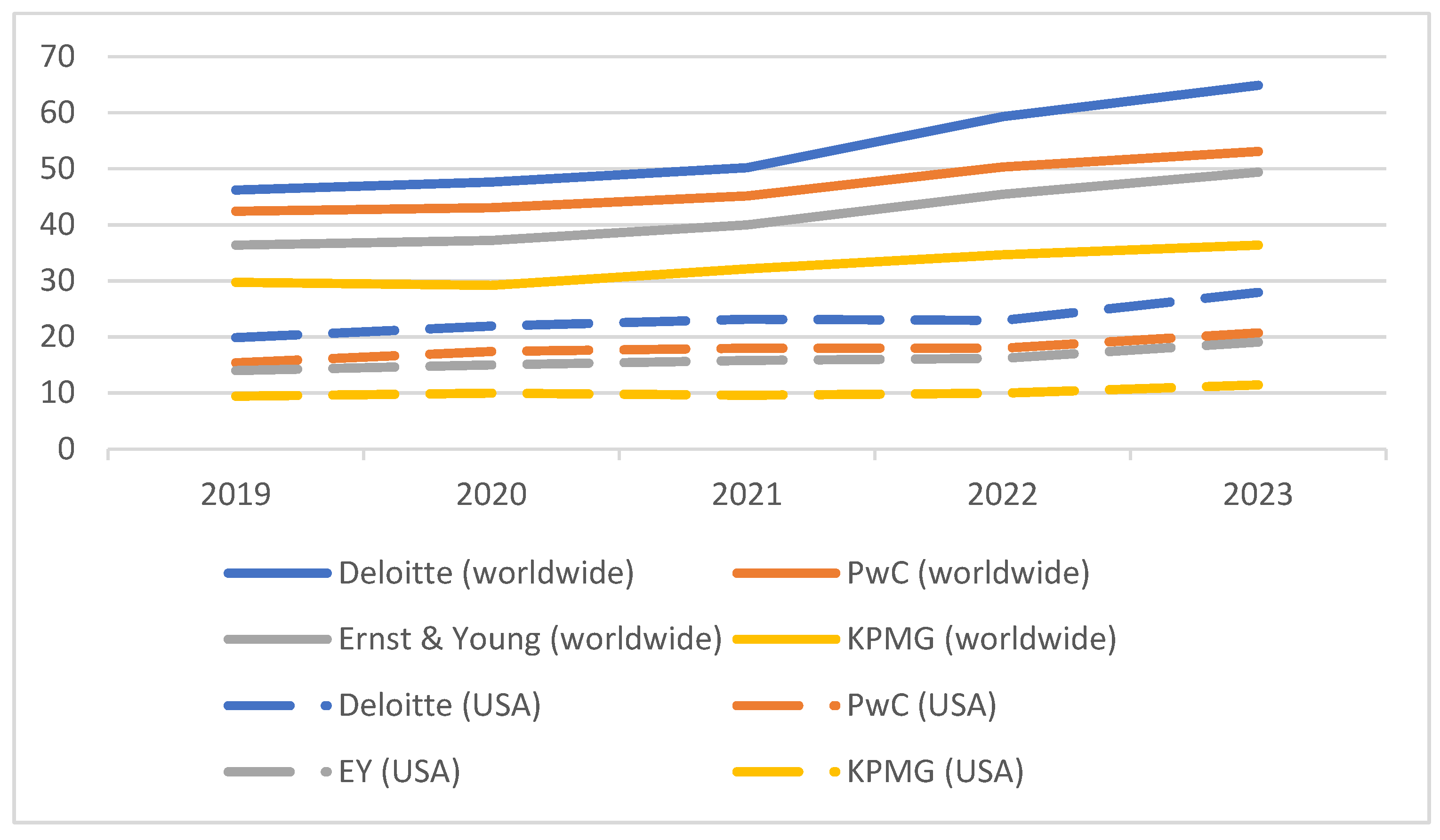
The Big Four firms have maintained stable leading positions in the ranking over all five years. Throughout the study period, Deloitte ranked first, followed by PricewaterhouseCoopers (PwC), Ernst & Young (EY), and KPMG. There were no changes in the ranking positions within the Big Four firms from 2019 to 2023. Simultaneously, each of these firms generated between 54% and 71% of its revenues outside the United States (
Figure 6).
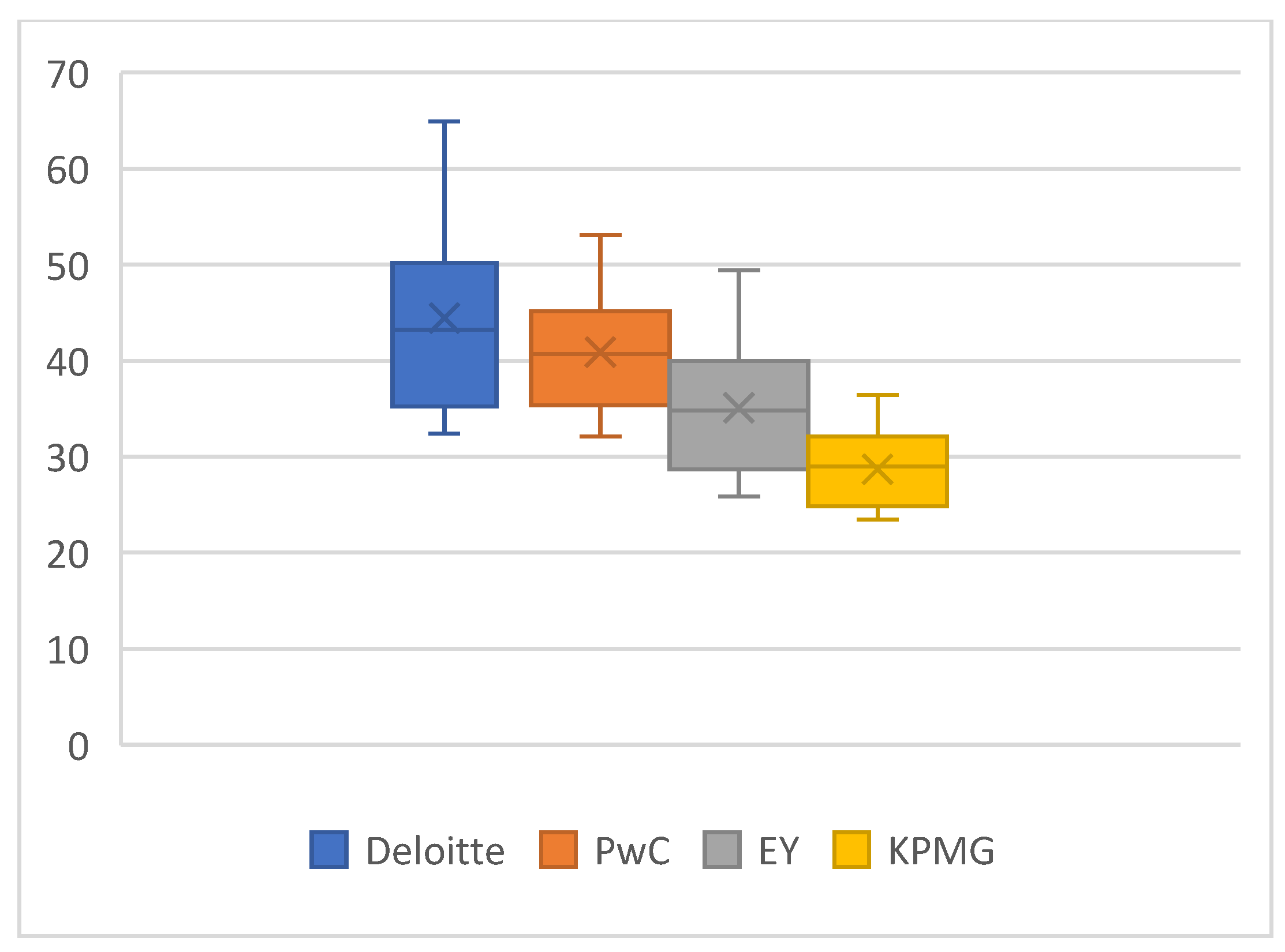
In order to obtain comprehensive data on the activities of the Big Four firms, we extended the research period and scope. Thus, we expanded the assessment of the firms’ activities beyond the US to include all branches of the analyzed firms, and extended the time period to 2013–2023. These changes allowed the construction of a scatter plot to assess both the stability of each firm’s activity and the potential risks and opportunities for growth (
Figure 7).
The overall distribution of the data in
Figure 7 shows that the industry is dynamic and competitive, with significant differences in performance among the main players. A clear hierarchy of performance is evident, with a gap between Deloitte and PricewaterhouseCoopers, as well as Ernst & Young and KPMG.
Deloitte demonstrates the highest variability in activity, indicating potentially higher risk but also higher growth potential. KPMG has the lowest variability, indicating the greatest stability but with potentially less capacity for sharp increases or decreases. Among the Big Four firms, Deloitte and PricewaterhouseCoopers are considered market leaders, demonstrating more market activity based on their higher medians and upper ranges. Ernst & Young and KPMG, with lower scores, may be less active or less present in the market, potentially requiring additional measures to increase their market share. Deloitte and Ernst & Young exhibit a slight positive skewness, indicating several observations with higher activity values, possibly due to periodic spikes, which suggest periods of high activity. Such activity necessitates the development of a strategy to minimize the risks associated with sudden changes.
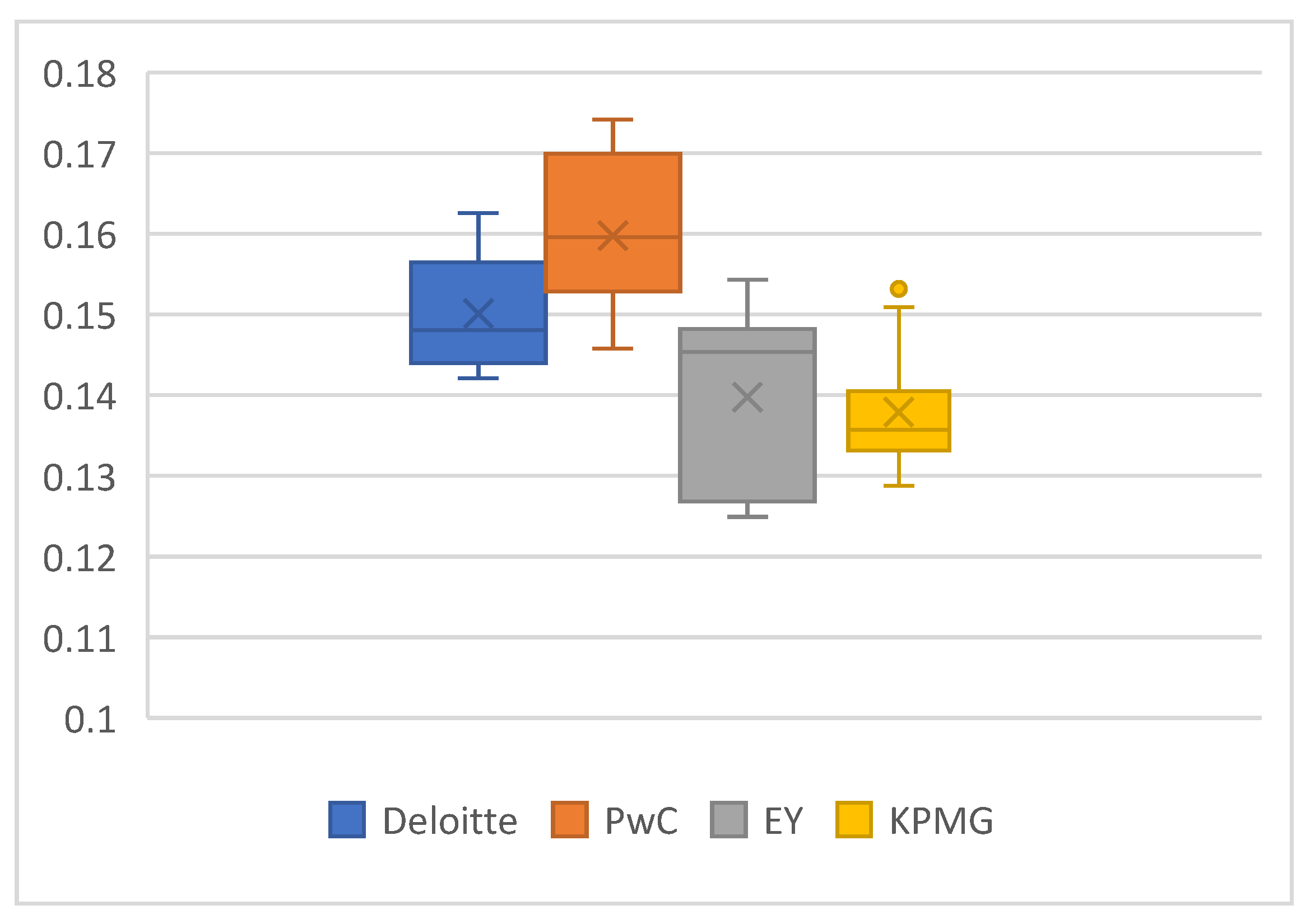
When assessing the distribution of revenue per employee for each firm (
Figure 8), the Big Four firms exhibit somewhat different characteristics compared to previous estimates of total revenue.
PricewaterhouseCoopers has the highest median revenue per employee at 0.16, while KPMG has the lowest median revenue per employee at 0.13. Economically, this implies that among the Big Four firms, PricewaterhouseCoopers exhibits the highest average productivity or level of remuneration from 2013 to 2023, whereas KPMG has the lowest. Moreover, KPMG demonstrates the most homogeneous level of revenue per employee, evidenced by the lowest revenue dispersion (IQR = 0.007). Conversely, Ernst & Young shows a significant variation in revenue per employee with an IQR of 0.021, indicating considerable revenue disparity among employees. The highest maximum revenue per employee is recorded at PricewaterhouseCoopers, and the lowest at Ernst & Young, with these figures being 0.17 and 0.12, respectively. Both Deloitte and KPMG exhibit positive skewness in revenue distribution, suggesting the presence of some employees earning substantially higher income than their colleagues.
Thus, the distinctive features of each firm are as follows: Deloitte has a relatively high average revenue with smaller dispersion compared to PricewaterhouseCoopers, indicating stability in revenue per employee; PricewaterhouseCoopers has the highest average revenue per employee and a large dispersion, suggesting high productivity and significant revenue disparity among employees; Ernst & Young exhibits the largest revenue dispersion per employee, indicating varied levels of productivity or remuneration; KPMG has the lowest average revenue with the smallest dispersion, which implies stability but potentially lower remuneration.
As noted earlier, each of the Big Four firms generated between 34% and 55% of their revenues in the local market. Consequently, it is advisable to construct a heat map of revenue distribution according to the regions where audit services were performed (
Table 5).
An assessment of regional differences shows that Deloitte had the highest revenues in the Americas, especially during the period from 2019 to 2023, with revenues exceeding 24.2 billion U.S. dollars. Conversely, Ernst & Young recorded the lowest revenues among the Big Four firms in 2013 in the Asia-Pacific region, although this firm showed the highest revenue growth in this region over the analyzed period. The share of KPMG’s revenues outside the Americas ranged from 56% to 66% during the review period, indicating a greater international market focus.
Evaluating the historical performance of the Big Four firms is crucial for analyzing trends, identifying patterns, and assessing the effectiveness of past strategies. However, for planning, strategic decision-making, and risk management, it is also essential to consider expected future changes.
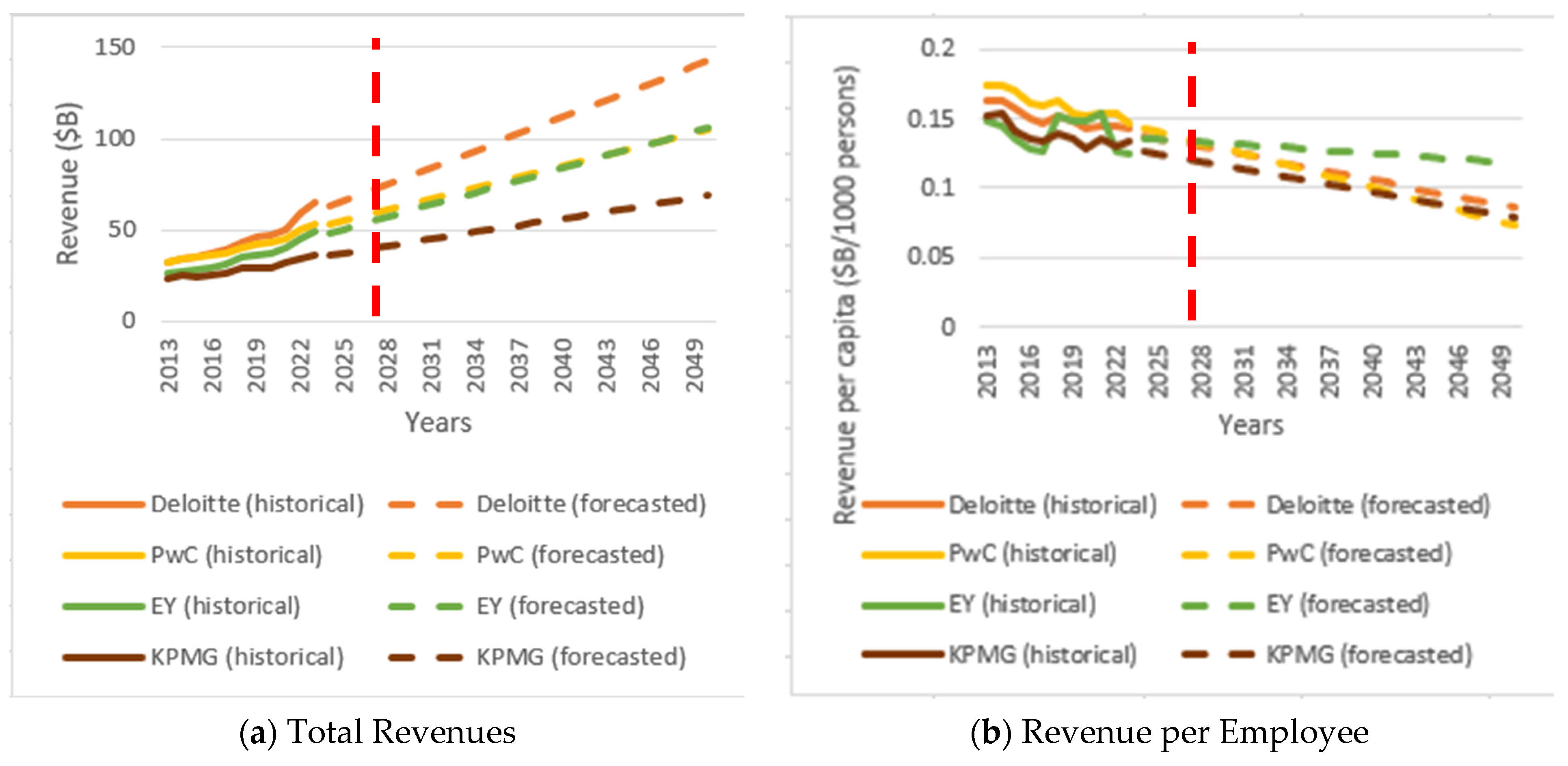
Figure 9 shows the projected values of total revenues and revenue per employee for the Big Four firms by 2050.
From an economic rationality perspective, based on data from the past 11 years, it is most prudent to forecast values for one to five years. Projections to 2050 can be problematic and less reliable, as they may not account for changes in the economic, political, technological, and social environment and carry a high degree of uncertainty due to the omission of long-term trends and cycles. However, in our case, we wish to highlight that if current scenarios persist, Ernst & Young has the potential to overtake PricewaterhouseCoopers in total revenue by 2043, thus securing the second position among the Big Four firms. One factor contributing to this shift is the income per employee indicator, which exhibited sharp fluctuations at Ernst & Young between 2018 and 2021. Initial data indicate that in 2018, Ernst & Young experienced a significant decrease in the number of employees, which subsequently grew much slower than the firm’s revenue until 2021. These changes led to an increase in revenue per employee, signalling enhanced staff efficiency and providing opportunities for Ernst & Young to capture a larger share of the global audit market.
Taken together, the survival analysis, clustering results, and revenue projections underscore two key findings. First, the U.S. audit market exhibits structural fragility for mid-sized firms, which is reflected in their exit from the market due to a lack of resources, particularly revenue and human capital. Second, while the Big Four maintain stable dominance, internal dynamics—such as efficiency gains and differential growth trajectories—suggest possible shifts within their relative positions. These outcomes highlight that organizational sustainability in the audit sector cannot be reduced solely to market share or size; rather, it depends on the ability of firms to adapt to external pressures, retain skilled specialists, and sustain financial resilience over time. In this sense, the results serve as an empirical foundation for further discussion on the broader implications of organizational sustainability and audit market structure.
5. Discussion
This study provides new empirical evidence on the organizational sustainability of audit firms in the U.S. market by analyzing firm survival and structural risk factors over the 2019–2023 period. The results obtained contribute to the theoretical literature on the audit market by offering a longitudinal assessment of firm dynamics, while also validating and extending findings from prior research focused on audit quality, audit fees, and market concentration.
As a result of the bibliometric analysis, it was found that researchers’ attention to audit services has predominantly focused on themes such as audit quality, auditor independence, audit fees, and the implications of non-audit services [
2,
6,
7,
13]. However, there remains a clear gap in the literature concerning the long-term sustainability and survival of audit firms, particularly mid-sized and non-Big Four players. This research addresses this gap by evaluating the survival trajectories of firms ranked in the Top 100 and identifying factors contributing to market exit.
The use of Kaplan–Meier survival analysis in the study made it possible to note that the U.S. audit market maintained relative stability from 2019 to 2021, followed by a sharp decline in 2022, when nine firms exited the ranking. This instability may reflect broader structural pressures such as technological disruption [
4,
5], rising compliance demands [
1], or macroeconomic shocks, including lingering effects of the COVID-19 pandemic. These findings align with earlier research indicating that mid-sized firms face increasing vulnerability in highly concentrated markets dominated by the Big Four [
6,
48]. Ferguson et al. [
56] demonstrate, on Australian data, how sunk investments and specialization strategies helped the Big Four maintain market dominance over time, which parallels the structural entrenchment observed in the U.S.
Based on the results of the cluster analysis, it was found that the most influential factors associated with a firm’s exit from the market are revenue and the number of specialists, while ranking position, number of branches, and number of partners play a lesser role. These results are consistent with prior research showing that firm size, operational scale, and staffing capacity are critical determinants of audit firm resilience [
8,
10,
39]. Carson et al. [
57] highlight similar segmentation in the Australian audit market, where the Big Four increasingly dominate larger and more complex clients, while mid-tier firms are constrained to smaller segments, underscoring the structural challenge of scaling.
The sustained dominance of the Big Four firms throughout the study period reinforces concerns about market concentration. While such stability enhances client trust and audit credibility [
7,
48], it also reduces competition and raises systemic risk should any of these firms encounter reputational or financial distress. Evidence from Central and Eastern Europe confirms this dynamic: Šindelář and Müllerová [
58] document that the Big Four captured over 80% of audit fees in the Czech Republic, while Beattie et al. [
59] report that in the UK, post-Andersen, the Big Four controlled more than 90% of the market. Such patterns highlight a persistent international trend of oligopolistic concentration.
In terms of audit fees and resource allocation, recent studies further contextualize the findings. Graschitz and Steller [
60] show that regulatory reforms in Austria lowered audit fees but only partially enhanced audit quality, suggesting mixed effects of intervention. Similarly, van Caneghem [
61] identifies fee premiums for Big Four auditors in Belgium, while Bandyopadhyay and Kao [
62] demonstrate that market concentration and client influence locally shape audit pricing. These findings reinforce that survival in competitive markets is tied not only to structural resources such as staffing and revenue but also to pricing strategies and the ability to leverage market position.
Alternative perspectives suggest that concentration may not always be detrimental. Liu [
63] finds that mergers among large audit firms had limited effects on audit prices, while Pong and Burnett [
64] show that the PricewaterhouseCoopers merger increased market share but did not raise audit fees. At the same time, concerns over anticompetitive behaviour remain salient: Singh [
65] and others highlight how the reduced number of global players fuels debates about barriers to entry and systemic risk.
International comparisons underscore that these dynamics are not unique to the U.S. Elder and Yebba [
66] demonstrate that regulatory interventions such as auditor retendering can alter market concentration and fee structures in the U.S. public sector, while Rozgina [
67] shows that EU audit reforms reshaped Latvia’s market by increasing transparency and highlighting oligopolistic tendencies. Similarly, Pong [
68] documents fee reductions in the UK despite rising concentration, illustrating the complexity of linking concentration directly to fee outcomes.
From a methodological standpoint, this study advances the field by combining survival analysis with clustering techniques, offering a replicable framework for studying sustainability in professional service markets. Similar approaches integrating advanced quantitative methods have been applied in related domains, such as blockchain in accounting [
69] and artificial intelligence for defining structural thresholds of sustainability [
70]. These methodological analogies underscore the potential for further development of survival analysis models with time-varying covariates and integration of AI-based classification to capture nonlinear risks.
The theoretical contribution discussed above also has practical implications. Since mid-tier firms dropped out of the Top 100 ranking while the positions of the Big Four firms remained stable, this serves as direct evidence of a systemic phenomenon reflecting underlying economic processes. The system has proven capable of self-reproduction, allowing dominant firms to establish conditions that reinforce their stable position in the market. Small- and medium-sized firms, on the other hand, are left struggling for survival under conditions of limited resources and capabilities. In this situation, there emerges a scope for the activities of regulatory and standard-setting bodies, which can use the identified structural risk factors to flag at-risk firms and develop targeted mechanisms to support them. Audit firms, particularly mid-tier ones, may benefit from strategies focusing on revenue growth, human capital retention, and service diversification. At the same time, international evidence suggests that structural reforms—whether through retendering, audit firm rotation, or restrictions on non-audit services—can have mixed outcomes, requiring careful calibration of policy.
6. Conclusions
This study conducted a systematic investigation of the volatility and survival of audit firms in the U.S. audit market during the period 2019–2023. The analysis was supported by an estimation of the probability that a firm maintains its ranking position over a five-year horizon, based on the integration of two analytical approaches—the Kaplan–Meier survival analysis and K-means clustering.
Based on the literature review and empirical analysis, several theoretical and practical conclusions can be drawn.
First, the study highlights five structural features of the audit services market: (1) segmentation into audit and non-audit services, which requires separate consideration due to differences in procedures and demand; (2) price-setting power concentrated in large firms, often accompanied by monopolistic tendencies; (3) variability in audit quality depending on client risk profiles; (4) non-price determinants of demand, such as technological capacity and firm reputation, which strongly influence client choice; and (5) the key growth strategies of audit firms in the audit services market include a client-oriented approach, a focus on alternative growth strategies, and the implementation of effective growth tools.
Second, the Kaplan–Meier survival analysis demonstrated that the market remained relatively stable during 2019–2021, with annual exits of 3–4 firms from the Top 100. The year 2022, however, was marked by exceptional instability, with nine exits. These results indicate that ranking position alone does not safeguard firms from exit; instead, survival was most strongly associated with revenue and number of specialists, while the number of branches and partners played a secondary role. This finding suggests that financial resources and human capital are critical drivers of organizational sustainability in the audit sector [
71,
72].
Third, the Big Four maintained their leading positions throughout the study period, reflecting continued market concentration. Projections further suggest that Ernst & Young may overtake PricewaterhouseCoopers in total revenue if current scenarios persist, largely due to shifts in revenue per employee. This indicator underscores both efficiency gains and disparities in workload distribution, providing insights into productivity and remuneration fairness [
73,
74,
75]. For smaller and mid-sized firms, such analysis offers guidance for strategic planning, human capital management, and revenue optimization.
In conclusion, the findings confirm that while the Big Four remain dominant, mid-tier firms exhibit considerable volatility, reflecting structural fragility and barriers to long-term sustainability. By identifying revenue and staffing as decisive survival factors, this study contributes to the broader debate on audit market concentration and provides practical insights for regulators and practitioners aiming to strengthen resilience in the audit ecosystem.
This study has several limitations. The dataset is restricted to the Top 100 firms in the U.S. market, reported by Accounting Today [
41,
42,
43,
44,
45]. This ranking excludes smaller or regional firms that may follow different survival dynamics. Moreover, the use of secondary data introduces additional constraints, since the rankings do not capture qualitative aspects of audit firm performance or the effectiveness of internal governance. The relatively short observation period (2019–2023) also limits the ability to identify long-term trends in sustainable development and structural change. Only five structural factors were included in the clustering analysis, leaving out qualitative dimensions such as reputation, governance, and innovation capacity. The Kaplan–Meier method estimates survival based on a binary in/out variable and assumes constant risk over time, which may not fully capture the complexity of real-world dynamics. Alternative approaches incorporating time-varying risks or multivariate survival models could improve accuracy in future research. Nevertheless, despite these limitations, the study provides a statistically grounded overview of organizational sustainability patterns within the U.S. audit market and establishes a foundation for future longitudinal analyses aimed at deepening the understanding of audit firm resilience and market stability.
Future research directions may build upon these findings in several ways. Comparative international studies [
57,
58,
66,
67] could assess whether similar survival dynamics and structural risk factors are present in other jurisdictions with different regulatory and competitive conditions. It is also promising to conduct additional verification of clustering results using regression models, which would help to clarify the influence of individual factors on the stability of companies within the sample. To enhance the generalizability of the results and their applicability to a broader range of enterprises, it would be advisable to consider the formation of control groups both among companies included in the ranking and among those that are not represented in it. Extending survival models with time-varying covariates and AI-driven classification techniques would allow for better capture of nonlinear market shocks and regulatory changes. Moreover, integrating qualitative factors—such as governance structures, innovation strategies, and client loyalty—would offer a more comprehensive view of organizational sustainability. Finally, exploring the interaction between audit and non-audit services, as well as the implications of emerging technologies and regulatory reforms, may provide deeper insights into how audit markets can remain both resilient and competitive in the long term.