Article

Digital Leisure as a Resource for Environmental Education and Environmental Conservation

by
Macarena Esteban Ibañez
1,*,
Luis Vicente Amador Muñoz
2 and
Francisco Mateos Claros
1
1
Department of Education and Social Psychology, Faculty of Social Sciences, Pablo de Olavide University, 41013 Sevilla, Spain
2
Department of Evolutionary and Educational Psychology, Faculty of Education, University of Granada, 52005 Granada, Spain
*
Author to whom correspondence should be addressed.
Sustainability 2026, 18(2), 564; https://doi.org/10.3390/su18020564
Submission received: 1 October 2025 / Revised: 30 November 2025 / Accepted: 22 December 2025 / Published: 6 January 2026

Abstract

This study examines patterns of Information and Communication Technology (ICT) use during leisure time among non-university students in the Autonomous Community of Andalusia (Spain) and explores their potential to inform environmental education initiatives. Two research questions guided the study: (1) Which devices and usage times characterize students’ digital leisure according to gender and educational level? (2) How can these patterns inform the design of contextualized environmental education actions? A cross-sectional quantitative study was conducted using a survey administered to 1251 students enrolled in Primary Education, Compulsory Secondary Education, Upper Secondary Education (Baccalaureate), and Vocational Training in the cities of Seville, Malaga, Cádiz, and Granada. The questionnaire, consisting of 49 items, assessed the use of television, tablets, mobile phones, computers, and video games during leisure time. Data were analysed using descriptive statistics, inferential analysis (ANOVA), and multivariate analysis (MANOVA). The results highlight the central role of the mobile phone as the dominant device across all educational stages, as well as significant age-related differences in the use of television, tablets, and video games. Gender differences were found only in the time devoted to video gaming. The main contribution of this study lies in providing updated empirical evidence on youth digital leisure within a specific geographical context, identifying opportunities to integrate digital resources into environmental education initiatives that are sensitive to educational stage and gender and aligned with sustainability goals. The use of ICTs is proposed to create interactive educational experiences that prepare students to address ecosocial challenges, promote sustainable development, and foster a stronger connection with the natural environment.

1. Introduction

Leisure time is understood in this study as the set of daily moments not devoted to school, family, or work obligations, during which children and young people enjoy a greater degree of autonomy in deciding how to spend their time [1]. Within this available time, leisure is defined as the set of freely chosen activities that provide enjoyment, personal development, social interaction, and identity construction. From this perspective, leisure is not merely a temporal category but rather a set of practices endowed with subjective meaning for those who engage in them [2]. Accordingly, this study makes a clear distinction between free time—as the temporal space available outside obligations—and leisure—as the activities freely chosen within that time—thus avoiding their interchangeable use. Furthermore, throughout the text, a distinction is made between “digital” and “non-digital” activities, reserving the term “natural” exclusively for activities carried out in real ecological environments.
At early ages, positive leisure experiences are associated with the development of physical, cognitive, and social skills, a sense of belonging to reference groups, the construction of support networks, and the healthy management of challenges [3,4]. Such experiences strengthen self-regulation, social integration, and the prevention of risk behaviours [5,6], whereas certain forms of unstructured leisure have been linked to delinquent behaviours and substance use [7,8,9,10].
In the current context, marked by the widespread expansion of Information and Communication Technologies (ICTs), leisure activities have undergone a profound transformation. Young people’s leisure time increasingly unfolds in digital environments characterized by constant connectivity, access to devices such as smartphones, tablets, computers, and game consoles, and participation in social networks, video games, streaming platforms, and other forms of digital entertainment [11]. At the same time, a growing disengagement from natural environments has been observed among young people, despite the well-documented contribution of nature to emotional, physical, and cognitive well-being.
This shift toward digital leisure is particularly significant in a historical moment shaped by an unprecedented environmental crisis, including accelerated biodiversity loss, ecosystem degradation, and the advancement of climate change [12,13]. In this scenario, environmental education emerges as a key tool for fostering critical awareness, the adoption of sustainable values, and active participation in protecting the planet. The Sustainable Development Goals (SDGs), particularly SDG 4, emphasize the need for students to acquire competencies that support sustainable development, climate change mitigation, and a systemic understanding of environmental problems.
Faced with this dual challenge—the rise of digital leisure and ecological urgency—it becomes necessary to rethink the relationship between leisure, ICTs, and environmental education. ICTs should not be viewed solely as sources of distraction or risk, but also as potentially transformative resources that enable the design of interactive, accessible, and engaging educational experiences. This perspective expands the scope of environmental education toward hybrid scenarios that combine virtual environments (video games, simulations, digital platforms) with natural settings (outdoor activities, environmental observation projects, community-based actions), thereby strengthening the ecosocial connection of younger generations [14,15]
However, significant knowledge gaps remain. There is still limited understanding of how digital leisure use is distributed according to gender and educational level, which technologies form part of students’ everyday repertoires, and—most importantly—how these patterns can be pedagogically leveraged to strengthen environmental education and pro-environmental attitudes [16]
In a context where students spend an increasing proportion of their leisure time in front of screens [17,18,19,20], and where technologies such as virtual, augmented, and hybrid reality expand educational interaction possibilities [21,22], understanding these practices becomes essential for guiding initiatives that integrate digital leisure, sustainability, and meaningful learning.
Accordingly, the present study is explicitly linked to these challenges and pursues two complementary aims: first, to empirically analyse ICT use patterns among non-university students in Andalusia, considering differences by gender and educational level; and second, to explore the potential of digital leisure as a resource for environmental education, in line with current demands arising from the SDGs and the ecosocial crisis.
This research is grounded in the premise that leisure—both in digital and natural environments—constitutes a privileged space for informal learning, value construction, and youth participation. From this perspective, integrating environmental education into students’ real leisure practices represents a strategic pathway for promoting sustainable behaviours and strengthening the link between digital culture, human coexistence, and care for the planet.

1.1. Students, Leisure, and ICTs

The analysis of contemporary youth leisure reveals a clear trend toward increased time devoted to digital activities, particularly since the late 2010s. Even prior to the COVID-19 pandemic, studies indicated that browsing the internet or chatting (74.6%), watching streaming series and films (68.5%), and socializing with friends (54.6%) were among young people’s preferred leisure activities [7,8,11]. Additionally, between 40% and 41% engaged in sports, video gaming, or recreational activities outside the home. These data reflect growing technological familiarity and the increasing centrality of screens in everyday life. Social networks, in particular, were valued as spaces for interaction, identity construction, and social expansion, confirming their role as structuring elements of youth leisure.
Studies conducted during COVID-19 lockdowns show a significant intensification of these practices. Adolescents and young adults experienced an increase in available leisure time; however, they reported not using it in a fully satisfactory manner [17,18]. During this period, the predominant activities included watching films and series, using social networks, playing video games, and remaining inactive. Approximately half of the students discovered new forms of digital leisure, suggesting a diversification of cultural consumption mediated by the exceptional health context.
The prominence of ICTs is particularly evident in the expansion of the smartphone as the central device within the youth digital ecosystem: 86.4% of participants use it as their primary tool, while owning an average of four to six additional devices (laptop, tablet, smart TV, console, smart bracelet, among others) [19]. Daily time devoted to digital leisure reaches 6.95 h, a figure that varies significantly depending on socioeconomic status and material vulnerability. While digital practices show continuity in content—such as audiovisual consumption, social networks, music, and video games—usage patterns differ by gender: boys play video games more frequently than girls, among whom only 20.2% report daily gaming [17,19].
Digital entertainment, understood as “any form of entertainment accessible through electronic devices” [20], has expanded the repertoire of youth activities. Technologies such as virtual reality (VR) and augmented reality (AR) enable immersive experiences related to concerts, sporting events, 3D video games, and virtual museum visits [21]. The integration of VR and AR gives rise to mixed and hybrid realities, where real and virtual objects interact simultaneously [22]. This is accompanied by the exponential growth of esports and associated global communities, as well as the proliferation of highly interactive streaming content—live chat, personalization, and real-time community participation—offered by platforms such as Twitch, Disney+, and Netflix [23]. Artificial intelligence (AI) further contributes through content personalization, adaptive gaming experiences, and mediation via virtual assistants [24].
In summary, recent evidence shows that students’ leisure is deeply mediated by ICTs, structured around mobile devices, and characterized by intensive use, content diversification, and increasing technological sophistication. This reality raises fundamental educational questions: How can these practices be transformed into resources for environmental education? How do gender, age, and educational level influence digital leisure use? What opportunities and risks arise from the progressive digitalization of leisure time?
It is therefore necessary to distinguish between childhood and adolescence/youth as developmental stages with differentiated needs, interests, and leisure practices. In childhood (Primary Education), leisure is more closely linked to play, adult supervision, and proximal environments, whereas in adolescence and youth (Compulsory Secondary Education, Baccalaureate, and Vocational Training), autonomy increases, peer groups gain importance, and digital experiences become central. This distinction justifies the inclusion of different educational levels in the sample and guides the interpretation of the results.
At the same time, this study understands the environment as a socioecological system integrating natural, cultural, and technological dimensions. Environmental education is conceived from a critical, sustainability-oriented approach aimed at developing students’ ecosocial competencies, systemic thinking, and pro-environmental attitudes. This conceptual framework underpins the exploration of the educational potential of digital leisure.

1.2. Structured Leisure, ICTs, and the Environment

The environmental dimension of leisure is conceived as a specific form of recreational activity characterized by pleasurable experiences linked to natural environments, insofar as these experiences occur “in a particular place or setting” and generate well-being, connection, and enjoyment [25]. This type of leisure is associated with outdoor activities such as hiking, travel, and the care of plants and animals, which foster appreciation of the environment and contribute to the achievement of the Sustainable Development Goals outlined in the 2030 Agenda [26].
Structured leisure activities in natural settings are associated with well-documented benefits for physical, emotional, and mental health [27,28,29]. Recent research confirms that family participation in nature-based experiences promotes cohesion, strengthens intergenerational socialization, and encourages environmentally responsible behaviours [30,31,32]. Alongside these in-person practices, however, a form of leisure has emerged that enables interaction with nature without physical presence, through simulations, online educational programs, and video games with ecological content. These digital tools can complement school learning, create spaces for experimentation, and expose students to environmental issues they might otherwise not encounter. [27,32].
The COVID-19 pandemic further amplified the relevance of ICTs in youth leisure. Mobility restrictions drastically limited participation in in-person activities, increased educational and social inequalities, and forced a restructuring of leisure toward digital formats [33,34,35,36]. Nevertheless, during this period, students used ICTs to maintain social cohesion, avoid risk situations, and engage in shared activities within virtual environments [37]. This phenomenon highlights the need to leverage, from an educational perspective, the relationship between digital leisure, ICTs, and the environment as a pedagogical opportunity.
The decline in time spent outdoors represents a global concern, given its association with risks such as obesity, sedentary lifestyles, and attention difficulties, including increased diagnoses of ADHD [38,39]. In response, it is essential to promote a balance between in-person nature experiences and environmentally oriented digital activities. Such a balance aligns with analyses by UNESCO and other international organizations, which emphasize that ICTs and digital culture are redefining ways of learning, creating, and relating at a global scale. Consequently, education must integrate these tools to address contemporary environmental challenges [12,40,41]
ICTs offer unique opportunities for experimentation, the simulation of complex scenarios, and interactive learning, fostering critical thinking, problem-solving skills, and understanding of socioecological systems. This perspective involves recognizing both natural and digital environments as educational resources that enable learning “in, for, and through the environment” [42], promoting sustainable behaviours and encouraging personal, social, and environmental change [43].
Moreover, environmental education must rely on innovative methodologies embedded within the SDG framework, integrating theoretical and practical perspectives oriented toward sustainable development grounded in social, economic, and ecological justice [44]. In this context, leisure activities—both digital and in-person—acquire strategic relevance. Video games, for example, can enhance social, cognitive, and emotional skills [45], while digital activities more broadly facilitate the acquisition of transferable competencies applicable to educational and professional contexts [46].
Accordingly, this study proposes integrating environmental content into organized digital leisure activities by using applications, platforms, online courses, social networks, virtual reality environments, and digital communities to promote participation and ecological awareness [47]. This approach gives rise to key questions guiding the present research: How do students use ICTs during their leisure time? What educational potential does this use have for introducing environmental content? How can digital leisure and environmental education be articulated to foster sustainable practices?
Although the concepts of structured and unstructured leisure provide a relevant conceptual framework, they are not treated as analytical variables in this study.

2. Materials and Methods

Considering the importance of free time and students’ dedication to the use of ICT, two general objectives are proposed:
The first consists of developing an empirical study that allows the analysis of both usage patterns and the time that non-university students in the Andalusian Community dedicate to information and communication technologies.
The second objective is, based on the results obtained, to highlight the value of ICT and digital leisure as tools for Environmental Education aimed at fostering the protection of the environment.

2.1. Methodology

To achieve these objectives, a cross-sectional quantitative study was conducted using a survey methodology. The research process included the design, validation, and administration of a questionnaire, as well as the analysis of the data obtained, in accordance with the following specific objectives:
-
To identify the ICTs most frequently used by students (tablets, mobile phones, computers, televisions, and video games), according to gender and educational level (Primary Education, Compulsory Secondary Education, Upper Secondary Education/Baccalaureate, and Vocational Training).
-
To determine how much time students devote each day to each type of ICT during their leisure time and how this varies according to gender and educational level.
-
To analyse gender differences in ICT use and time devoted to video games in order to identify differentiated usage patterns.

2.2. Participants

An urban context within the Autonomous Community of Andalusia was selected, specifically the cities of Seville, Malaga, Cádiz, and Granada, which are representative of the region in terms of non-university student populations. The study was conducted after the COVID-19 pandemic, during the 2021–2022 academic year, with a reference population of 341,616 individuals, of whom 151,980 were enrolled in Primary Education and 189,636 in Compulsory Secondary Education (ESO), Vocational Training (VT), and Upper Secondary Education (Baccalaureate).
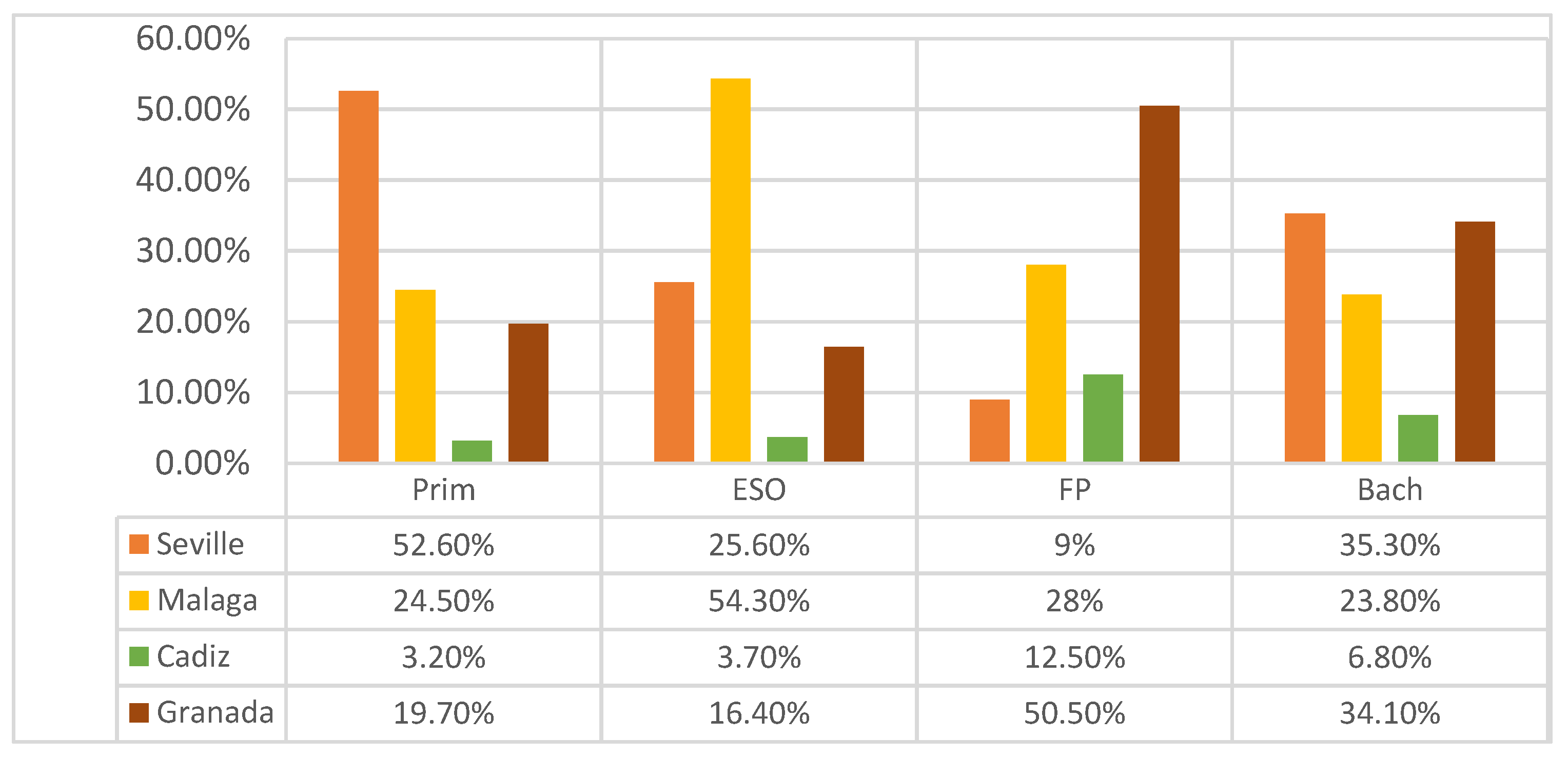
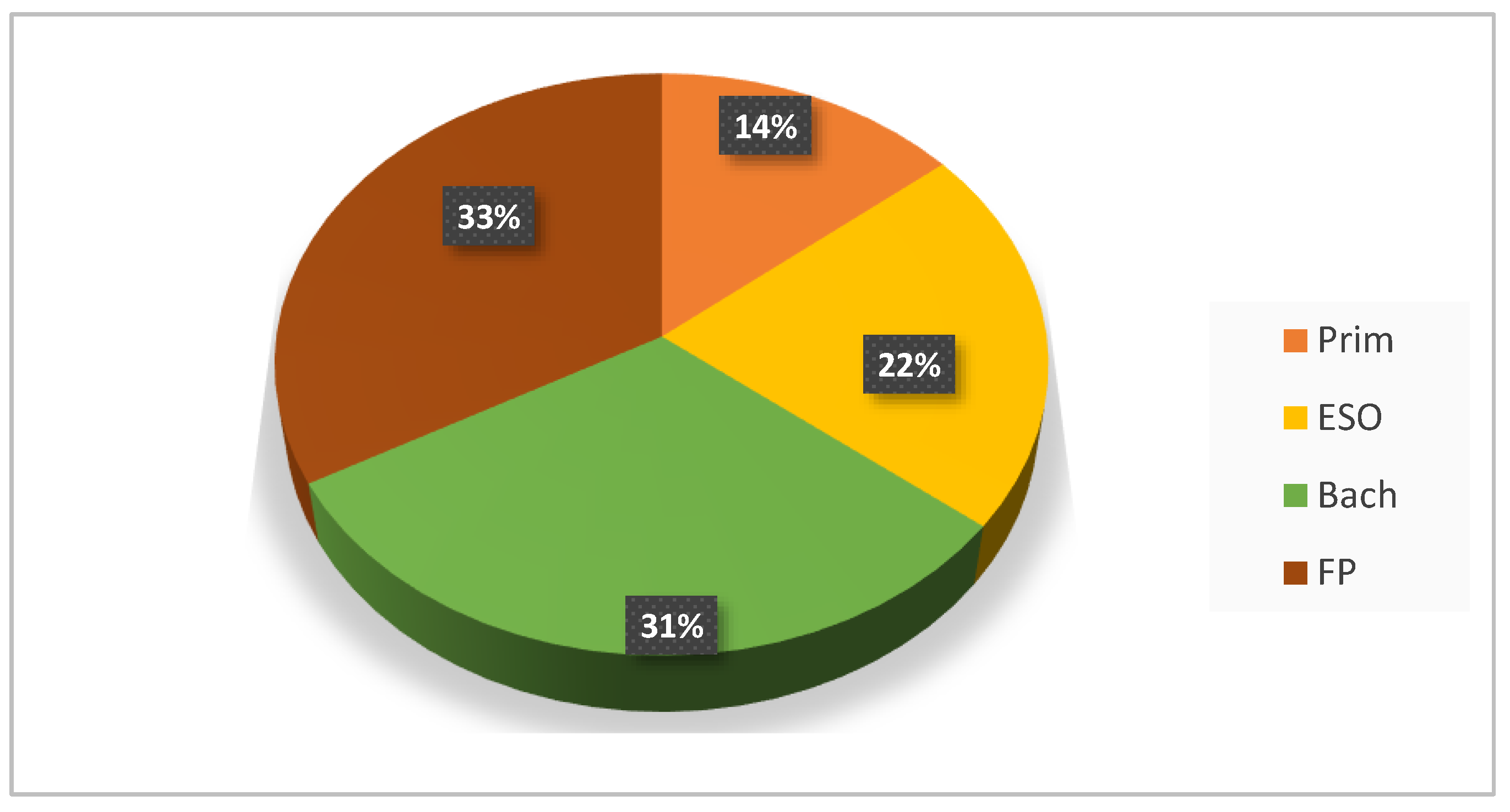
From this population, a predictive sample of 1251 students was obtained, comprising 608 Primary Education students (1 − α = 0.95; e = ±4.06%; p = 50) and 643 students from post-primary levels (1 − α = 0.95; e = ±4.29%; p = 50). The percentage distribution by educational level and location is presented in Figure 1. Of the total sample, 59.7% were male and 40.3% female.
This differentiation between developmental stages is relevant for interpreting the results, given that needs, preferences, and leisure practices in Primary Education differ substantially from those in Compulsory Secondary Education, Baccalaureate, and Vocational Training.

2.3. Instruments

The instrument was specifically designed for this research and consists of 49 items answered on a Likert-type scale (1 = strongly disagree; 2 = somewhat disagree; 3 = somewhat agree; 4 = strongly agree), excluding the option “do not know/no answer.” The decision to use a scale with an even number of response categories was based on the intention to encourage participants to take a position on the statements, thereby avoiding a tendency to select neutral or ambiguous responses. This design allowed for more clearly defined and precise responses regarding the level of agreement or disagreement with the variables analysed.
Furthermore, the questionnaire items were considered clear, understandable, and relevant for the target population, ensuring that participants had sufficient information to form a well-founded opinion [48,49]. Consequently, excluding the neutral category was deemed methodologically appropriate, as it increased the sensitivity of the scale and improved the discriminative capacity of responses without compromising data validity [50].
The instrument was designed to accurately assess both the frequency and mode of use of various technologies during leisure time, including television, tablets, mobile phones, computers, and video games.
In addition, the questionnaire included sociodemographic variables such as gender, age, and educational level, which served as essential independent variables for examining differences across developmental stages and contextualizing the results.
The instrument development process followed several stages: a literature review, initial item drafting, and content validation by a panel of experts in environmental education and educational technology, and pilot testing with a small group of students to ensure clarity and semantic adequacy. Minor adjustments were made after the pilot phase to improve comprehension and internal coherence.
Instrument reliability analysis yielded a Cronbach’s alpha coefficient of 0.825, considered very good. McDonald’s omega coefficients were ω = 0.899 for the overall instrument and ω = 0.824, ω = 0.780, ω = 0.740, and ω = 0.703 for the respective dimensions, all considered acceptable to good [48,49]. Content validity was assessed using a procedure that produced a Content Validity Coefficient (CVC) of 0.92, categorized as excellent [50].

2.4. Data Analysis and Processing

Once the data matrix was refined and appropriate exploratory data analyses were conducted, descriptive analyses (frequencies, percentages, means, and standard deviations), bivariate analyses to determine statistically significant differences (α = 0.05), and multivariate analyses using MANOVA were performed to detect significant differences and examine interactions between gender and educational level.
All quantitative data processing and statistical analyses were carried out using the Statistical Package for the Social Sciences (SPSS), version 25.

3. Results

3.1. ICT Use

The response category “Strongly agree” provides the most robust confirmation of the items analysed and was therefore selected to conduct the frequency analysis presented in Table 1, which illustrates students’ preference for each type of ICT device according to educational level.
As shown in Table 1, Primary Education students stand out in their use of tablets, computers, and video games. Secondary Education students report higher television consumption. Vocational Training students show the highest use of mobile phones, while Baccalaureate students do not stand out in the use of any specific device.

3.2. Analysis of Daily ICT Use by Educational Level

3.2.1. Television

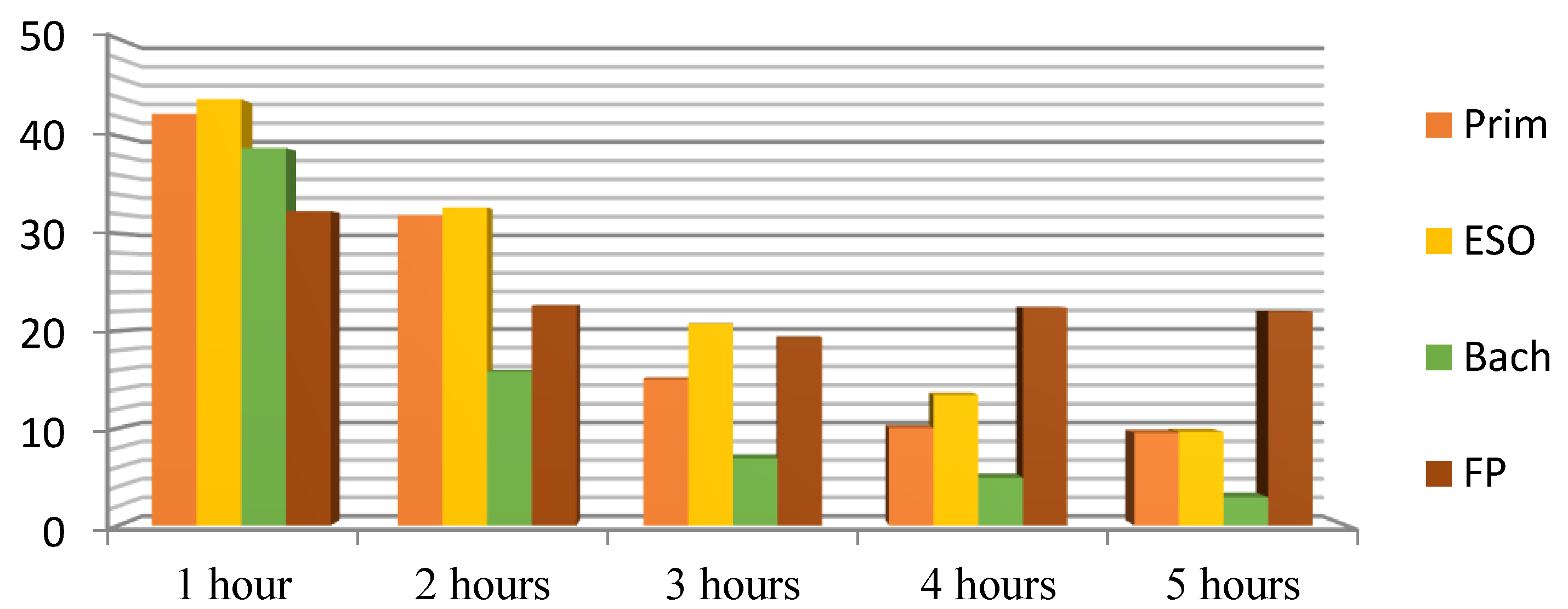
A notable difference is observed between watching television for one hour (M = 2.69; SD = 1.287) and watching it for five hours (M = 1.42; SD = 0.938), with a progressive decrease across all educational levels as viewing time increases.
Secondary Education students spend the most time watching television, whereas Baccalaureate students spend the least. However, as illustrated in Figure 2, when the number of viewing hours increases, Vocational Training students exceed the other groups in daily television consumption.

3.2.2. Tablet Use

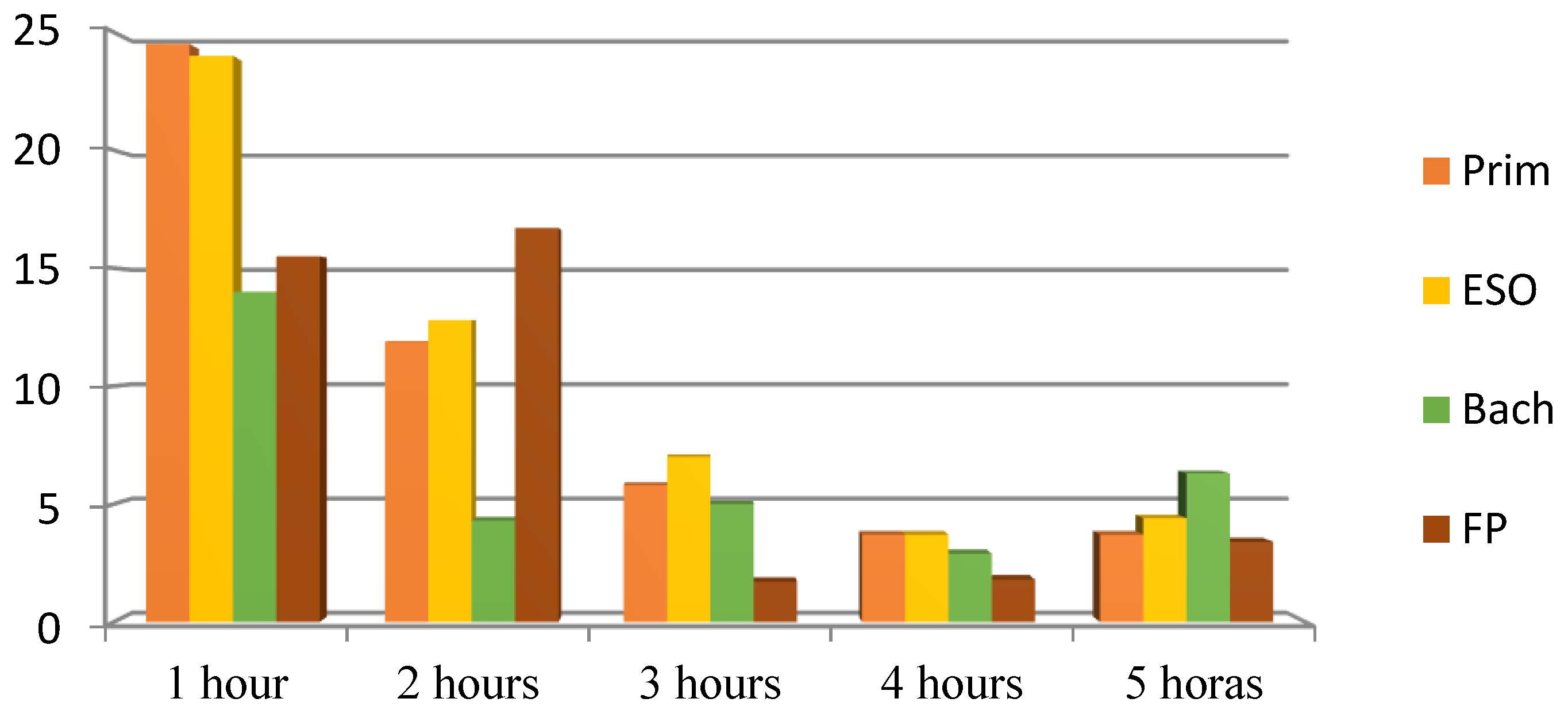
Tablet use is lower than television use both during the first hour (M = 2.34; SD = 1.341) and during the fifth hour (M = 1.28; SD = 0.771), where a marked decline is also observed. Primary Education students show the highest levels of tablet use, whereas Secondary Education students spend the least time using tablets. Figure 3 illustrates how increased daily hours lead to a significant reduction in tablet use across educational levels.

3.2.3. Mobile Phones

Mobile phones accompany students from an early age and are often given by families on special occasions. Due to their continuous use, it is difficult to limit mobile phone use to fixed hourly intervals, as is possible with other technologies. To address this issue, results are presented based on usage frequency, distinguishing between very frequent and less frequent use.
Using this approach, mobile phones emerge as the most frequently used technology (M = 2.87; SD = 1.161). As shown in Figure 4, usage frequency increases with educational level and age, with the lowest use among Primary Education students and the highest among Vocational Training and Upper Secondary Education students.

3.2.4. Computer Use

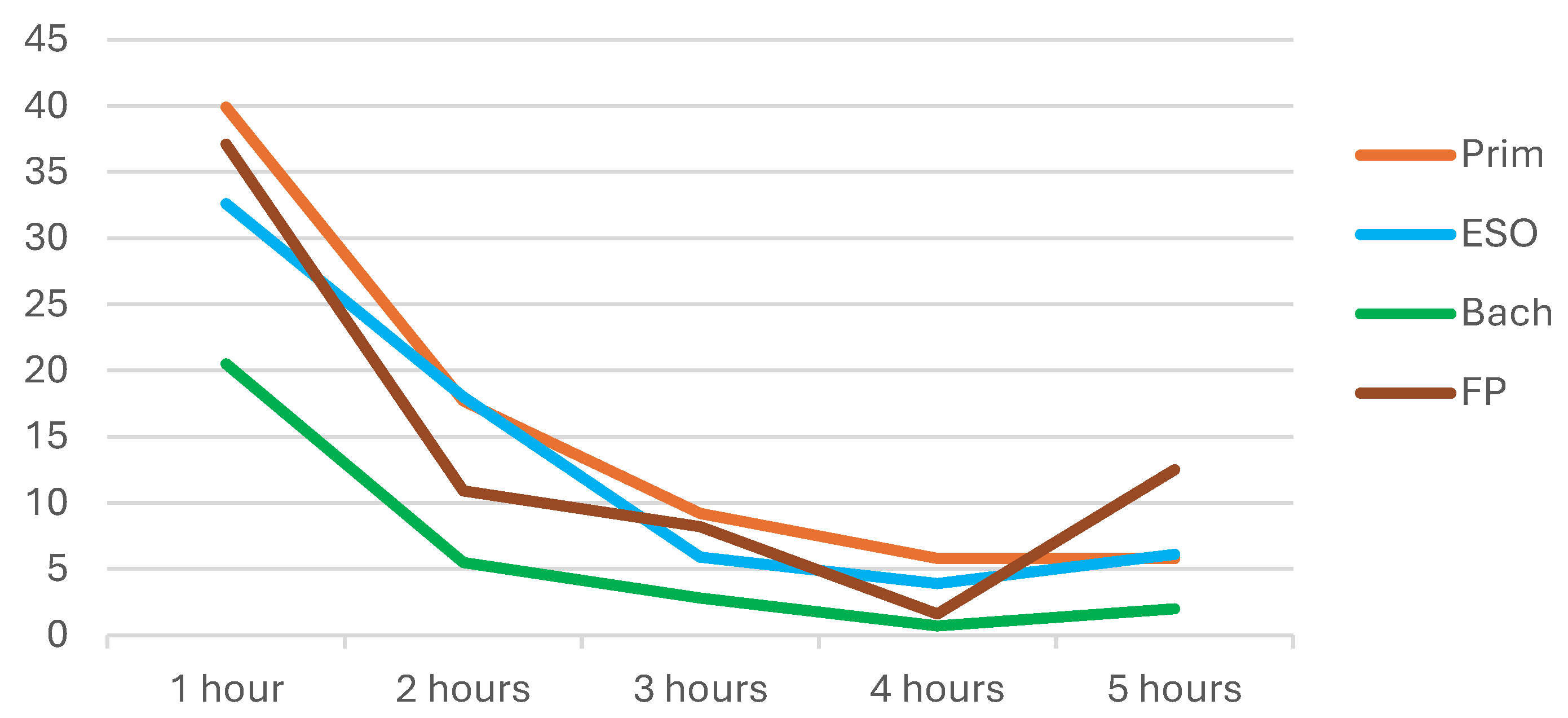
Regarding computer use for leisure purposes, Figure 5 shows that no single usage pattern predominates, unlike with other technologies. For one hour of use (M = 2.10; SD = 1.225), both Primary and Secondary Education students stand out, while for two hours (M = 1.67; SD = 1.061), Vocational Training students show higher usage. Beyond this point, usage tends to level off across educational levels, with very low percentages in the remaining time intervals.

3.2.5. Video Games

Video games—including sports, adventure, war, flight simulation, driving, and role-playing games—occupy a substantial portion of students’ leisure time. These games are played online, individually or in groups, or on consoles and handheld devices. As shown in Figure 5 all educational levels except Baccalaureate devote a significant amount of time to video gaming (M = 2.20; SD = 1.321).
From the second hour onward, a sharp decline is observed, although Primary and Secondary Education students remain the most prominent video game users across all time intervals.
Overall, mobile phones are the most widely used technology, with usage increasing with age, followed by television in the one-hour segment. Tablets and computers are frequently used for gaming purposes, partially substituting for traditional video game consoles. Primary and Secondary Education levels show the highest overall use of ICTs, with the exception of mobile phones, as noted above.

3.3. Multivariate Analysis (MANOVA)

The results of the multivariate analysis of variance (MANOVA) indicate that the covariance matrices are not equal (Box’s M = 2956.711; p < 0.001). Significant main effects were found for gender (Pillai’s Trace = 0.068; F = 2.712; p < 0.001) and educational level (Pillai’s Trace = 0.293; F = 4.056; p < 0.001). However, the interaction between gender and educational level was not statistically significant (Pillai’s Trace = 0.080; F = 1.021; p = 0.432).
For univariate analyses by gender, Welch’s ANOVA was applied due to heteroscedasticity among groups. Prior to analysis, assumptions of normality and homogeneity of variances were examined. Levene’s test revealed heteroscedasticity, justifying the use of Welch’s ANOVA, which is robust to unequal variances and sample sizes. Post hoc multiple comparisons were conducted using the Games–Howell test, which does not assume homoscedasticity and adjusts degrees of freedom accordingly.
As shown in Table 2, males use computers significantly more than females for gaming during the one-hour interval. Gender differences are also observed across all time intervals for video game use, with males consistently reporting higher usage. These differences increase between one and three hours, with statistical power levels of 95%, 99.5%, and 93.3%, respectively, and decrease at four and five hours.
Gender differences were found exclusively in video game use and not in other ICTs analysed. Gender differences only occur in the use of video games, not in the other technologies we have analyzed [51,52,53,54].
As shown in Table 3, younger students—particularly those in Primary and Secondary Education—differ significantly from Baccalaureate students in both computer and video game use, with a marked decline observed in the second hour of use. Primary and Secondary Education students devote the most time to video gaming, whereas Baccalaureate students show the lowest levels of engagement [55,56,57].
In the case of video games, a similar pattern is observed (Table 3) among the study groups in the first time slot, and in the second time slot among those in vocational training ( x ¯ = 1.53). Primary and secondary school groups stand out for devoting more time to gaming. By way of indication, they play for one hour a day, and secondary school students spend about 47 min a day playing video games [58]. Other dedicated studies, as mentioned earlier in our work, focusing on problematic use due to its implications as a risk factor for academic performance, mental health, and quality of life, corroborate the daily time spent and the age of users [57,59,60]. Particularly noteworthy is a meta-analysis study of research conducted in Europe, America, and Asia, which shows that excessive video game use has a strong effect on academic performance; negative effects are more consistent among secondary school students and less so at higher educational levels; by contrast, moderate use has no harmful effects [61,62]. On the other hand, frequent use of these ICTs, particularly video games, has been observed, suggesting that they can be used as very suitable leisure tools with environmental education objectives.

4. Discussion

The results confirm that Information and Communication Technologies (ICTs) occupy a central position in the leisure practices of non-university students in Andalusia, with the mobile phone emerging as the predominant device across all educational stages. This pattern is consistent with previous research describing a youth digital ecosystem characterized by constant connectivity, diversified entertainment formats, and the centrality of screens in social interaction [7,11,17,19].
From the perspective of youth leisure theories, recreational practices constitute meaningful spaces for socioemotional development, identity construction, and self-directed learning [6]. In this regard, the predominance of digital leisure reflects a structural shift toward technologically mediated environments that shape new forms of socialization, participation, and belonging, in line with theories of mediated leisure. The intensification of ICT use during the COVID-19 pandemic further reinforced their role as tools for interaction, resilience, and youth well-being [17,18,33], consolidating digital leisure as a sphere of social and educational agency.
The gender differences identified in video game use, with boys devoting more time than girls, are consistent with sociocultural models that emphasize the influence of stereotypes and cultural norms on youth leisure patterns [51,52,53,54,55]. These findings highlight the need for gender-sensitive educational strategies that prevent the reproduction of inequalities through ICT use. Likewise, differences by educational level reveal a progressive convergence toward mobile phone use in Baccalaureate and Vocational Training, in contrast to the greater presence of more institutionalized devices in Primary and Secondary Education. This trend aligns with the literature on digital autonomy and developmental progression.
With respect to contact with nature, the findings reinforce existing concerns regarding the decline in outdoor activities during childhood and adolescence and their potential negative effects on well-being [27,32,38,39]. However, contemporary approaches to environmental education do not necessarily frame digital leisure as antagonistic to natural experiences. Rather, digital tools can act as mediators that facilitate understanding of complex ecological systems through simulations, serious games, and immersive environments [42,44].
Overall, the results suggest that the intentional integration of digital leisure into environmental education—aligned with the Sustainable Development Goals and UNESCO guidelines (2023)—can foster meaningful learning and promote more active youth participation in sustainability-related issues. The key factor lies not in the technology itself, but in pedagogical design: ICTs must be oriented toward inclusive, critical educational models that remain connected to both social realities and the natural environment.

5. Conclusions

The findings of this study indicate that ICTs constitute the core of leisure activities among non-university students in Andalusia, with the mobile phone acting as the dominant device across all educational stages. Other technologies, such as tablets, computers, and video games, show a stronger presence at younger ages, particularly in Primary Education and the early years of Compulsory Secondary Education. Significant gender differences were observed exclusively in video game use, with boys reporting higher frequency and longer durations, while no relevant gender differences were found for other devices.
Analysis by educational level reveals a clear developmental pattern: mobile phone use increases progressively with age, while the use of other devices decreases. This pattern provides a valuable basis for designing educational interventions that are better aligned with students’ actual digital leisure practices at each stage.
Although this study does not directly assess the effects of digital leisure on environmental education, the identified usage patterns offer a solid empirical foundation for the development of contextualized interventions that integrate digital resources—such as video games, simulations, or mobile applications—into environmentally oriented educational leisure initiatives. These pedagogical opportunities should be developed in a complementary manner to in-person experiences in natural environments, avoiding approaches that frame digital leisure and environmental engagement as mutually exclusive. Integrating digital culture into educational proposals can enhance ecosocial understanding and encourage student participation in sustainability-related actions.
Finally, the specialized literature underscores the need for future research to move beyond usage patterns and explore students’ motivations, subjective experiences, and environmental attitudes, as well as the actual impact of digital technology-based interventions on the development of ecosocial competencies. Taken together, this study provides a precise characterization of digital leisure among non-university students in Andalusia and highlights its potential as a resource for environmental education, while remaining within the limits imposed by the data and maintaining coherence with sustainability objectives.

Author Contributions

Conceptualization: M.E.I., L.V.A.M. and F.M.C.; Data curation: M.E.I.; Acquisition of funds: M.E.I.; Formal analysis: L.V.A.M. and F.M.C.; Methodology: F.M.C.; Research: M.E.I. and L.V.A.M.; Project management: L.V.A.M.; Supervision: M.E.I., L.V.A.M. and F.M.C.; Validation: M.E.I.; Writing of the original draft: M.E.I., L.V.A.M. and F.M.C.; Writing, review and editing: M.E.I., L.V.A.M. and F.M.C. All authors have read and agreed to the published version of the manuscript.

Funding

This research received no external funding.

Institutional Review Board Statement

The study was conducted in accordance with the Declaration of Helsinki and was approved by the Research Ethics Committee (REC) of the Pablo de Olavide University (Spain) for studies involving human subjects. Governing Council, 23 June 2022 (BUPO No. 7/2022).

Informed Consent Statement

Not applicable.

Data Availability Statement

Data is contained within the article.

Acknowledgments

The authors wish to express their gratitude to the faculty and students of the universities that participated in the research (Universities of Malaga, Cadiz, Granada, and Pablo de Olavide), as well as to the other researchers who participated in the research project.

Conflicts of Interest

The authors declare no conflicts of interest.

References

  1. Padhy, M.; Valli, S.K.; Pienyu, R.; Padiri, R.A.; Chelli, K. Motivation of leisure and well-being in adolescents and young adults. Stud. Psychol. 2015, 60, 314–320. [Google Scholar] [CrossRef] [Scilit]
  2. Albertos, A.; Ibabe, I. Problematic use of technologies, leisure activities and executive functions in adolescents. Rev. Educ. 2021, 394, 101–127. [Google Scholar]
  3. Eccles, J.S.; Barber, B.L.; Stone, M.; Hunt, J. Extracurricular activities and adolescent development. Soc. Aff. 2003, 59, 865–889. [Google Scholar] [CrossRef] [Scilit]
  4. Fawcett, L.M. School’s Out: Activities, Influences and Leisure Time Outcomes of Adolescents. Ph.D. Thesis, Edith Cowan University, Joondalup, WA, Australia, 2007. [Google Scholar]
  5. Kristjansson, A.L.; James, J.E.; Allegrante, J.P.; Sigfusdottir, I.D.; Helgason, A.R. Substance use in adolescents, parental supervision and leisure activities: 12-year outcomes of primary prevention in Iceland. Prev. Med. 2010, 51, 168–171. [Google Scholar] [CrossRef] [Scilit]
  6. Kleiber, D.; Larson, R.; Csikszentmihalyi, M. The experience of leisure in adolescence. In Applications of Flow in Human Development and Education; Springer: Dordrecht, The Netherlands, 2014; pp. 467–474. [Google Scholar] [CrossRef] [Scilit]
  7. Panelli, R.; Nairn, K.; Atwool, N.; McCormack, J. ‘Hanging out’: Print-media constructions of young people in public space. Child. Issues 2002, 6, 23–30. [Google Scholar]
  8. Correa, E. El Impacto de las Redes Sociales Virtuales en la Identidad y Subjetividad de los Adolescents. 2011. Available online: https://tesiunamdocumentos.dgb.unam.mx/ptb2011/octubre/0673541/0673541_A1.pdf (accessed on 25 November 2025).
  9. Caldwell, L.L.; Smith, E.A. Leisure as context for youth development and crime prevention. Aust. N. Z. J. Criminol. 2006, 39, 398–418. [Google Scholar] [CrossRef] [Scilit]
  10. Lee, K.T.; Vandell, D.L. After-school time and substance use in adolescents. J. Adolesc. Health 2015, 57, 523–529. [Google Scholar] [CrossRef] [Scilit]
  11. Rodríguez, E.; Ballesteros, J.C. Jóvenes, Ocio y TIC; Centro Reina Sofía Sobre Adolescencia y Juventud: Madrid, Spain, 2019. [Google Scholar]
  12. Martínez Castillo, R. La importancia de la Educación Ambiental ante la problemática actual. Rev. Electrón. Educ. 2010, XIV, 97–111. [Google Scholar] [CrossRef] [Scilit]
  13. United Nations Development Programme; University of Oxford. People’s Climate Vote. 2021. Available online: https://www.undp.org/publications/peoples-climate-vote (accessed on 30 November 2025).
  14. Madariaga, A.; Ponce, A. Ocio y Participación Social en Entornos Comunitarios; Universidad de La Rioja: Logroño, Spain, 2018. [Google Scholar]
  15. Acuña, M.; Mauriello, A. Recreación y Educación Ambiental: Algo más que volver a crear. Rev. Investig. 2013, 37, 213–230. [Google Scholar]
  16. Rosa, C.D.; Collado, S. Nature experiences and environmental attitudes and behaviours. Front. Psychol. 2019, 10, 763. [Google Scholar] [CrossRef] [Scilit]
  17. Observatorio Nacional de Tecnología y Sociedad. Usos y Actitudes de Consumo de Contenidos Digitales en España; Ministerio de Asuntos Económicos y Transformación Digital: Madrid, Spain, 2021. [Google Scholar] [CrossRef] [Scilit]
  18. Tardivo, D. Jóvenes y adolescentes ante el abuso de las TIC. Rev. Investig. Polít. Sociol. 2023, 22, 113. [Google Scholar]
  19. Calderón Gómez, D.; Gómez Miguel, A. Consumir, Crear, Jugar; Fundación FAD Juventud: Madrid, Spain, 2022. [Google Scholar]
  20. Ministerio de Derechos Sociales y Agenda 2030. Informe Juventud en España 2020. 2021. Available online: http://www.injuve.es/sites/default/files/adjuntos/2021/03/informe_juventud_espana_2020.pdf (accessed on 13 October 2025).
  21. Feierherd, G.E.; González, F.; Viera, L.; Romano, L.; Delía, L.N.; Huertas, F.; Depetris, B.O. Virtual and augmented reality, big data and mobile devices: Applications in tourism. In Proceedings of the World Conference on Information Systems and Technologies (WICC 2019); Springer: Berlin/Heidelberg, Germany, 2019. [Google Scholar]
  22. Prieto Andreu, J.M. Systematic review on collaborative learning via VR/AR/MR. Teoría Educ. 2025, 37, 151–186. [Google Scholar] [CrossRef] [Scilit]
  23. Vargas-Olarte, C.E. ESport as an economic factor. Rev. Libre Empresa 2020, 17, 63–92. [Google Scholar] [CrossRef] [Scilit]
  24. Paredes, A. Aplicación de la inteligencia artificial en el ámbito educativo. Rev. Educ. Derecho 2024, II, 512–539. [Google Scholar]
  25. Cuenca Amigo, J.; Cuenca, J.; Ahedo, R. (Eds.) Los Efectos Sociales del Ocio y las Industrias Creativas; Universidad de Deusto: Bilbao, Spain, 2016; Available online: https://recyt.fecyt.es/index.php/PSRI/article/view/52000 (accessed on 13 October 2025).
  26. United Nations. Agenda 2030 y los Objetivos de Desarrollo Sostenible; UN: New York, NY, USA, 2018. [Google Scholar]
  27. Doistua, J.; Ried, A. Leisure in nature as a space of youth development. Rev. Psicol. Deporte 2016, 25, 39–44. [Google Scholar]
  28. Prado, R.D. Recreational activities and free-time use in adolescents. JUEGO Rev. Cient. 2023, 3, 118–140. [Google Scholar] [CrossRef] [Scilit]
  29. Castell, C. Nature and health: A necessary alliance. Gac. Sanit. 2020, 34, 194–196. [Google Scholar] [CrossRef] [Scilit]
  30. Wynveen, C.; Kyle, G.; Absher, J.; Theodori, G. Landscape attachment meanings. Leis. Res. 2011, 43, 290–311. [Google Scholar] [CrossRef] [Scilit]
  31. Izenstark, D.; Ebata, A.T. Nature and attention/family cohesion. Child. Youth Environ. 2017, 27, 93–109. [Google Scholar] [CrossRef] [Scilit]
  32. Valdemoros, M.A.; Alonso, R.A.; Martínez, J.M. Intergenerational environmental leisure. Alternativas 2025, 32, 253–272. [Google Scholar] [CrossRef] [Scilit]
  33. Alonso, R.A.; Saenz de Jubera, M.; Valdemoros, M.A.; Ponce de León, A. Digital leisure and well-being. NAER 2022, 11, 31–48. [Google Scholar] [CrossRef] [Scilit]
  34. UNICEF. Vulnerabilidad y Exclusión en la Infancia. 2014. Available online: https://acortar.link/R9cgns (accessed on 13 October 2025).
  35. Wang, G.; Zhang, Y.; Zhao, J.; Zhang, J.; Jiang, F. Mitigating confinement effects in COVID-19. Lancet 2020, 395, 945–947. [Google Scholar] [CrossRef] [Scilit]
  36. Mendoza Andrade, J.L.; Álvarez Villacreses, B.M.; Rezabala Moreira, V.A.; Rodríguez Arguello, A. Impacto de las actividades lúdicas y deportivas en el desarrollo de habilidades de afrontamiento y resolución de problemas en adolescentes con conductas adictivas: Estudio en el cantón Jipijapa, Ecuador. English. Rev. Cient. Sinapsis 2024, 24. [Google Scholar] [CrossRef] [Scilit]
  37. Alvarado, E.; Sánchez, D.E.F.; Delgado, L.M.F.; Sánchez, L.J.F. Impact of ICTs on student learning. Rev. Cienc. E Investig. 2023, 8, 1764–1786. [Google Scholar] [CrossRef]
  38. Ruiz de la Cruz, C.P.; García González, E. Reconectar con la naturaleza. Investig. Esc. 2023, 106, 53–64. Available online: https://revistascientificas.us.es/index.php/IE/article/view/20107 (accessed on 13 October 2025).
  39. Escofet Soteras, C.; Santiago, B. ADHD diagnostic protocol. Protoc. Diagn. Ter. Pediatr. 2022, 1, 85–92. [Google Scholar]
  40. Berzosa, T. Cómo Afecta el ser Humano al Medio Ambiente. 2024. Available online: https://www.discapnet.es/medio-ambiente/como-afecta-el-ser-humano-en-el-medio-ambiente (accessed on 15 October 2025).
  41. Esteban Ibáñez, M.; Musitu Ferrer, D.; Amador Muñoz, L.V.; Mateos Claros, F.J.O. University as Change Manager of Attitudes towards Environment (The Importance of Environmental Education). Sustainability 2020, 12, 4568. [Google Scholar] [CrossRef] [Scilit]
  42. Caride, J.A. Educación ambiental y desarrollo humano. In Proceedings of the III Congreso Iberoamericano de Educación Ambiental, Caracas, Venezuela, 21–26 October 2000. [Google Scholar]
  43. Febres-Cordero, M.E.; Florián, D. Políticas de Educación Ambiental; PNUMA/UAM: Madrid, Spain, 2002. [Google Scholar]
  44. Esteban, M.; Lucena, I.V.; Amador, L.V.; Mateos, F. Environmental education in universities. Sustainability 2020, 12, 7883. [Google Scholar] [CrossRef] [Scilit]
  45. Viñals Blanco, A. Social networks as digital leisure spaces. Fonseca 2013, 6, 150–176. Available online: https://revistas.usal.es/cuatro/index.php/2172-9077/article/view/12089 (accessed on 13 October 2025).
  46. Angulo-Mina, D.; Sangacha-Guamán, D.; Guano-Coca, L.; Huatatoca-Mamallacta, G.; Núñez-Naranjo, A. Environmental education via interactive technologies. 593 Digital 2025, 10, 65–80. [Google Scholar] [CrossRef] [Scilit]
  47. Conde, L. Active digital leisure. EFDeportes 2011, 161. Available online: http://www.efdeportes.com/efd161/ocio-digital-activo-beneficios-y-perjuicios.htm (accessed on 13 October 2025).
  48. George, D.; Mallery, P. SPSS for Windows Step by Step, 4th ed.; Allyn & Bacon: Boston, MA, USA, 2003. [Google Scholar]
  49. Hernández-Nieto, R. Aportaciones al Análisis Estadístico; Universidad de los Andes: Bogota, Columbia, 2002. [Google Scholar]
  50. Nakayama, H.; Matsuzaki, T.; Mihara, S.; Kitayuguchi, T.; Higuchi, S. Relationship between problematic gaming and age at the onset of habitual gaming. Pediatr. Int. 2020, 62, 1275–1281. [Google Scholar] [CrossRef] [Scilit] [PubMed]
  51. Gisbert-Pérez, J.; Martí-Vilar, M.; Merino-Soto, C.; Chans, G.M.; Badenes-Ribera, L. Gender differences in gaming. Front. Psychol. 2024, 15, 1412739. [Google Scholar] [CrossRef] [Scilit]
  52. McLean, L.; Griffiths, M.D. Women gamers’ experiences. Int. J. Ment. Health Addict. 2019, 17, 970–994. [Google Scholar] [CrossRef] [Scilit]
  53. López-Fernández, F.J.; Mezquita, L.; Griffiths, M.D.; Ortet, G.; Ibáñez, M.I. Personality and gaming disorder. Adicciones 2020, 33, 263–272. [Google Scholar] [CrossRef] [Scilit]
  54. Wohn, D.Y.; Ratan, R.; Cherchiglia, L. Multiplayer game motivations. In HCI in Games; Springer: Berlin/Heidelberg, Germany, 2020. [Google Scholar]
  55. Domoff, S.E.; Radesky, J.S.; Harrison, K.; Riley, H.; Lumeng, J.C.; Miller, A.L. Television use and internalizing symptoms in adolescents. J. Youth Adolesc. 2020, 49, 414–427. [Google Scholar]
  56. Qi, J.; Yan, Y.; Yin, H. Screen time among school-aged children of aged 6–14: A systematic review. Glob. Health Res. Policy 2023, 8, 12. [Google Scholar] [CrossRef] [Scilit]
  57. Cuesta, J.F.D.; Guisan, A.C. Prolonged TV exposure. Rev. Esp. Salud Pública 2024, 98, e202409051. [Google Scholar]
  58. Fernández de Arroyabe, A.; Eguskiza-Sesumaga, L.; de Urabain, A.M.S. Preferred screens among Basque youth. Hist. Comun. Soc. 2020, 25, 551–561. [Google Scholar]
  59. Machimbarrena, J.M.; Beranuy, M.; Vergara-Moragues, E.; Fernández-González, L.; Calvete, E.; González-Cabrera, J. Problematic internet use and IGD. Adicciones 2023, 35, 107–118. [Google Scholar] [CrossRef] [Scilit]
  60. Satapathy, P.; Khatib, M.N.; Balaraman, A.K.; R, R.; Kaur, M.; Srivastava, M.; Barwal, A.; Prasad, G.S.; Rajput, P.; Syed, R.; et al. Burden of gaming disorder. Public Health Pract. 2025, 9, 100565. [Google Scholar] [CrossRef] [Scilit] [PubMed]
  61. Kuş, M. Meta-analysis on technological factors and performance. Front. Psychol. 2025, 16, 1524645. [Google Scholar] [CrossRef] [Scilit] [PubMed]
  62. Tojar-Hurtado, J.C.; Lechuga-Jiménez, C.; Esteban-Ibáñez, M. Sustainability competencies. Educ. Sci. 2024, 14, 877. [Google Scholar] [CrossRef] [Scilit]
Figure 1. Percentage distribution of the sample by location and educational level.
Sustainability 18 00564 g001
Figure 2. Daily television hours per day by level in %.
Sustainability 18 00564 g002
Figure 3. Daily hours spent using the tablet by level %.
Sustainability 18 00564 g003
Figure 4. Frequency of daily mobile phone use.
Sustainability 18 00564 g004
Figure 5. Daily hours spent on the computer by level, in %.
Sustainability 18 00564 g005
Table 1. Use of ICTs by educational level (% “strongly agree”).
Educational LevelTelevisionTabletMobile PhoneComputerVideo Games
Primary Education34.921.464.921.434.7
Secondary Education (ESO)46.316.284.216.229.1
Baccalaureate29.516.491.813.816.2
Vocational Training42.413.895.116.430.4
Table 2. Gender differences in ICT use (Welch’s ANOVA).
TechnologyTimeGenderMeanFp
Computer1 hMale1.746.362*
Female1.56
Video Games1 hMale2.3211.405**
Female2.04
Video Games2 hMale1.9228.076***
Female1.55
Video Games3 hMale1.5922.823***
Female1.32
Video Games4 hMale1.3610.911***
Female1.21
Video Games5 hMale1.388.963**
Female1.16
Notes: * p < 0.05; ** p < 0.01; *** p < 0.001.
Table 3. Differences in computer and video game use by educational level (ANOVA).
TechnologyTimeEducational LevelMeanFp
Computer1 hPrimary2.194.497**
Secondary (ESO)2.14
Baccalaureate1.84
Vocational Training1.83
Computer2 hPrimary1.713.947**
Secondary (ESO)1.73
Baccalaureate1.39
Vocational Training1.72
Video Games1 hPrimary2.387.961***
Secondary (ESO)2.15
Baccalaureate1.80
Vocational Training2.16
Video Games2 hPrimary1.925.909**
Secondary (ESO)1.71
Baccalaureate1.54
Vocational Training1.53
Notes: p < 0.05; ** p < 0.01; *** p < 0.001.
Disclaimer/Publisher’s Note: The statements, opinions and data contained in all publications are solely those of the individual author(s) and contributor(s) and not of MDPI and/or the editor(s). MDPI and/or the editor(s) disclaim responsibility for any injury to people or property resulting from any ideas, methods, instructions or products referred to in the content.