1. Research Background
Global agriculture is currently confronted with dual constraints of the “resource and environmental ceiling” and the “climate-related critical risks”: the degradation of cultivated land, water scarcity and frequent extreme weather have led to an increase in the vulnerability of the food system, while the “dual carbon” and biodiversity goals require agriculture to increase production while achieving emission reduction and carbon sink enhancement [
1]. Green agricultural technologies (GATs)—such as precision fertilization, water-saving irrigation, biological pest control, and conservation tillage—are widely recognized as key solutions to overcoming these challenges. Nevertheless, the adoption of GATs among smallholder farmers remains limited, representing a critical bottleneck to the advancement of sustainable agricultural development [
2].
As the ultimate decision makers and implementers of GATs, farmers’ adoption and application are constrained by the superimposition of four obstacles: information gap [
3] leads to technological cognitive bias, high input costs and lagging returns [
4] amplify financial constraints, production uncertainty intensifies risk aversion [
5], and the deficiencies in human capital [
6] further limits the absorption and adaptation of technology. The latest evidence shows that the digital divide is evolving from an “access divide” to a “capability divide”: farmers remain unable to translate potential technological advantages into tangible behavioral change due to insufficient capabilities in discovering, evaluating, creating, and applying digital information [
7].
With the deep integration of digital technologies such as the Internet, big data, the Internet of Things, and smart phones into the agricultural value chain, traditional information barriers have been significantly weakened, and the logic of technology promotion has shifted from “top-down” to “data-driven and community collaboration” [
8]. Against this backdrop, “digital literacy”—a multi-dimensional ability encompassing information discrimination, equipment operation, content creation, safety ethics, and problem-solving—has become a key variable determining whether farmers can effectively acquire, understand, experiment with, and optimize GATs [
9]. However, existing studies have yet to clarify how digital literacy affects the adoption decisions of GATs and the efficiency of technology application after adoption by reducing information costs, reshaping risk perception, activating social learning, and enhancing precise management capabilities. How do different characteristics of farmers, technical attributes, and regional contexts regulate the above mechanism? Answering the above questions can not only provide micro-behavioral explanations for the green transformation of agriculture, but also lay a theoretical and empirical foundation for the precise coupling of digital villages and green agricultural policies.
To fill the above-mentioned research gap, this study conducted a systematic review of 52 selected literatures on digital literacy and the adoption and efficiency of agricultural technologies in order to track the research trajectory in this field. The aim is to explore farmers’ willingness and intensity to adopt agricultural green technologies, as well as the economic and environmental efficiency after adoption, and to accelerate the pace of agricultural green transformation, and provide references for future research and policy decisions. Specifically, this systematic review aims to answer the following research questions.
To find out research trends and research gaps from the selected articles, question one is raised: What are the key bibliometric trends in the scholarly literature examining the relationship between digital literacy and agricultural green technology adoption? Sub-question 1.1: How has the volume of relevant publications evolved temporally, and what does this trend indicate about the development of the research field? Sub-question 1.2: What is the geographical distribution of the relevant research, and where are the predominant research gaps?
To identify the research methods and sampling technique used in the selected studies, question two is raised: What are the predominant methodological approaches employed in the selected studies? Sub-question 2.1: What is the distribution of research designs (e.g., quantitative, qualitative, mixed methods) and data sources (primary vs. secondary) across the selected studies? Sub-question 2.2: What sampling strategies are most frequently used to study the target populations, what are the differences between these choices and which situations are they respectively applicable to?
To identify the types of digital literacy, agricultural technology and application efficiency in the reviewed studies and the influence among them, question three is raised: What types of digital literacy, agricultural green technology and application efficiency are there in the selected studies? What influence do they have on each other? Sub-question 3.1: In the selected articles, what types of digital literacy are mainly included? Which specific indicators are used for measurement? How to highlight the research topic? Sub-question 3.2: In the selected articles, what types of agricultural green technologies are mainly included? Which specific indicators are used for measurement? How to highlight the research topic? Sub-question 3.3: Does digital literacy have an impact on the adoption of green agricultural technologies? What types of effects (driving effect, mechanism effect, obstacle effect) are observed? Sub-question 3.4: What types of application efficiencies (such as economic, environmental, and social) are related to the adoption of digital literacy or green agricultural technologies? Which indicators are used for measurement? What is the mechanism of action?
2. Research Methods
A systematic literature review (SLR) is a tool that uses repeatable methods to identify research articles related to a predetermined topic [
10]. To ensure the scientificity and replicability of the research methods, this study adopted the System Review and Meta-Analysis Preferred Reporting Project (PRISMA) process method [
11] to explain data screening and selection [
12]. This includes retrieval strategies, record extraction, and result reporting, etc. Firstly, this study conducted a rigorous search using Boolean Search on Scopus and Web of Science. Secondly, literature recording and extraction were carried out according to specific inclusion and exclusion criteria. Finally, the results of the selected articles were reported. Through the application of SLR analysis and constructing a multi-dimensional coding system, this study aims to explore the types of digital literacy, agricultural technology, and application efficiency, as well as their mutual influences.
2.1. Search Strategy
In order to search for major studies focusing on digital literacy, agricultural technologies, and application efficiency, a comprehensive search of the literature published since January 2015 was conducted in the Web of Science and Scopus databases on August 30, 2025. To this end, the keywords related to digital literacy, agricultural technology, and application efficiency are combined through the Boolean operators: (“Digital Literacy” or “Digital Technology” or “Digital Economy” or “Digitization”) and (“Green Technologies” or “Technology Adoption” or “Green Production Technology” or “Green Production” or “GATs” or “Efficiency” or “Green Total Factor Productivity” or “GTFP” or “Green Transformation” or “Green Development”) and (“Agriculture” or “Farmer” or “Rural Area” or “Rural Household” or “Farm”).
2.2. Eligibility Criteria
This study adopted the following inclusion criteria for a systematic literature review: (1) Studies relate to digital literacy or the application of digital technology in agriculture; (2) Use different research methods (i.e., qualitative, quantitative, or mixed methods); (3) The study is sourced from publications within the last 10 years (from January 2015 to August 2025). (4) The study must be published in academic journals. We also chose to exclude the following studies: (1) ongoing studies, conference papers, books, reviews, master’s and doctoral theses; (2) the publication is not in English; (3) the full text of the study cannot be obtained; (4) studies unrelated to key terms such as digital literacy and agricultural technology; (5) publication does not answer the research questions. Using the predefined qualification criteria mentioned above, studies are selected based on a three-stage hierarchical screening process to determine their eligibility. In this study, the main focus is on the impact of farmers’ digital literacy on the adoption of agricultural technologies. Digital literacy and digital technologies unrelated to agriculture or farmers are not part of the review focus of this study.
2.3. Study Selection
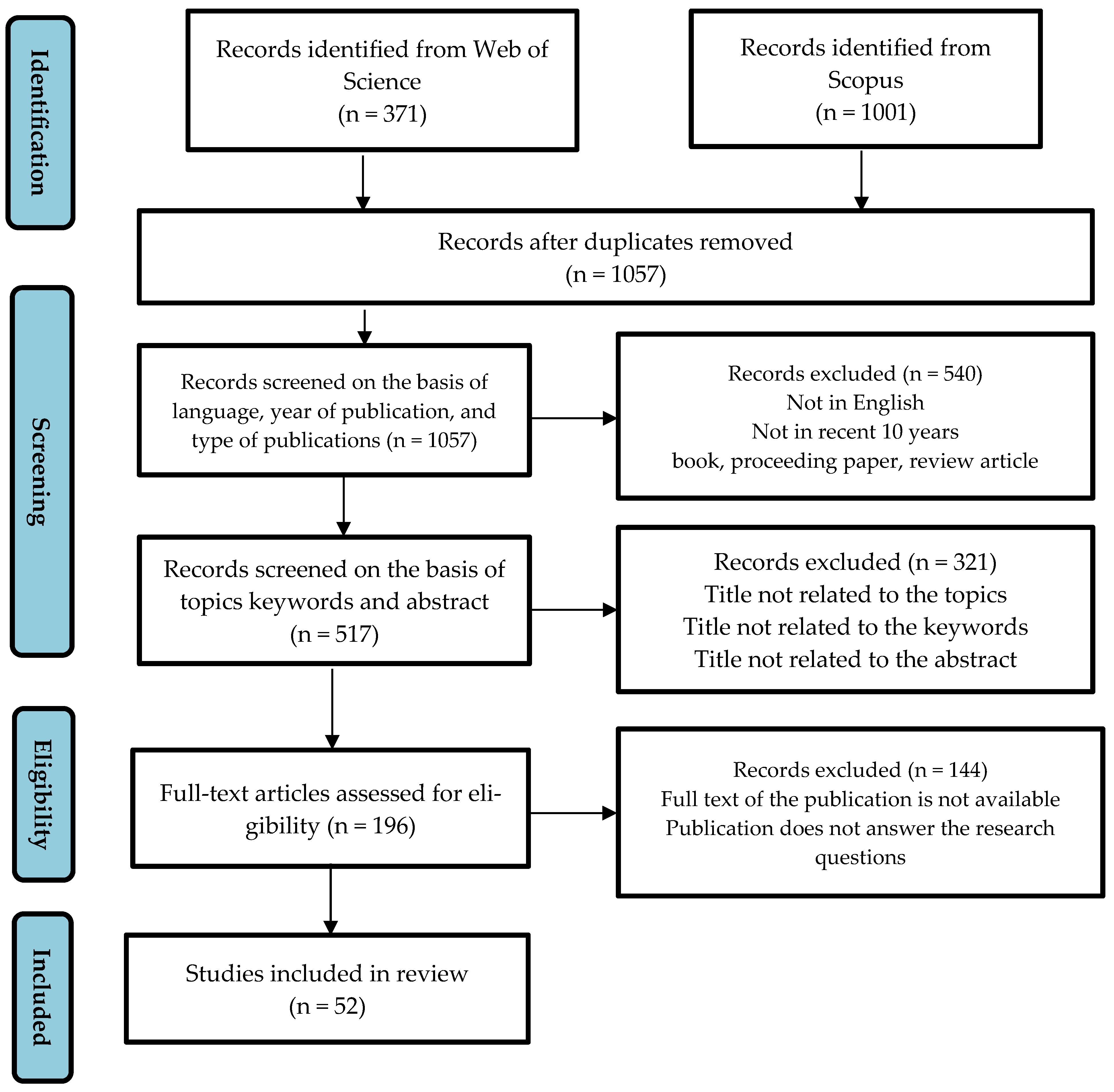
Figure 1 shows the search and screening process of the research selection. After initial filtering through Boolean operators in the Web of Science and Scopus databases, a total of 1372 records were found. After deleting duplicate documents, there were still 1057 records. In the next stage, by reading the language, publication time and type of all the studies for screening, a total of 517 records were selected. The number of publications was further reduced to 196 by screening through themes, keywords, and abstracts. In the final stage, full-text screening was conducted on these articles, including the removal of those whose full texts could not be obtained. Among the 196 papers, only 52 were found to be closely related to the topic of this review and were thus selected for further analysis. Among the 52 selected articles, 92% of the articles are from Q1 and Q2 in the JCR division, and the remaining four articles are from Q3 and Q4. The quality of the articles is thus guaranteed.
2.4. Multi-Dimensional Coding
Based on the selected 52 articles, this study creatively constructed a replicable multi-dimensional coding system (see the
Supplementary Table S1). The coding is carried out respectively from three dimensions: the bibliometric characteristics, methodological characteristics, and content characteristics, making the entire SLR logically rigorous and structurally clear.
3. Results and Discussion
3.1. Bibliometric Characteristics
3.1.1. Year of Publication
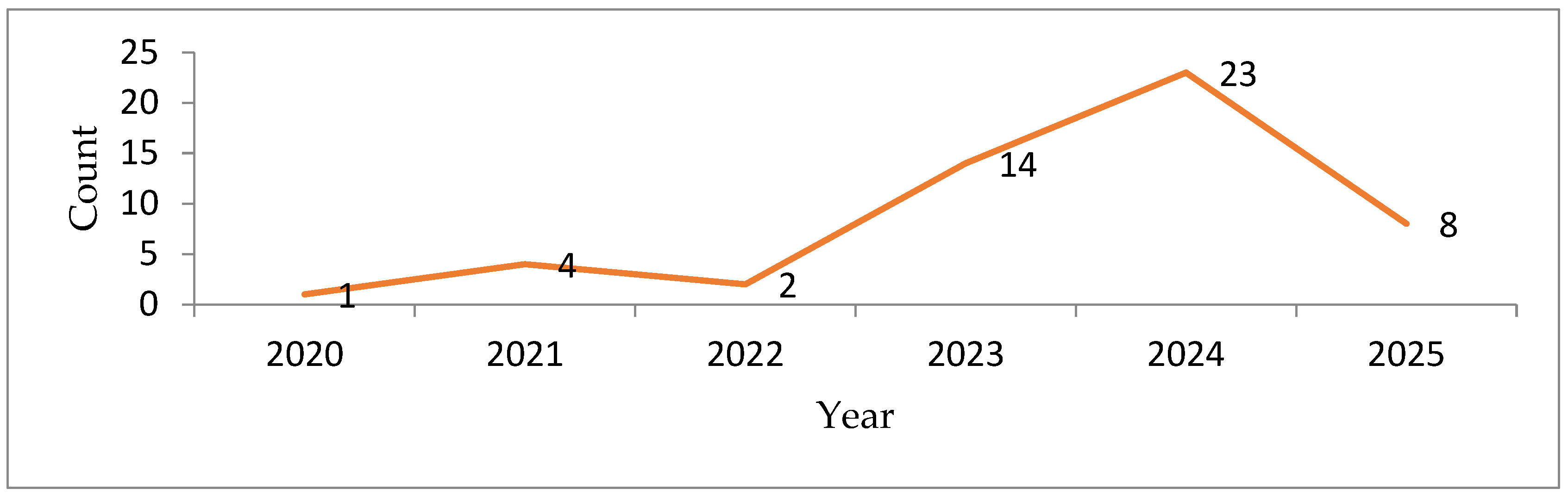
Figure 2 shows the annual distribution of publications related to digital literacy, the adoption of agricultural technologies, and efficiency from 2020 to 2025 (with literature collection halted by the end of August 2025, the number of publications was relatively less).
The time range selected for the literature screening in this article is the past decade. However, scholars’ research on this topic was relatively scarce in 2022 and previous years. From 2020 to 2022, the number of publications waved, possibly due to insufficient initial research focus or scarcity of data or resources. However, from 2022 to 2024, there was a significant upward trend, reaching its peak in 2024. The proportion of publications over the past three years was 86.54%. Driven by the urgent need for the advancement of digital agriculture and the development of green agriculture, this surge indicates that the academic community is increasingly recognizing the significance of the intersection between digital literacy and agricultural green technologies. Scholars are showing a growing interest in research related to digital literacy, the adoption of agricultural green technologies, and their efficiency.
3.1.2. Geographical Distribution
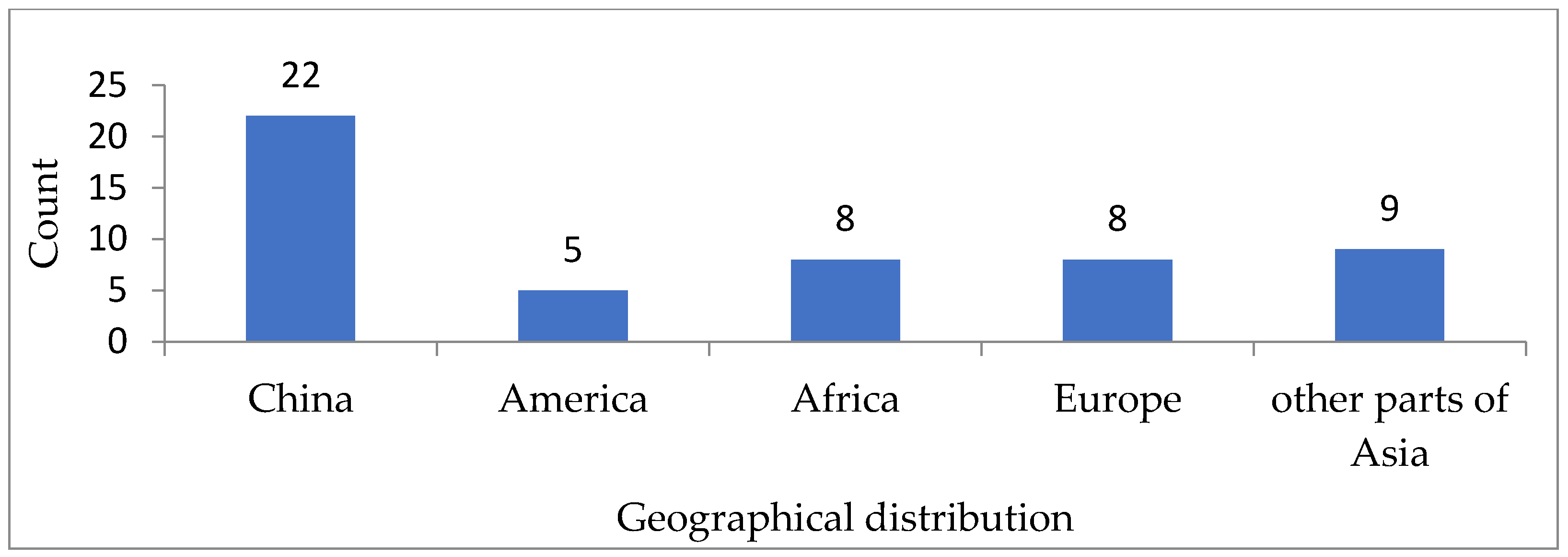
This bar chart (
Figure 3) presents the geographical distribution of 52 publications (published from 2020 to 2025) that study digital literacy and the adoption and efficiency of agricultural green technologies.
In terms of regional distribution, China stands out with a dominant number of publications (Publications account for 42.31%), far exceeding other regions. This indicates that within the research domain of digital literacy and agricultural technology, Chinese scholars and research institutions have been highly active, making substantial contributions to the accumulation and advancement of knowledge in this field.
America (9.62%), Africa (15.38%), Europe (15.38%), and other parts of Asia (17.31%) have relatively fewer publications. For America and Africa, factors such as the level of agricultural modernization, investment in scientific research, and the popularization of digital technology might restrict the number of related studies. In Europe, which has a relatively advanced agricultural and digital technology base, the relatively limited number of publications could imply that the research focus or intensity in this specific intersectional area is not as prominent as in China. For other parts of Asia, the research output may be affected by differences in regional agricultural development models and digital infrastructure construction.
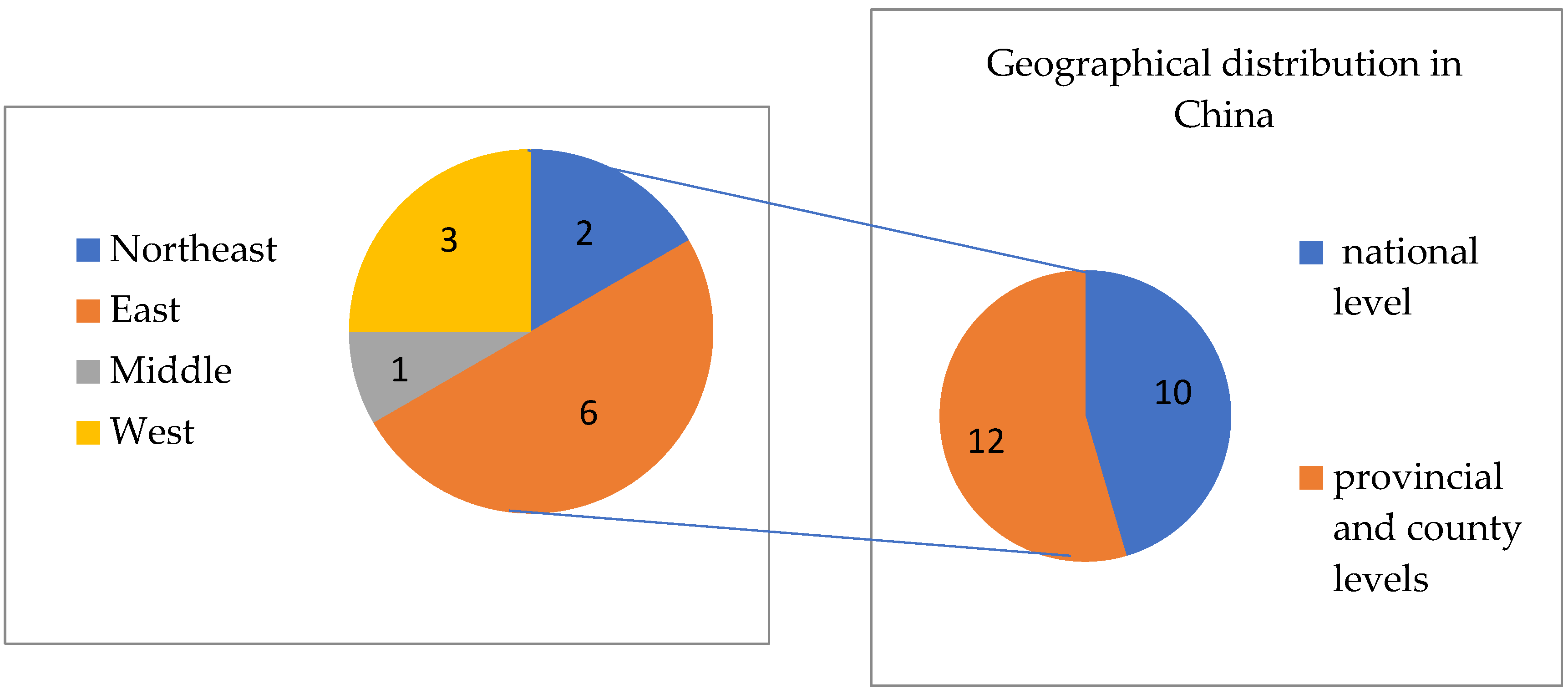
From a regional perspective (
Figure 4), the 22 reviewed studies exhibit a clear “macro–meso” stratification: national-level research (45.5%) primarily explores universal policy mechanisms, while provincial and county-level studies (54.5%) delve into regional heterogeneity. However, this multi-scalar structure masks a pronounced imbalance in geographical coverage. Eastern regions are overrepresented: seven studies are concentrated in just four of the thirteen eastern provinces—Fujian (1), Guangdong (1), Jiangsu (3), and Shandong (2)—indicating a concentration of academic resources in economically developed areas. This skew risks epistemic overgeneralization, where localized findings are mistakenly extrapolated as national norms. In contrast, the six central provinces, pivotal to national food security, are severely underrepresented, with only one study from Jiangxi. This central “research collapse” reflects not only institutional neglect but also a misalignment between academic priorities and regional strategic importance. In the west, coverage spans four provinces (Ningxia, Gansu, Shaanxi, and Sichuan), yet the limited number of studies (three) fails to capture the complexity of vast, ethnically diverse, and ecologically fragile regions. Finally, the northeastern provinces—Heilongjiang (1), Jilin (0), and Liaoning (1)—despite a relatively high coverage rate (66.7%), contribute only 9.1% of the literature, constraining insights into the digital transformation dynamics of China’s traditional industrial agricultural base. This spatial asymmetry is not merely a sampling artifact; it is symptomatic of deeper structural biases in research funding, institutional capacity, and policy visibility that favor coastal prosperity over interior strategic relevance.
Overall, the geographical distribution of publications reflects the unevenness of global research efforts in this field, with China playing a leading role, while other regions have significant potential for further exploration and development in research on digital literacy and agricultural green technology adoption and efficiency.
3.2. Methodological Characteristics
3.2.1. Research Design
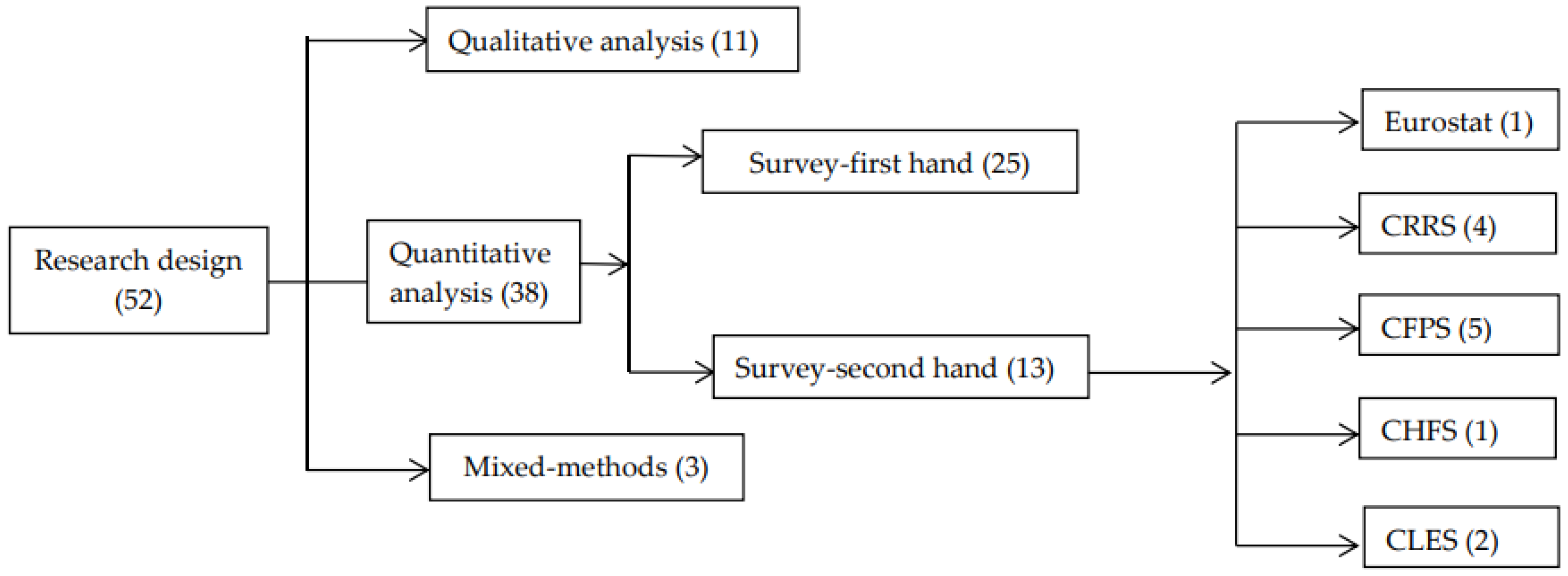
The 52 literatures selected in this study adopted a multi-disciplinary research method (
Figure 5). Among them, there were three studies on mixed methods, eleven on qualitative analysis, and quantitative analysis was the dominant method, totaling thirty-eight studies, accounting for 73.08%, indicating that research in this field highly relies on quantitative empirical approaches.
Among the literatures that adopted quantitative analysis, 25 were based on primary data, mainly obtained through field investigations. Field investigations enable researchers to directly observe and collect raw information in real situations, enhancing the authenticity and specificity of the data. The remaining 13 quantitative studies relied on secondary data, with the sources being Eurostat (1), CRRS (4), CFPS (5), CHFS (1), and CLES (2). These mature databases offer standardized and large-scale datasets, which are conducive to conducting large-sample analysis and comparative studies.
3.2.2. Sampling Techniques
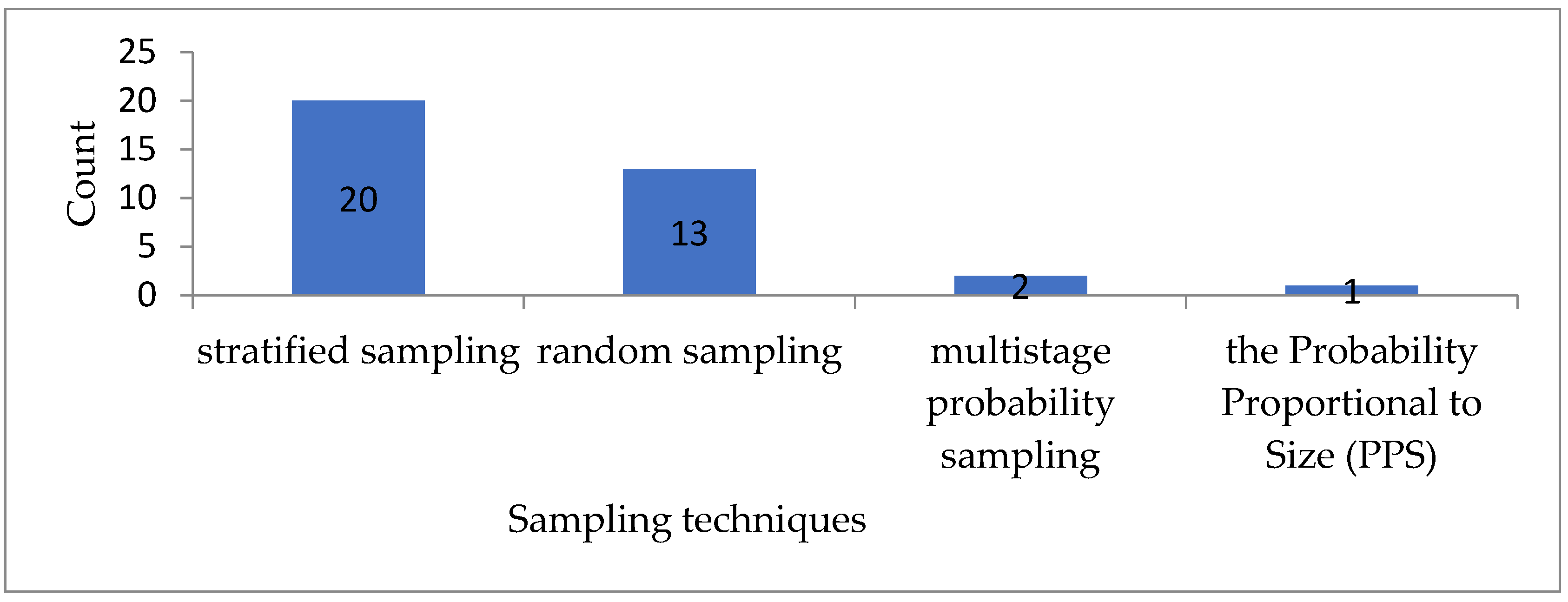
Figure 6 shows the sampling techniques adopted in the 36 quantitative studies on the relationship between digital literacy and the adoption and efficiency of agricultural technologies. Stratified sampling was the most commonly used, as seen in 20 literatures (55.56%). This method divides the population into strata, which can effectively capture the heterogeneity of the agricultural population in terms of digital literacy levels. Random sampling came second, adopted by a total of 13 literatures, all of which were applied to the collection of primary research data to ensure the unbiasedness of the samples. Multi-stage probability sampling (2) and Probability Proportional to Size sampling (PPS, 1) have been less applied, possibly due to their operational complexity in the context of agricultural research. In conclusion, the dominant position of stratified sampling reflects that when studying the role of digital literacy in the adoption of green technologies, the structural differences among the agricultural population need to be fully considered.
3.3. Content Characteristics
Thematic analysis is the most effective qualitative synthesis technique for analyzing data from different research designs [
13]. Through a systematic review of the content of the selected literature, this study conducts a comprehensive review on the connotation, indicators of farmers’ digital literacy and its role in the application of agricultural technology. A total of 52 relevant literatures were retrieved and included. Through thematic analysis, four core themes and their 18 sub-themes were identified, covering the composition of farmers’ digital literacy, types of agricultural technologies, and the influence mechanisms and efficiency of digital literacy or agricultural technologies. This study will conduct multi-dimensional coding, induction, and review of these four themes, respectively.
3.3.1. Type of Digital Literacy
After an in-depth review of the selected literature, a total of 32 articles mentioned “digital literacy”, among which 19 articles classified it by type (
Table 1). However, a unified classification standard has not yet been formed in the academic circle [
14]. By conducting semantic clustering and deduplication on the digital literacy-related expressions in these 19 articles, eight high-frequency core dimensions were identified, namely device and software operation, information and data literacy, communication and collaboration, digital content creation, digital finance and transaction, digital security and awareness, problem solving and evaluation, and occupational and business application. The results show that the structure of farmers’ digital literacy in the Chinese context is highly isomorphic with the seven literacy domains included in the “Global Framework for Digital Literacy” released by the UNESCO Statistics Institute in 2018 (Kappa = 0.87), but a new dimension of “digital finance and transactions” has been added to reflect the practical needs of the transformation from small-scale farming to multi-functional agriculture. The following text defines the concepts of each dimension, conducts operational reviews, and sorts out the research gaps.
Device and Software Operation
Device and software operation covers the accessibility, usage frequency, and operational capability of digital devices, and is often measured by indicators such as device ownership, usage duration, and operational proficiency. Scholars have approached its evaluation from complementary perspectives, examining adoption and ease of use [
15], treating basic operational competence as a prerequisite for domain-specific digital production [
16], and identifying computer proficiency as a core component of digital literacy [
17]. While device ownership serves as a tangible proxy for access [
18], a more comprehensive assessment integrates both the extent of usage and variations in operational ability to capture the depth of engagement [
19]. Collectively, these studies underscore that “device and software operation” transcends simple description of tool use. It represents a primary layer of the digital divide, where inequalities in access, frequency, and skill directly impact the ability to acquire higher-order digital literacies and reap the benefits of digital transformation.
Communication and Collaboration
Communication and collaboration, as a key dimension of digital literacy, involves the ability to utilize digital tools for information exchange, social interaction, and participatory engagement. Research in this area examines how digital platforms expand social capital [
16], enhance village governance and data sharing [
2,
20], and facilitate information exchange via social software such as WeChat [
6,
22]. Scholars have extended this construct to include emerging forms of interaction, such as livestreaming and short videos [
14,
23], and have highlighted the role of platforms like WhatsApp in agricultural marketing and policy outreach [
25]. Additionally, online discussion and knowledge sharing are recognized as vital manifestations of collaborative capacity [
24].
Digital Content Creation
Digital content creation represents a critical capacity for farmers to move from being passive consumers to active producers of digital information, encompassing the ability to generate, edit, and publish original content such as text posts, images, and videos. While foundational research establishes the scope of these activities [
2,
6,
16,
20,
21], significant divergence exists in its conceptualization and measurement. This includes viewing it through the lens of infrastructural prerequisites like equipment and connectivity [
26], focusing on core competencies of information editing and publishing [
24,
27], or assessing it via perceived difficulty and formal training [
14].
Digital Finance and Transaction
Digital finance and transactions denote a critical competency area in which farmers utilize digital platforms for payment, credit access, and e-commerce. Studies highlight generally low levels of digital financial literacy among rural populations [
28], with research diverging in measurement focus: some scholars emphasize behavioral proxies such as payment preferences and online borrowing [
14,
17,
23], while others assess knowledge-based factors including comprehension of digital credit and e-commerce awareness [
14,
18]. Recent frameworks have expanded to include the use of third-party payment systems and internet-based financial products [
20].
Digital Security and Awareness
Digital security and awareness encompass farmers’ capacity to identify risks and uphold ethical standards within digital environments, serving as a critical safeguard for their technological engagement. Research in this domain spans from specific protective skills, such as defending against viruses and securing personal data [
2], to broader conceptual frameworks including privacy awareness, fraud identification [
6], and the construct of “digital trust,” which integrates data protection and digital identity recognition [
25]. A distinct yet related strand examines psychological and behavioral dimensions, such as willingness to adopt digital technologies [
15] and the role of security literacy in mitigating technology-related risks [
21].
Problem-Solving and Evaluation
Problem-solving and evaluation represent the advanced capacity of farmers to utilize digital tools for addressing practical challenges and critically assessing information. This domain emphasizes the transition from basic digital access to applied, outcome-oriented competency. Research highlights its role in translating digital skills into tangible agricultural outputs [
16], addressing production and daily-life issues through web search [
2,
20], and optimizing decisions in areas such as low-carbon technology adoption [
21]. Scholars also stress the importance of proactive learning to enhance problem-solving capabilities [
6], with measurement approaches ranging from observable digital behaviors like searching and transacting [
26]) to higher-order cognitive skills such as evaluating, comparing, and critiquing online information [
22,
24].
Occupational and Business Applications
Occupational and business applications encompass the utilization of digital technologies to enhance agricultural operations and professional development. This dimension examines how digital competencies are translated into vocational capabilities, such as the identification, acceptance, and comprehension of new technologies [
16], and the adoption of digital tools across contexts including business, learning, and socialization [
15]. Frequency of internet use for work-related activities has also been employed as a proxy for career-oriented digital engagement [
29,
30].
The digital literacy of farmers is a multi-dimensional construct. Although its classification has not been unified, a relatively stable core dimension has been formed. Based on the Digital Literacy Global Framework (DLGF), this study for the first time expands the digital literacy of farmers into an eight-dimensional framework and reveals the progressive relationship of each dimension in the “acquisition–use–creation–transformation” value chain. Building upon the eight-dimensional framework derived from the DLGF, bridging the identified capacity gap requires moving beyond diagnosis to actionable, multi-level interventions. Future efforts should pivot from purely observational studies to the design and evaluation of pragmatic implementation strategies.
First, intervention design must be context-specific and tiered. For regions with foundational infrastructure, the focus should shift to capacity-building programs that translate basic digital access into applied agricultural competency. This involves co-designing training modules with farmers and extension services, targeting specific dimensions like information evaluation and problem-solving relevant to local green technologies (e.g., integrated pest management apps). Conversely, for areas lacking basic connectivity, the primary pragmatic solution lies in advocating for and participating in public–private partnerships to deploy affordable, ruggedized digital hubs at the village level.
Second, evaluation methodologies need to prioritize real-world impact. While structural equation modeling can test theoretical pathways, pragmatic trials and participatory action research are more critical for solution development. Researchers should partner with agricultural cooperatives to implement and assess digital literacy “toolkits”—integrated packages combining simple hardware (e.g., solar-powered tablets), visualized software interfaces, and on-demand mentoring. Success metrics must extend beyond literacy scores to include behavioral adoption rates, cost–benefit ratios, and changes in social network cohesion measured through mixed methods.
Finally, policy engagement should be solution oriented. Research must generate clear protocols for scalable interventions, such as subsidized digital apprenticeship models or integration of digital literacy modules into existing national agricultural extension programs. The goal is to provide a transferable methodology for turning conceptual frameworks into operational blueprints that governments and NGOs can deploy to systematically reduce the capacity gap.
3.3.2. Type of Agricultural Technologies
With the rapid development of digital technology in the agricultural sector, the adoption of agricultural technology has become an important issue in promoting agricultural modernization and sustainable development [
31]. This study systematically sorted out the adoption of different types of agricultural technologies, analyzed their driving factors, adoption obstacles, and socio-economic impacts, with the aim to provide references for the formulation of relevant policies and subsequent research. This study mainly conducts coding based on technology types and classifies agricultural technologies into four major categories (
Table 2): ICT; green production technology; precision, intelligent and blockchain technology; comprehensive digital agricultural services.
ICT: From “Accessible” to “Effective Use”
ICT comprising foundational devices such as mobile phones, broadcast media, internet, and computers, serves as the critical infrastructure enabling digital transformation in agriculture. Adoption of these technologies is shaped by farmers’ socio-economic characteristics and resource endowments, with evidence indicating their potential to enhance productivity, income, and sustainable practices. Studies in varied contexts highlight ICT’s role in supporting output growth among moderately skilled farmers in Malaysia [
32], improving agricultural statistics in Mali via smartphones and satellite imagery [
33], and providing accessible advisories through widely adopted broadcast media in Kenya and Uganda [
34]. Research further underscores that digital device ownership facilitates access to agricultural information [
35], while technology use contributes to increased operational income, particularly for new agricultural entities [
19,
29,
36]. However, persistent barriers—including limited interest, financial constraints, and skill gaps—often restrict small-scale farmers to low-level ICT engagement, hindering their transition to advanced internet-based services [
10,
37]. Therefore, it is important to focus on how to effectively bridge the “last mile” in ICT adoption by aligning infrastructure expansion with targeted digital literacy training, incentive mechanisms, and contextual support to ensure equitable and impactful technological inclusion across diverse farming communities.
Green Production Technology: Differentiated Adoption Under Heterogeneous Capital Endowments
Green production technologies, including water-saving irrigation, conservation tillage, organic fertilization, and integrated pest management, are pivotal for advancing sustainable agriculture. Their adoption is significantly shaped by farmers’ multidimensional capital endowments. Research indicates heterogeneous effects of capital types: human and physical capital primarily influence the uptake of conservation tillage and water-efficient irrigation, social capital facilitates integrated pest management, and economic capital is critical for adopting water-saving systems [
21]. In contexts such as Africa, effective water and irrigation management is recognized as essential for food security [
38]. Furthermore, digital technologies are increasingly seen as enablers that lower information costs and enhance awareness of environmental regulations, thereby improving the adoption and implementation efficiency of green practices [
2,
6]. Notably, farmers demonstrate a preference for technologies that align with market signals, such as digital marketing tools, highlighting the role of economic incentives in driving green transitions [
39].
Precision, Intelligence, and Blockchain Technology: Data-Driven System Reconstruction
Cutting-edge technologies such as precision livestock farming, intelligent agriculture, and blockchain signify a fundamental transition in agricultural decision-making from experience-based to data-driven paradigms. Research reveals that the adoption of these advanced systems constitutes an iterative process, contingent upon technology accessibility, farmers’ digital literacy, implementation support, and the demonstrable efficacy of technological outcomes [
40]. This shift redefines agricultural labor, requiring farmers to interpret and analyze sensor data rather than rely solely on manual tasks [
41]. While precision technologies are recognized for optimizing costs, enhancing resource efficiency, and improving decision support [
42], their implementation is highly dependent on data integrity, advanced digital skills, and robust institutional frameworks. Similarly, blockchain technology offers secure, transparent traceability—as evidenced in supply chain applications in Romania [
43]—yet remains nascent in many regions such as India [
44]. Complementary innovations, including AI-driven process optimization [
45,
46], drones for enhanced productivity [
47], modular intelligent systems like GymHydro [
48], and IoT integration [
49], collectively promote agricultural transformation. However, current research underscores a significant gap: a limited proportion of agricultural patents jointly address efficiency and environmental goals [
50], and the ethical dimension of precision agriculture remains underdeveloped [
51,
52].
Comprehensive Digital Agriculture Services: From Single Technologies to System Solutions
Integrated digital agriculture services—spanning digital extension, finance, marketing, and land transfer platforms—are emerging as critical drivers of agricultural total factor productivity and sustainable transformation. These services reshape production and market structures by lowering transaction costs, reconfiguring value chains, and aligning economic incentives with ecological goals. For instance, e-commerce and digital finance participation have been shown to significantly promote the adoption of ecological agricultural technologies [
53], while enhanced digital access and usage depth facilitate land transfer, increasing the probability of farmers renting out land [
54]. However, effective scaling of digital services requires overcoming persistent barriers related to infrastructure, training, and incentive design [
55,
56]. Research further indicates that supportive ecosystems—combining reliable supply chains, payment systems, and farmer training—can enhance crop-specific outcomes, as seen in pepper cultivation in India [
57], and that structured extension programs help build farmers’ confidence in adopting new technologies [
58]. Future studies should examine how such integrated service platforms can foster cross-sector collaboration among farmers, extension agents, entrepreneurs, and researchers [
59], and how they can be tailored to diverse socio-technical contexts to ensure equitable, sustainable, and scalable impacts.
The synthesis across these four technology domains reveals a fundamental and shared limitation in the current literature: its overwhelming focus on diagnosing adoption barriers—such as digital skill deficits (“capacity gap”), capital heterogeneity, infrastructural deficits, and misaligned incentives—while offering scant evidence or methodologies for bridging these gaps in practice. The persistent call for “integrated interventions” or “tailored support” remains abstract, lacking concrete operational protocols for implementation. To address the core critique and move the field from analysis to action, future research must pivot decisively toward solution-oriented, pragmatic research. This entails the following: (1) co-designing and empirically testing integrated “technology-service-support” packages—for instance, bundling low-cost moisture sensors with visualized data interfaces, automated irrigation advice, and access to a local technician network—and evaluating them through pragmatic trials that measure real-world adoption, cost-effectiveness, and livelihood impact; (2) developing scalable implementation blueprints that specify actionable steps for stakeholders, such as protocols for establishing public-private “digital service hubs” at the village level or models for embedding modular digital literacy training within existing agricultural cooperatives; (3) establishing robust, context-sensitive metrics that go beyond adoption rates to assess systemic resilience, equity of access, and sustainability outcomes, thereby ensuring that technological inclusion translates into tangible, equitable, and sustainable agricultural transformation.
3.3.3. Impact of Digital Literacy on Adoption of Agricultural Technologies
Digital literacy in the research of agricultural technology diffusion has been redefined as “the set of abilities of an individual to identify, acquire, evaluate, create and safely use digital information and technology in a specific socio-technological context” [
19]. As a key ability in the digital age, farmers’ digital literacy has become a core factor influencing the adoption and application effect of agricultural technologies. Existing studies generally regard digital literacy as a prerequisite for technology adoption, but rarely systematically distinguishes its triple roles of “driver–mechanism–obstacle”. This study systematically reviews the impact of farmers’ digital literacy on the adoption of agricultural technologies from three perspectives: driving effect, mechanism effect, and obstacle effect, in order to reveal its multi-dimensional action paths and practical challenges (
Table 3).
Obstacle Effect: The Real Challenge That Restricts the Adoption of Technology Due to the Lack of Digital Literacy
While digital literacy is a significant driver of agricultural technology adoption, its absence constitutes a critical barrier to global agricultural digitalization. This is particularly evident in developing regions, where low digital literacy is interlocked with inadequate infrastructure and high costs, creating a reinforcing cycle of exclusion. Studies from northern Ghana, Romania, Kenya, Uganda, and Latin America consistently identify low literacy levels, compounded by prohibitive expenses and limited connectivity, as a primary constraint on farmers’ ability to utilize even foundational digital tools and services, let alone advanced applications like blockchain [
10,
34,
37,
43,
56]. This evidence underscores that digital literacy is not an isolated variable but is embedded within a socio-technical constraint complex; its improvement must be coordinated with parallel investments in infrastructure, affordability, and supportive policies.
Existing studies consistently show that farmers’ digital literacy is a core variable influencing the adoption of agricultural technologies, with a triple effect of “driver–mechanism–obstacle”. Its driving effect is reflected in the direct promotion of green, low-carbon and digital technologies. The mechanism effect is reflected in the mediating path of cognition, social capital, and technology promotion. The barrier effect, on the other hand, highlights the realistic challenges brought about by the interweaving of literacy deficiency and structural limitations. Future research needs to further deepen three aspects of work. Firstly, co-designing and rigorously evaluating integrated intervention packages that bundle modular digital skill training with tailored technology access (e.g., pairing simplified IoT sensor tutorials with affordable data plans and on-demand agronomic support). Secondly, developing and testing scalable delivery models, such as digital “literacy vouchers” redeemable within local service ecosystems or mobile mentor networks embedded in farmer cooperatives, which explicitly dismantle the interdependency of literacy, cost, and infrastructure. Thirdly, establishing context-sensitive metrics for systemic impact that move beyond adoption rates to assess changes in resilience, equity, and economic viability. In conclusion, enhancing farmers’ digital literacy is not only an inevitable requirement for the promotion of technology, but also a key measure to achieve digital transformation and sustainable development in agriculture.
3.3.4. Efficiency of Digital Literacy or Adoption of Agricultural Technologies
With the in-depth penetration of digital technology into agriculture and rural areas [
60], farmers’ digital literacy has become a key variable driving rural development [
23]. This study was coded within a three-dimensional framework of “social–economic–ecological”, systematically reviewing 52 related articles to explain the comprehensive impact of farmers’ digital literacy and agricultural technology, in order to deepen the understanding of their multiple values and provide theoretical reference for the formulation of relevant policies (
Table 4).
Social Effects: Empowerment, Anxiety, and Structural Challenges Coexist
The social effect refers to the impact of farmers’ digital literacy or agricultural technology on their psychological welfare, social relationships, values, and food security. It is a double-edged sword: it can enhance individual resilience and promote psychological stability, but it may also intensify psychological pressure and digital rejection.
- (1)
Positive empowerment: Enhancing livelihood resilience and psychological stability
Digital literacy has been widely recognized as a critical enabler of livelihood resilience among farmers, with pronounced benefits for vulnerable groups. Evidence indicates that it strengthens resilience by transforming social connectivity patterns, broadening access to knowledge, and diversifying income sources—effects particularly salient among ethnic minorities and middle-income households [
16]. Furthermore, studies highlight its psychosocial dimension, demonstrating that digital financial literacy significantly mitigates anxiety symptoms and serves as a key protective factor for psychological well-being in agricultural communities [
28]. These findings collectively underscore the multidimensional role of digital literacy in enhancing both economic and mental resilience within farming populations.
- (2)
Potential risks: Digital divide and psychological stress
Nevertheless, the development or enhancement of digital literacy can simultaneously precipitate novel social challenges Empirical research indicates that in contexts where family support structures are already strained—such as households with sole caregiving responsibilities for either children or the elderly—advances in digital literacy may exacerbate psychological pressures associated with rural hollowing [
16]. Furthermore, critical analyses caution against the indiscriminate promotion of comprehensive digitalization within small-scale agricultural systems characterized by low foundational literacy and limited digital readiness [
37]. Such approaches risk not only being impractical but also deepening existing social disparities and reinforcing patterns of digital exclusion.
- (3)
Food Security: Strengthening traceability and access while addressing systemic risks
Digital technologies enhance food security by improving supply chain transparency and optimizing resource management. Blockchain technology has proven effective in delivering traceable and secure solutions for food safety, thereby strengthening consumer confidence [
44]. Meanwhile, digital-enabled irrigation systems play a crucial role in increasing agricultural productivity and alleviating hunger, particularly in regions such as Africa [
38]. The ongoing digital transformation of agriculture presents significant opportunities to build more sustainable and resilient food systems [
59]. Nevertheless, critical challenges remain concerning the inclusive scaling of digital solutions, particularly in ensuring equitable access to food and promoting sustainable agricultural development without exacerbating existing disparities in technological access and digital literacy [
33].
Economic Effect: The Core Engine Driving Entrepreneurship, Income Growth and Modernization Transformation
Economic effects refer to the promoting role of farmers’ digital literacy or agricultural technology on income structure, entrepreneurial performance, financial participation, and industrial integration, etc. It is the dimension that existing literature pays the most attention to. Research shows that farmers’ digital literacy or agricultural technology is an important driving force for promoting farmers’ income growth, stimulating entrepreneurial vitality, and promoting agricultural modernization.
- (1)
Promote income growth and narrow the income gap
Digital literacy plays a significant role in advancing income growth and narrowing economic disparities among farmers. Studies demonstrate that it positively influences rural household income across various streams—including net, wage, and agricultural income—by strengthening information acquisition, cognitive skills, and participation in digital finance [
27,
29]. Additionally, digital literacy enhances social capital and mitigates the negative impact of market distance on income, particularly benefiting high-quality farmers [
19,
36]. Importantly, it also helps reduce intra-farmer income inequality, with more pronounced effects in underdeveloped western regions, where digital training serves as a positive moderator [
15]. Concurrently, agricultural technologies—from automation and robotics [
46,
52] to precision systems like LoRaWAN-based monitoring [
48]—enhance efficiency, lower production costs, and improve household profitability, as seen in contexts such as Vietnam’s Mekong Delta [
47]. However, the translation of technology adoption into tangible economic gains depends on factors such as technology attributes, production scale, institutional support, and clear economic returns [
42,
51,
61].
- (2)
Stimulate entrepreneurial behavior and enhance entrepreneurial performance
Digital literacy serves as a critical enabler of farmer entrepreneurship, with empirical studies consistently affirming its positive influence on entrepreneurial initiation and performance. Research indicates that digital literacy facilitates entrepreneurial behavior through sequential mediating pathways, particularly via the digital environment and entrepreneurial bricolage—a process that enhances opportunity identification [
17,
62]. Furthermore, evidence confirms that this literacy-driven bricolage not only strengthens opportunity recognition but also contributes to improved entrepreneurial outcomes [
22].
- (3)
Promote the intelligent and modern transformation of industries
At the industrial level, digital literacy serves as a key enabler of agricultural modernization [
63], driving intelligent transformation, enhancing operational efficiency, and promoting economic sustainability. Research indicates that digital literacy among tea farmers significantly accelerates the intelligent upgrading of the industry [
64], while social media literacy facilitates integrated practices in sectors such as oil palm cultivation [
65]. Moreover, digital literacy improves enterprise productivity, creates new employment opportunities [
10,
24], and reduces the intention–behavior gap in e-commerce participation, thereby improving farmers’ access to financial and production services [
14]. The effective adoption of digital agricultural technologies—including precision livestock systems [
42] and service platforms [
6]—is also highly dependent on farmers’ digital competency. Furthermore, digital tools support the optimization of land management and scale operations, which are critical to agricultural modernization [
54]. Evidence from varied contexts, such as Nepal [
58] and Malaysia [
32], underscores that technology-oriented agriculture and digital literacy development significantly enhance productivity and support mechanization. How to structurally integrate digital literacy initiatives with sector-specific technological applications to foster inclusive and sustainable industrial transformation needs further consideration.
Ecological Effects: The Key Path Leading the Development of Green, Low-Carbon and Sustainable Agriculture
The ecological effect of digital literacy reflects its impact on the adoption of green technologies, cultivated land quality, low-carbon agriculture, and environmental governance, representing a key pathway through which digital capabilities enable sustainable agricultural development. By enhancing farmers’ environmental awareness and influencing behavioral decisions, digital literacy promotes the uptake of eco-friendly production technologies and conservation practices. This influence can be comprehensively assessed through the lens of Green Total Factor Productivity (GTFP), an economic metric that extends traditional productivity measures by incorporating resource use and environmental impacts. GTFP captures efficiency improvements under ecological constraints, thereby quantifying how digital literacy contributes to agricultural growth that is both economically viable and environmentally sustainable.
- (1)
Promote the adoption of green production technologies
Digital literacy is a critical driver for the adoption of specific green agricultural technologies, including low-carbon practices such as water-saving irrigation, integrated pest management, and straw retention. Research consistently demonstrates its positive influence on technology uptake [
2,
21], with effects being more pronounced among large-scale, young, and middle-aged farmers [
2]. Complementarity between digital literacy and farm scale further enhances the adoption of ecological agricultural technologies [
53], while advanced systems such as blockchain also depend on foundational digital competence to realize sustainability gains [
43]. Concurrently, digital tools—including remote sensing, IoT, and AI—support climate adaptation and mitigate environmental impacts, contributing to a more sustainable agricultural future [
45].
- (2)
Strengthen environmental awareness and behavior
Digital literacy fosters environmental protection behaviors by shaping farmers’ intrinsic cognition and perceived behavioral capabilities. Studies applying the Theory of Planned Behavior (TPB) show that digital literacy enhances subjective norms, attitudes, and perceived control, thereby increasing participation in conservation actions [
18]. It also indirectly promotes farmland quality protection by improving both awareness of conservation and digital utilization skills [
20]. Specifically, digital literacy encourages concrete behaviors such as recycling pesticide packaging [
26] and adopting green cooking energy [
30]. Furthermore, it strengthens environmental awareness and supports climate adaptation efforts [
25,
34]. Beyond individual behaviors, emerging technologies—such as IoT, edge computing, and PID-controlled systems—enhance resource efficiency and environmental sustainability when integrated effectively [
48].
- (3)
Enhance the efficiency of green agricultural production
Digital literacy plays a pivotal role in advancing the green transformation of agriculture at a macro-systemic level. Empirical studies demonstrate that it significantly enhances agricultural green production efficiency, positioning it as a critical pathway for supporting the “dual-carbon” objectives [
6,
23]. Further evidence indicates that the synergistic integration of digital literacy with infrared sensing technologies can amplify both ecological and economic benefits in digital agriculture [
56]. Concurrently, the application of intelligent livestock technologies—underpinned by enhanced digital capacities—has been shown to improve production efficiency, animal welfare, and environmental sustainability [
40].
The above research indicates that farmers’ digital literacy is a core capital with multiple externalities: it coexists with empowerment and challenges at the social level, and attention should be paid to its psychological and social structural impacts. It is a powerful engine driving income growth, entrepreneurship, and transformation at the economic level. At the ecological level, it is a key lever guiding agriculture towards a green and low-carbon direction. The three are not isolated but interwoven and synergistic as a unity [
39,
56]. In conclusion, comprehensively enhancing farmers’ digital literacy is a strategic fulcrum for promoting the all-round revitalization of rural areas and achieving high-quality and sustainable agricultural development. Future research and practice should focus on the following points: at the policy level, initiatives should shift from generic digital training programs toward differentiated, needs-based curricula, integrated with reliable infrastructure deployment and accompanied by targeted financial incentives—particularly for vulnerable populations and underdeveloped regions. For practitioners and extension services, the establishment of localized digital demonstration hubs and the promotion of peer-learning networks can effectively translate theoretical knowledge into practical, trusted skills. Concurrently, the private sector can play a pivotal role by co-designing accessible, low-cost digital tools and sustainable business models aligned with smallholders’ capacities and socio-economic conditions. Crucially, transdisciplinary action research is required to rigorously pilot, monitor, and evaluate these integrated strategies, measuring their synergistic impacts on resilience, equity, and long-term sustainability. Ultimately, advancing a green and inclusive agricultural transformation necessitates the deliberate integration of human capability development with the restructuring of the technological and institutional ecosystems in which farmers operate.
4. Conclusions
This study followed the norms of Systematic Review and Meta-Analysis (PRISMA), systematically retrieved English literatures published from 2015 to 2025 in the Web of Science and Scopus databases. After three stages of strict screening, 52 studies that met the criteria were finally included. By constructing a multi-dimensional coding system and adopting the thematic analysis method, the core model and mechanism of the relationship between digital literacy and the adoption of agricultural green technologies were extracted.
Research has found that digital literacy has a significant “driver–mechanism–obstacle” triple effect on the adoption of green agricultural technologies. The adoption probability of farmers with high digital literacy is mainly achieved through four intermediary paths: reducing information costs, reshaping risk perception, expanding digital social capital, and enhancing precise management capabilities. However, the “capability gap” formed by insufficient literacy rates, lack of digital skills and lagging infrastructure has seriously restricted the release of the digital dividend [
66]. There are obvious gradient differences in technology adoption: ICT technologies have a high penetration rate but insufficient application depth; green production technologies are significantly constrained by capital endowments, while precision, intelligent and blockchain technologies are still in the demonstration stage. In terms of benefits, the synergy between digital literacy and technology adoption is significant, which can enhance the resilience of farmers’ livelihoods, narrow income gaps, stimulate entrepreneurial behavior, and improve GTFP.
This study has made significant contributions at the theoretical, methodological, evidence and policy levels. Theoretically, for the first time, an eight-dimensional framework for farmers’ digital literacy, including “digital finance and transactions”, was proposed in the Chinese context, expanding the existing conceptual system of international organizations. In terms of methods, the PRISMA standard was introduced into the field of digital agriculture, and a transparent and replicable multi-dimensional coding system was established. In terms of evidence, it reveals the complex chain of action of “driver–mechanism–obstacle” from an integrated perspective, breaking through the single causal limitation of previous studies. In terms of policy, a three-dimensional benefit evaluation system of “social–economic–ecological” has been established, providing a scientific basis for the collaborative design of policies for digital villages and green agriculture.
However, this study also identified several research gaps. Firstly, from the perspective of bibliometric characteristics and research methods, although the related studies show a trend of being cutting-edge and popular, the sample regions of the studies are seriously unbalanced. The samples in eastern China are overly concentrated, while the evidence in key agricultural areas such as central China, Northeast China, Africa, and Latin America is weak, which limits the external validity of the conclusions. Secondly, the matching relationship between eight-dimensional digital literacy and specific types of green technologies has not yet been empirically tested, leaving a gap in dimensional-technology mapping. Thirdly, the lack of longitudinal tracking data makes it difficult to reveal the dynamic learning and adaptation process after the evolution of digital literacy and the adoption of technology.
Based on the above research gaps, future studies should focus on the core question of how to effectively bridge the capacity gap and enable inclusive, green transformation. Priority should be given to: (1) conducting precision intervention research that utilizes mixed methods to disentangle the marginal effects of specific literacy components on targeted technology adoption, moving toward developing context-aware diagnostic tools; (2) implementing longitudinal, policy-embedded experiments (e.g., stepped-wedge trials) to evaluate the synergistic impact of integrated packages combining literacy training, digital infrastructure, and incentive mechanisms across diverse farmer segments; (3) advancing comparative institutional analysis, particularly across smallholder systems in Central China, Northeast China, and Africa, to elucidate how local governance, market structures, and cultural norms moderate digital-green transitions; (4) constructing long-term socio-ecological datasets to rigorously assess the dynamic sustainability outcomes—such as changes in GTFP and livelihood resilience—resulting from digitized green practices; (5) co-designing actionable, multi-stakeholder policy frameworks that systematically link digital capacity building with accessible financing, affordable technology bundles, and inclusive market institutions to ensure equitable participation in sustainable agricultural transformation. In conclusion, digital literacy has become a key factor driving the adoption of green agricultural technologies and enhancing efficiency. However, the realization of its role depends on the coordinated integration of multi-dimensional literacy capabilities, technological gradient adaptation, and institutional policy support. In the future, more meticulous research design and policy practice are needed to bridge the “capacity gap”, activate long-term benefits, and ultimately achieve the true implementation of digital empowerment for the green transformation of agriculture.


_Li.png)