Article

Decision-Support Analysis of Biomethane Infrastructure Options Using the TOPSIS Method †

by
Ance Ansone
*,
Liga Rozentale
,
Claudio Rochas
and
Dagnija Blumberga
Institute of Energy Systems and Environment, Riga Technical University, Azenes Street 12/1, LV1048 Riga, Latvia
*
Author to whom correspondence should be addressed.
This article is an extended and revised version of the paper “Evaluating Biomethane Market Entry Strategies MCDA-Based Insights on Connection Scenarios Using TOPSIS” presented by A. Ansone at the at the 20th Conference on Sustainable Development of Energy, Water and Environment Systems, held 5–10 October 2025 in Dubrovnik, Croatia. The present article includes expanded methodological detail and an extended conclusions to meet the requirements of a full research article.
Sustainability 2026, 18(2), 1086; https://doi.org/10.3390/su18021086
Submission received: 30 November 2025 / Revised: 17 January 2026 / Accepted: 19 January 2026 / Published: 21 January 2026

Abstract

The integration of biomethane into the natural gas infrastructure is a critical element of energy-sector decarbonization, yet optimal infrastructure development scenarios remain insufficiently compared using unified decision frameworks. This study evaluates three biomethane market integration scenarios—direct connection to the gas system, biomethane injection points (compressed biomethane transported by trucks to the gas system), and off-grid delivery using the multi-criteria decision-making method TOPSIS. Environmental, economic, and technical dimensions are jointly assessed. Results indicate that direct connection to the system provides the most balanced overall performance, achieving the highest integrated score (Ci = 0.70), driven by superior environmental and technical characteristics. Biomethane injection points demonstrate strong economic advantages (Ci = 0.49), particularly where capital investments need to be reduced or there is limited access to the gas system, but show weaker environmental and technical performance. Off-grid solutions perform poorly in integrated assessment (Ci = 0.00), reflecting limited scalability and high logistical complexity, although niche applications may remain viable under specific conditions. Sensitivity analysis confirms the robustness of these rankings across a wide range of weighting assumptions, strengthening the reliability of the findings for policy and infrastructure planning. This study provides one of the first integrated multi-criteria assessments explicitly incorporating virtual pipeline logistics, offering a transferable decision-support framework for sustainable biomethane development in diverse regional contexts.

1. Introduction

The growing recognition of climate change as a critical global challenge has placed decarbonization at the forefront of energy policy and innovation [1,2,3,4]. Renewable energy sources, such as solar, wind, biogas and hydropower, have emerged as essential components of strategies aimed at reducing greenhouse gas emissions [5,6,7]. Among these, biomethane stands out as a very promising solution, offering versatility, renewability, and carbon neutrality. Renewable energy sources are important in reaching the decarbonization goal, as they provide sustainable alternatives to fossil fuels. Unlike conventional energy systems, which can be reliant on carbon-intensive fossil fuels, renewable energy sources, in a way, absorb naturally occurring processes, minimizing the released greenhouse gases [5]. As nations set increasingly ambitious net-zero targets, the transition to renewable energy systems becomes both an environmental necessity and an economic opportunity.
The recent literature highlights biomethane as a key renewable gas supporting energy system decarbonization, circular economy principles, and waste valorization. Studies consistently show that upgrading biogas to biomethane significantly improves its environmental performance compared to direct biogas utilization, particularly when lifecycle greenhouse gas emissions and system efficiency are considered [8,9]. Comprehensive reviews further emphasize that biomethane production from agricultural residues and organic waste can deliver substantial climate benefits while simultaneously addressing waste management challenges, provided that upgrading technologies and supply chains are appropriately designed [10,11]. These studies primarily focus on production technologies and environmental impacts, paying less attention to downstream infrastructure configuration and market integration pathways.
Biomethane is a renewable form of natural gas produced through the anaerobic digestion of organic matter, such as agricultural residues, food waste, and wastewater sludge [9,11,12,13]. This process captures methane emissions that would otherwise be released into the atmosphere, making biomethane production an effective waste management strategy as well as a tool for reducing overall greenhouse gas emissions.

1.1. Importance, Role and Advantages of Biomethane

When upgraded to pipeline quality, biomethane is indistinguishable from fossil-based natural gas in terms of chemical composition and energy content. Its carbon neutrality derives from its closed carbon cycle: the carbon dioxide emitted during its combustion is offset by the carbon dioxide absorbed during the growth of the organic materials used as feedstock.
Its compatibility with existing gas infrastructure facilitates seamless adoption without the need for extensive retrofitting. It is particularly advantageous for heavy-duty vehicles and public transportation fleets, where electrification may be less feasible.
Localized biomethane production reduces dependency on imported fossil fuels, enhancing energy security. The development of biomethane infrastructure creates jobs and stimulates investment in rural and urban areas.
Biomethane plays an increasingly important part in the EU’s renewable energy portfolio, diversifying volatile renewable electricity while at the same time helping to achieve decarbonization goals. Its compatibility with existing gas transmission infrastructure, together with its potential to reduce emissions across multiple sectors, brings out its importance as a sustainable and reliable energy source. As governments and industries are working towards reaching clean energy and climate targets, biomethane’s role in the transition to a low-carbon future continuously grows.
Although biomethane integration methods have been extensively researched, studies rarely or practically never compare direct system connections, biomethane injection points, and off-grid delivery using a unified, multi-criteria approach. In particular, the scientific literature does not sufficiently analyze the logistics model in which biomethane is transported as bioCNG to centralized entry points. Existing studies mainly focus on technological modernization or the overall impact on sustainability, without covering aspects related to infrastructure selection and combination, in order to choose the best environmental, economic, and technical performance. The method used is universal and can be applied to evaluate the optimal solution in any country. Recent systematic reviews and applications highlight the continued growth of TOPSIS in energy and sustainability assessments, including its broad use in power systems and renewable energy decision contexts [14]. MCDA frameworks are also being advanced for energy technology sustainability assessments, indicating their relevance for integrated evaluation across multiple criteria [15]. MCDA studies on biomethane usually focus on technology selection or individual case analysis, and a systematic comparison of direct grid connection, biomethane injection points (virtual pipelines), and off-grid delivery, with explicit consideration of bio-CNG transport logistics, remains limited. This study adds a systematic comparison that is currently lacking by applying an integrated TOPSIS assessment across environmental, economic, and technical dimensions.

1.2. Safety, Environmental, and Socio-Economic Risks

Beyond environmental performance, recent research increasingly underlines the importance of the safety, operational risks, and socio-economic implications of biomethane systems. Challenges include methane leakage risks, transport-related hazards, and operational uncertainties linked to decentralized gas handling and compression [11].
Sustainability-focused studies highlight that bioenergy systems must be assessed not only from a climate perspective but also in terms of environmental risk exposure, supply chain robustness, and social acceptance [12]. Human safety must be integrated into economic, social, and environmental planning frameworks to support responsible and resilient system development, while recent analyses of biogas plant safety underscore the importance of incorporating human and operational risk considerations into biomethane infrastructure planning, particularly as deployment scales up [16,17].
These aspects are particularly relevant when comparing centralized pipeline-based solutions with transport-dependent or off-grid configurations, yet they are rarely evaluated systematically within a unified decision-support framework.

1.3. Challenges in Market Entry for Biomethane

To ensure that biomethane is well integrated into the existing gas systems and gas market, there still are various financial, technical, and logistical barriers.
The collection and transport of feedstock, which is often dispersed across wide geographic areas, creates logistical hurdles that can increase costs and complicate operations. Another logistical issue may arise regarding biogas plants not being located close enough to the gas transmission system, making it technically, legally, and financially difficult to build the connection between plant and gas system. This includes long distances and therefore high construction costs, and requires agreements with all landowners whose land is crossed by the pipeline connection.
Financial challenges may include the high initial investments that are required for the construction of anaerobic digestion facilities and upgrading facilities for existing biogas plants to purify the biogas to the level of biomethane [12]. Additionally, technical issues such as ensuring consistent quality and purity of biomethane to meet grid injected gas standards demand technological maturity and operational expertise to ensure proper oxygen and other component contents. Investments must be made to build the plant connecting the pipeline to the gas system.
The regulatory environment and market conditions vary between various European countries, posing challenges for the biomethane upscaling or free cross-border flows. Inconsistent or unclear regulatory frameworks can deter investment by creating uncertainty about long-term policy support [12]. In some areas, subsidies and incentives favour other renewable energy sources, mostly for electricity production from sun or wind, leaving biomethane at a competitive disadvantage. The lack of trading platforms for biomethane guarantees of origin, or other renewable characteristics, fragmented markets, and lack of harmonized principles, especially on the EU level, significantly slow down biomethane development.
Biomethane is identified as a valuable fossil gas substitute, with its important role in various sectors and the renewable energy portfolio. Its compatibility with existing gas transmission and distribution infrastructure, together with its sustainability and security of supply, brings benefits to all of its users across sectors.
Addressing the environmental, economic, and technical aspects is necessary to evaluate the best options for biomethane integration into the market and to unlock its potential as a renewable, sustainable, economically feasible gas.

1.4. Focus on Biomethane Plant Connection and Market Integration Scenarios

There are three main scenarios or ways in which biomethane can enter the energy market: (1) direct connection, where the biomethane plant is directly connected by a pipeline to the gas transmission or distribution system; (2) using biomethane injection points (BIPs), also known as virtual pipelines, where biomethane is transported to the biomethane injection point into the gas system by vehicles; and (3) off-grid solutions where biomethane is transported directly from the production plant to the end consumer, without using the gas system. Each of these scenarios is important, since they depend on various environmental, economic, and technical factors to determine which of the biomethane market entry ways is most appropriate. Each scenario involves different costs, benefits, and risks, influencing the overall economic feasibility and sustainability of biomethane deployment. Direct connections may offer cost advantages for specific applications but require significant upfront investments in infrastructure. Injection into biomethane injection points (BIPs) can reduce costs for each individual biomethane producer, since they do not have to build connections to the grid, and bring benefits, if the plant is located close enough to the BIP with sufficient road infrastructure and without too great a demand for BIP usage, otherwise creating congestion and reducing efficient market entry. BIPs are a great alternative for the producers who cannot build direct grid connection due to distance or legal issues (e.g., not being able to agree with the landowners of the pipeline construction or the pipeline needing to cross protected territories, etc.). Fully off-grid solutions provide flexibility and accessibility but involve additional logistical complexities; also, there are legal challenges in off-grid biomethane tracking since it is not fully supported in several EU countries, and there is a lack of detailed responsible parties and procedures for the proper use of off-grid biomethane. As concluded by Ferrari et al. [7], finding optimal plant locations is important for decreasing transport costs and greenhouse gas emissions, and upgrading from biogas to biomethane on the production site reduces both greenhouse gas emissions and operational costs [7,10].
The choice between these strategies impacts biomethane usage, development, and the long-term application of biomethane as a renewable energy source. The authors of this study identified that it would be useful to evaluate each of the biomethane market energy scenarios against various environmental, economic, and technological parameters, to better understand which of the options is most appropriate from various perspectives and which of the solutions could be considered the best one to facilitate biomethane integration into the energy system. The aim of this research is to compare the feasibility and performance of three biomethane integration scenarios (direct connection, BIPs, off-grid).
Existing studies mainly focus on technological modernization or the overall impact on sustainability, without covering aspects related to infrastructure selection and combi-nation in order to choose the best environmental, economic, and technical performance. Based on the identified gap in the research, this study is guided by the following research questions and scientific contributions.
To address the issue with areas that are not covered by previous research regarding systematic comparison of biomethane integration pathways, this study seeks to address two crucial research questions:
(1)
Which biomethane market integration pathway (direct grid connection, biomethane injection points (virtual pipeline), or off-grid supply) provides the most balanced performance when environmental, economic, and technical criteria are jointly considered?
(2)
How robust are the resulting scenario rankings to changes in decision-maker priorities, and under what conditions might alternative integration pathways become preferable, with implications for infrastructure planning and energy policy design?
This study contributes to the literature in the field of sustainable energy systems and biomethane as a form of renewable gas infrastructure planning, because it provides one of the first comprehensive multi-criteria assessments in the field of renewable gases, comparing direct connection to the system, biomethane injection points, and biomethane delivery outside the system in a single decision-making model. This study’s analysis clearly includes the increasingly important but under-researched concept of transporting biomethane as a bio-CNG to centralized biomethane injection points, thus expanding the existing infrastructure assessment literature beyond traditional pipeline-based approaches. This study supports decision-making through sensitivity analysis. By introducing systematic sensitivity analysis, this study assesses the stability of scenario rankings under alternative weighting assumptions, thereby improving the reliability of the results. The results also provide policymakers, system operators, and biomethane producers with useful insights into the most effective strategies for biomethane integration, taking into account various economic, environmental, and technical priorities. The results of this study are also applicable to other geographical locations and can be replicated for other energy carriers, demonstrating its broad applicability in practice.
The novelty of this study lies in providing one of the first integrated multi-criteria comparisons of direct grid connection, virtual pipeline injection, and off-grid biomethane delivery, explicitly incorporating sensitivity testing and emerging bio-CNG logistics aspects into infrastructure decision-making.

2. Materials and Methods

2.1. Choosing a Suitable Multi-Criteria Decision-Making Method

Multiple Criteria Decision-Making (MCDM) methods have been widely used in scientific research and have become a useful tool in modern decision analysis, offering systematic approaches to evaluate and rank alternatives across diverse options. These methods have proven themselves efficient at solving complex problems where decision-makers must consider multiple, often conflicting criteria simultaneously to reach optimal solutions.
While numerous MCDM techniques are used across research, including ELECTRE (Elimination and Choice Expressing Reality), VIKOR (VIseKriterijumska Optimizacija I Kompromisno Resenje), PROMETHEE (Preference Ranking Organization Method for Enrichment Evaluations), and several others, the Technique for Order of Preference by Similarity to Ideal Solution (TOPSIS) and Analytic Hierarchy Process (AHP) have proven themselves to be particularly powerful and widely adopted approaches [18,19].
Other notable MCDM methods include the Weighted Sum Model (WSM) for simpler problems, Multi-Attribute Utility Theory (MAUT) for uncertainty consideration, Analytic Network Process (ANP) for complex interdependencies, TODIM for risk assessment, and MULTIMOORA for robustness in results [20,21]. TOPSIS’s balance of practicality and logic makes it particularly valuable for real-world applications.
Based on author comparison, TOPSIS stands out as an effective tool for multiple reasons. TOPSIS is built on the mathematical principles that the chosen alternative should have the shortest geometric distance from the positive ideal solution (PIS) and the longest geometric distance from the negative ideal solution (NIS). Unlike methods such as AHP, which require creating pairs for comparison that grow exponentially with the number of alternatives, TOPSIS maintains relatively simple calculations regardless of problem size. The concept of measuring distances from ideal and least-ideal solutions aligns well with human decision-making patterns, making the results more interpretable and easier to understand to the reader. TOPSIS can be used both for quantitative and qualitative criteria; therefore, it was chosen as the best evaluation tool for determining the best scenario for biomethane’s entry onto the market. TOPSIS calculations were performed in Microsoft Excel software.

2.2. Scenario Development and MCDM Using TOPSIS

First, the three scenarios for biomethane connection alternatives to evaluate were chosen for alternative scenarios:
  • Scenario 1: Direct connections between biomethane production sites and the system.
  • Scenario 2: Transporting biomethane as bioCNG to injection points (virtual pipeline).
  • Scenario 3: Off-grid supply to end user (e.g., transport or industry).
Secondly, various criteria were chosen based on the aim of this study and analysis of other relevant research studies. Criteria for evaluation need to align with sustainability, cost-effectiveness, and operational impact [15].
To evaluate biomethane market entry options from an environmental perspective, the following criteria were chosen and used in TOPSIS calculations based on the expert scores:
  • CO2 emissions: The amount of carbon dioxide released, based on expert score, during the transportation of biomethane to the grid or end consumer.
  • Supply chain sustainability: The environmental and social impacts across the biomethane supply chain, including resource sourcing, production, and delivery to end user.
  • Environmental risk: Evaluates potential negative effects on the environment and risks that may occur, including risks of pollution or other unintended environmental consequences of biomethane implementation.
  • Air quality benefits: Quantify the reduction in harmful pollutants (e.g., nitrogen oxides, particulate matter) compared to fossil fuels, improving overall air quality and public health. These benefits might arise from the way biomethane is delivered to the grid. It can be assumed that biomethane is delivered by a vehicle that uses diesel fuel.
  • Resource efficiency: The effective use of natural and waste resources in producing and transporting biomethane to the grid and end consumer, focusing on minimizing waste and maximizing renewable resource utilization; the less energy lost or waste in the process, the better.
To evaluate biomethane market entry options from an economic perspective, the following criteria were chosen and used in TOPSIS calculations based on the expert scores:
6.
Labour impact: The potential to create or sustain jobs across the biomethane supply chain, contributing to local and regional employment.
7.
Levelized cost of energy: Estimation of the average cost of producing energy from biomethane over its lifecycle, including investment, operation, and maintenance costs and injection into the grid or transportation to the end consumer, providing a basis for economic comparison.
8.
Positive impact on gas market flexibility and availability: How biomethane integration enhances the availability of gas supply, ensuring a diversified energy market.
9.
Impact on gas users from an economic perspective: The costs for gas consumers, including potential cost savings, price stability, tariffs for using the system, or costs for direct delivery, and benefits from transitioning to biomethane.
10.
Economic risks of implementing scenario: Uncertainties and potential financial challenges, such as investment risks, market demand, or policy changes, that could affect the economic viability of biomethane usage.
To evaluate biomethane market entry options from a technical perspective, the following criteria were chosen and used in TOPSIS calculations based on the expert scores:
11.
Complexity of implementation: The level of technical difficulty involved in integrating biomethane into existing systems, including the infrastructure development and technological progress that is required.
12.
Technical risks: Evaluates the likelihood of technical failures or challenges, such as equipment malfunctions, integration issues, or unforeseen engineering hurdles.
13.
Oxygen content impact: Measures how the oxygen content in biomethane affects the performance, safety, and efficiency of gas systems, including potential impacts on pipelines and combustion processes.
14.
Road transport density: Considers the logistical challenges associated with transporting biomethane, including road congestion and the impact of vehicular density on distribution efficiency.
15.
Gas pipeline utilization: Examines the extent to which existing gas pipeline infrastructure can be efficiently used or adapted for biomethane distribution, minimizing the need for additional investments.
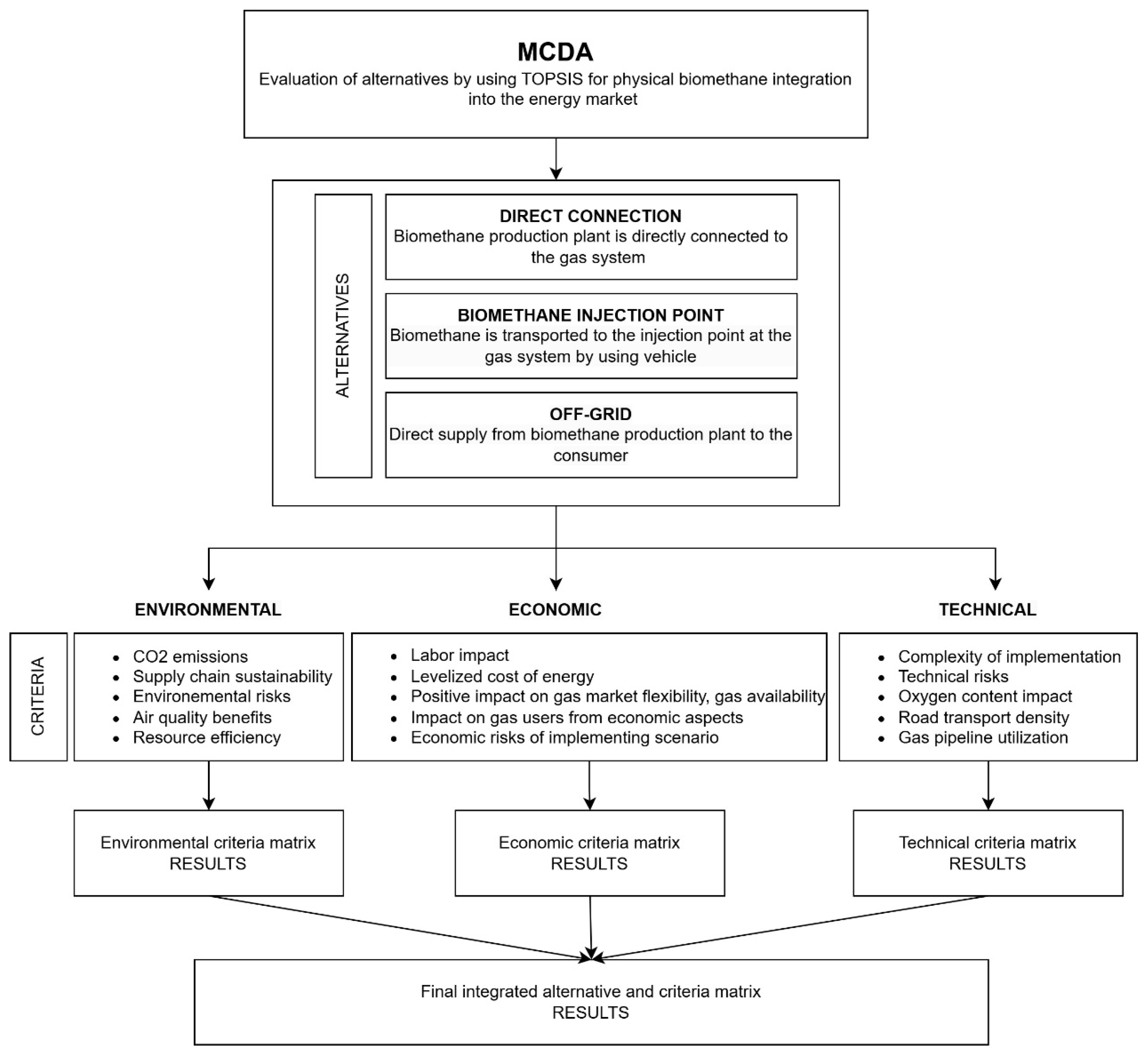
To ensure a comprehensive and holistic analysis of each scenario, the biomethane market entry scenarios were initially analyzed using TOPSIS separately from the environmental, economic, and technical aspects. Visual representation is shown in Figure 1.
The diagram outlines each phase of the decision-making framework used to evaluate biomethane integration scenarios. The approach chosen in the TOPSIS method is structured into the following sequential steps: the definition of alternatives and criteria, expert-based weighting and evaluation, normalization of the decision matrix, calculation of ideal and negative-ideal solutions, distance calculation and closeness coefficient (ci), scenario ranking, and integrated analysis. This visual methodology in Figure 1 not only illustrates the logical flow of analysis but also emphasizes the transparency and repeatability of the approach. It highlights how environmental, economic, and technical considerations are systematically arranged to support informed decision-making in biomethane development for all stakeholders.

2.3. Expert Survey Procedure

Due to limited availability of comprehensive and comparable quantitative data for all evaluated criteria, this study adopted an expert survey evaluation procedure approach to construct the decision matrices used in the TOPSIS analysis.
A total of 15 experts in the energy field participated in the assessment process. The expert panel consisted of the following:
  • Five academic researchers specializing in energy systems, environmental engineering, and sustainability assessment, all holding doctoral-level degrees (Dr. sc. ing. or PhD).
  • Five gas infrastructure and engineering professionals with experience in gas transmission and storage system operation and development participated in this study; three hold master’s degrees, one holds a doctoral degree (Dr. sc. ing.), and one holds a professional bachelor’s degree in Civil Engineering, Heat, Gas and Water Technology.
  • Five policy and energy economics experts involved in national or regional energy planning and regulatory development, four holding doctoral-level degrees (Dr. sc. ing. or PhD) and one a master’s degree.
The experts participating in this study included both women and men, with 40% being women and 60% men. All experts had a minimum of 3 years of professional experience, with the majority of them having more than 10 years of experience in their respective fields. The experts represented universities, research institutes, energy companies, gas system operators, and ministries responsible for energy and climate policy.
Expert input was collected using a structured written questionnaire developed for this study. The questionnaire described the three biomethane integration scenarios and provided detailed explanations of all environmental, economic, and technical criteria.
Each expert independently evaluated every criterion for each scenario using a five-point scale (1 = very low, very unfavourable, 5 = very high, very favourable). The questionnaire specified the desired direction of preference (minimum or maximum) and included practical assumptions, such as typical transport distances of up to 50 km and the use of conventional fuel in road transport, to ensure consistent interpretation across respondents.
All responses were collected anonymously and independently, without prior group discussion, to reduce potential bias. The individual ratings were aggregated using the arithmetic mean, and the resulting values were used to construct the TOPSIS decision matrices.
To assess the stability of expert evaluations, basic descriptive statistics (mean, median, minimum, maximum, and standard deviation) were calculated, and dispersion analysis indicated an acceptable level of agreement among experts. No extreme outliers were observed. As there are, together, 15 criterions and 3 scenarios, in this study example only one evaluated aspect and one scenario are shown in Table 1, but this evaluation was performed using all criteria and all parameters.
The relatively low dispersion of expert ratings (standard deviation between 1.06 and 1.41) indicates a satisfactory level of agreement for decision-support purposes.
Potential sources of bias were mitigated through expert diversity, and anonymized and independent scoring. The combination of academic, technical, and policy experts ensured that the assessment reflects multiple perspectives relevant to biomethane infrastructure decision-making.

2.4. TOPSIS Method

Construction of evaluation matrixes is critical to perform analysis, but trusted and comprehensive data availability is limited; therefore, experienced experts were involved in scoring (see “Expert Survey Procedure”). The ratings were calculated to determine the average, and average ratings were entered into the matrix. As a result of each, the environmental, economic, and technical matrixes provided the best rankings of the scenarios. Finally, all end results were entered into one final integrated matrix to determine the overall best option from all perspectives.
The steps for dealing with this approach are described in Equations (1)–(6) [22,23]. The input is decision data V and set of weights w, but the output is closeness measure r [23]. The first step is normalization, where for each evaluation vm,k, it is necessary to perform the following normalization:
u m , k = v m , k k = 1 K v m , k 2 , m = 1 , , M , k = 1 , , K .
Here, vm,k represents the evaluation of alternative Ak (k = 1, 2, …, K) with respect to the criterion Cm (m = 1, 2, …, M).
The second step is weighted normalization, where for each normalized evaluation um,k, it is necessary to perform calculations of weighted normalization, where pm,k—normalized value of the performance score vm,k:
p m , k = w m u m , k , m = 1 , , M , k = 1 , , K .
The third step is the determination of the positive (PIA) and negative ideal alternative (NIA) or solution using
PIA = p + = { p 1 + , p 2 + , , p M + } and NIA = p = { p 1 , p 2 , , p M } ,
where p m + = max {pm,k|1 ≤ k ≤ K} and p m = min {pm,k|1 ≤ k ≤ K}, m = 1, …, M. It contains the best (ideal) and worst (negative) values for each criterion.
The fourth step is the calculation of Euclidean distances from each alternative Ak and both the positive ideal solution and negative ideal solution
D k + = ( p k p + ) T + ( p k p + ) , k = 1 , , K ,
and
D k = ( p k p ) T + ( p k p ) , k = 1 , , K ,
where pk = [p1,k, p2,k, … pM,k].
The fifth step is the calculation of the closeness measure coefficient (rk) for each alternative Ak:
r k = D k D k + + D k , k = 1 , , K .
Afterwards, a clear ranking, based on the relative closeness to the ideal solution, is performed. One of the other positive outcomes of using TOPSIS is that values with various units can be compared, and units themselves are not the focus of the evaluation. The best solutions can be determined and analyzed regardless of the units used [24,25,26,27]. Sensitivity analysis was conducted to examine the influence of criteria weighting on the results and to assess the robustness of the obtained rankings.

3. Results and Discussion

3.1. MCDA Results for Each Biomethane Connection Type and Final Integrated MCDA

After receiving the experts’ results, considerable work was done to compile the response questionnaires, summarizing the experts’ assessments into one separate environmental criteria matrix, where, using TOPSIS, an assessment of the environmental criteria was obtained, which is summarized in the following Table 2 [28].
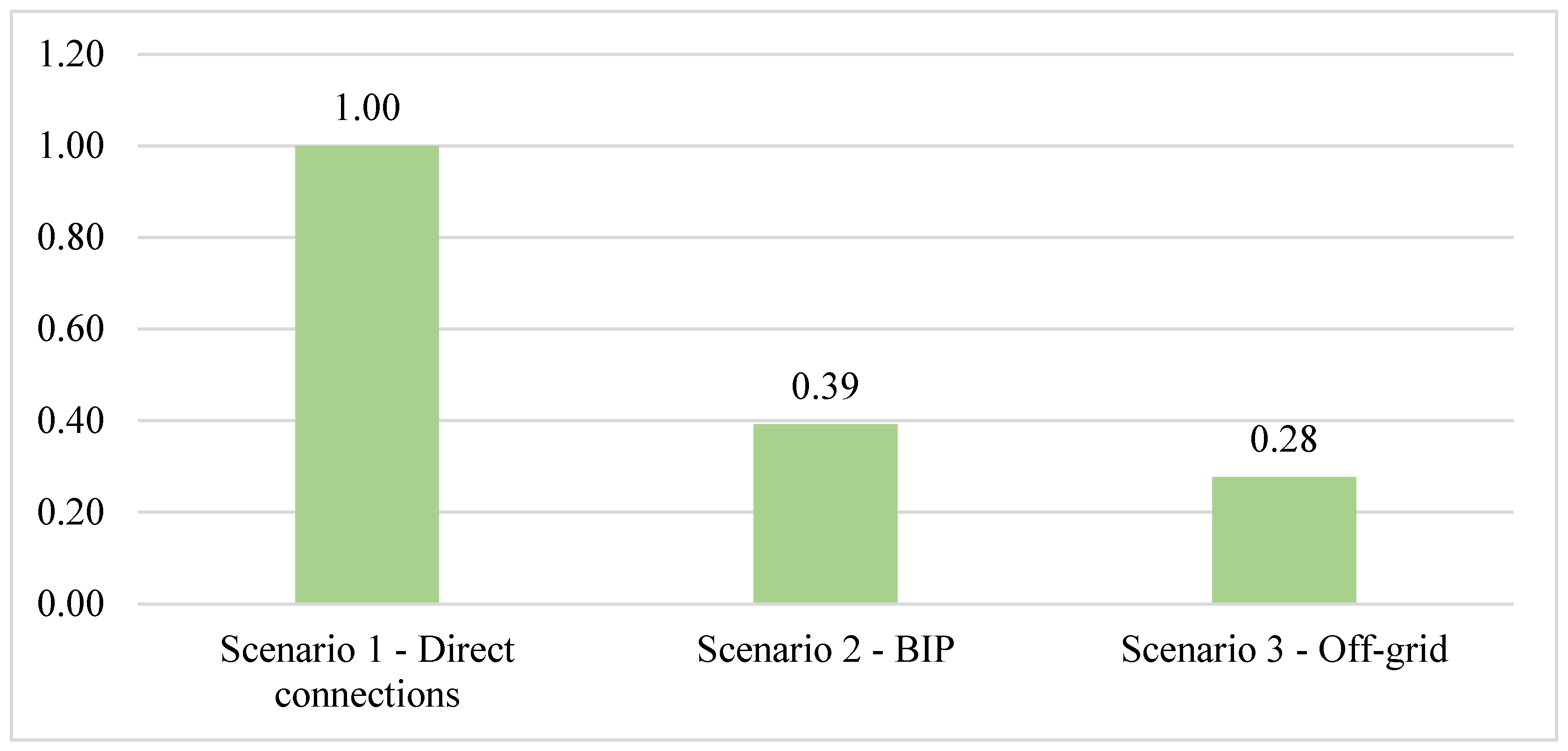
When comparing scenarios, the same weighting of criteria was used for all environmental criteria, as well as successively economic and technical criteria, for equal assessment and possible objective comparison. This ensures equal comparison of criteria and, based on expert assessment, the following scenario assessments from environmental aspects were obtained, which are reflected in Figure 2.
The results of the environmental assessment clearly showed that from an environmental perspective, the best type of connection for biomethane plants is direct connection. Methane leakage risk was implicitly integrated under the environmental criteria, particularly within “Environmental risks”, which assesses potential negative effects such as pollution or unintended emissions during biomethane transport or use. This was evaluated by more than 15 highly educated and experienced experts from scientific, policy, and technical engineering fields. The criteria “CO2 emissions” and “Supply chain sustainability” reflect the total lifecycle and operational emissions including those created by transport or leakage possibilities. Scenario 1 (direct connection) achieved the best environmental score precisely because it minimizes transport-related leakage risks and reduces environmental exposure. Scenarios involving vehicle transport (injection points, off-grid) scored lower environmentally due to increased leakage and handling risks during biomethane transfer, connecting the container to the grid injection point, and delivery.
Direct connection was followed by the use of biomethane injection points with a score of 0.39, and the off-grid biomethane solution is slightly behind with a score of 0.28. Both of these alternatives fall significantly short of the ideal result, respectively, from an environmental perspective, due to the risks of transportation and leakages when making regular connections to the system or to the end user; direct connection of a biomethane plant to the system has the least negative impact on the environment.
The following, Table 3, presents the economic assessment of the normalized decision matrix for all three scenarios, using the results determined by the experts.
The economic performance of three biomethane integration scenarios was assessed to process expert evaluations in the best possible way across five key economic criteria.
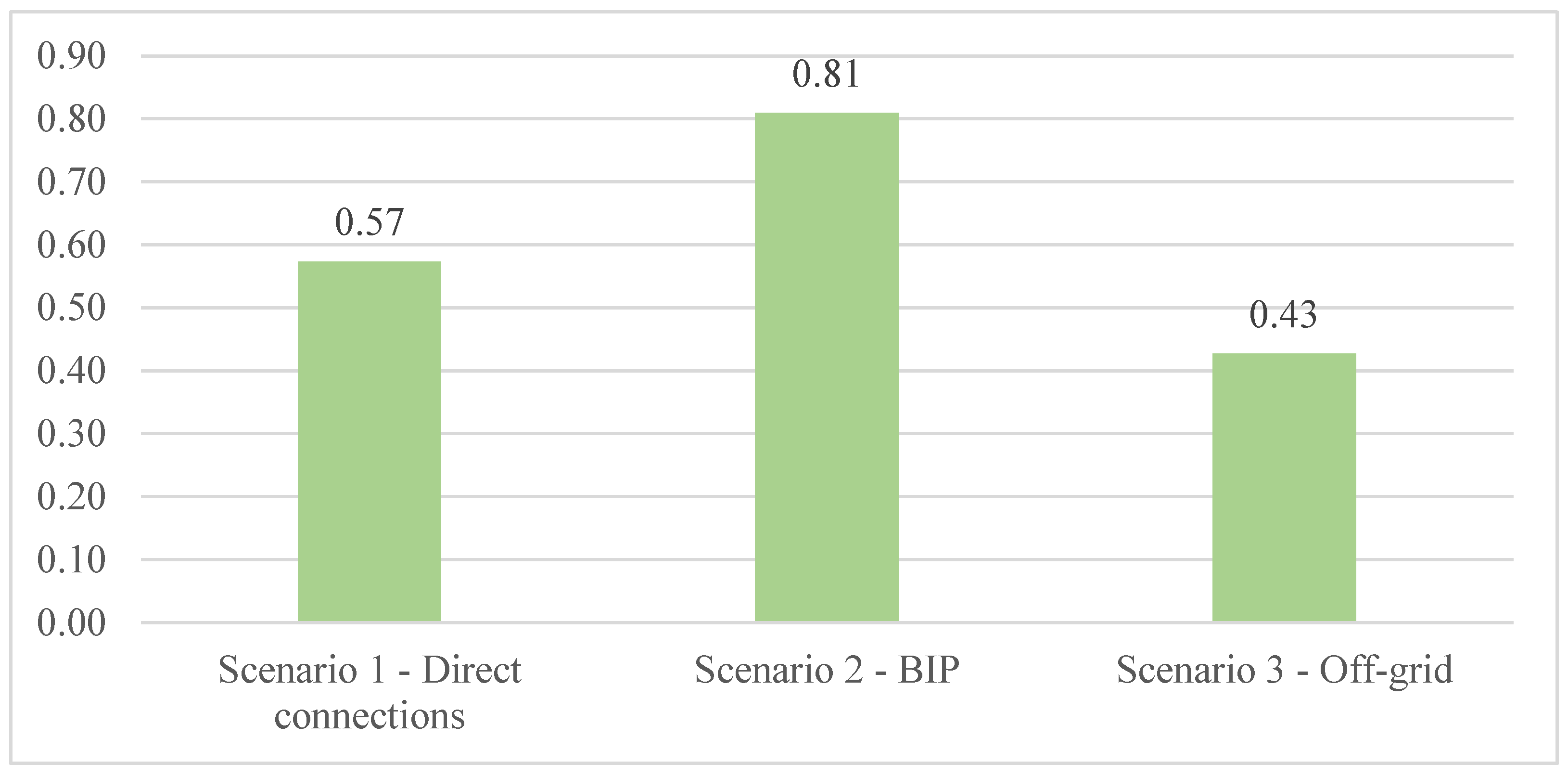
Results in Figure 3 indicate that Scenario 2, involving the establishment of a biomethane injection point, demonstrates the most favourable economic profile among the alternatives. With a Ci value of 0.81, this scenario approaches the ideal solution, suggesting a superior balance across all economic indicators, particularly in terms of market flexibility and cost-effectiveness.
Scenario 1, which proposes direct system connections, achieved a moderate performance score (Ci = 0.57). This reflects a balanced, but less optimal, swap between labour benefits and economic risks.
Conversely, Scenario 3, centered on off-grid solutions, yielded the lowest economic suitability (Ci = 0.43). Results suggest that while such systems may offer certain local advantages, they are comparatively less favourable when broader economic dimensions, including system-wide cost efficiency and market integration, are considered.
Overall, the TOPSIS evaluation emphasizes the economic viability of biomethane infrastructure over centralized or direct alternatives, providing a quantitative foundation for prioritizing policy and investment decisions in support of energy system decarbonization only when it comes to economic priorities.
Table 4 presents the technical assessment of the normalized decision matrix for all three scenarios, using the results determined by the experts.
The technical performance of three biomethane integration scenarios was assessed to process expert evaluations in the best possible way across five key technical criteria.
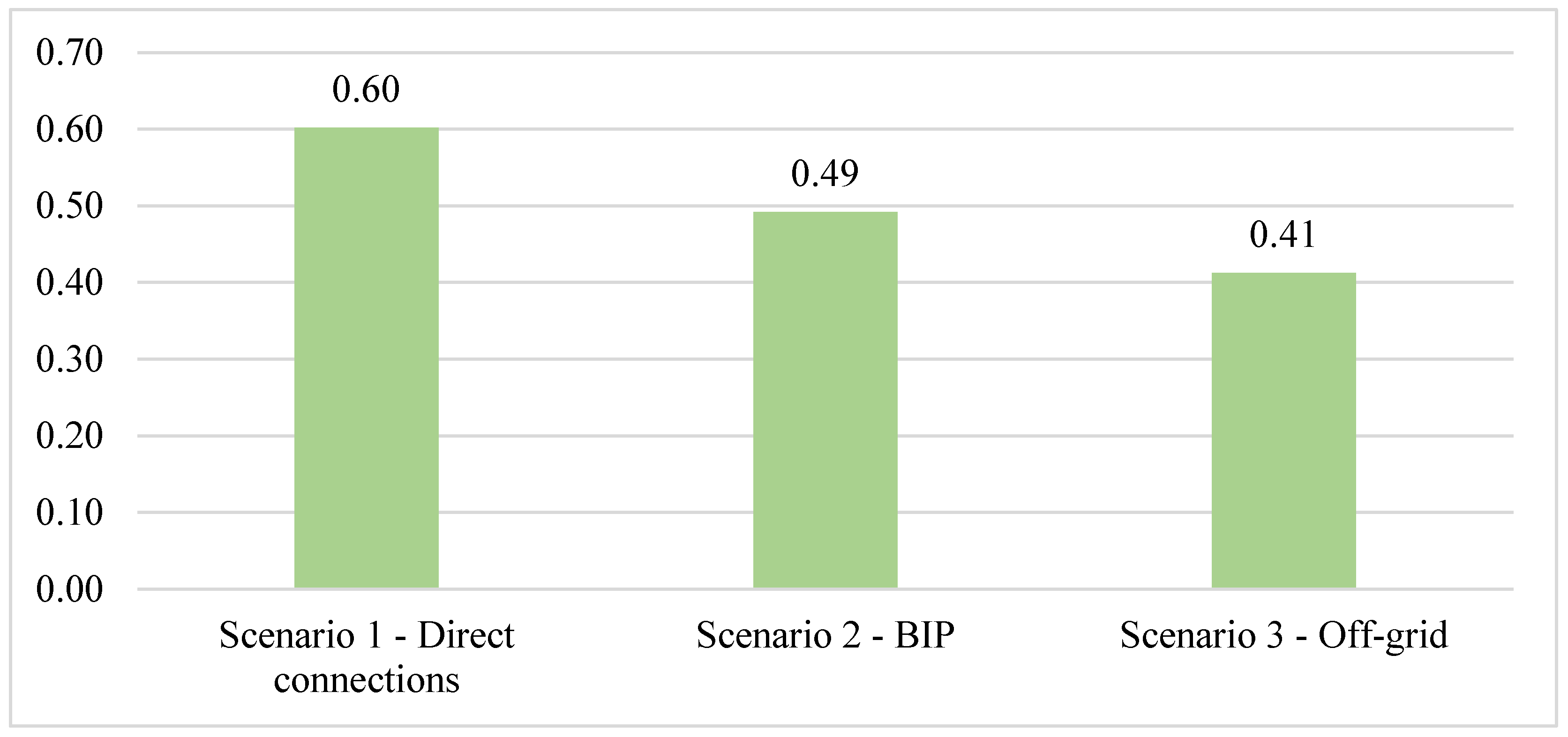
Results in Figure 4 suggest that Scenario 1, involving the direct connection of biomethane production facilities to the existing gas system, shows the strongest, most desirable technical performance. With a Ci value of 0.60, this configuration offers a relatively high level of technical suitability, likely attributable to its compatibility with current infrastructure, established operational practices, and minimal technological disruption.
Scenario 2, which centralizes gas injection at a designated biomethane injection point, achieved a moderate technical score (Ci = 0.49). Although less technically favourable than direct connections, this scenario still demonstrates a viable degree of implementation potential.
Scenario 3, representing off-grid systems, scored the lowest on technical grounds (Ci = 0.41). This suggests notable challenges in terms of technological maturity, system integration, and long-term scalability. Although this is a similar to Scenario 2, there are higher risks and complexity related to the fact that connection injection from a compressed-biomethane truck is not performed using standardized, highly secured national gas infrastructure, but at the end users, which could vary in technical connection, pressure, flow, type, etc., making this a more complex solution. While such systems may be advantageous in remote or isolated areas, their broader technical deployment appears less feasible within the current gas infrastructure framework.
In summary, the TOPSIS evaluation of technical criteria identifies direct system connections (Scenario 1) as the most technically strong option.
To evaluate and compare the obtained results in more depth, the authors of this study conducted a new matrix evaluation analysis with TOPSIS, integrating and summarizing the previously obtained results. In the integrated matrix, combining the results from the environmental, economic, and technical criteria analysis, they were again evaluated in each of the stages, obtaining the following normalized decision matrix (see Table 5).
The overall best performance of three biomethane integration scenarios was assessed and compared using the results of environmental, technical, and economic criteria evaluations.
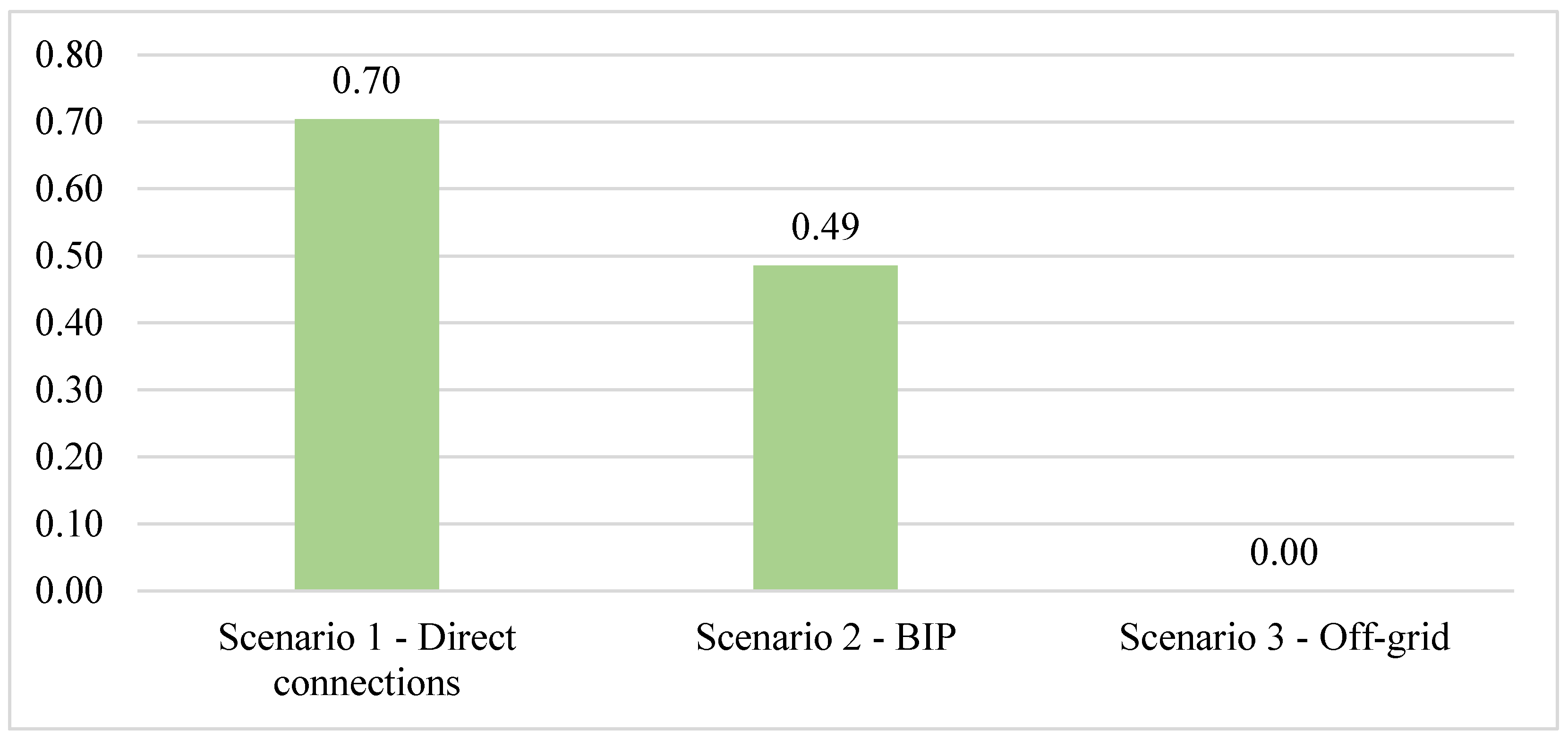
The analysis (Figure 5) indicates that Scenario 1, which involves the direct integration of biomethane producers into the existing natural gas system, emerges as the most balanced and favourable option across all evaluated dimensions. A relative closeness score of 0.70 suggests strong synergy between environmental benefits (e.g., reduced emissions), economic efficiency (e.g., moderate cost and manageable risks), and technical compatibility (e.g., infrastructure readiness and scalability). The dominant role of Scenario 1 in the integrated assessment can be explained by the strong structural advantages of the existing gas infrastructure, including infrastructure adaptation possibilities, an extensive knowledge base compared to biomethane injection points, higher system efficiency, and lower methane leakage risks compared to transport-based solutions, where biomethane is delivered in relatively smaller quantities by connecting and disconnecting containers to the system. Direct connections also reduce processing and gas compression stages, thereby reducing both environmental impact and technical uncertainty.
Scenario 2, centered around a biomethane injection point, achieved a medium integrated score of 0.49, reflecting some trade-offs between economic strengths and technical limitations. While this configuration offers certain operational efficiencies, its lower environmental and technical alignment reduce its overall attractiveness, while it is a very desirable option from an economic perspective, which is the most important. Biomethane injection points achieve the highest economic performance, as they avoid the need for investment in connection to the system, but this economic advantage is offset by weaker environmental performance due to additional transport requirements and associated emissions.
In contrast, Scenario 3, representing off-grid solutions, scored 0.00, indicating substantial distance from the ideal solution when all dimensions are jointly considered. Scenario 3 has a score of 0.00 because it lies exactly at the negative-ideal point, with the worst scores across all criteria. The off-grid method consistently performs worse as it lacks the positive effects of the system, has high logistical complexity, and does not take advantage of the efficiency of centralized infrastructure, making it unsuitable for large-scale implementation, despite potential niche applications.
Importantly, this study is the first integrated multi-criteria decision analysis that explicitly includes the relatively understudied option of biomethane injection points alongside traditional pipeline and off-grid options. This study thus expands the existing biomethane infrastructure assessment system beyond traditional comparisons with pipelines alone.

3.2. Results of the Sensitivity Analysis

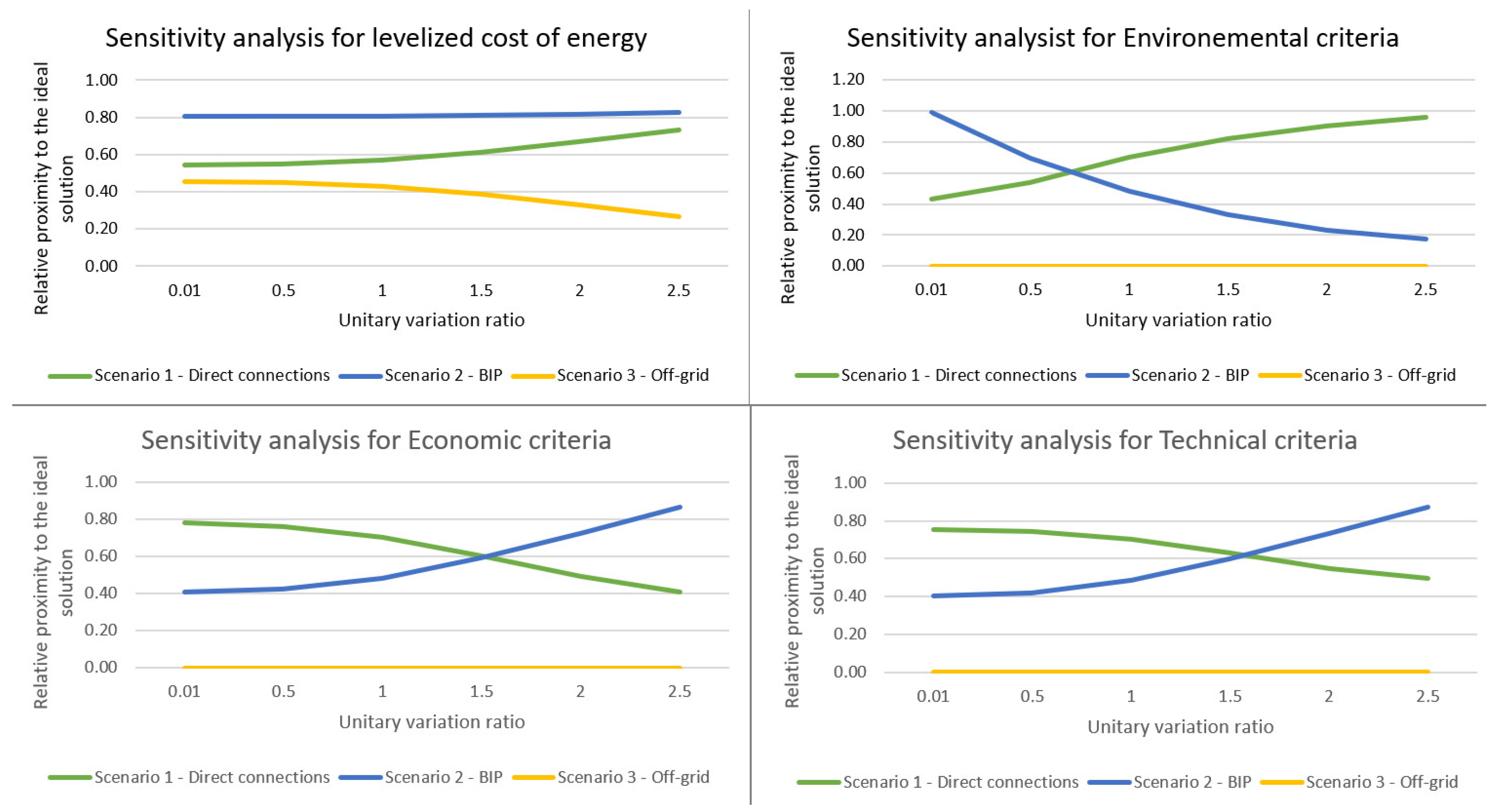
Sensitivity analysis was performed to evaluate how results are impacted by variations in criteria importance for biomethane integration scenarios. The analysis was performed for all 15 criteria separately, as well as for three integrated environmental, economic, and technical scenarios. One individual criterion—levelized cost of energy—is also added as an example (see Figure 6).
The results (Figure 6) demonstrate a high level of robustness of the final ranking. When the importance of environmental criteria increases, Scenario 1 (direct connection) consistently strengthens its dominance, while Scenario 2 (BIP) declines and Scenario 3 (off-grid) remains insignificant. Increasing the weight of economic criteria clearly favours Scenario 2, which becomes the leading option, whereas Scenario 1 gradually loses its favorability. A similar shift toward Scenario 2 is observed when technical criteria have greater importance.
Sensitivity analysis for levelized cost of energy further confirms the observation that Scenario 2 benefits from cost prioritization, while Scenario 1 remains competitive and Scenario 3 consistently performs worst.
Across all tested variations, Scenario 3 never becomes the preferred option, and the relative positions of Scenario 1 and Scenario 2 follow predictable patterns depending on decision-maker priorities. These results show that the integrated TOPSIS ranking remains stable across a wide range of weighting assumptions and is therefore not caused by subjective weight selection, making it a reliable basis for infrastructure planning and policy decisions.

4. Discussion

Several studies analyze the design and operation of energy systems using mathematical optimization models. These are often formulated either as single-objective problems that minimize total lifecycle system costs, or as multi-objective problems that additionally consider environmental indicators such as CO2 emissions. The results of this study are consistent with previous studies, which indicate that direct connection of biomethane to the gas system provides better environmental performance due to the elimination of transport and lower methane leakage risks [7]. The economic performance of biomethane entry points in this study is consistent with studies highlighting their role in reducing capital investment and improving market access in regions with dispersed biogas production [12].
The novelty of this study lies in the integrated comparison of direct connection, biomethane entry points, and off-system supply in a single TOPSIS-based decision-support system. The sensitivity analysis performed shows that the ranking of scenarios is stable across different decision-maker priorities, increasing confidence in the results. From a planning perspective, the conclusions show that direct connection to the system is the most balanced long-term solution, while biomethane entry points serve as an economically attractive alternative to direct connections. Off-grid solutions remain suitable mainly for use in specific local conditions.

5. Conclusions

This study applied the TOPSIS multi-criteria decision-making method to evaluate and compare three biomethane integration scenarios—direct system connection (Scenario 1), biomethane injection points (Scenario 2), and off-grid systems (Scenario 3)—across environmental, economic, and technical dimensions, using equal weighting to ensure objectivity and comparability.
This study contributes to the literature on sustainable energy systems and renewable gas infrastructure planning by providing one of the first comprehensive multi-criteria comparisons of direct grid connection, biomethane injection points, and off-grid biomethane delivery within a single decision-making framework.
The results show that from an environmental perspective, Scenario 1 consistently outperformed the other alternatives due to minimal transport and unloading-related risks and lower methane leakage potential, making it the most environmentally favourable option. Scenario 2 and Scenario 3 achieved lower environmental scores, mainly due to increased transport complexity and decentralized operation.
The economic analysis showed Scenario 2 to be the best, which benefits from lower connection investment requirements, cost-efficiency, and market flexibility. Scenario 1 demonstrated a stable and reasonable economic profile suitable for long-term investments, while Scenario 3 performed the weakest due to limited market integration potential. On technical grounds, Scenario 1 again emerged as the strongest, benefiting from its alignment with existing gas infrastructure and mature operational models. Scenario 2 was technically viable but slightly less favourable due to added complexity in grid integration. Scenario 3 scored the lowest, with expert assessments highlighting concerns related to the variability and unpredictability of off-grid technical configurations. The lack of standardized injection interfaces, pressure inconsistencies, and variable flow rates further compound the implementation challenges for off-grid options.
When arranging these results into an integrated TOPSIS analysis, Scenario 1 demonstrated the highest overall suitability (Ci = 0.70), balancing strengths across all three dimensions. Scenario 2 followed with a moderate score (Ci = 0.49), reflecting its economic strength but lower environmental and technical performance. Scenario 3 scored 0.00, indicating that it diverges significantly from the ideal solution in the context of comprehensive, system-wide biomethane integration.
The evaluation of off-grid solutions is highly context-dependent and cannot be considered definite. Key factors influencing their viability include the distance to the end user (e.g., 2 km versus 50 km), the organization and responsibility for biomethane transport and quality assurance, the nature of the end user contract (whether it involves a single large consumer, such as a refuelling station, or multiple smaller consumers), and the contract’s duration and reliability. These variables significantly affect both the technical complexity and economic feasibility of off-grid deployments.
The sensitivity analysis confirms the robustness of the proposed decision-support framework, demonstrating that the overall ranking of biomethane integration scenarios remains stable under a wide range of weighting assumptions. Although the relative performance of direct connection and virtual pipeline options shifts in predictable ways depending on decision-maker priorities, the off-grid alternative consistently remains the least favourable at the system level.
These findings have important implications for stakeholders and contribute to biomethane infrastructure planning by addressing missing research in the literature related to biomethane transport to centralized injection points. The results highlight the technical viability and strategic role of biomethane injection points, particularly in regions lacking direct pipeline connection possibilities or facing legal and financial constraints. Transport-based solutions can therefore support early market development and rural deployment. Under current technical, economic, and environmental conditions, direct connection to existing gas infrastructure remains the most balanced and sustainable pathway for large-scale biomethane integration, while off-grid solutions are best suited to limited niche applications. Further research is required to assess the long-term performance, costs, regulatory challenges, and lifecycle impacts of emerging logistics models across different regional contexts. This study fills a gap by providing a unified multi-criteria framework for comparing biomethane infrastructure options, enabling systematic identification of the optimal environmental, economic, and technical solution. The proposed criteria and assessment approach are transferable and can be applied across different regions and planning contexts.
From a policy and planning perspective, direct grid connection emerges as the most balanced long-term strategy for large-scale biomethane deployment, while biomethane injection points serve as a valuable transitional solution where pipeline access or capital is limited. Off-grid options remain mainly suitable for niche applications. These findings support more effective infrastructure investment and decarbonization policy design while demonstrating the applicability of integrated MCDA frameworks for renewable gas infrastructure planning.
Future research should extend this framework by incorporating quantitative lifecycle assessment and techno-economic modelling, exploring hybrid infrastructure configurations, and evaluating regulatory instruments that influence investment behaviour. As biomethane markets mature and technologies evolve, the presented decision-support framework can be continuously adapted to guide sustainable gas system development at regional, national, and international scales.

Author Contributions

Conceptualization, L.R., C.R. and D.B.; Methodology, A.A. and L.R.; Validation, D.B.; Formal analysis, C.R.; Investigation, L.R.; Resources, A.A.; Data curation, A.A. and D.B.; Writing—original draft, A.A.; Writing—review & editing, A.A., L.R., C.R. and D.B.; Visualization, A.A. and D.B.; Supervision, L.R., C.R. and D.B. All authors have read and agreed to the published version of the manuscript.

Funding

This research received no external funding.

Institutional Review Board Statement

Not applicable.

Informed Consent Statement

Not applicable.

Data Availability Statement

The original contributions presented in this study are included in the article. Further inquiries can be directed to the corresponding author.

Conflicts of Interest

The authors declare no conflicts of interest.

References

  1. Wang, T.; Ma, M.; Zhou, N.; Ma, Z. Toward net zero: Assessing the decarbonization impact of global commercial building electrification. Appl. Energy 2025, 383, 125287. [Google Scholar] [CrossRef]
  2. Kittner, N. Expand grid decarbonization by associating more technology investment with voluntary corporate procurement. Front. Sustain. Energy Policy 2025, 4, 1553475. [Google Scholar] [CrossRef]
  3. Deng, Z.; Zhu, B.; Davis, S.J.; Ciais, P.; Guan, D.; Gong, P.; Liu, Z. Global carbon emissions and decarbonization in 2024. Nat. Rev. Earth Environ. 2025, 6, 231–233. [Google Scholar] [CrossRef]
  4. Dua, R.; Guzman, A.F. A perspective on emerging energy policy and economic research agenda for enabling aviation climate action. Energy Res. Soc. Sci. 2024, 117, 103725. [Google Scholar] [CrossRef]
  5. Chen, Y.; Hong, J.; Wen, Q.; Yi, W.; Zheng, S. The Janus-Faced Role of Renewable Energy Development in Global Carbon Reduction Under Renewable Energy Policies. Earth’s Future 2024, 12, e2024EF004535. [Google Scholar] [CrossRef]
  6. Osman, A.I.; Chen, L.; Yang, M.; Msigwa, G.; Farghali, M.; Fawzy, S.; Rooney, D.W.; Yap, P.-S. Cost, environmental impact, and resilience of renewable energy under a changing climate: A review. Environ. Chem. Lett. 2023, 21, 741–764. [Google Scholar] [CrossRef]
  7. Ferrari, G.; Shi, Z.; Marinello, F.; Pezzuolo, A. From biogas to biomethane: Comparison of sustainable scenarios for upgrading plant location based on greenhouse gas emissions and cost assessments. J. Clean. Prod. 2024, 478, 143936. [Google Scholar] [CrossRef]
  8. Buivydas, E.; Navickas, K.; Venslauskas, K. A Life Cycle Assessment of Methane Slip in Biogas Upgrading Based on Permeable Membrane Technology with Variable Methane Concentration in Raw Biogas. Sustainability 2024, 16, 3323. [Google Scholar] [CrossRef]
  9. Mignogna, D.; Ceci, P.; Cafaro, C.; Corazzi, G.; Avino, P. Production of Biogas and Biomethane as Renewable Energy Sources: A Review. Appl. Sci. 2023, 13, 10219. [Google Scholar] [CrossRef]
  10. López, A.F.; Rodríguez, T.L.; Abdolmaleki, S.F.; Martínez, M.G.; Bugallo, P.M.B. From Biogas to Biomethane: An In-Depth Review of Upgrading Technologies That Enhance Sustainability and Reduce Greenhouse Gas Emissions. Appl. Sci. 2024, 14, 2342. [Google Scholar] [CrossRef]
  11. Bakkaloglu, S.; Hawkes, A. A comparative study of biogas and biomethane with natural gas and hydrogen alternatives. Energy Environ. Sci. 2024, 17, 1482–1496. [Google Scholar] [CrossRef]
  12. Catalano, G.; D’ADamo, I.; Gastaldi, M.; Nizami, A.-S.; Ribichini, M. Incentive policies in biomethane production toward circular economy. Renew. Sustain. Energy Rev. 2024, 202, 114710. [Google Scholar] [CrossRef]
  13. Alengebawy, A.; Ran, Y.; Osman, A.I.; Jin, K.; Samer, M.; Ai, P. Anaerobic digestion of agricultural waste for biogas production and sustainable bioenergy recovery: A review. Environ. Chem. Lett. 2024, 22, 2641–2668. [Google Scholar] [CrossRef]
  14. Mathebula, J.; Mbuli, N. Application of TOPSIS for Multi-Criteria Decision Analysis (MCDA) in Power Systems: A Systematic Literature Review. Energies 2025, 18, 3478. [Google Scholar] [CrossRef]
  15. Wulf, C.; Estrada, L.S.M.; Haase, M.; Tippe, M.; Wigger, H.; Brand-Daniels, U. MCDA for the sustainability assessment of energy technologies and systems: Identifying challenges and opportunities. Energy Sustain. Soc. 2025, 15, 45. [Google Scholar] [CrossRef]
  16. Chomać-Pierzecka, E.; Błaszczak, B.; Godawa, S.; Kęsy, I. Human Safety in Light of the Economic, Social and Environmental Aspects of Sustainable Development—Determination of the Awareness of the Young Generation in Poland. Sustainability 2025, 17, 6190. [Google Scholar] [CrossRef]
  17. Hegazy, H.; Saady, N.M.C.; Zendehboudi, S. Safety in biogas plants: An analysis based on international standards and best practices. Process. Saf. Environ. Prot. 2025, 200, 107390. [Google Scholar] [CrossRef]
  18. Devaraj, D.; Syron, E.; Donnellan, P. Diversification of gas sources to improve security of supply using an integrated Multiple Criteria Decision Making approach. Clean. Responsible Consum. 2021, 3, 100042. [Google Scholar] [CrossRef]
  19. Peterseim, J.H.; White, S.; Tadros, A.; Hellwig, U. Concentrated solar power hybrid plants, which technologies are best suited for hybridisation? Renew. Energy 2013, 57, 520–532. [Google Scholar] [CrossRef]
  20. Shekhovtsov, A.; Sałabun, W. A comparative case study of the VIKOR and TOPSIS rankings similarity. Procedia Comput. Sci. 2020, 176, 3730–3740. [Google Scholar] [CrossRef]
  21. Kumar, A.; Sah, B.; Singh, A.R.; Deng, Y.; He, X.; Kumar, P.; Bansal, R.C. A review of multi criteria decision making (MCDM) towards sustainable renewable energy development. Renew. Sustain. Energy Rev. 2017, 69, 596–609. [Google Scholar] [CrossRef]
  22. Pelegrina, G.D.; Duarte, L.T.; Romano, J.M.T. Application of independent component analysis and TOPSIS to deal with dependent criteria in multicriteria decision problems. Expert Syst. Appl. 2019, 122, 262–280. [Google Scholar] [CrossRef]
  23. Ervural, B.C.; Zaim, S.; Demirel, O.F.; Aydin, Z.; Delen, D. An ANP and fuzzy TOPSIS-based SWOT analysis for Turkey’s energy planning. Renew. Sustain. Energy Rev. 2018, 82, 1538–1550. [Google Scholar] [CrossRef]
  24. Teirumnieka, E.; Patel, N.; Laktuka, K.; Dolge, K.; Veidenbergs, I.; Blumberga, D. Sustainability dilemma of hemp utilization for energy production. Energy Nexus 2023, 11, 100213. [Google Scholar] [CrossRef]
  25. Rozentale, L.; Blumberga, D. Methods to Evaluate Electricity Policy from Climate Perspective. Environ. Clim. Technol. 2019, 23, 131–147. [Google Scholar] [CrossRef]
  26. Su, J.; Sun, Y. An Improved TOPSIS Model Based on Cumulative Prospect Theory: Application to ESG Performance Evaluation of State-Owned Mining Enterprises. Sustainability 2023, 15, 10046. [Google Scholar] [CrossRef]
  27. Torres-Lozada, P.; Manyoma-Velásquez, P.; Gaviria-Cuevas, J.F. Prioritization of Waste-to-Energy Technologies Associated with the Utilization of Food Waste. Sustainability 2023, 15, 5857. [Google Scholar] [CrossRef]
  28. Ansone, A.; Rozentale, L.; Blumberga, D. Evaluating biomethane market entry strategies: MCDA-based insights on connection scenarios using TOPSIS. In Proceedings of the 20th Conference Sustainable Development of Energy, Water and Environment Systems (SDEWES), Dubrovnik, Croatia, 5–10 October 2025. [Google Scholar]
Figure 1. Visual representation of methodology used to determine best biomethane market integration methods.
Sustainability 18 01086 g001
Figure 2. Ranking of biomethane scenarios based on environmental criteria.
Sustainability 18 01086 g002
Figure 3. Ranking of biomethane scenarios based on economic criteria.
Sustainability 18 01086 g003
Figure 4. Ranking of biomethane scenarios based on technical criteria.
Sustainability 18 01086 g004
Figure 5. Ranking of biomethane scenarios based on integrated criteria matrix.
Sustainability 18 01086 g005
Figure 6. Sensitivity analysis results.
Sustainability 18 01086 g006
Table 1. Descriptive statistics of expert rankings (example with only environmental criteria and 1 scenario—direct connection).
MeanMedianMinMaxStandard Dev.
CO2 emissions1.471.001.005.001.06
Supply chain sustainability4.004.001.005.001.36
Environmental risks2.132.001.005.001.06
Air quality benefits4.005.001.005.001.41
Resource efficiency4.075.001.005.001.39
Table 2. Normalized decision matrix for environmental criteria scenarios.
Scenario 1Scenario 2Scenario 3Criteria Weights
CO2 emissions0.3180.5780.7510.2
Supply chain sustainability0.6640.5760.4760.2
Environmental risks0.4520.5790.6780.2
Air quality benefits0.6940.5320.4860.2
Resource efficiency0.6840.5270.5050.2
Table 3. Normalized decision matrix for economic criteria scenario.
Scenario 1Scenario 2Scenario 3Criteria Weights
Labour impact0.4960.6080.6200.2
Levelized cost of energy0.5460.5590.6240.2
Positive impact on gas market flexibility, gas availability0.6310.5990.4920.2
Impact on gas users from economic aspects0.5530.5670.6110.2
Economic risks of implementing scenario0.5900.5770.5650.2
Table 4. Normalized decision matrix for technical criteria scenario.
Scenario 1Scenario 2Scenario 3Criteria Weights
Complexity of implementation0.6290.6430.4380.2
Technical risks0.4230.6340.6470.2
Oxygen content impact0.5530.6230.5530.2
Road transport density0.4350.5850.6840.2
Gas pipeline utilization0.7280.6090.3150.2
Table 5. Normalized decision matrix for integrated criteria analysis.
Scenario 1Scenario 2Scenario 3Criteria Weights
Environmental criteria matrix0.9020.3530.2490.333
Economic criteria matrix0.5310.7490.3950.333
Technical criteria matrix0.5530.7430.3780.333
Disclaimer/Publisher’s Note: The statements, opinions and data contained in all publications are solely those of the individual author(s) and contributor(s) and not of MDPI and/or the editor(s). MDPI and/or the editor(s) disclaim responsibility for any injury to people or property resulting from any ideas, methods, instructions or products referred to in the content.