Sustainable Valorization of Spent Garnet Wastes in Construction Eco-Materials: Validation Stage of Performance Assessment

 , , , ,
Abstract
1. Introduction
2. Synthetic Assessment of Single-Cycle AWJ Romanian Spent Garnet Waste Utilization as Sand Replacement in Cementitious Materials
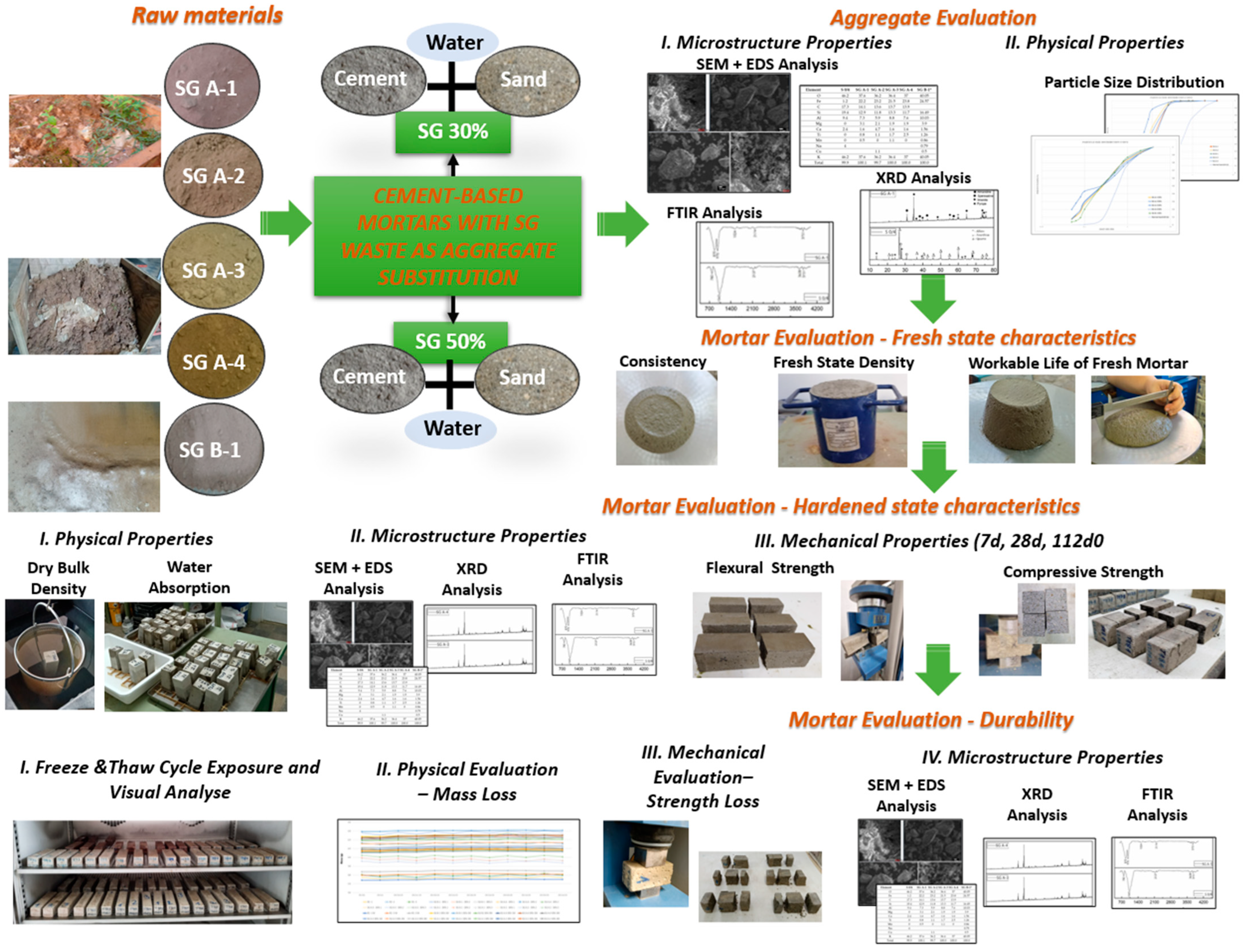
3. Validation Methodology and Performance Criteria for the Incorporation of Spent Garnet as Aggregate Substitute in Cement-Based Mortars
- (a)
- Repeatability: Consistent results across successive SG batches collected at different times, from the same source and different sources.
- (b)
- Reliability: Values confirmed by standardized methods (EN, ASTM) and comparison with reference (cement-sand control) mixes.
- (c)
- Performance Pattern: Clear trends in mechanical and durability properties relative to substitution level and waste characteristics.
- (d)
- Robustness: Correlation between experimental data and theoretical modeling to rule out uncontrolled variations.
- Objective: Verify SG applicability from multiple sources (e.g., SG A, SG, B) as partial sand replacement.
- Method: Characterize the raw SG material via relevant parameters (chemical composition, Particle Size Distribution, PSD); prepare standardized mortars and evaluate key parameters (mechanical strength at relevant ages, density).
- Criterion: Values comparable to reference (approx. ±20% variability).
- Objective: Test repeatability (robustness) with same-source samples collected at different times (e.g., SG A-1, SG A-2, SG A-3, several months apart).
- Method: Standardized mortars evaluated via compressive and flexural strength at relevant ages: 7, 28, 112 days.
- Criterion: Similar performance trends (stable pattern), even if absolute values show minor batch-to-batch variation.
- Objective: Assess freeze–thaw resistance for relevant SG types
- Method: Exposure to 50 freeze–thaw cycles followed by post-exposure testing (mass loss, residual strength), adapted from SR 3518:2009 [58] measure post-exposure mass loss/residual strength.
- Criterion: Residual strength > 50% of control; no major degradation or significant mass loss.
- Results are repeatable across different batches and sources of the same addition.
- Mechanical and durability properties show a predictable pattern comparable to references.
- Experimental data confirm preliminary conclusions and support industrial-scale application recommendations.
4. Materials and Methods
4.1. Materials
- -
- Portland Cement, CEM II/A-LL 42.5 R (C), provided by a local supplier;
- -
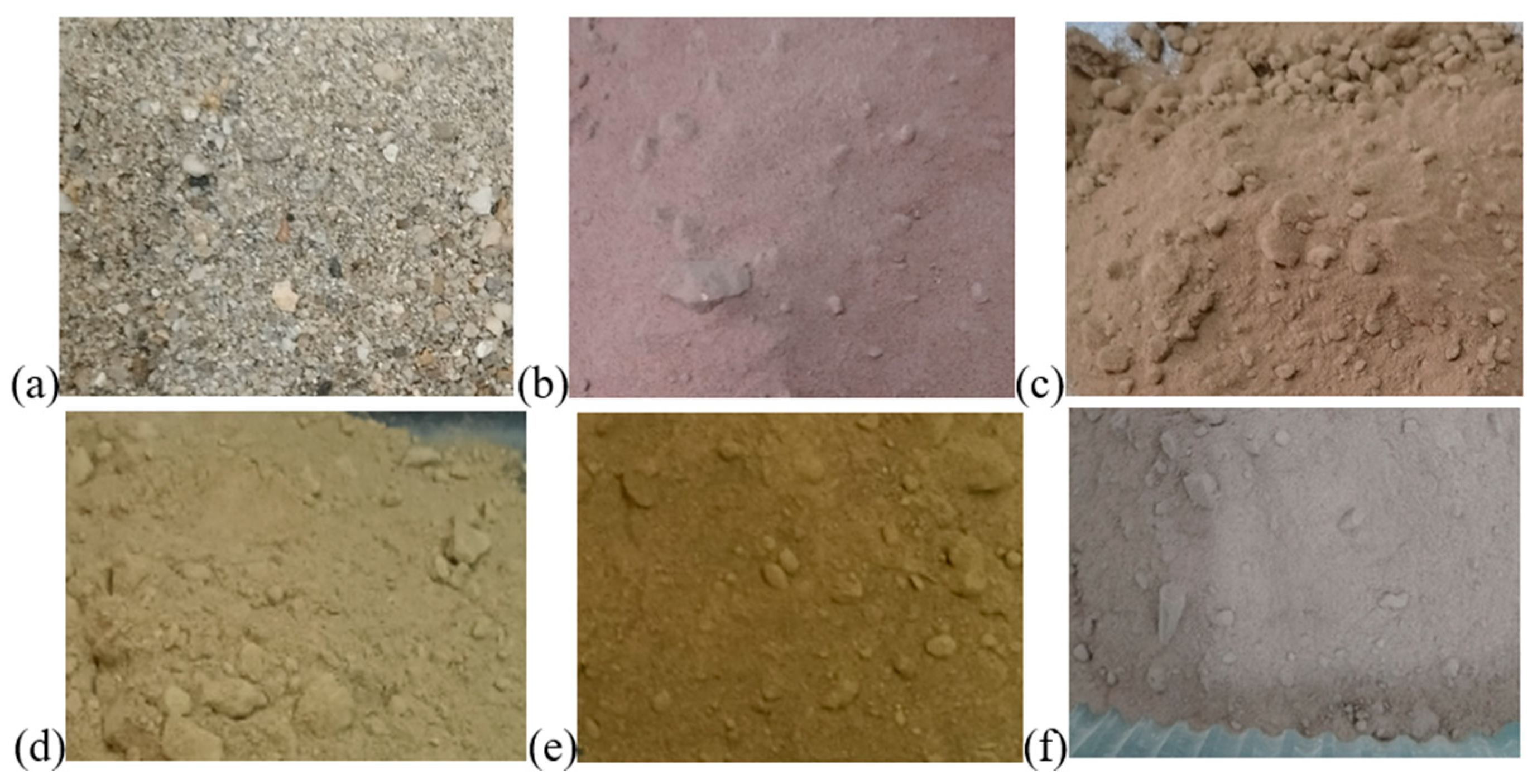
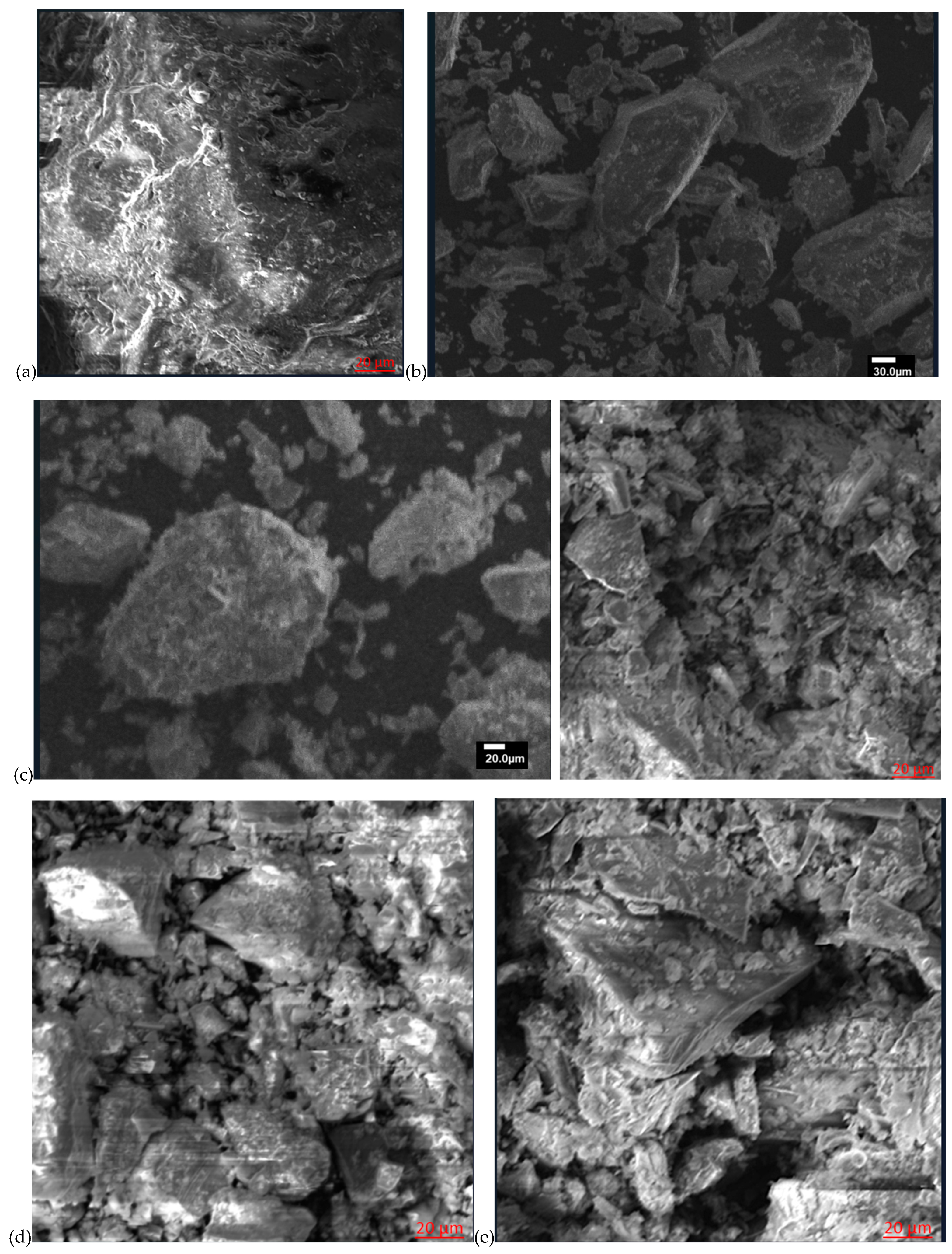
- Natural sand (S 0/4), granular class 0/4 (Figure 1a), provided by a local supplier;
- -
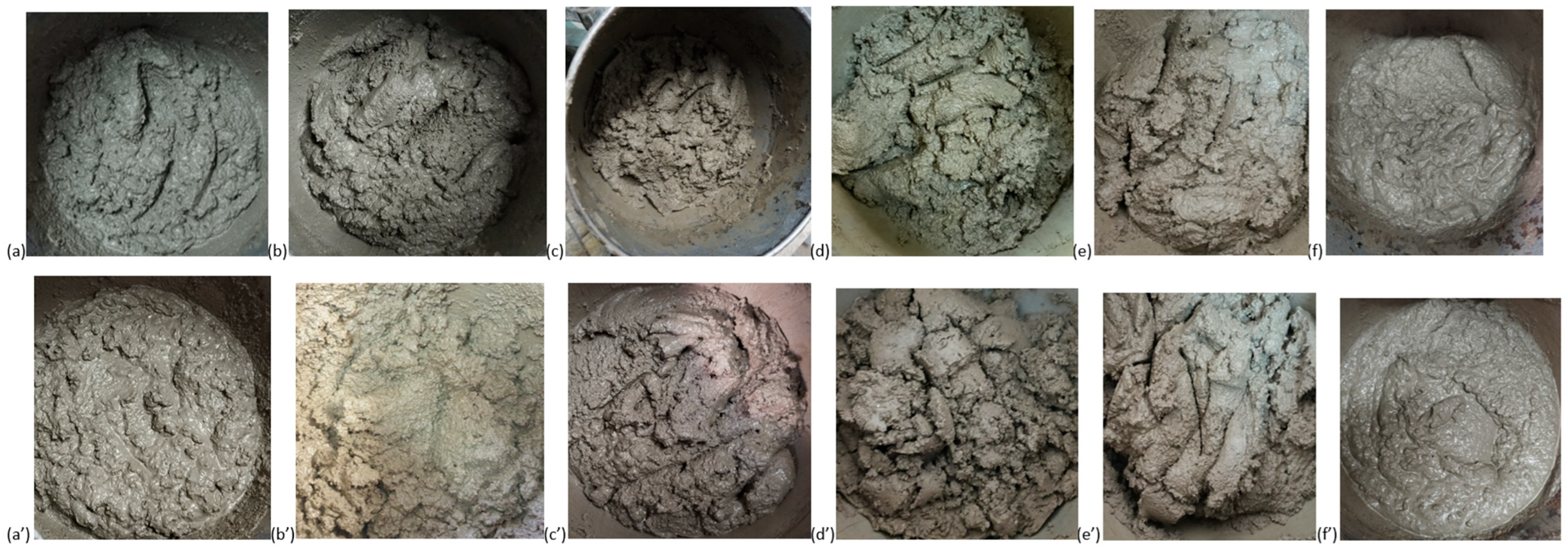
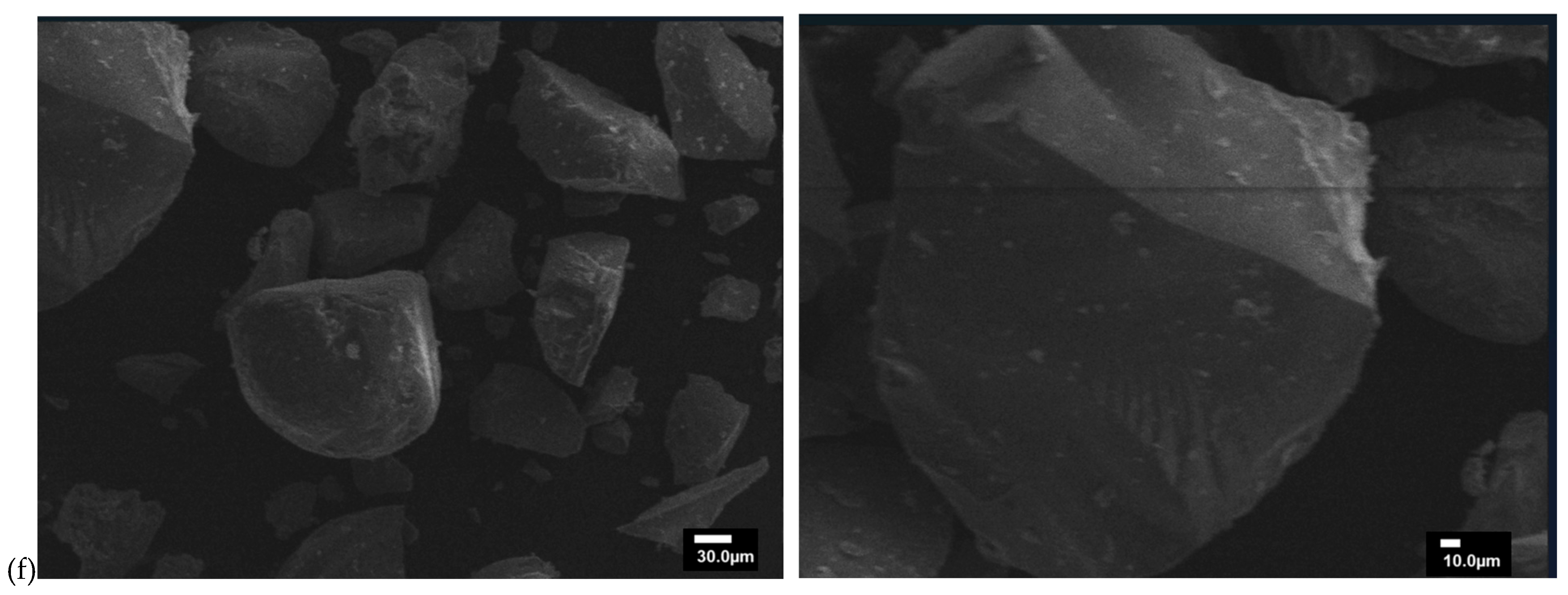
- Spent Garnet waste (SG), sampled from by two distinct local sources A and B, generating the SG A and SG B waste (Figure 1b–f);
- -
- Water (tap water);
- -
- Free additives mixtures were produced for the study.
4.2. Methods for Microstructure Properties Evaluation of SG Waste and Natural Sand S 0/4
4.2.1. Methodology for SEM Analysis of SG Waste and Natural Sand S 0/4
4.2.2. Methodology for XRD Analysis of SG Waste and Natural Sand S 0/4
4.2.3. Methodology for FT-IR Analysis of SG Waste and Natural Sand S 0/4
4.3. Methods for Evaluation of Aggregate Particle Size Distribution (PSD)
4.4. Mortar Mix Design and Specimen Preparation
4.4.1. Mortar Mix Design
4.4.2. Specimen Preparation
4.5. Methodology for Evaluation of Fresh State Properties of SG Mortars
4.5.1. Evaluation Method of Fresh State Aspect and Mortar Workability
4.5.2. Evaluation Method of Fresh State Density
4.5.3. Evaluation Method of Workable Life of Fresh Mortars
4.6. Methods for Evaluation of Hardened State Properties of Mortars
4.6.1. Evaluation Method of Dry Bulk Density and Water Absorption of Hardened Mortars
4.6.2. Method for Evaluation of Water Absorption Coefficient Due to Capillary Action of Hardened Mortar
4.6.3. Methods for Evaluation of Flexural and Compressive Strength
4.7. Methods for Microstructure Properties Evaluation of SG Mortars
4.8. Methods for Durability Performance Evaluation of SG Mortars
- Strength loss: Residual flexural and compressive strengths of TS compared to CS.
- ŋ—Strength loss with respect to the considered Reference;
- Rm—Strength (tensile/compressive) of the control specimens, in (MPa);
- Rt—Strength (tensile/compressive) of the specimens subjected to freeze–thaw cycles, in (MPa).
- Visual aspect: Comparative examination of control specimens versus freeze–thaw-exposed specimens for signs of degradation, including cracks, fissures, delamination, edge damage, material detachment, scaling, etc.
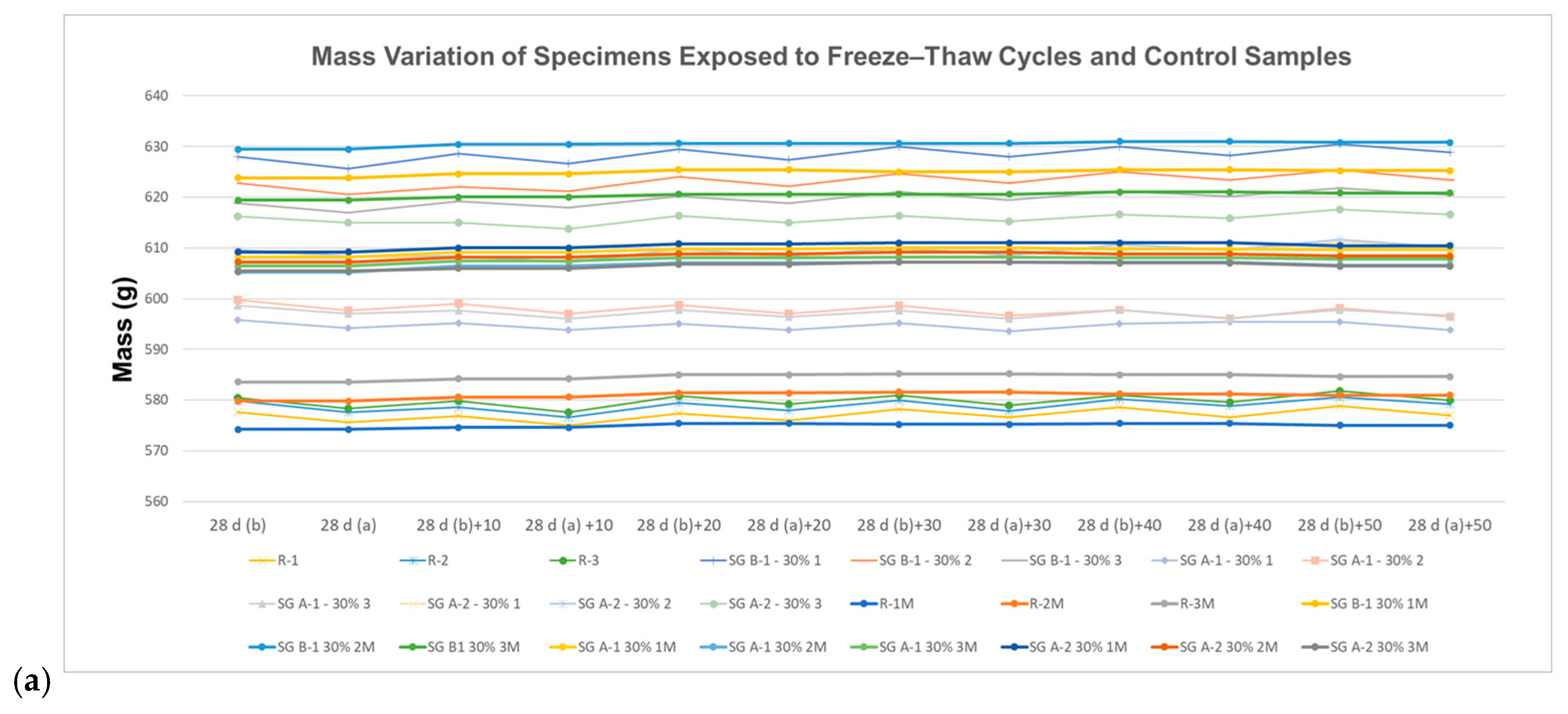
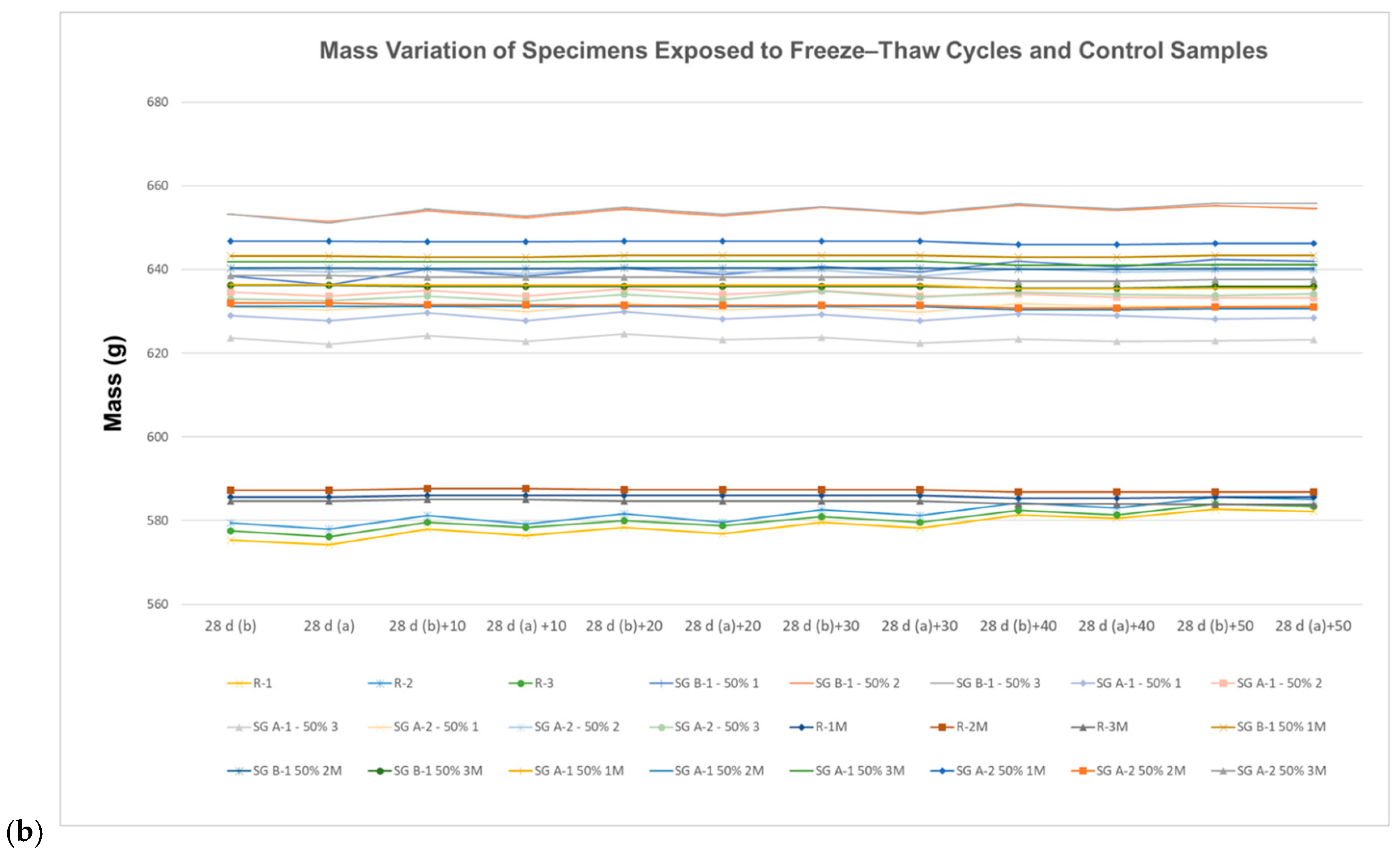
- Mass loss: Successive specimen weighing to detect significant mass loss as an indicator of degradation induced by freeze–thaw cycling.
- -
- t0b: at 28 days from casting, before exposure to freeze–thaw cycles;
- -
- t0a: at 28 days from casting, after exposure to the cycles;
- -
- t10b: at 28 days from casting plus completion of 10 cycles, before those cycles;
- -
- t10a: at 28 days from casting plus completion of 10 cycles, after those cycles;
- -
- t50b: at 28 days from casting plus completion of 50 cycles, before those cycles;
- -
- t50a: at 28 days from casting plus completion of 50 cycles, after those cycles, etc.
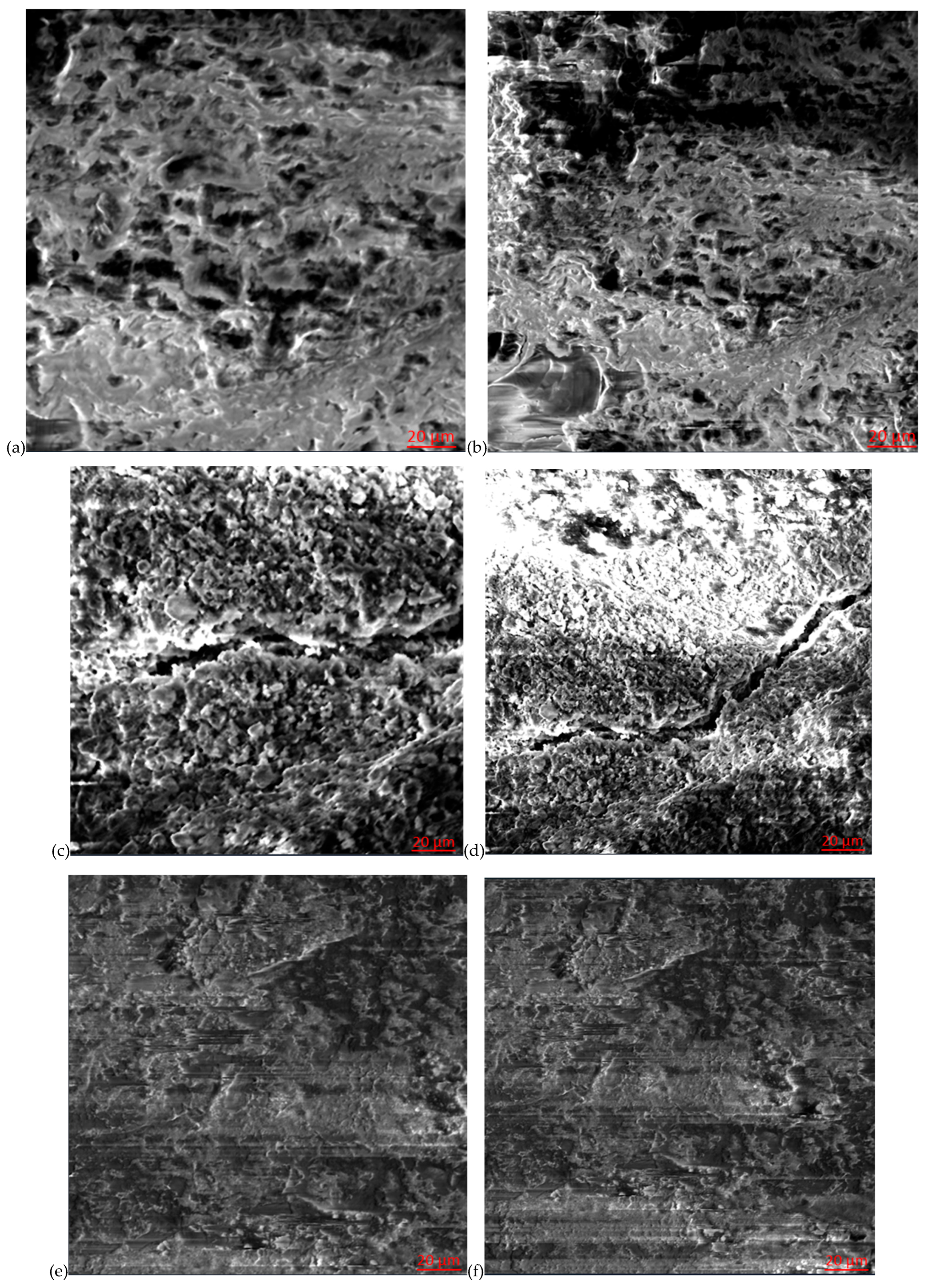
- Microstructural evaluation: SEM with EDX, XRD, and FT-IR analyses (using the same methods and equipment as described in Section 4.2) applied to post-exposure specimens to identify possible alterations such as microcracking or phase modifications.
5. Results and Discussions
5.1. Microstructure Properties of SG Waste and Natural Sand S 0/4
5.1.1. SEM Analysis of SG Waste and Natural Sand S 0/4
5.1.2. XRD Analysis of SG Waste and Natural Sand S 0/4
5.1.3. FT-IR Analysis of SG Waste and Natural Sand S 0/4
5.2. Particle Size Distribution (PSD) of Aggregates
5.3. Fresh State Properties of SG Mortars
5.3.1. Fresh State Aspect and Mortar Workability
5.3.2. Fresh State Density
5.3.3. Workable Life of Fresh Mortar
5.4. Hardened State Properties
5.4.1. Dry Bulk Density and Water Absorption of Hardened Mortars
5.4.2. Water Absorption Coefficient Due to Capillary Action of Hardened Mortar
5.4.3. Flexural and Compressive Strength
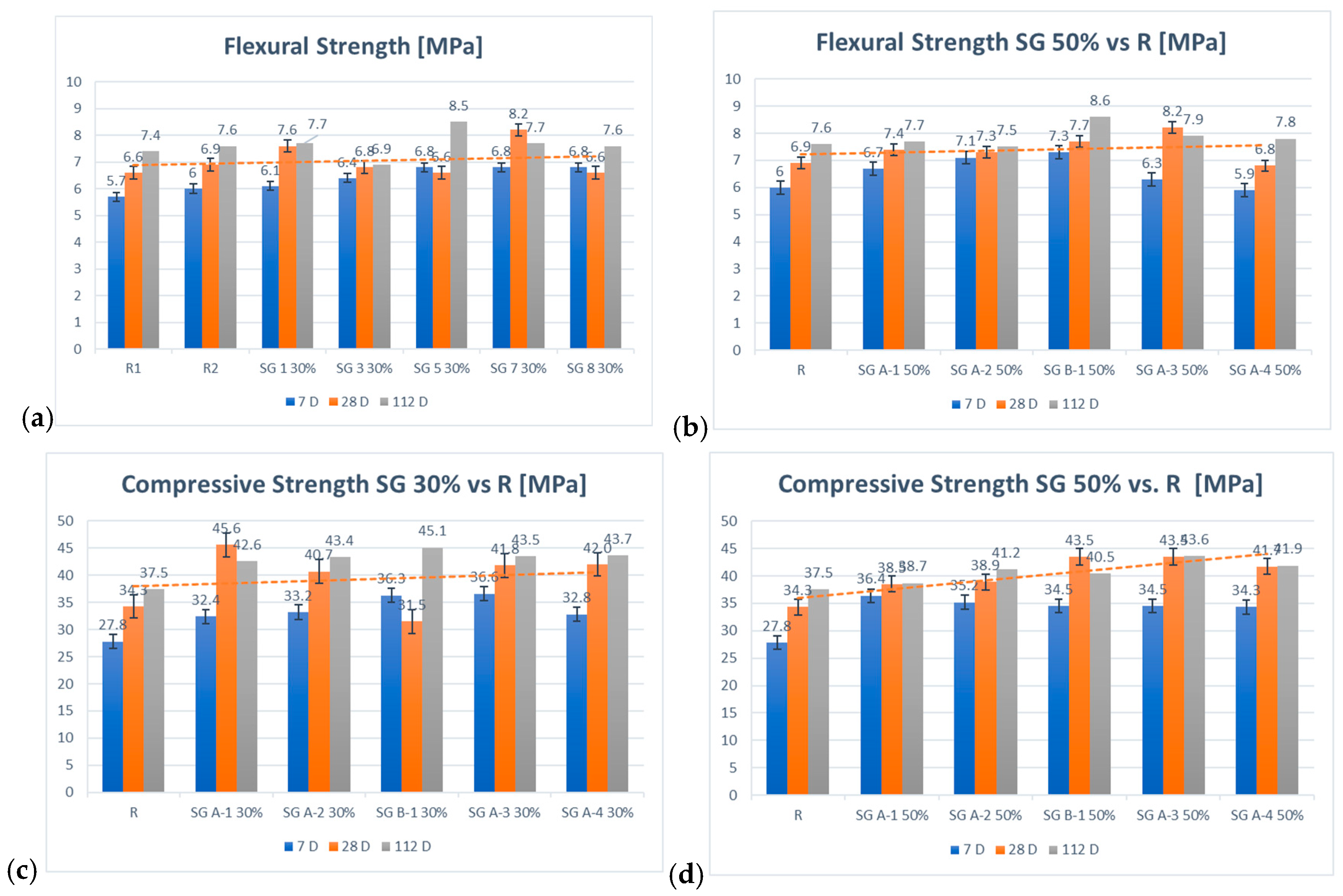
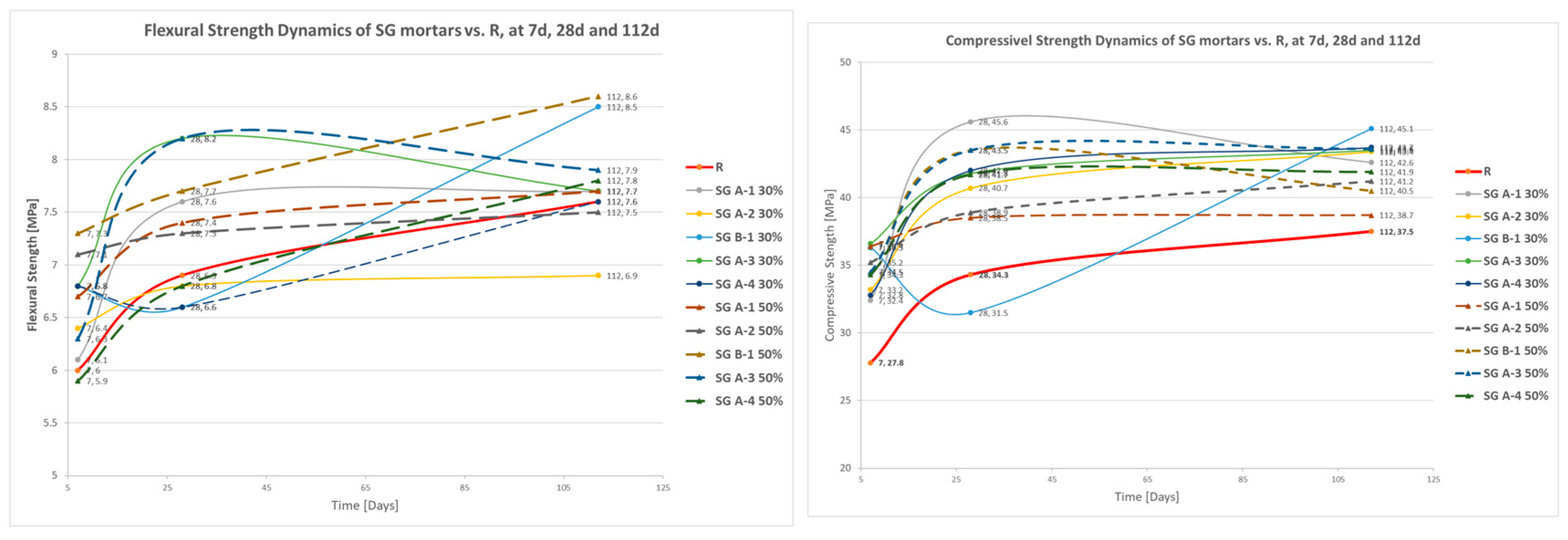
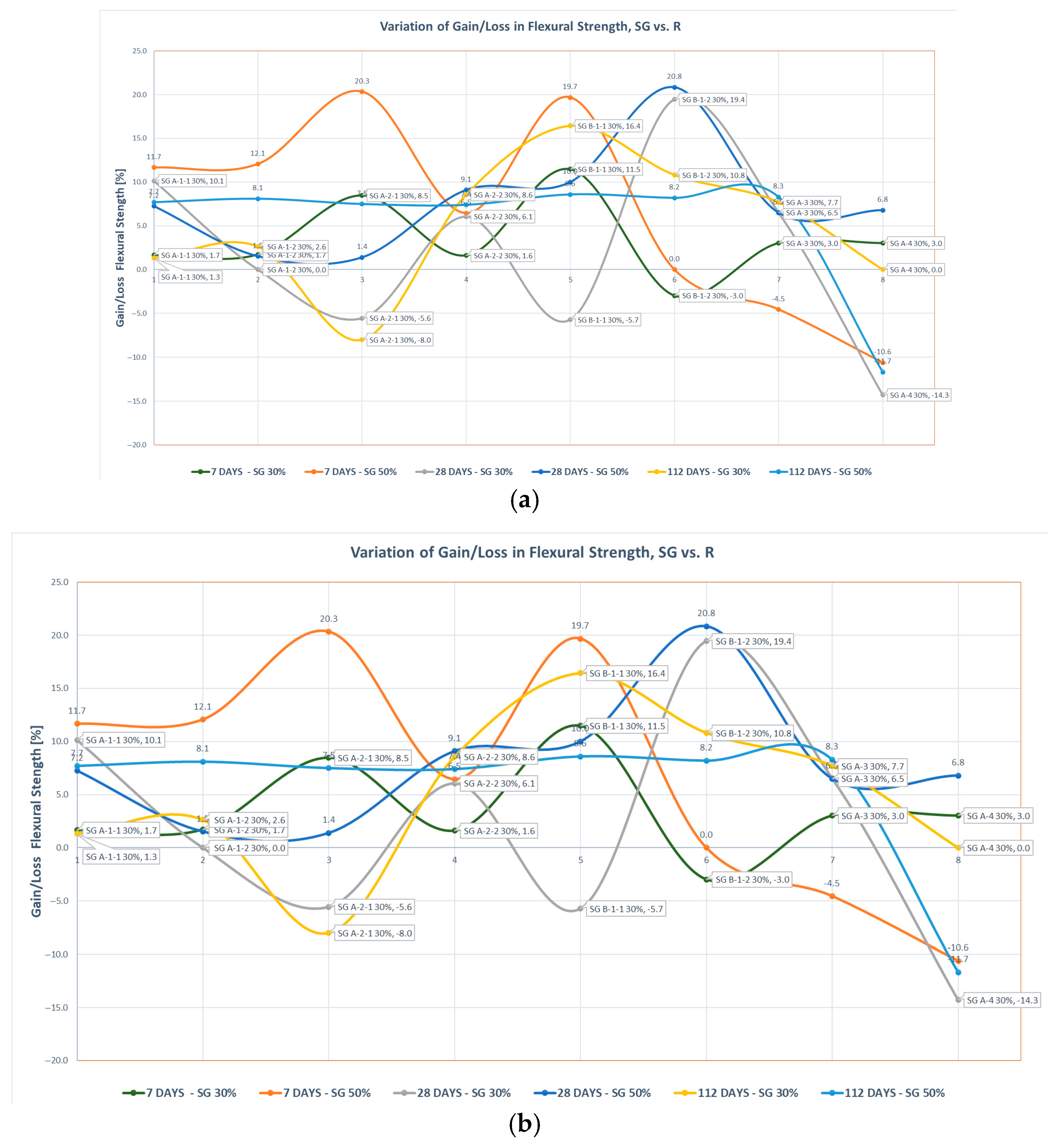
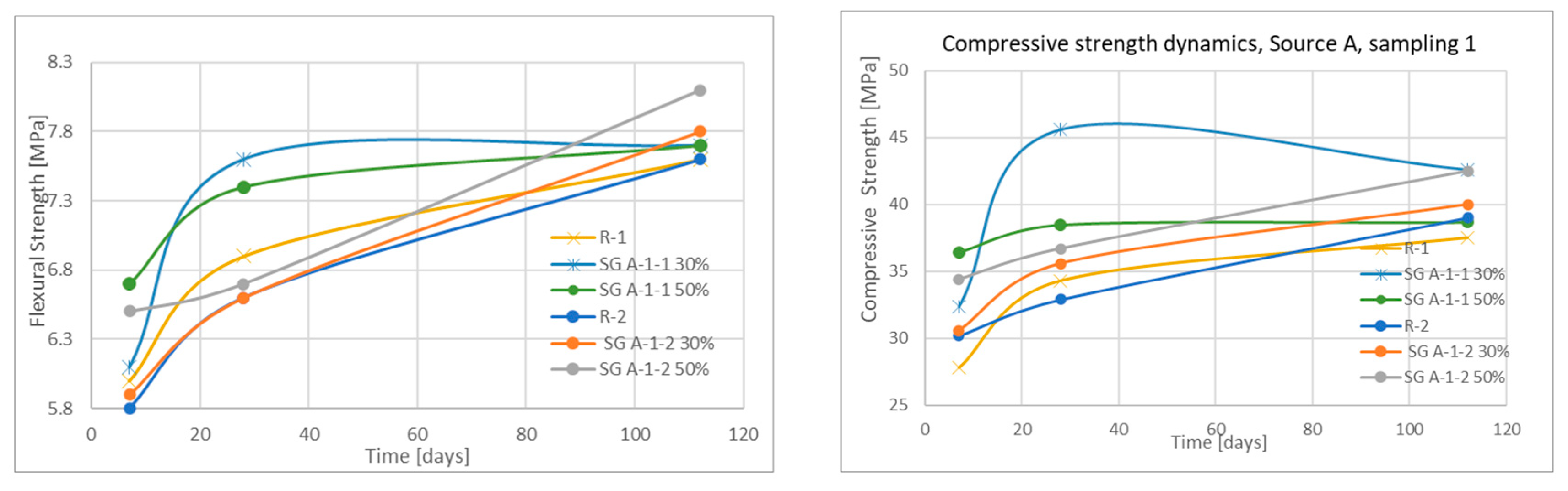
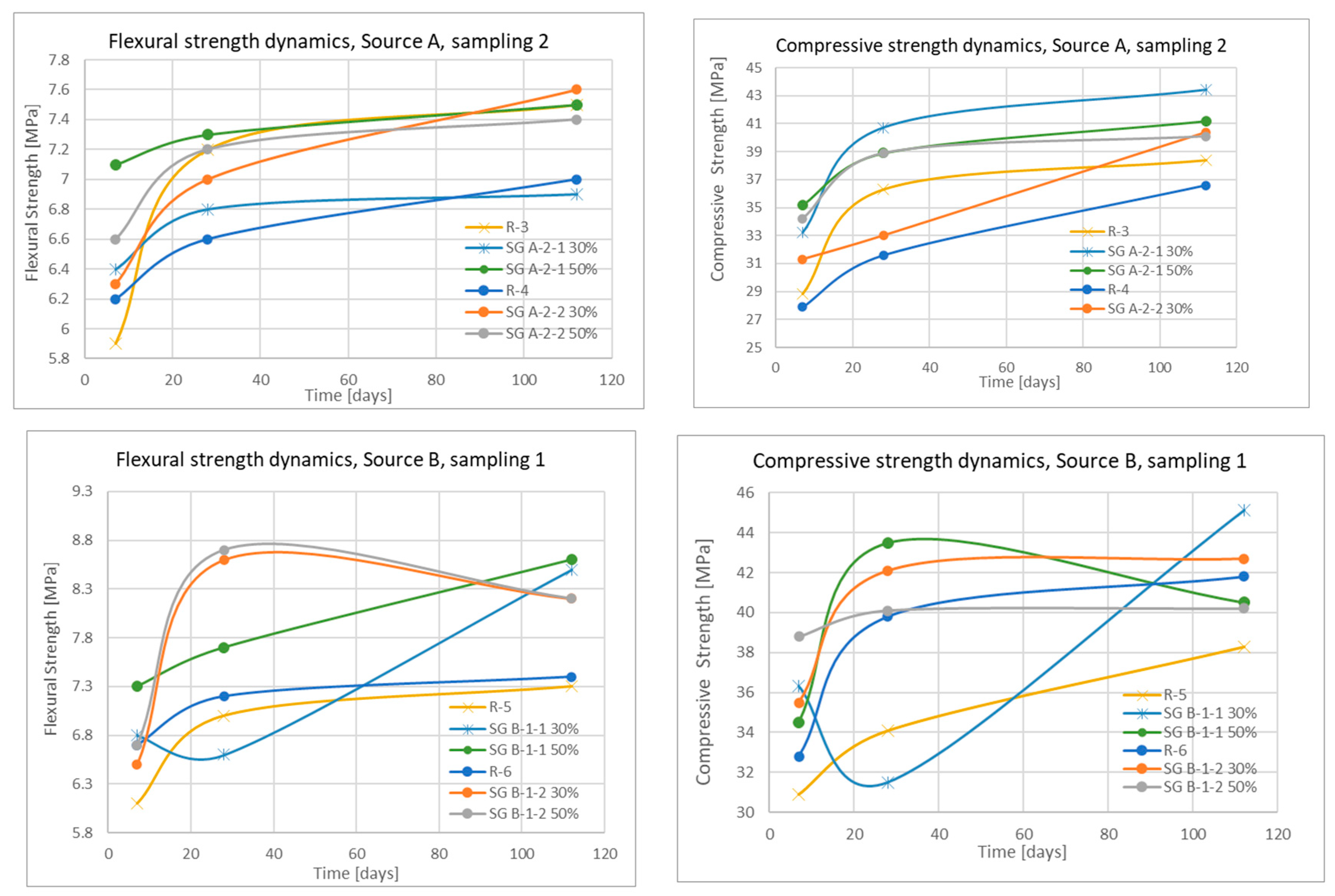
- Extended Compatibility Assessment (Stage A): This stage evaluates flexural and compressive strengths at specified curing ages (e.g., 7, 28, and 112 days) to confirm the compatibility of spent garnet (SG) from diverse sources with the cementitious matrix. Consistency of the hypothesis is verified by comparing results across SG batches collected at different times from the same source and from different sources. To this end, two distinct SG suppliers were considered, with four separate sampling periods from Source A. The mechanical test results presented in Figure 13 and Figure 14 prove the SG applicability from multiple sources (e.g., SG A, SG, B) as partial sand replacement, fully satisfying the predefined performance criterion, namely mechanical property values (flexural and compressive strengths) comparable to the reference mortar, within an acceptable variability range of approximately ±20% (Figure 15).
- Core Validation stage (Stage B): This stage assesses flexural and compressive strengths at specified curing ages (e.g., 7, 28, and 112 days) to verify the repeatability and consistency of performance trends across samples from the same source but collected at different times. Repeatability was evaluated using Source A (samplings 1 and 2) and Source B (sampling 1), with mortars prepared at 30% and 50% SG substitution levels.
- Durability Assessment (Stage C): This is fully covered by 5.5 Durability Performance of SG mortars.
5.5. Durability Performance of SG Mortars
- -
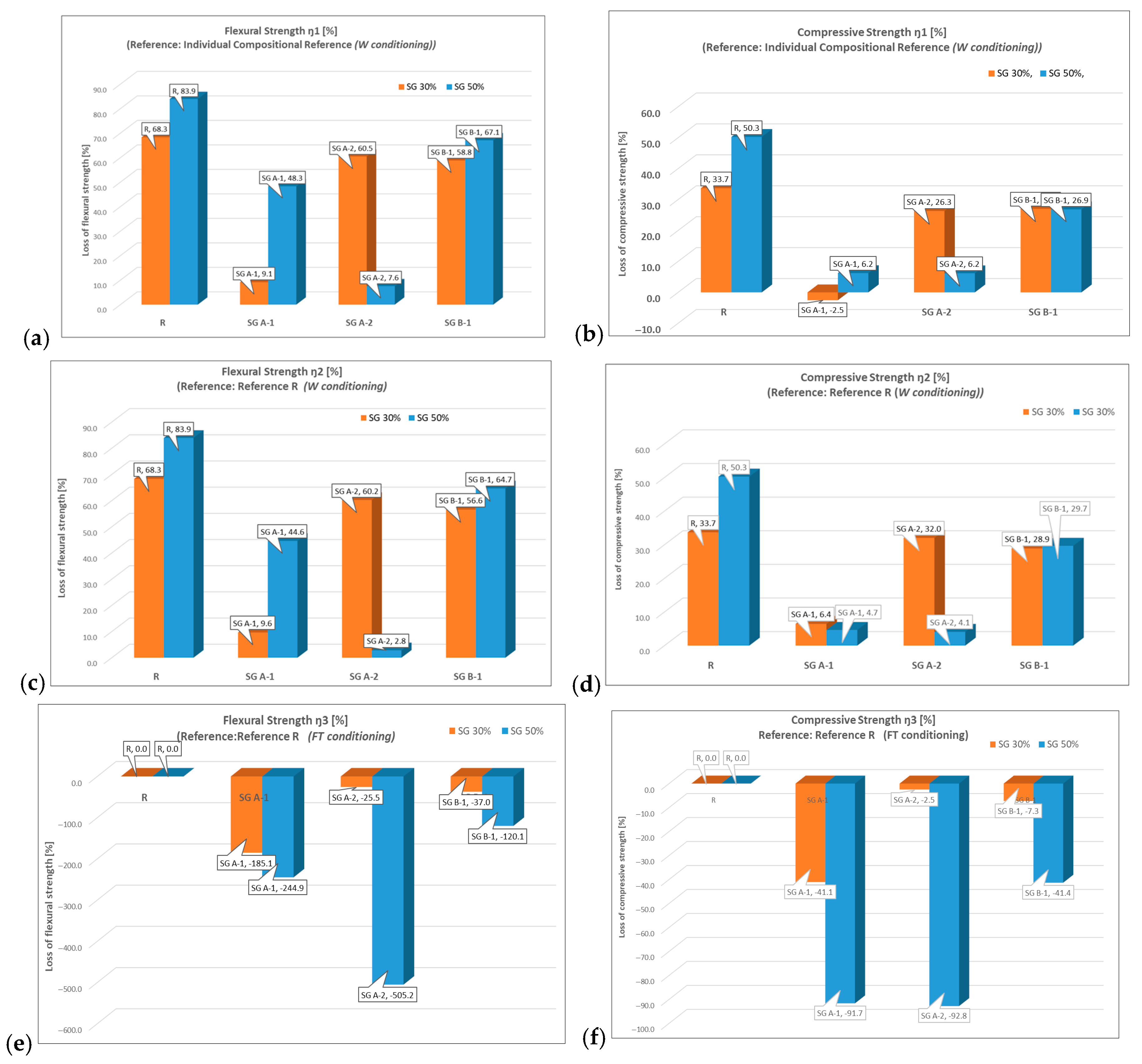
- η1 [%]: Calculated relative to the individual compositional reference (Rm)—specimens of the corresponding mix conditioned by water immersion (W) throughout the 50 freeze–thaw cycles.
- -
- η2 [%]: Calculated relative to the reference mortar R2 conditioned by water immersion (W).
- -
- η3 [%]: Calculated relative to the reference mortar R2 subjected to freeze–thaw cycling (FT).
5.6. Microstructure Properties of SG Mortars
5.6.1. SEM Analysis of SG Mortars
5.6.2. XRD Analysis of SG Mortars
5.6.3. FT-IR Analysis of SG Mortars
6. Conclusions and Future Research Directions
- -
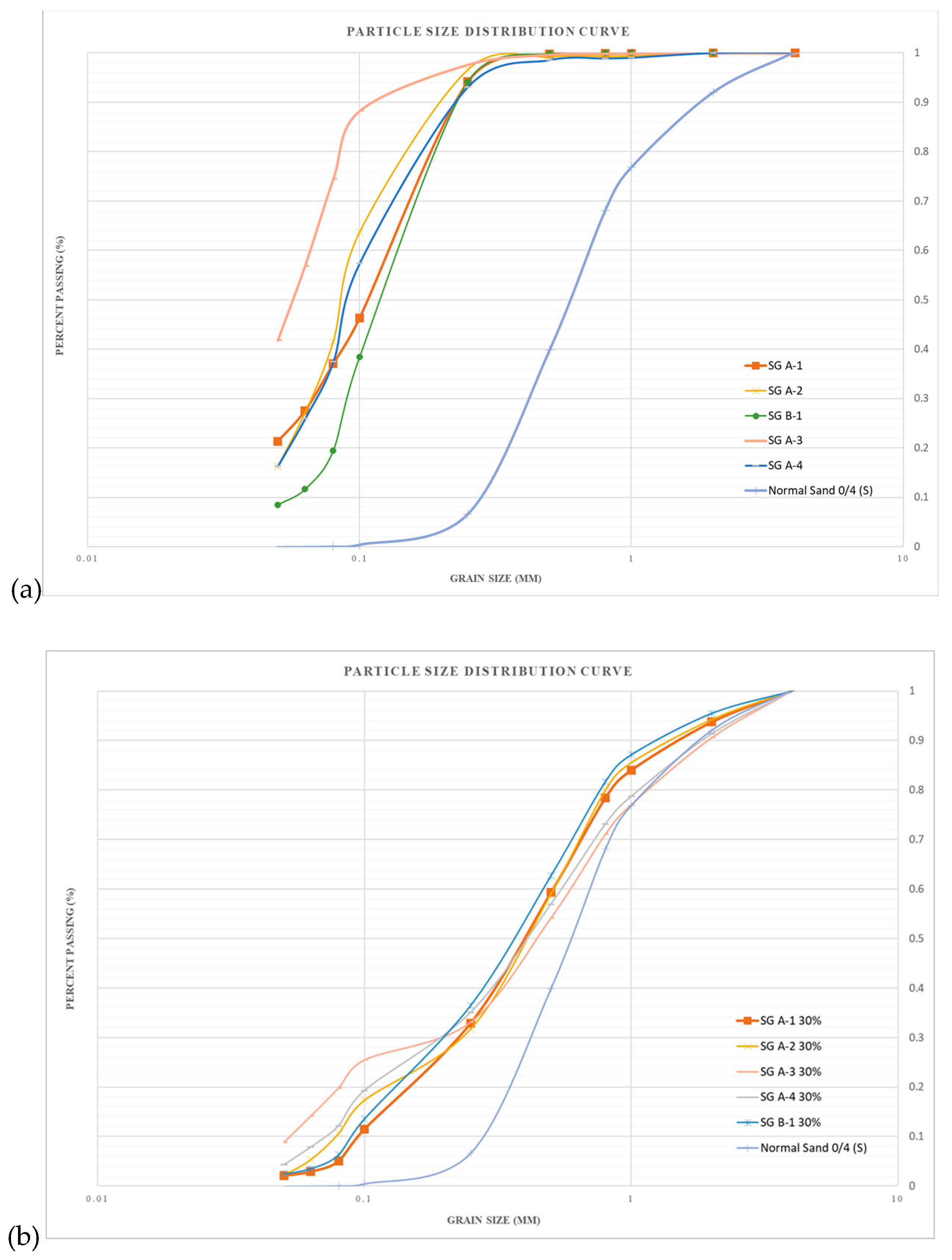
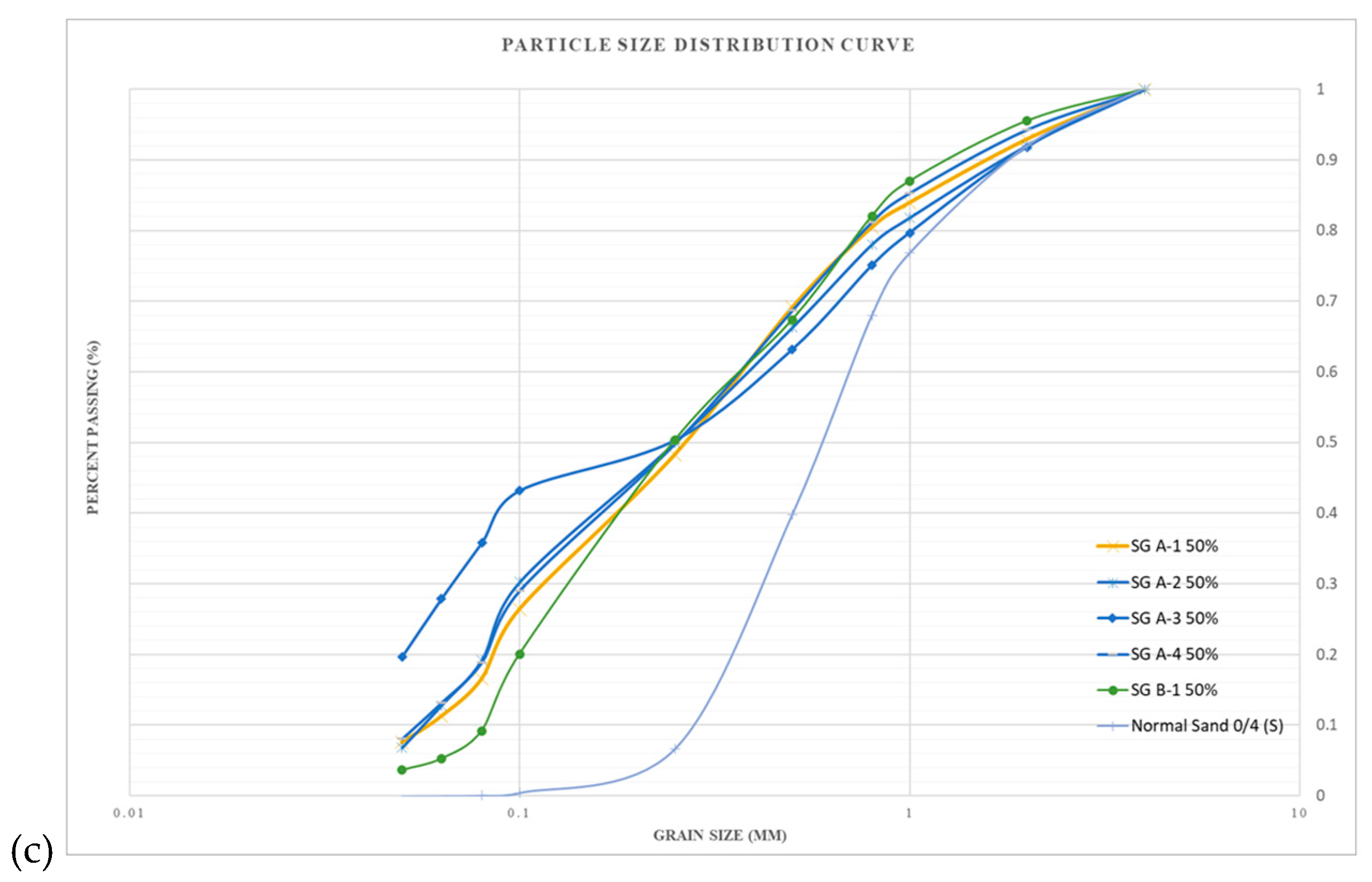
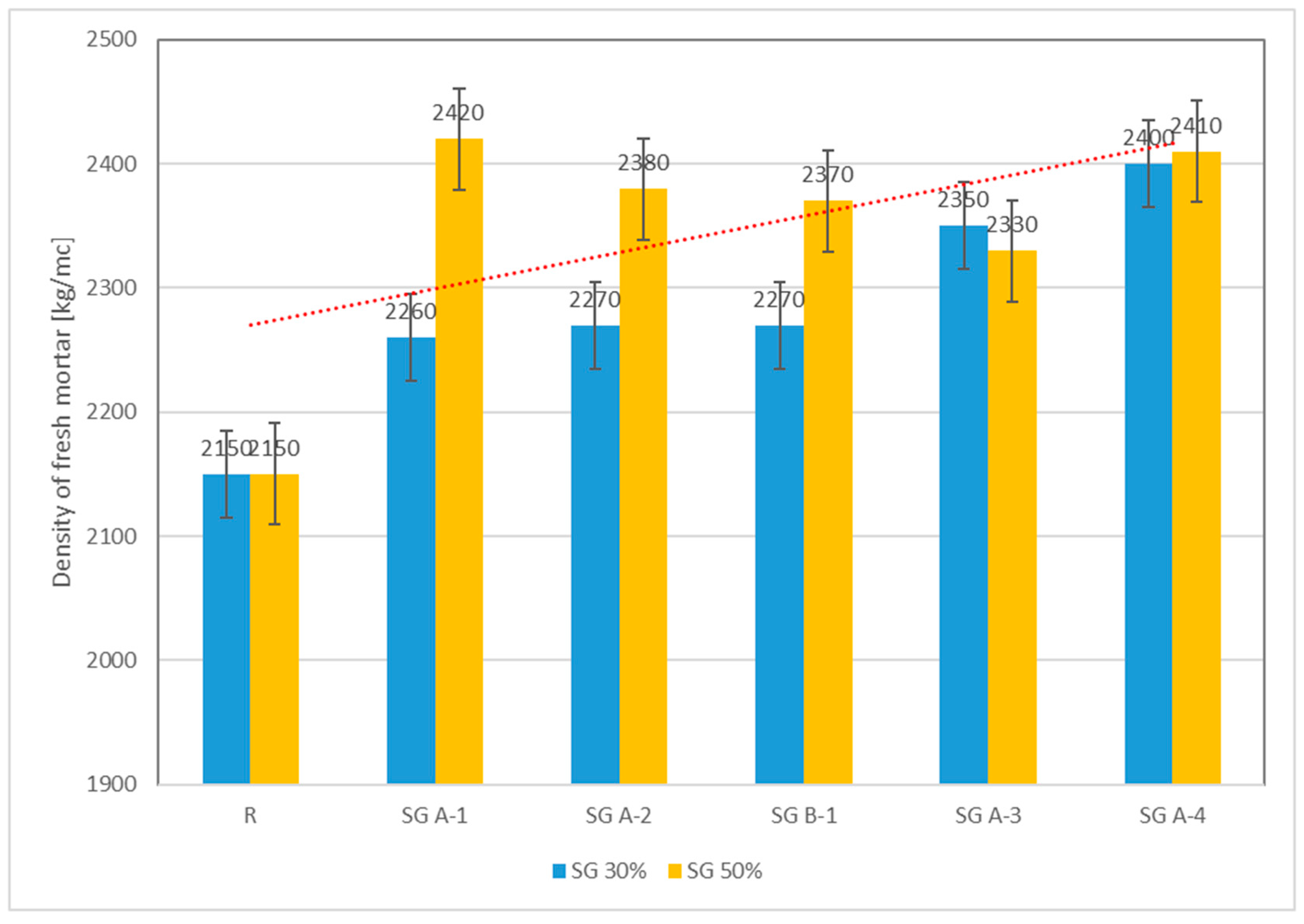
- From a physical and granulometric standpoint, SG exhibits a significantly finer particle size distribution compared to conventional sand (0/4), resulting in improved packing density when incorporated into blended mixes. This effect was reflected in systematically increased dry densities for SG-containing mortars, particularly at 50% substitution, confirming the beneficial filler effect of SG on the granular skeleton.
- -
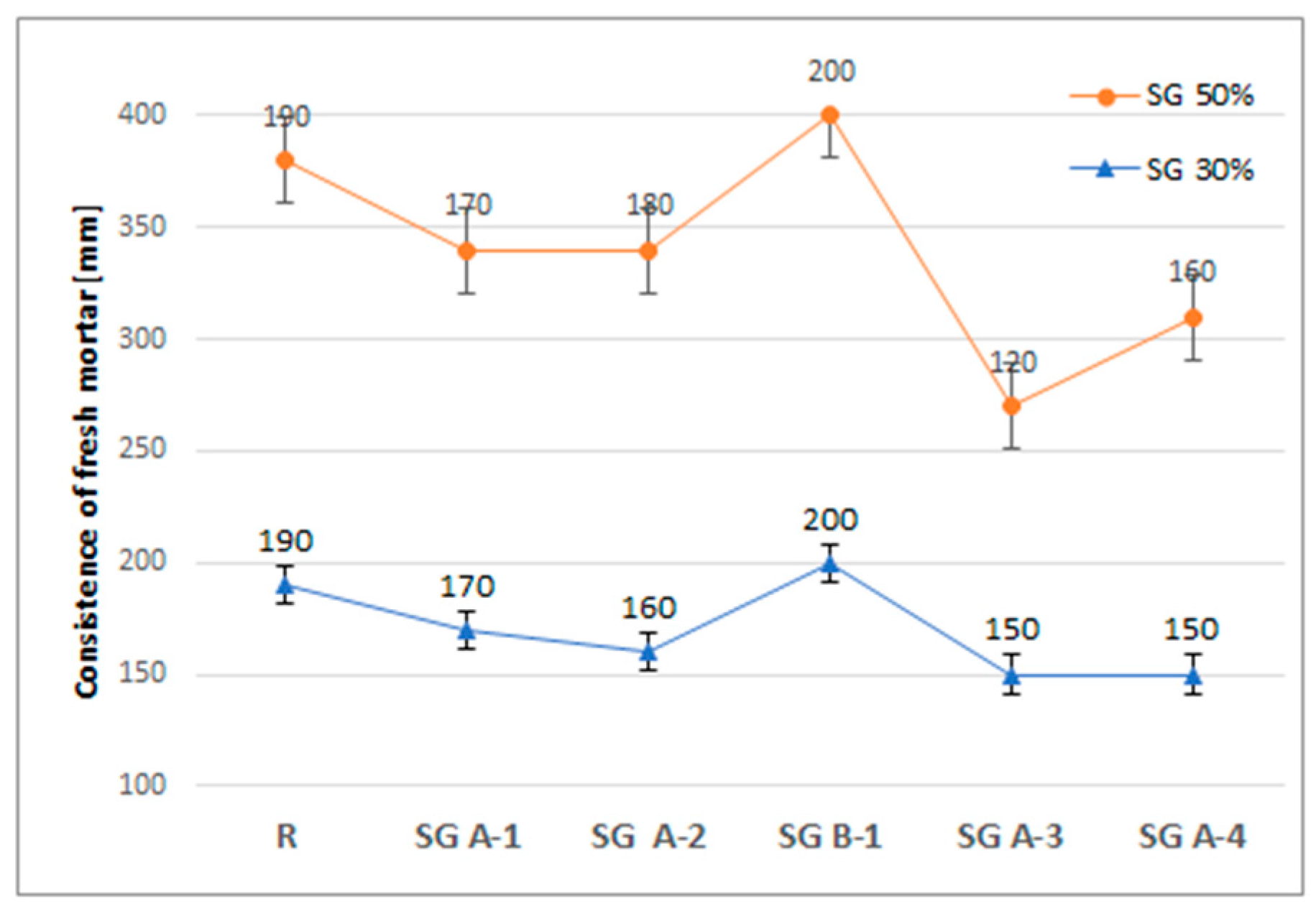
- PSD, fresh-state consistency (flow table), and density evaluations confirmed that SG incorporation improves workability and increases both fresh and dry densities due to superior particle packing and finer granulometry.
- -
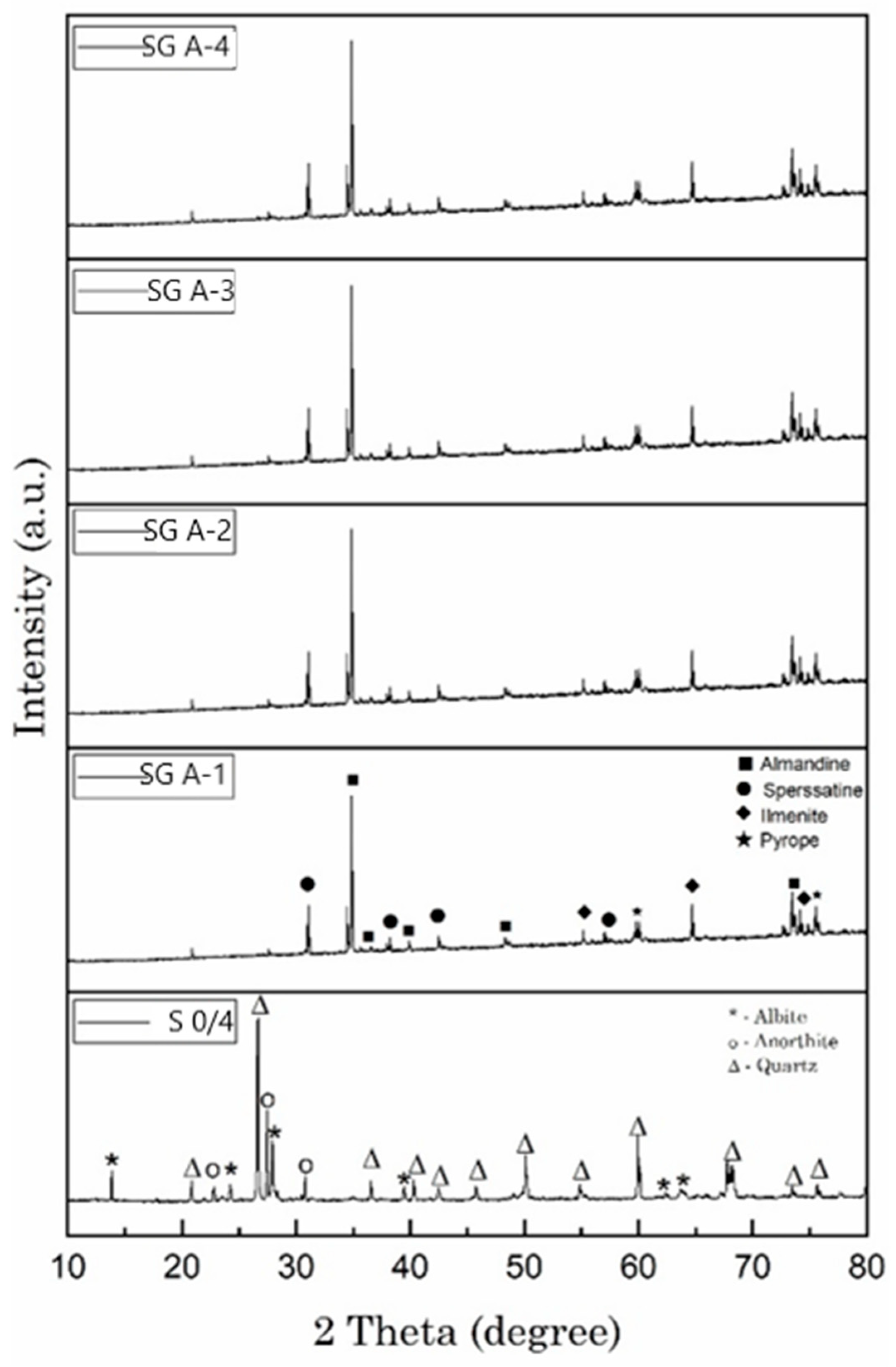
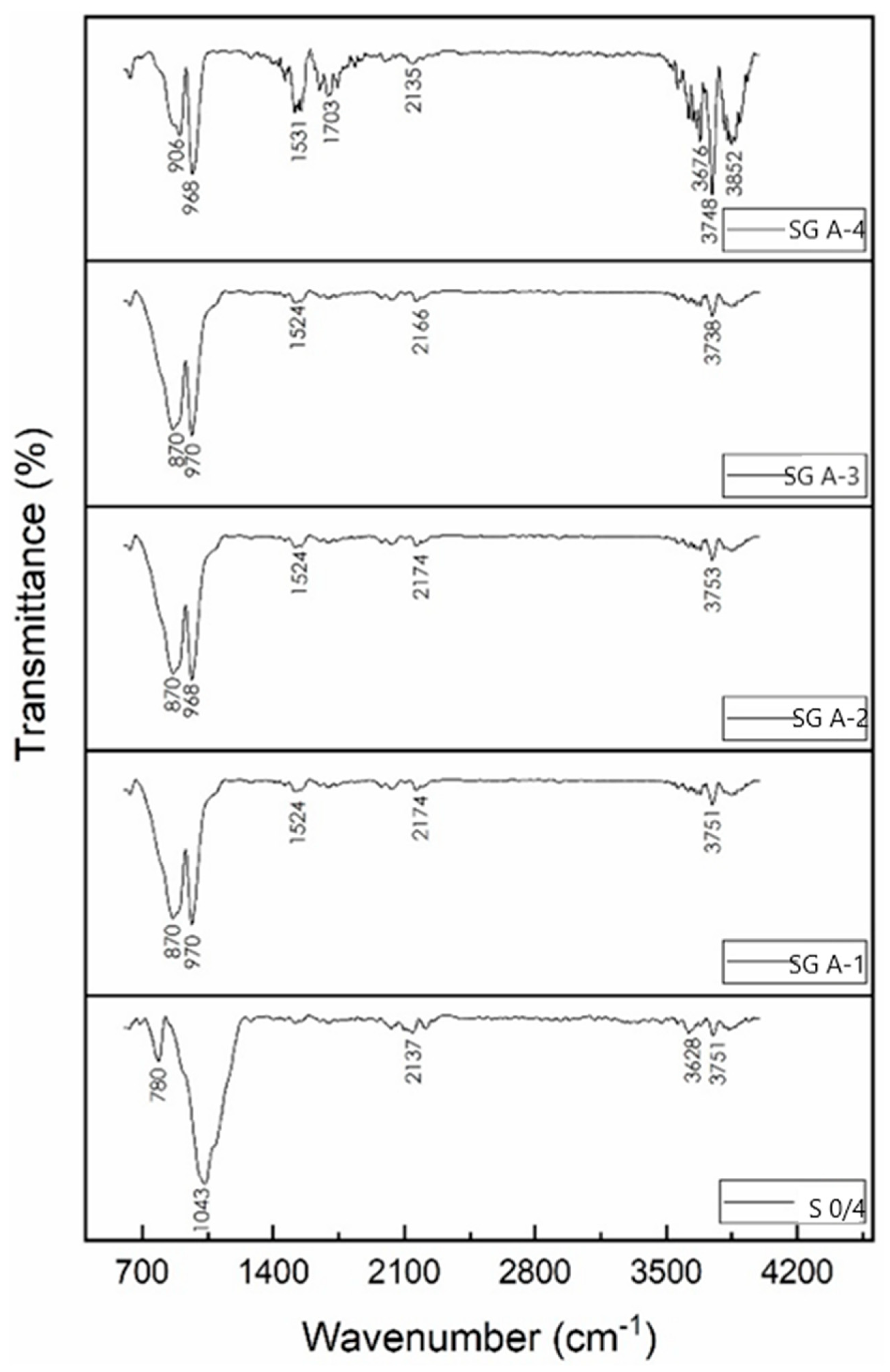
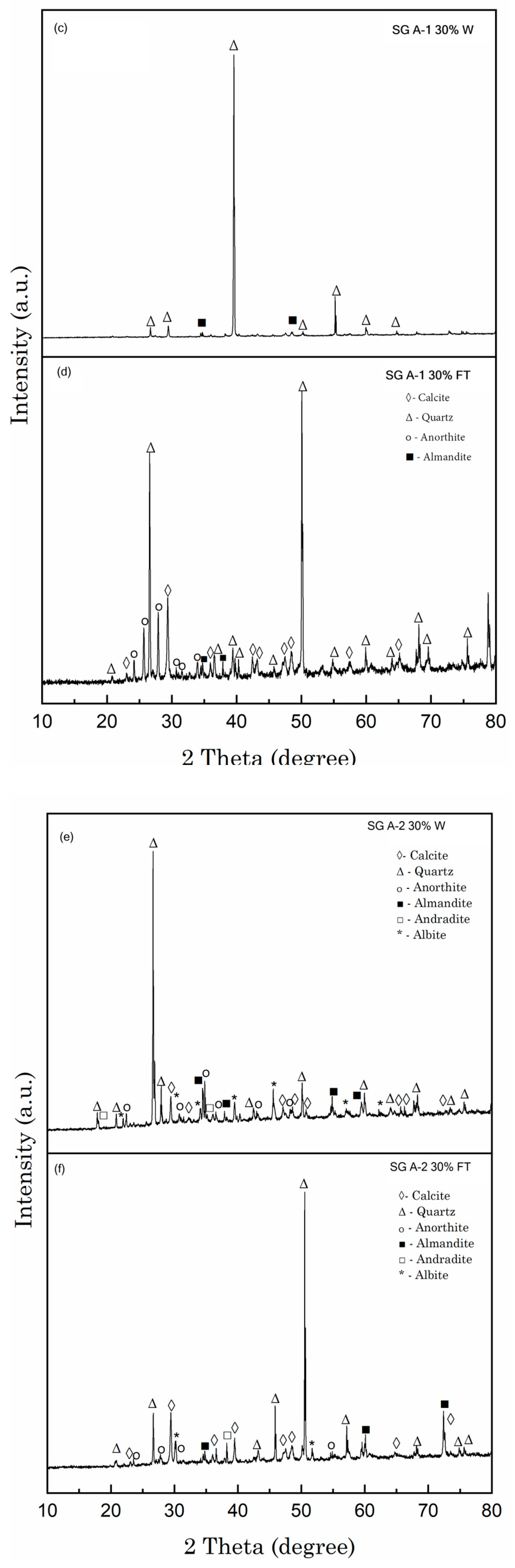
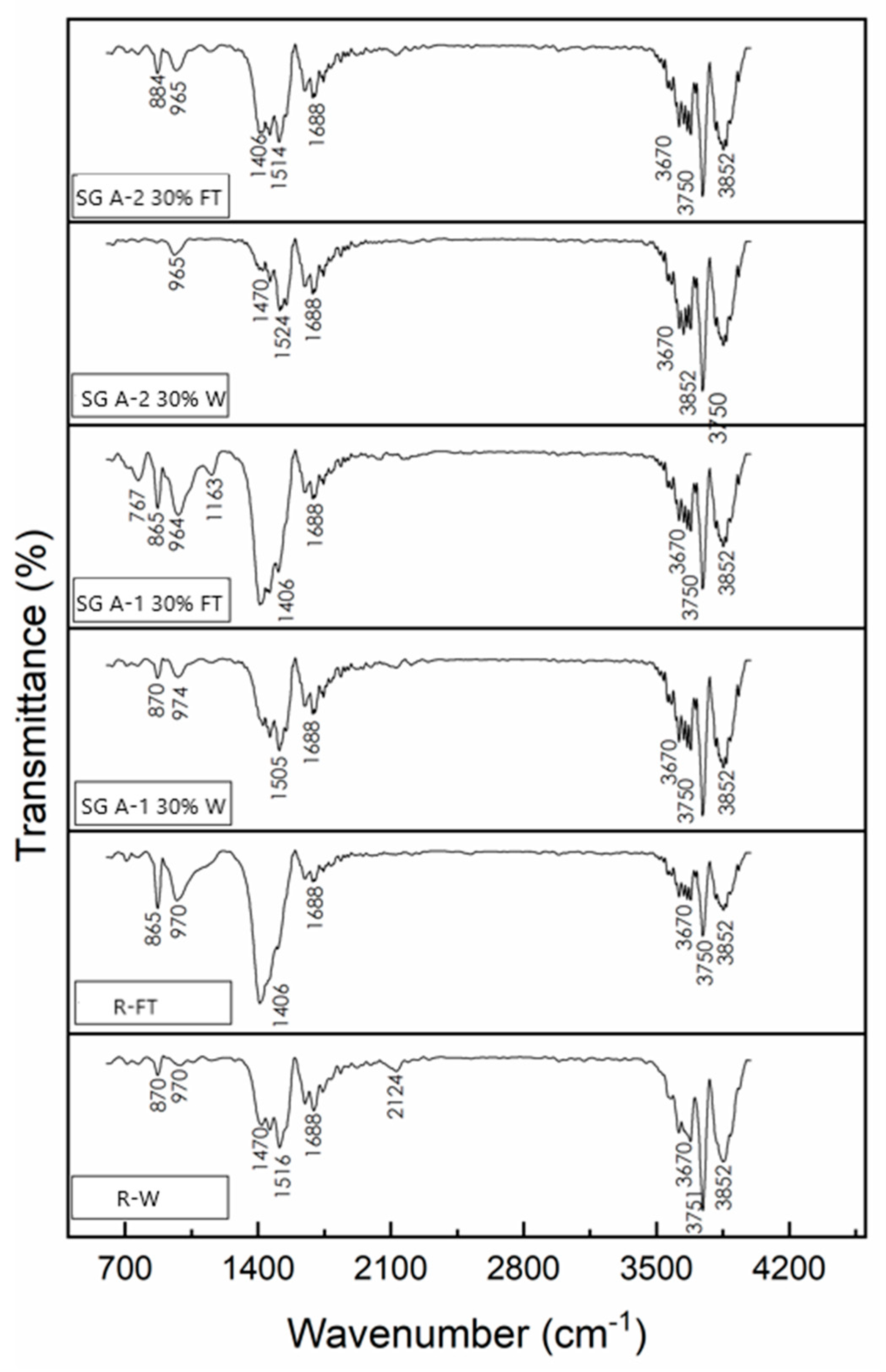
- Chemical analyses (EDX, XRD, FT-IR) confirmed the inert nature of SG, with negligible heavy metal content (Cu was noticed in SG A-2 sample), successfully neutralized after incorporation into cement mortar.
- -
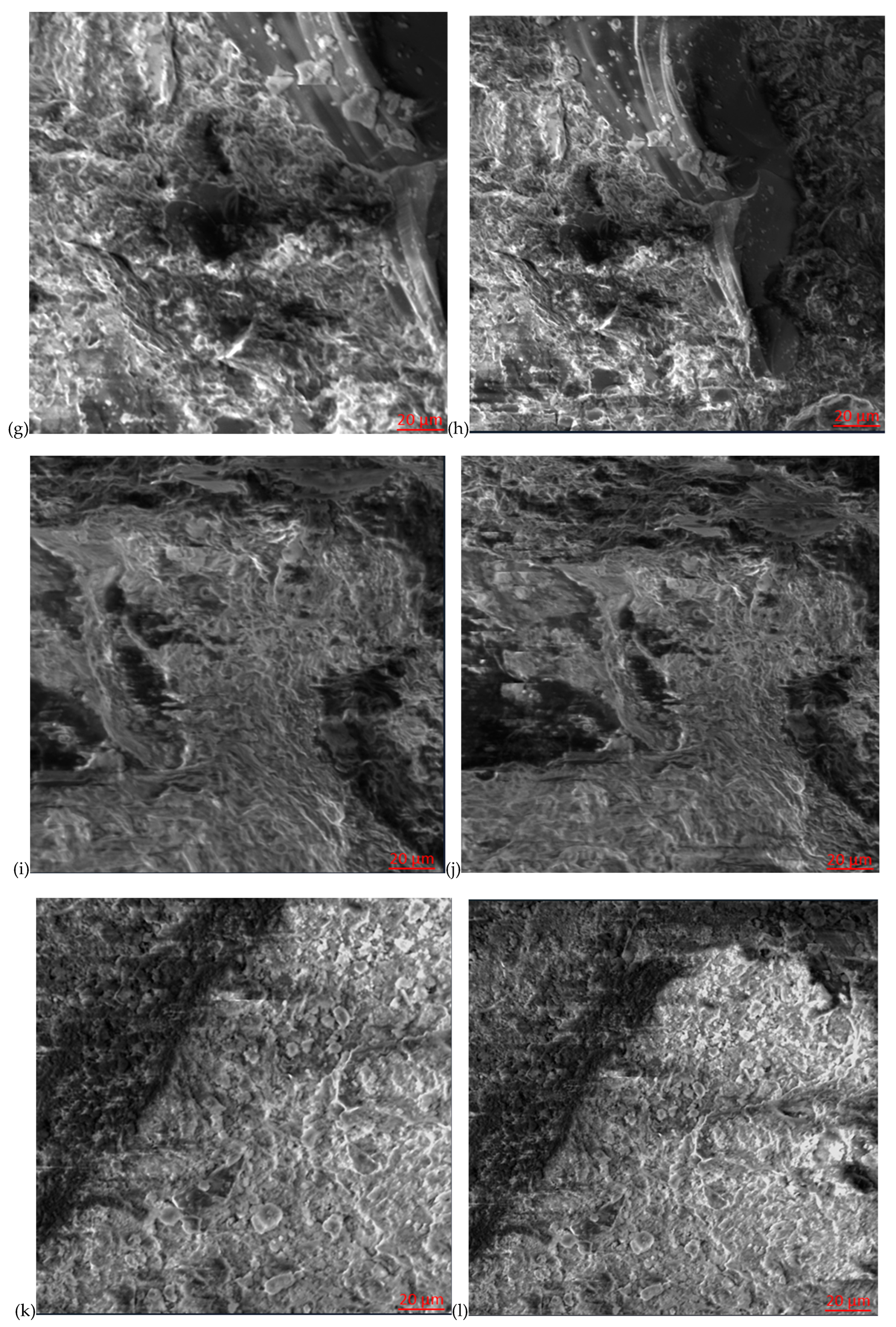
- Microstructural analyses (EDX, XRD, FT-IR) showed the stable mineralogical composition (primarily almandine-rich garnet phases), ensuring environmental safety and regulatory compliance. Investigations on SG mortars revealed good integration of SG particles within the cementitious matrix, with abundant C-S-H formation and no disruptive phase alterations, with no evidence of weak interfacial zones and deleterious reactions or incompatibilities, confirming the previous findings of the international studies. The absence of adverse chemical interactions supports its suitability as a secondary raw material in cement-based systems. Post-freeze–thaw exposure, SG-modified mortars exhibited reduced microcracking and milder degradation compared to the reference, indicating enhanced microstructural stability and potential self-healing contributions from secondary carbonate deposits.
- -
- In terms of mechanical performance, SG incorporation—particularly at 30% replacement—maintained or enhanced strength-related indicators (as discussed previously), confirming that the densified microstructure translates into structurally viable mortars, comparable to or superior to the reference. Higher replacement levels (50%) remained mechanically acceptable but exhibited more pronounced changes in transport-related properties.
- -
- Durability Performance: Freeze–thaw resistance (50 cycles, adapted SR 3518:2009 [58]) showed markedly lower strength losses, negligible mass loss, and preserved visual integrity in SG mortars relative to the reference. Total water absorption and elevated capillary water absorption coefficient (probably due to finer interconnected pores) indicate that SG-containing mortars exhibit moderately increased moisture transport compared to the reference mix. However, these values remain within ranges commonly reported for mortars incorporating fine secondary aggregates. Importantly, no abrupt performance degradation was observed, suggesting acceptable durability for controlled-exposure applications.
- -
- The structured three-stage validation procedure fully met its predefined criteria:
- (A) Extended Compatibility Assessment: Mechanical strengths from multiple SG sources and sampling periods remained within ±20% of the reference, confirming broad compatibility across heterogeneous industrial waste streams.
- (B) Core Validation: Consistent performance trends (stable patterns) were observed across temporally separated batches from the same sources, despite minor absolute variations, verifying repeatability and robustness.
- (C) Durability Assessment Residual strengths > 50% of controls, minimal mass loss, and limited visual/structural degradation validated superior freeze–thaw resistance.
- -
- Sustainability and Circular Economy Benefits: By repurposing an industrial by-product traditionally destined for landfill, SG valorization reduces natural sand extraction, lowers cementitious material carbon footprint, and promotes resource circularity. The absence of significant environmental risks (inert chemistry) further supports eco-compatible construction practices.
Supplementary Materials
Author Contributions
Funding
Institutional Review Board Statement
Informed Consent Statement
Data Availability Statement
Acknowledgments
Conflicts of Interest
References
- Kulekci, M.K. Processes and apparatus developments in industrial waterjet applications. Int. J. Mach. Tools Manuf. 2002, 42, 1297–1306. [Google Scholar] [CrossRef]
- Gembalová, L.; Hlaváč, L.M.; Spadło, S.; Geryk, V.; Oros, L. Notes on the abrasive water jet (AWJ) machining. Materials 2021, 14, 7032. [Google Scholar] [CrossRef] [PubMed]
- Hlaváč, L.M.; Hlaváčová, I.M.; Jandačka, P.; Zegzulka, J.; Viliamsová, J.; Vašek, J.; Mádr, V. Comminution of material particles by water jets—Influence of the inner shape of the mixing chamber. Int. J. Miner. Process. 2010, 95, 25–29. [Google Scholar]
- Momber, A.W.; Kovacevic, R. Principles of Abrasive Water Jet Machining; Springer: London, UK, 2012. [Google Scholar]
- Perianu, A.; Mnerie, D.; Mnerie, G.V.; Ionescu, D. Considerations regarding efficient use of abrasive material in water jet cutting. Rev. Tehnol. Neconv. 2020, 24, 46–50. [Google Scholar]
- Baeră, C.; Bolborea, B.; Gruin, A.; Vasile, A.C.; Negruț, M.L.; Barbu, A.M.; Perianu, I.A. Research possibilities for efficient capitalization in construction eco-products of mineral additions generated by local Romanian industries as wastes or by-products. Key Eng. Mater. 2024, 997, 119–134. [Google Scholar]
- Vasile, A.C.; Baeră, C.; Gruin, A.; Perianu, I.A.; Petrișor, I.K.; Ion, A. Experimental study on spent garnets for fine grain aggregate as partial substitution in cement-based mortars: Validation of preliminary research. Key Eng. Mater. 2025, 1035, 145–159. [Google Scholar] [CrossRef]
- Alzuabidi, H.L.M. Sustainable Construction Materials: Recycled Spent Garnet; CRC Press: Boca Raton, FL, USA, 2019. [Google Scholar]
- Chassé, M.; Griffin, W.L.; Alard, O.; O’Reilly, S.Y.; Calas, G. Insights into the mantle geochemistry of scandium from a meta-analysis of garnet data. Lithos 2018, 310, 409–421. [Google Scholar] [CrossRef]
- Bucher, K.; Weisenberger, T.B.; Klemm, O.; Weber, S. Decoding the complex internal chemical structure of garnet porphyroblasts from the Zermatt area, Western Alps. J. Metamorph. Geol. 2019, 37, 1151–1169. [Google Scholar] [CrossRef]
- Skanavi, N.; Dovydenko, T. The use of waterjet cutting wastes in the production of building materials. IOP Conf. Ser. Mater. Sci. Eng. 2018, 365, 032025. [Google Scholar]
- Baeră, C.; Vasile, V.; Matei, C.; Gruin, A.; Szilagyi, H.; Perianu, I.A. Development of green cementitious materials by using the abrasive waterjet garnet wastes: Preliminary studies. Adv. Mater. Res. 2021, 1164, 87–96. [Google Scholar] [CrossRef]
- Usman, K.R.; Hainin, M.R.; Satar, M.K.I.M.; Warid, M.N.M.; Usman, A.; Al-Saffar, Z.H.; Bilema, M.A. A comparative assessment of the physical and microstructural properties of waste garnet generated from automated and manual blasting process. Case Stud. Constr. Mater. 2021, 14, e00474. [Google Scholar] [CrossRef]
- Oh, T.M.; Joo, G.W.; Cha, Y.; Cho, G.C. Effect of garnet characteristics on abrasive waterjet cutting of hard granite rock. Adv. Civ. Eng. 2019, 2019, 5732649. [Google Scholar] [CrossRef]
- Schumann, W. Gemstones of the World; Sterling Publishing: New York, NY, USA, 2009. [Google Scholar]
- U.S. Geological Survey. Mineral Commodity Summaries 2024; U.S. Geological Survey: Reston, VA, USA, 2025. Available online: https://pubs.usgs.gov/publication/mcs2024 (accessed on 15 December 2025).
- U.S. Geological Survey. Mineral Commodity Summaries 2025; U.S. Geological Survey: Reston, VA, USA, 2025. [CrossRef]
- Qi, C.; Weinell, C.E.; Dam-Johansen, K.; Wu, H. A review of blasting waste generation and management in the ship repair industry. J. Environ. Manag. 2021, 300, 113714. [Google Scholar] [CrossRef]
- Danish, A.; Ozbakkaloglu, T. Impact of nano-silica on the mechanical properties of mortar containing e-waste plastic as fine aggregates. Mater. Today Proc. 2023. [Google Scholar] [CrossRef]
- Baeră, C.; Szilagyi, H.; Gruin, A.; Bolborea, B.; Perianu, I.A. Valorization of abrasive waterjet garnet wastes by innovative integration in building materials. Solid State Phenom. 2022, 332, 159–171. [Google Scholar] [CrossRef]
- Jamaludin, N.F.A.; Muthusamy, K.; Isa, N.N.; Jaafar, M.F.M.; Ghazali, N. Use of spent garnet in industry: A review. Mater. Today Proc. 2022, 48, 728–733. [Google Scholar] [CrossRef]
- Jasni, S.A.; Muthusamy, K.; Jaafar, M.F.M.; Mokhatar, S.N.; Ismail, M.A. A review on the recycling of spent garnet as a mixing ingredient in concrete. Constr. Build. Mater. Rev. 2025; in press. [Google Scholar]
- Zareei, S.A.; Ameri, F.; Bahrami, N.; Shoaei, P.; Moosaei, H.R.; Salemi, N. Performance of sustainable high strength concrete with basic oxygen steel-making (BOS) slag and nano-silica. J. Build. Eng. 2019, 25, 100791. [Google Scholar] [CrossRef]
- Danish, A.; Ozbakkaloglu, T. Greener cementitious composites incorporating sewage sludge ash as cement replacement: A review of progress, potentials, and future prospects. J. Clean. Prod. 2022, 371, 133364. [Google Scholar] [CrossRef]
- Muttashar, H.L.; Ariffin, M.A.M.; Hussein, M.N.; Hussin, M.W.; Ishaq, S.B. Self-compacting geopolymer concrete with spent garnet as sand replacement. J. Build. Eng. 2018, 15, 85–94. [Google Scholar] [CrossRef]
- Agrawal, U.S.; Wanjari, S.P.; Naresh, D.N. Impact of replacement of natural river sand with geopolymer fly ash sand on hardened properties of concrete. Constr. Build. Mater. 2019, 209, 499–507. [Google Scholar] [CrossRef]
- Jamaludin, N.F.A.; Muthusamy, K.; Md Jaafar, M.F.; Putra Jaya, R.; Ismail, M.A. Performance of palm oil clinker lightweight aggregate concrete comprising spent garnet as fine aggregate replacement. Adv. Civ. Eng. 2022, 2022, 9674096. [Google Scholar] [CrossRef]
- Kanta, N.R.; Ponnada, M.R. Performance of spent garnet sand and used foundry sand as fine aggregate in concrete. World J. Eng. 2022, 19, 632–638. [Google Scholar] [CrossRef]
- Phang, Z.Q.; Mokhatar, S.N.; Budiea, A.M.A.B.A. Effects of spent garnet on the compressive and flexural strengths of concrete. Recent Trends Civ. Eng. Built Environ. 2022, 3, 1948–1957. [Google Scholar]
- Wan Chik, W.M.E.K.; Mokhatar, S.N.; Othman, N.H.; Budiea, A.M.; Muthusamy, K. The exploration of the characteristics of concrete incorporating ultrafine coal bottom ash and spent garnet. J. Adv. Res. Appl. Sci. Eng. Technol. 2024, 36, 164–175. [Google Scholar]
- Budiea, A.M.A.; Sek, W.Z.; Mokhatar, S.N.; Muthusamy, K.; Yusoff, A.R.M. Structural performance assessment of high strength concrete containing spent garnet under three point bending test. IOP Conf. Ser. Mater. Sci. Eng. 2021, 1144, 012018. [Google Scholar] [CrossRef]
- Budiea, A.; Azhar, N.; Mokhatar, S.; Muthusamy, K.; Satar, M. Properties of high strength concrete containing spent garnet as sand. IOP Conf. Ser. Earth Environ. Sci. 2023, 1135, 012048. [Google Scholar] [CrossRef]
- Ab Kadir, M.A.; Khiyon, M.I.; Mohd Sam, A.R.; Kueh, A.B.H.; Lim, N.H.A.S.; Mastor, M.N.M.; Mohamed, R.N. Performance of spent garnet as a sand replacement in high-strength concrete exposed to high temperature. J. Struct. Fire Eng. 2019, 10, 468–481. [Google Scholar] [CrossRef]
- Jaafar, M.F.M.; Muthusamy, K.; Jamaludin, N.F.A.; Jasni, S.A.; Zulkarnain, F. Fire resistance of lightweight aggregate concrete containing spent garnet as partial fine aggregate replacement. Open Constr. Build. Technol. J. 2024, 18, e18748368294704. [Google Scholar] [CrossRef]
- Lim, N.H.A.S.; Alladin, N.F.N.; Mohammadhosseini, H.; Ariffin, N.F.; Mazlan, A.N. Properties of mortar incorporating spent garnet as fine aggregates replacement. Int. J. Integr. Eng. 2020, 12, 96–102. [Google Scholar] [CrossRef]
- Kunchariyakun, K.; Sukmak, P. Utilization of garnet residue in radiation shielding cement mortar. Constr. Build. Mater. 2020, 262, 120122. [Google Scholar] [CrossRef]
- Baeră, C.; Chendeș, C.R.; Gruin, A.; Perianu, A.; Vasile, V.; Varga, L. Research on valorisation of spent garnets as addition in cementitious materials—Preliminary experimental evaluation. IOP Conf. Ser. Mater. Sci. Eng. 2022, 1251, 012010. [Google Scholar] [CrossRef]
- Baeră, C.; Gruin, A.; Bolborea, B.; Perianu, I.A.; Varga, L. Analysis of mechanical performance of cementitious materials with spent garnets as fine grain aggregate partial replacement. Key Eng. Mater. 2023, 953, 127–139. [Google Scholar] [CrossRef]
- Baeră, C.; Gruin, A.; Bolborea, B.; Chendeș, R.; Burduhos-Nergiș, D.D.; Varga, L. Experimental approach regarding the potential of spent garnets use as mineral addition in cement-based construction products. In Olympiad in Engineering Science; Springer Nature: Cham, Switzerland, 2023; pp. 566–584. [Google Scholar]
- Muttashar, H.L.; Hussin, M.W.; Ariffin, M.A.M.; Mirza, J.; Hasanah, N.; Shettima, A.U. Mechanical properties of self-compacting geopolymer concrete containing spent garnet as replacement for fine aggregate. J. Teknol. 2017, 79, 3. [Google Scholar] [CrossRef]
- Muttashar, H.L.; Ali, N.B.; Ariffin, M.A.M.; Hussin, M.W. Microstructures and physical properties of waste garnets as a promising construction materials. Case Stud. Constr. Mater. 2018, 8, 87–96. [Google Scholar] [CrossRef]
- Muttashar, H.L.; Ariffin, M.A.M.; Hussin, M.W.; Ishaq, S.B. Realisation of enhanced self-compacting geopolymer concrete using spent garnet as sand replacement. Mag. Concr. Res. 2018, 70, 558–569. [Google Scholar] [CrossRef]
- Lăzărescu, A.V.; Ionescu, B.A.; Hegyi, A.; Florean, C. Analysis regarding the mechanical properties of alkali-activated fly ash-based geopolymer concrete containing spent garnet as replacement for sand aggregates. EJMSE 2023, 8, 11–21. [Google Scholar] [CrossRef]
- Danish, A.; Torres, A.S. Ash to asset: Evaluating the efficacy of reclaimed fly ash in geopolymer production. J. Clean. Prod. 2025, 503, 145326. [Google Scholar] [CrossRef]
- Danish, A.; Torres, A.S. Performance assessment of reclaimed fly ash–slag geopolymers incorporating waste spent garnet and waste foundry sand under different curing regimes. Environ. Res. 2025, 286, 122738. [Google Scholar] [CrossRef]
- Huseien, G.F.; Sam, A.R.M.; Shah, K.W.; Budiea, A.M.A.; Mirza, J. Utilizing spent garnets as sand replacement in alkali-activated mortars containing fly ash and GBFS. Constr. Build. Mater. 2019, 225, 132–145. [Google Scholar] [CrossRef]
- Salim, M.U.; Moro, C. Promoting circularity in cenosphere geopolymer binders through waste spent garnet. Constr. Build. Mater. 2025, 495, 143716. [Google Scholar] [CrossRef]
- Wang, A.; Liu, H.; Hao, X.; Wang, Y.; Liu, X.; Li, Z. Geopolymer synthesis using garnet tailings from molybdenum mines. Minerals 2019, 9, 48. [Google Scholar] [CrossRef]
- Skibicki, S.; Jakubowska, P.; Kaszyńska, M.; Sibera, D.; Cendrowski, K.; Hoffmann, M. Early-age mechanical properties of 3D-printed mortar with spent garnet. Materials 2021, 15, 100. [Google Scholar] [CrossRef]
- Mim, N.J.; Shaikh, F.U.A.; Sarker, P.K. Sustainable 3D printed concrete incorporating alternative fine aggregates: A review. Case Stud. Constr. Mater. 2025, 22, e04570. [Google Scholar] [CrossRef]
- Wang, Z.; Han, H.; Sun, W.; Wang, C.; Sang, M. Mechanical activation and cementitious valorization of garnet tailings: Lattice distortion characteristics and pozzolanic activity. Miner. Eng. 2026, 235, 109819. [Google Scholar] [CrossRef]
- Baera, C.; Gruin, A.; Enache, F.; Bolborea, B.; Chendes, R.V.; Ciobanu, A.; Corbu, O. Opportunities regarding the innovative conservation of the Romanian vernacular urbanistic heritage. Int. J. Conserv. Sci. 2023, 14, 913–936. [Google Scholar] [CrossRef]
- Guglielmi, G.; Mitchell, B.; Song, C.; Kinsey, B.L.; Mo, W. Life cycle environmental and economic comparison of water droplet machining and traditional abrasive waterjet cutting. Sustainability 2021, 13, 12275. [Google Scholar] [CrossRef]
- Technical Sheet Grit Sablarea—Constanța. Available online: https://gritsablare.ro/docs/fisa-granat-ro.pdf (accessed on 15 December 2025).
- Regulation (EC) No 1272/2008 of the European Parliament and of the Council of 16 December 2008. Available online: https://publications.europa.eu/resource/cellar/6bf54b59-7673-461b-b8e1-f24c545cbd3c.0006.05/DOC_1 (accessed on 15 December 2025).
- Regulation (EC) No 1907/2006 of the European Parliament and of the Council of 18 December 2006 Concerning the Registration, Evaluation, Authorisation and Restriction of Chemicals (REACH). Available online: https://eur-lex.europa.eu/legal-content/EN/TXT/?uri=CELEX%3A02006R1907-20250901 (accessed on 15 December 2025).
- EN 1744-3; Tests for Chemical Properties of Aggregates—Part 3: Preparation of Eluates by Leaching of Aggregates. National Standardisation Body–ASRO: Bucharest, Romania, 2003. Available online: https://magazin.asro.ro/ro/standard/73202 (accessed on 15 December 2025).
- SR 3518; Concrete Testing. Determination of Freeze-Thaw Resistance by Measuring the Variation in Compressive Strength and/or Relative Dynamic Modulus of Elasticity. National Standardisation Body–ASRO: Bucharest, Romania, 2009. Available online: https://magazin.asro.ro/ro/standard/174012 (accessed on 15 December 2025).
- EN 933-1; Tests for Geometrical Properties of Aggregates—Part 1: Determination of Particle Size Distribution—Sieving Method. National Standardisation Body–ASRO: Bucharest, Romania, 2012. Available online: https://magazin.asro.ro/ro/standard/198223 (accessed on 15 December 2025).
- EN 196-1; Methods of Testing Cement—Part 1: Determination of Strength. National Standardisation Body–ASRO: Bucharest, Romania, 2016. Available online: https://magazin.asro.ro/ro/standard/246612 (accessed on 15 December 2025).
- EN 1015-3; Methods of Test for Mortar for Masonry—Part 3: Determination of Consistence of Fresh Mortar (by Flow Table). National Standardisation Body–ASRO: Bucharest, Romania, 2001. Available online: https://magazin.asro.ro/ro/standard/26434 (accessed on 15 December 2025).
- EN 1015-6; Methods of Test for Mortar for Masonry—Part 6: Determination of Bulk Density of Fresh Mortar. National Standardisation Body–ASRO: Bucharest, Romania, 2001. Available online: https://magazin.asro.ro/ro/standard/27174 (accessed on 15 December 2025).
- EN 1015-9; Methods of Test for Mortar for Masonry—Part 9: Determination of Workable Life and Correction Time of Fresh Mortar. National Standardisation Body–ASRO: Bucharest, Romania, 2002. Available online: https://magazin.asro.ro/ro/standard/7349 (accessed on 15 December 2025).
- EN 1015-10; Methods of Test for Mortar for Masonry—Part 10: Determination of Dry Bulk Density of Hardened Mortar. National Standardisation Body–ASRO: Bucharest, Romania, 2002. Available online: https://magazin.asro.ro/ro/standard/7347 (accessed on 15 December 2025).
- EN 1015-18; Methods of Test for Mortar for Masonry—Part 18: Determination of Water Absorption Coefficient Due to Capillary Action of Hardened Mortar. National Standardisation Body–ASRO: Bucharest, Romania, 2003. Available online: https://magazin.asro.ro/ro/standard/77322 (accessed on 15 December 2025).
- EN 1015-11; Methods of Test for Mortar for Masonry—Part 11: Determination of Flexural and Compressive Strength of Hardened Mortar. National Standardisation Body–ASRO: Bucharest, Romania, 2020. Available online: https://magazin.asro.ro/ro/standard/273625 (accessed on 15 December 2025).
- Whitney, D.L.; Goergen, E.T.; Ketcham, R.A.; Kunze, K. Formation of garnet polycrystals during metamorphic crystallization. J. Metamorph. Geol. 2008, 26, 365–383. [Google Scholar] [CrossRef]
- De Leeuw, N.H.; Parker, S.C. Surface structure and morphology of calcium carbonate polymorphs calcite, aragonite, and vaterite: An atomistic approach. J. Phys. Chem. B 1998, 102, 2914–2922. [Google Scholar] [CrossRef]
- Nurdiana, A.; Okamoto, A.; Uno, M.; Tsuchiya, N. Porosity generation via spatially uncoupled dissolution–precipitation during plagioclase replacement in quartz-undersaturated fluids. Contrib. Mineral. Petrol. 2024, 179, 10. [Google Scholar] [CrossRef]
- Li, W.; Zheng, J.; Pei, J.; Xu, X.; Chen, T. Correlations between garnet species and vibration spectroscopy: Isomorphous substitution implications. Crystals 2022, 12, 104. [Google Scholar] [CrossRef]
- Hofmeister, A.M.; Chopelas, A. Vibrational spectroscopy of end-member silicate garnets. Phys. Chem. Miner. 1991, 17, 503–526. [Google Scholar] [CrossRef]
- De Belie, N.; Gruyaert, E.; Al-Tabbaa, A.; Antonaci, P.; Baera, C.; Bajare, D.; Darquennes, A.; Davies, R.; Ferrara, L.; Jefferson, T.; et al. A review of self-healing concrete for damage management of structures. Adv. Mater. Interfaces 2018, 5, 1800074. [Google Scholar] [CrossRef]
- Götze, J.; Pan, Y.; Müller, A. Mineralogy and mineral chemistry of quartz: A review. Mineral. Mag. 2021, 85, 639–664. [Google Scholar] [CrossRef]
- Wang, Y.; Sun, Q.; Duan, D.; Liu, X.; Bao, X. The study of crystal structure on grossular–andradite solid solution. Minerals 2019, 9, 691. [Google Scholar] [CrossRef]
- Tropper, P.; Essene, E.J. Thermobarometry in eclogites with multiple stages of mineral growth: An example from the Sesia–Lanzo Zone (Western Alps, Italy). Schweiz. Mineral. Petrogr. Mitt. 2002, 82, 487–514. [Google Scholar]
- Singh, S.; Khan, S.; Khandelwal, R.; Chugh, A.; Nagar, R. Performance of sustainable concrete containing granite cutting waste. J. Clean. Prod. 2016, 119, 86–98. [Google Scholar] [CrossRef]
- Tavares, L.R.C.; Junior, J.F.T.; Costa, L.M.; da Silva Bezerra, A.C.; Cetlin, P.R.; Aguilar, M.T.P. Influence of quartz powder and silica fume on the performance of Portland cement. Sci. Rep. 2020, 10, 21461. [Google Scholar] [CrossRef]
- Muhedin, D.A.; Ibrahim, R.K. Effect of waste glass powder as partial replacement of cement & sand in concrete. Case Stud. Constr. Mater. 2023, 19, e02512. [Google Scholar] [CrossRef]
- Perianu, I.A.; Ionescu, D.; Verbitchi, V. Method of measuring the abrasive-water jet diameter for the cutting process control. Weld. Mater. Test. 2017, 1. [Google Scholar]
- Perianu, I.A.; Mitelea, I.; Şerban, V.A. The effect of water pressure variation on cut surfaces quality during abrasive waterjet cutting of austenitic steels. Adv. Mater. Res. 2014, 1029, 176–181. [Google Scholar] [CrossRef]
- Perianu, I.A.; Corciu, M.M.; Geana, A.A.; Duma, I.; Baeră, C. CFD simulation study for abrasive waste management using water eductors for abrasive waterjet cutting collector tanks. Key Eng. Mater. 2023, 952, 43–49. [Google Scholar] [CrossRef]








| Components | C | S 0/4 | SG | W/C | S/C |
|---|---|---|---|---|---|
| Mixtures | |||||
| R1 | 1 | 3 | - | - | 0.61 |
| R2 | 1 | 3 | - | - | 0.56 |
| SG, 25% | 1 | 2.25 | 0.75 | - | 0.56 |
| SG, 50% | 1 | 1.50 | 1.50 | - | 0.56 |
| SG, 10% | 1 | 2.70 | 0.30 | - | 0.56 |
| SG, 20% | 1 | 2.40 | 0.60 | - | 0.56 |
| SG 30% | 1 | 2.10 | 0.90 | - | 0.56 |
| Components | Cement (kg/m3) | S 0/4 (kg/m3) | SG (kg/m3) | Water (kg/m3) | W/C - |
|---|---|---|---|---|---|
| Mixtures | |||||
| R | 516 | 1549 | - | 271 | 0.56 |
| SG 30% | 516 | 1084 | 465 | 271 | 0.56 |
| SG 50% | 516 | 774.5 | 774.5 | 271 | 0.56 |
| Element | S 0/4 | SG A-1 | SG A-2 | SG A-3 | SG A-4 | SG B-1 * |
|---|---|---|---|---|---|---|
| O | 46.2 | 37.6 | 36.2 | 36.4 | 37 | 40.05 |
| Fe | 1.2 | 22.2 | 23.2 | 21.5 | 23.8 | 24.57 |
| C | 17.3 | 14.1 | 13.6 | 13.7 | 13.9 | |
| Si | 19.4 | 12.9 | 11.8 | 13.3 | 11.7 | 16.49 |
| Al | 9.4 | 7.3 | 5.9 | 8.8 | 7.6 | 10.03 |
| Mg | 0 | 3.1 | 2.1 | 1.9 | 1.9 | 3.9 |
| Ca | 2.4 | 1.6 | 4.7 | 1.6 | 1.6 | 1.56 |
| Ti | 0 | 0.8 | 1.1 | 1.7 | 2.5 | 1.26 |
| Mn | 0 | 0.5 | 0 | 1.1 | 0 | 0.86 |
| Na | 4 | 0.79 | ||||
| Cu | 1.1 | 0.5 | ||||
| K | 46.2 | 37.6 | 36.2 | 36.4 | 37 | 40.05 |
| Total | 99.9 | 100.1 | 99.7 | 100.0 | 100.0 | 100.0 |
| Mixtures Re | Rm [MPa] | Rt [MPa] | ŋ1 [%] | ŋ2 [%] | ŋ3 [%] |
|---|---|---|---|---|---|
| Reference for ŋ Calculation | |||||
| Rm (W Cond) | Rm = R (W Cond) | Rm = R (FT Cond) | |||
| Flexural strength | |||||
| R | 7.8 | 2.5 | 68.3 | 68.3 | 0.0 |
| SG A-1—30% | 7.8 | 7.1 | 9.1 | 9.6 | −185.1 * |
| SG A-2—30% | 7.9 | 3.1 | 60.5 | 60.2 | −25.5 * |
| SG B-1—30% | 8.2 | 3.4 | 58.8 | 56.6 | −37.0 * |
| R | 7.6 | 1.2 | 83.9 | 83.9 | 0.0 |
| SG A-1—50% | 8.1 | 4.2 | 48.3 | 44.6 | −244.9 * |
| SG A-2—50% | 8.0 | 7.4 | 7.6 | 2.8 | −505.2 * |
| SG B-1—50% | 8.2 | 2.7 | 67.1 | 64.7 | −120.1 * |
| Compressive strength | |||||
| R | 43.8 | 29.1 | 33.7 | 33.7 | 0.0 |
| SG A-1—30% | 40.0 | 41.0 | −2.5 * | 6.4 | −41.1 * |
| SG A-2—30% | 40.4 | 29.8 | 26.3 | 32.0 | −2.5 * |
| SG B-1—30% | 42.7 | 31.2 | 27.0 | 28.9 | −7.3 * |
| R | 41.8 | 20.8 | 50.3 | 50.3 | 0.0 |
| SG A-1—50% | 42.5 | 39.9 | 6.2 | 4.7 | −91.7 * |
| SG A-2—50% | 42.7 | 40.1 | 6.2 | 4.1 | −92.8 * |
| SG B-1—50% | 40.2 | 29.4 | 26.9 | 29.7 | −41.4 * |
| Element | R-W | R-FT | SG A-1 30%—W | SG A-1 30%—FT | SG A-2 30%—W | SG A-2 30%—FT |
|---|---|---|---|---|---|---|
| O | 49.9 | 45.7 | 43.3 | 42.8 | 51.2 | 41.6 |
| Fe | 0.6 | 0.8 | 1.5 | 2.7 | 1.7 | 4.0 |
| C | 18.8 | 17.2 | 16.4 | 16.3 | 19.3 | 15.8 |
| Si | 7.3 | 9.5 | 19.1 | 9.6 | 4.8 | 6.0 |
| S | 0.0 | 0.0 | 0.0 | 0.2 | 0.0 | 0.7 |
| Mg | 0.4 | 0.0 | 0.0 | 0.0 | 0.5 | 0.5 |
| Ca | 20.6 | 22.1 | 16.2 | 18.6 | 18.8 | 27.2 |
| Mn | 0.0 | 0.0 | 0.0 | 0.4 | 0.0 | 0.0 |
| Mo | 0.0 | 1.9 | 0.0 | 0.0 | 0.0 | 0.0 |
| Na | 0.0 | 0.0 | 0.0 | 1.5 | 0.0 | 0.0 |
| Br | 2.3 | 2.8 | 3.5 | 7.3 | 3.0 | 4.2 |
| K | 0.0 | 0.0 | 0.0 | 0.7 | 0.0 | 0.0 |
| Ti | 0.0 | 0.0 | 0.0 | 0.0 | 0.8 | 0.0 |
| Total | 99.9 | 100.0 | 100.0 | 100.1 | 100.1 | 100.0 |
Disclaimer/Publisher’s Note: The statements, opinions and data contained in all publications are solely those of the individual author(s) and contributor(s) and not of MDPI and/or the editor(s). MDPI and/or the editor(s) disclaim responsibility for any injury to people or property resulting from any ideas, methods, instructions or products referred to in the content. |
© 2026 by the authors. Licensee MDPI, Basel, Switzerland. This article is an open access article distributed under the terms and conditions of the Creative Commons Attribution (CC BY) license.
Share and Cite
Baera, C.; Vasile, A.-C.; Gruin, A.; Sfirloaga, P.; Dragomir, C.-S.; Zaharia, R.; Balcu, I.; Macarie, C.; Buzatu, D. Sustainable Valorization of Spent Garnet Wastes in Construction Eco-Materials: Validation Stage of Performance Assessment. Sustainability 2026, 18, 1000. https://doi.org/10.3390/su18021000
Baera C, Vasile A-C, Gruin A, Sfirloaga P, Dragomir C-S, Zaharia R, Balcu I, Macarie C, Buzatu D. Sustainable Valorization of Spent Garnet Wastes in Construction Eco-Materials: Validation Stage of Performance Assessment. Sustainability. 2026; 18(2):1000. https://doi.org/10.3390/su18021000
Chicago/Turabian StyleBaera, Cornelia, Ana-Cristina Vasile, Aurelian Gruin, Paula Sfirloaga, Claudiu-Sorin Dragomir, Raul Zaharia, Ionel Balcu, Corina Macarie, and Doru Buzatu. 2026. "Sustainable Valorization of Spent Garnet Wastes in Construction Eco-Materials: Validation Stage of Performance Assessment" Sustainability 18, no. 2: 1000. https://doi.org/10.3390/su18021000
APA StyleBaera, C., Vasile, A.-C., Gruin, A., Sfirloaga, P., Dragomir, C.-S., Zaharia, R., Balcu, I., Macarie, C., & Buzatu, D. (2026). Sustainable Valorization of Spent Garnet Wastes in Construction Eco-Materials: Validation Stage of Performance Assessment. Sustainability, 18(2), 1000. https://doi.org/10.3390/su18021000