1. Introduction
Geotechnical hazards, including landslides, differential settlements, and slope instabilities, remain among the most persistent threats to residential infrastructure worldwide, particularly in regions undergoing rapid or unplanned urbanization. Community resilience to natural hazards is understood to depend not only on physical exposure but on place-specific antecedent conditions—social, economic, institutional, and built-environment characteristics—that shape how a community absorbs and recovers from a hazard event [
1]. Within this place-based framework, housing conditions and land-occupation patterns are recognized as key determinants of vulnerability, frequently confining lower-income households to marginal, geotechnically unstable land where housing remains exposed to landslides, slope failures, and related ground-related hazards [
1]. This global pattern is especially pronounced in mountainous regions, where steep topography, seismic activity, and intense rainfall converge to increase both the frequency and severity of slope failures. Consequently, understanding how populations living under such conditions perceive geotechnical risk, and whether that perception translates into protective action, has become a central concern for disaster risk reduction research. Nowhere is this concern more relevant than in the Andean region of South America, where geomorphological conditions and accelerated urban growth converge to produce some of the highest landslide susceptibility levels in the world.
The Andean region is recognized as one of the most landslide-susceptible areas in the world, a condition driven by steep terrain, active tectonics, and decades of accelerated, often informal, urban expansion [
2]. Empirical studies conducted across Andean provinces have identified urbanization, poverty, and socioeconomic inequality as key factors that increase landslide vulnerability, particularly where settlements occupy slopes, ravines, and other geotechnically sensitive terrain [
3]. In the specific case of Azuay Province, where the city of Cuenca is located, landslide susceptibility mapping has confirmed that a substantial share of the provincial territory presents conditions favorable to slope instability, reinforcing the relevance of geotechnical risk as a local, and not merely regional, concern [
3]. Beyond the physical susceptibility of the terrain, land-policy research in Andean cities has emphasized that landslide risk reduction depends not only on engineering interventions but also on the socioeconomic and institutional dimensions that shape how residents build, occupy, and modify land over time [
2]. This multidimensional framing suggests that risk reduction in Andean urban contexts cannot rely solely on hazard mapping or infrastructure investment, but must also account for the perceptions, decisions, and constraints of the households that inhabit at-risk terrain. In Ecuador specifically, these dynamics are compounded by a construction sector in which a substantial proportion of residential housing is built informally, often without the technical guidance required to manage geotechnical risk appropriately.
Informal, self-built housing constitutes a substantial share of the residential stock in Ecuador, frequently constructed without prior soil studies, structural design, or professional supervision. National case evidence indicates that, in areas of high seismic and geotechnical risk such as Santa Elena Province, approximately 70% of housing has informal origins and exhibits structural deficiencies, reflecting a systemic gap between hazard exposure and the technical assistance available to homeowners [
4]. This pattern is consistent with broader evidence from self-built housing across Latin America, where construction decisions are frequently guided by empirical knowledge and cost considerations instead of formal geotechnical or structural assessment. Such practices are particularly consequential in cities like Cuenca, where residential expansion has historically occurred over terrain that includes fill material, steep slopes, and drainage-sensitive ravines, conditions directly associated with settlement, cracking, and slope failure in housing. This mechanism is well documented in the geotechnical engineering literature: lightweight residential structures founded on reactive or poorly characterized ground are particularly susceptible to damage from ground movement, and the resulting financial losses can be substantial when design does not adequately account for site-specific soil behavior [
5]. Despite this documented physical vulnerability, comparatively little research has examined how residents and construction-related professionals in Ecuadorian cities actually perceive geotechnical risk, or whether they trust and are willing to engage with the technical assistance required to mitigate it. Comparable survey-based approaches have documented gaps between physical vulnerability and community risk perception in other developing-country urban contexts, such as Peshawar, Pakistan, reinforcing the relevance of collecting similar evidence for Andean cities exposed to geotechnical hazards [
6]. Addressing this gap requires a behavioral, and not merely physical, framework capable of explaining why risk awareness does not automatically translate into preventive action.
Protection Motivation Theory (PMT) and the Theory of Planned Behavior (TPB)—within which attitudes toward a protective behavior can be decomposed into instrumental and experiential components that independently predict behavioral intention [
7]—constitute two of the most widely applied frameworks for explaining how individuals evaluate threats and decide whether to adopt protective measures [
8,
9]. Under PMT, protective intention results from the interaction between threat appraisal, comprising perceived severity and vulnerability, and coping appraisal, comprising perceived response efficacy, self-efficacy, and response cost [
8]. Applications of PMT to landslide and flood contexts have repeatedly shown that high risk perception does not necessarily produce high protective intention, particularly when households lack confidence in their own capacity to act or perceive the recommended measure as costly or difficult to implement [
10,
11]. This pattern is consistent with two independent meta-analytic reviews of the PMT literature, which converged in identifying coping appraisal variables, and self-efficacy in particular, as the strongest and most consistent predictors of protective intention and behavior across health and safety domains [
12,
13], while a parallel meta-analytic review of TPB found that perceived behavioral control explains variance in intention and behavior independently of attitude and subjective norms [
14]. Recent studies published in MDPI journals have integrated PMT with TPB into a single explanatory model, showing that attitude, subjective norms, and perceived behavioral control operate alongside threat and coping appraisal to shape disaster-preparedness intention across flood-prone and multi-hazard urban contexts [
15,
16,
17,
18]. This pattern, at times described as a “fatalism trap,” has been documented even among populations that are both aware of landslide risk and directly exposed to it, suggesting that perceived response cost can neutralize an otherwise strong risk awareness [
11]. Within this framework, trust in the technical actors responsible for delivering a protective response, such as engineers or geotechnical specialists, functions as an additional condition for translating risk perception into mitigation intention, yet it remains comparatively underexamined relative to threat appraisal itself. Because response cost is, in practice, most often experienced as a monetary constraint, understanding the willingness of at-risk populations to pay for technical geotechnical assistance becomes a necessary extension of this theoretical discussion.
Willingness to pay (WTP), typically estimated through contingent valuation methods, provides a direct behavioral indicator of how much economic value individuals assign to reducing a given risk, and has been widely applied to health, environmental, and agricultural hazards [
19]. Evidence from contingent valuation and survey-based research indicates that WTP for risk reduction is shaped not only by household income but also by risk perception and, notably, by the level of trust that respondents place in the actors or institutions responsible for delivering the risk-reducing service, a pattern documented both in agricultural risk contexts and, more directly, in citizens’ willingness to pay for disaster management activities [
19,
20]. This trust-dependent pattern has been documented primarily in agricultural, public-health, and general disaster-management contexts, while its extension to geotechnical risk mitigation, a domain in which the “service” being valued is a technical inspection or engineering recommendation instead of a policy or product, remains largely unexplored. In the specific context of Andean cities such as Cuenca, no study to date has jointly examined perceived geotechnical risk, trust in technical assistance, and willingness to pay for minimal geotechnical mitigation measures within a single behavioral model. This gap is particularly relevant given that response cost, and specifically its economic dimension, has been identified as one of the central barriers preventing the translation of risk perception into protective action in comparable hazard contexts [
10,
11]. Addressing this gap requires empirical evidence capable of simultaneously characterizing residents’ risk perception, their trust in technical assistance, and their disposition to pay for it, within a single, geographically specific case study.
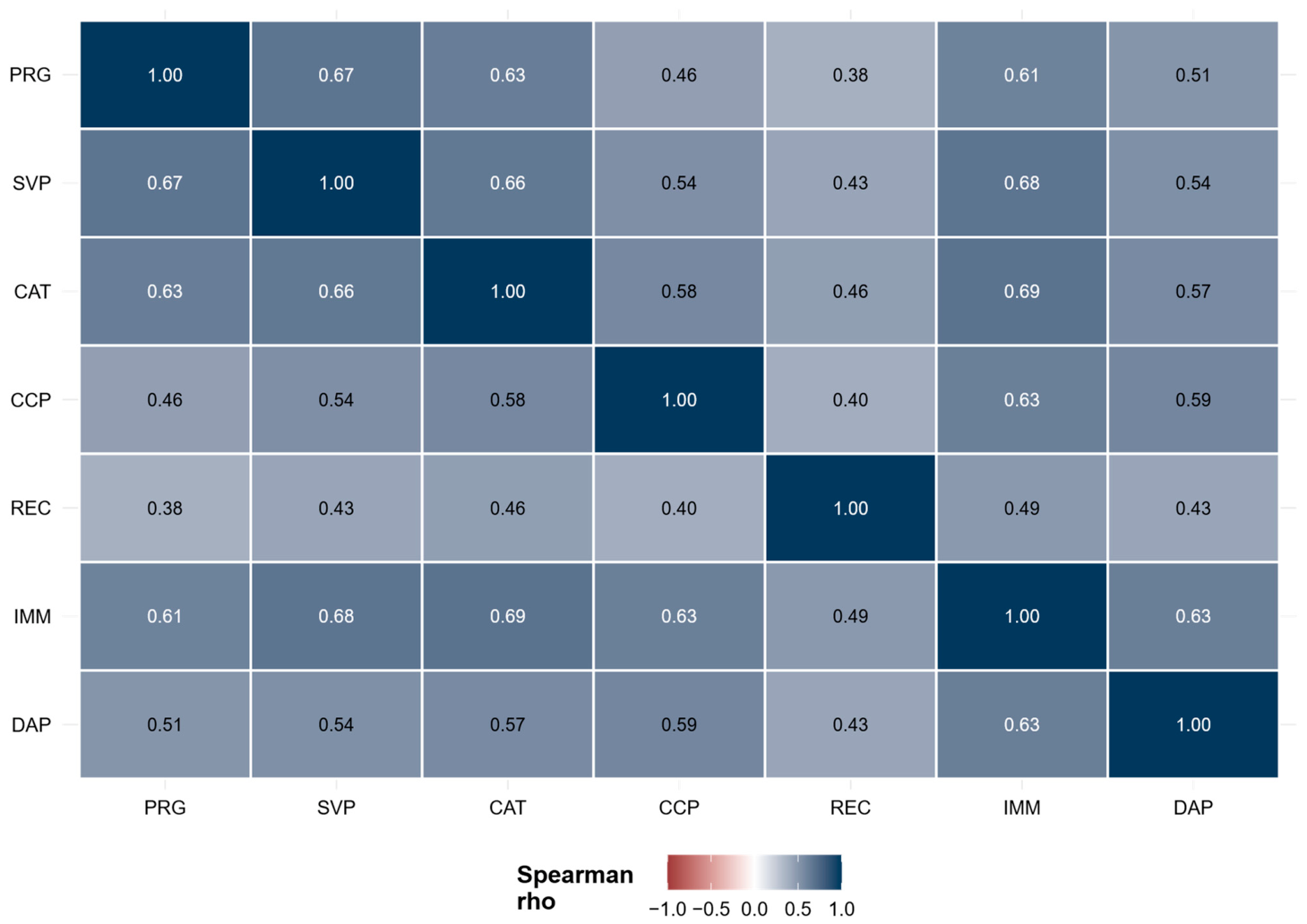
This study examines how perceived geotechnical risk, trust in technical assistance, and willingness to pay for minimal geotechnical mitigation relate to one another among residents and construction-related professionals in Cuenca, Ecuador. Specifically, it addresses three research questions (RQ): (RQ1) What levels of perceived geotechnical risk, trust in technical assistance, mitigation adoption intention, and willingness to pay are reported by this population? (RQ2) How are these constructs, together with perceived behavioral control and economic constraint, associated with one another? (RQ3) Do these constructs differ by sociodemographic and professional-profile characteristics, particularly between technically trained and non-technical respondents? To address these questions, the present study reports a cross-sectional survey analyzed using non-parametric, confirmatory-factor, and structural-equation methods (
Section 2), and discusses the implications of the findings for risk communication and mitigation-support policy (
Section 4).
Within this scope, the study contributes original empirical evidence on a combination of constructs—perceived geotechnical risk, trust in technical assistance, and willingness to pay—that has not previously been examined jointly in the geotechnical risk literature, together with a validated, reusable measurement instrument that can be adapted to other Andean or Latin American cities facing comparable geotechnical exposure. The evidence generated is intended to inform local risk communication strategies and policy discussions on minimal geotechnical assistance programs, particularly regarding the relative roles of awareness, trust, and economic accessibility in shaping residents’ engagement with preventive geotechnical measures.
The problem addressed here sits squarely within the sustainable urban development agenda. Sustainable Development Goal 11 (Sustainable Cities and Communities) explicitly calls for reducing deaths, the number of people affected, and the direct economic losses caused by disasters, including those that are water- and geology-related, with particular attention to protecting the poor and people in vulnerable situations. In rapidly urbanizing Andean cities, geotechnical risk mitigation is therefore not only an engineering problem but a determinant of the social and economic dimensions of urban sustainability: unmitigated landslide and slope-instability hazards erode housing stock, displace low-income households onto ever more marginal land, and impose recovery costs that can outweigh the resources available to families and municipalities alike. Understanding whether residents and construction professionals perceive this risk, trust the technical actors who could help manage it, and are economically able and willing to pay for preventive assistance is accordingly a precondition for designing affordable, socially inclusive, and institutionally credible mitigation programs—the kind of demand-side evidence that sustainable disaster risk reduction policy in informally built Andean cities has so far lacked.
5. Conclusions
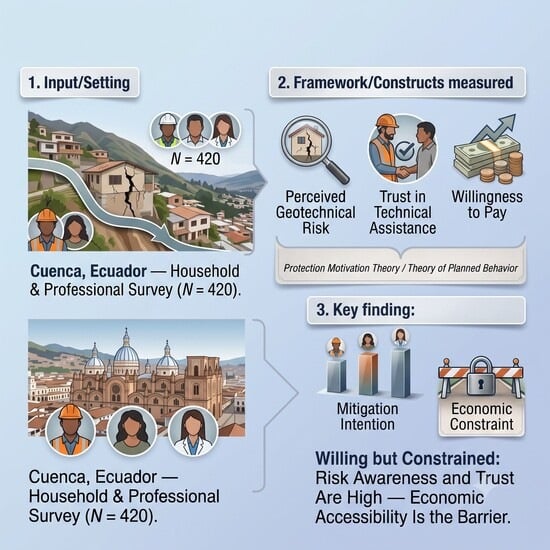
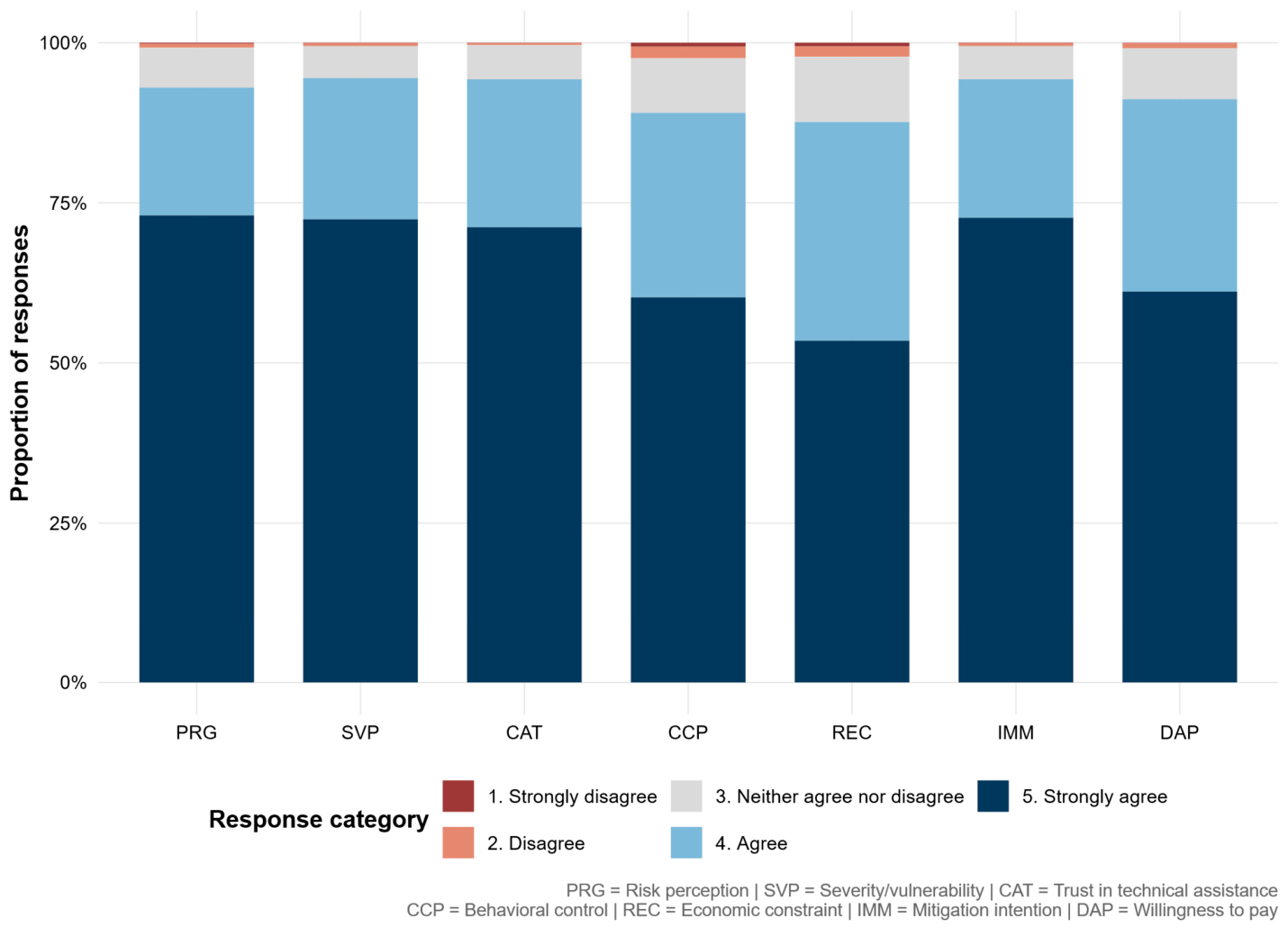
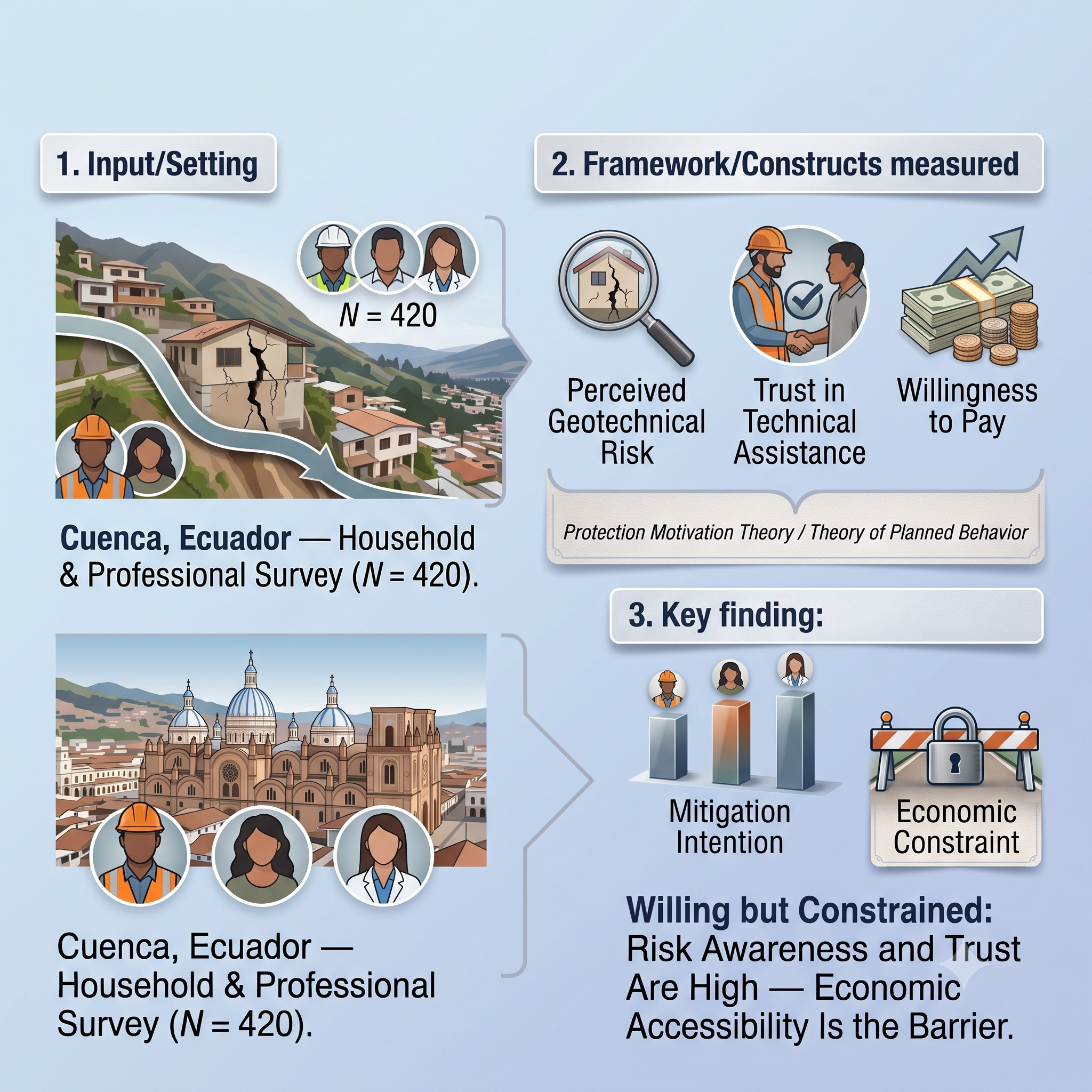
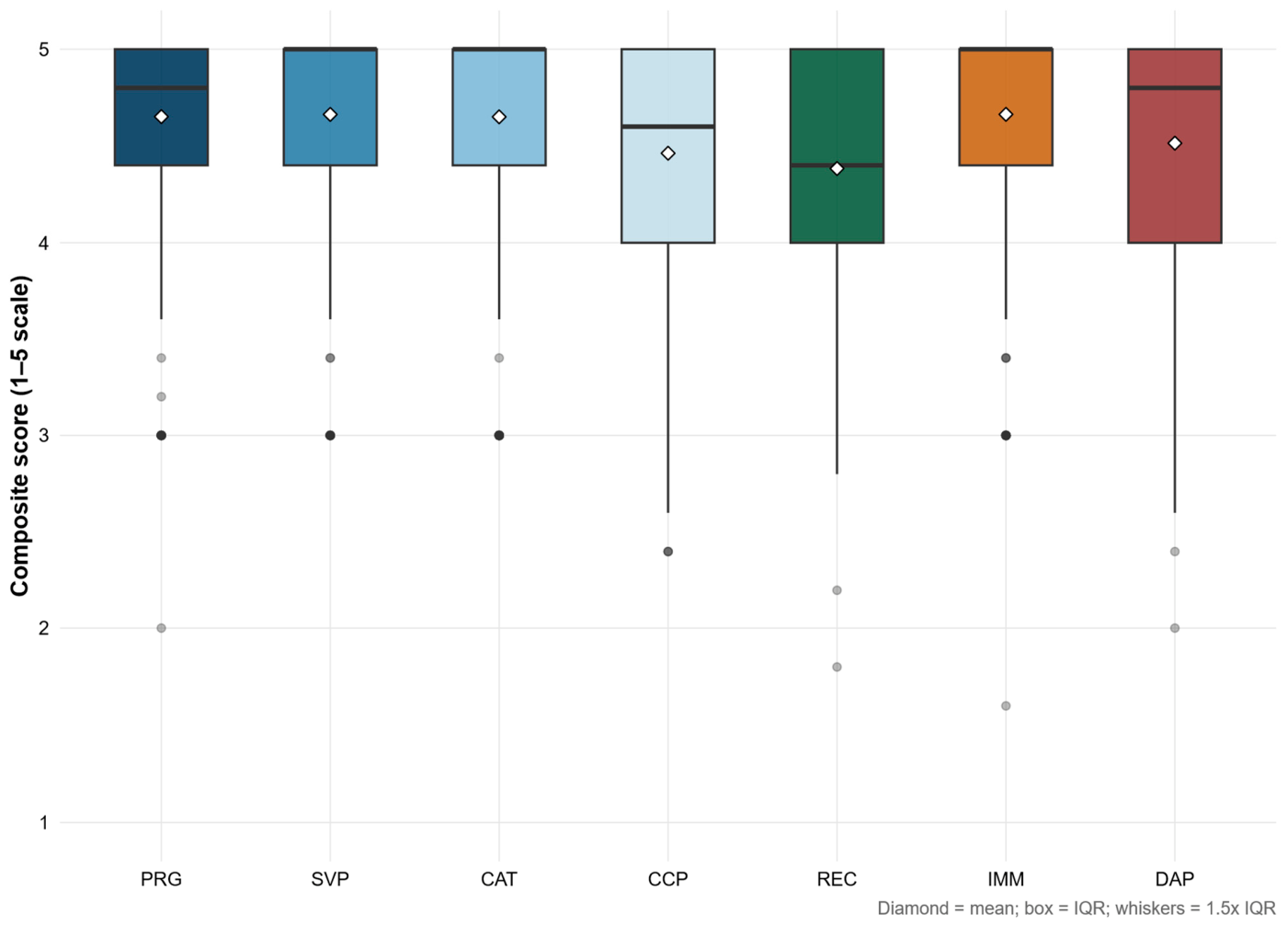
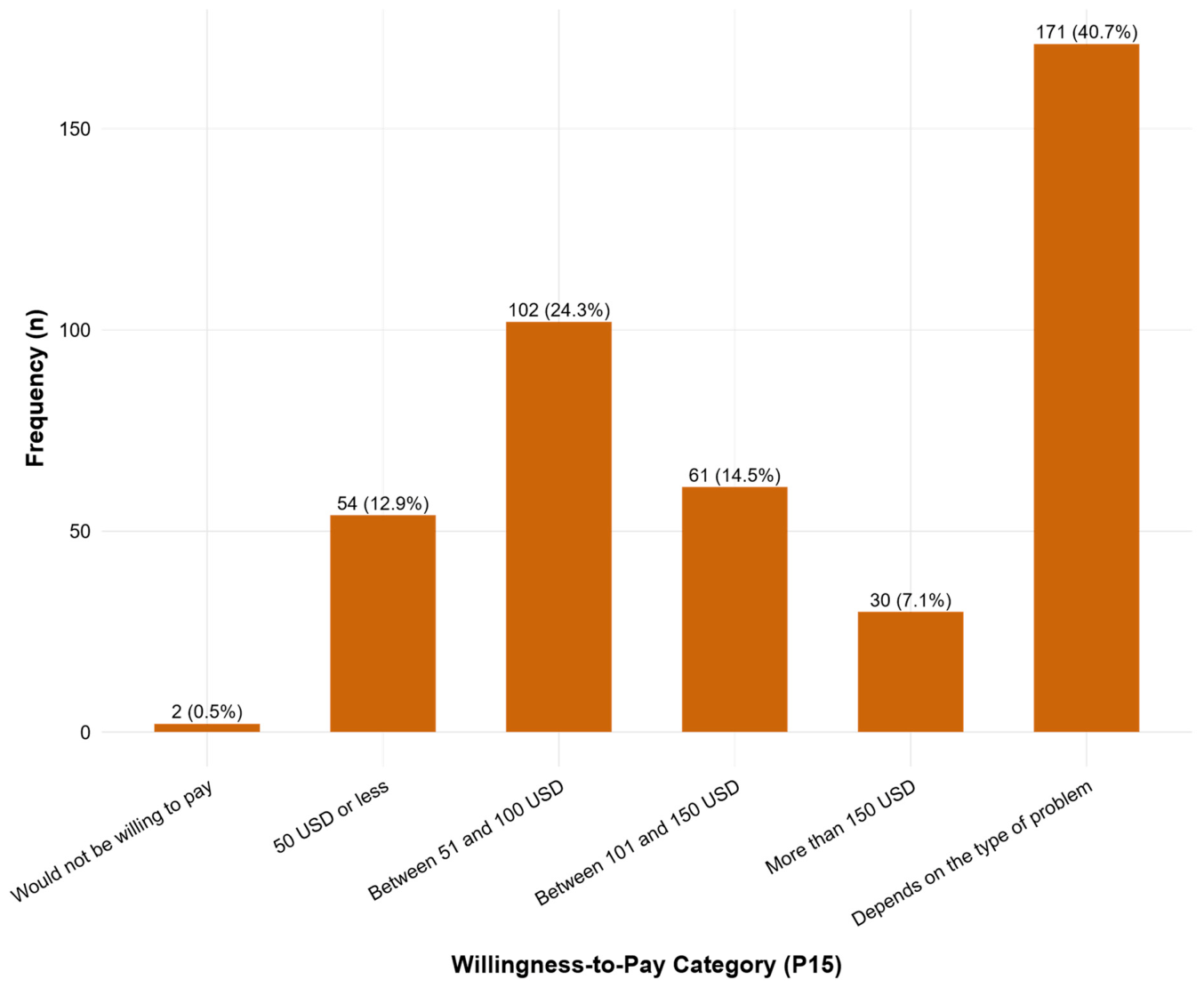
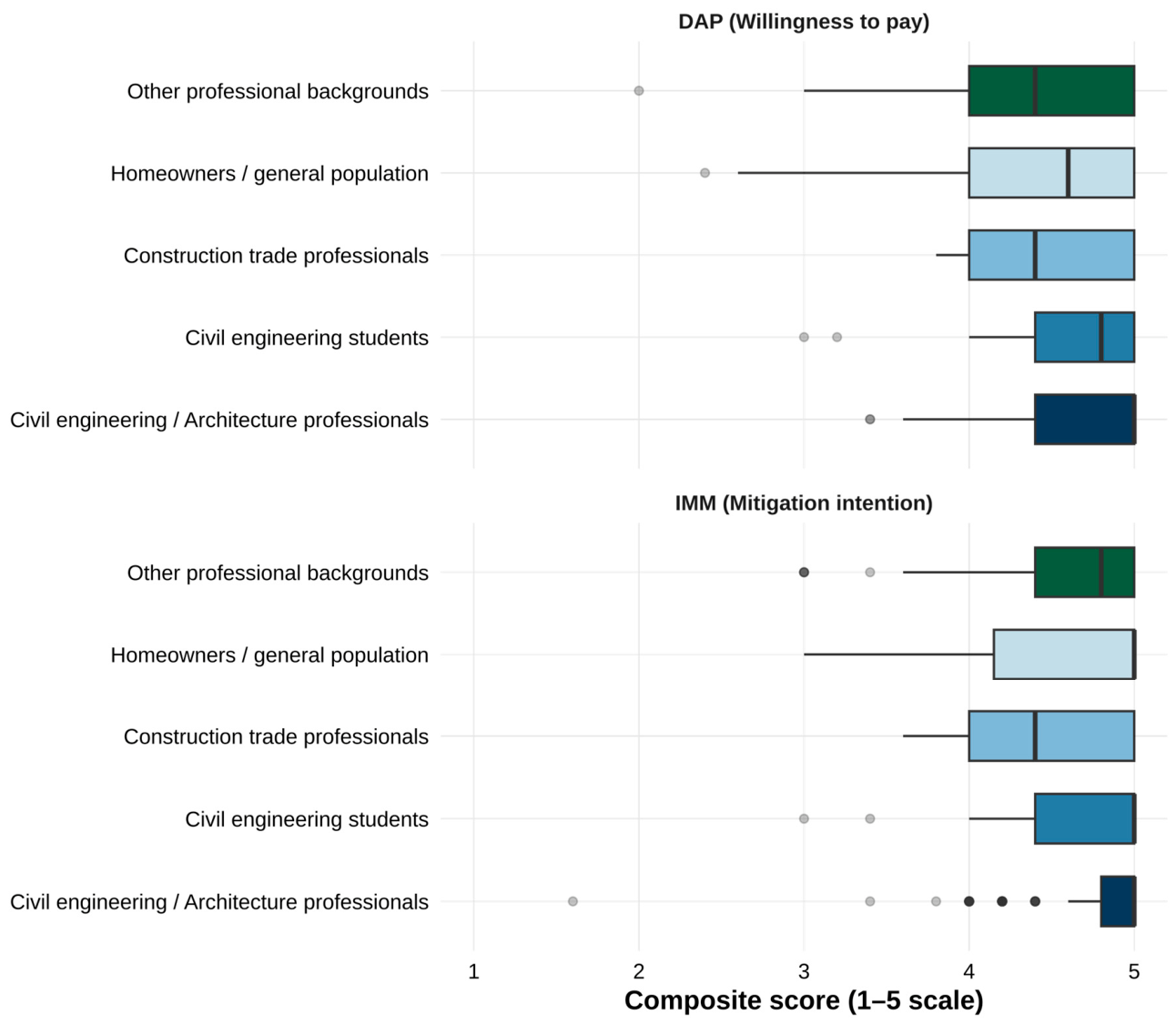
This study assessed the level of perceived geotechnical risk, trust in technical assistance, and willingness to pay for minimal geotechnical mitigation measures among residents and construction-related professionals in Cuenca, Ecuador, and examined the associations among these constructs together with their relationship to sociodemographic and professional-profile characteristics. The evidence indicates a population that is simultaneously risk-aware, confident in technical assistance, and inclined toward mitigation action, a profile that departs from the fatalism-trap pattern reported elsewhere in the landslide-behavior literature and is instead consistent with a coping-appraisal-driven account of protective motivation, in which trust in technical assistance emerged as the construct most closely tied to mitigation intention. Perceived economic constraint was found to coexist with, rather than suppress, individual mitigation intention and willingness to pay, suggesting that it functions in this population as a recognized structural barrier and not a personally limiting one; this nuance qualifies, without contradicting, the broader premise that cost remains a relevant obstacle to geotechnical risk mitigation in this context. The attitudinal disposition to pay did not translate consistently into the specific monetary amount respondents declared, indicating that willingness to pay for geotechnical assistance should be interpreted as a general orientation, not as a stable predictor of an exact payment. Professional profile was associated with mitigation intention and willingness to pay in bivariate comparisons, most notably between civil engineering and architecture professionals and other occupational groups; supplementary multivariable analysis, however, indicates this association is better attributed to educational attainment in general than to formal engineering training specifically, a distinction relevant to how the finding is applied in practice. Taken together, these conclusions support a revised understanding of the “willing but constrained” premise guiding this research: within the single-city, descriptive–correlational scope of the study, respondents in this sample reported high stated readiness to engage with geotechnical risk mitigation and expressed trust in the technical actors who could support it, while economic accessibility, rather than a deficit of awareness or trust, appears to be the dimension most in need of attention when designing minimal geotechnical assistance programs for residential contexts in Andean cities, pending confirmation in a more representative sample. Because the barrier identified here is economic and structural rather than a lack of awareness or trust, addressing it through affordable, subsidized, or sliding-scale geotechnical assistance programs represents a concrete pathway for advancing sustainable, resilience-oriented urban development in Cuenca and other Andean cities confronting comparable informal-construction and landslide-exposure conditions.