1. Introduction
Recently, Environmental, Social, and Governance (ESG) or Sustainability has become one of the hot topics among academicians and practitioners [
1,
2]. The United Nations Global Compact in June 2004 introduced, for the first time, the concept of ESG and urged organizations to consider ESG performance with business objectives [
3]. Many organizations, such as the United Nations, the International Reporting Standards Foundation, and concerned investment institutions, jointly promoted the ESG phenomenon to the public and extended new research areas in ESG and its applications [
4]. ESG investments are considered a significant element for attaining Sustainable Development Goals (SDGs) along with nations’ climate protection goals. The increasing relevance of ESG disclosures in shaping corporate transparency and accountability, it becomes essential to understand how these disclosures translate into investors’ perceptions and actions. As ESG reporting becomes more prevalent, its role in influencing investment choices demands closer examination, particularly because asymmetric information or information failure exists in every economic system [
5,
6,
7].
Financial markets are mainly classified based on the traded financial assets and include both institutional and individual investors. Most shares are owned by institutional investors, including pension funds, mutual funds, endowments, and foundations. Generally, institutional investors trade high volumes of transactions [
8,
9]. Conversely, individual investors trade in small volumes and are termed noise traders, as they tend to be impulsive and irrational in their trading [
10,
11]. Their irrational and suboptimal investment decisions and choices create an avenue for institutional investors to reap profits and gains by exhibiting professionalism in trading [
12]. An institutional investor, compared to an individual investor, has more access to information, market intelligence, and resources to make sound investment decisions, while individual investors remain divergent in making investment decisions [
13]. Researchers and policymakers are rapidly focusing on the costs and benefits of ESG investing [
14,
15,
16], but the relative significance of financial and non-financial considerations among retail investors and their motives for ESG investment are not well understood [
17,
18]. Consequently, retail investors’ investment decisions not only depend on the valuation of risk and return but are also subject to psychological and personal traits [
19]. The psychological biases of investors, including overconfidence, risk aversion, loss aversion, and regret, determine investment behavior; if not thoroughly considered, they can cause suboptimal decisions. The investment rationality assumption has been challenged on multiple grounds, such as individual bounded rationality, perfect market efficiency, asymmetric information, and psychological biases [
20].
The extensive literature is well documented on institutional investors’ decisions [
21,
22,
23,
24]. On the other hand, limited empirical evidence exists to investigate the determinants of the trading behavior of individual investors [
25,
26]. Individual investors lack resources and asset allocations, have less diversified portfolios, and, most of the time, their trading behaviors are based on unrealistic expectations. There is a scarcity of evidence on individual investors’ trading behaviors, and most existing studies are in the context of developed economies [
13,
27]. Consequently, this requires investigating individual investors’ trading behaviors in the context of a developing country to validate existing theories and extend the body of knowledge through new avenues [
28,
29,
30]. Furthermore, existing studies have largely focused on the direct relationship between ESG disclosures and investors’ behaviors, overlooking the psychological mechanisms through which ESG information shapes investors’ perceptions [
31].
Traditional finance theories have often failed to fully explain real market behavior, as market anomalies and financial bubbles persist. Therefore, the signaling theory is adopted in this study as the underlying mechanism. The signaling theory considers informational disclosures as signals sent by firms to create future prospects [
32,
33,
34,
35]. The signaling theory holds great importance for understanding the behavioral mechanism where two parties—corporations and their stakeholders—have different needs for information. Therefore, the signaling theory can provide exceptional insight into determinants of individual investors’ behaviors. Previous studies lack empirical evidence regarding the validity of the signaling theory and its roles to understand investment behavior [
36,
37].
Therefore, in the realm of the signaling theory, a significant theoretical contribution emerges in the context of ESG disclosure and how it shapes retail investors’ behaviors. Generally, stakeholders build perceptions of a corporate’s present behavior based on prior perceived reputation or perception. The contribution specifically revolves around ESG signals provided by companies, how investors respond to these disclosures, and how ESG signals are decoded by recipients to make informed decisions. Furthermore, how the corporate reputation of the signal provider (i.e., the company) is perceived by the receiver (i.e., the investor) impacts those decisions. Notably, the disclosed information’s quality is often difficult to assess; so, the reputation of reporting entities plays a significant role in evaluating the information being disclosed [
38,
39]. Corporate reputation is a source of competitive advantage that cannot be easily imitated and primarily contributes to a firm’s value [
40,
41,
42]. However, despite the extensive literature on reputation, it is still difficult to draw conclusions about reputation and to generalize empirical findings [
43]. According to Bigus et al. [
43], the idea of corporate reputation is a Gordian concept, which is characterized by definitional ambiguity and inadequate construct assessment. Extending the notion, most studies revealed deficiencies in the common understanding of corporate reputation and mismatches in its measurement. Common understanding is required so stakeholders can assess the integrity and quality of the company. Similarly, the positive reputation of the company’s products and its social and environmental features will induce responsible perspectives among employees, consumers, and other stakeholders. Moreover, firms with favorable reputations related to non-financial information have more reliable ESG or sustainability disclosures, thereby lowering the chances of greenwashing. Corporate reputation is even more significant in non-financial than financial reporting, as it is still uncertain how ESG reporting quality can be determined [
44,
45,
46].
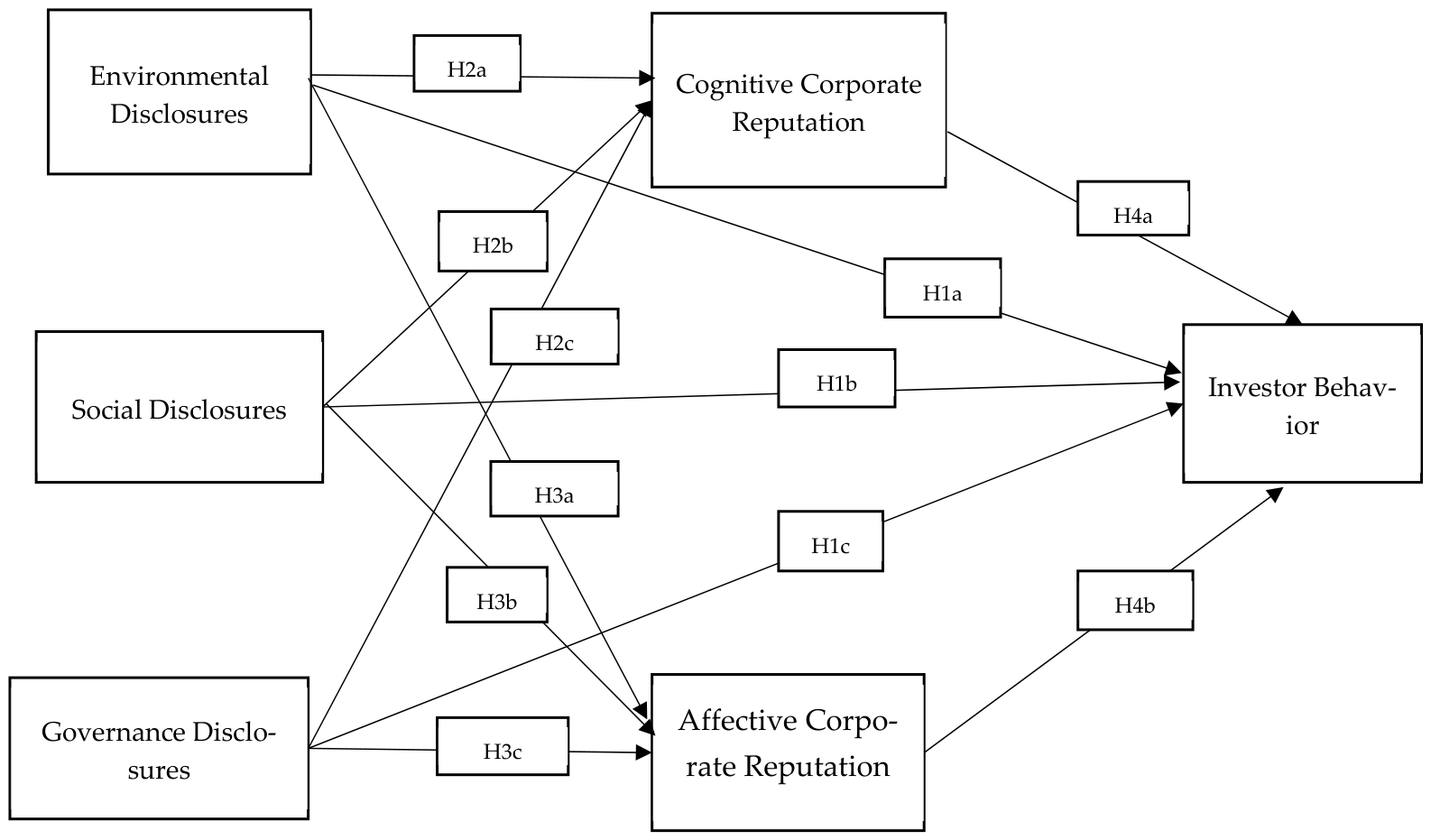
This research significantly advances the conceptualization of corporate reputation by examining it through affective corporate reputation, encompassing likeability and integrity, and, secondly, cognitive corporate reputation, which includes competence and performance. It provides a more sophisticated comprehension of corporate reputation by incorporating these dual dimensions, underscoring the impact of investors’ emotional connections and perceptions of a company’s competence on its overall reputation. This dual approach enhances the current literature by offering a comprehensive perspective on corporate reputation that integrates cognitive and affective perspectives. Considering the identified gap, this research aims to investigate the intersection between Environmental, Social, and Governance disclosures and individual investors’ behavior, as well as how corporate reputation influences ESG signals that affect investment behavior. This study examines how perceived corporate reputation shapes investors’ interpretation of ESG signals in an emerging market context, such as Pakistan, where the number of individual investors is steadily increasing, while information asymmetry remains a significant challenge. By focusing on this setting, the study provides insights into the role of corporate reputation in influencing investment decisions under conditions of limited information transparency.
3. Research Methods
This study adopted a positivist approach among the philosophies because the research problem under investigation relates to cause and effect, which can be objectively examined. Furthermore, the study is based on a deductive approach; hypotheses are postulated on signaling. Data are then collected from a structured questionnaire from the stock market. These steps are in concordance with a deductive research approach that involves testing theories with data. The study conducts the analysis of the proposed model by employing different statistical tools, illustrating that the deductive approach is appropriate for quantitative research.
For primary data collection, purposive sampling was used from the target population based on the following reasons: firstly, it was time- and cost-effective; secondly, it accounted for individual investors’ willingness to participate in the survey based on their availability. Purposively, investors who were actively engaged in stock exchange trading, i.e., buying and selling shares, were identified.
3.1. Data Collection and Sample
To examine the influence of ESG disclosures on individual investors’ decision-making behavior. Data were collected from investors who were actively engaged in stock exchange trading, i.e., buying and selling shares. The research instrument (Survey) was distributed among brokerage houses to be filled out by investors and to individual investors via investor groups on WhatsApp. These questionnaires were developed from previous surveys in behavioral economics and finance and then altered according to reviewer comments to enhance comprehensiveness. The five-point Likert scale is used by researchers in the social sciences mainly because it is simple to use, straightforward, and realistic [
114]. The paper relies on cross-sectional survey data collected from investors working on the Pakistan Stock Exchange. The final number of responses for analysis in this study is 390, which fulfills both criteria mentioned by multiple researchers, such as more than ten responses against each variable.
Table 1 shows the profile of 390 respondents.
Common method bias (CMB) was assessed to ensure it does not affect the study results. Harman’s single-factor test showed that no single factor accounted for the majority of the variance (47%), which is below the critical threshold of 50%, indicating that CMB is not a serious concern.
3.2. Measurement
Environmental disclosures (ED): The determinants of environmental issues include carbon emissions, product carbon footprint, environmental impact of financing activities and climate change vulnerability, water issues, biodiversity, and land-use issues. Other measures include sourcing raw materials for manufacturing, controlling toxic emissions and waste, minimizing packaging and the release of electronic waste into the market, incorporating clean technologies, advocating for green construction, and using renewable energy resources, among others. The investor’s concern is with an organization’s responsiveness to the conservation of the natural environment. This covers the implementation of sustainability and environmental management within the organization’s tactical and strategic framework, solving problems related to the production of its products, its services, and its overall environmental footprint.
Social disclosures (SD): An organization’s efforts to enhance its social impact focus on fostering positive change both internally and within the broader community. These initiatives encompass various areas, including labor management, workplace health and safety, human capital development, and adherence to ethical labor standards across the supply chain. The organization places significant emphasis on product safety and quality, chemical safety, consumer financial protection, data privacy and security, as well as responsible investment practices. Additionally, it addresses critical societal challenges such as health and demographic risks, controversial sourcing, community engagement, and equitable access to essential services like communication, finance, and healthcare. Furthermore, it seeks to create opportunities in nutrition and health, striving to improve overall societal well-being through comprehensive and responsible actions.
Governance disclosures (GD): The organization also prioritizes business ethics by upholding integrity in all operations and ensuring tax transparency to build trust with stakeholders and the broader community. Protecting shareholder rights is another critical focus, ensuring that all shareholders have equitable access to information and influence in corporate decisions. These efforts collectively aim to enhance trust, sustainability, and long-term value creation for all stakeholders, reinforcing the organization’s role as a responsible and forward-thinking leader in its industry. This study has adapted questions for Environmental, Social, and Governance disclosure from Sultana et al., [
68].
Corporate reputation (CR): The combination of affective and cognitive components highlights that corporate reputation is conceptualized as an attitudinal construct, where attitude encompasses subjective, emotional, and cognitive mindsets. Evaluating corporate reputation, therefore, involves assessing subjective perceptions of a company’s attributes, such as performance and competence, while also reflecting an intrinsic orientation toward these attributes in terms of likeability and trust. The affective component of corporate reputation captures the emotional responses investors have toward the invested company. In contrast, the cognitive component reflects investors’ subjective knowledge or perceptions, along with their intended rational evaluations of the company’s attributes. These include aspects such as management excellence, economic and financial performance, and the value delivered to investors. This study adopts affective reputation items that represent perceptions of the company’s ethics, culture, corporate social responsibility, and overall emotional appeal. The measurement items for corporate reputation have been adapted previously [
89,
98].
Investors’ behavior (IB): Individuals make financial decisions through assessment procedures that combine forecasting and evaluation levels with reevaluation processes of their strategies. Individual investors’ investment behaviors tend to show themselves through how frequently they trade [
115,
116,
117].
5. Discussion and Conclusions
The results of the study are consistent with the works of Khemakhem and Turki [
125], Holm and Rikhardsson [
126], and Iatridis [
127]. Khemir [
128] also reported regarding ESG disclosure positive effects on investment decisions. However, results are contradictory with [
129,
130]. Moreover, individual dimension results have shown consistency with existing studies, such as in the case of corporate environmental disclosures [
68,
131,
132,
133], corporate social disclosures [
66,
134,
135], and corporate governance disclosures [
136,
137,
138,
139]. The research proves that the signaling theory is applicable within Pakistan Stock Exchange operations by showing that Pakistani investors interpret ESG data similarly to investors from both developing and emerging markets. The research evaluates how ESG components influence investment decisions by showing that all three dimensions enhance their perceived reputation toward firms and investment decisions. The most vital factor affecting individual investors’ willingness to take risks is corporate governance, according to study results.
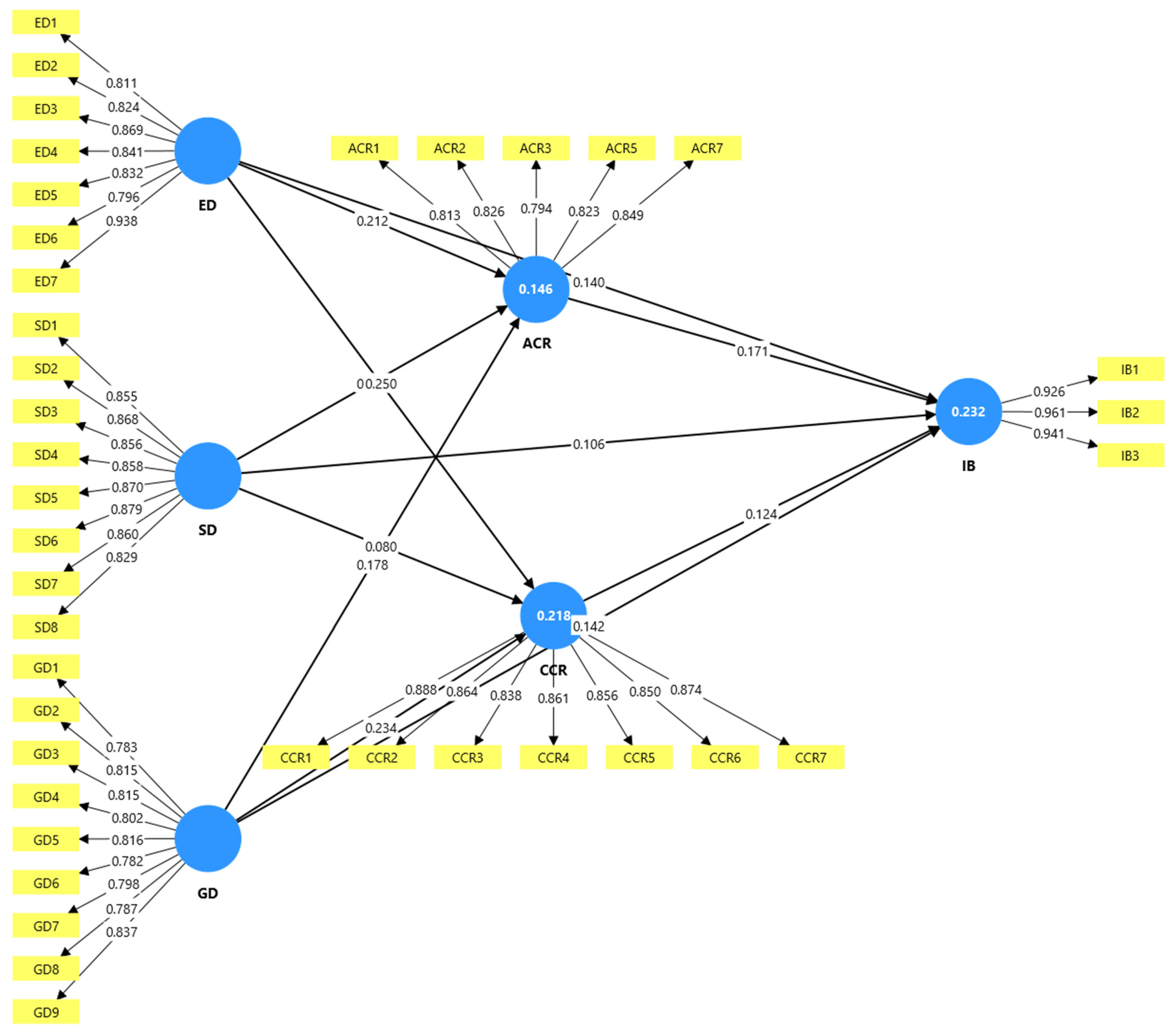
The study determines that governance stands out as the most vital factor that investors consider, but social disclosures hold minimal impact on their investment decisions. The decision-making process of Pakistani investors heavily relies on governance quality together with thorough environmental reporting, which helps form corporate reputations. The research demonstrates that ESG information disclosure deeply influences investors’ sentiment, with governance disclosure (GD) standing out as the foremost influence, followed by environmental (ED) and social (SD) disclosures, in determining financial market value relevance. Individual investors’ choices in Pakistan about which companies to invest in are significantly impacted by ESG information disclosure (p-values < 0.05) across all three dimensions.
The significant impact of environmental disclosures on corporate reputation suggests that investors are increasingly concerned about corporate sustainability practices. Firms that actively disclose their environmental impact, carbon footprint reduction strategies, and resource conservation efforts tend to garner a favorable reputation consistent with previous results [
77,
140,
141]. This aligns with signaling theory, which suggests that transparency in environmental performance enhances trust and credibility among investors, customers, and regulators. The positive effect of environmental disclosures increases corporate reputation. Similar findings have been reported previously [
142,
143,
144].
The mediation analysis reveals varying degrees of mediation for the environmental disclosure (ED), social disclosure (SD), and governance disclosure (GD) pathways influencing investors’ behavior (IB) through corporate cognitive reputation (CCR). The results indicate that CCR mediates the relationship between ED and IB, as the effect is significant (β = 0.031, p = 0.046). Similarly, GD also exhibits mediation, with a significant effect (β = 0.029, p = 0.05). In contrast, SD demonstrates no mediation, as the effect is insignificant (β = 0.01, p = 0.235). This suggests that corporate cognitive reputation does not explain the influence of social disclosure on investors’ behaviors, whereas environmental and governance disclosures impact investors’ behaviors through corporate cognitive reputation.
Similarly, the mediation analysis examines the role of ACR (affective corporate reputation) in the relationship between different dimensions of environmental disclosures (ED), social disclosure (SD), governance disclosure (GD), and investors’ behavior (IB). The results indicate that ACR mediates the relationship between ED and IB, as the effect (β = 0.036, p = 0.037) is significant. This suggests that while ED influences IB directly, ACR plays a meaningful intermediary role in enhancing this effect. Similarly, ACR mediates the relationship between GD and IB, with a significant effect (β = 0.031, p = 0.045). This implies that governance-related disclosures impact investors’ behaviors both directly and through their influence on attitudes toward corporate responsibility. In contrast, ACR does not significantly mediate the relationship between SD and IB (β = 0.013, p = 0.271). This suggests that social disclosures directly impact investors’ behaviors, not through ACR. The findings highlight the critical role of ACR in shaping how different types of disclosures influence investors, with governance and economic disclosures exerting both direct and indirect effects, whereas social disclosures rely entirely on investors’ perceptions of corporate responsibility.
This study concludes that individual investors should incorporate ESG information cautiously when making investment decisions. In particular, investors are encouraged to integrate non-financial information into their stock selection process, as it provides a more comprehensive reflection of a company’s long-term sustainability and going concern. However, the impact of ESG disclosures on investment decisions is largely influenced by investors’ perceptions of a company. Corporate reputation, used as a mediating variable in this study, plays a critical role in shaping these perceptions. This study contributes to the signaling theory by conceptualizing corporate reputation through two distinct dimensions: cognitive reputation—which reflects a company’s competence and performance—and affective reputation—which captures investors’ likeability, trust, and perceptions of the company’s integrity.
6. Implications, Limitations, and Future Directions
The study offers a novel perspective on individual investors’ behavior in Pakistan by examining the impact of ESG disclosures on investment decisions through affective and cognitive corporate reputation. This study contributes to the existing literature by emphasizing the dual role of corporate reputation, where affective reputation encompasses investors’ likeability and trust (emotional aspects), while cognitive reputation reflects a company’s competence and performance. By bridging these dimensions, the study extends the current body of knowledge and provides valuable insights for policymakers, brokers, and stock market regulators in Pakistan. Additionally, the findings enhance our understanding of how corporate reputation influences investment decisions, helping investors make more informed and strategic choices. For listed companies, transparent ESG reporting can strengthen reputation, enhance investors’ trust, and improve long-term competitiveness. For regulators, the results support the development of standardized and potentially mandatory ESG disclosure frameworks to increase market transparency and facilitate better investment decisions.
This study, while offering valuable insights, has several limitations that future research should address. It relied solely on self-reported survey data, which may introduce response or social desirability bias, and would benefit from the inclusion of secondary data sources like company reports and financial records to enhance validity. The cross-sectional design limits the understanding of long-term trends in investors’ behavior, suggesting a need for longitudinal studies. Additionally, since the research focused solely on the Pakistan Stock Exchange, the findings may not be generalizable to other markets with different regulatory and investor contexts; comparative studies across emerging and developed markets are recommended.



 ,
,