From Recognition to Practice: Integrating Ecocentric Values in Urban Soil Management


Abstract
1. Introduction
1.1. Background
1.2. Research Aim and Questions
2. Theoretical Framework
2.1. NbS and the Role of Urban Soil
2.2. The Anthropocentric–Ecocentric Continuum
2.3. Urban Soil Quality and Health: Assessment Challenges and Indicators
2.4. Values of Nature: An Analytical Framework for Assessing Soil Perspectives
3. Materials and Methods
3.1. Survey Design and Distribution
3.2. Data Analysis
4. Results
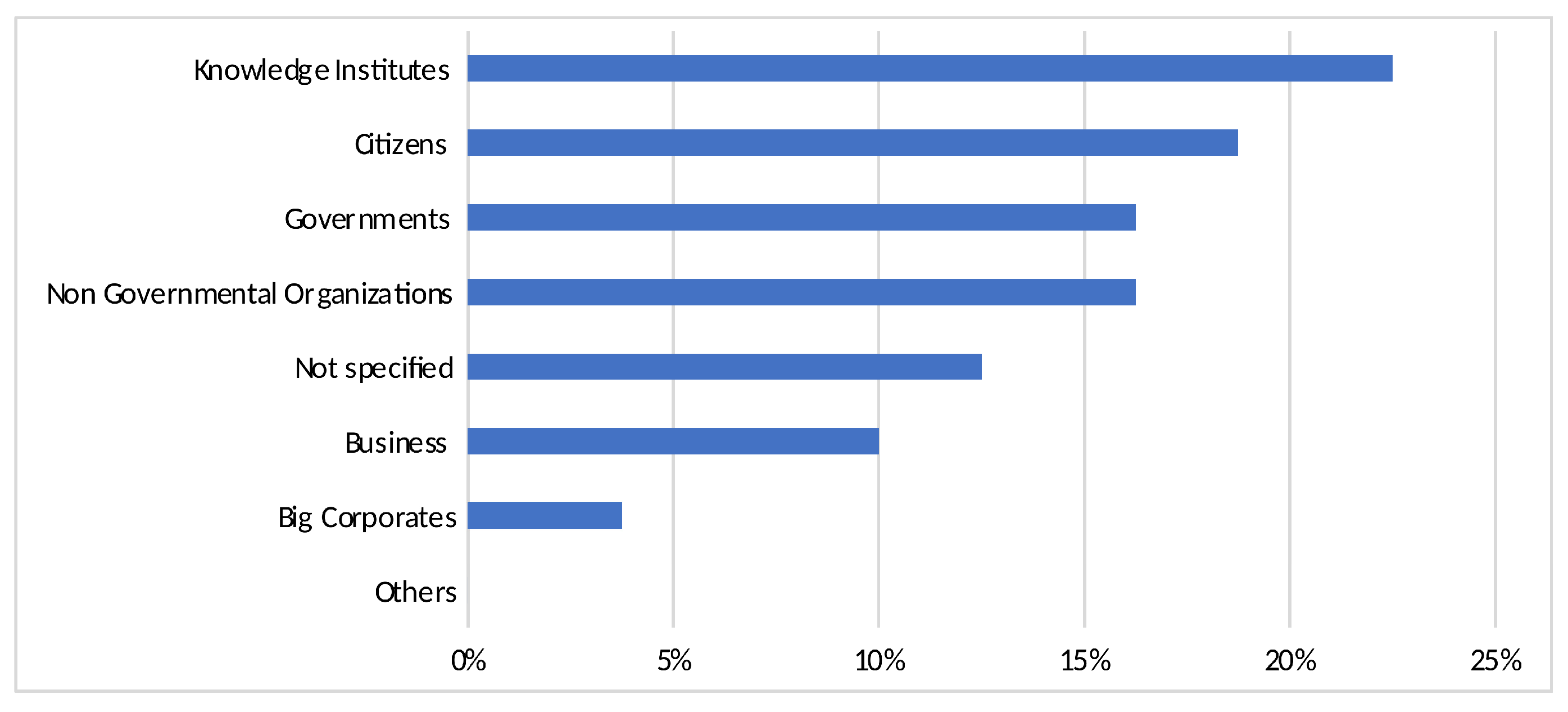
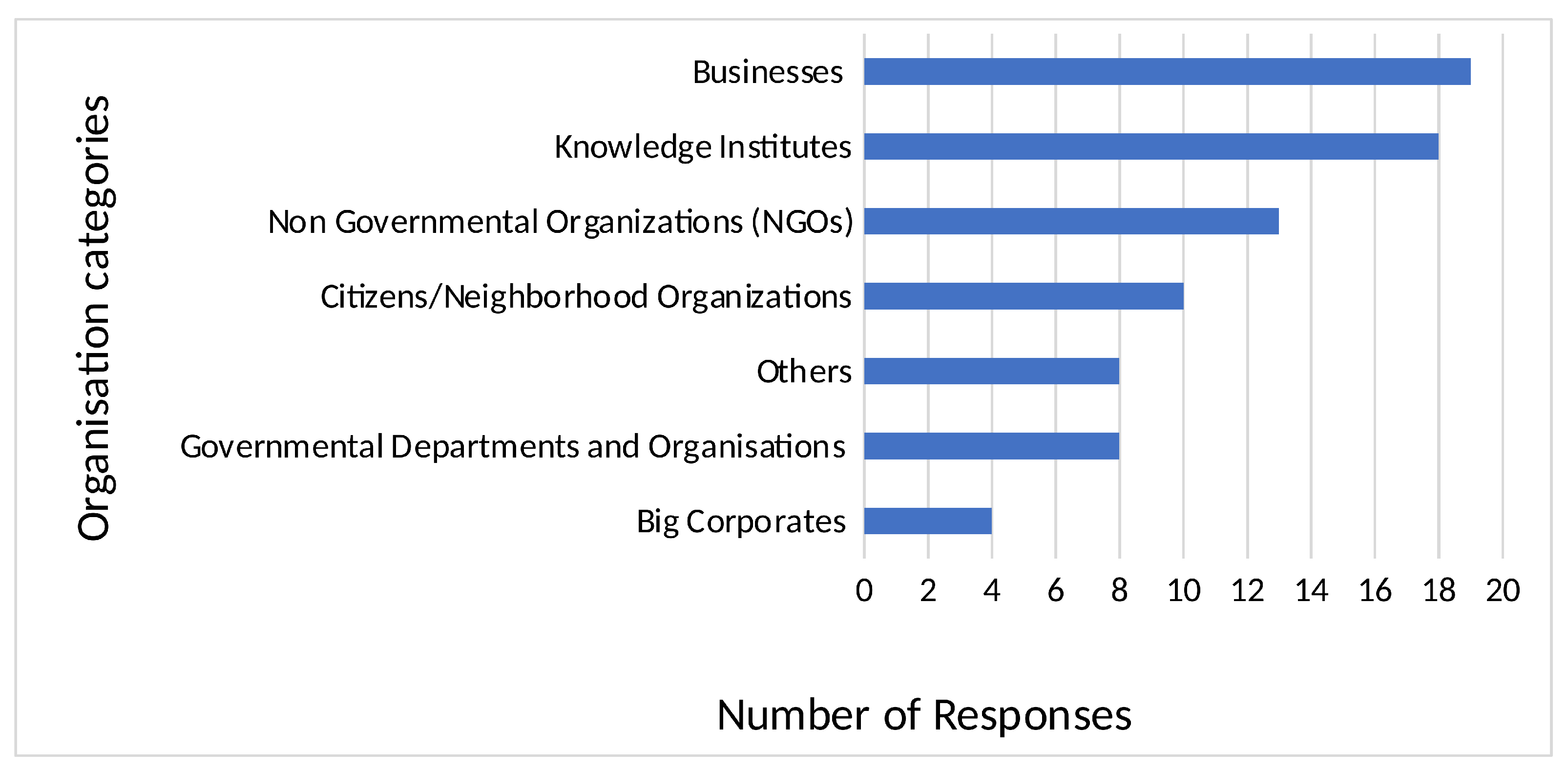
4.1. Categories of Stakeholders
4.2. Stakeholder Practices in Urban Soil Management
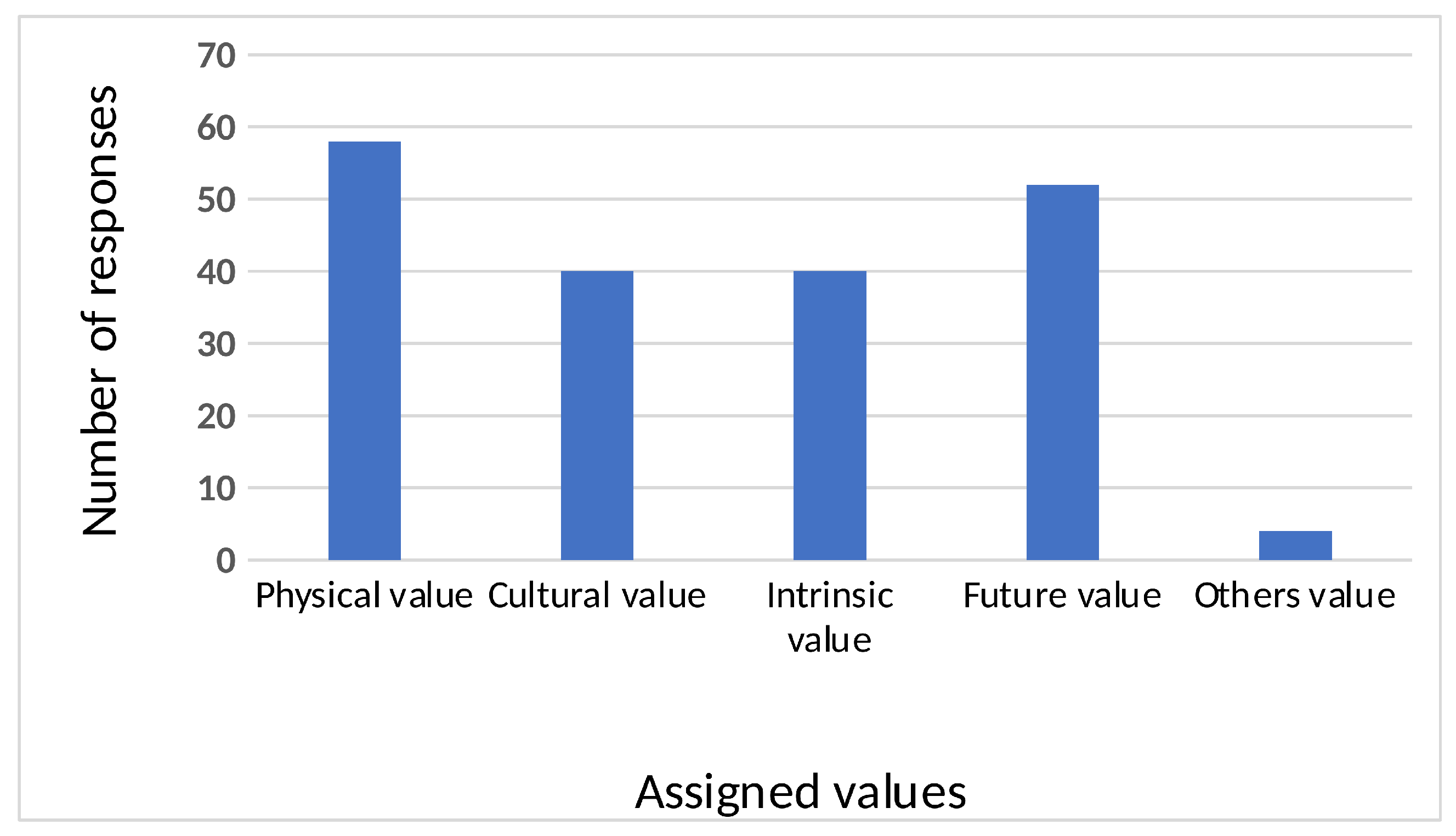
4.3. Values Attributed to Urban Soil
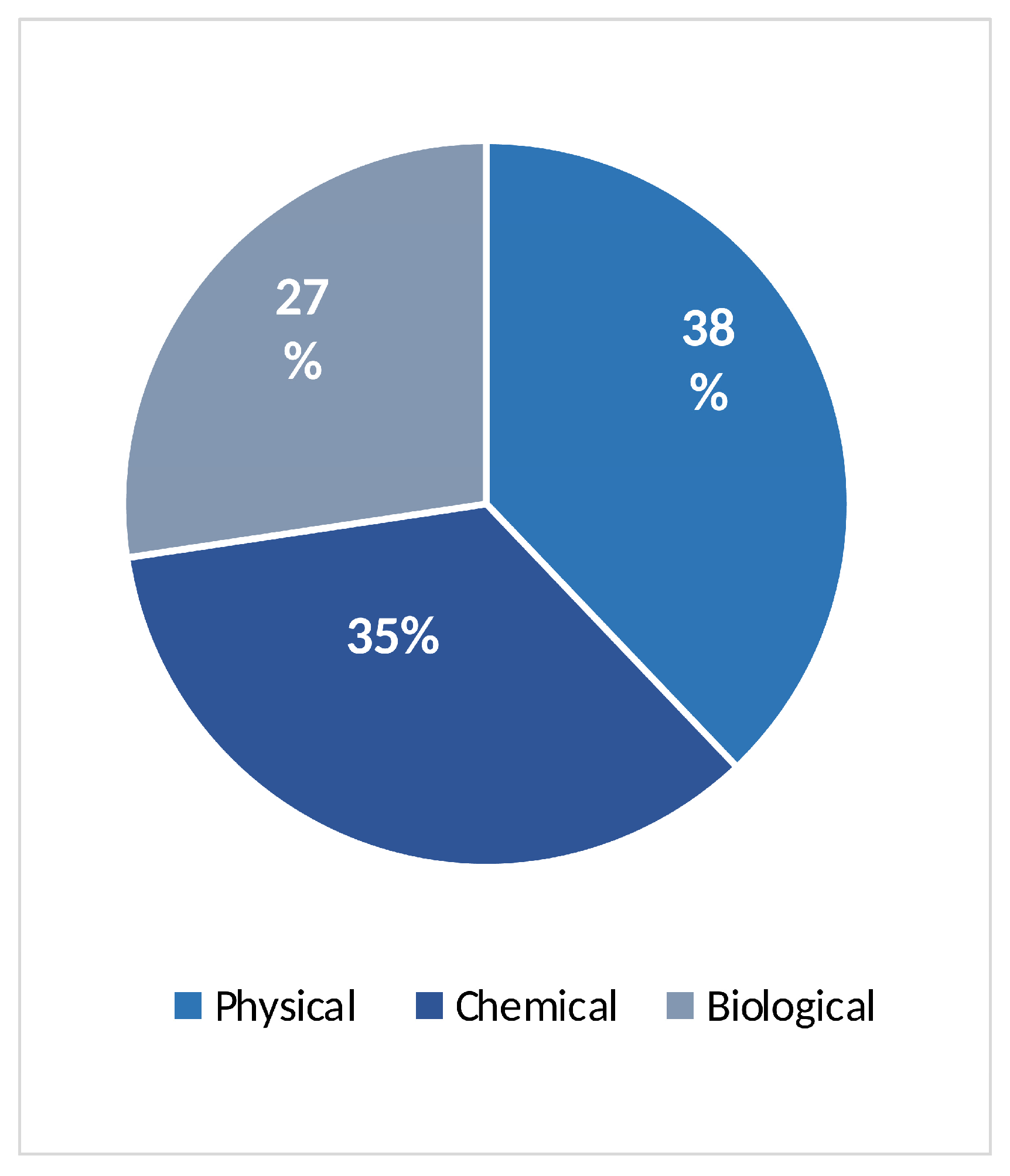
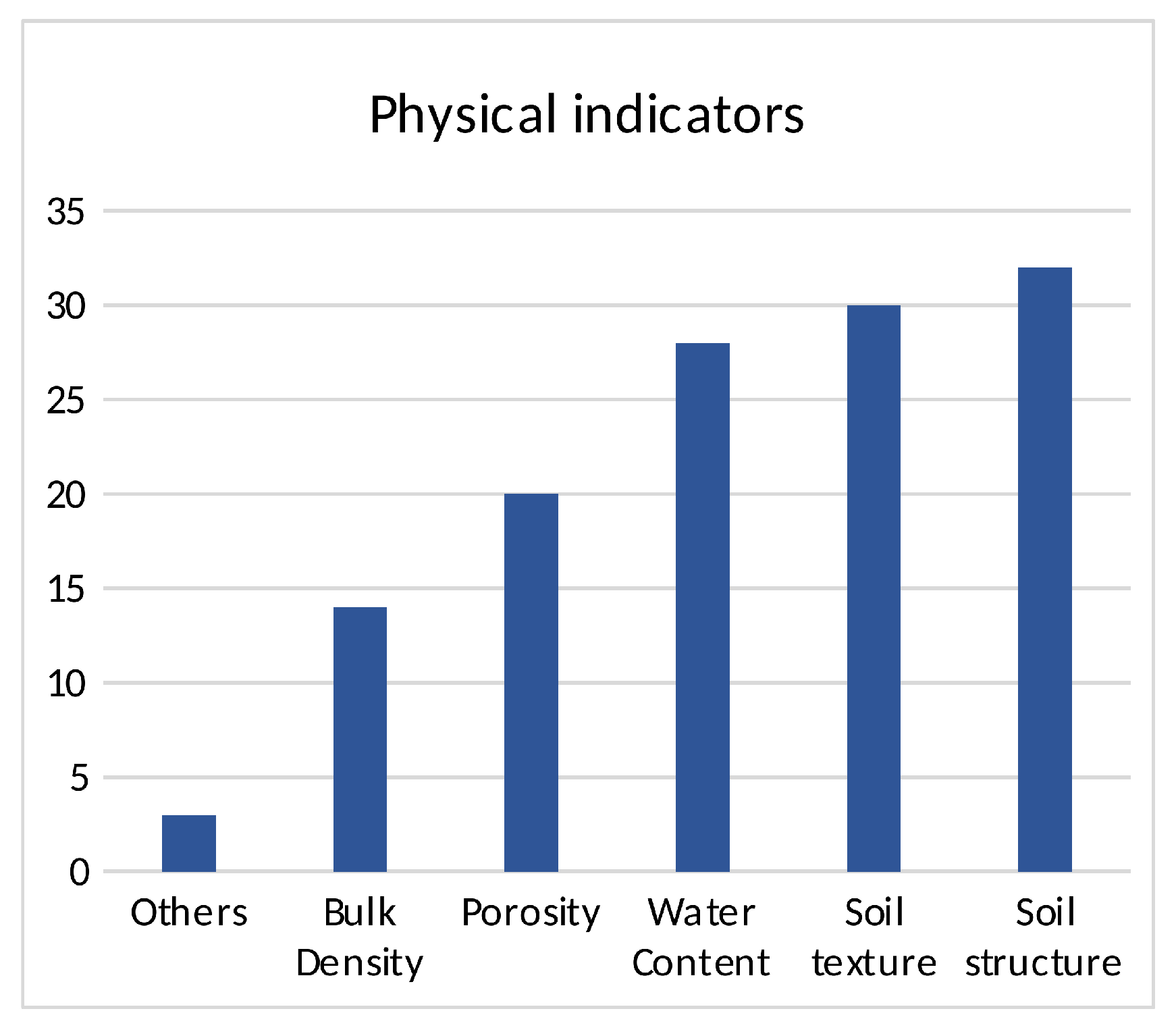
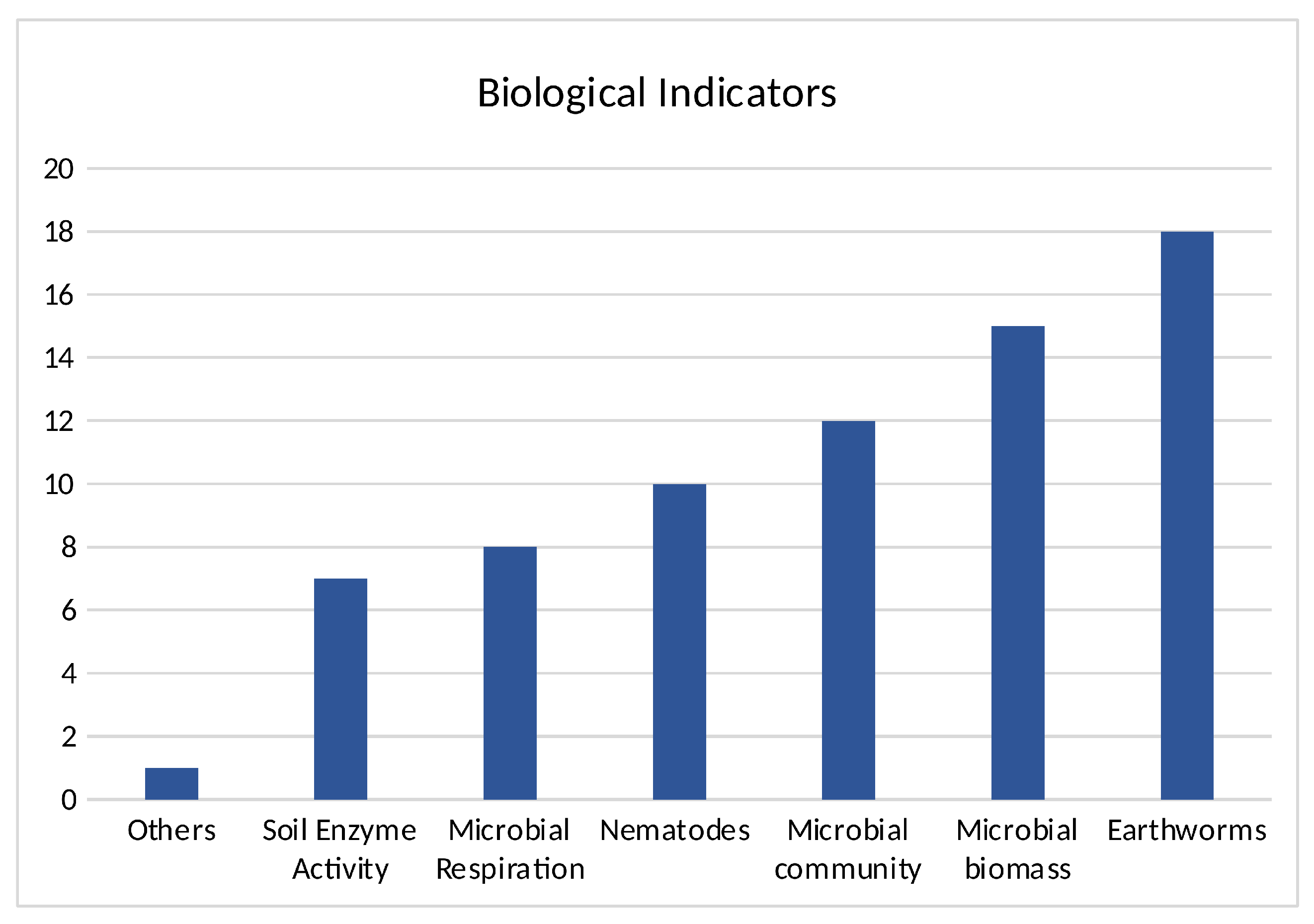
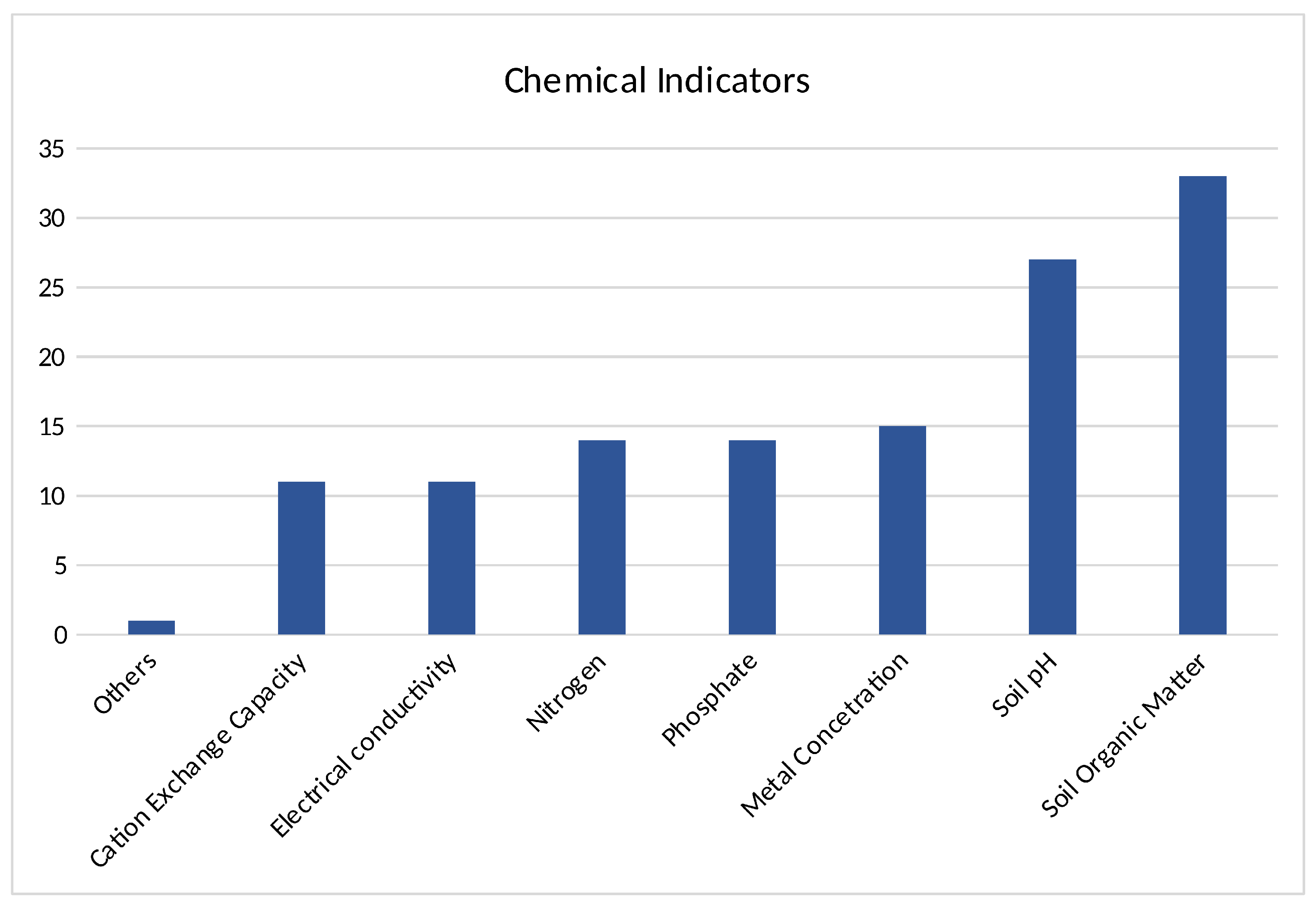
4.4. Soil Indicators Used in Practice
4.5. Soil Regeneration: Awareness, Implementation, and Approaches
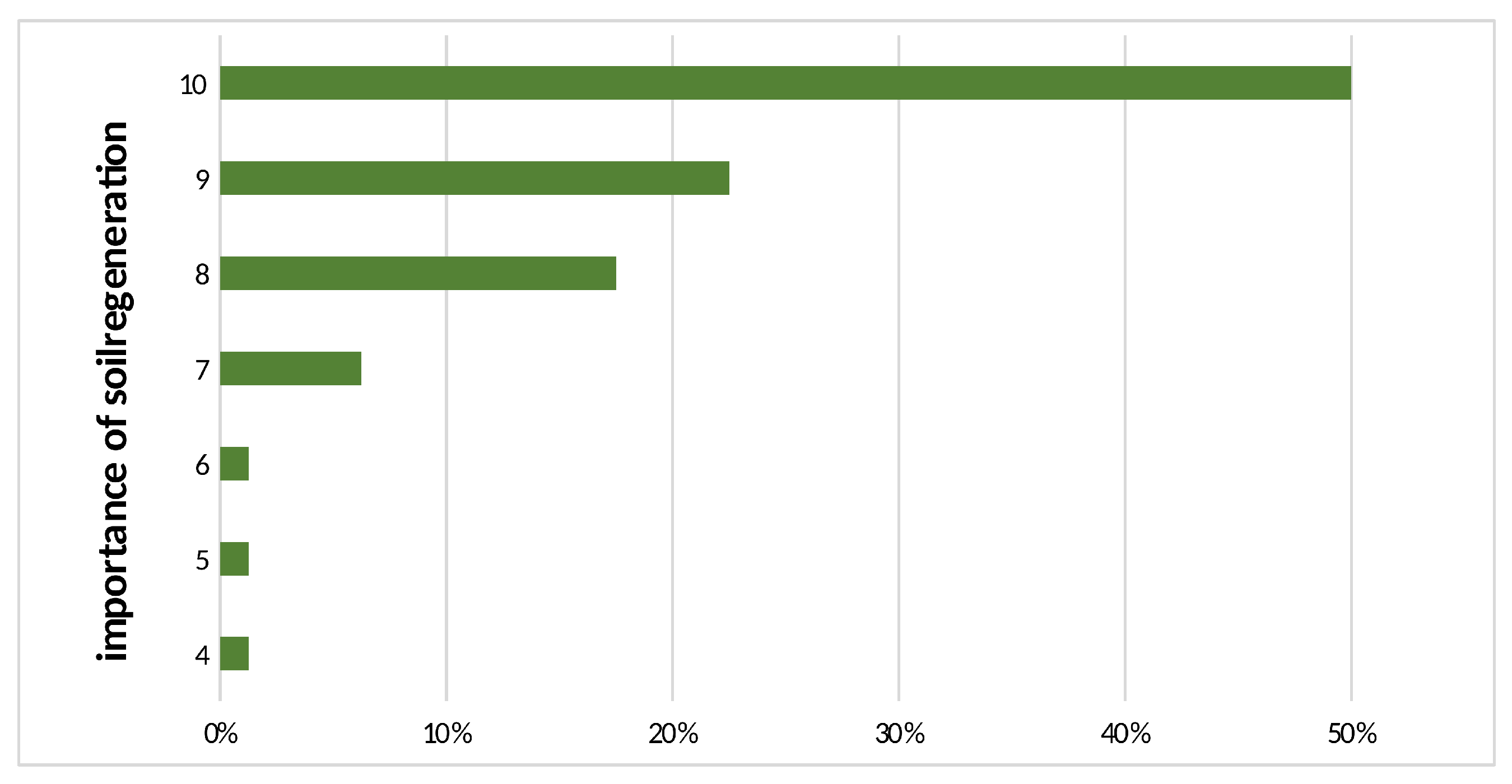
4.5.1. Perceived Importance
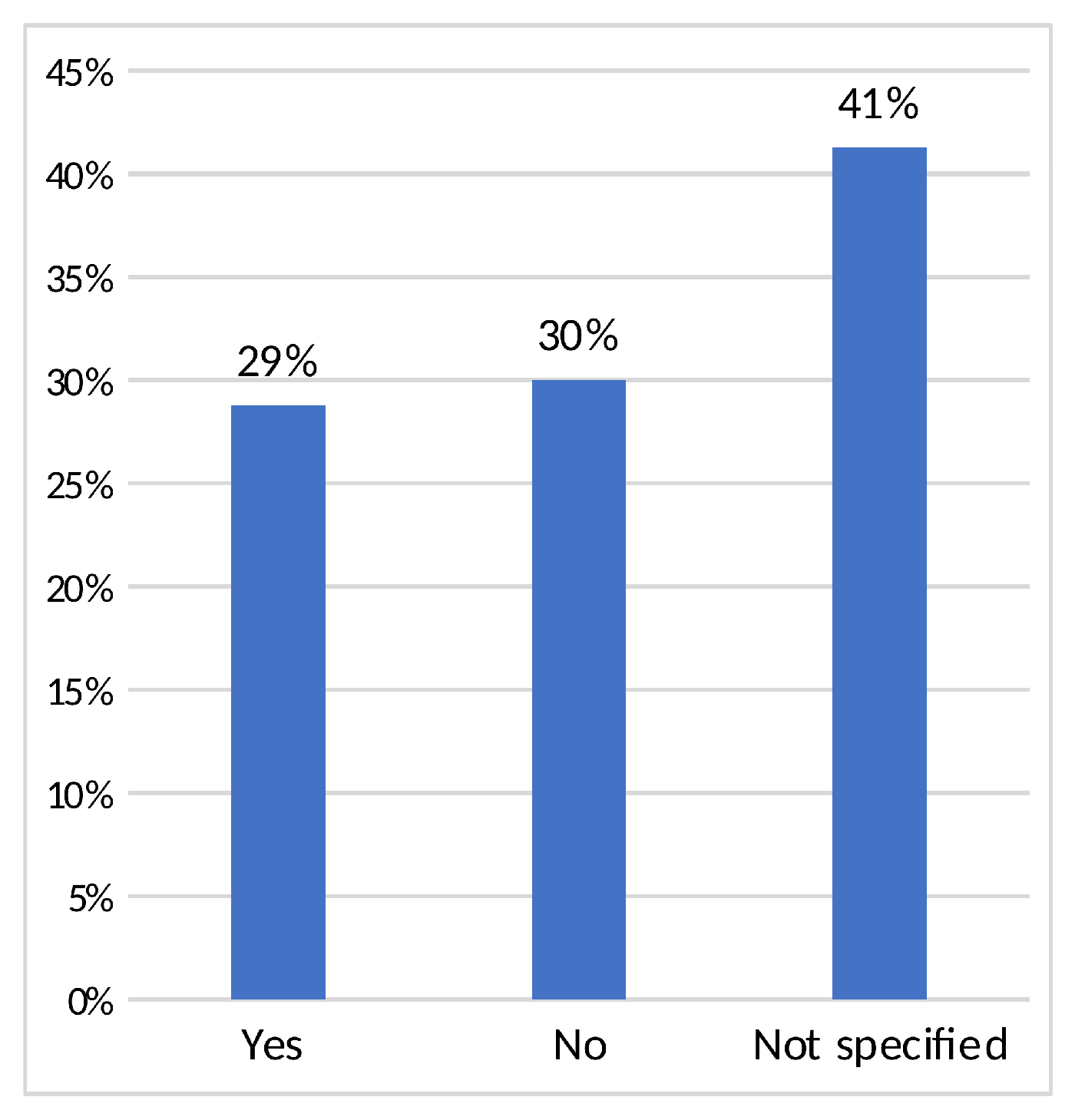
4.5.2. Implementation Rates
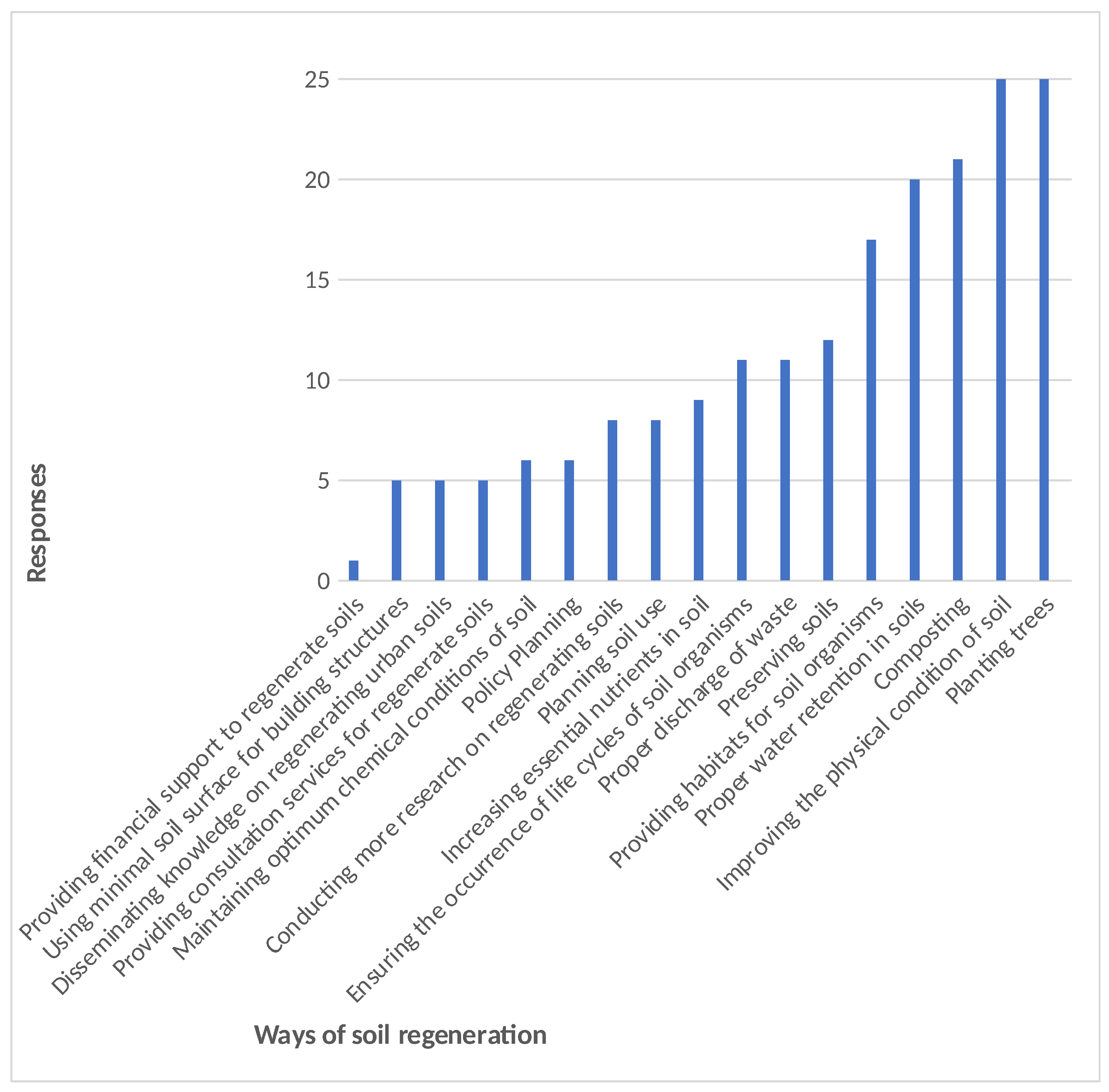
4.5.3. Specific Approaches and Techniques
4.6. Challenges to Soil Regeneration
4.7. Strategies for Overcoming Challenges
5. Discussion
5.1. Stakeholder Diversity and Cross-Sectoral Soil Governance
5.2. Values: Recognition Without Operationalization
5.3. Soil Indicators and the Limits of Current Assessment Practices
5.4. Regenerative Practices and the Awareness–Action Gap
5.5. Barriers as Structural Rather than Motivational Constraints
6. Conclusions
7. Limitations
Supplementary Materials
Funding
Institutional Review Board Statement
Informed Consent Statement
Data Availability Statement
Acknowledgments
Conflicts of Interest
Abbreviations
References
- Morel, J.L.; Schwartz, C.; Florentin, L.; de Kimpe, C. Urban soils. In Encyclopedia of Soils in the Environment; Hillel, D., Ed.; Elsevier: Oxford, UK, 2005; pp. 202–208. [Google Scholar]
- O’Riordan, R.; Davies, J.; Stevens, C.; Quinton, J.N.; Boyko, C. The ecosystem services of urban soils: A review. Geoderma 2021, 395, 115076. [Google Scholar] [CrossRef] [Scilit]
- United Nations. World Urbanization Prospects 2025: Summary of Results; UN DESA/POP/2025/TR/NO. 12; United Nations Department of Economic and Social Affairs, Population Division: New York, NY, USA, 2025; Available online: https://population.un.org/wup/ (accessed on 8 June 2026).
- Rezapour, S.; Nouri, A.; Shokohi, M.; Alamdari, P. Urbanization accelerates soil degradation in peri-urban compared to rural farms. Sci. Rep. 2025, 16, 3878. [Google Scholar] [CrossRef] [Scilit] [PubMed]
- McPhearson, T.; Kabisch, N.; Frantzeskaki, N. Nature-based solutions for sustainable, resilient, and equitable cities. In Nature-Based Solutions for Cities; McPhearson, T., Kabisch, N., Frantzeskaki, N., Eds.; Edward Elgar Publishing: Cheltenham, UK, 2023; pp. 1–11. [Google Scholar] [CrossRef] [Scilit]
- Frantzeskaki, N.; Wijsman, K.; Kabisch, N.; McPhearson, T. Inter- and transdisciplinary knowledge is critical for nature-based solutions to contribute to just urban transformations. Proc. Natl. Acad. Sci. USA 2025, 122, e2315911121. [Google Scholar] [CrossRef] [Scilit] [PubMed]
- Yang, H.; Chae, J.; Song, C.; Choi, E. Research trends of nature-based solutions: From urban to climate change. Front. For. Glob. Change 2024, 7, 1351189. [Google Scholar] [CrossRef] [Scilit]
- Giuliani, L.M.; Warner, E.; Campbell, G.A.; Lynch, J.; Smith, A.C.; Smith, P. Advancing nature-based solutions through enhanced soil health monitoring in the United Kingdom. Soil Use Manag. 2024, 40, e13164. [Google Scholar] [CrossRef] [Scilit]
- Lemes de Oliveira, F. Nature in nature-based solutions in urban planning. Landsc. Urban Plan. 2024, 256, 105282. [Google Scholar] [CrossRef] [Scilit]
- Pascual, U.; Balvanera, P.; Anderson, C.B.; Chaplin-Kramer, R.; Christie, M.; González-Jiménez, D.; Martin, A.; Raymond, C.M.; Termansen, M.; Vatn, A.; et al. Diverse values of nature for sustainability. Nature 2023, 620, 813–823. [Google Scholar] [CrossRef] [Scilit] [PubMed]
- Maller, C. Re-orienting nature-based solutions with more-than-human thinking. Cities 2021, 113, 103155. [Google Scholar] [CrossRef] [Scilit]
- Maller, C. Healthy Urban Environments: More-than-Human Theories; Routledge: London, UK, 2018. [Google Scholar]
- Jennes, H.F. Soil, Subsoil, Priming and Architectural Design. In Soil and Culture; Landa, E., Feller, C., Eds.; Springer: Dordrecht, The Netherlands, 2010; pp. 133–145. [Google Scholar] [CrossRef] [Scilit]
- Yunkaporta, T. Sand Talk: How Indigenous Thinking Can Save the World; Text Publishing: Melbourne, Australia, 2019. [Google Scholar]
- Nabulya, E. Rethinking Human-Centredness and Eco-Sustainability in an African Setting: Insights from Luganda Folktales. J. Afr. Cult. Stud. 2022, 34, 308–324. [Google Scholar] [CrossRef] [Scilit]
- Karvonen, A.; Yocom, K. The Civics of Urban Nature: Enacting Hybrid Landscapes. Environ. Plan. A Econ. Space 2011, 43, 1305–1322. [Google Scholar] [CrossRef] [Scilit]
- Hovorka, A. Transspecies Urban Theory: Chickens in an African City. Cult. Geogr. 2008, 15, 95–117. [Google Scholar] [CrossRef] [Scilit]
- Quinn, R. Contracts, Seagrass, and Discourses: Nonhuman mediators in the planning of the Mangles Bay Marina. Aust. Geogr. 2020, 51, 1–18. [Google Scholar] [CrossRef] [Scilit]
- Baldauf, C.; de Oliveira Lunardi, V. Multiple Perspectives on Biodiversity Conservation: From Concept to Heated Debate. In Participatory Biodiversity Conservation; Springer: Cham, Switzerland, 2020; pp. 15–32. [Google Scholar] [CrossRef] [Scilit]
- Randrup, T.B.; Buijs, A.E.; Konijnendijk, C.C.; Wild, T. Moving beyond the nature-based solutions discourse: Introducing nature-based thinking. Urban Ecosyst. 2020, 23, 919–926. [Google Scholar] [CrossRef] [Scilit]
- Jähnichen, T. ‘Ecological justice’: Towards an integrative concept of the protection of creation. HTS Teol. Stud./Theol. Stud. 2022, 78, 7738. [Google Scholar] [CrossRef] [Scilit]
- Hinchliffe, S.; Kearnes, M.; Degen, M.; Whatmore, S. Urban wild things: A cosmopolitical experiment. Environ. Plan. D Soc. Space 2005, 23, 643–658. [Google Scholar] [CrossRef] [Scilit]
- Bünemann, E.K.; Bongiorno, G.; Bai, Z.; Creamer, R.E.; De Deyn, G.; de Goede, R.; Fleskens, L.; Geissen, V.; Kuyper, T.W.; Mäder, P.; et al. Soil quality—A critical review. Soil Biol. Biochem. 2018, 120, 105–125. [Google Scholar] [CrossRef] [Scilit]
- Lehmann, J.; Bossio, D.A.; Kögel-Knabner, I.; Rillig, M.C. The concept and future prospects of soil health. Nat. Rev. Earth Environ. 2020, 1, 544–553. [Google Scholar] [CrossRef] [Scilit] [PubMed]
- O’Hara, S.; Stuiver, M. Chapter 9: Restorative economics—Food hubs as catalysts of a new urban economy. In The Symbiotic City: Voices of Nature in Urban Transformations; Stuiver, M., Ed.; Wageningen Academic Publishers: Wageningen, The Netherlands, 2022; pp. 187–204. [Google Scholar]
- Séré, G.; Le Guern, C.; Bispo, A.; Layet, C.; Ducommun, C.; Clesse, M.; Schwartz, C.; Vidal-Beaudet, L. Selection of soil health indicators for modelling soil functions to promote smart urban planning. Sci. Total Environ. 2024, 924, 171347. [Google Scholar] [CrossRef] [Scilit] [PubMed]
- Salomon, M.J.; Watts-Williams, S.J.; McLaughlin, M.J.; Cavagnaro, T.R. Urban soil health: A city-wide survey of chemical and biological properties of urban agriculture soils. J. Clean. Prod. 2020, 275, 122900. [Google Scholar] [CrossRef] [Scilit] [PubMed]
- Janzen, H.H.; Janzen, D.W.; Gregorich, E.G. The ‘soil health’ metaphor: Illuminating or illusory? Soil Biol. Biochem. 2021, 159, 108167. [Google Scholar] [CrossRef] [Scilit]
- Millennium Ecosystem Assessment. Ecosystems and Human Well-Being: Synthesis; Island Press: Washington, DC, USA, 2005. [Google Scholar]
- IPBES. Global Assessment Report on Biodiversity and Ecosystem Services of the Intergovernmental Science-Policy Platform on Biodiversity and Ecosystem Services; Brondízio, E.S., Settele, J., Díaz, S., Ngo, H.T., Eds.; IPBES Secretariat: Bonn, Germany, 2019. [Google Scholar] [CrossRef]
- Balvanera, P.; Pascual, U.; Christie, M.; Baptiste, B.; González-Jiménez, D. (Eds.) Methodological Assessment Report on the Diverse Values and Valuation of Nature of the Intergovernmental Science-Policy Platform on Biodiversity and Ecosystem Services; IPBES Secretariat: Bonn, Germany, 2022. [Google Scholar] [CrossRef]
- Stuiver, M. Chapter 13: Being a voice of nature in urban transformations. In The Symbiotic City: Voices of Nature in Urban Transformations; Stuiver, M., Ed.; Wageningen Academic Publishers: Wageningen, The Netherlands, 2022; pp. 273–300. [Google Scholar] [CrossRef] [Scilit] [PubMed]
- McGrath, D.; Henry, J. Organic amendments decrease bulk density and improve tree establishment and growth in roadside plantings. Urban For. Urban Green. 2016, 20, 120–127. [Google Scholar] [CrossRef] [Scilit]
- Mossadeghi-Björklund, M.; Jarvis, N.; Larsbo, M.; Forkman, J.; Keller, T. Effects of compaction on soil hydraulic properties, penetration resistance and water flow patterns at the soil profile scale. Soil Use Manag. 2019, 35, 367–377. [Google Scholar] [CrossRef] [Scilit]
- Sauerwein, M. Urban soils—Characterization, pollution and relevance in urban ecosystems. In Urban Ecology: Patterns, Processes, and Applications; Niemelä, J., Ed.; Oxford University Press: Oxford, UK, 2011; pp. 45–58. [Google Scholar] [CrossRef] [Scilit]
- Maurya, S.; Abraham, J.S.; Somasundaram, S.; Toteja, R.; Gupta, R.; Makhija, S. Indicators for assessment of soil quality: A mini-review. Environ. Monit. Assess. 2020, 192, 604. [Google Scholar] [CrossRef] [Scilit] [PubMed]
- Pagliai, M.; Vignozzi, N. Soil porosity as an indicator of soil health. Ann. Arid Zone 2006, 45, 259–286. [Google Scholar]
- Yang, L.; Li, Y.; Peng, K.; Wu, S. Nutrients and heavy metals in urban soils under different green space types in Anji, China. Catena 2014, 115, 39–46. [Google Scholar] [CrossRef] [Scilit]
- Xia, X.; Zhao, X.; Lai, Y.; Dong, H. Levels and distribution of total nitrogen and total phosphorous in urban soils of Beijing, China. Environ. Earth Sci. 2013, 69, 1571–1577. [Google Scholar] [CrossRef] [Scilit]
- Rodríguez-Seijo, A.; Andrade, M.L.; Vega, F.A. Origin and spatial distribution of metals in urban soils. J. Soils Sediments 2017, 17, 1514–1526. [Google Scholar] [CrossRef] [Scilit]
- Azovtseva, N.A.; Smagin, A.V. Dynamics of physical and physicochemical properties of urban soils under the effect of ice-melting salts. Eurasian Soil Sci. 2018, 51, 120–129. [Google Scholar] [CrossRef] [Scilit]
- Gąsiorek, M.; Halecki, W. Soil microbial biomass carbon and nitrogen in historic convent gardens under long-term horticultural cultivation in Krakow, Poland. Soil Use Manag. 2022, 38, 1004–1014. [Google Scholar] [CrossRef] [Scilit]
- Demina, S.; Vasenev, V.; Ivashchenko, K.; Ananyeva, N.; Plyushchikov, V.; Hajiaghayeva, R.; Dovletyarova, E. Microbial properties of urban soils with different land-use history in New Moscow. Soil Sci. 2018, 183, 132–140. [Google Scholar] [CrossRef] [Scilit]
- Gómez-Brandón, M.; Herbón, C.; Probst, M.; Fornasier, F.; Barral, M.T.; Paradelo, R. Influence of land use on the microbiological properties of urban soils. Appl. Soil Ecol. 2022, 175, 104452. [Google Scholar] [CrossRef] [Scilit]
- Pereira, M.C.; O’Riordan, R.; Stevens, C. Urban soil microbial community and microbial-related carbon storage are severely limited by sealing. J. Soils Sediments 2021, 21, 1455–1465. [Google Scholar] [CrossRef] [Scilit]
- Alkorta, I.; Aizpurua, A.; Riga, P.; Albizu, I.; Amézaga, I.; Garbisu, C. Soil enzyme activities as biological indicators of soil health. Rev. Environ. Health 2003, 18, 65–73. [Google Scholar] [CrossRef] [Scilit] [PubMed]
- Fründ, H.C.; Graefe, U.; Tischer, S. Earthworms as bioindicators of soil quality. In Biology of Earthworms; Karaca, A., Ed.; Springer: Berlin/Heidelberg, Germany, 2011; Volume 24, pp. 261–278. [Google Scholar] [CrossRef] [Scilit]
- Lu, Q.; Liu, T.; Wang, N.; Dou, Z.; Wang, K.; Zuo, Y. A review of soil nematodes as biological indicators for the assessment of soil health. Front. Agric. Sci. Eng. 2020, 7, 275–281. [Google Scholar] [CrossRef] [Scilit]
- Braun, V.; Clarke, V. Using thematic analysis in psychology. Qual. Res. Psychol. 2006, 3, 77–101. [Google Scholar] [CrossRef] [Scilit]
- Da Cruz, N.F.; Rode, P.; McQuarrie, M. New urban governance: A review of current themes and future priorities. J. Urban Aff. 2019, 41, 1–19. [Google Scholar] [CrossRef] [Scilit]
- Blake, J. Overcoming the ‘value–action gap’ in environmental policy: Tensions between national policy and local experience. Local Environ. 1999, 4, 257–278. [Google Scholar] [CrossRef] [Scilit]
- Vatn, A.; Pascual, U.; Chaplin-Kramer, R.; Termansen, M.; Arias-Arévalo, P.; Balvanera, P.; Athayde, S.; Hahn, T.; Lazos, E. Incorporating diverse values of nature in decision-making—Theory and practice. Philos. Trans. R. Soc. B 2024, 379, 20220315. [Google Scholar] [CrossRef] [Scilit] [PubMed]
- Kollmuss, A.; Agyeman, J. Mind the gap: Why do people act environmentally and what are the barriers to pro-environmental behavior? Environ. Educ. Res. 2002, 8, 239–260. [Google Scholar] [CrossRef] [Scilit]
- Slawinski, N.; Pinkse, J.; Busch, T.; Banerjee, S.B. The role of short-termism and uncertainty avoidance in organizational inaction on climate change. Bus. Soc. 2017, 56, 253–282. [Google Scholar] [CrossRef] [Scilit]
- Hyun, J.; Kim, Y.J.; Kim, A.; Plante, A.F.; Yoo, G. Ecosystem services-based soil quality index tailored to the metropolitan environment for soil assessment and management. Sci. Total Environ. 2022, 820, 153301. [Google Scholar] [CrossRef] [Scilit] [PubMed]
- Ros, G.H.; Verweij, S.E.; Janssen, S.J.C.; De Haan, J.; Fujita, Y. An Open Soil Health Assessment Framework Facilitating Sustainable Soil Management. Environ. Sci. Technol. 2022, 56, 17375–17384. [Google Scholar] [CrossRef] [Scilit] [PubMed]
- Midgley, M.; Anderson, E.; Minor, E. Vacant lot plant establishment techniques alter urban soil ecosystem services. Urban For. Urban Green. 2021, 61, 127096. [Google Scholar] [CrossRef] [Scilit]
- Tresch, S.; Frey, D.; Le Bayon, R.C.; Zanetta, A.; Rasche, F.; Fliessbach, A.; Moretti, M. Litter decomposition driven by soil fauna, plant diversity and soil management in urban gardens. Sci. Total Environ. 2019, 658, 1614–1629. [Google Scholar] [CrossRef] [Scilit] [PubMed]
- Tresch, S.; Moretti, M.; Le Bayon, R.-C.; Mäder, P.; Zanetta, A.; Frey, D.; Fliessbach, A. A Gardener’s Influence on Urban Soil Quality. Front. Environ. Sci. 2018, 6, 25. [Google Scholar] [CrossRef] [Scilit]
- Congreves, K.A. Agricultural environmental ethics: An emerging way to understand and solve sustainability challenges. npj Sustain. Agric. 2025, 3, 28. [Google Scholar] [CrossRef] [Scilit] [PubMed]
- Buijs, A.; Hansen, R.; Van der Jagt, S.; Ambrose-Oji, B.; Elands, B.; Lorance Rall, E.; Mattijssen, T.; Pauleit, S.; Runhaar, H.; Stahl Olafsson, A.; et al. Mosaic governance for urban green infrastructure: Upscaling active citizenship from a local government perspective. Urban For. Urban Green. 2019, 40, 53–62. [Google Scholar] [CrossRef] [Scilit]
- Etikan, I.; Musa, S.A.; Alkassim, R.S. Comparison of convenience sampling and purposive sampling. Am. J. Theor. Appl. Stat. 2016, 5, 1–4. [Google Scholar] [CrossRef] [Scilit]
- Noy, C. Sampling knowledge: The hermeneutics of snowball sampling in qualitative research. Int. J. Soc. Res. Methodol. 2008, 11, 327–344. [Google Scholar] [CrossRef] [Scilit]
- Hair, J.F.; Black, W.C.; Babin, B.J.; Anderson, R.E. Multivariate Data Analysis, 7th ed.; Pearson: Upper Saddle River, NJ, USA, 2010. [Google Scholar]
- Forza, C. Survey research in operations management: A process-based perspective. Int. J. Oper. Prod. Manag. 2002, 22, 152–194. [Google Scholar] [CrossRef] [Scilit]
- Podsakoff, P.M.; MacKenzie, S.B.; Lee, J.-Y.; Podsakoff, N.P. Common method biases in behavioral research: A critical review of the literature and recommended remedies. J. Appl. Psychol. 2003, 88, 879–903. [Google Scholar] [CrossRef] [Scilit] [PubMed]
- Ajzen, I. The theory of planned behavior. Organ. Behav. Hum. Decis. Processes 1991, 50, 179–211. [Google Scholar] [CrossRef] [Scilit]
- Shove, E. Beyond the ABC: Climate change policy and theories of social change. Environ. Plan. A Econ. Space 2010, 42, 1273–1285. [Google Scholar] [CrossRef] [Scilit]










| Category of the Stakeholder | Description |
|---|---|
| Citizens or Neighborhood Organizations | Residents of neighborhoods and towns and their community organizations |
| Non-Governmental Organizations | Non-profit organisations that operate independently of governments |
| Businesses | Small and Medium-sized Enterprises, Corporates, Investors and Housing Corporations |
| Governments | Local Municipalities, Regional Governments, National Departments |
| Knowledge Institutes | Universities, Consultancies, Advice and Communication Businesses |
| Indicator | Narrative | Reference |
|---|---|---|
| Physical Indicators | ||
| Bulk Density | Bulk density of soils is an indicator of soil compaction. Hence, it determines the ability of air and water to infiltrate the soil, as well as root growth. | [33,34] |
| Soil Structure | Soil structure (spatial arrangement of solid elements) affects soil properties and pedogenesis. | [35] |
| Soil Texture | Soil texture is the percentage composition of sand, silt and clay of soils. Soil erosion can be prevented when soil texture is good. | [36] |
| Soil Water Content | Soil water content provides water to inhabiting microbes and to plants through roots. | [36] |
| Porosity | Porosity reflects the proportion of pore space in soil and determines its capacity to store and transmit air and water, which in turn affects root growth and microbial activity. In urban soils, porosity is often reduced by compaction and other anthropogenic modifications. | [37] |
| Chemical Indicators | ||
| Soil Organic Matter (SOM) | SOM is considered the driving force of the activity of the biological component of soil, which includes bacteria, fungi, and all organisms. | [23] |
| pH | pH indicates the acidity or alkalinity of soil and reflects its buffering capacity against chemical change. It also controls the availability of nutrients to plants and soil organisms. | [36] |
| Cation Exchange Capacity (CEC) | This indicator determines the buffering capacity in fluctuating values of pH, nutrient holding capacity and pesticide retention. | [36] |
| Total Nitrogen and Total Phosphorus | Phosphorus and Nitrogen are major plant nutrients. Therefore, they indicate the soil’s potential for plant growth. | [38,39] |
| Metal Concentration | Metals can be used as indicators to determine the degree of contamination and pollution of soils. | [40] |
| Electrical Conductivity | Electrical conductivity can be taken as a proxy for soil salinity. | [41] |
| Biological Indicators | ||
| Microbial Biomass | Together with SOM, microbial biomass determines the fertility of soil and recycling of nutrients. Soil pollution/contamination negatively impacts microbial biomass. | [42] |
| Microbial Respiration | Microbial respiration reflects the metabolic activity of soil organisms and is a measure of overall biological functioning. Urbanization tends to reduce both aerobic and anaerobic respiration, indicating a decline in microbial activity compared to soils in a natural state. | [43] |
| Microbial Community Composition | Microbial community composition reflects the diversity and balance of bacteria, fungi, and other microorganisms involved in nutrient cycling and decomposition. Soil sealing and other urban modifications tend to reduce this diversity, along with microbial biomass. | [44,45] |
| Enzymatic Activity | Enzymes catalyze all bio-chemical reactions that occur in soil. Therefore, they indicate the biological and chemical quality of soil. | [46] |
| Earthworms | The abundance, composition, and behavior of earthworms, as well as the soil chemicals they accumulate, indicate the level of soil pollution and ecosystem function of urban soils. | [47] |
| Nematodes | Nematodes are highly sensitive to environmental pollutants and other disturbances. Therefore, their density and abundance are indicative of the ecological health of soils. | [48] |
Disclaimer/Publisher’s Note: The statements, opinions and data contained in all publications are solely those of the individual author(s) and contributor(s) and not of MDPI and/or the editor(s). MDPI and/or the editor(s) disclaim responsibility for any injury to people or property resulting from any ideas, methods, instructions or products referred to in the content. |
© 2026 by the author. Licensee MDPI, Basel, Switzerland. This article is an open access article distributed under the terms and conditions of the Creative Commons Attribution (CC BY) license.
Share and Cite
Stuiver, M. From Recognition to Practice: Integrating Ecocentric Values in Urban Soil Management. Sustainability 2026, 18, 8361. https://doi.org/10.3390/su18168361
Stuiver M. From Recognition to Practice: Integrating Ecocentric Values in Urban Soil Management. Sustainability. 2026; 18(16):8361. https://doi.org/10.3390/su18168361
Chicago/Turabian StyleStuiver, Marian. 2026. "From Recognition to Practice: Integrating Ecocentric Values in Urban Soil Management" Sustainability 18, no. 16: 8361. https://doi.org/10.3390/su18168361
APA StyleStuiver, M. (2026). From Recognition to Practice: Integrating Ecocentric Values in Urban Soil Management. Sustainability, 18(16), 8361. https://doi.org/10.3390/su18168361