Multi-Level Governance of Renewable Energy Transitions Through the Viable System Model: A Hybrid Evidence-Based Framework
 , , , and
Abstract
1. Introduction
1.1. Governance Gap in Renewable Energy Transitions
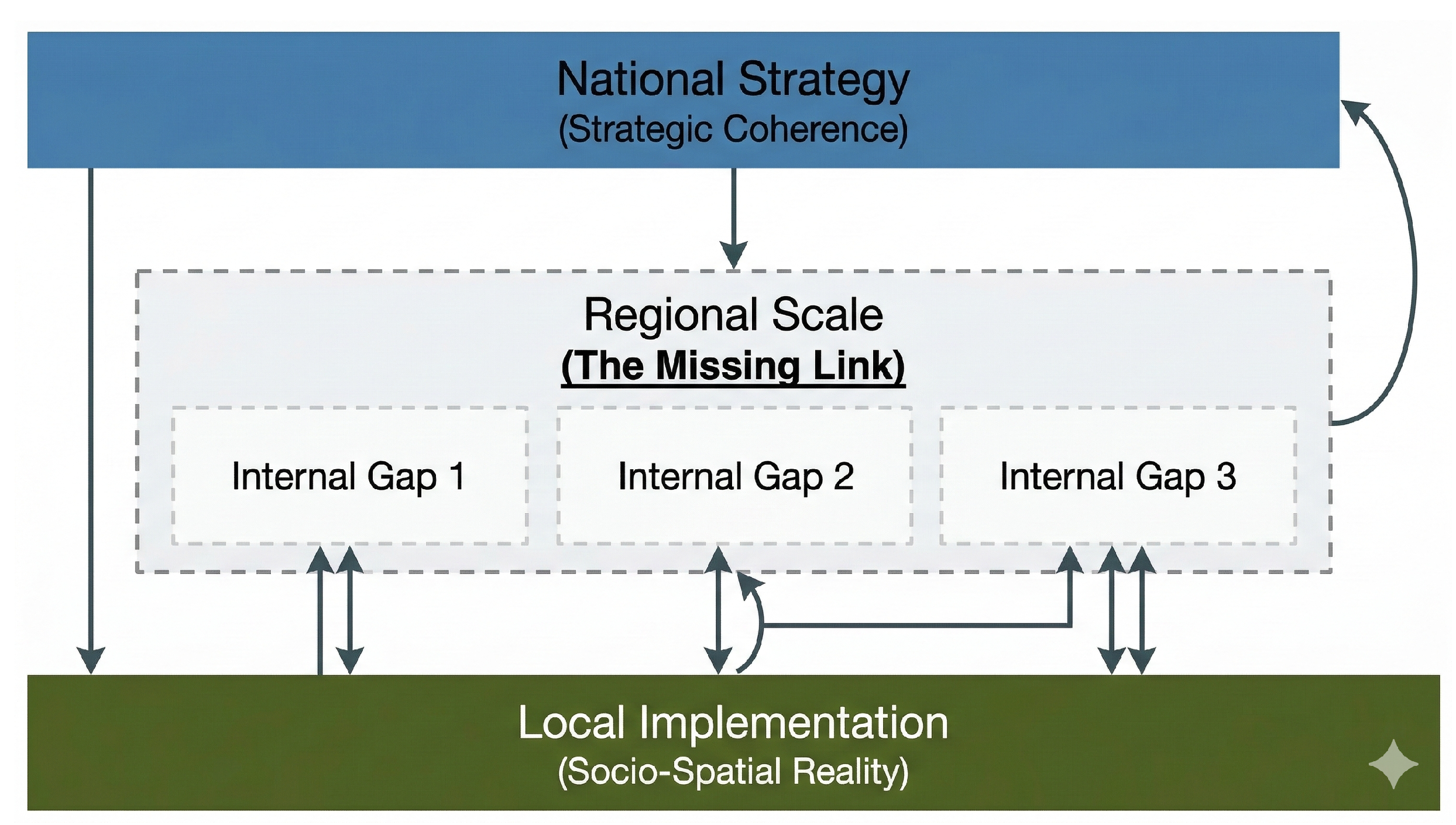
1.2. Multi-Level Complexity and the Missing Regional Coordination Layer
1.3. Research Gap and Methodological Novelty
- Viable System Model (VSM): A recent systematic review explicitly identifies the lack of integration with quantitative and AI-based tools as a major limitation of current VSM research, which often remains diagnostically rich but operationally under-instrumented [5].
1.4. Research Objective and Contributions
- Theoretical Contribution: A parametrized VSM architecture addressing the missing regional coordination layer in renewable transitions.
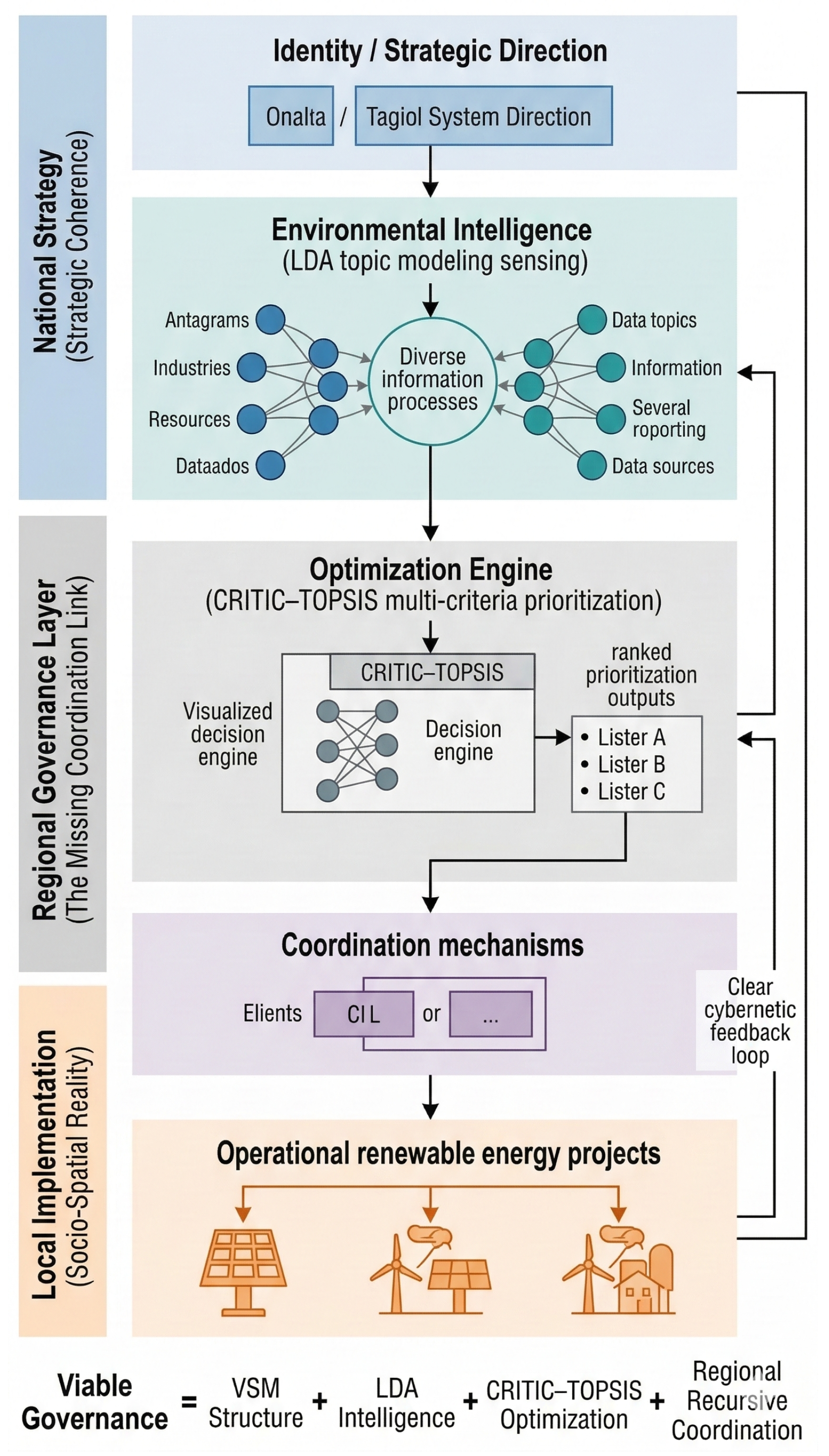
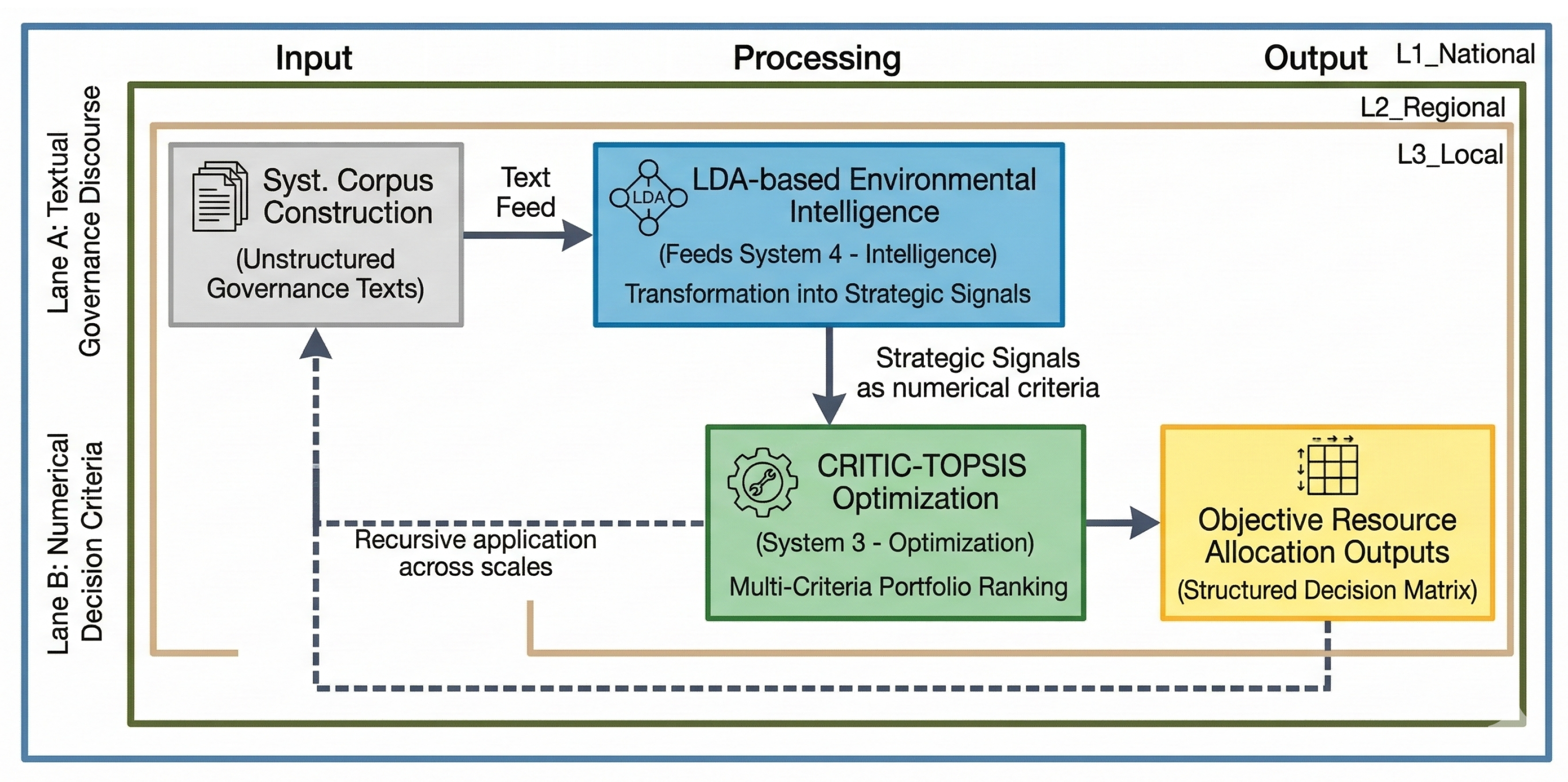
- Methodological Innovation: Integration of topic modeling (LDA) and objective MCDA (CRITIC–TOPSIS) within a unified cybernetic governance framework.
- Empirical Illustration in a High-Variety Context: Diagnostic application in Colombia, characterized by ecological diversity and institutional asymmetry.
- Alignment with Eco-Friendly Regional Transitions: A viability-based approach linking technical efficiency, territorial legitimacy, and normative sustainability identity.
2. Theoretical Framework
2.1. Multi-Level Governance in Energy Transitions
2.2. The Viable System Model as a Cybernetic Architecture
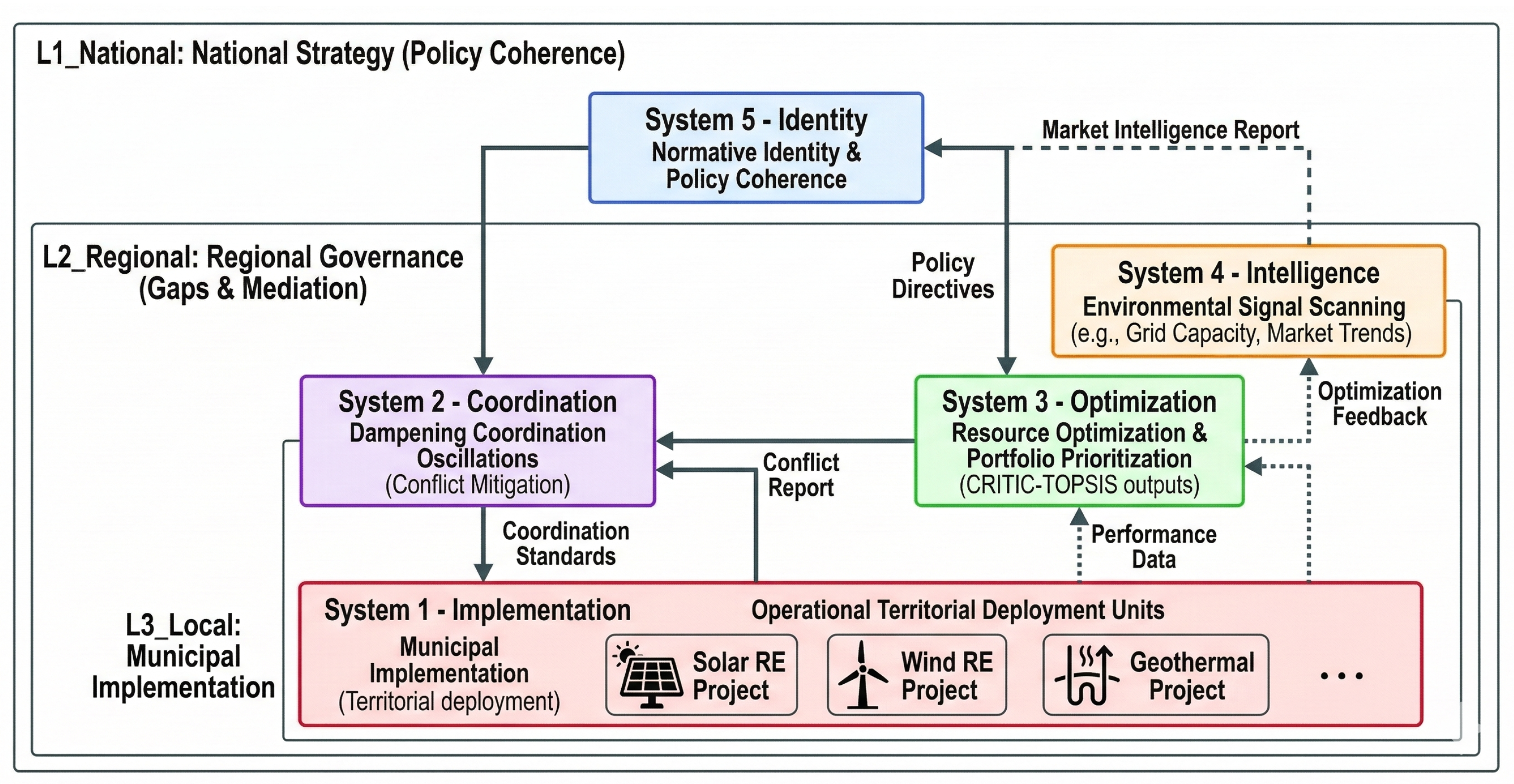
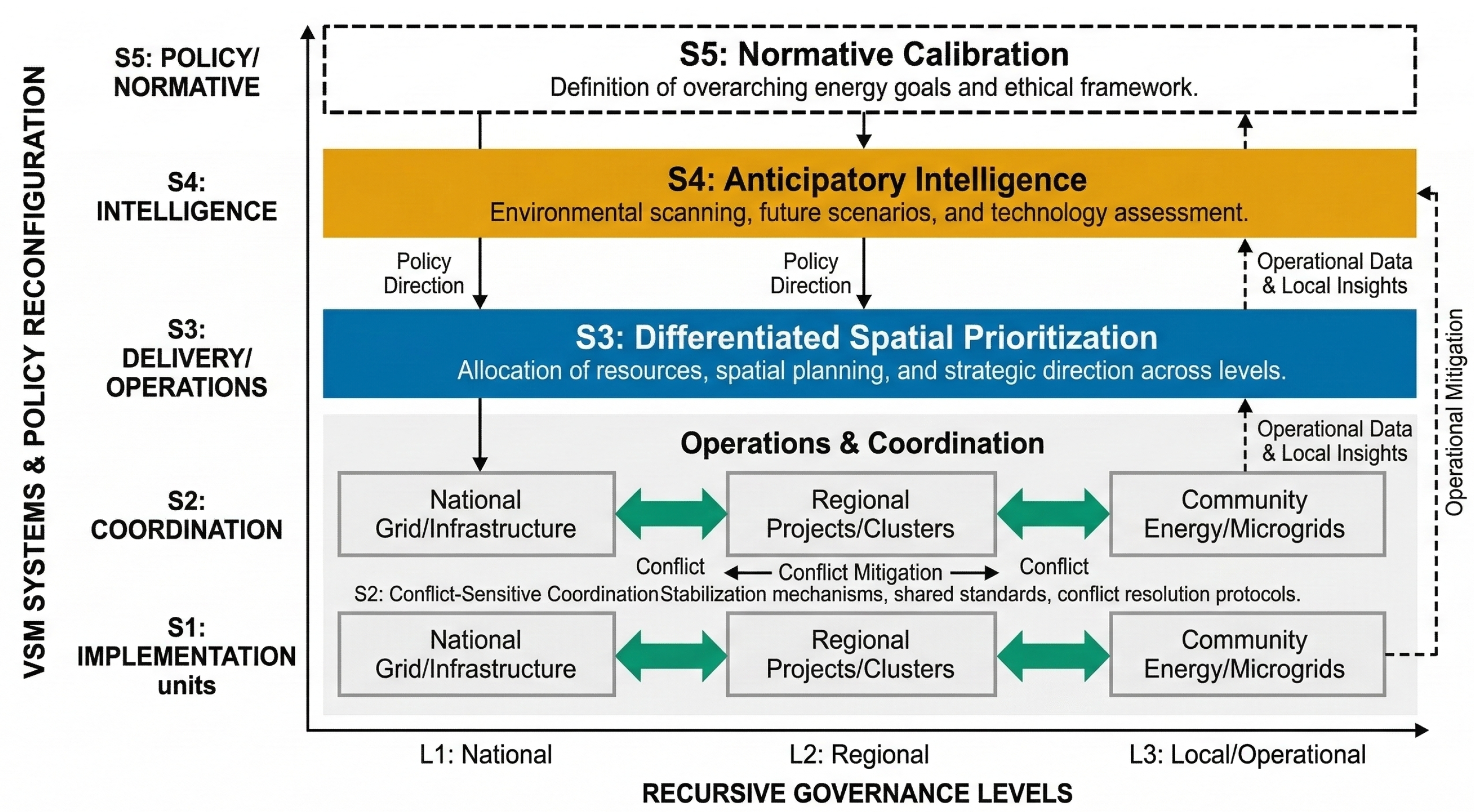
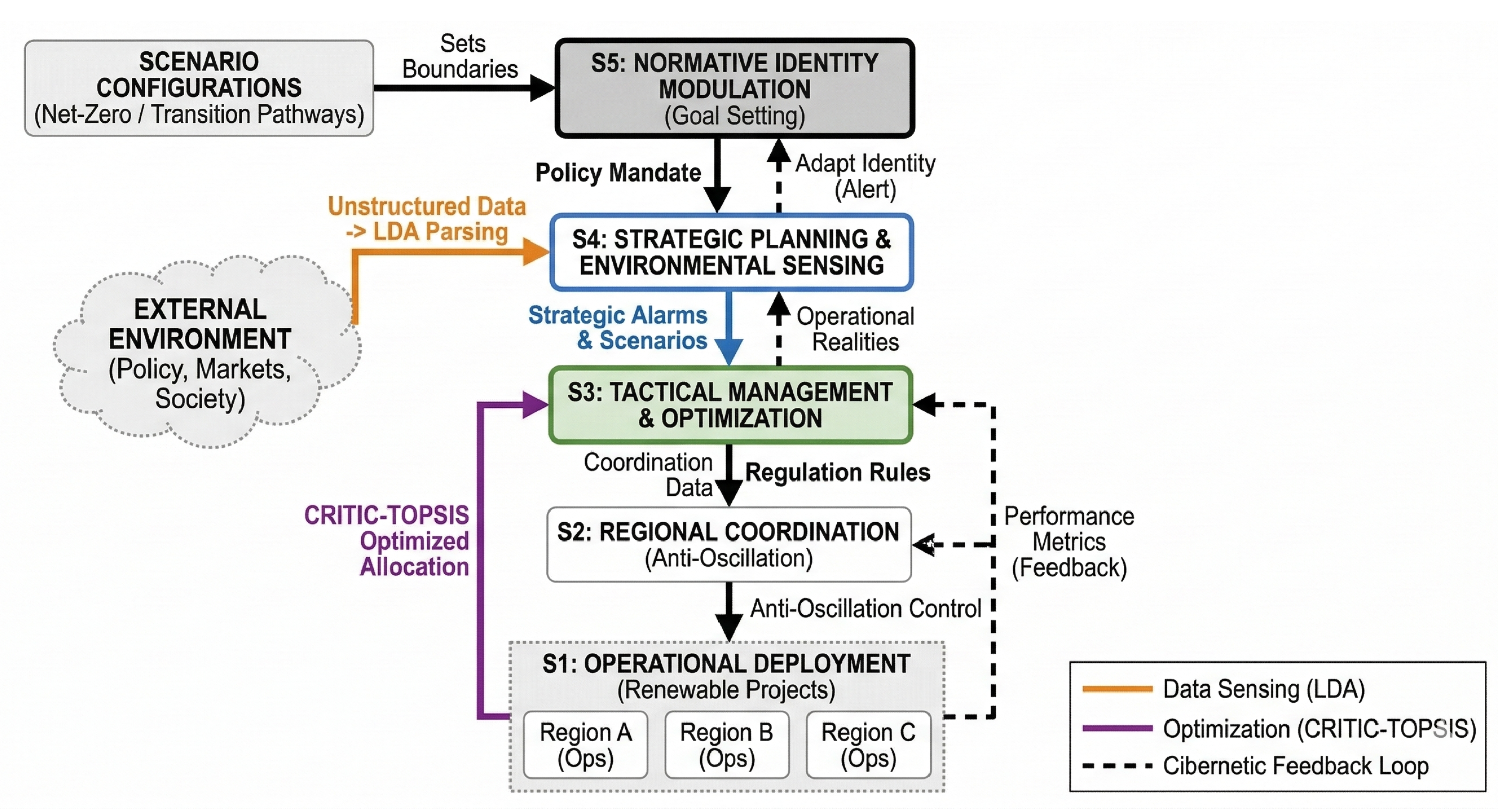
- System 1 (Operations): Territorially embedded deployment alternatives modeled as 1 km2 pixel units (renewable generation assets, grid reinforcement, distributed initiatives).
- System 2 (Coordination): Mechanisms that dampen oscillations among System 1 units—interoperability standards, planning protocols, conflict-mediation arrangements—typically operating at the regional (departmental) scale.
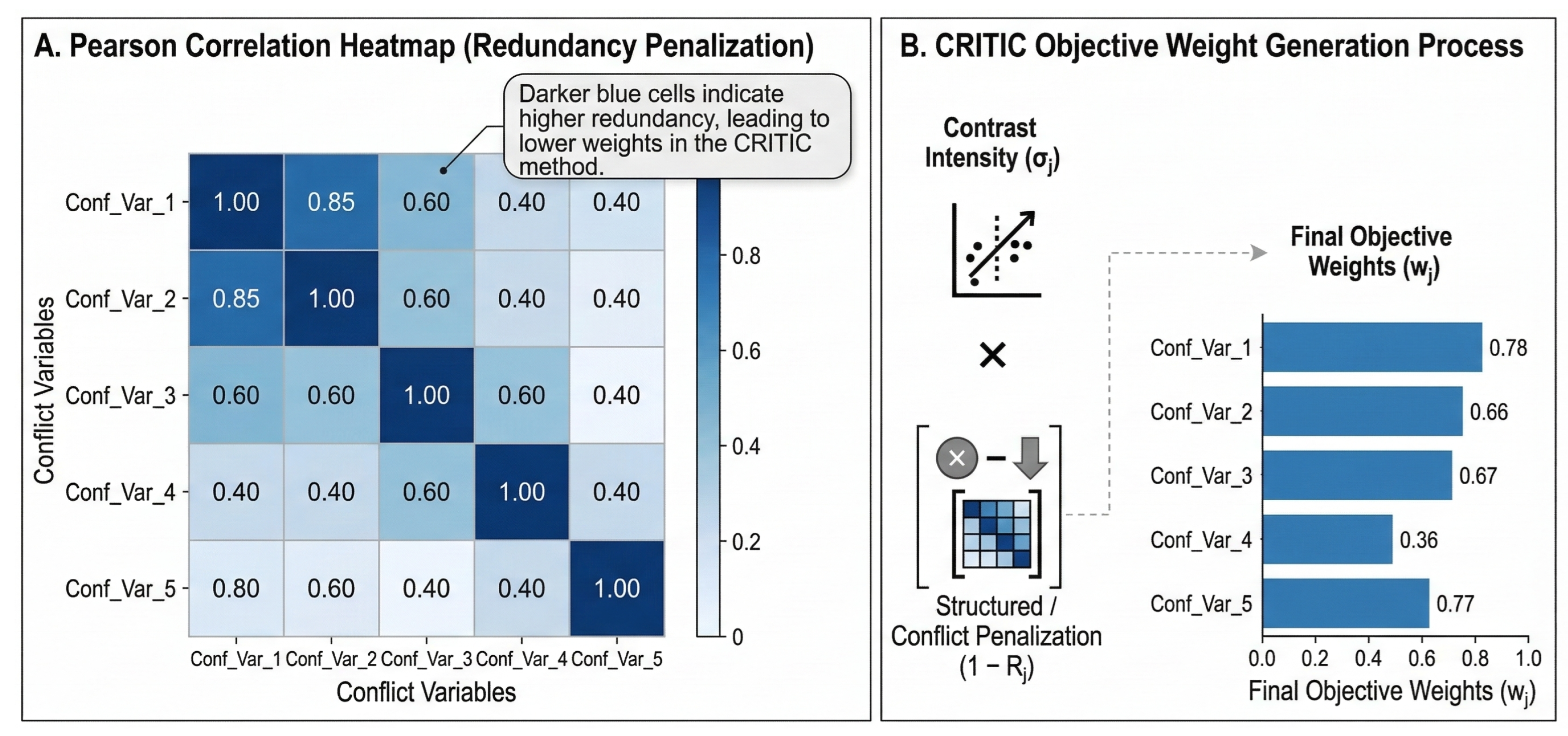
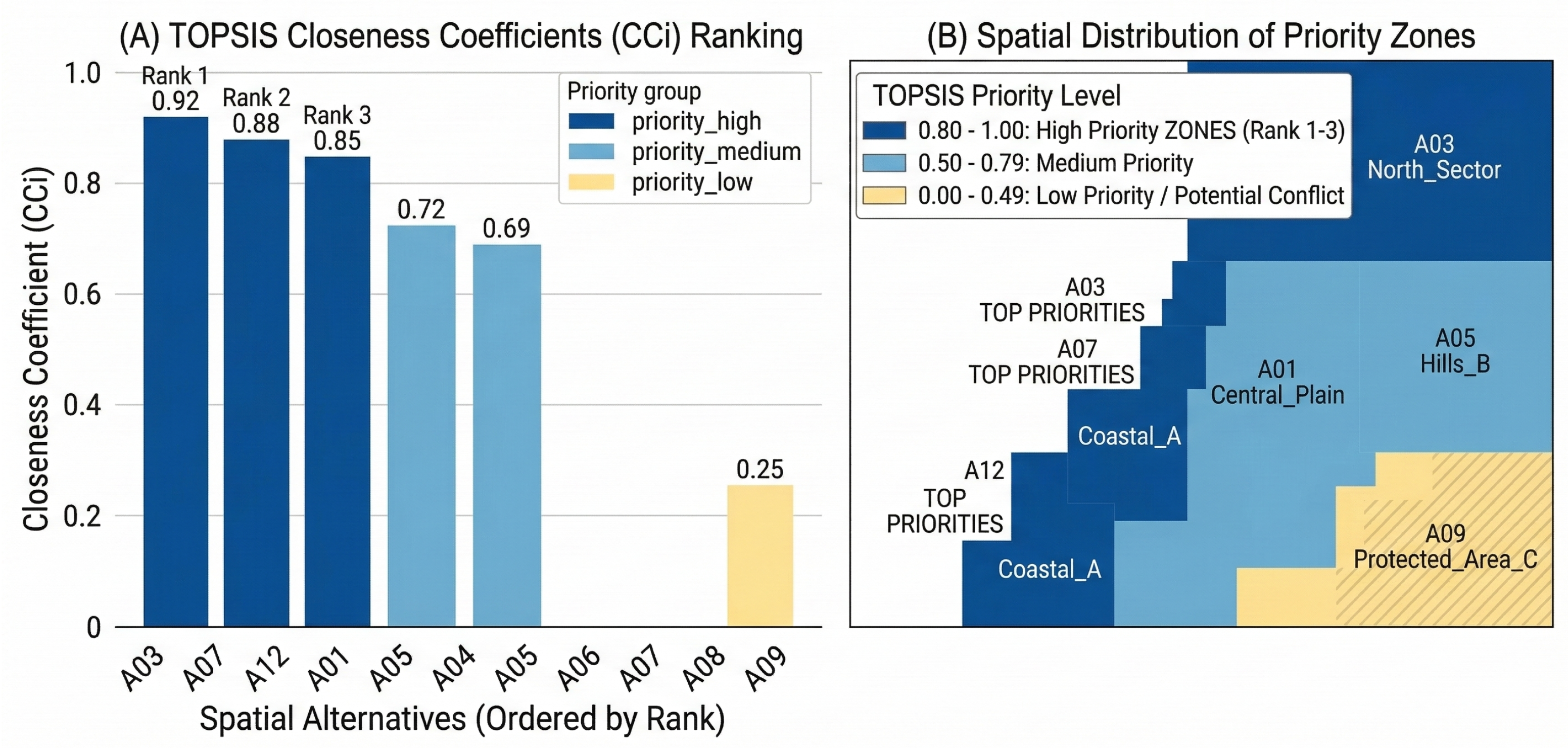
- System 3 (Control): Resource allocation, performance monitoring, and constraint management, instrumented in this study by CRITIC–TOPSIS (Technique for Order of Preference by Similarity to Ideal Solution) objective prioritization.
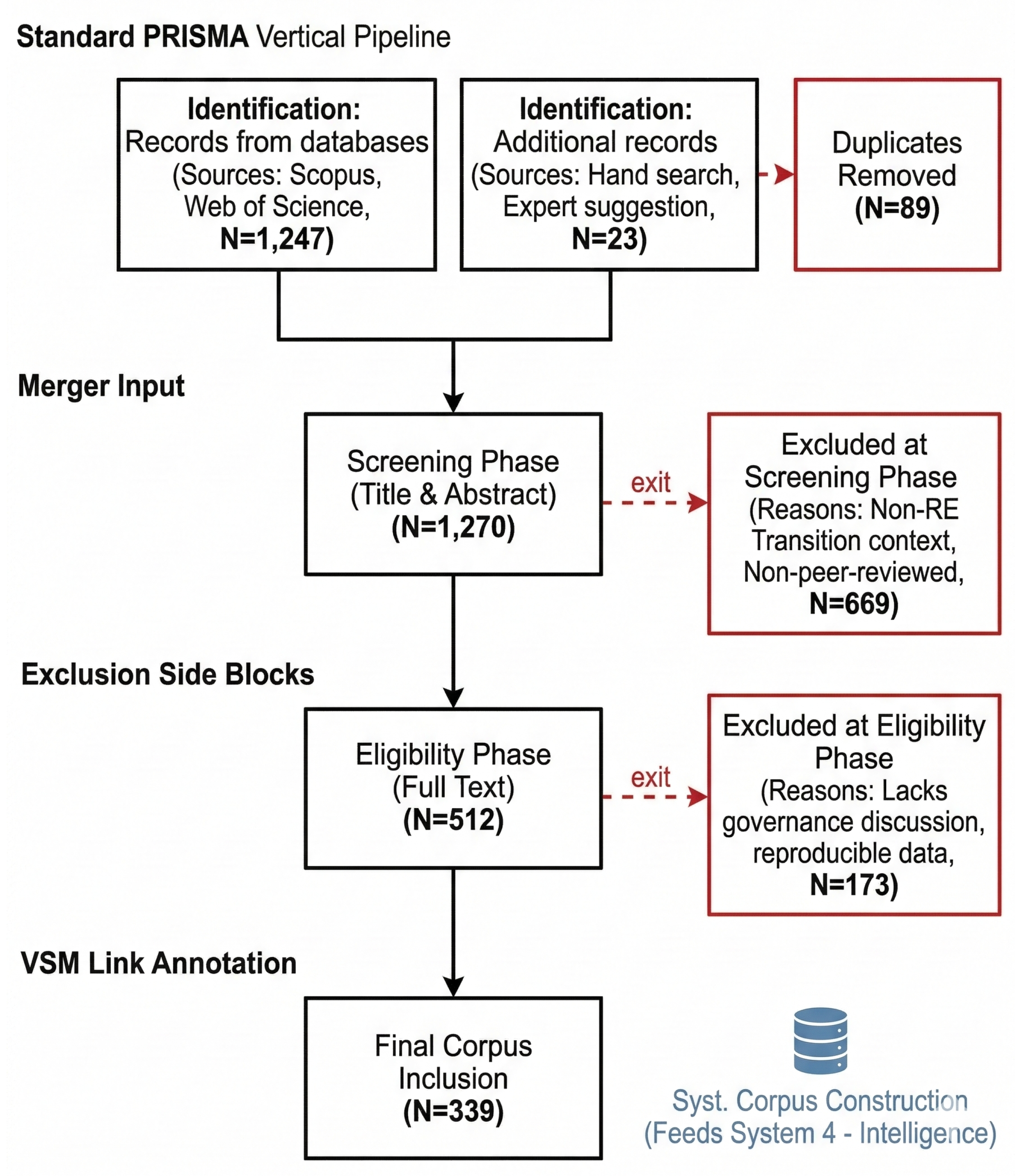
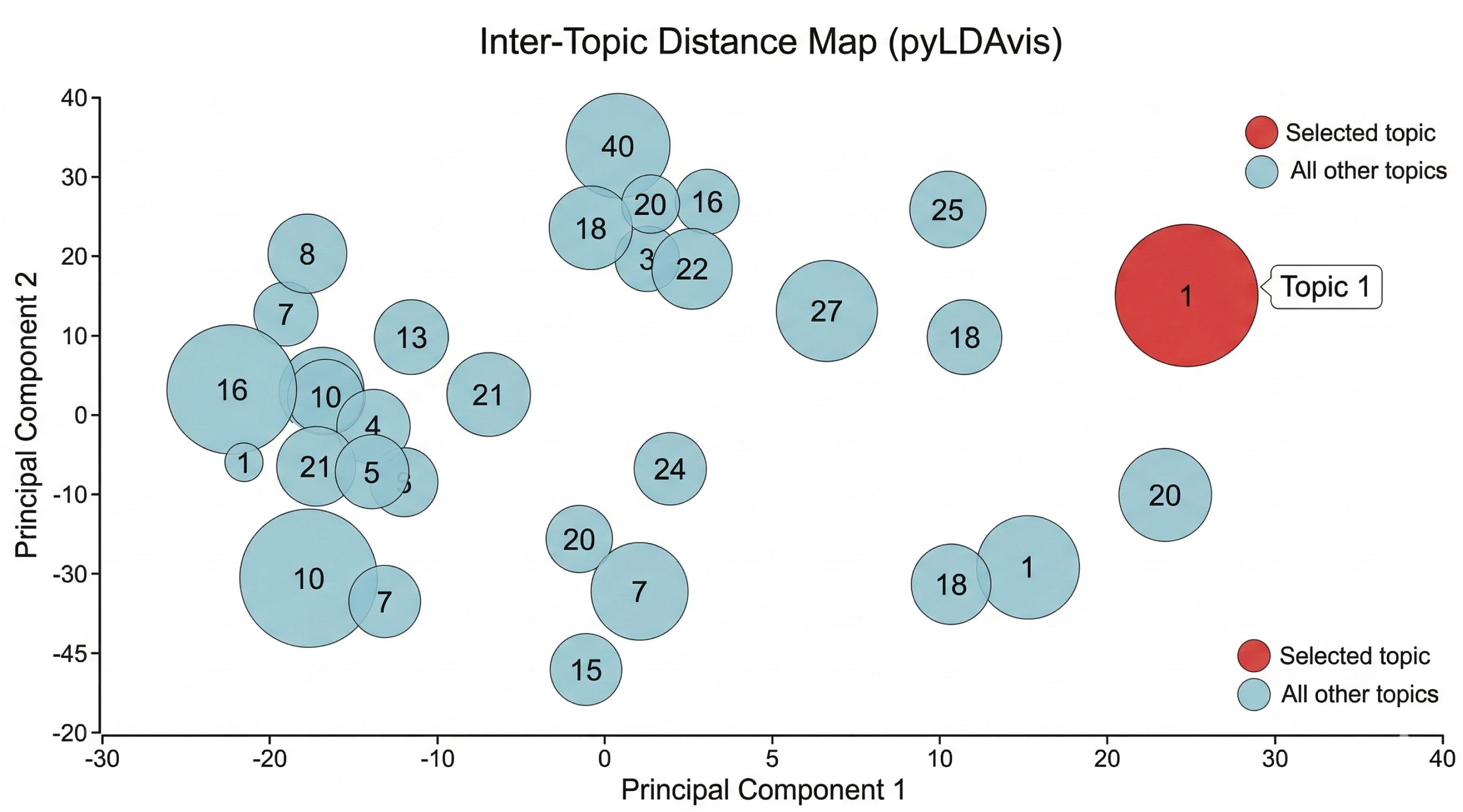
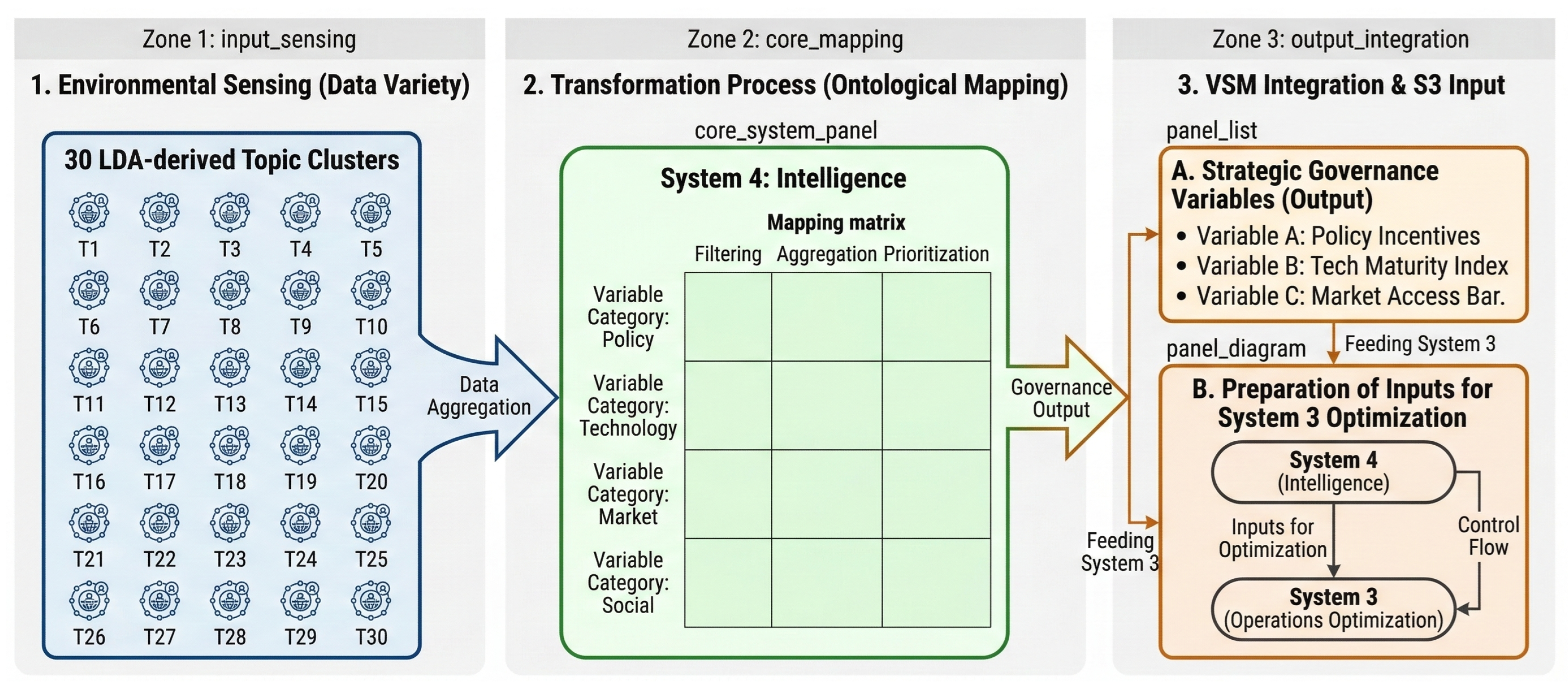
- System 4 (Intelligence): Environmental scanning of policy, technology, and legitimacy signals, instrumented by LDA topic modeling on a 339-article governance corpus.
- System 5 (Policy/Identity): Normative closure that defines the constitutional identity of the transition, operationalized through scenario calibration of decision weights.
2.3. Requisite Variety and Sustainability Governance
3. Hybrid Evidence-Based Methodology
3.1. Research Design Overview
3.2. Demarcation of Computational, Inferential, and Proposed Elements
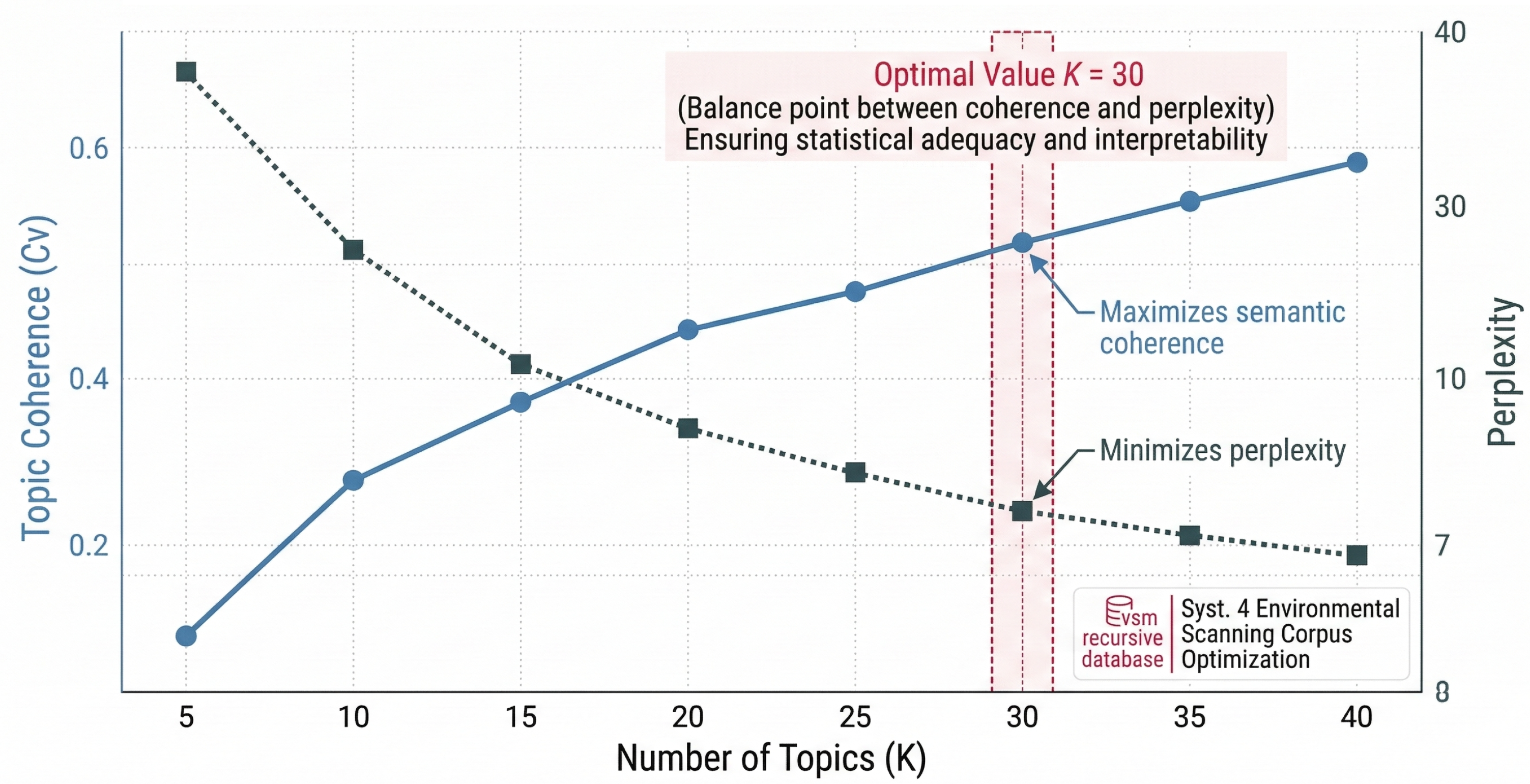
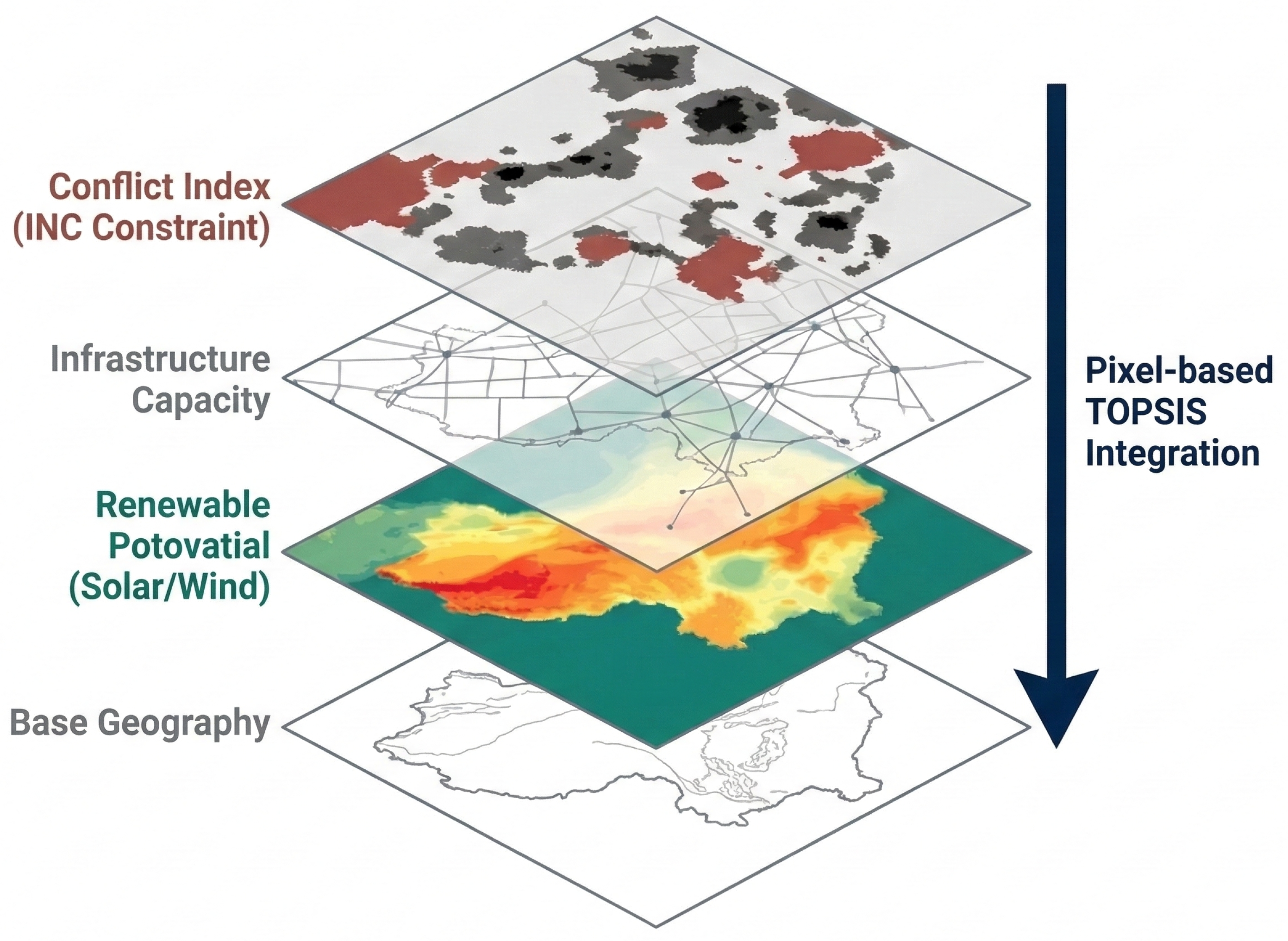
- Computed: The K = 30 LDA topic structure with optimized semantic coherence (); the CRITIC objective weights derived from data dispersion and inter-criteria correlation; and the TOPSIS closeness coefficients () at 1 km2 resolution.
- Inferred: The mapping of LDA topics to System 4 governance domains, and the translation of TOPSIS rankings into System 3 priorities. These inferences are bounded by deliberative expert validation (Section 3.4) rather than free researcher judgment.
- Proposed: The multi-level governance architecture (Systems 1, 2, 5), recommending that regional authorities (Departamentos) assume the coordination mandate, with national entities—the Mining and Energy Planning Unit (UPME), the National Environmental Licensing Authority (ANLA), and the Energy and Gas Regulation Commission (CREG)—acting as planning, licensing, and regulatory metasystems.
3.3. Systematic Review and PRISMA Protocol
3.3.1. Registration Statement
TITLE-ABS-KEY((“renewable energy transition*” OR
“energy transition governance”) AND
(“multi-level governance” OR regional OR municipal) AND
(policy OR coordination OR conflict)) AND
PUBYEAR > 2014 AND PUBYEAR < 2026
3.3.2. Summary of Included Studies (Table 1 and Table S1)
3.4. LDA Modeling, Validation, and Topic-to-System 4 Mapping
3.5. Temporal Dynamics and Requisite Variety in System 4
4. Multi-Criteria Spatial Architecture
4.1. National Conflict Index Construction and Indicator Sourcing
4.2. CRITIC Objective Weighting and TOPSIS Spatial Prioritization
4.3. Technical Feasibility Modeling and Spatial Datasets
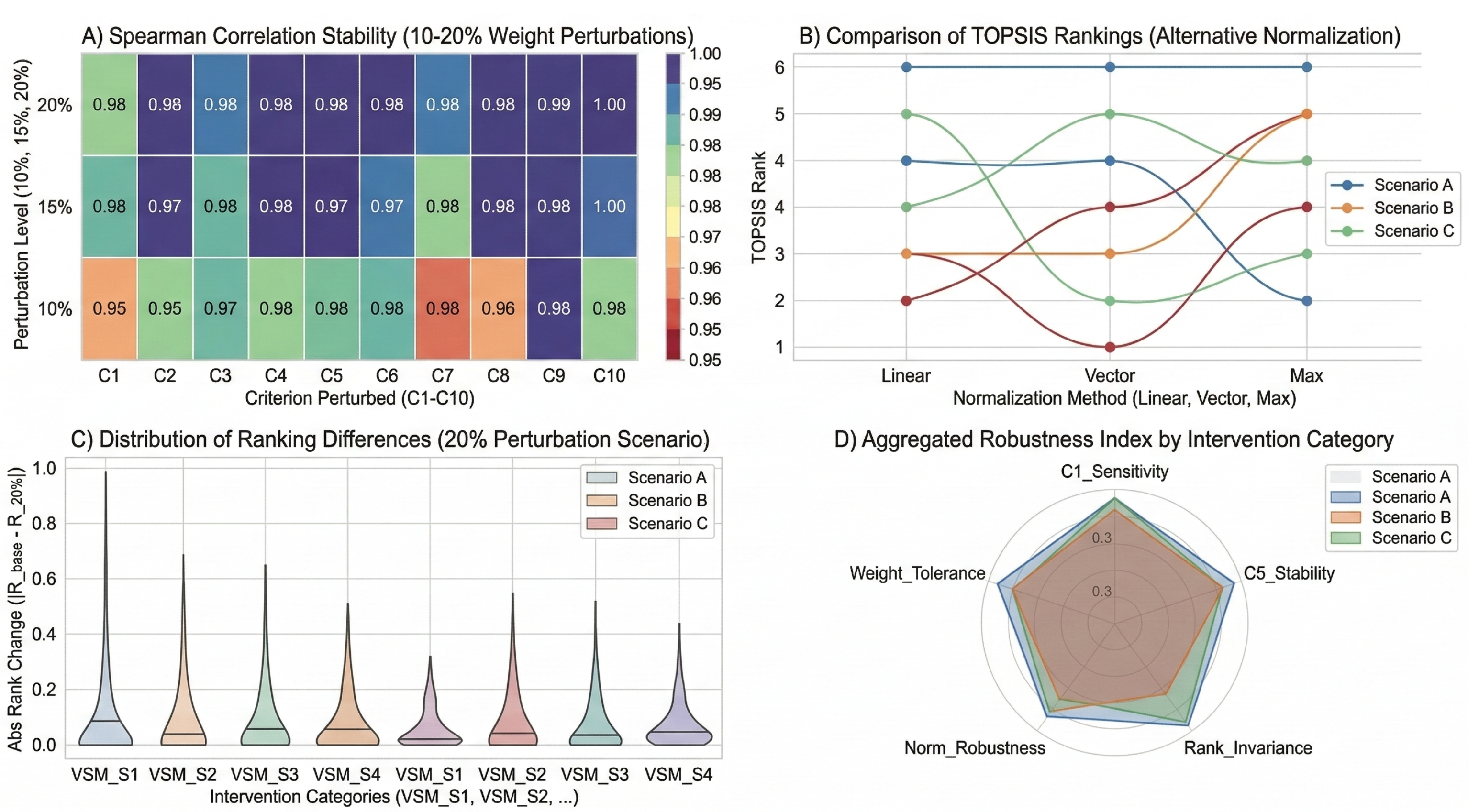
4.4. Sensitivity, Robustness, and Scenario Calibration
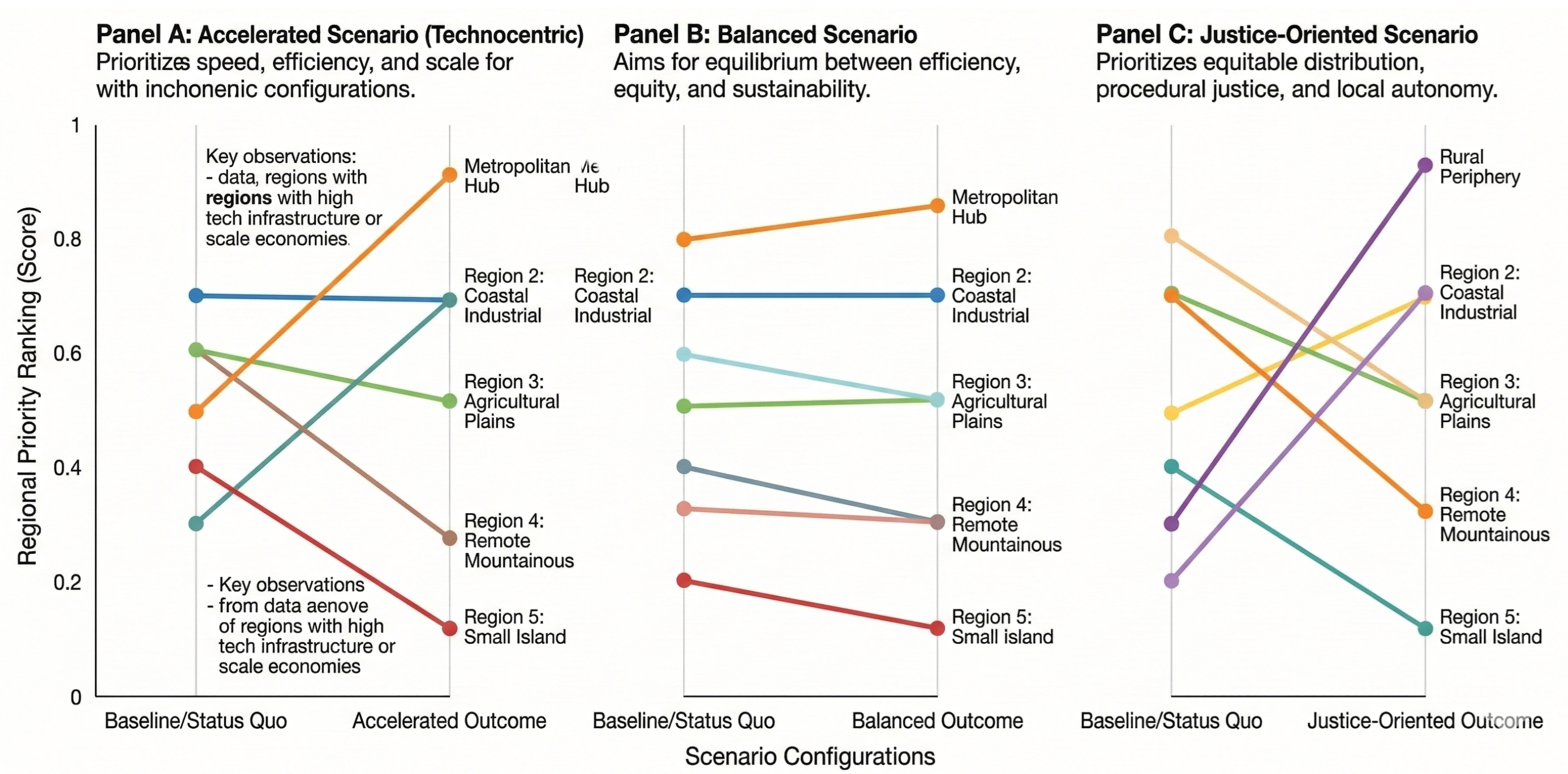
- Accelerated (Technocentric): 80% weight on technical/resource criteria, 20% on conflict (INC).
- Balanced: 50%/50% baseline distribution.
- Justice-Oriented: 30% weight on technical criteria, 70% on conflict, heavily penalizing deployment in territories with elevated INC.
5. Spatial Integration and Empirical Findings
5.1. Pixel-Level Viability Patterns
- Opportunity Zones: Strong renewable resource (Global Horizontal Irradiation, GHI kWh/m2/day or wind speed > 8 m/s at 100 m hub height) combined with conflict exposure below the second national quartile.
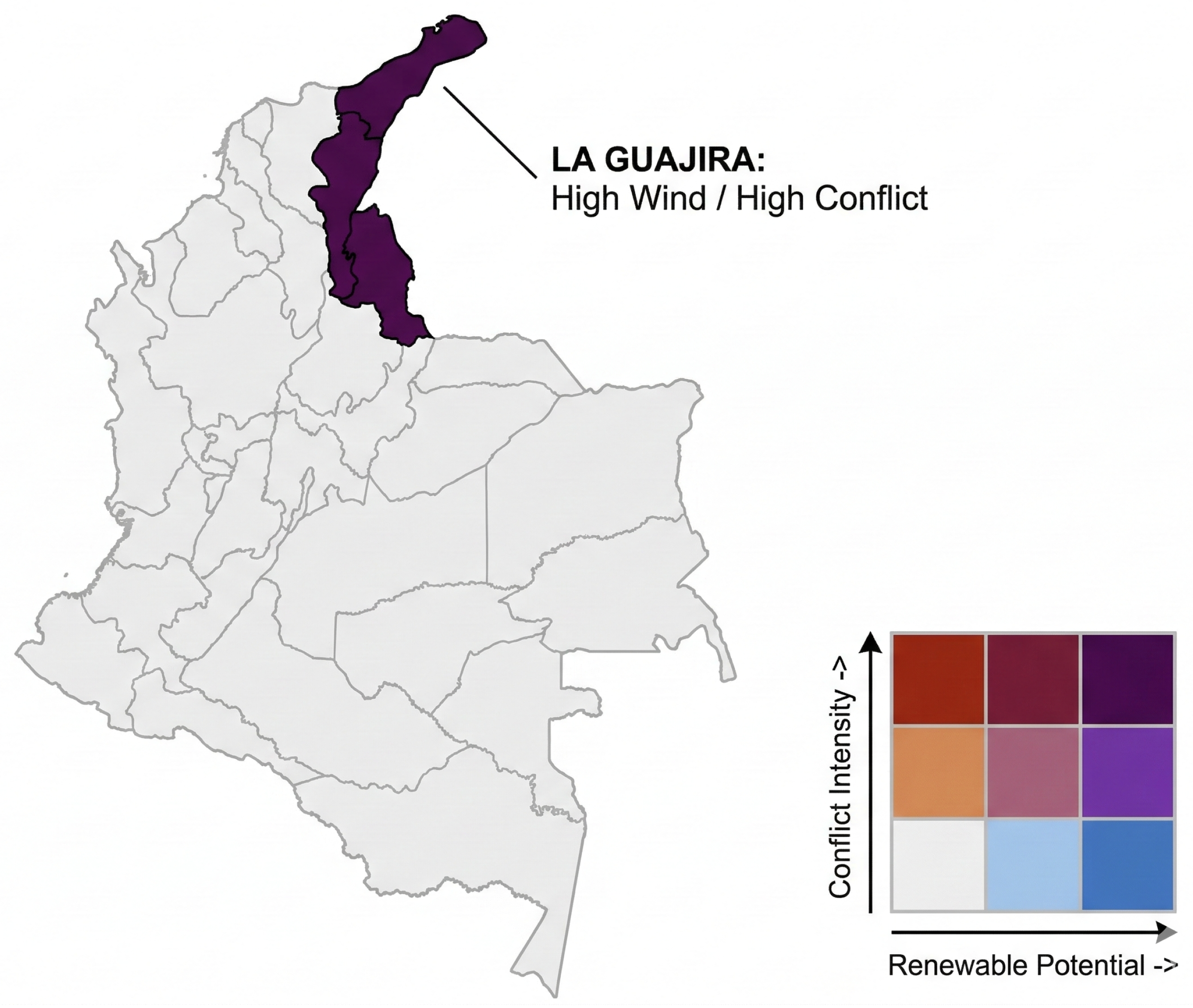
- Critical Zones: Strong resource potential combined with conflict intensity above the third quartile—technically feasible but with elevated coordination requirements and institutional risk.
- Neutral Zones: Moderate resource availability intersecting mid-range conflict indicators.
5.2. Quantitative Evidence of the Localization Paradox
5.3. Regional Concentration of Critical Zones and the Windpeshi Case
5.4. Normative Scenario Divergence
6. Cybernetic Governance Reconfiguration
6.1. Operational Recalibration of Systems 1–3
6.2. System 4 Feedback and Adaptive Adjustment
6.3. System 5 Normative Calibration
7. Discussion
7.1. From Qualitative Cybernetics to Evidence-Based Governance
7.2. Critical Engagement with the Empirical Results
7.3. Positioning Within Transition Governance Literature
7.4. Broader Applicability and Scalability in the Global South
7.5. Limitations and Future Research
8. Policy Implications for Colombian Energy Institutions
8.1. Anchoring the Framework in Real Institutions
8.2. Operational Anchors Already Available
8.3. Recursive Multi-Level Coordination
9. Conclusions
Supplementary Materials
Author Contributions
Funding
Data Availability Statement
Conflicts of Interest
References
- Pastukhova, M.; Westphal, K. Governing the Global Energy Transformation. In The Geopolitics of the Global Energy Transition; Lecture Notes in Energy; Springer: Berlin/Heidelberg, Germany, 2020; Volume 73, pp. 341–364. [Google Scholar] [CrossRef] [Scilit]
- Ison, R.; Straw, E. The Hidden Power of Systems Thinking: Governance in a Climate Emergency; Routledge: Abingdon-on-Thames, UK, 2020. [Google Scholar] [CrossRef] [Scilit]
- Hoppe, T.; Miedema, M. A Governance Approach to Regional Energy Transition: Meaning, Conceptualization and Practice. Sustainability 2020, 12, 915. [Google Scholar] [CrossRef] [Scilit]
- Chotimah, H.C.; Rizky, L. Multilevel Environmental Governance of Local Energy Transitions. E3S Web Conf. 2025, 671, 02004. [Google Scholar] [CrossRef] [Scilit]
- Fathi, M.R.; Birami, S.; Payvar, A.; Doorafshan, S. A Systematic Review of the Viable System Model: Applications, Insights, and Future Directions. J. Syst. Think. Pract. 2025, 4, 109–145. [Google Scholar] [CrossRef]
- Chen, X.; Zanocco, C.; Flora, J.; Rajagopal, R. Constructing dynamic residential energy lifestyles using Latent Dirichlet Allocation. Appl. Energy 2022, 318, 119109. [Google Scholar] [CrossRef] [Scilit]
- Pamula, A.; Gontar, Z.; Gontar, B.; Fesenko, T. Latent Dirichlet Allocation in Public Procurement Documents Analysis for Determining Energy Efficiency Issues in Construction Works at Polish Universities. Energies 2023, 16, 4596. [Google Scholar] [CrossRef] [Scilit]
- Hassan, I.; Alhamrouni, I.; Azhan, N.H. A CRITIC–TOPSIS Multi-Criteria Decision-Making Approach for Optimum Site Selection for Solar PV Farm. Energies 2023, 16, 4245. [Google Scholar] [CrossRef] [Scilit]
- Abbas, M.Z.; Anjum, R.; Hussain, A.; Ahmad, M.; Haleemzai, I. An integrated neutrosophic Z-numbers based CRITIC-EDAS decision model for smart solar panel evaluation in sustainable energy planning. Sci. Rep. 2025, 15, 38180. [Google Scholar] [CrossRef] [Scilit] [PubMed]
- Espinosa, A.; Walker, J.; Martinez-Lozada, A.C. The Viable System Model: An Introduction to Theory and Practice. J. Syst. Think. 2023, 3, 1–19. [Google Scholar] [CrossRef] [Scilit]
- Coopenergy Consortium. A Guide to Multi-Level Governance for Local and Regional Public Authorities. Coopenergy/Local 2030, 2015. Available online: https://www.local2030.org/library/210/A-Guide-to-Multi-level-Governance-For-Local-and-Regional-Public-Authorities.pdf (accessed on 8 May 2026).
- Rezk, S.S.; Gamal, S. Towards viability of academic departments: The power of organizational cybernetics. Kybernetes 2022, 51, 523–534. [Google Scholar] [CrossRef] [Scilit]
- Espinosa, A.; Martinez-Lozada, A.C. The Viable System Model to Support Sustainable Self-Governance in Communities: Learning from Case Studies. Syst. Pract. Action Res. 2025, 37, 601–612. [Google Scholar] [CrossRef] [Scilit]
- Page, M.J.; McKenzie, J.E.; Bossuyt, P.M.; Boutron, I.; Hoffmann, T.C.; Mulrow, C.D.; Shamseer, L.; Tetzlaff, J.M.; Akl, E.A.; Brennan, S.E.; et al. The PRISMA 2020 statement: An updated guideline for reporting systematic reviews. BMJ 2021, 372, n71. [Google Scholar] [CrossRef] [Scilit] [PubMed]
- Gallo, A.D.B.; Simões-Moreira, J.R.; Costa, H.K.M.; Santos, M.M.; Moutinho dos Santos, E. Energy storage in the energy transition context: A technology review. Renew. Sustain. Energy Rev. 2016, 65, 800–822. [Google Scholar] [CrossRef] [Scilit]
- Vasquez Cantarero, M.M. Of renewable energy, energy democracy, and sustainable development: A roadmap to accelerate the energy transition in developing countries. Energy Res. Soc. Sci. 2020, 70, 101716. [Google Scholar] [CrossRef] [Scilit]
- Szulecki, K. Conceptualizing energy democracy. Environ. Politics 2018, 27, 21–41. [Google Scholar] [CrossRef] [Scilit]
- Levenda, A.M.; Behrsin, I.; Disano, F. Renewable energy for whom? A global systematic review of the environmental justice implications of renewable energy technologies. Energy Res. Soc. Sci. 2021, 71, 101837. [Google Scholar] [CrossRef] [Scilit]
- Yildiz, Ö. Financing renewable energy infrastructures via financial citizen participation—The case of Germany. Renew. Energy 2014, 68, 677–685. [Google Scholar] [CrossRef] [Scilit]
- Wahlund, M.; Palm, J. The role of energy communities in the energy transition. Energy Res. Soc. Sci. 2022, 87, 102482. [Google Scholar] [CrossRef] [Scilit]
- Hewitt, R.J.; Bradley, N.; Baggio Compagnucci, A.; Barlagne, C.; Ceglarz, A.; Cremades, R.; McKeen, M.; Otto, I.M.; Slee, B. Social innovation in community energy in Europe: A review of the evidence. Front. Energy Res. 2019, 7, 31. [Google Scholar] [CrossRef] [Scilit]
- Röder, M.; Both, A.; Hinneburg, A. Exploring the Space of Topic Coherence Measures. In Proceedings of the Eighth ACM International Conference on Web Search and Data Mining (WSDM ’15); ACM: New York, NY, USA, 2015; pp. 399–408. [Google Scholar] [CrossRef] [Scilit]
- Sievert, C.; Shirley, K.E. LDAvis: A Method for Visualizing and Interpreting Topics. In Proceedings of the Workshop on Interactive Language Learning, Visualization, and Interfaces, Baltimore, MD, USA, 27 June 2014; pp. 63–70. [Google Scholar] [CrossRef] [Scilit]
- Petronio, L.; Assumma, V.; Liljenfeldt, J.; Santangelo, A. Spatial Multicriteria Decision Aiding for Regional Energy Planning and Assessment: The Case Study of Gotland, Sweden. In Proceedings of the Computational Science and Its Applications—ICCSA 2025 Workshops, Istanbul, Turkey, 30 June–3 July 2025; pp. 73–88. [Google Scholar] [CrossRef] [Scilit]
- Igliński, B.; Kiełkowska, U.; Mazurek, K.; Drużyński, S.; Pietrzak, M.B.; Kumar, G.; Veeramuthu, A.; Skrzatek, M.; Zinecker, M.; Piechota, G. Renewable energy transition in Europe in the context of renewable energy transition processes in the world: A review. Heliyon 2024, 10, e40997. [Google Scholar] [CrossRef] [Scilit] [PubMed]










| # | First Author (Year) | Total Cit. | Source | Scope | Governance Signal Family (System 4) |
|---|---|---|---|---|---|
| 1 | Gallo [15] (2016) | 590 | Renew. Sustain. Energy Rev. | Global | Regulatory coordination/policy-instrument mix |
| 2 | Cantarero [16] (2020) | 412 | Energy Res. & Soc. Sci. | Latin America | Spatial justice and conflict |
| 3 | Szulecki [17] (2018) | 289 | Environmental Politics | Europe | Energy democracy/System 5 normative anchoring |
| 4 | Levenda [18] (2021) | 239 | Energy Res. & Soc. Sci. | N. America/Global | Spatial justice and conflict |
| 5 | Yildiz [19] (2014) | 221 | Renewable Energy | Germany/Europe | Participation and community energy |
| 6 | Wahlund [20] (2022) | 218 | Energy Res. & Soc. Sci. | Europe | Participation and community energy |
| 7 | Hewitt [21] (2019) | 207 | Frontiers in Energy Research | Europe | Just transition/multi-level coordination |
| 8 | Pastukhova [1] (2020) | — | Geopolitics of the Global Energy Transition | Global | Regulatory coordination/strategic coherence |
| 9 | Hoppe [3] (2020) | — | Sustainability | Europe | Regional coordination layer (meso) |
| 10 | Chotimah [4] (2025) | — | E3S Web of Conferences | Indonesia/Global S. | Regional coordination layer (meso) |
| Layer | Source | Native Res. | Treatment |
|---|---|---|---|
| Solar irradiation (Global Horizontal Irradiation, GHI) | Solargis | 250 m | Resampled to 1 km; benefit |
| Wind resource (100 m) | Global Wind Atlas v4.0 | 250 m | Resampled to 1 km; benefit |
| Geothermal suitability | Servicio Geológico Colombiano (SGC) | National | Indexed to 1 km; benefit |
| Land use/cover | IGAC, SIAC | Variable | Boolean inclusion/exclusion |
| Protected areas | RUNAP, RAMSAR | National | Boolean exclusion |
| Conflict indicators | INDEPAZ, Defensoría, OCHA | Municipal | Standardized per 100,000 inhab.; cost |
Disclaimer/Publisher’s Note: The statements, opinions and data contained in all publications are solely those of the individual author(s) and contributor(s) and not of MDPI and/or the editor(s). MDPI and/or the editor(s) disclaim responsibility for any injury to people or property resulting from any ideas, methods, instructions or products referred to in the content. |
© 2026 by the authors. Licensee MDPI, Basel, Switzerland. This article is an open access article distributed under the terms and conditions of the Creative Commons Attribution (CC BY) license.
Share and Cite
Taborda, J.A.; Olivero, V.J.; Robles, C.A.; De la Hoz, J.A.; Rosas, C.D. Multi-Level Governance of Renewable Energy Transitions Through the Viable System Model: A Hybrid Evidence-Based Framework. Sustainability 2026, 18, 8128. https://doi.org/10.3390/su18168128
Taborda JA, Olivero VJ, Robles CA, De la Hoz JA, Rosas CD. Multi-Level Governance of Renewable Energy Transitions Through the Viable System Model: A Hybrid Evidence-Based Framework. Sustainability. 2026; 18(16):8128. https://doi.org/10.3390/su18168128
Chicago/Turabian StyleTaborda, John Alexander, Victor José Olivero, Carlos Arturo Robles, Javier Antonio De la Hoz, and Carolina Diosa Rosas. 2026. "Multi-Level Governance of Renewable Energy Transitions Through the Viable System Model: A Hybrid Evidence-Based Framework" Sustainability 18, no. 16: 8128. https://doi.org/10.3390/su18168128
APA StyleTaborda, J. A., Olivero, V. J., Robles, C. A., De la Hoz, J. A., & Rosas, C. D. (2026). Multi-Level Governance of Renewable Energy Transitions Through the Viable System Model: A Hybrid Evidence-Based Framework. Sustainability, 18(16), 8128. https://doi.org/10.3390/su18168128