1. Introduction
The transition to a circular bioeconomy model represents one of the most significant economic, environmental, and societal shifts in recent times. The circular bioeconomy is defined by the European Commission as “a framework to reduce the dependence on natural resources; transform manufacturing; promote sustainable production of renewable resources from land, fisheries, and aquaculture; and promote their conversion into various bio-based products and bioenergy while growing new jobs and industries” [
1]. In contrast to the traditional linear model, the circular bioeconomy model emphasises the sustainable use, regeneration, and valorisation of biological resources including plants, animals, microorganisms, biomass, and organic waste. The circular bioeconomy uses renewable biological resources (from land and sea) as raw materials and converts these resources and their processing by-products into value-added biobased products including, but not limited to, proteins, oils and fats, feed, fertilisers, plastics, building block chemicals and energy [
2].
Circular bioeconomy (CBE) as an economic model combines principles from both the circular economy (CE) and the bioeconomy to drive sustainable development at local, regional, and global scales. The circular economy aims to replace the linear system of “take-make-waste” with a more sustainable economic system that minimises waste and keeps products and resources in use for as long as possible in a closed-loop system. Bioeconomy, on the one hand, functionally substitutes non-renewable resources with biological resources obtained from biomass while reducing and reusing wastes and carbon emissions [
3]. Conceptually, the circular bioeconomy model emphasises cascading and/or cycling systems in which biological materials are utilised, reused, recycled, or valorised to maximise value retention while reducing environmental impacts and enhancing sustainability outcomes [
4]. According to [
5], the circular bioeconomy has the potential to contribute to climate change mitigation when practised effectively through carbon sequestration and the offset of fossil fuel-based products and energy, as well as addressing resource scarcity challenges through the provision of alternative renewable resources.
A shared characteristic of the circular bioeconomy, irrespective of the sector, is that the concept is considered from the point of view of innovativeness and the economic benefits such as food security, job creation, environmental stewardship and long-term societal welfare that may arise from its development [
6]. The circular bioeconomy presents exciting opportunities to revitalise rural areas and attract young people to agriculture, forestry, and the wider food system by developing new business models and innovative value chains, generating new jobs, diversifying income streams, and strengthening the role of primary producers in the value chain. However, realising a circular bioeconomy requires innovation that goes beyond technological fixes. It calls for a transformative change with fundamental changes in policies, technologies, social behaviours and markets playing important roles in this transformation [
7]. The transition to a circular bioeconomy demands new knowledge and skills that will drive innovation as countries seek to reduce carbon emissions, regenerate natural systems and replace fossil-based materials with renewable biological resources.
Circular bioeconomy skills refer to the knowledge, competencies, and capabilities required to operate within biological resource-based systems that are organised according to the principles of circularity, sustainability, and regenerative resource management. These include the scientific, technical, managerial, and operational competencies required to produce, process, and utilise biological resources across sectors such as agriculture, forestry, fisheries, aquaculture, biotechnology, and other emerging bio-based industries. Unlike traditional bioeconomy skills, circular bioeconomy competencies incorporate an additional emphasis on sustainability and resource circularity. They include capabilities related to waste valorisation, circular product design, life cycle assessment, renewable resource optimisation, systems thinking, and the development of closed-loop value chains. Such competencies enable individuals and organisations to maximise resource efficiency, minimise waste generation, and promote regenerative environmental outcomes [
1,
8,
9].
According to the European Commission’s updated bioeconomy strategy, bioeconomy workforces must combine biological, technological, digital, and sustainability-related competencies to support the transition towards climate neutrality and circular resource use [
10]. This is also echoed by different academic studies, emphasising that the bioeconomy requires a workforce with the capability to integrate biological resource knowledge with competencies in circular design, sustainability practices, waste valorisation, lifecycle assessment and sectoral collaboration [
11]. In this sense, circular bioeconomy skills represent an emerging and dynamic skills domain required for workers, enterprises, educators, and policymakers to support a sustainable, resilient transition to biobased and circular economic systems.
The Republic of Ireland is one of the 23 countries with a dedicated bioeconomy strategy that integrates sustainability, bioeconomy, and circularity. Finland’s National Bioeconomy Strategy 2022–2035 positioned the bioeconomy at the centre of its economic development strategy by promoting the sustainable utilisation of forest resources, industrial symbiosis, and high-value bio-based products. The Netherlands has prioritised the development of circular agricultural systems, biomass valorisation, and regional biorefineries, while Sweden has focused on forestry-based bioindustries, bioenergy, and circular manufacturing. These examples demonstrate that successful implementation of a circular bioeconomy depends not only on the availability of biological resources but also on coordinated investment in research, innovation, skills development, education, and supportive policy frameworks. Ireland is well positioned to become a leader in the circular bioeconomy because of its abundant biological resources, internationally recognised agri-food sector, extensive forestry and marine resources, growing biotechnology industry, and strong national commitment to climate action and sustainable development. Ireland’s National Bioeconomy Action Plan 2023–2025 and the Circular Economy Strategy 2026–2028 both identify knowledge and skills development as national priorities.
However, despite these important developments, efforts to identify the workforce competencies required for the circular bioeconomy remain fragmented. Existing studies have largely focused on general green skills for individual sectors such as agriculture, forestry, marine resources, biotechnology, or waste management, while national policy documents identify skills development as a strategic priority without providing an integrated perspective that captures the interdisciplinary nature of the circular bioeconomy. Similarly, other studies have discussed broad competency areas for the bioeconomy or circular economy but have not developed a comprehensive taxonomy that maps and categorises circular bioeconomy skills across multiple sectors within the Irish context. This represents an important theoretical gap in the literature. Consequently, the skills required for circular bioeconomy remain conceptually fragmented, making it difficult for researchers, educators, industry stakeholders, and policymakers to develop a shared understanding of workforce requirements.
This study therefore aims to develop a taxonomy of circular bioeconomy skills that will serve as a coherent framework for education and workforce planning for circular bioeconomy. To achieve this aim, the study will identify and map the skills required across six key circular bioeconomy sectors in Ireland and categorise the identified skills into a structured taxonomy that supports cross-sector comparison, curriculum design, and workforce skills development. This study is novel in that it moves beyond identifying circular bioeconomy skills to developing a structured, sector-specific competency taxonomy aligned with the Irish National Framework of Qualifications (NFQ). This alignment transforms the taxonomy into a practical framework for curriculum design, learner progression, workforce planning, and policy implementation, thereby supporting Ireland’s transition to a sustainable circular bioeconomy.
2. Materials and Methods
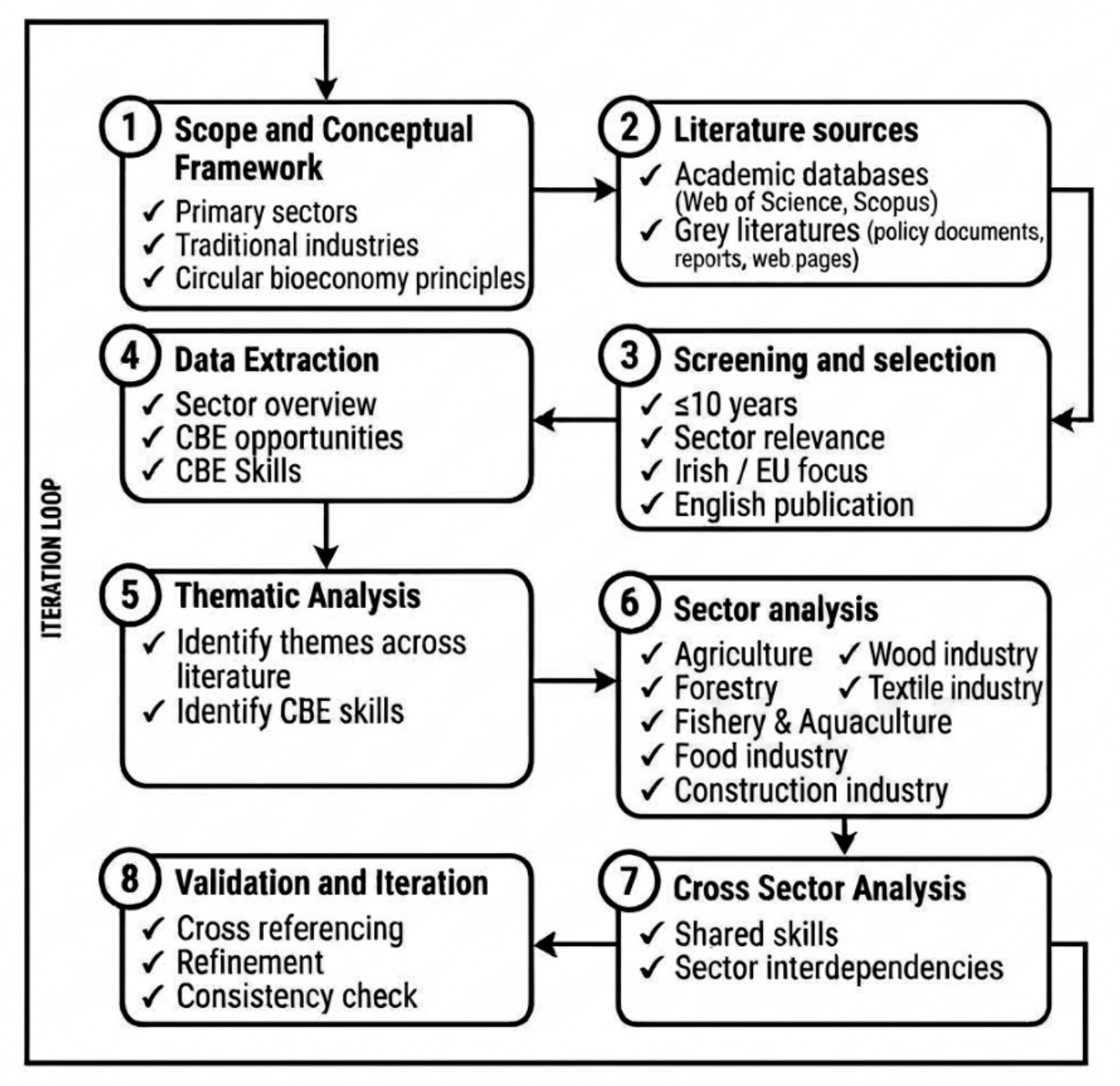
This study employed a qualitative research approach through a systematic literature review (SLR), following the PRISMA 2020 guidelines. The review was undertaken to systematically identify, evaluate, and synthesise published evidence on the knowledge, skills, and competencies required for the transition to a circular bioeconomy across six key sectors in Ireland. The scope of this study was delimited to primary bioeconomy sectors (agriculture, forestry, fisheries and aquaculture) and the traditional industries (food and beverages, wood, textiles, and construction). These sectors constitute the core operational layers of the bioeconomy, and the transition to a circular bioeconomy requires the establishment of robust, sustainable, and efficient biomass supply chains, which these sectors represent. Ireland is still in the transition phase to a circular bioeconomy, driven by recent policies such as the National Bioeconomy Action Plan (2023–2025). By first identifying and strengthening skills in primary production and traditional processing industries, the study supports the gradual development of Ireland’s bioeconomy ecosystem. A well-equipped workforce in the primary sector is foundational for the subsequent expansion of the circular bioeconomy into the more technologically complex biotech industries (biorefineries, biopharmaceutical, bioenergy). Limiting this study to the primary and traditional sector does not limit the use of the taxonomy but rather provides a preliminary framework that can be built upon as the transition unfolds.
2.1. Literature Search Strategy
A systematic search strategy was employed to identify the relevant academic literature. The literature search was carried out in March 2026 using the Web of Science and Scopus. The following search string was applied to titles, abstracts, and keywords:
Circular bioeconomy or bioeconomy AND livestock or Tillage Farming AND skills.
Forest bioeconomy OR forest circular bioeconomy AND skills.
Blue bioeconomy OR Circular Bioeconomy AND Aquaculture AND fisheries AND skills.
Bioeconomy OR Circular bioeconomy AND textiles AND Skills.
Bioeconomy OR Circular bioeconomy AND Food AND Beverage AND Skills.
Bioeconomy OR Circular bioeconomy AND Construction AND Skills.
The initial search retrieved 351 documents, with most of the retrievals coming from Web of Science. A table of the search string and the number of articles retrieved for each sector is attached as
Supplementary Materials.
2.2. Inclusion and Exclusion Criteria
The journal articles were selected based on relevance, temporal scope, Irish/European contexts, and sectoral alignment. Articles written in English and published between 2015 and 2025 were included. Although the review focused primarily on the literature published between 2015 and 2025, two earlier publications [
12,
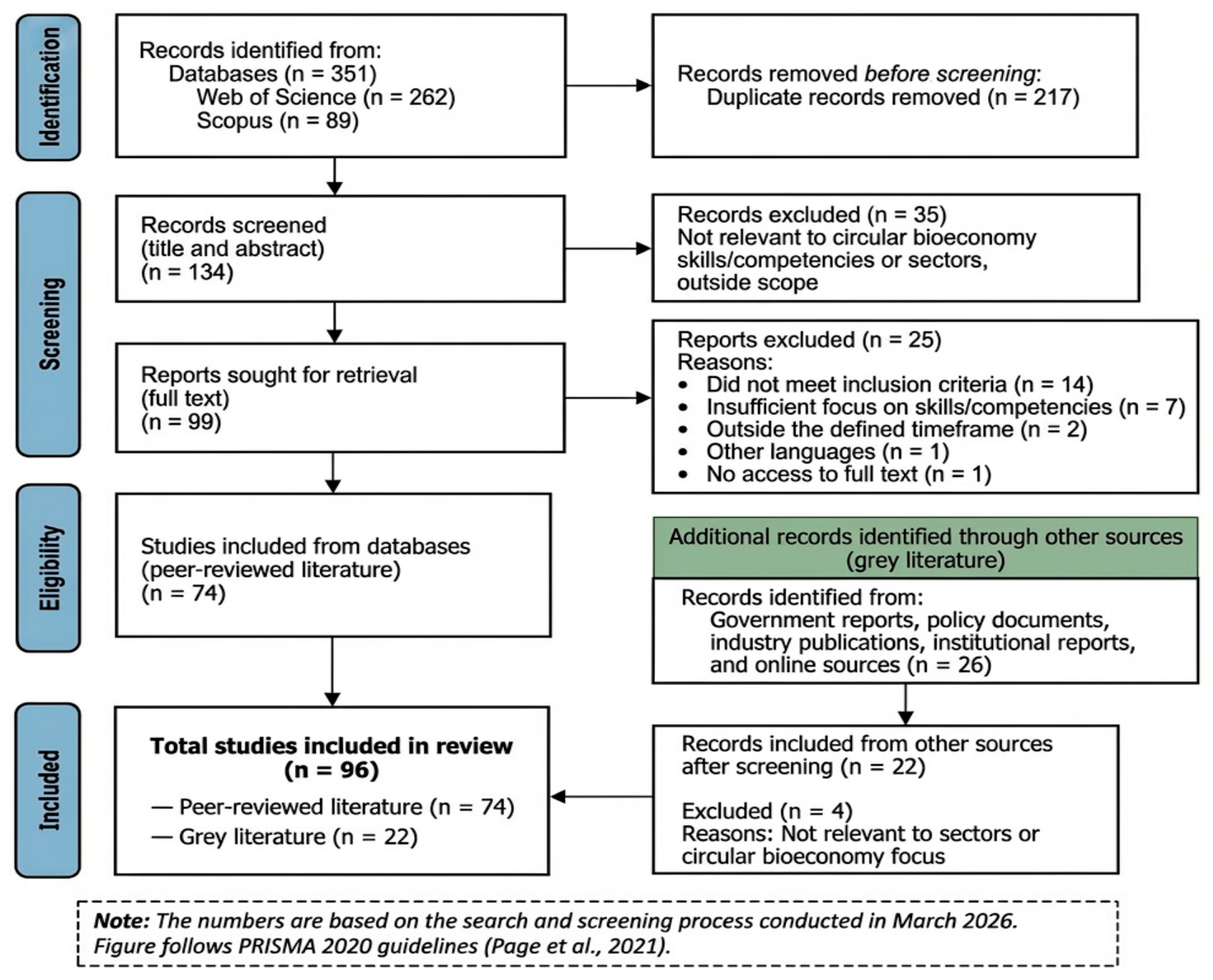
13] were retained because of their foundational contribution to circular bioeconomy concepts relating to resource valorisation, waste utilisation, and circular value chains. Both publications continue to be cited in contemporary circular bioeconomy research. Publications that lacked empirical or conceptual relevance to the circular bioeconomy, or that focused solely on linear production systems without sustainability considerations, were excluded. Other exclusion criteria include studies outside the defined timeframe, articles in other languages and duplicate records. After filtering, 217 records were excluded, and 134 were retained for screening.
2.3. Selection and Screening Process
The screening for the articles used in this study was carried out in two stages. The first stage was title and abstract screening based on circular bioeconomy and sector relevance. The second stage was a full-text assessment for methodological and thematic adequacy. In total, 35 records were excluded in the title/abstract screening stage. In total, 25 records were excluded at the full-text screening stage. In total, 74 documents were selected, organised by sector and analysed. The analysis was guided by the European Union’s bioeconomy framework, with particular emphasis on four core principles: sustainability, circularity, systems thinking and biotechnologies. These principles informed both the selection of the literature and the analytical lens applied throughout the study. The screening process was iterative, with continuous refinement of themes and inclusion criteria as new insights emerged.
2.4. Additional Sources
In addition to the Web of Science and Scopus results, grey literature was used in this study. The search was conducted through targeted website searches of relevant organisations, including Irish government departments, state agencies, industry bodies, and European institutions. Search terms combined each of the six sectors with the keywords “Ireland”, “bioeconomy”, “circular economy”, “skills”, and “workforce”. This search retrieved 26 documents. Each document was independently assessed to ensure methodological consistency. Documents were included if they (i) originated from a recognised and authoritative organisation, (ii) provided information relevant to Ireland’s circular bioeconomy or comparable European contexts, and (iii) contributed sectoral, policy, or labour market evidence not available in the peer-reviewed literature. Documents were excluded if they contained insufficient information on skills or workforce development, duplicated information already captured in other sources, represented opinion pieces without supporting evidence, or were not directly relevant to the objectives of the study. Following this evaluation, 22 documents were retained for inclusion. These sources provided important contextual information on national policies, sectoral characteristics, economic contributions, education and training initiatives, and workforce priorities that complemented the findings from the peer-reviewed literature. Consequently, the final evidence base comprised 96 documents, including 74 peer-reviewed publications and 22 grey literature sources.
2.5. Analysis and Synthesis
Following the systematic review, data were extracted from each publication using a structured data extraction form that captured the sector, circular bioeconomy knowledge areas and skills. The data extraction is attached in the
Supplementary Materials. The extracted data were analysed through a multi-stage coding process informed by the principles of thematic analysis [
14]. The coding and skills classifications were managed using Microsoft Excel to facilitate the comparison and organisation of skills and knowledge areas across studies and sectors.
Firstly, open coding was undertaken whereby all reported skills and knowledge areas were identified directly from the literature. Each skill was treated as an individual code regardless of the terminology used by different sources. In the second stage, the individual codes were reviewed iteratively to identify conceptual similarities and remove duplication. Synonymous or closely related competencies were merged into common competency statements while preserving their original intent. Lastly, the consolidated competencies were organised into broader thematic categories based on their functional characteristics and contribution to circular bioeconomy. These categories are systems-thinking, sustainability, circularity, bioeconomy/biotechnology, and digital skills. The categorisation process was iterative, involving repeated comparison of the extracted data to ensure that each skill was assigned to the most appropriate category while maintaining consistency across the six sectors.
Following the thematic categorisation, the taxonomy was developed by mapping the identified skills across the six selected bioeconomy sectors to distinguish sector-specific competencies from those common to multiple sectors. This comparative analysis enabled the identification of both specialised technical skills required within individual sectors and cross-sectoral competencies that underpin the transition to a circular bioeconomy. The resulting taxonomy provides a structured framework that organises circular bioeconomy skills into coherent categories while illustrating their distribution across the six sectors.
Figure 1 presents the systematic review process followed for this study diagrammatically.
3. Results and Discussion
3.1. Study Selection
The systematic literature search identified a total of 351 records from the Web of Science and Scopus databases. Following the removal of duplicate records and the application of the predefined inclusion and exclusion criteria, 134 publications remained for screening. The screening process was undertaken in two stages. During the first stage, titles and abstracts were assessed for relevance to the objectives of the study, resulting in the exclusion of 35 publications that did not adequately address circular bioeconomy skills, competencies, or one of the six selected sectors. The remaining studies underwent full-text assessment, during which a further 25 publications were excluded because they did not satisfy the eligibility criteria or lacked sufficient methodological or thematic relevance. To complement the peer-reviewed literature, a targeted search of the grey literature was conducted to capture national reports, policy documents, industry publications, and institutional reports relevant to the Irish circular bioeconomy. This search yielded 26 documents, of which 22 met the inclusion criteria following manual assessment of their relevance. The final evidence base comprised 96 publications, consisting of 74 peer-reviewed articles and 22 grey literature sources. These documents formed the basis of qualitative synthesis and taxonomy development. The study selection process is summarised in
Figure 2 below.
3.2. Characteristics of the Included Studies
The publications included in this review encompassed studies from agriculture, forestry, fisheries and aquaculture, food and beverage processing, textiles, and construction, together with publications addressing cross-sectoral sustainability, circular economy, and workforce development.
Table 1 summarises the sources of the literature for each of the six sectors addressed in this study. The reviewed literature showed a noticeable increase in publications after 2018, reflecting the growing international policy emphasis on the circular economy, climate action, and sustainable resource management. While many studies focused on technical innovations and bio-based production systems, relatively fewer explicitly examined workforce skills and competency requirements. Most publications discussed skills indirectly through technological adoption, sustainability transitions, digitalisation, education, innovation, or policy implementation. Although each sector exhibited specialised technical requirements, the analysis identified a common set of transferable competencies that underpin the transition to a circular bioeconomy. The studies also indicate that Ireland’s transition remains at an early stage of development. Existing initiatives have primarily focused on technological innovation, biomass utilisation, and policy implementation, whereas comparatively limited attention has been given to systematically identifying the workforce competencies required across different sectors. Furthermore, available evidence suggests that skills development efforts remain fragmented, with sector-specific initiatives often occurring independently rather than through an integrated circular bioeconomy framework. These findings reinforce the need for a comprehensive skills taxonomy capable of supporting curriculum development, workforce planning, and evidence-based policymaking across the six sectors examined in this study.
3.3. Overview of Ireland CBE Sectors and the Inherent Circular Bioeconomy Potentials
The following overview is derived from the analysis of Irish policy documents and institutional reports included in the systematic literature review and provides the national context for identifying and interpreting circular bioeconomy skills across the six sectors.
3.3.1. Irish Agriculture Sector
The agricultural sector contributes significantly to the development of the bioeconomy through its economic, social and environmental functions. It is the single largest production sector in the bioeconomy, producing bio-based materials for food, feed and energy. Ireland has approximately 135,000 farms, managing 4.5 million hectares of agricultural land, with over 80% devoted to grassland [
16]. The sector is largely based on grass-based livestock farming, with cattle, dairy, and sheep production accounting for the majority of agricultural output. Dairy and beef production represent the largest subsectors, supported by extensive cattle herds and a highly developed processing industry. This makes Ireland one of the largest exporters of dairy products and beef in Europe, with agri-food exports forming a significant share of national merchandise exports [
17]. The Irish tillage sector comprises the production of crops such as cereals (wheat, barley, and oats), oilseed rape, maize, legumes, and potatoes. Approximately 334,450 hectares of land were used for tillage crops in 2024, representing a relatively small share of Ireland’s agricultural land base compared with grass-based livestock systems [
18]. The dominance of agriculture in Ireland’s land use makes it uniquely positioned to drive bioeconomy development compared to more industrialised states in the European Union (EU).
The agricultural sector contributes significantly to the development of the bioeconomy through its economic, social and environmental functions. It is the single largest production sector in the bioeconomy, producing bio-based materials for food, feed and energy. Agricultural wastes are specifically identified as key sources of biomass for securing a transition to a sustainable bioeconomy [
19]. Ireland’s livestock-dominated farming system generates substantial quantities of biomass in the form of grass, silage, slurry, manure, and crop residues. These biological resources are essential feedstocks for bio-based value chains, including animal feed production, bioenergy, and emerging biorefinery industries. In addition to these, livestock residues contribute to nutrient recycling and soil fertility, thereby reducing reliance on synthetic fertilisers and supporting more sustainable crop production systems. The use of bio-based inputs (biochar, bio-fertilisers, tailored composts and green manure) contributes to increased productivity and offers sustainable solutions for transforming waste into high-quality soil amendments [
20]. Such nutrient cycling is a central principle of the circular bioeconomy model and helps close resource loops within agricultural systems. Additionally, the adoption of CBE practices in the tillage sector, such as recycling farm waste and regenerative practices, improves crop productivity, while practices like crop rotation optimise food production in fixed areas [
21]. Tillage and horticulture systems are generally considered among the more carbon-efficient agricultural activities in Ireland and could play a role in diversifying land use and reducing the environmental footprint of food production.
3.3.2. Irish Forestry and Wood Sector
Forests cover approximately 11% of Ireland’s land area, which is relatively low compared with the European Union average of around 38%, highlighting the strategic importance of afforestation and forest expansion policies in the country (Department of Agriculture, Food and the Marine [
30]. Much of Ireland’s forest estate has been established over the past century, with the majority of forests consisting of conifer plantations, particularly Sitka spruce, which supports the domestic timber processing industry. Economically, the Irish forestry and wood sector makes a substantial contribution to national output and employment. The sector is estimated to generate around €2.3 billion in annual economic activity, supporting approximately 12,000 jobs across the forestry value chain, including forest management, harvesting, sawmilling, panel board manufacturing, and wood-based energy production [
31]. The Irish wood sector an important role in supplying raw materials for construction, wood-based panels, and bioenergy while supporting rural economic activity. Employment in the sector includes both direct and indirect jobs, with forestry, sawmilling, panel board manufacturing, and wood-energy production forming key components of the industry.
The Irish government’s Climate Action Plan identifies afforestation as a key climate mitigation strategy, with a target of planting 8000 hectares of new forest annually. In addition, the Forest Strategy 2023–2030 aims to expand forest cover, strengthen sustainable forest management practices, enhance biodiversity, and secure a long-term supply of Irish-grown timber to support the forest-based bioeconomy [
30]. The gross output of the Irish forest sector is set to double by 2035 against a backdrop of increasing carbon constraints, and this creates a tremendous opportunity for the sector [
31]. Roundwood production in Ireland is projected to increase from approximately 6.0 million m
3 in 2025 to 6.9 million m
3 by 2030, and at the same time, demand for wood biomass for energy is expected to grow from 3.6 million m
3 in 2025 to 4.5 million m
3 by 2030, reflecting the growing availability of forest resources from the planned expansion of the forest sector and the increasing importance of forest biomass in renewable energy and the bioeconomy [
32]. Overall, the Irish forestry and wood sector represents an important component of the country’s bioeconomy. Through sustainable forest management, increased afforestation, and the development of value-added wood products, the sector has significant potential to contribute to climate action, rural development, and the transition toward a circular bioeconomy.
Forestry bioeconomy encompasses the integrated and responsible management of forests, not only to produce wood and paper, but also for the valorisation and preservation of a myriad of forest components, among which non-wood biomaterials occupy a prominent place [
33]. These non-wood biomaterials come from various plant parts other than wood (leaves, stems, roots, fruits, plant residues) and are characterised by their diversity, specific properties and potential for use in many industries offering various advantages in terms of sustainability and low environmental impact [
34]. With global shift to a more circular economy, the forest sector stands to benefit significantly because they produce a variety of biobased material alternatives for fossil-based materials that have applications in many sectors of the economy, ranging from construction, furniture manufacturing, packaging, textiles, pharmaceuticals, automotive and space industries and can thus prompt a transition in multiple strategic sectors with high carbon impacts [
35]. Applying bioeconomy principles in forestry management offers a new opportunity to explore innovative practices for the sustainable management of non-wood biomaterials [
36]. The new and growing opportunities include the development of biobased fuels, chemicals, renewable energy and other industrial products to help address climate change and reduce dependence on fossil-based and non-renewable raw materials. These forest resources also have a triple carbon benefit that other sectors do not have. These include the sequestration of carbon as forests grow, the displacement of steel, aluminium and concrete with wood products and the conversion of wood at its end-of-life stage into carbon-neutral thermal energy and used for heating and/ or electricity [
37]. For this reason, there is a growing demand for forest-based materials as innovations continue to develop new and expanded uses.
3.3.3. Irish Fishery, Aquaculture and Marine Sector
The fishery and aquaculture sector in Ireland is a key component of the country’s marine economy and plays an important role in supporting sustainable resource use, rural coastal development, and the emerging bioeconomy. Ireland has access to extensive marine resources, with a sea area that is significantly larger than its landmass, providing considerable potential for seafood production and the sustainable utilisation of marine biological resources [
48]. The seafood sector contributes significantly to the Irish economy, with the overall value of Ireland’s seafood industry estimated at over €1 billion annually, supporting approximately 16,000 jobs across fishing, aquaculture, and seafood processing activities [
49]. Much of this employment is located in rural and coastal areas, where the sector plays a critical role in regional economic development. The sector encompasses three main components: wild capture fisheries, aquaculture production, and seafood processing, all of which contribute to economic activity and employment in coastal regions. Ireland has a long fishing tradition, and the sector is recognised for its potential in marine ecosystems, not only to produce food but also to produce novel materials and pharmaceuticals. Furthermore, marine biotechnology and seaweed production represent emerging opportunities for Ireland’s marine bioeconomy. Seaweed and other marine organisms contain bioactive compounds that can be used in food, cosmetics, pharmaceuticals, and bio-based chemicals. The development of these industries aligns with Ireland’s national bioeconomy policies, which emphasise the sustainable use of marine and terrestrial biomass resources to support economic growth and environmental sustainability [
50].
The bioeconomy in this sector, sometimes referred to as blue bioeconomy, encompasses both freshwater and marine biological resources that can be harvested and converted into food, feed, bio-based products and bioenergy. Fishing and aquaculture exert pressure on the environment in different ways, from the over-exploitation of targeted fish stocks, disruption of ecosystems of farmed species, marine and aquatic pollution, and consumption of fossil fuels in fishing [
51]. Additionally, there are significant amounts of under-utilised rest raw materials (RRM), such as heads, skins, and viscera, giving rise to high amounts of waste from the sector. The circular blue economy presents a critical pathway towards economic diversification for actors in the sector. Marine biomass derived from fisheries and aquaculture can be utilised in a variety of value-added applications. For example, processing fish by-products, including fish oils, proteins, and collagen, can be converted into nutraceuticals, pharmaceuticals, animal feed ingredients, and bio-based materials, thereby supporting circular bioeconomy principles through the efficient use of biological resources [
52].
3.3.4. Irish Food and Beverage Industry
The largest sector of the bioeconomy in the EU in terms of turnover and employment is the food industry, including the production of food, beverages and tobacco [
61]. Ireland’s food and drinks industry is the largest indigenous manufacturing sector in Ireland and is closely linked to the country’s agricultural sector, which supplies raw materials such as milk, livestock, cereals, and horticultural products. Together, the agri-food sector contributes significantly to the Irish economy, accounting for approximately 5.4% of modified gross national income (GNI) and 6.2% of employment in 2024 [
62]. The Irish food and drink industry generates an estimated €29.5 billion in annual turnover and is one of the largest employers in the country, supporting around 165,000 jobs across the agri-food value chain, which highlights its importance as one of Ireland’s largest indigenous industries [
63]. Key sub-sectors include the dairy processing sector, which exports dairy products of about €6.3 billion annually to over 140 markets; the meat processing sector, which exports mostly beef to over 90 countries and generated more than €2.7 billion in 2023; the prepared consumer foods sector; and a rapidly growing value-added segment targeting further export expansion with annual turnover of €3.6 billion [
64]. Despite the economic significance of the Irish food processing sector, it is faced with sustainability challenges related to resource use, waste generation, and greenhouse gas emissions. Food waste represents a major issue within the Irish food system. In 2023, Ireland generated approximately 835,000 tonnes of food waste, with the manufacturing and processing sector responsible for about 305,000 tonnes (37%), the largest share of waste across the food supply chain [
65].
The role of circular bioeconomy in fostering a sustainable food system is still largely unexplored; however, several authors have investigated different mechanisms. These mechanisms are summarised by [
66] to include the following: expanding dietary options through creation of innovative food products from bioresources; extending the shelf-life of food products post-harvest or post-processed; using sustainable packaging to improve food safety and shelf-life; enhancing crop yield by using bio-inputs while reducing chemical dependence. Thus, circular bioeconomy contributes to food availability, a critical aspect of food security, by increasing yield, diversifying food sources and extending shelf-life without increasing land and other resource use. The food and drink industry occupies a pivotal position in the transition to a circular bioeconomy as they are able to set expected standards for the farmers while at the same time interfacing with consumers who are becoming increasingly discerning in demanding that food is grown, processed and packaged sustainably [
61]. Ireland’s large dairy, meat, and crop sectors generate significant volumes of biological residues and processing by-products such as whey, animal by-products, and food processing waste. These materials can be utilised as feedstocks for bio-based products, including bioplastics, animal feed, fertilisers, and bioenergy. Transitioning the Irish food and drinks industry to a circular bioeconomy presents significant opportunities for sustainability and resource efficiency for the sector.
3.3.5. Irish Textile Industry
The textile and clothing sector in Ireland has a long historical tradition rooted in wool, linen, and weaving industries, particularly in rural regions such as Donegal, Wicklow, and the northwest. Historically, the sector played an important role in regional employment and industrial development, with textile mills and garment manufacturing forming key components of local economies. Ireland’s textile industry today is relatively small compared with other manufacturing sectors but remains economically relevant. The industry is characterised by a mix of small and medium-sized enterprises (SMEs), traditional mills, fashion and design businesses, and multinational companies operating in specialised markets. Despite the decline of large-scale clothing manufacturing due to global competition, the sector has increasingly shifted toward high-value niche production, design, branding, and specialised textiles, including technical textiles and protective clothing. This transition reflects broader structural changes in European textile industries, where competitive advantage increasingly lies in innovation, sustainability, and product differentiation rather than low-cost mass production.
Textile waste has become an increasing environmental concern in Europe, and Ireland is beginning to explore solutions such as clothing reuse networks, fibre recycling technologies, and circular design practices. A circular economy for textiles is important because it aims to support sustainable consumption and use of textiles, champion resource reuse, and eliminate waste in the textiles sector [
80]. But beyond the circular economy, the transition to a circular bioeconomy presents several opportunities for the Irish textile sector to contribute, particularly through the use of renewable biological resources, waste valorisation, and sustainable production systems. Ireland’s strong agricultural and bioresource base, including sheep farming and other fibre-producing systems, provides potential feedstocks for bio-based textiles, such as wool, hemp, flax, and other natural fibres. Bio-based fibres represent an important component of the emerging circular bioeconomy, offering alternatives to fossil-based synthetic fibres. These fibres can be broadly classified into natural fibres (cotton, flax, hemp, wool), semi-synthetic fibres (man-made cellulose fibres—MMCFs), and synthetic bio-based fibres (PLA), each with distinct production processes, feedstocks, and market dynamics. The circular bioeconomy may stimulate regional economic development and innovation ecosystems around sustainable textiles. Collaboration between agriculture, forestry, and bio-based textiles development could enable the creation of integrated bio-based value chains, linking primary production with manufacturing. Such synergies could support rural economies while contributing to Ireland’s broader climate and sustainability objectives.
3.3.6. Irish Construction Industry
The construction industry is a key sector of the Irish economy, contributing significantly to economic activity, employment, and national infrastructure development. Irish construction sector generated approximately €14.3 billion in gross value added (GVA) in 2024, representing a 6% increase compared with 2023. The sector is also an important source of employment, with 171,700 people employed in construction, representing more than 6% of total employment in Ireland [
88]. The Irish construction sector encompasses a wide range of activities, including residential and non-residential building, civil engineering projects, and specialised construction services such as electrical installation, plumbing, and building finishing. These activities support housing supply, commercial development, and public infrastructure while generating substantial economic output. The Irish construction sector has considerable potential to contribute to the development of a circular bioeconomy, particularly through the increased use of renewable biological materials, improved resource efficiency, and the integration of circular design principles.
Within the construction sector, transition to a circular bioeconomy involves the replacement of carbon-intensive materials with bio-based alternatives, such as wood, bamboo, and building materials derived from agricultural biomass [
89]. These materials are often biodegradable or recyclable at the end of their life cycle and can contribute to reducing both material extraction and waste generation [
90,
91]. Recent innovations have expanded the range of bio-based construction materials available to industry. Examples include cross-laminated timber (CLT), engineered bamboo, and insulation materials made from biomass feedstocks such as hemp, straw, and typha. These materials offer significant environmental advantages because they are derived from renewable resources and have the capacity to store carbon throughout their life cycle, potentially transforming buildings into long-term carbon sinks [
92,
93]. As a result, the adoption of bio-based materials in construction can contribute to climate change mitigation while also promoting more sustainable material cycles.
One of the ways to integrate circular bioeconomy principles is the expanded use of wood and engineered timber products supplied by the forestry sector. These materials offer significant environmental benefits compared with traditional construction materials such as steel and concrete because they have lower embodied energy and the capacity to store carbon during their use phase [
92]. Another key opportunity relates to the circular use of construction and demolition waste. Construction activities generate large volumes of waste materials, including timber offcuts, concrete, metals, and packaging. Circular bioeconomy strategies encourage the cascading use of these resources. In the context of construction, wood can first be used in long-life building components, then reused or recycled in secondary products, and finally converted into bioenergy at the end of its life cycle. Recovered timber from demolition projects can be reused in new building applications or repurposed for other wood-based products, contributing to material circularity within the sector. Such approaches maximise the value derived from biomass while reducing material waste and environmental impacts [
5,
94].
3.4. Sector-Specific Circular Bioeconomy Skills
3.4.1. Agriculture
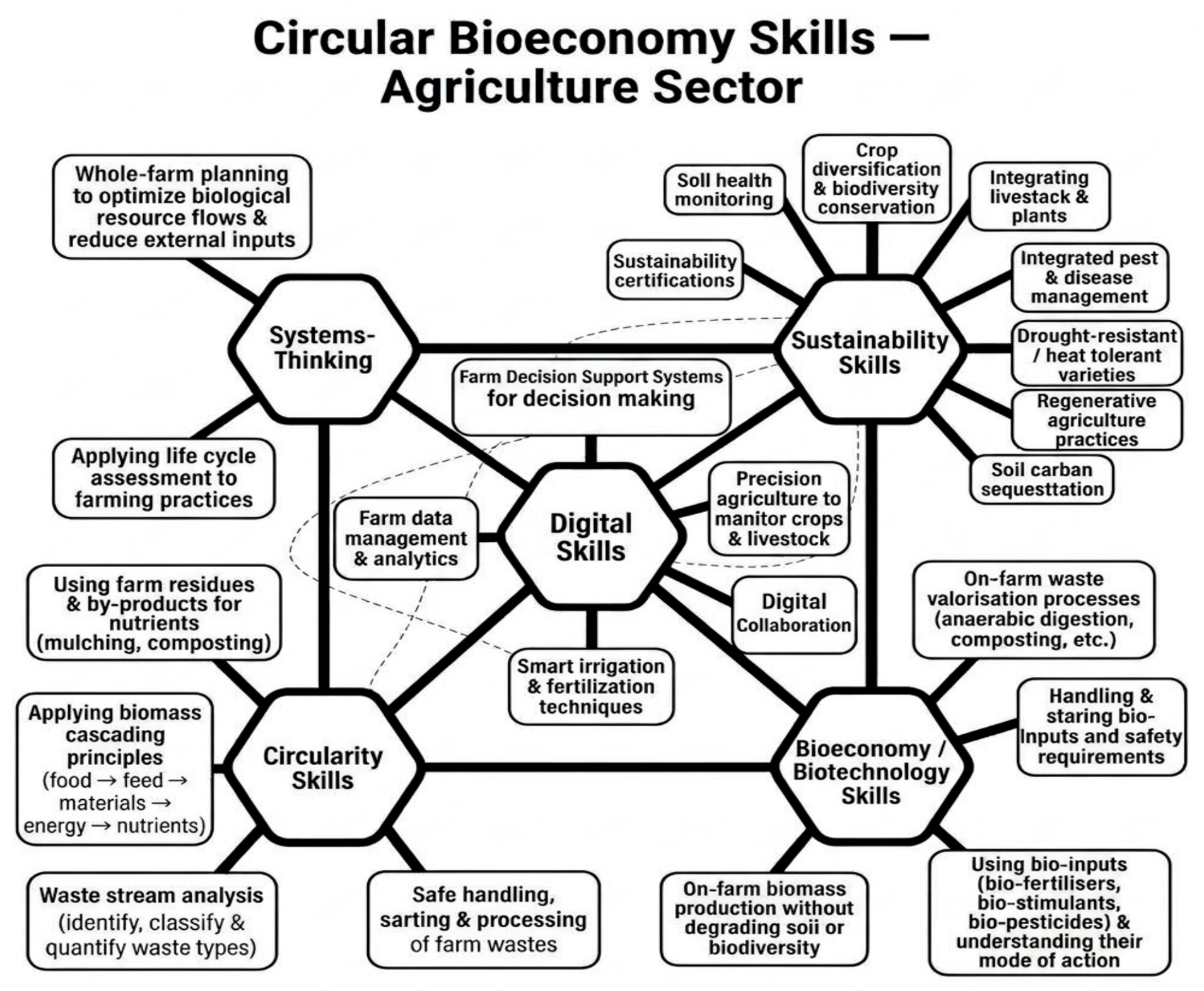
A circular bioeconomy requires a shift from linear crop or livestock production systems to integrated crop–livestock systems. The required skills to achieve this include understanding nutrient cycling, pasture management, crop–livestock integration, and the efficient use of biomass resources such as agricultural residues and food-processing by-products [
22]. According to [
23], knowledge of ecosystem services provided by livestock systems such as maintaining grasslands, supporting biodiversity, and managing marginal land is equally important for designing sustainable circular farming systems. For tillage farmers, skills in crop rotation design, soil fertility management, and the use of organic amendments such as compost, digestate, and manure are required for a sustainable tillage system [
24]. These practices support nutrient cycling and help maintain soil health, which is essential for long-term productivity in circular agricultural systems. Farmers must also understand how crop residues such as straw and stover can be managed to balance soil carbon storage with the recovery of biomass for bio-based applications [
24]. For livestock farmers, new skills are needed in feed formulation, by-product utilisation, and sustainable feed sourcing. Farmers must understand how to incorporate alternative feed resources (crop residues and alternative proteins such as insect-based feeds) safely and efficiently while maintaining animal health and product quality [
25].
Another key competency area relates to the valorisation of livestock by-products and waste streams for livestock farmers and the valorisation of crop biomass and residues for tillage farmers. Tillage systems produce significant quantities of agricultural residues, including straw, husks, and processing by-products [
5]. Likewise, livestock systems produce animal by-products, including bones, hides, fats, and manure [
25]. In a circular bioeconomy, these materials can be converted into a wide range of products such as pharmaceuticals, cosmetics, animal feed ingredients, bio-based chemicals, and bioenergy. Developing these value chains requires specialised skills in biotechnology, biorefinery technologies, waste processing, and industrial biotechnology. Therefore, there is a need for farm managers to understand how biological materials can be processed safely and efficiently to generate high-value outputs while complying with regulatory and food safety standards [
26]. Skills related to the identification, collection, and processing of biomass are increasingly important for farmers.
The agricultural sector also requires expertise in environmental monitoring and sustainability assessment [
27]. Knowledge and skills in life cycle assessment (LCA), carbon accounting, and sustainability reporting are therefore increasingly important for measuring the environmental performance of livestock and crop production and identifying opportunities for improvement. According to [
5], an understanding of ecosystem services such as soil carbon sequestration, biodiversity conservation, and water stewardship is also important for designing sustainable cropping systems that contribute to the broader goals of the circular bioeconomy. Additionally, skills in policy analysis, regulatory compliance, and stakeholder engagement are necessary to address barriers related to the use of by-products, waste streams, and new bio-based products for both livestock and tillage systems [
28].
Also of importance are skills in precision agriculture, precision livestock management, data analytics, and digital farm management systems. Sensors, data analytics, and decision support tools can help livestock farmers to optimise feeding strategies, monitor animal health, and track nutrient flows within farms and supply chains. They can also be used by tillage farmers to monitor crop growth, soil conditions, and nutrient requirements. These digital skills enable farmers to optimise resource use and reduce environmental impacts [
29].
Table 2 and
Figure 3 present these identified knowledge areas and skills competency areas for the agriculture sector.
3.4.2. Forestry and Wood Industry
A transition to a sustainable and circular bioeconomy forest sector requires holistic system thinking across the entire forest product value system and depends on the sustainable production and consumption of forest-based materials. The skills gap identified through stakeholder consultations by [
38] in the green skills 2030 strategy for forestry managers/proprietors includes species identification, species selection, harvesting, excavating, replanting, hauling, and ground preparation. A key area of skill development relates to sustainable forest management (SFM). SFM is widely recognised as a foundational principle for maintaining and enhancing the economic, social, and environmental values of forests for present and future generations [
39]. Forestry professionals therefore require expertise in forest ecology, biodiversity conservation, and resource management to ensure the sustainable provisioning of biomass. SFM involves administrative, legal, technical, economic, and environmental aspects of forest management, requiring professionals who can develop and implement forest management plans while balancing the production of wood products with the protection of ecosystem services.
Closely related to SFM is the need for skills in ecosystem restoration and regenerative forestry. Global initiatives such as the United Nations Decade on Ecosystem Restoration emphasise the importance of restoring degraded forest ecosystems to enhance ecological functionality and climate resilience [
40,
41]. Forestry practitioners must therefore develop competencies in landscape restoration, ecological monitoring, and regenerative land management practices. These skills enable the restoration of forest health while supporting the sustainable supply of forest-based resources for bioeconomy activities. Adaptive forest management also requires new forms of knowledge and analytical capability. As climate change increasingly affects forest ecosystems, forestry professionals must adopt adaptive management approaches that respond to changing environmental conditions [
42]. This involves skills in ecosystem modelling, data analysis, and climate impact assessment to support decision-making under uncertainty. Adaptive management recognises that historical ecological conditions may no longer provide reliable guidance for future forest management and therefore requires innovative research methods and continuous monitoring of forest ecosystems.
Environmental assessment skills are another key requirement. Waste reduction is identified as the primary environmental motivation for research in the forestry and wood sector (34%), followed by fossil fuel displacement (23%) [
43]. Evaluating these impacts requires expertise in sustainability assessment tools such as life cycle assessment (LCA) and carbon accounting. However, differences in how LCA models account for carbon storage and emissions from wood products can lead to inconsistencies in carbon accounting [
44]. Finally, governance and policy-related skills are important in addressing debates surrounding biomass sourcing and sustainability. Some scholars argue that increased demand for wood-based products could lead to overharvesting, biodiversity loss, and land-use conflicts, while others suggest that appropriate governance and responsible forest management can ensure sustainable biomass supply [
45]. This highlights the need for skills in policy analysis, sustainable forest management, and stakeholder collaboration.
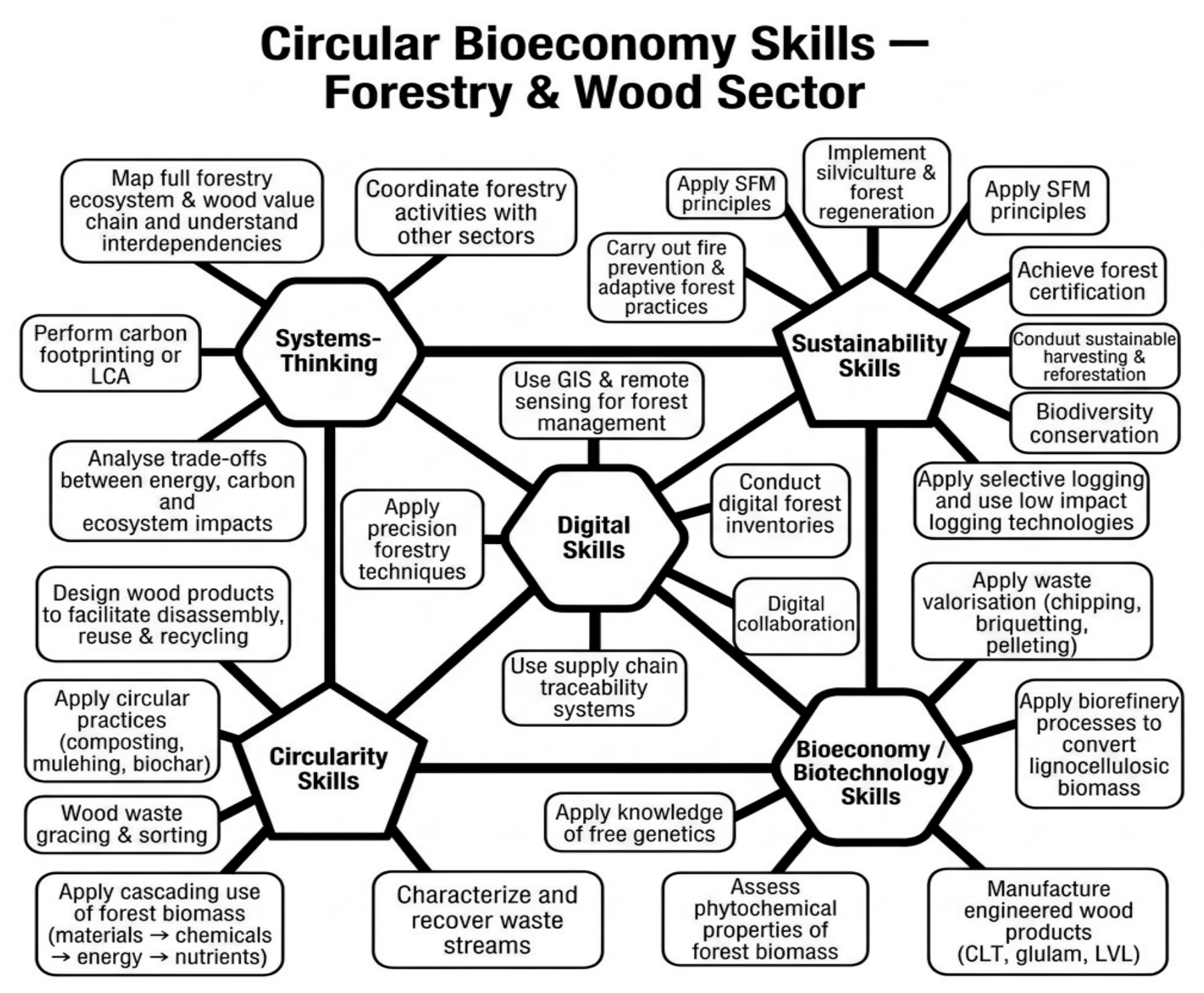
In addition to environmental management skills, the transition to a circular bioeconomy requires competencies related to resource efficiency and circular material use. Wood products play a key role in circular systems because they are renewable, biodegradable, and recyclable. Forestry and wood industry professionals must therefore understand cascading resource use, where wood residues from production processes are recovered and reused as raw materials for additional products [
5]. Biorefinery technologies represent a significant technological advancement in this context. These technologies enable the conversion of lignocellulosic biomass derived from wood into high-value products such as biofuels, bioplastics, and bio-based chemicals. As a result, professionals in the wood sector require skills in biomass processing, chemical engineering, biotechnology, and process optimisation to support the commercialisation of these technologies. Other new technologies emerging are engineered wood products, which focus on increasing the strength, stability and reliability of wood products. These include cross-laminated timber (CLT) and glue-laminated timber (glulam), and more recently, laminated veneer lumber (LVL). A review by [
43] highlights that many studies focus on technologies utilising wood-mixed biomass waste (26%) and forest residues (23%) as primary feedstocks. However, approximately 33% of these technologies remain at laboratory scale, indicating the need for expertise capable of advancing innovations to industrial application.
Lastly, product design skills are increasingly important in the circular wood economy. The concept of “design for circularity” has gained prominence in the wood-based sector, emphasising product designs that facilitate disassembly, reuse, and recycling [
46,
47]. Innovations such as reversible adhesives and modular construction systems allow wood products to be dismantled and reused at the end of their life cycle. Consequently, architects, engineers, and product designers must integrate circular design principles into the development of wood products and construction systems. Knowledge of sustainable materials, modular design, and lifecycle-oriented product development is therefore essential.
Table 3 and
Figure 4 present these identified knowledge areas and skills competency areas for the forestry and wood sector.
3.4.3. Fishery and Aquaculture Industry
Circular bioeconomy skills in the fishery, aquaculture and marine sector combine sustainability, biotechnology, digital monitoring, and circular practices to unlock new opportunities while safeguarding ocean ecosystems. Traditional operational skills remain fundamental to fisheries and aquaculture activities; however, recent studies indicate that the skills required in the seafood sector are evolving rapidly. Core competencies such as vessel navigation, fishing gear handling, aquaculture husbandry, and seafood processing are essential for maintaining productivity and safety across the seafood value chain. While these traditional skills remain essential, new competencies are required to address technological innovation, regulatory changes, and emerging market expectations [
53].
The growing emphasis on sustainable fisheries management, environmental protection, and climate adaptation requires workers who understand ecosystem-based management approaches and responsible aquaculture practices [
54]. Skills related to stock management, water quality monitoring, and environmental compliance are necessary to ensure that fishing and aquaculture activities operate within ecological limits. Industry leaders emphasise that protecting marine ecosystems while maintaining profitable business operations is central to the future success of the sector. Therefore, knowledge of biodiversity and resources connected to biomass utilisation is identified as part of the challenges for using marine bioresources for high-value-added applications [
54].
Another important dimension of the circular blue bioeconomy is the integration of marine and terrestrial bioeconomy systems. Ref [
55] opine that integrating the marine and land systems can improve resource utilisation for both. Synergies between aquatic and agricultural production systems offer opportunities for circular resource flows across sectors. For example, agricultural side streams could be used as feed inputs in aquaculture systems, while marine-derived bio-stimulants and nutrients could support sustainable agricultural production. Such cross-sector integration can enhance resource efficiency and reduce waste across the broader bioeconomy. One of the key opportunities in enabling a circular blue bioeconomy is the valorisation of waste streams and side streams generated within seafood processing, requiring skills in biomass identification, valorisation and cascading use of resources. Currently, a significant proportion of fish biomass, including by-catch and processing residues such as heads, bones, skins, and shells, remains underutilised. Through a biorefinery approach, fish processing residues can be converted into valuable products such as cosmetics, fertilisers, animal feed, nutraceuticals, pharmaceuticals, bio-based chemicals, functional food ingredients and bioenergy, thereby extending the value of marine resources and minimising waste generation [
56]. Such processes not only reduce waste but also enhance the economic value of marine resources by creating new revenue streams within the seafood value chain.
Also important is the need to ensure that these side streams are used efficiently in a cascading manner that prioritises the best alternative reuse of these by-products. Emphasis should be on retaining the food-grade of the products before considering other uses like pharmaceuticals, animal feed, industrial uses, composting, and energy production [
57]. In addition to the above, emerging applications such as seaweed-based bioplastics and biomaterials demonstrate the potential of marine biomass to replace fossil-based materials and contribute to more sustainable production systems [
58]. Innovative production systems, including recirculating aquaculture systems (RAS) and integrated multi-trophic aquaculture (IMTA), further support circularity by optimising resource use and reducing environmental impacts.
Skills in using digital technologies are another important enabling factor for the circular blue bioeconomy. Technological innovations help address major challenges faced by fishers, such as limited access to market information, inaccurate weather predictions, and inefficient fishing operations [
59]. According to [
60], digitalisation in marine navigation and catch-recording systems improves operational efficiency by approximately 20%. Relevant forms of digital technology include marine mapping and navigation applications (e.g., Navionics, MarineTraffic), weather and ocean wave prediction apps (e.g., BMKG, Windy), digital systems for recording catch data, digital fisheries marketplaces and Internet of Things (IoT) systems for aquaculture and seafood processing.
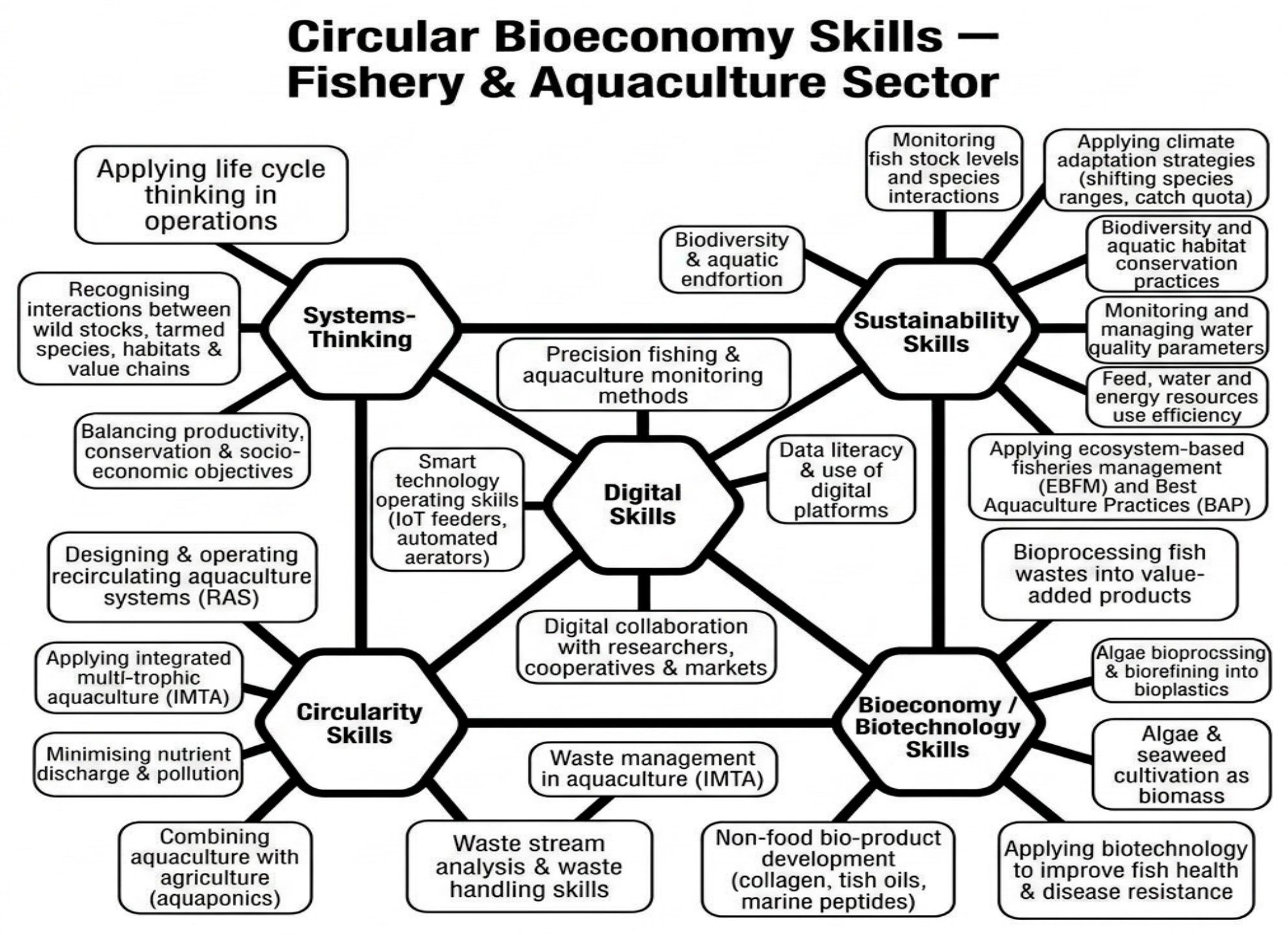
Table 4 and
Figure 5 present these identified knowledge areas and skills competency areas for the fishery and aquaculture sector.
3.4.4. Circular Bioeconomy Skills for the Food Industry
The transition toward a circular bioeconomy (CBE) in the food processing industry requires new competencies, interdisciplinary knowledge, and workforce capabilities that differ substantially from those associated with traditional linear production models. One of the most important skill domains relates to bioprocessing and biorefinery technologies. Circular bioeconomy practices rely heavily on advanced processing techniques that convert food waste and side streams into value-added products such as bioactive compounds, biofuels, animal feed, and biodegradable materials [
67]. To meet industry demands in the industry, workers in the food processing sector require knowledge of biochemical processing, fermentation technologies, enzymatic extraction, and anaerobic digestion systems. These technical areas are identified as having the highest skills gap, especially in areas of food technology, quality assurance and production management [
68]. These technical capabilities enable the transformation of residual biomass into new products, thereby supporting the valorisation of waste streams and improving overall resource efficiency [
69,
70].
The circular bioeconomy also requires workers to develop competencies related to resource management and environmental assessment. Circular food systems prioritise efficient use of land, water, and energy, while reducing greenhouse gas (GHG) emissions across the supply chain [
71,
72]. Food industry professionals therefore need expertise in life cycle assessment (LCA), environmental monitoring, carbon accounting, and waste management systems. Technologies such as anaerobic digestion, biomethane production, and microalgae-based biofuels allow food waste to be converted into renewable energy, reducing reliance on fossil fuels and improving environmental performance [
73,
74]. Knowledge of these technologies and ways of integrating them into processing operations is relevant for the agri-food sector. Innovation is central to the circular bioeconomy, particularly in the development of new food products derived from alternative bioresources, including microalgae, edible insects, and agricultural residues [
75,
76]. These innovations expand dietary options and contribute to food security without increasing land use. Consequently, professionals in the food processing industry must possess skills in food science, product formulation, sensory analysis, and consumer acceptance research. Post-harvest and processing innovations are necessary to overcome challenges associated with the sensory characteristics of novel bio-based foods.
In recent years, skills in sustainable packaging have become increasingly important. Research demonstrates that bio-based materials derived from agricultural residues such as banana peel films or soyhull cellulose-based packaging can extend food shelf life while reducing environmental impacts [
77,
78]. Consequently, workers in the sector must understand biomaterial design, packaging engineering, and food preservation technologies. Digital competencies are also essential for enabling the circular transformation of the food processing industry. Skills in data analytics, digital traceability, smart manufacturing, waste tracking platforms, and digital communication allow companies to optimise resource use, improve supply chain transparency, and support the development of circular business models [
66]. As the circular bioeconomy expands, digital skills will become increasingly important for ensuring efficient management of biological resources and achieving the environmental, economic, and social objectives of sustainable food systems [
71,
79].
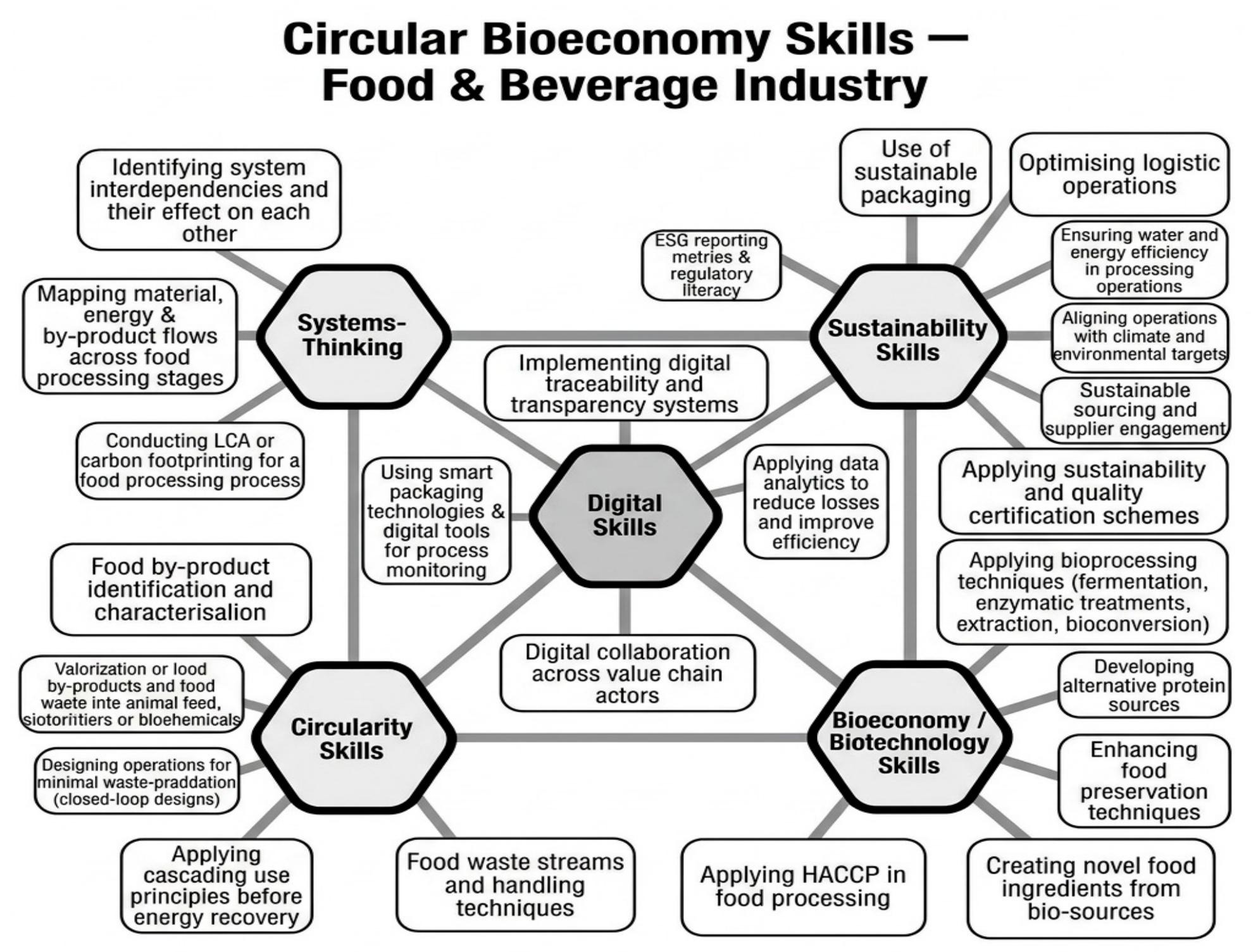
Table 5 and
Figure 6 present these identified knowledge areas and skills competency areas for the agriculture sector.
3.4.5. Circular Bioeconomy Skills for the Textile Industry
A critical area of competence needed for transition to a circular bioeconomy for the textile sector is bio-based material production and processing skills. The growing use of natural and regenerated fibres, including wool, hemp, flax, and cellulosic materials, necessitates expertise in biomass processing and textile material science. In the Irish context, where strong linkages exist between agriculture and potential textile feedstocks, skills in valorising agro-based residues into textile fibres and bio-based inputs are particularly important. This includes knowledge of emerging technologies for producing regenerated fibres and biodegradable materials from agricultural and forestry by-products [
81]. Such competencies are essential for reducing reliance on synthetic fibres and enhancing the sustainability of textile production systems. In addition, the transition to circular bioeconomy requires advanced circular design and product development skills. Designers and manufacturers must adopt principles such as design for durability, repairability, reuse, and recyclability, ensuring that textile products can be reintegrated into material cycles at end-of-life [
82]. This aligns with circular economy strategies that aim to “slow” and “close” resource loops [
83]. Skills in eco-design, life cycle thinking, and sustainable material selection are therefore central to embedding circularity at the product development stage. In Ireland, where the textile sector is increasingly design-led, such competencies can provide a competitive advantage in niche and high-value markets.
Another key skill domain involves waste management and valorisation capabilities. This requires expertise in sorting, recycling technologies, upcycling processes, and chemical or mechanical fibre recovery systems. Furthermore, knowledge of industrial symbiosis and cross-sectoral collaboration is essential, particularly in linking textile production with agricultural and food sectors to utilise agro and biowaste streams effectively [
83]. This also includes awareness of environmental impacts, consumer behaviour, and policy frameworks supporting circularity [
84,
85]. These skills support the development of integrated circular value chains and reduce material losses across the system. The use of digital technologies such as digital product passports, blockchain-based traceability systems, and data analytics can enhance transparency and traceability across textile supply chains. These tools support material tracking, certification of bio-based content, and improved resource efficiency, which are essential for circular systems [
86]. Consequently, there is a growing need for competencies in digitalisation, data management, and supply chain analytics, particularly in relation to sustainability reporting and compliance with emerging EU regulations. Finally, the transition requires systems thinking and interdisciplinary collaboration skills. Circular bioeconomy systems are inherently complex, involving multiple stakeholders across agriculture, manufacturing, retail, and waste management. Workers and managers in the textile industry must therefore be capable of understanding interdependencies across value chains, engaging in collaborative innovation, and navigating regulatory and market dynamics. This requires skills in sustainable business strategy, value-chain management, and stakeholder engagement, as well as the ability to identify and exploit opportunities arising from circularity [
87].
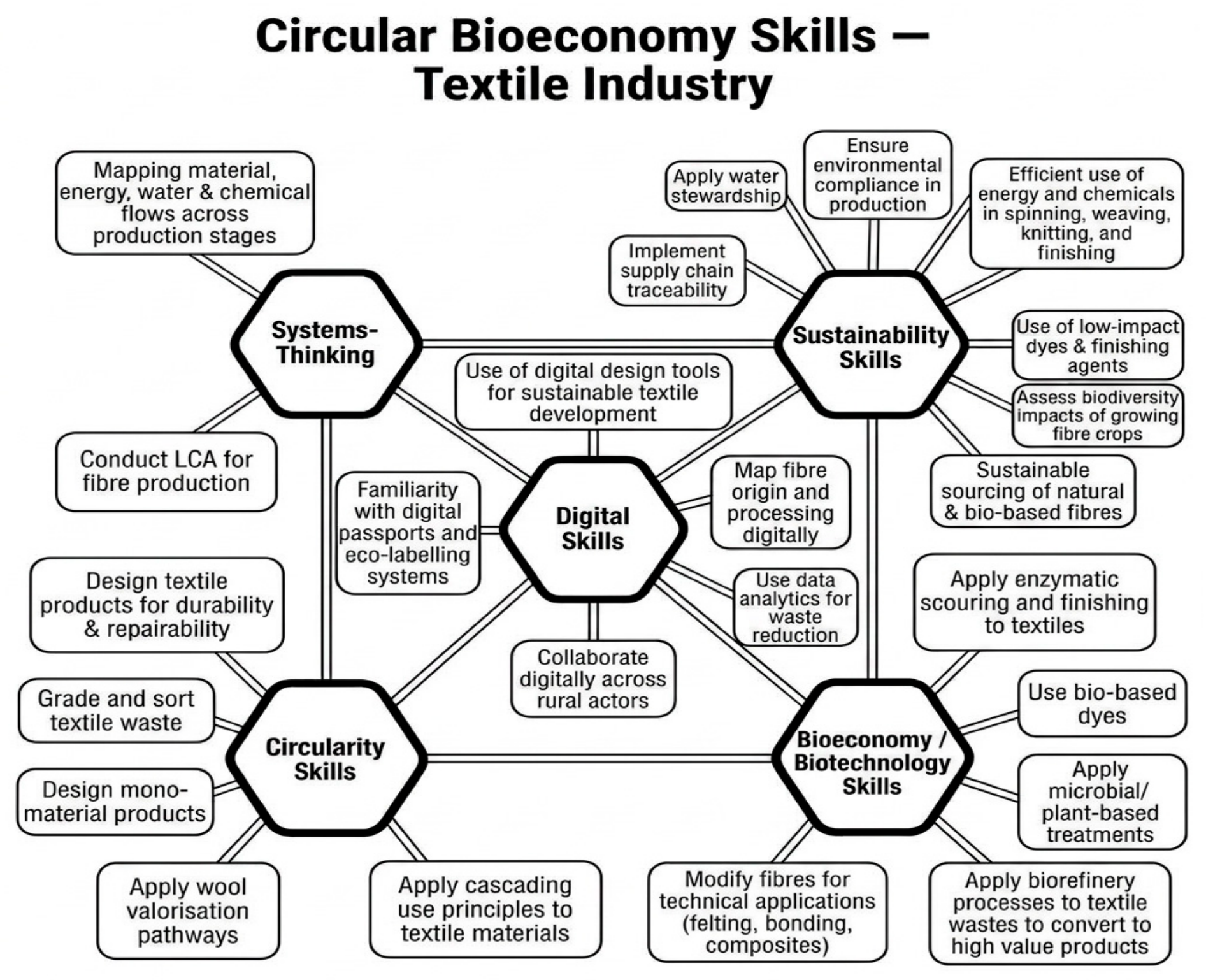
Table 6 and
Figure 7 present these identified knowledge areas and skills competency areas for the agriculture sector.
3.4.6. Skills for the Construction Industry
The transition of the construction sector towards a circular bioeconomy requires significant changes in how buildings are designed, constructed, and managed throughout their life cycle. One of the most important areas of skill development relates to bio-based materials and sustainable construction technologies. The increasing use of timber and other bio-based materials in construction requires engineers, architects, and construction professionals to develop specialised knowledge of material performance, structural design, and building regulations associated with these materials. For example, the use of engineered timber products such as cross-laminated timber (CLT) and glued laminated timber (glulam) requires expertise in structural engineering, fire safety, and moisture management that differs from conventional concrete and steel construction.
In addition to material-specific knowledge, the transition to a circular bioeconomy requires the development of circular design and life-cycle assessment (LCA) skills. Circular construction practices emphasise design for durability, adaptability, reuse, and disassembly, allowing materials and components to be recovered and reused at the end of a building’s life cycle. Architects, planners, and engineers therefore require competencies in life cycle thinking, material flow analysis, and environmental impact assessment. These skills allow construction professionals to evaluate the environmental performance of different building materials and design solutions, including their embodied carbon and potential for reuse or recycling [
91]. In Ireland, the increasing emphasis on sustainable construction within national climate policy further highlights the importance of such analytical capabilities.
Another key skill area relates to resource management and circular supply chain coordination. Implementing circular construction systems requires collaboration across multiple sectors, including forestry, agriculture, manufacturing, and waste management. Construction professionals therefore need competencies in supply chain management, resource efficiency, and material recovery systems. For example, integrating bio-based materials such as timber, hemp insulation, or straw-based products into building projects requires coordination with upstream biomass producers and processors. Similarly, managing construction and demolition waste in a circular manner requires knowledge of material sorting, reuse markets, and recycling technologies [
95]. In the Irish context, strengthening such supply-chain capabilities is essential for developing domestic value chains for bio-based construction materials.
The transition also requires enhanced digital skills, particularly in the use of digital construction technologies such as building information modelling (BIM). BIM enables the digital representation of building components and materials, allowing construction professionals to track materials throughout the building life cycle and facilitate material reuse and recycling. Digital tools also support better project planning, resource efficiency, and collaboration among stakeholders involved in design, engineering, and construction. As Ireland increasingly adopts digital construction technologies, digital literacy and data management skills are becoming essential competencies for construction workers, engineers, and project managers [
96].
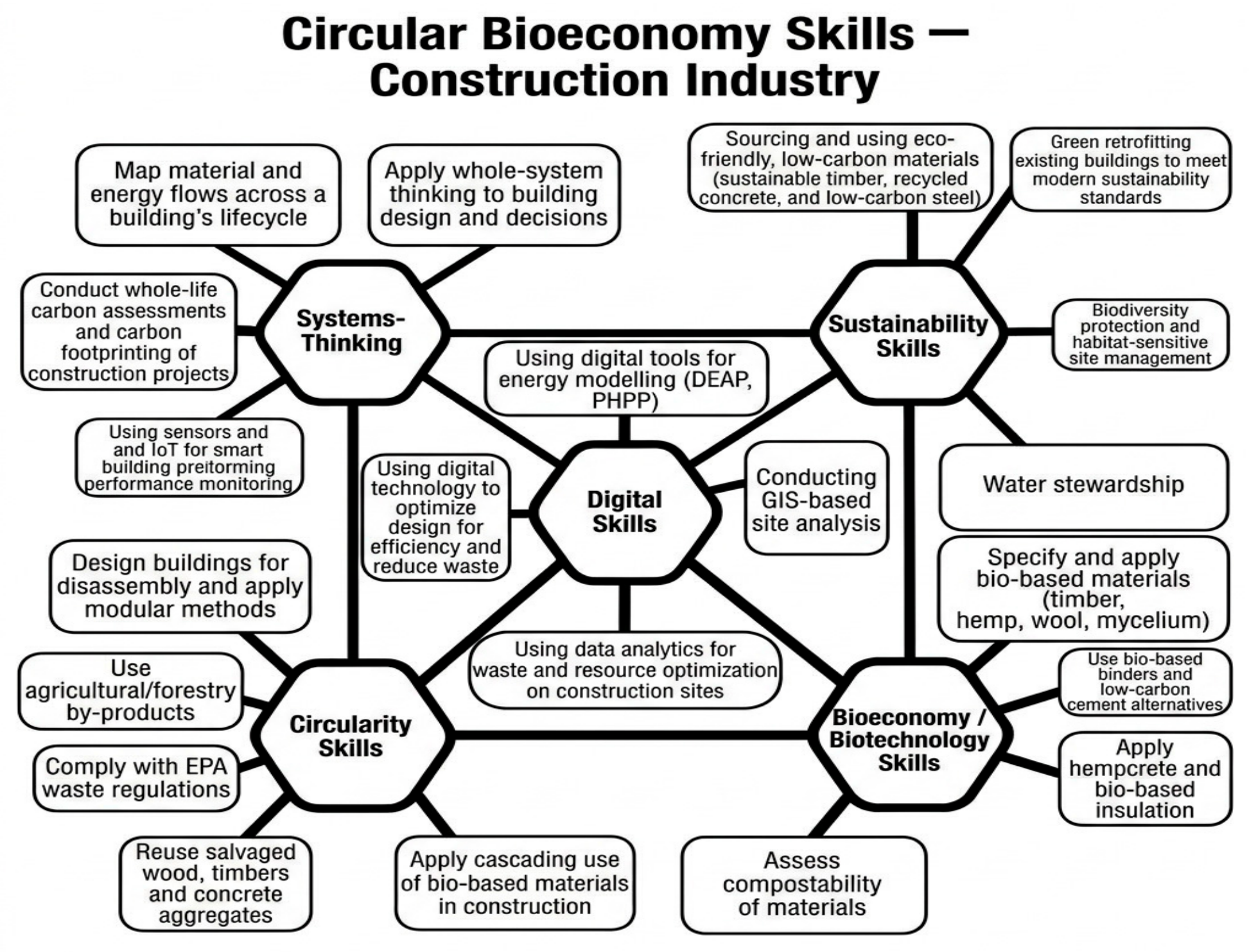
Table 7 and
Figure 8 present these identified knowledge areas and skills competency areas for the agriculture sector.
3.5. Cross Sector Synthesis
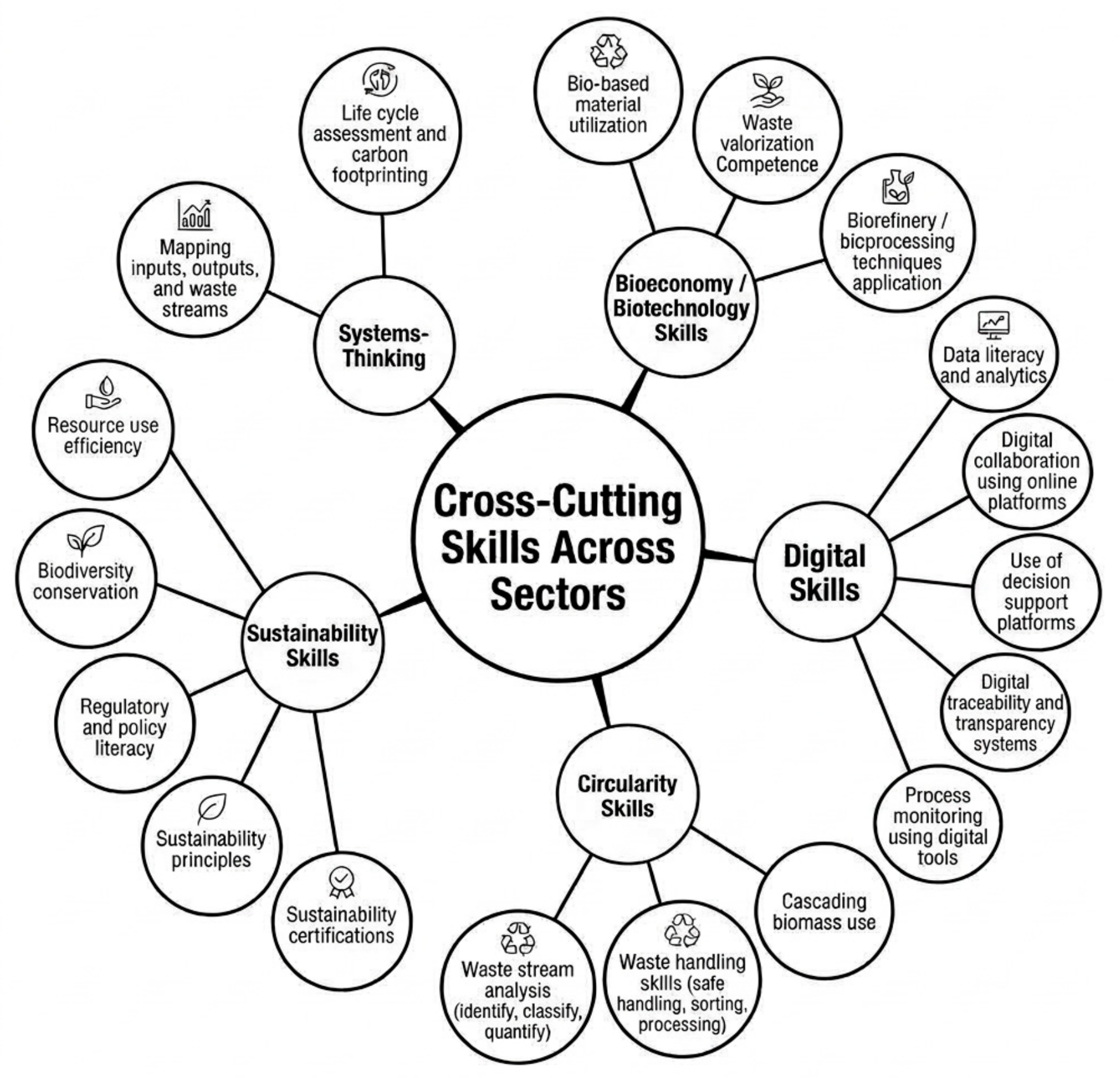
Systems thinking is the most universally shared skill domain across all seven sectors. All sectors require a workforce with the ability to trace flows of materials, energy, water, and by-products along the value chain from raw material sourcing through to end-of-life and recovery. Life cycle assessment is applied in all sectors to quantify environmental impacts and identify improvement opportunities across the full value chain; therefore, the skill is needed across all sectors. Recognising how decisions in one part of the system create consequences elsewhere is a workforce requirement. Workers in every sector must weigh trade-offs between productivity and environmental impact, between short-term cost and long-term resilience using a systemic perspective.
Sustainability competencies appear across all seven sectors, though they manifest differently depending on the resource base, regulatory environment, and value chain of each industry. Despite these differences, a core set of sustainability skills is consistently required, particularly around regulatory literacy, resource efficiency, and carbon management. Water, energy, and material efficiency skills are shared across fisheries, food processing, textile manufacturing, and construction site operations. Understanding sector-specific sustainability regulations, certification schemes, and reporting standards is a universal requirement across all seven sectors analysed.
Circular economy competencies represent one of the most consistently shared skill domains across all six sectors. Every industry in this analysis generates waste streams that contain recoverable value, whether it is agricultural residues, forestry slash, fish processing by-products, food waste, textile off-cuts, or construction demolition materials. The ability to identify, classify, and redirect these streams is a universal workforce need.
Bioeconomy and biotechnology competencies are emerging as a critical cross-sector skill cluster. While the specific applications vary, the underlying competency of understanding biological processes for value creation is shared across multiple sectors. This domain represents one of the fastest-growing areas of workforce demand and one where a significant skill gap currently exists. Understanding how biological materials can be converted into energy, chemicals, or advanced materials through fermentation, enzymatic treatment, and extraction is a shared bioeconomy literacy requirement across food, forestry, fisheries, and agriculture.
Digital skills are universally required across all six sectors, and in each case, they are driven by the same underlying forces: the need to improve productivity, reduce waste, enhance traceability, and engage with research and market networks. While the specific tools differ from precision agriculture sensors to BIM in construction to smart aquaculture IoT systems, the foundational digital competencies are broadly shared.
Figure 9 shows the circular bioeconomy skills that cut across different sectors.
3.6. Competency Framework for Circular Bioeconomy Skills
The Irish National Framework of Qualifications (NFQ) presented in
Table 8 provides a structured framework that supports learners, individuals, employers, and education providers by clearly defining qualification levels and learning pathways. The NFQ supports learner progression through education and training, assists employers in recognising qualification levels for recruitment and workforce development, and facilitates curriculum design and recognition of prior learning for education and training providers.
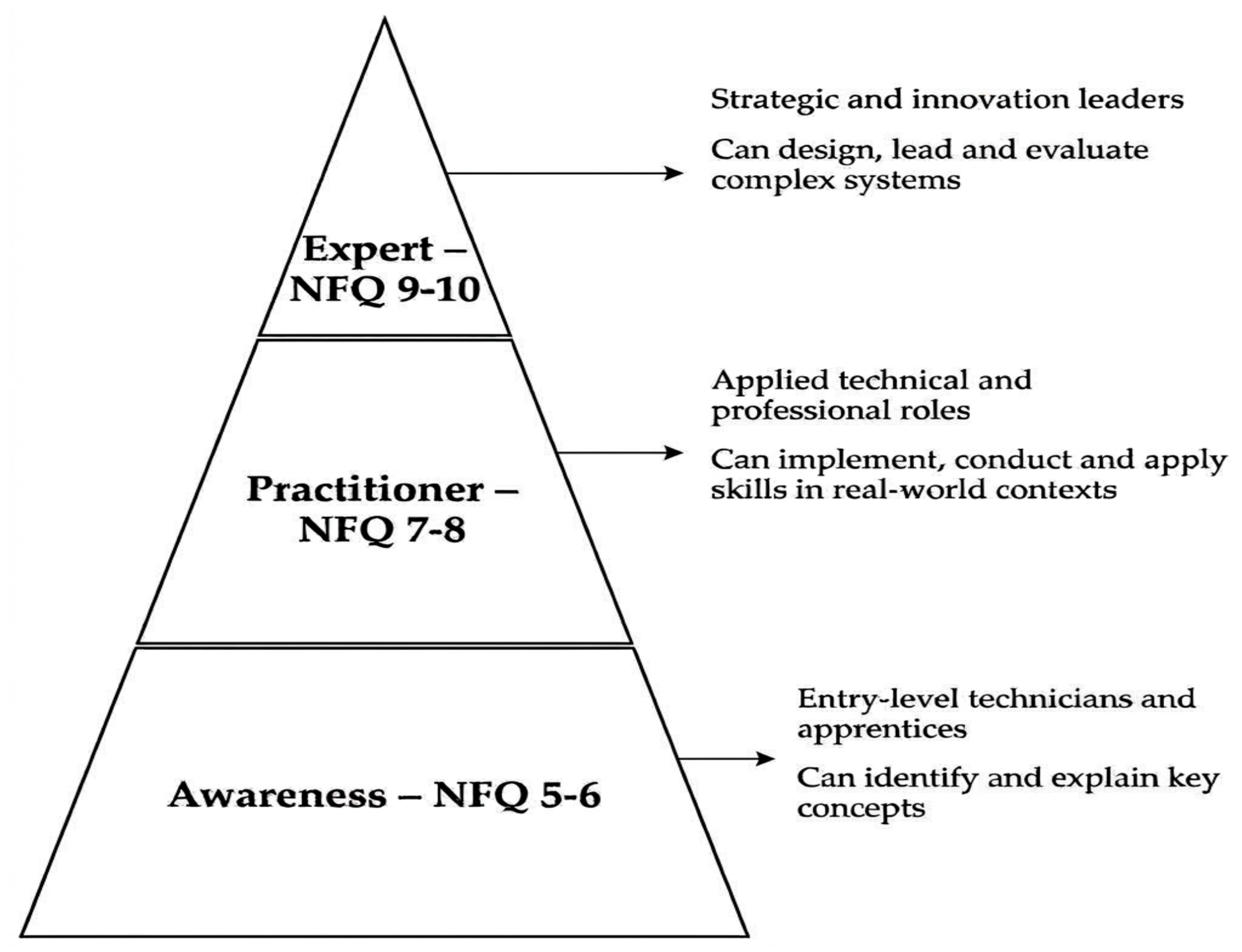
The NFQ is organised into ten progressive levels, ranging from basic learning (level 1) to doctoral qualifications (level 10). Qualifications become increasingly specialised as learners progress through the framework, reflecting higher levels of theoretical knowledge, technical competence, autonomy, innovation, and leadership. For the circular bioeconomy, the most relevant levels are NFQ levels 5–10, which encompass vocational education, undergraduate programmes, postgraduate qualifications, and doctoral research. Circular bioeconomy competencies can be grouped into three broad proficiency stages: awareness (NFQ levels 5–6), practitioner (NFQ levels 7–8), and expert (NFQ levels 9–10). The progression framework presented in
Figure 10 shows that each level represents increasing technical complexity, systems thinking capability, decision-making responsibility and innovation capacity. Rather than treating circular bioeconomy competencies as static requirements, the framework recognises that expertise develops progressively from foundational awareness to advanced leadership and innovation.
3.6.1. Awareness Level (NFQ 5–6)
The awareness level represents entry-level competencies expected of apprentices, technicians and early-career professionals entering the circular bioeconomy workforce. Individuals at this level possess foundational knowledge of circular bioeconomy concepts and understand the relationship between biological resources, production systems and environmental sustainability. Across the five competency domains, learners are expected to recognise the interconnected nature of biological, economic and social systems and understand the basic principles of life cycle thinking. They develop an awareness of Irish and European environmental regulations, biodiversity conservation, resource efficiency and circular resource flows. At this stage, individuals can identify waste streams, understand biomass cascading principles and recognise opportunities for waste valorisation within their own sector. Digital competencies at this level focus primarily on digital literacy, including the use of sector-specific management platforms, decision support systems and basic data interpretation. Similarly, bioeconomy competencies centre on understanding bio-based production systems, biosafety principles and the role of biotechnology within individual sectors. The emphasis at the awareness stage is therefore on knowledge acquisition and conceptual understanding rather than independent implementation.
3.6.2. Practitioner Level (NFQ 7–8)
The practitioner level represents graduates and professionals capable of applying circular bioeconomy principles within operational settings. Competencies move beyond conceptual understanding towards practical implementation and performance improvement. Systems-thinking competencies expand to include mapping material, water and energy flows throughout value chains and undertaking life-cycle assessments. Sustainability competencies require practitioners to monitor environmental indicators and implement recognised sustainability certification schemes. Within the circularity domain, practitioners are expected to implement waste valorisation processes, quantify resource recovery and evaluate circular economy performance indicators. Bioeconomy competencies similarly progress towards the practical application of bioprocessing technologies, bio-input management and the evaluation of bio-based production alternatives. Digital competencies become increasingly analytical, with professionals expected to employ precision technologies, Internet of Things (IoT) systems, traceability platforms and data analytics to optimise resource efficiency and reduce waste. Overall, this level reflects the competencies required to implement circular bioeconomy practices within organisations while contributing to continuous improvement and operational sustainability.
3.6.3. Expert Level (NFQ 9–10)
The expert level represents advanced researchers, policy specialists, innovation leaders and senior professionals responsible for designing, evaluating and transforming circular bioeconomy systems. Experts are expected to lead whole-system redesign across sectors, integrate ecological, economic and social objectives, design life-cycle assessment frameworks and develop national or international sustainability strategies. Within the sustainability domain, experts develop environmental, social and governance (ESG) reporting systems and advise on regulatory compliance and policy implementation. Circularity competencies focus on developing circular business models, industrial symbiosis networks and benchmarking organisational performance against European circular economy objectives. Bioeconomy competencies extend to leading research and innovation activities involving advanced biorefineries, novel biomaterials, bio-based chemicals and renewable biological products. Digital expertise encompasses the design of artificial intelligence (AI), Internet of Things (IoT) and predictive analytics systems capable of supporting resource optimisation across complex bioeconomy value chains.
The progression framework in
Figure 10 demonstrates that competency development within the circular bioeconomy is cumulative rather than discrete. Individuals first acquire foundational knowledge before applying competencies within professional practice and ultimately leading innovation and policy development. This progression reflects the interdisciplinary nature of the circular bioeconomy, where increasing levels of expertise require the integration of environmental science, engineering, digital technologies, economics and policy. Consequently, the progression framework provides a structured mechanism through which education providers can align curricula with qualification levels while enabling employers and policymakers to identify workforce development pathways.
4. Conclusions: Policy Implications and Future Works
The transition to a circular bioeconomy depends on the availability of a workforce equipped with the knowledge, skills, and competencies needed to support sustainable production, resource efficiency, and circular value chains. This study addressed a critical gap in the literature by systematically identifying and synthesising the competencies required across six key sectors of Ireland’s bioeconomy and developing a comprehensive taxonomy of circular bioeconomy skills.
The findings demonstrate that while each sector requires specialised competencies, there is also a common set of cross-sectoral skills that underpin the transition to a circular bioeconomy. A key contribution of this research is the development of a competency progression framework aligned with Ireland’s National Framework of Qualifications (NFQ). By mapping the identified competencies to awareness (NFQ levels 5–6), practitioner (NFQ levels 7–8), and expert (NFQ levels 9–10) proficiency levels, the study extends existing research beyond simply identifying skills to providing a practical pathway for competency development. This alignment offers a mechanism through which education providers can embed circular bioeconomy competencies into curricula, employers can support workforce development, and policymakers can align education and training initiatives with national sustainability and bioeconomy objectives.
This taxonomy has practical implications for multiple stakeholder groups. For education and training providers, it offers an evidence-based framework for curriculum development and programme design. For industry, it provides guidance for recruitment, workforce planning, professional development, and skills-gap identification. For policymakers, it supports the implementation of Ireland’s National Bioeconomy Action Plan and Circular Economy Strategy by providing a structured approach to developing the human capital required for a sustainable bioeconomy. More broadly, this taxonomy establishes a common language for describing circular bioeconomy competencies across sectors, facilitating greater collaboration between education, industry, and government.
Although the taxonomy is developed specifically for Ireland, its competency-based structure provides a methodological framework that could be adapted by other countries seeking to strengthen workforce capacity for the transition to a circular bioeconomy. Nevertheless, this study has several limitations. The taxonomy was developed through qualitative synthesis of the published literature and policy documents and has not yet been empirically validated with stakeholders. Future research should therefore focus on validating the proposed taxonomy through engagement with key stakeholders, including industry representatives, policymakers, education providers, professional bodies, and learners. Such validation will assess the applicability of the taxonomy in practice and examine its implications for curriculum design, workforce planning, skills demand, professional development, and policy implementation. Additionally, expanding the taxonomy to include emerging biotechnology sectors will further strengthen its applicability as the circular bioeconomy evolves. Overall, this study provides one of the first structured, sector-specific circular bioeconomy skills taxonomies linked to a national qualifications framework. By integrating sectoral competencies with progressive proficiency levels aligned to the Irish NFQ, it offers a practical and scalable framework for education, workforce development, and policy implementation, thereby supporting Ireland’s transition towards a resilient, sustainable, and circular bioeconomy.