1. Introduction
Grassroots emergency management functions as both the “last mile” of policy implementation and the “first line” of emergency response within China’s national emergency management system. Its effectiveness directly affects public safety, disaster evolution, and socio-economic stability [
1,
2]. Against the backdrop of increasing disaster frequency, the formation of compound risks, and intensified impacts of extreme climate events, grassroots emergency management is under unprecedented pressure to move beyond fragmented and reactive governance models [
3].
Since the establishment of the Ministry of Emergency Management in 2018, China has advanced systematic reforms in emergency management institutions, functions, and operational mechanisms [
4,
5,
6]. National policies, such as the Opinions on Further Enhancing Grassroots Emergency Management Capacity, emphasize strengthening institutional integration, improving operational capacity, and promoting collaborative governance. These reforms have achieved macro-level progress at national, provincial, and municipal levels, forming a relatively complete emergency management framework.
However, practical governance at the grassroots level reveals a persistent phenomenon of “terminal obstruction”, whereby institutional reforms fail to fully translate into effective local capacity [
7]. Field observations from disaster response and production safety incidents indicate that grassroots emergency management continues to face three structural challenges. Firstly, functional integration remains insufficient, characterized by unclear responsibility boundaries and weak vertical–horizontal coordination [
8]. Secondly, institutional operations lack substantive support, reflected in incomplete organizational entities, understaffing, and limited professional capacity. Thirdly, collaborative governance mechanisms remain underdeveloped, with ineffective coordination among departments, weak county–township linkage, and limited integration of social forces [
9].
Existing studies on emergency management reform have primarily focused on macro-level institutional design at national and provincial levels [
10,
11,
12,
13,
14], with relatively limited attention to county- and township-level governance. Although prior research has examined functional restructuring and system evolution [
15,
16,
17,
18], micro-level operational issues—such as cross-departmental collaboration, institutional materialization, and government–society coordination—remain insufficiently explored. As a result, a gap persists between theoretical frameworks and the practical demands of grassroots emergency management, highlighting the need for empirical, context-specific analysis informed by collaborative governance theory.
In response to the limitations of this gap, we examine grassroots emergency management system reform from the perspective of collaborative governance. Taking District W as a typical county-level case, we analyze reform practices and persistent challenges across three interrelated dimensions–functional integration, institutional operation, and coordination mechanisms. On this basis, a problem-oriented reform framework is proposed using a three-dimensional analytical model of “function–institution–mechanism”, aiming to translate empirically identified structural constraints into targeted reform directions rather than formal optimization results.
In this study, collaborative governance is adopted as an analytical framework. Drawing on established governance theory, it refers to a governing arrangement in which public authorities engage multiple actors across organizational boundaries through structured interaction, shared responsibility, and coordinated decision-making to address complex public problems. Beyond simple multi-actor participation, collaborative governance emphasizes the integration of fragmented functions, the institutionalization of coordination capacity, and the construction of stable mechanisms for joint action.
Specifically, collaborative governance theory is operationalized to structure both problem diagnosis and reform design. Its core analytical dimensions are translated into a three-dimensional framework of “function–institution–mechanism”, which guides the systematic identification of collaboration failures in grassroots emergency management—such as fragmented responsibilities, insufficient institutional materialization, and weak coordination—and provides the theoretical basis for the subsequent case analysis and targeted reform directions.
Our main contributions are summarized below.
(1) We provide a systematic diagnosis of the structural constraints in grassroots emergency management, revealing deep-rooted contradictions in functional integration, institutional operation, and coordination mechanisms that extend beyond surface-level deficiencies.
(2) We adopt a qualitative single-case study design, and then offer an in-depth empirical case study of district W, illustrating how path dependence, resource constraints, and governance fragmentation shape grassroots emergency management reform in practice.
(3) We propose a problem-oriented analytical framework for grassroots emergency management reform, grounded in collaborative governance theory, integrating functional reorganization, substantive institutional operation, and multi-stakeholder coordination to support the modernization of grassroots emergency management.
The rest of the article is organized as follows. First, we present the current status and existing challenges of grassroots emergency management structural reform in
Section 2. Following that, we elaborate on reform of the emergency management system in district W through a case study in
Section 3. Then, we propose a problem-oriented reform framework for grassroots emergency management system reform from the perspective of collaborative governance in
Section 4. Finally, we conclude our work in
Section 5.
2. Current Status and Existing Challenges of Grassroots Emergency Management Structural Reform
The reform of China’s grassroots emergency management system constitutes a critical step in strengthening social governance capacity. Focusing on core tasks such as functional integration, institutional restructuring, and multi-stakeholder collaborative governance, it seeks to resolve earlier issues of fragmented responsibilities and inefficient responses. By implementing systematic, specialized, and collaborative measures, the reform aims to gradually establish a modernized emergency management system.
2.1. Background of Grassroots Emergency Management Structural Reform
Integration of emergency management functions: From “decentralization” to “centralization”. For a long time, grassroots emergency management in China operated under fragmented functional arrangements, with departments organized by disaster type. Although responsibilities were clearly defined, unified coordination was lacking, resulting in inefficient emergency response. With economic and social development, the growing frequency of emergencies, such as the 2003 SARS epidemic and the 2008 Wenchuan earthquake, exposed systemic fragmentation and coordination deficiencies, thereby forcing profound reforms in emergency management mechanism. Against this backdrop, functional integration has evolved through four distinct phases. From 1949 to 2002, disaster-specific passive response characterized by “one disaster, one department”. From 2003 to 2011, system reconstruction with the introduction of the “One Plan, Three Systems”, marking the beginning of grassroots institutionalization. From 2012 to 2018, mechanism optimization through the strengthening of central command function [
19]. And in 2018, the establishment of the Ministry of Emergency Management, which advanced functional centralization. Since 2018, reforms have increasingly emphasized collaborative governance. The revised Emergency Response Law, revised in 2024, provides legal guarantees for multi-stakeholder co-governance, reflecting a shift from passive to active, and from decentralized to coordinated [
20].
Reconstruction of emergency management institutions: From “dependence” to “specialization”. Early emergency management in China relied on a “dependence” model embedded within various functional departments. This model, formed during the transition from a planned economy to a market economy, was plagued by limitations such as decentralized functions, lack of unified command, and inefficient use of resources. This resulted in institutional obstacles to grassroots emergency response, including shortcomings in regular governance, dynamic adjustment risks, and crisis response risks. As disaster risks grew increasingly complex, this fragmented approach proved inadequate to meet the demand for efficient and coordinated emergency response [
21]. During the reform process, local governments initially established emergency management offices. However, due to limitations in administrative hierarchy and authority, their capacity for coordination remained weak. The establishment of the Ministry of Emergency Management in 2018 advanced the restructuring of local institutions, leading to the creation of specialized grassroots emergency management agencies and a four-tier network. This shift marked the transition from temporary response to long-term governance. Since the 2020s, grassroots emergency management institutions have continued to evolve, with growing emphasis on integrated capacity-building across institutional frameworks, human resources, and digitalization.
Relationship between government and society: Toward multi-stakeholder collaborative governance. In the early stages of reform, emergency management was predominantly government-led, yet this approach revealed significant delays and inefficiencies in responding to complex emergencies. With continued social development, the growing awareness and active participation of social organizations, market actors, and the public have rendered societal forces increasingly important in emergency management. The relationship between government and society has become progressively more collaborative, supported by information platforms and coordination mechanisms that facilitate information sharing and resource integration, thereby driving a shift from “single response” to “systemic co-governance” [
22]. The collaborative governance mechanism plays a pivotal role in emergency management by differentially allocating the functions of the subjects, innovatively building a collaborative mechanism, and systematically improving governance effectiveness. Practical experiences in cities such as Beijing provide compelling evidence of this transformation, where parallel district-subdistrict reforms, unified emergency command systems, and differentiated institutional arrangements have been implemented to enhance functional integration and coordination capacity in complex urban contexts [
20].
2.2. Main Contents of the Grassroots Emergency Management Structural Reform
Functional integration and centralized management are becoming increasingly systematic. To overcome the shortcomings of traditional “multi-headed management and decentralized functions”, reform at the grassroots level has prioritized the construction of an “all-hazards, whole-process” emergency management system. This effort involves reviewing and restructuring departmental responsibilities, clarifying functional boundaries and responsibility lists, and eliminating overlaps or conflicts. Building on this foundation, centralized management is promoted. County-level governments have established unified emergency management bureaus, while townships have set up dedicated emergency management stations, thereby clarifying lines of authority and accountability and enhancing organizational coordination. At the same time, grassroots emergency management structures have been further strengthened. For instance, in Beijing, local reform has gone beyond implementing standardized requirements by emphasizing regional characteristics, promoting district-subdistrict reforms in parallel with the optimization of responsibilities and positions, and thereby improving grassroots command and coordination capacity.
The development of professional capabilities and specialized management mechanisms continues to strengthen. Grassroots emergency management has gradually transitioned from extensive “person-to-person” oversight to a more professionalized model. Reforms are promoting the formalization and professionalization of emergency management teams by optimizing staffing structures, clarifying job responsibilities, and allocating dedicated personnel. In parallel, tiered response mechanisms, integrated “peacetime-emergency” operation systems, and the development of digital platforms have further enhanced grassroots operational capacity. Local governments have also explored differentiated approaches. For example, Jilin has established a responsibility-list system, while Zhejiang, Jiangxi, and Hunan, among others, have implemented capacity-building programs to strengthen command centers, response mechanisms, and training systems, producing reform practices with significant potential for broader application [
20].
The integration of vertical and horizontal management mechanisms is continuously being optimized. To address persistent governance issues of fragmented administration and dispersion resources, the reform has focused on clarifying both vertical and horizontal divisions of responsibility. On the vertical dimension, unified information platforms and emergency command systems have been established to facilitate information sharing and coordinated responses between counties and townships. On the horizontal dimension, interdepartmental collaborative mechanisms have been developed to promote resource pooling and the integration of capabilities. At the same time, broader participation by diverse social actors has been encouraged, fostering collective governance among government, enterprises, social organizations, and the public, and creating an emergency management network characterized by joint prevention and shared responsibility. To ensure effective collaboration, local governments have established coordination and linkage mechanisms, information-sharing systems, and performance evaluation frameworks, thereby enabling smoother alignment of vertical and horizontal efforts, clearer accountability, and stronger implementation capacity.
The institutional setup models are diverse and flexible. At the organizational level, local governments have developed innovative institutional models tailored to local conditions, resulting in three typical types, including independent, integrated, and collaborative. The independent model emphasizes the establishment of dedicated agencies and comprehensive command centers to strengthen unified leadership and accountability. The integrated model consolidates existing street-level functions to form comprehensive service-oriented institutions, thereby achieving functional integration and resource sharing. The collaborative model highlights social participation, leveraging mechanisms such as village-community linkages to build multi-stakeholder emergency networks that combine full-time and part-time staff [
20]. The diversified organizational arrangements have significantly enhanced the flexibility and practicality of grassroots emergency governance, promoting the development of refined and intelligent emergency management.
The framework of multi-stakeholder participation has taken shape at grassroots level. Propelled by reform, grassroots emergency governance has gradually shifted from a “government solo” to a “multi-stakeholder chorus”. Governments have integrated social resources through joint meetings, coordination mechanisms, and the establishment of systems for volunteer services, professional rescue, and material reserves. Meanwhile, the public has contributed by engaging in drills, public education, and information reporting, thereby creating participation networks that strengthen risk awareness and self-rescue capabilities. In some regions, community governance transformation has advanced further, promoting the development of “people-centered” safe communities and building community safety networks characterized by government–society collaboration and joint governance. Collectively, these efforts have fostered a new governance pattern of “co-construction, co-governance, and shared benefits”.
Overall, the reform of China’s grassroots emergency management system has begun to yield tangible results, characterized by greater systematization, specialization, collaboration, and diversification. Functional integration has advanced the downward shift in the management focus, institutional restructuring has promoted functional consolidation, mechanism optimization has strengthened response coordination, and social participation has enriched the substance of governance, providing robust support for enhancing grassroots emergency management capacity.
2.3. Problems and Causes of the Current Grassroots Emergency Management System
The current grassroots emergency management system faces many difficulties in its operation, mainly manifested in incomplete functional integration, difficulties in institutional operation and imperfect coordination mechanism, which restrict the effectiveness of emergency management.
The lack of thorough integration of grassroots emergency management functions is mainly reflected in the unclear division of responsibilities, weak vertical–horizontal coordination, and fragmented command systems. Overlapping departmental mandates and blurred boundaries often lead to shirking of duties, particularly during responses to compound disasters. The limited integration between emergency management and firefighting functions further constrains resource consolidation and task coordination. Conflicts between vertical line management and territorial responsibilities, combined with the absence of effective communication mechanisms, result in delays in information transmission, duplication of resources, and low allocation efficiency. With regard to command systems, many regions remain at the stage of mere “physical integration”, without achieving true institutional and procedural convergence. Non-standardized information technologies and poorly linked contingency plans further weaken the efficiency of emergency response. The root causes lie in path dependence within the traditional administrative system, insufficient institutional support, entrenched departmental interests, inadequate information sharing, and shortages of skilled personnel, which hinder the establishment of a unified, efficient, and collaborative grassroots emergency management framework.
Gassroots emergency management institutions are facing difficulties in operation,
mainly reflected in the lack of institutional standardization, severe understaffing, and weak
technical capacity. In terms of institutional setup, grassroots emergency management still
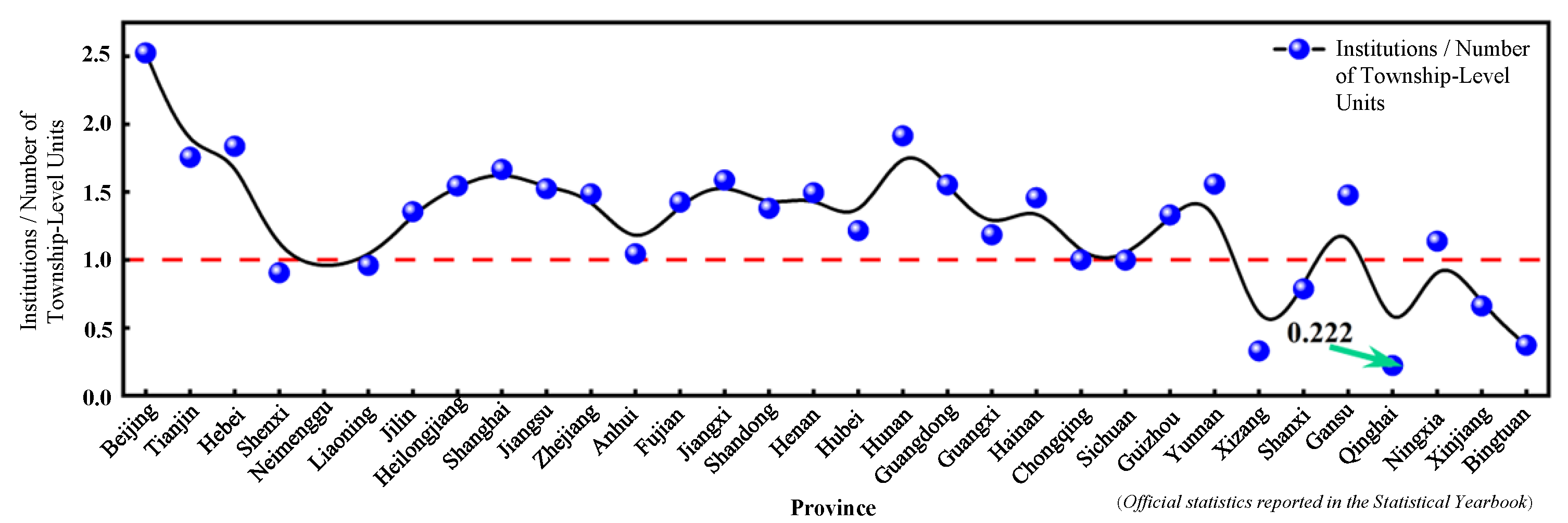
suffers from fragmented organizational arrangements and a lack of independent institutions at the township level. As illustrated in
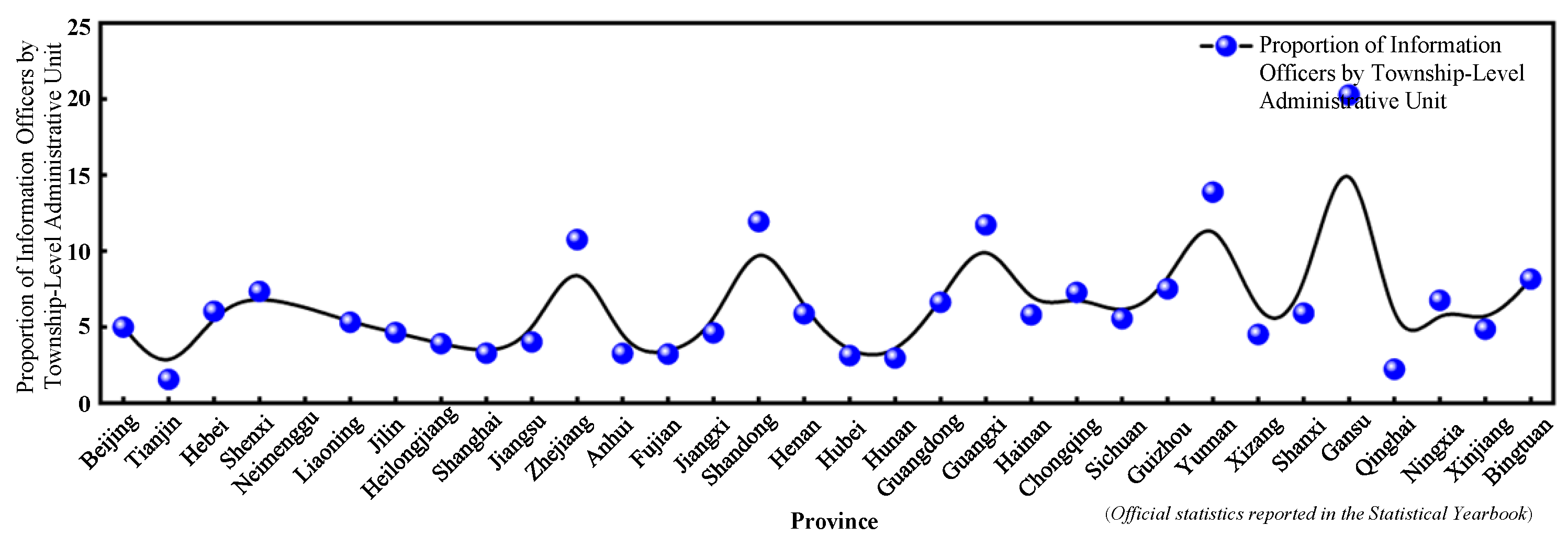
Figure 1, while provincial-level emergency management institutions have been fully established nationwide, a significant proportion of township-level units remain embedded within comprehensive functional departments rather than operating as independent entities. This institutional mismatch constrains unified command, weakens accountability, and limits the substantive exercise of emergency management functions at the grassroots level. Staffing shortages constitute another prominent constraint on grassroots emergency management.
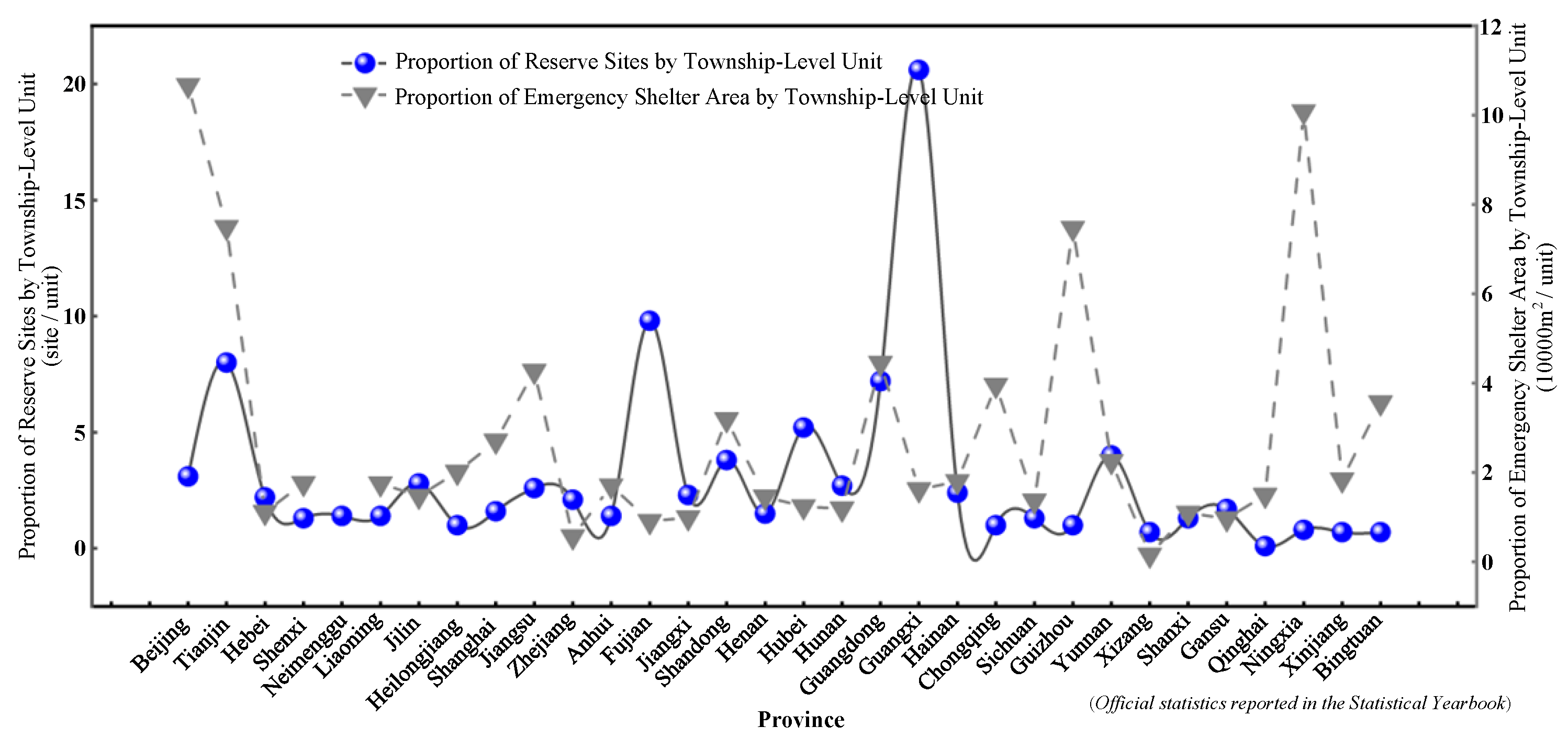
Figure 2 further demonstrates that the allocation of disaster information officers at the township level is generally insufficient and uneven across regions, with many townships relying on part-time personnel. This staffing pattern exacerbates workload pressure, reduces professional specialization, and undermines the effectiveness of routine risk monitoring and emergency reporting. In addition, deficiencies in emergency infrastructure and material reserves remain evident at the grassroots level. As shown in
Figure 3, there are substantial regional disparities in the provision of emergency shelters and reserve facilities, with many townships failing to meet basic capacity requirements. This inadequacy directly affects the ability to provide timely evacuation, temporary resettlement, and material support during emergencies.
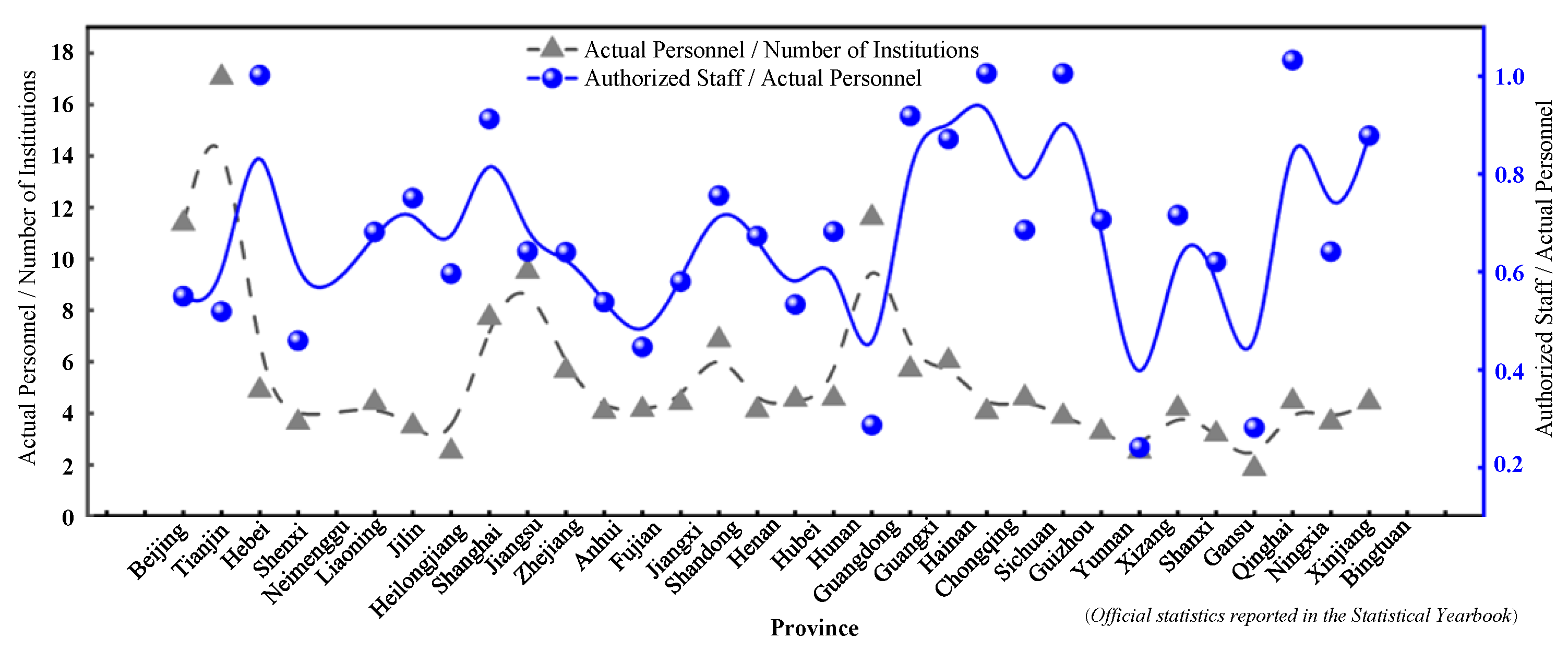
Furthermore, ambiguous management models and unclear responsibilities create information gaps across administrative levels and impede resource circulation. With respect to staffing, personnel numbers are mismatched with workload demands. Full-time staff are limited in number and frequently hold multiple roles, while deficiencies in age structure, educational background, and professional expertise persist. Low salaries, limited career development opportunities, and weak welfare protections exacerbate staff turnover and contribute to insufficient talent reserves. The instability of grassroots emergency management teams further weakens response capacity.
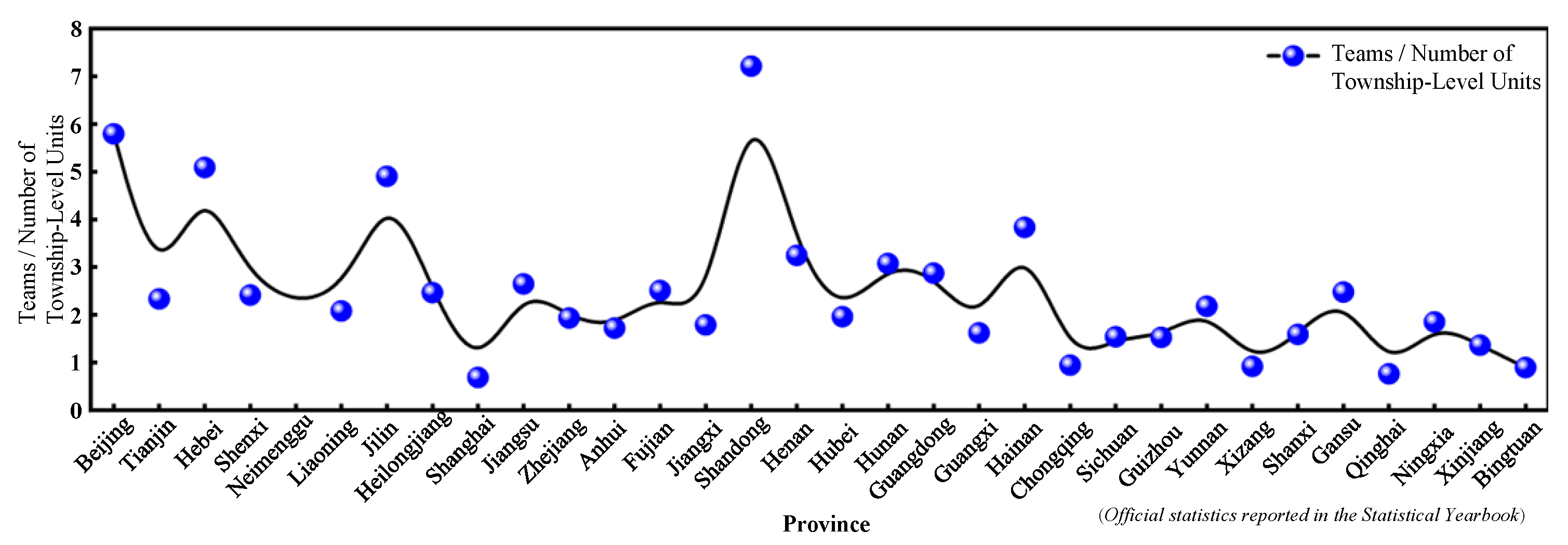
Figure 4 reveals a persistent gap between authorized staffing levels and actual personnel deployment, indicating both structural shortages and high turnover risks. Such instability hampers the accumulation of professional experience and the continuity of emergency management practices. Moreover, frontline rescue capacity remains constrained. According to official statistics reported in the Statistical Yearbook, in 2021, the ratio of the number of emergency management institutions to the number of staff in a certain central province and city was only 1:1.67, and the ratio of institutions to full-time staff was 1:1.7. In one of its subordinate city A, the ratio of institutions to staff was only 1:1, while in another subordinate city B, among 98 specialized institutions, the proportion of full-time personnel fell below one per institution. In terms of technical capacity, emergency response personnel often lack professional knowledge and practical experience, resulting in a workforce that is underqualified and highly temporary. According to
Figure 5, the number of comprehensive emergency rescue teams at the township level is generally limited, particularly in less developed areas. This shortage restricts the ability of grassroots governments to respond independently to sudden disasters and increases reliance on higher-level intervention. Public education systems remain underdeveloped, with training programs lacking systematic design and adequate funding. Professional equipment and digital infrastructure are outdated, and technological support is insufficient. The root causes lie in multiple factors, including lagging administrative systems, uneven financial allocation, inadequate institutional safeguards, and insufficient public awareness.
The coordination mechanism for grassroots emergency management is not well-established, which is mainly reflected in the failure of multi-dimensional coordination between counties and townships, among departments at the same administrative level, and in the coordination of social forces. County–township coordination is frequently ineffective, with delays in information reporting, slow resource allocation, and fragmented command systems, all of which undermine disaster response efficiency and constrain overall management capacity. Interdepartmental communication at the same level is similarly weak, characterized by blurred responsibilities and insufficient resource integration. Institutional inertia from the “vertical–horizontal segmentation” system, coupled with interdepartmental interest conflicts, further diminishes both the willingness and capacity for collaboration, producing information silos, resource fragmentation, and reduced overall effectiveness. Moreover, the coordination of social forces remains inadequate, and they have not been fully incorporated into the rescue system. The participation mechanisms are fragmented and disorganized, and long-term frameworks, incentive structures, and oversight mechanisms are lacking. Training and mobilization are also insufficient. The fundamental reason lies in the path dependence of the traditional administrative system combined with lagging institutional support, leading to unclear responsibilities, fragmented resource allocation, weak collaborative mechanisms, and the limited integration of social forces into the emergency management system.
This pattern is not unique to China’s grassroots emergency management system. Similar challenges have also been observed in international emergency management practices. Cosgrove’s organizational study of North Carolina’s emergency response to Hurricane Florence demonstrates that deficiencies in technical and risk communication can significantly undermine inter-agency coordination and decision-making effectiveness, even when formal institutional arrangements are in place [
23,
24].
Tracing the roots of these issues reveals several deep-seated causes. First, they arise from the path dependence of a traditionally government-dominated mindset. Grassroots emergency management has long operated under a “government-takes-all” model, with insufficient recognition of the value and professional capabilities of social forces. Social organizations are often treated merely as auxiliary supplements rather than collaborative entities, hindering their deep integration into the emergency rescue system. Second, institutional supply has lagged significantly. Laws and regulations that clearly define the rights, responsibilities, and benefits of social forces are lacking, as are systematic standards governing their admission, organizational forms, responsibility sharing, and incentive mechanisms. Overlapping and vacant areas of departmental authority further weaken the institutional foundation for coordinated management. Third, the development of social forces themselves exhibits structural deficiencies. Volunteer organizations are often loose and amateur in nature, lacking professional talent and resource support, which prevents the formation of stable and specialized rescue capacity. Professional rescue teams, meanwhile, are constrained by funding and policy limitations, resulting in gaps in personnel training, equipment renewal, and overall preparedness. Finally, the ecosystem for social participation remains underdeveloped. Public recognition of and engagement in emergency volunteer services are limited, enterprises and market actors lack sufficient motivation to participate, and the absence of regular communication and cooperation platforms between social forces and government departments hampers the effective integration of resources, information, and capabilities. Collectively, these shortcomings restrict the full potential of social forces in grassroots emergency management.
2.4. Research Methods
Research Design and Case Selection Rationale. We adopt a qualitative single-case study design to investigate grassroots emergency management system reform from the perspective of collaborative governance. A case study approach is particularly suitable for examining complex institutional arrangements, cross-departmental coordination, and governance processes that unfold over time and cannot be adequately captured through purely quantitative methods. District W is selected as the empirical case based on its typicality and representativeness, rather than extremity. As a county-level administrative unit, District W faces a compound risk environment combining natural disasters and production safety hazards, which is characteristic of many grassroots regions in China. Moreover, its reform trajectory closely aligns with national emergency management reform policies, including functional integration, institutional restructuring, and the promotion of multi-stakeholder collaboration. These features make District W a representative micro-level case through which broader structural challenges and reform dynamics in grassroots emergency management can be systematically examined. The case selection directly corresponds to the research questions, which aim to identify structural constraints in grassroots emergency management and explore feasible reform framework under a collaborative governance framework.
Data Collection. Data are collected from multiple sources to ensure triangulation and enhance the reliability of the analysis. First, documentary materials were extensively reviewed, including national and local laws and regulations, policy documents on emergency management reform, institutional reform plans, implementation guidelines, meeting materials, and official statistical yearbooks. These documents provide the macro-policy context and institutional background for the analysis. Second, the study incorporates case-specific empirical materials from District W, including internal reports, reform plans, and publicly available administrative documents related to emergency management practices. Third, practice-based observations are employed, drawing on our long-term research engagement and field participation in emergency response, emergency drills, command coordination, and grassroots governance practices. These observations offer contextual insights into how formal institutional arrangements operate in practice and help interpret observed governance outcomes. In addition, semi-structured interviews were conducted with key stakeholders involved in grassroots emergency management in District W, including officials at the district and township levels and personnel from relevant functional departments. The interviews focused on reform implementation processes, institutional operation, coordination mechanisms, and practical challenges encountered in daily emergency management work. Therefore, documentary materials, internal reports, and semi-structured interviews were systematically triangulated to identify recurring governance bottlenecks. The structural constraints discussed in this study are therefore derived from empirical evidence rather than subjective judgement. This triangulation also serves as an internal validation strategy by checking whether the same constraints and implementation difficulties recur across independent sources and stakeholder groups.
Data Analysis Process. We follow a process-oriented qualitative analytical strategy, combining document analysis, thematic content analysis, and process tracing. Documentary and interview materials were systematically organized and coded according to predefined analytical dimensions derived from collaborative governance theory. These dimensions include functional integration, institutional operation, and coordination mechanisms, which together constitute the “function–institution–mechanism” analytical framework proposed in this article. Thematic content analysis was applied to identify recurring patterns, governance bottlenecks, and reform outcomes across different data sources. On this basis, process tracing was employed to reconstruct the phased progression of grassroots emergency management reform in District W, including the reform background, implementation stages, and post-reform constraints. This staged analysis enables a clear examination of how reform measures evolve over time, how institutional arrangements translate into practice, and why certain structural constraints persist. Through cross-validation among different data sources, the analytical process enhances transparency, repeatability, and internal consistency. Accordingly, the proposed framework is grounded in convergent empirical evidence rather than a single-source interpretation, enabling the plausibility and robustness of the proposed improvement directions to be assessed.
3. Case Study: Emergency Management System Reform in District W Based on Collaborative Governance
The case study of district W in City J, examined through the lens of collaborative governance theory, highlights a representative practice of grassroots emergency management system reform. It functions not only as an “individual” validation of the common challenges faced by such systems, but also as a critical link in the progression from “general” theory to “specific” practice and ultimately to the refinement of “general” principles. Serving as the central pivot in the article’s analytical framework—“problem analysis case-validation problem-oriented reform framework”—the case study provides an in-depth examination of W district’s reform practices and persistent challenges in functional integration, institutional design, and mechanism operation, including asynchronous functional reform, delayed institutional materialization, and inadequate coordination mechanisms. By translating abstract systemic issues into observable local practices, the case substantiates core argument that inefficiency of grassroots emergency management system is a key constraint on capacity improvement. It also provides empirical evidence to support the subsequent development of targeted optimization directions.
3.1. Main Practices of Emergency Management Structural Reform in District W
Functional integration of emergency management in district W. According to the Institutional Reform Plan for district W, City J in 2019, the district emergency management bureau integrated the responsibilities of the original departments of Safety Supervision Office, Water Affairs, Civil Affairs, Agriculture and Rural Affairs, Natural Resources and other departments. It thereby assumed unified responsibilities for Production Safety Supervision, Natural Disaster Prevention and Control, Emergency Rescue Coordination, etc., establishing a grassroots emergency management system centered on the principles of unified leadership and efficient coordination. In terms of natural disaster prevention and response, the bureau is tasked with preparing emergency plans, organizing drills, coordinating rescue operations for routine disasters, and leading the response to major disasters. It also oversees disaster prevention and mitigation planning and provides guidance on the prevention and control of earthquakes, floods and droughts, forest fires, and geological hazards. Furthermore, it collaborates with multiple departments to build a unified platform for monitoring, early warning, and information release platform. In alignment with the comprehensive disaster prevention and mitigation plan, departments such as water affairs, agriculture and rural affairs (forestry), natural resources and other departments undertake specialized monitoring, prevention, and technical support for floods and droughts, forest fires, and geological disasters, respectively. In the event of severe disasters, the district emergency command institution assumes unified command. With respect to disaster relief supplies, the bureau coordinates the formulation of demand plans, exercises decision-making authority over allocation, and leads the development of reserve strategies and standards. Working jointly with the district bureau of economy and commerce, it reviews procurement plans and issues allocation orders. The bureau of economy and commerce is responsible for storage management, dynamic maintenance, and material dispatch. This joint mechanism ensures closed-loop, full-cycle management of reserves across planning, storage, and utilization. Regarding production safety supervision and management, the bureau provides overall regulatory coordination, issues policy guidance, coordinates departmental responsibilities, establishes cross-departmental inspection mechanisms, and monitors compliance to strengthen accountability systems. Industry regulatory departments implement the principle of Three Controls and Three Musts and implement specialized supervision. Through joint inspections and coordinated policy implementation, a multi-dimensional governance framework has emerged, combining comprehensive supervision with direct industry management.
Institutional setup of emergency management in district W. The reform of emergency management institutions in district W has followed a differentiated trajectory of “strengthening at the district level and transforming at the township level”, thereby establishing a vertically integrated and clearly defined emergency management system. At the district level, after the institutional reform in 2019, emergency management bureau was established, which comprises 5 internal divisions including the general office, the comprehensive coordination division, the production safety supervision division, the emergency rescue division, and the comprehensive disaster prevention division. In addition, 3 affiliated public institutions were also established. The emergency management enforcement brigade is responsible for inspections and accident investigations [
25]. The flood control and drought relief command center is tasked with information collection and flood control dispatch. And the publicity and education center is responsible for emergency safety publicity and training, information services, and technology transfer. Collectively, these entities form a three-tiered structure of “bureau-internal divisions-affiliated institutions”, comprehensively covering core functions of production safety, and disaster prevention and relief. At the township level, no dedicated emergency management institutions were initially established. Instead, responsibilities remained fragmented across departments such as comprehensive governance and township construction, with only nominal “emergency management stations” being set up. This resulted in unclear staffing arrangements and weak enforcement of responsibilities. By 2024, however, district W had promoted full coverage of the emergency firefighting governance system through a tiered classification approach based on township (district) levels. First-tier and second-tier townships established substantive “emergency and firefighting management stations” with dedicated personnel and staffing quotas, while third-tier townships retained the nominal station model but strengthened responsibility integration and resource coordination. This approach gradually evolved into a “one-station unified management” model that integrates production safety, firefighting, and disaster prevention and mitigation. Overall, township-level reform in district W has facilitated the transition from “nominal institutions” to “substantive operations”. Through staffing guarantees and tiered implementation, it has addressed the long-standing challenge of “no one to manage or insufficient capacity to manage” at the grassroots level. At the same time, by promoting deep integration with the firefighting system, the reform has advanced resource devolution and end-level governance, thereby strengthening local governance capacity and enhancing emergency response effectiveness.
Operational mechanism of emergency management in district W. District W has established a three-tier operational system encompassing district–township–village levels to promote standardized procedures and enhance the efficiency of emergency response. At the district level, relying on deliberative and coordinating institutions, the district has innovatively implemented the “4353” model, with “four unifications” for standardized management, “three-way efforts” to improve efficiency, “five institutional mechanisms” for closed-loop governance, and “three-in-one” framework for full-chain management. It further advanced the “three lists, three reports, one discussion, one lecture” and introduced a two-way accountability mechanism. Monthly risk assessment meetings are convened, with checklist-based closed-loop management applied. In natural disaster prevention, the district expanded the networking of 9 X-band radars, reinforced the “122” mechanism for forest fire response, and established the “114” emergency command system supported by an integrated command map. In flood control, it adopted a regime of “weekly consultation and monthly deployment”, introduced joint duty mechanism, implemented a “three-list” risk control model, and promoted the “1 + 8” planning framework. For instance, in 2024, the district’s typhoon defense strategy specified 3 stages and 27 concrete tasks. At the township level, district W began piloting the “1 + X + 3” mechanism in 2019 and, by 2024, had achieved full coverage of emergency firefighting management stations. First-tier and second-tier townships established substantive stations with dedicated staffing, while third-tier townships retained nominal stations but strengthened functional integration. All 18 townships (districts) established emergency management committees, with 168 permanent staff and 54 certified law enforcement officers. Emergency firefighting functions were incorporated into the grassroots smart-governance system, enabling dynamic risk monitoring and integration with the “141” system. Comprehensive information and command centers at the township level were strengthened with enforcement plans and empowered to implement measures such as enterprise interviews and penalties for safety violations, thus forming a unified command and dispatch structure. At the village level, governance has been organized through a grid-based model comprising one chief grid leader, three categories of basic grid staff, and multiple specialized assistants. This structure assigns clear responsibilities for risk inspection, resident evacuation, and self-rescue and mutual-rescue. Through daily inspections, education and training, and evacuation drills, villages have advanced the dissemination of emergency knowledge and strengthened practical preparedness, thereby establishing a grassroots closed-loop emergency management system characterized by comprehensive coverage, normalization, and operational readiness.
3.2. Post-Reform Constraints in District W’s Emergency Management System
From the perspective of collaborative governance, the reform practices in District W reveal not only incremental progress in structural adjustment, but also persistent dilemmas and latent paradoxes across the three core dimensions of function, institution, and mechanism.
With regard to functional integration, District W has achieved visible progress in reorganizing emergency management responsibilities at the district level, particularly through the consolidation of disaster prevention, emergency response, and production safety supervision functions under a unified administrative framework. This reflects a transition from fragmented, hazard-specific governance toward an “all-hazards” orientation, which is consistent with the functional integration logic emphasized in collaborative governance theory. However, the case also exposes a structural dilemma, while functions have been formally integrated at the district level, corresponding adjustments at the township level lag behind. As a result, newly integrated responsibilities are not fully matched with local authority, expertise, or implementation capacity. This misalignment produces a paradox of “centralized integration but decentralized weakness”, whereby functional concentration at higher levels may inadvertently intensify coordination pressures and responsibility ambiguity at the grassroots level.
In terms of institutional operation, District W’s reform demonstrates partial progress toward institutional materialization, especially through the establishment of specialized emergency management bodies and affiliated institutions at the district level, as well as the recent promotion of substantive emergency firefighting management stations at the township level. These developments indicate a shift from nominal institutions to more structured organizational arrangements. Nevertheless, the case reveals a typical institutional dilemma highlighted in collaborative governance literature: institutional formality does not automatically translate into effective operational capacity. Delayed establishment at the township level, uneven allocation of personnel and facilities, and persistent shortages in professional staff constrain the ability of grassroots institutions to function as stable coordination hubs. This generates a paradox of “institutional presence without institutional capacity”, limiting the depth and sustainability of collaborative governance.
Regarding coordination mechanisms, District W has actively explored multi-level and cross-sectoral coordination through standardized procedures, grid-based governance, and integrated command mechanisms. These practices demonstrate an emerging awareness of the need for vertical linkage (district-township-village), horizontal collaboration among departments, and limited incorporation of social actors. However, the empirical evidence also points to enduring coordination bottlenecks. The district emergency management bureau lacks sufficient authority and resources to effectively mobilize specialized forces, while township-level units remain highly dependent on higher-level intervention. At the same time, social forces are largely positioned as auxiliary participants rather than institutionalized partners. This results in a paradox of “procedural coordination without substantive co-governance”, where formal mechanisms exist but fail to generate stable, trust-based collaborative relationships.
In conclusion, the case of District W illustrates that grassroots emergency management reform under a collaborative governance framework is characterized by asymmetric progress, functional restructuring advances faster than institutional capacity-building, and institutional establishment outpaces the maturation of coordination mechanisms. These findings suggest that the core challenge lies not in the absence of reform initiatives, but in the incomplete coupling between functions, institutions, and mechanisms. This analytical insight provides a crucial empirical foundation for the problem-oriented reform framework proposed in
Section 4, which seeks to realign these dimensions through deeper functional coordination, substantive institutional operation, and institutionalized multi-stakeholder collaboration.
3.3. Analytical Implications of District W’s Reform Practices from a Collaborative Governance Perspective
Grassroots emergency management in district W faces dual dilemma of delayed functional reform and ineffective operational mechanisms. On one hand, the reform has not been extended to township level. Although district-level functions have been integrated, the absence of township-level reform has blurred responsibility boundaries following functional reallocation. This fragmentation has fostered responsibility shirking across administrative lines, particularly in highly specialized areas such as flood control and forest fire prevention, where reliance on former work safety personnel hampers effective implementation. On the other hand, township emergency and firefighting management stations demonstrate weak command and decision-making capacity, with underdeveloped information-sharing. Disaster assessment and response lack a unified platform, while critical early warning and monitoring remain overly dependent on district-level support, constraining scientific and timely decision-making as well as effective emergency response at grassroots. Addressing the issues requires strengthening functional coordination, enhancing interdepartmental collaboration, and building local response capacity.
Township (district) emergency management institutions in district W face significant challenges of delayed establishment and uneven resource allocation. In 2019, the reform did not extend to township level, leaving grassroots emergency management stations in place for years only in a nominal “nameplate” form, without dedicated personnel, job settings, or guarantee mechanisms. As a result, teams have remained unstable, professional identity has been weak, and overall effectiveness limited. Substantive operations were not promoted until 2024, following the standardized development of the grassroots emergency firefighting system. The allocation of institutions is also seriously uneven. Due to factors such as site, funding and task intensity, the development of different regions is significant. For instance, some stations occupy over 3000 m2 while others have less than 100. 11 townships have failed to meet staffing standards. Only 3 places have established full-time firefighting teams, and 10 townships still require additional facilities.
Overall, grassroots emergency capacity remains inadequate and requires further strengthening. Although institutional reform has been formally implemented, substantive operation remains uneven across townships in District W. As indicated in
Table 1 and
Table 2, several township-level emergency management institutions still fail to meet minimum standards in terms of dedicated office space, staffing levels, and functional configuration. This suggests that institutional reform has not yet been fully translated into operational capacity at the grassroots level. Capacity building after reform continues to face material constraints.
Table 3 and
Table 4 show that shortages persist in emergency shelters, warehouses, and specialized rescue equipment across multiple townships in District W. These limitations highlight a gap between institutional restructuring and the practical requirements of emergency response.
Grassroots emergency management in district W faces dual dilemma of resource coordination and safety review. On one hand, as a division-level authority, the district emergency management bureau lacks sufficient authority and capacity to coordinate member units. Without its own rescue teams or equipment, it must depend on other departments for command and dispatch and has no direct authority to mobilize firefighting forces, which reduces the efficiency of emergency response. On the other hand, safety review is frequently “superficial, loose, and weak”, inspections are perfunctory and lack depth. Grassroots supervision capacity is limited, with frequent inspections leaving local staff overstretched, and enforcement remains weak, with low penalty rates failing to provide effective deterrence. For instance, during the “100-day rectification campaign” in 2023, only 15 cases were filed out of thousands of inspections, exposing the severe deficiency in supervision effectiveness and the urgent need to enhance grassroots safety governance capacity.
3.4. Analysis of the Typicality of Emergency Management Structural Reform in District W
Typicality of the emergency management context in district W. As a county-level administrative unit, District W encounters a combination of natural disaster risks and production safety hazards that are broadly representative of grassroots regions across China. Geographically, it is located in a province characterized by the coexistence of mountainous terrain and river networks, making it highly vulnerable to compound disasters such as flash floods in small watersheds, geological hazards, urban waterlogging, river flooding, and forest fires. In recent years, extreme weather events, including typhoon-induced flooding and rainfall-triggered disasters, have further intensified emergency response pressures. In addition, District W exhibits a weak production safety foundation, with a large number of small and micro enterprises, outdated facilities, unclear safety responsibilities, and limited safety awareness among employees. The heavy burden of risk investigation and hidden danger management observed in District W is a common feature shared by many county-level jurisdictions nationwide. These characteristics make District W a typical observation window for examining grassroots emergency management challenges in China.
Typicality of emergency management reform practices in District W. The reform practices implemented in District W closely align with mainstream national reform approaches, reflecting strong commonality rather than uniqueness. Following the establishment of the Ministry of Emergency Management and the advancement of grassroots reform policies, District W has promoted functional integration, strengthened unified command mechanisms, and explored the substantive operation of township-level emergency management institutions. At the district level, reform efforts have focused on building a comprehensive emergency management system centered on unified command, integrated planning, and coordinated resource allocation. At the township level, District W has gradually transformed nominal emergency management stations into substantively operating emergency–firefighting management units through classified implementation, personnel allocation, and facility support. These analytical reform frameworks are consistent with widely adopted models across provinces and reflect a shared institutional logic underlying grassroots emergency management reform in China.
Representativeness of post-reform challenges in District W. Despite reform progress, based on documentary analysis, interview evidence, and process tracing of the reform implementation, the challenges observed in District W reveal several recurring structural constraints commonly reported in grassroots emergency management systems. First, the expansion of emergency management functions has not been matched by corresponding increases in authority and resources, leading to imbalances between responsibilities and capacities. Second, grassroots institutions continue to face shortages of professional personnel, aging workforce structures, and insufficient technical and equipment support. Third, coordination mechanisms remain constrained by fragmented vertical authority and weak horizontal collaboration, particularly in integrating social forces and professional rescue teams into routine emergency governance.
These issues mirror the widely observed dilemmas of “nominal institutions”, “insufficient capacity at the grassroots level”, and “ineffective multi-level coordination” in county-level emergency management across China. Therefore, District W should be regarded not as an exceptional case, but as a representative micro-level sample reflecting the broader structural challenges of grassroots emergency management reform.
Overall, by linking national-level data with localized institutional practices, District W serves as a typical and replicable case that bridges macro reform policies and micro governance realities. The case provides empirical support for the theoretical framework of collaborative governance and offers generalizable insights for advancing grassroots emergency management reform in similar regions.
4. A Problem-Oriented Reform Framework for Grassroots Emergency Management Under Collaborative Governance
Guided by the collaborative governance framework defined above, and based on the issues identified in the operation of grassroots emergency management, together with insights derived from a typical county-level case (District W in City J), we propose a problem-oriented and analytically derived reform framework for grassroots emergency management structural reform. This framework is constructed through systematic synthesis of empirical evidence and theoretical analysis, rather than through a formal optimization procedure. To ensure practical operability and incremental improvement during implementation, we further frame the proposed policy recommendations as a stage-wise governance scheme with explicit monitoring, evaluation, and feedback-based adjustment routines. The proposed reform framework is developed through a systematic synthesis of empirical evidence, integrating nationwide statistical data, institutional analysis, and in-depth case-based observations.
Specifically, the reform directions are derived by linking macro-level reform objectives with micro-level governance realities, and by translating the key empirically identified constraints–namely functional fragmentation, insufficient institutional materialization, and weak coordination mechanisms–into targeted and operational reform measures that aim to improve the effectiveness of reform implementation. Here, “derived” refers to an evidence-to-recommendation mapping based on qualitative synthesis and collaborative governance theory, rather than the solution of an explicit optimization model. Accordingly, the reform focuses on strengthening functional integration, advancing the substantive operation of township-level emergency management institutions, and enhancing multi-stakeholder collaboration mechanisms, including county–township linkage, interdepartmental coordination, and government–society co-governance. Through this problem-oriented and evidence-based analytical reform framework, the study aims to establish a modern grassroots emergency management system that is scientific, efficient, and collaboratively governed, thereby comprehensively improving emergency management effectiveness.
To enhance both operability and replicability, the proposed analytical reform framework is structured as a phased implementation framework, accompanied by clearly defined evaluation metrics. These metrics are designed to function as implementation milestones that trigger timely corrective actions when deviations occur (e.g., persistent delays in reporting, low platform interconnectivity, or insufficient staffing fulfillment), thereby enabling incremental adjustments rather than static reform statements. This framework allows reform objectives to be progressively advanced and systematically assessed across different stages of implementation. By explicitly linking empirically identified structural constraints with targeted reform measures, the problem-solution mapping establishes a transparent causal logic through which the proposed analytical reform framework is expected to improve the effectiveness and sustainability of the reformed grassroots emergency management system.
4.1. Promoting the Integration of Grassroots Emergency Management Functions
Following the problem-oriented and evidence-based analytical reform framework outlined above, functional integration is identified as the primary entry point for advancing grassroots emergency management reform, as it directly addresses fragmented responsibilities and weak coordination observed in current grassroots practice.
Effective implementation of grassroots emergency management requires a clear delineation of leadership responsibilities for party committees and governments, alongside the defined duties of community (village) and grid-based personnel. At government level, party committees and administrations should provide top-level design by establishing a robust command and early warning system. Policy documents should clarify the responsibilities of township (district) emergency management committees, ensuring that principal party and government leaders assume overall responsibility for emergency affairs, coordinate major issues, and direct response and rescue operations. Government departments, in turn, should execute annual work plans and emergency management mechanisms in accordance with their respective mandates.
At the community level, the “two committees” should play a central leadership role by establishing emergency management working groups led by principal officials and supported by designated emergency administrators. These groups should oversee routine production safety, fire safety, and disaster prevention tasks. Community cadres should assist township governments in risk inspection, information reporting, and initial emergency response. At the grid level, emergency management personnel should be responsible for production safety, disaster prevention, and mitigation within assigned areas, forming a grid-based governance structure that ensures accountability and rapid response.
Clarifying functional boundaries is essential to avoid overlap and buck-passing. This requires strengthening legal and regulatory frameworks to define departmental responsibilities across disaster prevention, emergency response, and post-disaster recovery. District emergency management departments should play a leading coordinating role, while specialized departments provide technical support. Vertical coordination between counties and townships should be enhanced through unified information platforms and joint exercises to ensure smooth information flow and timely resource mobilization.
From an implementation perspective, functional integration should follow a phased progression. In the short term, emphasis should be placed on clarifying responsibility lists and improving command and information-sharing mechanisms. In the medium term, cross-departmental coordination should be institutionalized through routine joint drills and integrated planning. In the long term, functional integration should be consolidated through legal codification and digital empowerment, forming a stable all-hazards governance structure. For each stage, we specify deliverables (e.g., responsibility lists, unified reporting templates, joint-drill protocols, and interconnectivity requirements for county–township platforms) to make implementation traceable and auditable. Representative evaluation indicators are provided in
Table 5.
4.2. The Substantive Operation of Grassroots Emergency Management Institutions
Enhancing grassroots emergency management capacity requires promoting the substantive operation of township (district)-level institutions. Currently, many grassroots emergency management functions remain embedded within comprehensive functional departments, leading to delayed responses and insufficient coordination. Local governments should establish independent or relatively independent emergency management institutions at the township level based on local conditions, ensuring dedicated staffing, clear responsibilities, and stable operational support.
Standardized facilities and institutionalized operational procedures are critical for transforming emergency management from fragmented response to systematic governance. Township-level institutions should integrate routine risk monitoring, disaster reporting, training, and preparedness into peacetime-wartime integrated complexes that can rapidly shift into command hubs during emergencies. At the same time, coordination with firefighting, medical, and other professional departments should be strengthened to enhance overall response capacity.
Personnel development and resource allocation are equally important. Grassroots emergency management institutions should establish diversified professional positions, such as emergency coordinators, risk assessors, and dispatch officers, with clearly defined responsibilities. Policy support, including reasonable remuneration and career development pathways, should be provided to improve motivation and retention. In parallel, professional rescue teams should be strengthened through cooperation with firefighting, public security, medical, and transportation departments. The application of modern technologies, such as big data, artificial intelligence, and unmanned aerial vehicles, should be promoted to enhance disaster monitoring, early warning, and decision-making capabilities.
To ensure sustainability, institutional development should follow a time-bound and performance-oriented approach. In the initial stage, priority should be given to achieving full institutional coverage and minimum staffing standards. In the consolidation stage, standardized procedures and emergency firefighting integration should be strengthened. In the maturity stage, township institutions should evolve into comprehensive emergency governance hubs capable of both routine risk management and crisis response. Importantly, performance signals (e.g., staffing fulfillment rate, institutional materialization rate, and response efficiency) are used as “adjustment triggers” to guide targeted resource reallocation and organizational correction across townships. Key evaluation indicators, including institutional materialization rates, staffing fulfillment, and response efficiency, are summarized in
Table 5. These indicators are used not only for ex post assessment but also as “adjustment triggers” to support iterative refinement. Specifically, when indicator values fall below the targeted threshold, corresponding organizational and coordination measures are recalibrated.
4.3. Enhancing the Mechanism for Multi-Stakeholder Coordinated Emergency Management
Effective grassroots emergency management requires the construction of a multi-dimensional collaborative network encompassing horizontal, vertical, and government–society coordination.
Horizontally, departments at the same administrative level should clearly define their responsibilities through legal and regulatory frameworks to prevent overlap and fragmentation. Cross-departmental coordination mechanisms should be institutionalized through joint decision-making platforms, information-sharing systems, and joint enforcement actions. Regular interdepartmental drills and training should be conducted to enhance collective response capacity.
Vertically, a robust county–township linkage mechanism is essential. County-level governments should assume responsibility for overall coordination and resource allocation, while township governments focus on frontline command and immediate response. The degree of county intervention should be calibrated according to disaster severity to ensure both efficiency and timeliness. Unified information platforms and standardized reporting mechanisms should be established to improve vertical coordination.
In terms of government–society collaboration, social organizations, volunteer teams, enterprises, and the public should be systematically integrated into grassroots emergency governance. Governments should establish stable cooperation mechanisms, incentive structures, and supervision systems to ensure the sustained participation of social forces. Public education, drills, and information disclosure should be strengthened to enhance risk awareness and self-rescue capacity.
From an implementation perspective, multi-stakeholder coordination should advance progressively from mechanism establishment to routine operation and institutional embedding. We further introduce a monitoring–evaluation–feedback loop in which coordination performance is periodically reviewed (e.g., through joint-enforcement frequency, reporting timeliness, and participation continuity), and the coordination mechanism is adjusted accordingly to address observed bottlenecks. Its effectiveness can be evaluated through indicators such as coordination efficiency, participation rates of social forces, and the continuity of collaborative mechanisms, as detailed in
Table 5. In this sense, the proposed framework is “assessable by design”. That is, each recommendation is paired with operational metrics and an implementation horizon (short/medium/long term), enabling local governments to track progress, compare across townships, and conduct periodic review for targeted incremental adjustments.
4.4. Theoretical Implications
We contribute to collaborative governance theory by conceptualizing grassroots emergency management reform as a problem of structural alignment rather than merely one of institutional design or coordination intent. By jointly examining functional integration, institutional operation, and coordination mechanisms, the proposed analytical framework highlights that collaborative governance effectiveness depends on the synchronous configuration of these dimensions. This perspective challenges linear reform assumptions that prioritize functional consolidation or mechanism construction in isolation, and instead emphasizes that misalignment among governance dimensions may undermine collaboration even under formally integrated systems.
Furthermore, we advance existing theory by foregrounding institutional operation as a mediating dimension between governance design and collaborative performance. While prior research has largely focused on formal institutional arrangements or network relationships, this analysis underscores the importance of operational capacity—such as staffing stability, resource availability, and procedural authority—in enabling collaboration to function in practice. By shifting attention from institutional formality to institutional functionality, the study extends collaborative governance theory toward a more capacity-oriented and structurally grounded framework, offering a transferable lens for analyzing collaboration challenges in other multi-level and high-risk governance contexts.





 ,
,