Article

Working in Tandem: PGPR and AMF Co-Inoculation Sustains Maize Productivity Under a 33% Reduction in Phosphorus Fertilization


1
CE3C—Centre for Ecology, Evolution and Environmental Changes & CHANGE—Global Change and Sustainability Institute, Faculdade de Ciências, Universidade de Lisboa, Building C2, Floor 5, Room 2.5.46, Campo Grande, 1749-016 Lisbon, Portugal
2
Centro de Experimentação Agrícola, Escola Superior Agrária de Beja, Instituto Politécnico de Beja, Rua Pedro Soares, Apartado 158, 7800-501 Beja, Portugal
3
ADP Fertilizantes, Estrada Nacional 10, Salgados Da Povoa, 2616-907 Alverca Do Ribatejo, Portugal
4
Lost in Cloud, Lda., Espaço Empresa Centro de Negócios e Serviços, Praça Amália Rodrigues, 6230-350 Fundão, Portugal
*
Author to whom correspondence should be addressed.
Sustainability 2026, 18(15), 7841; https://doi.org/10.3390/su18157841
Submission received: 16 June 2026 / Revised: 20 July 2026 / Accepted: 28 July 2026 / Published: 3 August 2026

Abstract

Reducing phosphorus (P) fertilization is essential for sustainable agriculture but may compromise crop establishment and productivity. Microbial inoculants, particularly plant growth-promoting rhizobacteria (PGPR) and arbuscular mycorrhizal fungi (AMF), may help reduce fertilizer dependence, yet field evidence for their combined effects under reduced P inputs remains limited. In a single-season field trial under semi-arid Mediterranean conditions, we tested whether single or combined PGPR and AMF inoculations could compensate for a 33% reduction in P fertilization in maize (Zea mays L.). Without inoculation, reduced P decreased hay yield by 17% and plant density by 11%, while grain yield remained unaffected. Single inoculations provided little benefit and did not prevent these declines. In contrast, PGPR-AMF co-inoculation under reduced P fully restored hay yield (8.0 t ha−1) and plant density to levels comparable to those of the 100% P treatment, representing a 21% increase in hay yield relative to uninoculated reduced-P plots. Grain yield per hectare and nutrient concentrations in hay and grain were unaffected by either P reduction or inoculation. Correlation analyses indicated negative associations between stand density and per-plant grain yield and between biomass production and leaf water index, suggesting shifts in resource allocation and plant performance. These findings provide field-scale evidence that PGPR-AMF consortia can buffer the effects of reduced P fertilization on maize establishment and vegetative productivity, supporting their integration into sustainable nutrient management strategies. Multi-season studies are needed to assess the persistence and scalability of these benefits across environments.

1. Introduction

Phosphorus (P) is an essential macronutrient required for plant growth and development, as it is a key component of cellular structures and metabolic processes, including nucleic acids, membrane phospholipids, and energy transfer molecules [1,2]. Because P is frequently one of the most limiting nutrients in agricultural soils [3,4,5], crop production has become increasingly dependent on mineral P fertilizers to sustain food demand from a growing global population [1,6,7]. However, intensive reliance on mineral P fertilizers raises important environmental and economic concerns. Excessive P inputs contribute to nutrient losses and eutrophication of aquatic ecosystems, alter soil biogeochemical processes, and increase dependence on finite phosphate rock reserves, challenging the long-term sustainability of current agricultural systems [8,9,10,11]. Consequently, reducing fertilizer inputs while maintaining crop productivity has become a central objective of sustainable intensification strategies. In Europe, this goal is reflected in the Farm to Fork Strategy, which promotes substantial reductions in fertilizer use and nutrient losses over the coming decades. Specifically, the Farm to Fork Strategy aims to reduce fertilizer use by 20% and nutrient losses by at least 50% by 2030 [12]. Nevertheless, lower P inputs can reduce crop establishment and productivity, particularly in highly P-demanding crops such as maize (Zea mays L.) [13,14], posing challenges for food security in high-input agricultural systems [15,16,17]. This trade-off highlights the need for alternative strategies capable of maintaining productivity under reduced P fertilization, especially in low-organic-matter soils and semi-arid environments.
Among the most promising biological solutions are microbial inoculants, particularly plant growth-promoting rhizobacteria (PGPR) and arbuscular mycorrhizal fungi (AMF). PGPR can enhance plant nutrition through mechanisms such as phosphate solubilization, biological nitrogen fixation, and phytohormone production [18,19,20]. AMF, in turn, extend the effective root system through extraradical hyphal networks, improving nutrient acquisition and plant tolerance to abiotic stress [21,22,23]. Beyond their direct effects on nutrient uptake, AMF influence rhizosphere microbial communities and plant–soil interactions, potentially affecting nutrient use efficiency and crop performance under resource-limited conditions [21,24,25]. From a sustainability perspective, these microbial processes are increasingly viewed as nature-based solutions capable of reducing dependence on mineral fertilizers while maintaining agricultural productivity. These interactions are particularly relevant in semi-arid soils with low organic matter, where plant-derived carbon strongly regulates microbial activity, as up to 20–50% of photosynthates are exuded through roots [21], thereby influencing nutrient availability and nutrient use efficiency at the soil–plant interface.
Co-inoculation of PGPR and AMF may provide greater benefits than single inoculations because these microorganisms occupy complementary functional niches. PGPR can increase nutrient availability in the rhizosphere, whereas AMF improve nutrient acquisition efficiency through extensive hyphal networks [26]. Such complementarity suggests that microbial consortia could help sustain crop productivity under reduced fertilizer inputs. Indeed, microbial inoculants are increasingly recognized as valuable tools for improving nutrient use efficiency while promoting soil biological functioning and reducing dependence on mineral fertilizers [27]. This aligns with current strategies for sustainable nutrient management and the development of low-input agricultural systems.
Although recent field studies have increasingly evaluated microbial inoculants under reduced fertilization, field evidence specifically addressing combined PGPR-AMF inoculation under reduced P fertilization remains scarce. Moreover, studies such as Pacheco et al. [6] demonstrated improved P-use efficiency with microbial consortia but did not test a P-reduction treatment. This gap motivated the present field evaluation of PGPR–AMF co-inoculation under a 33% reduction in P fertilization. Furthermore, most studies have been conducted under controlled conditions, and relatively few have assessed inoculant performance in semi-arid Mediterranean agroecosystems, where low soil organic matter, water limitation, and environmental variability may strongly influence plant–microbe interactions and inoculant effectiveness [28,29]. This knowledge gap limits the practical implementation of microbial inoculants as part of fertilizer reduction strategies in real agricultural systems.
We hypothesized that (i) commercial PGPR and AMF inoculants provide complementary benefits to sustain maize (Zea mays L.) productivity under reduced P fertilization and that (ii) plant- and stand-level responses provide complementary insights into crop performance under nutrient limitation. To test these hypotheses, we conducted a one-season field experiment in a semi-arid Mediterranean environment evaluating single and combined inoculation of PGPR and AMF under a 33% reduction in P fertilization in maize. A 33% reduction in P fertilization was selected to represent a realistic fertilizer-saving scenario. The experimental design was intended to evaluate whether microbial inoculation could offset the agronomic consequences of this reduction, rather than to establish a P dose–response relationship. Nitrogen, potassium, and all other nutrients were supplied at recommended rates, allowing isolation of P-specific effects. By integrating stand- and plant-level responses, we aimed to determine whether microbial consortia can mitigate the effects of reduced P fertilization and contribute to more resource-efficient and environmentally sustainable nutrient management strategies in Mediterranean cropping systems.

2. Materials and Methods

2.1. Study Site

This field experiment was conducted at the research field of Escola Superior Agrária de Beja, located in southern Portugal (38°01′40″ N, 7°52′12″ W), under a typical Mediterranean climate characterized by cool and wet winters and hot and dry summers [30]. The experiment ran from January to June 2022. Mean daily minimum and maximum temperatures ranged from 3 to 14 °C and 15 to 30 °C, respectively, while relative humidity varied between 40 and 99% (Figure S1). The site receives approximately 450 mm of annual rainfall, concentrated between October and March, resulting in semi-arid conditions during the maize growing season.
The soil, classified as Cambisol or Luvisol (WRB and USDA taxonomy, respectively), had a loamy texture, bulk density of 1.21 Mg m−3, pH of 5.8 (1:2.5 soil:water), and cation exchange capacity of 4.8 cmol kg−1. Soil organic matter content was 0.5% (following ISO standard 10694 [31], using the loss-on-ignition method at 600 °C overnight in a Nabertherm L3/11/C6 muffle furnace). Available nutrients included 125 ppm of N (110 ppm in the form of nitrate and 15 ppm in the form of ammonium), 24 ppm of P, 87 ppm of potassium, 27 ppm of sodium, 76 ppm of calcium, 11 ppm of magnesium, and 3 ppm of chlorine. These values indicate low organic matter and moderate fertility typical of semi-arid Mediterranean agricultural soils. Soil analyses were performed by Nutrir (Serviços de Análises e Conselhos de Adubação), Portugal.

2.2. Experimental Design

We evaluated whether commercial microbial inoculants could compensate for a 33% reduction in P fertilization. Five treatments were established:
100% recommended P fertilization (75 kg ha−1), designated 100%
67% recommended P fertilization (50 kg ha−1), designated 67%
67% recommended P fertilization (50 kg ha−1) + PGPR, designated 67% + PGPR
67% recommended P fertilization (50 kg ha−1) + AMF, designated 67% + AMF
67% recommended P fertilization (50 kg ha−1) + PGPR + AMF, designated as 67% + PGPR + AMF
The PGPR inoculant (AMC, Trichodex SA, Seville, Spain) contained Azospirillum brasilense, Azotobacter chroococcum, Bacillus licheniformis, B. megaterium, B. pumilus, Rhizobium leguminosarum bv. loti, and Saccharomyces cerevisiae. The AMF inoculum (Symbiom Ltd., Lanškroun, Czech Republic) contained Rhizophagus irregularis (formerly Glomus intraradices).
The experiment followed a randomized complete block design with four replicates. Each experimental plot measured 7 m in length and 4 m in width, totaling 28 m2. Plots were separated by 2-m-wide buffer strips, and outer rows within each block were left untested to minimize boundary effects (Figure S2).
Basal fertilization, sowing, starter fertilization, and microbial inoculation were applied simultaneously. The test crop was maize (Zea mays, variety ‘SY Sincero’), purchased at a local seed supplier (A Cano, Associados, S.A., Beja, Portugal), and sown at a density of 85,000 seeds ha−1. The composition of the fertilizers was selected according to the instructions of ADP Fertilizantes. Basal fertilization was applied uniformly across treatments using potassium nitrate (150 kg ha−1), supplying 20 kg N ha−1 and 58 kg K ha−1. Phosphorus inputs were adjusted using triple superphosphate, providing 75 kg P ha−1 in the 100% treatment and 50 kg P ha−1 in all reduced-P treatments. This design ensured a selective reduction in P while maintaining all other nutrients at recommended levels, thereby isolating P-driven effects under field conditions (Table S1). The PGPR inoculant was pre-incorporated into fertilizer granules at 1 L t−1 by the company ADP Fertilizantes, and AMF inoculum was applied directly to soil at 5 g m−2 (~2 × 10⁶ propagules kg−1 soil).
All treatments also received supplemental fertilization through fertigation throughout the growing period, supplying a total of 205 kg N ha−1, 3.5 kg Ca ha−1, 1.77 kg Mg ha−1, and 1 kg Zn ha−1. The fertilizer was applied in three events according to the crop nutritional requirements during the six-month growing period: the first application was performed at the V8 phenological stage; the second application was performed at the V16 phenological stage; and the third application was performed at the R2 phenological stage. An additional application of 5.5 kg ha−1 of a mixture (9% N, 37% organic matter, 23% organic carbon, and 24% free amino acids) was applied once by fertigation when the crop was at the V6 phenological stage. This fertilization strategy (Table S1) ensured that P was the primary limiting nutrient under reduced P fertilizer conditions, allowing the effects of microbial inoculation under reduced P supply to be evaluated.

2.3. Leaf Reflectance

Approximately 2.5 months after sowing, when the flag leaf was fully formed corresponding to the VT phenological stage (i.e., plants had reached full height and the last branch of the tassel was fully visible, but silks had not yet emerged from the ear shoot), non-destructive in situ measurements of the flag leaf reflectance spectra were carried out. Six randomly selected maize plants per plot were measured around solar noon under cloudless conditions. Spectral reflectance data were collected using a portable field spectroradiometer (UniSpec-SC, PP Systems, Amesbury, MA, USA), which captures reflectance in the 310–1100 nm range at 3.4 nm sampling intervals. Prior to plant measurements, the spectroradiometer was calibrated using a white reference panel. For each plant, twenty-five rapid scans were recorded at an integration time of 4 ms. Two ecophysiological spectral indices were calculated:
Photochemical Reflectance Index (PRI) = (R531 − R570)/(R531 + R570)
Water Index (WI) = R900/R970
PRI has been shown to reflect the dynamics of xanthophyll pigment interconversion, a photoprotective mechanism associated with changes in photosynthetic efficiency [32], while WI is used as an indicator of leaf water content [33].

2.4. Harvest and Analyses

After six months of experiment, when plants reached physiological maturity and grains were on the milk to dough phenological phase, plant density was determined in a 5.25 m2 area within each plot. Five randomly selected plants per plot were manually harvested, excluding border plants to avoid edge effects. Harvested plants were analyzed for their shoot and grain biomass, and for their shoot and grain nutrient concentrations.
Furthermore, mycorrhizal colonization was assessed in the same five randomly selected plants per plot. Because the experiment was conducted under field conditions and our focus was on aboveground productivity, the entire root system was not excavated. Instead, standardized fine-root segments were sampled, following the common practice used in field studies to obtain representative estimates of AMF colonization while maintaining consistency among plants and treatments. For each sampled plant, more than 50 approximately 1-cm-long segments of young fine roots were collected. Root segments were collected 1–2 cm behind the root apices, stained [34], and mycorrhizal colonization was evaluated as presence versus absence on quadrilateral plaques in accordance with Giovannetti and Mosse [35].
Maize shoots (i.e., hay) and grain were dried to constant mass at 60 °C and the dry weights were recorded (precision ±0.01 g, model PGW 3502e digital balance). Dried hay and grain from each plant were ground using a ball-mill (Retsch MM 400, RETSCH GmbH, Haan, Germany). Ground samples were used to determine hay and grain N, P, K, Zn and Mn concentrations using an Optical Emission Spectroscopy after acid digestion [36]. Nutrient analyses were performed by Laboratório Químico Agrícola Rebelo da Silva, Lisboa, Portugal, 2022.

2.5. Statistical Analysis

The effects on each plant parameter were tested separately using a one-way analysis of variance with treatments as a fixed factor. Post hoc comparisons, using Least Significant Difference (LSD) tests, assessed differences between treatments (p < 0.05). Furthermore, linear correlations between plant density and hay and grain productivity at the stand- and plant-level and all the studied plant parameters (also including hay and grain nutrient concentrations and leaf reflectance indices) were examined using Pearson’s correlations. Prior to these analyses, the assumptions of normality and homogeneity of variances were tested using the Shapiro–Wilk and Levene tests, respectively. All statistical analyses were carried out using SPSS Statistics software (version 30.0.0.0, IBM Corp., Chicago, IL, USA).

3. Results

3.1. Hay and Grain Quantity and Nutrient Concentrations

Hay yield per hectare was influenced by treatments (Table S2 and Figure 1). Compared to the full recommended P fertilization (100% treatment), reducing P fertilization by 33% resulted in decreased hay productivity when no microbial inoculant was applied (67% treatment) and when either the PGPR or AMF inoculant was applied individually (67% + PGPR and 67% + AMF treatments). In contrast, the combined application of both microbial inoculants (67% + PGPR + AMF treatment) fully compensated for the reduction in P fertilization, yielding the highest hay productivity observed, an average of 8.0 t ha−1. Although not statistically significant, this value tended to be higher than that observed under the 100% treatment (mean: 7.7 t ha−1) (Figure 1a).
Grain yield per hectare, on the other hand, was not influenced by the treatments (Table S2), with an overall average of 18.2 t ha−1 across treatments (Figure 1b). None of the treatments influenced the concentration of the analyzed nutrients (N, P, K, Zn, and Mn) in either hay or grain (Table 1 and Table S2). Overall, grain yield per hectare and nutrient concentrations in hay and grain were unaffected by P reduction or inoculation (Table 1 and Figure 1).

3.2. Maize Performance

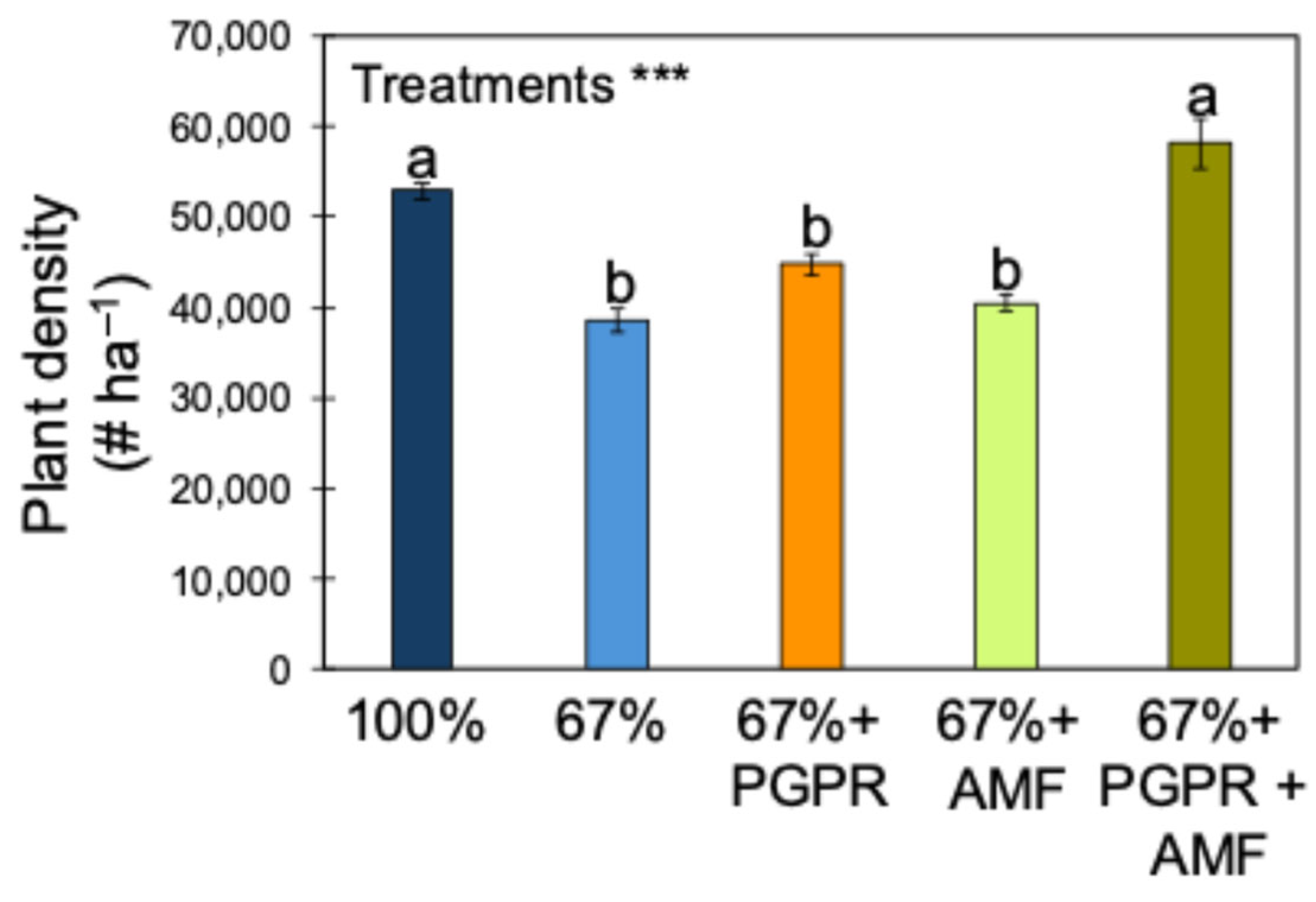
Arbuscular mycorrhizal colonization was detected in all sampled plants and did not differ significantly among treatments, with an average root colonization of 36.4 ± 5.7%. By contrast, treatments influenced plant performance in terms of plant density, water index (WI, i.e., a reflectance-derived index used as an indicator of leaf water content [33]), and grain productivity per plant (Table S2 and Figure 2, Figure 3 and Figure 4). A reduction in P fertilization by 33% negatively impacted plant density when no inoculant was applied (67%) and when inoculants were applied individually (67% + PGPR and 67% + AMF). In contrast, the combined application of both microbial inoculants (67% + PGPR + AMF) restored plant density to levels comparable to the 100% treatment (Figure 2).
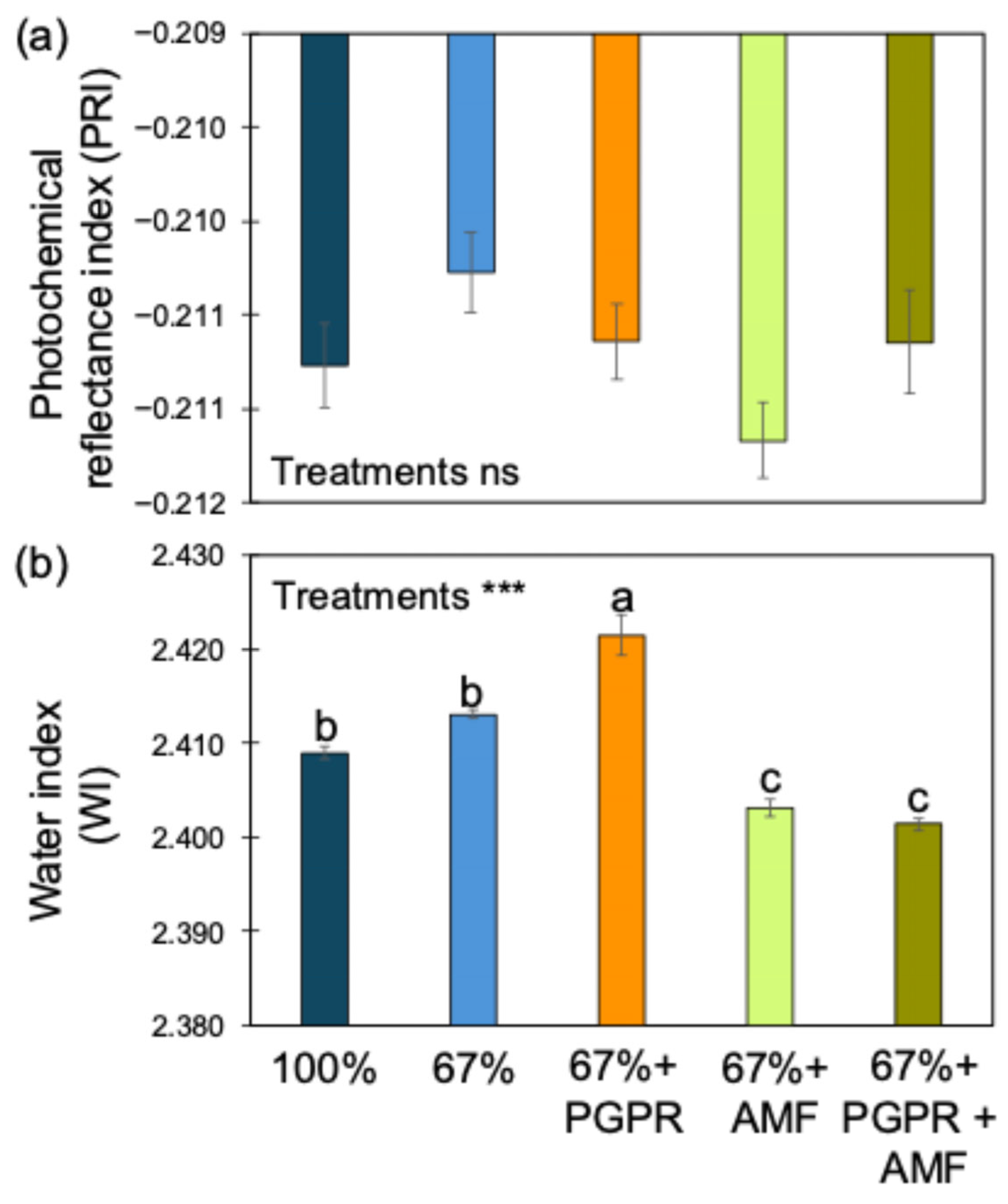
The photochemical reflectance index (PRI, which is associated with changes in photosynthetic efficiency [32]) was not influenced by any treatment, while the water index (WI) was (Figure 3). The highest WI values were observed under the 67% + PGPR treatment, whereas the lowest values occurred in both treatments with AMF inoculation (67% + AMF and 67% + PGPR + AMF treatments). Intermediate values were recorded in both treatments without microbial inoculants (100% and 67%) (Figure 3b).
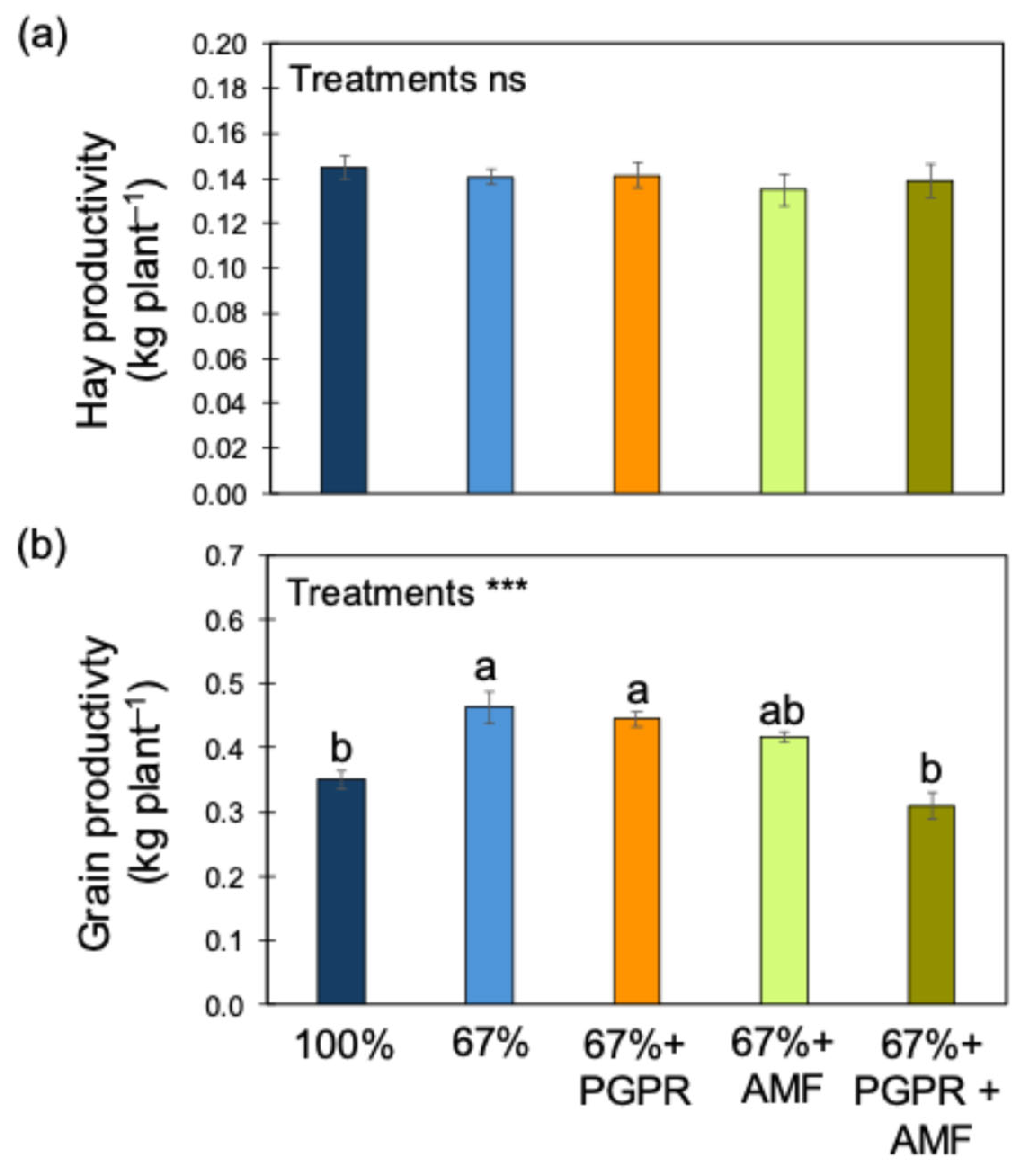
Hay productivity per plant was not influenced by the treatments, but grain productivity per plant was (Table S2 and Figure 4). Reducing P fertilization by 33% resulted in higher grain productivity per plant under the 67% and 67% + PGPR treatments, when compared to the 100% treatment. However, the combined inoculation (67% + PGPR + AMF) led to grain productivity per plant similar to the 100% treatment and lower than the other 67% treatments (Figure 4b).

3.3. Correlations Between Stand- and Plant-Level Performance

Correlations (Table 2) revealed key relationships between stand-level and plant-level responses:
  • Hay yield per hectare was positively correlated with plant density.
  • Hay yield per hectare was negatively correlated with grain yield per plant and WI.
  • Grain yield per hectare was positively correlated with hay N, P, and Mn concentrations and negatively correlated with grain K concentration.
  • Hay yield per plant was positively correlated with grain Mn concentration.
  • Grain yield per plant was positively correlated with WI.
These relationships indicate coordinated responses between stand structure, plant water status, and yield allocation across treatments.

4. Discussion

Our data clearly show that (i) grain yield per hectare and nutrient concentrations in hay and grain were unaffected by P reduction or microbial inoculation and (ii) microbial inoculation can partially or fully compensate for losses in hay yield per hectare due to 33% reductions in P fertilization, though outcomes are contingent upon the type and combination of inoculants used. From a sustainability perspective, these findings indicate that biological inputs may help maintain crop performance while reducing reliance on mineral P fertilizers, thereby contributing to more resource-efficient agricultural systems.

4.1. Functional Complementarity Restores Hay Productivity Under Reduced P

The ability of microbial inoculants to compensate for a 33% reduction in P fertilization (Figure 1a) aligns with previous field studies reporting improved P use efficiency [6] and biomass production (of several crops) in inoculated systems with reduced P inputs [37,38]. The declines in hay productivity (Figure 1a) and plant density (Figure 2) we observed with the 33% reduction in P fertilization without microbial inoculation highlight the vulnerability of biomass production to reduced P inputs when no biological amendments are applied. Similar responses to reduced P availability have been reported in other crops, although the magnitude of the effect depends on crop species, soil P availability, and plant capacity to acquire and utilize P efficiently [39]. Wheat and other cereals are particularly responsive to P limitation, with reductions in biomass accumulation, root development, and yield commonly observed under low-P conditions, especially in soils with limited available P [39,40]. Other crops such as sugarcane can also exhibit reduced growth, tillering, and stalk biomass under P-deficient conditions, particularly during establishment and in tropical soils with low P availability [41]. Thus, the decline in maize biomass productivity observed under reduced P fertilization is consistent with broader evidence that reductions in P supply can constrain crop performance, although the severity of these effects is crop-dependent [39,40]. Notably, only the co-inoculation of PGPR and AMF (67% + PGPR + AMF treatment) was able to fully restore hay productivity and plant density to levels comparable to (or slightly exceeding) those observed under full fertilization (100%). This suggests that microbial consortia may provide functional complementarity, with PGPR and AMF contributing through complementary mechanisms that may improve nutrient availability and uptake. The practical significance of this result lies in demonstrating that a 33% reduction in P fertilization can be achieved without losses in vegetative productivity when supported by an appropriate microbial consortium.
The magnitude of the response observed in the present study should also be interpreted considering the soil conditions of the experimental site. Although the soil had moderate available P levels before fertilization (24 ppm), Mediterranean agricultural systems are often characterized by constraints such as low soil organic matter, seasonal water limitation, and restricted nutrient mobility, which may influence P availability and plant nutrient acquisition [39,42]. Under these conditions, microbial inoculants may contribute to maintaining plant performance under reduced P supply through mechanisms such as increased soil exploration, enhanced P solubilization, and improved nutrient uptake efficiency. Therefore, the effectiveness of PGPR-AMF co-inoculation observed here may reflect not only the reduced P input but also the interaction between microbial functions and the specific edaphic constraints of semi-arid agricultural systems.
The responses observed here are consistent with mechanisms previously reported for PGPR-AMF consortia, supporting the interpretation that the combined inoculation promoted functional complementarity between microbial partners. In the context of P acquisition, AMF can enhance plant P uptake by extending the volume of soil explored beyond the root depletion zone through extraradical hyphal networks, which is particularly relevant for relatively immobile nutrients such as phosphate. In parallel, PGPR may contribute to P availability through mechanisms including phosphate solubilization, organic acid production, and the release of phosphatases, thereby increasing the pool of P potentially available for plant uptake [26,43,44]. In addition, combined inoculation has been associated with improved nutrient acquisition [6] and enhanced expression of nutrient transport-related genes [45], contributing to improved plant performance across different crops and environments [45,46]. And finally, the consistency across systems, with evidence spanning multiple crops (maize, wheat, vegetables), environments (field and greenhouse), and nutrient conditions (low N or P) [45,47]. Although these mechanisms were not directly assessed in the present study, they are consistent with the growing body of evidence indicating that microbial inoculants can contribute to more efficient nutrient acquisition and utilization under reduced P fertilizer regimes.
Interestingly, AMF colonization was detected in all sampled plants and did not differ significantly among treatments, indicating that the soil already supported an active native mycorrhizal community. Consequently, the improved performance of the PGPR-AMF treatment cannot be explained simply by greater root colonization. Moreover, similar colonization percentages do not necessarily mean that the composition or functional attributes of the AMF community were the same among treatments. The introduced inoculum may have altered the identity or relative abundance of the AMF taxa colonizing the roots or influenced their functional interactions with PGPR, despite comparable overall colonization levels. These possibilities were beyond the scope of the present study and should be addressed in future work combining molecular characterization of rhizosphere microbial communities with functional analyses.

4.2. Yield Stability in Reproductive Output

Despite substantial changes in vegetative biomass (Figure 1a), grain yield per hectare remained stable across all treatments (~18.2 t ha−1, Figure 1b). This is consistent with previous reports in maize under suboptimal fertilization [13,48]. The contrasting responses of vegetative biomass and grain yield suggest that moderate P limitation primarily affected crop establishment and early biomass accumulation, whereas reproductive output was maintained through compensatory responses at later developmental stages.
Grain yield per hectare correlated positively with the concentrations of key nutrients in the hay, particularly N and P (Table 2), emphasizing the importance of overall nutrient concentrations in vegetative tissues for optimal grain output, corroborating previous studies [49]. Likewise, grain nutrient concentrations were unaffected by inoculation or P reduction (Table 1), echoing reports that maize grain nutrient concentrations are less sensitive to moderate nutrient stress than vegetative tissues [6,49]. Under the conditions of this study, grain yield and measured nutrient concentrations in hay and grain were maintained despite the 33% reduction in P fertilization, irrespective of microbial inoculation. The absence of differences in nutrient concentrations does not necessarily exclude improvements in P-use efficiency, as microbial inoculation may enhance the capacity of plants to maintain biomass production with lower external P inputs without necessarily increasing tissue P concentrations. This interpretation is consistent with the proposed role of AMF and PGPR in improving nutrient acquisition processes through complementary mechanisms, including enhanced soil exploration by fungal hyphae and increased P mobilization in the rhizosphere, although these mechanisms were not directly quantified in the present study. Future studies combining isotopic approaches or detailed P fractionation analyses would be valuable to directly quantify changes in P acquisition and utilization. This finding is relevant from a nutrient management perspective because it indicates that a moderate reduction in P inputs did not translate into reductions in crop productivity or measured nutrient concentrations under the conditions evaluated.

4.3. Trade-Offs Between Stand- and Plant-Level Performance

Variation in plant density (Figure 2), despite identical sowing rates (85,000 seeds ha−1), suggests that inoculation influenced germination, establishment, and/or survival. The positive effect of the combined microbial inoculants (67% + PGPR + AMF treatment) on plant density may be explained by the following non-exclusive mechanisms: first, faster and higher seed germination [18]; second, enhanced early root and shoot growth [50], giving seedlings a competitive edge in resource acquisition; and finally, higher plant survival under stress (e.g., drought, nutrient limitation) [51].
Higher stand density in the combined inoculation plots (Figure 2) coincided with lower grain production per plant (Figure 4b), reflecting the well-established density-dependent trade-off in maize whereby increasing population density intensifies intra-specific competition for light, water and nutrients, thereby reducing the performance of individual plants [52]. However, at the crop level, greater plant populations generally increase canopy resource capture and compensate for lower individual productivity, resulting in relatively stable yield per unit area across a broad range of densities (Figure 1 and Figure 2). This process of yield compensation is one of the fundamental mechanisms underlying maize population ecology and density management [53,54]. Our results fit this conceptual framework and also provide an additional perspective. Rather than increasing grain production of individual plants, the combined PGPR-AMF inoculation appears to have shifted crop performance towards maintaining a larger and more productive plant population. In other words, the microbial consortium did not improve the productivity of each surviving plant; instead, it favoured stand establishment and/or persistence, allowing crop productivity to be sustained through a greater number of productive individuals. This shift from individual- to stand-level performance likely explains why hay yield was fully restored despite the absence of increases in per-plant biomass. Conversely, in the uninoculated and singly inoculated reduced-P treatments, lower stand density reduced competition among neighbouring plants, allowing greater grain production per plant but without compensating for the lower number of plants per unit area. These contrasting responses illustrate that microbial inoculation may influence not only nutrient acquisition but also the demographic structure of the crop, ultimately determining how productivity is partitioned between individual plants and the plant population.

4.4. Water Status and Biomass Productivity

The lowest water index (WI—Figure 3b) values were observed in the treatment with highest biomass production (67% + PGPR + AMF treatment; Figure 1a), suggesting that greater canopy cover and plant density (Figure 2) reduced water availability per plant despite irrigation. This is consistent with findings that denser stands can increase evapotranspiration rates and reduce individual plant water status [14,33]. Correlation analyses revealed negative associations consistent with density-dependent resource allocation within the crop stand (Table 2). The positive correlation between WI and per-plant grain yield observed here indicates that improved water status in lower-density stands may have supported higher individual plant performance, consistent with physiological models of maize yield response to water supply. Although high planting density can be an effective strategy for improving maize productivity, growing density-tolerant cultivars at moderate planting density could stabilize grain yield in semi-arid regions [52].
Beyond their role in improving nutrient acquisition, AMF and PGPR have been widely reported to enhance plant tolerance to water deficit by promoting root development, improving plant water relations, and increasing water-use efficiency. For example, inoculation with AMF and beneficial bacteria has improved growth, physiological performance, and yield of common bean under drought stress, while similar benefits have been reported across a range of cereal and horticultural crops exposed to water limitation [55,56,57]. Therefore, the lower WI observed in the highly productive PGPR + AMF treatment should not necessarily be interpreted as reduced drought resilience, but rather as a consequence of greater canopy development and higher transpirational demand associated with enhanced biomass production. These findings suggest that microbial inoculation may contribute to crop resilience not only by improving nutrient acquisition but also by enhancing plant responses to abiotic stress.
The extent of these microbial-mediated benefits may also depend on soil conditions. In semi-arid Mediterranean soils, limited water retention capacity, low organic matter content, and temporal variability in water availability can constrain root activity and nutrient diffusion processes. By increasing the effective soil volume explored by roots through fungal hyphal networks and potentially improving plant physiological responses to water limitation, AMF-associated plants may maintain productivity under transient water stress conditions. Given the increasing frequency of drought events in Mediterranean regions, understanding how microbial inoculation interacts with crop density and plant water status may become increasingly important for the development of resilient production systems under climate change.

4.5. Implications for Sustainable Agriculture

The P levels used here (75 and 50 kg P ha−1) were agronomically relevant and allowed evaluation of microbial inoculants’ capacity to buffer reduced P inputs. Given the nutrient-limited and low organic matter status of the semi-arid Mediterranean soils, our findings illustrate that microbial inoculants can enhance vegetative productivity in contexts where conventional fertilization is constrained or environmentally undesirable. The use of commercially available PGPR and AMF products applied according to manufacturer recommendations further enhances the practical relevance of these findings. Beyond their agronomic relevance, these findings reinforce the importance of plant–microbe interactions in sustaining crop performance under nutrient limitation and highlight the potential contribution of rhizosphere-based technologies to more sustainable nutrient management strategies. More broadly, the adoption of microbial inoculants could contribute to reducing dependence on mineral P fertilizers, lowering the environmental footprint of crop production and supporting policy objectives aimed at improving nutrient-use efficiency and reducing nutrient losses.

5. Conclusions

Our study provides field-based evidence that co-inoculation of PGPR and AMF, but not single inoculations, can compensate for the negative effects of a 33% reduction in P fertilization on maize establishment and vegetative productivity under semi-arid Mediterranean conditions. In the absence of inoculation, reduced P fertilization decreased plant density and hay yield, whereas PGPR-AMF co-inoculation restored both variables to levels comparable with full P fertilization. Grain yield and nutrient concentrations in hay and grain remained unaffected by either P reduction or microbial inoculation, indicating that reproductive performance was maintained despite reduced P inputs. Together, these findings highlight the functional complementarity of PGPR and AMF and demonstrate the potential of microbial inoculants to support fertilizer reduction strategies while maintaining crop productivity.
The present findings should, however, be interpreted within the scope of this one-season field study. Although the present study demonstrates that microbial inoculation can support a 33% reduction in P fertilization under the conditions evaluated, the long-term sustainability of this strategy will depend on soil P dynamics and the continued capacity of microbial communities to mobilize potentially available P pools over successive growing seasons. Long-term field experiments are therefore required to determine whether reduced P inputs can be maintained over time or whether conventional P fertilization rates may eventually need to be restored. Furthermore, although AMF colonization was quantified, the taxonomic composition and functional characteristics of the AMF and bacterial communities were not assessed, limiting mechanistic interpretation of the observed responses. Future research should therefore combine multi-season and multi-site field trials with molecular and functional analyses of rhizosphere microbial communities to evaluate the long-term robustness, scalability, and mechanisms underlying PGPR–AMF interactions. Assessing the economic viability of microbial inoculants and their capacity to reduce P fertilizer requirements under contrasting agroecological conditions will also be essential for supporting their broader adoption. In the context of increasing pressure to reduce P fertilizer inputs while maintaining agricultural productivity, microbial inoculants represent a promising complementary strategy for improving P-use efficiency and advancing the transition toward more resource-efficient and sustainable cropping systems.

Supplementary Materials

The following supporting information can be downloaded at: https://www.mdpi.com/article/10.3390/su18157841/s1, Figure S1: Mean daily atmospheric temperature (°C—red symbols and line) and relative humidity (%—blue symbols and line) in the field throughout the experiment. Figure S2: Experimental design implemented in the field. Table S1: Nutrient inputs for 100% and 67% P treatments. Table S2: Results of one-way ANOVA with treatments as fixed factor on the different plant parameters.

Author Contributions

Conceptualization, T.D., L.C., P.C. and C.C.; Methodology, T.D., L.C., P.C. and C.C.; Investigation, T.D., M.P., J.D., M.F., J.M., A.M.S., L.C. and P.C.; Formal analysis, T.D., J.M., L.C. and P.C.; Visualization, T.D., A.M.S. and C.C.; Supervision, L.C., P.C. and C.C.; Writing—original draft, T.D.; Writing—review and editing, M.P., J.D., M.F., J.M., A.M.S., L.C., P.C. and C.C. All authors have read and agreed to the published version of the manuscript.

Funding

This study was financially supported by Portuguese funds through Fundação para a Ciência e a Tecnologia through: (i) project UID/00329/2025 (https://doi.org/10.54499/UID/00329/2025); (ii) PhD grant to Ana M. Santos (2024.03052.BDANA).

Institutional Review Board Statement

Not applicable.

Informed Consent Statement

Not applicable.

Data Availability Statement

The data that support the findings of this study will be made available from the corresponding author upon request. Data are located in controlled access data storage at Faculdade de Ciências da Universidade de Lisboa.

Acknowledgments

We dedicate this work to our late dear colleague João Castro Pinto, who played a vital role in every stage of this research except the writing of the manuscript. We thank the three anonymous Reviewers for their feedback and suggestions, which greatly improved our study.

Conflicts of Interest

Author Manuela Fernandes was employed by the company ADP Fertilizantes. Author Juliana Melo was employed by the company Lost in Cloud, Lda. The remaining authors declare no conflicts of interest. The authors declare that these affiliations did not influence the design of the study, the interpretation of the results, or the decision to publish the manuscript.

Abbreviations

The following abbreviations are used in this manuscript:
AMFArbuscular mycorrhizal fungi
KPotassium
MnManganese
NNitrogen
PPhosphorus
PGPRPlant Growth-Promoting Rhizobacteria
PRIPhotochemical reflectance index
WIWater index
ZnZinc

References

  1. Childers, D.L.; Corman, J.; Edwards, M.; Elser, J.J. Sustainability challenges of phosphorus and food: Solutions from closing the human phosphorus cycle. Bioscience 2011, 61, 117–124. [Google Scholar] [CrossRef]
  2. Elser, J.J. Phosphorus: A limiting nutrient for humanity? Curr. Opin. Biotechnol. 2012, 23, 833–838. [Google Scholar] [CrossRef] [PubMed]
  3. Faucon, M.P.; Houben, D.; Reynoird, J.P.; Mercadal-Dulaurent, A.M.; Armand, R.; Lambers, H. Advances and perspectives to improve the phosphorus availability in cropping systems for agroecological phosphorus management. Adv. Agron. 2015, 134, 51–79. [Google Scholar] [CrossRef]
  4. Camenzind, T.; Hempel, S.; Homeier, J.; Horn, S.; Velescu, A.; Wilcke, W.; Rillig, M.C. Nitrogen and phosphorus additions impact arbuscular mycorrhizal abundance and molecular diversity in a tropical montane forest. Glob. Change Biol. 2014, 20, 3646–3659. [Google Scholar] [CrossRef] [PubMed]
  5. Vitousek, P.M.; Porder, S.; Houlton, B.Z.; Chadwick, O.A. Terrestrial phosphorus limitation: Mechanisms, implications, and nitrogen-phosphorus interactions. Ecol. Appl. 2010, 20, 5–15. [Google Scholar] [CrossRef] [PubMed]
  6. Pacheco, I.; Ferreira, R.; Correia, P.; Carvalho, L.; Dias, T.; Cruz, C. Microbial consortium increases maize productivity and reduces grain phosphorus concentration under field conditions. Saudi J. Biol. Sci. 2021, 28, 232–237. [Google Scholar] [CrossRef] [PubMed]
  7. Basilio, F.; Dias, T.; Santana, M.M.; Melo, J.; Carvalho, L.; Correia, P.; Cruz, C. Multiple modes of action are needed to unlock soil phosphorus fractions unavailable for plants: The example of bacteria- and fungi-based biofertilizers. Appl. Soil Ecol. 2022, 178, 104550. [Google Scholar] [CrossRef]
  8. Ceulemans, T.; Stevens, C.J.; Duchateau, L.; Jacquemyn, H.; Gowing, D.J.G.; Merckx, R.; Wallace, H.; van Rooijen, N.; Goethem, T.; Bobbink, R.; et al. Soil phosphorus constrains biodiversity across European grasslands. Glob. Change Biol. 2014, 20, 3814–3822. [Google Scholar] [CrossRef] [PubMed]
  9. Ngatia, L.; Taylor, R. Phosphorus Eutrophication and Mitigation Strategies; IntechOpen: London, UK, 2018. [Google Scholar]
  10. Schröder, J.J.; Cordell, D.; Smit, A.L.; Rosemarin, A. Sustainable Use of Phosphorus; Report 357; Wageningen UR: Wageningen, The Netherlands, 2010. [Google Scholar]
  11. Schröder, J.J.; Smit, A.L.; Cordell, D.; Rosemarin, A. Improved phosphorus use efficiency in agriculture: A key requirement for its sustainable use. Chemosphere 2011, 84, 822–831. [Google Scholar] [CrossRef] [PubMed]
  12. European Commission. Towards an Integrated Nutrient Management Action Plan; Publications Office of the European Union: Luxembourg, 2025. [Google Scholar]
  13. Gheith, E.; El-Badry, O.; Lamlom, S.; Ali, H.; Siddiqui, M.; Ghareeb, R.; El-Sheikh, M.; Jebril, J.; Abdelsalam, N.; Kandil, E. Maize (Zea mays L.) productivity and nitrogen use efficiency in response to nitrogen application levels and time. Front. Plant Sci. 2022, 13, 941343. [Google Scholar] [CrossRef] [PubMed]
  14. Irmak, S.; Mohammed, A.; Kukal, M. Maize response to coupled irrigation and nitrogen fertilization under center pivot, subsurface drip and surface (furrow) irrigation: Growth, development and productivity. Agric. Water Mang. 2022, 263, 107457. [Google Scholar] [CrossRef]
  15. Pacifico, F.; Ronchetti, G.; Dentener, F.; van der Velde, M.; van den Berg, M.; Lugato, E. Quantifying the impact of an abrupt reduction in mineral nitrogen fertilization on crop yield in the European Union. Sci. Total Environ. 2024, 954, 176692. [Google Scholar] [CrossRef] [PubMed]
  16. Jan, M.; Liaqat, W.; Altaf, M.; Ahmadzai, M.; Maqbool, A.; Baloch, F.; Li, M. Next-generation strategies for nitrogen-efficient maize production for a greener tomorrow. Field Crop Res. 2025, 333, 110084. [Google Scholar] [CrossRef]
  17. ten Berge, H.; Hijbeek, R.; van Loon, M.; Rurinda, J.; Tesfaye, K.; Zingore, S.; Craufurd, P.; van Heerwaarden, J.; Brentrup, F.; Schröder, J.; et al. Maize crop nutrient input requirements for food security in sub-Saharan Africa. Glob. Food Secur. 2019, 23, 9–21. [Google Scholar] [CrossRef]
  18. Ait Bessai, S.; Cruz, J.; Carril, P.; Melo, J.; Santana, M.M.; Mouazen, A.M.; Cruz, C.; Yadav, A.N.; Dias, T.; Nabti, E.-h. The Plant-Growth Promoting potential of halotolerant bacteria is not phylogenetically determined: Evidence from two Bacillus megaterium strains isolated from saline soils used to grow wheat. Microorganisms 2023, 11, 1687. [Google Scholar] [CrossRef] [PubMed]
  19. Dias, T.; Azmaliyev, K.; Melo, J.; Santos, A.; Correia, P.; Cruz, C. The diazotrophic bacteria Azospirillum baldaniorum and A. brasilense improve wheat seedlings’ nitrogen budget through ammonia scavenging. Appl. Soil Ecol. 2024, 24, 105737. [Google Scholar] [CrossRef]
  20. Melo, J.; Carolino, M.; Carvalho, L.; Correia, P.; Tenreiro, R.; Chaves, S.; Meleiro, A.I.; de Souza, S.B.; Dias, T.; Cruz, C.; et al. Crop management as a driving force of plant growth promoting rhizobacteria physiology. Springerplus 2016, 5, 1574. [Google Scholar] [CrossRef] [PubMed]
  21. Smith, S.E.; Read, D.J. Mycorrhizal Symbiosis, 3rd ed.; Academic Press: London, UK, 2008. [Google Scholar]
  22. Dias, T.; Correia, P.; Carvalho, L.; Melo, J.; de Varennes, A.; Cruz, C. Arbuscular mycorrhizal fungal species differ in their capacity to overrule the soil’s legacy from maize monocropping. Appl. Soil Ecol. 2018, 125, 177–183. [Google Scholar] [CrossRef]
  23. Dias, T.; Dukes, A.; Antunes, P.M. Accounting for soil biotic effects on soil health and crop productivity in the design of crop rotations. J. Sci. Food Agric. 2015, 95, 447–454. [Google Scholar] [PubMed]
  24. van der Heijden, M.G.A.; Martin, F.M.; Selosse, M.A.; Sanders, I.R. Mycorrhizal ecology and evolution: The past, the present, and the future. New Phytol. 2015, 205, 1406–1423. [Google Scholar] [CrossRef] [PubMed]
  25. Mahmoudi, N.; Caeiro, M.F.; Mahdhi, M.; Tenreiro, R.; Ulm, F.; Mars, M.; Cruz, C.; Dias, T. Arbuscular mycorrhizal traits are good indicators of soil multifunctionality in drylands. Geoderma 2021, 397, 115099. [Google Scholar] [CrossRef]
  26. Battini, F.; Gronlund, M.; Agnolucci, M.; Giovannetti, M.; Jakobsen, I. Facilitation of phosphorus uptake in maize plants by mycorrhizosphere bacteria. Sci. Rep. 2017, 7, 4686. [Google Scholar] [CrossRef] [PubMed]
  27. Bhardwaj, D.; Ansari, M.W.; Sahoo, R.K.; Tuteja, N. Biofertilizers function as key player in sustainable agriculture by improving soil fertility, plant tolerance and crop productivity. Microb. Cell Factories 2014, 13, 66. [Google Scholar] [CrossRef] [PubMed]
  28. Basiru, S.; Hijri, M. The potential applications of commercial arbuscular mycorrhizal fungal inoculants and their ecological consequences. Microorganisms 2022, 10, 1897. [Google Scholar] [CrossRef] [PubMed]
  29. Schütz, L.; Gattinger, A.; Meier, M.; Müller, A.; Boller, T.; Mäder, P.; Mathimaran, N. Improving crop yield and nutrient use efficiency via biofertilization-a global meta-analysis. Front. Plant Sci. 2018, 8, 2204. [Google Scholar] [CrossRef] [PubMed]
  30. Peel, M.; Finlayson, B.; McMahon, T. Updated world map of the Koppen-Geiger climate classification. Hydrol. Earth Syst. Sci. 2007, 11, 1633–1644. [Google Scholar] [CrossRef]
  31. ISO 10694:1995; Soil Quality—Determination of Organic and Total Carbon After Dry Combustion (Elementary Analysis). International Organization for Standardization: Geneva, Switzerland, 1995.
  32. Magney, T.; Vierling, L.; Eitel, J.; Huggins, D.; Garrity, S. Response of high frequency Photochemical Reflectance Index (PRI) measurements to environmental conditions in wheat. Remote Sens. Environ. 2016, 173, 84–97. [Google Scholar] [CrossRef]
  33. Penuelas, J.; Pinol, J.; Ogaya, R.; Filella, I. Estimation of plant water concentration by the reflectance water index WI (R900/R970). Int. J. Remote Sens. 1997, 18, 2869–2875. [Google Scholar] [CrossRef]
  34. Koske, R.E.; Gemma, J.N. A modified procedure for staining roots to detect VA-mycorrhizas. Mycol. Res. 1989, 92, 486–505. [Google Scholar] [CrossRef]
  35. Giovannetti, M.; Mosse, B. Evaluation of techniques for measuring vesicular arbuscular mycorrhizal infection in roots. New Phytol. 1980, 84, 489–500. [Google Scholar] [CrossRef]
  36. Huang, C.; Schulte, E. Digestion of plant-tissue for analysis by ICP emission-spectroscopy. Commun. Soil Sci. Plant Anal. 1985, 16, 943–958. [Google Scholar]
  37. Mahfouz, S.A.; Sharaf-Eldin, M.A. Effect of mineral vs. biofertilizer on growth, yield, and essential oil content of fennel (Foeniculum vulgare Mill.). Int. Agrophys. 2007, 21, 361–366. [Google Scholar]
  38. Sarkar, D.; Sankar, A.; Devika, O.S.; Singh, S.; Shikha; Parihar, M.; Rakshit, A.; Sayyed, R.Z.; Gafur, A.; Ansari, M.J.; et al. Optimizing nutrient use efficiency, productivity, energetics, and economics of red cabbage following mineral fertilization and biopriming with compatible rhizosphere microbes. Sci. Rep. 2021, 11, 15680. [Google Scholar] [CrossRef] [PubMed]
  39. Vance, C.P.; Uhde-Stone, C.; Allan, D.L. Phosphorus acquisition and use: Critical adaptations by plants for securing a nonrenewable resource. New Phytol. 2003, 157, 423–447. [Google Scholar] [CrossRef] [PubMed]
  40. Ramaekers, L.; Remans, R.; Rao, I.M.; Blair, M.W.; Vanderleyden, J. Strategies for improving phosphorus acquisition efficiency of crop plants. Field Crop Res. 2010, 117, 169–176. [Google Scholar] [CrossRef]
  41. Korndörfer, G.; de Melo, S. Effects of phosphorus sources (liquid or solid) on agricultural and industrial sugarcane yield. Cienc. Agrotecnol. 2009, 33, 92–97. [Google Scholar]
  42. Lambers, H.; Shane, M.; Cramer, M.; Pearse, S.; Veneklaas, E. Root structure and functioning for efficient acquisition of phosphorus: Matching morphological and physiological traits. Ann. Bot. 2006, 98, 693–713. [Google Scholar] [CrossRef] [PubMed]
  43. Nacoon, S.; Jogloy, S.; Riddech, N.; Mongkolthanaruk, W.; Kuyper, T.; Boonlue, S. Interaction between phosphate solubilizing bacteria and arbuscular mycorrhizal fungi on growth promotion and tuber inulin content of Helianthus tuberosus L. Sci. Rep. 2020, 10, 4916. [Google Scholar] [CrossRef] [PubMed]
  44. Cozzolino, V.; Monda, H.; Savy, D.; Di Meo, V.; Vinci, G.; Smalla, K. Cooperation among phosphate-solubilizing bacteria, humic acids and arbuscular mycorrhizal fungi induces soil microbiome shifts and enhances plant nutrient uptake. Chem. Biol. Technol. Agric. 2021, 8, 31. [Google Scholar] [CrossRef]
  45. Saia, S.; Rappa, V.; Ruisi, P.; Abenavoli, M.; Sunseri, F.; Giambalvo, D.; Frenda, A.; Martinelli, F. Soil inoculation with symbiotic microorganisms promotes plant growth and nutrient transporter genes expression in durum wheat. Front. Plant Sci. 2015, 6, 815. [Google Scholar] [CrossRef] [PubMed]
  46. Yu, L.; Zhang, H.; Zhang, W.; Liu, K.; Liu, M.; Shao, X. Cooperation between arbuscular mycorrhizal fungi and plant growth-promoting bacteria and their effects on plant growth and soil quality. PeerJ 2022, 10, e13080. [Google Scholar] [CrossRef] [PubMed]
  47. Gebreslassie, S.; Jida, M.; Puente, M.; Covacevich, F.; Belay, Z. Inoculation of native arbuscular mycorrhizae and Bacillus subtilis can improve growth in vegetable crops. Int. J. Microbiol. 2024, 2024, 9226715. [Google Scholar] [CrossRef] [PubMed]
  48. Zhao, J.; Qi, Y.; Yin, C.; Liu, X. Effects of nitrogen reduction at different growth stages on maize water and nitrogen utilization under shallow buried drip fertigated irrigation. Agronomy 2024, 14, 63. [Google Scholar] [CrossRef]
  49. Ma, B.; Zheng, Z.; Morrison, M.; Gregorich, E. Nitrogen and phosphorus nutrition and stoichiometry in the response of maize to various N rates under different rotation systems. Nutr. Cycl. Agroecosyst. 2016, 104, 93–105. [Google Scholar] [CrossRef]
  50. Hett, J.; Neuhoff, D.; Döring, T.; Masoero, G.; Ercole, E.; Bevivino, A. Effects of multi-species microbial inoculants on early wheat growth and litterbag microbial activity. Agronomy 2022, 12, 899. [Google Scholar] [CrossRef]
  51. Xun, F.F.; Xie, B.M.; Liu, S.S.; Guo, C.H. Effect of plant growth-promoting bacteria (PGPR) and arbuscular mycorrhizal fungi (AMF) inoculation on oats in saline-alkali soil contaminated by petroleum to enhance phytoremediation. Environ. Sci. Pollut. Res. 2015, 22, 598–608. [Google Scholar] [CrossRef] [PubMed]
  52. Zhang, Y.; Xu, Z.; Li, J.; Wang, R. Optimum planting density improves resource use efficiency and yield stability of rainfed maize in semiarid climate. Front. Plant Sci. 2021, 12, 752606. [Google Scholar] [CrossRef] [PubMed]
  53. Tollenaar, M.; Lee, E. Yield potential, yield stability and stress tolerance in maize. Field Crop Res. 2002, 75, 161–169. [Google Scholar] [CrossRef]
  54. Tokatlidis, I.; Koutroubas, S. A review of maize hybrids’ dependence on high plant populations and its implications for crop yield stability. Field Crop Res. 2004, 88, 103–114. [Google Scholar] [CrossRef]
  55. Augé, R. Water relations, drought and vesicular-arbuscular mycorrhizal symbiosis. Mycorrhiza 2001, 11, 3–42. [Google Scholar] [CrossRef]
  56. Begum, N.; Qin, C.; Ahanger, M.A.; Raza, S.; Khan, M.I.; Ashraf, M.; Ahmed, N.; Zhang, L. Role of arbuscular mycorrhizal fungi in plant growth regulation: Implications in abiotic stress tolerance. Front. Plant Sci. 2019, 10, 1068. [Google Scholar] [CrossRef] [PubMed]
  57. Al-Amri, S. Application of bio-fertilizers for enhancing growth and yield of common bean plants grown under water stress conditions. Saudi J. Biol. Sci. 2021, 28, 3901–3908. [Google Scholar] [CrossRef] [PubMed]
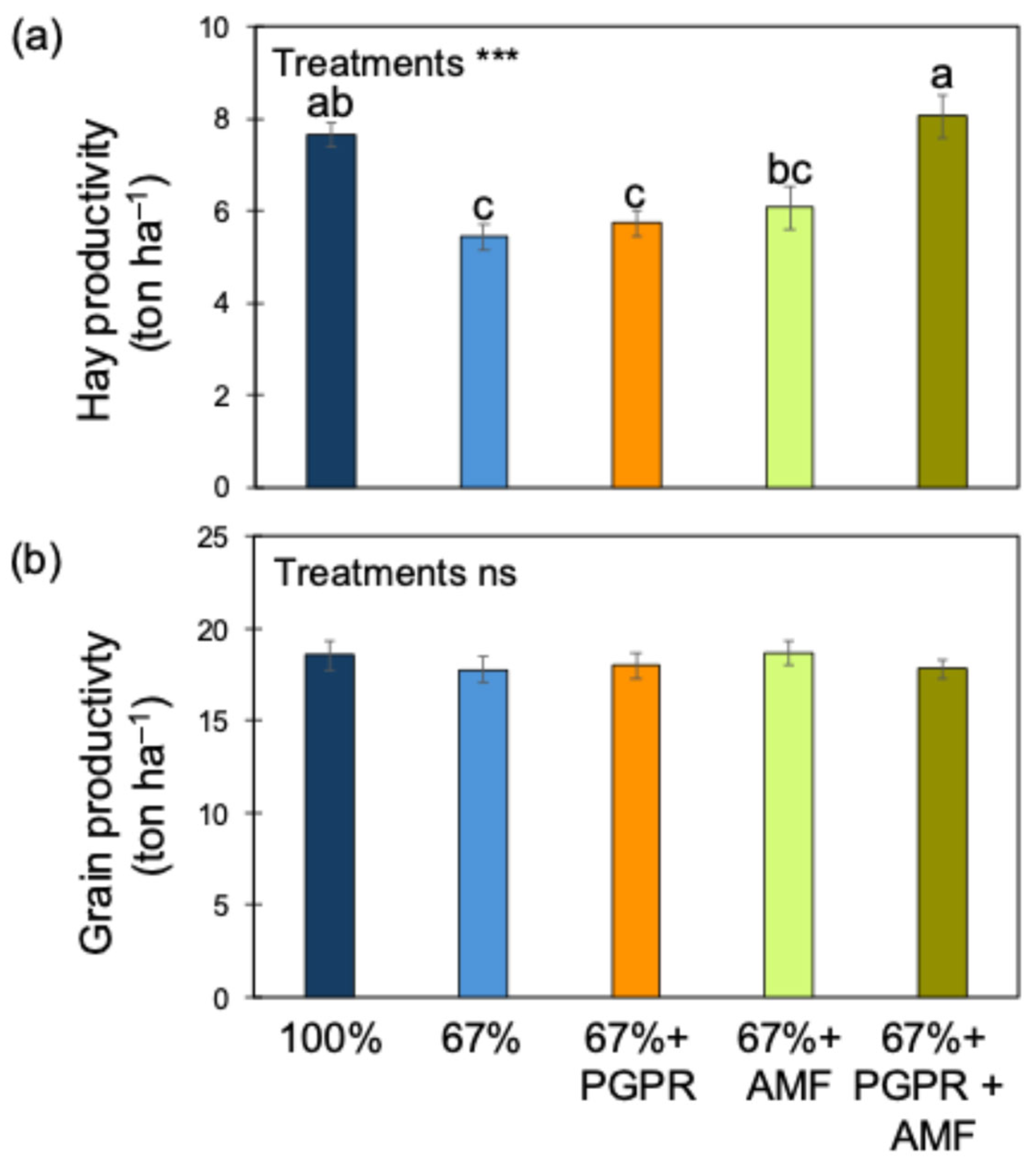
Figure 1. Effect of the treatments on productivity per area in terms of hay (a) and grain (b). *** shows significant effects (p < 0.001); “ns” denotes non-significant effects. Different letters indicate statistically significant differences between treatments (p < 0.05). Bars represent the mean ± SE (n = 4).
Sustainability 18 07841 g001
Figure 2. Effect of the treatments on plant density. *** shows significant effects (p < 0.001). Different letters indicate statistically significant differences between treatments (p < 0.05). Bars represent the mean ± SE (n = 4).
Sustainability 18 07841 g002
Figure 3. Effect of the treatments on non-destructive ecophysiological indices: photochemical reflectance index (PRI—(a)) and water index (WI—(b)). *** shows significant effects (p < 0.001); “ns” denotes non-significant effects. Different letters indicate statistically significant differences between treatments (p < 0.05). Bars represent the mean ± SE (n = 4).
Sustainability 18 07841 g003
Figure 4. Effect of the treatments on productivity per plant in terms of hay (a) and grain (b). *** shows significant effects (p < 0.001); “ns” denotes non-significant effects. Different letters indicate statistically significant differences between treatments (p < 0.05). Bars represent the mean ± SE (n = 4).
Sustainability 18 07841 g004
Table 1. Effect of the treatments on hay and grain nutrient concentrations. Values represent the mean ± SE (n = 4).
Treatments100%67%67% + PGPR67% + AMF67% + PGPR + AMF
Hay [N] (%)1.2 ± 0.11.3 ± 0.11.5 ± 0.11.4 ± 0.11.4 ± 0.1
Hay [P] (%)0.3 ± 0.10.3 ± 00.4 ± 0.10.4 ± 0.10.3 ± 0.1
Hay [K] (%)2.0 ± 0.13.6 ± 1.52.2 ± 0.12.2 ± 0.12.1 ± 0.1
Hay [Zn] (ppm)18.2 ± 3.617.3 ± 3.916.6 ± 1.414.2 ± 0.817.9 ± 3.2
Hay [Mn] (ppm)92.6 ± 11.998.8 ± 17.5106.0 ± 6.778.1 ± 10.879.7 ± 3.2
Grain [N] (%)1.1 ± 01.1 ± 01.1 ± 01.1 ± 0.11.1 ± 0
Grain [P] (%)0.2 ± 00.3 ± 00.2 ± 00.2 ± 00.2 ± 0
Grain [K] (%)0.3 ± 00.3 ± 00.3 ± 00.3 ± 00.3 ± 0
Grain [Zn] (ppm)11.0 ± 0.310.5 ± 0.79.9 ± 0.811.2 ± 0.411.9 ± 0.7
Grain [Mn] (ppm)1.8 ± 0.21.8 ± 0.11.5 ± 0.21.9 ± 0.21.4 ± 0.1
Table 2. Pearson’s correlations between plant density, and hay and grain productivity at the stand- and plant-level and all the studied plant parameters (also including hay and grain nutrient concentrations and leaf reflectance indices). Significant correlations are shown in bold. Green shading means that the correlation was positive while red shading means that the correlation was negative (n = 20).
DensityHay ha−1Grain ha−1Hay Plant−1Grain Plant−1
Density1
Hay ha−10.904 **1
Grain ha−10.0910.1321
Hay plant−10.0480.466 *0.0931
Grain plant−1−0.912 **−0.821 **0.292−0.0501
Hay [N]−0.008−0.0690.667 **−0.1730.291
Hay [P]0.1280.0860.577 **−0.0740.118
Hay [K]−0.167−0.1090.0630.1020.168
Hay [Zn]0.121−0.037−0.094−0.339−0.113
Hay [Mn]−0.151−0.0660.504 *0.190−0.012
Grain [N]−0.178−0.1190.0560.0900.151
Grain [P]−0.1120.029−0.3600.2820.010
Grain [K]−0.0260.011−0.462 *0.064−0.192
Grain [Zn]0.2000.2580.1210.253−0.108
Grain [Mn]−0.1390.083−0.0840.531 *0.097
WI−0.610 **−0.496 *−0.1230.1250.538 *
PRI0.0690.0840.0860.126−0.011
** Correlation is significant at the 0.01 level (2-tailed). * Correlation is significant at the 0.05 level (2-tailed).
Disclaimer/Publisher’s Note: The statements, opinions and data contained in all publications are solely those of the individual author(s) and contributor(s) and not of MDPI and/or the editor(s). MDPI and/or the editor(s) disclaim responsibility for any injury to people or property resulting from any ideas, methods, instructions or products referred to in the content.